The Miscellany News
May 24, 2026
May 24, 2026
Vassar College’s student newspaper of record since 1866
Emma Brown Editor-in-Chief
Prior to starting their freshman year at Vassar College, most students take a tour of the campus. Spending hours in planes, trains and automobiles, optimistic high school students walk down Raymond Avenue, admiring all that Arlington has to offer. Most students stop in the Juliet Bookstore, pick up a sticker for good luck and head to the old Admissions Building on the south side of campus for their guided tour. Walking across Library Lawn, prospective students marvel for the first time at the beauty of the Frederick Ferris Thompson Memorial Library, the number of trees that surround them and the current Vassar students going about their day. They leave Poughkeepsie with the hope of returning—the hope that Vassar will become their home.
More than four years later, those high school students have turned into seniors in Vassar’s Class of 2026. They are now familiar with Arlington—they know what to order at Bagel World on a Sunday morning, the fastest route to get to My Market when it is cold outside and the names of the employees at the local stores. They have a Vassar
sweatshirt now, maybe two. They have watched prospective students come to campus each year and smiled (or avoided them like the plague), remembering how they felt when they visited campus for the first time. The Class of 2026 has taken the place of those who came before them, all while leaving behind their own mark on Vassar.
“My time at Vassar has really altered the way I understand not just myself, but my place in the world. I feel like over these past few years I have really come into myself and have learned so much about who I am as a person—which everyone always said college would do but I honestly never really believed them,” wrote Wyatt Keleshian ’26. “Looking back at freshman year me, I think about someone who is slightly awkward and unsure, two things which I still feel that I am, but I feel as though now I can tackle these feelings with a sense of confidence that I did not have four years ago.”
Reflecting on their time as college students, members of the senior class noted how, over the years, they became more comfortable on campus, began to feel more ownership over Vassar and felt more connected to Poughkeepsie. “The semester back at Vassar after going abroad to Dub-
lin was extremely formative and positive for me,” wrote Emma Goss ’26. “It kind of felt like returning home for the first time. Prior to that, real-home always felt like California to me but going abroad and being alone, independent, brave, and adventurous and then coming back to Vassar was an experience so full of gratitude: to return to these people, this place, and my Vassar professors.” To Allison Lowe ’26 [Disclaimer: Lowe was the Spring 2026 Editor-in-Chief of The Miscellany News], the people she met at Vassar made campus feel like home: “To be honest, one of the best experiences has been living in a TA with some of my best friends. We have made so many wonderful memories and truly built a home that I will remember forever.”
Since the Class of 2026 first arrived on campus in August 2022, they have navigated college in an era in which students and universities are increasingly under attack. In response to Israel’s genocide against the Palestinians of the Gaza Strip, college students across the country organized protests and erected encampments in solidarity with the people of Palestine and to encourage their schools’ administrations to divest from companies that provide support for the Israeli military,
and from weapons manufacturers in general. At Vassar, students protested on Library Lawn before ultimately reaching a resolution with the College administration, which included an agreement from the Campus Investigator Responsibility Committee to prioritize reviewing a proposed divestment plan; the College’s Board of Trustees later rejected the plan. Since Donald Trump’s victory in the 2024 presidential election, universities have come under scrutiny as the president attacked institutions of higher education for alleged antisemitism, among other criticisms about the use of diversity and inclusion practices on college campuses. The Trump administration has withheld billions of dollars of funding from major universities and targeted hundreds of other schools. Despite mounting attacks on higher education, the Class of 2026 have continued to engage in advocacy, organize efforts to help those in need and work together as a campus community.
Throughout their final year at Vassar, members of the Senior Class Council (SCC) have worked to plan events to celebrate the Class of 2026. The SCC is responsible for planning major events, such as 100 Nights and 50 Nights, in addition to class-wide activities like Senior Assassin. In
the week leading up to graduation, the SCC runs Senior Week, which features events like the Senior Brunch and Formal. “Our goal is to make sure there is something for everybody!” wrote Vassar Student Association Director of Senior Events Lanie Mussina ’26 in an email to Miscellany reporters. “Some of our events have limited capacity due to the venue’s restrictions, but other events are open to all, and we tried very hard to make sure that there’s a wide variety of events to appeal to as many people as possible.”
On May 24, the Class of 2026 will enter a new chapter of their lives and say farewell to their time at Vassar. Filmmaker Noah Baumbach ’91 will look out into a sea of caps and gowns and deliver the Class of 2026’s commencement speech. As students walk across the stage at the bottom of Commencement Hill, friends, family and loved ones will smile back, remembering the beginning of their journey at Vassar. As they prepare for graduation, members of the Class of 2026 have reflected on their years in Poughkeepsie and pondered the advice they would give to an incoming first-year at Vassar. “Make the most out of these four years, and soak up every moment you have,” wrote Lowe. “It goes by faster than you can imagine.”
Anoushka Bhatt Guest Columnist
Four years ago, during my first week at Vassar College, I made a mistake. I picked up a copy of The Miscellany News. At first, it was innocent. I read the headline, flipped through gorgeous pictures of campus and folded the paper neatly on my desk to commemorate the beginning of college. I was finally a Vassar student. But one thing led to another, and soon I had a favorite pickup location and was scheduling my Thursday walks through the Bridge accordingly. I was obsessed.
Today, I own 79 issues of The Miscellany News
To some, this may sound excessive. To me, it is a comprehensive historical archive documenting
Lazlo Lawless reports on using solar energy to power concerts
the intellectual, political, social and astrological evolution of Vassar College between 2022 and 2026. Contained within the archive are: 49 full crosswords, 44 mini crosswords, 9 confusing intermediary crosswords, 61 comic strips and 26 demonstrably accurate horoscopes.
The collection has become highly sophisticated. Issues are sorted chronologically and stacked with the care usually reserved for rare manuscripts. Every semester, I bring another stack home to add to the collection. My family has learned not to comment.
Certain issues hold particular historical significance: the copy slightly bent during finals week freshman year when college was no longer a novelty, the rain-damaged issue I could not replace be -
fore the next week’s edition came out, and the edition containing a half-finished crossword from the week organic chemistry temporarily destroyed my will to live.
Like all major archival collections, however, mine contains one catastrophic gap.
During the fall semester of my junior year, I studied abroad. And while I was gone, The Miscellany went on without me. The absence created a devastating rupture in the historical timeline. What was the weather event that semester? What administrative email did everyone interpret differently? What extremely specific campus controversy completely disappeared from collective memory within a week? These are questions that may never be answered. But I came back and resumed
Soren Fischer discusses the use of gender neutral language in academic writing 5 OPINION Inside this issue
my routine, growing my collection. And going back through the papers now feels less like reading journalism and more like carbon dating my own college experience.
Meryl Streep ’71 visited campus to receive an award, and seeing her with my own two eyes was a life-altering experience. So many Vassar College Entertainment (ViCE) concerts took over the quads of campus. The Retreat got a makeover—we do not talk about this. Pre-registration also got a makeover—we do not talk about this either. The new admissions building opened. It is architecturally out of place and tripled my commute to my job in the morning, but hey, at least no more chairs will break during information sessions in Sanders.

The VCycle bike share program launched and I have still never seen anyone use a VCycle bike. And so, so much construction. “Vassar College to be blasted to smithereens at exactly 1:30 p.m., Dean Jaeger announces via email” was an April Fools’ headline, but I would believe it.
These newspapers are designed to be temporary. Most copies live short, tragic lives, abandoned outside Express or slowly dissolving under iced coffee in the library. Except mine. Every Thursday, without fail, some force inside me whispers: You should probably keep this forever. And I will.
And in 20 years, when I open my box of Miscellany newspapers again, I will remember exactly what it felt like to be at Vassar.
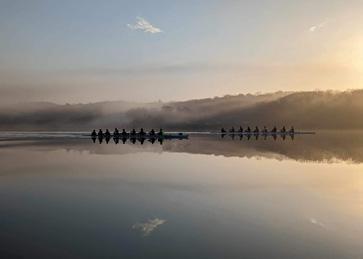
Emma DaRosa reflects on her appreciation for Vassar’s rowing team

EDITOR-IN-CHIEF
MANAGING EDITOR
SENIOR EDITORS
NEWS EDITOR ARTS EDITORS
ASSISTANT ARTS EDITOR
FEATURES EDITOR
ASSISTANT FEATURES EDITOR
OPINIONS EDITOR
ASSISTANT OPINIONS EDITOR
HUMOR EDITOR
ASSISTANT HUMOR EDITORS
SPORTS EDITORS
ASSISTANT SPORTS EDITOR
DESIGN EDITOR
ASSISTANT DESIGN EDITORS
COPY EDITORS
ASSISTANT COPY EDITOR
GRAPHICS EDITOR
ASSISTANT GRAPHICS EDITOR
PHOTO EDITOR
ASSISTANT PHOTO EDITOR
GAMES EDITORS
SOCIAL MEDIA MANAGER REPORTERS/COLUMNISTS
Emma Brown
Darja Coutts
Julian Balsley
Grace Finke
Hadley Amato
Aurelia Harrison
Brendan Kennedy
Sophia Marchioli
Sydney Jones
Tina Mao
Ian Watanabe
Zoe Rodriguez
Josie Wenner
Wren Buehler
Noah Daube-Valois
Armaan Desai
Holland Kaplan
David Bray
Lucas Seguinot
Teresa Garcia-Green
Hannah Wells
Elliot Evans
Gabrielle Lyman
Julia Weber
Aria Kuklinski
Charlotte Willenbring
Makenna Brown
Aviva Barry
Olivia Blank
Felix
Mundy-Mancino
Mia Liloia
Eduardo Culmer
Noah Duncan
Samuel Eisenberg
Iggy Gutierrez
Melody Hamilton
Isabel Holmes
Lora Janczewski
Eli Lerdau
Madeline Nusbaum
Evan Seker
Erin Thatcher
PHOTOGRAPHER CARTOONIST COPY STAFF
Amritha Dewan
Andrew Chu
Catriona Chapman
Nikola Parker Cooperman
Cooper Jaffe
Ren Nicolau
Tess Novack
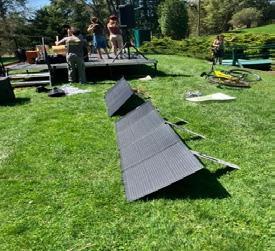
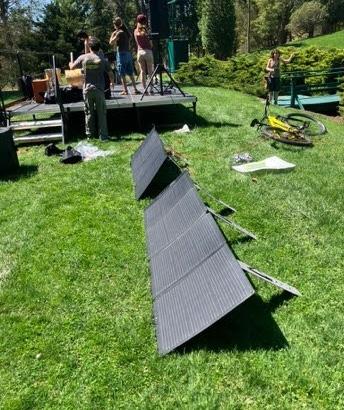
In April 2026, spectators at the Vassar Outing Club’s (VOC) Folk Fest may have noticed two new pieces of equipment amid the usual rock-band set up: a mini-array of portable 1,000 watt solar panels and a battery. Purchased by the Environmental Studies Department, the solar panels helped concert organizers forgo the usual costs of running power cables from nearby buildings. Electrified sunshine powered all the musical equipment for the concert’s five-hour runtime.
When Vassar Research Associate and Adjunct Assistant Professor of Environmental Science Mike Roth and Professor of Physics Jenny Magnes helped purchase the solar equipment during Summer 2025, they did so with the idea of putting solar power in students’ hands. “Professor Magnes and I wanted to have a hands-on tool that is portable for teaching and student projects,” Roth told me.
Important for this educational endeavor, the battery records data regarding its state of charge, charging and discharging rates in real time. Since their purchase, the solar panels have been featured in class curricula, from the application of the photoelectric effect to offering ideas for projects that integrate solar technology in the local community. Roth also uses the panels as part of the Vassar Energy Lab, an upcoming initiative to forefront student-energy projects, archive energy related curricula, and provide technologies like the solar panels for student use and experimentation.
The idea of solar concerts manifested during a planning meeting for the Sun -Day event last fall. As part of national-wide celebration of Solar Energy, the Students for Equitable Environmental Decisions (SEED) unveiled the equipment as part of a larger teach-in on solar energy, including its environmental benefits and recently acquired title as the cheapest form of electricity.
The Sun Day concert is where I first became familiar with the equipment. My jazz combo played about 45 minutes of music—all the jazz standards with “sun” in the title—followed by Vassar College Traditional Music.
Roth, a nine-year touring rock musician himself, was eager to lend the equipment for more performances. At that point, however, we did not know the extent to which the battery could power a full concert. The speaker system for the microphones, for example, was plugged into a power strip that came from a nearby building, while the power for at least one of our amplifiers came from an electric vehicle parked behind the stage.
Moving forward, I wanted to be knowsure
whetherthat larger-scale solar concerts were feasible. After the Sun-Day concert, and as part of a class focused on renewable energy, I tested the battery further, to push it to its limits. To do so, I conscripted two guitarists, a keyboard player and one of the loudest drummers I know. We plugged in all our equipment to the battery: the PA system, amplifiers, guitar pedal boards, my bass pedals and a keyboard. After an hour and a half of cranking the volume, the battery’s state of charge only fell to only around 70 percent —and this was without charging the battery while playing.
The musical equipment demanded power at a rate far below the battery’s maximum rating of 1,000 watts.
I shared this information with the organizers of the Folk Fest, who ultimately decided to use the solar equipment, particularly because of the lower power demand of most of the acts, especially compared to what I had tested. Five hours of music only drained the battery’s total charge by around nine percent. VOC Co-President Cormac Minarovich ’26 never needed to readjust the panels’ position as the sun moved across the sky. If the solar panels were positioned at their optimal angle, Minarovich guessed that the battery could have retained even more of its charge.
With this track record, there is little reason why outdoor events needing power should not default to using the sun. With the exception of Vassar College Entertainment (ViCE) concerts and Founder’s Day, there are few outdoor events longer and more energy- intensive than Folk Fest.
The panels also save money for House Teams and student organizations. As it stands, the Student Activities Center (SARC) charges groups $50 for an electrician to help run cables for outdoor events that need power. Though not a large sum on its own, forgoing this charge gives event organizers a little extra cash for food and other supplies. On this note, Ravin Dhumale-Smyth 27, treasurer for the often cash-strapped Vassar Student’s Musician Union (StuMu), showed enthusiasm for the battery.
Moreover, the solar panels open up more of the campus for outdoor musical events. Picture a little band setting up shop, off-the-grid, on those sunny days where many of us like to bask on the quad. Better yet, a concert by Sunset Lake, preferably at sunset. The battery, even without the panels, likely has enough charge for an evening show.
Mainstream discourse frames solar energy mainly in response to global warming. Regarding the music industry at large, multiday outdoor music festivals are the older siblings to events like Folk Fest. They are notoriously power intensive, with the sudden
influx of power demand often straining local electric grids. As a result, concert organizers routinely have their own generators, usually burning natural gas. Some events, however, began supplementing their energy demand with renewable energy. The Bonnaroo Music and Arts Festival, for example, recently installed a solar array that covers 20 percent of the festival’s electricity demand. Obviously, solar concerts are not the main way Vassar will decarbonize. As documented by SEED, most of Vassar’s greenhouse gas emissions come from our on-campus heating and cooling plant, which burns natural gas. Decarbonizing our heating and cooling system, mainly through a scheme of ground source heat pumps, is the primary way we can put a dent in that statistic. As a wealthy private institution, we owe it not only to the world at large, but also to our community in the Hudson Valley. In New York State, Poughkeepsie ranks number one in asthma prevalence, a statistic driven by the pollution of its air.
Nevertheless, solar concerts can still play a role in making our campus’ energy con-
sumption more sustainable. The high visibility of solar panels is good for advertising the technology, perhaps building enthusiasm for larger investments by Vassar. By making solar a regular sight, we can help to change the common perception of renewables as merely alternative energy. More than just a vanity project, I think that solar concerts may help embody some of the multiplicity in a world of renewables, where the onus of power generation would increasingly rest on a diverse mix of technologies, where the management of such systems relies on more than just large scale utilities and fossil fuel monopolies. Solar panels give me the power, pun intended. Whatever we can theorize about the symbolic effects of solar concerts, the sun battery seems here to stay, nonetheless. Since Folk Fest, it has powered SEED’s Earth Day celebration, and on the same day, the Cushing Carnival. Minorovach expressed that StuMu and the VOC’s Fall Fest, another historically sunny occasion, is looking increasingly solar powered, as are many of my own musical pet projects in the coming year. So, for songs and sunshine bouquets, stay tuned.
Catherine Phillips Guest Columnist
In August of 2022, I moved into a double on the ninth floor of Jewett House. On my first year move-in day, it was raining and hot. I got to my room, 901, and checked out the two windows: One facing north and overlooking the parking lot, and the other facing east toward the cemetery. I put the plant I was carrying on the bed closer to the north-facing window, marking it as mine. I heard the door handle turn, and there was my roommate: Gus Pointer Mace ’26. My room quickly turned into our room.
To this day, Gus and I joke about how we never would have met had it not been for the roommate lottery system. Sure, we had similar bedtimes, liked a quiet and tidy room
and shared the same preferences about having people over, but we did not share the same hobbies or niche interests. He is from the Midwest, while I am from the South. He wears the same pair of black platform boots every day, and I own over 10 pairs of shoes. But on that first night of sharing a room, when he suggested we watch an episode of BBC’s “Pride and Prejudice” series, I knew we were going to be just fine.
We became such good friends over the course of that year that as sophomores we got singles in Jewett right next to each other. During our junior year, we lived in different suites on the same floor in Main. Senior year—this year—is the furthest we have lived from each other, with Gus in the South Commons and me in the Terrace Apartments.
In April 2024, I drove to Connecticut to
pick up my cat, Ollie. I never had a cat growing up—we always had dogs—but I knew I needed a cat. I had gotten approved for an emotional support animal right before my sophomore spring semester ended and my second summer at Vassar began. Despite my allergy to cats, I decided that a four pound tabby kitten was the answer to my ongoing anxiety and depression. Ollie is now nine pounds and I am on an even higher dosage of Prozac. I promise he is great at his job.
In December 2024, I said goodbye to Vassar for the first time. I would be studying abroad in Paris, France, for five months and this would be my first extended break from Vassar since moving in freshman year. I was more than ready to say goodbye for a few months. On the night before I left, I pulled an all-nighter. I had procrastinated writ-
ing a final and did not finish it until 6 a.m. When I looked outside, it was snowing. I wrapped myself up and went on my last Vassar stroll for a while. In my sleepy state, the only thought I could muster was how magical campus looked. The snowplows had not come through yet, so mine were the only footprints. I saw a deer by Blodgett Hall and thought of Narnia. It was so peaceful. I remember thinking it was a good omen for the experience that was about to come, as if Vassar was sending me on my way with an invitation to come back in the summer. I have yet to see a prettier snowfall.
In May 2026, I sat on the couch in my Terrace Apartment and waited for Gus to come over. He arrived, untied his platform boots, greeted Ollie and came into the kitchen. I put on episode one of BBC’s “Pride and Prejudice.”
Emma daRosa Humor Editor
The time has come for me to give you 12 final pieces of impeccable advice. I hope you take it all to heart. Thank you for trusting me to advise you so many times. Thank you, thank you, thank you.

ARIES March 21 | April 19
The day has finally come! Remember, when you finally get the last Ikea bag in the car and drive away, not knowing when (or if) you’ll be back, it isn’t you against the world. I think Sondheim put this best: “Sometimes people leave you / Halfway through the wood / Others may deceive you / You decide what’s good / You decide alone / But no one is alone.” May we all find our way back to these woods one day.

TAURUS April 20 | May 20

GEMINI May 21 | June 20
Don’t be afraid! The world is your oyster now! Well… unless you’re allergic to oysters. I’ve heard that’s a common affliction that some perfect and hilarious Tauruses suffer from.
LIBRA Sept. 23 | Oct. 22
SCORPIO Oct. 23 | Nov. 21
Seize this moment! Look around, hug someone, kiss someone, make amends with all your greatest enemies. Tomorrow is tomorrow’s problem!
CANCER June 21 | July 22
I promise your hair doesn’t look weird under the cap. Or, if it does, it’s just one weird head in a sea of weird heads. They don’t really flatter anyone.
Listen to whatever Noah Baumbach says really carefully. I’m sure it’s great advice. At least it’ll be better than that crazy AI bootlicking speech that went viral last week.

SAGITTARIUS Nov. 22 | Dec. 21
I swore to never tell, but these are my last horoscopes, I can do whatever I want. The love of my life is a Scorpio, so I always conveniently made the best predictions for you guys. Kisses!
I think I finally spelled it right the first time! I always knew that I’d learn something in college, I hope you learned everything you wanted too. If you didn’t, there’s still time :)

LEO July 23 | Aug. 22
You can’t hang on to things when it’s time to leave. Trust me, anyone who’s ever eaten potato salad one day later than is wise knows what I’m talking about. Let go <3
CAPRICORN Dec. 22 | Jan. 19
AQUARIUS Jan. 20 | Feb. 18
Someone told me recently that they’ve radically accepted the uncertainty of their future. I wish I could give you, in these last lines, some certainty, or at least the gift of that acceptance. I’m sorry, I can’t. There is time to worry about it all later though, for now, let your loved ones take one more picture.
How do you feel? Does it ache, do you want to cry, do you want to scream, are you relieved? I think I’m all of that. Let it out. I don’t know you, but I love you.
VIRGO Aug. 23 | Sept. 22
HEY, STOP, no more reminiscing. You aren’t serious about wanting to stay another year, that’s enough. Just think about that one time there was like all fish at the Deece for a week.
PISCES Feb. 19 | March 20
The last horoscopes I’ll ever write. Of course it’s Pisces. Pisces. Ridiculous way to spell a word. God, I fucking hate Pisces.
Luke Jenkins and Chloe Rogers Guest Columnists
Air conditioning
Lacking in my life right now Congrats graduates
Long lines on Wednesdays Why only sushi one day? Missing old Retreat
My freshman year dorm Sharing a hot sweaty room Stranger becomes friend Sophomore Founder’s Day The Noyes basement sewage flood Raining every year
Junior year triple Booted from apartment draw Fighting for housing
Red wristband marks me Yay, bottomless mimosas When is senior streak?
Graduating soon
Fearlessly consequential I don’t have a job
Language is—and has always been—fluid. As people of various gender identities become more visible in our world and on our campus, it is increasingly important that we adapt academic writing conventions to include everyone.
My motivation for this essay comes from a critique of heteronormativity, patriarchy and masculinity—not from a trans identity. I do not speak from experience as a non-binary person or as a woman, but as someone who challenges social power and discriminatory normativity wherever I encounter it.
I have become more deliberate about using neutral language when referring to people whose gender identity is unknown. That said, referencing a figure whose identity is central to how they are understood through a critical lens still matters. Take men who create war—something historically tied to patriarchal power and ideals of masculinity.
One way people have attempted to challenge male normativity in writing is by replacing “he” with “she” when referring to an unspecified character. While this disrupts the default, it replaces one form of gendered normativity with another rather than genuinely including everyone. True inclusivity requires moving beyond substitution and toward flexibility. Singular “they” has become the most practical solution because it neither assigns gender nor forces readers into unfamiliar grammatical structures. This shift reflects the reality that many people exist outside binary categories while remaining intuitive enough to preserve clarity in academic and public writing. The purpose of inclusive language should not be to create a new default, but to dismantle the assumption that one default is necessary at all.
Another, perhaps more complicated, development in gender-neutral language has been the use of neopronouns. Some critics, myself included, have questioned their use—not to delegitimize identities that exist outside the binary, but in the interest of simplicity and accessibility. Singular “they” is standard in my vocabulary, as it is for many people in the Vassar community.
Opposition to neopronouns exists both within the transgender community and among cisgender people. They are unfamiliar and, for many, genuinely confusing to use. To clarify for readers less familiar with the term: Neopronouns—alternatives to he, she and they, such as xe/xem and ze/hir— have become increasingly popular as a way of expressing non-binary identities.
A further subset, noun-self pronouns, takes this idea even further by constructing pronoun sets from nouns to express a personal identity or affinity with a concept. Unlike the transphobic “attack helicopter” joke often invoked to mock non-binary identities, actually used noun-self pronouns include sets such as fae/faer/faerself, derived from “fairy.” Some argue that neopronouns, and noun-self pronouns in particular, make the queer community an easy target for mockery, or that the attention they attract pulls focus from more urgent issues such as transphobic bullying, the murder of trans people and suicide. However, supporters argue they offer genderqueer and neurodivergent individuals language genuinely made for them, rather than adapted from systems built without them in mind.
One critique of noun-self pronouns is that they create assumptions about a person in the same way traditional pronouns do. When you hear “bread,” a set of associations follows automatically—the same logic that makes gendered pronouns reductive applies here, too. If the goal is to move beyond cat-
egorization, attaching identity to symbolic objects or concepts can unintentionally recreate the same process under a different framework. At the same time, advocates would argue that these pronouns are not meant to function as universal linguistic tools, but as deeply personal expressions of selfhood. The tension, then, is between language as a collective system built for mutual understanding and language as an individualized form of identity-making. Academic writing, in particular, depends on shared conventions. A sentence overloaded with unfamiliar pronouns can become inaccessible, and accessibility matters if the objective is communication rather than purely self-expression.
That does not mean unfamiliar identities should be dismissed outright. Language has always evolved in response to people whose existence challenged societal norms. Words once considered improper or unnecessary eventually became ordinary because people adapted to the realities they described. Words such as “blog,” “podcast” and “emoji” entered mainstream language only after social and technological changes made them useful. Trans people exist, and society must adapt to that reality; their existence cannot simply be denied away. Resistance alone is not evidence that something lacks legitimacy. Still, every linguistic change involves negotiation between precision, readability and social meaning. The debate over neopronouns is ultimately not about whether gender diverse people deserve respect, but about how language can best balance personal autonomy with collective comprehension.
I recognize how unserious this may seem to some readers, particularly older ones— but this is a real and growing part of society, and providing a legitimate forum to discuss these identities is a first step toward broader acceptance of the diversity of human experience.
The most productive approach may be one rooted in good faith rather than hostility. It costs little to respect the pronouns someone asks to be called in personal interaction. Academic institutions, journalism and public discourse all rely on language that can be broadly understood. There is room for experimentation without abandoning clarity altogether.
What matters most is the broader principle underneath these debates: People are trying to articulate experiences that older social structures often denied them the language to describe. Even when certain forms of expression appear awkward or unfamiliar, they emerge from a genuine attempt to reconcile identity with communication. That effort, in academia and elsewhere, deserves engagement rather than ridicule.
At the same time, language should remain open to critique. Questioning whether a particular linguistic practice is useful, sustainable or politically effective is not inherently discriminatory. Healthy discourse depends on the ability to examine social developments critically without letting disagreement into hostility. If inclusive language is to succeed, it must be capable of surviving scrutiny rather than existing beyond it. That said, do all forms of tolerance require scrutiny? Or are there certain structures that should exist without questioning?
Ultimately, the evolution of pronouns reflects a larger cultural shift away from rigid assumptions about identity and toward a more self-defined understanding of personhood. Whether every current linguistic experiment survives is less important than the fact that people now feel increasingly empowered to question inherited norms. That questioning—of patriarchy, heteronormativity and the social systems that enforce them—is valuable in itself.
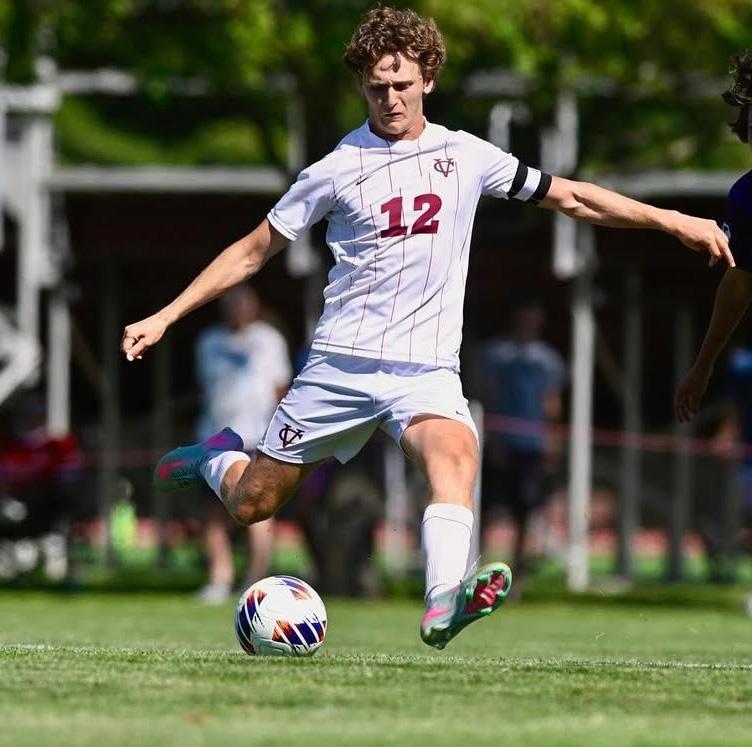
Jared Fiske
“Following a conference championship and one of the best seasons in Vassar Men’s Soccer history, there were high expectations set by the league and ourselves for this year. Under Coach Jonathon Hood and Coach Andrew Mpasiakos, we were able to return to the conference final and have another great season. For me, this year offered additional meaning with it being my final season in the program. I can confidently say that I, along with my fellow seniors, Patrick Gale, Bevan Howard, Diego Pastor-Valverde, and Otis Wildman, are very proud of the program we have been a part of these last 4 years and the impact we have been able to make. The VCMS group is a special one and I am really excited to watch the team continue succeeding in the years to come. The 2025 season was a phenomenal year, but more importantly, my entire Vassar athletic experience has surpassed my expectations and I will forever be grateful for Vassar Men’s soccer.”
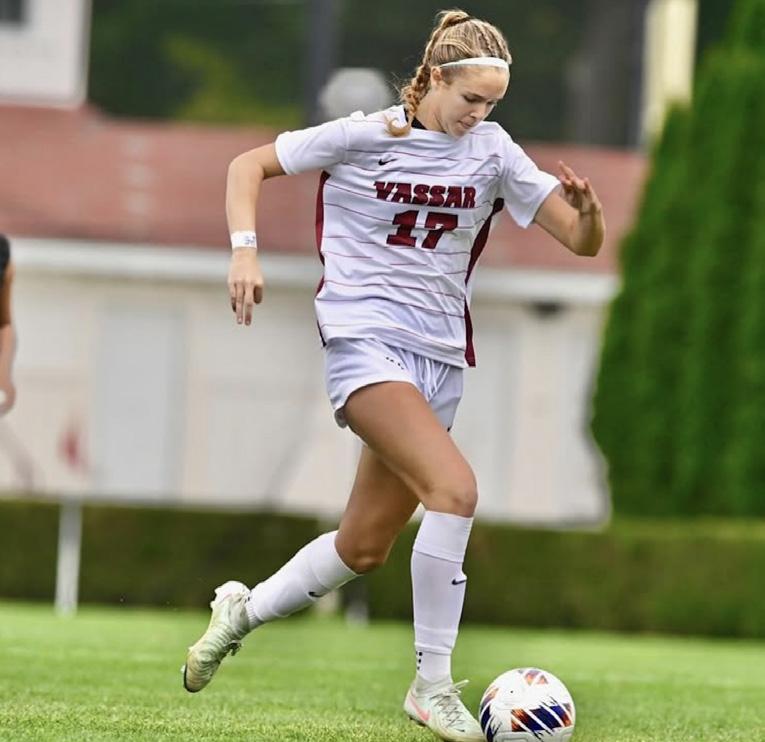
“My athletic experience at Vassar so far has been everything I could have hoped for. My teammates and coaches have pushed me to grow both on and off the field, and the athletic community here is incredibly supportive and connected.”
Women’s
Long-distance Prospect,
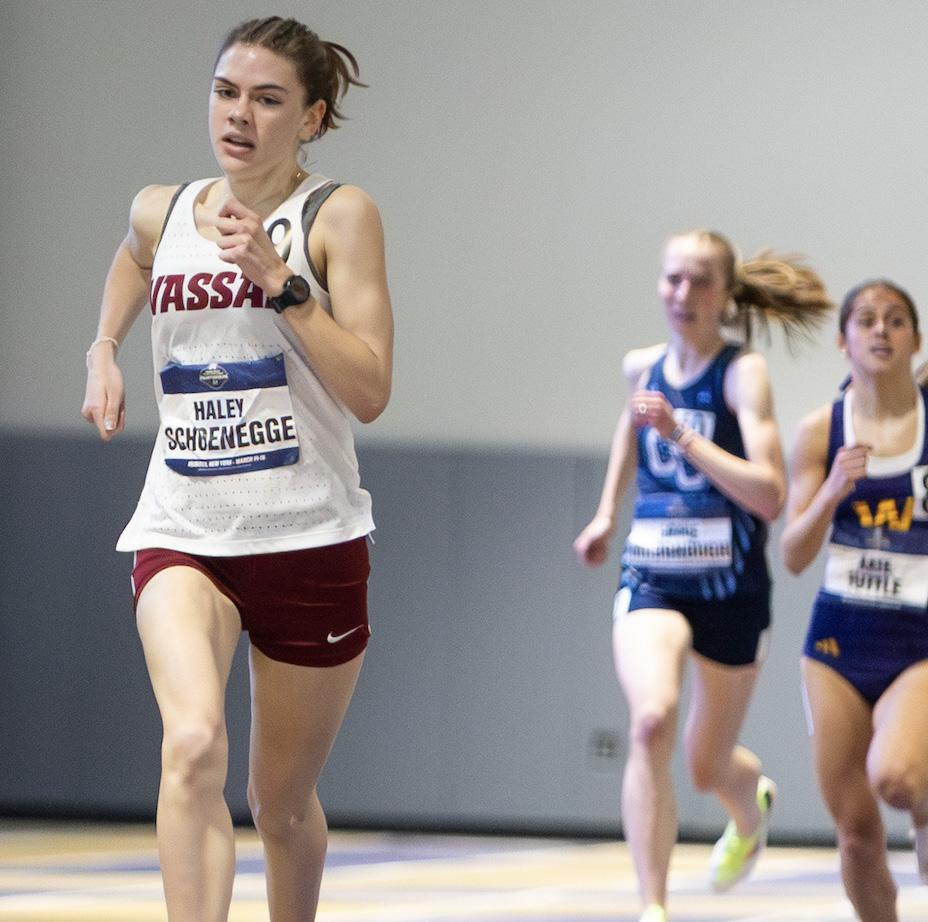
“This year, Vassar’s women’s cross country and track and field programs had exceptionally successful seasons. Across all three seasons, our team’s commitment to training and conditioning led to some of the best results in program history, including a third consecutive Liberty League title in cross country, our highest-ever team score at the NCAA Cross Country Championships, and a third-place finish at the Liberty League Outdoor Championships. Now, my teammates Jahmilia Dennis, Amanda Hanrahan, and I are preparing to compete at the NCAA Outdoor Track and Field Championships, where we’re proud to represent Vassar College and our entire team.”
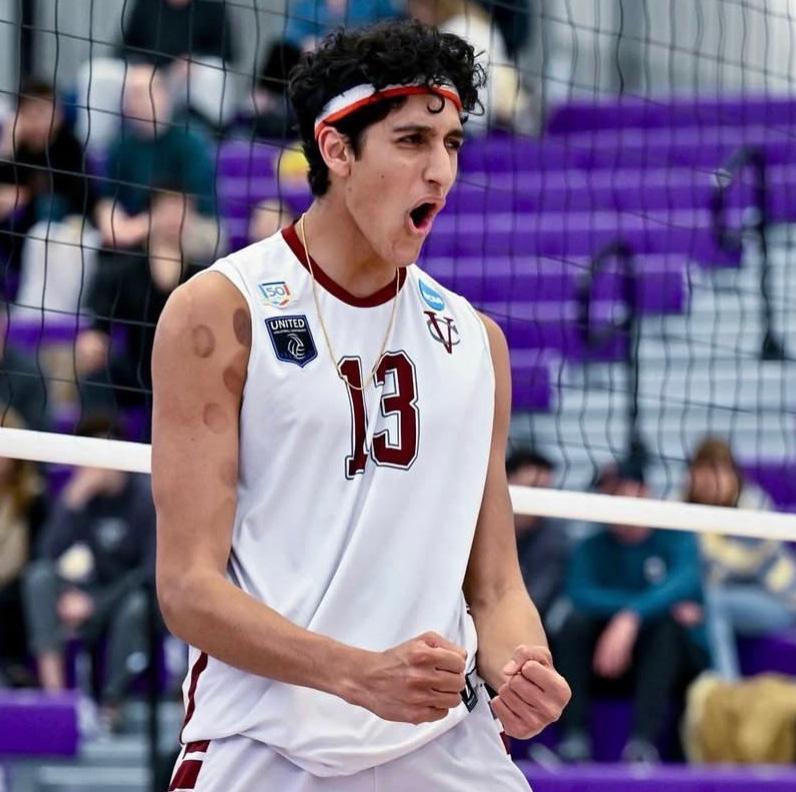
“This was a roller coaster of a season. We started off with some pretty big blows with injuries and bad losses, but were able to bounce back and learn a lot of valuable lessons. I learned a lot about being a leader which was a new role for me this year. I experienced a lot of individual success but I would be nowhere without my teammates. Going into my senior year, I know I can translate this into team success and compete for the natty chip.”
Fall Sports dominate
Fall sports teams excelled this year. Women’s soccer won their first program Liberty League Championship and Field Hockey won the Liberty League in a momentus turn-around after finishing 4-14 last year. Women’s Cross Country earned their second league title in a row. Women’s rugby won the tri-state conference playoffs.
Women’s Track & Field go for gold
Women’s track and field sent three athletes to the NCAA Division III National Championship in La Crosse, WI., as Haley Schoenegge ’27, Jahmilia Dennis ’26 and Amanda Hanrahan ’28 represent the Brewers on the national stage.
Men’s basketball return to glory
For the first time since 2022 and the second time in program history, the Vassar men’s basketball team won the Liberty League Championship. Under the leadership of Coach Ryan Mee the squad earned two all conference nods.
The women’s and men’s tennis teams cruised through the Liberty League this spring, finishing the regular season each with a perfect 8-0 record, before falling in the conference championship match. Five Brewers from each squad were named All-Liberty League selections.
Women’s rugby dynasty continues
Under the guidance of Coach Tony Brown the women’s rugby team won the tri-state conference playoffs for the ninth time in the last ten years. The squad returned to the NCCR final four but fell short against the US Coast Gaurd Academy in the semi-finals.
Vassar breaks ground on new fields
Vassar College announced the construction of the brand new Virginia C. Mars Lacrosse center. The improvements will increase the capacity of the bleachers, and expand the venues technical capabilities. The fields will aid the flexibility for teams across the athletics department.
During my freshman year, when my roommate told me she was joining the rowing team, I was beyond baffled. In my mind, college was a time to finally slow down. I was so ready to give up all the hustle of high school extracurriculars,
were canceled. I cannot even begin to count how many times we moved or canceled dates, and, of course, he spent most Saturdays after spring break at regattas, unable to bask in the finally warm weather with me. Still, he and many of my friends love to row. So, rather than sit in this annoyance at their limited schedules, I brought a car to campus sophomore year and decided
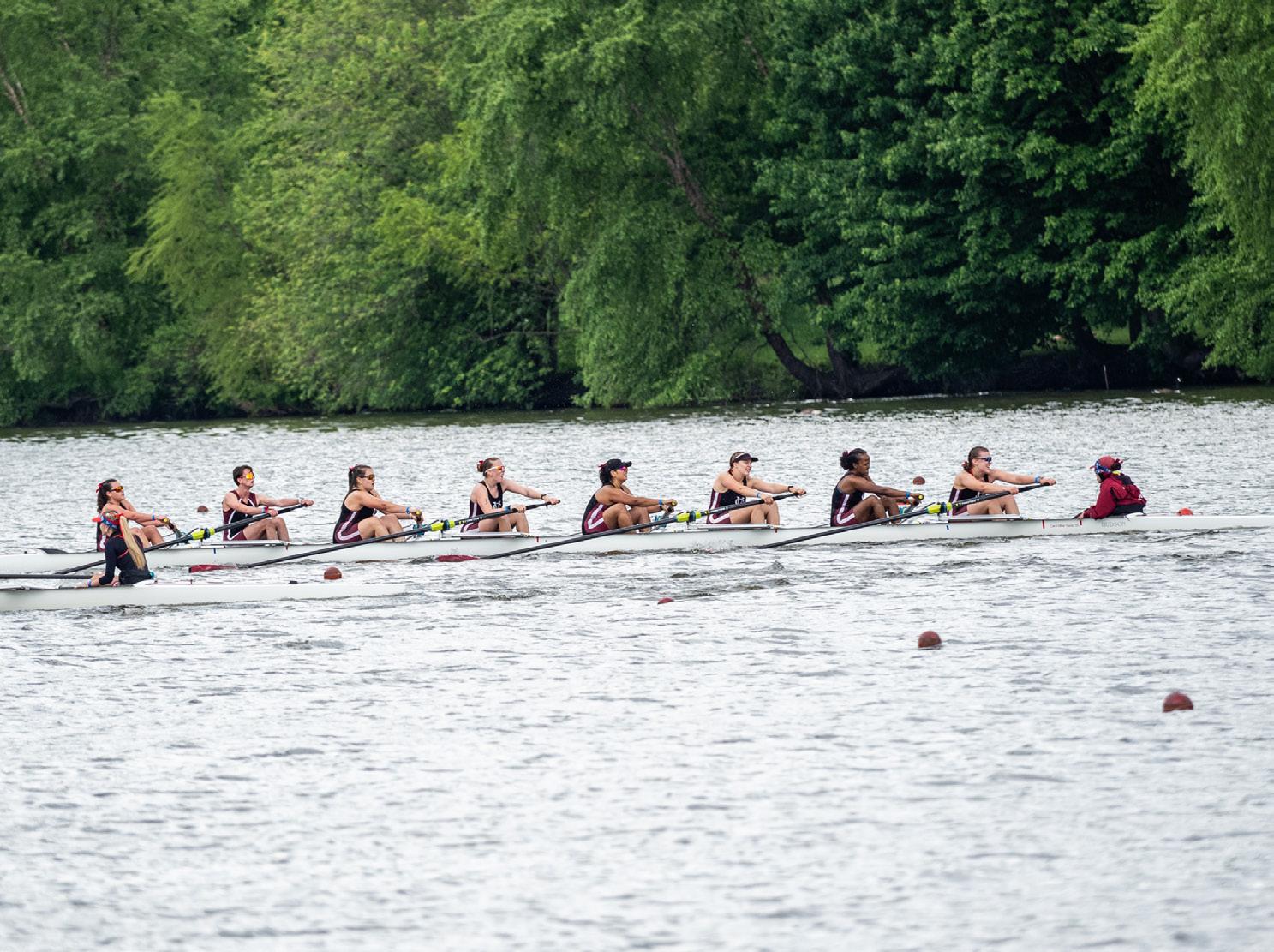
exhausted by the dance I did trying to convince colleges that I was interesting enough to admit. I could not imagine balancing the academics that I thought would be so scary with the intensity of 5:00 a.m. practices six days a week. Luckily, I am the world’s heaviest sleeper, so even though I thought it was wild, it was no big deal for her to clamber down our bunk bed before the sun rose every morning. As time went on, I would come to see why she, and so many other important people in my life, came to love such a demanding sport.
My boyfriend joined the rowing team freshman year as well and has always been dedicated, even becoming one of the captains this year. To be candid, there were moments I found it incredibly irritating. We could not hang out after 8:30 p.m. most evenings, and a surprise October break trip meant our own senior year travel plans
to see what it was that kept them coming to each race, despite all the craziness that it added to their academic and personal lives. I will never forget the first regatta I spectated. It was so much more exciting than I realized. There is no rowing like this in Idaho, where the rivers are mostly whitewater, so my only experience with it up to that point was from watching “The Social Network.” Watching not just the Vassar boats—though I cheered loudest for them— but everyone competing on the regatta days captivated me. The races are so short, but the preparation for them is so intense. It is truly incredible to see the few minutes that represent a culmination of months of aggressive training.
My boyfriend, Patrick Horiszny ’26 shared a similar sentiment with me from a competitor and captain’s perspective. “I participated in sports my whole life leading
up to college, which I think is what drew me to rowing (even though I was convinced at the time that I needed a break from being part of any sort of team), but rowing is very different from everything else I’ve participated in. The training to competing ratio is very different. Races are pretty much a few minutes long, and we have under 10 a year, so you’re not getting that immediate com-
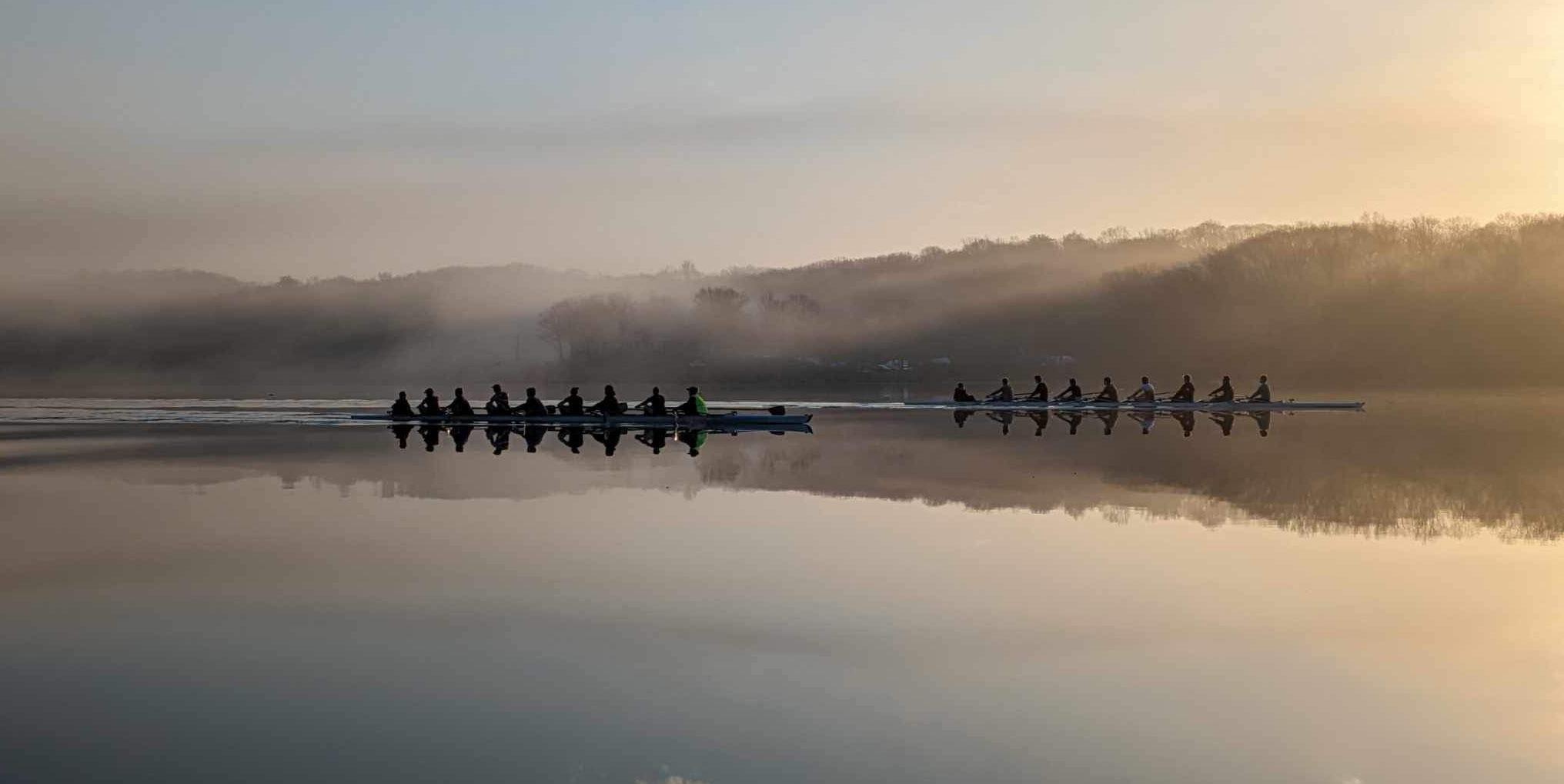
that come with rowing. The opportunity to bear witness to that dedication has taught me the value of slowing down and waiting for good things to come. The whole point of rowing, and, it seems to me, life, is the journey. I know this sounds corny, but there is no better example in my mind of putting work into something and waiting for the payoff to come much later.
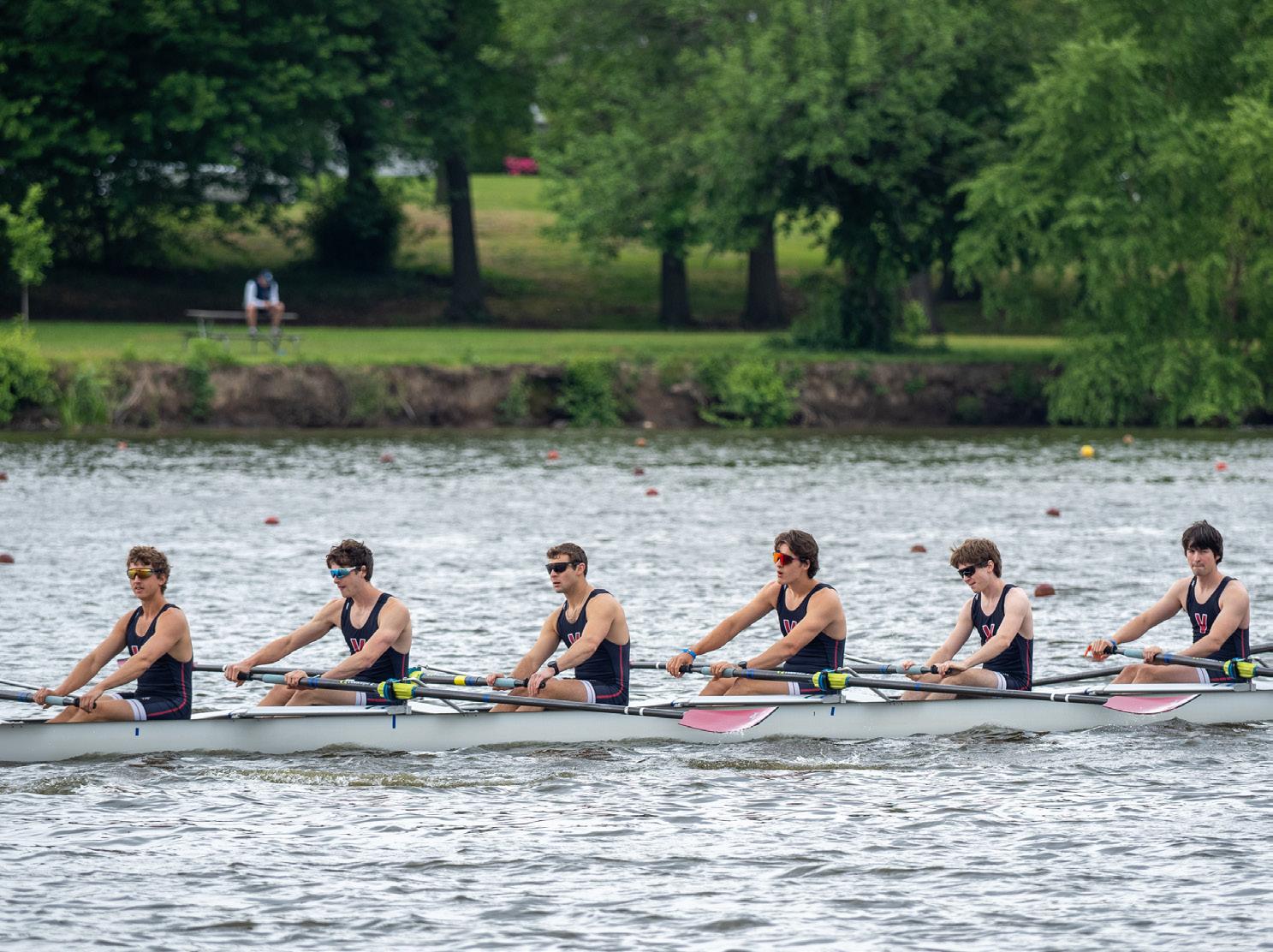
petitive feedback, I guess. You have to keep yourself locked in to a much greater level”. He continued, expanding on the level of commitment rowing requires. “College athletics in general require a much greater level of responsibility, and rowing as a sport does as well. Being a valuable teammate is not just rowing well and powerfully, but showing up on time (and of course going to bed very early), learning to take care of the equipment, and consistently looking for ways to help your coaches and teammates. Obviously these things are true in other sports, but I personally learned them to a greater degree through rowing.”
This commitment to regular preparation for a very brief payoff has always seemed almost meditative to me. I have become intimately familiar with the constant cycle of early to bed, early to rise, training, back pain, blisters and deep exhaustion
Through watching the rowing teams’ dedication to this principle, I found myself becoming much more comfortable with a slow, steady march towards success. This conception of what dedication looks like is what ultimately powered me through writing a thesis, applying for jobs and everything else that has been worth doing. I never thought I would be someone who would spectate sports in college. I still get many funny looks and laughs when I say that I am driving nearly four hours on a Saturday to watch a few minutes of college rowing. Sometimes I laugh at myself when I realize you can just barely see the team from far away at the very end of the race. Still, when I drive home, I always find myself thinking, “Wow, they really care about that sport.” I think that must count for something. Maybe that slow dedication counts for everything.
By: Sadie Keesbury

ACROSS
1. What you might use to clean a spill
5. Disorder for eating non food, abbr.
9. Kitten noise
10. Stat!
11. Baby hosp. room
12. Filled, with “with”
13. Who we celebrate this weekend
15. Twelfth letter of the alphabet
16. This weekend’s class, casually
22. Alto or baritone
23. Online class locale
24. No good
25. Suffix with cigar or marion
26. One word on Mangione’s bullets
27. “_____ impression of me!!” (cliche request of a comedian)
DOWN
1. What to convert HEIC into
2. Woods with redwoods
3. It’s a killer!
4. Appropriately
5. Still
6. “_____ Cake?”
7. Where to get an espresso
8. Primates, or ENST credit transfer
14. Frisbee preceder, for short
16. Pranked with tissue, for short
17. What the Queen and the ocean both do
18. The Office redhead
19. Juan of the Mets
20. Tiniest amount
21. Marvel group led by a professor
Allison Lowe
Ihave been procrastinating writing this retrospective. Truthfully, I have been procrastinating many of the things that will make up the “lasts” of my Vassar career: turning in my final essay, saying goodbye to my professors and even doing my final load of laundry. It feels wrong to end the routines and rituals that I have built up over these past four years. Chief among these rituals is the editing and production schedule of The Misc, which has structured the majority of my semesters here at Vassar with its Monday and Tuesday production nights, Wednesday Ed Boards, Thursday Exec meetings and Sunday article deadlines. This schedule has repeated over and over again, becoming a constant, reliable mantra throughout my life. It is so strange to realize that this will be the final issue of The Misc that will guide me in this way.
My Misc career started off on Copy Staff. I distinctly remember the interview I had with the Editorial Board during that first semester—walking into a Rocky classroom crowded with unfamiliar faces and stammering out some random sentences about my love for writing and grammar. My time on Copy was lovely and fulfilling. Sitting in The Misc office once a week and reading through the articles of any given section taught me the style and the rhythm of the paper. I remember walking through the Jewett lobby, picking up a paper and proud-
ly showing my friends an article where I had deleted an Oxford comma. I was so excited to see something that I had worked on, even in a relatively small way, distributed around campus and read by members of the community.
Sophomore year, my friend Clara and I joined the News team. During my senior fall, I became Managing Editor, before eventually becoming Editor-in-Chief this past semester. Every new role has brought its own series of trials and tribulations. Every semester, I have learned invaluable lessons and made unforgettable memories.
Being the Editor-in-Chief of The Misc has been the absolute greatest privilege of my time at Vassar. It has been an honor to lead a team of over 50 student volunteers, who each work incredibly hard each week to produce this paper. Every single member of The Misc’s masthead, alongside countless other contributors and readers across the Vassar community and beyond, is essential to the work that we do.
I would be remiss if I did not shout out the students who have made publishing The Misc possible. While these quick thank yous only scratch the surface of the incredible work that you each do, I hope that you know how much you all mean to me and to The Misc community as a whole. Thank you to our Columnists, Photographers and graphic artists: You have made each and every issue this year come alive. Thank you to our Distributors, for ensuring that our content safely reaches the hands of our readers. Thank you to the
Copy Editors and Copy Staff, for diligently refining every article and eradicating every evil Oxford comma. Thank you to the Design team for laying our groundwork every week and answering each of our InDesign queries. Thank you to every one of our section editors and assistants, for guiding every move we make and thinking; none of this would be possible without you. And a thousand thank yous to the members of the Executive Board these past two semesters: to Dasha, for being one of the most dedicated and thoughtful people I have had the privilege of meeting; to Madeleine, for your visionary thinking and incredible humor; to Kathryn, for your eagle-eyed edits and faithful walks back to the TAs; and to Soren, for your keen insights and brilliant writing.
And of course, I am beyond grateful for some of my closest friendships, which have been forged—at least partially—in The Misc’s hallowed halls. Clara: You inspired my love for journalism, and your kindness and insight grounds me every day. I always feel at home when I am with you. Carina: Not only did you show me the ropes of being Editor-in-Chief, but you also guided me through every step of senior year with your wit and passion. You inspire me every day, and you have a spot on my couch forever and ever. Luke: You have been the ultimate partner-in-crime throughout this entire journey. You are quick-witted beyond measure and your thoughtfulness knows no bounds; you will always be my twin flame. And thank you to my housemates—Ashley,
Chloe and Wyatt—who, despite not being on The Misc’s Editorial Board, have been absolutely essential to the functioning of this paper. I wouldn’t have been able to do any of this without your friendship.
In a way, it is unfathomable to think that this retrospective will mark the end of my Misc career. But, I have to remind myself that the lessons I have learned and the skills I have gained will not disappear with the publication of this final issue. Instead, the time that I have spent at The Misc and at Vassar will continue to guide me as I take the next steps of my journey.
Recently, I participated in a game of campus-wide hide-and-seek, which was kindly organized by fellow senior Leo Valenti. This gave me the opportunity to spend an hour wandering around, inspecting the corners of campus that I often pass by in my day-to-day life. This return to a childhood game reminded me that the things we love will always find their ways back to us, even if it takes some time. As I walked on Commencement Hill, I was surprised to see the risers for our graduation ceremony already built and ready for use. In the hot, balmy night air, I looked up at the pine trees and thought of our drought-stricken Orientation Week, which felt suspiciously like this scorching Senior Week, with its silly games and time spent under the tents of Commencement Hill. Maybe, I thought, hiding from saying my goodbyes has also been preventing me from greeting my new beginnings. So—goodbye Misc, and goodbye Vassar. Don’t be a stranger!
That time my pink eye made the front page
as I’m on the stairmaster or trying to sleep.
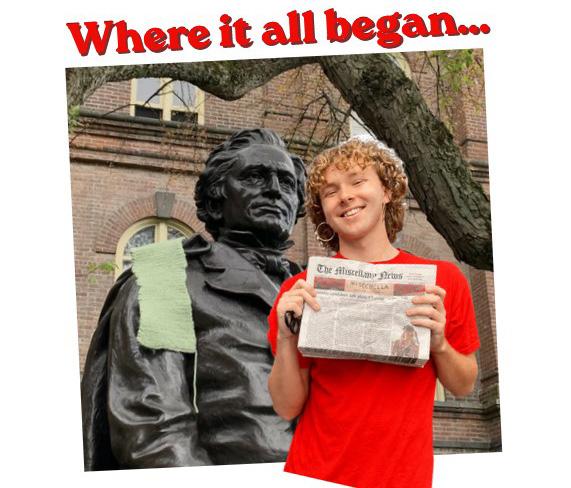
You can imagine the shock, dear reader, when the story of my pink eye appeared on the front page our first semester. It was November. It was probably chilly out too. I had likely written the piece, “Student crochets his way out of conjunctivitis,” over the course of a single afternoon. I expected it to be on page six or eight or 11. But there it was when I entered the Deece, sitting pretty on the top of the fold. A picture of Matthew Vassar, wearing the product of my conjunctivitis-induced frenzy.
I don’t really know what I was thinking writing that article or how it got to be breaking news, but I’m sure my Misc-destiny was fated that day. Friends sent me selfies with the cover. My parents were proud (I think). And I had created something out of an embarrassing situation.
I ended up sticking with the Features section, the ones who published that Pulitzer-worthy investigative tour de force. I became an Assistant, and then after dragging my feet for a few semesters, a Features Editor with my friend and housemate Yaksha Gummadapu ’26. We had a blast recruiting writers on the sole power of our vibes alone (and our flashy, flashy emails).
And then in my senior year, alongside a fabulous group graduating today, I became a Senior Editor, and later, Managing Editor. It’s been a sweet gig, editing the whole paper each week and getting a feel for what the entire Misc is doing.
And we do a lot. From News to Games to advice columns and album reviews, my brain becomes soup by the end of an editing weekend. But I’m enjoying that soup. The album reviews become the albums I listen to. The news I read becomes what I talk about in class or at work. The opinion pieces bug me
The work has changed me. The drama of it all used to take a toll: I’d feel weird spending hours on those damn couches, and I used to get nervous in our big meetings. Then one day, it stopped. I used to struggle with editing—what does this sentence need or how could this piece be stronger? But I’ve learned. Now, I have an opinion swirling in my brain on nearly every sentence I encounter.
And not just Misc sentences. I feel much more able to make judgments about the books I read, the songs I listen to and the opeds making waves online. Where was this skill in my five person English seminars? Unfortunately, nowhere to be found. But I suddenly have way more to think about when I move through the world. Way more to share. And it makes me so happy.
I’ll limit all my hand-wavey abstractions to this paragraph. What I’ve learned at The Misc, from style tips to life lessons, reminds me of the point of college. To not just prepare for a career, but to prepare for life as a real person. Maybe, even, an adult? An adult with plenty of thoughts, decisions and emotions to make sense of. Who needs time to build up morals and integrity. Who will fail immensely, and, somehow, get over it.
But back to what’s in front of me. I’ve absolutely adored our staff, and my partners in crime on Exec. Alli and I sing our sweet praises constantly, and we will for a long time. I’m always walking through the Deece with her and stanning you all by Sweets or Stocks or Oasis. Your brains and creativity amaze.
Senior year had its ups and downs, but I had so many people I could count on. Yaksha to take me to Stewart’s, or go on her famous walks. Alli to buy flowers with me at My Market, Madeleine to diagnose me as a Carrie/Samantha/Charlotte/Miranda.
The list goes on. I always knew I’d see Kathryn at the library desk at midnight, or chat with Dasha about our music taste (which is exactly the same). I could get introspective and touch grass with Clara, and then listen to hyperpop and mew with Carina. I could rant to my Mom and Dad and the rest of the Jenkins clan, and know they would listen. Thank you guys. When I got home after a long day, on the bottom floor of our TA that feels like a moist cave for trolls, I could always count on Catherine, too. She’d hear out my latest life-shattering quandary and give me advice. I’d hop onto her princess bed and we’d watch videos of girl groups, hibernating beavers, or this perfect movie with Rachel McAdams called “Red Eye.”
And then of course, the next day, Catherine, Yaksha and I would get Ready Coffee. I could always rely on that too. With this lineup, what else would a guy need?
In short, I’m proud of all the work the paper has done, and how our community still has such an outlet that is willing to try and try again. As different students come and go. I’ve seen firsthand how much good it can do, how it helps our peers, staff or the larger community; the impact is really something. I know this publication’s in great hands, and am so confident in its future success.
We’re graduating and I feel prepared. And I know I have The Misc to thank. So cheers to pink eye! And all the good it brings!
Kathryn Carvel
Last week, my friends and I were close to skipping down the TA path in pure bliss, making our way to the Lisa Kudrow talk. As an avid “Friends” fan, I couldn’t contain my excitement. Phoebe Buffay was a critical character in my upbringing, and “Friends” is constantly on a loop on our kitchen TV as we cook or eat our lunch. Her quirky and unique outlook on life has guided my own. My parents always told me I ran like Phoebe as a kid, my limbs flailing all over the place. I have always marched to the beat of my own drum, not only because of Phoebe Buffay, but definitely not barring her influence.
“This is why we go to Vassar!” I told my friends as we crossed over the bridge. At the moment, the words came from my state of star struckness, and a bit sarcastically. But really, there was some truth to them. With Phoebe’s unabashedly floopy, quirky, eccentric self, comes another side of her: self-con-
fident, curious and thoughtful about both the people and the world around her, not unlike our own Vassar community.
As the many lasts at Vassar come along, I have been reflecting on why exactly I came to Vassar, and what it has brought me over the past four years. The more alumnae/i we meet and hear speak, the more I think about how I want to carry Vassar with me after I leave.
I of course will be forever grateful for my dance community on campus, which has brought me some of the most important people in my life and has allowed me to pursue my first and greatest love here at Vassar. But, I can’t help but recognize how much The Miscellany News has brought me and has affected the way I lead my life.
I started at The Misc on Copy Staff during the very first week of my freshman year, and after spending 40 minutes removing Oxford commas from people’s articles, I was hooked. I stayed with Copy for most of my time, gradually taking on more responsibility, never feeling any rush to move on because I knew I
had found a place I loved, one that brought me some of my best friends. By this past winter, deciding to become Senior Editor felt natural. Over the last three years, I’ve developed such a soft spot in my heart not only for the work The Misc does, but for the people behind it. Dedicating so much of my final semester to the publication that has meant the most to me on campus felt less like a commitment and more like a privilege.
Of course, so much of that comes from the fabulous people I’ve had the privilege of working with every day. To my fellow Exec Board members—Alli, Luke, Madeleine and Dasha— thank you not only for bringing the energy every single week, but for handling every hurdle we encountered with grace. Sadie, Elliot and Paige, thank you for making leaving Copy oh so difficult. Hadley, thank you for never telling me to shut up, and Julian, thank you for telling me to when I probably needed it. And to the wonderful Ed Board: keep caring deeply and continue making The Misc a place where people feel heard, challenged and
welcomed. I know it’s in very good hands. And as it turned out, choosing to be Senior Editor was one of the best decisions I could have made. Working both as a student journalist and as an editor has taught me a lesson I know I’ll carry for the rest of my life: stay curious, and think critically.
For the past four years, each week has brought a new set of perspectives from students writing about an incredible range of topics. I rarely know what to expect when I begin reading, but I can count on one thing every time: It will challenge me to think more deeply.
So, as I leave Vassar, I think I want to carry that feeling with me most: the willingness to stay open to other people, other ideas and other ways of understanding the world. The Misc has taught me that curiosity is not passive, but is instead an active choice to listen, to question and to care. If Vassar has changed me in any lasting way, it is because it taught me to think deeply, move through the world thoughtfully and never stop asking questions.
Madeleine Nicks
In the last year, my answer to “What are your plans tonight?” has become a nearly automated response: “The Misc.” “Sorry, I’m busy, I have the paper!” “Production night, per usual…” “I’ll see if I can make it, Ed Board might run long!”
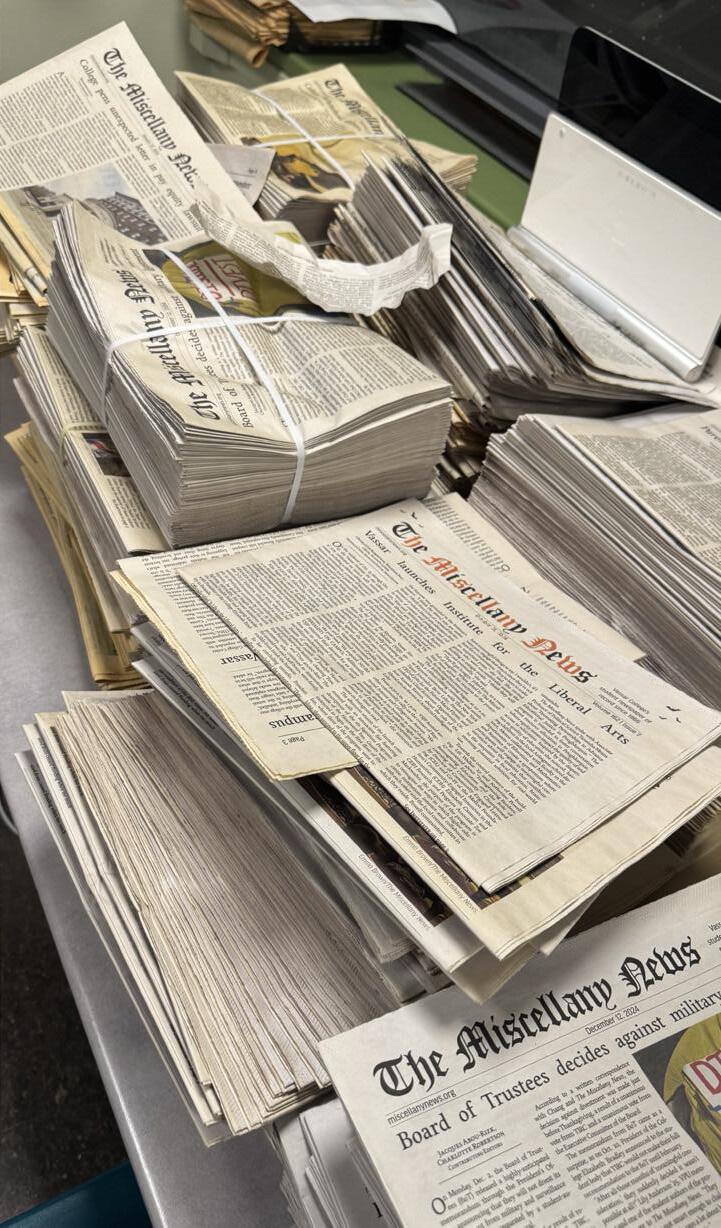
I vividly remember my first time going to the Misc office. For those who have never been, it is up the stairs next to Express, an immediate left through another door to another staircase and then you find yourself in a hallway with bright yellow lockers that nobody can quite figure out the original purpose of. Next to them is the door to the office. Upon entry, you will notice just how many past issues are stacked everywhere. Piles and piles of old Misc copies cover every surface and take up every closet. The Editor-in-Chief has their own office off to the side, very rarely in use, with the walls covered in messages from EiCs gone by to their successor. The crown jewel of our space, however, is the three couches: all a little bit gross, all very comfy. I have described the office only to emphasize that we have ample room, but if you stroll in anytime from 7
p.m. to 10 p.m. on Monday or Tuesday, you will see all of us neatly squished together on the couches. Only serious meetings, extra guests or dire circumstances take us away from working together, close quarters and tripping over backpacks be damned.
I have thought long and hard about what I wanted to say for my senior retrospective. I find myself starting over again and again because I could have written a retrospective about each role I have held at the paper and the people who helped me get there. It took me a year on campus to work up the courage to start writing for The Misc, and looking back now, with graduation in sight, I can unequivocally say that it was the best decision I ever made.
I began as a columnist through the encouragement and guidance of Allen Hale, the Arts Editor at the time, who would become our EiC the next year. Allen made me confident in writing whatever felt important to me, whether it be a small review or covering a significant event.
In my junior year, Emma Adams, then the Arts Editor, cold emailed me, asking me to be their Assistant Editor. I realized quickly, in
working with them, that The Misc was going to become incredibly important to me. Emma was a master of going to the source and crafted a beautiful catalogue of articles over their time at the paper that connected Vassar’s past students and traditions to the modern-day reality of the college. Emma’s retrospective turned to the library’s archives for guidance on how to properly bid farewell to Vassar. I feel eternally grateful that I need only turn to Emma for the same guidance.
I fell in love with the paper because of the friendship I found last year, in no small part due to Sarah McNeil and Tori Kim, and I have stayed devoted to The Misc this year because I feel a deep responsibility to do the best work I can for and with my fellow seniors who are trying to leave this paper better and stronger than we found it. Our fabulous, powerhouse EiCs of this year, Carina Cole and Alli Lowe, took the helm of the paper in stride and made endless sacrifices in order to lead the team to their full potential. Our current Exec Board, Darja Coutts, Kathryn Carvel and Luke Jenkins, are three of the hardest working, funniest and most intelligent people who have shaped the future of this paper with heart and
strength. As much as our lives go on pause in order to get each issue done every week, the office is always filled with laughter and meaningful conversations because of you all.
As sad as the prospect of moving on is, I am ready to leave the paper because I know it is in the best hands. I feel especially lucky to hand over the title of Senior Editor to Julian Balsley, the best reporter with the sharpest wit to grace our publication in recent memory, and Grace Finke, my little, who never fails to be the most talented, dedicated and kind person in every room. The Arts section is a family in and of itself, and I have complete faith in my grand-littles, Aurelia Harrison and Brandan Kennedy, to continue the tradition.
As I transition into post-grad life, there is so much uncertainty and change. We are all saying goodbye to the place we called home for four years and the chosen family created over that time.
But no matter where I am, I know I can put on my Misc sweatshirt, open up themiscellanynews.org, read the latest campus happenings, do the crossword puzzle and feel like I’m right back on the gross, comfy couches of our beloved office.
Casey McMenamin
As I sit at my desk and ponder on how to write a piece that captures the depth of my feelings for leaving this paper and campus, I find myself glancing at the wall to my left. This wall was once a barren TH eggshell color, but now it is covered with a collage of my sports articles from over the years. The mixture of gray and faded yellow pages each captures the wide range of stories and emotions that sports can evoke. My eyes keep lingering on one article in particular now: my first ever article for The Misc, “Chicago Native reflects on Bears Fandom.” The piece was not really about how the Bears squeaked out an ugly Week 1 win against the Titans. It was not even really about football at all. The story surrounded me and my friend Gavin Akoto ’25 and the ritual we built around watching our team every Sunday. Week after week for three years, regardless of how catastrophic the Bears’ season was going, we would sit together and cheer on the Bears; we would celebrate the wins together and share
the anguish and insults from friends after all of the hysterical Bears losses. This is the power of sports. There are few things in our world that hold the unifying power of sports. Sport has the ability to bring people together from different races, religions or creed and focus on one thing for a few fleeting hours. Sport strips away every stresser, obligation and distraction from the outside world and demands our full presence. In that presence, we celebrate together, suffer together and walk away after the final whistle has blown more connected to one another than before. Sport gives us a reason to send a text to a friend, to make a joke in a group chat or debate for hours on end. Sport shows us how fun it is to win—to have hard work pay off. Sport also teaches us that there will be setbacks and losses, but what matters most is how we respond and come back for the next season, game, play, point. In the presence that sport provides, we realize that at the end of the day, who wins and who loses does not matter; what matters is the people. This is what kept me coming back to The Misc. I loved writing about scores and statistics, but as time went on, I became far more
interested in the people behind the stat sheet. My eyes are skipping from article to article on the wall to my left again, and I am realizing that across my 23 articles, the end result of the game was never the driver of the story. I see an article about an implausible underdog victory, another one about an athlete battling back from a grueling injury and another about the reflections of an athlete playing in their final game. None of these stories could ever be fully captured by a box score. The people make the story; sports simply provides the setting where the story unfolds. My eyes have found the wall again, but this time they linger on that thin long piece of paper in the middle: The Misc’s masthead. The Misc has an abundance of wonderful, kind and talented people who have earned their names in the rafters. To the rookies, Armaan, David and Holland, the Sports section could not have a better triumvirate of sharp, creative ball-knowers to take the helm. I am so excited to see where you all take it next year. To the Chiefs, Carina and Alli, I am grateful for your tolerance of Henry and I’s unorthodox methods and for granting us the freedom to make the
section what it is today. To Luke, Dasha, Madeleine, Kathryn, Yaksha, Clara, Soren and all of the other editors and writers at The Misc, thank you for making this paper a joyful place where everyone feels welcomed and important. To Nick Villamil ’25, you are the blueprint for what a Sports Editor should be. Thank you for pushing me to be a better writer and person. Lastly, to Henry, my partner in crime and best bud, thank you for convincing me to step out of my comfort zone and join you at The Misc I genuinely cannot imagine my college experience without our friendship. You are one of the most bright, driven and caring people I have ever met, and I cherish all of the laughter and memories that we have enjoyed together.I keep looking over at the wall beside my desk, trying to understand why it feels so difficult to leave this paper and this school behind. I will eventually have to take the articles down, but I will carry with me the moments and friendships that came with them. The writing is on the wall now, literally. Still, I cannot help but feel incredibly grateful that The Miscellany News became such a meaningful part of my time at Vassar.
Carina Cole
Iam going to begin with an anecdote my mother has told me to never admit. Sorry, Mom. During my first week at Vassar, I went to Professor Amitava Kumar’s faculty research presentation on his latest writing. He told us about student publications available for first-years to participate in, and mentioned The Misc. After his presentation, I sent him an email on August 22, 2022, at 9:03 p.m., which read:
Hello Professor Kumar,
My name is Carina Cole. I attended your faculty research presentation today and expressed interest in joining publications on campus. I am very interested in joining the Miscellany News and the Vassar Review. I have a passion for writing and journalism, and I participated in similar publications in high school. Any information or contacts you have for either would be greatly appreciated.
Sincerely, Carina Cole
So very formal, naive and ambitious. When I took ENGL/AMST 203: “These American Lives: New Journalisms,” Professor Kumar read this email aloud to the whole class on the first day, much to my chagrin. If I could go back in time, I would tell younger me to chill out a little—for more than one reason. I went into Vassar planning on becoming the Editor-in-Chief of The Miscellany News, just as I was the Editor-in-Chief of my high school’s newspaper. And, it happened. I became Editor-in-Chief of The Misc in the Fall of 2025. My mother has told me that to admit to my grand scheme of becoming Editor-in-Chief from the moment I walked onto Vassar’s campus would be very unbecoming, which is probably true. But I want to explain why I actually ended up becoming Editor-in-Chief, which has little to do with the unbridled ambition of my days of yore.
Soren Fischer
The more articles I have not written for The Misc, the more material I have for this one. I write this piece thinking about all the columns I decided against—those too radical for a certain temperament, those I dismissed for being insufficiently complicated. I will keep writing regardless. But The Misc gave me a platform to practice short-form essays outside the classroom, building on ideas sparked by seminar discussions and others that arrived unbidden during stoned epiphanies. It was a space for intellectual inquiry, and I am grateful for my fellow students who made it that.
The Misc briefly made me want to become a journalist. I no longer do—I am more drawn to analysis than reporting— but the experience confirmed something I now hold as fact: Journalists are braver than the rest of us.
I will admit this much: my pieces are designed to invite internal critique. They are an attempt to persuade readers to examine their own hearts and minds, not to hand them conclusions. Political transformation is not only material; it is psychological. Write opinions to help others form their own—never take anything as given. The best opinion writing does not instruct readers what to think. It teaches them how to interrogate their own assumptions. Think critically. Question everything. That is the
I wrote my first article for the Features section—which I would eventually become editor of—in September 2022; I wrote about ViCE exec members’ songs of the summer. It was a fine article, with decent quotes and a slightly cliche hook. I remember reading the paper around that same time and stumbling upon an article written by some guy named Luke Jenkins, also for the Features section. He wrote about the new registrar—a seemingly mundane topic. I scanned the article, my eyes landing on the second sentence, which described first-year students’ demeanor: “Chock-full of palpable insecurity, bursting with excitement, elbow-deep in the Deece’s ice cream freezer.” Oh, shit, I thought to myself. This is what journalism can be? This is how naturally funny and quippy some people my same age are? I’m fucked!
The same experience of being completely awe-struck at the talent of my peers happened again and again that year and the next. I remember sitting in some Rocky classroom and listening to Clara Alger interviewing for the position of News Editor, thinking that I had never heard someone so young be so eloquent and quick on their feet. I remember reading Alli Lowe’s news coverage and thinking I could never write about today’s most pressing issues with that much clarity and vigor. I spent a short amount of time comparing myself to these writers, but quickly realized that I should actually spend as much time learning from them as I could. And so that is what I set out to do, gabbing with Luke on the dingy, decrepit Misc office couches about poetry and Victorian Literature and the mechanics of New Journalism; sitting with Clara in the common rooms of Jewett House, learning more and more about journalism ethics while her hair got shorter and shorter with each passing month; sipping on chai lattes with Alli in Crafted as terrified first-years who wanted nothing more than to make a new friend. These three are now some of my closest friends, by the way, and I
look forward to a (hopefully) long life accompanied by their endless joy, wit and kindness.
This is a sentiment that has been reflected numerous times throughout these senior retrospectives, but that is because it is true: The people are what make The Misc the indescribably special entity that it is. I could talk about how my time on The Misc has influenced my intellectual interest in post-truth, or how it has shaped my future career goals. These things feel less important than the people who have become some of my best friends. They feel less important than describing how on some of my absolute worst days I could climb the endless flights of stairs above Express, walk into the dusty office, plop down on one of those truly heinous couches and forget about whatever was bothering me for an hour or two or three.
We have a tradition where the past Editor-in-Chiefs write each other notes of encouragement and advice with thick black sharpie on the Editor-in-Chiefs office walls. One of these past figures, whose name I can’t put to a face, once wrote something along the lines of: The Misc gives you more than you can give it. A little bit of a cheesy sentiment, but also eloquent and sort of perfect. It’s true. I’ve given The Misc countless hours of my life—editing articles, writing articles, interviewing famous shoe designers and chess grandmasters, interviewing a scraggler in the Retreat who is too nice to say no to a student journalist on a tight deadline, answering thousands of emails, screening hate mail, replying to hate mail, flagging threats against me and other journalists, meeting with the College’s administration… you get the point. In return, The Misc has given me friendship, love, joy, sadness, stress, pride and anger. Most importantly, it has given me companionship and purpose.
It has given me phenomenal mentors to look up to—Allen, Charlotte, Maryam and Jacques, four incredible past Editors-in-Chief—and a whole staff of people
who genuinely care about relaying the most accurate and pressing information to our community, those who are a part of Vassar’s bubble and those beyond.
I would also be remiss if I didn’t mention that student journalism is under attack to an alarming degree in this country right now. Sometimes the world felt like it was ending when I was sitting on the couches of that office. I was scared our coverage would hurt someone. I was scared our coverage was unintentionally biased. I was scared for our staff and their safety. No one should fear for their safety because of an article written in a student newspaper. No one should threaten student journalists. I’ve seen it happen, though. I know it happens.
What can you do about this reality, you might wonder, as you read this retrospective? There are crucial structural changes that need to be made, of course. But what can you do today, at this moment? Start picking up the paper. Start reading your local newspaper. Subscribe to your local newspaper. Start reading the newspaper of the college closest to you—to the high school closest to you. Start reading The Miscellany News, the newspaper of the college whose graduation ceremony you are currently attending. Stop making excuses for yourself. Reach out to a journalist, and give them some words of encouragement. I guarantee you they could use some right about now.
I am so sorry, but I am sure I am running out of space on InDesign. Thank you to the staff of The Miscellany News for being some of the most thoughtful and intelligent people I have ever met. Thank you to any and every professor and community member who has ever responded to our requests for a quote. Thank you to the Vassar community and people of Poughkeepsie for reading a student newspaper and trusting us to tell your stories. I have to go now, and thank you, all of you, for reading. I hope you choose to continue reading for as long as you can.
critically, question everything
most valuable thing Vassar taught me.
The point of writing is not certainty but inquiry. What united all the pieces I wanted to write was not ideology, but suspicion—of institutions, of language, of myself. The columns I never wrote all asked the same question: what are we trained not to notice?
Sometimes I avoided writing because I feared consequences. Other times because I feared embarrassment more than consequences. There is a particular kind of cowardice unique to intellectual spaces: disguising uncertainty as nuance. Why were some ideas “too radical”? Fear of backlash? Fear of being simplistic? Fear of being wrong? Desire to appear intelligent?
What I realized, looking back, is that I was less interested in answers than in contradictions. Most of the essays I abandoned began with one. Below are some ideas I never got to write, many of them born of stoned epiphanies.
On politics and power: Sexual misconduct transcends political allegiance. Lobbying is bribery. Working in the arms industry is an ethical compromise. Economic democracy should transcend politics. Our perception of political violence is distorted. Why did the student protests disappear— and why do we protest certain things but not others? Listen to student activists and academics, not politicians.
On culture: The resentment of cultural elites alongside the quiet acceptance of
economic ones. The repurposing of words with historically negative connotations— king, empire—into terms of endearment. Wild alums in The Misc comment section. Challenging the culture war itself.
On the environment: Stop treating the climate crisis like a public policy problem. Urban planning should prioritize sustainability. The U.S. military and its pollution. Food cooperatives and supporting local farmers. What does sustainable cooking and eating actually look like?
On media and institutions: Major sporting events should not be held behind paywalls. Corporate advertising methods are a distraction from real motives. War journalists are braver than any of us.
On education: Should education precede regulation, or regulation precede education? Do you tell people why something should happen, or why it did?
On Vassar: College elitism and advocacy. A student critique of Vassar Students for Justice in Palestine (VSJP). The dorm model applied to public life. Law enforcement and the performance of authority.
Reflections: My idealism and policymaking. My life is so easy.
On ethics and care: Is ethical consumption possible under capitalism—and where do you draw the line? Collective care beyond kinship: how do you make a person care for someone outside their own?
Many of these questions were really about power. Others were about language—
how societies aestheticize domination. Most were attempts to understand why people tolerate systems they privately resent. Maybe the value of student writing is not that it changes the world, but that it teaches people how to think in public before the world teaches them not to. I leave The Misc without conclusions, only questions I still cannot stop asking.
Yaksha Gummadapu
My mother made me a writer at a young age. She isn’t one. She didn’t even have any favorites that she shared with me, either. She just made me read a book and then write about it to make sure I was actually comprehending the hundreds of books my sister and I breezed through as children. Writing book reports was annoying but easy. Writing a good book report, on the other hand, was a fun challenge.
I began to read more perceptively, experiment with different ways of recounting the stories I read, and then read them back to myself, either supremely self-satisfied or sick of my own voice. It didn’t have to be Kierkegaard. I was unraveling Dr. Seuss’ rhyme schemes to no end. I was a goner; visions of a life full of writing filled my head.
Everywhere I went, I demanded to write and to be read. So when I arrived on campus in the late-summer heat of Poughkeepsie, thighs sticking to every piece of furniture during international and first-year student orientation, I didn’t know what the Vassar newspaper was called, but I did know I was going to write for it. Maybe even ascend its ranks, turn the whole thing upside down and introduce a whole new readership. I was a first-year and literally every open opportunity in sight, especially at The Misc, felt like mine for the taking.
I don’t remember the first-year org fair in its entirety, but I remember huddling under a tent with the few friends I had made, pressed against others in my year, trying to find The Miscellany News table. By then, I had learned the name of the paper and that they would be here today to table for writers. Looking back
through my emails, it looks like I put my name down for the Features, News and Opinions sections’ email lists. A few days later, I got an email asking for Features articles, and I replied with the first idea that came to mind. I wrote about international student orientation. I could not be stopped.
I became a staff writer that semester as soon as I met the three-article requirement, interviewing in a corner classroom in Rockefeller Hall. It was raining outside, so the walk from Lathrop felt a little longer than usual. Everyone talks about the Miscellany News interviews as daunting, a room full of people staring at you that you’ve never seen before, and have only met over email. But I felt completely at ease. I smiled as hard as I could and tried to remember everyone’s names. It went by so smoothly. When I stood up to leave, everyone clapped and that’s when I was thrown off.
After four years, I know this is a Misc courtesy. We applaud anyone who takes the time to take our high time commitment, low recognition-and-reward deal that is student journalism. But then, I was shocked and did a bad job at hiding it. Stumbling out of the room, I made it all the way downstairs before I realized I forgot my umbrella upstairs. When I came back to collect it, the room broke out into applause again as I left. I laughed the whole way back to my dorm room and got an email the next day that I was in. I called my mom to let her know everything was going well at Vassar. I always set out to write Features, and I set a reminder to do so every other week. I was in awe of the section and wanted to be worthy of it. I submitted the best pieces I could, but I would only start them on Sunday, the day they were due. Even now, I am typing away
on a Sunday, hours before I promised our Ed and Exec Board that I’d turn in my retrospective. If it ain’t broke, don’t fix it. The section’s freedom and creativity fit perfectly with everything I wanted to write about, which was pretty much impossible to pin down. After my piece on international student orientation, I interviewed first-year athletes in my dorm room, with a plate of thank-you cookies baked by my dear friend Octavia Cordes, and asked them what they thought their future at Vassar would look like. Since then, I’ve written about snow, the Indian Premier League, keepsakes, horoscopes, apple picking, Reverend Sam Speers and on and on and on.
I wrote as a staff writer until I joined the Features team as an Assistant Editor in my sophomore year. You could say that the team and everyone else on The Misc during my time here were my colleagues. What a strange word for people you love and admire immensely. HR would not approve of how deeply I became tied to the people I began working with from that point on. I am strongly convinced that my fellow Brewers on The Misc have played a major role in the writer, editor and person I am. I learn more through them, I’ve grown to match their grace when we’ve been tested, and I doubt the Oxford comma because of them. Without my time at The Miscellany News, I would never have stopped being solely an ambitious writer and become what I am today: The Features Editor. Nothing more, nothing less. What an honor.
I quickly realized that I didn’t want to “ascend the ranks” in The Misc; I just wanted to be a part of it. I wanted to contribute where I was the most effective and have an outlet for my writing. The Miscellany News alone has
kept me a consistent writer for the last four years, and that is coming from someone who has routinely taken writing-required classes. As an editor for The Misc, I could read deeply and critically, and as a writer, I could express myself and record Vassar as it is now, for me and those around me. That was what I was looking for, and I stopped hungering for more.
It is a rare thing to feel content, and I’m glad I was immediately given that feeling when I became the section editor in the spring of my sophomore year. I have since shared the title with people like Luke Jenkins, Sydney Jones and Carina Cole, who have broadened my understanding and gratitude for the section. You must know when you’ve struck gold. Not only was I content, but constantly surrounded by people who reminded me every day why that was. So I stayed put. I stayed a Features Editor, and now I will graduate as having been just that. As I’ve said to anyone who even tangentially mentions The Miscellany News to me, “Bury me in the Features section of the Masthead.”
As I’m writing this retrospective, one week, seven days away from commencement, I am wondering how to explain what this moment in time feels like for me. As I said at the start of this piece, I think this falls outside my capabilities. I have undoubtedly become a better writer here, but clearly there is still more work to do. I’ll leave the perfection up to the other incredible retrospectives in this issue. I’m sure they will aptly convey how it feels to stand here, on the precipice of the real world, with hindsight that simply does not translate into foresight, better than I can. And that’s okay. I wouldn’t be the writer I am without them, and this paper is what it is because we make each other better. I am content.
do that job? I hope so!” and the rest was history.
Ihave lived on the back page of the paper for almost four years. There’s very little I’ve done for four years at Vassar. I’ve known The Misc longer than some of my closest friends;, I’ve been an editor longer than I’ve been an art history major. Freshman Sadie sent an email that said, “Over my time here doing the Misc crosswords/games, I have noticed that there isn’t a crossword/games editor listed. Is this a position at The Misc? If not, should it become one? If so, am I able to come in and discuss why I would love to
I’m sorry to indulge in some selfishness, but one of my favorite things that the paper has given me is celebrity. When I meet new people, they occasionally have a pre-conceived notion of me as a cruciverbalist.
Sometimes professors recognize my name from the back page of the paper. I am now incredibly Google-able. In the images, though, instead of my sparkling eyes and shining smile is a black-and-white grid. Just how I like it.
Besides that, and more seriously, sending that email freshman year and everything
that has happened since has been so much fun. If I didn’t have The Misc, I probably would not have made as many crosswords as I did, wouldn’t have gotten to see my friends and family (from afar) solve them and wouldn’t have leveled up my cruciverbalist skills the way that I now have. I also want to say a huge thank you to Felix, who has been on the Games staff almost as long as I have. We met at the Misc Mingle, a classic event, and he has been so much fun and so much help. When I started in this position, and before I met Felix, I felt very defensive: This was my position, I would do it until I graduate. I was right,
Goodbye Misc, thank you for the
Not knowing where to begin this piece, I took a trip down memory lane trying to remember what I wrote for The Miscellany News my first year at Vassar. Turns out I stayed close to home with my participation in the Dance Department and wrote my first ever Miscellany News article on a Vassar student dance performance at the Battery Dance Festival. I followed it up with an article highlighting a couple student radio shows for WVKR. Later that year I wrote about an art gallery showing on campus, and a student play production. For all four of those early articles, what I was really interested in was getting to know my campus. Selfishly, I wrote about what I wanted to know more about—how do you submit a student piece to
festivals? Where is the mysterious radio studio? What are the differences between the million student theater orgs? I wrote my way into these spaces, and was welcomed with students and faculty who were eager to share. And while yes, I was curious about finding my bearings in this new college environment, I did also always believe that what I was writing about was important to share. Vassar is a busy, creatively lush community, with so many students doing work that you might completely miss. The Misc tries to make a dent in this, shining a light on interesting happenings, weaving the story of Vassar at any given time, and in turn, making known to you the vibrant community around you… maybe you’ll find something in the paper’s pages you want to dive into!
Interviews were at the heart of any of the stories I wrote for The Misc. Just like arti-
cles provided ways to get to know part of the Vassar campus, interviews were a way to get to know people—an opportunity for a great conversation with a stranger, disguised. Even as the focus of my articles shifted in my sophomore year from Arts and Features to pretty much only the News section, interviews became more important than ever. I learned who to talk to for certain issues, how to listen and ask better questions and I learned so much about the inner workings of Vassar life that I wouldn’t have otherwise known.
Even though I have not written as much in my busy senior year of college, the values and skills I found through The Misc have stayed with me. For my capstone dance performance project, I interviewed the cast for my piece about the subjects we were exploring collectively. After one of those conversations, a dancer commented on how much she
I’m graduating with the position, but feel absolutely no reluctance in turning it over to Felix. I know games will thrive.
One time, our Ed Board check-in question was “If you could fill a swimming pool with anything, what would it be?” and I answered, “I would fill a swimming pool with love.” I think that has been done: I love the newspaper, I love Ed Board meetings, I love our check- in questions, I love voting, I love crossword puzzles, I love anagrams, I love connections. I love these things a swimming pool sized amount, at least.
On to more games, I hope, forever and ever until I die.
enjoyed the chance to get to talk so candidly, saying it felt rare to have that kind of space. I remember thinking, “Yes! Of course, this is rare—The Misc just taught me to do it.”
The Misc helped me learn how to create that sacred interview space of trust, openness and deep listening, a skill that certainly transfers beyond the world of the newspaper. The Misc instilled in me a love of storytelling, honed my writing and editing skills and my ability to juggle deadlines and made me feel connected to Vassar as a whole. I feel lucky to walk away from college knowing that I dove in, and feeling so overwhelmingly grateful for the experience. Last but not least, The Misc has given me lifelong friendships forged in the fire of production nights and in the sunshine of Deece breakfasts that I cherish. I love you guys, and I admire you through and through–can’t wait to see what you write next!
Emma daRosa
I’m sitting here, looking at a blank page of horoscopes, a heavy pit in my stomach as I realize for the first time ever, I have nothing to write. There are no ideas, no obvious words to convey the last bits of advice I want to offer this campus before I leave. There are no witty quips about human nature, no absurd week-ruining scenarios, not even any haikus dancing through my head. What do you do with your last chance to bring laughter to a campus that has remade you in every sense of the word? I have no clue.
I had big plans when I got to Vassar. I sometimes worry about how disappointed 18-yearold Emma would be to learn that I’m not fluent in French, I’m not off to grad school in the fall and I’m not a “serious journalist” in the way she always dreamed about. I remember in my admissions essay for Vassar writing “I can already imagine myself writing articles for The Miscellany News,” or something to that effect. When I got into Vassar, I thought back to writing that essay and decided I had to follow through. I was going to be a journalist!
I had been intense in high school. Student body vice president, debate team captain, cheerleading captain, cellist, et cetera, et cetera. I got to Vassar and was immediately rejected from the orchestra, unwilling to learn a new style of debate to join the debate team, crying on the first day of the intermediate French class I’d been so proud to have tested into and shocked to find myself wishing that I had gone somewhere with a cheerleading team. Nothing was working out how I wanted, I wasn’t doing anything I said I would, I felt like a complete failure.
One afternoon, as I was sitting in the grief of feeling like college had somehow already spit me out, I thought back to an open mic that had happened at the Loeb during ori-
entation. I performed my first ever stand up set, telling a story I’ve performed many times since about catching a girl’s butt on my braces when I was a cheerleader. My roommate had been encouraging, and I thought it would be fun, but even though it felt incredible to make people laugh, I was still insistent that I was going to be “a serious student.”
Still, once the comedy bug bites you, it’s hard to ignore. So, I decided to go to a Comedy Normative meeting, signed up for every Misc email list except for the Humor one and continued on my merry way towards a life of serious journalism.
I wrote this dumb opinion article I don’t agree with anymore about religion and liberal arts colleges, and I let myself feel happy when I was performing stand-up. That was pretty much my first year.
Sophomore year, I finally let myself write for Humor, and I fell in love with the feeling of someone telling me I had made them laugh. There were so many dark moments that year where I didn’t know if I could laugh anymore, but giving that to other people was just as good.
Nick Tillinghast was the first person who ever made me feel like making people laugh was a skill I could get better at, and was worth something. I’ll be forever grateful to him for that. Olly was kind and thoughtful in his endeavor to make me funnier, and I think of his tidbits of advice often as I write the horoscopes.
I wrote more and more for Humor, and performed more and more standup, and I finally let go of all the ideas I had in my head about being impressive and academic. Throughout most of sophomore year, and into junior year when I was abroad in Ireland, I went through a time of feeling incredible loneliness and fear that I didn’t belong at Vassar anymore. I lost friends, my grades slipped, I barely got dressed many days. In an effort to feel better,
I asked Nick if I could try my hand at writing horoscopes. He said yes, and the rest was history.
Performing comedy and writing Humor articles have been the most vulnerable things I’ve ever done. Every week when I send in the horoscopes, I get a wave of anxiety, hoping that Wren and Noah—some of the funniest people I know, who have taught me far more than I’ve taught them about humor—will like them.
It is an immense honor to have been entrusted with this embodiment of people’s inner world by so many other wonderful writers. I carry a deep respect for the unique relationship of trust between Humor Editor and writer. I have found something to love in each piece I’ve edited, and I will always be grateful to each writer who trusted me to try and make them better.
To Josie, I think I’ve rewritten this section of my retrospective the most of all. I’ll always remember the first time we performed in Com Nom together, and thinking “Finally, another woman! She’s funny!!! God, I hope she sticks around,” and stick around she did.
Josie is a hilariously witty and absurd writer, a thoughtful editor, she does an incredible vampire impression, she’s performed some of my all time favorite stand up sets and she is the best friend I could’ve ever made at a time when I needed one the most. Thank you Josie, for everything. The Misc couldn’t ask for a better Humor Editor.
Thank you to every paper member who took me and the Humor section seriously, especially Dasha, Luke, Alli, Carina and Madeleine for never scoffing when I needed to know if I’d gone too far with a joke about President Bradley, or if a graphic was in bad taste. You guys rock.
Thank you most especially to each of you who ever read my writing, who I overheard excitedly reading their horoscope out loud to
their friends in The Retreat each week. I hope you never took any of that advice. So, what now? I wish I had been funnier. I wish I had written you more horoscopes, told more jokes, made more people laugh. College hasn’t been easy, or what I imagined at all. Thinking back to the moments I was so close to transferring and pretending I’d never tried any of this, I have humor to thank for pulling me back and giving me a soft place to land when it seemed it was the only thing I could do right.
If you’re reading this, whoever you are, and you feel like you aren’t doing college right either, I’m sorry. That totally blows. Maybe try to make somebody else laugh today. I’ve always found that when I can make other people laugh, my own joy isn’t ever too far behind.
I guess it’s finally time to say goodbye. This is such a long article. They’ll probably make me cut this. Okay. For the last time,
In hilarity, Emma
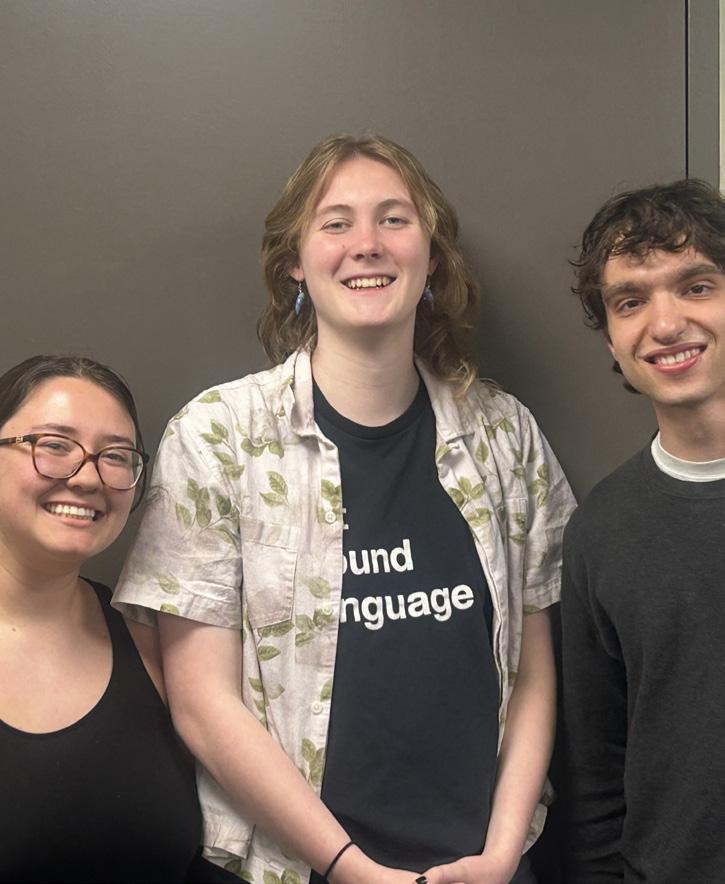
Henry France
There is a photo of me on freshman year drop-off day standing outside of Jewett with a New York Rangers shirt on and a New York Mets hat on my head. Until I arrived at Vassar, I had gone to the same school my entire life, from age three to my senior year of high school. Though I am on a sports team now, I was not recruited for athletics, and the social aspect of coming to college without an existing social network was intimidating. I thought that if I was wearing my favorite teams’ gear I might have an easier time breaking the ice with my new classmates, and hopefully making new friends.
As I had hoped, my love for sports sparked friendships. Sophomore year, I got close with Nick Villamil ’25 who was my roommate’s teammate. He was also the Sports Editor of The Misc at the time, and as we exchanged our hottest takes about the upcoming football season, he persuaded me to write an article on Week 1 of the NFL season. Since that first 1,600 word article—well over my assigned limit—I was hooked. I wrote that article, and then another on Week 2, and then Week 3 and from there I became a regular contributor. For inspiring the confidence in me to write that first article, I owe Nick a tremendous amount of gratitude. Without him, my sports takes would not make it out of my group chats and lunches with friends. Before he ran for (and became) Senior Editor, Nick convinced me to apply for Sports Editor. I had been involved with The Misc for less than a year
and felt woefully unprepared. After we both stepped into our new roles, Nick continued mentoring me with patience and kindness, balancing his responsibilities as Senior Editor with his commitment to nurturing the transition of the Sports section. The section was churning out two to four articles a week with a handful of committed writers. Willem, Ben, Maryam, Allen, Billy and many more: thank you. At the same time, my roommate Casey McMenamin started writing consistently for the Sports section. Casey quickly became Assistant Sports Editor and later coSports Editor with me.I love The Misc Sports section because it is a prism for admiring the accomplishments of the student athletes at Vassar while bringing together sports enthusiasts to share their views. Casey sees eye-toeye with me on this vision, and supports the Sports section’s mission to build community. A “thank you” is not enough. As senior year wore on, Casey picked up the slack whenever my senioritis got the best of me, laying out articles, emailing writers, editing pieces and recruiting reporters to maintain the vibrance of the section. Casey—I am going to miss our last minute article writing and the hour or so we spent every Tuesday afternoon laying out the section, debriefing our week and planning for the one ahead. From your math tutoring to us doing our best to hold in our laughter in class, I cannot imagine going to Vassar and not getting to know you like a brother. In moments of doubt I often think, “what would Casey do,” and I almost always come up with the right decision. I admire your humility and kindness, and cherish our friendship. Thank
you for being the Woodward to my Bernstein. As Casey and I approached the end of senior year having renovated the Sports section and recruited dozens of writers, we mulled over who might inherit the section. David Bray, Holland Kaplan and Armaan Desai have been the lifeblood of the Sports section since getting to campus three years ago. Their passion for everything from the University of Colorado football team to the WNBA filled each issue with engaging articles that brought Misc readers into a world of sports fandom. I am excited to see the Sports section thrive under their leadership.
I did not write for my high school newspaper, but I have always loved sports. It has been a privilege to write for and edit at The Miscellany News. I appreciate every Misc mem-
ber who I wrote for, edited or edited me and worked with over the past years. Thank you to Maryam, Charlotte, Carina and Alli—the EiCs who had an impressive amount of patience for the sports section and our unique approach. Thank you to the Senior Editors from the last two years for sifting through typo-riddled drafts from first-time journalists (including myself). Finally, thank you to anyone who ever took the time to read, write or edit a Miscellany News Sports article—thank you for supporting our mission. My time at The Misc is a highlight of my time at Vassar. I hope that future sports writers do not take their role for granted: Whether one or one hundred people read your writing, you have the ability to build community and tell critical stories. #ATTACK
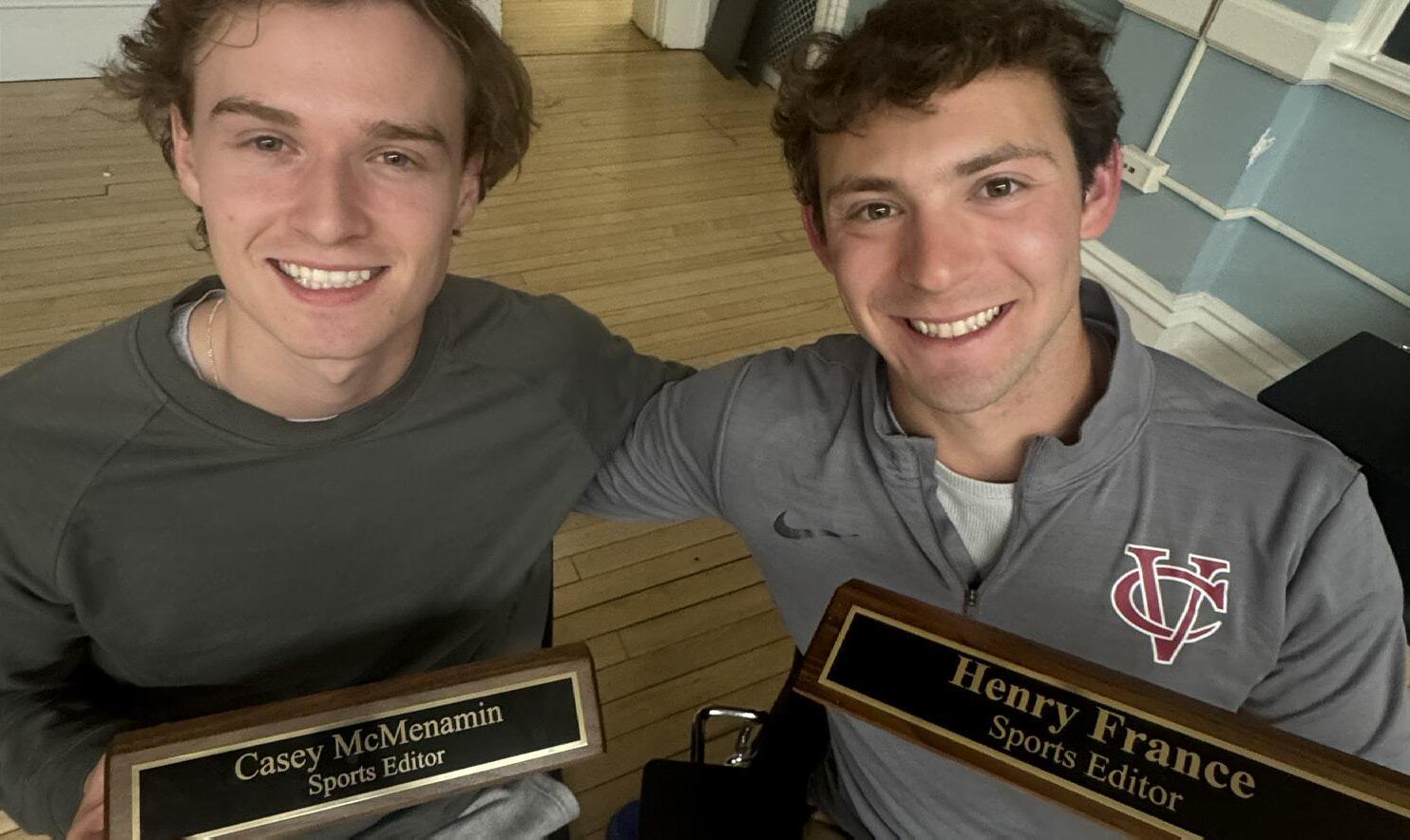
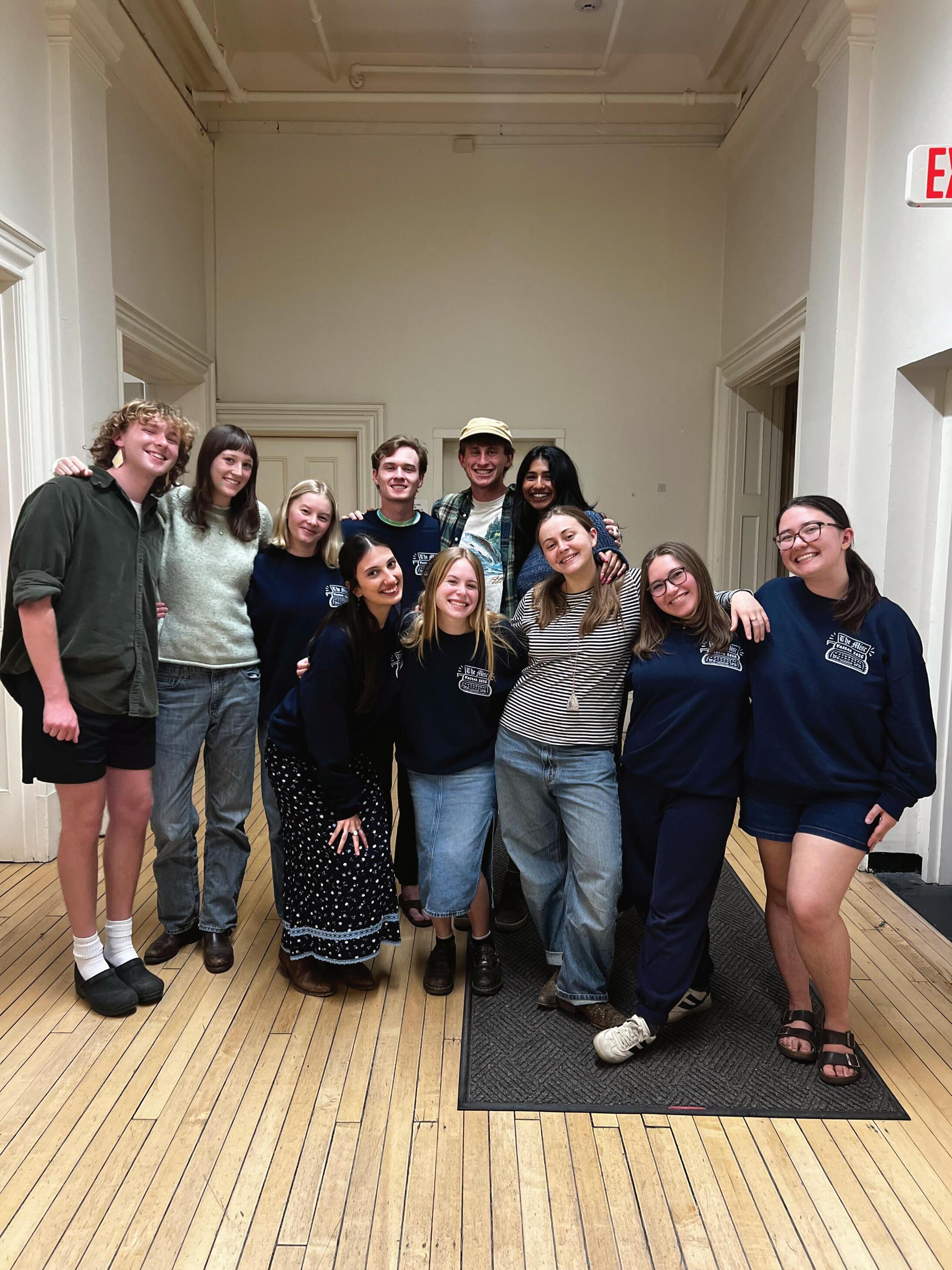

Congratulations, Alli! We’re so proud of you!
a friend who cherishes friendship through and through a dreamer who makes her dreams come true a writer and poet whose imagination illuminates ours too Love, Mom, Dad, Granal, Grandad, Gigi, and Willie

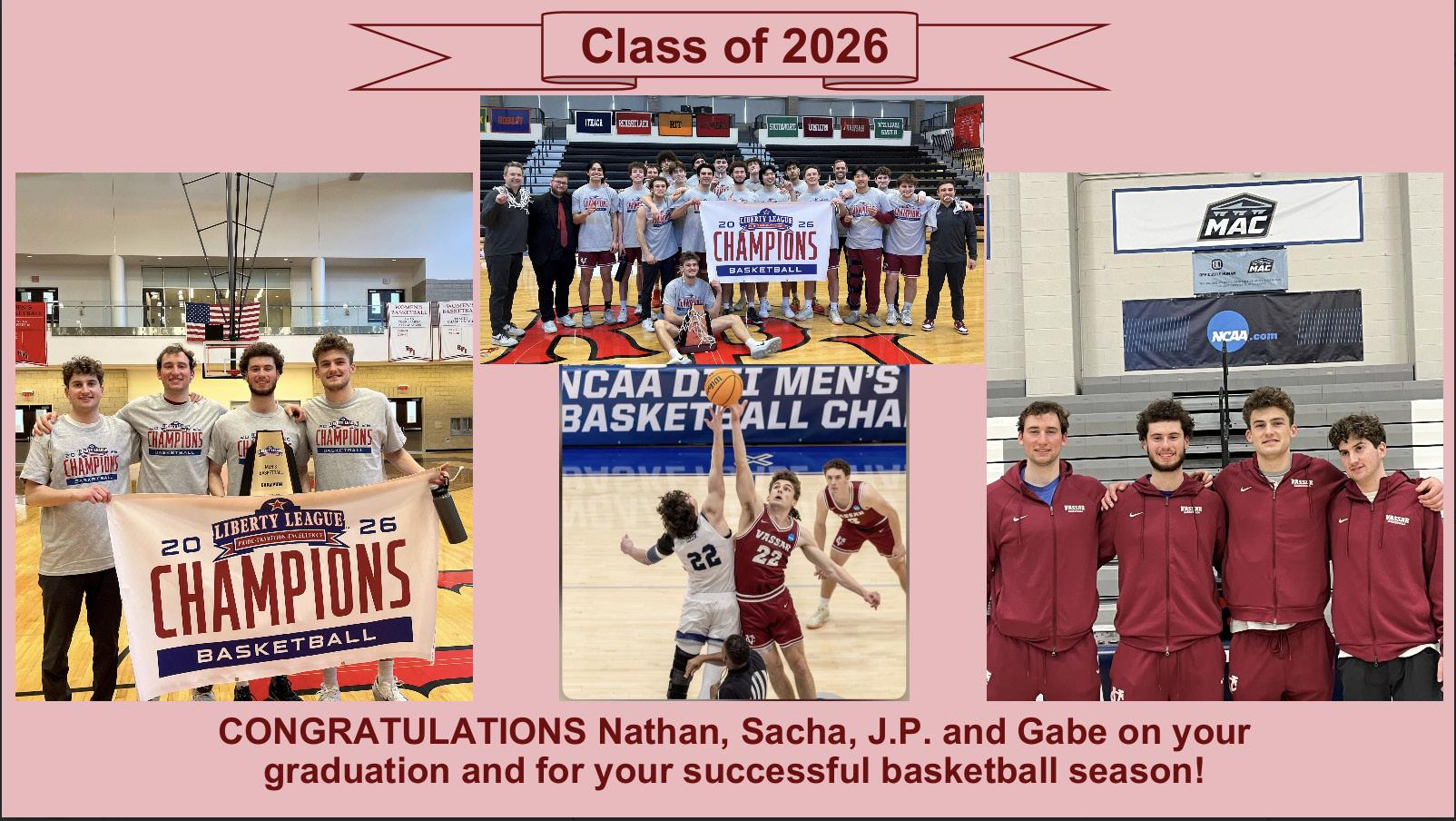

Tenía la valentía del que lleva una espada, Tenía la cortesía del que lleva una flor Luis Lloréns Torres
Lucy, Princesa, Your spark ignites millions Nacida de aurora y asombro, Como química cuántica, transformas a quien iluminas Con todo nuestro amor y orgullo Mom, Grandma, Zeke, Greg, Ollie, & Lito