HOLE NOTES

Climbing
Mt. Kilimanjaro
GCSAA Chapter Leader’s Symposium
Official Publication of the MGCSA
59, #2 April 2024
The
V.
End of an Era at Hazeltine
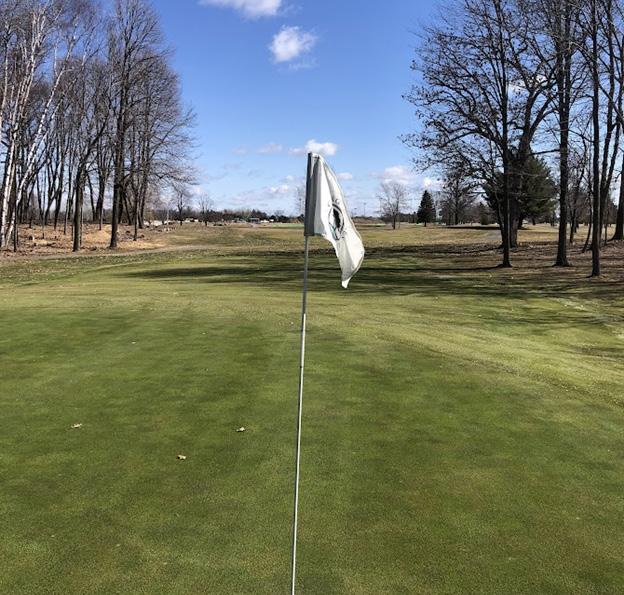
On the Cover: Perham Lakeside Golf Club, featured in this months Roll it Forward
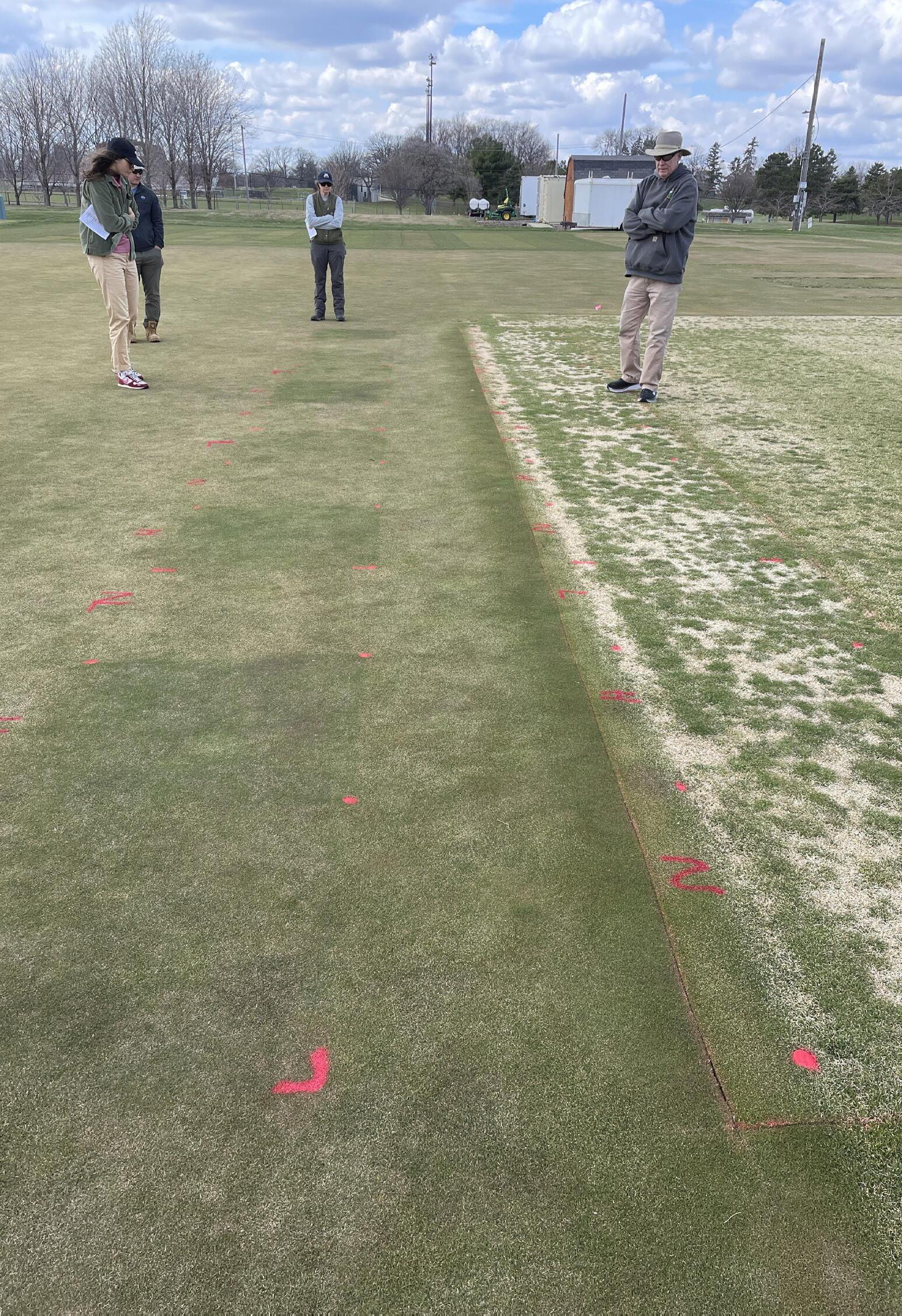
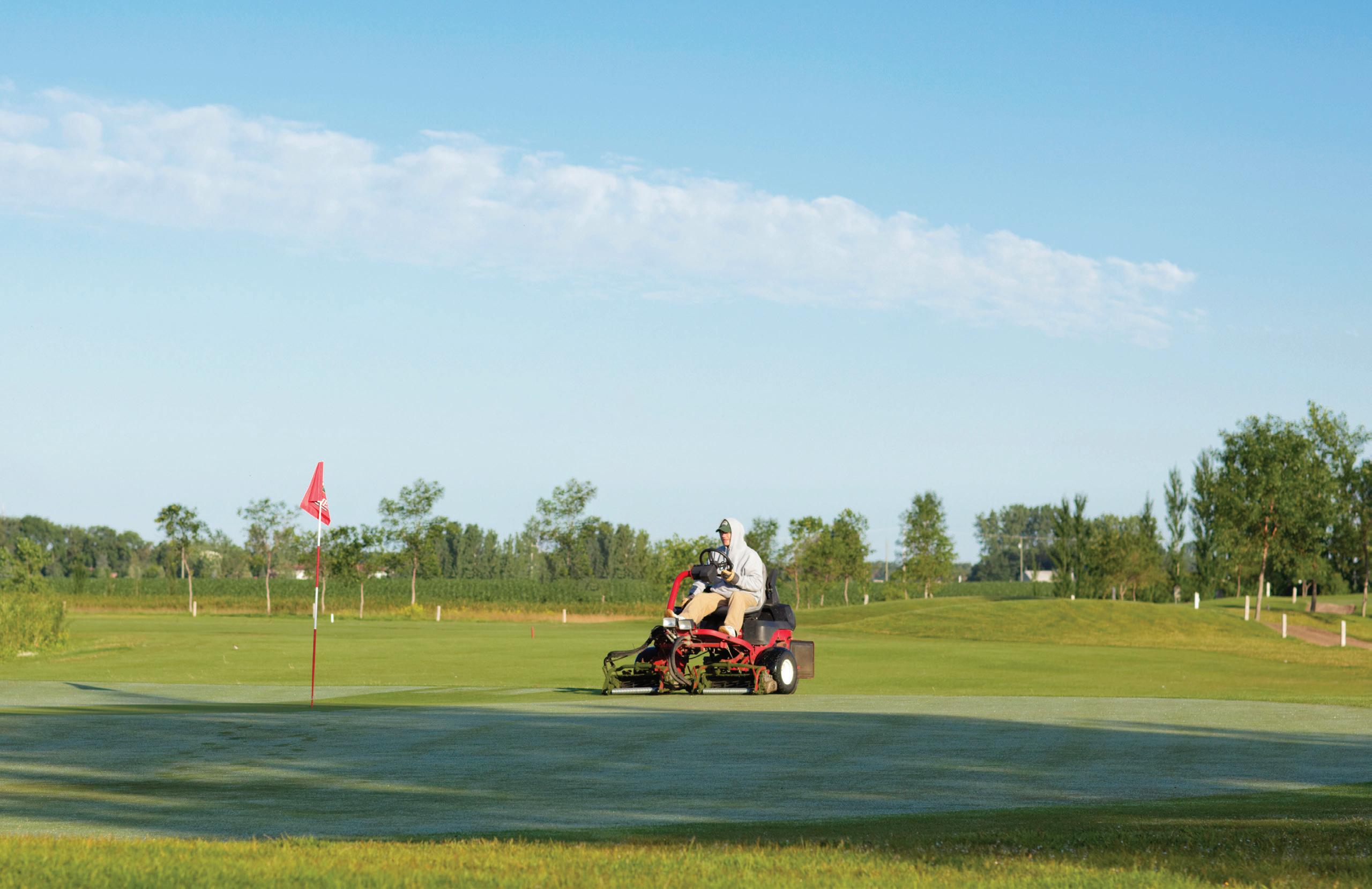
On this page: Fall topdressing trials at the TROE Center
HOLE NOTES
Hole Notes (ISSN 108-27994) is digitally published bi-monthly, 6 issues per year, by the Minnesota Golf Course Superinendents’ Association, PO Box 2028, Maple Grove, MN 55311. Chris Aumock Publisher. Please send any address changes, articles for submission, advertising and concerns to chris@mgcsa.org.
Board Members
President Mark Michalski
Vice President Nikk Dickerson
Secretary/Treasurer John Cameron
Ex-Officio Mike Sonnek
Director Jacob Dixon
Director JT Hauser
Director Adam Lesmeister
Director Jason Scharfencamp
Director Kyle Stirn
Executive Director Chris Aumock
Editor
Chris Aumock chris@mgcsa.org

April 2024
Upcoming Events
1 Featured Articles Climbing Mt. Kilmanjaro By: Matson Gravelle, Bemidji TCC Page 12-15 GCSAA Chapter Leaders Symposium By: John Cameron, North Oaks GC Page 18-21 End of an Era at Hazeltine By: Chad Blank, Hazeltine National Page 24-27 Hart Ranch Improvements By: Duininck Golf Page 30-33 Roll it Forward By: Jeff Fjosne, Perham Lakeside Golf Club Page 36-42 Get to Know ‘Em By: Austin Wright, CTEM - Hazeltine National Page 46-49 Thinking about Soil Nitrogen and Fertilizer Practices By: Jon Trappe, UMN Page 52-54 Monthly Columns Don White Rd 1. Begins 5/1 Border Battle 6/3 Detroit Lakes Golf 6/10 MN National Golf 7/17 Worthington Golf 7/29 Presidential Perspective By: Mark Michalski P. 2-4 From the High Grass By: Chris Aumock P. 58-60
Presidential Perspective
By: Mark Michalski Chisago Lakes Golf Course

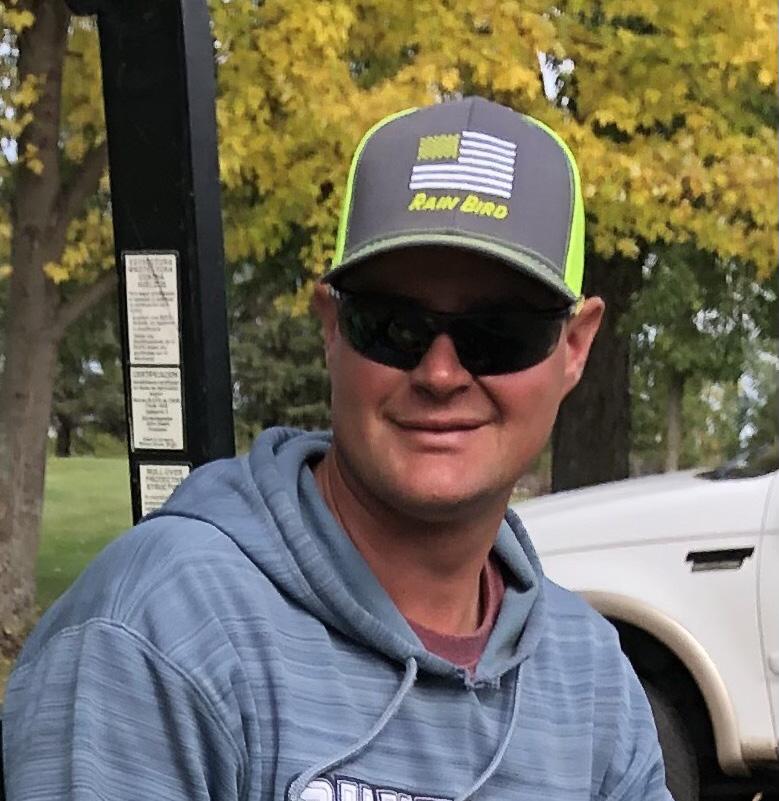
I am sitting here late on a Friday evening writing this as it’s been a busy week at the golf course and at home. There hasn’t seemed to have been the time to write this earlier. Maybe that’s a combination of busyness, procrastination and honestly just downright forgetting about it too. I’m sure some of you probably can sympathize with that.
We’ve been quasi open since February 7th, but it is now most definitely the real deal and no matter how prepared I feel for it the first couple weeks of being open there just seems to be so much more to do than we have
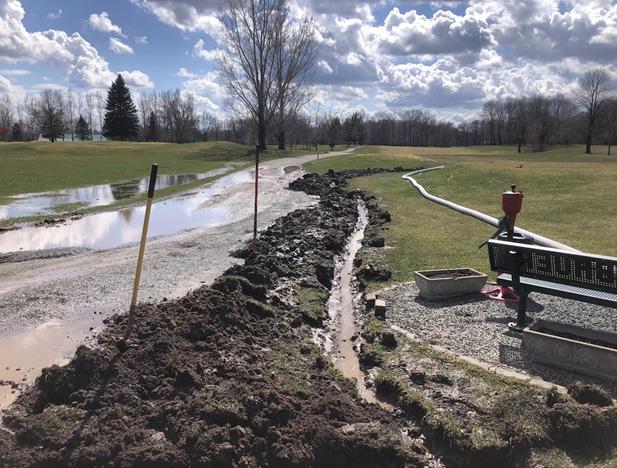
bodies to throw at it. The projects that you’ve been working on that need to be wrapped up, but boy that grass sure needs to be mowed and the bunkers probably should be raked or at least looked at. Boy how many times have we cut cups this week? Hmm… probably need to move those too but man I just want to finish cutting down a few more trees or get a few hundred feet more of drain tile in the ground. I’m guessing I’m not completely alone in thinking something along these lines.
Earlier in my career I would’ve leaned in pretty hard to the
there with so much to do and we’ve got to work and squeeze everything we can out of the daylight we have. Some of that was due to working at a facility that hosted a professional golf tournament in the middle of every summer but most of it was due to my nature of desiring things to be as perfect as they can be. Also, while not being able to be ok with things being on a list and being patient in getting them done in a reasonable amount of time. In my mind it needed to be done yesterday or I wasn’t being a diligent superintendent. I was treating
the job more as my lifestyle than simply what it was and is, my job.
It took my then five-year-old daughter saying to me, pretty much every time I’d go to the front door, “oh daddy you have to go to work again huh”. For me that was quite a punch to the gut, I needed to change how I was operating. I needed to make my job simply that, my job, and my life needed to be everything I did outside the acreage of the golf course. Eventually I left that golf course as the demands of hosting a professional tournament each summer caused, at least for me,
3
a temptation to be so wrapped up in the pursuit of perfection and seeing mine and my staff’s work on tv, that I struggled to keep the correct balance of not allowing my profession to become my lifestyle.
I’ve loved working at a golf course since I was fifteen and still do, but my perspective on the job has most definitely changed in the last few years.
There was a time when this is all I could picture myself doing. Now I’d quit tomorrow and hang sheetrock and mud and tape like I did in junior high and college if it meant it was better for my family. As we really get going in the 2024 golf season remember this is our chosen profession, not our chosen lifestyle. Have a great summer everyone!
4
























Thank you to our 2024 affiliate partners for your continued support of the MGCSA!

5
2024 Gold Partners
2024 Silver Partners
2024 Platinum Partners
2024 Diamond Partners


| 2024
10:00 SHOTGUN START LUNCH AT THE TURN
2:00 HAPPY HOUR & PRIZES W/CASH BAR







BEVERAGE SPONSORS:




JOIN US FOR THIS UNIQUE OPPORTUNITY TO MEET OUR PEERS FROM WISCONSIN, WHILE PLAYING IN A FRIENDLY BORDER BATTLE RIVALRY!
DUAL MEMBER? - PICK YOUR SIDE!
TWO-PERSON TEAM MATCH PLAY - (MN VS WI) PROXY PRIZES
CHAPTER WINNERS TROPHY
6
CHRIS FOR MORE INFORMATION CHRIS @MGCSA.ORG
$45 PER PLAYER SIGNUP DEADLINE MAY 28TH CONTACT
651-324-8873 EVENT SPONSORS: JUNE 3RD
BORDER BATTLE GOLF EVENT MINNESOTA - 1 SERIES RECORD WISCONSIN - 0
MONDAY
2ND ANNUAL
VS.
EAU CLAIRE GOLF & CC 828 CLUBVIEW LANE ALTOONA, WI 54720 HOST: NICK PEINOVICH
Turf & Golf Course Management at Anoka Technical College
Make a career out of your passion for golf and the outdoors with affordable options offered fully online.
Program offered completely online
Faculty experts with industry experience
Make the outdoors your office
Turf & Golf Course Management AAS degree
Designed for students looking to develop the technical skills needed to maintain turfgrass environments along with the management and organizational skills necessary to advance your career.
Turf & Golf Course Technician diploma
Prepares students with the technical skills to work in several different areas including, but not limited to athletic fields, golf courses and parks.
Learn More at AnokaTech.edu/TurfandGolf
7 >>> >>>
>>>
©2023 Anoka Technical College, an affirmative action, equal opportunity employer and educator and a member of Minnesota State. Accredited by the Higher Learning Commission. Disclaimer, Non-Discrimination Statement, Student Consumer Information such as graduation rates and median debt, can be found here: anokaramsey.edu/disclosures. This document is available in alternative formats to individuals with disabilities by calling the Minnesota Relay Service at 7-1-1 or 1-800-627-3529. 230057AT
2024 Legacy Scholarships Deadline for Application:
June 1st, 2024
The Program: The Minnesota Golf Course Superintendents’ Association offers a scholarship program designed to assist children and grandchildren of Class AA, A, B, C, D, EM, Associate and Affiliate members. The MGCSA provides scholarships to students attending college or vocational programs at any accredited post-secondary institution. The program is independently managed by a group of select, unbiased academic advisors.
Awards will be granted without regard to race, color, creed, religion, sex, disability, national origin or financial need.
tive year for these awards. Par Aide is located in Lino Lakes, Minnesota and owned by Steve Garske, son of Joseph.

The late Mr. Garske, who died at the age of 76 in 1982, started Par Aide in 1954 with plans to make a “good” ball washer. A foundry man and avid golfer, he knew little about the golf business, tried to sell his ideas for design and tooling to two accessory companies, was turned down by both and so began Par Aide Products Company. Steve Garske started The Legacy Scholarship in his father’s honor in 1996.
The Joseph S. Garske Legacy award, named after the founder of Par Aide Products Company, Joe Garske, is committed to furthering the education of children and grandchildren of MGCSA members through financial contributions. This is the 26th consecu-
Selection of Recipients: Scholarship recipients are selected on the basis of academic record, potential to succeed, leadership and participation in school and community activities, honors, work experience, a statement
84
of education and career goals and an outside appraisal. Selection of recipients is made by a select group of professionals. Applicants will be notified by the end of July whether they have been awarded or denied a scholarship.
Eligibility: Applicants for the MGCSA Legacy Scholarships must be: children/grandchildren of Class AA, A, B, C, D, EM, Associate or Affiliate members who have been members of the MGCSA at least five years; High school seniors or graduates who plan to enroll or students who are already enrolled in a full-time undergraduate course of study at an accredited two or four-year college, university or vocational-technical school, and under 23 years of age.
Awards: Three awards will be given to children and grandchildren of Class AA, A, B and C members. One award of $1,500 in the name of Joseph S. Garske will be given to the highest
evaluated applicant. That award will be renewable for one-year contingent upon full-time enrollment and satisfactory academic performance. One other $1,000 award will be given to other qualified applicants from this group. One, $1,000 award will be available to children and grandchildren of Class D, EM, Associate and Affiliate members. These awards are not renewable. However, students may reapply to the program each year they meet eligibility requirements. Awards are for undergraduate study only.
Obligations: Recipients have no obligation to the MGCSA or its members. They are, however, required to supply the MGCSA with current transcripts and to notify the MGCSA of any changes of address, school enrollment or other relevant information. Except as described in this brochure, no obligation is assumed by the MGCSA.
95
Apply Today





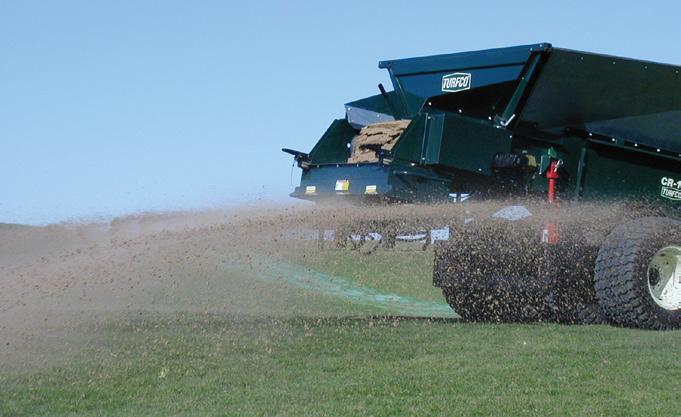
Topdressing Sands & Mixes
Our Sands meet USGA guidelines and are available with green pigment. Custom mixes can be blended for your individual needs using our 4-bin computerized Accublender.
Bunker Sands
Our bunker sands are always washed and screened. Choose from:
•Plaisted Bunker Sand Natural Tan
•Plaisted Pro Bunker Sand Blend Natural Tan
•700 Best Signature 100% Crushed Off White
•900 Best Signature 100% Crushed White
Golf Construction Sand Mixes
Our mixes all use USGA sand and a combination of fine grade peat and screened black dirt. Chose one of our popular mixes or we can custom blend one.
•USGA Coarse Gravel - A great bridging rock used as a drainage layer.
•Construction Sand & Peat Mixes - 50/50, 60/40, 70/30, 80/20, 85/15, 90/10
•Construction Sand & Black Dirt Mixes - 50/50, 70/30, 80/20
•Construction Sand/Peat/Black Dirt Mixes - 1-1-1, 60/20/20, 70/20/10, 80/10/10 Cart Path & Road Base •3/8”


10
with fines river rock
II buff limestone or red rock
II, III, IV crushed granite
5 gravel
concrete, crushed asphalt, conbit . Bagged Products
topdressing sand
tournament topdressing sand
green topdressing sand
early-green black topdressing sand
70/30 green divot mix GOLF Elk River, MN • 763.441.1100 www.plaistedcompanies.com
•Class
•Class
•Class
•Recycled
•Dry
•Dry
•Dry
•Dry
•Dry


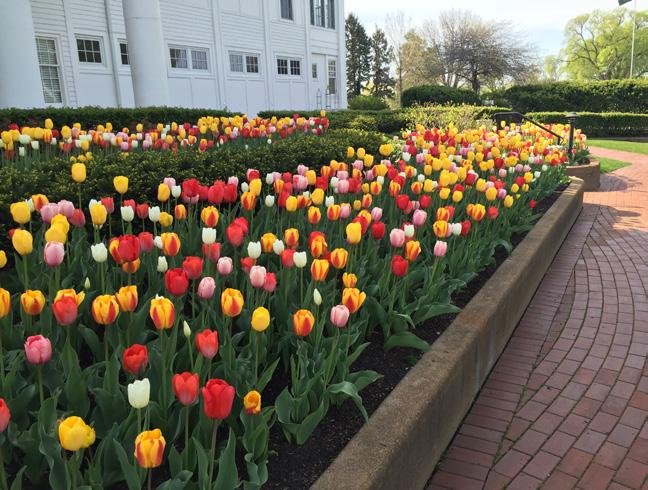
Horticulture Products
Our mixes contain highly sought after ingredients like composted pine bark, peat and screened black dirt. They are ideal for flower beds, tree and shrub growth or whatever growing application you may have.
Our soil amendments are mixed with existing soils, and promote healthy root growth and water retention.
Landscape Materials
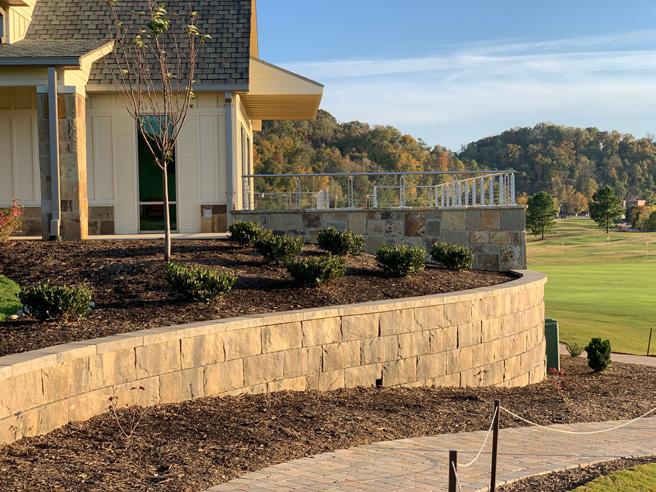
We offer 8 varieties of mulch and 11 varieties of landscape rock to add the pop and class your course deserves. We also carry quality hardscape brands and natural stone options that offer exceptional strength, durability and the kind of long lasting beauty that will make your clubhouse a coveted destination for golf and events.
•Mulch
•Decorative Rock
•Mason Sand
•Pavers
•Retaining Walls
•Firepits/Outdoor Fireplaces
Delivery Options
•Boulders
•Monument Stones
•Water Features
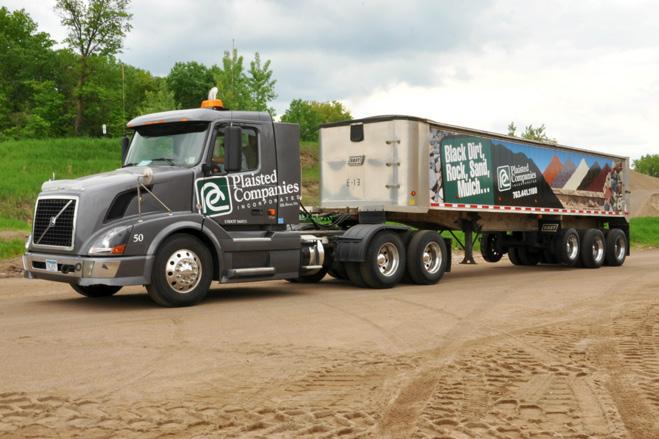
We own our own fleet of 50 GPS tracked trucks making delivery dependable, efficient, and timely. We have a truck for any job.
•Tandems
•Tri-Axles
•End Dumps
•Dump Trucks
•Truck & Pup
•Clam Trucks
11
Order To Production To Delivery! One Call Does It All!
From
CLIMBING MT.KILIMANJARO
SUPERINTENDENT, BEMIDJI TOWN & COUNTRY CLUB
BY: MATSON GRAVELLE
I recently returned from a once-in-a-lifetime trip to Africa. Tanzania is located in the eastern part of Africa. The country is known for its national parks, Tanzanite stone and Mt. Kilimanjaro. My uncle frequently visits Tanzania, as he is heavily involved with a Cancer Care Center (KCMC) located at the base of the historic mountain in Moshi, Tanzania. One of our objectives during the trip was to visit the hospital and see the progress of ongoing projects such as the building of a new state-of-the-art radiation center.
Currently the hospital is able to diagnose cancers but cannot
treat cancers. A patient would have to travel hundreds of miles away to receive such treatment. Similar to the states, its not always easy to start and finish projects without going through all the checks and balances. Also, where does the money come from to complete such a project? If you would like to donate money to help fight cancer in Tanzania, please visit this website. Home - Foundation for Cancer Care in Tanzania (tanzaniacancercare.org).
On my trip to Tanzania, another goal was to summit the tallest mountain in Africa,
13
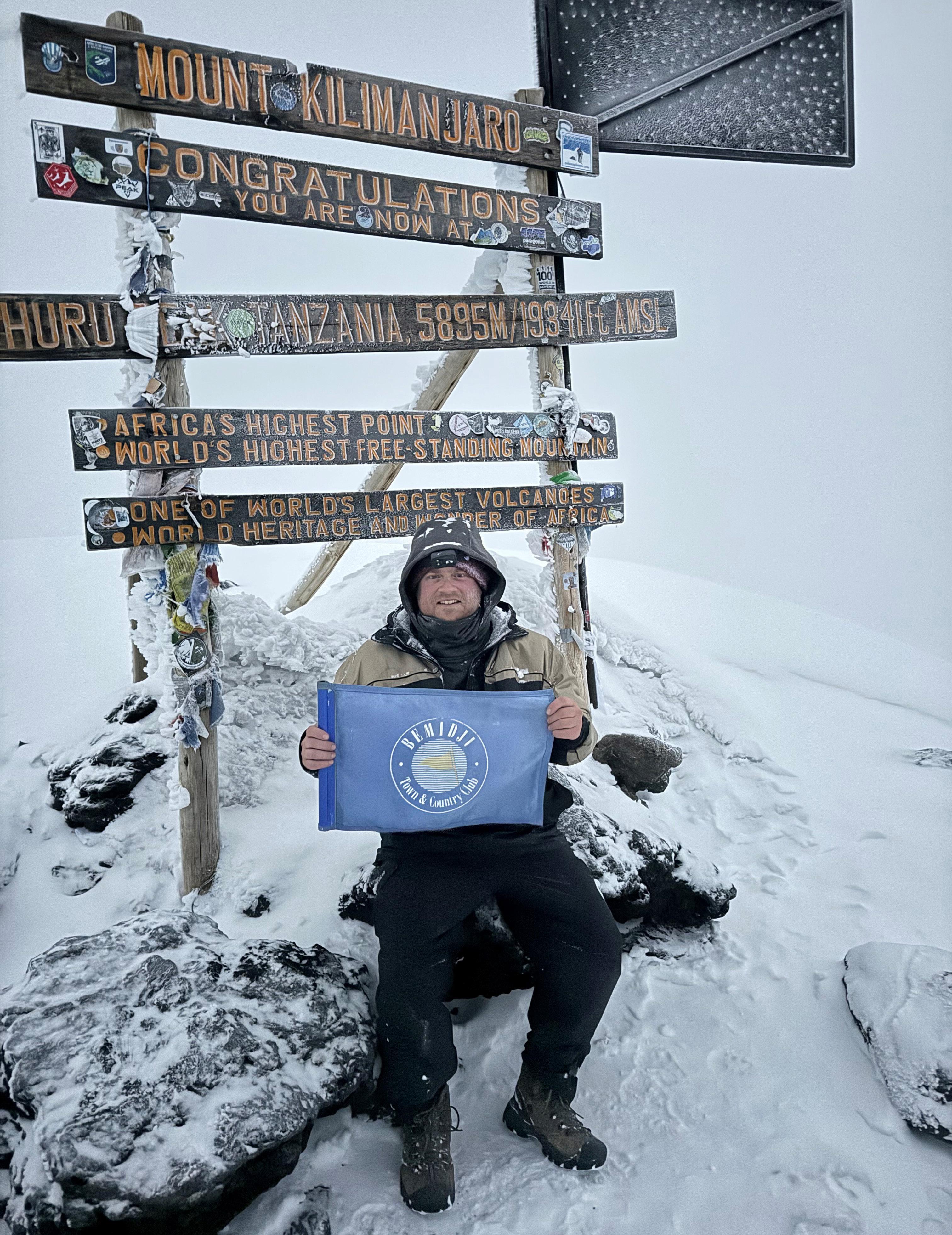
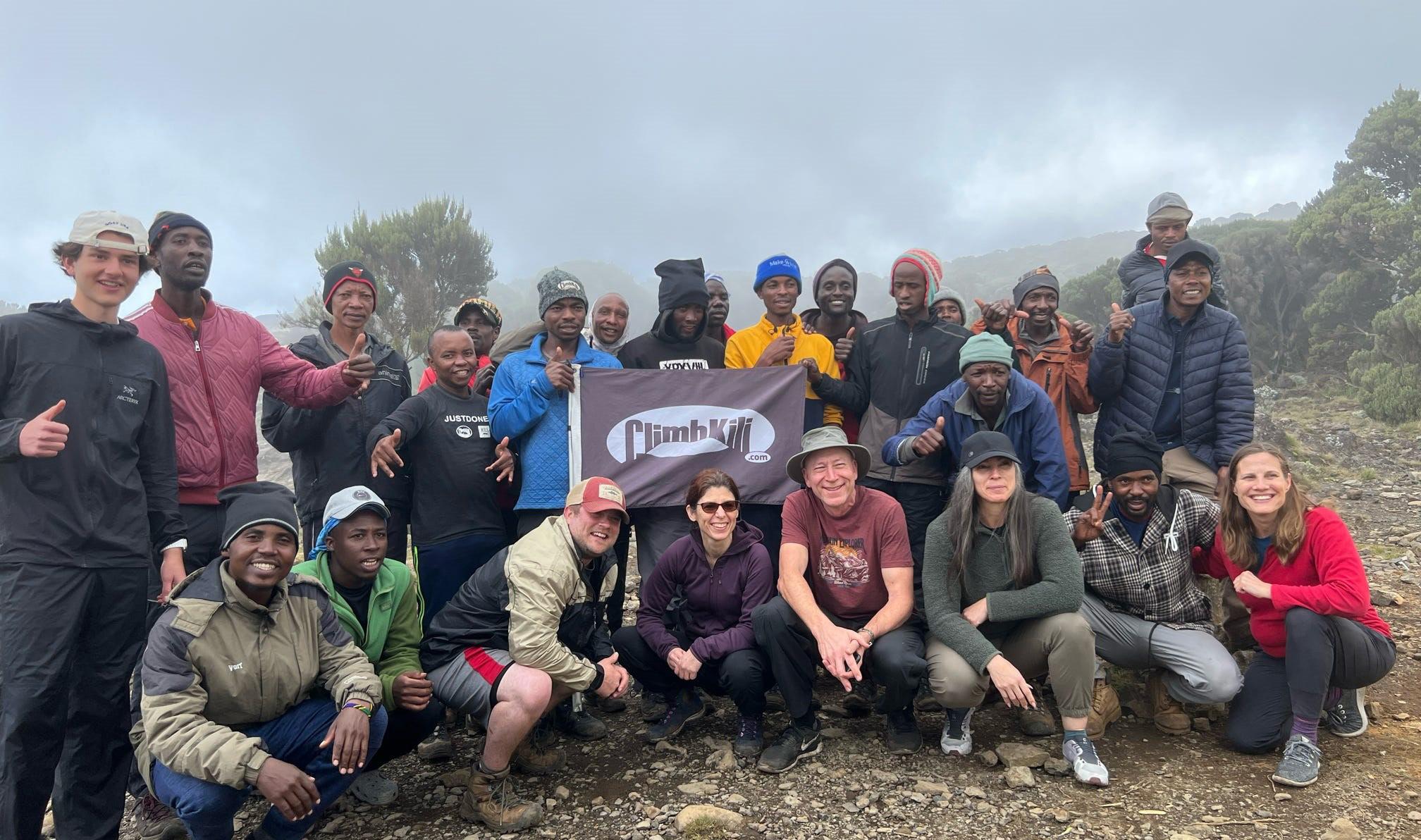
Mt. Kilimanjaro, which stands at 19,341 feet. It is the largest free-standing mountain in the world, meaning that it is not part of any other mountain range. The mountain was formed thousands of years ago from an active volcano. It is a hard-to-miss specimen, as the surrounding area is mostly flat. The journey started as my cousin and I picked a climbing outfit with a high success rate of clients summiting the mountain. The outfit we went through was called CLIMB KILI. Our group was made up of six random people from all over North America. We were led by three main guides and were
supported by fifteen porters who carried all the camping gear up the mountain. The porters were truly amazing, hiking and scaling walls with 50 pounds over their head. They are the true heroes on the mountain.
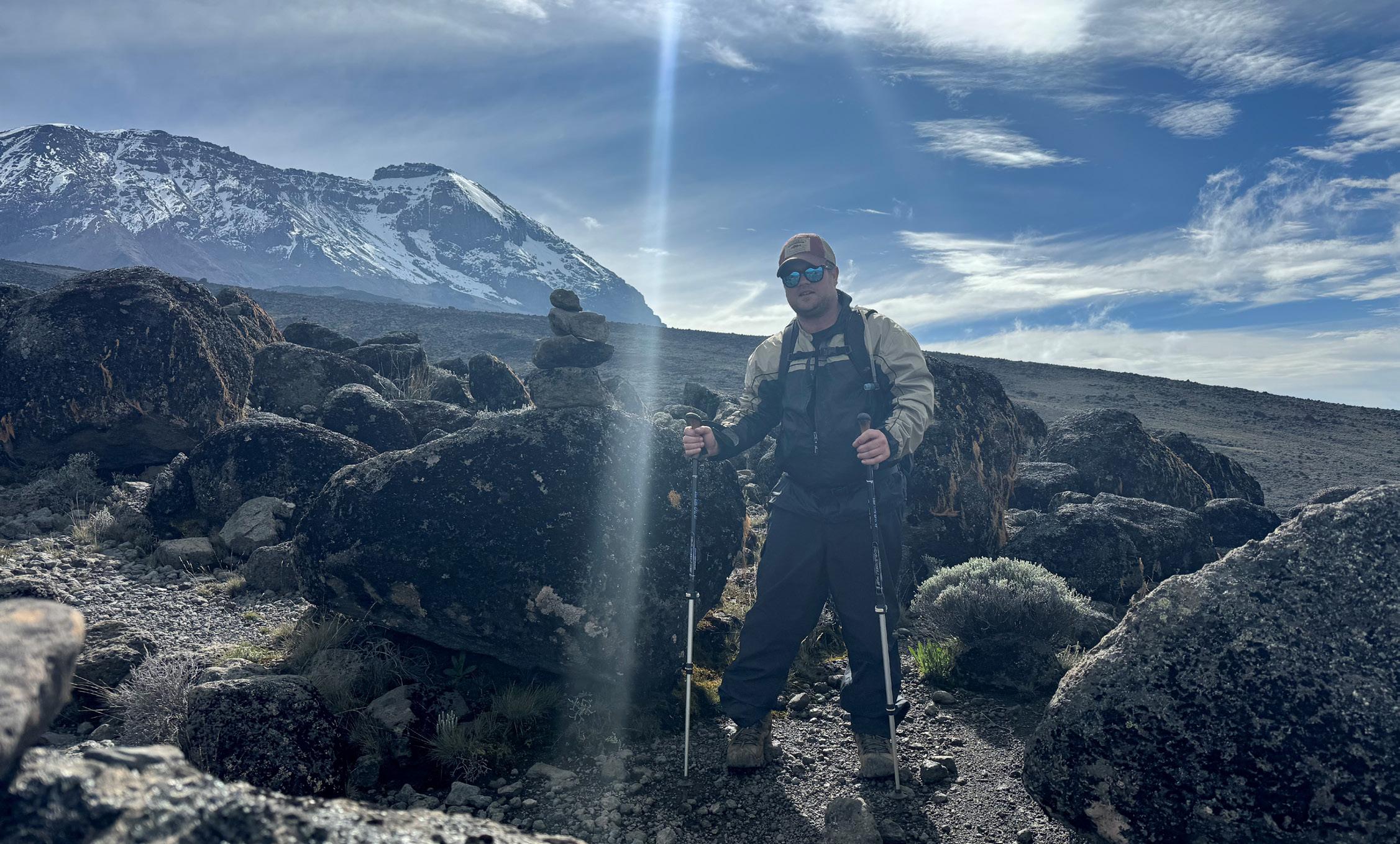
There are many different routes you can take to summit the mountain. The hiking trail we used was called the Machambe Route. It is a 7-day route from start to finish. We started the route by hiking through the rain forest. As we climbed up elevation, we began to see less and less vegetation. Most days consisted of hiking 6-7 hours
14
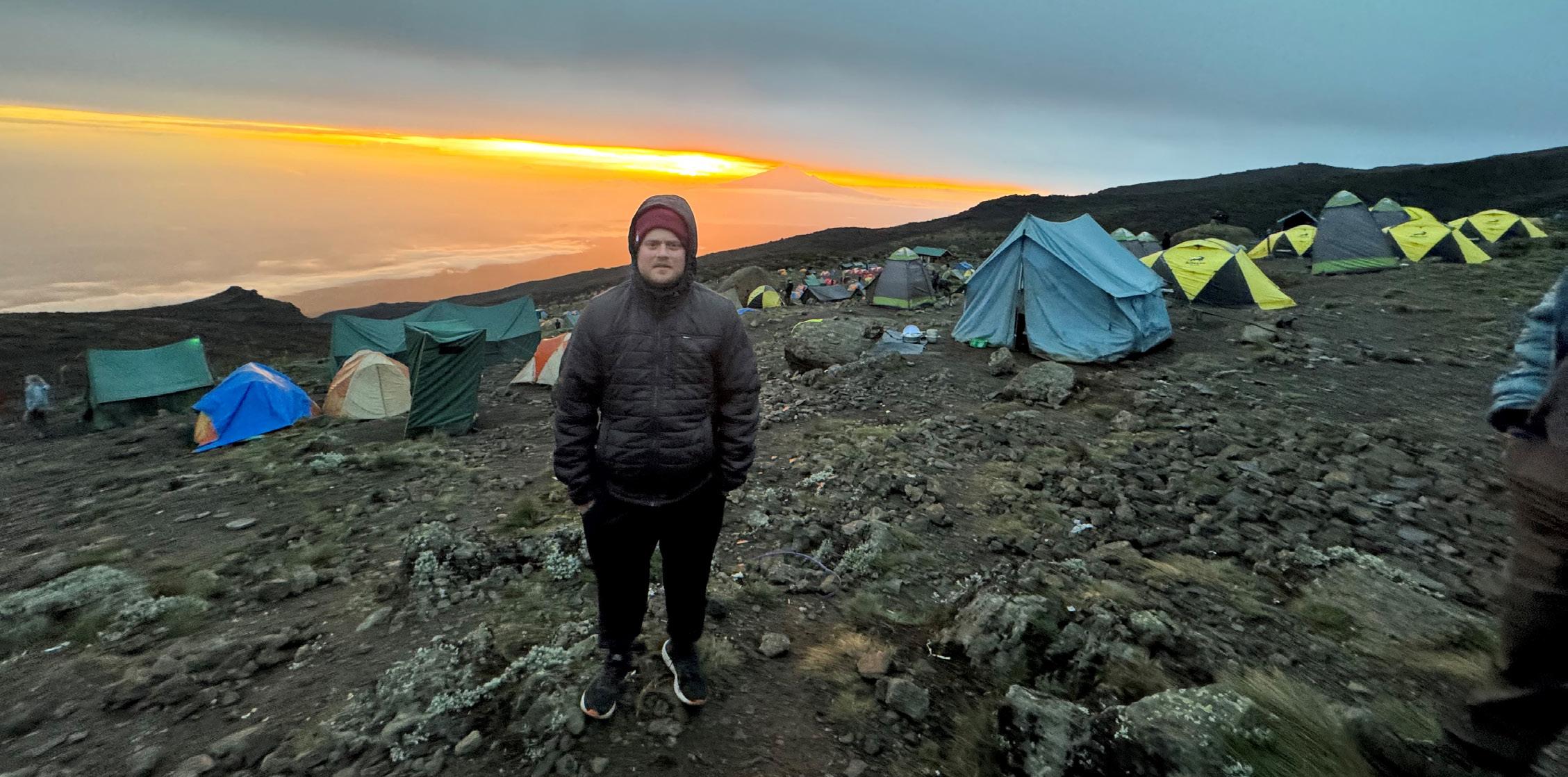
before reaching the next camp. The motto of the hike is “Pole Pole,” which means slowly. Countless times that phrase was shouted as we climbed the mountain and tried to acclimatize to the elevation. The terrain was rough, and much of the time was spent looking down at the ground making sure we didn’t trip over rocks. We needed to take a moment and take in the beautiful surroundings.
On the 6th day, the last camp before we summited was 16,000 feet in elevation. It snowed on us before we started to make our ascent towards the top at midnight. The goal for the last day was to summit the mountain
at 6am, so we could take in the sunrise at the summit. Wearing headlamps, we slowly tiptoed up the mountain. We were unlucky enough to summit the mountain during a snowstorm. Most people in our group were not used to snow and cold conditions. I laughed to myself, thinking this was just another day in Bemidji. We quickly took a few pictures and started our descent. Many times, throughout this journey, I wasn’t sure if I was going to make it. I am glad I did! Out of six people in our group only one did not make it. It will be a memory that will last a lifetime and I am glad I can share it with my colleagues!





Maximize the beauty and functionality of your grounds with MTI’s turf solutions.
Our comprehensive range of reliable equipment, backed by more than 70 years of industry expertise and support, helps you maintain pristine landscapes
Offering the top brands in the industry, we provide the tools and support you need to create safe, inviting, and sustainable outdoor spaces
Contact us today for an on-site product demonstration or to learn more.


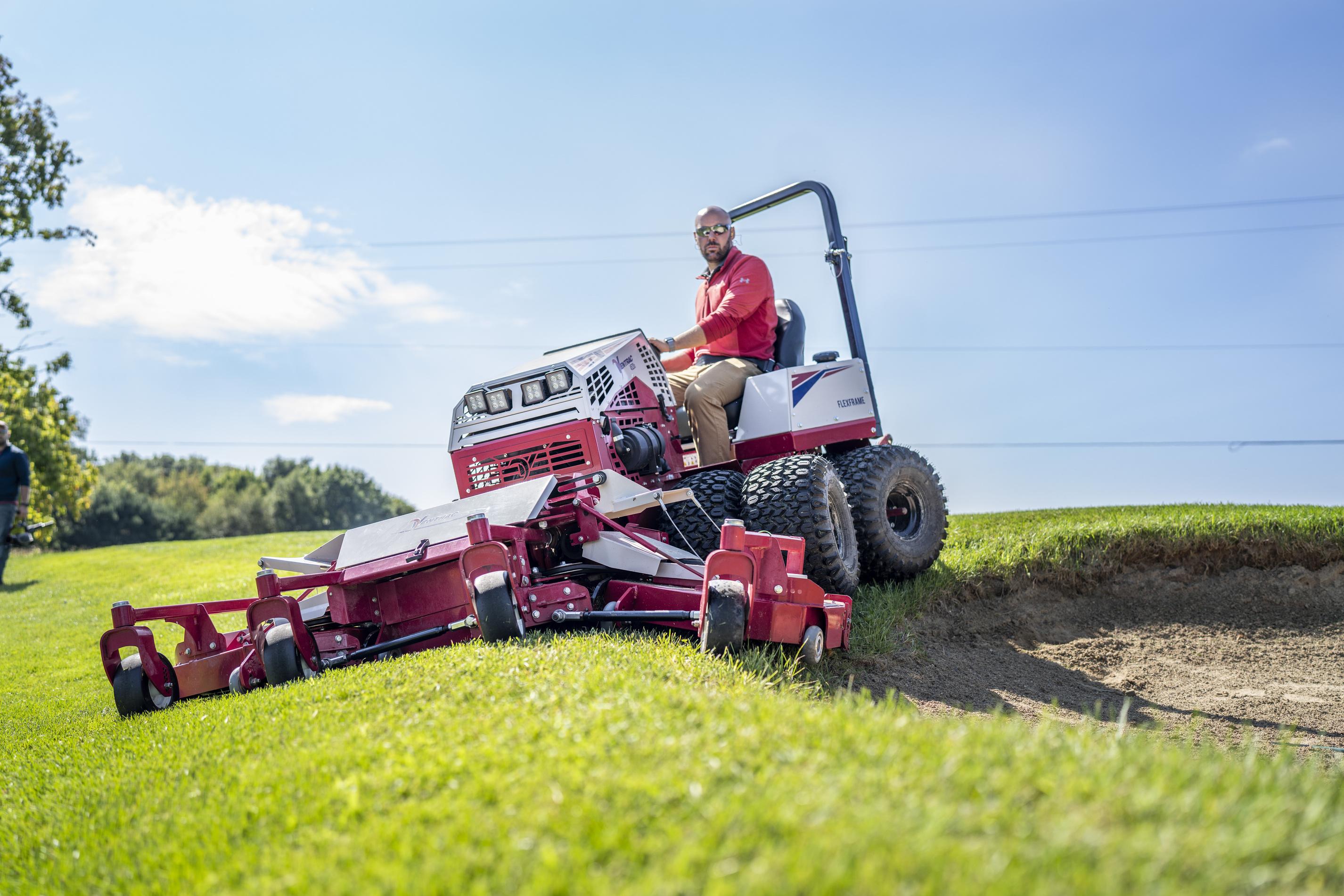
Ventrac's Contour Mower features a 83 inch working width making quick work of precision mowing on high end properties
Three decks float independently and follow the contour of the terrain with up to 40 degrees of motion for each side deck.
The MJ840 also features full rear rollers for even cutting and striping, rear discharge, and a flip-up deck design.


16
M T I D I S T R I B U T I N G . C O M I I N F O @ M T I D I S T R I B U T I N G . C O M I 8 8 8 . 5 3 7 . 2 4 8 4
Ventrac Mj840 contour mower
G O L F , S P O R T S F I E L D S & G R O U N D S E Q U I P M E N T & I R R I G A T I O N I L A N D S C A P E C O N T R A C T O R E Q U I P M E N T
2023 MGCSA Member Event Rebate Program
The MGCSA Board of Directors is working hard to reduce limitations to participation. In-person events are essential to the growth of our industry and the professionals within it. MGCSA has the opportunity to support those engagement efforts by implementing a member rebate program this year for all class members. We are offering an event registration rebate of up to $35 to all class members. This will allow for free or reduced entry into one of our association events!
Use Rules:
-Must be active MGCSA Class member. Use will be monitored and recorded. One time use only, regardless of event registration costs, no redeeming cash value.
-If using credit, the individual must register separately by choosing that ticket option when signing up for an event and entering the promo code below. Member cannot use credit within a group registration.***
-Credit use window has been extended through November 1, 2024.
-Applicable to most MGCSA events, except Don White Match Play, The Wee One, and The Scramble.
Not currently an annual program, will run for the period stated above
Where is this funding coming from? The MGCSA Board of Directors has adopted a Reserve Fund Policy, with an Excess Reserve Policy included within, to manage our investment account. The goal of this policy is to create a sustainable use structure for incorporating those funds back into the operating budget and association plans. We will be utilizing earnings from our reserve fund to help subsidize the cost of these events along with other member value opportunities.
***There are limiting factors in our website system that cant support certain group registration scenarios
Promo Code: GrowingMGCSAtogether SUMMER EXPOSURE GOLF AND THE CHAMPIONSHIP ARE REMAINING ELIGIBLE EVENTS.
2024
GCSAA Chapter Leaders Symposium
By: John Cameron, North Oaks Golf Club
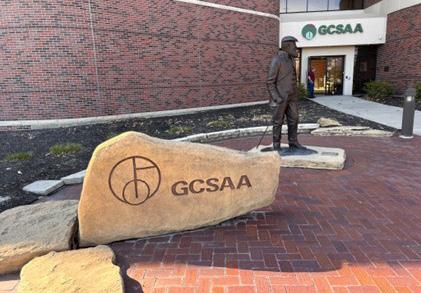
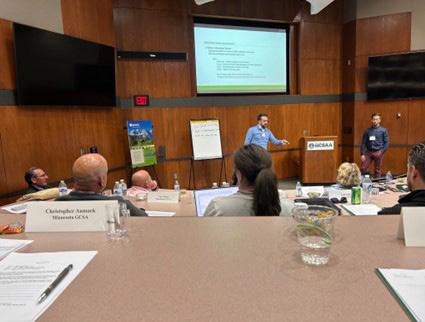
I had the pleasure of participating in this year’s GCSAA Chapter Leader/ Executive Symposium hosted at the GCSAA Headquarters in Lawrence, Kansas. The two-day event welcomed 43 participants representing 25 different GCSAA chapters.
Our Chapter Executive, Chris Aumock, being the
wily veteran, was tasked with navigating our group which consisted of two of our Wisconsin neighbors, Jake Schneider (Executive Director of the Wisconsin Chapter) and Ben LaBarre (GCS from Westmoor Country Club). The GCSAA reserved rooms for us and many other Symposium participants
18
at the nearby Eldridge Hotel. Chris was involuntarily booked in the “most” haunted room on the most haunted level in this apparently haunted hotel. You’ll have to ask him about his experience next time you see him or whomever the spirit is that possesses his body now.
Day-1 of the Symposium kicked off with the GCSAA COO, Kevin Sunderman providing a nice welcome followed by current GCSAA initiatives. Chava McKeel, Director of Government Affairs went over their recent efforts, issues, and successes they are facing all over the nation. Mischia Wright, Director of Foundation Development spoke on behalf of many fundraising initiatives that are active and how important they are to the industry as a whole. Shelia Finney, Senior Director of Member Programs briefly talked about their plans of rolling out a new website in 2025 that will rid of many frustrations
that active users are facing. Our very own Chris Aumock copresented with Jake Schneider within the “chapter success stories’” segment about the recent Border Battle event that the MGCSA and WGSCA hosted together. We also heard from a few non-GCSAA Leaders/ Executives. Amy Leslie provided an interactive and informative seminar regarding Predictive Index models that all participants filled out beforehand. I’ve noticed these PI indexes being utilized by PGA searches during our Club’s recent Professional and GM search and interview process. There was also a very good seminar on Cybersecurity by Julie Fugett who would
19
like everyone to respect their 2-step authenticator process for sensitive website logins and also doesn’t want anyone to accept digital gift cards to avoid scams and frauds, no matter how real they look!
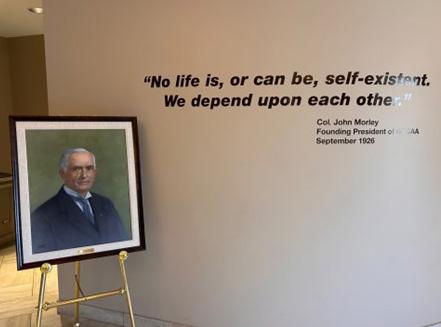
Day-2 was a shorter ½ day led by CEO, Rhett Evans. He introduced everyone to the current GCSAA President, Jeff White. We were also introduced to the newest Board member, Greg Jones of Nebraska. It was great to see some of the board of directors interact and talk about their vision for the 2024 season. Afterward, our GCSAA field representative, Randy Robinson, provided us with a nice tour of the headquarters. It was fun to see everything “behind the scenes” and meet many of the people that have written articles in GCM magazines or people I’ve contacted over the years. Many members of the GCSAA delivered the same message throughout the event. They are here
to help “us”, the membership. If you have questions, issues, comments, or concerns with just about anything. Reach out. They will help. Our participation is essential for them to succeed and then ultimately for them to help us succeed.
Overall, I was very impressed with all facets of the GCSAA organization and was happy to see first-hand where “my’’ membership dollars are being allocated. It’s comforting knowing, for example Chava McKeel and her Governmental Affairs team are advocating and communicating at high government levels each and every day further protecting and promoting our wonderful
20
industry. It was also comforting simply connecting with others at the event from all over the country. It didn’t matter if they were a chapter executive, chapter leader, or a GCSAA employee. There is something to learn from everyone. Listening to others talk about their region, associations, initiatives, and governmental affairs were very informative and insightful. I feel a little more sane after realizing that many challenges I/we face
at home are very similar to others regardless of their geographic location. I’ve gained a whole new respect for the GCSAA and also our local MGCSA association after attending the Chapter Leader/Executive Symposium. I’d strongly encourage future MGCSA Board Members to express interest in participating in this valuable and memorable event.

21
IRRIGATION HAS ALWAYS BEEN IN YOUR HANDS. NOW IT LITERALLY IS.






















The End of an Era
 Ralph Arnt EM Hazeltine National
By: Chad Blank
Ralph Arnt EM Hazeltine National
By: Chad Blank
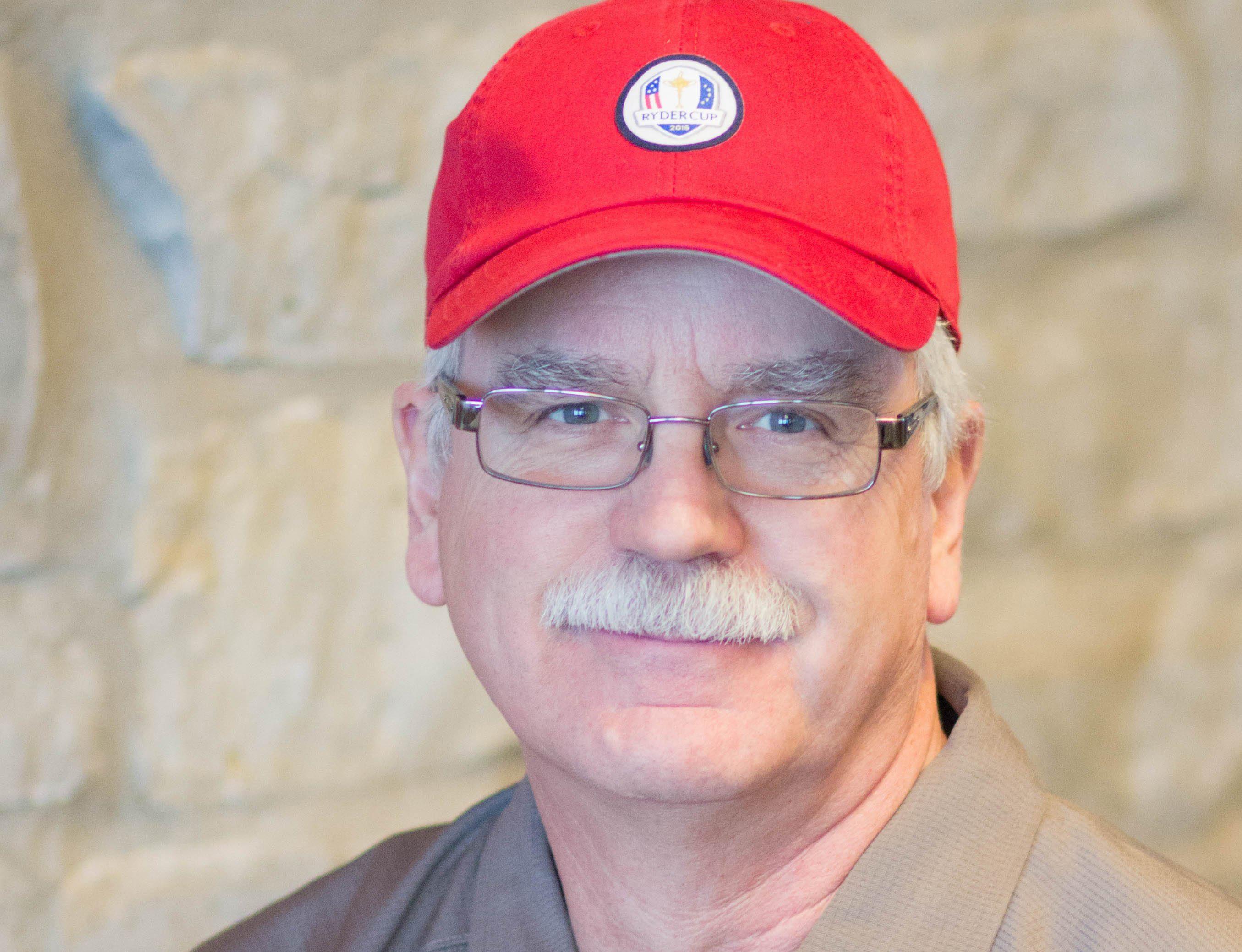
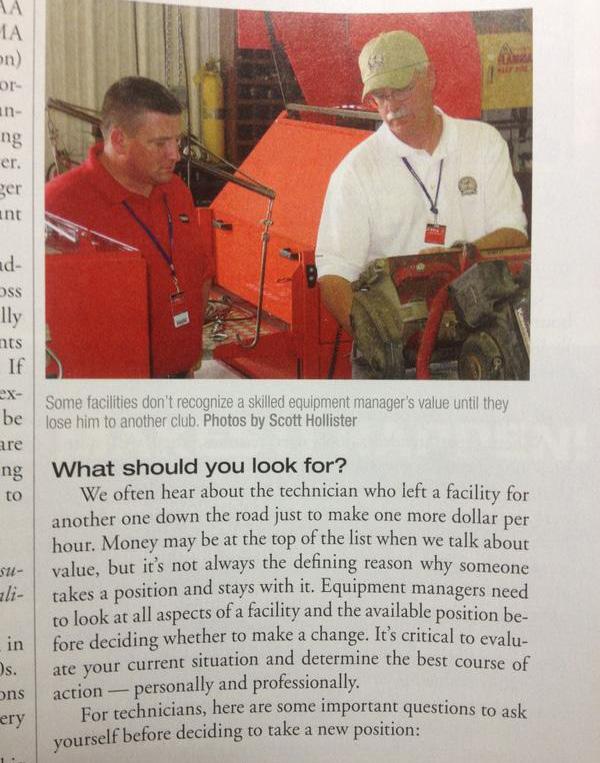
Just under 10 years. That’s the average tenure for US workers most near retirement, according to Forbes at least. 36 years is what recently retired equipment manager, Ralph Arnt, had under his belt at Hazeltine National. Simply equating Ralph as being 3.6x better than ‘average,’ would be greatly undervaluing him as well as his legacy. However, as we all know, EM’s are the backbone of a golf course; their role is vital to

the success of an operation. Ralph proved that sentiment time and time again during his employment at Hazeltine.
Ralph was hired away from Somerset Country Club ahead of the 1991 US Open by Hazeltine’s then superintendent, Chris Hague. He worked alongside 3 subsequent superintendents: Patty Knaggs, Jim Nicol and Chris Tritabaugh. An NCAA Championship, two PGA Championships, a US Amateur, Ryder Cup and KPMG PGA Championship are only a few of the many national, regional, and statewide tournaments that Ralph led equipment maintenance and setup for
during his time at Hazeltine.
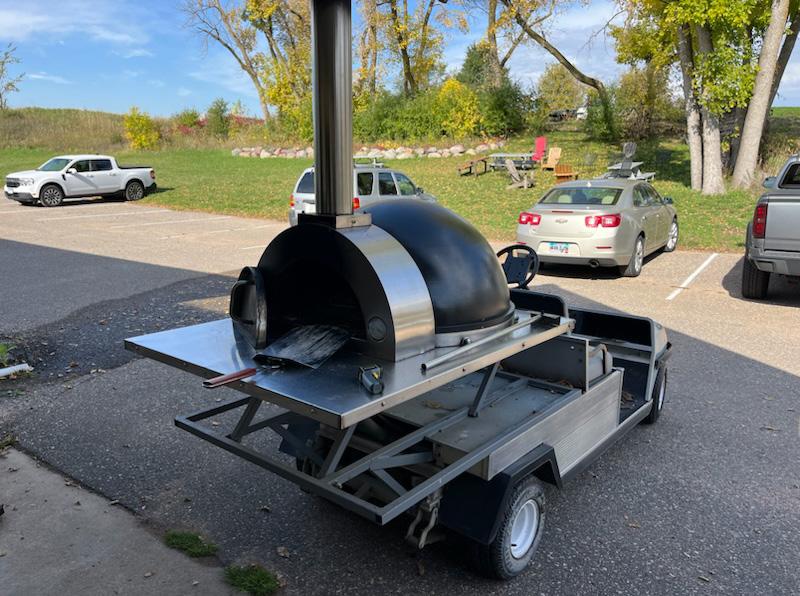
Within the context of technological advancements that our industry has seen over the last 35 years - Ralph’s expert and up to date knowledge of cutting units, utility vehicles, tractors and implements is even more impressive. Widely known for his ingenuitive solutions, he could fabricate an “improvement” onto any piece in the fleet. When asked of his most memorable project, he referenced a relatively recent build - what has become known as the Hazeltine Pizza Cart. The genesis of this project stemmed from the club’s acquisition of a portable pizza oven, with the
25
word ‘portable’ being up for interpretation. After one season of our staff moving the stand around on a routine basis, Ralph mocked up a proposal to affix the oven on a cart and configure a ram to raise the oven away from the vehicle during use.
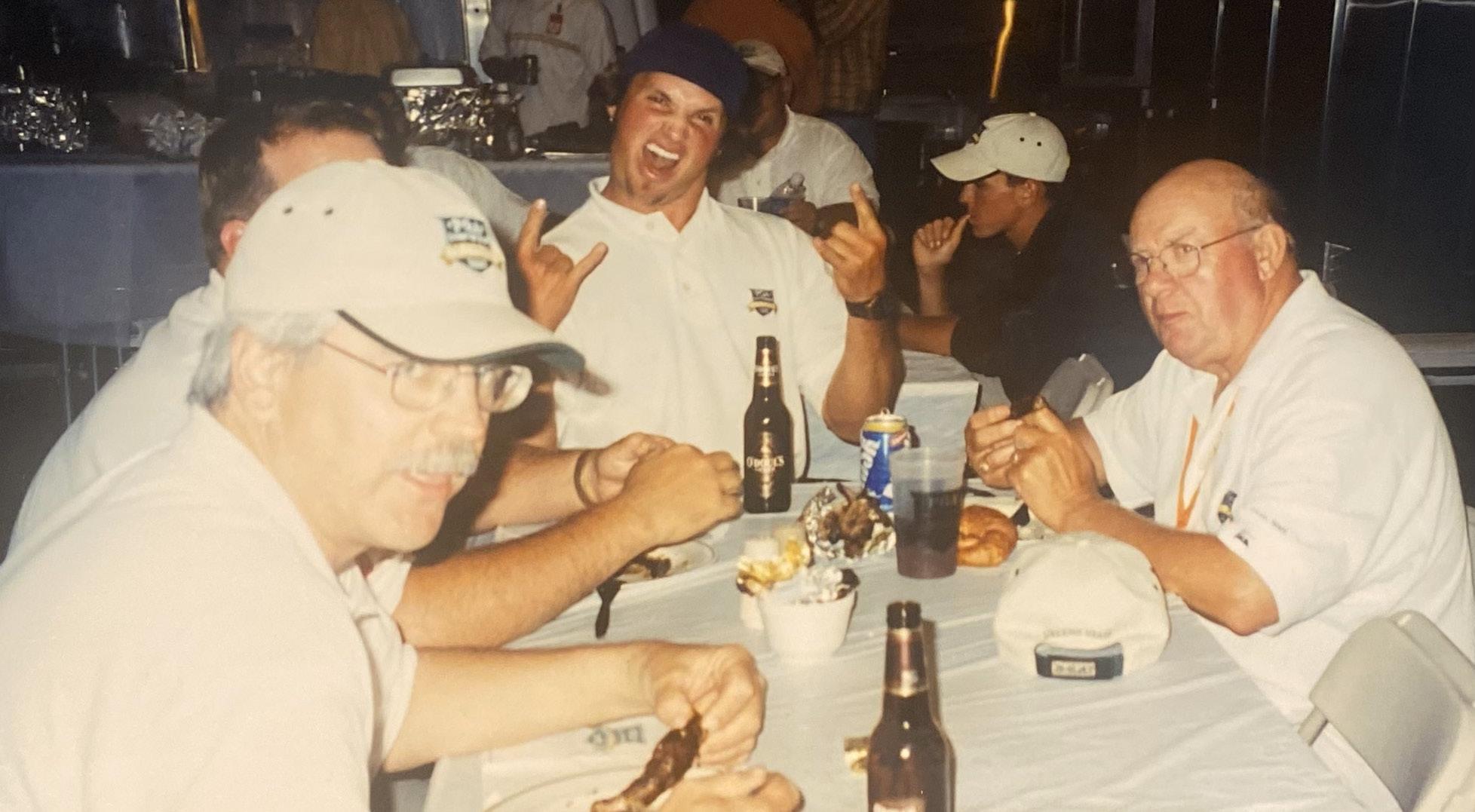
Our staff was fortunate enough to show Ralph a small token of our appreciation on his last day in the office. Toward the end of March, we welcomed about 60 past co-workers, distributors, engineers, and Hazeltine members to a surprise gathering. Despite our best efforts, Ralph had a small inkling
that something was brewing and kindly played along for us to flip the lights of the shop and present the crowded room.
Among the numerous attendees, a few had the following words to say about Ralph: Ralph is one of the best equipment managers in golf. Ralph’s expertise benefited engineers and salespeople from all of Hazeltine’s suppliers.
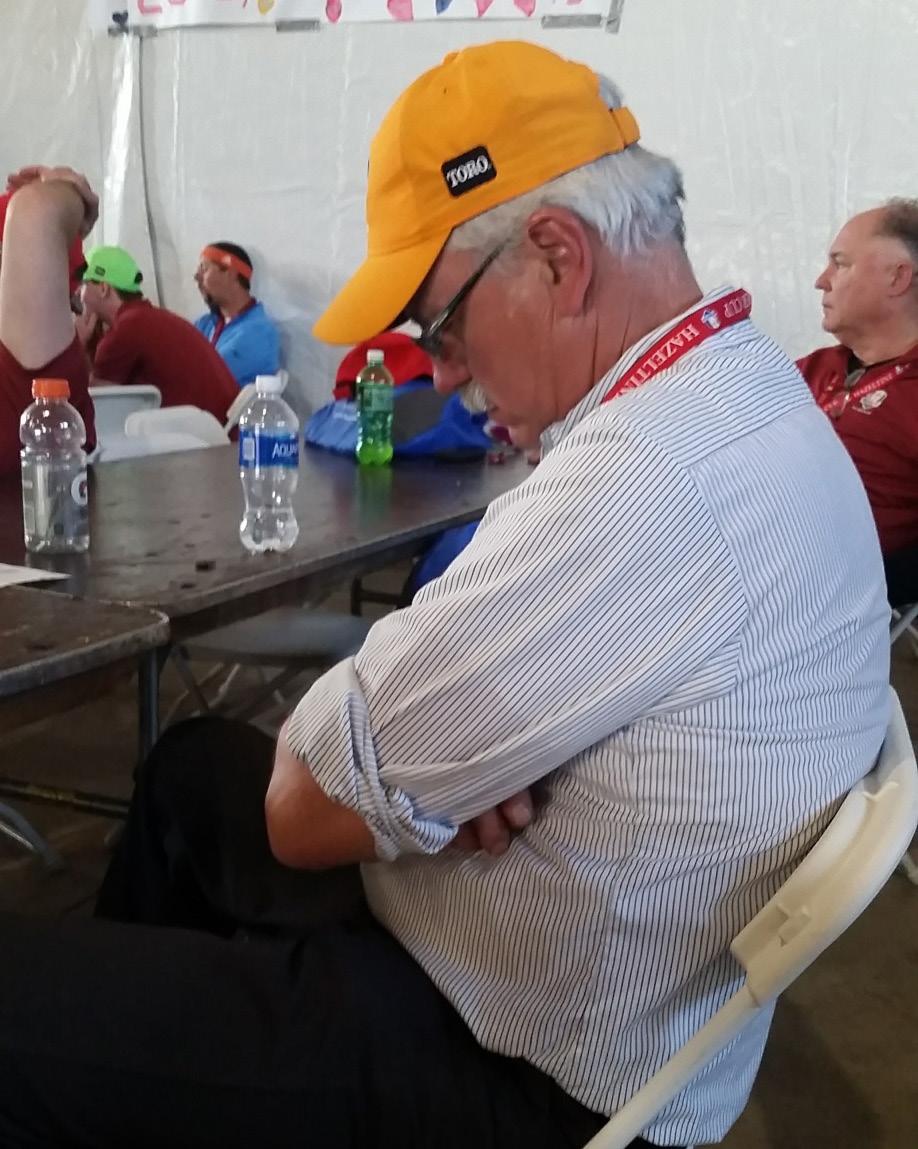
During my recent visit to Phoenix for the GCSAA’s Conference and Trade Show, I noticed that Ralph’s anticipated retirement was a popular subject among many attendees. When I
26
informed them that Ralph was present at the event, the response was always something like, “Ralph’s here!? I can’t wait to see him!” - Chris Tritabaugh
Ralph is an incredible complement to his profession. I’m a richer person to have him as a friend. I’m grateful for the help he was kind enough to give me! - Former Hazeltine Member He quietly takes in his surroundings, and always has a witty remark when you ask a question or give him information. His standards for work and the equipment kept Hazeltine
running smoothly every single summer. - Mike Kantor, former HNGC seasonal employee
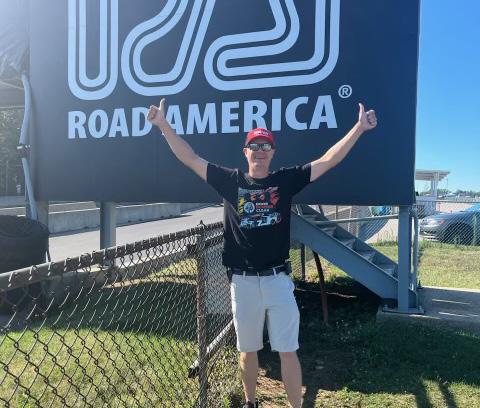
We at Hazeltine will deeply miss spending our workday with and around Ralph. He was truly a treat to learn from and spitball with. Equal excitement exists for the many endeavors he already has planned during retirement. Predictably, these plans include NASCAR races and spontaneous RV trips around the country. While he may have beat the average tenure among retirees, he well exceeded the mark on impact to our industry - both in Minnesota and beyond.
27


Golf Day
MN Allied
Introducing the unrivaled insect control of Tetrino™, the one insecticide solution that does the work of many by controlling not only white grub and annual bluegrass weevil but also a wide range of other turf-damaging pests. With flexible application timing, it even allows you to take a preventive or early curative approach to your pest management. Up your game with the new broad-spectrum control and fast-acting flexibility of Tetrino.
Learn how Tetrino can up your game against white grub and ABW at es.bayer.us/Tetrino.

Introducing your new advantage against the top five most notorious turf diseases.* Densicor ® is the ultimate defense against dollar spot, brown patch, anthracnose, gray leaf spot, snow mold and other harmful diseases. Its ultra-low use rate, affordability and strong turf safety profile allow you to spray less while protecting more acres in any climate. Stand up to the Frightful Five with Densicor for exceptional disease control and excellent turf safety across greens, fairways and tees.
Start protecting your turf against the Frightful Five and visit es.bayer.us/Densicor.
*Dollar spot, brown patch, anthracnose, gray leaf spot and snow mold were the five most common diseases according to a national survey among golf course superintendents. ALWAYS READ AND FOLLOW LABEL INSTRUCTIONS. Bayer Environmental Science, a Division of Bayer CropScience LP, 5000 CentreGreen Way, Suite 400, Cary, NC 27513. For additional product information, call toll-free 1-800-331-2867. www.environmentalscience.bayer.us. Not all products are registered in all states. Bayer, the Bayer Cross and Densicor are registered trademarks of Bayer. ©2021 Bayer CropScience LP. Nick White Golf Course Superintendent Take a stand against ALWAYS READ AND FOLLOW LABEL INSTRUCTIONS. Bayer Environmental Science, a Division of Bayer CropScience LP, 5000 CentreGreen Way, Suite 400, Cary NC 27513. For additional product information, call toll-free 1-800-331-2867. www.environmentalscience.bayer.us. Not all products are registered in all states. Bayer, the Bayer Cross and Tetrino are trademarks of Bayer. ©2021 Bayer CropScience LP. Densicor ® controls the fear of turf disease.
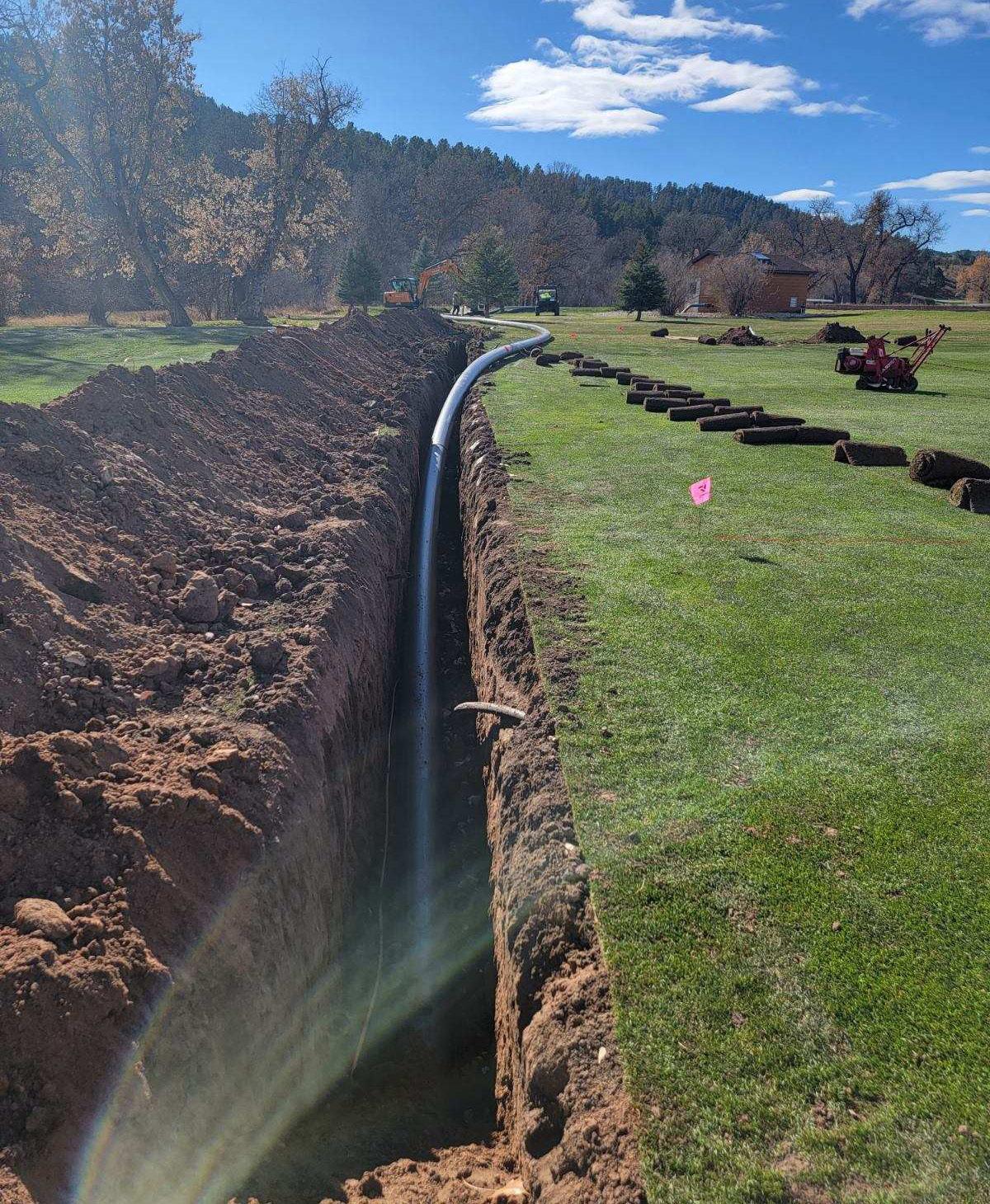
HART RANCH GOLF CLUB CONTINUES TO MAKE STRIDES TO STAY AT THE TOP OF THE LEADER BOARD.

30
(RAPID CITY, South Dakota)
The greatest entities in sports— people and places—are often categorically complimented as “the Mount Rushmore” of their respective activity. Quite apropos then that Golfweek’s current #1 Public Course in South Dakota, Hart Ranch Golf Club, is literally 20 minutes down the road from the iconic national treasure Mount Rushmore.
Nestled in the Black Hills of South Dakota, Hart Ranch Golf Course began as a 9-hole course in 1985, and remained
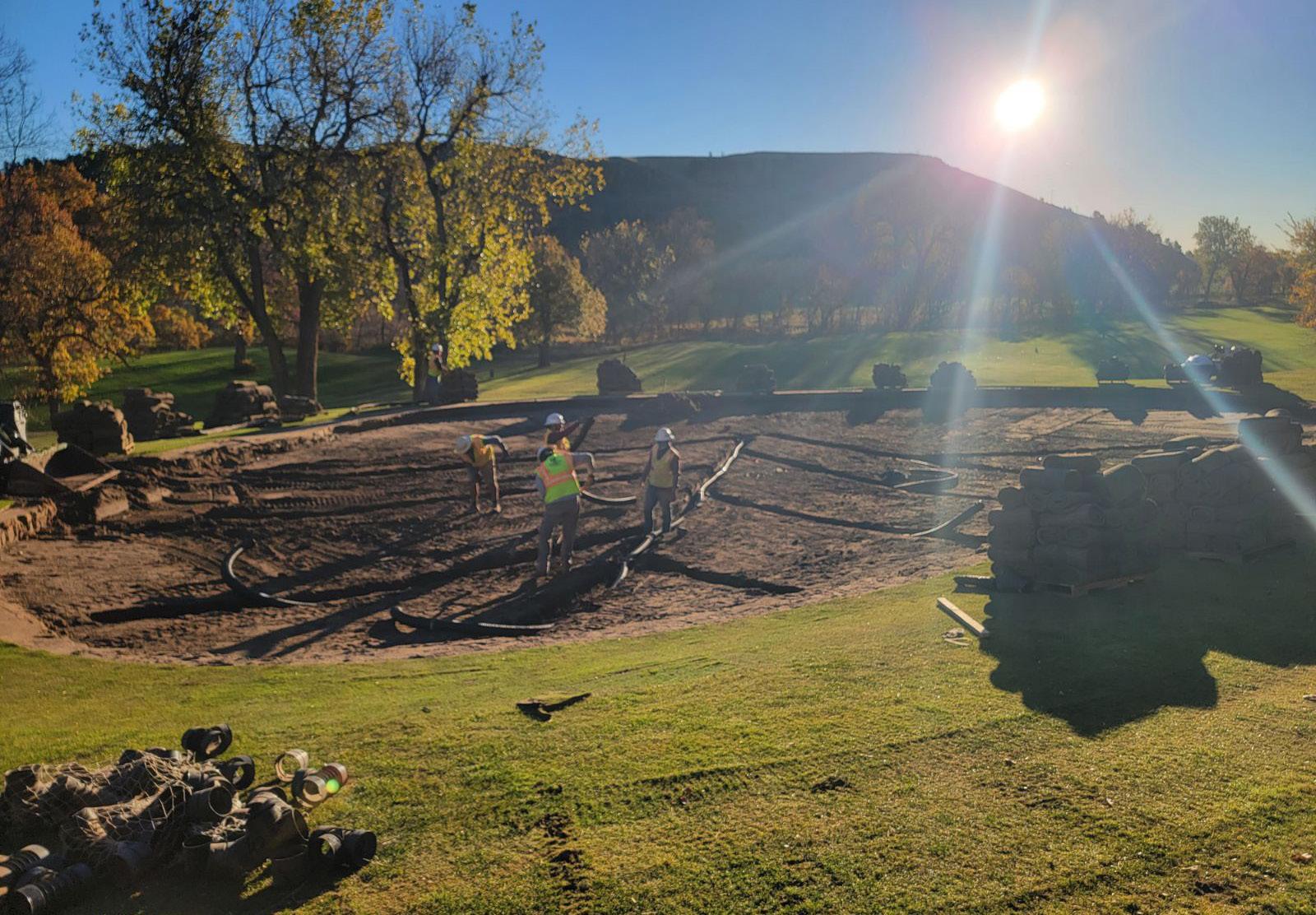
that for a decade, expanding to 18 holes in 1995. Recognized by locals and tourists alike for its picturesque views of the hillsides blanketed with native vegetation and century old rock outcroppings, the course offers a fun, yet challenging round as golfers navigate the valley’s namesake creek that comes into play on a dozen of the golf holes. Despite earning Golfweek’s top honors, ownership in Fall of 2023 embarked on the first phase of implementing a longrange master plan prepared
31
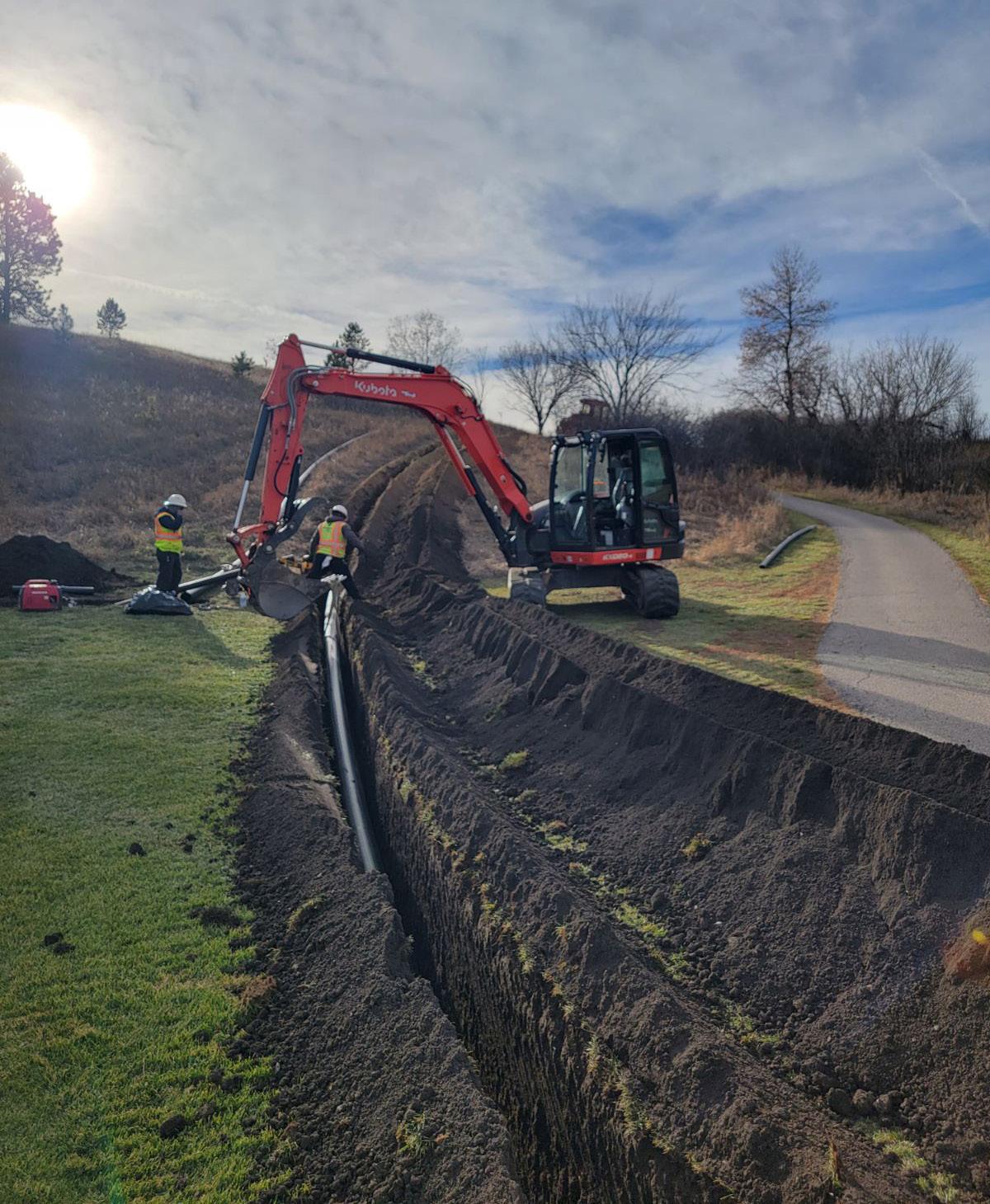
by John Fought, ASGCA. In addition to enhancing playability and shot making for all skill levels, installation of a new irrigation system on the front nine will afford the ability to provide high quality turf conditions on a consistent basis. “We’re recognized as the top conditioned golf course in Rapid City,” said Adam Wortman, golf course superintendent. The state-of-the-art controls of the new system allows us to more precisely irrigate putting greens, surrounds, fairways and tees further enhancing our ability to meet customer expectations that come along with being the
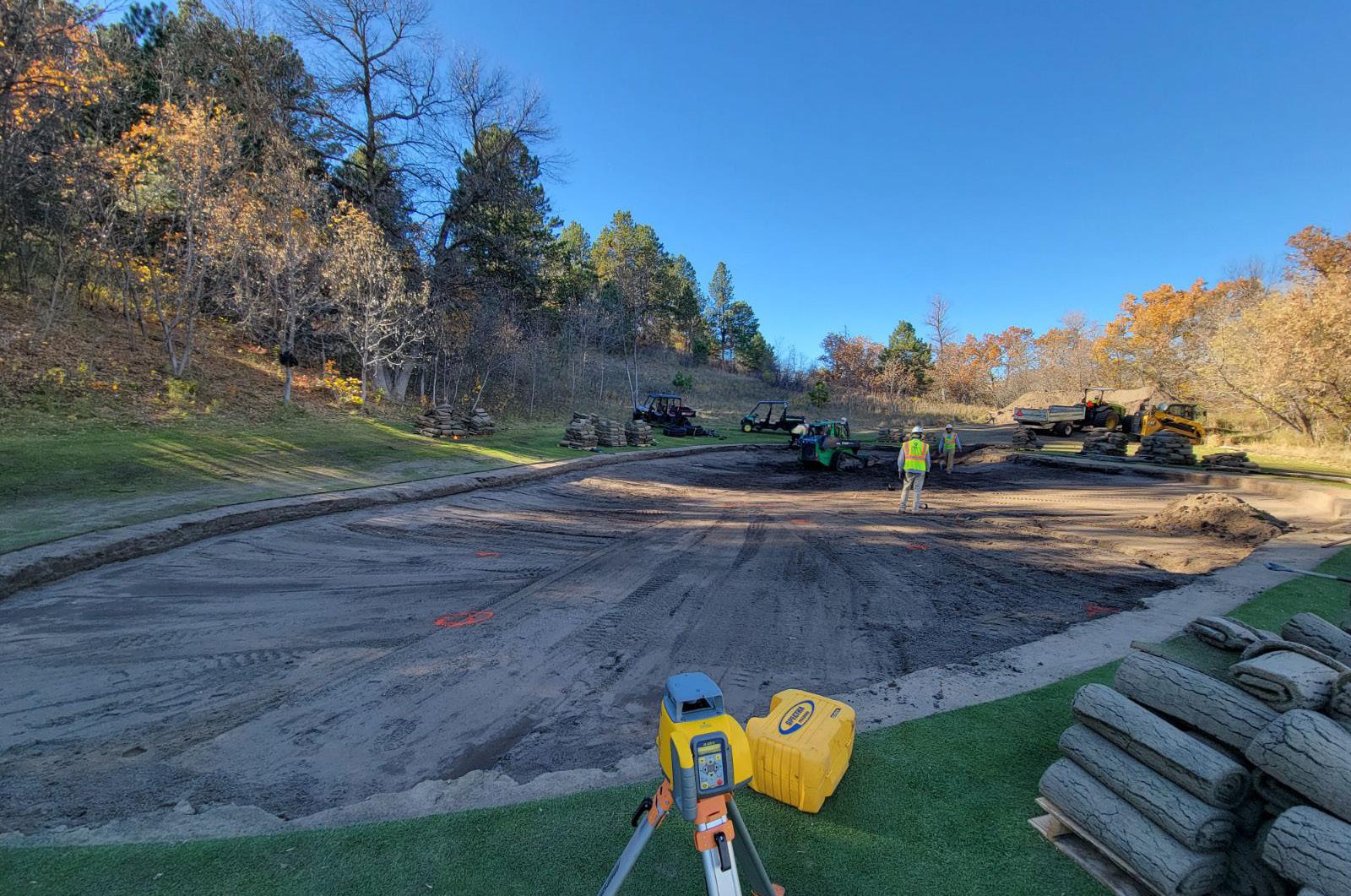
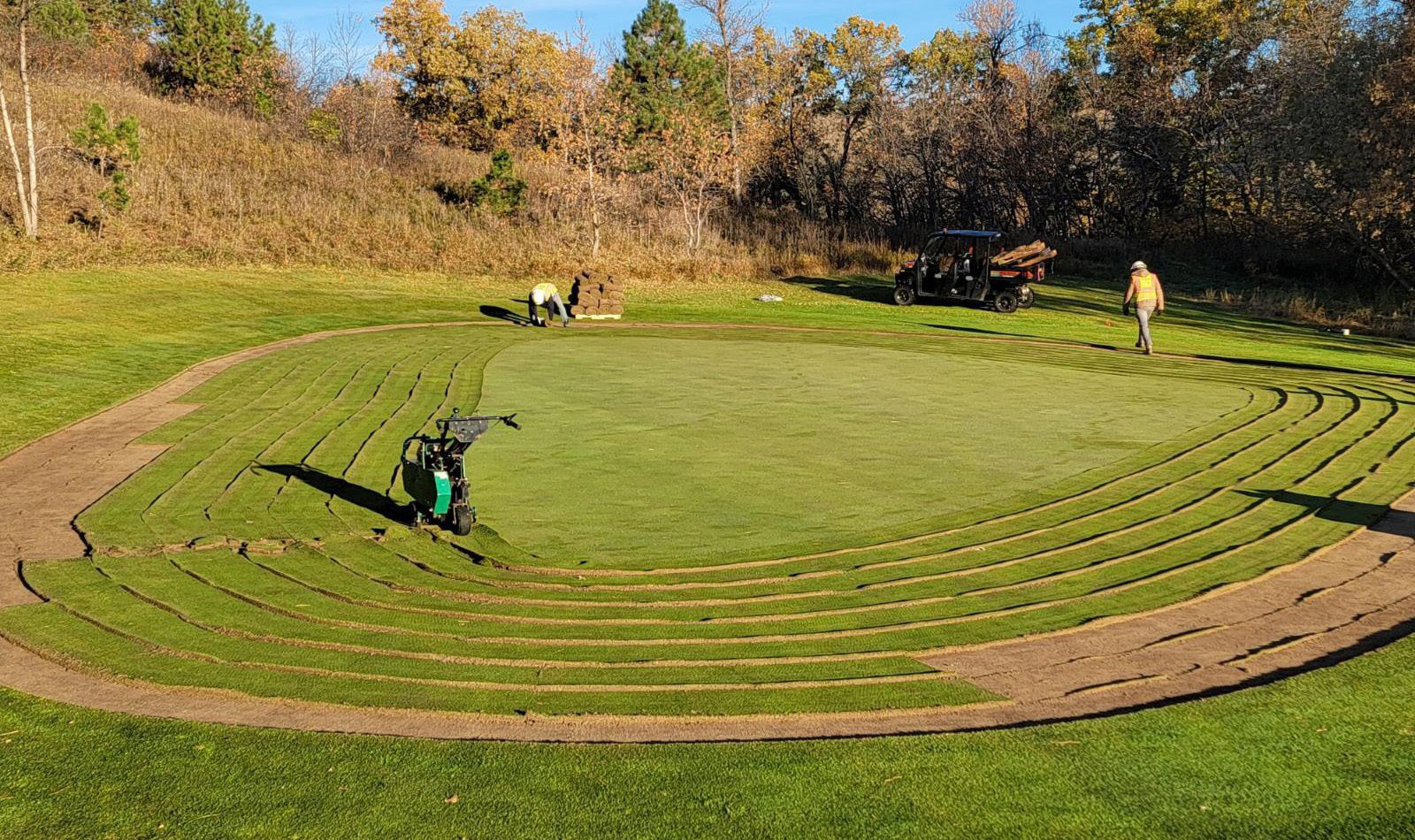
top public golf course in the state.” Course improvements also completed include leveling and realigning several tee boxes, new concrete cart paths, tree removal to enhance playability and turf quality, and regrassing projects completed by the golf course builder Duininck Golf.
“They have all the tools and seasoned resources to take on projects of any size and complexity, from new courses and total remodels to course improvements and irrigation projects like the work at Hart Ranch,” said John Fought. “When they work on a project,
32
any project, they invest fully. You get the best of their minds and the best of their skills from beginning to end. Sure, the location next to Mt. Rushmore doesn’t hurt, but the course that Duininck Golf has built is what keeps everyone coming back.”
General Manager, Brett Grosz, concurs. “We initially brought Duininck Golf in a few years ago to help with tee and bunker renovations. It was after that work that the rating experts took notice, and we were recognized by Golfweek as the #1 public golf course in the state. Not to mess with success, Duininck Golf
has been a great partner and we look forward to continue to finish the work identified in the John Fought Design master plan and expect to keep getting better. The best part though is that they’re not just the consummate industry professionals, they’re great people, too.”
It takes a lot to make a golf course great, and even more to become the very best, but they’ve clearly found the formula for success in western South Dakota, at Hart Ranch.
33
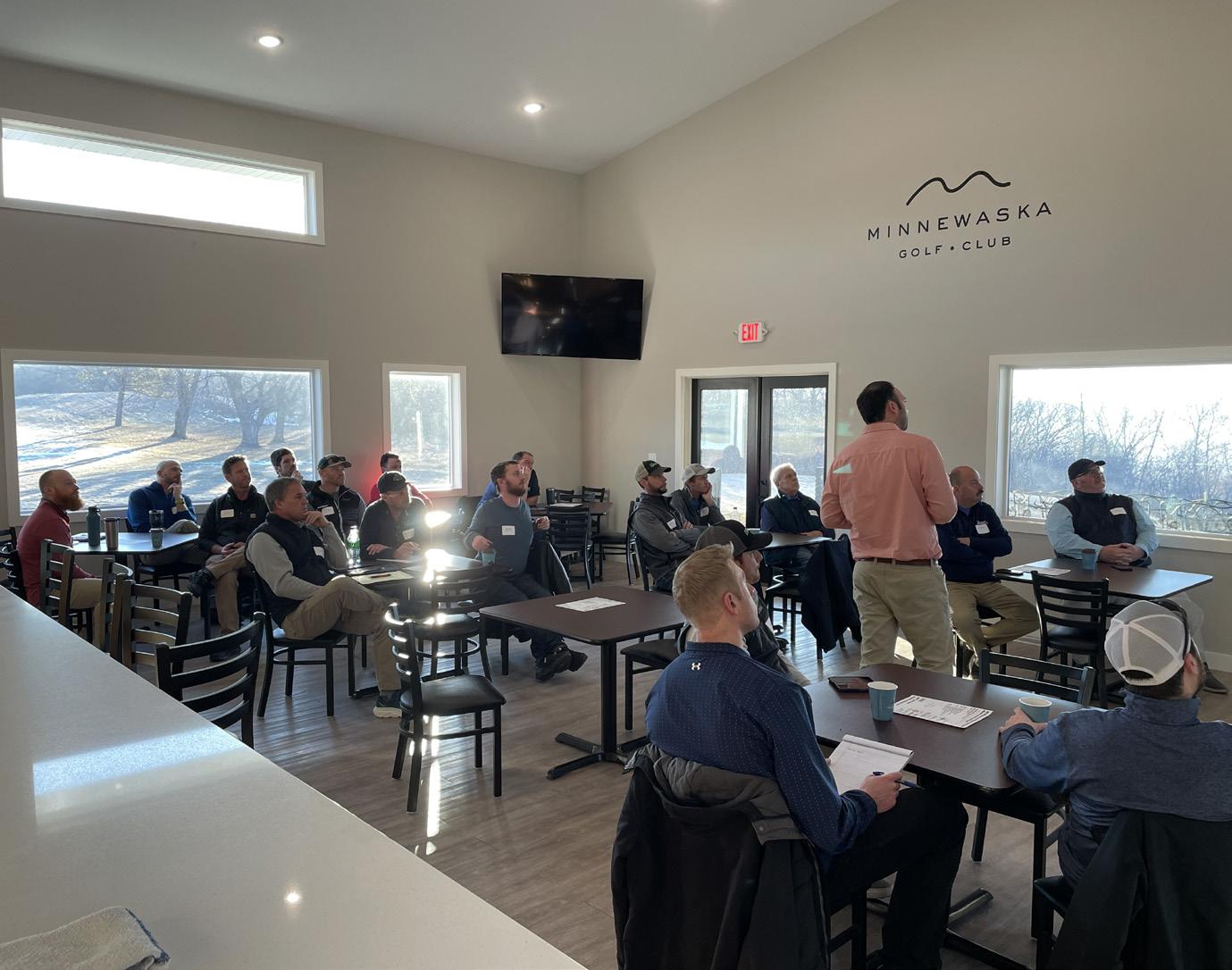
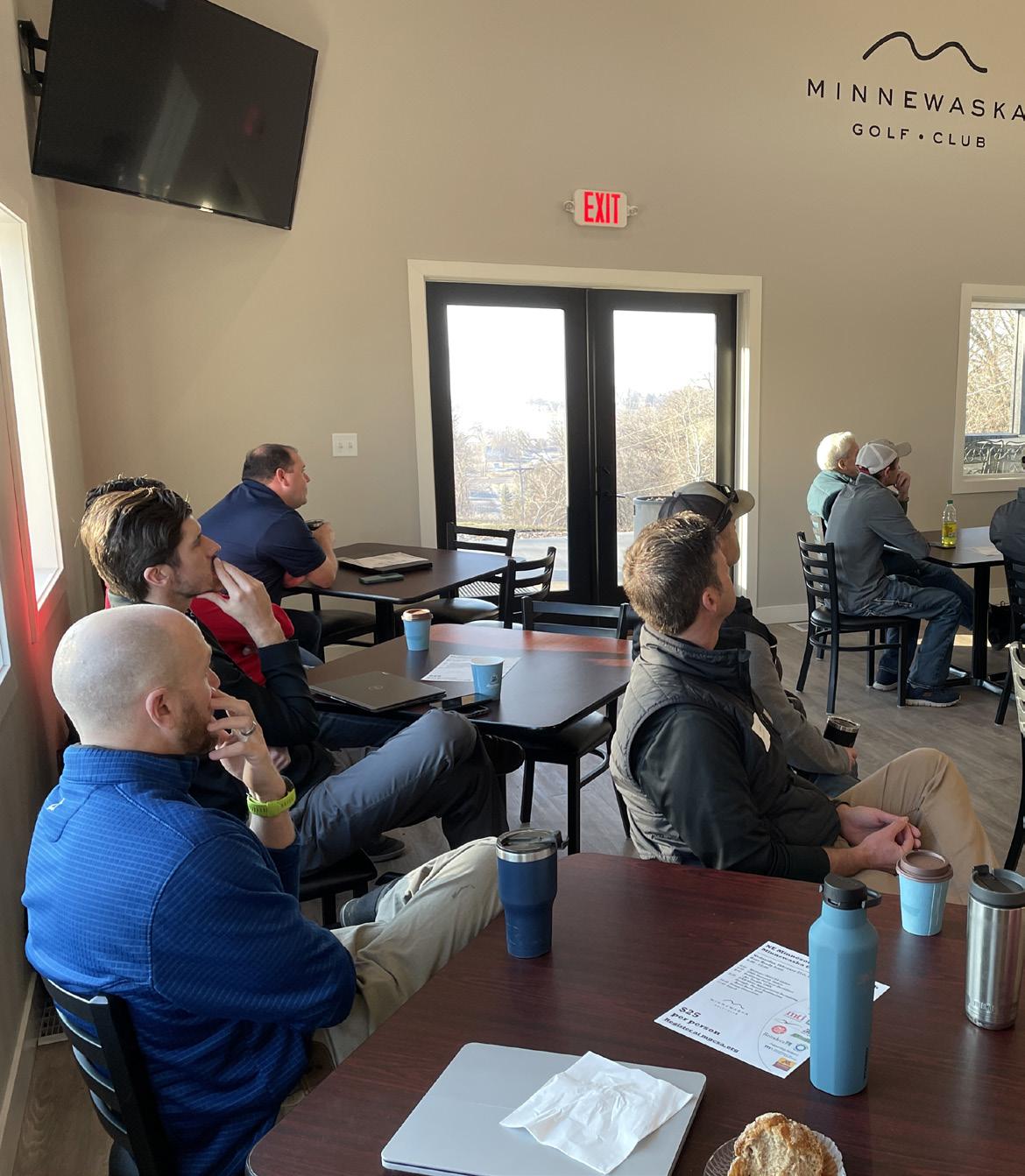
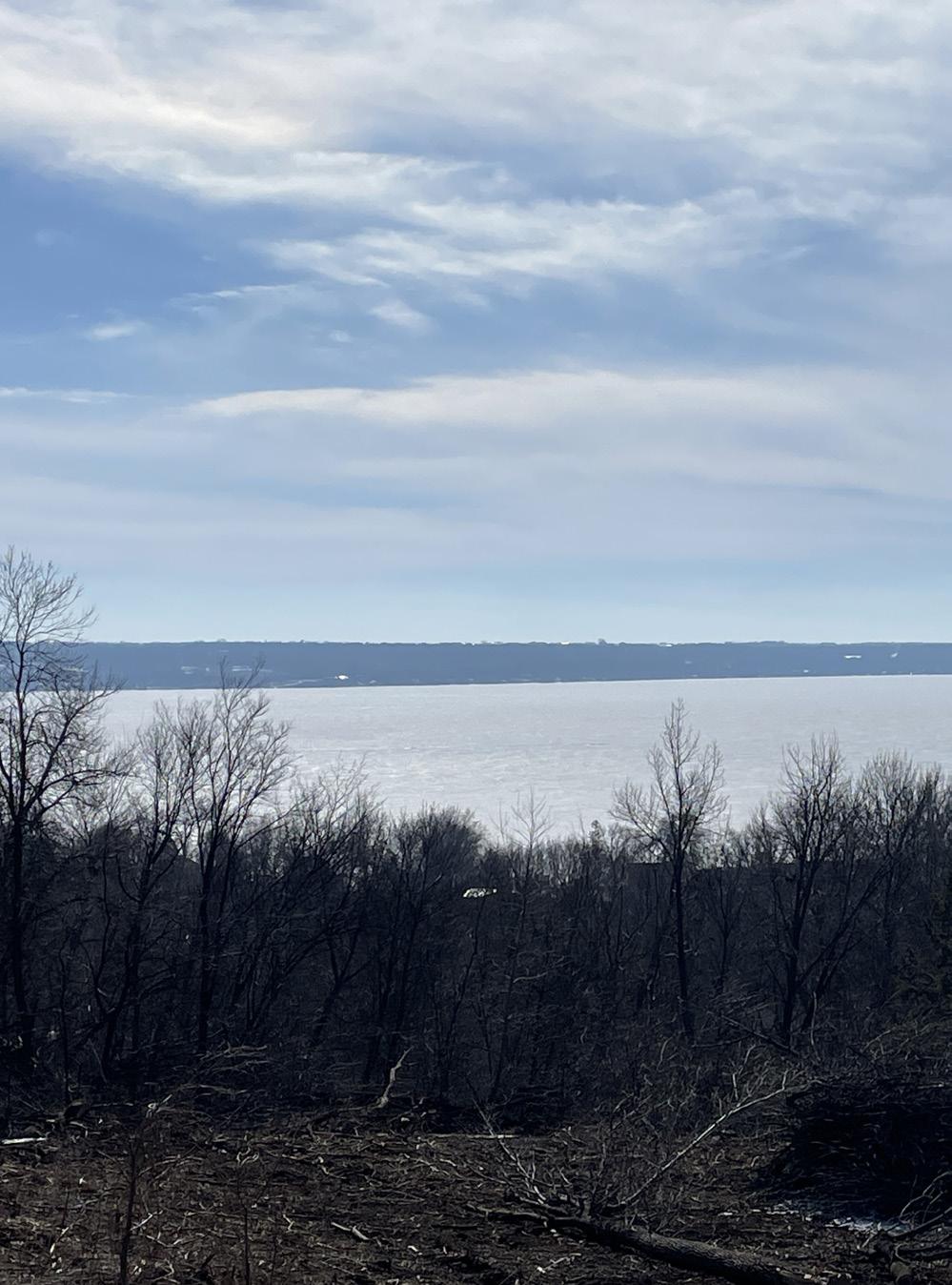
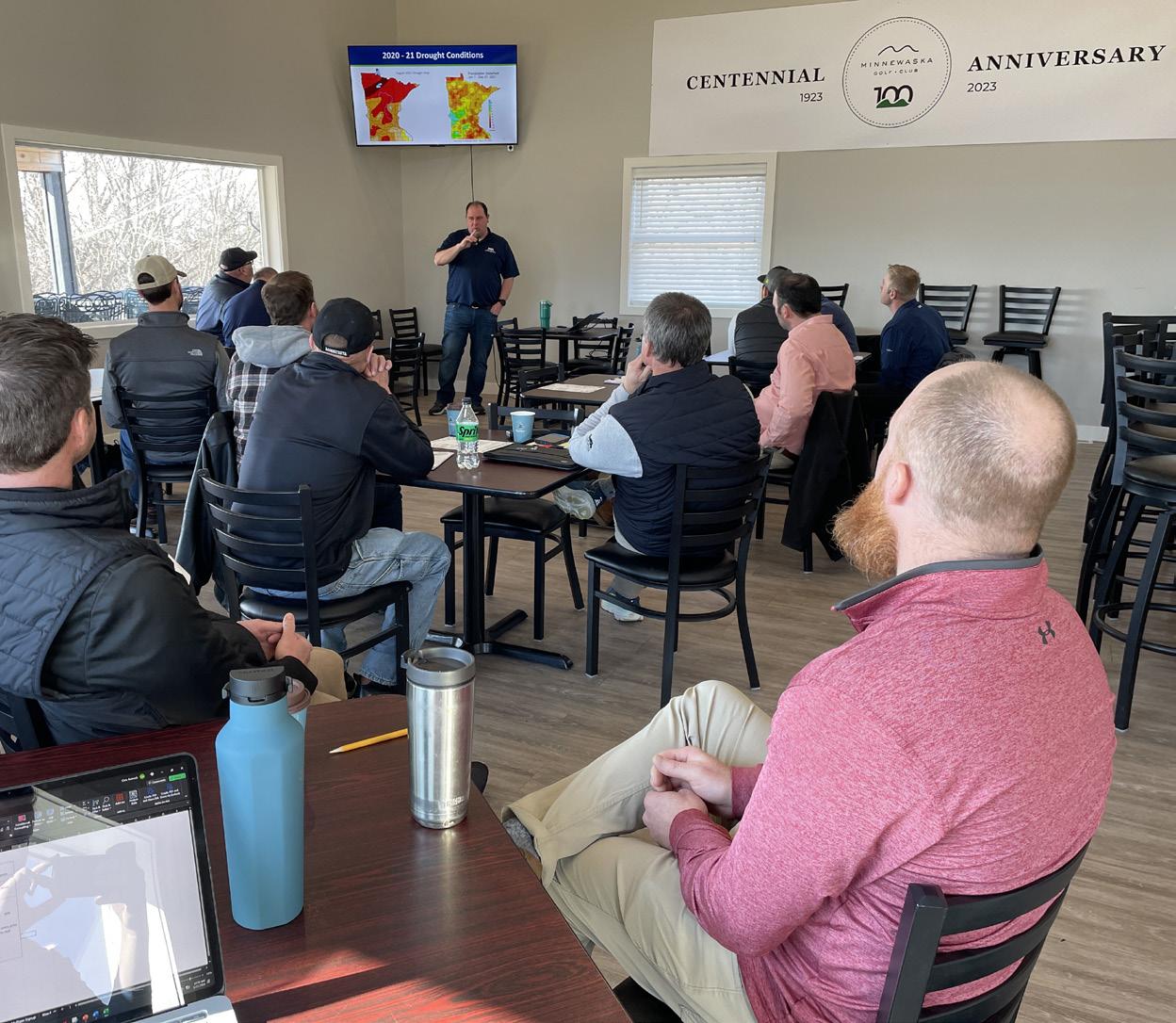
Minnewaska Outreach
Thnak you to our host Superintendent, Brady Scott, and all of our presenters and sponsors!


34






Golfers wield clubs.




But you have weapons of your own.



See our ever-growing line of tools and accessories to enhance your course including Accuform™, HiO®, FusionCast® and Miltona.

ParAide.com
Roll It Forward
By: Jeff Fjosne

I was nominated by Matt Schmid, thanks Matt!! A person somewhere once said, “To know where we are going, we need to know where we’ve been.” Or something like that. So, here we go. I was born and raised in the small Northwestern Minnesota town of Karlstad. My Parents introduced me to
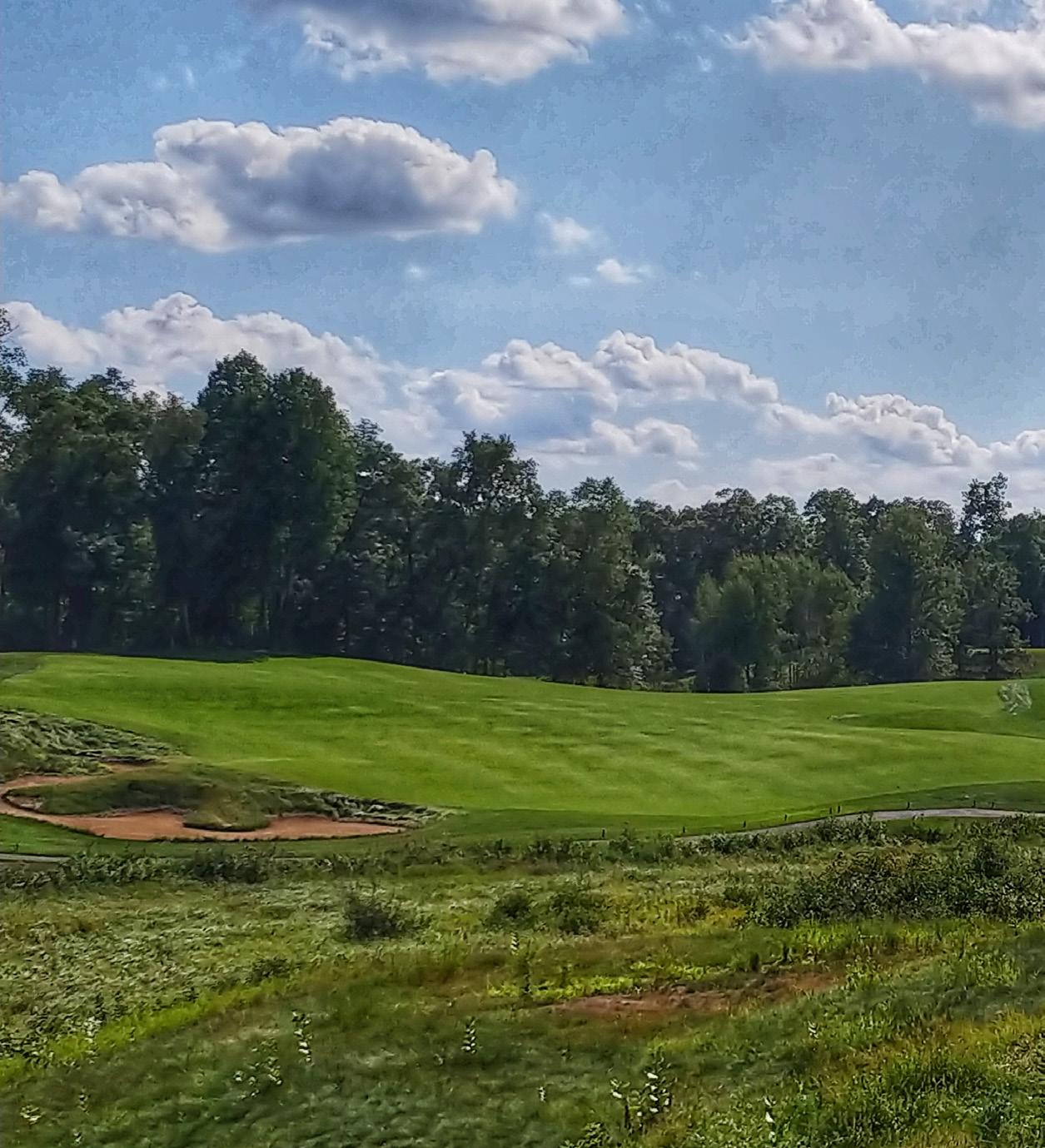
the game of golf at a very young age at the VERY prestigious Karlstad Golf Club. You may know Karlstad Golf Club from the ultra-competitive Tuesday Night Owl men’s league and the Lancaster/Karlstad, Dual course, 4 – person scramble!
I, along with current big time
36

Superintendent, David Soltvedt, started working on the course during my high school years. We would work 4-5 grueling hours and then go play golf for the rest of the day. After Graduating from high school, I attended Bemidji State University. While there, I quickly realized that I was going to be a terrible accountant.

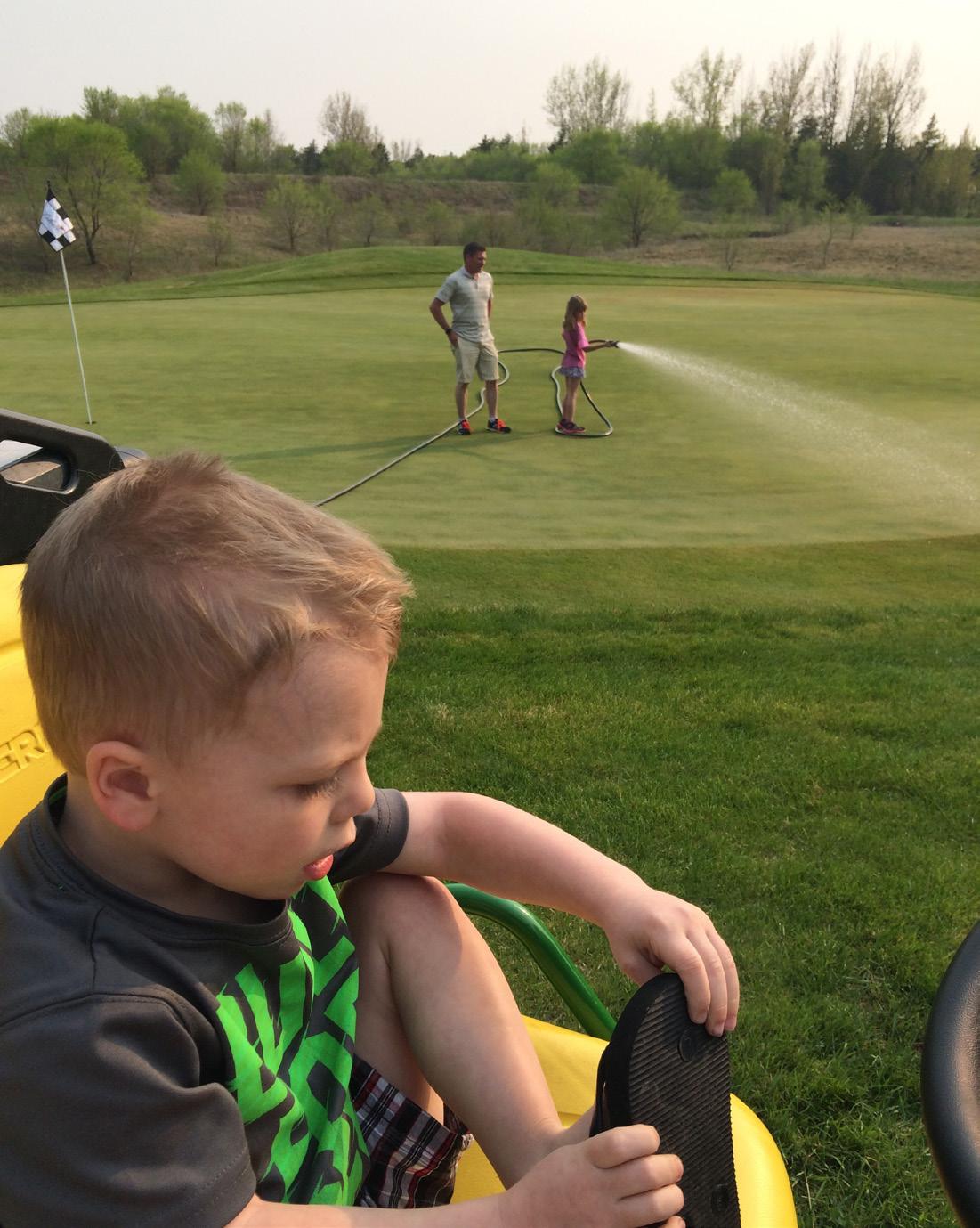
On summer break, back on the hallowed grounds of KGC, David would talk about his time at Michigan State University and the Turf program. His insights and the thought of getting to work outside in a field that I enjoyed swayed me to transfer to The University of Minnesota -Crookston. While attending
37
Photos provided by Jeff Fjosne
UMC I meet lifelong friends
Matt Schmid, Kent Orvik and Jordan Kuzma to name a few.
We learned a lot during those years. For instance, we learned that if you paint the logo for the football field in 36-degree weather, it will not be dry by noon the next day! The amount of work that was needed to get the paint out of those Jerseys must have been a historic event! I can easily say there were lots of laughs from that wonderful time in my life.
During my time at UMC, in the
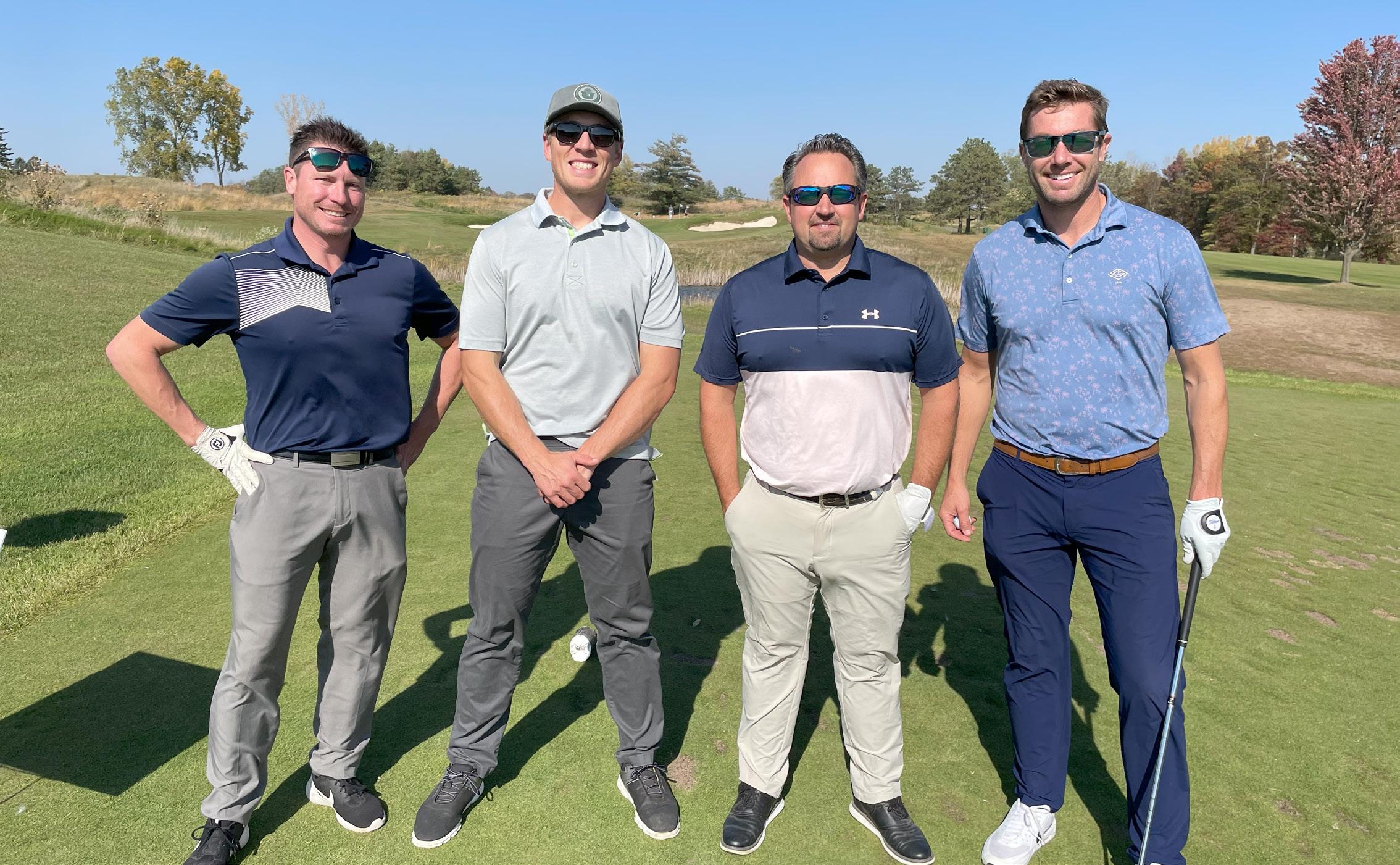
summer months, I interned at Deacons Lodge in Breezy Point, MN. Spending 2 summers at such a fantastic course will always be a highlight of my career. Working mostly with/under current Superintendent Ed Thomas was a blast! From him telling me, after spraying one green ever in my life, “You got this” and just left me to fend for myself! To, waxing poetic about Srixon golf balls and whatnot out in a boat taking water samples from the Wilderness lakes around the property. I still find myself saying the same comment that Ed would
38

say anytime someone would make a mistake or do something questionable, “I see you are continuing the Tradition of Excellence”. My time at Deacons Lodge told me that I was going down the correct career path.
After Graduating College I was told you now need to get a job!
So, I spent the better part of the winter of 02-03’ applying to and getting rejection letters from around the State. But finally, after much effort and not wanting to hang anymore rejection letters on the Fridge, I got hired as the 2nd Assistant Superintendent at Midland Hill Country Club under Scott Austin, CGCS. Needless
to say I was pretty nervous to actually start my career in this industry. While at Midland, Scott was more than willing to just let me learn and figure things out on my own which I greatly appreciated and respected. I will always remember working on an irrigation project that was giving me fits and Scott was slowly driving by and calmly saying, “You’ll figure it out.” and drive away. Much was expected of you while working there but if you showed drive and determination, you got the respect back. For that, I am grateful for the opportunity I got there.
Later into my 2nd year at
39

Midland, an opportunity came along to go out to Montana to work on a golf course growin called The Club at Spanish Peaks. To say going into a new construction project is a different animal is an understatement!
From day 1 the learning didn’t stop! Watching the ground go from the side of a mountain to a golf course was something to say the least. Learning the process of how to build a course has come in handy since my time there. Whether it has been building a nursery green or installing irrigation satellite boxes, I probably learned about it from my time at Spanish Peaks. While learning at a grow-in
course was unbelievable and great, I really wanted to get back to Minnesota and closer to family. In the middle part of 2006 I got hired as an Assistant Superintendent at The Jewel Golf Club in Lake City, MN. The Jewel had only opened a couple years prior to me getting there so it was a good transition from a grow-in course to newly opened course. While there I had the great pleasure to work for Doug Mahal, CGCS. My time spent at the Jewel was, for no lack of a better term, phenomenal. I knew it was going to be an enjoyable place to work when I was told a story about a crew member that had taken the greens mower
40
and mowed about 20 feet into the apron around the green. The distraught worker showed Doug what happened, Doug just looked at him and said in a calm voice, “It’s grass, it grows back.” We worked our butts off at times, but I would never say I didn’t enjoy the work we were doing!
After roughly 3 years at The Jewel an opportunity opened at Rochester Golf and Country Club. I was hesitant to move on from the Jewel, but it was a job closer to where I was living at the time and with my daughter’s birth on the way, it made the decision easier. At RGCC I had the pleasure
of working for Tim O’Driscoll. Tim made every day enjoyable between the shop arguments about fantasy football or Tim wearing his VERY stylish leather Vikings jacket on “Purple Fridays” during football season. While at RCGG, we were one of the courses that used a little herbicide called Imprelis! It was a very unfortunate thing that happened, but it was a blessing for the course and a good learning experience on what to do in a situation like that. I know we are supposed to keep things positive here so, I will just say that Tim got a raw deal, and I became the Superintendent. My time as Superintendent was

a whirlwind but I learned a lot and grateful for my time there. Life seems to always throw a wrench at you, just to see how you will respond. So, after roughly 2 years as Superintendent of RGCC, we decided to move north to the Wadena/Perham area to pursue an opportunity that was worth exploring. Unfortunately, that meant I had to put my career on hold for a bit. Luckily, it took no more than a week from moving up here to meet up with Ryan Inglis, Current superintendent of Moorhead Country Club. Ryan took me aboard at Perham Lakeside Golf Club and the following spring I became his assistant.
Fast forward 1 year and Ryan got the big phone call on becoming the man in charge at MCC! Again, it is funny how life works. A little more than a year later I was back in the Superintendent Chair at Perham, OH BOY! I have been here ever since and couldn’t be happier. The ownership group has been super supportive of our department and, for the most part, let us do what is needed to make PLGC the best it can be.
I am always impressed with how supportive this group of turfgrass professionals are of each other, even when there are times we are competing for the same group of golfers. I have met some great people who are more than willing to give advice and guidance. My world revolves around my 2 kids (15 and 11 yo). If it isn’t hockey, it is dance, cross country or track. They keep me busy, and I wouldn’t have it any other way. They have changed my mind set of having to be at the course. My mental escapes are golfing and running. I have set a personal goal to run a half-marathon in every state. I’m not even close to completing it but I can tell people that I have a goal! As part of the Roll it Forward series, I nominate Wildflower Golf Course Superintendent, Reed Bohm. Reed was our assistant at PLGC. Reed brought his fantastic attitude and CrossFit skills to our department. He has gone on to do great things at Wildflower.
Thanks for reading!
42
Bemidji Outreach
Thank you to our host Superintendent, Matson Gravelle. (Read his journey of climbing Mt. Kilimanjaro earlier in this issue!)
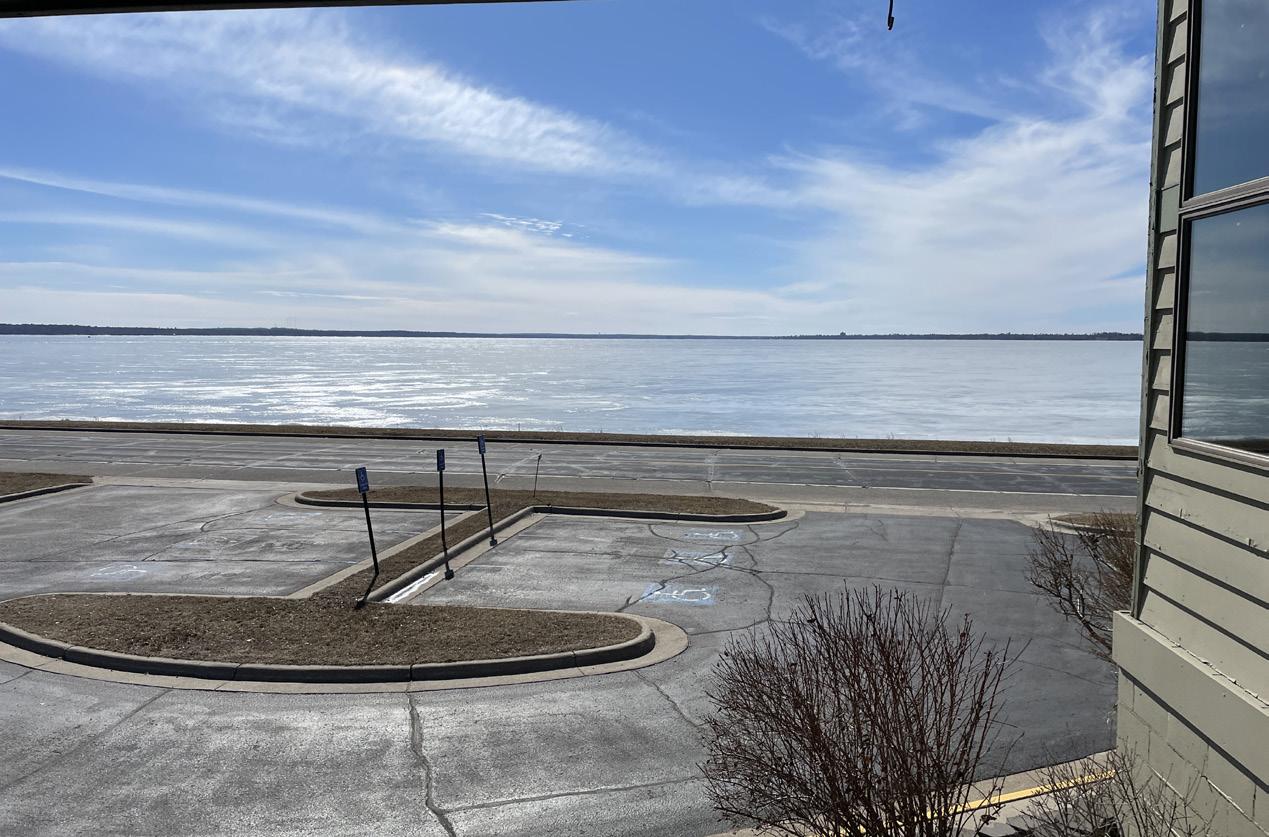
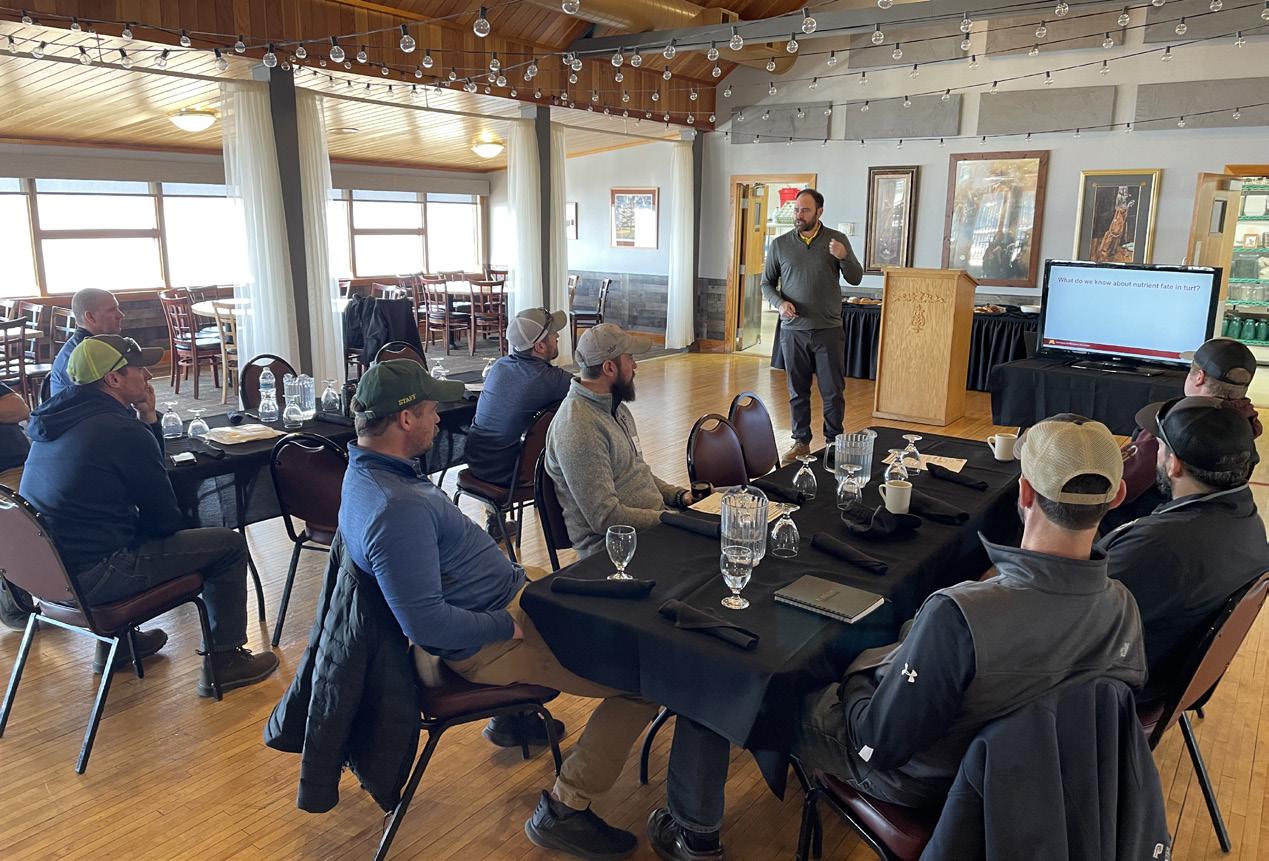

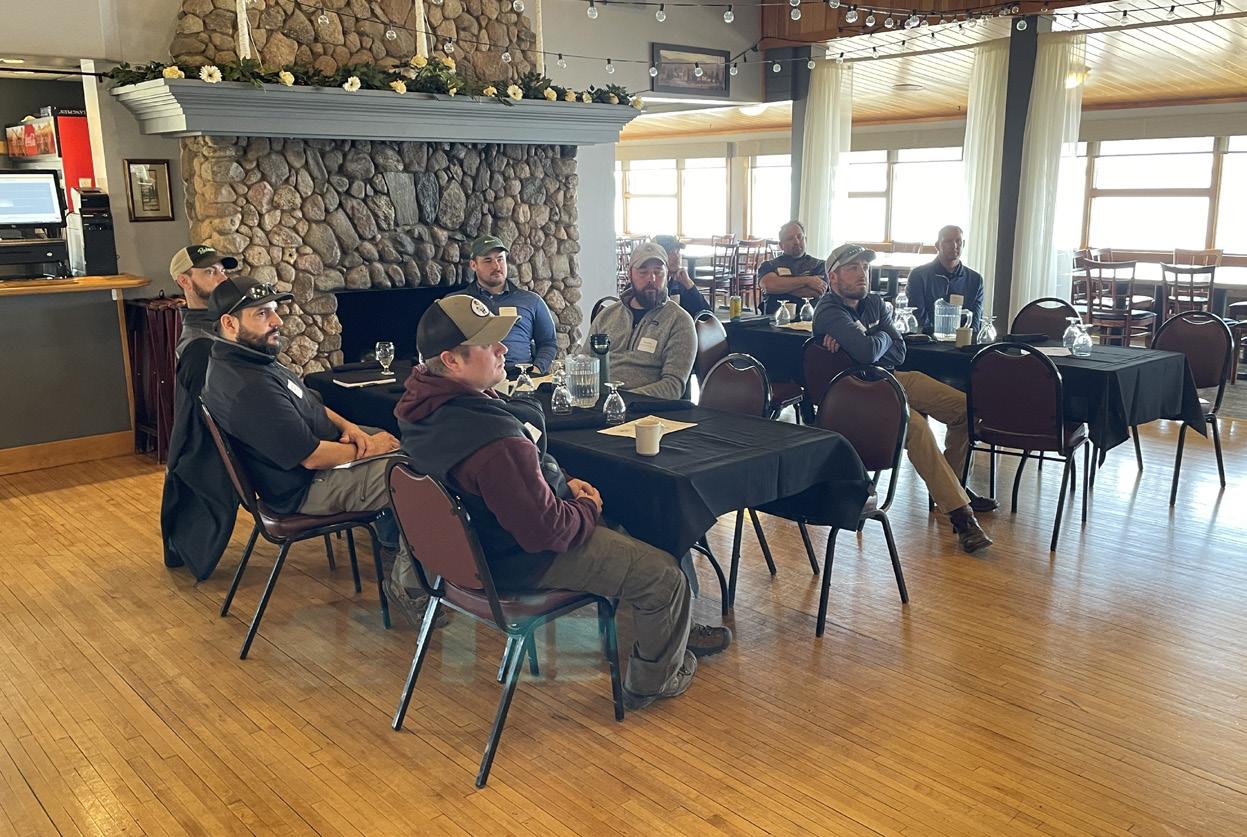
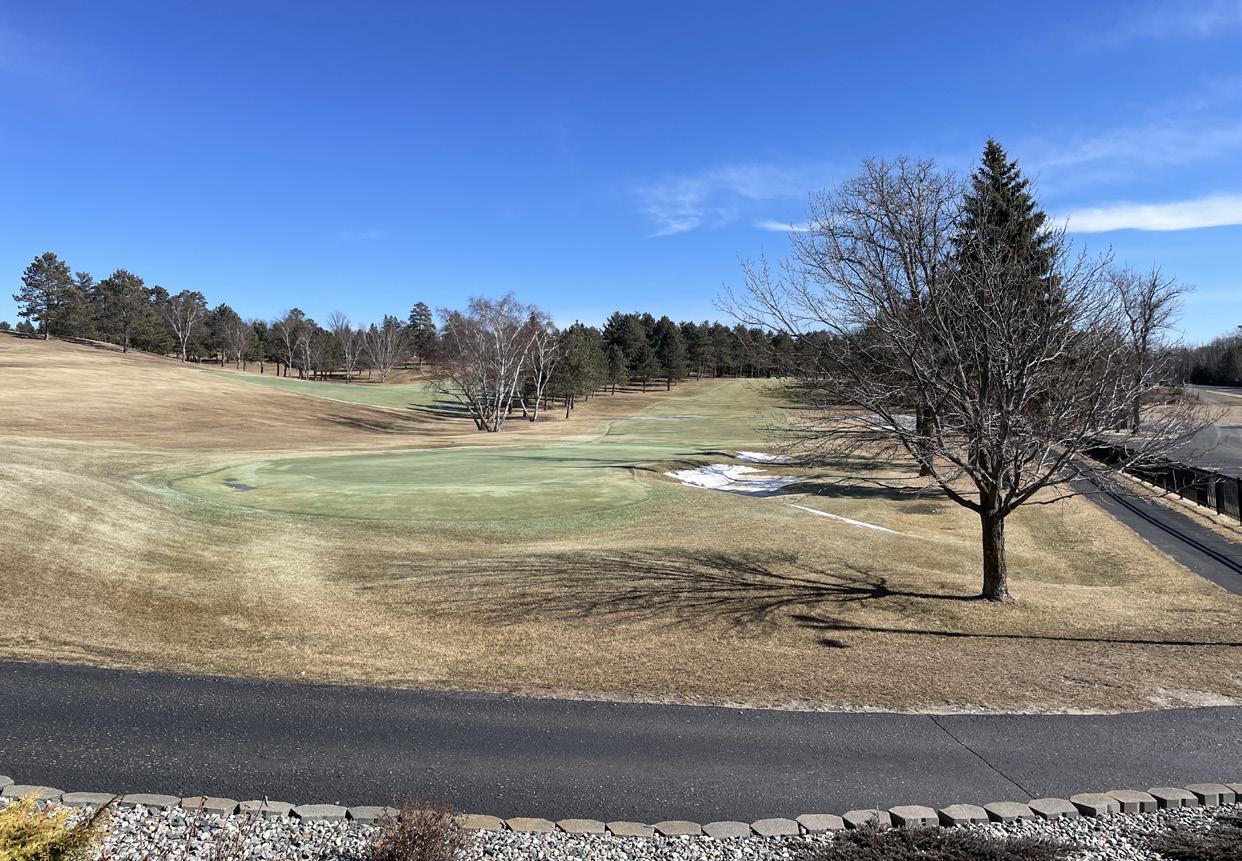
THANK YOU TO ALL OF OUR WINTER OUTREACH HOSTS!
If you are interested in hosting a winter event next year, we can start planning those events now. Contact Chris if interested!
Monday, June 10th
10:00 Shotgun
Host: Zach Foltz

$25 Per Player
INCLUDES GOLF, CART, LUNCH, DRINKS, AND PROXY PRIZES!
REGISTER YOUR TEAM NOW FOR THIS CASUAL GOLF EVENT NON-MEMBERS WELCOME & ENCOURAGED!

EVENT SPONSORED BY:




DRINKS SPONSORED BY:



DETROIT COUNTRY CLUB 2024 EXPOSURE GOLF
GOLF COURSE MUSINGS
Share your strange, funny, and unique photos from your time on a golf course? Send your images to chris@mgcsa.org.
45
Ralph’s Hazeltine Pizza Cart mentioned earlier!

Austin Wright, CTEM Hazeltine National Golf Club
FACILITY INFO
Public or Private: Private
Number of Holes: 18 Holes
Full time employees: 11
Seasonal employees (not including full time): 40-50
Specialty Equipment: Manure Spreader, Pizza Cart
Greens Mowers: 6 Walking, 4 Triplex, + Misc.
Fairway Mowers: 5
Sprayers : 2 Toro 5800, and a tow behind.
GET TO KNOW ‘EM

PERSONAL TURF FACTS:
How many years have you been in your current position?6 Months
How many years have you been in the turf industry? 17 years
Where else have you worked?
Colbert Hills Golf Course, Baltusrol, Lawrence Country Club, Leawood South, Sand Valley
Turf School Attended (if any)?
Kansas State University
INDUSTRY THOUGHTS:
What is one “master plan” thing you would like to change at your shop?
I want to take it to where the shop is ready to host volunteers, championship style golf on a regular basis. We added a 2nd lift, which will help with that slow part of checking
mowers during events.
What concerns do you have the turf business and the future of golf? The easy answer is technology, we need to continue to educate ourselves and be a part of that industry, to make sure we can work on that equipment, or be knowledgable of how it works.
What is needed to bring more young professional EM’s into the industry? Make sure we continue to educate that an Equipment Manager in golf is a career path for those who are techinally inclined. Instead of putting them in an auto shop, lets show them that the golf industry is a career path. Its an industry

47
wide thing, so not just golf, everywhere needs mechanics. We can look for those crew members that have that itch and get them in the shop and show them how cool the job can be.
What piece of equipment do you want? Not a need, a want. I would like to see some autonomy in the rough mowers. Do you have any unique techniques or approaches you do at your course? When you set your height of cut, the screw set that raises it up and down, I will go lower than the height of cut, then raise it to the height of cut. It sets the rest on those adjustors, to where they are in contact with each other, which takes the play out of the adjuster.
FUN FACTS
Have you ever met a celebrity? Who? Tom Watson was really down to earth. Caddying at the Sr. US Open at Whistling Straights, we were in line for breakfast and Tom was in front of me. He looked at me, and asked if I wanted some toast. He said, “making toast is a lot like playing golf, you have to be patient.” So Tom Watson made me some toast.
What is your favorite vacation spot? Its actually a staycation, but I would love to be at the beach. Daytona beach and attend the Nascar race would be ideal.
What is your favorite memory of starting your turf career or a funny story? First time I ever walked mowed greens was on hole #18 at Torrey Pines for the U.S. Open. I cannot explain how nervous I was. They said you’re going to learn sometime, might as well learn right now.
What is your favorite job on the shop? I love grinding. Specifically relief grinding. We releif all by hand, so there so much precision and feel required. There’s
48
nothing better than grinding a perfect set of cutting reels.
What is your least favorite job on the golf course? Mowing Rough.
Have you played any famous golf courses? Which ones? I played Baltusrol, played my courses. My favorite is Colbert Hills, its a hidden gem.
Who is your dream foursome?
My dad, my buddy Graham, and
also Andy Scott with PBI Gordon.
What is one piece of advise that you’ve recieved in your career that still resonates today? Trent Manning has always had a laid back, relaxed demeanor, and that attitude of, “its all good.” We’re goiong to work on this together. So overall, just dont overreact, and know the employees want to do a good job and make the shop an enjoyable place.

Don’t miss the extended conversation with Austin on this months Hole Notes Podcast!
If you would like to participate in a future Get to Know ‘Em, please reach out to chris@mgcsa.org.
49
2024 MGCSA Event Calendar
Mark these dates now to join us at an event in your area.
Don White Match Play
First round begins May 1st
Summer Exposure Golf

WI - June 3rd - Eau Claire Golf & CC (MN/WI Border Battle)
NW - June 10th - Detroit Country Club
NE - July 17th - Minnesota National Golf Course
SW - July 29th - Worthington Golf Club
SE - August 7th - Ma Cal Grove Country Club
MGCSA Championship
September 9th - River Oaks Golf Course
The Scramble
October 8th - Stone Ridge Golf Club
The Wee One
October 14th - Brackett’s Crossing Country Club
NEW!! - Equipment Manager Seminar
Coming early November
The MEGA Seminar & Annual Meeting
December 4-5 - Braemar Golf Course Event Calendar Don
50
White begins May 1st! Register by April 25th
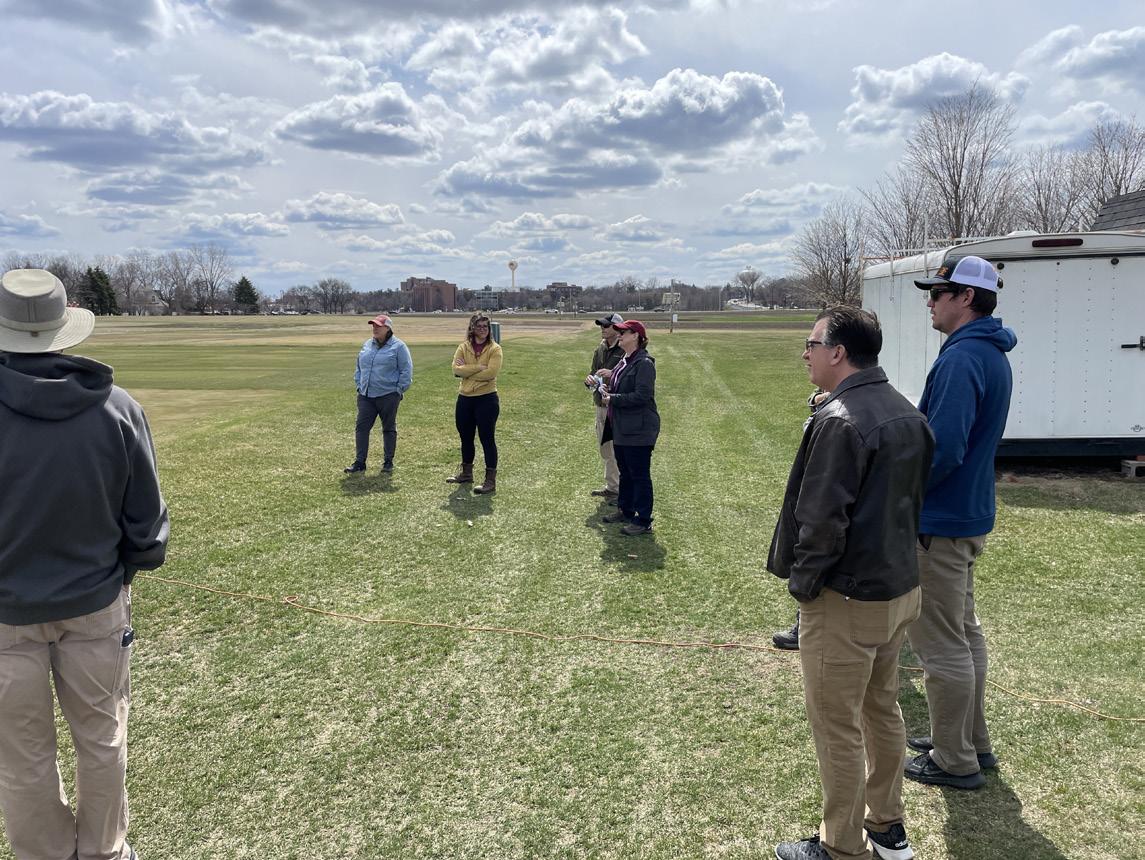
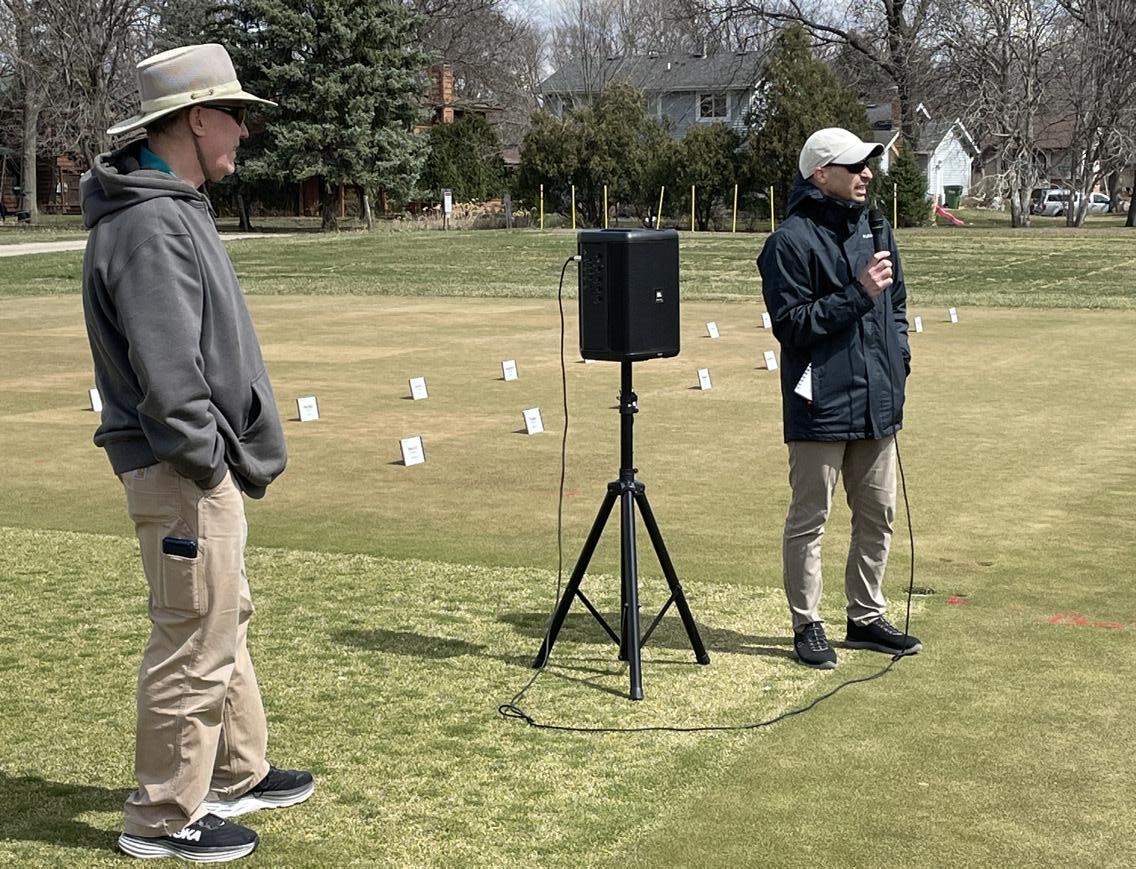
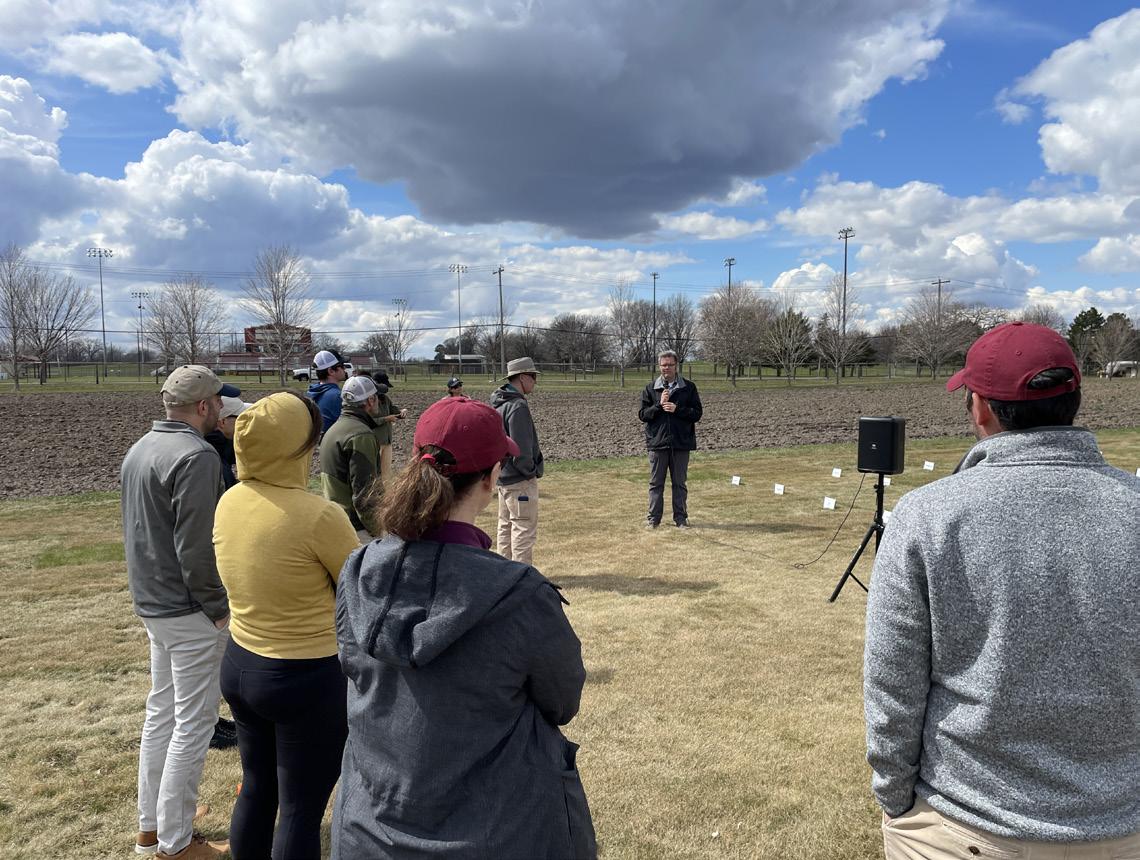
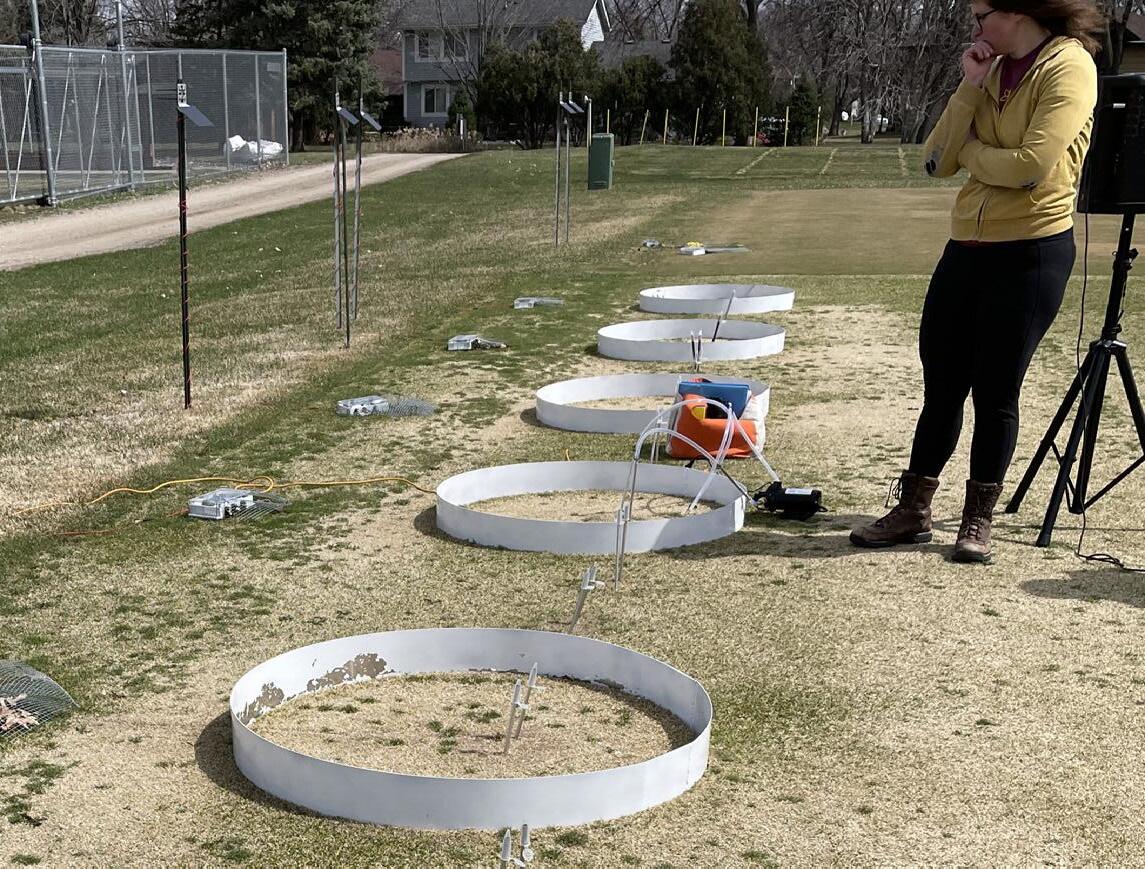
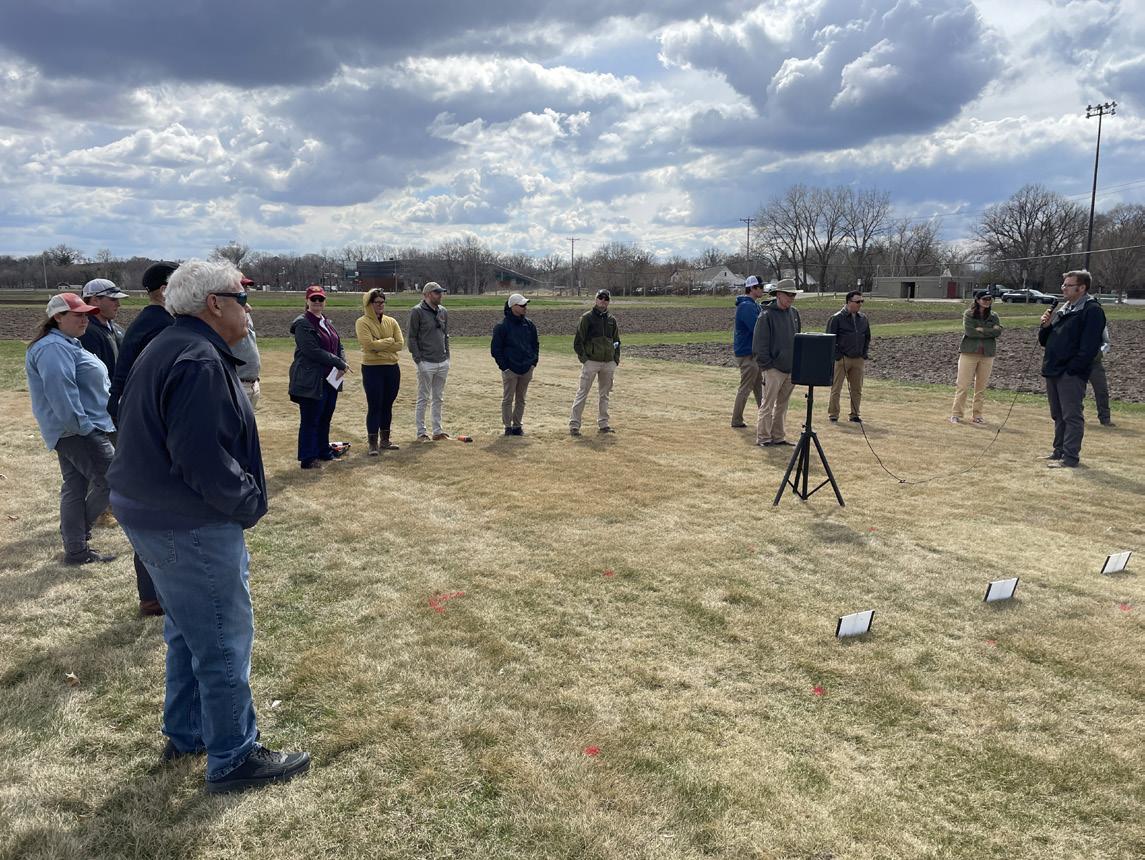
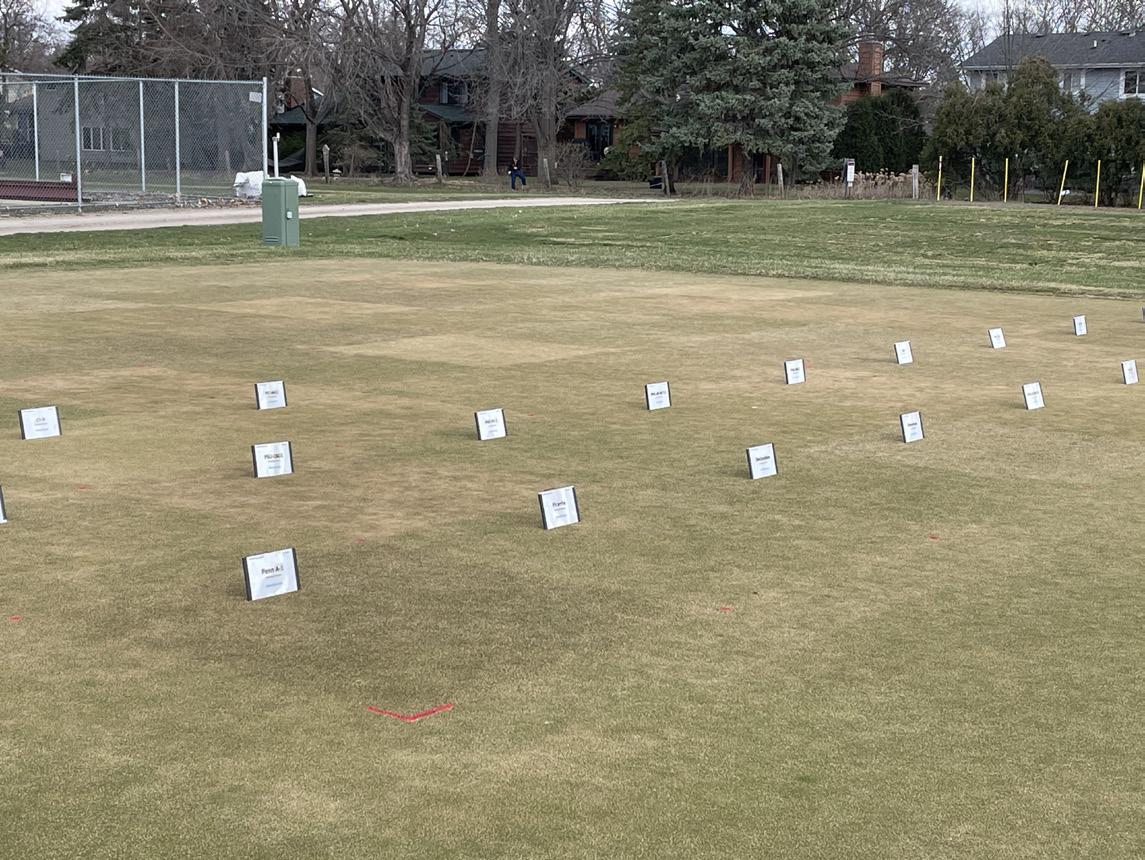
UMN WINTERTURF FIELD DAY
Thinking about soil nitrogen and fertilizer practices
By: Jon Trappe Extension Educator University of Minnesota
Nitrogen drives nutrient management programs on golf courses. Numerous factors impact nitrogen amounts applied to greens, tees, fairways, roughs, practice areas, natural areas, and the general grounds of a golf course. Some of these factors include playability, weather, player expectations, species/ cultivar selection, mowing and PGR practices, biotic stresses, cost, and soil characteristics.
For the better part of the last two decades, the amount of fertilizer in general, and nitrogen in particular, applied across playing surfaces and over the golf course as a whole, has been trending

downwards. This comes from the most recent Golf Course Environmental Profile Study that compared surveys conducted in 2006, 2014, and 2021 by golf course superintendents for the fertilizer practices and decision factors behind those practices and compared these responses within geographic regions and over time. This is an incredibly informative report that I highly recommend you check out if you haven’t already. A summary of the report can be found in the January 2023 issue of the GCM Magazine.
Other than the overall management trends across the
52
UMN Turf Research
country and within the North Central Region (where MN golf courses were grouped), a few things from the recent report in particular stuck out to me.
● Reliance on turf growth prediction models as a decision factor has (unsurprisingly) increased
● Reliance on soils or soil analysis as a decision factor has (surprisingly) decreased
● Fewer golf courses are soil testing, and interestingly enough the ones that are
are testing are tending to actually apply more fertilizer
There are a number of things you can infer from these trends. We can’t relate specific responses across survey questions to individual golf courses, so a big disclaimer needs to be acknowledged first. Depending on the turf growth models used, soil test results may or may not be part of the decision making process. This, coupled with the knowledge that fewer superintendents are collecting soil tests and using them to make fertilizer

53
management decisions, might mean outdated data are being used for at least some of these decisions. We know that stand age and turfgrass species affect carbon and nitrogen accumulation over time - resulting in as much as 0.1% organic matter added per year. Outdated data at the golf course level would obviously impact recommendations for that golf course. One obvious solution for this is to recommend more frequent soil testing to have better data input within the models.
To muddy the waters even further, there have been historical limitations with the data sets used for understanding nitrogen mineralization in turfgrass soils - most of the studies have been conducted on Southeastern US soils using warm-season turfgrasses. The current trend has been reducing the amount of nitrogen applied from fertilizer across most areas
of the golf course. Presumably, playability and overall turfgrass quality has not suffered in that time. How much more could golf course superintendents rely on mineralized-N from their soils? In other words, how much more could golf course superintendents reduce their nitrogen fertilizer budgets? This reduction could mean reduced mowing, topdressing for thatch management, the cost of the fertilizer itself, the labor to apply it, and overall reduced greenhouse gas emissions.
To say the least, it would be ideal to have a better understanding of how soil nitrogen is mineralized within region-specific soils under various turf conditions. This would improve the models and their predictions, ultimately improving fertilizer efficiency on golf courses without sacrificing playability and turfgrass quality, and saving superintendents money in the process.
54
UMN Turf Blog
Follow the
for project updates!
THANK YOU FOR YOUR ROUNDS FORE RESEARCH SUPPORT!
Eric Watkins Vice Provost and Professor, University of Minnesota
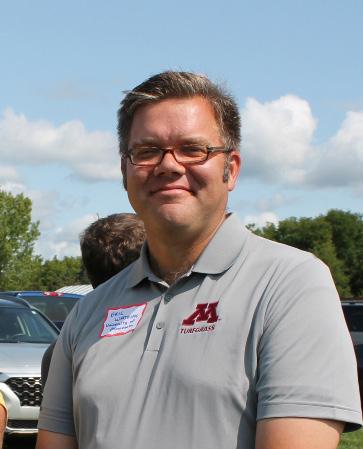
Support from the Minnesota Golf Course Superintendents Association is critical to the long-term success of our turfgrass research program at the University of Minnesota. Consistent financial gifts allow us to fully fund our turfgrass research facility on the St. Paul campus--covering the costs of a field facility manager, undergraduate students to mow, equipment, maintenance, and many other needs. Our program aims to serve the entire range of turfgrass users and managers, but in the past few years we’ve been fortunate to obtain external grant
funding for projects that are directly beneficial for Minnesota superintendents, including projects on precision irrigation and reducing the turfgrass risks and impacts associated with Minnesota winters. We wouldn’t have been able to do this without the annual support of the MGCSA. The most recent Rounds Fore Research effort raised over $22,000 that will fund timely and important research in our program. Many thanks to all of you who donated rounds! We look forward to providing you with new turfgrass management solutions for years to come.
55
THANK YOU 2024 ROUNDS FORE RESEARCH SUPPORTERS
SUPPORTING CLUBS SUPERINTENDENT
Alexandria Golf Club
Bear Path Golf & Country Club
Dacotah Ridge Golf Club
Dellwood Country Club
Eau Claire Golf & Country Club
Giants Ridge
Grand View Lodge
Hazeltine National Golf Club
Indian Hills Golf Club
Interlachen Country Club
Keller Golf Course
Legends Club
Mendakota Country Club
Midland Hills Country Club
Minneapolis Golf Club
North Oaks Golf Club
Northland Country Club
Olympic Hills Golf Club
Oxbow Country Club
Prestwick Golf Club
Rochester Golf & Country Club
Royal Golf Club
Somerby Golf Club
Springhill Golf Club
St Cloud Country Club
St. Croix National Golf Course
The Jewel Golf Club
The Legacy Courses At Craguns
The Minikahda Club
The Wilds Golf Club
Tianna Country Club
Timber Creek Golf Course
TPC - Twin Cities
Windsong Farm Golf Club
Woodhill Country Club
Donnacha O’Connor
Jim Snell
Cody Wersal
Eric Peterson
Nick Peinovich
Jeff Simondet
Mike Bohnenstingl
Chris Tritabaugh
James Westendorf
Brian Boll
Paul Diegnau
Zach Wignall
Tom Schmidt
Mike Manthey
Jared Keller
John Cameron
Jake Ryan
Jake Schmitz
David Wood
Dave Kazmierczak
JT Hauser
Mike Sonnek
Tyler Donaldson
Tim Johnson
Troy Tschida
Will Riedel
Lucas Grieves
Matt McKinnon
Jeff Johnson
Kris Johannsen
Justin Fournier
Brooks Ellingson
Joe Rolstad
Jon Dailing
Erik Tolzmann
This issue is also available in audio format!! Suscribe to the MGCSA Hole Notes Podcast on Spotify, Apple Podcasts, Amazon Music, or find it online at Buzzsprout.


57
From the High Grass
By: Chris Aumock
THE STATE OF THE MGCSA
As you all are starting your seasons in full, it may be a good time to update you on some current details and how we as the MGCSA are looking to the future of the golf industry.
We are mostly completed with membership renewals for this year, and your support continues to impress. Recently, our membership numbers have bottomed out around 550-560 annually, but this year we will bottom out at no less than 580! The last year has seen great numbers of new members along with strong retention rates. Thank you to all our members who have pursued additional memberships, introduced others to the MGCSA, or just simply continued to support our network of professional Superintendents. Again this year, the MGCSA Board of Directors is looking to put
money back in to our members’ golf courses, by offering the Stewardship Grant Program. This program looks to give funds for your course improvement projects, ideally ones that highlight the positive efforts Superintendents make in more sustainably managing their properties. The deadline for applications is May 1st, so don’t miss out on this opportunity for free money to help your golf course!
This year, the MGCSA is getting more involved with the FFA in an effort to increase support for turf education in more schools. We are working behind the scenes to engage more students, while also looking for ways to create meaningful relationships with educators and programs. The goal is long-term, looking
58
to provide assurances for our future professionals and seasonal staff members.
Along with those long-term staffing needs, we are looking at the long-term perspective of golf in the public eye. We can’t deny the historically negative perception of the golf industry to the public, but we cannot accept that as our continued future. One goal of our allied industry efforts is to change that antiquated perception, and that starts with education. We have done this for years at the Capitol, and amongst state agencies, but now it’s time to start working on the general public. We have begun a simple marketing campaign this year, trying to capture the public eye and introduce them to our industry and its professionals. You may have seen some bathroom ads at your local restaurant, hockey rink, or at the Mall of America. We will continually assess the benefits and successes of this effort.
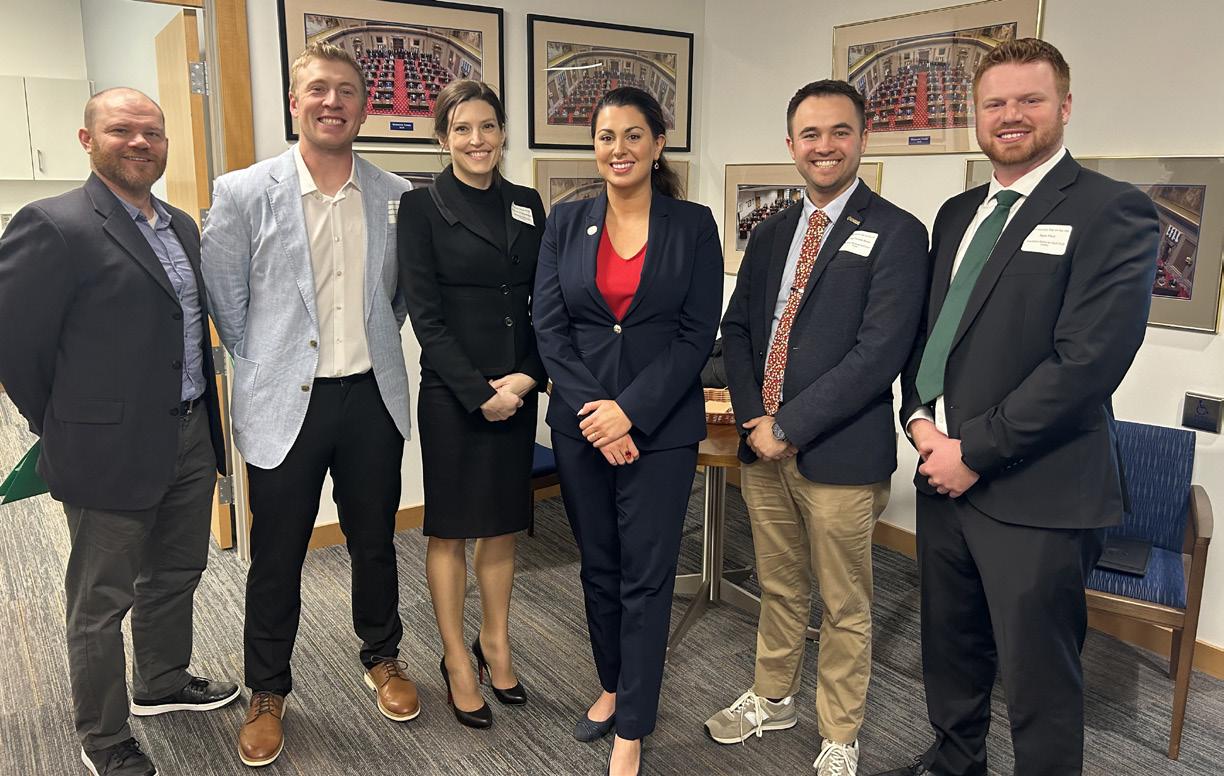
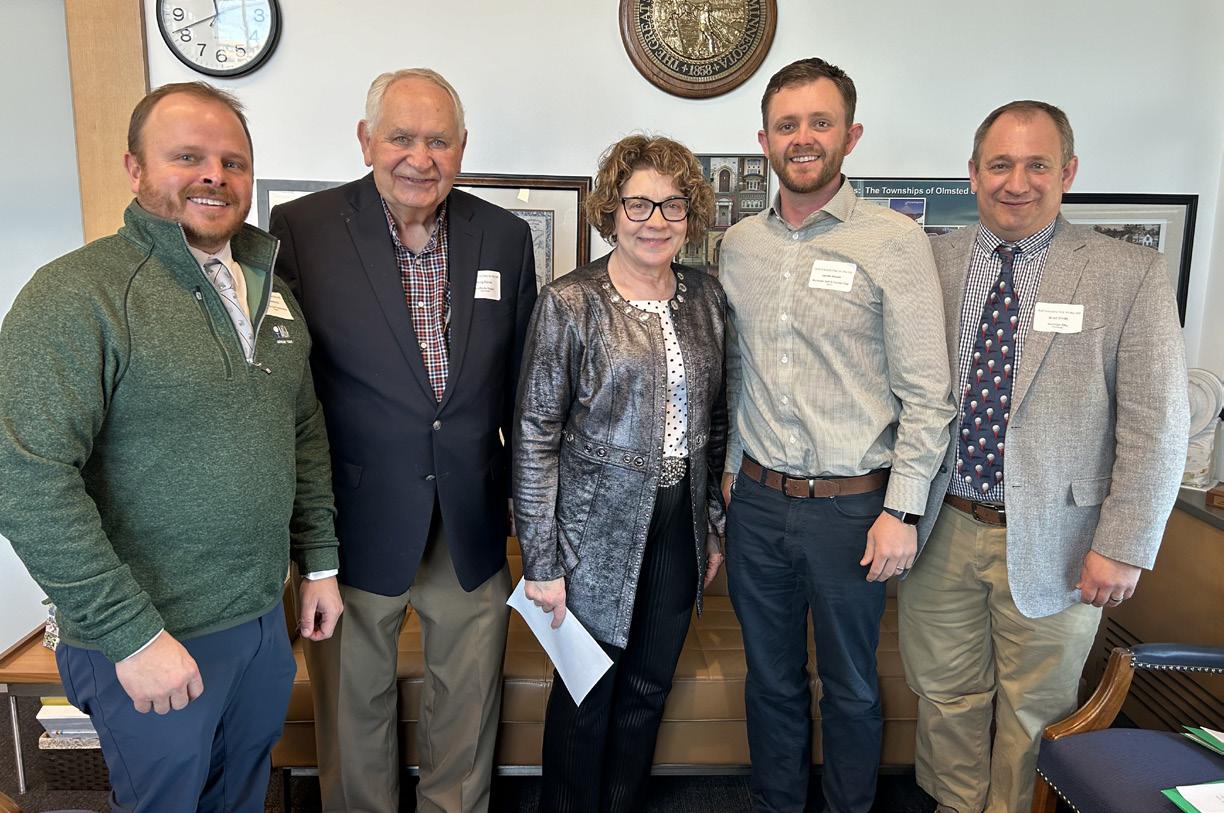
long-term relationships that will support golf’s needs. This year saw increased participation from the Owners Association, and a strong contingent from the MGA. This collaboration is vital to the success of our future advocacy efforts. Along with that, we are working closely to develop a more collaborative working group, to better gather and disseminate information to the Minnesota golf industry and the public. Hopefully I will have more to share on this effort soon.
Our annual Garske and Legacy Scholarship Applications are now being accepted. These awards are for children and grandchildren of current members. Read more information on the scholarship page of the website, or earlier in this issue. Additional turf education scholarships are also available on the website.
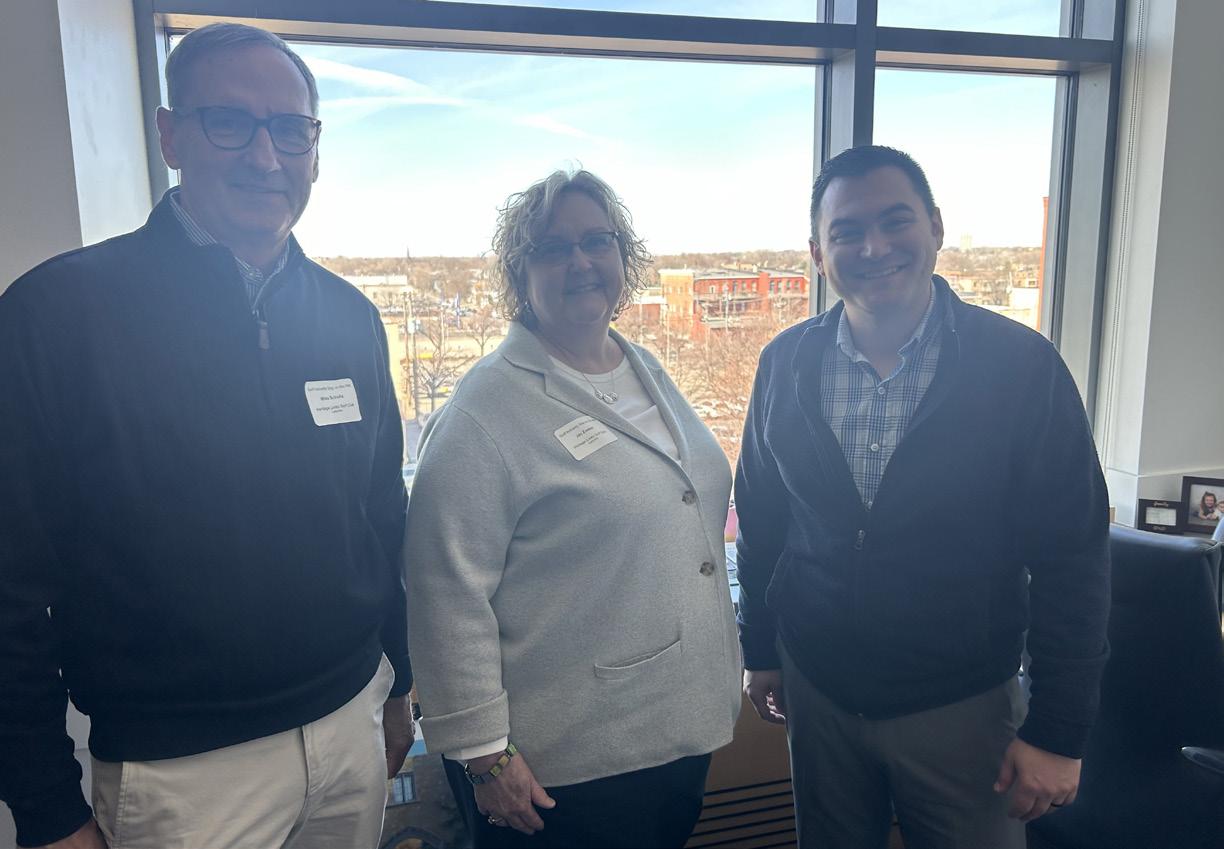
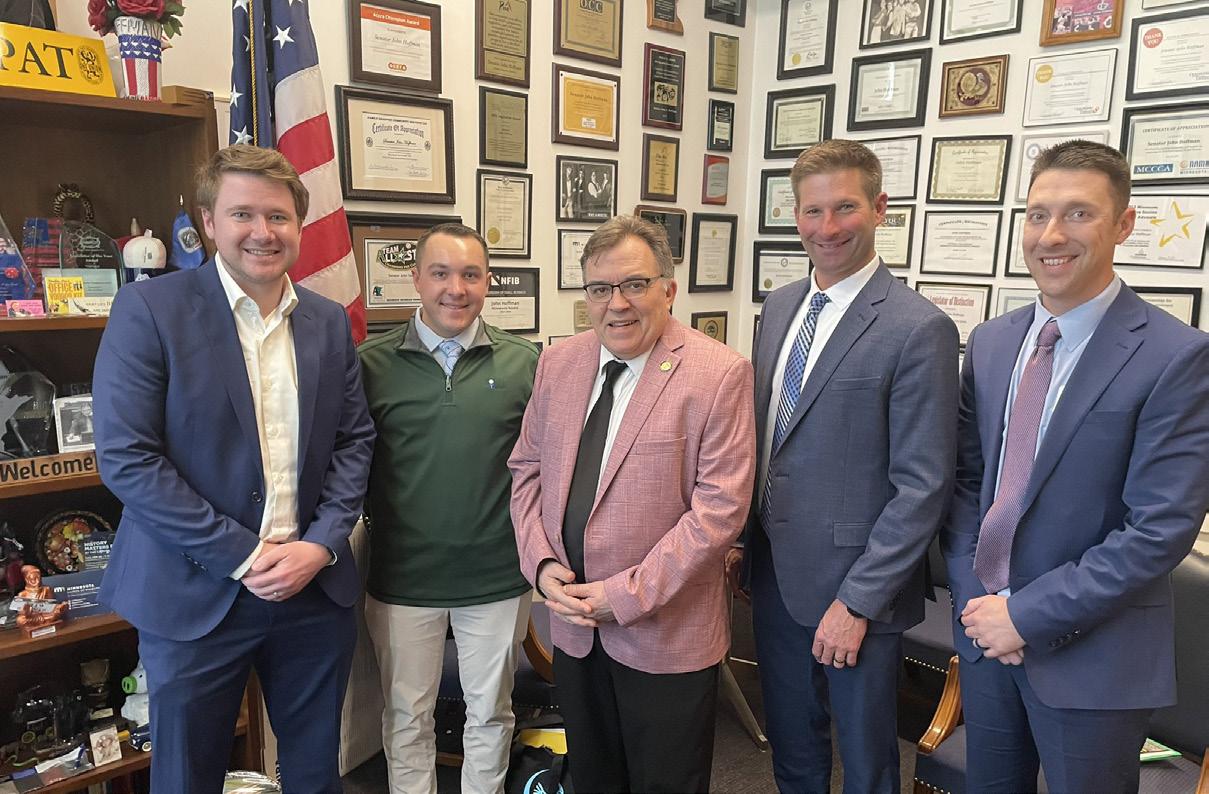
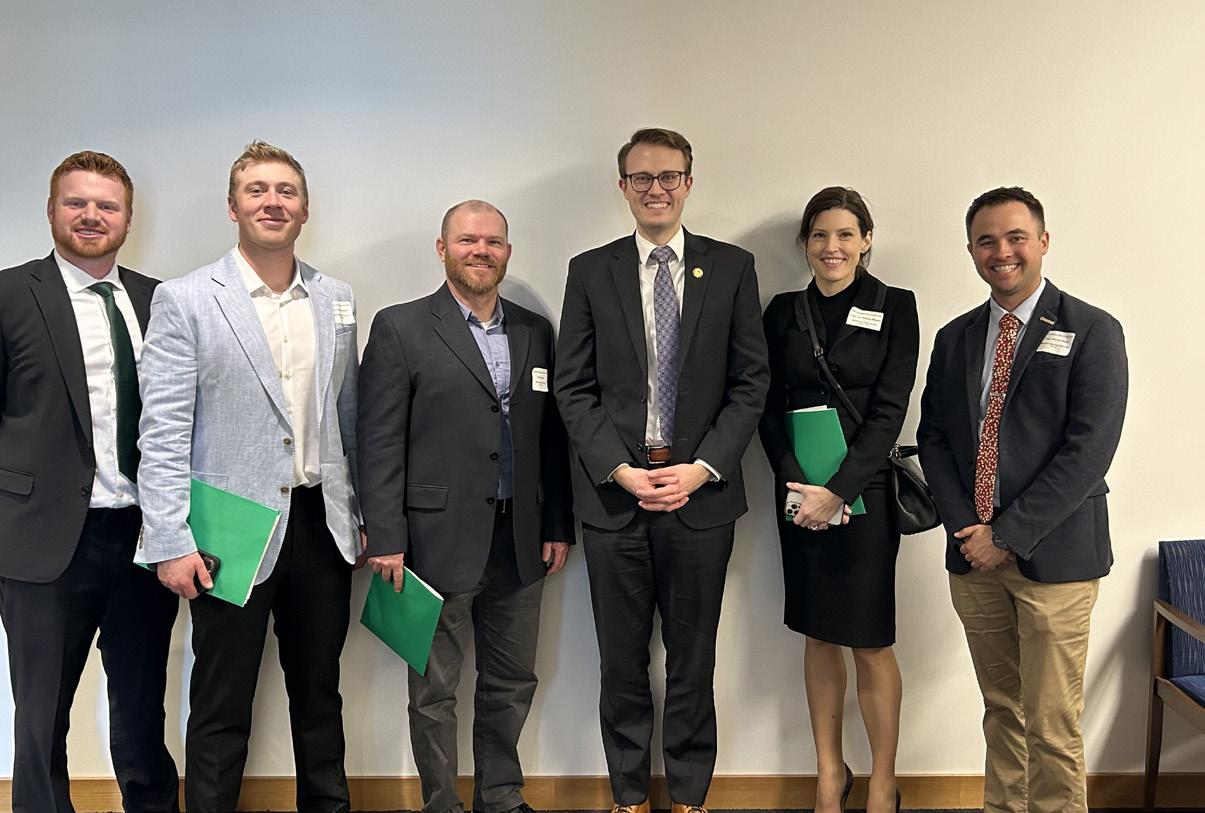
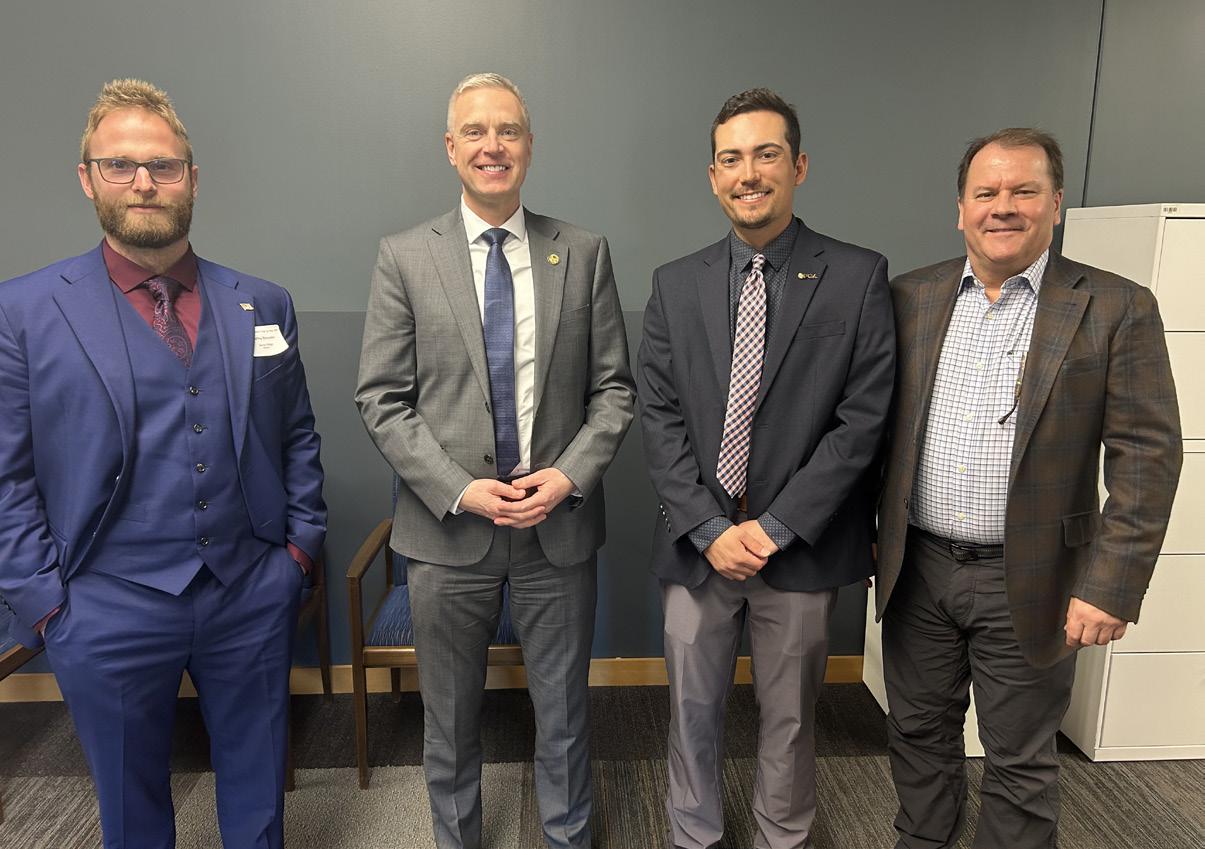
Our recent Allied Golf Day on the Hill was once again a success. We had several very positive meetings and created some
The annual Rounds Fore Research auction was live last week and ended with us raising ~$23,000 for the UMN turf research team! We had support from 35 golf courses and a total of 41 certificates for sale. Thank you to all who
59
supported this year’s efforts, as this is our primary fundraiser for turf research support.
This years Don White already has 32 teams registered, so like last year, we will have another round of matches. The first round will begin on May 1st for many teams, yet several other teams’ first round matches will not occur until June. Our summer Exposure golf events begin in early June, first at Eau Claire GCC for the 2nd annual Border Battle with WGCSA. A week after Eau Claire, we will be at Detroit Country Club in Detroit Lakes, so mark your calendar for those events. Keep your eyes out for all these summer events, as they will start opening for registration over the coming months.
The MGCSA Board of Directors continues to look for new opportunities and offerings for the membership. Such as a new Equipment Managers event coming this November! As we work to provide more value to the EM class of members, make sure your Techs are aware of the offerings and network of peers MGCSA can provide.
Lastly, as you login into your member profile, you may see a new check box for text messaging consent. This is for future reference, as we have no current plans to start text messaging. However, many other chapters have seen great success and engagement from members with this type of communication. I think it’s best to start gathering the required consent from interested members now, in case we find the need to engage with text communications in the future. This is an opt-in only service. If you do not select the check box, you will not receive any text messaging from us.
We are always open to hearing from the membership, so don’t hesitate to reach out with any thoughts, comments, or suggestions. This association is better when you all get engaged, and we will always be willing to discuss new member initiatives and ideas. I wish you all a successful golf season, and I am always here to provide assistance when and where it is needed.
Respectfully submitted,
Chris Aumock
60

Superior Tech Products® 952-546-3678
Leading Edge Turfgrass Solutions www.stproots.com
Golf Courses | Sport Fields | Parks stp@stproots.com


smooth healthy consistent greens


* Liquid & Granular Fertilizers
* Organic Fertilizers
* Post Patent Pesticides
* Aerification Tines & Bedknifes
* Natural & Artificial Turf grooming e quipment.
* Rollers for Cutting units









MGCSA NEW MEMBERS - March/April 2024
Brandon Howard Green Haven Golf Class C
Jason Krogman Tanglewood Greens Class A
Justin Fournier Tianna Country Club Class B
Trevor Emanual Cedar River Golf Course Class B
Tyler Arends Luverne Country Club Student
Mike Reiber AminOrganix Affiliate
Marius Van Rensburg Pine Island Golf Course Class A
Robert Krueger The Pines at Grand View EM
Trevor Pagani Manitou Ridge GC EM
Jack Koenig The Wilds Golf Club Class C
Jason Larson Northfield Golf Club Class C
Mike Ylitalo Crow River Golf Club Class C
Zachary Baert City of Pierz Golf Course Class C
Kurt TeWinkel Foley Company Affiliate
Matt Olson Medina Golf & CC Student
Scott Schornack Thumper Pond GC Class B
Steven Van Natta Hartman Companies Affiliate GolfCo P O