The publisher has made all reasonable efforts to provide accurate information, and the information contained in this publication is derived from sources believed to be true and accurate. However, the information in this publication should not be considered to be complete or definitive, and may contain inaccuracies or typographical errors. The publisher accepts no responsibility regarding the accuracy of information and use of such information is at your own risk. The publisher will not be liable to any party for any direct, indirect, special or other consequential damages arising out of any use of information in this publication. The publisher provides no representations or warranties, express or implied, including any implied warranties of fitness for a particular purpose, merchantability or otherwise in relation to any information provided by the publisher in this publication.
ISBN: 978-0-9993108-7-8
2018
Foreign investment has started pouring into Mexico’s oil and gas industry, unlocked by nine licensing rounds following the 2013 Energy Reform championed by President Enrique Peña Nieto. As PEMEX celebrates its 80th anniversary, it finds itself reborn as a productive enterprise of the state competing with international oil companies in what was once its exclusive domain. With significant new discoveries being made by both PEMEX and private operators, the first steps toward reversing Mexico’s declining production have been made.
Mexico’s midstream and downstream markets are also being reshaped. The country’s natural gas pipeline network is growing rapidly, with significant storage capacity on the drawing board. At the end of the chain, the liberalization of fuel imports and the end of PEMEX’s distribution monopoly has resulted in a wave of national and foreignbranded gas stations replacing the traditional PEMEX colors and offering consumers more choices at the pumps.
Mexico’s next president will be instrumental in shaping the future of the Mexican oil and gas industry and operating environment for all players across the value chain. Continuity is the buzzword as both international and domestic players demand the country follow the road it paved with the Energy Reform, particularly as a new presidential administration, and the inherent uncertainty that implies, prepares to take the reins of power. The pages that follow will outline the story of an industry in the midst of change, but one which is optimistically moving forward.
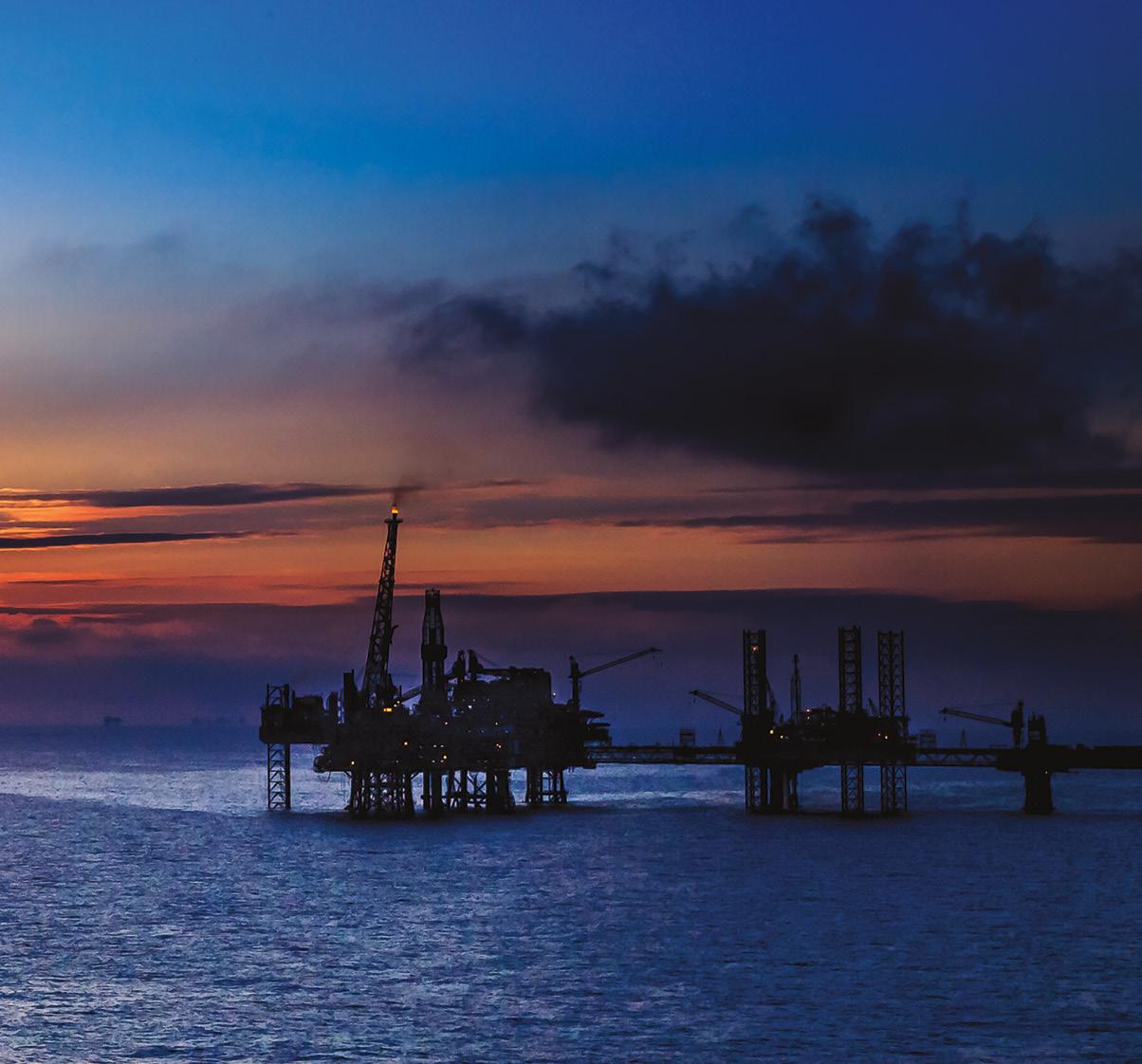
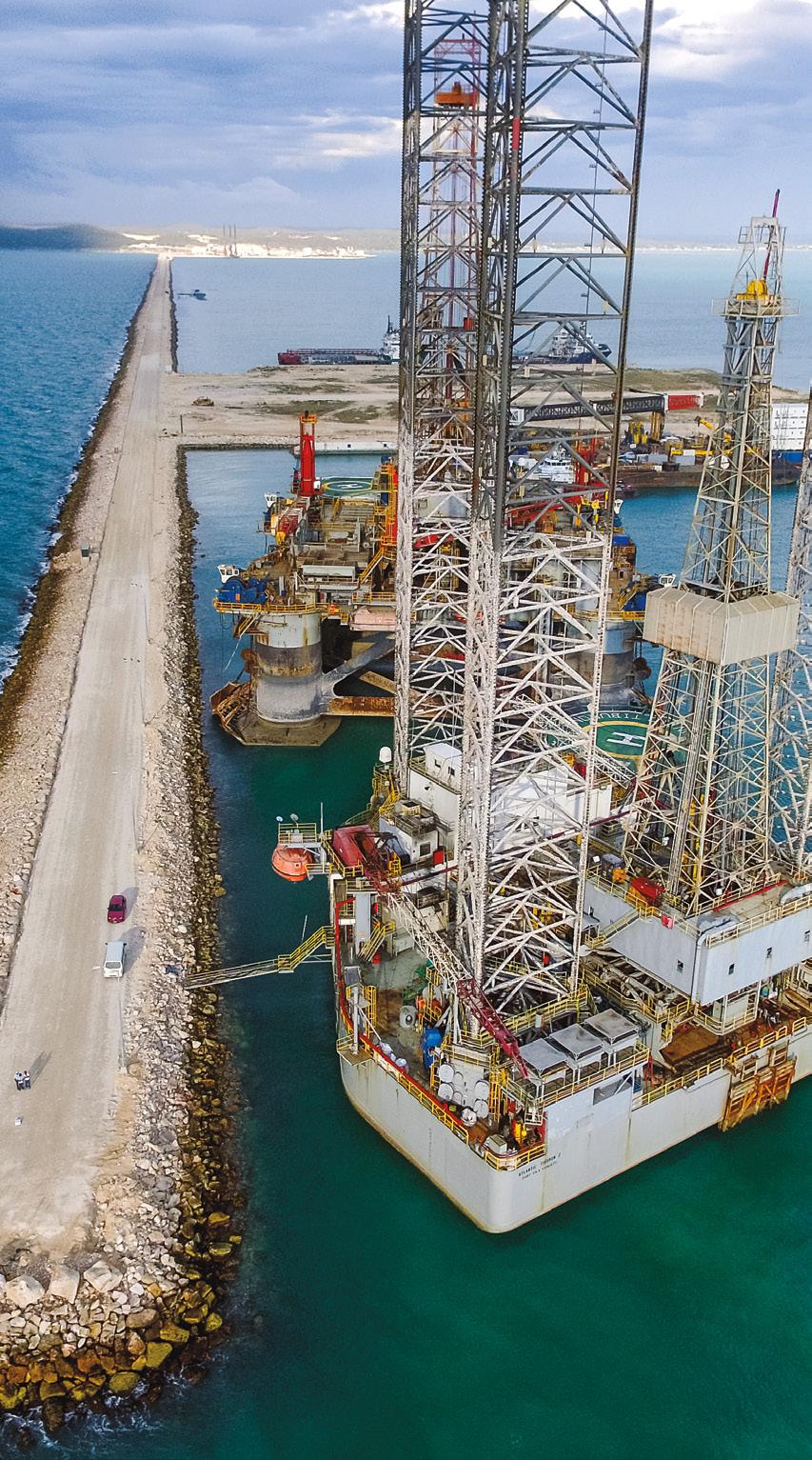
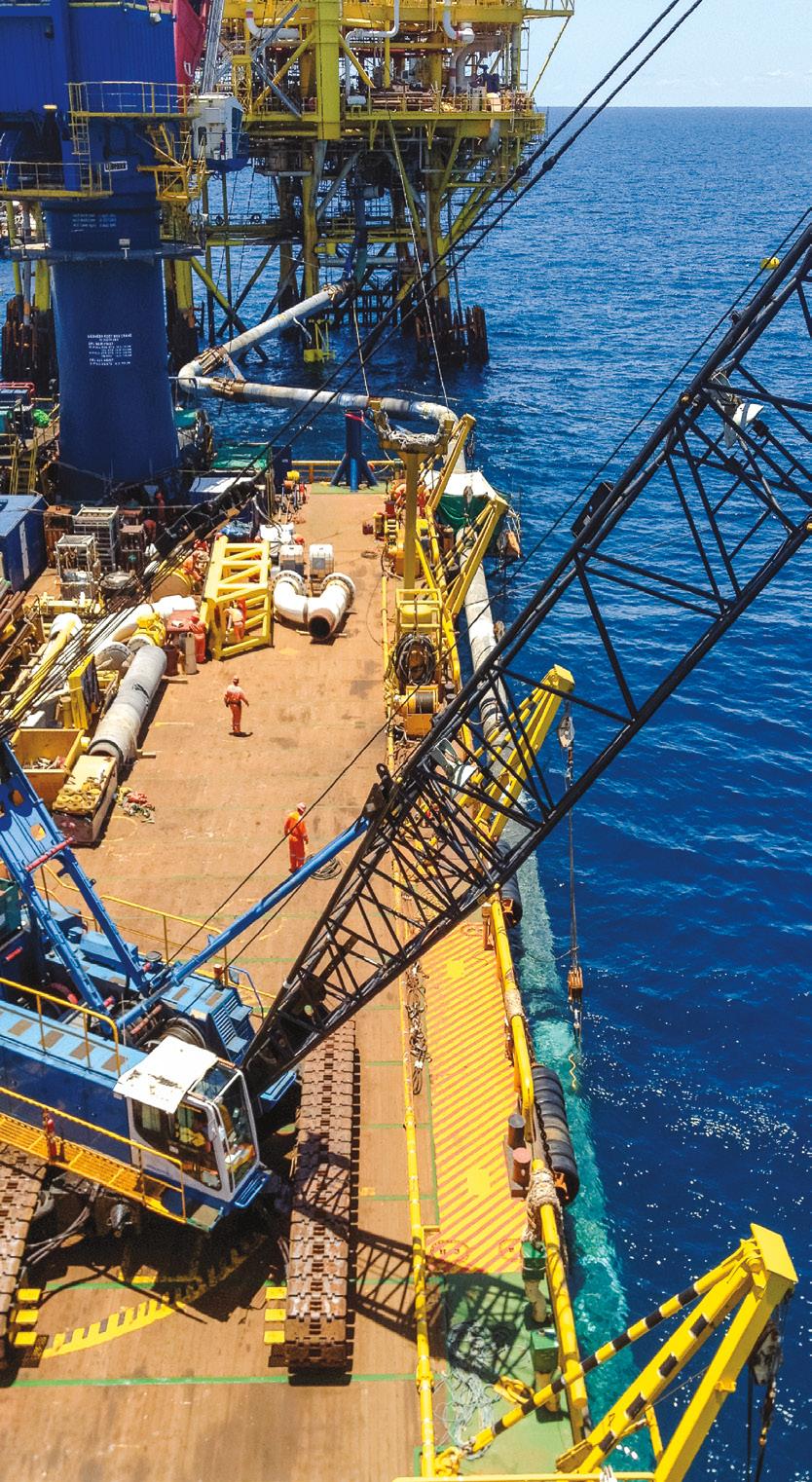
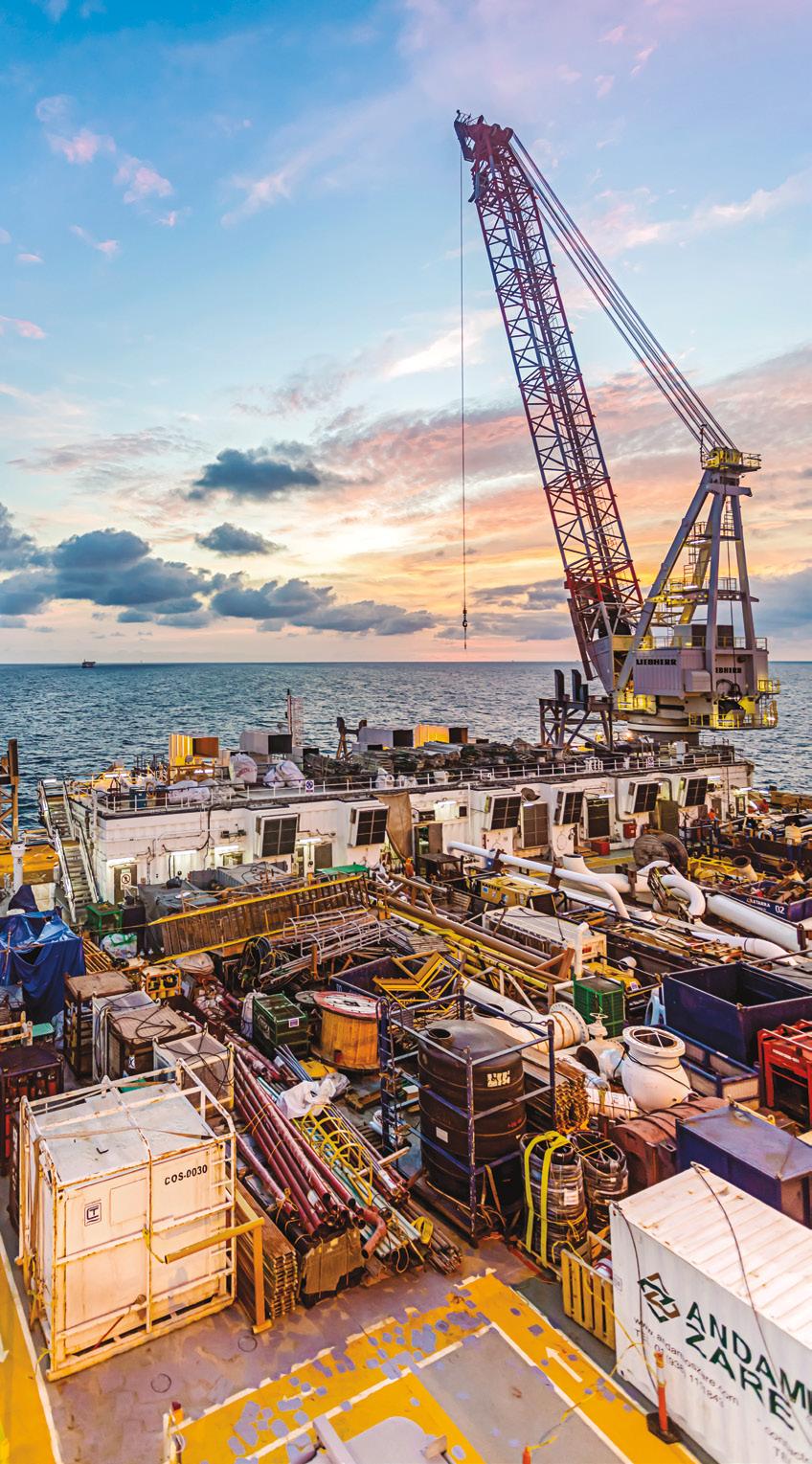
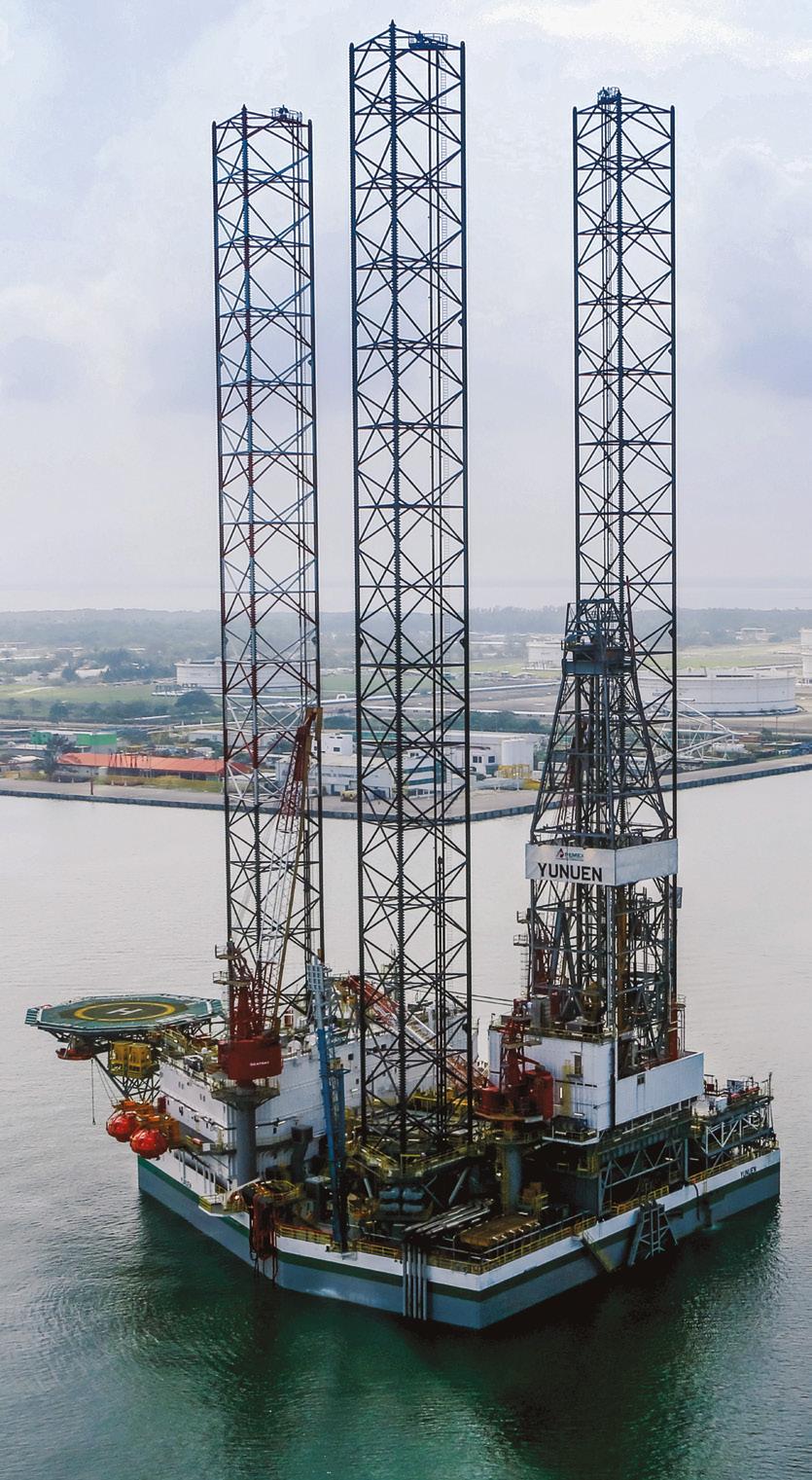
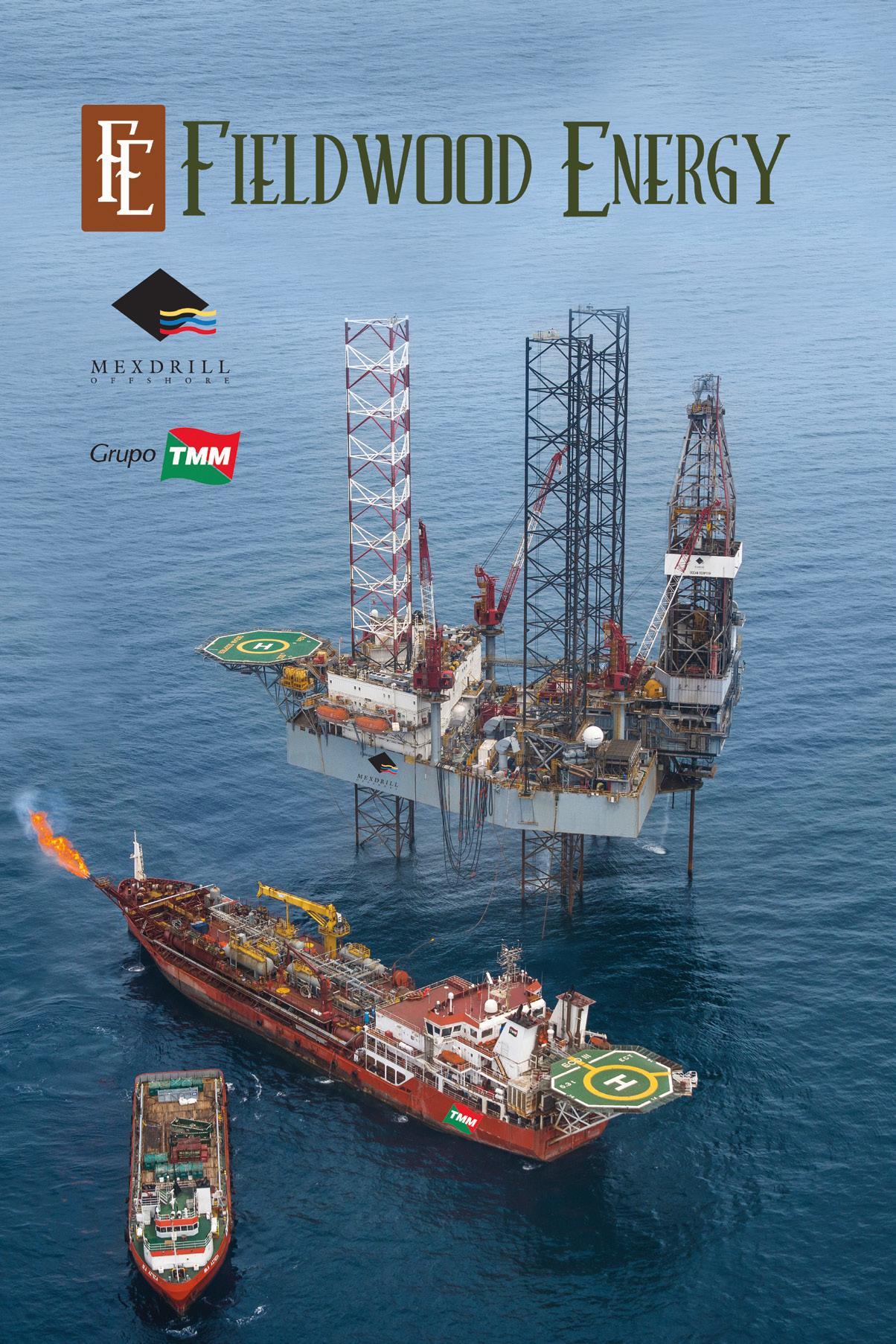
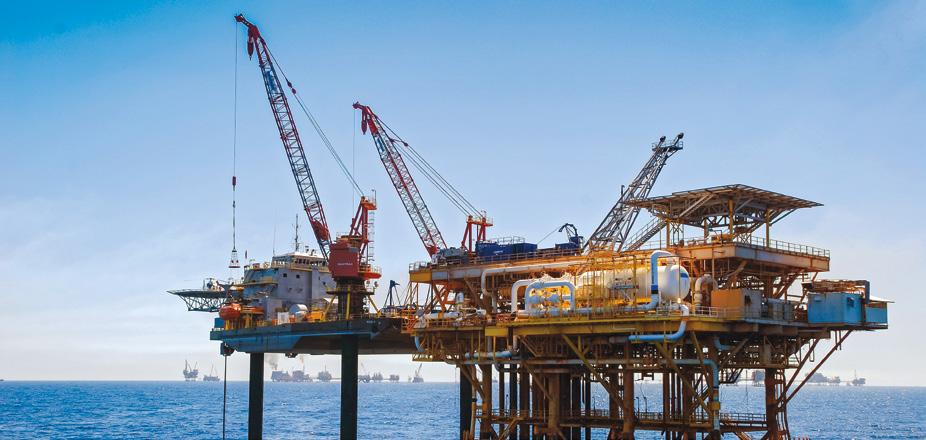
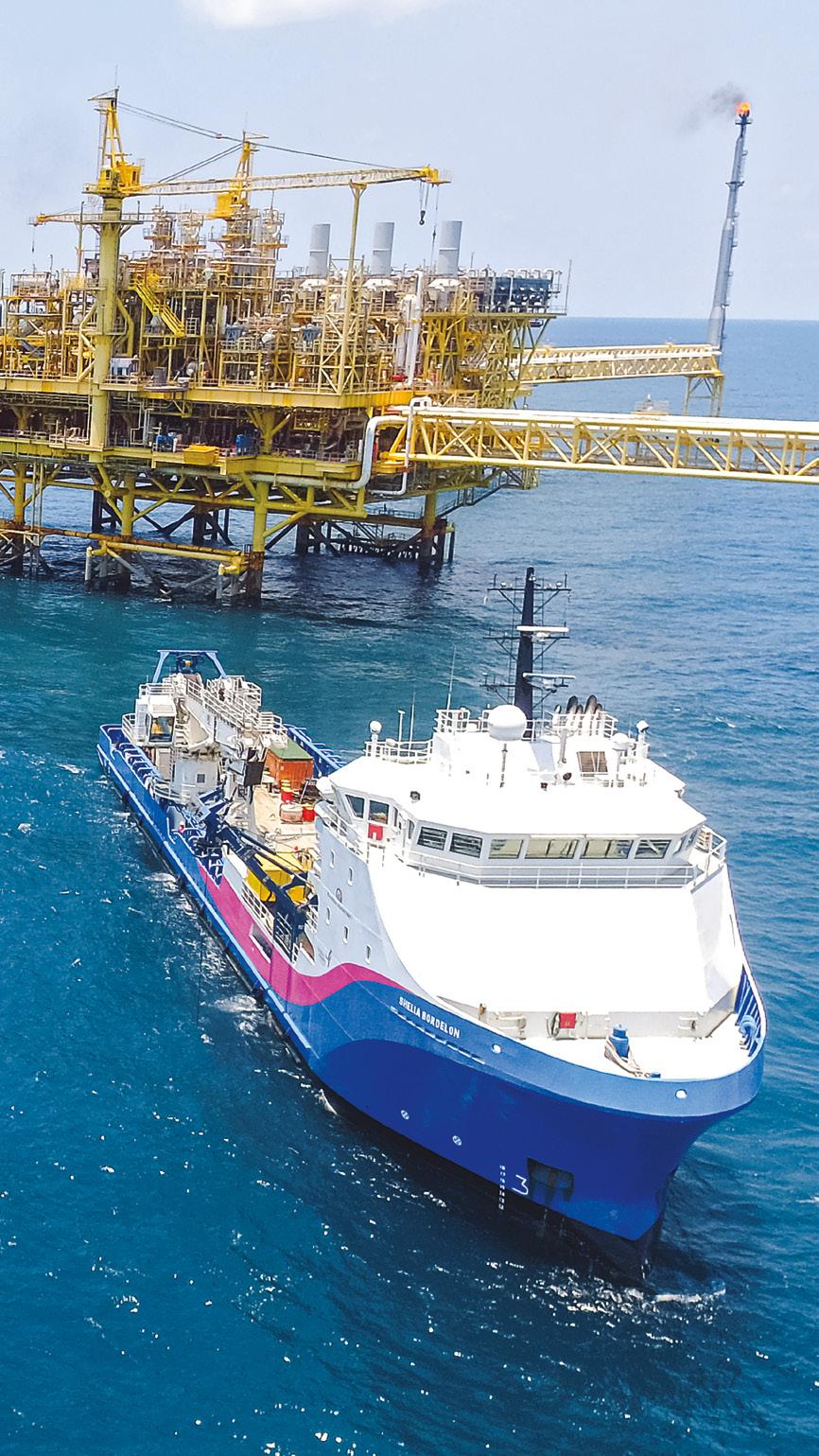
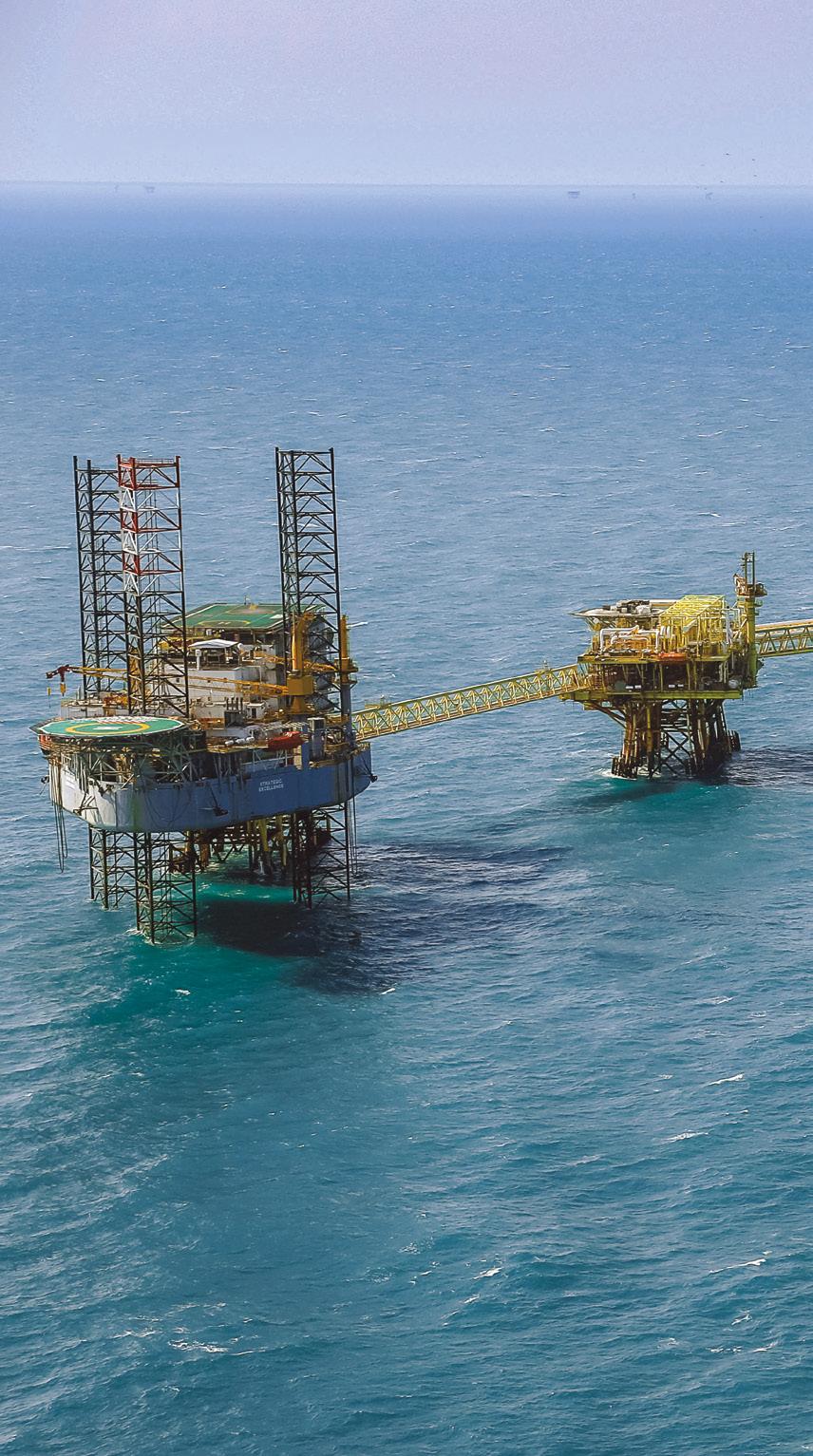
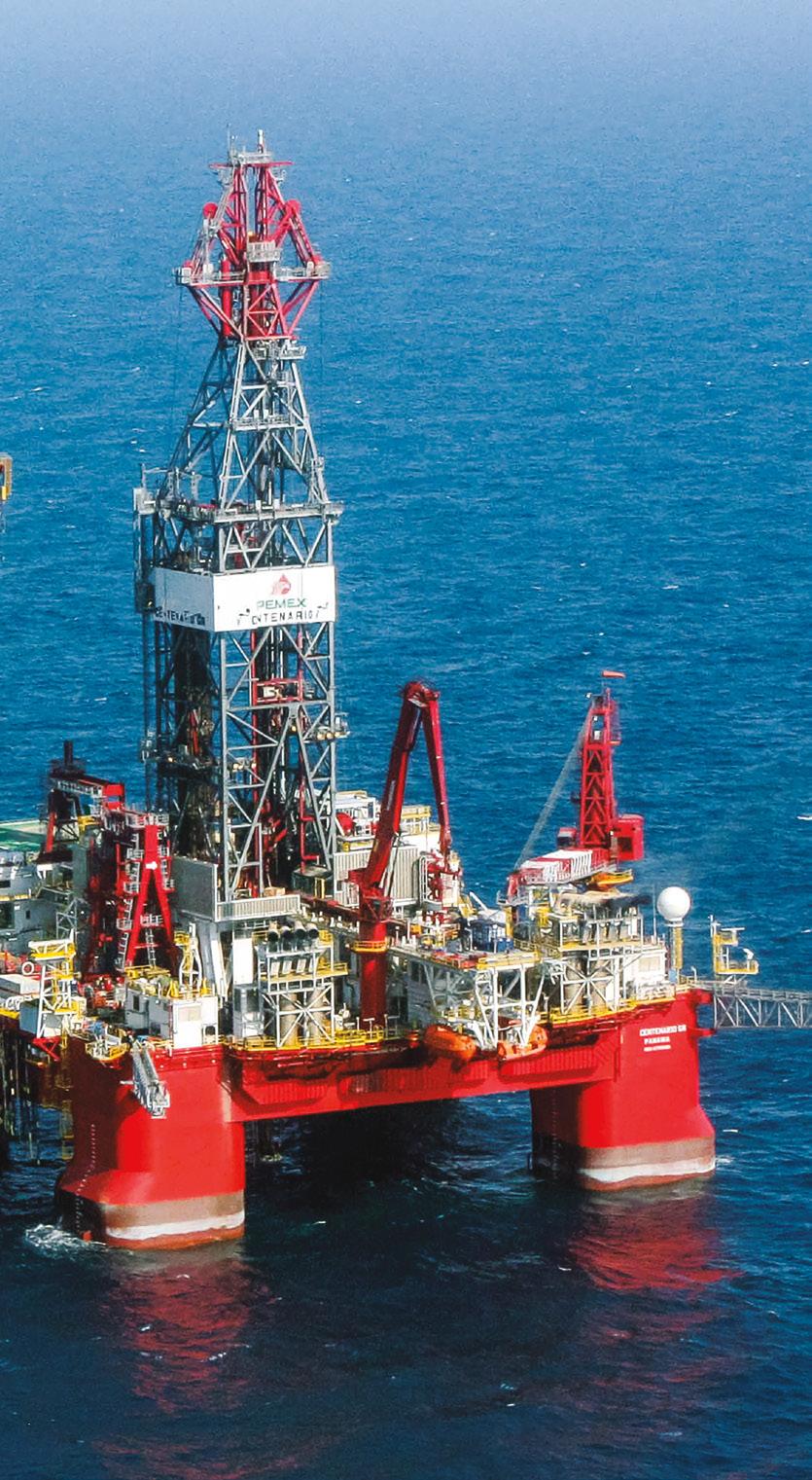
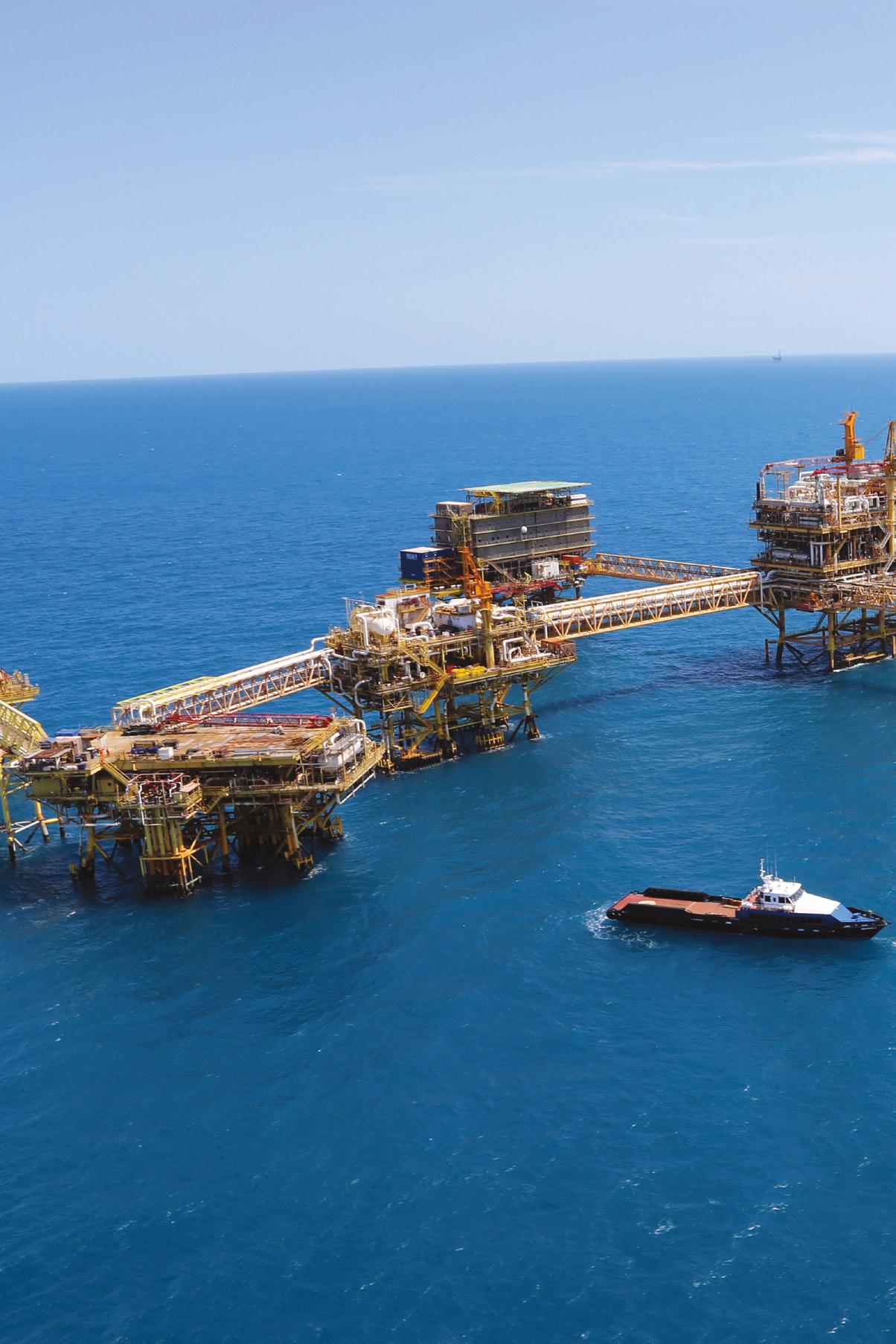
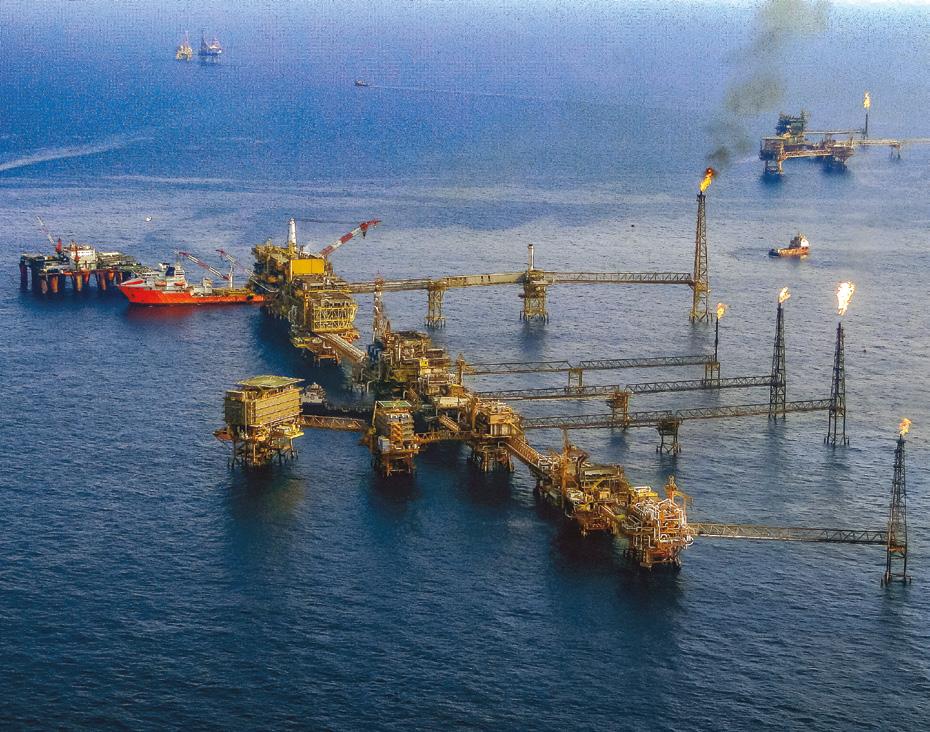
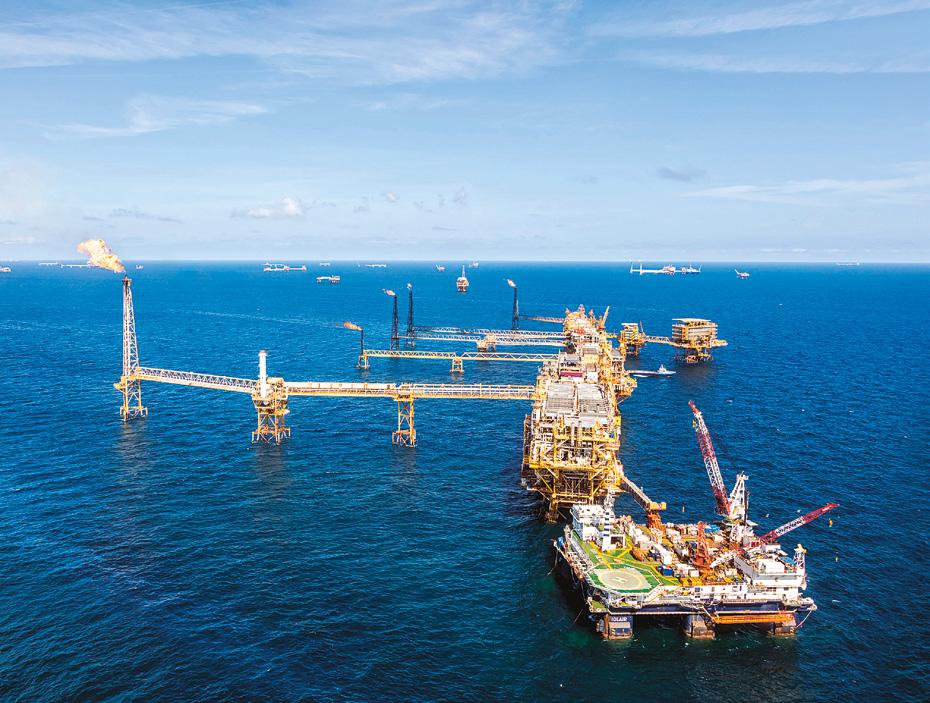
Jackup rig drilling in the Bay of Campeche
STATE OF THE INDUSTRY 1
Almost four years since its signature and official publication, the Energy Reform has gone through the complete process of implementation and is now starting the process of consolidation, particularly in the hydrocarbons sector. Thanks to the hydrocarbons licensing rounds, 73 companies have entered the Mexican upstream market through CNH's contract assignations. With the culmination of Round One in December 2016, the successful development of Round Two and the beginning of Round Three, the outlook for the hydrocarbons industry looks positive for the entire Mexican value chain. In addition, the Mexican supply chain is gaining momentum due to the diversification and optimization of its client portfolio.
The country has notably witnessed an increase in exploration activities with the signing of the licensing round contracts. With that, the process to stop and even reverse the decline of its reserves has started, creating optimism for the security and stability of the country’s economic activities, encouraging large investments and developing the necessary pipeline for future projects and production activities.
CHAPTER 1: STATE OF THE INDUSTRY
8 THE YEAR IN REVIEW: Rounds, Discoveries, Politics Dominate Oil and Gas Industry
14
VIEW FROM THE TOP: Pedro Joaquín Coldwell, Ministry of Energy
15 VIEW FROM THE TOP: Aldo Flores, Ministry of Energy
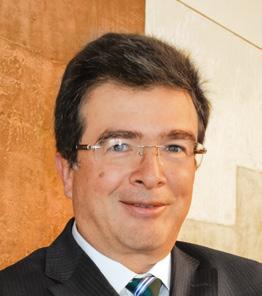
16 VIEW FROM THE TOP: Juan Carlos Zepeda, CNH
18
VIEW FROM THE TOP: Carlos de Regules, ASEA
19 VIEW FROM THE TOP: Guillermo García, CRE
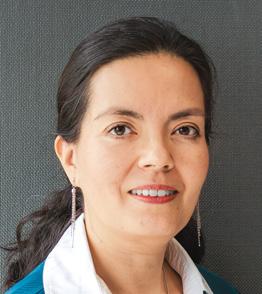
20 VIEW FROM THE TOP: Mauricio Herrera, FMP
22 ANALYSIS: PEMEX Capably Navigates Rough Waters
24 VIEW FROM THE TOP: Juan Javier Hinojosa, PEMEX
25 VIEW FROM THE TOP: José Antonio Escalera, PEMEX
26 VIEW FROM THE TOP: Héctor Moreira, CNH
28 VIEW FROM THE TOP: Gaspar Franco, CNH
29 VIEW FROM THE TOP: Ernesto Ríos, IMP
30 INSIGHT: Raymundo Piñones, AMEXHI
31 VIEW FROM THE TOP: Antonio Juárez, AMESPAC
32 VIEW FROM THE TOP: David Enríquez, Goodrich, Riquelme y Asociados
34 VIEW FROM THE TOP: Manuel Cervantes, MCM Abogados
40 VIEW FROM THE TOP: Juan Carlos Machorro, Santamarina + Steta
40 VIEW FROM THE TOP: Sergio Beristain, Beristain y Asociados
41 VIEW FROM THE TOP: Enrique González, González Calvillo
ROUNDS, DISCOVERIES, POLITICS DOMINATE OIL AND GAS INDUSTRY
The past year spurred both optimism and trepidation. Discoveries in shallow waters and heightened exploration activity highlighted the successes of the licensing rounds while the reach of the Energy Reform extended to the liberalization of the retail gasoline market. But a political cloud still hangs over the sector
With Mexico’s crude oil production at a 38-year low, following a 15-year decline, and the most important elections in decades taking place this summer, the country’s oil and gas industry finds itself at a crossroads. The 2013 Energy Reform transformed the industry’s outlook, but whether the over US$161 billion investment committed by the winners of the first 9 licensing rounds will reverse Mexico’s declining production is a key question that remains to be answered. At the same time, PEMEX still produces 97 percent of the country’s oil and is destined to remain the dominant operator. Mexico’s next president will be instrumental in shaping the future of the Mexican oil and gas industry and operating environment of PEMEX, private operators, and the entire supply chain.
Looking at the past year, however, the industry’s momentum is best summed up by one word: discovery. Outgoing President Enrique Peña Nieto’s 2013 bet to liberalize the energy industry finally paid dividends in the oil and gas sector when Talos Energy, Sierra Oil & Gas and Premier Oil announced their historic discovery in the Zama-1 shallowwater well, estimated at over 1.4 billion boe. PEMEX also flexed its onshore muscle in 2017 with its biggest discovery in 15 years, at the Ixachi-1 well in the state of Veracruz.
These milestones were made possible by the successful implementation of the licensing rounds, which the Ministry of Energy and CNH tweaked and adjusted from round to round, with ASEA formulating the regulations that will ensure industrial safety and environmental protection
WELLS COMMITTED IN LICENSING ROUNDS
matters. Since the Energy Reform’s launch in 2013, the E&P operator landscape has been transformed from a PEMEX monopoly to a competitive market with 73 winners representing 24 countries that have collectively been awarded 107 blocks.
Aldo Flores, Deputy Minister of Hydrocarbons at the Ministry of Energy, highlights the positive impact of the Energy Reform. “In total, we have over 170 new players across the oil and gas value chain. They are all interacting, competing and developing their business models to foster a modern and competitive industry in the country.” His perspective is supported by Bernardo Cardona, Partner and Energy and Resources Industry Leader at Deloitte Consulting Mexico, who says that “the role of CNH, the Ministry of Energy and ASEA has been extremely important in achieving this, as they have conducted transparent and clear bidding processes and provided regulatory and legal frameworks that offered sufficient certainty to the market and made it attractive for companies to venture into Mexico.”
LICENSING ROUNDS
Nine rounds have come and gone, and the results have been internationally praised for their success, competitiveness and potential to increase Mexico’s reserves and production rates. In particular, Minister of Energy Pedro Joaquín Coldwell highlights the achievements of Mexico’s Energy Reform in the upstream sector. “The hydrocarbons licensing system has allowed us to reach 67 percent in contract allocation with 107 awarded contracts from 161 offers, and with no complaints from participating companies. Moreover, we have had an average 74 percent government take. The expected economic spillover from these contracts amounts to US$161 billion and around 900,000 direct and indirect jobs in the country’s oil regions. New entrants into the market have created a highly diversified hydrocarbons industrial system with 73 operators from 24 countries, ranging from the world’s most renowned IOCs to 34 new Mexican companies founded after the reform’s approval.”
Two more rounds – 3.2 and 3.3 – have been announced and Round 3.3 will be the first to include areas with unconventional resources. “We waited a longer time to tender unconventional blocks because the proper regulation had to be in place and we needed to communicate to society
the real situation and processes involved with these types of resources exploration and production,” says Franco.
The business opportunity present in unconventional resources is also seen by PEMEX, and while it is not yet known whether the company will place bids in Round 3.3, Ulises Hernández, Director of Prospective Resources, Reserves and E&P Associations at PEMEX, indicates that is likely. “PEMEX has been participating, in partnership or independently, for assets that complement our portfolio and that can contribute to meet future reserve restitution and production goals. In terms of unconventional fields, we are very interested in highly-experienced players in this arena.”
EXPLORATION
According to a CNH drilling report, from January-April 2018, the pieces of drilling-related equipment in operation climbed to 37, representing an increase of 54.1 percent over the same period in 2017. Of this equipment, 24 pieces were engaged in development activities and 13 in exploration. Regarding location, 17 were onshore and 20 offshore and the number of onshore pieces of drilling equipment between January and April 2018 was 3.4 times than in the same period in 2017.
During that time, 62 wells were drilled, representing more than double the number of wells drilled during the first four months of 2017, when only 24 wells were drilled. Of these 62 wells, 53 were drilled onshore and more specifically, 36 were located in the Tampico-Misantla basin.
In terms of specific activity, PEMEX has been moving forward. “During 2017, we focused strongly on shallowwater exploration,” says José Antonio Escalera, Director of Exploration at PEMEX E&P. “We made some significant discoveries in these regions and are already working to drill some delimitation wells. One of the latest wells we are drilling in shallow waters is Yaxché, where we are testing pre-salt production.” Regarding onshore activities, we discovered the Valeriana field in Tabasco, where we are also
drilling a delimitation well. This was a significant discovery worth approximately 200 million boe.”
Private advances were highlighted by the Zama-1 well discovery of 1.4-2 billion boe. “The key to success at Zama was to do our homework ahead of time,” says Timothy Duncan, President and CEO of Talos Energy, the company appointed as operator in the consortium conformed by Talos Energy, Sierra Oil & Gas and Premier Oil. “At this moment, the oil discovered at Zama is classified as a contingent resource instead of a reserve. Once a final investment decision has been completed and the development plan has been approved by the government, these resources will migrate into reserves.”
PRODUCTION
During the first five months of 2018, Mexico produced an average of 1.864 million b/d of crude oil and 4.801 bcf/d of natural gas, which represents a drop of 3.4 percent and 6.2 percent from 2017 and a decrease of 12.1 percent and 17.6 percent from 2016, respectively.
PEMEX New operators
Source: CNH
Source:
Source: CNH
Mexico’s 1P reserves totaled 7.037 billion boe in 2017, according to PEMEX’s financial statement posted to the US Securities and Exchange Commission (SEC) at the end of April. The reserve replacement ratio came in at 17.5 percent, an improvement on the rate of 4.0 percent in 2016. But total 1P reserves dropped 11 percent to 6.427 billion barrels from the previous year. In its SEC filing, the NOC cited a decrease in production from its Cantarell, Crudo Ligero Marino, El Golpe-Puerto Ceiba, Bellota-Chinchorro, Complejo Antonio J. Bermúdez, Cactus Sitio Grande, Ixtal-Manik, Chuc, Costero Terrestre and Tsimín-Xux fields.
PEMEX’s farmout program, started in 2016 with BHP Billiton selected as the NOC’s first farmout partner for the Trion field, is also a strong bet to boost production. “Farmouts
can certainly help the country make a direct change in this area. Of course, the blocks auctioned in the licensing rounds, especially in deepwater, have great projections but that is for the long-term. In the near-term, the most essential event for Mexico is the PEMEX farmouts,” says Palma Méndez, Country Manager at Wood Mackenzie.
New discoveries such as those at Ixachi and Zama will also underpin the countries production and reserves, but improved data collection and analysis will be key, according to Finance Minister Pedro Joaquín Coldwell. “With 2D and 3D seismic data multiplying threefold, we are improving our understanding of the resources that lay underground,” he says, pointing to the tangible results already emerging with the discoveries by Eni and the Talos-Sierra-Premier consortium.
PEMEX
PEMEX has dominated the oil and gas industry in Mexico, celebrating its 80th anniversary this year, and its hold on the sector remains in place after the nine concluded licensing rounds. The NOC emerged the biggest winner from the rounds, taking 14 highly competitive blocks – three of them individually. Says Joaquín Coldwell: “The Energy Reform has provided PEMEX with the necessary tools to build associations and to venture into technologically-challenging or financially-robust projects along with partnering companies. The reform has provided PEMEX with the possibility to compete for E&P contracts in CNH’s licensing rounds and the NOC has obtained 11 contracts in partnership with seven IOCs so far, with a projected investment that totals US$17.5 billion. Additionally, PEMEX has been awarded three independent contracts that prove its capacity to win blocks on its own.”
The company won 83 percent of the country’s 2P oil reserves distributed mostly in shallow waters and onshore and also took five deepwater blocks, either individually or with partners. But several factors have converged and hampered its ability to meet its exploration commitments. These include a shortfall in the NOC’s committed exploration budget, focalization of investment on the most onerous wells, leaving some blocks unattended, and delay of the regulating guidelines, according to CNH Commissioner Alma America Porres. The Ministry of Energy gave PEMEX a two-year extension to come up with an exploration plan to meet its commitments, which Porres says implied a shift in PEMEX’s strategy to achieve at least one discovery per assignation. “This goal seems difficult to reach; however, during 2017 PEMEX had a 50 percent exploration success rate. Given this success, we are confident that the NOC’s goals will be meet. For the 2018/19 term, PEMEX will conduct exploration activities at 130 wells and we are confident that PEMEX´s production will increase.”
To this end, more farmouts will be vital going forward, says Rubén Cruz, Leading Partner in Energy and Natural Resources at KPMG in Mexico. “Farmouts represent the perfect means to develop the fields awarded to PEMEX during Round Zero. They are a shortcut for the NOC to sustain a production volume of 2 million b/d and look to have a stable development as new discoveries will imply better planning to revert the trend of shortening production outcomes.”
In its SEC filing, PEMEX pointed out that it was sticking to its five-year business plan to 2021, that included strategies to improve cash flow and reduce debt while targeting continued cost-cutting and administrative discipline. It also said it was evaluating an updated 2018 plan. As a change in presidential administration looms at the end of the year, the NOC also
outlined its objectives for the rest of 2018. These include maintaining production levels and developing farmouts and associations, accelerating the migration of integrated E&P contracts and FPWC to exploration and extraction contracts. PEMEX will also evaluate prospects for further Open Seasons for parts of its pipeline and storage systems, after holding the first one in 2017.
The company also mentioned the risk factors that could hit its balance sheet, including crude oil and natural gas price volatility, its high debt load, its potential exposure to cyberattacks and transportation risks and increased competition in the energy sector. The NOC also cited the political developments in Mexico. “Political events in Mexico may significantly affect Mexican economic policy and, consequently, our operations,” it said. “We cannot provide any assurances that political developments in Mexico will not have an adverse effect on the Mexican economy or oil and gas industry and, in turn, our business, results of operations and financial condition, including our ability to repay our debt.” PEMEX's total financial debt as of March 2018 totaled US$106.3 billion, down 4.3 percent compared to the same period in 2017. It also reported a net loss of MX$113.3 billion in 1Q18, but that represented a 29 percent improvement over 1Q17. For the 2017 year, PEMEX spent US$10.81 billion, of which 84 percent was allocated to E&P activities, 10 percent to refining and petrochemicals and 6 percent to other expenses. It reported a full-year net loss of MX$333 billion in 2017 compared to a MX$191 billion loss the previous year.
MIDSTREAM
With an open market and newly arriving companies looking to exploit the Energy Reform, the country’s pipelines and storage infrastructure have come under scrutiny, particularly for natural gas. Imports must be moved from Point A to Point B and Mexico is currently undertaking “the largest expansion our pipeline network has ever seen,” says Flores. In fact, the country’s pipeline network has added 7,372km of pipelines during the Peña Nieto administration, according to the latest update to the Five-Year Plan.
More is on the way. TransCanada, in a joint venture with IEnova and Infraestructura Marina del Golfo, was chosen in 2016 to build, own and operate the 800km South TexasTuxpan pipeline for natural gas. The project will interconnect with CENEGAS’ pipeline network in Altimira. During 2017, Mexico imported around 4.223 bcfp/d, mostly from the US, while its national consumption totaled 8.017 bcfp/d.
While building for today’s needs, the country must also keep in mind the future, when natural gas supply is expected to outpace demand. “Now, challenges are related to the drop in local production that leads to more natural gas imports as we are reaching our limit for imports capacity,” says David
Madero, Director General of CENAGAS. “On the positive side, there are many pipelines being built right now and they are close to starting commercial operations. Once this happens, we will enter an era of larger transportation capacity than demand, which will be good for gas security but financially challenging for transportation companies.”
Even before the gas is put into the pipelines it needs to be stored and this has become an increasingly important issue – and opportunity – in the industry. “Mexico has limited fuel security, sufficient for only three days of consumption with the existing facilities,” says Guillermo García, President Commissioner of CRE. “In contrast, that storage ranges from 40-70 days in other countries. There are significant efforts on the public policy side to establish a mandatory storage target so more companies will participate in this market.” In terms of natural gas storage, Madero mentions the mandates received by the Ministry of Energy “to build 45 bcf of strategic storage capacity by 2026 to face potential setbacks for gas in Mexico. The ministry has already set a target to tender the construction of 10 billion cf of storage capacity by the end of this year, which is challenging.” This commitment can be seen in the 33 storage and distribution projects sent to CRE for approval, out of which 24 are already approved and started construction.
REFINING AND PETROCHEMICALS
Mexico has six refineries strategically positioned in the cities of Cadereyta, Madero, Tula, Salamanca, Minatitlan and Salina Cruz to cover the country’s demand for refined products with an installed capacity of just over 1.6 million b/d. With an average national consumption in 2017 of 1.58 million b/d, out of which 70 percent is imported from US refineries, the problem of the country’s refining industry is not so much capacity but refining efficiency. In 2015, production
efficiency of refined products only reached 61 percent, and the percentage of unscheduled shutdowns reached almost 13 percent.
Although operational excellence represents an opportunity for improvement, downtimes are also related to supply chain inefficiencies, as 74 percent of the unscheduled shutdowns were related to the supply of services.
In its 2017-21 business plan, PEMEX stated its commitment to revamping its refineries through alliances focused on auxiliary activities and operation and maintenance, areas in which private companies see a bright future. Stefan Lepecki, CEO of Braskem IDESA, emphasizes the importance of value chains, and the opportunity Mexico has to be a highly competitive country. “Production and commercial chains start with securing feedstock and the potential of Mexico is incredible in that regard, as it has the feedstock reserves and the necessary markets, the two fundamental pillars for this business.”
FUEL RETAIL
In 2017, Mexicans were able to see the Energy Reform’s results first-hand as fuel prices were liberalized, and market competition was reflected at the pumps. At the same time, the country saw brands other than PEMEX sprouting up at gas stations nationwide. Competition and competitive prices became the name of the game. “We had a landmark year in 2017 thanks to the implementation of further changes in the industry,” says CRE’s García. “The government liberalized fuel prices in general and regions were given the opportunity to set their own prices gradually, and within a year, price liberalization became a reality nationwide. Unified prices used to be the norm in the country and now they are differentiated by region and set by the players involved, injecting competitiveness into the market.”
Among the first names to make a mark on the retail end of the market was BP Downstream, which opened 200 stations in 13 states in 2017, with plans to have 500 opened by the end of 2018 and another 1,500 stations expected in the next five years. “We consider Mexico key to our global strategy since it is about the sixth-largest fuel market in the world,” says Álvaro Granada, General Manager Mexico of BP Downstream. To date, Mexico has 11,992 service stations, out of which 2,908 (24 percent) belong to 45 new retail brands. From these new brands, OXXO GAS has the lead with 464 service stations.
Despite the successes, challenges remain, particularly when it comes to regulations. “From a regulatory perspective, we still need a fair playing field for all companies wishing to participate in the market,” says Alberto de la Fuente, Director General of Shell Mexico says. “The country also needs to
develop and attract more investment in infrastructure because we currently depend on PEMEX’s infrastructure. We need more storage terminals, pipelines and routes for the product to move around the country. We believe that Mexico has approximately three days’ worth of storage, which is insignificant, particularly when trying to manage different operators and more competition.”
SUPPLY CHAIN
Mexico has a strong local supply chain that has supplied PEMEX across its entire life. Between January and March 2018 PEMEX spent over MX$20.9 billion in procurement contracts, out of which 21 service companies accounted for MX18 billion, 86.31 percent of the total amount of PEMEX expenses. This local supply chain will have to compete against consolidated international service companies with the highest performance and quality standards and best practices to comply with the strict requirements of IOCs and operators from all over the world.
Regarding the Mexican oil and gas industry in general, service companies are committed to providing costefficient products and services at prices where operators can develop E&P activities without concern regarding low oil prices. To mention a good example, service companies worldwide are structuring their final prices to operators keeping in mind a US$45-55/b price. This price structure allows both operators and service companies to incentivize investment, particularly in exploration activities and maintains a strong and organic flow throughout the entire life cycle of the E&P contracts.
Nevertheless, according to KPGM’s Cruz, “Mexico has gone through a learning curve quickly and successfully. Interest in the country’s fields was present from the beginning but the lack of experience in handling day-to-day operations required different implementations.” Local content requirements are also part of the equation. “As investments flow and they grow larger, meeting local content percentages will be harder to achieve. There is a need to bind Tier 1 and Tier 2 service suppliers to local requirements since they only apply to operators at the moment and industry players need to work under coordinated rules to make sure there is a commitment to deliver.”
CONCERNS
The continuity of the Energy Reform is instrumental for the development of the industry as PEMEX would not be able to substitute the investment commitments made by the winners of the awarded blocks in the licensing rounds, as well as their technological capabilities and execution capacity. This is particularly true at this juncture, with a new presidential administration ready to take the country’s political and economic reins, which could deeply impact
“The future of the oil and gas industry in Mexico is bright but we have to be careful about how to balance short and long-term benefits we want to achieve”
José Uriegas, CEO of Grupo IDESA
the overall energy industry. This concern is shared by José Uriegas, CEO of Grupo IDESA, a company with a presence across the value chain of the Mexican oil and gas industry and that has developed partnerships with both national and international companies. “The future of the oil and gas industry in Mexico is bright but we have to be careful about how to balance short and long-term benefits we want to achieve. The reality is that it will take at least five to 10 years for the projects brought by the licensing rounds to reach maturity, which shows how important it is to secure the integrity of the investments in the long term.”
According to KPMG’s Cruz, avoiding over-regulation and ensuring close interaction between all the regulatory institutions – CNH, CRE and ASEA – is crucial to ensure processes are streamlined. “Ideally, we should move to create a single database where each agency, along with the Mexican Petroleum Fund, inserts all the information collected from new companies and makes it available to the other regulatory bodies to avoid duplicating processes.” One of the country's major milestone was its integration into the International Energy Agency.
Private industry has also praised the achievements of the Ministry of Energy, CNH, CRE and ASEA in terms of providing a stable basis to do business in Mexico.
“Both national and international investors have pointed out that in Mexico we have created a robust and clear legal framework,” says Eduardo Núñez, Managing Partner at Núñez Rodríguez Abogados. “The fact that the constitutional reform was ratified by the Congress through a political consensus is also an important political achievement.” But it is still too early in the process to declare victory, says Pablo Guzmán, Management Consulting Leader PwC Mexico, adding that, although the oil and gas industry in Mexico has a long history, the open market is extremely recent. “There is 110 years of history behind the Texas the oil and gas industry, while in Mexico the Energy Reform is only 3 years old. It is an excellent reform from a legal perspective but some things need to be optimized. Now we have to work on the details, to start polishing the legal framework.”
ENERGY REFORM DEMANDS BEST INTERNATIONAL PRACTICES
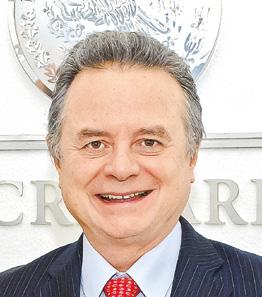
PEDRO JOAQUÍN COLDWELL Minister of Energy
Q: In what ways has the Peña Nieto administration transformed the Mexican oil and gas industry?
A: The Energy Reform’s main achievement is its high level of transparency and accountability. The licensing model for E&P contracts has been adjusted over time to make it more competitive, transparent and internationally attractive. The hydrocarbons licensing system has allowed us to reach 67 percent in contract allocations with 107 awarded contracts from 161 offers, and with no complaints from participating companies. Moreover, we have had an average 74 percent government take. The expected economic spillover from these contracts amounts to US$161 billion and around 900,000 direct and indirect jobs in the country’s oil regions.
New entrants into the market have created a highlydiversified hydrocarbons industry with 73 operators from 20 countries, ranging from the world’s most renowned IOCs to 34 new Mexican companies founded after the reform’s approval. The upcoming tender for Rounds 3.2 and 3.3 will take place in September and will contribute to these outstanding results.
Q: How will the Energy Reform impact final consumers?
A: The reform’s vision is to provide competitive energy prices through the creation of regulated markets. We are carrying out the largest expansion of the National Pipeline System to transport natural gas to a wide range of new regions at competitive prices. The incipient fuel market has also opened to competition, providing consumers with an offer of around 40 new brands. Over time, this will imply better services, competitive prices and greater efficiency for the benefit of Mexican consumers.
Q: What is your evaluation of PEMEX’s transformation into a productive state enterprise, the migration of COPFs and CIEPs and the acceleration of the farmout process?
Pedro Joaquín Coldwell has been Minister of Energy since December 2012. Previously, he was Governor of Quintana Roo, Minister of Tourism from 1990 to 1993, Ambassador to Cuba and federal Senator representing Quintana Roo from 2006 to 2012
A: The Energy Reform has provided PEMEX with the necessary tools to build associations and to venture into technologically-challenging or financially-robust projects along with partnering companies. The reform has provided PEMEX with the possibility to compete for E&P contracts in CNH’s licensing rounds and the NOC has obtained 11 contracts in partnership with seven IOCs so far, with a projected investment that totals US$17.5 billion.
Additionally, PEMEX has been awarded three independent contracts that prove its capacity to win blocks on its own. Another mechanism granted to PEMEX after the reform refers to the possibility of migrating its concessions from Round Zero to E&P contracts, individually or through farmouts. This alternative has proven to be successful for the NOC after completing its first deepwater farmout in Trion with BHP Billiton at an estimated investment of US$7.6 billion. It also carried out two onshore farmouts with Cheíron Holdings for the Cárdenas-Mora field and with DEA Deutsche for the Ogarrio field, with an estimated investment of US$127 million and US$96 million, respectively. These three farmouts represent investments of US$7.8 billion, or 72 percent of PEMEX’s capital investment for 2017. Regarding the migration of CIEPs and COPFs contracts, PEMEX has successfully concluded two processes and it is in the process of finishing three more during 2018.
Q: What is the ministry’s message to private operators in light of Mexico’s political transition during 2018?
A: The licensing rounds under the new regulatory framework have been the most transparent in the national industry’s history. Such high levels of transparency guarantee their continuity and that they will transcend political or electoral cycles. The awarded contracts are shielded by the fact that CNH is the only entity with the legal capacity to rescind them. Rescission clauses have been pre-established in the contracts and operators were aware of them from the beginning. These include clauses for unjustified unfulfillment of investment commitments, serious accidents and irreversible damage to production and/or facilities. They are all related to violations in complying with the contract.
TIME TO PLACE YOUR BETS ON MEXICO
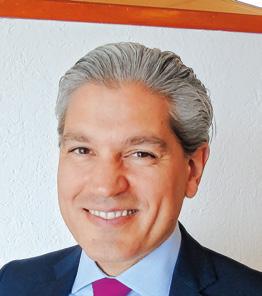
ALDO FLORES Deputy Minister of Hydrocarbons at the Ministry of Energy
Q: What have been the major milestones and flagship success of the Energy Reform so far?
A: The first years of the transformation of Mexico’s energy industry have been encouraging, based on the interest that global companies have displayed in the country’s new energy model. In just three years, we went from having one company in the upstream sector to 70 new players. We went from having a few companies that were participating in the natural gas segment and PEMEX as a single player in midstream, to 70 companies in natural gas and oil products transportation and storage. We had a single gasoline brand in every single station in the country and now we have 43. In total, we have over 170 new players across the oil and gas value chain. They are all interacting, competing and developing their business models to foster a modern and competitive industry in the country.
Q: What mechanisms could enhance the implementation of the reform?
A: We must maintain the reform’s momentum through full transparency, sustained competition, streamlined regulatory processes, greater flexibility for the financial mechanisms that can support projects and an overall commitment to competition-enhancing practices. These mechanisms will push the industry to the next level.
Q: Why is it significant that Mexico joined the International Energy Agency (IEA)?
A: Mexico’s entry into the IEA is a recognition of the country’s significance as a global energy player and the modernization process the country has embarked on. It is a stamp of support for what Mexico has been doing. Belonging to this organization will motivate us to contribute to the development of the global energy agenda.
The fact that we are also part of the OECD means that we will benefit from peer reviews and best practices from the world’s leading oil and gas players.
Q: What have been the most significant steps in the consolidation of a sustainable natural gas market?
A: It is an internal strategy that involves the entire value chain. In upstream, for instance, we are presenting many blocks with natural gas resources and we must ensure they are internationally competitive. In midstream, we are in the midst of the largest expansion our pipeline network has ever seen, extending it from 11,000km to 18,000km to reach more regions. Beyond the transport infrastructure, we have markets under development, with more players on both the supply and demand sides creating regional hubs. Price liberalization is allowing regional pricing to form a more dynamic natural gas market. We expect these changes to foster wider distribution coverage across the country, since we are at an early stage in the development of our new energy model.
Q: What are your expectations from the upcoming licensing round for unconventional resources?
A: The Burgos basin holds 50 percent more prospective resources than the Eagle Ford basin, so we see a large upside for the development of Burgos and the interest we have seen so far is high. The nine blocks in the upcoming licensing round on their own hold more resources than anything we have auctioned so far onshore. We want to start with a small tender, learn from that experience, test our contractual and fiscal terms and see how well the regulations adjust to this tender so we can use that experience at other stages.
Q: How can the Ministry of Energy translate improved reserves into attractive incentives for IOCs?
A: Mexico is attractive for investment because the framework of the oil industry is transparent and the policymakers and regulators are competent. We have a diversified economy, with a major manufacturing exports base. This framework on its own strengthens the attractiveness of working in the country.
Aldo Flores was previously Secretary General of the International Energy Forum from 2012-16. He was also Director General of International Affairs at the Ministry of Energy and Director General of Economic Bilateral Relations at the Ministry of Foreign Affairs
NO NEED TO FEAR FUTURE OF LICENSING ROUNDS
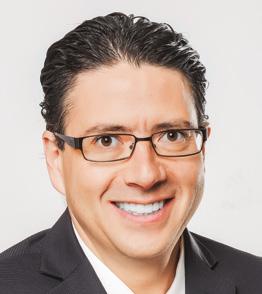
JUAN CARLOS ZEPEDA President Commissioner of CNH
Q: How would you describe the highlights of the licensing rounds?
A: We have completed 14 bidding rounds, resulting in 107 awarded contracts. The first indicator of CNH’s success is that we have completed these 14 bidding rounds without a single legal challenge or observation from our internal auditing office or from Congress’ federal auditing office. Accountability is our main priority, so if the next administration would like to review the 107 awarded contracts then we are very ready to do this with them. The main purpose of CNH is to deliver transparency and accountability.
The second indicator is investment. The bidding variables are the royalty rate and the minimum work commitment and the Ministry of Finance establishes a weighted average of these variables. Most of the weight has been placed on the royalty rate. Although I would prefer to see more weight placed on the minimum work commitment, we have achieved very good results nonetheless. The winners of blocks in the bidding rounds have committed 138 wells, of which 74 are onshore and 64 are offshore. As a reference, 64 offshore exploration wells is equivalent to 20 percent of all exploration wells in the history of Mexico. The drilling of offshore exploratory wells has doubled in Mexico. The country drilled 15 such wells in the 2011-2017 period, two of which were the result of the new contracts. In the 2018-2021 period, based on commitments,
the country will drill a total of 26 offshore exploratory wells, 13 of which will be drilled by new operators. This is especially important given the fact that Mexico’s oil production decline was the result of limited exploration activity. Having exploration activity back on track is a good indicator of the success of the licensing rounds.
The third indicator is the government take, which is an indicator that combines the different taxes and royalties paid by operators and is expressed as the amount of taxes paid as a percentage of profit. The government take in Mexico is significantly higher than the government take in the US Gulf of Mexico, which stands at 55 percent. When we compare the government take of Mexico’s licensing contracts with the government take of the concessions in Brazil, ours is higher, at 63 percent versus 59 percent. In Brazil and Mexico, we have both licenses or concessions and production-sharing contracts, which usually have a higher government take because profit rather than revenue is taxed. Both countries have a government take of 75 percent for production-sharing contracts.
Q: How do you measure the uptake in exploration activity and what are the implications of this?
A: Mexico has not only achieved higher government takes than its main competitors but the investment committed
through minimum work program is very high, and our processes have been very transparent. Apart from strong performance on these three indicators, we have seen a strong increase in investment in seismic activity. We have awarded 40 geological and geophysical permits (G&G permits). Based on these contracts, the industry has invested more than US$2 billion, which resulted in seismic coverage of the Gulf of Mexico growing from 35 percent to 100 percent over the past three years as the volume of 2D seismic tripled and the volume of 3D seismic with WAZ technology quadrupled.
Finally, exploration activities in blocks awarded in Rounds 1.1 and 1.2 have already resulted in important discoveries. The consortium of Talos, Premier and Sierra Oil & Gas announced a significant shallow-water discovery of more than 2 billion barrels resulting from the drilling of the Zama-1 well in Block 7, awarded during Round 1.1. Round 1.2 included blocks with discovered fields, and both ENI and Hockchi have tripled their reserves through successful exploration wells. So far, the indicators are looking very good at every step of the value chain.
Q: How can these initial results be translated into the desired production increases?
A: If we want to return Mexico’s oil production level to 3 million b/d, we need to substantially increase average E&P capital expenditure. As a reference, PEMEX is investing around US$8 billion per year in E&P, which is a low figure compared with the US$18 billion PEMEX was investing in 2013 before the opening of the industry. To return oil production to 3 million b/d, PEMEX and new operators will have to raise their collective E&P investment to US$20 million in the short term and gradually increase it to US$60 billion by 2030. This investment will have to be directed at various areas to return production to levels approaching Mexico’s 2004 production peak. One area of opportunity is investment in onshore basins, where Mexico has no production. TampicoMisantla is the most important basin is this regard. The first important E&P strategy recommendation is that we must develop Tampico-Misantla, which has a production potential of 700,000-1.5 million b/d that can be activated in the short term. We need to attract private operators that can work side by side with PEMEX to develop this area.
Currently, Mexico has 25.5 billion barrels of oil equivalent of discovered 3P reserves, 76 percent of oil and 24 percent of natural gas. Additionally, it is estimated that there are 112.8 billion boe of prospective resources (to be discovered), 53 percent of unconventional resources.
The Tampico-Misantla basin concentrates a great potential: the discovered fields within this basin represent almost 30% of total 3P reserves and its unconventional
exploratory potential accounts for the 58% of the total non-unconventional resources
Focusing on the development of Mexico’s extra heavy oil potential is the third E&P recommendation. Extra-heavy oil is an important opportunity because Venezuela has seen a substantial decrease in heavy oil production and the declining production of Cantarell has reduced Mexico’s heavy oil production. Mexico has important heavy and extraheavy oil fields that we have not started developing, with the exception of Ayatsil-Tekel. There is an important cluster of extra-heavy oil fields in proximity to Ku-Maloob-Zaap where PEMEX was awarded Ayatsil, Tekel and Utsil and the Ministry of Energy retained a number of attractive giant fields, such as Pit and Kayab. When we started the bidding rounds, oil prices did not allow for the development of such fields, but at current prices this is profitable. Moreover, Mexico’s refineries were designed for this type of oil and the economies of scale that the cluster of fields offer represents an important economic opportunity.
The fourth E&P recommendation is to increase natural gas production, which is the most important energy security concern for Mexico. We will continue to import competitivelypriced natural gas from the US, which in recent years has been an important driver of lower electricity costs for the industry. Given that we are importing around 85 percent of the natural gas we consume from one country, we have to diversify. To do so, the Mexican government will have to implement a natural gas policy to make it feasible to support natural gas in Mexico. Tax incentives can be used to achieve this purpose without removing income from the federal budget. The US offers different incentives to the oil and gas industry, such as the intangible drilling assets deduction that allows companies to deduct most of the costs of drilling wells in the US from income taxes. These types of tax incentives should be introduced in Mexico for non-associated gas. In terms of royalties we have to understand that there is no economic rent to capture from non-associated gas, so there should be no royalty.
If the new administration wants to pause the bidding rounds, my humble recommendation would be to continue with the deepwater, unconventional and onshore rounds to ensure that the first two do not leave resources idle and the last continues the development of the new Mexican industry. If we pause bidding rounds in shallow water then we need to provide additional investment capital to PEMEX.
Juan Carlos Zepeda has extensive experience in the oil industry, including with the Ministry of Energy and the Ministry of Finance. On April 30, 2014, the plenary session of the Senate appointed him President Commissioner for a second five-year term
UNDILUTED ACCOUNTABILITY FOR A HEALTHY INDUSTRY
CARLOS DE REGULES Executive Director of ASEA
Q: What has been the biggest achievement of ASEA during 2017?
A: From very early in the life of the agency we recognized that we had to make sure our internal processes reached a status that is usually called the point of no return. We wanted to make sure that no matter who runs the office in the future, the original regulatory model would remain unchanged and fulfill its long-term commitments to the industry. It is natural that certain changes in regulation will take place with each new administration but our work is committed to offering longterm certainty in terms of the foundation of the regulatory framework entrusted to us.
Q: What has been ASEA’s progress in achieving its “points of no return?”
A: ASEA has consolidated the certainty of the regulatory framework by reaching three specific points of no return in its administration during 2017: the regulation of the market, the permitting of projects and the enforcement of inspections in hydrocarbon operations. In terms of market regulation, we have covered all the main regulatory gaps that existed before and since the creation of the agency, meaning that all the regulations, guidelines and standards have been published. The rules of the game are set and include over 30 different types of regulation already published, including those for unconventional and deepwater activities. In terms of permitting we have processed over 25,000 different permits for projects along the whole oil and gas value chain, from exploration and production to transportation, distribution and storage. For that we have established admissible criteria for the authorization of projects that has already become a standard and will be used for future evaluations.
Finally, we have performed around 2,500 facility inspections across the entire value chain of hydrocarbons, from the well to the dispatching pump. Within this activity we consider a
National Industrial Safety and Environmental Protection Agency (ASEA) for the hydrocarbons industry is in charge of disseminating regulations and enforcing compliance of public and private-sector companies involved in the industry
point of no return the fact that 90 percent of the rulings from inspections that have been presented at tribunals have been in favor of ASEA, making the agency a reliable standard for legal enforcement across the industry.
Q: How is ASEA working toward reaching greater independence?
A: ASEA was initially created as a department within the Ministry of Energy and supervised by SEMARNAT. In that sense it is natural that the agency does not have the same level of independence that CNH or CRE have. Nevertheless, as we have matured and reached the three previously explained points of no return, we are ready to take the next step in terms of adjusting our institutional design, reforming legal attributions and giving the agency a higher degree of autonomy. AMEXHI prepared a document in 2014 proposing 10 critical actions to be taken for the benefit of the Mexican hydrocarbons industry and one of those was to give ASEA more independence. Likewise, the OECD performed a thorough analysis of all the regulatory entities in Mexico and one of its main recommendations was to grant ASEA the same level of autonomy as CRE and CNH. This is already being discussed by the Congress.
Q: Has ASEA found any differences when dealing with PEMEX and with new operators in the country?
A: PEMEX is no different from any other operator regulated by ASEA. The only difference between PEMEX and new operators is related to the different stages of the life cycle of any oil and gas project and not the nature of each operator per se. In terms of the culture change at PEMEX regarding going from an internal to an external regulator, the NOC recognizes that there are now new regulators and it has engaged with ASEA in a constructive conversation. Proof of this is the series of offshore accidents that happened in 2015 in the Gulf of Mexico. Instead of dealing with the situation in a traditional way, we worked with PEMEX and managed it in a new way, making PEMEX and not ASEA the accountable party for the safety and environmental consequences of these operations, and making sure that operations could only be resumed once PEMEX ensured that all safety and environmental regulations were satisfied.
BRINGING MARKET OPPORTUNITIES TO NEW HEIGHTS
GUILLERMO GARCÍA President Commissioner of CRE
Q: What were CRE’s milestones in 2017 regarding the competitive midstream and downstream sectors?
A: We had a landmark year in 2017 thanks to the implementation of further changes in the industry. The government liberalized fuel prices in general and regions were given the opportunity to set their own prices gradually, and within a year, price liberalization became a reality nationwide. Unified prices used to be the norm in the country and now they are differentiated by region and set by the players involved, injecting competitiveness into the market. We have 42 new fuel retail brands that started operations in Mexico from April 2017 onward. Another milestone was the abolishment of firsthand sales prices for natural gas in conjunction with the open season for transport system capacity. A free price opened the door for marketers to take a larger share of the volume sold in Mexico, which has climbed above 30 percent. We are trying to implement the same liberalization of prices in LPG, although this poses a bigger challenge as more infrastructure is required and further regulatory adjustments are needed beforehand.
A final milestone is the acknowledgement that we need to transport LPG to remote areas that require fuel. Around 15 percent of underprivileged families still use wood as a source for heating. We partnered with commercial and government-aid grocery stores, such as Diconsa, in these areas to deliver LPG and we will encourage more projects in this vein, especially through partnerships with the private sector.
Q: What are the critical success factors in the liberalization of the wholesale and retail fuel markets?
A: People are getting used to prices changing on a daily basis. There is more knowledge about how prices are defined, how international oil prices evolve, logistics, taxes and so on, creating a more robust discussion. This also highlights the shortcomings we face in terms of infrastructure and more active competition. For instance, LPG from Sinaloa must be shipped through the Panama Canal and come back to storage terminals in the Gulf of Mexico due to the lack of a pipeline, costing US$1 million to pass it from one side of the country to the other. Market liberalization has changed the mindsets of
society in general, with people now understanding that these types of procedures make no economic sense. Companies also know that if they can do things at lower prices, obtain the necessary permits and operate efficiently, they will obtain a market advantage. The entire process has been quite transparent with this new breed of regulation emerging from the reform.
Q: What role do fuel price indexes, natural gas and LPG play in the consolidation of competitive markets?
A: They play a crucial role. We started publishing the daily natural gas price last year through an index we created. We perceive regional differences in prices in natural gas and that is pushing people to try and find connections with different regions, even in the US. That pricing is present in every fuel market and the idea is to have savvy investors developing these information processes and establishing investment plans for the future. We have worked on Gasoapp, our own app that provides daily and real-time fuel market prices for customers. Most people in Mexico have a cellphone, so this app opens the door for them to find better prices. Eighty percent of Mexican families use LPG, which is why we launched a second app called AmiGasLP, which displays the different prices from providers. This is designed to empower the consumer to analyze LPG prices nationwide.
Q: How will regulations enable the country to achieve competitive midstream and downstream markets?
A: We should do everything we can to deploy investment at the fastest pace possible. The speed so far has been good, if we take into consideration that prices were only liberalized last February. If we identify the barriers that exist as a result of the previous model and we work to bring those barriers down, regulations should move quickly and investments will flow in greater numbers to the benefit of the industry.
The Energy Regulatory Commission (CRE) is a government agency in charge of oversight and ensuring regulatory compliance in the energy and natural gas sectors in order to promote their efficient development
A TRANSPARENT MIDDLEMAN WITH A LONG-TERM VISION
MAURICIO HERRERA
Executive and Administrative Coordinator of FMP
Q: What is FMP’s vision for Mexico and how does it contribute to the country’s development?
A: The Mexican Petroleum Fund has three major objectives. The first is to receive all the revenues from the exploration and production activities taking place in the country and then make the corresponding distribution stated by law to the different government funds, stabilization funds and also to the federal treasury, which is managed by the Ministry of Finance, to be used for the federal budget.
The second obligation is related to the financial administration of the contracts for E&P activities in the country. The contracts are signed between oil and gas operators and CNH, which acts as a representative of the Mexican state. Although all the technical aspects of the contracts are enforced by CNH, FMP is in charge of the financial aspects, meaning the management of revenues. We calculate the shares that correspond to the Mexican state and to the operators, and make sure that the revenues received from the operators comply with what is established in each E&P contract. We also follow up the revenues of each contract and make sure that the state receives its corresponding share.
The final obligation of the FMP is related to the Sovereign Wealth Fund. 2017 was the first year we received funds that were accumulated in the Sovereign Wealth Fund and in 2018 we started investing these funds on behalf of the Mexican state.
Those are the three main obligations of the FMP. However, an additional obligation that derives from the previous three is related to transparency. When PEMEX was the sole producer of oil and gas in Mexico, it had an internal procedure for calculating its revenues, the share for the state and what it had to send to the federal treasury.
All this information was then sent to Mexico’s revenue service (SAT), but there was limited information disclosed to the public. However, under this new scheme, FMP is in charge of publishing a considerable amount of information related to PEMEX’s revenues and disclosing it to the
public. Whoever is interested in tracking these revenues can rest assured that these are available on FMP’s website, including the revenues received by every other operator in compliance with what is established in the E&P contracts. This is a very important responsibility for FMP, and it could be argued that it is the most important aspect we oversee.
Q: What was the biggest challenge of setting the FMP as a middleman for oil and gas revenues?
A: The biggest challenge was probably technological. The FMP’s regulating law was issued in August 2014 and we started operations in 2015. The first E&P contracts were signed in September 2015 and by that time, we had to build the entire IT infrastructure required to receive and manage all the information from the operators and start calculating the percentages of shares that corresponded to them and to the state.
The entire IT infrastructure required by the Fund to receive all the information from the new E&P companies, as well as from the authorities, is developed internally. This includes receiving a great deal of sensitive information, such as personal and industrial data, and it is important all this is stored according to the Central Bank standards of security.
Therefore, the Ministry of Finance, which is the Fund’s trustor, and the Central Bank, acting as trustee, agreed to develop all the required IT infrastructure internally. It is also important to acknowledge that all the information that the Fund receives from the operators of the new E&P contracts, related to oil and gas production, commercialization prices, cost of developing new oil wells and other investments engaged by the contractors is published on our website. The intention is that any person that visits our website will be able to download data associated with volumes and prices reported by authorities and private companies and be able to replicate our calculations to make sure that we are performing our job correctly.
Q: Was the Assignations and Contracts Payment System (SIPAC) developed alongside other governmental agencies?
A: No, it was developed in-house but with the collaboration from other government agencies. As part of our monthly calculations, we receive information from the Ministry of Finance, from CNH and from oil companies, so it is key that all these authorities and participants can access the system, provide information and go through it at any point in time to meet their respective responsibilities. We were able to develop the IT infrastructure thanks to the feedback from all of them, as it was necessary to understand each one's needs and design the system accordingly. Ultimately, the design of the SIPAC is based on the requirements and needs of the authorities and contract holders.
Q: The Norwegian sovereign fund model has proven to be successful for a sustainable long-term vision. What best practices did the FMP take from this model?
A: We are observing best practices not only from sovereign wealth funds, but also from asset managers worldwide. In fact, recently, the International Monetary Fund visited the FMP to perform a study, with one of the objectives being to ensure that the transparency and governance of FMP were in line with best practices observed by Sovereign Wealth Funds worldwide.
The complete results of the study have not been published but preliminary results have shown that we comply with all these best practices, especially transparency, governance and investment guidelines.
The main differences between the Norwegian model and ours arise from the fact that the size of the resources under administration differ radically. The Norwegian fund is fully mature and the FMP is in the starting phase and this fact reflects on our investment guidelines, which are considerably less risk-averse than those of a fund in a mature state.
Those guidelines include some of the best practices other asset managers follow, such as the existence of a benchmark portfolio, definition of asset classes eligible for investment and minimum credit ratings for each asset class.
Other sovereign wealth funds have adhered to the Santiago principles, which include best practices related to governance, transparency, investment and risk management practices among Sovereign Wealth Funds. The goal of the International Monetary Fund study performed at the FMP was to evaluate how close our internal processes adhere to those principles.
Q: What is the challenge of managing the Sovereign Wealth Fund?
A: The challenge right now is to establish the foundation of a long-term portfolio that ensures that our current
wealth, in the form of oil and gas, will span across generations by turning it into financial assets, in the shape of an investment fund. The FMP is in its starting phase and accordingly its initial portfolio would be completely different to that of a mature Sovereign Wealth Fund such as Norway's. The latter includes all asset classes around the globe, such as investments in real estate and in emerging markets.
FMP ’s income from PEMEX assignations in 1Q18 amounted to MX$122.8
billion , a 2 percent increase compared to 1Q17
In the short term, our challenge is to establish a fixedincome and US dollar-only portfolio and gradually transform it into a more complex portfolio. With time, and as we are able to accumulate additional funds, we should include more asset classes and different currencies in our portfolio.
Q: Where is FMP focusing most of its activities considering that PEMEX remains the biggest player in the country?
A: The biggest load of our work comes from new E&P companies, meaning new operators, which as mentioned before, must send all the information required by FMP to calculate royalties. In fact, we receive five different levels of information, which is also used by the Ministry of Finance for auditing activities. Although only 0.5 percent of the revenues for the fund come from the new operators, close to 100 percent of the information is coming from them.
Q: What other aspects of the oil and gas industry has FMP enforced?
A: The FMP has become an excellent benchmarking tool to ensure that the industry in Mexico becomes more efficient. Looking at the information SAT receives from PEMEX and comparing it to that received by the new players, one can see how costs have dropped drastically. While these costs do not fit yet with those seen in countries with a more developed oil and gas industry like the US, we can certainly see costs dropping.
Mexican Petroleum Fund for the Stabilization and Development (FMP) receives, manages, and distributes government earnings from hydrocarbons activities and administrates the financial aspects of E&P contracts
PEMEX CAPABLY NAVIGATES ROUGH WATERS
Almost four years into its transition to a productive enterprise, PEMEX is a story replete with successes and failures. It has successfully partitioned itself into separate business units to tackle the various opportunities emerging from the Energy Reform. It has successfully entered into necessary partnerships that complement its strengths and make up for its weaknesses. And it has discovered oil, its main purpose, after all. Along the way, it has run into hurdles. It has failed to deliver on all its commitments from the rounds, gaining extensions to give itself more time. It remains deeply in the red and a reversal of its production decline is still years away.
But it has charted a course to navigate these rough waters with a Five-Year Plan to 2021 that is geared toward a more streamlined business and ultimately, profitability. “PEMEX’s business plan before the 2013 Energy Reform was directed at attaining specific hydrocarbons production targets, improving process efficiency, satisfying the country’s energy demand with a competitive-cost structure and strengthening the company’s social responsibility policies,” says Javier Hinojosa, Director General of PEMEX E&P. “After the reform, new conditions focused PEMEX’s operations toward businesses that generate higher value. Our business plan after the Energy Reform was designed under a profitability target and an open market vision, recognizing the possibility of creating alliances or associations to reinforce PEMEX’s capabilities to achieve its targets in this competitive environment.” To help steer the ship to its goals, the government appointed Carlos Treviño, a PEMEX insider, as its new CEO, replacing José Antonio González Anaya, who was appointed Finance Minister in November 2017. Treviño, a former Corporate Director of Management and Services at the productive enterprise of the state, took the helm in November, reassuring markets that he would maintain the course devised by his predecessor.
THE PLAN
To shore up its finances in line with a tighter budget, PEMEX devised a five-year plan in 2016 that it updated in 2017, setting out the parameters for its eventual return to black ink. The plan foresees the NOC achieving financial balance in 2019. It also sets out the strategy to overcome losses to the national refining system, related to the steep decline in production from the Cantarell field. The “proposed actions will allow the replacement of Cantarell’s natural declining production to stabilize it and increase it in the medium-term, in addition to streamlining its refineries’ operation therefore eliminating losses in the National Refining System by 2021,” PEMEX states By the time of the update in March, the company had already enjoyed some breakthroughs. It launched its first farmouts,
with Trion in deepwaters, Ayin-Batsil in shallow waters and Cárdenas-Mora-Ogarrio onshore. The NOC also attracted increased confidence from international markets, with its assessed risk falling 50 percent, a sign that global investors believe the enterprise is on a solid footing. The plan, initiated under former CEO González Anaya, also encourages the creation of joint ventures along PEMEX’s entire value chain as a way to boost investment and efficiency, which was also a goal of the Energy Reform. “The Energy Reform has provided PEMEX with the necessary tools to build associations and to venture into technologically-challenging or financially-robust projects along with partnering companies. The reform has provided PEMEX with the possibility to compete for E&P contracts in CNH’s licensing rounds and the NOC has obtained 11 contracts in partnership with seven IOCs so far, with a projected investment that totals US$17.5 billion,” says Pedro Joaquín Coldwell, Minister of Energy.
THE RISKS
To face its future, the NOC must understand its present and the hurdles it faces as the market consolidates. In its 1Q18 financial filing to the US Securities and Exchange Commission (SEC), Mexico’s largest company outlined the risks it faces going forward. At the top of the list is the price of crude oil and natural gas. “While prices have begun to stabilize or even trend upwards, they still remain significantly lower than 2014 levels. Any future decline in international crude oil and natural gas prices will have a similar negative impact on our results of operations and financial condition,” the company said in its report. In 2017, the weighted average price for Mexican crude oil was about US$46.73 per barrel, rising to US$56.19 per barrel on December 29, 2017. During the first three months of 2018, the weighted average was US$56.82 per barrel, an increase of US$10.94 per barrel as compared to the 2017 weighted average, the NOC pointed out.
Its debt load remains another hurdle that could hinder efforts to obtain favorable financing terms, a fact that could impact important areas of its business, as it will need capital to fund its hydrocarbons reserves development. “The sharp decline in oil prices that began in late 2014 has had a negative impact on our ability to generate positive cash flows, which, together with our continued heavy tax burden and increased competition from the private sector, has further exacerbated our ability to fund our capital expenditures and other expenses from cash flow from operations,” it said in the SEC report. The company posted debt totaling US$106.3 billion in the first quarter of 2018, although this was down 4.3 percent compared with the same period a year earlier. Still, ratings
agencies are wary. Moody’s in May assigned the company a Baa3 credit rating, unchanged from its previous rating, citing “weak liquidity, a heavy tax burden … and challenges related to crude production.” However, in a positive sign, the ratings agency changed the outlook for the NOC’s ratings to stable from negative.
PEMEX also faces increased competition in almost every area of its business, a scenario that was unthinkable during its monopolistic heyday. To face this new landscape, the NOC is tapping international experience to share risk and gain the experience it needs to continue growing in a competitive market. “PEMEX realizes that it should not produce for production’s sake. It understands it has to generate economic value and therefore start prioritizing projects. This mentality has definitely changed for the better and this top-down directive is what made the difference,” says Palma Méndez, Country Manager of Wood Mackenzie.
An ongoing concern for 2018 will be the path taken by the new presidential administration in the country. The company and pundits alike are waiting to see how economic policies will unfold, and their potential impact on the oil and gas industry. “We cannot provide any assurances that political developments in Mexico will not have an adverse effect on the Mexican economy or oil and gas industry and, in turn, our business, results of operations and financial condition, including our ability to repay our debt,” PEMEX stated.
TREVIÑO'S ERA
Carlos Treviño was named Director General of PEMEX by President Enrique Peña Nieto on November 27, 2017. Before holding his current position, he was PEMEX’s Director of Corporate Administration since February 2016. From 20014 to 2016 he was Director of Finances of social security institute IMSS. From 2011 to 2012 he was also the Corporative Director of Administration and from 2010 to 2011 he was the Corporative Director of Finances at the NOC. He held the position of Mayor Official at the Ministries of Energy and Finance in 2005 and 2006, respectively.
A YEAR RICH IN DISCOVERIES
JUAN JAVIER HINOJOSA Director General of PEMEX E&P
Q: How has PEMEX’s upstream strategy changed with the new face of the industry?
A: PEMEX’s business plan before the 2013 Energy Reform was directed at attaining specific hydrocarbons production targets, improving process efficiency, satisfying the country’s energy demand with a competitive-cost structure and strengthening the company’s social responsibility policies. After the reform, new conditions focused PEMEX’s operations toward businesses that generate higher value. Our business plan after the Energy Reform was designed under a profitability target and an open market vision, recognizing the possibility of creating alliances or associations to reinforce PEMEX’s capabilities to achieve its targets in this competitive environment. To ensure the NOC is on track with its objectives and expected upstream performance, we are closely monitoring specific parameters, such as its financial balance, oil production, production costs, reserves incorporation and the safety, health and environment protection frequency index.
Q: What were the highlights of PEMEX’s exploration, development and production activities during 2017-18?
A: 2017 was rich in discoveries, as the 11 new fields attest. In deepwater, Nobilis holds promising reserves. In shallow waters, Koban, Teekit, Suuk, Hok, Cahua, Octli and Xikin were the outstanding additions while Chocol, Valeriana and Ixachi will increase our onshore portfolio. Through strategic partnerships, we continued building a successful track record in the country’s licensing rounds. In Round 1.4, we were awarded Block 3, while in Round 2.1 we were able to claim Blocks 2 and 8 with our partners. We also managed to allocate our first farmout in the Trion block. From a production standpoint, PEMEX’s onshore farmouts Cárdenas-Mora and Ogarrio were signed. While the Santuario-El Golpe assignment was migrated to a partner contract scheme, the Ek-Balam field was migrated from an
Juan Javier Hinojosa has been at PEMEX since 1980. In 1998 he became manager in Analysis and Evaluation of Exploration Investments. He took up his current position as Director of Exploration and Production in May 2015
assignment to a contract without a partner and a special tax regime was approved for 21 assignments by the Ministry of Finance. In 2018, PEMEX boasted the highest number of exploration contract obtained from Rounds 2.4 and 3.1, with a total of 11 contracts. Regarding its production activities, the Misión and Olmos fields were migrated from assignment to a contract with a partner, a shutdown wells reactivation contract was awarded to a third party and PEMEX obtained the required endorsement to bid seven onshore clusters.
Q: How is PEMEX dealing with Cantarell’s production drop to stabilize and eventually increase production numbers in a profitable, safe and sustainable manner?
A: There is no doubt that in recent years the main challenge has revolved around replacing the production decline of Cantarell and stabilizing the production platform of Mexico. Another important target of this administration is to operate in a safe and sustainable way, a continuous imperative for the NOC since its creation. To increase production, PEMEX business plan focuses on the most profitable fields or assignments under its operation and finding greater efficiencies through process improvement measures and new hiring strategies that will increase its activity. PEMEX also designed an aggressive program of farmouts or strategic associations that will increase the relevant oil fields’ production, spearheaded by better practices, technology and larger investments. In other words, PEMEX needs to develop its hydrocarbon reserves at a greater speed.
Parallel to that, secondary recovery projects are being designed to increase the recovery factor of existing fields and assignments. To obtain production in the short term, the new discoveries made by PEMEX are also being scheduled for their development in shorter timeframes compared to previous years. In the medium term, PEMEX is preparing to develop unconventional reserves, such as shale reservoirs. To do this, unconventional wells are being scheduled in the areas with the greatest potential to corroborate existing reserves and extract them in the coming years. In the long term, the deepwater projects will contribute to the strategy of increasing the production capacity and profitability of PEMEX
BETTING ON TECHNOLOGY TO YIELD BETTER RESULTS
JOSÉ ANTONIO ESCALERA Director of Exploration at PEMEX E&P
Q: What were PEMEX’s exploration highlights in 2017 and expectations going forward?
A: We focused strongly on shallow waters. We made some significant discoveries in these regions and are already working to drill some delimitation wells. One of the latest wells we are drilling in shallow waters is Yaxché, where we are testing pre-salt production. We have advanced significantly with this project and hope to be as successful as Brazil in this type of project. Pre-salt formations in Mexico are from an older geological age than in Brazil and we hope to generate data that will illustrate the great potential in these areas. We will not despair if this first project does not work, considering Brazil had to drill many wells to really take advantage of its pre-salt formations. But we hope the technology we are using in exploration will yield better and faster results.
Regarding onshore activities, we discovered the Valeriana field in Tabasco, where we are also drilling a delimitation well. This was a significant discovery worth approximately 200 million boe. We are still working on the southeast basin of the country, both onshore and offshore, and the Ixachi-1 discovery will play a significant role in our future activities. By the end of the year, we expect to have three wells in this field: Ixachi-1DEL, Cruver-1EXP and Ixachi-1001EXP. In drilling the latter, our goal is to discover another field deeper than Ixachi-1.
PEMEX’s exploration activities must focus on onshore and shallow-water projects because the industry is prioritizing fields with a short or medium-term ROI. Having said that, we launched operations in unconventional projects in 2018 and we are already drilling the Semillal-1EXP and Maxochitl1EXP wells. Semillal-1EXP is located south of the Burgos basin in Tamaulipas; it is part of a shale oil and gas field where we are testing a Pepper Shale formation from the Tithonian age. Maxochitl-1EXP, on the other hand, is part of the Tampico-Misantla basin and it is where we are testing the Oxfordian formation for shale oil and gas production. Maxochitl-1EXP would be the first well in Mexico to see a test of this formation and if it proves successful, it would increase the potential of our prospective reserves associated with unconventional fields. Our goal for the end of the year is to
have six wells operating in unconventional fields. PEMEX is balancing its portfolio by focusing on known plays, including fractures and breaches from the Cretaceous period, the Kimmeridgian Late Jurassic age in the southeast basin, the pre-salt formations and the unconventional fields in Burgos and Tampico-Misantla.
Q: What are PEMEX’s plans for its deepwater projects in the Perdido area in relation to its consortium partners?
A: On the deepwater front, we are analyzing the possibility of reinstating the Nobilis-Maximino farmout. We are reviewing the concepts and the feedback from companies that declined to participate. Overall, we are revamping the project to make it more attractive and we expect to release the new farmout by November 2018. We still see potential in Nobilis-Maximino but we need to put a better structure in place for the tender.
Today, PEMEX has only one team operating in deepwater projects and we expect this will be sufficient to fulfill our commitments, both in the projects that were assigned to us in the Gulf of Mexico and in the blocks we were awarded during the deepwater rounds.
Q: What experience are you gaining through your collaboration with international players?
A: We are pleased that PEMEX’s team has the technical capabilities to work with these companies in line with international standards. All companies can learn new things from a technical standpoint but PEMEX has a good foundation. We are learning new ways to do business regarding contracts, JOAs, farmouts and farm-ins, and understanding how other companies see the business. These companies know that if there is any entity that knows the Mexican basins, it is PEMEX. Similarly, we know that foreign players know how to do business in a competitive environment.
José Antonio Escalera has over 33 years of experience in the Mexican oil and gas industry. In 2011 he received the Miguel Ángel Zenteno award by the Mexican Petroleum Engineers Association. He has been the Director of Exploration at PEMEX E&P since 2015
MAINTAINING A GOOD PACE FOR CONSOLIDATION
HÉCTOR MOREIRA Commissioner of CNH
Q: What is your assessment of PEMEX’s progress for its awarded areas in Round Zero?
A: The main problem faced by PEMEX is its financial capacity to finance the development of the 489 direct E&P assignations it received during Round Zero. Even though for some blocks the technical plans for E&P were properly delivered to CNH within the three-year deadline, for many others the NOC requested two additional years to cope with the requirements. This meant some of these blocks reverted to migrations and farmouts to cope with these shortcomings in terms of deadlines. PEMEX is also clustering its farmouts into groups of five or more fields to make them attractive for potential partners. When it comes to contract migrations, these imply basically the same requirements as the farmouts, although certain parts of their process might be slightly more complicated. Overall, both experiences should help PEMEX to strengthen its assignation exploration and development capacity.
Q: What main trends has CNH observed in contract assignation and farmout processes?
A: CNH has been working with both schemes since we carry out the analysis for migrations for the Ministry of Energy and we do the licensing process for the farmouts, although the entire decision of carrying out a farmout falls on PEMEX, as it evaluates what it is looking for in a partner. There is an interesting relationship between the Ministries of Energy, Finance and Economy and PEMEX and CNH in that they provide advice on these processes but the ultimate player in setting the requirements is the market and its behavior, so market analyses and the study of awarded areas are key to successful licensing processes.
Q: Which market parameters are helping to attract a growing number of players to Mexico?
A: The oil and gas industry works according to a longterm vision that can span 10 years, from the time a decision is made to when the actual exploration process begins. The first steps involve significant expenses to carry out exploration with no initial profits, making the first years hard for any company. We have seen several companies divest from exploration due to its expense and
the length of time required to see financial returns. CNH addresssed this matter directly in the contracts, giving priority to exploration activities by incentivizing larger investments in this phase of the E&P contracts. This has been one of CNH’s major contributions to a sustainable E&P process.
We have also witnessed a similar trend in production as this implies immediate cashflow. We have stressed the need for optimized production processes by showing that it is not about the speed, but about efficiency. Now, operators present their production plans to CNH and we analyze what has occurred during the first three years after first oil and check if they are producing too quickly or if they are compromising vital aspects of the reservoir. Whenever this is the case, we require an explanation and a solution from their side. These long-term debates are the reason for CNH’s existence.
Q: How do transparency and coordination among regulators raise confidence among operators?
A: The existing coordination between the Ministries of Energy, Finance and Economy and CRE, ASEA and CNH has worked well for the industry and its structure. Even though the Ministry of Energy selects the areas for bidding, it requests our technical opinion and we provide advice on what works best. Over time, the licensing rounds have grown in number of blocks awarded, their optimization, the awarding of agreements, the number of bidding companies and the amount of money offered above the previously stipulated royalty, which iindicates that we are moving in the right direction. Furthermore, there has also been a great level of openness from the regulators’ side to the opinions and feedback coming from the international market, particularly from the operators working in or interested in the Mexican oil and gas industry.
Q: What will be the implications of a unified licensing process for Rounds 3.2 and 3.3, particularly for their combined natural gas potential?
A: I think natural gas has been seen with a reductive focus despite being the foremost source for the petrochemical
industry and its productive chains. Natural gas also looms larger in global industrial transformation processes when compared to the oil industry, and the case of Mexico is an example of why we need to widen the focus on the natural gas industry. The country’s petrochemical imports are larger than its oil exports and we should have a policy to produce more gas to satisfy the local market and even think about exporting it.
We are about to launch a book on natural gas with 20 ideas on how to further develop this segment and proposals to overcome the limitations that the national system has imposed on itself in the form of tight regulations. When it comes to unconventional resources, there needs to be a great deal of information since people usually relate them only to hydraulic fracturing and this practice has negative connotations based on water usage and environmental impact. There is an opportunity to develop unconventional resources using the salinized water deposits in the north of the country and to reuse this water for all the fracking developments, as the processes do not require clean or potable water. We can take the example of the Permian basin’s highly productive fields in the US and apply this knowledge and experience to the potential in the Sabinas and Burgos basins.
Q: How will integrating the rules of the three regulators impact the industry?
A: There is a strong will to develop a one-stop shop that integrates the requirements from the three regulators. Both CRE and ASEA have shown great willingness and we have held meetings to set the basis for this model, which would take around two years to reach completion. We need to make sure that this one-stop shop outlines each entity’s reach and that we do not have overlapping efforts. There is also an idea to create a digitalized hydrocarbons center, but this poses great challenges as it needs to be highly
organized, rely on an organized digitalization engine and have data mining with focalized services according to the operators’ needs. It will take some time to compile but the first steps have been set in motion.
Q: What regulatory bottlenecks are slowing the reform’s implementation?
A: We are in the middle of a process to simplify authorization procedures through the revision of all the steps and information required, which is more complicated than it looks. There needs to be coherence in the collected information and assurance that every single company will provide the exact same data. We also need to reduce the number of steps in the process and we expect to revise the most important ones by the end of 2018. As time goes by, more exploration and development plans will be presented and we will have to follow up on what companies are doing through visits and electronic updates.
Q: What message should the next federal administration send to further consolidate the industry?
A: The first message is that the oil and gas industry is a long-term business and it requires enormously extensive productive chains that need to be safeguarded. The hydrocarbons industry is the driving force for different productive chains and by implementing it properly we can build local industries in different fields, such as materials. CNH has achieved its positioning as a fully transparent and a socially-auditable organism whereby any person can check its data. We have to ensure that this achievement remains untouched moving forward.
Héctor Moreira is serving a second term as CNH Commissioner. His previous experience includes stints as Undersecretary for Strategic Planning and Technological Development at the Ministry of Energy and Undersecretary for Hydrocarbons
REGULATING THE INDUSTRY’S FRUITFUL DEVELOPMENT
GASPAR FRANCO Commissioner of CNH
Q: What is your stance on private farmouts and consolidation of alliances for E&P contracts as a result of the licensing rounds?
A: The administration of these contracts involves awarded operators conceding a certain percentage of the control or participation over their contracts. We have a certain guideline for cession and control exchange whereby, if companies win a block, they are entitled to associate with some other company as long as it meets the proper criteria to participate in the project.
and processing to accelerate processes and export experiences much more quickly.
Q: What are some of the practices you would like to see from private players in the industry?
A: First and foremost, I would like to see a true and honest commitment to the country’s development and a genuine alignment to the work taking place for the country’s benefit. If they remain committed this will create jobs, improve onsite performance, foster human capacity development, improve productivity and things will flow naturally for the industry. The long-term interest is to create a strong Mexican industry and we, as regulators, have to do everything we can to optimize the regulations, processes and requirements to achieve that.
recovery processes
Mexico has over 1,400 reservoirs in around 700 oil fields and not all of them have enhanced
Q: How is CNH overcoming internal bottlenecks regarding technical components from your daily activities and operations?
A: CNH has grown exponentially and we have found areas of opportunity that we are trying to cover by training people in the areas that hurt us the most in each department. We conducted a survey in each department to uncover the weaknesses they were experiencing based on their area of expertise. We want to train our people as regulators, not as technical operators.
Additionally, we want to strengthen the mapping of our processes, their implementation and improvement, so we need to increasingly professionalize our staff and have our people ready to face any possible scenario. We also need to accrue our budget independence to work properly and systematize information acquisition
Gaspar Franco was appointed Commissioner of the National Hydrocarbons Commission in April 2016. An engineering graduate of UNAM and UACAR, he is the first petroleum engineer designated by the Senate to hold such a position
Q: What are CNH’s plans for the future and what is your message to those operating in the Mexican oil and gas industry?
A: We have announced the guidelines for secondary and enhanced oil recovery techniques as we expect to see a larger number of operators applying these practices. Mexico has over 1,400 reservoirs in around 700 oil fields and not all of them have enhanced recovery processes. We made this move because we deemed it necessary to enforce the process legally so operators could do it. There are cases in other jurisdictions where some fields have doubled their reserves when they introduced these processes. We want to push operators and service companies to venture into new things, and to try new processes. We want to stay on top of technological developments that allow us to better untap Mexico’s potential. Also, the regulation on exploration and development plans is about to change for the better and it will reduce timing for the approval of these plans.
We are constantly identifying opportunity areas and try to implement the modifications as fast as possible. We want to demonstrate that the regulatory impact will always be in favor of those who are regulated and that we are committed to the elimination of hefty regulations that place hurdles in front of the industry.
MEXICO’S DEEPWATER KNOWLEDGE NOT SO SHALLOW ANYMORE
ERNESTO RÍOS Director General of IMP
Q: IMP was awarded several trademarks and patents in 2016. What were the results in this regard for 2017-18?
A: During 1H18, IMP received 25 international and two national patents, 75 copyright registrations and 10 trademarks. In 2017, we received 45 international and 11 national patents, 275 copyright registrations and 27 trademarks. Of the country’s public research centers, we had the largest number of granted patents at a national level, which helps us maximize value generation in research and technological development in the energy industry. IMP’s product and service portfolio was restructured to align with the strategy for our new 2017-20 business model. The goal was to boost new growth drivers for the energy business, and to account for certification and development of standards based on the existing competition. In 2017, our portfolio included 94 products and services. Of these, 45 focused on exploration and production, 44 on engineering and five on talent development. The restructuring resulted in 87 solutions, including 45 oriented to E&P, 32 to engineering and 10 to talent development.
Q: What product or service development during 2018 do you consider to be the most representative of the efforts IMP is making in the Mexican oil and gas industry?
A: One of IMP’s main achievements in 2018 has been the start of operations at our Deepwater Technology Center (CTAP). This project reflects the efforts of many specialists who wanted to offer public and private institutions at a national and international level the experience of several laboratories specialized in strategic areas such as welldrilling, natural and operational risk characterization, tooling design and qualification, equipment and production systems.
The center has state-of-the-art technology to support clients in research and technology development processes, as well as talent development focused on oil and gas production in deepwater and ultra-deepwater fields in the Gulf of Mexico. The blowing agent IMP-WET-FOAM is an example of the type of technology developed at IMP’s center, and is part of the first chemical recovery process
in Mexico. This project alone has led to an increase in oil production of 49 percent.
We also developed the Venturi Flow-Pattern Enhancer System (MPFV) used for production control and well optimization, which has been installed in 579 Mexican wells. This technology allows for an average production increase of 20 percent in each oil well and, after five applications, prevents the need to drill a new well. Meanwhile, our Electromagnetic Surface Inspection Technology (TIEMS) for pipelines allows the quantitative evaluation of the physical state of pipeline coatings, thus identifying and classifying areas according to wear. We also offer IMP-ALICIM chemical inhibitors for corrosion protection that mitigate corrosion speeds in operational pipelines within spec.
IMP also focused on technological development oriented toward cleaning and sustainable technologies. We support R&D efforts in biofuels and their valorization, physical-chemical characterization, life-cycle analysis and combination with other fuels such as gasoline and diesel.
Q: How exactly is the creation of CTAP going to impact the Mexican oil and gas industry in the coming years?
A: Deepwater oil field identification, as well as well drilling and exploitation are among the main challenges that oildriven nations face. CTAP will put Mexico at the center of all developments related to these activities and will boost the national industry in field-planning processes, well drilling and design of equipment and systems. This will help companies select the best infrastructure to maximize results after their investments. CTAP has an excellent opportunity to provide technologies and integral solutions that reduce time frames between exploration and production.
The Mexican Petroleum Institute has 52 years of experience in generating technical and technological capabilities for the hydrocarbons sector. Its goal is to maximize value generation in exploration, production and transformation processes
THE TIES THAT BIND INDUSTRY PLAYERS TOGETHER
RAYMUNDO PIÑONES Director General of AMEXHI
With the Energy Reform, Mexico became one of the last countries in the world to allow private players to enter its oil and gas sector as operators. Although the process has resulted in many challenges, Raymundo Piñones, Director General of the Mexican Association of Hydrocarbon Companies ( AMEXHI), says the country can learn from the best practices in other jurisdictions to strengthen its industry. “We drafted our 2040 Agenda with the aim of presenting ideas and proposals for the development of the oil and gas sector toward the year 2040. Inputs for the Agenda were received from academia, government, banks, private sector players and equity investors,” he says.
“ The Agenda 2040 is central to AMEXHI’s communication strategy and it is a reflection of the state and future of the industry”
AMEXHI proposes the implementation of 10 measures in its Agenda 2040 that would assist the consolidation of the country’s new energy model while helping Mexico achieve its energy and growth potential. “The Agenda 2040 is central to AMEXHI’s communication strategy and it is a reflection of the state and future of the industry,” Piñones says. The agenda identifies four pillars for the development of the industry: consistency, transparency, competition and knowledge in policymaking. AMEXHI believes the full impact of the Energy Reform will become apparent by 2040, given the long-term maturity of the projects in the sector.
Piñones makes it clear that the Agenda 2040 is by no means centered on political time frames but on the future energy needs of the country. He emphasizes the importance of having a system that allows the competitive development of the sector along the whole value chain. AMEXHI is approaching all relevant stakeholders, including the new presidential team, to explain the benefits of continuity regarding the new energy model.
Agenda 2040 references two scenarios developed by the IEA’s Mexico Energy Outlook for 2040. The first assumes the continuation of the current policies in the energy sector and forecasts an increase in oil production to around 3.4 million b/d by that year. The second assumes that the Energy Reform is stalled and as a consequence, production remains flat.
Indeed, for the industry to flourish some challenges need to be overcome. Among those, Piñones says, are infrastructure development driven by the market, the strengthening of the regulatory framework, in particular ASEA, and the need to ensure local content requirements are competitive and encourage the efficient development of local value chains.
Finally, he emphasizes the need to maintain transparency in all procedures, including the bidding processes of oil projects. The association highlights the essential role the Ministries of Economy, Energy and Finance, as well as the regulators, play in consolidating the new energy model.
AMEXHI’s Agenda 2040 proposes the reinforcement of PEMEX’s execution capacity to make the most of its recent oil discoveries in the new context of the competition it is facing. “PEMEX needs to be able to compete on an equal footing with the new companies in oil and gas exploration and exploitation, including in the attraction of human capital,” says Piñones. “Mexico has great technicians and great universities,” he adds.
AMEXHI has also identified opportunities in the development of unconventionals, where Mexico could see investments in the tens of billions of dollars and potentially reduce its dependence on gas imports. “Regulation is in place to take advantage of such opportunities,” says Piñones. He applauds efforts made by the government so far regarding unconventionals and says only a few aspects need to be polished. “The government has done a good job so far regarding unconventionals; we need to continue improving the institutional and regulatory framework.”
A FOCUS ON BOOSTING LOCAL CONTENT
ANTONIO JUÁREZ Director General of AMESPAC
Q: What are the prevalent concerns among AMESPAC members?
A: The companies integrated into AMESPAC are primarily service providers to the oil and gas industry. Concerns have been raised over the lower price of oil and PEMEX’s steep production decline, causing field activities to significantly diminish. Companies accustomed to a solid market foothold in locations such as Ciudad del Carmen or Villahermosa with strong oil and gas production activity are now suffering from both a lack of work and PEMEX’s contract revision process to get better prices, which directly impact expected revenues.
Q: What steps is the industry taking to adjust to this situation?
A: Some companies have closed as a direct consequence of this. We have a good relationship with PEMEX and we are trying to help it look for new ways to increase its reserves and production. PEMEX’s budget is still designated and managed by the government and investment levels are dependent on total sales revenue, which suffered a drastic fall in 2015-2016, reducing investment. Previously, PEMEX invested close to US$20 billion per year while at present it is investing less than half that. We are in talks with the government to make a case to prevent service companies from dying. PEMEX’s increased resources to pay its commitments and start drilling again are a critical part of the equation. In 2010, 170 drilling rigs were operational, whereas now only 22 are operating in development fields and 14 in the exploration fields.
Q: What can companies do to survive under these conditions?
A: A number of private companies are starting operations in Mexico, launching new deepwater, shallow-water and onshore projects awarded in the country’s licensing rounds. Mexican companies working in the awarded blocks, especially in the country’s southeastern region, are looking to get involved with these new operators. Small companies working in onshore projects are also part of the target as the inherent nature of onshore projects and the size and flexibility of the companies allow for a more streamlined launch of operations.
Q: What are AMESPAC’s most significant initiatives for the next few years?
A: From the outset, our association has been focused on increasing local content with the development of the oil and gas industry. Our priority is to rely on our associates, both international and local, to push for local content requirements and to foster employment as the new local content formula in Mexico’s regulatory framework quantifies products and services, mainly through local labor. AMESPAC works closely with Mexican universities to develop new programs to prepare young people for work in the industry.
Q: How quickly do you think the industry will pick up as key variables improve?
A: New investments from foreign companies that were awarded E&P contracts during the licensing rounds are turning into drilling activity for exploration operations. Over the next three or four years, this activity will steadily increase.
Q: What is your approach to the foreign service companies arriving to Mexico?
A: Several new companies are setting a foothold in this industry. There is a particularly significant contingent of Norwegian and US companies looking to expand their market presence in Mexico. We have expressed our interest in them joining AMESPAC so we can help them successfully achieve their goals, introduce them to Mexico’s operators and build a stronger group within our association. AMESPAC organizes several conferences throughout the year to connect operators with service companies, including key speakers from the relevant government agencies and regulators: PEMEX, CRE, CNH and ASEA. We also invite foreign organizations to participate, such as the Society of Petroleum Engineers (SPE) and the American Petroleum Institute (API).
Mexican Association of Oilfield Service Providers (AMESPAC) creates consensus and develops proposals for its associates to improve the performance of the Mexican oil and gas sector. It has 50 national and five regional associates
GETTING DOWN TO THE HANDS-ON WORK
DAVID ENRÍQUEZ
Senior Partner at Goodrich, Riquelme y Asociados
Q: What main challenges is Goodrich, Riquelme y Asociados solving for its clients in Mexico?
A: We have been active in the licensing rounds in which a few of our clients have been successful, from IOCs to independents, as well as in other projects in the hydrocarbons and electricity markets. Our task was to understand the projects and assist with the business models. Now, we are helping them to take these projects to the operational phase. I think the relationship between contractors and regulators in this sense is important. We help our clients to factor in both the contractual and regulatory elements so that whenever they interface with those regulators, contractors and subcontractors take all these elements into account in an efficient manner.
When it comes to other areas of the value chain, such as upstream, it is important to continue to be creative with regard to economic and contractual models and to have innovative models that are feasible when negotiating with PEMEX, such as those regarding monetization of assets or new operations and maintenance models. This applies not only to PEMEX but also with regard to the different members of a consortium. This is the time to be innovative, creative and bold.
Everything is now happening in terms of starting operations, many contracts have been awarded and more will be awarded. Now comes the tough task of implementing a business model, having a development plans approved and launching the exploratory phases, depending on the contract. With regard to onshore projects, clients must deal with all the social and environmental issues associated with their awarded blocks. Instead of trying to help clients to digest the guidelines and the contractual models or conducting a thorough analysis of how to factor in certain aspects of their economic model, we are starting with the
Goodrich Riquelme y Asociados advises IOCs and key players involved in exploration and production activities. Its services include representation in public procurement processes related to pipelines, LNG terminals and other downstream facilities
hands-on work, such as dealing with service providers, how to interface with regulators, the mechanisms of the joint-operation agreements and the relationship between the consortium’s partners.
Q: In your estimation, has the Energy Reform played out as planned?
A: I think the way the Energy Reform was presented as the “Mexican moment” in the early stages of the Peña Nieto administration, for example on the cover of The Economist, was an exaggeration that inflated expectations regarding the delivery of the reform. It is now crystal clear that there was a need to consider different phases of implementation in terms of institutional design. Regulation in the early stage of delivery has been particularly successful in the upstream arena. There has been some degree of success in midstream, especially with regard to natural gas. In downstream, however, nothing has really happened in material terms.
Generally speaking, there is an ambiguous feeling. The ecosystem is richer in the number and quality of operators, especially in upstream because of the CNH rounds, while midstream and downstream are moving at a different pace. So, there are mixed feelings about the deliverables.
Q: What have been the critical success factors within the Energy Reform?
A: There were key areas that needed to be adapted to the international market and the common understanding is that the Mexican government has been flexible enough to understand where those areas were. With our clients, we have participated substantially in the licensing rounds. Despite the successes of Round 1.1, the general public saw it as a failure due to the number of blocks that were not awarded. Based on that perception there was a deep need for the government to review what went wrong. The government was flexible enough not only to understand the economics of the project, it also understood the need to adapt aspects of the fiscal terms, the need to relax certain aspects of the guarantees and the need to make the contracts more market-oriented.
I think that flexibility has been the name of the game when it comes to the CNH rounds, which is why these have been fairly successful when compared to similar events happening in other countries. Not only have there been good blocks on offer, in terms of geology, but there also has been sound regulation and good institutional design.
Each phase of each round also is completely different. You cannot compare deepwater to onshore. For example, Round 1.3 cannot be compared to Round 1.4. The types of players participating in each phase of the rounds are also unique. Even if you consider the same kinds of players, you might have different economics. The government cannot use the success of one round as a model for the next. I think some recent farmouts are a good illustration of this.
Q: What parts of the reform will require the most adjustment as time goes on?
A: I think there is a strong need for asymmetric regulation. When you have a reform of the caliber of the Mexican Energy Reform, the regulators not only play the role of technical experts but also the role of market facilitators. They must assure everyone that there is a level playing field for all potential players. That means the top dogs so to speak, not only PEMEX but also CFE, must behave in a market-oriented way. The very concept of asymmetric regulation is to put a level of control on these entities so there is an effective playing field among all companies.
Although we have certain asymmetric regulatory instruments, when it comes to the natural gas market and a bit on the retail business with gas stations, we do not really have the instruments that need to be in place along the value chain. You name the type of industry in upstream, midstream or downstream and I will tell you four or five cases in which you will need asymmetric regulation.
FMP income 1Q18: US$6.1 million (exploration fee), US$44.5 million (contract fee) US$47.7 million (commercialization of hydrocarbons)
For example, with onshore projects you might have a field in which PEMEX is your client because you have to process oil for them, but then PEMEX becomes your carrier because they have the transportation line, or PEMEX will be your buyer because nobody else has the infrastructure, and PEMEX is also your partner because you are talking about an onshore farmout or the migration of an assignation to an E&P contract. In all those environments, PEMEX requires asymmetric regulation. Here I am referring to the oil and gas market but it is really the same for electricity and the renewables side. You have an entity with a dominant power really flexing its muscle with regard to another participant in the market.
Asymmetric regulation really is a way to make that big dog behave itself in a market-oriented fashion. I think that the antitrust commission must impose measures on market players by means of coordinating with CRE and CNH to ensure the solid implementation of the Energy Reform.
There are all kinds of market limitations in Mexico and we do not yet have a strong enough antitrust commission working closely with CNH or CRE.
LOOKING TO THE PAST TO EXCEL IN THE FUTURE
MANUEL CERVANTES Managing Director of MCM Abogados
Q: What added value does MCM Abogados bring to the Mexican market?
A: Our integral assistance helps our clients understand both the national and international rules of the market, starting from the bidding processes and structuring their participation to understanding legal risks and analyzing fiscal terms. In general, we provide full support on every legal aspect of running a business in Mexico, particularly given the complexity of the upstream industry. If bidders are successful, we support them in the execution and performance of the contracts. We also have close contact with all the regulatory institutions, such as CNH, ASEA, the Ministry of Economy and the Ministry of Energy. This has allowed us to develop a deep understanding and expertise in the area of farm-ins, farmouts and JVs, making us, most likely, the top law firm in the JV environment.
MCM continuously looks for potential interactions and synergies in the market to not only offer services to its clients but also to establish important relationships with other market players. MCM also excels due to its different and more flexible structure compared to other firms. We like to develop close and long-term relationships with our clients to better accommodate their needs. Having strong technical knowledge is another advantage, allowing us to better understand the needs of our clients compared to our competitors, which tend to have a more generic focus. We are truly specialists.
Q: What factors will make operators successful in the Mexican rounds?
A: In our experience, operators need to perform a thorough evaluation of the contractual area as well as to fully feed the economic model of the project to ensure they have a complete understanding of the auctioned areas. If they successfully manage these two points, they will have a better
MCM Abogados is a Mexican law firm providing integrated services specialized in a range of projects for the oil and gas industry. The firm provides consulting services for national and international companies
understanding of what business opportunities are available and make better decisions regarding the licensing rounds.
The Mexican industry is quickly evolving. This can be seen in the licensing rounds, which are improving and becoming more attractive and stable. To understand the market, it is extremely important to not only focus on the last results but also to be knowledgeable of what transpired in previous years with the different players. MCM’s long-term presence in the market is highly relevant in this area. We know the history of the relevant players in the Mexican market, such as PEMEX and CNH, and have a comprehensive record that includes not only the actions of these players but their interpretation of the market that led to the decisions taken.
We always like to be one step ahead. We were involved in the negotiations that created almost every regulatory change over the past years. We can provide our customers with an outlook for the market, helping them make decisions that will benefit them not only with a single bid or contract now, but also in the future.
Q: What key challenge does the local value chain face in an open market?
A: The local value chain is facing many changes and challenges, and it will be hard to work through them. As a result, we will see several companies exit the market. Sooner or later two things may happen: either the government steps in to rescue the companies and try to keep them afloat or it allows them to fail with as little damage as possible. Companies that have developed a proper market analysis will survive, while those that have not and offer business as usual will face difficulties, including a lack of money to comply with business commitments, a reduced ability to acquire financing as well as difficulties dealing with community issues, environmental contingencies or even labor unions. The less companies depend on PEMEX and adopt a vision in which they work for the benefit of the open market, the easier it will be for them to survive. MCM is also in a position to help, not only because of its wide knowledge of the market but because of its close relationships with international operators.
STRONG AMBITIONS FOR A FULLY INTEGRATED OIL AND GAS PRESENCE
JOSÉ URIEGAS CEO of Grupo IDESA
Q: Why is it vital for Mexico to have a strong oil and gas industry?
A: The manufacturing industry is vital for the country’s economy and will continue to be no matter what. The chemical industry, as an important supplier to the manufacturing sector, is therefore a key component for the economic growth of the country. For every car that Mexico builds and exports there are US$3,000-US$5,000 worth of chemical products that are essential components. To have competitive petrochemical products, it is a must that our country produce sufficient and competitive natural gas, liquids and crude oil.
Electricity is also an important ingredient for any country that wants to have a strong industry. After the shale revolution in the US, it was clear that every sector in the country’s industry grew, so having a reliable natural gas supply is also logical. These examples are proof of the importance of having and securing the raw materials and sources of energy coming from the oil and gas industry.
Q: What is the status of the permits needed for Tonalli to start operations in the block it was assigned in Round 1.3?
A: All the permits needed before entering into production are extensive. This is good because the country is just opening its E&P sector and is carefully looking for the whole process to be transparent and for every permit to be correctly processed. Truth be told, the requirements of the agencies are reasonable; the problem is that they lack the number of people needed to manage all the information they are receiving. We have received almost all the approvals needed to start operations and expect to start production by June 2018. If we do it, that would mean it would take us almost two years to start production after signing the contract with CNH.
Considering that the Energy Reform was actually intended to be included in the original NAFTA, meaning that it took it almost 20 years to see the light of day, waiting a couple of months to ensure its continuity is no big deal. The future of the oil and gas industry in Mexico is bright but we have to be careful about how to achieve the short and long-
term benefits we want to achieve. The reality is that it will take five to 10 years at least for the projects brought by the licensing rounds to reach maturity, which shows how important it is to secure the integrity of the investments in the long term.
Q: How would IDESA rate the development of the Mexican midstream sector?
A: It is understandable that the midstream sector is taking longer to develop than upstream, considering all the resources that have been assigned to strengthen the country’s upstream activities. Actually, now we are seeing more companies enter the midstream sector. The Sur de Texas-Tuxpan pipeline project that IEnova is developing to import natural gas is a clear example of the tangible opportunities that the Mexican midstream sector has to offer. Importation of fuels represents a strong market opportunity in the short and medium terms. In our case, we already have activities in the port of Veracruz and are developing facilities to import diesel and gasoline.
Q: How is IDESA supporting the transition of PEMEX into a productive enterprise of the state?
A: As PEMEX has become a productive state enterprise, it no longer has an obligation to participate in the whole value chain of the oil and gas industry. Instead, it can focus on projects that are profitable for each subsidiary. Nevertheless, production from international players will take at least five years to materialize, meaning that in that time PEMEX must keep covering the country’s oil and gas needs. This highlights how vital it is for the country to make sure that PEMEX remains a strong player in the medium and long terms. Of course, this is easier said than done. To support PEMEX, Grupo IDESA takes part in both the ANIQ and CONCAMIN associations to present ideas on how to make PEMEX and the country’s oil and gas industry stronger.
Grupo IDESA founded in 1956, is one of the largest groups in Mexico involved in the production, storage, distribution and industrial transformation of hydrocarbons. Its mission is to provide the best products and services to benefit society
THE TRANSITION STARTS
BERNARDO CARDONA
Partner Energy and Resources Industry Leader at Deloitte Consulting Mexico
Since the 2013 Energy Reform, the energy markets have evolved at many levels. Mostly, this evolution falls into three main stages: early, transition and mature, says Bernardo Cardona, Partner and Resources Industry Leader at Deloitte Consulting Mexico. As Mexico moved from a monopoly to an open market model with several players entering in the early stage, it would be easy to look at the major discoveries like Zama by Sierra Oil & Gas and Talos Energy or Ixachi by PEMEX as the major successes of the bidding rounds, but the Mexican E&P industry still has a way to go before it really enters a transition stage, he says. “To reach a transition stage, reversing trends in reserves restitution and drilling activities is vital. For that to happen, the effective execution of the field development plans for blocks awarded in the licensing rounds, and to continuously launch new rounds, is crucial.” These circumstances, however, were to be expected in the face of an industry in its early stage, given the time frames involved with developing activities in upstream oil and gas.
E&P is without a doubt the sector that has attracted the most attention both nationally and internationally. It has also had the most impact in Mexico. Seventy-four contracts have been assigned to 70 companies from 18 countries for a total accumulated income for the Mexican state of US$145.5 million as of September 2017 and an expected global investment of US$2.6 billion as of Round 2.3. Reflecting on these numbers, Cardona emphasizes the work public institutions are doing to make this possible. “The role of CNH, the Ministry of Energy and ASEA in achieving this has been extremely important. They have conducted a transparent and clear bidding process and implemented regulatory and legal frameworks that provided sufficient certainty to the market and made it attractive for companies to venture into Mexico,” Cardona says. He adds that companies can now turn to Mexico when looking for assets to diversify their investment portfolios.
Turning to the midstream sector for natural gas, Cardona points out that its market competitiveness was more developed than the upstream segment even prior to the Energy Reform. “Natural gas midstream had evolved, entering into a transition stage that has yet to be
consolidated. Market competition also evolved, driven by CFE’s need for gas-fired power plants to produce electricity that has pushed the creation of pipeline infrastructure, the initiation of open access to infrastructure, third-party imports and liberated prices. This last, combined with CENAGAS’ efficient management of the system, has boosted the commercialization of natural gas for industrial, commercial and household customers.” In the midstream sector, a key challenge for moving to the transition stage is storage and transportation capacities, but Cardona remains optimistic about the segment, which is mostly driven by market demand. “We expect that as E&P activities increase, this sector will further fuel the need for new infrastructure of both storage and pipelines to handle the oil and gas from new discoveries and awarded blocks that are already producing.” In the liquid fuels markets, “access and development of storage and pipeline infrastructure is the key to market competitiveness and its development to a transition stage,” Cardona says.
But It is the downstream retail segment where Cardona is particularly optimistic about the speed of evolution, stating that this sector has already entered into the transition stage, mainly due to shorter development times and because market entry is much easier. “There is no way to compare the complexity and lead times of the development of an oil field with that of rebranding a service station,” he says.
Cardona’s optimism in downstream retail is not unfounded. As of January 2018, BP had over 100 service stations in Mexico, Shell over 18, Arco eight, Chevron six, Gulf two and ExxonMobil six, with plans to open 50 more stations during 1Q18. National players have also mobilized, getting together in purchasing clubs like G500, and Mexican brands such as OXXO GAS, Petro7, La Gas, Hidrosina and G500 and many others are being positioned in the market. “It is exciting to see how the number of players in the gasoline retail market is changing every day. Before, all offered the same value because they all offered the same types of fuel, brand and value proposition through the PEMEX franchise, but now they are all looking for ways to differentiate their own brands," he says.
ASSESSING THE INDUSTRY’S STRENGTHS GOING FORWARD
RUBÉN CRUZ Leading Partner in Energy and Natural Resources at KPMG in Mexico
Q: What is the extent of the changes introduced by the Energy Reform five years after its adoption?
A: The changes have been quite positive, with the commitment of a series of IOCs and companies from different countries to the development of Mexico’s energy industry as the major highlight. There is a good spectrum of long-term investments, ranging from 25 to 50 years. This reflects the opportunity Mexico represents for the hydrocarbons industry and the international community is aware of that, backing the market with US$160 billion already committed for future projects. Low-risk exploratory blocks awarded during the first rounds pushed production estimates to around 40,000 b/d and we got a positive surprise in Round 2.4 due to the dimension of the projects awarded. The industry is expecting new discoveries and this will reshape the future of the hydrocarbons industry in Mexico.
Q: How have licensing and production-sharing rounds evolved to become more attractive over time?
A: Mexico has gone through a learning curve quickly and successfully. Interest in the country’s fields was present from the beginning but the lack of experience in handling day-today operations required different implementations. In the first three licensing rounds there were no down payment tie-breaker mechanisms, no pre-awarding awareness on maximums and minimums for the blocks’ additional royalties. However, during and after Round 1.4 the feedback from the industry was well-received by the Mexican National Hydrocarbons Commission (CNH) and applied to future rounds, making them more competitive for both the industry and the state. Licensing and production-sharing rounds have also attracted different players and different types of blocks have been tendered, which has created a varied market behavior.
Q: What is the result for PEMEX in terms of new opportunities and challenges?
A: PEMEX has seen its production potential increase after the industry’s opening. The NOC needs to develop the fields it was awarded in Round Zero mostly through farmouts, and it is in a privileged position as this scheme will lower its exploratory and financial risks. The Energy Reform is also
encouraging PEMEX to incorporate better and different financial mechanisms, such as the Fibra E, which has not been exploited yet, and potentially publicly listing part of its equity, although an additional reform would be required for that. The company has also learned how to be more competitive and to open itself to larger multicultural associations with IOCs from around the world. Other big challenges PEMEX faces right now include wider competition in the downstream sector, particularly in retail, and possible financial constraints, but this is why partnerships are necessary.
Q: How has the regulatory framework increased KPMG’s client portfolio and which gaps should be addressed?
A: We have seen our three major business lines grow exponentially. In auditing, because we manage the largest companies in the hydrocarbons industry in Mexico. In tax, since we help structure our clients' investments so their capital enters their home countries and revenue is repatriated efficiently. And in consultancy, where we are conducting market studies to see where companies are competitive and management consulting to plan their operations and project their future growth. This is why we have seen our business grow since the reform was enacted.
Regarding the gaps to fill, meeting local content requirements is an area where we have had advisory operations and it has been easy to cover so far. But as investments flow and they grow larger, meeting local content percentages will be harder to achieve. There is a need to bind Tier 1 and Tier 2 service suppliers to local requirements since they only apply to operators at the moment and industry players need to work under coordinated rules to make sure there is a commitment to deliver. This is particularly important since CNH and the Ministry of Economy are working to verify that local content requirements are met and their processes are carried out over time.
KPMG is a global network of professional services firms providing Audit, Tax and Advisory services. It operates in 154 countries and territories and has 197,263 people working in member firms around the world
THE DEVIL IS IN THE DETAILS
ERNESTO MARCOS Partner at Marcos y Asociados
Q: In your view, what have been the Energy Reform’s high and low points?
A: The most prominent achievements of the reform are the inherent constitutional changes carried out after its enactment. Prior to its signature, there had been two decades of discussion about the dire need for an Energy Reform. This plan took many shapes, including limiting private participation to service contracts, shared production and shared profits contracts. The core point of contention revolved around setting the reform’s legal boundaries. I believe a critical achievement on the legal front is that the Energy Reform’s upstream legislation allows for all types of contracts: licenses, production sharing, profit sharing, to name a few, with The Ministry of Finance and the Ministry of Energy through CNH picking the most adequate type of contract to be applied depending on the tendered location.
During deepwater Rounds 1.4 and 2.4, the general consensus among industry experts was that the number of blocks awarded was greater than expected, making them two successful rounds. Round 1.3 was successful in allowing Mexican companies and startups to create E&P companies but overbidding was prominent to the detriment of some projects. Shallow water Rounds 1.1, 1.2, 2.1 and 3.1 were successful in attracting the interest of players such as ENI, Talos Energy and Fieldwood Energy. These projects are moving forward and will eventually attract sizable investments.
The part of the reform that was probably overshot was the expected time frames. E&P activities for instance, are not expected to show positive results from investment inflows before the first five years. But overall, we believe the Energy Reform has proven to be superior to models in initial discussions and negotiations.
Marcos y Asociados is a Mexican investment banking and business development consultancy. Its proficiency in project development and management is strengthened by the deep energy-industry knowledge and expertise of its executive team
Q: Is Mexico’s legal framework mature enough to bolster the potential of the oil and gas industry?
A: That is where the challenge lies going forward. The devil is in the details and from our discussions with industry experts, we understand the industry is confronting these challenges. These include environmental impact assessments, land agreements, community negotiations for onshore projects and drilling permits. All these secondary processes are delaying the normal course of the project pipeline. Regulators need to concentrate on what is important and streamline these processes so the industry can live up to its potential. Another key element is involving other government agencies in supporting these processes. The Ministry of Energy is clearly committed to the reform’s implementation but for dispute resolutions, a coordinated group is essential. This should include the Ministry of Communications and Transportation for ports and rights of way, the Ministry of Interior and SEMARNAT.
Q: Is there any particular issue requiring further legislative work?
A: E&P legislation was the first stage of a broader effort to regulate all the links of the oil and gas value chain. Natural gas storage regulations are a close second since regulatory concerns organically transitioned toward using an abandoned field as a storage facility. Another aspect revolves around classification of reservoirs. CNH is working to regulate oil fields that spread beyond the limits of a single block. To be truly fruitful, these efforts require inter-ministerial coordination.
Q: How will the presidential elections affect the continuation of this process?
A: While we do not believe a new administration can revert the advancement of the reform, there is a possibility that the pace will slow due to the handover process. The industry hopes efforts will be made to make the transition as short as possible. The challenges now lie in the details of the reform and we would like to see the new administration address the ministerial coordination required to further consolidate the success of the reform.
SIMPLE SOLUTIONS FOR A COMPLEX INTERACTION
EDUARDO NÚÑEZ Managing Partner at Núñez Rodríguez Abogados
The Mexican licensing rounds were quickly implemented after the Energy Reform was signed in 2013 with 9 rounds and three farmouts already having taken place as of June 2018. Although the success of the reform has been widely praised, there is more to be done, according to Eduardo Núñez, Managing Partner at Núñez Rodríguez Abogados.
Due to his broad experience in the market and close relationship with national and international companies, Núñez has a deep insight into the main topics that companies struggle with when entering Mexico’s oil and gas industry. “There are three main issues that clients tend to repeat when asking for our services,” he says. “The first is whether the Mexican legal framework offers security for the investments made in the country. The second is related to whether the contractual framework is clear and precise when defining the activities to be developed. And the third is focused on the way companies must interact with Mexican authorities.”
When asked about the best aspect of the Energy Reform, Núñez points to transparency, which has been praised internationally and has been beneficial for the country’s image. “Both national and international investors have pointed out that in Mexico we have created a robust and clear legal framework,” he says. “The fact that the constitutional reform was ratified by Congress through a political consensus is also an important political achievement.”
Despite the robust legislation, the Mexican legal framework for the oil and gas industry was only recently implemented, creating the challenge of how to explain it to the industry, using comparisons with international laws and best practices. “Another challenge of the framework is to keep improving it while keeping it lean,” Núñez continues. “This is tricky due to the many institutions, such as the Ministry of Energy, the Ministry of Finance, CNH, CRE and ASEA, overseeing the legal framework that will regulate one single activity.” Núñez says it is important to have a lean coordination among all these institutions to ensure companies can follow the rules without hurdles, therefore fostering investment in the country.
Núñez Rodríguez Abogados is uniquely positioned to explain international precedent due to its broad understanding of both the Mexican and international markets, Núñez says.
“To help companies feel more secure we show them all the laws and international treaties that support their activities in Mexico,” he says. Núñez also emphasizes the importance of having a broad knowledge of the Mexican judicial system, meaning that the firm knows how cases will be approached in almost every situation. “We have been working in the oil and gas business for over 20 years in Mexico and have a full knowledge of the sector,” he says.
Besides its knowledge, the firm can also show clients how to put its legal advice into practice. “For a provider of legal services, it is important to know not only the solution, but how to apply it and the means that will be needed to apply it in an effective way,” Núñez explains. Núñez Rodríguez y Abogados places great importance on the close relationships it creates with its clients, together with follow-up activities to ensure the solutions create a positive impact and value that satisfies its clients.
Núñez emphasizes that it is not always possible to predict risk, especially when it comes to external factors like social, economic and political issues. To help investors prepare for any possible scenario, the firm conducts predictive analyses. Although these scenarios range from positive to negative, Núñez emphasizes Mexico’s interest in providing continuity for the Energy Reform. “We are working hard to achieve a successful Energy Reform in Mexico and send both Mexican and international companies the signal that we are doing things the right way, that we are improving our legal framework and that we are entering a new era of transparency,” he says.
To offer a more impactful support to the Mexican oil and gas industry, Núñez decided to create the Centro de Estudios en Derecho y Gobierno five years ago. The center offers industry-focused executive programs as well as a 100-hour diploma course focused on the legal framework for the industry. “It is the only center in Mexico of this kind, and three generations have already attended it,” he says.
CELEBRATING THE BENEFITS OF LEGAL REFORM
JUAN CARLOS MACHORRO Energy Partner at Santamarina + Steta
Q: What role has the firm played in crafting the Mexican legislation regarding the energy industry?
A: After the Energy Reform we were invited, as a firm, to participate in helping the Mexican government draft the formats and bases for the contracts to be awarded in the licensing rounds. We were involved with the profit-sharing, production, license and service contracts. One requirement for participating law firms was a technical credential that showed the Ministry of Energy that the firm had the international exposure, experience and expertise necessary to put these kinds of contracts together. We are a fully Mexican law firm but we have relationships with many firms outside Mexico.
Q: How has the resulting legal framework benefited the Mexican state?
Santamarina + Steta has long been known for its experience in the development of energy projects, including power projects and projects related to natural gas and liquefied petroleum gas (LPG), renewable energy and bioenergy projects
VIEW FROM THE TOP
A: The government’s financial and tax economy was for many years highly dependent on the oil industry and on PEMEX. Unfortunately, this huge dependency had two negative impacts on the Mexican economy: one is that appropriate taxes have not been paid by companies or individuals. An area that still requires reform is taxes. The other negative impact of the monopoly is that it made our NOC a very inefficient operator. It was overstaffed, bloated and, since the government relied so much on the company’s revenues, it stripped all of PEMEX’s profits. This meant that, instead of reinvesting in new technologies, the company was forced to simply continue working in already-producing fields and became very inefficient. So, a second positive impact has been the recognition that we do need private investment to develop all the oil fields in Mexico. One of the requirements to participate in these rounds is that only Mexican companies can sign the contracts. We are now seeing international players such as ENI and Chevron creating Mexican subsidiaries. One of the benefits of this reform is that it will generate a supply chain of domestic companies and entrepreneurs and will catalyze this much-needed Mexican expertise in the oil and gas sector.
MULTIDISCIPLINARY LEGAL EXPERTS STRENGTHEN VALUE CHAIN
SERGIO BERISTAIN
Founding Partner at Beristain + Asociados
Q: What makes Beristain + Asociados the essential legal partner to the oil and gas industry value chain?
A: Beyond our services, the local value chain has a gaping need for training and upgrading within legal firms so that they can provide integrated legal advisory solutions and, consequently, become effective in business development. For instance, no advisory service in due form can overstep
a certification in personal data security law. International or comparative law qualifications in anti-corruption practices must also be integrated. Deep knowledge of civil and trade law, even more so than administrative law in most cases, must gradually permeate legal practices, especially when considering building relationships with both CFE and PEMEX. Training in the Energy Reform chapters, before and after its
OIL AND GAS, A DRIVING FORCE FOR SPECIALIZATION
ENRIQUE
GONZÁLEZ Founding Partner at González
Q: How has González Calvillo adapted its service offering to the changes in the oil and gas industry?
A: We are one of the few full-service law firms in Mexico that began tapping opportunities in the energy field even before the Energy Reform was negotiated, thus we have walked the walk for more than two decades and have acquired stronger practice capabilities as the sector evolved. Our experience includes doing work for PEMEX and CFE when they were the only two players in the industry and advising the Ministry of Energy in some areas as the Energy Reform was in the process of being implemented. Before the reform came through, we had already witnessed the unsuccessful attempts of the previous three administrations to create agreements and opportunities for private players, mainly in midstream. By the time the reform passed and the Hydrocarbons Law was enacted, we had a better understanding of the way the industry would unfold. The message to players in Mexico and abroad was clear regarding the reform’s outreach. In that regard, since the reform’s approval, we have continuously expanded our energy area from a specialized practice approach to be more comprehensive because clients now
Calvillo
require multidisciplinary teams to seize the sector’s business opportunities.
Q: What González Calvillo strengths will attract customers in the industry?
A: Our firm’s strongest practice areas have traditionally been M&A and finance. Such strengths have been key for the development of our energy practice. In the past few years, the infrastructure, project finance and project development segments have been completely oriented toward the oil and gas industry, making this sector the driving force for the specialization that is essential to become legal partners to companies seeking innovative and solution-centric advice. We believe that our work speaks for itself.
Gonzalez Calvillo is a leading Mexican law firm with a solutioncentered mindset. The firm has a diversified client portfolio, including local and multinational corporations, domestic and international financial institutions and governments
implementation, is not only a must, but also a continuous process. Beristain + Asociados dedicates half its working hours to training, while we are certified in personal data protection and trained to comply with the National AntiCorruption System.
Q: How does Beristain + Asociados assist its clients to create business under new schemes?
A: As we move forward in the consolidation of the hydrocarbons market, it is a law firm’s obligation not to take anything for granted and to be innovative. Roman law should be the basis of this drive. Multidisciplinary lawyers with diversified knowledge in civil, administrative or criminal law, among others, can provide major solutions to the challenges we face. This capacity can be built through integral studies and continuous training. Mastery of these legal disciplines enables you to draft tailor-made contracts that comply with
all regulatory requirements, providing a real added value to our clients.
Q: What are the primary challenges that the upstream sector is facing in Mexico?
A: Mexico’s upstream challenges are not greater than those you encounter worldwide. Some are singular to our country; several others stand better than foreign cases. Our singularity is rooted in security matters, as well as rights of way delimitation and the definition of land security, encompassing public and private property, as well as ejidos
Beristain + Asociados is a Mexican law firm specialized in litigation, corporate law, the energy and food industries, intellectual property, privacy and data protection, anticorruption, among other areas of practice
Seybaplaya port, API Campeche
KEY OIL & GAS STATES 2
To measure the development and success of a public policy on hydrocarbons, it is necessary to look beyond the federal implementation and delve into particular issues at the state level. In the case of Mexico, four states are fundamental to the sound development of the industry: Tamaulipas, Veracruz, Tabasco and Campeche.
These states have witnessed the evolution of the hydrocarbons industry in Mexico since its inception in 1901, when the first-ever oil well in Mexico was drilled in the state of Tamaulipas. Because these states have significant hydrocarbon formations, their administrations have contributed directly to the adaptation of PEMEX operations in each of its fields. However, with the arrival of new operators and service companies, these key regions will have to adapt, and follow, public policies on hydrocarbons in a smarter and faster way to attract all-important investments. The creation of state energy commissions, as well as specialized clusters for the development of the industry, are some of the opportunities for states to bolster both their own economic and social development and that of the country.
CHAPTER 2: KEY OIL & GAS STATES
46 ANALYSIS: Oil and Gas States Ready to Unlock Potential
48 VIEW FROM THE TOP: Francisco García Cabeza de Vaca, Government of the State of Tamaulipas
49 ANALYSIS: Tamaulipas’ Upstream Potential
50 VIEW FROM THE TOP: Andres Fusco, Government of the State of Tamaulipas
51 INSIGHT: Ricardo Correa, API Tamaulipas, Port of Matamoros
52 VIEW FROM THE TOP: José Rodríguez, API Altamira
53 VIEW FROM THE TOP: Eduardo Rafael Luque, API Tampico
54 VIEW FROM THE TOP: Alejandro Zairick, Government of the State of Veracruz
56 VIEW FROM THE TOP: Jorge Ruiz, API Tuxpan
57 ANALYSIS: Veracruz Eyes Logistics Role
58 VIEW FROM THE TOP: Alejandro Moreno Cárdenas, Government of the State of Campeche
59 ANALYSIS: Campeche Ramps Up, Eyes Discoveries
61 VIEW FROM THE TOP: Alejandro Manzanilla, API Campeche
62 INSIGHT: José Luis Zúñiga, COPARMEX Tabasco
63 ANALYSIS: Tabasco Nabs Investment Flows
OIL AND GAS STATES READY TO UNLOCK POTENTIAL
Tamaulipas, Veracruz, Tabasco and Campeche, the four states that span the coastal Gulf of Mexico, are first in line to unlock Mexico’s oil and gas potential. With Mexico’s oil and gas states preparing to take advantage of the Energy Reform, all eyes have turned to policy to further develop the national industry
According to Mexico’s energy regulator, CRE, the cheapest transportation mode for one barrel of gasoline is through the country’s pipeline network at MX$0.01/km. In close second comes tankers at MX$0.02/km. Rail transportation costs MX$0.06/km and virtual pipelines demand MX$0.14/ km. To shorten distances and decrease hydrocarbons logistics costs, Mexico’s primary oil and gas ports are undergoing a serious revamping program, also known as the Master Program of Port Development (PMDP). Tuxpan, Altamira, Coatzacoalcos, Dos Bocas, Matamoros and Tampico all designed their own PMDP, aligned with the National Infrastructure Program (PNI) of 2014-2018. Critical among the PNI’s objectives is the doubling of the operational capacity of the National Ports System. “MX$80 billion were allocated to modernizing and expanding the country’s ports to improve Mexico’s global transport network,” says Jorge Ruiz, Director General of API Tuxpan.
For Andrés Fusco, Head of the Tamaulipas Energy Commission, an integral strategy encompassing security, economic and educational components, is essential. On April 10, PEMEX CEO Carlos Treviño reported that fuel theft cost the NOC MX$30 billion in 2017. During 1Q18, PEMEX reported fuel theft extraction points amounted to 3,691 nationwide, a 27 percent increase compared to 1Q17. Twenty percent of those points were located in Veracruz, Tamaulipas and Tabasco alone. “From the Energy Commission’s standpoint, we are focused on promoting Tamaulipas’ strengths in the energy industry to foster investments, stimulate the economy and create jobs,” Fusco says. “Governor Francisco García Cabeza de Vaca is working on deploying a strategy in coordination with the federal government, the navy, the army and the state police, he says. “As long as investment continues pouring in and we continue nurturing the industry’s job creation potential, Tamaulipas will live up to the hype.”
TAMAULIPAS UPDATES CENTURY-OLD INDUSTRY
Tamaulipas boasts a 100-year history in the oil and gas industry and one of the largest natural gas reservoirs in the country with both conventional and unconventional resources. It wants to fully capitalize on the 370km of shared border with oil and gas powerhouse Texas to develop Tamaulipas’ oil and gas industry to the highest international standards. “Twenty-three of the blocks auctioned since
Round One are in Tamaulipas, both onshore and offshore. This encouraging result is set to contribute US$45 billion of investments over the next 30-35 years, according to the Ministry of Energy,” Fusco says.
Tamaulipas is working with the Ministry of Energy to foster the development of the state’s oil and gas deposits. Tamaulipas’ constituents, however, want to see tangible results in the short term. The state is working together with industry clusters, local entrepreneurs, the Ministry of Education of Tamaulipas and academia to tackle the industry’s human capital requirements. “We are looking to redesign higher education programs to prepare the state’s professionals to meet the energy industry’s demand for qualified human capital,” says Fusco. Strengthening the links of Tamaulipas’ local value chain is also among the state’s top priorities. “Tamaulipas will ensure the rule of law will benefit both investors and landowners in locations where energy projects are being assessed,” he continues. “We are closely monitoring local content provisions with investors and entrepreneurs.”
According to Eduardo Luque, Director General of API Tampico, connectivity is Mexico’s first and most important asset. “We need to build and expand our existing roads, airports, ports and railways and use them as our basis for growth in the years to come,” he says. “The Ministry of Communications and Transport has committed over MX$1 billion to this end.” As far as infrastructure goes, the state is extending its pipeline network and developing a third port, Matamoros, to address the challenge of its 400km-long coastline. Matamoros is expected to become operational by 2020 and a first terminal tender to provide offshore services is already under way. With this project pipeline, Tamaulipas will become one of only two states along with Veracruz with three strategic ports – one specifically dedicated to the energy industry. The state also designed a Maintain, Attraction and Recover program (MAR) as part of its PMDP. Representatives from Petrobras, Schlumberger and PETRONAS are among those who have visited to evaluate the port’s viability for their ends in Mexico.
VERACRUZ DRAFTING BUSINESS STIMULI
Veracruz was badly hit by PEMEX’s decreased activities as a result of its restructuring into a productive enterprise
of the state, although the state holds almost 43 percent of the country’s oil and gas reserves. However, PEMEX had good news for Veracruz in December 2017 when it announced its Ixachi-1 discovery, a major contribution to Veracruz’s reserves. The inclusion of the state in the ZEE program was another positive step. “In the particular case of Veracruz, the ZEE program includes Coatzacoalcos, Nanchital and Ixhuatlan del Sureste,” says Alejandro Zairick, Minister of Economic and Harbor Development (SEDECOP) of Veracruz. The state is polishing the inner workings of incentives similar to ZEEs but at state level, consisting of attractive municipal tax rates, fast-tracked permitting and administrative procedures. “This complete package created a pipeline of 15 letters of intent. Expectations are high and the interested parties include refineries, liquid storage terminals and offshore service providers,” he says. While still undergoing environmental impact studies and feasibility tests, Veracruz is scouting for the right partner to develop its Alvarado port to fill the infrastructure gap in the state. Zairick is confident the project will be finalized before the end of 2018.
TABASCO’S INTERNATIONAL APPEAL
Tabasco was in the industry’s limelight after the results of Round 1.3 were made public, with the discoveries of Macuspana and the entrance of industry heavyweights such as Roma Energy, Grupo Diarqco, Statoil and Murphy Oil. “In the next 25 years about 15 companies, both national and international, will settle in the state as operators for the production and distribution of hydrocarbons,” says José Luis Zúñiga, Head of the Energy Commission at COPARMEX Tabasco.
To deliver on the industry’s expectations, Tabasco’s Dos Bocas port outlined specific infrastructure maintenance, construction and modernization plans in its 2017-2022 PMDP. Infrastructure and equipment maintenance works were allocated MX$248 million throughout the duration of the program. Construction and modernization works will amount to MX$709 million to include the construction of a Port Protection Naval Unit, concrete paving and the first stage of infrastructure development of the Dos Bocas industrial park. By 2022, Dos Bocas will have a cargo handling capacity of 3,175t/h of crude oil and derivative products, a 16 percent increase compared to 2016’s 2,739t/h and double the workforce of 2016. The plan includes a partial cession of rights for the construction and operation of an industrial terminal for hydrocarbons goods, the construction and operation of a stockpile facility and hydrocarbons spill-control equipment.
CAMPECHE CAPITALIZES ON SECURITY
API Campeche developed a successful partnership and coordination for special security operations with the
“We need to build and expand our existing roads, airports, ports and railways and use them as our basis for growth in the years to come”
Eduardo
Luque, Director General of API Tampico
Ministry of Public Security covering its three ports: Ciudad del Carmen, Seybaplaya and Lerma. “We are the No. 1 state as far as port security goes,” says Alejandro Manzanilla, Director General of API Campeche. The state is strategically positioned in relation to Round Zero’s main oil fields with the closest port to 80 percent of PEMEX’s shallow-water wells. The seeds for future operations related to farmouts and for future shallow-water rounds in Campeche’s shores could be sown in the near future.
Campeche is investing over US$55 million for its Ciudad del Carmen and Seybaplaya ports. Ciudad del Carmen will expand its surface by 12ha, with 1km extra of docks, while Seybaplaya will be extended by another 7ha and 412m of extra docks. The aim is to be capable of receiving bigger vessels. Underground and dredging studies are under way and the state is focusing on developing deeper drafts to better comply with offshore operations. To contribute to both PEMEX’s quest for competitiveness and the interest of private players, Campeche is looking to attract sizable capital through PPP schemes by emitting announcements of intent for its most pressing projects and infrastructure plans.
INTERINSTITUTIONAL COORDINATION
The size of Mexico’s oil and gas industry and its equally sizable implications at both micro and macroeconomic levels are too multipronged to be tackled by a single agency, even at a federal level. Tamaulipas is spearheading an innovative approach by creating its own Energy Commission to oversee the development of the oil and gas and energy industries, a task traditionally under the care of states’ local Economic Development Ministries. “The constant monitoring of oil and gas and energy projects is not being done properly, as showcased by projects in the south of Mexico, delayed due to local social unrest and local governments transferring project development responsibility to the federal government,” says García. “Tamaulipas Energy Commission’s structure and legal framework enable it to oversee all aspects of fostering energy business and is politically sponsored by the federal government, the Ministry of Energy, CNH, CRE and ASEA.”
NORTHERN MEXICO’S HYDROCARBONS BET
FRANCISCO
GARCÍA CABEZA DE VACA
Governor of the State of Tamaulipas
Q: How would you describe Tamaulipas’ position in the oil and gas industry?
A: Tamaulipas is undoubtedly a strategic state for Mexico’s hydrocarbons industry. One of every four blocks operating in Mexico is located in Tamaulipas basins and the state leads the way in prospective conventional resources with 13 billion boe, which represents 26 percent of the country’s entire crude capacity. Tamaulipas also has a privileged geography for natural gas in Burgos and Tampico-Misantla, the two largest fields in this category, containing 27 percent of Mexico’s unconventional resources, 28 percent of oil and 25 percent of shale gas. Therefore, it is no surprise that 34 percent of the areas included in the Ministry of Energy’s Five-Year Licensing Plan are related to Tamaulipas. The state is a strategic point for the national oil and gas industry and in parallel, the industry is key to the state’s development. That is why this administration is committed to taking concrete actions to consolidate and strengthen the positive development of the hydrocarbons industry in Tamaulipas.
Q: What is being done to prepare for peak oil and gas activity, given the state’s extensive hydrocarbons resources?
A: The federal and state levels should fully commit themselves to capitalizing on the benefits of the Energy Reform. In the particular case of Tamaulipas, we have committed a large pool of financial resources to boosting the industry through measures such as creating a public structure focused on the hydrocarbons industry’s needs and its fast pace. To that end, we developed the Integral Strategy for the Energy Industry’s Development, which includes four guidelines for the state’s government. First, public infrastructure should be prioritized to serve the industry’s activities, particularly the Port of Tamaulipas, which will have an offshore terminal. Second, investment in human talent is required, as is the modernization of
Francisco García previously was a federal representative for Reynosa, where he would later become municipal president. In 2012, he was elected to the Senate, representing the state of Tamaulipas. He was elected Governor of Tamaulipas in 2016
our education centers. Third, we should create and consolidate a competitive local supply chain to support operators in meeting their local content requirements. Finally, we need to generate investor confidence. It is important to highlight that preparing for the challenges of the reform’s application has been a strategy for Tamaulipas since Day One, as we are confident that this industry represents tangible benefits for our society.
Q: What are the competitive advantages that make Tamaulipas a strategic and stable entity for investment?
A: As business leaders expressed in a survey conducted by the Mexican Institute for Competitiveness (IMCO), Tamaulipas is a state with an unbeatable location. We share a 370km border with Texas, we have 17 border crossing points, five international airports, a refinery, three ports, natural gas processing plants, 45 industrial parks and a significant pipeline network. We have competitive advantages that make Tamaulipas a strategic state and an economically sustainable destination for investments. Moreover, we have a strong supply of human capital, market structures, specializations, territorial space control, easy access to raw materials and developed transport and telecoms infrastructure. Tamaulipas has made the most of these assets to stand as a favorable environment for investment and it is the No. 1 state in capacity creation for the diversification of export products that go beyond oil and gas.
Q: How are you maintaining high security and environmental standards related to unconventional resources?
A: This administration has been in constant communication with the federal entities in charge of the energy policy and it has actively participated in a series of forums and information meetings to understand what operators need. The Energy Reform established the need for the close interaction between ASEA with CONAGUA for both institutions to establish a normative framework for the development of E&P activities. The resulting framework is based on best international practices, mainly those adopted in Texas, where E&P in unconventional resources is a common and successful practice.
TAMAULIPAS' UPSTREAM POTENTIAL
The state of Tamaulipas is poised to become a national oil and gas heavyweight. The Tampico-Misantla and Burgos basins contain prospective conventional resources for a total of 5.4 billion boe, or 10 percent of the national total. They also hold 76 percent of the country’s unconventional resources, which totals 45.7 billion boe. The state will also be pulling out all the stops to fully capitalize on its deepwater potential, particularly serving as a platform to facilitate the exploration, development and future production in the Perdido fold belt, Mexico's most prolific deepwater basin.
Source: CNH, API Tamaulipas
Altamira
Tampico
A SAFE PLACE FOR INVESTMENT IN A RESOURCE-RICH STATE
ANDRES FUSCO Energy Commissioner of the State of Tamaulipas
Q: How is Tamaulipas working to capitalize on its oil and gas deposits?
A: It is important that we separate the responsibilities of federal and state governments. As a state government, we promote our entity both within our borders and internationally. Tamaulipas and Texas share 17 border crossings and we have common characteristics with our northern neighbor that we can promote, especially considering Texas is one of the most experienced US states in the energy sector. Tamaulipas has one of the largest natural gas reservoirs in the country. Such an asset is a critical contribution to Mexico’s energy sector as a whole. The government of Tamaulipas is promoting the state in the oil and gas industry because we see both conventional and unconventional resources as two sides of the same coin. The state’s experience in oil and gas spans over 100 years so we understand the industry and are eager to bring the experience of Texas entrepreneurs to our side of the border to develop the industry according to the highest international standards. We are coordinating meetings with the Ministry of Energy to foster the development of Tamaulipas’ oil and gas deposits.
Q: How is the Tamaulipas Energy Commission assisting oil field operations in the state?
A: Tamaulipas rearranged the structure under which it manages its energy portfolio by creating its Energy Commission after the Energy Reform was enacted. With investment flows into energy projects in our state, we assist during bureaucratic procedures and everything required at both local and federal compliance levels. Twenty-three of the blocks auctioned since Round One are in Tamaulipas, both onshore and offshore. We are expecting more than US$45 billion in investments for our state, meaning we must prepare ourselves, together with industry clusters and local entrepreneurs, and also ensure the human resources requirements. We are working with the Minister
Tamaulipas Energy Commission is a local government agency created in 2017 and tasked with the establishment of policies, strategies and directives that contribute to the development of fossil fuels and the use of renewable energy in Tamaulipas
of Education of Tamaulipas to draft career programs that can provide qualified professionals able to align with the industry’s investment flows into the state. This 100-yearold industry in Tamaulipas had only one client: PEMEX. Tamaulipas’ academic sphere is working to redesign higher education programs to prepare the state’s professionals to meet the energy sector’s demand for qualified human capital. Expectations are greater now and made by highly sophisticated, international companies that demand equally sophisticated professionals.
Q: What objectives has Tamaulipas set to boost its midstream sector?
A: The biggest hurdle for Tamaulipas’ midstream sector is infrastructure. We need to extend our pipeline network and develop a third port in the northern part of the state to address the challenge of our state’s 400km-long coastline in the Gulf of Mexico. The same can be said for the electricity industry. We lack the transmission lines required to supply the region’s increasing electricity demand. We are working with the federal government to obtain an increased budget to inject into the energy sector’s production chain, focusing primarily on infrastructure, and also trying to map Tamaulipas for the energy sector in coordination with the Ministry of Transport and Communications (SCT) and the Navy (SEMAR).
Q: What are Tamaulipas’ plans to revamp the local value chain?
A: This issue has been on the agenda since Governor García won a seat in the Senate in 2012 and took an active role in the Energy Reform’s enactment process. From the outset, we focused our efforts primarily on local value chains and the use of surface land. Now, as a government body, we only need to ensure that the law is being duly applied to the benefit of both the investors and land owners in the locations where energy projects are being assessed. The Tamaulipas Energy Commission is working to monitor local content provisions with investors and entrepreneurs. So far, negotiations between land owners and investors have proven constructive. Our regulatory framework is already set up to apply a system that works for all parties involved, which will be replicated by other entities where the energy sector is booming.
ECONOMIC IMPLICATIONS OF MATAMOROS PORT TO IMPACT ENTIRE STATE
RICARDO CORREA
Director General of API Tamaulipas, Port of Matamoros
For the city of Matamoros, right next to the US border and strategically positioned on the coast of the Gulf of Mexico, getting its own port was just a matter of time, says Ricardo Correa, Director General of API Tamaulipas, Puerto de Matamoros. But the economic implications once the new port is completed will reach across the state, and even the country, he adds.
Correa says the development of the port became a must in the wake of CNH’s licensing rounds that started in 2015. “The project to build a port in Matamoros materialized after looking at all the investment that the licensing rounds are expected to bring to Tamaulipas’ offshore industry, especially in deepwater.”
Although the state has provided the bulk of the financial support for the development, Correa points out that ports take time and money to complete and that the private sector will have a role to play. “We have been working on the port’s development for the last three years, with significant investment coming from both the federal and state governments,” he says. “As of February, 2018, 90 percent of the port’s infrastructure is ready.” To develop the last 10 percent while lowering the financial burden on public coffers, the port is using the common international practice of creating public tenders for private port operators to complete the basic infrastructure while taking part in the investment. “Such is the tendency now around the globe,” Correa says. “The public sector stops being the only infrastructure builder and becomes a facilitator for private investment. With this in mind, we are planning to open a public tender during the second half of 2018.”
Correa acknowledges that Tamaulipas has suffered through hard times in terms of security, and he understands the possible fears investors might have, but he points out that the port is strategically placed near the US border and that a naval base is already located there, making it completely safe for investment.
The main purpose of the Matamoros port is to provide the services that will support offshore developments in the
region over the next five to 10 years. Because the vessels involved in these activities do not require deep waters for access, the port can be developed faster than might normally be necessary. “Compared to ports that focus on commercial traffic, the vessels that we will be receiving and that will be serving offshore shallow and deepwater operations, mainly in the Perdido region, require no more than a 24ft draft.”
Yet some factors are challenging the project, including the presence of a protected natural area. But Correa says this only makes it more valuable to get it right. “Environmental protection is vital for the project, and this is what has taken us the longest time to develop. The state of Tamaulipas wants to be a pioneer in the protection of natural resources.”
Competition with other ports in the state is not a worry because the state follows a complementary vision regarding infrastructure, Correa says. “The main shareholder in the Matamoros port is the government of Tamaulipas, which makes the planning much more integral with other ports in the state because it is now the state that is interested in its development and in connecting it with the future of the industry in Tamaulipas. Our objective is to make Matamoros the first truly deepwater port in Mexico.”
While acknowledging that the offshore oil and gas industry will fuel the port’s initial success, Correa also has his eye on future markets the completed port could serve. “We are focusing on the offshore market because that justifies the investment,” he says. Future plans include storage capabilities. “By 2019 or 2020, we are planning to offer a public tender for the creation of a fuel terminal.”
Once the port is fully up and running, Correa says it is expected to boost other economies in the region. “The shortest route from Matamoros to the Yucatan peninsula is a straight line across the sea,” Correa says. “As a result, the port’s significance for merchant activities becomes evident.”
HYDROCARBONS LEAD THE FUTURE FOR GULF’S MAJOR PORT
JOSÉ RODRÍGUEZ Director General of API Altamira
Q: The port of Altamira began 2018 with the best performance of all ports. What factors accounted for this success?
A: Last year we had an average growth rate of 23 percent on our total cargo, including our two main business lines of automotive and steel, which involves rolls, plates and tubes. This growth was partially due to the natural gas marine pipeline coming from Southern Texas to Tuxpan because logistics were carried out at Altamira and we were right in the middle of the full development process. Our inherent assets are our biggest strength as we have top-of-the-line technology, highly-skilled labor, the latest equipment, a land extension that fits any project and an entire production chain, from producers to customs, working according to unified rules and principles. We strive to provide the highest quality possible and we have a deep understanding of the industry, keeping deliveries on time and minding our clients’ demands. Finally, we also made the most of the Energy Reform and the first round of benefits it brought to the oil and gas industry.
Q: Given that Altamira is the undisputed hub for trade in Tamaulipas, which assets in particular offer advantages?
A: We have a privileged location as we stand right in front of the new drilling sites off the coast of Tamaulipas and we are also close to the US. Additionally, we have unbeatable services in terms of quality. We have the largest dock location in Tamaulipas with 9,500ha entirely dedicated to port activities and trade. We also have extensive territorial reserves and strict environmental policies to protect and preserve native species.
Q: API Altamira has been at the center of federal investment plans. How has the port channeled these investments?
A: We have an extensive public investment agenda that includes widening sailing canals, dredging and installing new electric substations. We try to foresee any potential need our customers might have so we can place the right investments in a timely fashion to save them from future inconveniences.
API Altamira is the administrative body in control of the largest port in the state of Tamaulipas and has been operating since 1994. The port distributes the largest cargo of industrial and commercial goods in the northeastern part of Mexico
Part of the current investment plan involved widening the breakwaters and improving the port’s safety. We also provided maintenance to buildings, customs offices and sites to keep them updated. We recently signed an agreement with the Port Coordinator for the expansion of two terminals, as part of its plan to double the capacity of every single port in Mexico, with Altamira being the only port that will actually triple its capacity. Each of these two terminals will expand their berths, providing them with new dynamism, new positions and better equipment. The current administration has been crucial in the port’s development and we have grown to unprecedented levels. We have already signed six more water fronts that will unfold in the following months.
Q: What impact will the new hydrocarbons terminal have on the port’s activities?
A: This is probably the most significant project being developed at the moment. The minister of energy and the governor of Tamaulipas came to Altamira to lay the first stone of what will become our very first hydrocarbons terminal to further complete the development of an industry that is booming in the state. The projected investment surpasses US$200 million. Altamira has been a key player in the application of the Energy Reform due to its size, relevance and the shipments moved from here. Now we plan to build upon the large reservoirs standing at the port’s gates. This new hydrocarbons terminal has already attracted companies such as Avant Energy, whose operations will handle 1.8 million barrels. Windarmex also has chosen Altamira as the site for its wind towers.
Q: What are API’s plans for 2018 and what direction will the port take?
A: We expect 2018 to be as good as 2017 and maybe even better. The Energy Reform is now in full motion and it is prompting things to accelerate. We have projects in the pipeline, such as the new terminals, new concessions and a green light to expand the port. With the first hydrocarbons terminal on the go, we expect to have a second one in the future. The port currently has 17 berths, although it was originally planned for 90, and we are going to close this federal administration with 25 percent growth.
THE DOOR TO THE WORLD
EDUARDO RAFAEL LUQUE Director General of API Tampico
Q: How is the Port of Tampico's expansion changing the way API operates and plans?
A: The port is going through a considerable expansion project that has boosted our growth over the past 12 months. We had a great year in numerical terms with an overall growth of 24 percent in comparison to the previous year and with 115,000 tons more moved in 1Q18 compared to 1Q17. We experienced a 53 percent increase in our public cargo segment, which increased 630,000 tons in comparison with the previous year. Our private cargo also grew by 10 percent, with an increase of 80,000 tons compared to 2017. Our PEMEX terminals grew by 1 percent, which might not be an impressive figure but this segment handles around 5 million tons of cargo per year. Moreover, PEMEX’s new vision to turn into a more profitable company will bring this segment’s growth to higher levels in the years ahead. The port’s main activity is handling steel, which grew by 98 percent last year, from 690,000 to 1.4 million tons. We are working under our Port Master Development Program (PMDP), which also states that hydrocarbons should represent a larger share of our operations and this is where we plan on expanding next. We are also analyzing a move into the tourism sector. We are changing our regulations to make them friendlier to concessioners so they can exploit the land they use. We have seven new projects with this in mind.
Q: What advantages does the Port of Tampico offer to companies willing to establish operations here?
A: Connectivity is our first and foremost asset. The terminal is connected to a railroad, which saves costs and time and provides us with a direct link to the Bajio region. We also have a great highway network able to accommodate heavy transport and we will be connected with the Tuxpan-Tampico highway that is under construction and should further push trade to this region. We are close to Monterrey, one of the biggest business hubs in the country, and once the new highway is complete, we will be less than five hours from Mexico City. We have a dredging capacity of 32ft. This year, we are projecting an additional investment of MX$100 million.
Q: Which areas require the most investment to make the port more competitive?
A: Maintaining the port in optimal condition is essential to keeping our competitive edge and further investments in connectivity are key to achieving sustainable growth. As hydrocarbons take their hold in Tampico in the years ahead, a growing number of companies will seek to invest here and we need to provide them with the necessary infrastructure. We also have a second tender for the expansion of our multiple-use terminal in sight, hopefully receiving bids in 2018 to extend this facility. Infrastructure is the key tool for growth. We need to build and expand our existing roads, airports, ports and railways and use them as our basis for growth in the years to come. The Ministry of Communications and Transport has committed over MX$1 billion to this end.
Q: How will the Maintain, Attraction and Recover (MAR) program help attract new companies and relationships?
A: This program was designed to be fully implemented as part of our PMDP, which ends in 2021. Representatives from Petrobras, Schlumberger and PETRONAS are among those who have visited us to evaluate the port’s viability for achieving their purposes in Mexico. This type of attention on the port would not have occurred without the MAR program. We have also received Kansas City Southern within the context of this program. It is willing to work on the rail network to further connect Tampico and the Bajio region.
Q: Halfway into your PMDP, what has been the main impact on the state’s economic development?
A: The Port of Tampico will be central to the future development of the hydrocarbons industry and this was initially envisioned in our PMDP. The southern part of Tamaulipas is fundamental to the state’s development and hence it represents an important element of our plans. Tampico is the hub for the state’s imports and exports and is the state's door to and from the world.
API Tampico is the administrative body regulating commercial activities in the trade of steel, wood, hydrocarbons, minerals, oversize cargo and industrial products. The port offers 20 regular commercial lines connecting 100 countries
VERACRUZ COULD BECOME THE OIL AND GAS CROWN JEWEL
ALEJANDRO ZAIRICK
Minister of Economic and Harbor Development for the State of Veracruz
Q: PEMEX’s successful discovery of gas in the Ixachi field was announced in December 2017. What will be the impact on the state’s economy?
A: This discovery is good news for Veracruz. Ixachi represents more employment for our constituents and will make up for the unfavorable situation after PEMEX’s restructuring left behind a significant contingent of professionals. The field is integrated into Mexico’s fiveyear bidding plan and is a primary component of the state’s almost 43 percent portion of the country’s oil and gas reserves. In our capacity as Veracruz’s Ministry of Economic and Harbor Development (SEDECOP), we are working full steam ahead to make the most of the emerging opportunities in this industry and to be prepared for the new players arriving to the state’s offshore and onshore blocks. We are in close contact with all interested parties, we remain one of the most active states in the licensing rounds and are engaged in fruitful interactions with the sector’s regulators: CNH, CRE and ASEA.
Veracruz state accounts for almost 43 percent of the country’s oil and gas reserves
Q: What steps is SEDECOP taking to position Veracruz internationally?
A: Our local government attended the Offshore Technology Conference (OTC) in Houston in 2017 for the first time since the event’s inception. We wanted to meet first-hand the industry’s main players and gauge which of those companies might be interested in investing in Veracruz. That same year, we launched the Alvarado port project to meet the oil and gas sector’s inherent needs in logistics and supply. Veracruz’s coastline is 750km long and our state’s geostrategic position in the Gulf of Mexico and its valuable oil and gas resources necessitated such a strategic project. Local suppliers in Veracruz also want to understand the requirements of the newcomers and under what time frame. SEDECOP is working with them
to provide training programs. We are also working with the federal government to develop our supply chain in the oil and gas industry to help these and other companies in the state.
Q: How will the Alvarado port assist in filling Mexico’s infrastructure gap in the oil and gas industry?
A: We are looking for the right partner to develop the project and many companies have expressed interest. We are undergoing environmental impact studies and feasibility tests and the results are encouraging. Experience in this kind of project as well as healthy and structured capital are among the key factors we expect from this strategic partner. The size and scope of the project is unprecedented. With the possible exception of PEMEX, hardly any company has experience in developing a port dedicated to oil and gas and we want to do it right. We expect the project to be finalized before the end of 2018.
Q: How are federal programs such as the Special Economic Zones (ZEEs) making an impact in Veracruz?
A: The ZEEs are working quite well. In the particular case of Veracruz, it involves Coatzacoalcos, Nanchital and Ixhuatlan del Sureste. These create attractive opportunities for private players in terms of federal, state and municipal taxes. Previous federal programs created a one-stop shop that assisted private players in fast-tracking permitting and administrative procedures at all government levels. This complete package created a pipeline of 15 letters of intent a few steps away from closing. Expectations are high and the interested companies include refineries, liquid storage businesses and offshore services providers.
Q: What is Veracruz’s plan to provide highly trained professionals to meet the industry’s requirements?
A: We are working closely with academia to draft the specialized programs and training that future industry specialists will require to provide for the specific needs of newcomers. We are also working with CONACYT and INADEM, among other federal agencies, which are drafting
the required training programs on par with the reform’s demand for qualified technicians and professionals, particularly for the Special Economic Zones.
Q: With oil prices going up, are you witnessing a reactivation of the oil and gas sector in Veracruz?
A: With the Ixachi discovery and Mexico’s licensing rounds, we are now looking at a new and better horizon. Veracruz is strategically positioned to spearhead the Energy Reform. Our contingent of experienced professionals who left PEMEX is eagerly awaiting the opportunities that will soon materialize.
Q: What is Veracruz doing to ease anxieties relating to community relations and security?
A: Veracruz is dealing diligently with these two particular issues. We are working closely with the Ministry of Interior to address these situations accordingly. The South of Texas-Tuxpan pipeline, a development by TransCanada, is a positive reference in that regard. In most cases, the problems are rooted in misinformation so we are focusing our efforts on creating exchange platforms between corporations and communities to dissipate any doubts and to be part of the solution.
Q: How is Veracruz improving its business platform?
A: To the best of its ability, the government of Veracruz extends a helping hand for companies to set a solid foothold in the market and undergo a seamless process from arrival to the launch of operations. We are working on regulatory improvements to expedite permitting processes and administrative procedures and to make them as dynamic as possible. Our goal is to reduce our 755 procedures and services and to shift toward shorter response times and shortened procedures.
Q: What other stimuli are you offering to arriving investors?
A: We are drafting an instrument similar to the ZEEs but at the state level. We are trying to structure what the municipalities can provide in terms of attractive tax rates and other incentives among strategic positions within Veracruz. We are still polishing the inner workings of the instrument. Industrial park developers are also part of this conversation to provide the most effective stimulus instruments possible. We are motivated by the sizable potential they have seen in the state.
Q: What do you consider Veracruz’s strategic advantages compared to other oil and gas states?
A: The size of our reserves and the length of our coastline are major comparative advantages. Veracruz’s proximity to Mexico City and Puebla, as well as being Mexico’s entry and exit point for European goods also stand out.
PEMEX discovered an original volume larger than 1.5 billion boe in Ixachi-1, representing a potential of 350 million barrels in 3P reserves, which is on par with the Zama discovery. Ixachi-1 is PEMEX’s most significant find in onshore fields for the last 15 years
Our local administration has also placed a heightened importance on fostering a thriving business environment, accompanying corporations every step of the way.
Q: How does Veracruz deal with the cyclical nature of the oil and gas industry?
A: Veracruz created its own State Energy Agency in 2017. It will help provide certainty not only to our constituents but also to the companies arriving to Veracruz. It will also become a strategic link between our state and the federal governments and all of its new agencies since the Energy Reform. In addition, we are drafting a petroleum development program to make the most of our advantageous resources and clearly establish the vocation of each strategic state zone, with the goal of attaining long-term orderly development.
Q: What will be this administration’s legacy for Veracruz’s energy sector?
A: We want to set the stepping stones for Veracruz’s effective and efficient development, anchored in its petroleum development program, coupled with an energy development plan to integrate the whole strategic scope of opportunities Veracruz offers. A fully functional State Energy Agency will spearhead these efforts and we want to leave a solid foundation for our strategic Alvarado port for the next administration. It will be a critical link in Veracruz’s prosperity chain, considering the oil and gas industry in Mexico exceeds the parameters of any other industry in terms of investments, job creation, wealth creation, social impact and economic growth. It is set to become a major stimulus for Veracruz’s economy and will positively impact other sectors.
Alejandro Zairick has served as Veracruz’s Minister of Economic and Harbor Development (SEDECOP) since December 2016. He also served as state congressman of Veracruz’s LXIII Legislature from 2013 to 2016
MULTIMODAL INTEGRATION OF THE PORT OF TUXPAN
JORGE RUIZ Director General of API Tuxpan
Q: What competitive advantages and infrastructure highlights differentiate the Port of Tuxpan?
A: Tuxpan is the closest oil and gas and commercial port to the central region of the country, with a distance of 281km separating it from Mexico City, thanks to the Mexico-Tuxpan highway, which includes six tunnels, 10 bridges and an investment surpassing MX$9 billion. Tuxpan is undergoing work to become a strategic port for logistics connectivity. The Arco Norte highway extension, inaugurated in January 2018, now encompasses the Bajio region, Mexico City, Puebla, Tlaxcala, Hidalgo and the State of Mexico, effectively linking Tuxpan with the most significant industrial corridor in the country. This extension also created a hinterland with the states of San Luis Potosi, Aguascalientes, Guanajuato and Queretaro.
Q: What are your expectations for the five projects that will be deployed in the port during 2020?
A: These five projects are directed at the oil and gas industry. Representing an investment of MX$16.3 billion. They are meant to increase the port’s installed storage capacity to more than 7.8 million barrels of fuel. MX$1.75 billion of this investment will be allotted to the port precinct and MX$14.6 billion to the storage areas near the precinct. Propelled by the Energy Reform and looking toward 2018-2020, Tuxpan is implementing measures and strategies to enable the transformation of its storage terminals and to integrate specialized facilities that have the capacity and efficiency to cater to the national demand for hydrocarbons.
Q: How is the port coping with the increasing number of operators in the region?
A: To meet the needs of cargo handling to the benefit of operators, shippers, consignees and carriers, Tuxpan port implemented a development plan for the 2012-2017 period. Infrastructure to facilitate commercial trading
API Tuxpan provides port services to supply high volumes of fuel to the country’s central region, as well as bulk agroindustrial goods, mineral bulk, non-petroleum fluids, general cargo, container cargo and vehicles
was the first order of business. The beltway to connect Tuxpan with the Mexico-Tuxpan highway, a 9.4km roadway that includes three bridges and two circulation lanes, decreased transportation times from 30 to eight minutes. Around 4,500 vehicles benefit daily from this beltway to reach their destination faster. The infrastructure includes a 300m-long, 21m-wide distributor road. We also deepened the navigation channel by 15m thanks to a PPP financing model, enabling vessels of up to 9,000 TEUs and tankers of up to 80,000 tons to navigate seamlessly and unload larger cargo volumes. This work had a direct impact on decreasing maritime freight costs. TEC I, Tuxpan’s container, automobile and general cargo-specialized terminal, was also built. It incorporates cutting-edge technology and can ship 700,000 TEUs and 100,000 vehicles per year. The TEC I terminal is so efficient it can unload an entire container vessel in two days, greatly benefiting large automotive clusters and generating 2,000 direct and indirect jobs.
Q: How has API Tuxpan prepared to service new downstream players?
A: The port includes navigation channels on par with the best in the world, providing an efficient and productive option for quality cargo-loading operations, both entering and exiting the Gulf of Mexico. The inherent benefits of the Energy Reform are apparent with the multiplication of investments from industry players that want to ship hydrocarbons cargo. The port is looking to increase the participation of the private sector and align public and private interests to ensure durable infrastructure through innovative PPP schemes.
Q: How will API cater to offshore operators?
A: Tuxpan has the capacity to cater to the development of deepwater activities with equipment, personnel and logistics support, as the E&P zone is located at a reasonable distance from the port. The proximity of this E&P zone decreases costs and port freight. The lion’s share of participation is set to concentrate around specific support tasks for deepwater projects, such as construction and maintenance of oil rigs, provided by the three specialized terminals available: CELASA, DEMERESA and Operadora CICSA.
VERACRUZ EYES LOGISTICS ROLE
With an expected investment of US$38.5 billion coming to the waters of Veracruz API Veracruz is working toward giving itself a facelift to take advantage of the opportunities. MX$31 billion will be allocated to renovate and expand the port, a project that will multiply its cargo capacity by five times by 2025. The Port of Tuxpan is also set to enhance its storage capacity as the state attempts to boost its entire value chain. With the inclusion of Coatzacoalcos, Nanchital and Ixhuatlan del Sureste in a Special Economic Zone (ZEE), private companies expect to benefit from attractive tax incentives.
API Veracruz
• MX$31 billion for new Veracruz Port.
REVIVING A SOUTHEAST GIANT
ALEJANDRO MORENO CÁRDENAS
Governor of the State of Campeche
Q: What impact does the state of Campeche have on the oil and gas industry, particularly for offshore operations?
A: Most of Mexico’s oil production comes from the Bay of Campeche, off the eastern coast of the Gulf of Mexico, from the fields of Cantarell and Ku-Maloob-Zaap. The production from that bay amounts to approximately 1.9 million b/d, which represents three-quarters of Mexico’s oil production. With these numbers, it is no wonder that the oil and gas industry accounts for 80 percent of Campeche’s economy, which is mainly confined to the oil and gas hub of Ciudad del Carmen.
Q: How is Campeche collaborating with the private sector and academia to encourage the industry’s development?
A: Despite the downturn the energy industry has experienced over the last couple of years, it will remain a major driver of economic prosperity and security in Campeche. With over 40 years of experience in the industry, Ciudad del Carmen remains Mexico’s oil and gas capital. We have been working very closely with the private sector and academia to make sure it stays this way. We are aware that with the Energy Reform new operators and service providers will come to Campeche and compete with local companies, and we want to be prepared. Having said that, we are confident that local suppliers have the experience and skills needed to compete with international companies. They will simply need to adapt to the new landscape and the challenges that will come with it.
The Energy Reform requires different minimum levels of local content depending on each contract phase and area. We are working closely with academia to align the qualifications of our graduates with the needs of the energy industry. The lack of English-speaking labor could become a barrier that inhibits locals from working in international companies. To prevent this from happening, we are implementing bilingual degrees in the public universities
Alejandro Moreno has been the Governor of the State of Campeche since 2015. A lawyer, Moreno has wide experience in the Mexican political sphere. Before becoming governor, he was a congressman in the XIII legislature
of Ciudad del Carmen, such as UTCAM. The private sector also plays an important role in developing human capital by creating training programs and using local workforce and service providers.
The government of Campeche also created the state’s Energy Agency, a decentralized public organism from the Ministry of Sustainable Energy Development with budgetary and operational autonomy. The Energy Agency will manage and promote the development of energy projects in a safe, reliable, profitable and sustainable way to generate new employment opportunities and welfare for the citizens of Campeche.
Q: What are the competitive advantages that make the state a strategic and stable entity for investment?
A: Ciudad del Carmen and the city of Campeche were in the Top 10 cities with the highest quality of life in Mexico, according to the 2014 national quality of life study carried out by the consultancy firm Mercer. The study evaluated 11 criteria: political and social environment, economic environment, labor market, socio-cultural environment, healthcare, schools and education, public and transport services, entertainment, consumer goods, housing and natural environment.
In terms of security, Campeche is proudly one of the most peaceful states in Mexico, according to a 2015 study carried out by the Institute for Economics and Peace, and has had the lowest crime rate in the country for the past five years. We understand the importance of safety and security, especially for international companies that come from developed economies and have higher standards in these areas. Among other factors, we have broad energy resources, a young and skilled labor force and a recently modernized and enlarged port, offering a wide supply of services for the oil industry and a privileged strategic location in the Campeche Sound, the country’s most important in terms of hydrocarbons reserves and production. Campeche has a lot to offer to international companies looking to expand their businesses into the southern region of the country.
CAMPECHE RAMPS UP, EYES DISCOVERIES
The long-standing crown jewel of Mexico’s oil production, Campeche is tackling the production decline of Cantarell, not only for the sake of the state’s local economy but also to sustain the 67 percent share of the country’s total oil production Campeche still holds. The seaports of Isla del Carmen and Seybaplaya will have a critical part to play in the development of Mexico's shallow water potential and the local government is working full steam ahead to facilitate frontier exploration of the Yucatan Platform and the Southeast basin’s prospective resources.
US$2.16 billion
Ports
National airports
Source: CNH Main highways and roads Railways
Associated gas (MMcf/d) Oil (thousand b/d) Non-associated gas (MMcf/d) Nitrogen (MMcf/d)
Seybaplaya
Ciudad del Carmen
Quetzal construction barge, Ayatsil-Tekel, Campeche Sound
SECURITY, EXPERIENCE, STRATEGIC POSITION EQUAL ADDED VALUE
ALEJANDRO MANZANILLA Director General of API Campeche
Q: What added value does API Campeche offer to the Mexican O&G sector?
A: Our strength relies on three elements. First is security, and we are the No. 1 state as far as port security goes. For our three ports in Campeche – Ciudad del Carmen, Seybaplaya and Lerma – we developed a partnership with the Ministry of Public Security through which it provides special security operations at our ports. This has provided us with a strong competitive advantage because most companies in the sector looking to launch port operations always ask about security. Second, we have broad experience in the market. Working for more than 30 years in the energy sector, both with PEMEX and international companies, has allowed us to amass the knowledge and relationships to facilitate the entry of new participants into the market. The third point is Campeche’s strategic position in relation to the main oil fields in Round Zero. Being the closest port for 80 percent of PEMEX’s shallow-water wells offers great potential for future operations related to farmouts and for future shallow-water rounds located in our shores.
API Campeche also has strong relationships with other port administrations. Most of the companies that work in our facilities also have operations at other ports so having strong communication channels is vital.
Q: How is API Campeche preparing for the expected boom in Gulf of Mexico operations?
A: We are developing significant infrastructure in the ports of Ciudad del Carmen and Seybaplaya. Ciudad del Carmen will see an investment of over US$55 million, allowing for a 12ha expansion with one extra kilometer of docks. The same investment is expected in Seybaplaya, resulting in another 7ha and 412 extra meters of dock, as well as the modernization of the energy and potable-water installations at the port. The related industrial parks at both ports will also be modernized and the ports’ ISPS codes will be recertified. One of the main advantages of modernizing our port of Ciudad del Carmen is that it will give it a 7m draft, meaning almost three more meters. This will allow the port to manage the bigger vessels that are required by the offshore operations expected in the short term.
The same is being done at Seybaplaya port where we are developing underground and dredging studies to allow it to accept bigger ships. This modernization is not only for the incorporation of international companies but also for PEMEX, as the NOC is looking to become more competitive.
Q: What is API Campeche’s strategy for consolidation in the near and midterm?
A: We want to stop being seen only as a tax collector and administrator. To achieve this, we are venturing into new working schemes that are helping us to create partnerships with public and private companies. API Campeche is already working on PPA schemes to develop all the projects that will be needed in the short and medium terms and that will require large capital investments, such as the potential development of a ship and platform yard. To capture the attention of companies in this specific area we published official announcements of intent in the main national media. We are also talking directly with companies we know could work with us. We have received interest from important companies such as Keppel and we hope to launch the official bidding rounds soon.
US$55 million: Expected investment for Ciudad del Carmen and Seybaplaya
API Campeche wants to support the operations of all the companies that are coming to Mexico. The new facilities at all our ports will be strongly focused on providing support for the energy sector and offering tailor-made solutions for companies in the sector, while making room for other opportunities, such as those in the commercial segment.
API Campeche is responsible for over a dozen ports, terminals and designated port areas. Carmen and Seybaplaya are the state’s main ports and they concentrate their operations on supporting logistics activities of the offshore oil industry
TABASCO ON CUSP OF OIL AND GAS HUB
JOSÉ LUIS ZÚÑIGA President of the Energy Commission at COPARMEX Tabasco
In light of the Round 1.3 results, the state of Tabasco is emerging as a key player on Mexico’s oil and gas field. One of the country’s most significant oil discoveries was found in the municipality of Macuspana and major private players like Roma Energy and Grupo Diarqco are entering. In this context, José Luis Zúñiga, Presient of the Energy Commission at COPARMEX Tabasco, says the key to success will be a strong, integrated industry within the state. “Tabasco has been an important point of strategic development for everything that has to do with hydrocarbons in Mexico,” he says.
COPARMEX Tabasco is a business association with members from different sectors focused on attracting investment to the state. The Energy Commission within this chamber works to group and position companies from Tabasco in the supply chain and offers their services to companies that won blocks in the first and second licensing rounds. According to COPARMEX data, the business chamber has approximately 190 members working in the oil and gas industry, of which approximately 80 percent are small companies.
“We gather companies from Tabasco, provide training and put them in contact with the winning companies, such as Grupo Diarqco, Roma Energy, Statoil and Murphy Oil,” says Zúñiga. Roma Energy won the Paraiso field and Grupo Diarqco won the Calicanto and Mayacaste blocks in Round 1.3. Statoil was part of the consortium that won blocks 1 and 3 and Murphy Oil won block 5, both in the shallow-water Salinas basin. “We organize business roundtables but we also meet with the operators to understand their criteria for selecting suppliers.”
COPARMEX Tabasco’s work includes the organization of the Oil and Gas Expo Procura, which has now taken place six times and serves as a vehicle to invite government agencies and large winning companies to the state. COPARMEX Tabasco has also invited companies new to the region to API Dos Bocas, to introduce them to existing investment opportunities. In general, the business chamber works as a liaison for newcomers to Tabasco, assisting them with tasks from finding office space to contacting the government.
The association believes Tabasco has immense wealth below its surface. Historically, it has also been a center for logistics and distribution operations in Mexico. According to Zúñiga, in the next 25 years about 15 companies, both national and international, will settle in the state as operators for the production and distribution of hydrocarbons.
Local companies from Tabasco have also joined the ranks of operators in the state’s hydrocarbon fields, buoyed by the opportunities that emerged in the wake of the Energy Reform. “The federal government’s first licensing round created conditions that allowed smaller companies to participate in the rounds,” explains Zúñiga. “This created an opening for companies from Tabasco, such as Roma Energy and Grupo Diarqco, which had previously provided services to oil companies such as PEMEX, Halliburton and Schlumberger, to participate in the licensing process and become operators.” These companies implemented strategies for participating in the licensing rounds on the basis of their experience as service companies.
According to Zúñiga, not only is COPARMEX Tabasco focused on bringing the private sector together, the local content clause of the Energy Reform means its triplehelix approach between private sector, government and academia is standing it in good stead. This clause stipulates that 25 percent of what the winning companies contract must include Mexican local content. To achieve this objective, the federal government has created a fund called Proenergía, where local companies can present a proposal that could give them the opportunity to work with the new operators.
But even with all these initiatives, Zuñiga predicts a shortage of human capital, and believes Tabasco’s oil and gas sector will have to look abroad to meet its needs. “We believe that the oil and gas industry is so demanding, so technical and so well paid, that local human resources are insufficient,” he says. “This is why many workers have been brought in from foreign countries or from other parts of Mexico, which is not necessarily a bad thing. Everybody is welcome in Tabasco.”
TABASCO NABS INVESTMENT FLOWS
With close to US$39 billion of total estimated investment from E&P contracts in the licensing rounds, Tabasco has shown why it can be considered as one of the “big four” oil and gas states. With the declaration of Paraíso, where API Dos Bocas is located, as a Special Economic Zone on April 2018, the state is one step away from becoming a key offshore services hub as exploration, development and production activity continues to shift westward to Mexico's traditional offshore production areas around Cantarell, KuMaloob-Zaap and Abkatun-Pol-Chuc.
Dos Bocas
Cotemar's twin-crane platform, Sonda de Campeche, Campeche
LICENSING ROUNDS 3
CNH has carried out three licensing rounds, in which it has executed four tenders for shallow waters (1.1, 1.2, 2.1 and 3.1); two for deepwater (1.4 and 2.4) and three for onshore fields (1.3, 2.2 and 2.3). The commission has also concluded three successful farmouts for PEMEX for the Trion, Cárdenas-Mora and Ogarrio fields. The improvement after each tender has been tangible and praised by all the participating companies.
Each tender, as well as the location of the blocks, represents a challenge of different magnitude for the operators that won contracts. Therefore, CNH, as the only regulator in Mexico with the authority to execute these tenders, must adapt the logic of its regulations to the reality of each of the blocks tendered. Now, in the wake of the Amoca and Zama discoveries, the institution is preparing to tender seven more blocks for farmout, 37 for Round 3.2 and nine for the firstever unconventional round, all before the end of 2018.
CHAPTER 3: LICENSING ROUNDS
68 ANALYSIS: Preparing for Future Rounds
70 INFOGRAPHIC: Licensing Rounds an Investment Opportunity
72 VIEW FROM THE TOP: Alma América Porres, CNH
73 VIEW FROM THE TOP: Gaspar Franco, CNH
74 VIEW FROM THE TOP: Ulises Hernández, PEMEX
75 INSIGHT: Fabian Mendoza, Halliburton
76 VIEW FROM THE TOP: Luis Vielma Lobo, CBM
78 MAP: Concluded Licensing Rounds and Farmouts
86 MAP: 2018 Licensing Rounds and Farmouts
88 VIEW FROM THE TOP: Palma Mendez, Wood Mackenzie
89 VIEW FROM THE TOP: Nicolas Borda, Haynes and Boone
90 VIEW FROM THE TOP: José Rinkenbach, Ainda Consultores
92 VIEW FROM THE TOP: Klaus Büttner, Alberta Mexico Office (AMO)
93 VIEW FROM THE TOP: Schreiner Parker, Rystad Energy
PREPARING FOR FUTURE ROUNDS
The completed licensing rounds have tendered three shallow-water blocks, three onshore and two in deepwaters. While overall deemed a success, the number of tendered blocks only scratches the surface of the oil and gas potential buried under Mexico’s Gulf coast
While in Round One, a total of 88 companies from 21 countries participated, Round Two attracted 53 participants from 20 countries. At first blush, the reduced number of participants from one round to the other may seem like a bad sign, even more so considering that Round One saw an average of 5.3 offers per block, while Round Two invited an average of 2.6 offers per block.
But beyond the number of participants, Round One assigned 34 out of the 50 blocks on offer, meaning a 68 percent allocation rate. In contrast, Round Two assigned 73 percent of the 68 blocks placed for allocation. This shows the nuances present in the licensing rounds and the need for pronounced analysis to measure the true success of each one.
In terms of learning curves and the actual mechanism of the bidding processes, there has been a clear improvement since shallow water Round 1.1, when only two blocks out of 14 were awarded. In comparison, Round 2.1, also in shallow waters, allocated 10 out of 15 available blocks. The number of participants also increased from nine to 20 from Round 1.1 to Round 2.1. The improvement can also be seen in the total acreage allocated, with a total of 55,563km2 in Round Two, dwarfing the 20,456km2 allocated in the previous round.
ROYALTIES AND COMMITTED INVESTMENT
In Round 1.1, the Ministry of Finance did not reveal the minimum royalty required from the bidders prior to the tender, meaning that bidding companies did not have a solid foundation on which to base their offers. This impacted greatly impacted the success of the round as a number of bids failed to satisfy the minimum royalty requirements, meaning that blocks were not allocated as a result. Such was the case of Block 3 where the consortium conformed by Murphy Oil and PETRONAS offered an additional royalty of 35 percent. This was below the nonpublished minimum additional royalty of 40 percent. Blocks 4, 6 and 12 suffered similar fates. Round 1.1 had an assignation rate of just 14 percent largely for this reason.
From Rounds 1.1 to 1.4, additional royalties offered to the state ranged from 5-85.69 percent, with an average of 43.39 percent. From Round 2.1 to 2.4, the figures ranged
from 3.91-75 percent, with an average of 30.75 percent. In addition to the maximum and minimum royalties required, the increased stability of the rounds can also be seen in the government take in each block. From Round 1.1 to 1.4, the state’s total participation ranged from 59.8 to 90 percent, while from Round 2.1 to 2.4 it ranged from 64.7 to 83.9 percent. According to Gaspar Franco, Commissioner at CNH, the overall success of the rounds was a result of the positive evolution of the auction regulations.
“We have adopted the feedback from previous rounds to perfect the future rounds, such as adding the state’s minimum and maximum royalty requirements to ensure realistic offers,” he explained.
Another result of the scheme implemented at the beginning of Round Two was the appearance of ties among companies interested in investing in the country, and the subsequent payments required to break those ties. The round saw over US$642.8 million in tiebreaker payments to FMP coffers.
Estimated investment coming from the rounds can arguably be the main indicator of the attractiveness of the rounds. To that end, Round Two also proved itself more attractive than Round One, bringing US$102.9 billion in investment compared with the US$40.8 billion in the previous.
FARMOUTS
PEMEX’s farmouts have also gathered a great deal of attention since CNH named BHP as PEMEX’s first partner in deepwater block Trion in a new association scheme. During the bidding process that took place on March 3, 2017, both BHP and BP placed bids for the farmout. Both BHP and BP committed to drilling two additional exploratory wells and each offered an additional royalty of 4 percent to the government. When the upfront tiebreaker payments were revealed, BHP emerged victorious with a cash payment of US$624 million, making the Australian oil and mining giant the first farmout partner in PEMEX’s history.
The allocation of onshore farmouts Ogarrio and Cárdenas-Mora came down to six and three operators, respectively. After the bidding processes, DEA Deutsche became PEMEX’s partner for Ogarrio and PICO Cheíron was selected for Cárdenas-Mora. Pedro Joaquín Coldwell,
Source: CNH
COMMITTED WELLS PER LOCATION
total of committed wells
51% Onshore
11% Mazapil
25% Shallow water
9% Cananea
24% Deepwater
7% Nacozari de Garcia
5% Fresnillo
Source: CNH
4% Ocampo
4% Caborca
2% Sierra Mojada
2% Sahuaripa
2% Morelos
2% Eduardo Neri
2% Aquila
2% Alamos
1% Chinipas
47% other
Source: CGM, Ministry of Economy 1 With figures to March of 2015
Minister of Energy, highlighted the importance of PEMEX’s farmouts for the country: “These three farmouts represent investments of US$7.8 billion, or 72 percent of PEMEX’s capital investment for 2017.”
The conditions for Ayin-Batsil and Nobilis-Maximino were not attractive enough for potential partners, resulting in CNH declaring both farmouts deserted. PEMEX, therefore, must work on the terms and conditions of these JOAs to increase the attractiveness of the fields. Still, CNH and PEMEX have already announced seven onshore blocks ready to be farmed out in the states of Veracruz, Campeche and Tabasco. Alma América Porres, Commissioner at CNH, has faith in the successful development of these areas but says a positive relationship between PEMEX and its potential partners will be crucial. “I firmly believe that these are exciting areas with a lot of potential,” she adds. “However, the development of these areas depends on the rapid adaptation of the current market conditions.”
Source: CNH
THE RESULTS
As of April 2018, exploration plans for Round One awarded blocks state that five areas will be in the exploration phase, nine areas will be in the appraisal phase and 15 in the appraisal and development phases by the end of 2019.
A total investment of US$1.38 billion will be deployed in those areas by the end of that year. Meanwhile, seven areas from Round Two are reported to be in the appraisal phase also by the end of 2019, with a total investment of US$19.26 million already deployed. As investment has increased, the income for the state due to contracts has also multiplied. In 2017, state coffers accrued US$339 million from E&P contracts, 18 times the amount received in 2016.
Héctor Moreira, Commissioner at CNH, recognizes the improvement of the licensing rounds. “Over time, the licensing rounds have grown in number of blocks awarded, their optimization, the awarding of agreements, the number of bidding companies and the amount of money offered above the previously stipulated royalty, which is an indicator that we are moving in the right direction,” he says. Fellow CNH Commissioner Gaspar Franco concurs: “We believe that every licensing round has been successful because they have pushed up investment, increased the number of new operators, extended the acreage awarded for exploration and production and they are resulting in a larger number of new contracts,” he says. “Every licensing round has been increasingly competitive as each has raised Mexico’s attractiveness, illustrating the private sector’s confidence in the industry.”
While much of the credit for the success can be given to the Mexican regulators and policymakers and to the attractive schemes they have laid out for the licensing rounds, Moreira likes to highlight the importance of an open market in achieving such success. “There is an interesting relationship between the Ministries of Energy, Finance and Economy, PEMEX and CNH in which they provide advice on these processes,” he says. “But the ultimate player in setting the requirements is the market and its behavior, so market analyses and the study of awarded areas are key to successful licensing processes.”
LICENSING ROUNDS AN INVESTMENT OPPORTUNITY
The licensing rounds have scratched the surface of the potential Mexico holds. The country has an average recoverable reserves rate twice as large as that in Brazil and seven times the size of that in the US. It has an average size of onshore discoveries three and four times larger than in Colombia and Brazil, respectively. Now, 107 blocks have been assigned to 73 companies coming from 24 countries in
US$1.6 billion has been offered to the state in tiebreaker payments during the rounds and farmouts
the nine concluded rounds and three farmouts. On average, companies have placed 3.5 bids per offered block, and in total, all the assigned blocks have attracted a committed investment of US$4.07 billion. During these processes companies have offered a total US$3.9 billion to the state as tiebreaker payments. The next rounds will include the firstever round on unconventional resources on Sept. 5, 2018.
161 Offered blocks 107 Assigned 54 Deserted
PEMEX has won 3 blocks as an independent and 11 with consortiums
UNTAPPING THE INDUSTRY’S TECHNICAL POTENTIAL
ALMA AMÉRICA PORRES
Commissioner at CNH
Q: To what extent did PEMEX’s ambitious participation in the licensing rounds harm its delivery capacity?
A: Several discussions on the number of assignations given to PEMEX have been made. On the one hand, some voices argue there were too many blocks. On the other hand, others claim it could have gotten more. Ultimately, we have to focus on the results. PEMEX has a long history of exploration success, making the NOC an undisputed global leader in shallow waters and heavy oil production. It has also been fortunate to discover deepwater resources, despite the lack of technological and financial capacities to develop them. PEMEX found a niche in the Perdido area and is moving forward with further exploration and development activities. The requirements for these kinds of projects implied finding partners, sharing the know-how and introducing new technologies to increase recovery factors in the NOC’s reservoirs. I believe PEMEX’s involvement in various assignations is positive. Now it is time for the NOC to meet its commitments.
Q: What factors account for PEMEX’s delay in migrating its CIEPs and COPFs contracts?
A: Integrating the clusters for migration and the conditions for this procedure is a challenge, mainly in the way the clusters are integrated. PEMEX decides the details, number of contracts and schemes, and must present that information to the Ministry of Energy detailing the number of contracts it intends to migrate and the schemes it will deploy for the migration. CNH's role is to provide technical opinions on the prospects and on the plans to improve conditions and speed up the processing times.
Q: What are the opportunities and challenges you perceive in PEMEX’s farmouts?
A: PEMEX invested heavily in these areas and developed them under different market conditions and procurement standards. I firmly believe that these are exciting areas with much
Alma América Porres has broad experience in geophysics and the technical aspects of the oil and gas industry. She was appointed Commissioner at CNH in 2010 and has been ratified for the 2016-2022 term
potential. However, the development of the areas depends on the rapid adaptation of the current market conditions.
Q: How is CNH securing a competitive and sustainable natural gas market and what are your expectations from Round 3.3?
A: When the Ministry of Energy proposed the rounds for onshore areas, such as Burgos and Veracruz, for which we calculated the potential for extraction and the volume, there was a great deal of uncertainty surrounding the allocation of these blocks due to low gas prices. We were much surprised by the success of the rounds, given the gas market conditions.
We have studied the development of shale and onshore fields in other countries and we believe that the only way to make it work is to properly prepare regulatory entities, to have the necessary guidelines in place and to cause no harm to the environment or to communities. Mexico acted prudently in this case to develop guidelines before the rounds took place. We expect a similarly successful Round 3.3. I am convinced that ASEA, CONAGUA and CNH guidelines meet the international standards for these kinds of projects and several operators will be interested.
Q: What parameters account for a successful licensing round and how has Mexico performed in this regard?
A: I would say the parameters Mexico has put in place have proven to be successful. The way the country selected its areas have created value for the operators. The rules for awarding fields are also fair, as their size depends on their potential for discovery and the pre-existence of resources in the wells. The Mexican model has resulted in low levels of uncertainty and richness of data. Transparency has also provided confidence, and our licensing rounds have met the top international standards in this regard.
Q: What steps has CNH taken to secure the fulfillment of the awarded contracts despite a new presidential term?
A: We already have 107 contracts signed, and they will be enacted and fulfilled regardless of the next administration. One of CNH’s most significant advantages is its autonomy and the transversal appointment of its commissioners. Activity in the industry has already started, and it cannot stop now.
Q: What have been the most perceptible differences in the licensing rounds and how has CNH learned from them?
A: We believe that every licensing round has been successful because they have pushed up investment, increased the number of new operators, extended the number of kilometers awarded for exploration and production and they are resulting in a larger number of new contracts. Every licensing round has been increasingly competitive as each has raised Mexico’s attractiveness, illustrating the private sector’s confidence in the industry. Of course, the rounds also have involved a knowledge and learning curve that we will apply to improve practices in future rounds and to raise their scope. We have set up a symmetrical provision of information for operators to adopt according to their own interpretation, which is a departure from using the same information. We have also adopted the feedback from previous rounds to perfect the future rounds.
Q: How is CNH progressing in revising the development plans from operators?
A: The development plans are being updated to improve the guidelines regarding their structure. We are constantly improving our dialogue with the industry and we have uncovered several opportunity areas in those exchanges. We are trying to implement a learning-oriented process so every single player in the market operates according to the highest world-class standards. These guidelines work for the benefit of the industry and we recently granted the first approval of a foreign company’s development plan to Hokchi Energy, which presented a highly competitive plan that will certainly benchmark the future proposals CNH receives. We carried out a similar process with PEMEX for the Xanab, Ek Balam and Ixtal projects in shallow waters.
Q: What hurdles has PEMEX faced in meeting its commitments from Round Zero?
A: Regarding the extension for its exploration process, when PEMEX was awarded these assignations, market conditions were significantly different with barrel prices above US$100. After the downturn, the NOC’s investment availability was reduced. Not having the necessary capital to cover exploration activities at all its fields pushed PEMEX to allocate resources
to what the company deemed were the most productive and strategic assets. It is important to note that PEMEX did not suspend exploration and partially fulfilled its obligations in spite of low oil prices. I honestly doubt PEMEX will be able to meet its commitments if the company continues down the same path.
Q: How did the different contract fulfillment mechanisms change PEMEX’s approach to its commitments?
A: PEMEX has a business plan that entails making the most of the opportunities brought by the Energy Reform. One is migrating, without any licensing process, all the CIEPs and COPFs contracts it wants to. Another is the chance to create farmouts. So far, CNH has helped the NOC to tender five farmouts, obtaining successful results in three. These contract migrations to farmouts will help PEMEX obtain capital, stretch its financial capabilities and raise its execution and technical capacities. The third option is participating in the licensing rounds. PEMEX holds the largest number of contracts awarded, with 14, and the company will continue consolidating as the country’s leading oil and gas company. The Energy Reform is an ever-changing process that is moving slowly but surely. There are 75 E&P companies from 20 different countries, 35 of which are new Mexican players. The reform is a long-term benefit for Mexico and its people.
Q: What will Round 3.3 imply for the development of unconventional resources?
A: The nine blocks set to be tendered in this round include uncertainty over the amount of resources that might be found. They must be explored, evaluated, delimited and incorporated based on the reserves they have. Unconventionals can take up to nine years to develop. From Round 3.3 winners, we expect to bring in people who possess the knowledge and experience related to these types of resources, which could reduce production time by as much as four years.
Gaspar Franco was appointed Commissioner of the National Hydrocarbons Commission in April 2016. An engineering graduate of UNAM and UACAR, he is the first petroleum engineer designated by the Senate to hold such a position
POSITIVE PARTNERSHIPS INCREASE COMPETITIVENESS
ULISES HERNÁNDEZ
Director of Prospective Resources, Reserves and E&P Associations at PEMEX
Q: How have previous farmouts influenced the way PEMEX selects its assets for this type of partnership?
A: The farmout process, in which a company looks for a partner to jointly perform exploration and production activities, is done for several reasons, but mainly because the company needs to complement its technical, financial and/or execution capabilities as well as to share risks, so it can execute a project. Not doing so may delay the activity and lose value. PEMEX started farming out areas awarded in Round Zero two years ago. The first was Trion, a 2012 deepwater discovery. For this field, PEMEX needed to complement its technical and financial capabilities to complete the appraisal stage and eventually carry out development. Similarly, the Nobilis-Maximino and AyinBatsil blocks contain discoveries with significant technical and financial challenges that require joint efforts to make them happen. Cárdenas-Mora and Ogarrio are fields that require the implementation of new techniques and technology to enhance and accelerate oil recovery.
Now the farmout process is better understood and we have gained momentum. We have learned a lot not only from Trion, Cárdenas-Mora and Ogarrio, which were awarded, but also from Ayin-Batsil and Nobilis-Maximino that were unsuccessful. These lessons will be integrated into the re-tendering of AyinBatsil and Nobilis-Maximino, as well as in future farmouts. We have identified more blocks where a partnership through a farmout will bring a higher added value to the asset and will allow PEMEX to spread risk. Since the blocks we are considering contain fields of different sizes, some of them with exploratory upside, we can expect both small and large independent companies to take part in the bidding process.
Q: What criteria does PEMEX use to select its farmouts?
A: Assets to be farmed out are selected according to several elements. The most important for PEMEX is the
Ulises Hernández has worked in PEMEX for over 18 years. He holds a Ph.D. in geology from Reading University. He has been the President of the Mexican Association of Petroleum Geologists and Vice President of the Mexican Geology Society
need to complement its technical, financial and execution capabilities and share risks to execute a project. Assets that require the application of practices and technology in which PEMEX has little or no experience, that demand significant investments and/or are high risk are candidates for farmout. The assets PEMEX is currently farming out are mostly mature fields that require the application of enhanced oil recovery techniques to recover more oil, in which we have little experience. Some of these blocks require additional investment for exploration activities. PEMEX does not have the capacity itself to take full advantage of these assets. For years, PEMEX had been working alone and assuming the technical and financial risks, so the possibility of establishing partnerships gives the company traction. All the previous elements are considered in conjunction with PEMEX’s objectives of meeting its production, reservereplacement and profitability goals.
In terms of our strategy for the licensing rounds, we have established a series of partnerships that are strategically aligned with us. PEMEX has been competing, in partnership or independently, for assets that complement our portfolio and that can contribute to meeting future reserve restitution and production goals. In terms of unconventional fields, we are very interested in highly-experienced players in this arena.
Q: How have PEMEX’s activities developed with BHP Billiton in Trion?
A: The relationship and activities with BHP have been very smooth. Both teams have worked very closely, and BHP has been very open to discuss all the aspects of the process PEMEX has never before experienced. In terms of field activities, we are in the early stages of the plan. Still, we have been learning a great deal, mostly in the sense of how to manage a partnership, how to control expenses and how to hire products and services according to international best practices. PEMEX has already sent three professionals to Houston to work as part of an integrated project team. Of course, there are always aspects in which we have different points of view, but the healthy and positive communication channels we have developed allow us to reach mutuallybeneficial conclusions.
SOLVING A DICHOTOMY, ON BOTH SIDES
FABIAN MENDOZA
HPM Country Manager Mexico of
Halliburton
As the Mexican oil and gas market opens further, more and more companies from abroad will enter the Mexican energy market.
Fabian Mendoza points out that Halliburton’s experience in global markets means it has a lot to offer to operators in Mexico. “We share our experience and lessons learned from other regions with local operators in Mexico," he says. "Sharing our knowledge and experience is important for achieving good results.”
Mendoza says market newcomers can also take advantage of Halliburton’s international experience and its expertise in Mexico. For these companies, a relationship with a company like Halliburton could be crucial, as it will provide them much needed local information while offering an understanding of their international perspective.
“Although operators are experts in their fields, they are now working in a new environment,” says Mendoza. “We can help them become successful in Mexico because we know the local environment so well.”
Mendoza acknowledges the importance of Halliburton sticking to its strengths. Its vertical integration means that Halliburton is capable of providing a multitude of services or goods, even working with local providers while ensuring they meet Halliburton’s standards.
“We are going to complement our service portfolio with local companies through strategic contractual relationships, which will enhance our local offerings,” said Mendoza. “But to be able to work with them we also must hold those local companies to the high standards demanded by the market. We have been working on this improvement process for two years already, with great results.”
But this process is not easy. Each company has a different culture which can create challenges.
“We select project managers from Halliburton who are trained in managing teams from different backgrounds,”
says Mendoza. “These managers also have a great deal of international experience as managers, allowing them to better understand and work with different business cultures, diverse providers, business lines and diverse customers.”
Providing such integrated solutions can increase certain risks for the company. To help alleviate these risks, Halliburton has taken a proactive role to ensure it can be present from the beginning of the project so as to anticipate customer needs.
“We prefer to anticipate our customers’ needs and be ready to meet them by taking part in the planning process from the outset,” says Mendoza.
“We believe in the country and after these challenging years, Mexico and the energy industry is beginning to see a recovery”
Regardless of culture, experience, local content or any other issue, companies with operations already established in Mexico will need a strong infrastructure capable of servicing its customers.
Mendoza points out that having strong infrastructure in the country is another one of Halliburton’s strengths. “We can take on many projects from operators in the coming years,” he says. “We have a solid infrastructure with facilities across key areas.”
Halliburton operations in Mexico remain one of its key focus areas, and the Company believes in the country’s future. Even in recent tough times, with low oil prices, Halliburton stayed committed to its Mexican operations and customers.
“We believe in the country and after these challenging years, Mexico and the energy industry is beginning to see a recovery.”
TEN YEARS CREATING VALUE
LUIS VIELMA LOBO Director General of CBM
Q: What steps has CBM, an upstream consultant, taken to remain competitive and attractive to potential customers?
A: We recognize three essential necessities to remain competitive in this industry: technical knowledge, local and international experience and the quality of our people. We are invested in preparing our human capital to stretch their knowledge and skills and to make this skillset sustainable. As a company, we foster the exchange of expertise between our experienced staff and the new entrants coming into the company so they can combine their mutual strengths. We also keep abreast of the most recent technological developments and their different applications. We strive to be cost-efficient and price competitive amid such a volatile market. We look at our balance sheets on a constant basis to avoid sacrificing our profits and losing competitiveness in the market. Finally, we also deem operational efficiency key to surviving in this market, and this is something we repeatedly tell our customers so they focus on the aspects that are adding value to their companies.
Q: How does CBM’s venture into project management strengthen your clients’ expertise?
A: Our leading source of projects in this field comes from our long-standing partnership with PEMEX, which spans the last 10 years. We have an ongoing dialogue with the NOC on how to understand and apply the concept of project management to developments that go beyond construction and EPC contracts, where it has vast experience but yet it outsources most of the project management. In the past year, we have worked with PEMEX on how to employ a project management approach to any big project and to increase its profitability and its learning curve by carrying out its own projects in the future.
The first project management processes we employed with PEMEX were in the farmout arena where it wants to
CBM is a Mexico-based oil and gas upstream consultant. The firm offers strategic advice to the sector, including how to improve well production and business-model design in the Mexican market
grow. We will translate this knowledge to projects related to technology, reservoirs, transportation and storage.
Q: How do you help PEMEX create value and better implement its strategy given the changes at the company?
A: Understanding the scope and impact of these changes has probably been the hardest lesson PEMEX had to learn. The Energy Reform itself was a milestone in the modernization of the country that went beyond PEMEX’s vision of a market that it insufficiently served; it was in desperate need of transformation. This idea of regeneration shook the NOC to its core, it transformed the mindsets of those in control and modified the arrogant flare resulting from its monopoly status. Looking back 10 years, this was the main challenge CBM had to overcome when we started doing business with the NOC. The new people in charge have a better understanding of where PEMEX needs to go but I also hope to see a long-term vision from the government. This vision is modified every six years when a new government is elected and this is harmful for the country.
Q: What are the requirements for PEMEX to complete its ambitious upstream and farmout plans?
A: First, it is important to envision what kind of company PEMEX wants to become and then design a well-structured plan to handle its upcoming projects. The farmouts PEMEX is trying to implement require the establishment of completely different relationships with a series of companies. If the NOC signs 100 farmouts, the company will need to form 100 different relationships. This is a gargantuan task given PEMEX’s current status. In theory, the company would have to split in two to service its own portfolio and the 400-plus assignments it decided to take over in the rounds, while the other half would deal with all these farmouts and the relationships that result. Furthermore, there are many things PEMEX has to put on the discussion table along with CNH, the Ministry of Finance and the Ministry of Energy. There are questions to address, such as how to coordinate these farmouts, the definition of majority shareholders, financing sources and so on. It is certainly doable but there are many factors to take into account to make it successful.
Q: In which ways can CBM foster this discussion to help PEMEX make the most of its projects?
A: The vision is to be successful with these partnerships and the discussion should move in that direction. PEMEX would need to retain the best fields for farmouts and hand poor-performing fields back to CNH. It is likely it will survive financially since the good fields will be profitable. In this regard, CBM can help PEMEX obtain the best portfolio.
Q: How does CBM help new companies entering the market to speed up their learning process and become profitable?
A: Most of the operators we serve here are smaller, since the majors use technology to transfer knowledge among their teams. This is detrimental to Mexico’s talent development since these large companies are not sharing their knowledge and they are not hiring locals to fill the highest positions. In that sense, there are only two entities with the capacity to provide such knowledge, PEMEX and CBM. We have the upper hand since our people have worked in international environments, whereas PEMEX’s staff only have local experience.
Q: How does CBM’s Integral Center for Talent Development (CITD) help your customers understand the market?
A: We have a three-pronged approach. We work for the customer, with the customer and teach the customer how to replicate this success through constant training. We have designed methodologies to accelerate the learning process so we can have a working team fully assembled as fast as the customer requires. The CITD facilitates and accelerates knowledge transfer. It has a portfolio of courses in which clients have real problems or specific challenges that need to be solved. The mentors and instructors have knowledge and experience and use the technological applications required to address different situations. The CITD also has international instructors who support the center to ensure our clients are up to date in terms of knowledge and technologies.
Q: What are the main challenges and possible changes that could occur as a result of the presidential election?
A: Mexico is facing the possibility of radical change in the country’s policies. Continuity implies following the same path the Energy Reform has opened and a radical change may imply the revision of the contracts and a change in the approach to the market. But it is unlikely that any of the candidates would eliminate the changes already made. The new president could review the auction process, to be sure of the transparency process, but not necessarily change the results. In any case, the new government must objectively evaluate the results of the reform and adjust whatever may be necessary to improve the processes, with a vision that ensures a better future for Mexico and its citizens.
Q: What services will CBM introduce in the next year?
A: For a technical firm such as CBM, it is imperative that we stay on the move technologically speaking. To move forward means to keep improving practices and to adapt internal processes to external demands. It also means to understand changes and to turn things around, proposing new practices that add market value. That is what we have done in the past and what we will continue doing in the future. One of the most important issues international operators have been facing is the concept of operational efficiency, and respond to the question of how to survive and compete in a US$50/b price environment. Operational efficiency is related to the application of strict processes and technologies to optimize value creation. It has to do with the use of digital technologies to reduce risk and accelerate data collection. It also has to do with organizational effectiveness to ensure a company has the proper capabilities and skills to develop a project and to deal with more collaborative processes among companies. This will maximize the use of common resources and services. CBM is prepared to assist and support our customers with these challenges to ensure we remain competitive and attractive for the new investors arriving here.
CONCLUDED
CONCLUDED LICENSING ROUNDS AND FARMOUTS
UNDERSTANDING FIELD ECONOMIES
PALMA MENDEZ Country Manager of Wood Mackenzie
Q: How has Wood Mackenzie positioned itself in Mexico’s new business context?
A: Wood Mackenzie is a consultancy that helps operators and financial entities understand the economics of each field proposal and this requires our data and intelligence to be as objective as possible. We strive to make our information and intelligence 100 percent objective, which is the added value Wood Mackenzie brings to the table in these kinds of projects. Another added value is that all our analysis is done in-house with information developed in-house. All the information we provide comes from our internal analyses, including the prospects of the fields, and our data is not subject to what either operators or authorities say.
Q: Among Wood Mackenzie’s services, what proposals have you been emphasizing?
A: We have a database of economic valuations of oil and gas fields in Mexico and around the world that allow us to carry out an evaluation of those fields under different scenarios as far as upstream is concerned. We can calculate the CAPEX and OPEX under different scenarios and our clients can play with all those different assumptions. We are also inaugurating a new product on natural gas and power in Mexico, in which we do an analysis of the demand for energy and natural gas per region in Mexico, the interrelation with the US, the provenance of the natural gas and so on.
Q: Where are the greatest opportunities in the upstream oil and gas sector?
A: PEMEX farmouts represent the greatest opportunity for reversing the decline of oil and gas production in Mexico. Farmouts can certainly help the country make a direct change in this area. Of course, the blocks auctioned in the licensing rounds, especially in deepwater, have great projections but that is for the long term. In the near term, the most essential event for Mexico is the PEMEX farmouts.
Wood Mackenzie is a leading research and consultancy firm for the global energy, chemicals, metals and mining industries, providing objective insight, analysis and advice on assets, companies and markets
Q: What is the best opportunity for investors in the Mexican oil and gas sector?
A: That depends on the kind of investment. The dynamic we are seeing now is that there is little market information on downstream areas, such as the transport and storage of products. Although there is little market information regarding midstream, there are many infrastructure investment opportunities. For small investment funds, the downstream sector for refined products is where a lot of activity is taking place and investments could be very profitable. Now, the boom is in refined fuel products.
Q: How competitive are the distinct fields PEMEX licensed in the last farmouts compared with other fields globally?
A: The PEMEX farmouts received a good response but participation was also moderate. This means there are certain legal and economic conditions that need to be improved to attract a wider range of companies. As far as the fields PEMEX has won in partnership with other operators, the NOC was very intelligent in its negotiations, offering the indispensable minimum amount of royalties and winning several blocks this way, while not leaving any money on the table. Its assessments and valuations were accurate, so it did not offer more than necessary. In my view, the farmouts need to improve their terms and conditions to attract other kinds of companies but the manner in which PEMEX crafted its proposals to win blocks was intelligent.
Q: How do you view PEMEX’s transformation in the course of the post-reform reality?
A: The new CEO has implemented great improvements, including greater control of the finances. There has also been a highly significant top-down initiative to prioritize partnerships with private companies. Also, the mandate before the Energy Reform focused more on production volumes, not economic value generation. The mentality had to change, which was not easy. PEMEX realizes that it should not produce for production’s sake. It understands it has to generate economic value and therefore start prioritizing projects. This mentality has definitely changed for the better and this top-down directive is what made the difference.
LEARN FROM PREVIOUS MISTAKES TO ENSURE A POSITIVE CHANGE
NICOLAS BORDA Partner at Haynes and Boone
Q: What have been the key lessons from the licensing rounds regarding the regulatory process and for CNH?
A: Right now, there is a perception of over-regulation and most operators seem to feel that this is in fact the case. However, we expect to see a deregulation down the road where the operator will be regulated more by objectives rather than through prescriptive regulation. ASEA is asking for high-level thresholds on the insurance side. One main reason is that unlike the US, Mexico lacks a catastrophic fund for offshore accidents. Almost 30 years ago, when the Exxon Valdez hit a reef off the coast of Alaska, the US government triggered a law that created such a fund. A certain percentage of the sales of each barrel of oil extracted offshore goes to the fund. With the exception of gross negligence, in the case of an accident, the fund will kick in and those resources would be deployed.
Unfortunately, in Mexico if we have an incident such as Macondo, the deployment of resources will not be as efficient or swift. Of course, the company responsible for Macondo was a large multinational. If a catastrophe occurs involving a medium-sized company, the company will go bankrupt and most likely there will be no financial compensation for the damage. Having a catastrophic fund might make the regulatory burden less onerous.
Also, I think it would help to have a dedicated capping stack in Mexico, in a place such as Altamira, for well control if an accident occurs. When there is a major oil spill, camera-equipped ROVs are brought in to monitor what is happening, but in the meantime a capping stack could be deployed. Currently, there is no capping stack in Mexico. There are companies that have capping stacks but they are in Aberdeen or in Singapore, and I think Mexico would greatly benefit from having its own.
In the US, 10 major oil companies formed an alliance and each put up US$100 million and that US$1 billion was invested in two capping stacks. But by law these cannot leave the US. CNH has been receptive to the comments from the industry, such as from AMEXHI, which has about 50 members.
Q: What are going to be the main drivers of change in the Mexican upstream sector?
A: The acceleration of certain processes such as farmouts and CIEPs will drive an increase in production. Enhanced oil recovery from mature fields also will be important as well as developing unconventional resources. Most likely, major infrastructure will be required in the offshore Gulf of Mexico since we do not yet have any deepwater production. Exploration is going to require a lot of very expensive infrastructure but the price of oil is naturally going to play a role in which projects get developed and which do not.
Take Lakach, for example, which is a non-associated deepwater field that was going to be developed until prices dropped. Currently, it makes no sense to invest so many billions of dollars in bringing dry gas from deepwater production when it can be obtained more cheaply right next door in the US. Mexico imports more than 4Bcf/d. We have huge amounts of unconventional resources, probably placing Mexico No. 6 in the world, which means that eventually the country will have to develop these resources and reduce imports of natural gas from the US. For that to happen, we will need to develop a logistics platform similar to that in the US.
Q: What do you think CNH needs to do to prepare to offer blocks of unconventional gas fields?
A: The No. 1 priority is to have the right legal framework in place. This framework must come from CNH, CRE, ASEA and CONAGUA. Mexico needs to make a thorough evaluation of its unconventional resources. Finally, the Ministry of Finance needs to offer tax incentives to get the ball rolling. The finance minister was the CEO of PEMEX so he will most likely change the short-term view on revenues to develop unconventional resources in Mexico because it is always better to have a 5 percent tax on US$1 billion than a 50 percent tax on nothing.
Haynes and Boone is experienced in a wide array of energy areas. It has legal professionals in both Mexico and the US doing crossborder energy work. The firm’s practice includes energy, oil and gas, corporate and international and domestic planning
A CHANGE FROM THE ROOTS
JOSÉ RINKENBACH Founding Partner at Ainda Consultores
Q: You are creating a new investment fund. How will it be directed?
A: We are now at the final stage of creating the fund, which will be called Ainda Energía e Infraestructura. Through this tool, we will manage funds of between MX$4-5 billion. This will be invested in upstream projects for the oil and gas sector, in the support of infrastructure necessary for the development of upstream activities, such as ports, highways and airports, and finally, in power generation projects such as combined cycle plants and wind parks. The creation process of this fund started in 2015 and we expect to start allocating investments during the first quarter of 2018.
The Ainda Energía e Infraestructura
fund will manage between MX$4-5 billion , which will be invested in upstream projects
Many people in the industry are still looking for opportunities from companies like CFE and PEMEX, which would be a product-push vision for the implementation of projects. This kind of vision leads to investment in refined products. The push for development of refineries in the country is unnatural given the global fuel surplus and Mexico's ability to easily import fuel. This requires a very long-term vision to analyze if it works. Instead, Ainda is following a market-pull strategy. Our decision to invest in the aforementioned sectors is driven by the market and the needs we have detected.
Q: How hard is it to finance investments in a market like Mexico?
A: Financing is not scarce. If a project makes sense the money is available, and there are many investors in the world looking to invest. The real issue is the expertise required to place the money in the correct project. It has to be smart money to provide investors with security.
The path we are following is going to combine money with our knowledge and implementation capacity from the project developers, making the investment proposals extremely robust.
Q: Where will Ainda Energía e Infraestructura invest the most in the upstream segment?
A: We are looking at the winners of onshore and shallowwater projects. The awarded blocks of most of those rounds are mature fields with proven reserves, and we think that an investment there will be available to cash out in four to five years. To enter into upstream operations, we have developed a strategic alliance with Goldman Sachs, which is giving us plenty of strength. Goldman Sachs chose us as a strong ally because we think globally while acting locally, which is important in Mexico.
In this country, without local expertise, the projects will not see daylight. It is also essential to know how to act in a globalized world. Combining these two visions is what will make us successful in the market. We only invest when the operators are co-investors, so there is a riskreward alignment for them and for us, and this offers extra security to our allies.
Q: What factors are going to affect the development of the oil and gas industry in 2018?
A: The 2018 elections are not a big concern for the development of the industry. As most specialists say, it is extremely difficult to change the constitution. The biggest threat for the Mexican oil and gas sector is actually NAFTA. This is because all the big investments to come will be deployed by international companies. Without NAFTA, international companies will have to solve any issue that may arise in a Mexican court of law. No matter if the constitution remains the same or if we elect a president aligned with the opening of the energy market, uncertainty puts investors off. If the upstream sector becomes stagnant for this reason, the midstream and downstream sectors will also flounder as they are dependent on upstream. Unfortunately, this is something over which we do not have any control and we will have
to wait until the renegotiations end. While this might be seen as a tremendous risk for any other investment fund, we are taking the safe route by investing in independent local operators for onshore and shallow water operations that, regardless of the outcome of NAFTA, will thrive in the country.
Q: What is hindering the development of unconventional resources in Mexico?
A: The social context is a problem in the development of unconventional resources. The licensing round for these fields has been postponed due to the presidential elections; no one wants to have social issues in an election year. Unfortunately, to develop an industry such as that in Texas, Oklahoma or Colorado, Mexico has to move toward unconventional fields. Sadly, in Mexico we are not aware of all the new technologies that can be used to exploit these resources, meaning people are still fighting against old practices that we could avoid implementing in the country.
To change this mentality, we need to provide the correct information to educational institutions and to the public in general, but that will take time. I do not see this as an issue that will stop the unconventional resources industry, but I do see it as one that will delay its development. The fact that Mexican companies must negotiate with hundreds of people within an ejido instead of with one landowner, as it is in the US, makes the problem more complicated.
Q: What is needed to further develop offshore operations in Mexico?
A: The rules the government has developed are incentivizing the entrance of international companies, but at the same time they make it almost impossible for Mexicans to participate. This is due to the need for previous experience in offshore operations and a certain number of produced barrels to be able to participate as operators in the licensing rounds. The rules are there to make sure that operations are safe but changing the rules to allow more alliances between Mexican companies and the creation of junior operators would certainly provide a boost. We now have PetroBAL, Sierra Oil & Gas, Citla Energy and Jaguar E&P as big Mexican players but changing the rules a little would allow for the creation and expansion of even more. Allowing for this to happen could be considered as a second phase of the Energy Reform.
Q: What is needed for PEMEX to become a stronger NOC?
A: PEMEX is producing less each year and is also getting into greater risk positions. An important way to help PEMEX is to allow the NOC to sign more farmouts. PEMEX has budgetary constraints and is letting fields just sit
Ainda Energía e Infraestructura fund issued a CKD on Mexico’s Stock Exchange of up to MX$13.5 billion on May 24, 2018. It will invest in both greenfield and brownfield projects for the energy and infrastructure industries
there without producing oil, and even worse it has to pay taxes for them. It is much better to have 50 percent of something than 100 percent of nothing. As of November 2017, there have been only three signed farmouts, Trion, Ogarrio and Cárdenas-Mora, which sets a really slow pace considering that it has been five years since the implementation of the Energy Reform.
The purpose of the Energy Reform was not only to open the market, but to have a fitter and stronger NOC, and as of now PEMEX is not in such a good position. History shows how, after energy reforms were implemented in their respective countries, companies such as Petrobras, Statoil and Ecopetrol were still involved in 80-90 percent of the production activities in their respective countries. For that to happen in Mexico, we have to give PEMEX the financial strength and the autonomy it needs. PEMEX still has many legal constraints that make it very difficult for people inside to make important decisions. An employee of PEMEX is a public servant and making a wrong decision can cause unwanted exposure. Meanwhile, making a good decision does not provide any benefit inside the company. That is not good in a risky business such as oil and gas. We need to push for the system to offer the right incentives to the right people.
If PEMEX launches an IPO on the BMV or somewhere else where it could reap the benefits of an open and transparent market, it would greatly benefit Mexico. The government could remain in control of the company, but by doing so incentives would be changed and the decision-making processes would be improved with greater transparency. That is how Petrobras, Statoil and Ecopetrol became successful. If this is not done, I do not see PEMEX changing from the inside, which is what the NOC needs the most.
Ainda Consultores is a Mexican consultancy that offers services in energy and infrastructure. The firm works with the public and private sectors to generate integral strategic solutions for its customers to maximize their captured value
TAKING THE LEAD ON BILATERAL COOPERATION
KLAUS BÜTTNER Managing Director of the Alberta Mexico Office (AMO)
Q: How do you contribute to strengthening commercial ties between Alberta and Mexico?
A: Our Mexican office is one of the 12 trade and investment promotion offices we have around the world and the only one Alberta has in Latin America. We act as promoters for export transactions between the province of Alberta and Mexico. Although we work in coordination with the Canadian federal government, we work according to our own provincial priorities and we provide deeper service in the areas where we see the greatest opportunities. We are involved in a great number of in-market activities and we are the link that eases business between both sides. Oil and gas represents around 70 percent of our total trade promotion activities in Mexico as the industry is one of Alberta’s natural strengths, primarily the upstream and midstream sectors. By the end of 2017, annual exports totaled CA$1.3 billion, a number that has grown exponentially and that places Mexico as Alberta’s fourth-largest export market behind the US, China and Japan.
Q: What are the main opportunities for Alberta-based companies in the Mexican market?
A: Our main focus is fostering knowledge transfers from Alberta to Mexico and finding possibilities for Mexican operators and service companies to enter into alliances with Alberta-based firms. We are particularly vocal about the need to bring SMEs to the next level and help them position themselves internationally. There are around 8,000 companies that fall into the oil and gas services sector in Alberta and many of them do not have a strong international presence. This is where we find opportunities for them in Mexico as this country can help them reach global scale. There is already a group of Alberta-based operating companies active in Mexico, such as International Frontier Resources or Sun God Resources. On the E&P side, we see the greatest number of opportunities for Alberta-based junior companies and their growth in this market. We see big potential in unconventional resources as
The Alberta Mexico Office (AMO) supports export-ready Alberta companies wanting to enter the Mexican market. Its services include assisting businesses with market intelligence and connecting Alberta companies with prospective clients
well as mature field development based on Alberta’s deep expertise in these areas. If PEMEX were looking at farming out some of its mature fields, that would be a sweet spot for Alberta-based companies in the next two or three years.
Q: What expertise can Alberta SMEs introduce into Mexico and how do you create opportunities around that?
A: The opening of the Mexican hydrocarbons industry has brought many new Mexican companies to the sector that have capital but not necessarily the required technology. This is where the opportunity for our SMEs is, including for those that operate in the consultancy, educational and training segments with developed technological capacity. Enhanced oil recovery and storage for the midstream segment are two areas that Alberta companies have mastered and where their Mexican counterparts may still be looking for partnerships. I would note that we are cautious about when to actively promote a market opportunity as we do not want to be so far ahead of the curve that the market is not yet ready for introduction of some of our technologies. But at the same time we do not want to wait for such a long time that the opportunities might already have been seized by the competition.
Q: What have been the most significant cooperation mechanisms between Alberta and Mexico?
A: The Ministries of Energy of Alberta and Mexico have signed an MoU that covers a great number of points and projects including knowledge transfer in research and capacity-building, information exchange on policy matters and regulatory cooperation. Unlike in Mexico, where natural resources are controlled at the federal level, in Canada this is a provincial matter and the Mexican Ministry of Energy and government agencies have been quite active with Alberta institutions in signing partnerships and funding cooperation schemes. The Alberta Energy Regulator has maintained close relations with CRE and other regulatory bodies in Mexico to host workshops and information-sharing events. Something that reflects the intensity of bilateral cooperation is the establishment of the International Center of Regulatory Excellence, an initiative between Alberta and Mexico regulators to strengthen and share expertise in energy regulation.
THE POWER OF KNOWLEDGE
SCHREINER PARKER Vice President of Latin America at Rystad Energy
Q: What aspects drive your interest in Mexico and what is Rystad’s competitive edge in the industry?
A: Mexico is probably the most exciting place in the world right now for exploration. This is due to the country's timehonored tradition in oil production and its wells, which stand among some of the most prolific in the world. Mexico has vast virgin areas in the Gulf of Mexico where companies have always set their sights but where exploration was impossible because of the monopoly that PEMEX had. There are many commercial petroleum systems and an unquantified number of prizes lying in the Gulf, creating great excitement about the opportunities to develop E&P operations here. The industry’s opening to international investment was rocky to start but now that oil prices have stabilized the country has become quite attractive.
For our part, we offer a mixture of consulting services and databases that serve as a primary source of information. We carry out our own research on upstream, reserves and production costs and we analyze the field-by-field basis and potential development. We cover 56 different segments for the oil and gas oil field service industry and we forecast the expected investment from each of those segments from an E&P standpoint.
We have a product to meet everyone’s needs, from the government to investment banks, investors, operators and even other consultancies. We strive to reach everyone involved in the oil and gas industry. Our priority is to demonstrate our research and consulting expertise and then identify the best fit for each industry segment. We want to be known as an entity that can facilitate knowledge transfer to these sectors.
Q: What is your assessment of data collection possibilities in Mexico?
A: It is certainly challenging but Mexico is not the most complicated place to obtain information. There has been a big push for transparency in Mexico and this has eased the flow of data into the market. Overall, governmental institutions have done a good job in making data transparent. Additionally, we develop communication channels with operators and oil field service companies
to compile information. Hindrances to data collection are always present, particularly in places such as Latin America, but Mexico stands out as a relatively open place for data collection.
Q: To what extent has the Energy Reform changed the industry’s relationship with the government?
A: The reform has been unique in how it has been adaptive to criticism and feedback from the industry. Things have evolved organically thanks to this openness to apply the changes that players deem necessary for the industry’s future. Round Zero was the starting point and so it was the first opportunity to learn. The Mexican government has shown its willingness to listen to the industry’s advice and be receptive about the modifications that can attract investments. Mexico has become more investment-friendly and that is reflected in the growing number of players and companies bidding in the licensing rounds.
Q: What technological introductions could have a significant impact if they were developed?
A: From an onshore and shallow-water perspective, enhanced oil recovery (EOR) is an area to develop. If we look at PEMEX’s portfolio, 40 percent of its total production comes from two assets: Ku-Maloob-Zaap and Cantarell. In the case of Cantarell, it has been in decline for several years, raising questions about the possibility of reversing this effect or stabilizing the asset’s production. There are similar concerns regarding onshore exploration in the Chicontepec region and whether there is some sort of applicable fracking that could potentially increase EOR in these reservoirs. I think this technology could help rework these reservoirs and understand what they look like, as there is a lack of information available from PEMEX. There is also the opportunity to develop unconventional resources, although this is a sector that will take several years to evolve.
Rystad Energy is a consulting services and business intelligence firm that offers global databases, strategy advisory and research products for oil service companies, investors, investment banks and governments
Yunuen platform, Dos Bocas, Tabasco
OPERATORS & CONSORTIUMS 4
Mexico has for the first time in its history created an ecosystem where there is competition among operators bidding for blocks. These companies are eager to secure service contracts from the Mexican supply chain to fulfil local content requirements. A total of 113 companies from 24 countries have taken part in the licensing rounds, and Mexico is barely scratching the surface of its oil and gas potential. Proof of the growing national optimism is the fact that 55 Mexican companies were present in the rounds.
This new ecosystem has shown the Mexican market that it is often better to create an environment of cooperation to foster the stability, development and permanence of the industry. IOCs that demand higher standards allow the country to re-evaluate and raise the bar regarding the requirements for the entire value chain. For this reason, both industry regulators and operators need to collaborate with each other in a way that allows them to develop their objectives together.
CHAPTER 4: OPERATORS & CONSORTIUMS
98 ANALYSIS: Mexico a Fertile Field for National, International Companies
100 VIEW FROM THE TOP: Juan Javier Hinojosa, PEMEX
102 VIEW FROM THE TOP: Faisal Bakar, PETRONAS
102 VIEW FROM THE TOP: Alberto de la Fuente, Shell Mexico
104 INSIGHT: Ryo Manabe, INPEX CORPORATION
105 VIEW FROM THE TOP: Pablo Guzmán, PwC Mexico
107 COMPANY PROFILE CAIRN ENERGY: Round 2.1 Winner Progressing with Development Plan to First Oil
108 INFOGRAPHIC: Top Operators Place Their Bets on Mexico
111 VIEW FROM THE TOP: Matt McCarroll, Fieldwood Energy
112 VIEW FROM THE TOP: Timothy Duncan, Talos Energy
113 VIEW FROM THE TOP: Iván Sandrea, Sierra Oil & Gas
114 VIEW FROM THE TOP: Glyn Jones, Petrofac
115 VIEW FROM THE TOP: Pavel Suprunov, Lukoil-Engineering
116 VIEW FROM THE TOP: Héctor Manosalva, Ecopetrol
117 INSIGHT: Alberto Galvis, Citla Energy
118 VIEW FROM THE TOP: Javier Zambrano, Jaguar E&P
120 VIEW FROM THE TOP: Ian Telfer, Renaissance Oil
122 VIEW FROM THE TOP: Roberto Mc Leod, Petrolera Cárdenas Mora, a Cheiron Company
124 ROUNDTABLE: What Hurdles Have You Faced and What Have You Learned in Mexico?
MEXICO A FERTILE FIELD FOR NATIONAL, INTERNATIONAL COMPANIES
The nine licensing rounds held to date suggest Mexico is firmly the preferred investment destination for IOCs looking to stake a stronger presence in the Americas. They also serve as a growth opportunity for national companies looking to take advantage of the Energy Reform
CNH’s licensing rounds have attracted international attention thanks to their competitiveness and transparency. A total of 113 companies took part in the first nine editions, 73 of which were awarded at least one block.
In terms of assigned blocks, PEMEX has emerged the biggest winner with 14 highly competitive blocks – three as a lone player and the rest as part of a consortium. Jaguar and Shell tied for second, each with five blocks they will operate independently.
In terms of committed investment, PEMEX grabbed fourth place with US$413.7 million. Shell took top spot with US$711.1 million, while ENI International is in second and PC Carigali third, with US$529.3 million and US$436.9 million, respectively.
The attractiveness of the country comes as no surprise considering its considerable E&P potential. This is supported by the fact that during the 1976-2016 period, only 316 offshore exploratory wells were drilled in Mexico, while Brazil drilled 2,420 and the US drilled 6,076 wells on its side of the Gulf. Despite its relatively small number of wells, Mexico still produced 30.5 billion boe of crude during that period, 1.6 times more than the US and 2.8 times more than Brazil produced from their exploratory wells during the same time span.
PEMEX’S PRESENCE REMAINS STRONG
PEMEX’s achievements highlight the important role that the NOC will continue to play in the Mexican oil and gas market, especially in the upstream sector. “The Energy Reform has provided PEMEX with the necessary tools to build associations and to venture into technologicallychallenging or financially-robust projects along with partnering companies,” says Pedro Joaquín Coldwell, Minister of Energy. “The reform has provided PEMEX with the possibility to compete for E&P contracts in CNH’s licensing rounds and the NOC has obtained 11 contracts in partnership with seven IOCs so far, with a projected investment that totals US$17.5 billion.” He points out that PEMEX has been awarded three independent contracts, proving its capacity to win blocks on its own. While strengthening its partnerships.
PEMEX’s role as the leading company in the upstream Mexican sector will last for quite some time. Besides the work it was assigned during Round Zero, it also won the most blocks assigned at CNH’s licensing rounds. The NOC adopted a new philosophy of focusing on the areas to which it could add value, which appeared to have paid off as it was awarded nine blocks in shallow waters and five in deepwater. The assigned blocks are complementary to the 489 blocks the company was awarded during Round Zero, where it still has much work to do, according to Héctor Moreira, Commissioner at CNH. “The main problem faced by PEMEX is its financial capacity to make up for the 489 direct E&P assignations it received during Round Zero,” he says. “Even though for some blocks the technical plans for E&P were properly delivered to CNH within the three-year deadline, for many others the NOC requested two additional years to cope with these requirements.”
To offset these Round Zero difficulties, the company is increasing its farmouts and migrations. “PEMEX is also clustering its farmouts into groups of five or more fields to make them attractive for potential partners,” Moreira continues. “When it comes to contract migrations, these imply basically the same requirements as the farmouts, although certain parts of their process might be slightly more complicated. Overall, both experiences should help PEMEX to strengthen its assignation exploration and development capacity.”
DISTRIBUTION OF THE REGIONAL SUSTAINABLE DEVELOPMENT FUND 2
AWARDED CONTRACTS PER COUNTRY OF ORIGIN
107 total contracts
Source: CNH
PEMEX production
Source: PEMEX
Improved Production (Business Plan) PEMEX projected production
COST BENCHMARKING 2017 (USD/BOE)
LOCAL-INTERNATIONAL BALANCE
The bet IOCs have placed in the country is significant. As of September 2017, IOCs proffered a total of US$1.03 billion in both approved and committed investment into the fields awarded in Rounds 1.1 to 2.3. The entry of IOCs into the country was expected, and it comes as no surprise that it is this group that has been awarded the highest number of blocks during the licensing rounds, with Shell, PC Carigali, Total, Repsol, Sun God, ENI International and Qatar Petroleum being awarded a total of 50 blocks of the 104 assigned from Rounds 1.1 to 3.1.
Nevertheless, the presence of Mexican companies is tangible, especially as they registered a total approved and committed investment of US$689 million in the country as of September 2017, which represents 67 percent of the total investment coming from IOCs. Not surprisingly, the preferred investment destination for Mexican companies is onshore, where the majority of local expertise lies. Of the approved and committed investment from Rounds 1.1 to 2.3, 99.6 percent is directed to onshore blocks.
Cooperation between IOCs and Mexican companies is clearly visible, as from Rounds 1.1 to 2.3 associations between Mexican and international companies have approved and committed a total of US$667 million. Seventy-five percent of that figure is directed toward shallow waters, where there is a perfect meeting point between national knowledge on shallowwater basins and technological and financial capabilities from international companies.
INTO THE FUTURE
As Rounds 3.2 and 3.3 are being prepared, the cooperation between national and international companies is expected to grow. PEMEX is certainly looking at the experience and best practices IOCs can provide it in terms of EOR, secondary recovery technologies and expertise in previouslyunderdeveloped resources. For example, Round 3.3 will contain the first unconventionals to be offered in the licensing rounds. “In terms of unconventional fields, we are
Source: PEMEX
PEMEX PRODUCTION COSTS
Source: PEMEX
very interested in highly experienced partners,” says Ulises Hernández, Director of Prospective Resources, Reserves and E&P Associations of PEMEX.
PEMEX is not the only company looking at the potential of unconventional resources. Luis Vázquez, Chairman of the Board of Diavaz, also sees great potential and is interested in developing strong partnerships. “We are also interested in a partnership for the development of unconventional resources. We will be looking for a partner to work with and from whom we can learn how to properly produce from unconventional plays,” he says.
JUAN JAVIER HINOJOSA Director General of PEMEX E&P
Q: What is your assessment of PEMEX’s performance in Round Two and the progress made in the Round 1.4 blocks?
A: After the awarded E&P contract from Round 1.4 was signed on Feb. 28, 2017, the exploration plan for this block was delivered on Aug. 23, 2017 and approved by CNH on March 14, 2018. The consortium conformed by Chevron, PEMEX E&P and INPEX operates the contractual area, complying with the requirements established by the regulators. The first exploration period is being executed, in which exploratory prospects are being identified and integrated with the aim of drilling the first exploratory well in 2021 within the first additional period of exploration.
Regarding the Trion farmout, the E&P contract was signed on March 3, 2017, the exploration and evaluation programs were delivered on Aug. 29, 2017 and CNH approved both on Feb. 15, 2018. The first exploration period is underway, and the first delimitatation well is scheduled to be drilled in September 2018. During Round 2.1, PEMEX participated in six blocks, one individually and five in consortium, winning contract areas 2 and 8, both in consortium. This outcome means PEMEX obtained prospective resources to the amount of 270mmboe without risk. Deepwater Round 2.4 saw PEMEX participate in 10 blocks, four individually and six in consortium. The NOC was awarded two blocks individually and two in a consortium.
Q: How did PEMEX benefit from its partnerships in terms of best practices?
A: PEMEX has complemented its technical, operational and administrative capacities and has shared the risks associated with the execution of projects that require material investments. Practices related to corporate communication, social responsibility, compliance, ring fencing, estimation of labor costs and negotiation have
Juan Javier Hinojosa has been at PEMEX since 1980. In 1998 he became manager in Analysis and Evaluation of Exploration Investments. He took up his current position as Director of Exploration and Production in May 2015
been strengthened. Practices that will help PEMEX in its internal processes have been identified, such as procurement, cost of labor assessments and costs allocation, among others. PEMEX has benefited from observing and learning from the practices of its partners, from the process of forming alliances, joint participation in licensing rounds and the operation of contractual areas. PEMEX’s staff has incorporated best practices into the operation of alliances through its active participation in its partners’ committees and subcommittees.
Given the success of the Trion evaluation stage, PEMEX, together with its partner, will develop the first deepwater oil project in Mexico, the Trion block. PEMEX has defined an assignment-migration plan, which considers the reconfiguration of the assignments to speed up future management considering geological conditions, degree of knowledge and natural limits. In a parallel process, PEMEX has defined a farmouts schedule to complement its technical capabilities and share the risks. The first phase of the onshore cluster includes seven contractual areas, 4,508km 2 of extension and 3P reserves of 405mmboe. These blocks are undergoing a bidding process and the proposal revision will be carried out on Oct. 31, 2018.
Q: What main factors will shape the strategic priorities and investment strategy of PEMEX E&P for the 2018-19 period?
A: To achieve compliance with the outlined objectives, it is necessary to develop a series of previously-studied steps. The success of these specific objectives will depend on a wide variety of factors. Among the most relevant objectives, we can highlight the strengthening of efficiency and profitability in exploration performance, consolidating the real value in areas assigned to PEMEX, to ensure the characterization and delimitation of new discoveries and strengthening the portfolio of exploration projects through access to new areas. Included in the performance objectives are increasing operational efficiency, improving performance in reliability operations, and labor productivity, as well as executing infrastructure modernization projects. The strategy will be to generate efficiencies and maintain competitive costs.
PEMEX is the eighth-largest oil producer worldwide. The short-term challenge is to adjust the cost structure and the business strategy to a low oil price scenario. All this will be done by using all the instruments and the flexibility offered by the Energy Reform. PEMEX is focusing its efforts on strategic activities such as farmouts and associations, where it will obtain improvements in its processes through synergy with its partners, combining the experience of PEMEX and the best practices of its partners.
Q: What technologies and best practices will be instrumental in maintaining production in mature fields?
A: Among the most important challenges in the medium and short terms is the increase of the recovery factor through secondary and improved recovery processes for naturally fractured reservoirs. They must be adapted or developed considering the inherent specificities of Mexico’s oil fields.
These aspects will allow for better production levels and increase hydrocarbons reserves, as well as recovery factors. In terms of costs, a reduction is expected, as well as a counteraction of the production decline due to the implementation of best practices in the processes.
Q: What role will shallow-water, deepwater, onshore and unconventional E&P play in PEMEX’s upstream future?
PEMEX LEADS IN CNH´S ROUNDS
MAIN WINNERS OF LICENSING ROUNDS
Source: CNH
Source: INA
A: The roles are focused on the growth of the industry at a global level and in Mexico. These specific roles are assumed by resources in deepwater and unconventional reservoirs, which are shale oil and gas reservoirs with very low permeability.
For PEMEX to remain at the forefront of the technological frontier and for it to maintaion high levels of growth, it must consolidate and strengthen its capabilities in both areas. This can be done by allowing private investment to contribute to the growth of the Mexican oil and gas industry.
Onshore
PLAYING A POSITIVE SUM GAME
FAISAL BAKAR
Country Head Mexico of PETRONAS
Q: How does Mexico play into PETRONAS’ global strategy and how can the company contribute to industry growth?
A: PETRONAS’ operations are spread over numerous countries, covering Southeast Asia, Africa, Central Asia, the Middle East and also the Americas. We are always looking for opportunities to help our business prosper and to sustain our reserve-replacement ratio. Mexico is among the countries that our technical team believes has the potential to deliver resources due to the high number of underexplored areas. Our local presence and our ability to thrive in a bevy of countries is part of our value proposition in Mexico and the company’s accomplishments are highlighted by our performance as an integrated oil and gas business. Additionally, we also believe in Mexico’s potential and are willing to make investments to ensure mutual success.
Our technical and commercial prowess and our ability to work in different environments and with different stakeholders are at the heart of our results. PETRONAS’
VIEW FROM THE TOP
fruitful commercial dealings stem from ensuring we discard zero sum game approaches to the benefit of longlasting business relationships. We establish a symbiotic environment that works and pushes for solid, long-term relationships. We recognize and admire the fact that Mexico has more than 80 years of experience producing oil and gas. However, thanks to the Energy Reform, previous Mexican experience may now benefit from fresh views and new perspectives. PETRONAS can provide this new scope, particularly in the deepwater arena. In this way, PETRONAS can materially contribute to Mexico’s growth.
Q: How can the company improve the local quality and quantity of its yields in Mexico once E&P operations begin?
A: Despite our newcomer status, our dealings in the rest of the world and in Malaysia show that we are costefficient and commercially successful. Historically, our successes have been founded on our ability to ascertain and develop the necessary infrastructure and expertise in every country where we are looking to build our footprint.
WORKING WITH GIANTS
ALBERTO DE LA FUENTE
Director General of Shell Mexico
Q: What capabilities have made Shell a successful player in the licensing rounds?
A: Before participating in the licensing rounds, we defined the areas we would like to develop and the partners with whom we would like to work. Both Qatar Petroleum and PEMEX are strategic and long-term partners for Shell. PEMEX has been our partner since 1993 in the Deer Park Refinery, and we are now working together both in deepwater and on shallow-water projects. The latest bids simply reinforced our previous partnership. The same thing
happened with Qatar Petroleum. At the same time, we identified blocks where we were comfortable enough to bid on our own.
This shows our commitment to the country and how strongly we feel about our capabilities regarding these projects. Thanks to this strategy, we have now built a significant deepwater portfolio in the Perdido and Campeche areas, thus diversifying the geological risk we might face.
It is critical that we account for those two key factors to ensure our operation, development and production— considering not only upstream but the midstream and downstream segments as well—will be cost-effective. We are looking forward to being a part of Mexico’s energy industry and ensuring the country is able to fulfill its potential to become a deepwater hub comparable to Brazil or the US.
Q: What upstream project best showcases PETRONAS’ strengths?
A: To be fair, there probably is not one particular example as each upstream project comes with its own unique challenges. PETRONAS’ project portfolio has many success stories, featuring our involvement as both a direct operator and as a partner. We have developed the oil and gas industry in Malaysia, discovered hydrocarbons in challenging plays in Southeast Asia, produced oil in Middle East, Central Asia and Africa, and also positioned ourselves as a global LNG player. But the common denominator to all these examples that constantly inspires pride in me as a PETRONAS representative is that time and time again, we demonstrate our capacity to succeed and operate in the most challenging environments, either because of the technical complexity of the project or the location, where there might be infrastructural challenges.
Our tenacity in attaining success is a key characteristic of our company and we believe that eventually our venture in Mexico will also attest to that. Our wide experience has
also ensured that we have exposure and expertise in a myriad of geological basins. Ultimately, we are here for the long haul, and we will demonstrate our seriousness and our focus to succeed in Mexico with the same symbiosis-based logic that our global footprint is built upon.
Q: What were the key considerations for creating a deep and shallow-water cluster around the Salina/Sureste areas?
A: One key factor we took into consideration is the multiclient data we have invested in or the legacy data that we have had access to, as provided by CNH. This gives us a different and particularly favorable outlook for the Salina/ Sureste areas. That being said, our portfolio stretches from shallow and deepwater blocks in the Salina/Sureste to other basins as well.
Q: What is the ideal service company profile for PETRONAS and its consortiums?
A: The ideal service company has access to both infrastructure and technology. Mexico needs service companies that can provide technological solutions that lower the cost of development and production. When that happens, the local industry will also be further developed as a knock-on effect.
PETRONAS, established in 1974, is a fully integrated oil and gas multinational. It actively operates in a number of countries across six continents in both the upstream and downstream segments of the oil and gas business
Q: How would you rate the regulations rolled out by ASEA, CRE and CNH and their impact on operations?
A: All three regulators have the right attitude and the competencies to build a strong regulatory framework. Having said that, we are all still riding the learning curve and there is room for simplification regarding contract administration. There is a great deal of paperwork and many processes that could be simplified to help companies be more focused on safety and actual operations.
Moving forward, the challenge will not be with ASEA, CRE or CNH but with the next tier of regulators. As soon as we start working locally in exploration activities, we will need to communicate with many more governmental entities that will also have to undergo this learning curve. The entire ecosystem is challenging and it will take more time to develop completely.
Q: What fiscal or geopolitical factors are the main source of Mexico’s attractiveness for companies like Shell?
A: The most important factor is geology. If the conditions are not right, there is nothing to work with. Of course, we look into everything the country has to offer and we always maintain a long-term vision for our investments. We do not get distracted by short-term events, such as changes in government, and that applies to every country where we operate. So far, we believe Mexico has the right geology and its bidding terms remain competitive. Companies keep participating and the Mexican government receives higher royalties compared to other countries, including Brazil and the US. Furthermore, there has always been a tradition in Mexico to uphold contracts. The fundamentals are there and that gives us certainty for the long term.
Shell, founded in 1907, looks to satisfy society’s energy needs in an economic, social and environmentally responsible way. Present in Mexico since 1954, the company has a strong participation in every Mexican oil and gas segment, from upstream to retail
DOUBLING DOWN ON LONGTERM PRESENCE IN MEXICO
RYO MANABE
General Manager,
Houston Office, America and Africa Division of INPEX CORPORATION
In the 15 years since Japan’s largest IOC, INPEX, made its first steps into Mexico’s Burgos basin, a lot has changed. But the company’s medium to long-term vision was validated in 2012 and the country now stands as one of its priority exploration areas, according to Ryo Manabe, General Manager of the company’s Houston office and America and Africa division. “We are very happy with the improved transparency, tax regime and commercial terms since the Energy Reform was signed,” says Manabe. “We are appreciative of the opportunity to invest in Mexico. Since we also have exploration and production activities on the US side of the Gulf of Mexico and expect to see some geological continuity, we are optimistic about our opportunities in Mexico.”
In December 2016, INPEX formed a consortium with Chevron and PEMEX, which collectively won deepwater Block 3 in Round 1.4, which is located in the Perdido basin in the northern region of the Gulf of Mexico. In this joint venture, INPEX and PEMEX hold an equal stake of 33.3333 percent, while Chevron is the operator and holds a slightly larger stake of 33.3334 percent. In Mexico’s Burgos development, INPEX is partnered with Petrobras, which holds a 45 percent share as well as the operatorship of the contract, and Diavaz, which has a 15 percent share. The Japanese IOC maintains a 40 percent share of the project.
Mexico’s importance is remarkable since INPEX’s exposure in North America is limited compared with its extensive presence in Indonesia, Australia and Abu Dhabi. In particular, INPEX has a significant presence in the seas of Western Australia, with 22 blocks around the Ichthys gas-condensate field. Manabe points to these developments in the eastern hemisphere as an important staging ground for the competitive advantages INPEX brings to the Mexican market.
“First, we have gained operational experience in these areas,” he says. “Second, INPEX has a healthy balance sheet and cash reserves that permit us to invest in Mexico. Third, INPEX is not as large as other IOCs so we must collaborate with partners. Due to our presence in other areas, we have substantial experience in partnerships with other companies such as Shell, Total and Chevron, with which we have good
relationships in Indonesia, Australia, Kazakhstan, Venezuela, Brazil, Congo and Angola, among others.”
Entering Mexico in 2003 in a joint venture with Petrobras and Diavaz also yielded strong and long-standing links with Mexico’s NOC, Manabe says. “PEMEX is the most experienced oil company in Mexico. We have already had positive experiences with the company, not only in exploration but also in documented production after successful discoveries. We are happy to partner with PEMEX.”
In August 2017, INPEX and its partners submitted an exploration plan for deepwater Block 3, which was approved in March. In the first phase, the company will undertake seismic processing and seismic exploration with wide azimuth technologies to find the best drilling prospect. “INPEX would like to bring the best technology for seismic processing and interpretation,” says Manabe. “But Chevron and PEMEX also have extensive experience in the interpretation of seismic data from the Gulf of Mexico. All this experience has given us an important understanding of the real geology of Mexico.”
INPEX also expects to follow up on its onshore and deepwater footholds in Mexico by extending its activities into shallow waters. INPEX participated in Mexico’s Round 2.1 and 3.1 but was unsuccessful. However, INPEX made a successful joint bid in Mexico’s second deepwater bidding Round 2.4 to explore Block 22 AP-CS-G03 with Chevron and PEMEX. As Mexico is one of its priority exploration areas, the company will continue monitoring the bidding rounds in 2018 and after.
The Energy Reform has also become increasingly important for the company’s medium to long-term vision. “INPEX has developed a global exploration strategy over the last few years and Mexico is one of the highest priority areas,” says Manabe. Globally, INPEX has very rarely assumed the role of operator of exploration blocks, preferring to leave this function to one of its partners. “We would like to operate in exploration and production but currently our strategy is to try to participate in other roles in the available blocks,” Manabe says.
DESIGNING A SUCCESSFUL FUTURE FOR OIL
PABLO GUZMÁN Management Consulting Leader at PwC Mexico
Q: Is the Energy Reform meeting PwC Mexico’s expectations and which areas still require improvement?
A: I think the implementation of the Energy Reform has been extremely successful so far. Nobody is complaining that the nation’s natural resources are being stolen, which has built trust in the processes. Everyone is fine with the international players, there is an emerging Mexican industry of operators and service companies and the behavior of the regulators as they carry out their tasks has also been an extraordinary success.
Of course, some things could be done better, but I think it is a matter of maturity. For example, there is 110 years of history behind the Texas oil and gas industry, while in Mexico the Energy Reform is only 3 years old. As a country, including PEMEX, we are taking quantum leaps toward transformation and taking advantage of everything the reform has to offer. Now we have to work on the details, to start polishing the legal framework. It is an excellent reform from a legal perspective but some things need to be optimized. It would be ideal if PEMEX could work more effectively in alliances, especially upstream. The way the law is set out, PEMEX can foster strategic relationships to keep developing its most interesting and productive assets; it only needs to ask CNH to execute a bidding round for each farmout it wants to include in this scheme. The problem is that the NOC has never worked with this kind of alliance before, and because of the number of farmouts PEMEX needs to work with, it must become adept at handling these alliances and the respective processes. This is a huge challenge. PEMEX’s management must have the will to actually move in this direction by being more proactive. This, however, is relatively normal if you understand where PEMEX is coming from and where it is going. The process will eventually speed up.
Q: How would you evaluate PEMEX’s transformation since the Energy Reform?
A: It is a challenge to enter into a new industry framework. The most visual evidence of this challenge for the general public is the new gas station franchises.
However, in terms of the upstream business in Mexico, new entrants are a small fraction of the overall industry and will continue to be for years to come.
PEMEX will be the predominant player for the next 15 years, and many at the company still think this industry is theirs. One challenge for them is to live under new rules. For example, if the NOC has a block from Round Zero and it is decided that this block needs to migrate from being a direct assignment to being an E&P contract, like any other contract from the licensing rounds, there is a different fiscal treatment for whatever is going to happen with the production in this field. But PEMEX also must obey the terms and conditions applicable to all the different counterparties to this particular contract. That is going to be a challenge because PEMEX has never been called upon to do any such thing in the past.
The reform was intended to build a high standard of trust, and in doing so we, as a country, have come up with complex E&P contracts. These contracts are difficult to execute not only for PEMEX, but also for new entrants. Normally, when an IOC enters other countries, it signs one contract with only one counterpart, and that counterpart must align with all the federal agencies. In Mexico, that is not the case. Operators or consortia must interact with eight different government agencies, such as the Fondo Mexicano del Petróleo , the Ministry of Energy, CNH and ASEA. Dealing with them is going to be challenging for PEMEX. For example, its current accounting system is different from what is required for the operators of the E&P contracts. Each accounting system has a different structure, purpose and objective. In the past, PEMEX’s accounting was designed to work for fiscal and budgetary purposes. Now, for E&P contracts, PEMEX needs to work with an accounting scheme suggested by the Ministry of Finance that is very different from the one they used in the past.
PwC Mexico is an organization of professional services committed to the Mexican market. It models the immediate future of companies, improving their performance and profitability
ROUND 2.1 WINNER PROGRESSING WITH DEVELOPMENT PLAN TO FIRST OIL
CAIRN ENERGY IN MEXICO
Cairn Energy, one of Europe’s leading independent oil and gas exploration and development companies, is delighted with the award of two offshore licenses in Mexico, which we believe will provide an exciting opportunity to build a strategic position in this highly prolific, yet under-explored region. Cairn will operate in Mexico through its whollyowned subsidiary, Capricorn Energy Mexico. Cairn and its partners successfully secured two important oil and gas exploration licenses in Round 2.1, Blocks 7 and 9, which are in close proximity to recent world-class discoveries in the Sureste basin. Cairn is partnered with ENI, an experienced explorer and operator in Mexico, as well as Citla Energy, a Mexican-focused exploration company. We look forward to working with our new partners and the government of Mexico to deliver an exciting work program that will include drilling four exploration wells.The licenses, one operated and one non-operated, cover approximately 1,100km2 and are located in water depths of 100-500m, approximately 50km offshore. Multiple attractive prospects in a variety of play types have been identified. Cairn has recently appointed General Manager Luis Ramirez to lead its local business and Cairn opened an office in Mexico City in early 2018.
INTRODUCING CAIRN ENERGY
Cairn is an experienced oil and gas operator and has successfully discovered and developed reserves in a variety of international locations, including Asia and most recently West Africa, where the company made the largest global oil discovery of 2014 and established a new hydrocarbon province in Senegal. Cairn has been listed on the London Stock Exchange for almost 30 years and is a member of the FTSE 250. Cairn’s exploration focus is across frontier, emerging and mature basins from which the greatest value can be created. The company’s exploration activities have a geographical focus in northwest Europe, West Africa and the Atlantic margin, underpinned by interests in production and development assets in the North Sea. Cairn has its headquarters in Edinburgh, Scotland, supported by a number of operational offices.
TRACK RECORD
Cairn has a strong track record of adding value to government and joint venture partnerships. We have substantial global exploration and production experience as well as having formed, and contributed to, multiple partnerships both past and present. We work with NOCs, IOCs and private and listed independent oil companies. Our goal is to deliver lasting benefit to the countries and communities in which we invest. At the heart of our culture
is a commitment to working responsibly, delivering value for our stakeholders in a safe, secure, environmentally and socially responsible manner.
EXPERIENCE AND CAPABILITIES
Cairn has explored, discovered, developed and produced oil and gas in a variety of locations throughout the world as an operator and partner in all stages of the oil and gas life cycle. We have a track record of safe and effective operations and extensive experience operating both onshore and offshore. Our industry credentials include opening numerous oil basins and creating value through exploration success and commercializing resources.
EXPLORATION SUCCESS
Historically, Cairn focused on South Asia where the company was a committed long-term investor. Cairn had the vision to recognize the potential in India and the persistence to deliver a countrywide strategy and series of flagship projects during a 20-year commitment and investment program. Cairn long believed in the hydrocarbon potential of the Indian subcontinent, which had been underexplored. When others saw few prospects in India, Cairn identified and secured a number of key assets that we believed contained material prospects. Cairn created transformational growth and significant value in India through the successful discovery, development and production of substantial oil and gas resources. Cairn’s active role in developing those reserves helped to build India’s domestic oil industry, increasing its energy security. Cairn established a world-class oil province in Rajasthan, which was the largest onshore discovery in India for more than 25 years with the potential to provide more than 30 percent of India’s daily crude oil production and generate many billions of US dollars in revenue for the country. In a nation faced with rapid economic growth and increasing energy demands, this step-change in domestic production was of significant value to the country and remains crucial to India’s development. More recently, Cairn has been successful in Senegal, completing 11 exploration and appraisal wells over the last three years. With a strong technical belief in the potential of the acreage, the company and its partners made two basin opening discoveries with the first deepwater wells to be drilled in offshore Senegal. These discoveries established a new hydrocarbon basin and attracted the attention of the global industry. Cairn and its joint-venture partners have now established the foundations for a multifield, multiphase exploitation plan. Development planning is now progressing to first oil.
TOP OPERATORS PLACE THEIR BETS ON MEXICO
Major players in the oil and gas industry have placed a bet on Mexico’s oil and gas rounds. Of the 11 companies that have committed the highest amount of investment, three are Mexican: PEMEX, Sierra Oil & Gas and Jaguar E&P. It is also from assignations given to three of these 11 players that the discoveries of Zama, Hokchi and Amoca arose. These significant discoveries in shallow waters are expected to be just the beginning of a series of milestones in Mexican offshore activities. With Sierra Oil & Gas having also been awarded blocks during deepwater Rounds 1.4 and 2.4, the expectations increase.
Shell, the company with the highest amount of committed investment and tiebreaker payments, has been more selective by developing partnerships with only four other companies: PEMEX, Qatar Petroleum, Total and Atlantic Rim. While its consortium with Atlantic Rim did not pay off, its partnership with Qatar and PEMEX secured it four blocks during Round 2.4 and two during Rounds 2.4 and 3.1.
RESTRUCTURING FOR OPTIMUM PERFORMACE
MATT MCCARROLL President and CEO of Fieldwood Energy
Q: Fieldwood has been restructuring. What is the current state of the company?
A: The company has never been in a better situation. We have been in business now for four and half years and we have a very profitable operation, with our only challenge being that we had too much debt. We had an overleveraged balance sheet, consisting of the debt we incurred initially when we made acquisitions from Apache Corporation and Sandridge Energy in 2013 and 2014, when prices were at US$100/b.
For that reason, we started discussions last fall with all our stakeholders and finalized agreements to equitize over US$1.6 billion of debt. We raised US$525 million of new capital and we simultaneously closed the acquisition of the entirety of Noble Energy’s deepwater assets in the Gulf of Mexico. The restructuring means we have gone from being five times overleveraged to 1.5 times and we have significant liquidity as well as 40 percent more production. We have done this with the support of 100 percent of our lenders and stakeholders.
The only worrying factor to people who do not understand the process is that in the US, a Chapter 11 process is the most expedient way to effectuate a restructuring, even though it may be possible to do it out of court. The word “bankruptcy” scares many people, but in our case, we got in and out of bankruptcy in only 45 days. We restructured and emerged from the process in great shape but most important to our management team, all our vendors, all the government agencies, all our partners and all our employees and contractors continued to be paid throughout. Essentially, business continued as usual. We always had plenty of money to run the company, we just needed to restructure our balance sheet. Now we have accomplished that and we have emerged a much stronger company.
Q: What does this resolution mean for the company in the medium term?
A: We have cut our annual interest payments by approximately 50 percent and we reduced our debt by about 50 percent. We increased our assets and our cash
flow, so the business has never been stronger. We are going on the offensive again.
At this moment, we are putting two rigs to work on the US side of the Gulf of Mexico. We have another rig coming this summer so we are going to get back to drilling. We are going to increase our US capital budget by over five times from 2017 to 2018. We are going to be a much more active company with the ability to fund our Mexico operations in development. All in all, it is a great outcome. We are bringing on a world-class deepwater team to manage Noble Energy’s assets and we are very excited that we will be drilling deepwater wells on the US side of the Gulf of Mexico.
Q: What is your perspective on how the licensing rounds have progressed, and what does it mean for the players you have seen entering the market?
A: There has been a lot of bidding activity but not much well drilling and construction activity. The only companies that have ever actually drilled wells are winners from Round 1.1 and 1.2: Talos Energy, Pan American Energy, ENI and ourselves. There is a lot of activity to come. I think a legitimate question is whether or not the regulatory process and the administrative process within government agencies such as the Ministry of Energy, CNH and ASEA can handle the volume of work that is coming.
We know how long it took for us to get permits to drill and to get our appraisal plan approved and that was only with four operators. Now there will be more than 73 operators and the volume of work and permitting is going to be dramatically higher. We are all getting better over time as CNH and ASEA gain a greater understanding of the processes. But the process will really have to pick up speed or it is going to hit some bumps.
Fieldwood Energy is privately held and among the 10 largest operators in the Gulf of Mexico, with production exceeding 130,000 boe per day from 1,000 wells across 2 million acres of shallow and deepwater leases in the Gulf
TAKING THE LEAD: THE ZAMA DISCOVERY
TIMOTHY DUNCAN President and CEO of Talos Energy
Q: How is Talos capitalizing on its experience in the US side of the Gulf of Mexico to expand its portfolio to Mexico?
A: Talos has honed its exploration skills in the US Gulf of Mexico for decades and the results of that process are achievements like the Zama discovery. The successes, and even failures, that we have had in the past on the US side fuel our ability to continue to find and develop material discoveries like Zama. Our portfolio of prospects in Mexico gives us a richer, more diverse corporate portfolio that will allow us to optimize capital allocation, which is the key to building value in the upstream oil and gas industry. Mexico gives us a range of prospects, geological risk and production time frames to choose from.
Q: What capabilities does Talos bring as an operator into its consortium with Sierra Oil & Gas and Premier Oil?
A: With the level of success that we have been fortunate to have so far in Mexico, we have shown everyone that Talos is a partner that can contribute significantly to any aspect of the upstream sector. From prospecting to drilling to governmental relations, Talos has demonstrated the ability to create value in Mexico and the US. Very little of our process or technology involves intellectual property or methods unknown to the rest of industry. What Talos brings consistently, though, is an entrepreneurial spirit, a focus on excellence and a strong sense of urgency. These values truly power our achievements in Mexico. In our role as operator, Talos takes the lead in all aspects of the consortium, from geology and geophysics to reservoir engineering, legal and commercial negotiations, drilling operations and field development planning. Our partners certainly contribute with their specific skills and a wide range of experience, and all of that comes together to allow us to develop such an important discovery.
Q: How will the merger between Talos Energy and Stone Energy impact Talos?
Talos Energy is an oil and gas company based in Houston and focused on offshore exploration and production. Its expertise includes a strong emphasis on asset optimization and E&P in the Gulf of Mexico
A: With the merger between Talos Energy and Stone Energy, our company has acquired more scalability for its operations and a stronger balance sheet to position itself as a partner of choice on both sides of the Gulf of Mexico. We hope to leverage that position not only into asset deals but potentially into other corporate transactions with companies looking for the right partner they can trust to execute the program they have begun.
Q: What led to the significant discovery in Zama-1?
A: The key to success at Zama was to do our homework ahead of time. That started with developing a reprocessed seismic dataset that focused on the Lower Pliocene through the Miocene regionally. Once we had a good handle on the regional and then local structural picture, then we could make some well-educated estimates of the pore pressures that would be encountered in the drilling of the well. In the execution of the well, our pore pressure estimates turned out to be very helpful in safely drilling a sparsely-drilled new area.
Q: How does the 1.4-2 billion boe discovery in Zama-1 impact Talos’ reserves portfolio and its future activities in Mexico?
A: At this moment, the oil discovered at Zama is classified as a contingent resource instead of a reserve. Once a final investment decision has been completed and the development plan has been approved by the government, these resources will migrate into reserves and will have a significant impact on Talos. The biggest impact will be the cash flow that will enable the company's further growth.
Q: How can Mexican service companies become a strategic ally of Talos in the Gulf of Mexico?
A: The best way for a Mexican service company to work closely with Talos is to consistently and reliably provide industry best practices with accountability and an innovative spirit. Talos values partners who are unafraid to continually bring their best ideas to the table and break from traditional local practices to create outstanding results. Anyone who wants to work closely with Talos should never tell us, “that is the way we have always done it.”
FIRST MOVER SETS THE PACE
IVÁN SANDREA CEO of Sierra Oil & Gas
Q: What are the advantages of being the first independent oil and gas company in Mexico to have such a large presence in the upstream sector?
A: The main advantage of being a first mover is clear cut: a first mover literally has time to organize itself first in terms of people, data, regulatory understanding and presence. A company can start experimenting and interpreting the information that is available. It can also form part of the first group of companies and organizations that are helping the process advance and progress. And hopefully, first mover advantage, if it is combined with the right execution, leads to positive results. In the Gulf of Mexico, Sierra has focused on the core of the Sureste basin, while several other companies that have started late have had to work with scattered assets or form a strategy based on whatever they can acquire. We have been able to execute around a specific, technically-backed, geoscience-based strategy in the lowest cost part of the basin. Also, our consortia drilled the first exploration well after the Energy Reform and have accumulated a great deal of strategic information and logistics experience that only we have. Other companies are drilling development wells, which is good, but exploration wells are always special.
Q: What is behind the strategy that Sierra is forming with its partners?
A: We want to work with the shrewdest, the most interested and the most technically capable partners that are available for any given round. We are looking for complements and seek to play a strong if not equal role in the pre-bid technical aspects of the projects in which we choose to participate. We look to partners that have a particular expertise relevant to the project or that have experience in deepwater and shallow-water exploration and production, as well as having the right scale of processes and reputation. We like diversification but we also like to repeatedly work with those partners that make sense. Sierra owns, on average, a 38 percent working interest across 10,000km2 in six offshore blocks.
Because we had first mover advantage and due to the quality of our staff, we bring a lot of experience to the
table: proprietary studies, analyses and, of course, the first and most important exploration well drilled in the southeast basin so far. All our partners recognize that. Our strategy is to diversify as much as possible, work with the best, those who contribute the most and to contribute ourselves.
Q: Why is Sierra Oil & Gas forming a cluster in the southeast basin?
A: The Sureste basin is a super-basin with a large acreage and very few wells drilled, especially in the tertiary formations. The tertiary is a younger geological era that has not been exploited to its full potential. We like the structures, we like the water depth, we like the geology and we are looking for those features that provide a low to medium-risk opportunity. In shallow waters, the basin is a continuation of the southeast continental shelf. We are chasing the same trends. We cannot participate in ultra-deepwater exploration areas because we think it does not make sense given how much is potentially at shallower water, and for a company of our size and scale at this moment.
Q: How great do you believe the reserves might be in the Sureste basin?
A: Before positing a hard number in this industry, a company has to evaluate, drill and take risks. Taking all that into consideration and throwing it together we think the Sureste basin offshore has over 20 billion boe of yetto-be-discovered potential. Sierra is sitting on 25 percent of that or more. Our intention is to test that with both committed and noncommitted wells in the future. This is an extrapolation of what we believe the reserves potential should be. It will take years to develop but it is important to have the acreage and start now. There is only one Park Lane. Companies need to obtain, work and investigate the prime acreage to find the prize.
Sierra Oil & Gas is an independent Mexican company that pursues select upstream and midstream opportunities in Mexico. Sierra’s core business plan is to access and develop low to medium-risk oil and gas opportunities in the country
SPEARHEADING THE MIGRATION PROCESS IN MEXICO
GLYN JONES General Manager of Petrofac
Q: In December 2017, Petrofac completed the first contract migration to PSC from CIEP. Why is this important?
A: Under the CIEP regime, we answered directly to PEMEX and the NOC was the sole representative for operations. After the migration, we became the operator of a fullblown PSC with PEMEX as the non-operating partner so our role has increased greatly. The migration represented a tremendous and difficult process because there were no actual guidelines on how to do it.
Our migration is important for the country because Santuario is the first CIEP that migrated to a PSC and there are still many hydrocarbon resources in the areas run by CIEPs. Most of the discoveries in those blocks were made in the 1960s and the production of the resources has been developed mainly through primary depletion, mostly in the shallower horizons, meaning that there is still a great deal of production potential remaining through techniques like secondary recovery.
Q: What challenges did Petrofac face when undergoing the migration?
A: The Santuario migration did not just happen from one day to another; it involved a lot of work to manage the process. While it may seem like that involved only signing a new contract, we actually had to negotiate and then sign several agreements with different parties. PEMEX also made a massive effort to complete the migration, and that must be recognized. It was all about team work.
It is important to add that during the migration, there were no production interruptions so that at midnight on Dec. 18, 2017, we could start immediate sales of oil and gas under the PSC scheme. In Mexico, we are producing around 15,000b/d, so we are one of the largest private operators in Mexico, as all the major companies that won during the
Petrofac is a leading service provider to the oil and gas production and processing industry. It designs, builds, operates and maintains oil and gas facilities. Its Integrated Energy Services Division has done business in Mexico since 2011
rounds are actually in the exploration phase. Because of our successful migration, others can now use our procedure as a guideline for future migrations, including our Magallanes and Arenque fields.
Q: What are your expectations for the Mexican oil and gas industry as more CIEPs migrate into PSCs?
A: I expect the migrations will result in new exploration, new discoveries and new reserves, helping to reverse the declining production trend for the benefit of Mexico. The migrations involve the rapid submission of a field development plan to CNH by the partnership so Santuario is well underway, entailing a substantial future investment. Where possible, we will aim to bring new ideas and technologies to increase hydrocarbon recovery and to access new reserves.
Q: Has Petrofac considered participating in the licensing rounds?
A: The truth is that we have enough on our plate right now and the FDP will entail substantial investments. We have three very big blocks: one already migrated and the other two still under the CIEPs scheme. As with any new activity, we are on a learning curve in terms of understanding PSCs. Our view is that, before launching more activities, we must take full advantage of the potential that exists in the blocks where we are already working. Furthermore, we can see that there is a great deal of potential in the neglected and underinvested fields run by CIEPs that only need someone with the right management skills to reactivate them. We may look at the licensing rounds in the future because we also have experience in that area, but for now we will focus on what we have.
Q: What challenges are hindering the Mexican oil and gas industry?
A: The first is human capital. With the improving oil price trend and the growth in activity and as the Energy Reform gathers momentum, we anticipate a skills shortage in Mexico. Another is the capabilities of local suppliers where we see a need for help to enhance their capabilities to support the restructured industry. Lastly, land access and security at the fields is an issue.
BRINGING THE CASPIAN MODEL TO THE GULF
PAVEL SUPRUNOV Director General of Lukoil-Engineering
Q: How does Mexico fit into Lukoil’s global portfolio?
A: Lukoil started looking at Mexico six or seven years ago. Four years ago, after the Energy Reform was announced, we set up an office in Mexico City. We started looking very closely at the opportunities that presented themselves to participate in the licensing rounds. We finally succeeded last year after participating in different rounds alone and in consortiums, and we plan to continue participating. Right now, Mexico is not very material in Lukoil’s global portfolio but we look at this country as a region with high exploration potential. Recent announcements and discoveries give us hope that we are doing the right thing. So far, every well that has been drilled is a success. There have been two huge discoveries, which suggests the region will be prolific. The Mexican side of the Gulf of Mexico has great exploration potential for oil.
We will continue assessing all the upcoming rounds that will be announced. Definitely our main area of interest will be the shallow waters of the southern part of the Gulf of Mexico. The Perdido basin is deepwater, which is riskier, and if we participate we will do so with an operator. We are happy with our results so far and we are very excited to start drilling next year, if only because we are 20km from the 1.5 billion-barrel Zama discovery. We will continue to expand in Mexico and continue to try to increase our access to acreage for more drilling opportunities.
Q: What was your experience with the Amatitlan field?
A: With the Amatitlan field there has been a lot of discussion about the migration process of the contract. We acquired the block hoping for a fast migration. Several wells have been drilled and several wells are expecting completion as of May 2018. We have gotten an extension of the initial period. PEMEX and CNH have agreed to restart negotiations about the contract migration. We are working on provisional plans for the development phase and simultaneously working on getting the permits to drill the Pimienta shale formation to test the unconventional potential of the block. We have had a slow start but that was related more to uncertainty about the migration
process of the contract. But now that the first contract has been migrated, in December 2017, things are looking favorable. We have had good results in Chicontepec and although the source rock is not very consistent, it produces. We are hoping to test Pimienta soon.
Q: Which project that you have been involved in internationally could you replicate in Mexico?
A: We have had very good results with our development in the Caspian Sea, which is the experience we would like to transfer to Mexico. We know how to build the infrastructure and how to develop fields in shallow water. Although we have had good experience with exploration projects in deepwater, in Mexico we are concentrating on shallow water. I think the Caspian Sea is a very good example of how we hope to proceed in Mexico.
Q: Could you talk about the considerations behind the bid for shallow-water Block 12?
A: We bid at 75 percent and one additional well. We have two structures and we will probably be presenting a staged exploration plan. Geological concept is proven by recent discoveries and we think about full development of the field. It depends on the results of the whole area as well since there is a lot of potential for cooperation between operators with regard to infrastructure in this area.
Q: How can Lukoil improve the quality and quantity of its yields as it consolidates its operations in Mexico?
A: In Mexico we are looking for more opportunities and we will be participating in Round 3.1. We think that after 2018 there will be a lot of activity in the aftermarket with farmins and farmouts so I think we will seek opportunities in the area to diversify risk and access different exploration projects. We will wait for the results of the drilling in the area but up to now the results have been amazing.
Lukoil International Upstream West provides operational project portfolio management for oil and gas exploration and development activities in West Africa, Western Europe and in the Americas
A LATIN AMERICAN LEADER IN THE HYDROCARBONS INDUSTRY
HÉCTOR MANOSALVA
Vice President of Development and Production at Ecopetrol
Q: As a Colombian oil and gas producer, how would you evaluate Ecopetrol’s progress in the Mexican industry?
A: Ecopetrol and the Colombian government have long worked and shared experiences with PEMEX and the Mexican government, even before the Energy Reform’s approval. We shared the experience Colombia went through when Ecopetrol turned into a joint-stock company in 2003 and the benefits this move implied for both parties. These conversations allowed close follow-up on the Mexican reform’s design, application and its implementation process. It is clear that Mexico is a country full of opportunity and possibilities based on its extensive hydrocarbons resources and how it has progressed in its incentive offer to foreign companies. The advancement of the licensing rounds has further balanced market conditions and improved the value for companies investing in the country, creating a positive environment for the burgeoning Mexican oil and gas industry.
Q: What are the opportunities for the development of the shallow-water blocks awarded to Ecopetrol in Round 2.1?
A: These two blocks have an exploration interest for us due to our knowledge. It is crucial for us to develop an exploration program and that is the strategy we have embraced for these two fields. Over time we have developed a good skillset on how to develop fields through competences and capabilities that can bring valuable experience. This is what we will provide to the market in the upcoming licensing rounds. PEMEX has major strengths and the expertise we bring can foster a strong relationship between both companies with both eyes set on the future. We strive to find synergies with PEMEX and share mutual experiences for the wellbeing of the Mexican hydrocarbons industry.
Q: What is your view of the licensing rounds so far and how will Ecopetrol participate in future rounds?
Ecopetrol is one of the four main oil and gas producers in Latin America. It engages in the production, refining and transportation of oil and gas, as well as petrochemical activities
A: Some of the proposals we have structured have not been completely competitive for the requirements established in the licensing rounds. However, we are interested in continuing to participate in the different rounds to come. We are studying the opportunities for Round 3.3 along with a group of experts and technicians so we can build an offer that is sufficiently attractive and competitive.
Q: What are some of the key components of your partnership with PEMEX?
A: Before the Energy Reform was approved, we assessed investment opportunities for PEMEX in Colombia for offshore projects, where the company has a great deal of experience. This provided the chance for our E&P division to see opportunities in the industry. As the industry has advanced, we have finalized numerous cooperation agreements such as that in which Ecopetrol advises PEMEX on how to implement a strategy for the reduction of fuel theft in Mexican pipelines. We implemented this strategy in Colombia in 2007 when we were experiencing losses that averaged 10,000b/d and we were able to reduce it to less than 50b/d due to the technological developments this strategy entails.
Q: How will Ecopetrol continue expanding its presence in the Mexican market?
A: One of the largest opportunities for Ecopetrol to grow in Mexico is field development, as we have the knowledge and competences in that area. The implementation of secondary and tertiary recovery techniques has also bolstered the high reserve levels that we need to remain competitive. We have implemented this strategy in a series of projects and environments, be it offshore, onshore, jungle, forest, crude, gas, heavy or light oil. Our experience acquired in different fields could be applied to the Mexican case. Here, we see a great opportunity to work with the NOC and to put our knowledge and capabilities on the table. We have defined our 2020+ strategy based on deploying capital and investments in a greater variety of geographies outside of Colombia, and Mexico will play an important role in this plan.
AIMING FOR A COLLABORATIVE, EFFICIENT INDUSTRY
ALBERTO GALVIS CEO of Citla Energy
In the oil and gas industry it is vital that companies are prepared to share risks, especially in the uncharted territory of Mexico’s new industry. According to Alberto Galvis, CEO of young operator Citla Energy, the fact that his company has a strong financial backing and local knowledge makes it the perfect partner to not only share risks, but also benefits. “Citla knows the ins and outs of how to work in Mexico,” he explains. “We know the regulation, the people and the geology. That is our added value to big operators coming to the country, because to be successful in Mexico, you need to know Mexico very well.”
Citla was only born in 2015 but by offering financial muscle and local expertise, it was able to enter into partnerships with two strong international companies, ENI and Capricorn Energy, which led to it acquiring three blocks during Round 2.1. According to Galvis, these partnerships prove not only Citla’s capabilities but also its ability to offer companies strong synergies from which partners can benefit, especially in the area of local knowledge. “The fact that we have three blocks with two fantastic operators means that our strategy is working,” he says. “We are very proud of what we have accomplished and we want to continue combining our strengths.”
Galvis says the three awarded blocks were carefully selected due to their huge potential. “The blocks are located in a prolific, underexplored and underdeveloped area,” he says. “The fact that the Talos-Sierra-Premier consortium and our partner ENI have already discovered oil is a confirmation that the area has a great deal of value to offer.”
Experience includes both ups and downs, and while Round 2.1 was a big success for Citla, Galvis recognizes that Round 1.3 also offered useful lessons. “During that round, the balance between winning a bid and making money was broken,” he says. “Some companies had to withdraw from signing their contracts once they got fields awarded, as those contracts were not viable at such high bidding variables.”
While this is certainly bad news for the companies, he highlights that it is also bad news for the country.
“Companies withdrawing from contracts means that the country is losing not only the investment in the field but also the time and money that the authorities invested in the bidding process,” he says. However, Galvis also believes the authorities have quickly learned from previous experience and are incorporating adjustments to ensure that companies do not fall into the same trap again. “The Mexican government has been very active and professional in the whole process of designing the bidding rounds. Of course, we could not expect everything to be perfect from Day One but the close interaction with the industry has ensured transparency and constant improvement,” he says.
While he commends the commitment of the authorities in the bidding rounds, Galvis suggests the selection of the fields to be auctioned should be evaluated. “The offshore opportunities that were put on the market are of greater magnitude than those presented onshore,” he says. “There are still many onshore opportunities that have not yet been put on the market, and that is a lost opportunity.”
According to Galvis, onshore can result in production faster than offshore, which is what the country needs right now. “Mexico has to ramp up production as soon as possible. The fact that we have many onshore fields close to existing infrastructure makes them even more attractive,” he says. “We need the authorities to work faster to bring these opportunities to the market so companies, and the country, can take advantage of them.” Galvis says Citla is looking with interest into both onshore and offshore, be it via bidding rounds or through farmouts with PEMEX.
Farmouts have long been cited as one of the best mechanisms to get the state enterprise back on its feet, and Galvis explains how important it is to help PEMEX reach its goals. “A key success factor in the Energy Reform is PEMEX’s transformation,” he says. “As the biggest player in the country, if PEMEX is successful, the Energy Reform is successful, and we should aim for that. There is no scenario whereby PEMEX does not succeed and the country does.”
WORK STILL NEEDED TO KNOW STATE OF INHERITED FIELDS
JAVIER ZAMBRANO Executive Director of Jaguar E&P
Q: What main challenges do onshore operators, such as Jaguar, face in the Mexican market?
A: The top two challenges operators face in onshore fields are dealing with security and with communities. To handle the community aspect, we become closely involved in the social issues of the communities in which we work. As each community has a different set of needs and concerns resulting from our operations and as there is no specific pattern to follow when dealing with them, each area represents a different challenge. We follow the guidelines established by international best practices by being respectful with all the people we interact with, as well as with the landowners, is crucial. On the security side, when dealing with any kind of criminal activity that may be present in our areas of operation, we follow procedures and recommendations that are put in place by our security consultants from top security firms that showcase specific expertise in the areas we operate.
A third challenge is the lack of information and the inconsistency of information between sources. There is still a lot of work to be done before operators can get a final sense of the true state of the fields they are inheriting, be it infrastructure conditions and availability, social components or environmental variables and potential damages. Comprehensive data surrounding these key variables is critical and even more so to have at hand for consultation prior to acquiring the blocks. Potential environmental damages need to be accounted for and by any means necessary avoid taking operators by surprise. Although we consider these risks in our economic models, it takes work and time to get to know the true state of things. The portfolio of assets Jaguar was awarded call for a case-by-case analysis. The process is meticulous because we have to make strategic decisions, which is time and work that takes us away from of our true value-creating activities.
Q: What was Jaguar’s strategy to win 11 blocks in Rounds 2.2 and 2.3?
A: Jaguar’s solid team of geologists, geoscientists and reservoir engineers allowed us to obtain an accurate and conscious evaluation of the assets, which is crucial when it comes to crafting winning offers. We did not offer bigger
down payments because we have more money but because our expert team saw a value in the fields that was comparable to the down payment we offered. The fact that we invested in an oil field in the Caribbean last year also helped a lot. This investment has been a good experience and helped us learn and get some boots-on-the-ground experience, which was helpful for the bidding processes where we won the 11 blocks. Still, in terms of capital commitments, we are 99 percent focused on Mexico. We developed a very good partnership with SunGod from the beginning, and that will make us even more successful once operations start. Its experience in Canada is important, but one of the most significant characteristics SunGod brings to the table is that it is very focused on costs and lean operations. That is an asset we need right now, especially in the Burgos region where prices and costs are important. Now that we have won 11 blocks we can apply economies of scale. The steep learning curve during the process also prepares us for the next rounds, with assets already in place and the capacity to make strategic offers. In the first phase, our funding sponsor, Grupo Topaz, has pledged a strong commitment to sign the contracts, start operations and to continue at least until the end of 2018. As the projects are developed, the subsequent cashflow will continue funding our operations. The next phase implies focusing on strategic activities, such as appraisal wells in some of our operating areas and workovers in cash-flow attractive areas to put our business plan to the test. Once that part is done, raising capital will prove easier to fully develop our five-year development plan. Capital markets, debt markets, public markets are all under consideration to that end.
Q: How is Jaguar preparing for operations in its 11 blocks?
A: The skillsets we require have changed completely and our priority is to attract the highest quality professionals from the Mexican industry. We are working to assemble a regional staff that will bring local knowledge and expertise to our team, such as local operators and maintenance crews who know the assets and the land. We are moving to get this done as quickly as possible. We have found quite a good regional offer; there is a sufficient and robust number of Mexican companies that offer national products and services. The true problem is not finding them but quantifying and reporting the national
content and complying with the required documentation. That will take a lot of time. Jaguar is also open to developing partnerships and alliances with service providers and other operators that want to co-invest alongside Jaguar, and although we will gladly hear them out, we will also be very cautious when deciding who can offer a higher added value and operational expertise. .
Q: How would Jaguar rate the work of the government agencies to promote investment in the Mexican industry?
A: While the industry’s regulators have gone through considerable lengths in crafting a solid regulatory framework inspired by global best practices, there is still room for improvement across the government agencies. We truly appreciate the willingness and openness of the latter in taking note of operators’ feedback and acting on it. Streamlining the drilling permit obtainment process is among the most noticeable advancements. Honorable mentions include CNH and ASEA. Dealing so closely with them and their requirements has also created the need to hire more personnel to deal with the different administrative processes. Those resources used for administrative procedures take away from our core activities, and that is something we would like to avoid.
The fact that the awarding mechanism changed to put a cap on royalties was a true tipping point for the industry. It was a game changer for the licensing rounds. The cap allows companies like us to actually invest in the development of the assets. The 25 percent royalty for the natural gas block in Burgos is comparable to the royalties offered in similar fields in Texas, which makes the assets in Mexico competitive on the national and international markets. Another significant change is the opportunity to nominate blocks. That works to the benefit of both parties because it helps CNH invest less work in selecting the blocks. At the same time, it allows operators to show specific interest and to be prepared if the blocks they nominate are included in a round.
Q: What kinds of companies are best suited for Jaguar’s procurement system to add value to its supply-chain?
A: There is a pool of companies we are paying close attention to. Some have experience operating gas fields, others are service providers that developed a business with operators that own the fields, while others are companies specialized in workovers or compression-system maintenance.
Our portfolio of assets calls for a case-by-case analysis to best cater to particular requirements and determine which providers of services and technologies are able to provide the best solutions for each of the blocks. It is a very meticulous process, implying strategic, long-term decisions on that front and we want it done right.
Q: What specific goals is Jaguar looking to achieve in the near term?
A: Our primary focus is to solidify our operations in Mexico and ramp up production on the four out of 11 assets already operational as quickly as possible. Drilling the most valuable exploration wells within our awarded blocks is also among the priorities set for the next couple of years. Jaguar E&P is fully determined to successfully tackle the inherent complexities of our plans. Unconventionals are up in the 3.1 licensing round and some modifications in the cost-recovery provisions were implemented, which made sense given the high CAPEX of the considered resource. As long as future rounds continue carrying the idea of incentivizing investment and the mechanism works, Jaguar E&P will eagerly continue to participate in the following rounds.
Jaguar E&P is a Mexican oil and gas exploration and production company. It competed in Round 1, and won 11 onshore blocks in Rounds 2.2 and 2.3. As part of its strategy, Jaguar has also deployed capital in Latin America and in the Caribbean
A PURE MEXICO PLAY FOR INVESTORS
IAN TELFER Chairman of the Board at Renaissance Oil
Q: How did your experience with mining giant Goldcorp influence your decision to co-found Renaissance Oil?
A: Goldcorp has had a positive experience in Mexico. We have been here for 15 years and over that period we have invested over US$2 billion. We have bought some exciting mines and have spent a lot of money to expand and modernize them. We have also built two mines from scratch from ore bodies that we were able to acquire. Operating in Mexico, as in every country, has its challenges but Goldcorp is very happy with how it has been treated here. We think it is a great country for foreign capital. The company can get its money in and out and it can get its people in and out, so it has been a fabulous experience.
Because of the success we had with Goldcorp and our experience learning how to operate in Mexico, when PEMEX announced it was going to launch multiservice or integrated service contracts to privatize some of its activities in the oil and gas industry, we thought that might be an interesting area for us to get involved in. We set up Renaissance Oil specifically to gauge the market. The first thing we did was raise US$5 million and employed Halliburton, which has operated here for a long time, to help walk us through all the questions we had. Through that process, we learned what the government was trying to do and we thought it was a very exciting time to be involved.
Q: Could you describe your relationship with the Mexican government during the process of entering the Mexican energy sector?
A: The government wanted to know that the principles behind the company were credible and that it had experience operating in foreign jurisdictions. We certainly had that. It wanted to make sure that the technical group
Renaissance Oil is developing a high-quality, diversified shale and mature fields portfolio for development in Mexico. The company comprises a group of world-renowned shale and financial experts
we put together was of the highest quality and could really bring a benefit to Mexico. Then it wanted to make sure that financially we were going to be able to live up to the commitments that we would have to make going forward. We were able to get through all of that with the government and then got involved in the first onshore licensing round over two years ago. That was an incredible experience because of the concerns outsiders had about Mexico privatizing its natural resources. It turned out to be the fairest licensing round anybody had ever seen. I have been involved in tenders all over the world in mining and I had never seen anything like it. There were plastic boxes, the rounds were broadcast live on the internet, and the regulators opened the envelopes and announced the winner, with no privacy. It was spectacular and we were thrilled because this is the kind of tender that we could participate in, knowing we were going to be treated fairly.
There were 75 companies bidding on 25 blocks and we ended up with four. We were the biggest winner and we were the only foreign winner. We won those areas because we paid high royalty rates but we were making a statement.
Q: What is the background of Renaissance’s strategy for Mexico?
A: We wanted the Mexican government and PEMEX to know we were serious. We really wanted to get involved in this recently opened industry, so it worked perfectly for us. Since that time, the privatization process has slowed down a little bit, which has been a challenge for us.
We decided at the very beginning that we were going to have a pure play in Mexico. We could have partnered with existing oil companies in Canada. There are thousands of them in Calgary and many were interested. But our whole focus is here in Mexico and the rationale for that is that investors around the world are hearing about Mexico’s new oil and gas industry and wondering how they can invest in it. At the moment we are the only way to invest purely in Mexico’s hydrocarbons’ industry after the Energy Reform. An investor with this focus will not
invest in ExxonMobil for example. For ExxonMobil, Mexico is a very small percentage of its revenues. Meanwhile for us it is 100 percent of our revenues.
Now we are starting to see interest from the big banks in New York and some European investors want to know more about what we are doing. When talking to investors, Mexico’s energy sector does not get that much publicity because the private sector is still so small and none of the companies are producing yet. For the moment all the activity is in exploration, which is great for Mexico.
I had initially expected to get more credit for focusing solely on Mexico because that is a risky thing to do for a public company. I thought that we would get more traction out of our commitment to the country, but we keep working away.
A big part of our strategy was always to be aggressive and to do what we can to help Mexico. We wanted to bring the best technical team in the world, and we have it; we were going to bring the best specialist in unconventional resources and we have him; and we have people willing to give us capital.
But the process has been frustrating. When we decided to do this the oil price was at US$110/b and then it dropped to US$27/b. Trying to attract investors in the oil and gas business when the oil price was at US$27/b was a challenge but we had to raise more money to keep our obligations. Now everybody is feeling better with oil prices around US$50-60/b.
Q: What is the perception of global financial markets and how has Renaissance Oil’s linkage to the Mexican hydrocarbons sector been received?
A: It has been good but our lack of progress is making people hesitate. We won the blocks in Chiapas two years ago. These are tiny little wells but since their renovation they are doing a little better. We are producing oil but we thought that by now we would have been able to get involved in some of the blocks that have to migrate and to expand our business in general. We thought that was going to move much more quickly. Investors are cautious because they want to start seeing some progress down here.
I think that there is a chance for a company to become a Mexican major and I want to try to achieve this for Renaissance. Our competition is these big companies for whom Mexico never will be a huge part of their production. By getting an early start, having access to capital and having credibility in Mexico, I think we have the potential to be the biggest Mexican oil company after PEMEX.
AN EXPERIENCED PLAYER SEEKS MATURE OPPORTUNITIES
ROBERTO MC LEOD
General Manager of Petrolera Cárdenas Mora, a Cheiron Company
Q: PICO Cheiron won the Cárdenas-Mora farmout with PEMEX? Why is this significant?
A: The Cárdenas-Mora farmout we won with PEMEX is groundbreaking because it is the first where production is already present, while Trion, won by BHP Billiton, has a fairly high exploratory profile and associated risks. We understand that being PEMEX’s partner is a little difficult because it worked individually for a long time so we have to find a way to create good synergies with the NOC.
We recognize that PEMEX cannot change in one day. Fortunately, we have found PEMEX has been willing to work as part of a team, which will benefit both companies. The NOC is open to working with us to find the best technology solutions to improve operations and to reach optimal levels of production in the field.
Technically speaking, we identified attractive characteristics in the Cárdenas-Mora block that made us comfortable with placing a strong bid. Officially, we started operations as partners with PEMEX in CárdenasMora on March 6, and things have worked very well so far thanks to the good communication between us. The block has great potential to become highly profitable for us, PEMEX and the country.
Q: How do you plan to increase production in the mature fields you have in Mexico?
A: We have not yet introduced specific technologies to increase production in the farmout, as we are just taking over operations. We are studying the field to evaluate which of our strategies could work best to increase production and profitability. While some strategies have already been identified, it is extremely important not to base final decisions only on information from a data room, but to conduct production tests and see what the well displays.
In the case of our CIEP in Altamira, we have already used the best well-engineering technology to keep the well balanced and to avoid damaging the formation. We are also introducing a pilot project to inject vapor to increase the recovery factor of the well.
Q: Why has PICO Cheiron not yet finished the migration process of its CIEP in Altamira?
A: When the CIEPs and COPFs migrations started we were one of the first companies to present the documentation to PEMEX and to the Ministry of Energy but soon after, and due to a change in strategy, we temporarily retired from the process because we had other priorities. We
PICO 4 liftboat working at the Nohoch-C fixed platform, Gulf of Mexico
resumed our conversations with PEMEX last year and we expect to formally continue the migration process in May 2018.
Q: How would you rate the state of Mexico’s oil and gas production infrastructure?
A: Mexico is an oil and gas country. This has allowed it to create an extremely experienced national industry. In the country’s key oil and gas states, there is a wide range of infrastructure in place to produce and transport oil and gas. While it is true that the infrastructure has grown old and production has declined, this is due to economic factors and technical aspects such as the natural depletion of a well, and not because of a lack of human talent capable of handling cutting-edge technology. As a matter of fact, in Mexico almost all our employees are Mexicans and we are even looking to find more local talent. We have also found in Mexico a strong value chain that has almost all the products and services we require.
Q: How will PICO Cheiron use its Mexican operations as a springboard to Latin America?
A: PICO Cheiron wants to grow in Mexico. While the possibility of expanding into Latin America exists for us, first we want to consolidate Mexico as our focal point. That is why we created Compañía Petrolera de Altamira five years ago to provide support to PEMEX via a CIEP.
Q: Will PICO Cheiron take part in Rounds 3.2 and 3.3?
A: PICO Cheiron has a focus on shallow water and onshore mature fields, and from time to time those with exploratory opportunities. At this point, we want to stay focused on mature conventional fields but we are also looking at the possibility of venturing into unconventional fields. That will depend on the outcome of the numbers we run. For future rounds, we will follow this trend and bet on fields where we can provide the highest added value.
Q: What impact would you like PICO Cheiron to have on Mexico’s oil and gas production?
A: A single company cannot increase the country’s production. Now that the market is open, Mexico needs to allow the entrance of more companies so each can contribute to increasing the country's production rate. In my experience, Mexico is taking the right steps to become even more competitive in the global oil and gas industry. It took it more time than it should to open the market, but now that the decision has been made, it must continue. By the end of 2018 we would like to win another block and finish the migration process of our CIEP in Altamira. With that in mind, we would like to see PICO Cheiron as a fully consolidated subsidiary in the country. This goal implies a great deal of work, but we are prepared.
What would you recommend to the new administration to strengthen the country's oil and gas industry?
A: The opening of the oil and gas market has been positive for Mexico. It must be recognized that Mexico is going through a steep decline in production, and also that we cannot expect to change the trend in one day. The process of stabilizing production, and then increasing it, will take time. Most probably it will not change in the coming five years. Mexico must therefore ensure that the openness introduced by the Energy Reform does not change, that institutions are respected and that investments are secure. The world has placed its faith in the country. Mexico must ensure that faith can be translated into a profitable business that is good for the companies and also for the country.
Petrolera Cárdenas Mora is the Mexican unit of Cheiron Holdings. It won a farmout contract with PEMEX for the Cárdenas-Mora onshore block and it also became the operator of the block with a 50 percent participation interest
WHAT HURDLES HAVE YOU FACED AND WHAT HAVE YOU LEARNED IN MEXICO?
JAVIER ZAMBRANO Executive Director of Jaguar E&P
The opening of the Mexican hydrocarbons market left the door open for both national and international companies to explore and produce oil and gas in the country. Through different consortiums, or as lone players, IOCs, NOCs and independent oil and gas operators are bringing best international practices and long track records from around the world to untap as many opportunities as possible. Despite that experience, many companies must still undergo a learning curve to consolidate their foothold in the country. We asked industry leaders what they have learned, what challenges they have found and what are their expectations now?
The top two challenges operators face in onshore fields are dealing with security and with communities. To handle the community aspect, we become closely involved in the social issues of the communities in which we work. As each community has a different set of needs and concerns resulting from our operations, and as there is no specific pattern to follow when dealing with them, each area represents a different challenge. Being respectful with all the people we interact with, as well as with the landowners is crucial. On the security side, when dealing with any kind of criminal activity that may be present in our areas of operation, we follow procedures and recommendations that are put in place by our security consultants.
MATT MCCARROLL President and CEO of Fieldwood Energy
There has been a lot of bidding activity but not much well drilling and construction activity. The only companies that have ever actually drilled wells are winners from Round 1.1 and 1.2: Talos Energy, Pan American Energy, ENI and ourselves. There is a lot of activity to come. I think a legitimate question is whether or not the regulatory process and the administrative process within government agencies such as the Ministry of Energy, CNH and ASEA can handle the volume of work that is coming. There are many practical elements that have not been figured out yet. For example, as of March 2018 there are only two CNH-approved delivery points for oil offshore. It is hard for us to make the commitment to spend hundreds of millions of dollars developing a field until we are certain how we are going to sell that oil and where.
GLYN JONES General Manager of Petrofac
The first is human capital. With the improving oil price trend and the growth in activity levels as the Energy Reform gathers momentum, we anticipate a skills shortage in Mexico. There is definitely a gap in the country that needs to be addressed. Fortunately, we have also seen that the Ministry of Energy and other institutions such as AMEXHI and the British Chamber of Commerce are very interested in helping. It will take time, but it will happen. Another challenge is the capabilities of local suppliers where we see a need for help. Lastly, land access and security at the fields is an issue. Negotiations with trade unions are complex for international companies and even more so when talking about communities, where in some cases we experience vandalism and blockages.
Generally, things have gone better than we could have expected. In our view, one of the most important efforts the Mexican government can make in the near future is to continue to help PEMEX reach its ultimate potential by removing many of its institutional obstacles and help it streamline its decision-making process. With a stronger, more entrepreneurial PEMEX, the entire industry would grow and flourish much more quickly. Other than PEMEX, Mexico needs to continue to strengthen its supply chain and service company capabilities to enable world-class operating performance in the country.
We have learned a lot about the regulatory process in Mexico, which is very different than in Canada and which has been a lot of work. The regulatory agencies here are very thorough and the process is all new to them. They are learning at the same time we are, so this process should become easier making it less expensive for us in the future. I think the regulators are going to figure out how to make their life easier by doing less work than they have been doing until now. Currently, they are doing a lot more work than regulators in Canada would do, and frankly in Canada the regulators work very well with the operators to create one of the safest oil and gas environments in the world.
STEVE HANSON
Director of Tonalli Energía, President and CEO of International Frontier Resources
I personally believe that for the reform to be successful many things need to happen, not just the development of a good regulatory environment, good regulators and good contracts. We need to have competition. We need to have a strong PEMEX and, in the case of the Mexican players, we need a very strong ecosystem of local companies. Up to Round 2.4 more than 60 percent of the contracts were signed by newly-formed Mexican players. Companies such as Sierra Oil & Gas, Citla Energy, Jaguar and PetroBAL that have ventured into large projects and higher risk areas employ many people here and our activities are essential to local development. We are committed to the country for the long term. We have capital and staff that comes from Mexico. We try to connect companies with capital providers when we see opportunities.
IVÁN SANDREA CEO of Sierra Oil & Gas
All three regulators have the right attitude and the competencies to build a strong regulatory framework. Having said that, we are all still riding the learning curve and there is still room for simplification regarding contract administration. There is much paperwork and many processes that could be simplified to help companies be more focused on safety and actual operations. Moving forward, the challenge will not be with ASEA, CRE or CNH but with the next tier of regulators. As soon as we start working locally in exploration activities, we will need to communicate with many more governmental entities that will also have to undergo this learning curve. The entire ecosystem is challenging and it will take more time to develop completely.
General
ALBERTO DE LA FUENTE Director
of Shell Mexico
TIMOTHY DUNCAN President and CEO of Talos Energy
EXPLORATION & DRILLING 5
One of the most notable successes of the Energy Reform in the short term has been the increase in exploration activities by operators and seismic companies. The message that the government sent to the world was clear: Mexico must increase its exploration activities to reverse the decline of its reserves. That message was heard by the industry, and the results are evident.
One direct result from the licensing rounds is the 77 exploration contracts that have been awarded to operators. Meanwhile, up until May 2018, 39 authorizations for superficial recognition and exploration have been granted by CNH, 26 of them still active and 13 already expired. As of April 2018, there were an average of 13.5 drilling rigs for exploration, both onshore and offshore. Of those rigs, seven were present in the Gulf of Mexico’s deep waters. While the country must be patient to see tangible results in reserves incorporation, the discoveries made in Zama, Amoca, Hokchi and Ixachi give operators extra motivation to dig deeper in exploration.
CHAPTER 5: EXPLORATION & DRILLING
130 ANALYSIS: Exploring New Areas, Without Forgetting the Familiar Ones
132 INFOGRAPHIC: Mexico’s Balance of Conventional and Unconventional Resources
134 VIEW FROM THE TOP: Oscar Roldán, CNIH
136 VIEW FROM THE TOP: Alma América Porres, CNH
137 VIEW FROM THE TOP: José Antonio Escalera, PEMEX
138 EXPERT OPINION: Craig Jones, Integral Consulting and InTELA2 Consortium Member
140 VIEW FROM THE TOP: Karim Lassel, CGG
141 VIEW FROM THE TOP: Kristian Johansen, TGS
142 VIEW FROM THE TOP: Bjørn Lindhom, EMGS
143 VIEW FROM THE TOP: Rossy Pérez, Beicip-Franlab México
145 TECHNOLOGY SPOTLIGHT: Beicip-Franlab: Local Partner Offers Global Consultancy Services
146 VIEW FROM THE TOP: Robin Ellis, Sercel
147 VIEW FROM THE TOP: Adán Oviedo, COMESA
148 VIEW FROM THE TOP: Javier Rubio, Geoprocesados
149 INSIGHT: Sujata Venkatraman, Dynamic Data Services
150 VIEW FROM THE TOP: George Liszicasz, NXT Energy
151 VIEW FROM THE TOP: Scott Hammond, Bell Geospace
152 VIEW FROM THE TOP: Alejandra León, IHS Markit
153 VIEW FROM THE TOP: Philip Souyris, Seadrill
154 VIEW FROM THE TOP: John Lawrence, Petricore
156 VIEW FROM THE TOP: Yosafat Esquitín, Welltec Mexico
157 VIEW FROM THE TOP: Tony Solis, TSC Offshore Group
158 VIEW FROM THE TOP: Mauro Hoyer, Liquidación Ventas Industriales
EXPLORING NEW AREAS, WITHOUT FORGETTING THE FAMILIAR ONES
Mexico’s attractiveness as an investment destination for oil and gas activities is clear. Amid declining reserves and production, there are also opportunities to perform data acquisition and reprocessing. Regulators, meanwhile, are working hard to keep pace
Mexico has suffered a steep decline in its oil and gas reserves. From 2013 to 2017, 1P, 2P and 3P reserves have decreased by 33, 36 and 41 percent to 9.16, 16.76 and 25.85 billion boe, respectively. Production has also dropped, but at a lower rate of 17 percent to 1.11 billion boe in 2017. The national 1P reserve-production ratio went from 10.2 to 8.2 years, meaning a drop of 19 percent in 1P reserves. If these values continue to fall at the same pace, the ratio could decline to 0.91 years of reserves by 2057. The decline is even steeper when looking at the ratios of 2P and 3P reserves, which dropped by 21 and 29 percent, respectively.
OPPORTUNITY
With this in mind, the government has set the country on a track to stop the production-reserves decline. Pedro Joaquín Coldwell, Minister of Energy, is confident that the discoveries coming from the licensing rounds will help Mexico reverse the decline in its reserves. “The blocks awarded in shallow water during Round One have already provided the first private discoveries from ENI and the consortium conformed by Talos Energy, Sierra Oil & Gas and Premier Oil, which announced the discoveries of up to 4 billion boe,” he points out. Nevertheless, Joaquín Coldwell also says it will take time for the country to see a significant change, which is an inherent result of the long time frames of the oil and gas industry.
Bernardo Cardona, Partner and Resources Industry Leader at Deloitte Consulting Mexico, also believes that the
Mexican oil and gas industry still has a way to go before it really reaches maturity and is able to reverse the negative trends. “To reach a transition stage, reversing trends in reserves restitution and drilling activities is vital,” he says. “For that to happen, the field development plans of blocks awarded in the licensing rounds must be carried out, and the continuous launch of new rounds is crucial.”
Onshore E&P is an area in which PEMEX has a long track record. Because of that, onshore rounds have focused on activities that involve production in mature fields and exploration of new ones. PEMEX’s expertise in the onshore area is highlighted by the NOC’s announcement of the biggest onshore oil discovery of the last 15 years at the Ixachi-1 well, located in Veracruz. In September 2017, it was believed that the Ixachi-1 discovery could contain up to 1.5 billion boe. As of May 2018, it was reported that the well had a certified total of 97 million boe, 201 million boe and 366 million boe in 3P, 2P and 1P reserves, respectively, of which over 50 percent corresponded to natural gas. While a lower bet has been placed during the rounds in these fields, their potential is still high. As reported by CNH, discovered onshore fields in Mexico are, on average, three times larger than those in Colombia and four times larger than those in Brazil.
Offshore has also already proven itself as an attractive opportunity thanks to the significant discoveries of Sierra Oil & Gas and ENI International with the Zama and Amoca wells. In recoverable reserves, offshore fields have an
average recovery factor seven times greater than that of US fields and two times higher than that in Brazil. The potential in the country is reflected by the fact that during the rounds 132 well have been committed, 67 of them onshore and 65 offshore.
PREPARATION
Before wells can be drilled, seismic data needs to confirm that there is an attractive potential discovery. In Mexico, the underdeveloped Gulf of Mexico, together with the big opportunity for reprocessing seismic for onshore areas has become a magnet for investment.
As proof of the potential present in offshore areas since 2015, 332,050km of seismic data have been acquired using 2D seismic technology via 10 authorized Recognition and Surface Exploration Activities (ARES). This has meant a three-fold increase in the country’s 2D-seismic data of the Gulf of Mexico in the last three years, all of which is stored and available for consultation in CNIH’s archives. Meanwhile, two studies using Wide-Azimuth technology (WAZ) have been authorized to acquire 87,096km 2 of additional data, an amount that will quadruple the 3D-seismic WAZ information held at the archives.
Onshore seismic activities have developed at a slower pace. According to Oscar Roldán, Director General of CNIH, this is not due to low attractivity but to legal hurdles. He says that, while CNIH has granted many permits to reprocess onshore data, there have not been too many for new data acquisition. “The main factor making operators reluctant to acquire onshore data falls into the legal arena, related specifically to land rights,” he explains. “The Hydrocarbons Law specifies the rules for land use by PEMEX or contractors. Only the last article includes superficial activities but it does not specify how geological and geophysical companies are allowed access to the land. If it is not solved soon, geological and geophysical companies
“The field development plans of blocks awarded in the licensing rounds must be carried out, and the continuous launch of new rounds is crucial”
Bernardo Cardona, Partner and Resources Industry Leader at Deloitte Consulting Mexico
will not be interested in acquiring more onshore seismic data and the onshore licensing rounds will not prosper in Mexico.” He also mentions a possible way to solve the issue. “If we change the Reglamento, which is done by the President rather than by Congress, then onshore seismic data acquisition can move forward. This is essential for the success of future onshore licensing rounds.”
CONTINUITY
With a market that just recently allowed the entry of more players, Mexico has a great opportunity along the entire oil and gas value chain. But for the opportunities to materialize it is crucial that exploration activities continue. Considering that 70 percent of the 110 contracts assigned during the rounds are in the exploration phase, the continued development of the rounds can be seen as crucial to growth in the Mexican oil and gas industry. “We need much more exploration activity to make sure that our reserve recovery rate increases and that we return to levels of production that are in line with the needs of the Mexican people,” says Aldo Flores, Deputy Minister of Hydrocarbons at the Ministry of Energy. “We should remain committed, play by the book, respect local communities, be as transparent as possible and, most of all, we must have full confidence in Mexico and its potential.”
MEXICO’S
BALANCE
OF CONVENTIONAL AND UNCONVENTIONAL RESOURCES
In what was a relatively stable period, from 2005-2013, the total amount of proven, probable and possible reserves in the country declined from an original 46.914 billion boe by only 5 percent to 44.529 billion boe. From that point until the end of 2017, the country suffered a dramatic decline, with a 41.9 percent reduction to a total of 25.858 billion boe. The strongest impact in the period 2013-2017 was on the amount of possible resources, which dropped by 50.4 percent, while proven resources declined by 33.9 percent.
HYDROCARBON RESERVES IN 2017
Type of reserve by basin (million boe)
Proven
9,160
Probable 7,607
Thanks to an uptick in activity with the entry of international players, major discoveries have already been made, including the Zama and Amoca fields with as much as a combined estimated 3 billion barrels uncovered. Adding this to the increase in the initiation of work programs, the country could soon stop and even reverse the declining trend in its reserves. Considering that over half of the resources in Mexico are located in unconventional plays, the stakes are high for Round 3.3, the first ever licensing round to offer unconventional resources.
Possible 9,087
112.8 billion boe total
52.6 billion boe 46.6% Convetional play
53.4% unconventional play
60.2 billion boe
PROSPECTIVE OIL RESOURCES DISTRIBUTION
69.2 billion barrels total
PROSPECTIVE GAS RESOURCES DISTRIBUTION
217.9 tcf total
Burro Picachos platform
Sabinas
Burgos
Bravo salt
Perdido fold belt
Gulf of Mexico abyssal plain
Tampico-Misantla
Mexican coastal range Veracruz
Campeche escarpment
Yucatan platform
Areas with prospective resources in unconventional plays
PIONEERING SCHEMES OPEN DATA TO PRIVATE COMPANIES
OSCAR ROLDÁN
Head of CNIH
Q: How is CNIH providing private companies with access to the data it owns?
A: Companies have access through one of two licensing schemes. The first applies to oil and gas operators. Through this scheme, operators have the right to use the information contained in each data package to study their areas of interest and to place their bids in the licensing rounds. The information can also be used to improve a company’s performance in E&P operations. The second scheme stipulates that data be used for commercialization purposes that are not directly related to E&P operations. Rather, the data should bolster the development of new products and services that will support operators’ activities and be sold on the open market.
These two schemes are priced differently to incentivize the development of new business ideas. The second scheme offers the data at 2 percent of the cost of the first scheme. If the data made available under the second scheme were to be sold at the same price as that for E&P operations, the price would become a direct barrier for companies looking to innovate in the market. To ensure the country benefits from the value of the data provided under the second scheme at a lower price, there is a clause stipulating that if the data is successfully used for commercialization purposes then the company will pay a 30 percent royalty on the final sale price to CNH. This approach is completely new in the market, both domestically and internationally, making CNH a pioneer. Essentially, we are opening the oil and gas industry while nationalizing the data, which is backed by Article 32 of the Hydrocarbons Law. This states that all the geological, geophysical, petrophysical, petrochemical and related data gathered by PEMEX throughout its history, or by any other company in the past, present or future, belongs and will belong to the nation, and CNIH will manage it accordingly.
Q: Why has CNIH established two license schemes?
A: Simply put, there was too much archival data for operators to digest and create the valuable analyses required to improve their knowledge and operations. We concluded that there had to be a way to analyze and digest the abundant data we owned, and then sell that knowledge as a final product that operators could use. We also noted that if an operator
created knowledge from the data we owned only for its own use, it would not improve the state of the industry as a whole.
That being said, while the first scheme is directed at operators for use in direct E&P activities, the second is directed at service companies focused on developing new business ideas that can later be sold into the market. By allowing service companies to create products and services using our historic data, we are creating a market for information. This is extremely important considering the relevance in terms of optimizing production, which is usually aided by smaller companies that are focused on these kinds of services. A perfect example is the shale gas boom in the US. Small service companies managed relevant data, created information and sold it to operators, who in turn used that to optimize their production without facing the risk of venturing into the creation of knowledge by themselves, which is not their core business.
Q: How did CNIH arrive at the 30 percent royalty cost for the second scheme?
A: We implemented a project of well-log integration and set a rate of return of 17 percent, which was then used to define the royalty rate. We are not yet sure how many products can be developed from the information we own. We also cannot predict how profitable these products might become. Because CNH is pioneering these schemes, there is no previous base to rely on or compare. The royalty may be high or low but we have to start somewhere. From there we will adapt according to market demand.
Some may say that instead of a royalty on the final sale we could have developed a production-sharing scheme. Doing that would mean CNH having to follow up the cost of each individual product developed by the industry, therefore creating an administrative bottleneck that would end up suppressing growth instead of promoting it.
It is worth mentioning that companies must register their sales in Mexico for taxation purposes. To ensure this, CNH will cross-check the sales information with that provided by the Ministry of Finance. This will ensure that CNH receives its proper royalty and also that taxes are paid in Mexico.
Q: Can you provide an example of a product that could be developed under the second scheme?
A: One company already has authorization to calibrate and consolidate the well logs from 7,000 wells. The significance of this product results from the fact that well-log studies are conducted under a specific ray specter in which a study file is created every 500m. If a well has a depth of 4,000m, eight files will be created. Usually there are 12 to 15 logs per well. That means that up to 120 files can be created just for one well, which is already messy. Managing all this information for 7,000 wells would be impossible for an operator but this service company will do just that and provide the created and analyzed knowledge to the market. The product will probably save up to six months of work for companies performing exploration activities. Creating the knowledge base for these 7,000 wells is just the first step. The company plans to analyze well logs pertaining to another 25,000 wells. We are also in the process of approving four companies to do geochemical studies on drilling cuts owned by CNIH.
Q: What other priorities does CNIH have in the pipeline?
A: The first is the re-tendering of the national data repository located in Monterrey. This includes managing the data center and the platform to visualize and download all the data. It took one year just to develop the technical annex for the new contract to be tendered. The second priority is the creation of the new core sample repositories. Finally, we want to make CNIH fully digital.
Q: What was the logic behind the new locations for CNIH’s core sample repositories?
A: CNIH has awarded the contracts to construct and operate two core sample repositories, the first in Merida was awarded to UNAM and to the Technological Institute of Petroleum and Energy of Yucatan (ITPE), and the second in Pachuca was won by IMP and UNAM. The companies will build storage centers in those locations and transfer all the cores previously managed by PEMEX into the new locations by December 2018. They will then be entirely managed by CNIH.
Both core sample repositories will be placed in science and technology parks for the benefit of the industry. While the locations may not make complete sense now in terms of key oil and gas states and cities, the logic behind choosing them was the high investment those locations are receiving to become technology hotspots in Mexico. We visited several similar facilities around the world and concluded that the true industrial and market successes were those placed in scientific hotspots.
Q: What is CNIH’s vision for its digitalization?
A: CNIH wants to digitalize the entire oil and gas industry in Mexico, especially in terms of regulation and administration of contracts. When data is digital, it is manageable, and today
you cannot be a serious regulator without embracing the digitalized world. There is no way to perform our activities in an efficient way if we do not go digital. We also want to create digital formats with which companies can submit data in an already digital format by having something similar to the digital signature used by the Ministry of Finance. Doing so will allow us to better manage the contracts internally. The future is paperless, and we plan to reach that level by 1Q19. We have already established a path toward reaching that goal and are on our way to accomplishing it.
Q: How is CNIH working to encourage the development of onshore areas in Mexico?
A: CNIH has granted many permits to reprocess onshore data but not too many to acquire new data. This is not due to the industry not being interested in onshore fields. Companies are aware of the potential that exists in Mexican onshore fields. The main factor making operators reluctant to acquire onshore data falls into the legal arena, related specifically to superficial occupation. The Hydrocarbons Law specifies the rules for superficial occupation of the land by PEMEX or contractors. However, only the last article includes superficial activities although it does not specify how geological and geophysical companies are allowed access to the land.
This chapter of the law states that if you have a contract that covers a surface area owned by five landowners, the operator will have to reach an agreement with each landowner and then register this agreement with a local judge. To do so, these five landowners will need to have their land title deeds, or escrituras, in order, which is commonly not the case. For a contractor with a 30-year contract it is worthwhile to assist the landowners in getting their land deeds in order to ensure the right to operate. For a company looking to acquire seismic data this is not a feasible option.
The constraint to seismic data collection is not that companies are not interested or that it is not commercially attractive, the only thing that is stopping such companies is the last paragraph of article 117 in the Reglamento of the Hydrocarbons Law, and that is a big issue.
If we change the Reglamento, which is done by the president rather than the Congress, then onshore seismic data acquisition can move forward. This is essential for the success of future onshore licensing rounds. We hope that this can be changed before the end of term of the current administration.
National Hydrocarbons Information Center (CNIH) is responsible for the collection, safeguarding, administration and publication of the information obtained from Recognition and Surface Exploration and the exploration and production of hydrocarbons
TECHNOLOGY-INFORMATION RELATIONSHIP ESSENTIAL
ALMA AMÉRICA PORRES Commissioner of CNH
Q: How would you assess PEMEX’s progress on its assigned fields after it failed to meet some exploration commitments?
A: Based on PEMEX technical, operational, and financial capabilities the Ministry of Energy awarded it with 83 percent of the country’s 2P oil reserves distributed mostly in shallow waters and onshore; and few deepwater blocks where it had exploration activities, such as the Perdido area.
These blocks were awarded for an initial three-year exploration period, with CNH reviewing PEMEX’s progress on an annual basis. During last year’s review, PEMEX had a delay in its commitments. Several reasons for not reaching its exploration targets can be mentioned, ranging from the shortfall in the committed exploration budget, focalization of investment on the most onerous wells, leaving some blocks unattended and delay on the regulation guidelines.
Even though the delay, the Ministry of Energy gave PEMEX the two-year extension to come up with the exploration plan. This extension implied a shift in PEMEX’s strategy to achieve at least one discovery per assignation. This goal seems difficult to reach; however, during 2017 PEMEX had a 50 percent exploration success rate. Given this success, we are confident that the NOC’s goals will be meet. For the 2018/19 term, PEMEX will conduct exploration activities at 130 wells and we are confident that PEMEX´s production will increase.
Q: How significant is the development of new technologies to secure a sustainable industry?
A: Information is power, and the use of technology to get information is essential. The Energy Reform has allowed us to acquire more in-depth knowledge and to exponentially expand our understanding of Mexico’s geology. For instance, using new exploratory technology allowed us
Alma Porres has broad experience in geophysics and the technical aspects of the oil and gas industry. She was appointed Commissioner at CNH in 2010 and has been ratified for the 2016-2022 term
to shed new light over some areas thought to be wellknown in terms of their resource volume and production potential. Be it reprocesses or new data, the conferred comprehensive visibility over our geology is comparable to new discoveries as some areas that were considered near depletion showcased a longer production lifespan. In addition, technology has helped us by reducing uncertainty with new interpretations on possible new deepwater and shallow water wells. A comparable situation is occurring in mature fields where high-tech have developed costefficient solutions.
Q: What is your assessment of the industry’s development based on CNH’s evaluations?
A: The industry is on schedule and moving at the right pace. It is crucial to provide PEMEX and private operators with the right timing to come up with results. Be it upstream, downstream or midstream, each sector is different and works under its specific time frame to develop successfully. Properly monitoring their growth will be critical. We also must make sure that best practices are being adopted. For instance, the Zama field has presented significant opportunities, and this could have pushed market players to rush and exploit its benefits, but the operators are moving prudently, assessing the field’s marketability and how to expand its contractual capacity beforehand, armed with a thoroughly and carefully outlined development plan. This strategy helped ENI and Hokchi Energy to double the expected initially reservoir size. Due diligence is being conducted before moving to production. This is what will give us the maximum production value and developmental sustainability from all our wells and fields. PEMEX should follow suit to obtain comparable results by distancing itself from a long-standing tradition of hastily attaining production phase without taking the time to comprehensively assess a particular oil field’s potential. The name of the game is oil field optimal management and CNH is working toward providing the regulatory framework and the development time frames to attain it. The success of the industry calls for maximizing the value of each of the country’s oil fields with an efficient and effective lifespan.
40-YEAR SEARCH ENDS IN IXACHI-1 DISCOVERY
JOSÉ ANTONIO ESCALERA Director of Exploration at PEMEX E&P
Q: How important will the Ixachi-1 discovery be for Mexico’s oil and gas industry?
A: The discovery at Ixachi-1 was extremely important for the industry. We have been searching for this prospect for over 40 years. Between 1982 and 1983, we drilled around 10 exploratory wells in the hunt for this field, known as the Native Block of the Cordoba Platform. I started my work as a geologist looking for this and now it is my ultimate responsibility as the head of exploration at PEMEX. Ixachi-1 has the potential to become a giant field with over 1.5 billion boe. We are already drilling two wells in the area: Ixachi1DEL, which will work as a delimitation well, and Cruver1EXP, which will define an extension of the field to the south.
If we are successful with both wells, we will grow our national reserves significantly. Ixachi-1DEL will help us confirm our expectations for at least 350 million boe in the Ixachi field and Cruver-1EXP will allow us to determine Ixachi’s extension toward the south. If both wells confirm our forecasts, we could be talking about a field of over 1.5 billion boe. We are very proud of this discovery, particularly considering we had not drilled in the area for over 25 years. Moreover, this discovery is strategically placed, connecting the oil pipelines in the southern region of the country with those in central Mexico and the north.
Q: What role did technology play in the successful Ixachi discovery?
A: Technology played a huge part in this discovery. The idea of the existence of a Native Block in the Cordoba Platform was born in the 1940s; we drilled many wells looking for it but without the right seismic data it was hard to find something of significance. All the data we generated back then was 2D seismic captured with the technology of the time. Now, we are able to use 3D seismic technologies and algorithms to gather the correct data to create a better image of the underground area and properly locate the block. We are collecting data from the northern to the southern parts of the region to determine the existence of more fields. We hope to make a discovery similar to the Cusiana field in Colombia. To achieve this, we are looking at the opportunity of exploring the entire front of the Eastern Sierra Madre
mountain range. It is now CNH’s responsibility to determine the best way to explore the region, starting in Tuxtepec, Oaxaca, all the way to Monterrey, Nuevo Leon. There is definitely an opportunity to find new reserves in the region but doing so implies large investments in seismic data and geological modeling.
Q: Is PEMEX planning to farm out Ixachi and other fields yet to be discovered?
A: PEMEX has enough experience in onshore fields with HPHTs. Given the high economic returns these projects could generate for the country, we would like to develop them on our own before exploring the possibility of a farmout. As we move along with the exploration phase, we will determine if we need economic or technological support from third parties. So far, Ixachi-1 is already active and producing approximately 10Bcf of natural gas and between 1,300-1,400b/d of condensate oil. We are in an extended testing phase approved by CNH and have been producing since April 2018. Since it is an onshore project, we have the advantage of being close to our infrastructure for other wells.
Q: Where would PEMEX invest if it ireceives more resources from the Ministry of Finance for exploration?
A: In 2017, we incorporated almost 1.2 billion boe/d as 3P reserves, which means we incorporated 100 percent of the produced reserves. We want to maintain that operational level but to do that we need a budget of at least US$2 billion and most of those resources would have to go to PEMEX’s whollyowned shallow-water and onshore operations, mainly in the southeast basin. In deepwater projects, we need to prioritize farmouts and share the risk of the operation. Through that strategy, we can wait for long-term returns in deepwater and realize short and medium-term returns from shallow-water and onshore projects.
José Antonio Escalera has over 33 years of experience in the Mexican oil and gas industry. In 2011 he received the Miguel Ángel Zenteno award by the Mexican Petroleum Engineers Association. He has been the Director of Exploration at PEMEX E&P since 2015
NEW APPROACH PRODUCES SITE CHARACTERIZATION
EFFICIENCIES
CRAIG JONES
Director of Marine Science and Engineering for Integral Consulting and InTELA2 Consortium Member
The offshore site assessments being planned and conducted in the Mexico oil and gas industry provide a unique opening to employ methods that will maximize cost efficiencies and reduce project implementation time frames. Science and engineering company Integral Consulting believes Mexico’s newly-developed regulations for initial environmental and social impact assessments offer an opportunity for subjectmatter experts to coordinate with the site development team in the early stages of planning to determine the specific site assessment data needed for initial and subsequent phases of a project’s development. “Based on project experience from across the globe, we propose a consortium-based approach as a superior and practical way for the industry to access the experts needed to ensure technically appropriate and compliant, yet highly efficient, site development projects in offshore Mexico,” says CEO Bill Locke.
Integral, an integrated science and engineering services company with an emphasis in marine sciences, and several other companies, including engineering and science firm Tetra Tech and the social performance firm Agile Sustainability Management, have established the consortium InTELA2 to support the exploration and development activities of Mexico’s oil and gas operators in the Gulf of Mexico. InTELA2’s core services include site characterizations and assessments, where consortium members say substantial savings can be found when companies integrate complimentary activities. In the world of offshore development, the activities associated with site characterizations have traditionally involved the independent collection of the geophysical, geotechnical and metocean data necessary to develop an offshore production facility. Substantial savings can be accrued
BHGE's geoscience and petroleum engineering team, Mexico
in cost and time by the selective coordination of data collection for the assessments needed for future activities.
To achieve its goals, InTELA2 promotes effective collaboration across technical disciplines and various phases of site characterization.
Recently, members of the InTELA2 team were involved in a project in the US Gulf of Mexico in which the initial site characterization was modeled after protocols used for international Environmental Site Impact Assessments (ESIAs). Soon after the Deepwater Horizon accident, the operator needed to conduct two ESIA’s for development planned at the site and made the decision to do a full ESIA. Accessing the existing datasets from the initial site characterization process allowed the team to effectively characterize the benthic community that forms a fundamental component of the ESIA.
The operator enjoyed significant time and cost savings for all follow-on environmental impact assessments by getting the environmental experts and the site development team together early in the exploration and development process to determine what datasets would be needed for the initial and subsequent ESIAs.
Over that last decade, members of InTELA2 also prepared a large series of regulatory assessments for offshore oil and gas exploration and production in the Gulf of
Thailand. The petroleum production projects covered more than 150 wellhead platforms, four new central processing platforms and the installation of two floating storage and offloading tankers. Other activities included regulatory assessments such as the Environmental Management Plan, ESIA, and ESHS. In addition, the baseline survey and monitoring programs included a suite of water column and seafloor sampling, with special sampling requirements that included sediment profile imaging and vibracore sampling. Using a consortiumbased framework, an expert team developed technical guidance for the ESIA process that resulted in regulatory approval of numerous site assessments over the course of 10 years.
The establishment of a strong relationship between the industry and the regulatory community resulted in the development of successful standards. The development and use of new methods for sampling and analysis helped to effectively communicate complex scientific results to a wide audience of interested parties and decision-makers.
These lessons are directly applicable to pending offshore activities in Mexico, and will lead to synergies such as optimizing data collection across disciplines, developing combined sampling plans, and consolidating reporting activities to significantly improve overall project planning and execution.
COMPLEXITY IS A MARKET OPPORTUNITY FOR THE PREPARED
KARIM LASSEL
Vice President and Mexico Geomarket Director of CGG
Q: As CGG is celebrating its 30th anniversary, what has it learned from this long experience?
A: Over the course of the last 30 years we have learned how important it is to be close to the client, to understand market needs and to address them through innovative solutions. Many companies make the mistake of selling a service just because they offer it, and then try to fit the needs of the client to that service. Thanks to our track record in Mexico, we have developed a deep understanding of Mexican geologies and hydrocarbon provinces. Some of our colleagues at CGG Mexico have almost 30 years of seniority. Very few companies can say that. Our objective in Mexico is to focus our activities on what really matters for the country, and right now that means cost-effective and value-added products, such as multiclient services and offerings.
Q: What differentiates CGG’s GeoConsulting services in Mexico?
A: Through our GeoConsulting services, CGG has developed a series of very specific and specialized workflows that differentiate it from any other player in the market. In addition, we have three main strengths. The first lies in the expertise of our senior staff who are located around the world and on whom we can rely at any moment. The second is our GeoSoftware business line that develops geoscience software tools used by both our clients and GeoConsulting, and that are highly specialized to support the workflows we use to address our clients’ needs. Finally, with our broad, long-standing experience in the Mexican market, we have gathered an inventory of over 250 studies of all the Mexican provinces, from onshore to shallow and deepwater. Six of those studies were multidisciplinary as they included all the possible data available for those fields and can therefore be considered as major studies. Those studies were developed for PEMEX, as it was the only company operating in Mexico
CGG is a geoscience company providing geological, geophysical and reservoir capabilities to customers primarily in the global oil and gas industry, bringing value across all aspects of natural resources and exploration
at that time. Today, the market is open to new companies and we are looking forward to offering such strengths to them too.
Q: What challenges do you face when offering CGG’s services?
A: In recent years the biggest challenge has been the budget constraints most operators have had. Large contracts have been limited, although we have been successful in winning a few of them. When it comes to more modest contracts, the challenge is still the price, but here the perception of the cost of geoscience services versus fields operations has not always worked in our favor. Interestingly, the value of our services increases if clients look beyond the costs and focus on the benefits. We can compare the value of a geophysical project for the oil and gas industry to the value of an X-ray for medicine. Like an X-ray that shows what is happening inside a human body, a geophysical study provides a clear image of the Earth’s subsurface structure and, for example, where to drill to maximize oil recovery. If we miss that optimal spot by just 500m because the geophysical study was not conducted properly, this can potentially ruin a project, and exponentially increase costs to solve the problem. With this in mind, the critical role our services play in guaranteeing successful operations is obvious and they have become major tools for de-risking E&P activities.
Q: Where in the life cycle of a well or field should seismic studies be conducted?
A: Seismic can provide critical support at almost every stage. Be it in the early stages of the exploration plan, for example, with 2D acquisition and processing to delineate regional trends, or at later stages in the field life cycle, for instance, with high-density and advanced 3D seismic to characterize reservoirs in detail and support asset managers for full field development plans.
Seismic data are highly valuable assets for an oil field and their optimization can determine whether a project is successful, or not. The secret is to always start with the end-purpose in mind.
SPREADING THE POWER OF DATA TO THE OIL AND GAS INDUSTRY
KRISTIAN JOHANSEN CEO of TGS
Q: How significant is Mexico to your global operations and what is your flagship project in the country?
A: Mexico has become an increasingly significant market for TGS since we carried out a major investment in 2D seismic after the country’s opening to international players. We acquired the largest 2D seismic survey ever performed in Mexico by a multiclient data company. This 186,000km survey, called Gigante 2D, covers the entire Mexican side of the Gulf of Mexico and is complemented by a 600,000km2 multibeam and coring survey. These surveys provide oil and gas companies with a good regional understanding of the subsurface as well as hydrocarbon seeps and geochemical analysis. This represents a large investment for TGS and it is one of the biggest projects in our data library. TGS has undertaken the second-largest data investment in Mexico, having made over 20 percent of all investment in seismic data acquisition in the country so far. Our extensive and uniquelyfeatured database covers pretty much all the basins in the Gulf of Mexico and we are pleased with the high interest that our Mexican database has raised among operators.
Q: What makes Mexico an attractive market for seismic data companies?
A: The geoscience data industry was eager for the moment when the Mexican oil and gas industry would open up, and when it finally happened seismic acquisition occurred in record time. Opening the industry to foreign competitors has been a great success for the Mexican authorities, since they attracted a great number of players into the Mexican market. We were skeptical about how things would evolve, bearing in mind the country’s long-standing closure to foreign oil and gas investors, but CNH and the other regulatory bodies moved quickly and we have been impressed by how well they have delivered on their plans.
Q: How would you characterize Mexico’s geology?
A: Mexico has quite an interesting geology, prolific basins and some challenges present in its deepwater areas that will certainly require large infrastructure investments moving forward. The Gulf of Mexico’s geology has both differences and similarities between the Mexican and the US sides, which makes the market even more interesting. Some areas
tie extremely well with US plays that are well-understood by certain oil and gas companies, whereas other areas present new and interesting geological challenges for explorers. We have seen many discoveries by international companies and the overall interest from the industry is very good. Mexico underwent a hectic time in 2015 because all the companies wanted to enter and obtain an early-stage understanding of its geology. As things have evolved, everything has been kept at pace and the country has provided great transparency during the licensing rounds.
Q: How does your data access contract with CNH add value to your operations in Mexico?
A: We have access to more than 30,000 wells from CNH, of which we have so far audited and digitized 3,000 in our database to sell to our clients that are keen to invest in Mexico. We see this data access as a great opportunity for TGS since we manage 9 million well logs and associated data types all around the world. We deem our Mexican operation a great achievement based on the extensive interest we have received from other companies to obtain a better understanding of the country’s subsurface. Moreover, we have been impressed with the approach from CNH, which has overseen a smooth and effective process for new entrants into Mexico.
Q: What technology is TGS introducing into the market?
A: We offer many different products. Our greatest investment so far is a large-scale regional 2D survey, which includes long offsets for better subsalt imaging and long record lengths for mapping of deeper structures. We process the seismic data using our supercomputer, which is one of the largest in the world. We apply the latest imaging technologies, such as broadband processing and multiple other techniques to address both shallow and deepwater environments. We are the only company with the capacity to provide a full regional view of the basins and our clients are taking advantage of that.
TGS is the world’s largest geoscience data company, known for its asset-light, multiclient business model and global data library. The company has approximately 600 employees, with its corporate headquarters located in Asker, Norway
MAGNETIC SCANS FOR RESERVOIR SATURATION
BJØRN LINDHOM President of North and South America at EMGS
Q: When you present the data you reacquired from CNIH for reprocessing, how do you explain what makes it special?
A: Every oil and gas operator uses seismic studies for exploration but seismic has strengths and weaknesses. One of the weaknesses with seismic is that it is difficult to distinguish between a reservoir with low natural gas saturation and one with commercial saturations. Acoustically, they look the same but from an electromagnetic perspective they look very different. The difference between seismic and a controlled-source electromagnetic (CSEM) survey is comparable to the way a doctor might prescribe an X-ray or an MRI or both. CSEM is similar to an MRI in the sense that it is very responsive to fluids. Because exploration is all about reducing risk, CSEM is complementary to seismic rather than a replacement.
Q: What common threads can be found between Mexico and other contexts in which EMGS has operated?
A: For this technology to be really valuable, certain coverage is needed to be able to show examples of how the technology responds in different settings. Mexico is now at a very similar stage to that in the Barents Sea about 10 years ago, and this jurisdiction has been our biggest success; it is where we have generated much of our revenue. At one point we had a number of calibration points with which we could show that the technology corroborated certain discoveries and dry holes. Luckily with the data that we acquired for PEMEX and have now licensed for reprocessing from CNH, we have around 20 good calibrations in Mexico. We have a very good track record, especially in the Salinas basin, for example.
Q: What is the difference from a marketing perspective of doing multiclient studies or working for a single client?
A: One obvious difference is that we have to rely on more companies to find out where they are interested
EMGS acquires and processes high-quality controlled-source electromagnetic (CSEM) and marine, magneto-telluric (MMT) data. It helps customers increase oil and gas exploration success through 3D EM modeling, integrating and interpreting these data
in exploring, which is information they will probably not reveal for confidentiality reasons. When dealing with one client, it will tell us where its interest lies. When doing multiclient studies, companies like ours have to come up with excellent ideas, and potential clients may express interest but very seldom will put their cards on the table. This forces us to think more geologically about where we should focus our attention. Since we have a technology that is being adopted, another advantage of multiclient studies for us is that it enables us to generate examples showing how it works. When we worked for PEMEX, we relied on the few publications that PEMEX was comfortable with publishing as it wanted to keep this data to itself because it saw the market was going to open up. When we do multiclient studies we own the data and we can publish whatever we want. That is the big difference.
Q: How has the rise of multiclient studies changed your sales and marketing strategy?
A: The sector is certainly moving very fast. Here in Mexico our experience in the past has been totally different. We are using the experience of our Houston office because the oil and gas industry in Houston was more open and multiclient studies are common there. Three to four years ago, we were only working for PEMEX and in Mexico so the industry opening has made a huge change.
Q: What was your impression of the last deepwater round?
A: There is a lot of potential in Mexico, which is why the results of the last round were so good. At the moment, we have a multiclient project for reprocessing our data with a coverage of 16,000km 2. We are considering bringing in a new vessel this summer that will hopefully work for both PEMEX and private companies. But the data that we have for these types of rounds is what PEMEX originally acquired, which was mostly focused on the nonsalt areas. The licensing rounds on the other hand have included many salt areas. For example, Shell has won many deepwater blocks that have salt formations and therefore we do not really have any data for those blocks. Our technology works best in nonsalt areas.
PERFECT COMBINATION OF HIGH-LEVEL CONSULTING, RECENT TECH
ROSSY PÉREZ
General Manager of
Beicip-Franlab México
Q: How have Beicip-Franlab’s priorities evolved in the oil and gas sector and what is its key value proposition?
A: Historically there were two separate companies, both created by Institut Français du Pétrole (IFP), now Institut Français du Pétrole Energies Nouvelles (IFPen), in the 1960s. Beicip was established as a consultant in upstream for exploration and production and in downstream/refining. Beicip helped countries like India and Indonesia design their oil and gas research centers. Franlab was created at the same time to provide reservoir services. Beicip and Franlab merged as a single company in the early 1990s. Today, we have one central office in France and affiliates spread across the world. IFPen is our shareholder and we are managed like any independent company. We are dedicated to applying and distributing the cutting-edge technological solutions developed through IFPen’s research programs. We have broad expertise in conducting integrated studies and we are the only company capable of studying a field from the analysis of its petroleum system to the improved recovery of reserves.
Beicip-Franlab México has been considered a strategic consulting services company for PEMEX in Aguas Someras Norte, in particular at the Cantarell complex, since 2006, and since 2009 for exploration, especially in support of regional exploration strategies. In 2014, Beicip-Franlab México helped PEMEX identify the quality of hydrocarbons contained in the hydrocarbon generation formations in the Mexican deepwaters of the Gulf of Mexico and to confirm the new exploratory discoveries obtained with the Maximino, Supremus, Trion and Pep wells.
Q: Why would a company seek out Beicip-Franlab México’s services and where is your expertise most applicable?
A: We are focused on providing our clients the perfect combination of high-level consulting services and our most recent technology innovations to help them become more efficient in exploration and production so they can costeffectively unlock resources. Enhancing basin productivity through technology breakthroughs will help lower the costs of locating resources and producing reserves, thereby improving the global cost-competitiveness of
the industry. The potential applications are in the areas of improved exploration success, advances to drilling and well completions and improving hydrocarbon recovery. Our model integrating consulting and software editing activities is designed to maximize value creation for our customers. Both our activities are renowned in the industry. We are perceived as a noted discipline integrator. Sharing and working in close interaction with customers is key. We frequently integrate our clients’ staff in project teams, which is probably the best way to share knowledge. Another way to communicate our know-how is to coach clients' junior staff directly in their offices or to provide technical assistance services.
Q: In which segments do you see the most potential in 2018 and what are the company’s top priorities?
A: The deepwater and the offshore sectors have seen a significant adjustment in their cost potential. As a result, we expect to see quite a bit of interest and excitement around midsized developments in those areas. Areas such as heavy oil and the oil sands also are interesting and will command more capital as we go forward. All our innovations are meant for international applications. For example, in the last five years, we have developed considerable experience with deep offshore and subsalt exploration. This is a typical multidisciplinary integration issue. We have helped our customers make major discoveries in West Africa, in subsalt offshore Brazil, and more recently in the Gulf of Mexico on both the US and Mexican sides. We have evaluated the potential of shale and tight reservoir resources around the world and will continue working in areas like Algeria, Argentina, Europe (including in France before the decision to ban fracking), Mexico, Siberia and the US. We have developed original methods to quantify producible resources in shale and understand “sweet spots” distribution. We also are developing new simulation tools for production from shale, an issue which is today very poorly understood.
Beicip-Franlab is a leading independent petroleum consultancy and geoscience software editor in exploration, reservoir and field development, production optimization, process optimization, midstream-downstream studies and EOR solutions
BEICIP-FRANLAB:
LOCAL PARTNER OFFERS GLOBAL CONSULTANCY SERVICES
Beicip-Franlab provides a comprehensive range of consulting and advisory services for the exploration and production phases of any oil and gas asset. With methodologies that offer tailored solutions to optimally match the objectives of its customers and their operational constraints, such as timing, budget and data availability, the company’s approach is based on the combination of technical excellence in every discipline, a superior multidisciplinary integration capability and a corporate culture that respects innovation and curiosity. The company’s affiliation with IFP Energies Nouvelles, one of the world’s largest independent R&D centers in the oil and gas industry, has further allowed Beicip-Franlab to develop a strong sense of innovation. Beicip-Franlab’s track record attests to its capability to innovate for the benefit of its customers. The company has, for the last 15 years, pioneered methods such as quantitative petroleum system analysis and stratigraphic modeling in exploration, modeling and simulation of production from fractured reservoirs, advanced seismic characterization methods, enhanced oil recovery, uncertainty analysis in exploration and production, fast track and highadded-value methods in process-refining, among others.
RESERVOIR SIMULATION AHM & UNCERTAINTIES
The latest industrial truly multipurpose (BO, Compositional thermal, EOR, dual medium) reservoir simulator. Fully interactive, accurate physical formulation of multiphase flow (fractured reservoir, EOR). Powerful parallel computing algorithm, Versatile PVT package. Uncertainty Analysis and Fast Assisted History Match (CougarFlow). Open to industry standards.
MODELING AND PRODUCTION OPTIMIZATION OF NATURALLY AND/OR STIMULATED FRACTURED RESERVOIRS
Characterization and modeling of fractured reservoirs from geology to reservoir simulation (FracaFlow). Production Optimization of Unconventional and Tight reservoirs (TightFlow).
The capability to solve complex problems with multidisciplinary methods is the company’s greatest asset. Its permanent staff of experienced project leaders and technology champions have a unique experience of combining multidisciplinary data sets, multidisciplinary models and implementing multidisciplinary workflows. The company also has a vast and constantly expanding experience, acquired in large part from its work in international contexts. A clear example of this interaction and expertise is the study Pore Pressure Prediction from Basin Simulation of Heat and Fluid Flow: Application to a Realistic Earth Model in the Gulf of Mexico, developed together with the Society of Exploration Geophysicists Advance Modeling. As pore pressure prediction in the Gulf of Mexico remains critical for the exploration and development of hydrocarbons resources locked in deep and variably-pressured reservoirs, the study developed a compelling and realistic earth model to understand in detail critical mechanisms that drive the pore pressure distribution in the Gulf of Mexico. The results of the modeling were successfully blind tested with the overpressure profile from a well in the Gulf of Mexico, proving outstanding calibration in similar geological settings.
SEISMIC AND GEOLOGICAL RESERVOIR CHARACTERIZATION
Source: Beicip-Franlab
Acoustic and Elastic Inversion (InterWell) Multidisciplinary 10 data processing and editing tool with a wide range of functionalities for geologist, geophysists and reservoir engineers (EasyTrace).
PETROLEUM SYSTEMS ASSESSMENT & BASIN MODELING
The reference software in Basin Modeling. Best in class for thermal, pressure and multiphase oil and gas migration modeling whatever the structural geology (TemisFlow, KronosFlow). Innovative stratigraphic modeling at basin reservoir scale (DionisosFlow). Demonstrated effectiveness around the world.
HYBRID SPREADS FOR SEISMIC EXCELLENCE
ROBIN ELLIS Vice President of Sales and Marketing at Sercel
Q: How has Sercel coped with the industry downturn?
A: When money is tight, operators spend on production rather than exploring for new fields. The fact that we are starting to see green shoots is encouraging. Our marine product range based on the Seal acquisition system and Sentinel solid streamer has a very large installed base and so we have enjoyed steady business through sales of spare parts and replacement for attrition. On the land side, we have sold more than 20 508X-Tech systems worldwide, a pretty good performance through such an extreme downturn. That said, we still do not have one in Mexico but I am hopeful that will change over the course of 2018.
With traditional land acquisition systems, data is transmitted via cable back to a central location, usually a recording truck. The other typical option for land-based acquisition is wireless nodal systems, which have become particularly fashionable in North America. In the past, we have produced both types of products with our Unite and 428 XL systems. As the name suggests, the 508 X-Tech is a new generation hybrid of both these system types, cable and nodal. X-Tech has been a success story for us and I think it will be an excellent tool in the future for Mexico.
Q: What are the main advantages of such hybrid systems?
A: What has been attractive about nodal systems to the contractors in the field is that they can often achieve higher levels of production compared to traditional cable systems. In a big 3D survey there are tens of thousands of meters of cable out there, connecting tens of thousands of sensor points. If a cable is cut in the live acquisition portion of the spread, which often covers a very large area, production has to be stopped until the cable is physically replaced because all the data is being transferred back in real time. This is, of course, time consuming. The attraction of nodal,
Sercel, a leader in the seismic acquisition industry, designs, manufactures and supports a full range of high-tech integrated equipment for hydrocarbon exploration in land, transition zone, ocean-bottom cable, marine and downhole environments
wireless systems is that there are no cables. The data is stored locally in the field unit’s memory and it is possible to simply continue shooting or vibrating and gather all the data when the field units are picked up a couple of days later. The flexibility of nodal systems is also advantageous when a spread is intersected by roads and rivers, for example. With nodal there is no requirement to lay cable across the obstacle.
The disadvantage of nodal is that every box needs a battery, usually a lithium battery, which is fairly expensive and has a limited lifetime. Between a third and halfway through the life of a system, operators will need to reinvest in new batteries. Taking into account that some systems have over 100,000 nodes, this is hugely expensive. Apart from batteries, another major disadvantage of nodal is that many of these systems, though not ours, are completely blind. This means data is acquired over a number of days or weeks before the field geophysicists can actually see the data. During that time, the sensors may be exposed to rain, wind or vehicle noise, which can greatly compromise the data quality.
The 508 X-Tech system is both nodal and cable-based, allowing data to be retrieved in real time along with realtime quality control and monitoring. The 508 X-Tech also has the flexibility of nodal in that cable damage does not require production to sto nor are cables required to cross roads and rivers.
Q: What new technologies has Sercel introduced offshore?
A: There has been a lot of discussion among different environmental bodies about the potential effect of seismic surveying and air guns on marine wildlife. With that in mind, Sercel has produced its Quiet Sea Passive Acoustic Monitoring system (PAM), which allows the operators of seismic systems to adapt their activities when there are marine mammals in the vicinity. The beauty of PAM is that it is seamlessly incorporated into the seismic acquisition system, taking advantage of the acoustic listening array that is towed behind the vessel anyway. While the operator is acquiring seismic data, the system is also listening for the calls and chirps of marine mammals.
MISLABELED FIELDS OFFER OPPORTUNITY
ADÁN OVIEDO Director General of COMESA
Q: How did the downturn in oil activities in the last few years change COMESA and does this benefit its clients?
A: In the past, COMESA had a really strong relationship with PEMEX while also supporting its onshore seismic activities. Five years ago, we launched a very aggressive program to diversify our business and our client base. We started working with CFE and with private companies to provide geoscience studies for the geothermal, mining and water-prospecting segments, and also have taken part in seismic processing and interpretation activities in countries such as Brazil and Bolivia.
We are completely transforming ourselves, changing our state of mind, because the market has completely transformed as well. It is not only the rules of the game that have changed, but the entire game, and it will never go back to how it was when PEMEX was the only relevant operator in Mexico. Now that the oil and gas industry is rebounding, we are deeply involved in providing services to new companies that won blocks in Rounds 1.3, 2.2 and 2.3. To further expand our market opportunities, we have also started to complement our capabilities by providing integrated solutions, from the beginning to the end of the exploration-production value chain, including seismic data acquisition, processing, interpretation, reservoir characterization and project evaluation. To be able to provide all these services, we are looking to create strategic alliances with companies that complement our capabilities.
Q: What added value does COMESA provide the Mexican oil and gas industry?
A: COMESA has a deep knowledge of the Mexican market and industry. We know almost every oil basin in Mexico because of both seismic acquisition programs executed for PEMEX and the many former PEMEX employees who are now working with us. Combining this experienced talent with state-of-the-art technologies and our very own processing center, makes us today the only service company in the country able to provide design, acquisition, processing and interpretation of seismic data at Mexican locations. Some operators entering Mexico have created their own geoscience department
by investing in hardware, software and human talent. COMESA has also worked with these operators because even though they have strong financials, they still need people with deep knowledge and experience working in the local geology.
In summary, COMESA offers to its clients state-of-the-art equipment related to seismic, deep knowledge of Mexican basins and highly-experienced staff to support new operations in Mexico and help them achieve their goals.
Q: How is COMESA working to help PEMEX recover its previous production levels?
A: We are very interested in working with PEMEX, particularly in the fields it was assigned during Round Zero. We know that most of these fields only have been developed with primary production techniques, and there are many other EOR techniques that can be implemented, such as using tertiary recovery technologies. In Mexico, many fields have been mislabeled as mature. The real fact is that many of these fields do not require cutting-edge technologies to raise their production but simple standard EOR procedures, such as water injection. Mexico has around 600 fields, both onshore and offshore, and while only 50 fields provide around 70 percent of the 2 million b/d that PEMEX produces, approximately 80 percent of these 600 fields have been marginalized for investment because they were improperly declared mature fields. Some of these fields remained PEMEX assets after Round Zero and COMESA is eager to participate with PEMEX to revitalize and increase its production. PEMEX is focusing on its best opportunities to be efficient. We want to collaborate with PEMEX and help it do just that. One of our goals is to take part in the farm-in activities that PEMEX will launch in November 2017.
COMESA is an oil services company, owned 60 percent by PEMEX and 40 percent by Schlumberger, with over 49 years of experience in Mexico and a broad knowledge of the Mexican basins
MOVING UNDERGROUND DATA TO THE CLOUD
JAVIER RUBIO General Manager of Geoprocesados
Q: What are the main trends for Geoprocesados’ customers and how are you preparing to tackle them?
A: In the last few years, data management for new operators has emerged as a big opportunity. The amount of data that operators are receiving from regulators is massive. Sometimes operators, especially the new ones, are not used to managing all this subsurface information and have difficulties because the data is very specific, with seismic data, gravity data, magnetics, wells, maps, reports and a lot more information. If the data is not properly managed, efforts could easily be duplicated. We have developed a solution to manage all the subsurface data from operators under a cloud environment in partnership with a company in Norway. This solution facilitates access to all the subsurface technical information, from anywhere in the world, on any device. It is possible to graphically view the location of the blocks, wells and the status of a seismic study. Operators can even remotely access their seismic and other information and collaborate with groups in other locations.
Q: To what extent are the multiclient ARES contracts working and what are the difficulties with this model?
A: We believe that the market in multiclient seismic is very different for offshore than for onshore. The offshore market is pretty well covered right now. We would like to focus on boutique solutions for onshore seismic that could add value for operators looking for more specific data and not just the typical imaging solution for offshore projects. However, the way the ARES are legally structured means a company first must apply for an ARES permit and then do the seismic study. Care must be taken to match this application process with the timing of the rounds, otherwise a study could be released after a block was already assigned. A study takes from six months to one year to conclude. If that study is not marketed fast enough
Geoprocesados is a geoscientific company with wide experience in land and marine seismic processing, interpretation and characterization studies, as well as data handling of exploration and production information
and the block is already assigned to a company, then the potential market is reduced to one company, namely the operator that won the block. In Mexico, the system differs from the US, where there is a much larger pool of potential clients. In Mexico, there are more long-term contracts so we need to be very careful with the kinds of solutions that we are offering and the timing. It is necessary to ensure profitability with the different players that want to participate in a licensing round.
Q: In the context of the large number of blocks being released for bidding in Rounds 2.4 and 3.1, how does that impact Geoprocesados?
A: We are trying not to get distracted by the different companies that are trying to enter the market. Our model is to be very focused on our existing clients, making sure that they are receiving the best quality from us. Once new operators have won their blocks then we start to work with them, making sure that we are adding value in the specific area they have won. We have the advantage of having worked in exploration in Mexico for over 20 years. We know all the basins and the challenges that operators will face in the different regions. When a new operator is launching operations or planning to start exploration within a block, it is much more effective for us to approach it and explain exactly how we can add value to its process.
Q: How does Geoprocesados contribute to PEMEX’s data processing, reprocessing and its field management?
A: Our most important contribution is that we do not consider ourselves purely a processing or an imaging company. We have a very large group of geologists, petrophysicists and engineers working integrally with the people processing the data. For us, the value is that from the start we approach the project with the client’s final objective in mind. If the client is planning to drill a prospect and focus on a particular type of reservoir, we start working with the seismic from the very early stages. We then involve the specialists further along in the project. They will work with the data to address that operator’s specific needs. Our approach with PEMEX is that we always see the projects in an interdisciplinary and integral way.
DIFFERENTIATING DATASET ALLOWS DEEP LOOK AT GULF OF MEXICO
SUJATA VENKATRAMAN President of Dynamic Data Services
Exploration companies stand to be among the big winners as a result of the Energy Reform. When searching for hydrocarbons, the right data can make the difference between success and failure. Dynamic Data Services believes it can bridge the data gap in the Gulf of Mexico with its SuperCache project. The project is designed to extrapolate characteristics of the less-explored Mexican side of the Gulf from the more detailed studies on the US side to help companies understand basin-wide geodynamics.
“SuperCache US is the only dataset in the US Gulf of Mexico that images the crustal architecture, which determines the tectono-stratigraphy of the early depositional systems, thereby providing an understanding of the underlying petroleum system,” says Sujata Venkatraman, the company’s President. “Because the US Gulf of Mexico has been a historically prolific basin, exploration efforts have hitherto taken a top-down approach. We wanted to create datasets that provide an understanding of the early thermal history by imaging the basin architecture to reduce risks associated with high-cost exploration.”
Venkatraman says this gives the exploration company an idea of not only where the source rocks are and how prolific they are, but also of the temperature regime guiding them, allowing for the creation of macro views of the US Gulf of Mexico. “We have been able to create a differentiating dataset that has allowed us to look deep and understand the fabric on which the petroleum systems of the entire Gulf of Mexico basin were put in place. This has never been done before in the Gulf of Mexico,” she says.
Dynamic Data Services has complemented this mapping of the US Gulf of Mexico with vintage 2D datasets from the Mexican side. “We want to build this whole regional model that includes onshore, shallow water and deepwater Mexico, tied to the wells, but more importantly tied to that distinguishing understanding we have obtained from SuperCache that will allow us to import the deep-basin framework into Mexico and then build this whole regional overview.” Venkatraman, an astrophysicist, notes that there is a similarity between the presalt formations in Africa and Brazil, where she did
pioneering work, and those of the Yucatan basin on the Mexican side of the Gulf of Mexico, which the company is analyzing. “The good imaging of the presalt on the dataset that we have makes me very optimistic,” says Venkatraman.
“I think there is significant presalt potential in deepwater Yucatan.”
Dynamic Data Services is planning to offer this countrywide information as a multiclient dataset, thereby bringing a relatively low-cost alternative for small and medium-sized companies seeking to define where they want to explore. “We think that there are going to be a limitless number of opportunities in Mexico. I think what we have seen up to now is just the tip of the iceberg,” says Venkatraman.
Aside from the Yucatan SuperCache, Dynamic Data Services has also been contributing to the understanding of the Perdido area. “Supercache is the only dataset that actually shows that the Perdido crust is anomalously thick,” says Venkatraman. “We now know that it is thicker by several kilometers than normal oceanic crust. We can now make the relationship as to why this crust is different and connect it to the enormous implications for optimizing the play potential for the future of Perdido as a whole.” According to Venkatraman, PEMEX has already shown interest in the conceptual model behind SuperCache, as has CNH. “CNH is supportive of this project as it provides an increased geological understanding of Mexico,” says Venkatraman. She praises the young agency’s advances in Mexico’s new oil and gas environment. “I think what it has put together and the direction it has taken is really remarkable. It is not really getting enough credit for showing great leadership in making datasets available to the industry.”
Venkatraman emphasizes that more and better information available to build a comprehensive regional understanding of basins can have enormous consequences for new oil and gas discoveries. “All these discussions of why some things will work and why some will not work is important,” says Venkatraman. “Building good regional models is absolutely critical to achieving the kind of expansion CNH wants because ultimately the quality of the exploration defines the accuracy of the drilling for operators.”
PINPOINTING RESERVOIRS FROM THE SKY
GEORGE LISZICASZ Chairman and CEO of NXT Energy
Q: NXT offers geophysical exploration services in the upstream segment. How does your patented Stress Field Detection (SFD) technology work?
A: SFD uses a reservoir-scale gravitational detection method to rapidly identify and rank prospect-level leads to focus exploration efforts, particularly in frontier and underexplored sedimentary basins. It is an independent reconnaissance tool for analyzing the presence of a valid trapping configuration in a variety of geological settings, such as structural or stratigraphic traps in conventional exploration as well as anomalous fluid trapping conditions in unconventional regimes, such as shale gas and tight oil.
In general, porous rocks and the presence of fluid cause a decrease in bulk density, which will produce a gravitational low. If more fluid is accumulated in a trap with high porosity, then the reservoir system becomes more homogenous provided there is adequate permeability distribution. This results in greater spatial subsurface homogeneity. In addition, the redistribution of principal stresses also plays a significant role in the development of subsurface conditions associated with discontinuities. Investigations of gravity gradients and stress changes have shown that there is a physical relationship between the two at small scales and these changes can be detected using gravity as a proxy.
The subsurface geological condition required for SFD to detect gravity field perturbations due to stress variations in the horizontal direction is the occurrence of a structural and/ or stratigraphic change with sufficient difference in elastic properties. An important source of elastic variations is the presence of trapped fluids. Other sources include faulting or fracturing, over-pressure, major lithological changes and basin boundaries; generally, all major discontinuities will evoke a distinct SFD response.The gravity field includes fine spatial-scale perturbations or distortions that arise
NXT Energy Solutions (NXT) offers a geophysical exploration service to the upstream oil and gas industry using its proprietary and unique Stress Field Detection (SFD) airborne survey system
from a combination of density and stress effects. Based on extensive observations and investigated correlations with other geological and geophysical data, SFD data has proven highly effective in identifying potential hydrocarbon traps in a wide variety of geological settings, including thrustfold belts, foreland basins, subsalt plays and extensional regimes.
Q: How did your proof of concept with PEMEX in 2012 develop?
A: The initial survey that NXT conducted for PEMEX in fall 2012 focused on two objectives. First, a “blind” test of the SFD system over areas with significant proprietary G&G information, and second, identifying new prospective areas in the region. The survey area is geologically complex and covers the Salina del Istmo, Salina del Istmo Deep Gulf portion, Reforma Akal Pilar, Macuspana basins as well as the Sierra de Chiapas area and the Yucatan Platform. The sediments of these basins are terrigenous, carbonates and in some areas, salt bodies are present. The program was conducted in two stages; the first program of approximately 3,200km was flown and PEMEX compared the initial results with its proprietary data. As a result, an additional 750km of SFD was acquired to increase data coverage within a particular area. The PEMEX-conducted integration results show significant correlation between SFD anomalies and known hydrocarbon accumulations. The designed lines crossed a total of 64 known hydrocarbon accumulations of various sizes. PEMEX determined that SFD successfully identified 47 of these known accumulations. These 47 locations represented over 95 percent of the reserves flown over in the survey region. The remaining unidentified accumulations were largely isolated features with linear extents below 2km.
Q: How does the use of SFD affect the possibility of striking oil?
A: According to various statistical reports, the exploration success rate for wildcat wells varies from 18 percent in onshore exploration to 7 percent in offshore exploration. Wildcat drilling success rates increased to greater than 60 percent in areas where SFD was used in conjunction with seismic programs.
MAPPING MEXICO’S OPPORTUNITIES
SCOTT HAMMOND CEO of Bell Geospace
Q: How has Bell Geospace evolved and what opportunities do you see in Mexico?
A: We have traditionally focused on our projects in East Africa and Southeast Asia and in our recent success working in unconventional fields in the western part of Texas, where we introduced a technological application related to static correction and shallow hazard protection. We believe this is a product we could most easily bring to Mexico since this segment is still untapped in the country and we think that our chances are good as an early market competitor. We have operated in the market for over 20 years although some companies still consider gravity gradiometry a new technology and are largely unfamiliar with it. This is where we see opportunities to obtain clients and get more companies to use our data, such as potential clients we might obtain in Mexico.
Q: Which projects would represent opportunities for you in Mexico?
A: There has been a need for static correction for a long time and that should translate to market opportunities in different areas, as normally happens all over the regions where we operate. We have a lot of deepwater project experience on the US side of the Gulf of Mexico, with significant examples for where the data has been used, so we are confident that our footprint there will extend to Mexico in both the exploration and development phases. There is a little bit of difference in the delivery of the technology but in the end, data is the same. Gravity Gradiometry can enhance 2D seismic for companies that are more budget conscious but there are also applications for companies with interpretation challenges with their 3D seismic.
Q: How is Bell Geospace contributing to the service value chain?
A: The value chain is open for all of us since there is such a dearth of information and as an experienced company we are fast when turning things around. We can get the data, process it and provide answers quickly, presenting opportunities for us. Our technology is unique because we measure the density whereas seismic companies measure
the velocity, and we put these components together to get a different approach to the measurement and to identify different types of problems. A big chunk of our technology is developed in-house, with some partners bringing their own experience to the table and looking for niche applications.
Q: What are some of the similarities you find between the Mexican geology and other places you have worked?
A: We worked in Mexico before in a fairly large project with PEMEX and we realized that some parts of the geology were pretty similar to that of the US Gulf of Mexico. We see things that might be a different geology but the same kind of imaging. Our group of geoscientists do pre-survey modeling and we can show examples that may be completely unrelated geologically but that pose the same types of issues. When it comes to the clients, we work with them to make sure we bring the expertise from the data side and the clients bring knowledge from the geologists to see where things would fit for them according to their needs.
Q: How do you see your market potential in Mexico expanding over time?
A: It depends on how the regulations shape the industry. As long as they are not overwhelming, and the market does not become over-regulated, we can be a reasonablypriced data provider operating in the Mexican market. It is encouraging to see new discoveries happening and companies moving in to see what they can do to make the industry work here. Most of our previous work has been with large IOCs but we have also done work for the majors, such as PEMEX and PETRONAS, so both represent an opportunity. We also have a global salesforce so we can get started by delivering all the necessities right to the customer’s door.
Bell Geospace acquires, processes and interprets Full Tensor Gravity Gradiometry data to explore for hydrocarbons, base metals, diamonds, precious metals and groundwater as well as regional geological mapping
THE IMPORTANCE OF DATA FOR DECISION-MAKING
ALEJANDRA LEÓN Director of Latin America Upstream at IHS Markit
Q: How is the merger of IHS and Markit benefiting the company’s clients?
A: The merger between IHS and Markit has strengthened our product offering by uniting our expertise in the energy market and the financial sector, reinforcing our analyses of the market’s dynamics. This new generation of products offers powerful and unique data analysis and management solutions with a simple treatment for indexing and information. On upstream operations and keeping in mind the coming licensing round for unconventional resources, our tools help our customers make strategic decisions that go beyond the assessment of reservoir exploration and optimization. Using our tools, our customers can also feature sensitive decisionmaking factors such as the financial capabilities of each project and the required capital to materialize them. This integration has driven the quality of our analyses to a holistic level where all the important elements are connected to the inherent dynamics of the oil and gas industry.
Q: What changes have low oil prices and the Energy Reform inspired in the oil and gas industry?
A: During this long period of low oil prices we have seen several important changes in the oil and gas industry, especially in terms of financial discipline and operational efficiency. The Energy Reform has attracted a reasonable number of new investors despite a complicated global context, and more companies are looking to start operations in Mexico. Some of the main drivers are the licensing rounds and the transparency behind them. Another remarkable component of these changes are the business models offered by each exploration and extraction contract, providing a unique tax regime and legal terms that make them more attractive to operators. These changes, to mention a few, plus our ability to compile and analyze information have helped our clients to make more informed and secure investments across the whole value chain of the oil and gas industry.
IHS Markit is a world leader in critical information and analyses, with the expertise to forge solutions for the major industries and markets that drive economies worldwide. It offers a 360-degree view of risk, opportunity and financial impact
Q: How do your clients measure their success when using your tools?
A: IHS Markit excels in data collection and business analysis across the value chain. Our international database covers every relevant aspect, from upstream to downstream. The company’s integrated projectevaluation data service provides distilled information on geology, costs, fiscal and regulatory frameworks, and even benchmarking analyses for suppliers. Our experts in each field complement all these powerful tools. We help oil and gas companies assess and compare projects worldwide, so they can make the best decisions and strengthen their investment portfolios.
Q: What exactly is IHS Markit doing to provide off-the-shelf business intelligence for its clients?
A: The recent success stories in Mexico regarding significant discoveries of new reserves have made more companies see the country as a safe source of long-term investments. At IHS Markit, we are collaborating with new companies in the Mexican market to provide them with the best intelligence that allows them to plan and execute their projects. Adding to our software solutions, we launched Vantage, which will offer detailed valuations for more than 15,000 upstream energy assets around the world. Using this suite, our clients will be able to access components that include geological details, economic models, contract analyses and financials; our regular analysis adds social, environmental and even political risks. Another important software that we distribute and maintain is QUE$TOR, which provides detailed CAPEX and OPEX cost estimates during the project’s life cycle. These economic models are focused on a regional analysis. The accuracy of this software allows users to make informed and precise decisions in each region where they operate.
Q: How is IHS Markit participating in the farmout process?
A: IHS Markit has maintained collaborative conversations with PEMEX to help it manage its asset portfolio in the best possible way. IHS Markit is providing tools that will help the NOC make the best and the most informed decisions.
FLAGGING SAFETY AS A PRIORITY
PHILIP SOUYRIS
Former Senior Vice President, Mexico and Caribbean Region of Seadrill
Q: How is Seadrill paving the way toward deepwater drilling operations in Mexico?
A: Seadrill is a pioneer in Mexico’s deepwater operations. In 2011, we became the first international company to provide drilling services to PEMEX. As a pioneer, we had to lead by example, showing how to manage the different risks associated with the operation as well as how to implement international best practices and standards. In 2013 and 2014, we won five more contracts with PEMEX and in 2016, we agreed to provide ENI with a jack-up. Due to market conditions, growth has been slower than we would like but nonetheless, we are developing our client portfolio at a good pace. Our clients have recognized that our standards are high and they understand that our emphasis on safety operations is an investment, not a waste. Seadrill places huge importance on the training of its personnel. We train them not only in-country but also in important O&G hubs, such as Dubai, Norway, the UK and the US, so they can acquire international experience and international best practices. When we say we lead on safety by example, we mean it. Seadrill has a safety baseline and if the operator refuses to comply, we do not work with them. Of course, any additions to that safety baseline are welcomed.
Q: How do you rate CNH and ASEA’s regulatory framework when applied to real operations?
A: CNH and ASEA have compiled a good set of rules based on input from the industry, as well as information from other countries that have gone through a similar market-opening process. Nevertheless, operators are still complaining about the bureaucracy and how it delays their activities, with several months often required to receive approval for drilling. Considering that IOCs have delivered a time plan for operations, and that they are already deploying human and financial resources to comply with that time frame, a delay due to bureaucracy means capital losses.
Q: How can Seadrill help its customers reach their local content requirements in a highly competitive market?
A: One good example of Mexico’s push to foster growth in the industry is the lower local content requirement compared to Brazil. In Brazil, the government did not do a good job
when it required companies that were just exploring to have a high rate of local content. These companies were not even sure whether their projects would be economically feasible and yet they were asked to include a lot of local content in a country that did not have the required market to provide for it, greatly inflating prices. Mexico’s incremental approach to local content requirements reflects the reality of the market and although there is work left to do, it was a very good start. I am confident that the required changes will happen in Mexico, and that these will take place at a faster pace than in Brazil because of the Mexican culture and the real push that the Energy Reform is providing.
An important added value Seadrill offers for operators entering Mexico is, in fact, its local content. We have more than 80 percent of local content in our fleet, from the vessels we own to our supply chain, 70 percent of which comes through Mexico. This is not only an added value in the sense of local content requirements, but also for Seadrill’s ability to get any needed service, product or tool faster than its competitors. The licensing rounds have been harsh, and companies must lower their baseline costs as much as possible to ensure their financial sustainability. We are already doing this with our local supply chain, as well as with strategies such as delaying fleet delivery times. Another strategy was to consolidate purchases from several suppliers into only one vendor, therefore increasing purchasing volume for that vendor and decreasing the unitary costs of the purchased components through economies of scale.
Q: What milestones is Seadrill working toward in Mexico’s oil and gas industry?
A: We have already become the biggest drilling operator in the country, with an emphasis on efficiency and safety first in all our operations. We want to maintain that position, as well as to become the preferred provider for the industry.
Seadrill is a leading offshore drilling company with a versatile fleet of 68 rigs comprised of drill ships, jack-ups, semisubmersibles and tender rigs for operations in shallow to ultradeepwater
DEDICATED TO MEXICO 100 PERCENT
JOHN LAWRENCE CEO of Petricore
Q: As a multinational, how does Petricore function in Mexico?
A: Our Mexico team mostly originated with Core Lab, the largest core analysis company in the world. We left Core Lab in 2003, set up our own business and became successful fairly quickly. We went into partnership with ResLab, a Norwegian company that at the time was probably the second-largest core analysis company in the world. We built up ResLab Mexico until 2007 when Weatherford acquired ResLab. After fulfilling our two-year commitment with Weatherford, we left again and with our Norwegian partners from ResLab we created Petricore, which now has multinational operations.
Petricore’s corporate office is in the UK and we have subsidiaries in the US, Mexico, Colombia, Abu Dhabi and Norway. Our biggest and most important operation is in Mexico. Operations in the U.S. and Colombia work alongside Mexico. The fully equipped lab in Abu Dhabi works alongside the digital rock operation being developed in Norway.
Q: What has been the main driver of Petricore’s success?
A: It is a combination of management’s vision, keeping the team together and the fact that we took our clients and relationships with us. Our biggest success has been our ability to serve the market directly in Mexico, whereas our
competitors were not willing to commit to investing on the ground here. As a result, they must export their samples to an international lab, often in Houston, and it takes them a lot longer to get the results. Our competitors are not on the ground with the client like we are. I think that is our biggest competitive advantage.
Q: How would you evaluate the learning curve regarding Mexico’s geology?
A: We have been doing this for so long now, and have had so much experience, that we have a very broad knowledge of the geology of Mexico. The biggest learning curve these days is actually dealing with the changes in the market. Today, there are some 150 potential clients whereas three years ago there was only one. That is something our team is not used to. We have always worked for PEMEX but now the market is much broader.
The biggest challenge is creating confidence so those clients believe in us. Many of these clients are used to dealing with Core Lab, Weatherford and the big international companies. As a relatively unknown Mexico-focused service company, it is a challenge to obtain their confidence, but I think that is coming. We are doing relatively well. Also, there are many people working in those companies now who we have known
for a long time because they have been in the business here working for PEMEX or other service companies.
Q: What is Petricore's turnaround time for cores sent to Houston compared to other companies?
A: We estimate one month instead of three months. PEMEX has two big core analysis projects, one with us and the other with a larger international competitor. According to the budget, the work is supposed to be divided 60-40 in our favor but in reality, it is more like 70-30 because we are responding much more quickly than our competitor. The key point is to make sure the quality of the service is at least comparable to that of our larger competitors.
Q: How are multiclient studies developing as part of Petricore’s business strategy in Mexico?
A: It has been complicated so far. First of all because CNH did not fully contemplate this area and actually had to change the regulation to take multiclient studies of wells into account. We are still struggling with the legislation and with CNH because even for simple things like selling multiclient studies, the commission’s approval is required. We can only sell to clients that are already registered with CNH and before we can sell the study CNH must approve it. But to do the study we need a commitment from clients that allows us to spend the money. We have a conflict there as we cannot collect money from the clients until we get approval from CNH and until we receive the approval, we cannot carry out the study. It is a problem that we are addressing and we hope to have our first approval soon.
Q: How would you evaluate the process of working with PEMEX’s core inventories, which now belong to CNH?
A: We are in the process of putting those samples in good order. There is a great deal of demand for information from these samples. The first proposal we have is to do a regional study of the Perdido area on the Mexican equivalent of the
Wilcox formation. Our alliance partner is the recognized expert on this formation, located in the US Gulf of Mexico. There are some 20 clients that are ready to pay to obtain this study. It is all essentially ready, but we have been waiting for approval from CNH. We have another study for shallow waters in southeast Mexico and another for shale gas in the Burgos basin, all of which are being prepared with committed clients. I think once these studies become public knowledge, there will be a large demand for them. This situation is also good for CNH because our work will improve the data it makes available to operators.
Q: Are there any new technologies that you are introducing?
A: We are promoting a technology for high-resolution interactive images, meaning clients can buy the image and then use their computer to view the image as if they were looking at the rock under a microscope. In fact, the image is even higher quality and clients can do this in an office at a desk without having to travel. Without actually having to have access to samples, these same images can be purchased by many clients, many times over. CNH has already announced that this information will be available to operators.
Q: What is the scope of your activities with PEMEX?
A: Our activities with PEMEX have traditionally been tied to exploration. Globally, we have experienced more demand from the production areas where we help search for information on how to best design production systems. With PEMEX, our work traditionally has been with the exploration department and exploration wells. They are always doing mudlogging and cutting cores.
Petricore is a multinational company that provides core and fluid analyses, mudlogging services and geological support services and products to the oil and gas industry, helping prospectors gain complete knowledge of their fields
TWO-PRONGED SERVICE APPROACH OPTIMIZES PROCESSES
YOSAFAT ESQUITÍN
Business Development Manager of Welltec Mexico
Q: How do Welltec’s solutions enable its clients to optimize their oil and gas processes and create cost-efficiencies?
A: Welltec provides two solution segments: mechanical services and well intervention for completion services. For mechanical services we provide state-of-the-art robotic solutions deployed through wireline. These tools provide cost-effective solutions when it comes to well interventions, from deployment on high deviated or horizontal wells, to milling, cleaning, cutting or manipulating through mechanical solutions. One of the preferred services in Mexico is our cleaning solutions that enable us to work without shutting down production due to scale accumulation of any external agent on the production casing. Our mechanical services also provide for the reactivation of shuttered wells where there is still production potential. We have been awarded a Reconocimiento de la tecnología como major practica for the well tractor, well cleaner and well miller by PEMEX for three consecutive years due to the performance and results of our services, which have broad and powerful applications for horizontal wells and unconventional pinpoint stimulations.
Welltec has also developed a set of smart solutions for completion tools that provide a suitable combination of expandable annular barriers, flow valves and datamonitoring gauges to deliver and manage production performance from the different flow, pressure and temperature conditions of each well. This technology is better known as Flex-Well. It helps our customers to extend the life of the well and reduce the number and costs of well interventions and workover activities. As a result, we can help our customers achieve 30 percent more production in each well. More than just a cheaper solution, Welltec’s technologies can help reduce up to 70 percent of the total well-intervention costs, simply by eliminating workover rigs or coiled tubing operations, as well as logistics costs and
Welltec is a downhole robotics technological solutions provider that focuses on reservoir optimization, well-completion technology and intervention solutions, with the stated goal of making the industry safer and more sustainable
the usage of cleaning chemicals, which in some applications are less effective than a mechanical solution.
Q: Is there a difference when working with PEMEX and with private companies?
A: We have not found any difference working with private companies or with PEMEX. Our services provide specific solutions for exploration wells depending on the issues these wells present. Usually, exploration wells are for study and evaluation purposes only. Once they are drilled and tested, most operators tend to close them and move to the next drilling location. When situations arise regarding a lack of cementing adherence and unwanted fluids leaking into the well, our customers rely on our mechanical services due to our fast response and reduced cost.
Nevertheless, Welltec relies on having a running contract with operators. Some of the main issues we have found are that most operators do not have plans to invest in mature fields until mid-2018 and contracts with IOCs lack the consistent workload needed to make our services competitive.
Q: How does Welltec balance development of fastresponse tailored solutions and cost-efficiency?
A: A big part of Welltec’s success is the development of new technologies based on the results of the close engagement that our technical staff has with our customers. Almost all our products have been enhanced due to customer requirements; every tool has its own characteristics, capabilities and applications. We also reduce risk, exposure and footprint with every service we perform. Our operations crew only requires two people and neither heavy equipment nor contaminating materials to perform almost every service we provide. Not only do we move faster than our competition but we do it with a complete set of tools and a knowledge base that allow our customers to reduce a considerable quantity of downtime, particularly in the production stage. This perfect combination of technical expertise, faster operations and versatile response is what makes Welltec stand out from its competitors.
OFFERING HIGH-END SOLUTIONS FOR VALUE CREATION
TONY SOLIS Vice President of International Sales and Operations at TSC Offshore Group
Q: What is TSC’s principal added value proposition for drilling and oil field service companies?
A: Our main objective is to create value for our customers by providing quality products and the best possible customer service. Part of this value creation comes from our competitive DNA: we stand below the benchmark prices for expendables, consumables and drilling goods in the market. The company was initially created to offer solutions in the offshore drilling industry and evolved to other branches in oil and gas services, first in the Middle East and the North Sea and later expanding its operations to the Americas. It is in our DNA to offer integrated solutions that boost our clients’ profitability and help them create value.
Q: How would you assess the company’s development since you started operations in Mexico?
A: In the particular case of Mexico, we have accomplished our initial targets for this market. Our revenues for the last three months of 2017 and the first three of 2018 have surpassed our initial expectations. Part of this success is due to the costeffective products we offer and that they are positioned at the top tier of the industry. We outperform other brands in this field. Looking to the end of 2018, we expect a 35-40 percent increase of our initial target.
Q: What is the secret behind your successful strategy in Mexico?
A: We work under a triangular offering that starts with our service, goes on to our availability of products in the market and ends with the competitive prices we offer. When we first opened in Mexico we had a hard time attracting clients, mainly due to the fact that people mistakenly saw us as a Chinese company based on the Chinese investments present in the company. As time moved on and the first contracts came along, companies recognized our fast response times and that we delivered on time and in good shape. These three factors prompted our success in this market.
Q: How is your partnership with PEMEX strengthening your presence in Mexico?
A: From a project standpoint, PEMEX is our biggest source of revenue, although this is not the case for our day-to-day
business. We have already delivered the major components for the first two rigs PEMEX required from us. Once they are rigged up and start drilling, we will move on to the third rig. These rigs were about 20 years old and we made them almost like new by modifying certain components without having to change the whole structure. PEMEX is getting a sixth-generation rig at a much cheaper price and does not have to purchase new equipment. Once we get these rigs up and running, other opportunities will arise. We expect bigger doors to open when this delivery is completed within the next two years, creating a doublesided success story, for PEMEX and TSC.
Q: What elements make Mexico an attractive market for TSC?
A: Our CEO and co-founder has high expectations for Mexico and for our operations here. He made a calculated decision to venture into the country, to come and meet partners and to open the market for us. We see big opportunities in providing PEMEX with rig components and long-term offshore rigs.
Q: What impact will the changes at PEMEX have on TSC and to the industry in general?
A: The changes at PEMEX have been dramatic and a vast number of people inside the company have been pushing for more. We remain true to our target to build these business lines and to focus on our partnership with PEMEX. During our time here, we have seen revenue jump and this has made it easier to implement our expansion plans in Mexico, to hire more people and to keep pushing the business forward. We have big expectations for 2019 in terms of expanding our offices and labor force. On a general note, PEMEX needs to revamp itself if it wants to make a difference in the industry. A wake-up call coming from the top of the ladder could positively impact the company’s health and operability.
TSC Offshore Group manufactures high-end equipment for offshore and onshore rigs, offshore integrated services, offshore plug and abandonment and decommissioning work, as well as E&P oil block development
EXTRAORDINARY INCOME FROM IDLE ASSETS
MAURO HOYER President of Servicios de Liquidación Ventas Industriales
Q: How does SLVI help its clients with their asset management problems?
A: It has been said that for any company at any time, about 10 percent of the total value of its assets will not be used. For example, KPMG did a study on how to improve the supply chain in the energy sector and the analysis highlighted action points that included the mention of a very large company that had decided to improve its supply chain to reduce costs. When the company started checking its assets, it discovered it had US$1.8 billion of nonproductive assets.
The company started analyzing those assets and realized that about 20-30 percent had not been used nor even considered for use in the past five years, the equivalent of about US$400 million that was either in warehouses or in yards. The first thing it did to improve its supply chain was to liquidate those assets and generate some extraordinary income for the company.
That is what our business is about; we are a specialized service company helping private and public companies to manage principally their nonproductive assets in a cost-effective and transparent manner. In some countries, companies must pay taxes associated with the company’s assets. Assets may decline in value very quickly because they age and become obsolete. If a company has equipment and does not use it, that can add up to 25 percent of the value of the equipment when storage, HSE and auditing are factored in, simply as a result of its presence on the worksite. I recently had a meeting with a company manager here in Mexico. This company has two drilling rigs it bought around 2013 that have never been used. It is spending almost US$500,000 every year in maintenance.
Q: Do some assets depreciate more quickly than others?
A: Value is tied to the market. A good example is drilling rigs. A drilling rig can only be used for drilling. Because of the oil price volatility, the number of rigs being used worldwide dropped
Servicios de Liquidación Ventas Industriales (SLVI) provides integral sales services and monetization of nonproductive assets. It is owned by private enterprises in Ecuador and Mexico, and it has an exclusive alliance with the US company Liquidity Services
significantly, in some countries to one-tenth of what it used to be at the 2014 price peak. There is an oversupply of used rigs in the world and their price has dropped significantly. On the other hand, there are equipment and components that are more generic, for instance electric pumps or generators. Such assets are more likely to preserve their value than more specialized equipment. Our service is to try to help companies to monetize the value of their assets in a timely fashion to avoid harsh devaluations.
Q: Was the Mexican market in 2017 a buyers’ or a sellers’ market?
A: There are a number of small or midsize companies entering the market but there is also an oversupply of services. We have come across companies with large quantities of assets and equipment that are idle. Sometimes they have equipment that has not been used for two or three years. Mexico is a country that has an infrastructure for oil and gas services with a capacity to produce around 3 million b/d. Mexico is producing around 2 million b/d so there is an opportunity to recover from the oversupply in equipment and services.
Q: How does Servicios de Liquidación VI help sell a company’s assets?
A: We do not take possession of any asset but rather work through a digital market called Network International in the US, which is part of a holding company called Liquidity Services that is listed on the NYSE. This listing lends a great deal of transparency to what we do. Through this alliance we can use this digital market to give our clients’ assets global visibility. Even the US, with its large secondary market for assets, is not large enough. When a company tries to sell assets on the secondary market it is different than when trying to sell on the global market. If a company is selling a vehicle in Mexico there is a local market. If a company is selling very specialized equipment there may not be a local buyer but there may be one or many somewhere else in the world. Another reason companies use our services is that although they have a procurement area, they do not have a liquidation area. Here is where our services add value to the supply chain.
SEAGA DRILLING SERVICES
Seaga Drilling Services is a business unit of Corporate Seaga that was founded in 2001. The company's experience in the Mexican oil and gas market originated with the 1979 boom and the Ixtoc-1 incident in the Bay of Campeche that includes Cantarell, Ku-Maloob-Zaap, Sihil and the Ayatzil-Tekel projects.
Our experience expanded with directional measurement, such as gyroscopes, single shot gyroscopes, Measure While Drilling (MWD) and other related services. Today, we have alliances with several North American companies, ensuring we provide the best technology and competitive prices. Our main strength is our people. We have more than 35 years of experience in directional drilling services in the US, Mexico and in Latin America.
Seaga Drilling Services' most important goal is to satisfy the needs of our clients, implementing systems that allow us to surpass their expectations with the highest quality standards in each and every one of our products and services.
We offer the best technology related to drilling motors, resistivity, PWD (Pressure While Drilling), MWD, gamma ray and jars. We offer lease services for our clients, including field engineers and any technical support needed.
Some of our additional services are: well planning, realtime drilling and design software, allowing us to visualize
essential data like hydraulics, torque and drag analysis, graphical current BHA and top drive height.
At our shop in Ciudad del Carmen, Campeche, we perform maintenance on our tools covering ISO 9001 requirements. All projects are delivered to specification and on time.
TECHNOLOGY
• LWD (Logging While Drilling)
• MWD (Measure While Drilling)
• PWD (Pressure While Drilling)
• Natural Gamma Ray
• Drilling Mud Motors
• Hydraulic Jars
• Mechanical Jars
ADDITIONAL TOOLS AND SERVICES:
• Well Planning
• Real-Time Drilling
• Steel Drill Collars
• Steel Drill Collars
• Stabilizers
• X-Over
Seaga's workshop, Ciudad del Carmen
AFFECTING SUCCESSFUL OUTCOMES IN THE PLANNING STAGE
SCOTT THETFORD
Executive Vice President for the Americas at AGR
Q: What problems have operators participating in Mexico’s licensing rounds been grappling with?
A: People are still learning and trying to unlock the key to success. They really need prior experience and knowledge to help facilitate the process because there is a lot to do before and after the execution and evaluation of the blocks, aside from just winning the bid. I think some of the main challenges for many operators are the evaluation of the blocks as they work through the data, understanding what can actually be extracted and what priorities to set.
Q: How will AGR provide the best solutions for the coming opportunities for well engineering, construction and drilling?
A: In my opinion, timeliness is becoming more and more important within the region. There is a new urgency to drill wells and people are now becoming more convinced that time is money. This has not been a strong motivator in the past when companies had large budgets. We have seen that in most NOC environments, where large budgets are in play, time becomes a secondary issue. Combining technical execution with timeliness is where we see some of the greatest opportunities.
Q: What role does your suite of software products play in AGR’s strategy?
A: Software is a key enabler, so most of our software, if not all of it, has been created from the need to execute processes quickly. I think software should be developed with an eye to learning from the experiences and the data generated by the software. In this way, knowledge can be built up and reused when a similar situation arises. We have had situations where our drilling engineers in Norway were spending two to three weeks re-evaluating offset well information and finding that they were having to pull the same information again, maybe for a different department in a different group looking at a different target. We worked with several companies to
AGR is the leading management services company for well design and drilling project management, HSEQ, reservoir and field management for the entire field life cycle. AGR also provides rig procurement, tailored training, software and technical manpower
graphically pull all that data together. We can implement that same framework in Mexico.
One of Mexico’s greatest strengths is that thousands of wells have been drilled. But managing that data can be complex. CNH has worked extremely hard to compile that information. Our methodology takes it a little bit further. It actually integrates the information behind the data to make decisions that are not necessarily intuitive by putting different datasets together and making them equally visible. Decisions can then be made from that information. Now we have methodologies that allow us to learn from a historical and a planning viewpoint, as well as from the perspective of ongoing execution. Furthermore, that data can be shared with other people who are operating or drilling in the same formation. We not only employ these tools ourselves; if we can make them available to other companies then we can do so independently of our other services.
Q: What are some examples of how AGR has impacted projects through the introduction of best practices?
A: It all starts with pre-planning and evaluation. We believe that 70 percent of the opportunity to affect the outcome occurs during the planning stage. When evaluating rounds and the winners, it is possible to see how they were preparing their bid, putting their development plan together, planning their maximum and minimum investment requirements and how many wells will have to be drilled to fully evaluate the prospect. In this way, winners can create a strong, articulated strategy for the block by the time that company’s bid is accepted by CNH. Our goal is to eliminate unknowns to make the drilling portion as boring as possible.
Q: What do you think of the quality of the exploration data in Mexico?
A: It is interesting because it can seem almost like a core log with geological layers that weighed in at different times in the history of exploration in Mexico. The datasets sometimes come in different outlets depending on the age of the wells and the vintage of the seismic study. It is really like looking at an archeological site. Some of the newer 3D seismic are world class by today’s standards.
REDUCING RISKS IN MEXICAN FORMATIONS
REINALDO MALDONADO Regional Manager, Latin America of Impact Fluid Solutions
Mitigating risks became a major priority during the recent industry downturn. Now that commodity prices are starting to recover, Reinaldo Maldonado, Regional Manager Latin America of Impact Fluid Solutions, cautions that companies must remain vigilant. As Mexico’s oil and gas industry sets its sights on new horizons, operators must continue seeking new ways to ensure their activities remain profitable by implementing solutions that minimize E&P risks, he says. “For deepwater projects, renting a rig can cost US$500,000 per day. Adding in all the satellite costs, a day of operations can reach US$1 million. Addressing risks proactively can save days of work, improving an operator’s bottom line substantially.”
Considering that most of the oil and gas exploration areas in Mexico require drilling work, Maldonado believes Impact Fluid Solutions can add a great deal of value for operators across the country that prefer to manage risks proactively. By preventing wellbore instability and preserving wellbore integrity throughout the drilling process, he says, “Impact Fluid Solutions’ advanced additives can help minimize both fluid losses and nonproductive time. This not only provides greater certainty to operators but helps them increase ultimate recoveries.”
Impact Fluid Solutions takes a preventive approach to addressing complex wellbore challenges, unlike those that wait for problems to occur and then remediate, Maldonado says. That is how the specialty oil field chemical company is able to add significant value to E&P operations. “Prevention is the core principle behind Impact Fluid Solutions’ Wellbore Shielding and stabilization solutions, such as FLC 2000. FLC 2000 is a drilling additive that forms an extremely low-permeability barrier on the face of the wellbore to prevent fluid and pressure invasion in mechanically weak and depleted formations. The product has a lengthy track record in Mexico, where it has been used by PEMEX since 2006. FLC 2000 is Impact Fluid Solutions’ flagship product in Mexico. It seals microfractures ranging from one to 250 microns, making it ideally suited to the country’s geology.” Beyond the long track record FLC 2000 already has in the country, it has also been used and its value proven around
the world, he adds. “FLC 2000 has proven successful in diverse formations across the globe, delivering remarkable performance onshore and offshore, in both shallow and deepwater applications.”
“We are nimble yet highly capable, enabling us to respond to changing marketplace needs faster and more effectively than others”
According to Maldonado, Impact Fluid Solutions’ products are unique in the marketplace because they are purposebuilt on proprietary chemistry to solve specific wellbore challenges identified through extensive oil field experience. Impact Fluid Solutions invests heavily in R&D to develop these innovative solutions and to ensure they are easy to use for operators, fluid companies and service providers.
“Depending on the project requirements, Impact Fluid Solutions also offers expert field support to align lab diagnostics with real-world conditions to ensure optimal product performance,” Maldonado says. “While larger service companies provide one-size-fits-all products, Impact Fluid Solutions’ agility allows it to customize solutions according to specific job parameters.”
Although Impact Fluid Solutions is a relatively small company, it has global presence. “We are nimble yet highly capable, enabling us to respond to changing marketplace needs faster and more effectively than others.” He points out that the company’s products are simple to use and tested by major companies around the world, such as PETRONAS and BHP, which are now commencing operations in Mexico. “As they expand into Mexico, it is natural for these companies to seek a reliable partner that knows the country and that has worked with them already. Impact Fluid Solutions is that partner.”
Drebbel vessel off the coast of Tabasco
SHALLOW WATER
As the production levels of the two most important offshore production fields in Mexico, Ku-Maloob-Zaap and Cantarell, follow a declining trend, it is increasingly necessary to replace the continuous losses in production. With an average allocation rate of 64 percent of blocks in Rounds 1.1, 1.2 and 2.1, Mexican shallow waters have stood out as particularly attractive for the global industry. The significant discovery in Block 7, a reservoir containing more than 1 billion boe, assigned in Round 1.1 to Talos Energy in consortium with Sierra Oil & Gas and Premier Oil, is proof that E&P activities in shallow waters are off to a promising start. Furthermore, PEMEX’s activities in the southeast offshore basins are evidence that the NOC will remain an important player in Mexican shallow waters.
The combined efforts of private players and PEMEX will be crucial for the incorporation of reserves and to complement and reinforce long-standing efforts in the Gulf of Mexico.
CHAPTER 6: SHALLOW WATER
166 ANALYSIS: Exploration Successes Fuel Optimism
168 ANALYSIS: Major Discoveries
170 VIEW FROM THE TOP: Angélica Linares, Corporativo CEMZA
172 VIEW FROM THE TOP: Roberto Maury, Marítima Internacional
173 VIEW FROM THE TOP: Juan Pablo Vega, Naviera Integral
174 INSIGHT: Bruno Picozzi, Sapura Energy Mexico
175 VIEW FROM THE TOP: Antonio Villegas, Swiber Offshore Mexico
176 VIEW FROM THE TOP: Rob Bain, Paradigm Flow Services Fernando Hernandez, Paradigm Flow Services
178 VIEW FROM THE TOP: Luis González, Drebbel
179 VIEW FROM THE TOP: Homero Guerra, ABS
180 VIEW FROM THE TOP: Manuel Flores, Taylors International
181 VIEW FROM THE TOP: Andrés García, Ampelmann Operations
182 VIEW FROM THE TOP: Alfredo Esquivel, Multiservicios Petroleros
183 VIEW FROM THE TOP: Cyril Petit, Serimax, Vallourec Group
184 INSIGHT: Jaime Zubillaga, MAN Diesel & Turbo Mexico
185 VIEW FROM THE TOP: Luis García, Gaeli Diesel
187 INSIGHT: Enrique Martínez, SOT Inc.
188 INSIGHT: Manuel Mariscal, O&L Offshore
189 VIEW FROM THE TOP: Javier Dávila Bartoluchi, Energía Integral
EXPLORATION SUCCESSES FUEL OPTIMISM
Some of the major offshore discoveries in the world have taken place in shallowwater Mexico. With the steep decline of its two most important offshore production fields, Ku-Maloob-Zaap and Cantarell, the country has headed toward an increase in exploration activities in this arena just in time
While Mexico’s onshore fields are mostly mature and deepwater is unchartered territory, shallow waters lie somewhere in the middle. PEMEX and its supply chain both have a reasonable amount of experience developing these types of fields but there is potential yet to be untapped.
For this reason, the number of contracts in shallow water’s licensing rounds and the number of committed wells lay somewhere in the middle of the results of the CNH rounds, with 32 contracts and 33 committed wells, while onshore results showed 50 and 67, and deepwater 28 and 32, respectively. Shallow-water rounds have also caught the attention of 37 companies, mostly IOCs and independents.
ATTRACTIVE TO EXPLORE
Of the 69 shallow-water blocks up for grabs during Rounds 1.1, 1.2, 2.1 and 3.1, 31 were assigned, meaning a 45 percent allocation rate. The extremely low allocation rate of 14 percent in Round 1.1 can be explained by the novelty of the bidding process for both CNH and the bidders, as well as the low oil prices in 2014. After Round 1.1, changes were implemented to make sure that future rounds would be more attractive to all players, and Round 1.2 saw an assignation rate of 60 percent. The figure increased to 66 percent during Round 2.1. Round 3.1 represented a new challenge as more shallow-water blocks with a significant volume of natural gas and associated gas were placed for bids, with an allocation rate of 45 percent.
From the approximately US$161 billion of committed investment Mexico expects to receive in the long term, 14 percent will be allocated to shallow-water activities, accounting for an expected investment of US$23 billion.
The state of Tabasco will receive the biggest cut of this committed investment, with an expected total of US$11 billion. This comes as no surprise considering that 84 percent of the country’s 1P oil reserves and 69 percent of its 1P natural gas reserves are located in the Cuencas del Sureste basin. The attractiveness of Tabasco, according to José Zúñiga, Head of the Energy Commission at COPARMEX Tabasco, favored the entry of smaller companies interested in participating in the licensing rounds. “The federal government’s first licensing round created conditions that allowed smaller companies to participate in the rounds. This created an opening for companies from Tabasco such as Roma Energy and Grupo Diarqco, which had previously been service companies for oil giants such as PEMEX, Halliburton and Schlumberger, to participate in the licensing process and become new operators,” he explains.
PROVEN PRODUCTION CAPACITY
Shallow water blocks are not only attractive in terms of their exploratory potential, but also in terms of real and expected production. According to CNH, the Cuencas del Sureste basin oil production wells have the highest production levels. During the first five years of well life, wells in this region reach an average cumulative production of 13.1 million barrels per well, and over a 25-year well life the average reaches 28.2 million barrels. In terms of nonassociated gas, the Veracruz and Sabinas basins hold the crown, with an average cumulative production per well during the first five years of well life of over 5bcf, with this average cumulative production increasing in the 25-year well life period to almost 7.5bcf and 6.5bcf, respectively.
Mexico’s shallow-water production was high for decades thanks to Cantarell and Ku-Maloob-Zaap. While these assets have provided much of the Mexican oil and gas richness, their production decline is a reality the country is facing. At the height of Cantarell’s production in 2004, it was named the world’s sixth-most important proven hydrocarbons reserve, producing 2.13 million b/d. This dropped substantially by 2009, to just 646,000b/d. In 2017,
the field produced only 144,000b/d. Akal, Cantarell’s most productive field, produced 2.05 million b/d in 2004 and has 210 operational wells. But in 2016, the field produced just 70,000b/d.
PEMEX has kept Ku-Maloob-Zaap’s production over the 800,000b/d threshold but the decrease in proven, probable and possible reserves of both fields is a worry. Cantarell’s original 3P volume was 36.1 billion barrels but as of January 2018, the remaining oil reserves sat at 2.7 billion barrels, a decline of 92.5 percent. Similarly, Ku-Maloob-Zaap had original volumes of 39.8 billion barrels of oil, but CNH says that number has now dropped almost 85 percent to 6.15 billion barrels. Considering these numbers, the opportunity to increase Mexico’s production platform is large.
RESULTS SPEAK FOR THEMSELVES
New discoveries in shallow-water blocks are already taking place. But, even more importantly, they are being done by private companies, which demonstrates the business opportunities that IOCs and independent oil and gas companies can find in Mexico. According to Pedro Joaquín Coldwell, Minister of Energy, “the blocks awarded in shallow waters during Round One have already provided the first private discoveries from ENI and the consortium conformed by Talos Energy, Sierra Oil & Gas and Premier Oil.” Those two discoveries alone have estimated resources of almost 3.4 billion boe.
As Joaquín Coldwell mentions, one of the clearest indicators of the potential to be untapped in Mexican shallow-water blocks took place on July 11, 2017, in the Zama-1 well located in the Cuencas del Sureste basin. This well was drilled in Block 7, awarded during Round 1.1 to the consortium
formed by Talos Energy, Sierra Oil & Gas and Premier Oil. The discovery consists of an estimated volume of between 1.4 and 2 billion boe of 28 to 30o API light oil. The good news does not only apply to the consortium, but for the industry in general that is interested in working in the shallow-water arena, as new operators race to find more hydrocarbons in offshore Mexico. Says Pavel Suprunov, Director General of Lukoil-Engineering, a company that won a neighboring block in Round 1.1: “We are happy with our results so far and we are very excited to start drilling next year, if only because we are 20 km from a 1.5 billion-barrel Zama discovery. We will continue to expand in Mexico and continue to try to increase our access to acreage for more drilling opportunities.” According to CNH, the Zama and Amoca fields are among the 21 most-important discoveries in the world since 2000, with Zama taking 9th place and Amoca 21st
As activities increase in Mexican waters, the outlook seems promising thanks not only to the discoveries and production performed in 2017 but also due to the attractiveness of the country compared to major investment destinations.
According to CNH, the size of recoverable reserves from Mexican offshore discoveries is seven times larger than those in the US and two times greater than those in Brazil.
Alma América Porres, Commissioner at CNH, looks beyond the opportunities and congratulates the industry for working to reap the opportunities at an appropriate pace. “The Zama field has presented significant opportunities, and this could have pushed market players to rush and exploit its benefits, but the operators are moving prudently, assessing the field’s marketability and how to expand its contractual capacity beforehand,” she says.
Drebbel vessel off the coast of Tabasco
MAIN SHALLOW-WATER E&P ACTIVITY
As production and reserves stagnate in Mexico, the medium-term outlook is banking on shallow waters to bridge the gap. With the entry of various IOCs and PEMEX’s experience in this sector, hopes are high for the benefits shallow waters can provide the country
production testing of the Hokchi-4DEL well located on the A2 block assigned to Pan American and E&P Hidrocarburos during Round 1.2. The Hokchi field contains a total amount of 21.25, 45.18 and 25.91 million boe in the form of proven, probable and possible reserves.
With a decline that does not seem like it will reverse any time soon, and stabilization the best-case scenario, the importance of making discoveries with the potential for an increase in both production and reserves replacement is critical for the country. Fortunately, the positive news is already coming as IOCs are already carrying out successful drilling activities in the country’s shallow waters. The first big news from IOCs in the country came with the discovery in the Zama-1 well, as it is said to be the biggest one made anywhere in the world in recent years. It was made by the consortium conformed by Talos, Sierra Oil & Gas and Premier Oil. These companies were assigned Blocks 2 and 7 in Round 1.1, and on July 11 2017, the consortium drilled the Zama-1 well in Block 7, hitting a deposit with an original volume of between 1.4-2 billion barrels.
In terms of production, contractor Hokchi Energy produced 4,201 barrels with a 29.4 API grade in April 2017, during
This year, there was also good news for PEMEX in shallow waters, as the NOC managed to start production in the Xikin-1DL, Hok-1 and Octli-1 wells. These three wells alone are currently producing 7,489b/d of crude and condensates and 5Bcf/d of gas. They contain 1P reserves of 55.85 million boe, 2P reserves of 78.39 million boe and 3P reserves of 128.66 million boe.
As activities increase in Mexican waters the outlook seems promising thanks not only to the discoveries and production performed in 2017 but also due to the attractiveness of the country compared to major investment destinations. According to CNH, the size of recoverable reserves from Mexican offshore discoveries is seven times larger than those in the US and two times greater than those in Brazil.
The institution also reported that, over the 1976-2016 period Mexico drilled only 316 offshore wells but produced 30,449 million boe. This equates to 96 million boe per well. In comparison, the US drilled almost 20 times more wells with 6,076 and produced only 19,503 million boe, an average of 3.2 million boe per well. Similarly, Brazil produced 10,834 million boe with 2,420 wells, an average of 4.5 million boe per well.
HOKCHI
Xikin-1DL
A VARIETY OF SOLUTIONS, ONE INTEGRAL OFFER
ANGÉLICA LINARES CEO of Corporativo CEMZA
Q: How does Corporativo CEMZA impact the oil and gas offshore industry in Mexico?
A: One of our main advantages in the market is that we are a proud, 100 percent Mexican company, meaning we can support our customers in reaching their local content regulatory requirement with top-quality services and products due to our qualified workforce as well as the excellent vessels and materials we use.
Additionally, Corporativo CEMZA offers broad experience working at all the Mexican ports in the Gulf of Mexico and has created long-lasting relationships with the authorities at these ports by complying with the high standards they demand to operate at each of their ports.
Although Corporativo CEMZA is comprised of several companies, we recognize that international companies prefer to work with only one integral service provider. Our strategy therefore has been focused on bringing together all the products and services offered by our individual companies and offering them through Corporativo CEMZA as an integrated service, thereby presenting only one face to the client. The positive and well-thought integration of companies into the group has created positive synergies in which our clients find great value. This is why we are constantly pursuing
the integration of more companies into our portfolio. This approach has been supported by all our shareholders, who see a great opportunity in the changes resulting from the Energy Reform.
Corporativo CEMZA has a proven track record of working in shallow-water projects. To successfully diversify into the deepwater sector, we will continue following our longstanding tradition of providing specialized services, and our deepwater business line will not be the exception. Our maritime fleet can be adapted to cater to the specific needs of our projects and the same can be said for the services that deepwater operators require.
Q: How is Corporativo CEMZA capitalizing on its lengthy experience working with PEMEX to cater to the new needs of local and international players?
A: The opportunity is vast and tangible, it is a matter of seizing opportune moments. PEMEX has a tenured track record in terms of exploration, drilling and production, while most of the new players are taking their first steps prior to reaching such a stage. We are working toward tying up the cumulated experience with the NOC together with our interactions taking place with new operators entering the market through each of their particular business stages.
International companies are bringing a whole new set of due diligence procedures with which we must comply. We already have the certifications they require due to our work with PEMEX, such as ISO-9000, ISO-14000 and ISO-18000, but they also demand other working procedures to which we have to adapt, such as anti-corruption policy compliance. Although it has taken us time and money to assimilate these new procedures, it is also a positive highlight, demonstrating our flexibility as a company and our willingness to work subject to the highest industry standards. We want to become the No. 1 integral-services provider for the offshore oil and gas industry in Mexico.
Q: How are Corporativo CEMZA’s alliances contributing to the consolidation of your market foothold in Mexico?
A: Corporativo CEMZA’s alliances have been instrumental in placing the group in the position it is today. Mexico’s unlocked market and its inherent necessities are calling for the creation of additional, strategic alliances that best complement our products and services. Working in deepwater projects, for instance, is a venture that PEMEX spearheaded but has yet to see a consolidation cemented in a pool of different players. This implies developing a supplier capacity for this niche that is set to gain increased importance for the industry in the near future, and alliances are critical to that purpose. We are looking for partners that showcase a deeply rooted, threepronged empathy: with the different companies that make up our group, with the rest of the companies in the industry and with a client-focused business to best cater to their needs. These alliances can be formed with either local or foreign companies. Our experience tells us there is quality demonstrated by Mexico’s local companies across the industry and working with Mexican companies can strengthen our market footprint. Foreign companies can be a valuable contributor to our business in terms of top-tier, innovative technologies that have yet to enter the country.
Q: What is your view of the reform’s implementation and the opportunities that have resulted?
A: The reform has certainly brought a wide range of opportunities that, although slower than expected, are starting to become tangible. Corporativo CEMZA knew that the process would take time. We have worked with PEMEX for a long time now and were also present as the NOC went through the very same market expansion, following booms in the exploration, perforation and production phases. PEMEX will remain an important client for CEMZA, but the opening of the market is providing ever more opportunities with national and international companies entering the industry.
We have clarity over which ports Corporativo CEMZA is aiming at to cement its growth, yet some still lack the required infrastructure to do so. It is only a matter of time, however, before local authorities demonstrate a change in mentality toward the upcoming needs of the industry and the strategic part that their ports have to play in that regard. We are working together with local authorities to bring about the required shift to fully capitalize on present and future opportunities and best adapt our services to these needs. As companies such as ENI start discovering oil, the production phase will surely follow. We are preparing for the increase in operations by adapting a flexible approach toward the needs of our clients. If a certain product or service needs to be changed, we will be ready for it and open to their feedback. Our market is not limited to operators. We also work with companies present in other segments of the oil and gas value chain. For example, we are working in the Altamira Port with a company that is collaborating with TransCanada.
Corporativo CEMZA provides a wide range of offshore services to the oil and gas industry in Mexico. These services include specialized vessels, supply of personnel and transportation, fuel distribution and catering
ANTICIPATING THE OFFSHORE GOLD RUSH
ROBERTO MAURY CEO of Marítima Internacional
Q: How have you attracted business from the new operators coming to Mexico?
A: Six years ago, when it was clear that the Energy Reform in Mexico would take place, we started to travel the world and meet with international oil companies. Obviously in Mexico, PEMEX and the companies around PEMEX knew us but E&P companies had never heard of us. To change that, we started knocking on doors one by one until we were given meetings. Fortunately, we were well-received and international oil companies became aware that there were offshore logistics companies in Mexico with our profile.
Q: What elements of marine operations have been difficult for your clients?
A: One example is that the paperwork for getting a pilot is different here, with a particular methodology and scheduling system. It can take from two to 24 hours before a helicopter gets to a vessel, depending on how busy the pilots are. In ports in other parts of the world, a pilot is requested and in less than 15 minutes the pilot is on board.
The API system, despite the fact that ports are wellorganized and greatly help the companies they serve, also has certain protocols that can be difficult. A vessel cannot just arrive and enter immediately. It has to make the request to enter the port with enough lead time and follow certain procedures. Marítima Internacional coordinates very carefully with our clients to make sure that when the vessel arrives it can enter the port without delays. We ask what our clients’ operations are and then anticipate their schedule by doing things beforehand. When the vessel arrives, it enters the port within 10 minutes.
Q: What can be done to address bottlenecks at Mexico's ports and how does Maritima contribute?
Marítima Internacional is an industry expert in providing portto-port integral services to accommodate all its clients’ needs. With years of experience working in the Mexican market, it has a strong presence in all principal ports of the Gulf of Mexico
A: At ports such as Tampico, Dos Bocas, Seybaplaya, Ciudad del Carmen and Frontera, there is more specialization in the offshore industry but what is lacking is space. When there are not enough berths, everybody faces delays. This will have to be solved in less than one year because the offshore boom will detonate beginning in 2019. From 2019 to 2023, there will be an excessive amount of work for everybody.
The lack of space is a major problem. For example, in Ciudad del Carmen, where there is space, there is no draft for larger vessels. Dos Bocas, which does have the draft, only has 2km of dock space, meaning that only seven to 10 vessels can be accommodated there. Last year, when ENI, Talos Energy and Hokchi Energy were working in Dos Bocas there were major capacity problems. And those were only the operators; there were also companies working for PEMEX entering and leaving. Fortunately, Marítima Internacional has 80 percent market share. Since we now know how the port works, we order our vessels in an effective way. But those vessels not working with us, such as those of Hokchi Energy, sometimes had to wait up to 24 hours to dock, because we beat them there.
Q: How are you preparing for Mexico’s push into deepwater?
A: We detected that in the port of Tampico, even though the API can cater to clients, there is also a great deal of commercial shipping. Commercial shipping brings with it a significant customs burden as well as the bureaucracy of the API itself. Up to 24 hours can pass before anything enters, and if it is the weekend the delay can even last until Monday.
We detected this situation and partnered with a company that has two private yards with full sea access and a total area of 40ha. These yards have all the shore-based infrastructure required by E&P companies that are going to develop their deep and shallow-water projects in the Perdido area. Everything is ready for the arrival of clients. We are in talks with Schlumberger and Halliburton to determine if they want to install a factory there. We have been preparing this project for three years.
SAILING MEXICO’S OIL INDUSTRY TOWARD SUCCESS
JUAN PABLO VEGA President & General Director of Naviera Integral
Q: How would you evaluate Naviera Integral’s development over the past year?
A: Last year presented some challenges for the maritime industry as oil prices had not stabilized and we operated under difficult circumstances. The cuts in PEMEX’s budget presented further challenges as the industry had to adapt to narrower public expenditures. This year, the industry has picked up again mainly due to the US$60/b prices we have seen since April. There are new licensing rounds set to be launched and we are waiting for bids to roll in. We are always looking for technological changes applied globally and how to bring them to Mexico and we plan to continue following those trends. Moreover, through the technology innovations on our vessels, their cleaner engines and the cost-effective solutions we offer, we have been able to remain competitive in the market despite the adversity and we are confident about the company’s future in light of the improved market circumstances.
Q: What are some of the most recent changes to your business lines?
A: We ventured into the tourism industry, specifically in the southeast of Mexico where the market is as promising as it is competitive. We introduced Dutch vessels to explore our opportunities there and we have been successful so far. We apply high-security measures, environmentallyfriendly practices and we rely on a series of certifications and procedures that set us apart from our competitors. Regardless of how competitive the maritime industry is in the Mexican Gulf, we have competed successfully.
Q: How has Naviera Integral maintained its market advantages amid the industry’s changes?
A: Now that the Energy Reform has entered into full motion and operators are starting to explore and develop their awarded blocks, we have reached out to a larger number of clients. We provide efficiency, we are willing to provide companies a value chain and new technologies, so we have different competitive advantages that set us at the forefront of the service providers. We submit to the rules and regulations from local authorities, comply with inspections and we meet the requirements stipulated by
the international maritime treaties signed by Mexico. Now that the industry will start tapping deepwater developments we will introduce new technologies and procedures to meet the necessities of those companies coming into the country. We perceive new market horizons.
Q: What steps have you taken to meet the requirements for the shallow and deepwater segments?
A: We awaited a more active implementation of the Energy Reform in previous years, but the drop in international oil prices constrained investment from coming in large numbers and this harmed the purpose of the licensing rounds. Now we are waiting for the awarded contracts to start providing their benefits and with Mexican crude reaching the US$60/b threshold, we expect more companies to be attracted to the country. For deepwater activities, we have equipped our vessels with high technology, mostly coming from The Netherlands, which is the best maritime market in the world. For shallow waters, we updated our fleet based on PEMEX’s requirement to have vessels under 15 years old, which implied a challenge for us since it required a large investment. Nevertheless, we were able to meet the requirement and provide the service.
Q: What is the message maritime companies should give to the incoming federal administration?
A: I would pass on the message about the Energy Reform’s protection and shielding institutions to keep them unaffected from potential governmental changes. All the agreements, contracts awarded and procedures should be respected. I also think companies should consider that the reform entails a well-articulated regulatory framework that will remain regardless of political cycles. The reform was created for the country’s welfare, to introduce new technologies and new modern procedures, so the next government should be respectful of norms and regulations.
Naviera Integral is a 100 percent Mexican company with over 30 years of experience offering maritime services to the country’s oil and gas sector. It has more than 30 vessels covering the industry’s different needs
AFTER A STRONG HIT, AN OPERATOR ON THE RISE
BRUNO PICOZZI Director General of Sapura Energy Mexico
Activity is returning to oil and gas following a challenging downturn. When factoring in the results of the bidding rounds, competition is tough for companies trying to win service contracts from the new operators entering the country. But with memories of the crash still lingering, operators are demanding favorable reward-risk ratios. Sharing the risk through different contract models, says Bruno Picozzi, Director General of EPC Sapura Energy Mexico, is one way to compete in this robust environment.
“As a company with activities across the oil and gas value chain, from building and installing platforms and pipelines to drilling and producing hydrocarbons, we are capable of properly quantifying the risks associated with all these activities,” he says. “In that sense, we can offer single or integrated solutions that adapt to the client’s strategy.”
Sapura Energy Mexico is a diversified company in the offshore sector. With three divisions — E&C, E&P and drilling — global operations and a relatively young fleet, Picozzi firmly believes the company is capable of providing services that fully address the needs of the operators. In that sense, Sapura is looking with interest at all the possibilities the country offers to diversify its activities.
Initially, the company looked like it would brave the downturn with a strong 2015, when it performed four platform installations and installed two major lifts and 40km of pipelines. At the beginning of 2017, Sapura began to feel a budget squeeze but this did not discourage it from focusing on Mexico. “The hydrocarbon licensing rounds are boosting activity in the arena and more discoveries are taking place, so we are preparing for an upturn in activities,” says Picozzi.
Mexico’s oil and gas industry has been bolstered by the successes of the oil and gas bidding rounds. But Picozzi warns that to create a strong industry, the country needs to keep the licensing rounds going for at least the next 10 years. “The Energy Reform has been very successful in its first two licensing rounds but it must be recognized that the industry will only develop to an adequate level after 10
years, not in three or four as many are hoping,” he says. It is after those 10 years that he believes there will be enough activity to propel a thriving hydrocarbons market in Mexico, allowing for the creation of a strong value chain capable of working together with international companies and even developing its own technology. “Until that moment comes, work will remain intermittent, which in turn means low security for service companies.”
With Sapura’s experience, it is therefore not limiting itself to only working as a service provider. “Because we are a fully integrated company with activities in every aspect of the offshore value chain, we are capable of working as an operator,” Picozzi says. “In that sense, we could take part in both farmouts with PEMEX and in the licensing rounds. As a matter of fact, Sapura has prequalified as an offshore operator.”
The regulators are learning lessons as they go in this relatively new playing field and Picozzi also highlights the importance of Mexico taking advantage of the fact that its industry is one of the last to open internationally. It is therefore capable of learning from others’ mistakes. “Mexico remained a monopoly for a long time. Now the incentives the country is providing for the development of its oil and gas industry in such a difficult international scenario means investment is a no-brainer for many companies,” he says.
Picozzi warns, though, that the country should tread carefully. One potential area for failure is that of local content. “While the rules enforced by CNH and the Ministry of Economy require a healthy level of local content, we can see this situation mirrored in the opening of Brazil’s energy market,” he says. “The country went from producing 1.2 million b/d to 2 million b/d as the market opened. But as Brazil’s local content requirements became ever stricter, investors felt wary of investing more in the country. These changes ultimately made projects more expensive and disincentivized investment instead of promoting the inclusion of more local companies into activities.”
GLOBAL EXPERTISE DEPLOYING SHALLOW-WATER PROJECTS
ANTONIO VILLEGAS
Chairman of the Board at Swiber Offshore Mexico
Q: How has Swiber grown in the Mexican market and what have been your flagship projects here?
A: We have over 21 years of experience globally and over six years in Mexico. Our slogan is “cause no harm.” We value safety as the company’s main objective, especially regarding our staff, since they are its foundation. PEMEX has been our leading client in Mexico but with the industry’s expansion our window of opportunity has widened. Our first project in Mexico was with PEMEX to lay 77km of marine pipeline for Line 5 to transport production from offshore to onshore. We have also worked with the NOC in the Sinan and Ayatsil-Tekel fields to install pipelines and on the manufacturing and installation of two PLEM’s at 110m underwater, which involved two 300-ton structures and an entire EPC process.
Q: How is Swiber adding value to the operations of the companies doing business in Mexico?
A: Once an operator finds oil, it tests and delimits the field and calls on companies such as Swiber to carry out the development. We take on the engineering and procurement processes and then we install the facilities. Our product portfolio includes every type of duct, flexible and rigid, and different types of vessels. Mexico is one of the top five offshore producers in the world and 80 percent of the country’s production comes from shallow waters, where we have extensive expertise. On one side, PEMEX will continue developing its offshore fields in shallow waters in the Gulf of Mexico and that is where we aspire to continue working, based on our previous experiences with the NOC. We also are interested in offering our services to new players such as Sierra Oil & Gas, ENI, Hokchi or PetroBal.
Q: What have been the most impactful changes you have perceived in the industry?
A: We have been through one of the toughest cycles in the oil and gas industry, particularly since the fall in oil prices coincided with the implementation of the Energy Reform in Mexico. This affected PEMEX in particular and prompted the company to cut expenses and staff and the NOC is still moving to complete this cycle and to become a fully commercial company on par with Shell or Chevron. There
will be more changes in the industry moving forward. IOCs are venturing into this market and competition will drive PEMEX to accelerate its transformation process and adapt to a new reality.
Q: How did the downturn in international oil prices impact Swiber and its business lines?
A: This period proved difficult for us even though we are aware of how cyclical this industry is. The scenario prompted companies, including Swiber, to move to costeffective solutions. We know the market, the customers and the providers well and despite the readjustment process and its negative effects, we negotiated it well due to this market savviness. Our vessel business line boosted our profits during the price downturn since projects stopped suddenly but demand for marine services kept us afloat. During 2018, the market has picked up and we have come closer to new market entries and opened up possibilities that have made us even more competitive.
Q: How can the next administration guarantee the solid positioning of the national oil and gas industry?
A: We expect that the industry’s transformation will move forward and that the next administration will allow the Energy Reform to complete its consolidation process. We also want to see PEMEX complete its transformation into a productive company of the state as it is the leading player in the industry. The NOC needs capital and technology and it is a positive that now there is a chance for it to establish partnerships and alliances with companies that can add value to its operations. This process took quite a long time to unfold, it was necessary for decades and delayed for many years, but it is finally here and we should make it evolve. We should also encourage easy access to opportunities for private companies coming into this market.
Swiber Offshore offers a wide range of engineering, procurement, installation, and construction services, complemented by its inhouse marine support and engineering capabilities, to support offshore field development and production
Rob Bain Managing Director of Paradigm Flow Services
Fernando Hernandez Vice President of Commercial Americas at Paradigm Flow Services
Q: What is Paradigm’s background in technology development and its application in the Gulf of Mexico?
RB: We have extensive experience remediating blockages in pipelines. We develop our own patented technologies that can enter these systems under pressure and remove blockages much more effectively than conventional methods. Paradigm has been active in the Gulf of Mexico since 2012, when we started offering our technologies for the deepwater segment to companies facing blockagerelated issues. Since then, we have built a global track record and have led projects on the US side of the Gulf of Mexico, Western Africa, the Caspian Sea and Europe. An important element of our technologies is that they are applicable to any oil and gas facility, even those that handle heavy oil like those in Mexico.
Q: How would you assess market opportunities in Mexico and what are your expansion plans here?
FH: We see ourselves in a privileged position to expand our market share because of our previous experience here, where we recently carried out a successful project for PEMEX’s polyethylene plant. In my particular case, I was involved in the Mexican market before the reform, during its application and in the post-reform scenario that has seen blocks in deep and shallow waters awarded. Our market position is based on four points, where our technologies apply: pre-reform shallow-water projects where our technologies enhance production, shallowwater projects awarded to IOCs, onshore projects based on previously-executed operations in Mexico and the long-term projects that will arise from the deepwater blocks being awarded.
RB: We started looking strategically to Mexico because we are aware of how mature the industry is and we want to introduce technologies that add value to this region.
BRINGING VALUE TO PIPELINES BY EXTENDING THEIR LIFETIME
Paradigm, founded in 2010, is the only service company in the oil and gas industry providing unique, patented technologies and specialist services for pipelines, subsea and deluge systems
Part of this expansion involves Central America and we are assessing how to raise the awareness in this region about the technologies we offer.
Q: How can Paradigm add value to the Mexican market based on your expertise abroad?
FH: We specialize in securing optimal production and flows. Our goal is to guarantee that the investments companies make in their fields produce returns, as we are the premier company in blockage removal to continue for wells to optimally flow. For us, Mexico offers a clean slate to foster training in new technologies and to implement proactive strategies to protect production.
RB: We have changed the business model from a reactive to a proactive model in which we work and advise operators on how to prevent blockages and use our technologies to access their production systems. We provide them with lessons learned from case studies, smarter ways of maximizing the returns on their assets and practical ways to minimize the impact of potential hurdles on their production lines. We act as their insurance for pipeline flow restrictions that will eventually happen and impact their productivity.
Q: How is the technology introduced by Paradigm making it easier for operators to carry out cleaning activities?
RB: We developed a technology called Flexi-Coil that has been in the market for eight years and has constantly been updated. We came up with this idea after working with North Sea operators and witnessing the setbacks they were experiencing with blockages and restrictions in their topside pipework, where they were required to shut the process down and isolate the facilities to enable removal of the deposition.
We developed this new technology using the concept of coil tubing and deployed a modular and lightweight coil that was more flexible but stronger and made of hybrid-composite materials. We designed a bespoke cleaning head composed of various tools that allow
According to CNH
projections, Mexico should see investment of US$2.1 billion from shallow-water contracts in the 2018-19 period
effective cleaning over very long distances. The cleaning head works in a different manner with multiple valves and nozzles that can create five or 10 times more flow than the conventional method. We created a system whereby it is possible to insert a flexible miniature coil into a subsea pipeline and navigate bends and long distances in horizontal pipes to remove blockages or heavily constricted areas.
This is unlike anything seen before in the industry as it is quite complex and we have had great success with its development. We are now introducing different Flexi-Coil units with varied applications for land-based systems, deepwater, shallow waters or injection of chemicals and gas lift.
Q: What is your vision for Paradigm’s development in the Mexican market?
RB: We are speaking to different partners to potentially invest with us and we need to position our equipment in a way that will enable demonstrations and trials for PEMEX and other players in the market. We are targeting to execute further work, within the next 12-18 months so we can deepen our technological footprint in the market. We have taken this approach in other regions and Mexico should be no different. We believe there is market potential here and that our technologies will bring value to this market, but first we need to create a pool of clients and strategic partners.
Q: What policies should the next administration embrace to boost the industry’s development?
FH: The key point is to focus on technology so as to further cross-pollinate international and Mexican technologies. This will determine how far the local industry will go.
RB: To enable technological advances, the administration should adopt models that are similar to those of international IOCs regarding efficiency and embracing technology. The mindset has to change and more technology centers need to be developed. Also, fiscal incentives, such as tax breaks and commercial models to reduce risks from technology adoption, can be crucial for the country to become attractive to technology-based companies.
CUTTING-EDGE TECHNOLOGY FOR A NEW INDUSTRY
LUIS GONZÁLEZ Board Member of Drebbel
Q: What are the keys to Drebbel’s success in the Mexican market?
A: Drebbel provides turnkey solutions that encompass different elements of a project. The niche in which we are involved entails the integrity of pipelines, particularly in high-temperature and high-pressure operating conditions. Due to our experience and highly specialized services, we can foresee crucial aspects that determine the success of pipeline construction projects. These are sometimes harder for our client’s personnel to identify.
We are the first company in Mexico to implement concrete mattressing as opposed to the typical rock dumping. The advantages of concrete mattressing is that it is more cost-efficient and easier to work with over the life of the infrastructure because it is removable and allows for inspections and any required maintenance. Drebbel works with top-of-the-line technology, equipment, procedures and personnel. We believe that the only way to work is by employing the highest standards, rather than looking at our bottom line and then building from there.
Drebbel was the first company to introduce world-class ROVs to Mexico. Our partners are not only used to working with ROVs in Mexico, but also in other regions, such as the North Sea and West Africa. Nevertheless, our experience in the market is extremely important because the ROV is just a vehicle that carries the sensor, tool or camera that will provide the information that is needed to perform maintenance, construction and inspection operations.
Q: How do Drebbel’s partnerships ensure the Mexican industry receives excellent service?
A: Some of our most important partnerships are with UTEC Survey, SEA Trenching and ROVOP. SEA Trenching is a family-owned business whose owners are always available
Drebbel is a Mexican company that delivers subsea services for the oil and gas industry. With a strong focus on construction and maintenance of subsea pipelines, the company performs layout, pipeline analysis and dredge procedures
for work and to answer any question we might have. We are also in the process of partnering with other players to increase our range of services, allowing us to provide more solutions and to make our turnkey packages more robust.
Until now, our main customer has been PEMEX. We have worked on the newly installed pipelines since the beginning of 2016, along the coasts of both Tabasco and Campeche. We hope to do more work with international players, but we also want to continue our contribution to PEMEX’s projects. Being a local partner is especially challenging, but at the same time satisfying. We help international companies, not only to comply with Mexican requirements but also to understand the country’s way of doing business. Likewise, we have also helped PEMEX get to know the different requirements and cultures of the companies coming to Mexico. Overall, we have been in win-win situations where everyone gets the best out of each and every business relationship.
Q: How are you preparing for an uptake in deepwater activities?
A: Most of our strategic partners and the bulk of our activities have always been in the deepwater area. Our work in the littoral of Tabasco represented a challenge. It involved between 20 to 30m of water depth, which is almost a puddle compared to the 800 to 1,500m of depth with which ROVOP is used to working. In fact, most ROVs and certain survey procedures, such as LBL technology, are meant for use in deepwaters rather than shallow waters. For this reason, the upcoming deepwater activities in Mexico are extremely interesting for our business. We are ready to take part in these activities.
We have strengthened our alliances in the subsea-technology community, which has given us access to cutting-edge technology that has never been seen in any market other than perhaps the North Sea. This technology will help to shorten times and costs while offering more accurate results than the current acoustic technologies that are widely available in the survey market. Drebbel has also taken steps to work in the geotechnical field and we will be offering geotechnical, alongside geophysical services shortly.
IMPROVING OPERATIONAL EFFICIENCY USING NEW TECHNOLOGIES
HOMERO GUERRA Regional Vice President, Mexico and Equatorial America of ABS
Q: How does ABS make a difference in Mexico’s oil and gas industry and what are the opportunities for improvement?
A: As the offshore industry moves into deeper waters and harsher environments, engineering designs and technology must evolve to adapt to new operational challenges. At the same time, operators are looking to reduce costs and improve efficiencies, while maintaining high safety standards. These new smart technologies generate huge data streams, from multiple systems on an offshore asset, through remote sensors and other datacollection devices. Taking advantage of this information, to improve operational efficiency, requires significant data management and analytics. For several years, ABS has championed digitalization to support our services with the objective of helping clients maintain their offshore units in compliance with classification standards, to reduce nonproductive time and increase efficiency. Data-centric services enhance asset maintenance while also enabling our surveyors to focus their efforts on critical systems, for example, through condition-based or reliability-centered programs, rather than prescriptive time-based surveys. Helping our clients navigate all this collected information to improve unit efficiency while raising their safety standards is the core of what we do.
While using reliability-centered data to maintain equipment onboard or collecting hull-stress information through acoustic emissions testing are relatively new technologies, ABS sees the industry moving in this direction as the advantages are more well-known. With market pressures pushing operators to be more efficient while maintaining high-safety standards it makes sense to leverage all available proven technologies. With other countries or regions implementing new technologies due to the nature of their operating environments (deepwater, subsalt, highpressure high-temperature reservoirs) Mexico will benefit from the experience gained by early technology adopters and select proven technologies that support the operational and environmental needs of the Gulf of Mexico.
Q: What concrete programs are you working on to show the potential of new technologies in the Mexican market?
A: We are working with clients on short pilot projects with specific objectives in which we obtain data, scrub and analyze it and see how we can be more selective and focused during surveys. Using remote sensors in equipment and hull structures can help us identify problems in critical areas sooner. This will also allow us to be better informed and more focused on these critical areas of an asset when we go out to do a survey.
A clear benefit of this is that the unit may not have to be taken out of service for long periods, or perhaps not at all, if problems can be identified before they require extensive repairs. Our clients can have less downtime on the rig and we can be smarter about how surveys are done, leveraging all the available data to focus on conditions on the unit that require our attention. Further, eventually we will use data to be more predictive with regard to hull and machinery integrity. There is still a need to conduct traditional asset surveys and calendar-based and prescriptive surveys or inspections as required by IMO conventions. However, the industry will also see a push for condition-based monitoring and risk-based inspection techniques going forward. The technology is now available and clients will increasingly be using data to make more informed decisions.
Q: What is your advice for companies with large fleets that are not technologically that sophisticated?
A: Survey planning is key, together with a constant strategic and proactive approach, for hull and machinery maintenance, taking advantage of scheduled off-hired periods to avoid last-minute comprehensive surveys during unit operation. One of ABS’ clear advantages is our extensive expertise in the offshore industry, which includes exploration and production activities with support vessels. We have worked with every offshore unit design, with a particular emphasis on the self-elevating unit segment.
ABS is a leading global provider of classification and technical advisory services to the marine and offshore industries, with a focus on safe and practical application of advanced technologies and digital solutions
PREPARING FOR A NEW DIRECTION
MANUEL FLORES
Country Manager Mexico of Taylors International
Q: How has Taylors International adapted to the changes resulting from the Energy Reform?
A: The reform is an unprecedented milestone for the oil and gas industry in the country. Seventy years ago, there was a completely developed procurement supply chain that was directed to one company: PEMEX. But there is a different direction now and we must be prepared. Our company has operations around the world and is already working in other countries with most of the operators arriving to Mexico as a result of the reform. However, even though we understand their needs oversees in terms of catering and hospitality services, the Mexican market has its own particularities. For us, this is a discovery phase in which we are creating tailor-made cost-efficient solutions for IOCs.
Taylors International has 80 percent of PEMEX’s catering and hotel services market. Our most recent awarded contract with the NOC will allow us to keep our brand’s positioning, at least for the next couple of years. In terms of participation with IOCs, we are still figuring out their strategy, given that each operator has a different investment plan for Mexico, which means our business model and services must be flexible. We understand that we need to be even more cost-effective and excel in our performance. This new business strategy and vision have helped our company to become stronger and more innovative within the Mexican market. Right now, we are focusing on our sales and marketing strategies to meet customer demands, particularly by integrating our catering and hotel services.
Q: Keeping in mind the procurement rules published by CNH, what is Taylors International doing to differentiate its services from its competitors?
A: During the course of our business relationship with PEMEX we have been evaluated on a monthly basis in
Taylors International is a leading catering company for the oil and gas and energy industries in locations that include the US Gulf of Mexico and the Caribbean Sea, South America, West Africa, the Middle East, Southeast Asia and the Far East
terms of efficiency, cost and quality. This process helped Taylors International raise the bar for other companies as well as for ourselves. In 2016, we scored the top evaluation with 98 percent compliance and customer satisfaction and 100 percent for Safety, Security and Environmental Protection (SSPA). We will use this recognition to illustrate our track record to international companies entering Mexico. In terms of international references, we are listed in the most important oil and gas company index directory worldwide, which every operator checks when trying to find a local service company. This index assesses information such as financial performance and international safety certifications.
Q: What are the aspirations of Taylors International for the coming years and what is your strategy to accomplish them?
A: In the short and midterms, we will keep our focus on shallow-water activities. We have built a strong infrastructure with the capabilities to expand and deliver further services, given the number of companies already working in these locations. Taylors International wants to propose catering and hotel services that will provide a higher level of comfort for its clients and that will help us to maintain our leading position in this sector. The possibility of expanding into deepwater projects is still being evaluated because the main onshore hubs for these activities are located in cities where security is still a big issue.
On the other hand, our company has know-how and expertise in other industries, such as the manufacturing sector. Also, our knowledge and experience managing major services from the distribution point to the final user, such as for the US Embassy in Iraq, have helped us to close the gap in terms of logistics and cost reductions. We compete at the highest level with companies such as Eurest and Sodexo. Our ambition is to have, at least, 60 percent market share in industries such as mining and manufacturing, and we will accomplish that by following Taylors International’s values and by respecting our customers, partners and collaborators.
TAMING THE NORTH SEA PAYS OFF
ANDRÉS GARCÍA Business Development Manager LATAM of Ampelmann Operations
Q: What challenges is Ampelmann facing as it ventures into Mexico?
A: The most challenging aspect of bringing technology to Mexico is the lack of knowledge, not only of the product, but of its benefits. We are in the middle of a strong campaign to penetrate the market that includes explaining the benefits of our product, not only focused on crew transfer safety but also on efficiency and cost reductions. Ampelmann aspires to be the preferred offshore access method in Mexico for crew transfer due to our lower cost compared to helicopters and for walk-to-work solutions compared to expensive flotels.
Our strategy to enter the market is not to push the technology but to educate the local people so they understand that there is a need for the product by raising awareness and making operators aware of the advantages of a safer and faster offshore transfer operation that will help create demand for our technology.
Q: What added value does Ampelmann offer to the Mexican market?
A: Ampelmann sets high standards for safety and costeffective solutions in the Mexican market. We support activities throughout the life cycle of a fixed or floating platform with our easy, comfortable and secure offshore access systems, even in adverse weather conditions, and we understand how to execute Walk to Work and Crew Transfer projects. One of Ampelmann’s great strengths is the quality of its people, which is remarkable according to our clients. We provide a full service to maximize our customers’ project performance. Ampelmann offers full engineering support. Before we start, we fully analyze the details of our customers’ requirements and project needs. Ampelmann’s team and operational support are specialized not only in our technology but also in customer satisfaction, which means they know how to ask for critical information in a way that makes technicians feel that the service Ampelmann offers is valuable for the project.
The concept of the Ampelmann system was conceived in Berlin at an offshore wind conference in 2002. With a
flight simulator upside down, compensating all six degrees of freedom, the vessel’s movements are continually monitored and then compensated for using six hydraulic cylinders. The result is a platform that remains fully stable despite any movement. From this stable platform, staff can reach the offshore structure safely and efficiently via a telescopic footbridge.
Just a decade ago, transferring crew members onto offshore structures was a cumbersome and often hazardous operation, regardless of the method used. This problem was solved by Ampelmann by devising a motion compensation solution that enabled safe crew transfers from vessels. Ampelmann disrupted the offshore industry by making offshore transfers much safer. Ampelmann became the global industry leader and invented solutions that unburdened its customers in ways thought to be impossible before. Ampelmann maintains a fleet of 60 operational systems used for transferring crews and cargo to offshore structures. These solutions are tailored to the needs of different market segments, sea states, cargo and crew loads, and are used by the key players in the global industry.
Ampelmann systems are also monitored 24/7 by our Operations and Control Center (OCC) that connects directly with a dedicated team of project and service engineers in The Netherlands. That, together with a 99 percent-effective working time, full support and backup from a great supply chain give our clients the confidence that operations will take place safely and in the shortest possible time. Cuttingedge technology is also making it easier for us to enter the market because it allows the company to demonstrate 3D-rendered visualizations of how the technology looks with different vessels and how it would work under various weather conditions.
Ampelmann Operations provides offshore access solutions for personnel and cargo transfer. With a track record of more than 3.7 million safe transfers and 200 projects worldwide, it has a presence in every major oil and gas offshore project
BRANCHING INTO DESALINATION AND WASTEWATER OPPORTUNITIES
ALFREDO ESQUIVEL Director General of Multiservicios Petroleros
Q: What key factors led to the creation of Multiservicios Petroleros?
A: Multiservicios Petroleros was created to address the oil and gas industry’s water-related requirements that local and regional companies were neglecting. Multiservicios Petroleros grew organically from a civil construction company founded 39 years ago. Six years in, we realized our service branch required a company of its own. Multiservicios Petroleros is one of the few companies in Mexico that manufactures water desalination plants. Between 1990 and 1992, we sold our first 10 plants for the offshore drilling industry.
Q: What added value does Multiservicios Petroleros offer to its clients?
A: Our personnel is fully qualified in all matters pertaining to security regulations that apply to any offshore or onshore facility, such as rigs or vessels, particularly when it comes to installing our equipment. We are accustomed to safety inspections and continuously complying with all operating rules and regulations. The capacity of our personnel makes us highly competitive, allowing the company to offer top-tier technical and cost-effective proposals. Multiservicios Petroleros takes special care with our workforce integration process and in selecting the highest quality imported equipment components, while offering expert project design. Also, our Aquacare product remains a reference for our added value. We learned a lot from our more than 20-year business relationship, as distributors, with our American manufacturer. This relationship gave us the tools to start manufacturing our own products, with the particular difference of horizontally integrating the whole manufacturing process: welding, Programmable Logic Controller (PLC), programming and every step of the electric cabinet manufacturing phases. Our differentiators became apparent when we won a
Multiservicios Petroleros is a Mexican company with more than 33 years of experience in the oil and gas industry providing desalination plants for offshore and onshore operations such as platforms and mud ships
project auctioned in the Caribbean, where companies from Canada and Spain, among others, also participated. The company’s main priority is developing our desalination plants business line. Multiservicios Petroleros is looking to strengthen this segment in the Caribbean as well as Baja California Sur.
Our aftersales service goes as far as our clients require. For instance, our business relationship with Royal Resorts started when we proposed the installation of water desalination plants to ease their water consumption bills. Since closing the purchase agreement 14 years ago, we have covered the plant’s maintenance.
In addition to our core Aquacare business, we also offer wastewater treatment plants, submersible pumping systems, hydro-pneumatic systems, transfer pump systems and oil-water separators to cover the entire water management value chain.
Q: What has been your experience with the new developments pertaining to local content?
A: Despite their long track record, regulations surrounding local content and their modifications have yet to produce the desired impact. The inherent nature of the industry makes it hard to adhere to a local content dynamic, especially in high percentages. For instance, Mexico lacks capital goods or equipment manufactured locally for the oil industry. We are focusing on what the new entrants will require and analyze if we can provide that for them to comply with their local content obligations.
Q: What role is Multiservicios Petroleros assigning to strategic alliances?
A: Technology is a major component of our business. We have close business relationships with three international companies that provide us with the latest technology advancements, which we integrate into our product designs. We make a point to attend all major international events pertaining to the water industry to maintain these relationships. Water desalination has advanced considerably in the last 40 years and has a bright future.
WELDING INTERNATIONAL EXPERIENCE WITH LOCAL CONTENT
CYRIL PETIT Vice President of North and Central America of Serimax – Vallourec Group
Q: How can your international experience translate to success on the Mexican side of the Gulf of Mexico?
A: Each oil and gas field in production goes through different life cycles and has different operating conditions calling for unique and specific designs. All projects are unique and we take all the design parameters relevant to our applications in consideration when engineering a weld that is fit for purpose. We have been active on all the major deepwater projects in the world for over 20 years, whether the pipelines, risers and structures were reel-laid, S-laid or J-laid. We are carrying with us to the southern Gulf of Mexico the knowledge, the technologies and all lessons learned and acquired internationally. More and more engineering firms and construction companies are pushing for a rationalization and standardization of the field infrastructures. This move makes our solutions even more relevant in our constant efforts to reduce overall project costs. On cross-country pipelines where Serimax is also active, the same model and methodologies are deployed to support the development of the oil and gas transportation infrastructure in Mexico.
I remember when we carried out the deepest project in the Gulf of Mexico at the time for Petrobras on the Cascade and Chinook field. When we first got involved on this project we were discussing major challenges. What we learned on this project, and the many that followed, unquestionably supports our efficient deployment in Mexico. We can deploy well-known technology, welding procedures and proven engineering procedures to support developments in Mexico’s deep-sea fields. Of course, each well differs in its H2S content, with varying lines, flows and pressures. In most cases, a custom design of the pipeline is required. When combining all those factors, there is likely a similar design somewhere in the world on which Serimax already worked that can be deployed efficiently in Mexico.
Over the past 15 years, we have worked in all the most difficult deepwater fields imaginable in the Gulf of Mexico, in West Africa and in Asia. Over all these years, we have developed and improved our technology to work in the
field onboard vessels or on land. We have been developing welding and engineering procedures that span the entirety of well construction. We have a suite of fit-for-purpose welding procedures and can weld hanging from a platform, on a vessel or on land. Through these experiences, we have acquired skills and knowledge that can be leveraged to support a cost-effective and swift development of the deepwater projects in Mexico.
Q: How has your work in Mexico evolved?
A: We are slowly but surely transitioning from shallow to deeper waters. Once there, we already have all the expertise and all the lessons learned that can be leveraged and used directly without having to undergo a new learning curve with the increased cost that it implies. Having had the chance to work in many international jurisdictions and now being able to participate in the growth and development of Mexico’s oil and gas industry will allow us to help the country in general by keeping operational costs low. We are committed to supporting the change in Mexico just like we did in many other countries when the transition to deeperwaters took place.
Q: What would need to change in Mexico to create an ideal investment environment for Serimax?
A: Obviously, such a change would imply opening some fields and developing them. Hopefully, local public institutions would send the right signals and give companies like Serimax the transparency needed to better detect the right time to boost investment in Mexico. The problem is that we have seen many planned projects in the past years suddenly get canceled or postponed. We are not talking about postponing a job by six months; we are talking about delays of years. This makes it very difficult to make a good business case to support the investment required to further develop Serimax in the country.
Serimax is a premium full-service welding company that offers integrated solutions for pipeline and fabrication operations onshore and offshore, in the most extreme conditions and challenging environments
GAS LIFT POTENTIAL ATTRACTS GLOBAL LEADER
JAIME ZUBILLAGA Managing Director of MAN Diesel & Turbo Mexico
As Mexico prepares for an upturn in exploration and production activities, MAN Diesel & Turbo is setting its sights on bringing its global capabilities to the Mexican market, eyeing a niche in gas lift, among other technologies and applications. “Gas lift consists of natural gas compressed and injected at a high pressure to increase oil production rates,” says Jaime Zubillaga, Managing Director of MAN Diesel & Turbo Mexico.
With many mature fields both in PEMEX’s hands and to be assigned in future rounds, Zubillaga sees some potential for MAN, one of the world’s leaders in the design and manufacture of compressors, gas and steam turbines for oil and gas applications. Greenfield projects that were auctioned in Rounds 1.4, 2.2, 2.3 and 2.4, as well as the Trion and Nobilis-Maximino farmouts, also pose an opportunity for the company.
A major project that demonstrates MAN Diesel & Turbo’s capabilities, says Zubillaga, is located in the North Sea. “An example of our subsea gas compression capabilities can be found in the Asgard field in Norway, which belongs to Statoil, and where we installed the only worldwide subsea compressors application in the world,” Zubillaga says. On Nov. 17, 2017, these subsea compressors reached 30,000 hours of successful operation at 300m water depth. The subsea compressors in the project have been paid off by the revenue generated from the increased gas production, as they allow for higher recovery rates because of the proximity of the compression equipment to the field, which leads to higher efficiencies, Zubillaga adds. “In a highly expensive industry like deepwater operations, every percentage point of efficiency counts, and a subsea compressor makes a great difference.”
Despite Mexico’s tendency to resist new technologies and the relative novelty of private companies entering the country, Zubillaga expects to begin introducing this technology soon. “It is feasible to install this technology in Mexico because our target is precisely the development of deepwater fields,” he says. “Of course, this technology will not be implemented right away but in two to three years we expect to be offering them to operators in Mexico.
Mexico already implements several Enhanced Oil Recovery (EOR) technologies, and one major experience is exemplified by PEMEX’s activities in the Cantarell offshore fields. In these fields, PEMEX uses gaseous nitrogen to improve production using MAN Diesel & Turbo compressors. “We are the only manufacturer present in the gaseous nitrogen market in Mexico,” Zubillaga says.
The gaseous nitrogen facility, located onshore in Atasta, Campeche, produces 1,500 million cubic feet per day. It is owned by the German group Linde, and today it is the biggest nitrogen-producing plant in the world. It has five production modules, and all the turbomachinery was supplied by MAN Diesel & Turbo, for a total installed power of 500MW. The plant takes nitrogen out of the air and after a complex process, compresses it to high pressures so it can be injected into the Cantarell fields. The plant has been working since 2000. It has been expanded and the contract was renewed with PEMEX until 2027.
MAN Diesel & Turbo is also present in midstream, making sure that fuels are distributed efficiently across the country, says Zubillaga. “We are executing a significant long-term service and maintenance contract for the main and auxiliary engines of PEMEX Logística’s major fleet of oil-product tankers, which includes 16 vessels. This fleet is of key importance for Mexico to transport oil products on the coast of the Gulf of Mexico and the Pacific.”
To round off MAN Diesel & Turbo’s presence in the country, the company has equipment in nearly all PEMEX refineries.
“Our presence is so critical that, if one of our compressors stops, the whole refining production process stops,” Zubillaga says. Despite the importance of its machines, Zubillaga finds it discouraging that PEMEX is not providing that machinery with the necessary preventive maintenance. “Our equipment is running mainly because of its high quality, even though PEMEX has not provided proper maintenance services so far,” he says. “While equipment from other companies would have already failed, ours are still running. This is both a source of pride for us and a source of difficulty for the country.”
READY STOCK, RIGHT CALIBRATION, PURITY KEY VALUE ADDS
LUIS GARCÍA Deputy Director General of Gaeli Diesel
Q: How did Gaeli Diesel develop its core business and what strategic challenges did you face?
A: We divided our family business into three main areas: hotel chains, marine diesel and real estate, together with new projects. Back when Gaeli Diesel was solely focused on marine diesel and other fuels, we were the only distributor in Ciudad del Carmen. By 1998, our family business built a reliable reputation based on a long history of best practices. We covered three points of sale: Dos Bocas, Ciudad del Carmen and Seybaplaya. Marine diesel is the measuring stick of the offshore industry because it is the first business that companies look into due to the nature of their operations. If major players, such as ENI, Talos Energy or Fieldwood Energy, come to town, the first companies consulted are oil or marine diesel distributors since the former need the latter’s ships to explore the extension of the blocks they bid for and won. We are fortunate enough to see business pick up after two and a half very complicated years and are glad the Energy Reform helped with that, considering all the newcomers wanting to get a foothold in the liberalized market, increasing demand for what we sell as local businessmen.
Q: What is the specific added value Gaeli Diesel provides in an increasingly competitive market?
A: Three key factors are behind our added value. First, our diesel stock is always readily available because of our transportation capacity and guaranteed by our companyowned truck fleet. We prevent our clients from losing money by securing sizable diesel shipments with guaranteed delivery in the agreed-upon time. Second, we always deliver the right calibration between liters of diesel provided and what we charge for it, employing our certified dispatch meters and verification by public notaries. Third, the purity level of our diesel is above market standards. We never pour diesel in any container that is not ours, avoiding contamination. The technologies we use allow us to offer diesel that is free of water and impurities.
Regarding offshore activities, most of the diesel that we sell in Seybaplaya and Ciudad del Carmen is sold directly to the ships from our premises. In Dos Bocas, we transport our diesel in our automotive tanks and distribute it wherever needed.
When we need a vessel for transportation, we hire oil tankers. We are looking to acquire our own vessel and integrate it to our transportation service portfolio, thanks to our sales performance.
Q: With these new developments in the oil and gas sector, how are you increasing profit margins?
A: Many distributors in the country, marine and land distributors alike, are looking to capitalize on the new provisions brought about by the reform and analyzing the possibility of closing alliances with gasoline-supplying entities other than PEMEX. One of the new options available is G500, a major company integrating thousands of marine and land-based gas stations. We are thinking of joining this Mexican consortium to have access to Glencore, their sole supplier.
Q: How has CRE advanced on the matter of fuel storage, distribution and transportation permits?
A: There has been a lot of speculation regarding the speed with which the Energy Reform has been applied. Businesses like ours, dependent on the oil industry, want the process to be swift and effective. When the number of contracts from PEMEX started to decrease two and a half years ago, there was an even greater interest in an expedited application of the reform to allow a full-tilt market entry by new companies. Reality caught up with these expectations amid the decreasing rate of PEMEX’s contracts coupled with the slow entry process for new players. The effects of this perfect storm are wearing off and the gap between a poorly performing PEMEX and a liberalized market is starting to shrink, which is desirable for an improved oil and gas market. CRE is a major factor in this process. Compared to other countries that went through a similar transition, Mexico is not going any slower. Reforms take time, particularly when they rock the foundation of the previous status quo. The pace and impact of the reform rest on CRE’s regulatory effectiveness.
Gaeli Diesel is a private marine diesel distributor with the largest storage capacity in Mexico. The company can dispatch fuel 24 hours a day, 365 days a year, to up to four ships simultaneously from the ports of Ciudad del Carmen, Seybaplaya and Dos Bocas
Shallow water platform near Tabasco
DIVING INTO SAFER WATERS
ENRIQUE MARTÍNEZ Director General of SOT Inc.
The oil and gas industry involves high costs and high risks. Underwater inspection for offshore operations is a clear example. The divers who must check what is actually going on below the sea while dealing with high pressures, massive structures and even potentially dangerous animals.
Remotely Operated Vehicles (ROVs) help companies avoid these risks. SOT Inc., a Mexican business that offers subsea general inspection services, sees an ocean of opportunity in ROVs, says Enrique Martínez, the company’s Director General. “Visual inspection is a broad service that ranges from detailing seabed conditions to the state of structures under the sea. To say that offering this service through ROVs is our added-value would be misleading,” he says. “Our ROVs are a substitute for divers, therefore providing a threefold added-value, which is minimizing security risks, reducing costs and shortening operation times. The minimization of operational security risks is straight-forward: we eliminate the need to put a diver’s life in danger. Using ROVs for visual inspections requires a much smaller boat and fewer operators, which produces lower costs. Finally, having a leaner organization and smaller equipment speeds up operations.” It is for reasons like these that MarketersMedia estimated that global total CAPEX investment in ROVs will hit US$5.15 billion in 2025.
Among the main challenges new technologies face is the aversion to change among some potential customers. “One of the main challenges we came up against when entering the market was convincing people that things could be done differently and that using ROVs would decrease time, costs and security risks.”
But as the oil and gas industry has turned toward innovation to ensure its activities are safe while remaining cost-efficient, the paradigm of using business-asusual solutions is starting to break. “Things are now much different, people are starting to be aware of the technology and even PEMEX is very interested in using our solutions,” Martínez says.
SOT Inc is working to further develop not only as a company, but also to help advance the Mexican industry and market. To this end, it is developing ROV modifications to broaden its range of services. “Our general inspection offering is from sea level to seabed at the moment, but we want to look below the seabed. The technology already exists but it must be adapted not only to Mexican economic and environmental conditions, but to specific client requirements. That is not an easy task but our workforce is comprised of Mexican engineers, mathematicians and physicists. They adapt the technology to client and environment requirements and then operate it, ensuring that our operations are performed at the highest quality possible.”
Developing and adapting new technology in-house is a key advantage for SOT Inc. For customers, when the operator is also the developer, cost advantages become obvious. “Having a Mexican workforce that actually developed the required adaptations ensures that, when problems arise, solutions are quickly found,” Martínez says. “There is no need to contact a manufacturer in the US or even in Europe to figure out what the problem is, which can delay operations for days or even weeks.
Martínez adds that if these kinds of solutions are taken into consideration when calculating final prices, SOT Inc is actually less expensive than other providers that simply operate ROVs without actually developing technologies around them.
Having a clear commitment to Mexico’s industry and market is a core value for the company, which has included the future of the country’s labor force in its longterm plans. “To further support the Mexican workforce, we are approaching some Mexican Universities to create internships so university students can come and learn with us, improve their skills and abilities, and then find a direct way into SOT Inc,” Martínez says. “We are committed to the development of the Mexican industry. Although 2016 and 2017 were difficult years, we are now looking at an uptake in operations. Things are improving.”
TIME IS RIGHT FOR GETTING CLOSER TO CUSTOMERS
MANUEL MARISCAL Director General of O&L Offshore
The new reality of Mexico’s oil and gas industry demands a sizable effort in pulling all the stops to provide tailor-made products and services to a demanding pool of international players entering Mexico’s market. Other players have expanded their services portfolio, joined strong investment funds and created strategic alliances to collaborate in the growth of the oil and gas sector.
Manuel Mariscal, Director General of O&L Offshore, believes that now more than ever, it is necessary to take a closer approach in addressing the needs of customers, which he says is the first step in building long-lasting relationships and embracing new opportunities. “With more than 15 years of experience working with PEMEX and international operators in shallow-water projects, O&L Offshore is broadening its business niche to onshore, providing services and top-tier technologies coupled with local expertise and knowledge from Mexico’s highest-skilled professionals,” Mariscal says. The company is determined to showcase the comprehensive set of services it can provide to the new face of the industry, such as pipe laying, platform installation, engineering, O&M and oil well intervention.
Mariscal’s previous experience working with PEMEX has given O&L Offshore a clear vision of the oil and gas industry’s requirements, a vision that is driving the company to capitalize on the industry’s momentum to focus on O&M and engineering services to both national and international companies. These new companies have raised the bar for world-class services and require international standards. Local content, logistics know-how, as well as technical and regulatory expertise are in high demand, which Mariscal says is one of O&L Offshore’s advantages. While IOCs can capitalize on the comparative advantages of a long-standing expertise in the industry and a global footprint in mature oil and gas markets, Mariscal finds new entrants more often than not lack the boots-on-the-ground knowledge required to succeed in Mexico. “We provide local expertise to IOCs and help them find tailored technological solutions for the specific needs of Mexico’s oil fields, on a case-by-case basis.” It can prove challenging, however, as Mariscal says each
IOC operates with a rigid, company-specific compliance and procurement system. “Mexico’s oil and gas industry, coming from a long-standing tradition of being pricedriven, still finds itself in somewhat of a backlog in creating a similar, standardized system. We need to adapt to their compliance and procurement processes so our proposal provides the highest added value.”
The industry’s recent milestones reflect efficient planning for capital and operational expenditure. This is the case of ENI and the consortium between Talos Energy, Sierra Oil & Gas and Premier Oil in the early bidding rounds executed by CNH (R01-L01 and R01-L02) and the discoveries that followed. For O&L Offshore, these kinds of opportunities represent the ideal platform to highlight its expertise in the Mexican oil and gas market. “International companies have a lot of experience in complex reservoirs around the world and they intend to apply that experience and knowledge to Mexico’s basins, which is where O&L Offshore, with its engineering and consultancy services, can help. Our worldclass experience is locally applied,” Mariscal says.
To get stronger, Mariscal believes companies must also get bigger, and O&L Offshore is open to new business opportunities and strategic alliances. The company has offices in Mexico City and its operational headquarters is in Ciudad del Carmen, so it can keep in close contact with key customers.
In the past four years, Mexico’s licensing rounds have added more than 2.5 billion boe in national reserves, more than 50 new operators and over 100 exploration wells committed offshore and onshore. With the success stories from the Zama and Amoca fields still fresh, Mariscal says there is room for improvement, and an opportunity to get ahead of the game. “We are eager to position ourselves as one of the best service companies in the Mexican market. To accomplish this goal, we are conducting market-penetration activities with the winners from the CNH rounds, while also helping others that are still looking to enter Mexico. The real results will not be apparent for another two years but we are preparing for that now.”
TAILORING SOFTWARE TO GAPS IN THE PROCESS
JAVIER DÁVILA BARTOLUCHI Director of Energía Integral
Q: What bottlenecks are new operators expected to face when entering the Mexican market?
A: We are experiencing a culture shock. New operators and investors know what they are looking for. When they assemble their teams to work in Mexico they have problems finding good middle management people. Many workers have PEMEX-related experience and that company’s culture is integrated into their practices. They do not know how to speak the language of business, they only speak in operational terms. Entrants into Mexico, particularly their top management, are struggling with this gap and it can become significant if they do not pay attention. One of the best ways to reduce costs is to digitalize the industry, which includes creating more operational methodologies to fill the gap between middle and upper management. The efficiency of infrastructure must be improved to meet the new requirements of the industry. This demands more operational control and sometimes not all workers are used to those kinds of requirements.
Q: What are the main problems new operators are encountering?
A: One problem is the aging infrastructure, maybe not so much because of age but because of lack of maintenance. They often find equipment that is not in operational condition or pipelines with poor reliability. The solution is to pay more attention and establish new methodologies as well as being stricter with regard to the control of programs and new technologies. Of course, that requires investment but the small companies that are operating the first contracts are still having difficulty deciding how and when to invest. That has caused a slight delay in launching operations in many of the original fields. Some of the operators have spent almost a year checking and comparing what they received in terms of E&P blocks with what they were told they had received. I believe they must check their investment programs. On the other hand, CNH has learned from the first rounds and the new rounds are improving greatly. In many respects, CNH is doing a good job and is learning from its experiences.
Q: How have you been helping these new operators to evaluate the installations they have received?
A: We have what we call fast diagnostics. This entails sending people to the field to help operators get an overview of their situation. Through a very quick assessment we can estimate with 80-90 percent certainty the conditions of the installations, which can give operators a better picture of what they are going to get.
Q: On a software level, what will be the most influential technologies in the coming years?
A: We are developing our own software that will help define workflows at operational levels to generate a plan that is more customized to the particular role of each operator, that includes a customization of their reports. We have also developed different modules for contract control. In the sector, the paperwork and the required compliance commitments demand a great deal of attention because the contracts are more detailed than normal international contracts for this kind of work. The module we have made is designed specifically to help operators control all the documentation, all the potential penalties and to keep track of required timelines. Because the requirements for information are very high, we are developing software to help our clients control information flows.
We also have another module focused on measurement to comply with all the requirements established by CNH and which is modeled in accordance with USO 10012. This issue was largely forgotten by PEMEX and the local industry for many years since there was little need for it. There is a big gap between the installations and the new requirements now that new operators are selling oil and PEMEX is supervised by CNH. We are also working on risk management. Risk is more easily detected at the lower operational levels so we should teach them to observe the risks and record them on time before that risk becomes a crisis. Most risks can be identified beforehand and we include in our software a predefined list of the potential risks involved in a process.
Energía Integral is a life cycle consultant for industrial installations. The company’s consulting focus lies principally in seeking out and exploiting opportunities for improving the efficiency of business and operational processes
Grupo R's Centenario has been drilling in deepwater for PEMEX since 2010
DEEPWATER
Rounds 1.4 and 2.4 allocated 27 of the 39 blocks that were placed up for grabs, with the allocation of the first-ever deepwater farmout for PEMEX. As a result, deepwater Mexico is beginning to show the potential hidden beneath the surface. According to data from CNH, approximately 25 percent of Mexico’s prospective resources are located in the deepwater Gulf of Mexico, but before the Energy Reform it was almost impossible for PEMEX to conduct exploration and appraisal activities in this sector by itself. Now, this new niche for the Mexican oil and gas industry represents a great challenge, and at the same time a great opportunity for the country and for the companies that are bold enough to venture into this unexplored environment.
While it will take time for the country to see the benefits, the perfect mix to develop a competitive and efficient environment for businesses is being put in place by both the public and private sectors.
CHAPTER 7: DEEPWATER
194 ANALYSIS: Treasure Waiting to be Found in Deepwaters
196 MAP: Deepwater Blocks and Wells
198 VIEW FROM THE TOP: Alberto de la Fuente, Shell Mexico
199 VIEW FROM THE TOP: Julie Robertson, Noble Corporation
200 VIEW FROM THE TOP: David Johnson, Alpha Deepwater Services
202 VIEW FROM THE TOP: Farhan Mujib, KBR
203 VIEW FROM THE TOP: Roberto Orsolato, Saipem Mexico
204 VIEW FROM THE TOP: Alfredo Carvallo, McDermott
206 VIEW FROM THE TOP: Tom Fulton, InterMoor
207 VIEW FROM THE TOP: Rodrigo Sandoval, Inchcape Shipping Services
208 INSIGHT: Oscar Duque, Trelleborg
209 VIEW FROM THE TOP: Víctor Oliveros, WorleyParsons Mexico
210 VIEW FROM THE TOP: José Arráiz, EXPRO Mexico
211 VIEW FROM THE TOP: José Aguilar, Oceaneering
212 VIEW FROM THE TOP: Rodrigo Nieto, Falck Safety Mexico
213 INSIGHT: Paul Armitage, SECC Oil & Gas
TREASURE WAITING TO BE FOUND IN DEEPWATERS
Mexico deepwater areas have gone largely untapped. While PEMEX has discovered some significant fields, it does not have the technology or capital to drive them to production. In a newly-open market, PEMEX is stretching its muscles and IOCs are coming to grips with what will be one of the most competitive arenas in the industry
Deepwater Mexico has the clear potential to bring Mexican oil and gas production back to its former levels, or even higher. According to data from PEMEX and CNH, approximately 25 percent of Mexico’s prospective resources, meaning about 28 billion boe, are located in Mexican deepwaters, but before the Energy Reform it was almost impossible for PEMEX to conduct exploration and appraisal activities in this arena by itself. The Trion farmout and the 27 blocks allocated to IOCs during the deepwater licensing rounds marked a milestone in Mexico’s oil and gas industry.
A DEEPWATER GIANT TO BE UNLEASHED
Pedro Joaquín Coldwell, Minister of Energy, highlights the international proven interest in deepwater Mexico, especially during Round 2.4. “Mexico has consolidated itself as an attractive destination for deepwater investments with a total awarded area of 44,178km during Round 2.4, which is double the area awarded in Brazil’s Round 14 and 21-fold the awarded surface of the US Round 249. Moreover, CNH reported that bids for these blocks were higher than those of Brazil and the US, with an average of 2.1 offers per block in Round 2.4 against an average of 1.3 and 1.1 offers per block in Brazil and the US, respectively. Another indicator is the average government take of 64.7 percent in Round 2.4, which is higher than the 55 percent historical average for deepwater blocks in the US.”
Much work has yet to be done in deepwater Mexico as the 27 blocks assigned during Rounds 1.4 and 2.4 are for exploration purposes rather than for production. This is why
the biggest amount of committed investment will go to the deepwater arena. According to CNH, from the US$161 billion to be invested in the long term, 84 percent will be invested in deepwater activities. As reported by CNH, companies have offered upfront tiebreaker payments of US$1.14 billion, of which US$624 million corresponds to the payment made by BHP to win the Trion farmout. This represents almost 70 percent of the total tie-breaker payments generated by the licensing rounds. Furthermore, as of December 2017, the Mexican state has received over MX$304 million (US$15.2 million) thanks to the licensing rounds; deepwater activities represent 78 percent of that income.
PEMEX’S AMBITIONS
The NOC is working to change its culture and adapt to the new market conditions. It would have been easier for the company to just sit and wait for IOCs to take part in the exploration of untapped fields. Instead, the NOC made its first deepwater farmout in its Trion field. On the same day that PEMEX allocated Trion’s historic farmout, the NOC also participated in Mexico’s first-ever deepwater licensing round, Round 1.4, where it won Area 3 in the Perdido region in a consortium with Chevron and INPEX. Round 2.4 saw PEMEX win two blocks under a consortium, one with Shell and another with Chevron and INPEX and two blocks as a lone player.
The difference in results from Round 1.4 to Round 2.4 is a clear example of the steep learning curve PEMEX has gone through in the deepwater arena. David Johnson, Chairman of
Alpha Deepwater Solutions, points to the synergies PEMEX must create with the right partners for the development of deepwater activities. “The perfect partner for PEMEX is a company that knows how to develop a deepwater field and will value PEMEX’s contribution,” he says. “The NOC has extremely detailed knowledge of its basins and more data than anyone else. It has a very good track record and is a world-class company, particularly in shallow water. The perfect partner for PEMEX would be a mid to large international oil company with people who know how to work with a partner that is still learning about the segment.”
This vision is shared by PEMEX itself, as explained by Ulises Hernández, Director of Prospective Resources, Reserves and E&P Associations at PEMEX, who highlights farmouts are and will remain the perfect tool for the NOC to gather important lessons in areas it has not been able to develop in the past. “Farmouts will continue focusing on the areas where PEMEX needs to complement its capacities, meaning mainly deepwater, high-risk onshore assets that need costly execution capacities to capture value and unconventional resources.”
A LONG-TERM VISION TO PRESERVE
Mexico’s port authorities from the Gulf of Mexico are looking with wide-open eyes at the upcoming increase in offshore activities. Jorge Ruiz, Director General of API Tuxpan, clearly recognizes the opportunities. “Tuxpan has the capacity to cater to the development of deepwater activities with equipment, personnel and logistics support, as the deepwater blocks in the Tampico-Misantla-Veracruz basin are located at a reasonable distance from the port,” he says. Tamaulipas will also tap into the potential golden egg, says Ricardo Correa, Director General of API Tamaulipas, Puerto de Matamoros, a port soon to be finished and that clearly aims to unlock the potential of the Perdido area. “The main shareholder in the Matamoros port is the government of Tamaulipas; therefore,
we are making the planning much more integral with other ports in the state because it is now the state that is interested in its development and in connecting it with the future of the industry in Tamaulipas. Our objective is to make Matamoros the first truly deepwater port in Mexico.” With 45 percent of the committed investment expected to go to deepwater Tamaulipas, it comes as no surprise that the state is carefully preparing to take advantage of these investments with the construction of the port of Matamoros and with the creation of an Energy Regulatory Commission to administrate the state’s energy efforts.
“Shell and other players will introduce more technology for local players to do more for the country’s development.”
Alberto de la Fuente, Director General of Shell Mexico
While opportunities are many in deepwater, Joaquín Coldwell says the country must maintain a long-term mentality when talking about deepwater activities. “Deepwater blocks will take between eight to 10 years before moving into production phase due to the longer maturity period they require and the larger early-stage investments to locate the oil present at depths from 1-3km,” he says. This is supported by Alberto de la Fuente, Director General of Shell Mexico. “Specifically in deepwater applications and because of their technologydriven nature, Mexico still lacks the capabilities to compete on a global scale.” With a clear commitment, de la Fuente also suggests that IOCs with more experience can act as a springboard to increase deepwater operations. “Shell and other players will introduce more technology for local players to do more for the country’s development.”
Reserves suffered a steep decline from 2015 to 2016 as a result of the fall in oil prices and the reclasification of reserves into contingency resources
DEEPWATER MEXICO IN A NUTSHELL
While deepwater Mexico remains an underdeveloped sector in the country’s offshore arena, PEMEX has drilled over 50 wells to explore for hidden treasure below the waters in the Gulf of Mexico. IOCs entering the scene can help the NOC untap the undiscovered potentital. With one deepwater farmout and 27 blocks allocated during Rounds 1.4 and 2.4, the future appears bright for the expected success of deepwater exploration in Mexico.
LEADING A NEW INDUSTRY
ALBERTO DE LA FUENTE Director General of Shell Mexico
Q: Now that Mexico’s market has opened, how important will the country become for Shell’s global activities?
A: Shell will celebrate its 65th anniversary in Mexico in 2019, which illustrates our long commitment to the country. Furthermore, what the country has seen in the past year is just a reflection of what is yet to come in the long term.
Mexico fits well into our global portfolio and thanks to the Energy Reform we can become more active participants in the Mexican oil and gas industry. In upstream, an area where we think of ourselves as extremely competitive, we focus mainly on deepwater operations and that is precisely what we are after in Mexico. By 2020, we expect to produce 900,000 boepd from deepwater projects worldwide, so it is definitely an area of growth for the company. We do not make commitments for production because we want to prioritize value. Still, we are producing close to 3.8 million boepd from all our operations, which means that by 2020, 25 percent of our portfolio could come from deepwater. We have participated in deepwater projects for the last 40 years; we have always been pioneers and have led the industry forward. Regarding downstream operations, we think Mexico has an important role to play given the size of the country and the growth it is experiencing. The country has over 120 million inhabitants and is the fifth-largest fuel retail market in the world, so it is imperative for Shell to be present. We are growing in retail operations, lubricants, aviation applications and the whole downstream value chain.
Q: How is Shell planning to provide the highest added value to Mexico’s deepwater operations?
A: We will take advantage of our extensive experience, bringing first-class operations to the country. We want Mexico to operate in line with the best standards in the group, taking advantage of what we have learned over the years. This involves technology but it also has to do with
Shell, founded in 1907, looks to satisfy society’s energy needs in an economic, social and environmentally responsible way. Present in Mexico since 1954, the company has a strong participation in every Mexican oil and gas segment, from upstream to retail
the way we operate and how we remain cost-efficient. We are building the best team together with the best practices and the best technology available in Shell.
Q: How ready is the local supply chain to participate in new deepwater projects?
A: Just like other global players, Shell has made the development of local suppliers a priority in its localization strategy. This makes sense from a business and a community perspective. We opened a sourcing office in Mexico in 2011, long before the Energy Reform, and for seven years we have worked with local suppliers to build their capabilities and allow them to compete in international tenders. Our team certifies local suppliers to make sure they comply with HSE standards, as well as quality, ethics and compliance.
Mexico has gradually built a name for itself in the international market and we have discovered that the national talent has much to offer after a long tradition in the oil and gas industry. Having said that, specifically in deepwater applications and because of their technologydriven nature, Mexico still lacks the capabilities to compete on a global scale. However, Shell and other players will introduce more technology so local players can do more for the country’s development. This is a long-term process but we believe it is the right approach, instead of just imposing a local content rule to condition foreign investment, as happens in the automotive and aerospace industries.
Q: Although the company’s focus has been on deepwater, would Shell be interested in participating in the onshore rounds?
A: One of the advantages we have is that we can participate in many sectors. We already have a few blocks in shallowwater regions and we are evaluating our participation in other projects. It is true that the bids for onshore mature fields are less attractive to a company like Shell, just as they are less attractive to PEMEX these days. Economies of scale are not there but there are still unconventional oil production projects to be bid, and those could also be an area that we could explore.
PICKING UP THE DEEPWATER THREAD
JULIE ROBERTSON Chairwoman, President and CEO of Noble Corporation
Q: What opportunities does Noble see in Mexico’s oil and gas exploration segment and what advantage do you offer?
A: We have a long history in Mexico. We believe we understand the market, having operated one of the first deepwater rigs in Mexico prior to the Energy Reform. At the height of our activity, we had 13 jackup rigs in Mexico which at the time, represented 80 percent of PEMEX’s work requirements. We are obviously very proud of that and had a great relationship with the NOC.
I believe Round 2.4 yielded very promising results and many of the clients we work for won significant blocks in the licensing round. This is positive for us as we know Mexico and its operating infrastructure very well. There are some green shoots appearing here and there, with current bid activity up, but we view the recent lease sales as opportunities we are excited about. When we worked in Mexico we did so with very limited expatriate crews and large Mexican national crews and we gained many loyal Mexican employees during that time.
The Noble Advanced Training Center takes our training capability to a different level. With the technology we have there, as well as our skilled instructors, we are able to train and prepare large numbers of employees for key roles on our rigs. Additionally, many customers have been using the facility to run DWOS (Drilling While On Simulator) drills, which significantly improves their start-up operations and continued drilling operations. We believe this center provides us an advantage in being able to train people in the Noble way and to our standards.
Q: Given that all these changes have happened quite quickly, what is your forecast for the industry over the next 10-15 years?
A: I have asked several of our customers that were active in the last deepwater licensing round what their plans are in terms of timing and I must admit that it was much more aggressive than what I was expecting, which is very good news. Hopefully, we will begin to see real activity in the Mexican sector of the Gulf by next year, although it could take
longer. But regardless, we are very excited and optimistic about the timing and about working in Mexico again.
Q: What cyclical challenges does the offshore rig business face?
A: Currently, we are dealing with an oversupply of rigs. With the aging rig fleet that many companies had, we all started building new rigs in the US$100/b environment and we now have excess capacity. For the first time in a long time, we are seeing some discipline among the drilling contractors in retiring older assets but we still have a long way to go in that area. Since the spinoff of Paragon Offshore, we have retired seven assets we did not feel were going to be competitive, although they are still perfectly capable of drilling successfully. I think it will take some time before we add a significant number of rigs to our fleet because we need some balance to come back into the marketplace.
Q: What sets Noble apart, versus other rig suppliers?
A: We believe several things set us apart but first and foremost, our employees and the culture that they create in our company. We have many long-tenured employees on the Noble team and they carry that culture to the new employees we hire on the rig and pass it down. When you go on a Noble rig, it truly is different from that of other contractors and even our customers communicate this to us in a positive manner. Our employees understand what Noble expects and they also well understand what our customers expect and they deliver excellent results. We have worked hard to transform our fleet into a young, highly technical fleet of drilling assets but without qualified employees on those assets, they are just like any other drilling rigs. We have customers asking for certain rigs by name because of the reputation those rigs have, not because of the quality of the drilling rig, but because of the crews. This is what sets us apart.
Noble Corporation owns and operates one of the most modern, versatile and technically advanced fleets in the offshore drilling industry. The company is focused largely on ultra-deepwater and high-specification jackup drilling opportunities
HELPING PEMEX NAVIGATE THE DEEP
DAVID JOHNSON Chairman of Alpha Deepwater Services
Q: What spurred your focus on Mexico and how do you help PEMEX specifically?
A: PEMEX needed help in capturing the tremendous potential in Mexico’s deepwater. We have extensive experience in all aspects of deepwater exploration, coming from Shell, ConocoPhillips and other IOCs. When we first made our pitch to Carlos Morales, the former CEO of PEP, it was a pretty simple pitch. We told him that we have been involved in all the mistakes made by other companies, and we can promise to help PEMEX avoid repeating them. In that sense, we are a boutique, exclusive, consulting group. The company does not consist of masses of people sitting at work stations but rather E&P executives who can recognize a good prospect and know what to do with it. We help PEMEX in the risk game and the drilling schedule, prioritizing and ranking what it does and how it does it. We also provide significant advice in drill planning and execution as well as development.
Q: What has PEMEX learned from working with your team over the past eight years?
A: I think PEMEX has improved its drilling quite a bit and I think it has learned a lot about deepwater, which we have helped teach them. We provide world-class explorers and world-class technologists for PEMEX at its request or at our suggestion to help it learn, train its people and become independently capable in different aspects of deepwater exploration or in whatever area we work with it. Looking forward, the focus should be on attracting several more international players to PEMEX’s organization and to reach a successful cumulative track record in the NOC’s deepwater fields. We know it has the capacity and are confident PEMEX will meet the deepwater success it needs just as it did with its onshore fields. It all comes down to changing the mindset. Mexico is sitting on sizable amounts of gas which can be developed at prices cheaper than imports. It needs to figure out what to do with it.
Alpha Deepwater Services (ADS) is a boutique, full-service E&P consultancy focused on Mexico’s offshore. Its team is made up of seasoned professionals with extensive worldwide deepwater experience in exploration, development, drilling and operations
Q: How do you think your role will change now that PEMEX is partnering with international oil and gas companies and their experienced teams?
A: PEMEX never has had to partner before. We have been helpful in teaching it how to deal with and interact with partners. The whole business of working with partners in a typical oil company includes a vast number of people, such as the billing department, the lawyers who craft the agreements and the engineers who work on joint teams and manage teams. Also, how decisions are made in a partnership is very structured and detailed. Joint operating agreements are extremely difficult documents to negotiate and to work with and we have been in the process of helping PEMEX do that. PEMEX is catching on quickly but it has had no experience working with partners and it is going to take them a few years to get up to speed.
For example, PEMEX has had to learn how to bid in a licensing round, whereas previously it had the whole country at its disposal. Now there is a need to bid, to value prospects, to compete, to form different bidding strategies and many other important details. We have been helping it with everything from business relationships and how to make deals, to partnering strategies and identifying its best partner. We have also demonstrated the strategies it can use in the event a desired partner is reluctant to work together. PEMEX has been shielded from these kinds of activities for many years and it now must learn. It has some very good people who would make it into high-level positions in any international oil company but there are not enough of these people yet.
Q: What do you consider to be the characteristics of a perfect partner for PEMEX in deepwater?
A: The perfect partner for PEMEX is a company that knows how to develop a deepwater field and will value PEMEX’s contribution. The NOC has extremely detailed knowledge of its basins and more data than anyone else. It has a very good track record and is a world-class company, particularly in shallow water. The perfect partner for PEMEX would be a mid to large international oil company with people who know how to work with a partner that is still learning about
the segment. The partner has to be cooperative and willing to teach PEMEX how to become a better partner.
Q: Where do you think deepwater activity will be focused in the coming five years?
A: I think there will be a lot of activity in the Salinas basin, in the Bay of Campeche area and on the continental shelf, as well as in the Mesozoic plays. Mexico is unique in those plays and PEMEX has a great understanding of them. There are not too many places in the world where so much oil can be found in these kinds of plays. I continue to see these areas as fundamental for PEMEX’s strategy.
My recommendation is usually that PEMEX should take 100 percent of the best prospects and partner on the riskier ones, even if that is in deepwater. The NOC can develop deepwater prospects right now. If necessary, it can seek our help but I believe the company is more than capable of doing the technical work, albeit with significant changes to its operating style. I think PEMEX could be very competitive.
Q: What is the importance of PEMEX’s internationalization?
A: PEMEX’s production is declining and it is now facing stiff competition internally. In the first couple of licensing rounds, PEMEX has been somewhat successful but not successful enough. It needs a series of new prospects every year. If a company does not have a ready pipeline of new prospects coming in, there is no long-term future for that company. If
PEMEX continues in this same vein, it is just a question of how long it can survive until it runs out of prospects. It is therefore critical that it becomes successful in the licensing rounds and critical it becomes a successful international explorer as well as continuing to dominate certain areas in Mexico. PEMEX is skilled in a couple of areas such as shallow water but it needs to dominate these completely. The Bay of Campeche is a place where the NOC can dominate and I think the Perdido basin is another. There are few places in the world with Mexico’s potential, especially for exploration activity. Looking outward, there are several logical expansion choices, the US being first in line
Q: What is your assessment of PEMEX’s human talent?
A: PEMEX’s staff includes outstanding talented people across all levels. Beyond increasing its workforce, which also numbers among the NOC’s primary necessities, it needs to foster a diversity of ideas, bring in experienced executives who have held different key positions and who have accumulated experience in the Middle East, Africa or Russia, locations with tenured hydrocarbon experience that PEMEX would eventually be interested in. Bringing that skill in is critical for PEMEX because it takes too long to learn. Injecting know-how regarding different operating procedures in drilling and development and intoducing management techniques tailor-made for large developments would be extremely beneficial to PEMEX. The absolute key to success is good people.
THE DELICATE ART OF LOCAL CONTENT
FARHAN MUJIB President of Engineering and Construction Americas of KBR
Q: What most excites KBR about the Mexican market?
A: The Mexican market is rich in resources. Both KBR legacy companies – Brown & Root and M.W. Kellogg – have a long history in the country. We built some of the first platforms for PEMEX in the 1970s, including EPC-1 and EPC-22, and many of the ammonia plants in Mexico were actually built with M. W. Kellogg’s technology.
Our interest is in both upstream and downstream. The changes that have taken place from a legislative point of view and the IOCs entering the marketplace have created many opportunities for us. We have been working with these companies all over the world. We expect the scale of the projects to be much larger and the delivery capability that they will require will create many opportunities for service providers and the EPC companies entering Mexico.
Q: What is your scale of operations in Mexico?
A: We have two existing businesses in Mexico. One is our high-value engineering center in Monterrey, which has been there for almost 20 years now. It is used for export work and is part of our Houston operations. It supports us with engineering services for the execution of large-scale projects worldwide and we are actually in the process of ramping up this operation so that it can do more than just engineering. We are developing more procurement and project management capabilities in Monterrey to support projects not only internationally but also domestically. The same office and some other side locations are working with Dupont. We have a masters service agreement with Dupont for North America, which was recently expanded to include sites in Mexico as well. In fact, we are providing services to its sites in Mexico.
In addition, we have a joint venture with Grupo R called Mantenimiento Marino de México (MMM), which provides maintenance services for PEMEX’s offshore assets. This JV
KBR is a global provider of differentiated professional services and technologies across the asset and program life cycle within the government services and hydrocarbons sectors. KBR employs approximately 34,000 people worldwide
has been working for 25-30 years in service provision. We are looking at establishing a new JV with a Mexican partner that will pursue onshore/offshore EPC projects in Mexico.
Q: What do you see as the major opportunities throughout the value chain in Mexico?
A: I think the scale of projects will be much larger, especially in deepwater. PEMEX has been carrying out shallow-water projects with simpler facilities. We now expect that, with the majors coming in and the start of deepwater exploration, the complexity of the facilities will be different. Another aspect that is evolving is how the asset is built. Rather than in the traditional manner of contracting segmented services, PEMEX is looking for more integrated solutions. Service companies must provide a more holistic approach to an asset and really be responsible for performance-based services. We are seeing more of an outcome-based service solution. It is a more sophisticated approach coming both from the PEMEX side and from international companies.
Q: Where do you think the right balance lies between international companies and the needs of the local market in terms of national content?
A: I think a phased strategy is the best approach. To demand that a company achieve 100 percent local content is difficult because there must be a balance between cost and capability. Ultimately, all the IOCs have economic decisions to make in terms of investment. If country requirements move the economic drivers downward, that puts a project on a less competitive tier while those companies have the option of investing in any location in the world. I think some countries that take extreme stances on local content initially will struggle to get projects off the ground.
A phased approach that is initially in keeping with capabilities and maintains costs at a viable level is very good. In the next phase, the country can add more local content. In the third phase, the country, when it has increased its capabilities, can actually demand up to 100 percent local content. This can become very successful, as countries such as Malaysia and Indonesia have proven.
INTERNATIONAL EXPERTISE WITH A LOCAL TOUCH
ROBERTO
ORSOLATO Branch Manager Offshore Division of
Q: How does Saipem fit into the landscape for Mexico’s offshore development?
A: The country has great potential as its oil and gas reserves extend from the US border to the Yucatan Peninsula, a significant area in terms of extension. The Mexican Energy Reform allowed international operators to enter and it certainly brought big opportunities to the market. Now the country will begin to see the first results from the development of these fields and production will follow suit.
Our company supports these developments with our services in engineering, design, procurement, transportation and installing production facilities and related infrastructure. Safeguarding energy production is a matter of national security for any country and Mexico is no different, particularly since it imports a significant percentage of energy-related products to satisfy Mexican internal demand/consumption. The development of Mexico’s hydrocarbon reserves will foster an estimated 500,000 new job opportunities that will be created in the country.
Q: What value does Saipem provide to the market and how do you benefit from your relationship with ENI?
A: Saipem has around 200 employees in its office based in Mexico and 98 percent of them are Mexican. After an initial exploration phase, the operating companies are involving contractors like Saipem to present proposals to perform the relevant EPCI works.
ENI is an operating company that has a share in Saipem, although it is distinct from Saipem, essentially doing different kinds of activities. We have and we will continue to provide support to ENI worldwide, with Saipem participating in international tenders called by ENI just like any other general service contractor. Having over 40 years of cooperation with ENI means that Saipem has extensive knowledge of ENI’s needs and expectations when developing a project.
We have noticed great interest from international companies in Mexico’s various licensing rounds, which adds up to more opportunities that will be created in the country. Saipem will
Saipem Mexico
go on monitoring the progress of the licensing-round winners to continue to offer our services for their field developments.
Q: How can Saipem help its clients create value based on its international experience and services?
A: Every international company coming into Mexico is used to working in adherence to international standards. The Energy Reform led the country to adopt these standards and move beyond the local rules previously in place. There are only four or five international contractors with the capacity to globally serve these market players and Saipem is certainly among the most prominent of them. We are recognized for our ability to perform the work according to the safety, quality and schedule requirements. The highest priority is given to HSE and security standards, and we have already worked with many of the IOCs present in Mexico. Sustainability and environmental awareness are also top priorities for us. Moreover, Saipem has the financial stability and the credentials that instill our clients with confidence. We minimize their risks, we have the engineering, construction, transportation and installation expertise and we can rely on distinctive assets such as our state-of-the-art fleet of vessels for pipeline installation and field development. We have been operating in Mexico for more than 20 years in the offshore and onshore segments, which means we can offer extensive experience in the Mexican market.
Q: Which factors will drive productivity in deepwater exploration once the sector takes hold in Mexico?
A: Deepwater is a new frontier for Mexico and we are the first major contractor developing a deepwater project here, which entails development at a depth of 1,400m off the coast of Veracruz. Saipem started deepwater activities in the late 1990s so it has accrued vast experience in this field. We also recently added new vessels to our fleet, such as the SAIPEM CONSTELLATION, which we will use for rigid and flexible pipe installation in deepwater fields.
Saipem is a world leader in offshore, onshore and drilling services, with wide-ranging expertise and knowledge in engineering, procurement, construction and installation of pipelines and complex projects
SHALLOW-WATER ACTIVITY TO PICK UP PACE NEAR TERM
ALFREDO CARVALLO
Director General Mexico of McDermott
Q: What timeline do you see for the creation of subsea infrastructure on the Mexican side of the Gulf of Mexico?
A: If we look at the beginning of the Energy Reform in 2015, when the first contracts were awarded for Rounds 1.1, 1.2 and 1.3, McDermott was already seeing activity emerging from the operators in those areas. Some of the fields are a little bit behind but everybody saw the news of the large discoveries made by ENI and Talos Energy. Fieldwood has also completed one of its wells and is in the process of completing the second. The operator’s development plan is where McDermott comes into the picture. We are already seeing the extension of international tenders for 2018 from one of the operators. Another player will probably be extending other tenders in the first half of 2018 and then some exploration contracts will emerge toward the end of 2018. The activity is already present.
Round 2.1 work will be similar to what we saw in Rounds 1.1 and 1.2. It is taking the operators two years to evaluate the fields, to do the drilling and to evaluate what they have found. Only then will they potentially enter the development phase. I believe that 2018, 2019 and 2020 will be years full of activity in shallow waters. Taking into
account that operators just signed the licensing areas auctioned in Round 2.1, in 2018, I expect additional players to start operating their projects.
Deepwater is a different story. I expect that deepwater operators may do some preliminary drilling from 2018 to 2020 and then it will take two to three years for them to complete their field development strategies and decide what they are going to do. I believe we will start seeing some activity on the eight blocks that were licensed in Round 1.4 somewhere between 2021 and 2023. My perception is that when CNH executes licensing rounds 2.4 and 3.1, we will see an acceleration of activity, provided it can assign a significant percentage of those blocks. That would mean a quick payback for the government and everybody else involved.
PEMEX is a little different because I think it will continue working with a reduced budget. But, when considering all the fields and blocks it can potentially farm out, there could still be a lot of movement there too. I think there is going to be steady activity throughout the next five years. Mexico is an important market for McDermott.
Abkantun top deck stack, Altamira, Tamaulipas
Q: How would you evaluate the activity at McDermott’s Altamira construction yard?
A: We are in the middle of the assembly of PEMEX’s Abkatún-A2 platform. That platform has to be up and running by December 2018 and we expect to launch that delivery in the second half of 2018. Right now, we are building a platform and a jacket to be shipped to Trinidad and Tobago for BP. We are busy at the moment and currently have around 2,500 employees working in our Altamira yard.
Q: What services does McDermott offer before the development phase of a field?
A: An important initiative is related to Front-End Engineering Design (FEED) engineering and conceptual work. Right now, we are formulating proposals for one of our potential clients on the best way to develop the field to get the most out of its investment. We have a team that does geological studies so we can provide recommendations on how our clients should develop field strategies, what topology for the surface is the most economical way to develop the field and so on. At the end of the day, everything comes down to a financial analysis: what is the best way to recover most of the investment and maximize the value of the field. If the client wants, it can decide later whether to follow our recommendation or launch an Engineering, Procurement, Construction and Installation (EPCI) tender.
Q: How does McDermott weather the boom-bust cycles of the oil and gas industry?
A: When oil prices were high, few people were thinking about innovation and new technologies. As prices went down it forced people to rethink their processes and find better ways to collaborate. In the last two years, we have been undertaking many initiatives to become more efficient. Two years ago, everybody was talking about how it was unthinkable to develop a deepwater field with oil prices at US$50/b. Now people are saying that maybe there are opportunities at that price. We have been very active in thinking about how to do more with less and in a shorter time frame, and we are perfecting processes to better ensure that work tasks are carried out correctly the first time. We are working to create a “digital” vessel so that we can see what is going on in real time to compress the execution of a project at sea. This would help to predict maintenance requirements and plan operations. In the middle of the ocean the costs are substantially greater as compared to onshore. Anything that can be done to bridge uncertainty and to reduce risks in that part of the project is critical, so we have been very focused on that.
McDermott is a leading provider of integrated engineering, procurement, construction and installation (EPCI) services with a focus on the energy and power sectors, in offshore and subsea field developments worldwide
SPECIALIZED MOORING SYSTEMS SHOULD NOT BE A COMMODITY
TOM FULTON President of InterMoor
Q: How is InterMoor preparing for a bigger market presence in Mexico?
A: Most recently, we undertook offshore operations for Talos Energy’s ENSCO 8503 at the Bay of Campeche. The interesting thing about this rig is that it is a deepwater DP semisubmersible that is equipped with mooring winches, enabling both operation in deep and ultra-deep waters. It can also be moored if it is going to operate for an extended period of time, saving considerable amounts of money on burning fuel. In shallow waters — less than 1,500ft — DP vessels cannot stay stable enough to perform drilling activities, requiring mooring systems. As a service provider, we design what we call a preset mooring. We determine what the mooring system needs to look like — anchor size, chain and wire length — to supply the equipment the rig does not have. We usually rent these mooring systems to either the operator or the drilling contractor and then perform the installation of the systems as well as the attachment and detachment of the mooring systems.
In Talos’ case, we provided our services directly, including our expertise installing moorings and hooking them to the rig. From the outset, we drafted a detailed engineering plan, and provided the equipment and the consequent supervision, including offshore engineers, to make sure the offshore operations went quickly, safely and efficiently. We provide our experience and expertise alongside the drilling contractor to make it more efficient for the operator. This was the first privately-owned rig to operate in Mexican waters since 1938. One of the reasons we got involved in the project was our working relationship with Talos on the US side of the Gulf of Mexico and our extensive track record of rig-moving work.
While it is increasingly done in the industry, the differentiator for this project at that time was our reliance on quick-
InterMoor, an Acteon company, is the leading mooring, foundations and subsea services provider for rig moves, mooring services and offshore installation projects. It supports operators and contractors worldwide
release systems on the mooring that allow vessels to move quickly from one mooring location to another, avoiding hurricanes and making rig moves more efficient. Typically, vessels would have to handle all this mooring gear to get the rig off the location. Now, with one button you can release all or individual lines. What we see now really was done on the back of that successful work, encasing the core of our rig-moving capability.
Much of the past work we have done in Mexico was around infrastructure, which proved challenging as the pipelinenetwork records were not quite as good as they are now. Today, you can do many things with engineering and planning to compensate or mitigate those types of issues. Our company’s growth in recent years is primarily based on servicing permanent moorings, particularly for FPSOs. We have been really active in inspecting, maintaining and replacing portions of aging or corroded mooring systems since 2013 and expect this business line to continue growing in the future. Our InterMoor branch in Mexico will be critical going forward as it benefits our clients in meeting their local content requirements. Our offshore operations with Talos were delivered on time, under budget and with no incidents.
Q: How do you find the balance between costcompetitiveness and investing in the right areas?
A: That is a sizable challenge. It must be approached on a client-by-client basis. An increasing number of companies are choosing to go with what they perceive to be the lowest cost in the short term and turn our specialized services into a commodity. Bigger companies getting into the supply chain are turning to this practice, which we believe creates, somewhat, a false economy. We always emphasize to our clients that if we engineer and plan it right we can make the entire operation more efficient; it does not boil down to how much we charge for an anchor. A systemic view in which the life cycle trumps short-term costs is key.
We continue to develop offshore technology and our acoustic quick release, with 67 percent of development costs covered in-house, is in production and will be rolled out by April 2018.
TAKING OVER THE GULF ONE SHIPMENT AT A TIME
RODRIGO SANDOVAL Marine Operations Manager Mexico of Inchcape Shipping Services
Q: How has Inchcape Shipping Services (ISS) weathered the downturn in oil prices?
A: We have over 260 offices worldwide and the Mexican office has been functioning for 10 years now. Our offshore business has grown a great deal in the past five years, something that happened organically since we did not have any specialist in this segment when we opened our first office in Mexico. We then created an entire team of offshore specialists to cater to our clients’ needs. The past two years have been challenging due to the downturn in oil prices. Mexico was not immune to these effects and we saw our market shrink a little. However, we have a far more positive perspective now and we see an upward spiral coming for the industry.
Q: With the industry picking up, what is ISS doing to take advantage?
A: Although we depend mostly on global oil prices, we see great potential in the country given that we have a good share of clients coming from China and Europe. We are quite optimistic about the future of the industry and we are waiting expectantly to see how things turn out after the election, with a new line drawn for the industry’s future. This is a fast-paced industry that moves more quickly than politics. ISS is no exception and despite the political situation we are involved in different tenders and processes to expand our business. We feel confident due to the company’s huge advantage in terms of services, compliance, transparency and its world-class status.
The south of Tamaulipas is becoming the new Ciudad del Carmen as deepwater trends are moving to the northern part of the Gulf of Mexico and projects are focusing on this area, from Coatzacoalcos to Tampico. We expect things to boom here.
Q: What does the opening of ISS’ fifth office in Mexico imply for your future growth plans?
A: Our expansion plans go beyond the oil and gas sector. We are present in the most important ports in the country except for Tuxpan. We are working with subagents to extend our services arm since we are looking to the
Pacific to continue our expansion. Oil and gas on that side of the country is not as developed as it is in the Gulf, but we are positive about the potential of areas such as La Paz or Topolobampo to grow the business. At the moment, we are evaluating our options on who could be the best partner and the next step is to set up offices in Progreso and Tuxpan so that we have full coverage of the Gulf of Mexico.
Q: How did the experience of creating your own offshore segment from scratch change your vision as a company?
A: Offshore is quite a particular industry as it requires 100 percent attention. Therefore, it is mandatory to have experienced people in customs and logistics if we plan to make the team grow. We rely heavily on the support from our offices overseas to strengthen this part of our operation. We leapfrogged to take our quality standards and procedures to new heights. We did a lot of due diligence to avoid questionable practices such as bribery so we could continue to be a fully-transparent company. Timing is key in this industry and we called the relevant authorities to align their objectives and to have a unified perspective on what direction the future of the industry should head toward.
Q: How does ISS maintain its competitive edge amid fierce competition in the shipping industry?
A: The financial support from our headquarters and ISS’ global reputation are the two fundamental aspects of our competitive advantage. We also offer different types of certificates in quality, health and trace, among others. We have the reinforcement of our global operations to provide us with expertise in different areas. Regardless of the location of our partners, we serve their objectives around the globe and that is what defines our brand as a competitive asset.
Inchcape Shipping Services provides global strategic maritime, cargo and supply chain solutions to shipowners and operators who span all geographies, market segments, vessels and asset type
WIDER HORIZONS REQUIRE TAILORED SOLUTIONS
OSCAR DUQUE
Accounts Manager North America of Trelleborg
With an expected uptake in deepwater operations in Mexico, the international community is excited by the emerging frontiers in the offshore market. Oscar Duque, Regional Key Account Manager for North and Central America at Houstonbased offshore service provider Trelleborg, says his company is already trying to obtain exposure in Mexico, anticipating the launch of activities. “The potential for deepwater operations in Mexico is highly attractive for our business, more so due to our extensive experience in the offshore and subsea markets and our global presence that will allow us to be closer to our clients,” he says.
Although the potential is great, Duque says the development of a new offshore market demands time, as the risks involved are quite high. But now is the moment for a company to strengthen its presence. “Normally, oil and gas production in deepwater takes between four to five years to reach first oil and our expectation is that this should be similar in Mexico.”
That being said, Trelleborg is laying the foundations to become a leader in Mexico in the deepwater segment once its services are required. “In Mexico, we are in the process of establishing our brand and ensuring people are aware of the benefits we bring to the table,” Duque says. “Our market is very niche-based, so our strategy always involves
visiting potential customers when a market starts unfolding to present our products, how they are used and how they can help companies to overcome their challenges while creating value for clients.” He believes the company’s entry at this moment gives it a competitive advantage and allows it to make sure potential clients know Trelleborg’s brand and have it in mind once operations start. In fact, Duque says, it is already setting itself apart by sharing its deepwater experience from the North Sea with PEMEX in terms of topside safety and fire prevention and protection.
Trelleborg’s offshore operation is characterized as an innovator and early adopter and Duque emphasizes the fact that the company is always looking for new challenges in critical applications, allowing it to apply one of its core capabilities; polymer engineering. “We are always looking for new ideas, sharing them with clients and then looking for ways to accelerate our clients’ businesses by working together as partners,” he says.
For the Mexican offshore market to become sustainable in the long term, it could look to benchmark countries that have successfully developed this sector, like Norway and Brazil. “Long-term commitment from the largest key stake-holders in the market is a key to success.”
THE HELPING HAND FOR IOCs VENTURING INTO MEXICO
VÍCTOR OLIVEROS
Business Development Director of WorleyParsons Mexico
Q: What impact have the licensing rounds had on WorleyParsons and its business lines?
A: Opportunities have increased considerably since the licensing rounds started, although they have differed in operability flow. Our potential has increased at a good pace despite things moving slowly due to the recent market conditions and the political climate in Mexico. The challenges regarding deepwater blocks remain, but we feel confident in our ability to support those operators in finding commercially viable alternatives to those normally considered. For example, WorleyParsons has in-house designs, such as the low-motion Floating Production Storage and Offloading (FPSO), which constitutes a highly advanced product that unifies facilities under one single solution.
Q: How would you classify your experience in Mexico and where do you see opportunities arising?
A: Our experience has definitely been positive. We see many opportunities in the midstream segment based on the infrastructure and production development in shallow waters and the need to transport that production to onshore storage terminals. Mexico has extensive shallowwater infrastructure but we can provide more value for operators by handling the complex parts of the projects, which is one of our strengths. In onshore, we still see a few opportunities for pipeline interconnections between the US and Mexico for handling natural gas production, where we would like to replicate our experience in recent projects in the Gulf of Mexico and provide engineering and project management services for these developments.
Q: What do you look for in a partner and what is the importance of these partnerships to your operations?
A: We look for a strong track record in project execution and safety. Our partners are well-funded companies that understand the market’s challenges and meet the high standards our customers demand. We work closely with our customers to make sure projects reach their full potential and we expect the same from any of our partners.
Most IOCs that have offices in Mexico tend to follow their operations from their headquarters; however, we hope this
trend will shift as they start to transfer their teams to Mexico, giving us an opportunity to offer our project-management services. We actively work with local companies to offer a full range of solutions to our customers and will continue to look for opportunities to expand the range of services we can provide. So far, we have established some partnerships in the offshore engineering arena with local companies and we expect to expand this range of alliances.
Q: What are WorleyParson’s main advantages over its competitors?
A: One key capability we offer is the fact that we are a technology-neutral partner. We do not do facility installations or have a large construction presence so we can truly recommend the best options for our customers in terms of quality, price and competitiveness and offer unbiased technical solutions, too. Additionally, our global reach allows us to provide unmatched capabilities and lessons learned from our in-house network of subjectmatter experts.
Q: What are your expectations from the development of offshore fields and how do you create value here?
A: There is a lot of relevant experience on the US side of the Gulf that could apply to Mexico. Fields and blocks tend to be pretty big in Mexico, resembling some of the experience that we have in countries such as Australia or Thailand. On the Mexican side of the deepwater Gulf of Mexico, we perceive similarities to the US and we think infrastructure in this segment will develop quickly. The US can be a precedent for these kinds of projects. Mexican authorities moved quickly in awarding these blocks and incentivizing knowledgesharing among bidding companies so WorleyParsons, through Advisian (its consulting arm) is now able to support regulators as they shift their focus to setting more aggressive time frames for new offshore developments.
WorleyParsons has been in some of the region’s most challenging offshore developments. Working across the hydrocarbons, power, infrastructure, minerals, metals and chemicals sectors, WorleyParsons covers the full project life cycle
INTRODUCING TECHNOLOGIES FOR THE DEEPWATER FRONTIER
JOSÉ ARRÁIZ
General Manager of EXPRO Mexico
Q: What is EXPRO’s specific value proposition for the Mexican oil and gas sector?
A: We are a company that specializes in deepwater technologies and our specific area of expertise is on the production side. We can go from extended well tests to clamp-on meters to cableless sensors down the well that transmit data and help the customer better understand the reservoir. Mexico is by definition a deepwater market and our most in-demand product is a subsea safety valve that is fitted to the blowout preventer (BOP) of the wells, allowing the containment of hydrocarbons both in the riser and on the well in case the semi-submersible platforms need to disengage for safety reasons. Well testing is also in demand. Well-testing is a key element in the planning of the production of a reservoir. Without a good well test, it becomes very difficult to design efficient production facilities.
Q: What are the principal challenges faced by mature fields and how can you help your clients meet those challenges?
A: Mature fields by definition have partially depleted wells that need intervention; perhaps they need to be reshoed or drilled directionally. Sometimes there are production facilities that lack the required pressure to be able to go into the production line so we have a system called uploading, in which we use a separator and tanks to produce hydrocarbons at lower pressures and then inject them into the production line with a pump and a gas compressor. We also have monitoring equipment. It is very expensive to deploy permanent gauges that do not work. We can deploy cableless sensors with which we can go into wells and regain data regarding pressure and temperature to help the reservoir engineers design better production methods. Another very interesting technology is our clamp-on sonar meter that allows our clients to measure production flows without breaking lines or stopping production. It is probably the only meter in the market that allows the operator to
EXPRO provide services and products that measure, improve, control and process flow from high-value oil and gas wells, from exploration and appraisal through to mature field production optimization and enhancement
take dynamic measurements of the field while the field is producing without any interference. Again, that data helps the customers make changes in reservoir management and to continue developing the reservoir.
Q: Could you discuss the problem of interconnected fields in the context of the number of blocks to be licensed?
A: EXPRO has a very useful technology called CATS. This is a cableless sensor that is deployed below the plug and the cement in drilled wells. The usual practice is to drill one well and abandon it temporarily before drilling the next one in the second phase. We can gather information on those plugged wells using our sensor and allow the operator to see whether there is interconnection between the well that was first drilled and the next well being drilled. That can save a lot of money and generate an immense amount of data for the design of production facilities.In the case of the blocks that are being sold by the Mexican government, we were approached by the Ministry of Energy regarding a project to determine if there was interconnectivity in a reservoir between two neighboring blocks owned by two different operators. It is simple to drill a well in the first one and deploy the sensor below the plug and envelope. When another well is drilled in the neighboring block, a change in pressure is measured to see if there is a connection between the reservoirs. This is an effective way to see if a reservoir stretches out over neighboring blocks.
Q: What is your strategy for finding alliances and partners in Mexico?
A: Mexico is an atypical market in that it is probably the best market for integrated projects. This is because PEMEX historically has always favored one vendor for all the services it required. That has given two big companies the upper hand: Schlumberger and Halliburton. We have a close alliance with Baker Hughes and have a perfectly complementary match between product portfolios. As a small company, we do not have a full portfolio but we have a very strong presence in the services we offer. We have participated successfully with Baker Hughes in a shallow-waters contract. We have also been collaborating with the IMP for quite some time and we are helping it with a multiphase flow-meter project.
MASTERING THE DEEP WITH ROVs
JOSÉ AGUILAR Managing Director of Oceaneering
Q: What do you see as the implications for Oceaneering in the coming deepwater rounds?
A: Most of the companies that are participating are already clients of ours, and many have some kind of open contract already in place. Before a company can do anything offshore, it has to review its environmental assets to ensure that there is nothing environmentally sensitive underwater, particularly on the seabed, that could jeopardize exploration activities. Everything in the client’s exploratory block must be registered and reported to avoid any issues when the property is eventually released, and the company must ensure that the block will be left as it was found. For the moment, we are providing these geological, geochemical, and oceanographical studies for the first stage of exploration.
We are conducting environmental studies with a major oil company on its blocks in the deeper part of the Gulf of Mexico. We are also in talks with two other majors to do environmental studies at the beginning of 2018. Of course, our principal deepwater services include remotely operated vehicle (ROV) inspections. Working in deepwater areas is unthinkable without ROVs, particularly when it comes to well interventions, and we hope to be a very important part of these new deepwater developments.
Q: What innovations are being generated from Mexico?
A: In Mexico, our focus is on deepwater exploration. We are developing tools that will make changes in how certain things are done. For example, instead of the traditional way of gathering samples from a vessel, we are doing it from an ROV. We can gather these samples in half the time and without spouting. Such new methods will reduce costs for operators. There will also be more integrated and gamechanging technologies that will initiate in Mexico. For the moment, deepwater development is still at the exploration stage. Other kinds of activities will start next year, and, at that point, we will introduce additional innovative technologies that will address the operational phases for these deepwater blocks.
Q: What are the priorities for the diversification of Oceaneering’s client portfolio in Mexico?
A: Oceaneering has products related to every stage of offshore operation, from surveying and exploration to decommissioning. Many of the offshore fields are sufficiently mature and PEMEX is considering the decommissioning of platforms and assets. We want to get more involved in all phases of these deepwater areas. Our goal is to partner with major oil companies that have leases in Mexico, and to meet their needs as they go forward with developing these blocks.
Q: What would be the ideal partner company for Oceaneering?
A: I would say that an ideal partner for us is any company that carries out services in which we are not competitive in Mexico. For example, in Mexico, we are not competitive in diving because we typically use U.S. divers, who can be expensive. On the other hand, here in Mexico, there are divers who are available at very competitive prices, making Mexican diving companies a good ally for us. To mention another example, we only have a certain number of vessels, so we are creating alliances with Mexican companies that own specialized vessels in order to expand our share of this offshore market.
Q: What are the most recent projects in which you have been involved in Mexico?
A: Principally, we have been using ROVs for assisting in the construction of drilling platforms, and we have signed contracts with midsized oil companies that are participating in this region. We are also partnered with a company that provides environmental services, which is a good match for us because we can do all the fieldwork at sea and this company can do all the environmental reporting. These are examples of the kinds of alliances that we are seeking. We are working for many of the new operators from Round One and Round Two, and Oceaneering is receiving additional work from other companies in the region, an indication that this particular offshore market is strengthening.
Oceaneering International, is a subsea engineering and applied technology company that provides engineered services and products primarily to the offshore oil and gas industry, with a focus on deepwater applications
ADOPTING INTERNATIONAL STANDARDS HAS POSITIVE SPILLOVER
RODRIGO NIETO
General Manager of Falck Safety Mexico
Q: How does Falck convince potential clients that safety practices are an investment rather than a cost?
A: Looking at Falck as a whole, we are better prepared than anyone. We are the only safety company that offers integral courses in securing all day-to-day operations. Falck provides facility insurance, checks crane hooks every six months, food quality and water ph, to name a few of our services. Everything is verified through robust procedures that guarantee safety first. One of the easy sales this year has been to international companies that launched operations in Mexico as a result of the Energy Reform, which demands companies work to international standards. We are the only company providing the latter; our international experience — we are present in 46 countries — means we come to the table with a global footprint. For instance, we closed a business relationship with ENI. It uses the OPITO standard worldwide and when it came to Mexico, ENI asked about an OPITO-certified training center. We were happy to oblige. That resulted in everyone else having to come to us and take the basic offshore safety induction and emergency training.
We make sure our clients understand that working to international standards has a guaranteed spillover effect that results in better-qualified employees. It works similarly to insurance: you buy a good education and get better employees, who are also more motivated and less likely to be accident-prone.
Q: What would be the major concerns that international companies have regarding Mexico’s landscape?
A: In our experience, companies want to work and manage their business seamlessly; they want to make business flow without having to deal with complex regulations or long permit processes and the like. In short, a lightweight red tape. Many companies will have to further strengthen their operational processes to be able to work here fluidly.
Falck Safety is an international safety training and equipment services provider for the oil and gas, maritime, industrial and wind power sectors. The company has offices on every continent
Mexico’s drilling business is densely regulated to begin with and reinventing the rules like we are doing now is going to take a lot of manpower. These are new and exciting times when it comes to setting a new standard for Mexico.
Q: What particular market niches does Falck target when assessing its courses?
A: Falck is not solely dedicated to professional training but also offers safety services. Assessing personnel and safety procedures is also part of our core business. In addition, we are developing a project with a major pipe fabrication company that has purchased its own land-drilling rig just to train its personnel. They called us to develop the safety courses applicable to this type of rig.
Our most complex and sophisticated training program is Major Emergency Management . This course is on a complexity level of its own. We provide a training room that simulates every aspect of a standard drilling-rig control room, with double-glazed windows and a team of instructors on the other side, where we take you to hell and back, simulating all the emergencies that can be anticipated on an oil rig: fire, men overboard, well blowout and vessel collision, to name a few. We film the whole exercise and give a coaching session afterward in how to best follow safety protocols, while also teaching efficient problem-solving approaches for every emergency. The course can be adapted to every professional on the oil rig team. The course is as scalable as it is adaptable. We can apply it to refineries, nuclear plants and other types of hazardous facilities.
Falck can diversify its services and solutions and adapt its training services for land operations as well. In fact, we are working with a nitrogen plant that is undergoing its first complete shutdown in over 10 years. We can also develop tailor-made courses for subcontractors, too. When companies contact us, they want to be able to address two issues: one is educating their employees and the other is liability. We continuously cater to our clients’ safety needs. In the near future, that will include emergency response plans, among other new developments.
A BLANK CANVAS WITH MANY OPPORTUNITIES
PAUL ARMITAGE
Managing Director of SECC Oil & Gas
ENI fired the first shot across the country’s oil bows when it successfully drilled and tested the Amoca well in July 2017. Now, the country must respond by bolstering its deepwater capabilities. The cutting-edge technologies being introduced by companies like SECC Oil & Gas could deliver significant operational savings over the lifetime of deepwater wells, according to Paul Armitage, SECC’s Managing Director. But the local market also has a role to play.
“It is important that Mexico fully understands the technologies across the entire spectrum of its value chain,” Armitage says. “The country needs to learn not only how to adapt them but also to develop and use them as a springboard for other innovations. By following this vision for example, IMP in partnership with SECC Oil & Gas could become a provider of technology not only for PEMEX but also for IOCs.” He says this will not only bring economic benefits, but will allow local companies to penetrate the market and improve the country’s competitiveness
Armitage points to his company’s own technology as an example of how that can impact an operation. “Our plug-andplay connections for well intervention enable operators to carry out their intervention operations throughout the whole life of the field in a cost-effective way,” he says. Riserless USB-style plug-and-play technologies not only saves costs, he adds, but facilitate faster operations with easy access to subsea infrastructure and wells. “Globally, operators are stating a need for genuine innovation, particularly in relation to hydraulic subsea intervention. SECC Oil & Gas provides an enabling technology that goes to the core of that need, assisting clients in the provision of fit-for-purpose operations and reduction in unnecessary rates and equipment.
“If our technologies are not in place on a subsea system, the ability for an operator to flex the most efficient and cost-effective solution is more limited and an operator may have no choice but to go with a less optimized solution,” Armitage continues.
SECC already works in the US Gulf of Mexico, the North Sea and Asia. Armitage says three operators in the North
Sea have saved US$150,000-US$300,000 per day on well-intervention operations through the use of SECC Oil & Gas’ technologies. They also have successfully sped up operations and saved time on a port-to-job-to-port basis of around two to four days. “Based on the total cost savings for one or two wells, this could easily be scaled up to millions of dollars per year,” he says. “The upfront spend and use of the technology is easily justified”
With clear benefits, Armitage says the introduction of the technology is best envisioned from the design stage to take full advantage of its benefits. “Modifying the infrastructure and retrofitting a SECC Oil & Gas connector at a later stage in a project is very possible and would still provide an ROI, but when the technology is placed in the subsea production infrastructure the rewards are greatest if done at the very beginning of the project. That is why it is so important for SECC Oil & Gas to be present at this stage of the market in Mexico, before all the developments start taking place.”
As SECC Oil & Gas enters the market, Armitage says PEMEX and IMP are creating encouraging environments where IOCs are being considered and included in many decision-making processes to improve the subsea market. He adds that SECC Oil & Gas’s operational participation with most of the IOCs entering the market is a great advantage. “We have worked all over the world with companies including Shell, Chevron, ExxonMobil, BP, Statoil, and BHP Billiton. They already know us and the benefits that our technology provide their operations over the long term.”
Armitage believes SECC Oil & Gas also can add technical value to the Mexican market in the form of a joint industrial project in Mexican deepwaters. “Our goal would be to include our technology in a successful Mexico-based project where several players such as IMP, PEMEX and possibly an IOC work together,” he says. “Achieving this would provide us with the necessary arguments to pitch our solution with greater ease and impact in the market, to ensure commercial operations later on.”
PEMEX
In March 1938, President Lázaro Cárdenas nationalized oil production in Mexico, and Congress issued a decree to establish national oil company PEMEX. As a stateowned company, the NOC’s mandate is to maximize the country’s hydrocarbons resources for the development of the country. Income from its operations accounted for around 14 percent of the government’s annual budget in 2017.
The vast majority, around 80 percent, of PEMEX’s budget has traditionally been spent on E&P, displayed by some prolific finds over the last 80 years, including the Chicontepec formation, the Ku-Maloob-Zaap field and the Cantarell complex in the Bay of Campeche. But a fall in oil prices and high tax burdens meant PEMEX’s production continued to drop year on year.
In 2013, President Enrique Peña Nieto signed the Energy Reform into law, reopening the industry to private investment and providing PEMEX several new mechanisms to increase value for its CAPEX, including farmouts and joint ventures.
In November 2016, PEMEX presented its 2017-2021 Business Plan centered on growth through divestitures and a focus on key assets.
Over the course of its history, PEMEX has been on a long rollercoaster ride, with no signs of slowing down. While the future is unclear, its favorable results during the licensing rounds and its new drive toward optimization means PEMEX is and will remain a key driver of change in Mexico’s oil and gas industry.
1938-1979 NATIONALIZATION
PEMEX was born out of an oil workers’ strike against foreign-owned oil companies operating in Mexico and the foreign assets were expropriated by then-President Lázaro Cárdenas. After a drop in production in the first few years, PEMEX E&P was created in 1941 but production continued to fall to 96,164b/d in 1942. A spate of discoveries between 1945 and 1949 meant PEMEX was forced to increase refining capacity, and the Salamanca and Reynosa refineries were built in 1950. In 1965, the Mexican Petroleum Institute (IMP) was created as part of an effort to vertically-integrate the NOC and promote research. But the drastic increase in demand for gas and diesel meant supply had to increase. In 1976 PEMEX discovered the Cantarell complex in the Bay of Campeche, and it produced its first barrels in 1979, going on to be the primary producer for the country for the following three decades.
1943
VIEW OF THE SALAMANCA REFINERY Salamanca, Guanajuato
1946
REINAUGURATION OF THE 18 DE MARZO REFINERY BY PRESIDENT MANUEL ÁVILA CAMACHO Azcapozalco, Mexico City
Opposite page top
1928
PEMEX 18 DE MARZO REFINERY Azcapozalco, Mexico City
Opposite page bottom
1948
REPAIR OF THE PEMEX IV VESSEL IN THE SHIPYARD Coatzacoalcos, Veracruz
No date
FIRST WELL DRILLED IN POZA RICA BY MEXICAN PERSONNEL AND TECHNICIANS AFTER THE EXPROPRIATION Poza Rica, Veracruz
FIELDS IN THE CANTARELL COMPLEX
Ixtoc
Kambesah
Kutz
Sihil
Akal
Után
Nohoch
Chac
Takín pipelines
THE JEWEL IN THE PEMEX CROWN
When Cantarell first began production in 1979, it was the jewel in Mexico’s crown. After more than 20 years, it reached the production peak in December 2003, with 2.13 million b/d. The Akal field contributed 95.2 percent of this amount. But the highs did not last – production from Cantarell had more than halved by 2008 to just over 1 million b/d. In 2017, Cantarell’s fields produced 144,000b/d. This steep decline can be attributed to a number of factors including natural decline, an increase in nitrogen in the wells and an increase in the percentage of water and salt content in the crude currents.
CANTARELL
Gulf of Mexico, Campeche
1978-2013
PRODUCTION
A variety of external factors impacted Mexico’s oil production during this period. In 1983, OPEC members signed the London Agreement, lowering reference crude prices by 15 percent. PEMEX aligned its prices with OPEC. By 1986, PEMEX’s exports began to decline and around 64 percent of the total 470 million barrels it exported were produced by the Cantarell field. As a result, PEMEX created PMI Comercio Internacional to facilitate its exports. It was in the early 1990s that PEMEX showed its first signs of allowing third party participation by launching its franchise system for its gas stations. Despite almost 20 years of production, in 1997, Cantarell ranked as the sixth most important proven hydrocarbons reserve in the world but by 2003, it had reached its maximum level of crude extraction. Attempts were made to offset Cantarell’s decline with other fields such as Ku-MaloobZaap, but the numbers continued to drop.
Opposite page top 1998
ING HECTOR LARA SOSA REFINERY
Cadereyta, Nuevo León
Opposite page bottom 1990
PEMEX VESSEL IN THE SOUTHEAST REGION OF MEXICO
1995
NITROGEN PLANT
Atasta, Campeche
2013
CAMPECHE SOUND Gulf of Mexico, Campeche
2013
CAMPECHE SOUND Gulf of Mexico, Campeche
2013-2018
ENERGY REFORM
In 2013, the Energy Reform was finalized and private players were once again allowed to operate in Mexico’s oil and gas fields. The reform progressed relatively quickly but before any foreign companies were able to enter, PEMEX was given first choice of which fields it wanted to retain in Round Zero. The newly-created CNH awarded PEMEX 83 percent of the country’s 2P reserves. Not only this, but through the farmout mechanism, PEMEX was for the first time able to form partnerships with private companies, and the first farmout was with BHP Billiton for the deepwater Trion field in December 2016. Since the reform was enacted, PEMEX obtained two further farmout partners: DEA Deutsche for the Cárdenas-Mora block and Cheíron for Ogarrio. PEMEX has embarked on JVs with Ecopetrol, Shell, Chevron, INPEX, CEPSA and Total for 11 of the 14 blocks it was awarded. It has won 5 more blocks on a standalone basis. Of these 14 blocks, nine are in shallow waters and five are in deepwater.
2014
LPG GAS STORAGE TANKS Reynosa, Tamaulipas
2018 FUTURE
PEMEX’s Business Plan 2017-2021 outlined the NOC's next steps as it transforms into a productive enterprise of the state able to compete with those entering the Mexican arena. According to the Business Plan, PEMEX aims to use an aggressive farmout strategy that increases production by 15 percent, while also being profitable and adding valuable knowledge to the NOC’s team. Its Trion venture with BHP alone allowed it to cut its deepwater investment by MX$13 billion. PEMEX is currently the world’s 8th oil producer, 8th drilling company, 5th producer of petrochemicals in Latin America and 1st producer of phosphates globally. With a better-balanced budget and worldclass partners, only time will tell what the future holds for the company.
2015
LAZARO CÁRDENAS REFINERY Minatitlán, Veracruz
Simmons Edeco working on Amatitlan well 1754 for Renaissance Oil, Veracruz
ONSHORE & UNCONVENTIONAL RESOURCES
8Although the opportunities are just as extensive as in offshore, the challenges operators face onshore vary greatly. Spanning from mature fields, where production began in the 1980s, to unexploited onshore frontiers, particularly with unconventional resources, all operators will face their own unique challenges. With over 53 percent of Mexico’s prospective resources located in unconventional plays, the attractiveness of these fields in Mexico is clear.
EOR and IOR techniques will be crucial to maximize production from those fields, but safety and environmental commitment will also play a definitive role. Round 3.3, which will offer unconventional resources, will be the last to take place in 2018.
Efficient management of production, successful operation and the correct social approach will heavily depend on IOCs and independent companies offering their knowledge and experience for this underexplored sector of the industry.
CHAPTER 8: ONSHORE & UNCONVENTIONAL RESOURCES
230 ANALYSIS: Mature Industry Seeks New Productive Life
232 VIEW FROM THE TOP: Craig Steinke, Renaissance Oil
234 INSIGHT: Alexander Moya, Simmons Edeco Mexico
236 VIEW FROM THE TOP: Steve Hanson, Tonalli Energía and International Frontier Resources
237 VIEW FROM THE TOP: Luis Vázquez, Diavaz
238 VIEW FROM THE TOP: Len Freemyer, Freemyer Industrial Pressure
240 ANALYSIS: Preparing for First Unconventional Round
241 ANALYSIS: Ixachi-1 Proves Onshore Exploration and Production Potential
242 INSIGHT: Francisco Garduza, Grupo Kimia
243 VIEW FROM THE TOP: Concepción de la Garza, Grupo Suplemento Latino (GSL)
244 VIEW FROM THE TOP: Miguel Ojeda, Proserma
245 VIEW FROM THE TOP: Juan Távara, Atlantic Oil & Gas
246 INSIGHT: Christian Rodríguez, Core Laboratories (Core Lab)
247 VIEW FROM THE TOP: Alex Flores, Weir Oil & Gas
MATURE INDUSTRY SEEKS NEW PRODUCTIVE LIFE
Mexico’s first well was drilled in 1901 on what is now the border between Tamaulipas and Veracruz. With a 117-year history of drilling onshore, it is little wonder the country is turning to the development of more onshore mature wells to increase recovery factors and promote exploration of unconventional resources
Onshore Rounds 1.3, 2.2 and 2.3 have been the most successful in terms of blocks allocated, with 46 awarded blocks of the 49 offered by CNH. In those rounds 76 operators from 11 countries participated — 52 of them Mexican. These operators also placed, on average, five bids per block, making onshore rounds the most competitive.
Craig Steinke, CEO of Canadian operator Renaissance Oil, emphasizes the attractiveness of Mexican fields in the company’s portfolio. “From the beginning, we did a study of where the opportunity base lies in onshore Mexico. We deduced that the greatest opportunities were in the mature fields and then in unconventionals. Among the unconventionals, we feel that the upper Jurassic shales comprise a world-class play,” he says.
According to CNH’s numbers, 60 percent of unconventional prospective resources in Mexico are located in Jurassic plays, which makes Renaissance Oil’s interest in Mexico a no-brainer. “We are convinced that the upper Jurassic shales in the Tampico-Misantla basin will be a commercial play that will rank up there with the Eagle Ford, the Permian and other world-class plays. We have done over two years of work on this, including core analysis, in-depth SCN imaging and microscopic imaging of the rock. We have enough knowledge and a track record of success to know that the Tampico-Misantla basin has all the characteristics of a world-class shale play,” Steinke explains.
ECONOMIES OF SCALE
The attractiveness of onshore Mexico can be understood given the breadth of experience local service companies have gathered while working with PEMEX. These fields also generally require lower OPEX and CAPEX to explore, develop and produce hydrocarbons. As a matter of fact, of the 50 onshore contracts allocated by CNH, 22 are for exploration while 25 are for evaluation and development and three for development.
Juan Tavara, CEO of Atlantic Oil & Gas, sees a great opportunity in the onshore blocks, where he believes companies like his can provide greater added value to operators that were awarded a block. “We are focusing on creating relationships with the winners of Round 1.3. Those companies received mature fields that are already producing and to improve operations they need to install new equipment that we can provide, or they will need to provide maintenance for equipment that is already installed.”
Aware of Mexico’s potential to develop unconventional deposits and the need to increase the country’s oil and gas production, Aldo Flores, Deputy Minister of Hydrocarbons at the Ministry of Energy, is looking forward to the results of Round 3.3. “The Burgos basin holds 50 percent more prospective resources than the Eagle Ford basin, so we see a large upside for the development of Burgos and the interest we have seen so far is high. The nine blocks in the upcoming licensing round on their own hold more resources than anything we have auctioned so far onshore.”
Considering the technologies that have been developed to explore and produce unconventional resources in the Eagle Ford basin, companies that have a strong presence there are excited about the opportunities rising in Mexico, says Christian Rodríguez, Director Mexico of Core Laboratories. “Formations or basin geology does not abruptly finish at a country’s border, meaning that we can bring all the expertise we have gathered with those operations into the northern region of Mexico and the Mexican side of the Gulf of Mexico,” he says.
STREAMLINING REGULATION
While the potential is clearly visible, Mexican regulators still have much to learn from international best practices while implementing regulations that can underpin profitability. “Commercially, to launch an aggressive development of a shale play, the right fiscal terms are necessary, and these must be different for unconventionals and conventional resources,” says Steinke. “ Renaissance has been very much involved on behalf of AMEXHI in talking with the Ministry of Energy and the Ministry of Finance regarding the design of the right fiscal terms. Beyond that, the right contract terms are required. A contract for unconventional resources needs to be different from a regular contract if it is to facilitate a proper and aggressive development of shale.”
But Steinke also warns that a proper regulatory framework that ensures the highest quality in terms of environment and safety is critical. “Another issue is that many wells must be drilled for unconventional resources as they are tight reservoirs. Therefore, a streamlined drilling permitting process is important as well as sensible water regulations. We understand this is a new oil and gas regime and the authorities are trying to do things right but the current permitting process is designed primarily for offshore wells and this is too comprehensive and cumbersome for onshore, as onshore production requires many more wells.”
“We are convinced that the upper Jurassic shales in the Tampico-Misantla basin will be a commercial play that will rank up there with the Eagle Ford, the Permian and other world-class plays”
Craig Steinke, CEO of Renaissance Oil
To make sure that success is achieved, Aldo Flores also encourages a cautious approach. “We want to start with a small tender, learn from that experience, test our contractual and fiscal terms, and see how well the regulations adjust to this tender so we can use that experience in other stages.”
CNH is also looking forward to better educating Mexico’s population so they can understand the high potential of the country’s unconventional resources once untapped, explains Héctor Moreira, Commissioner at CNH. “When it comes to unconventional resources, there needs to be a great deal of information since people usually relate them only to hydraulic fracturing and this practice has negative connotations based on water usage and environmental impact,” he says. “There is an opportunity to develop unconventional resources using the salinized water deposits in the north of the country and to reuse this water for all the fracking developments as the processes do not require clean or potable water. We can take the example of the Permian basin’s highly productive fields in the US and apply this knowledge and experience to the potential in the Sabinas and Burgos basins.”
POSITIONING TO BE A PURE MEXICO PLAY
CRAIG STEINKE CEO at Renaissance Oil
Q: What are Renaissance Oil’s strengths in the Mexican market?
A: I believe Renaissance Oil is the only publicly listed oil company that is solely focused on Mexico. As a result, one of our strengths is that our whole budget is focused on Mexico. We are not distracted with operations in other countries competing for a part of that budget. One result, and this frankly is by design, is that Renaissance has become the flagship Mexican-Canadian oil and gas company for Mexico, particularly for the financial community. Many of these fund managers prefer to invest in a company that is solely focused on Mexico.
Typically, if they want a real solid exposure to the country and its underdeveloped hydrocarbons base, they are not going to buy stocks in an oil and gas major because whatever success it has is not going to move the needle. Therefore, they have to buy stocks in a smaller company, where they prefer to see focus. As a result, being a pure Mexico play is one of our strengths and it has evolved the way we designed it to evolve.
Q: Are those strengths reflected in the company’s human capital?
A: From the beginning, we did a study of where the opportunity base lies in onshore Mexico. We deduced that the greatest opportunities were in the mature fields and then in unconventionals. Among the unconventionals we feel that the upper Jurassic shales comprise a world-class play. I have been involved in the unconventionals side of the business since 2002, when we started producing natural gas from coal. That evolved into shale and I have been an unconventional player for about 15 years now. With that in mind, we saw that this is a potentially worldclass opportunity and we needed a world-class technical team to help us develop it. That is why we focused on
Renaissance Oil is developing a high quality, diversified shale and mature fields portfolio for development in Mexico. The company comprises a group of world-renowned shale and financial experts
the former Mitchell Energy team who are the people who first really cracked the code to liberating natural gas in the Barnett shale. Nick Steinsberger, the drilling engineer who invented the slick water fracturing that is now used all over the world, is part of our team. We were able to convey to Nick and his team the opportunity in Mexico with regard to unconventional resources and mature fields. They became very excited about being part of what could be potentially the next world-class shale play and as a result they joined Renaissance.
Q: How do you rate the potential of unconventional resources in Mexico and how can this potential be unlocked?
A: We are convinced that the upper Jurassic shales in the Tampico-Misantla basin will be a commercial play that will rank up there with the Eagle Ford, the Permian and other world-class plays. We have done over two years of work on this play, including core analysis, in-depth SCN imaging and microscopic imaging of the rock.
We have enough knowledge and a track record of success to know that the Tampico-Misantla basin has all the characteristics of a world-class shale play. But commercially, to launch an aggressive development of a shale play, the right fiscal terms are necessary, and these must be different for unconventionals and conventional resources. Renaissance has been very much involved on behalf of AMEXHI in talking with the Ministry of Energy and the Ministry of Finance regarding the design of the right fiscal terms. Beyond that, the right contract terms are required. A contract for unconventional resources needs to be different from a regular contract if it is to facilitate a proper and aggressive development of shale.
Another issue is that many wells have to be drilled for unconventional resources as they are tight reservoirs. Therefore, a streamlined drilling permitting process is very important as well as sensible water regulations. We understand this is a new oil and gas regime and the authorities are trying to do things right, but the present permitting process is designed primarily for offshore
Renaissance, in conjunction with its partner, Lukoil, drilled six new wells of the approved 10 Chicontepec well appraisal program for the Amatitlán blocks and completed workovers and repair operations on the final well of a six well restoration program
wells where it is too comprehensive and too cumbersome for onshore because onshore production requires many more wells.
Q: Can you outline the bidding process for the Chiapas blocks you won by very thin margins on additional royalties?
A: We have a brilliant technical team and I think we have a very good idea of what the performance of the new wells is going to look like on these Chiapas blocks. We are a small, lean operator. We do not overspend and as result we feel we can make a small profit on these areas. We know we are not going to make a lot of money because we bid fairly high royalties to win them. Back in December 2015 when we won the Chiapas blocks in the licensing round we had another priority, to be an early operator which was initially more important than making a lot of money.
We are in Mexico for the long term and there is a whole new regime with new regulations and new laws. There is a very steep learning curve and we knew we needed to become a competent operator with small blocks like the ones we won in Chiapas. We acquired those blocks as our learning ground, knowing that bigger deals were yet to come. Our goal was to be an efficient operator in Mexico before we took on the big deals. These acquisitions led to the deal with Lukoil. The Amatitlán field in our view is in the sweet spot of the unconventional play in the TampicoMisantla basin. It was always high on our list of priorities. Lukoil was looking for three characteristics in a partner; it needed a Mexico-focused operator, it needed somebody with unconventionals expertise and it needed a company that is a lean operator and that can make decisions quickly. We tick those boxes, but it all started with Chiapas.
We are looking for deal flow and expect to expand our operations significantly. Our goal is to be the dominant onshore operator in Mexico aside from PEMEX over the next five years.
NEW CONTRACT SCHEME ALIGNS BENEFITS
ALEXANDER MOYA
Operations Manager of Simmons Edeco Mexico
The depressed oil prices of recent years obliged operators to keep CAPEX and OPEX as low as possible, greatly changing the contract format, particularly with drilling companies, says Alexander Moya, Operations Manager of Simmons Edeco Mexico. The oil field services company saw this as an opportunity to offer a contract scheme that aligns the benefits for the integrating service company, the operator and itself. “Our option makes projects viable for our clients and for us. If operations take more than a certain amount of time, only the operational costs need to be covered.”
Moya says the entire industry, including Simmons Edeco, was hit by the new price reality in the sector and saw the need for change. He explains that, prior to 2015, the norm was for operators to sign service contracts on a daily basis with different providers involved in E&P activities. With a need to reduce CAPEX and OPEX, this process evolved into integrated service contracts that are awarded to only one service provider at a fixed amount. “Considering that drilling costs can come in at up to 35 percent of the exploration budget for an operator, the importance of the effective integration of this service is clear,” says Moya.
Although Simmons Edeco’s entire fleet was stacked along with the rest of the industry, Moya sees a bright future for the company in Mexico. To that end, it was recently awarded a contract by Weatherford to provide drilling services to Renaissance Oil and Lukoil for its drilling program on the Amatitlán block in Veracruz, targeting the Chicontepec formation and Jurassic shales.
The Chicontepec holds 17 billion boe but it is a complex oil and gas reservoir, where drilling costs can be up to five times the cost of drilling in a conventional reservoir. Although a major field was discovered in 1973, it was found to contain extra-heavy crude, which presents difficulties in the refining process. Despite sizeable investments, with the announcement by then-President Vicente Fox in 2006 that US$37.5 billion would be spent over the following 20 years on the formation, results have been relatively underwhelming. The field produced around 39,000b/d as of October 2016.
According to Moya, the high costs involved in Chicontepec continue to make operators cautious when venturing into that area. And since the Jurassic shale resources are
Simmons Edeco working on Amatitlan well 1754 for Renaissance Oil, Veracruz
unconventional, this also makes regulators, such as ASEA, more cautious about the safety and environmental permits they provide for the development of these types of fields.
But Moya is not overly worried. He says Simmons Edeco is more than familiar with the complexities of the Mexican market due to its broad experience in the country. “Simmons Edeco has performed many drilling activities in Mexico and we have a strong performance history in terms of equipment and personnel reliability,” he says. “Our senior personnel have over 20 years in the Mexican market and we are further bolstered by our 55 years of experience internationally. Clients consider us one of the strongest options in the market due to the fact that all our services are fit-for-purpose with some of the lowest nonproductive times on average. In fact, Simmons Edeco’s customers have indicated that the wells are being completed safely, ahead of schedule and under budget, thereby creating favorable economics for the Chicontepec play.”
Having international and national experience means Simmons Edeco is well-versed in drilling activities. As a result, the company places great importance on anticipating client needs to ensure a long pipeline for oil and gas works. “Drilling activities are some of the most critical in the industry, as they can influence the entire life of the field,” says Moya. “Because of that, we have been working very closely with our clients in terms of complying with
all the regulations published by CNH and ASEA.” He also warns that any mistake at the drilling stage could negatively impact the entire field.
Although operators may have international experience, they are still getting used to the Mexican regulations, and Moya points out that Simmons Edeco is not prepared to compromise on quality and compliance. “We have seen operators working to understand the new model and adjusting their CAPEX and OPEX according to the way work must be done in the country,” he says. “We are open to negotiating but once a bottom line in terms of QHSE has been hit, we do not go lower. That is the way we work and ensure our long-term presence in the country.”
In addition to local regulations, local content can also create a stumbling block for international giants, especially those that place a great deal of reliance on their foreign assets, explains Moya. “Before oil prices fell, many companies did not work to develop their local value chain in terms of personnel and equipment,” he says. “As a minimum percentage of local content is required, they are struggling to provide enough staff and services.” Simmons Edeco, on the other hand, thought ahead and can offer approximately 70 percent of local content in its activities, while the average requirement does not usually surpass 40 percent. “This can be a big differentiator when offering our services, given the importance of local content requirements,” Moya says.
'UNPRECEDENTED' OPPORTUNITY A CLEAR ATTRACTION
STEVE HANSON
Director of Tonalli Energía, President and CEO of International Frontier Resources
Q: What elements of the Energy Reform attracted you to the Mexican market?
A: When the Energy Reform was first announced four years ago, we took an interest and were among the first foreigners to come to Mexico and investigate the opportunity. We quickly learned that the situation really was unprecedented, that this was a historic reform on a scale that was unheard of anywhere in the world. Obviously, PEMEX had been a national oil and gas company for 80 years and we discovered the government had created a transparent, investor-friendly environment for companies to pursue business opportunities. In particular, we found the opportunity represented by the quality of the assets was in many cases exceptional, in particular onshore, where our focus is.
Many of the fields had been under-capitalized, underdeveloped and for Canadians such as ourselves, the Energy Reform represented an opportunity to use current technology, provide foreign investment capital and in partnership with the Mexican government create a winning strategy in the oil and gas sector. The scale was what really interested us. The Mexican government was creating opportunities not only for the super majors in deepwater and large companies in shallow waters; it was creating opportunities for small, medium and large companies onshore. For a company like ours, whose team has worked globally, this was a perfect opportunity.
Q: What made Grupo IDESA the perfect choice as a local partner?
A: Although we have worked in Latin America, Asia, Africa and throughout North America, we realized that it is critically important to have a strong operational and executive team with a history of success in Mexico on the ground. We chose to seek out a local partner with a strong track record. We met with many companies early on and we had the good fortune
Tonalli Energía is a JV between IDESA Group and International Frontier Resources Corporation. It participates in the exploration and production of oil and gas. In 2016, it won the license for the exploration and production of the Tecolutla onshore block
of being introduced to Grupo IDESA, one of the leading petrochemical companies in Mexico with a long history of success in the downstream petrochemical business. We began discussing our business strategy for becoming an energy leader in Mexico. We felt that if we could combine the talent of Mexican business people with Canadian knowledge of the oil and gas industry that we could create a strong joint venture. As a result, we could combine our strong technical expertise and knowledge of upstream oil and gas, with IDESA’s track record of government relations, regulatory work and building large projects from scratch. Obviously IDESA has a strong interest in the energy sector and a great relationship with PEMEX.
Q: How do you plan to improve the Tecolutla field’s productivity?
A: This field was drilled between 1956 and 1957 and technology obviously has changed since then. In that period there was no 3D seismic, for example. Now, there are new and enhanced recovery techniques, engineering design and equipment. But we also have new human capital that knows what is below the ground, what is above the ground and how to ensure top productivity and recovery in a field like this. We have been able to take a technical team that has a history of success and apply that human capital and expertise. We believe that this field can be highly productive as pressure is as good as it was back in the 1970s with thick pay zones. These kinds of fields cannot be found in the US and Canada anymore, which is what makes Mexico attractive. In many cases, a field like this would have been drilled out over the last two decades if it was in Canada or the US. PEMEX is focused on the larger assets and the major discoveries, leaving these kinds of opportunities for companies such as Tonalli.
Q: What have you learned from the Tecolutla process that you hope to apply to the licensing rounds?
A: We have learned a great deal about the regulatory process in Mexico, which is very different than in Canada and which has been a lot of work. The regulatory agencies here are very thorough and the process is all new to them. They are learning at the same time we are, so this process should become easier, making it less expensive for us in the future.
ONSHORE AND UNCONVENTIONALS BECKON FOR MEXICAN VETERAN
LUIS VÁZQUEZ Chairman of the Board at Diavaz
Q: Grupo Diavaz has had a long history in Mexico. How do you think 2018 will play out in Mexico’s oil and gas sector?
A: The Energy Reform has not been developing as fast as we thought it would. The price of oil dropped and activity followed suit. On the other hand, the licensing rounds have been an international success and there has been more participation than we expected. Mexico held presidential elections in July 2018, which of course is significant, but I do not think that the outcome will have a negative impact on the fundamentals of the Energy Reform. In 2018, the Mexican energy market will be consolidated. People are starting to invest, although at a slow pace.
In the onshore arena there has been little activity and only two or three wells have been drilled in the last year and half. Bureaucracy has slowed processes and getting a drilling permit can take as much as a year. Of the Round 1.3 winners, the only company that has drilled onshore is us. We drilled a well in Tamaulipas and another in Chiapas. Those are the only two wells that have been drilled onshore so far. Offshore has been a little better and about 10 wells have been drilled by different companies.
We think it is going to be an important year, given the presidential elections and the consolidation of the Energy Reform. Companies will be drilling more, investing more and generating more jobs for Mexicans. It is important that Mexicans see the benefits of the Energy Reform since the main effect for consumers has been higher gasoline and LPG prices.
Q: Diavaz has traditionally partnered with many foreign companies. What do you look for in a partner?
A: We have met companies from all over the world. We would like to operate offshore and are looking for a partner that has offshore experience. We are also interested in a partnership for the development of unconventional resources. We will be looking for a partner to work with and from whom we can learn how to properly produce from unconventional plays. We have a good reputation globally. International companies know we are serious, that we like to accomplish things and that we like to learn. We offer
them in-depth knowledge of Mexico. We have a great deal of data and have been working with PEMEX for 45 years. At one point we had a partnership on seismic studies with CGG and we have geological information from that period.
Q: How would you describe your experience with the migration of your CIEPs contracts?
A: The migration of our contracts should have taken place three years ago. The reasons we have been given for the delays include regulation, misplaced commas and other minor details that can take weeks to resolve. Three years ago, there were 22 contracts that were eligible for migration. If those 22 had been migrated three years ago or two and a half years ago, they would be producing around 100,000-120,000b/d from 20 wells. But right now, of 22 wells, only two are producing under the new contract scheme, and those were migrated at the beginning of 2018, not three years ago. We think the authorities are learning to be more flexible about regulation and to consider what the purpose of regulation is. When our migration process was delayed, we stopped investing. Three years ago, we produced about 12,000-13,000b/d from our Ebano field. Now we produce 9,000b/d. We will not drill a single well before the migration of this contract is finalized because investing in it beforehand is a waste of money.
Q: Do you see Diavaz becoming a publicly listed company at some point?
A: I think our exploration and production arm, DEP Petróleo y Gas, might become a publicly listed company because of the financing required for those activities. DEP Petróleo y Gas could become a public company in two or three years, in all likelihood on the TSX, but that is a decision that we have not made yet. Our only reason for an IPO would be to have access to more capital. We need to encounter new forms of financing to optimally develop the fields we have.
Grupo Diavaz is a Mexican company focused on exploration and production of oil and gas, marine operations and installations integrity, jointly created through strategic and commercial alliances with leaders of the international energy sector
CRAFTSMEN: THE PERFECT SOLUTION PROVIDERS
LEN FREEMYER Owner and President of Freemyer Industrial Pressure
Q: How has Freemyer set its foothold in the Mexican oil and gas market?
A: Freemyer started as a service company in 1988. In 1996, we expanded to manufacturing the equipment used for our services. In 2000, we decided to sell our services division and focus on our core added value: the manufacturing of pumping equipment for hydraulic fracturing and cementing operations. We decided to enter the Mexican oil and gas market because of the significant business opportunities it represented. In 2006, we delivered our first seven units to the Mexican market, and those units are still operating and in excellent condition. This is thanks to the close follow-up we perform with our clients to ensure the equipment is up to daily requirements. We grow on a yearly basis in Mexico and have around 20 people in the country who speak the language, are certified to perform activities onshore and offshore and meet all the required safety criteria. Today, we have over 100 units in Mexico that are being used in both onshore and offshore operations.
the products offered by our competitors. In that sense, we think of ourselves as craftsmen who deliver the best equipment for fracturing and cementing.
Q: How can potential clients in Mexico be certain about the capabilities of your units?
A: We have delivered equipment in the North Sea and in the Persian Gulf under extreme conditions. This proves the excellent capabilities of our equipment. We have not found strong differences in the design requirements that are related to weather conditions while working in Mexico.
100+
pumping units for hydraulic fracturing and cementing operations
Q: What sets Freemyer apart from other manufacturers of hydraulic fracturing and cementing equipment?
A: Freemyer holds many patented technologies and processes. Our patented blending processing unit will hit the market in 2018. One of our electronic systems, which is head and shoulders above any other in the industry, is also patented and included in all our units. Because we manufacture our patented designs, we can provide tailored products and solutions that better integrate any specific requirement our clients may have, making our products more durable so they require less maintenance. This translates into lower ownership costs, compared to
Freemyer Industrial Pressure, founded in 1988 in the US, is a manufacturer of equipment and solutions for engineered and customized hydraulic fracturing, well stimulation and cementing
The only differences we have found are in the pressure and fluid flow associated with the Mexican formations, and this is why we design and manufacture in-house tailored solutions that will provide the customer with the highest benefit according to its specific requirements.
Q: How does Freemyer provide a superior post-sale service?
A: We are strongly committed to offering a simple post-sale service. After selling a product, we ensure that the customer is not only happy but confident and certain about how to operate it. It is not unusual for us to send up to five technicians to the location where the equipment will be delivered. They stay until the client feels safe enough to perform operations. This has been done in countries like Kazakhstan, Georgia, Russia and certainly in Mexico. To decrease costs, we have also developed a virtual training tool to help our customers use their equipment.
Q: What advantages are there in refurbishing equipment over building it from scratch?
A: Today, it is all about speed. Units must start producing as soon as possible. In that sense, often it is much faster and cheaper to refurbish a unit or piece of equipment than to build it from scratch. For those kinds of jobs, we have also become a partner of choice in the industry,
especially due to the fact that the last downturn in oil prices brought a great deal of equipment to a standstill. But this is also an advantage as, now, it is only necessary to provide maintenance to bring the equipment up to an optimal operational stage. We can do this in short time frames for the benefit of our clients.
Q: How did Freemyer stay profitable during the downturn in oil prices?
A: While the downturn in oil prices did hit our profits, we were capable of adjusting accordingly to remain an important player. The fact that we do not like to borrow money but prefer to operate from our cash flow makes us a stronger company, capable of adapting with more flexibility to changes in oil prices. While many companies are still waiting for an increase in crude prices, we do not see it as necessary since our operations are still ongoing. If an increase in oil prices comes faster we will be happy, but if another downturn awaits, we will adapt.
Q: How can Mexico improve its oil and gas production with the help of US-based companies?
A: Mexico and the US are neighbors, and as such, we need to find ways of working together that will grow our economies and allow us both to become more successful. It is all about thinking like partners. One clear example of this is in the arena of unconventional resources, which are highly developed in the US but not in Mexico. US companies could very well help Mexico reach higher production if both countries allow for an easier trade of people and goods. In this sense, a positive renegotiation of NAFTA will have a strong impact.
Q: In that sense, how is Freemyer working to support the success of the Mexican oil and gas industry?
A: We focus on developing purpose-driven relationships and believe that these kinds of relationships are what Mexico needs to further strengthen its hydrocarbons industry.
Before accepting any job, we ask ourselves whether we will be able to support the company after the sale. Since our reputation depends on that, if the answer is no, we decide against the sale. Honesty and integrity are core values for us. They have allowed us to earn an excellent reputation and credibility across the industry. This is also the case in Mexico thanks to the hand-picked partners we have that share our values.
We want to continue growing in Mexico. In the US, we are among the Top 4 companies in terms of quality delivery. All our efforts will be directed toward manufacturing longer-lasting equipment that requires less maintenance and is more user-friendly for all our customers, be they in Mexico or anywhere in the world.
PREPARING FOR FIRST UNCONVENTIONAL ROUND
Round 3.3 will be the first to publicly offer blocks with unconventional resources. For it to be just as successful as the previous rounds CNH, ASEA and the Ministry of Finance are preparing a regulatory framework that incentivizes participation while placing safe operations and environmental protection at the forefront
unconventional. This figure is 4 percent of the total amount of unconventional onshore resources included in the Ministry of Energy’s updated Five-Year-Plan for 2017-2021.
On Sept. 5, 2018, CNH will auction blocks containing unconventional resources. The nine blocks on offer make up a total area of 2,704km 2 , 43 percent of the land awarded during onshore Rounds 1.3, 2.2 and 2.3 combined. The fields contain 1.2 brillion boe in prospective resources, a 278 percent increase on the 436 million boe awarded in the 46 blocks in those rounds.
Round 3.3 will be a first for the country, with 95 percent of the resources, accounting for 1.16 brillion boe, considered
Capital investment of US$100 million in hydrocarbon exploration and/or production projects during the last five years
Proposed personnel for managerial positions to take care of operations must have 10 years of experience minimum
Experience in implementing and operating industrial and operational safety and environmental protection management systems in hydrocarbon exploration and production projects or installations during the last five years
Accounting capital equal to or higher than US$100 million or assets that account for at least US$500 million plus a credit qualification on them for investment grade ROUND
IXACHI-1 PROVES ONSHORE EXPLORATION AND PRODUCTION POTENTIAL
PEMEX’s discovery of Ixachi has been catalogued by CNH as strategic due to the potential it has of proving the continuity of the well-known Faja de Oro. Since the discovery took place on March 2017, two more wells have been granted drilling permits
Mesozoic oil field
Tertiary oil field
Mesozoic gas field
Ixachi
Ixachi-1 well
Pipelines
Source: PEMEX
IXACHI DISCOVERY
Original volume 1.5 billion boe
Possible 3P reserves 350 million boe
Short and mid-term objectives Support the wet and dry gas demand in the country
On March 11, 2017, President Peña Nieto announced the discovery of a field with an original volume of 1.5 billion boe. The Ixachi-1 well is 72km south of the port of Veracruz and close to Cosamaloapan. The estimated amount makes it the
Wells Authorization date
most important onshore discovery developed by PEMEX in the last 15 years and could add close to 350 million boe to the country’s 3P reserves. According to PEMEX’s estimates, the formation could even double its volume if it extends beyond initial estimates. The significance of this discovery increases due to its position close to existing pipeline infrastructure, meaning that it can enter production activities in a shorter period of time. Considering that the well could prove the continuity of the well-known Faja de Oro, it is listed by CNH as strategic, with high risk but also high reward.
Purpose of the well
Ixachi-1001EXP Apr 27, 2018 Incorporate hydrocarbons reserves in the carbonates of the Mid-Cretaceous Platform
Ixachi-1DEL March 15, 2018 Define the field extension toward the SouthEast
Ixachi-1 Sep 20, 2016 Look for the presence of hydrocarbons in the Mid and Inferiour Cretaceous Platforms
Source: PEMEX, CNH
IXACHI FIELD LOCATION
WHEN WATER IS THE ENEMY OF PRODUCTION
FRANCISCO GARDUZA
Business Development Manager of Grupo Kimia
Each reservoir is unique, with different permeability, porosity and ductility factors that must be taken into account if the well is to reach optimal production levels. The problem arises when all wells are treated identically, explains Francisco Garduza, business development manager of Grupo Kimia. “We discovered that companies working mature fields always use the same product, meaning that not all wells respond as expected to the treatment.” To address this issue, Grupo Kimia developed an analytical process to improve the production of Mexico´s mature fields. “We analyze the history of the field, check its intervention history to define the best procedure and then based on that, we conduct tests in the lab wherein conditions are replicated and effects of the treatment are analyzed to ensure success,” says Garduza.
In a competitive market such as mature fields, a new technology must be proven right away to become successful, a feat Grupo Kimia accomplished. “Considering the costs of water treatment only, we managed to reduce costs by 30 percent compared to the market average,” Garduza says. “Our treatment can be applied directly without the need for extra operations, such as reshooting, so the savings are even bigger.” The treatment also extends the effective production time of the wells by 60 percent.
The company’s tangible results include an onshore well in the southeast region of Mexico that it worked on in 2015. The well was in a carbonate field, with a water cutting of 85 percent, requiring acid cleanings every two to three months, at least. “Our intervention lasted for two days, after which we performed a 48-hour closure to let the system work inside the well,” explains Garduzo. “The operation turned out to be a great success as we reduced the well’s water production by 40 percent and increased oil production by 15 percent.” Beyond the increase in oil production, the customer received an extra benefit as the reduction of water production meant less incrustations, which translated directly to fewer cleaning operations required. “As of October 2017, this well has not yet needed another acid cleaning, meaning that since our treatment was performed, four interventions were avoided,” he adds.
A big idea does not always mean big success, as over 90 percent of startups learn very well. What makes a startup truly successful often ends up being the business model, and an important component is allies. Knowing this, in 2016, Grupo Kimia launched a commercial relationship with Mexican EPC Grupo Diarqco, which has many mature fields in Tabasco. “We were looking for a strategic alliance that would ensure a market share in Mexico,” says Garduzo.
FROM SERVICES TO OPERATIONS IN A GENERATION
CONCEPCIÓN DE LA GARZA
Director of Golfo Suplemento Latino (GSL)
Q: Which of the many services that GSL offers is most in demand?
A: We are operating and maintaining the Ebano, Panuco, Altamira, Amatitlan and Miquetla fields in the north; Catedral, Vernet, Cafeto, Manuel Rodriguez, Acahual, Adolfo Lopez Mateo, Mata Violin, Viche, Guiro y Acachu fields in the south; the offshore field Arenque; and, five of six PEMEX refineries. We do everything except drilling. When working for private operators that won a field, we start working on the field after they drill and we do everything else. We clean, take all the measurements and inject chemicals to improve flow and increase production. We use hot oil units and capillary tubing. We have tanks and portable measuring equipment, and our goal is to offer as many services as possible.
Q: What differentiates GSL from other companies offering similar services?
A: This company was founded by my father in 1989 and he first started working with the flow improvers in the production wells of the Ebano field. The first contract he received was an incentive contract that stipulated that if he did not increase production by 20 percent PEMEX would not have to pay. This contract was re-signed for 12 years. Diavaz then obtained that field in a CIEP contract and we worked for them for another six years. Over time, we have evolved from just flow improvers and started using other chemicals, at which point we began working in the fields like an operator. Due to PEMEX’s needs and those of the private operators, we have developed an integrated service, although oil prices have made some companies focus more on the services they need rather than requiring a complete turnkey offering. We can provide separate or integrated services depending on the client’s wishes.
Q: What new services do you plan to roll out in the coming years?
A: Right now, we have made several alliances with different companies. One is with the Colombian company CEPS that has developed a new technology called BEAS, which works by creating a vacuum to clean the oil wells of sand and fish that could be trapped due to previous work. In 2018, we plan to start tests in Mexico with PEMEX and some
private operators. In Colombia, it has been a great success. Another is with Canadian company Tundra, which is an expert in capillary tubing. We will offer integrated services, custom-made to suit each client’s needs. We will also start offering our services in the natural gas fields of Burgos. This shows how for a company of our size alliances with other companies are invaluable.
Q: How do you present the company to potential customers?
A: I would like to emphasize that we are completely open to adopting new techniques and entering new markets. We want to renew the company. I want to be open to any changes, from PEMEX to private companies and from chemical products to operating the fields. We are looking for new clients and new providers, whether they are Chinese, Canadian, Colombian or American, it does not matter. We offer foreign companies the certainty that we have been in the market for 28 years and that we do things right. We do not want to stay static as a company as market changes demand constant evolution. With the oil price levels we have experienced in the past three years, we had to make changes. If we had not adapted, maybe we would not be here right now.
Q: What updates can you share from the Round 2.3 block GSL won in a consortium?
A: The block, located in Veracruz, has three fields, namely Tres Higueras, Lagarto and Palo de Oro, with a surface of 192.2km2 and composed mostly of wet gas. The contract signed on April 27, 2018, with CNH is a 30-year license for the exploration and extraction of hydrocarbons. We expect to start operations in 2019 by re-entering some of the existing wells and then in 2020 we want to begin the exploration phase. The first operations will allow us to generate a cash flow that will support the exploration phase.
Golfo Suplemento Latino (GSL) is a 100 percent Mexican company that offers auxiliary services for the production of hydrocarbons such as field management and improvement, flow measurement and chemical injection for flow improvement
PLAYING LOCAL, THINKING BEYOND
MIGUEL OJEDA Director General of Proserma
Q: How do you remain competitive operating in a market filled with big multinationals?
A: We operate as a local company with a smaller infrastructure compared to the multinationals in the market. Multinationals offer the same infrastructure and research bases as in any foreign market, adding costs that make their prices higher. We act as a local entity in the field and our main development is in Mexico, although we have had operations in Guatemala and Colombia. Our core business is chemicals, where we started, and our technical capacity is based in our labs in Reynosa and Villahermosa. We offer competitive prices without compromising quality in our products and services.
Q: How do your tailor-made services add up to profitability for your customers?
A: The fundamental way for a company to evolve is to maintain its vision. Market dynamics can put pressure on companies and force them to move to marginal prices, lowering their quality and risking the aftersales experience. We refrain from engaging in price wars, especially when they force us to reduce our profitability margins just to maintain market share. We have been fortunate that our operations have increased and we are completely transparent in our relationships with our customers.
Q: Which of your projects and products most help to give you an upper hand in the market?
A: We did projects for PEMEX in the Bellota-Jujo fields where we introduced products to clean and improve production, which increased by 20 percent. We have built a brand based on commitment and we have never left a well unfinished or poorly done. Part of our competitive edge is that we are constantly looking for new technologies. For instance, we recently introduced a foam agent that we want to apply in future projects.
Q: What is Proserma’s approach to technology and how do you help your clients create value through that approach?
A: We look for biodegradable products that add value to the opportunities our clients seek. We invest in labs to develop new products and to stay at the forefront of innovation. We also invest in providing maintenance, helping our clients carry out deep cleaning of their equipment and doing shortscale maintenance.
Proserma is a Mexican service company. It supplies a range of high-efficiency chemical products for oil production and drilling. Its solutions also includes environmentally-friendly services, human capital outsourcing and engineering
NEW INJECTION SYSTEM SPEEDS UP PRODUCTION
JUAN TÁVARA CEO of Atlantic Oil & Gas
Q: How is Atlantic Oil & Gas working to improve the Mexican oil and gas sector?
A: Capillary injection systems are not common in Mexico but we are developing this technology with foreign companies that could later become our partners here. The technology has the advantage of producing much faster and directly out of the wellhead. While a common artificial lifting process could take three or four days to be installed, involving several processing systems that include pumps and a team of more than 10 people to manage its operation, capillary injection systems are installed in one day and require between three to four people. Our philosophy is based on incorporating the best technology advancements and we are constantly looking for partnerships that will allow us to introduce cutting-edge technology and added value to our portfolio. Of course, we continue to work with dehydration and dew point systems as part of mechanical refrigeration as well as with compression units for wellheads and compressing stations.
Q: Is Atlantic looking at other business areas to offer more value to its clients?
A: In fact, we are entering a new area: electric generation and cogeneration. We offer a strong added value in this new business segment because we are in contact with several clients that are involved in natural gas. Natural gas for electric generation is a big opportunity because of the new electricity market that is very competitive and requires clean generation for Mexico to achieve the international goals to which it has committed. Ahead of venturing into this area, we have talked with the Ministry of Energy, CRE and CENACE, as well as with the industrial customers that we would be representing. We have also developed management teams and engineering designs. Now, we are working on the financial aspect of the projects and have contacted financial institutions to support the operations. The generated energy will be sold mainly to industrial customers but we are also open to commercial clients.
Atlantic O&G is also looking for a way to create an industrial cluster in Veracruz to take advantage of all the projects that
are expected in the state. One great source of contacts has been COPARMEX of Veracruz.
Q: What can Atlantic O&G offer the international companies coming into the Mexican market?
A: We are focusing on creating relationships with the winners of Round 1.3. Those companies received mature fields that are already producing and to improve operations they need to install new equipment , which we can provide, or they will need to provide maintenance for equipment that is already installed. We are experts in those services, having worked with companies such as 5M, CMM, Weatherford and Strata. Atlantic O&G offers these companies and others excellent technologies that require only small teams and that are also economically viable. Some of the products may require a higher immediate capital investment but considering that these technologies will be used for 20 or 25 years, a proper financial analysis will demonstrate that we are their best option.
International companies work all over the world and they always look for the most competitive technologies to implement. With these companies coming to Mexico we can see a big market opening, and although it can be challenging to reach them, we have the advantage of having worked with most of them around the world on individual projects, making our approach much smoother.
Q: How would you rate the success of the Energy Reform in terms of local content?
A: The Energy Reform has been very successful. It has allowed many international companies to enter the market and has resulted in forward-looking investment opportunities. Nevertheless, it still has to procure and allow for more participation of national companies, not only through local content requirements but by allowing them to compete on a level playing field with international companies.
Atlantic Oil & Gas is a service company with a range of activities for onshore operations, from gas processing to asset management. As a Mexican player, the company has strong alliances with international private companies and institutions
WHEN SHORT AND LONG-TERM BENEFITS ARE ACHIEVED
CHRISTIAN RODRÍGUEZ
Director Mexico of Core Laboratories (Core Lab)
Production decline can be one of the biggest challenges operators face and they are increasingly looking to companies like Core Laboratories (Core Lab) that offer well-intervention services to reverse the trend, says Core Lab’s Director for Mexico, Christian Rodríguez. “During the first year, a well’s production will decline about 40 percent,” he says. “With reservoir description and production enhancement services, production decline can slow down and wells can even increase production by 4-5 percent.” This percentage may seem low but Rodríguez emphasizes that it should be seen in the context of the entire life of a well, and for the number of wells an operator may have. In PEMEX’s case, for instance, the number of wells and life cycle of each means the margins are considerable. “We have worked with PEMEX for many years and in many wells. This adds up to billions of barrels that have been produced thanks to the small percentage increase in production per well we offered with our services.”
Although the relationship between PEMEX and Core Lab has been developing for many years now, Rodríguez says the opening of the Mexican market has created a different set of opportunities. “In the past, PEMEX was the sole operator for all of Mexico, meaning that it had to divide its investment across several assets, leaving each of the fields with a level of investment that was insufficient to ramp up production.
Now, as PEMEX has competition and is either entering into associations or prioritizing the more economically attractive fields, individual investment for each well is set to rise.” Although many believe PEMEX’s activities have declined over the last few years, Rodríguez says that on the contrary, Core Lab has seen demand for its services increase from the NOC. He sees the transformation as a wholly positive step.
As a major highlight of the company’s capabilities, Rodríguez mentions the fact that Core Lab is the only company of its kind contracted by PEMEX to offer its services in Cantarell and Ku-Maloob-Zaap, Mexico’s two biggest-producing fields. As Cantarell is older than Ku-Maloob-Zaap, this field has provided Core Lab with proof of PEMEX’s shift in mentality in its activities, with a new focus on value creation and production improvement. “Year after year at Cantarell, PEMEX has performed more tests to determine how to improve the field’s production. We have found that there is still a great deal of oil to be tapped there. If more activities had been performed since day one, there could have been more potential for recovery,” Rodríguez says. In the case of Ku-Maloob-Zaap, he says the younger field received Core Lab’s services from the very beginning of operations, allowing it to maintain healthier production levels. “This says a lot about what PEMEX learned from Cantarell.”
THE POWER OF TECHNOLOGY TO MAKE A DIFFERENCE
ALEX FLORES Regional Managing Director for Asia Pacific and Latin America at Weir Oil & Gas
Q: How significant is the Mexican market to your overall productivity and what are your leading operations here?
A: Our main business line is the provision of pressure pumping and pressure-control products, which includes equipment for well services, including high-pressure, cementing and hydraulic fracturing pumps. We provide everything from the high-pressure pump to the wellhead. Mexico has always been a market with great potential for Weir and we have had operations here since 2008. We have also evolved along with the market and its needs. We increased our presence by opening a new service center in Ciudad del Carmen, to complement our facility in Tabasco. We also have a flexible model, providing onsite services and a fleet of four mobile units that we dispatch around the country, providing cost and flexibility advantages.
Q: What are the main hurdles faced by your customers and how does Weir help them overcome these challenges?
A: Companies need to reduce the total ownership cost of their equipment and this is what Weir has been doing, particularly with unconventional work where pumping is much more demanding and takes more time. We develop specific products to increase the lifespan of our customers’ machinery in these harsh pumping environments. We deployed our RFID technology across all our products to be able to track assets and we introduced a new shale pump, the SPM QEM 3000, that reduces total ownership cost by 17 percent for a single pump and which addresses issues related to pressure pumping in a unified way. We have also been increasing the life cycle for everything related to the pump, from the consumables to the wear life, and we continue to find different ways to add value for our customers.
Another significant need is reducing nonproductive periods and we recently deployed our Weir Edge aftermarket services to tackle this need from three fronts. First, in-field engineers address the root causes on location to change the customers’ experience. Then, specialized field experts make required repairs and finally, our network of strategicallylocated service centers offer support, parts, service and customer training for issues that cannot be resolved onsite.
Q: How does Weir fare against other market players in service provision for the industry?
A: We have an entire portfolio available for our customers and we are at the forefront of unconventional technology as we have invested heavily in that area.
Q: How will the upcoming licensing round on unconventional resources open new business opportunities for Weir?
A: Round 3.3 will be a tremendous opportunity for our partners in Mexico, and we will benefit if they emerge winners. We have also started discussions with them on the differences in the pumping environment, certain key maintenance practices that would be useful for them and how to deploy new technologies that can make them more competitive. A central problem with unconventional field development is how expensive this activity can be and we must work with our customer base to evaluate how to make these projects viable through technology and engineering expertise.
Q: How does Weir add value when working on unconventionals?
A: Mexico is more of an operational expense market rather than a capital expense market. We have already established conversations with some companies about unconventional work, the technologies available for these developments and the ways in which our technologies can be adapted to their own equipment to boost onsite knowledge and reduce costs. One way to become efficient in this segment is to make the equipment last longer and to reduce the nonproductive time on well sites so the equipment can be moved to the next well much faster. Our products and engineering reduce the total cost of ownership. We want to help our clients minimize that downtime on location so they can accelerate their production.
Weir Oil & Gas designs and fabricates pressure pumping and pressure control equipment and offers innovative services for drilling, well termination, oil and gas production and refining with the goal of improving our clients' operational efficiency
Abkantun top deck stack, Altamira, Tamaulipas
FIELD DEVELOPMENT & PRODUCTION INFRASTRUCTURE 9
Historically, Mexico has always had a privileged place at the international level in terms of production of hydrocarbons. In 2017, the country produced a total of 1.95 million b/d of oil and 5.1 billion cf/d of gas. All of this this production comes almost entirely from fields operated by PEMEX, particularly in shallow waters.
Prior to the Energy Reform, PEMEX’s main concern was to increase production volumes, fostered by the relevance of having revenues from hydrocarbons exports to support the country’s economy. However, thanks to the entry of new agents into the Mexican oil and gas industry in the form of recently created and revamped regulatory institutions, hydrocarbons production is now a matter of profitability and operational efficiency. PEMEX and the new operators in the Mexican market now have the task of molding field development plans for every asset they operate, which not only will allow them to improve the productive life of their fields, but also will help them to track their investments, plan their decisions in a better way and increase their production platforms and portfolios.
CHAPTER 9: FIELD DEVELOPMENT & PRODUCTION INFRASTRUCTURE
252 ANALYSIS: The Quest for Profitability, Operational Efficiency
254 VIEW FROM THE TOP: Rodolfo Alfonso Esquivel, Grupo Roales
255 COMPANY PROFILE COTEMAR: Partner for the Long Term
257 VIEW FROM THE TOP: James Buis, Nalco Champion
258 INSIGHT: Raúl Cullingford, Control Flow
259 VIEW FROM THE TOP: Horacio Ferreira, SURPETROL
260 VIEW FROM THE TOP: Eckhard Hinrichsen, DNV GL
262 INSIGHT: Alberto Sambartolome, ERM
263 VIEW FROM THE TOP: Graciela Álvarez, NRGI Broker
265 VIEW FROM THE TOP: Michael Günther, Marsh Sebastian Aguayo, Marsh Energy
266 VIEW FROM THE TOP: Paolo Gaffuri, Pietro Fiorentini Mexico
268 VIEW FROM THE TOP: Héctor Cuéllar, Válvulas Worcester de México
269 VIEW FROM THE TOP: Wu Qiang, Kerui EPC
270 VIEW FROM THE TOP: Rodrigo Favela, HCX
271 VIEW FROM THE TOP: Rafael Llamas, Cargotecnia
272 VIEW FROM THE TOP: Hermann Saenger, SGS Mexico
273 INSIGHT: Javier Villamizar, Greensill Capital
274 VIEW FROM THE TOP: Erick Velasco, SETEIN
275 VIEW FROM THE TOP: Gilberto Gomez, AIMSA Petroleum
276 INSIGHT: Cándido Hernández, Neoviss
277 VIEW FROM THE TOP: Alfonso Araiza, INTERprotección
278 ROUNDTABLE: What New Tech Will Revolutionize Oil and Gas Infrastructure?
THE QUEST FOR PROFITABILITY, OPERATIONAL EFFICIENCY
The injection of competitive forces into Mexico’s oil and gas industry is poised to reverse the country’s declining production. With that comes the need to both revamp and install new infrastructure from the shores to the gas pumps. Developing talent to ensure a sturdy supply chain will also be key
As production ramps up in the coming years with new discoveries both offshore and onshore, a key question looming over the industry is how to most efficiently address production, transportation, storage and distribution of oil and gas products. Operators finding new oil are grappling with the issue of outdated infrastructure and whether to install their own or update the existing infrastructure mostly owned by PEMEX. One factor is certain: Investment is needed, and lots of it, says Hermann Saenger, Managing Director of SGS Mexico. “This is especially true in the ports, in the discharge facilities during transportation, in the distribution centers and all the way down to the gas stations. There is a huge need to invest in infrastructure.”
While it is easy to point out the deficiencies in PEMEX’s infrastructure, in fact, the company has built and operates an impressively diversified infrastructure portfolio. It has over 8,000 operating wells, 250 platforms, six refineries in the country, nine gas processing and two petrochemical complexes, more than 17,000km of pipelines, 74 storage and distribution terminals, 16 marine terminals, 10 liquefied gas terminals and over 2,000 transportation and distribution assets that include tank trucks, ships and tank cars. Budget and priorities at the former state monopoly pushed aside maintenance in favor of production, resulting in the current state of affairs.
But Sebastian Aguayo, Vice President of Marsh Energy, says this is not limited to Mexico, and PEMEX in particular; it is a global trend. “One trend that the industry is facing all over the world is coupling existing and aged infrastructure with newer infrastructure. This may be perceived as complex but in reality, should not be a problem, and operators working with proper procedures that include a long-term vision for the project can manage the risk very well. For this to happen a proper communication transfer strategy between the old owner of the infrastructure, in this case PEMEX, and the new owner, will be crucial.” Aguayo argues that old infrastructure opens an advantage for those entering the market because they will need to invest less in the short term. “Most of the projects that are being auctioned in the upstream and midstream sectors have the advantage of needing only last-mile investments, as most of the infrastructure has already been developed.” James Buis, District Manager for Mexico at Nalco Champion, agrees that the existing infrastructure has a vital role to play as exploration and production activities ramp up. “Mexico has to increase production using its existing facilities and equipment,” he says.
One hurdle for companies looking to deploy new infrastructure is the difficulty in implementing cuttingedge technologies that require higher investments in the short term but that bring benefits over the longer period, says Andrés García, Business Development Manager of Ampelmann Operation. “The most challenging aspect of bringing technology to Mexico is the lack of knowledge not only of the product, but of its benefits. In Mexico, and in Latin America in general, people tend to focus solely on CAPEX.” Fortunately, he believes that as international companies start entering the country and implementing their best practices and forward-looking vision, “we will reach the point when the cultural factor of calling something expensive will no longer be relevant.”
BUILDING BEGINS
Michael Günther, Director of Energy and Infrastructure Mexico at Marsh, points out that “major companies are entering the country to sell gasoline and natural gas, and they want to provide their own molecules, meaning that a major refurbishment of the transmission and distribution systems in Mexico will be required.” Investment is already arriving to
the country in a tangible way, with an increasing number of exploration and production facilities, more natural gas and liquid pipelines and even new ports and storage facilities that are ready to start construction or are already being constructed. The country’s key ports of Tuxpan, Altamira, Coatzacoalcos, Dos Bocas, Matamoros and Tampico are all preparing to meet the industry’s new developments. “The project to build a port in Matamoros materialized after looking at all the investment that the licensing rounds are expected to bring to Tamaulipas’ offshore industry, especially in deepwater,” says Ricardo Correa, Director General of API Tamaulipas, Puerto de Matamoros. Similarly, Tuxpan is implementing measures and strategies to enable the transformation of its storage terminals and to integrate specialized facilities that have the capacity and efficiency to cater to the national demand for hydrocarbons, says Jorge Ruiz, Director General of API Tuxpan. It is planning five projects that will be deployed in the port during 2020 “These five projects are directed to the oil and gas industry. Representing an investment of MX$16.3 billion. They are meant to increase the port’s installed storage capacity to more than 7.8 billion barrels of fuel. MX$1.75 billion of this investment will be allotted to the port precinct and MX$14.6 billion to the storage areas near the precinct.”
Foreign companies, such as Kerui EPC, are also going after the opportunities the Energy Reform has opened to build the required proverbial bridges between operators at one
end and end-users at the other. “Mexico is still a new market for us but it is quite an interesting one. We are looking for infrastructure opportunities in oil and gas for LNG, CNG and LPG projects,” says Wu Qiang, President of Kerui EPC, adding that, “since we work under opportunity-enhancing contracts, we plan on maximizing our number of local employees, local scalable economies and communities.”
REGULATION, LOCAL CONTENT
As Qiang suggests, developing the local supply chain, and the necessary skilled labor, is another major focus for all players. The development of the chain will include best practices from abroad as international companies set up shop in the country, particularly as that applies to regulatory requirements involving minimum national content in operations coming from the licensing rounds. “Mexico still has room to learn from the experience of other countries where specific regulatory issues have already been solved,” says Alberto Sambartolome, Partner at ERM.
While the implementation of new standards is a hot topic, the preparation of local content to meet the challenge is a theme for which companies have raised a red flag. Rodrigo Favela, Partner at HCX, says: “There is a shortage of specialized workforce for high-tech operations. The industry’s expansion has also prompted many experienced people to move from PEMEX to private entities, causing a shortfall of experienced staff in the sector.”
PATENTING THE MUDPROCESSING PROCESS
RODOLFO ALFONSO ESQUIVEL Director General of Grupo Roales
Q: What makes the outsourcing segment of Grupo Roales different from other companies with a similar service?
A: I started this journey back in 2007 after 16 years of working as an engineer in the oil and gas industry. We had a small shop where our main activity was electromechanic services. As demand for our services increased, we started looking for strategic partners and began integrating their products and services into our solutions portfolio, allowing us to offer an integrated outsourcing service. Our first customer was PEMEX and from there we moved to private and public projects, all pertaining to the oil and gas industry.
We maintain a full portfolio of technical experts, which makes us more than just a common outsourcing company. Our presence and experience across the country includes senior consultants in different oil and gas disciplines. This allows us to provide technical staff in the shortest possible time. We can move quickly while delivering the highest standards in terms of personnel at a competitive cost.
Q: How has Grupo Roales adapted to the challenges of the new Mexican multiclient market?
A: To participate in this relatively new market, we first set out to understand the procurement and due diligence processes of the new operators. As a result of several productive conversations with these players, we knew we would need international certifications to support them. Grupo Roales is now certified in due diligence, quality and safety procedures such as TRACE, ISO 9000, ISO 14000 and ISO 18000. Our relationship with PEMEX has also been beneficial, helping us to showcase our portfolio of services to new operators looking for local experience and knowledge.
Q: What relevant project illustrates Group Roales’ ability to offer an added value to its clients?
Grupo Roales is a regional leader in technical and corporate staffing as well as supply-chain services. Outsourcing, project management consulting and offshore catering are among its services
A: Our local experience goes beyond regulatory, environmental and human capital consulting. At the moment, we are capitalizing on a huge opportunity to treat the mud from offshore drilling. Grupo Roales patented the first drilling-related mud-processing plant placed on a vessel. It has the capacity to treat and decontaminate mud, which is then pumped into injection wells belonging to PEMEX. This cutting-edge technology was developed from scratch by our engineering department and we want Mexico to be the starting point for this application. This project was hatched while we were brainstorming ideas to reduce costs associated with mud from drilling.
We discovered that the biggest cost was in offshore logistics. Someone suggested putting a mud plant on a vessel, so we looked at the current regulation and did not find any constraints in this regard. Having a mud plant on a vessel would help our customers reduce 80 percent of the cost related to the mud-reinjection process. It also eliminates the risk of mud spills, which makes it an appealing alternative for current offshoredrilling companies.
Q: What are Grupo Roales’ ambitions for the coming years?
A: Grupo Roales believes that the best way to celebrate a milestone is by setting a higher goal and to work to achieve it. We work very well outside our comfort zone and capitalize on opportunities in difficult times. We are accustomed to seeing opportunities where others see crises.
Proof of this is our recent alliance with Weatherford to participate in a tender to reactivate some of PEMEX’s closed onshore wells. We are confident that our highlyskilled consultants and local experience will help us win that bid. Grupo Roales strives to build strong and intelligent alliances with technology-driven companies to develop the best solutions and services. That then makes it is easier to attract financial partners to support our projects.
COTEMAR: PARTNER FOR THE LONG TERM
Mexico’s oil and gas resource wealth remains vastly untapped. To make the most of it, efficiency, safety and speed are of the essence. Tenured local partners that can successfully navigate the complexities of local offshore oil and gas projects through integrated services can unlock the development of the country’s oil and gas reserves to their full potential.
Cotemar is a 100 percent Mexican company that has the infrastructure, capabilities and culture that make the company a premier and valuable long-term partner. It is also committed to the welfare of its people, community development and protecting the environment. That good stewardship has been recognized by many organizations, including PEMEX. Its work in projects such as Abkatun and Akal-C in the Cantarell production field are a testament to the company’s capacity to deliver quality, complying with the highest international HQSE standards and certifications, including ISO, OHSAS, MARPOL, DNV and ISPS-PBIP.
Focused on innovation and quality, its expertise and unique assets in the Gulf of Mexico place Cotemar at the forefront of supplying all-encompassing solutions that meet its clients’ challenges, delivering cost-efficiencies and timesavings every step of the way. Backed by a successful track
record over four decades, the company has developed a diverse and integrated offshore oil and gas service portfolio:
• Asset solutions that cover services such as heavy lifting and platform relocation, platform rehabilitation and commissioning, platform evaluation studies, decommissioning, turnarounds and shutdowns, quality assurance and asset integrity management.
• Engineering, Procurement, Construction, Installation and Commissioning (EPCIC) services specialized in platform construction and modification, platform and module procurement, fabrication, installation and commissioning, contract plant engineering, turbomachinery installation and installation of crude oil and gas processing facilities.
• Maintenance, Modification and Operation (MMO) services, including asset and equipment maintenance, instrumentation and control, pipe installation, IT services and telecommunication systems and security and safety systems.
• Logistics to efficiently transport personnel, material and equipment by both air and sea, accommodation and catering, warehousing and freight forwarding services, providing specialized vessels and supply docks, agency and office set-up services, hazardous waste management and offshore mud processing.
Iolair, Cotemar's construction and accommodation semi-submersible platform, Akal-C complex, Cantarell, Campeche
KEEPING THE WELLS FLOWING
JAMES BUIS
District Manager Mexico of Nalco Champion
Q: What is Nalco Champion’s key product for the Mexican market and why is it important?
A: From a chemistry point of view, flow improvers make the greatest contribution to our bottom line in the country. Mexico must increase production using its existing facilities and equipment. Therefore, flow improvers will always be an important product. We were working on a total of five projects for flow improvers at the end of 2017. Some of these projects are with PEMEX and some are with independent operators that either have operations or are launching operations. We also have been working to build new chemistry solutions and we have a couple of new products in the pipeline, most of them focused on hightemperature and high-pressure application conditions. We expect to carry out field trials soon.
Mexico is expanding the frontiers of its oil and gas industry. This has been seen not only in the fact more exploration areas are being auctioned but also in the increasingly challenging formations these areas present. In this regard, Nalco Champion’s products will become crucial for operators to lower risk and increase the efficiency of their activities. While our R&D headquarters will not move from the US, some of our divisions are starting to focus on the development of technologies specialized in ongoing and future requirements in Mexico.
Q: Has Nalco Champion considered increasing its production capacity in Mexico?
A: We import most of our products sold in Mexico from the US, and more specifically from Texas. While we already have some production plants in the country, we are also looking at the possibility of producing more in Mexico. This, of course, depends on the kind of integration we achieve with raw materials, production and logistics, since at the core of our activities we always look to deliver the smartest supply chain with the highest added-value possible to our customers.
Q: How do you compare working for PEMEX and working for smaller independent operators?
A: I think a difference between PEMEX and smaller independent private companies is the importance the latter
attach to return on investment. PEMEX has not traditionally emphasized return on investment, considering production a more important metric and, for example, not necessarily wondering what its lifting costs are in a particular field. Private companies consider such issues very important because occasionally they have to go back to the home office and present their financial results. Another important difference is that smaller independent companies do not have to wait for private tenders to be published to explore opportunities. PEMEX is much more reluctant to explore business opportunities without a published private tender. Nalco Champion has a long history in the country and we want to capitalize on that to serve all the new companies coming to Mexico. With a strong focus on Mexico, our company wants to become the local partner of preference for the provision of safe and sustainable chemistry programs and services.
Q: Which KPIs does Nalco Champion use when pitching its products to the Mexican oil and gas industry?
A: It is hard to talk about one specific KPI that we pitch to companies, because each and every one of our products is tailored to enhance certain elements of the client’s operations according to the formations encountered. Nevertheless, ROI and safety are the two most important indicators Nalco Champion emphasizes.
Q: How can PEMEX improve the production of Ku-MaloobZaap and Cantarell?
A: In my opinion, there are many self-inflicted issues with the Cantarell field. It is, of course, an older field from which PEMEX has reaped the benefits, so it is never going to be what it was. However, to slow that decline and to sustain production for a period of time would have a fairly large impact. The key is to find the right solution and check downhole. PEMEX could review different methods of application and generate new ideas.
Nalco Champion, an Ecolab company, provides safe, sustainable chemistry programs and services to the upstream and midstream segments, refineries and for petrochemical operations
LONG-TERM VISION PAYS OFF
RAÚL CULLINGFORD
General Manager of Control Flow
As the Energy Reform was put in place, many companies were caught unawares by the new CNH requirements, such as making the API-Q2 Standard a good practice certification for flow control equipment. Companies that were ready, are already ahead, says Raúl Cullingford, General Manager of Control Flow. “Control Flow is the only company in Mexico with API-Q2 certification for Blow Out Preventers (BOP),” he says. “If a competitor decides to get API-Q2 certified, it will take that company 12 to 18 months to achieve it, with all the effort, capital and time involved. This is a clear advantage we now have.”
Control Flow, based in Houston, is an engineering company with over 40 years of experience producing and providing services for pipeline products in the oil and gas industry and BOPs are critical equipment for drilling operations as they directly ensure security. “It is an element that no one wants to activate, but that has to be 100 percent functional and ready to go to prevent a catastrophe from happening,” says Cullingford. While the advantages of having the certification are clear now, the company’s road to offering API-Q2-certified service for BOPs was not easy, Cullingford says. “In 2013, Control Flow ventured into a five-year project with the objective of becoming the No. 1 control flow service provider in the region,” he says. “Such a project meant the pursuit of the API-Q2 certification for our control flow equipment and service was essential.” But as international oil prices dropped and activities almost stopped, Control Flow was placed, together with almost all other companies in the industry, in a tight position. “As our contract for BOPs with PEMEX all but halted, we faced a hard decision: either continue with the investment or pull out and enter into survival mode,” he says.
The company made the fortuitous decision to continue with the project and, although it struggled with debt, it is quickly getting back on track, and with greater loyalty from the NOC. “Our first and most important goal to achieve in 2018 is to reach financial stability,” Cullingford says. Achieving such a goal should be easier as the companies’ activities are now starting to ramp up in the southern region of Mexico. “We are almost at 110 percent capacity and our BOP stock
can barely keep up with PEMEX’s requirements because our contract with the NOC was renewed until June 2018,” he says. “We are one of the only available contract options to meet PEMEX’s BOP requirements.”
Despite having its hands full with PEMEX’s activities, Cullingford wants to reach more companies that are coming into the country and to which, beyond the API-Q2 certification, Control Flow can offer an extra benefit. CNH requires operators to use a certain amount of local content to boost the national economy. Control Flow, being a Mexican company with Mexican staff, can help these companies reach their local content requirements while at the same time providing cutting-edge technology. “For many years, the Mexican industry was dependent on sourcing its most critical equipment from the US, as well as repairing it there,” he says. “We are working to change that.”
“We are almost at 110 percent capacity and our BOP stock can barely keep up with PEMEX’s requirements”
Beyond complying with regulation, Cullingford says the clear advantages of having a local, certified supplier of equipment is the reduction in downtime caused by exporting parts for repair. “Time is among the most critical factors for optimizing an oil operation,” he says. “If a part breaks down on a rig, the operating company needs to have the spare part and the service provider in the nearest location because every minute of operations lost can represent thousands of dollars.”
Happy with what has been achieved, Cullingford says that Control Flow is now betting on a new project. “In 2018, we will start working to obtain API-16A and API-16AR certifications for reparation and re-manufacturing of BOPs at the Cunduacan facility,” he says.
MOVING ON FROM WELL TESTING
HORACIO FERREIRA President and CEO of SURPETROL
Q: How have your services changed since the Energy Reform was implemented?
A: Since the Energy Reform, our service has evolved from a traditional service solution for well optimization to an artificial intelligence solution. The oil and gas industry had been booming but after 2014 it entered a downward cycle, so we took this chance to research and advance our core lines of business. As the world leaders in well testing with multiphase meters, we have signed and executed more well-testing jobs than any other company in the world. For example, in the case of Cantarell, the biggest field in Mexico, we tested at least 80 percent of the production of the field. As a result, the NOC was able to minimize the decline rate of this field by having more control. It gained about 10 percent in production.
Since well testing is in the production phase, our added value is the test results we provide. Beyond providing the simple result of what the well is producing, we focus more on providing extra value with the results. We offer a fully integrated solution regarding how best to maximize the production of a particular well and reservoir. The positive reaction we have received from our customers has allowed us to move to providing artificial lift solutions. Given the focus that PEMEX and many other operators are putting on the production of the wells, we have advanced our service in partnership with other state-of-the-art technology providers to an artificial intelligence solution that will allow us to meet the challenges of the Energy Reform in Mexico.
Q: How has the launch of multiphase well testing gone in Mexico?
A: Multiphase well testing has been accepted by PEMEX and CNH has implemented regulations that demand operators test wells on a regular basis. Now that the regulation is there, it also allows the multiphase meters to be used as an official technology for testing the wells. This implies new opportunities but also more competitors, which we consider a positive factor since competition pushes innovation. Before, our services were only about the data, how much oil, natural gas and water was being produced. Now, we offer analysis on how the well is producing and transform our solution into an artificial intelligent service for the well operation. This kind of
extra value should allow us to maintain our leadership in our value solution to our customers. In addition, we are focused on implementing low-cost state-of-the-art technologies for the testing of low-producing wells. When it comes to the management of these low-producing fields, the challenges are different and the technology needs to improve. For very low-production wells, multiphase meters are not always the answer. It is like a Ferrari: it is a great car but not necessarily the best one for driving through the mud. Similarly, multiphase meters are not necessarily the best tool for low-production wells. For example, in Chicontepec, we have been helping customers by providing other technological solutions, rather than multiphase meters, which allow them to get a better understanding of those fields and improve production.
Q: How does your historical experience in Mexico help SURPETROL continue to add value?
A: Having tested the majority of the fields and wells in Mexico gives us knowledge of the historical behaviour of the wells. For me, a well is like a living being, it is like a patient you need to go and see and when you have done that you know more or less what is going on. Another important advantage we have is in logistics and working with the surrounding communities. The onshore oil fields are surrounded by communities that want to receive some benefit from the industry, and of course you have a responsibility to get involved with the communities. This is not always just about giving but mainly about having a good balance between the work you are doing, the involvement of the local people and the relationship you start building with them over time. This does not just involve hiring locally but also brings with it the social responsibility of working with the communities to create value. We have invested a lot of money and time in training local personnel. Right now, 98 percent of our workforce is Mexican. That allows us to have local knowledge. And who better to know what their people need than Mexicans themselves.
SURPETROL is an international provider of services for the optimization and yield management of oil fields that strives to deliver quality products with world-class service. Its corporate office is located in Houston
A HELPING HAND ON HQSE IMPLEMENTATION
ECKHARD HINRICHSEN
Country Manager for
Mexico
of DNV GL
Q: Is there any project you are working on in Mexico that you would like to highlight?
A: We are creating a service to develop the Sistema de Administración de Seguridad Industrial, Seguridad Operativa y Protección al Medio Ambiente (System for the Administration of Industrial Security, Operational Security and Environmental Protection) (SASISOPA), which is a safety and environmental protection system. It is similar to the Safety and Environmental Management System (SEMS) in the US, which was founded after the Macondo disaster and is administered by the Bureau of Safety and Environmental Enforcement (BSEE). In the US, companies must have SEMS. ASEA has replicated the idea in Mexico.
I think the ASEA system is a little bit more complex. A company first has to register and start designing its management system. The system must then be implemented. A company has two years to comply and this is something with which we support operators because many companies start small. Some companies do not have the full organization required, including a HQSE department, to implement these systems. We come in and help them develop their procedures and then we present these to ASEA. We support the whole process and ASEA either approves it or gives feedback.
Q: What is the most difficult part of this implementation process for the companies involved?
A: It is similar to ISO 9000 and other such management systems, after which it is modeled. Of course, it is also different because certain procedures must be followed that can be quite involved. On a day-to-day basis, this development covers many things and especially small operators will struggle to comply to the letter.
Q: How do you view ASEA’s evolution since its creation?
A: It has had the massive task of establishing a new agency basically from scratch. If that is taken into account, it has done reasonably well. But of course, the definition of the regulations has been a long progression. Part of the process is subject to COFEMER and public hearings and it has taken longer than ASEA thought. I think it did a big push at the
end of 2016 to get the deepwater and midstream regulations out ahead of the impending Round 1.4 in December, after which point it slowed down. Of course, it has a big task in regulating the entire hydrocarbons sector, unlike the BSEE in the US, which only oversees offshore upstream. Seen from that perspective, ASEA is doing four times more than BSEE, so naturally it is difficult.
Q: How is risk culture in Mexico changing?
A: The first deepwater projects are emerging so it will be interesting to see how risk culture here changes. We have spoken to European operators and they have said that they could not operate here at the moment because there is no compatibility with their internal procedures. A lot must change before they can actually start doing projects here and work to their normal standards. According to these companies, the regulators are not yet fully up to speed and the supply chain and support companies are not yet at the required level.
Q: What is your role in pipeline certification for Los Ramones?
A: We are the verification unit for the subsea pipeline to Tuxpan, which is being built by TransCanada and IEnova. The project is split 60/40 between the companies, with TransCanada taking the greatest share. It is laying the pipe with the Solitaire, a vessel owned by Allseas, which is one of the world’s largest pipe-laying vessels, and around 300km of pipeline has already been laid. That is a very good project and represents a US$2.1 billion investment. We have people on board the lay barge who liaise with the authorities to make sure everything is in order. That is our biggest project for TransCanada.
Q: In what other areas of the oil and gas industry are you active?
A: We are present in practically all onshore activities but we are also trying to generate more activity offshore. We are bidding for the certification of platform construction for a contract won by Dragados for a compression platform, the CA-KU-A1. In this case, PEMEX tendered the platform but will not own it. They are buying the service to compress
the natural gas and will pay for each cubic meter of gas compressed. Now that Dragados has won the 11-year contract, it must certify the platform. It will have to hire us or one of our competitors to do the certification during construction and installation. We are also doing a great deal of risk analysis for PEMEX. There is so much infrastructure that requires updated risk analysis every five years. We are contracted by PEMEX to do that.
Q: How is risk culture changing at PEMEX?
A: I think PEMEX has done a lot of good things and implemented many good systems. It still has quality people in high positions and it has developed many safety systems together with DuPont, which is, of course, a world-class company. But the company is lagging in implementation. Sometimes PEMEX has a very good system on paper but implementation in the field is sometimes lacking. Also, the infrastructure is now aging and reaching the end of its design life cycle. PEMEX will have to do more in a systematic fashion to extend the life of such infrastructure or decide what must be replaced to continue operating.
Q: What new techniques are you bringing to Mexico?
A: One global initiative we are launching is the Veracity platform. This is a big database designed to gather and share information. Of course, the rules will have to be established but the idea is to put information into a
central database that service providers and clients can access. Right now, a great deal of data is collected but a lot of this data is not really used; it is just collected and then nobody knows what to do with it. We want to put the data in one place and then develop algorithms to use the data and maybe benchmark. That has actually been quite successful. Vessel owners, or example, use our system. They put all the data from the vessels into this database. When they arrive at a port and are asked for several different kinds of information, our system ensures they have all that information available in just one place for all their vessels. That is just the beginning; there is more coming. Of course, there are many companies trying to get into this niche now because it is a fashionable technology but we have the advantage of being seen as an independent third party. Other companies produce their in-house data collection systems to monitor their assets. For example, if they want to sell turbines, they have a certain interest in the results of the monitoring. We do not produce any products. We just sell our services, which gives us more independence.
DNV GL is a global quality assurance and risk-management company. It provides classification, technical assurance, software and independent expert advisory services to the maritime, oil and gas, power and renewables industries
Render of a digital twin platform
INTEGRATION EQUALS POSITIVE RESULTS FOR THE COUNTRY
ALBERTO SAMBARTOLOME Partner at ERM
The consolidation of CRE and the creation of ASEA improved regulations regarding social and environmental matters in the last five years but Mexico should continue looking abroad to find ways to move forward, says Alberto Sambartolome, Partner at Environmental Resources Management (ERM), a leading global provider of environmental, health, safety, risk, social consulting and sustainability-related services.
“Mexico is making great strides toward becoming an attractive country for investment and both small and major companies are showing their interest to enter,” he says. “But Mexico still has room to learn from the experience of other countries where specific regulatory issues have already been solved.”
One specific problem that Sambartolome sees in the regulation is the lack of integration between the Ministry of Energy and ASEA. He says an international best practice is to have integrated social, health and environmental impact assessments, while Mexico chose a hybrid scheme in which social studies are revised by the Ministry of Energy, and those related to health and the environment by ASEA. “Following this approach removes the value of the social and environmental impact studies and, while it may facilitate the permitting process, it overlooks the real objective of the regulation, which is to protect communities from dangerous activities and offer them appropriate compensation,” he points out.
According to Sambartolome, regulation requires a holistic approach for it to carry the weight it should. “For that to happen, it is important to have a debate among all the interested parties, including operators, government and society in general,” he says. “Including communities in the debate is vital. They should be considered in the way they are going to be compensated for the activities to be developed.” He believes the process is pertinent for companies since dealing incorrectly and superficially with communities may block the development of the project at future stages.
Conscious of this regulatory gap in Mexico, Sambartolome has noted that international players have begun to
incorporate best practices and standards into their social and environmental impact assessments. ERM can contribute by sharing its effective social, environmental and safety management tools with clients, he says.
Sambartolome stresses that, although some of these best practices are not yet mandatory in Mexico, they will become a must once they are adopted by regulators due to pressure from the international players in the market. “The operations of international players will introduce new standards that regulators will start looking at and incorporating into Mexico’s own regulations,” he says. “In anticipation, we have put together a team that has experience in markets that also went through a recent opening, like Peru and Colombia.” ERM also offers its clients a holistic view of their projects. “We are not interested in selling a practice or a service in particular, but in solving the problems our clients may have,” he says. “We add value by closely studying their projects and getting to know their needs.”
ERM, however, does not want to work with clients that simply want to obtain a permit; it wants to work with those with whom ERM shares values. “With our key clients we have certain teams dedicated exclusively to that specific relationship,” Sambartolome says. “These teams are always looking for potential problems the key clients might have.” As companies start entering the country and more closely engage the communities in which they will be working, Sambartolome highlights the importance of everyone sending a unified message to avoid confusion. “The country comes from a market where there was only one operator, with one unique message,” he says. “The industry as a whole now needs to offer a unique message about the benefits that the new market is introducing to individuals and to the country.”
He stresses the importance of communities knowing exactly how and what operators are doing or developing in their territories. “For that to happen, all stakeholders must sit and discuss how to bring the best benefit for the country,” he says. “Inefficient project management is not only dangerous for the developer and operator but for the industry in general as it creates a risky and unsustainable environment for investors.”
SECURING THE INDUSTRY’S VALUABLE ASSETS
GRACIELA ÁLVAREZ CEO of NRGI Broker
Q: How has NRGI Broker created market opportunities to expand the reach of its services?
A: I am proud to say that we have played a great role in the implementation of the Energy Reform. We have been standing with our country since the beginning, we trusted the reform and now we have mastered how it works. We are a Mexican broker that has a broad services portfolio and we have consolidated as the best in the market. We have also established “Voces de Energía,” a forum where experts discuss the reform’s environmental, social and fiscal regulations.
Q: How will NRGI Broker benefit its potential clients and partners going forward?
A: In the long term, we see the company as a consolidated reference in the fields of insurance and sureties for the oil and gas industry. We are savvy about the needs of the companies along the entire value chain in hydrocarbons and we are an established adviser for risk management and on financial regulations. We started strong in offshore, ever since activity began in that area, and now we are talking about moving into onshore.
The trend is to set new partnerships for storage, pipelines, clean energies and so on. We are investing in putting our brand’s name out there and showcasing that we offer a full range of services few other companies offer.
Q: What are the three major successes of the Energy Reform?
A: I have a vivid memory of observing the Energy Reform’s application when I was acting as an adviser for ASEA in 2014, which gave me the chance to understand how the reform was set in motion. The first success was the implementation itself, which was accomplished according to the same spectrum of norms, rules and opportunities for all the operators. The second success was the establishment of strong and transparent organisms to guide the implementation that facilitated the cohabitation of all different players in a single environment, which has grown to represent 18 operators. The third is the 72 percent rate of successful allocation of everything that has been tendered
in the licensing rounds, demonstrating the genuine interest that local and foreign companies have in Mexico.
Q: How have companies adapted to the new regulations and what have been the major hurdles in this process?
A: Everything comes down to understanding that we need a unified regulatory framework and this cannot be implemented without looking at international standards. The reform’s planning was based on the experiences of seven countries that underwent similar processes, so it is molded to global requirements. Those international players that recently entered the market are used to these types of regulations since they apply to other territories, while many Mexican companies have previously worked with foreign partners that use those standards. For most local companies, application was not an issue. On the contrary, companies operating in the hydrocarbons sector now have the certainty of working in an environment protected by a well-established regulatory framework.
Q: How has NRGI Broker contributed to changing the local mindset and raising awareness about the need for insurance?
A: We advised ASEA when it conducted a three-year study on the best practices and experiences of Australia, Brazil, Canada, Colombia, Norway, the UK and the US that could be applied to the Mexican case. We worked with it every step of the way to establish these rules, from offshore platforms to setting up gas stations, and we developed the administrative dispositions for insurance in the upstream, midstream and downstream sectors. Insurance is required if this industry is to function properly and this mandatory status made things easier for us in terms of application. We are certain about the need to transform the attitude toward insurance and to combine that with our experience, specialization and innovation to offer personalized solutions to our clients.
NRGI Broker specializes in insurance and surety bonds for the Mexican energy sector. It develops custom-made solutions for companies operating in the energy sector, including vessel, construction and engineering and catastrophic risk
Abkantun top deck stack, Altamira, Tamaulipas
RISK MANAGEMENT A NEEDED CULTURAL SHIFT IN MEXICO
Michael Günther Director of Energy and Infrastructure Mexico at Marsh
Sebastian Aguayo Vice President of Marsh Energy
Q: What is the added value Marsh offers to the Mexican oil and gas industry?
MG: We can help both Mexican and international companies obtain a better view of their risks, and also manage them better. For international companies, we have insights into the country and the associated risks due to our many years here. For Mexican companies, we have a global view of the oil and gas industry and a wide database of risk management best practices from all over the world. For both, we can also benchmark the global information we have gathered thanks to our extensive operations and use it to better manage their risks. We have already worked with many of the big companies coming to Mexico in other parts of the world. The mid-sized companies in the country, both national and international, would be the ones that can benefit the most when coming to work in Mexico. They need the most information about risks and how to manage them, but they do not have the required expertise nor an existing communication channel with companies like Marsh.
Q: How does Marsh perceive the risks associated with the Mexican oil and gas industry?
SA: Most of the projects that are being auctioned in the upstream and midstream sectors have the advantage of needing only last-mile investments, as most of the infrastructure has been already developed. For that reason, we are not expecting major investments to be made just yet. One trend that the global industry is facing is coupling existing and aged infrastructure with newer infrastructure. This may be perceived as complex but in reality, should not be a problem, and operators working with proper procedures that include a long-term vision for the project can manage the risk very well. For this to happen, a proper communication transfer strategy between the old owner of the infrastructure, in this case PEMEX, and the new owner, will be crucial.
MG: Midstream and downstream are two areas that, although they have not gathered as much attention as upstream with the oil and gas rounds, are growing. Major companies are entering the country to sell gasoline and natural gas, and they want to provide in the country their
own molecules, meaning that a major refurbishment of the transmission and distribution systems in Mexico will be required.
Q: How important is human capital to mitigate risks in oil and gas operations?
MG: Human capital will be crucial to keep risks low in this area as trained employees are essential to ensure safe operations. Proper maintenance is also a decisive factor when measuring risks, and goes hand in hand with human capital, as the less prepared workers are, the poorer the maintenance. In times like these, it is hard for companies to allocate a budget and invest properly in maintenance and human capital, but we have found through a study performed by our company that there is a clear correlation between the international fall in oil prices, the fall in maintenance expenses and the increase in claims in the industry.
SA: In Mexico, the human factor is especially important as we are facing a talent gap. The commercial incentive to bring younger people into the market is just starting, and most of the senior talent is retained by PEMEX. Unfortunately, the cost of transferring this talent to other private enterprises is still too high.
Q: How is Marsh working toward a cultural shift, from insurance to risk management, in Mexico?
MG: The risk management culture in Mexico, although evolving, still has a long way to go. We are trying to convey the message to our clients that, even though an insurance broker is useful and we can offer insurance policies, it is always better to have a risk management strategy in place. It is interesting to see how clients often are very aware of the risks they face, yet fail to assign a control or mitigation procedure.
Marsh Brockman and Schuh is the world’s leading company in insurance consulting and risk management, with offices in 130 countries, including Mexico, and an oil and gas practice offering personalized solutions for all aspects of the industry
EXPANDING PORTFOLIO TO ANSWER MARKET DEMAND
PAOLO GAFFURI
Country Head of Pietro Fiorentini Mexico
Q: What were Pietro Fiorentini’s considerations when building its Villahermosa multiphase flow meters plant?
A: Our Villahermosa facility includes offices, a warehouse, and a workshop used for our multiphase flow meters. We are focused on providing services, using our own assets, in the multiphase metering business. Mexico is an important and growing market: PEMEX and new operators arriving here will increase aggregate oil and gas production over time, requiring multiphase flow metering services, fiscal metering installations and gas-treatment facilities to comply with CNH requirements.
We want to be close to our customers, according to our strategic local-for-local approach and, therefore, we selected Mexico as a key country for directly providing our products and services, starting in 2013. We chose to set up in Villahermosa to be close to our customers and their operations, and we will expand to Ciudad del Carmen to address offshore operations and to the northeast of the country to address Burgos, Chicontepec and other offshore opportunities
Q: What particular aspects of Mexico’s industry make it attractive for the services Pietro Fiorentini provides?
A: We started providing services in multiphase metering because PEMEX’s business model focused on attracting this particular service, but there are several key aspects of Mexico’s oil and gas industry, that make this market attractive, including the country's proven oil and gas reserves. Other considerations are that the Energy Reform has brought in several dozen new operators that will invest several billion dollars in exploration, development and production initiatives, the anticipation that Mexico’s aggregate production will increase substantially over time, and the need to accurately measure oil and gas production. Additionally, Mexico is an open and stable economy with modern regulations
Pietro Fiorentini is a world leader in the creation of advancedtechnology products and services for natural gas regulation, transmission and distribution and for oil and gas measurement and conditioning
that allow foreign investment, fair taxation and low tariffs. Pietro Fiorentini continues to design, develop, patent and manufacture proprietary multiphase flow meters, allowing us to offer integrated services and reliable measurements using our own state-of-the-art meters. In this way, our clients benefit from having one single point of responsibility, dealing directly with the technology owner.
In 2015, the market dropped dramatically but we see other opportunities in the near future to provide fiscal metering devices and services, and also to the natural gas treatment and power generation sectors, where we can offer fuel treatment, fiscal metering, natural gas metering and regulation system packages. We are also developing a suite of new tools for enhanced oil recovery, mature fields and exploration, which we look forward to introducing in the Mexican E&P sector.
Q: How did Pietro Fiorentini set a foothold in Mexico’s fiscal metering niche?
A: We set a foothold by having preferred access to cuttingedge, precise technology, experienced in-house engineering and design capabilities, significant experience and references, and the financial means to design, manufacture, build and install fiscal meters where necessary. We have supplied fiscal metering packages to major oil and gas companies around the world, such as ENI, Saudi Aramco, Qatar Petroleum and Shell.
Q: What differentiators are key when designing a multiphase meter?
A: The key differentiators include having advanced physics and engineering capabilities in-house, dedicated manufacturing and testing facilities, advanced manufacturing and testing equipment, very high standards and procedures, continuous product improvement systems, collaboration with the best international R&D companies and universities for specific technical know-how, understanding of the market and operators’ needs, funding and knowledgeable management.
The key differentiators when offering multiphase flow metering services to operators are low-cost, reliable
measurements, being on time by having best-in-class, third-party certified multiphase flow meters, different sizes and configurations of multiphase flow meters, highly trained and dedicated technical personnel and operators and seamless communications between the factory, the technicians and the field.
There are many multiphase flow meters offered in the E&P sector, they all have technical pros and cons. Multiphase flow meters are, by definition, highly technical and advanced devices, requiring qualified and dedicated personnel to operate them effectively, guaranteeing high availability. In Mexico, we own the technology, advanced sensor calibration equipment and spare parts. We also have factory-trained personnel on hand. Other companies offer multiphase flow metering services with third-party equipment but they do not own the technology. Multiphase metering technology evolves continuously. Newcomers are entering the sector, motivating us to continue investing in product R&D, development and innovation and to further improve our field services.
Q: How does Pietro Fiorentini address local content provisions in its products and services?
A: Pietro Fiorentini can boast considerable longevity in the market as it was established in 1938. Our default market insertion approach stipulates sending a management team to incorporate best practices into a particular new market to be sure that the standards and the DNA of the company are established locally and up to par with their international counterparts. In this way, we comply with our local-forlocal rule, in which we empower national professionals by gradually inserting them into the management of our day-to-day operations. It is a natural part of the growth curve at any of our local organizations. Failing to invest in a qualified and proficient local team will jeopardize your long-term growth.
Pietro Fiorentini has supplied fiscal metering packages to major oil and gas companies around the world, such as ENI, Saudi Aramco, Qatar Petroleum and Shell
Q: Looking at Mexico’s oil and gas market as a whole, what are your priorities?
A: We have different approaches for each segment. In upstream, we are managing the business directly, while for low-pressure natural gas in the downstream segment, we mainly operate through distributors that sell and promote our pressure regulators.
In the particular case of Mexico, we are focused on the upstream sector while continuously evaluating the natural gas distribution segment and increasing our presence in this niche. We are in talks with CENAGAS and companies involved in natural gas distribution where we can supply our services, such as odorization systems and cathodic protection, which are Pietro Fiorentini’s core strengths in this niche.
Q: What trends have you detected in reservoir management in Mexico?
A: Pietro Fiorentini has detected a couple of trends in reservoir management in Mexico. First, PEMEX Exploracion y Produccion is requiring more accurate measurements more often in order to better understand reservoir performance and to be able to introduce measurement results into its production models. Second, clients are asking for increasingly integrated services for well monitoring, management and testing, well beyond multiphase meters. We are moving in the direction of offering more integrated services to our operator clients.
MANAGING THE FLOW: VALVES FOR THE UPSTREAM MARKET
HÉCTOR CUÉLLAR General Deputy Director of Válvulas Worcester de México
Q: How did Válvulas Worcester de México become one of Mexico’s most important valve OEMs?
A: This is a family-owned business my father started in 1963. We were the first company in Mexico to establish operations in both manufacturing and assembly of valves. In the beginning, we did not have our own facility but went to workshops to buy the steel, either forgings or castings, before carrying out all the machining outside. We then started doing all the assembly, testing and commercialization ourselves on a small scale.
95 percent of the company's valves are sold through its network of 46 distributors
Over time, we diversified not only into ball valves but valves in general, such as gate, glove and check valves. Our latest line of products is the butterfly valve. We believe this product will be in demand and our brand is known throughout Mexico, where we have around 55 percent of the market share for valves. Throughout the years, the Mexican mentality in this industry has changed. We all know that in Mexico, manual labor is relatively cheaper than in other regions like Canada, the US or Europe. In general, the mentality has been that manual valves were much easier to operate and much more economical as they could be operated by low-cost workers. Throughout the years, we have dedicated many resources to training and today automation is a big part of our business. We still do R&D and in 2018 we will launch some new designs and new valves. We are also thinking ahead to what might come for 2019.
Q: How is technological innovation impacting your way of doing business and building valves?
Válvulas Worcester de México is a Mexican-owned company founded in 1963 under Worcester Controls’ license. With more than 50 years of experience manufacturing ball valves, it offers a wide range of products
A: It is a unique opportunity. Companies have to innovate and part of that innovation is keeping up with changes in the different aspects of the business. We have to stay up-to-date on processes related to IoT and make our manufacturing processes more efficient with CNG equipment. Right now, we are not only competing with local manufacturers but against the world.
Q: In which part of the oil industry — upstream, midstream or downstream — are you seeing the most demand for your products?
A: We see a great deal of demand in the upstream sector for trunnion mounted ball valves. We have been making these bolted and welded valves for many years. The trunnion mounted ball valve is usually used on offshore platforms and accounts for a very high percentage of valves used when hydrocarbons are being pumped out of the reservoir.
Under these conditions, the valves must be trunnion mounted because the deeper the drilling the higher the pressure. There are also very high temperatures so these are the best valves to get the hydrocarbons out of the ground. Once the production is on the surface and the heavy gasses and oils are being processed, the size and diameter of the pipelines is reduced and more applications for other valves present themselves.
In midstream, our products are used with natural gas pipelines, such as the Los Ramones project and other investments as a result of the Energy Reform. Our distributors work hard to be included on the vendor lists of companies such as TransCanada.
Q: How do you distribute your valves?
A: We generally do not sell directly to clients; we have a network of 46 distributors in Mexico that all have the same price structure. This accounts for around 95 percent of the valves we sell. Part of the growth we have experienced to get to where we are today is through the efforts of our distributors. PEMEX and CFE are two entities that use our products, for example, but they do not buy directly from Válvulas Worcester.
BRINGING THE CHINESE EXPERIENCE TO THE WORLD
WU QIANG President of Kerui EPC
Q: What specific opportunities is Kerui looking for in Mexico?
A: Our main business driver is oil and gas terminals and refining services. We have been present in the Latin American market for a few years and Brazil is our core area in the region. We were recently awarded a US$600 million natural gas project in Brazil, one of our largest projects ever. We are proud of this project since we competed against big international companies and still won the tender. The project will also create 2,000 jobs and will be delivered with the highest standards of safety and quality, which is Kerui’s trademark.
Mexico is still a new market for us but it is quite an interesting one. We are looking for infrastructure opportunities in oil and gas for LNG, CNG and LPG projects. We are also trying to set up an integrated strategy for North America, since this is the region we have developed the least on the continent. We have received positive feedback from Mexican professionals who have seen our accomplishments in Brazil and they have expressed a desire to work with us.
Q: What benefits do Chinese companies offer Mexican companies willing to diversify their portfolios?
A: Chinese companies are quite interested in the Americas and we are eager to do business here. With the upward trend in oil prices we have more opportunities to open new business and our strategy is to work together with our partners, adapt to local practices and help our partners in Mexico grow. We have sound financing capabilities backed by the Chinese government and since we work under opportunityenhancing contracts, we plan on maximizing our number of local employees, local scalable economies and communities.
Q: How can Kerui help its partner companies create value?
A: Our core value is our strong financing capability supported by the Chinese government and our solid engineering experience. We have a manufacturing yard and R&D centers spread around the world. On average, we reduce our clients’ EPC costs by 20 percent, providing opportunities for them to increase their market share. We also introduced the notion of EFPC into the market, since we also add manufacturing to the formula. We are a one-stop shop and a global company with projects in 57 countries. In China alone, we hold 80
percent of the hydrogen market share and on a global scale we are one of the leading companies in natural gas equipment manufacturing and distribution. We also have technical expertise and a dedicated research and engineering team for natural gas treatment and dehydration. Kerui has a 21.6-million-square-foot production yard in Dongying capable of operating 14 rigs simultaneously.
Q: What are your expansion plans for your manufacturing base in North America?
A: Houston is our hub in North America and we have worked to expand our presence here as it is the focal point for our projects in the US, Mexico and Canada. We carry out aggressive marketing to familiarize companies in this region with our products and local teams. We are undertaking promotional projects to obtain more deals in Mexico based on our efficiency in oil and gas production structures. We customize our projects and manufacturing services according to the demand and locations and we tailor equipment to the needs of a specific project.
Q: How do you see Kerui growing in Mexico?
A: We want to focus on onshore and natural gas-related projects. We also strive to work through the distribution chain and expand the knowledge developed in our R&D centers in Beijing, Calgary and Houston. We already have a strong presence in Africa, South America, Southeast Asia and China, but we are still midsized in North America and we want to change this. We have worked with big names such as Schlumberger and Baker Hughes and now we look forward to establishing long-term projects. We are a manufacturer so we focus on the production part of the process and we want to ensure that the product is good and it is reaching the end user. We already have Mexican colleagues working in our Houston office and we will use our Brazil experience to push for positive things in the country.
Kerui Petroleum is a consolidated energy industrial group that offers petroleum equipment research, development and manufacturing, integrated oil field-engineering technological services and EPC and turnkey contracting
DRIVING THE INDUSTRY IN THE DIGITAL ARENA
RODRIGO FAVELA Partner at HCX
Q: How has HCX made the most of the emerging opportunities in the oil and gas industry?
A: We are working in a wider array of areas, such as implementation, project execution, industry-related software development and specialized consultancy for key companies. We have experience in execution and development of projects for third parties and we have developed our own projects, mostly in storage for refined products. Now, we are looking to attract investors to our own projects.
Q: What is HCX's capacity to take on ambitious projects and add value to them?
A: We have seen a great number of ideas for projects but just a few have moved forward. Most of these projects are large in size and they require millions of dollars to be developed and meet market requirements. There are many smaller projects where we can add value, such as the marine distribution terminal in Tuxpan, where we are now working. We have the flexibility and capacity to integrate project teams rapidly, to develop them quickly and to bring people who add value for the client. Our flexibilty is also our competitive edge.
Q: How is HCX working to transform the Mexican oil and gas industry?
A: We have been working with our own best practices for a long time and now that Mexican companies are adopting international standards, we work with them too. We have helped other companies define and develop new technology solutions, both for new infrastructure projects and operational IT applications.
Q: How has HCX expanded its offer to cost-effective services for a broader number of industry players?
A: Gas stations have hidden costs since they see compliance as an extra burden in their daily operations. We have tried to change this perception and to help them adopt ASEA’s and
HCX provides solutions for the oil and gas value chain. From business analyses for upstream and downstream to training, the company offers a wide range of services for both national and international companies
CRE’s regulations so they can see them as an opportunity and avoid fines or extra costs that could come later. Complianceenhancing practices are among the key areas of opportunity we have identified as companies are still figuring out how to handle this. Franchise implementation and supply have become priorities but gas stations are repeatedly facing these compliance-related challenges since often they fall to the bottom of the priority list. The regulations have become more sophisticated and they are having problems coping with these mandatory requirements.
Q: What are the areas of opportunity you see in human talent development?
A: There is a shortage of specialized labor for high-tech operations. The industry’s expansion has also prompted many experienced people to move from PEMEX to private entities, causing a shortfall of experienced staff in the sector. Trading and commercialization is another area of opportunity since PEMEX did not have this section before and now there are gaps to fill. The industry has grown organically and they are just learning to see things differently. The lack of human capital can also be seen among lawyers with practical experience. All this could cause the market to slow down or run inefficiently if these gaps are left unattended. This integration and market completion is something we strive to achieve because we want people to understand how to do their job better.
Q: Where do you see HCX going and which projects would you like to achieve this year?
A: We want to continue developing our digital platform to build more things around it, to create a digital ecosystem that can fully serve the market with more business intelligence. We also want to start constructing the projects we have already developed in the market, look for new solutions and opportunities and see which innovations are coming and what can be done in that area. We want to deepen knowledge in the market to overcome the idea of monopolistic practices and foster competition as the ideal road for growth, to add value and to do things better. There needs to be a shift from the idea of capturing the market and we strive to work in that direction.
LIFTING THE INDUSTRY
RAFAEL LLAMAS Director General of Cargotecnia
Q: What added value does Cargotecnia deliver to its customers, that no other company can?
A: The cost of equipment is not the equipment itself. Rather, it is how much it costs not to have the equipment available when you need it. We maintain a large inventory of around 100 specialized vehicles so we have the solutions in stock that are needed by our customers. This is especially important in the case of emergencies. We are also certified to offer training to the operators of equipment working for the client. This training is included for free as part of the equipment purchase or rental. We also can organize training courses for companies at a reasonable cost. As part of the service in our maintenance contracts, we determine whether operators are using the equipment properly. If there is a problem of wear, due to incorrect operation, we can train the operators. We are also working on becoming a one-stop solution for all our clients’ maintenance needs, so if you bring one of your cranes in for maintenance we can also service the truck that comes with it. Additionally, we offer round-the-clock mechanical services at workshops throughout Mexico. If there is some problem, we can also send our mechanics to the site of the problem. Because we have already established this with the mechanics beforehand this service is very reliable, which is useful because our clients do not have to negotiate with a mechanic. We cannot promise that there will never be mechanical problems but we can assure that repair services are always at hand. One example would be Villahermosa, where we concentrate our oil and gas sector services. This is a vital element because we can quickly respond to emergencies.
Q: What are clients most looking for when they come to Cargotecnia?
A: One of our biggest problems is that companies are often not aware of all the possible solutions for their cargo problems. Once I was talking to a client who had just bought an outdated solution and he asked why we had not come earlier. Our transport equipment usually has an auxiliary function that is complementary to the very large specialized equipment used by oil and gas companies. We are most closely associated with HIAB truck-mounted
cranes, with which we have worked since 1976. We once produced them in Mexico and “HIAB” has even become a generic name for this kind of equipment.
We also represent other equipment producers whose products are in demand in the oil and gas sector. For example, Moffett forklift trucks do not have a counterweight, making them very light in comparison with counterweighted lift trucks. They can be lifted by helicopter to hard-to-reach areas. Their light weight also means they can be operated in mud and in other soil conditions where normal forklifts cannot operate, and they are also useful in storage facilities that do not have a roof or that have inappropriate flooring.
Q: What innovations are taking place in Cargotecnia’s product portfolio that could help companies in the oil and gas sector?
A: One of the most important trends in cargo transport is the use of remote-controlled technologies to operate vehicles. We offer cranes that can be operated with enormous precision from an armchair and wearing 3D goggles. This is especially useful in dangerous environments. We expect to see more and more of this. We also install cranes on UNIMOG all-terrain trucks made by Mercedes-Benz for rough terrain applications. One of the new products we are proud of is the Straddle Carrier, which was invented by Robert Moffett at his Combilift factory in Ireland. This equipment has three wheels, meaning it requires very little room to turn and it can carry up to 120 tons of products, including containers. Unlike most similar vehicles it can be used to carry almost any load, including very long or heavy cargoes. Most straddle carriers are used for containers so this is an important advantage. This is a new product with many applications in the oil and gas sector.
Cargotecnia is a Mexican provider of construction equipment and cranes and other material transport systems for several industries, such as oil and gas and recycling, as well as offering training and maintenance services
WORKING THE FULL SPECTRUM OF THE VALUE CHAIN
HERMANN SAENGER Managing Director of SGS Mexico
Q: How has your business changed after the Energy Reform with regard to the profile of your clients and the services you are offering?
A: We have been very active working with our international branches to analyze the services we are providing globally in countries that already have an open oil economy. We then bring our understanding of those services to Mexico. PEMEX has been our sole customer for many years. The services we were providing were therefore limited to a government organization that did not have any competition. Now we are in transition between participating with PEMEX and at the same time opening our offering to the new companies coming into the Mexican market. We are offering several new services for these international and domestic companies that were not needed when there was no competition.
Q: Which of your services are most in demand?
A: One of our most popular services is subsurface consulting, which is important in the earlier stages of the aftermath of the Energy Reform. Companies want to be sure of what is in the blocks they won in the licensing rounds and we can provide this information. For them, it is reassuring to have our support regarding what they have under the surface so they know how much money they need to raise for future investments, as well as how much investment their property can support. This service is critical and we are providing it through one of our branches in The Netherlands. Our Dutch office is the main provider of these services worldwide and now we are bringing that expertise to Mexico.
Q: Why can your Mexican laboratories offer more value to clients than those of your competitors?
A: For the last 30 years, our main lab has been in Coatzacoalcos. We also have others in Ciudad del Carmen, Villahermosa, Altamira, Veracruz and in Ciudad Juarez. Our services begin with subsurface consultancy and we then
SGS is the world’s leading inspection, verification, testing and certification company, recognized as the global benchmark for quality and integrity. With more than 90,000 employees, it operates a network of more than 2,000 offices and laboratories
offer other related services depending on how far advanced our customer is in the value chain. For example, we can offer services to help clients with the quality and quantity of measurements once they start moving products, either for import or export. We also have a fuel retail service along with the traditional testing and certification, which reaches the gas station level. Our portfolio of services extends from screening and exploration all the way to retail distribution at the gas station. This is going to be something new for SGS because in the past we did not provide such services for PEMEX gas stations, but now, yearly certification will become mandatory for all 11,500 gas stations nationwide, plus the new ones that will open. We are investing right now to upgrade our laboratory facilities to have more technologically-advanced procedures as well as to have them all accredited so that we can certify their results. We are investing so we can cover the whole spectrum, from upstream to midstream to downstream.
Q: What are the principal hurdles for new operators and oil field service companies and how can SGS help?
A: Mexico is coming from a context in which a state-owned company that lacked investment held a monopoly for many years. The current transition to competition and providing services to the market is blocked by a lack of infrastructure. This is especially true in the ports, in the discharge facilities during transportation, in the distribution centers and all the way down to the gas stations. There is a huge need to invest in infrastructure.
Right now, we have several customers that would like to be participating in the market by moving different products but there is not enough infrastructure. Therefore, we are helping them either with the creation, design and supervision of new infrastructure or with the certification of old infrastructure. In this way, the client can take over and either upgrade the infrastructure or completely overhaul it if necessary. We can also design and build completely new facilities. We have been in the Mexican market for 66 years and we have participated in the oil and gas industry for approximately 40 years. We know the country, know all its sites and all its infrastructure.
FINANCING A LOCAL SUPPLY CHAIN
JAVIER VILLAMIZAR Head of Latin America at Greensill Capital
Significant investment is needed to develop the Mexican oil and gas sector to bring it back to the production levels the country requires. Although much attention has been placed on the results of the hydrocarbons licensing rounds, Javier Villamizar, Head of Latin America for Greensill Capital, says the whole value chain will need incremental capital. In fact, it was this need for investment, together with PEMEX’s decision to extend its payment terms with its suppliers in late 2015, that created the perfect storm for the establishment of the company’s presence in Mexico. “Suppliers that are faced with an extension on payment terms have to make a decision,” Villamizar says. “Are they going to finance it themselves, or are they going to ask for a financing scheme from a third party?”
Greensill Capital targets the local supply chain. “Our work is focused on medium and small companies, those that an extension in payment terms truly affects,” Villamizar says. “There are many companies like these in Mexico.” Payment terms are traditionally 30 days but PEMEX’s financial troubles have extended this for some suppliers up to 120 days. Villamizar says that for SMEs, this could be a major financial challenge. In an incipient market that is just beginning to provide new and more competitive financial solutions to a previously closed industry, Greensill offers its capital at low rates. “Many companies use bank loans to finance their activities but their interest rates are around 8-10 percent,” Villamizar says. “If the company finances its activities with us, we can offer interest rates of around 3.5-4 percent as we rely on the buyer’s credit profile.”
While low interest rates are a strong incentive to choose a specific financing option, Villamizar acknowledges that longstanding bank-customer relationships are sound and may hinder the company’s growth in the market. To overcome such a challenge, he explains a suppliers’ financing with Greensill differs greatly from the traditional mechanisms offered by a bank. Greensill’s capital can be used to finance must-beperformed activities related to an invoice from PEMEX or any other company that delays the invoice payment, while the bank can finance strategic growth for the company. “Using Greensill is like having a new and fresh source of working capital,” he says.
Villamizar points out that while the banking sector took time to develop proper solutions to meet the capital needs of the local industry in Mexico, banks are now working on ways to offer tailored solutions for the industry. “We do not see this as a threat. Instead, we are proud to be the first to offer innovative solutions to the market” This kind of competition, he says, is healthy and allows any industry to flourish. One example of the services offered by banks is traditional factoring, which provides the supplier a percentage of the value of its invoices in advance. Unfortunately, this kind of transaction is recorded as debt on the company’s balance sheet. Although it is a good short-term solution, Villamizar says it comes with certain burdens compared to Greensill’s service. “With factoring, the responsibility to collect, and therefore the risk, remains with the supplier, which translates to higher interest rates,” he says. “When suppliers discount invoices with Greensill, using the PEMEX Supply Chain Finance program, the responsibility to pay and the risk remain with PEMEX, so suppliers get much lower rates.”
Although international companies used to offer better payment terms than PEMEX to their suppliers, as they enter the Mexican market, Villamizar has recognized how market conditions have caused them to also start extending payment terms, opening a wider business opportunity for Greensill. “Many players that were already discounting their invoices from PEMEX with us are asking if we could provide the same service for their accounts receivable from the new international players. Thanks to this, our market is increasing.”
For a company that offers capital for the local industry, it is no surprise that local content rules were a great boost to business. “As more local companies are needed in the industry, the market expands for us,” Villamizar says. Greensill is now looking to expand its business to the midstream and downstream segments. For midstream, Greensill is reaching out to companies that want to build oil and gas storage facilities. “If the company that develops the project seals a long-term storage agreement with a major client, then we can monetize the commitment now and provide immediate liquidity,” he says.
PREVENTIVE MAINTENANCE, A STRUGGLE FOR PEMEX, A MUST FOR IOCs
ERICK VELASCO Sales and Marketing Operations Manager at SETEIN
Q: What was the idea behind the creation of SETEIN?
A: SETEIN started 21 years ago in Coatzacoalcos as a small, family-owned company that offered leak-sealing services for the refining and petrochemical sectors. SETEIN would later start offering maintenance services to ensure pipeline integrity. Leak-sealing services are needed when there is an emergency, making response time crucial. SETEIN is available around the clock throughout the year. We specialize in rapid response times and client services, and for that we keep a stock of necessary raw materials and workers available to perform maintenance services as needed.
Q: What is SETEIN’s strategy to ensure it provides a rapid service?
A: When SETEIN responds to an emergency, the company sends a technician to scout the area where the leak occurred and to take the necessary measurements. The technician will then send that information to the company’s workshop. SETEIN then manufactures its own split sleeves, clamps and metal reinforcements upon receiving these measurements. It will usually take a day to produce everything that is needed to seal the leak. When the project has special requirements, it may take longer. For instance, producing a welded split sleeve will take a week. Once it is finished, we will deliver the product and install it where needed.
Q: How does SETEIN recommend and introduce new products and technologies to its clients?
A: The company can suggest and introduce new products when there is enough time. However, emergencies can be too critical and we must get whatever the client tells us and adapt to the client’s needs. For instance, Petrofac may like a certain brand and Lindy another one, so SETEIN must be flexible enough to cater to the client’s needs. We do not like to stick to a single brand. Being aware of the quality expected from suppliers is a determinant factor in
Servicios Técnicos Industriales Internacionales (SETEIN) is a 100 percent Mexican company. Its activities are focused on improving the efficiency of industrial processes to reduce costs
SETEIN’s selection process so we can present options to clients according to their needs.
Q: In which project does SETEIN take the most pride?
A: We once sealed a leak that was 60m underwater. SETEIN manufactured the clamp and coordinated the installation with a diving company. This project was successful because we did not need to install an expensive habitat to seal the underwater leak. Our client company was losing in terms of production and there was environmental damage, but we mitigated those problems by responding quickly.
Q: Have you seen any change in the types of problems that SETEIN helps PEMEX solve?
A: The restructuring that PEMEX is undergoing is affecting us, and we see this most in PEMEX’s petrochemical sector. Coatzacoalcos has two large petrochemical plants that suffer from lack of appropriate maintenance due to the fact that there is less money allocated for preventive maintenance, which makes it deteriorate and lose its value faster than it should. SETEIN has seen more corrective maintenance than preventive maintenance as a consequence of this problem. We have noticed an increase in the number of valves we have had to replace for PEMEX but we have also seen emergencies become more common than planned works. Maintenance is not like production, since production can be halted in a low oil price environment but maintenance is required at all times.
Q: How is SETEIN adapting to the changes introduced by the Energy Reform?
A: SETEIN focuses on predicting needs and catering to them as they come. Before the liberalization of the market and the entrance of large integrators everything was ruled by PEMEX’s standards. International companies have their own standards and although the end user is still PEMEX, SETEIN needs to cater to these new companies by complying with their standards. To ensure our market presence we took a step ahead and invested in certifications that PEMEX did not necessarily need but that are required by these new companies. These include ISO and OSHA.
STRENGTH THROUGH UNITY, INCREASING PRODUCTION
GILBERTO GOMEZ
Legal Representative, Partner and Project Director at AIMSA Petroleum
Q: How do the companies that AIMSA represent offer a higher added value to their customers?
A: Before the Energy Reform was implemented, several Mexican companies gathered to discuss the opportunities it would bring and to craft an effective line of action to take advantage. As a result of these conversations, the directors of our businesses group decided to work together and create a company, AIMSA Petroleum, that would represent them in the newly-opened Mexican market. AIMSA was launched in 2014. AIMSA’s companies are world-class players, owned by Mexicans, that provide equipment and services to the best operators globally. The partnership is registered in the US to protect the patents and intellectual property of each integrating company. AIMSA has since started providing integral services to the operators interested in Mexican fields. We are proud to say that the companies that selected our services and included them in their portfolio won their desired fields. This was in part due to the technology and cost advantages we offered. We are able to optimize production of oil and gas before having to initiate further drilling.
Q: How is AIMSA providing cutting-edge technologies to the Mexican drilling market?
A: To bring more strength to the table, AIMSA developed a partnership with Herrenknecht Vertical GmbH, a German manufacturer of drilling equipment. Thanks to this partnership, AIMSA will become the first company to introduce automated drilling equipment to Mexico. Herrenknecht Vertical has manufactured and sold its innovative hydraulic rigs for both the geothermal and oil and gas markets, mainly in Europe. They also provided rig packages for China, Brazil and Argentina.
AIMSA acquired two TI-350, fully automated, hydraulic rigs, which include technology advances that will allow us to dramatically improve drilling times and reduce operational costs. The rigs can be operated with a reduced crew, supported with technical aftersales service supplied by the manufacturer on-site and from its headquarters in Germany.AIMSA Petroleum offers integral services and equipment supply. Our flexible business models allow
AIMSA to also accept a share of royalties as payment once operations are underway. As part of our strategic partnership with Herrenknecht, we will be able to bring specialized technicians that will share their know-how and train local personnel on how to optimally operate and maintain the equipment.
Q: What steps is AIMSA taking to boost the market for the drilling equipment in Mexico and Latin America?
A: The rigs that we acquired from Herrenknecht were built in Germany, part of the rig package, while the backyard components were sourced from US manufacturers. With our intention to develop local industry and become more competitive in the Latin American market, we created AIMSA Manufacturing in the US to start manufacturing the components that Herrenknecht does not manufacture and normally outsources. We are also planning to use our group’s facilities in Mexico for assembly and equipment integration. This would allow us to take advantage of Herrenknecht’s cutting-edge technology, together with locally-manufactured backyard equipment, for a most cost-efficient service, initially to the Mexican market and potentially expand it to South America in a second stage.
Q: How can a group like AIMSA disrupt the Mexican market?
A: We believe that PEMEX is not making its full potential profit from its refining activities because part of the refining must be done in the US and the product is then imported back at a high cost. We want to disrupt the Mexican market by introducing modular refineries into the country. These modular refineries handle 1,000 to 6,000b/d. Integrated systems can be used for larger amounts of crude oil, for example 12,000, 30,000, 100,000 or 300,000b/d (most equipment arrangements are 14ft x 100ft straight inline per module). The cost for each module of 6,000b/d is around US$50 million.
AIMSA Petroleum is a holding of Mexican companies that offers integral services to operators in North and South America. The company has strong partnerships with international companies that allow it to provide cutting-edge technology and expertise
FIGHTING FIRE WITH INTEGRAL SOLUTIONS
CÁNDIDO HERNÁNDEZ Director of Neoviss
History has established that one of the hydrocarbon industry’s greatest enemies is fire. Although valves and hydrants can seem insignificant, in a world of deepwater operations with billion-dollar investments, Candido Hernández, Director of Neoviss, says they could just be the vital components that prevent accidents and preserve the operator’s reputation.
Hernández has been working in fire protection in the oil and gas sector for more than 20 years. Most recently, Neoviss, a provider of security and fire safety solutions for high-risk industrial complexes, completed a major contract with PEMEX for the installation of deluge valves on the Abkatun D offshore platform.
But these kinds of upgrades have been rare as the oil price downturn reduced investment in maintenance and safety systems, according to Hernández. “Currently, the name of the game is doing the same thing, complying with the same regulations, providing the same reliability and reducing the same risks, but with less money,” he says.
For a complete fire protection supplier, installer and maintenance company like Neoviss, the Abkatun platform project was the largest and most complex in its history. “Usually fire protection is part of a larger, more complicated project and ends up being subcontracted to major EPC firms, such as Ica Fluor, McDermott or Dragados de México,” says Hernández. Neoviss’ role is the engineering and assembly of these systems using the different technologies at its disposal.
In the offshore sector, risk prevention is ingrained in the company culture, but in onshore activities, such as refineries and processing plants, maintenance and risk prevention culture are not such a focus. Here, too often, fire protection systems are installed and afterward forgotten, Hernández says. “This means that many of the installations with the highest fire risk are aging.”
Another key risk factor, according to Hernández, is the human element. People are not properly trained to use
safety equipment or in operations. Neoviss can provide training at companies it supplies with fire protection systems to address this issue. “We continuously work with end users, engineering firms and contractors, providing training and technical presentations about all the risks related to the systems and how we can reduce those risks,” Hernández says.
Neoviss is focusing on the upstream segment within the oil and gas sector due to the high activity in this area, especially in the company’s geographical focus, Villahermosa, Tabasco. According to Hernández, risk culture is changing in Mexico through the influence of foreign companies and their high safety demands. Another important player in the transformation of risk culture in Mexico is ASEA.
Unfortunately, according to Hernández, ASEA is struggling with budget and personnel issues, meaning that it lacks the capacity to review projects as quickly as it wants, which has led to projects being delayed as they await approval from the regulatory agency. This depends largely on the Ministry of Environment. The large number of projects requiring approval is also among the reasons for these delays.
Neoviss is participating in this transformation of risk culture by way of ISO certifications in health, quality, safety and environment. Another key element of Neoviss’ strategy for positioning itself as a fire-safety service provider to new entrants in the Mexican oil and gas sector is the constant training of its personnel in their knowledge of the products, solutions and interventions offered by the company.
Hernández believes that aligning itself with its customers will give Neoviss the advantage when the IOCs really start to enter the market. “Globally, major contractors do not buy products, valves or detectors; they buy solutions and integration,” he says. “We are more than ready for when they arrive, with high-quality products and with continual training so that we can stay up-to-date.”
MANAGING RISK IN TIMES OF CHANGE
ALFONSO ARAIZA Head of Energy, Mining and Construction of INTERprotección
Q: How is the Energy Reform affecting INTERprotección’s activities in the industry?
A: The Energy Reform triggered the development of competitive markets and as a result, we believe the industry will soon face an exponential increase in activity. This applies to every subsector of the value chain, such as upstream, midstream, downstream and P&U. In addition to looking at specific projects, we are making an effort to understand and serve different niches, each with very specific needs. We are convinced that the company is very well-positioned to achieve this, since we have both the local knowledge and the global expertise to understand our clients’ risks and required coverage. For example, one niche where we already are adding significant value is with the operators that won E&P blocks in rounds one and two and that do not have risk management experience for this type of activity.
Q: How has the regulatory framework impacted the insurance industry and how is it evolving?
A: We have been following the regulatory framework closely because of its relevance and the potential impact it could have on the industry. We believe that the regulation is going in the right direction but that there will be a learning curve as the activity progresses. In the long-run, the idea is that regulation becomes less prescriptive and more objective-driven so that companies have more control over the risks/limits they want to retain and those they want to transfer to the markets. However, until markets consolidate and mature, we believe that regulators will have an important role in making sure that the risks are controlled and managed appropriately.
Q: How do risk profiles change over the course of a project?
A: It depends on the business model of the company we are talking about but usually there is a correlation between the complexity of the activity and the exposure to different risks. At the moment, most of the operators have won contracts but have not engaged in physical activity, so the main risk they face is related to how they design their development plans, in the sense that these
must be aligned to the characteristics of the resources operators will exploit and the kind of environment they will operate in. That will change as soon as they start drilling or doing workovers in their fields. After several years, when the activity drops, the level of exposure decreases with a few exceptions, such as environmental risk, which tends to be present even after decommissioning activities. For that reason, it is of great value to develop long-term relationships between the insurance stakeholders and the insured companies so that there is a deep and common understanding of how the risks are evolving and covered along the life of a project.
In rounds one and two, 69 operators won a total of 88 E&P contracts, with a commitment to drill 127 wells
Q: How has risk exposure in the oil and gas sector evolved since the Energy Reform’s implementation?
A: We are quite certain the level of exposure will increase as more players and consortiums kick off operations in the Mexican market, many of which have limited or no experience working under our operational, social and political conditions. Another source of exposure that needs to be monitored is climate change. We have seen an increase in floods and hurricanes recently, which have had a significant impact on the industry. Also, we think there is an element of technological complexity that stems from the environment in which the industry must operate. Oil is becoming more difficult to exploit and we see companies facing major technical challenges.
INTERprotección designs worldwide assurance programs and addresses claims through strategic partnerships with leading adjusters. INTERprotección offers a personalized service in upstream, midstream, downstream and renewable energy
WHAT NEW TECH WILL REVOLUTIONIZE OIL AND GAS INFRASTRUCTURE?
JESÚS PACHECO
Executive Vice President of Technology and Innovation at Siemens, a Dresser-Rand business
ALEJANDRO LUPIAÑEZ
Vice
President
of Mexico Operations at Wood
As companies in Mexico prepare to increase their exploration, production, processing, imports, exports and commercialization activities, global names are entering and bringing with them a wide array of cutting-edge technologies. Long-term vision, cost-effectiveness, safety and environmental protection are the buzzwords that will shape the development ringing across Mexico’s new oil and gas industry that was previously directed toward only two goals: field development and production maximization. Mexico Oil & Gas Review asked industry leaders what technologies will most likely disrupt the industry and reshape the landscape?
Topside 4.0 involves the digitalization of the complete life cycle of a topside offshore project. It is designed to provide a link between the design tools and optimization tools. Digital twins are created to replicate a real asset and simulate how the asset will work and behave under certain scenarios and how it will interact with the entire facility. These twins can also be used to train personnel, allowing them to interact with the twin and simulate different working conditions. This approach saves significant costs, particularly for larger and more expensive projects. Our hardware and software solutions will enable the dramatic change in cost structures that the Mexican industry really needs. That is what we bring to Mexico, to PEMEX and to all the new companies in every sector of the oil and gas industry.
The positive effects of automation and digitalization can be witnessed across the entire value chain of the oil and gas industry. Using solutions that allow for the exploration of dangerous environments without the need for human personnel onsite is one clear example. In Mexico, we can see that very clearly in the short term, due to the fact that, in certain regions of the country, the presence of workers can pose a certain type of inherent risk. Using Wood’s Remote Expert, Virtual and Augmented Reality solutions, a machine can livestream the process to a worker in a control room, from where that same worker can control the maintenance operations. Solutions like these can be explored at our Advanced Technology Center.
PEDRO HOYOS Chief Commercial Officer of GlobalSat
Most gas stations in the US are controlled by a satellite network that oversees the behavior and location of transport fleets, measuring important aspects such as the amount of gasoline they are using. Mexico still has many gaps, such as poor terrestrial services, as well as complex regulations that need to be addressed. We see an opportunity in that field. There are many companies trying to capitalize on this opportunity as well but they provide mostly residential services that do not match the quality of our services, nor the knowledge that we have developed in the market. We have worked for almost every demographic, including SMEs and PEMEX, and we are confident about the robustness of our service offer.
The Building Information Model (BIM) concept was created in the 1980s but it has not been widely used for infrastructure projects until now. BIM refers to the capacity of analyzing 3D models and mapping information about materials and building models to integrate project control in a much more accurate way, before ground is broken. Hexagon PPM is not in the business of producing or analyzing the 3D models, but we are working to use the BIM concept to allow our clients to have better control in their projects and have improved capabilities to ensure the project is properly executed. At Hexagon PPM, this integrated solution is called SMART Build. SMART Build will allow project development to be carried out on time and on budget.
One global initiative we are launching is the Veracity platform. This is a big database designed to gather and share information. Of course, the rules will have to be established but the idea is to put information into a central database that service providers and clients can access. Right now, a lot of data is collected but a lot of this data is not really used; it is just collected and then nobody knows what to do with it. We want to put the data in one place and then develop algorithms to use the data and maybe benchmark. That has actually been quite successful.
Cybersecurity is a trend that we cannot overlook, especially in the oil and gas industry. Everything is now controlled and connected via electronic data, from production equipment to transmission pipelines. If someone hacks into those systems, a great deal of damage can be done, and there is already precedent for this. This was not imaginable five years ago, but risk managers now need to make sure that they identify, analyze and manage such risk in a proper way. The risk manager will be a bridge between the daily operations and the management board that wants to ensure that no risk jeopardizes operations.
Baker Hughes and General Electric, BP and Conoco Phillips are all using data engineering to improve their operations efficiency and effectiveness. We are working in a similar fashion to structure improved and high-performance data management systems for the entire oil and gas sector. One example of such services is data management in oil fields to create “intelligent” oil and gas fields. We can also capture data from different segments—upstream, midstream and downstream—and process that data to generate operational intelligence. In addition, we can model and perform simulations and forecasting, keeping in mind that data is a valuable resource for decision-making.
In Mexico, our focus is on deepwater exploration, so we are developing tools that will make changes in how certain things are done. For example, we are changing from the traditional way of gathering samples from a vessel to doing it from an ROV. This way, we can gather these samples in half the time and without spouting. Such new methods will reduce costs for operators. There will also be more integrated and game-changing technologies that will initiate in Mexico. For the moment, deepwater development is still at the exploration stage. Other kinds of activities will start next year, and, at that point, we will introduce additional innovative technologies that will address the operational phases of these deepwater blocks.
MICHAEL GÜNTHER Director Energy and Infrastructure Mexico at Marsh
ADRIAN HERNANDEZ Former Director General of Hexagon PPM
JUAN ANGARITA Global CEO of IMS Global
JOSÉ AGUILAR Managing Director of Oceaneering
ECKHARD HINRICHSEN Country Manager for Mexico of DNV GL
An employee wears a smart helmet at Baker Hughes, a GE company
AUTOMATION & DIGITALIZATION
Automation and digitalization can be hard-to-digest concepts. This is also true for oil and gas, especially considering the high risks involved in the industry’s operations as well as the strict standards that must be followed. Nevertheless, properly implementing these concepts and putting technology to use in the various processes throughout the value chain can help ensure the highest quality, safety and environmental protection standards are achieved while also underpinning profitability. For that reason, automation and digitalization are playing increasingly important roles in the oil and gas industry. One of the first goals of these technologies is to provide accurate information in real time while reducing the execution period for many processes. This has allowed companies in the industry to offer better and more efficient services to their customers.
Given that the oil and gas industry in Mexico is in the nascent stages of its revival, it is important that both the public sphere and private companies develop a healthy environment for the implementation of automated and digital processes that allow the industry to be more efficient, productive and above all, safe.
CHAPTER 10: AUTOMATION & DIGITALIZATION
284 ANALYSIS: Shifting from Corrective to Prescriptive Data
286 VIEW FROM THE TOP: Jesus Grande, Baker Hughes, a GE company
288 VIEW FROM THE TOP: Vernon Murray, Emerson Automation Solutions
289 VIEW FROM THE TOP: Alejandro Lupiañez, Wood
290 VIEW FROM THE TOP: David González, Net Brains
291 VIEW FROM THE TOP: Carlos Palavicini, Petrolink
292 INSIGHT: Jesús Pacheco, Siemens, a Dresser-Rand business
293 VIEW FROM THE TOP: Miguel López, Rockwell Automation
294 VIEW FROM THE TOP: Victor Fuentes, Mitsubishi Electric Automation
295 VIEW FROM THE TOP: Pedro Hoyos, GlobalSat
296 VIEW FROM THE TOP: Juan Carlos Angarita, IMS Global
297 VIEW FROM THE TOP: Adrián Hernández, Hexagon PPM
298 INSIGHT: Nacip Fayad, SKF
299 VIEW FROM THE TOP: Trent Marx, Resource Energy Solutions
300 INSIGHT: Juan Hernández, Zion NDT
301 VIEW FROM THE TOP: René Varón, Tory Technologies
SHIFTING FROM CORRECTIVE TO PRESCRIPTIVE DATA
Mexico’s oil and gas industry is open for business. Challenging traditional time frames, legislators and regulators alike have adopted best practices and taken on board feedback that has been a catalyst for the industry’s development. New technologies can shorten maturity time even more
As the former sole owner of the whole supply chain process, PEMEX had little concern about operating as a profitable business and taking accurate measurements from production fields and final users. “Now that PEMEX has been divided into independent business units, these units are very conscious of the importance of accurate measurement systems to ensure that they are not paying more or invoicing less than what they are actually moving from one unit to another,” says René Varon, President of Tory Technologies.
Striking black gold remains a highly lucrative business but the oil and gas industry is as costly as it is lucrative, especially when it comes to downtime. Subject to the whims of an oil barrel’s price variability, oil and gas players are constantly searching for ways to keep costs down without sacrificing efficiency or safety. Jesús Pacheco, Executive Vice President of Technology and Innovation at DresserRand, believes Mexico can open the door to opportunity and boost its industry by going digital. “Although there are many assets that need to be replaced, it is critical that companies understand the benefits of introducing digital solutions to get the greatest value out of installed assets and improve their reliability and performance,” he says.
OPTIMIZED INFRASTRUCTURE
The country’s oil and gas industry is coming to grips with fostering growth by finding the right balance between new and optimized assets. The same can be said for the assets’ respective infrastructure to reliably and cost-effectively deliver hydrocarbons to the doorstep of the country’s consumption points. Despite the high cost of downtime, Mexico’s traditionally conservative and price-driven industry is hesitant when it comes to introducing technology and efficiency into its operational assets, but different times call for different measures. “Current low prices and competing energy resources have amplified the importance of utilizing technology and digital information in real time,” explains Trent Marx, President and CEO of Resource Energy Solutions. “Stricter regulatory compliance at all stages of well operations and pipelines to mitigate risk are driving operators to be more proactive.”
As a result, he says Mexico’s oil and gas industry is ripe for embracing data science, IoT and predictive modeling
tools. Miguel López, Regional Director of Rockwell Automation, shares that belief. “Part of what is occurring is that companies are starting to digitalize part of their operations on existing assets. Also, many of the new private operators will start to construct their own assets. These are going to be built with the integration of digital technologies,” he says.
Marx considers 2014 a turning point in cost-awareness for the industry. “Before that, the attitude was to drill as much and as fast as possible to get production online as quickly as possible. That was, and still is the mandate in many areas, especially in the US where exploration and production is driven by Wall Street,” he says. “But in 2014, oil prices dropped and suddenly there was a new cost awareness.” He says that in the last three years, many new advances have been made in making drilling more cost-effective. “We have seen progress in technologies that allow for the drilling of 20 wells off one pad, for example, substantially reducing the number of drill moves necessary.”
THE DIGITAL OIL FIELD
To make the most of Mexico’s underground treasures, the pool of new international players in the game are promoting best international practices and standards, which can be used as a stepping stone for national players to up their game. “This is healthy for the Mexican industry since it brings the local value chain’s operations to a more competitive stage where the quality of products and services is higher, while also making them safer and more environmentally friendly,” says Jesús Grande, President of the Americas of Baker Hughes, a GE company. An example of this collaboration is a US$3 million joint venture between Wood, Cisco and Roue Consultores that created the Oil and Gas Advanced Technology Center (ATC). Its main purpose is to provide simulation, execution and operation management services for hydrocarbons distribution and storage infrastructure in a laboratory environment. The ATC was inaugurated on April 18, 2018.
The industry’s regulators and government agencies are pulling all the stops to adapt, as showcased by ASEA’s MoU with the American Petroleum Institute (API) to apply API standards in ASEA’s safety programs. “API provides, among others, very detailed guidelines on how
to perform and maintain measurement systems and carry out measurement data as well as how to run pipeline control rooms considering all the human factors,” Varon says. The Mexican Petroleum Institute ( IMP) refused to fall behind and created the Deepwater Technology Center (CTAP) on March 23, 2018 to support not only PEMEX but also the private sector in using the adequate technology to capitalize on the country’s deepwater potential. To do so, it was granted more than MX$2.1 billion in funding to reinforce the industry’s extractive capacity. Also, the IMP, in coordination with the Ministry of Energy and the University of Austin, organized a three-day workshop to examine optimization opportunities for Mexico’s oil field production on May 21, 2018.
The industry’s drive toward competitiveness is a natural stimulus for digitalization and innovation. As a testament to this, Mexico is setting the stage for the spread of digital oil fields. For the oil and gas sector to maintain its momentum, digitalized operations are vital to foster increasingly effective and timely decision-making. “ Baker Hughes and General Electric, BP and Conoco Phillips are all using data engineering to improve their operations efficiency and effectiveness,” says Juan Carlos Angarita, Global CEO of IMS Global. “We are working in a similar fashion to structure improved and high-performance data management systems for the entire oil and gas industry.” One example of such services is data management in oil fields to create intelligent oil and gas fields. IMS can also capture data from different segments and process that data to generate operational intelligence
DATA-BASED DECISION-MAKING
Besides efficiency and bankability, the oil and gas industry is also about risk mitigation, especially considering the precedents of oil spills and fatal accidents in offshore rigs. Angarita believes Mexico’s risk and safety culture must break from its current boundaries. “It has meant some companies fail to properly understand risk as a business factor in their processes, and it is limited only to HSE practices or integrity or reliability evaluations,” he says. “Risk, from our point of view, should not be interpreted as only performing isolated integrity or reliability analysis. For us, risk involves the entire organization, all its processes and assets, and the use of different approaches to analyze, treat, measure and control it.”
To take full advantage of data mining processes, Mexico’s oil and gas players must go beyond gathering and interpreting data and use it to harness an industry shift from predominantly corrective maintenance to mainstream preventive maintenance. To capitalize on this transition, some companies are investing heavily in advanced analytics with oil and gas applications. “If we look at IoT and how such systems become data suppliers, the important thing is not what is done with the data, but rather making decisions with the data in an opportune manner,” López continues, “This is done by creating tools that help customers not only generate new information and predictive data but also create prescriptive data. This means the system does not only warn of potential failures but also that the customer can take actions to avoid failure.”
CENTER FOR DEEPWATER TECHNOLOGY – LABORATORY STRUCTURE
Drilling and Completion Fluids and Well Cementing
Drilling
Risks
Equipment and Systems
Mechanics for Well Drilling and Completion
Flow Assurance
Geotechnics and Soil Structure Interaction
Numerical Simulation of Metocean and Hydrodynamic Phenomena
Technology Qualification
Components of Subsea Equipment
Control Systems
Processing Equipment
Marine Structures
Systems Integration Testing
Hydrodynamics: Oceanic Tank
Source: CTAP
FULLSTREAM ACTIVITIES IN A FULLY OPEN COUNTRY
JESUS GRANDE
President Latin America of Baker Hughes, a GE company
Q: Baker Hughes, a GE company (BHGE) calls itself the world’s first and only fullstream company. What does that mean and how does it apply to Mexico?
A: Being fullstream means that our products and services extend across the upstream, midstream and downstream sectors. This comprehensive coverage was made possible by bringing together the outstanding products and the cutting-edge digital industrial capabilities of GE Oil & Gas, with the innovative technologies and excellent services from Baker Hughes. The combination of both companies’ capabilities results in a value that is much higher than the sum of the parts. No other player in the market can match that.
Today, Mexico is one of the most promising growth opportunities for the oil and gas industry in Latin America and BHGE is ready and eager to support its customers in their upcoming plans.
Q: How does BHGE offer a higher added value to the different players in the Mexican oil and gas industry?
A: Our offering varies according to our customers, and we have the ability to add value to all of them in different ways. For PEMEX, which is and will remain for some time the largest player in Mexico, and for all the new players, our goal is to generate value through the optimization of their operations and maximizing efficiencies. Our contributions range from data acquisition from exploration wells to process optimization through the reduction of AFEs for drilling and completions, as well as preventive maintenance at refineries.
When it comes to the IOCs entering the Mexican market, and having worked with all of them all over the world, our value proposition is to remain a reliable partner that understands their specific requirements and work
Baker Hughes, a GE company is the world’s first and only fullstream provider of integrated oil field products, services and digital solutions. BHGE harnesses the experience of its people to enhance productivity across the oil and gas value chain
processes, while having broad experience working in projects in Mexico.
With regards to independents, we have a strong value proposition through our integrated fullstream offering, which has the potential to simplify their operations in Mexico.
Q: What business opportunity does BHGE identify in deepwater Mexico?
A: While we know that it will take time for Mexico’s deepwater areas to reach a development phase, BHGE sees a great opportunity and is well-positioned for the deployment of its products and services given our wide experience in deepwater operations, specifically on the US side of the Gulf of Mexico and in Brazil. From reservoir evaluation to drilling and completions to leading subsea and topside equipment, we have a portfolio that reduces TOTEX to help bring costs down for offshore operations.
Q: What opportunities did the opening of the market bring to the local supply chain?
A: The entrance of the IOCs into Mexico, complementing the existing industry requirements, has the potential to expand and improve the local supply chain. The anticipated activity growth and the application of additional best practices could mark the beginning of a virtuous cycle that would make the local offering of products and services more competitive, and even safer and more environmentally friendly. The whole industry should benefit from this.
BHGE is an important player in Mexico, with operations, engineering and manufacturing in the country, and it has the ability and knowledge to adapt to the changing requirements of the markets where it operates. We are determined to become an even larger and more robust supplier to all our customers in Mexico.
Q: How does BHGE contribute to improving the local supply chain in Mexico?
A: We have a wide footprint in the country that does not only include our products and services but also manufacturing facilities and even a large GE engineering
center in Queretaro, where our application engineers work to deploy some of our technologies.
Our contribution to the supply of products and services in Mexico is based primarily on the knowledge and motivation of our people, on our world-class technologies, on our devotion to services, our industrial-digital enablement and our ability to integrate our offering from the reservoir to the production facilities.
We are committed to strengthening our presence in Mexico by leveraging all the experience that we have
gathered around the world, whether in deepwater or in shale developments, to help our customers maximize their results and improve operational efficiencies.
Q: What is BHGE’s top goal for the end of 2018 in Mexico?
A: Our objectives in 2018 are simple. We want to grow and strengthen our presence and our business with all our customers working or planning to start working in Mexico. We want to remain the leaders in HSE, quality and integrity throughout our activities. We want our people motivated and engaged, giving 100 percent of their efforts to supporting our customers.
An example of BHGE's turbomachinery, an LM6000 turbine
WILLING PARTNERS WITH COMPELLING PURPOSE
VERNON MURRAY
President Latin America of Emerson Automation Solutions
Q: How does Emerson provide a greater added value to the Mexican market?
A: Emerson capitalizes on three main areas. The first is to develop cutting-edge technologies, with a strong focus on the needs of the oil and gas industry. The second is our strong presence in the country. We have been in Mexico for more than 65 years and have several factories and more than 12,000 employees here. Emerson supports the Mexican market by developing local experts who have a deep understanding of the sector. Finally, Emerson has experience working around the world with all the international players coming into Mexico. We know how these companies operate and execute projects; we can meet their expectations and align with their way of working and we understand local market conditions.
Q: What makes the Mexican oil and gas market an attractive business opportunity for Emerson?
A: Mexico’s growing local consumption of hydrocarbons and its proximity to the US and Canadian markets make it an extremely attractive market opportunity for Emerson. We can provide a wide array of technologies and services to help develop this sector in the short term and ensure efficient, safe and reliable production, refining and transportation of hydrocarbons. While today the opportunities in Mexico are materializing mostly in the midstream segment, we see big potential in the longer term for working with the upstream and downstream sectors.
Q: How can Emerson’s solutions help the midstream sector in Mexico?
A: Emerson provides solutions from level one to level three of the standard automation process. Level one, related to measurement, has been the foundation of Emerson’s process manufacturing business since its inception and remains a key focus today. In the midstream sector, our technologies are used to measure and control custody transfer and to
Emerson is a global technology and engineering company. Its automation solutions business provides the energy industry with technologies, software and consulting services to help customers operate their facilities safely, reliably and efficiently
measure tank pressure and temperature. Level two is related to data acquisition and interpretation. The interpreted data is used for safety instrumentation systems and with our PK controller, developed in-house, to provide a higher degree of control. Finally, level three relates to business intelligence and management gathered and developed in the previous two levels and leveraging the tools from those levels. For this level, Emerson offers the midstream sector a unique package of analyzed data for pipelines and terminal management that can design and execute invoicing, payroll and balance and control inventories. This package is used all over the world and we are adapting it to the local market so customers can get the highest added value while complying with all regulations and market specifications.
Q: Where do Emerson technologies fit best in relation to Mexico’s aging infrastructure?
A: Emerson technologies and services can be implemented in projects related to both new and old infrastructure. We are sending a clear message to developers looking to revamp old infrastructure: take advantage of the infrastructure you have today, using level one measurement tools to improve operational safety and productivity with the use of Internet of Things technologies. Every installed piece of infrastructure has multiple points of temperature, pressure and flow measurement but if levels two and three of our automation services are not in place, none of that information can be used for the kind of decision-making that leads to improvements designed to achieve Top Quartile performance, defined as operations and capital performance in the Top 25 percent of peer companies.
As for new infrastructure, Emerson offers a Project Certainty methodology and portfolio of tools and technologies that help reduce the execution complexity of any project, allowing EPCs to undertake their operations in less time and with lower costs. One clear example is the deployment of our tools and instruments onsite. While traditionally this would take from hours to days as well as an army of workers, depending on the control systems to be installed, with our Project Certainty approach, this now takes anywhere from five to 12 minutes with just a couple of workers.
ADVANCED TECH AT CENTER OF CUSTOMER-FOCUSED VISION
ALEJANDRO LUPIAÑEZ Vice President of Mexico Operations at Wood
Q: How does Wood support the entire value chain of its clients?
A: Wood continuously follows the regulatory framework that applies to the country in which we operate. This includes the certification process we use for our suppliers and processes. As a MAC integrator that always thrives to find the best solution in the market for its clients, compliance with norms, regulation and certifications is at the forefront of the added value we offer to our clients. Such added value allows us also to support the entire life cycle of the client’s projects, from the conceptual engineering to the decommissioning, individually or as a whole.
Q: Why is the Advanced Technology Center (ATC) by Wood, Cisco and Roue important for the Mexican oil and gas industry?
A: The ATC is the perfect meeting point to showcase the capabilities of two of Wood’s main service lines, the Asset Solutions and the Specialist Technical Solutions business units, together with synergies derived from partnerships with Cisco and Roue. With the ATC, we are establishing a space to get closer to the client, innovate and find new differentiators that make our company more competitive and completely customer-focused in its services. We will reach a point in which the needs of the clients can be anticipated. This is extremely important for a main automation contractor (MAC) like Wood.
Q: In which areas is the ATC mostly focused in terms of applications for the oil and gas industry?
A: While the ATC can be used to explore the integration of services in any of the oil and gas sectors, a strong focus is the midstream sector, especially for the transportation, storage and distribution of hydrocarbons and its liquid derivatives. This goes hand in hand with the new and muchneeded infrastructure and brownfield revamp projects that will help companies effectively handle fuels at every stage, from their arrival at maritime terminals to the distribution points. Wood is conscious of the particularities of the country; at this initial stage, companies investing in the transportation and distribution of fuels prefer to use virtual pipelines (control and automation of oil tanker trucks and
oil rail car-based transport). Wood has a range of solutions adapted to this segment as well as the more traditional pipeline transmission and distribution methodologies that are used in other countries. We strive to ensure that, no matter what, our clients’ business will always be profitable and safe.
Although the current focus has been on the development of midstream projects, we emphasize the skills we can bring to other sectors, such as petrochemical facilities, refineries, power generation, mining and even waste treatment.
Q: Where can the advantages of automation and digitalization be best showcased for the oil and gas industry?
A: The positive effects of automation and digitalization can be witnessed across the entire value chain of the oil and gas industry. Using solutions that allow for the exploration of dangerous environments without the need for human personnel onsite is one good example. In Mexico, we can see that very clearly in the short term because in certain regions of the country, the presence of workers can pose a certain type of inherent risk. Using Wood’s Remote Expert, Virtual and Augmented Reality solutions, a machine can livestream the process to a worker in a control room, from where that same worker can control the maintenance operations. Solutions like these can be explored at the ATC. The ATC also allows for companies to recreate a specific problem they faced and seek a solution using all the cutting-edge technologies developed and integrated by Wood. All this is done in an environment protected by rigorous cybersecurity tools. There are two types of companies in the world: those that have suffered a cyberattack and those that are being attacked without even knowing it. This has become an extremely important topic that is at the top of every company’s agenda.
Wood is a global leader in project delivery, engineering and technical services to energy and industrial markets. It has over 55,000 employees in over 60 countries and delivers comprehensive services to support its customers
THE SAGA OF ZAMA BEGAN WITH DATA
DAVID GONZÁLEZ Managing Partner at Net Brains
Q: How does Net Brains stand out in data management and processing services?
A: Net Brains differentiates itself in two specific ways. First, through our holistic approach to data management, incorporating vector technologies used by social media giants like Facebook or Instagram to unlock data access. Our UK and US partners gather sizable amounts of data and want to make it available to all interested parties to empower the private sector and lead it to improved decision-making processes. Second, know that private players want to be self-sufficient even though they are still reluctant to invest. Taking a closer look at the software sphere’s recognizable brands and how companies are investing in their solutions, we find that these corporations’ investment priorities have not really changed in the last 20 years. In some smaller companies, the amount of web-enabled software under development is soaring. Cloud services are the future. The industry needs to interiorize this technology and open up to it. The cloud enables the bypassing of costly computer rooms, experts to maintain applications, servers and cooling systems. We offer this service to our clients.
Q: How does Net Brains provide operators a better way to understand their reservoir characterization?
A: Net Brains can provide a clear picture of the specific issues associated with each reservoir and how hundreds of people around the world developed solutions that solved these issues efficiently and successfully. With our knowledge management service, we polish and sharpen an operator’s rough estimates on reservoir outcomes with precise intervals and match their investments to that particular number. Net Brains built its business on a three-pronged foundation: knowledge, data and information. Knowledge about past failures and success stories is the key asset we can offer operators so they can tweak development plans. The Zama reservoir, discovered by Talos Energy, Sierra Oil
Net Brains is a specialized consultancy firm focused on optimization of corporate investment through the acquisition of hi-tech solutions, ensuring the quality of the selection, implementation and startup processes of new technologies
& Gas and Premier Oil, used our tools to gauge its potential. The numbers obtained enabled the consortium to access the investment required to tackle the project.
Q: Can Net Brains help operators in other phases of the life cycle of a contract?
A: We are working to add a service within our portfolio that includes data processing, interpretation and on-demand simulation. Operators are disinclined to invest in a new data interpretation site that they will end up getting rid of down the line and are hesitant to rely on contractors to manage the interpretation site. Operators want to remain in charge of their processes and we will be able to reinforce that requirement. We are in a position to help PEMEX prioritize its assets beyond size or development simplicity. Net Brains can outline the best ROI for each development phase of every particular asset.
Q: With nine licensing rounds done and two more in the pipeline, what is the market opportunity for Net Brains?
A: Net Brains is looking to support the oil and gas market on the production side, not only in terms of data management but also to understand oil production. Mexico is hungry for hydrocarbons and unless the regulatory framework establishes investment brackets and provides fast-tracked decision-making guidelines for the private sector, selecting promising oil wells in which to invest remains a complex task. We want to help streamline that decision-making process by anticipating oil field and reservoir outcomes relating to production.
One way to do this is to integrate the cumulated historical data PEMEX holds and submit it to a thorough analysis via our specialized data management service. The offshore sector is highly complex, to the point that industry heavyweight BHP Billiton recognized as much in its joint venture with PEMEX. We can best capitalize on our strengths within onshore reservoirs, supporting the exploration phase. Net Brains is approaching the companies that were awarded each onshore block to assist them in coming to grips with what they may find depending on the geological set they are working with.
DATA FACILITATOR FOR THE OIL AND GAS INDUSTRY
CARLOS PALAVICINI
Vice President Sales and Marketing of Petrolink
Q: What have been the major differences that Petrolink’s services have made in the oil and gas industry?
A: We pride ourselves on offering real-time services as one of our main differentiators and for contributing to turning this into a commodity. We strongly support the use of proven standards in the industry, ultimately bringing more companies on board with these practices. One of our vice presidents is on the board of directors of Energistics, a consortium that manages digital and automation standards for the oil and gas industry. We have helped the industry to realize that their operations benefit a great deal from these services and standards. Moreover, we make a difference in the industry by adding the interpretation of data in real time as a complement to visual analyses. We talk about algorithms to calculate the efficiency of the operation and overcome data-quality issues that might cause misinterpretation. We help other companies cope with these misinterpretations by providing precise calculations instead of the usual estimations offered in the market. We are also developing tools based on machine learning and artificial intelligence because the drilling industry is reaching a point where it is producing a lot of useful information, which implies challenges and opportunities regarding what to do with it.
Q: How do your data analysis services make your customers’ operations more efficient?
A: Efficiency in data processing means having all the information available and the interpretative tools needed for decision-making. Implementation is also necessary to ensure that the decision is communicated in the right way and our solutions work because they link what we provide regarding information and analysis with real communication protocols inside companies. We have two types of clients in the oil industry, oil companies and drilling contractors, with the former employing this service to monitor and supervise their operations while the latter monitors the efficiency of their rigs and equipment. Failing to optimize drilling means extra time and extra costs, so we focus on KPIs that allow the identification of optimal times and costs.
Q: What steps have you taken to push for higher-quality collection processes in Mexico?
A: The drilling process involves lowering the pipe, connecting to the pipe below and pushing that pipe to make the operation run. This is a hard process to measure but we measure the time required for the pipe to perform this operation. By measuring this process in Mexico, where the oil and gas industry uses technology possessed by IOCs rather than the NOC or government, it was identified that data quality exposed underlying issues that affected service delivery. Therefore, we decided to go to the service providers and convince them of the benefits of our services.
Q: How would you assess the development of your operational excellence center for PEMEX?
A: This is an in-house center located inside the facilities of oil companies where they have people monitoring the data 24/7 to have that alerting service nearby. The downturn in oil prices pushed companies to start cutting expenses and some of them deemed this service non-essential, so we decided to experiment with new things and introduce a remote alert service with recommendations on how to evaluate their facilities’ behavior. We are proud of this introduction as it was initially seen as something that would not work in Mexico, since PEMEX is quite a conservative company, but they foresaw the value and approved the implementation and now we even provide this service to our clients in the US and Argentina, operating remotely from our office in Mexico.
Q: What value does your PetroVue Mobile app provide your customers in terms of operability?
A: PetroVue Mobile allows an operator to check the status of its facility operations remotely, making a decision based on the alerts received from operational developments. At the moment we are offering this service to our clients and they have responded positively.
Petrolink brings together advanced wellsite data management, real-time data solutions, engineering analytics and drilling optimization services to help oil and gas operators around the world enhance their efficiency, safety and productivity
DIGITAL SOLUTIONS CAN SQUEEZE MORE OUT OF ASSETS
JESÚS PACHECO
Executive Vice President of Technology and Innovation at Siemens, a Dresser-Rand business
In an industry like oil and gas where components can run into the millions of dollars, it is no surprise that the industry is looking at ways to save on these costs, especially given low oil prices. Jesús Pacheco, Executive Vice President of Technology and Innovation at Siemens' Dresser-Rand business, says Mexico has an opportunity to boost its industry without making big expenditures: “Although there are many assets that need to be replaced, it is critical that companies understand the benefits of introducing digital solutions to get the greatest value out of installed assets and improve their reliability and performance.”
Considering the wide array of opportunities that the Mexican hydrocarbons industry has to offer, Pacheco says that, although many power solutions focus on areas where no infrastructure is present, the solutions offered by Siemens’ digitalization portfolio can become especially useful at existing but outdated infrastructure to increase efficiency with relatively simple measures.
According to Pacheco, by installing sensors and employing the right partner to manage the information generated, companies can obtain sizeable benefits with relatively small capital expenditures, especially compared with installation of new assets. “It is much easier and economical to install or replace sensors than complete assets,” he says. “But once data have been gathered, that data must be managed and analyzed. It is critical to have a reliable partner that facilitates the process of companies visualizing their assets, evaluating their condition and providing insights from the data to help management decide how to make better use of them.”
As for the installation of new assets, Pacheco emphasizes the benefits of including digitalization from the very beginning of a project. “Digitalization allows companies to select, configure and simulate how the assets will perform before even manufacturing them.” Among the solutions that Siemens has developed, Pacheco highlights its Topside 4.0 concept. “Topside 4.0 involves the digitalization of the complete life cycle of a topside offshore project,” he says. “It is designed to provide a link between the design tools and the optimization tools.” Among the most important concepts of Topside 4.0, he
says, is digital twins, which are created to replicate a real asset. This twin can simulate how the asset will work and behave under certain scenarios and how it will interact with the entire facility. “We can create a digital twin for a compressor in just a couple of hours,” he says. “These twins can also be used to train personnel, allowing them to interact with the twin under different simulated working conditions.” By doing so, Pacheco adds, CAPEX and OPEX can be optimized through simulations prior to building and without the need to undergo iterative improvement cycles that often waste capital. “This approach saves significant costs, particularly for larger and more expensive projects.”
The costs of downtime in the oil and gas industry are high, so it needs reliable, cost-effective and uninterrupted power for all its activities. With that in mind, Pacheco says it is important to have a reliable partner. “Our hardware and software solutions will enable the dramatic change in cost structures that the Mexican industry really needs,” he says. “That is what we bring to Mexico, to PEMEX and to all the new companies in the industry.”
While digitalization provides benefits, Pacheco says that the biggest challenge in selling the Dresser-Rand business' solutions is cultural. Shifting company culture not only improves the chances of selling equipment but also provides better solutions to the client, Pacheco says. “Digitalization works on the premise that all parties are working together to create a solution. While pre-packaged algorithms exist and work to some extent, tailor-made solutions ensure clients get the greatest benefit, ultimately ensuring all parties have a sense of partnership regarding individual roles and activities.”
In terms of creating a new culture in the traditionally conservative Mexican oil and gas industry, Pacheco believes the government can also play a role. “The government has to work on becoming a catalyst to enable and encourage partnerships with international companies.” He says there is still work to be done to bring Mexican culture up to par with global standards. “PEMEX has to reinforce the fact that the old days are gone and that the power of digitalization is the future.”
STIMULATING COMPETITION THROUGH DIGITALIZATION
MIGUEL LÓPEZ
Regional Director of Rockwell Automation
Q: Where do you think Rockwell Automation will have the greatest impact in the Mexican industry?
A: We have much more presence in the midstream and the downstream. Our systems processes have been growing and we have a more general presence in the industry. Nonetheless we also have upstream applications, especially applications regarding gas flaring and emergency stoppage.
Q: What kinds of innovations do you think are going to have the most impact in the Mexican oil and gas industry?
A: First of all, the Energy Reform is obliging everybody to become more competitive. In the case of oil and gas this also stimulates demand for digitalization. Part of what is occurring is that companies are starting to digitalize part of their operations on already existing assets. Also, many of the new private operators will start to construct their own assets. These are going to be built with the integration of digital technologies.
Q: What does the concept of the digital oil field represent for Rockwell Automation and how advanced are platforms?
A: This is the same concept as our connected enterprise, hinging on what we call connected production. The digital oil field is about how we digitalize operations that cease to be manual in such a manner that people can make decisions. In the case of the oil and gas industry this is very relevant because operations are continuous. This means that these are not operations that can be stopped at a moment’s notice, making timely decisions important. For this reason, we are betting heavily on this dynamic of digitalization. We have worked a great deal with the national industry, and in particular we have worked with PEMEX, although we are also working with the new operators.
Q: Where do you see the greatest opportunity for Rockwell Automation to grow in the oil and gas sector?
A: We see opportunities in all parts of the oil and gas industry. Rockwell Automation is probably one of the last providers of technology to enter the oil and gas market in Mexico, so our history in the local industry is relatively short, despite the fact that our products have been here for many years as part of the equipment of other suppliers. However,
we only have 15 years in Mexico with a commercial strategy for oil and gas. For that reason, our market share has grown quickly but we still have a great deal of room for growth.
Q: What is your growth projection for Rockwell Automation in oil and gas?
A: In this sector, we are growing in the high double digits, at close to 20 percent per year. A large part of what we have done has been to focus on the needs of the clients, since these necessities can change from one moment to another. We listen attentively to what they need and we try to be sufficiently flexible so that we can help them reach their objectives in productivity, savings and efficiency. We seek to make our clients’ business better because this brings us closer to them.
Q: How important do you think the integration of hardware and software is for the Mexican oil and gas industry?
A: We strongly believe in the integration of hardware and software. In fact, when examining how our control systems have evolved it is clear that the first big step was migrating from firmware that needed to be physically changed to downloadable firmware. Now there are many things which are happening on a software level. If we look at the IoT and how such systems become data suppliers, the important thing is not what is done with the data, but rather making opportune decisions with the data. The challenge is that an expert is needed to do this, as the data in itself does not generate knowledge. For that reason, we are now investing heavily in advanced analytics. We believe that one way to overcome the personnel problems we are seeing due to the retirement of experts is the creation of tools that help customers not only generate new information and predictive data but which also create prescriptive data. This means the system not only warns of potential failures but also allows the customer to take action to avoid failure.
Rockwell Automation supplies integrated oil field automation and SCADA solutions for process control, motor control, safety and asset management in various applications to improve operations
AUTOMATION WITH A SOCIAL FOCUS
VICTOR FUENTES
Senior Manager Sales and Marketing of Mitsubishi Electric Automation Mexico / Latin America
Q: How does Mitsubishi Electric differentiate itself in the Mexican market?
A: Mitsubishi Electric Automation is responsible for the factory automation business unit of Mitsubishi Electric Corporation in Mexico and Latin America. We supply components and equipment to all industries, and now we are working to strengthen our focus on midstream and downstream oil and gas operations. Mitsubishi Electric has been present in the Mexican market for over 30 years, with strong brand recognition due to its state-of-the-art Japanese technologies. But starting last year, we expanded our market strategy. We are now looking to increase our strategic alliances to create a higher added-value for all our markets, and specifically to the oil and gas industry in which PEMEX had dominated the field for so long.
One of our strongest assets is that we do not outsource the manufacture of our equipment. While many other technology providers outsource their production and simply label the product once it is finished, we do not play that game. Mitsubishi Electric has production facilities all over the world, even in China, but all are Mitsubishi Electric facilities that comply with all our requirements and have all the certifications we demand. We are the only company in the world that has a yearly R&D investment of US$2 billion, and our range of products and solutions is a reflection of that.
Q: What makes Mitsubishi Electric the best partner in the oil and gas sector?
A: Mitsubishi Electric provides a single programming environment that allows for the simple and transparent flow of information. At the same time, we have a robust security system that protects all that information. These three elements facilitate knowledge and information transfer not only among the automation components but also between us and our clients. Mitsubishi Electric has a very clear
Mitsubishi Electric Automation has a history of over 30 years in Mexico. It is a subsidiary of Japan-based industrial giant Mitsubishi Electric Corporation, which operates across several industrial markets with an automation product line
principle that guides all its activities: we are a global partner and a local friend. This means that all the technology we offer, no matter if it is destined for Mexico, Japan or the US, is the same; it has the same high-quality and complies with the same certifications. Reducing product importation costs plays a big role in allowing us to provide the same technology all over the world at competitive costs in each market. Our ability to offer competitive costs in Mexico did not come overnight. The company’s headquarters in Japan has been working hard for the last seven years to develop a pricing strategy for each specific region in the world, and now we can offer top technology at excellent prices in Mexico. As a result, we are in very good shape in the Mexican market, and are planning to increase our share in Mexico by 10 percent in the coming five years.
Q: How does Mitsubishi Electric work to improve the Mexican automation industry?
A: Mitsubishi Electric in Mexico is working hard to create a complete ROI, not only for its shareholders but also for the communities in which it works by reducing our environmental footprint and improving our social impact. People tend to believe that automation will take away jobs, but the truth is that machines cannot work without someone supervising the operations. While a simple technology provider would offer the automation solution and end the job there, at Mitsubishi Electric we know that a full follow-up must be performed to ensure that people operating the technology know how it works, as well as its opportunities and limitations. Mitsubishi Electric Automation also has Mitsubishi University, which provides training and activities for our customers across the world, meaning that the content learned by a Mexican worker is the same as that for a worker in Japan or the US. Due to the extension and diversity in Mexico, we decided to go one step further and create training centers in which business partners of Mitsubishi Electric provide training and knowledge to our customers on behalf of Mitsubishi Electric. We are also launching a scholarship program for public university students so they can receive training at our facilities. We expect to launch this program by the end of 2018.
UNITING OIL AND GAS PLAYERS BY SATELLITE
PEDRO HOYOS
Chief Commercial Officer of GlobalSat
Q: How are you bringing satellite technology closer to companies in the oil and gas industry?
A: The oil and gas industry elsewhere in the world is used to satellite technology. For instance, most gas stations in the US are controlled by a satellite network that oversees the behavior and location of transport fleets, measuring important aspects such as the amount of gasoline they are using. Mexico still has many gaps, such as poor terrestrial services, as well as complex regulations that need to be addressed. We see an opportunity in that field. We have worked for almost every demographic, including SMEs and PEMEX.
Q: How have your technological introductions facilitated your clients’ operations?
A: We are offering services on a new frequency under which we can use a new type of technology to provide higher throughputs at lower costs, giving our clients the chance to accomplish more with less money. We can now provide services at a 10th of the previous cost. The only service where prices have not dropped significantly is equipment construction, but we are working on new equipment that our clients in the oil and gas and power generation industries will be able to install in their facilities.
Q: What steps have you taken to incorporate Ka and Ku bands technologies into your services?
A: Most of our services are offered in Ka band, which is good for faster speeds and lower costs but it is more susceptible to weather, such as heavy rain. We are installing both Ku and Ka band antennas as a complimentary service through which clients can have the Ku band backup and work with Ka band.
GlobalSat, with headquarters in Tijuana, Baja California, is a Satellite Communications leader with a core business supported by over 20 years of experience in the integration, operation and exploration of satellite technologies
LEARNING FROM RISKS TO IMPROVE OPERATIONS
JUAN CARLOS ANGARITA CEO of IMS Global
Q: How does IMS Global help companies in Mexico’s oil and gas industry?
A: We help organizations become stronger and more competitive by incorporating best practices, state-of-the-art technologies and relevant standards related to risks and by applying data engineering to improve performance through knowledge-transfer mechanisms.
This is a very interesting time in the field of data engineering. For example, Baker Hughes and General Electric, BP and Conoco Phillips are all using data engineering to improve their operational efficiency and effectiveness. We are working in a similar fashion to structure improved and high-performance data management systems for the entire oil and gas sector. One example of such a service is data management in oil fields to create an “intelligent” oil and gas field. We can also capture data from different segments — upstream, midstream and downstream — and process that data to generate operational intelligence. In addition, we can model and perform simulations and forecasting, keeping in mind that data is a valuable resource for decision-making. Our core idea is to incorporate analytics related to data that help oil and gas CEOs make better decisions under conditions of uncertainty. This is a new approach that is especially helpful in our energy industry where there is a great deal of uncertainty in different segments of the value chain.
Q: How is data engineering related to IMS Global’s riskmanagement services?
A: Risk, from our point of view, should not be interpreted as only performing isolated integrity or reliability analyses. For us, risk involves the entire organization, all its processes and assets, and the use of different approaches to analyze, treat, measure and control it. Our basic risk management service deals with how to incorporate risk management in all an organization’s processes. Beyond that, we have risk-related
IMS Global provides specialized knowledge transfer and evaluation services focused on how to do things better, transforming risks, increasing performance and enabling conformance and compliance
services that deal with reliability, integrity, availability, safety, serviceability, maintainability and resilience. Additionally, we have specialized services for fire engineering, corrosion engineering, energy engineering and emergency responses to different events. We also offer functional safety services, which are our most advanced risk-related service. For us, risk is a transversal tool for our client’s entire organization. I also think that it is important to emphasize that risk is not just a technical matter; in reality risk is money.
Q: How do you assess the impact of risk on operations in the oil and gas industry?
A: Risk, defined as the effect of uncertainty on objectives, must be assessed considering the achievement of business objectives and, also, possible consequences on health, integrity and quality of life as well as the environment. Impact analyses are custom-devised to determine potential effects on one asset, several of them, or part of one, and its result in terms of replacements or acquisitions, loss of business opportunities, ends for breach of contracts or legal requirements, how it affects the organizational image, even the suspension or closure of operations. In a similar fashion, probability assessment involves a meticulous review of risk phenomena in the industry, modeling techniques alongside the involvement of deterministic, probabilistic and stochastic approaches. A common mistake here is the use of data, in the calculation of both its probability and consequences, without the support of experts.
Q: How is risk culture changing in Mexico?
A: Our Latin American culture concerning risk and safety is emerging from a shortsighted approach, which resulted in companies not understanding risk as a business factor in their processes and limiting their actions to HSE practices or integrity or reliability evaluations only. Culturally, we have a negative view of risk as something we do not want to think about, but risk awareness is changing. Companies are aware that risk management is needed to improve performance and that risk is related to corporate governance and decision-making. That is the current state. In fact, risk management methods of many companies in Latin America are outdated.
SMART BUILDING FOR THE OIL AND GAS SECTOR
ADRIÁN HERNÁNDEZ Former Director General of Hexagon PPM
Q: How has the industry changed from the perspective of an engineering software and project control solutions provider?
A: The Energy Reform has certainly benefited the Mexican oil and gas market. The last five years were hard for the industry, but this was because of global factors such as the drop in oil prices. Now we can see investment coming to the country. This will benefit EPC companies, which are our main customers, and will therefore help us to get back to business.
To properly face the development of the new market and help our clients become more successful we have transformed our Project Control solution. It is now called Solutions for Project Performance. The idea for this solution is to fully integrate the execution of projects and base them on cost control. It has been implemented by the banking and education sectors. Harvard, for example, is an excellent customer because it has hundreds of projects that must be fully managed to ensure their success. While the oil and gas sector was recuperating, we moved into other areas to further develop our solutions and now that the market is becoming more robust, we are ready to serve it with better solutions.
Q: How does the fact that Hexagon PPM is a global company facilitate its business activities in Mexico?
A: Some of the project developers that are coming into the country are already customers of Hexagon PPM in their own countries. This gives us a strong advantage against our competitors. Nevertheless, we cannot say that it is a victory, because we have also witnessed that most project developers are opening offices in Mexico, and they are not yet doing any engineering for project control and performance. Those activities are being done in their home countries with our solutions. Although we expect them to use our solutions later on, it will take time to make the investment attractive for them. To ensure that they use our solutions in the future, we are approaching those project developers and making sure they know that we are ready to support them.
Q: What solution is Hexagon PPM ready to implement in the Mexican oil and gas market?
A: Most EPC companies will have to build assets in Mexico and with our solutions we can let them know whether or not
their projects will be successful from the very beginning of the engineering phase. In this area our Building Information Model (BIM) will be extremely useful. The BIM concept was created in the 1980s but it has not been widely used for infrastructure projects until now. BIM refers to the capacity of analyzing 3D models and mapping information about materials and building models to integrate project control in a much more accurate way, before ground is broken.
Hexagon PPM is not in the business of producing or analyzing the 3D models, but we are working to use the BIM concept to allow our clients to have better control in their projects and to have improved capabilities to ensure the project is properly executed. At Hexagon PPM, this integrated solution is called SMART Build. With our solution, project developers will be able to map budget, instead of starting the project and running out of resources in a matter of months or years. SMART Build will allow project development to be carried out on-time and on-budget. Although oil and gas is our biggest market, we have not yet used the SMART Build solution within it. Instead, we are using it in infrastructure, getting to know how it truly works and what capabilities it brings to the industry, so it can then be safely implemented in the oil and gas sector. We expect to do so in 2018.
Q: What goals have you settled for the coming years?
A: 2018 will be a rough year. Due to the presidential elections many projects may be put on hold. Nevertheless, being a strong company, we have set the target of increasing our revenue by 8 to 10 percent during 2018 compared to 2017 levels. Then we expect to increase revenue by 12 to 15 percent year-on-year over the next three years. To achieve these targets, we are putting strong emphasis on the SMART Build solution being adopted even more in the infrastructure sector, and then we will jump from there to the oil and gas sector.
Hexagon PPM is the world’s leading provider of enterprise engineering software and project control solutions, helping the world work smarter to improve the lives of people through better facilities and more reliable operations
DISTRIBUTING COSTS WITH LONG-LIFE BEARINGS
NACIP FAYAD Industrial Sales Director Mexico of SKF
The Mexican oil and gas sector took a hard hit when crude prices sank, particularly the manufacturers of original equipment supplied to PEMEX, says Nacip Fayad, Sales Director of SKF. “Being an OEM, we noticed a slowdown in public tenders for spare parts starting in 2013, which became even worse during 2015 and 2016, a time during which we saw no public tender present in the oil and gas market,” he says. “The lack of capital to invest in spare parts was widespread during that period.”
According to Fayad, the reduced activity made SKF rethink its strategy and postpone its expansion plans for its oil and gas-bearing manufacturing facilities. Fortunately, thanks to the Energy Reform and the increasing number of players in the market, an upturn is starting to create the need for spare parts. “Although the consolidation of the Energy Reform is taking longer than we expected, we are noticing a slow increase in the number of public tenders for spare parts, which is a direct consequence of the uptake in oil and gas activities,” he says.
“ We are considering providing our customers with a contract that would guarantee the full availability of a bearing in optimal conditions”
Considering future global trends, together with the reluctance of companies to invest capital in products, Fayad says SKF is interested in introducing the “bearing for life” concept to the Mexican market. The concept involves, at its very core, decreasing the acquisition costs of bearings by increasing their life cycles. “The bearing for life concept relies on life cycle management techniques,” he explains. “These take advantage of cutting-edge monitoring procedures that analyze the bearing’s entire life cycle behavior to recognize when it is getting close to a state that could
potentially make it fail.” When such a state is identified, SKF can not only replace the component under controlled conditions, but also take it to a remanufacturing center that, through special techniques, will extend its life cycle period. According to Fayad, when using remanufacturing techniques developed by SKF, life cycle periods can double and even triple.
The bearing for life concept is not only valuable for increasing the cost-benefit provided to companies as the bearings can be used for much longer but also to help companies distribute their costs across longer time periods through what could be considered a maintenance contract, instead of punctual purchase orders, says Fayad. “Instead of selling the bearing, we are considering providing our customers with a contract that would guarantee the full availability of a bearing in optimal conditions, thus allowing them to transfer a one-time cost into a long-term contract.”
Bearing for life is a highly attractive concept that requires constant monitoring technologies that are capable of gathering and analyzing Big Data. Fayad says SKF is ready to take on the challenge. “At SKF’s data processing centers we can gather analyses provided by our data acquisition equipment installed all over the world, and from there make the best decisions,” he says. “One of the biggest advantages of this concept is that it is completely digital; it can be controlled from anywhere in the world where our specialists are located.”
While many may think that PEMEX is not ready to take the best advantage of such a top-tier concept, Fayad highlights that the NOC has been active in acquiring the necessary assets to make it possible. “PEMEX used to invest a lot in the type of monitoring equipment that could allow us to bring bearing for life into the Mexican market,” he says. He adds that PEMEX needs capital and technological capabilities to increase production. “Mexico is a rich country, it has plenty of reserves, but if they are buried underground they are not valuable. The general public has to understand that and help the country consolidate its Energy Reform.”
ON-TRACK BUDGETS FOR FAST REGULATORY APPROVAL
TRENT MARX President and CEO of Resource Energy Solutions
Q: What is the best moment for a company to start applying Resource Energy Solutions’ software applications?
A: When oil prices were below US$70/b, companies were not as concerned with the adoption of new technologies and the digital revolution. Current low prices and competing energy resources have amplified the importance of utilizing technology and digital information in real time. Stricter regulatory compliance at all stages of well operations and pipelines to mitigate risk are driving operators to be more proactive. Deploying cutting-edge technologies at the outset can help companies to achieve this goal. RES’ AFE Manager, Wellman Next Gen, Midstream Manager and TORC software solutions will help companies to cost-effectively manage their operations.
Q: What are the advantages of using such software versus using Excel?
A: In the era of the current oil market, stricter regulatory compliance requirements and threats from competing energy sources, using Excel to run oil and gas operations is like going back in time. Excel simply cannot handle the explosion of data and its transformation to actionable intelligence in real time. The time to incorporate business intelligence technologies based on artificial intelligence, data science, IoT and predictive modeling tools for sustaining their business is now. Benefits of deploying these technologies include improved data gathering, data analysis, better decision-making, automated alerts and dashboards at your fingertips, which are all things you cannot get with Excel. Our solutions are more intuitive and we design them with more computational intelligence for alerts and notifications. The amount of information exploded by three or four times in the last two years and for the next couple of years this growth will continue. This creates a demand for more innovative data collection, analysis and management solutions.
Q: What are the most important technological innovations that you are seeing in the oil and gas industry in Mexico?
A: There are more solutions regarding automation of data and the analysis of information. The companies in Mexico are increasingly using business intelligence and
analytical tools. With new players coming on board there will be a focus on technologies related to operations data management. We are starting to see more awareness of IoT devices, sensors and data-gathering systems in the market. The problem is the slow pace of the adoption of innovation in the entire industry.
Q: Do you have any example of your data-management systems contributing to the bottom line of a client?
A: With our well data-management solutions our clients have seen increases in revenue and reduced expenses based on their activity. We create operational efficiencies through the automation of data entry, reporting and manipulation of data, saving upwards of US$500,000 a year.
Another example is a case study we did in Indonesia with our budget-management solution, which is being used to manage US$26 billion a year in spending. All the operators use our software to track and submit their budgets. Our systems are contributing to an increase in production, as has been noted by the chairman of SKK Migas, the Indonesian upstream regulatory entity. Because of the streamlined process, cooperation between the operators and the regulatory agency is easier. We see an opportunity for a similar system here in Mexico.
Q: How does your Total Operation, Reporting & Control application contribute to your clients’ bottom line?
A: This application provides the highest level of well integrity, by proactively managing all well operations and well-related regulatory compliance activities in real time. Operators are notified of the work that they still have to do, and what is past due. This can require a large team when done internally. Our software ensure timely and cost-effective management of all well operations, well integrity, mitigation of risks, and submission and review of compliance requirements.
Resource Energy Solutions provides cutting-edge upstream, midstream and regulatory activity, compliance and costmanagement software solutions to the oil and gas industry and to regulators. Its software suite manages all well-related operations
SCANNING THE OPPORTUNITIES IN THE SOUTHEAST
JUAN HERNÁNDEZ Director General of Zion NDT
With international service companies entering the market, it is becoming increasingly important for the entire Mexican value chain to adapt to their demands and adhere to higher safety and operational standards, says Juan Hernández, Director General of Zion NDT.
“PEMEX is now interacting with more companies entering the local industry, and as these companies demand compliance with certain requirements, soon enough these requirements will be adopted by the entire local value chain,” he says.
The path is similar to that followed by the aerospace and automotive industries, which were allowed to evolve and compete on a global level. “In these industries, major producers started establishing their manufacturing facilities in the country and asking for higher standards,” Hernández says. “Because the value chain adopted better practices, Mexico is now recognized as a major hub for the manufacturing of components for those industries.”
But an increase in minimum safety and certification requirements can be directly translated into higher costs for companies and this is something they must bear in mind. “Companies need to take into account the CAPEX and OPEX involved in the process of equipment and personnel certification to ensure cost-effective operations,” Hernández says.
Hernández uses the example of two specific nondestructive testing technologies that can be used for the same purpose: X-ray and ultrasound. “X-ray was commonly used in the industry because it was relatively cheap and its results were easy for technicians to understand,” he says. Nevertheless, as companies saw that X-rays could potentially cause explosions in specific environments or harm employees due to radiation levels, the market shifted to ultrasound technologies. “Tools that use ultrasound have higher CAPEX and require more training than those using X-ray, but once those hurdles are overcome they are much more portable and their use involves much less risk,” he says. “To provide our customers with the best value in the market we do not sell X-ray-based tools at Zion NDT anymore.”
The company’s experience and its evolution into different safety segments are part of its added value proposition, Hérnandez says. Zion NDT started out offering certified training but as customers began looking for equipment recommendations, it transitioned into a distributor. Finally, as the tools it sold required re-certification, it finally integrated the re-certification lab into its business model. “This organic growth is a strong asset. We are involved in every aspect of the value chain and know which specific tool and training will best fit our customer,” he says.
As more companies start providing nondestructive tools, Hérnandez stresses the importance of providing training for the personnel who will use each tool. This is not an added value, he says, but a fundamental component of the sale. “No matter how sophisticated the tool is, if the person misuses it, the testing will be unsuccessful and, although the equipment may get certified, it will not be safe to use because its real condition is unknown,” Hérnandez adds.
With stricter safety standards implemented in the industry, investors are looking at the entire Mexican oil and gas industry as a safe place to invest. This in turn has made owners and operators of already-producing, transporting and distributing oil and gas facilities more attentive to the state of their assets, therefore producing more work for companies like Zion NDT. “We have witnessed this in the increased number of recalibration services and equipment requests we have been receiving since the beginning of 2017, particularly in the southeast region,” says Hernández.
Having witnessed a boom in activities in this area, Hernández says Zion NDT’s goal is to become the preferred and trusted partner for nondestructive tools, training and re-certifications in the southeast region. “With two offices in Mexico, in Monterrey and Mexico City, we are working to open one in Villahermosa before the end of 2018, with the objective of offering a better, faster and more personalized service to our clients there,” he says.
FILLING IN THE GAPS IN CUSTODY TRANSFER
RENÉ VARÓN President of Tory Technologies
Q: What caused your shift in focus from providing pipeline metering equipment in Mexico to software technology?
A: Initially when we started exploring the Mexican market, our focus from the perspective of business opportunities was on projects to provide equipment and compact metering solutions for pipelines and terminals. The disadvantage we found with our business model was that we were bringing this equipment from Europe and we were competing against US and Mexican companies, so winning projects was difficult. Pipeline and terminal operators in Mexico have been relying a great deal on the North American industry to provide this kind of technology.
Since my professional background deals more with software applications, we started offering software tools to support and complement our metering solutions, with the goal of introducing a differentiator into this market. Now we are doing not only the equipment but also providing software technology to support this metering technology. That is where we saw sizeable opportunities for Tory Tech.
Ten years ago in the Mexican market, companies in the upstream and midstream sectors built an infrastructure to measure the oil and gas products they were receiving and moving from production to distribution, but they were not that concerned nor realized the relevance of the quality or the integrity of the measurement data. At the same time in the US, the main objective was to make sure that the measurement data was really reliable and that it accurately represented what was happening in the field. That mentality was not that present in the Mexican market at that time. Due to the changes in the regulation, Mexico’s oil and gas industry realized that it is not only important to measure the products but also to ensure that the quality of that measurement is reliable.
Q: How are US industry standards affecting the Mexican market for measurement technology?
A: The connectivity of new pipelines with the US market is putting pressure on the pipeline operators in Mexico to follow the industry standards applied north of the border. Even though pipelines are not fully regulated in Mexico
under the same laws as in the US, Mexican companies will need to be prepared for when such regulation arrives. The convergence between US and Mexican regulation is also evident in the MoU signed by ASEA and the American Petroleum Institute (API) to use API standards and recommended practices in its safety programs.
Q: How has the dynamic regarding PEMEX impacted the Mexican metering market?
A: A very interesting condition in the evolution of the Mexican market is the fact that PEMEX has been divided into separate business units and new partners were invited to come into the market. This new business environment opens opportunities for us. Before, PEMEX owned the whole supply chain process, from production to distribution, so there was not such a big concern if the product was not accurately measured from production fields to the pipeline or from the pipeline to the terminal. Now, losing product means losing money for the business unit.
Q: What do you see as the main gaps in terms of delivery between what is installed and what could be installed?
A: In the past all these companies in Mexico were under one big umbrella, and therefore, they did not place too much importance on measurement systems when they were moving products from upstream to midstream. The first opportunity we see is to replace all these basic measurement units with more sophisticated technology to really perform custody transfer. All the new facilities will require this kind of equipment and software to ensure that they can manage inventories and balance accounts accurately. In addition, we also see an important market with pipeline and terminal companies, where they will need to improve and secure their operations by implementing Control Room Management. That is where we see the main opportunities.
Tory Technologies specializes in advanced applications for the oil and gas industry. Tory Tech provides innovative solutions for control room management, flow and measurement management, terminal automation, as well as truck loading/unloading systems
Natural Gas Pipeline, Sonora
PIPELINE CONSTRUCTION, OPERATION & MAINTENANCE
With the Energy Reform well under way, the upstream sector is consolidating, with the high number of contracts assigned resulting in committed wells for both exploration and development activities. For a country that heavily relies on its oil and gas production, these advances are critical to providing energy security. But it is not enough to increase production, as the products must be safely and efficiently transported to facilities for processing, and from there to the final customer.
With that in mind, the expansion of the country’s pipeline system is essential. Initial steps have been taken with the conclusion of the first open auction for pipeline capacity in the northern region together with permits for the installation of pipelines by private companies that will expand the network. Besides expansion, there are also significant opportunities to revamp existing but neglected infrastructure for those interested in investing in the country’s midstream sector.
308 MAP: Natural Gas Infrastructure and Power Plants
310 VIEW FROM THE TOP: David Madero, CENAGAS
312 VIEW FROM THE TOP: Fernando Calvillo, Fermaca
313 VIEW FROM THE TOP: Nelly Molina, IEnova
314 VIEW FROM THE TOP: Jan Frowijn, ROSEN Group Mexico
316 VIEW FROM THE TOP: Ricardo Cardiel, Latin American Rainmakers
318 VIEW FROM THE TOP: Alejandro Gutiérrez, United Pipeline de México
319 VIEW FROM THE TOP: Donato Santomauro, Bonatti
320 VIEW FROM THE TOP: Martín Toscano, Evonik Industries de México
322 VIEW FROM THE TOP: Carlos Sandoval, Arendal
323 VIEW FROM THE TOP: Carmen Clayton, T.D. Williamson
324 INSIGHT: Oscar González, NDT Global
325 VIEW FROM THE TOP: Luca Romanengo, SICIM Mexico
326 VIEW FROM THE TOP: Alejandro Allier, TAG Pipelines
327 VIEW FROM THE TOP: Edgar Rentería, Sherwin Williams
328 INSIGHT: Oscar Mendoza, GENSA
329 VIEW FROM THE TOP: Rociel Barrera, Diablo Pipeline Solutions
PREVENTION MINDSET NEEDED
With an increase in energy demand, Mexico needs to build new pipelines and revamp old ones to support and cope with the ever-increasing imports of natural gas coming primarily from the US. The Mexican energy market needs to be prepared for the challenges of transporting the amount of natural gas molecules
The consolidation of the Energy Reform is not only palpable in the upstream sector, but also in the midstream. Companies are looking to capitalize on the opportunities in terms of revamping old pipelines and constructing new ones. “In midstream, we are in the midst of the largest expansion our pipeline network has ever seen, extending it from 11,000km to 18,000km to reach more regions of the country,” explains Aldo Flores, Deputy Minister of Hydrocarbons at the Ministry of Energy. Beyond the transport infrastructure, more players are entering on the supply and demand sides, creating regional hubs, and price liberalization is allowing regional pricing to form a more dynamic natural gas market. “We expect these changes to foster wider distribution coverage across the country, since we are at an early stage in the development of our new energy model,” says Flores.
NATURAL GAS, OPEN FOR THE INDUSTRY
Recognizing the need to provide a secure, reliable and pricecompetitive source of natural gas to satisfy the increasing demand of energy in the different economic sectors of Mexico, the Ministry of Energy created CENAGAS. Four years after its creation, in August 2014, the operator of the natural gas transport system in Mexico established itself as a reliable operator of the widest network of pipelines in the country. David Madero, Director General of CENAGAS, is preparing for the future. “Our ultimate objective is to provide gas security to the country and we are well under way. We are aware that private companies will eventually earn larger shares of the market so we need to carry out the projects we deem necessary, with an eye on budget control and costreduction practices,” he says.
While planning Mexico’s natural gas pipeline system, Madero recognizes that the goal posts have moved. “A few years back, critical alerts on natural gas supply were the main concern due to the lack of infrastructure growth, which changed after the implementation of the Los Ramones pipeline project,” he says. “Now, challenges are related to the drop in local production that leads to more natural gas imports as we are reaching our limit for imports capacity.”
Fernando Calvillo, Chairman of the Board at Fermaca, sees considerable business potential in installing connections with the US. “Connecting our pipeline system to the US system makes more sense than losing money in producing gas. In this context, building pipelines will remain a priority,” he says. However, he adds that CENAGAS’ national pipeline system, SISTRANGAS, is capped due to the lack of investment from PEMEX and CFE, creating the need for more open seasons.
As the number of players starts rising, Madero wants see a thriving industry installing soon-to-be-operable pipelines that will ensure a reliable source of hydrocarbons across the country. Madero also admits that Mexico’s natural gas industry still faces challenges on the journey to allow CENAGAS more autonomy from PEMEX. “We also need to finish our information and operational technology projects, but we believe we are on the right track moving forward,” he says.
A MUCH-NEEDED UPGRADE
While international attention has focused on the upstream sector, the expansion of pipelines to distribute and transport
the produced hydrocarbons is a priority, according to Oscar González, Director of Latin America for NDT Global. He warns of a much-needed investment in maintaining the existing midstream infrastructure. “PEMEX’s pipelines have not been inspected in two or three years because the company does not have the budget to do so. PEMEX is working on a day-to-day basis, fixing emergencies instead of focusing on prevention,” he says. Jan Frowijn, Director General of Rosen Group Mexico, shares that view. “There is a lot of focus on expanding new pipelines but the emphasis should also be on maintaining the legacy system as effectively and efficiently as possible.”
González says the industry should naturally evolve while simultaneously gathering and analyzing more information to ensure that pipelines are always available. “Pipeline inspection technologies have improved globally over the years. The industry got better at analyzing and controlling typical problems, which paved the way for integrity inspections, such as detecting cracks, stress corrosion and mill defects,” he says. “Every year we are finding different defects that require more precise measurement mechanisms and more advanced technologies.”
Rociel Barrera, Director General of Diablo Pipelines, is using these technologies to bring a preventive maintenance approach to the industry, as well as to educate its clients about the advantages this approach provides their operations. “Beyond the cleaning and repair of pipelines, we are trying to make our clients understand the importance of the integrity of the whole system. Pipeline integrity involves everything related to the pipeline,” he says. “Some of our potential clients are spending millions of dollars every five years because they fail to clean their pipelines regularly. We are trying to make our clients more aware of these
expenditures and how they can avoid them with regular pipeline cleaning.” She also admits that this is not an easy task considering the reduced budgets of companies. “As is typical in our market, there is always money to repair and inspect, but none for prevention. So, we are trying to change decades of thinking and channel our clients’ spending toward prevention instead of replacement.”
NEW OPPORTUNITIES
As the potential for revamping the old and installing new pipelines for natural gas has been assessed, players in the industry are also looking at new ways to make business. IEnova, a company that has been committed to the country since its creation and that has invested heavily in the deployment of gas, oil and ethanol pipelines is looking at new business opportunities brought about by the changes.
“We see a great market opportunity in the development of liquid product pipelines,” says Nelly Molina, the company’s CFO. “There is a need for infrastructure to serve the growing demand of a 120-million-person market and an inherent necessity for an open and economically viable liquid fuels market in the country.” With ambition to find new business opportunities Alberto Escofet, Regional Manager of Enagás México, talks about the potential in the country to implement new solutions to old problems. “Mexico has a huge potential that has yet to be tapped in the distribution and transportation of natural gas because there are many regions where the hydrocarbon is not yet available through physical pipelines.” One of the solutions he proposes is the use of virtual pipelines. “Virtual and physical pipelines have different purposes and market justifications that can be complemented,” he says. “With the help of virtual pipelines, regions where natural gas had a limited presence will start to see the benefits of using such a fuel over other options, particularly for power generation.”
Pipelines
Pipelines
Private
Pipelines
Guadalajara860
Rosarito
Palmillas
PROVIDING MEXICO’S GAS SECURITY
DAVID MADERO Director General of CENAGAS
Q: What steps must CENAGAS take to move forward and what are its top priorities?
A: We have been operating since August 2014 and have grown to over 350 employees, with a focus on recruiting young talent. We remained profitable in our first two years of operation, providing a dividend to the federal government while maintaining our own capitalization of around MX$1.7 billion. We want to build a strong balance sheet that will enable us to raise investments in proportion to our income and to have a solid portfolio of assets. On the operational side, we have already signed four contracts under the new regulatory framework and we are about to sign another for pipeline operation and maintenance that will come into effect in 2018.
CENAGAS’ Five-Year Plan 2015-2019 looks to provide Mexico with 12 natural gas pipelines, totaling 5,159km and an estimated investment of US$9.8 billion
We are also on our way to maturity as a TSO through contract renewals, maintaining our contract-signing pace and being involved in the first tender for storage capacity this year. The natural gas industry has progressed in transportation since molecule prices were deregulated and this has incentivized operations. We still have challenges ahead, such as reaching our strategic objectives and growing to become even more independent of PEMEX. We also need to finish our information and operational technology projects, but we believe we are on the right track moving forward.
CENAGAS, created in 2014, is a decentralized organism that plays two roles: manager of the Natural Gas Integrated National Transportation and Storage System (SISTRANGAS) and operator and procurer of its own pipelines
Q: How do you maintain a positive balance sheet and what are the main challenges you perceive in the market?
A: Our ultimate objective is to provide gas security to the country and we are well under way. We are aware that private companies will eventually earn larger shares of the market so we need to carry out the projects we deem necessary, with an eye to budget control and cost-reduction practices. A few years back, critical alerts on natural gas supply were the main concern due to the lack of infrastructure growth, which changed after the implementation of the Los Ramones pipeline project. Now, challenges are related to the drop in local production that lead to more natural gas imports as we are reaching our import-capacity limit.
On the positive side, there are many pipelines being built right now and they are close to starting commercial operations. Once this happens, we will enter an era of larger transportation capacity than demand, which will be good for gas security but financially challenging for transportation companies. We are aware that the best way to cope with these challenges is to raise the availability of natural gas so more consumers are connected to the pipeline.
Q: What factors contribute to a positive supply-demand balance and where do your main customers come from?
A: The first thing that must be done is to boost demand for natural gas and power generation capacity in Mexico. The local price of natural gas has fallen in comparison to other fuels, mainly driven by international prices, which has made it more desirable to connect to the pipeline. There are still many auxiliary costs and this remains a challenge. When it comes to our customer breakdown, 40 percent comes from power generation, 20 percent from the oil and gas industry and 40 percent comes from industrials and local distribution companies, which has traditionally grown more slowly but it is in a better position now thanks to regulations from CRE. CENAGAS has always been a customer-oriented institution and we value their satisfaction over any other thing. We want clients to have the best quality standards and good consumption systems.
Q: What trends will reshape your contract-signing capacity under the new market conditions?
A: We see three major trends in related to contracts moving forward. First, larger participation to maintain the same amount of capacity and increase our contract base substantially. Second, we also foresee a larger number of market-based contracts for maintenance and field operations, which we expect to grow to 40-50 percent of our total pipelines over the coming years. The third trend is longer term firm-based capacity contracts. Despite the construction of more pipelines that could bring new opportunities for our clients, we are signing longer contracts with them. We plan to build long-term relationships with our clients and we are eager to keep moving in that direction.
Q: How will these market-based contract schemes transform your relationship with PEMEX?
A: The initial maintenance and field operations contracts were signed using previously-established prices with PEMEX based on its needs and costs. During 2017, we tendered four contracts under the new market conditions and we received substantial participation from the market and better economic terms. Two of these contracts were awarded to PEMEX and the other two to private companies. However, I believe PEMEX will lose interest in this type of business as time goes by.
Q: How does CENAGAS meet the demand for natural gas in the ZEEs?
A: First, we assess the number of potential customers in the ZEEs to understand their marketability. These zones will have gas availability as a public policy objective. We started with the ZEE in Guerrero-Michoacan and we are working on the engineering side of the project for a new compressor station. This will increase gas availability along the shores of these states for the companies that will require more natural gas for their industrial processes. This is an illustrative case of what we will do in the ZEEs to secure or increase the availability of gas in these zones and reach end consumers.
Q: What are your prospects for storage capacity and when will you tender new projects in this segment?
A: We have received a mandate from the Ministry of Energy to build 45Bcf of strategic storage capacity by 2026 to face potential setbacks for gas in Mexico. The ministry already set a target to tender the construction of 10Bcf of storage capacity by the end of this year, which is challenging. We have identified four different fields whose information will be available in CNIH’s data room for interested companies to nominate the best project. These nominations will provide us with feedback to assess what project to tender. We believe that many companies carrying out gas storage could be interested in this
process, particularly companies in the US and Canada that have longer experience in this type of activity. We will publicize this project so companies can look at it and express their interest before the end of 2018.
Q: What would you like to achieve by the end of 2018 and in the coming years?
A: By 2025, as a transportation company, we want to be among the Top 25 percentile of companies in safety, reliability and profitability. As a TSO, we want to stand out as an international reference for how things should be done following best international practices. Before 2020, we want to have a system where final users get open access to gas and feel that they are receiving modern standards when they acquire gas transportation services. By the end of 2018, we want to have the best renewal contract process and increase import capacity on the Mexico-US border, increase gas availability to Mexico’s southern states, revamp our gas compression plant in Cempoala, and start the tender for a new gas compression plant in Michoacan.
CENAGAS' STRATEGIC UNDERGROUND STORAGE TENDER
I – Data Room Opening (May – June 2018)
II – Selection Process (June – August 2018)
Service Bid (4 to 6 months in length)
In line with its attribution to coordinate the development of the natural gas strategic storage infrastructure, CENAGAS announced in January 2018 the first bidding process of four fields ruled as economically unviable by CNH for hydrocarbon production: Acuyo, Brasil, Jaf and Saramako. On May 14, 2018, CENAGAS published the statistic characterization models of each field in CNH’s data room for consultation by the interested parties. The proposal submission period was established between June 1, 2018 and July 30, 2018.
Source: CENAGAS
Phase
Phase
Phase III – Bidding Bases Preparation
Storage
COMPRESSION AND COGENERATION TO MEET RISING DEMAND
FERNANDO CALVILLO President and Chairman of the Board at Fermaca
Q: Why is Fermaca’s cogeneration business the best option for its clients?
A: Fermaca expanded its business to natural gas compression with a cumulated operational 170,000HP compression capacity at its Chihuahua and Soto la Marina compression stations. Additionally, it is developing close to 90,000HP of compression in La Laguna, Aguascalientes and San Luis Potosi. Our compression investments respond to our long-term vision and the anticipated increase in natural gas demand. Fermaca wants to continue providing high-quality, cost-competitive natural gas as established in its long-term supply contracts with companies such as CFE. Fermaca has 2,150km of pipelines with free capacity, including Roadrunner, Tarahumara, Palmillas-Toluca and El Encino-La Laguna. We are also developing La LagunaAguascalientes and Villa de Reyes-Guadalajara.
Cogeneration is the next step. Combining our steam surplus and our available turbines with additional investments, we could provide an estimated power generation capacity of 100MW based on the assets set to be operational by April 2019. Upgrading our natural gas corridor to an energy corridor provides the opportunity to transform and adapt natural gas to several other applications, such as petrochemical, fertilizing or kWh production.
Q: How is Fermaca preparing its transition from pipeline developer to operator?
A: The state of Texas operates close to 90,000km of pipelines. Mexico’s current natural gas pipeline infrastructure, including the projects the current administration developed, amounts to 20,000km of pipelines. Regardless of the results of the presidential elections, Mexico’s 130 million population will still require energy. Projecting a conservative scenario of 1.5 percent GDP growth over the next six years, the country will need an additional 55,000MW of energy.
Fermaca is a Mexican energy company. It specializes in providing natural gas solutions to the midstream segment. Fermaca’s professional team can develop projects from conception to completion, managing engineering, financing and construction
The only way to supply that additional amount to gas-fired facilities is natural gas. The drawbacks of the alternatives make natural gas the ideal candidate.
On the consumption side, the US spends US$2.75 per million BTU produced, while Mexico spends US$4. Connecting our pipeline system to the US system makes more sense than losing money in producing gas. In this context, building pipelines will remain a priority. CENAGAS’ national pipeline system, SISTRANGAS, is capped due to the lack of investment from PEMEX and CFE, creating the need for more open seasons. This places Fermaca in an ideal position to partner with CENAGAS and build an interconnected and independent natural gas system on par with the country’s needs.
Q: What are Fermaca’s ambitions in gas transportation from Texas to central-west and southeast Mexico?
A: Our asset business is looking to set a foothold in an increased number of interconnections within SISTRANGAS to extend our gas distribution capacity. We want to distribute gas further down in Mexico’s central belt and southern regions and connect our 1,164km operational system, with a transport capacity of 3,086MMcf/d, to our 127km Palmillas-Toluca pipeline. Our priority for 2018 is to finish our deployed system in Mexico’s northern region and to focus our development efforts on the south.
Q: What key features does Fermaca look for in potential partners?
A: Our international expansion in the US shows how Fermaca chooses its partners and closes successful business partnerships. To date, we have made investments in the US in the vicinity of US$600 million, through our joint venture with ONEOK. The rationale behind this was finding a reliable partner that understands the intricacies of building pipes, permitting procedures and reducing risks, which ONEOK provided. The results of CFE’s tenders demonstrate that Fermaca provides Mexico’s most competitive OPEX, CAPEX and NPVs. Efficiency and competitiveness is the name of the game, which our engineering and procurement capacity provide.
DIVERSIFICATION THE KEY TO SUCCESS
Q: IEnova has been in Mexico since 1996. How are you positioned today?
A: We see ourselves as first movers in Mexico. We went from being the first private company working in the midstream sector for both liquids and gas, to being the first energy company listed on the Mexican Stock Exchange, our commitment to Mexico is clear. Today we are one of the largest private energy companies in Mexico.
After being awarded the first permit for natural gas distribution in Mexicali, which represented an investment of US$20 million for the company, IEnova has grown its total assets to US$8.4 billion as of March 2018. We have added a significant amount of investment by developing greenfield projects and through acquisitions. As a matter of fact, acquisitions have represented around 30 percent of our growth during the last three years.
Our entire portfolio of projects provides an unleveraged IRR of 9-11 percent, nominal, in US dollars and after taxes. The diversification of our portfolio, in terms of both assets and customers, has been a key element to our success since it has ensured that our total IRR remains in our target range.
In addition, IEnova went from depending on a single asset for more than 50 percent of its adjusted EBITDA generation to now having a broad portfolio, of which transportation represents around 50 percent. This allowed us to grow adjusted EBITDA from US$300 million in 2013 to US$759 million in 2017.
Q: What potential does IEnova sees in the development of pipelines and storage terminals for liquid fuels in Mexico?
A: We see a great market opportunity in the development of liquid product pipelines. There is need for infrastructure to serve the growing demand of a market with 120 million people and an inherent necessity for an open and economically viable liquid fuels market in the country. Beyond the clear need for pipelines to distribute and transport gasoline, we also see a large market opportunity in jet fuel delivery to airports. This fuel is only delivered via pipeline at the Mexico City International Airport, and many
NELLY MOLINA CFO of
IEnova
airports still need a reliable and secure source of jet fuel. I think we may have the opportunity to take part in the development of that infrastructure, similar to what we are now doing in the gasoline and diesel markets. Since January 2017, we have executed five contracts for liquid fuel storage: three with Valero Energy, one with Chevron, and the last with another world-class company.
Nevertheless, it must be pointed out that for liquid product pipelines to be effectively developed in Mexico, regulation may need to be adjusted to recognize who absorbs the inherent and associated risks of those projects.
Q: How important is the Sur de Texas-Tuxpan submarine pipeline for the country?
A: We won this project in a transparent and competitive CFE auction, and we are developing it in a 40-60 percent JV with TransCanada. The pipeline will provide the country with additional direct access to natural gas from the US. Natural gas demand has been increasing over the past five years, and we expect it will keep growing as power generation becomes more dependent on this fuel. TransCanada is in charge of the development of the project, and we expect it to start operations by the end of 2018.
Q: Why did IEnova choose TransCanada as its partner for the project?
A: Our partnership with TransCanada is creating positive synergies because we have invested similarly in the country and have a long-term commitment to the economic development of Mexico and its energy industry. When we look for partnerships, our objective is to find complementary skills that we may not yet have developed ourselves. In the case of the Sur de Texas-Tuxpan pipeline, we needed a partner that had previous experience in building marine pipelines.
IEnova, one of the first private companies to invest in the Mexican energy sector, has made significant investments in the country’s infrastructure for hydrocarbon transportation, distribution and storage, as well as electricity generation
KEEPING PIPELINES GOING FOR THE LONG TERM
JAN FROWIJN Director General of the ROSEN Group Mexico
Q: What needs to change for new technologies to be accepted more quickly in the Mexican oil and gas market?
A: In some parts of the Mexican market there is a reluctance to make decisions and try new technology. In other words, there is risk avoidance in terms of people sticking to what they are used to and not looking for new or better ways of doing things. But budget is another factor that remains a constraint not only on the liquid side, but also with some of the natural gas pipeline operators. In times of budget constraints, decisions are often made to create short-term savings rather than invest in the mid to long term. Although there are some very good examples of operators where this is not happening, other operators have more of a short-term focus rather than a mid to long-term plan with regard to pipeline systems, integrity and performance.
Q: What is your opinion regarding PEMEX’s budgetary constraints, particularly on maintenance?
A: PEMEX is in a difficult situation and we are trying to support the NOC wherever we can. It is a very good customer for us and has been for more than 20 years. It is not in our nature to just drop a company because of its restructuring and budgetary issues. We will support PEMEX in prioritizing activities in its budget and in working with the people of PEMEX who are responsible for the integrity of pipelines on a day-to-day basis. Together, we are trying to make the best decisions and spend the money that is available in the smartest way possible. Effective operational expenses and budgets are the name of the game. The results we see now in the Mexican oil and gas industry are basically the result of working with PEMEX in the past. I think that is something the industry as a whole needs to appreciate.
That does not mean that it is easy working with PEMEX. The payment terms are extremely long. Ultimately, we are also a business, not a charity, and we need liquidity to pay
The ROSEN Group is a worldwide provider of cutting-edge solutions in all areas of the integrity process chain. Innovation, expertise and a strict orientation based on customer needs are the keys to ROSEN’s unique success story
our bills. I think one current problem is the domino effect resulting from issues within PEMEX. We also see this with some of our subcontractors, which have had a very hard time, and in some cases are on the brink of going out of business because of work that has been done for PEMEX but simply is not being paid. PEMEX’s decision-making process still obeys to factors outside of a purely technical standpoint. There is a prevalent misalignment between the NOC’s long-term vision, highlighting the strategic asset that pipelines represent, compared to its short-term decisions.
Q: How do you rate the Five-Year Plan created by CENAGAS for pipeline networks?
A: CENAGAS’s Five-Year Plan conveys a completely different approach from what we have seen in the past. I think this plan really recognizes the importance of the PEMEX natural gas legacy system for the country’s energy security. There is a lot of focus on expanding new pipelines but the emphasis should also be on maintaining the legacy system effectively and efficiently operating the system.
We have been working with CENAGAS and we see a very structured approach to prepare a system for further growth and catering to demand in the future. We also see a very structured approach that is focused on the safety and integrity of the natural gas distribution system. I have less experience with distribution systems and more experience with natural gas transmission, but there is clearly an approach that tries to embrace international best practices and the experience that has been brought into Mexico by international operators.
Q: How can industry regulators and private players work together to materialize this plan?
A: For an industry to be successful, it is imperative that all stakeholders, private investors and regulators included, work together in the industry. Past experiences outside of Mexico attest to it. The closer all interested parties work together, looking at short and midterm opportunities, the better the stage will be set for long-term success. Operators, gas shippers, regulators, service providers and strong industry organizations within the natural gas industry are all key pieces of the puzzle. Effective regulation is the bedrock on which
these efforts must build up a prosperous industry. ASEA has done commendable work with regards to implementing a regulatory framework that is shifting from prescriptive to performance-based regulation.
Q: How has ROSEN been able to work with multiple stakeholders?
A: It stems from our capacity to attract and consolidate a team of expert professionals with strategic hires that know full well the inner workings of the market, with the right skills to work with different stakeholders in the market. We always make a point of maintaining a continuous discussion not only with our customers but also with operators about our technologies and the services we provide. In some instances, the seeds of a fruitful business can be enclosed in bringing support to other stakeholders that are in the same boat. ROSEN remains committed to supporting the industry in Mexico. Our capacity enables us to work with all the companies involved to bring the project to fruition. Different interests and points of view may arise between construction companies, operators and pipeline owners working on the project and the stage of the latter. Sometimes it is a challenge for a service provider to act as the bridge between companies and organizations with different interests. We had a project in which we started with a conference call and we invited three people, who also invited more stakeholders. What started as a conversation between three people ended up with 40. Obviously under those circumstances it is impossible to make decisions.
I think to be successful in Mexico a company needs to have a local presence. It needs to understand the different players in the industry and how to get people to work together. In our particular case, we believe technology is the best bridge to close these gaps between the different stakeholders in a project. We try to distance ourselves from the politics around projects and focus on the technical elements, and the technology that is best-suited to each project’s specificities. That makes it easy to create a common platform because in the end everybody is interested in contributing to a technical discussion that can provide a pipeline that operates safely and creates a return on investment.
Q: How does ROSEN want to impact the Mexico oil and gas industry in the future?
A: First of all, by continuing to introduce new technologies into the market. For instance, in 2018 we launched a technology that allows you to identify the grate of the steel along the entire length of a pipeline and MFL technology to detect the level of corrosion. Everything we do, staying true to our company motto, is rooted in approaching our customer’s empowerment from a technological standpoint. We will continue to do our part in the Mexican industry by showcasing our international experience.
FUEL, OXYGEN AND SPARKS FOR THE MARKET
RICARDO CARDIEL CEO and General Manager of Latin American Rainmakers
Q: In which segments is Latin American Rainmakers seeing greater demand for its business catalyst services?
A: The Energy Reform unlocked several areas of opportunity in every sector within oil and gas for companies to set a market foothold and to create the positive results that are critical to the country’s development and GDP growth. Exploration, project finance, power generation and human capital are only a few of the noteworthy niches. Latin American Rainmakers is analyzing several points of the reform where we can take advantage, primarily in power generation, infrastructure and business structure development. Our core business is to analyze the new projects emerging as a result of the reform and their context — technology, construction, commercial plan, regulatory/ legal, permitting and project finance. Five key ingredients must be present to ensure a project’s success: mastery of regulatory and environmental framework, a robust project finance plan, adequate technology, an impeccable EPC track record and a closed commercial agreement. Once all these elements are consolidated into a ready-to-build project, then we go out to raise the required capital for it. That is our essence and how we summarized our business development philosophy.
Q: How does Latin American Rainmakers profile the right project for its skillset?
A: Power generation presents attractive opportunities, particularly in terms of distribution. Private newcomers to the market require power supply for their facilities, a requirement we can support. In the first stage, we can provide temporary power generation solutions while they conclude their interconnection to the grid. Next, we can offer power supply services in different ways. We are not limited to selling power generation plants and can also propose alternatives to our customers, such as avoiding high CAPEX by selling kWh instead of equipment. Design of
Latin American Rainmakers is a socially responsible company with over 20 years of technical experience in procurement, engineering, design, installation and maintenance of power systems and a new sales pipeline solutions division
a financial structure to support these requirements during the exploration stage is also one of our strengths. Our specific scope within the oil and gas ecosystem involves supplying solutions for the new liquid storage systems in the pipeline.
We work together with partners, O&Ms and technology firms to provide tailor-made solutions depending on the kind of project we are involved in. Our project portfolio is quite diversified and the specific needs of each are equally varied. Latin American Rainmakers has developed long-standing relationships with various major EPC companies in Mexico.
Q: How does a business developer consolidate a network of reliable partners?
A: Our constant starting point is to map out all levels of every opportunity that comes our way, finding the key players in every link of the business chain specific to each project. Rome was not built in one day and the same can be said of our network. We reap the seeds we sow from longstanding relationships with managers who became C-level executives. Latin American Rainmakers has grown parallel to its network members, including investment banking, equity funds, power generation firms and petrochemical companies. It is a constant effort as we also look to work with new players with which to launch the same long-term dynamic, particularly end users and financial entities.
Q: Where are the new waves of capital flow heading to within the oil and gas sector?
A: From our point of view, capital is moving in the direction of infrastructure projects with inherent attractive IRRs, provided by the long-term arrangements available. Some companies are more inclined toward risk-taking and focus their attention on upstream projects. Latin American Rainmakers focuses on hedge funds, equity partners and investors searching for measured and more conservative returns. In that sense, the IRRs of infrastructure projects are easier to measure, quantify and secure. For us, the essential factor of the oil and gas value chain has two major components: power generation and pipeline networks, both
for natural gas and crude oil, including gas compression systems and stations. In the medium term, we expect several companies will be providing these services under long-term contracts, acting as an open door of opportunity for investors in infrastructure projects valued anywhere between US$5 million and US$200 million.
Q: How intertwined are Latin American Rainmaker’s electricity and oil and gas business portfolios?
A: Those industries have evolved in parallel for a long time in Mexico. Our core business from the outset was focused on industrial systems and power generation with conventional plants using oil and gas. By 2009, we had our first renewable project, a wind farm in Oaxaca. As time went on, several other renewable energy projects were launched, especially as PV solar systems became increasingly business sound and economically competitive. Looking ahead, we believe our economy will remain largely dependent on oil and gas for the next 30-40 years. Yet, these finite resources will decrease over time and the core business of that sector’s major players, such as Chevron an ExxonMobil, is energy, not oil and gas. As long as these big players keep the lion’s share of their business directed toward the latter, however, many opportunities will remain within the oil and gas sector.
Q: Are you developing any new services for the oil and gas sector?
A: Latin American Rainmakers always makes a point of crafting real value propositions that can permeate any sector, not just oil and gas, power generation and renewables. In the oil and gas sector, we have a lengthy history of providing equipment, pipeline systems, valves and metering solutions for day-to-day operations. In power generation, we offer cogeneration and energy efficiency solutions. We continuously survey the market for new developers, providing support, advisory services and financial solutions to align their business model to Mexico’s market reality and accomplish their goals. We are consolidating a coaching portfolio for newcomers or companies looking to expand toward unfamiliar territories with project finance, capital raising and investor attraction services.
Q: What are Latin American Rainmakers’ goals for the near future?
A: Our main goal is to provide effective solutions and consolidate our market foothold regarding the myriad opportunities, both present and future, within the oil and gas industry. We want to be the gold standard of business development structuration projects. Our business development philosophy, a guiding principle of our growth, follows combustion principles: fuel, oxygen and a spark are all necessary. All three are essential and irreplaceable for combustion to occur. In the same way, mapping the fundamental elements that detonate a bankable project is our main strength.
INVESTING BELOW THE RADAR
ALEJANDRO GUTIÉRREZ
Director General of United Pipeline de México
Q: What principal capabilities is United Pipeline de México developing?
A: Our business has two components. On the one hand, United is a specialty service provider with a robust proprietary corrosion protection platform coupled with infrastructure construction and rehabilitation services. On the other hand, we have an investment vehicle called Miller Infrastructure Group where we identify opportunities that address market inefficiencies that take advantage of Mexico’s Energy Reform, opportunities where we are in a prime position to leverage our technology and expertise.
An example of one of these opportunities is a project we secured in partnership with Artha Capital and Arendal, where we invested US$34 million in rehabilitating a pipeline system that had been written off. The pipeline system was in an extreme state of deterioration and the options for our customer were limited in terms of time and money. By connecting the dots between our technology platform and our customer needs, we were able to bring these strategic assets back to life in record time and in a cost-effective manner, yielding a compelling combination from a financial standpoint. Our customer was financially constrained and disincorporating this asset would have been complicated and time consuming. By developing a 25-year Rehabilitate-Operate-Transfer project structure, we were able to reach an agreement and provide the services our customer required within the project’s constraints. With this infrastructure, we will provide our customer with CO2 transport services for the next 25 years where the CO2 is used as feedstock for a fertilizer plant. At the end of the contractual period, the assets will be transferred back to the customer. From the customer’s perspective, we converted a CAPEX problem into an OPEX item that is well within their cost structure. We solved the customer’s CO2 transport needs in a technically and financially viable manner faster than any other option available in the market without
United Pipeline, a subsidiary of Aegion Corp, is a global leader in high-performance thermoplastic internal pipeline liners and pipeline integrity solutions. It has installed over 16,000 miles of the Tite Liner system, with operating pressures up to 7,500psi
requiring an upfront investment on their part.To put things in context, we started the rehabilitation process on the 30km twin-pipeline system last summer and less than a year later the infrastructure is operational. This would have been impossible to achieve through other means considering the right-of-way challenges through swamps, rivers and populated areas. This project spearheaded our pipeline rehabilitation strategy by breathing new life to decommissioned infrastructure in a fast, safe and cost-effective manner. Having the financial horsepower to go after these opportunities and connecting the dots between market inefficiencies and our technology is a formula that will continue to make a difference in our future strategy.
Q: What opportunities are you seeking in Mexico as investors?
A: Opportunities in the Mexican energy market run deep and wide; the market has become a type of modern era gold-rush. The Energy Reform opened up major opportunities in every facet of the market and there are many spaces in which one can participate and innovate. Nonetheless, not everything that shines is gold. There is the obvious sausage in a dog-pen type opportunity with a low barrier to entry attracting a high level of competition, such as fuel terminals and some distributed power solutions. There are other market spaces that are not so obvious. These are below-the-radar opportunities that are difficult to identify but are more compelling from a value standpoint. With more than 25 years of experience in Mexico, we have good insight into where there is room for improvement in everything from logistics to the upstream, midstream and downstream markets. Below-the-radar market inefficiencies are where we see value and opportunity.
Q: What is your opinion of the general condition of pipelines in Mexico?
A: The general standards have dramatically improved in the past decade. Companies like IEnova, TransCanada and Fermaca have raised the bar in terms of quality, time to market, safety and construction methods. A challenge that will have to be resolved is the growing problem of fuel theft.
In the mid and long terms, the industry will have to do more to secure pipelines through technology, aerial patrolling and enforcement.
BRANCHING OUT FROM MIDSTREAM TO UPSTREAM
DONATO SANTOMAURO
Country Manager Mexico of Bonatti
Q: What lessons has Bonatti learned from its projects in Mexico?
A: Our first projects in Mexico have been with clients such as TransCanada and IEnova. We elevated our QHSE standards to comply with our clients’ requirements and we improved collaboration with local firms. To this end we invested significantly in Mexico by establishing a logistics hub in San Miguel de Allende. The hub includes a facility for prefabrication activities and the storage and maintenance of most of our machinery and heavy equipment. We plan to move some of our engineering and procurement personnel to San Miguel de Allende to better support our projects. The city is centrally located and our people can easily move to the projects that we have today or to other areas where we expect to be working, such as the north of the country. Our hub is now a key facility for our activities; we have learned that by anticipating our clients’ needs we make a difference in the market.
Our first projects in Mexico ranged from pipelines to the deployment of compression stations and our intent now is to expand our business to other activities, such as developing storage terminals and upstream and O&M services.
Q: Why consider upstream services when that is not a business unit typically associated with Bonatti?
A: We see many areas where a third party can come in and help oil and gas producers optimize their production. We see this as an opportunity for Bonatti because we offer a wide range of services for marginal fields and remote wells that combine EPC and O&M expertise to provide production optimization solutions. Our approach allows the client to move its costs from CAPEX to OPEX by sharing costs and responsibilities with the contractor. This unit has proven successful for us in other countries and we wish to expand this knowledge to Mexico.
In upstream, we support the operation at the wellhead by installing equipment that helps pump natural gas and oil to optimize production. Additionally, our early stage approach helps clients start production more quickly using tailored equipment.
Q: Having had problems in the past with the permitting process, how has this improved in 2018?
A: Although Bonatti does not typically deal with major permits, our work has been affected multiple times due to delays with the permitting process. In recent years, we have seen a consistent effort to make this situation less problematic for our clients and we are confident that a stronger collaboration between the government, our clients and companies like ours will help align the interests of all in order to deliver the projects within the expected time and budget.
Bonatti’s project portfolio in Mexico includes the Ramones & Frontera and Tuxpan compression stations, and the Tuxpan-Tula, El Oro-Mazatlán and El Encino-Ojinaga pipelines
Q: How do you build your strategic alliances in Mexico and what characteristics do you look for in other companies?
A: Most infrastructure projects entail high risk. We seek to diversify that risk by bringing in another company or partner that can complement our offering with specialized capabilities. For example, although we have an engineering capability of around 40 professionals here in Mexico, we sometimes rely on specialized international and local engineering companies to provide additional expertise.
A key piece of our strategy is to benefit from engineering and construction firms that have already worked with international clients.
Bonatti is an international general contractor for the oil and gas and power industries. Bonatti international experience includes the execution of challenging projects under the most critical environmental and logistical conditions in remote locations
NORMS DEVELOPMENT FOR A BETTER INDUSTRY
MARTÍN TOSCANO
Managing Director of Evonik Industries de México
Q: Evonik is specialized in the commercialization of petrochemical products. How does the company meet the Mexican market’s needs?
A: Evonik, as a best-in-class specialty chemical company, is uniquely positioned to support participants across the entire oil and gas industry with its specialized chemicals. Within our portfolio, our customers have found diverse and preventive solutions for common oil field issues such as pipeline corrosion mitigation, improvement of flow transportation and enhanced hydrocarbons recovery and processing. All of Evonik’s operational segments are present in Mexico.
Regarding pipelines, the company has developed a successful strategy that integrates the complete local supply chain and technologically supports every involved player during the complete design of the liner, from the design of the extrusion process to the butt-fusion procedure for joining the tubes and finally the installation directly in the field.
Evonik also led the review of a NOM to include the Polyamide PA12 polymer as an approved material for use in natural gas pipelines. The entire process was developed with the information and test methods listed in ISO, ASTM and DIN standards. During the process, all related players were invited to actively participate.
Q: Can you describe your experience certifying the Polyamide PA12 polymer to meet Mexican gas pipe norms?
A: Evonik Industries de México identified that the Mexican norms were the starting point for developing the gas pipe market for its PA12 polymer in Mexico. We advocated the modification of the related NOM and started by identifying the government procedures. The complete procedure took more time than expected due to the implementation of the
Evonik Industries de México offers a wide range of raw material products for infrastructure industries. It specializes in the commercialization of petrochemical products manufactured both nationally and abroad
Energy Reform and the creation of ASEA, the regulator responsible for oil and gas industry NOMs, among other things. At the beginning, it was difficult to establish a regular revision process due to the small team responsible for implementing new norms related to oil and gas. However, ASEA pushed to finalize the process as soon as possible due to the high interest in the market for getting these new norms for the distribution and transportation of natural gas via pipelines.
The government gave us the correct strategy and support to reduce time when coordinating workshops, helping us to invite the right companies along the entire industry supply chain to participate during the review process. Through these workshops, Evonik gained new knowledge and was able to better understand the needs of this new potential market, for which our VESTAMID NRG PA12 product is a perfect fit.
Q: Where in the Mexican oil and gas industry does PA12 offer the highest added value?
A: There are two main areas. The first is with the laying of new natural gas pipelines. Local distribution companies can use PA12 pipes for rings around cities or long-distance transportation up to a pressure of 18 bars. The second is in the rehabilitation of hydrocarbons pipelines that were installed by PEMEX years ago. Some of these require an immediate rehabilitation because they are close to the end of their life cycle due to corrosion. We offer a local solution to the complete supply chain with our PA12 liners, employing a trenchless process to reduce the cost and time for rehabilitation.
Q: How quickly has the industry adopted Polyamide PA12?
A: There has been resistance from engineering departments to the implementation of new materials in projects that involve the installation of new pipelines. We have run into this resistance even though PA12 has been approved by our own department of new products and techniques. However, we have also found high interest in installing PA12 pipelines for long-distance transportation lines where the operational pressure is in the range of 10 to 18 bars.
It is worth noting that the installation of the first thermoplastic HDPE gas pipeline took more than 20 years. We are very close to reaching record time of no more than 10 years for the installation of PA12 gas pipeline projects.
In the case of liners, it has been more difficult to attract projects due to PEMEX’s complicated administrative process for the maintenance of hydrocarbons pipelines. However, the Energy Reform has opened the possibility to work with new players in the market and to demonstrate the major advantages of this liner technology in pipeline rehabilitation.
Q: What examples can you share of the successful application of PA12?
A: One clear example is the development and installation of the PA12 safety liner in Veracruz. This project was the first of its kind and brought new life to aging infrastructure. United Pipeline, our client, offered an Engineering Procurement and Fabrication service, which is an innovative, fast and cost-effective turnkey rehabilitation solution that addressed the anomalies of the pipeline and ensured the pipeline’s integrity for the required period of time. United Pipeline’s patented solution includes an interactive liner with active monitoring and leak detection together with a redesigned cathodic protection system and external spot fiber reinforcement. The company uses Evonik’s PA12 liner resins for the pipeline’s river crossings.
In the case of river crossings, the permeability of CO2 through High Density Polyethilene would present an additional challenge in the case of a leak, since an external repair is not technically feasible. To eliminate this risk, United Pipeline replaced its HDPE with Evonik’s NRG PA12 resin, given the material’s added structural strength, creep resistance and negligible gas permeability. Compared to HDPE, Evonik’s NRG PA12 material has lower CO2 permeation, making it
a good alternative for the project’s river crossings. PA12 also has a higher tensile module combined with superior creep characteristics, which translates to even better holespanning characteristics.
The importance of PA12 for river crossings lies in the fact that if a pinhole leak develops, CO 2 gas will generate a small amount of carbonic acid that may accelerate corrosion if left unchecked. Although the bridge-gapping resistance of the PA12 liner provides adequate time to respond to any leaks, a prompt response to leaks will be part of the pipeline operation and HAZOP procedures for the pipeline operator.
PA12 is not the only polymer offered by Evonik to the oil and gas industry. We also offer our PEEK (VESTAKEEP) polymer solution to cover new industry requirements with anti-wear tape in unbonded flexible pipes for mechanical protection of metal reinforcement components, protection of downhole production tubing and casing against mechanical and chemical wear under harsh conditions, including high pressures and high temperatures.
Q: What are your main goals for Mexico during 2018-2019?
A: Our goal in terms of liners is to continue working with United Pipeline to explore new potential projects to rehabilitate aging infrastructure. This includes the development and innovation of new alternatives to offer a solution with the best possible cost-benefit to the market, and also the development of a PA12 liner NOM.
For natural gas pipelines, Evonik is actively participating in technical meetings with local distributors of natural gas, including international companies such as Gas Natural Fenosa and ENGIE, and local players around the country to support the first operational gas pipelines with our VESTAMID NRG PA12.
SCALING THE PIPELINE TECHNOLOGY LADDER
CARLOS SANDOVAL
Commercial Vice President of Arendal
Q: How is Arendal taking advantage of the opportunities brought about by the new environment in the oil and gas industry?
A: It has taken a few years for the Energy Reform’s benefits to really become tangible. These things take time, but now the scenario is buoyed by higher oil prices and sustainable supply and demand. The new environment for the industry in Mexico is far more diverse, with many participants injecting investments, planning projects and building facilities in upstream and midstream. Arendal is making the most of this momentum by taking advantage of the opportunities happening in midstream and upstream, where Mexico has a long tradition. We are undertaking projects to consolidate our own portfolio. We have participated in bids and have recently won projects with private clients and PEMEX.
Q: How has the experience of past licensing rounds prepared the industry for its future?
A: Everybody is expecting the licensing rounds to turn into actual work in the form of developed projects. This has been the situation with some companies whose investments are materializing and are way ahead in the E&P process. We expect to see an open competition promoted by the upstream operators and a deeper commitment to boosting the Mexican industry. Companies need to speed up their investments, get approvals for the required permits and start executing their projects so the industry and society can realize the benefits.
Q: What value do you provide as one of the largest EPC companies in Mexico?
A: We have two different markets: onshore and offshore. Today, we are the only 100 percent Mexican company that can build a Process Hydrocarbon Plant with our own staff, interconnect it with pipelines across the country, build
Arendal is an offshore and onshore engineering procurement and construction company that provides a full range of services, including feasibility studies, acquisition of rights of way, conceptual design, detail engineering and procurement
a land-sea transition (beach approach) with our own machinery (we have the largest HDD rig in the country), and lay the pipeline up to 120m of water depth, while achieving high performance standards in quality and EHS.
Q: What success factors are still necessary for the unconventional resources sector to flourish?
A: There are three success factors for unconventionals to take hold in the market. The first is rules, mainly environmental rules. In this aspect, Mexican regulators are not quite prepared, and this will take some time to evolve. Secondly, there is logistics. Since this is far more complex than with conventional networks. The logistics infrastructure should be able to support fast-paced movement of people and materials. The logistics should remain well-connected in real time all the time. Our current logistics system is not well-prepared in this regard. Lastly, the mentality regarding costs and cohabitation with the conventional market must change. Mexico has a long way to go before these projects become a reality.
Q: How will Arendal’s operations evolve over time and which projects will you develop?
A: We have seen how the oil and gas industry has changed. After the fall of oil prices and the lack of PEMEX investment, the market has evolved to have multiple players in the three segments. Things are in motion and we need to move quickly and with a concerted effort to capture opportunities. Newly arriving clients are forcing the supply chain to expand its capabilities. In Arendal’s case, we are witnessing an increase in the workflow coming from the new investors and operators in the oil and gas market. We have a project with PEMEX to install four subsea pipelines to increase and sustain its production. We are building a storage facility for importing fuels for a key global storage company. This is their first project in Mexico. We are also building a gas pipeline for a national midstream entity. We are taking different approaches based on the variety of projects we have been awarded, as we want to grow along with the upstream, midstream and downstream sectors in the country.
NEW PLAYERS PLUS INEXPERIENCE EQUALS OPPORTUNITY
CARMEN CLAYTON Director of Sales and Operations for the Mexico-Andean Region at T.D. Williamson
Q: What makes TDW the top option for the coming increase in pipeline maintenance and infrastructure installation?
A: What we are seeing in the emerging pipeline market is many new players that often have little experience managing pipelines. They come to TDW for our knowledge and recommendations, based on our nearly 100 years of leadership in pipeline maintenance and repair. We are innovators focused on products that keep pipes flowing and product in the line. That includes smart technologies developed through decades of experience to identify and mitigate threats to integrity. One of our most recent advances, the TDW Multiple Dataset platform, incorporates a variety of technologies used in identifying metal loss, crack-like features, hard spots, mechanical damage and other threats, whether they occur alone or in combination. The information the MDS platform provides enables the operator to prioritize repair or replacement and to focus its budget on the most critical areas first.
Because we are familiar with many of the pipelines in Mexico and have gathered a great deal of information about them, if a customer is interested in a particular pipeline — for example, if they have bought a pipeline from another operator for which we did all the past maintenance work — we can help them better understand operating conditions, pipeline materials, integrity issues and so on.
Our experience working in environments around the world, is a great asset in such a varied country like Mexico, with many regional differences, ranging from humid rainforests to deserts. Another important differentiating factor is that we manufacture the product in our locations all over the world, from the US to Belgium and Italy, depending on the product. This enables us to mobilize equipment quickly for both routine and emergency operations.
Furthermore, there are several strategic companies in Mexico that work under the strict regulations of TDW manufacturing for pigging products and closure straps, and we oversee their manufacturing process through continuous auditing to ensure that they comply with our quality standards. They are, therefore, effectively under the
TDW manufacturing umbrella. This is also a way in which TDW supports the local manufacturing industry.
Q: What typical technological challenges does TDW solve for its clients when it comes to pipeline maintenance?
A: For one thing, we realize that while there may be factors that make a pipeline more difficult to pig, such as tight, mitered or forged bends or certain types of valves, there is really no such thing as an unpiggable line. We can overcome pigging challenges through new equipment and strategies such as progressive pigging.
If a company has or suspects it has an issue, such as corrosion, pitting, third-party damage or other defects or anomalies, we can provide solutions that include inline inspection (ILI) and isolation. As a best practice, our ILI process would start by deploying cleaning pigs to enable the best capture of information from pipeline walls. We would next run inspection tools to identify issues and then use advanced data analysis to prioritize pipeline threats. If repairs are necessary, we perform HT&P techniques so the operator can avoid shutting down production. We want to become the world’s trusted provider for the oil and gas industry.
Q: What success factors does TD Williamson consider critical for excellence on maintenance operations?
A: The No. 1 factor is safety. Our entire team agrees that one accident is too many. Our job is to help our customers keep their product in the pipeline, which includes maintaining the pipeline in its best condition. Because we have our own manufacturing facilities, we can ensure high quality from design through production. Our highly trained technicians are committed to safety and performance. It can take as long as 10 years to become a master technician, and to become one, rigorous training is required.
T.D. Williamson (TDW) is a global solutions provider for pipeline operators, delivering integrity services for onshore and offshore applications, including advanced isolation and repair, integrated pigging and integrity assessment solutions
IN MEXICO’S MIDSTREAM FOR THE LONG TERM
OSCAR GONZÁLEZ Director Latin America of NDT Global
Mexico is seeing an uptake in investments for the oil and gas upstream segment. With over 70 contracts assigned to both national and international operators as of October 2017, and an approximate expected investment of US$60 billion, the country’s upstream sector is growing stronger. Midstream is a different story, with a lack of capital for even the most necessary maintenance.
“Although the presidential administration had resolved to prioritize investment in the upstream area, the oil price drop in 2014 derailed that initiative. As the maintenance of pipelines lags behind production priorities, service providers like us have run into problems. Unfortunately, we do not see a drastic change in the short term and most probably things will stay this way until 2019,” says Oscar González, Director of Latin America for NDT Global.
The issue is less about having technological and costefficient solutions; it is a matter of setting priorities. “Pipeline inspection technologies have improved globally over the years. The industry got better at analyzing and controlling typical problems, which paved the way for integrity inspections, such as detecting cracks, stress corrosion and mill defects. Every year we are finding different defects that require more precise measurement mechanisms and more advanced technologies,” González says.
NDT offers the best technologies to increase the lifespan of pipelines, and has done so in Mexico for over 30 years, he adds. “NDT has developed the most accurate ultrasonic inspection techniques for data acquisition to detect every type of threat. Our technology leadership allows us to also work with customers to address any specific issue they might have. We have served the Mexican market for over 30 years now with a permanent and strong presence, performing inspections first with magnetic flux and later with ultrasonic technologies. Our biggest customer in the region has always been PEMEX.”
As PEMEX focuses and prioritizes the upstream segment, it has put the midstream sector into a recession, González says. “PEMEX’s pipelines have not been inspected in two
or three years because the company does not have the budget to do so. NDT had 25 inspections scheduled with PEMEX for 2016, of which only five were performed due to the company’s lack of capital. For 2017, we had a total of 40 because of the 20 that did not take place in 2016, but as of October 2017 we had only performed three. PEMEX is working on a day-to-day basis, fixing emergencies instead of focusing on prevention.”
Although these are difficult times, there is a light on the horizon. As production of hydrocarbons ramps up, there will be a need for a healthy and strong pipeline transportation and distribution network. Although it will take time, companies such as NDT are setting their sights on the long term. It will not be easy, González says. “There is an expected uptake in the installation of pipelines but that is not the most attractive market for us. These pipelines are new and the inspection required is only on baseline terms. Inspection and maintenance activities will certainly be needed, but it will be at least five years from installation before they require inspection and maintenance.”
To remain for the long haul, companies should have a diversified portfolio of activities in which they can rely. NDT Global is offering its strong experience in the Mexican market as an added value. “We have diversified the services and markets we work in,” says González. “We have developed a very strong set of skills and human capital, which are now being deployed in other parts of the world.”
NDT Global’s Mexican office has become a hub for not only its activities in the Americas, but also for Europe, offering services to countries that require the most expert human capital there is. “From our office in Mexico we manage all South American activities. We have been busy in 2017 with jobs in Colombia, Peru, Ecuador and even Brazil. Our offices have also become a human talent development unit as well as an analysis center for several international activities in Canada, the US and Europe. Although it does not compare to the market PEMEX used to represent, it has been a great help.”
PIPELINES THROUGH THE WILDERNESS
LUCA ROMANENGO Business Development and Commercial Manager of SICIM Mexico
Q: What is your modus operandi for projects in Mexico?
A: We started our first project for TransCanada — the Manzanillo-Guadalajara pipeline — in 2010. It was 300km long and had diameters of 30 and 24 inches. After that we worked for clients that included IEnova, Fermaca, ICA Fluor and Grupo Carso. In total, we have installed 3,600km of pipeline in Mexico. We usually start working with our clients during the bidding phase. From the beginning we try to find the best route for the pipeline. This is the first step because we have to find the shortest and easiest route.
The speed of construction and the personnel required can vary greatly with different types of terrain. SICIM is also exploring new business possibilities like constructing fuel storage terminals. Today, Mexico has the capacity for just three days of hydrocarbons storage, so the need to install new storage terminals is imminent. This is the most immediate prospect for expanding our business.
Q: What are your competitive advantages in Mexico?
A: SICIM is fully equipped with a proprietary mainline mechanized welding system, GPR-FASTWELD, which our company designed and developed. It has been deployed on our projects since 2008. This system is especially suitable for large-diameter pipeline projects, but it can be used starting from a diameter of 6 inches. Average daily production can reach over 150 welds (36-inch pipe) with a reparation index of approximately 0.5 percent. Moreover, we use our own equipment when building pipelines. We have a great deal of specialized equipment in Mexico that gives us a competitive advantage with regards to competitors that have to mobilize from other parts of the world. Furthermore, in San Luis Potosi, we installed a large logistics base for the maintenance of our equipment and the prefabrication of some pipeline parts.
Finally, SICIM has many experienced people, such as project managers, construction managers, supervisors and welders, who have as much as 30 years of experience installing pipelines. They ensure we can organize projects that comply with budget, schedule, quality, safety and environment. SICIM’s particular strength is that it can work and solve problems in any climatic, environmental and logistical situation. In Mexico,
Q: What is the impact of new technologies on pipeline engineering and construction?
325 for example, we move through mountains, volcanoes and other rough terrain. Nevertheless, thanks to the excellence of our engineering, we can get out of any situation like true specialists doing impossible tasks.
A: Other than mechanized welding, SICIM engineers work every day to study new technologies. Every year, SICIM dedicates US$3 million to R&D. Our last two new technologies are related to safety and logistics. We are now using a Front Winch Excavator, which is a low-weight machine that is easy to move and can independently pull itself up steep slopes. This is a high-performance winch with a back-up safety system, meaning it has two motor gear units amounting to double pulling and braking force. It was the runner-up in the 2017 IPLOCA New Technology Awards.
Another new technology we are using is the GPL980 pipe layer. This equipment takes advantage of modularity, allowing its various components to be stored inside standard containers, which offers the advantage of fast transportation to every destination in the world. This can reduce fare costs by between 65 to 80 percent, on average, while offering greater reactivity to ever shorter and more contingent mobilization schedules.
Q: What is SICIM’s strategy for establishing strategic alliances in Mexico?
A: As in other countries, SICIM established a joint venture with a local company that allowed us to enter the country more quickly through the speedy adaptation to its laws, customs and practices. This has been one of the keys to our success in Mexico. These aspects, if not tackled in the right manner, would require a certain learning period that could have led to delays.
SICIM is a construction company established in 1962 that offers services related to the installation of pipelines and relevant ancillary facilities for the transmission and distribution of oil, gas and water on an international basis
TAKING THE LESSONS FROM LOS RAMONES FORWARD
ALEJANDRO ALLIER Director General of TAG Pipelines
Q: How does TAG Pipelines deal with rights of way processes and communities?
A: Right of way is not a risk, it is a certainty. You know something will go wrong and some complication will arise. In the case of the pipeline construction industry, community relationships are essential. By engaging communities, you acquire one of the most important assets of infrastructure, namely right of way. This is a topic that should be approached carefully and fairly. As a result of the Energy Reform, an additional requirement is now the social impact assessment that CRE demands. While many people see this as an additional burden on project development, I see it as positive. There is a reason behind this. Sometimes companies have not treated communities in a fair way. These specific regulations make sure communities are not left with the feeling that they gain nothing from a project. This is an important part of the equation. Companies must take into account the Equator Principles, which state that whatever the EBITDA of a project, a company must devote a certain part of that EBITDA to social work in communities. In the particular case of TAG Pipelines, we are 100 percent part of PEMEX, so it makes sense for us to observe such regulations.
Q: What did you learn from the Los Ramones project?
A: That project was a huge achievement for TAG Pipelines and we gained a lot of know-how. We learned many important lessons, from rights of way acquisition to stakeholder management. One challenge that was successfully confronted was lack of financial resources on the side of PEMEX. Nationally, there was a need to boost import capacity for natural gas into Mexico. This transportation capacity was created with limited financial resources. In the end, PEMEX kept a very small share of the project. That was always the intention and it was very successful. Mexico needed that capacity so it created a
TAG Pipelines is a subsidiary of Mexico’s national oil company, PEMEX. It led the project to build the Los Ramones pipeline in Northern Mexico and its main activity is transporting natural gas by pipeline within the national territory
company with the technological project skills to make it viable. We still have that knowledge. The lesson is that any logistical needs that may arise can be met by using those same human resources because we still have those capacities and they can be further developed in the future.
Los Ramones was oriented toward creating importation capacity in the north. Now, I see more opportunity a little more to the south for natural gas. Production has been decreasing in the southeast during the last five years. The southeast, which typically produced the largest volumes of natural gas, does not have enough now. The question is how to modify the existing infrastructure to bring natural gas in. Although CNH has bidding processes in place for the southeast of the country, that will take time. These issues need to be solved before new production capacity arrives.
That being said, I do not see our activity restricted to building pipelines. We view ourselves as an infrastructure company. For example, storage is one of the key elements missing from the Mexican natural gas landscape. There are several places that require the development of storage capacity. Monterrey and the large consumption centers of central Mexico are lacking in this area, as is the southeast. One area of opportunity is liquid fuels. Mexico City has only three storage supply terminals for these fuels, while Houston has 29. Some estimates suggest a lag of 30 years in terms of liquid fuels infrastructure. This is a huge area of opportunity.
Q: What is your main concern when building a pipeline?
A: Our main concern is right of way, that is the most critical element. That is where you usually run into complications and really need to focus all your attention. Yes, there are always issues with the EPC contractor, you need to solve certain things from an environmental perspective, you need permits from SEMARNAT, but these are generally part of the project management process. Right of way is not only complicated because of the ejido land ownership regime; negotiating with private owners can be even more complicated. This is the key element a pipeline company needs to focus on.
GLOBAL COMPANY A KEY LOCAL PARTNER
EDGAR RENTERÍA Vice President of Protective and Marine Coatings Latin America at Sherwin Williams
Q: How is Sherwin Williams working to become the partner of choice for the new oil and gas industry in Mexico?
A: Sherwin Williams has undergone a 180-degree turn in terms of its strategy in Mexico. For many years, PEMEX was the dominant player in the industry. All the product specifications in the market were therefore dictated by the NOC. With over 84 years of experience in Mexico, we developed a business that was focused solely on providing products and services to this one client. We were, in that context, the perfect choice for any revamping project PEMEX had. Now, with the opening of the market we are seeing an increasing number of companies entering Mexico that are also looking for effective ways to bring their global experience, knowledge and technologies into the local market. For that, they will find that a global company like Sherwin Williams, which already has a strong presence in Mexico, will be a key partner.
Q: Where does Sherwin Williams see the biggest market opportunity for its products?
A: Oil and gas is one of the industrial segments with the highest requirements in terms of performance, durability and demanding specifications. That being said, midstream is the sector in which we see the biggest investment taking place in the short and medium terms, with O&M activities increasingly taking place and new infrastructure being built. This is the sector in which our biggest efforts will take place during 2018. Downstream and upstream are expected over the medium and long terms. Of course, we are looking to serve all the arriving operators but we are aware that these projects are just starting. Revamping and developing new infrastructure are two similar markets across the oil and gas value chain, but we can see more short-term potential in downstream while activities in upstream will take some more time to unfold.
Q: What makes Sherwin Williams products different from those offered by its competitors?
A: Products now must focus on improving continuous operating times. When developing new products or improving those we already offer, we focus on how to keep the equipment running for longer, as well as how to keep
reduced maintenance times. This is an important point because when a piece of equipment undergoes maintenance, every minute represents a costly minute of nonproduction. In that area, for example, our DuraPlate 301 product has the capacity of curing quickly at low temperatures or even under humid environments, therefore reducing downtimes. For protection in dangerous environments, FireTex, is a product with passive fire protection characteristics. When coated with FireTex, the assets and structures are protected from damage if a fire starts. We also have optically-activated pigments, which are called Opti-Check. This is most useful for the midstream sector, specifically for the inside of tanks. Once the inside of the tank has been painted a UV light can be used to verify that the paint has adhered properly as well as to verify whether there is any kind of quality problem. It is also important to have products that can be easily applied. The more complexity in applying a product, the more complex the equipment for the application has to be, and the more expensive it becomes.
Q: How is Sherwin Williams strengthening its presence in the midstream sector?
A: The midstream sector fits perfectly with our solutions portfolio and hydrocarbons storage is among the most needed infrastructure in Mexico, even above the need for upstream infrastructure development that is resulting from the licensing rounds. For each and every segment of the midstream value chain, from transportation to storage, distribution and points of sales of fuels, Sherwin Williams has a product to offer. One major milestone we have achieved to further secure our presence in the midstream sector, not only in Mexico but on a global level, is the acquisition of Valspar. With this acquisition, Sherwin Williams opens its solutions portfolio to the powder-coating area, particularly for natural gas pipelines to be deployed onshore and offshore.
Sherwin Williams offers the highest quality protective coatings and services to its industrial customers. The company has solutions for the complete oil and gas value chain, as well as for the power generation, mining and infrastructure industries
GENSA KEEPS THE PRESSURE ON GROWTH
OSCAR MENDOZA Director of Oil and Gas Division of GENSA
Mexico’s natural gas demand is growing but a few companies have set their sights on the more mature market north of the border. Gasoductos y Estaciones del Norte recently became the first Mexican producer of natural gas decompression stations in the US. “We officially received US government authorization to export the products we make in our plant in Monterrey,” says Oscar Mendoza, Director of the company’s gas division. “We make different product lines such as risers, domestic connection elevators, transitions, simple and double-meter sets and we now have 10 warehouses in the US.”
GENSA’s products are now sold in Home Depot and its plant in Monterrey is working at 130 percent capacity, producing 390,000 pieces in 2017 and working three shifts. The company’s natural gas plant in the State of Mexico has been keeping pace with 250 stations built in 2017, up from 180 in 2015, says Mendoza. The company’s main clients for such stations are Gas Natural Fenosa, ENGIE, Transcanada, Fermaca and IEnova. For major clients like these, GENSA builds between 100 to 140 stations per year. “The largest project we built was Agua Prieta II, which has a capacity of 400MW. We completed the project in a record build time of 14 months,” he says.
According to Mendoza, GENSA was the first company in Mexico to design and build natural gas decompression systems. “Up until this point, they were only built in Italy, the US, Canada and Colombia.” The company has sold seven projects and has projects with Bimbo in Mazatlan, Underger in Puerto Escondido and hydroponic green houses in Tlaxcala and Puebla.”
The company plans to start making decompression stations for fast-food restaurants, which require natural gas and are currently charged on the basis of estimates. Mendoza adds that GENSA has designed a station so that distributors can charge for the gas consumed by fast-food restaurants, adapting their designs for stations serving large industrial plants to the needs of smaller companies. “We expect to do 50 of these projects in 2018,” he says.
All in all, Mendoza says GENSA owes its rapid growth to a variety of factors, including timing, with the construction of new gas pipelines creating greater access to natural gas. The company is also able to keep costs low because its engineering, manufacturing, construction, operations and maintenance and transport are in-house and local. The strategic location of the company’s plant in the State of Mexico also factors into GENSA’s added value, and the automatization of this plant even created a 15 percent reduction in retail price – a saving the manufacturer could pass on to clients. “All these factors have allowed GENSA to become a more proactive company,” Mendoza says. “The operational costs were lowered and we stopped leasing transport and started buying our own trucks. Such measures reduced fixed costs to competitive levels.”
“ Our clients now seek us out to operate systems that were built by other companies”
In the domestic market, the company has also been growing its operation and maintenance activities, signing contracts with companies such as Clariant, Cementos Cruz Azul and Procter & Gamble. Aside from adding this new product to its domestic product line, GENSA has also made incursions into international markets. “We have transitioned from being a company that only built and operated systems at the request of clients for the 12 months of the contract,” says Mendoza. “Our clients now seek us out to operate systems that were built by other companies.”
GENSA’s steady growth has allowed it to look to new markets. Right now, Mendoza says the company is examining an expansion into Colombia. “We just closed two contracts in Colombia to supply decompression stations for high-volume usage because in Colombia they only build for low-volume consumption.”
PIPELINE INTEGRITY IN A CHANGING MARKET
ROCIEL BARRERA Director General of Diablo Pipeline Solutions
Q: Diablo has more than 20 years in the Mexican pipeline market. What has changed in that time?
A: It is very different. Twenty years ago, working in pipelines was easy but now security problems have become very serious. In Mexico we have to be careful. On the other hand, the pipelines themselves are definitely in much better condition than 20 years ago.
Q: What are the problems for which you most typically are called in?
A: Often, we are called in to repair or clean very dirty or inefficient pipelines. After going out into the field to study the problem, we make proposals to bring efficiency levels back to 100 percent. We must adjust our strategy to Mexico’s different types of terrain. The center of Mexico has rocky terrain, but in the south, it is really swampy, meaning we have to use different methods to repair the pipeline. In the case of rivers, lakes and marshes, we have to put metallic boxes around the pipeline to pump the water out so our technicians can repair the pipeline unimpaired. Beyond the cleaning and repair of pipelines, we are trying to make our clients understand the importance of the integrity of the whole system.
Q: What is meant by pipeline integrity and how does this help the sector?
A: Pipeline integrity encompasses everything related to the pipeline. It is the steel they are made of, the pressure in their placement, repair methods and repair frequency, among other factors. All these things effect the integrity of the pipeline and its network.
One of the main components in maintaining pipeline reliability and integrity is cleaning. When there is dirt inside, bacteria might corrode the metal. Some of our potential clients are spending millions of dollars every five years because they fail to clean their pipelines regularly. We are trying to make our clients more aware of these expenditures and how they can avoid that with regular cleanings. As is typical in our market, there is always money to repair and inspect, but none for prevention. We are trying to change decades of thinking and channel our clients’ spending toward prevention instead of replacement.
Right now, the profile of companies in our sector in Mexico is changing. These new companies come from all over the world and they keep an eye on every dollar. We are allied with the ROSEN Group and one of our objectives is to make our clients aware that it is better to invest in prevention than repair.
Q: How does the PECAT pipeline tool offer value to clients?
A: The PECAT is a globally-unique technology that was invented by Pipeline Engineering & Supply Company, a UK partner of Diablo Pipelines. It measures the level of dirt inside the pipeline with such accuracy that it can register particles of less than 1mm in diameter. The accuracy of this technology has attracted the attention of a major pipeline company, which has an issue with powder in its pipelines, and with which we are in talks. The PECAT technology could help it measure the amount of powder it has inside its natural gas pipelines. This is important because when the pipeline has incrustations, powder or other contaminants on its walls, it will not function optimally due to bacteria corroding the metal, and the inhibitors that have been injected into the pipeline will not work as they should. This also means the company must spend more money on inhibitors and so on. The PECAT can play a important role in solving these problems.
Q: What is your strategy with partners The ROSEN Group, NDT Global and Pipeline Engineering & Supply Company?
A: Our strategy is to diversify our partnerships. For example, with NDT global, we have been inspecting and maintaining more than 2,500km of pipelines in Colombia and Ecuador. Our alliance with The ROSEN Group will allow us to offer its unique technologies for cleaning pipelines. We want to sell ROSEN’s products and our services to our clients in Mexico and Central America. We are going to be the first company doing this in Mexico. We are already working in Venezuela, Ecuador, Colombia. Our goal is to be present across each country in the Americas within three years.
329 Diablo Pipeline Solutions is a pipeline maintenance company with more than 20 years of experience in the Mexican market. It has inspected more than 70,000km of pipeline in Mexico and offers inspection, cleaning and repair services
Etileno XXI, Coatzacoalcos, Veracruz
REFINING & PETROCHEMICALS
After decades of primarily focusing on upstream investment due to the required maximization of oil and gas production, Mexico’s downstream infrastructure is not up to the requirements necessary to meet the growing demand for refined products. With six refineries and a total capacity of 1.6 billion b/d, but processing only 818,000 b/d during the month of April 2018, the problem for the country’s refining industry is not so much capacity but production efficiency. This is recognized in PEMEX’s 2017-2021 Business Plan, wherein the company outlines its intentions to seek alliances and ensure a reliable and safe operation to take its bottom line out of the red.
As demand grows, the decision to invest in facilities to import more refined products or to invest in revamping the infrastructure that exists but that is heavily underutilized will be key. Moving further down the value chain, securing the processing of petrochemicals for a country with a strong manufacturing industry will be critical to remain competitive on a global level. All these factors should be considered by companies interested in placing a bet on the complex and underdeveloped downstream activities in Mexico.
CHAPTER 12: REFINING & PETROCHEMICALS
334 ANALYSIS: Fueling a Transition Requires Transparency
336 VIEW FROM THE TOP: Stefan Lepecki, Braskem Idesa
338 VIEW FROM THE TOP: Ángel Sánchez, BASF
340 VIEW FROM THE TOP: Alejandra Torijano, Agilent Technologies
345 VIEW FROM THE TOP: Ixchel Castro, Wood Mackenzie
346 INSIGHT: Oscar Scolari, Rengen Energy Solutions
347 VIEW FROM THE TOP: Bruce Abbott, Genoil
FUELING A TRANSITION REQUIRES TRANSPARENCY
After years of primarily focusing on upstream and midstream investments and an 80-year monopoly, Mexico’s refining and petrochemical infrastructure is inadequate needs to catch up to meet the country’s growing demand for refined and derived products
Mexico has six refineries strategically positioned in the cities of Cadereyta, Madero, Tula, Salamanca, Minatitlan and Salina Cruz, to cover the country’s demand for refined products with an installed capacity of just over 1.6 million b/d. With an average national consumption in 2017 of 1.58 million b/d, out of which 70 percent is imported from US refineries, the problem of the country’s refining industry is not so much capacity but refining efficiency. In 2015, production efficiency of refined products only reached 61 percent, and the percentage of unscheduled shutdowns reached almost 13 percent. Oscar Scolari, CEO of Rengen, sadly explains that capital is being lost in the refining sector. “At the Salina Cruz refinery, over US$3 billion were invested for its modernization, but it is not producing and nor is the Minatitlan refinery,” he says. “Others, such as Cadereyta and Madero, are running at marginal levels. Something has to be done.” This comes as no surprise to Ixchel Castro, Manager of Oil and Refining Markets for Latin America at Wood Mackenzie, who says she knew that improving the Mexican refining sector would take much more work compared to the upstream. “We always knew that revamping the refining sector would be a complicated process that would need the heavy participation of PEMEX to open the sector to new competitors, as well as from regulatory agencies to design the necessary legal framework for companies to successfully operate in Mexico,” she says.
THE OPPORTUNITIY KNOCKS
Although operational excellence represents an opportunity for improvement, downtimes are also related to supply chain inefficiencies, as 74 percent of the unscheduled shutdowns were related to the supply of services.
Stefan Lepecki, CEO of Braskem Idesa, emphasizes the importance of value chains, and the opportunity Mexico has to be a highly competitive country. “Production and commercial chains start with securing feedstock and the potential in Mexico is incredible in that regard, as it has the feedstock reserves and the necessary markets, the two fundamental pillars for this business.”
In its 2017-2021 Business Plan, PEMEX stated its commitment to revamping its refineries through alliances focused on auxiliary activities and operation and maintenance, areas in which private companies see a bright future. Lepecki finds
this commitment highly attractive. “It is essential that the country continues to work under a strong and ambitious industrial policy. This requires constant cooperation between PEMEX, the private sector and regulators to foster a fruitful dialogue on how to apply best practices to the industry,” he says. Likewise, Nicolás Bracho, Energy Executive, North Region of Latin America for Dow, sees an open PEMEX ready for the challenge in the country. “Mexico has played by the rules and it is undoubtedly attractive for investment. PEMEX has changed, opening itself to discussions of projects and plans.”
THE CHALLENGE REMAINS
The transparency of the hydrocarbon licensing rounds has been praised all over the world. It has also sparked the increasing interest of international companies in the country. While recognizing this, Castro remains vigilant wary of the work that remains to ensure continuity in the Mexican refining and petrochemical industry. “We must be absolutely sure that the market opening brought about by the reform cannot and will not change, taking us back to a market with regulated prices, because that would diminish international interest in Mexico. Another important component for continuity is the open seasons, which have been delayed,” she says. Finally, she calls for an
Source: PEMEX
update on the process of PEMEX’s search for partners to upgrade its refineries in Tula, Salamanca and Salina Cruz.
Castro also warns that despite the the positive and negative effects of having the largest refiner in the world, the US, right next to an industry that is just opening after 80 years, there are also negatives. “Mexico being neighbors with of the largest refiner in the world could eventually translate into pricing advantages, especially if it is arranged through long-term contracts,” she says. “Although this is a big win for the country, it can also be detrimental to the local market because it could prevent local projects from being profitable.”
TAKING THE INDUSTRY INTO NEW HEIGHTS
Mexico is known as a perfect logistics hub, as evidenced by the prosperous automotive and aerospace industries. In terms of petrochemicals, the country has also managed to positioned itself in a competitive location, although the decrease in production and energy security are problems that must be solved to ensure the country maintains its position. Bracho explains that although the Energy Reform has resulted in more competition, it is still too
early to properly measure the impact. “This sector takes a long time from the moment time an operator is awarded an oil field to when it produces the first commercial molecule of gas, and then until the point it is used for the production for raw materials,” he says. “We will start to see the results of the industry’s opening and the arrival of petrochemical players in about three years. Also, we have to bear in mind the process of building storage capacity and transferring gas from production fields to these plants, so any petrochemical company can use it.”
Furthermore, according to Lepecki, the country is capable of doing so. “If we continue working in a collaborative manner, this country will have an unbeatable status as a global center for petrochemicals. The natural resources are here, the logistics networks are established and it is an open and competitive market. The emphasis on the sector is there, so we have to make the most of this situation to propel the sector to new heights.,” he says. Bracho shares Lepecki’s positive vision. “I am quite positive about the industry’s future in Mexico and I expect to see a reversal in the current downtrend in the country’s production from next year on.”
Lazaro Cárdenas Refinery, Minatitlán, Veracruz
MOVING IN THE RIGHT DIRECTION
STEFAN LEPECKI CEO of Braskem Idesa
Q: What are your main operations in Mexico and how does the country fit into your global operations?
A: Braskem Idesa, combines the strengths of Braskem, an active global Brazilian petrochemical business, and Grupo IDESA, a petrochemical group in Mexico. In the country, we have won an ethane supply contract from PEMEX that allowed us to build a large petrochemical complex. Braskem Idesa is a Mexican company with a large pool of opportunities for our clients based here and with a positive outlook for what the future will bring. We see a positive scenario for the industry in Mexico, our clients feel confident, global demand is inflated and there is a new breed of players introducing new capacities to the local market.
Q: How would you assess the market potential in Mexico for Braskem Idesa's operations?
A: We started this year on a great note resulting from the extensive consolidation and growth process we experienced during 2017. We focused on stabilizing our
operations, defining our plans and assessing our results in terms of both operability and safety. We are proud to say that we managed this operation with a nearly Mexicanonly team, which provided the experience and resilience necessary to reinforce our operations. On the other hand, our commercial area was highly successful too and we were able to strengthen the relationship with our local clients and our market penetration.
Q: What factors influenced your results in 2017?
A: We started operations here in mid-2016 and then underwent a stabilization and adjustment process, so we count 2017 as our first year of operations at full capacity. Our numbers were amazing for a young company, and we even experienced far greater growth during the second half of 2017 in comparison to 1H17. We established tight relationships with our clients and partners here and we exploited our advantage as a local producer to secure the supply to meet their needs. We also developed a positive
Etileno XXI, Coatzacoalcos, Veracruz
dialogue with PEMEX, our raw material supplier, and we are exploring the different ways in which we can work together for our mutual benefit.
Q: How would you classify the opportunities in Mexico for securing raw materials?
A: Production and commercial chains start with securing feedstock and Mexico's potential is incredible in that regard, as it has the feedstock reserves and the necessary markets, the two fundamental pillars for this business. It is also an open market for imports, which further supports commercial activity for petrochemicals. We have witnessed how diverse the local market is for petrochemicals and we recognize there is huge potential.
Q: With Mexico entering a new political phase, what areas should the new government focus on?
A: It is essential that the country continues to work under a strong and ambitious industrial policy. This requires constant cooperation between PEMEX, the private sector and regulators to foster a fruitful dialogue on how to apply best practices to the industry. Mexico has a solid basis for feedstock and a dynamic market, so half of the equation is already solved. If we continue working in a collaborative manner, this country will have an unbeatable status as a global center for petrochemicals. The natural resources are here, the logistics networks are established and it is an open and competitive market. The emphasis on the sector
is there, so we have to make the most of this situation to propel the sector to new heights.
Q: What are your expectations for the Mexican petrochemical industry and how will Braskem Idesa fit into those prospects?
A: Our main ambitions are to continue growing our market and consolidate our brand as the partner of choice in Mexico. We are about to unlock additional raw materials and this will set us on the path to open new business lines and venture into new partnerships. Our vision is entirely devoted to growth in the raw materials sector and we look forward to expanding our complex here. As for the development of the industry in Mexico, there needs to be an alignment between PEMEX and other public entities and they must bring a bigger spectrum of private sector players into the game. We also expect to see more alternatives for imports and other sources to complement these processes. We remain confident about the great potential that is still to be unlocked in this country and we are eager to see how everything will turn out in the next few years.
337 Braskem Idesa is an association of Brazil’s Braskem and Mexico’s IDESA, which was created in 2010. The association leads the Etileno XXI petrochemical complex for the production of polyethylene and other chemical derivatives in the state of Veracruz
ADDITIVES SET TO BE A KEY DIFFERENTIATOR
ÁNGEL SÁNCHEZ
Business Director Performance Chemicals of BASF
Q: As a chemical company, what interest does BASF have in the Mexican gasoline market?
A: As Mexico’s energy market opened, gasoline retailers from around the world saw an opportunity to establish their brands here. As a result, we are seeing transnational, regional and local companies opening gasoline dispatching stations, with their own branding and operations. We are also witnessing the emergence of national brands both by groups of gasoline station owners that create alliances to increase their competitiveness and retail companies that sell goods that are now diversifying their services to include the dispatch of gasoline. We have solutions for all gasoline retailers, and in a market like Mexico, where commercialized gasoline is the same, additives are set to become a core business differentiator.
Q: What is the unique added value BASF offers through its additives?
A: BASF offers the highest quality and top technologies. To do so, we rely heavily on R&D, 90 percent of which takes place in our German headquarters. But this does not mean that we are well-known to final users. As a matter of fact, companies prefer to commercialize their products with their own branding, and the same is true for our gasoline additives products. They prefer to have the additives they use related to their brand, so final users relate the benefits offered by the additive to the brand of the gasoline distributor. This is understandable considering the significant investments related to the development of an additive. BASF works together with the customer for three to four years prior to the launching of the additive on what is called a special package. This takes into consideration the performance improvements the customer is expecting from the additive when used with the gasoline, which is extensively tested at our facilities. The long-term investment means that BASF, together with the customer, looks at the long-term trends
BASF is one of the biggest chemical companies in the world.
With over 114,000 collaborators, offices, facilities and clients in almost every country, the company registered sales of €58 billion (US$71 billion) in 2016
of the industry and how our special packages can offer the best added value for the customer.
Q: What main challenge did BASF Mexicana face when it started offering its additives in Mexico?
A: We began offering our additives in Mexico to one of the first transnational players that entered the Mexican market. This company already used BASF’s additives wherever in the world it has a presence. As such, the introduction of our additive to their Mexican gasoline dispatching activities was logical. The fact that the special package had been developed made the introduction much easier, but now we are facing a bigger challenge: logistics. As of January 2018, the additive and the gasoline must be mixed at the gas station. Although logistics to deliver additives to the gas station is not our core business, we are happily helping with this because we can see that by performing this activity we are not only able to sell our products but are actually helping the market mature. Also, the more products we deliver to gasoline retailers, the more prepared we will be to help any new company entering the market. With the advantage of offering our additives to many retailers from all over the world that are entering the Mexican market, having effective logistics for the gasoline additives here is going to be a strong asset.
Q: How savvy are gas consumers in Mexico and what needs to be done to ensure a successful industry?
A: We need to educate people in Mexico so they can understand and distinguish the differences between the types of gasolines offered by retailers. Consumers here are not used to having many options. In the past, there were only two types of gasolines, the green and the red, and the only difference between them was octane. In that previous environment, users did not have to worry about performance, availability or any external cost resulting from the use of either type of gasoline. For consumers to make more educated decisions they need to understand the pros and cons of each gasoline, and for them to understand these, the proper communication channels must be established. For many people, it was a big shock to see the first gasoline station without a PEMEX logo and with
that, huge demand for different gasoline emerged. Beyond knowing the benefits of the gasoline, it was all about trying out something new. We need to turn that hype into an informed decision.
Another critical factor in reinforcing the presence and adoption of different gasolines and additives is the creation of a wide network of gasoline dispatching units that can offer a variety of products. In the case of big cities like Mexico City, this area is well-covered, but in some towns, drivers must travel up to 10km to reach the nearest station. The same is true for some roads and highways. The lack of gasoline distributors in those areas is a major opportunity and providing the proper education that shows the benefits of one or another gasoline or additive can make a big difference in the competition to attract more customers.
Finally, there is the regulation that forces us to only mix the gasoline with additives at the point of sale. This is not the best way to work if what we want is to incentivize customer preference for the inclusion of additives. In the long term, it is too expensive to supply the additives to each customer’s dispatching unit. The best way to go would be to have a facility where the products can be mixed and from there the final product dispatched to the point of sale. Although the gasoline distribution infrastructure does not allow for this option yet, there are companies already working on this. The more projects are developed in this area due to market demand, the faster regulation will be worked out to allow for it.
As we see it, it is just a matter of time for the infrastructure and the regulation to be up to the task of allowing additive and gasoline mixing in strategically placed storage units prior to distribution to the sale points. Working together with the pertinent channels, such as industrial associations,
to ensure that regulation covers all the important elements of the products we create, not only in quality and performance but also in environmental and social aspects, is a top priority for us. This involvement does not only help the Mexican industry but also allows us to further widen our footprint in Mexico.
Q: Does BASF have plans to install production facilities for gasoline additives in Mexico?
A: Like any other global chemical company in the world, our facilities are located close to the raw materials we use and to the energy sources we require. At BASF, each of our facilities is also closely integrated with those surrounding it, in the sense that residue from one facility is working material for another, all together working with the objective of producing the best chemicals and keeping waste to a minimum. This is what we call at BASF the verbundt strategy. International logistics of the produced chemical is the chain connecting our product to the consumer. This is true for all our chemicals, including additives. With this in mind, and always keeping a global mentality wherein customers demand product across every continent, establishing an isolated plant is not cost-effective, and that is what would keep us from placing one in Mexico for gasoline additives at the moment. Our logistics service is efficient and robust, and we are up to any challenge that may come.
Q: How can BASF help retail companies introduce additives when they do not have the same experience as transnationals?
A: Gasoline dispatchers that do not have gasoline per se as their core business will have to find a way to differentiate their business model, in addition to providing a product that is popular with customers because of its comparable quality. These companies lack the necessary petrochemical knowledge to differentiate themselves. BASF can work with them to offer special packages that can bring their product up to standard.
ANALYZING THE START OF A SAFE AND PROFITABLE OPERATION
ALEJANDRA TORIJANO
Country Manager Regional
Sales for Mexico and Latin America of Agilent Technologies
Q: What added value does Agilent provide to an open market like that in Mexico?
A: Agilent’s oil and gas operations in Mexico are very important for the company’s entire business. In Mexico, just as in the rest of the world, meeting the increasing need for energy is a big challenge. Regulatory requirements, efficiency improvements dictated by pressure resulting from low oil prices and good environmental stewardship impose even tougher demands on the industry. Agilent Technologies provides in Mexico, and around the world, custom or standard analyzers configured to its customers’ specific chemical analysis applications, whether they need to quickly obtain detailed speciation of a complex hydrocarbons stream, precisely calculate gas calorific values in the field, assess the efficiency of their fuel cell stack or analyze a new biofuel formulation. Agilent has custom methods and solutions for every specific need.
Agilent has a local infrastructure to respond to the current needs and requirements of our customers. Even if the requirement is to show double-digit growth in a very short period of time, we have the support of other Agilent organizations around the world to meet those requirements.
Q: How does Agilent ensure its technologies and services comply with the highest standards?
A: For over 40 years, Agilent has collaborated with organizations such as ASTM, ISO and CEN to develop new standards for oil, fuel and lubricants. This means we are in a unique position to develop integral and innovative solutions so that our clients’ workflow is productive and in accordance with the regulations. Agilent offers the most complete range of solutions for the industry, such as the most advanced and reliable gas chromatographs and mobile micro GC biogas analyzers, FTIR analyzers
Agilent Technologies is a leader in life sciences, diagnostics and applied chemical markets. It provides laboratories worldwide with instruments, services, consumables, applications and expertise that enable customers to gain the insights they seek
and the most complete atomic spectroscopy portfolio. Our product and application experts work with customers to achieve the highest productivity and profitability for their labs, while meeting the industry’s stringent quality requirements.
Q: What questions are most frequently asked by Agilent’s clients in Mexico?
A: In Mexico, as in the rest of the world, the main topics and more frequently asked questions are: How can we face the challenge of an increasing need for energy? What are the main regulatory requirements our company will face? How can we improve efficiency considering the pressure coming from a downward slope in prices? How can the increased demand for energy be faced with good environmental stewardship?
Our answer is always that Agilent Technologies provides custom or standard analyzers configured for specific chemical analysis applications, whether they are needed to quickly obtain detailed speciation of a complex hydrocarbons stream, precisely calculate gas calorific values in the field, assess efficiency of a fuel cell’s stack or analyze a new bio-fuel formulation. No matter the requirement, Agilent has custom methods and solutions for every specific need. Our products and applications experts work with our clients to achieve the highest productivity and profitability for their labs, while meeting the industry’s stringent quality requirements.
Q: Why is the use of gas analyzers important for the Mexican oil and gas industry?
A: Natural gas is a mixture of methane, other hydrocarbons and small amounts of impurities. The hydraulic fracturing of shale formations is driving significant growth in the global natural gas market as new technologies and processes make production more efficient. Nevertheless, the value of the gas during trading is determined by its chemical composition and before natural gas can be sold it is required to meet specifications for calorific value and purity. For the gas to reach desired specifications, an array of precise analytical processes is required during
collection, processing, transmission and distribution, and these methods must be performed efficiently and to the required levels of sensitivity.
To meet these challenges, Agilent provides a range of preconfigured and chemically-tested analyzers for laboratory, at-line and for field evaluation of natural gas, natural gas liquids and the by-products resulting from natural gas processing. All the equipment is enhanced and supported by a range of advanced sample prep and software solutions. In addition, our instruments enable the characterization of production by-products, such as ethane, propane, butanes, pentanes and hydrogen sulfide, which must occur prior to use in downstream processes. Agilent GC and micro GC natural gas analyzers also measure permanent gases and hydrocarbon content and can perform extended analysis of heavier hydrocarbons, allowing the client to quickly and reliably monitor production processes.
Q: What have been the leading contributions of Agilent’s Excellence Center in Mexico?
A: Like every Agilent Center of Excellence around the world, Agilent’s Center of Excellence in Mexico has been planned and developed so that customers in Mexico and Latin America can evaluate methods and applications with real samples. In addition, they can also acquire the necessary knowledge to implement it in their laboratories, which offers them a huge advantage and allows for a highly-efficient methodological transition that is then reflected in a much faster and safer return on investment.
Our Center of Excellence in Mexico gives us the opportunity to show our customers the latest in technology for real sample analysis. Our customers have the possibility to talk with our scientific team about the requirements in the sample analysis and to discuss
other analytical problems that they may have in their laboratories to then work together and find solutions to all these situations.
This capability allows our customers to have a faster ROI. The Center of Excellence becomes then a solid partner for success. Many other activities customized to specific needs such as presentations, technology demonstrations, training and sample analysis are some of the activities that the Center of Excellence can provide with a focus on innovation and delivering trusted answers that advance the quality of the analysis results.
Q: What are the advantages of Agilent’s technologies on bio and renewable fuels?
A: Biofuels are produced from a wide range of sources, including corn, algae, cellulose and methane produced from micro-organisms, each offering many environmental advantages. However, purity can be a challenge and long-term storage of some fuels can promote biological growth and oxidative degradation.
Using blended fuels in engines designed for petroleumbased diesel can also cause problems with injector pumps and other components. ASTM and CEN standards define methods for determining biodiesel in diesel fuel. Likewise, stability concerns have prompted some industries to lower their biodiesel limits for fuel blends. To meet these varying requirements, companies must reliably verify blend quality and biodiesel content.
Agilent provides, like no other company, the most innovative solutions to best handle these challenges, from the robust GC biodiesel analyzer to more compact, portable systems, such as the mobile 490 micro GC biogas analyzer, the portable 4500 FTIR analyzer and the compact 5500 FTIR analyzer ideally suited for field labs.
REFINING CAPACITY OFFERS OPPORTUNITY
On a global level, Mexico represents the sixth-biggest market for gasoline commercialization, the ninth for natural gas and the third for LPG. With good growth prospects of over 2.5 percent annually, the country contrasts with other markets where stagnation is expected. But Mexico has operated its refineries at low efficiency levels that in some cases fall to 25 percent. PEMEX acknowledged this problem in its 2017-2021
business plan and announced it is working toward reverting the economic and operational losses at its industrial transformation business unit that total almost MX$100 billion. By increasing maintenance and raw materials availability and developing strong partnerships, the NOC expects to bring numbers back into the black and to reduce its importation of refined products, which during 2017 accounted for 892,000b/d.
PEMEX is the 15th company in terms of refining capacity worldwide
EXPENDITURE FOR REFINERIES (MX$ million)
315,000 barrels
barrels
50.8% PEMEX refining capacity utilization rate during 2017
BEST-SELLING BRANDS IN MEXICO (JANUARY-JULY) GRÁFICA DE BARRAS
PRODUCTION PER REFINERY (thousand b/d)
barrels
barrels
barrels
Refineries in Mexico
Refineries in
Petrochemicals centers
SETTING THE FUTURE PETROCHEMICAL AGENDA
NICOLÁS BRACHO
Energy Executive, North Region of Latin America for Dow
Q: How will the expected increase in local oil and gas production impact the development of petrochemicals in Mexico?
A: It is still early to measure the impact on petrochemicals, since this sector takes a long time from the moment an operator is awarded an oil field to when it produces the first commercial molecule of gas, and then until the point it is used for the production of raw materials. We will start to see the results of the industry’s opening and the arrival of petrochemical players in about three years. Also, we have to bear in mind the process of building storage capacity and transferring gas from production fields to these plants, so any petrochemical company can use it. I am quite positive about the industry’s future in Mexico and I expect to see a reversal in the current downtrend in the country’s production from next year on.
Q: What opportunities does Dow see in the market as a world-class petrochemical company?
A: We are not yet undertaking any particular project in Mexico since our operations are based on real and solid availability of raw materials. We will have to wait for about two or three years for those to be available in Mexico. For now, we have assessed our options and we are looking to establish commitments with our main supplier, PEMEX, and then we will consider initiating projects. The reform brought many changes, with new rules and the ability to associate with private partners. This opens many opportunities that were previously closed to the private sector. For Dow, this means the possibility to look for new opportunities with PEMEX.
Q: How will the petrochemical sector enact the reform’s objectives for a consolidated industry?
A: The US has seen a peak in raw materials based on the availability of shale gas and the extensive resources
Dow is a global chemical company with products and services in almost every industrial area, ranging from packaging, infrastructure and consumer care. It has worked in Mexico since 1959
found in the Texas and Louisiana basins, where Dow has plants installed. Mexico’s proximity to the US and the open interaction between both markets linked by trains, roads and boats push petrochemical companies to take advantage of different aspects, such as the availability of raw materials. The boom in shale gas in the US and Dow’s plans to expand its activities in the coastal region of the Gulf of Mexico will play a big role in the development of petrochemicals in Mexico in the future. But for us to consider more projects in Mexico, there must be changes here regarding the availability of raw materials and their use for the petrochemical industry. Mexico has played by the rules and it is undoubtedly attractive for investment. PEMEX has changed, opening itself to discussions of projects and plans.
Q: What technological innovations can Dow introduce to the Mexican market?
A: Dow uses state-of-the-art technologies and processes for petrochemicals. We have been building units in different corners of the world with this technology, and this is something we plan to introduce when our operations in the country are in full swing. We are pioneers in HSE activities and we have consolidated a solid presence through our sustainability programs in the countries where we operate. We use the best practices in this area and we participate in associations that can improve our practices further in transportation, delivery and usage of our chemicals.
Q: What value proposition does the Responsible Care initiative add to Dow and its operations?
A: We are members of the Responsible Care initiative. It is a program created by the US chemical industry and implemented in Mexico by the National Association of the Chemical Industry (ANIQ). It implies a set of norms, rules, procedures and practices for all aspects of chemicals management.
Most distributors and producers of chemicals in Mexico signed this program and they are audited and constantly trained to follow international practices in a coordinated effort for chemicals worldwide.
A PUMP NEEDED FOR REFINING
IXCHEL CASTRO Manager of Oil and Refining Markets for Latin America at Wood Mackenzie
Q: How would you rate the progress of the opening of the refining sector in Mexico?
A: With plenty of progress done in terms of upstream, refining remains the missing piece of what the government promised prior to the reform. This comes as no surprise, as we always knew that revamping the refining sector would be a complicated process that would need the heavy participation of PEMEX to open the sector to new competitors, as well as from regulatory agencies to design the necessary legal framework for companies to successfully operate in Mexico.
Having free access to transportation infrastructure through the open seasons is one of the successes we have observed. The retail sector in Mexico has also confirmed the interest of companies, which are opening gasoline stations under their own brands. This has allowed customers to seek products and services that better address the cost-value concerns of the market. Although these two elements confirmed that the scheduled opening of the market in refining remains a priority, it is still running at a slower-than-expected pace. We need PEMEX to help with construction of infrastructure across the entire value chain, from pipelines and storage capacity to maritime terminals, to facilitate the imports and exports that will be required in the coming years.
In Mexico, we are switching from a market that was designed to run from the Gulf of Mexico to the rest of the country, to a market that will have to adjust and have several points of supply to bring products across borders. This is especially true on the Pacific coast where there is a severe shortage of capacity and most of the demand is supplied by road. A positive point in improving logistics is that the government has been transparent about what pipelines have to be built according to a strategic master plan. Private companies can then compete for them, and there has been a great emphasis on the increase of cross-border capacity and pipelines, as well as a better integration between east and west. Unfortunately, we have not seen that on the refining side. The government is allowing companies to invest in the market where companies think it is necessary, but such investment does not need to be integrated into a master plan supported by the government.
Q: How can the US-Mexico relationship translate into market competition in the refining sector?
A: Mexico's position as a neighbor to the largest refiner in the world could eventually translate into pricing advantages, especially if it is arranged through long-term contracts. Although this is a big win for the country, it can also be detrimental to the local market because it could prevent local projects from being profitable. This fact should not hinder Mexico’s ambitions to increase trade with the US. It makes sense for markets to operate regionally, and fair trade makes both countries stronger. Not only does Mexico get more cost-competitive prices from refineries in the US, but the US refineries also get a bigger and long-term market, as the demand for oil in the US is expected to decline over the coming years.
Q: How has the market opening in retail gasoline provided better value to final consumers?
A: The gasoline market here will grow exponentially. With Mexico importing more gasoline than the rest of the Americas combined over the next two decades, there is obviously a big opportunity in this sector. Having international players in the country will offer consumers the certainty that the product they are buying complies with all international regulations and with the best environmental practices around the world. More competition also means that end users will get better prices, which is something that Mexican consumers are not used to at the moment. Mexican consumers are also starting to understand how different factors affect gasoline prices, especially in Mexico City, due to different transportation costs. For example, with gasoline coming to Mexico City from the north, it makes sense that a gasoline station can offer cheaper prices in Satelite than in San Angel. Understanding this will ultimately change consumption behaviors, driving gasoline consumption according to real needs.
Wood Mackenzie is a leading research and consultancy business for the global energy, chemicals, metals and mining industries, providing objective analysis and advice on assets, companies and markets
FOR THE WHOLE INDUSTRY, ONE STEP AT A TIME
OSCAR SCOLARI President and CEO of Rengen Energy Solutions
Mexico is one of the biggest petroleum producers in the world but its refining industry is not covering the production required to meet national needs, says Oscar Scolari, President and CEO of Rengen Energy Solutions. With more than half of the consumed gasoline in Mexico being imported, the need for a revamp is urgent, which in the end creates business opportunities, he adds. “More than 50 percent of the refining capacity in Mexico is shut down.”
Scolari believes that although many may blame the current state of affairs on a lack of investment, this is not the true problem. “At the Salina Cruz refinery, over US$3 billion dollars was invested in its modernization, but it is not producing, together with the refinery of Minatitlan. Others, such as Cadereyta and Madero, are running at marginal levels.”
“If PEMEX has to shut down three refineries that means losses of US$30-35 million per day. Something has to be done”
When investment is present, but the results are not as expected, it is necessary to get to the root of the problem. Scolari points to PEMEX’s position of performing all the activities in the value chain, even those that are not included in its core business. PEMEX refineries shuts down alarmingly often, Scolari says. This represents losses of over US$10 million a day just through lost productivity. “If PEMEX has to shut down three refineries that means losses of US$30-35 million per day. Something has to be done.”
Rengen’s area of expertise can help PEMEX forget about noncore activities, Scolari says. It offers products and services that address the main reason PEMEX’s refineries suffer unplanned shutdowns, namely a lack of electric power, steam or hydrogen. The first solution is Rengen’s mobile generation units that can be transported anywhere and start producing energy in two days if the site is adequate for their installation.
The second is the company’s packaged boilers for steam production, produced by Babcock & Wilcox. Scolari says these two services can be offered on a sale or lease basis, allowing PEMEX, or any other company, to avoid a CAPEX hit on its books. “It is not the core business of our clients to produce power or steam, so why should they buy equipment to do so? Our lease plan allows them to focus on their core activities.” To offer a full range of solutions, Rengen is also looking at hydrogen production. “Rengen focuses on products that are not PEMEX’s core business, be it electric power, steam or hydrogen.”
The company’s ambition to become a leader in Mexico’s oil and gas sector is taking it toward a new path, Scolari says: the upstream sector. To succeed, Rengen is looking for a partner experienced in drilling, exploration and production. But Scolari emphasizes the capabilities Rengen brings to the table. “At Rengen, we have excellent local content to offer, a deep knowledge of the entire oil and gas industry in Mexico developed over 40 years, together with a set of privileged installations, such as yards and equipment located in the most relevant cities for the industry, including Villahermosa and Ciudad del Carmen.” The company is interested in both farmouts and nonsolicited offers. High ambitions can lead to big mistakes, and Scolari says he is aware of how important it is to proceed one step at a time in one of the most capitalintensive industries in the world. “We are not looking to participate in deepwater exploration, we want to enter slowly into the upstream sector to avoid errors.”
With political changes around the corner in Mexico, there is an inevitable uncertainty for companies venturing into new business areas but Scolari is confident that nothing can bring down the opportunities already present in the country. “The Energy Reform was passed by the Congress and was ratified by the Senate. It is secure and the only way to end it would be a dictatorship. We could see, for example, fewer opportunities appearing in the future, but those already present are there for the taking. The time is now,” he says. “Oilmen are the greatest gamblers, and when they look for opportunities all over the world, they place their bets where the risks are acceptable. Mexico is more than a safe bet.”
A PUSH FOR PARTIAL REFINING TO BOOST PROFITS
BRUCE ABBOTT President and CEO of Genoil
Q: What is Genoil’s contribution to the oil and gas industry?
A: Since its start, the company has turned more toward technologies developed around the oil and gas industries in Canada, with its heavy oil tar sands. Among those are technologies regarding oil upgrading to increase API degree levels and reduce sulfur and impurities through the use of hydrogen. This technology is called hydroconversion, which is a process for improving the quality of oil by adding hydrogen. We also have oil and water separation technologies, some of which are applicable to marine environments. Moreover, we have been working closely with global, particularly Asian, development banks to identify and develop new sources of crude oil. Therefore, we are also focused on identifying and developing crude oil fields around the world. Genoil is not exploring for new oil fields but rather, it takes assets where people know what is in the ground and helps finance the development of those assets. This policy bank we are allied with is working to grow total world oil production. Therefore, we work in different regions of the world to identify oil fields that make sense for investment, to find partners and organize consortiums of global companies from different parts of the world to work together and develop such assets.
Q: What technologies does Genoil see itself applying in Mexico?
A: The main focus of the company is implementing our patented hydroconversion process in both the upstream and downstream sectors. In the case of downstream, we would be implementing the hydroconversion process at refineries, which would allow them to handle heavier crude, more sour crude and also to implement the technology in the field. The concept we are pushing is partial refining. Mexico produces 1.2 million barrels per day that is sour or heavy crude, which could be turned into light or sweet crude to create a profit margin that PEMEX could benefit from. The idea is to make a better-quality oil for export, so the oil itself is more desired by refineries around the world, thereby allowing PEMEX or the Mexican government to capture a partial refining spread. We have financing in place as well as strategic partners that are supporting this goal. For example, we have alliances with oil field service
companies, such as Grupo Roales. Coming into a new market like Mexico you have to really be careful that your local partner is the right one. Therefore, we have already approached PEMEX because we feel that the best way to test the quality of your partners is to make an initial approach directly, without our local partner, and get a sense of the local market. We have done that and I feel very confident about our relationship with Grupo Roales.
Q: How has the economic situation in the oil industry impacted Genoil and its products and services?
A: The last few years have produced historically low prices. That has put many of the national oil companies under a lot of pressure. Many NOCs have slowed their spending on drilling and have cut back on capital expenditures. They are focusing on upstream assets with much lower production costs. With tighter budgets in this market climate they have been cutting back spending. This climate has not been ideal for upstream desulfurization technologies like the GHU hydroconversion technology. Even though it has a low cost compared to other upgrading processes, it nevertheless requires a great deal of CAPEX. We have been partnering with development banks to discuss proposals in which we help get funding for the projects of the national oil companies.
Q: Where does Mexico fit into your global strategy?
A: Mexico is one of the priorities of our global strategy; it is very close to home and we like to see our neighbors do well and to promote relationships between states. Mexico is a personal priority for us. We have an excellent team here and that gives me a lot of confidence. When I assess potential markets, I look at the value of the people we will be working with. Here in Mexico we have the best team. We are very fortunate to have the kind of connections that Grupo Roales has brought.
Genoil is one of the leading worldwide energy providers. It collaborates with a top Chinese policy bank and Chinese companies to provide project financing, drilling, production and processing services for the oil industry
Energía Costa Azul, LNG Terminal, Ensenada, Baja California
STORAGE, DISTRIBUTION & RETAIL
March 2017 was a historic month that resulted in the most visible change implemented by the Energy Reform with the opening of the first gasoline station under a non- PEMEX brand. Jump to May 2018, just a year later, and the country has over 2,900 gasoline stations under 45 different brands. Such an significant expansion of the market must be supported by a reliable, secure and efficient network that connects the final consumption points with storage facilities that ensure fuels will be available to final users.
While the interactions among all the stakeholders present in the fuel retail market value chain are complex, CRE is introducing clarity. Its objective is to provide a level playing ground where companies can interact and compete. In this environment the development of strong partnerships will be crucial for companies that are placing their bet on the country’s still young market.
CHAPTER 13: STORAGE, DISTRIBUTION & RETAIL
352 ANALYSIS: An Opportunity for Those Willing to Take It
354 VIEW FROM THE TOP: Bill McAleb, PA Consulting
355 INSIGHT: Guillermo Turrent, CFEnergía
356 VIEW FROM THE TOP: Juan Carlos Hernández, Industrias Energéticas
360 VIEW FROM THE TOP: Héctor García, Bechtel Internacional de México
361 INSIGHT: Daniel Lucio, SUMMUM Corp. Daniel Zuluaga, SUMMUM Projects Mexico
362 TECHNOLOGY SPOTLIGHT: First of its Kind: Wood’s Oil and Gas ATC
364 VIEW FROM THE TOP: Edgar Gutiérrez, Hydrocarbon Storage Terminal (HST)
365 VIEW FROM THE TOP: Jorge Lanza, CLH
366 VIEW FROM THE TOP: Rodrigo de Vivanco Alverde, Kratus Energy
367 VIEW FROM THE TOP: Ricardo Diogo, Oiltanking
368 VIEW FROM THE TOP: Michael Ross, Kiewit
369 VIEW FROM THE TOP: Rubén Cortina, Tarsco México
370 INSIGHT: Caio Zapata, Énestas
371 INSIGHT: Alberto Escofet, Enagás México
372 MAP: Storage Terminals: Existing and Future Facilities
374 MAP: Fuel Importation and Distribution Routes
376 ANALYSIS: PEMEX’s Second Open Season Takes Aim at Fuel Market Competitiveness
377 ANALYSIS: Gasoline Stations Fight for Advantage
378 VIEW FROM THE TOP: Roberto Díaz de León, ONEXPO National
379 VIEW FROM THE TOP: Juan Gallástegui, Gallástegui Armella Franquicias
380 VIEW FROM THE TOP: Álvaro Granada, BP Downstream
381 VIEW FROM THE TOP: Alberto de la Fuente, Shell Mexico
382 VIEW FROM THE TOP: Manuel Filizola, OXXO GAS
383 VIEW FROM THE TOP: Sebastián Figueroa, Fullgas
384 VIEW FROM THE TOP: Noé Pascacio, BGBG Abogados
385 VIEW FROM THE TOP: Adrian Bisiacchi, KDM Fire Systems
AN OPPORTUNITY FOR THOSE WILLING TO TAKE IT
The increasing number of gas stations with a new brand is the most visible way for the public to witness the changes brought about by the Energy Reform. But with old and underdeveloped infrastructure to support the stations, the challenges persist
The opening of the retail sector in Mexico has brought about one of the most groundbreaking changes in the country. With an average of 10,560 inhabitants per gas station in 2017, Mexico lags behind countries like the US, Italy and Brazil that have 2,677, 2,933 and 5,158 inhabitants per station, respectively. The situation is even more critical in Mexico City, where there are 23,165 inhabitants per gasoline station. This lack of stations in Mexico is an opportunity as both national and international retail players look at ways to improve the country’s fuel reserves and increase the number and quality of service stations, all the while taking a profitable share of the market.
A COUNTRY TO BE FUELED
As of April 2018, CRE reported that there are 2,908 gasoline stations operating under 45 new brands in Mexico. Ixchel Castro, Manager of Oil and Refining Markets for Latin America at Wood Mackenzie, confirms the attractiveness of the market, which is a clear benefit for the final consumers as companies must find ways to become more attractive and therefore comply with the needs of their potential clients. “This has allowed customers to seek products and services that better address the cost-value concerns of the market,” Castro says.
Ángel Sánchez, Business Director Performance Chemicals of BASF, sees an opportunity in the implementation of additives as a differentiating factor for companies, but he recognizes that final users need to be educated. “We need to educate people in Mexico so they can understand and distinguish between the types of gasolines offered by retailers,” he says. In the past there were only two gasolines, and the only difference between them was the octanes. In that previous environment, users did not have to worry about performance, availability or any external cost resulting from the use of either type of gasoline. But he says this is changing with the entry of new players and more products. “For consumers to make more educated decisions they need to understand the pros and cons of each gasoline, and for them to understand these, the proper communication channels must be established,” he says.
Álvaro Granada, General Manager Mexico of BP Downstream, recognizes that the introduction of additives to the local market has been challenging due to their novelty for Mexican consumers. “The additives sector is complicated, mainly since
it normally operates at scale,” he says. According to Granada, BP has managed to overcome this challenge by having close talks with CRE. “We have signed agreements with PEMEX to mix our additives before fuels reach our stations and we are confident about the product’s opportunity for growth in Mexico.”
EDUCATING A COUNTRY
Novelty is the perfect word to describe the retail market in Mexico. Ruben Cortina, Managing Director of Tarsco México, explains how the novelty is for both the consumers and the regulators. “Most of the players are starting from scratch,” he says. “There was no prior experience during the PEMEX monopoly. Now we have an open market and the regulators, the suppliers and everybody who participates in this industry have had the opportunity to learn.”
In terms of educating the final customer, Juan Gallástegui, President of Gallástegui Armella Franquicias, recognizes CRE’s efforts and congratulates it for the creation of the Gasoapp, which allows the monitoring of gasoline prices among service stations. Meanwhile, Noé Pascacio, Partner and Head of Energy and Infrastructure at BGBG Abogados, finds a great market opportunity in the education of the market players and in helping them become successful under a market with new rules. “Standard law firms assist in complying with the existing regulatory framework, while outstanding law firms provide a clear vision of regulatory changes, such as that resulting from the reform,” Pascacio says.
ENHANCING MEXICO’S FUELS RESERVES
Gasoline stations are the last and most visible piece of the whole value chain of the liberalized fuels market, but this aspect is not the only market opportunity present. “This liberalization caused private players to look at this market and to see the opportunities for new storage facilities,” says Ricardo Diogo, Director of Business Development at Oiltanking. “Since logistics are normally necessary between production and distribution, logistics and storage are required to close the cycle between the imports and the retailers. Definitely, the liberalization sparked huge momentum in the storage and logistics business.”
Increasing the installed capacity for fuel storage goes hand-inhand with having a proper regulatory framework to support
these kinds of investments and attract best international practices. “The new regulation determines that by 2020 all companies that distribute fuels in Mexico must have a storage reserve of five days availability,” explains Francisco Soto, President of Bulkmatic de México. “This quantity will gradually increase up to almost 15 days by 2025. The development of all the required terminals cannot be handled entirely by PEMEX due to its limited capacity. This is where private companies come into play.”
Regulation is being rolled out to facilitate investments for storage terminals, but Sánchez still sees bottlenecks that are making it hard for retailers to introduce additives at a faster pace. “There is a regulation that forces us to only mix the gasoline with additives at the point of sale. This is not the best way to work if what we want is to incentivize customer preference for the inclusion of additives. In the long term, it is too expensive to supply the additives to each customer’s dispatching unit. The best way to go would be to have a facility where the products can be mixed and from there the final product dispatched to the point of sale.” But there is a balance.
Adrián Bisiacchi, Director General of KDM Fire Systems warns about the need to facilitate investment while ensuring that safety is a priority. “As our local regulation structure becomes more strict, new norms are a very important design criteria that, if not taken into proper consideration before starting a project, can rapidly increase times and costs and even make them unviable.” In that sense, he mentions that spacing between tanks in fuel storage terminals is a clear example of how much an improper design can affect the business model of a company. “If wrongly designed and placed too close to each other for space-saving purposes, tanks will have to be cooled in case of a fire and use four to six times more water than usual to be transported. A higher volume of water means bigger pipes and pumps,” he explains.
Bisiacchi therefore strongly suggests project developers get to know all of the regulation requirements and stick to the highest possible standards, no matter how new the market is. “Many project developers obtaining permits are bringing designs and engineering from terminals previously built all over the world without observing the local norms. Then, as the project continues to advance in the design and engineering phases, they find out that certain elements were not considered properly in terms of fire safety. This omission could potentially delay the whole project, hence slowing down market entry. In a market like that of fuels transportation, distribution, storage and retail, where first entrants obtain a strong competitive advantage, this aspect can become critical.”
BUILDING A NATIONAL MARKET
Storage terminals are not the only infrastructure required to bring the market up to the challenge of providing fuels to a
EXPECTED INVESTMENT IN PETROLEUM PRODUCTS STORAGE, DISTRIBUTION AND RETAIL SECTORS (US$ billion )
Expected Investment in Petroleum Products Storage, Distribution and Retail sectors (US$ million)
18.9 US$ billion
63.5% Retail
20.6% Storage and distribution
Stroage and Distribution Transpor t Retail Source CRE
15.9% Transport
Source: PROSEDEN
Gasoline Retail Stations in Mexico* | *As of May 2018
SERVICE STATIONS IN MEXICO*
11,992 Service Stations
75.7% PEMEX
24.3% New retail brands
*As of May 2018
SourcePEMEXCRE
Source: CRE
growing population. Cortina says many other aspects also need to be addressed. “In my opinion, all the infrastructure that is needed in this industry will be in a consolidation stage for the next 15 years. We need pipelines, docks, jetties, tanks and railroads.” He sees this as a positive development. “This creates an opportunity to develop a wide range of projects.”
For Sánchez, the consolidation of these opportunities will depend on collaboration between all of the players in the market and the regulators. “It is just a matter of time before the infrastructure and the regulation will allow for additive and gasoline mixing in strategically placed storage units prior to distribution to the sale points,” he predicts. “Working together with the pertinent channels, such as industrial associations, to ensure that regulation covers all the important elements of the products we create is a top priority.” Castro, meanwhile, believes that while collaboration is important, the involvement of PEMEX will be key for the development of a successful market.
SOLVING THE PEMEX PUZZLE
BILL MCALEB
Member Oil and Gas Management Group at PA Consulting
Q: What has been your contribution to PEMEX’s development in the five years you have worked together?
A: As a result of the Energy Reform, PEMEX needs to understand what constitutes a competitive marketplace. Our role includes helping PEMEX in that regard and also how it can participate and what sorts of processes and procedures it might consider to be effective. It is not surprising that the Energy Reform was needed. Rather than being an imposition, it was a necessity for the Mexican economy. PEMEX was afflicted with the same problems that most national oil companies have: it had become an entity of tremendous wealth and revenue for the country, but as a result of the outflow of money into the public purse, there was not a significant enough budget for it to expand, maintain or repair production infrastructure or to focus on the growth and replacement of reserves. As a result, PEMEX experienced a precipitous production decline.
PA has stepped in and worked with PEMEX to assist in understanding what a competitive market is and what a NOC needs to be if it is to be competitive. We have helped the company look at areas of the operation that need to change as a result of having other players participating in the Mexican oil and gas market.
Q: What would be a good example of this learning process?
A: Before the Energy Reform there was no need for a tariff of any significance because PEMEX owned the pipelines and the production. This meant that, between PEMEX Exploración y Producción (PEP) and PEMEX Logística, the true owner of the NOC’s pipeline network, it was less important to have tariff structures that really recognized the value of transporting through the pipes themselves since both were owned by PEMEX. Going forward, with international participants operating offshore platforms and
PA Consulting is a consulting, technology and innovation firm, which defines success as achieving exceptional results that have a lasting impact on businesses, communities and individuals worldwide
facilities, it is reasonable to expect that they will want to transport their product through those pipelines. PEMEX needs to understand what a realistic tariff level is and how industry pipelines operate as a provider of transportation services, as opposed to being part of a completely integrated NOC operation.
When advising PEMEX on its transportation tariff structure, we relied on our expertise related to the development and use of transportation tariffs on pipelines from our business in the US. Much of our business in terms of pipelines that once were part of PEMEX is very much akin to the business in the US. For example, PEMEX’s natural gas pipeline infrastructure is now managed by an independent institution, CENAGAS, which is charged not only with managing the existing pipelines, but also with improving how pipelines operate. SISTRANGAS, the pipeline system managed by CENAGAS, not only contains the former PEMEX pipelines but also seven independent pipeline operators. This is reminiscent of the pipeline network in the US.
Q: What should new participants entering the Mexican oil and gas industry know about doing business in Mexico?
A: New participants should know that the way of doing business in Mexico is much slower, decisions take more time and can be much more methodical than what might be seen in other competitive oil and gas markets, such as the US. It is also important for new participants to understand that in Mexico business is highly relationship based.
In Mexico, participants need to understand that PEMEX, as a result of the Energy Reform, now has different business units, with individually-focused business goals. Each unit may stay under the PEMEX umbrella or may be removed. PEP and PEMEX Logística, for example, used to be essentially departments and now they are standalone businesses charged with their own profitability. Helping them understand how to be paid for services that until now had just been a pass-through charge is a fairly daunting task that we have been working on. I think for entrants that are coming into the Mexican market it is important to understand these different segments.
FUELS TRADING A CHANGE IN DNA THAT BENEFITS COUNTRY
GUILLERMO TURRENT Director General of CFEnergía
In 2013, Mexico faced a set of critical alerts in its natural gas system that forced the nation to curtail natural gas supply, first to CFE, then to PEMEX and to some extent to private industry. The government responded by creating a group to envision the natural gas pipeline infrastructure needed to ensure a steady supply until 2030. That group, says Guillermo Turrent, Director General of CFEnergía, became the foundation for building CFEnergía into a world-class company in the area of transportation and commercialization of fuels.
CFEnergía was conceived with the purpose of supplying CFE’s six power-generation subsidiaries and optimizing costs in the new fuels market in Mexico, and the expertise of the team that took part in the 2030 group ensures the company can optimize the transportation capacity of CFE’s natural gas requirements through its pipelines,” Turrent says.
The unit is an affiliate of CFE, created after the Energy Reform to import and export natural gas, LNG, liquid fuels, and coal for CFE and other clients (power plants, industrials, petrochemical), as well as to manage its transportation, storage and commercialization in the new fuels market in Mexico to guarantee supply and to generate cost savings for the productive enterprise of the state. Forbidden by law to enter into any contract not bound by market conditions, CFEnergía is taking advantage of the full set of possibilities provided by the market’s opening. “Thanks to its expertise, CFEnergía is also capable of offering long-term natural gas transportation contracts and fuel supply agreements beyond the short-term agreements that CENAGAS provides,” Turrent adds. Proof of that is the long-term contracts CFEnergía has signed with several companies. “We have signed contracts not only with consumers that use natural gas for processes, such as ArcelorMittal, but also with competitors of CFE’s power-generation subsidiaries such as Iberdrola, Blackstone and others.” Because its board acts independently from CFE and the company has its own business plan, the company is capable of providing both CFE and other private customers supply security that is transparent in every aspect, Turrent says.
Although the company has enjoyed benefits as an affiliate of CFE that have helped it become a strong player in the market, Turrent says there have also been challenges related to the company’s status, especially related to economics.
“As an affiliate, CFEnergía does not get any federal budget, whereas a subsidiary does, meaning that CFEnergía had to be financially self-sufficient from Day One.” According to Turrent, its status was a burden during the first stage of talent acquisition but it quickly became self-sufficient.
“Convincing people to jump or join CFEnergía from CFE’s subsidiaries with their secure budgets to an affiliate involved asking them to take a leap of faith,” he says. “It was a hard task as it meant almost changing their DNA. Fortunately, we were able to attract excellent people from CFE that were in different areas. This, in turn, attracted more bright minds. As of February 2018, we have 106 people in the company, of which 25 percent is made up of previous CFE employees and the other 75 percent is young talent with a thirst for knowledge and experience in the new industry created by the Energy Reform.”
With a mindset that clearly favors market openness and transparency, Turrent is working to ensure fair market conditions not only in the transactions CFEnergía performs, but across the entire Mexican market. “I lived on the other side of the equation for many years, when the only option to buy from and sell to was PEMEX. I am completely against a monopolistic system because I know that competition is needed to create liquidity and transparency in a market.”
Turrent’s next step in the creation of a fairer market is the launching of an online natural gas trading platform, a transparency tool through which all players will be able to see day-ahead natural gas prices in different regions of Mexico. “At the beginning, the tool will be initiated by CFEnergía’s prices (CFEnergía as the market maker), but it is intended to become a benchmarking instrument on which other companies can base their bids and offers. As the prices change in the market, so too will CFEnergía’s, creating a feedback loop and allowing for the creation of several price indexes in Mexico by region.”
THE IMPORTANCE OF BEING TECHNOLOGY ORIENTED
JUAN CARLOS HERNÁNDEZ CEO of Industrias Energéticas
Q: As an integrated energy services provider, what have been your top technological introductions in the last year?
A: We have obtained exclusive rights to commercialize a series of cutting-edge technology products for the energy industry in Mexico. When our market experience matches the right technology, we are capable of creating highly beneficial results not only for the client and the end consumer, but also for the country and its people. We have made the most of the opportunities that have come our way in microgeneration, cogeneration and trigeneration of power, as well as in the oil and gas industry, be it offshore or onshore.
Q: How will you help new companies entering the Mexican oil and gas market create value based on your services?
A: We are a fully Mexican company with over 20 years of experience in the market and we have the particular mission to support the national industry through impactful projects. We also strive to set up strategic partnerships with other national and foreign companies to make the most of the business opportunities and to create added value as a final result of our services.
Q: What opportunities have you identified for cleantechnology turbines and which partnerships will you develop for this business line?
A: We want to be part of the smart grid network to exploit the natural gas pipeline network, which was built under the Ministry of Energy’s Five-Year Plan and has boosted the natural gas market and transformed power generation operations with cogeneration and trigeneration. Industrias Energéticas will deliver the best solutions that integrate the latest technologies in measurement, monitoring, communications and operations to improve efficiency, reliability, quality and security of electricity networks in the transformation process set out by the Energy Reform and its sustainability principles.
Industrias Energéticas offers fully integrated applications for the industry, both offshore and onshore. Industrias Energéticas is also dedicated to the import and commercialization of hydrocarbons and natural gas
Q: How will the development of the Special Economic Zones (ZEEs) in Campeche open new opportunities for Industrias Energéticas?
A: Industrias Energéticas prides itself on having its origins in Campeche and along that line, we are constantly seeking business opportunities in our region. Ever since President Peña Nieto’s administration established Campeche as a ZEE, we have been active in proposing projects with an integral vision that contemplates the development of social and economic infrastructure, strengthening human capital, bringing in innovation and technology transfers as a fundamental component of the creation of sustainable urban development in the region. The ZEEs’ development is based on the training of human talent and the knowledge of high-quality technologies, where we can also contribute. Industrias Energéticas is on the frontline of offering materials to support and supply other companies in projects spanning from energy efficiency, clean energies, electric vehicles, smart panels or the IoT.
Q: Which projects will you embark on to grow the company’s international partnerships and its status as a global partner of choice with Mexican DNA?
A: We are negotiating with a number of international fuel companies with the goal of strengthening our new hydrocarbons commercial branch. This has been done through a concrete strategy to get involved in meetings, chambers and associations in the energy industry to establish the most convenient partnerships for us. We have also increased our presence in conventions and exhibitions where we have met with world-class fuel producers in a quest to increase our supplier portfolio. We have launched a business line oriented at the commercialization of hydrocarbons and we are investing to ensure organic growth.
Q: What successes would you like to achieve by the end of 2018?
A: We want to consolidate our position as a relevant importer of hydrocarbons in Mexico. We also plan to take every single opportunity stemming from the ZEEs based on their vision to foster technological exchanges.
COMMUNICATION, TRACKING THE KEYS TO CNG USE IN VEHICLES
Josué Hernández Founder and Director General of Natgas
Natural Gas for Vehicles (NGV) is a market that is still in its infancy but could grow into a key cog for reaching Mexico’s clean energy goals while providing considerable economic savings for users, according to Josué Hernández, Founder and Director of Natgas. Having spotted the market potential, the company is working to strengthen its foothold in the country. “By April 2018, we had eight Compressed Natural Gas stations (CNGs) already installed, with which we serve over 6,000 clients in the Bajio and western regions,” Hernández says.
The company, a Mexican provider of NGV, highlights its work in Queretaro to illustrate the fuel’s penetration potential. “In Queretaro, over 60 percent of public transport now moves with natural gas,” Hernández says. “By law, in less than five years all public transport must transit to clean energy, which makes Queretaro the first state in Mexico to take this action. Today, our company has the most CNG stations in Mexico. By 2022, we plan to have 42 CNGs installed.”
To reach this level of success, Natgas focused first on public transport, which is where a cost-benefit relationship is truly important, says Enrique Taracena, the company’s CFO. “For public transport owners of taxis, buses and small transport fleets, gasoline costs are a big expense,” he says. “While gasoline prices are rising every day, customer tariffs must remain fixed, meaning that their margins are decreasing at an accelerated rate. By using natural gas, which is more economical, the owner can increase profits while also making the unit safer and less contaminating.”
Because of the expense of gasoline, Hernández says companies working in this sector are more willing to adopt solutions to reduce these expenses, another reason for Natgas to target public transport as its main market. “It is easier to work with the public transport market because it is more price-conscious than the private sphere,” he says. “Owners of public transport vehicles are willing to travel 10km farther to the closest CNG station if the fuel savings are worth it. Private owners choose convenience.”
That is not to say that Natgas is neglecting the private sector. “The more users we cover in the public sector, the more
stations can be built, which also means that the possibilities that a private user will select natural gas over gasoline will increase,” Hernández says. “With the expansion of our CNG network, we are indirectly opening our market to the private sector.” He adds that the strategy has already worked in the Bajio and western regions, and that the company is expecting to implement it in the north. “We plan to expand to the north and are looking at cities such as Monterrey or Tijuana to start.”
The knowledge that using a certain product is more profitable than another does not automatically mean that a change will take place, and upfront capital expenditure tends to be among the main hurdles. The same is true for the NGV market, where users must first convert their units from gasoline or diesel to natural gas, explains Taracena. As a result, the company has worked to offer financial support to its customers. “We know that it is hard for public transport owners to pay upfront for the conversion of their units,” Hernández adds. “We have developed alliances with financial institutions so the investment cost can be transferred to a distribution of small surcharges, which is added to the price of the natural gas the user consumes from our CNGs.” Users see the benefit from Day One, he adds, but even higher profits are achieved once the loan has been repaid. “Once the user stops paying the small surcharge, the savings increase. After that, users can save up to 50 percent compared to consuming gasoline or diesel.”
To ensure the smooth functioning of the financing system, Natgas uses a chip that is included in the units. It scans the technical and financial information related to the unit every time the customer fills up, meaning the system knows whether the user needs to pay any surcharge. According to Taracena, the use of such a system was crucial to obtain the support of financial institutions, but he admits that there is still much to do to minimize potential risks. “Financial backers are still afraid that owners may go and fill up somewhere else to avoid paying the small surcharge,” he says. “To combat this, we are in conversation with almost all our competitors, and with regulators, to promote the use of the same system so we can share the information among every company that dispatches natural gas for vehicles. They have all welcomed our proposal.”
Enrique Taracena CFO of Natgas
TRANSFERRING KNOWLEDGE FOR STORAGE TERMINALS
FRANCISCO SOTO
President of Bulkmatic de México
Recent regulations published by CRE and mandating fuel storage requirements has created a clear business opportunity for companies willing to take it, says Francisco Soto, President of Bulkmatic de México. “The new regulation determines that by 2020 all companies that distribute fuels in Mexico must have a storage reserve of five days availability,” he says. “This quantity will gradually increase up to almost 15 days by 2025. The development of all the required terminals cannot be handled entirely by PEMEX due to its limited capacity. This is where private companies come into play.”
Soto says Bulkmatic has already found three excellent opportunities in Mexico: Salinas Victoria, Tula and Hermosillo. “Because of its proximity to the US border, Salinas Victoria will allow us to bring fuel from the refineries in Texas and other US states,” he says. “The closeness of Salinas Victoria to Monterrey and the demand for fuel in that area make this project even more attractive.” In the case of Tula, the city is well-located to serve the high demand of a metropolis like Mexico City and its surroundings, he continues. “Finally, the north of Mexico has huge demand for fuels, but lacks storage, meaning that the region is under constant pressure
to bring fuels as quickly as possible from other regions. To secure that market we plan to build a terminal in Hermosillo.”
Bulkmatic specializes in transferring materials from railroad cars to trucks. It has been working on that niche for over 20 years in Mexico, and now has 12 transfer terminals representing a capital investment of US$70 million, 200 tractors and 150 pneumatic trailers in the country, with which it handles over 1.4 million tons of bulk products annually. Bulkmatic de México is a unit of Bulkmatic Transfer, a Top 10 North American cargo transfer company with a 50-year history in the US.
Moving into storage is a natural progression for the company, considering its history of handling several types of petroleum derivatives, Soto says. “We have handled both petrochemicals and fuels, which has allowed us to perfectly come to grips with the needs of our Mexican clients that work in those sectors,” he says. “We already have all the knowledge, experience and certifications to handle those products, so we have an advantageous position over many other companies looking to develop storage terminals in the country.”
Salinas Victoria 2 Bulkmatic Terminal under construction, Nuevo Leon
To improve efficiency as it expands its business line, Bulkmatic is working toward automating its transfer facilities, a feature that will then be implemented at its storage terminals. “Our transfer facilities are being overhauled to become fully automated” he continues, “With the proper automation, a truck that enters the terminal will be able to leave fully charged and weighted in less than two hours. Currently, that process can take several hours.”
While clear demand and efficient operations is extremely important for storage terminals, it is equally important for the terminals to have a proper logistics infrastructure that allows the fuels to come and go. For that reason, Soto is looking for strong partners willing to provide easy access to every facility. “For the terminal in Salinas Victoria we are looking for a strategic commercial partner that can help us with the railroad infrastructure to facilitate logistics.”
Soto believes the market needs both railroad and maritime connections but Bulkmatic’s experience makes it wiser for the company to focus on the development of onshore infrastructure. “Railroads are much faster and more flexible than maritime facilities,” he explains. “While a vessel has to be full to make the shipment viable, a train can be shipped starting from 90 cars.”
Another advantage of installing railroad terminals is the flexibility they provide for supplying fuel to different regions.
“Onshore terminals in the country will be needed no matter what, because we cannot depend only on maritime terminals for storage,” he says. “Doing so is like placing a burden on regions with lower demand or that are far away from terminals since they will be dispatched last and will therefore not be supplied with the fuel they require in times of need.” He says the construction of railroad terminals provides flexibility and increases the security of the fuel supply.
But this is not to say Bulkmatic is completely overlooking maritime infrastructure. “We can operate the facilities for companies that are developing maritime storage terminals but that do not have the fuel-handling expertise,” he says. “We are already talking with several companies interested in developing projects in Lazaro Cárdenas, Tuxpan and Altamira.”
Regardless of the type of storage infrastructure, Soto says the most important factor for success is a long-term vision. “We can see ourselves in 10 years as the most important operator of storage terminals in the country, for both our own terminals and those of third parties,” he says. With that in mind, he is setting tangible goals for the end of 2018. “For 2018, our plan is to have the first stage of the Salinas Victoria terminal ready, which will offer service to Monterrey and its surroundings,” he says. “The terminal should start operations by the beginning of 2019. By the end of 2018, we want to have everything ready to start the construction of the Tula terminal.”
CONNECTING THE DOTS OF REGIONAL INTEGRATION
HÉCTOR GARCÍA Director General of Bechtel Internacional de México
Q: How will the development of natural gas pipelines from the US to Mexico impact LNG imports to Mexico and what role might Bechtel play?
A: We believe it is a fundamental shift in the way the regional energy market is behaving. We now see a North American energy market with increased access to cheap natural gas coming from the US on the one side and Mexico clearly expanding its natural gas pipeline network allowing for clean power generation, something that we strongly advocate. This change also allows for industrial development in certain areas of the country that previously did not have access to natural gas. Regional energy integration is now changing the dynamics in the US as a supplier and in Mexico as a consumer of this resource both for power generation and for industrial development. We are optimistic that this trend will continue. I think that regional energy integration is almost irreversible; it is happening and it would be very hard to turn the dial back.
Mexico has three regassification facilities. Given the current market dynamics we anticipate the potential conversion of some of those into export facilities. We have first-hand experience in the conversion of regassification installations into export liquefaction facilities. The first time we did it was in Sabine Pass for our long-standing client Cheniere Energy.
We built the regassification facility and after some time they called us to ask if we could support them with the opposite process, so we converted the plant. Of course, we used some of the basic infrastructure already in place, but then we also had to change the process altogether. Now our customer is exporting liquified natural gas from that Sabine Pass facility. We anticipate that with the Energy Reform and the ability of the private sector to take a more prominent role in Mexico some of these facilities could become export terminals.
Q: What is Bechtel’s role in the integration of a pipeline network reaching all of Mexico?
Bechtel is a respected global engineering, construction and project management company. Together with its customers, it delivers landmark projects that create long-term progress and economic growth
A: Bechtel has had a long-standing presence and participation in the energy sector in Mexico. We have worked in oil and gas but also in power generation. We were pioneers in privately financed power plants and were actually the developers, investors and executors of the first privately financed power plant in Mexico. Since then we have completed two more and in total we have carried out nearly 2,500MW of privately powered combined cycle power plants. But we were also pioneers in privately financed pipelines in Mexico, with the 700km Mayakan pipeline in southeastern Mexico. We believe we have cumulative experience in delivering infrastructure projects such as pipelines, which is now driven mostly by private investors and operators for whom time is critical. For them, it is imperative to have a facility operational by a certain date, within a certain budget, within high parameters of safety and quality. We believe we fit right into that picture as an accomplished EPC contractor that can work with private customers and understand their commercial drivers.
Q: In what parts of the oil and gas sector do you find the scales of projects that interest you?
A: We find projects of adequate scale in pretty much every sector that we work in. We have experience with tanks and fuel storage terminals and we perform work in that sector, though clearly the scale of those projects is relatively much smaller than if we talk about a refinery or an LNG facility, which is an investment of billions of dollars. A terminal will have a cost that is in the low hundreds of millions of dollars while an LNG facility can cost between US$5-7 billion. It depends on the sector. We gear up our delivery models to participate in diverse sectors according to the scale of the project at hand. In every case we bring our proven execution models, processes, procedures and discipline to bear but we need to adapt them to a small investment or to a big investment depending on the project.
However, it is true that within certain sectors, the bigger the project, the smaller the competition. Few companies around the world can tackle the scale of projects that we can deliver. We need to think differently when considering smaller projects. We can scale up or down accordingly, but we always need to be selective.
EXPERTISE IN MARKET TRANSITIONS
Mexico’s energy sector continues to transition to a competitive multi-company market, midsized multinationals that can offer a global perspective, like SUMMUM Projects México (previously Tiger Engineering) and its holding parent company SUMMUM Corp., are uniquely positioned to offer added-value services, says SUMMUM Corp.’s CEO Daniel Lucio. “While remaining midsize, we comply with all the quality and safety standards that big international players ask for, but with more competitive prices and more focus on client satisfaction than other multinational service providers,” he says.
Lucio is working to bring SUMMUM Energy, a Colombiabased company for upstream services ranging from well testing, maintenance and operation, slick line to construction, to Mexico. To do so, he is leveraging the deep expertise of SUMMUM Projects México, an engineering, consulting and design services company that has been devoted to the Mexican market for seven years. “The fact that both companies are connected by SUMMUM Corporation has allowed us to offer the whole development of the project, from design and engineering to operation and maintenance,” Lucio says.
While SUMMUM Corp.'s headquarters is based in Colombia, Daniel Zuluaga, Country Manager in Mexico of SUMMUM Projects México, says the company’s branch in Mexico is fully staffed by Mexicans, meaning it can also increase the local content of any activity it gets involved in. Zuluaga adds that being a medium-sized but multinational company has economic advantages. “We not only provide excellent services to international companies while remaining flexible, but can also offset market downturns in one country with the activities in another,” he says. “We have witnessed how some companies that have been focused 100 percent on the Mexican market have struggled and sometimes even disappeared because of the downturn in activities.”
While many Mexican players are now struggling to certify their activities so they can provide services to big operators, Lucio says that SUMMUM Corp.'s experience with Colombia’s market liberalization in the late 1990s taught the company the importance of complying with international standards to
be able to work with the big players that entered Colombia during the transition. He believes that compliance with international standards along with the company’s alreadyestablished relationships with big players in Colombia has been an invaluable asset as SUMMUM Energy entered and SUMMUM Projects México expanded in Mexico. “Many of the companies we are now trying to work with in Mexico have been our clients in Colombia and Peru,” he says. “Many of these companies are new to the Mexican market and the fact that they know us, as well as our seven-year experience in Mexico thanks to SUMMUM Projects México, allows us to provide them strong leverage in the country.”
While upstream activities are among SUMMUM Corp.’s main areas of concentration in Mexico, mostly due to SUMMUM Projects México’s solid background in that segment, Lucio and Zuluaga see great potential for SUMMUM Corp. in storage terminals. According to Zuluaga, SUMMUM Projects México is in close talks with players that either have a permit to build storage terminals or are in the process of obtaining one. “To enter this market, we want to cover all stages of the projects; from conceptual to basic and detailed design; and also acting as engineers on the design and construction stages,” he says. Lucio highlights the strong experience SUMMUM Corp. has developing these kinds of projects in Colombia and Peru, giving the examples of the EPCM for the expansion of the Talara refinery in Peru, which was done for Petroperu; work at the Bahia port in Cartagena, Colombia developed for Pacific Infrastructure; and the Impala port in Barrancabermeja, Colombia, developed for Trafigura. “Those projects exceeded an investment of US$400 million each, and we managed their construction, which is proof of our capacity,” he says.
Zuluaga also points to the significance of SUMMUM Energy and SUMMUM Projects México being medium-sized and flexible companies, especially considering the size of storage terminals to be constructed. “A 100,000-barrel terminal is not so attractive to a big EPC or engineering company, because the cost does not fit with the economy of the project. Such a company would also be taking on risk by venturing into a new jurisdiction,” he says. “On the other hand, we have the experience and the ability to conclude these kinds of projects.”
Daniel Lucio
Director General and Managing Director of SUMMUM Corp.
Daniel Zuluaga Country Manager Mexico of SUMMUM Projects México
FIRST OF ITS KIND: WOOD’S OIL AND GAS ATC
On April 19th, 2018, Wood inaugurated the first of its kind Oil and Gas Advanced Technology Center (ATC) in Mexico, together with CISCO and Roue Consultores.
The ATC will be used to simulate, execute and manage the operation and maintenance of hydrocarbons distribution and storage systems in a cutting-edge laboratory environment. Its goal is to become a playground and a demonstration site for the value that the IoT can bring to the upstream, midstream and downstream segments of the oil and gas industry.
With an open architecture based on international standards, such as ISA95 and IEC62264, the ATC is available to both national and international oil and gas industry professionals and will allow them to model and optimize their operations.
As hydrocarbons transportation and distribution activities enter into a financial commodity structure, with prices d by the market, the use of state-of-the-art technology has demonstrated a positive impact on making cost structures more efficient and helping companies remain competitive. In this regard, the ATC is set to become the first step for companies to increase their gains nd competitiveness in the market.
The advantages of having world leaders such as Wood, CISCO and Roue Consultores is three-fold. Wood brings experience and a deep understanding of the oil and gas industry together with integration capabilities to combine the core added-values of each company. CISCO’s digitalization and data analytics experience helps decisionmakers ensure their operations are more reliable and with a faster overall execution, resulting in safer and more efficient activities that remain environmentally friendly and with enhanced profitability. Finally, Roue Consultores’ has over 12 years of experience in Mexico, with broad experience in IT integration to optimize resources while ensuring the security of its clients’ data.
An example of one of the first tailor-made technology solutions developed by Wood in combination with CISCO and Roue is the CISCO Connected TAD (Storage and Supply Terminal). This solution focuses on the digitalization of the hydrocarbons distribution process and provides the integration of flow, fire and explosive gas detection systems while including dispatch tank-truck geo-positioning, telemetry, safety and geo-fencing that applies from the Terminal to any gas station or facility.
INTRODUCING MEXICO’S FIRST PRIVATE, 100 PERCENT MEXICAN FUEL-STORAGE TERMINAL
EDGAR GUTIÉRREZ
Director General of Hydrocarbon Storage Terminal (HST)
Q: Why is there a need for a company like HST in Mexico?
A: When we started in 2014, we identified several favorable variables regarding storage and rail distribution of fuel. First, the competition lacked efficient processes. For instance, PEMEX terminals employ between 200 to 250 people, whereas we only need about 33. Second, the number of days required for storage. In Mexico we only have three days of storage, while in other countries a minimum of 30 days is required, highlighting our need for new terminals. Third, the number of nationwide terminals and the comparative cost between building a PEMEX terminal versus a private one. We found the latter could cost up to half of what PEMEX usually pays.
Every aspect of this business opportunity was enticing, with one major exception: the lack of regulation and transparency regarding the government’s plans for pipelines and if rail terminals were going to be regulated. We met with Kansas City Southern and discovered it was just as clueless as the rest of the industry. My partners and I decided to create HST with the sole purpose of introducing Mexico’s first private, 100 percent Mexican fuel-storage terminal. We formally launched the company in 2015 but could not get a permit from CRE because regulations for an operation like this were not yet in place. We built our project under PEMEX’s guidelines, hired design engineers who worked for the NOC and who are experts in NOMs. Once the rules came out in 2016, we were the third permit granted nationwide and the first ever with Service Providing Terms and Conditions (TCPS) provisions for the use of pipelines. Although new construction regulations pertaining to terminals were released some weeks after, it had a positive impact for us in the end because we were able to build a bigger terminal than we anticipated, increasing our capacity from 330,000 barrels to around 900,000 barrels, representing an investment close to US$70 million.
Hydrocarbon Storage Terminal (HST) provides logistics solutions to the hydrocarbon storage and distribution industry. HST is building a storage terminal with a 875,000-barrel capacity that will include various distribution channels
Q: How has HST developed its relationship with regulators and what impact has that had with clients?
A: As market first-comers, several industry regulators approached us, both asking for our assistance and accompanying us on our learning curve. For instance, ASEA strongly recommended that our company be certificationspecialized to ensure our terminal’s design was compliant with industry standards. It suggested five companies and we contacted them all, but none had ever completed a certification process for a project such as ours. This input was crucial for designing a new legal framework in which certification companies could extend their reach beyond only certifying gas stations. As our relationship with regulators expanded, we were able to stay in the loop regarding the industry’s latest developments.
Regulators are always in need of an overview from the entire value chain: terminals, gas stations, traders and shippers, to mention a few. We are happy to contribute. Our TCPS permit enabled us to participate in the Custody Transfer regulation on invitation from the Mexican Energy Council (COMENER). These constant interactions with Mexico’s energy regulators gave us the edge when talking with our clients as we pioneered Mexico’s first private terminal.
Q: What is HST doing to enhance Mexico’s inventory capacity for gasoline reserves?
A: Increasing Mexico’s inventory capacity to the international average of 10 to 15 days means allocating additional, untouchable resources. There is also pressure from traders, shippers and gas station owners that are adamant in opposing inventory increases while terminals and regulators are favorable. PEMEX is in the middle of it all, without sufficient funds to build more terminals. Compromise is key. From an energy security standpoint, our three to five days of inventory is unacceptable. Countries such as Spain, Japan or even Peru have 90 days, while the world average is 30. I believe a gradual increase in our capacity is the way to go. HST remains connected to the process, providing our input when regulators seek modifications. We even advised a geographical restructuring to this end.
SIMILAR HISTORY SECURES A STRONG PRESENCE
JORGE LANZA CEO of CLH
Q: What kind of business opportunity does Mexico represent for CLH?
A: Mexico has great potential regarding fuel storage development due to the expected growth in fuel consumption and the lack of installed capacity to cover such demand. It is difficult to project how big our business in Mexico will become but considering the size and potential of the country we are sure that Mexico will gain a significant share within the CLH business. For that reason, we brought an entire team to scout business development opportunities, something that we had never done before, not even in Oman. Furthermore, if we play our game well enough, Mexico could become a springboard for CLH to enter the Latin American region.
Q: How is CLH securing its entrance into the Mexican market?
A: In 2017, we put together a team to look for the right opportunities in Mexico. Finally, we found the right partner in Hydrocarbons Storage Terminal ( HST) and bought 60 percent of the company in April 2018. Through this acquisition, we will develop a new oil terminal in the Valley of Mexico. HST and its local shareholders are providing us phenomenal added value as it is an established Mexican company with people that already know the market, have direct relationship with the key market stakeholders in Mexico and local customers. CLH is working to attract anchor customers for this first storage terminal and is also providing cutting-edge efficient technologies to handle hydrocarbons that will result in lower final prices for customers.
Q: How do you expect CLH’s track record in Europe to help the company in the Mexican market?
A: CLH was born in Spain from a monopoly that started in 1927 and ended in 1992, in a similar opening scenario as in Mexico. For many years CLH experienced an increase in fuel demand amid a lack of infrastructure in the country, coupled with the competition from many international companies, just like what is happening with PEMEX. Generally speaking, we understand PEMEX’s DNA, its roots and the structural changes it is going through. That experience is a strong added-value we can offer to all our potential clients.
Every new player entering Mexico is looking for a way to set a strong foothold in the country. Since we share the same culture and speak the same language, we are capable of doing business more easily with Mexican companies. We can clearly leverage our operational know-how coupled with the cultural fit to team up with local partners who have good projects in the country but need an industry expert to develop and operate them.
Q: When do you expect to start operations at the terminal to be developed together with HST?
A: This storage terminal is almost ready to start construction activities, as soon as we finish the last contracts and permits and will start operations in early 2020. While the permit granted by CRE is for storage of 875,000 barrels, the initial construction will most probably consider fewer barrels. We are looking for the right contractors to develop the project and expect them to be national. Of course, the engineering will be developed with the help of our central teams in Spain, but at the end of the day those actually building and connecting the pipelines to the storage tanks will be Mexican. Parallel to the construction, we will be looking for other opportunities to keep ourselves busy.
Q: What other business opportunities are you looking to develop in Mexico?
A: Striking the right alliances for the development of projects in the country is extremely important for us. In this sense, it is worth clarifying that the country will see an increase in oil and gas production and, because of that, we are not only looking at the creation of terminals for refined products but also for crude oil, although the need for the latter will come later as production increases. In Europe and the US, we operate jet fuel storage terminals and provide into-plane services at 35 airports, meaning that we also have a great deal of experience to bring to Mexico in this area.
CLH Group is the leader in the transportation and storage of oil products in Spain, where it operates over 4,000km of pipelines and 8 million m3 of storage. Through its international subsidiaries it has become an important player in the UK and Oman
DEALMAKERS SEEKING PROPANE PORT
RODRIGO DE VIVANCO ALVERDE
Founder and Owner of Kratus Energy
Q: What is Kratus Energy’s strategic focus?
A: We are an integrator with an emphasis on representing companies that provide services to the drilling industry. It has been a difficult environment the last couple of years and the drilling industry here in Mexico has been almost on standby, at least on land. We have been working on deals in areas such as infrastructure for natural gas pipelines. We are collaborating with a company called the Conti Group, a US EPC business that wants to enter Mexico. This group designs and constructs ports, airports and bunkers, as well as doing remediations. It is one of the 500 largest companies in the US. We are exploring several opportunities for this client within the energy market, from buying natural gas pipelines to developing ports and infrastructure for fuel storage terminals.
Q: How did you create the portfolio of companies in your service package?
A: We found some of the clients in our portfolio, while others found us. We have tried to create a general solution for companies wanting to do E&P in Mexico. We can address practically all the requirements of such companies aside from the geological aspect. For example, Acción Logística offers a customs agency and logistics services. It has a private port and bases in Laredo and in all the other coastal oil hubs in Mexico. Among our other clients, Morton Controls makes electronic systems for platforms. Del Pacífico is a group of engineers who used to work for large service companies and came together to help companies that are entering Mexico. Each of the engineers is a specialist in a particular area of drilling and production. These are just a few of the companies we represent.
Q: What would be a project that would keep your portfolio of clients happy?
A: We have a project in the works for a port, tank farm and storage terminal in Seybaplaya, Campeche, which has the
Kratus Energy is an integrated solutions facilitator. It has consolidated a group of companies to provide a number of services and products, with specialized services contractors, products, equipment providers and consulting services
scope to involve many of our clients. There are two efficient electricity cogeneration plants in the vicinity but there is not enough natural gas supply. These CFE plants are using fuel oil, which is the worst possible option. Constructing a regasification plant in Seybaplaya for receiving LNG would cost around US$200 million and would take six years to build. However, there is an alternative. Propane is very easy to transport and unlike LNG, does not require cryogenics. We are working with an international company that distributes propane worldwide. It has committed to building the necessary infrastructure within Seybaplaya’s port as well as carrying out the modifications to the electricity plants needed for the use of propane. We are also in talks with the large gasoline retailers in the area. We already have two companies interested in diesel supply. The influence area would be the states of Campeche, Oaxaca, Chiapas, Yucatan and Quintana Roo. This area of Mexico is almost like an island. It would take about 10 years for infrastructure development in this part of the country to provide ample natural gas pipelines. That is why CFE is very interested in our project. It is also an easy project to construct and can be completed in about a year.
Q: What do you think are the key bottlenecks hampering the collaboration between the private and public sectors?
A: I think a key cultural factor is respecting people’s time. Often, meetings involve participants flying in from other countries. If PEMEX representatives schedule the meeting for 8am but delay it until 2pm, or change it for the next day, this is not conducive to good business practices or relationships. We have met with companies that have said that they were not interested in going back after being treated this way.
This is part of the culture in Mexico and particularly in PEMEX, but it does a great deal of damage to mediumsized companies. PEMEX is becoming a company that will have to compete with the whole world, so it will not have the importance it used to have. Another problem is with PEMEX being forthright when a proposal has no chance of being accepted. Often it can take a year of going back and forth before a company is told its proposal will not be considered.
TANK GIANT EYES CENTRAL REGION
RICARDO DIOGO Director of Business Development at Oiltanking
Q: How will the liberalization of gasoline prices and imports impact the demand for Oiltanking’s services?
A: This liberalization caused private players to look at this market and to see the opportunities for new storage facilities. Since logistics are normally necessary between production and distribution, logistics and storage are required to close the cycle between the imports and the retailers. The liberalization sparked huge momentum in the storage and logistics business.
Q: What services is Oiltanking providing under the current market conditions?
A: We are the second-largest liquid storage operator in the world. Often, we own our infrastructure and operate it to sell capacity to oil and chemical companies, traders and retailers; that is the principal expertise Oiltanking brings to the market.
We can also partner up with existing facilities. PEMEX, of course, could be an option for the latter service. But we also have other lines of business in which we do not own the facility. If someone has a facility but does not have the expertise to build or operate it, and even may not want to have that responsibility, we have O&M services in which we operate the facilities. If the facility still needs to be built we can jump in with support at the engineering phase or assist with the construction and then operate the storage facility.
A final option we offer is for companies that want to have a facility but are unable to invest at a first. Fortunately, we have a very strong balance sheet that allows us to also offer a Build, Own, Operate and Transfer (BOOT) business model, in which we charge a fee during the duration of the contract to get our return on investment. The facilities, which we have managed according to international standards, are then transferred to our clients at the end of the BOOT contract.
Q: How aggressively do you expect demand to be driven by the length of permits granted?
A: First of all, retailers need two permits for this new business model. One is the commercialization permit, which
as far as we understand, demands a longer application period and is more difficult to acquire. That permit allows companies to sell products in Mexico. The import permit is pretty straightforward, which is probably one of the reasons the number of import permits granted are much higher than what the market needs. Of course, if a trader is in Mexico and knows that the permit is easy to get, it is better to have it ready in case an opportunity presents itself. So many permits were requested and approved. But I do not think that all these permits will be used since there is not enough demand or even projections of demand for all of them to be used. If everyone committed to importing the volumes they are permitted then the country would be overflowing with gasoline. Therefore, I do not think import permits are an accurate reference for what is going to come regarding volumes of imports.
Demand in Mexico is expected to grow 2-3 percent per year and PEMEX is still here. PEMEX will have to lose part of its market share to make room for others and create some growth in imports. The market will not grow 50 percent just because it is an open market.
Q: Where do you see imbalances between storage capacity and demand?
A: The greatest imbalances are definitely in the central regions, such as the State of Mexico and Valley of Mexico. That is where the highest consumption is and the other large regions are closer to the border, making it is easier to ship cargo by rail. At distances of more than 800-1,000km from the border, it becomes more difficult to bring in large shipments for high-consumption areas by truck. Rail might be complementary at that distance but the largest volume will inevitably be supplied by pipeline or vessel. Therefore, the central region from the Valley of Mexico up to Guadalajara is where we see the largest imbalances.
Oiltanking is one of the world’s leading independent storage partners for oil, chemicals and gases. Oiltanking owns and operates 80 terminals in 24 countries with a total storage capacity of 21 million m3
SAFE AND ON TIME KEY TO WORKING WITH UNIONS
MICHAEL ROSS
Vice President and Country Manager for Mexico of Kiewit
Q: In which oil and gas segment does Kiewit see the biggest business opportunity in Mexico?
A: We can see a great deal of potential in the midstream sector, especially in the area of fuel storage. We are also working hard to identify more opportunities in other segments of the oil and gas industry; however, it is difficult to identify which project will move forward and will become a reality and which ones are not viable. Kiewit was fortunate to be involved in the development of the Puerto Progreso storage terminal. Progreso is one of the first new liquid fuels terminals in Mexico. We have been working on the Progreso project for over 11 months with the first shipment of fuel scheduled to arrive on May 28. Progreso is a great example of our commitment to deliver our projects on-time and on-budget.
Q: What challenges did Kiewit find when developing the storage terminal in Puerto Progreso?
A: Before beginning the project, we thought one of the hardest aspects was going to be handling some of the related workers’ unions, as they have a reputation in the country of being hard to deal with. Fortunately, we have had excellent relationships with all the unions we have worked with in Mexico. We believe this is in part due to the union’s recognition that Kiewit wants to provide their members — our employees — with a very safe, clean work environment and that we want to provide good long-term career opportunities for our craftsmen and women. We want to provide our workers with very safe and secure daily working conditions at our sites. We have solved every minor or major conflict with our workers thanks to our relationship with their unions and our shared commitment to delivering the best outcome for the project.
To construct the storage tanks at Progreso, we hired a Mexican tank-building company. The initial work did not
Kiewit is a Nebraska-based, Fortune 500 contractor involved in construction, mining, oil gas and gas, chemicals, power, transportation and wastewater projects. It has developed project portfolios in the US, Canada and Mexico
go well but Kiewit and the subcontractor worked together to identify a number of time-saving ideas, including the introduction of new equipment that dramatically improved the productivity of the tank-building company’s craftsmen and together we managed to make up lost time and to take the erection of the tank off the critical path. Instead of going through a negative cycle, we decided to be proactive and help the subcontractor with tools, technology and work processes to help make it more successful in its work. Their productivity increased so much that the company even bought some of the machinery we lent it.
Q: How attractive are the Mexican upstream and downstream sectors for Kiewit?
A: While we are seeing a great business opportunity in the midstream sector, we do not limit ourselves to only those kinds of projects. Kiewit has strong expertise in the upstream and downstream sectors with several projects in the US and Canada and it is looking to bring these capabilities to Mexico.
Q: How did the first project developed by Kiewit in Mexico secure it a strong foothold in the country?
A: The first job we performed in Mexico was to install two natural gas compression stations for TransCanada in Tula and Valle de Reyes, a project that showcased our capabilities in the oil and gas industry. The biggest difficulties we faced during the project were not technical but on the regulatory side, related to getting all the rights of way and permits. By closely collaborating with TransCanada we finished the project on schedule and in compliance with all safety standards.
Q: What would make a company an ideal partner for Kiewit?
A: We are looking for potential engineering and construction partners. While we have substantial experience in those areas, we still lack experience in the country. Partnerships with these types of companies would help us develop a much broader understanding of how to be a successful EPC company in Mexico.
BETTING ON GAS AND DIESEL STORAGE DEMAND
RUBÉN CORTINA Managing Director of Tarsco México
Q: How is Tarsco focusing its efforts in the current midstream environment?
A: The private companies for storage are the new players and are our main target because for the moment there is no infrastructure owned by private businesses; the existing infrastructure is all owned by PEMEX. Our goal is to participate with the new players on the basis of our experience and knowledge. Some of these are not only developers; they have a very strong organization behind them and they know precisely what they want. There are projects in the Gulf of Mexico and in the Pacific that are in the development stage. The companies developing these projects are not inexperienced companies; they are players who know what they want and know what they need. Those are our most important targets.
Q: Are there any particular kinds of liquids or gasses that typify the market that Tarsco wants to focus on?
A: Our workshop in Mobile, Alabama, and our experience give us a very wide market coverage, up to building spheres for LPGG and ammonia. We also build cryogenic tanks for different kinds of gasses and we have our own workshop to build atmospheric tanks for gasoline and diesel. We can provide a full service for a great variety of products, including natural gas, for which we have very efficient solutions.
That said, the gasoline and diesel market has been growing strongly since the market was opened up, after first being held exclusively by PEMEX. This means that the market can now provide solutions for fuels from the US, Russia or another country. The companies meeting government standards, obtaining the quality of gasoline required and getting access to the least costly fuels will be of great interest to Tarsco Mexico.
Q: What is your view of ASEA’s role in accelerating the process in this new market landscape?
A: Most of the players are learning from zero. There was no prior experience during the PEMEX monopoly. Now we have an open market and the regulators, the suppliers and everybody who participates in this industry have had
the opportunity to learn. And the learning process had to be very fast and efficient. ASEA has had an extremely difficult ride because the regulator needs to manage a bureaucracy that is usually very complicated in Mexico. It has had to develop standards from zero, so in my opinion it does not yet have the capacity to release permits very quickly. But they are doing an important job, gaining experience and learning from previous experiences.
Q: Under what time frame do you expect this market to roll out?
A: In my opinion, all the infrastructure that is needed in this industry will be in a consolidation stage for the next 15 years. We need pipelines, docks, jetties to unload fuel, tanks and railroads. This raises an opportunity to develop a wide range of projects. The policy of strategic storage of fuels is a very good one, as well as the decision to divide the country by regions since the need for storage is not only present in the central area of Mexico. This policy will permit the development of regions such as the southeast containing the states of Oaxaca, Chiapas and Tabasco. All these regions with high poverty rates, few services and a lack of infrastructure, require the development of industry. The government currently has a midstream policy that promotes investment and the growth of infrastructure. I think we will see a positive response from the private sector.
Q: Where does Tarsco foresee the most potential for growth in storage capacity?
A: From my point of view, the major projects will come from the Gulf of Mexico and Tuxpan, Veracruz, where we will see the largest expansion of storage capacity. We think that most of the projects will be medium sized to small sized because of the infrastructure requirements for transloading fuel.
Tarsco Mexico is a partnership between Tanquera de México and Tarsco, a TF Warren Group company. This parternship has over 35 years of experience in the construction of tanks for the storage of both liquid and gas fuels
FULL PROVISION OF NATURAL GAS SERVICES
CAIO ZAPATA CEO of Énestas
With the ever-increasing demand for natural gas in Mexico, companies are positioning themselves to take advantage and provide the supply. Caio Zapata, Director General of natural gas distributor Énestas, says companies must come up with more innovative transportation methods to capitalize on the new market. “We can reach any point in the country connected to a highway, railroad or accessible by sea,” he says. Instead of using what Zapata calls highly capital-intensive natural gas pipelines, Énestas uses wheels, ships and trains to reach any point its customer may require.
Zapata refers to Énestas as a company specialized in natural gas and highlights how the company provides its clients with complete solutions that can cover any need. This strategy, he says, has worked especially well for the industry because these kinds of users want to reduce their costs and emissions by switching their diesel or gasoline-based equipment to natural gas. Dealing with two companies, however, one for conversion and one for natural gas provision, is a hurdle. “Énestas offers equipment conversion — motors, boilers, burners and so on — from diesel or gasoline to natural gas, as well as the installation of new ones,” he says. “Once the conversion is complete, our expertise covers the whole range of distribution and storage services the customer will need to take the most advantage of its equipment.”
While offering the service of installing and converting natural gas equipment is at the core of Énestas’ industrial customers’ strategy, Zapata recognizes that the company is not an expert in that area and prefers to leave that activity to its partners. “Énestas works directly with OEMs to provide the highest quality in the conversion and installation of equipment,” he says. “This is a clear win-win partnership as OEMs increase their number of customers, Énestas offers natural gas to a bigger number of customers and companies are guaranteed that the conversion is performed by experts.”
The option of having a company like Énestas for the supply of natural gas is especially convenient for seasonal and intermittent consumers, Zapata says. “Our customers only pay for what they consume, compared to traditional contracts with companies using pipelines where a certain annual capacity
has to be reserved and paid for, whether it is used or not,” he says. Énestas users cannot differentiate its provision from that coming from pipelines, and the former can even be more reliable than the latter, Zapata adds. “We are able to provide the client with up to 30 days of natural gas for storage,” he says. “Sometimes natural gas providers that use pipelines are not able to ensure the availability of supply due to factors such as pressure variations or problems in the pipes, meaning that our service offers a higher reliability to our customers.”
Vehicular Natural Gas (VNG) is another area of interest for Énestas. Beyond competing with most VNG companies that focus on the private and public transportation sectors, Énestas decided to tackle a niche for which it could offer a higher added value. “We focus on big transporters, such as interstate transportation buses, trucks, trains and even ships,” Zapata says. For that particular sector, Énestas does not work with compressed natural gas (CNG) but with liquified natural gas (LNG), which offers clear benefits to the customer. “For large transporters, the advantage of using LNG is clear: an LNG tank can store 2.4 times more gas than a CNG of the same volume, meaning that costs will reduce not only due to fewer tanks being needed, but also to the fact that the transportation unit weighs less,” he says. This allows Énestas to offer 500km coverage areas for the transportation units with only one tank.
With numerous successes under its belt, Énestas wants to spearhead a new business line in Mexico: vented gas. “Globally, 10-20 percent of the natural gas extracted from wells must be vented,” Zapata says. International regulation from agencies like the OECD state that 80-90 percent of the vented gas must be captured. “Besides being polluting, this process involves money being literally burned,” he explains. Helping companies not only comply with regulation but to take advantage of an asset that they were previously wasting, Énestas is working on a model to add to its success. “In our business model we buy the vented gas, so our presence is not only seen as a regulatory compliance step in the operators’ activities but actually as an added value,” Zapata says. “We then take care of everything, meaning that we install the equipment to capture the gas, process and distribute it.”
INNOVATION THROUGH EXPERTISE: VIRTUAL PIPELINES AND STORAGE
ALBERTO ESCOFET
Country Manager of Enagás México
Years of experience in the international oil and gas industry will translate well in the Mexican market, but ties to local companies can provide the extra shot that ensures success, says Alberto Escofet, Regional Manager of Enagás México. He adds that Enagás is ready to take the next step. “In Spain, we accumulated strong technical and managerial capabilities that we offered to the Mexican market when we entered in 2011. Now we are ready to go even further by bringing innovative concepts to the table.”
The Spanish company, which has a 50-year track record in Spain’s natural gas segment, launched its activities in Mexico when it acquired 40 percent of the Altamira regasification plant. “This asset provided us with a strong foothold in the Mexican market as we got into close and direct contact right away with local companies that had been present for a longer time,” says Escofet. Following the strategy of gaining local expertise right away was vital for Enagás to become a significant player in the domestic industry. “We acknowledged that we did not know everything and that became one of our strongest assets because it allowed us to work with experts in specific areas where such necessity was identified.” The company secured its presence in the country, leading the construction and commissioning of infrastructure, and now also has shares in the Morelos gas pipeline and the Soto la Marina compression station projects, of which it owns 50 percent each.
With a strong foothold in the area of physical assets, Enagás is now placing a bet on the distribution and transportation of natural gas. It will do so through innovative methods, such as virtual pipelines, which offer clear advantages to facilitate the penetration of natural gas in regions where the hydrocarbon was not present before. “Mexico has a huge potential that has yet to be tapped in the distribution and transportation of natural gas because there are many regions where the hydrocarbon is not yet available through physical pipelines. Virtual pipelines mean transporting natural gas by wheels or vessels, which are much more flexible and much less capitalintensive options.” Despite its bet on virtual pipelines, Escofet believes that such methods will not replace the construction of physical pipelines. Instead, virtual pipelines should only be
seen as an enabler for their physical counterparts. “Virtual and physical pipelines have different purposes and market justifications that can be complemented. With the help of virtual pipelines, regions where natural gas had a limited presence will start to see the benefits of using such a fuel over other options, particularly for power generation. After some time, demand will increase and at a certain point the installation of a physical pipeline will be justified.”
As Enagás’ strongest expertise is in the area of physical assets, Escofet recognizes the importance of the company’s approach to working with others that have wide expertise with virtual pipelines. “The business of virtual pipelines will not be based in physical assets as much as in logistics, and we are excited about it because then companies will start asking for our capabilities. To cover their needs, we are in touch with several local companies. They provide the requisite knowledge while Enagás brings its international experience and strength to make this enterprise not only work but excel.”
Despite the company’s long track record, Escofet highlights the challenges it has overcome in all of the countries it operates including Spain, Mexico, Chile, Peru, Sweden, and even Greece, Albania and Italy. It owns 16 percent of the company developing the Trans Adriatic Pipeline. “We have gone through learning curves in all those countries and that has allowed us to become expert managers of technologies and human capital. This has not come easy, as we have had to learn how to do things better, ensuring our capability of offering the best solutions in the market.”
In its pursuit of new opportunities, Escofet says the company also wants to help Mexico overcome its lack of storage. “Enagás has a long track record building storage projects, both on the surface and underground. As the Ministry of Energy recently published its latest storage policy, we can see our expertise further increasing Mexico’s storage capacity. We are in close contact with CENAGAS, CRE and the Ministry of Energy so they recognize the abilities we bring to the table.” An efficient and effective possibility, he adds, would be to use the Altamira regasification facility for operational storage.
AWARDED
PERMITS 1 Baja California Energy Translogistics
Petrolíferos Windstar de Sonora
Almacén de Petrolíferos de Chihuahua
Gas Natural del Noroeste
Grupo R Terminals
Combustibles de Oriente
Avant Energy Midstream II
Olstor Services
Comisión Federal de Electricidad (CFE)
Porter FG México
Gas Natural del Noroeste
Servicios Integrales de Almacenamiento y Distribución (Trafigura). 14 Enermex Logística y Terminales
Hydrocarbon Storage Terminal 16 Enermex Logística y Terminales, 17 Orizaba Energía (Sierra Oil and Gas / Grupo TMM) 18 Servicios y Terminales de Tuxpan
Invex Infraestructura 4 20 F. Ruiz e Hijos
P&S Oiland Gas TAR
Vopak México
ESJ Renovable III 24 Comercializadora Larpod (Distribution)
FUEL TRANSPORTATION COSTS
National Systemic Base Tariff
MX$0.73 per GJ
2X 1X 6X 14X
RAILROAD INFRASTRUCTURE BY COMPANY Ferromex
Kansas City Southern de México Ferrosur
Ferrocarril del Istmo de Tehuantepec
Linea Coahuila Durango
Baja California Road
Source: CRE
Houston
Matamoros
Tampico
Tuxpan
Veracruz
Salina Cruz
Coatzacoalcos
PEMEX’S SECOND OPEN SEASON TAKES AIM AT FUEL MARKET COMPETITIVENESS
PEMEX transports and distributes almost the entirety of gasoline and diesel volumes inside the country, making it virtually the only possible supplier from which retailers can purchase these products. But this is changing, at least in the northern region, thanks to PEMEX and CRE’s work to create a more level playing field. Both the NOC and the regulatory institution carried out the first Open Season in 2017 for gasoline and diesel in the northern region of the
APPROVED ZONES FOR OPEN SEASON
OF THE REGIONAL SUSTAINABLE DEVELOPMENT FUND 2
country. A second Open Season will target the systems of Topolobampo, Juarez, Cadereyta and Frontera Norte. PEMEX will place a portion of the capacity of its 13 pipelines and 16 storage terminals up for grabs to private companies. This second Open Season is expected to increase the number of participants in the country’s fuels market, with the hope of increasing the competitiveness of the participating companies and providing benefits to the public.
Storage Terminals
I. La Paz
II. Cd. Juárez
III. Chihuahua
IV. Parral
V. Sabinas
VI. Monclova
VII. Saltillo
VIII. Santa Catarina (Satélite)
IX. Nuevo Laredo
X. Topolobambo
XI. Guamúchil
XII. Culiacán
XIII. Mazatlán
XIV. Tepic
XV. Durango
XVI. Gómez Palacios
Transportation Ducts
Storage Terminal without capacity for an Open Season Product
Storage Terminal
SEASON TIMELINE
May 14, 2018
May 22, 2018
June-July 2018
FUND 2
September 2017
October 2017
December 2017
Source: CGM, Ministry of Economy 1 With figures to March of 2015
March 2018
May-June 2018
Before end 2018
CRE notifies PEMEX Logística the minimum tariff approval for the Open Season
PEMEX makes the call for all parties interested in the Open Season
Period for the Open Season to take place
13 Pipelines FUELS IMPORTATIONS TIMELINE
Koch México imports 40 thousand diesel b/d to Veracuz' port via tankers
Tesoro starts importing fuels via Tijuana using tank cars and via Rosarito using tankers
ExxonMobil imports 60 thousand gasoline via tank cars to San Luis Potosi
Black Gold imports fuel from Houston to Chihuahua
Bulkmatic imports 25 thousand liters per month of gasoline and diesel to Nuevo Leon and Hidalgo. Its objective is to import 55 thousand lieters per month by the end of 2018
Glencore plans to import fuels via via Dos Bocas using tankers
Valero plans to import diesel, gasoline and turbosine to Veracruz and Altamira by tankers and to Nuevo Leon, San Luis Potosi and Mexico City via tank cars OPEN
Source: PEMEX, CNH
GASOLINE STATIONS FIGHT FOR ADVANTAGE
On March 9, 2017, BP opened the first gasoline station in Mexico that did not feature the PEMEX brand. Just over a year later, on May 28, 2018, CRE reported that 24 percent of the 11,992 gasoline stations in Mexico were operating under one of the 45 different brands other than PEMEX that are present in the country. On a per capita basis, Mexico lags far behind countries like the US, Italy and Brazil. In terms of number of stations, the crown goes to OXXO GAS, which has 464 stations, or 3.8 percent market share. BP is a distant second with 246 stations.
23,165 Inhabitants per gas station in CDMX
Source: CRE
2,908 gas stations operate under 45 new brands
RETAIL SECTOR IN RADICAL TRANSFORMATION
ROBERTO DÍAZ DE LEÓN President of ONEXPO National
Q: How has the opening of the gasoline market affected ONEXPO’s members?
A: The opening to new brands has benefited Mexico’s service station owners by forcing us to professionalize our activities. We were used to always working with a single provider, buying at one fixed price and selling at another. As a result, we always knew what our margin would be. Because of the implementation of the Energy Reform and its secondary laws, the liquid fuel business has undergone a transformation to become more professionalized. We went from being operators to transforming ourselves into service station professionals. Now, we see that our activity demands very capable and professional human capital, with a view to not only selling gasoline but integrating different services at the point of sale.
Q: What is the difference between working as a franchisee for PEMEX or for large multinational companies?
A: In terms of operating the service stations, there has not been a big change because we already operate at very high standards. Nonetheless, the arrival of these new brands to Mexico has permitted service station owners to continue improving by adopting international best practices. A new model has been developing, accompanied by a higher degree of professionalization. Naturally the best practices these companies’ service stations introduce to Mexico have been tested in many countries around the world. This amalgamation of best practices will generate new models for service stations in the Mexican market.
Q: How has this situation fueled new dynamics of competition?
A: The most important winner is the consumer. Despite the absence of large price variations, we see very different value propositions per brand. We now see that every brand has a different model for administering and
ONEXPO is the largest union of gas station associations in Mexico with representation in every state. Its goal is to function as an efficient liaison between government and the private sector, undertaking diverse activities that benefit its members
offering services, as well as different qualities of gasoline, payment methods, systems and technological tools. The scope of these differences even includes grocery stores and carwashes. I think these competing value propositions have been benefiting Mexican consumers on a daily basis.
Q: How do you think gasoline prices will behave in relation to competition?
A: We think that price goes hand in hand with the infrastructure that is under construction across the country. When international prices are in a downward trend, the exchange rate is favorable and the development of infrastructure in Mexico is somewhat more mature, then these factors will necessarily be reflected in lower prices for the service stations and hence for the consumer. I think it would be irresponsible on our part to make projections because today there are many infrastructure projects that have been announced but that will take at least a couple of years to be operational.
Q: Do you think the absolute number of service stations will grow rapidly?
A: We know that right now in Mexico there are more than 500 municipalities that do not have a gasoline station. We believe that a new model of service station could fill this gap. We also know that these new service stations, known as low-consumption stations, for rural areas or areas with a low population density, are being permitted by ASEA and CRE. In general terms, ONEXPO projects an orderly growth of around 6 percent per year in business units for the coming five years.
Q: In regional terms, where are you seeing the most difficulties for gasoline distribution?
A: The big challenge for us as gasoline businessmen is the center of the country. Around two-thirds of the gasoline used in Mexico is imported and most of the imported gasoline arrives by ocean tankers. The issue is how to get the gas from the ports to the center of the country. The center of the country is where more infrastructure is required.
STRONG FRANCHISES STEPPING STONES FOR COMPETITIVE MARKET
JUAN GALLÁSTEGUI President of Gallástegui Armella Franquicias
Q: How has Gallástegui, a franchising consultancy, making the most of Mexico’s downstream changes?
A: Our position has changed greatly compared to 2017. We were working with several service station brands looking to franchise their businesses. One of the most visible companies to date is La Gas, which deployed a commendable growth strategy in the country’s southeastern region. Today, we have an exclusive arrangement with Hidrosina, one of the largest and strongest groups among gasoline retail companies. We are putting the finishing touches on its franchise model and are jointly devising its franchise commercialization strategies as the market opportunities are sizable. There are 8,000 independent service station owners who can now choose to either affiliate themselves to a larger group or remain with PEMEX.
We are uncertain about the NOC’s continued interest in the service station market. While it remains strategic in terms of brand presence, we think PEMEX’s main interest is focused on fuel wholesale. PEMEX remains an important supplier of gasoline for all new brands such as BP, Shell, G500, Hidrosina, La Gas and OXXO GAS. Gasoline price differentials remain primarily rooted in logistics efficiency, market decisions and bilateral negotiations between these different groups and PEMEX. We believe this scenario will prevail for the next two to three years. As long as we continue to lack a proper infrastructure that includes terminals and pipelines that enables these groups to purchase gasoline from any trader besides PEMEX, the situation will see little to no change. Even if a company imports gasoline from other suppliers and brings it to Mexico by ship, the pipelines and storage facilities used to supply that fuel to the company are still owned by PEMEX, and therefore the price is dictated by the NOC. We anticipate that the first groups that will look to suppliers other than PEMEX will be those close to the US border as they can easily import gasoline by land. Nevertheless, the situation remains complicated as the NOC will stay in the market with its significant number of dispatching stations.
Q: How does Gallástegui provide a differentiated customer service?
A: We assist our clients in their efforts to standardize their franchise business to NOM-005 compliance for the operation of service stations. We go one step further by designing this standardization to translate into a distinctive customer service. Customers do not enjoy going to gas stations, just as much as they do not like going to the bank. Banks in Mexico are already working toward digitalization and creating a more comfortable experience for their customers. The challenge for gas stations, as this commodity cannot be provided via the web, lies in finding ways to make the visit to a service station fast, efficient and pleasant for the user, from a multisensorial standpoint, which is common in restaurants and apparel stores. Those principles should also be applied at service stations. Client satisfaction measurement processes must also be implemented. It can be as simple as standardizing elements inherent to customer service or playing popular music in the background. The provision of additional services, such as membership schemes, will also become increasingly common. COFECE is adamant it will foster competition within the industry as now all service stations are no longer under one corporate roof. We can provide our expertise on how to operate a franchise based on standardized and measurable systems for client satisfaction and focus on the major points that will prove critical in building this competitiveness and creating added value. We have experience in international markets and are highly motivated to implement international best practices regarding client satisfaction at gasoline stations in Mexico.
Q: What are Gallástegui’s objectives for 2018?
A: Gallástegui will continue providing its expertise and knowledge to contribute to the consolidation of a mature gasoline market on its way to reaching real competition. We strongly believe a renewed focus primarily directed at customer service is critical in any franchise strategy looking to secure a strong foothold in the Mexican market.
Gallástegui Armella Franquicias is a consultancy specialized in franchising projects. It has offices in Mexico, Central and South America and Europe, and has participated in the Mexican Franchising Association since its foundation
AT THE FRONT OF THE LINE FOR DOWNSTREAM
ÁLVARO GRANADA
General Manager Mexico of BP Downstream
Q: What factors make BP Downstream a unique player in the Mexican fuel sector?
A: We opened our first gas station in 2017 and were the first multinational to venture into this sector in Mexico and the response from customers surpassed our expectations. We were also the first multinational to have a supply contract with PEMEX, the first international player mixing additive to fuels in the local market, the first ones offering a differentiated product, also to have exclusive supply in white trucks from PEMEX and to apply the company owned and Dealer owned business model in Mexico. We consider Mexico key to our global strategy since it is about the sixth-largest fuel market in the world. In particular for BP Downstream this is an interesting market and we look forward to becoming leaders here.
Q: How has the Mexican market received BP Downstream’s introduction of additives?
A: We launched an exclusive additive under ACTIVE technology unique of BP that helps keep engines clean by protecting critical engine parts from harmful deposits. It provides better functioning and is new to the local market. Truth be told, introducing additives to the local market has been challenging due to their novelty for Mexican consumers. The additives sector is complicated, mainly since it normally operates at scale. Nevertheless, we have signed agreements with PEMEX to mix our additives before fuels reach our stations and we are confident about the product’s opportunity for growth in Mexico. The logistics side is still an area of opportunity we will work on going forward.
Q: How have you advanced in your plans to become one of the three leading downstream brands in Mexico?
A: Our plan is to establish 1,500 stations in the next five years and we are progressing steadily in that sense. Over the course of the past year, we have opened 200 stations
BP Downstream is the product and service-led arm of BP, made up of three businesses. Refineries, logistic networks and fuels marketing businesses, together with global oil supply and trading activities, make up its integrated fuels value chains (FVCs)
in 13 states in the country, reaching 350,000 clients on a daily basis. We expect to have 500 fully operational stations by the end of 2018, creating appetite for growth and meeting our expectations in every segment. The reception we have had from customers has been crucial to this mission. We try to offer the highest-quality products and show people they will obtain the best products and the best services. We have introduced best practices, worldclass customer service and the guarantee that we will meet safety standards.
Q: What steps has BP Downstream taken to consolidate its business here and what lessons has it learned?
A: When I first came to Mexico my main objective was to improve the market opportunities for BP. I can attest to the accelerated progress we have enjoyed; things have evolved quickly over the past year and we have undergone a significant learning curve. We have also grown to employ close to 1,000 people. One lesson we have learned since we started operations in Mexico is that growing at a fast pace and operating at the highest standards is a challenge in itself and we must overcome this challenge successfully. The second lesson has been maintaining our promises to our clients to make sure they receive what they are expecting.
Q: How would you assess the infrastructure in Mexico and how do your local partners help you increase market share?
A: We decided to work with PEMEX as a strategic partner in the short run and could potentially extend that partnership for many years to come. Our agreements have worked smoothly and we have created successful partnerships with them for our service lines. Part of our long-term plan is to invest in infrastructure here, to bring our own products and to foster long-term relationships with PEMEX and other partners in the industry. We rely heavily on our partners and therefore it is necessary to have different options to take into account supply and distribution. Infrastructure levels still have a long way to go and they should be greater, especially if we take the country’s size in population and market share into consideration.
RETAIL GIANT EYES FURTHER MEXICO EXPANSION
ALBERTO DE LA FUENTE President and Director General of Shell Mexico
Q: Where would you like to see Shell as a retailer in Mexico in the next five years?
A: So far, we are present in nine states: Mexico City, State of Mexico, Queretaro, Guanajuato, Aguascalientes, Jalisco, Puebla, Coahuila and San Luis Potosi. Although we started operations in the center of the country, we are not concentrating on a single region and we have already started expanding to the north.
Retail is a key part of our strategy. Shell has over 43,000 service stations around the world, which gives us the largest retail network globally. We are present in almost 80 countries and sell over 200 billion liters of gasoline per year. Mexico is a key market for the company and when we opened our first retail site in the country in 2017, we committed to investing US$1 billion over the next 10 years in the downstream business, provided the current market conditions prevail. We have opened between two and three new stations per week and we hope to enter 2H18 with over 100 service stations nationwide. We are committed and we now must develop economies of scale to make the best of our investment. Our priority is to maintain our growth pace and in five years, we would like to become one of the key players in Mexico’s downstream sector, hopefully with a double-digit market share.
Q: What is the main added value Shell offers to station owners and end users in the downstream sector?
A: Station owners know that by partnering with us they have the support of a winning, global brand. Our end priority, however, is the final consumer and we want them to know they are getting the best products and services when they visit a Shell station. The additives we put in the gasoline make it better than any other product in the market, delivering better performance, providing better cleansing to the engine and protection to its vital parts. Regarding service, we make sure that our stations are clean, safe, well-lit, offer clean and convenient restrooms and are supported by a good convenience store. We also train our specialists extensively so they can offer a reliable service to our clients and we make sure they are passionate about what they do. Shell has 500,000 service specialists working frontline on the retail business and each year we organize a
worldwide competition among the top service specialists in each country. We believe our people are a key part of our winning formula since in the end, the passion and quality of their work is perceived by the client, who benefits from getting the best service in the industry.
Q: What should be Mexico’s priorities for developing its downstream sector?
A: Before, the market was solely controlled by PEMEX. Now, the market is open to global competition. From a regulatory perspective, we still need a fair playing field for all companies wishing to participate in the market. The country also needs to develop and attract more investment in infrastructure because we depend on PEMEX’s infrastructure. We need more storage terminals, pipelines and routes for the product to move around the country. We believe that Mexico has approximately three days’ worth of storage, which is insignificant, particularly when trying to manage different operators and more competition.
Q: Considering this lack of infrastructure, how do you make sure there is never a gasoline shortage?
A: This is part of our commitment to the country. We use all resources at hand to deliver a winning formula to the customer. In the end, we have a commitment to provide a steady supply of our fuels and lubricants to final consumers. To do that, we need sound midstream infrastructure: robust storage, distribution and transport capacity. There are still challenges but one of the main goals of the Energy Reform is to attract needed investment along the value chain of the fuels retail market, from midstream infrastructure to final retail sale of fuels. Today, there are already a number of projects being developed that will increase industry safety in storage, distribution and transportation of fuels. We will do our part to facilitate the development of this infrastructure as we are sure that this will allow us to provide a sufficient supply of quality fuels to the Mexican consumer.
Shell, founded in 1907, looks to satisfy society’s energy needs in an economic, social and environmentally responsible way. Present in Mexico since 1954, the company has a strong participation in every Mexican oil and gas segment, from upstream to retail
STEADY ROAD TO CUSTOMER ATTRACTION
MANUEL FILIZOLA CEO of OXXO GAS
Q: What potential does OXXO GAS see in the Mexican market and what role will you play in it?
A: We see huge potential for growth since we strive to provide the best services and we have a strong sense of commitment toward our clients and employees. We serve around 13 million customers on a monthly basis at the more than 450 gas stations we operate across 16 states in Mexico, highlighting our service values at every single one. The Energy Reform opened new opportunities to boost our growth after more than 20 years in the market, consolidating our vision for far-reaching expansion that will see us grow by around 30 percent annually. Today, there are around 11,000 service stations in Mexico, a number we deem low when compared to the country’s size and population. We see big room for growth but we are also interested in taking it step by step, mapping the areas where our services might be needed, always taking into account the logistics needed to ensure a systematic and organized expansion.
OXXO GAS serves around 13 million customers on a monthly basis at the more than 450 gas stations it operates across 16 states
Q: How is OXXO GAS’ logistics experience filling existing gaps in the distribution channels in Mexico?
PEMEX has most of the storage and distribution infrastructure, so OXXO GAS relies on PEMEX to undertake most of the logistics processes. We are analyzing the possibility of mid and long-term investments in storage and logistics, so we can improve our competitiveness. Our philosophy is to invest in any service that can improve our
OXXO GAS is the fuel division of FEMSA. It has a network of 464 gas stations in the states of Nuevo Leon, Coahuila, Guanajuato, Chihuahua, Aguascalientes, Queretaro, Jalisco, Quintana Roo and San Luis Potosi
customers’ experience and we can count on the backing of FEMSA’s branding to achieve that. We have a strong presence in the northern and northwestern regions of Mexico, and we have grown a great deal in the Bajio region. We are focusing on growing in the central and western regions of the country, such the State of Mexico and Jalisco. Our renowned and solid brand is the asset that will lead the way to that target.
Q: How does OXXO GAS add to talent and community development in the areas in which you are based?
A: We have 6,500 people working with us. To meet our expansion objectives, we will require even more people. We will continue hiring new talent into our different business lines. We are aware that our human talent is key to maintaining our leadership in the market and we invest heavily in human capital. We also encourage linear movement within the company so people can feel motivated to grow professionally. In that sense, we offer training programs, scholarships and courses for our staff and their families, mainly for those working at the stations. In line with FEMSA’s philosophy, at OXXO GAS our goal is to generate social, economic and environmental value in the communities in which we are based; our stations foster commercial activity and we employ a good number of people there. We also plan to increase our business and commercial lines so we will need to further increase the capacity of our human talent. We are eager to continue investing in our people.
Q: What are OXXO GAS' growth objectives for 2018?
A: This year, we plan to open 135 new gas stations and put them all under the umbrella of our new branding. In line with our client-oriented service strategy based on our “liter by liter” policy that guarantees customers receive every drop of fuel they pay for, we will continue to ensure fair prices and we will continue innovating with attractive promotions. One of our objectives is to transform gas station visits into a full experience where our customers can enjoy the best service and acquire top-quality products. This year will be key in achieving that goal.
EXPERIENCE PROVIDES TOOLS TO DEAL WITH FREEMARKET VARIABLES
SEBASTIÁN FIGUEROA CEO of Fullgas
Q: What is Fullgas’ primary differentiator among the variety of service station brands available in the market?
A: Fullgas has cultivated a successful track record spanning well over six years from working in the mature free market structures that have been in place in Guatemala and Honduras for over 30 years. Our Central American experience gave us the required patience for successful decision-making in the industry. Amid Mexico’s dynamic changes and the entry of several new players with yearly additions and modifications to the country’s regulatory framework, Fullgas is familiar with the inner workings of an open market so we have the knowledge and tools necessary to deal with free-market prices and economies of scale.
Q: How is your Central American experience reflected in your entry into Mexico?
A: Fullgas’ Central American venture showcased its capacity to deal with market variables significantly different from Mexico, starting with Guatemala’s Quetzal currency and an operation using gallons instead of liters. While Mexico continues to operate with a single importer, PEMEX, Guatemala’s market includes seven importers. Selling to multiple importers implies strong negotiation capacity to address the various difficulties arising from closing deals across several fronts. We want to showcase in Mexico’s unlocked market what we have learned along the line.
Clients want to witness tangible benefits in the short term when deeply-rooted changes are related to around the long haul. Mexico’s characteristics make it particularly challenging to showcase immediate results, with 120 million inhabitants and well over 13,000 service stations nationwide. Mexico is a challenge we are excited to face and for that reason by the end of 2018 we want to grow our local presence from four to eight states, surpass 100 service stations and provide a fully-deployed Fullgas license.
Q: What is the value proposition of Fullgas’ Bee Safe app?
A: The app was created in-house by Fullgas’ Innovation department. It was an opportunity to thank our customers for their loyalty, based on Fullgas’ close to 3 million gasoline dispatches per month. The app is designed to reward
final customers who do not use their smartphone while driving, one of the rewards being free gasoline. The idea is twofold: it rewards our customers for their loyalty while simultaneously raising road safety awareness to prevent fatal accidents caused by smartphone distractions.
Q: How is Fullgas working to provide a continuous, reliable supply of gasoline at its stations?
A: As Mexico prepares to have several gasoline importers, we are working closely with small service station owners to fully grasp the fine print in the new contracts. While there are several projects in the pipeline, a multiple-importers market in Mexico will materialize in the long term.
Q: How does Fullgas’ El Buen Trato program fit the needs of Mexico’s service stations?
A: El Buen Trato program is the result of five years of working together with top-tier consultancies specialized in the Mexican market. The program will go beyond offering a solution to traditional inefficiencies at service stations and focus on hospitality. Consumer satisfaction plays the leading role in this program. The first step is to implement training programs for our service station dispatchers to provide the best experience for our customers and make them feel at home, based both on the customer’s particular profile and the service station’s location. To avoid interrupting dispatch services, which have to work 24/7, we developed a program with trainers and psychologists to reinforce the premise of the program for two hours per month at every service station.
Q: What milestones is Fullgas looking to accomplish and showcase in the years to come?
A: We are working around the clock to surpass the 100-service station landmark before the end of 2018 and break the 600-service station ceiling by 2023.
Fullgas has a total of over 75 gasoline stations across the states of Campeche, Yucatan, Quintana Roo and the State of Mexico. Its goal is to become the retailer of choice in its markets using a diverse range of technologies and its El Buen Trato program
LEGAL MIDDLEMEN FOR THE RETAIL SECTOR
NOÉ PASCACIO
Partner and Head of Energy and Infrastructure at BGBG Abogados
Q: Why should downstream companies choose BGBG over any other boutique law firm offering similar services?
A: The team’s core expertise lies in business development strategies in the upstream segment. A few years ago, prior to the Energy Reform, PEMEX released several contract models that were brand new for the industry at that time and we made a point of dissecting and assimilating the key components of these models. This experience is the foundation for our solid set of skills enabling us to understand the new business opportunities and how to implement them. This provides us a competitive advantage within the unlocked opportunities of the Energy Reform in the upstream and downstream sectors compared to other law firms that either do not know the business or lack the experience to implement disruptive changes. Standard law firms assist in complying with the existing regulatory framework, while outstanding law firms provide a clear vision of regulatory changes, such as that resulting from the reform. In downstream, each company or brand has its own strategy and business model, we have the capabilities to engage and interact with this bevy of companies to develop any business model. A year ago, all gas stations in Mexico were owned by PEMEX. Now, brands such as BP, Shell, ExxonMobil, Gulf and Total are making their presence known. Everything is new and CRE is open to discussions to understand our requirements as there is no previous record to use as reference.
BGBG is used to operating the business with its clients. It is not just a matter of drafting a contract and sending it for a signature but rather, understanding what the contract is for and how it will be managed once it is signed. BGBG has an extensive track record of managing these contracts and understanding the intricacies of IOC businesses.
Q: What insights has BGBG derived from being the middleman between gas station owners and IOCs?
BGBG Abogados is a boutique law firm with a team of specialized professionals in the area of energy. With over 14 years of experience, the company has worked with international and national companies as internal lawyers or as external consultants
A: IOCs have considerable experience operating gas stations worldwide. BGBG has learned considerably from its prolific interactions with these IOCs, their business model and how they operate. IOCs have a clear picture of the gas station owner profile in Mexico. As it turns out, what is commonly thought of as Mexico’s singularity can be found in other countries, such as Brazil and Peru. Gas station owners have expressed concern over transitioning from decades of interacting with a single, state-owned company to interacting with a myriad of international companies. They must also deal with new authorities and integrate new business models to remain competitive as they shift from a fixed, unique price scheme to variable prices and manage their margins within this variability. BGBG treats every gas station owner as a critical business component for the IOCs so the station owners feel comfortable and reassured that business will flow seamlessly.
Q: What would you say are the industry’s regulatory priorities and how is BGBG assisting regulators in this issue?
A: The regulatory authorities are doing their best. There is a prevalent practice among regulatory authorities where the priority is to regulate and control every aspect of an industry. When regulators analyze a specific topic or situation, their mindset is always one of control rather than one of improvement or easing business operations. It is natural for a regulator to operate in such a way but we believe there can be a middle point where regulators can integrate pro-business solutions into their regulatory initiatives. In some instances, control and visibility imply extra costs for private individuals and corporations alike. The challenge lies in changing mindsets and how we implement regulatory changes to make it simpler and foster seamless processes.
Q: What milestones has BGBG set for 2018?
A: BGBG has started advising companies on power generation and energy trading. We would like to deepen our foothold in that particular segment. To that end, we have closed strategic alliances with companies versed in the technical and financial intricacies of the powergeneration business.
PROTECTING CORE AND SIDE ACTIVITIES
ADRIAN BISIACCHI Director General of KDM Fire Systems
Q: What is your vision for KDM Fire Systems in the Mexican market?
A: KDM can be considered a specialty EPC with a focus on fire protection systems. Our activities and involvement with our clients starts with a consultation. We then provide basic and detailed engineering, project execution, O&M and commissioning. When I joined the company in November 2017, I introduced a five-year plan that was intended to make a deep change in the company and provide investors with attractive results. Among our objectives is to triple sales by 2022 and increase our bottom line to around 15 points, mainly through inorganic growth. As for this year, we are planning to grow our sales by 19 percent and to increase the bottom line five to six points compared to 2017 values.
Q: What should EPC companies know before starting activities in Mexico’s oil and gas market?
A: Companies should get to know the Mexican and international norms before thinking about the development of any project. As our local regulatory structure becomes more strict, new norms are important design criteria that, if not taken into proper consideration before starting a project, can rapidly increase times and costs and even make them unviable. One simple example is the spacing between tanks in fuel storage terminals. If wrongly designed and placed too close to each other for space-saving purposes, the tanks will need to be cooled in case of a fire and will use four to six times more water than usual when transported. A higher volume of water means bigger pipes and pumps. Furthermore, Mexico has no local regulators to certify pumps for fire applications. All of these elements can double or even triple the cost of fire protection in a project. Fortunately for our customers, we can provide an integral solution for their core activities as well as their support tasks.
Q: How can the design of a fire protection system change the viability of a project in fuel storage terminals?
A: The market is offering a great number of opportunities to implement fire and security solutions for fuel storage/ transfer facilities. Nevertheless, the opening has been so recent that projects have not yet been able to materialize and are just finishing the initial phases that include
securing all the required permits. Many project developers getting permits are bringing designs and engineering from terminals previously built around the world without observing the local norms. As the project continues to advance in the design and engineering phases, they find out that certain elements were not considered properly in terms of fire safety. This omission could potentially delay the whole project, hence slowing down entry to the market. In a market like that of fuels transportation, distribution, storage and retail, where first entrants obtain a strong competitive advantage, this aspect can become critical.
Q: How would you rate the rollout of regulation in Mexico in terms of fire protection?
A: There are two main risks that must be addressed. The first is over-regulation. While ASEA has been fairly good at avoiding this, other regulators like CNH have made it hard for companies to adapt according to their day-today operations. For example, changing the angle of a drill operation is fairly easy in other countries, but if operators in Mexico have to follow CNH’s regulation by the book, it can take months due to the handling of permits. This not only affects costs but also adds danger to the drilling operations because any unfinished operation represents a potential risk.
The second risk is failing to properly measure the structure to handle all the regulatory activities. In this area, both ASEA and CNH lack the ability to properly measure the activities they will have to handle due to all the new market players entering the country. ASEA is regulating every facility, instead of the overall operation of a field, and that is going to place a big amount of work on the agency because every field operation has several facilities. Processes have to be streamlined to allow the market to evolve at a faster pace. Regulators could allow the entrance of third parties that can supervise compliance with NOMs and current regulation.
KDM Fire Systems is dedicated to mitigating the probability of accidents and damage caused by fire, by generating, installing and providing maintenance to highly effective engineering solutions
Cotemar air crew performing safety check on offshore helipad
HUMAN CAPITAL 14
Mexico has been one of the world's most important oil countries for over 50 years.
As a result, its industry workforce is highly competitive and specialized. However, given that one single company ruled the roost for 80 years, the development of the sector’s workforce depended greatly on PEMEX and the few companies that provided services to the NOC.
The landscape for the Mexican oil and gas industry has changed dramatically, however, with PEMEX and all companies involved in the value chain requiring greater and much more specialized labor. The development of national personnel is undoubtedly a challenge, both for the country and for the industry in general since now Mexico will incorporate labor from all over the world into its market. Local human capital with a global vision ready to work in multicultural environments will be highly valuable. While competition will be fierce, the fact that the industry remained closed for decades provides a tactical advantage to local hires and complicates the equation for those seeking the most suitable workers.
CHAPTER 14: HUMAN CAPITAL
390 ANALYSIS: Balancing Local Talent with Expertise from Abroad
392 INSIGHT: Oscar González, AMEDIRH
393 VIEW FROM THE TOP: Germán Pineda, ARHIP
394 VIEW FROM THE TOP: Jesús González, CIDESI
395 VIEW FROM THE TOP: Guido van der Zwet, iPS Powerful People
396 VIEW FROM THE TOP: Toby Spoon, Tecma Energy Services
397 INSIGHT: Yisel Varela, Access to Energy Miguel Marmolejo, Access to Energy
398 VIEW FROM THE TOP: Adrian Rodriguez-Montfort, Brunel Energy
399 VIEW FROM THE TOP: Alex García, IHRDC
400 VIEW FROM THE TOP: Jerzy Sasiada, Williams Scotsman
401 INSIGHT: Juan Tapia, Construcciones Industriales Tapia
BALANCING LOCAL TALENT WITH EXPERTISE FROM ABROAD
Unlocking an entire industry requires highly-technical, specialized experts at each link of the value chain. For 80 years, those experts were gathered in one place. Now, Mexico’s oil and gas players want to balance local talent with tenured expertise from abroad
As part of its ongoing transition to a productive enterprise of the state, PEMEX has set itself the goal of operating with a workforce of nearly 111,000 workers in 2018. While the talent exists in the country, with industry newcomers entering, the competition is heating up. PEMEX and IOCs alike are devising talent attraction and retention strategies to make good on their business objectives in Mexico’s oil and gas industry. A quick look at the licensing rounds gives an idea of the human capital requirement that needs to be filled. According to CNH, 113 companies have participated in the licensing rounds so far, of which 73 were awarded 107 blocks out of the 161 blocks tendered, amounting to an allocation area of 88,648.5km2. The 138 committed wells amount to a total investment in work programs of US$4 billion. The particular figure that stands out is that Mexican companies were the main winners of the rounds, with 55 companies awarded one or more blocks. The US is second with 19 companies and Colombia comes in third with five companies. All these companies have taken on the objective of further developing Mexico’s oil and gas production platform and will certainly need the country’s expert petroleum engineers, geologists and geophysicists to do so.
FILLING GENERATIONAL GAPS
In 2014, the Ministry of Energy, in coordination with CONACYT and the Ministry of Education published the Strategic Program of Human Resource Training in Energy. In it, the federal government estimated that from 2015-18, the industry will require an additional 135,000 trained professionals with technical profiles in higher education levels. The program also estimated that PEMEX would have to replace 29,307 professionals eligible for retirement. “Companies are trying to find the right balance between experienced staff who have left PEMEX or who lost their jobs in 2014’s oil price downturn and newly-graduated university students. If we can mix that talent in the right way we will have a very successful Energy Reform,” says Germán Pineda, President of the Mexican Association for Human Resources in the Oil Industry (ARHIP).
During ONEXPO 2018, Minister of Energy Pedro Joaquín Coldwell highlighted that as nine licensing rounds have concluded, including three farmout contracts from PEMEX and 104 contracts awarded to 73 new companies, estimated investments are close to US$161 billion. This
means the creation of an estimated 900,000 direct and indirect jobs in specialized, technical positions throughout the duration of the contracts. Replacing tenured officials with valuable experience and knowledge is no easy feat, but nor is adapting them to the new face of the industry. As new players from mature oil and gas industries come onto the scene, new qualifications and certifications will be required to inject increased dynamism and productivity in Mexico’s oil and gas industry. PEMEX will need to closely coordinate with academia to draft training programs both for new recruits and senior officials and adapt their knowledge and expertise to the qualifications required. In October 2017, the Ministry of Energy, Mexico’s Engineering Academy (AIM), ITESM and CONACYT joined forces to create the Energy Talent Observatory, with a joint investment of MX$49 million. Emulating a similar measure deployed by Canada’s University of Calgary, the project seeks to map out the expected investment levels in each of the industry’s sectors, from hydrocarbons to renewables and match them with the required human capital. The first stage of the observatory will be to study these two variables over an 18-month period, after which imbalances between investments and human talent will be monitored and corrected up until 2023. It will also provide a platform for academia to adjust training programs across all levels of specialization, tailored to the industry’s demands.
LOCAL CONTENT PROVISIONS AND NAFTA
Based on the regulatory framework, it falls upon the Ministry of Economy to determine how Mexico’s private sector will comply with its local content provisions. Based on the aforementioned regulatory framework, the concepts that qualify in complying with local content include contracted goods and services, skilled national workforce, training of said national workforce, investments in local and regional infrastructure and technology transfer. Both operators and direct suppliers are obligated to comply. Failure to do so can generate fines from MX$600,000 to MX$12 million, according to a PwC report on local content for the hydrocarbons and electricity sectors. For E&P activities, operators and suppliers need to prove 25 percent of local content in their activities, set to increase to 35 percent by 2025. Local talent can provide the bedrock to meet local content requirements and is expected to take the lion’s share of the requirement to ensure compliance.
NAFTA renegotiations could have a significant impact over how Mexico characterizes local content and can provide the oil and gas industry a balance between qualified local personnel and the expertise, experience and technology of its northern neighbors. “It seems like the vision is shifting toward regional energy security and regional human capital content,” says Miguel Marmolejo, External Strategic Researcher in Energy Affairs at Access to Energy. “This small change could represent an increase in trading of energy sources and also human capital.” Marmolejo considers allowing regional objectives to supersede national rules could give the North American region a reinforced position against economies such as China and India.
STRENGTHENING VALUE CHAIN LINKS
A value chain is only as strong as its weakest link. Unlocking new areas in the oil and gas industry, such as logistics, production and the sale of oil means human capital is required to fill roles outside PEMEX. “Companies need to do their own logistics, their own storage and sell the product themselves. This led us to create new positions, new profiles and to seek to train people in the labor market who do not yet exist,” says Oscar González, Board Member of the Mexican Association for the Management of Human Resources (AMEDIRH). He says human resources departments could try knowledge transfer schemes to make the most out of PEMEX retirees before they leave. “We are looking for people within companies from other sectors that have all the necessary expertise and we are combining them with people leaving PEMEX who have a great deal of experience,” he explains. “Once gathered, we launch a cross-training of sorts in which the people from PEMEX and the people from outside the oil and gas industry are trained together, resulting in an interesting mix,” says González. Training skilled, technical and experienced professionals for the offshore sector is set to become the most challenging in the industry, González adds. “We are talking about periods of five to 10 years because people cannot have important operational jobs if they do not pass a complete cycle of training, with years of working on drilling crews,” he says. “For companies, this is a double cost.”
Coordination between government agencies, the private sector and academia will prove critical over the near future to align talent supply with demand. “The Ministry of Energy and CONACYT already have some programs and they have been investing aggressively in the education of people at universities in cities such as Aberdeen and Houston,” says Pineda. “Of course, the government is interested in supporting these efforts but it is time for companies to also invest in their main asset: their employees. ”
TURNING CHALLENGE INTO OPPORTUNITY
Providing Mexico’s oil and gas industry with qualified human capital is more of a marathon than a sprint,
especially considering the inherent long-term component of oil and gas developments. It also means the industry will increasingly require human capital management solutions, creating a business boom for human resourcesbased business in the country. “There are over 60 new operators who are just getting started in Mexico, all in different phases of hiring,” says Guido Van Der Zwet, General Manager Americas of HR firm iPS Powerful People. “Some are active and hiring at a faster pace than others. Of course, there is more development with onshore and shallow-water operators. With deepwater operators, hiring is a bit slower but it is also progressing,” he adds.
UPSTREAM KEY
POSITIONS BY 2020
• Drilling Engineer
• Process Engineer
• Reservoir Engineer
• Geoscientist
• Field Specialist
• Production Engineer
• Environmental Engineer
• Field Engineer
• Seismic Specialist
• Chemical Engineer
• Field Operations Specialist
• Maintenance Engineer
• Electricity Engineer
• Reliability Engineer
• Process Operator
• Water Manager
• Waste Manager
• Maintenance Technicians
MIDSTREAM KEY
POSITIONS BY 2020
• Terminal Operator
• Process Operator
• Mechanical Engineer
• Process Control Engineer
• Instrumentation Engineer
• Computer Specialist
• Waste Operator
• Process Engineer
• Electrician
• Pipeline Control Engineer
• Electricity Engineer
• Plant Process Operator
• Pipeline Engineer
• Wastewater Technician
• Maintenance Engineer
• Environmental Engineer
DOWNSTREAM KEY
POSITIONS BY 2020
• Maintenance Planner
• Electricity Engineer
• Waste Manager
• Health and Safety Engineer
• Health and Safety Coordinator
• Maintenance Inspector
• Reliability Engineer
• Water Manager
• Maintenance Technicians
• Mechanical Engineer
• Maintenance Supervisor
• Refinery Operator
• Energy Engineer
• Process Operator
• Operations Manager
• Environmental Engineer
UPSTREAM KEY
POSITIONS BY 2028
• Deepwater Upstream Piping Engineer
• Mud Supervisor
• Well Test Engineer
• Reliability Engineer
• Health and Safety Engineer
• Facility Manager
• Marine Engineer
• Deepwater Drilling Superintendent
• Deepwater Finalization Engineer
• Drilling Engineer
• Mud Engineer
• Logistics Director in Supply Chain Management
Source: Ministry of Energy
HUMAN RESOURCES AND THE INDUSTRY DOWNTURN
OSCAR GONZÁLEZ Board Member of AMEDIRH
Human capital in the oil and gas industry has been on a roller-coaster ride since the Energy Reform was passed. Oil prices fell from US$100/b to US$30/b between July 2014 and February 2016, causing a massive slowdown of activity.
Oscar González, Human Resources Director of Grupo R and board member specialized in the oil and gas industry of the Mexican Association for the Management of Human Resources (AMEDIRH), says that as a result, human resources departments need to adapt. “On the one hand we are firing people and on the other we need to figure out how to train new people for new contracts.”
When the Energy Reform was initiated, policymakers claimed it would generate 130,000 new jobs. “All the companies went crazy wondering where they were going to find 130,000 people,” González says. “The next year we noticed that far from 130,000 new jobs being created, 40,000 people were going to be made redundant.” Now, with new areas opening in the oil and gas industry, such as logistics, production and sale of oil, which were once the sole domain of PEMEX, human resources departments need to carry out a re-engineering process “Companies need to do their own logistics, their own storage and sell the product themselves,” González says. “This has led us to create new positions and new profiles and to seek people in the labor market who do not exist.”
Companies in the industry are looking for professionals from outside the oil and gas sector to fill roles that did not exist earlier, González says. “We are looking for people at companies from other sectors, who have all the necessary expertise, and combining them with people who are leaving PEMEX who have a great deal of experience,” he says. “Then we are doing a kind of cross-training in which people from PEMEX and people from outside the oil and gas industry are trained together, resulting in an interesting mix.”
González estimates that 10 percent of all companies are training personnel for new functions within the industry. Among the most difficult areas is offshore, where training periods can span years. “Training for the whole operational part of offshore takes a lot of time,” says González. “We are talking about periods of five to 10 years because people
cannot have important operational jobs if they do not pass a complete cycle of training, with years of working on drilling crews. For companies, this is a double cost. We need the people who are working but behind them there are also more people being trained, meaning companies end up paying double salary for one job,” says González. Industry human resources associations have been pressing for lower experience requirements for some jobs, he says.
But not everyone has been so fortunate. From the moment the price of oil started falling to the beginning of 2018, approximately 100,000 jobs were lost in the oil and gas industry in Mexico, González says. “Most of the people who work in this industry are from different parts of the country, not only from Ciudad del Carmen or Villahermosa. Of these 100,000 people, easily 70 percent went back to their states of origin to look for work in areas such as construction or painting. The rest are still in the oil and gas value chain.”
The layoffs also had a significant impact on indirect jobs, leaving cities such as Poza Rica, Villahermosa and Ciudad del Carmen resembling ghost towns. “Before the downturn in oil prices, there were people everywhere in red and orange overalls. After 2014, in Ciudad del Carmen many houses abruptly went up for rent,” González says. “The same thing happened in Poza Rica and other cities that are dependent on the oil and gas industry.”
González expects the recovery of the sector to be slow. “It will take at least eight to 10 years for the promise of 130,000 new jobs to be fulfilled,” he says. “But I do think that we will be adding about 30,000 new jobs over the next couple of years.” With the new emphasis on efficiency and productivity, new skills are required. “We need people who have more experience in terms of projects,” says González. “For example, project management is something that was not valued much in the industry. Now, all companies need to find two or three project managers to carry out efficient projects.” He adds that with more independent players, the Federal Tax Administration (SAT) has become increasingly important, creating a demand for lawyers and accountants specialized in the Hydrocarbons Law.
DEVELOPING NATIONAL HUMAN CAPITAL FOR A NEW MARKET
GERMÁN PINEDA President of ARHIP
Q: How is ARHIP working to bring together educational institutions and oil and gas companies?
A: I think the balance between industry education and government has improved greatly over the last five years. We now have a very good connection among the government, educational institutions and companies, but this continues to be a great opportunity for Mexico as a country. Companies are trying to find the right balance between experienced staff who have left PEMEX or who lost their jobs in 2014’s oil price downturn and newly graduated university students. If we can mix that talent in the right way we will have a very successful Energy Reform.
If this is not possible, we will see many people coming from other countries to fill jobs. Current geopolitical instability means skilled workers are coming from Venezuela, where they have an uncertain future, or from Brazil, which is a mature market. Now is the right time to get something done. Although we have companies operating in the field, specifically in deepwater, we have another 10 years to train students to face that challenge. If we can make a concerted local effort, staff will ultimately be cheaper than having to constantly bridge the gap with expats. This continues to be a great opportunity to close the circle between industry, universities and the government. The Ministry of Energy also has many programs and has been working hard in this regard, so I am confident for the future.
Q: What would you say to people interested in engineering to convince them to enter the oil and gas industry?
A: I think transfer of knowledge will be the name of the game in the future. New generations, open to new tools and new technologies especially for deepwater, will be key. For that reason, I think it is very important to provide students with opportunities now, so we can be ready in the next four or five years. Within this time frame, it is vital that local talent be able to access short and long-term assignments in Houston. We are very lucky to have a mature market like Houston so close. I think it is a very good time to invest in talent, especially for new generations that are hungry to gain international experience. It is also a good time for people who have parted ways with their previous
employers to contribute with their experience to incentivize knowledge transfer.
Q: Should the government be involved in job training and where do you think the funding for this should come from?
A: The Ministry of Energy and CONACYT already have some programs and they have been investing aggressively in education at universities in cities such as Aberdeen and Houston. Of course, the government is interested in supporting these efforts but it is time for companies to also invest in their main asset: their employees. Implementing a new educational model requires an effort not only from the government but also from universities and companies so we can generate the best talent for the future. Now is the time for companies to invest.
Q: What skillsets are required now and in the long term by the oil and gas sector?
A: More than technical skills I would point to theoretical skills such as problem-solving and English. Such soft skills complete the candidate profile for these kinds of companies, keeping in mind that six or seven years ago the only operator to work for in Mexico was PEMEX. These skills were not necessary then but now, with an open market, companies like Shell, Chevron and Statoil will be looking for people who can compete with any candidate globally.
Q: How has the relationship between PEMEX and the sector in general evolved with regard to human resources?
A: PEMEX is very open to contributing. For example, it participates in the salary survey that we conduct every year. It is obvious that companies coming to Mexico will be looking for candidates and the main pipeline of candidates comes from the NOC. It is important for PEMEX to share information if it wants to retain the best talent within the company.
The Mexican Association for Human Resources in the Oil Industry (ARHIP) administers and manages human business talent. It seeks the exchange of ideas, knowledge, experience, technology and best practices
EXPERIENCED HUMAN CAPITAL COMES FIRST
JESÚS GONZÁLEZ Director General of CIDESI
Q: What is CIDESI’s role in contributing to the development of SMEs in the oil and gas industry?
A: CONACYT has reorganized itself to integrate different oil and gas centers, creating a consortium specialized in offering services to SMEs in this industry. We are a leading engineering center and we have a big role to play in terms of knowledge development and training. Through this consortium, we will offer seminars and introductory talks to walk SMEs through the industry’s requirements. We also are in the process of creating micro clusters that will have the necessary funding and human capital to host oil and gas projects. This program is geared toward accelerating the learning processes for SMEs in an environment where they can apply the most convenient practices at lower costs because they will be part of a micro cluster that has a good pool of resources.
Q: What is the significance of talent development in Mexico and how is CIDESI contributing in this regard?
CIDESI, founded in 1984, contributes to the development of productive industries in Mexico through research and innovation projects, as well as providing highly specialized technological services
A: Talent is the fundamental component for any oil and gas company’s development. We are associated with the Universidad Autónoma de Ciudad del Carmen (UNACAR) wherein we develop undergraduate and postgraduate programs together. I have also toured different cities in the country to stress the need to invest in young professionals and to push them to do practical work in their final years of university. We signed an agreement with PEMEX for a project called “Smart Fields,” which utilizes digitalized programing to work on overproduced fields with costeffective practices and minimal resources invested. This is a pilot project involving 25 fields and an investment of MX$35 million from PEMEX.
Q: How would you evaluate local human talent and what areas of opportunity are there for them?
A: Mexico generates more engineers than many developed nations. The capacities and the capital are here, but we need the tools to insert this pool of talent into the labor market. This is particularly hard for specialized institutions since there are around 10 in the entire country that effectively allocate Ph.Ds and Master’s degree holders. Our talent is internationally recognized for its quality and commitment to work but we need to provide them with the necessary possibilities for growth.
JOBS MARKET FINALLY SHOWS A PULSE
GUIDO VAN DER ZWET General Manager Americas of iPS Powerful People
Q: As the oil and gas cycle picks up, how would you evaluate demand for different kinds of employees?
A: There are over 60 new operators who are just getting started in Mexico. What we see is that all these companies are in different phases regarding hiring. Some are active and hiring at a faster pace than others. Of course, there is more development with onshore and shallow-water operators. With deepwater operators, hiring is a bit slower but it is also progressing. We are mainly looking to fill white-collar positions at the offices of the new operators. They are already inquiring about operational crew but we expect that demand will be stronger in 2019.
Q: What sector of the oil and gas industry is the most dynamic for iPS?
A: Upstream requires the most personnel in the long run, although we see demand for personnel in downstream, particularly for new gas stations. We work with BP for example. With regard to liquid fuels, I would say upstream and downstream are the most active sectors because midstream is still in the hands of the government. However, on the natural gas side there are many things happening in midstream, especially in the case of onshore pipelines.
Q: How did the oil and gas industry downturn affect employment?
A: Many people were laid off, of course. PEMEX is in a transition phase and it was forced to let a lot of people go. PEMEX’s subcontractors also shed many employees; some companies went bankrupt and others literally left the country. These took a great deal of employment with them and many people are still unemployed. Of course, there are other industries in Mexico that are thriving, such as the automotive and aerospace industries, and some oil and gas industry employees found work within those sectors. For some workers, an alternative has been to try to get some schooling and enter other industries. But when examining places like Ciudad del Carmen and other coastal cities, there is still a lot of unemployment.
Q: How do you think Mexico has been able to address these retraining challenges?
A: I think the question is ultimately who is responsible for retraining. I think the IOCs but also the local and federal governments should do their part to improve schooling and training. Of course, there is a gap between current activities and future activities and there is unemployment at the moment. However, the coming number of required personnel is so large that it is necessary to act now.
Q: What can a company such as iPS do to assist skilled workers unemployed in the downturn?
A: Since we operate internationally we can help people find jobs in other countries, either in Latin America or in other parts of the world. We have been sending people to the Middle East and to Europe over the last couple of years. Another thing we can do is to keep our database updated with all the people who have lost their jobs. As soon as the market picks up again we try to get them jobs in the right companies.
Q: To what extent was there an exodus from Mexico these last few years?
A: People have been leaving but I would not call it an exodus. The real exodus has been among service companies. So, for example, there are platforms in the ocean with a crew onboard to do the drilling. But drilling requires drilling fluids so there is a service company providing these to the platforms. Then there are other vessels, such as multisupply vessels that do maintenance for the platforms and crewing vessels that take people to and from the platforms. There are catering companies and offshore accommodation services, such as flotels. Now that the operations and production of PEMEX have plummeted, many platforms have lost contracts or even stopped producing. This means that all the other surrounding services also have stopped. We have definitely seen an exodus of service companies and vessels leaving the Gulf of Mexico. Some take their personnel with them but other employees are let go.
iPS offers employment for multinational personnel worldwide. It supplies personnel to the international maritime and dredging industry. Over the years, iPS has expanded its expertise into other sectors, including energy and civil construction
PERMIT HUNTERS AND COMMUNITY MANAGERS
TOBY SPOON Vice President of Tecma Group and Head of Tecma Energy Services
Q: How do you help companies working in Mexico manage community relations?
A: We are about 4 years old now and our story is going to end up being fairly unique. Tecma’s core business for the past 32 years has been in manufacturing along the border and in the interior of Mexico. We provide services to companies that want to come to Mexico. We get all the permits, we do all the customs paperwork, we find and manage all the human resources. We make sure projects comply with all environmental requirements and we assume all the risk in Mexico. Our promise to clients is that they will never end up on 60 Minutes because they forgot to do something and have gotten into trouble. I cannot tell you how many companies we have talked to that have tried to set up their rig only to have a community of people surround it and prevent operations, forcing these companies to actually shut down the entire operation because they did not know what to do. We can take care of every single aspect of that process so all the company has to worry about is what it is good at.
Q: What is Tecma’s core strength?
A: What we bring to the table is 32 years of working in communities and the human side of business. We have been very successful in every market that we have ever worked in and are really connecting and identifying with people in the workforce. A great deal of community interaction and development is required for projects to work. We have had to do that in new areas; setting up an operation, getting people to come to work and getting them involved in a manufacturing environment that they have never known. In every single market we have ever worked in, we end up with the lowest turnover rate. There is no secret. What we do is just very hands-on human interaction. We have already made forays into some of the communities in oil-producing areas of interest to us. I have started laying some of the groundwork; just making friends and meeting people. To
Tecma Energy Services (TES) is the newest division of the Tecma Group, an international support services business and shelter-service provider based in El Paso, Texas, for companies in the oil, gas and power-generation sectors in Mexico
launch operations in these areas a company needs allies if it does not want to stir up a hornets’ nest.
Q: What has been your experience in the licensing rounds?
A: Our first steps into exploration activities resulted from our partnership with a Texas operator that was introduced to us. We formed a partnership to enter the licensing rounds. Everybody knows that CNH was repurposed and grew in size, scope and authority almost overnight. It was a group of brilliant, dedicated young people who were doing their best to keep up. But for everybody involved in that whole initiative it was new and it was thrust on us as interested participants. As we went through this process ,we realized that there was a real niche opportunity because our strong suit is that we have had to secure permits at several different government levels that are almost unobtanium, as we say in the company.
Regarding our intention to begin exploration activities, it has been up and down. We have gotten close but the rules for participation keep changing. At one point and early on we were in the catbird seat because the Mexican government wanted companies to have a demonstrated track record of oil production and discoveries. No Mexican companies could fit that bill. Something happened and they changed it around, allowing Mexican companies to bid, but these companies just went crazy and made ridiculous offers that were untenable under any circumstance, preventing us from obtaining any blocks.
Q: What has been the perception of Mexico among your clients and contacts in the US?
A: Our client base was scared to death of Mexico. I am not talking about the Shells and the Exxons of the world but the smaller companies that do independent exploration; they have a great fear that once they get started, things will get complicated and corruption will be bad and that they will be nationalized eventually anyway. Ironically, as we began to work with entities such as CNH and others, I actually saw the same concern on their faces as we met. They were afraid that all these foreign companies were going to come down and take advantage of them.
MEXICAN HUMAN CAPITAL A SYMBOL OF SUCCESS
Yisel Varela CEO of Access to Energy
Miguel Marmolejo External Strategic Researcher in Energy Affairs at Access to Energy
Like many other countries, Mexico has put in place clear local content rules that must be followed by every operator looking to invest here. But a new NAFTA deal could shift the focus to broader personnel requirements amid regional energy security concerns, says Miguel Marmolejo, External Strategic Researcher in Energy Affairs at Access to Energy (A2E), who adds that the result could benefit all sides.
“It will be very interesting to see how the NAFTA renegotiations modify certain concepts such as energy security and human capital,” Marmolejo says. “It seems like the vision is shifting toward regional energy security and regional human capital content. This small change could represent an increase in trading of energy sources and also human capital.”
Marmolejo says that allowing national rules to take a backseat to regional objectives will give the North American region a better footing to compete against economies such as China and India, which are both making a strong push into the energy market. He also says that companies like A2E, a multidisciplinary corporate service shelter that integrates knowledge and experience to usher its clients into the Mexican energy market, can help companies navigate the paradigm resulting from any new trade deal.
“With offices in San Antonio we will be able to capitalize on the possibility of an easier trade of human capital, therefore offering the opportunity to US and Mexican companies and workers to increase the value they offer in both countries amid lower operational costs,” Marmolejo says. “One clear example of this is our staff, which has the broad experience in US shale development that could help increase production in Mexico.”
While opportunities are significant in the regional area, Yisel Varela, A2E’s CEO, says it is equally important to ensure that national development objectives, which are reflected in public policy, are aligned with the goals of the private sector for the benefit of both parties. “In that area, A2E likes to see itself as the hinge between both, always focusing on implementing the best solutions for its customers to
create an attractive market while providing benefits to the country,” she says.
Although IOCs are a strong market for A2E, Varela says the company wants to deepen its footprint with SMEs and strengthen the local value chain. “By offering them opportunities to apply economies of scale, their costs decrease and therefore their competitive advantage increases,” she says. Varela adds that boosting the presence of Mexican human capital domestically and worldwide will not be difficult because of the huge amount of talent in the country. “Mexicans are hardworking people who look for continuous improvement,” she says. “At A2E, our objective is to offer those workers the best opportunities.”
“We have experience in the Mexican industry and our differentiator is that we are specialized in managing Mexican human capital”
That also benefits companies, says Varela. “At A2E, we provide integral advice for human capital management that includes legal, accountancy, fiscal and even the cultural element, which can be critical to ensure profitability. We have experience in the Mexican industry and our differentiator is that we are specialized in managing Mexican human capital.”
Marmolejo adds that the oil and gas industry has all it needs to become stronger, pointing to the success of the automotive industry as an appropriate model. “We have a very good example of what we can achieve through the Mexican automotive miracle, which turned Mexico into a manufacturing hub for automobiles and auto parts,” he says. “We believe that this miracle can be replicated in the oil and gas industry and we are working with that objective in mind.” The best way to see that happen is by betting on Mexico’s human capital, he adds.
ENGINEERING HUMAN CAPITAL SOLUTIONS
ADRIAN RODRIGUEZ-MONTFORT
Country Manager Mexico of Brunel Energy
Q: What attracted Brunel to Mexico?
A: After the liberalization of the Mexican oil and gas industry, international and independent operators were the first to enter the country looking to secure contracts and launch operations. As the Energy Reform consolidates through the licensing rounds and contracts are getting signed, companies like Brunel enter the market to support these operators with the best human capital management solutions. In other countries we recognize a market need and enter because we see the opportunity. In Mexico, our global clients are asking us to provide contractor and team build-up solutions as they move forward, making the process market-driven and much faster.
Brunel makes sure its clients can focus on their core business. With our service portfolio, our clients get specialized and highly skilled human resources, allowing the company to focus on finding, identifying, developing and exploiting hydrocarbon resources. The people we manage participate along the entire value chain, so we can offer services not only to operators but to all their contractors.
Brunel does not only offer human capital but also the administration of that talent, so our clients do not have to take care of recruitment, payroll or any labor liability. We do it all for them. At its most essential core, we de-risk the operations of our clients in the sense that we get the right person, at the right time, with the right qualifications and experience, and at a competitive cost to them
Q: What main added-value does Brunel offer?
A: We are very proud of being an extremely flexible organization. Due to the nature of the services we offer, we need to respond extremely quickly to our clients’ needs, while properly managing the local conditions of the market. We have supplied personnel in markets with restricted labor and local content conditions. We have provided personnel
Brunel Energy provides project-resourcing services, global care and mobility solutions to industries including oil and gas, mining and engineering, It helps find technical specialists, trade and craft-labor experts and staffs entire projects in multiple locations
in remote areas where there is no proper transportation infrastructure and under rush-hour delivery conditions, such as when a crew cannot take the next shift and the client needs a new crew in just 48 hours. Thanks to our flexibility, we can deliver high-quality solutions in the fastest way possible.
Q: How does Brunel ensure that the human capital it delivers is precisely what its customers need?
A: Our team is made up of highly trained recruiters who know the industry perfectly. They are able to find people with the characteristics that more than fit the job profile. A very simplistic example would be a customer asking us for an offshore driller to cover a three-by-three-day rotation. Beyond the technical and experience requirements, the recruiter will then identify a candidate for the position who can deal with stress, lack of contact from friends and family and even with loneliness. Brunel’s goal is to de-risk the operations of our clients, and by understanding those background requirements that the client might not specifically state, we ensure that the candidates will not put the operation at risk not only because of their technical expertise, but also due to their social and psychological abilities.
Q: How does Brunel help its clients deal with Mexican local content requirements?
A: Because our firm has an engineering background, we analyze every project through its complete life time. Instead of simply offering off-the-shelf solutions, we will find the option that best meets the client’s requirements. For example, if a client from Houston lands a contract in Mexico and needs a worker specialized in the Mexican legal framework, then that worker will most likely be there for the long run, meaning that it is better to employ him in Mexico to better meet local content requirements. If the contract involves a three-month drilling project, the drilling manager will be there for a short period and will therefore not help that much with local content requirements, meaning that he can be hired through our Houston offices. Our experience in the market and our recruitment experts can offer this level of expertise, ensuring the client gets the best solution possible.
FILLING SKILLS GAP WITH RIGHT PERSON FOR RIGHT JOB
ALEX GARCÍA Representative in Mexico of IHRDC
Q: What is the role of training in today’s industry context and what benefit does IHRDC provide?
A: Training today is designed around building a competent workforce. Successful company executives, especially in the international oil and gas industry, want to ensure all their employees are capable of performing their jobs to international standards and that they comply with all regulations. That state of competency does not organically happen; a competency and compliance management system must be put in place and IHRDC has helped many companies in our industry to achieve that goal. In fact, our system has been adopted by SPE and SEG.
It all starts with the building of competency models for each or some of a client’s key roles. The process begins with a client selecting target job titles from IHRDC’s inventory of 350 industry-standard, generic competency models and then we tailor each model to the client’s specific needs. Each employee is assessed against a list of capabilities from his or her competency model so any skill gaps are identified. In this way, each person’s competency gaps define his or her individual development plan, essentially the training that person needs to become fully qualified.
We help many oil and gas operators and service companies around the world to assess the competency level of their people so they can fill any gaps through our CMS online platform, our online courses, instructional programs and on-the-job mentorship resources. These resources help clients tailor a corporation-wide development plan based on each employee’s individual skill gaps. Our competency system also assists our clients with succession planning and recruiting. With regard to succession planning, if a company’s whole team is profiled on CMS online, it facilitates the selection of the most appropriate job candidates by searching the employee database using job-specific criteria.
With CMS online, plans can be created for a company’s staff. We also help the companies with a library of over 1,500 online courses covering the whole value chain of the oil and gas industry.
Q: To what extent are IHRDC’s courses adapted to the Mexican oil and gas industry?
A: There is going to be a large demand for employees in the coming years due to the Energy Reform, and there are just not enough professionals prepared and available today. IHRDC’s products and services can help operators prepare their staff for their needs and our training material applies to most functions independent of the country. Nevertheless, we have been translating the content of the competence library and the online courses into Spanish for the Latin American market. Most of the 380 online courses for operation and maintenance have been translated into Spanish to facilitate the use of local labor.
Several trends are unfolding. One is the expansion of the opening of the Mexican industry with massive offshore blocks being offered. There is also unconventional activity that is going to take place here and people do not have that particular skillset in Mexico. We can help companies prepare for that. Also, there is the coming of what is called the “big crew change.” There is a large gap between the senior people in the industry and younger generations. Those younger generations need to start filling the management positions being vacated by these experienced and seasoned people. The challenge is how to bring people into these jobs quickly and effectively.
Q: What are the principal skills required in the Mexican oil and gas industry?
A: Although there are many outstanding professionals in Mexico, as new blocks are explored and developed, there will be a dearth of people with knowledge in different areas like offshore, EOR and unconventional operations. All this requires different skillsets involving technology. There will be a significant lack of talent availability to tackle current problems and now is the time to prepare such talent.
International Human Resources Development Corporation (IHRDC) is a leader in training and competency development for the oil and gas industry. It offers instructional programs, e-learning solutions and competency management services
PUTTING SERVICE QUALITY TO THE FRONT OF THE LINE
JERZY SASIADA
Mexico Area General Manager and Managing Director Mexico of Williams Scotsman
Q: How significant is the oil and gas industry to your Mexico operations and what makes you the partner of choice?
A: We offer multitask services for a range of industries. Looking closely at the development of the Mexican economy in recent years, the oil and gas industry increased its economic participation in the market and this allows us to foresee new opportunities for Williams Scotsman. In the past, this specific industry represented approximately 40 percent of our business in the country. However, as the industry keeps moving forward, we expect that percentage to thrive.
As part of a multinational company that has stand out for the excellent service provided to customers throughout different industries and countries, we focalized our operation to the Mexican market with specialized services, quality products and an excellent value proposition emphasizing customer satisfaction by identifying specific needs. This gave us the opportunity to become a primary partner of choice in Mexico.
Q: How has your external service platform contributed to the company’s operability?
A: Our customer’s feedback is the best way to improve our current services. This was the main reason to explore new alternatives in order to deliver the best products in the market. Proven the company’s international experience and taking some of the best practices, we started this platform based on giving an unbiased voice that allow our customers to submit their comments and recommendations directly with no intermediaries. The platform works with aftersales surveys and daily reports that assess business performance according to the results and provides pool of recommendations we implement at a later stage. The platform’s success has been reflected even in terms of human resources as we have been the
Williams Scotsman, a Baltimore-based leader company with more than 50 years of experience, offers modular space services, a convenient and cost-effective solution for temporary infrastructure needs such as housing and offices for building sites
only company in the industry recognized as a Great Place to Work.
Q: What are some of the most common challenges that your customers tend to overlook?
A: The budget is always a factor, and we must adapt to client needs while staying economical. We believe that our customers highly appreciate our clarity at the moment of offering our products as we are defined by high quality standards. Occasionally, budget adjustments required quality reductions that we cannot offer. Nevertheless we are always able to provide different solutions within our product portfolio that balance this cost effectiveness without compromising quality.
Regardless of any situation in which these adjustments are required, we aim to provide the best service, keeping in mind that our customers have their own operation and staff. Therefore, the conditions for the people should be adequate according to the locations where they are working, spending time, and resting. Williams Scotsman watches every detail to create a productive environment and comfortable facilities. Part of our service is to tailor solutions to the customers by helping them locate their most pressing needs and clarify the best alternatives for them.
Q: How have the oil and gas industry’s changes transformed your customers’ requirements?
A: As the demands of oil and gas have evolved, the industry is boosting into new and specific demands, which have pushed our customers to integrate a wider range of services and become increasingly dynamic. Requirements are migrating into a sort of hospitality service in each location, whether it is onshore or offshore. Each company looks to integrate their alliances to serve the ultimate client, which is PEMEX.
Q: How do you see the company evolving in Mexico?
A: We want to maintain the trust that our current customers have in our services and create new alliances with potential customers by delivering a cost-effective solution in the least time possible.
LOCAL EXPERTISE FOR AN INTERNATIONAL INDUSTRY
JUAN TAPIA
Director
General of
Construcciones Industriales Tapia
While it is generally accepted that the arrival of new companies to the Mexican oil and gas industry will introduce new ways of doing things, Mexican businesses will have a pivotal role in helping these entrants to succeed, says Juan Tapia, Director General of Construcciones Industriales Tapia. “One of the key objectives of the Energy Reform is to bring partners from all over the world to improve Mexico’s oil and gas industry. In that sense, national companies must commit to helping these new companies strengthen their presence by providing them with local knowledge and expertise.”
Pointing to the quality of the existing local content, Tapia says training and adaptability is crucial. “At Construcciones Industriales Tapia we are committed to investing in key projects for us and our partners to develop the Mexican industry,” he says. “We achieve this by training our staff according to the needs of each project we participate in. We like to shape our people so they are ready to tackle the needs of the future.”
The company’s strategy is to recruit potential employees while they are still studying and then train them to the standards expected by Construcciones Industriales Tapia, a 100-percent Mexican engineering, procurement and construction business. This pipeline of human talent positions the company uniquely in the market, and Tapia believes that this formula is one of its key success factors. “By forging our own human capital, we end up with experts who are committed to the company and to the Mexican industry,” he says.
Tapia suggests, however, that some companies do not share this view. “Sometimes in Mexico not everyone works toward achieving the same objective, which is critical for any project to realize better results,” he says. “This is also seen in some branches of the government, especially in terms of creating synergies between the private and the public sectors.”
According to Tapia, private companies must deal with different federal agencies, such as CRE, CNH and ASEA, and at the local level and this is a big opportunity area for the government to facilitate investment in the country. “Companies know very well the potential of Mexico in terms of resources but they still lack the knowledge regarding how
to operate here,” he says. “Processes that must be developed and presented to and approved by different regulatory agencies at different levels should be streamlined to foster investment.”
Despite the new playing field, Tapia says the diversification of products and services has served the company well. Construcciones Industriales Tapia has a 60ha facility located in Tula, one of the biggest in the country and employing almost 3,500 people. “Everything in the location is owned by Construcciones Industriales Tapia,” he says. “We can meet any manufacturing request, from metal structure, piping and storage tanks to equipment for offshore platforms.”
Tapia adds that the extent of the company’s expertise stretches across several projects, each one having been delivered on time and on budget, regardless of difficulty, he says. “We are not interested in easy projects because those can be performed by anyone in the market.”
Among the most important projects in which Construcciones Industriales Tapia has taken part is the reconfiguration of the Lazaro Cárdenas refinery located in Minatitlan. The company worked on a full reconfiguration together with several technology and engineering firms. “This project is the biggest of the 35 different projects we have worked on in the country,” says Tapia.
Construcciones Industriales Tapia is now looking at the possibility of installing a general services yard in Veracruz. Tapia also has other projects in the pipeline, as he looks toward renewable energies and strengthening the manufacturing industry in the country.
The opportunities in the industry are significant in all industrial areas, Tapia says, and national companies must work hard to ensure the success of the country. “If Mexican companies do not fully support international companies as they enter the country, no one will, and ultimately the country will be affected,” he warns. “At Tapia Construcciones we are ready to work together with whoever understands and supports our vision.”
ACRONYMS
/b Per Barrel
1P Proven Reserves
2P Probable Reserves
3P Possible Reserves
AIM Asset Integrity Management
API American Petroleum Institute
APM Asset Performance Management
ARES Surface Recognition and Exploration Authorization
ASEA Safety, Energy and Environment Agency
ASME American Society of Mechanical Engineers
AUV Autonomous Underwater Vehicles
AWS American Welding Society
b/d Barrels Per Day
B2B Business to Business
B2C Business to Customer
BCF Billion Cubic Feet
BOE Barrels of Oil Equivalent
BOP Blow Out Preventer
CAPEX Capital Expenditure
CENAGAS National Center of Control for Natural Gas
CFE Federal Electricity Commission
CIEPs Integral Contracts for Exploration and Production
CITI Industrial Innovation Center
CKD Capital Development Certificates
CNH National Hydrocarbons Commission
CNP National Productivity Committee
COFECE Federal Commission of Economic Competition
COFEMER Federal Commission for Regulatory Improvement
CONACyT National Commission of Science and Technology
CONAGUA National Water Commission
CONALEP National College of Professional Technical Education
COPFs Contracts of Financed Public Works
CRE Energy Regulatory Commission
DP2 Dynamic Positioning
DPO Dynamic Positioning Operators
E&C Engineering and Construction
EHS Environment, Health and Safety
EOR Enhanced Oil Recovery
EPC Engineering, Procurement and Construction
EPCI Engineering, Procurement, Construction and Installation
EPCIC Engineering, Procurement, Construction, Installation and Commissioning
ESP Electrical Submersible Pumps
FID Final Investment Decision
FMP Mexican Petroleum Fund
FPSO Floating, Production, Storage and Offloading
G&G Geological and Geophysical
HPHT High Pressure, High Temperature
HVDC High Voltage Direct Current
IEA International Energy Agency
IFC International Finance Corporation
ILO International Labor Organization
IMP Mexican Petroleum Institute
IoT Internet of Things
IPN National Polytechnic Institute
ISO International Organization for Standardization
ISP Internet Service Providers
IT Information Technologies
ITAM Autonomous Technology Institute of Mexico
ITESM Institute of Technology and Superior Studies of Monterrey
JIP Joint Industry Project
JV Joint Venture
LBA Environmental Baseline
LNG Liquefied Natural Gas
LPG Liquefied Petroleum Gas
LWD Logging-While-Drilling
MAC Main Automation Contractor
MLC Marine Labor Convention
MLP Master Limited Partnerships
MMcf Million Cubic Feet
MMcf/d Million Cubic Feet per Day
MPLS Multiprotocol Label Switching
MSA Master Service Agreements
MW Mega Watts
MWD Measurement-While-Drilling
NAFIN Nacional Financiera Development Bank
NAFTA North American Free Trade Agreement
NBBI National Board of Boiler and Pressure Vessel Inspectors
NDT Non-Destructive Testing
NOM Official Mexican Norm
NSF National Science Foundation
OBO Operated By Others
OECD Organization for Economic Co-operation and Development
OHSAS Occupational Health and Safety Assessment Services
OPEC Organization of the Petroleum Exporting Countries
PMC Protective and Marine Coatings
PR Public Relations
PSI Pounds Per Square Inch
PSV
Platform Supply Vessel
QC Quality Control
QHSE Quality, Health, Safety & Environment
ROI Return of Investment
RO-RO Roll on – Roll Off
ROV Remotely Operated Vehicle
SAGARPA Ministry of Agriculture, Livestock, Rural Development, Fishing and Food
SAT Mexican Tax Authority
SCADA Supervisory Control and Data Acquisition
SCT Ministry of Communications and Transport
SEDATU Ministry of Agrarian, Territorial and Urban Development
SEDENA Ministry of National Defense
SEDESOL Social Development Ministry
SEMARNAT Ministry of the Environment and Natural Resources
SIPAC System for the Payments of Assignments and Contracts
SISTRANGAS National Integrated System of Transport and Storage of Natural Gas
SPV Special Purpose Vehicle
STEM Science, Technology, Engineering and Mathematics