Turning Capital Into Growth: The Private Equity Approach to Efficiency by Meredith Ruble
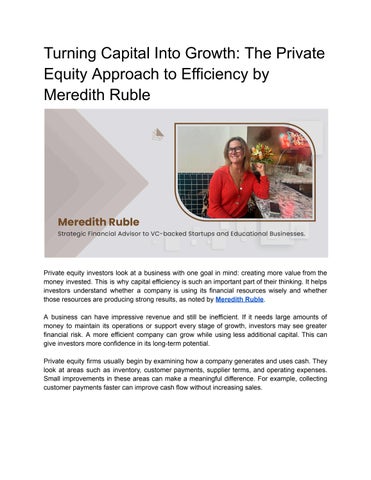
Private equity investors look at a business with one goal in mind: creating more value from the money invested. This is why capital efficiency is such an important part of their thinking. It helps investors understand whether a company is using its financial resources wisely and whether those resources are producing strong results, as noted by Meredith Ruble. A business can have impressive revenue and still be inefficient. If it needs large amounts of money to maintain its operations or support every stage of growth, investors may see greater financial risk. A more efficient company can grow while using less additional capital. This can give investors more confidence in its long-term potential. Private equity firms usually begin by examining how a company generates and uses cash. They look at areas such as inventory, customer payments, supplier terms, and operating expenses. Small improvements in these areas can make a meaningful difference. For example, collecting customer payments faster can improve cash flow without increasing sales.
Costs are also reviewed carefully. Investors want to know whether each major expense contributes to the company's performance. Unnecessary costs can reduce profits and limit the amount of cash available for growth. However, private equity firms do not simply focus on cutting expenses. They often support spending that can improve productivity, increase sales, or strengthen the company's competitive position. Investment decisions are another important part of capital efficiency. A company may have several expansion ideas, but not every opportunity will provide the same return. Private equity thinking involves comparing the amount of capital required with the potential value created. Projects that require less money but deliver stronger returns can become attractive priorities. Technology can also play a major role. The right technology can automate repetitive work, reduce errors, improve reporting, and help employees focus on higher-value tasks. While technology requires an initial investment, it can improve efficiency and reduce costs over time. Private equity investors also pay attention to debt. Borrowing can help a company finance growth or acquire another business, but excessive debt can create pressure on cash flow. The goal is to use financing carefully while keeping the company financially stable. Good measurement supports better decisions. Metrics such as free cash flow, operating margins, return on invested capital, and working capital can show whether a business is becoming more efficient. The private equity mindset is simple: capital should have a purpose. Money should be invested where it can create measurable value. By improving operations, managing cash carefully, and choosing investments based on expected returns, companies can achieve stronger growth without constantly increasing their financial needs. That is what makes capital efficiency a powerful business strategy.