A
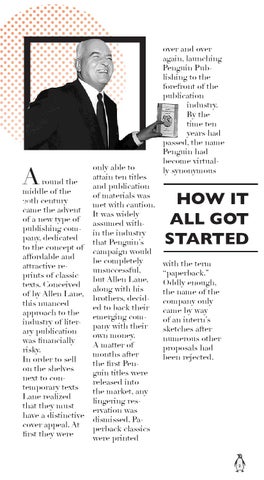
round the middle of the 20th century came the advent of a new type of publishing company, dedicated to the concept of affordable and attractive reprints of classic texts. Conceived of by Allen Lane, this nuanced approach to the industry of literary publication was financially risky. In order to sell on the shelves next to contemporary texts Lane realized that they must have a distinctive cover appeal. At first they were
only able to attain ten titles and publication of materials was met with caution. It was widely assumed within the industry that Penguin’s campaign would be completely unsuccessful, but Allen Lane, along with his brothers, decided to back their emerging company with their own money. A matter of months after the first Penguin titles were released into the market, any lingering reservation was dismissed. Paperback classics were printed
over and over again, launching Penguin Publishing to the forefront of the publication industry. By the time ten years had passed, the name Penguin had become virtually synonymous
HOW IT ALL GOT STARTED with the term “paperback.” Oddly enough, the name of the company only came by way of an intern’s sketches after numerous other proposals had been rejected.
2