
Scaling Greater Heights
Scaling Greater Heights
Forging the Asia-Middle East Corridor in a Changing Global Economy
Forging the Asia-Middle East Corridor in a Changing Global Economy

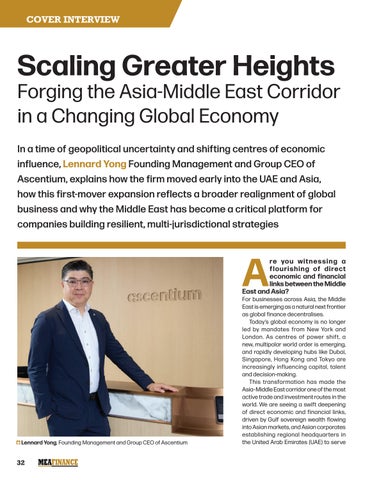
Lennard Yong Founding Management and Group CEO of Ascentium

Forging the Asia-Middle East Corridor in a Changing Global Economy
Forging the Asia-Middle East Corridor in a Changing Global Economy
Lennard Yong Founding Management and Group CEO of Ascentium

Over half a decade ago we were heading into what was being defined as the post-pandemic new normalthe continuation of the way society largely functions, though with changes and new methods such as remote working or heightened digital transformation. It feels that way again but this time with obvious geopolitical movements providing the initial shock response. Once again, our region has, while not taking eyes off of the ongoing circumstances, started to continue as before but with an understanding that things will not be exactly as they were, and that a new, new normal will take shape. This issue of MEA Finance does not predict or specify the changes to expect, but it does showcase the important continuity of daily life from the BFSI perspective, covering the concentration on the established direction of travel, but with an observers eye on this particular part of the journey.
The cover story this month, featuring an interview with Lennard Yong, CEO of Ascentium, underscores the continuity thrust of current times. Lennard details how business and financial links are growing between Asia and our region, and what they have recently done to position their business in this increasingly important global corridor.
That life goes on is apparent in the numerous articles in this edition including Regional Banking - revealing how previous years hard work embedding structural strengths has brought resilience in the face of circumstances; Open Banking and Open Finance - discussing how the question is no
longer whether openness will define the future of finance, but how effectively institutions can navigate its structural implications; The Future of AI in Banking - where across our region financial systems are simultaneously scaling and transforming, not just enhancing operations, but redefining them, and in our look into SME Banking and Finance, we show how this is emerging as a decisive arena in which the future direction of regional banking is being shaped.
We are gifted with a diverse array of contributions in this issue. Citi provide the latest in their Africa series, defining a new era of growth and trade on the continent. ADIB tackle both SME Finance and Open Finance with Amit Malhotra, their Group Head of Retail Banking detailing their role in these two leading growth areas in regional banking and finance. Ghaus Bin Ikram, Founder and Chief Advisor at Your Only Solutions highlights the key role of AI in financial crime compliance. Leevyn Isabel Commercial Director for the Middle East at Ocorian details the formal enactment of the Variable Capital Company regulations by the Dubai International Financial Centre. Robin Ubaghs, Chairman and Co-Founder, Welfare Group, emphatically asserts that the UAE Is not just resilient, but that it is structurally dominant and Roy Philip Sebastian Group Chief Credit Officer at Mashreq shows how banks are recalibrating credit risk frameworks amid volatility.
Finally, our Market Focus this month is on Egypt, where the financial system is undergoing a transformation that is as complex as it is consequential for the wider Middle East and Africa. By now it will be normal for you to read through the new issue of MEA Finance Magazine, so we hope that you too will enjoy your own new normal.








RAKBANK reaffirmed its long-standing commitment to the UAE’s SME sector, announcing a series of measures aimed at strengthening business resilience, maintaining credit flow and enabling growth during a period of heightened global uncertainty
For over five decades, supporting small and medium enterprises has been at the core of RAKBANK’s strategy. Having served more than 250,000 SMEs across the UAE, the Bank continues to operate with a simple principle: if it does not help an SME grow, it does not build it. As market conditions evolve and businesses navigate shifting trade flows and cash cycles, RAKBANK is taking proactive steps to support its customers. The Bank has committed approximately AED 2 billion in additional credit limits for both existing-to-bank and new-to-bank customers, spanning secured lending, term loans, trade finance and working capital solutions.
At the same time, RAKBANK has extended targeted relief to customers facing short-term pressures. This includes deferrals granted to around 1,700 trade and working capital customers with total limits of AED 2.2 billion, as well as 2,320 retail business lending customers with outstanding balances of AED 680 million. To further strengthen access to finance, the Bank continues to leverage established credit guarantee
schemes, including those in partnership with Emirates Development Bank and Dubai SME, enabling lending support for micro and small enterprises across trade, working capital and term loan facilities.
Vishal Shah, Managing Director & Head of Business Banking Group, said: “SMEs are the backbone of the UAE economy, and our role is to stand with them, especially in uncertain times. We are keeping credit flowing, providing relief where needed and making it easier for businesses to operate and grow. In Q1 2026 alone, we onboarded over 4,100 entrepreneurs and disbursed AED 1.4 billion in loans. This is not a short-
term response. It reflects who we are, a bank that stays open for business and helps our customers turn their ambitions into reality.”
Beyond financing, RAKBANK continues to invest in practical, day-to-day value for SMEs. Business customers benefit from up to 2 percent per annum interest on account balances. The bank has also waived fees on all domestic transfers and is offering cashback on foreign exchange transactions. These are complemented by digital capabilities such as QR code payments and a fully digital onboarding journey that enables even multi-partner businesses to open accounts within 48 hours. Together, these initiatives reinforce RAKBANK’s position as a long-term partner to SMEs, supporting not only access to capital but also operational efficiency and growth.
The Bank’s actions are aligned with broader national priorities, including the UAE Central Bank’s focus on financial resilience and economic continuity. As SMEs continue to play a critical role in the country’s growth, RAKBANK remains committed to supporting their ambitions with practical solutions, consistent access to finance and a relationship-led approach to banking.










Connectivity

Flexibility
Exceed
With
mastercard.com/gateway
Mastercard Gateway
Security
Protect
Innovation
Futureproof your business and lead the competition in an always evolving market



During recent years, regional payments modernisation was driven by ambition: cashless societies, national digitisation agendas, and the rapid scaling of real‑time and mobile payments. Today, that narrative has shifted
Ongoing regional conflict, heightened geopolitical risk, supplychain disruption and increased regulatory scrutiny have moved payments from a growth priority to a systemic resilience challenge. Banks are now expected to process higher transaction volumes, across more rails, under tighter controls while absorbing shocks that test liquidity, availability and trust.
In this environment, payments are no longer just a customer experience battleground. They are critical national and economic infrastructure. The institutions that emerge strongest will be those that modernise not only for speed and innovation, but for continuity, control and adaptability under stress.
1. Real-time payments are always-on even during disruption
Across the Gulf and wider Middle East, centralbankled instant payment schemes such as SARIE in Saudi Arabia, Aani (IPP) in the UAE, Fawri+ in Bahrain and IPN in Egypt have become foundational infrastructure. These systems support everyday consumer, government and corporate payments and operate continuously.

Siva Subramaniam, Head – Product Management –Payments & Cash Management, Infosys Finacle

Sriranga Sampathkumar, Global Head of Sales at Infosys Finacle
Unlike batchbased systems of the past, instant payment rails do not pause during periods of instability. Volumes continue to flow, settlement remains immediate and tolerance for outages is effectively zero. As regional disruption increases the likelihood of sudden volume spikes, intraday liquidity pressure and operational strain on banks and clearing systems, payments platforms are being stresstested in real time.
Resilience, endtoend observability and predictable performance are no
longer IT considerations alone. They are strategic requirements.
2. Fraud, sanctions and compliance pressure intensify simultaneously Periods of geopolitical tension historically correlate with:
• Increased socialengineering and impersonation scams
• Higher sanctionscreening volumes and rule changes
• More false positives and investigation backlogs
• Enhanced regulatory expectations around auditability and response times
In the Middle East, where realtime payments leave little room for recovery and crossborder exposure remains significant, banks face a tough reality: risk decisions must be taken faster, with greater confidence and consistently across rails.
Legacy architectures, where fraud, AML, sanctions and payments operate in silos, struggle under this pressure. Many banks are discovering that what once felt “good enough” compliance is brittle when volumes surge and rules change overnight.
3. Cro ss-border payments face renewed scrutiny
The Middle East remains one of the world’s most important crossborder payment regions, driven by trade flows, energy markets and large expatriate communities. During periods of regional tension, these flows are placed under additional regulatory, liquidity and FX pressure.
Banks must balance tighter correspondent scrutiny and sanctions obligations with persistent customer expectations for speed and transparency often at higher operational cost and with
increased exception handling. Liquidity fragmentation across currencies and corridors further compounds the challenge.
As a result, interest is accelerating in ISO 2002 2driven data transparency, intelligent routing and more programmable settlement models, alongside cautious exploration of tokenised and alternative settlement approaches under regulatory oversight.
Beyond faster rails, a new layer of disruption is emerging. Tokenisation, regulated stablecoins and AI are reshaping how payments are initiated, routed, settled and controlled, moving the industry toward more programmable and orchestrated settlement models.
These instruments are being evaluated as alwayson complements to correspondent banking, with the potential to enable realtime and programmable settlement, reduce liquidity drag, limit intermediaries and improve transparency across borders.
In parallel, AI is becoming the intelligence layer of modern payments platforms. Banks are increasingly using AI to support realtime rail selection, predictive liquidity and prefunding optimisation, automated sanctions and compliance screening, intelligent exception handling and dynamic pricing or fee optimisation. As controlled forms of agentled commerce mature, AI systems are beginning to autonomously initiate, monitor and manage payment flows within defined policy, risk and liquidity parameters - particularly in B2B and platformdriven environments.
Together, these developments reinforce the need for a unified, multirail settlement architecture that integrates instant payment schemes, established networks, tokenenabled corridors and machinegrade APIs into a single operational fabric.
Over time, payments environments in the Middle East have expanded to accommodate new rails, regulations
and localised customer requirements. In many banks, this has resulted in parallel processing paths, marketspecific adaptations and operational processes heavily dependent on human intervention.
During periods of geopolitical and regulatory stress, this complexity increases execution risk and operational fragility. Maintaining uniform controls, adapting quickly to new requirements and achieving realtime oversight becomes increasingly difficult just as expectations intensify.
Banks that succeed typically begin with an honest assessment of today’s reality and a clear view of what tomorrow demands.
Start with a baseline. Map the payments landscape to identify duplicated logic, countryspecific forks and manual workarounds. Measure straightthrough processing rates, recurring exception types and the effort required to resolve them. Quantify how long it takes to introduce a new rail, implement a compliance change or launch a payments variant. Instrument endtoend latency and availability, and test instantpayment performance under peak load.
The critical question is: what scale of progress can your bank realistically achieve from its current state by adopting a modern payments platform?
Then look outward. Identify the customer journeys where modernisation meaningfully changes outcomes such as corporate payroll and supplier payments, marketplace payouts, crossborder B2B flows or consumer bill payments. Select priority corridors and rails, and define the transparency and service levels you intend to offer.
Staying ahead increasingly requires designing “compliance as code” - allowing ISO 20022 enrichment, instantscheme mandates, CBPR+, sanctions and authentication controls to be incorporated through controlled pipelines rather than disruptive, largescale releases.
For banks that have not modernised payments as an enterprise capability
in recent years, these questions often lead to the same conclusion: adopting a futureready payments platform is no longer optional.
Common advantages include:
• ISO 2002 2native data models across the payment lifecycle
• Composable services for initiation, validation, screening, routing, posting and investigations
• E ventdriven orchestration that enables configurationled change
• Proven lowlatency performance, activeactive resilience, deep observability and automated updates
• Broad multirail support across instant payments, RTGS, ACH, cards and crossborder networks, combined with intelligent routing and liquidity optimisation
• Faster timetovalue and sustained competitiveness
A proven platform, combined with an experienced implementation partner, can significantly reduce modernisation risk and accelerate outcomes. Independent analyst research, including evaluations such as the 2026 Gartner Magic Quadrant for Banking Payment Hub Platforms, provides useful perspective on vendor capabilities, market maturity and execution strength.
Payments modernisation in the Middle East has entered a new phase.
Driven by regional conflict, increasing fraud exposure, heightened regulatory scrutiny and the reality of 24×7 instant settlement, banks must now treat payments platforms as strategic protective infrastructure. Institutions that modernise with resilience, orchestration and adaptability at the core will be better placed to navigate current disruption and emerge stronger when conditions stabilise. Those that delay risk discovering, at precisely the wrong moment, that their payments architecture cannot keep pace with the environment in which they operate.

Egypt’s financial system is undergoing a transformation that is as complex as it is consequential for the wider Middle East and Africa. As structural reforms, currency adjustments and external pressures reshape its macroeconomic landscape, the country’s banking sector has emerged as both stabiliser and catalyst
There are few markets in the Middle East and Africa where the intersection of economic reform, financial sector resilience and demographic scale is as pronounced as it is in Egypt. With a population exceeding 100 million, a strategic geographic position linking Africa, the Middle East and Europe and
an economy that continues to balance structural reform with growth ambition, Egypt occupies a unique position within the regional financial landscape. Its banking sector, long characterised by stability and strong regulatory oversight, is now navigating a period of accelerated transformation shaped by both domestic priorities and external pressures.
The Egyptian economy has, in recent years, been defined by a series of reform measures aimed at addressing structural imbalances and restoring macroeconomic stability. These have included currency liberalisation, fiscal consolidation and efforts to attract foreign investment, often implemented in coordination with international financial institutions. While these measures have introduced short-term volatility — particularly in relation to inflation and currency valuation — they have also laid the groundwork for longer-term resilience. Within this context, the banking sector has played a central role in maintaining stability. Egyptian banks entered this period of reform with relatively strong capital positions, high levels of liquidity and a conservative approach to risk management. This has enabled them to absorb shocks more effectively than in many comparable markets, while
continuing to support both government financing requirements and private sector activity.
Institutions such as National Bank of Egypt, Banque Misr and Commercial International Bank have remained central to this stabilising role, combining balance sheet strength with an increasing focus on digital transformation and product diversification. At the same time, QNB Alahli and Arab African International Bank continue to contribute to a more diversified and competitive banking landscape, reflecting the presence of both domestic and regional players.
Macroeconomic conditions, however, continue to present a complex operating environment. Inflationary pressures, driven in part by currency adjustments and global commodity trends, have affected both consumer purchasing power and business costs. Interest rate policies, implemented to manage inflation and stabilise the currency, have influenced borrowing behaviour and liquidity conditions. For banks, this creates a balancing act between supporting economic activity and maintaining prudent risk management.
The impact on lending dynamics has been particularly notable. Higher interest rates have increased the cost of borrowing, affecting demand across both retail and corporate segments. At the same time, banks have remained selective in extending credit, focusing on sectors that demonstrate resilience and growth potential. This has resulted in a more targeted approach to lending, where capital allocation is closely aligned with economic priorities.
Government financing requirements have also shaped the operating environment for banks. Egyptian financial institutions continue to hold significant exposure to sovereign debt instruments, reflecting their role in supporting fiscal operations. While this provides a stable source of income, it also influences the distribution of credit within the economy, particularly in relation to private sector lending. Balancing these dynamics
remains a key consideration for both banks and policymakers.
At the same time, structural reforms aimed at enhancing private sector participation are beginning to influence the broader economic landscape. Initiatives designed to support small and medium-sized enterprises, attract foreign direct investment and develop key sectors such as manufacturing, logistics and technology are gradually reshaping the composition of economic activity. These developments have direct
offerings, reflecting a sector-wide shift toward technology-enabled banking. The expansion of digital payments has been particularly significant. Egypt has made considerable progress in reducing reliance on cash transactions, supported by initiatives such as the national payment card system and the promotion of mobile wallets. These developments not only improve efficiency but also enhance transparency and support financial inclusion, particularly in underserved segments of the population.
implications for the banking sector, which must adapt its product offerings and risk frameworks to support a more diversified economy.
Digital transformation has emerged as a critical component of this adaptation. The Central Bank of Egypt has placed significant emphasis on financial inclusion and digital financial services, recognising their role in expanding access and improving efficiency. This has led to increased investment in digital infrastructure, mobile banking platforms and electronic payment systems, supported by both regulatory initiatives and market demand.
Banks across the country have responded by accelerating their digital strategies. Commercial International Bank has expanded its digital banking capabilities, while Banque Misr and National Bank of Egypt have introduced a range of digital services aimed at both retail and SME clients. In parallel, institutions such as Faisal Islamic Bank of Egypt and Housing and Development Bank are incorporating digital channels into their broader service
Financial inclusion remains a central pillar of Egypt’s economic strategy. Despite progress, a significant portion of the population remains outside the formal banking system. Expanding access to financial services is therefore both a social and economic priority, with implications for savings mobilisation, investment and overall economic participation. The banking sector, supported by regulatory initiatives, continues to play a key role in addressing this challenge.
At the same time, the competitive landscape within Egypt’s banking sector is evolving. The entry of new digital players, fintech firms and payment service providers is introducing new dynamics, particularly in areas such as payments, lending and customer engagement. While traditional banks retain significant advantages in scale, capital and regulatory experience, they are increasingly required to adapt to a more dynamic and competitive environment.
Regional and international linkages further influence the trajectory of Egypt’s financial sector. The country’s integration into global financial markets, supported by relationships with institutions such as the
International Monetary Fund and the World Bank, continues to shape policy direction and investor sentiment. At the same time, Egypt’s position within the broader Middle East and Africa region provides opportunities for cross-border banking, trade finance and investment flows.
Banks such as QNB Alahli and Arab African International Bank exemplify this regional connectivity, leveraging international networks to support trade and investment. This dimension is particularly important as Egypt seeks to position itself as a gateway between Africa and the Middle East, capitalising on its geographic and economic advantages.
The resilience of Egypt’s banking sector is therefore not incidental. It is the result of a combination of regulatory discipline, institutional strength and strategic adaptation. As the country continues to navigate a complex economic environment, the role of financial institutions in supporting stability, enabling growth and facilitating transformation remains central.
What is emerging is not simply a continuation of existing trends, but a structural repositioning of Egypt’s financial system.
One that reflects both the challenges of the present and the opportunities of the future.
The evolving structure of Egypt’s financial system cannot be understood in isolation from the broader dynamics of capital movement, currency adjustment and external financing conditions that continue to shape the country’s economic trajectory. As reform measures progress and macroeconomic pressures persist, the banking sector finds itself operating
at the intersection of domestic stability and global financial integration, where the management of liquidity, foreign exchange exposure and capital flows has become increasingly critical.
Foreign currency availability remains one of the most defining elements of the current environment. Periods of constrained foreign exchange liquidity, driven by external imbalances and capital outflows, have placed pressure on both corporates and financial institutions. Banks have been required to navigate these conditions with a combination of prudence and flexibility, managing foreign currency positions while supporting clients engaged in import-dependent sectors. The gradual adjustment of the exchange rate, while contributing to inflationary pressures, has also been a necessary step in restoring external balance and improving competitiveness.
Within this context, the role of banks in facilitating trade and managing foreign exchange risk has become more pronounced. Institutions such as Arab African International Bank and QNB Alahli have leveraged their international networks to support crossborder transactions and provide foreign currency solutions to corporate clients. At the same time, domestic institutions including Banque Misr and National Bank of Egypt continue to play a central role in managing liquidity within the local market, balancing the demands of clients with broader monetary policy objectives.
Capital flows, both inbound and outbound, further influence the operating environment. Egypt’s engagement with international financial institutions and sovereign funding programmes has provided critical support during periods of economic adjustment, while also
reinforcing the importance of maintaining investor confidence. The banking sector, as a key intermediary, is closely linked to these dynamics, with its stability and performance influencing broader perceptions of economic resilience.
At the same time, the domestic capital market is undergoing gradual development, creating additional channels for financing and investment. While bank lending remains the dominant source of funding for most businesses, efforts to expand capital market activity — including corporate bond issuance and equity participation — are beginning to diversify the financial landscape. Banks are increasingly positioned not only as lenders but as facilitators of broader financial intermediation, supporting clients in accessing a wider range of funding options.
This shift has implications for how financial institutions structure their balance sheets and allocate capital. The traditional model, heavily weighted toward government securities and conventional lending, is being complemented by more diversified approaches that incorporate advisory, underwriting and capital markets activity. Institutions such as Commercial International Bank and HSBC Bank Egypt have expanded their capabilities in this area, reflecting a gradual convergence between commercial and investment banking functions.
Risk management, in this environment, assumes heightened importance. The combination of currency volatility, inflationary pressures and shifting interest rate conditions requires a more dynamic approach to assessing and managing exposure. Banks must continuously evaluate credit risk, sectoral concentration and liquidity positions, ensuring that they remain resilient in the face of evolving economic conditions.
DESPITE PROGRESS, A SIGNIFICANT PORTION OF THE POPULATION REMAINS OUTSIDE THE FORMAL BANKING SYSTEM
The regulatory framework established by the Central Bank of Egypt has been instrumental in supporting this resilience. Prudential measures, including capital
adequacy requirements, liquidity ratios and risk governance standards, have contributed to a banking system that is better equipped to withstand external shocks. At the same time, regulatory initiatives aimed at encouraging lending to priority sectors — particularly SMEs — are shaping the allocation of credit within the economy.
The SME segment, in particular, has emerged as a focal point for both policy and banking strategy. Recognised as a key driver of employment and economic diversification, SMEs are receiving increased attention from financial institutions. Banks are expanding dedicated SME units, developing tailored products and leveraging digital channels to improve access. Institutions such as AlexBank and Faisal Islamic Bank of Egypt have introduced specialised SME offerings, while larger institutions continue to scale their lending programmes in alignment with regulatory targets.
Digital transformation continues to intersect with these developments, reshaping how financial services are delivered and accessed. The expansion of mobile banking, digital wallets and electronic payment systems has improved efficiency and broadened reach, particularly in segments that were previously underserved. The Central Bank’s focus on reducing cash dependency and promoting digital transactions has accelerated this trend, creating new opportunities for both banks and fintech firms.
The competitive landscape is therefore becoming more layered. Traditional banks, fintech providers and payment platforms are increasingly interacting within a shared ecosystem, each contributing distinct capabilities. While banks retain advantages in scale, capital and regulatory positioning, fintech firms bring agility, innovation and customercentric design. The resulting dynamic is not purely competitive but increasingly
collaborative, with partnerships emerging as a key mechanism for delivering integrated financial solutions.
Institutions such as Commercial International Bank and Banque Misr have engaged with fintech partners to enhance digital offerings, while international players including HSBC Bank Egypt continue to bring global expertise and technology into the local market. This interplay between domestic and international institutions contributes to a more diverse and dynamic financial ecosystem.
At the same time, financial inclusion remains a defining priority. Expanding access to banking services, particularly in rural and underserved areas, requires
the opportunities, particularly for institutions that are able to navigate complexity with discipline and strategic clarity.
As Egypt continues to navigate a period of economic recalibration, the trajectory of its banking and financial system is becoming increasingly intertwined with broader questions of growth sustainability, external competitiveness and structural transformation. The reforms implemented in recent years, while at times introducing short-term pressures, are gradually reshaping the foundations of the economy, creating conditions for a more balanced and
ESTABLISHED BY THE CENTRAL BANK OF EGYPT HAS BEEN INSTRUMENTAL IN SUPPORTING THIS RESILIENCE
continued investment in both physical and digital infrastructure. Initiatives such as simplified account opening procedures, mobile-based services and targeted financial literacy programmes are contributing to gradual progress, although challenges remain.
The intersection of inclusion, technology and regulation is therefore shaping a new phase in Egypt’s financial development. Banks are no longer operating solely as intermediaries of capital but as enablers of broader economic participation. This shift is particularly significant in a market of Egypt’s scale, where incremental improvements in access and efficiency can translate into substantial economic impact.
What emerges from this evolving landscape is a financial system that is becoming more adaptive, more interconnected and more aligned with national development objectives. The challenges are considerable, but so too are
resilient model of development.
The challenges, however, remain significant. Inflationary pressures, currency volatility and external financing requirements continue to require careful management. The pace of reform, while necessary, must be balanced with the need to maintain social and economic stability. For the banking sector, this translates into a continued emphasis on prudent risk management, capital adequacy and liquidity resilience. Yet within these challenges lies a clear trajectory of transformation.
The banking sector stands at the centre of this transformation, not only as a stabilising force but as an enabler of future growth. Its ability to balance risk and opportunity, to support both public and private sector needs, and to integrate technology with traditional banking strengths will determine how effectively Egypt navigates the next phase of its economic journey.

Across our region, Open Banking is evolving into a broader Open Finance ecosystem that promises to redefine how financial services are accessed, delivered and regulated. As the region advances toward greater financial integration and digital maturity, the question is no longer whether openness will define the future of finance, but how effectively institutions can navigate its structural implications
There are moments in the evolution of financial systems when incremental change gives way to structural transformation. Open Banking represents one such moment. What began as a regulatory and technological initiative designed to enable data sharing between financial institutions has, in a relatively short period, expanded into a broader paradigm that is reshaping the architecture of financial services. Across the Gulf Cooperation Council, Egypt and key African markets, this transition is no longer theoretical. It is actively unfolding, albeit at different speeds, through a combination of regulatory ambition,
technological advancement and shifting market expectations.
At its core, Open Banking introduces a fundamental reordering of how financial data is accessed and utilised. By enabling customers to securely share their financial information with authorised third parties through standardised Application Programming Interfaces (API), it dismantles the long-standing model in which banks operate as custodians of siloed data. Replacing it is a more interconnected ecosystem in which data becomes a shared asset, governed by consent and deployed to create new forms of value.
The implications of this shift extend well beyond retail banking. Open Banking
is increasingly viewed as the foundation upon which Open Finance is constructed — a broader framework that expands data sharing beyond traditional bank accounts to include investments, insurance, pensions and other financial products. This progression reflects a deeper transformation in how financial services are conceptualised, moving from institution-centric models toward customer-centric ecosystems in which services are integrated, personalised and continuously evolving.
Across the GCC, regulators have played a decisive role in accelerating this transition.
Unlike earlier phases of financial innovation, where market forces often led and regulatory frameworks followed, the development of Open Banking in our region has been characterised by proactive policy intervention. Authorities have studied global precedents and adapted these models to local contexts, providing a level of clarity that has enabled financial institutions to invest with greater confidence.
This regulatory momentum has been met with varied institutional responses across the region. In the UAE, institutions such as Mashreq Bank, alongside Emirates NBD and First Abu Dhabi Bank have advanced digital banking capabilities aligned with Open Finance principles. At the same time, Abu Dhabi Islamic Bank and Dubai Islamic Bank have integrated digital transformation into their Shariacompliant banking frameworks, reflecting the growing importance of Open Banking across different banking models.
In Saudi Arabia, progress has been equally pronounced, with Saudi National Bank, Al Rajhi Bank and Bank Aljazira advancing digital and API-enabled banking strategies in alignment with regulatory frameworks introduced by the Saudi Central Bank. These developments are closely tied to Vision 2030 objectives, which position financial sector development as a key pillar of economic diversification.
Elsewhere in the GCC, Qatar National Bank continues to expand digital banking and data integration capabilities, while National Bank of Kuwait and Burgan Bank are advancing digital transformation strategies that incorporate elements of Open Banking. In Bahrain, Bank of Bahrain and Kuwait and Ila Bank operate within one of the region’s most mature Open Banking regulatory environments, reflecting the country’s leadership in this space.
Egypt presents a different but equally important trajectory. Institutions such as Commercial International Bank, National Bank of Egypt and Banque Misr are progressing digital transformation initiatives within a regulatory environment
that continues to evolve. The Central Bank of Egypt’s fintech strategy provides a framework for future Open Banking implementation, even as infrastructure development remains ongoing.
Across Africa, the landscape is broader and more varied, reflecting differences in market maturity and technological adoption. In South Africa, Standard Bank Group, FirstRand and Nedbank are advancing platform-based banking models that incorporate API integration and data-driven services. In Nigeria, Access Bank and Guaranty Trust Bank are actively engaging with digital banking frameworks aligned with emerging Open Banking guidelines.
In East Africa, where mobile financial services have already reshaped access to finance, institutions such as Equity Bank and KCB Bank are integrating digital platforms with broader financial ecosystems, providing a foundation upon which Open Finance can expand. These developments highlight the extent to which Open Banking in Africa is often layered onto existing digital financial infrastructure, rather than emerging in isolation.
Banking is fully embedded across all layers of the financial system. This transitional state is particularly evident when examining the diversity of implementation approaches. In some markets, Open Banking has been introduced through prescriptive regulatory mandates that require financial institutions to adopt specific standards and timelines. In others, a more market-led approach has been adopted, allowing institutions to develop capabilities at their own pace within broader regulatory guidelines. Across Africa, both models are visible, reflecting differing institutional and economic contexts.
Despite these variations, a common trajectory is evident. Open Banking is no longer being viewed as an isolated initiative but as part of a broader digital transformation agenda that encompasses payments, identity, cybersecurity and financial inclusion. The expansion of real-time payment systems, the development of national digital identity frameworks and the increasing adoption of mobile financial services
ACROSS THE GULF
EGYPT AND KEY AFRICAN MARKETS, THIS TRANSITION IS NO LONGER THEORETICAL
The question of whether Open Banking has reached full maturity within regional retail banking must therefore be approached with nuance. In a strict operational sense, maturity implies not only the existence of regulatory frameworks but also widespread adoption, interoperability and the development of sustainable business models. By these measures, the region remains in a transitional phase. Core infrastructure is being established, regulatory clarity is improving and use cases are expanding, but the ecosystem has not yet reached a point where Open
are all contributing to an environment in which Open Finance can develop at scale. This convergence is particularly significant in regions where financial inclusion remains a key policy objective. By enabling new entrants to access financial data and develop innovative products, Open Banking has the potential to expand access to financial services for underserved segments. In Africa, where mobile money and digital payments have already transformed financial access, the integration of Open Banking frameworks is expected to further enhance the reach and diversity of financial offerings.
At the same time, the expansion of data sharing introduces a new set of considerations for financial institutions. The traditional boundaries that have defined banking operations are becoming less distinct, as banks are required to operate within ecosystems that include fintech firms, technology providers and other non-traditional participants. This shift challenges established models of competition and collaboration, requiring institutions to rethink their strategic positioning.
For banks across the region, the move toward Open Finance represents both an opportunity and a recalibration of risk. On one hand, it enables access to new revenue streams, enhances customer engagement and supports the development of innovative products. On the other, it introduces complexities related to data governance, cybersecurity and operational resilience. The ability to manage these dynamics effectively will be a defining factor in determining how institutions navigate the next phase of financial evolution.
The expansion of Open Banking into a broader Open Finance framework is now moving beyond conceptual design into operational reality, where the implications for financial institutions are becoming more immediate and more complex. As banks across the Middle East and Africa begin to integrate data-sharing models into their day-to-day operations, the focus is shifting from opportunity alone to a more balanced assessment of exposure, control and long-term positioning.
At the centre of this transition lies a fundamental redefinition of how financial data is managed. The extension from account-level data to a wider range of financial information including investments, insurance and other asset classes, significantly increases both the value and the sensitivity of the data being exchanged. While customer consent remains the foundation of Open Finance, the responsibility for protecting that data is no longer confined to a single institution. It is distributed across a network of banks,
fintech firms and third-party providers, each contributing to a shared ecosystem.
This expanded landscape introduces a more intricate risk profile, particularly in relation to cybersecurity. The controlled environments in which banks have traditionally operated are being replaced by interconnected systems that rely on continuous data exchange. APIs, while essential to enabling this connectivity, also create additional entry points that must be secured. The challenge for financial institutions is not simply to protect their own infrastructure, but to
can have wider implications. Managing these dependencies requires a more sophisticated approach to vendor oversight, including rigorous due diligence, continuous performance monitoring and clearly defined contingency arrangements.
Institutions such as First Abu Dhabi Bank, Qatar National Bank and Mashreq Bank have expanded their risk frameworks to address these challenges, incorporating enhanced third-party governance and resilience planning. In Saudi Arabia, Al Rajhi Bank and Saudi National Bank continue to strengthen
ensure that the broader ecosystem within which they operate maintains consistent security standards.
Regulators across the region have responded by embedding stringent data protection and security requirements within Open Banking frameworks. In Saudi Arabia, the Saudi Central Bank has introduced detailed standards governing API security, authentication and data privacy. In Bahrain, the Central Bank has established a comprehensive Open Banking framework that emphasises secure data exchange and ongoing monitoring. These measures reflect an understanding that trust is the cornerstone of Open Finance, and that its sustainability depends on the ability of institutions to safeguard customer data effectively.
Operational resilience has emerged as an equally critical consideration. As financial institutions integrate third-party services into their platforms, they become increasingly dependent on external providers for key components of service delivery. This introduces new forms of operational risk, where disruptions or failures within one part of the ecosystem
operational risk capabilities in line with evolving regulatory expectations. Across Africa, institutions such as Standard Bank Group and FirstRand are embedding resilience into platform-based models that depend on multiple service providers.
Alongside these operational and security considerations, Open Finance also introduces strategic challenges related to competitive positioning. The increased accessibility of financial data enables new entrants to develop services that compete directly with traditional banking offerings, often with greater speed and flexibility. This has the potential to shift the primary point of customer interaction away from banks, reducing their role in the financial relationship.
However, this dynamic is not solely disruptive. For institutions that engage proactively, Open Finance provides an opportunity to reposition themselves at the centre of a more interconnected ecosystem. By leveraging their infrastructure, regulatory expertise and customer base, banks can act as
platforms that enable a wide range of financial services, rather than as providers of individual products.
This shift is already evident in parts of the region. Emirates NBD has developed API-driven capabilities that allow clients to integrate banking services directly into their operational systems, particularly within corporate and SME segments. Abu Dhabi Islamic Bank and Dubai Islamic Bank are incorporating digital ecosystems into Islamic banking frameworks, ensuring that Sharia-compliant services evolve alongside broader Open Finance developments. In Africa, Standard Bank Group, Nedbank and Access Bank are investing in platform-based models that facilitate collaboration with fintech firms across multiple markets.
The potential benefits of Open Finance for financial institutions extend beyond competitive positioning. Access to a wider range of data enables more accurate and dynamic insights into customer behaviour, supporting improved risk assessment and more tailored service offerings. This enhances both operational efficiency and customer engagement, particularly in segments where personalised solutions are increasingly valued.
In addition, Open Finance creates new avenues for revenue generation. By providing access to APIs and enabling third-party integration, banks can monetise their infrastructure and services in ways that were not previously possible. This includes transaction-based revenue, data-driven services and platform usage fees, aligning with broader trends in digital economies where value is created through connectivity and interaction.
Institutions such as National Bank of Kuwait and Burgan Bank are exploring data-driven banking models that enhance customer engagement, while in Egypt, Commercial International Bank and Banque Misr continue to expand digital capabilities aligned with emerging Open Banking frameworks. These developments reflect a wider regional shift toward leveraging data as a strategic asset.
For many institutions, these opportunities are accompanied by the need for significant internal transformation. Developing the capabilities required to operate within an Open Finance ecosystem involves investment in technology, talent and governance structures. API management, data analytics and partnership frameworks become core competencies, rather than supplementary functions. This transformation is as much organisational as it is technological, requiring alignment across strategy, operations and risk management.
The role of regional regulatory bodies in shaping this transformation remains decisive. Across the GCC, Egypt and key African markets, regulators are not simply responding to market developments but actively guiding them. In Bahrain, the Central Bank has established one of the most advanced Open Banking frameworks in the region, providing clear standards and timelines for implementation. In Saudi Arabia, regulatory initiatives have been designed to support both innovation and stability, creating an environment in which financial institutions can evolve with confidence.
In the UAE, progress continues to be driven through a combination of regulatory direction and industry collaboration, with initiatives emerging from the Central Bank as well as financial centres such as the Dubai International Financial Centre and Abu Dhabi Global Market.
QUOTE -What becomes increasingly apparent is that regulators across the region are not trailing the development of Open Finance, but in many cases actively shaping its trajectory. By establishing frameworks that balance innovation with risk management, they are creating conditions in which financial institutions can adopt new models of operation with greater certainty.
This alignment between regulatory ambition and institutional strategy is defining the next phase of financial evolution across the region. Open Finance is no longer an emerging concept, but
a structural shift that is beginning to reshape how financial services are delivered, consumed and governed.
As Open Banking continues to extend into a broader Open Finance framework, its long-term significance becomes increasingly tied to its economic impact rather than its technological architecture. The transformation underway is not simply about how financial data is shared, but about how financial systems allocate capital, enable enterprise and support economic expansion. Across the Middle East and Africa, where financial inclusion, diversification and private sector growth remain central policy objectives, the implications are both immediate and far-reaching.
At a systemic level, Open Finance enhances the efficiency of financial intermediation. By enabling more comprehensive access to financial data, it reduces information asymmetry between lenders and borrowers, allowing capital to be allocated with greater precision. This has direct implications for credit availability, particularly for segments that have historically faced barriers to access. Small and medium-sized enterprises, individuals with limited credit histories and participants in informal sectors all stand to benefit from more accurate and inclusive financial assessment models.
This improved allocation of capital supports broader economic productivity. When businesses are able to access financing that is aligned with their actual risk profiles and operational needs, they are better positioned to invest, expand and contribute to economic activity. In regions where SMEs account for a significant proportion of employment, the multiplier effect of improved access to finance can be substantial. Increased business activity leads to job creation, higher income levels and greater resilience within the economic system.
The integration of Open Finance into payments infrastructure further amplifies these effects. Real-time
payment systems, when combined with data-sharing frameworks, enable faster transaction cycles, improved liquidity management and reduced settlement risk. This enhances the velocity of money within the economy, supporting both consumption and investment. For businesses operating across borders, the ability to access integrated financial services reduces friction and facilitates trade, reinforcing regional connectivity.
In the Gulf, where economic diversification strategies are closely linked to the development of private sector ecosystems, these capabilities align directly with national priorities. The UAE and Saudi Arabia have invested heavily in digital infrastructure, creating environments in which Open Finance can scale effectively. This includes the development of national payment systems, digital identity frameworks and regulatory platforms that support innovation. Institutions such as Mashreq Bank and Abu Dhabi Islamic Bank are continuing to expand digital capabilities
of opportunity. Markets such as South Africa, Nigeria and Kenya have already demonstrated the transformative potential of digital payments and mobile money. The introduction of structured data-sharing frameworks builds on this foundation, enabling more sophisticated financial products and expanding the scope of financial services available to individuals and businesses. Institutions including Standard Bank Group, FirstRand, Access Bank, Guaranty Trust Bank and Equity Bank are actively shaping this evolution through investments in digital platforms and ecosystem-driven banking models.
For financial institutions, the eventual full operation of Open Banking and Open Finance represents a transition toward a more interconnected and dynamic operating environment. Banks are no longer defined solely by their balance sheets or distribution networks, but by their ability to participate within and
that align with these broader ecosystem developments, while Al Rajhi Bank and Saudi National Bank remain central to the Kingdom’s financial transformation.
In Egypt, the integration of Open Banking into broader financial inclusion strategies has the potential to expand access to formal financial services for a large and diverse population. Institutions such as Commercial International Bank, National Bank of Egypt and Banque Misr continue to strengthen digital banking frameworks that will underpin future Open Finance adoption. Across Africa, the interplay between mobile financial services and Open Finance introduces additional layers
orchestrate ecosystems of financial services. This requires a redefinition of strategy, where value is created through connectivity, integration and adaptability.
Institutions such as Emirates NBD, First Abu Dhabi Bank and Qatar National Bank have already begun to position themselves within this evolving landscape, investing in API platforms, data capabilities and partnership frameworks that support Open Finance models. In Kuwait and Bahrain, National Bank of Kuwait, Burgan Bank and Bank of Bahrain and Kuwait continue to align their strategies with regulatory developments that encourage openness and innovation.
The question of maturity remains central to this discussion. Full maturity within Open Banking and Open Finance implies not only regulatory alignment and technological capability, but also widespread adoption, interoperability and sustainable business models. While significant progress has been made, particularly in leading markets within the GCC, the region as a whole remains in a phase of structured transition.
However, maturity should not be viewed as a fixed endpoint. The evolution of Open Finance is inherently dynamic, shaped by ongoing technological innovation, regulatory refinement and market adaptation. What is more relevant is the direction of travel, and in this respect the trajectory is clear. Open Banking has already moved beyond its initial scope, and Open Finance is steadily becoming an integral component of modern financial systems.
For regulators, the challenge lies in maintaining a balance between enabling innovation and preserving stability. Frameworks must be flexible enough to accommodate new developments while ensuring that risks are effectively managed. Across the region, this balance is increasingly evident, with regulatory bodies actively shaping the pace and structure of Open Finance implementation.
For banks, the transition represents both an opportunity and a strategic imperative. Institutions that embrace openness, invest in technology and engage in ecosystem partnerships are likely to enhance their competitiveness and relevance. Those that remain anchored in traditional models risk being marginalised as financial services become more integrated and customer-centric.
And as the region continues to advance its financial and economic ambitions, the institutions that navigate this transition with clarity and discipline will play a defining role in shaping a more connected, efficient and inclusive financial future.


Our cutting-edge technology offers you a one-stop solution for all your wealth management and daily banking needs.

Leevyn Isabel Commercial Director for the Middle East at Ocorian, details the formal enactment of the Variable Capital Company (VCC) regulations by the Dubai International Financial Centre (DIFC), which marks a significant development in the evolution of the Middle East, Africa and South Asia wealth management landscape
On the 9th of February 2026
the DIFC introduced a sophisticated, fund-style corporate vehicle - the Variable Capital Company (VCC) - specifically designed for proprietary investment activity. By this, the DIFC has effectively bridged the gap between traditional asset holding and institutionalised fund management. For families, the VCC is not merely an incremental improvement over existing DIFC structures; it is a transformative tool that addresses the historical limitations of fixed-capital companies, provides robust statutory ring-fencing through a modular architecture and aligns seamlessly with the UAE’s modernising fiscal and regulatory environment.
Some of the key features of the DIFC VCC include:
The VCC’s share capital is perpetually equal to its Net Asset Value (NAV). This linkage creates a capital structure where the issuance and redemption of shares occur naturally as assets fluctuate in value or as family members inject or withdraw capital. For a family office, this

eliminates the administrative friction associated with rebalancing a portfolio or admitting a new generation of family members into a specific investment pool.
Unlike traditional companies, a VCC is not restricted to paying dividends solely from profits. Instead, distributions can be made from capital, based on the NAV of the VCC or the relevant cell. This flexibility can be particularly attractive for private clients seeking regular liquidity or tailored
cashflow outcomes aligned to broader wealth planning objectives.
The most powerful application of the DIFC VCC for families is its ability to operate as an “umbrella” structure. This design allows a single legal entity to house multiple distinct pools of assets, known as “cells,” each with its own investment mandate, risk profile and investor group. The VCC regime offers two distinct cellular models, each providing a different degree of legal separation; these are either segregated cells or incorporated cells.
Families can use the VCC’s cellular structure to prevent the cross-contamination of assets, e.g. by placing high-risk investments, such as venture capital, high-leverage property developments or operating businesses, into dedicated segregated or incorporated cells. These cells protect the core “heritage” assets (like blue-chip equities or primary residences) from the liabilities of those specific ventures.
The VCC provides a platform for resolving the common conflict between conservative elder generations and more entrepreneurial younger heirs. A family office can establish separate cells with differing mandates:
• The innovation cell: Dedicated to startups and disruptive technologies, where younger family members can take higher risks with a defined portion of the family wealth.
• The philanthropic ESG-focused cell: This allows families to apply institutional-grade reporting and governance to their philanthropic activities.
The VCC regulations provide a clear and structured pathway for the conversion
of an existing DIFC private company into a VCC. This conversion mechanism is particularly attractive for family offices that currently operate through legacy holding companies and are seeking greater flexibility, regulatory alignment and structuring efficiency.
In addition, family offices with offshore holding structures may consider a two-step approach: first, migrating an offshore holding company into the DIFC, and subsequently converting that entity into a VCC. This approach allows families to onshore their structures into a wellregulated and internationally recognised jurisdiction, while modernising their holding architecture to better reflect evolving investment strategies, succession planning objectives and governance requirements.
Similarly, any incorporated cell of a VCC can be converted into a full-fledged DIFC private company detached from the VCC.
The umbrella structure allows for economies of scale, with centralised management, administration and oversight reducing duplication and complexity. A family can opt for one VCC with multiple cells, instead of multiple holding companies.
Furthermore, the DIFC has made it clear that if a VCC is used solely for proprietary investment activity, meaning the family is managing its own wealth, it does not automatically trigger the requirement for a Dubai Financial Services Authority (DFSA) license. This results in the following advantages:
• Lower initial and ongoing cost: Families avoid the high legal and application fees associated with a full fund license and corresponding ongoing administration.
• Light er ongoing compliance: A VCC is not subject to the intense quarterly reporting and capital adequacy requirements of a regulated fund.
VCCs may benefit from a 0% corporate tax rate on qualifying investment income or
THE MOST POWERFUL APPLICATION OF THE DIFC VCC FOR FAMILIES IS ITS ABILITY TO OPERATE AS AN “UMBRELLA” STRUCTURE
as Qualifying Free Zone Persons, subject to applicable conditions. Furthermore, incorporated cells can form a “tax group” with the parent VCC, allowing the family to offset losses in one cell against profits in another.
VCCs may also file a single consolidated return, dramatically reducing the administrative cost of tax compliance for a complex portfolio. Lastly, VCCs and individual cells may be considered to be treated as transparent vehicles for corporate tax if held and controlled by a family foundation.
The VCC is a dynamic investment engine, but it is not a complete succession solution on its own. For comprehensive multigenerational planning, the VCC is most effective when paired with a foundation. In practice, the family establishes a foundation to act as the ultimate shareholder of the VCC. The foundation provides the governance layer, defining who the beneficiaries are and what the family’s values and distribution rules are. The VCC then acts as the “investment engine” beneath the foundation, segregating assets into cells as needed.
This structure solves several critical problems:
• Separation of control and benefit: The family patriarch or matriarch can serve on the foundation council to maintain control over strategic direction, while the younger generation receives the economic benefits through VCC cell distributions.
• Protection from forced heirship: Because the assets are owned
by the foundation, a distinct legal entity, they are generally not subject to any personal probate laws.
• Confidentiality: The foundation’s constitutional documents may mention and amend the allocation of distribution from specific cells to specific beneficiaries, without any disclosure or amendment at the VCC level. The details about the VCC shareholders and foundation beneficiaries are private, protecting the family from public scrutiny and kidnapping or extortion risks often associated with visible wealth.
DIFC’s VCC regime has been introduced at a time when private clients are increasingly seeking bespoke structuring solutions that can accommodate diverse asset classes, jurisdictions and family dynamics. For families with operating businesses, investment portfolios, real estate and alternative assets, the ability to house these within a single, flexible framework can be particularly compelling. The structure is especially suited to sophisticated modern clients who value flexibility, clarity around risk and the ability to adapt their arrangements as circumstances evolve. As global UHNWIs and families continue to gravitate towards DIFC, vehicles such as the VCC reflect their broader strategy to enhance regulatory clarity and deepen its wealth ecosystem.
For private clients considering new structures or reviewing existing arrangements in light of changing personal or investment circumstances, DIFC VCCs represent a timely and highly relevant development.
The financial landscape across Sub-Saharan Africa (SSA) is undergoing a profound transformation, ushering in an era of accelerated growth and innovation, significantly impacting organisations operating across the continent.
Citi is increasingly prioritising client support and market penetration in critical growth regions, including focused efforts in Nigeria, South Africa, Kenya, Western and Central Africa. This involves strengthening offerings across payments (corporate and bank-to-bank transfers, card services, domestic payments), liquidity management (pooling solutions) and trade finance (Documentary Trade, Structured working capital solutions and credit risk mitigation solutions). The aim is to elevate the overall experience for businesses, ensuring that they receive tailored solutions and superior service.
• Targeted Market Support: Businesses operating in, or considering expansion into, Nigeria, South Africa, Kenya, Western and Central Africa will find a more sophisticated and responsive financial ecosystem, potentially easing market entry and growth.
• Sophis ticated Financial Tools: Access to a broader suite of payment, liquidity and trade solutions means companies can optimise their financial operations, manage cash flow more effectively and leverage advanced financing options for trade.
• Higher Ser vice Expectations: Citi’s focus on elevating client satisfaction has set a new benchmark for financial service providers, compelling all participants to deliver more responsive, efficient and client-centric banking experiences.
A core driver of this transformation is Citi’s investment in modernising payment platforms and embracing digitisation. This includes an investment in fintech provider, Icon Solutions, which has helped expand the use of the Icon Payments Framework (IPF), enhancing micro-services orchestration architecture and strengthening payments technology as part of a multiyear modernisation effort. New product
development has honed in on improving collections, alongside innovations in areas such as Multi Currency, Open Banking Supply Chain Finance Solutions, Distribution Finance, Insurance Backed Accounts Receivable (AR) Financing and advanced Virtual Card capabilities, often through strategic partnerships.
A particularly critical area of focus is the enhancement of cross-border payments. The goal is to facilitate seamless and efficient international transactions by leveraging advanced technology and promoting interoperability. This modernisation directly addresses the growing demand for faster and more reliable international payment flows, opening new avenues for collaboration with payment innovators and fintechs.
A key aspect of this evolution is recognising the increasing importance of interoperability between mobile money platforms and traditional banking infrastructure. As Mobile Network Operators (MNOs) integrate with Instant Payment schemes and national switches, Citi is ensuring that its payment solutions seamlessly connect with these evolving digital ecosystems. This focus on interoperability aims to broaden access, enhance efficiency and, importantly, foster financial inclusion across SSA.
The rapid global adoption of digital wallets is also reshaping cross-border payments, financial inclusion and business efficiencies. Peer-to-Peer (P2P) and Consumer-to-Business (C2B) transactions are surging as new Business-to-Consumer (B2C) use cases increasingly emerge.
According to Ivan Vrhel, Citi’s Head of Services in SSA , “This trend is echoed in the demand from institutional clients, with many reporting a significant and increasing need for alternative payment methods.
Projections indicate that digital wallets will be used by over 60% of the global population by 2026, solidifying their central role in the future payment landscape.”
While significant progress has been made in the speed and transparency of cross-border payments in Africa, challenges persist, particularly in the “last mile” due to incompatible systems, data errors and regulatory differences. While technology exists to overcome these frictions, a refresh of the entire endto-end flow and ecosystem is essential. The transition to richer, more structured data with ISO 20022 and initiatives like Swift GPI are crucial in enhancing visibility and traceability, effectively transforming payments “from black box to glass box.”
“Improved payment systems can substantially boost global trade, economic growth and financial inclusion,” emphasises Vrehl. Collaborative models between banks and Payment Service Providers (PSPs) offer innovative solutions for merchants and consumers, as fintechs often rely on banking rails for processing.
• Unprecedented Ease of Trade: This is a game-changer for businesses involved in international trade. Faster, more transparent and potentially lower-cost cross-border payments will dramatically reduce friction with:
• Rapid Fund Mo vement: 7/24 payment capabilities mean quicker settlement times, significantly improving cash flow management and reducing working capital needs.
• Clearer Transaction Data: The adoption of ISO 20022 and Swift GPI will provide richer, more structured data for international payments, simplifying reconciliation, enhancing fraud detection and enabling more informed financial planning.
• Reduced Risk in Global Transactions: Faster and more transparent payments reduce foreign exchange exposure and settlement risks, making crossborder dealings more secure.
• Expanded Reach and New Customer Segments: Enhanced interoperability with mobile money platforms and national instant payment schemes means businesses can effortlessly reach a wider customer and supplier base, especially in regions with high mobile money penetration and a growing digital consumer base.
• Streamlined Digital Operations: The widespread adoption of digital wallets simplifies payment acceptance and disbursement, reducing reliance on cash, improving security and lowering transaction costs for B2C, C2B and B2B interactions.
• Flexible Financing and Cash Management: New offerings like Distribution Finance and Insurance Backed (AR) Financing provide innovative ways to manage working capital, optimise supply chain financing and mitigate commercial risks. Virtual Card capabilities offer businesses greater control and security for corporate expenditures.
• A Collaborative Financial Ecosystem: The increasing collaboration between traditional banks, fintechs and PSPs means businesses will benefit from a broader array of innovative, localised and integrated payment solutions that blend traditional banking security with modern digital experiences.
Financial institutions are reinforcing their commitment to robust risk and control standards. This includes diligently meeting regulatory mandates, upholding rigorous discipline in risk management and governance and diligently detecting and addressing manual or bespoke frontoffice processes.
• Increased Confidence in the Financial System: A strong emphasis on risk management and compliance by leading financial players contributes to a more secure and predictable financial environment, benefiting all businesses.
• R eliable Operations: Enhanced controls and the elimination of manual errors translate into more consistent and dependable banking services, ensuring critical financial operations run smoothly.
• Height ened Scrutiny (Positive): While demanding, a stricter regulatory environment fosters greater transparency and accountability, it creates a more level playing field and reduces instances of financial irregularities.
The developments represent Citi’s commitment to transforming the continent’s operational and trading landscape and is poised to deliver tangible benefits for companies of all sizes.
“SSA is a dynamic region positioned for growth, as such, we are investing significantly in client experience and cutting-edge technology to unlock new opportunities. By prioritising accelerated client growth, product modernisation and robust risk management, the aim is not only to deliver exceptional value to clients but also to contribute meaningfully to the economic progress across the continent,” concludes Vrhel.
As Citi stays focused on streamlined payments systems, digital innovation and robust security the Bank’s ecosystem is making trade easier, operations more efficient and market access broader. These efforts are empowering businesses in Africa to thrive and compete effectively on both regional and global stages, shaping the future of commerce for organisations across the region.

Small and medium-sized enterprises sit at the centre of economic diversification across our region, and as banks recalibrate their approach to risk, competition and capital allocation, SME finance is emerging as a decisive arena in which the future direction of regional banking is being shaped
Small and medium-sized enterprises have long been recognised as a cornerstone of economic development across both advanced and emerging markets. In the Middle East, this role has assumed greater urgency as governments accelerate diversification strategies designed to reduce reliance on hydrocarbons and stimulate private sector expansion. Across the Gulf Cooperation Council and wider regional markets, SMEs represent the overwhelming majority of registered businesses and a significant share of employment, yet their contribution to gross domestic product has historically remained below global benchmarks. This gap has been closely linked to structural constraints in access to finance, a challenge that financial institutions and policymakers have increasingly prioritised over the past decade.
The environment in which SME finance is evolving today reflects a more complex set of external pressures than in previous cycles. Global monetary tightening, shifting trade dynamics and heightened geopolitical sensitivity across key corridors have collectively introduced greater uncertainty into economic activity. For SMEs, these conditions are amplified by their relatively limited buffers and exposure to cost fluctuations, supply chain disruptions and demand variability. Financing needs have therefore become more nuanced, extending beyond simple credit access to encompass resilience, adaptability and operational continuity. Within this context, the nature of demand from SMEs has shifted materially. The question is no longer confined to whether financing is available, but whether it is aligned
with the realities of modern business operations. SMEs increasingly require banking relationships that provide integrated financial support, combining access to funding with tools that enable effective liquidity management, transaction efficiency and cross-border capability. Working capital solutions must adapt to fluctuating cycles, while trade finance and foreign exchange services have become essential for businesses navigating regional and international markets.
Banks across the region have responded by broadening their SME propositions beyond traditional lending. Institutions have continued to expand digital onboarding capabilities, transaction banking services and flexible financing structures tailored to SME requirements. At the same time, the evolution of SME finance is increasingly visible across a wider regional spectrum. In Saudi Arabia, Saudi National Bank and Riyad Bank have aligned SME strategies with Vision 2030 objectives, supported by initiatives such as the Kafalah programme, which mitigates lending risk through government-backed guarantees. Elsewhere in the GCC, Qatar National Bank continues to position SME banking as a strategic growth segment, supported by digital channels and targeted financing programmes, while
National Bank of Kuwait has combined lending with advisory support to strengthen long-term client relationships. In Bahrain, Bank of Bahrain and Kuwait plays an active role within a regulatory environment that encourages SME development and fintech integration.
Beyond the Gulf, similar momentum is evident across North Africa. In Egypt, Commercial International Bank and National Bank of Egypt have expanded SME lending portfolios in response to central bank directives aimed at increasing financial inclusion. In Morocco, Attijariwafa Bank and Banque Centrale Populaire continue to support SME growth through dedicated financing programmes and digital initiatives. This broader institutional participation reflects a structural shift in how SME finance is positioned within regional banking, moving from a traditionally constrained segment to a strategic priority aligned with national economic objectives.
Liquidity management has emerged as one of the most critical areas within this evolving landscape. SMEs require financing structures that can respond to fluctuations in revenue cycles, cost pressures and market conditions. Revolving credit facilities, invoice financing and supply chain finance have become increasingly relevant, enabling businesses to maintain operational stability while pursuing growth opportunities. Trade finance remains equally significant, particularly in a region where cross-border activity continues to underpin economic expansion.
Alongside product innovation, the importance of speed and accessibility has become more pronounced. SMEs operate within compressed decision cycles and require financial services that can match the pace of their operations. Traditional banking processes, characterised by extensive documentation and layered approval frameworks, have historically created friction. The continued digitisation of banking services has
begun to address these limitations, enabling faster onboarding, more efficient credit assessment and streamlined transaction processing.
This transformation has been influenced in large part by the emergence of alternative financing platforms. Peer-to-peer lenders, fintech providers and digital wallet ecosystems have introduced new expectations around service delivery, emphasising speed, convenience and user experience. While their balance sheet capacity remains smaller than that of established banks, their impact on customer behaviour has been significant, particularly in segments where responsiveness is critical.
Regional banks have responded not by retreating, but by adapting their operating models. Rather than treating fintech as a purely disruptive force,
The influence of these partnerships is particularly visible within payments and transaction banking. Digital payment platforms have reshaped how SMEs manage day-to-day financial activity, enabling faster settlements, improved cash flow visibility and greater operational efficiency. Banks have responded by integrating these capabilities into their own systems, ensuring that SME clients can access comprehensive financial services within a unified framework.
Beyond payments, collaboration with fintech providers has also contributed to advancements in credit assessment and underwriting. The use of alternative data sources, including transactional and behavioural information, has expanded the ability of banks to evaluate creditworthiness, particularly for SMEs with limited formal financial histories.
institutions have increasingly adopted collaborative approaches, integrating external capabilities into their own service offerings. This shift reflects a recognition that SME finance is evolving toward an ecosystem model, where multiple participants contribute to a cohesive financial experience.
Banks have engaged with fintech partners to enhance digital onboarding, payments infrastructure and SMEfocused services. At the same time, digital-first institutions such as Wio Bank have entered the market with SME-centric propositions built around fully digital account management and integrated financial tools. These developments underscore a broader transition toward platform-based banking, where services are delivered through interconnected digital environments.
This aligns with global findings from institutions such as the World Bank, which emphasise the role of digital financial services in improving access to finance for underserved segments.
Artificial intelligence has further strengthened this capability. AI-driven models enable the analysis of large and diverse datasets, improving the precision of risk assessment and supporting more informed lending decisions. For banks, this enhances portfolio quality and operational efficiency. For SMEs, it reduces barriers to entry and accelerates access to financing. Many institutions have incorporated advanced analytics into their risk frameworks, reflecting a broader shift toward data-driven lending across the region.
The question of whether these technologies have improved conditions
for both banks and SMEs can therefore be addressed with increasing clarity. While challenges remain, particularly in relation to data governance and model transparency, the overall trajectory is positive. Access to finance has expanded, decision-making processes have accelerated and risk management has become more precise. These developments represent a meaningful evolution in SME finance, particularly in segments that have historically faced structural constraints.
At the same time, broader economic developments continue to influence where SMEs operate and how they interact with financial institutions. The growth of free zones and specialised economic clusters has created new centres of business activity, particularly in sectors such as trade, logistics, technology and professional services. These environments offer regulatory and operational advantages that attract both domestic entrepreneurs and international investors.
Banks have increasingly aligned their SME strategies with this shift. While lending to free zone entities was historically approached with caution due to jurisdictional complexities, improvements in regulatory clarity and governance have led to greater confidence among financial institutions. Banks have developed tailored approaches to serving free zone businesses, recognising their growing importance within the regional economic framework.
The alignment between banking strategies and these evolving economic ecosystems reflects a broader transformation within SME finance. Financial services are no longer operating in parallel with economic development but are increasingly integrated within it. As SMEs continue to expand their role within the regional economy, the ability of banks to support their growth will remain a defining factor in the trajectory of both sectors.
The trajectory of SME finance across our region is increasingly being shaped
by a convergence of external pressures and internal transformation. Economic uncertainty, evolving trade dynamics and intensifying competition are no longer peripheral influences but central forces redefining how financial institutions engage with small and medium-sized enterprises. What emerges is a more complex operating environment in which access to finance is closely linked to resilience, adaptability and the ability to navigate shifting market conditions.
Geopolitical developments continue to exert a tangible influence on SME activity, particularly in a region where trade flows remain a critical component of economic growth. Exposure to global supply chains means that SMEs are directly affected by disruptions across key logistical corridors, including
demand profile, where businesses increasingly seek financing structures that optimise cost, flexibility and timing.
Within this evolving landscape, the role of banks has expanded beyond that of capital providers. SMEs are placing greater emphasis on financial partners capable of delivering insight alongside funding, particularly in areas such as foreign exchange exposure, working capital optimisation and trade structuring. The expectation is not simply for access to credit, but for a relationship that supports informed decision-making in uncertain conditions. This shift reinforces the importance of advisory-led engagement models, particularly for SMEs operating across multiple jurisdictions or sectors.
maritime routes that connect regional markets to global demand centres. Variability in shipping costs, delivery timelines and inventory cycles has reinforced the importance of liquidity management and access to trade finance. For many SMEs, financing is no longer a periodic requirement but a continuous necessity, supporting day-to-day operations as well as strategic expansion.
At the same time, global monetary conditions continue to shape borrowing behaviour and credit availability. Elevated interest rate environments, even as they begin to stabilise, have introduced a degree of selectivity in lending practices. Banks are required to balance growth ambitions with risk discipline, while SMEs must navigate higher financing costs and tighter conditions. This dynamic has contributed to a more sophisticated
Some institutions have strengthened their SME engagement strategies by expanding relationship management frameworks and offering more tailored financial solutions. This reflects a broader transition toward client-centric banking, where differentiation is achieved through depth of understanding and service integration rather than standardised product delivery.
Competitive dynamics within SME finance have also intensified, driven in part by the continued expansion of fintech platforms and alternative lending models. These entrants have established themselves by addressing specific gaps within traditional banking processes, particularly in relation to speed, accessibility and user experience. Peerto-peer lending platforms, digital wallets and embedded finance solutions have introduced new benchmarks for service
delivery, influencing expectations across the SME segment.
Rather than displacing banks, these developments have prompted a recalibration of strategy. Financial institutions have increasingly moved toward integration rather than competition, recognising that the strengths of fintech — agility, innovation and user-centric design — can complement their own capabilities in scale, funding and regulatory compliance. The result is an emerging ecosystem in which banks and fintech firms operate in interconnected roles, delivering more comprehensive and responsive solutions to SME clients.
This integration is particularly evident in the area of payments and transaction banking, where digital platforms have reshaped the mechanics of financial interaction. SMEs now operate within environments that demand real-time settlement, seamless reconciliation and continuous visibility over cash flow. Banks have responded by embedding digital payment capabilities within their platforms, often through partnerships that accelerate implementation and enhance functionality. This has reduced operational friction and improved efficiency, enabling SMEs to manage financial activity with greater precision.
The concept of embedded finance further illustrates the direction of travel. Financial services are increasingly being integrated directly into business platforms, allowing SMEs to access payments, credit and other services within their operational workflows. This model reduces dependency on standalone banking interactions and aligns financial services more closely with business processes. Institutions that are able to position themselves within these ecosystems, either through partnerships or proprietary platforms, are likely to play a more central role in SME financial activity.
Artificial intelligence continues to underpin much of this transformation,
but its application is evolving beyond initial credit assessment into broader operational and strategic domains. While AI-driven underwriting has improved access and efficiency, its role in continuous portfolio monitoring and predictive risk management is becoming increasingly significant. By analysing real-time data, banks can identify emerging patterns, anticipate potential stress points and adjust exposure accordingly. This capability enhances resilience at both the institutional and system level, particularly in an environment characterised by external volatility.
Financial institutions continue to expand their use of analytics within SME portfolios, reflecting a broader shift toward proactive rather than reactive risk
sophisticated SME finance landscape. Banks are no longer operating within clearly defined boundaries between traditional and digital services. Instead, they are navigating a continuum in which capabilities are continuously evolving, and competitive advantage is determined by the ability to integrate, adapt and respond.
This evolution also reflects a deeper alignment between financial services and the operational realities of SMEs. As businesses become more digitally enabled and globally connected, their financial needs become more complex and more immediate. Banking models that can accommodate this complexity, delivering both flexibility and reliability, are likely to define the next phase of SME finance across the region.
management. This approach supports more stable lending environments while enabling banks to maintain growth within controlled parameters.
At the same time, the increasing reliance on data-driven systems introduces new considerations related to governance and oversight. Ensuring the integrity, transparency and fairness of AI-driven processes is essential, particularly in a segment where access to finance has broader economic implications. Regulatory authorities across the region have begun to incorporate technology risk and data governance into supervisory frameworks, reflecting a growing emphasis on balancing innovation with stability.
The interplay between competition, technology and economic conditions is therefore shaping a more
The continued evolution of SME finance across the Middle East ultimately reflects a deeper structural alignment between financial systems, regulatory frameworks and national economic objectives. What was once treated as a segmented area of banking activity is now embedded within broader development strategies, where the ability to support small and mediumsized enterprises is directly linked to long-term economic resilience and diversification. This convergence has elevated SME finance from a tactical consideration to a strategic imperative. As our region continues to advance its economic ambitions, the institutions that successfully support SMEs will not only expand their own relevance, but will contribute directly to the region’s long-term trajectory as a diversified and globally competitive economic hub.
Six years of building from DIFC gives you a different vantage point on the headlines. The data is not just good — it represents an inflection point, says Robin Ubaghs
· Chairman & Co-Founder, Welfare Group

Six years building businesses in Dubai — raising a family here, registering your primary holding company in the DIFC — breeds healthy scepticism of booster and bearish narratives alike. Neither tends to survive contact with reality.
What is happening deserves more than the standard commentary. The FDI numbers are remarkable and regulatory milestones substantive, but the real development is structural: the UAE has stopped attracting capital on cost and lifestyle grounds alone and now attracts
it on institutional merit. The implications reach anyone deploying capital in real estate, financial services or technology.
The FDI data is not a blip UNCTAD’s World Investment Report 2025 records $45.6 billion of FDI into the UAE in 2024 — up 48%, 10th globally and first in the Middle East. Composition matters more than the headline: Dubai’s FDI Monitor ranks the emirate first globally for greenfield FDI for the fourth consecutive year (1,117 projects, capital up 33%) and first for headquarters relocations, 50 decisions ahead of Riyadh, Singapore and London.
The National Investment Strategy 2031 targets $65 billion in annual FDI by decade-end, and supply is being built to match: DIFC’s Zabeel District expansion — a $27 billion mixed-use development announced in 2025 — adds capacity for 42,000 companies and 125,000 professionals. Infrastructure for a larger economy, not the current one.
DIFC passed a threshold that matters institutionally DIFC’s 2025 annual results record 8,844 active registered companies — 28% growth in a single year — $403 million in net profit, a workforce past 50,000 for the first time and commercial occupancy of 99.8%.
Those are growth numbers; but the quality of what has arrived matters more. DIFC now hosts 27 of the world’s 29 globally systemically important banks, 8 of the top 10 global asset managers, and $700 billion in AUM. It registered 102
hedge funds in 2025 — double early 2024 — with 81 in what DIFC calls the “billiondollar club.”
The 2025 arrivals include Warburg Pincus, PIMCO, Oak Hill Advisors, Partners Group, Permira, Cambridge Associates and Manulife. Firms of this calibre do not relocate for tax efficiency; they move when regulatory environment, legal system and local capital base justify a full presence. That bar has been cleared.
From where we sit at Welfare Group — running a DFSA-regulated wealth manager and a European real estate platform from DIFC — the shift shows up in the quality of capital partners now engaging with us. Conversations with institutional investors from Europe and Asia are categorically different from what the same city offered four years ago.
The regulatory milestones are being underweighted by the market
The UAE’s February 2024 removal from the FATF grey list was the most significant institutional credibility event of the past two years, and has not received the coverage it deserves. Twenty-three months on the list had created friction for European correspondent banks, complicated fund marketing and added compliance cost to every cross-border transaction; a comprehensive AML/CFT reform programme closed it out. The EU Parliament followed in July 2025, removing the UAE from the EU’s high-risk AML list.
For anyone structuring regulated products here, these are not symbolic: they directly affect what European compliance teams approve and how UAEdomiciled structures get categorised in risk frameworks. Administrative overhead of operating from the UAE in 2025 is materially lower than in 2022.
The real estate market is attracting a different class of buyer
Dubai’s Land Department recorded 226,000 transactions in 2024 worth AED 761 billion ($207 billion) — up 20% in value, 36% in volume. H1 2025 added AED 431
billion across 125,538 transactions, up 25% year-on-year.
What has changed is not the volume — Dubai has had strong markets before — but the buyer. Whole-building transactions surged 53% year-on-year, institutional capital targeting incomegenerating assets at scale. The May 2025 Dubai Residential REIT IPO raised $584 million, was oversubscribed 26 times and ran with Citigroup, Emirates NBD Capital and Morgan Stanley as joint coordinators. Knight Frank tracks over $10 billion of global private capital targeting Dubai real estate.
Fundamentals, per Knight Frank and CBRE: apartment rental yields of 7.0–7.4% gross against 2–3% in London and New York; prime residential values up 147%
sovereign wealth funds hold roughly $1.7 trillion (Global SWF); Mubadala deployed $29 billion across 52 deals in 2024.
None of this means the UAE is without risk. Regional geopolitics creates uncertainty, the pace of regulatory change creates compliance complexity, and a real estate market up 147% in five years warrants scrutiny on entry timing.
But the structural argument — that the UAE has built the regulatory architecture, institutional depth and diversification of a durable global financial hub — is no longer a projection. It is a description of what exists. Headlines will oscillate. The fundamentals have shifted.
Robin Ubaghs is Co-Founder and Chairman of Welfare Group, a DIFC-based active investment holding company with
FIRMS OF THIS CALIBRE DO NOT RELOCATE FOR TAX EFFICIENCY; THEY MOVE WHEN REGULATORY ENVIRONMENT, LEGAL SYSTEM AND LOCAL CAPITAL BASE JUSTIFY A FULL PRESENCE
over five years; office capital values at AED 2,000 per square foot, up 160% from 2021, at 95% occupancy. Numbers like these drive institutional underwriting, not lifestyle narratives.
The structural case, stated plainly Non-oil GDP reached 77.3% of total output in Q1 2025 — the highest share in UAE history, per the Federal Competitiveness and Statistics Centre — growing at 5.3%.
The IMF projects 4.8% GDP growth for 2025. Dubai’s population has passed four million, with the Urban Master Plan 2040 projecting 5.8 million.
The UAE drew a net 6,700 millionaires in 2024 and an estimated 9,800 in 2025 — first globally for the third consecutive year, per Henley & Partners. The top 120 families and HNWIs in the DIFC ecosystem manage over $1.2 trillion. Abu Dhabi’s
portfolio companies spanning European real estate investment (Prop.com), regulated wealth management (Welf. com, DFSA-regulated) and real estate technology (Propchain). This article represents the personal perspective of the author and does not constitute investment advice.
Sources: UNCTAD World Investment Report 2025; Dubai FDI Monitor; UAE National Investment Strategy 2031; DIFC Annual Results 2025; FATF; European Parliament; DIFC Digital Assets Law (2024); DFSA; Dubai Land Department; Dubai Holding / Dubai Residential REIT; Knight Frank; CBRE; Federal Competitiveness and Statistics Centre; IMF World Economic Outlook; Dubai Urban Master Plan 2040; Henley & Partners; Global SWF; Mubadala Annual Report 2024.
Ghaus Bin Ikram, Founder and Chief Advisor at Your Only Solutions explores the practical realities of using AI in financial crime compliance from the standpoint of a practitioner, addressing several key questions that institutions, regulators and compliance leaders globally, are actively debating as they consider integrating AI into their frameworks
After spending two decades in financial crime compliance across the Qatar and UAE’s banking and financial services ecosystem and now running my own compliance consultancy, as well as working for another consultancy, I have witnessed the sector evolve from manual KYC files and fragmented monitoring tools to today’s sophisticated regulatory technology environment.
Yet, even with this progress, the pace and complexity of financial crime threats continue to outstrip traditional controls. This is why the conversation around artificial intelligence (AI) in compliance is no longer theoretical. It is operational, strategic and—within the UAE—deeply aligned with national priorities around innovation, risk management and global competitiveness. AI is no longer a luxury, it is a necessity.
Sheikh Mohammed bin Rashid Al Maktoum, Vice-President and Prime Minister of the UAE and Ruler of Dubai, has recently announced that in two years, 50 per cent of UAE’s government

Ghaus Bin Ikram, Founder and Chief Advisor at Your Only Solutions
sectors, services and operations will run on Agentic AI.
How can AI realistically enhance AML/CFT effectiveness in the UAE?
From my experience, the UAE’s financial sector is uniquely positioned to benefit from AI because of three factors:
• High transaction volumes, especially in banks, exchange houses, fintechs and Designated Non-Financial Businesses and Professions - DNFBPs.
• A div erse customer base, with complex crossborder financial flows.
• A regulatory environment that increasingly expects datadriven risk management.
AI can enhance AML/CFT effectiveness in several ways:
• Reducing false positives by learning customer behavior patterns and distinguishing genuine anomalies from expected activity.
• De tecting hidden relationships between customers, entities and transactions that rulebased systems cannot identify.
• Predictive risk scoring, allowing institutions to anticipate emerging risks rather than reacting to them.
• Automating repetitive compliance tasks, freeing human analysts to focus on judgmentbased decisions and core AML/CFT activities.
• Enhancing sanctions and adverse media screening through natural language processing (NLP) and contextual understanding.
In the UAE, where regulators expect institutions to demonstrate both effectiveness and efficiency, AI can bridge the gap between compliance obligations and operational capacity.
What challenges do institutions face when adopting AI for financial crime compliance?
Despite the clear benefits, AI adoption is not straightforward. Based on my work with banks, the challenges typically fall into five categories:
• Data quality and fragmentation: Many institutions still struggle with
inconsistent customer data, legacy systems and siloed information. AI cannot compensate for poor data foundations. If organisations have data quality issues, it simply goes to the concept of Garbage in Garbage out.
• Model explainability: Compliance teams must be able to explain why an AI model flagged or did not flag a transaction. Blackbox models are not acceptable in regulatory environments.
• R egulatory expectations: While regulators encourage innovation, they also expect strong governance, validation, ongoing testing, bias detection and fairness, quality data, human oversight, cybersecurity, data privacy and accountability around AI models with documented and approved policy/procedures.
• Change management: Compliance teams may resist AI due to fear of job displacement or lack of technical understanding.
• Co st and integration complexity: AI tools require investment, skilled resources and integration with existing systems.
These challenges do not diminish the value of AI, but they highlight the need for a structured, riskbased adoption strategy.
One of the most important questions
I am asked is whether AI will replace compliance officers. My answer is always the same: AI will not replace compliance professionals, but compliance professionals who use AI will outperform those who do not. In addition, AI would only replace the traditional repetitive activities in the financial crime complance space.
The UAE’s regulatory environment is built on accountability, governance and human oversight. AI can support decisionmaking, but it cannot replace the human ability to interpret context, understand cultural nuances or assess intent.
AI WILL NOT REPLACE
PROFESSIONALS, BUT COMPLIANCE PROFESSIONALS WHO USE AI WILL OUTPERFORM THOSE WHO DO NOT
The ideal model is a humanAI partnership, where:
• AI handles highvolume, repetitive, dataheavy tasks.
• Humans handle judgmen t, escalation and decisionmaking.
• G overnance frameworks ensure transparency, fairness and accountability.
• Continuous feedback loops improve model performance over time.
This balance ensures that AI enhances— not replaces—the compliance function.
What types of AI tools are most relevant for financial crime compliance ?
Based on the risk landscape and regulatory expectations, the most impactful AI tools include:
• AId riven transaction monitoring systems that use machine learning to detect unusual/suspicious patterns.
• NLPbased screening tools for sanctions, PEPs and adverse media.
• Customer risk scoring engines that dynamically adjust risk profiles based on behavior.
• AIpo wered case management systems that prioritise alerts based on risk.
• Document intelligence tools that extract and validate information from IDs, trade documents and onboarding forms.
• Pr edictive analytics for fraud detection, mule account identification and insider risk.
AI is being heavily used in AML/CFT Transaction Monitoring, Sanctions related name & payment screening and Fraud detections.
AI is not just a technological upgrade; it is a strategic enabler of national resilience.
What governance and risk considerations should institutions apply when deploying AI?
AI adoption must be accompanied by strong governance. In my view, the following principles are essential:
• Model validation and testing: Institutions must validate AI models for accuracy, fairness and reliability.
• Explainability: AI decisions must be interpretable and defensible.
• Bias mitigation: AI models mus t be monitored for unintended bias, especially in customer risk scoring.
• Data privacy and security: AI must comply with data protection laws and sectorspecific regulations.
• Human oversight: AI outputs must be reviewed by trained compliance professionals.
• Continuous monitoring: AI models must be updated as risks evolve. These principles ensure that AI strengthens compliance rather than introducing new risks.
AI offers the opportunity to enhance detection, reduce operational burden and align with regulatory expectations for effectiveness. However, AI must be implemented responsibly, with strong governance, human oversight and a clear understanding of its limitations. When used correctly, AI becomes a force multiplier—empowering compliance teams, strengthening national resilience and positioning the UAE as a global leader in financial crime risk management.
The future is AI, and it is continuously evolving with advanced features, but it needs to be used ethically and responsibly applied.
In a time of geopolitical uncertainty and shifting centres of economic influence, Lennard Yong Founding Management and Group CEO of Ascentium, explains how the firm moved early into the UAE and Asia, how this first‑mover expansion reflects a broader realignment of global business and why the Middle East has become a critical platform for companies building resilient, multi‑jurisdictional strategies

Are you witnessing a flourishing of direct economic and financial links between the Middle East and Asia?
For businesses across Asia, the Middle East is emerging as a natural next frontier as global finance decentralises.
Today’s global economy is no longer led by mandates from New York and London. As centres of power shift, a new, multipolar world order is emerging, and rapidly developing hubs like Dubai, Singapore, Hong Kong and Tokyo are increasingly influencing capital, talent and decision-making.
This transformation has made the Asia–Middle East corridor one of the most active trade and investment routes in the world. We are seeing a swift deepening of direct economic and financial links, driven by Gulf sovereign wealth flowing into Asian markets, and Asian corporates establishing regional headquarters in the United Arab Emirates (UAE) to serve
Europe, the Middle East and Africa (EMEA) and further global growth.
What are the key features of our region’s commercial environment that captured the attention of Ascentium?
For Ascentium, the Middle East, especially the UAE, stands at the centre of this evolution, uniquely positioned to unlock its opportunities. The region is at the crossroads of Asia, Africa and Europe, with purpose-built free zones such as Abu Dhabi Global Market (ADGM) and Dubai International Finance Centre (DIFC), which makes it an ideal base for sophisticated cross-border holding, fund and operating structures.
Ascentium’s expansion has been strategically aligned with these capital flows. From our Singapore headquarters, we have built a footprint in ADGM and DIFC, acquiring Virtuzone in 2025, which has supported more than 80,000 entrepreneurs from over 180 countries and Clara in 2026, which manages approximately 2,000 ADGM and DIFC entities. This gives us the ability to support clients investing in both directions across the corridor, Gulf capital into Asia and Asian businesses scaling into the Middle East.
Ascentium’s strategic expansion hinges on much more than capital volumes. Regulatory convergence has been equally compelling. ADGM and DIFC operate under internationally recognised common-law frameworks, making them inviting landing pads for investors accustomed to Singapore and Hong Kong. The presence of independent regulators, such as the Financial Services Regulatory Authority (FSRA) and Dubai Financial Services Authority (DFSA), alongside globally respected judicial systems, significantly lowers friction in fund structuring, governance and crossborder compliance.
The region’s culture has also been a major draw. At Ascentium, we pride ourselves on being founder-led and spurred by an entrepreneurial spirit, and so gravitate towards places that
are quick to innovate. The UAE’s reform agenda, ranging from amendments to the Commercial Companies Law, to unified tax compliance frameworks and strengthened AML guidance, shows the jurisdiction is not standing still. Rather, it is continually upgrading its regulatory infrastructure, improving all the time. Moreover, the market has rich mix of entrepreneurial and institutional entities, evidenced by our acquisition Clara’s diverse client base that ranges from startups and SMEs to law firms, venture capital funds, accelerators and government-related entities.
Taken together, this confirms a clear two-way demand. Our acquisition of Dezan Shira & Associates in April 2026, bringing more than 30 years of Asiafocused investor advisory expertise into the group, was a direct response to that reality. Clients increasingly want a single platform that can seamlessly manage entity structuring, payroll, tax, fiduciary and compliance requirements across

both Asia and the Middle East. Ascentium’s strategy, and our presence in the Gulf, are built to meet that demand end to end.
Beyond the greater footprint in a key growth region, how has your acquisition of Virtuzone added value to the wider Ascentium group? Not just growing in the region, setting the standard, Virtuzone laid the foundation for Ascentium’s Middle East strategy. It marked our entry into the region and immediately established credibility, scale and deep local networks in the UAE. As the country’s first and largest company formation specialist, Virtuzone gave us brand recognition and operational depth in Dubai from day one, and remains a cornerstone of our regional platform today.
Importantly, Virtuzone brought the entrepreneur and SME segment into the group at scale. Its 250-strong, multilingual team has built one of the most accessible entry routes into the UAE for international founders and growth-stage businesses. That client base is highly complementary to our existing institutional, fund and family office work elsewhere in the group, allowing us to serve businesses from the first to last mile of their journey.
Virtuzone’s ties to our headquarters in Singapore, and the wider APAC region, is another big boon. Many of Virtuzone’s clients are paving the way in the Asia-Middle East corridor, and require Asia - Pacific support as they expand internationally. At the same time, our Asian clients first setting foot into the UAE now benefit from a single, integrated platform. That two-way flow of capital and companies is exactly what Ascentium was built to support.
What were your motivations in the acquiring of the ADGM based corporate service provider, Clara?
Following the success of this acquisition, we sought opportunities that were guaranteed to keep boosting our profile in the region. That is where Clara comes in – a natural fit with its long-standing reputation. While Virtuzone anchored our presence in mainland UAE and key
free zones, Clara extended our reach into the common-law financial free zones of ADGM and DIFC. Clara has market leadership with an unrivalled position across two of the world’s most respected common-law financial centres.
It was not just a reputational fit, but a cultural one. Clara was built on relationships - ultimately the reason we invited them to join the Ascentium platform. Ascentium is a people - le d business: what we deliver is trust and long - term par tnership, not simply services. Our acquisition strategy is deliberately focused on firms that share this philosophy, and Clara exemplifies it.
Together, Virtuzone and Clara give us comprehensive coverage across the UAE company spectrum, from startups and SMEs to regulated financial entities, while reinforcing Ascentium’s position as a leading cross - border platform connecting Asia and the Middle East.
Do you feel that the banking and financial services sector is making sufficient efforts to assist businesses facing troubles as a direct result of current geopolitical issues?
Banking and financial services are holding steady despite geo-political volatility, and the banking sector’s response to the current environment has been coordinated and, on the whole,
THIS TRANSFORMATION HAS MADE THE ASIA–MIDDLE EAST CORRIDOR ONE OF THE MOST ACTIVE TRADE AND INVESTMENT
constructive. The Central Bank of the UAE introduced a support package in March 2026, giving banks more flexibility to access liquidity, draw on surplus reserves and ease capital and funding requirements.
Anchored on AED 1 trillion worth of Central Bank assets, the Financial Institution Resilience Package solidified the UAE’s commitment to safeguarding its financial system and competitiveness despite the circumstances.
Additionally, UAE banks launched their own initiatives to further support local businesses, such as Emirates NBD’s dedicated business support package for SMEs, which includes a full waiver of loan deferment fees and business debit card replacement fees.
Abu Dhabi Islamic Bank implemented its “Sanadna” initiative, which offers focused support for the country’s frontline heroes in the form of financial relief measures and exclusive banking benefits, such as deferred instalments on existing financing facilities. These measures have been effective in

maintaining robust cash flow and credit availability, especially for startups and SMEs in the UAE.
The UAE Banks Federation noted that they have strengthened banks’ resilience and their continued ability to support clients. However, documentation requirements and credit models designed for larger corporates can be a more complex process for smaller businesses, particularly newer entrants without established financial histories.
To alleviate this, digital banks and embedded finance platforms, where working capital is extended through operational platforms based on realtime transaction data, are offering more accessible alternatives.
Overall, it is evident that the banking and financial services sector has made a genuine and coordinated effort to support businesses during this period. The response has been faster than in some previous cycles, reflecting the maturation of the UAE’s regulatory and institutional frameworks.
The UAE has proved resilient in times of global uncertainty. Credit has continued to flow, and businesses have had access to support mechanisms that have, in practical terms, prevented more widespread operational difficulty.
The UAE’s approach to managing economic uncertainty has followed a consistent pattern, one that prevailed during the 2008 financial crisis and the COVID-19 pandemic: early intervention, institutional coordination and a continuation of longerterm strategic initiatives alongside nearterm support measures.
The country’s trade and diversification strategy has continued to make progress, with total foreign trade reaching AED 6 trillion in 2025, up by 15% from 2024, with non-oil trade rising 27% to AED 3.8 trillion.
The Comprehensive Economic Partnership Agreement (CEPA) program, aimed at increasing non-oil trade to AED 4 trillion by 2031, has also continued to advance, a signal that the broader economic trajectory is simultaneously maintained alongside short-term management.
our multi - jurisdictional compliance, governance, tax and payroll services are now seeing particularly strong demand, with clients now expecting faster, more integrated and technologyenabled delivery across these areas.

The composition of that growth is telling. Dubai International Chamber’s figures show that Asia accounted for nearly 47% of all multinational companies attracted to the emirate in 2025, and close to 50% of SMEs. With nearly 20 CEPAs now in force and Dubai Chamberled trade missions to Southeast Asia seeing record participation, the corridor between Asia and the Middle East is not a future bet, but a primary growth axis.
Where is Ascentium gaining momentum and where is it heading next in the UAE?
Traction follows relevance. Ascentium’s expanded services and market reach align with how businesses operate today, and where global realignment is taking them.
Clients are no longer asking simply how to establish or operate in the UAE. They are asking how to win across multiple jurisdictions; how to structure regional operations, manage compliance across markets and access banking and financial services on a cross-border basis. Naturally,
With operations across 58 cities and 27 markets, and more than 2,900 professionals globally, we are able to offer clients a regional and international perspective that standalone, UAE - focused pr oviders cannot provide. That ability to give clients a joined-up view across markets is becoming a clear growth driver for us in the region. It also means we can flag challenges before they materialise, helping clients move with confidence rather than reacting to regulatory complexity after the fact.
The integration of Dezan Shira & Associates has supercharged that proposition. Now, we can say to our UAE-based clients, look, compliance is not simply a box ticking exercise, it is a critical part of their company’s growth strategy. It could even be the factor that determines whether your expansion into Asia succeeds. The same goes for other emerging markets, where regulatory nuance and local expertise are non-negotiable.
We help clients understand that complex regulatory frameworks are not obstacles to growth, but systems that, when navigated strategically, can become a competitive advantage. We are seeing that businesses which build compliance into their operational design from day one tend to scale faster and more sustainably across borders.
In practical terms, this means that for businesses considering Singapore banking, expanding into Asian markets, managing international payroll or establishing family office structures, the combination of our UAE expertise
and global reach offers a much more complete set of options.
Our objective is not just to provide services, but to open our clients’ eyes to what our services truly unlock, turning regulatory insight into strategic business expansion plans with informed decision-making and long-term success across Asia. It also allows us to tailor solutions that reflect both global best practices and local market realities, supported by ongoing investment in talent, technology and strategic partnerships.
Looking ahead, we remain highly confident in the region. The UAE’s role as a pivotal global hub at the crossroads of the world’s key growth markets, is a genuine and durable asset. Its financial infrastructure, talent pool and quality of life continue to attract founders, investors and professional talent from around the world. As capital flows increasingly diversify and businesses seek well-regulated bases for expansion, the UAE is likely to strengthen its position further, particularly as expectations around digital capability and advisory sophistication continue to rise.
Our recent investments reflect our conviction that the region will continue to grow and adapt. Ascentium fully intends to be part of that momentum over the long term - and to keep evolving in line with how our clients expect to operate, transact and grow across borders.
Roy Philip Sebastian Group Chief Credit Officer at Mashreq talks with MEA Finance about how banks are recalibrating credit risk frameworks amid volatility, higher rates and uneven growth in challenging environments

Where do banks sit in terms of increased interest rates - as an opportunity for higher earnings or increasing lending risk?
Higher rates present both an earnings opportunity and an increase in risk. In the near term, banks can benefit from improved margins; however, they must
also prepare for a more challenging credit environment as higher debt-service costs flow through to borrowers.
Banks often see an immediate improvement in net interest margins because interest-earning assets (for example, commercial loans) typically reprice faster than deposits. This creates a positive repricing gap and can provide a short-term lift to earnings.
Over time, funding costs rise as depositors expect higher returns. At the same time, pressure increases on customers—particularly those with higher leverage or variable-rate debt—as repayments and refinancing needs increase. This can strain cash flows, limit investment capacity and ultimately elevate credit risk across the portfolio.
Accordingly, while banks can benefit from initial margin expansion, the primary focus must remain on maintaining long-term portfolio quality. Managing the trade-off between near-term profitability and sustained resilience is essential.
How can banks maintain reliable analysis of credit trends or concerns during such volatile and uncertain times?
A forward-looking approach is critical. Banks need to adopt more dynamic risk management by regularly running stress tests and assessing economic scenarios that could affect clients’ portfolios, from sustained inflation to sudden market downturns.
We also need to ensure combining internal data with external signals, such as sector trends and economic conditions, to help build a clearer picture of emerging risks. Deeper portfolio segmentation – analysing sub-segments gives us a much deeper understanding. But nothing replaces direct customer engagement; staying close to clients and gathering ground-level market intelligence provides insights no algorithm alone can offer.
Are there any specific regional industry sectors of concern in terms of credit risk at this time?
The key watch areas tend to be refinancing-sensitive and highly leveraged segments. Commercial real estate and construction are classic examples. These are capital-intensive industries where project viability can be threatened when the cost of borrowing rises sharply or asset valuations soften.
strong and the stress is temporary and market-driven.
This support should be selective and structured. Banks work to distinguish between viable clients facing short-term liquidity constraints and businesses with unsustainable models. Risk can be managed through measures such as enhanced reporting, collateral reviews and risk-based pricing adjustments.
Where it is appropriate, banks can work with clients to navigate short-
We are also keeping a close eye on sectors reliant on consumer spending, such as high-end retail and those with high operational leverage like aviation, tourism, hospitality and smaller businesses that are more sensitive to interest rate changes. These sectors can come under pressure during an economic slowdown, with tighter margins and rising costs.
Beyond these, we focus on industries like auto dealers, who may be facing high inventory financing costs, and crossborder trading companies, who can face a multitude of logistical and cost-related headwinds, into focus.
Given current trends and accompanying constraints, are banks able or willing to mitigate credit management stresses experienced by clients?
In many cases, yes. Supporting clients through challenging periods can be consistent with sound risk management, provided underlying fundamentals remain
term pressure while protecting both parties’ positions. Managed carefully, these situations can reinforce longterm relationships and demonstrate the value of a bank as a stable partner across cycles.
Is technology now better able to assist banks by providing reliable early warning systems for credit management and borrowing assessments?
Technology has been a complete gamechanger, significantly improving our ability to detect credit risk at an early stage. We have moved far beyond simple, rules-based alerts. Today, we use realtime analysis of client transaction data to spot small changes, such as changes in payment patterns to suppliers or a slowdown in customer receivables –which are often early signs of stress, long before a loan payment is missed
It also enables automated tracking of financial covenants, providing immediate alerts when a client›s financial health
begins to deteriorate. Additionally, it allows us to incorporate a wide range of behavioral risk signals – from analysing industry news to monitoring a company›s operational footprint.
For us, it is crucial to view this technology as a powerful decisionsupport tool, not a replacement for human judgment. When governed properly and built on high-quality data, the fusion of human expertise and technological power makes our risk management framework exponentially more effective.
Is the current credit and borrowing environment likely to increase competition or accelerate product and service development between banks?
Yes, in many cases. A tighter risk appetite can accelerate innovation: when traditional lending is more constrained, banks often develop new ways to support clients and generate revenue. This typically drives growth in areas such as cash management and treasury solutions, which help clients optimise liquidity. It can also spur innovation in working-capital finance (for example, supply chain finance and dynamic discounting) that is closely linked to operating cycles and may carry different risk characteristics than term lending. In parallel, the focus on efficiency continues to accelerate digital onboarding and ongoing monitoring. As a result, banks increasingly compete both on disciplined risk management and on the quality and innovation of their service propositions.
Ultimately, resilient credit risk management is about staying disciplined through the cycle—combining rigorous analytics with informed judgment and close client engagement. In an environment defined by higher rates and uneven growth, banks that remain proactive, selective and transparent will be best positioned to support customers while protecting portfolio quality.

Artificial intelligence (increasingly agentic AI) within banking is becoming the architecture through which decisions are made, risks are managed and productivity is measured, and across our region, where financial systems are simultaneously scaling and transforming, it is not just enhancing operations, it is redefining them
Artificial intelligence has moved decisively beyond its early phase of experimentation within financial services and is now entering a stage where its influence is structural rather than incremental. This transition is reflected not only in technological capability but in regulatory
attention and institutional investment. The Bank for International Settlements has noted that AI is increasingly embedded in core banking functions, particularly in credit assessment, fraud detection and compliance, with implications for both efficiency and systemic risk. Within the Middle East, this shift is occurring
alongside broader financial sector maturation, where banks are expanding and aligning with global regulatory and technological standards.
The region’s banking sector has, over the past decade, invested heavily in digital infrastructure and data architecture, creating the conditions necessary for AI to move into core operational layers. Annual disclosures and strategic updates from leading institutions consistently highlight data analytics, automation and artificial intelligence as central components of their transformation agendas. This reflects a broader regional pattern in which AI is no longer treated as an innovation initiative but as a foundational capability embedded across business lines.
The question of where artificial intelligence will make its most significant contribution within commercial banking is already being answered through this integration. Rather than delivering isolated efficiency gains, AI is reconfiguring the structure of banking

processes themselves. Traditionally, the banking value chain has been segmented into distinct stages, including origination, underwriting, monitoring and servicing, each governed by separate systems and data environments. This fragmentation has historically limited responsiveness and created inefficiencies. Artificial intelligence, supported by advances in data integration and processing power, enables continuous information flow across these stages, allowing for more cohesive and adaptive decision-making.
Credit underwriting illustrates this transformation in practical terms. Conventional models rely heavily on historical financial data, credit bureau records and manual assessment processes. While these approaches remain relevant, they are inherently limited by their reliance on static and backward-looking information. AI-driven models, by contrast, incorporate realtime transactional data, behavioural indicators and alternative data sources, enabling a more dynamic and forwardlooking evaluation of creditworthiness. This approach aligns with findings from
institutions such as the International Monetary Fund, which has highlighted the role of digital financial services and data-driven credit assessment in improving access to finance, particularly for underserved segments.
Within the region, banks have increasingly adopted these capabilities as part of broader digital transformation programmes. Public disclosures from large institutions show ongoing investment in advanced analytics and AI-enabled decision systems aimed at improving both efficiency and risk precision. This has direct implications for capital allocation, as more accurate credit assessment enables banks to extend financing to segments such as small and medium-sized enterprises, which have traditionally faced barriers due to limited credit histories. The use of alternative data reduces information asymmetry, supporting more inclusive lending while maintaining risk discipline.
The transformation enabled by AI extends beyond origination into ongoing risk management. One of the
in Basel Committee guidance on risk monitoring and operational resilience. Fraud detection represents another domain in which AI is making a substantial and measurable contribution. The increasing digitisation of financial services has expanded both the scale and complexity of financial crime, requiring more adaptive detection mechanisms.
The Bank for International Settlements and multiple industry studies have highlighted the limitations of traditional rule-based systems in identifying evolving fraud patterns. AI models, trained on large datasets and capable of recognising anomalies in real time, offer a more effective approach. These systems can reduce false positives while improving detection rates, thereby enhancing both security and customer experience. Regional banks, including Qatar National Bank and Saudi National Bank, have identified fraud analytics and cybersecurity as priority areas within their digital strategies, reflecting the importance of maintaining trust within increasingly digital financial ecosystems.
most significant shifts introduced by artificial intelligence is the move from periodic to continuous monitoring. Traditional risk frameworks often rely on scheduled reviews, which may fail to capture rapid changes in borrower behaviour or market conditions. AI systems, by contrast, enable real-time tracking of transactional and behavioural data, allowing for earlier identification of potential stress signals. This aligns with broader regulatory emphasis on forwardlooking risk management, as reflected
This emphasis is consistent with broader regulatory expectations, as central banks across the region continue to strengthen requirements related to information security and operational resilience.
As artificial intelligence becomes more deeply embedded within these processes, the emergence of agentic AI introduces a further stage of development. Unlike earlier AI systems, which primarily analyse data and provide
recommendations, agentic AI is capable of initiating actions within defined parameters. This includes adjusting credit limits, triggering compliance responses and managing liquidity positions in real time. The introduction of such capabilities raises fundamental questions about how productivity is defined within banking.
Historically, productivity has been measured in relation to human activity, including transaction volumes, client portfolios and revenue per employee. As AI systems assume a greater role in execution, these metrics become less representative of actual performance. Productivity increasingly reflects system-level outcomes, including decision accuracy, processing speed, risk-adjusted returns and operational continuity. This shift is consistent with analysis from consulting firms which
structure are significant. As AI integrates processes across the banking value chain, traditional distinctions between front-office, middle-office and back-office functions become less pronounced. Information flows more seamlessly across the organisation, enabling faster decision-making and reducing operational silos. This requires a corresponding shift in skills and capabilities, with greater emphasis on data literacy, model governance and digital risk management. Institutions must invest not only in technology but in the human capital required to manage and interpret it effectively.
The question of competitive advantage arises naturally within this context. Early adoption of agentic AI has the potential to deliver measurable improvements in efficiency, risk management and customer engagement. However, the
emphasise that AI-driven organisations measure performance through integrated system outputs rather than isolated human inputs.
This evolution does not diminish the importance of human expertise, but it does redefine its role. Human involvement becomes more concentrated in areas requiring judgement, interpretation and oversight, particularly where regulatory compliance and ethical considerations are involved. The interaction between AI systems and human professionals therefore evolves into a collaborative model, where machines provide analytical depth and operational efficiency, while humans ensure alignment with institutional objectives and regulatory frameworks.
The implications for organisational
extent to which these advantages are sustainable depends on how deeply AI is embedded within institutional frameworks. Technology itself is increasingly accessible, with vendors offering similar capabilities across the market. The differentiating factor lies in how effectively institutions integrate AI into core processes and align it with strategic objectives.
Some large regional banks have approached digital transformation with a focus on embedding AI within operational and risk frameworks rather than isolating it within innovation units. This approach reflects a broader industry understanding that the value of AI lies not in experimentation but in integration. Institutions that successfully
align technology with governance and strategy are more likely to achieve sustained benefits.
The broader economic implications of AI adoption in banking extend beyond institutional performance. Financial systems play a central role in capital allocation, and improvements in efficiency and risk assessment directly influence economic outcomes. More accurate credit evaluation supports business growth, particularly among small and medium-sized enterprises, while enhanced fraud detection strengthens financial integrity. These effects contribute to a more efficient and resilient economic environment.
In the Middle East, where economic diversification is a central policy objective, the role of AI-enabled banking becomes particularly significant. Governments across the region have identified digital transformation as a key driver of growth, and financial institutions are central to this agenda. By improving access to finance, enhancing efficiency and supporting innovation, AI contributes to the development of more diversified and competitive economies.
At the same time, the adoption of AI introduces new challenges that must be addressed through regulatory frameworks. Issues related to data governance, model risk and algorithmic bias require careful management to ensure that innovation does not compromise stability. Central banks, including the Central Bank of the UAE, have incorporated technology risk and information security into supervisory frameworks, reflecting a growing recognition of these issues.
The future of AI in banking is therefore shaped not only by technological capability but by governance, integration and strategic alignment. Our region, with its combination of capital strength, regulatory evolution and technological ambition, is well positioned to navigate this transition. The question is no
longer whether artificial intelligence will transform banking in the region, but how deeply and how effectively that transformation will be realised.
If the first phase of artificial intelligence in banking has been defined by integration into core processes, the next phase will be defined by the extent to which that integration reshapes institutional behaviour, competitive positioning and economic outcomes. The emergence of agentic AI represents a further evolution in this trajectory, introducing systems capable not only of analysis but of action within predefined frameworks. This transition is significant because it alters the fundamental operating model of banking, shifting from a structure reliant on sequential human intervention to one characterised by continuous, systemdriven decision-making.
Agentic AI introduces a level of operational autonomy that extends across multiple areas of the banking value chain. Within controlled parameters, these systems can adjust credit exposures, optimise liquidity positions, initiate compliance responses and respond to anomalous activity in real time. This capability reflects broader developments identified by the Bank for International Settlements, which has noted the increasing role of advanced analytics and automation in enhancing operational efficiency while also introducing new considerations for governance and oversight. In practice, this means that banking operations are becoming increasingly dynamic, with decision-making embedded within processes rather than layered on top of them.
This evolution directly addresses the question of how productivity should be measured within modern financial institutions. Traditional productivity metrics, centred on human output, become less relevant in environments where systems can process vast volumes of data and execute multiple functions
simultaneously. Instead, productivity is increasingly assessed through systemlevel outcomes, including decision accuracy, operational resilience, cost efficiency and the ability to respond effectively to changing conditions. This shift is consistent with analysis from Deloitte and PwC, which emphasise that AI-driven organisations evaluate performance through integrated system outputs rather than isolated human activity.
The implications of this transition extend into workforce dynamics and organisational design. As AI systems assume a greater share of execution, human roles become more focused on areas requiring contextual understanding, strategic judgement and oversight. This is particularly relevant in functions such as credit approval, risk management
transformation, data-driven decisionmaking and operational resilience, indicating a shift toward integrated models in which technology and governance evolve together.
The question of whether early adoption of agentic AI provides a decisive competitive advantage must be considered within this broader context. There is clear evidence that institutions capable of processing information more rapidly, identifying risks more accurately and delivering services more efficiently can achieve measurable performance improvements. However, the sustainability of these advantages depends on more than technological capability. Artificial intelligence is increasingly accessible, with platforms
and compliance, where decisions must be interpreted within broader economic and regulatory contexts. The interaction between AI and human expertise therefore evolves into a structured collaboration, where technology enhances analytical capability and speed, while human professionals ensure alignment with institutional objectives and regulatory expectations.
This collaborative model is already being reflected in the strategic direction of leading regional institutions. Banks continue to invest in both advanced analytics and governance frameworks, recognising that the benefits of AI are closely linked to the robustness of oversight mechanisms. Their publicly stated strategies emphasise digital
and solutions available across the market. As a result, access alone is unlikely to create enduring differentiation. Instead, competitive advantage is determined by how effectively AI is embedded within institutional frameworks. Banks that align AI capabilities with their operating models, governance structures and strategic priorities are more likely to realise sustained benefits. This distinction is evident in the continued expansion strategies of institutions which combine technological investment with scale, regional reach and risk management capability. Their approach reflects an understanding that AI enhances performance when integrated within a coherent and well-governed system.
The most consequential impact of agentic AI, however, lies in its influence on financial intermediation and the broader economic environment. Banking systems serve as the primary mechanism through which capital is allocated and risk is managed. Improvements in the precision and efficiency of these functions have direct implications for economic growth and stability. AI enhances the ability of banks to assess creditworthiness, monitor risk and allocate resources more effectively, reducing inefficiencies and supporting more informed decision-making.
This has particular relevance in the Middle East, where economic diversification remains a central policy objective. Access to finance for small and medium-sized enterprises continues to be a key factor in supporting the development of non-oil sectors. By incorporating alternative data and realtime analytics into credit assessment processes, banks can reduce information asymmetry and extend financing to previously underserved segments. This contributes to a more inclusive financial system while supporting broader economic development.
The impact of AI also extends into capital markets, where enhanced data analysis and risk modelling support increased market depth and liquidity. Activities such as bond issuance, securitisation and structured finance benefit from improved analytical capability, attracting both regional and international investors. This reinforces the position of the Middle East within global capital flows, particularly as financial centres such as Dubai and Abu Dhabi continue to align regulatory frameworks with international standards.
The UAE provides a clear illustration of how these dynamics are converging. Its regulatory environment, supported by institutions such as the Central Bank of the UAE, DIFC and ADGM, emphasises both innovation and stability. The integration of AI within domestic banking systems complements this framework, enhancing
THE FUTURE OF BANKING IN THE REGION WILL THEREFORE BE SHAPED NOT BY THE PRESENCE OF ARTIFICIAL INTELLIGENCE, BUT BY THE DEPTH OF ITS INTEGRATION AND THE STRENGTH OF ITS GOVERNANCE
operational efficiency while reinforcing market confidence. This alignment between regulatory clarity, institutional capability and technological adoption creates an ecosystem in which AI can be deployed effectively and responsibly.
At the same time, the expansion of AI introduces new forms of risk that must be carefully managed. Model risk, data governance and algorithmic bias are among the most significant considerations. Financial institutions must ensure that AI systems operate within clearly defined parameters, with robust validation, monitoring and governance processes. Transparency in decision-making becomes increasingly important, particularly in areas such as credit approval and compliance, where outcomes must be explainable to regulators and clients.
Regulatory authorities across the region have begun to incorporate these considerations into supervisory frameworks, reflecting a broader global trend. The Basel Committee on Banking Supervision has emphasised the importance of operational resilience and risk management in increasingly digital financial systems. Similarly, central banks within the region have introduced guidelines addressing technology risk and information security, ensuring that innovation is balanced with stability.
Looking ahead, the most consequential changes driven by agentic AI are likely to emerge through gradual but cumulative transformation rather than immediate disruption. Banking systems are inherently complex, and change occurs through
layers of integration rather than abrupt replacement. However, the direction of travel is clear. Decision-making will become increasingly data-driven, processes more automated and systems more interconnected. The distinction between analysis and execution will continue to narrow as AI systems take on more active roles within financial operations.
This evolution will also reshape how financial institutions engage with their clients. AI enables more personalised interactions, with products and services tailored to individual behaviour and preferences in real time. At the same time, the importance of trust and transparency will remain central. Clients must have confidence not only in the outcomes of AI-driven processes but in the integrity and fairness of the systems that produce them.
In the Middle East, where economic diversification and global integration are key strategic priorities, the role of AI in banking becomes a critical component of long-term development. It supports not only institutional performance but national economic objectives, aligning financial systems with broader ambitions for growth and competitiveness.
The future of banking in the region will therefore be shaped not by the presence of artificial intelligence, but by the depth of its integration and the strength of its governance. Institutions that succeed will be those that align technology with strategy, innovation with control and efficiency with accountability. Agentic AI represents a significant step in this evolution, offering the potential to enhance productivity, improve decisionmaking and support economic growth.


As global markets contend with inflationary pressures, shifting capital flows and heightened geopolitical sensitivity, the banking systems of the Gulf Cooperation Council are navigating a complex environment with a combination of capital strength, regulatory discipline and strategic adaptability. The current phase is not simply a test of stability, but a demonstration of how deeply embedded structural advantages can shape outcomes across a rapidly evolving financial landscape
Periods of global economic adjustment tend to reveal the underlying architecture of financial systems more clearly than phases of expansion. In the Gulf Cooperation Council, where banking sectors have undergone significant transformation over the past decade, the current environment is providing a clear view of how regulatory frameworks,
capital positioning and economic policy converge to shape performance. The combination of elevated interest rates, shifting liquidity conditions and ongoing geopolitical uncertainty has created a backdrop that demands both discipline and adaptability from financial institutions.
The GCC banking system enters this phase from a position that reflects years of structural refinement. Following earlier
cycles of volatility, regulatory authorities across the region strengthened capital adequacy requirements, enhanced liquidity frameworks and introduced more rigorous risk governance standards. These measures, aligned with Basel III principles, have contributed to a banking environment characterised by strong capital buffers and conservative balance sheet management. Institutions such
as First Abu Dhabi Bank, Saudi National Bank and Qatar National Bank reflect this positioning, combining scale with robust capital structures.
The macroeconomic context within which these institutions operate is shaped by both global and regional dynamics. Elevated interest rate environments, driven by monetary tightening in major economies, have influenced funding costs and lending behaviour across our region. At the same time, the region’s currencies, largely pegged to the US dollar, have transmitted these monetary conditions directly into domestic markets. For banks, this has resulted in an environment where net interest margins have generally expanded, while at the same time requiring careful management of credit demand and borrower affordability.
Oil market dynamics continue to play a central role in shaping regional liquidity and fiscal conditions. While volatility in energy prices remains a defining feature of the global economy, the fiscal positions of GCC governments have been supported by relatively strong hydrocarbon revenues in recent years. This has enabled continued public sector investment, particularly in infrastructure, energy transition and economic diversification initiatives. The banking sector, as a primary intermediary, is closely linked to these developments, providing financing and facilitating capital allocation across both public and private sectors.
At the same time, the strategic focus on diversification is gradually reshaping the composition of economic activity within the region. Initiatives linked to national transformation programmes — including Saudi Arabia’s Vision 2030 and the UAE’s long-term economic strategies — are driving growth in sectors such as tourism, logistics, technology and financial services. This shift has direct implications for banks, which are required to support a broader range of industries with differing risk profiles and financing needs.
WHAT BECOMES INCREASINGLY EVIDENT IN THIS ENVIRONMENT IS THAT THE STRENGTH OF GCC BANKING SYSTEMS IS NOT DERIVED FROM A SINGLE FACTOR, BUT FROM THE INTERACTION OF MULTIPLE STRUCTURAL ELEMENTS
Institutions such as Emirates NBD and Abu Dhabi Commercial Bank have expanded their sectoral focus to align with these emerging opportunities, while in Saudi Arabia, banks including Al Rajhi Bank and Riyad Bank continue to play a central role in financing largescale development projects. In Qatar and Kuwait, Qatar Islamic Bank, National Bank of Kuwait and Kuwait Finance House are similarly aligning their strategies with national economic priorities.
The expansion of credit within these evolving sectors has been supported by relatively strong asset quality across GCC banking systems. Non-performing loan ratios remain contained by international standards, reflecting both prudent lending practices and supportive economic conditions. However, this stability does not eliminate the need for caution. Banks continue to monitor sectoral exposures closely, particularly in areas that may be more sensitive to interest rate fluctuations or external demand conditions.
Liquidity conditions within the region present a more nuanced picture. While overall system liquidity remains adequate, variations exist across markets, influenced by factors such as government spending patterns, deposit growth and capital flows. In some cases, tighter liquidity conditions have prompted increased reliance on wholesale funding or interbank markets, requiring banks to manage funding strategies with greater precision.
At the same time, capital flows into the region have been influenced by global
investment trends and perceptions of relative stability. Sovereign wealth funds, institutional investors and international financial institutions continue to view GCC markets as attractive destinations for capital, supported by strong fiscal positions and ongoing reform agendas. This has implications not only for capital markets but also for banking systems, which benefit from increased investment activity and associated financial services demand.
Digital transformation remains a central theme across regional banking, shaping both operational efficiency and competitive dynamics. The region has been at the forefront of adopting digital banking solutions, supported by high levels of technology adoption and proactive regulatory engagement. Banks have invested heavily in digital platforms, data analytics and customer experience, resulting in more integrated and efficient service delivery.
Institutions such as Mashreq Bank and Bank ABC have been early adopters of digital-first strategies, while Dubai Islamic Bank and Boubyan Bank have integrated digital innovation within Islamic banking frameworks. In Saudi Arabia, digital banks and fintech collaborations are further expanding the competitive landscape, contributing to a more dynamic financial ecosystem.
The role of regulatory authorities in guiding this transformation remains critical. Central banks across the GCC have adopted forward-looking approaches to supervision, incorporating technology risk, cybersecurity and financial innovation into their frameworks. This has enabled banks to pursue digital strategies
within a structured and well-governed environment, reducing uncertainty and supporting sustainable development.
At the same time, geopolitical considerations continue to influence the broader financial landscape. Heightened tensions across parts of the wider region, alongside global trade uncertainties, introduce an element of unpredictability into economic planning. While the GCC has maintained relative stability, banks remain attentive to potential spillover effects, particularly in relation to capital flows, trade finance and investor sentiment.
What becomes increasingly evident in this environment is that the strength of our banking systems is not derived from a single factor, but from the interaction of multiple structural elements. Capital adequacy, regulatory oversight, economic
introducing new considerations around sustainability and risk.
One of the most visible effects of this environment has been the expansion of net interest margins. With policy rates rising in line with US monetary tightening, banks across the GCC have benefited from improved yields on lending portfolios, while deposit repricing has, in many cases, lagged. This has supported strong earnings performance across major institutions, reinforcing capital positions and enabling continued balance sheet growth. Banks such as First Abu Dhabi Bank, Emirates NBD and Saudi National Bank have reported robust profitability in recent reporting cycles, reflecting this favourable interest rate dynamic.
However, the sustainability of these conditions is not uniform across all segments.
THE ENVIRONMENT IS NOT WITHOUT ITS PRESSURES, BUT IT IS ONE IN WHICH ESTABLISHED FRAMEWORKS CONTINUE TO DEMONSTRATE THEIR EFFECTIVENESS
policy and strategic adaptability all contribute to an ecosystem that is capable of navigating complexity while continuing to support growth.
This phase is therefore less about withstanding pressure and more about demonstrating how established frameworks perform under evolving conditions.
A reflection not only of past reforms, but of the underlying design of the system itself.
As the current economic environment continues to evolve, the operating landscape for GCC banks is increasingly defined by the interplay between profitability, funding dynamics and capital allocation. The shift to higher interest rate conditions has created a distinct earnings profile for financial institutions across the region, reshaping income structures while
As competition for deposits intensifies, particularly in environments where liquidity tightens, the cost of funding begins to adjust. Corporate and institutional depositors, more sensitive to yield differentials, are increasingly seeking higher returns, leading banks to reprice liabilities more actively. This dynamic introduces a gradual compression of margins, requiring institutions to manage their asset-liability structures with greater precision.
Liquidity management, therefore, becomes a more active function within banking operations. While system-wide liquidity remains broadly sufficient, variations across markets and institutions necessitate more targeted strategies. In Saudi Arabia, for example, periods of tighter liquidity linked to largescale government project funding have led banks to access additional funding
sources, including sukuk issuance and interbank borrowing. Institutions such as Al Rajhi Bank and Riyad Bank have adapted funding strategies to accommodate these shifts, reflecting the scale and pace of economic activity within the Kingdom.
In the UAE, liquidity conditions have been comparatively more stable, supported by strong deposit growth and sustained economic expansion. Banks including Abu Dhabi Commercial Bank and Mashreq Bank have maintained balanced funding profiles, benefiting from diversified deposit bases and active capital market engagement. Meanwhile, in Qatar and Kuwait, institutions such as Qatar National Bank, Kuwait Finance House and National Bank of Kuwait continue to operate within frameworks supported by strong sovereign backing and stable fiscal conditions.
Capital flows into the GCC remain a defining feature of the broader financial environment. The region continues to attract significant levels of foreign investment, driven by a combination of macroeconomic stability, reform momentum and strategic positioning within global markets. Sovereign wealth funds, institutional investors and multinational corporations are increasingly engaging with GCC economies, contributing to deeper capital markets and expanded financial activity.
Banks play a central role in facilitating these flows, providing services that range from trade finance and treasury management to capital market intermediation. Institutions such as HSBC Middle East and Standard Chartered operate alongside regional players to support cross-border transactions and investment activity, reinforcing the GCC’s role as a financial hub connecting global markets.
At the same time, the competitive landscape within GCC banking is becoming more complex. Traditional distinctions between domestic, regional and international banks are increasingly blurred, as institutions
expand their capabilities and geographic reach. The rise of digital banking, fintech partnerships and new market entrants is contributing to a more dynamic environment, where differentiation is driven by service quality, technological capability and strategic positioning.
Islamic banking continues to play a significant role within this landscape, particularly in markets such as Saudi Arabia, the UAE and Kuwait. Institutions including Dubai Islamic Bank, Al Rajhi Bank and Kuwait Finance House have demonstrated the ability to integrate Sharia-compliant products within modern banking frameworks, supporting both retail and corporate segments. The continued growth of Islamic finance adds an additional layer of diversity to the region’s financial system, contributing to its overall depth and flexibility.
Digital transformation, which has been a defining theme in recent years, continues to influence competitive dynamics. Banks are investing in advanced analytics, automation and customer-centric platforms to enhance efficiency and engagement.
sector development initiatives. These developments are not only improving service delivery but also reshaping cost structures, enabling banks to operate more efficiently in a competitive environment.
At the same time, regulatory frameworks across our region continue to evolve in response to these changes. Central banks are incorporating considerations related to fintech, cybersecurity and operational risk into supervisory models, ensuring that innovation is supported by robust governance. This approach has contributed to a financial environment in which institutions can pursue new opportunities while maintaining stability.
Geopolitical factors remain an underlying consideration, influencing both market sentiment and economic planning. While the GCC has maintained relative stability, external developments, including global trade tensions, regional security considerations and shifts in energy markets, do require ongoing attention. Banks, as key intermediaries, are closely attuned to these dynamics, adjusting strategies to mitigate potential impacts on liquidity, credit quality and capital flows.
The adoption of digital banking services is widespread across our region, supported by high levels of smartphone penetration and a population that is increasingly comfortable with technology-driven financial solutions.
Institutions such as Bank ABC and Boubyan Bank have expanded digital offerings to capture new customer segments, while in Saudi Arabia, digital banks and fintech ecosystems are gaining traction as part of broader financial
What emerges from this combination of factors is a banking system that is actively managing change rather than reacting to it. Profitability, liquidity and competition are being shaped by both external conditions and internal strategies, requiring institutions to balance short-term performance with long-term positioning.
The environment is not without its pressures, but it is one in which established frameworks continue to demonstrate their
effectiveness. A system defined not only by its ability to navigate current conditions, but by the structural foundations that support its ongoing evolution.
Geopolitical considerations continue to form part of the broader context within which regional banking operates. While our region has demonstrated a degree of insulation from external shocks, developments in global trade, energy markets and regional security dynamics require ongoing monitoring. Banks remain attentive to these factors, incorporating them into risk assessments and strategic planning processes.
The interplay between these various elements such as fiscal policy, capital markets, digital transformation and external conditions, defines the current phase of GCC financial sector development. It is a phase characterised not by reactive adjustment, but by the application of established frameworks to evolving circumstances.
What becomes increasingly evident is that the strength of GCC banking systems is rooted in structural design rather than short-term performance. Capital adequacy, regulatory discipline and strategic alignment with national economic objectives have created an environment capable of supporting both stability and growth. This is not a static position, but an evolving one.
As diversification strategies continue to reshape regional economies, banks will play an increasingly central role in enabling new forms of economic activity, supporting investment and facilitating financial integration.
The challenges of the current environment, from interest rate cycles to geopolitical uncertainty, remain present. But they are being navigated within a framework that has been deliberately constructed to manage complexity. The result is a financial system that continues to operate with clarity of purpose. One that reflects not only the priorities of today, but the ambitions of the future.
Amit Malhotra Group Head of Retail Banking at ADIB, talks with MEA Finance about two of the current leading priorities and directions of development for the regional banking and finance sector - SME Banking and Finance and the progress of Open Banking and Finance
Taking current economic and geopolitical factors into consideration, what do you judge to be the main products or services SMEs want from banks?
SMEs are seeking reliability, flexibility and speed in an environment shaped by some inflationary pressures, supply chain shifts and evolving trade corridors. Working capital support remains central, particularly facilities that align with cashflow cycles rather than rigid repayment structures. Businesses also value fee transparency, deferred payment options and practical support during periods of volatility. At ADIB, this approach is reflected in initiatives such as Sanadna, which extended instalment deferrals for SMEs impacted by the situation, offered takaful protection and provided fee waivers on selected services, including up to 50 per cent reductions on new POS solutions. These measures were designed to preserve liquidity and support continuity when businesses face short-term pressures. Beyond financing, SMEs increasingly expect banks to act as strategic partners. Demand is growing for trade finance, receivables finance and structured import and export facilities that unlock

liquidity while supporting cross-border expansion. ADIB’s Shariah-compliant trade finance solutions are structured around operational realities and sector dynamics. SMEs also want simpler digital access to banking services, with fewer manual processes and faster approvals. Fee waivers, digital onboarding and flexible financing structures are therefore becoming core expectations rather than differentiators. ADIB has positioned its SME offering around digital enablement. Through ADIB Direct, SMEs can open accounts digitally, manage payments
and oversee cash-flow and liquidity needs through a single digital platform. As fee waivers, digital onboarding and flexible financing structures become baseline expectations, the role of the bank is evolving from a provider of capital to a partner that supports resilience, growth and operational efficiency.
How are regional banks responding to alternative SME finance platforms such as P2P lenders, fintechs, digital wallets?
Regional banks are responding by building more holistic ecosystems that combine traditional strengths with fintech agility. Alternative platforms often succeed because they offer speed, simplicity and integrated experiences. Banks are therefore investing in digital onboarding, API connectivity and embedded finance capabilities to deliver comparable convenience while maintaining strong governance and risk discipline. At ADIB, fully digital onboarding for cards and home finance has reduced approval timelines from days to minutes through straight-through processing. This same convenient digital capability is being extended to SME journeys, enabling faster account opening and easier access to financing and payment tools.
The objective is to provide a connected experience that spans account opening, payments, corporate cards, trade finance and liquidity management within a single ecosystem. Open Finance plays an important role in this transition. ADIB’s licensing as the UAE’s first bank authorised to operate as a Third Party Provider under the Central Bank’s AlTareq initiative enables secure aggregation of customer-permissioned data across institutions. This allows customers to view accounts, manage their finances and access tailored financing from a single interface. By combining ecosystem
partnerships with strong balance sheet capabilities, banks can offer both the speed associated with fintech platforms and the depth of services required by growing businesses.
In which most notable ways has partnership with fintech provided banks with the ability to offer SMEs more accessible and faster banking solutions?
Fintech partnerships have significantly improved accessibility and speed across SME banking journeys. Digital onboarding is a clear example. Paperbased processes are being replaced with digital KYC, e-documentation and automated risk checks. This shortens account opening timelines and enables financing approvals in days
This reduces administrative burden and shortens cash conversion cycles.
Has AI-backed credit risk and underwriting technology significantly improved conditions for both banks and SMEs?
AI-enabled credit risk and underwriting tools have materially improved outcomes for both banks and SMEs. Automated models analyse transaction data, cashflow patterns and behavioural indicators in near real time, enabling faster and more consistent credit decisions. This reduces reliance on traditional collateral and audited financial statements, which often limited access for smaller businesses. As a result, viable SMEs can obtain financing more quickly, while banks maintain robust risk controls.
rather than weeks. ADIB’s investment in straight-through digital onboarding illustrates how these capabilities reduce friction and allow SMEs to access services immediately.
Fintech collaboration also supports data-driven credit assessment. By integrating analytics that examine transaction behaviour, invoicing patterns and cash-flow dynamics, banks can evaluate creditworthiness more accurately, particularly for younger SMEs with limited collateral. This approach expands access to financing while maintaining disciplined risk management. In parallel, embedded banking is becoming increasingly important. Payments, collections and financing can now be integrated directly into accounting or ERP platforms, allowing SMEs to manage finances without switching systems.
AI also enhances early warning systems. Predictive analytics identify emerging stress signals, allowing banks to engage customers proactively and restructure facilities where appropriate. This supports long-term relationships and reduces default risk. These capabilities align with ADIB’s broader digital transformation, which includes automated onboarding, API-based integration and Open Finance data aggregation. When combined, these technologies create a more informed credit process, improving approval speed while strengthening portfolio quality.
Is there a growing shift toward banks feeling more comfortable with lending to SMEs located in free zones?
SMEs operating on free zones will give more confidence as they are supported by
improvements in transparency, licensing standards and digital onboarding frameworks. Many leading free zones have strengthened governance, financial reporting requirements and KYC processes. This has reduced historical concerns around opacity and beneficial ownership, allowing banks to assess risk more consistently. Digital data access further enhances visibility into operating performance and cash-flow patterns. However, financing decisions continue to be driven by fundamentals rather than location alone. Banks remain cautious when businesses lack physical presence, stable revenues or auditable financials. Substance, enforceability and cash-flow quality remain key considerations.. As Open Finance matures and data sharing improves, banks will be able to evaluate SMEs with greater precision, supporting broader access to financing while maintaining prudent risk discipline.
Has Open Banking yet reached full maturity and implementation in regional retail banking?
Open Banking in the region has made strong regulatory and infrastructure progress, though it has not yet reached full maturity. In the UAE, the Central Bank’s AlTareq initiative has established a structured regulatory framework, with phased onboarding of banks and third-party providers. ADIB became the first bank in the UAE to be licensed as a Third Party Provider under this initiative, enabling secure aggregation of customerpermissioned data across institutions. This milestone reflects the transition from concept to operational deployment, though use cases remain in early stages. Current implementations focus primarily on account aggregation, data access and basic financial visibility. More advanced propositions, including personalised financial management, embedded credit and cross-product Open Finance experiences, are still
developing. Customer awareness also remains limited, which will influence adoption timelines. Nevertheless, momentum is strong. The UAE’s fintech sector is valued at approximately $52 billion in 2026 and is forecast to reach $90 billion by 2031, driven in part by open finance and cross-institution data sharing. Digital payments already account for nearly 57 per cent of the market, highlighting the shift toward interoperable, API-enabled ecosystems. ADIB’s early adoption and investment in API platforms position it to expand use cases as adoption accelerates.
What do you see as the main benefits of Open Finance for financial institutions?
Open Finance provides financial institutions with richer insights through consent-based data sharing. Access to aggregated financial information improves credit decisioning, enables more tailored products and strengthens customer engagement. It also supports faster innovation by allowing banks to collaborate with fintech partners and deploy new services through APIs rather than building everything internally. For institutions, this creates opportunities to develop new revenue streams, including embedded finance, ecosystem partnerships and value-added advisory services.
ADIB’s role as both a regulated bank and licensed Third Party Provider illustrates these benefits. By securely aggregating customer-permissioned data from multiple institutions, the
bank can offer consolidated financial views, improve automation and identify opportunities for personalised solutions. This enhances customer experience while strengthening retention. Open Finance also supports operational efficiency, reducing duplication and enabling realtime decision making. As adoption grows, these capabilities will allow institutions to move beyond siloed products toward integrated financial ecosystems.
Are regional regulatory bodies matching, ahead of, or even driving the development of Open Finance?
In the UAE, regulators are actively driving Open Finance development. Authorities have taken an infrastructure-led approach, establishing standards, licensing
This approach reduces fragmentation and accelerates the transition toward data-driven financial services.
How will the eventual full operation of both Open Banking and Open Finance directly benefit regional economies?
Full implementation of Open Banking and Open Finance will strengthen financial inclusion, improve capital allocation and accelerate innovation. Consent-based data sharing enables financiers to assess creditworthiness more accurately, expanding access to financing for SMEs, start-ups and underserved segments. This supports entrepreneurship and economic diversification. It also improves efficiency, as financial institutions can
frameworks and security requirements ahead of mass adoption. The AlTareq initiative is an example of this proactive strategy, positioning Open Finance as a national digital infrastructure rather than a market-led experiment. By creating clear governance and participation models, regulators are accelerating innovation while maintaining strong consumer protection. This regulatory leadership is aligned with broader economic priorities. Open Finance is being positioned as an enabler of financial inclusion, digital transformation and fintech growth. ADIB’s early licensing as a Third Party Provider demonstrates how regulatory clarity supports innovation. Banks can invest with confidence, develop API ecosystems and collaborate with fintech partners within a defined framework.
tailor solutions based on real-time insights rather than static information. The macroeconomic impact is significant. Estimates suggest that Open Finance initiatives such as AlTareq could contribute AED 80–90 billion to UAE GDP by 2030, highlighting the structural importance of this transition. As ecosystems mature, fintech growth will accelerate, supported by API-driven integration and interoperable payment infrastructure. ADIB’s early adoption of Open Finance, including its TPP licence and API investments, positions the bank to contribute to this ecosystem. By enabling consolidated financial visibility, faster decision making and more personalised services, Open Finance will support a more connected financial system that drives productivity and sustainable economic growth.
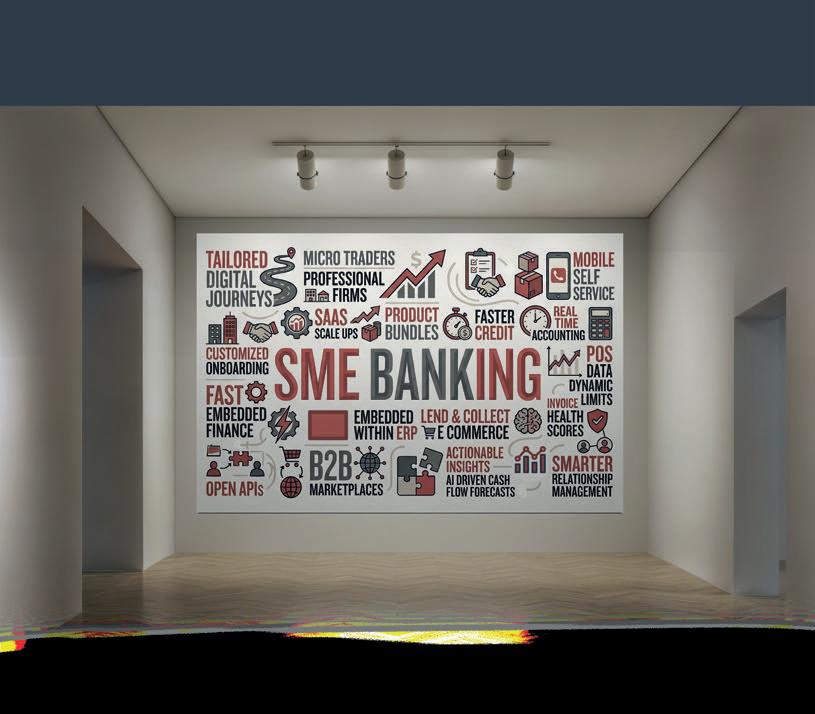
SMEs don’t need more banking; they need a bank that sees the big picture of growth.
With Finacle Business Banking, deliver a unified, insight-driven SME banking experience
End-to-end journeys
Onboarding to servicing across deposits, lending, payments, limits, and trade - on a unified, API-driven architecture.
Unified operational data
Real-time visibility into cashflows and exposures – accelerating credit decisions.
Multi-entity support
Multi-currency, multi-geo platform with configurable hierarchies and approvals.
Ecosystem-ready
Connected to brokers, accounting systems, e-commerce, FX, trade, and open-banking networks.
Expand your SME banking canvas with Finacle.

We enable meaningful connections for the next chapter of your entrepreneurial journey. Drawing on our global network and expertise in over 50 markets, we connect you with the right partners and solutions to support every aspect of your life’s work.
Where your life’s work lives