Co
m
e
M S ee C tin C se e g M us Iss at bo ue ot h
The Pharmacist’s News Source
pharmacypracticenews.com
Volume 41 • Number 12 • December 2014
#1
Printer-friendly versions available online
in this issue UP FRONT
5
Regimen clears HCV, preserves organ in liver transplant patients.
OPERATIONS & MGMT
6 10
Post-acute care transitions: time for improvements.
13
EHR reviews, phoning home boost clinical outcomes.
Preprinted syringe labels boost medication safety and savings in the OR.
CLINICAL
16
Pharmacists show their worth in HIV medication management.
20 28
Perioperative fluids: an evidence-based review. Managing the many complex drug therapy variables in CKD.
TECHNOLOGY
34
Prior prescription authorization not always easier electronically.
EDUCATIONAL REVIEW
Strategies g for Optimizing p OR Drug Safety See insert after page 12. a
OPPS 2015 Final Rule: Not Paying Attention = Loss
45% reductions in readmissions, other gains cited
Hospital, Retail Partnership
T
he Centers for Medicare & Medicaid Services (CMS) released final rules outlining how health care providers will be paid in 2015. Hospital pharmacists should make it their New Year’s resolution to spring into action and adopt Bonnie the new reimburse- Kirschenbaum, MS, FASHP ment regulations. Any delay in getting up to speed on the new payment rules can quickly prove costly. New pass-through drugs and radiopharmaceuticals are a prime example: There are 16 new codes that you’ll need to use to guarantee proper payment. And that newly approved cancer therapy your oncologists are clamoring for? If you don’t include the correct temporary code along with the product’s NDC, your drug budget is going to take the hit. That’s why many of my recent columns have focused on the basics of
ostdischarge phone calls, pharmacist consults at the bedside and drug affordability assistance are just a few of the strategies health systems are using to reduce 30-day hospital readmissions and improve patient care. Although such initiatives may not be trailblazing, in several cases they are being done with a relatively new wrinkle—via partnerships with local community pharmacies. One example is Missouri Delta Medical Center, in Sikeston. Ginger McCord, RN, a case manager at the 144-bed community hospital, had started making postdischarge phone calls in early 2014. The primary focus was on patients with congestive heart failure and other diagnoses that federal officials have been scrutinizing for excessive readmissions. The hospital also was looking at expanding the reach of its employees-only retail pharmacy, so it could fill
see OPPS 2015, page 37
see JOINT INITIATIVES, page 14
•
Armamentarium Of Novel Diabetes Drugs Expanding
P
•
ISMP Urges Move Away From Voluntary Drug Error Reporting
A
Austin, Texas—An unprecedented growth in treatment options for type 2 diabetes mellitus (DM) means more patients can achieve disease control, experts told attendees of the 2014 annual meeting of the American College of Clinical Pharmacy (ACCP). Many patients have enthusiastically embraced the efficacy, convenience and added weight loss associated with sodium glucose co-transporter
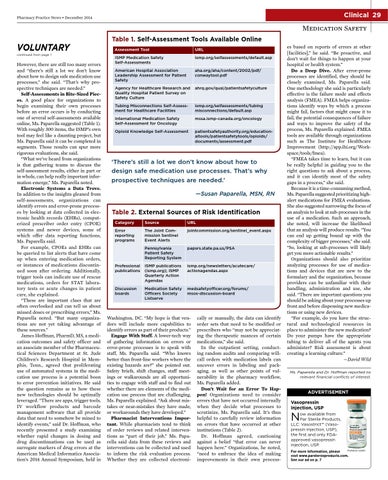
safety expert at the Institute for Safe Medication Practices (ISMP) is urging institutions to look beyond voluntary error reporting when assessing medication safety risk. During a recent webinar, Susan Paparella, MSN, RN, the vice president of the ISMP, said voluntary reports only represent the tip of the medication error iceberg. “Voluntary reporting yields important qualitative information, but it should serve as a stepping stone from which institutions can ask more questions, gather more useful information and perform more thorough risk assessments,” Ms. Paparella said. Many organizations use voluntary reporting as their primary source of information on medication errors and risk, even though data indicate that as few as 1.5% of all adverse events are reported through this method, she said ((Ann Intern Med 1993;119:370-376). Since the Institute of Medicine published its seminal report, “To Err is Human” (http:// goo.gl/I2sGpj) in 1999, strides have been made toward mitigating risk, Ms. Paparella noted.
see ARMAMENTARIUM, page 26
see VOLUNTARY, Y page 29
•
•
New and Featured Products Vazculep™ from Éclat Pharmaceuticals.
Vasostrict™ (Vasopressin Injection, USP) from Par Sterile Products, LLC.
See pages 9 and 13
See pages 7 and 29
PSPB00 0065
04
AV NO AI W LA BL E
NEW—A LIQUID FORMULATION—TREANDA® (bendamustine HCl) Injection
Fast
Precise
Convenient
Less preparation time
No reconstitution necessary
Fewer steps prior to admixing
What else is new about TREANDA? NEW CONCENTRATION
90
mg/mL
NEW DOSAGE STRENGTHS
NEW NDCs
180 mg/2 mL 63459-396-02 45 mg/0.5 mL 63459-395-02 J Code 9033
It may be necessary to update your pharmacy and/or patient medication management systems. FOR MORE INFORMATION, CALL 1-800-896-5855 OR VISIT TREANDAHCP.COM
Supplied in single-use, 2-mL vials.
Indications TREANDA is indicated for the treatment of patients with chronic lymphocytic leukemia (CLL). Efficacy relative to first-line therapies other than chlorambucil has not been established. TREANDA is indicated for the treatment of patients with indolent B-cell non-Hodgkin lymphoma (NHL) that has progressed during or within six months of treatment with rituximab or a rituximab-containing regimen.
Important Safety Information Contraindication: TREANDA is contraindicated in patients with a known hypersensitivity (e.g., anaphylactic and anaphylactoid reactions) to bendamustine. Myelosuppression: TREANDA caused severe myelosuppression (Grade 3-4) in 98% of patients in the two NHL studies. Three patients (2%) died from myelosuppression-related adverse reactions. If myelosuppression occurs, monitor leukocytes, platelets, hemoglobin (Hgb), and neutrophils frequently. Myelosuppression may require dose delays and/or subsequent dose reductions if recovery to the recommended values has not occurred by the first day of the next scheduled cycle. Infections: Infection, including pneumonia, sepsis, septic shock, and death have occurred. Patients with myelosuppression following treatment with TREANDA are more susceptible to infections. Anaphylaxis and Infusion Reactions: Infusion reactions to TREANDA have occurred commonly in clinical trials. Symptoms include fever, chills, pruritus, and rash. In rare instances severe anaphylactic and anaphylactoid reactions have occurred, particularly in the second and subsequent cycles of therapy. Monitor clinically and discontinue drug for severe (Grade 3-4) reactions. Ask patients about symptoms suggestive of infusion reactions after their first cycle of therapy. Consider measures to prevent severe reactions, including antihistamines, antipyretics, and corticosteroids in subsequent cycles in patients who have experienced Grade 1 or 2 infusion reactions. Tumor Lysis Syndrome: Tumor lysis syndrome associated with TREANDA treatment has occurred. The onset tends to be within the first treatment cycle of TREANDA and, without intervention, may lead to acute renal failure and death. Preventive measures include vigorous hydration and close monitoring of blood chemistry, particularly potassium and uric acid levels. There may be an increased risk of severe skin toxicity when TREANDA and allopurinol are administered concomitantly. Skin Reactions: Skin reactions have been reported with TREANDA treatment and include rash, toxic skin reactions, and bullous exanthema. In a study of TREANDA (90 mg/m2) in combination with rituximab, one case of toxic epidermal necrolysis (TEN) occurred. TEN has been reported for rituximab. Cases of Stevens-Johnson syndrome (SJS) and TEN, some fatal, have been reported when TREANDA was administered concomitantly with allopurinol and other medications known to cause these syndromes. Where skin reactions occur, they may be progressive and increase in severity with further treatment. Monitor patients with skin reactions closely. If skin reactions are severe or progressive, withhold or discontinue TREANDA. Other Malignancies: There are reports of pre-malignant and malignant diseases that have developed in patients who have been treated with TREANDA, including myelodysplastic syndrome, myeloproliferative disorders, acute myeloid leukemia, and bronchial carcinoma. The association with TREANDA therapy has not been determined. Extravasation Injury: TREANDA extravasations have been reported in postmarketing resulting in hospitalizations from erythema, marked swelling, and pain. Ensure good venous access prior to starting TREANDA infusion and monitor the intravenous infusion site for redness, swelling, pain, infection, and necrosis during and after administration of TREANDA. Embryo-fetal Toxicity: TREANDA can cause fetal harm when administered to a pregnant woman. Women should be advised to avoid becoming pregnant while using TREANDA. Most Common Adverse Reactions: The most common non-hematologic adverse reactions for CLL (frequency ≥15%) are pyrexia, nausea, and vomiting. The most common nonhematologic adverse reactions for NHL (frequency ≥15%) are nausea, fatigue, vomiting, diarrhea, pyrexia, constipation, anorexia, cough, headache, weight decreased, dyspnea, rash, and stomatitis. The most common hematologic abnormalities for both indications (frequency ≥15%) are lymphopenia, anemia, leukopenia, thrombocytopenia, and neutropenia. Please see accompanying brief summary of Full Prescribing Information on the following pages.
©2014 Cephalon, Inc., a wholly-owned subsidiary of Teva Pharmaceutical Industries Ltd. All rights reserved. TRE-40120 October 2014
™
Brief Summary of Prescribing Information 1 INDICATIONS AND USAGE 1.1 Chronic Lymphocytic Leukemia (CLL) TREANDA® is indicated for the treatment of patients with chronic lymphocytic leukemia. Efficacy relative to first line therapies other than chlorambucil has not been established. 1.2 Non-Hodgkin Lymphoma (NHL) TREANDA is indicated for the treatment of patients with indolent B-cell non-Hodgkin lymphoma that has progressed during or within six months of treatment with rituximab or a rituximab-containing regimen. 2 DOSAGE AND ADMINISTRATION 2.1 Dosing Instructions for CLL Recommended Dosage: g The recommended dose is 100 mg/m2 administered intravenously over 30 minutes on Days 1 and 2 of a 28-day cycle, up to 6 cycles. Dose Delays, y , Dose Modifications and Reinitiation of Therapy py for CLL: TREANDA administration should be delayed in the event of Grade 4 hematologic toxicity or clinically significant * Grade 2 non-hematologic toxicity. Once non-hematologic toxicity has recovered to ) Grade 1 and/or the blood counts have improved [Absolute Neutrophil Count (ANC) * 1 x 10⁹/L, platelets * 75 x 109/L], TREANDA can be reinitiated at the discretion of the treating physician. In addition, dose reduction may be warranted. [See Warnings and Precautions (5.1)] Dose modifications for hematologic toxicity: for Grade 3 or greater toxicity, reduce the dose to 50 mg/m2 on Days 1 and 2 of each cycle; if Grade 3 or greater toxicity recurs, reduce the dose to 25 mg/m2 on Days 1 and 2 of each cycle. Dose modifications for non-hematologic toxicity: for clinically significant Grade 3 or greater toxicity, reduce the dose to 50 mg/m2 on Days 1 and 2 of each cycle. Dose re-escalation in subsequent cycles may be considered at the discretion of the treating physician. 2.2 Dosing Instructions for NHL Recommended Dosage: g The recommended dose is 120 mg/m2 administered intravenously over 60 minutes on Days 1 and 2 of a 21-day cycle, up to 8 cycles. Dose Delays, y , Dose Modifications and Reinitiation of Therapy py for NHL: TREANDA administration should be delayed in the event of a Grade 4 hematologic toxicity or clinically significant * Grade 2 non-hematologic toxicity. Once non-hematologic toxicity has recovered to ) Grade 1 and/or the blood counts have improved [Absolute Neutrophil Count (ANC) * 1 x 10⁹/L, platelets * 75 x 109/L], TREANDA can be reinitiated at the discretion of the treating physician. In addition, dose reduction may be warranted. [See Warnings and Precautions (5.1)] Dose modifications for hematologic toxicity: for Grade 4 toxicity, reduce the dose to 90 mg/m2 on Days 1 and 2 of each cycle; if Grade 4 toxicity recurs, reduce the dose to 60 mg/m2 on Days 1 and 2 of each cycle. Dose modifications for non-hematologic toxicity: for Grade 3 or greater toxicity, reduce the dose to 90 mg/m2 on Days 1 and 2 of each cycle; if Grade 3 or greater toxicity recurs, reduce the dose to 60 mg/m2 on Days 1 and 2 of each cycle. 2.3 Preparation for Intravenous Administration Each vial of TREANDA Injection is intended for single use only. Aseptically withdraw the volume needed for the required dose from the 90 mg/mL solution. Immediately transfer the solution to a 500 mL infusion bag of 0.9% Sodium Chloride Injection, USP (normal saline). As an alternative to 0.9% Sodium Chloride Injection, USP (normal saline), a 500 mL infusion bag of 2.5% Dextrose/0.45% Sodium Chloride Injection, USP, may be considered. The resulting final concentration of bendamustine HCl in the infusion bag should be within 0.2 - 0.7 mg/mL. The admixture should be a clear colorless to yellow solution. Use either 0.9% Sodium Chloride Injection, USP, or 2.5% Dextrose/ 0.45% Sodium Chloride Injection, USP, for dilution, as outlined above. No other diluents have been shown to be compatible. Parenteral drug products should be inspected visually for particulate matter and discoloration prior to administration whenever solution and container permit. Any unused solution should be discarded according to institutional procedures for antineoplastics. 2.4 Admixture Stability TREANDA Injection contains no antimicrobial preservative. The admixture should be prepared as close as possible to the time of patient administration. Once diluted with either 0.9% Sodium Chloride Injection, USP, or 2.5% Dextrose/0.45% Sodium Chloride Injection, USP, the final admixture is stable for 24 hours when stored under refrigerated conditions at 2°-8°C (36°-46°F) or for 2 hours when stored at room temperature 15°-30°C (59°-86°F) and room light. Administration of TREANDA must be completed within this period. 3 DOSAGE FORMS AND STRENGTHS TREANDA Injection is supplied in single-use vials containing either 45 mg/0.5 mL or 180 mg/2 mL of bendamustine HCl. 4 CONTRAINDICATIONS TREANDA is contraindicated in patients with a known hypersensitivity (e.g., anaphylactic and anaphylactoid reactions) to bendamustine. [See Warnings and Precautions (5.3)] 5 WARNINGS AND PRECAUTIONS 5.1 Myelosuppression TREANDA caused severe myelosuppression (Grade 3-4) in 98% of patients in the two NHL studies (see Table 4). Three patients (2%) died from myelosuppression-related adverse reactions; one each from neutropenic sepsis, diffuse alveolar hemorrhage with Grade 3 thrombocytopenia, and pneumonia from an opportunistic infection (CMV). In the event of treatment-related myelosuppression, monitor leukocytes, platelets, hemoglobin (Hgb), and neutrophils frequently. In the clinical trials, blood counts were monitored every week initially. Hematologic nadirs were observed predominantly in the third week of therapy.
TREANDA® (bendamustine hydrochloride) Injection
TREANDA® (bendamustine hydrochloride) Injection
Myelosuppression may require dose delays and/or subsequent dose reductions if recovery to the recommended values has not occurred by the first day of the next scheduled cycle. Prior to the initiation of the next cycle of therapy, the ANC should be * 1 x 10⁹/L and the platelet count should be * 75 x 109/L. [See Dosage and Administration (2.1) and (2.2)] 5.2 Infections Infection, including pneumonia, sepsis, septic shock, and death have occurred in adult and pediatric patients in clinical trials and in postmarketing reports. Patients with myelosuppression following treatment with TREANDA are more susceptible to infections. Advise patients with myelosuppression following TREANDA treatment to contact a physician if they have symptoms or signs of infection. 5.3 Anaphylaxis and Infusion Reactions Infusion reactions to TREANDA have occurred commonly in clinical trials. Symptoms include fever, chills, pruritus and rash. In rare instances severe anaphylactic and anaphylactoid reactions have occurred, particularly in the second and subsequent cycles of therapy. Monitor clinically and discontinue drug for severe reactions. Ask patients about symptoms suggestive of infusion reactions after their first cycle of therapy. Patients who experience Grade 3 or worse allergictype reactions should not be rechallenged. Consider measures to prevent severe reactions, including antihistamines, antipyretics and corticosteroids in subsequent cycles in patients who have experienced Grade 1 or 2 infusion reactions. Discontinue TREANDA for patients with Grade 4 infusion reactions. Consider discontinuation for Grade 3 infusions reactions as clinically appropriate considering individual benefits, risks, and supportive care. 5.4 Tumor Lysis Syndrome Tumor lysis syndrome associated with TREANDA treatment has occurred in patients in clinical trials and in postmarketing reports. The onset tends to be within the first treatment cycle of TREANDA and, without intervention, may lead to acute renal failure and death. Preventive measures include vigorous hydration and close monitoring of blood chemistry, particularly potassium and uric acid levels. Allopurinol has also been used during the beginning of TREANDA therapy. However, there may be an increased risk of severe skin toxicity when TREANDA and allopurinol are administered concomitantly [see Warnings and Precautions (5.5)]. 5.5 Skin Reactions Skin reactions have been reported with TREANDA treatment in clinical trials and postmarketing safety reports, including rash, toxic skin reactions and bullous exanthema. Some events occurred when TREANDA was given in combination with other anticancer agents. In a study of TREANDA (90 mg/m2) in combination with rituximab, one case of toxic epidermal necrolysis (TEN) occurred. TEN has been reported for rituximab (see rituximab package insert). Cases of Stevens-Johnson syndrome (SJS) and TEN, some fatal, have been reported when TREANDA was administered concomitantly with allopurinol and other medications known to cause these syndromes. The relationship to TREANDA cannot be determined. Where skin reactions occur, they may be progressive and increase in severity with further treatment. Monitor patients with skin reactions closely. If skin reactions are severe or progressive, withhold or discontinue TREANDA. 5.6 Other Malignancies There are reports of pre-malignant and malignant diseases that have developed in patients who have been treated with TREANDA, including myelodysplastic syndrome, myeloproliferative disorders, acute myeloid leukemia and bronchial carcinoma. The association with TREANDA therapy has not been determined. 5.7 Extravasation Injury TREANDA extravasations have been reported in post marketing resulting in hospitalizations from erythema, marked swelling, and pain. Assure good venous access prior to starting TREANDA infusion and monitor the intravenous infusion site for redness, swelling, pain, infection, and necrosis during and after administration of TREANDA. 5.8 Embryo-fetal Toxicity TREANDA can cause fetal harm when administered to a pregnant woman. Single intraperitoneal doses of bendamustine in mice and rats administered during organogenesis caused an increase in resorptions, skeletal and visceral malformations, and decreased fetal body weights. 6 ADVERSE REACTIONS The following serious adverse reactions have been associated with TREANDA in clinical trials and are discussed in greater detail in other sections of the label [See Warnings and Precautions]: Myelosuppression (5.1); Infections (5.2); Anaphylaxis and Infusion Reactions (5.3); Tumor Lysis Syndrome (5.4); Skin Reactions (5.5); Other Malignancies (5.6); Extravasation injury (5.7). The data described below reflect exposure to TREANDA in 329 patients who participated in an activelycontrolled trial (N=153) for the treatment of CLL and two single-arm studies (N=176) for the treatment of indolent B-cell NHL. Because clinical trials are conducted under widely varying conditions, adverse reaction rates observed in the clinical trials of a drug cannot be directly compared to rates in the clinical trials of another drug and may not reflect the rates observed in practice. 6.1 Clinical Trials Experience in CLL The data described below reflect exposure to TREANDA in 153 patients with CLL studied in an active-controlled, randomized trial. The population was 45-77 years of age, 63% male, 100% white, and were treatment naïve. All patients started the study at a dose of 100 mg/m2 intravenously over 30 minutes on Days 1 and 2 every 28 days. Adverse reactions were reported according to NCI CTC v.2.0. Nonhematologic adverse reactions (any grade) in the TREANDA group that occurred with a frequency greater than 15% were pyrexia (24%), nausea (20%), and vomiting (16%). Other adverse reactions seen frequently in one or more studies included asthenia, fatigue, malaise, and weakness; dry mouth; somnolence; cough; constipation; headache; mucosal inflammation and stomatitis.
Worsening hypertension was reported in 4 patients treated with TREANDA in the CLL trial and in none treated with chlorambucil. Three of these 4 adverse reactions were described as a hypertensive crisis and were managed with oral medications and resolved. The most frequent adverse reactions leading to study withdrawal for patients receiving TREANDA were hypersensitivity (2%) and pyrexia (1%). Table 1 contains the treatment emergent adverse reactions, regardless of attribution, that were reported in * 5% of patients in either treatment group in the randomized CLL clinical study. Table 1: Non-Hematologic Adverse Reactions Occurring in Randomized CLL Clinical Study in at Least 5% of Patients Number (%) of patients
System organ class Preferred term Total number of patients with at least 1 adverse reaction Gastrointestinal disorders Nausea Vomiting Diarrhea General disorders and administration site conditions Pyrexia Fatigue Asthenia Chills Immune system disorders Hypersensitivity Infections and infestations Nasopharyngitis Infection Herpes simplex Investigations Weight decreased Metabolism and nutrition disorders Hyperuricemia Respiratory, thoracic and mediastinal disorders Cough Skin and subcutaneous tissue disorders Rash Pruritus
TREANDA (N=153) All Grade Grades 3/4
Chlorambucil (N=143) All Grade Grades 3/4
121 (79) 52 (34)
96 (67)
25 (17)
31 (20) 24 (16) 14 (9)
1 (<1) 1 (<1) 2 (1)
21 (15) 9 (6) 5 (3)
1 (<1) 0 0
36 (24) 14 (9) 13 (8) 9 (6)
6 (4) 2 (1) 0 0
8 (6) 8 (6) 6 (4) 1 (<1)
2 (1) 0 0 0
7 (5)
2 (1)
3 (2)
0
10 (7) 9 (6) 5 (3)
0 3 (2) 0
12 (8) 1 (<1) 7 (5)
0 1 (<1) 0
11 (7)
0
5 (3)
0
11 (7)
3 (2)
2 (1)
0
6 (4)
1 (<1)
7 (5)
1 (<1)
12 (8) 8 (5)
4 (3) 0
7 (5) 2 (1)
3 (2) 0
The Grade 3 and 4 hematology laboratory test values by treatment group in the randomized CLL clinical study are described in Table 2. These findings confirm the myelosuppressive effects seen in patients treated with TREANDA. Red blood cell transfusions were administered to 20% of patients receiving TREANDA compared with 6% of patients receiving chlorambucil. Table 2: Incidence of Hematology Laboratory Abnormalities in Patients Who Received TREANDA or Chlorambucil in the Randomized CLL Clinical Study TREANDA N=150 Laboratory Abnormality
Chlorambucil N=141
All Grades Grade 3/4 All Grades Grade 3/4 n (%) n (%) n (%) n (%)
Hemoglobin Decreased
134 (89)
20 (13)
115 (82)
12 (9)
Platelets Decreased
116 (77)
16 (11)
110 (78)
14 (10)
Leukocytes Decreased
92 (61)
42 (28)
26 (18)
4 (3)
Lymphocytes Decreased
102 (68)
70 (47)
27 (19)
6 (4)
Neutrophils Decreased
113 (75)
65 (43)
86 (61)
30 (21)
In the CLL trial, 34% of patients had bilirubin elevations, some without associated significant elevations in AST and ALT. Grade 3 or 4 increased bilirubin occurred in 3% of patients. Increases in AST and ALT of Grade 3 or 4 were limited to 1% and 3% of patients, respectively. Patients treated with TREANDA may also have changes in their creatinine levels. If abnormalities are detected, monitoring of these parameters should be continued to ensure that further deterioration does not occur. 6.2 Clinical Trials Experience in NHL The data described below reflect exposure to TREANDA in 176 patients with indolent B-cell NHL treated in two single-arm studies. The population was 31-84 years of age, 60% male, and 40% female. The race distribution was 89% White, 7% Black, 3% Hispanic, 1% other, and <1% Asian. These patients received TREANDA at a dose of 120 mg/m2 intravenously on Days 1 and 2 for up to eight 21-day cycles. The adverse reactions occurring in at least 5% of the NHL patients, regardless of severity, are shown in Table 3. The most common non-hematologic adverse reactions (* 30%) were nausea (75%), fatigue (57%), vomiting (40%), diarrhea (37%) and pyrexia (34%). The most common non-hematologic Grade 3 or 4 adverse reactions (* 5%) were fatigue (11%), febrile neutropenia (6%), and pneumonia, hypokalemia and dehydration, each reported in 5% of patients.
TREANDA® (bendamustine hydrochloride) Injection
TREANDA® (bendamustine hydrochloride) Injection
Table 3: Non-Hematologic Adverse Reactions Occurring in at Least 5% of NHL Patients Treated with TREANDA by System Organ Class and Preferred Term (N=176)
Table 4: Incidence of Hematology Laboratory Abnormalities in Patients Who Received TREANDA in the NHL Studies
Number (%) of patients* System organ class Preferred term All Grades Grade 3/4 Total number of patients with at least 1 adverse reaction 176 (100) 94 (53) Cardiac disorders 0 Tachycardia 13 (7) Gastrointestinal disorders 7 (4) Nausea 132 (75) 5 (3) Vomiting 71 (40) 6 (3) Diarrhea 65 (37) 1 (<1) Constipation 51 (29) 1 (<1) Stomatitis 27 (15) 2 (1) Abdominal pain 22 (13) 0 Dyspepsia 20 (11) 0 Gastroesophageal reflux disease 18 (10) 1 (<1) Dry mouth 15 (9) 0 Abdominal pain upper 8 (5) 0 Abdominal distension 8 (5) General disorders and administration site conditions 19 (11) Fatigue 101 (57) 3 (2) Pyrexia 59 (34) 0 Chills 24 (14) 1 (<1) Edema peripheral 23 (13) 4 (2) Asthenia 19 (11) 1 (<1) Chest pain 11 (6) 0 Infusion site pain 11 (6) 0 Pain 10 (6) 0 Catheter site pain 8 (5) Infections and infestations 5 (3) Herpes zoster 18 (10) 0 Upper respiratory tract infection 18 (10) 4 (2) Urinary tract infection 17 (10) 0 Sinusitis 15 (9) 9 (5) Pneumonia 14 (8) 11 (6) Febrile neutropenia 11 (6) 2 (1) Oral candidiasis 11 (6) 0 Nasopharyngitis 11 (6) Investigations 3 (2) Weight decreased 31 (18) Metabolism and nutrition disorders 3 (2) Anorexia 40 (23) 8 (5) Dehydration 24 (14) 1 (<1) Decreased appetite 22 (13) 9 (5) Hypokalemia 15 (9) Musculoskeletal and connective tissue disorders 5 (3) Back pain 25 (14) 0 Arthralgia 11 (6) 2 (1) Pain in extremity 8 (5) 0 Bone pain 8 (5) Nervous system disorders 0 Headache 36 (21) 0 Dizziness 25 (14) 0 Dysgeusia 13 (7) Psychiatric disorders 0 Insomnia 23 (13) 1 (<1) Anxiety 14 (8) 0 Depression 10 (6) Respiratory, thoracic and mediastinal disorders Cough 1 (<1) 38 (22) Dyspnea 3 (2) 28 (16) Pharyngolaryngeal pain 1 (<1) 14 (8) Wheezing 0 8 (5) Nasal congestion 0 8 (5) Skin and subcutaneous tissue disorders Rash 1 (<1) 28 (16) Pruritus 0 11 (6) Dry skin 0 9 (5) Night sweats 0 9 (5) Hyperhidrosis 0 8 (5) Vascular disorders Hypotension 2 (1) 10 (6) *Patients may have reported more than 1 adverse reaction. NOTE: Patients counted only once in each preferred term category and once in each system organ class category. Hematologic toxicities, based on laboratory values and CTC grade, in NHL patients treated in both single arm studies combined are described in Table 4. Clinically important chemistry laboratory values that were new or worsened from baseline and occurred in >1% of patients at Grade 3 or 4, in NHL patients treated in both single arm studies combined were hyperglycemia (3%), elevated creatinine (2%), hyponatremia (2%), and hypocalcemia (2%).
Percent of patients Hematology variable
All Grades
Grades 3/4
Lymphocytes Decreased
99
94
Leukocytes Decreased
94
56
Hemoglobin Decreased
88
11
Neutrophils Decreased
86
60
Platelets Decreased
86
25
In both studies, serious adverse reactions, regardless of causality, were reported in 37% of patients receiving TREANDA. The most common serious adverse reactions occurring in * 5% of patients were febrile neutropenia and pneumonia. Other important serious adverse reactions reported in clinical trials and/or postmarketing experience were acute renal failure, cardiac failure, hypersensitivity, skin reactions, pulmonary fibrosis, and myelodysplastic syndrome. Serious drug-related adverse reactions reported in clinical trials included myelosuppression, infection, pneumonia, tumor lysis syndrome and infusion reactions [see Warnings and Precautions (5)]. Adverse reactions occurring less frequently but possibly related to TREANDA treatment were hemolysis, dysgeusia/taste disorder, atypical pneumonia, sepsis, herpes zoster, erythema, dermatitis, and skin necrosis. 6.3 Postmarketing Experience The following adverse reactions have been identified during postapproval use of TREANDA. Because these reactions are reported voluntarily from a population of uncertain size, it is not always possible to reliably estimate their frequency or establish a causal relationship to drug exposure: anaphylaxis; and injection or infusion site reactions including phlebitis, pruritus, irritation, pain, and swelling; pneumocystis jiroveci pneumonia and pneumonitis. Skin reactions including SJS and TEN have occurred when TREANDA was administered concomitantly with allopurinol and other medications known to cause these syndromes. [See Warnings and Precautions (5.5)] 10 OVERDOSAGE The intravenous LD50 of bendamustine HCl is 240 mg/m2 in the mouse and rat. Toxicities included sedation, tremor, ataxia, convulsions and respiratory distress. Across all clinical experience, the reported maximum single dose received was 280 mg/m2. Three of four patients treated at this dose showed ECG changes considered dose-limiting at 7 and 21 days post-dosing. These changes included QT prolongation (one patient), sinus tachycardia (one patient), ST and T wave deviations (two patients), and left anterior fascicular block (one patient). Cardiac enzymes and ejection fractions remained normal in all patients. No specific antidote for TREANDA overdose is known. Management of overdosage should include general supportive measures, including monitoring of hematologic parameters and ECGs. 15 REFERENCES 1. OSHA Hazardous Drugs. OSHA. [Accessed on June 19, 2013, from http://www.osha.gov/SLTC/hazardousdrugs/index.html] 16 HOW SUPPLIED/STORAGE AND HANDLING 16.1 Safe Handling and Disposal As with other potentially toxic anticancer agents, care should be exercised in the handling and preparation of solutions prepared from TREANDA Injection. The use of gloves and safety glasses is recommended to avoid exposure in case of breakage of the vial or other accidental spillage. If a solution of TREANDA contacts the skin, wash the skin immediately and thoroughly with soap and water. If TREANDA contacts the mucous membranes, flush thoroughly with water. TREANDA is a cytotoxic drug. Follow special handling and disposal procedures1. 16.2 How Supplied TREANDA (bendamustine hydrochloride) Injection is supplied as a 90 mg/mL clear colorless to yellow solution as follows: NDC 63459-395-02: 45 mg/0.5 mL of solution in an amber single-use vial NDC 63459-396-02: 180 mg/2 mL of solution in an amber single-use vial Vials are supplied in individual cartons. 16.3 Storage TREANDA Injection must be stored refrigerated between 2°-8°C (36°46°F). Retain in original package until time of use to protect from light.
Distributed By: Teva Pharmaceuticals USA, Inc. North Wales, PA 19454 TREANDA is a trademark of Cephalon, Inc. or its affiliates. ©2008-2014 Cephalon, Inc., a wholly owned subsidiary of Teva Pharmaceutical Industries Ltd. or its affiliates. All rights reserved. Iss. 09/2013 (Label Code: 00016287.06) TRE-40206 This brief summary is based on TRE-009 TREANDA full Prescribing Information.
Up Front 5
Pharmacy Practice News • December 2014
Capsules
Sofosbuvir Plus SMV Eradicates HCV In Post–Liver Transplant Patients
Web Exclusives Visit us online for Web-exclusive content. Links to all the stories below can be found at pharmacypracticenews.com/webex1214 or via your smartphone by scanning the adjacent 2D barcode.
Home Sweet Home
H
ome dialysis therapies may prolong the lives of patients with kidney failure compared with hemodialysis treatments given in medical centers, according to study results presented at ASN Kidney Week 2014, in Philadelphia.
You Might Be Allergic to Penicillin—Or Not
P
atients who self-report penicillin allergies often are mistaken, adding to the cost and complexity of antibiotic therapy, according to new data presented at the 2014 annual meeting of the American College of Allergy, Asthma & Immunology (ACAAI), in Atlanta.
FDA: Heartbreak From V26 Slimming Coffee
T
he FDA issued a warning about using V26 Slimming Coffee because it contains a controlled substance that has been linked to cardiovascular events. The product is being sold as a weight loss supplement on various websites and perhaps in some retail stores, according to the agency.
Opioid Agonists a Help In Checking HCV Spread
G
iving methadone or buprenorphine for opioid use disorders, such as heroin addiction, might help reduce the spread of HCV, a new study suggests.
BOSTON—All patients with hepatitis C virus (HCV) infection who receive a liver transplant will eventually infect their new livers with the virus, but a study by the Mayo Clinic showed that the virus can be eradicated in these patients, thus preserving their new organs. “It has been well known that HCV infection recurs after liver transplantation universally, which means that every patient that has active HCV infection at the time of liver transplantation will develop recurrence,” said Surakit Pungpapong, MD, a transplant hepatologist and an associate professor of medicine at the Mayo Clinic Transplant Center in Jacksonville, Fla. “The recurrence can lead to graft hepatitis, graft loss and patient death.” To prevent organ rejection, standard pre- and post-transplant treatment requires injections of pegylated interferon (pegIFN) with ribavirin (RBV). Interferon engages the immune system to keep the HCV in check, but this immune response can also lead to organ rejection, as well as a variety of other side effects including anemia, depression, irritability, influenza-like symptoms, insomnia and hair loss, according to Dr. Pungpapong, who presented the study results at The Liver Meeting 2014. “Our study is one of the first studies to prove the concept that an oral antiviral regimen without pegylated interferon can be used effectively to treat hepatitis C virus infection serotype 1 after liver transplantation,” said Dr. Pungpapong, the lead researcher. For this study, which is ongoing, the Mayo Clinic researchers enrolled more than 100 post-transplant patients at three Mayo sites: Jacksonville; Rochester, Minn.; and Scottsdale, Ariz. The patients received an all-oral antiviral regimen of sofosbuvir (SOF; Sovaldi, Gilead) and simeprevir (SMV; Olysio, Janssen) with or without RBV for 12 weeks and showed a sustained virologic response of 92%, according to Dr. Pungpapong (abstract 9). These patients had been too ill to be treated for HCV before their transplant, he explained. “By the time liver cirrhosis occurs, it could be too late to use antiviral drugs,” he said. The FDA approved SOF and SMV for pretransplant use last year, but the agency required that they be combined with interferon and RBV. In a large clinical trial, researchers tested the two drugs without interferon in pretransplantation patients and found the combination to be an effective therapy. In this study, the Mayo researchers extended the idea of using these medications together without pegIFN in post-transplant patients. Chronic HCV infection affects more than 3 million people in the United States. Most people with chronic HCV have no symptoms until liver damage from chronic inflammation occurs decades later, which happens to 5% to 30% of infected individuals. HCV infection accounts for two-thirds of newly diagnosed chronic liver disease cases and 40% of liver transplantations. —Marie Rosenthal
EDITORIAL BOARD
ART/PRODUCTION STAFF
ADMINISTRATION
Michele McMahon Velle, MAX Graphics/Creative Director
Robert Adamson, PharmD, Livingston, NJ
Frank Tagarello, Senior Art Director/Managing / Director, r MAX Graphics
Ernest R. Anderson Jr., MS, RPh, Boston, MA
Volume 41 • Number 12 • December 2014 • pharmacypracticenews.com
ANESTHESIOLOGY/PAIN Julie A. Golembiewski, PharmD, Chicago, IL Melvin E. Liter, MS, PharmD, FASHP, Lexington, KY
INTERNAL MEDICINE
EDITORIAL STAFF
David S. Craig, PharmD, BCPS, Tampa, FL
Geoffrey C. Wall, PharmD, FCCP, BCPS, CGP, Des Moines, IA
Robert L. Barkin, MBA, PharmD, Chicago, IL
NUCLEAR PHARMACY
David Bronstein, Editorial Director davidb@mcmahonmed.com
BIOTECHNOLOGY
Jeffrey Norenberg, PharmD, Albuquerque, NM
Indu Lew, PharmD, Livingston, NJ
ONCOLOGY Robert T. Dorr, PhD, RPh, Tucson, AZ
CARDIOLOGY
Robert Ignoffo, PharmD, San Francisco, CA
s CT C. Michael White, PharmD, Storrs,
Marie Rosenthal, MS, Senior Editor mrosenthal@mcmahonmed.com Kevin Horty, Don Pizzi, Adam Marcus, Contributing Editors
Philip E. Johnson, MS, RPh, FASHP, Tampa, FL
CNS/PSYCHIATRY
Cindy O’Bryant, PharmD, Aurora, CO
Charles F. Caley, PharmD, Storrs, CT Lawrence Cohen, PharmD, FASHP, FCCP, Fort Worth, Texas Larry Ereshefsky, PharmD, San Antonio, T Texas
Ali McBride, PharmD, MS, BCPS, St. Louis, MO Sara S. Kim, PharmD, BCOP, New York, NY
James Prudden, Group Editorial Director Robin B. Weisberg, Manager, r Editorial Services Elizabeth Zhong, Associate Copy Chief
James O’Neill, Senior Systems Manager Dan Radebaugh, Director of Production and Technical Operations Marty Barbieri, Production Manager Brandy Wilson, Circulation Coordinator
McMAHON PUBLISHING Raymond E. McMahon, Publisher and Managing Partner Van Velle, President, Partner Matthew McMahon, General Manager, Partner Lauren Smith, Michael McMahon, Michele McMahon Velle, Rosanne C. McMahon, Partners
MCMAHON PUBLISHING MCMAHONMED.COM Sales, Production and Editorial Offices: 545 West 45th Street, 8th Floor, New York, NY 10036. Telephone: (212) 957-5300. Corporate Office: 83 Peaceable Street, Redding CT 06896
COMPLEMENTARY AND ALTERNATIVE MEDICINE
ORGAN TRANSPLANT PHARMACY
Cathy Rosenbaum, PharmD, Cincinnati, OH
Eric Tichy, PharmD, BCPS, New Haven, CT
SALES
CRITICAL CARE
PEDIATRICS
Judi Jacobi, PharmD, FCCM, Indianapolis, IN
Gretchen Brummel, PharmD, BCPS, Hudson, OH
David Kaplan, Group Publication Director dkaplan@mcmahonmed.com
INFECTIOUS DISEASES
REIMBURSEMENT
Steven J. Martin, PharmD, BCPS, FCCM, Toledo, OH
Bonnie E. Kirschenbaum, MS, FASHP, Breckenridge, CO
David P. Nicolau, PharmD, Hartford, CT
TECHNOLOGY
Robert P. Rapp, PharmD, Lexington, KY
Thomas Van Hassel, RPh, Yuma, AZ
Craig Wilson, Classified Advertising g Sales cwilson@mcmahonmed.com
Copyright © 2014 McMahon Publishing, New York, NY 10036. All rights reserved. Pharmacy Practice News (ISSN 0886-988x) is published monthly by McMahon Publishing. Periodicals postage paid at New York, NY, and at additional mailing offices. POSTMASTER: Send address changes to Pharmacy Practice News, Circulation Dept., 545 W. 45th St., 8th Floor, New York, NY 10036.
WANT TO SUBSCRIBE? CHANGE YOUR ADDRESS? HERE’S HOW All U.S. hospital pharmacists should receive Pharmacy Practice News free of charge. If you are a hospital pharmacist and do not receive the publication, you must add your professional address or make your address change directly
with Pharmacy Practice News, Circulation Dept., 545 W. 45th St., 8th Floor, New York, NY 10036. You can also fax your request to (212) 977-3645, or send it via email, circulation@mcmahonmed.com. If you are not a hospital pharmacist but would like to receive Pharmacy Practice News, please send a check for $70.00 (U.S.) or $90.00 (outside U.S.) for a year’s subscrip-
tion payable to Pharmacy Practice News to McMahon Publishing, 545 West 45th St., 8th Floor, New York, NY 10036. Please allow 8 to 12 weeks for delivery of the first issue. Individual issues are $7.00 (U.S.) or $10.00 (outside U.S.). McMahon Publishing is a 42-year-old, first-generation, family-owned publishing company dedicated to providing medical professionals with essential, up-to-date news. As
the second largest publisher of medical newspapers, McMahon produces Anesthesiology News, Clinical Oncology News, Gastroenterology & Endoscopy News, General Surgery News, Infectious Disease Special Edition, Pain Medicine News, Pharmacy Practice News. Rheumatology Practice News and Specialty Pharmacy Continuum.
A family-owned medical publishing and medical education company. McMahon publishes seven clinical newspapers and several annual or semiannual Special Editions.
Matt Spoto, Senior Account Manager mspoto@mcmahonmed.com
6 Operations & Management
Pharmacy Practice News • December 2014
Practice Pearl
Post-Acute Care Transitions: Time for Improvements Amy P. Myers, PharmD, BCPS Department of Pharmaceutical Services Vanderbilt University Medical Center Nashville, Tenn.
Erin B. Neal, PharmD, BCPS Department of Pharmaceutical Services Vanderbilt University Medical Center Nashville, Tenn.
Amanda S. Mixon, MD, MS, MSPH Department of Veterans Affairs Tennessee Valley Healthcare System Geriatric Research Education and Clinical Center Section of Hospital Medicine Division of General Internal Medicine and Public Health Department of Medicine Vanderbilt University Nashville, Tenn.
P
reventing hospital readmissions has become a focus for many health care systems trying to improve care. In addition to safety and quality concerns, the impending Medicare penalties for readmissions have made this an important issue. There is room for improvement, in particular with respect to preventing readmissions among patients discharged to post-acute care (PAC) facilities. Many of the interventions that have been shown to reduce readmissions are not employed in this population, despite the fact that patients discharged to PAC facilities experience 30-day rehospitalization rates of up to 25%.1 When patients transfer from the hospital to a PAC facility, there is risk for medication discrepancies at many junctures.2,3 Facilities typically receive a patient’s list of active hospital medications during the initial referral. Once
Transitioning from one facility or site of care to another creates a window for medication errors.
the patient is accepted, another more current list of hospital medications also may be sent to assist the PAC facility in preparing for the patient’s arrival. At the time of transfer, several additional lists will be sent with the formal paperwork including, at minimum, a list within the discharge summary that provides a historical account of the patient’s hospital stay and a list of medications to be ordered at the PAC facility. These vari-
Table 1. Warfarin to Target INR: 2.0-3.0a 2 Days Before Discharge
Day Before Discharge
Day of Discharge
INR
4.0
3.3
2.7
Warfarin given
Held
Held
2 mg ordered for tonight
INR, international normalized ratio a
Duration u at o of o therapy: t e apy indefinite de te
Table 2. Insulin Requirements Day Before Hospital Discharge: 2/12 Breakfast
Lunch
Dinner
Bedtime
Blood glucose
126 mg/dL
145 mg/dL
195 mg/dL
124 mg/dL
Insulin scheduled
n/a
n/a
n/a
n/a
Insulin prn
0
p , as needed; prn, eeded; ss, ssliding d g scale sca e
0
6 units ss
0
ous medication lists often do not match, causing significant confusion, and they rarely include a prospective plan for managing medications.4 The ambiguous information provided forces staff at the PAC facility to work to discern which medications actually should be ordered. To address some of these problems, Vanderbilt University Medical Center, with the support of a Centers for Medicare & Medicaid Services (CMS) innovations grant known as IMPACT (Improved Post-Acute Care Transitions), implemented a transition intervention for Medicare patients transferring to one of 23 PAC facilities in the Nashville area. The intervention involves a nurse transitions advocate meeting with the patient upon referral to a partner facility and assisting with communication of the patient’s care plan among the family, the acute care setting and the PAC facility. A key component of the intervention is transfer-oriented medication reconciliation performed by a clinical pharmacist,
which is a practice recently recommended by the Institute for Safe Medication Practices to prevent medication errors in this vulnerable population.5 Pharmacists reconcile the transfer orders at discharge and create a medication management plan (MMP) for the PAC providers. The MMP includes the patient’s prehospital medications, the medications to be ordered at the PAC facility, the indications for each medication, any additional comments and the last administration time for medications at the hospital. This side-by-side comparison of the prehospital medications and transfer orders allows for quick review of medications throughout the continuum of care. To complete the MMP, prehospital medications are reconciled with the transfer orders and are clearly marked as continued, changed, held or discontinued, with a rationale for changes. Additionally, the plan includes specific instructions to restart any prehospital medications that were temporarily held. Careful attention is paid to prevent errors of omission, which may occur if a medication that should be restarted at the PAC facility is mistakenly omitted from the transfer orders. It is common for antihypertensives, antidepressants and antiplatelets normally taken at home to be held during the hospital stay, and a plan to resume them often is overlooked. Pharmacists also use this as an opportunity to ensure that CMS core measures are met. If a core measure medication is omitted (ie, no order for an angiotensin-converting enzyme inhibitor for a patient with systolic heart failure), the pharmacist explores the reason and communicates a recommendation to the transferring provider and the receiving PAC facility. Selected high-risk medications that are particularly associated with errors receive special attention. Orders for warfarin are accompanied by at least three days of international normalized ratio (INR) history, dosage history and a plan for follow-up INR (Table 1). The indication for therapy and goal INR also is clearly stated. Insulin orders prompt the inclusion of blood glucose readings with
•
see TRANSITIONS, page 8
Table 3. Insulin Requirements Day of Hospital Discharge: 2/13 (patient discharged at 11 AM) Breakfast Blood glucose
135 mg/dL
Insulin scheduled
n/a
Insulin prn
0
prn, as needed
Vasostrict™
(Vasopressin Injection, USP)
FIRST & ONLY
Vasostrict™ (Vasopressin Injection, USP) is in-stock and available for delivery at most wholesalers and distributors. Par Sterile Products is proud to manufacture and supply the first and only FDA-Approved Vasopressin Injection, USP in sufficient quantity to meet market demand.
- Only FDA-approved Vasopressin Injection, USP - Available Now to Order
Refrigeration 1 is required 1. Vasostrict [package insert]. Spring Valley, NY: Par Pharmaceutical Companies, Inc; 2014. For medical information inquiries, please call: Phone: 800-828-9393 Option 2, eFax: 201-829-9222, Email: druginfo@parpharm.com
© 2014 PSPB00 0051
8 Operations & Management
Pharmacy Practice News • December 2014
Practice Pearl Table 4. Diuretics for CHF to Target Weight: 63.5 kga
TRANSITIONS
2 Days Before Discharge
Day Before Discharge
Day of Discharge
Creatinine
0.96 mg/dL
1.06 mg/dL
1.1 mg/dL
Weight, kg
63.5 kg
63.5 kg
63.2 kg
Furosemide dose
40 mg IV bid
40 mg IV bid
40 mg IV given in the AM
continued from page 6
all scheduled and sliding-scale insulin administered (Table 2 and 3). Special attention also is given to diuretics, which are listed with the corresponding daily serum creatinine level and daily weight (Table 4). Prospective medication plans are included for other drugs as needed. These plans may include guidance such as titration schedules, monitoring plans, stop dates and warnings for potential adverse events that may be problematic for a particular patient. All orders are reviewed for appropriateness (Table 5). Inclusion of the indication in the MMP helps the pharmacist and other providers assess whether medications need to be continued across transitions of care. Medications that are for use only in the hospital, such as protocol orders and maintenance IV fluids, are removed. For example, proton pump inhibitors initiated for stress ulcer prophylaxis that are continued outside of the ICU should be discontinued before transfer, or will likely become a permanent component of a patient’s medication regimen.6 In patients aged 65 and older, the orders are reviewed for potentially inappropriate medications (identified by the Beers Criteria, eg, benzodiazepines, antipsychotics, anticholinergic drugs).7 If any medications are deemed inap-
Monitor o to weight we g t daily da y
propriate, the pharmacist contacts the discharging service to recommend alternative therapy, discontinuation, dose reduction or change to an “as needed” schedule. If a taper is needed for discontinuation, then a weaning schedule is included in the MMP. The pharmacist finalizes the plan when alerted by the nurse transition advocate about a patient’s transfer; this usually occurs after the PAC referral but before discharge orders are finalized. One copy of the plan is faxed to the PAC facility, and another is sent in the transfer packet that accompanies the patient. After transfer, the nurse transition advocate calls the PAC facility to complete a warm hand-off. In addition to verifying receipt of the paperwork, the nurse transition advocate can verbally highlight the most pressing medication issues identified by the pharmacist at this time. The pharmacist contact number also is included within the plan in the event he or she needs to be reached by the PAC for ques-
3. Boockvar K, Fishman E, Kyriacou CK, Monias A, Gavi S, Cortes T. Adverse drug events due to discontinuations in drug use and dose changes in patients transferred between acute and long-term care facilities. Arch Intern Med. 2004;164:545-550. 4. Desai R, Williams CE, Greene SB, Pierson S, Hansen RA. Medication errors during patient transitions into nursing homes: characteristics and association with patient harm. Am J Geriatr Pharmacother. 2011;9:413-422.
CHF, congestive heart failure a
upon hospital to skilled nursing facility transitions. J Gen Intern Med. 2009; 24:630-635.
tions or clarifications. This project has led to the identification and resolution of significant medication discrepancies, many of which could have resulted in patient harm. Additionally, this work has helped ignite a large-scale effort for the medical center to re-evaluate communication during the transfer order process. Currently, Vanderbilt University Medical Center is using a word processing program to create a standardized plan for each patient, with the goal of integrating the components of the MMP into its information and electronic medical record systems. This will help operationalize this approach for all patients transferred to PAC facilities.
5. ISMP Canada. From the hospital to long term care: protecting vulnerable patients during handoff. ISMP Med Safety Alert! 2013;18:1-3. 6. Zink DA, Pohlman M, Barnes M, Cannon ME. Long-term use of acid suppression started inappropriately during hospitalization. Aliment Pharmacol Ther. 2005;21:1203-1209. 7. The American Geriatrics Society 2012 Beers Criteria Update Expert Panel. American Geriatrics Society Updated Beers Criteria for potentially inappropriate medication use in older adults. J Am Geriatr Soc. 2012;60:616-631. The project described was supported by Grant Number 1C1CMS331006-02-00 from the Department of Health and Human Services, Centers for Medicare & Medicaid Services. Dr. Mixon is a VA HSR&D Career Development Award recipient at the Nashville VA.
References 1. Mor V, Intrator O, Feng Z, Grabowski DC. The revolving door of rehospitalization from skilled nursing facilities. Health Afff 2010;29:57-64. 2. Tija J, Bonner A, Briesacher BA, McGee S, Terrill E, Miller K. Medication discrepancies
The contents of this article are solely the responsibility of the authors and do not necessarily represent the official views of the U.S. Department of Health and Human Services or any of its agencies, or the Department of Veterans Affairs.
Table 5. Reconciled Medication List for John Smith MR: 00000000a Updated: 2/13/13 Completed by: Jane Pharmacist, PharmD, Contact number: 123-456-7890; Allergies: No Known Allergies Prehospital Medications
Action
Hospital Discharge Medications To Be Given at Post-Acute Care
Indication
Comments
Last Dose
New
Acetaminophen 650 mg PO q6h prn
Pain/fever
Do not exceed 4,000 mg/d.
Not required
Continue
Allopurinol 100 mg PO qd
Gout
2/12/13, 10:15 AM
New
Aspirin 81 mg PO q am
CAD
2/12/13, 10:15 AM
Atorvastatin 80 mg by mouth daily
Continue
Atorvastatin 80 mg PO q bedtime
Hyperlipidemia
2/12/13, 22:21 PM
Digoxin 125 mcg by mouth Sun, Tues, Thurs, Sat
Continue
Digoxin 0.125 mg PO qTue, Thu, Sat, Sun
Atrial fibrillation
Hold if HR<60; check SCr weekly; monitor digoxin level if renal function changes (goal digoxin level is 0.5-1.2 mg/dL).
2/12/13, 10:15 AM
New
Ertapenem (Invanz, Merck) 1,000 mg IV q24h
Pneumonia
Continue until follow-up in ID clinic in 4-5 weeks; monitor CBC and BMP weekly (next on 2/14).
2/12/13, 16:00 PM
Continue; note change in dosage
Furosemide 40 mg IV q12h
CHF/edema
Continue IV for 3 d, then switch to 40 mg PO q12h; check BMP weekly to monitor for hypokalemia or AKI; check weight daily.
2/13/13, 5:41 AM
New
Insulin regular human SS 4-20 units qid subcutaneously ACHS SS: BG≤60: d50w 50 mL + contact MD; BG=61-160: no action; BG>160: (BG-100)/15
Hyperglycemia
Only required 6 units over last 36 h; initiate workup for diabetes and start oral therapy if appropriate. Can likely discontinue when acute infection has resolved.
2/12/13, 18:24 PM
New
Hydrocodone-acetaminophen 10 mg/325 mg PO q4h prn
Acute pain
Not used, can discontinue at facility.
Not required
Allopurinol 100 mg by mouth daily
Furosemide 20 mg by mouth each morning
ACHS, at meals and bedtime; AKI, acute kidney injury; BG, blood glucose; BMP, basal metabolic panel; BP, blood pressure; CAD, coronary artery disease; CBC, complete blood count; CHF, congestive heart failure; ER, extended-release; HCAP, health care–associated pneumonia; HR, heart rate; ID, infectious disease; INR, international normalized ratio; IR, immediate-release; meq, milliequivalents; MRSA, methicillin-resistant Staphylococcus aureus; PO, by mouth; prn, as needed, PT, prothrombin time; PUD, peptic ulcer disease; SBP, systolic blood pressure; SCr, serum creatinine a
Partial list only. For the full table table, e, see online version at w www.pharmacypracticenews.com/PACUPearl. ww.pharmacypracticenews.com/PACUPearl.
Setting a New Standard Introducing Vazculep™ , the only FDA-approved Phenylephrine HCl Injection available in all 3 vial sizes.
INDICATIONS AND USAGE VAZCULEP™ (phenylephrine hydrochloride) Injection is an alpha-1 adrenergic receptor agonist indicated for the treatment of clinically important hypotension resulting primarily from vasodilation in the setting of anesthesia. IMPORTANT SAFETY INFORMATION CONTRAINDICATIONS None WARNINGS AND PRECAUTIONS Extravasation during intravenous administration may cause necrosis or sloughing of tissue Severe bradycardia and decreased cardiac output Allergic-type reactions: Sulfite Concomitant use with oxytocic drugs: Pressor effect of sympathomimetic pressor amines is potentiated ADVERSE REACTIONS Most common adverse reactions during treatment: nausea, vomiting, and headache. To report SUSPECTED ADVERSE REACTIONS, contact ÉCLAT Pharmaceuticals at 1-877-622-2320 or FDA at 1-800-FDA-1088 or www.fda.gov/medwatch. Please see the accompanying full prescribing information for complete safety information and dosage and administration instructions.
www.eclatpharma.com © 2014 ÉCLAT PHARMACEUTICALS, LLC
Vazculep™ (Phenylephrine HCl Injection) U The only FDA-approved Phenylephrine HCl Injection available in a complete range of 3 vial sizes – 1mL, 5mL and 10mL U Manufactured in a cGMP facility with a commitment to have adequate inventory in order to ensure an uninterrupted supply of product U Available with all leading wholesalers Vazculep™, Reach for the New Standard!
Vazculep Phenylephrine HCl Injection ™
www.vazculep.com
10 Ops & Mgmt
Pharmacy Practice News • December 2014
Medication safety
Pilot Study Finds Preprinted Labeling Saves Time, Ups Safety HIGHLIGHTS OF PRESCRIBING INFORMATION These highlights do not include all the information needed to use VAZCULEP safely and effectively. See full prescribing information for VAZCULEP. VAZCULEP (phenylephrine hydrochloride) Injection for intravenous use Initial U.S. Approval: 1954 INDICATIONS AND USAGE VAZCULEP (phenylephrine hydrochloride) Injection is an alpha-1 adrenergic receptor agonist indicated for the treatment of clinically important hypotension resulting primarily from vasodilation in the setting of anesthesia. DOSAGE AND ADMINISTRATION VAZCULEP (phenylephrine hydrochloride) Injection, 10 mg/mL, is injected intravenously either as a bolus or in a dilute solution as a continuous infusion. Dilute before administration. Dosing for treatment of hypotension during anesthesia • Bolus intravenous injection: 40 mcg to 100 mcg every 1-2 minutes as needed, not to exceed 200 mcg. • Intravenous infusion: 10 mcg/min to 35 mcg/min, titrating to effect, not to exceed 200 mcg/min. The dose should be adjusted according to the pressor response (i.e., titrate to effect). DOSAGE FORMS AND STRENGTHS • Injection • 1 mL single use vials containing 10 mg phenylephrine hydrochloride (10 mg/mL) • 5 mL pharmacy bulk package vials containing 50 mg phenylephrine hydrochloride (10 mg/mL) • 10 mL pharmacy bulk package vials containing 100 mg phenylephrine hydrochloride (10 mg/mL) CONTRAINDICATIONS None WARNINGS AND PRECAUTIONS • Extravasation during intravenous administration may cause necrosis or sloughing of tissue • Severe bradycardia and decreased cardiac output • Allergic-type reactions: Sulfite • Concomitant use with oxytocic drugs: Pressor effect of sympathomimetic pressor amines is potentiated ADVERSE REACTIONS Most common adverse reactions during treatment: nausea, vomiting, and headache. To report SUSPECTED ADVERSE REACTIONS, contact Éclat Pharmaceuticals at 1-877-622-2320 or FDA at 1-800-FDA-1088 or www.fda.gov/medwatch. DRUG INTERACTIONS • Agonistic effects with monoamine oxidase inhibitors (MAOI), oxytocin and oxytocic drugs, tricyclic antidepressants, angiotensin and aldosterone, atropine, steroids, norepinephrine transporter inhibitors, ergot alkaloids • Antagonistic effects with Ơ-adrenergic antagonists, phosphodies terase Type 5 inhibitors, mixed Ơ- and ơ-receptor antagonists, calcium channel blockers, benzodiazepines and ACE inhibitors, centrally acting sympatholytic agents USE IN SPECIFIC POPULATIONS • Pregnancy: Based on animal data, may cause fetal harm.
Revised: 7/2014
Montreal—If the experience of residents holds true for their more senior colleagues, then a pilot project at the State University of New York at Stony Brook may improve syringe labeling in more than one institution. A preprinted label system developed by two medical residents, coordinated with the operating room (OR) pharmacy, received an overwhelmingly positive response from study participants, largely due to its convenience and positive effects on efficiency. “This pilot project started during our first year in anesthesia when we realized that we had to label all our syringes in the OR,” said Brian Cho, MD, one of the residents. “We quickly found out that syringe labeling is very important. We do a lot of handoffs in a workday, and having accurate information on our labels is [crucial]. Nevertheless, when we take over a case we often see labels that are inaccurate. So we thought maybe there’s a way to make things better.” The system included standardized preprinted syringe labels that listed drug name/concentration, user initials and date/time. The labels were created on Microsoft Excel; a macro allowed for quick printing of custom labels for each participating resident. Labels were printed one day before their intended use and were available for pick-up at the OR pharmacy window on the morning of use. Surveys were distributed before and after the four-week pilot to gauge user feedback. “We wanted to keep the system simple and be able to distribute the labels from a centralized location,” said Kevin Lee, MD, the other medical resident involved in the initiative. “We ended up using a bin at the central OR pharmacy to distribute the labels when residents went to pick up their medications.” As reported at the 2014 annual meeting of the International Anesthesia Research Society (abstract S-219), 22 and 15 residents completed the preand post-project surveys, respectively. Although all respondents indicated the importance of medication syringe labeling for patient safety, only 32% said they always labeled them. The overwhelming majority of residents (85%) preferred the preprinted labels to the existing ones; 78% said the preprinted labels decreased turnover time compared with the existing ones. Given these results, it is not surprising to learn that all of the residents who participated in the program thought the preprinted labels should be permanent fixtures at the institution. Dr. Lee added that the system is not limited to use in the OR. “These labels are applicable to other areas where
anesthesia is practiced, such as labor and delivery, the electrophysiology lab or even in cardiology.” Yet as Benedikt Preckel, MD, pointed out, there are bigger concerns with syringe labeling if the system is to become widely adopted. “Since there is an international standard for the labeling of drugs [ISO 26825], I think you should try to follow it in these very early moments,” said the professor of anesthesiology at the Academic Medical Center of Amsterdam, the Netherlands. “Because then you have standardization that can be applied to other hospitals. “The Netherlands is a very small country, but I recently performed an audit on how we label drugs and found that everybody uses different labels for the same substances,” he added. “I think we could just as easily stick to the ISO standard, which is readily available.”
The ISMP’s Take Tricia Meyer, PharmD, MS, FASHP, the director of pharmacy at Scott & White Healthcare in Temple, Texas, lauded the Stony Brook medical residents for undertaking their syringe labeling project. “Syringe labeling continues to be done but not always with the consistency that is required by safety experts,” she noted. The issue of syringe labeling in the OR has been on the radar of the Institute for Safe Medication Practices (ISMP). For example, in the January-March 2012 edition of its Acute Care Medication Safety Alert!, the ISMP reported potential problems with two look-alike medications that are commonly used in the OR—Exparel (bupivacaine liposome injectable suspension), a local anesthetic used for infiltration into a surgical wound to produce post-op analgesia, and propofol, a drug used for sedation (http://goo.gl/0qzJiR). R “Both products are a milky white emulsion used in the operating room, so unlabeled syringes could result in misadministration, potentially resulting in a fatality,” the ISMP reported. The group recommended several steps for avoiding potential administration errors involving these medications, including separate storage of the two drugs; requiring proper labeling of all syringes that contain propofol or Exparel, even if the medication will be immediately used; and establishing a routine double-check to make sure any unused medication in a syringe containing Exparel never leaves the sterile field without a label. —Michael Vlessides The sources had no relevant financial conflicts of interest to disclose.
Operations & Management 11
Pharmacy Practice News • December 2014
Medication Safety
Database May Improve Med Reconciliation aking sure that medication reconciliation lists are accurate can be challenging. But the med/rec task force at Huntington Hospital, a North ShoreLIJ Health System affiliate in Huntington, N.Y., has introduced a new tool—the DrFirst database of patient prescription medications—that can help clinicians spot the missing medications, inaccurate dosages and drug interactions that often result in serious adverse events. The task force, representing pharmacy, clinical informatics and hospitalists, partnered with a DrFirst management team to test the database as an adjunct to other resources that they use during admissions through the emergency department (ED). Two med/rec pharmacists, Sanu Koshy-Varghese, PharmD, and Eric La, PharmD, began the DrFirst pilot trial in early September. As part of the fourweek trial, the two pharmacists compiled a list of drug discrepancies revealed by the database during their med/rec sessions. Among the 199 patients included in the study, 144 (72%) had discrepancies, ranging from incorrect or unrecalled dosages (24.5%) to products not found in the prescription database (33.9%), to those found in the database but not mentioned by the patients (29.6%). Some patients could not remember the names or dosing frequencies of medications. The discrepancy list included some high-alert medications, including opioids (3.8% of the total), anticoagulants (2.7%) and insulin (1.1%). In all, the investigation uncovered 449 discrepancies, or an average of 3.1 per patient. Some were relatively minor, others potentially harmful. One discrepancy in the latter category stood out for Dr. La: It involved an organ transplant patient with an unclear mycophenolate dosing regimen, putting him at risk for rejection or toxicity. “That was one example where I felt I made a significant intervention,” he said. Despite this success, the database does have limitations. Not all patients are covered, for example, including those who pay cash, are Veterans Administration beneficiaries or who get their prescriptions filled at community pharmacies unaffiliated with DrFirst. Moreover, it doesn’t list OTC medications or supplements, which could be a problem for patients on warfarin who also take aspirin, as Dr. Koshy-Varghese noted. However, she said, the database provides accurate medication records for 80% to 90% of the patients they interview. Dr. La recently began a trial run as a discharge med/rec pharmacist, working once a week visiting patients at bedside who are about to leave the hospital, and ensuring the medication lists they go home with continue to be accurate.
He said the lists used at admission have proven to be a great time-saver for the discharge process. Dr. Koshy-Varghese added that accuracy and time saved are the two biggest advantages of the prescription database. “It’s just such a great tool to have,” she said, “because now we don’t have to be on the phone to pharmacies trying to get accurate information and getting put on hold.”
Commenting on the study, Sajal Roy, PharmD, the director of pharmacy at Western Maryland Health System, in Cumberland, noted that “the database is a great tool when used as a starting point. However, the shortfalls are apparent with cash customers and with pharmacies that do not participate. It also does not capture physician samples.” He added that “we do not know if [subjects complied] with their medications, and
—Bruce Buckley The sources had no relevant financial conflicts of interest to disclose.
Unit Do s Bar Cod e, ing, Pharma Nursing cy & Supp Experts ly !
Medi-Dose/EPS labels are specifically designed for every need…from solids to liquids, syringes to ampules, IV lines and bags to insulin and suppositories. Plus, with our MILT® software, you can even add optional bar codes. You name it. At Medi-Dose/EPS, there’s a label for that!
Scan to see these labels in action!
800.523.8966
M
M
staff are still needed to confirm and add to the DrFirst list.” Shortfalls aside, Dr. Roy urged administrators “to support this med/rec function and understand the potential ROI [return on investment] and positive outcomes associated with a system-wide approach. Pharmacy can be the best resource for this enterprise solution.”
MediDose.com
Operations & Management 13
Pharmacy Practice News • December 2014
EHR Reviews, Phoning Home Boost Outcomes Austin, Texas—Many hospitals have come to appreciate the value of involving the pharmacist in the clinical care of patients to reduce medication errors, increase adherence and reduce 30-day readmissions. Now, pharmacists are looking at whether the same strategy would work in the ambulatory care setting. There are many advantages to having medication management performed by a pharmacist post-discharge, such as in the patient-centered medical home (PCMH) model, Tamara S. Lallier, PharmD, MBA, told Pharmacy Practice News. “Pharmacists are more adept at identifying problematic [drug] combinations and inappropriate doses for specific patients, so I think this is an area with great potential for [the profession],” said Dr. Lallier, who was completing her PGY1 residency at Northeast Iowa Medical Education Foundation/Waverly Health Center at the time. In a study presented at the 2014 annual meeting of the American College of Clinical Pharmacy (ACCP), Dr. Lallier and her colleagues reviewed the electronic medical records of 3,394 patients (44.8% of all patient visits) in a PCMH and found 752 medication issues. They made recommendations to correct the problems and then examined the acceptance of the recommendations by the prescribers (abstract 249). “My study was a quality improvement process designed to extend the ability of pharmacists to complete prospective medication review for our patients in the medical home,” she said. Every week, the pharmacists and pharmacy students reviewed the electronic health record (EHR) of patients scheduled to visit the Northeast Iowa Family Practice Centere, in Waterloo, Iowa, to identify medicationrelated problems and record pharmacy recommendations in the EHR, as well as on the patient’s pre-visit “huddle sheet.” The huddle sheet contains information about the patient that was reviewed by the nurse, physician and pharmacist on the day of the patient encounter. Dr. Lallier’s project was a continuation of a study by Megan Mormann, PharmD and Jim Hoehns, PharmD, who had reviewed 431 patient records and found that 64% of medication reviews were performed in under five minutes. In the five months that Dr. Lallier worked on the project, she reviewed nearly half of the patient charts before the patient visit. Physicians reported that the recommendations were helpful, but the acceptance rate was modest (47.7%), according to Dr. Lallier, who said the lower acceptance rate might be because the recommendations were made after a chart review rather than face-to-face interviews with patients, and then were put into the EHR and on the huddle sheet.
Daily email of patients discharged from hospital
PharmD calls patient to review medications and verify follow-up
PharmD documents encounter in outpatient EHR
PharmD routes encounter to PCP via EHR
Patient followup with PCP in clinic
Figure. UPMC transition of care initiative. EHR, electronic health record; PCP, primary care physician
The most common reason for the physician not following the recommendation was that he or she “did not see the recommendation [24%].” When email reminders were sent to the physicians, the acceptance rate improved, she said. Dr. Lallier said the study resulted in two changes in the medication review process: making the recommendations on the huddle sheet more distinct by bolding them, and focusing chart reviews on patients who were seeing the physician that day for routine physical, health maintenance or chronic disease followup, rather than for an acute problem. As pharmacists reviewed the EHRs, they were also able to identify a subset of higher-risk patients—those taking six or more medications or who had a diagnosis of heart failure or diabetes— and schedule time to talk with those patients about their medication and disease management. “The face-to-face encounters allow for the pharmacists to gain additional perspective from the patient regarding how they are taking their medication and their preferences,” Dr. Lallier said. The meetings also “provide an opportunity to verbally communicate newly identified drug therapy recommendations to the physician as they enter the exam room.” A prospective records review is key, according to Brigid K. Long, PharmD, MS, a pharmacist care coordinator, transitions of care at Dublin Patient Care CenterKroger Pharmacy, in Dublin, Ohio. “When a pharmacist performs a prospective drug review and assesses for drug-related problems [proactively], it maximizes the provider’s time with the patient because recommendations will be in place prior to the patient’s visit,” said Dr. Long, who was not involved in the study.
The UPMC Approach In another ambulatory care study presented at the ACCP meeting, Amanda Wojtusik, PharmD, PCPS, who was with the University of Pittsburgh Medical Center (UPMC) St. Margaret at the time of the study, evaluated the effect of a postdischarge telephone intervention made by a pharmacist in a PCMH on hospital readmissions, outpatient follow-
‘When a pharmacist performs a prospective drug review and assesses for the drug-related problem [proactively], it maximizes the provider’s time with the patient because recommendations will be in place prior to the patient’s visit.’ —Brigid K. Long, PharmD, MS up, emergency department (ED) use and medication discrepancies (abstract 248E; Figure). “Our aim,” said Dr. Wojtusik, who is now with Providence Health System in Oregon, “was to reach [the patients] within four days of discharge from the hospital. First and foremost, we want to make sure that they are doing OK after being home. Second, we want to reconcile their medicines and make sure there were not errors, check their adherence, make sure they did not have any questions, check to see what medicines had changed, update their medicine lists, and then make sure they got into their doctor’s office to see their primary care doctor for follow-up.” The researchers included all adults discharged from the hospital inpatient family medicine service between July 2013 and January 2014. They identified 316 patients and called 289; of those, they spoke to 183 patients (58%). Forty-three patients were readmitted to the hospital within 30 days of discharge; of those, the pharmacists spoke with 25 (13.7%) and did not speak with 18 (13.5%). Forty-six patients went to the ED at least once; of those, the pharmacists spoke with 24 (13.1%) and did not speak with 22 (16.5%). Primary care follow-up was more successful. Of the patients that the pharmacists spoke with, 96 (52.5%) saw their primary care doctor within seven days, whereas only 44 patients (33.1%) who did not speak with a pharmacist saw their primary care doctor. “In my experience, patients have many questions after discharge,” Dr. Long said. “Having pharmacists perform telephonic transition of care follow-up calls is an effective method of ensuring patients have their questions answered and assessing for drug-related problems or changing conditions prior to them
becoming a significant issue.” The patients were not the only ones to benefit from pharmacy involvement, according to Dr. Wojtusik. “I was able to facilitate a nice warm handoff to the physician in the office because I had talked to [patients] on the phone and knew what medications had changed, so I was able to follow up in the office when they came to see their primary care doctor,” she said. Transitions of care can be difficult at discharge because patients are not always receptive. They just want to go home, she said. In addition, they haven’t experienced the medication regimen changes, so they don’t know if there are problems, such as not being able to afford their medications. “We initiate this from the outpatient setting,” Dr. Wojtusik said, “so they use the same EHR as the primary care doctor uses.” —Marie Rosenthal The sources reported no relevant financial conflicts of interest.
ADVERTISEMENT
Vazculep™
I
ntroducing Vazculep™, the only FDA-approved Phenylephrine HCl injection available in all three vial sizes—1 mL, 5 mL and 10 mL. For more information, visit vazculep.com. See our ad on page 9.
14 Operations & Management
Pharmacy Practice News • December 2014
Ambulatory Care
JOINT INITIATIVES
‘These patients don’t live in the hospital—they live in the community.’
continued from page 1
prescriptions before patients headed home, said pharmacy director Ryan Parker, PharmD. Then Dr. Parker got an intriguing phone call one day from a local retail pharmacy owner, who was proposing a heightened role for local outpatient pharmacies in the discharge process. “When he approached us, it was like, ‘Aha, that makes sense,’” Dr. Parker said. “It was another tool, another piece of the puzzle we needed.” The resulting initiative, which was being tested in the fall of 2014, will link Missouri Delta with a network of about a dozen nearby pharmacies in that region of rural southeastern Missouri. Once patients are enrolled, the pharmacy will not only review their hospital and outpatient medications to avoid duplications and other issues, but will make regular contact with the patient to try to catch any medication-related problems, said Richard Logan Jr., PharmD, who developed the program. “These patients don’t live in the hospital—they live in the community,” he said. “Most of them have been served by these pharmacies before they go to the hospital. It seems only logical to me that as these people leave the hospital, they transition back to what is familiar.”
Moving into a New Niche Independent pharmacies are not the only ones that are collaborating with hospitals to reduce the rate of unexpected readmissions and other patient complications that will increasingly pose a financial hit to health systems as they transition from fee-for-service medicine. Along with the proliferating number of retail clinics through various chains, from CVS Health’s MinuteClinics to Kroger’s Little Clinics, these outpatient pharmacy programs are moving into a new niche—providing better medication support following hospital discharge. Illinois-based Walgreens, which launched WellTransitions in 2013, now works with dozens of hospitals nationally, according to a company spokeswoman. A Walgreens analysis found that those patients enrolled in its program were 46% less likely to return to the hospital within 30 days compared with those who were not, according to data presented at the 2014 American Pharmacists Association conference. The program, which is discussing additional partnerships with “dozens to hundreds more hospitals,” is focused on more than delivering and counseling patients about their medications at the bedside, said Alan London, MD, Walgreens vice president of strategic clinical partnerships. “That isn’t the best time for the patient and family to
—Ryan Parker, PharmD ern Maryland Health System in Cumberland, a 275-bed community hospital located in one of the poorest regions of the country. A daunting copay can force a patient to choose between next month’s pills or paying the heating bill, said Sajal Roy, PharmD, the hospital’s director of pharmacy.
Retail Pharmacy Connection
Werstern Maryland Health System pharmacist Tessa Forbeck counsels a patient on her medications and instructions before discharge from the hospital.
‘We know that there are no issues with [medications at discharge] because we’ve already researched it, and we know most likely that those meds are sustainable—[patients] can afford it.’ —Sajal Roy, PharmD really understand all of their medications,” he said. So patients also field a series of phone calls from a pharmacist once they reach home, sometimes as frequently as two, 10 and 25 days after discharge for those particularly vulnerable to readmission. As hospitals establish their postdischarge approach, though, they need to evaluate all of the angles, from clinical to financial, said Steven Rough, RPh, the director of pharmacy at the University of Wisconsin Hospital and Clinics, in Madison. “At the end of the day, they need to ask themselves, can they better serve patient care quality themselves or do they want to try to outsource it?” he said.
Closing the Medication Gap The jockeying by big chains for a larger piece of the health-care pie was epitomized by the CVS announcement in September 2014 that it will stop selling tobacco products. At the same time, the Rhode Island-based company rolled out a new name, CVS Health, to reflect that its health reach extended beyond filling prescriptions, including through its more than 950 MinuteClinics. By 2015, the number of retail health clinics nationally will top 2,800 compared with about 1,400 in 2012, according to an analysis by Accenture. The consulting firm projected $800 milllion in annual cost savings when more patients are treated in these less expensive clinics rather than in emergency
room or physician settings. Meanwhile, some retail clinics are moving beyond minor illness such as urinary tract infections. In 2013, Walgreens announced it would add treatment for certain chronic conditions, including hypertension, diabetes and asthma at its more than 330 Take Care Clinics. “Everyone is seeing opportunities, and organizations like Walgreens are trying to get ahead of the curve,” said Toni Fera, PharmD, a Pittsburgh-based independent consultant. So are less sizeable players, such as Dr. Logan, who owns three independent pharmacies in his Missouri community. In recent years, he formed a consulting company called MedHere Today, which works with pharmacies on improving medication adherence. More recently, he built a network of participating pharmacies totaling 11 by fall, that will work with recently discharged patients. The primary targets are patients with a complex medical condition, including those with congestive heart failure, pneumonia and the other conditions that are being tracked in the Medicare readmissions data. If the patient joins the program, one of the pharmacies will not only provide a clinical review of the inpatient and outpatient medication list, but also the drug costs, Dr. Logan said. Should the patient be switched to a medication they can more easily afford, and thus stick with? Affordability of prescribed medications is also a big focus of the bedside pharmacy program developed by West-
Several years ago, Western Maryland teamed up with a local retail pharmacy chain, PharmaCare Network, to better handle clinical and cost issues. Now when a hospitalized patient signs up with the program, called MedStart, the first batch of medications will be filled through PharmaCare. On the hospital side, the Western Maryland pharmacist coordinates with the patient’s doctors to reconcile any medication duplications, potential adverse reactions and other issues that might arise, Dr. Roy said. The pharmacist might meet with the patient during that earlier stage of the process, and then return later for a longer discussion prior to discharge, going over the medications and any potential side effects. At the same time, the PharmaCare clinicians have been reviewing the list from their end to fill the first batch. (After that, patients can do future refills through a different pharmacy.) Part of that process is checking the insurance coverage, the size of the copays and getting in touch with Western Maryland if a charge looks unaffordable, to see if the inpatient doctor can suggest a medication alternative that would be less expensive, Dr. Roy said. The patient leaves with the first batch of medications in hand. (There are no copays at discharge; they are billed later.) He or she is also given a pill box and a refrigerator magnet with the hospital pharmacy number to call with any questions once the patient arrives home. “At least we know with those patients, they have their meds when they leave,” Dr. Roy said. “We know that there are no issues with those meds because we’ve already researched it, and we know most likely that those meds are sustainable— that they can afford it.”
Readmission Rates Fall By fall of 2014, nearly two-thirds of hospitalized patients enrolled in the MedStart program. For that group, the 30-day readmission rate was 5.6% in September, according to data provided by Dr. Roy and Karen Howsare, RN, the
Operations & Management 15
Pharmacy Practice News • December 2014
Ambulatory Care hospital’s director of care coordination. The hospital’s overall readmission rate for that same month: 10.2%.
To Build or To Buy? When Western Maryland first teamed up with PharmaCare, the approach was somewhat different, in that it was someone from the local pharmacy chain who counseled the patient prior to discharge, Dr. Roy said. Given the complexity of medication therapy management (MTM), the program was restructured in early 2014 so that role could be handled by a hospital pharmacist. “You need to touch the patient multiple times, not just when they’re leaving,” he said. “Discharge planning starts the day they get here.” It makes sense for some hospitals to pursue medication partnerships with pharmacies, as they might not possess sufficient reach on the outpatient primary care side to adequately support patients and avert complications, said Dr. Rough. However, retail-based pharmacies have a financial incentive as well, given that hospitals also play a role in the nation’s profitable specialty pharmacy business, he said. “When you set up these relationships, you need to follow the money and [decide] whether you want to give it away or you want to try to keep it yourself.” Dr. Rough said his Madison facility has been approached to participate in retail partnerships, but has opted to manage discharge medication reconciliation itself, including delivering medications to the bedside. More hospital pharmacy leaders are rethinking outsourcing, preferring to retain the control and financial benefits themselves, he said. But hospitals also should consider if they are limiting patient access to vital drugs if they insist on keeping a segment of business, including specialty drugs, on site rather than work with retail chains, Dr. London said. “Wouldn’t it be better for your patients to be able to get them at their local Walgreens, and not have to come down to downtown Chicago and park and fight traffic for every month that they need those medications?” There are pros and cons to both the
More on the Web
To access our four-part series on ambulatory pharmacy, visit pharmacypracticenews.com/ ASHPambucare or scan the above 2D barcode with your smartphone.
build-it and buy-it pathways, Dr. Fera said. One challenge with outsourcing is that the retail pharmacy might not have electronic access to all of the contextual details from the patient’s hospital records that it might need, she said. For example, has the patient been prescribed an anticoagulant because he or she has a blood clot or cardiac arrhythmia? Getting reimbursed on the inpatient side also is difficult in the short term, with the bulk of the health system still operating on a fee-for-service model, Dr.
Fera said. While MTM is available under Medicare Part D, it only covers outpatient services, and only then in a limited patient population, she said. For now, the financial justification is more indirect, such as improvements in patient satisfaction scores. Thus, many hospitals remain in a wait-and-see mode. Even so, Dr. Fera counts herself among those who say these sorts of emerging initiatives illustrate that the time has arrived for pharmacists— on both the inpatient and outpatient sides—to highlight their clinical exper-
tise. Another payoff from these partnerships, regardless of how they are structured, is that more outpatient and inpatient pharmacists will be on a first-name basis, which is helpful when medication concerns need to be resolved quickly. In short, the outpatient pharmacist “serves as a hospital pharmacy extender,” she said. —Charlotte Huff The sources had no relevant financial conflicts of interest to disclose.
16 Clinical
Pharmacy Practice News • December 2014
Infectious Disease Studies show profession’s value in detecting and fixing drug errors
Pharmacists Play Critical Role in HIV Care Austin, Texas—Nearly three-fourths of patients hospitalized with HIV infection are at risk for antiretroviral therapy (ART) drug errors that could seriously compromise their care, a new study suggests. Moreover, the errors are far more likely to be caught and resolved when pharmacists with specialized training review the complex treatment regimens, according to the investigators.
“We expected to find a high rate of [ART] errors” based on previously published reports, said Josh Beavers, a PharmD candidate at Wingate University School of Pharmacy in Winston-Salem, N.C., one of two centers involved in the study. The team’s findings were indeed consistent with the literature, which shows that ART errors in the acute care setting range from 26% to 72%.
Of the 103 patients in the study, 38 (37%) were identified as having a medication error, and many of the subjects had more than one drug mishap. The most common errors cited by the researchers included being on the wrong treatment schedule or frequency (31%), overdose (24%) and omission (19%), according to Mr. Beavers, who presented the poster study (abstract 366) at the
2014 annual meeting of the American College of Clinical Pharmacy (ACCP). “When trained pharmacists reviewed all HIV regimens for admitted patients at our institution, we were able to correct 94% of errors within about one day of coming to the hospital,” he said. Many factors can lead to medication errors, including nonadherence, low health literacy, multiple doctors or pharmacies, the stigma of being HIV-positive, and an inability to acquire the needed medicine, Mr. Beavers noted. Complex drug regimens and flawed medication reconciliation can also play a role. “I’m not surprised they found medication errors,” said Betty J. Dong, PharmD, FASHP, FCCP, AAHIVP, a professor of clinical pharmacy in the Schools of Pharmacy and Family and Community Medicine, University of California, San Francisco. “Hospital errors happen because there may not be a good communication system between the admissions and inpatient staff and vice versa. In addition, patients might not know what they are taking.” These gaps in communication and knowledge underscore the importance of pharmacist review, according to Dr. Dong, who was not involved in the study. “It is the purview of pharmacists who are trained in HIV to catch these errors,” she said. Dr. Dong pointed to an added benefit of engaging pharmacists in this process. “Getting it right,” she noted, can help prevent antiretroviral drug resistance, which typically occurs if viral loads are not sufficiently suppressed. Resistance, she explained, “is a big deal because certain antiretroviral medications have cross-resistance with other HIV medications, and therefore, you can actually lose some of your effective regimens.” That would be a major loss for these patients, she stressed, given that “we don’t have any new classes of medications for HIV care.” Mr. Beavers echoed the importance of having pharmacists on hand to review complex ART regimens and to intervene when necessary. In the study, pharmacists spent an average of 29.5
Clinical 17
Pharmacy Practice News • December 2014
Infectious Disease hours correcting the drug errors they discovered as a result of such efforts, he pointed out.
HIV and Aging a Dual Challenge In another study presented at the ACCP meeting, pharmacists went into the community to help a very specific HIV population—those who have been living with their disease for so long, they were developing the common comorbidities of aging, such as hyperlipidemia, diabetes and hypertension. These comorbidities make HIV management even more complex because the patients are taking aging-related medications and seeing multiple doctors, according to Charles Patrick Callahan III, MS, who presented the poster (abstract 367). “The success of ART is that we have created a new and growing population of aging people with HIV/AIDS [who] also need to [cope with the] chronic diseases of aging,” said Mr. Callahan, who is a PharmD candidate at the MCPHS University School of Pharmacy Worcester/Manchester.
tions among the eight patients during the observation period, he said. “Education cannot be stressed enough in this population, [because] they can have numerous changes to their medication and medical management over short periods,” Mr. Callahan said. The community setting helped Mr. Callahan connect with these patients, he noted, adding that he learned as much as he taught. “I developed relationships and earned the trust of the agency’s clients, and I wanted to share their stories and the details of their day-to-day struggles.
“Having the insight into what happens to patients after they leave the hospital, as well as understanding the network of individuals that support health care in local communities has been invaluable in shaping my understanding and perspective as a new health care professional,” Mr. Callahan explained. Dr. Dong also stressed the importance of having pharmacists on hand to offer HIV treatment counseling. “There is increasing evidence that having pharmacists educate patients and review their medication regimens, regardless
of their condition, can reduce medication errors and improve outcomes, but pharmacists are critical to the management of HIV,” she said. Such efforts are sorely needed, according to Mr. Beavers. Based on his own research as well as earlier studies, he noted, “it is evident that the acute-care medical community has a lot of ground to gain in minimizing ART errors.” —Marie Rosenthal None of the sources reported any relevant financial conflicts of interest.
‘It is evident that the acute-care medical community has a lot of ground to gain in minimizing ART [mishaps].’ —Josh Beavers, PharmD Candidate Mr. Callahan followed eight patients between ages 44 and 62 years who had been HIV-positive for at least 20 years, at the Greater Manchester AIDS Project in New Hampshire. The median medication management statitstics were 10 medications for six conditions, managed by four different prescribers. Mr. Callahan followed the patients for one year and met with each at least twice. Four patients had detectable viral loads. He found that the comorbid conditions affected the patients’ quality of life. They needed help coordinating their medication for their aging-related conditions with their ART, and they considered themselves as “generally ill.” As a result of the pharmacist intervention, 44 prescription medication changes—two to the ART regimen—and 10 over-the-counter medication changes were made. “This population is medically complex, and a lot of medications and health care resources go into their management,” Mr. Callahan said. They are at high risk for both over- and underuse of health care services as a result of safety issues related to their regimens, such as drug– drug interactions and nonadherence. As an example, there were 31 emergency department visits and six hospitaliza-
Elevate Care to New Heights Rising 2,704 feet above sea level, Camelback Mountain is a spectacular feature in Phoenix’s skyline. In fact, it is one of the city’s Points of Pride and a popular hiking and biking destination for locals and tourists. The hike to the peak, although strenuous, reveals exceptional views of the city and surrounding desert. A hike up Camelback Mountain is a test of endurance and patience, much like the ongoing journey to secure the highest quality care for all critically ill and injured patients. Persistence and dedication lead to breakthroughs in medical research and improvements in patient care. The Society of Critical Care Medicine’s 44th Critical Care Congress will highlight and celebrate the research and advancements your hard-working and skillful critical care colleagues have achieved. The 2015 Congress will focus on each member of the multiprofessional team and their essential contributions in providing the best possible care to all critically ill and injured patients. This five-day event will bring together more than 6,000 critical care clinicians from around the world and will offer opportunities to share creative and stimulating ideas, make valuable connections and obtain inspired perspectives. Register at www.sccm.org/Congress
V January 17-21, 2015 V Phoenix Convention Center V Phoenix, Arizona, USA
18 Clinical
Pharmacy Practice News • December 2014
Q & A • ADVERTORIAL
Oncology
Crizotinib Deemed First-Line Therapy for ALK+ Lung Cancer Madrid—The targeted oral tyrosine kinase inhibitor (TKI) crizotinib was found to be more effective than chemotherapy for first-line treatment of anaplastic lymphoma kinase (ALK)-positive non-small cell lung cancer (NSCLC) in a Phase III trial, defining a potential new treatment standard for this NSCLC molecular subtype. In this study, which was limited to patients positive for rearrangements of the ALK K gene, crizotinib (Xalkori, Pfizer) provided a nearly four-month advantage for progression-free survival (PFS) relative to pemetrexed (Alimta, Lilly) plus either cisplatin or carboplatin, reported investigator Benjamin Solomon, MBBS, PhD, a consultant oncologist at the Peter McCallum Cancer Centre, in Melbourne, Australia, during the 2014 Congress of the European Society for Medical Oncology (ESMO; abstract 1225O).
In the Phase III trial, called PROFILE 1014, 343 patients with previously untreated ALK-positive NSCLC were randomized to receive 250 mg of crizotinib twice daily or up to six cycles of chemotherapy consisting of pemetrexed with either cisplatin or carboplatin. The median PFS was 10.9 months with crizotinib versus 7.0 months with chemotherapy (hazard ratio [HR], 0.45; P<0.0001). Relative to chemotherapy, crizotinib offered a higher objective response rate (74% vs. 45%; P<0.0001), faster time to response (6.1 vs. 12.1 weeks) and longer duration of response (49 vs. 22.9 weeks). A nonsignificant difference in the HR for overall survival (OS) favoring crizotinib (0.82; P=0.361) was observed, but Dr. Solomon acknowledged that a statistically significant OS advantage may be difficult to show even with longer follow-up. In this study, 70% of the patients in the chemotherapy arm crossed over, so any difference is likely to depend on the importance of early versus late TKI therapy. Visual disturbances were the most common adverse event associated
with crizotinib, occurring in 71% of the patients in the TKI arm and 9% of the chemotherapy group. According to Dr. Solomon, these disturbances, such as blurred vision or light trails in the peripheral vision, generally are tolerable when patients receive prior counseling about this risk. Diarrhea (61% vs. 9%) and edema (49% vs. 12%) also were much more common among those treated with the TKI than with chemotherapy, but fatigue (28% vs. 29%), neutropenia (30% vs. 21%) and stomatitis (21% vs. 14%) were more common with chemotherapy. Most events in both arms were grade 2 or lower severity. The ESMO-invited discussant for PROFILE 1014, Alice T. Shaw, MD, PhD, an attending physician in the Thoracic Oncology Program at Massachusetts General Hospital, in Boston, agreed that these data were impressive. “Based on [the findings], crizotinib should now be used as first-line therapy in newly diagnosed ALK-positive NSCLC, but when patients relapse and a change is required, switching to a next-generation ALK inhibitor like alectinib or ceritinib (Zykadia, Novartis) is reasonably supported by multiple single-arm studies,” Dr. Shaw said. Although the order of first- and nextgeneration TKIs for ALK-positive NSCLC may evolve as more is learned about relative activity, resistance and tolerability, it is notable that many of these agents have effects on multiple pathways that may make them useful for treating more than one molecular subtype. For example, crizotinib inhibits the ROS1 and MET T pathways in addition to the ALK pathway. ROS1, which encodes a tyrosine kinase that is related to but distinct from ALK, is estimated to represent about 1% of NSCLC cases. At ESMO, Dr. Shaw presented results from a Phase I study evaluating crizotinib in the treatment of NSCLC with ROS1 chromosomal rearrangements. The objective response rate in a series of 50 patients with ROS1-positive NSCLC was 72%, and there were three complete responses. The median PFS was 19.2 months. The study, which was simultaneously published online ((N Engl J Med 2014 Sept 27. [Epub ahead of print]), provides additional and compelling evidence of the value of targeting NSCLC molecular subtypes. —Ted Bosworth Dr. Solomon reported financial relationships with Novartis and Pfizer. Dr. Shaw reported financial relationships with Ariad, Genentech, Ignyta, Novartis and Pfizer.
The Future of Dispensing:
CareFusion Talks Medication Use Technology CareFusion pharmacy leaders, Tom Utech, PharmD, Vice President, Solutions Management, and Dennis A. Tribble, PharmD, FASHP, Director, Healthcare Industry Operations, share their thoughts about the future of pharmacy. Q: What’s the role of a pharmacist in the medication use process today? Dennis Tribble: Pharmacists take responsibility for the entire medication use process. They help physicians ensure that safe and effective drug therapy is used and make certain that it is available for patient use. Tom Utech: While pharmacists continue to perform their traditional dispensing and distribution roles, we have seen a change in the last several years that they are becoming more focused on optimizing medication therapy management. The responsibilities of the traditional distribution model are shifting, but there’s still a large percentage of the professional base that devotes most of its time to less clinically focused, distribution activities within the pharmacy. Q: How has pharmacy changed in the past five years, and how do you see it changing in the near future? Tribble: Pharmacy change tends to be evolutionary, rather than revolutionary. A five-year time frame is a little short to see dramatic change. Within the past five years, the profession has come to the realization that its traditional dispensing role, while important, is unlikely to provide the kinds of benefits needed by the health care system. As health care reimbursement forces new ways of looking at both cost and quality, health system executives are learning that clinically involved pharmacists can make dramatic changes in key drivers of reimbursement: length of stay, readmission rates, HCAHPS [Hospital Consumer Assessment of Healthcare Providers and Systems, a measure of patient satisfaction] and alternative sources of revenue. In the future, I see pharmacists being primarily focused on the clinical side of drug use, with a few pharmacists managing technical staffs and suites of automation that will provide efficiency in dispensing to permit more migration into clinical roles. Q: How does CareFusion plan to help solve some of pharmacy’s biggest challenges?
Utech: CareFusion is well positioned to help take the pharmacist out of the distribution process and provide pharmacy technicians with a safe and efficient system that meets the needs of medication availability for caregivers and patients. Tribble: CareFusion, with an expansive suite of technology around the medication use process, is well positioned to deliver the solutions that will take the pharmacy to the next level. Our technology provides a significant improvement to the quality of dispensing activity that frees pharmacists from direct personal oversight of the dispensing process, allowing them to be more involved at the bedside, where they are needed. Q: Is there a technology or solution that should be closely watched in the near future? Tribble: The future of medication use technology will be dispensing systems that can get pharmacies to Six Sigma levels of error in medication dispensing. Current manual systems are nowhere near that level. Only when the technology is at that level will we see pharmacists freed from the burden of checking every dose. This means that the industry needs technologies that use vision systems to visually identify and correct dispensing errors as they occur, analytic products that can assess medication composition in real time and tell whether the correct dose has been selected/prepared, and the use of RFID [radio frequency identification] to provide automatic tracking of product movement to the point of care. Nurse availability is a crucial problem for hospitals, too. They need to move toward patientcentric medication delivery methods, to permit nurses to spend more of their time with their patients. Utech: I agree. Another solution is robotics that can provide safe and efficient distribution processes. Globally, labor costs aren’t equal, and the highest value we can get from the highest dollars in the pharmacy is having direct impact on patient therapy, and not distributing drugs.
The most expensive medication in a hospital is the one you’re holding right now. Lost and delayed doses, returns, diversion and expirations—not properly managing the medication process can cost you millions. Pyxis Pharmogistics® software, backed by the CareFusion SmartWorks platform, helps pharmacies track inventory enterprise-wide while providing a single, automated work queue to simplify workflow. Because wasting time and money isn’t acceptable behavior for medication. Never let good medicine go bad. Watch a video at carefusion.com/GoodMed-Inventory.
Pyxis
®
© 2014 CareFusion Corporation or one of its subsidiaries. All rights reserved. Pyxis, Pyxis Pharmogistics, CareFusion and the CareFusion logo are trademarks or registered trademarks of CareFusion Corporation or one of its subsidiaries. DI4342
20 Clinical
Pharmacy Practice News • December 2014
Educational Review
Perioperative Fluids: An Evidence-Based Review ELIZABETH A. M. FROST, MD Professor of Anesthesia Icahn School of Medicine at Mount Sinai New York, New York The author reports no relevant financial conflicts of interest.
M
any questions have arisen and much controversy has emerged
regarding how much fluid should be given perioperatively, which fluids should be given, when they should be given, and whether
outcomes can be influenced. It’s been called the “Great Fluid Debate.” In fact, one might ask whether the anesthesiologist can even make a difference in the long run. Several goals of fluid administration have been identified: Tissue perfusion should be optimized; and heart rate, stroke volume, hemoglobin, and oxygen saturation should be appropriately manipulated.
But just how to achieve these end points, and whether they can be done by fluid administration, remains unclear. Our current standard therapy—cannulate a vein, give fluids to maintain blood pressure, and make up for supposed losses—has been challenged for almost a century. Canon noted that fluids administered before operative control of an injury were ineffective,1 an observation emphasized by Bickell and others some 70 years later.2,3 Nevertheless, standard U.S. Army protocols called for massive crystalloid resuscitation in the arena of war—especially in Vietnam— to preserve the kidneys. Thus, the Da Nang lung, or adult respiratory distress syndrome, was born.4
Background Galen was among the first to appreciate the circulation of the blood in the second century A.D., recognizing a difference between venous (dark) and arterial (bright) blood.5 He posited 2 circulations, venous through the liver and arterial via the heart. It was not until 1628 when the role of the heart as a pump was described by Harvey in de Motu Cordis.6 Sir Christopher Wren along with Robert Boyle are credited with being the first to propose and demonstrate IV administration of medications (wine and opium) into dogs, using an animal bladder and quills.7 O’Shaughnessy,
an Irish physician who trained in Edinburgh and then moved to London, examined the blood in a healthy state and in cases of cholera, noting a deficiency in salt in the latter samples.8 He recommended the injection of aqueous fluid into the veins. Building on these observations, Thomas Latta, during the cholera epidemic of Scotland in 1831-1832, decided to “throw the fluid immediately into the circulation.”9 He described inserting a tube into a basilica vein and injecting ounce after ounce of a solution containing “two to three drachms of muriate of soda and two scruples of the subcarbonate of soda in six pints of water.”9 He used a pump that had been patented in 1830 by Reid to remove stomach contents. Francis Rynd, another Irish physician, is credited with the introduction of the hypodermic syringe during the 1840s.10 Some 10 years later, Alexander Wood produced the first hypodermic syringe that had a hollow needle attached.11 IV infusion of anesthetic agents, first chloral hydrate and later hedonal, became popular during the latter part of the 19th century.12 For a brief period, both ether and chloroform were administered in saline solutions.12 By the middle of the 20th century, shortacting agents, especially pentothal and amytal, were used for minor and major surgeries, administered as
infusions, and often combined with local infiltration and nitrous oxide.12 A more routine use of continuous fluid infusion during surgery was introduced by Hirshfeld, Hyman, and Wang in 1931, but they also noted that too rapid administration could cause “speed shock.”13 Nevertheless, by the mid-1950s, various solutions were available and were administered using glass bottles and red rubber resterilizable infusion sets. In Europe, however, many centers continued the practice of securing a vein preoperatively with a metal needle, the end of which was then closed with a moveable external rubber stopper. Induction agents were given, but fluids only if deemed necessary.
The Third Space? Traditionally, we have been taught that there are 3 spaces—intravascular, extravascular, and a space that appears during surgery or trauma. The origin of this third space came about some 60 years ago in Texas.14 Using 2 groups of patients, 5 undergoing minor surgery (group 1) and 13 having major procedures such as cholecystectomy, gastrectomy, or colectomy (group 2), Shires and colleagues measured plasma volume, red blood cell mass, and extracellular volumes on 2 occasions using tagged substances. No IV fluids were given. They found a decrease in functional
extracellular fluid in group 2 and thus determined that fluid (up to 28% of the extracellular water) was redistributed due to the surgery and needed to be replaced. Two years previously, Moore, a Boston surgeon, had suggested that there was a metabolic response to surgical stress and the release of antidiuretic hormone (ADH) that caused the retention of sodium and water and that, therefore, perioperative fluids should be restricted.15 He also emphasized that the type of anesthesia (in the Texas studies, cyclopropane and ether were used), the complexity of the surgery, the time involved, and other comorbidities should all be taken into consideration. A debate developed in the literature, with both sides ultimately calling for moderation in fluid replacement.16 However, the idea of a mysterious third space took hold; protocols were developed to compensate for it and for other supposed intraoperative requirements. The 4:2:1 or 100-50-20 rule was developed and has remained in general practice, despite its lack of relevance to anesthesia today.17 Basically, depending on weight, the rule calls for 4 mL/kg/h for the first 10 kg to be followed by 2 mL/kg/h for the next 10 kg and finally 1 mL/kg/h thereafter; or, in daily replacement, 100 mL/kg for the first 10 kg, 50 mL/kg for the
Clinical 21
Pharmacy Practice News • December 2014
Educational Review
next 10 kg, and 20 mL/kg for any weight over that. In other words, a 70-kg patient should receive 110 mL/h replacement, or around 2,500 mL fluid/d. What should be realized is that Holliday’s article was intended for pediatric application and not specifically for intraoperative application. It was based on 3 theories from earlier work: • Surface area can estimate water expenditure.18 • Caloric needs depend on age, weight, activity, and food (a comparison was made between a steer and a rat).19 • Urinary output and insensible losses correspond to age (but only up to age 20 and weight <60 kg, based on the theory that caloric need/kg = 100 – 3× age).20 These papers were founded on even earlier studies, some from as few as 2 patients and using gasometer estimates of body surface area from the 1920s. The relevance of these rules must be considered in light of presentday practice. They were developed without scientific evidence, much of which was supposition based on unpublished data; the anesthetic and surgical techniques since have changed drastically; the application of the rules was intended for children on a daily basis; and, at the very least, they were meant only as a very rough guide. Nevertheless, we continue to fluid load.
The Case For and Against Fluid Loading Clinicians have presented cases for and against perioperative fluid administration for decades. FOR Several assumptions are made to explain why fluids should and indeed must be given perioperatively: • The patient is fasted preoperatively and is thus hypovolemic. • Insensible losses continue during surgery and must be accounted for. • Fluid shifts to the “third space” must be replaced. • Blood must be replaced at 3 or 4:1 crystalloid. • Hypotension following induction is due to vasodilation and the vascular space must be filled. • Urine output must be taken into consideration and replaced. • Even if the patient is overloaded, the kidneys will regulate.
• We have always done it that way. Each of these arguments can be examined and found flawed, resulting in a case for at least a review of this line of thinking. AGAINST A patient’s preoperative hydration state is largely unknown and the target is unclear. Pulmonary artery wedge pressures and central venous pressures do not indicate volume responsiveness. Preoperative fasting for 8 to 10 hours results in a slight decrease in extravascular fluid. However, intravascular volume is maintained. Putting it in perspective, 1 L crystalloid is the approximate volume of 4 cups of coffee, an amount that rarely has to be consumed before 8 AM to avoid dehydration. Also, the recommendations for fasting guidelines from the American Society of Anesthesiologists now advocate water or clear fluid intake 2 hours preoperatively.21 Bowel preparation, also targeted as a cause of hypovolemia, is undertaken less frequently. The effenescent drugs used today mean that the patient is awake and able to take fluids much sooner. Combinations of antiemetics and better pain control also have hastened the patient’s return to the preoperative state. Hypotension following induction is more likely related to administration of the anesthetic drug or to other comorbidities. Much surgery today is performed using laparoscopic, robotic, or minimally invasive techniques. Even in the case of open approaches, irrigation is constant. Temperature control and humidification systems further reduce insensible losses. Urinary output is frequently low during periods of stress due to ADH release; giving fluid boluses is more likely to result in fluid overload than in diuresis. This begs the question: “If the kidneys are already under stress can they compensate, and if so during what time period?” Preexisting renal problems or administration of drugs that hamper kidney function may further delay diuresis, resulting in greater weight gain. Regarding the argument concerning the third space, we might ask, if it exists, how do we measure it? There are ongoing fluid shifts that may peak around 5 hours, persisting for days.22 Infused fluids may take up to 3 weeks to be excreted. Indeed, the very existence of a third space has been emphatically rejected.23 The rationale of replacement of blood
by 3 or 4 times as much crystalloid stems from the fast movement of the latter out of the vascular space, leaving less than one-third to actually replace the blood. This extravasated fluid moves rapidly to dependent and soft tissue areas such as the lungs and gut, with the end result of weight gain. The argument that “we have always done it this way” may be the most difficult to refute. Generally, a minimum of 20 years is required for proven measures to become universally adopted, or as Boswell remarked in 1770, “That fellow seems to me to possess but one idea, and that is a wrong one.”
Table 1. Targets Used Without Standardization Study Targets Weight gain Postoperative nausea and vomiting Pain Tissue oxygenation Postoperative ileus Pneumonia Revision surgery Wound healing Infection Cardiovascular diseases Hospital stay
Problems With Study Designs Although it might seem simple to arrive at a formula that could be applied universally, many difficulties have arisen. First, there has been little consensus as to what represents liberal (20 mL/kg/h), standard (5-10 mL/kg/h), or restrictive (2-5 mL/kg/h) replacement. Most studies have not been standardized for reasonable comparison. Study targets also are open to speculation (Table 1). Many clinicians are unwilling to change “established” protocols. Clear differentiation between major and minor surgery does not exist. Perhaps the target that has been most closely associated with adverse outcome is that of weight gain. Lowell found that several parameters were improved with reduced crystalloid infusion (Table 2).22 Conflicting data surround the effect of fluid administration on postoperative nausea and vomiting. Liberal fluid administration especially appears to be beneficial for younger women undergoing short gynecologic procedures.23 Time to wound healing has been used as a study target. Oxidative killing by neutrophils is essential to tissue repair. Mild hypothermia reduces tissue oxygenation by a factor of 3. Although supplemental oxygen can increase availability, this effect is not seen in hypoperfused areas that may be edematous from extravasated fluid. In patients receiving liberal fluid replacement, the infection rate and time of hospitalization increased.24-26 Major surgery is not well defined, whether it be by length or complexity of the procedure. Also, the experience and level of training of the surgeon and the identification of the hospital center as a tertiary care
Coagulopathies
Table 2. Outcomes With Low Versus Aggressive Crystalloid Infusion Crystalloid Infusion Low: 4L
Aggressive: 12 L
Weight gain, %
4.7
32
Postoperative ventilation, d
1.7
6
Vasopressors, d
2.8
26
ARF, %
17
33
Mortality,%
10
100
ARF, acute renal failure From reference 22 22. 2.
center are unknown factors.
Fluids and Body Systems Due to the rapid rate at which crystalloids leave the vascular compartment, effects are seen in most body systems, especially when the fluid balance is markedly positive. Swelling of the face and neck is often marked after hours in the prone position, delaying time to safe extubation. GASTROINTESTINAL FUNCTION As fluid accumulates in the gut wall, intraabdominal pressure (IAP) increases, especially in obese individuals in whom resting IAP is elevated. This rise in IAP results in impaired pulmonary function and decreased renal
•
see PERIOPERATIVE, page 22
22 Clinical
Pharmacy Practice News • December 2014
Educational Review
PERIOPERATIVE continued from page 21
perfusion, especially when mean arterial pressure also is decreased. Increased IAP also stimulates the production of ADH, also contributing to oliguria. As fluid overload increases, gut wall edema allows the translocation of endotoxins and/or bacteria, leading eventually to sepsis and multiple organ failure. Postoperative ileus remains a major problem following abdominal surgery. Several studies have indicated that fluid reduction and limiting positive fluid balance to 1 to 2 L contributes significantly to decreased severity and duration of this debilitating complication and reduces hospital length of stay.27,28 PULMONARY EFFECTS Direct correlation had been shown between the development of postoperative acute lung injury (adult respiratory distress syndrome [ARDS]) and liberal fluid administration.29 Fluid balance is best kept at no more than +1.5 L. In a study of patients undergoing vascular surgery, respiratory failure occurred in 10% of those who received more than 6 L of fluid in 24 hours.30 Of 89 patients who had respiratory failure postoperatively, 25 developed ARDS. Intraoperative fluid administration of 20 mL/kg/h was associated with a 3.8 times higher adjusted odds ratio of developing ARDS. The ratio was 2.4 times at 10 to 20 mL compared with patients who received less than 10 mL/kg.31 CARDIAC EFFECTS Fluid overload, especially in patients with underlying cardiac disease, may result in congestive heart failure. In 4,059 patients undergoing major noncardiac surgery, cardiac events occurred 3 times more often in those with a positive fluid balance exceeding 3.2 L compared with those with a balance less than 2 L.32 Vretzakis et al studied 192 patients undergoing cardiac surgery. In group 1 (100 patients), fluids were turned off after induction.33 Fluids were unrestricted in group 2 (92 patients). Sixty-two patients in group 1 required blood transfusions compared with 76 in group 2. Also, the total number of units given in group 1 was 113 and in group 2 was 176 (P<0.001). The researchers concluded that hemodilution increased transfusion needs. RENAL SYSTEM Renal demands increase with fluid overload. The secretion of ADH, aldosterone, and renin after injury or stress decrease water and sodium
Table 3. Comparisons Between Crystalloids and Colloids Crystalloids
Colloids
Distributed in entire extracellular compartment
Expands plasma volume by amount infused
80% leaves vasculature
More expensive
Infused amount correlates to weight gain
Infection and allergenic responses very low
Causes dilutional coagulopathies in large amounts
? coagulopathies in larger amounts
excretion, delaying excretion of an acute saline load by days or weeks. Historically, fluids have been given to prevent renal failure, although there is no evidence of an association between oliguria and later renal failure. Moreover, oliguria intraoperatively often does not respond to fluid loading, and preloading may not prevent later renal failure.34 Chronic kidney disease often is associated with cardiovascular problems. Fluid and electrolyte balance is deregulated in patients with chronic kidney disease and excess fluid therapy contributes to postoperative morbidity and mortality.35 Diuresis forced through fluid overload does not offer any renoprotection; rather, the opposite. A rationale for fluid replacement involving the endocrine system (renin–angiotensin–aldosterone–vasopressin) may be appropriate with the concept of a zero-fluid balance policy, according to some recent studies.35 Although an older concept advised anesthesiologists to administer large amounts of fluid after kidney transplant to force the new organ to function, recent studies indicate that graft survival was better in patients in whom the mean arterial pressure was greater than 93 mm Hg and less than 2.5 L fluid was infused.36 Extremity reimplantation and flap survival also are improved when less fluids are given.37 POSTOPERATIVE VISUAL LOSS Postoperative visual loss after long back surgery and robotic procedures performed in a steep Trendelenburg position has been linked with a compartment syndrome caused by excessive intraoperative fluid administration. Guidelines advise combining crystalloids and colloids, giving both in reduced amounts.38
What To Infuse: Blood, Crystalloids, or Colloids? Blood transfusions are rarely indicated in elective procedures. The American Society of Anesthesiologists noted that blood should rarely be given if hemoglobin is greater than 10 g and almost always when hemoglobin is less than 6 g.39 As
such, it is clear that blood transfusion must be individualized. Rate of loss must be considered, as should hemodynamic status and comorbidities. The most commonly administered crystalloid is normal saline. However, in a study of nearly 23,000 patients, hyperchloremic metabolic acidosis occurred in 22% of patients and was independently associated with increased morbidity and mortality.40 Mortality at 30 days was 3% versus 1.9% in patients who did not have metabolic acidosis. Hospital lengths of stay increased by almost 1 day. Hydroxyethyl starch (HES) is available in several preparations (Hespan, B.Braun; Voluven, Hospira; Volulyte, Fresenius Kabi). It is subclassified according to molecular weight and presence of electrolytes. In 2013, the FDA issued a black box warning that HES was not to be used in ICUs.41 A Cochrane review of colloid solutions and crystalloid fluids in 78 trials concluded that resuscitation with colloids did not reduce the risk for death and that HES increased mortality if the liver or kidneys were injured.42 Another Cochrane review examined the effects on kidney function in more than 11,000 patients. HES increased the need for renal replacement therapy43; however, a safe volume of HES was not defined. The Surviving Sepsis Campaign issued several guidelines regarding management of patients in sepsis.44 Several trials were reviewed—including the VISEP (Efficacy of Volume Substitution and Insulin Therapy in Severe Sepsis), CRYSTMAS (Effects of Voluven on Hemodynamics and Tolerability of Enteral Nutrition in Patients With Severe Sepsis), SAFE (Saline versus Albumin Fluid Evaluation), and CHEST (Crystalloid versus Hydroxyethyl Starch Trial) studies—which did not show any difference in survival between patients administered colloids and saline resuscitation.45 However, the conclusions drawn were that although colloid might increase renal damage in patients with preexisting kidney failure, extra fluid increased mortality and conservative fluid replacement was indicated. Further recommendations included the use of vasopressors (norepinephrine,
then epinephrine, then vasopressin) to restore blood pressure rather than fluids and the use of stroke volume to guide therapy. Phenylephrine, lowdose dopamine, and steroids probably have a limited place in the care of these patients.44 Following these reviews, many hospital pharmacies decided that based on the increased cost of synthetic colloids, they should be banned. However, a more rational view might be to use both colloids and crystalloids but in reduced amounts. Colloids maintain vascular volume and maintain hemodynamic status better than crystalloids. A study of damage-control resuscitation indicated that mortality increased when greater than 6 L of crystalloids were given and was reduced when 1 L of colloid was used.46 During normovolemic anemia, a third-generation tetrastarch (Voluven) maintained tissue perfusion in an animal model, whereas lung water increased and oxygen saturation decreased with lactated Ringer’s solution.47 GLYCOCALYX The glycocalyx, a very fragile system, coats the vascular endothelium and acts like a filter. Glycocalyx is the main constituent of the vascular barrier with selective protein filtration.48 It can easily be destroyed by surgery, trauma (central cannulation), ischemia/reperfusion, sepsis, inflammatory mediators, hyperglycemia, and acute hypervolemia. As the filter breaks down, destruction causes leukocyte adherence, platelet aggregation, and edema. Maintaining a physiologic concentration of plasma protein, particularly albumin, can prevent glycocalyx damage.
Monitoring Fluid Balance Historically, anesthesiologists have cannulated a vein, connected the cannula to a flow system, and infused fluids hoping that the amount given will compensate for unknown losses and maintain hemodynamic stability. A more accurate means of assessing need and volume responsiveness is based on pulse pressure variation.49
•
see PERIOPERATIVE, page 24
Listen closely Plan ahead Do the right thing Deliver
You’re focused on patient care. We’re focused on you. We understand that drug production issues directly affect you and your patients. That’s why we’re working to rethink every step of our process, in partnership with you. We’re here to listen. Prepared to find solutions. Determined to be the supplier that delivers, every time. So you can deliver the best patient care, every day. See how we’ve invested in meeting your supply needs at HospiraEnvision.com/Supply.
Hospira, Inc., 275 North Field Drive, Lake Forest, IL 60045 P14-0245-1/R1-Aug., 14
24 Clinical
Pharmacy Practice News • December 2014
Educational Review
PERIOPERATIVE continued from page 22
By looking at arterial pressure waveforms and respiratory excursion, stroke volume and cardiac output can be established by algorithm. Several commercial monitors are available, including Vigileo and FloTrac (Edwards Lifesciences) and LiDCO (LiDCO), among others. Fluid monitoring has become less invasive with innovation, such that invasive technologies of the past have been replaced with less invasive and even noninvasive modalities. Transesophageal echocardiography also is valuable in measuring cardiac output and guiding fluid therapy. Real-time direct visualization of cardiac motion is possible, and allows preemptive maintenance of fluid requirements. Other monitors incorporate sensors on endotracheal tubes, again measuring pulse pressure variation. For a prompt bedside evaluation, lung ultrasound may assess pulmonary congestion through the evaluation of vertical reverberation artifacts, known as B-lines. These handheld devices can easily indicate accumulation of extravascular lung water.50 A study of 55 patients in septic shock indicated that extravascular lung water was significantly higher by day 3 in nonsurvivors, as capillary permeability increased with a higher positive fluid balance.51 Although central venous pressure continues to be used as a monitor, it does not indicate circulating blood volume or vascular responsiveness to a fluid challenge.52 It should not be used to make clinical decisions regarding fluid administration.
What To Infuse Crystalloids in moderate amounts should be used to replace urine and insensible losses, the latter usually not more than 0.5 mL/kg/h. Colloids can replace plasma deficits, acute blood loss, and protein-rich fluids. The amount of colloid given should be approximately 1 to 2 L but should not be administered to patients with kidney or liver disease. There is no rationale for substituting 1 L blood loss with 3 to 4 times crystalloid infusion. Blood should be used sparingly.47 Overnight fasting does not deplete the vascular space, and the third space does not exist. The aim is to preserve normovolemia in all body compartments with a fluid balance as close to zero as possible.
Conclusion After decades of research it is clear that current practices of fluid infusion
should be reevaluated. No IV infusion should be continued simply because it is a routine. Optimizing the volume infused is the key to ideal postoperative outcome with maximum fluid shifts of no more than 2 to 3 L. The question arises, “Are we ready for the change?”53
5. Rocca J. Stud Anc Med. 2003;26:1-313.
14. Shires T, Williams J, Brown F. Ann Surg. 1961;154:803-810.
7. Anonymous. Philos Trans R Soc Lond. 1753;1:128-130.
16. Moore FD. Ann Surg.1967;166:300-301.
8. O’Shaughnessy WB. Lancet. 1831;1:366-371. 9. MacGillivray N. J Infect Prev. 2009;10;s3-s6.
References
Intern Med. 1931;47:259-287.
6. Harvey W. Exercitatio Anatomica de Motu Cordis et Sanguinis in Animalibus 1628; translated Leake CD, Charles C Thomas, Springfield IL 1928.
15. Moore FD. N Engl J Med. 1958;258:277-285, contd. 17. Holliday MA, Segar WE. Pediatrics. 1957;19:823-832. 18. Crawford JD, Terry ME, Rourke GM. Pediatrics. 1950;5:783-790.
10. Francis Rynd. Inventor of the hypodermic syringe. http://www.irelandcalling.ie/francisrynd (accessed Nov 11, 2014)
19. Darrow DC, Pratt EL. JAMA. 1950;143:365-373.
2. Bickell WH, Shafton GW, Mattox KL. J Trauma. 1989;29:409.
11. Yaksh TL, ed. Spinal Drug Delivery. New York: Elsevier, 1999.
20. Wallace WM. Am J Clin Pathol. 1953;23:1133-1141.
3. Dalton AM. J R Soc Med. 1995;88:213P-216P.
12. Searles PW. JAMA. 1942;118:117-119.
21. Anesthesiology. 1999;90:896-905.
4. Oud L. South Med J. 2009;102:567-568.
13. Hirshfeld S, Hyman HT, Wanger JJ. Arch
22. Lowell JA, Schifferdecker C, Driscoll DF, et al.
1.
Canon WB. JAMA. 1919;73:174-181.
Si FDA approved
Kabiven® and Perikabiven® Fresenius Kabi’s three-chamber bags for parenteral nutrition contain: • Amino Acids and Electrolytes • Dextrose • Lipids (Intralipid® 20% IV Fat Emulsion) www.KabivenUSA.com. To order, call 1-888-386-1300. Kabiven and Perikabiven three-chamber bags must be mixed prior to infusio on. For admixing insstructions see DIRECTIONS FOR ACTIVATING THE BAG in the presc cribing information n available at www.K KabivenUSA.com. INDICATIONS AND LIMITATIONS OF USE calories, protein n, electrolytes and essential fatty • Kabiven and Perikabiven are each indicated as a sourcee of calories acids for adult patients requiring parenteral nutrition when oral or enteral nutrition is not posssible, insufficient, or contraindicated. Kabiven and Perikabiven may be ussed to prevent essen ntial fatty acid deficciency or treat negative nitrogen balance in adult patients. • Kabiven is indicated for intravenous infusion into a central vein. • Perikabiven is indicated for intravenous infusion into a peripheral or central vein. • Neither Kabiven nor Perikabiven is recommended for usse in pediatric patiennts < 2 years, includinng preterm infants because the fixed content of the formulations do not me eet the nutritional requirements in this age group.
Clinical 25
Pharmacy Practice News • December 2014
Educational Review Crit Care Med. 1990;18:728-733. 23. Doherty M, Buggy DJ. Br J Anaesth. 2012;109:69-79. 24. Kabon B, Akca O. Taguchi A, et al. Anesth Analg. 2005;101:1546-1553. 25. Hiltebrand LB, Pestel G, Hager J, et al. Eur J Anaesthesiol. 2007;24:927-933. 26. Nisanevich V, Feisenstein I, Almogy G, et al. Anesthesiology. 2005;103:25-32. 27. Chowdhury AH, Lobo DN. Curr Opin Nutr Metab Care. 2011;14:469-476.
30. Bajwa SS, Kulshrestha A. Ann Med Health Sci Res. 2012;2:180-185.
38. Lee LA. Curr Opin Anaesthesiol. 2013;26:375-381.
46. Guidry C, Gleeson E, Simms ER, et al. J Surg Res. 2013;185:294-299.
31. Hughes CG, Weavind L, Banerjee A, et al. Anesth Analg. 2010;111:464-467.
39. Anesthesiology. 2006;105:198-208.
47. Pape A, Kutschker S, Kertscho H, et al. Crit Care. 2012;16:R69.
32. Polanczyk CA, Rohde LE, Goldman L, et al. JAMA. 2001;286:309-314. 33. Vretzakis G, Kleitsaki A, Stamoulis K, et al. J Cardiothorac Surg. 2010;5:7. 34. Alpert RA, Roizen MF, Hamilton WK, et al. Surgery. 1984;95:707-711.
40. McCluskey SA, Karkouti K, Wijeysundera D, et al. Anesth Analg. 2013;117:412-421. 41. Zarychanski R, Abou-Setta AM, Turgeon AF, et al. JAMA. 2013;309:678-688. 42. Perel P, Roberts I, Ker K. Cochrane Database Syst Rev. 2013;2:CD000567.
48. Alphonsus CS, Rodseth RN. Anaesthesia. 2014;69:777-784. 49. Auler JO Jr, Galas F, Hajjar L, et al. Anesth Analg. 2008;106:1201-1206. 50. Cardinale L, Priola AM, Moretti F, et al. World J Radiol. 2014;6:230-237.
35. Iijima T. Masui. 2013;62:1304-1312.
43. Mutter TC, Ruth CA, Dart AB. Cochrane Database Syst Rev. 2013;7:CD007594.
28. Walsh SR, Tang TY, Faroog N, et al. Surgery. 2008;143:466-468.
36. Campos L, Parada B, Furriel F, et al. Transplant Proc. 2012;44:1800-1803.
44. Dellinger RP, Levy MM, Rhodes A, et al. Crit Care Med. 2013;41:580-637.
52. Marik PE. Ann Intensive Care. 2014;4:21.
29. Evans RG, Naidu B. Interact Cardiovasc Thorac Surg. 2012:15:498-504.
37. Brinkman JN, Derks LH, Klimek M, et al. J Reconstr Microsurg. 2013;29:357-366.
45. Sadaka F, Juarez M, Naydenov S, et al. J Intensive Care Med. 2013;29:213-217.
53. Della Rocca G, Vetrugno L, Tripi G, et al. MC Anesthesiol. 2014;14:62.
plify IM MPORTANT SAFET TY INFORMATION
• •
Deaths in preterm m infants have been reported in literature.
•
Preterm and low b birth weight infants have poor clearance of intravenous lipid emulsion and increased free fatty acid plasma levels follo owing lipid emulsion infusion.
Autopsy findings included intravascular fat accumulation in the lungs.
CO ONTRAINDICATIONS • Known hypersensiitivity to egg, soybean proteins, peanut proteins, corn or ccorn products, or to any of the active substances or excipients.
•
Severe hyperlipide emia or severe disorders of lipid metabolism with serum triglyce erides >1000 mg/dL.
• • •
Inborn errors of am mino acid metabolism. Cardiopulmonary p y iinstability.
WARNINGS AND PRECAUTIONS • Kabiven is hypertonic and may cause vein irritation, vein damage and even thrombosis if infused in a peripheral vein. Only infuse Kabiven into a central vein.
•
Monitor for signs or symptoms of hypersensitivity reactions and discontinue infusion if reactions occur.
•
Monitor patient closely for signs and symptoms of infection, hypertriglyceridemia, hyperglycemia and refeeding complications.
•
Monitor laboratory parameters for alterations in electrolytes, liver and renal impairment, fluid status and coagulation parameters. Adjust rate and dose of Kabiven and Perikabiven according to clinical status.
To report SUSPECTED ADVERSE REACTIONS, contact Fresenius Kabi USA, LLC, Vigilance & Medical Affairs at 1-800-551-7176 or FDA at 1-800-FDA-1088 or www.fda.gov/medwatch.
Hemophagocytic ssyndrome.
Ple ease see Brief Summ mary of Prescribing Information, including Boxed Warning, for Kabiven and Perikabiven on the following page.
Fre esenius Kabi ©2014. Alll rights reserved. 060 05-KAB-09-11/13
51. Mallat J, Pepy F, Lemyze MJ, et al. J Crit Care. 2012;27:376-383.
26 Clinical
Pharmacy Practice News • December 2014
Diabetes
ARMAMENTARIUM continued from page 1
New Oral Agents: SGLT2 Inhibitors
2 (SGLT2) inhibitors and glucose-like peptide 1 receptor agonists (GLP-1 RAs), according to R. Keith Campbell, PharmD, CDE, the Distinguished Professor in Diabetes Care and Pharmacotherapy at Washington State University College of Pharmacy, in Pullman. “The more patients use these agents, the more they like them,” said Dr. Campbell, an expert who did not take part in the ACCP presentations.
Because they can be used as monotherapy or as add-ons to other oral agents, SGLT2 inhibitors have proven versatile, said Matthew Strum, PharmD, a clinical assistant professor in the Department of Pharmacy Practice, University of Mississippi School of Pharmacy, in Oxford. He pointed to data showing that the recently approved SGLT2 inhibitor, empagliflozin (Jardiance; Boehringer Ingelheim), which joins canagliflozin (Invokana, Jans-
‘A high-glucose environment is something that bacteria can thrive in; hence the increased risk for infection.’ —Matthew Strum, PharmD sen) and dapagliflozin (Farxiga, Bristol-Myers Squibb), is most effective in combination with metformin. The data are from an open-label, 78-week extension study that compared empagliflozin (10 or 25 mg) with sitagliptin (Januvia, Merck), metformin
DOSAGE AND ADMINISTRATION
WARNINGS AND PRECAUTIONS
• Kabiven is for intravenous infusion only into a central vein • Perikabiven is for intravenous infusion into a central or peripheral vein • Recommended dosage depends on clinical status, body weight and nutritional requirements • Kabiven adult dosage: 19 to 38 mL/kg/day (0.63 to 1.26 g/kg/day of amino acids, 1.85 to 3.71 g/kg/day of dextrose, 0.74 to 1.48 g/kg/day of lipid) • The maximum infusion rate for Kabiven is 2.6 mL/kg/hour (corresponding to 0.09 g/kg/hour of amino acids, 0.25 g/kg/hour of dextrose, the limiting factor, and 0.1 g/kg/hour of lipid) • Perikabiven adult dosage: 27 to 40 mL/kg/day (0.64 to 0.94 g/kg/day of amino acids, 1.83 to 2.71 g/kg/day of dextrose, 0.95 to 1.4 g/kg/day of lipid) • The maximum infusion rate for Perikabiven is 3.7 mL/kg/hour (corresponding to 0.09 g/kg/hour of amino acids, 0.25 g/kg/hour of dextrose, the limiting factor, and 0.13 g/kg/hour lipid) • The recommended infusion period is 12 to 24 hours
• Hypersensitivity yp y reactions: Monitor for signs or symptoms and discontinue infusion if reactions occur • Infection,, fat overload,, hyperglycemia yp g y and refeedingg complications: p Monitor for signs and symptoms; monitor laboratory parameters
INDICATIONS AND USAGE
DOSAGE FORMS AND STRENGTHS
USE IN SPECIFIC POPULATIONS
Kabiven and Perikabiven are each indicated as a source of calories, protein, electrolytes and essential fatty acids for adult patients requiring parenteral nutrition when oral or enteral nutrition is not possible, insufficient, or contraindicated. Kabiven and Perikabiven may be used to prevent essential fatty acid deficiency or treat negative nitrogen balance in adult patients.
• Kabiven and Perikabiven are sterile, hypertonic emulsions in a three-chamber container. The individual chambers contain one of the following: amino acids and electrolytes, dextrose, or lipid injectable emulsion, respectively
Renal Impairment: p Patients on hemodialysis or continuous renal replacement therapy may require additional supplementation to meet nutritional requirements. If required, adjust the volume of Kabiven or Perikabiven administered based on serum electrolyte levels and fluid balance.
BRIEF SUMMARY OF PRESCRIBING INFORMATION These highlights do not include all the information needed to use Kabiven and Perikabiven safely and effectively. See full prescribing information, including Boxed Warning, for Kabiven and Perikabiven available at www.KabivenUSA.com. KABIVEN® (Amino Acids, Electrolytes, Dextrose, and Lipid Injectable Emulsion), for intravenous use Initial U.S. Approval: 2014 PERIKABIVEN® (Amino Acids, Electrolytes, Dextrose, and Lipid Injectable Emulsion), for intravenous use Initial U.S. Approval: 2014 WARNING: DEATH IN PRETERM INFANTS See full prescribing information for complete boxed warning • Deaths in preterm infants have been reported in literature. • Autopsy findings included intravascular fat accumulation in the lungs. • Preterm and low birth weight infants have poor clearance of intravenous lipid emulsion and increased free fatty acid plasma levels following lipid emulsion infusion.
Limitation of Use: Not recommended for use in pediatric patients < 2 years, including preterm infants, because the fixed content of the formulation does not meet nutritional requirements in this age group
• Kabiven is available in four sizes 2566 mL, 2053 mL, 1540 mL and 1026 mL • Perikabiven is available in three sizes 2400 mL, 1920 mL and 1440 mL CONTRAINDICATIONS • Known hypersensitivity to egg, soybean proteins, peanut proteins, corn or corn products, or to any of the active substances or excipients • Severe hyperlipidemia or severe disorders of lipid metabolism with serum triglycerides >1000 mg/dL • Inborn errors of amino acid metabolism • Cardiopulmonary instability • Hemophagocytic syndrome
ADVERSE REACTIONS The most common adverse reactions to Kabiven (>3%) are nausea, pyrexia, hypertension, vomiting, decreased hemoglobin, decreased total protein, hypokalemia, decreased potassium and increased gamma glutamyltransferase. The most common adverse reactions to Perikabiven (> 3%) are hyperglycemia, hypokalemia, pyrexia and increased blood triglycerides. To report SUSPECTED ADVERSE REACTIONS, contact Fresenius Kabi USA, LLC, Vigilance & Medical Affairs at 1-800-551-7176 or FDA at 1-800-FDA-1088 or www.fda.gov/medwatch. DRUG INTERACTIONS Coumarin and coumarin derivatives,, includingg warfarin: Anticoagulant activity may be counteracted; monitor laboratory parameters
alone, or metformin combined with one of these two agents ((Diabetes Care 2013;36:4015-4021). The results showed that after 78 weeks of treatment, empagliflozin 25 mg in combination with metformin led to a mean 0.77% reduction in hemoglobin A1c (HbA1c) and a mean 32 mg/ dL reduction in fasting plasma glucose. In contrast, sitagliptin with metformin was associated with a mean 0.13% reduction in HbA1c and a decrease of 16 mg/dL in fasting plasma glucose.
Weight Loss Advantage The combination of empagliflozin 25 mg with metformin also led to reductions in systolic blood pressure (mean 3 mm Hg) and significant weight loss (mean 2.5 kg), Dr. Strum noted. “The weight reduction we’ve seen with both SGLT2 inhibitors and GLP-1 RAs gives them a significant advantage over other agents,” he said. CANTATA-SU, a randomized, double-blind, Phase III trial, included 1,450 patients with type 2 DM, who received metformin with once-daily canagliflozin 100 or 300 mg, or with glimepiride, a long-acting sulfonylurea anti-diabetic drug ((Lancet 2013;382:941-950). After 52 weeks of treatment, canagliflozin 300 mg with metformin led to a mean 4.0 kg reduction in weight, compared with a mean 0.7 kg weight increase in the glimepiride with metformin group, Dr. Strum said. Subjects receiving the canagliflozin 300 mg/metformin combination also experienced a mean 0.93% reduction in HbA1c and a mean 27 mg/dL decrease in fasting plasma glucose. In contrast, subjects administered glimepiride with metformin experienced a mean 0.81% reduction in HbA1c and a mean 18 mg/ dL decrease in fasting plasma glucose. “One striking finding from a study
Web Exclusive At least one ultra long-acting basal insulin agent is anticipated for approval in 2015, further increasing the number of treatment options for type 2 diabetes mellitus. For more on this new class, visit www. pharmacypracticenews.com or scan the adjacent 2D barcode.
Clinical 27
Pharmacy Practice News • December 2014
Diabetes of dapaglifozin as an add-on to pioglitazone was that dapagliflozin mitigated the weight increases that occur with pioglitazone monotherapy,” noted Dr. Strum, pointing to findings showing a mean 1.3-kg increase in weight in patients receiving 10 mg of dapaglifozin with at least 30 mg of pioglitazone daily, versus a mean 3 kg rise in weight in patients administered pioglitazone alone (Diabetes ( Care 2012;35:14731478). The greatest reductions in both HbA1c and fasting plasma glucose also occurred with a combination of the two agents, Dr. Strum said.
Glucose in the bloodstream Gluc cose passing through the kidney of a patient with type e 2 diabetes on an SGLT T2 inhibitor
SGLT2 and Risk For Genitourinary Infections A caveat to these positive findings is a risk for genital and urinary tract infections that accompanies all of the SGLT2 inhibitors, Dr. Strum noted. “The most common reason my patients have had to discontinue these agents is because they’ve developed a urinary tract infection, or in women, vulvovaginitis, or in uncircumcised men, balanitis [swelling of the head of the penis],” he said. The mechanism of action? “You are putting more glucose in the urine as a result of using these medications,” he explained. “A high-glucose environment is something that bacteria can thrive in; hence the increased risk for infection.”
GLP-1 Receptor Agonists Two recent additions to the GLP-1 RA class of drugs, albiglutide (Tanzeum, GlaxoSmithKline) and exenatide synthetic (Bydureon, AstraZeneca), have the added convenience of once-weekly administration, said Krystal Edwards, PharmD, who is an associate professor in the Pharmacy Practice Department–Ambulatory Care Division at Texas Tech University Health Sciences Center’s School of Pharmacy, in Dallas/Fort Worth. “There are also strong efficacy data supporting their use,” said Dr. Edwards, who spoke at the same ACCP session. Such evidence is documented in the randomized, open-label DURATION-3 trial, which compared exenatide synthetic 2 mg once weekly to glargine in 456 patients with type 2 DM who had not achieved adequate glycemic control with at least three months of treatment with oral glucose-lowering drugs at the maximum tolerated doses. Exenatide synthetic was found to effectively control hyperglycemia ((Lancet Diabetes Endocrinol 2014;2:464-473). Some patients continued treatment with metformin or combined metformin and sulfonylurea during the trial. After three years of treatment, the researchers found that HbA1c levels decreased by a mean 1.01% in patients receiving exenatide synthetic with or without the other oral agents, com-
Increased loss of glucose through the urinary tract
‘Although gastrointestinal adverse events with GLP-1 RAs are not uncommon, they are generally transient and do not require treatment discontinuation.’ —Krystal Edwards, PharmD pared with a mean 0.81% reduction in those administered glargine, with or without the oral agents (P ( =0.03). Notably, rates of hypoglycemia were three times lower in patients treated with exenatide than in those given the other drug regimens (0.3 episodes per patient-year vs. 0.9 episodes with exenatide vs. glargine, respectively). In contrast, safety data were less favorable: More exenatide synthetic recipients experienced gastrointestinal adverse events, including nausea (15% vs. 2% for exenatide synthetic vs. glargine, respectively), vomiting (6% vs. 3%) and diarrhea (14% vs. 7%). “Although gastrointestinal adverse events with GLP-1 RAs are not uncommon, they are generally transient and do not require treatment discontinuation,” Dr. Edwards said. Similar to the SGLT2 inhibitors, GLP-1 RAs are associated with weight loss, Dr. Edwards said, pointing to research demonstrating reductions of 1.5 kg to 4 kg after six to 18 months of type 2 DM treatment with exenatide or liraglutide ((Diabetes Obes Metab 2014;16:9-21). In
a trial of liraglutide in obese individuals, 64% of patients lost at least 5% of their body weight after a year of treatment with liraglutide 2.4 or 3 mg ((Int J Obes [Lond] 2012;36:843-854).
FDA Acts on Positive Data Results like these were impressive enough to prompt an FDA advisory panel to recommend approval of liraglutide for use as a treatment for obesity. GLP-1 RAs may have other non-endocrine benefits, Dr. Edwards said. Investigators are analyzing potential related improvements in blood pressure, total cholesterol, low-density lipoprotein and triglycerides, Dr. Edwards noted ((Diabetes Obes Metab 2014;129:2305-2312). “These effects are particularly useful in type 2 DM patients, since they frequently have these comorbidities,” she said. According to Dr. Edwards, a barrier to wider clinical adoption of GLP-1 RAs is the accompanying risk for pancreatitis and pancreatic duct metaplasia. “Given reports of these complications, I would not administer these agents in patients with a history of
pancreatitis, alcohol abuse or pancreatic cancer,” she said. But there’s a caveat: The extent of the risk for pancreatitis and pancreatic cancer is disputed, and the FDA said in February 2014 that studies suggest there aren’t enough data showing a direct link ((N Engl J Med 2014;370:794797). However, the adverse effect is listed in the Warnings and Precautions section of the prescribing information for exenatide, liraglutide and albiglutide. Moreover, in a population-based, case-control study use of GLP-1 RAs within the past 30 days increased the risk for acute pancreatitis by 2.24 times, and use for between 30 days and two years increased the risk by 2.01 times ((JAMA Intern Med; 2013;173:534-539). Despite the risk for pancreatitis, the American Association of Clinical Endocrinologists recommends GLP-1 RAs as a possible first-line monotherapy for patients with type 2 DM who have a HbA1c less than 7.5%, but as part of combination therapy if HbA1c is equal to or greater than 7.5%, Dr. Edwards said (http://bit.ly/1ARfQwo). “Nevertheless, GLP-1 RAs may or may not be available on all formularies.” That lack of access may be a loss for patients, she suggested. “More and more data are coming out showing GLP-1 RAs have the potential to preserve ß-cells” (Diabetes ( Obes Metab 2013;15:485-502).
Afrezza Approval Makes Splash Although SGLT2 inhibitors and GLP-1 RAs are important additions to clinicians’ armamentarium, “the biggest news in diabetes treatment is the approval of the pulmonary insulin, Afrezza [MannKind],” stressed Dr. Campbell. “It begins working within minutes, peaks within 15 minutes, and is associated with few instances of hypoglycemia,” he said. The failed launch of Pfizer’s Exubera, another inhaled insulin that was approved by the FDA in 2006 and quickly removed from the market due to low sales, may not bode well for Afrezza. But in Dr. Campbell’s view, differences between the two agents make it more likely that Afrezza will be widely adopted into clinical practice. “Afrezza has greater pulmonary absorption and requires less patient education,” he said. “Patients needed half an hour of training to understand how to use Exubera. Afrezza, in contrast, requires one minute of training.” —David Wild Dr. Strum reported serving on the speaker’s bureau for Janssen and as a consultant for Insulet, Medtronic and Tandem as a certified insulin pump trainer. Drs. Edwards and Campbell reported no relevant financial conflicts of interest.
28 Clinical
Pharmacy Practice News • December 2014
Renal Failure
Chronic Kidney Disease Complicates Drug Dosing Philadelphia—When providing medication to a patient with chronic kidney disease (CKD), so many variables must be weighed that it is a “wonder we give medications to our patients at all,” joked Brian S. Decker, MD, PharmD, MS, at ASN Kidney Week 2014. Individualizing drug therapy for CKD patients is critical because kidney disease affects every aspect of a drug’s absorption, distribution, metabolism and excretion. Even medications that are not excreted by the kidneys will be affected by CKD, according to Dr. Decker, a nephrologist and an assistant professor of clinical medicine at Indiana University School of Medicine, in Indianapolis. Pharmacokinetics, pharmacodynamics, pharmacogenetics, renal function, kidney disease stage, co-morbidities, body weight composition and the general health of the patient are just some of the important considerations that need to be weighed when determining which drug to use, when to give it and what dose to prescribe.
(CG), the Modification of Diet in Renal Disease (MDRD) or the CKD-EPI Creatinine Equation formulas. Each formula has important limitations, not least of which is that serum creatinine can be affected by several variables, according to Dr. Decker. “I think that clinically, we tend to focus on the numbers too much,” Dr. Decker said. “These equations just get us into the ballpark and sometimes just the avenue that the ballpark is located on. We need
tion of many acidic drugs in CKD. • Volume distribution, which is the ratio of the amount of drug in the body to plasma concentration, can affect the drug concentration of water-soluble drugs. “CKD patients have fluid overload that we are always trying to manage,” he said. • The body’s metabolism and intracellular transport of drugs can also change in CKD and affect systemic drug concentrations.
Dialysis in the United States 395,656 on hemodialysis
31,685 on peritoneal dialysis
Lack of guidance “The issue of individualization of drug therapy for patients with kidney disease is one that has been important to many of us,” said Kidney Week panel moderator George R. Aronoff, MD, MS, FACP. “Is it surprising when we look up the doses of drugs for patients with kidney disease, we find dosing recommendations that look something like ‘if the patient’s [creatinine] clearance is between 10 and 50 mL/min, give 40 to 80 mg every eight to 12 hours?’ “My point is we have to do better than that,” said Dr. Aronoff, a nephrologist and professor at the University of Louisville School of Medicine, in Kentucky. Unfortunately, as Dr. Aronoff ’s example demonstrates, there is little evidence-based guidance to help practitioners individualize therapy for the patient with CKD, and pharmacy input when prescribing a new drug or changing an existing regimen can be valuable. “It is often difficult to find evidence in the literature to guide the dosing decisions we have to make,” admitted Rachel Eyler, PharmD, BCPS, an assistant clinical professor at the University of Connecticut’s School of Pharmacy, in Storrs, adding that much of the drug management for CKD is educated guesswork. All segments of a diseased nephron are affected by CKD, but just determining the renal function is a “complex and interlinked issue that depends on an estimate and an interpretation,” Dr. Decker said. Renal function is estimated by using equations, such as the Cockcroft–Gault
‘Whenever you have a drug and you are trying to figure out what dose to use, there are many variables that must be considered. These variables are drug-related, patient-related and replacement-related.’ Rachel Eyler, PharmD, BCPS to use these data as one piece of information for the whole patient.” Accuracy is diminished further when renal function is unstable, he noted. “What I want to know is what is the estimated GFR [glomerular filtration rate] when they are less than 60?” And how does that translate into drug dosing for the patient sitting in front of the nephrologist, he added. Here are just a few examples of the complexity facing those who manage drugs in patients with CKD: • Gastric alkalinizing, which may occur because urea is converted by salivary urease to ammonia thus raising gastric pH, could decrease the absorp-
Pharmacokinetics and pharmacodynamics are different in the patient with CKD from the patient with normal kidney function, and they change as kidney function worsens. “Everything gets worse as the [disease in the] patient progresses,” he said.
The effect of dialysis Once the patient is on dialysis, everything changes yet again, and the timing of the dose becomes critical, according to Dr. Eyler, who spoke about drug clearance and dosing during intermittent and continuous renal replacement therapy. Alterations in pharmacokinetics and pharmacodynamics become profound
and are clinically important in critically ill patients receiving intermittent and continuous renal replacement therapies. The type of renal replacement therapies, the effluent flow rates, the filter size and the molecular weight of the drug have a bearing on clearance, she said, and furthermore, one must look at the timing of the medication when scheduling the drug in relation to dialysis. For example, a 2013 review by Bridget Scoville and colleagues suggests that the dose of daptomycin would be 4 mg/kg after intermittent hemodialysis (HD) provided five times per week ((Am J Kidney Dis 2013;61:490-500). The dose would be 6 mg/kg every 24 hours, infused two to 12 hours daily before prolonged intermittent renal replacement therapy, and would be 8 mg/kg every 48 hours for continuous renal replacement therapy. That type of individualization must be done for each drug the patient is taking, Dr. Eyler explained. “Whenever you have a drug and you are trying to figure out what dose to use, there are many variables that must be considered. These variables are drugrelated, patient-related and replacement-related,” Dr. Eyler said. Even less is known about dosing for patients receiving peritoneal dialysis (PD), according to Katie E. Cardone, PharmD, BCACP, FNKF, FASN, an associate professor of pharmacy practice at Albany College of Pharmacy and Health Sciences, in Albany, N.Y. The lack of patients is one reason for the lack of data: 395,656 patients are receiving HD, but only 31,684 are receiving PD. “In general, PD drug clearance is low,” Dr. Cardone said. In addition to all of the factors already discussed, Dr. Cardone said that dialysate and intraperitoneal dosing must be considered. Although most drug dosing information in PD is about antimicrobials, many of the studies were done more than 10 years ago. Relying on dosing recommendations from these studies might not continue to be effective as more resistant organisms emerge. For antibiotic dosing, “our target is moving as we are trying to choose an effective dose,” she said. Although clinicians often focus on clearance and elimination when dosing drugs, absorption, distribution, metabolism, efficacy and safety must also be factored in. “Look at the total picture of drug exposure and how it affects the body,” Dr. Cardone recommended. —Marie Rosenthal None of the sources reported any potential conflicts of interest.
Clinical 29
Pharmacy Practice News • December 2014
Medication Safety Table 1. Self-Assessment Tools Available Online
VOLUNTARY continued from page 1
However, there are still too many errors and “there’s still a lot we don’t know about how to design safe medication use processes,” she said. “That’s why prospective techniques are needed.” Self-Assessments in Bite-Sized Pieces. A good place for organizations to begin examining their own processes before an error occurs is by conducting one of several self-assessments available online, Ms. Paparella suggested (Table 1). With roughly 300 items, the ISMP’s own tool may feel like a daunting project, but Ms. Paparella said it can be completed in segments. Those results can spur more rigorous evaluations, she said. “What we’ve heard from organizations is that gathering teams to discuss the self-assessment results, either in part or in whole, can help really important information emerge,” Ms. Paparella noted. Electronic Systems a Data Trove. In addition to the insights gleaned from self-assessments, organizations can identify errors and error-prone processes by looking at data collected in electronic health records (EHRs), computerized prescriber order entry (CPOE) systems and newer devices, some of which offer data reporting functions, Ms. Paparella said. For example, CPOEs and EHRs can be queried to list alerts that have come up when entering medication orders, or instances of medications discontinued soon after ordering. Additionally, trigger tools can indicate use of rescue medications, orders for STAT laboratory tests or acute changes in patient care, she explained. “These are important clues that are often overlooked and can tell us about missed doses or prescribing errors,” Ms. Paparella noted. “But many organizations are not yet taking advantage of these sources.” James Hoffman, PharmD, MS, a medication outcomes and safety officer and an associate member of the Pharmaceutical Sciences Department at St. Jude Children’s Research Hospital in Memphis, Tenn., agreed that proliferating use of automated systems in the medication use process is a potential boon to error prevention initiatives. He said the question remains as to how these new technologies should be optimally leveraged. “There are apps, trigger tools, IV workflow products and barcode management software that all provide data that need to somehow be mined to identify events,” said Dr. Hoffman, who recently presented a study examining whether rapid changes in dosing and drug discontinuations can be used as surrogate markers of drug errors at the American Medical Informatics Association’s 2014 Annual Symposium, held in
Assessment Tool
URL
ISMP Medication Safety Self-Assessments
ismp.org/selfassessments/default.asp
American Hospital Association Leadership Assessment for Patient Safety
aha.org/aha/content/2002/pdf/ conwaytool.pdf
Agency for Healthcare Research and Quality Hospital Patient Survey on Safety Culture
ahrq.gov/qual/patientsafetyculture
Tubing Misconnections Self-Assessment for Healthcare Facilities
ismp.org/selfassessments/tubing misconnections/default.asp
International Medication Safety Self-Assessment for Oncology
mssa.ismp-canada.org/oncology
Opioid Knowledge Self-Assessment
patientsafetyauthority.org/educationaltools/patientsafetytools/opioids/ documents/assessment.pdf
‘There’s still a lot we don’t know about how to design safe medication use processes. That’s why prospective techniques are needed.’ —Susan Paparella, MSN, RN
Table 2. External Sources of Risk Identification Category
Source
URL
Error reporting programs
The Joint Commission Sentinel Event Alerts
jointcommission.org/sentinel_event.aspx
Pennsylvania Patient Safety Reporting System
papsrs.state.pa.us/PSA
Professional publications
ISMP publications (ismp.org); ISMP Quarterly Action Agendas
ismp.org/newsletters/acutecare/ actionagendas.aspx
Discussion boards
Medication Safety Officers Society Listserve
medsafetyofficer.org/forums/ msos-discussion-board
Washington, DC. “My hope is that vendors will include more capabilities to identify errors as part of their products.” Engage With Staff. A lower-tech way of gathering information on errors or error-prone processes is to speak with staff, Ms. Paparella said. “Who knows better than front-line workers where the existing hazards are?” she pointed out. Safety briefs, shift changes, staff meetings or walkarounds are all opportunities to engage with staff and to find out whether there are elements of the medication use process that are challenging, Ms. Paparella explained. “Ask about mistakes or near-mistakes they have made, or workarounds they have developed.” Pharmacist Interventions Important. While pharmacists tend to think of order reviews and related interventions as “part of their job,” Ms. Paparella said data from these reviews and interventions can be collected and used to inform the risk evaluation process. Whether they are collected electroni-
cally or manually, the data can identify order sets that need to be modified or prescribers who “may not be appreciating the therapeutic nuances of certain medications,” she said. In the outpatient setting, conducting random audits and comparing willcall orders with medication labels can uncover errors in labeling and packaging, as well as other points of vulnerability in the pharmacy workflow, Ms. Paparella added. Don’t Wait for an Error To Happen! Organizations need to consider errors that have not occurred internally when they decide what processes to scrutinize, Ms. Paparella said. It’s thus helpful to carefully review information on errors that have occurred at other institutions (Table 2). Dr. Hoffman agreed, cautioning against a belief “that error can never happen here.” Organizations, he noted, “need to embrace the idea of making improvements in their own process-
es based on reports of errors at other [facilities],” he said. “Be proactive, and don’t wait for things to happen at your hospital or health system.” Do a Deep Dive. After error-prone processes are identified, they should be closely examined, Ms. Paparella said. One methodology she said is particularly effective is the failure mode and effects analysis (FMEA). FMEA helps organizations identify ways by which a process might fail, factors that might cause it to fail, the potential consequences of failure and ways to improve the safety of the process, Ms. Paparella explained. FMEA tools are available through organizations such as The Institute for Healthcare Improvement (http://app.ihi.org/Workspace/tools/fmea). “FMEA takes time to learn, but it can be really helpful in guiding you to the right questions to ask about a process, and it can identify most of the safety gaps in a process,” she said. Because it is a time-consuming method, Ms. Paparella suggested prioritizing highalert medications for FMEA evaluations. She also suggested narrowing the focus of an analysis to look at sub-processes in the use of a medication. Such an approach, she noted, will increase the likelihood that an analysis will produce results. “You can end up getting bound up with the complexity of bigger processes,” she said. “So, looking at sub-processes will likely get you more actionable results.” Organizations should also prioritize analyzing processes for use of medications and devices that are new to the formulary and the organization, because providers can be unfamiliar with their handling, administration and use, she said. “There are important questions you should be asking about your processes up front and before dispensing new medications or using new devices. “For example, do you have the structural and technological resources in place to administer the new medication? Do your pumps have the appropriate tubing to deliver all of the agents you administer? Risk assessment is about creating a learning culture.” —David Wild Ms. Paparella and Dr. Hoffman reported no relevant financial conflicts of interest.
ADVERTISEMENT Vasopressin Injection, USP
N
ow available from Par Sterile Products, LLC: Vasostrict™ (Vasopressin Injection, USP), the first and only FDAapproved vasopressin injection, USP. PSPB00 0065 For more information, please visit www.parsterileproducts.com. See our ad on p. 7
30 Clinical
Pharmacy Practice News • December 2014
Outpatient Pharmacy
IBD Management Plan Calls for More Holistic Care
A
s the growth of outpatient pharmacy continues, there is a need for the profession to become more educated about the chronic diseases that pose the greatest treatment challenges to the health care team. A case in point is irritable bowel disease (IBD), a complex condition with multiple underlying causes and several options for drug therapy. But according to one prominent IBD researcher, it’s
‘We’ve come to appreciate that low vitamin D levels are related to disease activity, although it is unclear whether the low levels are a cause or consequence of [IBD].’ —David Rubin, MD time to rethink the traditional focus on pharmacologic options and instead take a more holistic approach. Caring for the
whole patient “and not just their IBD” likely will lead to the best outcomes. “We are entering an era of patient-cen-
in Your Inbox ... to receive the monthly e-newsletter from
tered care, which means maanaging IBD patients’ mental health, nutrition, use of vitamins and supplements, cigarette smoking, preventative care and remote monitoring via telemedicine, among other things—all of these are becoming paramount to ensuring optimal clinical outcomes,” said Miguel Regueiro, MD, the codirector of the Inflammatoryy Bowel Disease Center in the Division o of Gastroenterology, Hepatology and Nuttrition at the University of Pittsburgh Med dical Center. To help clinicians transittion from a “crisis care model to a person nalized medicine and chronic care model,” odel ” David Rubin, MD, the chief of gastroenterology at the University of Chicago Medicine, and Gary Lichtenstein, MD, the director of the Center for Inflammatory Bowel Disease at the Raymond and Ruth Perelman School of Medicine at the University of Pennsylvania, in Philadelphia, created a list of recommendations they believe gastroenterologists should keep in mind.
1. For Milder Cases, No Steroids at www.pharmacypracticenews.com
One significant mistake clinicians make in managing patients with IBD is improperly using corticosteroids, particularly in patients with ulcerative colitis (UC), Dr. Rubin told Pharmacy Practice News. Corticosteroids are accompanied by a host of well-documented adverse effects and are associated with a worse course of disease ((Inflamm Bowel Dis 2014;20:622-630). “Mesalamine should be the first-line of treatment for mild to moderate cases of UC, but we know from a number of studies that clinicians often use steroids instead, or administer both drugs together,” Dr. Rubin said. “One should only step up to steroid treatment when patients are not responding to optimized mesalamine treatment.”
2. Combine Biologics With Immunosuppressants
Get the latest news delivered directly to your computer and PDA. The new interactive format has embedded website links that give you instant access to additional information as well as unique searching features and printing capabilities. Each installment contains brief summaries of the most important articles from the current month’s issue, and breaking news ahead of print.
Register for free @ www.pharmacypracticenews.com
A growing body of evidence has shown that biologic therapies are more effective when administered with immunomodulators ((N Engl J Med 2010;362:1383-1395). However, some clinicians are reluctant to follow this treatment approach because of concerns that combination therapy will increase the risk for adverse events, Dr. Rubin said. “In a comparative effectiveness study, the six-month evidence showed there is no significant difference in safety between combination therapy and monotherapy,” he said. “And for most patients, this is the most effective [therapeutic intervention].”
Clinical 31
Pharmacy Practice News • December 2014
Outpatient Pharmacy ately vaccinated (Inflamm ( Bowel Dis 2014;20:246-250). One recent study highlighted the consequences of this gap in care, documenting a significantly increased risk for pneumonia in IBD patients (Digestive Disease Week 2014; abstract Tu1186). “[Clinicians] should ideally be vaccinating patients prior to initiating immunosuppressive therapy, but even patients already on such therapy should receive regular vaccinations,” Dr. Rubin said. He added that patients may be too sick Edward Loftus Jr., MD, a professorr of medicine, chairr of the Inflammatory Bowel Disease Interest Group and d a consultant in the Division of Gastroenterology & Hepatology at Mayo Clinic, in Rochester, Minn., agreed that more clinicians should follow the more evidence-based approach of using combination treatment. “The practice of biologic monotherapy is driven by a fear of incredibly rare side effects such as lymphoma, but the potential benefit to the patient in terms of preventing loss of response to the biologic is huge,” said Dr. Loftus, who was not involved in assembling the IBD recommendations.
3. Ensure Adequate Drug Levels Certain groups of patients with IBD may be “underdosed,” meaning they have inadequate drug concentrations despite receiving the recommended drug doses, Dr. Rubin said. This problem is specific to 5-aminosalicylic acid, thiopurines and biologics, he added. “Drug concentrations can also be affected by patients’ individual pharmacokinetics,” he explained. “This is a particular problem in patients with severe disease burden, those with intestinal protein leakage and, in the case of biologics, with associated monoclonal antibody drug loss.” Dr. Rubin urged clinicians to test biologic drug levels in patients who do not experience a clinical response. Assay results can help guide therapy, including dosing adjustments, he said.
4. Vaccinate Patients The American Gastroenterological Association, the Crohn’s and Colitis Foundation of America, and the Centers for Disease Control and Prevention all recommend that clinicians vaccinate patients with IBD for most preventable illnesses, including human papillomavirus (HPV), influenza and Pneumococcus ((Inflamm Bowel Dis 2004;10:677692). Despite these recommendations, survey results indicate that up to 20% of patients with IBD are not appropri-
at the time of scheduled vaccination, or may refuse to be vaccinated because of safety fears, or primary care physicians asked to vaccinate IBD patients may not do so due to lack of education.
5. Monitor Vitamin D Levels Findings presented at Digestive Disease Week 2013 indicated that patients with Crohn’s disease and low serum 25-hydroxy vitamin D [25(OH)D] levels experience improved quality of life, less fatigue, greater handgrip strength and improved social functioning when their
vitamin D levels are brought up to at least 30 ng/mL of 25(OH)D through supplementation (Gastroenterology & Endoscopy News 2013;64:23). “We’ve come to appreciate that low vitamin D levels are related to disease activity, although it is unclear whether the low levels are a cause or consequence of disease,” Dr. Rubin said. “All IBD patients need to be assessed for adequate vitamin D and have these levels replenished if necessary.”
•
see IBD MANAGEMENT, page 32
LIQUID
IN ALPHA-1 ANTITRYPSIN AUGMENTATION THE FIRST AND ONLY
READY TO INFUSE1 LIQUID GLASSIA •
Speed Shorter infusion time vs. previously approved infusion rate1*
•
Safety No reconstitution steps reduces the potential for preparation errors1,2
*Infusion time calculations are based on recommended dosage of 60 mg/kg body weight and infusion rate of 0.2 mL/kg/min, as determined by the response and comfort of patient.
Prescribe LIQUID GLASSIA today. To learn more, visit liquidglassia.com
INDICATION FOR GLASSIA GLASSIA is an Alpha1-Proteinase Inhibitor (Human) (Alpha1-PI) indicated for chronic augmentation and maintenance therapy in adults with clinically evident emphysema due to severe congenital deficiency of Alpha1-PI (alpha1-antitrypsin deficiency). GLASSIA increases antigenic and functional (anti-neutrophil elastase capacity, ANEC) serum levels and antigenic lung epithelial lining fluid levels of Alpha1-PI. The effect of augmentation therapy with any Alpha1-PI, including GLASSIA, on pulmonary exacerbations and on the progression of emphysema in alpha1-antitrypsin deficiency has not been conclusively demonstrated in randomized, controlled clinical trials. Clinical data demonstrating the long-term effects of chronic augmentation and maintenance therapy of individuals with GLASSIA are not available. GLASSIA is not indicated as therapy for lung disease in patients in whom severe Alpha1-PI deficiency has not been established.
DETAILED IMPORTANT RISK INFORMATION FOR GLASSIA HYPERSENSITIVITY • GLASSIA is contraindicated in immunoglobulin A (IgA) deficient patients with antibodies against IgA or individuals with a history of severe immediate hypersensitivity reactions, including anaphylaxis, to Alpha1-PI products. • Hypersensitivity reactions have been reported in patients following administration. Patients should be closely followed and vital signs monitored continuously. Discontinue the infusion if hypersensitivity symptoms occur and administer appropriate emergency treatment. TRANSMISSION OF INFECTIOUS AGENTS • GLASSIA is derived from pooled human plasma and may carry a risk of transmitting infectious agents such as viruses, the variant Creutzfeldt-Jakob disease (vCJD) and theoretically, the Creutzfeldt-Jakob disease (CJD) agent. Despite manufacturing steps designed to minimize the risk of viral transmission, such products may still potentially transmit human pathogenic agents. USE DURING PREGNANCY • GLASSIA should not be given to pregnant women unless clearly needed, as reproduction studies have not been done in animals or humans. ADVERSE REACTIONS • The serious adverse reaction observed during clinical trials was exacerbation of chronic obstructive pulmonary disease (COPD). The most common adverse reactions occurring in >0.5% of infusions in clinical trials were headache and upper respiratory infection Please see GLASSIA Brief Summary of Full Prescribing Information on the adjacent page. References: 1. GLASSIA [Alpha1-Proteinase Inhibitor (Human)] Prescribing Information. Westlake Village, CA: Baxter Healthcare Corporation. 2. ASHP guidelines on preventing medication errors in hospitals. American Society of Health System Pharmacists website. http://www.ashp.org/s_ashp/docs/files/MedMis_Gdl_Hosp.pdf. Accessed June 18, 2013. Baxter is a registered trademark of Baxter International Inc. Glassia is a registered trademark of Kamada Ltd. March 2014 USBS/341/14-0009
32 Clinical
Pharmacy Practice News • December 2014
Outpatient Pharmacy
IBD MANAGEMENT continued from page 31
6. Consider Surgery Earlier According to Dr. Rubin, clinicians and patients too often consider surgery only after all medical therapies have been exhausted. However, prolonging ineffective medical treatment places patients at unnecessary risk for drug toxicity and extends a poorer quality of life associated with disease activity, he said.
Instead, surgery should be moved up the treatment algorithm when patients have a short segment of disease, when symptoms are clearly due to an obstruction and if patients have not experienced adequate response to a brief course of anti-inflammatory therapy, he said. “A laparoscopic ileal resection is the most effective way to induce remission in Crohn’s disease,� Dr. Rubin said. “And once remission is induced surgically and maintained medically, the course of disease and quality of life can
Injection Solution - For Intravenous Use Only
• The effect of augmentation therapy with any Alpha1-PI product, including GLASSIA, on pulmonary exacerbations and on the progression of emphysema in Alpha1-PI demciency has not been conclusively demonstrated in randomi[ed, controlled clinical trials • Clinical data demonstrating the long-term effects of chronic augmentation and maintenance therapy of individuals with GLASSIA are not available • GLASSIA is not indicated as therapy for lung disease in patients in whom severe Alpha1-PI demciency has not been conclusively established
DOSAGE AND ADMINISTRATION
Although mental health does not seem to affect the course of IBD, patients with IBD and psychiatric concerns report a reduced quality of life, Dr. Rubin said (Am ( J Gastroenterol 2008;103:1989-1997). Because the risk for depression and anxiety is higher in this population—with one study from 2012 indicating that 41% of patients with IBD report anxiety (Inflamm (
GLASSIA No. of subjects: 33
Prolastin No. of subjects: 17
No. of subjects with adverse reactions1 (AR) (percentage of all subjects)
No. of subjects with adverse reactions1 (AR) (percentage of all subjects)
Cough
3 (9%)
4 (24%)
Upper respiratory tract infection
3 (9%)
0 (0%)
Headache
3 (9%)
3 (18%)
Sinusitis
2 (6%)
1 (6%)
Chest discomfort
2 (6%)
0 (0%)
Dizziness
2 (6%)
0 (0%)
Hepatic enzyme increased
2 (6%)
0 (0%)
Adverse Event (AE)
INDICATIONS AND USAGE GLASSIA is an Alpha1-Proteinase Inhibitor (Human) (Alpha1-PI) indicated for chronic augmentation and maintenance therapy in adults with clinically eWident emphysema due to seWere congenital demciency of Alpha1-PI (alpha1-antitrypsin demciency) GLASSIA increases antigenic and functional (anti-neutrophil elastase capacity, ANEC) serum levels and antigenic lung epithelial lining nuid levels of Alpha1-PI
7. Address Mental Health Issues
Adverse Reactions1 Occurring in > 5% of Subjects During the First 12 Weeks of Treatment
GLASSIA [Alpha1-Proteinase Inhibitor (Human)] Brief Summary of Prescribing Information. Please see package insert for full prescribing information.
be improved and extended use of antiinflammatories can be avoided.�
For Intravenous Use Only. 6se aseptic techniRue for all preparation and administration steps %ose mg Lg body weight intravenously once weeLly Administer at a rate not to exceed mL Lg body weight per minute, depending on patient response and comfort • %ose ranging studies using efmcacy endpoints have not been performed
Postmarketing Experience The following adverse reactions have been identimed during post-approval use of GLASSIA Because these reactions are reported voluntarily from a population of uncertain size, it is not always possible to reliably estimate their freRuency or establish a causal relationship to drug exposure • 3espiratory, Thoracic and .ediastinal Disorders: Dyspnea • Gastrointestinal Disorders: Nausea • General Disorders and Administration Site Conditions: 'atigue
CONTRAINDICATIONS
USE IN SPECIFIC POPULATIONS
GLASSIA is contraindicated in immunoglobulin A (IgA) demcient patients with antibodies against IgA or in individuals with a history of severe immediate hypersensitivity reactions, including anaphylaxis, to Alpha1-PI products
Pregnancy Pregnancy Category C
• • • •
WARNINGS AND PRECAUTIONS Hypersensitivity Reactions GLASSIA may contain trace amounts of IgA Patients with selective or severe IgA demciency and with Lnown antibodies to IgA, have a greater risL of developing severe hypersensitivity and anaphylactic reactions .onitor vital signs continuously and observe the patient carefully throughout the infusion Discontinue the infusion if hypersensitivity symptoms occur and administer appropriate emergency treatment Have epinephrine and other appropriate supportive therapy available for the treatment of any acute anaphylactic or anaphylactoid reaction
An adverse reaction is any adverse event which met any of the following criteria: (a) an adverse event that began within hours following the end of product infusion, or (b) an adverse event considered by either the investigator or sponsor to be at least possibly related to product administration, or (c) an adverse event for which causality assessment was missing or indeterminate
8. Take Patient’s Interest in Alternative Treatments Seriously Although up to 50% of patients with IBD turn to complementary and alternative medicine (CAM), Dr. Rubin said he has met many patients who feel their gastroenterologists do not take their interest in CAM seriously. “Rather than being dismissive, clinicians should try and understand what is driving the patient to seek out these alternative approaches,� he said. “This needs to be understood as an opportunity to create and strengthen a therapeutic alliance, which can ultimately improve every dimension of IBD treatment.� —David Wild Dr. Loftus has consulted for and received research support from AbbVie, Janssen, Takeda Pharmaceuticals and UCB. Dr. Rubin reported serving as a consultant for Abbott Pharmaceuticals, BristolMyers Squibb, Elan Pharmaceuticals, Ironwood, Janssen, Lifecore Biomedical, Prometheus Laboratories, Santarus Pharmaceuticals, Takeda Pharmaceuticals, Telsar Pharmaceuticals, UCB and Vertex Pharmaceuticals. He also has received research grants from Abbott, Elan Pharmaceuticals, Procter and Gamble/ Warner Chilcott, Prometheus Laboratories and Shire Pharmaceuticals.
Animal reproduction studies have not been conducted with GLASSIA It is also not known whether GLASSIA can cause fetal harm when administered to pregnant women or can affect reproductive capacity GLASSIA should be given to a pregnant woman only if clearly needed Nursing Mothers It is not known whether Alpha1-PI is excreted in human milk Because many drugs are excreted in human milk, caution should be exercised when GLASSIA is administered to a nursing woman Pediatric Use Safety and effectiveness in pediatric patients have not been established
Transmissible Infectious Agents Geriatric Use Because this product is made from human plasma, it may carry a risk of Clinical trials of GLASSIA included 11 subKects of years of age or transmitting infectious agents, such as viruses, the variant Creutzfeldtolder This number of subKects was not sufmcient to determine whether they Jakob disease (vCJD), and theoretically, the Creutzfeldt-Jakob disease respond differently from younger subKects As for all patients, dosing for (CJD) agent This also applies to unknown or emerging viruses and other geriatric patients should be appropriate to their overall situation Safety and pathogens The risk of transmitting an infectious agent has been minimized effectiveness in patients over years of age have not been established by screening plasma donors for prior exposure to certain viruses, by testing for the presence of certain current virus infections and by inactivating and PATIENT COUNSELING INFORMATION removing certain viruses during the manufacturing process (see Description • Inform patients of the early signs of hypersensitivity reactions, including <11> in full prescribing information for viral reduction measures) Despite these hives, generalized urticaria, chest tightness, dyspnea, wheezing, faintness, measures, such products may still potentially transmit human pathogenic hypotension, and anaphylaxis Advise patients to discontinue use of the agents product and contact their physician and/or seek immediate emergency care, All infections thought by a physician possibly to have been transmitted by this depending on the severity of the reaction, if these symptoms occur product should be reported by the physician or other healthcare provider to • Inform patients that GLASSIA is made from human plasma and may contain ,amada Ltd at 1- -GLASSIA or 'DA at 1- -'DA-1 or www fda gov infectious agents that can cause disease (e g , viruses and, theoretically, medwatch the CJD agent) Explain that the risk of GLASSIA transmitting an infectious agent has been reduced by screening the plasma donors, by testing the No seroconversions for hepatitis B or C (HBV or HCV) or human donated plasma for certain virus infections, and by a process demonstrated immunodemciency virus (HIV) or any other known infectious agent were to inactivate and/or remove certain viruses during manufacturing (see reported with the use of GLASSIA during the clinical trials Warnings and Precautions) Symptoms of a possible virus infection include ADVERSE REACTIONS headache, fever, nausea, vomiting, weakness, malaise, diarrhea, or, in the case of hepatitis, Kaundice The serious adverse reaction1 observed during clinical trials with GLASSIA was exacerbation of chronic obstructive pulmonary disease (C0PD) • Inform patients that administration of GLASSIA has been demonstrated to raise the plasma level of Alpha1-PI, but that the effect of this augmentation on The most common adverse reactions ( of infusions) in clinical trials the frequency of pulmonary exacerbations and on the rate of progression of were headache ( of infusions or ) and upper respiratory infection emphysema has not been established by clinical trials ( of infusions or ) 1
Bowel Dis 2012;18:2086-2091)—clinicians should evaluate their patients’ psychological well-being. Referral to a mental health professional can “help IBD patients develop disease coping skills and lead to diagnosis and treatment of any concomitant psychiatric issues,� he said.
Baxter is a registered trademark of Baxter International Inc Glassia is a registered trademark of ,amada Ltd Baxter Healthcare Corporation, 8estlake Village, CA 1 6SA Issued .arch 1 6SBS/ 1/1 -
What outpatient pharmacy topics pique your interest?
Please send your ideas to the editor at davidb@mcmahonmed.com
Clinical 33
Pharmacy Practice News • December 2014
Drug Development
RAND Corporation: Biosimilars Could Save Billions
T
he introduction of biosimilar versions of complex biologic drugs in the United States could cut spending on biologics by an estimated $44 billion over the next decade, according to a new analysis from RAND Corporation. The calculations were based on several variables, including future use of biosimilars and the effect of increased competition and acceptance of the drugs by physicians, patients and payors. Experience with the drug class in the European Union, where biosimilars have been available for a decade, was also considered, as were U.S. sales figures for more than 100 biologics, including all blockbuster biologics with sales of more than $1 billion annually. In total, the drugs had sales of $66.3 billion in 2013 across all distribution channels. Assuming that biosimilars will penetrate 60% of the market, the researchers estimated that savings with biosimilars would be $44.2 billion over 10 years or about 4% of the total sales for biologics over that period. “However, the magnitude of savings will depend on a number of factors, including forthcoming decisions from the FDA,� said Andrew Mulcahy, the report’s lead author and a policy researcher at RAND, a nonprofit research organization. That’s why the researchers cited a range of potential savings, he noted—from a low of $13 billion to a high of $66 billion. Sandoz, a Novartis company, supported the analysis. In July, the FDA accepted the company’s biologics license application for filgrastim, which was filed under the agency’s new biosimilar pathway. The reference product, Neupogen (Amgen), is a human granulocyte colony-stimulating factor indicated to reduce infection manifested by febrile neutropenia in certain cancer patients.
Not ‘Generics’ Biosimilars are highly similar versions of branded biologic “reference� products. Because of that similarity, many people will think of biosimilars as “generic� fomulations, but the FDA’s Leah Christl, PhD, said in an interview that the term is incorrect. “Unlike generic drugs, whose structure can usually be completely defined and entirely reproduced, biologic products are typically more complex,� said Dr. Christl, the associate director for therapeutic biologics at the FDA’s Office of New Drugs. “Biosimilars and interchangeable biological products are unlikely to be shown to be structurally identical to a previously licensed biologic product.� Draft materials released by the FDA underscore that point, making it clear
ilars will require at least one head-tohead clinical trial to confirm similarity to the original biologic, a more stringent process than required for standard generics. This confirmation is not required in the European Union.
A Huge Market that not all biosimilars will be deemed interchangeable with their reference products. In addition, nearly all biosim-
As the U.S. approval pathway for biosimilars continues to play out, one factor remains clear: the huge size of
the pharmaceutical market that will be affected when biosimilars are finally passed. In 2011, eight of the top 20 drugs in this country in terms of sales were biologics, and the annual spending on the class has increased three times faster than for other prescription medications, acording to the latest industry figures. —Marie Rosenthal
5DWLRQDOH 5HYHUVDO DQG 5HFRYHU\ RI 1HXURPXVFXODU %ORFNDGH
Part 3: A Multidisciplinary Approach to
2SWLPL]LQJ 6DIHW\ DQG (I¿FLHQF\ Case Study Brenda is a 78-year-old woman undergoing open abdominal surgery to correct symptomatic pelvic organ prolapse. Current Symptoms ‡ Pelvic organ prolapse failing conservative therapy Vital Signs ‡ Height: 175 cm ‡ Weight: 85 kg 6LJQL¿FDQW 0HGLFDO +LVWRU\ ‡ Dyslipidemia ‡ Type 2 diabetes mellitus ‡ Glaucoma &XUUHQW 0HGLFDWLRQV ‡ Ezetimibe ‡ Glyburide ‡ Insulin glargine ‡ Pravastatin Anesthesia is induced with fentanyl 100 mcg, propofol 150 mg, and rocuronium 50 mg and maintained with GHVÀXUDQH LQ DLU R[\JHQ $PSLFLOOLQ VXOEDFWDP 3 g is given intravenously as well. At 90 minutes after induction, the surgeon reports tension in the surgical ¿HOG DQG UHTXHVWV DGGLWLRQDO UHOD[DWLRQ 1R PRQLWRULQJ of neuromuscular function is performed.
Challenge Questions 1. :KDW ZRXOG \RX GR QH[W" 2. :K\" 3. What protocol does your institution have in SODFH IRU VLPLODU VFHQDULRV"
Education are pleased to introduce part 3 of a 3-part interactive CME series featuring challenging cases LQ 10% (DFK DFWLYLW\ SUHVHQWV D FOLQLFDO VFHQDULR that you face in your daily practice. After reading the introduction to the case, consider the challenge TXHVWLRQV DQG WKHQ YLVLW ZZZ &0(=RQH FRP QPE WR ¿QG RXW KRZ \RXU DQVZHUV VWDFN XS DJDLQVW WKRVH of our multidisciplinary faculty panel. Access the activities on your desktop, laptop, RU WDEOHW WR H[SORUH WKH LVVXHV VXUURXQGLQJ VDIH HIIHFWLYH 10% UHYHUVDO YLD D XQLTXH PXOWLPHGLD OHDUQLQJ H[SHULHQFH DQG HDUQ AMA PRA Category 1 Credit.™ Complete the whole series and earn a total of 3.0 AMA PRA Category 1 Credits.™ 7KLV DFWLYLW\œV GLVWLQJXLVKHG IDFXOW\
-RQ *RXOG 0' Chief, Division of General Surgery Alonzo P. Walker Chair in Surgery Professor of Surgery Medical College of Wisconsin Senior Medical Director of Clinical Affairs Froedtert Hospital Milwaukee, Wisconsin
-DQ 3DXO 0XOLHU 0' 3K' Bariatric Anesthesiologist St. Jan’s Hospital Bruges, Belgium
7ULFLD 0H\HU 3KDUP' 06 )$6+3 Departments of Pharmacy and Anesthesiology Scott and White Memorial Hospital Texas A&M University System HSC College of Medicine Temple, Texas
Access this activity at ZZZ FPH]RQH FRP QPE
This activity is jointly provided by Global Education Group and Applied Clinical Education. Supported by an educational grant from Merck.
34 Technology
Pharmacy Practice News • December 2014
Compliance Real-time benefits verification far from a seamless process
e-Prior Authorization Still Hitting Snags I
n a world where you can use your iPad to program your DVR at home in Cleveland from your vacation cabana in Kauai, or instantly deposit a check by taking a picture with your phone, you would expect that prior authorizations and benefit verifications should be an equally smooth, seamless electronic process. Not quite.
a pharmacy after a rejection, which puts the patient right in the middle, where they shouldn’t have to be. And 30% of patients don’t take their medications because of prior authorizations and other types of utilization management. If e-prescribing worked the way it’s supposed to, it would help avoid the majority of prior authorizations, but right now that’s not happening.”
‘If e-prescribing worked the way it’s supposed to, it would help avoid the majority of prior authorizations, but right now that’s not happening.’ —David Scaglione, MSM, PMC A study published in 2013 by researchers from the Office of the National Coordinator for Health Information Technology ((Am J Manag Care 2013;19:760-764) found that virtually all pharmacies nationwide (94%) are accepting e-prescriptions, and more than half (54%) of health care providers are e-prescribing—percentages that have no doubt increased in the nearly two years since the data were gathered. There has been tremendous progress on e-prior authorization (e-PA) just in the past year, according to Matt Scantland, the co-founder of the most dominant e-PA company to date, the Ohiobased CoverMyMeds. “Already, we are live with PBMs [pharmacy benefit managers] that represent 72% of U.S. prescription volume; because we represent [more than] 20% of the overall PA volume in the country, true e-PA using the NCPDP [National Council for Prescription Drug Programs] standard is already a big part of the world today.” But the process remains far from smooth, said David Scaglione, MSM, PMC, a senior product manager of provider connectivity with Prime Therapeutics. “E-prescribing, e-PA and benefit verification should be seamless; the doctor should send what [he or she] needs to the pharmacist and both should have full visibility for everything—but that’s not the case,” Mr. Scaglione said. “The pharmacist has all the pricing, but little medical information, and the doctor has all the medical and allergy information, but little to no pricing. There’s a wall.” Most doctors don’t rely on or trust the information they see in their systems today, he added. “If you show a doctor an alternative to a prior authorization, they’re going to prescribe it. In fact, 90% of our prior authorizations start at
Prime Therapeutics is currently engaged in a contract research project that involves interviewing and shadowing large physician groups to better understand their workflow and how payors and PBMs can better integrate into that process. “We now have about 20% of our PAs coming in electronically, up dramatically from just 1% to 2% a year ago.” (Prime works with CoverMyMeds for its e-PA process.) But simply increasing e-PAs isn’t the entire story. “We work with hundreds of different EMRs [electronic medical records], and you have to hope that each EMR is displaying the information accurately,” Mr. Scaglione said. “I want control over the message. I want to make sure that what I send out is displayed in a way that makes sense on the other end. Like a preferred drug: For some plans, tier 1 is the preferred drug, tier 2 and tier 3 are secondary. But for other plans, it’s the reverse. How do you think a doctor’s going to understand that? As payors and pharmacy benefit managers, we have to think a lot more like the doctors and the pharmacists.” Another major, related barrier is formulary data. “These data are sometimes inaccurate, missing or not displayed. Due to the quality of the data, doctors have a tendency to ignore [the information]. This means that the prescription will make its way to the pharmacy where it is rejected, rather than being initiated prospectively while the doctor is e-prescribing,” Mr. Scantland said. “CoverMyMeds can push these PAs back into the EHR [electronic health record], getting them on the e-PA track, but it would be less disruptive to everyone if it happened up front as it does when formulary data is accurate.” Specialty has its own unique chal-
lenges when it comes to e-PA—particularly slower adoption of e-prescribing. “E-prescribing is not used for most specialty prescriptions,” Mr. Scantland said. “Formulary data is one of the barriers to solving this problem, but inadequate information about limited pharmacy networks also makes e-prescribing difficult.”
Built for Specialty Pharmacy One of the few technology solutions companies in this space focused solely on the specialty marketplace is AssistRX, which in January 2014 announced a partnership with health information network behemoth SureScripts. Its iAssist platform provides instant access to e-PAs, signatures, patient consent and eligibility information—from any location at any time, according to Edward Hensley, the chief brand and business development officer for AssistRX. “We’re currently contracted with about 32 different products,” Mr. Hensley said. “We’re agnostic—we don’t play the exclusivity game. With MS [multiple sclerosis] drugs, for example, there are seven main products in the class.
CoverMyMeds software helps pharmacies check prior authorization.
“But when the e-PA process is available and used by the provider, the abandonment rate goes much lower—basically 5% to 10% due to copay sensitivity.” At iAssist, the data are still coming in, but Mr. Hensley said it looked encouraging so far. “We’ve done head-to-heads with in-house hubs for manufacturers that have piloted our services. They were at an average of seven to 14 days to get a patient on therapy, and we got it down to one to three days,” he said. “We’re just starting to scratch the surface with data on abandonment, and we
‘We’re just starting to scratch the surface with data on abandonment, and we don’t yet have the data on adherence, but it’s going to be a huge focus for us going forward.’ —Edward Hensley Doctors don’t want to go to seven different portals depending on the drug.” The iAssist system accesses the patient’s insurance coverage and identifies any opportunities to access manufacturer free drug programs and copay assistance programs. “Our information goes to several different places, depending on the brand,” Mr. Hensley said. “When the physician hits submit on the prescription, the PA request goes to the payor, but also to the hub and the specialty pharmacist so they can see that that’s been done, and start all their pieces of the process. It connects all the different components that every stakeholder needs in the specialty process, and delivers it in a package with a bow on it.” So, does e-PA improve classic specialty pharmacy challenges like abandonment and adherence? CoverMyMeds is not specialty-specific, but Mr. Scantland said the improvements should be generalizable. “After a claim rejection in the pharmacy, prescription abandonment rates are between 40% and 70%,” he noted.
don’t yet have the data on adherence, but it’s going to be a huge focus for us going forward. I recently read an article that said starting next year, about 40% of a brand’s budget will be adherence. The classes are already so crowded that retaining patients will be the key.” The goal of all of this technology, Mr. Scaglione said, is to get the member out of the middle. “Right now, the EMR is just a dumping ground for paper. It needs to be a full decision-support system. If a PA is going to expire, it should let you know 90 days in advance so that you can do the prework and let the system handle it. You don’t want the member to even know anything is happening unless there’s an exception. Right now, I don’t think providers trust technology to let that happen, but I’m optimistic that over the next few years we can do much better.” —Gina Shaw None of the sources had any relevant financial conflicts of interest to disclose.
FAST-ACTING & LONG-LASTING
Betamethasone Sodium Phosphate & Betamethasone Acetate* Injectable Suspension, USP
Patients don’t need to wait hours for relief from inflammation
Product Name
Fast-Acting
Betamethasone Sodium Phosphate p & Betamethasone Acetate* Injectable Suspension, USP
3
Kenalog®
(Triamcinolone Acetonide) Injectable Suspension, USP
Depo-Medrol®
(Methylprednisolone Acetate Injectable Suspension, USP)
X
Long-Lasting
3 3 3
Kenalog® is a registered trademark of Bristol-Myers Squibb. Depo-Medrol® is a registered trademark of Pfizer Inc.
*Betamethasone 6 mg/mL as 3 mg/mL Betamethasone Sodium Phosphate and 3 mg/mL Betamethasone Acetate The intra-articular or soft tissue administration of Betamethasone Sodium Phosphate and Betamethasone Acetate Injectable Suspension is indicated as adjunctive therapy for short-term administration (to tide the patient over an acute episode or exacerbation) in acute gouty arthritis, acute and subacute bursitis, acute nonspecific tenosynovitis, epicondylitis, rheumatoid arthritis, synovitis of osteoarthritis. Important Safety Information: Serious neurologic events, some resulting in death, have been reported with epidural injection of corticosteroids. Specific events reported include, but are not limited to, spinal cord infarction, paraplegia, quadriplegia, cortical blindness, and stroke. These serious neurologic events have been reported with and without use of fluoroscopy. The safety and effectiveness of epidural administration of corticosteroids have not been established, and corticosteroids are not approved for this use. As with any potent corticosteroid, adverse events have been associated with Betamethasone Sodium Phosphate and Betamethasone Acetate, Injectable Suspension, USP including fluid and electrolyte disturbances, as well as adverse reactions involving the following systems: allergic reactions, cardiovascular, dermatologic, endocrine, gastrointestinal, metabolic, musculoskeletal, neurological/ psychiatric, ophthalmic and other. Corticosteroids may also affect immune response. Rare instances of anaphylactoid reactions have occurred in patients receiving corticosteroid therapy. Betamethasone Sodium Phosphate and Betamethasone Acetate, Injectable Suspension, USP should not be administered intravenously or used in systemic fungal infections. Vaccination administration of live or live, attenuated vaccines is contraindicated in patients receiving immunosuppressive doses of corticosteroids. Patients should be warned not to discontinue the use of corticosteroids abruptly or without medical supervision, to advise any medical attendants that they are taking corticosteroids and to seek medical advice at once should they develop fever or other signs of infections. Persons who are on corticosteroids should be warned to avoid exposure to chicken pox or measles and to seek medical advice without delay if exposed. Please see next page for Brief Summary of Full Prescribing Information
www.DualAgentBeta.com ®
BB036 Rev. 10/2014
One Luitpold Drive - PO Box 9001 - Shirley, NY 11967 | 800-645-1706
Betamethasone Sodium Phosphate and Betamethasone Acetate
Injectable Suspension, USP
6 mg per mL
Rx only DESCRIPTION Betamethasone Sodium Phosphate and Betamethasone Acetate Injectable Suspension, USP is a sterile aqueous suspension containing betamethasone 3 mg per milliliter as betamethasone sodium phosphate, and betamethasone acetate 3 mg per milliliter. Inactive ingredients per mL: dibasic sodium phosphate 7.1 mg; monobasic sodium phosphate 3.4 mg; edetate disodium 0.1 mg; and benzalkonium chloride 0.2 mg as a preservative. The pH is adjusted to between 6.8 and 7.2. INDICATIONS AND USAGE When oral therapy is not feasible, the intramuscular use of Betamethasone Sodium Phosphate and Betamethasone Acetate Injectable Suspension is indicated as follows: Allergic States Control of severe or incapacitating allergic conditions intractable to adequate trials of conventional treatment in asthma, atopic dermatitis, contact dermatitis, drug hypersensitivity reactions, perennial or seasonal allergic rhinitis, serum sickness, transfusion reactions. Dermatologic Diseases Bullous dermatitis herpetiformis, exfoliative erythroderma, mycosis fungoides, pemphigus, severe erythema multiforme (Stevens-Johnson syndrome). Endocrine Disorders Congenital adrenal hyperplasia, hypercalcemia associated with cancer, nonsuppurative thyroiditis. Hydrocortisone or cortisone is the drug of choice in primary or secondary adrenocortical insufficiency. Synthetic analogs may be used in conjunction with mineralocorticoids where applicable; in infancy mineralocorticoid supplementation is of particular importance. Gastrointestinal Diseases To tide the patient over a critical period of the disease in regional enteritis and ulcerative colitis. Hematologic Disorders Acquired (autoimmune) hemolytic anemia, Diamond-Blackfan anemia, pure red cell aplasia, selected cases of secondary thrombocytopenia. Miscellaneous Trichinosis with neurologic or myocardial involvement, tuberculous meningitis with subarachnoid block or impending block when used with appropriate antituberculous chemotherapy. Neoplastic Diseases For palliative management of leukemias and lymphomas. Nervous System Acute exacerbations of multiple sclerosis; cerebral edema associated with primary or metastatic brain tumor or craniotomy. Ophthalmic Diseases Sympathetic ophthalmia, temporal arteritis, uveitis and ocular inflammatory conditions unresponsive to topical corticosteroids. Renal Diseases To induce diuresis or remission of proteinuria in idiopathic nephrotic syndrome or that due to lupus erythematosus. Respiratory Diseases Berylliosis, fulminating or disseminated pulmonary tuberculosis when used concurrently with appropriate antituberculous chemotherapy, idiopathic eosinophilic pneumonias, symptomatic sarcoidosis. Rheumatic Disorders As adjunctive therapy for short-term administration (to tide the patient over an acute episode or exacerbation) in acute gouty arthritis; acute rheumatic carditis; ankylosing spondylitis; psoriatic arthritis; rheumatoid arthritis, including juvenile rheumatoid arthritis (selected cases may require low-dose maintenance therapy). For the treatment of dermatomyositis, polymyositis, and systemic lupus erythematosus. The intra-articular or soft tissue administration of Betamethasone Sodium Phosphate and Betamethasone Acetate Injectable Suspension is indicated as adjunctive therapy for short-term administration (to tide the patient over an acute episode or exacerbation) in acute gouty arthritis, acute and subacute bursitis, acute nonspecific tenosynovitis, epicondylitis, rheumatoid arthritis, synovitis of osteoarthritis. The intralesional administration of Betamethasone Sodium Phosphate and Betamethasone Acetate Injectable Suspension is indicated for alopecia areata; discoid lupus erythematosus; keloids; localized hypertrophic, infiltrated, inflammatory lesions of granuloma annulare, lichen planus, lichen simplex chronicus (neurodermatitis), and psoriatic plaques; necrobiosis lipoidica diabeticorum. Betamethasone Sodium Phosphate and Betamethasone Acetate Injectable Suspension, may also be useful in cystic tumors of an aponeurosis or tendon (ganglia). CONTRAINDICATIONS Betamethasone Sodium Phosphate and Betamethasone Acetate Injectable Suspension is contraindicated in patients who are hypersensitive to any components of this product. Intramuscular corticosteroid preparations are contraindicated for idiopathic thrombocytopenic purpura. WARNINGS Betamethasone Sodium Phosphate and Betamethasone Acetate Injectable Suspension should not be administered intravenously. Serious Neurologic Adverse Reactions with Epidural Administration Serious neurologic events, some resulting in death, have been reported with epidural injection of corticosteroids. Specific events reported include, but are not limited to, spinal cord infarction, paraplegia, quadriplegia, cortical blindness, and stroke. These serious neurologic events have been reported with and without use of fluoroscopy. The safety and effectiveness of epidural administration of corticosteroids have not been established, and corticosteroids are not approved for this use. General Rare instances of anaphylactoid reactions have occurred in patients receiving corticosteroid therapy. In patients on corticosteroid therapy subjected to any unusual stress, hydrocortisone or cortisone is the drug of choice as a supplement during and after the event. Cardio-renal Average and large doses of corticosteroids can cause elevation of blood pressure, salt and water retention, and increased excretion of potassium. Literature reports suggest an apparent association between use of corticosteroids and left ventricular free wall rupture after a recent myocardial infarction; therefore, therapy with corticosteroids should be used with great caution in these patients. Endocrine Corticosteroids can produce reversible hypothalamic-pituitary adrenal (HPA) axis suppression with the potential for glucocorticosteroid insufficiency after withdrawal of treatment. Metabolic clearance of corticosteroids is decreased in hypothyroid patients and increased in hyperthyroid patients. Changes in thyroid status of the patient may necessitate adjustment in dosage. Infections General Patients who are on corticosteroids are more susceptible to infections than are healthy individuals. There may be decreased resistance and inability to localize infection when corticosteroids are used. Infection with any pathogen (viral, bacterial, fungal, protozoan, or helminthic) in any location of the body may be associated with the use of corticosteroids alone or in combination with other immunosuppressive agents. These infections may be mild to severe. With increasing doses of corticosteroids, the rate of occurrence of infectious complications increases. Corticosteroids may also mask some signs of current infection. Fungal Infections Corticosteroids may exacerbate systemic fungal infections and therefore should not be used in the presence of such infections unless they are needed to control drug reactions. There have been cases reported in which concomitant use of amphotericin B and hydrocortisone was followed by cardiac enlargement and congestive heart failure (see PRECAUTIONS, Drug Interactions, Amphotericin B Injection and Potassium-Depleting Agents section). Special Pathogens Latent disease may be activated or there may be an exacerbation of intercurrent infections due to pathogens, including those caused by Amoeba, Candida, Cryptococcus, Mycobacterium, Nocardia, Pneumocystis, and Toxoplasma. It is recommended that latent amebiasis or active amebiasis be ruled out before initiating corticosteroid therapy in any patient who has spent time in the tropics or in any patient with unexplained diarrhea. Similarly, corticosteroids should be used with great care in patients with known or suspected Strongyloides (threadworm) infestation. In such patients, corticosteroid-induced immunosuppression may lead to Strongyloides hyperinfection and dissemination with widespread larval migration, often accompanied by severe enterocolitis and potentially fatal gram-negative septicemia. Corticosteroids should not be used in cerebral malaria. Tuberculosis The use of corticosteroids in active tuberculosis should be restricted to those cases of fulminating or disseminated tuberculosis in which the corticosteroid is used for the management of the disease in conjunction with an appropriate antituberculous regimen. If corticosteroids are indicated in patients with latent tuberculosis or tuberculin reactivity, close observation is necessary as reactivation of the disease may occur. During prolonged corticosteroid therapy, these patients should receive chemoprophylaxis. Vaccination Administration of live or live, attenuated vaccines is contraindicated in patients receiving immunosuppressive doses of corticosteroids. Killed or inactivated vaccines may be administered. However, the response to such vaccines cannot be predicted Viral Infections Chickenpox and measles can have a more serious or even fatal course in pediatric and adult patients on corticosteroids. In pediatric and adult patients who have not had these diseases, particular care should be taken to avoid exposure. If exposed to chickenpox, prophylaxis with varicella zosterr immune globulin (VZIG) may be indicated. If exposed to measles, prophylaxis with immunoglobulin (IG) may be indicated. (See the respective package inserts for complete VZIG and IG prescribing information.) If chicken pox develops, treatment with antiviral agents should be considered. Neurologic Reports of severe medical events have been associated with the intrathecal route of administration (see ADVERSE REACTIONS, Gastrointestinal and Neurologic/ Psychiatric sections). High doses of corticosteroids, including Betamethasone Sodium Phosphate and Betamethasone Acetate Injectable Suspension, should not be used for the treatment of traumatic brain injury. Ophthalmic Use of corticosteroids may produce posterior subcapsular cataracts, glaucoma with possible damage to the optic nerves, and may enhance the establishment of secondary ocular infections due to bacteria, fungi, or viruses. The use of oral corticosteroids is not recommended in the treatment of optic neuritis and may lead to an increase in the risk of new episodes. Corticosteroids should not be used in active ocular herpes simplex. PRECAUTIONS General This product, like many other steroid formulations, is sensitive to heat. Therefore, it should not be autoclaved when it is desirable to sterilize the exterior of the vial. The lowest possible dose of corticosteroid should be used to control the condition under treatment. When reduction in dosage is possible, the reduction should be gradual. Since complications of treatment with glucocorticoids are dependent on the size of the dose and the duration of treatment, a risk/benefit decision must be made in each individual case as to dose and duration of treatment and as to whether daily or intermittent therapy should be used. Kaposi’s sarcoma has been reported to occur in patients receiving corticosteroid therapy, most often for chronic conditions. Discontinuation of corticosteroids may result in clinical improvement. Cardio-renal As sodium retention with resultant edema and potassium loss may occur in patients receiving corticosteroids, these agents should be used with caution in patients with congestive heart failure, hypertension, or renal insufficiency. Endocrine Drug-induced secondary adrenocortical insufficiency may be minimized by gradual reduction of dosage. This type of relative insufficiency may persist for months after discontinuation of therapy. Therefore, in any situation of stress occurring during that period, naturally occurring glucocorticoids (hydrocortisone cortisone), which also have salt-retaining properties, rather than betamethasone, are the appropriate choices as replacement therapy in adrenocorticoal deficiency states. Gastrointestinal Steroids should be used with caution in active or latent peptic ulcers, diverticulitis, fresh intestinal anastomoses, and nonspecific ulcerative colitis, since they may increase the risk of a perforation. Signs of peritoneal irritation following gastrointestinal perforation in patients receiving corticosteroids may be minimal or absent. There is an enhanced effect of corticosteroids in patients with cirrhosis. Intra-Articular and Soft Tissue Administration Intra-articular injected corticosteroids may be systematically absorbed. Appropriate examination of any joint fluid present is necessary to exclude a septic process. A marked increase in pain accompanied by local swelling, further restriction of joint motion, fever, and malaise are suggestive of septic arthritis. If this complication occurs and the diagnosis of sepsis is confirmed, appropriate antimicrobial therapy should be instituted. Injection of a steroid into an infected site is to be avoided. Local injection of a steroid into a previously injected joint is not usually recommended. Corticosteroid injection into unstable joints is generally not recommended. Intra-articular injection may result in damage to joint tissues (see ADVERSE REACTIONS, Musculoskeletal section).
Musculoskeletal Corticosteroids decrease bone formation and increase bone resorption both through their effect on calcium regulation (ie, decreasing absorption and increasing excretion) and inhibition of osteoblast function. This, together with a decrease in the protein matrix of the bone secondary to an increase in protein catabolism, and reduced sex hormone production, may lead to inhibition of bone growth in pediatric patients and the development of osteoporosis at any age. Special consideration should be given to patients at increased risk of osteoporosis (ie, postmenopausal women) before initiating corticosteroid therapy. Neuro-psychiatric Although controlled clinical trials have shown corticosteroids to be effective in speeding the resolution of acute exacerbations of multiple sclerosis, they do not show that they affect the ultimate outcome or natural history of the disease. The studies do show that relatively high doses of corticosteroids are necessary to demonstrate a significant effect (see DOSAGE AND ADMINISTRATION). An acute myopathy has been observed with the use of high doses of corticosteroids, most often occurring in patients with disorders of neuromuscular transmission (eg, myasthenia gravis), or in patients receiving concomitant therapy with neuromuscular blocking drugs (eg, pancuronium). This acute myopathy is generalized, may involve ocular and respiratory muscles, and may result in quadriparesis. Elevation of creatinine kinase may occur. Clinical improvement or recovery after stopping corticosteroids may require weeks to years. Psychic derangements may appear when corticosteroids are used, ranging from euphoria, insomnia, mood swings, personality changes, and severe depression to frank psychotic manifestations. Also, existing emotional instability or psychotic tendencies may be aggravated by corticosteroids. Ophthalmic Intraocular pressure may become elevated in some individuals. If steroid therapy is continued for more than 6 weeks, intraocular pressure should be monitored. Information for Patients Patients should be warned not to discontinue the use of corticosteroids abruptly or without medical supervision, to advise any medical attendants that they are taking corticosteroids and to seek medical advice at once should they develop fever or other signs of infection. Persons who are on corticosteroids should be warned to avoid exposure to chicken pox or measles. Patients should also be advised that if they are exposed, medical advice should be sought without delay. Drug Interactions Aminoglutethimide Aminoglutethimide may lead to a loss of corticosteroid-induced adrenal suppression. Amphotericin B Injection and Potassium-Depleting Agents When corticosteroids are administered concomitantly with potassium-depleting agents (ie, amphotericin-B, diuretics), patients should be observed closely for development of hypokalemia. There have been cases reported in which concomitant use of amphotericin B and hydrocortisone was followed by cardiac enlargement and congestive heart failure. Antibiotics Macrolide antibiotics have been reported to cause a significant decrease in corticosteroid clearance. Anticholinesterases Concomitant use of anticholinesterase agents and corticosteroids may produce severe weakness in patients with myasthenia gravis. If possible, anticholinesterase agents should be withdrawn at least 24 hours before initiating corticosteroid therapy. Anticoagulants, Oral Coadministration of corticosteroids and warfarin usually results in inhibition of response to warfarin, although there have been some conflicting reports. Therefore, coagulation indices should be monitored frequently to maintain the desired anticoagulant effect. Antidiabetics Because corticosteroids may increase blood glucose concentrations, dosage adjustments of antidiabetic agents may be required. Antitubercular Drugs Serum concentrations of isoniazid may be decreased. Cholestyramine Cholestyramine may increase the clearance of corticosteroids. Cyclosporine Increased activity of both cyclosporine and corticosteroids may occur when the two are used concurrently. Convulsions have been reported with this concurrent use. Digitalis Glycosides Patients on digitalis glycosides may be at increased risk of arrhythmias due to hypokalemia. Estrogens, Including Oral Contraceptives Estrogens may decrease the hepatic metabolism of certain corticosteroids, thereby increasing their effect. Hepatic Enzyme Inducers (eg, barbiturates, phenytoin, carbamazepine, rifampin) Drugs which induce hepatic microsomal drug-metabolizing enzyme activity may enhance the metabolism of corticosteroids and require that the dosage of the corticosteroid be increased. Ketoconazole Ketoconazole has been reported to decrease the metabolism of certain corticosteroids by up to 60%, leading to an increased riskk of corticosteroid side effects. Nonsteroidal Anti-inflammatory Agents (NSAIDS) Concomitant use of aspirin (or other nonsteroidal anti-inflammatory agents) and corticosteroids increases the risk of gastrointestinal side effects. Aspirin should be used cautiously in conjunction with corticosteroids in hypoprothrombinemia. The clearance of salicylates may be increased with concurrent use of corticosteroids. Skin Tests Corticosteroids may suppress reactions to skin tests. Vaccines Patients on prolonged corticosteroid therapy may exhibit a diminished response to toxoids and live or inactivated vaccines due to inhibition of antibody response. Corticosteroids may also potentiate the replication of some organisms contained in live attenuated vaccines. Route administration of vaccines or toxoids should be deferred until corticosteroid therapy is discontinued if possible (see WARNINGS, Infections, Vaccination section). Carcinogenesis, Mutagenesis, Impairment of Fertility No adequate studies have been conducted in animals to determine whether corticosteroids have a potential for carcinogenesis or mutagenesis. Steroids may increase or decrease motility and number of spermatozoa in some patients. Pregnancy Teratogenic Effects Pregnancy Category C Corticosteroids have been shown to be teratogenic in many species when given in doses equivalent to the human dose. Animal studies in which corticosteroids have been given to pregnant mice, rats, and rabbits have yielded an increased incidence of cleft palate in the offspring. There are no adequate and well-controlled studies in pregnant women. Corticosteroids should be used during pregnancy only if the potential benefit justifies the potential risk to the fetus. Infants born to mothers who have received corticosteroids during pregnancy should be carefully observed for signs of hypoadrenalism. Nursing Mothers Systematically administered corticosteroids appear in human milk and could suppress growth, interfere with endogenous corticosteroid production, or cause other untoward effects. Caution should be exercised when corticosteroids are administered to a nursing woman. Pediatric Use The efficacy and safety of corticosteroids in the pediatric population are based on the well-established course of effect of corticosteroids, which is similar in pediatric and adult populations. Published studies provide evidence of efficacy and safety in pediatric patients for the treatment of nephrotic syndrome (>2 years of age), and aggressive lymphomas and leukemias (>1 month of age). Other indications for pediatric use of corticosteroids, eg, severe asthma and wheezing, are based on adequate and wellcontrolled trials conducted in adults, on the premises that the course of the diseases and their pathophysiology are considered to be substantially similar in both populations. The adverse effects of corticosteroids in pediatric patients are similar to those in adults (see ADVERSE REACTIONS). Like adults, pediatric patients should be carefully observed with frequent measurements of blood pressure, weight, height, intraocular pressure, and clinical evaluation for the presence of infection, psychosocial disturbances, thromboembolism, peptic ulcers, cataracts, and osteoporosis. Pediatric patients who are treated with corticosteroids by any route, including systematically administered corticosteroids, may experience a decrease in their growth velocity. This negative impact of corticosteroids on growth has been observed at low systemic doses and in the absence of laboratory evidence of HPA axis suppression (ie, cosyntropin stimulation and basal cortisol plasma levels). Growth velocity may therefore be a more sensitive indicator of systemic corticosteroid exposure in pediatric patients than some commonly used tests of HPA axis function. The linear growth of pediatric patients treated with corticosteroids should be monitored, and the potential growth effects of prolonged treatment should be weighed against clinical benefits obtained and the availability of treatment alternatives. In order to minimize the potential growth effects of corticosteroids, pediatric patients should be titrated to the lowest effective dose. Geriatric Use No overall differences in safety or effectiveness were observed between elderly subjects and younger subjects, and other reported clinical experience has not identified differences in responses between the elderly and young patients, but greater sensitivity of some older individuals cannot be ruled out. ADVERSE REACTIONS (listed alphabetically, under each subsection) Allergic Reactions Anaphylactoid reaction, anaphylaxis, angioedema. Cardiovascular Bradycardia, cardiac arrest, cardiac arrhythmias, cardiac enlargement, circulatory collapse, congestive heart failure, fat embolism, hypertension, hypertrophic cardiomyopathy in premature infants, myocardial rupture following recent myocardial infarction (see WARNINGS), pulmonary edema, syncope, tachycardia, thromboembolism, thrombophlebitis, vasculitis. Dermatologic Acne, allergic dermatitis, cutaneous and subcutaneous atrophy, dry scaly skin, ecchymoses and petechiae, edema, erythema, hyperpigmentation, hypopigmentation, impaired wound healing, increased sweating, rash, sterile abscess, striae, suppressed reactions to skin tests, thin fragile skin, thinning scalp hair, urticaria. Endocrine Decreased carbohydrate and glucose tolerance, development of cushingoid state, glucosuria, hirsutism, hypertrichosis, increased requirements for insulin or oral hypoglycemic adrenocortical and pituitary unresponsiveness (particularly in times of stress, as in trauma, surgery, or illness), suppression of growth in pediatric patients. Fluid and Electrolyte Disturbances Congestive heart failure in susceptible patients, fluid retention, hypokalemic alkalosis, potassium loss, sodium retention. Gastrointestinal Abdominal distention, bowel/bladder dysfunction (after intrathecal administration), elevation in serum liver enzyme levels (usually reversible upon discontinuation), hepatomegaly, increased appetite, nausea, pancreatitis, peptic ulcer with possible perforation and hemorrhage, perforation of the small and large intestine (particularly in patients with inflammatory bowel disease), ulcerative esophagitis. Metabolic Negative nitrogen balance due to protein catabolism. Musculoskeletal Aseptic necrosis of femoral and humeral heads, calcinosis (following intra-articular or intralesional use), Charcot-like arthropathy, loss of muscle mass, muscle weakness, osteoporosis, pathologic fracture of long bones, postinjection flare (following intra-articular use), steroid myopathy, tendon rupture, vertebral compression fractures. Neurologic/Psychiatric Convulsions, depression, emotional instability, euphoria, headache, increased intracranial pressure with papilledema (pseudotumor cerebri) usually following discontinuation of treatment, insomnia, mood swings, neuritis, neuropathy, paresthesia, personality changes, psychic disorders, vertigo. Arachnoiditis, meningitis, paraparesis/paraplegia, and sensory disturbances have occurred after intrathecal administration (see WARNINGS, Neurologic section). Ophthalmic Exophthalmos, glaucoma, increased intraocular pressure, posterior subcapsular cataracts, rare instances of blindness associated with periocular injections. Other Abnormal fat deposits, decreased resistance to infection, hiccups, increased or decreased motility and number of spermatozoa, malaise, moon face, weight gain. OVERDOSAGE Treatment of acute overdose is by supportive and symptomatic therapy. For chronic overdosage in the face of severe disease requiring continuous steroid therapy, the dosage of the corticosteroid may be reduced only temporarily, or alternate day treatment may be introduced. DOSAGE AND ADMINISTRATION Benzyl alcohol as a preservative has been associated with a fatal “Gasping Syndrome” in premature infants and infants of low birth weight. Solutions used for further dilution of this product should be preservative-free when used in the neonate, especially the premature infant. The initial dosage of parenterally administered Betamethasone Sodium Phosphate and Betamethasone Acetate Injectable Suspension may vary from 0.25 to 9.0 mg per day depending on the specific disease entity being treated. However, in certain overwhelming, acute, life-threatening situations, administrations in dosages exceeding the usual dosages may be justified and may be in multiples of the oral dosages. It Should Be Emphasized That Dosage Requirements Are Variable and Must Be Individualized on the Basis of the Disease Under Treatment and the Response of the Patient. After a favorable response is noted, the proper maintenance dosage should be determined by decreasing the initial drug dosage in small decrements at appropriate time intervals until the lowest dosage which will maintain an adequate clinical response is reached. If after long-term therapy the drug is to be stopped, it is recommended that it be withdrawn gradually rather than abruptly. ®
SEE FULL PRESCRIBING INFORMATION FOR FULL DOSAGE AND ADMINISTRATION DIRECTIONS. BS1019
Revised July 2014
Policy 37
Pharmacy Practice News • December 2014
Reimbursement Matters
OPPS 2015 continued from page 1
reimbursement and the revenue cycle— particularly aspects that are essential for the pharmacy department to understand. And nothing is more basic yet more important than keeping a close eye on CMS and its yearly updates. (I typically use Medicare as the payment model because many commercial payors base their reimbursement decisions on those made by CMS, and all code sets and descriptions are universal to all payors.) Over the next few columns, I will focus on the calendar year 2015 hospital Outpatient Prospective Payment System (OPPS), with particular attention to elements that affect pharmacy, and provide critical action steps for you to take. OPPS covers all outpatient services offered by a facility, so the system is integral to everything you do for your patients.
New Drugs Not Yet Assigned HCPCS Code
New Pass-Through Drugs and Radiopharmaceuticals
SCODs Costing >$95/day
“Reimbursement Matters” is a tool for maintaining your health system’s fiscal health. Please email the author at bkirschen@aol.com with suggestions on reimbursement issues that you would like to see covered.
Lower-Cost Packaged Products Costing <$95/day
Bonnie Kirschenbaum, MS, FASHP
‘Remember, you must bill for the drug administered (even if it won’t be paid separately or it is a zero-priced drug) for ... administration fees to be paid.’
A Slow March to Bundled Pay It is critical to understand the slow march CMS began in August 2000 toward bundled payments or packaging and away from fee for service, which pays individually for each item or service. The new CMS philosophy is that bundling for multiple interrelated items and services into a single payment creates incentives for hospitals to accomplish the following: • Furnish services efficiently and manage resources with maximum flexibility. • Maximize hospitals’ incentives to provide efficient care. • Use the most cost-efficient item that meets the patient’s needs, rather than a more expensive item that can be billed separately. • Effectively negotiate with manufacturers and suppliers to reduce the purchase price of items and services or to explore alternative group purchasing arrangements to encourage the most economical health care delivery. • Establish protocols to ensure that necessary services are provided, while scrutinizing the services ordered by practitioners to maximize the efficient use of hospital resources. “Because OPPS uses the concept of averaging to establish a payment rate, it may be more or less than the estimated cost of providing a specific service or bundle of specific services for a particular patient. Packaged payments include costs associated with higher-cost cases requiring many ancillary items and services, and lower-cost cases requiring fewer ancillary items and services. Because packaging encourages efficiency and is an essential component of a prospective payment system, packaging payment for items and services that are typically integral, ancillary, supportive, dependent or
16 code changes!
Figure. OPPS 2015: drug payment methods HCPCS, Healthcare Common Procedure Coding System; SCODS, specified covered outpatient drugs; AWP, average wholesale price; ASP, average sale price; 5-HT3, serotonin antagonist receptors; WAC, wholesale acquisition cost.
adjunctive to a primary service has been a fundamental part of the OPPS,” CMS said.
Drug Reimbursement in 2015 Drugs, biologics and radiopharmaceuticals will continue to be reimbursed as pass-through drugs, as separately payable drugs and as nonseparately payable products that are bundled into the reimbursement for the service or procedure. Bundling or packaging means there is no separate identified payment for the product and that disbursement of the bundled payment is left to the discretion of the finance team at the facility. This is shown schematically in the Figure). Because the category of pass-through drugs is designed for new products, the list is not static, and each year a number of products flow onto or off the list often with code and status indicator changes. Tables 1 and 2 (Tables 28 and 29 from the final rule) delineate these. Action Step: Examine these carefully. There are 16 code changes with a Jan. 1, 2015 start date that must to be made!
Specific Covered Outpatient Drugs (SCODs) Specific covered outpatient drugs include specific products costing more than $95 per day (up from $90 in 2014) with defined HCPCS (Healthcare Common Procedure Coding System) codes, some of which may be brand-specific.
Reimbursement is based on converting the actual dose of drug given into CMS defined billing units, which then are reimbursed at average sales price (ASP) plus 6%. Because sequestration is still in effect, approximately 2% is deducted before payment is made. ASP is based on a number of factors, including the sale price of the drug by the manufacturer to the distributor (not the purchase price you paid), but once again this year does not include 340B sales price in the calculations.
Action Step: Carefully examine the crosswalk that converts doses into billing units; this is the biggest error identified by CMS. Underreporting billing units takes a heavy toll because your facility will receive less money and it misrepresents what it actually costs to treat a patient with these products. All these claims data are subsequently used to determine future rates. Bad news if the data are inaccurate!
What’s Bundled and What’s Not? Two different types of bundles include drugs, biologics and radiopharmaceuticals. The easiest to understand is the non–separately payable category that is based on drug cost as defined by CMS (and not by what you actually pay or charge for the product). This year the cutoff has risen to $95 per day. The
•
see OPPS 2015, page 38
Table 1. Drugs and Biologicals for Which PassThrough Payment Status Expires Dec. 31, 2014 CY2015 HCPCS Code
CY2015 Long Descriptor
Final CY2015 SI
Final CY2015 APC
C9290
Injection, bupivacaine liposome, 1 mg
N
N/A
C9293
Injection, glucarpidase, 10 U
K
9293
J0178
Injection, aflibercept, 1 mg vial
K
1420
J0716
Injection, centruroides (scorpion) immune f(ab)2, up to 120 mg
K
1431
J9019
Injection, asparaginase (erwinaze) 1,000 IU
K
9289
J9306
Injection, pertuzumab, 1 mg
K
1471
N
N/A
N
N/A
N
N/A
Q4131 Q4132 Q4133
2
EpiFix, cm
2
Grafix core, cm
2
Grafix prime, cm
APC, ambulatory payment classification; CY, calendar year; HCPCS, Healthcare Common Procedure Coding Cod g Syste System;; SI, S , status indicator d cato
38 Policy
Pharmacy Practice News • December 2014
Reimbursement Matters
OPPS 2015 continued from page 37
second type of bundled payments is that which is defined by services or procedures that include certain drugs regardless of cost. Correctly disbursing funds internally from this ever-growing category has huge implications. Action Step: Become part of the financial team determining the unbundling of packaged payments with appropriate disbursement of the funds. Shore up any weak information technology infrastructure that may be contributing to inaccuracies. See my November column for more suggestions (http:// goo.gl/PZrc6m; also available under the “Columnists” pull-down menu at pharmacypracticenews.com).
Comprehensive Ambulatory Payment Classifications Under the new comprehensive ambulatory payment classifications (C-APC) policy, a single payment for each of 25 C-APCs covers all related or adjunctive hospital items and services provided to a patient receiving certain primary procedures that are either largely devicedependent or represent single-session services with multiple components. Items packaged for payment provided with the primary service also include all drugs, biologics and radiopharmaceuticals, regardless of cost, except those drugs with pass-through payment status and those that are usually self-administered, unless they function as packaged supplies. In addition to items bundled in 2014, hospitals will not receive separate payment for argatroban, bivalirudin, clevidipine or topical thrombin “when administered to a patient receiving a comprehensive service,” regardless of the cost of the pharmaceutical. CMS also will conditionally package all ancillary services assigned to APCs with a geometric mean cost of $100 or less before packaging as a criterion to establish an initial set of conditionally packaged ancillary-service APCs. When these services are provided alone, CMS will reimburse separately for them. Exceptions to the ancillary services packaging policy include preventive, psychiatryrelated and drug administration services. Action Step: Ensure that drug administration services are accurately and completely being submitted for reimbursement and that this is traceable through the revenue cycle without problematic hard-stop edits. Work with nursing and the coding team using the electronic medication administration record/electronic health record to create accurate documentation as well as a decision tree as to which codes apply to which products. Remember, you must bill for the drug administered (even if it
won’t be paid separately or it is a zeropriced drug) for drug administration fees to be paid.
Off-Campus Provider Services Data collection on services furnished in off-campus provider-based departments begins by requiring hospitals to report a modifier for these services. Physicians and other eligible practitioners are required to report these services
using a new place of service code on professional claims. Data collection from hospitals will be voluntary in 2015 and required in 2016. My September 2014 column discussed the background for this inclusion (http://goo.gl/k4qJiR). R This month’s column provides a broad-brush look at some of the key aspects of reimbursement in 2015. Many of the other subtleties will be examined in future columns. ■
Have a Payment Question? Send your queries on reimbursement to bkirschen@aol.com Your question may be selected for a Q&A sidebar in a future column!
Table 2. Drugs and Biologicals With Pass-Through Payment Status in CY2015 CY2014 HCPCS Code
CY2015 HCPCS Code
CY2015 Long Descriptor
CY 2015 Final SI
CY2015 Final APC
A9520
A9520
Technetium Tc 99m tilmanocept, diagnostic, up to 0,5 mCI
G
1463
N/A
A9586
Florbetapir fl8, diagnostic, per study dose, up to 10 mCI
G
1664
C9021
J9301
Injection, obinutuzumab, 10 mg
G
1476
C9022
J1322
Injection, elosulfase alfa, 1 mg
G
1480
C9023
J3145
Injection, testosterone undecanoate, 1 mg
G
1487
C9025
C9025
Injection, ramucirumab, 5 mg
G
1488
C9026
C9026
Injection, vedolizumab, 1 mg
G
1489
N/A
C9027
Injection, pembrolizumab, 1 mg
G
1490
C9132
C9132
Prothrombin complex concentrate (human), Kcentra per IU of Factor IX activity
G
9132
C9133
J7200
Factor IX (antihemophilic factor recombinant), Rixubus, per IU
G
1467
C9134
J7181
Injection, Factor XIII A-subunit, (recombinant), per IU
G
1746
C9135
J7201
Injection, Factor IX, fc fusion protein (recombinant), per IU
G
1486
N/A
C9136
Injection, Factor VIII, fc fusion protein (recombinant), per IU
G
1656
C9441
J1439
Injection, ferric carboxymaltose, 1 mg
G
9441
N/A
C9349
FortaDerm, and FortaBerm Antimicrobial, any type, cm2
G
1657
N/A
C9442
Injection, belinostat, 10 mg
G
1658
N/A
C9443
Injection, dalbavancin, 10 mg
G
1659
N/A
C9444
Injection, oritavancin, 10 mg
G
1660
N/A
C9446
Injection, tedizolid phosphate, 1 mg
G
1662
N/A
C9447
Injection, phenylephrine and ketorolac, 4 mL vial
G
1663
C9497
C9497
Loxapine, inhalation powder, 10 mg
G
9497
J1446
J1446
Injection, tbo-filgrastim, 5 mcg
G
1477
J1556
J1556
Injection, immune globulin (Bivigam), 500 mg
G
9130
J3060
J3060
Injection, taliglucerase alfa, 10 U
G
9294
J7315
J7315
Mitomycin, ophthalmic, 0.2 mg
G
1448
J7316
J7316
Injection, ocriplasmin, 0.125 mg
G
9298
J7508
J7508
Tracrolimus, extended release, oral, 0.1 mg
G
1465
J9047
J9047
Injection, carfilzomib, 1 mg
G
9295
J9262
J9262
Injection, omacetaxine mepesuccinate, 0.01 mg
G
9297
J9354
J9354
Injection, ado-trastuzumab emtansine, 1 mg
G
9131
J9371
J9371
Injection, vincristine sulfate liposome, 1 mg
G
1466
J9400
J9400
Injection, ziv-aflibercept, 1 mg
G
9296
G
1479
G
1419
G
1449
Q4121 Q4122 Q4127
Q4121 Q4122 Q4127
2
Theraskin, per cm
2
Dermacell, per cm 2
Talymed, per cm
APC, C, a ambulatory bu ato y payment pay e t classification; c ass cat o ; CY, C , ca calendar e da year; yea ; HCPCS, C CS, Healthcare ea t ca e Common Co o Procedure ocedu e Coding Cod g System; Syste ; SI, S , status indicator d cato
Read Pharmacy Practice News Anywhere, Anytime!
One prescription from one provider for one patient
Eacch Kit contains eve erything you need to com mpound a single prescription. Unit-of-Use Compounding Kits are the fast and acccurate way for you to compound individual prescrriptions for your customers as they wait. Each Kit:
ASHP Visit Us At Booth #1432
ĹŚ IBT FFWFSZUIJOH OFFEFE UP DPNQPVOE one prescription from one prescriber for one patient ĹŚ DPOUBJOT QSF XFJHIFE QSF NFBTVSFE ingreedients with bar-coded dispensing containers ainers to aid accuracy
Each Kit contains everything needed for a single prescription
ĹŚ TBWFT QSFQ DPNQPVOEJOH BOE DMFBOVQ UJNF ĹŚ GBDJMJUBUFT DPNQMJBODF XJUI 641 $IBQUFS ĹŚ IBT B TJOHMF /%$ OVNCFS UIBU TBWFT UJNF BOE FMJNJOBUFT XBTUF BMTP FBTFT UIJSE QBSUZZ reimbursement Kits make compounding so f *O GBDU BTU BOE BDDVSBUF UIFZĹ&#x;SF DIBOHJOH UIF XBZ pharmacists think about compounding. To learn more, call
1-800-461-7449 www.cutispharma.com
Mouthwash BLM
Mouthwash BXN
Dukes’ Mouthwash
Mary’s Mouthwash
8 oz. NDC# 65628-050-01 4 oz. NDC# 65628-050-04
8 oz. NDC# 65628-051-01
8 oz. NDC# 65628-052-01
8 oz. NDC# 65628-053-01
Many more Kits are available. Visit www.CutisPharma.com
PRINTER-FRIENDLY VERSION AVAILABLE AT PHARMACYPRACTICENEWS.COM
Strategies for Optimizing
OR Drug Safety TRICIA A. MEYER, MS, PHARMD, FASHP ASHP Regional Director Department of Pharmacy Baylor Scott & White Health Temple, Texas Associate Professor Department of Anesthesiology Texas A&M Health Science Center College of Medicine Temple, Texas
RUSSELL K. MCALLISTER, MD Assistant Dean of Quality & Patient Safety Associate Professor of Anesthesiology Residency Program Director Texas A&M Health Science Center College of Medicine Baylor Scott & White Health Temple, Texas
T
he Institute of Medicine (IOM) reported that more than 1.5 million Americans are injured every year in U.S. hospitals. Although rates differ in various hospitals and health care settings, the IOM found that, when
all errors are included, hospitalized patients can expect on average more than one potential medication error each day.1,2 The IOM report was followed by heightened national attention to errors that have elevated the call for patient safety, resulting in safety guidelines, regulatory standards, and alerts.
And yet much of that heightened attention has focused on medication errors that occur on the patient care floor. Although such errors warrant quality improvement (QI) efforts, there is another care setting that carries a great risk for patient harm when safe medication practices are not followed—the operating room (OR). Fortunately, there are several strategies that health-systems can use to reduce the potential
P H A R M AC Y P R AC T I C E N E WS .CO M
for drug mishaps in the OR and thereby protect this vulnerable patient population. The first step in any such QI undertaking is to understand some basic concepts. First, it is important to note that, regardless of the care setting, a patient’s exposure to potential and actual harmful medication events is an unfortunate but common reality in health care. Medication administration has always been an
P H A R M AC Y P R AC T I C E N E WS • D E C E M B E R 2 0 1 4
1
Table 1. Complexity of the Operating Room The risk points for medication errors or adverse events during surgery and anesthesia are raised due to several factors, although some of the factors are also present in other areas in a hospital or health care setting
also can cause, as in the case of medication errors, untoward harmful effects.5
• Newly trained or inexperienced staff
Medication Use Processes in the OR
• Production pressures • Emergency/trauma cases • Multiple medications administered throughout perioperative period • High-risk medications (opioids, neuromuscular blocking agents, volatile anesthetics, cardiovascular drugs) • Fast-paced, distracting, complex, dynamic perioperative environment • High-risk patients (geriatric, pediatric, trauma, oncology, renal- and liver-impaired patients, etc.) • Inability of patients to respond due to sedation and anesthesia • Anesthesia providers solely prescribing, dispensing, administering, and monitoring • Verbal orders
exceedingly complex process and even more so now with the frequency of new medications entering the market, unique delivery systems, and confusing and similar medication names. A medication errorr is defined as any preventable event that may cause or lead to inappropriate medication use or patient harm. An errorr occurs when someone is attempting to do the right thing but actually does the wrong thing.3 An example would be misreading a label or a look-alike drug vial. A violation occurs when there is an intentional, but not reprehensible, deviation from established practices known by the individual to be required by regulations intended to improve patient safety.4 An example would be failure to label a syringe followed by accidental administration of the wrong medication. Medication errors frequently do not involve culpability or blameworthy elements; however, when a violation known to increase the risk for error occurs, blameworthy elements most likely exist. Harmful effects from medications given in hospitals are not only caused by medication errors, but also can occur from adverse drug reactions (ADRs). An ADR is an unintended or excessive response to a drug that occurs at doses normally used. Although the drug reactions are considered nonpreventable, they
2
P H A R M AC Y P R AC T I C E N E WS .CO M
The medication use process in the operating room (OR) is a widely different and unique process. Not only are medications used by the anesthesia providers, but they are also used by the surgical team and each group uses dissimilar methods, processes, and medications used. A surgeon’s intraoperative medication requests are commonly placed on preference cards for that particular surgery and the medications are gathered by the OR nursing staff. The anesthesia care provider will typically use a tray of anesthetic medications for each case and these are normally restocked by the pharmacy. Controlled substances, such as opioids and IV induction agents, are most commonly retrieved from an automated dispensing cabinet. Large volume IV drips may be prepared by the main pharmacy or OR satellite pharmacy, or, in some circumstances, by the anesthesia providers. Medications given intraoperatively are typically prescribed, prepared, administered, and recorded by a single individual without any system or other health professional to check the process.6 This is a significant difference from the other areas of the hospital, where the physician will prescribe, the pharmacist will dispense, and the nurse will administer and monitor medication effects.
Incidence of Medication Errors in the OR It is not necessary for an adverse outcome to occur for an action or decision to be an error,6 and in fact, many medication errors do not result in harm. However, the perioperative setting may be a much higher area of risk than other areas of the hospital. A 2004 United States Pharmacopeia (USP) study found 10% of OR errors caused patient injury, whereas only 2% of overall hospital medication errors resulted in harm.7 (The USP is a nonprofit agency that examines and sets standards for pharmaceutical use.) Information about medication errors occurring in surgical patients is limited and is likely grossly underreported. This illustrates the potential dangers of medications used in the perioperative area, as well as the unique vulnerability of the patients in the perioperative setting. Medication errors in the perioperative arena can cause significant harm and death to surgical patients and many of these errors seem to recur. The Institute for Safe Medication Practices (ISMP) has identified medication mishaps in the OR that have resulted in negative outcomes for surgical patients. An example of an error is the use of topical thrombin (used to stop oozing blood and minor bleeding). The drug is only intended for topical use and when injected systemically, intravascular clotting and
death can occur.8 Another example involves glacial acetic acid, which has resulted in errors when used in place of diluted acetic acid. Glacial acetic acid is the most concentrated form of acetic acid and when mistaken for the diluted form will cause severe burns and permanent damage to skin or mucous membranes.9 The ISMP recommends that glacial acetic acid be removed from all areas of the hospital and be replaced with 5% vinegar solution or commercially available, diluted acetic acid 0.25% for irrigation or 2% for otic use.
even more threat for adverse drug error than other areas of the hospital. Drug shortages can be another source of medication errors. Medications used frequently in the perioperative period have seen intermittent short supplies, leading anesthesia providers to choose alternative medications. Many times, the alternative choice is unfamiliar to the physician ordering the medication or to the provider administering it. Lack of familiarity can lead to dosing errors when ordering or administering the medications.
Factors That Increase Risk Table 1 illustrates factors that can increase the risk for adverse drug events (ADEs) in the perioperative setting. Inexperienced staff members placed in unfamiliar settings is a recipe for errors. Additionally, the fast pace, quick turnover, and production demands can cause a distraction, often leading to errors. For the same reasons, emergency cases or unstable patients can create a highrisk situation. Often, a patient giving verbal feedback is an additional safety net to prevent harm due to medications. This obviously is impaired in the anesthetized or sedated patient. Finally, the types of medications typically used in the perioperative setting often leave little room for error due to their normal effects. Because of the types of drugs readily available in a surgical setting (ie, muscle relaxants, IV induction agents, anticoagulants, and potent vasoactive agents), a syringe swap error can be particularly harmful. As noted in Table 1, certain patient populations can be more susceptible to ADEs for a variety of reasons. For example, older patients can be more susceptible to adverse events related to medications that have sedating properties due to the physiologic changes that occur with aging and common coexisting diseases. Additionally, pediatric patients, especially neonates, require calculations to dose medications based on weight. Calculation errors can lead to errors in medication dosing, especially in cases where the provider only rarely cares for small children. The susceptibility of neonates to medication errors is illustrated well in a recent event that resulted in the death of several children. More than 70 children in Syria received what was thought to be a measles vaccine, but was actually the nondepolarizing muscle relaxant atracurium. At least 15 children died, all of whom were between 6 and 18 months old.10 Although this event did not occur in a perioperative setting, the medication accidentally given was from a class of drugs frequently used in the OR and shows the small margin for error that exists in dealing with the youngest patients. As previously illustrated, not all errors are equal in their ability to cause harm.6 The perioperative setting likely poses
Pharmacists play a major role in many areas of medication safety in the education of providers, in ensuring proper medication preparation using safe and sterile techniques, and in the identifying and avoiding look-alike and sound-alike medications. Similar to pharmacists dedicated to a pediatric ward or an ICU, many hospitals have a dedicated pharmacist in the operating suites to decrease medication errors in the perioperative setting.11 However, a dedicated pharmacist adds additional cost, although this cost presumably could be offset by decreased medication errors. Improper medication administration techniques are an additional source of patient harm. This is illustrated by the recent high-profile examples of the reuse of syringes and needles or improper use of multidose vials leading to morbidity from infectious diseases, most notably, hepatitis C virus.12 In addition to patient harm, the cost of treating even one infection resulting from improper technique will quickly dwarf any cost savings that may have been the goal of using multidose vials or reusing syringes or needles. Additionally, contamination risk can occur at the manufacturing or preparation levels, or in cases where drugs are provided by compounding pharmacies. A recent outbreak of fungal meningitis due to tainted epidural steroid injections was traced back to a single compounding pharmacy that had prepared the steroids.13 In 2007, the USP reviewed 11,000 medication errors occurring in the outpatient surgery, preoperative holding, intraoperative, and postoperative settings over a 7-year period. This was the largest known national analysis of perioperative medication errors at that time and revealed that 5% of the errors resulted
P H A R M AC Y P R AC T I C E N E WS • D E C E M B E R 2 0 1 4
3
Table 2. Categories of High-Alert Medications Used in Perioperative Setting • Adrenergic agonists (epinephrine, phenylephrine, norepinephrine) • Adrenergic antagonists (metoprolol, labetalol) • General anesthetic agents: inhaled and IV (propofol, ketamine, sevoflurane, desflurane)
factors associated with ADEs were patients falling into at least a classification of American Society of Anesthesiologists physical status 3 (patient with severe systemic disease). These were patients, who were older than 65 years, had cardiovascular comorbidity, or who were undergoing vascular surgery.17
• Antiarrhythmics (amiodarone) • Anticoagulants (low-molecular-weight heparin, IV unfractionated heparin) and reversal agents (protamine) • Potassium-containing cardioplegic solutions • Epidural or intrathecal medications • Inotropic medications (milrinone) • Insulin • Sedation agents (dexmedetomidine, midazolam) • Narcotics/opioids (fentanyl) • Neuromuscular blocking agents (succinylcholine, cis-atracurium)
in harm, including 4 deaths. The report concluded that surgical patients are 3 times more likely to experience a harmful medication error than patients in other settings of the health care system. The authors also found that children are at heightened risk for harm throughout the perioperative continuum, with approximately 12% of pediatric medication errors resulting in harm. Patients who experienced ADEs had a significantly longer hospital stay.14 In the perioperative setting, the medication error rate has been estimated to be as high as 1 in 203 cases, with serious morbidity occurring in about 4.7% of those cases and death in about 0.3%.15 The Anesthesia Patient Safety Foundation Newsletter reports 1 error for every 133 anesthetics administered. The most prevalent categories were incorrect doses and drug substitutions.16 These incident numbers rely on self-reporting and are likely grossly underreported. In a more recent review, an observational multicenter cohort study of 8 surgical wards from 3 Dutch hospitals found 27.5 ADEs and 4.2 preventable ADEs per 100 admissions. All wards were using computerized prescriber order entry (CPOE) systems with clinical decision support. The study included 567 surgical participants. One-fourth of the preventable ADEs were severe or life threatening. The medications most associated with the events were opioids and anticoagulants for both ADEs and preventable ADEs. The risk
4
P H A R M AC Y P R AC T I C E N E WS S P E C I A L E D I T I O N • 2 0 1 4
Risk Reduction Simply “trying harder” to avoid error is unlikely on its own to eliminate error. Conscientious efforts to practice safety certainly play an important role in reducing medication errors, but will not, in and of themselves, guarantee the avoidance of errors.6 Conscientious labeling that includes drug, concentration, date, and time are the minimum safety requirements. Likewise, the discarding of any unlabeled syringe that is not identifiable with certainty is paramount.11 Historically, it was common for vasoactive medication drips to be prepared in the OR and administered to the patient with minimal labeling. This practice largely has been discarded as issues arose when patient care was transferred to another provider in the OR or when the patient was transferred to the ICU. These situations led to many questions about the exact content of the vasoactive drip and high potential for medication error. Technology may play a role in risk reduction through the use of CPOE with clinical decision support systems that may recognize dosing errors and also may reduce transcription errors.18 Similarly, barcoding systems have been shown to greatly reduce medication errors.19 However, many frustrations still exist with the implementation of these technological advances. The overwhelming cost of these advances will be difficult to bear for smaller hospitals and developing countries. Due to the ever-changing medication landscape, frequent updates of electronic systems must be made to manage the new medications on the hospital’s formularies. Additionally, these complex order entry systems and barcode technologies have been reported to degrade nursing and physician communication and may result in medication administration delays.19 Additionally, the barcode administration system may serve as an additional medication checkpoint for the anesthetist; however, this technology has not yet become readily available in most OR environments. In a literature review of interventions to reduce medication error, Acheampong et al found 6 broad types of interventions that appeared promising18: 1. CPOE 2. automation of processes 3. barcode technology 4. a dedicated pharmacist
Table 3. Possible Techniques To Reduce Risk for Drug Error in Perioperative Settings • Computerized prescriber order entry
5. better training 6. system design changes. Acheampong et al advocated for policymakers to adopt a multifaceted approach to medication safety.18 Pharmacists play a major role in many areas of medication safety in the education of providers, ensuring proper medication preparation using safe and sterile techniques, and in the identification and avoidance of look-alike and sound-alike (LASA) medications. Governmental and regulatory agencies, professional and safety organizations, and other stakeholders have developed medication safety information for the perioperative environment. Hospital perioperative services and surgery centers have struggled with determining which high-leverage risk reduction programs will produce the optimal surgical patient safety environment.20
Getting Started Beginning a process to implement a medication safety plan can seem overwhelming, particularly with limited resources and funding. Failure modes and effects analysis (FMEA) may be helpful as a first step in guiding the process. FMEA is a systematic preemptive method that can be used to evaluate the perioperative medication use process to detect where and how the process might fail, and to assess the effect of different failures as a way of identifying the parts of the process that are most in need of change. The Institute for Healthcare Improvement has an interactive tool to assist with the development of the FMEA.21 The Association of PeriOperative Registered Nurses (AORN) developed a Guidance Statement on Safe Medication Practices that can also be used as a framework when developing a proposal for reduction of medication errors in OR settings.22 AORN also has a tool kit, available to members, that includes recommendations for medication safety based on evidence.23 Additionally, the Anesthesia Patient Safety Foundation has developed a medication safety video outlining 4 strategies that were developed to assist in eliminating errorprone medication processes in the OR.24 The American Society of Health-System Pharmacists (ASHP) published Guidelines on Surgery and Anesthesiology Pharmaceutical Services for pharmacy practice; updates will be published in the near future.25 Use of these resources provides a comprehensive background on OR medication safety.
Strategies To help “kick start” the development of safe medication practices for perioperative settings, we describe some specific strategies for OR medication risk reduction (Table 3).
• Barcode technology • Avoidance of look-alike, sound-alike drugs • Presence of a dedicated OR pharmacist and a satellite pharmacy • Adherence to correct labeling of syringes and infusions • Adherence to proper sterile techniques • Minimizing verbal orders and ensuring read-back techniques to avoid transcription errors • Vigilance and heightened awareness of risk • Medication standardization where possible • Proper use of the American Society of Anesthesiologists–recommended color-coded labels OR, operating room
Verbal orders are common from both surgeons and anesthesia care providers; however, these orders are not always clear and can be misinterpreted.Contributing to the lack of clarity can be a multicultural environment with different dialects, surgical masks that muddle the message or order, background music, and alarms and various sounds from multiple equipment activating signals at the same time. Read-back systems for verbal orders can be accomplished by using a board to write or list medications and asking the physician to give an audible verification. “Repeat-back” or “repeat-and-verify” orders can be done to assure the receiver understood the verbal order. Repeating every order for every comment may not be feasible, but leadership should empower all staff to verify questionable or uncertain verbal orders. Other strategies would be to limit interruptions from phone calls/pagers with the exception of urgent calls. A verbal order that includes dosages, amounts, or numbers should be verbalized digit by digit. As an example, rather than saying “16,” which could be heard as “60,” the individual should say “1 – 6.” Also only licensed professionals should be allowed to receive or take verbal orders.22,26 High-alert medications can increase the risk for injury when not used as indicated. Many high-alert medications, such as heparin, opioids, neuromuscular blocking agents, anesthetics, and anxiolytics, are used commonly in the perioperative setting. The consequences of these agents can be devastating when
P H A R M AC Y P R AC T I C E N E WS S E .CO M
5
used in excessive doses or without proper monitoring and support. Strategies to consider are supplying the medication in a single-dosage only form rather than in a multidose container. This does not prevent a staff member from selecting the wrong container but it does lessen the serious harm when a smaller dose is administered. An alert message can be coded into the ADC screen as the high-alert drug is being withdrawn to inform the user of the high-risk designation. All high-alert drugs (eg, phenylephrine or epinephrine) should be in standardized concentrations/
The opioid class of drugs has been the most frequent class associated with ADEs. diluents when possible. If these drugs can be delivered in a ready-to-use form, there will be less risk for error. If an OR pharmacy satellite is available, consideration should be given for preparation by pharmacy. Or if the drug budget allows, prefilled syringes or premade IV solutions with additives can be purchased from several vendors. Ready-to-use syringes and infusions with standardized compliant machine-readable labels would be an added safety strategy. In weightbased dosing of high-risk drugs, the weight information should be current and accurate. IV infusions of high-risk drugs and other drugs should be delivered/ infused to the patient by an electronically controlled smart pump with an agreed-upon drug library predetermined with input from pharmacy, nursing, surgery, and anesthesia with standardized admixture concentrations.27,28 The incidence of respiratory depression among postoperative patients is reported to average about 0.5%. The opioid class of drugs has been the most frequent class associated with ADEs. The Joint Commission recommends educating staff on minimizing accidental opioid overuse by screening patients for respiratory depression risk; reviewing the patient’s history of analgesic use or abuse; performing fullbody inspection for other opioids delivered by a patch, implantable pump, or other delivery systems; using multimodal pain treatments; using caution with opioid-naive patients; obtaining a second opinion (from a pharmacist or pain medicine expert) when converting from one opioid to another or changing the route of administration; avoiding rapid dose escalation; and establishing that dosing of opioids should
6
P H A R M AC Y P R AC T I C E N E WS .CO M
be based on a patient’s individual needs and conditions.29 The American Society for Pain Management Nursing also has developed guidelines and suggests the use of screening tools and technology-supported monitoring.30 As more medications are approved each year and are placed on the hospital formulary, the chance for possible dangerous or catastrophic errors due to drug mix-ups from LASA names intensifies. Some of the regulatory groups will expect each facility to have an updated list of high-alert drugs and a LASA drug list with corresponding error-prevention strategies. The specific drugs on these lists can be derived from medications frequently used at the facility. Also, screening the facility’s medication error report forms for LASA medication event trends is a means to establish which drugs should be placed on the list. The ISMP has an extensive list of confusing medication names on its website that also can be reviewed for drugs to add to the facility list (http://www.ismp.org/Tools/confuseddrugnames.pdf). Separating the LASA drugs on the shelves with appropriate labeling, using electronic messaging in ADCs to warn of a LASA drug, and posting the list on desktop computer screens or posters on bulletin boards will assist with error reductions. Also, eliminating multiple strengths, dosage forms, and volumes of the same category of agents (such as the numerous local anesthetics available) will minimize confusion. When new drugs are approved on the formulary, the Pharmacy and Therapeutics Committee should review the LASA potential. Ideally, barcoding will reduce errors with all drugs, particularly with LASA and high-alert drugs.31,32 Medication reconciliation, a process strongly recommended by safety experts, is a complete review of medications before dispensing, typically done at admission and at discharge or other transition points in a patient’s care. An interview can be done with the patient or caregiver that can facilitate obtaining the correct medication history of the patient. The process identifies allergies and specific medications the patient has taken or currently is taking that may affect his or her perioperative care. At times, medication reconciliation will require obtaining information from the patient’s retail pharmacy if there is uncertainty or gaps. For surgical patients, medication reconciliation may occur at the preoperative screening appointment or call. In some hospitals, medication reconciliation may be done when the patient arrives for surgery. A solid and accurate medication reconciliation process
at admission simplifies the discharge medication reconciliation because the discharge medications will have a greater chance of being accurate if the admission medication list is correct. The ASHP has a helpful “how to” medication reconciliation tool kit with links to other organizations’ programs.33
References 1.
Aspden P, Wolcott J, Bootman JL, et al., eds. Preventing Medication Errors. Quality Chasm Series Committee on Identifying and Preventing Medication Errors. Washington, DC: National Academies Press; 2007.
2. Kohn LT, Corrigan JM, Donaldson M. eds. To Err is Human: Building a Safer Health System. Committee in Quality Health Care in America, Institute of Medicine. Washington DC: National Academies Press; 1999. 3. Runciman B, Merry AF, Walton M. Safety and Ethics in Healthcare:
15. Cooper L, DiGiovanni N, Schultz L, et al. Influences observed and reporting of medication errors in anesthesia. Can J Anaesth. 2012;59:562-570. 16. Stabile M, Webster CS, Merry AF. Medication administration in anesthesia. Time for a paradigm shift. APSF Newsletterr Fall 2007. http://www.apsf.org/newsletters/html/2007/fall/02_medical_ administration.htm. Accessed November 5, 2014. 17. de Boer M, Boeker EB, Ramrattan MA, et al. Adverse drug events in surgical patients: an observational multicenter study. Int J Clin Pharm. 2013;35:744-752. 18. Acheampong F, Anto BP, Koffuor GA. Medication safety strategies in hospitals—a systematic review. Int J Risk Saf Med. 2014;26:117-131. 19. Leung AA, Denham CR, Gandhi TK, et al. A safe practice standard for barcode technology. J Patient Saf. 2014 Mar 10. [Epub ahead of print] 20. Paparella S. Choosing the right strategy for medication error reduction: part II. J Emerg Nurs. 2008;34:238-240.
A Guide to Getting it Right. Aldershot, UK: Ashgate Publishing Ltd; 2007. 4. Runciman WB, Merry AF, Tito F. Error, blame, and the law
21. Institute for Healthcare Improvement. FMEA Interactive Tool. http://app.ihi.org/Workspace/tools/fmea/. Accessed October 12, 2014.
in health care—an antipodean perspective. Ann Intern Med. 2003;138:974-979. 5. American Society of Health-System Pharmacists. ASHP Guide-
22. Association of Perioperative Registered Nurses. AORN guidance statement: safe medication practices in perioperative settings across the life span. AORN J. 2006;84:276-283.
lines on Adverse Drug Reaction Monitoring and Reporting. Am J Health Syst Pharm Pharm. 1995;52 1995;52:417-419. 1995;52:417 419. 6. Merry AF, Anderson BJ. Medication errors—new approaches
23. AORN’s Safe Medication Administration Tool Kit. AORN. http:// www.aorn.org. Accessed November 5, 2014.
prevention prevention. Anesth Anesth. 2011;21:743-753. 2011;21:743-753 7. to Patient Safety. Ped In OR, 10% of med errors harm patients. OR
24. Anesthesia Patient Safety Foundation. APSF medication safety video. http://www.apsf.org/resources/med-safety/. Accessed October 15, 2014.
Managerof2004;20:9. Manager. 2004;20:9 8. Danger giving topical thrombin intravenously. ISMP Nurse Advise-ERR, March 2008. http://www.ismp.org/newsletters/nursi / i l /2008 ing/articles/2008_03-1.asp. 1 andAccessed Apermanent d Nov.ember N scarring b 19, 19 2014 2014. 9. WARNING! Severe 03 burns after glacial acetic acid (≥ 99.5%) mistakenly applied topically. NCC MERP. National Alert Network. Jan. 23, 2013. http://www.ismp.org/nan/ 10. Kroll D. Vaccine mix-up in Syria not uncommon files/20130121.pdf. Accessed November 5, 2014 2014. in U.S., Canada. Forbes. September 2014. http://www.forbes.com/sites/ davidkroll/2014/09/18/syrian-infant-deaths-vaccine-mixups-with/ / / / y p 11. Merry AF, Shipp DH, LowingerAccessed JS. The contribution of labelling to atracurium atracurium-not-uncommon/ not uncommon/. October 15 15, 2014 2014. safe medication administration in anaesthetic practice practice. Best Pract Pr Prac 12. DeJohn P. ASC’s seek dialog on drug shortages, single-use vials. Res Cli R Clin A Anaesth Anaesth. th 2011;25:145 2011;25:145-159. 159 13. Centers for Disease Control and Prevention (CDC). Multistate OR M Manager. 2012 2012;28:26-29. 28 26 29 outbreak of fungal infection associated with injection of methylprednisolone acetate solution from a single compounding pharmac UnitedSC, States States, 2012. 2012DD. .M MMWR MM MWR MorbData Mortal Wkly ARep. R 14. pharmacy—United Hicks RW, Becker Cousins MedMarx Report: 2012;61:839-842. Chartbook of Medication Error Findings from the Perioperative Settings 1998-2005. Rockville, MD: USP Center for Advancement of Patient Safety; 2006.
25. American Society of Health-System Pharmacists. ASHP guidelines on surgery and anesthesiology pharmaceutical services. Am J Health Syst Pharm. 1999;56:887-895. 26. Hendrickson T. Verbal medication orders in the OR. AORN J. 2007;86:626-911. 27. Brown-Brumfield D, DeLeon A. Adherence to a medication safety protocol: current practice for labeling medications and solutions on the sterile field. AORN J. 2010;91:610-607. 28. APSF hosts medication safety conference. APSF Spring Newsletterr 2010. http://www.apsf.org/newsletters/html/2010/ spring/01_conference.htm. Accessed November 5, 2014. 29. The Joint Commission. Safe use of opioids in hospitals. The Joint Commission Sentinel Event Alert Issue 49, Aug 8, 2012. Available at http://www.jointcommission.org/assets/1/18/SEA_49_opioids_8_2_12_final.pdf. Accessed November 5, 2014. 30. Jarzyna D, Jungquist CR, Pasero C, et al. American Society for Pain Management Nursing guidelines on monitoring for opioidinduced sedation and respiratory depression. Pain Manag Nurs. 2011;12:118-145. 31. Springer R. Medication safety. Plast Surg Nurs. 2006;26:35-36. 32. Beyea SC, Hicks RW. Patient safety first alert—epinephrine and phenylephrine in surgical settings. AORN J. 2003;77:743-747. 33. American Society of Health-System Pharmacists. ASHP Medication Reconciliation (Med Rec) Toolkit. http://www.ashp.org/ menu/PracticePolicy/ResourceCenters/PatientSafety/ASHPMedicationReconciliationToolkit_1.aspx. Accessed October 18, 2014.
P H A R M AC Y P R AC T I C E N E WS • D E C E M B E R 2 0 1 4
7