Se
ct
Co rp P or P io n at N be e gi Pr ns of on ile pa s g e
The Pharmacist’s News Source
pharmacypracticenews.com
POLICY
4 11
Joint Commission exec’s cancer mishap reveals ‘a broken’ health care system. GAO calls for curbs on 340B financial incentives.
OPERATIONS & MGMT
21
Q&A: JoAnn Stubbings, BS Pharm, on why it’s time to embrace specialty pharmacy.
TECHNOLOGY
22 48
Scorecard helps boost BCMA compliance. Safety drives states to standardize IV concentrations.
CLINICAL
Volume 42 • Number 8 • August 2015
Health Care Bill Touted as a Cure, But at What Cost?
C
ongress is working together on a nonpartisan issue that could have a profound effect on the health and lives of all Americans. The House passed the 21st Century Cures Act (H.R. 6) in July. If the Senate approves the measure and it is signed into law, proponents claim that it will bring the American health care innovation infrastructure into the 21st century, funding new cures for rare and fatal diseases. Opponents claim that it will lower the standards for new drug and device approvals, potentially enabling ineffective or harmful—and perhaps even lethal—products to come to market. Certainly, there are measures of the bill that are supported by nearly everyone, most notably, annual funding for the stagnating see HEALTH CARE BILL, page 8
$4 million boost to bottom line
54 65
Trace elements posing trouble in TPN patients. Once established, Acinetobacter can be ‘a disaster’ to deal with in hospitals.
EDUCATIONAL REVIEW
Use of Topical Anesthetics To Support Intubation See page 56
Hitting Jackpot Via Outpatient Pharm Services
tressed out over an upcoming Joint Commission survey? Rita Shane, PharmD, FASHP, the chief pharmacy officer at Cedars-Sinai Medical Center in Los Angeles, has some advice that may help to calm the jitters: • Gear up far in advance. A year or more isn’t out of the question, Dr. Shane stressed, adding that it is important to integrate readiness planning into everyday pharmacy activities. “It cannot be a last-minute thing,” she said during an Institute for Safe Medication Practices (ISMP) webinar on the Joint Commission (TJC) 2015 medication-related standards. • Look for medication safety vulnerabilities across all levels of care. Walk the surveyors’ possible medication tracer routes to identify potential risk points. • Prepare your staff. Specifically, ensure that they are well equipped to handle the spontaneous questions that surveyors might throw out. “One thing I’ve learned is that the surveyor does
Austin, Texas—Adding pharmacy services to outpatient care can have a significant effect on the bottom line, just by taking the steps that every pharmacist knows. “Don’t underestimate the impact that can be made by pharmacy,” said Debra M. Chibroski, BSPharm, PharmD, BCOP, a clinical oncology pharmacist at Benefis Sletten Cancer Institute (SCI) in Great Falls, Mont. “We were able to reduce the cost of drugs per patient significantly, while at the same time improving safety, quality of care and workflow.” Pharmacist intervention at this facility resulted in multimillion-dollar drug purchasing savings, according to a poster presented at the 2015 annual meeting of the
see I SURVIVED, page 6
see JACKPOT, T page 18
New Product Teva launches generic Axert Tablets in the United States. See page 19
Get the App
27
MOUTHWASHES
Time-Saving Convenience
pre-weighed, pre-measured ingredients
Streamlined Process
single NDC # eases reimbursement
Great Flavor GSVJU ĆŒBWPSFE PSBM TPMVUJPOT
KITS contain everything you need to compound individual prescriptions quickly and easily. Available through all major distributors.
To learn more about how FIRSTÂŽ KITS are transforming compounding, call Mouthwash BLM
8 oz. NDC# 65628-050-01 4 oz. NDC# 65628-050-04
Mouthwash BXN
8 oz. NDC# 65628-051-01
Dukes’ Mouthwash
8 oz. NDC# 65628-052-01
Many more Compounding Kits are available, visit CutisPharma.com
Mary’s Mouthwash
8 oz. NDC# 65628-053-01
1-800-461-7449 or visit: www.CutisPharma.com
Up Front 3
Pharmacy Practice News • August 2015
Digital
Online www.pharmacypracticenews.com Only on the Web!
Reader Comments
Visit us online for Web-exclusive content. Links to the articles below can be found at pharmacypracticenews.com/webex0815 or by scanning the adjacent 2D barcode. Be sure to check the Pharmacy Practice News site every day for late-breaking news!
Re: Hi-Tech Solutions for Thwarting Drug Diversion (June 2015)
O
New Hypertension Guidelines May Mean Less Treatment for Seniors
S
eniors may be at even higher risk for myocardial infarctions and strokes as a result of guidelines that call for less stringent control of hypertension, an expert from the Minneapolis Heart Institute Foundation claims.
Early ART Prevents Non-AIDS Outcomes in Those With HIV
S
tarting antiretroviral therapy (ART) early not only prevents serious AIDS-related diseases, but also prevents the onset of cancer, cardiovascular disease (CVD) and other conditions in HIV-infected individuals, according to a report.
FDA Approves First PCSK9 Inhibitor For Familial Hypercholesterolemia
T
he FDA approved alirocumab (Praluent, Sanofi/ Regeneron) injection, the first cholesterol-lowering treatment to hit the U.S. market from a new class of drugs known as proprotein convertase subtilisin/kexin type 9 (PCSK9) inhibitors.
ne method of thwarting drug diversion was identified by the Ohio State Board of Pharmacy more than 15 years ago. The board recognized that common user identifications and passwords were not an effective mechanism to prevent unauthorized access. The user IDs within a given health care setting often follow a standard pattern and therefore are common knowledge. Likewise, a user password can be shared/ borrowed, or worse yet, stolen by direct observation of a user (i.e., shoulder surfing). Given that, Ohio requires the use of “positive ID,” a method of identifying an individual who prescribes, administers or dispenses a dangerous drug. Positive ID includes a manual signature on a hard-copy record or report, a biometric method, or a private personal identifier such as a password, with an additional secure means of identification such as a barcode reader, a magnetic card reader, a proximity badge reader or other effective methods approved by the Board of Pharmacy. For most automated medication systems, the positive ID requirement is met by the use of a biometric method—most often a fingerprint reader and/or an employee ID card containing a unique barcode or RFID proximity chip. The use of biometrics is probably the best option because it cannot be temporarily lost, but not everyone has 100% success with fingerprint readers. Therefore for maximum security, systems that offer both are preferred. As far as compliance goes, a 100% rate (i.e., all employees at all times) with positive ID can—and should—be maintained, especially when handling controlled substances. What I can’t figure out is why other state boards of pharmacy and/or other regulatory organizations (e.g., the Joint Commission, DEA, CMS) have not mandated positive ID systems for at-risk areas. Fifteen years ago, you might have been able to argue that the “technology was not available,” but that is certainly not true today. Any pharmacy and/or health-system that is not using this technology everywhere is not effectively controlling its medications. Is your pharmacy using automation with positive ID (i.e., biometric and/or swipe/touch card) in your central pharmacy and your patient care areas? If not, why not?
—rbvra... posted: 6/25/2015
EDITORIAL BOARD
ART/PRODUCTION STAFF Michele McMahon Velle, MAX Graphics/Creative Director
ADMINISTRATION
Frank Tagarello, Senior Art Director/Managing / Director, r MAX Graphics
Robert Adamson, PharmD, Livingston, NJ Ernest R. Anderson Jr., MS, RPh, Boston, MA
Volume 42 • Number 8 • August 2015 • pharmacypracticenews.com
ANESTHESIOLOGY/PAIN Julie A. Golembiewski, PharmD, Chicago, IL Melvin E. Liter, MS, PharmD, FASHP, Lexington, KY
INTERNAL MEDICINE
EDITORIAL STAFF
David S. Craig, PharmD, BCPS, Tampa, FL
Geoffrey C. Wall, PharmD, FCCP, BCPS, CGP, Des Moines, IA
Robert L. Barkin, MBA, PharmD, Chicago, IL
NUCLEAR PHARMACY
David Bronstein, Editorial Director davidb@mcmahonmed.com
BIOTECHNOLOGY
Jeffrey Norenberg, PharmD, Albuquerque, NM
Indu Lew, PharmD, Livingston, NJ
ONCOLOGY Robert T. Dorr, PhD, RPh, Tucson, AZ
CARDIOLOGY
Robert Ignoffo, PharmD, San Francisco, CA
C. Michael White, PharmD, Storrs, s CT CNS/PSYCHIATRY Charles F. Caley, PharmD, Storrs, CT Lawrence Cohen, PharmD, FASHP, FCCP, Fort Worth, Texas Larry Ereshefsky, PharmD, San Antonio, T Texas COMPLEMENTARY AND ALTERNATIVE MEDICINE
Marie Rosenthal, MS, Senior Editor mrosenthal@mcmahonmed.com Kevin Horty, Don Pizzi, Adam Marcus, Contributing Editors
Philip E. Johnson, MS, RPh, FASHP, Tampa, FL
James Prudden, Group Editorial Director
Cindy O’Bryant, PharmD, Aurora, CO
Elizabeth Zhong, Seniorr Copy Editor
Ali McBride, PharmD, MS, BCPS, St. Louis, MO
Kristin Jannacone, Copy Editor
Sara S. Kim, PharmD, BCOP, New York, NY ORGAN TRANSPLANT PHARMACY
Cathy Rosenbaum, PharmD, Cincinnati, OH
Eric Tichy, PharmD, BCPS, New Haven, CT
CRITICAL CARE
PEDIATRICS
Judi Jacobi, PharmD, FCCM, Indianapolis, IN
Gretchen Brummel, PharmD, BCPS, Hudson, OH
INFECTIOUS DISEASES
REIMBURSEMENT
Steven J. Martin, PharmD, BCPS, FCCM, Toledo, OH
Bonnie E. Kirschenbaum, MS, FASHP, Breckenridge, CO
SALES David Kaplan, Group Publication Director dkaplan@mcmahonmed.com Matt Spoto, Senior Account Manager mspoto@mcmahonmed.com Lillie Onday, Account Manager londay@mcmahonmed.com
David P. Nicolau, PharmD, Hartford, CT
TECHNOLOGY
Robert P. Rapp, PharmD, Lexington, KY
Thomas Van Hassel, RPh, Yuma, AZ
Craig Wilson, Sales Associate, Classified Advertising cwilson@mcmahonmed.com
WANT TO SUBSCRIBE? CHANGE YOUR ADDRESS? HERE’S HOW All U.S. hospital pharmacists should receive Pharmacy Practice News free of charge. If you are a hospital pharmacist and do not receive the publication, you must add your professional address or make your address change directly
with Pharmacy Practice News, Circulation Dept., 545 W. 45th St., 8th Floor, New York, NY 10036. You can also fax your request to (212) 977-3645, or send it via email, circulation@mcmahonmed.com. If you are not a hospital pharmacist but would like to receive Pharmacy Practice News, please send a check for $70.00 (U.S.) or $90.00 (outside U.S.) for a year’s subscrip-
tion payable to Pharmacy Practice News to McMahon Publishing, 545 West 45th St., 8th Floor, New York, NY 10036. Please allow 8 to 12 weeks for delivery of the first issue. Individual issues are $7.00 (U.S.) or $10.00 (outside U.S.). McMahon Publishing is a 42-year-old, first-generation, family-owned publishing company dedicated to providing medical professionals with essential, up-to-date news. As
A family-owned medical publishing and medical education company. McMahon publishes seven clinical newspapers and several annual or semiannual Special Editions.
James O’Neill, Senior Systems Manager Dan Radebaugh, Director of Production and Technical Operations Marty Barbieri, Production Manager Brandy Wilson, Circulation Coordinator
McMAHON PUBLISHING Raymond E. McMahon, Publisher and Managing Partner Van Velle, President, Partner Matthew McMahon, General Manager, Partner Lauren Smith, Michael McMahon, Michele McMahon Velle, Rosanne C. McMahon, Partners
MCMAHON PUBLISHING MCMAHONMED.COM Sales, Production and Editorial Offices: 545 West 45th Street, 8th Floor, New York, NY 10036. Telephone: (212) 957-5300. Corporate Office: 83 Peaceable Street, Redding CT 06896 Copyright © 2015 McMahon Publishing, New York, NY 10036. All rights reserved. Pharmacy Practice News (ISSN 0886-988x) is published monthly by McMahon Publishing. Periodicals postage paid at New York, NY, and at additional mailing offices. POSTMASTER: Send address changes to Pharmacy Practice News, Circulation Dept., 545 W. 45th St., 8th Floor, New York, NY 10036.
the second largest publisher of medical newspapers, McMahon produces Anesthesiology News, Clinical Oncology News, Gastroenterology & Endoscopy News, General Surgery News, Infectious Disease Special Edition, Pain Medicine News, Pharmacy Practice News and Specialty Pharmacy Continuum.
4 Policy
Pharmacy Practice News • August 2015
ASHP Summer Meetings
Caregiver couple experiences the best—and worst—of cancer therapy
A Tale of Two Treatments Denver—There is an irony in the twoyear journey of the late Jerod Loeb, PhD, as a cancer patient: After serving as a senior executive at the Joint Commission for 19 years, he was subject to the vagaries of safety and quality that he had been working to eliminate. Dr. Loeb died in 2013 after a series of briefly effective treatments for advanced, metastatic prostate cancer, but his wife, Sherri Loeb, RN, has since been speaking about the “broken health care system” they encountered and the importance of greater patient engagement. “We saw the best and the worst of health care,” Ms. Loeb, who serves on the Person- and Family-Centered Care steering committee of the National Quality Forum, told attendees of the American Society of Health-System Pharmacists 2015 Summer Meetings. Among her laments was that “patients need a map, a guide and an extraordinary amount of skill and stamina” to navigate the health care system. “And this is coming from two people who’ve worked in it for a long time,” said Ms. Loeb, who is also a research coordinator at Advocate Lutheran General Memory Care Center in Park Ridge, Ill. Dr. Loeb received his first treatment for stage IV prostate cancer in 2011 at a hospital near their home in Buffalo Grove, Ill. The treatment was effective for three months, but Dr. Loeb’s disease returned aggressively. Ms. Loeb and her husband considered their options after the treatment failed and traveled to the University of Texas MD Anderson Cancer Center in Houston. Dr. Loeb enrolled in a clinical trial and was treated with abiraterone (Zytiga, Janssen Biotech), sunitinib malate (Sutent, Pfizer) and dasatanib (Sprycel, Bristol-Myers Squibb/Otsuka America Pharmaceutical Inc.). Those drugs slowed the disease’s progression until January 2013, when Dr. Loeb’s condition worsened. He was subsequently treated at MD Anderson with IV vincristine and cytoxan, cabazitaxel (Jevtana, sanofi-aventis), enzalutamide (Xtandi, Astellas) and docetaxel (Taxotere, Sanofi-aventis). Dr. Loeb died on Oct. 9, 2013, after receiving hospice care in his home.
A Study in Contrast The care that the Loebs received at their local hospital and at MD Anderson is a study in contrast. According to Ms. Loeb, providers at the local hospital were dismissive and did not communicate well with the couple as well as among themselves. She recalled the only time her hus-
band required emergency hospitalization near their hometown. “He was hospitalized over the weekend, and unfortunately, we picked the wrong weekend because Jerod’s oncologist and internist were off,” she lamented. “The covering internist wasn’t talking with the covering oncologist, and when we left the hospital on Monday, they still hadn’t communicated with each other—or with his regular physicians. We also couldn’t get answers from the nurses, who hadn’t communicated with the physicians either.”
which point Jerod said, ‘over my dead body,’” Ms. Loeb commented. The Loebs left their local hospital feeling excluded from their own care decisions, but moved on to receive higher quality treatment at MD Anderson. She said the providers there had a much better regard for patients, and institutionalized practices, such as bedside shift reports, provided opportunities for direct patient engagement. “Both the incoming and the outgoing nurse stood at the bedside and provided a verbal shift report that Jerod and I
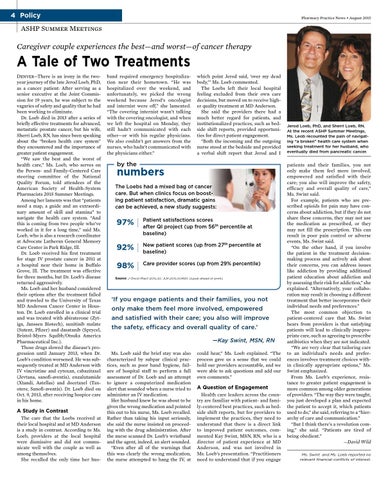
by the
numbers The Loebs had a mixed bag of cance er care. But when clinics focus on boossting patient satisfaction, dramatic ga ains can be achieved, a new study sugge ests:
97% |
Patient satisfactions scores after QI project (up from 56th percentile at baseline)
92% |
New patient scores (up from 27th percentile at baseline)
98% |
Care provider scores (up from 29% percentile)
Source: J Oncol Practt 2015;30. JOP.2015.004911. [Epub ahead of print]
‘If you engage patients and their families, you not only make them feel more involved, empowered and satisfied with their care; you also will improve the safety, efficacy and overall quality of care.’ —Kay Swint, MSN, RN Ms. Loeb said the brief stay was also characterized by subpar clinical practices, such as poor hand hygiene, failure of hospital staff to perform a full assessment of Dr. Loeb and an attempt to ignore a computerized medication alert that sounded when a nurse tried to administer an IV medication. Her husband knew he was about to be given the wrong medication and pointed this out to his nurse, Ms. Loeb recalled. Rather than taking his input seriously, she said the nurse insisted on proceeding with the drug administration. After the nurse scanned Dr. Loeb’s wristband and the agent, indeed, an alert sounded. “Even after all of the warnings that this was clearly the wrong medication, the nurse attempted to hang the IV, at
could hear,” Ms. Loeb explained. “The process gave us a sense that we could hold our providers accountable, and we were able to ask questions and add our own comments.”
A Question of Engagement Health care leaders across the country are familiar with patient- and family-centered best practices, such as bedside shift reports, but for providers to implement the practices, they need to understand that there is a direct link to improved patient outcomes, commented Kay Swint, MSN, RN, who is a director of patient experience at MD Anderson, and was not involved in Ms. Loeb’s presentation. “Practitioners need to understand that if you engage
Jerod Loeb, PhD, and Sherri Loeb, RN. At the recent ASHP Summer Meetings, Ms. Leob recounted the pain of navigating “a broken” health care system when seeking treatment for her husband, who eventually died from pancreatic cancer.
patients and their families, you not only make them feel more involved, empowered and satisfied with their care; you also will improve the safety, efficacy and overall quality of care,” Ms. Swint said. For example, patients who are prescribed opioids for pain may have concerns about addiction, but if they do not share these concerns, they may not use the medication as prescribed, or they may not fill the prescription. This can result in poor pain control or adverse events, Ms. Swint said. “On the other hand, if you involve the patient in the treatment decisionmaking process and actively ask about their concerns, you can address issues like addiction by providing additional patient education about addiction and by assessing their risk for addiction,” she explained. “Alternatively, your collaboration may result in choosing a different treatment that better incorporates their individual needs and preferences.” The most common objection to patient-centered care that Ms. Swint hears from providers is that satisfying patients will lead to clinically inappropriate care, such as agreeing to prescribe antibiotics when they are not indicated. “We are very clear that tailoring care to an individual’s needs and preferences involves treatment choices within clinically appropriate options,” Ms. Swint emphasized. From Ms. Loeb’s experience, resistance to greater patient engagement is more common among older generations of providers. “The way they were taught, you just developed a plan and expected the patient to accept it, which patients used to do,” she said, referring to a “hierarchy of care and communication.” “But I think there’s a revolution coming,” she said. “Patients are tired of being obedient.” —David Wild Ms. Swint and Ms. Loeb reported no relevant financial conflicts of interest.
Sometimes, "mostly closed" is not good enough.
Closed System Transfer Device
Safe. Simple. Closed.
www.equashield.com
P ROTECT Y OUR P HARMACY T EAM .
6 Policy
Pharmacy Practice News • August 2015
Compliance
I SURVIVED
cases and indicated that 40% would have likely been readmitted had we not followed up with the patients.” Dr. Shane offered several additional performance improvements that can boost medication safety: • Work with IT to ensure barcode medication administration and infusion device integration • Have proactive systems in place for dealing with drug shortages • Use lidded bins to reduce look-alike/ sound-alike dispensing errors.
continued from page 1
not want to hear me speak very much,” Dr. Shane said. “They want to hear it from front-line staff.” Preparing a slide deck can help staffers highlight the steps that pharmacy has taken to reduce medication error risks, she added during the webinar, which also included a presentation by Darryl S. Rich, PharmD, MBA, a medication safety specialist at the ISMP. Dr. Shane based her observations on the “many, many surveys” that she has experienced over the years as well as on TJC’s December visit to Cedars-Sinai. One thing that stood out during that week-long trial, she noted, was the shift in surveyors’ focus toward team-based care and pharmacists as team members. “We have pharmacists involved in the progression-of-care rounds,” Dr. Shane said, adding that surveyors “were very positive about seeing the pharmacists’ engagement. From my historical perspective, this was very encouraging. The Joint Commission has become more cognizant of our role in ensuring the safety of the medication-use process.” Dr. Shane outlined some of pharmacy’s initiatives to improve performance at medication risk points, with an emphasis on high-risk medications (Table). One involved opioids. “We’ve gone to Dilaudid [hydromorphone] as our preferred opioid,” she said, “and have added a statement to the medication order in our electronic medical record indicating that it is seven times more potent than morphine. We have also removed the 4-mg dose as an order option.” In the postoperative setting, she said, a performance improvement initiative has focused on ensuring monitoring of patients to reduce the risk for respiratory depression related to opioids.
Periodic Reviews Is Key Using red bins with warning stickers is one strategy for reducing risks posed by high-alert medications.
Also, pulse oximetry has been implemented for individuals using patientcontrolled analgesia. Medication reconciliation is another area receiving close scrutiny. “We’re doing a lot of work in transitions of care,” Dr. Shane commented. The current focus, she added, is on obtaining patients’ medication histories and involving pharmacists and technicians with the care team in ensuring that drugs aren’t omitted or incorrectly continued during handoffs across different levels of care, as well as at discharge and post-discharge. “We’re doing a fair amount of work in post-discharge follow-up,” Dr. Shane added. “Actually, we have a process where we have physicians validate whether patients would potentially have been readmitted had we not called, and we’ve had some favorable results.” Dr. Shane elaborated on the results in a follow-up email: “We haven’t performed a controlled study, so reduction in readmits has not been evaluated. However ... of the patients we called and where pharmacists identified significant drug-related problems, the physicians reviewed these
Dr. Rich offered a number of suggestions for meeting TJC’s medication management standards, including conducting periodic reviews of all areas where medications are used. “Do your own medication tracers,” he advised. “Go to those areas that you never go to.” Indeed, during TJC’s Cedars-Sinai survey in December, tracers were performed throughout the week, including ones related to vaccine storage and emergency medications. The surveyors’ high-risk tracer focused on chemotherapy. In the pharmacy department, Dr. Shane said surveyors were interested in “having us articulate what we do to ensure the safety and sterility of our compounding process for these hazardous substances.” Then they came back up to the unit and had the pharmacists, nurses and other team members “really focus on administration and safety, including how the infusion devices operate.” (See Table for some compounding safety tips.) During the weeklong survey, Dr. Shane was allowed to participate in the surveyors’ daily morning debriefing sessions. “That was invaluable,” she affirmed, “because it gave me insights into what the surveyors were interested in.” It also gave her a sense of what was important to focus on and get the word out to her staff.
Future Areas of Scrutiny
Table. Strategies To Ensure Safety With High-Alert Medications • Use of commercially available products whenever possible (e.g., heparin 25,000 units/250-mL bags) • Limit and/or standard concentrations available (e.g., heparin, neuromuscular-blocking agents)
Storage in Pharmacy Areas • Red bins/tape used to store high-alert medications in pharmacy department areas (heparin, concentrated KCl vials, chemotherapy agents)
Order & Transcription • Hospital protocols or order sets for heparin and argatroban infusions and patient-controlled analgesia • Pharmacist dual verification for parenteral chemotherapy
Preparation & Dispensing • Pharmacist independent double-checks (e.g., compounded parenteral chemotherapy, heparin infusions) Source: Rita Shane, PharmD, FASHP
“Looking into the crystal ball,” Dr. Rich predicted increased TJC emphasis on antimicrobial stewardship programs, safe opioid use and reducing errors related to health information technology, 81% of which, he said, are medication related, according to a 2012 study by the Pennsylvania Patient Safety Authority (http://goo.gl/dwkpfn). He also suggested keeping on top of “hot patient safety issues” that appear in the media (box). “Just remember,” he warned, “that surveyors are in their hotel the night before your survey, and if something appears in the news, they’re going to be asking you about it the next day. It could be an event that occurred 10 states away, but if it is health care– related they’re going to be wanting to know what you’ve done about that.” Deb Saine, BSPharm, MS, FASHP, a coauthor of the “Medication Safety Offi-
Darryl Rich’s Checklist for TJC Preparedness ✔ Periodically review all areas where medications are used.
✔ Conduct your own tracer audits. ✔ Go to the areas where you rarely visit.
✔ Be sure to address hot patient safety issues in the media.
✔ Work with your TJC Coordinator. ✔ Don’t panic—focus on big issues, not the obscure.
✔ Focus on direct impact areas of performance, which are likely to create immediate risks to patient safety. (The risks often stem from a lack of processes to offset the threats.)
✔ Make sure you have strategies in place for resolving issues that arise during audits.
✔ Take a well-thought–out, proactive approach to risk assessment.
✔ Encourage multidisciplinary input from front-line staff.
✔ Focus not only on meeting the letter of TJC requirements, but also the intent—especially the medication safety intent.
✔ Read TJC Standards FAQ (www. jointcommission.org/standards_ information/jcfaq.aspx). TJC, the Joint Commission Source: www.jointcommission.org
cer’s Handbook,” said health systems reap huge benefits from TJC’s focus on patient safety—a goal that is “front and center” in the group’s mission, she noted. Dr. Saine also gave kudos to TJC for not taking a top-down approach to process improvement. “Practitioner feedback and recommendations, including front-line pharmacists, are included in development of medication management standards and National Patient Safety Goals,” she pointed out. This dynamic process “encourages us to be forward-thinking and to raise the bar for our standards of practice,” said Ms. Saine, who is a senior lean management engineer at Valley Physician Enterprise, a part of Valley Health headquartered in Winchester, Va. “The standards (and the processes) for medication management span the entire organization—they drive the conversations for medication safety across departments, and expose opportunities for collaboration that might not otherwise exist in the absence of accreditation. This is a key value of the [Joint Commission] accreditation process.” —Bruce Buckley None of the sources reported any relevant financial conflicts of interest.
Enhance Efficiency with AHP Unit Dose Products In In-house packaging tasks take valuable time away from ccore patient-care responsibilities. Our pre-packaged unit dose products allow you to utilize staff for other, more d ccritical duties. Packaged in a cGMP facility, you can rest assured our products are packaged correctly and the a barcodes will scan easily as intended. b Our latest market introductions include: Aripiprazole Tablets 2 mg, 5 mg, 10 mg, 15 mg, 20 mg and 30 mg.
And as an added safety feature, our cartons feature color-coded labels with Tall Man Lettering to better distinguish similar products on the pharmacy shelf.
Efficient Pharmacy: Powered by American Health Packaging
americanhealthpackaging.com
8 Policy
Pharmacy Practice News • August 2015
Legislative Update
21st Century Harms? HEALTH CARE BILL continued from page 1
National Institutes of Health (NIH) budget, which has suffered from sequester and other cuts, and a separate allocation of $1.86 billion a year for five years to create an NIH Innovation Fund. The monies would be dedicated to innovative research for rare and fatal diseases with a medical need for better and more innovative treatments. However, the United States might be making a Faustian bargain that would continue long after the funding is stopped.
Moore said. “Buried in this legislative tome [the bill is more than 350 pages long] are numerous new loopholes that would allow pharmaceutical companies to avoid the pivotal legal requirement for robust scientific evidence that each new drug has, in fact, a clinical benefit.” In the name of streamlining and shortening the new drug and device approval process, the bill would allow the FDA to consider nontraditional study designs and analyses that could include clinician, patient and parent (for pediatric medications and vaccines) experience,
The 21st Century Cures Act ‘degrades the scientific gold standard—robust scientific evidence—by trying to push the FDA into using different forms of evidence that we know are not reliable.’ —Thomas J. Moore “I think, overall, we would consider a well-funded NIH to be a good thing for public health, so that is a positive element of the bill,” said Joseph M. Hill, the assistant director of government affairs and director of legislative affairs at the American Society of Health-System Pharmacists (ASHP), in Bethesda, Md. The ASHP is supportive of several provisions of the bill, including additional NIH funding. More than 700 groups are in favor of the bill. “I’m in favor of more NIH funding for basic science and translational clinical research,” agreed Ameet Sarpatwari, JD, PhD, an instructor in medicine in the Division of Pharmacoepidemiology & Pharmacoeconomics at Brigham and Women’s Hospital/Harvard Medical School, in Boston. “When you talk about innovation and transformative change—about developing new therapies that really improve patient health—you are talking about research that originates from NIH.” However, the congressional fanfare has tended to “overlook some of the more problematic aspects of the bill,” he added.
A Weakened FDA? These problematic aspects include provisions that could fundamentally change the way in which the FDA approves new drugs and devices, as well as weaken the agency’s oversight of already approved products, according to Thomas J. Moore, a senior scientist of drug safety and policy at the Institute for Safe Medication Practices, Horsham, Pa., and lecturer in the Department of Epidemiology and Biostatistics at the Milken Institute School of Public Health, The George Washington University, Washington, D.C. “I’ve not seen anything like it,” Mr.
as well as secondary end points and biomarkers when approving new products. Additionally, the bill would relax the FDA’s oversight when manufacturers alter the design of an approved device. The bill also would diminish the informed consent requirements for participants in clinical trials. These measures are unnecessary, however, because current FDA processes already expedite approval for treatments for serious illnesses or that address an unmet medical need, according to Harvard’s Jerry Avorn, MD, and Aaron S. Kesselheim, MD, JD, MPH. In a Perspective piece in The New England Journal of Medicine, the two explained that most new drugs are approved in the United States within six to 10 months, as quickly as any regulatory agency in the world (2015;372[26]:2473-2475). In a plea that Congress not “weaken” the FDA’s approval process, David A. Kessler, MD, former FDA commissioner, and two AIDS activists, Gregg Gonsalves and Mark Harrington, said the agency has mechanisms such as fasttrack and breakthrough drug designations that quickly bring new treatments to market ((New York Times 2015 June 11). “But the 21st Century Cures Act could substantially lower the standards for approval of many medical products, potentially placing patients at unnecessary risk of injury or death,” they wrote. Ali McBride, PharmD, MS, BCPS, BCOP, a clinical coordinator of hematology/oncology at The University of Arizona Cancer Center, in Tucson, agreed that the bill’s intent to speed drug approvals may be overkill. “We’ve had numerous oncolytic and nononcolytic drug therapies that have been processed through the breakthrough designation and other regulatory pathways to get new drugs approved quick-
Among the many changes in how the FDA, CDC, NIH and ACIP will operate in the future, the bill as written would: • Decrease the need for clinical trial drug testing for new indications: Under Section 2102 (Facilitating responsible communication of scientific and medical developments), companies would be permitted to disseminate scientific information that was not scrutinized by the FDA, opening the door for widespread use of drugs for unapproved indications. • Change the stringency of health data for marketing approval: Under Section 2062 (Utilizing data from clinical experience), the FDA could allow other data sources to approve new drugs or indications. This would include physician experience, biomarkers, nonclinical data and alternate end-points. • Lower the standards of the scientific evidence for medical devices approval: Section 2222 (Valid scientific evidence) allows use of anecdotal case histories and peer-reviewed published studies to be used. Section 2221 (Third-party quality system assessment) also allows companies that make devices, such as heart valves and stents, to make modifications after approval that do not need to be cleared by the FDA. Instead, it would require a third party to assess whether the company has acceptable quality control mechanisms that could “reasonably assure the safety and effectiveness” of the change. The companies would pay these third parties for the evaluation. Source: H.R. 6, Tom Moore
er,” he pointed out. “So we are already providing current treatments fast to our patient populations.” Dr. McBride stressed, however, that clinical trial data might not be the best way to assess the merits of a drug or medical device in development—biomarkers, for example, might be a better option. “These biomarkers may supersede the utilization of surrogate endpoints, such as progression-free survival,” he explained. These trends in drug development have brought on “a revolution” in the way the FDA now evaluates investigational drugs and medical devices, Dr. McBride said, adding that the 21st Century Cures legislation could help the agency navigate those tricky waters. But others are not as sanguine about the legislation’s true intent. In Mr. Moore’s view, the bill “degrades the scientific gold standard—robust scientific evidence—by trying to push the FDA into using different forms of evidence that we know are not reliable.”
Back Doors and Loopholes There is a caveat: In many instances, the bill would afford experts within the FDA the discretion to consider alternative methods for demonstrating drug and device safety and efficacy—but not demand that they accept them. Given such safeguards, “I don’t think certain
provisions, though troublesome, are necessarily as alarming as they might appear at first glance,” said Harvard’s Dr. Sarpatwari. Mr. Moore disagreed, saying that the bill opens the door for pharmaceutical companies to take advantage of the loopholes. “How far do you back away from the idea that drugs have a proven clinical benefit?” he asked. As long as the FDA truly has the final say about setting the gold standard for drug approval in this country, the ASHP will not oppose these provisions, according to Mr. Hill.
Off-Label Promotion a Shared Concern There is one provision, however, that concerns everyone who Pharmacy Practice News interviewed for this article: off-label promotion of drugs and devices. The bill would allow manufacturers to distribute health care economic information on off-label uses to payors, such as pharmacy benefits managers. In other words, manufacturers could proactively advocate for off-label use of their products, which now is largely prohibited. The information could also include “scientific and medical information not included in the approved labeling of drugs and devices,” the draft bill states. see HEALTH CARE BILL, page 11
Give your patients the relief they need Betamethasone Sodium Phosphate & Betamethasone Acetate* Injectable Suspension, USP Product Name Betamethasone Sodium Phosphate & Betamethasone Acetate* Injectable Suspension, USP
Fast-Acting
Long-Lasting
3
3 3 3
Kenalog®
X
Depo-Medrol®
X
(Triamcinolone Acetonide) Injectable Suspension, USP
(Methylprednisolone Acetate Injectable Suspension, USP)
Kenalog® is a registered trademark of Bristol-Myers Squibb. Depo-Medrol® is a registered trademark of Pfizer Inc.
*Betamethasone 6 mg/mL as 3 mg/mL Betamethasone Sodium Phosphate and 3 mg/mL Betamethasone Acetate The intra-articular or soft tissue administration of Betamethasone Sodium Phosphate and Betamethasone Acetate Injectable Suspension is indicated as adjunctive therapy for short-term administration (to tide the patient over an acute episode or exacerbation) in acute gouty arthritis, acute and subacute bursitis, acute nonspecific tenosynovitis, epicondylitis, rheumatoid arthritis, synovitis of osteoarthritis. Important Safety Information: Serious neurologic events, some resulting in death, have been reported with epidural injection of corticosteroids. Specific events reported include, but are not limited to, spinal cord infarction, paraplegia, quadriplegia, cortical blindness, and stroke. These serious neurologic events have been reported with and without use of fluoroscopy. The safety and effectiveness of epidural administration of corticosteroids have not been established, and corticosteroids are not approved for this use. As with any potent corticosteroid, adverse events have been associated with Betamethasone Sodium Phosphate and Betamethasone Acetate, Injectable Suspension, USP including fluid and electrolyte disturbances, as well as adverse reactions involving the following systems: allergic reactions, cardiovascular, dermatologic, endocrine, gastrointestinal, metabolic, musculoskeletal, neurological/ psychiatric, ophthalmic and other. Corticosteroids may also affect immune response. Rare instances of anaphylactoid reactions have occurred in patients receiving corticosteroid therapy. Betamethasone Sodium Phosphate and Betamethasone Acetate, Injectable Suspension, USP should not be administered intravenously or used in systemic fungal infections. Vaccination administration of live or live, attenuated vaccines is contraindicated in patients receiving immunosuppressive doses of corticosteroids. Patients should be warned not to discontinue the use of corticosteroids abruptly or without medical supervision, to advise any medical attendants that they are taking corticosteroids and to seek medical advice at once should they develop fever or other signs of infections. Persons who are on corticosteroids should be warned to avoid exposure to chicken pox or measles and to seek medical advice without delay if exposed.
Please see Brief Summary for Full Prescribing Information on next page
Dual-Agent
FAST-ACTING
LONG-LASTING ®
www.DualAgentBeta.com
Cortic osteroid BB036 Rev. 4/2015
Betamethasone Sodium Phosphate and Betamethasone Acetate Injectable Suspension, USP 6 mg per mL
Rx only DESCRIPTION Betamethasone Sodium Phosphate and Betamethasone Acetate Injectable Suspension, USP is a sterile aqueous suspension containing betamethasone 3 mg per milliliter as betamethasone sodium phosphate, and betamethasone acetate 3 mg per milliliter. Inactive ingredients per mL: dibasic sodium phosphate 7.1 mg; monobasic sodium phosphate 3.4 mg; edetate disodium 0.1 mg; and benzalkonium chloride 0.2 mg as a preservative. The pH is adjusted to between 6.8 and 7.2. INDICATIONS AND USAGE When oral therapy is not feasible, the intramuscular use of Betamethasone Sodium Phosphate and Betamethasone Acetate Injectable Suspension is indicated as follows: Allergic States Control of severe or incapacitating allergic conditions intractable to adequate trials of conventional treatment in asthma, atopic dermatitis, contact dermatitis, drug hypersensitivity reactions, perennial or seasonal allergic rhinitis, serum sickness, transfusion reactions. Dermatologic Diseases Bullous dermatitis herpetiformis, exfoliative erythroderma, mycosis fungoides, pemphigus, severe erythema multiforme (Stevens-Johnson syndrome). Endocrine Disorders Congenital adrenal hyperplasia, hypercalcemia associated with cancer, nonsuppurative thyroiditis. Hydrocortisone or cortisone is the drug of choice in primary or secondary adrenocortical insufficiency. Synthetic analogs may be used in conjunction with mineralocorticoids where applicable; in infancy mineralocorticoid supplementation is of particular importance. Gastrointestinal Diseases To tide the patient over a critical period of the disease in regional enteritis and ulcerative colitis. Hematologic Disorders Acquired (autoimmune) hemolytic anemia, Diamond-Blackfan anemia, pure red cell aplasia, selected cases of secondary thrombocytopenia. Miscellaneous Trichinosis with neurologic or myocardial involvement, tuberculous meningitis with subarachnoid block or impending block when used with appropriate antituberculous chemotherapy. Neoplastic Diseases For palliative management of leukemias and lymphomas. Nervous System Acute exacerbations of multiple sclerosis; cerebral edema associated with primary or metastatic brain tumor or craniotomy. Ophthalmic Diseases Sympathetic ophthalmia, temporal arteritis, uveitis and ocular inflammatory conditions unresponsive to topical corticosteroids. Renal Diseases To induce diuresis or remission of proteinuria in idiopathic nephrotic syndrome or that due to lupus erythematosus. Respiratory Diseases Berylliosis, fulminating or disseminated pulmonary tuberculosis when used concurrently with appropriate antituberculous chemotherapy, idiopathic eosinophilic pneumonias, symptomatic sarcoidosis. Rheumatic Disorders As adjunctive therapy for short-term administration (to tide the patient over an acute episode or exacerbation) in acute gouty arthritis; acute rheumatic carditis; ankylosing spondylitis; psoriatic arthritis; rheumatoid arthritis, including juvenile rheumatoid arthritis (selected cases may require low-dose maintenance therapy). For the treatment of dermatomyositis, polymyositis, and systemic lupus erythematosus. The intra-articular or soft tissue administration of Betamethasone Sodium Phosphate and Betamethasone Acetate Injectable Suspension is indicated as adjunctive therapy for short-term administration (to tide the patient over an acute episode or exacerbation) in acute gouty arthritis, acute and subacute bursitis, acute nonspecific tenosynovitis, epicondylitis, rheumatoid arthritis, synovitis of osteoarthritis. The intralesional administration of Betamethasone Sodium Phosphate and Betamethasone Acetate Injectable Suspension is indicated for alopecia areata; discoid lupus erythematosus; keloids; localized hypertrophic, infiltrated, inflammatory lesions of granuloma annulare, lichen planus, lichen simplex chronicus (neurodermatitis), and psoriatic plaques; necrobiosis lipoidica diabeticorum. Betamethasone Sodium Phosphate and Betamethasone Acetate Injectable Suspension, may also be useful in cystic tumors of an aponeurosis or tendon (ganglia). CONTRAINDICATIONS Betamethasone Sodium Phosphate and Betamethasone Acetate Injectable Suspension is contraindicated in patients who are hypersensitive to any components of this product. Intramuscular corticosteroid preparations are contraindicated for idiopathic thrombocytopenic purpura. WARNINGS Betamethasone Sodium Phosphate and Betamethasone Acetate Injectable Suspension should not be administered intravenously. Serious Neurologic Adverse Reactions with Epidural Administration Serious neurologic events, some resulting in death, have been reported with epidural injection of corticosteroids. Specific events reported include, but are not limited to, spinal cord infarction, paraplegia, quadriplegia, cortical blindness, and stroke. These serious neurologic events have been reported with and without use of fluoroscopy. The safety and effectiveness of epidural administration of corticosteroids have not been established, and corticosteroids are not approved for this use. General Rare instances of anaphylactoid reactions have occurred in patients receiving corticosteroid therapy. In patients on corticosteroid therapy subjected to any unusual stress, hydrocortisone or cortisone is the drug of choice as a supplement during and after the event. Cardio-renal Average and large doses of corticosteroids can cause elevation of blood pressure, salt and water retention, and increased excretion of potassium. Literature reports suggest an apparent association between use of corticosteroids and left ventricular free wall rupture after a recent myocardial infarction; therefore, therapy with corticosteroids should be used with great caution in these patients. Endocrine Corticosteroids can produce reversible hypothalamic-pituitary adrenal (HPA) axis suppression with the potential for glucocorticosteroid insufficiency after withdrawal of treatment. Metabolic clearance of corticosteroids is decreased in hypothyroid patients and increased in hyperthyroid patients. Changes in thyroid status of the patient may necessitate adjustment in dosage. Infections General Patients who are on corticosteroids are more susceptible to infections than are healthy individuals. There may be decreased resistance and inability to localize infection when corticosteroids are used. Infection with any pathogen (viral, bacterial, fungal, protozoan, or helminthic) in any location of the body may be associated with the use of corticosteroids alone or in combination with other immunosuppressive agents. These infections may be mild to severe. With increasing doses of corticosteroids, the rate of occurrence of infectious complications increases. Corticosteroids may also mask some signs of current infection. Fungal Infections Corticosteroids may exacerbate systemic fungal infections and therefore should not be used in the presence of such infections unless they are needed to control drug reactions. There have been cases reported in which concomitant use of amphotericin B and hydrocortisone was followed by cardiac enlargement and congestive heart failure (see PRECAUTIONS, Drug Interactions, Amphotericin B Injection and Potassium-Depleting Agents section). Special Pathogens Latent disease may be activated or there may be an exacerbation of intercurrent infections due to pathogens, including those caused by Amoeba, Candida, Cryptococcus, Mycobacterium, Nocardia, Pneumocystis, and Toxoplasma. It is recommended that latent amebiasis or active amebiasis be ruled out before initiating corticosteroid therapy in any patient who has spent time in the tropics or in any patient with unexplained diarrhea. Similarly, corticosteroids should be used with great care in patients with known or suspected Strongyloides (threadworm) infestation. In such patients, corticosteroidinduced immunosuppression may lead to Strongyloides hyperinfection and dissemination with widespread larval migration, often accompanied by severe enterocolitis and potentially fatal gram-negative septicemia. Corticosteroids should not be used in cerebral malaria. Tuberculosis The use of corticosteroids in active tuberculosis should be restricted to those cases of fulminating or disseminated tuberculosis in which the corticosteroid is used for the management of the disease in conjunction with an appropriate antituberculous regimen. If corticosteroids are indicated in patients with latent tuberculosis or tuberculin reactivity, close observation is necessary as reactivation of the disease may occur. During prolonged corticosteroid therapy, these patients should receive chemoprophylaxis. Vaccination Administration of live or live, attenuated vaccines is contraindicated in patients receiving immunosuppressive doses of corticosteroids. Killed or inactivated vaccines may be administered. However, the response to such vaccines cannot be predicted Viral Infections Chickenpox and measles can have a more serious or even fatal course in pediatric and adult patients on corticosteroids. In pediatric and adult patients who have not had these diseases, particular care should be taken to avoid exposure. If exposed to chickenpox, prophylaxis with varicella zosterr immune globulin (VZIG) may be indicated. If exposed to measles, prophylaxis with immunoglobulin (IG) may be indicated. (See the respective package inserts for complete VZIG and IG prescribing information.) If chicken pox develops, treatment with antiviral agents should be considered. Neurologic Reports of severe medical events have been associated with the intrathecal route of administration (see ADVERSE REACTIONS, Gastrointestinal and Neurologic/ Psychiatric sections). High doses of corticosteroids, including Betamethasone Sodium Phosphate and Betamethasone Acetate Injectable Suspension, should not be used for the treatment of traumatic brain injury. Ophthalmic Use of corticosteroids may produce posterior subcapsular cataracts, glaucoma with possible damage to the optic nerves, and may enhance the establishment of secondary ocular infections due to bacteria, fungi, or viruses. The use of oral corticosteroids is not recommended in the treatment of optic neuritis and may lead to an increase in the risk of new episodes. Corticosteroids should not be used in active ocular herpes simplex. PRECAUTIONS General This product, like many other steroid formulations, is sensitive to heat. Therefore, it should not be autoclaved when it is desirable to sterilize the exterior of the vial. The lowest possible dose of corticosteroid should be used to control the condition under treatment. When reduction in dosage is possible, the reduction should be gradual. Since complications of treatment with glucocorticoids are dependent on the size of the dose and the duration of treatment, a risk/benefit decision must be made in each individual case as to dose and duration of treatment and as to whether daily or intermittent therapy should be used. Kaposi’s sarcoma has been reported to occur in patients receiving corticosteroid therapy, most often for chronic conditions. Discontinuation of corticosteroids may result in clinical improvement. Cardio-renal As sodium retention with resultant edema and potassium loss may occur in patients receiving corticosteroids, these agents should be used with caution in patients with congestive heart failure, hypertension, or renal insufficiency. Endocrine Drug-induced secondary adrenocortical insufficiency may be minimized by gradual reduction of dosage. This type of relative insufficiency may persist for months after discontinuation of therapy. Therefore, in any situation of stress occurring during that period, naturally occurring glucocorticoids (hydrocortisone cortisone), which also have salt-retaining properties, rather than betamethasone, are the appropriate choices as replacement therapy in adrenocorticoal deficiency states. Gastrointestinal Steroids should be used with caution in active or latent peptic ulcers, diverticulitis, fresh intestinal anastomoses, and nonspecific ulcerative colitis, since they may increase the risk of a perforation. Signs of peritoneal irritation following gastrointestinal perforation in patients receiving corticosteroids may be minimal or absent. There is an enhanced effect of corticosteroids in patients with cirrhosis. Intra-Articular and Soft Tissue Administration Intra-articular injected corticosteroids may be systematically absorbed. Appropriate examination of any joint fluid present is necessary to exclude a septic process. A marked increase in pain accompanied by local swelling, further restriction of joint motion, fever, and malaise are suggestive of septic arthritis. If this complication occurs and the diagnosis of sepsis is confirmed, appropriate antimicrobial therapy should be instituted. Injection of a steroid into an infected site is to be avoided. Local injection of a steroid into a previously injected joint is not usually recommended. Corticosteroid injection into unstable joints is generally not recommended. Intra-articular injection may result in damage to joint tissues (see ADVERSE REACTIONS, Musculoskeletal section). Musculoskeletal Corticosteroids decrease bone formation and increase bone resorption both through their effect on calcium regulation (ie, decreasing absorption and increasing excretion) and inhibition of osteoblast function. This, together with a decrease in the protein matrix of the bone secondary to an increase in protein catabolism, and reduced sex hormone production, may lead to inhibition of bone growth in pediatric patients and the development of osteoporosis at any age. Special consideration should be given to patients at increased risk of osteoporosis (ie, postmenopausal women) before initiating corticosteroid therapy.
Neuro-psychiatric Although controlled clinical trials have shown corticosteroids to be effective in speeding the resolution of acute exacerbations of multiple sclerosis, they do not show that they affect the ultimate outcome or natural history of the disease. The studies do show that relatively high doses of corticosteroids are necessary to demonstrate a significant effect (see DOSAGE AND ADMINISTRATION). An acute myopathy has been observed with the use of high doses of corticosteroids, most often occurring in patients with disorders of neuromuscular transmission (eg, myasthenia gravis), or in patients receiving concomitant therapy with neuromuscular blocking drugs (eg, pancuronium). This acute myopathy is generalized, may involve ocular and respiratory muscles, and may result in quadriparesis. Elevation of creatinine kinase may occur. Clinical improvement or recovery after stopping corticosteroids may require weeks to years. Psychic derangements may appear when corticosteroids are used, ranging from euphoria, insomnia, mood swings, personality changes, and severe depression to frank psychotic manifestations. Also, existing emotional instability or psychotic tendencies may be aggravated by corticosteroids. Ophthalmic Intraocular pressure may become elevated in some individuals. If steroid therapy is continued for more than 6 weeks, intraocular pressure should be monitored. Information for Patients Patients should be warned not to discontinue the use of corticosteroids abruptly or without medical supervision, to advise any medical attendants that they are taking corticosteroids and to seek medical advice at once should they develop fever or other signs of infection. Persons who are on corticosteroids should be warned to avoid exposure to chicken pox or measles. Patients should also be advised that if they are exposed, medical advice should be sought without delay. Drug Interactions Aminoglutethimide Aminoglutethimide may lead to a loss of corticosteroid-induced adrenal suppression. Amphotericin B Injection and Potassium-Depleting Agents When corticosteroids are administered concomitantly with potassium-depleting agents (ie, amphotericin-B, diuretics), patients should be observed closely for development of hypokalemia. There have been cases reported in which concomitant use of amphotericin B and hydrocortisone was followed by cardiac enlargement and congestive heart failure. Antibiotics Macrolide antibiotics have been reported to cause a significant decrease in corticosteroid clearance. Anticholinesterases Concomitant use of anticholinesterase agents and corticosteroids may produce severe weakness in patients with myasthenia gravis. If possible, anticholinesterase agents should be withdrawn at least 24 hours before initiating corticosteroid therapy. Anticoagulants, Oral Coadministration of corticosteroids and warfarin usually results in inhibition of response to warfarin, although there have been some conflicting reports. Therefore, coagulation indices should be monitored frequently to maintain the desired anticoagulant effect. Antidiabetics Because corticosteroids may increase blood glucose concentrations, dosage adjustments of antidiabetic agents may be required. Antitubercular Drugs Serum concentrations of isoniazid may be decreased. Cholestyramine Cholestyramine may increase the clearance of corticosteroids. Cyclosporine Increased activity of both cyclosporine and corticosteroids may occur when the two are used concurrently. Convulsions have been reported with this concurrent use. Digitalis Glycosides Patients on digitalis glycosides may be at increased risk of arrhythmias due to hypokalemia. Estrogens, Including Oral Contraceptives Estrogens may decrease the hepatic metabolism of certain corticosteroids, thereby increasing their effect. Hepatic Enzyme Inducers (eg, barbiturates, phenytoin, carbamazepine, rifampin) Drugs which induce hepatic microsomal drug-metabolizing enzyme activity may enhance the metabolism of corticosteroids and require that the dosage of the corticosteroid be increased. Ketoconazole Ketoconazole has been reported to decrease the metabolism of certain corticosteroids by up to 60%, leading to an increased riskk of corticosteroid side effects. Nonsteroidal Anti-inflammatory Agents (NSAIDS) Concomitant use of aspirin (or other nonsteroidal anti-inflammatory agents) and corticosteroids increases the risk of gastrointestinal side effects. Aspirin should be used cautiously in conjunction with corticosteroids in hypoprothrombinemia. The clearance of salicylates may be increased with concurrent use of corticosteroids. Skin Tests Corticosteroids may suppress reactions to skin tests. accines Patients on prolonged corticosteroid therapy may exhibit a diminished response to toxoids and live or inactivated vaccines due to inhibition of antibody response. Corticosteroids may also potentiate the replication of some organisms contained in live attenuated vaccines. Route administration of vaccines or toxoids should be deferred until corticosteroid therapy is discontinued if possible (see WARNINGS, Infections, Vaccination section). Carcinogenesis, Mutagenesis, Impairment of Fertility No adequate studies have been conducted in animals to determine whether corticosteroids have a potential for carcinogenesis or mutagenesis. Steroids may increase or decrease motility and number of spermatozoa in some patients. Pregnancy Teratogenic Effects Pregnancy Category C Corticosteroids have been shown to be teratogenic in many species when given in doses equivalent to the human dose. Animal studies in which corticosteroids have been given to pregnant mice, rats, and rabbits have yielded an increased incidence of cleft palate in the offspring. There are no adequate and well-controlled studies in pregnant women. Corticosteroids should be used during pregnancy only if the potential benefit justifies the potential risk to the fetus. Infants born to mothers who have received corticosteroids during pregnancy should be carefully observed for signs of hypoadrenalism. Nursing Mothers Systematically administered corticosteroids appear in human milk and could suppress growth, interfere with endogenous corticosteroid production, or cause other untoward effects. Caution should be exercised when corticosteroids are administered to a nursing woman. Pediatric Use The efficacy and safety of corticosteroids in the pediatric population are based on the well-established course of effect of corticosteroids, which is similar in pediatric and adult populations. Published studies provide evidence of efficacy and safety in pediatric patients for the treatment of nephrotic syndrome (>2 years of age), and aggressive lymphomas and leukemias (>1 month of age). Other indications for pediatric use of corticosteroids, eg, severe asthma and wheezing, are based on adequate and well-controlled trials conducted in adults, on the premises that the course of the diseases and their pathophysiology are considered to be substantially similar in both populations. The adverse effects of corticosteroids in pediatric patients are similar to those in adults (see ADVERSE REACTIONS). Like adults, pediatric patients should be carefully observed with frequent measurements of blood pressure, weight, height, intraocular pressure, and clinical evaluation for the presence of infection, psychosocial disturbances, thromboembolism, peptic ulcers, cataracts, and osteoporosis. Pediatric patients who are treated with corticosteroids by any route, including systematically administered corticosteroids, may experience a decrease in their growth velocity. This negative impact of corticosteroids on growth has been observed at low systemic doses and in the absence of laboratory evidence of HPA axis suppression (ie, cosyntropin stimulation and basal cortisol plasma levels). Growth velocity may therefore be a more sensitive indicator of systemic corticosteroid exposure in pediatric patients than some commonly used tests of HPA axis function. The linear growth of pediatric patients treated with corticosteroids should be monitored, and the potential growth effects of prolonged treatment should be weighed against clinical benefits obtained and the availability of treatment alternatives. In order to minimize the potential growth effects of corticosteroids, pediatric patients should be titrated to the lowest effective dose. Geriatric Use No overall differences in safety or effectiveness were observed between elderly subjects and younger subjects, and other reported clinical experience has not identified differences in responses between the elderly and young patients, but greater sensitivity of some older individuals cannot be ruled out. ADVERSE REACTIONS (listed alphabetically, under each subsection) Allergic Reactions Anaphylactoid reaction, anaphylaxis, angioedema. Cardiovascular Bradycardia, cardiac arrest, cardiac arrhythmias, cardiac enlargement, circulatory collapse, congestive heart failure, fat embolism, hypertension, hypertrophic cardiomyopathy in premature infants, myocardial rupture following recent myocardial infarction (see WARNINGS), pulmonary edema, syncope, tachycardia, thromboembolism, thrombophlebitis, vasculitis. Dermatologic Acne, allergic dermatitis, cutaneous and subcutaneous atrophy, dry scaly skin, ecchymoses and petechiae, edema, erythema, hyperpigmentation, hypopigmentation, impaired wound healing, increased sweating, rash, sterile abscess, striae, suppressed reactions to skin tests, thin fragile skin, thinning scalp hair, urticaria. Endocrine Decreased carbohydrate and glucose tolerance, development of cushingoid state, glucosuria, hirsutism, hypertrichosis, increased requirements for insulin or oral hypoglycemic adrenocortical and pituitary unresponsiveness (particularly in times of stress, as in trauma, surgery, or illness), suppression of growth in pediatric patients. Fluid and Electrolyte Disturbances Congestive heart failure in susceptible patients, fluid retention, hypokalemic alkalosis, potassium loss, sodium retention. Gastrointestinal Abdominal distention, bowel/bladder dysfunction (after intrathecal administration), elevation in serum liver enzyme levels (usually reversible upon discontinuation), hepatomegaly, increased appetite, nausea, pancreatitis, peptic ulcer with possible perforation and hemorrhage, perforation of the small and large intestine (particularly in patients with inflammatory bowel disease), ulcerative esophagitis. Metabolic Negative nitrogen balance due to protein catabolism. Musculoskeletal Aseptic necrosis of femoral and humeral heads, calcinosis (following intra-articular or intralesional use), Charcot-like arthropathy, loss of muscle mass, muscle weakness, osteoporosis, pathologic fracture of long bones, postinjection flare (following intra-articular use), steroid myopathy, tendon rupture, vertebral compression fractures. Neurologic/Psychiatric Convulsions, depression, emotional instability, euphoria, headache, increased intracranial pressure with papilledema (pseudotumor cerebri) usually following discontinuation of treatment, insomnia, mood swings, neuritis, neuropathy, paresthesia, personality changes, psychic disorders, vertigo. Arachnoiditis, meningitis, paraparesis/paraplegia, and sensory disturbances have occurred after intrathecal administration (see WARNINGS, Neurologic section). Ophthalmic Exophthalmos, glaucoma, increased intraocular pressure, posterior subcapsular cataracts, rare instances of blindness associated with periocular injections. Other Abnormal fat deposits, decreased resistance to infection, hiccups, increased or decreased motility and number of spermatozoa, malaise, moon face, weight gain. OVERDOSAGE Treatment of acute overdose is by supportive and symptomatic therapy. For chronic overdosage in the face of severe disease requiring continuous steroid therapy, the dosage of the corticosteroid may be reduced only temporarily, or alternate day treatment may be introduced. DOSAGE AND ADMINISTRATION Benzyl alcohol as a preservative has been associated with a fatal “Gasping Syndrome” in premature infants and infants of low birth weight. Solutions used for further dilution of this product should be preservative-free when used in the neonate, especially the premature infant. The initial dosage of parenterally administered Betamethasone Sodium Phosphate and Betamethasone Acetate Injectable Suspension may vary from 0.25 to 9.0 mg per day depending on the specific disease entity being treated. However, in certain overwhelming, acute, life-threatening situations, administrations in dosages exceeding the usual dosages may be justified and may be in multiples of the oral dosages. It Should Be Emphasized That Dosage Requirements Are Variable and Must Be Individualized on the Basis of the Disease Under Treatment and the Response of the Patient. After a favorable response is noted, the proper maintenance dosage should be determined by decreasing the initial drug dosage in small decrements at appropriate time intervals until the lowest dosage which will maintain an adequate clinical response is reached. If after long-term therapy the drug is to be stopped, it is recommended that it be withdrawn gradually rather than abruptly.
SEE FULL PRESCRIBING INFORMATION FOR FULL DOSAGE AND ADMINISTRATION DIRECTIONS. BS1019 Revised July 2014 ®
Policy 11
Pharmacy Practice News • August 2015
Finance
GAO Urges Curbs on 340B Spending Incentives C
ongress should consider reducing financial incentives that make it easier for 340B hospitals to prescribe more drugs—many at a higher cost—than necessary to Medicare recipients, according to a new report by the Government Accountability Office (GAO). The GAO report, which was commissioned by several leading members of Congress, found that in 2012, the average yearly drug spending per Medicare beneficiary at 340B hospitals was $144, compared with $60 at non-340B hospitals that also served low-income patients and $62 at non-340B facilities that did not serve such patients. The report also found that 340B hospitals tended to be larger teaching institutions, and, for the most part, provide more uncompensated and charity care than non-340B facilities. However, 12% of the 340B hospitals were among those reporting the lowest amounts of indigent care, according to the GAO analysis. About 40% of U.S. hospitals participate in the 340B program, and they receive the bulk of the 340B discounted medications, the report stated.
to that claim. The authors pointed out that the Centers for Medicare & Medicaid (CMS) uses a statutorily defined formula that sets the payment for drugs, regardless of how much a hospital paid for them. “Therefore, there is a financial incentive at hospitals participating in the 340B program to prescribe more drugs and more expensive drugs to Medicare beneficiaries,” the report stated.
$144
(340Ba)
HEALTH CARE BILL continued from page 8
“We have concerns with [this provision],” said Mr. Hill, who added that the ASHP offered language to strengthen the provision that the materials distributed by manufacturers be “scientifically sound, peer-reviewed literature.” Dr. Sarpatwari said he also was concerned about the bill’s stance on offlabel promotion. “It is a slippery slope,” he stressed. “The more you open the door for off-label marketing, the worse your health system is going to be, frankly, because as long as you have a product with an approved indication, you could theoretically market it for anything else, and that defeats the whole purpose of the regulatory system that we have in place to make sure that drugs are safe and effective.” Dr. Sarpatwari added that he understands the desire to get new therapies to patients faster, but the FDA has “a
$62
$60
(Non-340Bb)
(Other non-340Bc)
2012 Medicare Part B Drug Spend 340B hospitals received considerably higher reimbursement from Medicare Part B per individual.
In the Cross-Hairs Some members of Congress have been actively gunning for the 340B program. They question whether certain eligibility criteria truly target the most at-need hospitals, and whether the program and its revenues actually help vulnerable patients. Lawmakers also have complained that the program incentivizes hospitals to maximize revenue from 340B transactions. The GAO report lends some credence
per-beneficiary spending on Medicare Part B drugs at 340B disproportionate share hospitals ‘may’ be in response to financial incentives created by the 340B program,” said 340B Health, an association of more than 1,000 hospitals. Moreover, “the report does not sufficiently evaluate the causes behind the increased spending, such as treatment of more complicated cancer patients.” The group also pointed out that the GAO report does not evaluate whether the higher spending seen in the analysis improved patient outcomes. Kasey Thompson, PharmD, MS, MBA, the vice president of policy, planning and communications at the American Society
a
340B hospital; b Treats indigent patients, but is not a 340B hospital; c Other non-340B hospital.
However, several organizations, including the Department of Health and Human Services, expressed concerns about the report’s findings, most notably that the auditors did not consider patient type or outcomes. “There is insufficient data in the report to justify a conclusion that higher
of Health-System Pharmacists, pointed to another factor that may color the GAO findings. “Disproportionate share hospitals frequently treat sicker and more complex patients than non-340B facilities,” he said, adding that “while compliance and program integrity are essential to maintain the vitality of the program,
responsibility to make sure those products are safe and effective. The last thing you want to do is give manufacturers more of an incentive to push products earlier that may [pose risks to patients].”
which has yet to be brought forward. However, there is not a lot of time because a Senate Committee is expected to take up the measure in September. If the Senate passes its version of H.R. 6, the House and Senate bills must be reconciled—combined and crafted into one law, which the president must sign before it takes effect. The White House position on the bill is unclear, as is the FDA’s: An agency representative said it could not comment on pending legislation.
Not a Done Deal “This bill is a sleeper,” Mr. Moore said. “It sailed through the House of Representatives without a lot of consideration and thought about what it would actually do.” Even though the House has approved the bill, the Senate must also pass it before the proposal becomes law. That leaves time to mitigate some of these concerns, and Mr. Hill and others have been talking with senators about the legislation. The Senate can separate the two major objectives of the bill—to provide NIH funding and incentives for research— without including any of the FDA provisions. Alternatively, it could change some or all of the provisions in the Senate bill,
Tapping Oil Reserves—Really? The 21st Century Cures Act faces another hurdle: The Congressional Budget Office must review the bill to ensure there is a mechanism to pay for its provisions. The House bill suggests selling off U.S. oil reserves as a funding source, but some congressional observers thought that unlikely. Therefore, it is doubtful that H.R. 6 would actually become law before 2016,
any reforms must preserve the ability for safety net providers to care for our country’s most vulnerable patients.” The 340B program allows these hospitals to obtain discounted medications to offset the cost of care for uninsured and underinsured patients. Without access to these discounts, participating hospitals would not be able to absorb the cost of providing care to indigent patients, Dr. Thompson stressed. The GAO echoed that point—at least secondarily—in a letter to lawmakers, pointing to the fact that program defenders say it allows hospitals to serve more low-income, uninsured and underinsured individuals.
Study Methodology The GAO report compared 2008 and 2012 data from the Health Resources and Services Administration 340B Covered Entity Database. It focused the analysis on one of the six hospital types eligible for the program—disproportionate share hospitals—because these account for the majority of drugs purchased under 340B. The agency compared Medicare payments with non-340B hospitals that also treat socioeconomically disadvantaged patients and hospitals that do not treat indigent patients. The GAO looked at CMS claims data for each of these entities. The GAO said the Medicare program spent $6 billion for Part B drugs in the hospital outpatient setting. —Marie Rosenthal The sources reported no relevant financial conflicts of interest.
More on the Web Check out our website for more details about the provisions of the 21st Century Cures Act concerning antibiotics and vaccinations.
they said, and no one knows exactly what that final law will entail. “We are going to have to wait and see,” Mr. Hill said. “But I think we will have to be vigilant [if the law is approved], and be on the lookout for any compromises on patient safety. That is certainly something I think that we need to have high on our radar screen, should this be enacted in the next year or so.” —Marie Rosenthal The sources reported no relevant financial conflicts of interest.
12 Policy
Pharmacy Practice News • August 2015
Reimbursement Matters
More Additions to Your e-Library T
he summer brings a fresh start to many pharmacies, with eager new residents beginning their programs and new grads joining your staff. Laying a solid foundation for them to be able to access information and strategically plan for the workplace of their future is a crucial step. Because learning to step outside the bounds of customarily used pharmacy literature is important, some examples are included here. At the same time, payors—both the Centers for Medicare & Medicaid Services (CMS), for Medicare, and the private payors and insurance carriers—begin to release their proposals for the upcoming payment year. This begins Oct. 1 for inpatients and Jan. 1 for outpatients.
care in these outpatient settings. OPPS payment amounts vary according to the Ambulatory Payment Classification (APC) group to which a service or procedure is assigned. Restructuring of APCs: CMS annually reviews and revises the OPPS APC groups to consider changes in medical practices and technologies, the addition of new services and new cost data, or other relevant information. This year’s proposal restructures, reorganizes and consolidates APCs to create nine clinical APC families that will include various surgical and diagnostic procedures. Proposed Comprehensive Ambulatory Payment Classifications
vation services to provide comprehensive payment for all services rendered when receiving comprehensive observation services. In such cases, services are defined as nonsurgical encounters ncounters with a high-level outpatient ho ospital visit and eight or more hours of o observation. Copayments under the O OPPS for any service are capped at th he inpatient deductible amount. Look for more details on this and d the impact on drug charges. Proposed Packaged d Services: CMS has reit-erated its belief that a basic tenet of a prospective payment system is the packaging of all intee-
“Reimbursement Matters” is a tool for maintaining your health system’s fiscal health. Please email the author at BonnieKirschen baum2@gmail.com with suggestions on reimbursement issues that you would like to see covered.
Bonnie Kirschenbaum, MS, FASHP
Table. New or Clarified HCPCS Codes Effective for Dates of Service on or After:
HCPCS Code
Jan. 1, 2015
C9349
PuraPly, and PuraPly Antimicrobial, any type, per square centimeter
PuraPly, PuraPly Antimic
Trade name change from f “FortaDerm” to “Pura aPly” effective July 1, 2015
July 1, 2015
C9453
Injection, nivolumab, 1 mg
Injection, nivolumab
New OPPS pass-through ugh drug code
July 1, 2015
C9454
Injection, pasireotide long acting, 1 mg
Inj, pasireotide long acting
New OPPS pass-through drug code
July 1, 2015
C9455
Injection, siltuximab, 10 mg
Injection, siltuximab
New OPPS pass-through drug code
Long Description
Short Description
Comment
HCPCS,, Healthcare Common Procedure Coding g System; y ; OPPS,, Outpatient p Prospective p Payment y System y
Remember that only patients admitted as inpatients and sleeping in the facility overnight are considered inpatients; everyone else is covered by outpatient rules, including observation patients who are sleeping overnight. This month’s column is going to touch on several important releases and provide links for you to follow and place into your e-library for future reference. Look for more details in future columns as the payment rules are refined and finalized.
Proposed Updates Affecting Hospital Outpatient and Ambulatory Surgical Centers CMS released the Calendar Year (CY) 2016 Hospital Outpatient Prospective Payment System (OPPS) and Ambulatory Surgical Center (ASC) Payment System policy changes, quality provisions and payment rates proposed rule [CMS-1633-P] on July 1. These rules propose updates to Medicare payment policies and rates for hospital outpatient departments, ASCs and partial hospitalization services provided by community mental health centers. The rules also propose refinements to programs that encourage high-quality
(C-APCs) for 2016: C-APCs are APCs that provide encounter-level payment for a designated primary procedure plus all adjunctive and secondary services provided in conjunction with the primary procedure. The current 25 C-APCs mostly include procedures for the implantation of costly medical devices. For CY 2016, CMS is proposing nine new C-APCs, including some surgical APCs, and a new C-APC for comprehensive observation services. CMS also is proposing to collect data through the use of a Healthcare Common Procedure Coding System (HCPCS) modifier on all services related to a C-APC primary procedure that are reported on a separate claim. This data collection would allow assessment of the costs of all adjunctive services related to C-APC services, even if reported on a separate claim. C-APC for Comprehensive Observation Services: Currently, observation services are reimbursed with a single payment for nonsurgical encounters with a high-level visit and eight or more hours of observation, along with a separate payment for most other primary services reported on the claim. CMS is proposing to create a C-APC for obser-
gral, ancillary, supportive, dependent or adjunctive services into primary services. In keeping with this, CMS has conditionally packaged many ancillary services, and will continue this policy in CY 2016 with a limited number of additional ancillary services, particularly certain minor procedures and pathology services. CMS is also proposing to package payment for a few drugs that function as supplies in a surgical procedure (HCPCS codes J0583 [Injection, bivalirudin, 1 mg], J7315 [Mitomycin, ophthalmic, 0.2 mg] and J0130 [Injection abciximab, 10 mg in 2016]). The proposed rule also includes important proposed changes to the Two-Midnight Rule for CY 2016. For more information, visit the CMS website at http://goo.gl/ KVEsuF and http://goo.gl/IiPszp.
Proposed Payment Rates For Drugs And Biologics As this column has emphasized many times, future calculations of drug payments are based on the history of claims data submitted by the facilities. For 2016, the calculations for drugs and biologics are based on the April 2015 Average Sales Price (ASP) plus 6%,
then multiplied by the average number of units per day for each drug or biologic to arrive at its per-day cost. For items that did not have an ASP, CY 2014 hospital claims data were used to determine the per-day costs. The per-day costs then are used to determine whether a drug or biologic is packaged. For CY 2016, CMS has proposed continuing to pay for separately payable drugs and biologics under the OPPS at ASP plus 6%, on the basis of the statutory default described in section 1833(t) (14)(A)(iii)(II) of the Act. The packaging threshold is proposed to increase from $95 to $100. For more information, visit the CMS website at http://goo.gl/0L6J5J.
Proposed Updates for EndStage Renal Disease Facilities These proposed changes are important to note if your facility is involved in end-stage renal disease care with dialysis and/or transplant centers. The proposed rule was published in the Federal Register on July 1, and is available at www.federalregister.gov/a/2015-16074.
Outpatient Chronic Care Management Services In CY 2015, as part of a multifaceted initiative to improve access to primary care, CMS adopted separate payment codes for chronic care management (CCM) services: non–face-to-face care management services for Medicare beneficiaries who have multiple (two or more) significant, chronic conditions. Services that could be included in CCM are regular development and maintenance of a plan of care, communication with other treating health professionals see e-Library, page 14
When MH strikes,
Keep cool in the crisis with administration in
LESS THAN 1 MINUTE
ADVANCING THE STANDARD IN MALIGNANT HYPERTHERMIA (MH) TREATMENT. RYANODEX® (dantrolene sodium) for injectable suspension is changing how MH is treated. • Less time for reconstitution and administration – Less than 1 minute for a loading dose (2.5 mg/kg) of dantrolene sodium in an MH crisis1,2 • Less risk of complications with less fluid – Over 99% less sterile water for injection than other dantrolene sodium IV treatments3-5 • Less effort to stay cool in an MH crisis – 1 vial provides a loading dose for patients up to 100 kg and can be administered by 1 healthcare professional (eg, an anesthesia provider)1,3 To request that RYANODEX® be stocked in your institution or obtain ordering information, visit RYANODEX.com/ppn or call 855.318.2170. References: 1. Data on file. Eagle Pharmaceuticals, Inc. 2. Managing an MH crisis. Malignant Hyperthermia Association of the United States website. http://www.mhaus.org/healthcareprofessionals/managing-a-crisis. Accessed June 18, 2014. 3. RYANODEX [package insert]. Woodcliff Lake, NJ: Eagle Pharmaceuticals, Inc.; 2014. 4. Dantrium Intravenous [package insert]. Rochester, MI: JHP Pharmaceuticals, LLC; 2008. 5. Revonto [package insert]. Louisville, KY: US WorldMeds, LLC; 2011.
Please see Brief Summary of full Prescribing Information on the following page. © 2014 Eagle Pharmaceuticals, Inc. All rights reserved. 50 Tice Blvd, Suite 315 Woodcliff Lake, NJ 07677 (201) 326-5300 RYN14-0027-01 8/2014
INDICATION RYANODEX® (dantrolene sodium) for injectable suspension is indicated for the treatment of malignant hyperthermia in conjunction with appropriate supportive measures, and for the prevention of malignant hyperthermia in patients at high risk. IMPORTANT SAFETY INFORMATION RYANODEX® is not a substitute for appropriate supportive measures in the treatment of malignant hyperthermia (MH), including: • Discontinuing triggering • Instituting cooling when necessary anesthetic agents • Administering diuretics to prevent • Increasing oxygen late kidney injury due to myoglobinuria (the amount • Managing the of mannitol in RYANODEX® is metabolic acidosis insufficient to maintain diuresis)
14 Policy
Pharmacy Practice News • August 2015
Reimbursement Matters
e-LIBRARY
Physician Fee Schedule Final Rule with Comment Period (see page 39290 of The Federal Register). r
continued from page 12
and medication management. Because some have found implementing certain aspects of the policy confusing, CMS is responding to hospital requests for clarification of their role in furnishing CCM services. The agency is also defining the scope of service elements for the hospital outpatient setting that are analogous to the scope of service elements that are required to bill for CCM services in the CY 2015 Medicare RYANODEX® (dantrolene sodium) for injectable suspension, for intravenous use. Brief Summary of Prescribing Information. See Package Insert For Full Prescribing Information INDICATIONS AND USAGE RYANODEX® is indicated for the: • Treatment of malignant hyperthermia in conjunction with appropriate supportive measures (see Dosage and Administration) • Prevention of malignant hyperthermia in patients at high risk. DOSAGE AND ADMINISTRATION (Selected Information) In addition to RYANODEX treatment, institute the following supportive measures: • Discontinue use of malignant hyperthermia (MH)-triggering anesthetic agents (i.e., volatile anesthetic gases and succinylcholine). • Manage the metabolic acidosis • Institute cooling when necessary • Administer diuretics to prevent late kidney injury due to myoglobinuria (the amount of mannitol in RYANODEX is insufficient to maintain diuresis) Administer RYANODEX by intravenous push at a minimum dose of 1 mg/kg. If the physiologic and metabolic abnormalities of MH continue, administer additional intravenous boluses up to the maximum cumulative dosage of 10 mg/kg. If the physiologic and metabolic abnormalities reappear, repeat RYANODEX dosing by intravenous push starting with 1 mg/kg. Dosage for Prevention of Malignant Hyperthermia The recommended prophylactic dose of RYANODEX is 2.5 mg/kg administered intravenously over a period of at least 1 minute, starting approximately 75 minutes prior to surgery. Avoid agents that trigger MH. If surgery is prolonged, administer additional individualized RYANODEX doses during anesthesia and surgery. Dosage for Pediatric Patients The recommended weight-based dose of RYANODEX for pediatric patients in the treatment and prevention of MH is the same as for adults for these indications (see Dosage and Administration). Reconstitution and Administration Instructions The supplied lyophilized powder must be reconstituted prior to administration: Reconstitute each vial of RYANODEX lyophilized powder by adding 5 mL of sterile water for injection (without a bacteriostatic agent). Do not reconstitute with any other solution (e.g., 5% dextrose injection, 0.9% sodium chloride injection). Shake the vial to ensure an orange-colored uniform suspension. Visually inspect the vial for particulate matter and discoloration prior to administration. Must use the contents of the vial within 6 hours after reconstitution. Store reconstituted suspensions at controlled room temperature (68°F to 77°F or 20°C to 25°C). (For complete Dosage and Administration Section, see full Prescribing Information)
Members of both houses of Congress introduced this act (S.1566 and H.R. 2739) on June 11, with the goal of fixing disparity in coverage and evening patient out-of-pocket costs for selfadministered drugs under the pharmacy benefit and provider-administered therapies that fall under the medical
RYANODEX has been associated with dysphasia. Assess patients for difficulty swallowing and choking. Somnolence and Dizziness Somnolence and dizziness can occur following administration of RYANODEX and may persist up to 48-hours post-dose. Patients should not be permitted to ambulate without assistance until they have normal strength and balance. Patients must not operate an automobile or engage in other hazardous activities for 48-hours post-dose. The concomitant use of sedative agents with RYANODEX may increase the risk of somnolence and dizziness. Potential for Tissue Necrosis with Extravasation Care must be taken to prevent extravasation of RYANODEX into the surrounding tissues due to the high pH of the reconstituted RYANODEX suspension and potential for tissue necrosis. ADVERSE REACTIONS Clinical Trials Experience Because clinical trials are conducted under widely varying conditions, adverse reaction rates observed in the clinical trials of a drug cannot be directly compared to rates in the clinical trials of another drug and may not reflect the rates observed in practice. In a study designed to evaluate the safety and tolerability of RYANODEX, healthy volunteers were randomly assigned to receive treatment with RYANODEX or an active comparator at doses ranging from 1 mg/kg to 2.5 mg/kg. • The RYANODEX dose was infused over the course of 1 minute for each of the doses evaluated. • The active comparator was an injectable formulation of dantrolene sodium that differed from RYANODEX in that it contained dantrolene sodium and mannitol at concentrations of 0.33 mg/mL and 50 mg/mL, respectively, when reconstituted according to the product’s prescribing information. The active comparator was infused at a rate that administered 20 mg of dantrolene per minute for each of the doses evaluated. Table 1 displays the most common adverse events in this study. These data are not an adequate basis for comparison of the types or frequencies of adverse event types between RYANODEX and the dantrolene sodium comparator. Adverse events increased in frequency with increasing doses in the trial, but did not differ in frequency between the two treatment groups. RYANODEX-treated subjects were more likely to report immediate adverse events of flushing, dystonia, and dysphagia than those receiving the active comparator. In all dose groups, hand grip strength declined after dosing. In general, the decline in hand grip strength was more pronounced and occurred more rapidly in the RYANODEX-treated subjects in the 1.0, 1.75, 2.0 and 2.25 mg/kg treatment groups. In the 2.5 mg/kg treatment group, the decline in hand grip strength both in amount and duration was similar between the two treatment groups. Table 1: Adverse Events in Healthy Volunteers Number(%) of subjects RYANODEX [N=30]
DANTROLENE SODIUM COMPARATOR [N=31]
Flushing
8 (27)
1 (3)
Somnolence
5 (17)
4 (13)
Dysphonia
4 (13)
1 (3)
Dysphagia
3 (10)
4 (13)
Nausea
3 (10)
3 (10)
Feeling abnormal
3 (10)
3 (10)
CONTRAINDICATIONS None. WARNINGS AND PRECAUTIONS Muscle Weakness RYANODEX is associated with skeletal muscle weakness. The administration of RYANODEX in human volunteers has been associated with loss of grip strength and weakness in the legs. Patients should not be permitted to ambulate without assistance until they have normal strength and balance. RYANODEX has been associated with dyspnea, respiratory muscle weakness, and decreased inspiratory capacity. Monitor patients for the adequacy of ventilation.
Cancer Drug Coverage Parity Act of 2015
Headache
1 (3)
4 (13)
Vomiting
1 (3)
2 (6)
Vision blurred
1 (3)
1 (3)
Pain in extremity
1 (3)
1 (3)
Muscular Weakness/ Asthenia
1 (3)
1 (3)
Atrioventricular block
1 (3)
0
Tachycardia
1 (3)
0
Infusion site pain
1 (3)
0
Dizziness
1 (3)
0
benefit. The bills would “amend the Public Health Service Act to require group and individual health insurance coverage and group health plans to provide for coverage of oral anticancer drugs on terms no less favorable than the coverage provided for anticancer medications administered by a health care provider.” The issue is ongoing because oral drugs represent about one-third of those in the cancer therapy pipeline. Although approximately 30 states have some form of parity laws, they differ, and federal
Postmarketing Experience The following adverse reactions have been identified during postapproval use of another formulation of dantrolene sodium for injection. Because these reactions are reported voluntarily from a population of uncertain size, it is not always possible to reliably estimate their frequency or establish a causal relationship to drug exposure. Pulmonaryy Edema There have been reports of pulmonary edema developing during the treatment of malignant hyperthermia crises with another dantrolene sodium dosage form. The contributory effect of the diluent volume and mannitol in these cases is not known. Thrombophlebitis p and Tissue Necrosis There have been reports of thrombophlebitis following administration of intravenous dantrolene. Tissue necrosis secondary to extravasation has been reported (see Warnings and Precautions). Hypersensitivity/Anaphylactic yp y p y Reactions There have been reports of urticaria and erythema possibly associated with the administration of dantrolene sodium for injection. Anaphylaxis has been reported. Injection j Site Reactions Injection site reactions including pain, erythema, and swelling, commonly due to extravasation, have been reported. DRUG INTERACTIONS Calcium Channel Blockers Cardiovascular collapse in association with marked hyperkalemia has been reported in patients receiving dantrolene in combination with calcium channel blockers. The concomitant use of RYANODEX and calcium channel blockers is not recommended during the treatment of malignant hyperthermia. Muscle Relaxants The concomitant administration of RYANODEX with muscle relaxants may potentiate the neuromuscular block. Antipsychotics and Antianxiety Agents The concomitant administration of RYANODEX with antipsychotic and antianxiety agents may potentiate their effects on the central nervous system (see Warnings and Precautions). USE IN SPECIFIC POPULATIONS Pregnancy Pregnancy g y Category g yC Adequate and well controlled studies have not been conducted with RYANODEX in pregnant women. However, animal reproduction studies have been conducted with dantrolene sodium. In these studies, dantrolene sodium administered to rats and rabbits produced embryolethality (rabbits) and decreased pup survival (rats) at doses seven times the human oral dose. RYANODEX should be used during pregnancy only if the potential benefit justifies the potential risk to the fetus. Labor and Delivery In one uncontrolled study, 100 mg per day of prophylactic oral dantrolene sodium was administered to term pregnant patients awaiting labor and delivery. Dantrolene readily crossed the placenta, with maternal and fetal whole blood levels approximately equal at delivery; neonatal levels then fell approximately 50% per day for 2 days before declining sharply. No neonatal respiratory and neuromuscular side effects were observed in this study.
Nursing Mothers Dantrolene is present in human milk. In one case report, low dantrolene concentrations (less than 2 micrograms per milliliter) were measured in the breast milk of a lactating woman during repeat intravenous dantrolene administration over 3 days. Because of the potential for serious adverse reactions of respiratory depression and muscle weakness in nursing infants from dantrolene, a decision should be made whether to discontinue nursing or to discontinue the drug, taking into account the importance of the drug to the mother. Pediatric Use The safety and efficacy of RYANODEX in the treatment and prevention of malignant hyperthermia in pediatric patients is based on clinical experience with other intravenous dantrolene sodium products, which suggests adult weight-based doses are appropriate for pediatric patients. Geriatric Use Clinical studies of RYANODEX did not include sufficient numbers of subjects aged 65 and over to determine whether they respond differently from younger subjects. Other reported clinical experience has not identified differences in responses between the elderly and younger patients. In general, dose selection for an elderly patient should be cautious reflecting the greater frequency of decreased hepatic, renal, or cardiac function, and of concomitant disease or other drug therapy. OVERDOSAGE Overdosage Symptoms Overdosage symptoms include, but are not limited to, muscular weakness and alterations in the state of consciousness (e.g., lethargy, coma), vomiting, diarrhea, and crystalluria. Management of Overdosage Employ general supportive measures for acute overdosage of RYANODEX. PATIENT COUNSELING INFORMATION Inform patients, their families, or their caregivers of the following: Muscle Weakness Muscle weakness (i.e. decrease in grip strength and weakness of leg muscles, especially walking down stairs) is likely to occur with the use of RYANODEX. Patients should be provided assistance with standing and walking until their strength has returned to normal (see Warnings and Precautions). Difficultyy Swallowingg Caution is indicated at meals on the day of administration because difficulty swallowing and choking have occurred with the use of dantrolene sodium products in general; dysphagia has been reported with the use of RYANODEX (see Warnings and Precautions). Dizziness and Somnolence The use of RYANODEX has been associated with dizziness and somnolence. (see Warnings and Precautions). Drivingg or Operating p g Machineryy Symptoms such as “lightheadedness” may occur. Since some of these symptoms may persist for up to 48 hours, patients must not operate an automobile or engage in other hazardous activity during this time (see Warnings and Precautions). Revised: 7/2014 Marketed by: Eagle Pharmaceuticals, Inc. Woodcliff Lake, NJ 07677
© 2014 Eagle Pharmaceuticals, Inc. All rights reserved. 50 Tice Blvd, Suite 315 Woodcliff Lake, NJ 07677 (201) 326-5300 8/2014
legislation would help solve this. For the bills, go to www.congress.gov. Reference the review at http://aishealth.com/ archive/nspn0615-06.
NEHI Proposes National Recommendations for Hospital Readmissions The Network for Excellence in Health Innovation (NEHI) released a report that provides a comprehensive list of recommendations for reducing hospital readmissions through better systemic medication management that supports improved patient medication adherence, especially for patients at highest risk. The report serves as a comprehensive guide for those working to reduce hospital readmissions through medication management. Among other findings, NEHI confirmed that while hospitals themselves are subject to readmission penalties, a good deal of activity must occur in collaboration with patients, families and other organizations. Thus, person-to-person contact throughout the health care ecosystem is needed to maintain a manageable medication routine. Other recommendations include: • Screening for patients at highest risk for medication management and adherence challenges upon arrival in the emergency department; • Making real-time patient medication prescribing, adherence and formulary data available at all points of care; • Creating a clear and focused discussion on how to utilize pharmacists throughout the care process; and • Exploring evidence-based, practical changes to prescription drug coverage payment policy among all payors. • For more information on NEHI recommendations, visit http://goo.gl/c8MVR8.
Thumbs Up for the New ICLIO Website The new Institute for Clinical Immuno-Oncology (ICLIO) website (http:// accc-iclio.org) went live June 25. The Association of Community Cancer Centers launched ICLIO to provide the information that you need to address the full spectrum of I-O implementation challenges with expert resources on: • Clinical optimization • Coverage and reimbursement • Management best practices • Patient access and advocacy • Training and development
New Codes: Act on These Now! As I’ve stated repeatedly, it is imperative that you stay informed about the latest coding changes from CMS. There are several new or clarified HCPCS updates listed in the Table, page 12. Be sure to review them with your billing department to avoid rejected claims or underpayments. ■
Policy 15
Pharmacy Practice News • August 2015
FDA Watch
FDA Approves Rexulti To Treat Schizophrenia
T
he FDA has approved brexpiprazole (Rexulti, Otsuka/Lundbeck) to treat adults with schizophrenia, and as an add-on therapy for major depressive disorder (MDD). The efficacy of brexpiprazole for schizophrenia was established in two, six-week, Phase III, randomized, placebo-controlled clinical trials with fixed doses of brexpiprazole versus placebo. Brexpiprazole, at an adequate dose for six weeks, demonstrated statistically significant efficacy for the primary end point of the Positive and Negative Syndrome Scale (PANSS). In one trial, change from baseline in PANSS total score for brexpiprazole at both 2 and 4 mg per day (-20.73 and -19.65) was superior to placebo (-12.01); in a second trial, the change from baseline in PANSS total score at a dose of 4 mg per day (-20.00 vs. -13.53, respectively) was superior to placebo (2 mg was not superior to placebo in this trial). Christoph U. Correll, MD, a professor of psychiatry at Hofstra North Shore-LIJ School of Medicine, in Hempstead, N.Y., and lead author of one of the studies, said the data show that brexpiprazole strikes a much-needed balance between safety and efficacy in schizophrenia. “We saw a combination of efficacy and symptom improvement within a tight target dose range with one adverse event, weight increase,
FDA Approves Odomzo for BCC
T
he FDA has approved sonidegib (Odomzo, Novartis) for treating patients with locally advanced basal cell carcinoma (BCC) that has recurred following surgery or radiation therapy, as well as patients who are not fit for surgery or radiation therapy. The FDA granted approval based on demonstration of a durable objective response rate (ORR) in an international, multicenter, double-blind, randomized, two-arm, noncomparative trial in patients with locally advanced BCC that was not amenable to local therapy or metastatic BCC. The trial enrolled 230 patients who were randomly assigned (2:1) to receive sonidegib 800 mg (n=151) or 200 mg (n=79) daily, until disease progression or unacceptable toxicity. The ORR for the 66 patients who received 200 mg of sonidegib daily was 58% (95% CI, 45-70), with three (5%) complete responses (CRs) and 35 (53%) partial responses.
A prespecified sensitivity analysis using an alternative definition for CR, defined as at least a partial response according to MRI and/or photography and no evidence of tumor on biopsy of the residual lesion, yielded a CR rate of 20%. A similar response rate was noted in the 128 patients with locally advanced BCC who received 800 mg of sonidegib daily (44%; 95% CI, 35-53). The most serious risks of sonidegib are rhabdomyolysis and embryofetal toxicity. Among 571 patients who received sonidegib at total daily doses ranging from 100 to 3,000 mg, the incidence of rhabdomyolysis was 0.2% (it occurred in one patient who received 800 mg of sonidegib daily). The recommended dose and schedule for sonidegib is 200 mg orally once daily taken on an empty stomach, at least one hour before or two hours after a meal.
Gefitinib Gets New Indication for NSCLC
T
he FDA granted a new indication for gefitinib (Iressa, AstraZeneca/Teva)
occurring in at least 4% of patients and with twice the incidence of placebo,” he said. As adjunctive therapy for MDD, the efficacy of brexpiprazole, a once-daily tablet, was evaluated in two, six-week, placebo-controlled clinical trials of adult patients. The primary end point for both studies was change in the Montgomery-Åsberg Depression Rating Scale (MADRS). Brexpiprazole plus ADT at 2 and 3 mg was superior to placebo; the mean baseline MADRS score decreased from 27 at randomization by 8.36 (2 mg) and 8.29 (3 mg), compared with placebo plus ADT reductions of 5.15 and 6.33 in the respective studies; the 1-mg dose was not superior with placebo. Michael E. Thase, MD, the director of the Mood and Anxiety Program at the University of Pennsylvania’s Perelman School of Medicine, in Philadelphia, said the positive results were promising, because “for some patients with MDD, antidepressant monotherapy is not enough, and these [individuals] continue to suffer from unresolved symptoms.” Brexpiprazole has a Boxed Warning alerting health care professionals about an increased risk for death associated with the off-label use of these drugs to treat behavioral problems in older people with dementia-related psychosis. The Boxed Warning also cites an increased risk for suicidal thinking and behavior in children, adolescents and young adults taking antidepressants. —PPN Staff
for first-line treatment of patients with metastatic non-small cell lung cancer (NSCLC) whose tumors have epidermal growth factor receptor (EGFR) exon 19 deletions or exon 21 (L858R) substitution mutations, as detected by an FDA-approved test. Gefitinib is being approved concurrently with a labeling expansion of the therascreen EGFR RGQ PCR Kit (Qiagen), a companion diagnostic test for patient selection. The drug was approved on the basis of results of a multicenter, single-arm, open-label clinical study of 106 treatment-naive patients with metastatic EGFR mutation-positive NSCLC who received 250 mg of gefitinib daily, until disease progression or intolerable toxicity. The major efficacy outcome was objective response rate (ORR) according to RECIST v1.1, as evaluated by the investigators, as well as a blinded independent central review (BICR). The BICR ORR was 50% (95% CI, 41-59) with a median duration of response of six months. Investigator-determined ORR was 70% (95%
CI, 61-78) with a median duration of response of 8.3 months. The most common (≥20%) adverse reactions, in order of decreasing frequency, in one trial were skin reactions, aspartate aminotransferase (AST) increased, alanine aminotransferase (ALT) increased, proteinuria and diarrhea. The most common (≥2%) grade 3 to 4 adverse reactions were proteinuria, diarrhea, ALT increased, decreased appetite, AST increased and skin reactions. Approximately 5% of gefitinib-treated patients discontinued treatment due to an adverse reaction. Serious and uncommon adverse drug reactions were evaluated in three other clinical trials. Significant adverse reactions were interstitial lung disease, which occurred in 1.3% of patients; fatal hepatotoxicity, which occurred in 0.04% of patients; and grade 3 ocular disorders, which occurred in 0.1% of patients. The FDA-recommended dose of gefitinib is 250 mg orally, once daily, with or without food. Treatment should continue until disease progression or unacceptable toxicity. —Ajai Rai
FDA Grants New Indication for Kyprolis in Multiple Myeloma
T
he FDA has granted a new indication for the combination of carfilzomib, lenalidomide and dexamethasone (Kyprolis, Onyx Pharmaceuticals, an Amgen subsidiary) for patients with relapsed multiple myeloma (MM) who have received one to three prior lines of therapy. The new indication was based on a demonstration of improved progression-free survival (PFS) in the multicenter, open-label ASPIRE (CArfilzomib, Lenalidomide, and DexamethaSone versus Lenalidomide and Dexamethasone for the treatment of PatIents with Relapsed Multiple MyEloma) trial, which enrolled 792 patients with relapsed or refractory MM after one to three lines of prior therapies. The patients were randomized to receive lenalidomide and dexamethasone with or without carfilzomib for 18 cycles. Lenalidomide (Revlimid, Celgene) and dexamethasone were continued thereafter until disease progression. The study showed that patients treated in the carfilzomib-lenalidomide-dexamethasone arm lived 50% longer (8.7 months) without disease progression compared with patients treated with lenalidomide and low-dose dexamethasone
alone. A statistically significant prolongation of PFS was demonstrated (hazard ratio, 0.69; 95% CI, 0.57-0.83; P=0.0001). Median PFS was 26.3 months in the three-drug arm and 17.6 months in the two-drug arm (N Engl J Med 2015;372:142-152). A treatment effect was observed across all subgroups tested, but its magnitude was reduced in patients with higher tumor burden at study baseline. The difference in overall survival, a key secondary end point, did not reach the prespecified boundary for statistical significance. Carfilzomib is an epoxyketone proteasome inhibitor that binds to the constitutive proteasome and immunoproteasome, triggering apoptosis. The safety profile of carfilzomib in the three-drug combination was similar to that described in the current label (http://goo.gl/3lZYXP). The recommended dose schedule for carfilzomib has been revised for use as monotherapy or in combination with lenalidomide and dexamethasone, the FDA said in press materials. —PPN Staff
16 Policy
Pharmacy Practice News • August 2015
Oncology
Proposed framework weighs safety, efficacy and cost when assessing drug regimens
ASCO Factors Value Into Cancer Care Equation F
or years, experts have been sounding the alarm that rising health care costs are unsustainable and that more emphasis must be placed on value, particularly in cancer care. This summer, the nation’s top cancer group took a giant step forward in reaching that goal.
treatment-free period. The National Academy of Medicine (formerly the Institute of Medicine) has identified six elements of quality health care delivery: safety, effectiveness, efficiency (cost), patient centeredness, timeliness and equity. The new meth-
‘There must be some upper limit to how much we can, as a society, afford to pay to treat each individual patient with cancer—and we all need to be willing to discuss what that limit might be.’ —Leonard Saltz, MD The American Society of Clinical Oncology (ASCO) released a conceptual framework for assessing the value of cancer treatment options ((J Clin Oncol 2015 pii: JCO.2015.61.6706. [Epub ahead of print]). The document proposes a methodology for comparing the relative clinical benefits, side effects and costs of treatment regimens that have been tested head-to-head in randomized clinical trials. “Our goal is to drive discussion and debate on this critical issue, and we are soliciting feedback from stakeholders. That feedback will inform the evolution of the framework, which I’m sure will change over time, and ultimately the development of a user-friendly tool for physicians and patients in the clinic,” said Julie Vose, MD, the ASCO president and chief of oncology/hematology at the University of Nebraska Medical Center, in Omaha. The 22-member ASCO Value in Cancer Care Task Force developed the framework in collaboration with patient advocates, physicians, payors and pharmaceutical manufacturers. The task force envisions that, in the future, patients will be presented with a comparison of expected out-of-pocket and overall drug acquisition costs for the regimens being compared, along with a net health benefit (NHB) score. This score represents the added clinical benefit that patients can expect to receive from the new therapy, compared with the current standard of care. For both adjuvant and advanced disease treatments, the NHB is calculated based on improvement in overall or progression-free survival (PFS), and on the number and severity of toxicities. For metastatic cancer treatments, a higher NHB is awarded for regimens that also offer relief from cancerrelated symptoms or allow patients a
odology from the task force focuses only on three of these six elements (safety, effectiveness and efficiency), because the other elements are not as easily measured or consistently reported in clinical trials, the team noted. The task force emphasized that the proposed framework is intended to
empower patients with information, not limit patient choice. “[The methodology] is not a way of ranking drugs; this is simply a way of understanding the outcome of a clinical trial,” said Lowell Schnipper, MD, the task force chair and chief of hematology/oncology at Beth Israel Deaconess Medical Center, in Boston. “It is by no means a substitute for the physician’s judgment or patient preference.” Once finalized and adapted for clinical use, the tool will allow clinicians to adjust its parameters based on an individual patient’s health preferences and financial situation. “Ultimately, the definition of value will be highly personalized for each patient,” Dr. Schnipper said.
Limitations of Framework The task force acknowledged that the methodology has several limitations, including that it does not permit intertrial comparisons. Moreover, the scoring categories and weights used to create the score are “somewhat arbitrary,” although “based largely on expert, clin-
ical opinions,” Dr. Schnipper said. The study populations are defined by the clinical trial’s eligibility requirements and are unlikely to represent the general cancer population, he added. According to Leah Ralph, a manager of provider economics and public policy at the Association of Community Cancer Centers, ASCO’s value framework is an important step in the broader conversation about measuring value in cancer care. “As a conceptual framework, it has done its job: jumpstarted the conversation in a thoughtful way,” Ms. Ralph said. “But, as ASCO points out, it is critical to consider this tool in context. The methodology contains significant, and noted, limitations in data, practicality and scope, and is far from being ready to be used in a clinical setting. While it’s an important starting point, and ASCO has played an important role here, policymakers and payors must be cautioned that this framework is not meant to serve as a basis for reimbursement or coverage determinations.”
Policy 17
Pharmacy Practice News • August 2015
Oncology ‘Policymakers and payors must be cautioned that this framework is not meant to serve as a basis for reimbursement or coverage determinations.’ —Leah Ralph
During the plenary session at the ASCO annual meeting, Leonard Saltz, MD, the chief of gastrointestinal oncology, Memorial-Sloan Kettering Cancer Center, in New York City, gave a presentation on value in cancer care. Dr. Saltz said value and cost considerations are oncologists’ responsibility, and the cancer care leadership has begun to “lead the way in taking on that responsibility,” referring to the work of the ASCO Value in Cancer Care Task Force and other organizations. The National Comprehensive Cancer Network is in the process of adding “evidence blocks” to guidelines that will rate the affordability of cancer regimens. The European Society for Medical Oncology also is focusing on value and has just released its own Magnitude of Clinical Benefit Scale. This scale uses a structured approach to derive a relative ranking of the magnitude of clinically meaningful benefit that can be expected from a new anticancer treatment. According to Dr. Saltz, new cancer drugs “cost too much,” and physicians have a duty to discuss financial toxicity as well as side effects with patients. Historically, patients with health insurance were shielded from the high cost of medical care, but today, patients find themselves increasingly responsible for a larger proportion of their health care costs, in the form of higher premiums, deductibles and copays. “We have to discuss concerns regarding costs and finances. We have to understand and discuss the limitations of insurance. We need to understand their deductibles and copays,” Dr. Saltz said. “We need to be revealing this [financial] toxicity in our academic journals, just as we report on neutropenia, alopecia and nausea.” A 20% copay for a drug that costs $10,000 per month is an insurmountable hurdle for most individuals. On average, a new cancer drug costs roughly $10,000 per month for a single drug, with some costing more than $30,000. Echoing the sentiment of many clinicians, Dr. Saltz said current drug pricing models are not rational, but simply reflect what the market will bear. A recent analysis revealed there is little difference between the median wholesale price of a novel drug and a next-inclass drug, and there is no significant relationship between cost and percent-
age improvement in overall or PFS end points ((J Econ Perspectt 2015;29[1]:139162; JAMA Oncol 2015 Apr 20. doi:10.1001/jamaoncol.2015.0373). The price for imatinib (Gleevec, Novartis), for example, has almost tripled since the drug entered the market, despite newer drugs and an expanding market with new indications. Clinicians need to factor in price when considering treatment options, Dr. Saltz said. In a study presented at the annual ASCO meeting, researchers showed that in the treatment of first-line colorectal cancer in patients with KRAS mutations, outcomes are identical whether bevacizumab (Avastin, Genentech) or cetuximab (Erbitux, Eli Lilly) is added to a chemotherapy backbone, but the cost of using beva-
cizumab is less than half that of cetuximab (abstract 6504). “That doesn’t leave us with two equivalent regimens with dealer’s choice,” he said. “That leaves us with one regimen that is the clear, better choice.” Dr. Saltz suggested that society needs to start the discussion about changing the cancer value treatment equation by acknowledging there is a tipping point. “There must be some upper limit to how much we can, as a society, afford to pay to treat each individual patient with cancer—and we all need to be willing to discuss what that limit might be,” he said. “It’s a very unpleasant discussion. It is very uncomfortable. We need to encourage, rather than suppress, discussions of value of cost and cancer care.” Dr. Saltz also suggested that the United States needs to rethink the payment system for drugs. “We need to find models for paying for the performance of drugs, perhaps a price based on predetermined targets,” he said. Other possible solutions include tiered coverage, in which there would be little or no copay for drugs with high value and high copays for drugs with low value.
An Oncology Pharmacist’s Take
S
ara Kim, PharmD, BCOP, a clinical pharmacy specialist at the Tisch Cancer Institute at the Mount Sinai Health System, in New York City, said the ASCO conceptual framework is a big step in the right direction to design an individualized cancer treatment regimen and, at the same time, address financial toxicity.
‘We know that there are many cancer patients who are taking lower than the prescribed amount of medications or simply not filling the prescription altogether because of high out-ofpocket costs.’ —Sara Kim, PharmD, BCOP “As the cost of cancer medications is skyrocketing not based on their clinical value, but mostly driven by the cost of previously approved medications with similar activity, and our aging patient population is growing, there is a great need for a guideline or standard approach to manage this situation,” Dr. Kim said. “Although it is still a preliminary stage, it is exciting to know that we may start seeing a standard assessment tool being nationally (if not globally) adapted by clinicians to assess the value of new cancer treatments.” Dr. Kim added that she looks forward to having a tool that clinicians can use “to design individualized, patient-centered treatment regimens, based on the objective data and practical applicability. What good is the personalized therapy if the patient does not have access to the new treatment due to [cost concerns?]. We know that there are many cancer patients who are taking lower than the prescribed amount of medications or simply not filling the prescription altogether because of high out-of-pocket costs.” Dr. Kim said she doesn’t think the assessment tool would have a direct impact on pharmacists, because it is designed for the treating physician and patients. However, pharmacists might see a reduction in the number of costly drugs prescribed for which the reported clinical benefits are extremely modest and/or have added toxicity, especially for patients with advanced cancer.
Rx
Sticker Shock
$158 billion The projected cost of U.S. cancer care by 2020 (up from $125 billion in 2010).
50% The portion of U.S. household income needed to pay for a family insurance plan’s premium (includes out-of-pocket health care costs).
20% Health care spending will account for nearly one-fifth of the U.S. economy in 2021. Sources: J Natl Cancer Inst. 2011;103(2):117-128; Ann Fam Med. 2012;10(2):156-162; ASCO.
The United States, he added, could also consider mimicking the United Kingdom’s approach to health care. The United Kingdom has a process that integrates clinical and econometric analyses to determine whether the value of a new agent is great enough that it should be available to patients through the National Institute for Health and Care Excellence. In the United States, the FDA is the gatekeeper of drug approvals, and it is forbidden by law from considering price. The Centers for Medicare & Medicaid Services (CMS) is obligated to buy what the FDA approves, and CMS is forbidden from negotiating price. “We need to find ways legislatively to give the FDA and CMS the ability to consider value and to give CMS the ability to negotiate price,” Dr. Saltz said. Quoting Dr. Seuss, he added, “Unless someone like you cares a whole awful lot, nothing is going to get better. It’s not.” —Kate O’Rourke Dr. Vose reported receiving honoraria from Sanofi; consulting or advisory roles with Bioconnections; and institutional research funding from Acerta, BristolMyers Squibb, Celgene, Genentech, GlaxoSmithKline, Incyte, Janssen Biotech, Kite Pharma, Pharmacyclics and Spectrum Pharmaceuticals. Dr. Schnipper reported a consultant/advisory role with Merck and a leadership position with Eviti. Dr. Saltz reported research funding from Taiho Pharmaceutical and a consulting/advisory role with Abbott Biotherapeutics. Bayer, Boehringer Ingelheim, Eli Lilly, Pfizer, Roche/Genentech and Sun Pharma. Dr. Kim and Ms. Ralph reported no relevant financial conflicts of interest.
18 Operations & Management
Pharmacy Practice News • August 2015
Finance
JACKPOT continued from page 1
Hematology/Oncology Pharmacy Association (poster 34). After pharmacy services were added to the hospital-owned cancer center, they observed the following savings: • $81,000 by changing to generic zoledronic acid for Reclast and Zometa (Novartis) and generic azacitidine for Vidaza (Celgene); • $100,000 in other pharmacy initiatives, such as improved inventory,
better management of drug shortages, and improved quality and safety; • $586,000 by ordering drugs and supplies through the hospital’s group purchasing agent (GPO); and • $3.4 million with 340B drug purchasing over the course of approximately two years. “We looked at long-standing practices and asked: How can we make this safer, more efficient and cost-effective,” Dr. Chibroski commented. They found three opportunities for improvement: inventory control, preauthorization and
pricing on its pharmaceuticals. “Focusing on inventory management allowed us to have the right inventory at the right time at a reasonable cost,” Dr. Chibroski said. The location of their supplier was also causing some problems, especially with the severe snowstorms experienced last year. “When I started looking into the prices SCI was paying for pharmaceuticals, I had a suspicion that we could purchase under the hospital GPO at a significantly lower price,” she explained. Although most of these savings would
Distinguished.* By design. The latest addition to the Fresenius Kabi Specialty Injectable Portfolio, Neostigmine Methylsulfate Injection, USP features our new labeling and packaging protocol, designed to deliver clarity, confidence fi and an enhanced customer experience.
not be available to many community cancer centers unless they are part of a hospital system because they don’t have access to GPO or discounts under the federal 340B Drug Pricing Program, the other ideas could be adapted by anyone, according to Steve D’Amato, RPh, BCOP, who is not part of SCI but was asked to comment on the poster. “Pharmacists contribute to financial savings by carefully looking at formulary choices and appropriate substitutions,” said Mr. D’Amato, who is the director of pharmacy services at the Maine Center for Cancer Medicine in Scarborough, and the president of the Association of Community Cancer Centers. He added, “Most private practices do not have resident pharmacists. Those that do realize how important an asset that position is, not only in formulary management, but in practice management and clinical education of staff. They pay for themselves.”
Low-Hanging Fruit
Neostigmine is available in 5 mg per 10 mL and 10 mg per 10 mL.
Our people and processes are focused on one goal: helping our customers secure essential products for their patients. And because everything we do can impact a patient’s life, we strive to get the details right. Everything happens by design. * “Distinguished” refers to differentiation of presentation.
1.888.386.1300 | www.Fresenius-Kabi.us © 2015, Fresenius Kabi USA, LLC. All Rights Reserved. 0883-NEO-05-04/15
Two changes that SCI implemented would be applicable to any cancer center: improving the preauthorization process and switching to generics whenever possible. SCI implemented antiemetic guidelines that resulted in reducing the use of palonosetron (Aloxi, Eisai) by 43%, resulting in $61,000 in savings, Dr. Chibroski said. Reducing unpaid claims provided more savings. Other changes on the drug formulary increased those savings, Dr. Chibroski noted. She cited, as an example, having the discipline to eliminate nonessential drugs from the formulary when those medications’ reimbursement levels were “actually less than our cost.” Dr. Chibroski indicated that the organization’s leadership agreed that adding a dedicated pharmacy team to the cancer center was an important investment. “They were confident that the improvements in quality and safety, as well as the cost savings from additional
Operations & Management 19
Pharmacy Practice News • August 2015
oversight, would outweigh the cost of the pharmacy team.” She elaborated, “Adding a dedicated pharmacy team to the cancer center allowed nursing to focus more on our patients, better implementation of 340B drug pricing, improved inventory control to minimize outdates and shortages, and also allowed better collaboration with physicians with the type of pharmaceutical products used to provide the highest quality of care at the best value.” Patient care and safety were also improved, she said. SCI opened a new United States Pharmacopeia Chapter <797> compliant, negative-pressure, modular chemotherapy clean room as well as a <797> positive-pressure IV clean room. “We are using DoseEdge in both clean rooms, which allows the pharmacist to remain outside the clean rooms while
‘Private practices … [with] resident pharmacists … realize how important an asset that position is, not only in formulary management, but in practice management and clinical education of staff. They pay for themselves.’ —Steve D’Amato, RPh, BCOP still being available to answer nursing and provider questions,” she said. “The doses can be verified through the DoseEdge system on any personal computer, so not only can the SCI pharmacist assist the
workflow at the hospital, but the hospital can assist the SCI pharmacist, if needed.” The chemotherapy doses are verified by a pharmacist twice during preparation. “Once checked, the completed dose
Finance is scanned one more time on DoseEdge and receives a final checked label that tells everyone that the dose is ready to administer,” she commented. “Pharmacists will work to pick up drug interactions and early toxicities, working with the whole care team,” Mr. D’Amato said. “Having a pharmacist as part of that team is hugely beneficial.” —Marie Rosenthal The sources reported no relevant financial conflicts of interest.
NEW PRODUCT Teva First To Receive Approval And Launch Generic Axert Tablets in the United States
Don’t Miss Our Debut Issue,, Mailing in September
T
eva Pharmaceutical Industries Ltd. announced the launch of generic Axert (almotriptan malate) tablets, 6.25 and 12.5 mg, in the United States. Teva was the first applicant to submit an Abbreviated New Drug Application (ANDA) for almotriptan malate tablets containing a Paragraph IV patent certification, the company noted in a statement. Teva submitted its ANDA for almotriptan malate tablets to the FDA on Dec. 7, 2005; it was the first ANDA submitted by a generic company containing a Paragraph IV certification for Janssen Pharmaceuticals’ Axert, Teva noted. The company added that it is the first applicant to receive approval and will have a period of market exclusivity until the pediatric exclusivity associated with the only patent for Axert expires on Nov. 7, 2015. “Teva continues to deliver on its generics business strategy and remains focused on increasing its first to file regulatory submissions in the United States. With over 375 generic medicines available, Teva has the largest portfolio of safe, effective, FDA-approved generic products on the market,” the company stated. Axert (almotriptan malate) tablets, marketed by Janssen Pharmaceuticals, had annual sales of approximately $31 million in the United States, according to IMS data as of March 2015.
Editorial Highlights: Automated Drug Cabinets: Several studies show ADCs can boost patient safety—but only if the implementation is spot-on. ISMP’s Matt Grissinger offers tips for maximizing safety benefits. The Internet of Things (IoT): It sounds weird, but IoT is a serious tool that hospitals are using to improve smart pump functionality, reduce drug diversion and boost supply chain safety. The Safety Connection: A new federal report touts the safety benefits of Clinical Decision Support (CDS), Computerized Prescriber Order Entry (CPOE) and Electronic Health Records (EHRs). PTR profiles hospitals that successfully rolled out these technologies and documented improvements in patient safety. Telepharmacy. A Connecticut hospital uses a cutting-edge telepharmacy system to provide direct pharmacist supervision of chemotherapy in its nine new community cancer clinics. CPOE: A JAMA study says CPOE remains the No. 1 challenge for hospitals trying to meet meaningful use requirements. PTR profiles hospitals that have overcome the main roadblocks to e-prescribing. Big Data. A Massachusetts health system mines a huge data set to identify heart-failure patients who are at risk for hospital readmission.
20 Operations & Management
Pharmacy Practice News • August 2015
Coding
CMS and AMA Will Help Providers Transition to ICD-10
T
he American Medical Association (AMA) and Centers for Medicare & Medicaid Services (CMS) launched new efforts to help health care providers transition to the International Classification of Diseases, Tenth Revision (ICD-10) coding before the Oct. 1 deadline. The groups will be providing webinars, on-site training, articles and national calls to help providers learn about the updated ICD-10 codes and
to ease its nationwide implementation. Although this outreach is focused on physician practices, its content as well as the wealth of information on the ICD-10-dedicated CMS website (http:// goo.gl/gWDcTb) are very relevant to hospitals that also are making the transition to the new diagnosis coding system, noted Bonnie Kirschenbaum, MS, FASHP, who authors the “Reimbursement Matters” column for Pharmacy
Practice News (page 12). “We appreciate that CMS is adopting policies to ease the transition to ICD-10 in response to ... concerns that inadvertent coding errors or system glitches during the transition to ICD-10 may result in audits, claims denials and penalties under various Medicare reporting programs,” said AMA President Steven J. Stack, MD, in a press release. “The actions CMS is initiating can help to mitigate potential problems. We will continue to work with the administration in the weeks and months ahead to make sure the transition is as smooth as possible.”
ICD-10
FAST FACTS
in Your Inbox
• ICD-10 diagnosis codes are changing—billing codes remain the same. • To get paid for a drug or procedure, hospital billing departments need to show that the billing codes match up with the diagnosis.
... to receive the monthly e-newsletter from
at www.pharmacypracticenews.com
• Not learning how to use the new diagnosis codes is bad news for getting paid correctly—or at all. • Coders assign the codes—not the physicians. However, the coders need much better paper or electronic documentation to be able to assign the new, very specific ICD-10 codes. • Having doubts about the need for new diagnostic codes? Remember that ICD-9 is an old technology—it dates back to 1979! Source: Bonnie Kirschenbaum, MS, FASHP
Get the latest news delivered directly to your computer and PDA. The new interactive format has embedded website links that give you instant access to additional information as well as unique searching features and printing capabilities. Each installment contains brief summaries of the most important articles from the current month’s issue, and breaking news ahead of print.
Register for free @ www.pharmacypracticenews.com
Medicare claims processing systems will no longer be able to accept claims containing ICD-9 codes for dates of service after Sept. 30, 2015. CMS will also name an ICD-10 Ombudsman, per the AMA’s request, to triage and answer questions about the submission of claims. “As we work to modernize our nation’s health care infrastructure, the coming implementation of ICD-10 will set the stage for better identification of illness and earlier warning signs of epidemics, such as Ebola or flu pandemics,” said Andy Slavitt, the acting administrator of the CMS, in a press release. The agency, he noted, “is committed to working with the physician community to work through this transition.” —PPN Staff
Operations & Management 21
Pharmacy Practice News • August 2015
PPN: The Conversation
The Case for Hospital-Based Specialty Pharmacy
T
he University of Illinois Hospital & Health Sciences System (UI Health) is a model for facilities that have chosen to embrace, rather than resist, the explosive growth of specialty pharmacy. UI Health operates seven outpatient pharmacies, and since 2012 has been providing specialty pharmacy services to its patients and employees for a wide range of complex diseases. David Bronstein, the editor of Pharmacy Practice News, recently caught up with JoAnn Stubbings, BS Pharm, MHCA, the assistant director, specialty pharmacy services at UI Health, in Chicago, to gain some insights into how the system built up its specialty pharmacy operations. PPN: What were some of the initial reasons that UI Health chose to go into specialty pharmacy? Ms. Stubbings: Patient retention was one of the key initial drivers. We piloted our specialty pharmacy program for about five years prior to the 2012 launch, and just before that pilot began, we were seeing too many patients with complex or chronic diseases—whether it be hepatitis C, pulmonary arterial hypertension, rheumatoid arthritis, and so on—walk out our doors to have their prescriptions filled at established specialty pharmacy providers. That was a problem for us on at least two levels: First, there’s the continuity and quality of care issue raised by these patients getting their prescriptions filled elsewhere—they were basically lost to us in terms of any clinical followup—and second, there’s a considerable financial hit when you can’t fill these prescriptions on a consistent basis. Just to put that financial piece in perspective, when we first established our specialty pharmacy call center in 2012, our baseline revenue was $8 million. By the end of 2014, according to our last
Video Exclusive To learn more about UI Health’s specialty pharmacy operations, go to www.pharmacypracticenews. com/UIHealth.
analysis, that book of business was in excess of $35 million.* PPN: Talk a bit more about the call center and the other major workflow components of UI Health’s specialty pharmacy model. Ms. Stubbings: The call center serves as a mediator between four workflow processes that form the core of our specialty pharmacy practice. Those processes are 1) referrals; 2) prior authorizations; 3) fulfillment and clinical management; and 4) medication assistance. The patient referrals are made by physicians or by pharmacists embedded in our outpatient specialty clinics, and usually come to us in the form of a patient note entered into the electronic medical record [EMR]. The call center receives the referrals, where prior authorization technicians conduct benefit verification to determine coverage eligibility, often within 24 hours of a prescription or referral. Unfortunately, the prior authorization can take far longer for complex prescription drug regimens, such as the newer agents for hepatitis C. These drugs have very detailed, labor-intensive prior authorization protocols, so it can take up to a month to gain approval. However, once coverage is obtained, things progress very rapidly, and this is where the benefits of a health system– based specialty pharmacy begin to shine. Being fully integrated with the outpatient clinics, we can message back and forth in the EMR, telling physicians we are ready for start-up therapy. The physicians can then establish the patient’s start date, which means the patient is going to come back to the health system for injection training or for labs that need to be done or for counseling and education. And when the patient does come back, we can fill the prescription on site or we can deliver it to the patient’s home. It’s a pretty flexible dispensing model. Ongoing refill management, clinical surveys to assess medication adherence and the need for financial assistance in cases of copay difficulties or a lack of insurance, as well as side effects management and prior authorization renewal—this is where the remaining
workflow processes kick in, to ensure patients are staying on their therapy and obtaining the highest possible benefits. PPN: Why devote so much energy and resources to benefits verification? Ms. Stubbings: We can only fill specialty prescriptions that are in-network for our pharmacy. If it’s out of network, it goes to what we call usual care or back to the clinic. Focusing on our existing contracts was our way of targeting lowhanging fruit, and it has worked very well for us, based on multiple measures of success. PPN: Your team presented two posters detailing those successes at the ASHP Midyear Clinical Meeting, in Denver. Can you expand on the results? Ms. Stubbings: In one of the posters, we looked at whether our workflow platform improved patient access to specialty pharmacy medications. The results were pretty clear: In 2013, we filled 3,054 prescriptions, which represented a 63.5% increase from 2012. Additionally, by the end of 2013, our specialty pharmacy program managed more than 300 active patients, completed 275 prior authorizations and shipped 1,678 prescriptions to patients, which also represented huge growth. And as I noted, our revenue grew considerably from $8 million at baseline. It reached $9 million in 2013, an increase of 18% over 2012, and has continued to expand. We also tracked compliance with required labs for biologic response modifiers, which reached 100% for new patients and 85% for continuing patients. And our medication possession ratios for multiple sclerosis patients reached 93%, which also underscores the success of our specialty pharmacy build-out. So we are very pleased with those results. PPN: Patients also seem to be pleased with the program, based on the other poster your team presented. Ms. Stubbings: Yes, absolutely! We developed a telephone-based patient sat-
isfaction survey that yielded 100 respondents, 50 from our own program and 50 from other pharmacies, including specialty. For all of the response categories, patients were consistently more satisfied with our health system–based approach to specialty pharmacy. The greatest difference was seen in patients who rated their satisfaction based on effective communication between pharmacists and physicians: 84% of patients who filled their meds in our program rated that communication as excellent, versus 39% of patients who were managed at other pharmacies. We also found that only 4% of patients from our program reported never having received a clinical follow-up call, compared with 47% of patients from other pharmacies. So that gives you a flavor of how well received our program has been by patients, and at the end of the day, that’s arguably the most important measure of success for any clinical program. PPN: Hospitals that haven’t yet entered the specialty pharmacy arena may be wondering whether they can reproduce those results. Ms. Stubbings: The steps we took and the results we achieved are ones that most health systems can replicate. If you have the clinical and operational elements we’ve discussed—specialty clinics as a referrals source, staff skilled at prior authorizations and so on—then you already have the basic components of a specialty pharmacy practice model. Remember, you don’t have to reinvent the wheel; rather, it’s a question of leveraging the clinical and operational tools you already have, so that you can continue to serve your patients, preserve continuity of care, optimize patient outcomes, and in the process have a huge positive effect on your health system’s financial performance as well. —David Bronstein * Includes rheumatology/gastroenterology, multiple sclerosis, hepatitis C, sickle cell disease, pulmonary arterial hypertension, and disorders requiring growth hormones.
22 Technology
Pharmacy Practice News • August 2015
Practice Pearls
Keeping Score on BCMA Compliance Pharmacy Informaticist
Michael A. Randazzo, PharmD Clinical Pharmacy Specialist, Medication Safety Officer
Julia K. Schimmelpfennig, PharmD, MS, BCPS, CDE Director of Pharmacy
Joshua M. Schmees, PharmD Pharmacy Informaticist Hospital Sisters Health System St. Elizabeth’s Hospital Belleville, Illinois
A
pproximately one medication error occurs per patient per day. These errors increase the hospital length of stay by an average of two days, resulting in an average increase of $2,000 per patient admission.1-3 Additionally, it is estimated that more than 40,000 deaths occur annually due to prevent-
Total % compliance Inpatient % compliance Outpatient % compliance 100
97.5 95
BCMA Compliance, %
Maggie Wong, PharmD, BCPS
able medication errors.2,3 Across several large studies, the Adverse Drug Events Prevention Study Group categorized and quantified these preventable medication errors, showing that each error costs an average of $4,685, with most errors being associated with highalert medications.1,4,5 Barcode medication administration (BCMA), also known as bedside medication verification, is a technology that has been shown to reduce error rates and improve patient safety.6-8 However, implementation alone is not sufficient to allow for determination of the maximum safety benefits of BCMA technology. Compliance that is optimized to predetermined goals and maintained is the key to seeing the maximum effects on medication administration and patient safety. BCMA had been in operation at Hospital Sisters Health System (HSHS) St. Elizabeth’s Hospital, a 260-bed
90
85
80
75 1
2
3
4
5
6
7
8
9
10
11
12
Week
Figure 2. Weekly barcode medication administration compliance.
The scorecard was distributed weekly to nursing leadership.
Figure 1. Barcode medication administration scorecard.
community-based teaching institution in Belleville, Ill., since October 2010. Shortly after implementation, the compliance goal set for 95% was achieved. However, the goal was not maintained, prompting the proposal and implementation of a new auditing protocol in January 2014. The proposed auditing protocol included two new tools—a scorecard and an auditing tool—designed using Microsoft Excel 2010 to report BCMA compliance throughout the institution. Due to differences in workflow processes between the inpatient and outpatient settings, the nursing units were divided between the two settings. The inpatient setting was composed of all acute care units (critical care, medicalsurgical and progressive care), behavioral health, inpatient rehabilitation, labor and delivery, maternity, nursery and postanesthesia care. The outpatient setting consisted of the cardiac catheterization lab, emergency services, endoscopy, hemodialysis, infusion services, pain management and the urgent care center affiliated with HSHS St. Elizabeth’s Hospital. The protocol was designed to improve overall institution BCMA compliance with both inpatient and outpatient departments combined. The scorecard contained multiple sections of data: an overall snapshot of
BCMA compliance with a breakdown between patient settings; the most common medications not barcode scanned; the breakdown of BCMA compliance by nursing departments; and individual nurse compliance rates. (Figure 1 shows a sample section of the scorecard.) Using Excel data summarization functions, each scorecard section was programmed to extract electronic medication administration records (eMAR) from a customized data repository report. The report provided the barcode scanning details for every medication administered, including prescription number, performance of barcode scanning at time of administration, nurse and patient unit. Each section of the scorecard was linked to its respective Excel spreadsheet that pivoted out the data to gather the intended information. The audit tool was also provided in the same Excel file as the scorecard. The tool was a PivotTable that provided managers the ability to individualize the BCMA compliance report for any nurse or medication administered. Auditing of BCMA compliance was done on a weekly basis with monthly summaries, thereby assessing for factors that hindered compliance. The identified issues were immediately addressed by pharmacy, nursing and see KEEPING SCORE, page 24
If you read this…dispense this. You could save this.
V
V
V
When the script reads “colchicine 0.6 mg once or twice daily”... consider the capsule — and its cost-saving possibilities. Prescriptions of “colchicine 0.6 mg once or twice daily” frequently do not specify a brand or dosage form. Scripts written this way provide you with an opportunity to dispense West-Ward’s low-cost colchicine 0.6 mg capsule — adding choice, HJJLZZPIPSP[` HUK [OL WV[LU[PHS [V ZH]L TVUL` MVY `V\Y HK\S[ WH[PLU[Z ^OV [HRL JVSJOPJPUL MVY [OL WYVWO`SH_PZ VM NV\[ Å HYLZ Important Safety Information Colchicine 0.6 mg capsules are contraindicated in patients with renal or hepatic impairment who are currently prescribed drugs that inhibit both P-gp and CYP3A4. Combining these dual inhibitors with colchicine in patients with renal or hepatic impairment has resulted in life-threatening or fatal colchicine toxicity. Patients with both renal and hepatic impairment should not be given colchicine capsules. Fatal overdoses have been reported with colchicine in adults and children. Keep colchicine capsules out of the reach of children. Blood dyscrasias such as myelosuppression, leukopenia, granulocytopenia, thrombocytopenia, and aplastic anemia have been reported with colchicine used in therapeutic doses. Monitor for toxicity and if present consider temporary interruption or discontinuation of colchicine. Drug interaction with dual P-gp and CYP3A4 inhibitors: Co-administration of colchicine with dual P-gp and CYP3A4 inhibitors has resulted in life-threatening interactions and death. Neuromuscular toxicity and rhabdomyolysis may occur with chronic treatment with colchicine in therapeutic doses, LZWLJPHSS` PU JVTIPUH[PVU ^P[O V[OLY KY\NZ RUV^U [V JH\ZL [OPZ LɈ LJ[ 7H[PLU[Z ^P[O PTWHPYLK YLUHS M\UJ[PVU HUK LSKLYS` patients (including those with normal renal and hepatic function) are at increased risk. Consider temporary interruption or discontinuation of colchicine capsules. The most commonly reported adverse reactions with colchicine are gastrointestinal symptoms, including diarrhea, nausea, vomiting, and abdominal pain. Indication *VSJOPJPUL TN JHWZ\SLZ HYL PUKPJH[LK MVY WYVWO`SH_PZ VM NV\[ Å HYLZ PU HK\S[Z ;OL ZHML[` HUK LɈ LJ[P]LULZZ VM JVSJOPJPUL JHWZ\SLZ MVY HJ\[L [YLH[TLU[ VM NV\[ Å Å HYLZ K\YPUN WYVWO`SH_PZ OHZ UV[ ILLU Z[\KPLK Colchicine 0.6 mg capsules are not an analgesic medication and should not be used to treat pain from other causes.
Please visit www.west-ward.com for Full Prescribing Information for colchicine 0.6 mg capsules. Manufactured by: West-Ward Pharmaceuticals Corp., Eatontown, NJ 07724 ©2015 West-Ward Pharmaceuticals Corp. All rights reserved. WW00070
24 Technology
Pharmacy Practice News • August 2015
Practice Pearls
continued from page 22
information technology departments to improve future adherence rates. Medication error prevention was evaluated using the frequency of alerts generated for the scanned doses that exceeded the ordered amount, as well as when the wrong medication or patient was scanned. These alerts, provided by the eMAR exceptions report, were categorized as near misses or preventable medication errors. The cost avoidance associated with prevented medication errors was quantified using the cost of $4,685 per preventable medication error involving high-alert medications and the average high-alert medication administration rate of 21.5% at HSHS St. Elizabeth’s Hospital. Between October and December 2013, before scorecard implementation, the average overall BCMA compliance rate was 90.32%, with 86,634 doses administered and an average of 1,136 near misses alerted. The baseline ratio of near misses to doses administered was 1:76. When standardized to near misses per every 100,000 doses administered, the average monthly cost avoidance of preventable medication errors at baseline was $1,324,566 (Table). Implementation of the new tools in January 2014 aimed for 97.5% as the overall BCMA compliance goal. After implementation, the weekly inpatient compliance steadily increased and plateaued around week 5. At that point, the tool was remapped from the original to the final version presented in this article. By improving the scorecard functionality for nurse managers, the inpatient BCMA compliance exponentially increased after week 7 and reached goal by week 11. The weekly outpatient compliance was variable and did not reach the defined BCMA target (Figure 2). Following implementation, the monthly overall BCMA compliance increased to 95.95% by March 2014. The ratio of near misses caught to doses administered increased from 1:76 at baseline to 1:73 in March 2014. For every 100,000 doses administered, the monthly cost avoidance associated with the number of preventable medication errors was $1,324,566 for January, $1,342,698 for February and $1,379,967 for March. The most common near misses identified were wrong medication scanned, followed by wrong patient scanned, then ordered dose exceeded. This was consistent throughout the entire evaluated time period (Figure 3). As compliance increased, more near misses were caught, thus decreasing the number of medication errors reaching the patient. The increase in the ratio of near misses to doses administered
Table. Results of Scorecard-Based BCMA Compliance Initiative Average Baseline
January 2014
February 2014
March 2014
Overall BCMA compliance, %
90.32
92.40
94.29
95.95
Inpatient, %a
92.08
93.94
95.83
97.96
Outpatient, %
76.71
78.31
78.45
78.46
Total near misses caught
1,136
1,251
1,103
1,215
Total doses administered
86,634
94,830
82,213
88,958
Ratio
1:76
1:76
1:75
1:73
Per 100,000 doses
1,315
1,315
1,333
1,370
Standardized monthly cost avoidance, $b
1,324,566
1,324,566
1,342,698
1,379,967
BCMA, barcode medication administration a
Inpatient BCMA compliance achieved predetermined monthly goal compliance rates.
b
Standardized monthly cost avoidances are calculated based on number of near misses per 100,000 doses administered.
limitations. Scanner functionality was a known factor that may have affected BCMA compliance; however, no initial recalibration was performed prior to implementation. Additionally, the department managers were unable to benefit from the scorecard’s full functionality during the two-week remapping period.
Conclusion from 1:76 to 1:73 translates into 55 more near misses caught for every 100,000 doses administered. During the evaluation period, overall BCMA compliance improved by more than 5%, equaling an increase in monthly cost avoidance
totalling greater than $50,000. Therefore, for every 1% increase in BCMA compliance, the average monthly increase in cost avoidance is $9,800. Although this initiative improved BCMA compliance, it was not without
Standardized amount saved Order dose exceeded Wrong patient Wrong medication Total near misses 1400
1.40
1.38
1200
Number of Near Misses Caught
KEEPING SCORE
At the time of this article, the inpatient BCMA compliance has continued to exceed 97.5% for more than 50 weeks. Due to the success at HSHS St. Elizabeth’s Hospital, the scorecard has since been distributed to the other hospitals within HSHS, improving BCMA compliance throughout the system. Our scorecard has been successful due to the ease of extracting adherence data in an efficient manner and providing the information in an interactive format for nursing administration to monitor, identify and resolve BCMA barriers. Optimizing the use of BCMA technology through existing resources provides a greatly enhanced patient safety environment and associated cost avoidance with preventable medication errors.
References 1.36 1000
1.
1.34 800 1.32
2. Kohn LT, Corrigan JM, Donaldson MS. To err is human: building a safer health system. Institute of Medicine. Washington, DC: National Academy Press, 2000.
1.30
3. Stelfox HT, Palmisani S, Scurlock C, et al. The “To Err is Human” report and the patient safety literature. Qual Saf Health Care. 2006;15(3):174-178.
1.28
4. Bates DW, Spell N, Cullen DJ, et al. The costs of adverse drug events in hospitalized patients. Adverse Drug Events Prevention Study Group. JAMA. 1997;277(4):307-311.
600
400
200
Bates DW, Cullen DJ, Laird N, et al. Incidence of adverse drug events and potential adverse drug events. Implications for prevention. Adverse Drug Events Prevention Study Group. JAMA. 1995;274(1):29-34.
1.26
5. Leape LL, Bates DW, Cullen DJ, et al. Systems analysis of adverse drug events. Adverse Drug Events Prevention Study Group. JAMA. 1995;274(1):35-43. 6. Richardson B, Bromirski B, Hayden A. Implementing a safe and reliable process for medication administration. Clin Nurse Spec. 2012;26(3):169-176.
0
1.14 Oct-13
Nov-13
Dec-13
Jan-14
Feb 14
7.
Patterson ES, Cook RI, Render ML. Improving patient safety by identifying side effects from introducing bar coding in medication administration. J Am Med Inform Assoc. 2002;9(5):540-553.
8.
Poon EG, Keohane CA, Yoon CS, et al. Effect of bar-code technology on the safety of medication administration. N Engl J Med. 2010;362(18):1698-1707.
Mar 14
Figure 3. Near misses and cost avoidance.
minimum size maximum performance Refrigeration performance you need in a space-saving footprint you want y
y
y
forced-air cooling for high performance temperature control 1 and 2 cubic foot models for smaller storage needs intuitive user interface for ease of use
See the new compact freezer models at follettice.com/freezer or call 800.523.9361 for more information
Pharmacy | Patient care | Clinic | Surgery center
Special Advertising Section
American Health Packaging American Regent, Division of Luitpold Pharmaceuticals, Inc. Baxalta BD CETYLITE Corporation Claris Lifesciences Inc. CutisPharma, Inc. Eagle Pharmaceuticals Equashield Follett Corporation ICU Medical, Inc. Medi-Dose/EPS Pacira Pharmaceuticals, Inc. Par Sterile Products, LLC Pharmacy Practice News Specialty Pharmacy Continuum West-Ward Pharmaceuticals Corp The profiles in this section were submitted and/or reviewed by the advertisers.
American Health Packaging Hospital pharmacies juggle many critical tasks. Patient safety is always a top priority. Operational efficiency is important, too, as pharmacies seek to provide barcoded med2550-A John Glenn A Ave. ications to support barcode medication Columbus, OH 43207 administration (BCMA) in the most efficient Phone: (800) 707-46 621 manner possible. American Health PackagWebsite: www.americanhealthpackaging.com ing (AHP) knows that in-house packaging is not typically a hospital’s core competency. Our industry-leading unit-dose (UD) line can help you to support bedside scanning in the most efficient manner.
AT A GLANCE
There are many benefits to utilizing AHP’s prepackaged UD items: Safety. AHP is a Current Good Manufacturing Practices (cGMP) facility, which ensures regulatory compliance. Our leadership and support staff are adept at manufacturing processes to ensure our products are packaged correctly and will scan accurately as intended. Efficiency. Hospitals are in the business of providing excellent patient care and are not typically as well suited to manage packaging operations. Buying AHP’s prepackaged UD items allows you to save time in receiving, managing and dispensing the medications your patients require to better focus your staff on other core patient care duties.
Aripiprazole tablets are new in unit dose and exclusively available from American Health Packaging.
Savings. Purchasing prepackaged UD items oftentimes provides a cost savings over in-house packaging when all infrastructure, technology and staff costs are considered. Liability Management. Packaging in the hospital setting shifts the legal burden of accuracy in packaging and dispensing to hospital associates and dispensing caregivers. Prepackaged product, however, maintains a legal burden to be correct as delivered to the hospital.
And New From AHP – Unit Dose Plus! Our customers gave us feedback that in addition to the higher-volume UD items typically available in the healthcare marketplace, they also require barcodes on the lowervolume products that hospitals dispense. In addition, smaller hospitals oftentimes prefer lower-count carton sizes for these types of items to better match utilization. To meet this need, AHP recently launched Unit Dose Plus! These select products will help to avoid burdensome in-house packaging in the same way our core line does. In addition, lower-count packaging sizes (e.g., 30UD) aid you to avoid both waste and returns. AHP is the only company offering a unique line of lower-volume UD items of this type.
Unit Dose Plus is a new line of difficult-to-find unit dose items recently launched by AHP.
AHP unit dose items support patient safety and operational efficiency in the hospital pharmacy.
28
Corporate Profiles 2015
Special Advertising Section Pharmacy Practice News
American Regent, Division Of Luitpold Pharmaceuticals, Inc. Luitpold Pharmaceuticals, Inc., a Daiichi Sankyo company, has experienced tremendous growth in the past few years with the addition of a new manufacturing facility to increase our manufacturing capacity. Our company consists of three divisions: American Regent, Animal Health and Osteohealth. We are pleased to offer innovative solutions to our customers’ needs. Our commitment to quality has helped us become a pioneer in both development and marketing of a wide variety of specialty drugs and medical devices.
Our Corporate Culture At Luitpold Pharmaceuticals, Inc., our culture plays an integral role in how we conduct our business. Our guiding principles are based on living a culture of QUALITY: Q – Quality U – Understanding/Urgency A – Accountability/Accuracy L – Leadership/Learning I – Integrity/Initiative T – Teamwork/Transparency Y – You!
AT A GLANCE One Luitpold Driv ve PO Box 9001 Shirley, NY 11967 Customer Service:: (800) 645-1706 Drug Information: (800) 645-1706 Mary Jane Helene ek President and CEO O
Our QUALITY culture represents shared beliefs, expectations and values. To our customers and business partners, QUALITY represents how we strive to understand their needs, deliver on commitments and be a trusted, value-added resource. Most importantly, QUALITY highlights that we know and value the fact that each individual employee, business partner and customer makes a significant contribution to the success of our company. QUALITY is evident in the commitment that we make, which continues long after we deliver products to our customers. We offer ongoing assistance and support, 24-hour drug information services, reimbursement and patient assistance programs for selected products, and a field force of highly trained sales representatives and clinical specialists who can help with any of your needs.
Our Mission The home of our newest manufacturing facility in New Albany, Ohio.
About American Regent
We are committed to bringing the healthcare community the highest-quality products and service. Our expanding product portfolio and continually increasing manufacturing capacity are designed to keep pace with the growing demands of the healthcare community.
American Regent, Inc. (American Regent) manufactures branded and generic specialty injectable products. Since 1967, American Regent has been dedicated to distributing parenteral products to hospitals, pharmacies, clinics and dialysis centers. American Regent offers a diverse portfolio of specialty injectable products, including IV iron, electrolytes and IV additives.
Luitpold Pharmaceuticals corporate headquarters in Shirley, N.Y.
Special Advertising Section Pharmacy Practice News
Corporate Profiles 2015
29
Now Available! Our brand-new iPad app Scan here to download
BD Since our founding in 1897, BD has sought to make healthcare more effective, efficient and safer through innovation in areas that leverage the company’s clinical knowledge and expertise. Our focus on Pharmacy builds on the company’s legacy and commitment to supporting safety and efficiency. Our expanded portfolio, including solutions from the recent acquisition of CareFusion, allows our customers to manage quality improvements, compounding legislation changes and drug shortages with cost-reduction expectations. BD’s comprehensive portfolio of medication management and preparation products as well as pharmacy disposal solutions is specifically designed to enhance patient and healthcare worker safety, improve efficiencies and help facilitate compliance to existing guidelines and standards.
Patient Safety Despite best efforts, patient safety can be compromised during medication preparation and delivery. BD’s broad, innovative portfolio can help. BD Cato™ Medication Workflow Solutions is an innovative gravimetric-based, barcode verification-enabled workflow solution that enhances safety and workflow efficiency of preparation of IV medications by detecting wrong drug and dose errors in real time. BD Simplist™ Ready-to-Administer, Prefilled Injectables, supplied by BD Rx from its state-of-the-art pharmaceutical plant, are designed to improve patient care and safety by decreasing the number of steps in the traditional vial and syringe injection sequence,1 reducing the potential risk of medication error.
Healthcare Worker Safety OSHA reports that more workers are injured in healthcare than any other sector.2 BD offers solutions designed to prevent occupational exposure. BD PhaSeal™ Closed System Drug Transfer Device (CSTD) is an airtight and leak-proof CSTD that mechanically prohibits the transfer of environmental contaminants into the system and the escape of drug or vapor concentrations outside the system, minimizing individual and environmental exposure to drug vapor aerosols and spills. The BD PhaSeal System has been clinically demonstrated to reduce healthcare workers’ exposure to hazardous parenteral medications from preparation to administration to disposal.3 SmartSite® VialShield Chemo System is an intuitive needle-free system indicated for reconstitution or dispensing of medications, including chemotherapy agents. BD Disposal Solutions include collectors in a variety of colors and size specifically designed to safely contain Sharps, Non-hazardous Pharmaceutical, Chemotherapy and Hazardous RCRA waste.
Workflow Efficiency and Cost Containment As healthcare evolves, there will be increasing demand for better outcomes, while still controlling costs. Workflow efficiency will play a critical role in your success—and BD can help you get there, today. BD Cato™ Medication Workflow Solutions help improve efficiency and contain cost by standardizing the medication preparation workflow, automating documentation and optimizing drug utilization to reduce drug waste. BD PhaSeal™ CSTDs prevent microbial ingress for up to 168 hours (within an ISO Class V environment following aseptic technique),4-8 thus protecting the sterility of drugs, which may enable drug vial optimization.9 Costly drugs that are still chemically stable may not have to be discarded after partial use, potentially leading to better drug utilization, lower overall cost of operations and reduced waste. The Chemo Safety System provides hospitals with a cost-effective solution to help protect healthcare workers from exposure to hazardous drugs. The system’s bonded Texium syringes and IV administration sets with no component assembly required, help to streamline workflow throughout the continuum of care. BD Simplist™ (see above).
Special Advertising Section Pharmacy Practice News
AT A GLANCE 1 Becton Drive Franklin Lakes, NJ J 07417 Phone: (201) 847-6800 Website: www.bd..com
Products Medical supplies, devices, laboratory instruments, antib bodies, reagents and diagnostic pro oducts
Vincent A. Forle enza
About BD
Chairman, Chief Executive Officer and President
BD is a leading medical technology company that partners with customers and stakeholders to address many of the world’s most pressing and evolving health needs. Our innovative solutions are focused on improving medication management and patient safety; supporting infection prevention practices; equipping surgical and interventional procedures; improving drug delivery; aiding anesthesiology and respiratory care; advancing cellular research and applications; enhancing the diagnosis of infectious diseases and cancers; and supporting the management of diabetes.
About BD Rx Inc. BD Rx Inc. is a wholly-owned subsidiary of BD (Becton, Dickinson and Company). Based on a strategic decision and long-term investment in the acute care generic injectables category BD applied its expertise in manufacturing excellence, high-quality products and service delivery to the manufacturing of high-demand generic pharmaceuticals. This is a logical extension of BD’s demonstrated 12-year history of continuous, reliable supply of our Flush platform and existing leadership position in glass prefillable syringe manufacturing and should be seen as an addition to our current pharmaceutical offerings, as it will enable us to offer a broader range of treatment options for customers. With the BD Simplist™ ready-to-administer, prefilled injectables, BD Rx is aiming to redefine injectable drug administration practice. We envision safe patient care and efficient clinical applications and believe this is the future of injectables. For more information, please visit www.bdrxinc.com. BD, BD Logo and all other trademarks are property of Becton, Dickinson and Company. ©2015 BD. 07/15 MSS0649-1 BDRx0166-1
References 1.
Potter P, Perry A, Stockert P, Hall A. Vial & Syringe Injection Steps. Basic Nursing, 7th ed. (St. Louis, MO: Mosby, 2010) 442-447.
2. United States Department of Labor. Occupational Safety and Health Administration (OSHA). “Safety and Health Topics.” https://www.osha.gov/SLTC/healthcarefacilities. 3. Wick C, Slawson MH, Jorgenson JA, et al. Using a closed-system protective device to reduce personnel exposure to antineoplastic agents. Am J HealthSyst Pharm. 2003;60(22):2314-2320. 4. McMichael D, Jefferson D, Carey E, et al. Utility of the PhaSeal closed system drug transfer device. Am J Pharm Benefits. 2011;3(1):9-16. 5. Carey ET, Forrey RA, Haughs D, et al. Second look at utilization of a closedsystem transfer device (BD PhaSeal). Am J Pharm Benefits. 2011;3(6):311-318. 6. Sanchez-Rubio J, Vargas B, Sanchez-Rubio L, et al. CSTDs and microbiological stability of cytostatics. Hosp Pharm Eur. 2013;69, July/August. 7. Wickham Laboratories Limited. Hampshire, UK. August 2013. Prevention of Microbial Ingress Into Vials and IV Bags Using the PhaSeal System. 8. Wickham Laboratories Limited. Hampshire, UK. Sept 2013. Microbial Integrity Testing (Whole Immersion) of BD PhaSeal Protectors. 9. Edwards MS, Solimando DA, Grollman FR, et al. Cost savings realized by use of the PhaSeal® closed-system transfer device for preparation of antineoplastic agents. J Oncol Pharm Pract. 2013;19(4):338-347.
Corporate Profiles 2015
31
Not a subscriber yet? Here’s what you’re missing: • In-depth meeting coverage of specialty pharmacy conferences • Disease State Spotlights on oral chemotherapy, HCV, orphan drugs and other disorders treated with leading specialty pharmacy medications. • Policy updates on 340B, biosimilars, accreditation, cold chain requirements, and more. • Practice Profiles of innovative specialty pharmacy operations. To begin your FREE subscription, scan the QR code below or visit us at: www.specialtypharmacycontinuum. com/Subscription
And welcome to Specialty Pharmacy Continuum!
CETYLITE Corporation Aging and rising obesity rates in the United States mean more patients with difficult airways to intubate arrive in hospitals each year. Obese patients, as well as elderly and chronically ill patients, challenge health care teams to clear and keep their airways open so procedures can begin. Cetacaine Topical Anesthetic Spray enables gastroenterologists, anesthesiologists, nurses and emergency department physicians to control gagging and pain, and successfully manage airways, by spraying the anesthetic directly into the throat. The anesthetic— effective on mucous membranes (except the eyes)—helps prepare patients for procedures such as endoscopies, bronchoscopies and transesophageal echocardiograms. Due to Cetacaine’s rapid onset of 30 seconds, efficacy and usefulness in a wide variety of procedures, it has become a must-have product for hospitals.
Cetacaine: The Gold Standard in Topical Anesthetics The Cetacaine legacy began more than 50 years ago, when the brand’s breakthrough combination of Benzocaine 14.0%, Butamben 2.0% and Tetracaine HCl 2.0% pioneered in the anesthetics field to achieve new levels of patient comfort and safety. Dr. Robert A. Berman, the creator of several ubiquitous Berman airways, “provided input into the development of Cetacaine Spray to adequately suppress the gag reflex for use with his inventions,” said Anthony Moreira, Business Development Manager and National Account Manager, Cetylite Industries, in Pennsauken, N.J. This unique mixture of three ingredients was clinically proven to be more effective than any single topical or combination of two ingredients, reported an Anesthesiology Review w study.1 Cetacaine produced the most intense anesthetic activity that lasted the longest time, and had the most patients experiencing a total blockade. Moreover, Mr. Moreira added, Cetacaine does not cause hypotension or respiratory depression like some other topical anesthetics, and has a long history of safety when used as directed. Another unique element of Cetacaine spray is the malleable stainless steel cannula, which precisely aims the spray. Readily available replacement cannulas help reduce the risk for cross-contamination. Because of its low price, many hospitals use it as a disposable that they simply replace. The cannula can also be put in an autoclave to be sanitized and disinfected. This flagship product of Cetylite Industries is available in three forms: spray, for hospital and dental applications; liquid, for dental scaling and root planing procedures below the gum line; and gel, for
anal or vaginal procedures, or for needle-phobic dental patients.
Raising the Care Bar Today When Cetacaine is used in conjunction with propofol or other drugs in that class, “it allows the anesthesiologist to use less of that anesthetic, and it requires less sedation. Therefore, we see an uptick in its use today for these purposes,” Mr. Moreira explained. “This leads in turn to increased patient safety, an overall more pleasant experience, and potentially higher patient satisfaction scores, which can benefit the hospital too.”
AT A GLANCE 9051 River Road Pennsauken, NJ 08110 Phone: (856) 665--6111 Fax: (856) 665-54 408 Website: www.cetylite.com
Products Cetacaine Topical Anesthetic Spray Cetacaine Topical Anesthetic Liquid Clinical Kit Cetacaine Topical Anesthetic Gel
A ‘Patient-First’ Culture of Innovation Continues Cetacaine is the flagship brand of Cetylite Industries, which has specialized in the manufacturing of sprays, liquids and gels for over 60 years that are widely distributed to the wholesale drug, medical and dental fields. Cetacaine is manufactured in the U.S.A. at Cetylite’s corporate headquarters in Pennsauken, N.J. Besides the prescription topical anesthetic, the company’s brands include concentrated infection prevention products, plus complementary dental and medical products. As health care evolves, Cetylite continues to innovate. The company has active contact with doctors, dentists, pharmacists and PhDs to keep it on the cusp of medical and pharmaceutical advances. “Patient safety and comfort is at the forefront of what we do—that is, to perform to high standards and earn the trust of health care professionals, while being open to internal and external new ideas to innovate and evolve our brands,” Mr. Moreira said.
Reference 1.
Adriani J, Mehta D, Naraghi M. Mixtures of local anesthetics: the effectiveness of combinations of benzocaine, butamben, and tetracaine topically. Anesthesiology Review. 1981;12:15-19.
The family of Cetacaine topical anesthetic products.
Special Advertising Section Pharmacy Practice News
Corporate Profiles 2015
33
Claris Lifesciences Inc. A Pure Play Injectables Company Committed to bring world-class injectables that cater to the needs of hospital markets in the United States.
AT A GLANCE 1445 US HIGHWAY 130 North Brusnwick, NJ J 08902 Tel: (732) 422-9100 Website: www.us.clarrislifesciences.com Email: Kunal.Shah@ us.clarislifesciences.c com
Claris Lifesciences Inc. is a pure play injectables company involved in the marketing and distribution of generic injectables in the United States. The company is a wholly-owned subsidiary of Claris Lifesciences Ltd., India, engaged in manufacturing and marketing its products worldwide.
The company, headquartered in North Brunswick, N.J., caters to the growing and unmet demands of hospital and medical professionals for injectable products. Claris Lifesciences Inc. aims to become one of the most respected and reliable injectables companies in the United States, through our focus on bringing a large portfolio of high-end quality and technologicallycomplex injectable products to market. Our deep knowledge of regulatory issues, combined with an engaged sales and marketing team, ensures seamless product availability and after-sales services to our esteemed customers. Moreover, we have established relationships with top-notch and experienced channel partners to ascertain customer needs and guarantee their satisfaction at every step of the value chain. We are one of a few players to have launched technologically advanced, complex-to-manufacture products in premix bags, using both non-PVC and PVC materials. Our other technological platforms include glass vials and ampules. Having established a strong team to address customer needs personally and provide prompt and satisfactory services, we place a major emphasis on the quality of our products. As such, our products are manufactured at Current Good Manufacturing Practices (cGMP)-compliant facilities and are inspected and approved by the FDA in the United States, the Medicines & Healthcare products Regulatory Agency (MHRA) in the U.K., the Therapeutic Goods Administration (TGA) in Australia and the Gulf Cooperation Council (GCC) in Saudi Arabia, U.A.E. and other countries in the Middle East.
State-of-the-art manufacturing facility in India capable of innovating and producing high-end, complex products. Our commitment to quality is manifested through unique products developed by our competent research and development team, which strives to introduce innovative generic injectable products and valueadded delivery systems. Novel Drug Delivery System (NDDS) remains a primary focus for Claris, where we demonstrate our expertise in developing niche injectable technologies across multiple delivery systems. Relying on our experienced workforce to manage product development has been instrumental in our growth. Our world-class manufacturing facility in India is designed to produce complex and niche aqueous and lipid-based products in glass containers and non-PVC/PVC bags. Having received India Manufacturing and Quality Excellence Awards from Frost & Sullivan and the Indian Drug Manufacturers’ Association, respectively, for several years testifies to our focus on quality and excellence.
Possessing a broad portfolio of injectables in the United States and growing with time. Our products are manufactured and marketed across various high-end technological platforms, especially in premix bags, making us one of the few companies to offer such niche products. We are committed to bringing a large product line to help counteract the acute shortage of injectables in the current market. A growing portfolio of injectables—13 Abbreviated New Drug Applications (ANDAs) approved and 26 under approval (as of May 2015)— underscores our dedication to saving human lives through product innovation.
34
Corporate Profiles 2015
Our products include Ciprofloxacin Injection - USP, Fluconazole Injection - USP, Furosemide Injection - USP, Levofloxacin Injection, Metoprolol - USP, Metronidazole Injection - USP, Norepinephrine
Bitartrate Injection - USP, Ondansetron Injection - USP and Levofloxacin - Premix Bag. We are planning to launch Fluconazole Injection - 50 mL PVC bag, and we are the only supplier with this product in a Premix bag delivery system.
Ensuring a stringent, compliant environment in line with U.S. FDA requirements, and assuring customer services at all times. Our considerable regulatory capabilities are in line with the requirements of the FDA, and we follow strict procedures on product testing and management to ensure global compliance. Our established sales, marketing and distribution network enables us to reach a large number of customers, doctors, medical institutions and hospitals. The strength of the sales and marketing team at Claris lies in trained and committed manpower to reach a large customer base. We ensure sufficient inventory to address shortages and meet unplanned customer needs. We reach a wider audience through active participation in conferences and seminars, enabling us to stay abreast of latest industry trends, gain competitor insights, build key industry contacts and strengthen relationships with customers.
Committed to continuously scale up efforts and resources in bringing innovative and affordable medical care products to patients in the United States.
Special Advertising Section Pharmacy Practice News
CutisPharma, Inc. CutisPharma, Inc. is a specialty pharmaceutical company whose mission, in its 17 years of operation, has been to improve the quality, safety and convenience of compounded pharmaceutical products. CutisPharma’s product line, FIRST® Unit-of-Use Compounding Kits, is designed to improve accuracy and quality for pharmacists who need to compound a prescription for drugs for which there is no FDA-approved, commercially available alternative.
CutisPharma Upholds the Highest Standards of Manufacturing Quality and Facilitates Pharmacist Compliance With Regulations Governing Compounding • All CutisPharma products are manufactured in compliance with cGMP regulations. Our facility, like those of each of our pharmaceutical contract manufacturers, is subject to regular FDA inspections, in addition to rigorous third-party audits on a recurring basis. • FIRST® Compounding Kits allow pharmacists to comply with the requirements for compounding under Section 503A and the USP <795> guidelines for nonsterile compounded preparations. All APIs used in FIRST® Kits are sourced from FDA-registered facilities, and API Certificates of Analysis are independently verified by our own analytical testing for release. Beyond-use dates are established by stability testing, conducted by independent analytical laboratories commissioned by CutisPharma, to verify potency and purity. • Adverse events and product complaints received by CutisPharma or its affiliated parties are actively tracked and monitored, and MedWatch safety reporting is performed in accordance with FDA regulations.
Using CutisPharma’s FIRST® Compounding Kits Complements Managed-Care Efforts To Restrict Utilization of Compounded Medications to Those Patients Who Truly Need a Compounded Product • CutisPharma FIRST® Compounding Kits focus on a small cohort of patients who cannot take and/or are not well served by existing, commercially available therapies and have the need for a quality compounded product. • The single NDC number for each FIRST® Kit facilitates implementation of controls to track spending and utilization, and reduces the likelihood of variability in claims. • Claims data show that FIRST® Kit average pricing is the same as that of many generic products, and in some cases lower than billed claims for comparable, extemporaneously compounded prescriptions.
Our Product Portfolio Vancomycin Oral Solution Prescription Compounding Kits FIRST® – Vancomycin Compounding Kits make pharmacy compounding easier. With FIRST® – Vancomycin, the oral solution is compounded within a minute by adding the pre-measured white grape-flavored solution to the pre-weighed vancomycin hydrochloride powder bottle and shaking it. The pleasant white grape flavor helps mask the typical bitterness of vancomycin hydrochloride. These compounding kits are provided in two concentrations: 25 mg/mL (5 and 10 oz. sizes), and 50 mg/mL (5, 7 and 10 oz. sizes).
Omeprazole/Lansoprazole PPI Compounding Kits CutisPharma, Inc. also offers FIRST® – Omeprazole and FIRST® – Lansoprazole Oral Suspension Compounding Kits. These kits help pharmacists quickly dispense compounded prescriptions containing widely used proton pump inhibitors (PPIs). Traditionally, compounded omeprazole and lansoprazole oral suspensions can take up to several hours to prepare and have an unpleasant 841 Woburn Street taste. With FIRST® – Omeprazole and FIRST®– Wilmington, MA 01887 Lansoprazole, pharmacists need only add the Contact: Les Swarrtz, Director, Trade liquid suspension to the powder, shake and then Relations within minutes can dispense to the patient with Phone: (781) 935-8 8141 ext. 125 improved flavoring.
AT A GLANCE
Compounding Kits for Often-Filled ‘Magic Mouthwashes’ CutisPharma, Inc. offers convenient kits that make dispensing some of the most commonly prescribed suspensions a simple, easy process. Commonly known as ‘Magic Mouthwashes,’ the products include: • FIRST® – Mouthwash BLM (Benadryl®, lidocaine and Maalox®) in two sizes • FIRST® – Mouthwash BXN (diphenhydramine, lidocaine and nystatin) • FIRST® – Duke’s Mouthwash (diphenhydramine, hydrocortisone and nystatin) • FIRST® – Mary’s Mouthwash (diphenhydramine, hydrocortisone, nystatin and tetracycline) Each FIRST® Kit has everything needed to compound individual prescriptions quickly and easily. Each kit includes pre-weighed powders and a pre-measured suspension; pharmacists need only to add the powders to the liquid suspension, shake and dispense. FIRST® products save dispensing time and can be compounded by the pharmacist while the patient waits, thus increasing customer satisfaction. Using FIRST® Mouthwash kits, the pharmacist can compound a prescription faster than those prepared in the conventional way.
Email: lswartz@cu utispharma.com Website: www.cuttispharma.com
FIRST® Unit-of-U Use Compounding Kits FIRST® – Vancomy ycin 25 mg Solution: 5, 10 oz. FIRST® – Vancomy ycin 50 mg Solution: 5, 7, 10 oz. FIRST® – Omepraz zole Suspension: 3, 5, 10 oz. FIRST® – Lansopra azole Suspension: 3, 5, 10 oz. FIRST® – Mouthwa ash BLM: 4, 8 oz. FIRST® – BXN Mou uthwash FIRST® – Duke’s Mouthwash FIRST® – Mary’s Mouthwash FIRST® – 10% Hydrrocortisone in Ultrasound Gel FIRST® – Progeste erone Vaginal Suppository USP: 25, 50, 100, 200, 400 mg FIRST® – Testosterrone MC: 2% Testosterone in White e Moisturizing Cream Base FIRST® – Testosterrone: 2%
Growing Portfolio Will Further Serve Compounding Needs The CutisPharma Kit portfolio is growing to meet marketplace needs for better quality and more convenience in compounding. Complementing our current product line of 24 different marketed prescription compounding kits, CutisPharma is aggressively investing in R&D to bring additional products in its pipeline to market. For further details about CutisPharma and its product portfolio, please visit www.cutispharma.com. For more information regarding product enhancements, events and the latest news, be sure to follow CutisPharma on social media! www.facebook.com/CutisPharma www.twitter.com/CutisPharma www.youtube.com/CutisPharma
FIRST® – Omeprazole and FIRST® – Lansoprazole Suspension Unit-of-Use Compounding Kits in 3, 5 and 10 oz. sizes.
Special Advertising Section Pharmacy Practice News
Corporate Profiles 2015
35
Eagle Pharmaceuticals Eagle is a specialty pharmaceutical company focused on developing and commercializing injectable therapeutics, primarily in the areas of critical care, 50 Tice Boulevard, Suite S 315 orphan diseases and oncology. Our goal Woodcliff Lake, NJ 0 07677 is to improve the lives of customers and patients with optimized formulations Website through the 505(b)(2) regulatory http://eagleus.com pathway. We develop proprietary enhancements to FDA-approved drugs while adhering to the principles of innovation, quality, integrity and leadership.
AT A GLANCE
Making Improvements for Patients and Health Care Professionals We recognize that many injectable products used in acute care settings have suboptimal characteristics. These products may not fully meet the needs of patients and health care professionals. That’s why we work diligently to create enhanced formulations that address these issues. For instance, some drug formulations have inherent inefficiencies when it comes to preparation. These can include requiring multistep preparation (labor- and time-intensive), the need for a large volume of diluent and the use of numerous vials in an emergency situation.
Our Products At Eagle, we believe that our products have the potential to create a new standard for treatment. Our optimized reformulations of injectable drugs aim to: • Enable faster reconstitution and administration in most cases • Reduce the fluid volume infused into patients, which may reduce the potential for complications relating to fluid-volume overload • Reduce drug infusion time • Optimize dose regimen
Improving Malignant Hyperthermia Treatment A prime example of how Eagle has improved an area of treatment is RYANODEX® (dantrolene sodium) for injectable suspension. Our novel formulation of dantrolene sodium is indicated for the treatment of malignant hyperthermia in conjunction with appropriate supportive measures.1,2 A major issue with conventional dantrolene sodium products is that they are often time-consuming to reconstitute and administer.3,4 Usually several members of the operating room staff are employed in the reconstitution process.2 That’s because a full initial dose for a 100-kg patient may require the reconstitution of 12 or more vials of the conventional dantrolene sodium product.3,4 This can pose a serious problem as the risk for complications increases by over 30% for every 20-minute delay in treatment.5 That’s where RYANODEX® is different: It is formulated to be fast to reconstitute and administer a loading dose.2 RYANODEX® is unlike conventional dantrolene sodium products; one vial provides a full loading dose (2.5 mg/kg) for most patients.1,6 It can be reconstituted and administered by just one health care professional in less than one minute.1,2 This creates the potential to reduce complications resulting from treatment delays.1,2,5,7
36
Corporate Profiles 2015
Indication RYANODEX® is indicated for the treatment of malignant hyperthermia in conjunction with appropriate supportive measures and for prevention of malignant hyperthermia in patients at high risk.
Important Safety Information RYANODEX® (dantrolene sodium) for injectable suspension is not a substitute for appropriate supportive measures in the treatment of malignant hyperthermia, including: • Discontinuing triggering anesthetic agents • Increasing oxygen • Managing metabolic acidosis • Instituting cooling when necessary • Administering diuretics to prevent late kidney injury due to myoglobinuria (the amount of mannitol in RYANODEX® is insufficient to maintain diuresis) Precautions should be taken when administering RYANODEX® preoperatively for the prevention of malignant hyperthermia, including monitoring vital signs, avoiding known triggering agents, and monitoring for early clinical and metabolic signs of malignant hyperthermia that may indicate additional treatment is needed. The administration of dantrolene sodium is associated with loss of grip strength and weakness in the legs, as well as drowsiness, dizziness, dysphagia, dyspnea and decreased inspiratory capacity. Patients should not be permitted to ambulate without assistance until they have normal strength and balance. Care must be taken to prevent extravasation of RYANODEX® into the surrounding tissue due to the high pH of the reconstituted RYANODEX® suspension and potential for tissue necrosis. This is not a complete list of potential adverse events associated with RYANODEX® for injectable suspension. Please see full Prescribing Information for a complete list. To report negative side effects associated with RYANODEX®, please call (855) 318-2170. You are encouraged to report negative side effects of prescription drugs to the FDA. Visit www.fda.gov/ medwatch or call (800) FDA-1088. For more information about Eagle Pharmaceuticals, visit Eagleus.com. To see the RYANODEX® difference, visit Ryanodex.com.
References 1.
RYANODEX [package insert]. Woodcliff Lake, NJ: Eagle Pharmaceuticals, Inc.; 2014.
2. Data on file. Eagle Pharmaceuticals, Inc. 3. Dantrium Intravenous [package insert]. Rochester, MI: JHP Pharmaceuticals, LLC; 2008. 4. Revonto [package insert]. Louisville, KY: US WorldMeds, LLC; 2011. 5. Riazi S, Larach MG, Hu C, et al. Malignant hyperthermia in Canada: characteristics of index anesthetics in 129 malignant hyperthermia susceptible probands. Anesth Analg. 2014;118(2):381-387. 6. Managing an MH crisis. Malignant Hyperthermia Association of the United States website. http://www.mhaus.org/healthcareprofessionals/managing-acrisis. Accessed June 10, 2015. 7. Brandom BW. Cases from the North American MH Registry/MHAUS [1992 through 2012].
Special Advertising Section Pharmacy Practice News
Equashield Hazardous drugs, such as chemotherapy antineoplastic agents, present an occupational hazard to those who handle them. Occupational exposure to hazardous drugs can lead to both acute and chronic effects, ranging from skin irritation to more serious reproductive complications and even some forms of cancer. The Centers for Disease Control and Prevention’s (CDC’s) National Institute for Occupational Safety and Health (NIOSH), the US Pharmacopeia (USP) Chapter <797>, the recently added USP Chapter <800>, the American Society of Health-System Pharmacists (ASHP), the International Society of Oncology Pharmacy Practitioners (ISOPP) and the Oncology Nursing Society (ONS) have all recognized and made recommendations to take additional measures based on the potential health risks associated with occupational exposure to hazardous drugs. While the dangers are often invisible to the naked eye, common practice when handling hazardous drugs creates multiple routes of exposure that can lead to contamination of the environment despite the use of standard personal protective equipment (PPE), Biological Safety Cabinets and associated handling procedures. Since hazardous drugs have adhesive characteristics, traces can often be carried out of the workspace, and are often found on unlikely surfaces such as keyboards, doorknobs and elevator buttons, outside of the designated areas for drug compounding and administration. NIOSH defines closed system transfer devices (CSTDs) as “a drug transfer device that mechanically prohibits the transfer of environmental contaminants into the system and the escape of hazardous drug or vapor concentrations outside the system,” and the FDA recently created the ONB category that clears devices as “closed antineoplastic and hazardous drug reconstitution and transfer system.” CSTDs, which typically encapsulate the syringe and vial into one closed system, provide a vital layer of protection against hazardous drug exposure. In fact, studies have shown that using a CSTD has significantly reduced the levels of surface contamination in labs, pharmacies and hospitals.1
However, not every CSTD provides the same level of protection, and not every CSTD is equally effective at closing off the major routes of exposure. Equashield’s closed systems are among the 99 Seaview Blvd. only CSTDs in the world cleared under the Port Washington, NY 11050 FDA’s ONB code, confirming that they meet the Phone: (516) 684-8200 Website: www.equ uashield.com requirements of a truly closed system. Equashield’s first- and second-generation systems are also the first to be substantiated to Products FDA and defined in FDA-cleared labeling as preEQUASHIELD® II - Closed System venting microbial ingress up to 7 days. Transfer Device Equashield’s system was created with a simpliFor medical inquirries related to fied, elegant design that provides ease of use, Equashield, contac ct Tammy Balzer, and covers more routes of exposure to hazardDirector of Clinica al Services USA ous drugs. tammyb@equashield.com One of the major routes of exposure, the syringe plunger, is uniquely covered by Equashield’s system. Studies show that a typical standard syringe plunger is contaminated many times after a drug transfer when it is drawn back out. When pharmacists use standard syringes, and even when they use standard syringes that are found in other closed systems, they can be exposed to hazardous drugs due to plunger contamination, and they risk major spills, as these plastic syringes can be pulled out of the barrel completely. Equashield’s flagship CSTD, EQUASHIELD® II, introduced in late 2013, uses a metal plunger instead of a standard plastic plunger. The metal rod runs through the center of the barrel, and is fully encapsulated and sealed in. This design prevents plunger contamination and it cannot be removed from the barrel, so it also prevents potential spills. The metal rod plunger cannot come in contact with the inner walls of the barrel, and therefore, remains uncontaminated by the barrel sides. In this way, Equashield’s CSTD is the only CSTD to cover this major route of exposure by minimizing plunger contamination to undetectable levels.2 Equashield developed its fully encapsulated syringe system with an internal, self-contained pressure equalizer and sterile air chamber found within the syringe barrel. This feature allows for a more streamlined design that is intuitive for those using it in the compounding, transferring and administration of hazardous drugs. Equashield’s CSTD design also innovates with its connection mechanism. Whether connecting the syringe to a vial adapter, infusion bag or infusion tubing, each Equashield adapter and syringe are designed for safe and easy connections made in one smooth motion. Committed to protecting healthcare professionals, Equashield’s devices are qualified to the highest industry standards. Equashield’s CSTD is simple, with an elegant design and ease of use, which make it the CSTD of choice by hundreds of healthcare facilities in North America, Europe, Asia-Pacific, and the Middle East. Equashield is a privately held medical device company with more than 140 employees. With offices located in Port Washington, N.Y., and its manufacturing facilities located internationally, the company has a growing global footprint, and is committed to continuing to protect healthcare professionals from exposure to hazardous drugs.
AT A GLANCE
References 1.
www.ncbi.nlm.nih.gov/pubmed/19965949.
2. http://opp.sagepub.com/content/early/2014/03/05/1078155214526428.full. pdf+html.
Special Advertising Section Pharmacy Practice News
Corporate Profiles 2015
37
Follett Corporation AT A GLANCE 801 Church Lane Easton, PA 18040 Phone: (800) 523-93 361 or (610) 252-7301 Website: www.folletttice.com
Products Follett Upright Medical-Grade Laboratory and Pharrmacy Refrigerator Follett Upright Medical-Grade Laboratory and Pharrmacy Freezers Follett Performance Plus Undercounter Medic cal-Grade Refrigerators and Freezers Follett Countertop M Medical-Grade Refrigerators and Freezers
To ensure temperature integrity for pharmaceuticals, hospitals are using medicalgrade refrigerators and freezers in central pharmacy and at key points of care. The CDC urges the use of medical-grade refrigeration for vaccines, and The Joint Commission and pharmacy directors nationwide advocate the move to highperformance units to better protect medication efficacy and enhance patient safety. Moreover, hospital pharmacies can have as much as $500,000 of medication inventory on hand that requires maintaining consistently cold temperatures within a narrow range. Medicalgrade refrigerators and freezers from Follett are essential to safeguard not only these medications, but also irreplaceable substances that go beyond dollar value, such as blood products, mothers’ milk and investigational drugs.
Superior Medical-Grade Refrigerators And Freezers Follett medical-grade refrigerators and freezers are distinctive in maintaining precise temperature control. Heavyduty compressors with forced-air refrigeration deliver consistent, cabinet-wide temperatures and quick recovery after door openings. Audible and visual temperature alarms provide the highest safeguards for valuable stored products, and all Follett refrigerators and freezers are compatible with third-party medication-dispensing electronic locking systems. A dedicated third-party probe port allows pharmacies to easily connect to their facility’s central monitoring system. For greater accuracy in measuring product temperature, Follett places its refrigerator temperature probes in glycerin and water solutions to replicate actual temperatures inside medications, and that temperature is displayed digitally on the outside of doors. The upright refrigerators and freezers feature an industry-exclusive back plenum air distribution system that flows cold air directly to six different levels of the cabinet, wherever shelves or drawers are. This powerful air distribution system provides a ±1° centigrade performance throughout the storage area. Heavy-duty glass doors
High-performance refrigerators and freezers save workspace and add convenience.
provide full view and are energy efficient; their low-E coating cuts energy loss by 30% to 50%. A top-mounted modular refrigeration system makes servicing easy. All Follett refrigerators and freezers are constructed of stainless steel inside and out for durability and easy cleaning. They are equipped with magnetic gaskets and self-closing doors to ensure proper seals and heavy-duty hinges to ensure long life. “These technological benefits help compensate for the fast-paced real-life working conditions of health-system pharmacists and healthcare professionals, who have more to do than they can possibly get done,” says Cindy Fitton, Product Marketing Manager-Healthcare, Follett Corporation, Easton, Pa. Follett’s medical-grade refrigeration portfolio includes undercounter, upright, and countertop refrigerators and freezers (a new countertop freezer was recently launched) for use in hospital and health-system pharmacies, on patient floors, in the NICU and in remote settings such as ambulatory centers.
Portfolio Expands With New Countertop Freezer The new Follett countertop freezer is the only true forced-air medical-grade countertop freezer in the market today. Available in one- and two-cubic foot models, the freezer fits easily on standard 24-inch deep counters. Shallow shelf depth gives superior visibility and easy reach to stored products. The freezer is an ideal space-saving solution for hospitals wanting to store vaccines and other frozen medications near patient-care areas.
Educational Leadership and Dedication To Outstanding Support After the Sale Follett displays educational leadership by running extensive service seminars at no charge around the United States to train hospital technicians on refrigerators, freezers and other Follett equipment. The company also has training modules online, and live tech support 12 hours a day, seven days a week. “Follett lives by its mission to deliver on what matters most to pharmacists—consistent cabinet-wide temperatures and quick recovery after door openings. The company has innovated for 67 years and continues to raise the performance bar,” Ms. Fitton added.
Comprehensive line of medical-grade refrigerators and freezers are designed to meet critical demands of hospitals and health systems.
38
Corporate Profiles 2015
Special Advertising Section Pharmacy Practice News
ICU Medical, Inc. ICU Medical helps you maximize clinician and patient safety with easy-to-use needlefree technology designed to minimize exposure to hazardous drugs and maintain drug sterility. These needlefree solutions include the world’s first needlefree closed system transfer device (CSTD) FDA 510(k) cleared for both pharmacy compounding (ONB) and patient administration (FPA) applications, as well as a CSTD with the lowest implementation cost of any other on the market.
Minimize Exposure to Hazardous Drugs While Maximizing Medication Safety Keep yourself safe from exposure to hazardous drugs and maintain drug sterility with our complete line of needlefree safehandling solutions. These convenient, needlefree CSTDs and automated drug compounding systems maintain mechanically and microbiologically closed systems to help you stay safe and in compliance with recommended guidelines during the sterile preparation of IV medications.
The Most Cost-Effective Way To Start Protecting Yourself Today
AT A GLANCE
With the lowest implementation cost, ICU 951 Calle Amanece er Medical’s ChemoClave® CSTD makes the deciSan Clemente, CA A 92673 sion to start improving IV medication safety a Phone: (800) 824-7890 whole lot easier. The easy-to-use ChemoClave Fax: (949) 366-83 368 CSTD is comprised of a selection of vial adaptWebsite: www.icumed.com ers that mechanically prohibit the transfer and escape of environmental contaminants, as well as a selection of needlefree bag spikes and primary add-on and administration sets. ChemoClave also generates less biohazardous waste than competing systems and helps keep you and your patients safe during every step of the hazardous drug handling process.
Enhance Your Pharmacy Workflow Efficiency should not have to come at the expense of clinician and patient safety. That’s why we developed a full line of safe handling solutions that complement your workflow, not complicate it. Our needlefree CSTDs help speed preparation times by eliminating the need to assemble multiple components, and user-controlled automated compounding systems with integrated barcode scanning help increase the accuracy and speed of data entry while improving workflow traceability.
Setting a Whole New Standard for Hazardous Drug Safety With the ChemoLock™ needlefree CSTD, it has never been easier to keep yourself safe from exposure to hazardous drugs. ChemoLock’s intuitive and easy-to-use system locks with a single motion and an audible click, ensuring a safe and secure connection to minimize exposure to hazardous drugs and protect the patient preparation from contamination. ChemoLock is also the first needle-free CSTD to receive FDA 510(k) clearance under the ONB product code, keeping you and the drugs you mix safer while ensuring safe-handling compliance.
With the lowest cost to implement of any CSTD, ChemoClave makes the decision to start improving IV medication safety easier.
Automate Your Sterile Drug Compounding Process The Diana™ hazardous drug compounding system lets you reduce the risk for exposure to hazardous drugs while maintaining drug sterility and minimizing physical stress to pharmacists and technicians. Using many of ICU Medical’s proven ChemoClave closed system components, Diana fits under the hood of your existing biologic safety cabinet to protect clinicians from exposure to hazardous drugs and accidental needlesticks.
Commitment to the Safety of Oncology Pharmacists Bringing new and innovative technologies to oncology pharmacists and technicians is at the core of who we are and what we do. We are committed to providing easy-to-use needlefree solutions that generate less biohazardous waste and lower costs while helping keep clinicians and patients safe. Only ICU Medical gives you simple, safe, and secure needlefree closed systems; CSTDs; and automated drug compounding systems to help enhance health care worker safety and comply with OSHA, NIOSH, ASHP, ISOPP, ONS, APHON and USP <797>. Contact us today to learn how we can help you improve your IV medication safe handling process by calling (800) 824-7890 or by visiting www.icumed.com. With ChemoLock, one click is all it takes to minimize exposure to hazardous drugs and maximize medication safety.
Special Advertising Section Pharmacy Practice News
Corporate Profiles 2015
39
Medi-Dose/EPS AT A GLANCE 70 Industrial Drive Ivyland, PA 18974 Phone: (800) 523-89 966 Fax: (800) 323-8966 6 Email: info@medidos se.com Website: www.medid dose.com
For more than 40 years, the Medi-Dose System has been used by facilities of all sizes to package solid oral, unit-dose medications. With input from pharmacists and technicians, Medi-Dose has been designed to be the easiest, fastest and most cost-effective way to unit-dose and barcode your inventory.
Medi-Dose began in 1971, when Milton BraverProducts man, a former pharmaceutical company territory manager, formed his own company. Robert Medi-Dose® (Solid) a and Braverman, President and Director of Market® TampAlerT (Liquid)) Oral ing, remembers, “My dad was acutely aware Unit-Dose Packaging g of the requirements of hospital pharmacy. He Medi-Cup® PLUS pac ckaging for saw the need for inexpensive, manual unit-dose extended beyond-usse dating packaging allowing hospitals to convert from ® traditional dispensing. He developed systems to MILT by Medi-Dose unit-dose and package, handle and dispense predetermined bar-coding software e amounts of medication so they would be accesLiquiDose® labeling, IV additive and sible for one regular dose.” filtration products Although familiar today, launching the idea of Nultraviolet® ultravio olet light unit dose was a huge problem the new company inhibitant bags faced. “We were one of the pioneers, the innovators promoting unit dose in hospitals,” Robert Steri-Dropper sterile e ophthalmic Braverman recalled. “Due in part to Medi-Dose’s dropper bottles educational efforts, pharmacists and nurses High Alert and IV Lin ne Tracing Labels accepted the validity of unit dose.” Inexpensive, Easy and Flexible: Because of Resealable bags, botttles and other its unique Cold-Seal technology, the Medi-Dose pharmacy supplies and a disposables System is simple to use and requires no special in-service training or additional space. MediCup blisters are available in a variety of sizes and styles to accommodate virtually any medication or storage system. Ultraviolet-inhibitant blisters provide additional protection from light. Plus, a combination of special blister plastics with aggressive tamper-evident label adhesives provides either six-month or one-year beyond-use dating for all your unit-dose packaging needs. • Sealed units can be left in sheets or easily torn down to individual doses. • Medi-Cup Blisters are available in five sizes to accommodate the largest medications or the smallest storage spaces. • Lid-Label Covers are available in 8 1/2˝ × 11˝ laser sheets of 25 doses or 4˝ × 6 1/4˝ direct thermal sheets of five doses.
Using our MILT 4 software, you can label and identify all your medication, complete with graphics and a bar code.
• Laser Lid-Label Cover Sheets are available in 12 colors to facilitate color-coding of medications. • New Oval Blisters and Lid-Label Covers have been designed to fit your dispensing machines and storage cabinets. • All Medi-Cup Blisters and Lid-Label Covers work with our MILT 4 software, which can be used for all your barcoding and labeling needs. Adapts to Your Needs: With our new 64 bit–compatible MILT 4 software, you can design your labels any way you want (for solids, liquids, syringes, ampules, IVs—even equipment and supplies). In addition to the ability to use graphics, special fonts, tall man lettering, shapes—even logos and symbols—to better identify your medications, MILT 4 has been designed to easily create barcodes with the information that your barcode-enabled point-of-care and barcode medication administration systems require. Popular 1-D and 2-D barcode formats can be created with National Drug Code numbers, expiration dates, lot numbers and special codes.
To get started, all you will need is: 1. Medi-Cup Blisters: 13 styles to suit your packaging needs. 2. Lid-Label Covers: Laser or Direct Thermal labels to seal the blisters. 3. MILT 4 software: Design and manage Lid-Label Cover printing. 4. Fil-Form and Roll-E-ZY: Aligns Lid-Label Covers to the Medi-Cup Blisters and ensures a positive seal between labels and blisters. Inexpensive. Flexible. Tamper-Evident. If you are looking for a system to handle any or all of your unit-dose or barcoding needs, then the Medi-Dose System is a perfect fit for you!
NEW 64 bit–compatible MILT4 software. Medi-Dose is simple to use and requires no special in-service training.
40
Corporate Profiles 2015
Special Advertising Section Pharmacy Practice News
Pacira Pharmaceuticals, Inc. Pacira Pharmaceuticals, Inc. is an emerging specialty pharmaceutical company focused on the clinical and commercial development of new products to address the needs of acute care practitioners and their patients. Pacira is driven by a dynamic workforce committed to optimizing patient care and satisfaction in the acute care setting, with a special focus on improving outcomes in postsurgical pain management.
A Proprietary Drug Delivery Platform ®
The cornerstone of the Pacira product portfolio is DepoFoam , a proprietary drug delivery platform designed to extend a medication’s duration of action without altering its molecular structure. The DepoFoam carrier matrix is made up of multivesicular liposomes that encapsulate a drug. Each chamber is separated by lipid membranes that naturally erode to release the drug over a desired period of time.
The Pacira Advantage Discovery, innovation and proprietary expertise are the hallmarks of the Pacira competitive advantage. The company not only holds the exclusive rights to and expertise in DepoFoam, but owns the unique distinction of being the only company in the world with the ability to manufacture DepoFoam-based products, such as EXPAREL, on a large commercial scale. With steadily increasing demand and a growing list of potential clinical applications, Pacira and EXPAREL are poised to become vital fixtures in the postsurgical pain management arena. Fo r m o re i n f o r m a t i o n a b o u t P a c i ra Pharmaceuticals Inc., visit www.pacira.com.
AT A GLANCE 5 Sylvan Way Parsippany, NJ 07 7054 (973) 254-3560 www.Pacira.com For more informattion on EXPAREL, visit www.EXPARE EL.com. For medical inquirries related to EXPAREL, conta act Medical Information at medinfo@pacira.co om or (855) RX-EXPAREL (855-793-9727).
*Pivotal studies have demonstrated the safety and efficacy of EXPAREL in patients undergoing hemorrhoidectomy and bunionectomy procedures.
Important Safety Information for EXPAREL
A First of Its Kind, Single-Dose Local Analgesic In 2012, Pacira successfully launched EXPAREL® (bupivacaine liposome injectable suspension)*, the first and only DepoFoam-based local analgesic. Indicated for single-dose administration into the surgical site to produce postsurgical analgesia, EXPAREL provides long-lasting pain control that reduces opioid requirements without the need for catheters or pumps.
Shifting the Postsurgical Pain Management Paradigm With 99% of patients receiving postsurgical opioids1 and one in 15 of those patients going on to long-term use, the burden of opioids has reached epidemic proportions.2,3 The use of opioids for postsurgical pain has opened the floodgates, adding a cascade of new users to the 5.1 million Americans who already abuse prescription painkillers every day.4 Pacira is committed to working to address this growing societal burden by providing clinicians with a nonopioid option to control pain and reduce opioid requirements in the immediate postsurgical setting, when effective, consistent analgesia is most critical. The company’s efforts are buoyed by a groundswell movement led by government and independent health care organizations that are recommending a shift to opioid-sparing pain management regimens in order to mitigate patient exposure to unwanted and potentially severe side effects, including abuse, addiction and overdose.
EXPAREL is contraindicated in obstetrical paracervical block anesthesia. EXPAREL has not been studied for use in patients younger than 18 years of age. Non–bupivacaine-based local anesthetics, including lidocaine, may cause an immediate release of bupivacaine from EXPAREL if administered together locally. The administration of EXPAREL may follow the administration of lidocaine after a delay of 20 minutes or more. Other formulations of bupivacaine should not be administered within 96 hours after administration of EXPAREL. Monitoring of cardiovascular and neurologic status as well as vital signs should be performed during and after injection of EXPAREL, as with other local anesthetic products. Because amide-type local anesthetics, such as bupivacaine, are metabolized by the liver, EXPAREL should be used cautiously in patients with hepatic disease. Patients with severe hepatic disease, because of their inability to metabolize local anesthetics normally, are at a greater risk for developing toxic plasma concentrations. In clinical trials, the most common adverse reactions (incidence ≥10%) following EXPAREL administration were nausea, constipation and vomiting. In the hemorrhoidectomy study, there was a cumulative decrease in opioid consumption over the 72-hour study period, the clinical benefit of which was not demonstrated.
References 1. Kessler ER, et al. Pharmacotherapy. 2013;33(4):383-391. 2. Carroll I, et al. Anesth Analg. 2012;115(3):694-702. 3. Alam A, et al. Arch Intern Med. 2012;172(5):425-430. 4. National Institutes of Health. Popping pills: prescription drug abuse in America. http://www.drugabuse.gov/related-topics/ trends-statistics/infographics/popping-pills-prescription-drugabuse-in-america. Updated January 2014. Accessed June 15, 2015.
PP-EX-US-0927
Special Advertising Section Pharmacy Practice News
Corporate Profiles 2015
41
Par Sterile Products, LLC “Providing patients and customers with uncompromising quality and value.” Quality You Can Depend On
AT A GLANCE
The legacy of Par Sterile Products reaches back to the birth of the American pharmaceutical industry at the turn of the 20th century. Our One Ram Ridge Road Rochester, Mich., location represents one of the Chestnut Ridge, NY 10977 landmark manufacturing facilities in the history www.parsterileprodu ucts.com of our industry. Our iconic brands such as Aplisol® and Adrenalin® have been relied upon CUSTOMER SERVIICE by physicians and patients for decades. While proud of our heritage, we are even prouder of (800) 828-9393 Opttion 5, Option 2 the great things we are accomplishing today. In an injectables world frequently plagued by DRUG SAFETY/ME EDICAL compliance issues and product shortages, Par INFORMATION Sterile Products stands as a highly regarded (800) 828-9393 Opttion 3 partner with exemplary trade service levels and an impeccable record of regulatory compliance. CHIEF EXECUTIVE E OFFICER Every week in America, more than 1 million Paul Campanelli Par prescriptions are dispensed, including Par Sterile Products. In return for the trust that is placed in us, we are committed to providing products of uncompromising quality. In fulfilling this mission, we deliver value to our customers and the physicians and patients who rely on us.
Partners for Health Care Excellence Par Sterile Products, LLC, a subsidiary of Par Pharmaceutical, Inc., is at the forefront of developing, manufacturing, marketing and distributing safe, innovative and cost-effective branded and generic aseptic injectable pharmaceuticals that help improve patient quality of life. We also provide contract manufacturing services to our partners in the biopharmaceutical and pharmaceutical industry. Today, our company’s sales place it among the top five largest generic pharmaceutical companies in the United States. At Par Sterile Products, our most important resource is the talent and dedication of our nearly 500 employees, each of whom is part of a culture that values integrity, customer focus, teamwork and performance.
Pitocin® and dexmedetomidine. Since 2012, Par Sterile Products has launched 12 new products. We possess one of the most promising new product pipelines in the injectable space, having developed a pipeline of 34 products, 12 of which have been submitted for FDA approval. We expect at least a half-dozen ANDA filings annually, fueled by our commitment to investment in research and development. At Par Sterile Products, we are large enough to maintain a significant trade presence, yet agile enough to provide maximum attention to our customers, and we remain poised to continue our impressive track record of success. For more information, please visit www.parsterileproducts.com.
PAR—People Achieving Results!
Promising Product Pipeline Par Sterile Products currently markets a portfolio of 16 specialty injectable products, including Vasostrict®, Brevital®, Dantrium®,
PSPM01 0715
42
Corporate Profiles 2015
Special Advertising Section Pharmacy Practice News
Pharmacy Practice News
AT A GLANCE
Launched 35 years ago, Pharmacy Practice Newss remains loyal to an editorial mission that has kept the magazine perennially ranked No. 1 in key readership categories. Our primary focus is to give health-system pharmacists the information they need to provide high-quality patient care, as well as the tools to demonstrate the value of that care to colleagues and administrators.
545 W. 45th Stree et, 8th Floor New York, NY 100 036 Phone: (212) 957-5 5300 Fax: (212) 957-723 30 Website: www.pharmacypra acticenews.com
Editorial Directo or David Bronstein davidb@mcmahon nmed.com
Meeting Coverage To achieve those goals, our editors follow the latest developments in hospital practice. Much of our content comes from attending meetings convened by the major pharmacy groups, such as the American Society of Health-System Pharmacists. But we also attend smaller, more focused conferences to keep our readers abreast of the latest trends in patient care and pharmacy operations. For example, we recently completed a four-part series on strategies for optimizing nutrition, based on reporting from the American Society for Parenteral and Enteral Nutrition (A.S.P.E.N) annual conference. We also cover webinars throughout the year by the Institute for Safe Medication Practices, and most recently, added biosimilars to the mix by attending several conferences on the topic in Washington, D.C.
Peer-to-Peer Content The magazine also welcomes contributions from readers to facilitate a peer-to-peer exchange of best practices in health-system pharmacy. Contributions can be in the form of Practice Pearls, such as the one on page 22 submitted by a team of experts at the Hospital Sisters Health System in Belleville, Ill. The article details how the team used a home-grown electronic scorecard to boost compliance with barcode medication administration. The health system achieved a nearly 96% compliance rate as a result of the initiative and documented almost $4 million in cost avoidance in three months of observation. We also continue to feature regular contributions from thought leaders in pharmacy, including Ernie Anderson Jr., MS, RPh, author of the “Leadership in Action” column, and Bonnie Kirschenbaum, MS, FASHP, who pens the bimonthly “Reimbursement Matters” column (p. 12).
Spotlight On... We continue to feature our special “Spotlight” sections focusing on important clinical and operational areas of pharmacy practice. Our latest Spotlight theme, on Pharmacy Technology,
Publication Dire ector Dave Kaplan dkaplan@mcmaho onmed.com
Senior Editor appeared in the June 2015 issue and featured articles about making “smart” programmable infusion pump alarms more discerning, as well as high-tech solutions for thwarting drug diversion.
Educational Reviews
Marie Rosenthal mrosenthal@mcm mahonmed.com
Sales Account Manager Lillie Onday Londay@mcmahonmed.com
One of the core editorial features of Pharmacy Practice News is our educational reviews. Written by pharmacists with specialized clinical training and experience, the reviews offer comprehensive summaries of stateof-the-art clinical care. Topics this year included how to maximize the cost-effectiveness of IVIG therapy; glucose management in the ICU; strategies for optimizing the effectiveness of the new novel oral anticoagulants; and a perennial favorite, the ISMP’s “Medication Errors: a Year in Review.” Many of these reviews are featured in Pharmacy Practice News Special Edition, our annual print compendium that mails in October.
Website Initiatives Each month, print articles are posted to pharmacypracticenews. com and can be shared via Facebook, Twitter, Google+ and other social and business networking sites. Additionally, web-only, breaking news stories are posted daily. Twice a week, our opt-in e-newsletter features a mix of print and web-only content. Video interviews with the nation’s top health-system pharmacy experts are a new addition to the website. One recent example is a discussion between Cindy O’Bryant, PharmD, BCOP, associate professor, Skaggs School of Pharmacy and Pharmaceutical Sciences at the University of Colorado, Denver, and Niesha Griffith, RPh, MS, FASHP, director of pharmacy and infusion services at the Ohio State Comprehensive Cancer Center, Columbus. In a wide-ranging Q&A, these experts addressed the patient access and operational challenges posed by limited distribution networks for oral cancer medications that don’t include health systems as participants. We also launched an iPad app for Pharmacy Practice News, so that tablet users can access content on demand.
Supplements Pharmacy Practice News publishes educational supplements such as Special Reports and Literature Reviews bound inside the newspapers. These supplements are produced by our Special Projects division and can be accessed via the “Medical Education” tab on our website.
We’re No. 1 Judging by an independent readership survey by Kantar Media, this editorial formula is working: Pharmacy Practice News continues to be the No. 1–read publication in its field, with top rankings in at least 10 key readership categories (Table). Many thanks for your continued support and readership!
Special Advertising Section Pharmacy Practice News
Corporate Profiles 2015
43
Specialty Pharmacy Continuum AT A GLANCE 545 W. 45th Street, 8th Floor New York, NY 10036 6 Phone: (212) 957-530 00 Fax: (212) 957-7230 Website: www.specia altypharmacycontinuum.com
Specialty Pharmacy Continuum (SPC) is a dynamic addition to the Pharmacy Practice News editorial franchise, featuring essential clinical and business information for specialty pharmacies, home infusion providers, insurers and group purchasing organizations.
Meeting Coverage
Sales Account Man nager
Specialty Pharmacy is undergoing explosive, double-digit growth, and for the past four years, SPC C has been tracking this trend and its effect on patients and providers. Typical topics covered over the course of our print issues include biosimilars, site-of-care optimization strategies, drug adherence aids, best practices in home infusion and nutrition, and the use of cutting-edge technology to improve patient care. Our coverage also reflects the growing role that specialty pharmacists are playing in transitions of care; hence our focus on the entire patient-care continuum—from the hospital to the home and other community-based care settings.
Lillie Onday Londay@mcmahonm med.com
Features
Editorial Director David Bronstein davidb@mcmahonm med.com
Publication Directtor Dave Kaplan dkaplan@mcmahonm med.com
Senior Editor Marie Rosenthal mrosenthal@mcmah honmed.com
SPC C includes a number of recurring features to meet the informational needs of our readers: Ask the Experts. Top-notch thought leaders answer common questions on clinical and business operations. One recent installment featured an interview with Terri Smith Moore, PhD, RPh, of URAC, who offered her views on the value of specialty pharmacy accreditation. Disease State Spotlight. Specialty pharmacists detail their approach to managing a specific therapeutic area. Recent topics include oral chemotherapy; multiple sclerosis and other inflammatory conditions; pulmonary arterial hypertension; and hepatitis C virus. Practice Profiles. This feature includes in-depth examples of “best
44
practices” in home infusion therapy, specialty pharmacy and other key patient care settings. Technology Watch. Smart IV pumps, remote patient monitoring and other high-tech tools for enhancing patient safety are covered. Policy Update. Health care reform, REMS (Risk Evaluation and Mitigation Strategies), and Joint Commission compliance and accreditation are among the topics we track as needed.
Corporate Profiles 2015
To ensure SPC C covers the latest developments in specialty pharmacy, our editors and writers attend a wide range of conferences throughout the year, including the Armada Specialty Pharmacy Summit, MHA Annual Business Summit, National Association of Specialty Pharmacy’s Annual Meeting & Expo, and annual meetings of the National Home Infusion Association and Academy of Managed Care Pharmacy. These meetings primarily target established specialty pharmacy providers and thus forsm the basis of our conference coverage. However, we also help readers stay abreast of relatively new, nontraditional competitors in specialty pharmacy. Health systems are a prime example: Many of these entities are adding millions of dollars in new revenue annually by expanding their specialty pharmacy offerings. Although some limited distribution networks remain closed to such providers, they nevertheless are changing the landscape of specialty pharmacy and are on our radar for editorial coverage. (The American Society of Health-System Pharmacists’ recent Summer Meeting had several strong sessions on specialty pharmacy that yielded content for SPC.) We also welcome contributed articles, so if you are a clinical expert or operational whiz—regardless of which specialty pharmacy segment you represent—we’d like to hear from you. Send your topic ideas to davidb@mcmahonmed.com, and we will help you share your insights and lessons learned.
Special Advertising Section Pharmacy Practice News
West-Ward Pharmaceuticals Corp. West-Ward Pharmaceuticals Corp. is a wholly owned U.S. subsidiary of Hikma Pharmaceuticals PLC, based in Amman, Jordan, and headquartered in London, England. Hikma (HIK.L) develops, manufactures and markets a broad range of pharmaceutical products spanning 45 countries across the United States, Europe, Middle East and North Africa. The business is conducted through three segments— branded, injectables and generics—with 27 manufacturing facilities worldwide. Hikma’s revenues for the year 2014 were nearly $1.5 billion globally. West-Ward is the U.S. operations arm of Hikma, and is responsible for marketing, planning and distributing products in both the injectable and non-injectable business units. West-Ward is supported by six FDA-approved manufacturing facilities across the globe, with two based in the United States. West-Ward has grown at a rate faster than that of the consolidated company, increasing the importance of the U.S. market to Hikma. In 2014, West-Ward represented 51% of Hikma’s group sales.
‘Our expanded capacity and site transferring of products optimizes our outputs and increases production for flexible manufacturing.’ —Spiro Gavaris West-Ward was established in 1946 as a generic orals manufacturing company. With more than 60 years of experience, West-Ward has a long-standing presence in the U.S. oral solid generics market, with a focus on quality manufacturing and high service levels. West-Ward has a broad product portfolio comprising 41 oral products in 103 dosage forms. Some of the products for the non-injectable product line
Special Advertising Section Pharmacy Practice News
include Doxycycline, Amoxicillin and Prednisone. West-Ward became the second largest injectable supplier by volume in the United States after the acquisition of Baxter’s Multi-Source 401 Industrial Way y West Injectables (MSI) division in 2011. Continuing Eatontown, NJ 07724-2206 the growth of the injectables business, in 2014, Phone: (800) 631--2174 Hikma/West-Ward announced the acquisition Website: www.wesst-ward.com of certain assets of Bedford Laboratories (the generic sterile injectables division of Boehringer Products Ingelheim), thereby adding to its injectable product portfolio. In combination with the existOral Solid and Inje ectable ing injectables portfolio and FDA manufacturing Pharmaceuticals facilities in Portugal and Germany, these acquiMichael Raya sitions solidified the portfolio and reinforced President & Chief Executive Officer West-Ward as a full-service generics manufacturer. West-Ward’s injectable product portfolio includes 65 products in 184 dosage forms and strengths, including controlled substances. Some of the injectable products include Fentanyl, Morphine, Phenylephrine, Glycopyrrolate and Argatroban. Spiro Gavaris, West-Ward’s Vice President, Sales and Marketing, believes that on the heels of the Bedford transaction, West-Ward has optimized the potential of its combined product portfolio, building stronger customer relationships, and increasing new product launches and product acquisitions with the expanded operating capacity. West-Ward is focused on maintaining a continuous supply of products, given the span of the global market shortages across the industry. With the acquisition of manufacturing facilities in Portugal, Jordan, Saudi Arabia and Germany, Hikma/West-Ward has expanded its capacity to produce quality pharmaceuticals.
AT A GLANCE
Corporate Profiles 2015
45
Editorial Highlights: Automated Drug Cabinets: Several studies show ADCs can boost patient safety—but only if the implementation is spot-on. ISMP’s Matt Grissinger offers tips for maximizing safety benefits. The Internet of Things (IoT): It sounds weird, but IoT is a serious tool that hospitals are using to improve smart pump functionality, reduce drug diversion and boost supply chain safety. The Safety Connection: A new federal report touts the safety benefits of Clinical Decision Support (CDS), Computerized Prescriber Order Entry (CPOE) and Electronic Health Records (EHRs). PTR profiles hospitals that successfully rolled out these technologies and documented improvements in patient safety. Telepharmacy. A Connecticut hospital uses a cutting-edge telepharmacy system to provide direct pharmacist supervision of chemotherapy in its nine new community cancer clinics. CPOE: A JAMA study says CPOE remains the No. 1 challenge for hospitals trying to meet meaningful use requirements. PTR profiles hospitals that have overcome the main roadblocks to e-prescribing. Big Data. A Massachusetts health system mines a huge data set to identify heart-failure patients who are at risk for hospital readmission.
Technology 47
Pharmacy Practice News • August 2015
Education
Pharmacy Students Embrace ‘Sim Learning’ S
tudents at Fairleigh Dickinson University’s (FDU) School of Pharmacy will soon be able to expand their learning experience beyond the classroom. The Florham Park, N.J.-based pharmacy school will begin allowing third-year students to attend sessions at The Medicines Company’s Sim Lab in Parsippany, N.J. this Fall, according to Fred Pane, RPh, FASHP, FABC, the senior director for National Accounts and Health System Engagement at the company. The Sim (or patient simulation) Lab, which recreates a cardiac catheterization unit and operating room (OR), enables
them a better understanding of and appreciation for what patients experience. Participation also supports the current trend of pharmacists being part of the health care team, involved in the practice of patient-centered care. “Pharmacists should be part of the entire process of patient care from the time they enter the door through all the phases until they leave the hospital,” Dr. Kim said.
etc., and the Sim Lab prepares students for what they might see when they start rotations in the hospitals.” He added that the Sim Lab is a valuable tool that can be used to train new hires, and in some cases, certify or recertify staff. “Everyone learns differently and technology is playing a greater role in
clinical decision-making on any given patient, even after they might have normally left the hospital,” Mr. Young said, adding that simulation is a safe and effective way to educate and enhance clinical teams, medical students and residents, as well as pharmacy students. “Simulation provides the opportunity for role swapping and standing in the shoes of a specialty you might interact with daily, but never fully appreciate their experiences,” he said. So far, The Medicines Company has used the Sim Lab internally, mostly to educate associates with the primary responsibility of supporting and educating all providers in acute care settings. “Replicating in-hospital acute care experiences is difficult to do,” explained Jim Mordaga, the manager of Learning and Simulation at The Medicines Company. “But having a space like this helps provide a controllable learning environment that can enhance individual roles as well as that of clinical teams.” Mr. Mordaga said the prospect of partnering with FDU is a positive step. “Although we invested in this space for internal purposes, we realized early that there are a lot of synergies between what
education,” he said. “The Sim Lab is the next level in technology education, and some pharmacy students may decide that they want to get involved in simulation professionally.” The Sim Lab can replicate a situation for every agent that a pharmacist would find in a hospital, explained Mike Young, the chief learning officer and senior vice president of education at The Medicines Company. “We also have the ability to control time so students can see the effects of an agent they might see over days or weeks in a very compressed period. “Students get to see the effect of their
health care professionals and students are required to do in terms of their learning,” he noted. “Rather than traditional learning, which is purely theoretical, the idea here is to provide a real-world setting and provide context in which our education and our solutions live.” Mr. Young pointed out that building a simulation program at a hospital or academic center would require “a major investment for margin-starved medical centers.” —Anthony Vecchione
A Growing Teaching Tool Amy Seybert, PharmD, an associate professor and the chair of the Department of Pharmacy and Therapeutics
Th Sim The Si Lab L b att The Th Medicines M di i Company C includes i l d a fully f ll equipped i d operating ti room (OR). Pictured under the sheets above is a life-like, high-tech mannequin on which medical students can perform surgical procedures. Center right shows the Sim Lab’s fully equipped cardiac catheterization station. Far right (left to right), Mike Young and Jim Mordaga of The Medicines Company check equipment in the OR Sim Lab.
students to acquire in-hospital experience without having to be at a real hospital. At the core of patient simulation is a high-tech mannequin that allows clinicians to replicate medical procedures, such as cardiac catheterization, on a lifelike model. The technology provides students with real-time feedback, such as blood pressure readings and reaction to side effects caused by medications. Dongmi Kim, PharmD, a clinical assistant professor in pharmacy practice at FDU, said one of the great benefits of the Sim Lab is that students can see the entire process of patient care. “Often in a class setting, students only see the pharmacotherapeutics side of patient care. The Sim Lab shows them the entire process of patient care, of patients coming through an emergency room door, the triage process and transition to a critical care unit, cath lab or OR,” Dr. Kim said. Dr. Kim added that cath labs and ORs are drug-intensive environments where powerful cardiac and anesthetic medications are administered. She noted that although pharmacists are not part of a cath lab or OR team, the Sim Lab gives
at the University of Pittsburgh School of Pharmacy, said the use of patient simulation is a growing teaching technology for pharmacy schools. “Simulation offers the benefit of observing the entire patient care process. Pharmacists can enhance their communication skills, critical thinking skills and pharmacotherapeutic knowledge through the use of simulation,” Dr. Seybert said. A noted expert in medical simulation, Dr. Seybert asserted that pharmacists are integral to monitoring the pharmacotherapeutic plan, and simulation gives them an opportunity to be involved in the monitoring and communication with the interprofessional team.
Positive Feedback Mr. Pane, a former hospital pharmacy director, said the feedback to the Sim Lab has been positive from both pharmacists and physicians. “There is a lot of interest in training health care professionals in new ways and having an opportunity to see how drugs work at the bedside,” he said. “You can teach pharmacology at the bedside, by seeing how certain drugs affect heart rate, blood pressure,
None of the sources had any relevant financial conflicts of interest to disclose.
48 Technology
Pharmacy Practice News • August 2015
Medication Safety
Syncing of IT systems a key to success
Safety Drives States To Standardize IV Concentrations Denver—Pharmacists in Maine, North Carolina and Indiana are leading statewide initiatives to create infusion dosing standards in the hope of reducing the potential for administration errors during transitions of care. In Indiana, 13 health systems and hospitals have banded together with patient safety organizations to agree on standard concentrations for 28 high-risk IV medications. “A project like ours requires a
Table 1. Indiana’s State-wide IV Concentration List IV Medication
Dosage
Amiodarone bolus
1.5 mg/mL
Amiodarone continuous infusion
1.8 mg/mL
Argatroban
1 mg/mL
Bumetanide
0.25 mg/mL
Cisatracurium
0.4 mg/mL
Dexmedetomidine
4 mcg/mL
Dobutamine
4,000 mcg/ mL (nonprocedural)
Eptifibatide
750 mcg/mL
Esmolol
10 mg/mL
Fentanyl
10 mcg/mL
Furosemide
10 mg/mL
Heparin
100 units/mL
Insulin
1 unit/mL
Isoproterenol
4 mcg/mL
Labetalol
2 mg/mL
Lidocaine
4 mg/mL
Magnesium sulfate (obstetric)
0.04 g/mL
Midazolam
1 mg/mL
Milrinone
200 mcg/mL
Morphine continuous infusion
1 mg/mL
Morphine PCA
1 mg/mL
Nitroglycerin
200 mcg/mL
Nitroprusside
200 mcg/mL
Norepinephrine
32 mcg/mL
Procainamide
4 mg/mL
Propofol
10 mg/mL
Vasopressin
0.4 unit/mL
Vecuronium
1 mg/mL
PCA, C , pat patient-controlled e t co t o ed a analgesia a ges a
consensus-driven collaboration between multiple stakeholders, but there are clear safety benefits to standardizing IV concentrations,” Todd Walroth, PharmD, the pharmacy manager of clinical services at Eskenazi Health, in Indianapolis, told attendees of the American Society of Health-System Pharmacists (ASHP) 2015 Summer Meetings. Leveling variations in dosing concentrations has been shown to reduce self-reported errors by up to 73%, even in a single institution (Pediatrics ( 2005;116[1]:e21-e25). Dr. Walroth said the decision to standardize was partly spurred by several medication incident reports at Indiana hospitals that described drug-related errors during transitions of care attributable to infusion dosing variations. According to Dr. Walroth, a prior city-wide project in San Diego provided a model for large-scale, multisite standardization. That city’s hospital coalition joined the San Diego Council for Patient Safety to create a list of standardized concentrations of more than 30 IV medications (http://goo.gl/ Iih7c7). “They developed a publicly available toolkit that we used as our template, and I would recommend it to other institutions and states undertaking a similar project,” he said. Daniel Degnan, PharmD, MS, a senior project manager at the Center for Medication Safety Advancement at Purdue University College of Pharmacy, in Indianapolis, said several factors make the present moment a good one for developing and implementing standardized infusion concentrations. “I think more and more providers are aware that
Table 2. Implementation Process for Standardized Dosing Perform an area-wide inventory of medication concentrations and dosage units. Prioritize high-risk medications: insulin, heparin, IIb/IIIa inhibitors, neuromuscular blockers, opioids, electrolytes (e.g., magnesium). Determine where variations exist in current practice. Identify by care area drugs that need to be changed, and consolidate the data to eliminate unnecessary variability. Through multiple iterations, develop an agreed-upon list of standardized concentrations and dosage units for common IV medications. In parallel with reviewing infusion standards, begin planning for education, training and implementation. Work with stakeholders at each institution to obtain agreement on a consolidated list. Physicians may want to review and participate in standard-concentration changes, especially anesthesia standards. Physicians should review any changes to dosage units, while specialty subcommittees can advise Pharmacy and Therapeutics committees. Source: Safe Administration of High-Risk IV Medications Intra- and Inter-Hospital Standardization: Drug Concentrations and Dosage Units. Access at http://goo.gl/Iih7c7
transitions of care are associated with an increased risk of errors,” he said at the ASHP meeting. “And standardizing provides an enhanced ability to benchmark and compare medication-related technology and outcomes.” Dr. Degnan said his institution teamed up with the Indianapolis Hospital Association to lead the standardization initiative. Using regional lists and published or publicly available lists, they assembed a first draft of 69 concentrations for 37 IV medications. Nineteen of the concentrations had already been in universal use in Indiana, and fur-
ther consensus led to the addition of nine more concentrations. The final list included 28 concentrations (Table 1). According to Dr. Walroth, reaching consensus on the list of concentrations was taxing, and implementing the standard list statewide was “painful,” at times. “We first had to receive approval from each hospital’s patient safety committees, smart pump workgroups and specialty provider groups that provided input on specific libraries,” he said. There were also information technology challenges, since pharmacy see STANDARDIZED IVS, page 50
Examples of Errors During Transfers • A patient is receiving a continuous infusion of 400 mg dopamine per 250 mL normal saline when he is transferred between hospitals. The receiving hospital uses a commercially premixed dopamine product with a concentration of 1,600 mg/250 mL and has its infusion pump programmed to infuse this concentration of dopamine. Not following protocol, the facility administered the 400 mg/250 mL concentration at the rate it would infuse a 1,600 mg/250 mL concentration. The patient received only 25% of his prescribed dose. • A patient is transferred between hospitals within a health care network on norepinephrine 16 mg/250 mL. The receiving facility requires all infusions to be discontinued and replaced with its own concentration when a new patient arrives from another institution. However, a new norepinephrine infusion is ordered using the receiving facility’s concentration of 8 mg/250 mL, but the smart pump that accompanied the patient was not reprogrammed. The patient received only 50% of the prescribed dose.
® Unit Do se Bar Cod , in Pharma g, c Nursing y & Supp Experts ly !
• 64 Bit Compatible • Enhanced Printing, Fonts and Date Calculations • 1-D and 2-D Multi-Part Bar Codes • Include Tall Man Lettering, Shapes and Images • Scan Bottles to Import from Included NDC Database • Security Options to Ensure Your Work Flow • Group and Sort Your Formulary • Searchable Electronic Log • Easy Database Networking • Supports All Medi-Dose® and LiquiDose® Laser and Thermal Labels
M 4 is the newest version of Medi-Dose's industry MILT leeading labeling and bar coding software. Every feature oof this custom-written program was specifically ddesigned to accommodate the needs of healthcare pprofessionals. With our large variety of laser and direct thhermal labels, you can clearly identify and easily bar code all medications.
Download Demo at MediDose.com
•
800.523.8966
50 Technology
Pharmacy Practice News • August 2015
Medication Safety
STANDARDIZED IVS continued from page 48
systems and computerized physician order entry (CPOE) systems did not necessarily contain the same drug dosing libraries. “So those needed to be updated and brought in sync with each other,” Dr. Walroth explained. Implementation also required an element of provider and nursing education regarding the risks of error with nonstandardized concentrations, he added. “Some providers were resistant to change because they did not see the immediate risk to patient safety, which was more of an issue during transitions of care between institutions and health systems or patient care units,” he noted.
Maine Initiative The Maine Society of Health System Pharmacists has been spearheading a push for statewide infusion standardization in their state, said Paul Barrett, PharmD, MPA, who is change manager at the Aroostook Medical Center in Preque Isle and director of KVHC Pharmacy at Katahdin Valley Health Care in Houlton, Maine. Dr. Barrett, who is one of the leaders of the initiative, said that although he had not heard of any specific instances of errors resulting in patient harm during transitions of care, “the potential for harm with variations in dosing is definitely there,” so implementing standards made sense. Standardizing also seemed particularly useful in a state like his, he added. “We have many rural critical access hospitals that refer patients to the few tertiary care centers in the state, so it’s important that those hospitals use the same concentrations when transferring critical patients to a higher level of care,” Dr. Barrett said. Moreover, because most patients are transferred from within Maine—in contrast to states like Kansas or Missouri, where there are a higher number of referrals from bordering states— standards, if complied with, would be applied to more patient transfers. While Indiana has chosen to standardize dosing concentrations, Maine is instead standardizing infusion formats, like the volume and size of infusion bags, Dr. Barrett said. “This way we standardize the preparations and the appearance of the infusion, so there is less of a chance of confusion by caregivers,” explained Dr. Barrett. To date, Maine has implemented standardized infusions for seven drugs (see http://meshp.org/maine-hospital-iv-infusion-standards) and is now conducting a survey to evaluate the level of compliance with the list, he said. Although the number of states standardizing concentrations is limited at
the moment, Dr. Barrett believes others will follow the lead of the current initiative and that the culmination of these collective efforts could be the development and implementation of national standards for IV drugs. “I think it will be easier to standardize dosing nationally once we have done it on the state level,” Dr. Barrett said.
North Carolina’s Approach North Carolina is creating a statewide list of standardized concentrations as well, but their approach to the project
‘Getting the correct information from the IV pumps so that we can see the amount of medication infused over a period of time for titratable infusions has been the hardest aspect of this process.’ —Stephen Eckel, PharmD, MHA is to select those concentrations that are used most often and that best fit into hospital and pharmacy workflows, said Stephen Eckel, PharmD, MHA, who is a clinical associate professor at UNC
Eshelman School of Pharmacy and associate director of pharmacy at UNC Hospitals at Chapel Hill, NC, and is helping lead the project. “Following this detailed decision-mak-
Read Pharmacy Practice News
Technology 51
Pharmacy Practice News • August 2015
Medication Safety ing approach has helped us make the best decisions while avoiding having to favor one hospital’s IV concentration over another,” Dr. Eckel said. He added that many North Carolina hospitals have their own lists of standardized concentrations, but very few were similar. To determine which standards to use, North Carolina’s standardization team is gathering and reviewing which current products are available from manufacurers as well as information on product stability and infusion data collected from smart pumps.
“Getting the correct information from the IV pumps so that we can see the amount of medication infused over a period of time for titratable infusions has been the hardest aspect of this process,” he said. “But we need this information to help ensure the finalized recommendations match up with the ideals of the decision-making rubric and fit seamlessly within our pharmacy workflows.” —David Wild The participants reported no relevant financial conflicts of interest.
Anywhere, Anytime!
More on IV Safety in PTR Standardizing drug concentrations isn’t the only way to boost infusion safety: A leading hospital has achieved that goal—as well as enhanced revenue capture—by bolstering the interoperability of its IV smart pumps and electronic medical records systems.
Don’t miss this feature in the September debut issue of Pharmacy Technology Report!
52 Technology
Pharmacy Practice News • August 2015
ambulatory care
Prescription Adherence Boosted Via Mobile App
C
an a mobile application boost medication adherence? Pharmacy benefit manager (PBM) MedImpact Healthcare Systems Inc., expects that it can, and has begun marketing a “gamified” medication adherence app to its managed-care, employer group and health-system clients. The goal is to help these organizations assist their members to comply with their medication regimens by engaging them
through their smartphones long term, said Marty Mattei, PharmD, the vice president of clinical product innovation and strategy for the San Diego-based PBM. Sustaining patient interest with mobile apps in general and with health apps in particular is a challenge, Dr. Mattei said. Despite the convenience of mobile phones, usage levels for many products typically drop off significantly after only a few months.
The company is hoping that this particular app’s use of incentives, which allow patients to earn points in a style akin to video games, will help keep individuals motivated and involved. The app allows users to program automatic dose reminders and refill alerts, and provides information on potential drug interactions and side effects. Users can enter reminders and also browse information about over-the-counter
medications and supplements. Most importantly, according to Dr. Mattei, the app engages patients by enabling them to track and view their adherence, and by letting them work toward rewards when they take their prescriptions as directed. These rewards include gift cards to their favorite stores and donations to charities. MedImpact will offer the app for a fee as part of a package that includes
Now Available! Our brand-new iPad app
Scan here to download
Technology 53
Pharmacy Practice News • August 2015
Ambulatory Care analytics capabilities. This combination of data collection and analytics will allow clients to measure medication compliance in any populations they decide to target, and then use the data to help fine-tune services and interventions. Organizations that purchase this package can offer the app to all members or to selected populations with specific health concerns, such as cardiovascular disease, diabetes or asthma. With an estimated annual cost of $300 billion, medication nonadherence
remains a huge problem, according to the Council for Affordable Health Coverage (CAHC; http:// goo.gl/r2yeL3). Half of all patien nts do not take their medications as p prescribed, and 20% of all new prescriptions go unfilled, the CAHC has reported. Adherence is lowest among patieents with chronic illness—the same patieents who have the most to lose if they do not follow their medication regimens. There is considerable interest in the health care community in trying mobile apps as a tool to improve medication-
related behaviors o s aand d habits. ab ts. “Despite being untested, medication apps represent a possible strategy that pharmacists can recommend to nonadherent patients and incor-
in Your Inbox ... to receive the monthly e-newsletter from
at www.pharmacypracticenews.com
Get the latest news delivered directly to your computer and PDA. The new interactive format has embedded website links that give you instant access to additional information as well as unique searching features and printing capabilities. Each installment contains brief summaries of the most important articles from the current month’s issue, and breaking news ahead of print.
Register for free @ www.pharmacypracticenews.com
po orate into their practice,” concluded on ne review of 160 medication apps ((J Am Ph harm Assoc 2013;53[2]: 172-181). Data on mobile apps as a tool for medication compliance are beginning to accumulate. A study presented at the 2015 Armada Specialty Pharmacy Summit revealed a siggnificant improvement in medication adherence among patients with HIV ad who used a mobile app developed by mscripts, in San Francisco, for refill reminders, dosage reminders and other prescription information. Patients who did not use the app were 2.9 times more likely to discontinue their medication regimens than patients who used the app, reported Eric Sredzinski, PharmD, the executive vice president of clinical affairs and quality assurance for Avella Specialty Pharmacy, in Scottsdale, Ariz. He noted that 79% of Avella patients using the app achieved 90% or greater adherence, compared with 65.3% of patients who did not use the platform. The study used proportion of days covered to assess adherence rates in HIV patients who were taking single and multiple-source medications, including efavirenz-emtricitabine-tenofovir (Atripla, Bristol-Myers Squibb) and emtricitabine-tenofovir (Truvada, Gilead). “The No. 1 reason for not being adherent is forgetfulness,” Dr. Sredzinski said. “Having a tool that can provide reminders about your refills as well as when to take your medication provides an extra support system. Most of us are pretty well tethered to our cell phones, so having something that is always around has the ability to change patients’ behavior.” Dr. Sredzinski added that he is interested in seeing outcome data from MedImpact’s use of incentives and rewards in a mobile app as a technique for increasing compliance. MedImpact did its own extensive evaluation of products on the market and felt that a mobile offering needed a blend of user-friendliness, intuitive design, easily digestible presentation of information and incentives to keep patients interested, according to Dr. Mattei. Although MedImpact is not yet marketing the app directly to health systems, it is possible that the company will eventually explore expansion to that site of care, Dr. Mattei noted. Providers with specialty pharmacy capabilities “would probably be the most important market segment because it’s so critical for these patients to complete their therapy regimens,” he said. “You don’t want to spend $100,000 on a therapy for 12 weeks to a year and not have the patient be as close to 100% adherent as possible.” —Susan Birk None of the sources had any relevant financial conflicts of interest to disclose.
54 Clinical
Pharmacy Practice News • August 2015
Nutrition Report from A.S.P.E.N:
Trace Elements Posing Trouble in TPN Patients Long Beach, Calif.—Providing patients with optimal levels of micronutrients is a difficult but crucial task. Too much or too little of certain trace elements can trigger a host of temporary or even permanent health problems—from cognitive impairment to hair loss, experts warned at the 2015 American Society for Parenteral and Enteral Nutrition (A.S.P.E.N.) annual conference. The stakes can be particularly high for the brain. Some populations of people, during specific periods of time, may be especially vulnerable. “Every nutrient is important for brain development,” said Michael Georgieff, MD, the director of the Center for Neurobehavioral Development at the University of Minnesota School of Medicine, in Minneapolis. “But certain nutrients, such as iron, have a particularly big impact early in life.” Each cell and organ system requires iron for proper development and function, especially in babies and young children. Deficiencies during fetal development and the toddler years, when the brain is rapidly developing, can result in future losses in job and education potential, as well as a greater risk for depression, anxiety, schizophrenia and
even autism, Dr. Georgieff explained. Compounding the risk is iron deficiency’s link to lead poisoning. Lead is transported into the body, and from the body into the brain, by the same transporter as iron. Therefore, if someone is iron deficient, that increases the number of transporters available to transport lead. “Iron-deficient children are much more likely to get lead toxicity,” he affirmed. Unfortunately, iron deficiency remains the most common nutrient deficiency across the world, with some 2 billion people affected, according to the World Health Organization. All of this underscores the importance of prevention, diagnosis and prompt treatment. Screening for iron deficiency needs to go beyond just looking at hemoglobin counts for anemia, added Dr. Georgieff, noting that once someone is anemic his or her brain is already affected. His recommendation: Screen for serum ferritin and zinc protoporphyrin once a week, especially in newborn babies under intensive care.
Iron Toxicity Also a Problem In some populations, such as postmenopausal women and men, the risk for iron toxicity is actually greater
Table. A.S.P.E.N Recommendations for Parenteral Multitrace Element Products Adults • Decrease manganese to 55 mcg/d • Decrease copper to 0.3–0.5 mg/d • Product with no chromium (or maximum of 1 mcg/d) in addition to products that contain chromium • Include selenium in all products and increase the dose to 60–100 mcg/d
Pediatric/Neonatal • Decrease manganese to 1 mcg/kg/d in neonates • Product with no chromium • Add selenium 2 mcg/kg/d
Parenteral Carnitine Products: • No change in the product but should provide 2–5 mg/kg/d to all neonates
Parenteral Choline Product: • None currently available; requires commercial development with doses shown below.
Adults: • 550 mg/d
Pediatric/Neonatal • 0–6 mo: 125 mg/d • 7–12 mo: 150 mg/d • 1–3 y: 200 mg/d • 4–8 y: 250 mg/d • 9–13 y: 375 mg/d • >13 y: 550 mg/d Recommendations for TE Contamination in all PN Components Combined • Limit manganese contamination to <40 mcg/d in final PN volume • Limit copper contamination to <0.1 mg/d in final PN volume PN, parenteral nutrition; TE, multitrace element
than deficiency. Carol Rollins, MS, RD, PharmD, a coordinator for the nutrition support team at The University of Arizona Medical Center, in Tucson, said she has seen patients with iron deficiency—often when gut failure leads to malabsorption. However, she also recalled cases of iron overload, which can trigger gastrointestinal, cardiovascular and neurologic problems. “The key is deciphering when a patient is at risk for overload and when they become at risk for deficiency,” Dr. Rollins commented. “Health care professionals taking care of these patients have to recognize the risk factors for both ends [of that spectrum]—and then monitor the patient. You can’t let them go for a year on parenteral nutrition and then check what their iron is doing.” The same goes for other minerals such as manganese, zinc and selenium, she added.
When To Monitor The ideal window to begin monitoring trace-element levels is between three and six months, according to Dr. Rollins. Too early and patients who have undergone surgery or other trauma may still have inflammation that could muddy blood test results. “You have to wait until the body is settled down or you are at risk of giving them supplements they don’t need, or giving them too much,” she said. For patients on parenteral nutrition (PN), multitrace products are available. However, Dr. Rollins warned that they generally don’t have the proper balance of the elements, and this can result in serious problems for patients on PN longer than about six months. Dr. Rollins’ team is writing up results from their retrospective study of patients on a multitrace element product. Their initial findings: Almost all patients develop a high manganese level by the end of one year. Although such an overload often doesn’t show any obvious signs and symptoms, it can have subtle effects on the brain—and potentially even lead to a Parkinson’s-like syndrome. “We really need to be monitoring what is going on, or take out the multitrace and add individual trace elements instead,” Dr. Rollins asserted. She noted that she usually makes the switch to individual elements herself at three months. Vincent Vanek, MD, a medical informatics officer of the Mercy Health Youngstown region, in Ohio, agreed that the multitrace element products available in the United States generally contain too much manganese, copper and chromium, as well as too little selenium. Dr. Vanek chaired an A.S.P.E.N. task force that published a position paper on PN multivi-
tamin and multitrace element products in 2012 (Nutr ( Clin Practt 2012;27[4]:440491). Among their recommendations was the need for multitrace element products that contain less manganese and less copper, as well as a product with no chromium—for patients at risk for chromium toxicity. All multitrace element products should also include between 80 and 120 mg of daily selenium, the team suggested. They also underscored concerns over an inconsistency in dosing of parenteral carnitine in neonates and the current lack of a parenteral choline product (Table).
Short Gut Syndrome Among other micronutrient issues highlighted by A.S.P.E.N. presenters included patients who have a short gut due to surgery, such as gastric bypass. Copper deficiency is one risk. Again, Dr. Rollins noted her fear that the condition is often identified too late, after the patient has already suffered serious and potentially permanent neurologic damage. “They should be monitored preemptively,” she said. “Technically, they should be on a supplement, but many are noncompliant. Vitamins are not always covered by insurance.” Dr. Rollins also pointed to a lack of insurance coverage for micronutrient monitoring—a particular problem for home care companies. “It’s expensive. So, if a patient has to pay out of pocket, it tends not to get done and then the patient develops complications,” she said. “The more dependent a patient is on PN, the more important [micronutrient reporting] is.” The clinical significance of these micronutrients, however, remains unclear. Deficiencies and overloads may pose more risks than are currently known. “That’s the problem with most trace elements. We’re not sure about all of the effects. We just don’t have a lot of good data,” added Dr. Rollins, noting that interpreting the available data can also be a dilemma. In late June, Dr. Vanek and his team published an update to their position paper ((Nutr Clin Practt 2015 Jun 25. [Epub ahead of print]). He said they are working with the FDA and product manufacturers to implement their recommendations. “Since publication of our original paper, two new multitrace element products are in the process of being released in Europe that mirror our recommendations,” he said. “But so far neither of those products have been submitted to the FDA for new drug applications.” —Lynne Peeples Drs. Georgieff, Rollins and Vanek reported no relevant financial conflicts of interest.
How a simple click can help save your life
With the ChemoLock™ CSTD, it’s never been easier to minimize exposure to hazardous drugs Keeping safe while preparing hazardous drugs doesn’t need to be complicated. ChemoLock’s intuitive, needlefree “click to lock” design fits seamlessly into your workflow to help you minimize exposure to hazardous medications and maintain drug sterility, while ensuring compliance with USP <800> safe handling recommendations. Don’t you love it when everything just clicks?
Learn more today by visiting go.icumed.com/chemolock-ppn15
* U.S. Pharmacopeial Convention (USP) General Chapter <800> proposed language as of October 10th, 2014.
800.824.7890 | www.icumed.com
56 Clinical
Pharmacy Practice News • August 2015
Educational Review
Use of Topical Anesthetics To Support Intubation Faculty Reviewers
CARLOS ARTIME, MD Assistant Professor Department of Anesthesiology The University of Texas Health Science Center at Houston Houston, Texas
KENNETH CANDIDO, MD Chairman Department of Anesthesiology Advocate Illinois Masonic Medical Center Chicago, Illinois
JULIE GOLEMBIEWSKI, PHARMD Clinical Associate Professor Clinical Pharmacist University of Illinois College of Medicine at Chicago Chicago, Illinois
TRICIA MEYER, PHARMD Associate Professor of Anesthesiology Texas A&M University College of Medicine Bryan, Texas
The faculty reviewers reported no relevant financial disclosures. The medical writer, Lynne Peeples, also reported no relevant financial disclosures.
T
opical anesthetic products can play a pivotal role in the comfort and safety of patients in the operating room. When used in conjunction with awake intubation, for example, and delivered with skill and care, these agents can lessen or even eliminate the need for sedation, thereby greatly improving patient cooperation during surgical procedures. By reversibly anesthetizing the nerve endings near the site of administration, topical anesthetics produce a transient and localized loss of sensation and, therefore, can decrease pain and discomfort during procedures in the operating room (OR). Topical anesthetics are generally only effective on intact mucosal surfaces, such as those inside the mouth, nose, eyes, throat, genitals, and other inner body surfaces.
Topicalization of the Airway Prior to a Procedure One of the most common uses of topical anesthetics in the OR is to prepare a patient for endoscopy, intubation, bronchoscopy, or a similar invasive airway procedure. Applying a topical anesthetic inside the throat before inserting a tube or scope can suppress the gag reflex, especially in an awake patient. For patients with a difficult airway, such as those with large glottic tumors or with an unstable cervical spine, securing the airway before induction of general anesthesia can minimize the risk for major airway-related complications, such as hypoxic brain damage and death.1 The most common topical anesthetics for airway indications include atomized or nebulized spray preparations of lidocaine and benzocaine, alone or in combination with tetracaine. Preparations can differ in administration method, focus of application (oral or nasal route), speed of onset, length
of action, and safety. Given the growing awareness of the increased risk for methemoglobinemia associated with use of some benzocaine formulations, clinicians may prefer lidocaine to obtain airway anesthesia.2
Formulations The first topical anesthetic, cocaine, was prepared for clinical use in the latter half of the 19th century.3 Today, clinicians have a choice of several relatively safe and effective anesthetic products, available as regular or viscous solutions, gels, ointments, and in
spray cans. Lidocaine and benzocaine, alone or in various combinations with cocaine, prilocaine, tetracaine, and epinephrine, are the formulations most commonly found in the OR (Table 1).
LIDOCAINE An amide anesthetic, lidocaine has a rapid onset of clinical activity of about 2 to 5 minutes and its effects typically last from 15 to 60 minutes or more.4 The drug is available in various concentrations, including 1%, 1.5%, 2%, and 4%, and can come with or without epinephrine. Combination formulations may be appropriate when vasoconstriction is desired, such as during nasal topicalization. Lidocaine’s liquid form can be nebulized or atomized, which can be ideal for spraying an anesthetic directly into the airway. Ointments and gels are also available. Up to 8 mg/kg of body weight is generally considered safe for application of lidocaine to the airway.
BENZOCAINE Benzocaine is an ester local anesthetic with a very fast onset of action within 1 minute.5 Compared with lidocaine, however, its duration of action
is also shorter—between 5 and 15 minutes.6 The drug is available in various preparations and is administered via different devices. HurriCaine (Beutlich) is comprised of benzocaine (20%).7 Again, onset is fast (<1 minute) and duration is generally around 15 minutes. HurriCaine One contains the same formula as HurriCaine, but comes unit-dosed as opposed to a 30-mL bottle. Exposure to benzocaine may result in toxic effects, such as methemoglobinemia (see section on methemoglobinemia, page 53, for more information on this adverse reaction).
BENZOCAINE/BUTAMBEN/TETRACAINE Cetacaine (Cetalyte) is a prescription commercial spray that includes a mixture of benzocaine (14%), butamben (2%), and tetracaine (2%).8 The latter is another potent anesthetic of the ester class. In combination, the anesthetics provide relatively fast action (<1 minute) and moderate duration (30-60 minutes). The spray formulation should be applied for one second or less, not to exceed 2 seconds. It is available in spray, liquid, or gel forms.
Table 1. Common Topical Formulations Onset and Duration of Action
Chemical Name
Composition
Clinical Considerations
Benzocaine (various; HurriCaine; HurriCaine One
Ester class anesthetic; various strengths; HurriCaine formulations at 20%
Onset: <1 min Duration: 5-15 min
• Commonly used for numbing the airway prior to a procedure • Reports of methemoglobinemia; HurriCaine One (unitdosed) may decrease risk associated with longer sprays
Benzocaine/ Butamben/ Tetracaine (Cetacaine)
Prescription spray: benzocaine (14%), butamben (2%), tetracaine (2%)
Onset: <1 min Duration: 15-30 min
• Limit to <2 sec of spray • Reports of methemoglobinemia
Lidocaine
Amide class anesthetic Most common solutions: 1%, 1.5%, 2%, and 4%
Onset: 2-5 min Duration: 15-60 min
• Commonly used for numbing the airway prior to a procedure and anesthetizing skin prior to a cutaneous puncture • Formulations with added epinephrine can help achieve vasoconstriction • Adverse reactions more common in patients with heart disease • Reports of methemoglobinemia
Clinical 57
Pharmacy Practice News • August 2015
Educational Review Drug Administration In addition to direct application of gels, creams, and ointments, topical anesthetics are also commonly administered as a liquid via various delivery devices. Atomization devices are designed to deliver topical anesthesia into nasal, oral, pharyngeal, laryngeal, and tracheal tissues (Table 2). The devices deliver atomized droplets of the liquid anesthetic. Depending on the device, it can be difficult to gauge just how much of the anesthetic is being delivered into the patient. Mucosal atomization devices, such as the LMA MADgic (Teleflex), produce
a relatively tight stream of atomized droplets and include a syringe with volume markers, allowing for more precise dosing. Also of concern with atomization devices is the potential loss of some anesthetic into the atmosphere during administration. Nebulizers tend to produce smaller droplets than atomization devices. Used with standard settings, these droplets are so fine that they often settle into the deepest part of the lungs rather than the upper airway. To create larger droplets that reach the upper airway, a nebulizer’s oxygen flow rate can be lowered.
A strategy used by clinicians is to begin anesthetizing a patient with a small amount of nebulized anesthetic, such as lidocaine, at low flow rates, to provide background numbing. Then they may transition to an atomization device to target sensitive areas, such as around the vocal cords and lower pharynx. Some clinicians may also choose to apply a cotton pledget soaked in local anesthetic to targeted mucosal surfaces to achieve a selective blockade of underlying nerves. More direct nerve blocks in the airway can be achieved using needle-based techniques. Some
clinicians advocate using such blocks in conjunction with topical anesthetics; others prefer using topicals exclusively. If needle blocks are used, it is important to note that the technique may be contraindicated in certain patients, such as those with coagulopathies and/or who are being treated with anticoagulants.9 Additionally, the blocks can cause complications, including bleeding, nerve injury, and seizures from intravascular injection.4 For more details on the use of needle-based airway blocks, see the review by the New York School of Regional Anesthesia.10 Text continues on page 58
Table 2. Atomization Devices Name (Manufacturer)
Description
Size
Clinical Applications
Special Features
DeVilbiss Model 15 Medical Atomizer (DeVilbiss Healthcare)
Metal atomizer; includes glass receptacle (for liquid), pair of metal outlet tubes extending from metal atomizing nozzle, and adjustable tip for directing spray to inaccessible areas of the throat. Can be used with or without RhinoGuard tip cover.
Length: 10.5 in.
Intended for the application of topical anesthetics to the nose, oropharynx, and upper airway of patients, at the direction/discretion of a clinician.
Includes glass receptacle for dispensing the liquid; adjustable swivel top and vented nasal guard attached to a hand bulb. Can be used with all types of oil or water solutions that are compatible with rhodium metal plating. The all-metal top can be autoclaved. Reusable.
Enk Fiberoptic Atomizer Set (Cook Medical)
Device for atomizing small doses of local anesthetics. Atomizer set consists of a pressure-resistant oxygen tube and a connecting tube attached by a 3-way side-arm fitting with a small flow control opening. The set also contains an introducer catheter and 2 syringes (1 mL).
To apply topical anesthetics to laryngotracheal area through the working channel of a bronchoscope using oxygen flow. Designed and intended for use by those trained and experienced in techniques of flexible fiber-optic intubation.
An accessory to a bronchoscope. Delivery form: fine spray mist using oxygen flow through the working channel bronchoscope. Sterile. Single use.
EZ-Spray (Alcove Medical)
Disposable atomizer device that comprises a plastic receptacle, atomizer nozzle, and gas inlet tube. Tubing is connected from an air or oxygen flowmeter nipple to the gas inlet tube on the device.
Application of topical anesthetic to the nose, oropharynx, and upper airway of patients, at the direction/discretion of a clinician.
Trigger-valve system provides controlled release of compressed gas to atomizing nozzle, creating liquid spray. Gas flow adjusted to desired setting. Use with either oil- or water-based solutions. Nonsterile. Single use.
LMA MADdy Pediatric Mucosal Atomization Device (Teleflex)
Delivers intranasal/intraoral medications in a fine mist that enhances absorption and improves bioavailability for fast and effective drug delivery.
Typical particle size: 30 microns. System dead space: 0.12 mL (with syringe), 0.07 mL (device only). Tip diameter: 0.19 in (4.8 mm). Applicator length: 4.5 in (11.4 cm).
Application of topical anesthetics to oropharynx and upper airway region. Fits through vocal cords, down LMA, or into nasal cavity.
Child-friendly and no sharps (bright colors in a toylike presentation make procedure less scary for young patients). Flexible (internal stylet provides support, malleability, and memory). Disposable (single-patient use eliminates risk for cross-contamination). Practitioner-controlled (patient needs targeted specially by medication, concentration, position, and location).
LMA MADgic Airway Intubating Airway with Mucosal Atomization and Oxygen Delivery (Teleflex)
For difficult and awake airways requiring a fiber-optic scope, the device combines atomized topical anesthetic and oxygen delivery in an innovative and elegantly designed fiber-optic–compatible oral airway.
Typical particle size 30-100 microns. System dead space 0.15 mL. Oxygen flow rate 2-3 L/ min at 50 psi. Size 9 cm airway (6.5-8.0 ET).
For use with fiber-optic bronchoscopy.
Intubating airway with mucosal atomization and oxygen delivery.
LMA MADgicWand Mucosal Atomization Device (Teleflex)
Combines atomized topical anesthesia and oxygen delivery in a fiber-optic oral airway. Packaged in box of 20.
Typical particle size: 30-100 microns. System dead space: 0.25 mL.
Allows retraction of soft tissue while applying topical anesthesia in a fine, gentle mist. Used to apply topical anesthetic to the airway before awake intubation.
Device blade positioned along floor of the mouth can be directed immediately in front of laryngeal inlet to generate a fine mist by a piston syringe. Nonsterile. Single use.
LMA MADgic LaryngoTracheal Atomizer (Teleflex)
Mucosal atomization device that incorporates a small flexible, malleable tube with an internal stiffening stylet that connects to 3-mL syringe.
Typical particle size: 30-100 microns. System dead space: 0.25 and 0.13 mL. Tip diameter: 0.18 in (4.6 mm). Applicator length: 8.5 in (21.6 cm) and 4.5 in (11.4 cm).
Application of topical anesthetics to oropharynx and upper airway region. Fits through vocal cords, down LMA, or into nasal cavity.
Malleable applicator retains memory to adapt to individual patient’s anatomy. Delivery of a fine spray mist generated by a piston syringe. Luer connection adapts to any luer lock syringe. Nonsterile. Single use.
LMA MAD Nasal-Intranasal Mucosal Atomization Device (Teleflex)
Disposable, compact atomizer for delivery of medications to the nose and throat in a fine, gentle mist.
Typical particle size: 30-100 microns. System dead space: 0.13 and 0.07 mL. Tip diameter: 0.17 in (4.3 mm). Applicator length: 1.65 in (4.2 cm).
Intranasal medication delivery offers rapid, effective method to deliver selected medications to patient without need for a painful shot and without delays in onset seen with oral medications.
Rapidly effective (atomized nasal medications absorb directly into bloodstream, avoiding first-pass metabolism; atomized nasal medications absorb directly into the brain and cerebrospinal fluid via olfactory mucosa to nose–brain pathway, achieves medication levels comparable to injections). Controlled administration (exact dosing, exact volume, titratable to effect [repeat if needed]; atomizes in any position; atomized particles are optimal size for deposition across broad area of mucosa).
58 Clinical
Pharmacy Practice News • August 2015
Educational Review Text continued from page 57
Additional airway strategies can help maximize the effectiveness of topical anesthetics. For nasal intubation, adding vasoconstrictors such as epinephrine at a concentration of 1:200,000, or phenylephrine at a concentration of 0.05%, to the local anesthetic can prolong the topical anesthetic effect and help reduce mucosal bleeding. Also, the administration of glycopyrrolate can help reduce the production of saliva, which acts as a barrier between the anesthetic agent and the mucosa.
Safety Considerations ALLERGIC REACTIONS It is rare for a patient to be allergic to a topical anesthetic, especially those of the amide class such as lidocaine. Actual hypersensitivity reactions account for less than 1% of all reactions to local anesthetics.11,12 The amount of drug administered and the route of administration can influence the side effects of topical anesthetic agents. Care should be taken with topical anesthetics to ensure that the predetermined amount of the drug is administered to produce the intended effect while also minimizing the risk for toxicity. An allergic reaction to certain topical anesthetics, more often those of the ester than the amide class, may manifest on the skin as mild redness and burning to discoloration and swelling. More serious side effects, such as tissue necrosis and sloughing of the skin, have also been reported.13
CENTRAL NERVOUS SYSTEM EFFECTS High plasma concentrations of anesthetics can stimulate the central nervous system (CNS), potentially causing seizures. This can be followed by CNS depression, including respiratory arrest. Solutions that contain epinephrine may add to the CNS stimulatory effect, which may be confused with a bona fide allergic type of reaction.14-16 Life-threatening adverse effects have been known to occur following topical anesthetic application over large areas of the body, especially when plastic occlusives are applied to enhance absorption.17 The FDA issued an advisory on the potentially life-threatening side effects of topical anesthetics after 2 women experienced seizures, coma, and death after applying topical anesthetics to their legs with an occlusive dressing before laser hair removal.17 Caution is also warranted when applying local anesthetics to mucosal areas.
CARDIOVASCULAR EFFECTS High plasma levels of anesthetics may depress heart function and result in bradycardia, arrhythmias, hypotension, cardiovascular collapse, and cardiac arrest.18 Anesthetics that contain epinephrine can trigger hypertension, tachycardia, and angina.
METHEMOGLOBINEMIA Methemoglobinemia o cc u r s when iron in hemoglobin is transformed from ferrous to ferric form,
or methemoglobin. Unlike hemoglobin, methemoglobin is unable to transport oxygen to body tissues. The resulting oxygen deprivation can affect the CNS and cardiovascular system, manifesting as lightheadedness, confusion, hypoxia, and cyanosis.19 Acquired methemoglobinemia can be life-threatening, but early recognition and treatment will greatly improve outcomes in this reversible condition. Methemoglobinemia can be identified via symptoms or the use of a pulse CO oximeter, such as the Rad-57 (Masimo).20 With significant methemoglobinemia, the oxygen saturation will trend toward 85% on standard pulse oximetry. An IV dose of 1 to 2 mg/kg of methylene blue is usually enough to reverse methemoglobinemia.21 Transfusion or dialysis is preferred for patients with glucose6-phosphate dehydrogenase (G6PD) deficiency because methylene blue can trigger hemolytic anemia. Prevention of methemoglobinemia is preferable, of course. Using multiple sprays of an agent or spraying the area for a longer duration than recommended is often the culprit in cases of methemoglobinemia. Unclear package instructions, or application by clinicians unfamiliar with the significant absorption of topical anesthetics, may lead to overdoses. For some patients, however, even tiny amounts—well within recommended dosing—can result in clinically significant methemoglobinemia. Numerous case reports have been reported involving as little as 1 second of spraying of Cetacaine or delivery of 15 to 25 mg/kg of benzocaine.22,23 Up to 1 in every 370 patients will be particularly susceptible to developing methemoglobinemia, likely due to genetic variation.24 Infants under age 6 months, older patients, and individuals with respiratory or cardiac disease may also be sensitive to low methemoglobin levels.23 Clinical situations such as anemia or hypoalbuminemia can raise the risk.25 A Johns Hopkins study found 138 patients with raised methemoglobin levels during a 28-month period.26 If the area being sprayed is inflamed or the skin is broken, a larger volume of the drug may be absorbed than was intended. Concomitant use of other drugs, such as isosorbide dinitrate, can also increase the likelihood of methemoglobinemia.25 The anesthetic most commonly associated with the condition is benzocaine. Reports received by the FDA between November 1997 and March 2002 described 132 cases of benzocaine-induced methemoglobinemia. Most of the cases (93.2%) involved benzocaine spray. Furthermore, of the 69 cases that specified a dose, 37 (53.6%) indicated that only a single spray was applied.27 The total number of benzocaineinduced cases of methemoglobinemia in the literature is in the hundreds, and this likely represents an underestimation of the actual number of cases.28 Because of the greater risk for
Table 3. Minimizing the Risk For Methemoglobinemia Apply labels to topical anesthetic spray bottles to warn staff of dangers of excessive use in patients. Ask questions when taking a patient’s medical history to identify risk factors. Document the amount of drug being administered, including measuring and recording the number and duration of sprays applied. (A reference chart listing maximum doses for topical anesthetics can be helpful.) Keep supplemental oxygen and methylene blue on hand wherever topical anesthetics are used in patients. Opt for delivery devices that provide more precision in drug administration. Stock only 1 topical anesthetic product to reduce confusion with regard to dosing. Lidocaine may be a safer choice than benzocaine.
methemoglobinemia, Veterans Administration (VA) hospitals have banned benzocaine in favor of lidocaine.29 A VA report describing 35 reported cases of methemoglobinemia, however, did link more of those cases (6 or 17%) to the use of lidocaine than to Cetacaine (4 or 11%).28 The majority of the cases were attributed to generic benzocaine (24 or 69%). It has been theorized that the lower rate of methemoglobinemia seen with Cetacaine may be due to the prescription product being designed to deliver a more precise quantity of benzocaine and at a lower concentration than is the case with generic formulations. However, published evidence for that is lacking. Clinicians can follow several strategies to reduce the risk for methemoglobinemia, including accurately documenting the amount of drug administered (Table 3).
The Pharmacist’s Role Pharmacists can play a significant role in ensuring topical anesthetic products are chosen, dated, stored, and administered appropriately. A pharmacist might, for example, look at the safety and efficacy of various products, alongside a cost table, to make the most cost-effective choice for his or her institution. The pharmacist can also label and store preparations for topical use in a way so that they are not unintentionally administered incorrectly. By posting maximum doses and educating staff on the signs and symptoms of methemoglobinemia and systemic absorption, as well as on how to prevent and treat the condition, a pharmacist can help to prevent further cases at his or her institution.
4.
www.drugs.com/mtm/lidocaine-topical.html. Accessed July 21, 2015.
5.
Ruetsch YA. Curr Top Med Chem. 2001;1(3):175-182.
6. Hagberg C. Benumof and Hagberg’s Airway Management. 3rd ed. Philadelphia, PA: Saunders Elsevier; 2013. 7.
beutlich.com/product-sheets. Accessed July 21, 2015.
8. www.cetacaine.com/dental/about/prescribinginformation. Accessed July 21, 2015. 9. Jeng CL. Br J Anaesth. 2010;105 Suppl 1:i97-i107. 10. Regional & topical anesthesia for endotracheal intubation. New York School of Regional Anesthesia. www.nysora.com/techniques/nervestimulator-and-surface-based-ra-techniques/ head-and-neck-blocka/3022-regional-topicalanesthesia-for-endotracheal-intubation.html. August 2013. Accessed July 20, 2015. 11. McEvoy GK. AHFS Drug Information. Bethesda, MD: American Society of Health-System Pharmacists, Inc; 2007. 12. Wolters Kluwer Health, Inc. Local anesthetics, topical. Drug Facts & Comparisons. eFacts [online]. 2007. 13. Zempsky WT. Ann Emerg Med. 1997;30(2): 163-166. 14. Daya MR. Ann Emerg Med. 1988;17(6):646-648. 15. Mercado P. Anesthesiol Clin. 2011;29(2):233-243. 16. Becker DE. Anesth Prog. 2006;53(3):98-108. 17. US Food and Drug Administration. Public health advisory: life-threatening side effects with the use of skin products containing numbing ingredients for cosmetic procedures. www. fda.gov/Drugs/DrugSafety/PostmarketDrugSafetyInformationforPatientsandProviders/ ucm054718.htm. February 6, 2007. Accessed July 5, 2015. 18. Lin F. Int J Gerontol. 2008;2(4):229-232. 19. Wilburn-Goo D. JADA. 1999;130:826- 831. 20. Barker SJ. Anesthesiology. 2006;105(5):892. 21. Sikka P. J Pharm Bioallied Sci. 2011;3(4): 543-545. 22. Ellids FD. J Bone Joint Surg Am. 1995;77-A(6): 937-939. 23. Khorasani A. Anesth Analg. 2001;92:379-383. 24. Novaro GM. J Am Soc Echocardiogr. 2003; 16:170-175.
References
25. Vallurupalli S. Local Reg Anesth. 2010;3:137-142.
1.
26. Ash-Bernal R. Medicine (Baltimore). 2004;83: 265-273.
Hagberg C. Anesthesiology News. 2015;41(5). anesthesiologynews.com/ ViewArticle.aspx?d=Educational+Reviews&d_ id=161&i=May+2015&i_id=1183&a_id=32361. Accessed July 21, 2015.
2. Vailurupalli S. Local Reg Anesth. 2011;4:25-28. 3.
Doyle D. Anesthesiology News Guide To Airway Management. 2014. http://anesthesiologynews. com/download/Topicals_ANGAM14_WM.pdf. Accessed July 21, 2015.
27. Moore TJ. Arch Intern Med. 2004;164(11): 1192-1196. 28. US Department of Veterans Affairs. www.pbm. va.gov/PBM/clinicalguidance/criteriaforuse/ benzocaine.pdf. February 2006. Accessed July 5, 2015. 29. Rodriguez LF. Ann Pharmacother. 1994;28(5): 643-649.
Proven more effective than Benzocaine alone1
Features a 30–60 second onset
Backed by 40 years of in-vivo evidence
Delivers a 30–60 minute duration
With 6% Less Benzocaine, Rx Only Cetacaine and OTC 20% Benzocaine Sprays Aren't Even Related ®
Only genuine Cetacaine is indicated to control pain and reduce the gag reflex. With a unique combination of ingredients Cetacaine (Benzocaine 14%, Butamben 2.0%, Tetracaine Hydrochloride 2.0%), is also proven more effective than Benzocaine alone. That’s why so many hospitals request the little yellow bottle by name.
Cetacaine
®
TOPICAL ANESTHETIC SPRAY TO
(Benzocaine 14.0%, Butamben 2.0%, Tetracaine Hydrochloride 2.0%) (Ben 1 Adriani J, Mehta D, Naraghi M. Mixtures of local anesthetics: The Efectiveness of Combinations of Benzocaine, Butamben, and Tetracaine Topically. Anesthesiology Review. 1981; 12:15-19. * For complete safety information, prescribing information, warnings and contraindications, see the prescribing insert on the next page.
cetacaine.com
800-257-7740
60 Clinical
Pharmacy Practice News • August 2015
Medication Safety Pill burden in end-stage renal disease:
When Is Enough Too Much?
P
olypharmacy is a significant issue for patient safety that cuts across multiple disease states. But the problem is particularly acute in patients with end-stage renal disease (ESRD), who live with a pill burden greater than almost any other patient group. Studies have found that patients on dialysis take an average of 19 or more pills on a daily basis, with many tak-
ing more than 25 pills per day (Clin J Am Soc Nephroll 2009;4:1089-1096). By contrast, patients with diabetes take an average of four pills per day and congestive heart failure patients about 10 or 11 pills per day. This is one case in which more is not necessarily better, according to clinicians and researchers who are seeking to reduce the pill burden in ESRD.
“The pill burden is so high that some patients reach the point where they essentially give up,” said Kamyar Kalantar-Zadeh, MD, PhD, a professor of medicine and pediatrics and public health at the University of California, Irvine School of Medicine. “Just today, I had a patient tell me that a few months ago she stopped taking all her medications. Many other patients are probably doing the same thing but are not brave enough to tell their doctors. Honestly, we don’t know what they’re taking and not taking.”
®
Cetacaine
TOPICAL ANESTHETIC SPRAY Brief Summary of the Prescribing Information Active Ingredients Benzocaine ......................................................................14.0% Butamben..........................................................................2.0% Tetracaine Hydrochloride ..................................................2.0% Contains Benzalkonium Chloride .....................................................0.5% Cetyl Dimethyl Ethyl Ammonium Bromide .....................................................0.005% In a bland water-soluble base. Action The onset of Cetacaine-produced anesthesia is rapid (approximately 30 seconds) and the duration of anesthesia is typically 30-60 minutes, when used as directed. Indications Cetacaine is a topical anesthetic indicated for the production of anesthesia of all accessible mucous membrane except the eyes. Cetacaine is indicated to control pain and for use for surgical or endoscopic or other procedures in the ear, nose, mouth, pharynx, larynx, trachea, bronchi, and esophagus. Dosage and Administration Cetacaine Spray should be applied for approximately one second or less for normal anesthesia. Only a limited quantity of Cetacaine is required for anesthesia. Spray in excess of two seconds is contraindicted. Average expulsion rate of residue from spray, at normal temperatures, is 200 mg per second.
Adverse Reactions Hypersensitivity Reactions: Unpredictable adverse reactions (i.e. hypersensitivity, including anaphylaxis) are extremely rare. Localized allergic reactions may occur after prolonged or repeated use of any aminobenzoate anesthetic. The most common adverse reaction caused by local anesthetics is contact dermatitis characterized by erythema and pruritus that may progress to vesiculation and oozing. This occurs most commonly in patients following prolonged self-medication, which is contraindicated. If rash, urticaria, edema, or other manifestations of allergy develop during use, the drug should be discontinued. To minimize the possibility of a serious allergic reaction, Cetacaine preparations should not be applied for prolonged periods except under continual supervision. Dehydration of the epithelium or an escharotic effect may also result from prolonged contact. Precaution: On rare occasions, methemoglobinemia has been reported in connection with the use of benzocaine-containing products. Care should be used not to exceed the maximum recommended dosage (see Dosage and Administration). If a patient becomes cyanotic, treat appropriately to counteract (such as with methylene blue, if medically indicated). Use in Pregnancy: Safe use of Cetacaine has not been established with respect to possible adverse effects upon fetal development. Therefore, Cetacaine should not be used during early pregnancy, unless in the judgement of a physician, the potential benefits outweigh the unknown hazards. Routine precaution for the use of any topical anesthetic should be observed when Cetacaine is used. Contraindications Cetacaine is not suitable and should never be used for injection. Do not use on the eyes. To avoid excessive systemic absorption, Cetacaine should not be applied to large areas of denuded or inflamed tissue. Cetacaine should not be administered to patients who are hypersensitive to any of its ingredients or to patients known to have cholinesterase deficiencies. Tolerance may vary with the status of the patient. Cetacaine should not be used under dentures or cotton rolls, as retention of the active ingredients under a denture or cotton roll could possibly cause an escharotic effect. Routine precaution for the use of any topical anesthetic should be observed when using Cetacaine.
An appropriate pediatric dosage has not been established for Cetacaine Spray.
Rx Only. Made in U.S.A.
Dosages should be reduced in the debilitated elderly, acutely ill, and very young patients.
© 2014 Cetylite Industries, Inc. All rights reserved. Information is summary in nature and subject to change. Cetacaine and Cetylite are registered trademarks of Cetylite Industries, Inc. All other copyrights are the property of their respective owners.
Tissue need not be dried prior to application of Cetacaine. Cetacaine Cetacaine should be applied directly to the site where pain control is required. Anesthesia is produced within one minute with an approximate duration of thirty minutes. Each 200 mg dose of Cetacaine Spray residue contains 28 mg of benzocaine, 4 mg of butamben and 4 mg of tetracaine HCl.
cetacaine.com
|
800-257-7740
REV 4/2013
“It’s not unusual to see somebody who takes 40 to 60 pills a day,” said Mohamed A. Sekkarie, MD, FASN, a nephrologist with Nephrology and Hypertension Associates in Bluefield, W.Va. “The costs and just the difficulty swallowing them are excessive. When people start choosing which ones to take and which ones not to take, they may end up taking the ones of questionable benefit and omitting others that are really necessary.”
Phosphate Binders a Problem Probably the greatest single contributor to pill burden for dialysis patients is the use of phosphate binders—drugs that are designed to control the backup of phosphorus in the blood that occurs with compromised kidney function. “The amount of phosphorus removed by dialysis is not even half of what patients usually get in their diet,” Dr. Sekkarie said. “High phosphorus is linked to calcification of blood vessels and bone disease, and phosphate binders are used to control that. Some people may be taking as many as 20 pills a day.” If phosphorus remains high, still more phosphate binders may be prescribed. “There are half a dozen of them in different classes, different categories and types,” Dr. Kalantar-Zadeh said. Some novel lower-dose phosphate binders are being studied ((Kidney Int 2014;86[3]:638-647). Dr. Sekkarie also suggests that dietary approaches should receive more attention. “It’s difficult, because you want these people to take in more protein to preserve their nutrition, but in general higher-protein foods are also higher in phosphorus. But you can consider recommending that a patient eat more foods with a low phosphorus-toprotein ratio, like egg whites and certain seafoods. There are also studies showing that if you give patients a magnifying glass and teach them to read labels and avoid foods with added phosphorus, that can be beneficial in reducing phosphorus load” ((JAMA 2009;301[6]:629-635).
A Plethora of Problem Drugs Beyond phosphate binders, other common categories of medications used in patients with ESRD include lipid-lowering agents, antihypertensive agents, vitamins, vitamin D products and medications to control other comorbid conditions—anticoagulants, steroids and diabetes medications, for example. For many of these medications, there is a paucity of literature to specifically support their efficacy when used in patients with ESRD. Statins, for example, have been shown to be beneficial in many cases, but for people on dialysis, several trials have shown little to no benefit for cardiovascular events or mortality (Cochrane Database Syst Rev 2013;9:CD004289). “Perhaps vascular disease in this population may be different,” Dr. Sekkarie
Clinical 61
Pharmacy Practice News • August 2015
Medication Safety ‘Some [studies] indicate that lowering blood pressure can cause more harm than help for [patients with ESRD], leading to more compromised circulation and ischemia.’ —Kamyar Kalantar-Zadeh, MD, PhD
posited. “There are a lot of people who advocate not even checking cholesterol in this population, much less giving them statins.” Managing blood pressure in patients on dialysis poses a similar quandary. “Usually dialysis patients are on two to five antihypertensive medications, taking them multiple times per day,” Dr. Kalantar-Zadeh said. “In relatively healthy people, lowering blood pressure is important. But studies have yielded mixed data about lowering blood pressure in people with ESRD. In fact, some indicate that lowering blood pressure can cause more harm than help for these people, leading to more compromised circulation and ischemia.”
ABCs of β-Blockers Although β-blockers seem to be beneficial, Dr. Sekkarie said, the literature for other medications, such as angiotensin-converting enzyme inhibitors, is conflicting. There are other unknowns as well, such as a lack of data to clearly establish the ideal blood pressure for the dialysis patient, as well as something as simple as when and how pressure should be monitored. “There is some emerging consensus, although it’s not clearly shown, that it’s better for the patient to check blood pressure at home on nondialysis days,” Dr. Sekkarie said. “Typically, when a patient comes in for dialysis, the blood pressure tends to be too high, and when they leave it tends to be too low— there’s a lot of variation because measurements aren’t standardized, people are wearing thick layers of clothing, and so on. But if the pressure’s high at the beginning of dialysis and you give too many antihypertensive [drugs], it drops by the end and you end up leaving too much fluid on.” Instead, he urges working on blood pressure control by removing as much fluid as tolerated during the dialysis treatment and cutting down the salt load in the patient’s diet, thus minimizing the number of medications needed. Erythropoiesis-stimulating agents (ESAs) for anemia also require vigilance in patients with ESRD. “We should use great caution here,” Dr. Sekkarie said. “Too much of these medications can lead to side effects, such as thrombosis.” In fact, he noted that normalizing hemoglobin levels with medication may not be as beneficial as achieving it naturally. “For
those people who don’t respond to treatment, it is better to settle for lower hemoglobin levels rather than give potentially harmful high doses of [ESAs].” For many medications, prescribers are forced to generalize because there are
no studies specific to dialysis populations. “If you don’t give certain medications, you can be accused of undertreating, but at the same time, there are many patients exhausted by their pill burden,” Dr. Kalantar-Zadeh said.
“These questions need to be considered more carefully and [foster] an important dialogue for clinicians who care for these patients.” The experts presented their findings and experiences related to pill burden and ESRD during the Clinical Nephrology Conference at the American Society of Nephrology’s 2014 Kidney Week, in San Diego. —Gina Shaw The sources reported no relevant financial conflicts of interest.
Advances in Probiotic Therapy For Diarrhea-Associated Illness To participate in this FREE CME activity, log on to
www.CMEZone.com
Release Date: February 10, 2014 Chair William D. Chey, MD Professor of Internal Medicine Director, Gastrointestinal Physiology Laboratory Co-Director, Michigan Bowel Control Program H. Marvin Pollard Institute Scholar Division of Gastroenterology University of Michigan Health System Ann Arbor, Michigan
Faculty Brooks Cash, MD Professor of Medicine Division of Gastroenterology University of South Alabama Mobile, Alabama
Shanti Eswaran, MD Clinical Assistant Professor Division of Gastroenterology University of Michigan Health System Ann Arbor, Michigan
Expiration Date: August 11, 2015
Statement of Need
Intended Audience
ber of medical conditions. However, efficacy may be suboptimal if these agents are not used appropriately. As public interest in the benefits of probiotics increases, so does the need for clinical education. Many physicians and patients are unfamiliar with the nuances of probiotic pharmacology, or—with many probiotics available for over-the-counter purchase— may not be aware that their patients are selecting ineffective therapies. Thus, it is important for health care professionals to familiarize themselves with the latest research data on probiotic use.
Goal The goal of this educational activity is to provide clinicians with current evidence and strategies for effective probiotic therapy in a variety of disease states.
Learning Objectives Upon completion of this activity, the participant will be better prepared to do the following: 1 Review key differentiating characteristics of various probiotic therapies, including mechanism of action. 2 Describe the importance of strain specificity in the clinical applicability of probiotic therapies.
Gastroenterologists, primary care physicians, nurse practitioners, nurses, physician assistants, pharmacists, and other health care professionals involved in the care of patients who may benefit from the use of probiotic therapy.
Estimated Time for Completion 1 hour
Course Format Monograph
Accreditation Statement This activity has been planned and implemented in accordance with the Essential Areas and policies of the Accreditation Council for Continuing Medical Education (ACCME) through the joint sponsorship of AKH Inc., Advancing Knowledge in Healthcare, and Applied Clinical Education. AKH Inc. is accredited by the ACCME to provide continuing medical education for physicians.
Credit Designation AKH Inc. designates this activity for a maximum of 1.0 AMA PRA Category 1 Credit™. t Physicians should claim only the credit commensurate with the extent of their participation in the activity.
3 Discuss the role of probiotic therapy in clinical digestive ailments. 4 Review strategies for appropriate patient selection and education in the use of probiotic therapies.
Jointly sponsored by AKH Inc. and Applied Clinical Education
Supported via an educational grant from Procter & Gamble
Distributed via CMEZone and Gastroenterology and Endoscopy News
62 Clinical
Pharmacy Practice News • August 2015
Cardiopulmonary Medicine
Management Tips for Pulmonary Hypertension B
y any measure, pulmonary arterial hypertension (PAH) is one of the more challenging cardiopulmonary diseases, with an estimated five-year mortality rate of 40%. By helping patients and prescribers navigate the complexities of drug therapy for PAH, clinical pharmacists can help ensure high-quality, cost-effective care for the condition— and perhaps even nudge those survival rates upward, according to a panel of PAH experts.
A New Way To Start Therapy? One new wrinkle to PAH therapy being explored is the use of up-front versus stepwise therapy for initiating PAH treatment. Clinicians in the United States most often use the stepwise approach; however, recent studies in Europe have demonstrated some efficacy and safety in using an up-front (i.e., front-loaded) regimen, noted Tiffany Pon, PharmD, an assistant professor of clinical pharmacy at the University of California, San Francisco School of Pharmacy. (She practices at UC Davis Medical Center.) Dr. Pon cited studies supporting each approach. Among five randomized controlled trials of stepwise therapy for PAH, only the PACES-1 (Pulmonary Arterial Hypertension Combination Study of Epoprostenol and Sildenafil) trial, which used long-term IV epoprostenol followed by sildenafil, showed a significant increase in six-minute walking distance ((J Heart Lung Transplant 2014;33[7]:689-697). A handful of observational studies suggest the stepwise approach is effective, but none of the studies focused on safety. Adverse drug effects (ADEs) such as headaches, jaw pain, nausea and diarrhea also should be considered, Dr. Pon said, because these agents often overlap in terms of their side-effect profile. In a proposed updated treatment algorithm for PAH published in the Journal of the American College of Cardiology (2013;62:D60-D72), up-front initiation of combination therapy is suggested as a soft recommendation for class 3 or 4 patients. This approach should be reserved for acutely ill patients who are younger and have fewer comorbidities, Dr. Pon said, because such patients are more likely to tolerate the regimen. “It’s a soft recommendation because the evidence for the up-front approach is even more limited than what we have for sequential therapy,” Dr. Pon said. There have been only one randomized controlled trial and two observational studies published. One observational study of up-front triple therapy (IV epoprostenol, bosentan and sildenafil) in 18 patients demonstrated an improvement in function that was maintained
for three years, with 100% survival ((Eur Respir J 2014;43[6]:1691-1697). Another randomized controlled trial pending publication, the AMBITION trial, evaluated the up-front initiation of two oral agents: ambrisentan (Letairis, Gilead) and tadalafil (Cialis, Lilly). A 50% relative reduction in clinical failure, mainly driven by decreased hospitalizations, was reported, she said. Regardless of the approach to initiating combination therapy, it’s also important to include patients in these decisions, Dr. Pon said. “Some of these drugs, like the inhaled prostacyclins, are not easy to administer, and combination therapy requires consistent follow-up,” she explained. Thus, “clinicians need to consider if patients will be adherent to all aspects of their care. In addition, insurance companies require patients to meet certain criteria, such as failing monotherapy, to cover the cost of combination therapy as no drugs used for PAH are currently FDA-approved for combined use.”
Poor Five-Year Survival Rates Improving survival outcomes for any severe disease often depends on developing new treatments, and PAH is no exception, according to Andrew Berry, PharmD, a clinical pharmacy specialist at Banner Good Samaritan Medical Center in Phoenix. Even using established medications, he noted, the average fiveyear survival for patients with PAH is only 60% (Chest 2012;142[2]:448-456). The FDA approved three medications for PAH in fall 2013: riociguat (Adempas, Bayer), a novel class medication (an oral-soluble guanylate cyclase stimulator); macitentan (Opsumit, Actelion), an endothelin receptor antagonist; and oral treprostinil (Orenitram, United Therapeutics), an oral prostanoid. Selexipag (Uptravi, Actelion), an oral prostacyclin receptor agonist, is in Phase III trials, so far indicating a 39% reduction in morbidity and mortality, he said. Riociguat improved exercise tolerance in patients with PAH and chronic thromboembolic pulmonary hypertension in published studies. It is generally well tolerated, but is linked to increased headache, dyspepsia, peripheral edema, hypotension and anemia. Macitentan decreased PAH events in the SERAPHIN trial (N ( Engl J Med d 2013;369[9]:809-818), Dr. Berry said, but so far it’s not clear whether the drug is beneficial in combination with other therapies. “It’s tough to figure out its place in therapy versus other [endothelin receptor] antagonists,” he said. ADEs include nasopharyngitis, headache and anemia. Trials of oral treprostinil found high discontinuation rates because of side effects. About 85% of
‘If you’re looking for cost savings, work with your respiratory therapy department to see how much iNO you used last year and look at your contract prices.’
—Mitchell Buckley, PharmD, FASHP
patients experience ADEs such as headache, diarrhea, flushing and pain, Dr. Berry noted. One trial (Circulation 2013; 5;127[5]:624-633) found significant improvements in six-minute walking distance but the trial lasted only 12 weeks.
Cost Benefits From Inhaled Rx Financial considerations are also important in PAH, according to Mitchell Buckley, PharmD, FASHP, a clinical pharmacy specialist in critical care at Banner Good Samaritan. “Over the past decade, there has been increasing awareness that [iEPO] through a mechanical ventilator could be a more cost-effective alternative to inhaled nitric oxide [iNO],” he said. Although iNO has been the gold standard, he noted, it requires special equipment for delivery and monitoring for toxic metabolites. Among inhaled prostacyclins, more than a dozen studies have been conducted on iEPO, Dr. Buckley said, the vast majority of which demonstrated a significant decrease in pulmonary arterial pressures. Some studies also found an improvement in cardiac function, whereas others demonstrated no such changes. There have been four major studies on inhaled treprostinil, most of which have been in class 2 and 3 patients. The studies found an increase in exercise capacity
and a decrease in PAH symptoms, but no improvement in cardiac function. In comparative trials of iNO and iEPO, a 2006 study found the two agents performed similarly, and better than IV vasodilators, in hospitalized patients undergoing mitral valve surgery ((J Cardiovasc Med 2006;7:119-123). Both agents significantly decreased mean pulmonary arterial pressure and improved cardiac index, and patients taking the drugs spent one less day in the ICU. Another study from 2013 also found similar performance among the two drugs in 105 patients with acute respiratory distress syndrome, with the only difference being that iNO cost 4.5 to 17 times more, depending on contract pricing ((J Crit Care 2013;28[5]:844-848). “If you’re looking for cost savings, work with your respiratory therapy department to see how much iNO you used last year and look at your contract prices,” Dr. Banner said. “Entertain the idea of substituting aerosolized epoprostenol.” The experts presented their views on PAH at the American Society of HealthSystem Pharmacists’ 2014 Midyear Clinical Meeting, in Denver. —Karen Blum The sources reported no relevant financial conflicts of interest.
Vasostrict®
(Vasopressin Injection, USP)
FIRST & ONLY
NOW up to 12 months out of refrigeration1
Vasostrict® (Vasopressin Injection, USP) is in-stock and available for delivery at most wholesalers and distributors. Par Sterile Products is proud to manufacture and supply the first and only FDA-Approved Vasopressin Injection, USP in sufficient quantity to meet market demand.
- Only FDA-approved Vasopressin Injection, USP - Available Now to Order
Refrigeration 2 is required
1. Vials may be held up to 12 months upon removal from refrigeration to room temperature storage conditions (20°C to 25°C [68°F to 77°F], USP Controlled Room Temperature), anytime within the labeled shelf life. 2. Vasostrict [package insert]. Spring Valley, NY: Par Pharmaceutical Companies, Inc.; 2015.
Please see accompanying Prescribing Information For customer service inquiries, please call: 800-828-9393, option 5, option 2 For medical information inquiries, please call: 800-828-9393, option 2; eFax: 201-829-9222; Email: druginfo@parpharm.com
© 2015 PSPB02 0315
HIGHLIGHTS OF PRESCRIBING INFORMATION These highlights do not include all the information needed to use VASOSTRICTŽ safely and effectively. See full prescribing information for VASOSTRICT. Vasostrict (vasopressin injection) for intravenous use Initial U.S. Approval: 2014 --------------------------INDICATIONS AND USAGE-----------------------------t 7BTPTUSJDU JT JOEJDBUFE UP JODSFBTF CMPPE QSFTTVSF JO BEVMUT XJUI WBTPEJMBUPSZ shock (e.g., post-cardiotomy or sepsis) who remain hypotensive despite uids and catecholamines. (1) ------------------------DOSAGE AND ADMINISTRATION------------------------t %JMVUF 7BTPTUSJDU XJUI OPSNBM TBMJOF TPEJVN DIMPSJEF PS dextrose in water (D5W) to either 0.1 units/mL or 1 unit/mL for intravenous administration. Discard unused diluted solution after 18 hours at room temperature or 24 hours under refrigeration. (2.1) t 1PTU DBSEJPUPNZ TIPDL UP VOJUT NJOVUF
t 4FQUJD TIPDL UP VOJUT NJOVUF
------------------------DOSAGE FORMS AND STRENGTHS -----------------------t *OKFDUJPO VOJUT QFS N- QBDLBHFE BT N- QFS WJBM
-----------------------------CONTRAINDICATIONS------------------------------t 7BTPTUSJDU JT DPOUSBJOEJDBUFE JO QBUJFOUT XJUI LOPXO BMMFSHZ PS hypersensitivity to 8-L-arginine vasopressin or chlorobutanol. (4) -------------------------WARNINGS AND PRECAUTIONS------------------------t $BO XPSTFO DBSEJBD GVODUJPO
-----------------------------ADVERSE REACTIONS-------------------------------The most common adverse reactions include decreased cardiac output, bradycardia, tachyarrhythmias, hyponatremia and ischemia (coronary, mesenteric, skin, digital). (6) To report SUSPECTED ADVERSE REACTIONS, contact Par Pharmaceutical, Inc. at 1-800-828-9393 or FDA at 1-800-FDA-1088 or www.fda.gov/medwatch g / -----------------------------DRUG INTERACTIONS-----------------------------t 1SFTTPS FGGFDUT PG DBUFDIPMBNJOFT BOE 7BTPTUSJDU BSF FYQFDUFE UP CF additive. (7.1) t *OEPNFUIBDJO NBZ QSPMPOH FGGFDUT PG 7BTPTUSJDU
t $P BENJOJTUSBUJPO PG HBOHMJPOJD CMPDLFST PS ESVHT DBVTJOH 4*"%) NBZ increase the pressor response. (7.3, 7.5) t $P BENJOJTUSBUJPO PG ESVHT DBVTJOH EJBCFUFT JOTJQJEVT NBZ EFDSFBTF UIF pressor response. (7.6) -------------------------USE IN SPECIFIC POPULATIONS-----------------------t Pregnancy: May induce uterine contractions. (8.1) t Pediatric Use: Safety and effectiveness have not been established. (8.4) t Geriatric Use: No safety issues have been identiďŹ ed in older patients. (8.5) Revised: 03/2015
FULL PRESCRIBING INFORMATION: CONTENTS* 1 2
3 4 5 6 7
8
10 11 12
13 14 16
INDICATIONS AND USAGE DOSAGE AND ADMINISTRATION 2.1 Preparation of Diluted Solutions 2.2 Administration DOSAGE FORMS AND STRENGTHS CONTRAINDICATIONS WARNINGS AND PRECAUTIONS 5.1 Worsening Cardiac Function ADVERSE REACTIONS DRUG INTERACTIONS 7.1 Catecholamines 7.2 Indomethacin 7.3 Ganglionic Blocking Agents 7.4 Furosemide 7.5 Drugs Suspected of Causing SIADH 7.6 Drugs Suspected of Causing Diabetes Insipidus USE IN SPECIFIC POPULATIONS 8.1 Pregnancy 8.3 Nursing Mothers 8.4 Pediatric Use 8.5 Geriatric Use OVERDOSAGE DESCRIPTION CLINICAL PHARMACOLOGY 12.1 Mechanism of Action 12.2 Pharmacodynamics 12.3 Pharmacokinetics NONCLINICAL TOXICOLOGY 13.1 Carcinogenesis, Mutagenesis, Impairment of Fertility CLINICAL STUDIES HOW SUPPLIED/STORAGE AND HANDLING
* Sections or subsections omitted from the full prescribing information are not listed. FULL PRESCRIBING INFORMATION 1 INDICATIONS AND USAGE VasostrictŽ is indicated to increase blood pressure in adults with vasodilatory shock (e.g., postcardiotomy or sepsis) who remain hypotensive despite uids and catecholamines. 2 DOSAGE AND ADMINISTRATION 2.1 Preparation of Diluted Solutions Dilute Vasostrict in normal saline (0.9% sodium chloride) or 5% dextrose in water (D5W) prior to use. Discard unused diluted solution after 18 hours at room temperature or 24 hours under refrigeration. Table 1 Preparation of diluted solutions Fluid restriction?
Final concentration
No Yes
0.1 units/mL 1 unit/mL
Mix Vasostrict 2.5 mL (50 units) 5 mL (100 units)
Diluent 500 mL 100 mL
Inspect parenteral drug products for particulate matter and discoloration prior to use, whenever solution and container permit.
2.2
Administration
The goal of treatment is optimization of perfusion to critical organs, but aggressive treatment can compromise perfusion of organs, like the gastrointestinal tract, whose function is difďŹ cult to monitor. The following advice is empirical. In general, titrate to the lowest dose compatible with a clinically acceptable response. For post-cardiotomy shock, start with a dose of 0.03 units/minute. For septic shock, start with a dose of 0.01 units/minute. If the target blood pressure response is not achieved, titrate up by 0.005 units/minute at 10- to 15-minute intervals. The maximum dose for post-cardiotomy shock is 0.1 units/minute and for septic shock 0.07 units/minute. After target blood pressure has been maintained for 8 hours without the use of catecholamines, taper Vasostrict by 0.005 units/minute every hour as tolerated to maintain target blood pressure. 3 DOSAGE FORMS AND STRENGTHS Injection: 20 units per mL; packaged as 1 mL per vial 4 CONTRAINDICATIONS Vasostrict is contraindicated in patients with known allergy or hypersensitivity to 8-L-arginine vasopressin or chlorobutanol. 5 WARNINGS AND PRECAUTIONS 5.1 Worsening Cardiac Function Use in patients with impaired cardiac response may worsen cardiac output. 6 ADVERSE REACTIONS The following adverse reactions associated with the use of vasopressin were identiďŹ ed in the literature. Because these reactions are reported voluntarily from a population of uncertain size, it is not possible to estimate their frequency reliably or to establish a causal relationship to drug exposure. Bleeding/lymphatic system disorders: Hemorrhagic shock, decreased platelets, intractable bleeding Cardiac disorders: Right heart failure, atrial ďŹ brillation, bradycardia, myocardial ischemia Gastrointestinal disorders: Mesenteric ischemia Hepatobiliary: Increased bilirubin levels Renal/urinary disorders: Acute renal insufďŹ ciency Vascular disorders: Distal limb ischemia Metabolic: Hyponatremia Skin: Ischemic lesions 7 DRUG INTERACTIONS 7.1 Catecholamines Use with catecholaminess is expected to result in an additive effect on mean arterial blood pressure and other hemodynamic parameters.
a preservative, and Water for Injection, USP adjusted with acetic acid to pH 3.4 – 3.6. The chemical name of vasopressin is Cyclo (1-6) L-Cysteinyl-L-Tyrosyl-LPhenylalanyl-L-Glutaminyl-L-Asparaginyl-L-Cysteinyl-L-Prolyl-L-Arginyl-LGlycinamide. It is a white to off-white amorphous powder, freely soluble in water. The structural formula is:
Molecular Formula: C46H65N15O12S2
Molecular Weight: 1084.23
One mg is equivalent to 530 units. 12 CLINICAL PHARMACOLOGY 12.1 Mechanism of Action The vasoconstrictive effects of vasopressin are mediated by vascular V1 receptors. Vascular V1 receptors are directly coupled to phopholipase C, resulting in release of calcium, leading to vasoconstriction. In addition, vasopressin stimulates antidiuresis via stimulation of V2 receptors which are coupled to adenyl cyclase. 12.2 Pharmacodynamics At therapeutic doses exogenous vasopressin elicits a vasoconstrictive effect in most vascular beds including the splanchnic, renal and cutaneous circulation. In addition, vasopressin at pressor doses triggers contractions of smooth muscles in the gastrointestinal tract mediated by muscular V1-receptors and release of prolactin and ACTH via V3 receptors. At lower concentrations typical for the antidiuretic hormone vasopressin inhibits water diuresis via renal V2 receptors. In patients with vasodilatory shock vasopressin in therapeutic doses increases systemic vascular resistance and mean arterial blood pressure and reduces the dose requirements for norepinephrine. Vasopressin tends to decrease heart rate and cardiac output. The pressor effect is proportional to the infusion rate of exogenous vasopressin. Onset of the pressor effect of vasopressin is rapid, and the peak effect occurs within 15 minutes. After stopping the infusion the pressor effect fades within 20 minutes. There is no evidence for tachyphylaxis or tolerance to the pressor effect of vasopressin in patients. 12.3 Pharmacokinetics At infusion rates used in vasodilatory shock (0.01-0.1 units/minute) the clearance of vasopressin is 9 to 25 mL/min/kg in patients with vasodilatory shock. The apparent t1/2 of vasopressin at these levels is ≤10 minutes. Vasopressin is predominantly metabolized and only about 6% of the dose is excreted unchanged in urine. Animal experiments suggest that the metabolism of vasopressin is primarily by liver and kidney. Serine protease, carboxipeptidase and disulďŹ de oxido-reductase cleave vasopressin at sites relevant for the pharmacological activity of the hormone. Thus, the generated metabolites are not expected to retain important pharmacological activity.
7.2 Indomethacin Use with indomethacin n may prolong the effect of Vasostrict on cardiac index and systemic vascular resistance [see Clinical Pharmacology (12.3)].
Drug-Drug Interactions Indomethacin more than doubles the time to offset for vasopressin’s effect on peripheral vascular resistance and cardiac output in healthy subjects [see Drug Interactions (7.2)].
7.3 Ganglionic Blocking Agents Use with ganglionic blocking agentss may increase the effect of Vasostrict on mean arterial blood pressure [see Clinical Pharmacology (12.3)].
The ganglionic blocking agent tetra-ethylammonium increases the pressor effect of vasopressin by 20% in healthy subjects [see Drug Interactions (7.3)].
7.4 Furosemide Use with furosemidee increases the effect of Vasostrict on osmolar clearance and urine ow [see Clinical Pharmacology (12.3)]. 7.5 Drugs Suspected of Causing SIADH Use with drugs suspected of causing SIADH H (e.g., SSRIs, tricyclic antidepressants, haloperidol, chlorpropamide, enalapril, methyldopa, pentamidine, vincristine, cyclophosphamide, ifosfamide, felbamate) may increase the pressor effect in addition to the antidiuretic effect of Vasostrict. 7.6 Drugs Suspected of Causing Diabetes Insipidus Use with drugs suspected of causing diabetes insipiduss (e.g., demeclocycline, lithium, foscarnet, clozapine) may decrease the pressor effect in addition to the antidiuretic effect of Vasostrict. 8 USE IN SPECIFIC POPULATIONS 8.1 Pregnancy Pregnancy Category C Risk Summary:: There are no adequate or well-controlled studies of Vasostrict in pregnant women. It is not known whether vasopressin can cause fetal harm when administered to a pregnant woman or can affect reproduction capacity. Animal reproduction studies have not been conducted with vasopressin [see Clinical Pharmacology (12.3)]. Clinical Considerations:: Because of increased clearance of vasopressin in the second and third trimester, the dose of Vasostrict may need to be up-titrated to doses exceeding 0.1 units/minute in post-cardiotomy shock and 0.07 units/ minute in septic shock. Vasostrict may produce tonic uterine contractions that could threaten the continuation of pregnancy. 8.3 Nursing Mothers It is not known whether vasopressin is present in human milk. However, oral absorption by a nursing infant is unlikely because vasopressin is rapidly destroyed in the gastrointestinal tract. Consider advising a lactating woman to pump and discard breast milk for 1.5 hours after receiving vasopressin to minimize potential exposure to the breastfed infant. 8.4 Pediatric Use Safety and effectiveness of Vasostrict in pediatric patients with vasodilatory shock have not been established.
Furosemide increases osmolar clearance 4-fold and urine ow 9-fold when co-administered with exogenous vasopressin in healthy subjects [see Drug Interactions (7.4)]. Halothane, morphine, fentanyl, alfentanyl and sufentanyl do not impact exposure to endogenous vasopressin. Special Populations Pregnancy: Because of a spillover into blood of placental vasopressinase the clearance of exogenous and endogenous vasopressin increases gradually over the course of a pregnancy. During the ďŹ rst trimester of pregnancy the clearance is only slightly increased. However, by the third trimester the clearance of vasopressin is increased about 4-fold and at term up to 5-fold. After delivery the clearance of vasopressin returns to pre-conception baseline within two weeks. 13 NONCLINICAL TOXICOLOGY 13.1 Carcinogenesis, Mutagenesis, Impairment of Fertility No formal carcinogenicity or fertility studies with vasopressin have been conducted in animals. Vasopressin was found to be negative in the in vitro bacterial mutagenicity (Ames) test and the in vitro o Chinese hamster ovary (CHO) cell chromosome aberration test. In mice, vasopressin has been reported to have an effect on function and fertilizing ability of spermatozoa. 14 CLINICAL STUDIES Increases in systolic and mean blood pressure following administration of vasopressin were observed in 7 studies in septic shock and 8 in postcardiotomy vasodilatory shock. 16 HOW SUPPLIED/STORAGE AND HANDLING Vasostrict (vasopressin injection, USP) is supplied in vials as follows: A carton of 25 multi-dose vials each containing vasopressin 1 mL at 20 units/mL. Store between 2°C and 8°C (36°F and 46°F). Do not freeze. Vials may be held up to 12 months upon removal from refrigeration to room temperature storage conditions (20°C to 25°C [68°F to 77°F], USP Controlled Room Temperature), anytime within the labeled shelf life. Once removed from refrigeration, unopened vial should be marked to indicate the revised 12 month expiration date. If the manufacturer’s original expiration date is shorter than the revised expiration date, then the shorter date must be used. Do not use Vasostrict beyond the manufacturer’s expiration date stamped on the vial.
8.5 Geriatric Use Clinical studies of vasopressin did not include sufďŹ cient numbers of subjects aged 65 and over to determine whether they respond differently from younger subjects. Other reported clinical experience has not identiďŹ ed differences in responses between the elderly and younger patients. In general, dose selection for an elderly patient should be cautious, usually starting at the low end of the dosing range, reecting the greater frequency of decreased hepatic, renal, or cardiac function, and of concomitant disease or other drug therapy [see Warnings and Precautions (5), Adverse Reactions (6), and Clinical Pharmacology (12.3)].
Discard vial after 48 hours after ďŹ rst puncture.
10 OVERDOSAGE Overdosage with Vasostrict can be expected to manifest as consequences of vasoconstriction of various vascular beds (peripheral, mesenteric, and coronary) and as hyponatremia. In addition, overdosage may lead less commonly to ventricular tachyarrhythmias (including Torsade de Pointes), rhabdomyolysis, and non-speciďŹ c gastrointestinal symptoms.
NDC 42023-164-25 (carton)
Direct effects will resolve within minutes of withdrawal of treatment.
Vasostrict is a registered trademark of Par Pharmaceutical Companies, Inc.
11 DESCRIPTION Vasopressin is a polypeptide hormone that causes contraction of vascular and other smooth muscles and antidiuresis. Vasostrict is a sterile, aqueous solution of synthetic arginine vasopressin for intravenous administration. The 1 mL solution contains vasopressin 20 units/mL, chlorobutanol, NF 0.5% as
The storage conditions and expiration periods are summarized in the following table.
1 mL Vial
Unopened Refrigerated
Unopened Room Temperature
Opened (After First Puncture)
Until manufacturer expiration date
12 months or until manufacturer expiration date, whichever is earlier
48 hours
Manufactured by: Par Pharmaceutical Companies, Inc. Spring Valley, NY 10977 R03/15
OS164J-01-90-03
Clinical 65
Pharmacy Practice News • August 2015
Infectious Disease
Strategies for Managing an Unwanted ID Guest A. baumannii is highly resistant, can survive for up to five months and threatens the severely immunocompromised
A
cinetobacter baumannii is like the houseguest who just won’t leave. It is very difficult to obliterate from a health care facility once it sets up shop. “You might contain the outbreak, but you will never eradicate the organism,” said Andrew F. Shorr, MD, MPH, an associate director of pulmonary and critical care at MedStar Washington Hospital Center in Washington. A. baumannii may not be the smartest bug out there, he added, but it is clever enough to pick up the resistance mechanism of its neighboring pathogens, can survive on a hospital surface for up to five months and is frequently resistant to multiple antibiotics. “You can work in hospitals where there are epidemic outbreaks, but you can also work in hospitals or units where it is an endemic problem, and often the epidemic feeds the endemic,” Dr. Shorr said, adding that the limited therapeutic choices and long surface survival of the organism create a nightmare for infection control professionals in the facility. These gram-negative bacteria, which have been linked to a variety of deviceassociated infections, such as ventilator-associated pneumonia (VAP) and bacteremia, are becoming increasingly important in health care systems, added Keith S. Kaye, MD, MPH, a professor of medicine in the Division of Infectious Diseases and Department of Medicine at Wayne State University and Detroit Medical Center in Detroit.
In today’s health care system, the organism’s reach extends beyond hospitals to long-term acute care facilities (LTACs) and nursing homes. “We all take patients from LTACs,” Dr. Shorr said, describing a vicious cycle in which they “float back and forth orth between the LTAC and hospital.” Ab bout one-
hydrolyzes over to active colistin. Consequently, it takes seven hours to reach peak drug concentrations, and much of the prodrug is cleared by the renal system before it gets a chance to convert to colistin, Dr. Pogue explained. Polymyxin B differs from colistin by one amino acid, but is administered as
ACINETOBACTER survives for months
5
third of acute care hospitals have Acinetobacter, he said. “Our worse pathogens come from LTAC patients who are ‘marinated’ in antibiotics.” A. baumannii also tends to be prevalent in military hospitals around the
‘I am a stewardship pharmacist. If you have a cefepime-susceptible Pseudomonas [infection], and you want to add an aminoglycoside to it for synergy, I’m coming after you because there are no data to support that [treatment strategy].’ —Jason M. Pogue, PharmD, BCPS-ID Epidemiologically, A. baumannii may not seem like much of a problem because the bacterial pathogen is only linked to about 2% of nosocomial infections. However, in the ICU, A. baumannii causes approximately 7% of the infections. That’s primarily due to the fragile state of ICU patients, Dr. Kaye pointed out. “[A. [ baumanniii] has a predilection for the immunocompromised, critically ill or heavily medically exposed individuals,” said Dr. Kaye, who is also the corporate medical director of Hospital Epidemiology and Antimicrobial Stewardship at Detroit Medical Center and Wayne State.
tidrug resistant, treatment choices really are limited, which is forcing health care professionals to rely on an ever-dwindling antimicrobial armamentarium, according to Jason M. Pogue, PharmD, BCPS-ID, a clinical pharmacist in infectious diseases dis at Detroit Medical Center, Sinai Grace Hospital, and
country because the bacterial pathogen is endemic in the Middle East, and wounded soldiers return home with it. “The prevalence varies by syndrome,” Dr. Shorr explained. For instance, one study found that A. baumanniii was the fifth leading cause of VAP among 70,000 hospital-acquired infections ((Infect Control Hosp Epidemioll 2013;34[1]:1-14). “Even if you have not seen an increase in prevalence in your hospital, you are still left with a disaster to deal with. Something does not have to occur too frequently for it to be a problem if you don’t have a choice to attack it with,” he said. Because A. baumannii tends to be mul-
clinical associate professor of medicine at Wayne State.
Something Old Is New Again The mainstay of treatment is the polymyxins, often colistin (polymyxin E), which was approved in the late 1950s to treat acute and chronic gram-negative infections. Because of its high nephrotoxicity profile, the use of colistin decreased greatly in the 1970s with the advent of broad-spectrum and less toxic products, such as the β-lactams. The lack of acceptable alternatives has changed the risk–benefit ratio of polymyxins for A. baumannii, Dr. Pogue said; there just are not many choices now. However, that doesn’t mean using this drug class is without concern. One of the issues that he voiced was the lack of good, modern data on the pharmacokinetics of colistin. The manner in which studies are conducted and the data collected for new drug approvals have changed greatly since the 1950s, when colistin was first approved, he explained, and no one really knows how to dose the antibiotic. Colistin works by disrupting the integrity of the outer cell membrane of infecting organisms, but the antibiotic is administered in the form of its prodrug (colistimethate sodium). Unfortunately, colistimethate sodium is an inefficient prodrug, which slowly
its active moiety; thus, it does not have the same prodrug issues as colistin and is available more quickly. There are still optimization issues because therapeutic dosing can cause toxicities, he added. Both of these drugs are nephrotoxic. Additionally, there is a concern that if monotherapy is used, the health care professional will be selecting for resistance. Dr. Pogue noted that mechanistic synergy might be achieved by using combination therapy. Since colistin “mucks” with the outer membrane, this could allow high concentrations of other drugs into the cell that might offer additional benefit, such as tigecycline, which is bacteriostatic, he explained. This would still not be a perfect solution, because many of these products also have concerns. For example, tigecycline (Tygacil, Pfizer) gets into some sites very well, but not others. Serum and urine concentrations tend to be low, and in September 2010, the FDA issued an alert about increased morbidity with IV tigecycline, he said. The alert resulted in a black box warning being added to the drug’s labeling. Minocycline, which has a similar mechanism of action and pharmacokinetics to tigecycline, but higher serum levels and an indication for urinary tract infection, also might be an option. see ACINETOBACTER, page 66
66 Clinical
Pharmacy Practice News • August 2015
Infectious Disease
ACINETOBACTER continued from page 65
“There is limited clinical experience [with minocycline], but the limited data are encouraging,” he said. However, minocycline also poses some significant safety issues: At the same time the black box warning for tigecycline was added, changes were added to the Warnings and Adverse Reactions sections of minocycline’s labeling, noting that the drug was associated with fatal cases of drug rash with
eosinophilia and systemic symptoms. The updated labeling further noted that cases of thyroid cancer had been reported in patients taking the drug during postmarketing surveillance.
A Mixed Bag of Rx Options As for other A. baumanniii treatment options, the aminoglycosides might be useful in some institutions, depending on patterns and sites of resistance and infection. However, they should never be used as monotherapy outside of a urinary tract infection, Dr. Pogue added.
Sulbactam is another drug that might work in combination with a polymyxin. Sulbactam attaches to penicillin-binding proteins seen in A. baumannii. However, in the United States, it is only available as a combination product with ampicillin and dosed based on the ampicillin component, which has no activity against it. “I am a stewardship pharmacist,” Dr. Pogue said. “If you have a cefepime-susceptible Pseudomonas [infection], and you want to add an aminoglycoside to it for synergy, I’m coming after you because there are no data to support that [treatment strategy].”
However, the monotherapy options for A. baumannii are less than optimal; resistance is common and failure rates are high. Although limited, the synergy data are impressive, he said, so combination therapy may be a better option given the limitations of each available therapeutic option. Typically, a polymyxin is still given, but then a second drug, such as a carbapenem, is added for synergy. Whether the choice of a second agent should be a carbapenem, aminoglycoside, tigecycline, minocycline or ampicillin-sulbactam is
in Your Inbox ... to receive the monthly e-newsletter from
at www.pharmacypracticenews.com
Get the latest news delivered directly to your computer and PDA. The new interactive format has embedded website links that give you instant access to additional information as well as unique searching features and printing capabilities. Each installment contains brief summaries of the most important articles from the current month’s issue, and breaking news ahead of print.
Register for free @ www.pharmacypracticenews.com
a complex scenario and really depends on the infection type, patient characteristics, risk factors, such as renal health, and the resistance characteristics of the organism in each particular institution, so he advised pharmacists to “know the isolates in their institutions.” Dr. Pogue said that he did not know which combination product would work best, because there are so many variables at play and there probably is not a “one size fits all” answer to the question. However, he said that combination regimens are a reasonable approach against this houseguest that refuses to leave the institution. The experts spoke at the 2015 annual meeting of the Society of Critical Care Medicine, in Phoenix. —Marie Rosenthal Dr. Shorr reported relationships with Cempra, Cubist, Pfizer, Roche, Tetraphase and Theravance. Dr. Kaye reported relationships with Achaogen, Cubist, Ecolab, Forest/Actavis, Merck, Pfizer, Sage and The Medicines Company. Dr. Pogue reported relationships with Cubist, Durata, Forest, Merck and Theravance.
Clinical 67
Pharmacy Practice News • August 2015
Infectious Disease
Viruses, Not Bacteria, Most Common Pathogen in Pneumonia
V
iruses, not bacteria, are the most commonly detected respiratory pathogens in adults hospitalized with pneumonia in the United States, according to the results of a multicenter study. However, despite current diagnostic tests, neither viruses nor bacteria are detected in most (62%) of these patients ((N Engl J Med d 2015 July 14. [Epub ahead of print]. The findings highlight a need for
more sensitive and rapid diagnostic tests to identify pneumonia pathogens and choose appropriate treatments, the researchers said. “Pneumonia is a leading cause of hospitalization and death among adults in the United States, and in 2011, the medical costs exceeded $10 billion,” said Tom Frieden, MD, MPH, the director of the Centers for Disease Control and Prevention (CDC), which led the study.
“Most of the time, doctors are unable to pinpoint a specific cause of pneumonia. We urgently need more sensitive, rapid tests to identify causes of pneumonia and to promote better treatment.” The CDC’s EPIC (Etiology of Pneumonia in the Community) study was a prospective, multicenter, population-based study that used chest x-ray and extensive diagnostic methods to determine the incidence and etiology of commu-
nity-acquired pneumonia hospitalizations. Patients were enrolled from Jan. 1, 2010, to June 30, 2012, at three pediatric hospitals in Memphis and Nashville, Tenn., and Salt Lake City, and five adult hospitals in Chicago and Nashville. This study looked at results in adults. The EPIC study team enrolled 2,488 eligible adults, of which 2,320 (93%) had pneumonia that was confirmed by chest see VIRUSES, page 68
by the
numbers Causes of Pneumonia in Hospitalized Patients:
Viruses
27% Bacteria
14% Source: N Engl J Med July 14, 2015
Types of pathogens detected in patient samples:
No pathogen
62% Virus only
22% ≥2 Viruses
2% Bacteria and virus
3% Bacteria only
11% Fungi or mycobacteria
1%
Read Pharmacy Practice News Anywhere, Anytime!
68 Clinical
Pharmacy Practice News • August 2015
Infectious Disease
VIRUSES continued from page 67
radiography and extensive diagnostic methods, including culture, serologic testing, antigen detection and molecular diagnostic testing. The median age of the participants was 57 years. The researchers detected viruses in 27% of patients and bacteria in 14%. Human rhinovirus (HRV) was the most commonly detected virus among pneumonia patients. Influenza virus was the second most common viral pathogen detected, and there
were twice as many pneumonia hospitalizations related to influenza as any other viral pathogen (except HRV) in adults aged 80 years or older, underscoring the need for improvements in influenza vaccine uptake and effectiveness, they said. Altogether, human metapneumovirus,
respiratory syncytial virus, parainfluenza virus, coronavirus and adenovirus were detected in 13% of patients. Of bacterial pathogens, Streptococcus pneumoniae was the most commonly detected bacterium, causing an estimated five times more pneumonia hospital-
Oncology Pharmacy Practice Management Program September 18–19, 2015 | Hilton Rosemont/Chicago O’Hare | Chicago Program Highlights • USP <800> Compliance • Standardized Training Programs • Billing and Reimbursement • Medication Assistance Programs • Networking with the Experts
Preconference Workshop Utilizing Medication Assistance Programs, Handling Off-Label Requests, Managing HighDollar Medications, and Other Financial Pearls (Extra-Fee Event)
Examine how to provide a high level of clinical practice when patients demand more even as front offices and third-party payers require it to be done with less. Learn how to implement financially efficient pharmacy services to a patient group that is in dire need. Get perspectives from leaders who have achieved this balance and provide practical solutions for challenges you may face at your facility.
izations in adults aged 65 years and older than in younger adults. Mycoplasma pneumoniae, Legionella pneumophila and Chlamydophila pneumoniae combined were detected in 4% of patients. Overall, l Staphylococcus aureus was detected in 2% of patients and was found less frequently than S. pneumoniae or viruses. S. pneumoniae, S. aureus and Enterobacteriaceae were significantly more common among severely ill patients, accounting for 16% of detections among ICU patients compared with 6% among non-ICU patients. “We studied about 2,400 patients hospitalized with community-acquired pneumonia at five hospitals to understand if pneumonia continues to be a significant public health burden and to investigate what pathogens are causing pneumonia in our communities,” said Wesley Self, MD, MPH, assistant professor of emergency medicine at Vanderbilt University Medical Center, in Nashville, Tenn.
Gains From Vaccinations Even though routine administration of pneumococcal conjugate vaccine to children has reduced the overall rate of invasive pneumococcal disease and pneumonia among children and adults, pneumonia is still a serious problem in this country, the researchers said. “We found that community-acquired pneumonia remains a very common reason for hospital admission in the U.S. We also found that viruses were more commonly associated with pneumonia than bacteria in our study,” Dr. Self said, reiterating Dr. Frieden’s call for better diagnostic tests. “The frequency with which respiratory viruses were detected in adults hospitalized with pneumonia was higher than previously documented. This may be due to improved molecular diagnostics for viruses and also to the benefits of bacterial vaccines,” said Seema Jain, MD, a medical epidemiologist in CDC’s Influenza Division. “However, what’s most remarkable is that despite how hard we looked for pathogens, no discernible pathogen was detected in 62% of adults hospitalized with pneumonia in the EPIC study. This illustrates the need for more sensitive diagnostic methods that can both help guide treatment at the individual level as well as inform public health policy for adult pneumonia at a population level.” —Marie Rosenthal
View the full agenda at www.hoparx.org. Register before August 17 to save $70 on full member rate.
Dr. Self reported grant support from the CDC, bioMerieux, Affinium Pharmaceuticals, Astute Medical, Crucell Holland BV, BRAHMS GmbH, Pfizer, Rapid Pathogen Screening, Venaxis, and Cempra Pharmaceuticals; fees from BioFire Diagnostics; and non-financial support from CareFusion outside the submitted work. In addition, Dr. Self reported a pending patent related to a sterile blood culture collection system.
Clinical 69
Pharmacy Practice News • August 2015
Infusion Therapy
Stewardship Helps Staunch Flow of Blood Factors 2012-2013
2013-2014
60 $505,684
50
Cost, $
Austin, Texas—Just about every hospital pharmacist recognizes the benefits of antimicrobial stewardship, as far as reducing resistance and increasing clinical improvements and savings, but they may not recognize the benefits of stewardship for other common products used in the hospital. At the 11th Annual Hematology/ Oncology Pharmacy Association Conference, two pharmacists discussed interventions that reduced the costs of IV immune globulin (IVIG) and blood factors in their institutions without adversely affecting patient care. Blood factors and IVIG are relatively high-priced items and widely used for many conditions, but the data do not always support the use, explained J. Andrew Skirvin, PharmD, BCOP, an associate clinical professor at Northeastern University School of Pharmacy, in Boston, and a clinical pharmacist at DanaFarber/Brigham and Women’s Cancer Center in Lowell, Mass. Dr. Skirvin’s institutions use guidelines based on indication to ensure the appro-
40
$324,610
30 $181,074
20
$130,145
10 0
$66 000 $66,000
Total $ Dispensed
rFVIIa $ Dispensed
$64 145 $64,145
PCC $ Dispensed
Figure. Primary outcome: blood factor utilization. PCC, prothrombin complex concentrates; rFVIIa, recombinant activated factor VII
priate use of IVIG, which he called “liquid gold” because of its high cost. Jerry Siegel, PharmD, a clinical associate professor at The Ohio State University College of Pharmacy in Columbus, agreed tht cost can be an issue, with IVIG averaging about $70 a gram.
Factors are also expensive and can cost more than $13,500 per treatment, explained Anne Trueg, PharmD, BCOP, the manager of oncology clinical content at Flatiron Health in New York City. In addition to cost, there are safety concerns, added Dr. Trueg. “The wide
unlabeled use had really led to a feeling of safety with these products, and identifying some of the risk factors associated with them was one of the easiest ways to get in with the physicians to talk about a cost-containment strategy,” she said. “Even though we have these products in our bodies naturally, that doesn’ mean they don’t have adverse effects [AEs] when we give them super-pharmacologically,” Dr. Skirvin said. The AEs include fever, chills, shaking, headache, nausea, vomiting, flushing, tachycardia, blood pressure changes, arthralgia and malaise. Patients also are at risk for disseminated intravascular coagulopathy, arterial thrombosis and death. Both pharmacists discussed their institutions’ programs to reduce the offlabel use of blood products. Dr. Trueg was a clinical oncology specialist at Indiana University Melvin and Bren Simon Cancer Center, Indianapolis, when the study was presented and where the program took place. see STEWARDSHIP, page 70
CLASSIFIEDS
Career Opportunities Education Financial & Legal Services
Career Opportunities
Got Job Openings? Promote your positions to the largest audience Contact Craig Wilson, Sales Associate, Classifieds 212-957-5300 xĂăĆƫƫđƫƫcwilson@mcmahonmed.com
Medical Equipment
For classified advertising, contact Craig Wilson 212-957-5300 x235 cwilson@mcmahonmed.com
Education
Got Fellowships? Promote your GME/CME, updates & conferences Contact Craig Wilson, Sales Associate, Classifieds 212-957-5300 xĂăĆƫƫđƫƫcwilson@mcmahonmed.com
70 Clinical
Pharmacy Practice News • August 2015
Infusion Therapy
Patients Show Their Preference for SubQ IVIG
G
iven a choice of immune globulin G (IgG) administration, most patients prefer to receive subcutaneous treatment less frequently, according to a study by Baxter Healthcare. For the study, investigators surveyed patients with primary immunodeficiencies (PIs) participating in a prospective Phase III study of Baxter’s newest IgG product, HyQvia. The drug was approved in September 2014 for adults with PI. HyQvia combines Ig infusion 10% (human) with recombinant human hyaluronidase and is supplied as a solution to be infused subcutaneously. Treatment requires only one infusion every three to four weeks, and one infusion site, to deliver a full therapeutic dose of IgG. With proper training, patients can self-administer the product, according to the company. Study patients were first treated with either IV or conventional subcutaneous IgG for three months, then switched to HyQvia for a 12-month period. At the end of the study, 51 of 64 participants completed a preference scale ranging from 1 (dislike very much) to 5 (like very much) to assess a range of treatment attributes such as convenience, infusion time and frequency. Of the 51 patients, 40 (78%) indicated they would choose to continue receiving HyQvia rather than IV or other subcu-
taneous IgG. The majority said they liked or very much liked most aspects of the product, especially the ability to fit treatment into their schedules (78%), overall convenience (77%) and administration frequency (71%). Treatment for these patients “is still a huge burden,” said Patrick Bonnet, PharmD, Baxter’s director of health economics. “Doing IV IgG, you need a health care professional. With conventional subcutaneous IgG, you can be more independent but still need multiple treatments per month, requiring multiple needlesticks each week. This allows you to do the treatment at home at less frequent intervals. “Future research might focus on how this innovative administration method may improve treatment adherence,” Dr. Bonnet added. The product “is pretty exciting,” said Jerry Siegel, PharmD, a clinical associate professor at The Ohio State University College of Pharmacy in Columbus. “It’s the first truly different delivery system we’ve seen in decades.” Although some patients experience greater satisfaction receiving IgG subcutaneously rather than by IV admin-
STEWARDSHIP
verifying the orders. When an order is placed, the pharmacist is paged. He or she then reviews the orders and discusses any issues immediately with the physician group so that treatment is not delayed, but the orders comply with hospital guidelines. “The order is held until it’s been approved after discussion with the physician group,” Dr. Skirvin said. “We have a decentralized process where the pharmacist who is covering the unit will look for an indication [in the guidelines] and have a discussion with the physician or PA [physician’s assistant], if that needs to take place,” he explained.
continued from page 69
To get physician buy-in, the pharmacists took an inclusive approach, they said. They reviewed the data to see which conditions had support for IVIG therapy and then approached the clinicians with the data to develop a guideline about how the products would be used in the institutions. Then, the pharmacists acted as stewards to ensure that the products were used according to the institutions’ policies. “We have indications that are considered the highest-level priority and approved, and then sort of a midlevel use and then indications that do not have enough data to approve their use in the institution,” Dr. Skirvin said. The pharmacists developed and monitored protocols for IVIG use, ensured appropriate product selection for the formulary, and educated providers and patients about the risks and benefits of therapy, he said. In addition, they managed and contained costs. The IVIG clinical guidelines are posted on the hospitals’ intranet system and are available to clinicians when prescribing and to pharmacists when
A $375k Savings Dr. Trueg presented a poster on the stewardship program, which focused on the off-label use of recombinant factor VII (NovoSeven, Novo Nordisk) and prothrombin complex concentrate (Profilnine SD, Grifols), which are commonly used off-label to correct coagulopathy from liver failure. The program saved the institution $375,539 in one year, and they reduced the inappropriate use of the factors (poster 1), Dr. Trueg said. A “simple” way to reduce the cost
istration, the most volume one can typically put in the subcutaneous space is about 15 to 25 mL per site, and higher doses must be given due to lower bioavailability, Dr. Siegel pointed out. Other subcutaneous IgG products must be given every week or two, he noted. HyQvia’s use of hyaluronidase temporarily depolymerizes extracellular hyaluronan to allow larger volumes and better absorption of IgG, he said, “so if you normally receive 40 g of IgG once a month through IV, you can now selfadminister 40 g once a month subcutaneously and go about your life. … It really is fairly ingenious. I think patient acceptance will be very good.” Although not yet approved by the FDA, similar products could also be helpful for children with PI and for those with chronic inflammatory demyelinating polyneuropathy, a neurologic disorder currently treated with IV IgG, Dr. Siegel noted. It could be especially helpful for patients with limited venous access, he said. Proper training is important for patients to self-administer HyQvia, Dr.
Siegel cautioned, as using the product “is not super simple.” Like other subcutaneous treatments, “if you don’t put the needle in the right space, it will be painful,” he said. However, “there is no product that doesn’t have its issues.”
Infusion Training Christopher Rabbat, PhD, Baxter’s director of medical affairs, said the company has actively focused on training for nurses and patients. “Sometimes the physician prefers to have the first infusion completed in the office to facilitate patient training,” he said. “There are usually two additional training sessions conducted by a nurse in the patient’s home before patients are self-administering independently.” The company also has step-by-step guides and videos that patients can refer to, if necessary. HyQvia was approved in Europe in 2013 for adults with PI syndromes and myeloma or chronic lymphocytic leukemia with severe secondary hypogammaglobulinemia and recurrent infections. The study was presented at the American College of Clinical Pharmacy’s 2014 annual meeting in Austin, Texas. —Karen Blum Dr. Siegel reported being on the advisory board of Baxalta; developing educational materials for Kedrion; and conducting research for CSL Behring. The other sources had no relevant financial conflicts of interest.
‘Even though we have these different products in our bodies naturally, that does not mean that they do not have adverse effects when we give them super-pharmacologically.’ —J. Andrew Skirvin, PharmD, BCOP with these products is by establishing dosing guidelines, according to Dr. Trueg. Often patients with liver failure carry water weight, exaggerating their true lean body mass. The volume of distribution of these agents is small, and therefore, an adjusted weight can be used when dosing blood factors in these patients. Dr. Skirvin agreed that proper dosing can save money and decrease adverse events, but the real savings comes from “using it for indications where we think the maximum benefit will occur.” Another area that is important to consider is when treatment is futile, she added. The first instinct of a physician is to treat the patient, but in end-stage care, often the best care is supportive treatment. The data presented in Dr. Trueg’s poster were gathered in the first year of
the program. In the second year, “we’ve been able to cut down to almost zero the orders that are being placed by our critical care group in the liver failure active-bleeding population, so we have been able to really show a significant improvement and consistent change with that group,” she said. “Continuous prospective monitoring by a pharmacist for blood factors can provide significant cost savings to your institution,” Dr. Trueg added. “This can really be applied to any high-risk, highcost medication that your institution may use.” —Marie Rosenthal Dr. Siegel reported being on the advisory board of Baxalta; developing educational materials for Kedrion; and conducting research for CSL Behring. Drs. Trueg and Skirvin had no relevant financial conflicts of interest.
BD PhaSeal™ Closed System Drug Transfer Device Work safe. Enjoy life.
Protecting Jacob the pharmacist, and Jacob the cyclist. Pharmacists often tell us how satisfying it is to be such an important part of a patient’s treatment. But, you’re also important to many other people in your life—so please take care of your health, too. Studies connect hazardous drug exposure to serious health risks for pharmacists. We’re helping to change that, by protecting thousands of pharmacists every day from the hazardous drugs they handle. We can’t do what you do, but we can help you do it safely.
Work safe. Enjoy life. bd.com/phaseal
BD, BD Logo and BD PhaSeal are trademarks of Becton, Dickinson and Company. © 2015 BD MSS0523f (04/14)
BD Medical 1 Becton Drive Franklin Lakes, NJ 07417 www.bd.com
Don’t let medication overcharge you. Alaris® EMR Interoperability helps ensure accurate infusions—and accurate infusion documentation. The system automates documentation back to the patient’s EMR for data analysis and maximized reimbursement. With Alaris Viewer Suite for Charge Capture, our system can help prevent lost revenues and help offset unexpected costs. Because medication shouldn’t dictate your finances. Never let good medicine go bad. Learn more at carefusion.com/GoodMeds-IV.
Alaris
®
© 2015 CareFusion Corporation or one of its affiliates. All rights reserved. Alaris, CareFusion and the CareFusion logo are trademarks or registered trademarks of CareFusion Corporation or one of its affiliates. IF5349