24-25.qxp_Layout 1 27/02/2019 15:52 Page 2
CARDSHARP
Broken
Brokerage?
The news, at the time PG went to press, that the CMA (Competition and Market Authority) had ruled against the merger of Asda and Sainsbury’s, deciding it represented an oligopoly (ie reduces competition and leads to higher prices) inspired Cardsharp to reflect on the role of supermarkets in the greeting card category. More specifically, he wondered, is the current big supermarket brokerage model really working to anyone’s benefit? Cardsharp has been doing some serious thinking, and really wonders about a convoluted and unprofitable supply route, that has somehow become the established norm? And who does it really benefit? Cardsharp wants to have a really quiet word about supermarket brokerage! For the last 20 years, brokerage has been considered the norm in supplying the big grocers who dominate UK retailing. The system is far from simple. A huge multinational card publisher guarantees to provide the even larger multiple retail customer with all of its needs product wise, as well as provide (in most cases) the fixtures and fittings, the merchandising support, and ensure the greeting card area’s sales and profitability. The publisher in return will be allowed a certain percentage of the displays but then will guarantee to the grocer that the rest of the pockets will be filled by product ranges and designs of its (the retailer’s) choice. The percentage given to the brokerage
24
PROGRESSIVE GREETINGS WORLDWIDE
operating publisher varies from grocer to grocer, but can be between 50% to 80%. Traditionally for the broker this has meant control over a massive greeting card account, generating a huge turnover. For smaller/contributing publishers supplying into the controlling broker
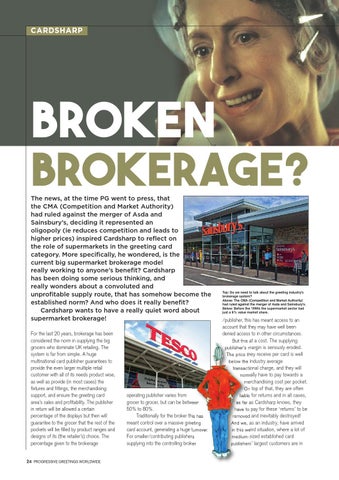
Top: Do we need to talk about the greeting industry’s brokerage system? Above: The CMA (Competition and Market Authority) had ruled against the merger of Asda and Sainsbury’s. Below: Before the 1990s the supermarket sector had just a 6% value market share.
/publisher, this has meant access to an account that they may have well been denied access to in other circumstances. But this at a cost. The supplying publisher’s margin is seriously eroded. The price they receive per card is well below the industry average transactional charge, and they will normally have to pay towards a merchandising cost per pocket. On top of that, they are often liable for returns and in all cases, as far as Cardsharp knows, they have to pay for these ‘returns’ to be removed and inevitably destroyed! And we, as an industry, have arrived in this weird situation, where a lot of medium-sized established card publishers’ largest customers are in