22-23_GF.qxp_Layout 1 30/06/2022 13:15 Page 2
cardsharp
Populating Ideas
We in the UK greeting card industry lead the world. Now that is something to shout about reflects Cardsharp! If we had won the football World Cup, we would all be dancing in the streets. There are not many things we in the UK can boast at being the best at, but we have been consistently been number one for greeting card creativity for the last two decades. Even in the world of popular music where we bat above our weight globally, there have been periods where we have been beaten by the US. Not so on greeting cards.
In this post-Brexit era, when we all worry about the future of our international trade, it was reassuring and inspiring to see literally hundreds of global distributors at this year’s PG Live, lapping up the best that the vast array of British publishers have to offer. As one Aussie distributor was heard stating at the show: “You guys are head and shoulders above anything we can create”. We in the UK greeting card industry, whether retailer or publisher, have always prized ourselves on our creativity and the confidence to go against the grain. Our recently departed, much-lamented friend, David Hicks always did that and while he
22
PROGRESSIVE GREETINGS WORLDWIDE
suffered no end of publishing failures, he also clocked up groundbreaking hits with the likes of Happy Hefalumps, Edward Monkton and the Bright Side. Like wise, Stephen Haines, owner and founder of Carte Blanche, was told repeatedly that cute was a dead genre, once Forever Friends had peaked, but went on to make £multi-million with Tatty Teddy, the grey bear. But with all this creativity bouncing about, there are also times for sober analysis, to look at the economic, social, demographic and cultural changes. Cardsharp was interested to read the findings of a series of studies of the UK’s demographic make up today, which might help explain why some trends that we feel may lead to very profitable and successful greeting card ranges may disappoint in terms of financial returns while others that may not be so in our face, could be successful. Greeting cards need to and should reflect society and in many ways they have or it would never have gone on to generate £1.5 billion in sales as it did in
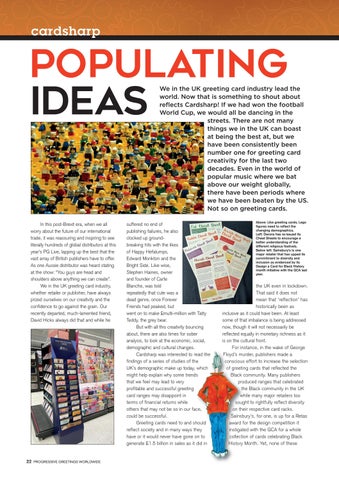
Above: Like greeting cards, Lego figures need to reflect the changing demographics. Left: Davora has re-issued its Cheat Sheets to encourage a better understanding of the different religious festivals. Below left: Sainsbury’s is one major retailer that has upped its commitment to diversity and inclusion as evidenced by its Design a Card for Black History month initiative with the GCA last year.
the UK even in lockdown. That said it does not mean that ‘reflection’ has historically been as inclusive as it could have been. At least some of that imbalance is being addressed now, though it will not necessarily be reflected equally in monetary richness as it is on the cultural front. For instance, in the wake of George Floyd’s murder, publishers made a conscious effort to increase the selection of greeting cards that reflected the Black community. Many publishers produced ranges that celebrated the Black community in the UK while many major retailers too sought to rightfully reflect diversity on their respective card racks. Sainsbury’s, for one, is up for a Retas award for the design competition it instigated with the GCA for a whole collection of cards celebrating Black History Month. Yet, none of these