20-21_Cardsharp.qxp_Layout 1 26/07/2024 11:37 Page 2
cardsharp Inset: She was simply the best, but Cardsharp has a somewhat lower opinion of private equity companies.
Private Chancers Private equity owned companies dominate the bricks and mortar retail scene in the UK as never before. Cardsharp ponders on the long-term ramifications of this trend for both retailing and the greeting card industry generally.
Remember Paperchase? Who could forget it? A decade ago it was a retail brand that all of us in the greeting card trade could be really proud. Exciting, design-led stationery and greeting cards in abundance, with well over 100 stores at its peak. It was then subsequently passed from pillar to post by a succession of private equity owners, before finally and briefly ending up in the hands of an individual investor, who was clearly intent on capturing the Christmas till sales, and then running away and avoiding the liabilities. Where is Paperchase now, mused Cardsharp? Now, it’s just a brand on the shelves of Tesco and not a very prominent one at that. To Cardsharp’s mind Paperchase’s demise as a standalone retailer is just one of the casualties of an iniquitous form of ownership we know as private equity. In simple terms, private equity describes investment partnerships that buy and manage companies before selling them. Private equity firms operate these investment funds on behalf of institutional and accredited investors. They buy companies and overhaul them to earn a hefty profit when the business is sold. And the purchase is supplemented by debt. Yes debt! And this is big time leveraged debt. In theory, this is great, especially for the private equity owners. No corporation tax
20 PROGRESSIVE GREETINGS WORLDWIDE
is paid on the profit, as this is offset against the total debt. This is understandably something that irks competitors as an unfair competitive advantage.
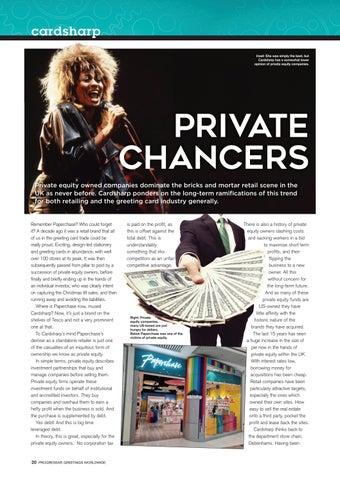
Right: Private equity companies, many US-based are just hungry for dollars. Below Paperchase was one of the victims of private equity.
There is also a history of private equity owners slashing costs and sacking workers in a bid to maximise short term profits, and then flipping the business to a new owner. All this without concern for the long-term future. And as many of these private equity funds are US-owned they have little affinity with the historic nature of the brands they have acquired. The last 15 years has seen a huge increase in the size of pie now in the hands of private equity within the UK. With interest rates low, borrowing money for acquisitions has been cheap. Retail companies have been particularly attractive targets, especially the ones which owned their own sites. How easy to sell the real estate onto a third party, pocket the profit and lease back the sites. Cardsharp thinks back to the department store chain, Debenhams. Having been