018-019 LSB Kids Insights 2020_muk.qxp_NEW LSB 2008 GRID 09/09/2020 18:02 Page 18
KIDS INSIGHTS RESEARCH
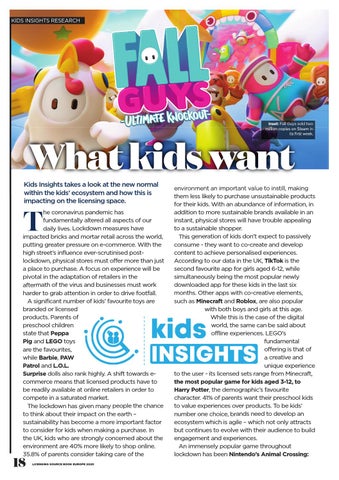
Inset: Fall Guys sold two million copies on Steam in its first week.
What kids want
Kids Insights takes a look at the new normal within the kids’ ecosystem and how this is impacting on the licensing space.
T
he coronavirus pandemic has fundamentally altered all aspects of our daily lives. Lockdown measures have impacted bricks and mortar retail across the world, putting greater pressure on e-commerce. With the high street’s influence ever-scrutinised postlockdown, physical stores must offer more than just a place to purchase. A focus on experience will be pivotal in the adaptation of retailers in the aftermath of the virus and businesses must work harder to grab attention in order to drive footfall. A significant number of kids’ favourite toys are branded or licensed products. Parents of preschool children state that Peppa Pig and LEGO toys are the favourites, while Barbie, PAW Patrol and L.O.L. Surprise dolls also rank highly. A shift towards ecommerce means that licensed products have to be readily available at online retailers in order to compete in a saturated market. The lockdown has given many people the chance to think about their impact on the earth – sustainability has become a more important factor to consider for kids when making a purchase. In the UK, kids who are strongly concerned about the environment are 40% more likely to shop online. 35.8% of parents consider taking care of the
18
LICENSING SOURCE BOOK EUROPE 2020
environment an important value to instill, making them less likely to purchase unsustainable products for their kids. With an abundance of information, in addition to more sustainable brands available in an instant, physical stores will have trouble appealing to a sustainable shopper. This generation of kids don’t expect to passively consume - they want to co-create and develop content to achieve personalised experiences. According to our data in the UK, TikTok is the second favourite app for girls aged 6-12, while simultaneously being the most popular newly downloaded app for these kids in the last six months. Other apps with co-creative elements, such as Minecraft and Roblox, are also popular with both boys and girls at this age. While this is the case of the digital world, the same can be said about offline experiences. LEGO’s fundamental offering is that of a creative and unique experience to the user - its licensed sets range from Minecraft, the most popular game for kids aged 3-12, to Harry Potter, the demographic’s favourite character. 41% of parents want their preschool kids to value experiences over products. To be kids’ number one choice, brands need to develop an ecosystem which is agile – which not only attracts but continues to evolve with their audience to build engagement and experiences. An immensely popular game throughout lockdown has been Nintendo’s Animal Crossing: