GREEN LIGHT
The path to sustainability


DARK VIEW

Lords criticise government inaction

VOLUME 16 ISSUE 5 SEPTEMBER/OCTOBER 2023 The Society of Light and Lighting
SECRETARY
Brendan Keely FSLL bkeely@cibse.org
EDITOR
Jill Entwistle jillentwistle@yahoo.com
COMMUNICATIONS
COMMITTEE:
Andrew Bissell FSLL
James Buck
Iain Carlile FSLL
Jill Entwistle
Fiona Fanning
Debbie-Sue Farrell

Chris Fordham MSLL
Rebecca Hodge
Stewart Langdown FSLL
Luke Locke-Wheaton
Rory Marples MSLL
Linda Salamoun MSLL
All contributions are the responsibility of the author, and do not necessarily reflect the views of the society. All contributions are personal, except where attributed to an organisation represented by the author.
COPY DATE FOR LL6 2023
IS 19 SEPTEMBER
PUBLISHED BY
The Society of Light and Lighting
222 Balham High Road
London SW12 9BS
www.sll.org.uk
ISSN 2632-2838
© 2023 THE SOCIETY OF LIGHT AND LIGHTING
The Society of Light and Lighting is part of the Chartered Institution of Building Services Engineers, 222 Balham High Road, London SW12 9BS. Charity registration no 278104
Unit C, Northfield Point, Cunliffe Drive, Kettering, Northants NN16 9QJ
Tel: 01536 527297
FROM THE EDITOR
A great frustration in life is that while it may take an effort of will, investment and long-term thinking, the solutions to many of our current problems are not beyond our wit to solve. But it transpires that doing so is just too complicated, too expensive – or unlikely to attract votes, which seems to have superseded sorting out the country's difficulties on the list of priorities. So we hear the issues frequently iterated but see little in the way of action. Or someone sets up a working group to look into it. Again.
Climate change and light pollution fall firmly into this category. In both cases, lighting bodies have done a great deal to offer practical help.
Where sustainability is concerned (see p5), the SLL has already devised a practical approach for designers and manufacturers in the form of TM65 and TM66 on the circular economy, the latest addition being TM65.2.
Light pollution is trickier because it falls into the public sphere with all its conflicting self-interests and slashed budgets. But the government has
been called out recently by a House of Lords committee report. The document, The Neglected Pollutants: the Effects of Artificial Light and Noise on Human Health, condemned the lack of targets, lack of coordination between departments, and between central and local government, and basic lack of action (see p10).
The point is, enough guidance from lighting bodies is already in place, as Astronomer Royal Martin Rees told the committee. ‘Good practice guidance for lighting already exists,’ he said, citing advice and recommendations from the SLL, the ILP and CIBSE.
Let's hope the report is not another tin can.
JILLENTWISTLE
CURRENT SLL LIGHTING GUIDES
SLL Lighting Guide 0: Introduction to Light and Lighting (2017)
SLL Lighting Guide 1: The Industrial Environment (2018)
SLL Lighting Guide 2: Lighting for Healthcare Premises (2019)
SLL Lighting Guide 4: Sports Lighting (2023)
SLL Lighting Guide 5: Lighting for Education (2011)
SLL Lighting Guide 6: The Exterior Environment (2016)
SLL Lighting Guide 7: Office Lighting (2023)
SLL Lighting Guide 8: Lighting for Museums and Galleries (2021)
SLL Lighting Guide 9: Lighting for Communal Residential Buildings (2022)
SLL Lighting Guide 10: Daylighting – a guide for designers (2014)
SLL Lighting Guide 11: Surface Reflectance and Colour (2001)
SLL Lighting Guide 12: Emergency Lighting (2022)
SLL Lighting Guide 13: Places of Worship (2018)
SLL Lighting Guide 14: Control of Electric Lighting (2016)
SLL Lighting Guide 15: Transport Buildings (2017)
SLL Lighting Guide 16: Lighting for Stairs (2017)
SLL Lighting Guide 17: Lighting for Retail Premises (2018)
SLL Lighting Guide 18: Lighting for Licensed Premises (2018)
SLL Lighting Guide 19: Lighting for Extreme Conditions (2019)
SLL Lighting Guide 20: Lighting and Facilities Management (2020)
SLL Lighting Guide 21: Protecting the Night-time Environment (2021)
SLL Lighting Guide 22: Lighting for Control Rooms (2022)
Guide to Limiting Obtrusive Light (2012)
Code for Lighting (2022)
Commissioning Code L (2018)
SLL Lighting Handbook (2018)
CIBSE TM66: Creating a Circular Economy in the Lighting Industry (2021)
Printed in the UK
E: gary@matrixprint.com
CIBSE TM65.2: Embodied Carbon in Building Services – Lighting (2023)
Editorial September/October 2023 2 sll.org.uk
JILL ENTWISTLE
@YAHOO.COM
FROM THE SECRETARY
FionaFanningstartedworkingwithmetowardthe endofJuneandissettlinginverywell.Ihopeyou willallgiveFionaawarmwelcome(seeboxforher contactdetails).
InearlyAugust,theROLAN22recordings becameavailabletoview(seebox).Abigthankyou toDrKarolinaZielinska-Dabkowska,whodevised theconferenceandapproachedSLLtopartnerit.
TM65.2: Embodied Carbon in Building Services – Lighting, was launched in early August. The aim is to enable lighting designers, specifiers, lighting engineers and manufacturers to understand the amount of embodied carbon that a light fitting contains. A huge thanks to Kristina Allison (project lead, Atkins) and authors: Dr Irene Mazzei (technical lead), Jonathan Rush (Hoare Lea Lighting) and Simon Fisher (F Mark).
The rewrite of SLL LG4: Sports Lighting, replacing the 2006 edition, is now available. Recommendations have been aligned to the British Standard and European Norm (BS EN) 12193 (BSI, 2018), and it takes account of new and emerging sports.
Appreciationandthanksgotothepublication’s taskgroupchair,MikeSimpsonofSignify,and authors:GiulioAntonutto(Arup),RussellEvans (GriffithsEvans),RichardMorris(Arup),DrAlan Smith, KevinTheobald(independentlighting consultant)andIainMacrae(consultant).
Regarding both of these publications, thanks also go to Sophie Parry and the SLL technical and publications committee.
Inabusyautumn,theSLLwillbeexhibiting attheICELEmergencyLightingConference, 14September,attheCavendishConference Centre,London(seebox)andwe'realsolooking forwardtoSLLReadySteadyLighton17October 2023,heldinassociationwithRoseBrufordCollege andtheIALD.Thereisstilltimetobook(seebox).
WearealsoexhibitingatLiGHT23 (21-22 November)andLight2Perform23,alongside ourcolleaguesatCIBSE’sBuild2Perform(5-6 December).ThefinaloftheSLLYoungLighter23 willbeheldatLiGHT23andthewinnerwillpresent theirwinningpaperatLight2Perform.TheLIAand TriluxwillbeexhibitingatLight2Performandthere isroomformanyothers.Therewillbeatwo-day lightingconferencecuratedbySLL.Moretofollow.
Therecipientofthe2023JeanHeapBursaryis SimoneBonaviawithherproject:Theroleofspatial distributionoflightinmetricsforthenon-image formingsystem.Herapplicationrecordingcanbe foundonthewebsite(seebox).
• To contact Fiona: ffanning@cibse.org or (+44) 20 3005 1091
• To view the ROLAN recordings: www.cibse.org/get-involved/ societies/society-of-light-andlighting-sll/sll-events/rolan-22video-access-registration
• To download TM65.2: Embodied Carbon in Building Services –Lighting:www.cibse.org/ knowledge-research/knowledgeportal/tm65-2-embodied-carbonin-building-services-lighting-pdf
• To download SLL LG4: Sports Lighting (2023): www.cibse.org/ knowledge-research/knowledgeportal/lg4-sports-lighting-2023
• To register (free) for the ICEL Conference: www.thelia.org.uk/ page/ICELConference
• To book a team place at Ready Steady Light: www.cibse.org/getinvolved/societies/society-oflight-and-lighting-sll/sll-events/ sll-ready-steady-light
• For more details of Light23: www. lightexpo.london/
• To visit or exhibit at Light2Perform: www.build2perform.co.uk/ light2perform
• For Jean Heap Bursary application recording: www.cibse.org/getinvolved/societies/society-oflight-and-lighting-sll/education/ the-jean-heap-bursary
• Online recordings of past presentations: www.cibse.org/ get-involved/societies/societyof-light-and-lighting-sll/sllevents/on-demand-webinarspast-presentations
Werecentlyheldanexcellentonlineevent, Evidence-BasedLightingDesignforPeoplein SmartCitiespresentedbyDrNavazDavoodian, hostedbyGuyKornetzkioftheSLLevents committee.Also,wehadagreatpresentation fromMarkSutton-VaneonlightingChristChurch Cathedral,Oxford,hostedbySLLHCNW regionallightingrepresentativeChrisDicks.The recordingscanbeviewedontheSLLwebsite alongwithallourpreviousonlineevents(seebox).
THE PATH TO SUSTAINABLE LIGHTING
DrIreneMazzeisummarisesarecent SLLeventexploringtheurgentneedfor moreenvironmentallyconsciouslighting andwaysofachievingit
CREATIVITY AND THE COMMON THREAD

RenownedlightartistGrimanesa Amorós,headlinespeakeratthe LiGHT23exhibition,talksabouther work,herinspirationandthepower oflighttocommunicate
PEER PRESSURE
Inarecentlyreleasedreport,aHouseof Lordscommitteehascriticisedthe government’slackofcoordinationand impetusonlightpollution
A SOLID FOUNDATION
Asanewcoursebegins,JohnAston outlinesthevitaleducationalroletheLET DiplomainLightingDesigncanplayfor individualsinallaspectsoftheprofession
ARTS, SHOOTS AND LEAVES
IainCarlilelooksattwoofthelatest LR&Tpaperswhichvariouslyexamine theeffectoflightingconditionsonplant growthandthevisualappearanceofart
LIGHT READING
SharonStammersandMartinLupton ofLightCollective,thisyear'swinnerof theSLLPresident'sMedal,selecttheir Top5books
EVENTS
COVER: Basilica Cistern, Istanbul, lighting by Studioillumina di Adriano Caputo, winner of the Places (high budget) category of the 2022 [d]arc awards

Secretary’s column/Contents September/October 2023 3 Twitter: @sll100 Contents
14 15 16 EDITORIAL SECRETARY'S COLUMN NEWS
2 3 4 5 7 9 11
BKEELY @CIBSE.ORG
BRENDAN KEELY
News
CIBSE JOINS FORCES WITH LIA TO LAUNCH CE VERIFICATION SCHEME
The Lighting Industry Association (LIA) and CIBSE have jointly launched a product verification scheme aimed at promoting circular economy practices within the lighting industry. The scheme, known as TM66 Assured, will provide independent verification of lighting manufacturers' circularity claims, ensuring accuracy and credibility, according to the two bodies.

The scheme, developed by the LIA and endorsed by CIBSE, is a component of the comprehensive TM66 toolkit which can be used to assess the CE credentials of lighting products throughout the supply chain. TM66 has already gained recognition and adoption by major specifiers and organisations within the industry.
'It leverages CIBSE’s TM66 Creating a circular economy in the lighting industry guidelines and the TM66 Circular economy assessment methods (CEAM) developed by a cross-industry team of manufacturers, specifiers and associations,' said a joint statement. 'Manufacturers are already providing ratings for their luminaires, and they can now seek third-party verification ensuring the credibility, objectivity and consistency of these ratings.'
'The TM66 Assured scheme allows participating manufacturers to demonstrate their sustainability efforts, providing clear differentiation from unsubstantiated greenwashing,' said David Barnwell, managing director of lighting manufacturer Holophane Europe.
'With the introduction of TM66 Assured, decision-makers can now have confidence that circular economy claims are robust and comparable between products, providing protection throughout the value engineering process,' said SLL president Helen Loomes. www.thelia.org.uk/page/TM66_Circularity | www.cibse.org.uk
ON THE LIGHTER SIDE…
The Arch of Time, scheduled for a park in Houston, Texas, is not only one of the world’s largest sundials, but also measures time, will be a cultural andarts venueand, using its solar panels, acts as an energy generator, producing 400,000 kWh of electricity each year.

It was designed byarchitect-trained designer and artist Riccardo Mariano as a permanentLand Art GeneratorInitiative (LAGI) public artwork. LAGI is a charity that promotes climate solutions through art and design.
Sunlight shines through a series of
apertures so that pools of light move inside according to the time of day and direction of the sun. Tailored to the specific latitude and longitude of Houston, each beam of light is precisely composed throughout the seasons and hours of the day by the geometry of the artwork. http://riccardomariano.com/ arch-of-time
NEW GUIDE TO EMBODIED CARBON IN LIGHTING
TM65.2: Embodied Carbon in Building Services – Lighting, was also launched by CIBSE in early August. The aim of the 64-page document is 'to enable lighting designers, specifiers, lighting engineers and manufacturers to understand the amount of embodied carbon that a light fitting contains'.
The luminaire data generated by the tool can be used to inform the lighting design’s contribution of embodied CO2 equivalent (ECO2e) emissions for buildings, says CIBSE.
It does not replace environmental product declarations (EPDs), but allows initial conservative embodied carbon estimations for lighting equipment to be made while waiting for EPDs to become available.
'Hopefully, this guidance will move the industry towards a better understanding of the whole-life carbon impacts of lighting designrelated decisions and will incentivise more EPDs for lighting products to be obtained,' says CIBSE. www.cibse.org/knowledge-research/ knowledge-portal/tm65-2embodied-carbon-in-buildingservices-lighting-pdf
CALL FOR SLL MEMBERS FOR CIBSE ROLES
CIBSE has put a call out to members to nominate themselves for CIBSE president, board and council roles from May 2024.
'It would be good to see SLL members put themselves forward,' said Brendan Keely, secretary of the SLL. 'It's important to ensure that the lighting profession is well represented at CIBSE board level.'
The application deadline for all roles is 15September.
www.cibse.org/about-cibse/ governance/nominations-forpresident-board-and-council
News September/October 2023 4 sll.org.uk
THE LATEST NEWS AND STORIES
THE PATH TO SUSTAINABLE LIGHTING
To understand the reasons why the lighting industry needs to look at the environment and to improve its approach to sustainability, it is important to define what 'sustainable' means. In 1987 the United Nations Brundtland Commission defined sustainability simply as 'meeting the needs of the present without compromising the ability of future generations to meet their own needs'.
Looking at the latest reports published by the intergovernmental panel on climate change (IPCC), the current way of producing and consuming is clearly not sustainable for the planet and future generations. Figure 1 shows that global temperatures have risen dramatically since the start of the 20th century – corresponding to the start of the industrial era – and have now reached an increase of more than 1 degree C.

This is not to say that industrialisation should stop, but there is an urgent need to implement changes in how we do things. Mitigation pledges aimed at reaching net zero
for 2030 show some progress toward lowering greenhouse gas emissions but they are insufficient. The IPCC has warned that the ambition of these pledges would need to be four times higher to get on track to limiting warming to 2 degrees C and seven times higher to get on track to 1.5 degrees C.
Figure 2 shows that modelled pathways based on currently implemented policies (in red) predict a rise in greenhouse gas (GHG) emissions after 2030, with a consequent rise of temperatures. To reverse this trend, the amount of GHG emissions must be significantly and consistently reduced, starting now. Strategies put in place by policymakers worldwide to reach sustainability targets include new legislations aimed at improving design, material sustainability, packaging, recycling and end-of-life (EoL) practices.
The EU stands out for the implementation of a wide range of environmental policies included in the European Green Deal (2019), which aims at Europe being the first climateneutral continent by 2050, with at least 55 per cent less net GHG emissions by 2030. One of the main building blocks of the European Green Deal is the Circular Economy and Consumers Package, focusing on aims such as making sustainable products the norm in the EU, empowering consumers and public buyers, and ensuring less waste.
The latest initiative of the package – the new directive on substantiation and communication of explicit environmental claims (European Parliament, 2023) – will promote strategies to make reliable and verifiable environmental claims, based on scientific evidence that is transparently obtained and communicated. Thanks to the initiative, organisations genuinely dedicated to improving sustainability will be favoured over those applying greenwashing to cover unsustainable agendas.
ArecentSLLeventexploredboth theurgentneedforamore environmentallyconscious lightingindustryandwaysof achievingit.DrIreneMazzei summarisesthethemes
Events September/October 2023 5 Twitter: @sll100
'Organisations genuinely dedicated to improving sustainability will be favoured over those applying greenwashing to cover unsustainable agendas'
� Figure 1: temperature change recorded over the years, from the pre-industrial period to current years (IPCC, 2019)
THE ROLE OF LIGHTING
Lighting accounts for 15 per cent of global electricity consumption and five per cent of total GHG emissions, and this is mostly due to the electricity consumed during use. However, the introduction of new technologies and more efficient light sources has contributed to substantial energy savings, thus lowering the impact of the in-use stage. But, in addition to this, it is also fundamental to address the burdens related to the production of these systems and ultimately aim for low-carbon design and manufacturing processes.
Studies also predict that the importance of the impact deriving from material sourcing and manufacturing of goods will inevitably grow in relation to the in-use energy due to the progressive decarbonisation of the energy grid (One Click LCA, 2021).

THE CIRCULAR ECONOMY
The circular economy is about keeping products in use so that less material is extracted from the earth’s crust, less waste is generated and lower emissions are produced during all the stages involved. Circularity refers to circular flows and efficient use and reuse of resources, before reaching the last resort of recycling materials at the EoL. Every product, even if it has had many lives, ends up being recycled. Here the value of the original product has gone and quite a lot of
transport and energy is involved, despite keeping materials in use and reducing the waste stream.
According to the classification outlined by Potting et al (Circular Economy: Measuring Innovation in the Product Chain Policy Report, 2017), the most 'circular' of approaches involves the application of Refuse (R0), Rethink (R1) and Reduce (R2) strategies, which see the design stage as the moment where the need of having a product in the first place is questioned. If a product is indeed needed, its use could also be intensified (for example, using multi-functional products) and manufacturing operations to produce it made more efficient and sustainable.
Other approaches that include a certain degree of circularity have the objective of extending the life of the product and its parts, such as Reuse (R3), Repair (R4), Refurbish (R5), Remanufacture (R6) and Repurpose (R7). These categories see products reused by other consumers as they are, or after being repaired or restored to their original functions – thus preserving the entire product – or using a product’s parts in a new product with the same or different function.
When this is not possible, Recycling (R8) the product to obtain the materials and Recovering the energy (R9) from incineration of the product are the least circular strategies.
All of these can be applied to lighting. On a design level, it’s important to consider modular
design – being able to interchange components across one or multiple product ranges. So, it's about getting people to consider future use from the product design stage.
Products should be repairable, whereby all component parts can be removed with commonly available tools and allow each component to be replaced, repaired or upgraded. Other strategies to increase circularity and sustainability for lighting products include preferring local sourcing of parts and components, and in-house manufacturing, minimising the number of components used and considering techniques such as extruding and 3D printing to minimise waste. Finally, materials with a high recycled content should be preferred, paying particular attention to their EoL options.
Figure 3 shows an example of a fitting, part of an installation, for which some components in the products were replaced with new ones, to achieve higher performance and energy efficiency, retaining most of the fitting’s structure. This choice, against buying completely new products, helped save almost seven tonnes of CO2 for the entire installation (Stoane Lighting, 2023).
METRICS FOR SUSTAINABILITY
How does a company measure the impact of these choices? Based on the aim of the
Events September/October 2023 6 sll.org.uk
� Figure 2: modelled pathways of greenhouse gas emissions over time, based on policy implementation (IPCC, 2023)
assessment, specific metrics can be applied. If the aim is evaluating the circularity of products, CIBSE TM66 – Creating a circular economy in the lighting industry (CIBSE, 2021b) offers an approach tailored to lighting products to translate this complex topic into a score system from 0 to 4 for products with very low or excellent circularity, respectively.
We are encouraged to hear of ideas and initiatives developing on the third-party verification of TM66 (and TM65) assessments, which will certainly help support the validity and robustness of these methods. The widespread use of TM66 has the potential to suggest that circularity scores can be used as thresholds in design and specification decisions, ultimately incentivising the production and use of more sustainable products.
Another assessment methodology released by CIBSE is TM65 (CIBSE, 2021a), focused on the quantification of embodied carbon in the built environment. TM65 offers a guide as well as a straightforward methodology for manufacturers to produce an estimate of the embodied carbon of their products. The objective is to bridge the gap between the built environment and the sustainability assessment practice, until the use of environmental product declarations (EPDs) becomes more common among companies and manufacturers.
CIBSE has recently launched TM65.2: Embodied Carbon in Building Services –Lighting. This allows lighting manufacturers to better represent their products within the framework of TM65 and ensure a more consistent and fair level of comparison across different manufacturers.
Looking at the wider field of environmental assessment, EPDs are perhaps the most complete and robust way to report and
communicate results. An EPD is based on life cycle assessment (LCA) carried out following specific standards (EN 15804:2012 + A2:2019, ISO 14025:2006) and product category rules (PCRs) and produced through a programme operator. For the lighting industry, the work done by the programme operator PEP Ecopassport, in direct collaboration with the industry through Lighting Europe and aimed at the update of product specific rules (PSRs) for luminaires, ensures a robust set of rules for users to conduct the LCA of lighting products and subsequently produce EPDs.
AN INDUSTRY-WIDE APPROACH
Considering the aim of working towards net zero and at the same time always meeting the lighting performance required by the industry, it’s fundamental that the entire industry works toward the same goals, with sustainability and circularity objectives always in mind. Every member of the lighting community has a part to play in this journey, from the designers through to the customers.

Assessment results – such as EPDs or TM65/66 reports – should be asked for and provided, and the data actively used to inform specification decisions and design choices. This process can also be used to promote repair and remanufacturing opportunities, and start tackling the discussion on what cost really is. This is not only a financial issue but also an environmental one: can companies meet net zero aspirations if they don’t understand the other costs?
And lastly, all the members of the lighting industry should work together on project lifetime support, to make sure that the industry is always aligned and working towards the same objectives.
Dr Irene Mazzei is a research scientist, Stoane Lighting/Edinburgh Napier University
The Path to Sustainable Lighting, organised by the SLL events committee, was held at Edinburgh Napier University on 15 August. Speakers were: Ruairidh McGlynn, head of specifier support, Stoane Lighting; Dr Irene Mazzei, KTP Associate, Stoane Lighting and Edinburgh Napier University; Kristina Allison, senior lighting designer, Atkins, and SLL vice president
References
• CIBSE (2021a). CIBSE TM65 –Embodied carbon in building services: a calculation methodology
• CIBSE (2021b). CIBSE TM66 –Creating a circular economy in the lighting industry
• European Parliament (2023). Directive of the European Parliament and of the Councilon substantiation and communication of explicit environmental claims. eur-lex. europa.eu/legal-content/EN/ TXT/? uri=COM%3A2023%3A0166% 3AFIN
• IPCC (2019).An IPCC Special Report on the impacts of global warming of 1.5°C www.ipcc. ch/site/assets/uploads/sites/ 2/2022/06/SR15_Full_Report_ HR.pdf
• IPCC (2023).AR6 Synthesis Report: Climate Change 2023. www.ipcc.ch/report/ sixth-assessment-reportcycle/
• One Click LCA(2021). The Embodied Carbon Review Embodied Carbon Reduction in 100+ Regulations and Rating Systems Globally. www. embodiedcarbonreview.com
• PEP Ecopassport (nd). Retrieved October 31, 2022, from www.pep-ecopassport. org/
• Potting J, Hekkert M, Worrell E and HanemaaijerA. (2017). Circular Economy: Measuring Innovation in the Product Chain Policy Report.
• Stoane Lighting (2023). Stoane Lighting remanufactured the lighting supplied to The Holburne Museum. stoanelighting.com/renew/ the-holburne-museum-bath
Events September/October 2023 7 Twitter: @sll100
� Figure 3: old (left) and renewed (right) light fittings. The exploded diagram in the middle shows in red the parts that were replaced, while the rest of the product was retained
CREATIVITY AND THE COMMON THREAD
Internationally
renowned lightartistGrimanesa
Amoróswillbetheheadline speakerattheLiGHT23 exhibitioninNovember. Hereshetalksabouther work,herinspirationand herbeliefinthepowerof lighttocommunicate
Peruvian-born US multimedia artist Grimanesa Amorós has become known for her bold installations. Amorós uses video, electronic components and lighting 'to create immersive environments and connect the viewer to their surroundings'. Integral to her creations is her use of light which she sees as a powerful communicator. Amorós firmly believes in its ability to transcend social and geographical boundaries. 'We all connect to the light,' she says. 'On a symbolic level, light has often been metaphorically connected with enlightenment, knowledge and understanding. It
can serve as a common thread that binds humanity together, irrespective of cultural, social, or regional differences, all themes in my work.'
Amorós began incorporating light in her work following a trip to Iceland. While there, she experienced the Northern Lights. She instantly appreciated the powerful effect of light, especially its mercurial qualities. 'Light is ephemeral,' she says, 'so we cannot own it. It is not ours; we can learn how to use it as a tool, but it is not individual. This freedom fascinates me.'
Her installations are often large scale and multidisciplinary. Technology is an enduring


Event September/October 2023 8 sll.org.uk
� Grimanesa Amorós and her Golden Array installation, Mumbai, India
preoccupation and inspiration but, she says, 'complements the concepts of [her] work without defining it – a medium of expression'.
'I always ensure to research. Research is an important part of my practice, and it is truly amazing how technology progresses and will continue to do so. I am excited to see how LEDs will evolve. I use LEDs and other materials to share the light in a new way – utilising it to have a different meaning beyond the known. My lighting sculptures have a life of their own, they express the characteristics of a space.'
That sense of context is crucial to her work. She installs and programmes each piece on-site, creating direct interaction with the surrounding architecture. She cites the example of Amplexus, a recent piece for the Noor Light Festival at the Cultural Palace in Riyadh, Saudi Arabia.


'My sequences are done on-site and do not have an existing preset; the programming process for the lighting sequence is quite long. The lighting sequence for Amplexus was informed by the energy of the city, its occupants, and the breathtaking desert sunsets that encapsulated the surroundings.'
Her works have been described as monumental, but Amorós considers that the monumental aspect usually refers to her creation of something that has never been done before. More recently, she has developed a smaller body of artworks called Luminous Portraits. This series explores the relationship between Incan sun ceremonies and the futurist aesthetic, which shares her fascination with vitality, life and technological progress.
'Luminous Portraits blends vibrant colours and geometric designs from traditional preColumbian textiles and ceramics with smooth metallic textures and futuristic shapes to create a dynamic visual language that fuses past and present – this is the size of a desktop, small scale.' Her own cultural legacy clearly also plays a role in shaping her work. 'My Peruvian heritage is showcased in a plethora of my works, such as Uros House, inspired by the Uros people who still live on Lake Titicaca.’ The 3.7m-high sculpture is a sort of Christmas tree shape of subtle colour-changing spheres of different sizes. They 'embody the beauty of the sea foam, with its lighting sequence representing the popping of
bubbles while maintaining the traditional technique and shape of the Uros island’s houses'.
The Uros islands float on the waters of the lake, and for centuries the Uros people have crafted them out of reeds that grow in the lake. 'The bottom layers decompose while the inhabitants add reeds to the islands' top, constantly replenishing them. Peruvians are known for being very resourceful.'
'Our past informs our present,' she adds, 'so culture is essential to me.'
Amorós says that her goal as an artist is to make people think. She wants to inspire others to live more creatively. Her pieces are designed to touch the viewer and open up a world beyond their daily routines. 'Light enables me the freedom to express my inspirations and share them with others to make them think about their own creativity. Even if I capture their attention for just a few seconds, I have already achieved my goal of pushing people beyond what they have come to expect.'
Grimanesa Amorós will be headlining the [d]arc thoughts talk programme at LiGHT 23. On Tuesday 21 November, she will present Illuminating Boundaries: the Exploration and Creation of Art through Light', followed by a Q&A session with arc magazine's editor, Matt Waring.
LiGHT 23 runs from 21-22 November at the Business Design Centre, Islington, London. It is the UK's only trade show dedicated to high-end lighting specifications. Registration is open and is free: www.lightexpo.london

Event September/October 2023 9 Twitter: @sll100
� Golden Waters, on an irrigation canal built by the ancient Hohokam people in Scottsdale, Arizona
� Amplexus, a recent piece for the Noor Light Festival in Riyadh, Saudi Arabia: 'The lighting sequence for Amplexus was informed by the energy of the city, its occupants, and the breathtaking desert sunsets that encapsulated the surroundings'
'Light fosters a sense of unity and breaks down barriers among people from diverse backgrounds'
PEER PRESSURE
Effects of Artificial Light and Noise on Human Health.
Among its recommendations are that ‘the government should commission research to establish how light intensity, wavelength, duration, time of exposure, light history and age affect the circadian system'.
Research ‘should move beyond laboratorybased studies and investigate more realistic light exposure patterns,’ to provide an evidence base for guidelines ‘that could mitigate the harmful effects of light pollution on human biology,’ the report says.
‘should lead the development of analysis for noise and light pollution in order for the next five-year Environmental Improvement Plan to include specific targets for their reduction,’ it said.
‘Defra must establish a standard methodology for tracking, monitoring and reporting on light pollution, as this is not currently done. This should be in place by the next five-year Environmental Improvement Plan cycle: it should commission a regular survey to understand both indoor and outdoor exposure to artificial light at night, so its health impact can be quantified.’
‘Regulating light pollution is difficult if it is not measured; our current approach is inadequate,’ the report states. ‘It is also difficult to assess the health implications if it is not known how people are exposed to light pollution, particularly indoors at night.’

Despite their damaging effects on health, light pollution and noise are ‘poorly understood and poorly regulated' in the UK, according to Baroness Julia Brown, the chair of the House of Lords science and technology committee.
‘We are concerned that there are no specific targets for regulating light and noise pollution,’ Baroness Brown said. ‘There is a lack of coordination between departments, and between central and local government, which is preventing the government from tackling these problems,’ she added. ‘The government should focus on quantifying the health effects of noise and light pollution, set targets and a framework for regulation to reduce the overall burden of disease.’
The committee released a strongly worded report in July 2023, titled The Neglected Pollutants: the
‘More research is needed to update and refine our understanding of the exposure to light and noise pollution, and their health impacts,’ it continues. ‘The committee is concerned that the government’s 25 Year Environment Plan only briefly mentions noise and light pollution, with no specific targets to reduce them, and that there is seemingly little impetus from central government to address them.’
The committee highlighted the need for a regular watch to be kept on light pollution as part of a coordinated policy. The Department for Environment, Food and Rural Affairs (Defra),
In 2019, under Prime Minister Theresa May, Defra published A Green Future: Our 25 Year Plan to Improve the Environment, but it does not cover either light pollution or noise specifically. Nor does its First Revision issued in February 2023. Some planning controls linked to light pollution have also been dropped from the government’s National Planning Policy Framework, through special exemptions.
The report draws on testimony from witnesses including SLL immediate past president Andrew Bissell, ILP past president Allan Howard, lighting designers Colin Ball of BDP and Arfon Davies of Arup, and academics Prof Steve Fotios, and Prof Russell Foster of Oxford University.
'I would like to see us stop talking about dark skies and start talking about health, wellbeing and pristine skies,' Andrew Bissell told the committee. 'I think people will then come along on the journey with us.'
The government ‘must also
Light pollution September/October 2023 10 sll.org.uk
AHouseofLordscommittee hascriticisedthe government’slackof coordinationandimpetus onlightpollution.Existing guidanceisoverlookedand morefieldresearchis needed,itsreportsays
Shutterstock
'The guidance has not kept up with technology, our knowledge or the research that is out there'
– Andrew Bissell, SLL
strengthen coordination between departments and between central and local government, to ensure meaningful improvements in public health and quality of life in the UK for the benefit of all,’ said Baroness Brown.
The report calls for a review of the status of light and noise pollution as policy areas under the aegis of Defra ‘and interdepartmental coordination on these issues to be strengthened.’
‘The government should explain how regulatory and policy action on noise and light pollution will be used to deliver the targets,’ the report says. ‘The five principles for good environmental management set out in the Environment Act 2021 and the Environmental Policy Principles Statement should be applied to the management of light and noise pollution as well.’
‘Defra has the lead for regulating noise and light pollution, but many of the levers to act on these pollutants lie in other departments, such as the Department for Transport and the Department for Levelling Up, Housing and Communities (DLUHC),’ the report continues. ‘Defra told us it viewed its role as highlighting problems for other departments to act on, but this is not adequate.’
Pressed on whether local authorities had the resources to tackle noise and light pollution and enforce the existing regulations, Minister for Environmental Quality and Resilience Rebecca Pow replied: 'that does not fall under Defra, because local authority funding is ring-fenced and that is a matter for DLUHC and the Treasury.’
The government should collect data to determine whether planning authorities are acting on noise and light pollution, and help them to share best practice, the committee said. ‘Local authorities should be sufficiently resourced and incentivised, both in funding and access to information and expertise, to ensure they can
properly regulate light and noise pollution.’
‘Every local authority ‘does the minimum of asking for a light pollution assessment or statement,’ Bissell told the committee, ‘but some take it far more seriously than others.’
‘Even where there is a policy in place, the evidence is not being collected to see whether it is effective,’ the report says. ‘Local authorities are under-resourced and have to balance a range of demands, leading to inconsistent policy implementation between local authorities, with some exemplary while others lag behind.’
The report calls for the government to establish an overall national policy for light pollution and to provide local authorities with the resources they need to meet national targets.
‘In issuing guidance, the government can make use of existing work from professional institutions: best practice is already understood, but not always followed,’ the committee added. ‘It is unclear how, and how consistently, national policies are implemented at local authority level. The committee remains unconvinced that coordination on these issues is effective,’ the report says.
‘Good practice guidance for lighting already exists,’ Astronomer Royal Martin Rees told the committee. ‘The Light Policy Statement and planning guidance should incorporate up-to-date guidance from the Society of Light and Lighting, the Institution of Lighting Professionals and the Chartered Institution of Building Services Engineers, on best practice for lighting.’
Light and noise pollution are currently neglected pollutants, but research indicates that they are causing significant health impacts and they are of growing concern to the public. ‘In some cases they are easy to avoid through good design,’ the report says, ‘but in other cases investment will be needed.’
Key points on light pollution in the report

• Defra must establish a standard methodology for tracking, monitoring and reporting on light pollution.
• Light and noise pollution as policy under the aegis of Defra should be reviewed and interdepartmental coordination strengthened.
• The government should collect data to determine whether planning authorities are acting on noise and light pollution, and help them to share best practice.
• Local authorities should be sufficiently resourced and incentivised, both in funding and access to information and expertise, to ensure they can properly regulate light and noise pollution.
The government’s response is due on 19 September 2023. The report was issued on 19 July https:// publications.parliament.uk/pa/ ld5803/ldselect/ldsctech/232/232.pdf
Witnesses included:
• Andrew Bissell, immediate past president, Society of Light and Lighting
• Allan Howard, past president, Institution of Lighting Professionals
• Guy Harding, technical manager, ILP
• Colin Ball, lighting director, Building Design Partnership
• Arfon Davies, leader of lighting UKIMEA, Arup
• Stuart Morton, professional head, Highways and Aviation Electrical Design, Jacobs
• Richard Greer, fellow and director, Arup
• Ian Ritchie CBE, architect, Ritchie Studio
• Ruskin Hartley, CEO and executive director, International Dark-Sky Association
• Prof Steve Fotios, University of Sheffield
• Prof Russell Foster, University of Oxford
Light pollution September/October 2023 11 Twitter: @sll100 Shutterstock
A SOLID FOUNDATION
The LET Diploma in Lighting Design is a structured distance learning course that runs over two years. Originally established in partnership with the London South Bank University, the diploma has been run independently by the Lighting Education Trust (LET) since 2011. Some of the most respected and successful lighting designers practising today have benefited from attending the course.
ORIGINS
The LET was founded originally in 1995, when its primary objective was to raise funds to allow the grant support of the MSc in Light and Lighting course at the Bartlett, University College London (UCL). The trust was restructured in 2017/18, when it became a charitable incorporated organisation (CIO) with a new constitution and –initially – a primary focus on the Diploma in Lighting Design.
The LET’s history in lighting education is based on the recognition that there is a need for high quality training in the subject of ‘light and lighting’ to always be available. However, while the lighting design world has expanded dramatically over the past quarter of a century the supporting education and training landscape has not kept pace.
In many conversations with colleagues in the lighting industry it
has been astonishing how often the fact that they entered lighting ‘by accident’ crops up. Most learned about lighting on the job through short courses, literature, colleagues and self-study. However the demand for ‘competency’, brought about by the Building Safety Act, suggests that learning on the job might be best supported by a more structured career development plan that includes the LET Diploma in Lighting Design.
CAREER DEVELOPMENT AND THE DIPLOMA
The diploma was first developed as an educational route to being accepted on to the Bartlett's MSc Light and Lighting course. Through its evolution and development over the past 20 years it has become obvious that it is also a brilliant foundation course for anyone with a career in the broader lighting world. The course is specifically tailored to those in work, or other primary daily activity, with a modular
approach, flexibility and excellent student support. We live in interesting times where the most informed will be in the best position to make the right decisions for the future. In an industry that has gone through one of the most rapid technology transformations in modern times this is especially true. Everyone interested in light – both natural and artificial – and its impact on us, the environment and sustainability can benefit from a solid grounding in a fundamental knowledge of light and its properties. Careers where this knowledge will benefit the individual include lighting design, lighting product development, interior design, architecture, electrical building services engineering, town planning, even those working in the virtual world of computer games. Developing colleagues and those new to lighting is a responsibility we all share to ensure our built environments work properly and do not injure the planet and its flora and fauna.

THE STUDY PROGRAMME
The diploma, affiliated by UCL, is delivered through an online platform. Because of the nature of its delivery there are no formal classes although the exams are held in London; alternative locations can be arranged for overseas students to sit the exam locally. The course material has been developed by some of the most respected names in the lighting industry and content is updated as necessary. The course is a two-year programme, starting in September, and comprises a series of modules, with four assignments, a design project and a final examination. It is based on around eight to 12 hours study
Education September/October 2023 12 sll.org.uk
Asanewcoursebegins,JohnAstonoutlinesthevital educationalroletheLETDiplomainLightingDesign canplayforindividualsinallaspectsoftheprofession
'Some of the most respected and successful lighting designers practising today have benefited from attending the course'
⊳ Refurbishment of an office in Leadenhall St, London, with an outdoor park theme. The WSP lighting team, led by LET Diploma holder Sacha Abizadeh, used variable colour temperature white light according to time of day
time a week to complete the 13 modules. The actual time will vary between students who may find some modules easier than others.
STUDENT SUPPORT
We encourage students to apply for Student Membership of the Society of Light and Lighting, which then gives them access to the CIBSE Knowledge Portal, which arguably has one of the best collections of lighting design information and references. In addition, it will give them a hard copy of the SLL Code for Lighting as an immediate desk reference.
We have also obtained the services of eminent people from the lighting industry who are willing to help students who have a particular problem. The tutors can be accessed through the administrator who will then allocate the most appropriate person to help. This service is provided for students who need help to see their way through a problem that they find particularly difficult.
WHAT DOES THE COURSE COVER?
The course gives an introduction to lighting design, light sources and luminaires, interior lighting and architectural/exterior lighting. An introduction to industry standard lighting software packages and other pertinent topics in lighting such as controls, environmental issues, daylight and emergency lighting are also included in the course syllabus.
Alongside the core course content, guest lectures delivered by leading lighting professionals are presented online to complement the course with ‘hot’ industry topics. These topics include, but are not limited to, lighting design for human-centric inclusivity, the circular economy, and embodied carbon and dark skies. The course modules are interspersed with four course assignments, designed to test the students' gained knowledge and understanding.
On completion of the 13 modules and four assignments, a design project is set that will allow students to demonstrate their understanding of lighting. This is effectively a scheme stage submission for a lighting design project in which students will be expected to demonstrate their design competences, visualisation and communication skills, as well as the ability to work to a brief using the knowledge that they have acquired.
Once the design project has been assessed, students will be notified of their marks along with the assessor’s comments on the design report. This will take the form of constructive criticism and guidance on how their report and design could be improved. Following the project there is a final examination set on a closed book basis.
DO STUDENTS ALREADY NEED TO KNOW ABOUT LIGHTING?
No, there are no prerequisite skills or education needed for this course. This is an introduction to lighting design developed on the basis that the student has no previous knowledge. Familiarity with mathematics is helpful but by no means essential. We do, however, also provide a maths primer to help students if it's not their strength. And, as mentioned above, once the student has started the course there is access to expert help if it is needed.
CONCLUSION
The lighting industry has undergone immense changes and development over the past quarter of a century. There have been dramatic changes to lighting technology and a much increased demand for properly designed applications. There are more dedicated lighting designers working in the built environment, where there are the major influences of building safety and sustainability to address. Add to this the increased awareness of both the benefits and harms attached to lighting and it is obvious we need people with knowledge, skill and experience to deliver good, safe,
sustainable lighting. The LET Diploma is an ideal foundation for those aspiring to be the great lighting designers of the future.
Contact CIBSE at let@cibse.org with any questions about the LET distance learning course, including the costs involved, or to apply for an enrolment form
'The LET Diploma is a perfect introduction to the fascinating world of lighting. The distance learning aspect of the course allows you to take control of the information at your own pace and within your own time, which in the current environment is invaluable. It not only teaches you the fundamentals of light but also what lighting is as a profession, and what lighting is as an industry. It was the guiding path to the career I have established today and is a valuable commodity to anyone wishing to pursue a career in lighting design'
– Sacha Abizadeh, BA(Hons)

CEng MCIBSE MSLL, head of architectural lighting and associate director at WSP
'Having previously studied English literature, I came to the LET course with no prior lighting, design, or engineering knowledge. While it was challenging, it was incredibly rewarding to gain an understanding of the fundamentals of lighting design.
I gained a technical understanding of lighting calculations and software. The course also illustrated the importance of attention to detail and the steps involved within the design process, skills which can be usefully transferred to other aspects of working life.
Over the course of the two years, I went from feeling as if I had bitten off more than I could chew to walking into spaces and understanding why certain lighting decisions would have been made. The course is reliant on self-motivation, but it is so worthwhile. I would recommend paying close attention to the recap questions at the end of each chapter and speaking up if you feel you’re not quite grasping something. Help is at hand...
I think this course provides an essential foundation for understanding and building a career in architectural lighting design. I also think it is hugely beneficial to those involved in manufacturing or selling lighting products.'
– Juliet Rennie (pictured receiving her diploma from Bob Venning), former SLL coordinator

Education September/October 2023 13 Twitter: @sll100
ARTS, SHOOTS AND LEAVES
IainCarlilelooksattwoofthelatestpaperstobepublished byLightingResearchandTechnologywhichvariously examinetheeffectoflightingconditionsonplantgrowthand thevisualappearanceofartwork
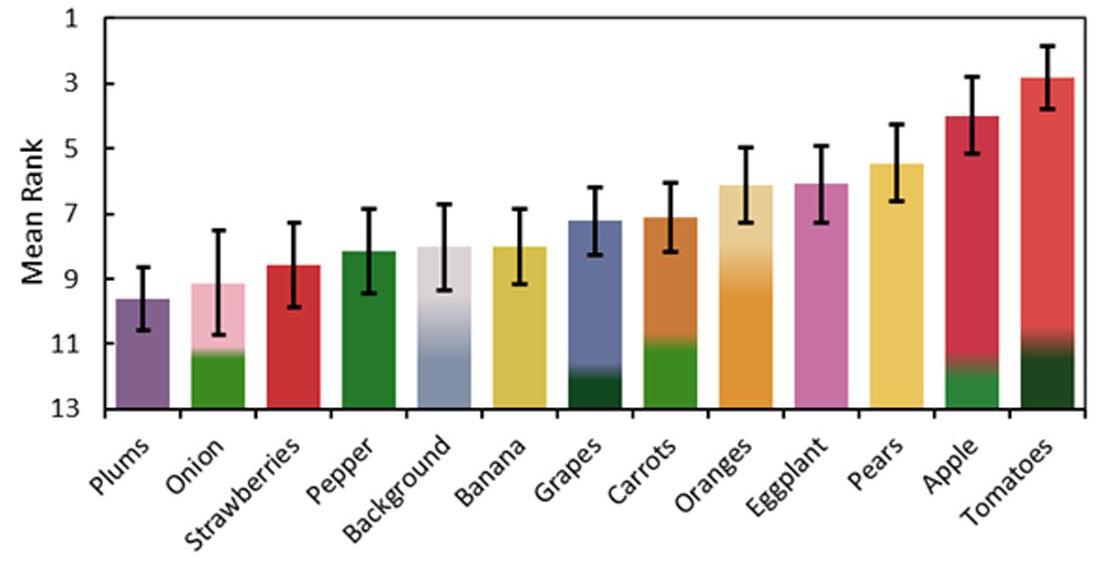
Mundinger and Houser have studied the lighting of artworks, in particular how the level and nature of illuminance affect the perception of colour. They note that due to conservation guidelines restricting illuminance levels for sensitive artworks, the illuminated object can be perceived as being less colourful, a phenomenon known as the Hunt Effect.
Previous research has shown that light sources with a red saturating gamut consistently increases peoples' perceived colour saturation and personal preference when viewing an artwork, say the authors, therefore compensating for some of the perceived desaturation associated with the Hunt effect.
They conducted a study with 31 naïve participants viewing two paintings in a mock
art gallery setting. The artworks, one watercolour, one acrylic, were shown under nine varying presented scenes with the participants individually evaluating the paintings for preference, saturation and naturalness.
The lighting scenes remained consistent at 3000K CCT and 50 lux illuminance. The presented scenes were varied in their red gamut (TM-30 96 ⩽ R* g ⩽ 124) and their position above or below the blackbody locus (-0.0212 ⩽ Duv ⩽ 0.0036). From the results of the experiment it was found that it was possible to map preference as an interaction between the R* g and Duv values, and that increasing R* g consistently increased both personal preference and perceived saturation.
Ahamadi et al have investigated the effect of different light sources on the physiological control of flowering and vegetative growth of a
⊳ Importance of different objects in the watercolour painting (Fine art under low illuminance: Gamut and tint, Mundinger and Houser)

popular houseplant, the African violet. The experiment involved exposing the plants to six months of electric illumination for 12 hours a day. Four different light sources were tested including: 1 LED – monochromatic red, 2 LED – monochromatic blue, 3 LED – mixed 75 per cent red plus 25 per cent blue, 4 fluorescent light (cool white). The light source positions were adjusted for a uniform photon flux density (118 μmol m−2 s−1 ± 6 μmol m−2 s−1) on the plants’ leaf surfaces.
The plants were checked twice a week and investigated for possible flower emergence, number of flowers and stage of openness of flowers. At the end of the experiment the size of the flowers was measured (diameter and peduncle length) and the plants were also measured for their leaf thickness and weight from which the leaf area was estimated.
The results of the investigation revealed that the blue-LED-illuminated plants were superior in their flowering qualities but were smaller and more compact in size. The plants grown under red LEDs and fluorescent light significantly produced leaves with the highest area. Blue LED light produced the thickest leaves with red LED light producing the thinnest. The authors conclude that LEDs can be use as an effective tool to manipulate the visual qualities of plants.
Iain Carlile, FSLL, is a past president of the SLL and a senior associate at dpa lighting consultants
Lighting Research and Technology: OnlineFirst In advance of being published in the print version of Lighting Research and Technology (LR&T), all papers accepted for publishing are available online. SLL members can gain access to these papers via the SLL website (www.sll.org.uk)
Fine art under low illuminance: Gamut and tint
J Mundinger and K Houser
Light source spectrum influences long-term flowering cycles and visual appearance in African violet (Saintpaulia ionantha Wendl)
L Ahamadi, M Matloobi and A Motallebi-Azar
LR&T essentials September/October 2023 14 sll.org.uk
LIGHT READING
SharonStammersandMartinLuptonofLightCollective,thisyear'swinnerofthe SLLPresident'sMedal,selecttheirfivemostinspiringbooks
As the world becomes ever more digital, there is still a place in our heart for books. As almost every bit of information needed is available online, it feels as if books are losing the once hallowed place they held for humans. Our lives are noisy and filled with distraction but the act of holding a book in your hands and devoting time to understanding what the author wanted you to take away from the experience is unparalleled. It's a stepping away from the world and a chance to immerse yourself in one specific topic, an opportunity to expose yourself to new information or concepts. Where light is concerned, it is a space to enjoy the topic we are all passionate about or pour over beautiful images that will inspire our work.
Go offline. Put your phone on silent. Sit somewhere quiet. Don't cheat with a podcast. Open a book. Here are five to get you started:
You Say Light – I think Shadow
Collected and visualised by light artist Aleksandra Stratimirovic and graphic designer Sandra Praun, 109 perspectives on light live within the pages of this book. The duo asked the question: what is light? to an international mix of creative people (Light Collective was lucky to be included) who share their thoughts, visions, memories or sometimes succinct answers within the book. The result is both poetic and personal and also fun to look at.

The Darkness Manifesto


This powerful book is a call for change and should be read by everybody. Written by Swedish scientist and bat expert Johan Eklof, the book passionately urges us to cherish natural darkness for the sake of the environment, our own wellbeing, and all life on earth. It lays out all the arguments for change in a poetic and philosophical way. It also offers a series of simple steps that can be implemented to benefit both humans and the planet, and is therefore ultimately encouraging.

In Praise of Shadows

The Bladerunner of books, this classic by Junichuro Tanizaki would probably make everyone's Top 5. Interestingly, it's not a book specifically about light but an essay on aesthetics, the effect of change from candles to electric light. Tanizaki uses comparisons of light with darkness to contrast Western and Asian culture. Written in 1933, it explores architecture, food and even toilets but is exceptionally poetic when describing light. The book inspired the House of Light, an art installation in Japan by James Turrell.
The Architecture of Natural Light


Henry Plummer is the man when it comes writing about architecture and natural light. Though mostly out of print, if you can, get your hands on anything he has written as his poetic books about light are the result of a career devoted to researching the topic and never fail to inspire. With stunning photographs and thoughtful critiques, this book is an evocative showcase of how daylight and architecture intersect, split into seven beautifully named sections; evanescence, procession, veils of glass, atomisation, canalisation, atmospheric silence and luminescence.

Collected Light: Women Light Artists
Sorry – it had to be done. In 2022, Light Collective decided to embark on the creation of a book with no funding, no editor and no experience. The result is not too shoddy. It's a hefty and colourful volume showcasing more than 40 women artists who work with light. Our hope is that by profiling these women artists, we are opening a door for others to do the same and for all to be celebrated and widely known for what they create.

Top five September/October 2023 15 Twitter: @sll100
1 4 5 3 2
Events 2023
For details of all upcoming webinars, go to: www.cibse.org/societyof-light-and-lighting-sll/sll-events/upcoming-webinars-and-onlinecontent

For previously recorded CPD webinars (including regional webinars), go to: https://www.cibse.org/get-involved/societies/society-of-lightand-lighting-sll/sll-events/on-demand-webinars-past-presentations
EVENTS
ICEL EMERGENCY LIGHTING CONFERENCE 2023

Date: 14 September
Venue: Cavendish Conference Centre, London W1 www.thelia.org.uk/page/ICELConference
SLL READY STEADY LIGHT 2023
Date: 17 October
Venue: Rose Bruford College, Sidcup, Kent www.sll@cibse.org
LIGHT 23

(including the final of SLL Young Lighter 23)
Date: 21-22 November
Venue: Business Design Centre, Islington, London www.lightexpo.london

LIGHT2PERFORM
(organised by the SLL as part of CIBSE's Build2Perform)
Date: 5-6 December
Venue: London ExCeL www.sll@cibse.org
AVAILABLE WEBINARS INCLUDE EVIDENCE-BASED LIGHTING DESIGN FOR PEOPLE IN SMART CITIES
Speaker: Dr Navaz Davoodian, senior lighting researcher at UCL
Hosted by Guy Kornetzki
The webinar is designed to give people a deeper understanding of the importance of evidence-based lighting design that prioritises the wellbeing of people in creating smart cities. The aim is to stimulate critical thinking and inspire innovative solutions rather than simply providing information on the topic.
LIGHTING CHRIST CHURCH CATHEDRAL, OXFORD
Speaker: Mark Sutton-Vane, Sutton Vane Associates
Hosted by Chris Dicks
Mark Sutton-Vane provides a step-by-step account of how the project was briefed, designed and delivered, from the first concept sketches up to the final focusing and controls commissioning. One of the principal requirements from the client was to keep the cathedral open to the public at all times, requiring a complex phasing programme to be developed for the work. The lighting project also had to be coordinated with other fabric repairs.
16
