MushrooM Culitvation for Beginners the land aCCess dileMMa niChe grains Winter 2023
WHO WE ARE
Marbleseed, formerly known as MOSES, is a nonprofit committed to supporting the Midwest’s organic and sustainable farmers through farmer-led events and educational resources that help your farm grow.
ORGANIC BROADCASTER CONTRIBUTORS
Editor: Alexandria Baker
Graphic Designer: Jo Facklam
Advertising Coordinator: Jenica Caudill & Jo Facklam
Digital Content Producer: Jo Facklam
The Organic Broadcaster is a quarterly magazine published by Marbleseed. Opinions expressed by the authors do not necessarily reflect those of the publisher. Inclusion of an advertisement does not imply endorsement of a product. Content may be reprinted with permission.
Content Submissions: organicbroadcaster@marbleseed.org
Display Advertising: advertising@marbleseed.org
Classified Advertising: classifieds@marbleseed.org
Subscription: Manage your subscription by emailing info@marbleseed.org
COVER PHOTO: Seven Songs Organic Farm Kenyon, Minn.
Content IN THIS ISSUE
FEATURE 04
Rethinking Resprouts Role on Working Farms
ARTICLES 08
Farmer Convergence
Improving High Tunnel Soils with Cover Crops
Mushroom Cultivation for Beginners
Grains 22
Marbleseed Recognitions Celebrate Heritage and Innovation 24 Book Review: Milked 26 Organic Grains are Climate Smart 28
Inside Organics: Conservation Programs and Organic Production 30 5 Tips to Improve Your Online Farm Store in 2023 32 The Land Access Dilemma 35 Growing, Marketing, and Measuring the Impacts of Organic Grains and Field Crops
A Place-Based Exploration of Apples
Ask a Specialist: How Can My Farm Reduce GAP Audit Anixety?
ISSUE
OUR TEAM
Lori Stern, Executive Director
Alexandria Baker, Communications & Development Manager
Sarah Broadfoot, Operations Director
Jenica Caudill, Director of Development & Strategic Partnerships
Marguerite Rapp, Operations & Events Coordinator
Stephanie Coffman, Presentation Coordinator
Tom Manley, Program Director
Jo Facklam, Communications Coordinator
Victoria Ostenso, Farmer Network Specialist
Daisy Perez Defoe, Local Food Purchasing Specialist
Tay Fatke, Local Food Purchasing Specialist
Sarah Woutat, Farmer Advancement Program Coordinator
On-Farm Organic Specialist Team
OUR BOARD OF DIRECTORS
Katie Bishop, PrairiErth Farm, Ill.
Dela Ends, Scotch Hill Farm, Wis.
Clare Hintz, Elsewhere Farm, Wis.
Charlie Johnson, Johnson Farms, S.D.
David Perkins, Vermont Valley Farm, Wis.
Sara Tedeschi, Dog Hollow Farm, Wis.
Darin Von Ruden, Von Ruden Family Farm, Wis.
10
13 OMRI 101 16
20 Niche
37
40
42
44
46
EVERY
03 Letter from the Executive Director
News Briefs
Community Calendar
Classifieds
The quality of light in winter in the Midwest is the glow over my childhood memories of sledding and skating on frozen ponds. Overcast skies did not matter and often carried the promise of more snow. I was not as affected by shorter days as I am now as an adult. Walking home from an afternoon at a friend’s, I was accompanied by stars and the crunch of snow underfoot somehow more audible in the dark. Instead of magical light and the stillness of early dark, I am distracted by cold weather-related aches and a full-bodied desire to hibernate with so many other animals.
At Marbleseed we are in break-neck conference activity and planning. Deadlines pop up like a life-sized game of ‘whack-a-mole’. I hope as you read this you have enjoyed a perusal of the registration guide in front of the fire. That you have circled workshops and started to plan your journey to and stay in La Crosse. The rest of us here are readying the program guide and adding all those other conference related meet ups, round tables, and activities that make the Organic Farming Conference multi-dimensional and special. But the conference is not all we do. And this year has been BIG with a rebrand that enabled us to tell a story of an organization with longevity and an ability to connect across a community of farmers who are innovators, climate stewards, soil scientists, leaders and learners. In the pages of this Organic Broadcaster, you will learn about the many more things we do than the conference. From expansion of the country’s longest running mentorship program to positioning organic agriculture as truly “climate smart,” we have always been an organization responding to challenges that we need to address to meet the future.
And yet the conference is still what we are incredibly excited about organizing. The Marbleseed team has spent time talking with farmers since we left La Crosse last winter. We have gathered workshop proposals and content that was deemed critical while maintaining time in the schedule for conversations and networking, also deemed critical. Look through the pages and highlights of this issue and see information on workshops you will not want to miss from farmer-peers. There are also some new ways of learning from each other through dialogue this year as well. Friday afternoon we will have four community conversations on cross-cutting critical topics. These conversations will be lively panels facilitated to engage everyone in the room. Rather than weaving these cross-cutting topics throughout the agenda and roundtables, we are giving them deliberate time in the conference agenda in hopes that all of us will plug into one of them. The Farm Bill, like a celestial event, comes around every five years. As surely as the Earth turns around the sun, there will be emergencies and time for considered response in the many months leading up to the actual passage, from coalitions that are both in the kitchen when the sausage is being made and inviting us all to the table to speak up about the spice level and flavors. We highlighted some of these issues and organizations in the November/December Organic Broadcaster.
Another conversation will turn our attention back to content highlighted last year around solidarity economies and the importance of cooperatives in addressing issues of equity. We will also take time to talk about access to farmland. Marbleseed works on this issue in several different ways as land prices, access to capital, and farmer retirements are creating a critical pain point in getting and keeping new farmers on the land. And finally, we need to have a real conversation about the future of the organic label. That conversation will include David Glasgow from the National Organic Program as well as other farmer leaders with a perspective to share.
Then on Saturday, as a bit of a wrap up and ‘what is needed next’, we will create a modified and facilitated open space for anything left unaddressed or needing greater exploration related to creating viable farms. This time will be the ultimate in peer-created and led content. With Owen Hablutzel as our skilled facilitator and a fellow farmer, our thoughts and next steps will be captured for us all to consider, whether you are in attendance or not. But we hope everyone will join us. Owen shares his excitement and expectations for this time together on page 8.
Winter is a magical time, a turning toward the light with solstice behind us. When we gather in La Crosse we will be in a time of Earth’s faster pace in her elliptical orbit, gaining us three minutes of daylight every 24 hours. I look forward to sharing the excitement of movement, light and community for the Organic Farming Conference 2023. Enjoy reading more about it in this issue. See you soon!
Lori Stern, Executive Director
RETHINKING RESPROUTS ROLE ON WORKING FARMS
After decades along the margins of modern US agriculture (despite millennia of Indigenous practice around the globe), agroforestry has gained significant acceptance during the past decade. As the costs of agricultural consolidation, intensification, and industrialization accrue growing ecological and financial debts, the many benefits that result when we integrate crops, livestock, and trees and shrubs are becoming increasingly clear. Some of these include shade and shelter for plants, animals, and people; soil stability and erosion prevention; complex habitats throughout our working landscapes that support a broad diversity of birds, insects, and mammals; and opportunities to diversify farm income streams and produce food, fiber, fuel, and much more.
While we’ve seen a great bit of interest in conservation and restoration-focused plantings along with the development of diversified fruit and nut enterprises, there’s been far less examination into the potential for fiber- and fuelbased systems that meet practical on-farm needs or develop new craft- and commodity-based wood markets. Here’s where the ancient practice of coppicing may hold considerable potential to diversify farm businesses while providing
valuable ecosystem services.
The remarkable ability for trees and shrubs to resprout after they’ve been cut lies at the foundation of the ancient practice of coppicing. Likely a product of the available tools and technology of the time, coppicing and other forms of “resprout silviculture” served early humans as essential strategies to produce wood for myriad needs and was in many ways the mainstay of silvicultural practice up until the industrial revolution.
Most broadleaf species (and some conifers) will successfully coppice. The simple act of cutting trees at their base, usually during dormant months, triggers a vigorous sprouting response. New shoots develop from either dormant buds that lie just below the bark or adventitious growth that develops from the exposed cambium along the cut surface. When exposed to full sun, these young sprouts grow rapidly, fueled by the stored energy and water and minerals absorbed by the plant’s existing network of roots. It’s not uncommon for a coppice “stool” (a stump that’s being managed by coppicing) to form 5-15 or more new sprouts that may grow 4-10’ tall in a single season. And if left to grow in height and girth, these developing sprouts yield polewood that may be used
BY Mark krawczYk
for literally dozens of different products. (Note that coppicing is just one form of resprout silviculture. Other management practices that utilize woody plants’ sprouting responses include pollarding, shredding, hedgelaying, and stump culture management, all of which are outside of the scope of this article but are key parts of our management toolkit.)
So, while these practices were, and in some cases continue to be, ubiquitous in forested landscapes around the globe, they’re largely absent here on 21st century North American farms. This is likely due to several factors, key among them that today’s wood economy places little if any value on polewood (which here we’ll consider stems less than 8” in diameter). Thus, a crucial lynchpin to a newfound relevance for these ancient silvicultural practices lies in crafting a modern polewood economy. In other words, how might these materials complement and contribute to today’s farm economies?
I see three primary ways coppicing may support new and existing farm enterprises. First, it can help diversify the farm business by either adding new products for market or by meeting on-farm needs for wood resources. Because coppice harvests generally occur during
organi C B road C aster | 4 FEATURE
FEATURE
winter months, the practice nicely complements the bustle of farm activities during the growing season.
Historically, dozens of coppice crafts, both simple and refined, emerged to meet clear market demands including fencing materials, basketry, furniture, fuelwood, shelter, tool handles, utensils, substrate for mushroom cultivation, and charcoal to name but a few. Keep in mind that different tree species have different properties that leave them better suited to particular applications, and the specific size requirements of each product demand varying rotation lengths depending on site productivity and growth rates.
For example, hazel and willow are among the most popular species for woven crafts. With their rapid growth, ease of propagation, and adaptability to a wide range of soil types, willow species are frequently managed on rotations as short as one growing season for some of the highest-quality basketry rods available. At the same time, willows (and hybrid poplars) have become some of the most important woody plants in short rotation forestry bioenergy plantations, where they may generate between 2-10 tons per acre annually.
As agroforestry and conservation initiatives grow in popularity, another significant opportunity for coppicedbased enterprise lies in meeting the demands for quality plant stock. Many tree and shrub species can be readily propagated vegetatively by hardwood and softwood cuttings. Some of the most vigorous include willow and poplar species, elderberry, members of the Ribes genus (currants and gooseberry), dogwood species, and mulberry. Both selling cuttings direct to customers or propagating plants on-site and sold through a retail nursery offers a space-efficient enterprise that largely complements the summertime demands on most farms.
And with proximity to healthy, reliable market demand, coppicing may also provide opportunities to grow beautiful and unique woody cut stems for the floral trade. Species like red osier dogwood, flowering quince, hydrangea, and corkscrew willow are a few popular options, and in the right context, may generate returns of $2-10 per stem.
Of course, not all farms have the personnel, time, interest, or skills to develop new value-added craft enterprises, but coppicing could still offer opportunities to contribute to farm viability by generating fuelwood supplies or biomass for composting and soil building efforts. With the steady increase and unpredictability of global energy costs, the potential to grow bulk materials on-farm is becoming an increasingly appealing venture. Here again, we may look to those species best suited to site soils and other key ecological characteristics along with overall utility and productivity. When it comes to fuelwood, few species rival the vigor and potency of the mighty black locust. An anomaly in the world of woody
plants, black locust grows rapidly but produces some of the densest wood found in temperate North America. And as it matures, the heartwood is among the most rot-resistant available, making it a fantastic choice for fence posts and building poles.
This brings us to the second key opportunity for growers to incorporate coppicing on their farm - as a strategy to produce valuable materials on otherwise marginal land. While low fertility, a high-water table, steep undulating terrain, or scrubby old fields may all have their unique limitations, it’s highly likely that useful tree and shrubs species may be chosen, or existing wild stands managed, to generate small diameter wood products for any of the uses we just discussed and many more beyond the scope of this article. With their lengthy productive window, minimal maintenance needs between harvests, versatility, and, as we’ll discuss in a minute, myriad ecosystem and conservation benefits, trees and shrubs managed on short and medium rotations by coppicing allow growers to keep perennial roots in the ground while still yielding useful raw materials.
Many farms have patches of their landscape that fit these criteria - scrubby riparian corridors left untended following transitions in land use, marginal fields with poor or seasonal access, disjointed patches of young forest, abandoned fields or awkward strips of land between pasture paddocks. These are perhaps some of the highest leverage opportunities to either let succession run its course or plant out new systems of useful trees and shrubs.
The third way coppicing could support and supplement farm productivity is by improving the ecological conditions on-site via conservation benefits like shelter from wind and sun, preventing erosion and nutrient runoff, creating valuable habitat for birds and insects, and connecting fragmented habitats. While one need not use coppicing to achieve these functions, this practice allows growers to continue to obtain a yield from these installations while enjoying the many benefits trees and shrubs provide.
With the vagaries of global climate patterns oscillating between periods of extended dryness and more intense precipitation events, few things help ameliorate these extremes like the persistent presence of woody plants. Coppicing allows us to harvest wood products for all sorts of useful purposes while keeping plants’ overall stature low due to repeated cutting. This can also help limit the shading effects of the trees on adjacent cropland or hayfield.
While coppicing is by no means a panacea, the universality of the practice among climates and cultures around the globe speaks to its versatility in meeting diverse demands for short-rotation wood products. As we look to connect our fragmented networks of forests and fields and integrate the realms of agriculture and
M ar B leseed. org | 5
silviculture, coppicing provides us with an invaluable tool to enjoy repeated harvests from the same set of roots. It connects us both to the past and the future and invites us to think about land tenure on a time scale that spans multiple generations.
Although the history of coppice management has been written, its relevance in modern times and beyond is just beginning to reveal itself. That’s because it’s people like us who are adapting the state of the art to our own unique context, landscapes, markets, passions, and needs. Over the past 10 years, I’ve worked to develop a comprehensive manual about these practices for growers and craftspeople in temperate North America and beyond, and I’m thrilled to announce that Coppice Agroforestry - Tending Trees for Product, Profit and Woodland Ecology is now available in print and e-book. Hopefully this manual may help us chart the path of the next evolution of these practices.
While the specific applications on your farm may become quite complex, keep in mind that it all originates from the simple act of cutting a tree with care, intention, foresight, and faith. May we once again learn to appreciate and celebrate the humble stump sprout and broaden our relationships with working trees in our landscapes.
Mark Krawczyk is a grower, educator, consultant and ecological designer who lives with his family on their small farm in New Haven, Vermont and is also the author of the newly released book Coppice Agroforestry - Tending Trees for Product, Profit and Woodland Ecology. Find out more about his work at www.keylinevermont.com and www. valleyclayplain.com
organi C B road C aster | 6
®
for Organic Crop Production PASTURE ROW CROPS PRODUCE
Dramm Corporation Manitowoc, WI USA
www.FishFertilizer.com Natural Fish Fertilizers

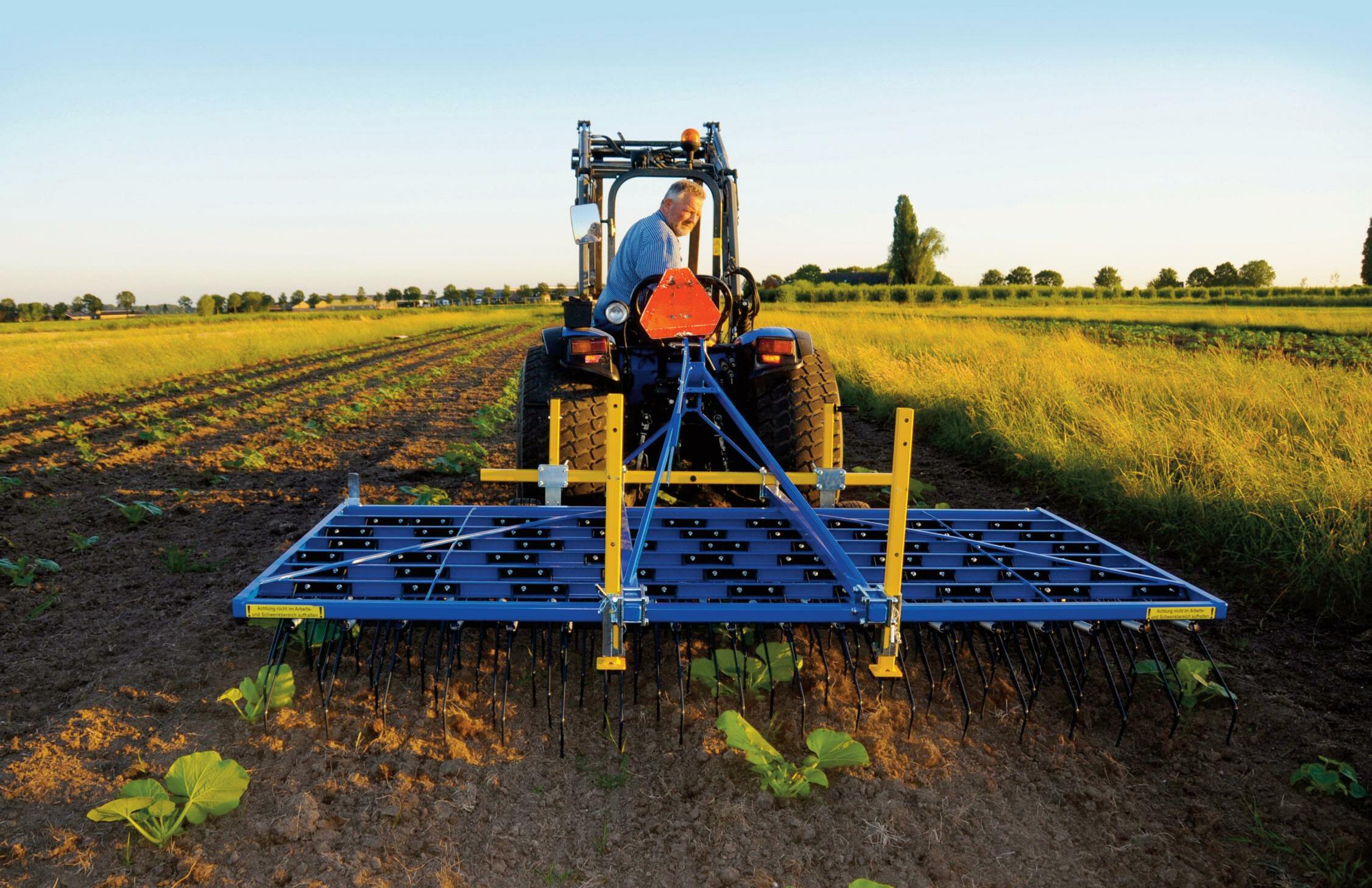

M ar B leseed. org | 7 Food Safety Savings Account Have a solid farm food safety plan and want to go to the next level? The Land Connection has funds available to offset the costs of implementing your plan or achieving a third party food safety certification, such as GAP. Funding for this project was provided by the North Central Extension Risk Management Education Center, the USDA National Institute of Food and Agriculture under Award Number 2018-70027-28586 This training is additionally supported by Illinois Farm Bureau and University of Illinois Extension For more information visit: thelandconnection.org Harrowing, exactly what you need to manage weeds Contact Treffler-M@M Promoter Matt Miller E: mattmill2@netins net T: (515) 971-9707 W: www OrganicMachinery net
ARTICLES
Farmer Convergence as Open Space to Explore Viability Will Close Out the Organic Farming Conference 2023
 BY Owen HaBlutzel & lOri Stern
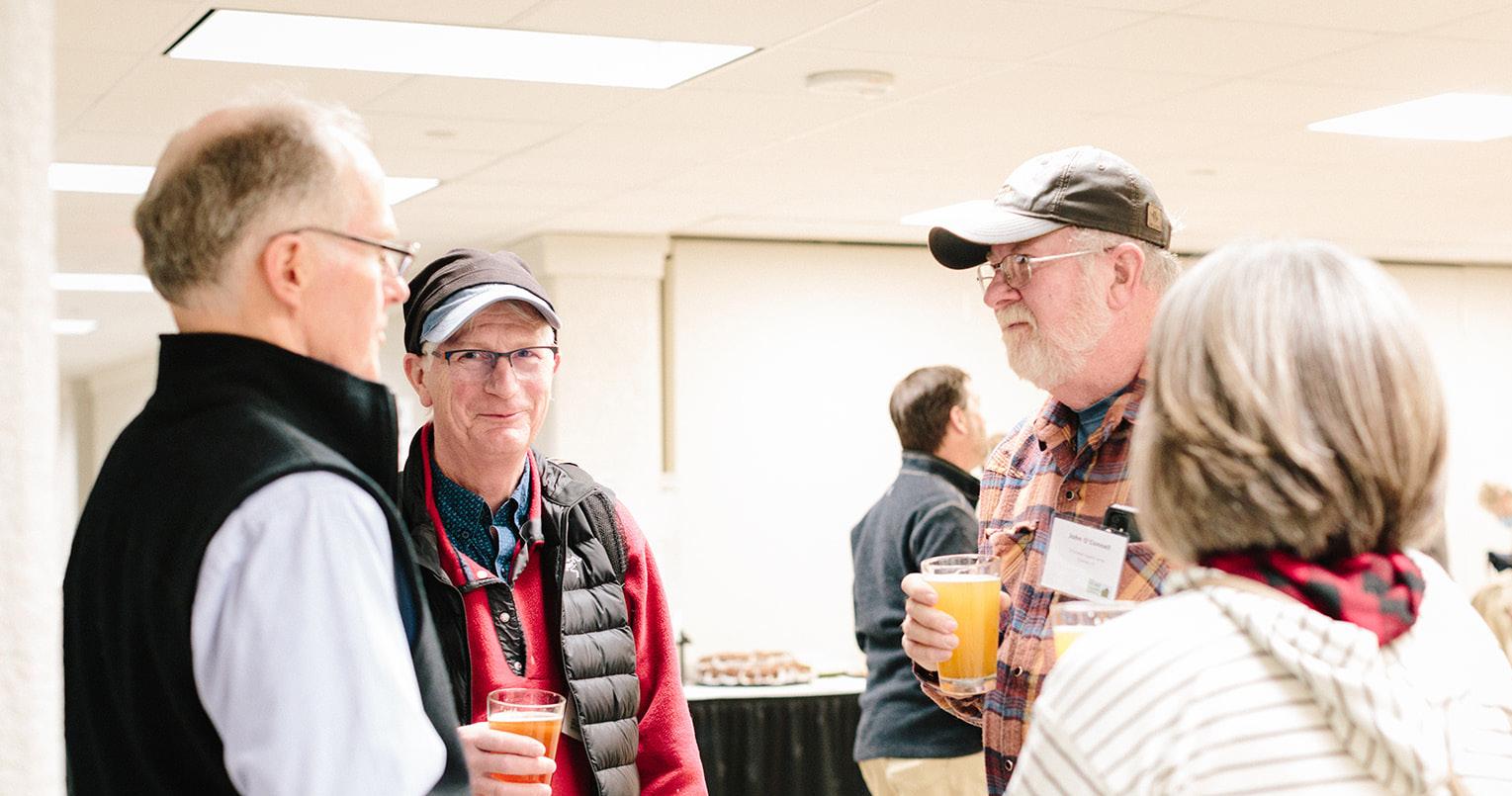
A new dimension and process is being added to the magic of the Marbleseed Organic Farming Conference this year. Fully embracing farmer-led education and innovation within a structure for meaningful networking and ideas exchange, we will gather Saturday afternoon. The planned workshops, roundtables, and keynotes will be behind us. This will be our time to collectively consider what it all means for our farms, families, communities, and future
In January 2023, a group of farmer leaders and agricultural educators will be joining Lori Stern and other Marbleseed staff for a training on dialogue-based, learner-centered approaches to farmer education. This convening at the conference will be the culmination and demonstration of one of these methods in action. The process will ensure that time is wellspent and that issues most relevant get explored by those most invested in them. We have chosen ‘Farming Viability’ as a theme that can help us organize our thinking together during this event.
Here are some thoughts about this time from our facilitator, Owen Hablutzel:
What does ‘farming viability’ mean to you? When the question of farmer and farming viability in our 21st century is posed, what are first images, thoughts or associations to arise? Which gut feelings are immediately sensed? Is there a kind of enduring vision that is entailed for you in these words? Where is the place that you feel you fit best within the wide constellation of ideas and practical elements that may come up around that theme?
world, are invited to convene for an exciting co-exploration of the many facets of ‘farming viability space.’
As many people as care to will use this time together for reflecting upon which elements are important to maintaining, expanding, or strengthening farming viability, today and for our future. We will co-discover what ‘farming/farmer viability’ actually means for this gathered group, across many dimensions of life and experience. This may include practical, material, and economic dimensions, along with more social, human, or spiritual elements, and many things in between and unforeseen. Any topic area that has something to offer and can help nourish this kind of viability is on the table and open for discussion here. Our theme is wide and deep enough to contain a great range of scales and concerns—-from the incubated plot to the bioregion, from the 10-acre field to the whole landscape, from the farm-store website to co-op models, to farmers market networks and far beyond. When participant passion—your specific joys, concerns, challenges, and enthusiasms—is the only limiting factor to the discussion, then vigor, emergence, surprise, and discovery are the most certain outcomes.
Participants can expect that only those issues and ideas—or opportunities and difficulties, as well as potentials and pitfalls—regarded as being of the utmost importance to those specific individuals who choose to gather, to join in this event of lively exchange,
It is always difficult to predict everything that will emerge from such a passionate engagement, but fertile seeds are certain to be sown, and new friendships, networks, and initiatives are frequent outcomes.
During the final afternoon of this year’s Marbleseed Organic Farming Conference—with the keynotes, roundtables and workshops, and inspiration of the Conference fresh in our hearts and minds—all who might care to consider this topic, that is the viability of farms, farmers, and farming systems in today’s rapidly changing and increasingly challenging
will constitute the actual agenda for the afternoon. As a result, your favorite topic is guaranteed to be included, with the only caveat that you and your specific passion, expertise, or experience are needed to ensure that your important topic receives its due during this convening.
In deciding to gather with passionate others for these convergent conver-
organi C B road C aster | 8
PHOTO CREDIT: JUSTINE BURSONI
sations, be confident that you will discover others present who truly value and desire the input, knowledge, or inspiration that you alone may be able to provide. As a collection of people who care, as a group assembled for the purpose of improving the viability of farming and farmers—as well as soils, land, markets, and the many other elements contributing to that purpose—there is certain to be a wide variety of input, passions, claims, and contentions, as well as differing emphases that may be combined or re-combined here in surprising ways and can provide better maps, principles, and guidance to adapt our farming systems towards greater viability together.
Likewise, you can be sure that someone else who has joined this vibrant conversation has something quite valuable to offer you—perhaps that one critical insight, a simple comment that boils it all down, an idea that spawns 1,000 more useful ideas, a nugget of wisdom from hard-won experience, a story or small innovation with the potential to change everything. The missing piece of your own farm viability puzzle may indeed be discovered and found within reach through the power of the engaging conversations that are sure to unfold over the duration of this afternoon event.
This gathering is one opportunity to explore further, with others who share a passion for increasing the viability of farming systems, those topics that generate the most concern, interest, enthusiasm, and need within the Marbleseed family. In the process, the seeds for future knowledge exchange, program development, and other cooperative initiatives will be planted and become available to germinate when conditions allow. Given the renewed commitment of Marbleseed to taking a farmer-led approach to their work, this kind of convergence of those who care about farming-systems viability, a meeting of the minds and exchanging of understandings can go a long way towards enacting this part of the Marbleseed mission.
In support of all the potential ideas, activities, and connections that will emerge from this unusual gathering and knowledge exchange format, a document will be generated (a ‘Book of Proceedings’) that will note every discussion that takes place across the event, including the topic and main ideas, the participants, images that may have been produced, and other information. Because there are usually so many ‘juicy’ conversations to join and not enough time for any single individual to participate in them all, this document can be essential for giving everyone access to the greater base of ideas and knowledge generated by the entire group, perhaps sparking more conversations and greater interconnection among this group in the future. With a record of who attended or convened each discussion, those interested in learning more or in collaborating on related initiatives in the future can more easily find each other.
It is always difficult to predict everything that will emerge from such a passionate engagement, but fertile seeds are certain to be sown, and new friendships, networks, and initiatives are frequent outcomes. An example of one such

event, facilitated as the final day of the 10th International Permaculture Convergence—a four-day conference which happened in Jordan and hosted agriculturalists from 40 countries—produced many such lasting seeds in the process. The unique efficiencies and structure of this event allowed this animated group to cover as many topics, and essentially as much content, on the final single day together as the prior three days of the more standard conference format that was offered. ‘Seeds’ of that event that have borne fruit and had lasting impact many years beyond that day include regional groups that were formed there (ex. Southwest Asia Permaculture group), as well as an international network for research and data-sharing in permaculture systems, a product of which was a jointly developed research protocol, and another group formed to formalize and share information and experience of agroforestry applications specifically for Mediterranean climates, an area where relatively little information had been previously collected.
This year, we greatly look forward to experiencing the enthusiasm, passion, collective wisdom, and many other beneficial outcomes this conversant exchange will bring to participants and the whole Marbleseed family at this final afternoon of the conference. See you there!
Owen Hablutzel is a group facilitator, consultant, and educator working internationally, since 2007, with farmers, ranchers, and diverse regenerative, land-focused groups, aiming to amplify land health and invigorate connections of people with each other and the agro-ecosystems they steward.
M ar B leseed. org | 9
Now with FSMA records! COG Pro Organic Certification Simplified Record-keeping made easy. Try it for FREE at www.cog-pro.com from Farm to Fork. Keep Your Produce Supply Chain Safe…
BY Julie GrOSSMan
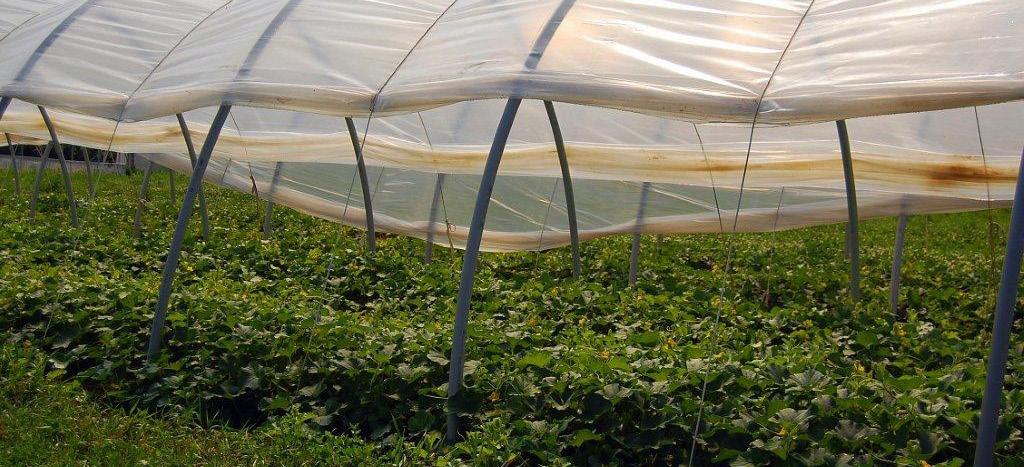
High tunnels (HTs), also known as hoop houses, are passively heated and ventilated greenhouse structures used to extend the season for in-ground crop production by protecting crops and creating a warmer microclimate. High tunnels are relatively inexpensive, which combined with recent cost-share availability for their construction, has stimulated rapid expansion across the United States. High tunnel production is characterized by increased productivity and protection from extreme weather events and foliar disease and can extend the growing season even in the coldest of climates. For the past eight years our research team at the University of Minnesota has investigated strategies for improving soil health in high tunnels, especially the use of cover crops. Now that some high tunnels have been on the landscape for almost 30 years, more farmers have been coming to us with questions about how they can improve soil health in these unique environments. Our work is the first step to understand the role that cover crops may play in improving long-term sustainability and productivity of high tunnel soils. We are excited to share what we have learned so far in a workshop at the upcoming Marbleseed Organic Farming conference in February 2023!
Common high tunnel rotations are often longer than in an open field, and include tomatoes (Solanum lycopersicum), peppers (Capsicum spp.), and cucumbers (Cucumus sativus) in the summer, and lettuce (Lactuca sativa) and spinach (Spinacia oleracea) in the spring and fall, or perennial crops such as berries. Regardless of the primary cash crop, HTs are frequently used intensively, often with simplified crop rotations and little or no break between cropping cycles. As such, the production and economic potential derived from high tunnels may drive numerous sustainability challenges in high tunnel systems, especially soil health.
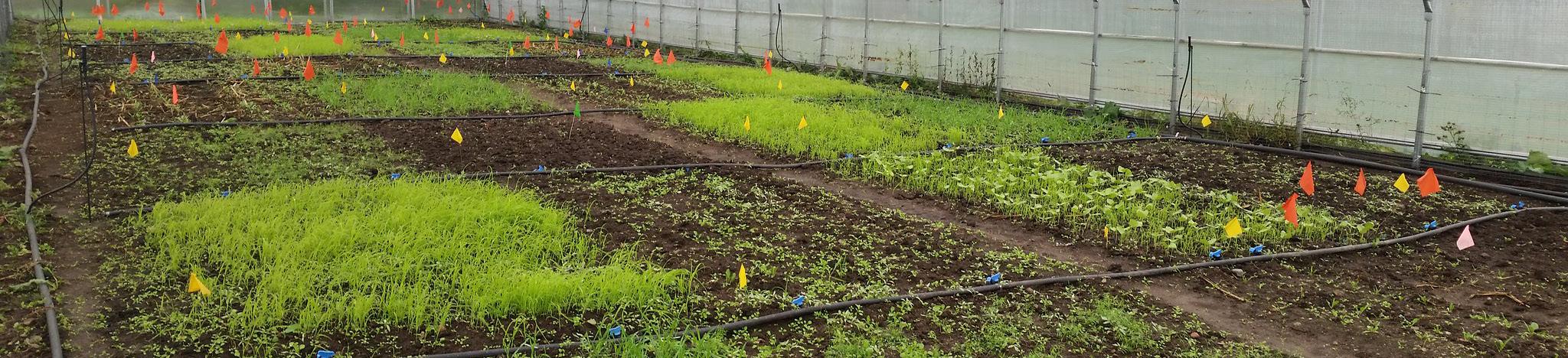
There are concerns that continued use of high tunnels will jeopardize the long-term sustainability due to potential effects on soil health. The greater number of available growing days in high tunnels intensifies soil use due to longer and more frequent planting cycles and increased nutrient demands. Additionally, the lack of percolating rainfall paired with intensive fertility management strategies can result in high tunnel soils being hot spots of nutrient accumulation. To maximize yields, farmers often rely on heavy external fertilizer inputs,
leading to concentrated nutrient accumulation and salinity. This problem is particularly acute for organic producers, who commonly use manure-based composts or animal-byproduct-based fertilizers as their main fertility source. Increased crop vigor and greater plant densities compared to open field production are common in organic environments and may lead to additional soil challenges. For example, clogging of fertigation drip line emitters by insoluble organic nutrient sources has been found to be common in regions of Europe where high tunnel production is widespread. Expanding organic high tunnel fertility options, especially strategies that contribute nitrogen but low phosphorus and salts, would improve overall sustainability of high tunnel production systems.
A potential management tool to mitigate soil health issues and provide nitrogen, without importing excess phosphorus, is the use of cover crops. Cover crops can be defined as non-harvested plants grown between cash crop cycles to achieve a variety of benefits, including soil improvement by reducing nitrate leaching and increasing soil organic carbon. Nitrogen-fixing legume cover crops, such as hairy vetch, peas, or clovers, have the advantage of contributing nitrogen without adding excess phosphorus or salts. The limited studies that exist have demonstrated that legume cover crops in high tunnels can increase soil organic matter, supply sufficient nitrogen for a following summer crop and increase microbial activity. While farmers in many regions can grow cash crops in high tunnels year-round, in northern regions, cold winter temperatures and low light conditions may prevent successful production of cool season crops. For farmers with no winter cash crops due to climate or custom, improving soil quality via cover crop production may be an effective use of space that would otherwise be left fallow, with the least disruption to commonly used income-generating rotations. Rotation with cover crops may be particularly desirable for organic farmers, due to integrated nutrient management strategies promoted by the USDA National Organic Program guidelines and the requirement that crop rotation and use of cover crops in certified organic systems be documented. However, limited data exists reporting the effects of cover crops in high tunnel systems, and the effects of cover crops in tunnel crop rotations on soil quality and crop production within an organic agricultural framework.
organi C B road C aster | 10
PHOTO CREDIT: JULIE GROSSMAN
Challenges associated with overwintering cover crops in high tunnels are distinct from those of open field cover crop production. These include large day-night temperature fluxes and low soil moisture in systems that lack irrigation capacity during freezing weather. If these challenges can be mitigated through ventilation and irrigation management, cover crop productivity could be enhanced in high tunnels relative to the open field because there are more warmer days in high tunnels relative to the open field, which benefit cover crops in similar ways to cash crops produced in tunnels. For example, high tunnels have been shown to warm the air inside the structure by 8 to 10 degrees C during the day and up to 2 degrees C at night relative to outdoor temperatures, with even greater temperature increases possible in spring and fall, which could serve to enhance cover crop growth. Furthermore, our lab has shown that high tunnel conditions may actually enhance some cover crop legume’s capacity to withstand the coldest winter months by enhcncing freezing tolerance. In one experiment, vetch acclimated under conditions simulating upper Midwest fall high tunnel conditions (20 C day/2 to -2 C night), a case where hairy vetch production would normally be limited in the open field due to temperature and light limitation, had greater freezing tolerance than vetch acclimated under open field (2 C day/2 C night) conditions. These findings and other recent work suggest that that legumes can overwinter, and even thrive, in high tunnels as far north as zone 3B.
In one of our early studies supported by a NRCS Conservation Innovation Grant (CIG), graduate student Liz Perkus looked closely at winter cover crop combination productivity, and their effects on soil nutrients, soil health, and bell pepper crop yield in high tunnels. The study was conducted from August 2015 to September 2017 at three sites in Minnesota. Our research objectives included the identification of productive winter cover crop mixtures in cold-climate high tunnel environments and their short-term effects on soil health. Cover crop combinations included red clover monoculture, winter pea/rye biculture, hairy vetch/tillage radish/rye biculture, and a bare-ground (weeded) control. Cover crops were planted in late fall and mowed down in May prior to sowing peppers. No additional fertility was added to the soil beyond that supplied by the legume cover crops. One of the most important things we learned from this work was that all winter peas were winter hardy to zones 4a and 4b in the high tunnels, a greatly extended range from their documented range to only zone 5a. Due to this finding, we have continued to research pea as a possible cover crop option in high tunnel systems. Overall, this work showed us that overwintered cover crops in high tunnels may be a possible organic alternative for farmers who want to reduce the dependence upon compost and manure to meet nitrogen requirements and replenish organic soil matter.
Following on that work, we engaged in a multi-state
M ar B leseed. org | 11
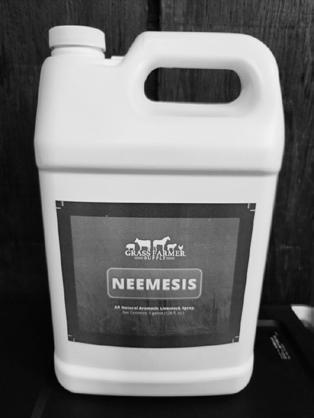
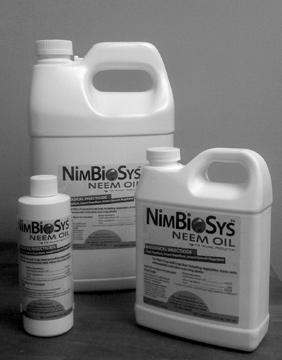
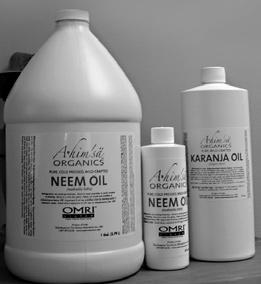
The Ahimsä Alternative, Inc. For all things Neem & Karanja BIOLOGICAL INSECTICIDE 100% Cold Pressed Neem Oil Controls Aphids, Army Worms, Beetles, Stink bugs, Caterpillars, Leaf hoppers, Leaf miners, Whitefly, Mealy bugs, Midges, Nematodes, Spider mites, Weevils, Scale, Thrips. www.nimbiosys.com 100% Cold Pressed, Wild Harvested Neem Oil, Karanja Oil, Neem & Karanja Cake Order @www.neemresource.com or call 1-877-873-6336 NEEMESIS Powerful protection against flies & other irritating critters! NEEMESIS is a castor oil-based liquid with pure Neem Oil, Karanja Oil & other essential oils. Dilute 1 gallon with water or oil (or a combination of both) to make up to 12 gallons of finished product. Can be used in livestock rub oilers and back-pack sprayers. Suitable for application directly on livestock and stall/parlor areas.
project with Kansas, Kentucky and Minnesota to document how well hairy vetch grew in winter high tunnels across our three regions, funding by a USDA-OREI award. Over a three-year experiment, vetch produced an average of 1,700 lbs per acre annually in MN, and 900 lbs per acre in KS, but significantly less in KY, largely due to heavy competition from winter annual weeds. Plots with higher vetch productivity also had more nitrogen delivered to the plots from this cover crop biomass. Interestingly, when compared to the bare control plots, the plots where vetch was planted showed lower levels of immediately available nitrogen but higher levels of organic nitrogen that could potentially decompose and release nitrogen over the next growing season. This suggests that legumes such as hairy vetch could improve soils by adding organic matter that acts as a good source of slowly released nitrogen for future crops.

Now that we know which cover crop species are most successful in our cooler-climate high tunnels, farmers want further information to determine appropriate fall-planting and spring-termination times to maximize both soil improvement and crop productivity. To help answer this question, we were lucky enough to receive funding from the Minnesota Department of Agriculture in 2021 to establish optimal planting and termination times for two cover crops, hairy vetch and Austrian winter pea, in rotation with sweet peppers. At two sites in Minnesota, including the Twin Cities and our UMN Southwest Research and Outreach Center, we have sown these two crops using two planting (early and late fall) and two termination date combinations (early and late spring). In this experiment, the control plots include a sweet pepper (planted in summer) and spinach (planted in winter) rotation with no cover crop biomass additions. Data we are collecting includes cash crop yield, cover crop biomass at termination, and economic value of cash crop production, including both spinach and peppers. Soil samples are also being collected one month following cover crop termination to evaluate the effects of cover crop biomass additions on soil health, microbial activity and organic matter pools. We are excited to see what this data tells us about the tradeoffs between soil-improving cover crops and cash crop productivity. High tunnels are a particularly appealing approach for historically underserved farmers to tap into high-value niche markets, since cost-share payments for high tunnel construction are increased for this population. An important component of our current work is the involvement of these farmers, who are hosting demonstration plots and piloting educational materials that will be developed as part of the project. If you are interested in receiving some cover crop seed to try in your high tunnel, please reach out!
We look forward to seeing you in our Marbleseed workshop at the Organic Farming Conference in February to hear more about our results, and gain some knowledge about using cover crops to improve your high tunnel soils.
Julie Grossman is a soil scientist and a faculty member in the Department of Horticultural Science at the University of Minnesota. Her lab’s research explores plant-soil-microbe relationships to enhance soil fertility in organic and agroecological farming systems, with particular emphasis on biological nitrogen fixation of legume cover crops. Recent work includes management of a multi-state USDA-OREI project to begin to understand cover crop’s role in improving soil health in organically-managed high tunnels, and two regional high tunnel soil health projects. In her free time, she loves to be outside with her spouse and three children.
organi C B road C aster | 12
Please join us for the 11th Annual Land, Water & People Coming Together! Keynote Speakers: Thursday, March 9, 2023 8:30 am - 4:00 pm UW-Stout, Menomonie, WI www.uwstout.edu/redcedar Thank you to our 2023 Major Contributors Land: Water: People: Mark Seeley, Climatologist & Professor “Regional Climate Change: Local Landscapes & Watershed Management” Rick Clark, Clark Land & Cattle and Farm Green Consulting How to develop a truly green economy. Chad Pegracke, Living Lands & Waters “From the Bottom Up” HUMATES Gallons: 5, 15, 55, or 265 Dry super sacks: 2400 lbs. Or 50% semi-soluable (Magna Plus) OMRI certi ed Other dry water-soluable: 7-6-4 or 16-0-0 Frommelt Ag Greeley, IA | 563-920-3674
The Organic Materials Review Institute, or OMRI, is a name you’ve probably heard of, but you might not know exactly what they do or how they fit into the world of organics. Our world is rife with terms like “USDA Certified Organic,” “transitioning,” “all natural,” “regenerative,” “sustainable,” “biodynamic,” and so on. With all these terminologies, you definitely need a scorecard to keep them straight. OMRI helps to keep things straight.
OMRI is a 501(c)(3) nonprofit that provides independent product reviews and listing of “input” materials, such as fertilizers, pest controls, livestock health care products, and many other inputs intended for use in certified organic production and processing. While essential to organic production, these inputs cannot themselves be certified organic (the USDA does not certify inputs, only food and fiber products). OMRI Listed® products help operators identify which inputs may be appropriate for USDA certified organic operations.
Other claims or certifications that are “all natural,” “regenerative,” “sustainable,” “biodynamic,” etc. may have standards, but USDA certified organic is one certification that is backed by third party certification and federal oversight, which provides traceability from farm to consumer. Cheating in organic can mean losing certification and significant financial penalties.
The OMRI process is intended to give operators confidence that when they see a product with the
BY OrSi DézSi
OMRI Listed® seal, they know that the product has been thoroughly and independently reviewed for organic use. It also means that inspectors’ and certifiers’ jobs will be easier, as it saves them the time and expense of determining whether a particular input is allowed in organics.
How do operators, inspectors, and certifiers determine if a product is OMRI Listed®? A couple ways. They can look at the free, publicly searchable database at OMRI.org, or they can locate acceptable products by accessing the PDF or printed OMRI Products List©. The OMRI Products List© is available online as a free PDF (divided into sections for ease of use and printing) at OMRI. org/lists, or it can be ordered as a printed book, produced each winter. OMRI is a resource that can help you keep apprised of changes in the organic industry by providing you with information on current and changing organic regulations.
Here is the full backstory on OMRI:
OMRI was founded in 1997 by a group of certifiers to evaluate materials for use in organic agriculture. At that time, more than 40 certification bodies were performing organic certification using various state and private standards. Following passage of the Organic Foods Production Act in 1990, inputs had initially been evaluated under a program developed by California Certified Organic Farmers (CCOF), in cooperation with Oregon Tilth Certified Organic (OTCO), the Organic Trade Association (OTA), and the Organic Crop
Improvement Association (OCIA). These groups viewed the development of a single resource specializing in input review and materials evaluation as an important step towards implementing a uniform standard. The Northeast Organic Farmers Association of New Jersey and Florida Organic Growers were among the first certifiers to become subscribers to OMRI services.
With financial backing from CCOF, OTCO, OCIA, OTA, the Organic Farming Research Foundation (OFRF), the Association for Regional Agriculture Building Local Economy, Newman’s Own Organics, Whole Foods Market, Smuckers Quality Beverages, and the Humane Society of the United States, as well as many smaller donors, OMRI was funded and started.
OMRI used recommendations from an Advisory Council of subject matter experts in organic farming, industry, academia, and the public arena to publish the first OMRI Generic Materials List© in 1998. Once the standards and policies were established, OMRI began accepting applications to review products. OMRI reviewed the first OMRI Listed products and produced the first OMRI Products List© shortly thereafter.
The National Organic Standards (NOS) were published in 2000 in the Federal Register at 7 CFR part 205 and were implemented in October 2002. Today, the USDA National Organic Program (NOP) organic regulations, the Canada Organic Regime standards, and the Mexican Organic Products Law (Ley de Productos Orgánicos, LPO) standards for Mexico form the basis of OMRI’s input reviews. OMRI launched the OMRI Canada program in 2013 to provide review of products for use under the Canada Organic Regime (COR) and in 2020 launched OMRI Mexico, reviewing products to Mexico’s Organic Products Law (LPO).
OMRI is governed by a Board of Directors and supported by an Adviso-
M ar B leseed. org | 13
ry Council, Review Panels (for crops, livestock, processing, and COR and LPO products), and contractors. The OMRI Board of Directors represents a wide variety of stakeholders from the organic industry, including certifiers, suppliers, farmers, processors, and consumer and public interest group representatives. The Organic Trade Association may nominate an individual to serve on the OMRI board.
Today, reflecting the growing market and meeting the needs of the marketplace, OMRI lists nearly 10,000 products for use in organic production. OMRI was created in part to ensure integrity, giving consumers confidence that what they are buying is what they think they are buying – products that comply with rigorous organic regulations. Now that we know OMRI’s history, what bodes for the future of OMRI and organics? Will the organic marketplace continue to grow at the landmark pace it has been? Are there any storm clouds for those in the organics world (or for those considering entering the organics world) to ponder?
According to OMRI’s new Executive Director, Orsi Dézsi, the future is bright. “The organic category continues to grow. Most everyone is looking, more and more, to eat healthy and take care of our planet. Organic is a growing, thriving business.” However, Dézsi concedes there are a few clouds. “Ever since OMRI was established, the organic community has been divided over standards issues, many of which are related to materials review. We are in the mix, part of the discussion with the National Organic Standards Board. However, OMRI’s nonprofit charter outlines that we need to be objective and
impartial. We do not recommend brands of products or products. We just review inputs for their acceptability. The service that OMRI brings is technical knowledge and reviews. We have some strong, scientific-based minds that can really help people understand a complex issue. Ultimately, though, we do not make regulations—that is up to the ruling body – the USDA, the SENASICA in Mexico, or the Canadian General Standards Board and Standards Interpretation Committee, and the certifier makes the final ruling on those regulations. We try to add clarity, objectivity, and trust.”
Another cloud Dézsi sees is fraud, and the need to address it by sharing information. Dézsi believes it is incumbent on the industry to provide consumers with a USDA certified organic seal that is trustworthy and stands for integrity. “Fertilizer fraud poses a threat that cannot be ignored. We need to collaborate with other material review organizations, regulatory agencies, and law enforcement.”
Thinking about positives in the future for organics, Dézsi notes progress in the “growing number of OMRI Listed© products that are made, sold, and used entirely within Mexico. It is not clear when or even if the USDA will reach an equivalency agreement with Mexico, or what issues will need to be addressed, but the Mexico organic industry is growing both within the country and on the world stage.” Dézsi believes that “keeping abreast of new developments domestically and internationally” and “looking for partners and allies that can expand OMRI’s presence could be helpful. I like the idea of like-minded organizations working toward a common goal of growing the organic industry.”
Dézsi also sees a positive for Material Review Organizations (MROs) like OMRI. The Farm Bill is coming up next year, and she believes it would be great to see USDA authority for accrediting MROs added to the Organic Foods Production Act. “Professional and independent material review is such a critical piece of supporting efficient organic certification. The National Organic Program has an Interim Instruction in place for material review, but that isn’t really a substitute for a permanent, lasting infrastructure that would come with NOP accreditation of MROs. OMRI fully supports a new MRO accreditation program, and they think it could really help to mitigate some of the inconsistencies out there in organics.”
Dézsi explains that like other industries, the organic industry is also experiencing a shortage of qualified people, and “materials review requires a specialized set of skills that require training. It comes down to having a team of talented, dedicated people who know their stuff.” She sees this as an opportunity for more technical outreach “to train extension agents and producers to understand the place of materials within an ecological systems approach. OMRI’s role in research and education is trying to do that as well. We are also trying to help producers be more successful and better stewards of the
organi C B road C aster | 14
MOSAORGANIC.ORG | 844-637-2526 Practical, reliable and friendly organic certi cation services
land, water, and other natural resources. Organics can reduce consumer confusion amongst all the ‘seals’ out there, and organics mean so much if we properly tell the organic story in a way that resonates with consumers.”

Fundamentally, organics is a much faster-moving industry than when OMRI started 25 years ago, says Dézsi. “That is the good news. But OMRI’s capacity to move labels and decisions through the system is really critical.” Organic industry growth represents a “60-fold increase in a fairly short period of time, and to try to measure what that means, and what must happen to change the paradigm. The fact is, the OMRI system wasn’t designed to deal with the volume that exists today. So we are changing, gearing up for the bright future in front of us.” Dézsi concluded, “For OMRI to continue to be relevant, for the trade to be successful, we all have to continue to do what is right. Consumers are caring more and more about healthy eating and taking care of the planet, so if we continue to do the right things, we will see the future for organics continue to be very bright.”

Orsi Dézsi holds a B.A. in History and Russian & Eastern European Studies, and a Master’s in Public Administration, with a focus in Nonprofit Management. For the past 20 years, she has worked closely with the regulatory community, industry stakeholders, and clients to navigate the evolving global regulatory landscape in both equipment design and food contact material regulations.

M ar B leseed. org | 15
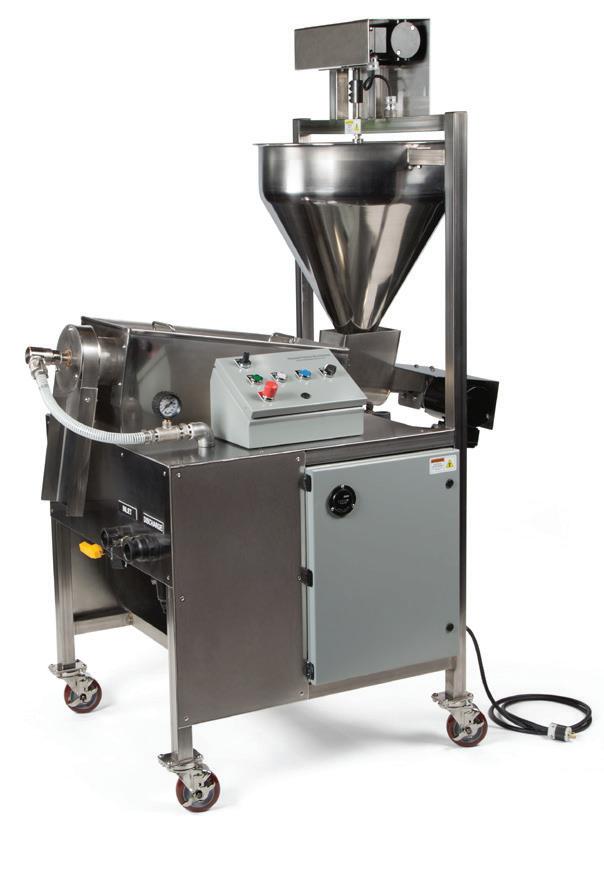
Continuous Flow Bio-Extractor AN INNOVATIVE CONTINUOS FLOW COMPOST EXTRACTOR capable of producing thousands of gallons of liquid compost extract in a single day! Hiwassee Products Bio-Extractor produces non-aerated biological compost extract for longer shelf life and greater versatility Amending soil microbiology improves nutrient uptake, weed suppression, pest and disease resistance, and crop health NEW PRODUCT INTRODUCTION www.hiwasseeproducts.com CONTACT US: info@hiwasseeproducts.com (423) 436-0502 225 Hiwassee Community Drive, Madisonville TN 37354 Find us online: Manufacturers of Equipment Solutions for Regenerating Soil Biology Dimensions: 30”x 48”x 70” Weight: 340 pounds
Mushroom Cultivation for Beginners
And How to “Go Pro”
BY MarY ellen kOzak
Mushrooms
are finally getting some big attention in the U.S. and, it seems, everywhere else globally. Members of Kingdom Fungi are being studied for many attributes beyond flavoring stock in a soup pot. Fascinating studies are targeting the unique ability of some fungi to disassemble lignin and other complex polymers to aid in remediation of toxic sites. On the farm, mycelial nets may capture over-nutrified runoff and are encouraged to flourish through reduced tillage in crop fields. Fungal behavior in forest soils is also big on the research radar. Emerging studies of psilocybin (magic mushrooms) for treatment-resistant depression and other human psychological conditions is big news, meanwhile research and development continue on the potential pharmacopeia contained in extracts obtained from fungi that have potential for antibiotics and immune responsive stimulation.
Growing mushrooms, whether for medicine or as a food source is a combination of science and the ability and willingness to adapt basic equipment to the biology of the mushroom with an evolving goal of efficiency. Season that with a big dose of patience and reality.
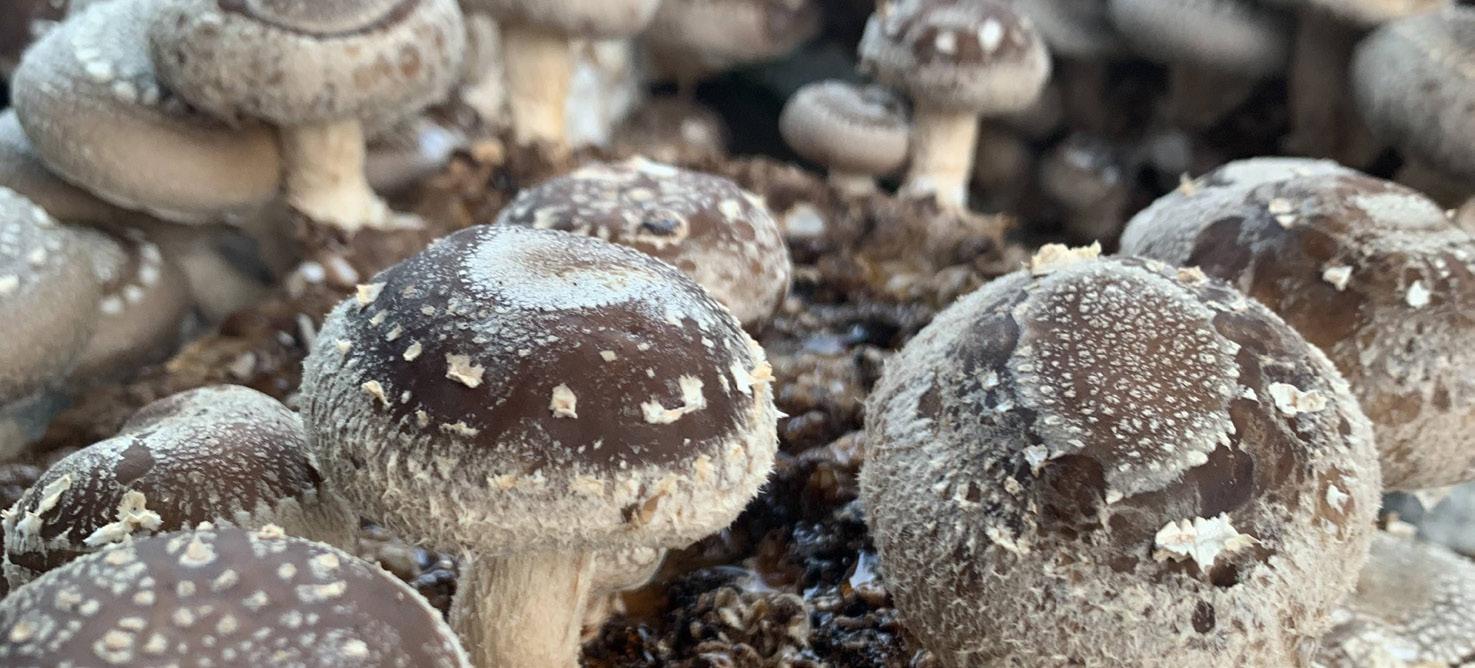
Mushroom growing is unique because most edible fungi are recyclers. They convert their food source, usually byproducts from agricultural and forestry industries, to pounds of fresh mushrooms for the table. The goal of the mushroom grower is to prepare a specific byproduct that matches the nutritional requirements of an individual fungus so it can thrive and reproduce. Due to this, mushroom farms have a small environmental footprint compared to most other farms. Low acreage requirements, water use,
CO2 emissions per pound of mushrooms, and good nutritional value are all great reasons to consider cropping mushrooms on the farm. Most of the environmental footprint information is calculated from indoor mushroom farms. However, shiitake farms based on cropping from natural hardwood logs may be the ultimate recyclers with the lowest environmental impact, relying on the natural environment and nature-made “cured” substrates as the base for producing a densely nutritious food.
Mushroom cultivation is fun. Mushroom farming (the cultivation of mushrooms for profit under time and tension), though, is challenging. At the end of the day, mushroom farming is still farming, and it comes with its own unique set of challenges that you will only learn through experience. Once you see and taste success with your first “grows,” the excitement provides the fuel for the desire to grow more. Now that growing mushrooms has your attention, here is some advice in taking the next steps.
MARkETING TIpS TO GET YOU GOING:
• Start small with constant assessment of realistic mushroom production numbers as you increase your goals. Most advice is “do your marketing” before you start to grow. With mushroom production, though, this is only an idea and nothing on which you can honestly base a business plan. Few grocery stores or restaurants will truly commit to buying your mushrooms
without consistent deliverables. Save yourself considerable angst and scrambling by having as good an idea as possible of your capabilities before you start looking for the buyers to commit.
• Your farm location may dictate the size of markets you seek. If you are rural, with hours of driving to a city for weekly deliveries, this will influence the goal of your production. Often the farther from a marketing hub you live, the larger the production number should be to make deliveries in one trip profitable relative to the commute. Purchasing fresh mushrooms from other suppliers by being close to an airport that will handle fresh produce is also a consideration if you are shipping or receiving unique mushrooms (wilds) for resale.
• Your farm location relative to an upscale city may also determine which type of customer you seek. Making the delivery into a city with multiple upscale restaurants and smaller markets may be a better strategy than attempting to sell to the larger suburban grocery store. As a grower in Massachusetts recently reported, his regular journey into NYC includes only stops at restaurants, never grocery stores.
• More rural farms should consider teaming up with CSA farms and establishing a regular appearance at farm markets.
organi C B road C aster | 16
PHOTO CREDIT: MARY ELLEN KOZAK
More than one grower reported to us that in the last five years, their gross mushroom sales more than quadrupled. Farm markets are still underpopulated with mushroom stands. If the Saturday downtown market has a grower, consider making your stand at the Wednesday or Thursday market. Farm markets are a great place to establish yourself because it is accepting of your swelling or shrinking mushroom production, which ALWAYS happens. Chefs will also shop at the local market so you can use that as a pick-up delivery spot or contact collection source.
pRODUCTION TIpS TO MAxIMIzE GROWING:
• Just starting? Consider a fast-growing mushroom that allows you to enter the marketplace and learn the basics quickly. Growing oyster mushrooms in buckets of straw or wood shavings is a great place to start, and the same process can be used for different species of oysters with different colors so you can offer variety without changing your methods very much. It also allows you to experiment with nutritional supplementation and substrate treatment methods before you make the next jump in scale.
• Beef up your product mix with different species. Learn about shiitake cultivation on wood logs if you have access to fresh logs and a shaded woodlot to cultivate them. This takes 12 to 18 months from inoculation to fruiting, but the logs are often productive for at least several years in commercial production. Shiitake is often the base product for a marketing mix as it has great consumer awareness. It really is one of the best mushrooms in terms of flavor and shelf life. Make sure to use strains that are suitable for forced fruiting so you can schedule fruiting on a weekly basis. Shiitake and other log-grown mushrooms are also popular choices to sell at a farm market if you can bear to part with them. This is the most environmentally sound mushroom production method if good forestry practices are followed, but it is physically challenging and not a good fit for everyone.
• Consider growing mushrooms indoors with block cultivation to supplement your shiitake or oyster product mix. If you live close enough to a block producer (there are more producers out there now than ever), this is a way to boost your production and increase your variety offerings without putting in the work and capital to make your own…. yet. If possible, find a producer that allows you to pick up blocks at their facility or will ship using a local shipper which is usually reasonably priced. Keep the end goal of making your own blocks in mind as you work and learn.
• Do your research. Mushroom growing can be simple, but profitable mushroom growing relies on maximizing production and avoiding common mistakes that can be costly (in time, labor, and resources). Learn your specific system, the preferences of the
mushroom varieties, and do your best to optimize your operation. There are a lot of resources out there that can help at any stage of your development.
Fifty years after shiitake was first cultivated on logs in the United States, mushrooms have gained a foothold in the consumer market due to a more diverse population and a better understanding of how fungi can be used for culinary and health purposes. Demand for fresh product continues to be very strong and niche opportunities for producing and marketing fungi provides a business opportunity for those who have the resources, grit and determination to make it work.
Mary Ellen Kozak, along with business partner and spouse Joe Krawczyk, is co-owner and co-founder of Field and Forest Products, a specialty mushroom spawn and supply company now marking it’s 40th year of business. Dedicated to organic mushroom cultivation since the 1980’s, they were the first to write the organic certification guidelines for cultivation of wood decay fungi in 1988. While their lasting love is growing mushrooms on natural wood logs through understanding fungal behavior in the wild, their goal is to work through biological and industrial barriers for growers to increase profitability in a rapidly growing and changing industry.
M ar B leseed. org | 17
With a facility solely dedicated for processing organic and non-GMO seed, Beck’s Great Harvest Organics meets every organic standard. Plant confidently with Great Harvest Organics.
organi C B road C aster | 18
ORGANIC SEED YOU
DEPEND ON. SECURE YOUR FAVORITE OR NEW PRODUCT BEFORE IT SELLS OUT. SCAN THE QR CODE TO LEARN MORE.
CERTIFIED
CAN
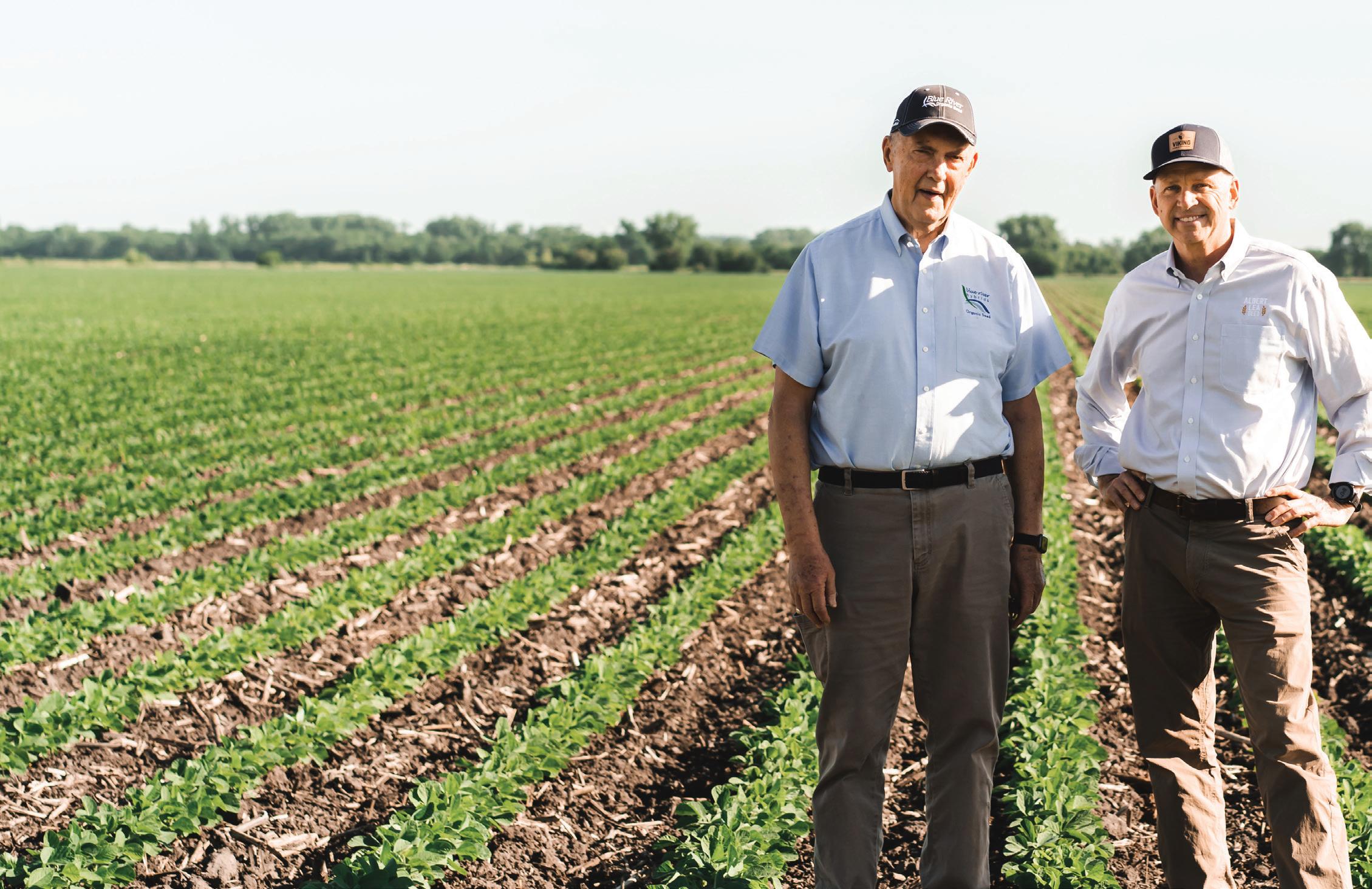
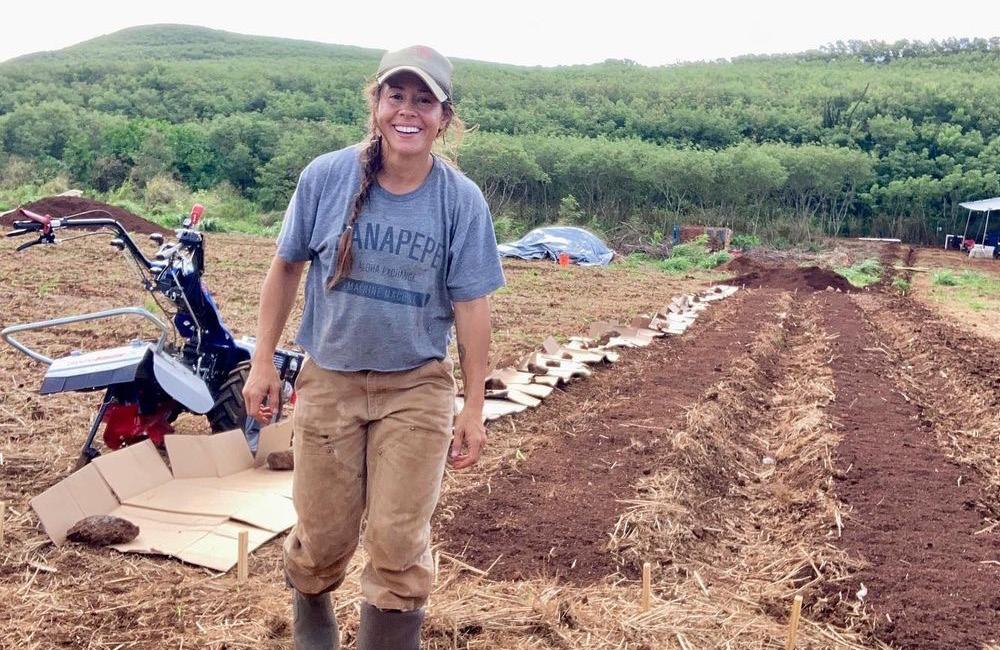

M ar B leseed. org | 19 800.352.5247 | ALSEED.COM WE’RE COMMITTED TO ORGANIC AGRICULTURE. Viking & Blue River are now fully integrated to offer the strongest lineup of organic corn and soybeans in the United States. ORGANIC SEED FOR THE WHOLE FARM Corn & Soybeans • Cover Crops Forages • Small Grains Conservation • Lawn “AS A YOUNG, BEGINNER FEMALE FARMER — BCS HAS BECOME THIS GIRL’S BEST FRIEND!” “... As we take on the challenge of regenerating our depleted Hawaiian soils, while simultaneously working to help build and feed our community, I feel incredibly empowered by my BCS and I am blessed to also have the rotary plow attachment to make my permanent, minimal-till beds.” - Sally R. in HI Read more testimonials & find your nearest BCS dealer at at www.bcsamerica.com
BY nOreen tHOMaS
Tortillas, noodles and freshly baked pretzels are just a few foods made from grains. Every culture relies on grains grown regionally to produce food that becomes a staple for its people. Each grain provides a distinct characteristic to give food its own unique depth of flavor, aroma and appearance. We can find grains tracing back to ancient times buried in the tombs of the Egyptians. Grains have been a staple of almost all diets throughout history.
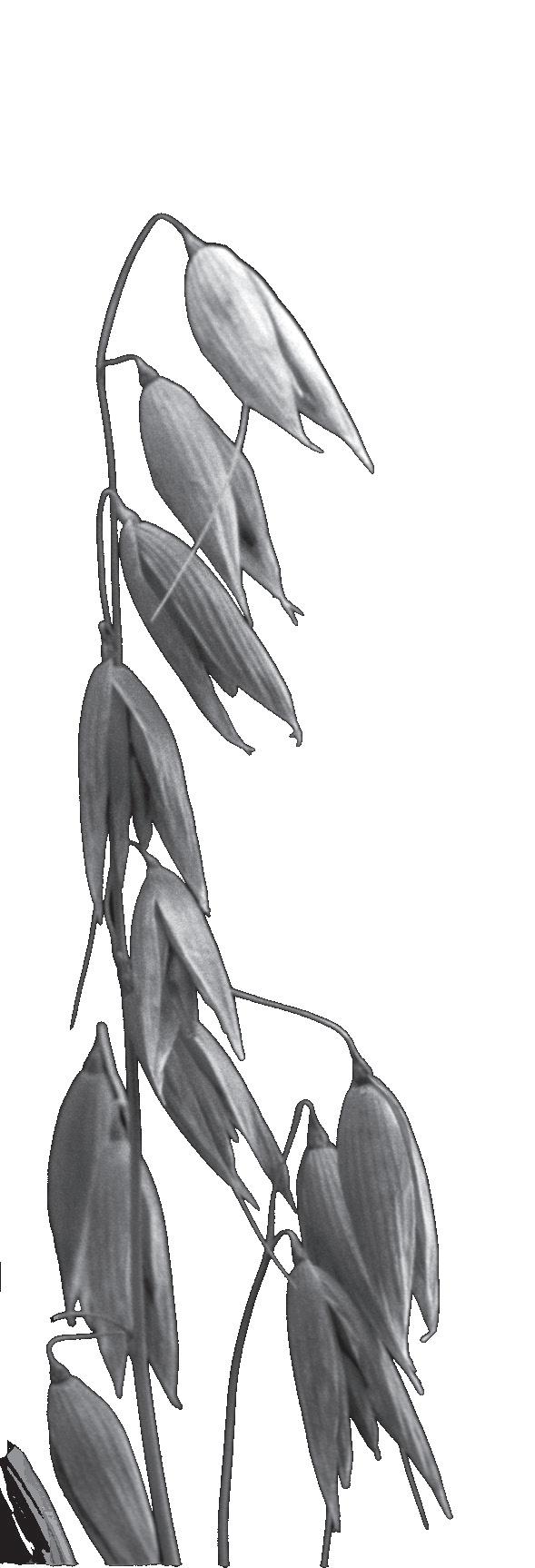
The term “grains” actually covers a broad range of types and varieties. They can include modern varieties that have been crossed to make a hybrid (such as the hybrid rye), beloved heritage grains (varieties that pre-date the 1900s), ancient grains like emmer, einkorn, Kamut, and the not-so-ordinary grains such as millet, buckwheat, and teff.
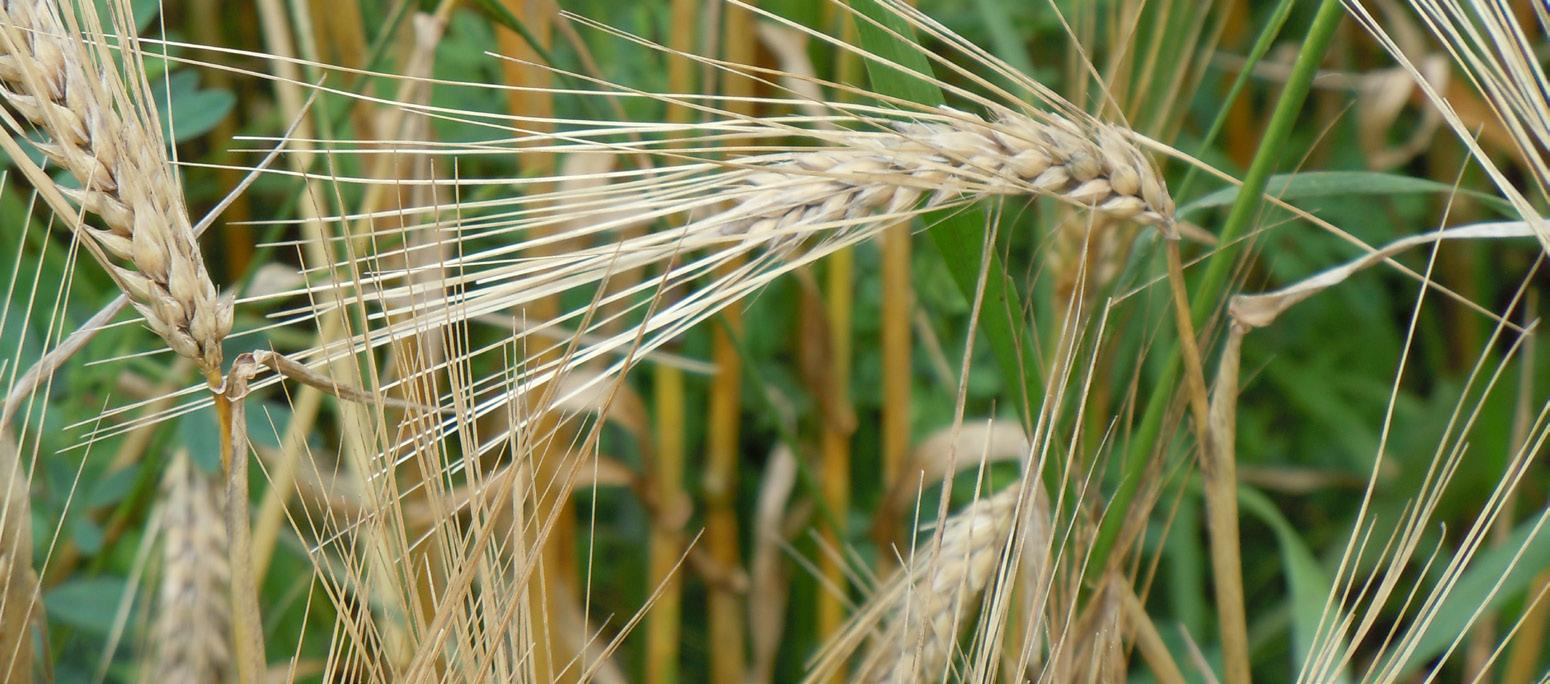
For producers, incorporating grains can help expand the process for back-to-back rotations of only several crops. Adding small grains also spreads out the heavy load of later fall harvest, since grains can be midsummer to early fall. Anytime a farmer switches the farm plan or adds a new crop, of course, they must weigh several considerations. They must consider what equipment is needed for planting, maintaining the crop, taking care of weed control, harvesting, storage and drying if necessary. There is much to learn when growing grains. Where does a farmer even start?
Fortunately, there are some good
resources for beginning farmers who want to launch into grains. Michael Fields Agricultural Institute’s project, GRIT, provides support for growing grains. Christine Johnson from Michael Fields is in charge and reports strong interest in the program, which includes support for webinars, tours, and learning activities where budding farmers can learn about growing grains.
Why the push for small grains? The white bread of the classic ’60s era was sold as superior, and the lightfluffy bread took over. Otherwise, families in an increasingly busier world had to make their own bread or buy it from a bakery. The “white bread” era was marketed as a soft alternative which could keep longer than the homemade version and could be found at any supermarket or corner store. More recently, the spotlight has shifted to whole grains. Schools and dietitians are again emphasizing the benefits of eating whole grains for fiber, superior nutrition and gut health. The USDA updated its requirements on grains in school lunches; at least 80% of the grains offered must be whole grain. A recent study published in the American Journal of Clinical Nutrition encourages people to add whole grains to their diet. “Whole grains are a significant, nutrient-dense part of a diet and should be incorporated daily,” says Megan Myrdal, registered dietitian and co-author of the cookbook/ nutrition guide, Midwest Mediterranean. “Whole grains are abundant across the upper Midwest, making them a perfect part of the Midwest
Mediterranean diet. They provide an array of nutrients and consuming them reduces the risk of chronic diseases like diabetes and cardiovascular disease. It’s important to remember that to get the maximum benefits from eating whole grains, eat them in their whole, intact form.”
So, what are the land-grant universities doing to support farmers? Dr. Rich Horslay has found interest in organic grains from his Department of Plant Sciences at North Dakota State University, Fargo. NDSU offers ten field crop breeding programs, the greatest number of any university in the nation. Traditionally, the NDSU breeding programs have developed crop varieties for conventional production systems, which have been switched up by expanding the breeding program to include the development of varieties for organic production systems, Horsley says. The universities are also finding themselves breeding target development of varieties for artisan and culinary uses. Some chefs and breeders are working together such as NDSU and Dan Barber and Row 7. Together they are looking at the flavor and not just the economics of growing grains. And there are new crops to be rolled out. Matt Leavitt, the organic agronomist for Albert Lea (Minn.) Seed, enthusiastically adds, “The new crop is Kernza. We are one of the only ones approved for selling seeds. It is exciting to watch. The market will have to catch up but still really great to watch." Also, on the horizon are promising new crops such as camelina and pennycress.
Established grain farmers can offer some sage advice to those who have considered adding small grains:
1. List small grains on your policy for crop insurance when contacting your crop insurance person, the first year. No harm is done if you don't grow them; placing them on a policy right away will make the grains available for coverage if you plan to produce them. If you try and add the grains for coverage later in March sign up it could be more of a
organi C B road C aster | 20
problem, so if you can list early, the crop insurance will go more smoothly.
2. If contracting for small grains, shop around. Attend a conference like the Marbleseed Organic Farming Conference and stop by the booths to discuss opportunities.
3. Ensure potential buyers are licensed for your state. For most companies, this is in place. I visited several farmers who encountered this issue head-on. The buyer promised a great price, so the farmers checked into the buyer’s license with the Department of Agriculture in their state. No license and had some problems in paying the farmers.
4. Check if the grains are covered by insurance. You can get an agreement (ask your agent early) made for crops not covered by regular crop insurance, but subsidized crop insurance offers better coverage at a discounted rate.
5. Check your soil types with what you want to grow. Amelina, an emerging crop, does not do so well in heavy clay soils. Also keep in mind that, for some of these crops, days to harvest may be extended, which may not be a good choice if you live in the northern territory of the state.
6. Determine the best type of fertilizer and when to apply it. Especially if growing wheat, as it demands more nitrogen.
7. Check for quality issues in harvested grain. It is good to know protein, test weight, and falling number if growing wheat. Have a Don (type of fungus) test done on wheat and barley. Also, check rye for ergot. Ask the buyer what tests they would like.
ADDED RESOURCES FOR YOU: Midwest GRIT (Grains Resource & Immersive Training) is focused on strengthening opportunities and outcomes for diverse small- and mid-size Midwest food-grade grain farmers: www.midwestgrit.org
• Participants will be selected based on regionality, farm operations and interests. This cohort prioritizes farmers in IL, MI, MN, WI, OH, IN, and IA.
• In addition to a $700 stipend for participation, travel honoraria and conference scholarships are available for in-person programming.
• A minimum of 30% of program openings are reserved for participants who identify as women and will include additional opportunities to support and strengthen success for farmers facing gender-specific agricultural and entrepreneurial barriers.
• Schedule details
• Application Period: January 5- March 3, 2023.
• Participants will be notified by the end of March 2023.
• Programming begins in April 2023 and ends in April
2024.
• A calendar of event dates and topics is released every four months.
OGRAIN conference in Madison, Wis: The 2023 OGRAIN Winter Conference will be held January 27-28, 2023, at the UW-Madison campus. Our seventh annual conference will continue to connect organic grain growers with new research and the robust organic grain community of the upper Midwest. https://ograin.cals.wisc.edu.
Artisan Grain Collaboration: Collaborations happen all along the grain chain. Farmers, scientists, makers, researchers, advocates and eaters identify and develop staple crop varieties that work well for farms, food and drink. https://www.graincollaborative.com.
Even if you are not growing grain, it is essential to consider your health and incorporate whole grains, such as oats, wheat, and barley into your diet. In an OGRAIN interview, Charlie Johnson said it best: “To be organic is to be pro-people, pro-environment, pro-consumer, and pro-community.”
Noreen Thomas is an organic producer just outside of Moorhead, Minnesota. Doubting Thomas Farms, the fifth generation farm provides tours, educational classes, and grows blue corn, wheat for bakeries, barley and soybeans for export as well as local grains and local food. Thomas has a bachelors of science in food, nutrition and chemistry as well as microbiology.
M ar B leseed. org | 21
Organic Certification MINNESOTA CROP IMPROVEMENT ASSOCIATION 1900 HENDON AVE, SAINT PAUL MN 55108 855-213-4461 www.mciaorganic.org • HANDLERS • PROCESSORS • PRODUCERS • WILD CROP • LIVESTOCK Serving the Upper Midwest Ensuring Organic Integrity Since 2002 local responsive committed to service
BY clare Hintz, PH.D.
Marbleseed offers two recognitions every year that we celebrate at the annual Organic Farming Conference: Farmer of the Year and Changemaker. Not only will you hear amazing stories of their experiences, but you’ll often see them hosting roundtable discussions, and in subsequent years they often host workshops and field days.
The Farmer of the Year Award is meant to honor farmers who have contributed to the organic farming movement through significant experience and to network those leaders with less practiced farmers. Farmers of the Year serve as important guides to the organic farming community as the organic movement continues to evolve. Capturing their stories and legacy improves the integrity of the movement. In some way, they represent a circle of elders for our community (although many are not old!). They can speak from experience about the persistence and resilience needed to have a full career in farming and the vision and values for good food, fiber, and medicine needed to get through the inevitable tough times. Farmers of the Year are certified organic producers in the Midwest.
The Changemaker recognition is a relatively new effort to celebrate emerging leaders in the organic farming and food movement who creatively overcome systemic challenges to nurture a thriving agricultural future for all. In 2021, the Changemaker committee of the Marbleseed Board focused our work to recognize and celebrate a sector of organic agriculture, community
food sovereignty, and/or local food systems that have been historically discriminated against.
The criteria we use to choose Changemakers include:
• Increasing the welcome of the Marbleseed community;
• Breaking down barriers to traditional and institutionalized norms that leave some members of the food and agriculture community on the outside and fringes of “success” and equal access;
• Focusing on emerging practitioners and leaders;
• Belonging to/representing communities of color, LBGTQ communities, Indigenous communities, and any systemically marginalized communities within the agricultural and food system sectors;
• Directly supporting organic, sustainable and/or regenerative agriculture aligning with the Marbleseed vision and mission;
• Demonstrating leadership and empowering of others in their community;
• Farming practices that demonstrate new thinking and innovation;
• Demonstrating a philosophy of continual improvement;
• Embodying the social, environmental, economic dimensions of sustainability.
A Changemaker honoree does not have to be a producer but does need to directly support farmers through their work.
As Marbleseed continues to evolve
as an organization, the board has worked to combine the nomination processes for Farmer of the Year and Changemaker. This is where you come in! If you love the work of seeking out new relationships and sharing stories of past and future agriculture, we would love to have you on the Recognition committee. The committee meets about four times a year by Zoom. We also take nominations for affinity groups, or sectors of our community that we should consider for the next Farmer of the Year or Changemaker. You can also nominate an organization, network, family, or individual for either of these recognitions.
Do you have an organization, group, or farmer you’d like to see recognized? Please get in touch with a Marbleseed board or staff member or submit a nomination on the website. We keep an ongoing file of past nominations for Farmer of the Year and Changemaker. This is not a competitive process but a way of showcasing particular stories for a given year that the committee decides should be highlighted: stories to inspire, relationships to nurture, and innovations to make us think.
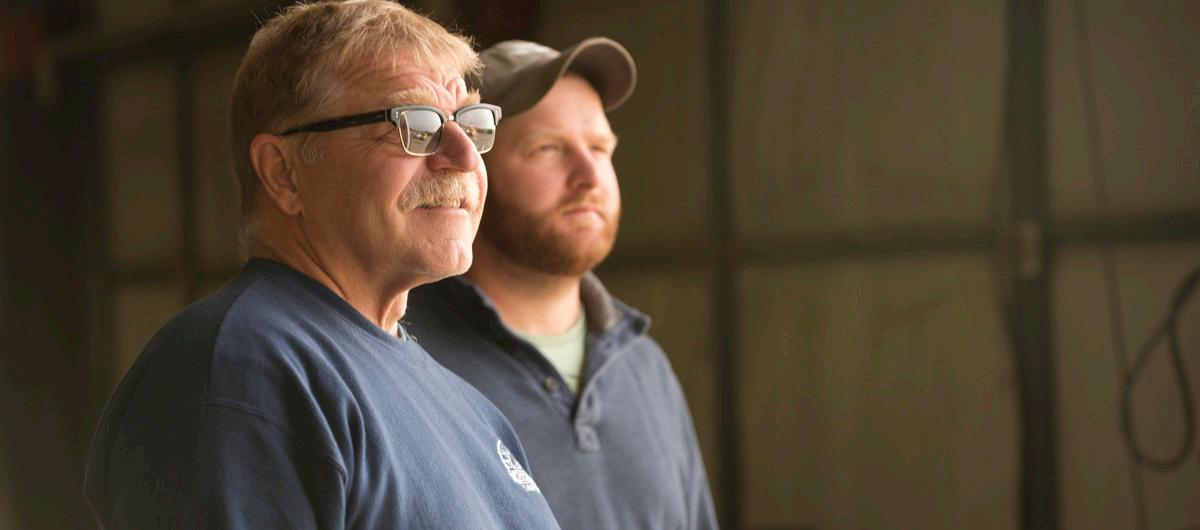
For the 2023 Conference, we are pleased to announce Marcia L. Eiynck of Beargrease Botanicals as our Changemaker of the Year. Marcia is an accomplished wildcrafter in the Northwoods and also the agriculture division director for the Fond du Lac Band of Chippewa (Anishinaabe). We are also pleased to announce Harold and Ross Wilken as our Farmers of the Year. Harold and Ross are grain farmers who have done innovative work to improve processing access in the Midwest grain supply chain. You’ll learn more about their stories at the conference and in the next issue of the Organic Broadcaster.
Clare is a Marbleseed board member and runs Elsewhere Farm in Herbster, Wis., a production perennial polyculture supporting winter and summer CSAs and other markets. She is also the editor in chief of the Journal of Sustainability Education.
organi C B road C aster | 22
PHOTO CREDIT: JOHN MERKLE
true partner is defined by those they support. That’s why at Compeer Financial we’re defined by you — your hopes for the future as well as what you need today. As a local member-owned cooperative, our clients help shape the direction we go and how we serve them. And as agriculture continues to evolve, so will we, together. So whether you need an experienced lender, a trusted advisor or a friend you can count on, we’re ready.


M ar B leseed. org | 23 Compeer Financial can provide assistance with financing and operations based on historical data and industry expertise. Compeer Financial does not provide legal advice or certified financial planning. Compeer Financial, ACA is an Equal Credit Opportunity Lender and Equal Opportunity Provider and Employer. © 2022 All rights reserved. Sai Thao, Sr. Lending Specialist (612) 597-4086 | Sai.Thao@compeer.com Paul Dietmann, Sr. Lending Specialist (608) 963-7763 | Paul.Dietmann@compeer.com A
DEFINE YOUR SUCCESS WITH US COMPEER.COM/YOU OR CALL (844) 426-6733 Ag Loans & Leases | Ag Business Services | And More DEFINED BY Natural and Organic Fertilizers & Feed Supplements Healing the Earth and Feeding the World - Better Naturally! CONTACT US FOR A COPY OF OUR NEW CATALOG! P.O. BOX 265 Bainbrige PA 17502 | CALL OUR OFFICE: 800-347-1566 | EMAIL US AT INFO@FERTRELL.COM OR VISIT US ONLINE AT WWW.FERTRELL.COM
BY MerceDeS Falk
Buffalo County, where I live in western Wisconsin, currently has about 75 dairy farms and around 27 of them employ immigrants from Latin America. This information is not very visible to the naked eye when driving through our picturesque valleys and up and down our dugways. I think that statistic surprises many people; that, in our county, where agriculture dominates the economy and the population density is about 20 people per square mile, roughly 1/3 of dairy farms are powered by recent immigrants.
Several generations ago, immigration was more out in the open. It was accepted as commonplace when individuals and families from Switzerland and Germany and other countries came over from Europe and founded nearly all of the family dairy farms that are still in operation in our county. For a century or more, most of those farms were run only by members of the same family.
As the landscape of dairy farming changed over the last couple of decades with more farmers expanding their operations to stay in business and/or have a more manageable workload, they have needed reliable labor outside of their families. In recent years, Latin American im-
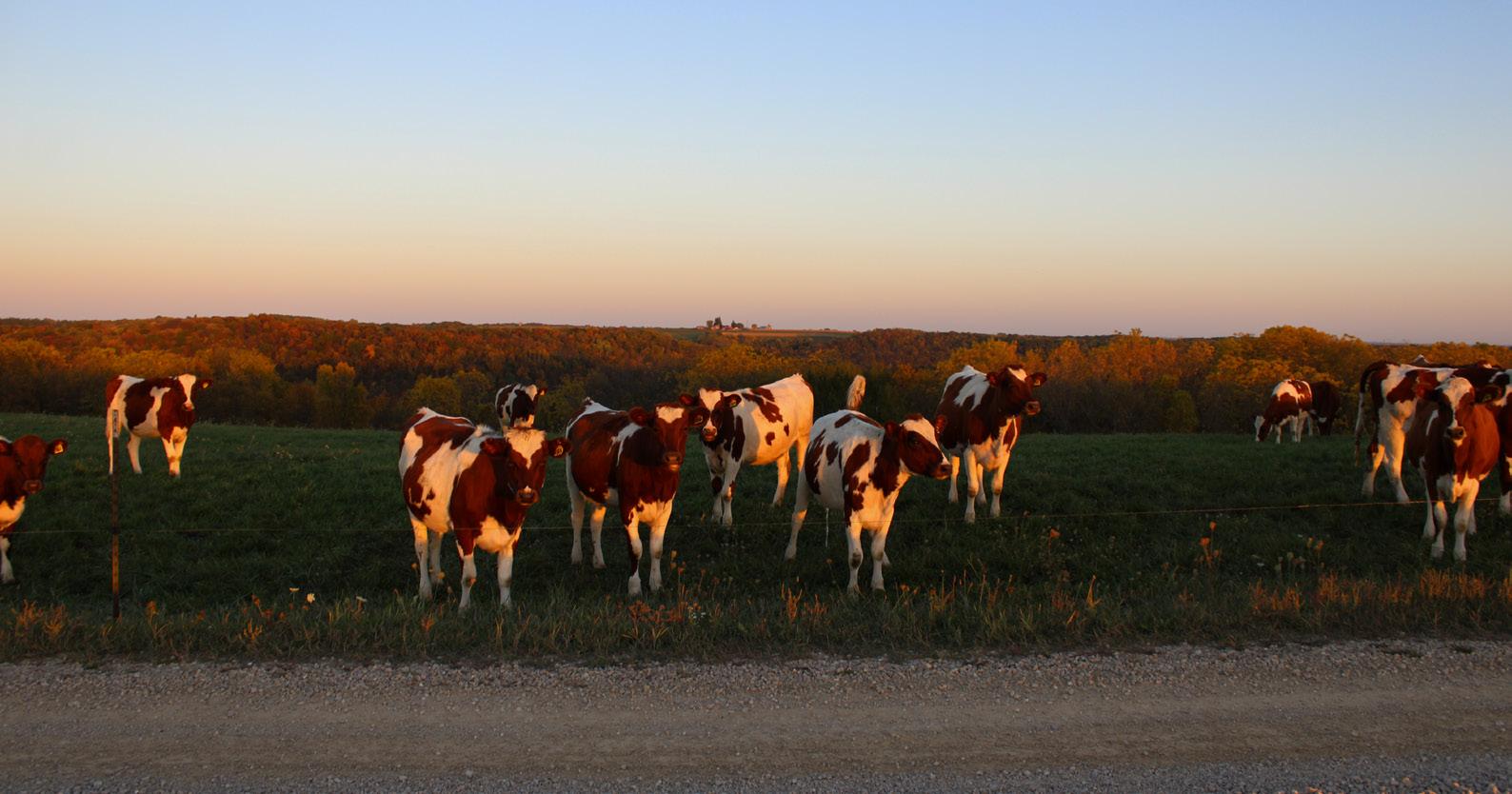
migrants have been the folks that have wanted to fill those positions. They have stepped in to help milk cows, feed calves, fix machinery, and do the myriad of tasks that need to get done on a dairy farm 365 days a year. Their incredible work ethic, agrarian values, and many other shared traits have made them invaluable to numerous dairy farmers. The commonalities between these two groups of people and the lasting relationships that they have formed are hard to see for the average passerby, but they are unmistakable for those who have a chance to see them work together on a long-term basis.
After reading an article five years ago about farmworkers in western Wisconsin and how they were deciding to return to Mexico after working on a dairy farm for many years, Ruth Conniff, a journalist from Madison, became profoundly interested in this decade's long relationship. She wanted to know more about why Mexican workers came to Wisconsin and what made them want to go back home. She got in touch with the founder of our organization and began to have conversations with farmworkers from Mexico and dairy farmers from Wisconsin. As she began to get to
know these individuals and learn about their triumphs and struggles, she realized how much more there was to the story, and that is how she started writing Milked. In this debut book, Conniff takes an acute look at the relationships that have developed between dairy farmers and their employees from Mexico and the policies and decisions that propelled them together. She takes us on a journey from mountainous agrarian villages in rural Veracruz to farms tucked in valleys and situated up on ridges in rural Wisconsin and Minnesota. She weaves in personal stories that help us understand how dairy farmers in the Midwest and subsistence farmers from Mexico have come to depend on one another. These stories bring light to a topic that has dominated our political landscape in a deeply personal and moving way.
I do need to make a disclaimer that Puentes/Bridges, our organization that works to increase cultural understanding between immigrants that have come to work here and our rural and farming communities, is highlighted in the book. So, the perspective I offer is from somebody that holds the people that are featured in this work near and dear to my heart. That being said, I’d like to add that I do not know many people that aren’t utterly exhausted by the polarization in our current political climate, and the stories that Conniff recounts about farmworkers and dairy farmers encourages the reader to set aside any preconceived notions on the issue and look at the larger picture. I have observed that the more people who have had a chance to hear the intimate narratives of those who have risked and sacrificed so much to come to work on our farms, the more we, as a whole, are able to arrive at a more complete and unbiased understanding of what is truly at play here.
One can read headlines about undocumented farmworkers and our economy, but it doesn’t really sink in until we get to know personal stories and understand why Ro-
organi C B road C aster | 24
A look at our interconnectedness and how much everyone who is producing food in our nation has in common
Highlighting Milked:
PHOTO CREDIT: ENCHANTED MEADOWS, LA CRESCENT, MN
BOOk REVIEW
berto, Blanca, Ezekiel, and Clara have made the difficult decision to leave their families behind in Mexico and come here to work for years at a time without knowing exactly when they’ll be able to go back home. Statistics hit differently when we hear someone say that they’d probably be happier back in Mexico because they’d be with their family but working here is the only opportunity they have to build a house that is more than wood walls and a dirt floor and to pay for life-saving health care for their parents.
Our understanding of the situation is further deepened when we learn of the various reasons why dairy farmers like John, Bill, Dana, and Chris have not only come to depend on their employees from Mexico to complete their workforce but how they have a deep admiration for who they are as people and the way they have solved problems on their farms with their can-do attitudes. Through stories of the sacrifices workers have made to come here, what their families mean to them, and how their jobs on dairy farms are creating lives that go beyond thinking about surviving day to day, we learn about the profound amount of respect these farmers have for their employees.

Interwoven in these stories are facts about how we got to this place of interdependence and who is really depending on who:
“If Mexican workers’ relationship with the United States
is a relationship of dependency, the dependents are not immigrants coming illegally to the United States to live off hardworking American taxpayers, as some U.S. politicians claim. The real dependents are U.S. employers, as well as Mexican communities that survive on migrant labor. Undocumented workers are carrying the economy of both places on their backs.”
I think Conniff’s hope here is that we go beyond acknowledging that our systems are fractured and work together to create better structures that honor the contributions of everyone that works in agriculture. The stories and information laid out in this book help more people understand what has happened on a global scale that brought us to this point. As farmers, we already know getting food on everyone’s tables takes a whole lot of hard work, and there aren’t as many people born here who find it to be an honorable profession anymore. Hopefully, the more people who become truly informed about who is producing our food and how farmers and workers are being compensated, the more we are driven to act to create an agricultural economy that dignifies the work of every single person sacrificing long hours to ensure we are all nourished.
Mercedes Falk is the Director of Puentes/Bridges, and she works with dairy farmers and farmworkers from Mexico to help increase cultural understanding.
M
B leseed. org | 25
ar
BY lOri Stern
On a cold, overcast Tuesday in December, a small group of organic grain farmers from areas near southeastern Wisconsin gathered around Sandy Syburg’s oak dining table. The 1800s barn-turned-cozy-farmhouse was the right setting for a frank conversation with USDA Deputy Undersecretary Katie Zenk. Sandy welcomed the group to his farm with an array of Wisconsin cheeses, rye flour breads, and cookies accompanied by a more than two-story illustration of a rye plant above- and below-ground. It was a great start to a discussion about what USDA could do to better support organic grain farmers and develop supply chains and markets to ensure their operations are viable.
Gary Zimmer joined Syburg in enthusiastic support for adding grains in a rotation that have both ready
markets and climate benefit, speaking specifically to rye. Concerns about organic grain infrastructure mirrored conversations that Marbleseed has had with farmers regarding meat and other local food efforts. The needed processing and storage facilities are no longer available where food is grown and raised.
Zenk asked questions about capitalizing farmers and grant opportunities. There was general consensus that many of the funding pools are complicated and burdensome, but more importantly, farmers at the table said they wanted to earn their livings from farming, not from government grants. “Expanding opportunities for small and underserved producers is a key goal of Partnerships for Climate-Smart Commodities,” said Katie Zenk, “Small and underserved producers, including
those here in Wisconsin, are facing the impacts of climate change head on, with limited resources, and have the most to gain from leveraging the growing market demand for agricultural goods produced in a sustainable, climate-smart way. We look forward to working with Marbleseed to expand markets for climate-smart commodities and ensure that small and underserved producers reap the benefits of these market opportunities.”

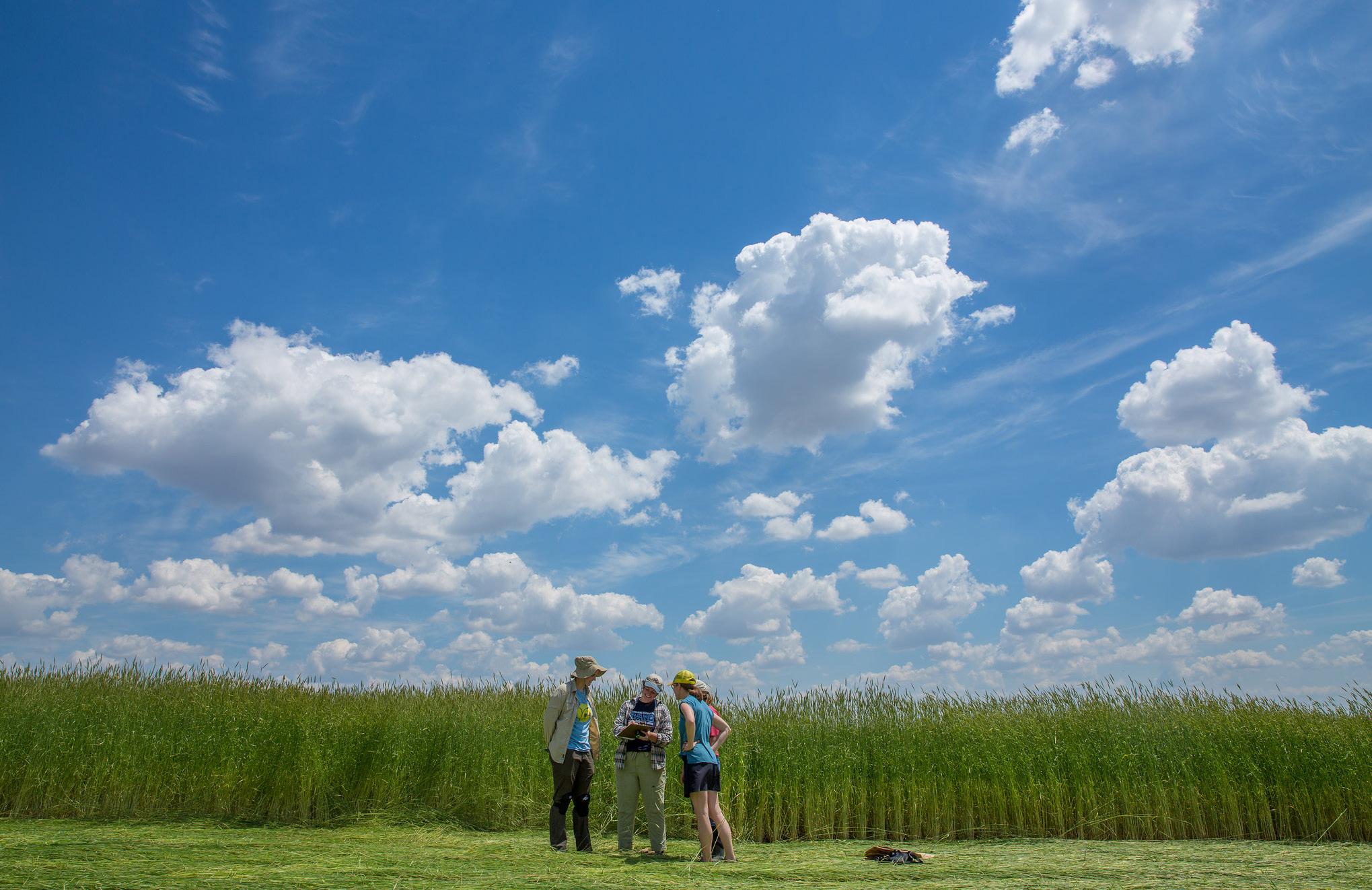
Several farmers at the table had been in dairy, only to transition to beef and then eventually to grain. Notably, Linda Halley of Gwenyn Hill Farm in Waukesha, Wis., talked about returning to family land and building diversity in her organic system, including bringing back the dairy cows. It was a hopeful moment after hearing about others who had sold their herds.
The impetus for this impromptu gathering was Secretary Vilsack’s announcement the day prior of the second round of Climate Smart



organi C B road C aster | 26
organiC grains are CliMate sMart
TO Explore two new Organic Agriculture Certificates 3 core courses / 15 credits / 44 electives In-person undergraduate instruction Hands-on experiences Connections with organic industry partners 9 courses / 27 credits Entirely online -participate from anywhere! Standalone program Financial aid available Mind Skills Future TRANSITION YOUR Visit: ecampus.oregonstate.edu/online-degrees/ undergraduate/certificates/organic-farming-systems/ Visit: uworganic.wisc.edu/certificate/ ORGANIC
Agroforestry Partnership Grants. Marbleseed has been awarded one of the 70 projects funded in the pool that addressed small- to medium-sized operations. Marbleseed was the applicant for a highly collaborative effort with funding also going to Ohio Ecological Food and Farming Association, OFARM, Tennessee State, and Michael Fields as the soil science/environmental monitoring partner. Nicole Tautges from Michael Fields and Mike Schulist, representing OFARM and the importance of a cooperative approach, also joined the conversation.
Schulist and 2022 Marbleseed Farmer of the Year Dave Campbell raised concerns about fraudulent grain imports, giving Zenk the opportunity to remind folks to continue to advocate for the “Strengthening Organic Enforcement” proposed rule that has yet to be released two years after the comment period ended.
“Although this quickly organized event was in conjunction with the announcement of the next round of Climate Smart Partnerships, we appreciate that it gave us opportunity to give farmers a literal place at the table with someone high up at USDA,” said Lori Stern, Executive Director of Marbleseed, who was tasked with gathering farmers for Zenk’s visit.
Zenk is a Minnesota native with a long history in agricultural policy, serving in the House of Representatives Committee on Agriculture and prior to that had roles with Land O’Lakes. Her current section at USDA oversees critical areas of agriculture that directly impact farmer livelihoods. These are programs that create domestic and international marketing opportunities for U.S. producers of food, fiber, and specialty crops. They also provide the agricultural industry with valuable services to ensure the quality and availability of wholesome food for consumers across the country and around the world. In addition to the Climate Smart Partnership grant, Marbleseed is also receiving funding for the Local Food Purchase Assistance in Wisconsin and is a core partner in the Midwest Region Transition to Organic Partnership Project. All of these efforts are connected to Zenk’s section at USDA.
Wisconsin NRCS was also in attendance with acting State Conservationist Jamie Keith joined by staff from the state Partnerships office and field conservationists. Keith voiced her excitement to work with Marbleseed and plans to attend the La Crosse conference in February. In addition to the new grant project focused on organic as truly climate smart, Marbleseed is partnering with Wisconsin NRCS, creating a shared position to provide organic farmers better access to critical conservation resources and technical assistance (see Inside Organics piece, “Conservation Programs and Organic Production” on page 28).
The gathering at White Oak Farm reminded all in attendance how important it is to come together as farmers and share knowledge and concerns. Many of the folks around that table will be contributing to the 2023 Marbleseed Organic Conference, sharing their expertise with the larger conference audience.
Lori Stern is the Executive Director of Marbleseed.
207-717-5451
info@mainepotatolady.com
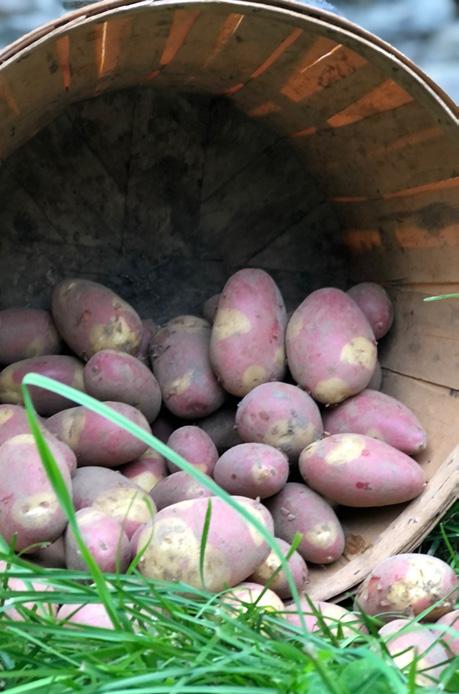
M ar B leseed. org | 27
Because the Climate Smart grants take a cross-agency approach from production to marketing, Gene Schriefer, State Executive Director of the Farm Service Agency, your source for quality seed potatoes Wide selection of certified organic products: Certified seed potatoes, garlic, shallots, cover crop seed, fertilizers, inoculants, sweet potato slips, heritage grains, and flowers. Reasonable prices and volume discounts!
www.mainepotatolady.com
also offered words of congratulation and committed to supporting Marbleseed’s work around farm business viability and expanding markets.
BY tHOMaS ManleY
Merriam-Webster defines conservation as follows: a careful preservation and protection of something especially: planned management of a natural resource to prevent exploitation, destruction, or neglect. Unfortunately, much of America’s privately owned working lands, and the communities embedded in them, are exploited, neglected, and moving in the direction of destruction. The federal agency tasked with slowing and reversing this degradation is the Natural Resources Conservation Service. The stated mission of the NRCS is “to deliver conservation solutions so agricultural producers can protect natural resources and feed a growing world”. This seems to align pretty closely with the ethics and objectives at the core of organic production and the farmer led movement that created the organic label: to sustain and enhance the health of soil, plant, animal, human and planet and to strive for continual improvement in our production systems for the benefit of current and future generations. You know, like conservation. So why are NRCS resources so underutilized by the very organic farms that already have a commitment to the ideas, and in most cases the very same practices, that NRCS programs are designed to support? There seems to be a disconnect, and this has been recognized by both the USDA and the organic community.
For almost a decade, our friends at Oregon Tilth have been working with the NRCS through a national partnership to help find ways to
bridge this disconnect. They have provided training and resources to agency staff and conservationists and work with them to identify the alignment between the organic standards and NRCS practice standards and enhancements. Marbleseed has just begun working with Wisconsin NRCS through a similar partnership. I am thrilled to say I am the Organic Conservation Specialist collaborating with state conservationists to meet our shared objectives of better addressing resource concerns and serving organic producers through education and outreach. I know firsthand the positive impact that NRCS programs can have on a farm, and I continue to benefit from the help I have received from the conservationists in my district. The dedicated staff at your local USDA Service Center want the same things we want as mindful producers, to help preserve and improve the ecology of our farms for those who come next while simultaneously meeting our needs for food, fiber and income. To leave it better than we found it. This is the very idea of regenerative agriculture.
And since I used the “R” word, forgive me this brief digression and let’s talk about that for just a moment. I think we all know what “regenerative” is intended to convey, but that idea is being actively and intentionally watered down. For a farming system to be regenerative it must first be managed organically. Herbicide burndown is not regenerative. Regeneration needs to happen at the farm level, the commu-
nity level, and at a planetary level. Further adoption and increased use of unnecessary synthetic chemical tools will never enhance the health of soil, plant, animal, human and planet. The best we can say about conventional no-till is it is potentially “less bad” than some of the alternatives. We need to all be aiming for “more good.” All of us on Team Organic need to do a much better job of stating, in a clear and unified way, what we believe regenerative ag is and is not. But, let’s be honest, not all organic production is necessarily regenerative. Yep, I said it. None if this is intended to be an attack on any producer or practice, just a reminder that we should all be working toward continual improvement. This idea is baked into the organic ethos. It is why there are so many inventive, pioneering farmers in our community and why they tend to be so willing to share all they know.
Which brings me back around to the topic at hand and why I am so excited to be engaging in this work at this time. There is an unprecedented level of support for organic producers. The USDA is openly recognizing organic production and practices as “climate smart.” They are funding partnerships across the country to provide farmers who want to transition to certified organic production with the resources they need to guide and mentor them through the process. The Organic Transition Initiative (OTI) is a multi-agency effort designed to help ensure they become the best possible organic producers. The NRCS, through the conservation practices they encourage and fund, will be an important part of this initiative. The Conservation Plan Supporting Organic Transition, or CPA 138, will be of particular value to transitioning farmers. This Conservation Planning Activity (CPA) involves the work of a Technical Service Provider (TSP), hired by the participating farmer, to provide a detailed conservation plan. The TSP is paid to provide the plan by NRCS. The plan assesses current conditions and resource concerns on the farm, identifies and
organi C B road C aster | 28
PHOTO CREDIT: GENUINE FAUX FARM, TRIPOLI, IA
INSIDE ORGANICS
CONSERVATION pROGRAMS AND ORGANIC pRODUCTION: OBviOuS allieS, SO wHY tHe DiScOnnect?
evaluates potential alternative actions and practices, and specifies the farmers preferred methods for achieving the ecological and economic management objectives. This planning process is intended to closely mirror the development of an Organic System Plan (OSP) as part of the certification process. It is the holistic nature of the OSP that differentiates certified production, and we have a real opportunity to help farmers develop the best possible plans with this help from NRCS. Work is underway now to create resources to train more TSP’s who meet the requirements to provide this service and to, as closely as possible, align this planning activity with the development of an OSP.
There are also opportunities for already certified farms to integrate NRCS conservation support into their farm management plans. An OSP is a living, breathing document that, in the spirit of continual improvement, begs to be revisited and adapted. There is so much overlap between common organic practice and NRCS programs that we can’t even begin to discuss it all in this short format. In short, there is a bunch of low hanging fruit that organic farmers could be harvesting and are not. So how do you begin to explore conservation opportunities for your transitioning or long-time certified farm? Well, we have related content, “office hours” consults, and resources available at Marbleseed’s upcoming Organic Farming Conference. We are planning field days and other programming throughout the year to make navigating these programs as easy as possible. If you want to know more about what opportunities might be available for your farm, reach out to the friendly NRCS staff in your local USDA Service Center. It has been my experience that they are eager to help all of us farm better. You can always call the Marbleseed Organic Answer Line with questions as well. If you would benefit from one-on-one help or translation assistance, please reach out and we can connect you directly to navigators trained to make the process easier. The USDA has committed to working to better serve the farmers and farms that have not been well served in the past, and to make programs easier for all producers to access. Marbleseed and a regional network of partners are similarly committed. There are ways for all organic farms, at all scales from a fraction of an acre to tens of thousands, to benefit from conservation programs.
We are all working for the “careful preservation and protection” of, to conserve, the organic label and all it represents. Let us not miss the opportunities in this unprecedented level of support to build and highlight truly regenerative organic farms that illustrate the best of productive conservation.
Thomas Manley is Marbleseed’s Program Director. Tom and his wife own a 40-acre homestead farm near Spring Valley, Wisconsin. They are working to develop a permanent, woody perennial-based system with alley cropping and grazing.
M ar B leseed. org | 29
© 2023 Healthy Food Ingredients. Join our family of growers who share our passion for cultivating
We’d like you to grow with us. Let’s cultivate
together. Call 844-275-3443 or visit HFIfamily.com Beans | Pulses | Grains | Flax
goodness.
goodness,
5 Tips to Improve Your Online Farm Store in
BY natalie kennY Marquez
Broadening your direct-to-consumer strategy to include an online farm store can be a daunting task. Although there is no perfect solution for selling your farm products online, in this article, we share some essential tips you can implement right away in order to improve your eCommerce performance in 2023. Selling your farm products online can be a daunting task. For many farm businesses, the winter months provide a short reprieve from field work, giving way to computer work necessary for planning the upcoming season. If your direct-to-consumer strategy includes an online farm store, or you are starting an online store, these five tips are essential to consider as we move into the new year. Although there is no perfect solution for selling your farm products online, we reveal actions that you can implement right now in order to improve your online farm store, and potentially increase sales in 2023.

CONSIDER THE USER ExpERIENCE eCommerce is built on the experience of purchasing packaged goods from giant retailers like Amazon and other giant retailers. We live in a culture where customers expect to click a button and have a product arrive within days. As a farm business, your market has many strengths, but also poses many challenges when it comes to transitioning your products for online
2023
branding is imperative. You must have a set of brand guidelines that dictate your color palette, fonts, and imagery style. Having guidelines in place will ensure that you display your brand consistently across platforms and that carries over to your online store. The store should look like your brand, including matching colors and consistent fonts. When posting products to your store, you need to use high-quality images of similar size that have good lighting and easily convey what you are selling without a lot of other products or noise in the foreground or background. The goal with optimizing your content should be to entice the customer to purchase the product
selling. The most important thing to consider when developing your online store is the user experience. If your customers are accustomed to online transactions from billion-dollar retailers, then you need to figure out how to offer an online shopping experience that caters to some of your customer’s preferences.
It’s obvious that your marketing budget is incomparable to Amazon, but there are some basic user experiences that you can incorporate into your store to satisfy your customers which we will dive into later in this article. However, the most important factor to consider is that your eCommerce user experience should be focused on building a mobile-friendly online store because it will increase your customer reach and increase your sales. Online shoppers are five times more likely to abandon your website if it isn’t optimized for mobile users.
When choosing an eCommerce platform, be certain that it is mobile responsive so that visitors can use all the features of your online store and have a seamless experience.
OpTIMIzE YOUR CONTENT
The first look at your online store will instantly create an impression on your visitor. Your store, and online presence for that matter (website, social media, etc.), are crucial factors to focus on. Consistency in
Therefore, we also suggest that you take photos of the product from a few different angles so that the customer can easily see the product from all sides. This gives the customer a really good idea of what the product looks like without being able to pick it up and hold it like they would in a brick-and-mortar store. Also, avoid posting unclear or low-quality photos of your products. Low-quality photos discourage customers from buying.
Just as important as a good product photo, is a good product listing! Details matter, and sharing the information in the right way, from pricing to sizing, can make all the difference. Your product title should make it very clear what the product is. Your product description should easily describe and sell your product. Use compelling and descriptive words when including product details. When writing your content, think back to the intended audience and think about your customer’s needs. Communicate in the description why they need your product or how they may see themselves using your product. In eCommerce, your customer cannot taste, touch, or smell your product, so use words that bring your product to life. For example, as a farm business, it is likely that your customers care about ingredients, flavor, and quality. Speak to these factors when describing your preserves!
organi C B road C aster | 30
kEEp Up WITH YOUR SITE ANALYTICS
Understanding your online customers and their shopping habits will help you better understand the successes (or failures) of your online store. Good eCommerce platforms offer reports that help you to monitor and analyze your sales. You can learn about where your customers are coming from, sales over time, and conversion rate. Conversion rate is the total number of visits to a website that result in an action, which for you, we hope to be a sale! If you have 1,000 visits to your online store, and 50 of those visits result in an order, then your conversion rate is 5% since 50 divided by 1,000 equals 5%.
Understanding your conversion rate is like having a benchmark that you can use to understand your store’s performance. The average ecommerce conversion rate is around 1.4%. If you have below 0.5%, you likely have opportunities to improve your store through the review of important components of your store like your value proposition, user experience, and customer service.
pROVIDE RELIABLE CUSTOMER SERVICE
For many of you that participate in farmers markets or operate farm stands, your customers are used to seeing you and interacting with you face-to-face. When you operate your online farm store, you’ll eliminate this important component of your brand identity. Find ways that you can extend your typical high-value customer service experience into your eCommerce store. Make sure to be reachable at any moment, and always respond in the most positive and friendly manner. Not only will this help you to retain more customers in the future, but it will also encourage your customers to leave positive feedback about their shopping experience! Facebook offers a free chat extension plugin that you can install on your website to enable messaging. When people visit your website and have a question or need assistance, they can click on the chat button, and it will send them directly into your Facebook messenger conversation to chat with your business! Learn more here. Using a feature like this, on a platform you are likely already very familiar with, helps you to provide fast and reliable customer support without the addition of additional platforms.
USE SOCIAL MEDIA
Social media is a powerful tool to help your farm business and online farm store. When it comes to figuring out the best social media platform for your business, the first step is to prioritize what is important to you. Do you want to expand your reach? Generate more sales? Build your brand awareness? Knowing your goals, as well as your target audience, will help you to determine which social media platform will give you the right exposure with the right customers (or potential customers). If your brand is very visual and you have a lot of great photos and videos, then platforms like Instagram and TikTok are great options. If you hope to drive sales and want to run advertising campaigns, then Facebook might be a great
fit because of their business solutions.
As you know, there are way too many social media platforms out there for you to be active on all of them. That is why it is good to understand your goals, your target audience, and work towards building your social media engagement. Some helpful ways that you can make the most out of your social media accounts include regular posting, brand awareness, educate & engage, and call to action. Posting regularly is essential to gaining and engaging followers. Having a posting routine or schedule will keep your feed fresh for your followers and manageable for you or your staff. Decide on a publishing schedule that is realistic for you. As an example, a manageable publishing schedule is at least three posts per week supplemented with one reel and two stories.
Once you have a dedicated social media schedule in place, consider content that will appeal to your followers. Share your farm story, introduce yourself and your team, and engage with your audience. These types of posts help to build your brand awareness. Next, include educational content and resources into your content mix. Answer frequently asked questions about your online store, post a fun reel that shows your products from the field all the way through to the post office, or share a customer testimonial about their online shopping experience. These posts do not have a call to action to buy, but rather, a tactic to engage with your customers in a way that is authentic and true to your brand.
Finally, mix up your content with posts that include a clear call to action. Calls to action begin with active words like share, try, sign up, buy, and become. These calls to action encourage your followers to stay focused on your business. It is important to mix and match your content to keep your social media posts engaging and effective, and ultimately, build your brand and ultimately boost your online sales. If you want to dive deeper into the tactics presented in this article and spend more time learning from the author and other marketing professionals, then be sure to sign up for The Land Connection’s upcoming course: Marketing Your Online Farm Store. This four-week online course will take place from February 14-March 14, 2023 and will help you to conduct a market analysis and develop a marketing strategy with a specific emphasis on driving traffic to an online farm store. Register today at: https://www.thelandconnection. org/event/marketing-your-online-farm-store/
Natalie Kenny Marquez is the owner of Grow Marketing + Communications, LLC, a firm that provides business development, marketing, branding, and communication support for small businesses, startups, and non-profit organizations. Connect with Natalie at natalie@growmktg.com or at www. growmktg.com.
M ar B leseed. org | 31
BY BOnnie warnDaHl
Last February I began training as a Farmland Access Navigator—a support program under the umbrella of the Farmland Access Hub. The Hub, by its own definition, is a consortium of partners including non-profits, government agencies, local companies, and private citizens dedicated to assisting beginning farmers with their quest for land tenure.
The Farmland Access Hub serves Minnesota, Wisconsin, and Iowa, with plans to create partnerships with Illinois and other midwestern states. It is grant funded through the USDA’s Beginning Farmer and Rancher Development Program (BFRDP) and support from Lakewinds Food Co-op.
Farmland Access Navigator is a pretty groovy title if you ask me. It elicits curiosity and respect, though most folks have no idea what a Farmland Access Navigator does… I sure didn’t. Honestly, I’m still not sure I do, 100%. It varies so much from navigator to navigator and client to client. After a year of training and working with clients, there seems to be so much more that I don’t know, than what I do. What I have learned is that the world of land access is very complicated… and in some cases, cruel.
In a nutshell, a Farmland Access Navigator works one-on-one with a land-seeking client. Most of these clients are beginning farmers, defined by the USDA as farming for 10 years or less. However,
many of them are immigrant and BIPOC (Black Indigenous and People of Color) farmers with a great deal of farming experience—they just lack the means to rent or purchase land to run their businesses. Sometimes (most times, for both parties) these reasons are financial. In many cases though, the issue boils down to language barriers and/ or cultural differences. To simplify it, a navigator has three priorities:
• Assess a farmer’s financial/ business readiness to achieve tenure;
• Provide technical support and mentorship;
• Equip farmers with the resources necessary to reach their goals.
Pretty simple right? Except it’s not simple at all. Every client is different, with vastly different backgrounds, levels of experience and education, family needs, regional needs, and financial situations. The base goal of a Farmland Access Navigator is to help farmers achieve land tenure. We are here to get… farmers… on… the… land.
Sometimes the most helpful action on my part as a navigator is reviewing a business plan for a loan application. Sometimes it’s helping someone write a business plan or connecting a farmer with grant or loan opportunities to advance their business. Sometimes it’s showing up to a meeting with an FSA loan officer to provide professional support and validation. And sometimes it’s as simple as helping someone find a piece of property that fits their
business and family needs. I have multiple clients with 5-10+ years of experience farming and running their own businesses. They qualify for financing through a conventional mortgage or a Farm Service Agency (FSA) loan—they have solid business plans and customer bases—but their pursuit of affordable land close enough to their markets has been hopeless. Some of them have been waiting three years or more, unable to expand production and advance their business, at risk of burning out and giving up. This loosely translates to the loss of even more food and fiber producers.
Even more, you say? Are we losing producers? Why are we losing producers? How many have we lost? This part is simple. There is a generational gap in our farm force. In the last few decades kiddos in farm families stopped staying on the family farm. They started opting for the convenience and excitement of city living, pursuing more lucrative white-collar jobs. The remaining producers—the folks that grow our fruits, veggies, and grains; produce our milk, meat, leather, and wool— they’re aging out. Many have retired already, and many more will retire in the next 5-10 years. According to the most recent USDA Census of Agriculture (2017), more than half of current producers in the United States are over the age of 55. That means 50% of our producers are at or near retirement age, whereas the percentage of producers aged 35 or younger remains at 8%. The percentage of incoming farmers versus exiting farmers is disproportionately low. Additionally, many of those retiring producers are also the landholders… and they are generally relying on the sale of their land to fund their retirement. Often, that land goes to the highest bidder. Perhaps you can see where this is going?
The rapid and permanent loss of farmland in the United States is arguably the most cataclysmic issue Americans face, yet it remains an imperceivable threat for most.
organi C B road C aster | 32
the land aCCess dileMMa HOw tHe HuB can HelP
PHOTO CREDIT: EARLY FROST FARMS, EMBARASS, MN
American Farmland Trust (AFT) found that approximately 31 million acres of farmland were lost to development between 1992 and 2012. That’s the equivalent of three acres per minute. In AFT’s “Farms Under Threat 2040” report, released in June 2022, it is projected that, in less than 20 years, due to poorly planned development and low-density residential sprawl, America will lose another 24.4 million acres of farmland—over 1 million acres per year of precious soil for growing food, paved over or otherwise irreparably damaged. The numbers are staggering. AFT’s “No Farms No Food” slogan is no joke. These statistics, coupled with the land-access barriers the next generation of farmers are struggling with, is putting America in a real pickle. Most agricultural professionals now recognize that the United States is facing an impending crisis. With farmable land becoming scarce and real estate prices hitting ludicrous highs, the few folks who are willing to do the work into the future—the ones who need the land the most— are increasingly becoming the ones who can’t access it. A survey conducted earlier this year by the National Young Farmers Coalition (NYFC) gathered information from over 10,000 farmers aged 40 and younger. This survey revealed that “Finding affordable land to buy is the top challenge for young farmers.”
I know from experience how difficult land access can be. Even as a child I yearned for a nature-based life. Most of my formative and adult years were lived out in urban environments—primarily Cincinnati, Minneapolis, and St. Paul. Year after year I became more restless; more and more worried about the fragility of our food system and natural ecosystems. The noise and chaos of the city didn’t suit me. I needed green space and quiet plants to tend. There was a deep nagging in me to produce healthy food and protect precious land. In my late 20s I knew I wanted to farm… but how? I was poor, struggling as a freelance musician and part-time assistant pre-
school teacher. I had no experience farming. I didn’t even have a car. In the fall of 2013, I was accepted into the Women Food and Agriculture Network’s (WFAN) “Harvesting Our Potential” mentorship program. I didn’t know at the time just how fortunate I was to be paired with WFAN founder Denise O’Brien at Rolling Acres Farm in Atlantic, Iowa. Denise didn’t just teach me farm techniques—she changed my trajectory. It was only ten weeks, but she pumped me full of resources that would help me succeed in my goals, and she taught me how to continue to seek resources to sustain me into the future. I helped Denise on her farm, and she put me through a sustainable farming crash course, in many cases funding my way through University of Iowa Extension classes, Practical Farmers of Iowa (PFI) field days, and other relevant workshops. We visited her neighbors, toured their farm operations, and helped with whatever tasks they needed assistance with. We learned about Aronia berry production and planted garlic while her friend’s baby ate fistfuls of dirt. We joined a team of 15 people strong to plastic another friend’s new high tunnel.
By the time I left Denise’s farm that fall, I had attended my first WFAN conference and was destined for Land Stewardship Project’s (LSP) “Farm Beginnings” course and my first MOSES (now Marbleseed) conference. In the spring of 2015, I started working a ¼-acre plot of Certified Organic farmland outside of St. Paul growing heirloom vegetables. It was ultimately a disaster. The well on-site broke shortly after I started planting, leaving me without water access for the season. I hauled 5-gallon buckets of water to the farm in my “new” 1998 Toyota Rav4, often in rush-hour traffic (along with all my tools because there wasn’t an outbuilding available) just to water in new seedlings. The perennial weeds were a nightmare, and the soil was so rocky I broke multiple tools.
Leading up to the 2016 season, I
searched for rental properties and internship opportunities to no avail. Finally, an acquaintance in the Twin Cities agreed to a contract, allowing me and my former husband to move to his off-grid cabin on 40 acres near Wheeler, Wisconsin to get my business off the ground. That property had its own long list of dramatic, back-breaking, heart-breaking challenges which will make a great story for another time, but after three years I had markets and I had community. We still didn’t have any money to buy a farm, but I had a plan.
By this time, I had switched to growing cut flowers and was eager to get perennial crops going. Due mostly to my former husband’s off-farm income, we qualified for an FSA Farm Ownership Loan. This zero-down, low-interest loan was the only way I was going to be able to buy a farm in the foreseeable future. In summer of 2018, we did find a farm, we were approved for the loan, and we were ready to move. In late October, two weeks before closing, the appraisal came back $40,000 lower than the asking price. Our loan fell through. In my panic to find a new property to farm by spring, I leaned hard on my community. With the support of incredible neighbors, a lot of determination, and a huge stroke of luck (prayer answered?), I am now living on my dream farm, which is part of a land-based condominium association. I have a 5-acre homestead and am also part owner of 276 pristine, mostly wooded, stunningly beautiful Wisconsin acres. My farm was financed through a short-term land contract, also known as a contract for deed. It took most of the winter to negotiate and two fundraisers to reach the down payment, but it worked out in the end.
The story doesn’t always end so happily, however. My road wasn’t an easy one, either. It was long and hard and stressful. It was a factor in the end of my marriage. I did lasting damage to my body trying to farm without proper tools and resources. The Farmland Access Navigator program didn’t exist when I was on
M ar B leseed. org | 33
my land-access journey. If it had, I would certainly have taken advantage. It was clear though, considering my near-and-dear relationship with land access, that when the job opportunity was presented to me, applying was a no-brainer. I needed to do this work.
Renewing the Countryside (RTC) is the driving force behind the Farmland Access Hub. I am fortunate and grateful to also be a staff member at RTC. Our team, which includes partners like AFT, Marbleseed, LSP, University of Minnesota Extension, University of Wisconsin Extension, and many others is working hard on some great initiatives to preserve farmland and keep it in the hands of farmers. In the very near future (hopefully January 2023), we’ll be launching the new and improved Farmland Access Hub website to make resources more easily available to both emerging farmers and transitioning farmers/landowners.
At the Marbleseed Organic Farming Conference this February, during the first session on Friday morning, RTC will give a land access presentation with the goal of introducing more land-seeking farmers to the Farmland Access Navigator program, as well as share some new ideas and resources the Farmland Access Hub has been working on. In a later afternoon session, RTC will host a land access meet ‘n greet to connect land-seekers with landowners. We anticipate this time will also provide opportunities to ask questions and talk with navigators and other service providers. While land access continues to
be a barrier for beginning and emerging farmers, we are committed to breaking down (or finding ways around) those barriers to secure a safer and more resilient future. We hope we’ll see you on Friday, February 24th!
Sources:
Purdue/percentage of farmers 35 or younger: https:// docs.lib.purdue.edu/cgi/viewcontent.cgi?article=1048&context=jafe



USDA Land Loss: https://www.nass.usda.gov/Publications/Todays_Reports/reports/fnlo0222.pdf
American Farmland Trust Farms Under Threat 2040: https://farmland.org/new-report-smarter-land-useplanning-is-urgently-needed-to-safeguard-the-landthat-grows-our-food/
Bonnie manages the Wisconsin Women in Conservation (WiWiC) database, assisting with event planning, and organizing farmland access initiatives. She also plays a role as a Farmland Access Navigator, directly supporting beginning farmers in their quest for land tenure. Bonnie lives in Colfax, Wisconsin, near Menomonie/Eau Claire where she owns and operates Winnowburrow Farm & Florals—a small cut flower farm and agritourism business in the beautiful rolling hills of the Red Cedar River Valley.
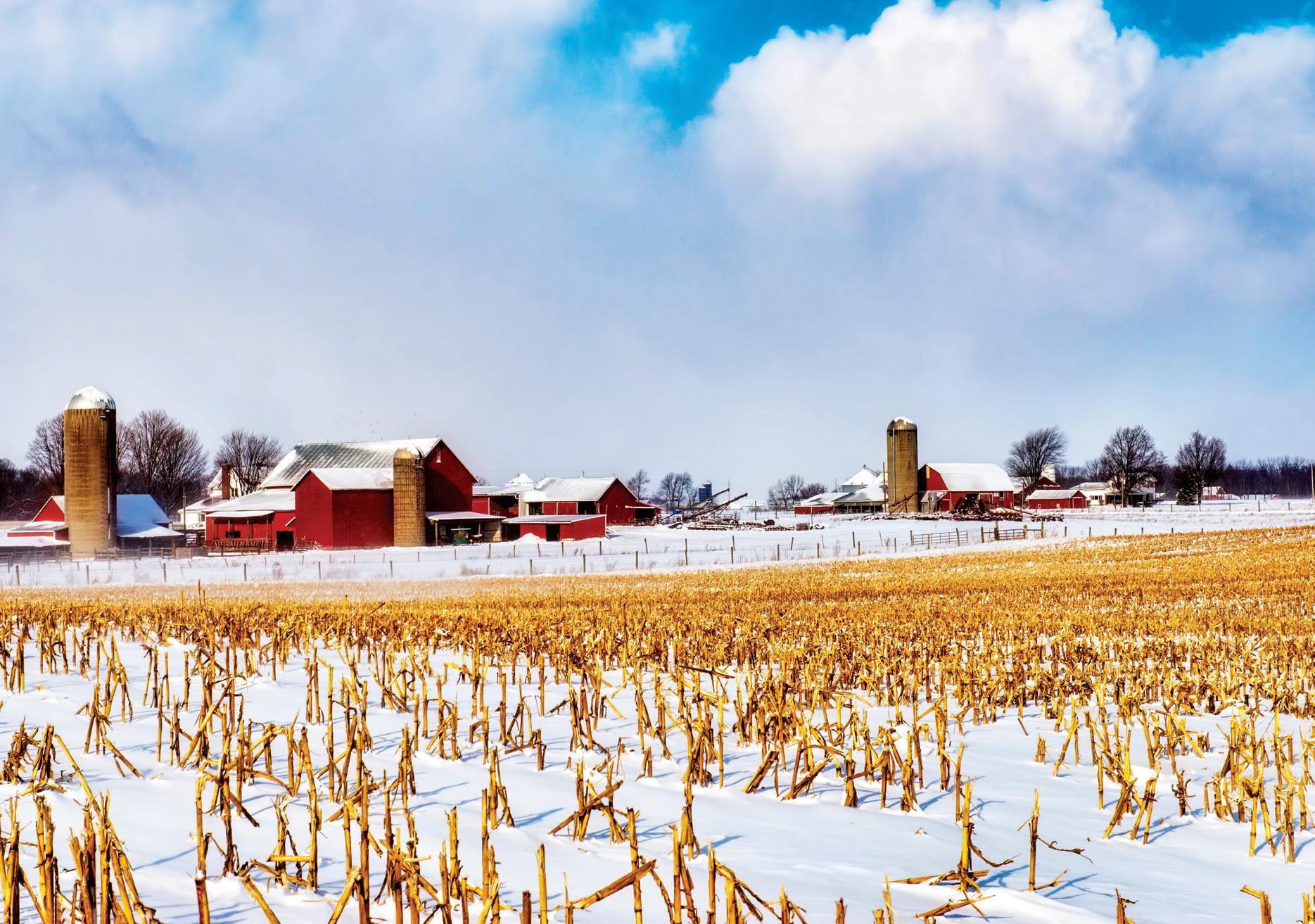
organi C B road C aster | 34
Your trusted buyer of organic grains. We’re in the market for organic and non-GMO grains. Corn • Soybeans • Wheat Connect with one of our traders to learn more. 833.657.5790 www.sunrisefoods.com Luke Doerneman Nick Nelson Jake Lutt Tony Schiller
Marketing, and Measuring the Climate-Smart Impacts of Organic Grain and Field Crops”
Marbleseed and partners are awarded a Climate-Smart Agroforestry Partnership Grant
BY lOri Stern
When Marbleseed joined a group of other organizations committed to telling the story of organic production as climate smart, we were there to make a point. The USDA had announced a competitive opportunity for projects that would build markets, invest in America’s climate smart farmers, and strengthen U.S. agricultural and rural communities. We gathered because we believed that organic farmers should have a place at the table and a piece of the funding. We recognized that we were at a pivotal moment in the climate discussion.
We began dreaming and planning together, focused on the purpose of the funding. The partnership, which we went on to call the “Midwest Collaborative” included Ohio Ecological Food and Farming Association, OFARM, Michael Fields, Tennessee State University, and Marbleseed.
Many current proposed “climate-smart” agricultural solutions focus on either precision agriculture approaches like remote sensing and increased input efficiency or incentive payments for particular "conservation practices” like cover cropping and no-till. Rarely do projects tackle agricultural drivers of climate change with the holistic approach necessary to address the systemic challenges that range from whole-system environmental contamination to lack of food chain security to struggling rural communities. The collaborative wanted to propose a project that would take on the hard work of addressing the whole system using an approach informed by organic agriculture, the primary precept of which is diverse crop rotations that build healthy soil.
DIVERSE CROp ROTATIONS ARE AT THE FOUNDATION OF AN ORGANIC SYSTEM
A diverse crop rotation practice is foundational to organic management systems. A robust crop rotation helps with weed control, pest and disease prevention, and builds, rather than depletes, the soil. Considering a crop rotation as a whole requires a holistic paradigm and encompasses many concepts and practices at once, all of which can be viewed through a sustainability lens—crop rotations include current popular concepts of the time like cover cropping and no-till but also can include less-common cash crops (e.g., small grains), perennial phases (e.g., alfalfa, hay, etc.), and livestock integration, among others. This way of thinking has all but disappeared in many areas of the U.S. where monoculture systems are prescribed, incentivized, and de rigeur year after year with little alteration.
Critics of modern agriculture rightly point to the landscape dominance of crop monocultures across the United States as primary cause for the negative environmental consequences of agricultural practices—for example, corn and soybeans dominate most of the land north of Oklahoma and east of the Mississippi River, a vast land area suffering from surface and groundwater pollution and rapidly declining biodiversity. Moving west, wheat monocultures dominate in dryland areas, and corn continues to grow in acreage in irrigated areas, where aquifers are on their last legs and most flora and fauna that once dominated the landscape are nearing extinction. But what is a farmer to do, in our current market landscape of highly centralized crop marketing and ag
products distribution?
Farmers are left few options in our current market landscape of highly centralized crop marketing and ag products distribution. The ability to profitably market crops alternative to the dominant monocultural systems of the region are virtually nonexistent, leaving many farmers with no choice but to keep growing the same system or to get out of farming altogether. The solution to turning around the dire trends of loss of topsoil, soil carbon, biodiversity, and clean water starts with creating new economic systems that allow farmers to thrive when they diversify and support environmental quality outcomes with their practices.
MARkETING THROUGH A FARMER COOpERATIVE
To create new markets with diverse cropping systems would require us to work together. The OFARM farmer cooperative brought to the partnership the deep value of “we really do better together.” The people who use cooperatives are usually the member owners of the cooperative. They have a direct stake in its function, governance, and success. Well-functioning cooperatives are not only able to build financial capital through membership; they also collectively build individual and cooperative capacities in production, economic viability, and organizational effectiveness through ongoing cooperative education and practice. Cooperative principles call on cooperatives to operate and educate not only in their own narrow individual interests but also in the interest and wellbeing of the broader community. These organizational characteristics make cooperatives uniquely suited to advance the ecological, economic, and social goals of sustainable organic agriculture, food security, and community development.
Farmers face unique challenges with organic grain marketing, which is quite different from conventional grain marketing. Taking a coop-
M ar B leseed. org | 35
“Growing,
erative approach to organic grain marketing allows farmers to more quickly learn the best practices for organic grain marketing and to better understand and navigate the organic supply chain. Cooperating organic grain farmers achieve other practical marketing benefits such as fairer prices, access to more markets, aggregating small quantities, more efficient marketing, greater ability to market the whole rotation, and access to a deep pool of cooperative knowledge and experience. Cooperation also brings benefits related to organic production. As farmer members and leaders build their cooperative relationships, they are better able share the challenges of organic production and organize education and research programs to meet those challenges. Additionally, as farmers’ social and organizational capacities increase through cooperative practice, they are better prepared to participate and lead in a wider range of community development initiatives to meet the challenges of climate change and heal the divisions of social conflict.
The Midwest Collaborative also realized the challenge of early adoption in the reductionist view of “climate smart” as simply carbon sequestered in soil. We were ready to work with farmers on increasing rotations AND measuring full ecosystem benefits gained from organic systems. We planned to use project funds to pay farmers enrolled in the project for their part in environmental monitoring and sharing their knowledge with others across the Midwest.
When Marbleseed submitted our joint application, we realized that in the process of developing an approach that included tailored technical assistance for production, business planning and marketing support, and environmental monitoring, we had created a strong partnership. We continued to meet while we awaited word on the grant, strategizing alternative funding sources and opportunities to leverage current programming to meet the goals and outcomes of the submitted project.

On December 13th, the USDA announced that “Growing, Marketing, and Measuring the Climate-Smart Impacts of Organic Grain and Field Crops” was funded. Our project was highlighted by USDA via a visit to White Oak Farm in Stone Bank, Wis. (see more about that event on pg. Link to event annoucement article). The proposed project will span five years, five organizations, and additional partners who will share approximately $4.5 million to build viable markets for diverse rotations of climate-smart organic grains and row crops.
Learn more about this project at the Organic Farming Conference 2023 or attend the Organic University on emerging markets for diverse crop rotations. For information on how to get involved, contact Tom Manley at thomas.manley@marbleseed.org or register for the Conference and Organic University at https://cvent. me/7PvdlD.

organi C B road C aster | 36
A pLACE-BASED ExpLORATION OF AppLES
Dudley Warren Adams, a soft-faced man sporting a fashionable full beard, arrived in Waukon, Iowa in 1853. He quickly proved himself to be inventive, dedicated, and hard-working. During his 65 years, he served as secretary of the Iowa State Horticultural Society and master of the Iowa State and National Grange. Adams also established the community-funded Waukon and Mississippi Railroad Company before becoming president of the Florida State Horticultural Society. In the words of George H. Wright, “His life was devoted to agriculture and horticulture, was devoted to doing good to his fellow men, to elevate their ideas, their standing, their character and the products in which they work”.
A skilled horticulturist, Adams set out to establish an orchard on his 120-acre estate in Waukon in 1856, calling it the “Iron Clad Nursery.” At the time, Northern Iowa was assumed ill-suited to nearly all apple varieties. This did not deter Adams. After four years of trial and error, he asserted that “ignorance had as much to do with our failures as unsuitableness of soil and climate.”. Eleven years later, Adams took the prize for the “best and largest” display of apples at the exhibition of the Iowa State Horticultural Society with a presentation of 100 varieties.
Adams was not satisfied to see himself succeed while others struggled. He was adamant that collective education was the answer to his fellow farmers’ struggles. Adams proclaimed in his 1871 Secretary’s Report of the Iowa State Horticultural Society that: “Hundreds of
BY JaMie HanSOn
thousands of dollars of the hard earnings of our people have gone to other States, in payment for fruits, which should have remained at home, and would have done so had we been possessed of the requisite horticultural knowledge” (source). Viewing the Iowa State Horticultural Society as an “emphatically educational institution” and proving his dedication to the cause, Adams donated back to the society half his annual salary and furthermore declined the opportunity of a twomonth horticultural research expedition at the society’s expense.
Adams continued to live in Waukon until a bronchial illness led him to Tangerine, Florida where he planted a 37-acre orange grove and was elected president of the Florida State Horticultural Society. He lived there until his death in 1897. During the society meeting in May of that year, C.A. Bacon was not alone in his sentiment when he declared, “My heart is full for I loved that man. His noble life, his busy life is ended.”
Over a century later, I got in my black SUV and drove to Waukon in search of the renowned orchard that had birthed so much history and lore. Standing on the land which once belonged to DW Adams, all I could see was an untended gravel parking lot. As my eyes moved along the nearby tree line, I couldn’t detect any remaining apple trees surviving among the oaks and maples. It seems as though the revered orchard of 1875, so celebrated only a century ago, had disappeared entirely, leaving no trace on this land. As disheartening as the realization was, it is not uncommon. Thousands
of historic and small farms have been lost in recent decades, being bought and turned into something more suitable for the 21st century: a parking lot, a shopping center, or a subdivision.
It’s not only the orchards that are disappearing but also many of the apple varieties which they contained. Thousands of varieties have seemingly vanished from the landscape. But the good news is, it’s not all completely lost. We are in a very unique time where, given the right conditions, trees dating back as far as the 19th century could still be surviving in abandoned or partially repurposed orchards. Sometimes “lost” varieties materialize once someone starts looking for them. We can now enjoy dozens of varieties which have been relocated and identified by the collective work of historians, amateur apple sleuths, and organizations like the North American Fruit Explorers (NAFEX) and the Lost Apple Project. We just need to cultivate the skills necessary to recognize when a variety or a specific tree is at risk and take steps to protect it.
A local example of a variety brought back from near extinction is the ‘Plumb Cider.’ Planted by the Plumb family in Wisconsin around 1844, this variety rose to regional success in the following years. It was widely planted in orchards across the Midwest, including that of DW Adams, before disappearing from nursery catalogs in the 1920s. Thought to be lost to history, this variety was located and identified by apple historian Dan Bussey in the 1980s and brought back into cultivation at a number of orchards in Iowa and Wisconsin.
In 1989, Seed Savers Exchange recognized the opportunity to preserve historic apple varieties in the Midwest. With so much at risk of being lost, Seed Savers began by collecting roughly 500 apple varieties that would serve as the basis of the historic orchards at its Heritage Farm headquarters. The collection plateaued around that number until
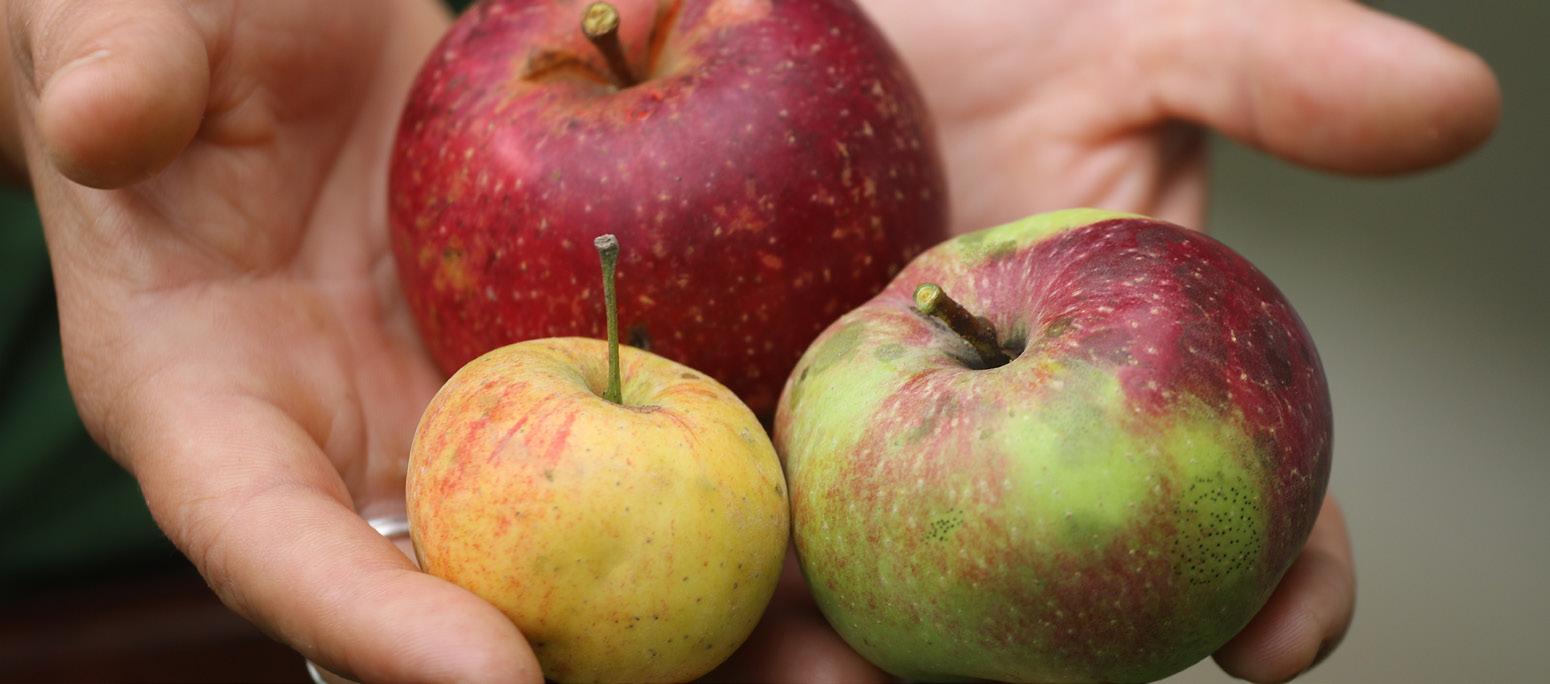
M ar B leseed. org | 37
CREDIT: SEED SAVERS EXCHANGE
cOnSiDerinG tHe leGacY OF waukOn’S “irOn claD nurSerY”
PHOTO
it was rapidly expanded under the guidance of Bussey, who served as orchard manager from 2011-18. We are now actively preserving approximately 1,000 apple varieties across two orchards on our campus in Decorah, Iowa.
While Seed Savers Exchange is not the only orchard working on regional preservation, the importance of regional collections cannot be stressed enough. Apples are wildly adaptable, being referred to as “extreme heterozygotes.” Regional varieties not only share local stories, but are also uniquely adapted to the local climate. During the establishment of our orchards, acting manager David Sliwa wrote, “We’re trying to preserve cultivars which are adapted to specific conditions, and if we are not able to successfully grow a cultivar at Heritage Farm in Decorah, Iowa, then we may need to try to preserve it at a location where it’s better suited for survival” (1988 Harvest Edition). While apples can grow in vastly different climates, that is not always true of a specific cultivar.
A good example of this is our collection of limbertwigs. Limbertwigs are Southern varieties, most of which originated in North Carolina and Tennessee throughout the 1800s. The need to protect these varieties became strikingly apparent when long-term limbertwig steward Reverend Henry Morton passed away in 1992 and many of the cultivars he had in his collection were lost. Understanding the vulnerable state these trees were in, Seed Savers Exchange soon acquired a large number of limbertwigs. We are only now coming to terms with the fact that they’re not well suited to our climate. We’ve made the decision to move forward with relocating our limbertwigs to orchards where conditions are more favorable. Come this spring, we’ll be sending scion material to the newly established University of Georgia Heritage Orchard and to a small number of nurseries in the surrounding region.
Historic varieties also remain vulnerable if they survive only in large preservation orchards like the ones at Seed Savers Exchange. Local weather and pest or disease damage can prove detrimental to our rarest varieties. The only way to ensure their long-term survival is to get them into the hands of as many people as possible. This is why we look to preservation orchards and nurseries when we are concerned about the future of a variety. We also remain committed to offering scion material to the public and to sharing educational resources related to grafting and tree care. Historic apples are unique in that there are no standing patents or trademarks that prevent the public from clonally reproducing whichever varieties they so desire. After learning to graft, anyone can help us protect apple diversity by ordering scion wood and grafting a tree of their own. Keeping the means of production in the hands of the public is also integral to protecting our food system and encouraging food sovereignty.
Preserving historic cultivars comes with its perks. It’s an
easy task to walk through the orchards at Seed Savers Exchange and find an apple that satisfies any individual’s taste. The abundance of apple varieties and the varied flavors they offer is noteworthy to the first-time visitor of an orchard and to the trained orchardist alike. Before studying pomology, I would have chosen any other fruit over an apple. Perhaps that’s because apples are underrepresented by the handful of varieties in a typical grocery store. ‘Rushock Pearmain’ is tart and complex, ‘Quaker Beauty’ is bite-sized and unimaginably sweet, and the ‘Milton’ apple has a stunning pink blush. There’s so much more to apples than what we’ve become accustomed to seeing. Historic apples have a lot to offer in terms of culinary uses, and are often intertwined to a region and connect us to place. Historic cultivars are points of connection—connecting the work of people like Dudley Adams with the stewards of today and tomorrow. By continuing to cultivate these varieties even as new and “improved” apples become available, we’re advocating for a future more diverse and beautiful than the parking lot that replaced the once esteemed Iron Clad Nursery.
A selection of our historic apple varieties are available through the Exchange, our online “seed” swap (exchange.seedsavers.org). We are hosting a virtual grafting class April 14-15, 2023. Information can be found on our website, seedsavers.org.
Join OFGA (Organic Fruit Growers Association) and The Savannah Institute for the Grafting Workshop and Scionwood Exchange at the Marbleseed Conference Friday evening, February 24, 2023. More details will be available in February.
Jamie Hanson is the orchard manager at Seed Savers Exchange.
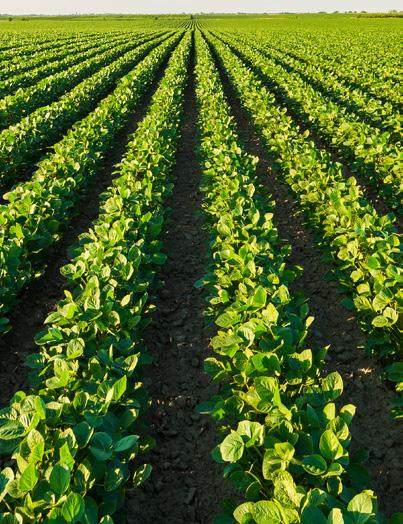
organi C B road C aster | 38
Defining what’s possible in grain. Let’s innovate together. Contact us at ipgrains@scoular.com or (612)
Join us in our commitment to: • Innovative ag solutions • Forward-thinking sustainability • Supply chain & logistic expertise
851-3705.
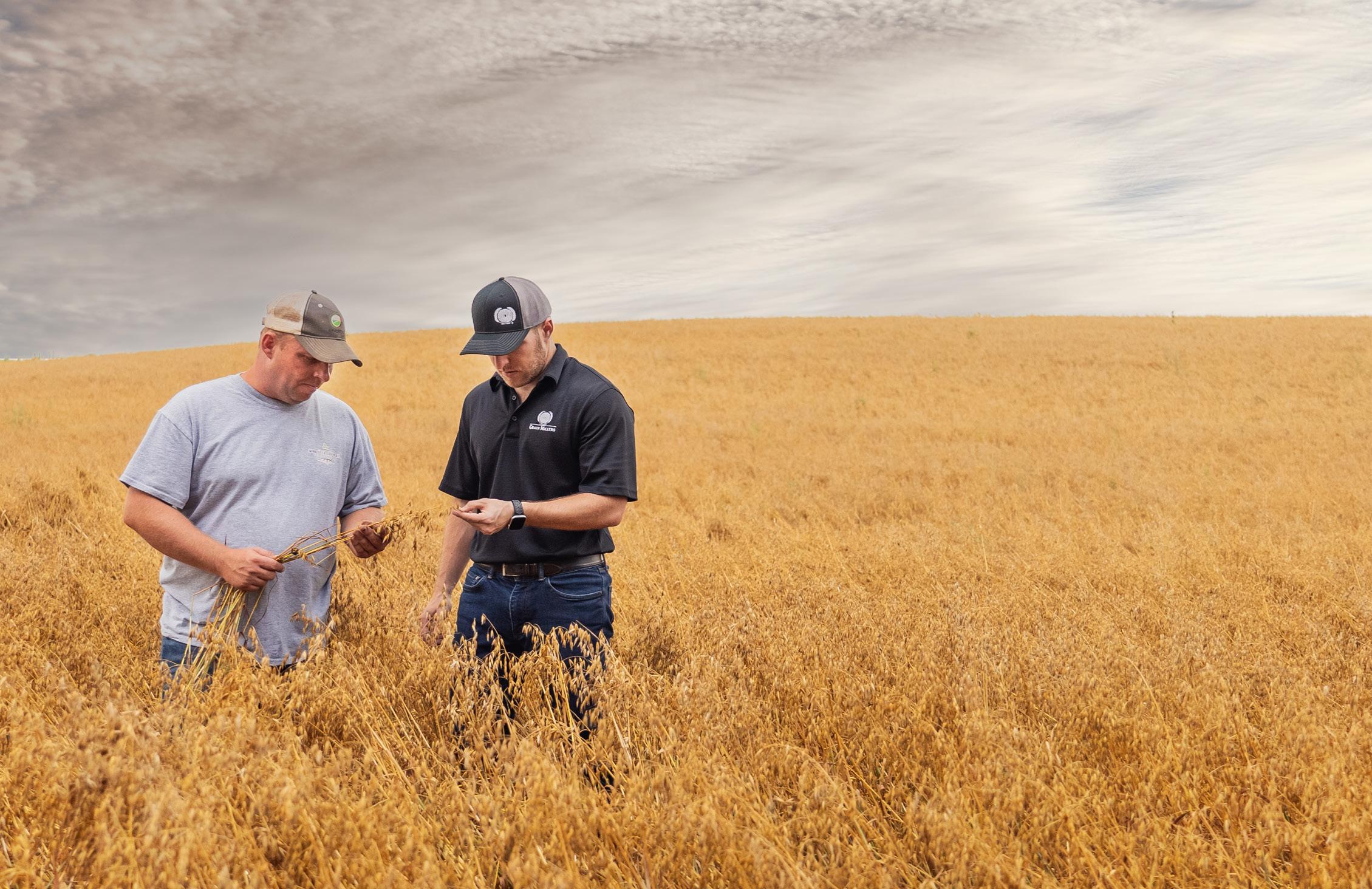
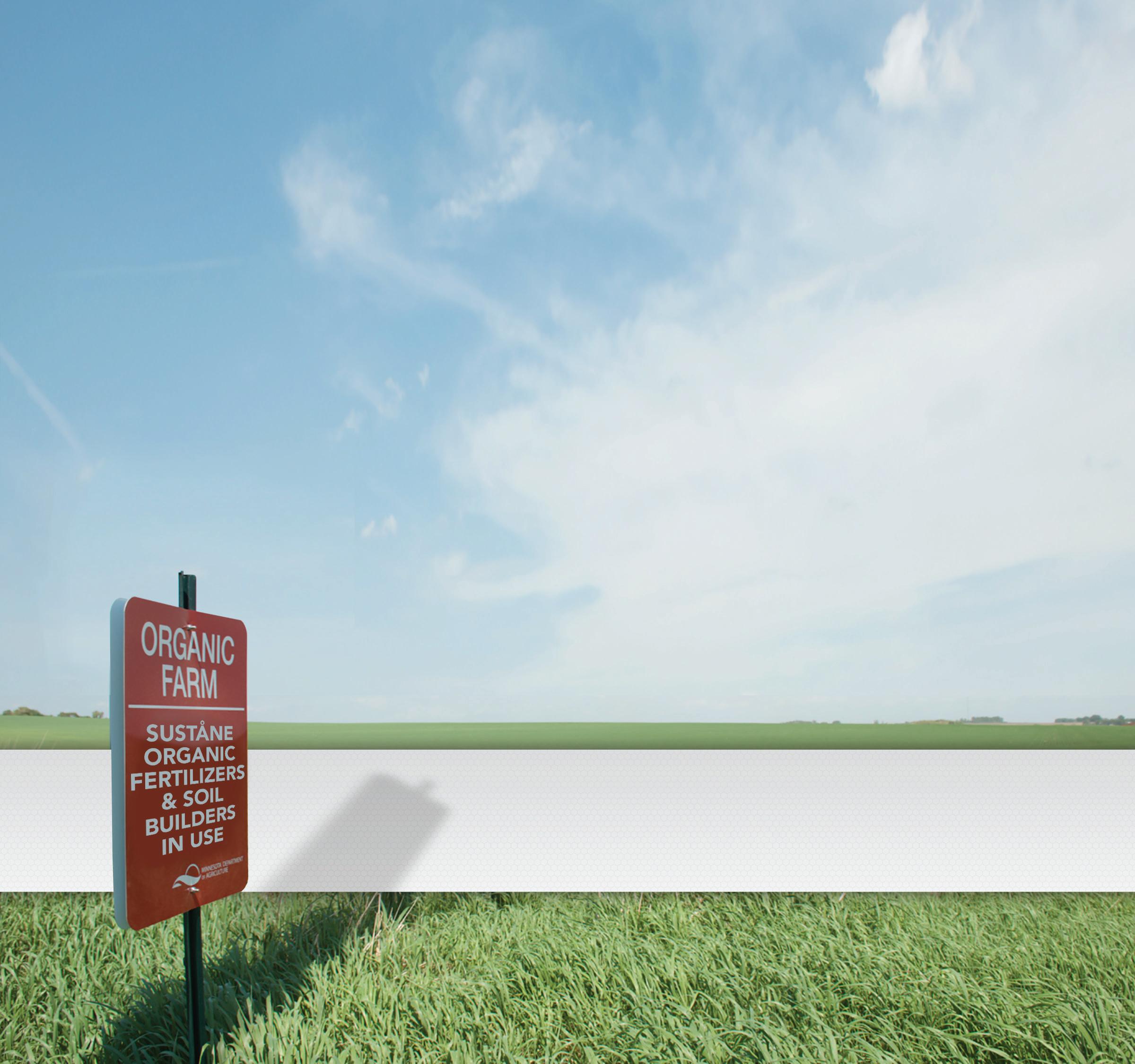




M ar B leseed. org | 39 We Buy Organic & Conventional Non-GMO: • Oats • Corn • Wheat • Barley • Soybeans • Flax • Rye Grain Millers is a privately held, family-owned company. We depend on direct farmer relationships and offer farm gate pricing and contracted grower production. We also offer a Sustainable Grower Program – our Crop Science Team is here to help you with any agronomy questions you may have so you can get the best return on your production. When you sell to Grain Millers, your grain is going directly into some of the most technologically advanced mills in the world! grainmillers.com | 800.328.5188 THIS IS MORE THAN A PARTNERSHIP. IT’S A Promise BUILT ON FARMER Relationships. Contact Suståne Natural Fertilizer, Inc. www.sustane.com | (507) 263-3003 | Cannon Falls, MN • Rich in beneficial soil microbiology • Slow release – more nutrition delivered with less runoff or leaching • Suståne contains all macro and micronutrients • Most researched & trialed organic with 800+ studies since 1980 Maximize YIELD AND RETURN ON INVESTMENT WITH SUSTÅNE Organic AND ALL NATURAL Fertilizers & soil amendments
ASk A SpECIALIST
BY taY Fatke
As a produce grower living through the cold dark winter days, I like to daydream of the perfect growing season to come. One where it lightly rains at night after every new planting, the cucumber beetles decide to take the year off, and I’m feeling cool, calm and collected in the days leading up to our GAP audit. When I snap out of these silly thoughts, I think about how there’s a slim chance the precipitation will come at the ideal times and an even slimmer chance I’ll go all season without seeing those pesky little bugs. But as for the GAP audit? When the right steps are taken with snow still on the ground, one can be cool, calm, collected and ready on audit day.
Farming isn’t a job that typically has downtime, especially when your audit will occur. However, there are tips and tricks to efficiently prepare for your annual audit. If you are not going through an annual GAP audit, or do not have a food safety program currently, no worries! This process can be a useful tool in improving the food safety culture on your farm.
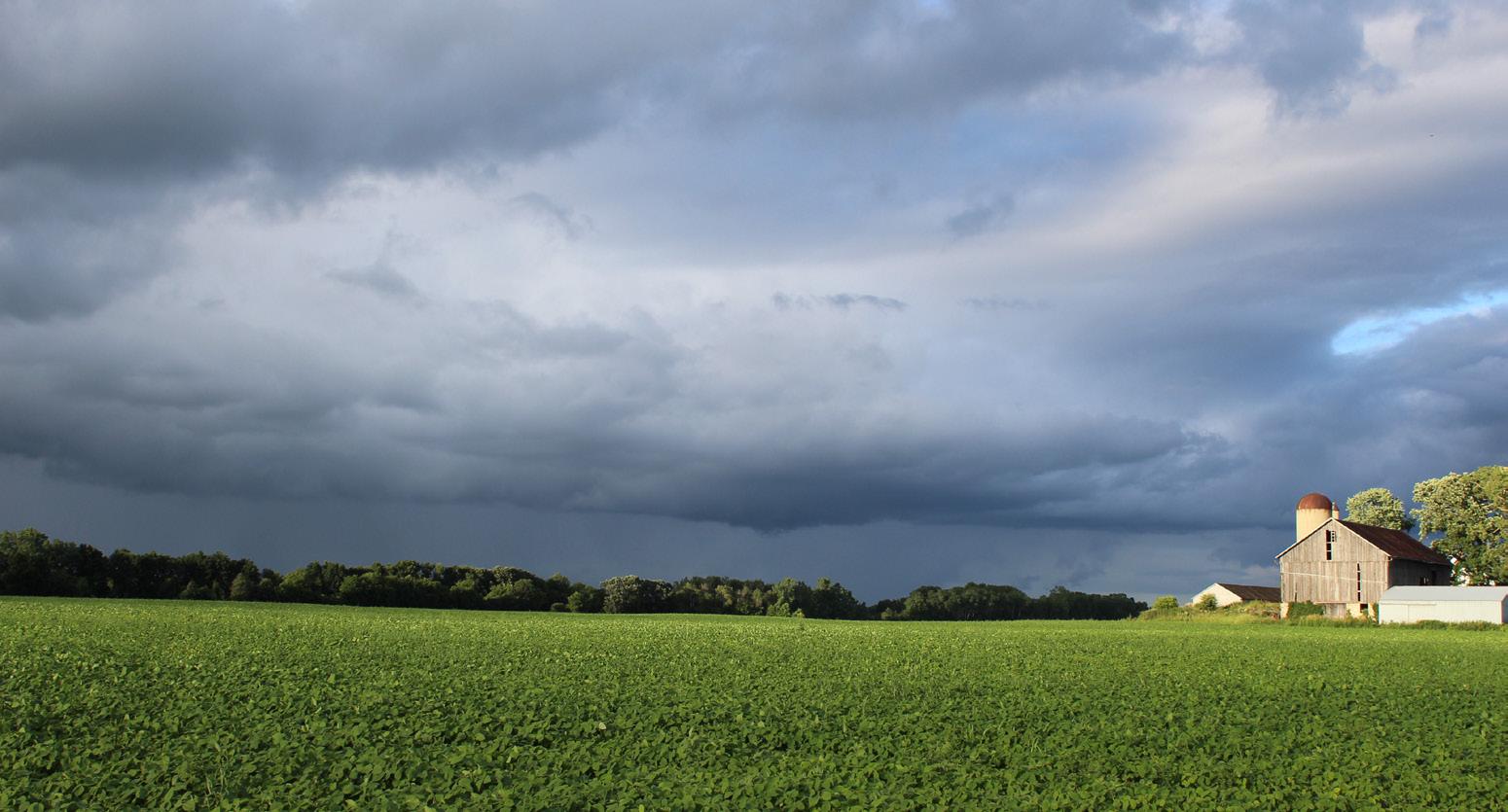
DETERMINE YOUR HARVEST TECHNIqUES AND SCHEDULE AUDIT. An audit should be scheduled when
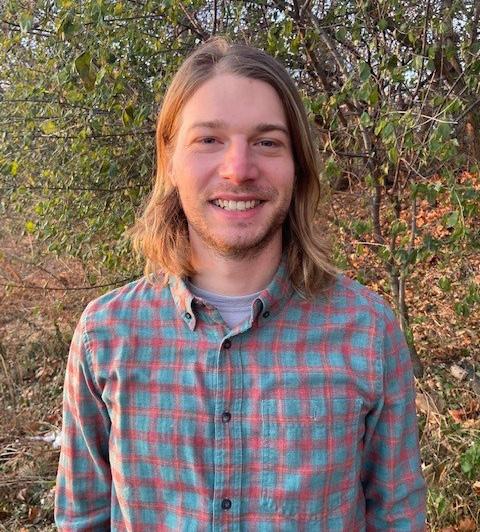
you have the most crops in production and are able to demonstrate harvest and handling. For example, peppers and eggplant have similar harvest techniques, while root crops and leafy greens would be considered different harvest techniques. When determining when to schedule your audit, find a timeframe where at least one crop of each harvest technique overlap. Additionally, consider the availability of your food safety manager, workers, and any others that can answer questions regarding your food safety program. The auditor will likely interview employees on health and hygiene policies, cleaning and sanitizing, and harvesting and packing.
CONDUCT EMpLOYEE TRAINING (FIRST WEEk OF WORk)
Conduct food safety training for all employees annually prior to starting work. Employees shall be trained in proper health and hygiene policies, as well as any job-specific training regarding food safety. Document this training with the signatures of the employees. For employees that start after the annual training, ensure they receive a one-on-one training session and sign a training document. If you notice any employee practices that are not consistent with your food safety program, additional training may be necessary.
FORE AUDIT DATE)
Missing water tests and not calibrating equipment are the most common issues I have seen during my work as a GAP auditor and final reviewer for organic certification. Therefore, put in your calendar to conduct your water tests and calibrate your equipment. Equipment calibration should include thermometers, scales and any metal detectors or other foreign material control devices. Your future self will thank you for the reminder!
REVIEW/SIGN FOOD SAFETY pLAN (30 DAYS BEFORE AUDIT DATE)
With one month before your audit, review your food safety plan to make sure what is written down is physically being done. Remember, you will receive a Corrective Action if what is in your plan does not match what you are doing! Sign the reviewed food safety plan so your auditor notes that it has been reviewed.
Conduct Annual Mock Recall (14 days before audit date)
A mock recall is used to show that your traceability system works properly, and you have adequate knowledge and communication with your buyer. This exercise tests your recall plan in the event of an actual recall. While Good Agricultural Practices and Good Handling Practices cannot eliminate the possibility of a recall, they do assist with reducing risks.
CONDUCT SELF AUDIT (14 DAYS BEFORE AUDIT DATE)
CONDUCT
WATER TESTS AND CALIBRATE EqUIpMENT (60 DAYS BE-
The process of completing a self-audit is easier than people think. You will use the applicable audit standard and accompanying checklist that your food safety program is built around. Every standard is scored a little differently, so the first few pages of each checklist will give you directions on how to complete it. This is the same paperwork the auditor uses when conducting an official audit, which makes the process extremely useful for finding anything during the self-audit that can be corrected before the actual audit date.
organi C B road C aster | 40
PHOTO CREDIT: WEYLAND ORGANIC DAIRY FARM, NEENAH, WIS.
CHECk YOUR FACILITY AND STOCk SUppLIES AS NEEDED (7 DAYS BEFORE AUDIT DATE)


Did you know Band-Aids expire? The auditor will look at your first aid kit, and it’s important to have the kit stocked with acceptable medical supplies. Inspecting the first aid kit before the audit will ensure it is full and its contents are not expired.
Confirming that all handwashing stations are in good working order and properly stocked seven days prior to the audit will eliminate any last-minute leak fixes or runs to the store for extra materials.
During the season on a farm, things tend to break, be moved, or simply vanish. I have noticed that mousetraps are especially susceptible to this phenomenon. Verify that the pest traps within your operation are still there and in good working order.
HAVE ALL NECESSARY DOCUMENTATION FOR AUDIT DAY pREpARED
One thing I cannot stress enough is having things in order before your auditor arrives. Every time you run around looking for a document, the bill creeps up. Eliminate the extra steps and extra costs by having your food safety plan and all applicable records on the desk prior to the auditor closing their car door. You should know what documents are needed after completing your self-audit in Step 7.
Take a deep breath and take notes.
If you follow all these steps, your auditor will surely be impressed. Savor that moment, and then take notes on what findings the auditor had and how you can improve your food safety program for next year’s audit. Come next winter when you do this process again, you’ll have a good reminder of how being prepared kept you cool, calm and collected leading up to your audit.
Tay Fatke is a Local Food Purchasing Specialist with Marbleseed. Prior experiences include on-farm food safety, organic certification and quality management systems. He lives with his partner in Milwaukee and during the growing season he farms with his parents growing produce for local restaurants while slowly but surely planting a diverse orchard.
M ar B leseed. org | 41
Do you need parts for your Lilliston cultivator? I can help with any parts or service that you need: • New & Rebuilt Baskets S & D SALES 24185 45th Avenue, Cadott, WI 54727 715-289-4866 • Whole Cultivators • New & Rebuilt Cultivators Experience the Benefits of C ooperative Marketing www.ofarm.org • 785-337-2442 ofarm.2005@gmail.com Follow us on Facebook and Instagram
MINNESOTA DEpARTMENT OF AGRICULTURE DOWN pAYMENT ASSISTANCE GRANT
Apply for the Minnesota Department of Agriculture Down Payment Assistance Grant. Minnesota Department of Agriculture’s Rural Finance Authority (RFA) is offering matching funds up to $15,000 for qualified farmers to purchase their first farm. Funding will be available using a first-come, first-served application process. Approved applications will remain valid for purchases closing within 90 days of approval or until May 15, 2023, whichever comes first. A second cycle of $750,000 in funding is secured and will begin July 1, 2023. Applications open January 4, 2023. Learn more and apply here: https:// tinyurl.com/5fh826d4
STATELINE FARM BEGINNINGS
Angelic Organics Learning Center has opened registrations for their 18th cohort of Stateline Farm Beginnings. Stateline Farm Beginnings® is a yearlong program, with 100+ contact hours of class time, designed to help aspiring and beginning farmers plan and launch a sustainable farm business. Participants develop holistic farm and financial planning skills, explore emerging opportunities, and network with experienced regional farmers. Farm Beginnings is broken into three courses: Farm Dreams Intensive, Skill Building Practicum, and Farm Business Intensive. Participants can choose to register for the entire series, or for each course separately as fits their educational and financial needs. (Farm Dreams Intensive is a pre-requisite to register for Farm Business Intensive). Register here: https://tinyurl.com/mrm554ww
UMN ExTENSION ON-FARM GAp EDUCATION pROGRAM
There are three different options for food safety courses available to fruit and vegetable producers from the UMN Extension On-Farm GAPs Education program this winter. Please see below for the options. All trainings offer a certificate of completion, which is accepted as documentation of food safety training for the Produce Safety Mini Grant available through the Minnesota Department of Agriculture that will be open in February 2023. (Training must be completed by March 11th, 2023, to be used for this purpose). Register and learn more here: https://tinyurl.com/ytkp645e
2022 CENSUS OF AGRICULTURE
USDA invites ag producers to respond online to the 2022 Census of Agriculture. The ag census is the nation’s only comprehensive and impartial agriculture data for every state, county, and territory. By completing the survey, producers across the nation can tell their story and help generate impactful opportunities that better serve them and future generations of producers. The 2022 Census of Agriculture will be mailed in phases, with paper questionnaires following in December. Producers need only respond once, whether securely online or by mail. The online option offers timesaving features ideal for busy producers. All responses are due February 6,
2023. Farm operations of all sizes, urban and rural, which produced and sold, or normally would have sold, $1,000 or more of agricultural products in 2022, are included in the ag census. Learn more here: https://tinyurl.com/4fy9upaj
HMONG FARMERS pURCHASE FARMLAND FOR FIRST TIME IN U.S. HISTORY
The Hmong American Farmers Association (HAFA) recently purchased 155 acres of farmland in Dakota County to be split between sixteen families. HAFA’s founder and other supporters secured grants and raised money from the community to purchase the land. The group says it will now be able to expand production and grow specialty crops. They hope to obtain additional grant money to plant 1,000 fruit trees. Currently, produce from the farm goes to farmers markets and what’s called “community supported agriculture,” a seasonal subscription service. The farmers even supply for a program called Veggie Rx sponsored by M Health Fairview. Read more here: https://tinyurl.com/5n8nbkez
NCR-SARE
SEEkING FARMER OR RANCHER FOR ADMINISTRATIVE COUNCIL
The North Central Region - Sustainable Agriculture Research and Education Program (NCR-SARE) is seeking nominees* for a seat on its Administrative Council (AC). Applicants must be a farmer or rancher representative (NCR-SARE defines a farmer/ rancher as someone who raises crops or livestock, especially as a business). Additionally, council members must live and work in one of the 12 states that make up the North Central SARE region. Those states are IL, IN, IA, KS, MI, MN, MO, ND, NE, OH, SD, and WI. NCR-SARE’s Administrative Council represents various agricultural sectors, states, and organizations. It sets program priorities and makes granting decisions for the region. A collection of farm and non-farm residents, the Administrative Council, includes a diverse mix of agricultural stakeholders in the 12 states. Council members come from regional farms and ranches, university extension and research programs, and nonprofits. In addition, the Administrative Council includes regional representatives of the U.S. Geological Survey, the U.S. Department of Agriculture, the Natural Resources Conservation Service, state agencies, and agribusinesses. Apply here: https://tinyurl.com/mt947xsp
SARE FUNDED SOIL pRODUCTIVITY CHALLENGE pROjECT
Researchers at the University of Minnesota are conducting a SARE funded project to learn more about soil productivity challenges associated with farming in hilly regions of the Driftless region. Does this describe you? They are specifically looking for organic farmers in the Wisconsin Driftless region who would like to be involved in our research! Participants will be compensated for their time and receive soil data regarding their sloped fields. For more information on participating, contact Julie Grossman at jgross@umn.edu.
TRADEMARk REGISTRATION INCREASES COST OF MISUSING THE USDA ORGANIC SEAL
The U.S. Department of Agriculture’s (USDA) Agricultural Marketing Service (AMS) announced that it has registered
organi C B road C aster | 42
NEWS BRIEFS
the USDA organic seal trademark with the U.S. Patent and Trademark Office. The USDA seal trademark is specifically described in the Organic Foods Protection Act (OFPA) and is currently protected by federal regulation. Registration of the organic seal grants additional intellectual property rights to further restrict the use of the trademark or a confusingly similar one, by uncertified farms and businesses. The trademark registration works in conjunction with OFPA and the organic regulations, providing another enforcement tool against misuse of the seal. As the trademark owner, USDA can seek additional civil remedies such as injunctive relief and monetary damages under the Lanham Act. Operations trafficking in counterfeit organic goods or otherwise willfully misusing the USDA organic seal may be subject to fines and imprisonment under the Trademark Counterfeiting Act. Certified organic operations are authorized to use the organic seal to identify the composition of their products and receive a premium for those products. For consumers, the organic seal registration is just another way USDA is protecting the organic brand and strengthening organic enforcement. Learn more here: https:// tinyurl.com/2p5j4yvj
THE DRAMM CORp. CELEBRATES WITH RIBBON CUTTING CEREMONY
The Dramm Corp. recently held a ribbon cutting ceremony to celebrate the completion of the new corporate headquarters and production facility. Many friends and local community members including Mayor Justin Nickels gathered to celebrate. “We’re appreciative to everyone for the huge group effort that it was,” said Heidi Dramm Becker. The new 98,000 sq. ft. building, located in the Manitowoc Industrial Park, increases Dramm’s warehouse and office space, with the ability to expand in the future. The company has grown while staying committed to being a family-owned and operated business. Dramm now has 107 employees and is excited to offer more office and warehouse space. Learn more here: https://tinyurl.com/muun2eh2
LAkEWINDS ORGANIC FIELD FUND AppLICATIONS ARE OpEN
Through the Lakewinds Organic Field Fund, Lakewinds Food Co-op has awarded over $725,000 in grants to more than 85 local farms since the program’s inception in 2011. It’s just one of the ways Lakewinds furthers their mission of promoting sustainable agriculture, supporting local farmers, sustaining our communities, and protecting the planet. Sustainable and organic farmers in MN and western WI can request grant funds up to $8,000 each to help with projects on their farm that improve efficiency or safety, boost environmental stewardship, help transition to organic or gain certification, or complete other projects that benefit the farm. Apply for the 2023 Lakewinds Organic Field Fund grant between January 1 –31, 2023 at Lakewinds.coop/LOFF.
MARBLESEED AWARDED NORTH CENTRAL REGION SARE pROFESSIONAL DEVELOpMENT GRANT
We are honored to have been awarded a North Central Region SARE Professional Development grant for ‘Educational
Methods for Farmer Self-Organizing.’ Marbleseed will provide training in these methods to ag professionals starting in early January. Group Leaders will also receive free registration at our annual Organic Farming Conference in La Crosse, Wisconsin. We are grateful to North Central Region SARE for this amazing opportunity! Read more about the other funded projects here: https://buff.ly/3si6Gx4.
MARBLESEED AND pARTNERS AWARDED WISCONSIN LOCAL FOOD pURCHASING GRANT
This past fall, Marbleseed was awarded a Local Food Purchasing Grant. The Wisconsin Local Food Purchase Assistance Program (WI LFPA) aims to strengthen local and regional food systems, support Wisconsin farmers, and distribute fresh nutritious foods to communities that lack access to healthy food. This program is a partnership between Wisconsin Department of Agriculture, Trade and Consumer Protection (DATCP), Marbleseed, Wisconsin Food Hub Cooperative, and Wisconsin Farmers Union. Through Marbleseed, the Wisconsin LFPA is offering $1.5 million directly to farmers to provide food to hunger relief programs throughout the state of Wisconsin. Marbleseed’s goal is to work with up to 150 farmers in Wisconsin, providing pre-season contracts along with technical assistance and planning support. The program prioritizes small and medium sized producers in Wisconsin that often do not get opportunities to scale up their businesses and participate in wholesale markets and anti-hunger efforts. The program also prioritizes reaching socially disadvantaged, veteran, and historically underserved producers in Wisconsin, with a focus on reaching Black, Indigenous, Hmong, and other farmers of color. 80% of the purchasing dollars given to farmers are designated to these groups. Read more about the initiative here: https://tinyurl.com/22hfuutu
MARBLESEED AND pARTNERS AWARDED CLIMATE SMART COMMODITIES GRANT
Marbleseed is thrilled to have received a Partnerships for Climate-Smart Commodities grant, “Growing, Marketing, and Measuring the Climate-Smart Impacts of Organic Grain and Field Crops” project. We plan to work with organic grain producers, as well as those interested in transitioning to organic, to adopt climate-smart agricultural practices. Producers would receive enrollment incentives, and field service coordinators and marketers would help producers with marketing plans and promoting their climate-smart commodities. Marbleseed was the applicant for a highly collaborative effort with funding also going to Ohio Ecological Food and Farming Association, OFARM, Tennessee State, and Michael Fields as the soil science/environmental monitoring partner. USDA is committed to supporting a diverse range of farmers, ranchers, and private forest landowners through Partnerships for Climate-Smart Commodities. This effort will expand markets for America’s climate-smart commodities, leverage the greenhouse gas benefits of climate-smart commodity production, and provide direct, meaningful benefits to production agriculture, including for small and underserved producers. Read more about the other funded projects here: https://tinyurl.com/492mjdfs
M ar B leseed. org | 43
COMMUNITY CALENDAR
BUILD YOUR FARM LABOR MANAGEMENT kNOW-HOW WORkSHOp SERIES
– January 7-March 9, Virtual
The 2023 workshop series from the Farm Labor Dashboard project will help farmers build knowledge and skills they need to successfully recruit and manage the right employees for their farms. The workshops are geared to produce and diversified livestock producers who are new to managing employees, and to farmers who are considering changes to how they arrange for, and manage, labor on their farms. Women farmers’ learning needs and priorities are integrated throughout the series. Connection information will be sent following registration. Learn more at the Farm Labor Dashboard or email beth.holtzman@uvm.edu.
pRACTICAL FARMERS OF IOWA CONFERENCE — January 19-21, Ames, IA
At this year’s annual conference, we are On Common Ground. We know common ground may be less visible than our differences. Take time to look for it, think about it and choose to enter those common ideas and conversations. We invite you to enter that space – more info at https://practicalfarmers.org/events/annual-conference/2023-annual-conference/
GRASSWORkS CONFERENCE – February 2-4, Wisconsin Dells, WI
“Foraging Ahead” Join the GrassWorks Grazing community at this year’s annual conference! The GrassWorks Conference is a must for beginning and experienced graziers!
More info at https://grassworks.org/events/grazing-conference/
FEBRUARY 23-25, 2023 LA CROSSE, WI
Scholarships for the Organic Farming Conference are available through the Dave J. Engel Memorial Fund or the Chris Blanchard Scholarship Fund.
DAVE j. ENGEL FUND
Established by the Midwest Organic and Sustainable Education Service (now Marbleseed) in memory of Dave Engel. Dave served the organic community in many ways, and poured his heart and soul into every endeavor, whether it was as an organic farmer, an organic inspector, or as executive director of four organic certification agencies. The Engel family has worked with MOSES (now Marbleseed) to establish a scholarship fund in Dave’s name to send farmers to the annual Marbleseed Organic Farming Conference, which Dave helped establish. Marbleseed desires to honor Dave’s legacy and extend his impact on the world by facilitating the fund and awarding scholarships to a new generation of organic farmers. Many current and future organic farmers will be able to thank Dave for his lifetime contributions.
CHRIS BLANCHARD FUND
Established by the Midwest Organic and Sustainable Education Service (now Marbleseed) to honor Chris Blanchard, former farmer, consultant, educator and MOSES (now Marbleseed) employee. Chris was instrumental in the growth and development of the Marbleseed Organic Farming Conference. Chris, his family, and his friends have worked with Marbleseed to establish a scholarship fund in Chris’ name to send farmers to the annual Marbleseed Organic Farming Conference. Marbleseed desires to honor Chris’ legacy and extend his impact on the world by facilitating the fund and awarding scholarships to a new generation of organic farmers. Many current and future organic farmers will be able to thank Chris for his lifetime contributions.
Contribute to Scholarship funds here: https://marbleseed.org/support/donate
VOLUNTEER OppORTUNITIES
Interested in volunteering for the 2023 Organic Farming Conference in La Crosse, WI?
Email info@marbleseed.org for more information.
organi C B road C aster | 44
VIEW MORE EVENTS ON OUR WEBSITE AT MarBleSeeD OrG/eventS
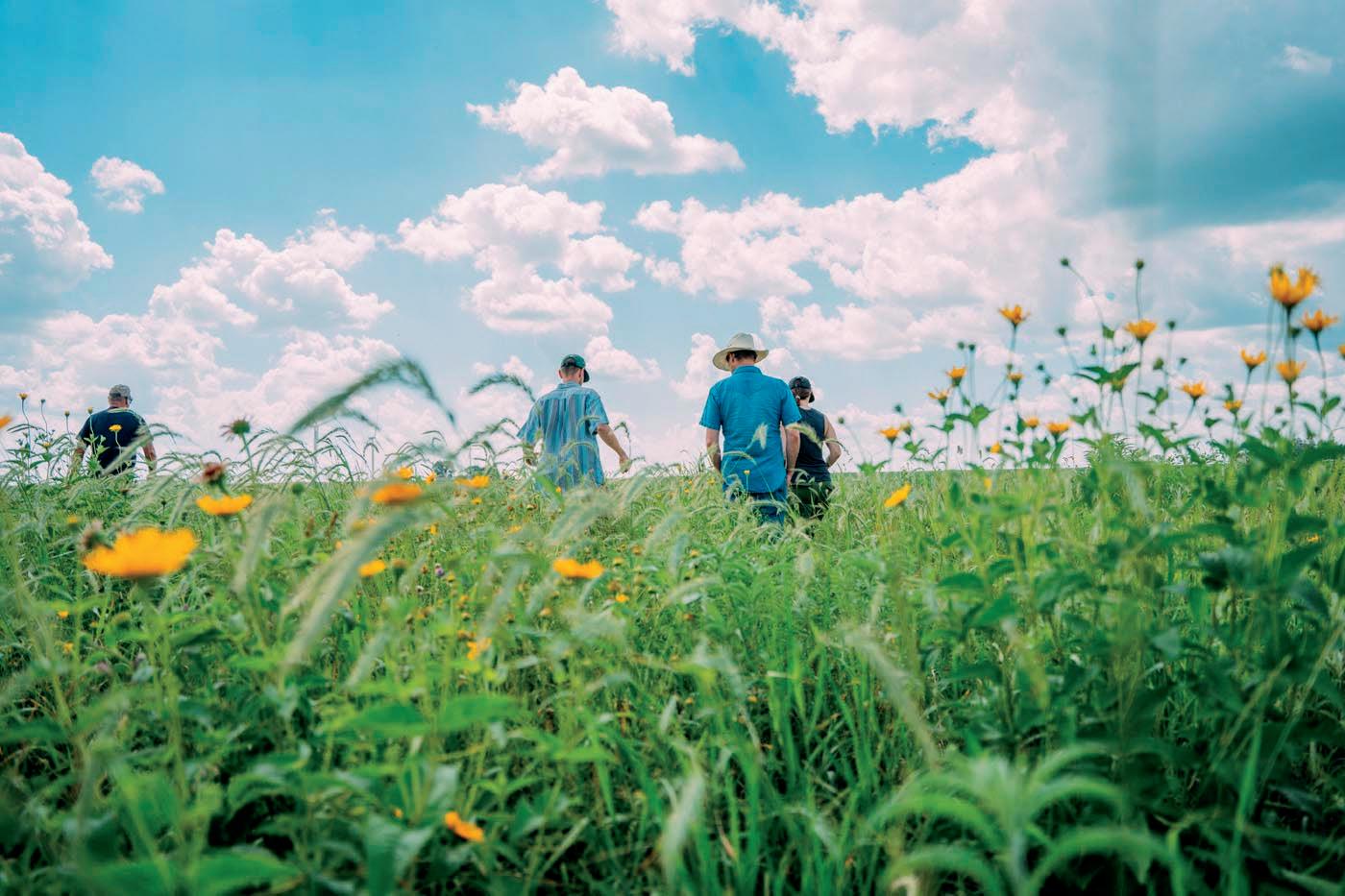

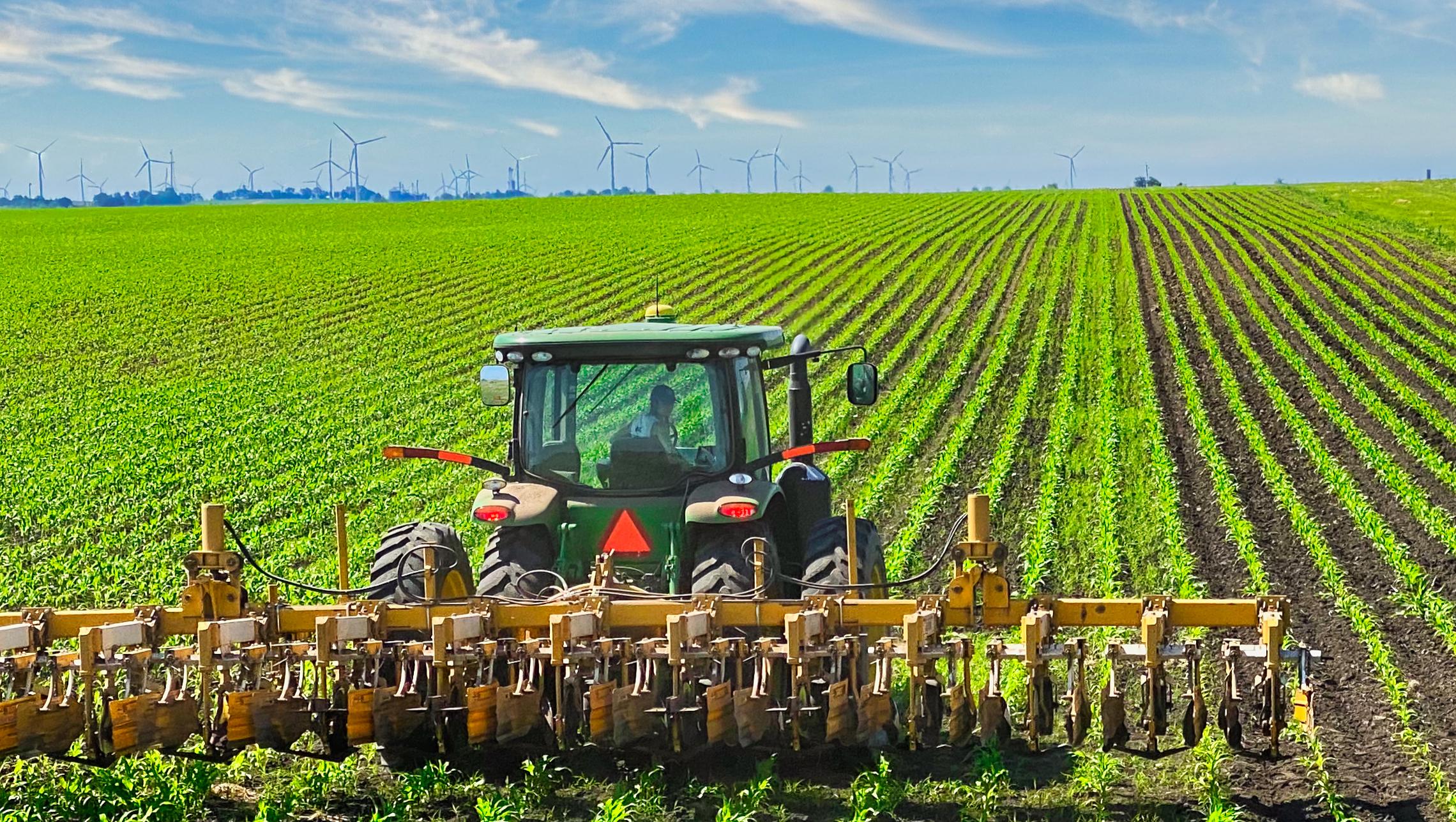


M ar B leseed. org | 45 FAIR FLEXIBLE PAYMENTS. Tailor fit the payment schedule of your loan to the cash flow of your farm with interest-only payment options FARMER FRIENDLY LOANS. Get clear, customized terms based on your unique operation or transition plan Lower rates and longer terms than traditional lenders GET FUNDS FASTER. Secure working capital and lines of credit in as few as 5 days No waiting around for what you need to get to work Call, text or email a Mad Advisor to learn more ALEX BRUBAKER | 312 - 914 - 1578 | ALEX@MADCAPITAL.COM ALL WITH A TEAM DEDICATED TO YOUR SUCCESS. Financing the regenerative revolution 402-371-1400 AGlobalEquipmentCompany,Inc. www.henkebuffalo.com
MISCELLANEOUS
FARMS/L AND
SEEkING: BEGINNING FARMER
We are seeking a beginning farmer to partner with to start a agricultural business on our 8-acres, housing and startup finances included. 754-302-6101 or fogletb2@ gmail.com
FORAGES
FOR SALE: CERTIFIED ORGANIC BALEAGE/ STRAW
Certified organic baleage. Individual wrapped big squares. Test results available. Also have big and small squares of straw. 608-498-0258
FOR SALE: CERTIFIED ORGANIC HAY
Certified Organic Hay for sale, 1st, 2nd, and 3rd Crop. Delivery May be Available. Sno Pac Farms, Caledonia, MN 507-725-5281
FOR SALE: ORGANIC FORAGES
Organic Forages. Many lots made, “hay-in-a-day”. Tested, wrapped and dry, big squares and round dairy quality. Delivery available. 715-921-9079
FOR SALE: CERTIFIED ORGANIC ALFALFA
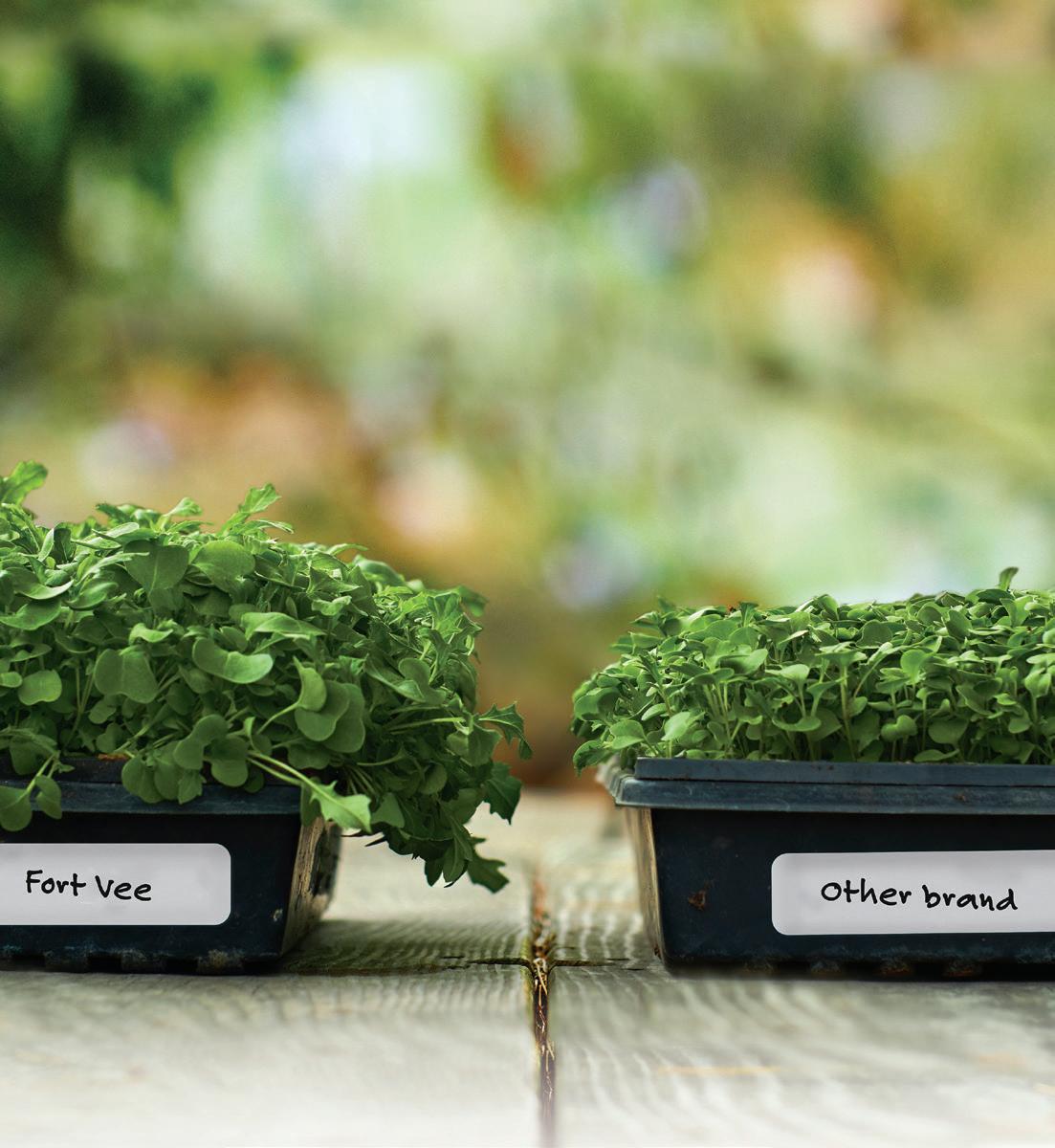
Ernmoreorganics.com, certified organic alfalfa, wrapped in 8 layers of film, 3x4x6 bales, RFQ 106-288, over 1500 bales in stock Springfield, SD. Call ERNmore Organics, 605-286-3873 or 605-999-2010 or 605-2511143. Ernmoreorganics.com.
FOR SALE: MOSA CERTIFIED ORGANIC HAY & BALEAGE
For Sale: MOSA Certified Organic Hay & Baleage, 1st, 2nd, 3rd crop alfalfa grass baleage. Forage tested 63 ton dry hay, 275 ton baleage. Westby, WI 608-634-3860 or cjburke@outlook.com
MIDWINTER FOLk DANCE
Midwinter Folks Dance, Betsy Neil w/ Frog Slough String band and caller Sue Hulsether, Feb. 24 7-10:30 PMmore info @ concordiaballroom.com. (608) 769-6731
FOR SALE: DIGITAL DESIGNER SERVICES
I am a Freelancer with a passion for agriculture and supporting local who can help you with marketing, design, photography, etc. if you would like to increase your operation’s presence. Email me! erikaneiracreative@ gmail.com
organi C B road C aster | 46 CLASSIFIEDS CALL 802.223.6049 OR VISIT VERMONTCOMPOST.COM Ask Your Plants
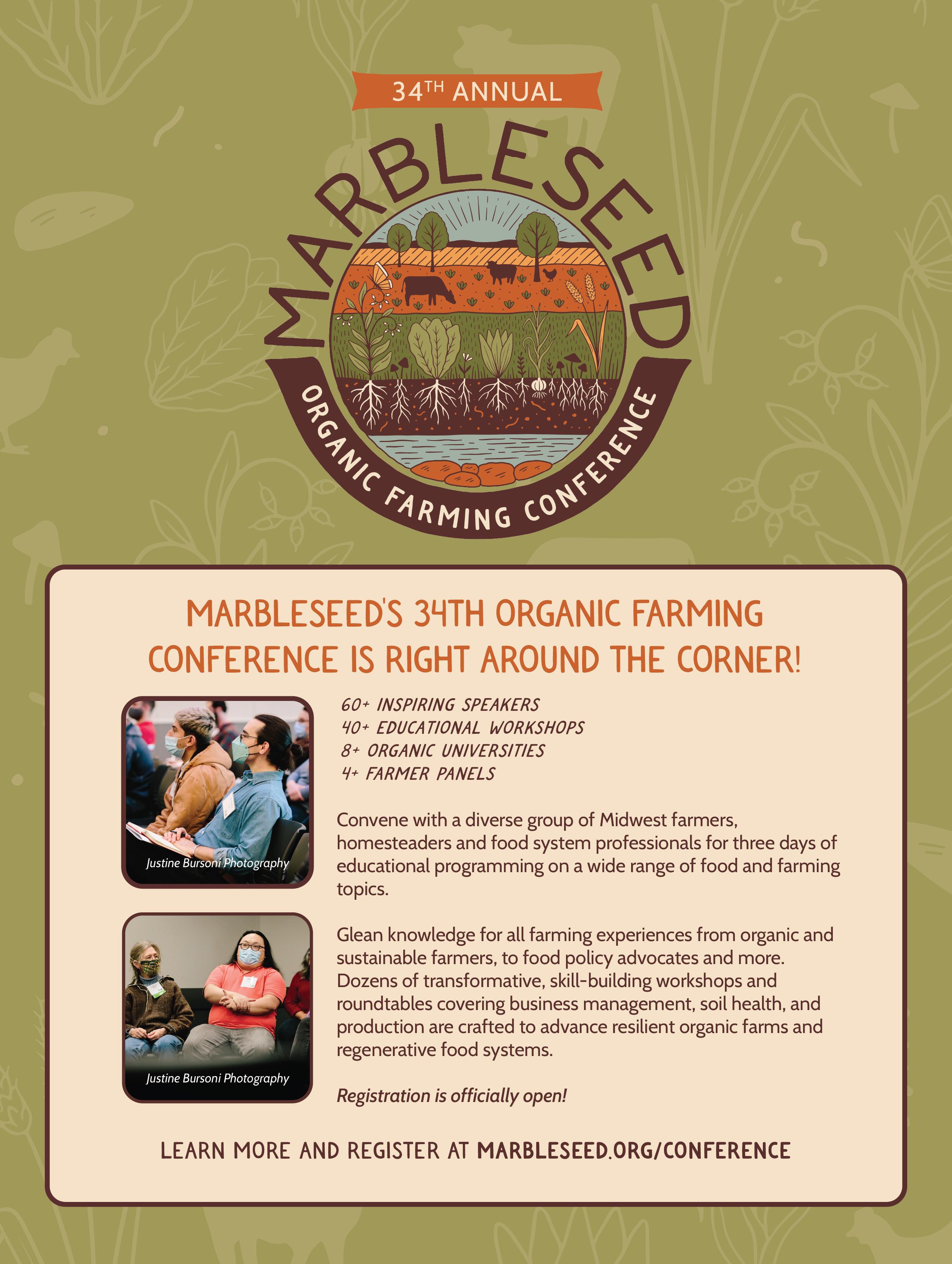
M ar B leseed. org | 47
NON-PROFIT ORG U.S. POSTAGE
CLASSIFIED AD pLACEMENT Reach 15,000+ organic-minded readers! Includes a free listing in the Online Organic Classifieds at marbleseed.org Submit ads online or write out your ad and send it in with this mail-in form and payment to: Marbleseed, PO Box 339, Spring Valley, WI 54767 Ads must be submitted by the 25th of the month prior to Organic Broadcaster publication date. Name: Address: City: State: Zip: Phone: Email: $20 UP TO 30 WORDS. $5 FOR EACH ADDITIONAL 10 WORDS. PLACE MY AD IN: (price is per insertion) � Winter (December-February) � Spring (March-May) � Summer (June - August) � Fall (September - November) Word rate x number of insertions = TOTAL PAYMENT INFORMATION: � I’m enclosing a check made out to Marbleseed. � Please charge my card. Card Number: Expiration: CVV: Signature:
PO Box 339 Spring Valley, WI 54767
PAID TWIN CITIES MN PERMIT NO. 131