Hatkoti Overview, Hateshwari Temple Altitude: 1400 meters Map
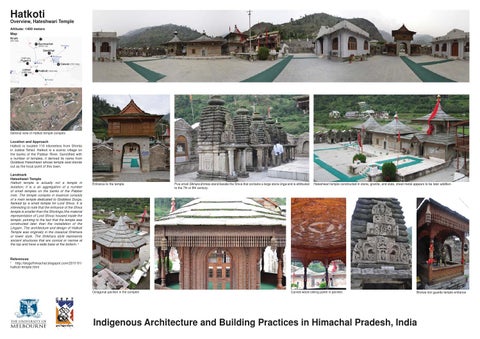
General view of Hatkoti temple complex
Location and Approach Hatkoti is located 110 kilometers from Shimla in Jubbal Tehsil. Hatkoti is a scenic village on the banks of the Pabbar River. Sanctified with a number of temples, it derived its name from Goddess Hateshwari whose temple seat stands out as the focal point of this town. Landmark Hateshwari Temple Hatkoti temple is actually not a temple in isolation; it is a an aggregation of a number of small temples on the banks of the Pabbar river. The temple complex in essence consists of a main temple dedicated to Goddess Durga, flanked by a small temple for Lord Shiva. It is interesting to note that the entrance of the Shiva temple is smaller than the Shivlinga (the material representation of Lord Shiva) housed inside the temple- pointing to the fact that the temple was constructed later than the installation of the Lingam. The architecture and design of Hatkoti Temple was originally in the classical Shikhara or tower style. The Shikhara style represents ancient structures that are conical or narrow at the top and have a wide base at the bottom. 1
Entrance to the temple.
Five small Sikhara shrines stand beside the Shiva that contains a large stone linga and is attributed to the 7th or 8th century.
Hateshwari temple constructed in stone, granite, and slate, sheet metal appears to be later addition
References http://blogofhimachal.blogspot.com/2011/01/ hatkoti-temple.html
1
Octagonal pavilion in the complex
Carved wood ceiling panel in pavilion.
Bronze lion guards temple entrance
Indigenous Architecture and Building Practices in Himachal Pradesh, India