







AVEC LES FILLES STARTED AS A RULE BREAKER. IT’S PAYING OFF. NEW YORK LOS ANGELES MIAMI THE HAMPTONS
THE SPRING ISSUE HANNAH GODWIN
FASHION
MANNUSCRIPT

KEEP YOUR BUSINESS ON-TREND. As one of the nation’s leading providers of factoring and financing, we focus on flexible solutions that can also help you manage risk. Let’s explore how we could help you improve cash flow, lower operating costs and reduce bad debt losses. All applications are subject to final review and approval by CIT, and all fees and rates are subject to change at any time without notice. Supporting financial documentation may be required for any transaction with CIT. Not all applicants may qualify for factoring services or finance programs. © 2023 First-Citizens Bank & Trust Company. All rights reserved. CIT and the CIT logo are registered trademarks of First-Citizens Bank & Trust Company. CIT Commercial Services primarily conducts business through The CIT Group/Commercial Services, Inc., a wholly-owned indirect subsidiary of First-Citizens Bank & Trust Company. MM#14255 LEARN MORE CIT.COM/COMMERCIAL-SERVICES





mannpublications.com April 2024 FM | 1 E-COMMERCE—DELIVERED. Smarter. Faster. Cheaper. NY | NJ | NC | FL | CA | HONG KONG | SHENZHEN | SHANGHAI | QINGDAO GUANGZHOU | VIETNAM | INDIA | BANGLADESH | SRI LANKA | PAKISTAN | CAMBODIA dynamiconline.com | 973.344.6300 ext 304 DROP-SHIP DIRECTLY TO CONSUMERS At Dynamic Worldwide, we provide direct-to-consumer shipment services to help companies move products around the world faster — with more flexibility and more visibility. Dynamic Worldwide Drop-Ship Services Include: • 24-Hour Order Fulfillment • Custom Packaging and Gift Wrapping • Promotional Pack Slips Available for Holiday and Flash Sales • Expedited Returns Processing F R O M C L IC K TO S HI P FASTER ©Copyright 2018 Dynamic Worldwide. All Rights Reserved.















EDITORIAL Editor
Laurie Melchionne
Copy Editor
Geraldine Melchionne
Editorial Consultant
Debra Hazel
Associate Editor
Alex Baumbusch
Southeast Editor
Shanna Forrestall Director of Communications and Marketing
Penelope Herrera
Director of Newsletter Division
Cheri Phillips






PRESIDENT/CEO
Jeff Mann
ART
Art Director
Serena Bhullar
Graphic Designer
Madi McCreesh
Graphic Designer
Laura Chousa
COVER PHOTOGRAPHY
Avec Les Filles
CONTRIBUTORS
Ronald S. Friedman
QIMA
Frank DeLucia
R. Couri Hay
Joseph Pastrana
Debra Hazel
Lori S. Zelenko
Salvatore Stile
BUSINESS
Technology Consultant
Joshua Fried Distribution
Mitchell’s Delivery Service
California Distribution
MD Service
West Coast Advisor
Ilse Metchek
DIGITAL MEDIA
Serena Bhullar
Madi McCreesh
Laura Chousa
Web Developer
CS Designworks
e opinions expressed by our columnists are not re ective of the views and opinions of the publisher or the editorial sta of Fashion Mannuscript. Publication of such views and opinions does not constitute endorsement by Fashion Mannuscript Any reproduction, including but not limited to internet usage, is prohibited without the express written permission of the publisher. West Coast O ce: 578 Washington Blvd., Suite 827 Marina Del Rey, CA 90292 866-306-MANN (6266) mannpublications.com East Coast O ce: 450 7th Ave, Suite 2306 New York, NY 10123 212-840-MANN (6266)
ONE MANN’S OPINION
Welcome to Fashion Mannuscript’s April issue! While this month focuses on health, wellness and mindfulness, the latest in spring haute couture is all the rage. This is embodied by our cover story on Avec Les Filles. You might remember Avec Les Filles from our September 2023 issue, which spotlighted the brand’s umbrella company, Bagatelle International. Back then, the story introduced this global powerhouse in apparel and women’s fashion, all under the leadership of Jamie Litvack and the legacy of his late father, Michael. For this issue, however, we take a deeper dive into Avec Les Filles itself, and how its women-centric, ever-evolving aesthetic delivers a one-of-a-kind appeal not only to fashionistas around the world, but to designers, financers and key decision-makers across the industry itself.

That being said, this issue also springs us into new weather here in New York, which means the unveiling of all the latest spring apparel, accessories and more. From Miami swimwear to artisan Tuscan handbags, this issue has it all. We also have exclusive coverage from our friends at Rosenthal & Rosenthal, Marcum LLC and White Oak Commercial Finance, as all of these major names in commercial finance hit Las Vegas for the important happenings at MAGIC. Speaking of MAGIC, our trade show section covers all the bases from February’s trade show season, where the industry is still seeing the ripple effects from that month in New York, Las Vegas and Atlanta. Take a look at that section and get the inside information on how this most recent trade show season still molds the industry today.
As the new season approaches, many fun and exciting things are always happening here at Mann Publications. From the latest on spring/summer runways, to the constantly breaking news in our Logistics and Finances section and so much more, we will continue to be the go-to source for all the hottest trends and developments in the B2B/C consumer and apparel industry. As always, stay tuned for more, and I hope you enjoy the April issue as much as I did.
If you want to earn more, learn more. If you want to get more out of the world you must put more into the world. For, after all, men will get no more out of life than they put into it.”
-William J.H. Boetcker.

There’s a song about autumn in New York, best known for being sung by Frank Sinatra. But in my opinion, it’s springtime in New York that should have the song. Flower buds are blossoming in Central Park, store windows are ditching trench coats for sundresses and the latest in spring couture has arrived.
That being said, this issue is focused on mindfulness during a time when we should embrace the lengthening sunshine. Our features are decidedly springy. From Megan Mae Miami swimwear to Cara Benevenia’s Italian-American woven handbags, this issue’s aesthetic is all about bright colors, simple tones and lightweight accessories. This month, Fashion History also has a special nod to Italy; the Pelletteria Artigiana Viviani has been an icon of Florentine leather handbags since 1965. It was so rewarding to meet the Viviani family and learn how this timeless brand keeps Italian traditionalism alive today.

Our cover story also gives a little nod to history; Avec Les Filles, one of the brands under the Bagatelle International umbrella, gets a special overview that tells us all about feminism, individuality and effortless style in fashion. With a unique aesthetic and women-empowering message, Avec Les Filles delivers a certain wellness to our spring styles.
I hope you enjoy the April issue, and look forward to sharing with all of you the best that New York and beyond has to offer this coming season.
-Laurie Melchionne





VISIT US ON mannpublications.com FOLLOW US ON INSTAGRAM @fashion_mannuscript
autumn cashmere
booth 7100
coterie


APRIL 2024 12 White Oak Commercial Finance Cocktail Party 14 Marcum Hits MAGIC 16 Rosenthal & Rosenthal at Trade Show Season FASHION FAVORITES FASHION FABULOUS 5 One Mann’s Opinion 6 Editor’s Letter 24 411 Executive Changes COVER FEATURE 44 ON THE COVER: AVEC LES FILLES
Photo courtesy of Zimmermann
Photo courtesy of Avec Les Filles
@apparelfootwear
linkedin.com/company/aafa
@apparelandfootwear
This year we are proud to recognize:
PERSON OF THE YEAR
Lizanne Kindler Executive Chair and CEO, KnitWell Group
COMPANY OF THE YEAR
Carhartt, Inc.
Danilo Amoretty, Senior Vice President, Supply Chain - Product Supply and Operations, accepting

DESIGNER OF THE YEAR
Wes Gordon Creative Director, Carolina Herrera

GLOBAL VANGUARD
Pamela Coke-Hamilton Executive Director, International Trade Centre
TRAILBLAZER
Allan Ellinger
Senior Managing Partner, MMG Advisors

Presented by:

ECO-STEWARD OF THE YEAR
Global Fashion Agenda
Federica Marchionni, CEO, accepting
Benefiting:

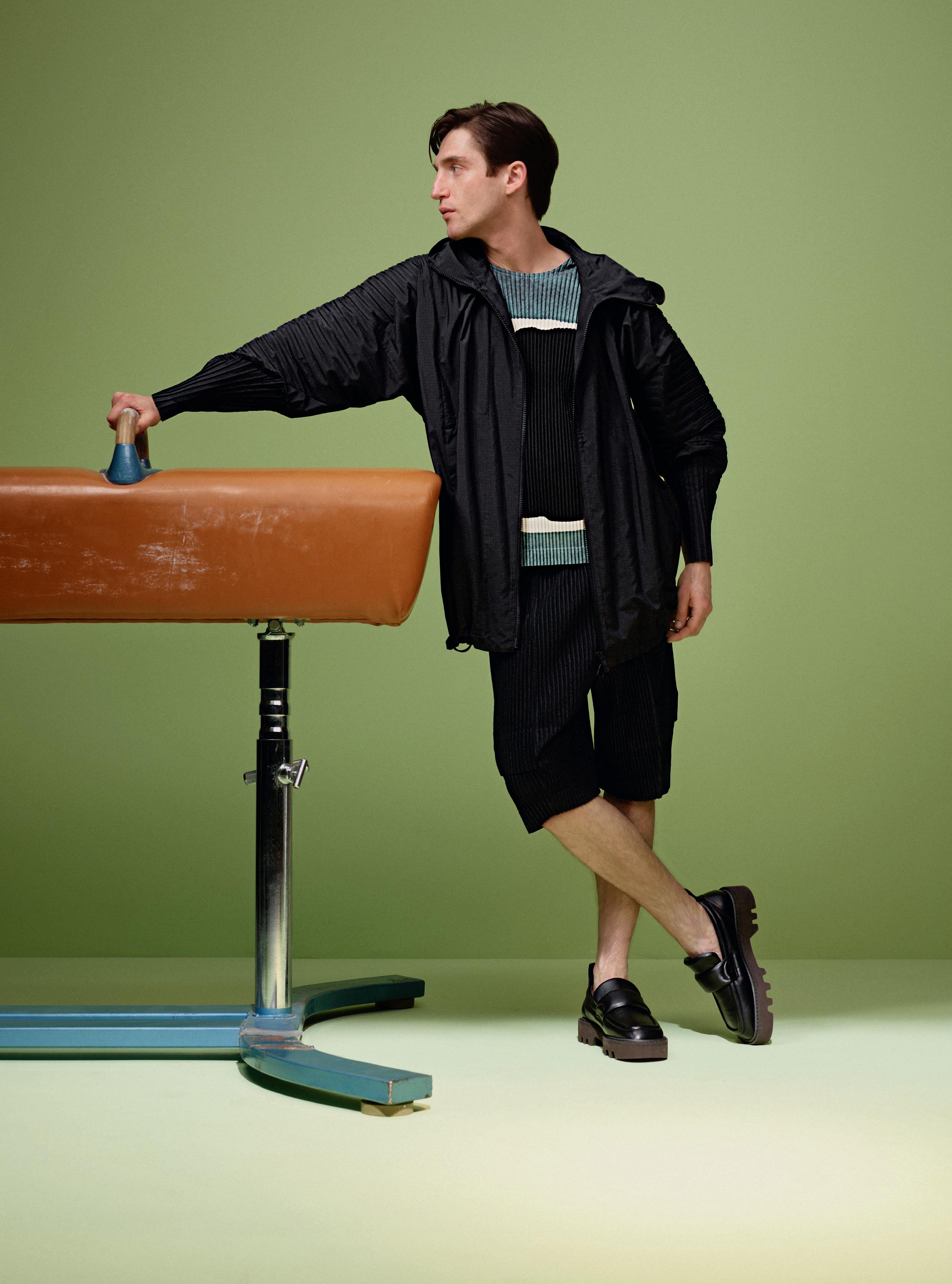
FASHION FORWARD THE DEPARTMENTS 38 The Ritmo Mundo Pegasus 40 Ligne St Barth: Vacation in St. Barth from Home 42 Mara Hotung Jewels 48 Megan Mae Miami Sustainable Swimwear 50 Neiman Marcus Quest for the Best Campaign 52 Cara Benevenia: The Italian- American Girl 54 Zimmermann at Paris Fashion Week 33 Logistics & Transportation 59 Techwear 64 Italy: Ferragamo Watches 70 Columns 77 Trade Show Connections 90 Fashion History: Pelletteria Artigiana Viviani 94 Last Look Q&A with STUDEX By Laurie Melchionne Photo courtesy of Arnaud Lajeunie





April FASHION MOVES FAST. SO SHOULD YOUR LENDER. Our creative solutions are tailored to meet your working capital needs now, so you can tackle every phase of your business with confidence. • Factoring • Asset Based Revolvers • Inventory Financing Facilities CONTACT US (212) 887-7999 whiteoaksf.com/commercialfinance info@whiteoakcf.com
12 | FM April 2024 mannpublications.com FASHION FAVORITES
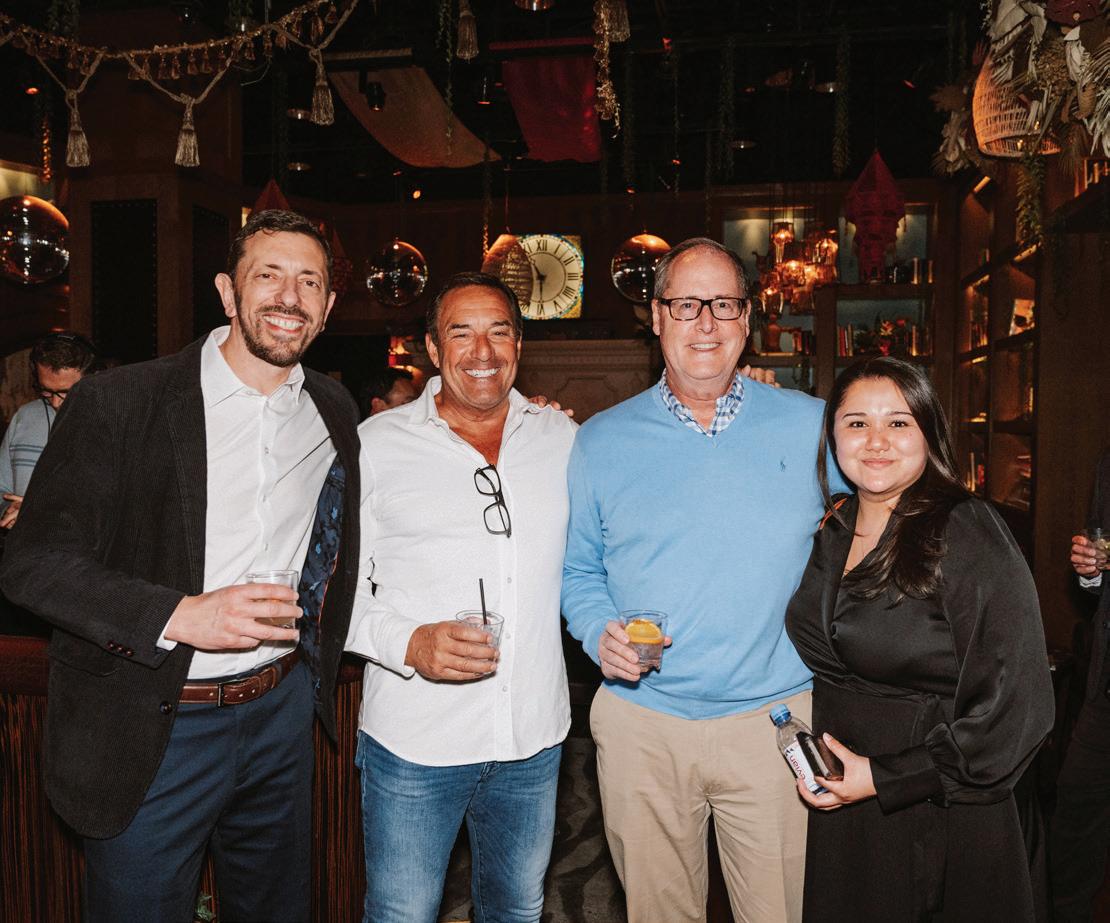
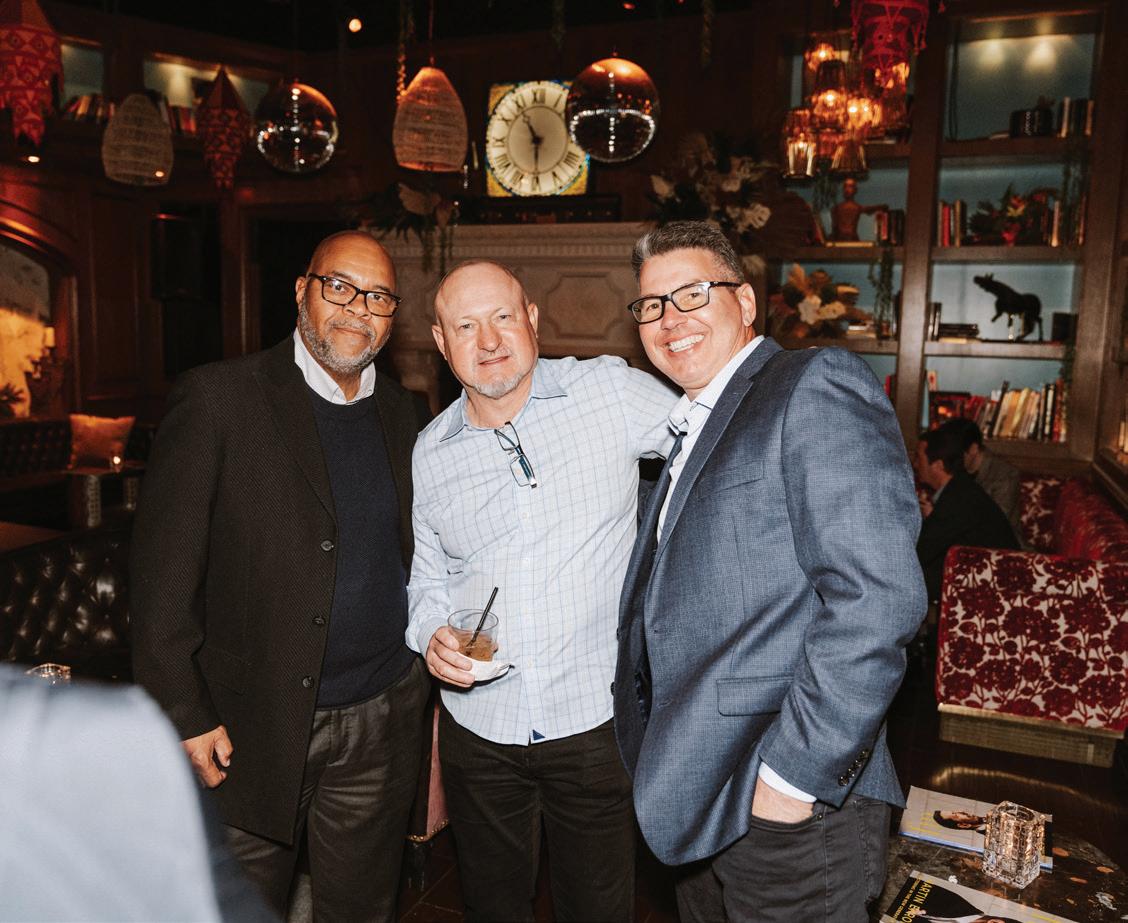
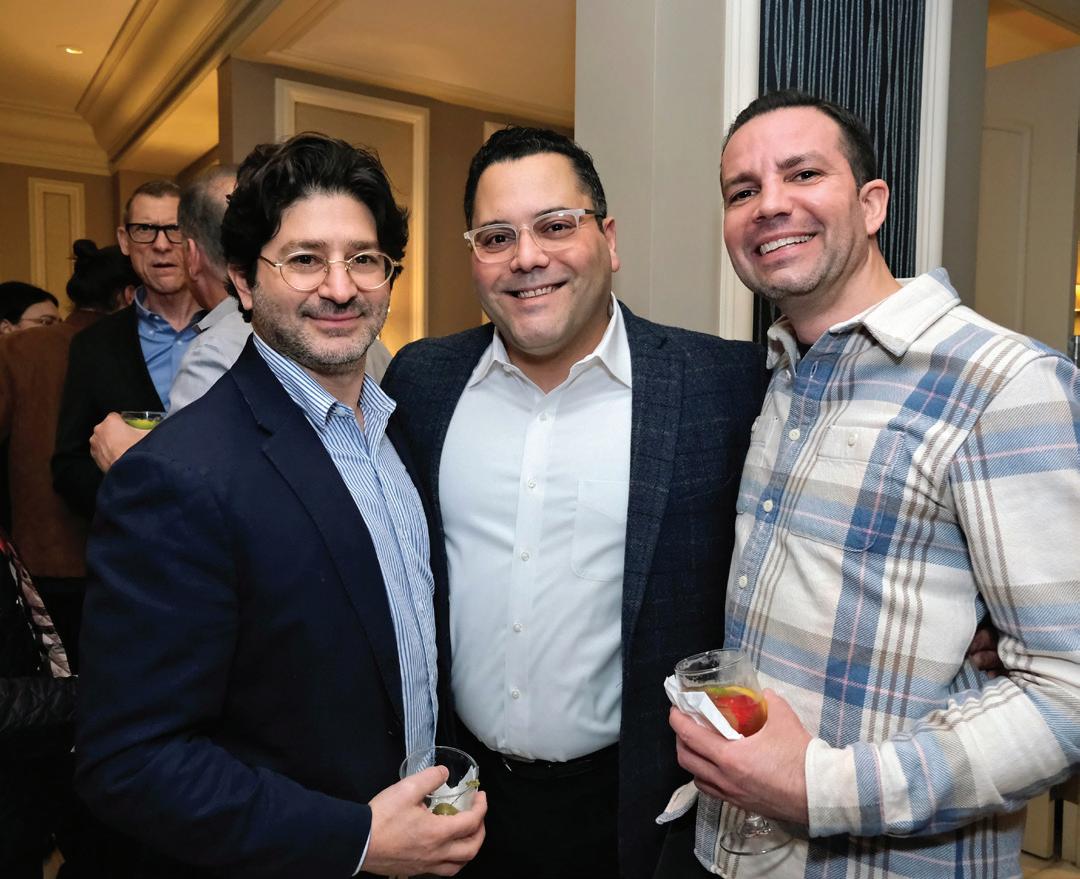
Barry Resnick, Joe Nastri, Javier Carreras, Jay Silver
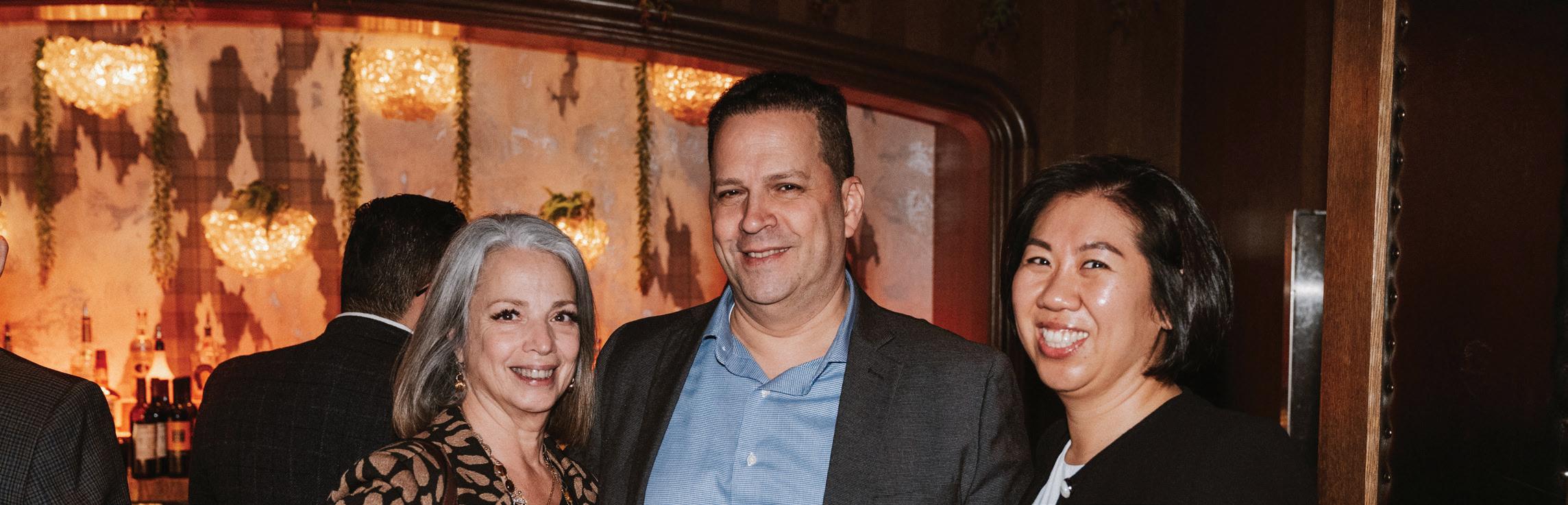
Carrie Jenkins, Joan Linxwiler, Bob Ezra
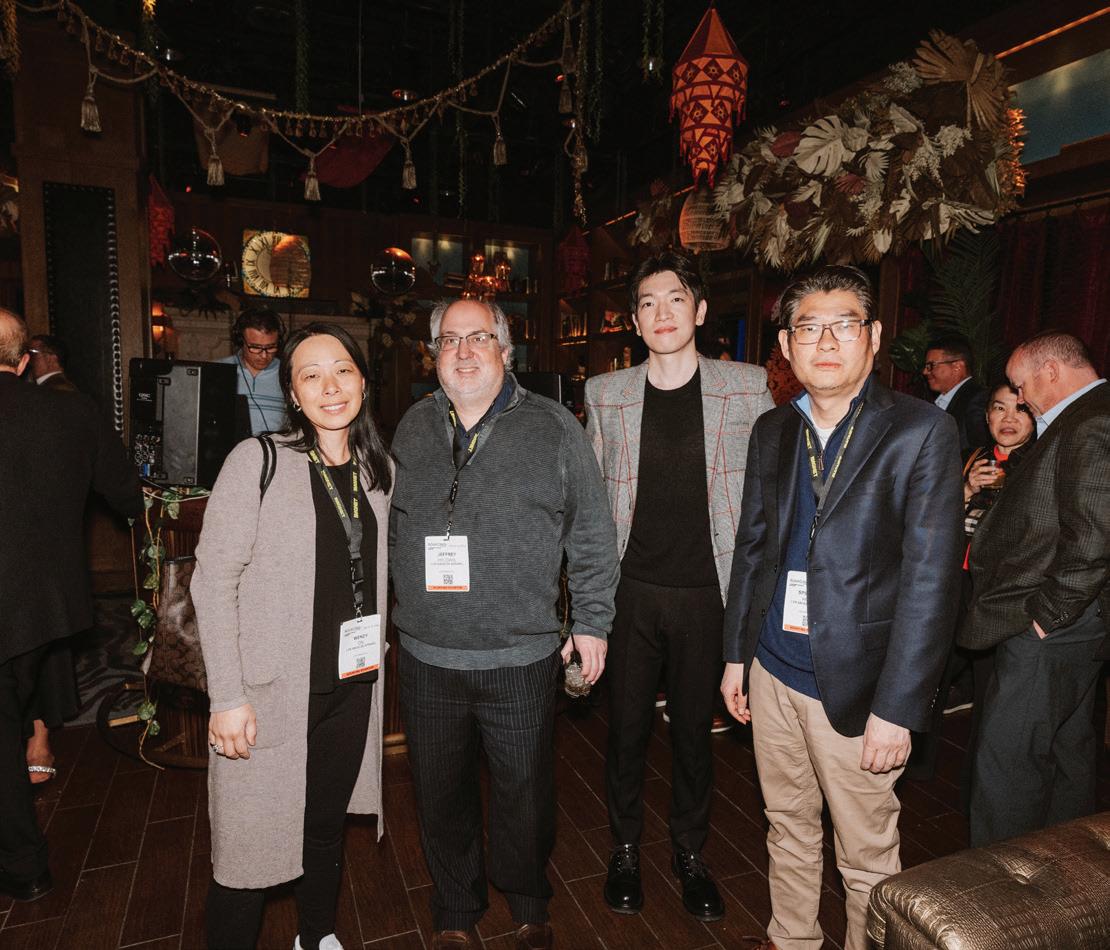
Wendy On, Jeffrey Hyldahl, Sungwook Han, Spensor Hong
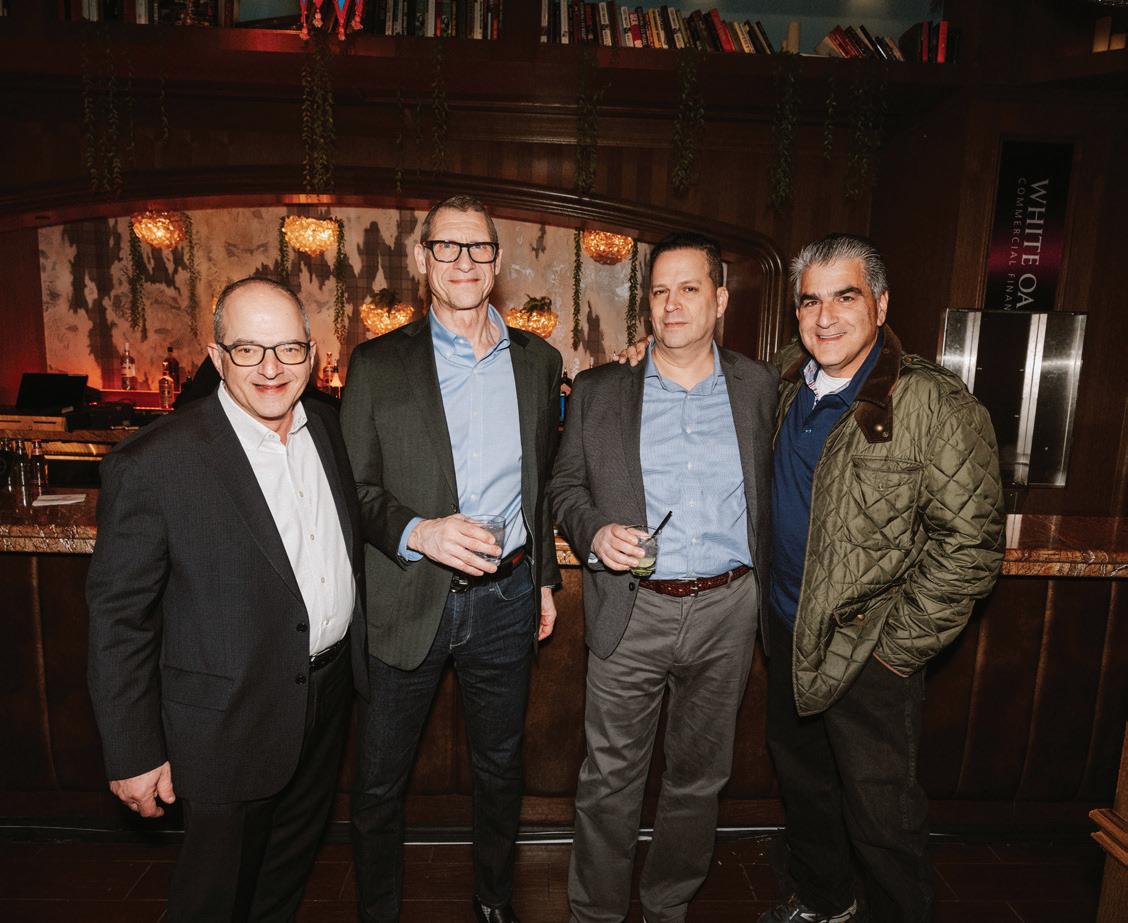
Don Norman, Scott Ressler, Andrew Cytron
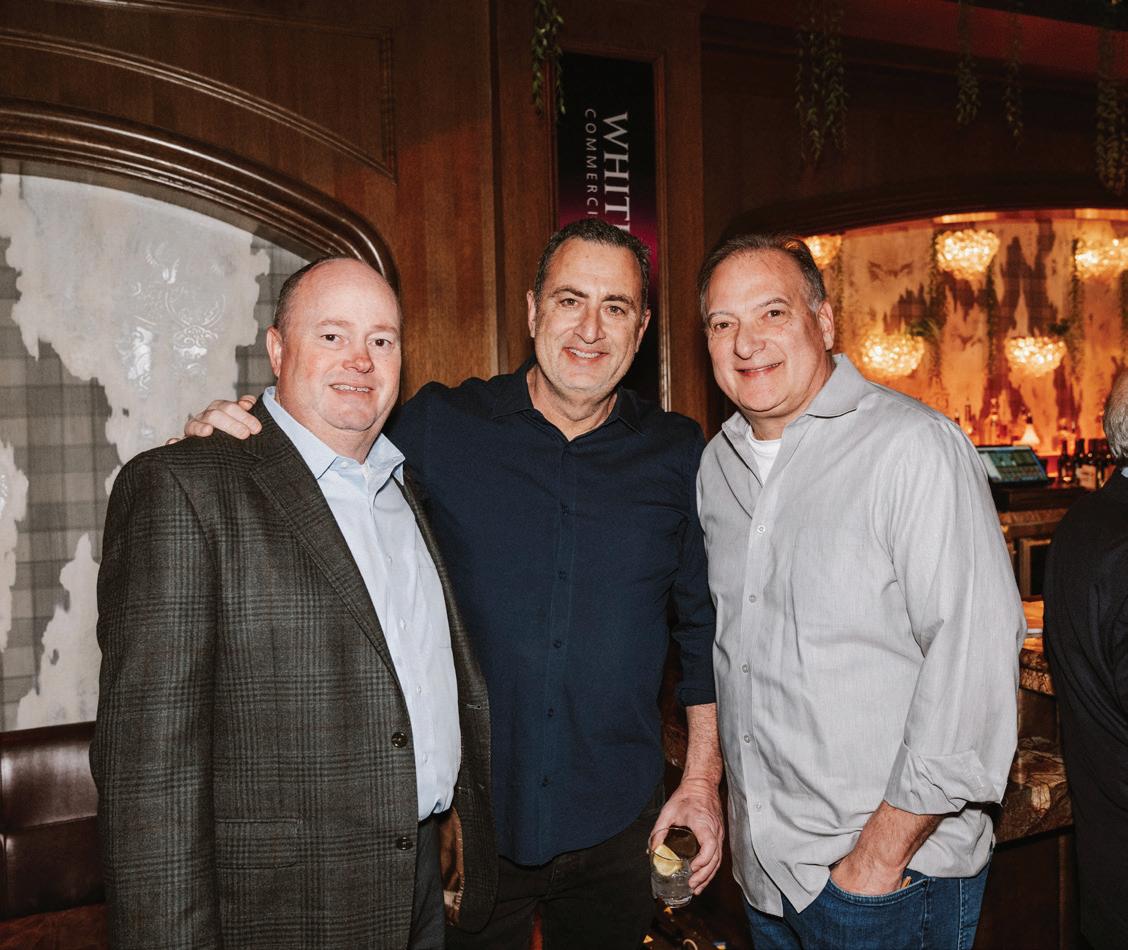
John Merille, Nick Susnjar, Gino Clark
Martin Efron, Scott Pianin, Jim Ferree, Eunice Kepka
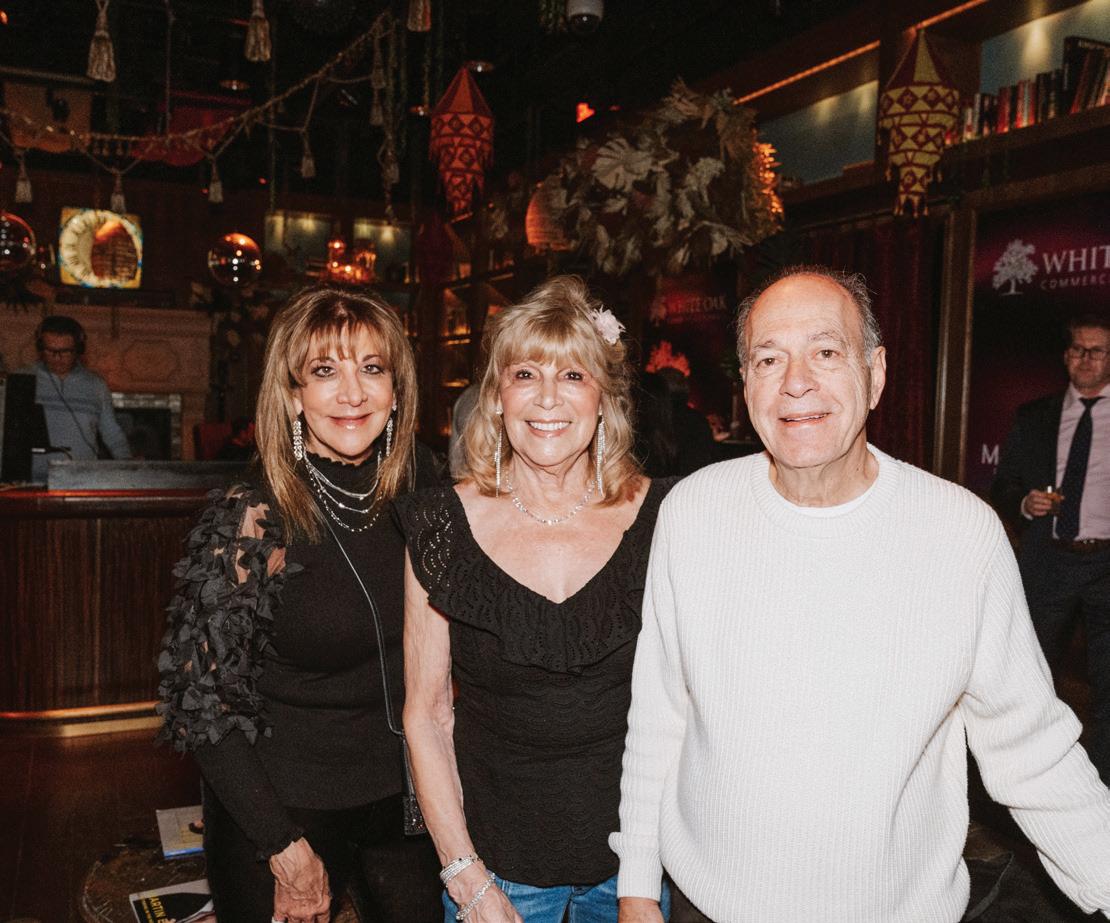
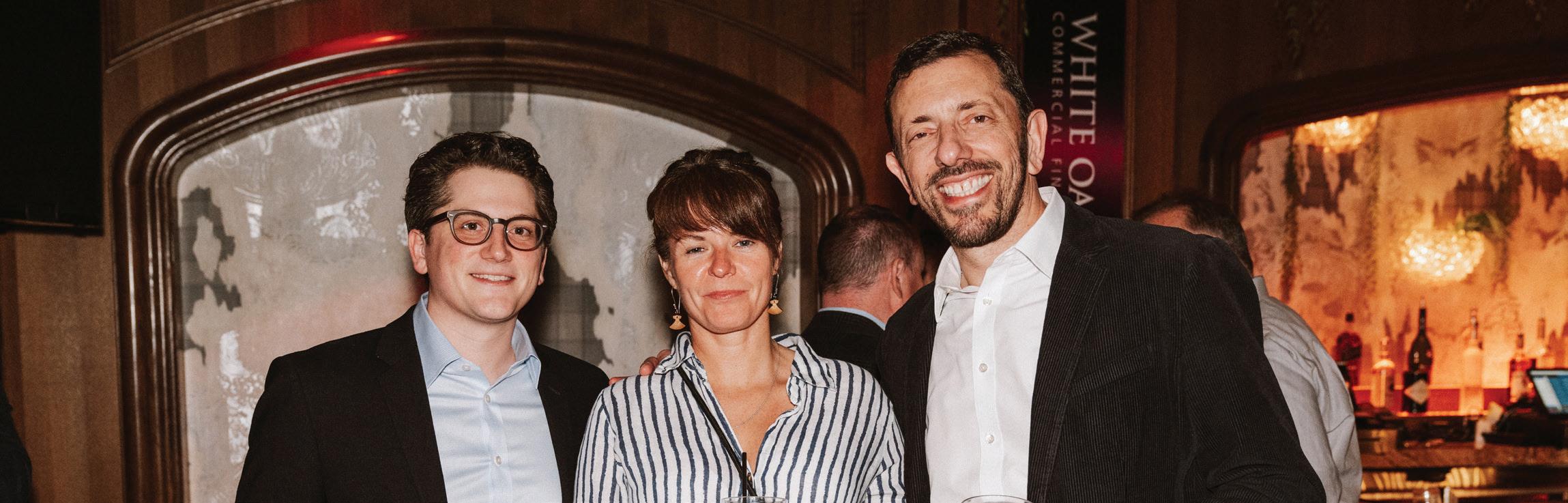
WHITE OAK COMMERCIAL FINANCE ATTENDS MAGIC FOR ANNUAL COCKTAIL PARTY

mannpublications.com April 2024 FM | 13 FASHION FAVORITES
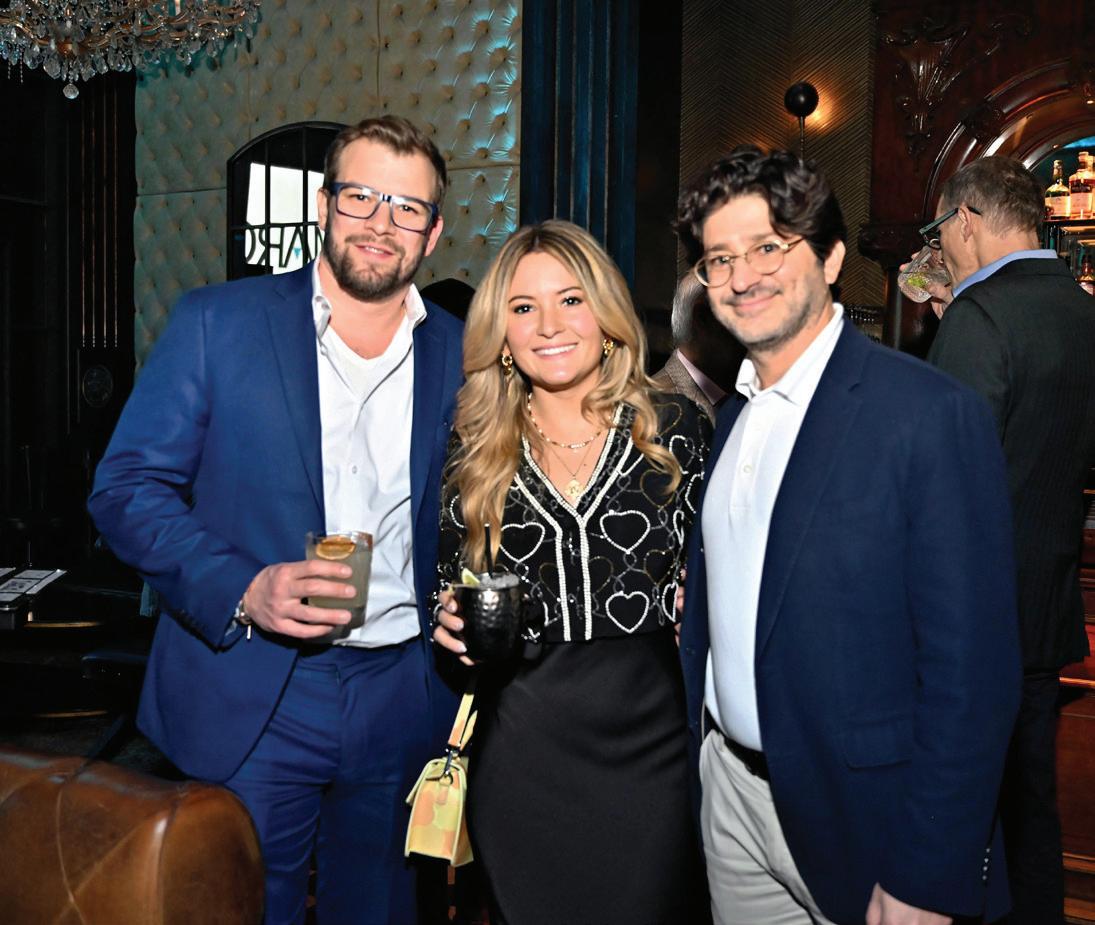
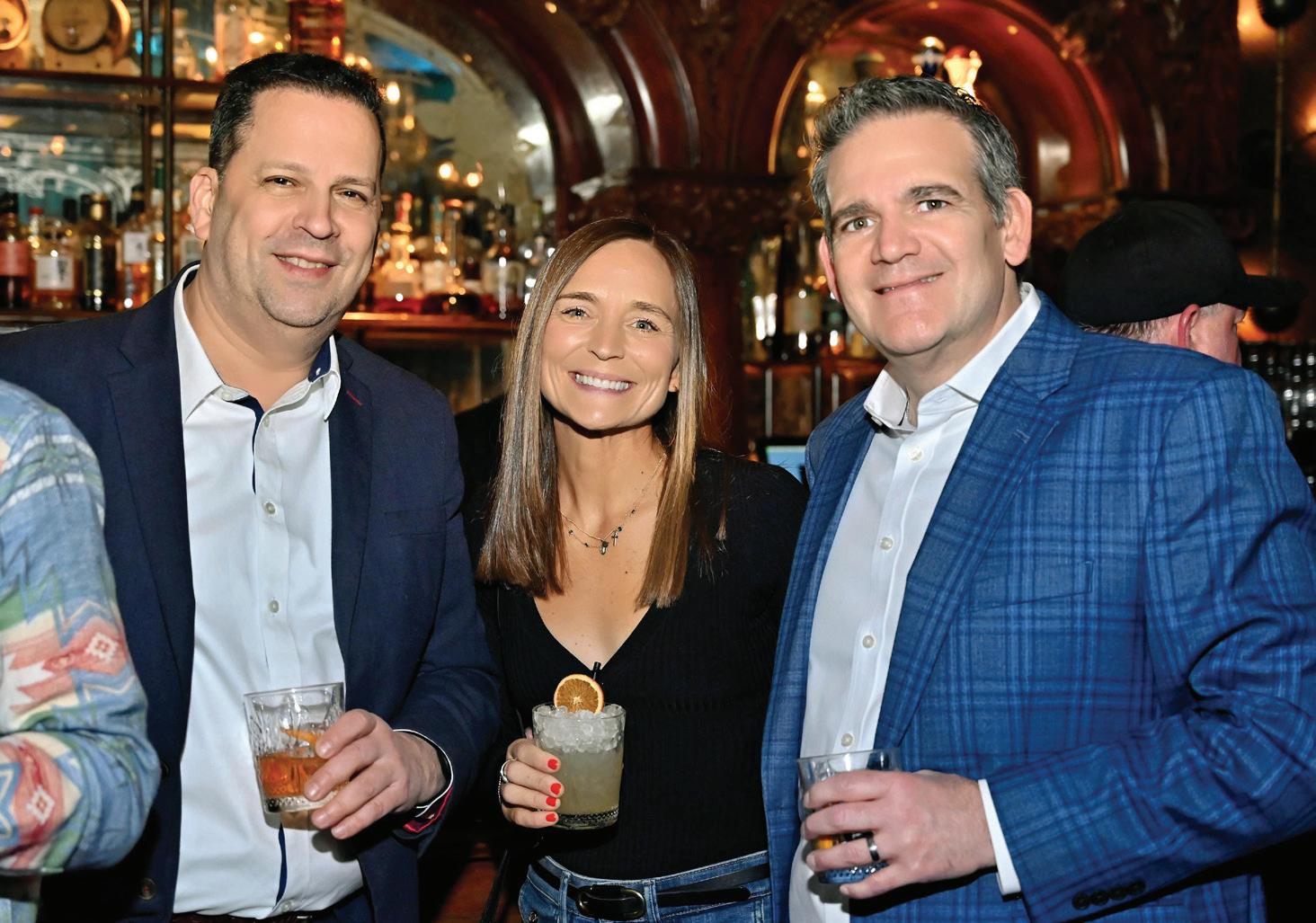
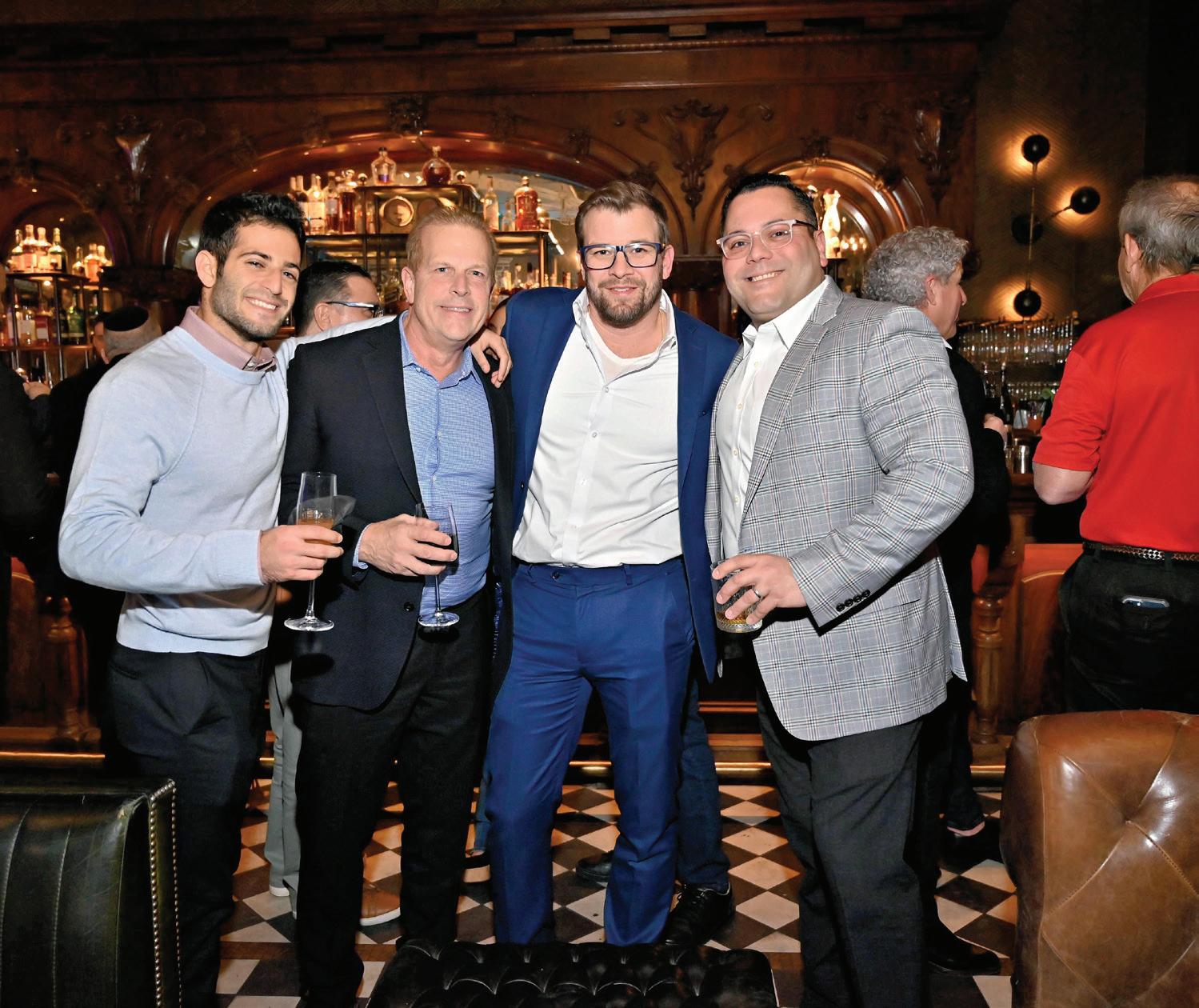
The White Oak Commercial Finance team hosted their annual cocktail party dinner at the MAGIC Las Vegas trade show in February. Guests enjoyed hors d’oeuvres and cocktails at The Library at the Marquee and raised a glass to Fashion Mannuscript’s February cover star, Martin Efron.
Photos courtesy of Adam Trujillo Photography
Matilde Reyes, Javier Carreras, Grace Mak
Teresa Chan, Jeffrey Resnick, Joseph Ferrone
Ethan Rosenblum, Magdalena Snow, Martin Efron

14 | FM April 2024 mannpublications.com FASHION FAVORITES
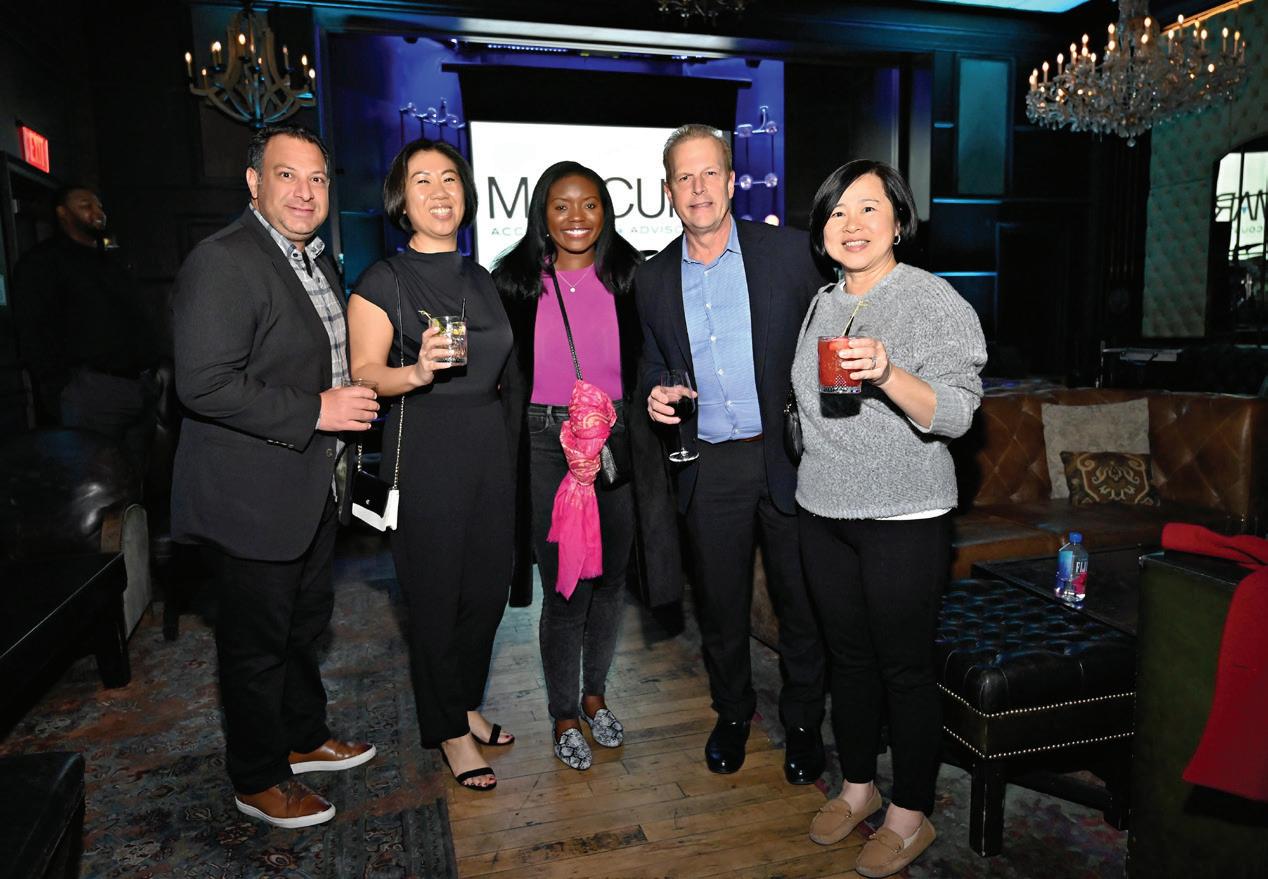
Javier Carreras, Suzanne Sacco, Mike Sacco
Ron Friedman and Maki Villacarillo
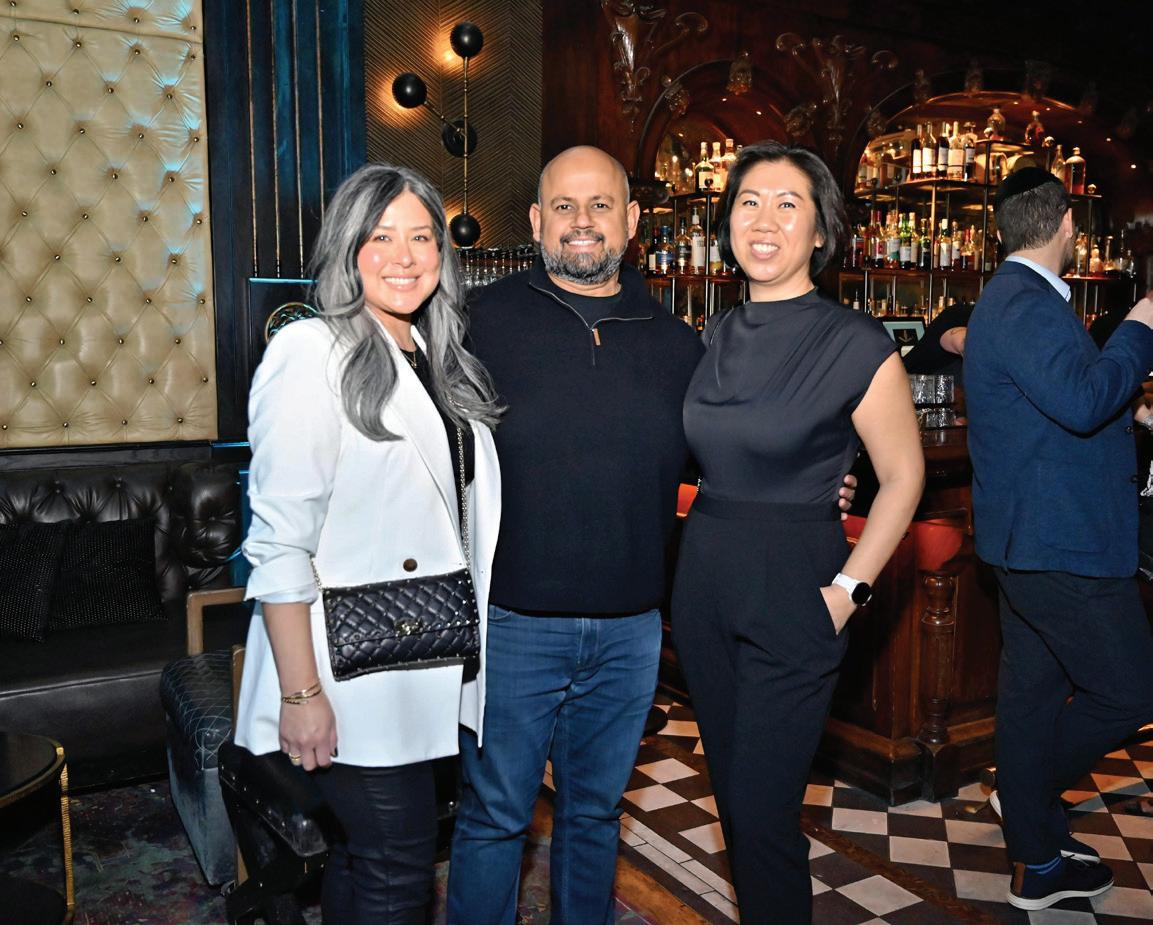
Omar Chohan’s wife, Omar Chohan, Grace Mak
Nick Antonian, Grace Mak, Danielle Davis, Amy Newman
Howard Moore, Liz Wafer, Alfred Hedaya
Marc Grossman, Peter Pugliese, David Michaels, Mike Sacco, Suzanne Sacco

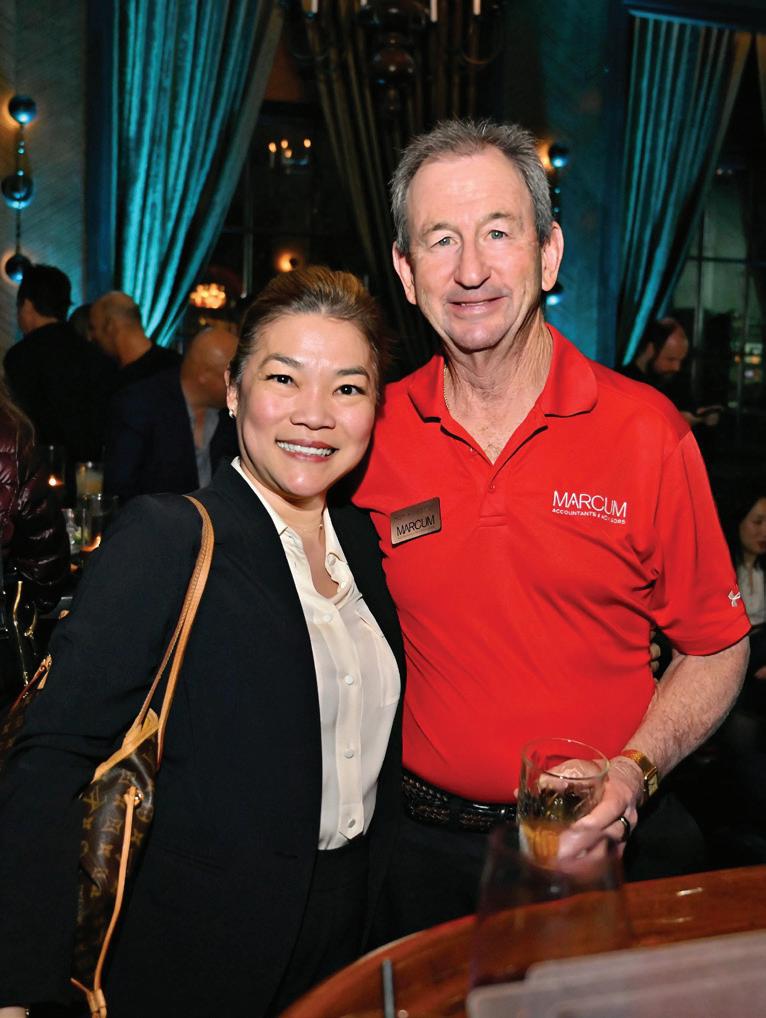
MARCUM HITS TRADESHOW SEASON AT MAGIC AND OFFPRICE
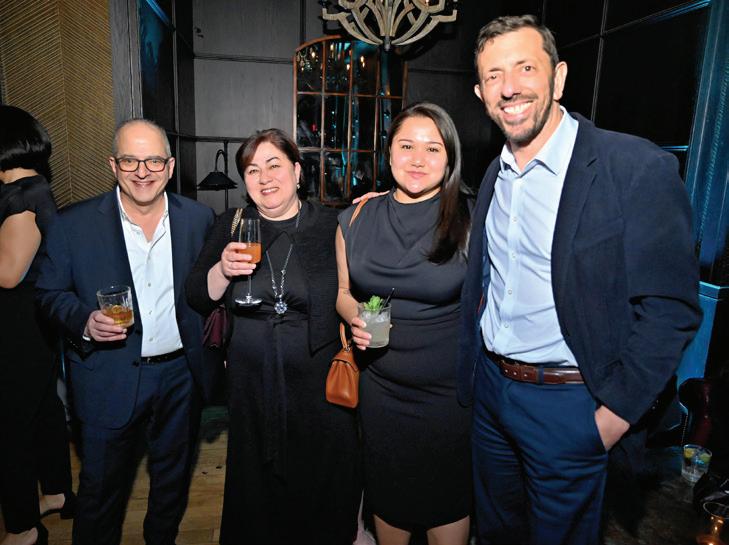
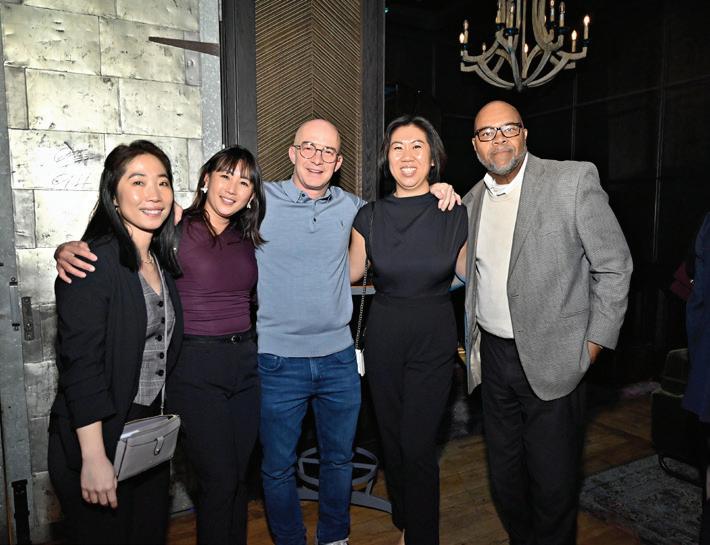
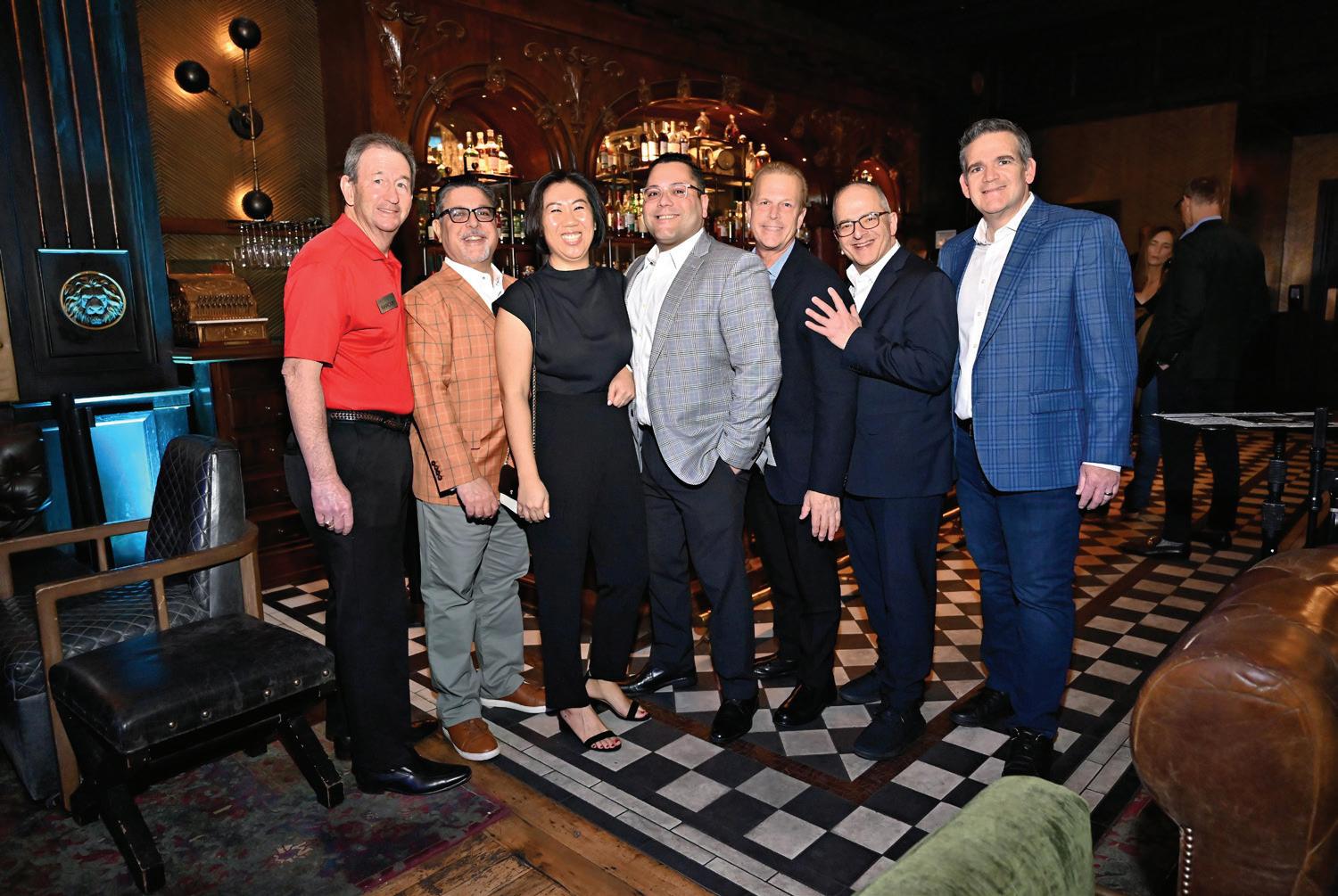
The Consumer and Industrial Products Group from Marcum LLP hosted a cocktail reception during the Magic and Off-Price Trade Shows in Las Vegas, NV. The event served as a great opportunity for Marcum’s New York and California Consumer Product Group to engage with clients, prospects and industry professionals.
mannpublications.com April 2024 FM | 15
FASHION FAVORITES
Photos courtesy of Christian Andrade, Cashman Photo Enterprises
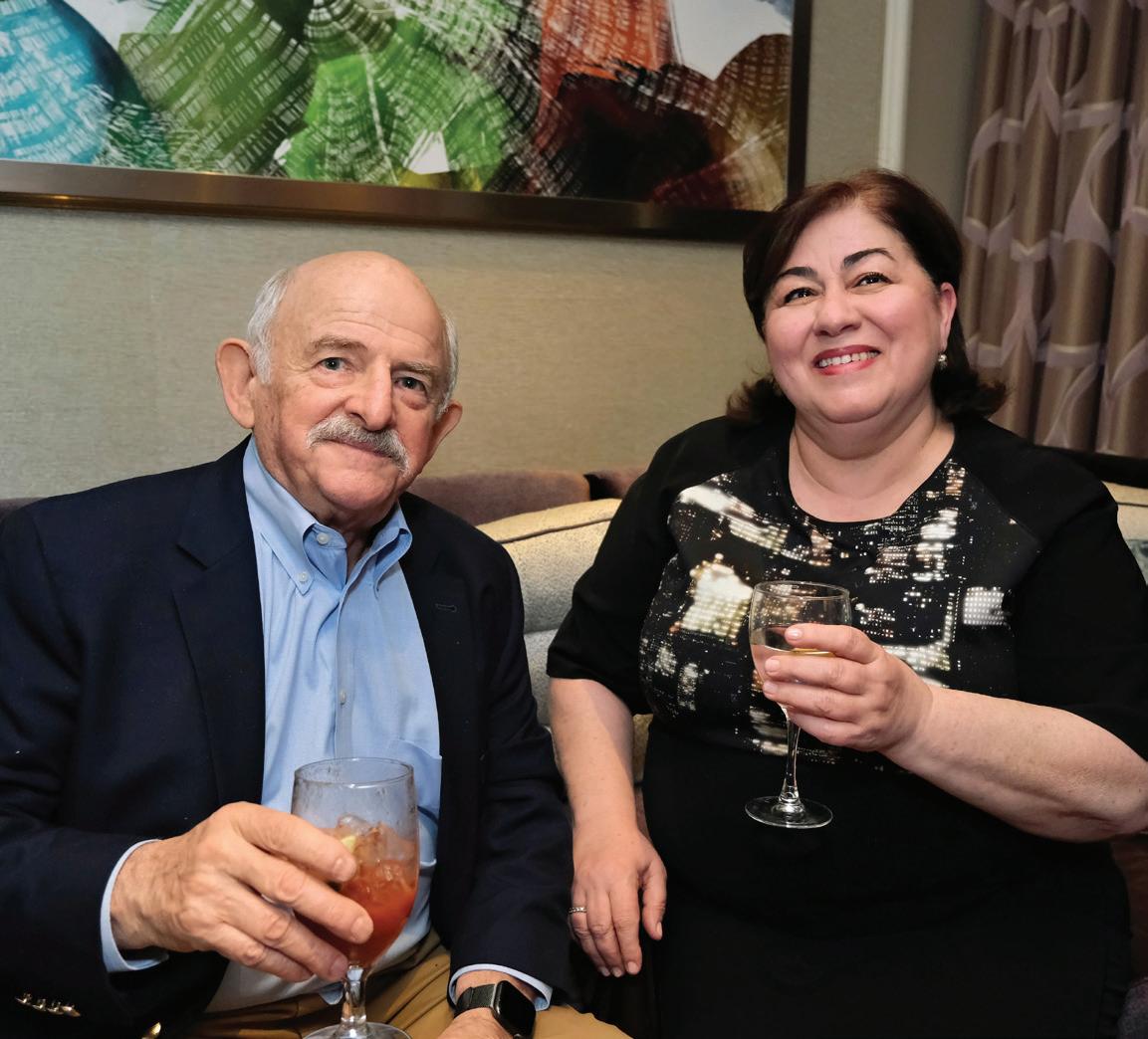
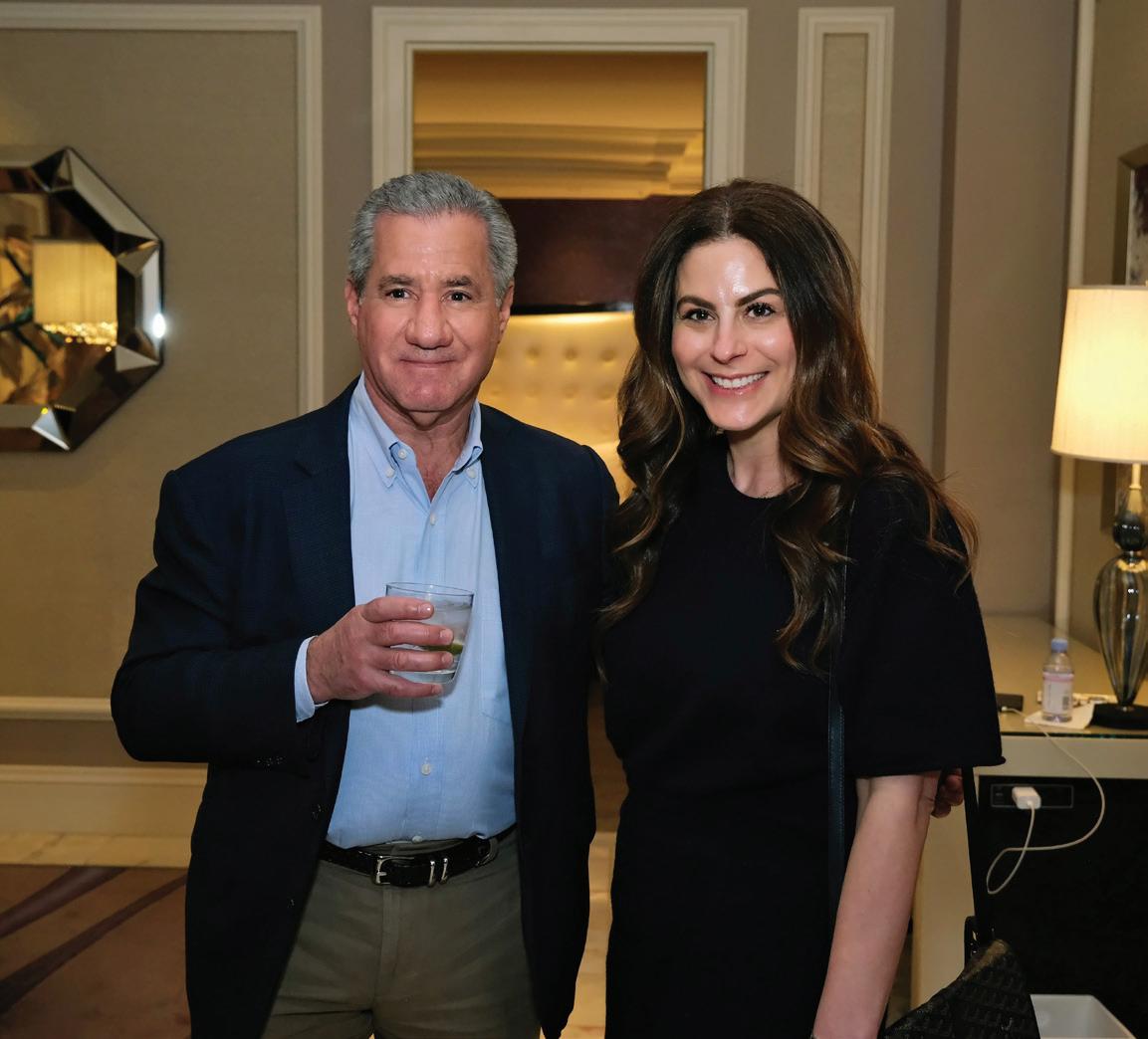
Jeff Resnick, Scott Adler
Ron Friedman, Robert Derbabian, Grace Mak, Tom Miranda, Joe Ferrone, Jeff Resnick, Mike Sacco
David Hedaya, Joe Ferrone, Howard Moore, Tom Miranda
Teresa Chan, Gammie Chung, Tim Moore, Grace Mak, John Merille
Jeff Resnick, Elena Goynatsky, Eunice Kepka, Martin Efron



16 | FM April 2024 mannpublications.com FASHION FAVORITES
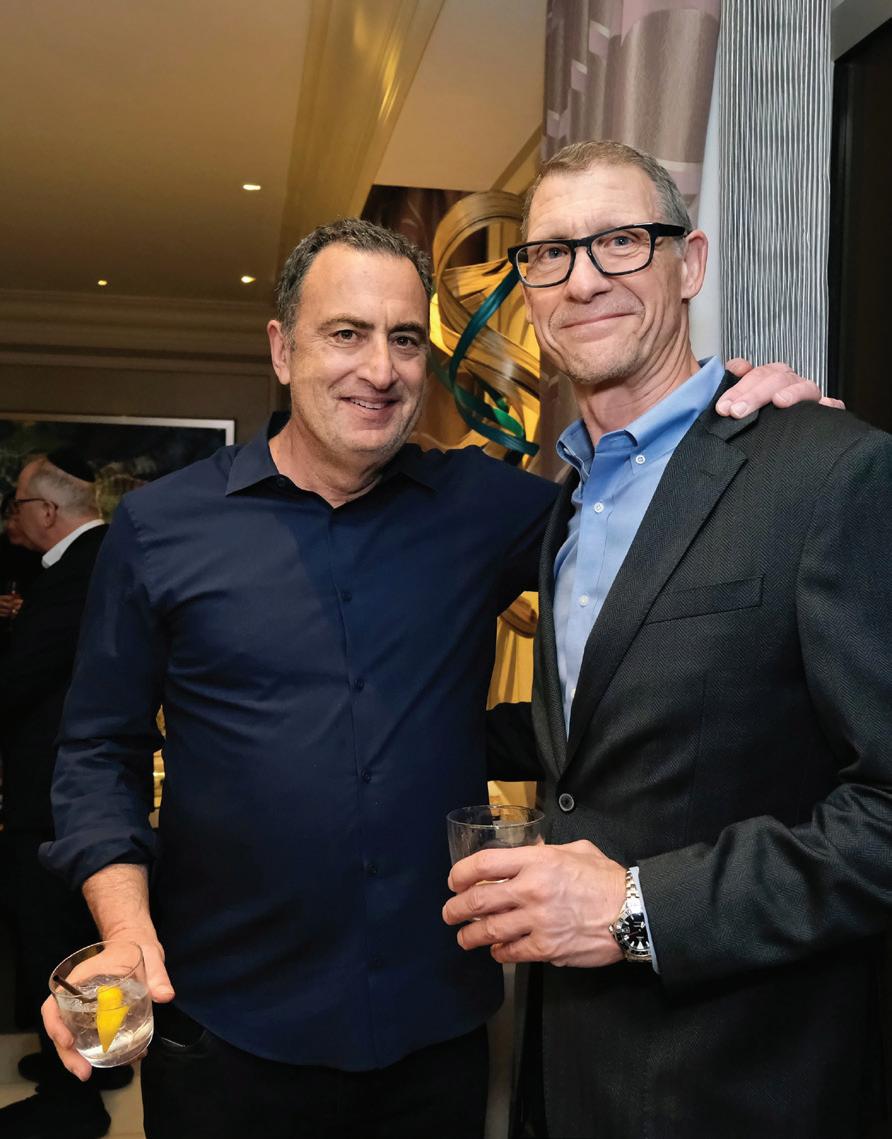
Alfred Hedaya, Thomas Miranda, Drew Fisher
Jeff Resnick, Michael Cipriani, Alfred Hedaya
Greg Spiegel, Joel Wolitzer, Jay Silver, Eric Seaman
Neil Bressler, David Michaels
David Michaels, Christina Langbort
Paul Hahn, Elena Goynatsky




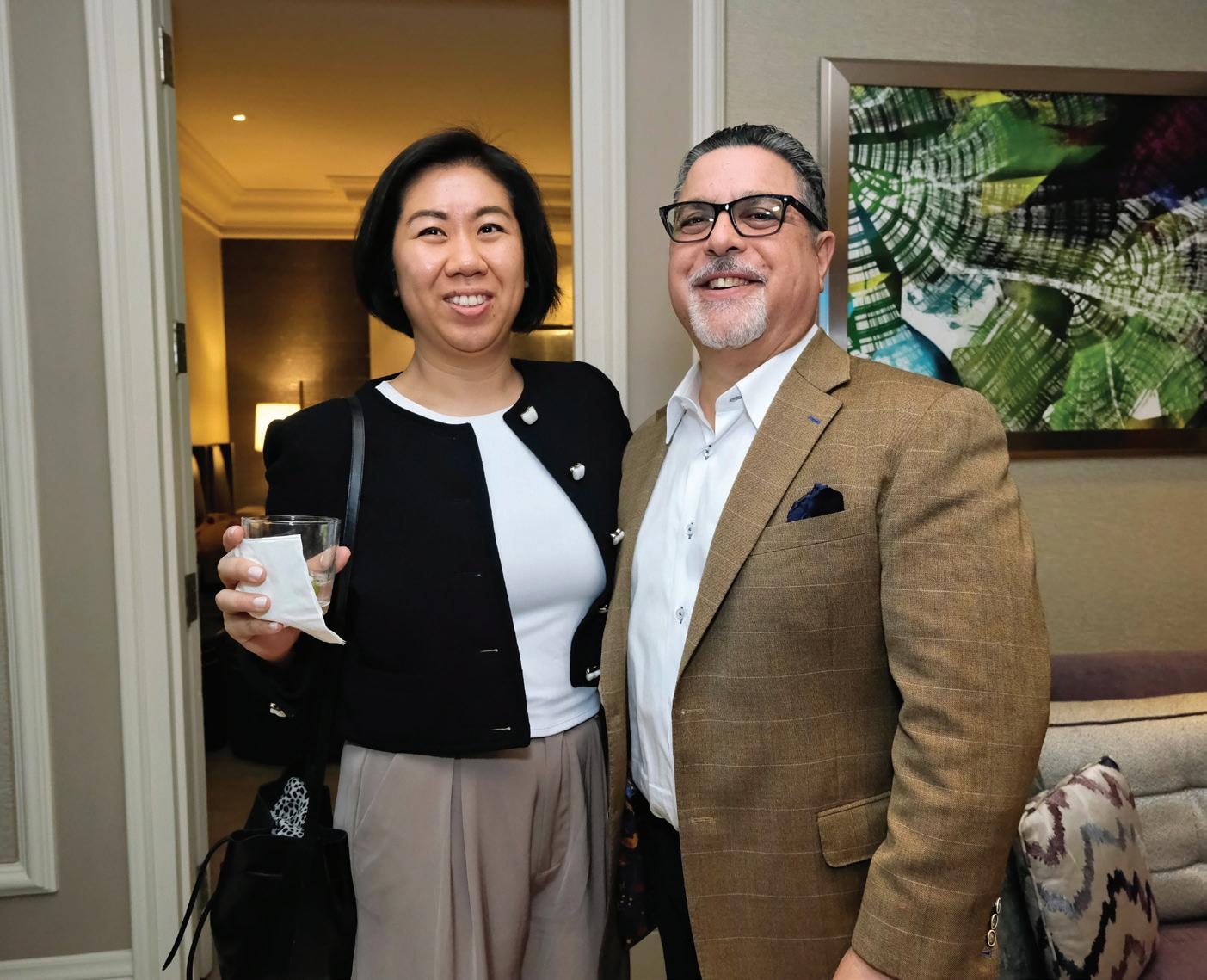
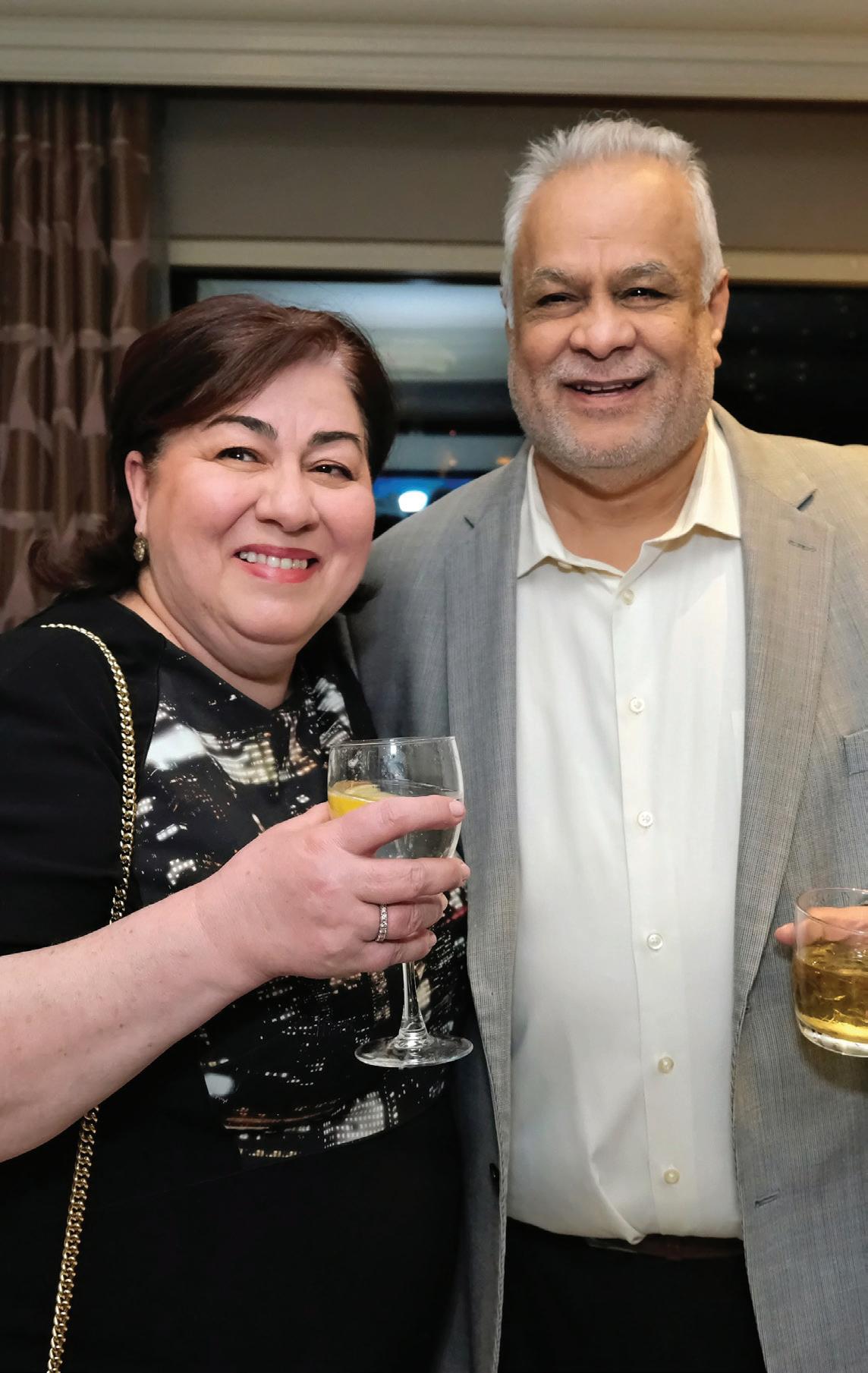
ROSENTHAL & ROSENTHAL HOSTS SEMI-ANNUAL COCKTAIL PARTY AT MAGIC

Trade show season was in full swing in Las Vegas at MAGIC, and was celebrated by Rosenthal & Rosenthal at its Semi-Annual Cocktail Party. Hosted at the Bellagio, the elegant cocktail party gave the fi nance and factor company the chance to mingle and network with clients, colleagues and MAGIC attendees. Take a look at the event here. Photos courtesy of Christian Andrade, Cashman Productions




mannpublications.com April 2024 FM | 17 FASHION FAVORITES
Grace Mak, Rob Derbabian
Scott Ressler, Joseph Nastri
Elena Goynatsky, Johnny Sajnani
Ying Ramirez, Sydnee Breuer, Michael Cipriani, Joel Wolitzer
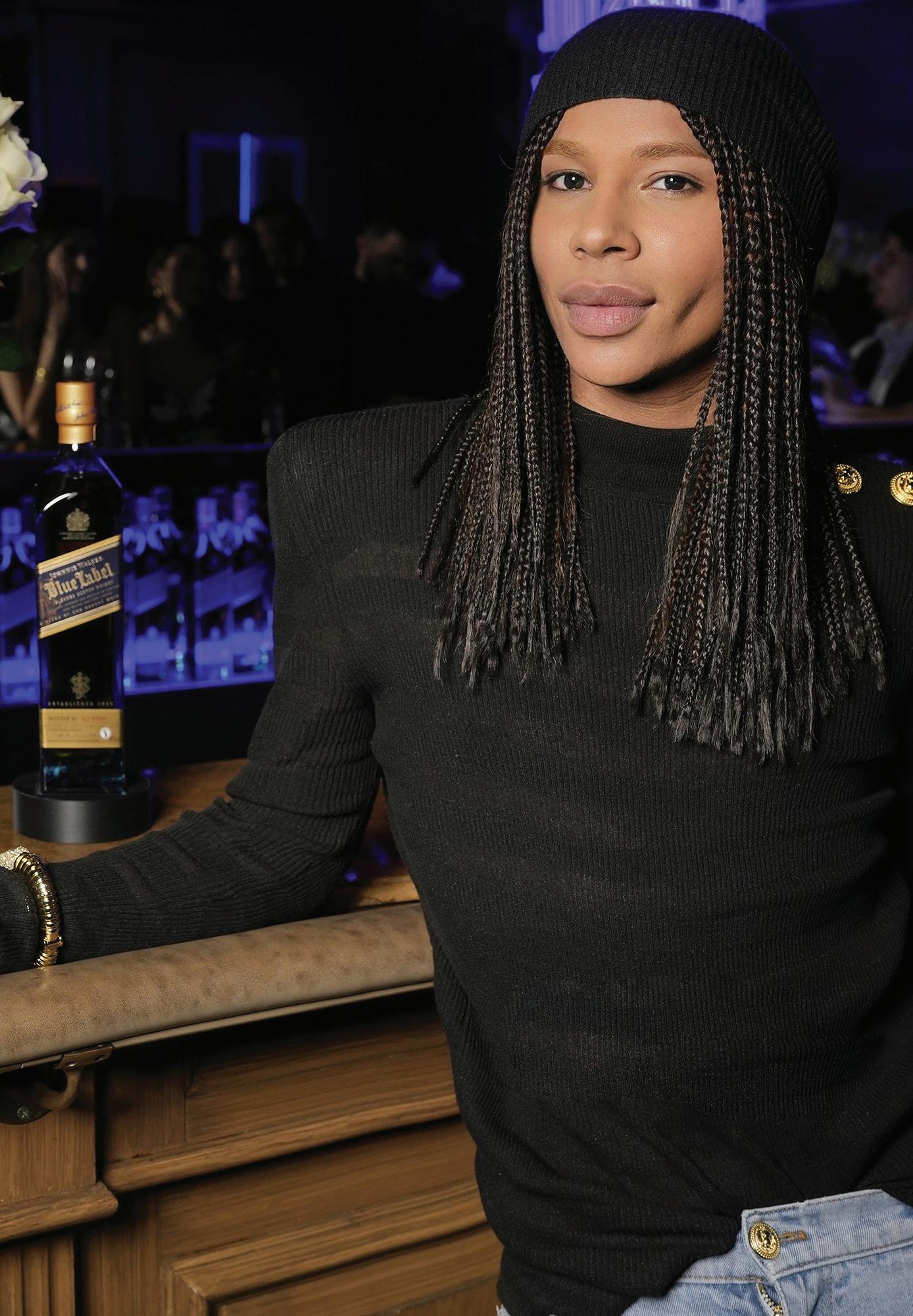
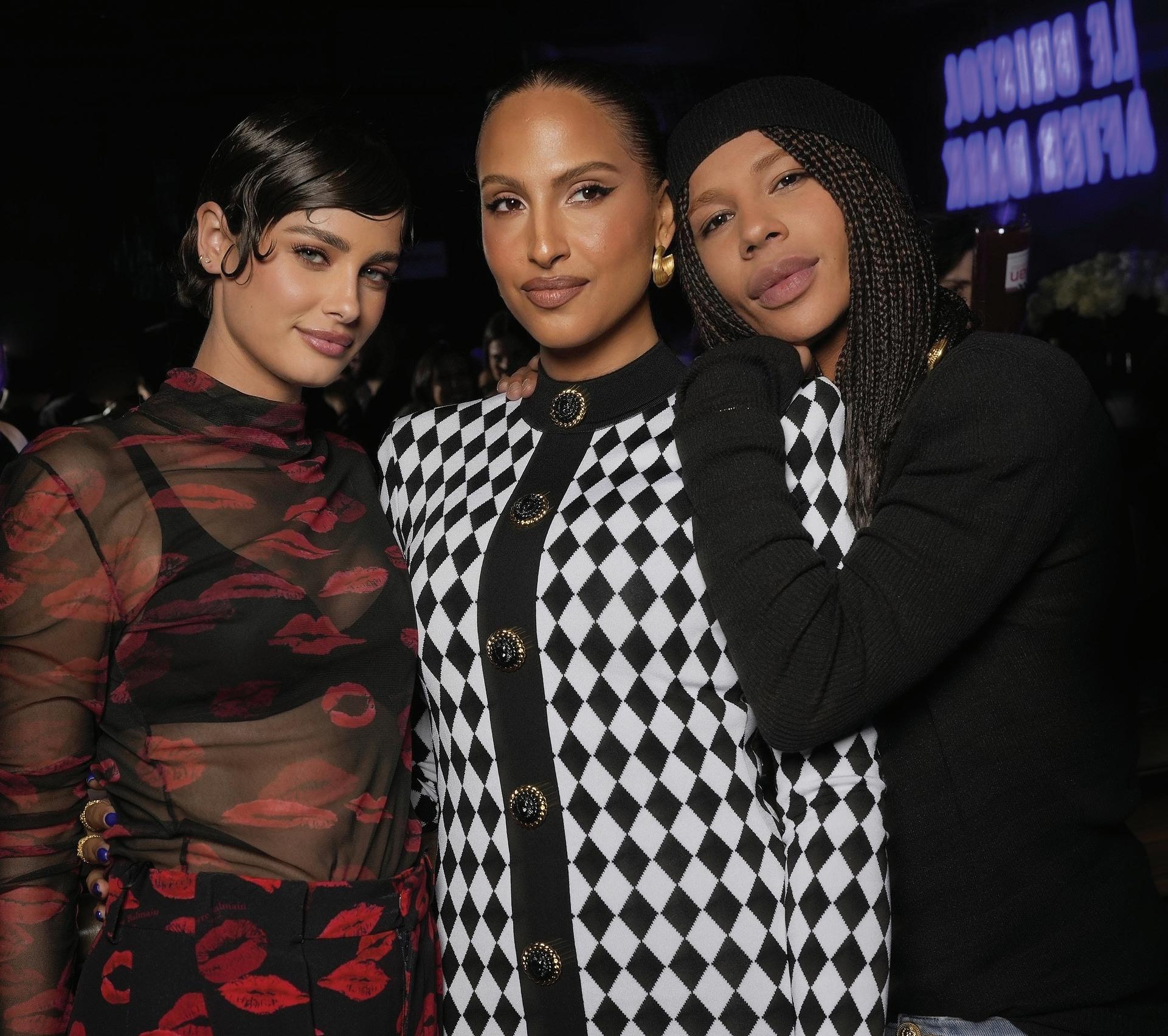
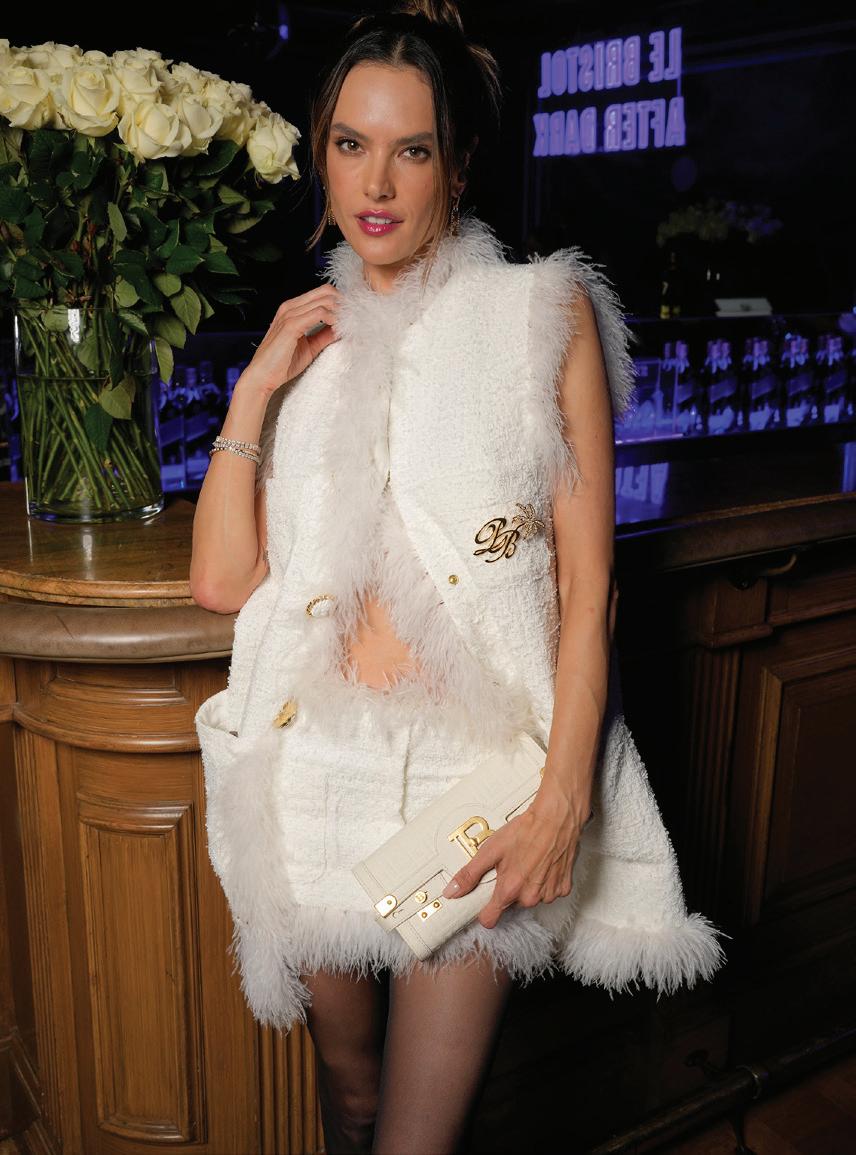
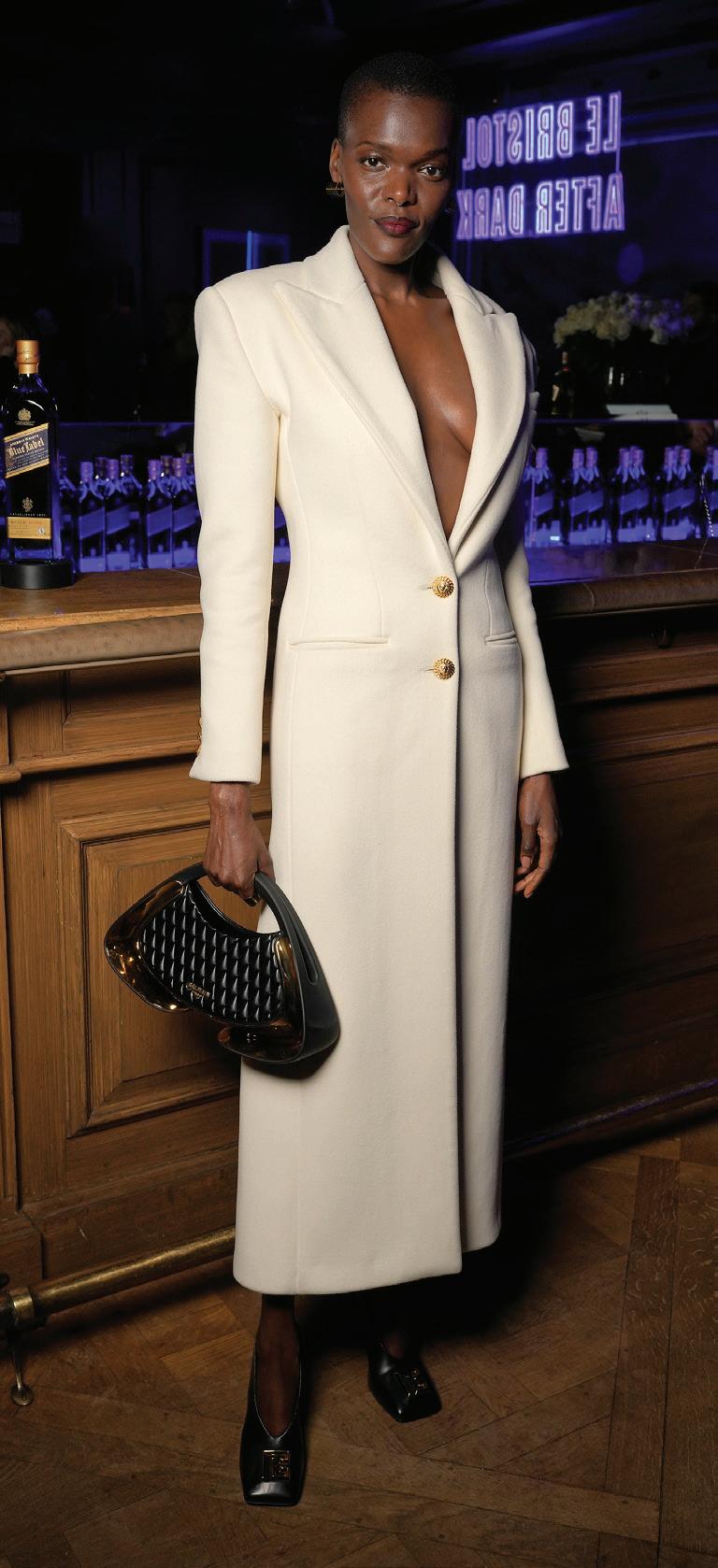
Balmain and Olivier Rousteing Toast Paris Women’s Fashion Week with Johnnie Walker Blue Label
Balmain and Olivier Rousteing celebrated their Paris Women’s Fashion Week Fall-Winter 2024 show with an intimate after party hosted at Le Bristol, toasting with a JOHNNIE WALKER BLUE LABEL custom cocktail.
Olivier Rousteing’s closest friends – including global fashion, music, film and entertainment notables – danced the night away, celebrating the designer’s latest collection with a curated selection of JOHNNIE WALKER BLUE LABEL cocktails.
Attendees included Olivier Rousteing, Alessandra Ambrosio, Taylor Hill, Tina Leung, Ashley Park, Jordan Hames, Hande Ercel, Paul Forman and other special guests. Check out the party’s exclusive look.

18 | FM April 2024 mannpublications.com FASHION FAVORITES
John Antonini,
Weronika Zalazinska, Green Gaskell
Fernanda Romero
Photos courtesy of PRNewsfoto/Johnnie Walker
Olivier Rousteing
Olivier Rousteing and Ashley Park

mannpublications.com April 2024 FM | 19 FEATURE
FASHION FAVORITES
Antonini, Tina Edmundson, Larry Bruce
Alessandra Ambrosio
Hande Ercel
Sheila Atim
Taylor Hill, Olivier Rousteing & Snoh Aalegra

We ’re Back!








Please join us for an exciting and informative program as we discuss consumer behavior and retail trends. Come network with retailers, manufacturers and service providers specializing in consumer products including: electronics, toys, accessories, food & beverage, apparel, e-commerce and more!




TH UR S D AY, APR IL 18, 2024
E-Central D owntow n L os A ngeles
H otel 4 : 0 0 p .m. ‒ 7:30 p.m.
Tickets: $ 50 e ach

KEYNOTE SPEAKER
MARSHAL COHEN
Chief Industry Advisor, Retail Circana
TO REGISTER, VISIT: marcumevents.com/retail-symposium marcumllp.com
SPONSOR
MEDIA AND SPEAKER



As advisors to the fashion industry, we have experienced the global and local issues that affect the way you do business and are well-positioned to help you deal with changing conditions.
We help you turn challenges into opportunities through innovative and insightful thinking. Cash flow planning, gross profit by product line, chargeback analysis, assistance with access to capital, and operational improvements are just a few ways we help fashion companies gain an edge.
We provide a wide range of financial reporting, tax and advisory services to make your business and finances stronger.
 Marc Federbush, CPA, CGMA Partner and Fashion Industry Group Leader marc.federbush@anchin.com


mannpublications.com April
Best Companies to work for NEW YORK Best Companies to for NEW YORK LEARN MORE HERE
MANHATTAN | LONG ISLAND | BOCA RATON @AnchinCPA | 212-840-3456 | anchin.com
CENTRIC BRANDS ANNOUNCES JOINT BUSINESS VENTURE WITH JENNIFER FISHER
Centric Brands LLC. announced a joint venture with Jennifer Fisher, renowned New York-based jewelry designer and media personality. This new venture will leverage the expertise of both companies to expand the Jennifer Fisher brand into new categories while accelerating domestic and international growth of the Jennifer Fisher core jewelry business. The new venture comes on the heels of Jennifer Fisher’s recent expansion into lab-grown diamonds and the ongoing growth of her eponymous CPG and lifestyle business.
Launched in 2006, Jennifer Fisher quickly emerged as a leading voice in jewelry design with her distinct approach to custom fine jewelry. Having since expanded the business to include a celebrity-loved fashion jewelry collection and a burgeoning CPG business, Fisher was dubbed “The Queen of Hoops” in a profile in The New York Times.
Centric Brands’ outstanding experience in cross-category brand building is the cornerstone of its accelerated growth in the accessories market. The partnership with Jennifer Fisher is the latest addition to the Centric Brands portfolio, strengthening its market share in the jewelry and accessories categories.
“We are thrilled to welcome Jennifer Fisher into our world-class portfolio of industry-leading brands,” said Jason Rabin, chief executive officer, Centric Brands. “We have created a blueprint for incubating and growing brands that combines the strengths of Centric Brands with talented partners like Jennifer Fisher to create products and culture that resonate with customers.”
Jennifer Fisher, founder and chief brand officer, expressed excitement about the partnership. “We are honored to be taking the next step in our business with Centric Brands,” she said. “We believe the Centric platform will empower us to reach new heights, innovate our product offerings and strengthen our position as a leader in the jewelry industry.”
This new partnership builds on Centric’s ability to develop brands through joint ventures, including the demonstrated success of the Favorite Daughter joint venture with Erin and Sara Foster.

24 | FM April 2024 EXECUTIVECHANGES FASHION 411
Photo courtesy of Centric Brands on Business Wire
SAM EDELMAN COLLABORATES WITH SCAD ON COLLECTION FOR NORDSTROM
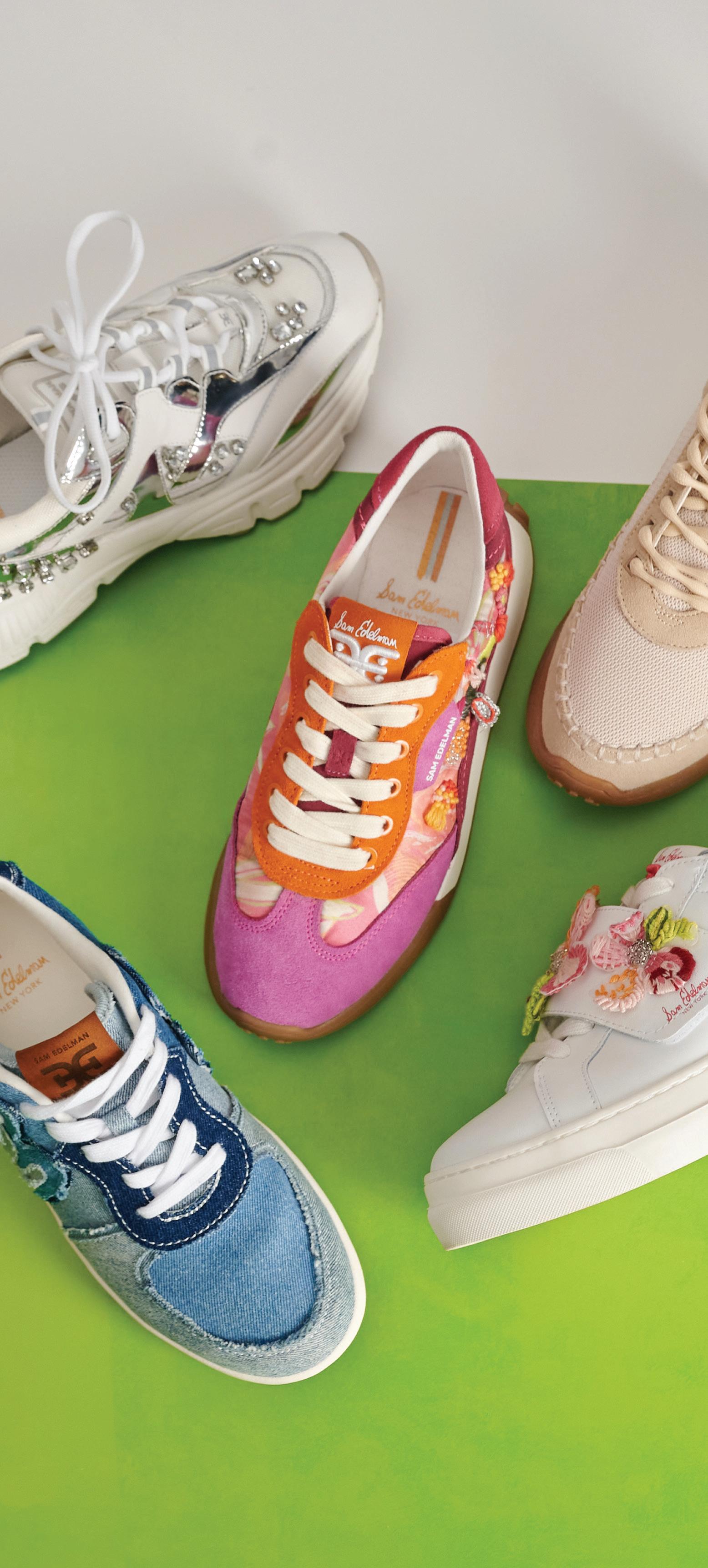
Sam Edelman launched a capsule collection designed in collaboration with students from the Savannah College of Art and Design (SCAD). In a partnership through the university’s innovation design studio, SCADpro, talented SCAD students from top-ranked degree programs including sneaker design, accessory design, industrial design, fashion marketing and management, design management and photography had the opportunity to work alongside visionary designer, Sam Edelman, to bring a fresh new perspective to footwear.
In celebration of Nordstrom’s “Make Room for Shoes” campaign and rich shoe history, dating back to 1901, the Sam Edelman x SCAD capsule collection delivers innovative and exclusive products centered around the emerging trends for the season. This collaboration will deliver a capsule collection of five sneaker products, developed by combining the minds of a longstanding, heritage brand with a fresh new perspective from today’s youth. The products will be offered exclusively at 33 select Nordstrom stores nationwide and on Nordstrom. com.
Sam Edelman and his wife, muse and business partner, Libby Edelman, are longtime supporters of the college; their son Jesse Edelman attended SCAD. Each year, the Edelmans recruit SCAD graduates to Sam Edelman’s Summer Internship Program. Sam Edelman currently employs eight SCAD graduates full-time.
Sam and Libby Edelman spent time at SCAD, working with the students to create this collection of sneakers through an unrestrained, imaginative approach to women’s and kids’ sneaker design.
“Mentoring the next generation of talent is a cornerstone of Sam Edelman’s commitment to the future of design,” remarked Jesse Edelman, general manager and senior vice president of the Sam Edelman division. “Our collaboration with the SCAD students is a testament to our belief in supporting the rising generation of professionals, providing them with a platform to express their visions under the guidance of an established brand.”
The Sam Edelman x SCAD collection will be available exclusively at Nordstrom.com.
April 2024 FM | 25 FASHION 411 FOOTWEAR
Photo courtesy of Caleres on Business Wire
V&CO. BEAUTY LAUNCHES PEPTIDE-INFUSED HAIR CARE
A cutting-edge innovation in peptide-infused hair care has arrived and is launching in-store and online at national and regional retailers, including Target and Walmart. V&Co. Beauty is a first-ever collection of shampoos and conditioners, powered by scientific innovation and rooted in targeted hair health that caters to the distinctive needs of each type and texture. The curated vegan and cruelty-free product selection allows consumers to level up their routine with four targeted shampoo and conditioner options: Wavy, Straight, Curly and Thickening, empowering healthy hair journeys and inspiring individuality.
Peptides have become a staple across skin care and supplements because they can help deliver real, unrivaled results. However, there have been little to no options in the hair care aisle that leveraged their deeply reparative benefits…until now. V&Co. Beauty’s Proprietary Peptide Blend is a carefully crafted fusion of peptides, amino acids, proteins and vitamins – finally treating scalp and hair to the same quality and efficacy that we extend to skin care. From boosting hydration to increasing volume, intensifying shine, fortifying strength and adding an extra layer of protection, the peptides can go beyond the surface to help accentuate the best aspects of each individual hair type.
The V&Co. Beauty team is committed to making the world a better and more sustainable place for generations to come, one beautiful head of hair at a time. It all begins with the elimination of harmful chemicals such as parabens and sulfates from the products. This commitment to health and well-being also extends to Mother Nature, with the formulas housed in custom bottles made from up to 65% recycled materials.
V&Co. Beauty is a family founded and multi-generational run team, headed by father-son team, Tom and Mike Redmond. The Redmond family are serial entrepreneurs within the hair care industry, having founded beloved household name brands like Aussie Hair Care and Renpure. Mike and Tom Redmond noticed peptides sweeping skin care aisles and were inspired to research their benefits for hair, alongside their seasoned scientific team.
V&Co. Beauty Shampoos & Conditioners retail for $7.99$8.99 each/12 oz in-store and online at Target, Walmart, all Safeway and Albertsons banners, Meijer, H-E-B, Stop + Shop, Wake Fern, Ingles, Harris Teeter, Food City, Associated Foods and Woodman’s Market.

26 | FM April 2024 BEAUTY FASHION 411
Photo courtesy of V&Co. Beauty on PRNewswire
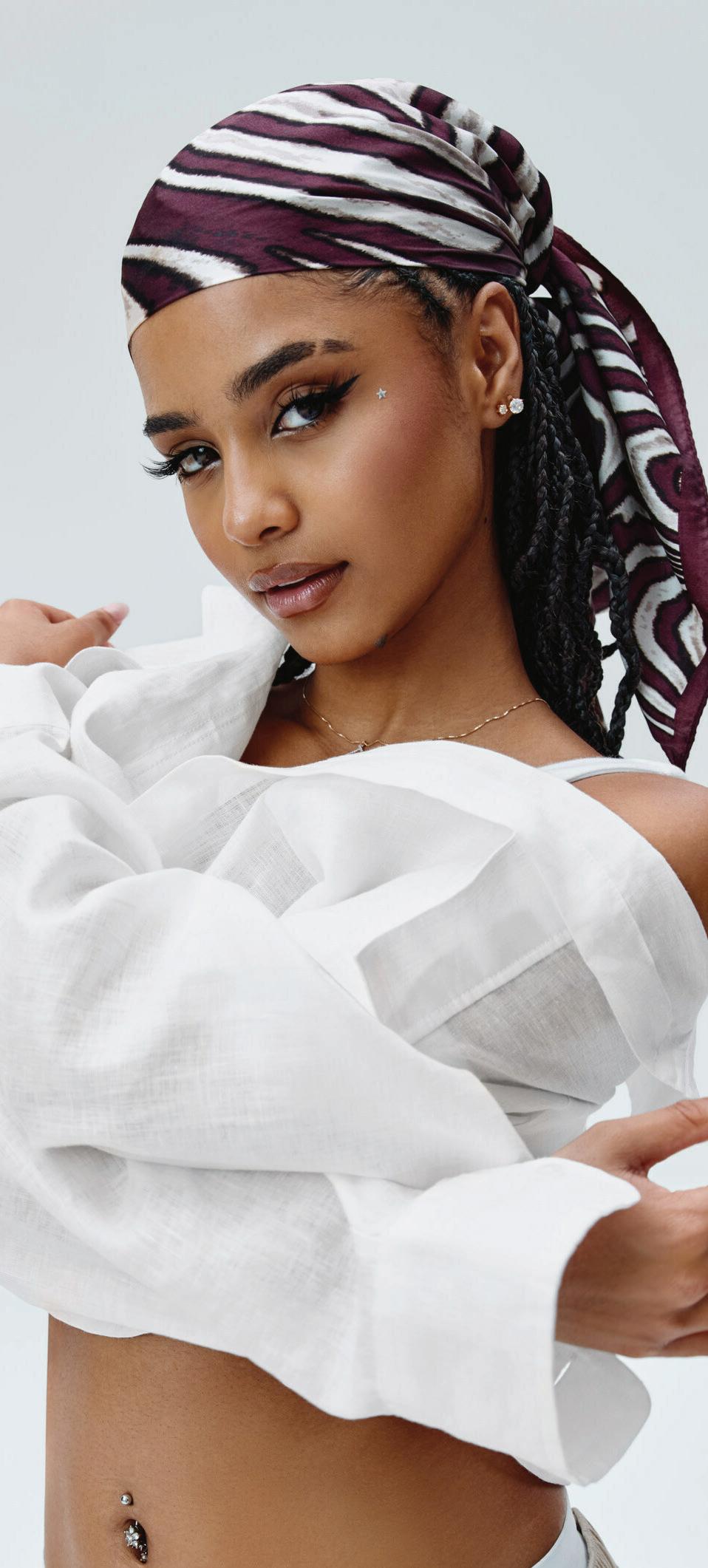
GAP FLAUNTS NEW SPRING CAMPAIGN WITH GRAMMY® AWARD-WINNING ARTIST TYLA
Gap debuts its Spring 2024 campaign featuring linen as a canvas for original style. The campaign serves as a celebration of self-expression and individuality through fashion, music and dance. Starring GRAMMY® Awardwinning artist Tyla, the campaign embraces Gap’s roots as a pop culture brand working with artistic originals across fashion and music. Each frame showcases the seamless motion and effortless movement of the brand’s newest Linen Collection, inviting wearers to make each piece their own.
Featuring worldwide hit “Back On 74” by the BRIT Award–nominated Jungle, with original choreography by Shay Latukolan, the campaign is directed by Jungle’s J Lloyd and Charlie Di Placido and inspired by the track’s official video, which became a global phenomenon on TikTok and inspired a dance craze with over a billion views.
Tyla, the 22-year-old sensation born and raised in South Africa, is making waves with her recent Billboard Hot 100 hit “Water.” With a massive following, she has captivated audiences with dance routines and song covers, showcasing her unique style and individuality. Tyla’s creativity and authenticity seamlessly align with Gap’s commitment to championing originality.
The campaign highlights the ease and versatility of Gap’s latest collection of iconic silhouettes in its signature linen fabrications. As a canvas for self-expression, the pieces in the Linen Collection allow for free-flowing movement and effortless style. Gap Linen is easy to wear, versatile and conveniently machine washable. Collection staples include the Linen Cropped Boyfriend Shirt, 100% Linen Boyfriend Shirt, Linen Button-Up and the 365 LinenBlend Trouser.
The campaign cast wears a mix of several linen and linenblend items dressed in neutral and tonal styles. Tyla wears the Linen Cargo Pant and Crop Top alongside the rest of the cast styled in other loose fit and utility-focused items from the collection, such as the Linen Halter Vest, the Linen Cargo Wide-Leg Pant, the Linen Long Sleeve Button-Up and the Linen ‘90s Loose, which is a new take on the classic pant.
April 2024 FM | 27 COLLECTIONS FASHION 411
Photo courtesy of Gap. on PRNewswire



6.5.24 AT CHELSEA PIERS, NYC THE LIGHTHOUSE
gala.giftoflife.org









© 2022 Metropolitan Commercial Bank | “Metropolitan Commercial Bank” is a registered trademark of Metropolitan Commercial Bank. Metropolitan Commercial Bank Business • Commercial • Personal Banking | Global Payments 99 Park Avenue • 12th Floor • New York • NY • 10016 Welcome to The Entrepreneurial Bank Helping Our Clients Build and Sustain Wealth, One Client at a Time. For more than 20 years, our bankers have worked alongside middle-market and small business owners during the good times as well as the not-so-good –tailoring our traditional and innovative banking products and services to meet the challenges and seize opportunities in front of our clients. Laura Capra Executive Vice President 212 659-0606 | LCapra@MCBankNY.com
brands include:
49 SQUARE MILES
ALA VON AUERSPERG
ATELIERS TAMALET
AXEL ROSE PETS
BIG HORN
BLACK DIAMOND
BRITT NETT A
BUDHAGIRL
E LY SE RYAN JEWELRY
FPM LUGGAGE
HAMMITT
JACKIE CROWE
KAMARIA
KAREN MORRIS
KAS CASHMERE
LEIGHANN BARNES
MAR LYN SCHIFF
MILA + MATE
MITCHIE'S MATCHINGS
ONI
SHARIFF
SIF J AKOBS
COUER DE LION/QUDO
SIMITRI
ROSEATE
VERONIQUE GABAI
WOO LTRIBE
and many more!

PLEA SE JOIN US F OR THE DEBUT OF AC SHOWCASE!
A C OLLECTIVE BOUTIQUE SHOW FEA TURING NEAR LY 40 BRANDS FR OM
TOP JEWELR Y, OPTICAL, HANDBAGS, FOOTWEAR, COLD WEA THER AND HEADWEAR COMPANIES.
ONE STOP SHOP!
M AY 6- 7TH
CONVENIENT LY L OCATED IN HUD SON YARDS, STEPS AW AY FR OM PENN
STATION LOCATION 05
450 WEST 31 STREET
NEW Y ORK, NEW Y ORK 7TH FLOOR






MORE INFORMATION, PLEASE CONTACT
CLICK BELOW TO REGISTER
FOR
CINDY@ACCESSORIESCOUNCIL.ORG.
SHOWCASE CALLING ALL RETAILERS DON'T MISS THE AC SHOWCASE!

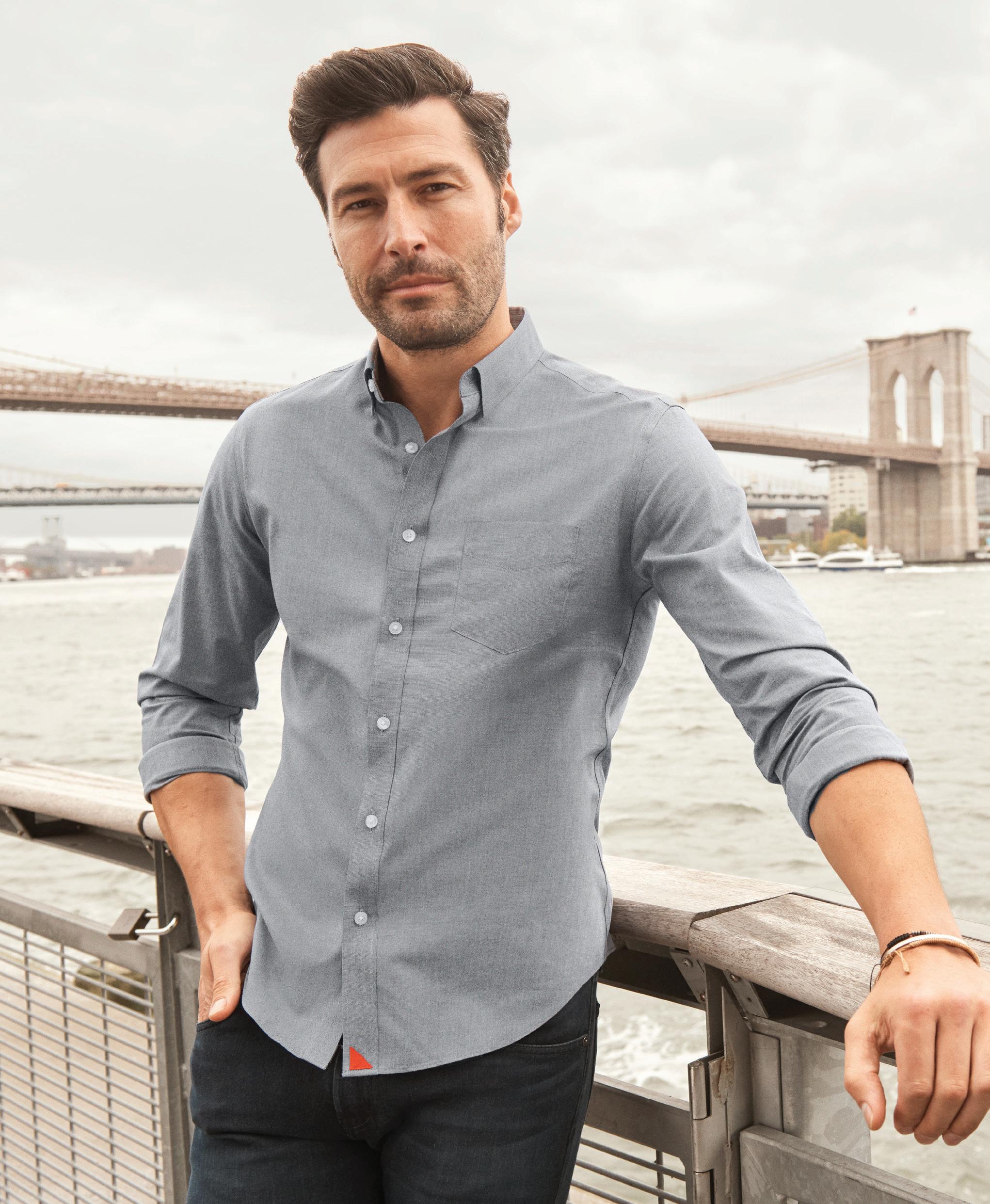
SHIRTS DESIGNED TO BE WORN UNTUCKED THE ORIGINAL UNTUCKED SHIRT 80+ STORES WORLDWIDE | UNTUCKit.com

LOGISTICS AND TRANSPORTATION
The Movement of Fashion
Photo courtesy of Unsplash
QIMA
ELEVATING APPAR EL SUPPLY CHAIN QUALITY AND
COMPLIANCE ON A GLOBAL SCALE
BY QIMA | PHOTOS COURTESY OF QIMA
Consumers today care deeply about what they purchase, considering both the environmental impact and the ethical standards of the companies they support. Businesses, regardless of their size, are adapting to these concerns by improving their sourcing and manufacturing methods to meet higher standards for quality, safety and fair labor practices. How are fashion brands reinforcing or even rebuilding the confidence of consumers in their products?
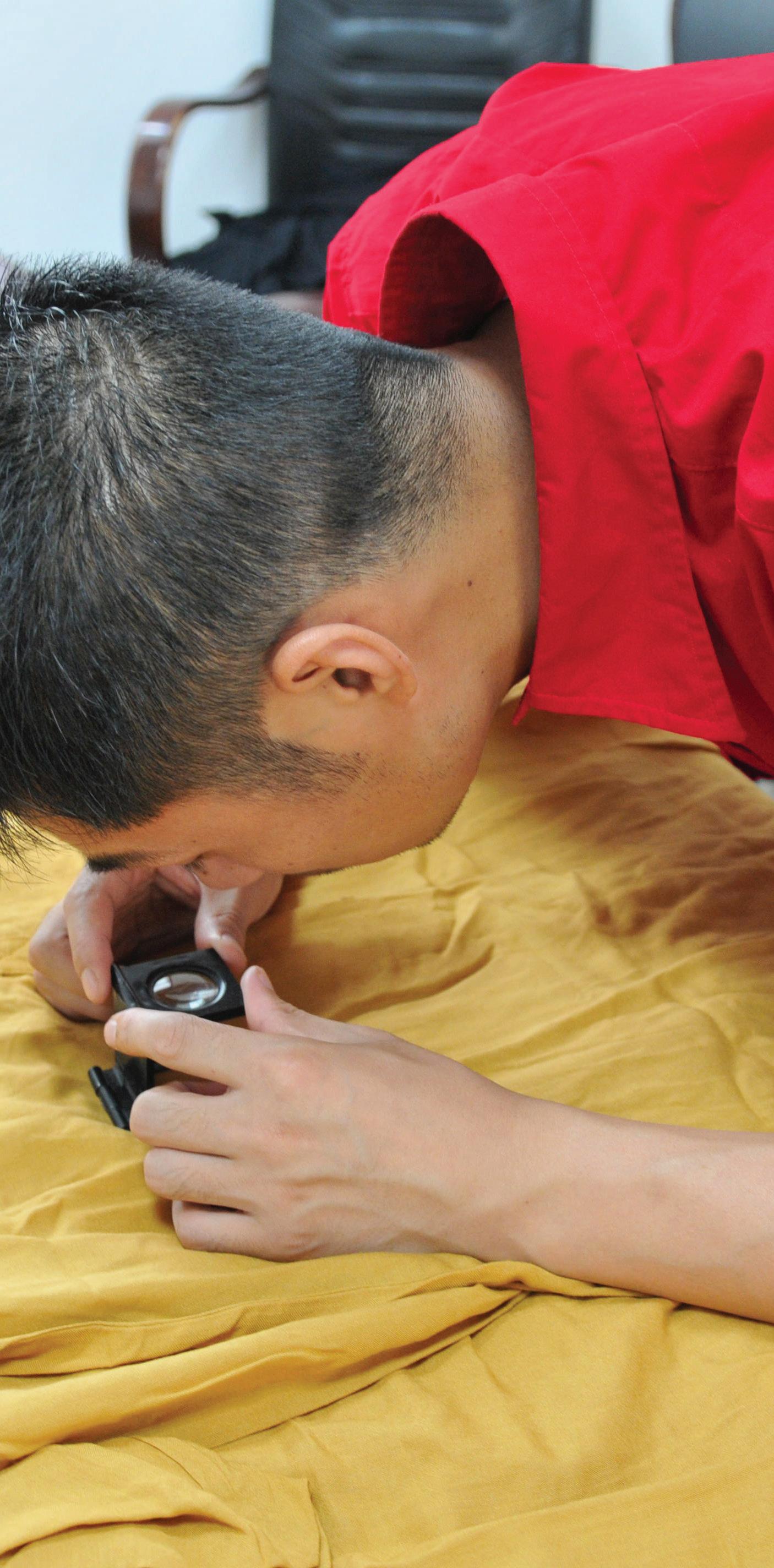
QIMA, a global leader in supply chain quality and compliance solutions, has a strong foothold in the textile and apparel industry. The 20-year-old company has evolved from its origins in Asia into a one-stop-shop for businesses seeking to bring quality and safe products to markets, worldwide. For the fashion industry, third-party quality control companies like QIMA are vital to ensure those best practices are maintained to keep the apparel supply chain at the top of its game.
At its core, QIMA is a provider of inspection, audit and testing services designed to ensure products meet the highest standards of quality, safety and regulatory compliance. With a global presence – thousands of apparel companies on their client roster and more than 5,000 in-
spectors on the ground – QIMA enables businesses to navigate complex landscapes of global trade while maintaining competitiveness.
“The Testing, Inspection and Certification (TIC) sector plays a significant role in the world economy and enhances daily living standards globally by ensuring the safety, reliability, quality and sustainability of products, especially those involved in the apparel industry,” said QIMA Founder & CEO Sebastien Breteau.
Providing Visibility and Real-Time Data
For QIMA, the key incentive for clients lies in the visibility and real-time data they offer. The company focuses on providing clients with actionable information to make informed decisions about their supply chain. QIMA works to ensure their partners manage quality control and global supply network efficiently, offering an all-inclusive approach to allow businesses to book inspections, lab tests, audits and download reports all within a singular interface.
Having a global presence, but a small-business feel is essential for QIMA to build trust. The company’s quality and compliance experts work with brand managers, supply chain managers, manufacturing floor managers and
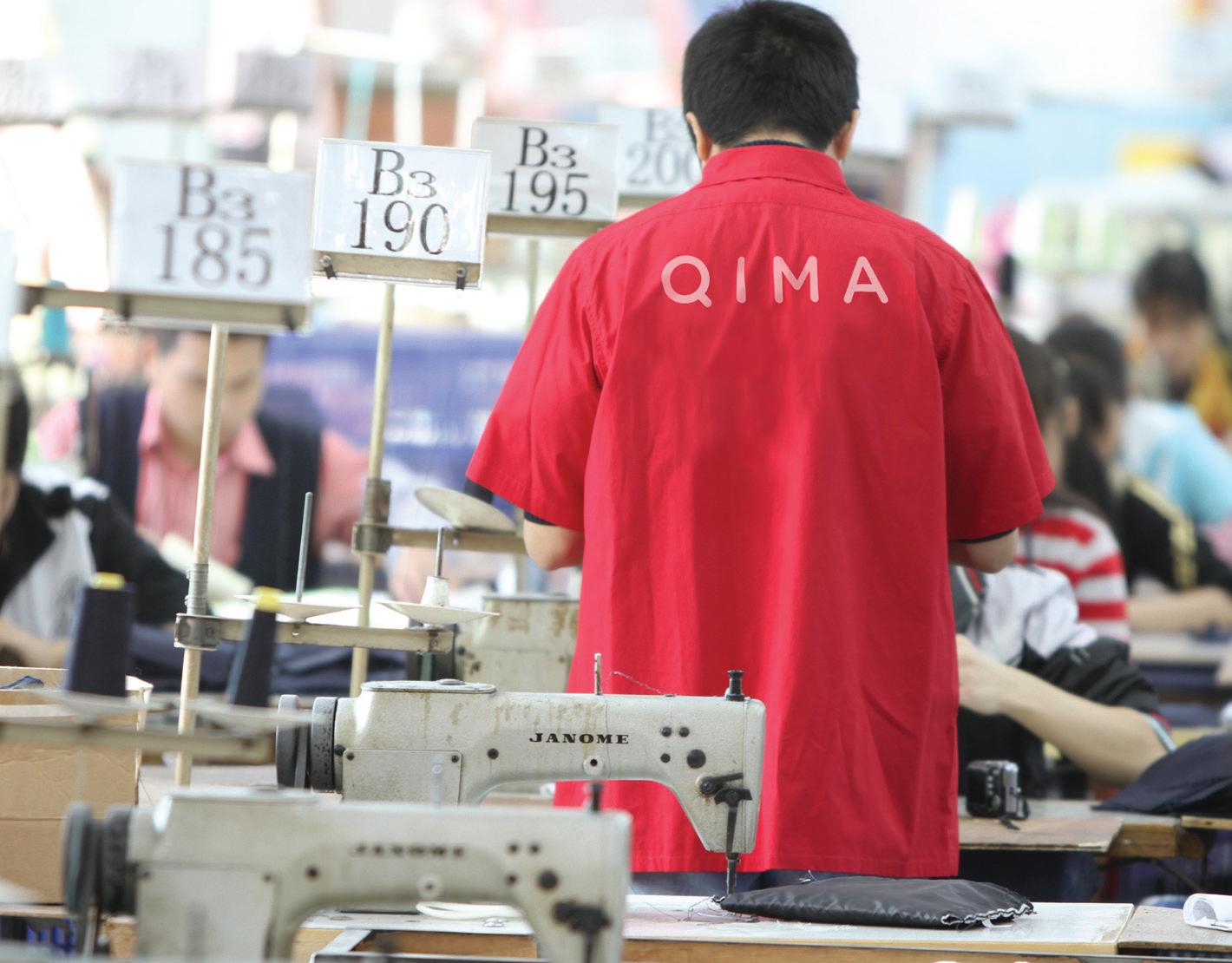
more, allowing partners to establish essential relationships, opening the lines of communication for responses to important inspection data and other concerns to be handled within 24 hours.
Building Your Consumer’s Trust
Whether it’s certification marks on packaging, a guarantee that a Prop 65 label is not required or ensuring claims such as, “made out of recycled polyester,” QIMA ensures these assertions are backed by rigorous inspection and testing processes. This validation not only enhances credibility of your product, but also builds trust with consumers seeking transparent and accountable brands. The fashion industry continues to face accusations of “greenwashing,” particularly concerning companies that claim to use sustainable fabrics like rPET but do not actually adhere to such practices. Third-party testers and inspectors help companies ensure those claims are accurate and not deceptive.
Seamless Onboarding with QIMA
Getting started with QIMA is a straightforward process. Anyone can create a free account on QIMA.com, gaining immediate access to its intelligent online platform. This platform allows users to effortlessly manage their quality control and testing needs, from booking and canceling inspections to managing payments and downloading comprehensive reports. The customizable dashboard provides a real-time overview of quality control and testing data, enabling businesses to identify trends and make informed decisions. The company is dedicated to working with companies of all sizes and offers a range of affordable options, even those who are new or manufacture at a smaller scale. Working with a company with such a large presence, who runs globally on the same IT system means consistency within the entire supply chain of brands. If an audit, test or inspection triggers a change in the process, or discovers a cause of an error, a corrective action is put in place and is automatically implemented into future orders, globally.
Ensuring Traceability and Credibility
One of QIMA’s core strengths lies in ensuring traceability and credibility throughout the supply chain. By helping businesses gain visibility across all levels (supplier mapping, product traceability and material traceability) of their
34 | FM April 2024 mannpublications.com LOGISTICS
supply chain, QIMA facilitates identification and engagement of suppliers beyond the first tier of the supply chain. This process, coupled with self-assessment questionnaires (SAQs) and risk-grading reports, forms the foundation for a robust, risk-based, due diligence strategy.
Supply chain mapping offers the advantage of having individual supplier profiles on a single platform. This includes uploaded reports and certificates, allowing for efficient management of follow-up actions for each supplier. Through innovative solutions, such as material tracing and provenance testing, QIMA ensures products are ethically and sustainably produced, meeting international and local compliance, as well as individual brand standards and frameworks.
A Commitment to Global Certifications
Through environmental and chemical audits, ethical audits encompassing human rights and forced labor assessments, as well as structural and fire safety audits, QIMA supports businesses in their journey toward sustainability and ethical sourcing, helping brands achieve responsible business practices.
“Credibility is not just a marketing term we use for our partners,” continued Breteau. “Credibility is a commitment backed by standards that meet and exceed not only local, regional and international standards, but those of the brands themselves, who wish to maintain a high level of respect for their products and loyal customers.”
QIMA’s membership in the Testing, Inspection and Certification (TIC) Council, fashion related communities like SAC (rebranded to Cascale) and an accredited partner to carry out BSCI, SEDEX and WRAP, further underscore its commitment to maintaining the highest standards in the industry.
Breteau and QIMA’s continued strategy to underscore transparency and ethical practices within the fashion industry is fundamental for growth and trust. “QIMA works diligently to stand out as a global partner, empowering businesses to navigate the complexities of quality and compliance,” concluded Breteau. “Our mission to not just simply be a service provider, but a key enabler for brands aiming to meet the evolving expectations of today’s conscious consumers, will benefit all branches of the fashion and apparel industry.”
mannpublications.com April 2024 FM | 35 LOGISTICS
20th FashionCenturyHistory Los Angeles
BY RONALD S. FRIEDMAN, CPA
Hello again! It is April, and spring has arrived with warmer weather and blooming flowers. This month’s edition of the Fashion Mannuscript focuses on wellness and stress awareness in the apparel industry. Before I address where the industry is today, I want to take you back to the 1970-1980s. In the era of disco, bell bottoms and the relentless pursuit of the latest fashion trends, the apparel industry in the 1970s and 1980s was an emblem of glamor, innovation and remarkable growth. Yet, beneath the surface of glitzy fashion shows and retail extravaganzas, a pressing issue often went unaddressed: the well-being of the industry’s workers. For garment workers, particularly those in bustling urban centers and offshore manufacturing hubs, the reality of the industry was far from the glossy pages of fashion magazines. Repetitive tasks, poor working conditions and a lack of labor rights created a stressful environment that rarely saw the light of discussion or reform.
There was tremendous pressure to be creative and provide fresh new lines every month. Long hours created an environment of burnout and high-pressure. I remember being in client warehouses where everyone looked stressed and overworked. Did the employees get to go home at reasonable hours and take the weekends off? Not usually! Creative burnout was common, yet the stigma surrounding mental health meant that few resources or support systems were available to those struggling silently.
It was not until the late 1980s that the conversation around wellness and stress in the workplace started to gain momentum. Influenced by the broader health and wellness movement sweeping across other sectors, some voices within the apparel industry began advocating for change. These pioneers of workplace well-being highlighted the need for better labor practices, mental health support and a holistic approach to employee welfare.
We had clients that were changing the work
environment by improving the layout of the office space. I found clients creating space for employees just to hang out and relax, with better break rooms, ping-pong tables and some quiet areas. These were rare, but it was a start. Today, we have come a long way from the 1970s and 1980s.
In an industry often characterized by fastpaced environments and tight deadlines, wellness and stress awareness have become critical topics within the apparel industry. The conversation around mental health and work-life balance has woven its way through the fabric of the fashion world, prompting companies and individuals alike to take a closer look at the industry’s impact on well-being. Acknowledging the need for change, some fashion houses and apparel companies have started implementing initiatives to reduce stress and promote wellness. Employee assistance programs, mental health days, flexible working hours and in-house wellness activities are becoming more prevalent as organizations recognize the value of a healthy workforce.
Sustainable Fashion, Sustainable Minds
The rise of sustainable fashion has brought with it a focus on ethical practices, not just in terms of materials and production but also in the treatment of employees. Brands that prioritize the environment often take a holistic approach, considering their workers’ physical and psychological well-being as a measure of sustainability.
Designing a Supportive Environment
Within the design and creative sectors of the industry, there is a growing emphasis on creating supportive work environments that foster creativity without sacrificing mental health. Open dialogues about stress, workload management and the importance of downtime are helping to reshape the industry’s culture. The need to be in the office five days a week is in decline and companies are finding that productivity is not negatively impacted when employees work at home for a couple of days a week.
Fashion Education’s Role
Fashion institutions also play a part by including wellness and stress management in their curricula. The industry can work towards a healthier future by preparing the next generation of fashion professionals with tools to manage stress and prioritize self-care.
The Role of Leadership
Leaders in the apparel industry have a responsibility to set a tone that values employee well-being. By leading by example and openly addressing the topic of stress, industry leaders can inspire change and create a more resilient and content workforce.
Conclusion
The apparel industry is at a turning point when it comes to wellness and stress awareness. Other industries have been leading the way for change, and for the apparel industry to compete for the best talent, change is necessary. By weaving well-being into the very fabric of the industry’s culture, companies can improve their employees’ lives and enhance creativity, productivity and, ultimately, profitability. It is time for the fashion world to dress itself in the principles of health and balance, ensuring that the thread of well-being is strong and resilient for years to come.
Do Not Forget!
The Marcum Retail Symposium is coming to Los Angeles on April 18, 2024. I hope many of you can join us to hear from two experts in the industry, Marshal Cohen and Andrew Rotondi.
Until next time, remember what I always conclude with…if you are not having fun, then do something else!
Ronald S. Friedman, CPA, is an advisory and assurance partner in the Los Angeles office of Marcum LLP and a retail practice leader in the Firm’s Consumer & Industrial Products group. Contact him at Ronald. friedman@marcumllp.com.
36 | FM April 2024 mannpublications.com FINANCE
FLASHBACK PART 11
RETAIL ROLLERCOASTER: 2024 PREDICTIONS
BY MARSHAL COHEN, CHIEF RETAIL ANALYST, CIRCANA
Retail 2024 will be like a rollercoaster ride, with lots of challenges, distractions but plenty of opportunity. For the first quarter of 2024 we have seen pricing stabilize for the most part in General Merchandise and even Food and Beverage where we had runaway price elevation hovering in the 20 and 30% range in 2022 and 2023, but now back to a more normal level of 1-2% over the previous year. We have seen the reliance on sales become less important as witnessed by the absence of traditional post-holiday 70% store wide clearance sales that really only showed up for the most part for holiday seasonal merchandise.
But the big missing piece of the puzzle is impulse and innovation. Consumers have shifted to buying what they want when they want or need it. Price is not the main driver; convenience is. We have seen the shift from buying ahead of season to buying in-season and only when the conditions call for it. Winter wear saw an increase only when winter weather hit. Back to School in 2023 was almost non-existent, and did not appear until late September and in some categories not until October. Back to School has traditionally been a July/August business. Not anymore. Look for seasonal sales to be tied into the weather and need. This changes the dynamic for retailers and brands. Understanding how much and when to offer seasonal merchandise now has a different calendar and window of opportunity.
The other big retail story is innovation and new products. Fashion has an advantage as many of the products come with new colors and styles built into the DNA of the brands. However, fashion has fallen short of new and exciting products reaching the right level of purchasing desire by the consumer. Retailers were on a path of minimizing risk and looking to fill stores with tried and true methods. Basics played a big role here, but basics only maintain sales. Meanwhile, innovation is what drives growth. We have bored the consumer to death. New brands are emerging as consumers look to discover new products and in many cases are finding it in new brands. Young and old, consumers are seeking out newness and products they both need and desire. We are now entering a key period of replenishment for some categories, such as activewear, where we saw major demand during Covid years and increased usage to now being in a place of need to replenish. This represents a big opportunity as demand will increase once again. The current trend of dressing up will cool off as we build that part of the wardrobe to fill the current needs.
All in all, retail must adjust to the consumer. We can not keep on the same old traditions of seasons, merchandise calendars, promotional periods and risk aversion. We need to ignite passion in fashion again. We must change with the times and grow the business from more than one direction.
This is going to be a crazy fall, thanks to something called an election. It’s a distraction from discretionary spending and it is an emotional roller coaster. Be prepared for the ups and downs. Take advantage of the opportunities and watch them materialize.

mannpublications.com April 2024 FM | 37 FINANCE
Photo courtesy of Unsplash
THE RITMO MUNDO PEGASUS
SPRING’S CLEAR WATCH WINNER
FEATURE
of Onysko
Photo courtesy
Photography

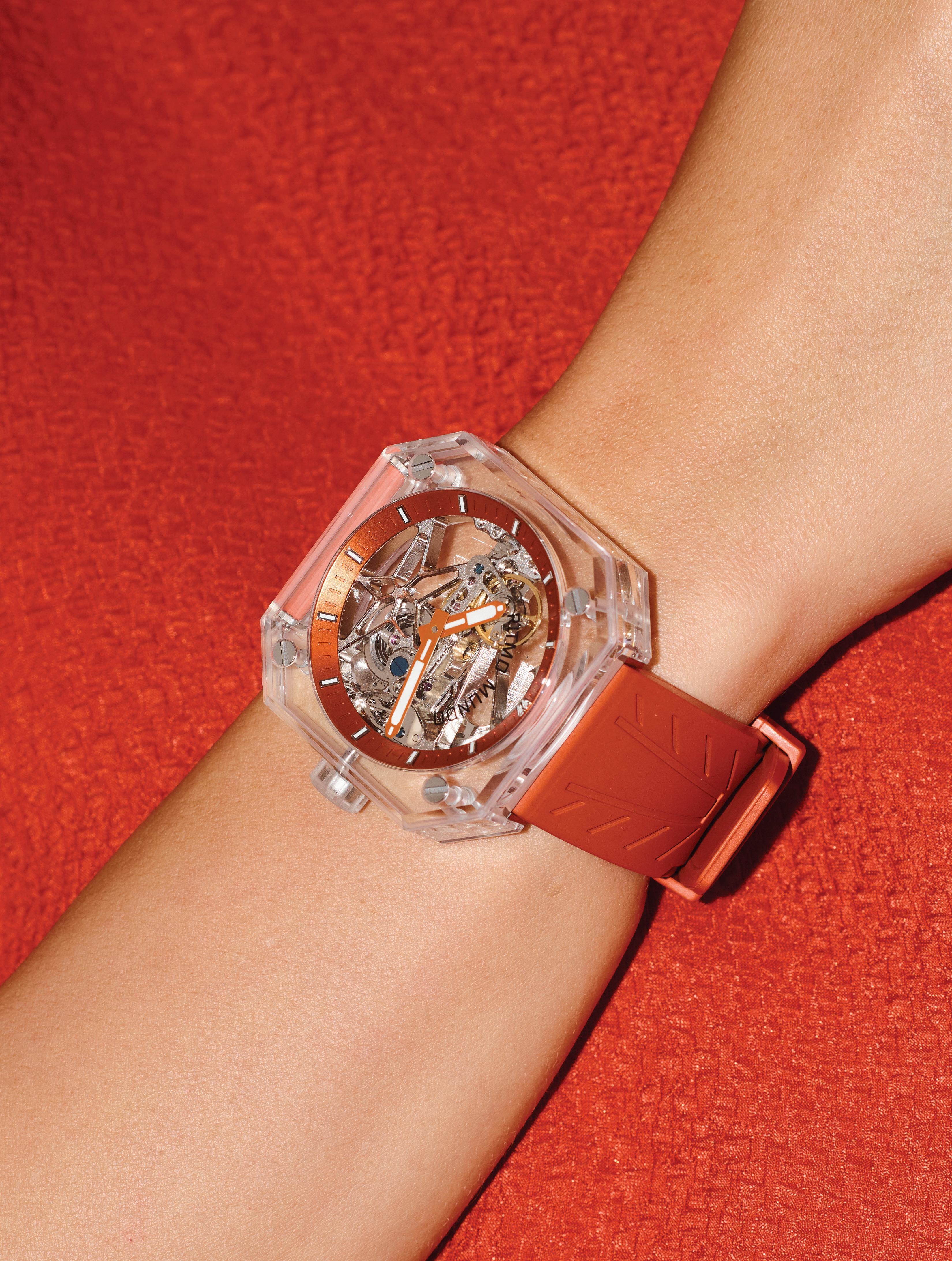
-based watch brand Ritmo Mundo’s latest design, the Pegasus glass watch collection, has taken flight – bringing the brand into a new era of innovative, daring aesthetics. The watch’s street style appeal, unisex appeal, bonafide horological credentials and value make this timepiece one to watch.
The Pegasus features a groundbreaking, fully transparent, ultra-durable glass watch case. Sleek, sporty, luxurious, yet attainable at $3,500 USD, the Pegasus collection features an array of sophisticated dial treatments and a total of eight distinct product variations.
According to Ritmo Mundo Founder Ali Soltani, the Pegasus is “a daring and nuanced design for the discerning collector – an attainable luxury watch that is genuinely innovative and remarkably cool. This crystal-clear glass watch case design affirms our desire as a brand to push boundaries and set new standards – not just keeping pace with the future – but also shaping it.”
Dramatic spectacle and elite performance unite in the Pegasus Collection’s transparent 44mm cushion-shaped glass case – which offers a 360° panoramic view of the skeletonized watch movement and its components. This view promises to remain unobstructed thanks to the glass case’s incomparable scratch-resistant properties.
Ritmo Mundo’s glass case material has been rated seven on the Mohs hardness scale – and rigorously tested to offer excellent durability. The result is a groundbreaking and tough glass material that offers the striking look of a sapphire crystal case.
The edgy watch’s clear cushion-shaped case presents a sharp profile, further accentuated by its crisp beveled edges. The fully transparent glass case front seamlessly affixes to a mineral-reinforced glass mirror dial and a separate transparent crystal case back – with all elements secured by stainless steel screws. The ergonomically-engineered case clocks in at just 11.3 mm thick.
Select Ritmo Mundo Pegasus watch models also feature dial rings adorned with combinations of colored and colorless crystals – available in red and white, green and white, blue and white, or full colorless crystal variations. Other variations include metal dial rings in choice of green, silver, black, orange or silver hue. Its luminous, pointer-style hands ensure legibility by day or night.
The timepiece’s delicate-seeming, glassy appearance belies its athletic credentials. The Pegasus has been optimized for active lifestyles and comes appointed with a screw-down crown, a sealed corrosion-resistant and mold-resistant back cover and a hypoallergenic silicone strap equipped with a 316L stainless steel clasp pin buckle clasp. The sporty model also offers unmatched functionality, with water resistance up to 3ATM and a 48-hour power reserve.
The Pegasus collection launch marks a sea change for Ritmo Mundo. Since its founding in 2002, the watch brand has been attuned to the cultural pulse, and the new Ritmo Mundo Pegasus testifies to the brand’s high-flying ambitions as it sets course for Ritmo Mundo 2.0.
April 2024 FM | 39 FEATURE
LA

Ahead of summer, many of you might be scanning travel catalogs and stumble upon St. Barth, the tropical paradise nestled in the Caribbean’s Barthélemy Channel. What makes this island so magical? The answer lies in the richness of St. Barth itself, the exquisite luxury of the white sand beaches, the tropical bounty of exotic fruits and fragrant flowers, and the overall naturalness and sophistication of St. Barth itself. Here, Caribbean nonchalance is simply a way of life.
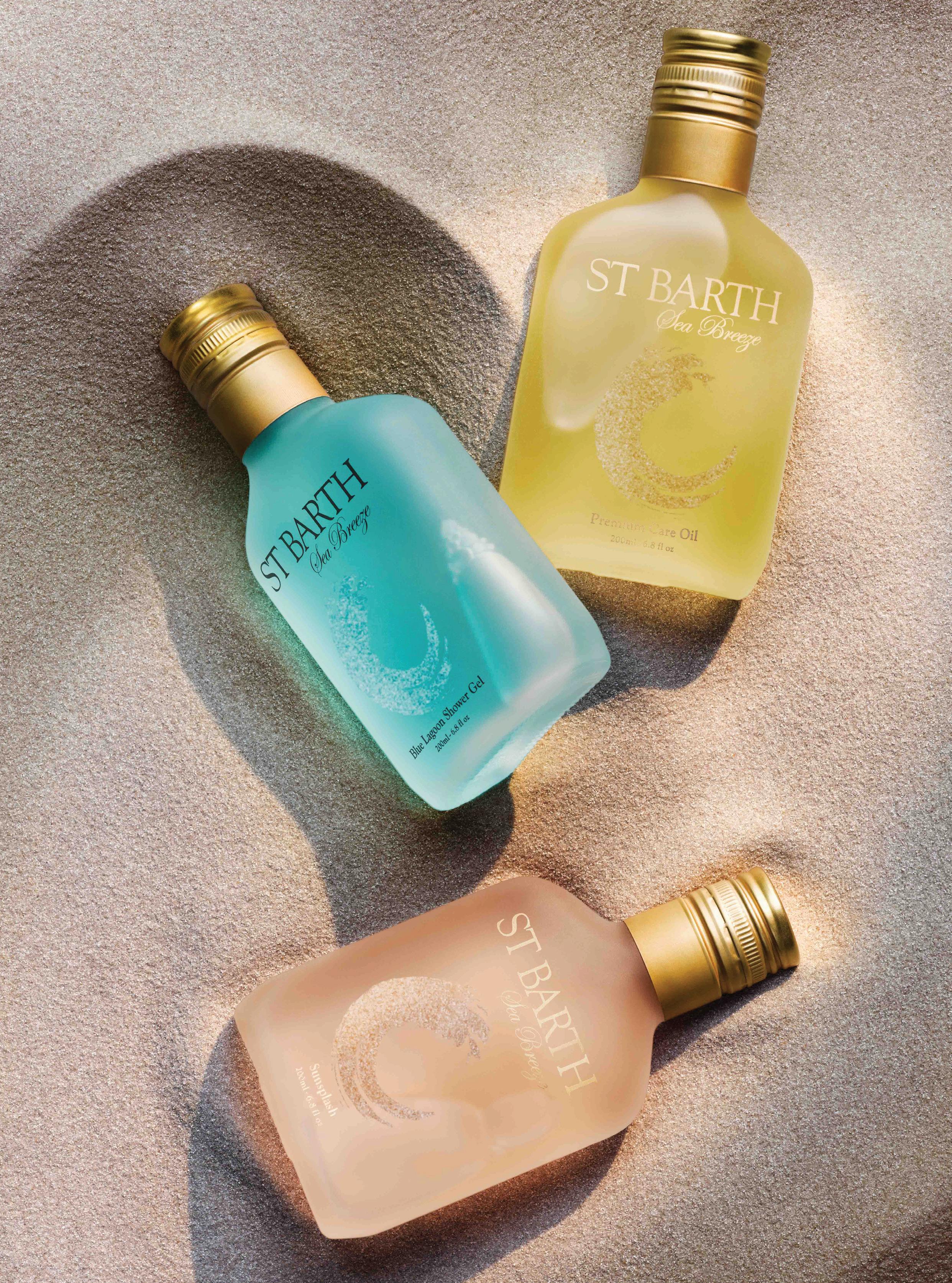
This is encapsulated in Ligne St Barth, the luscious body care brand that fragrances you with the magic of St. Barth, all from the comfort of home.
The family-owned firm, headed by founder and CEO, Herve Brin, is known for combining generations of knowledge with up-to-date research to create unique formulas, equally innovative and timeless products tailored to modern lifestyles on or off the Island. Ligne St Barth is sold around the world (in 30 countries). However, if Caribbean travel is not on the immediate agenda, you can find the brand online at Beautyhabit.com, the modern luxe apothecary that’s long been the go-to place to find Ligne St Barth’s complete collection in the U.S. With 40 products in Ligne St Barth’s portfolio, snag these must-haves at the Ligne St Barth boutique in Gustavia or order online from Beautyhabit.com to indulge in pampering, Caribbean rituals without leaving home.
Herve Brin launched Ligne St Barth in 1983 with just three products: St Barth Huile de Coco (Coconut Oil), Huile d’Avocat (Avocado Oil) and Gel d’Aloè (Aloe Gel). Cultivating recipes he learned from his grandmother, a “medicine woman” descended from the Arawak Indians, the Island’s original settlers, Brin revealed, “I started in the discipline of science – and decided to make a business out of it. At that time my grandparents used to produce coconut and avocado oil. I decided to do something with it and modernize the presentation. I used rum bottles as the packaging and I hand-wrote the name of each product with a golden marker. [Eventually] I opened a small shop for locals and tourists. It took time but it prospered through word-ofmouth.”
Brin marketed these initial batches in thorough Caribbean style; he packed them in a suitcase and hit the beach. In these early days, he traversed the white sands and caught the eye of sun-worshiping tourists. Soon, Ligne St Barth quickly became a coveted keepsake from the Island. The secret to the line’s success? Brin explained, “Ligne St Barth celebrates a passion for an idea: an invitation for people to indulge in Caribbean well-being.”
Four decades later Ligne St Barth is a cult classic you’ll find at the world’s most exceptional wellness destinations. Mango, papaya, lily, vanilla orchid and more; there’s not a Caribbean ingredient left unused. “Avocado oil from Martinique, Roucou seed (these red seeds are used in Ligne St Barth‘s popular Roucou tanning oil not available yet in the USA) from Dominica, the Aloe Vera from Curacao or French Guyana and Vetiver from Haiti,” said Brin.
These natural ingredients compose the products which are all made in St. Barth from recipes handed down in Brin’s family for generations. Among Ligne St Barth’s famous followers is supermodel Claudia Schiffer (currently starring in spy movie “Argylle”), who swears by the Avocado Oil scented with Tiare flower (Gardenia), which provides a replenishing, nourishing treatment after a day at the beach. Monaco’s Princess Charlene is a fan of the Vanille West Indies fragrance, the Creole-inspired sensuous essence of creamy caramel with a hint of orchid.
Ligne St Barths offers something for everyone. Versed in the traditions that shape Caribbean scents, Brin chose to bring a contemporary perspective to the category. For men, he introduced three new fragrances, each an Eau de Parfum: L’Original, a vital, invigorating citrus floral; Vetiver, a sensual smokey green classic made with the finest Vetiver from Haiti; and Islander, a Pirates of the Caribbean-worthy, spiced-up modern spin on classic Bay Rum. With Ligne St Barth, Brin has made the allure of the island accessible to us all wherever we are in the world. But what exactly has he bottled? “The atmosphere,” he said, “It’s very peaceful – very relaxing – the beauty of the landscape, enchanting sunlight, friendliness, the essence of the fruits and flowers...it’s simply captivating.”
Landlocked or ocean-bound, dockside or curbside, Ligne St. Barth does indeed captivate, enveloping you in a world of Caribbean nonchalance where relaxation rules. Find their fragrant collection in the USA at Beautyhabit.com, priced from $36 to $190.
40 | FM April 2024 mannpublications.com FEATURE
LIGNE ST BARTH
VACATION IN ST. BARTH FROM HOME
BY LORI SIMMONS ZELENKO
FEATURE
Photos courtesy of Ligne St Barth
MARA HOTUNG JEWELS INTRODUCING
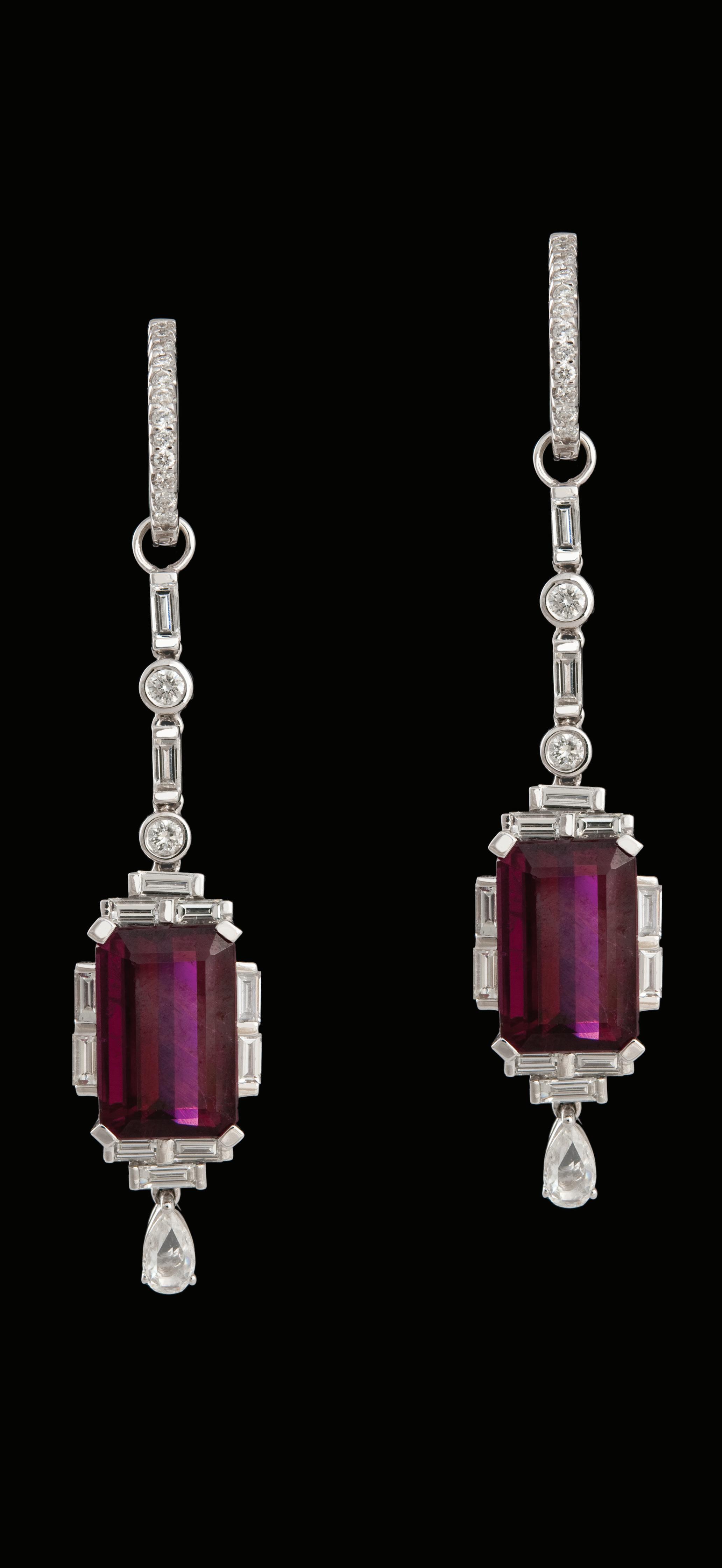
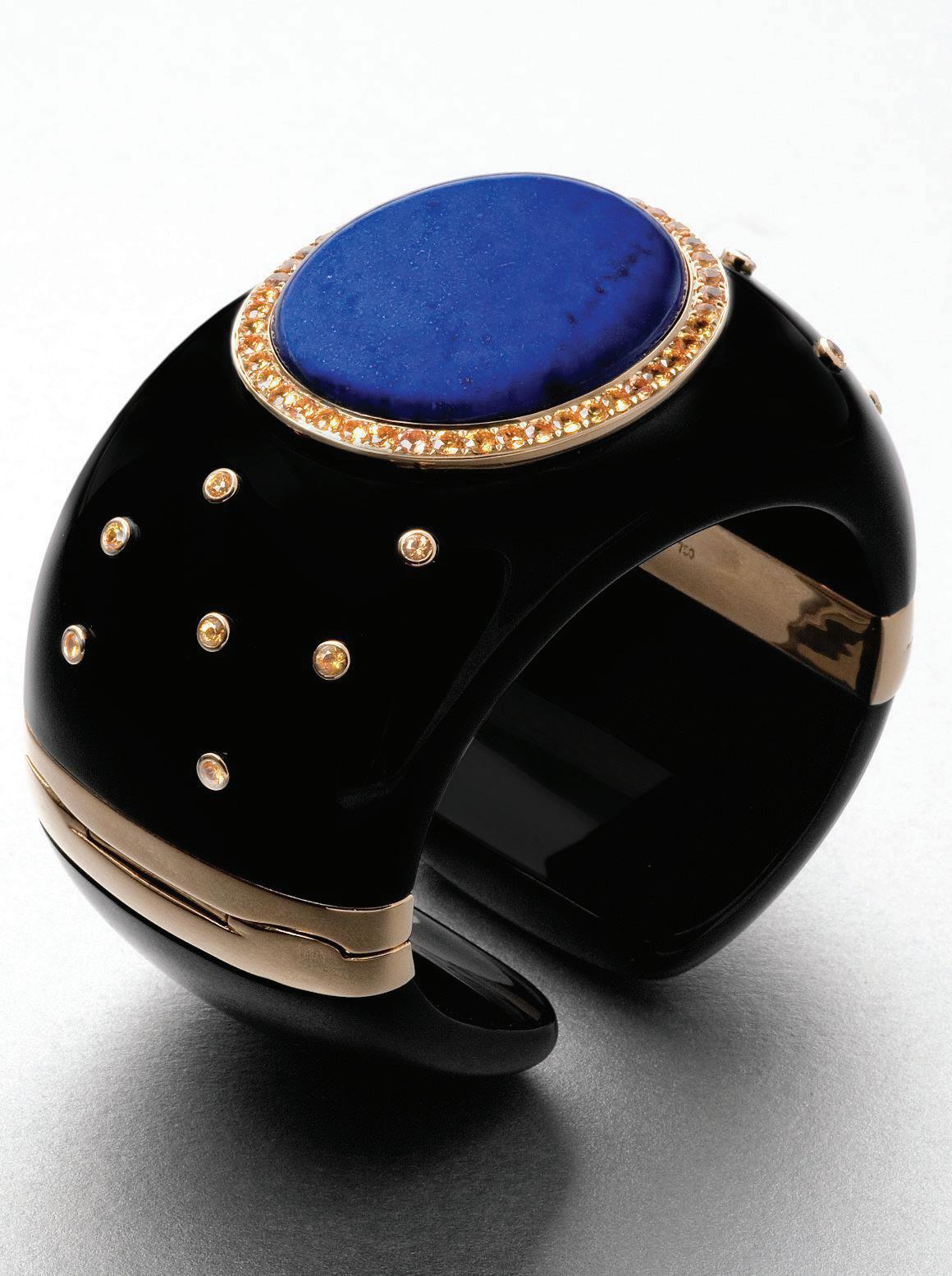
Over three sparkling decades as a jewelry designer, fourth-generation Eurasian Hong Konger Mara Hotung has harnessed her expertise as a gem valuer and her deep passion for gemstones to create uniquely evocative jewels.
With a penchant for one-off pieces, Hotung often uses unconventional gems and materials such as apatite, kyanite, fire opal and resin, and then accents her jewels with diamonds, sapphires or rubies. Interestingly, the first piece she ever designed was a pair of diamond earrings she made for her mother when she was only 16, after being gifted loose marquise diamonds for her birthday.
Hotung is a trained gemologist and jewelry valuer with a degree from the Asian Gemmological Institute and Laboratory. After her studies, she worked at Sotheby’s Hong Kong, cataloging eminent jewelry collections and historic gemstones.
“Jewelry is my way of dreaming and storytelling. Gemstones are Mother Nature’s gift to us,” said Mara Hotung. “Through each gem, she tells a story of beauty, resilience, courage, romance and adventure. I hope my designs reinterpret those tales with thoughtfulness, excitement and wonderment.”
A stint at Van Cleef & Arpels followed, where she worked in marketing and promoted high jewelry collections in close collaboration with the Paris team. After moving to London 20 years ago, Hotung continued to design jewelry, which she sold via discreet private sales and through auction houses such as Sotheby’s London.
Currently, Mara Hotung is working on three new initiatives in partnership with fellow creatives: a Chinese zodiac pendant line with illustrator and niece Sophia Hotung, miniature painted wood panels with Mary Justice Designs and her Balinese artisans who create sustainable limited-edition furniture as art and a jeweled wood collection with a local wood artist using reclaimed wood.
With a gentle, artistic spirit, Hotung is inspired by her varied passions, including gardening, beekeeping and travel, and by the exquisite, effortless style of her late mother.
mannpublications.com
FEATURE
FEATURE
courtesy of Mara Hotung
Photos
COVER FEATURE AVEC LES FILLES STARTED AS A RULE BREAKER. IT’S PAYING OFF. BY PENELOPE HERRERA Photos courtesy of Avec Les Filles

When Avec Les Filles, pronounced ah-veck-leh-fee, meaning “with the girls” in French, burst onto the fashion scene in 2017, it flouted the traditional rules of the outerwear floor. What had once been a category rooted in practicality suddenly caught that IT factor. The brand’s statement coats and jackets quickly caught the eye of celebrity stylists and mega influencers. Avec Les Filles has been on a meteoric rise ever since.
From the beginning, Avec Les Filles’ main purpose was to offer up something different from the commercial pieces out there already. The brand’s aesthetic, rooted in a feminine sensibility, is based on three style pillars—retro, street and runway. “We are at this unique intersection of accessibility, aspirational design and a nostalgic nod to the past. No other brand is fusing these influences,” said co-creative director Bradley Mounce. In describing their process, he and his co-creative director, Sofia Wahlberg, explained how they will look to a previous decade or trend for a silhouette, a recent runway show for inspiration in modernizing it, and then turn to the street for how to style it. The result is a collection of effortless, elevated essentials with a “must have” emotional fashion feel. Avec Les Filles makes you excited to get dressed in the morning. “There was a hole in the market for people that enjoy the art of dressing but have limited funds to do so. We’re here to provide that inspiration and encourage self-expression through your own personal style,” added Wahlberg.
Knowing they had a winning design formula that was resonating at retail—the brand is a top seller at Nordstrom, Macy’s and Anthropologie—Avec Les Filles began addressing more wardrobe needs. Dresses and sportswear soon launched with retailers and customers continuing to demand more. This fall, Avec Les Filles will be putting out footwear, under a licensing agreement with Kaanas Shoes. Wahlberg stated, “We thought shoes were such a great next category for us to explore because they’re kind of like a coat, they are the finishing touch to your outfit that can make or break the vibe.” Mounce added, “When choosing specific styles, we gave them [Kaanas] the same style prompts we give our own design team. What’s the must-have factor? How are we breaking the rules? How are we giving them fashion in a new perspective?”
The brand is not slowing down. Jamie Litvack, president of Bagatelle International which owns Avec Les Filles, knows that you have to stay ahead of the curve, admitting that he has been eyeing licensing agreements for everything from sunglasses, to bags and perfumes. “We are turning Avec Les Filles into a world class lifestyle brand,” he said.
For some brands, rapid growth means sacrificing quality. But not for Avec Les Filles. Everything is looked at thoroughly and thoughtfully. When it comes to selecting their network of manufacturing, design and sourcing Litvack stated, “You have to be detail-oriented with extremely high standards. We first began working in real leather and when you work with that kind of material you have to set the bar incredibly high.” Avec Les Filles continues to maintain those exacting standards, only working with the best of the best. Mounce stated, “We’re very selective with our fabric. We want the pieces to mimic the feel of luxury tailoring. And when those fabrics don’t exist, we make our own like our Faux-Ever Leather, a proprietary premium leather alternative that looks and feels like the real thing.”
Avec Les Filles’ core customer is young career women inspired by travel, art, fashion and culture. She’s not super girly and she’s not super tomboy, but she lives in this world playing with both elements. When those two worlds collide—that’s the Avec Les Filles girl. “She lives a full life and is driven in all aspects of her life. She is juggling her burgeoning career and bustling social life and doesn’t feel she has to pick between the two. The same goes for her fashion choices,” said Mounce. She wants the runway experience at an attainable price. She wants to experiment with trends without worrying about how to style them. She wants something that is of the moment that can also be put to good use beyond a season. “Our girl wants to have it all and why shouldn’t she? We believe in her and her ability to style a garment and not the other way around. We’re creating pieces to help her shine. She does the rest,” said Wahlberg.
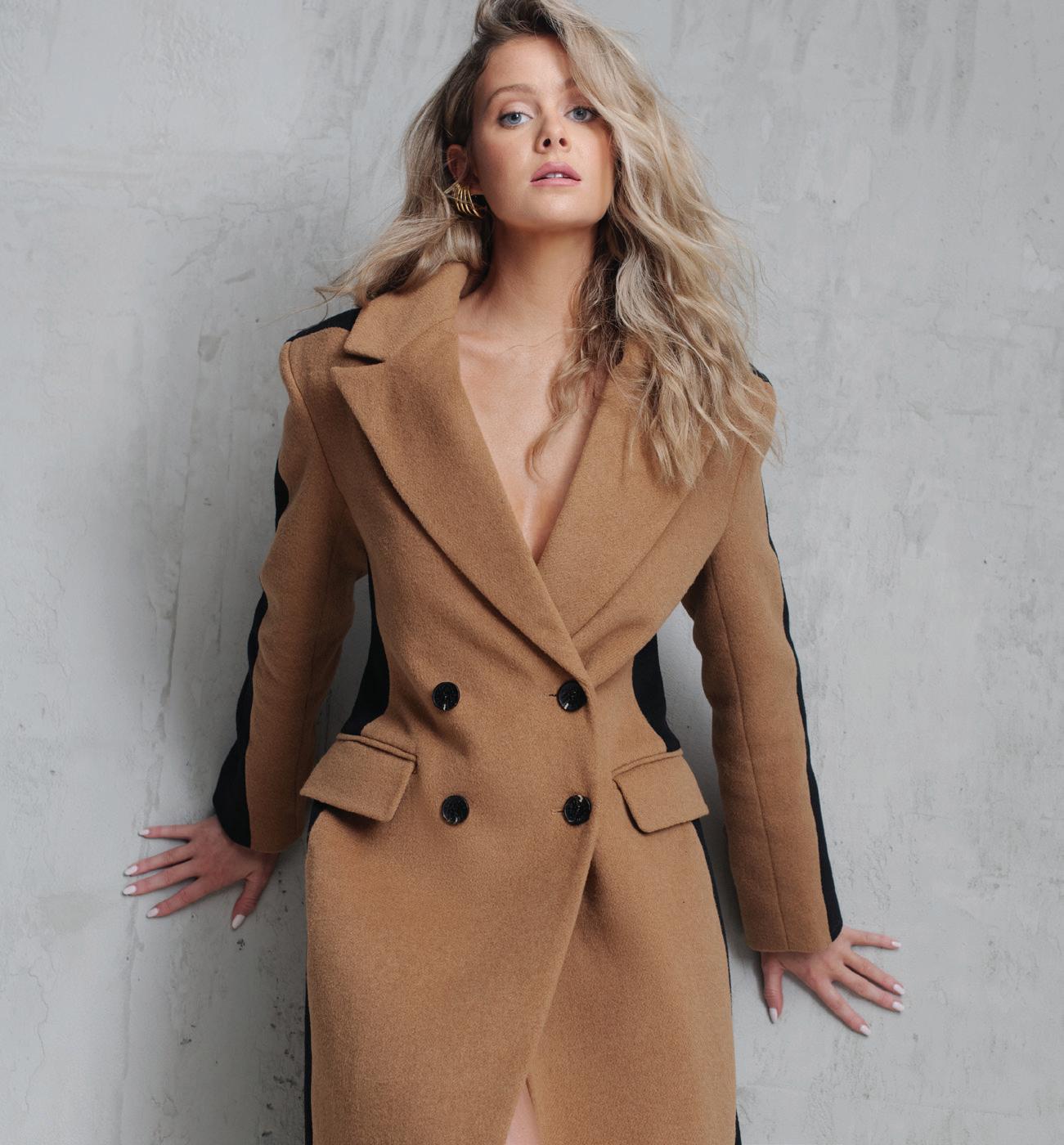
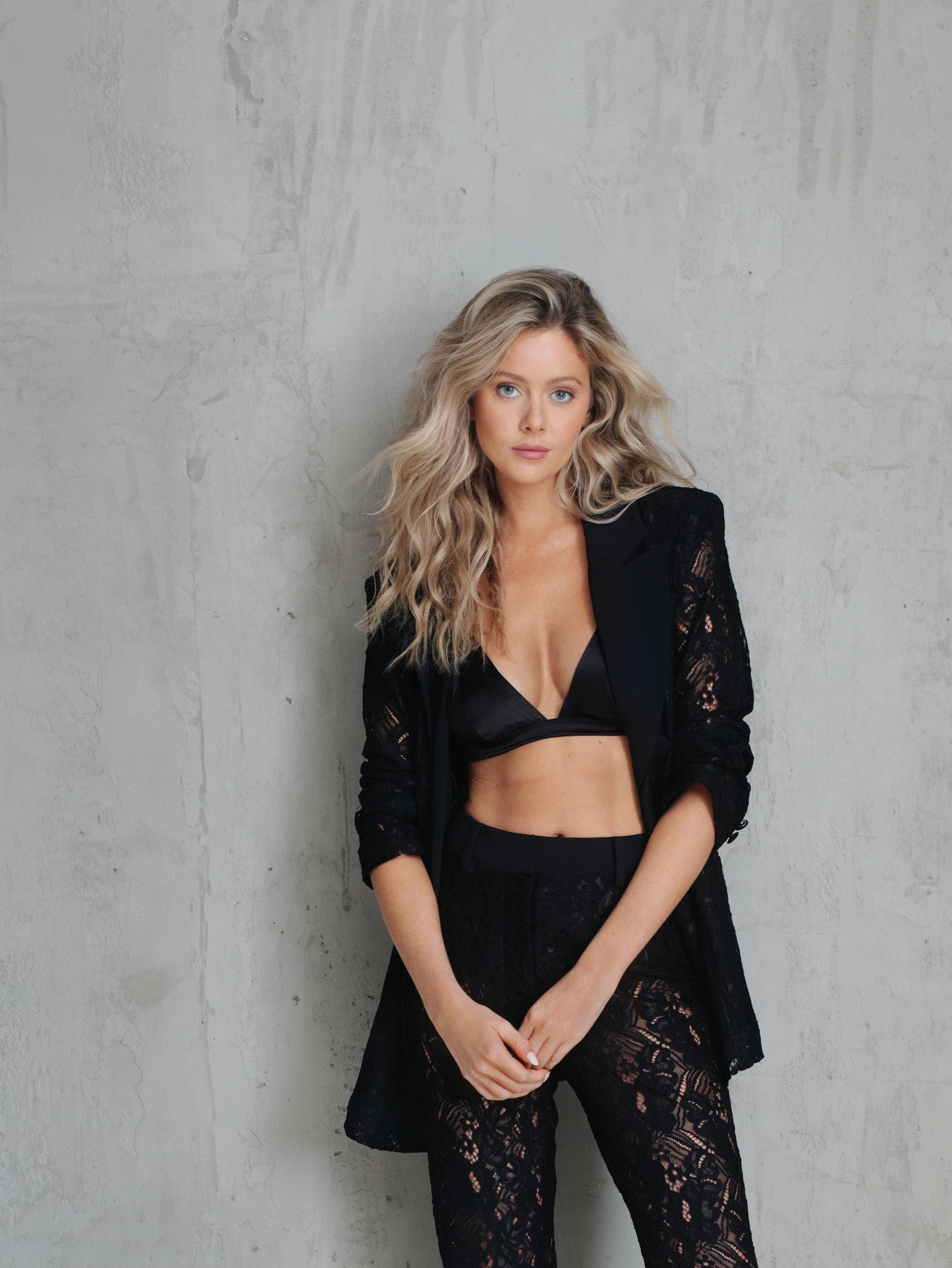
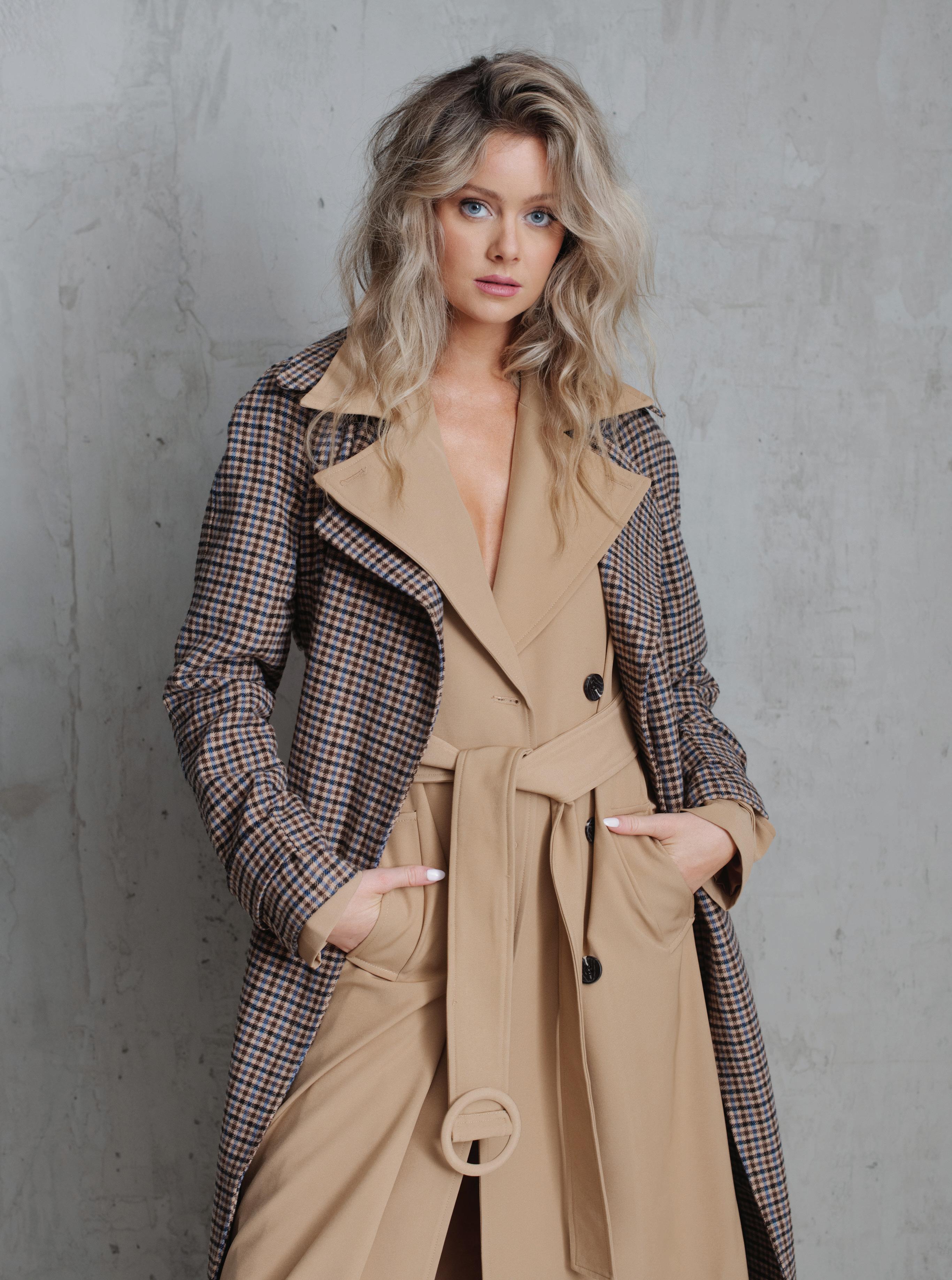
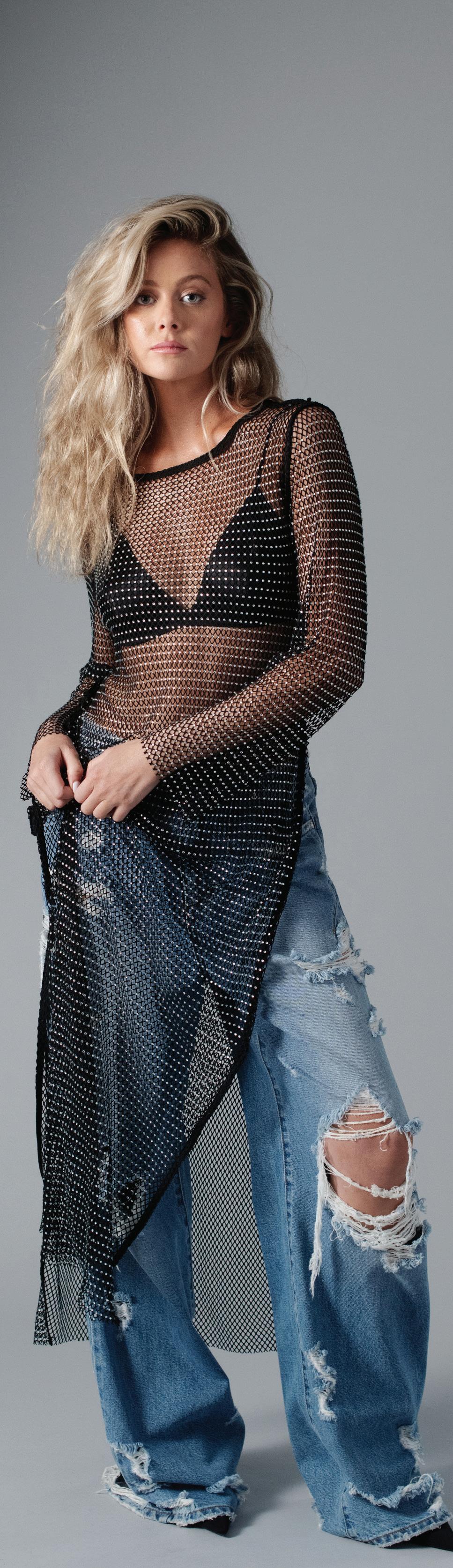
When choosing who best to represent Avec Les Filles in its latest campaign, Hannah Godwin, American television personality known for The Bachelor and Bachelor in Paradise, model, YouTuber and app creator, was a perfect fit. Litvack said, “She is someone we have had a very long standing, fruitful relationship with. Our core consumer knows her well and her style is aspirational yet also accessible.’’ After Godwin got married, she wanted to
April 2024 FM | 45 COVER FEATURE
COVER FEATURE Photos courtesy of Avec Les Filles
revamp her style which included becoming a little more sexy and fashion-forward, resonating with the Avec Les Filles ethos. Godwin’s willingness to try something new combined with Mounce’s and Wahlberg’s creative vision was magnetizing. In the campaign she’s styled in the brand’s signature outerwear—tailored wool-blend coats, strong-shoulder trenches, and faux-fur jackets—paired with an unexpected juxtaposition of glamorous dresses and edgy, distressed denim. “Our customers couldn’t get enough of it. Our retailers loved it. Everything she wore in the campaign sold out. We’ve always had a loyal celebrity and influencer following but suddenly talent agents started calling and major influencers DM’d us on Instagram, wanting to work with us. It was wild,” said Litvack.
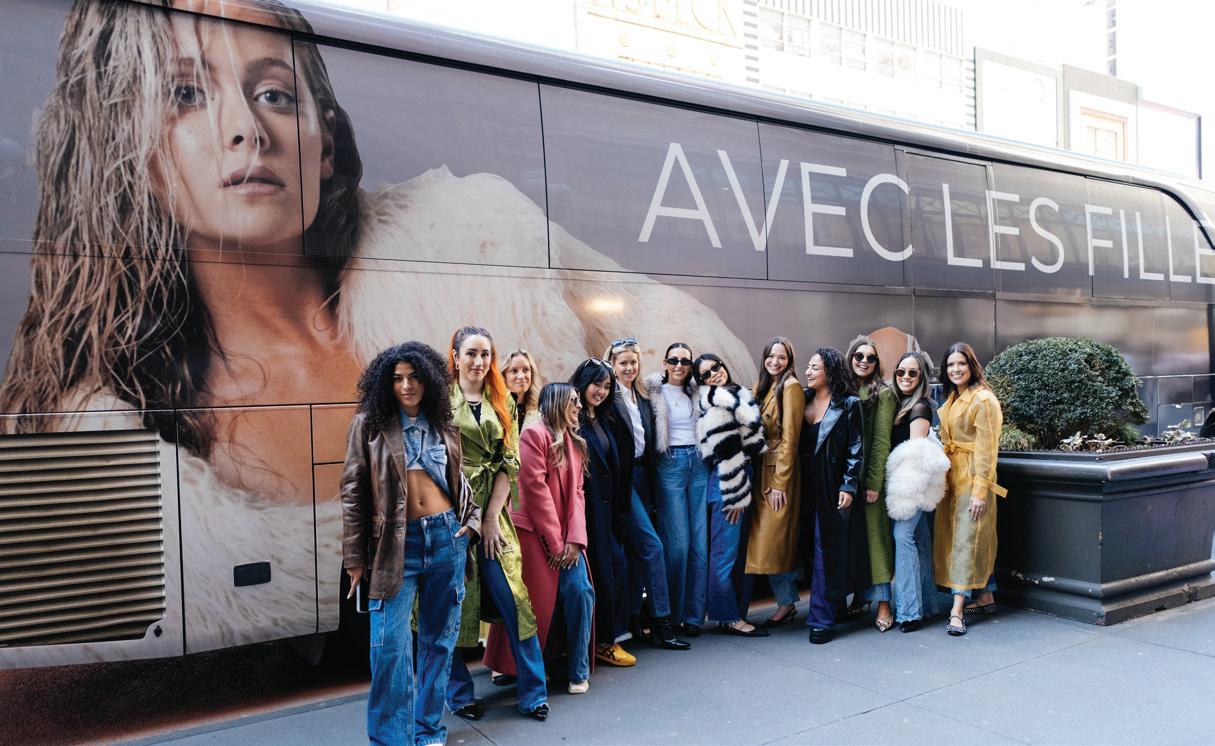
With New York Fashion Week approaching, Litvack knew he had to seize the moment while the fashion world was watching. “Our initial plan for the campaign with Hannah was digital only but after the reaction we received I knew we had to take it to the streets. We wrapped double decker buses, streamed videos on digital trucks and took over print and digital billboards throughout the city,” said Litvack. When Godwin arrived in New York to see the campaign for the first time, it was a scene. Avec Les Filles invited two dozen influencers from Macy’s Style Crew to toast Hannah at their recently renovated HQ. “Then everyone jumped on one of our branded double decker buses for a city tour come street style shoot like no other. We toured our billboards with videographers and photographers in tow, capturing street style pictures and videos of the crew along the way. People were stopping in the street staring at all the commotion,” added Litvack. Olivia Wei, director of Macy’s Style Crew, described the event as, “truly a dream,” adding, “Avec Les Filles is such a perfect brand fit for Macy’s Style Crew—our members are obsessed with showcasing trendy pieces and unique finds found at Macy’s on their social channels.” Not one to miss a beat, Litvack ensured everyone was dressed in fall ‘24 pieces. Avec Les Filles will use the content captured to market next season.
As Avec Les Filles continues to surpass retailer’s expectations and sales goals, finding endless ways to be creative and be a girl’s girl for their customer, Litvack is firmly focused on the future. For the 2024 year, on top of category expansion, continuing to grow their direct-to-consumer site (aveclesfilles.com)—which doubled year-on-year in 2023 under brother Adam Litvack, EVP, Marketing & E-commerce—and optimizing their current distribution channels, is the focus.
Retail is still essential to the brand’s success. Building a more intimate relationship with the customer and working even more hand in hand with their retail partners like Nordstrom, Bloomingdale’s, Anthropologie, Shopbop and others is a must. These retail partners “have been critical in helping to raise awareness of the brand and we’re excited to continue on this rocket ship with them,” said Litvack, who is also eyeing partnerships with retailers overseas. “I can’t disclose too much about the next five years, but I can tell you that we’re not following the usual playbook. Just watch this space.”
mannpublications.com COVER FEATURE
Avec Les Filles—a brand with the girls, for the girls.
Photo courtesy of Anton Harets





FEATURE
Photo courtesy of Megan Mae Miami

MEGAN MAE MIAMI SWIMS WITH SUSTAINABL E STYL E
BY JOSEPH PASTRANA
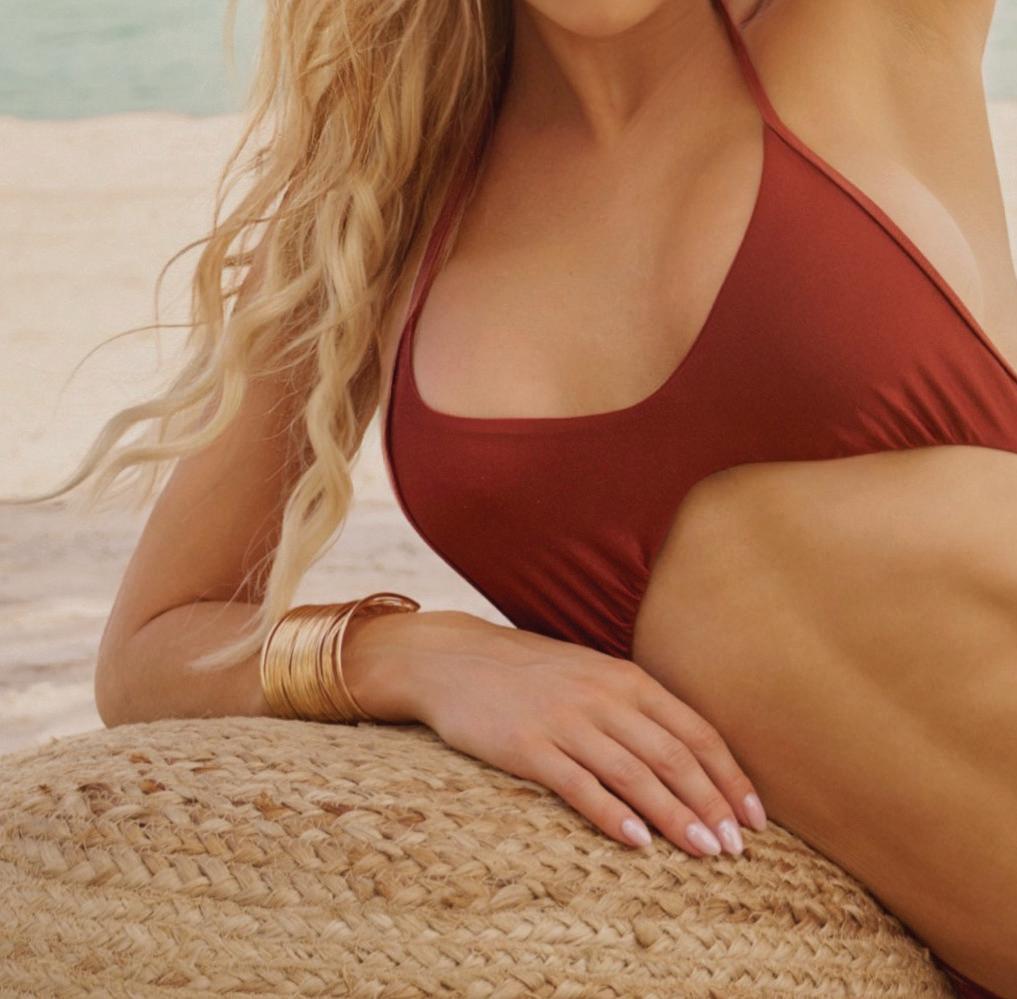
Like countless young women with a dream, Megan Mae believed there was a world out there beyond her hometown in Michigan, preferably with white sands, pristine blue waters and swaying palm trees. Having grown up in a family of entrepreneurs, she was equipped with both the drive and fortitude to set out and fi nd it. “At an early age, I was already exposed to the ways of running a business,” said Mae. “It’s always been part of my life and I knew I would one day create something of my own.”
With a degree in Sport and Exercise Science from the University of Central Florida, she embarked on a fitness training career in the Sunshine State. This eventually led to being asked by local brands to model their swimsuits for magazine layouts and marketing materials. In the course of modeling for a wide range of swim labels, Mae noticed two important things that would alter the course of her career. First, the agencies and the brands were resistant to having her do runway work because she wasn’t “tall enough.” Second, many of the swimsuits she was modeling were either ill-fitting, not as well made as they should have been or were sorely lacking in style. She added, “I realized then that there was a serious gap in the market. It was difficult to fi nd the kind of swimsuits that I would want to wear.” And if she was ever going to fi nd them, she would have to create them herself.
immediate threat to nearly 70% of marine life including fish, dolphins, sea turtles and even seabirds. The industrial application of nylon for nets and a variety of other maritime materials makes it a primary source of pollution. Strands of these nets will tangle certain animals while other plastic debris can be inadvertently ingested by aquatic creatures. Even all the discarded plastic that wash out of beaches accumulates into floating islands of harmful non-biodegradable waste.

This was the impetus she needed to launch Megan Mae Miami. By then she was already well acquainted with countless brands in the market. “I’ve tried on countless swimsuits and knew what made a good one,” she said. But she was also determined to make her line better than just “good.” She wanted an elevated sense of style and a dedication to sustainability. In recent times she had also been acutely aware of plastics polluting the oceans and wanted to be part of the growing movement to counteract the problem.
According to the United Nations Environment Programme (UNEP), lost or abandoned fishing gear presents the most

Reports from the UNEP indicate that with greater awareness of the problem and strong policies, it’s possible to manage waste and ensure a clean, healthy environment. They also claim that plastic pollution can be reduced by 80% by 2040. For her part, Mae looked far and wide for material that embodied luxury while being eco-friendly. She decided to go with ECONYL® yarn which uses nylon waste material that regenerates into textile fi ber. It provided her with just the right balance of elegance and sustainability that would be a cornerstone for her brand.
“I was determined to make Megan Mae Miami an authentic representation of what I stand for – having an appreciation for classic style, a commitment to preserving the environment and the determination to provide our customers with the fi nest swimwear,” Mae explained.
With the unveiling of her Spring-Summer 2024 collection, “Sandstorm,” comes another aspect of the brand – the sunwashed beauty of Miami. “I take a great deal of inspiration from the vitality of this town, from its iconic architecture to the vibrant music, nightlife and culture,” she concluded.
Undoubtedly, the latest collection has a distinct sophistication that sets it apart from the competition – from the sleek lines and refi ned colors to the chic details and unabashed glamor. It’s been a long road from Michigan to Miami, from dream to reality. But here at last is Megan Mae Miami to usher in a new era in sustainable style in swimwear.



FEATURE
NEIMAN MARCUS DROPS QUEST FOR THE BEST SPRING CAMPAIGN
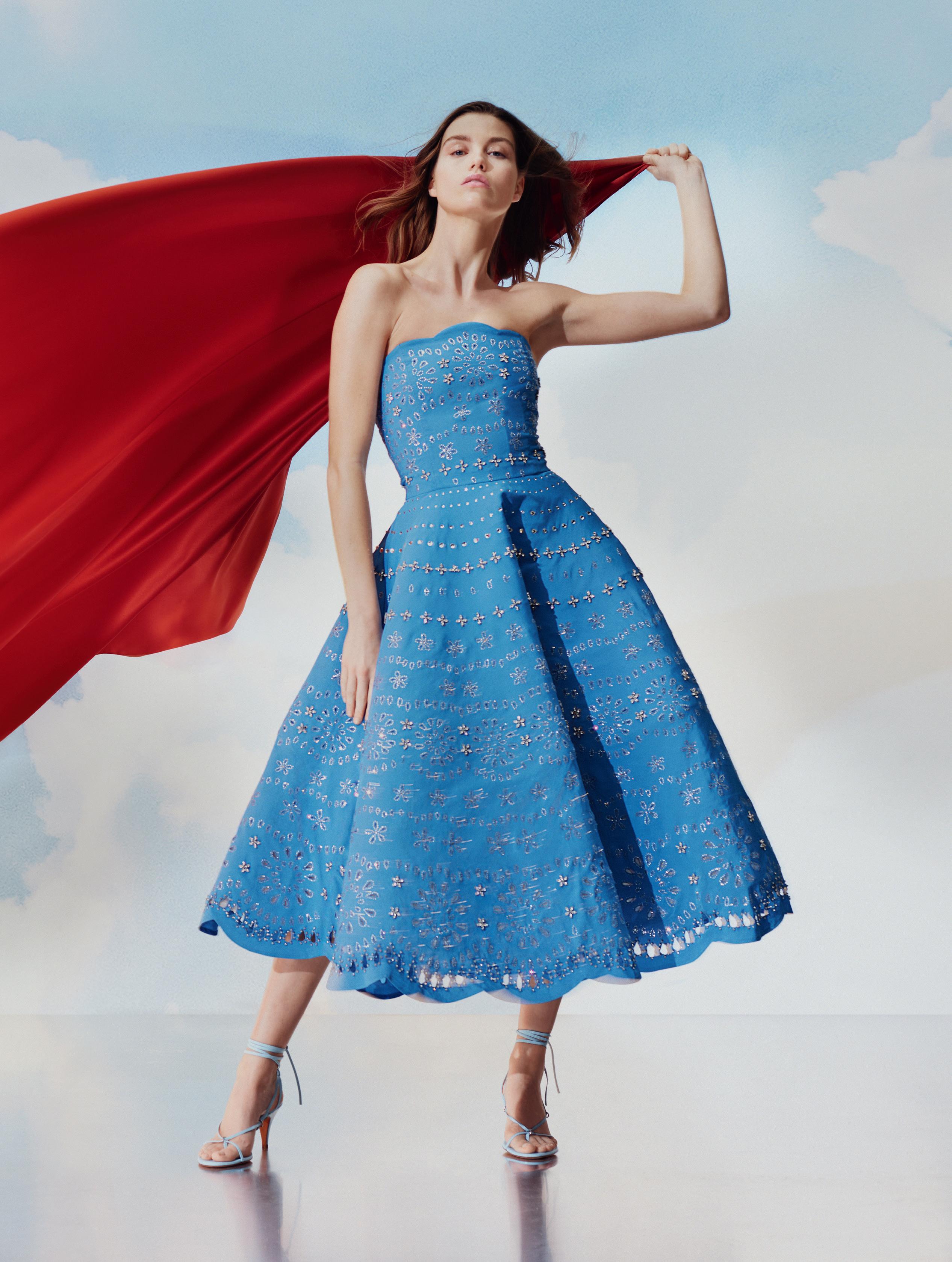
At the intersection of luxury fashion and sports, Neiman Marcus announces the launch of its spring campaign, Quest for the Best. The campaign provides expert fashion leadership to connect customers In Pursuit of the Extraordinary with oneof-a-kind activations and an all-star product assortment for the season through the lens of athletics.
“Fashion and sports have an intertwined history, and we are seeing that intersection peak today with athletes becoming the newest style stars in pop culture,” said Nabil Aliffi, chief brand officer, Neiman Marcus. “Quest for the Best brings this intersection to customers across all of our retail touchpoints and activates through multi-tier events in stores. The campaign showcases this season’s Achievers who represent a broad range of modern sports stars, celebrating American excellence and serving as an inspiration to our customers.”
The spring campaign marries extraordinary achievements and style as a platform to lead customers to discover their best looks from the retailer’s highly curated product assortment. This season’s featured fashion leans into the increased demand for American sportswear with pieces from iconic brands, complemented by luxury services such as tailoring and wardrobing. Customers can leverage the retailer’s 3,000+ talented selling associates for a personalized style edit, however they choose to shop across Neiman’s integrated retail model.
Quest for the Best unveils the newest iteration of the anthology profile series, The Achievers. Featuring five standout stars in the sporting world, the campaign celebrates athletes who have a keen eye on the prize, wearing medal-winning looks from the spring collections of the world’s most desired brands. The spring Achievers include Ralph Lauren Olympic brand ambassador and top rock climber Brooke Raboutou, NBA point guard Kelly Oubre Jr., Olympic breakdancer Victor Montalvo, Dallas Cowboys’ Executive Vice President and Chief Brand Officer Charlotte Jones and record-setting runner Athing Mu. The campaign is shot by photographer Arnaud Lajeunie and styled

by Katie Burnett. Activated through a digitally led 360-degree marketing approach, Quest for the Best includes an array of multimedia, window displays and a new issue of “The Book.” Since its reimagining in fall 2023, “The Book” continues to be elevated with engaging content serving as the storytelling guide across all marketing channels for the season. Campaign visuals reflect athleticism, self-expression and personal style with backgrounds that inspire movement juxtaposed with the retailer’s favorite pieces for the season. All 36 stores will also bring the campaign to life by hosting a variety of events including panels, activations, and brand partnerships in support of its “Retail-tainment” strategy.
Recently, Neiman Marcus has leaned into marquee cultural sporting moments, partnering with notables in the sports world who are driving the fashion conversation. This past holiday season, Neiman Marcus partnered with Ralph Lauren, the Official Outfitter of Team USA, to create the Ultimate Olympic Experience in Paris as one of the iconic Fantasy Gifts. Neiman’s also recently activated its Las Vegas store for the big race in November and big game in February, hosting notable sports stars to mingle with customers as they shopped exclusive product assortments. This summer, the St. Louis store will host an immersive auto racing-themed customer activation in celebration of the local race. These exclusive activations have proven to be successful, increasing customer foot traffic in stores and driving incremental revenue tied to these customer moments.
Neiman Marcus invites customers to discover exclusive access, world-class service and one-of-a-kind experiences this season. Customers can experience the Neiman Marcus magic across its integrated retail model—online, in-stores or remotely through its selling associates.
FEATURE
FEATURE
Photo courtesy of Arnaud Lajeunie

FEATURE
Photos courtesy of Gabriella Spiegel
CARA BENEVENIA
THE ITALIAN-AMERICAN GIRL
By Laurie Melchionne
Experience the luxury of Italian leather handbags here in the States. Cara Benevenia, the lovechild of Italian immigrants immersed in the tradition of Italian leather making, provides style from the Old Country. All the way from Cantalupo, Italy, Anthony Benevenia immigrated to Newark, New Jersey in the early 1900s where he began a life that embodies the Italian-American spirit. Benevenia quickly solidified himself as a figure in men’s tailoring in New Jersey, which led his family into the apparel industry. Hard work, innovation and dedication to an Italian-soaked craft was his daily grind.
Flash forward to today: Cara Benevenia, Anthony’s great-granddaughter, continues his legacy with her namesake brand. With a Bachelor of Fine Arts in Fashion Design from Marist College, Benevenia weaves modern elegance into old-world aesthetics. Hand-woven textiles blend with materials imported from Arzignano, Italy, which are literally woven into the bags.
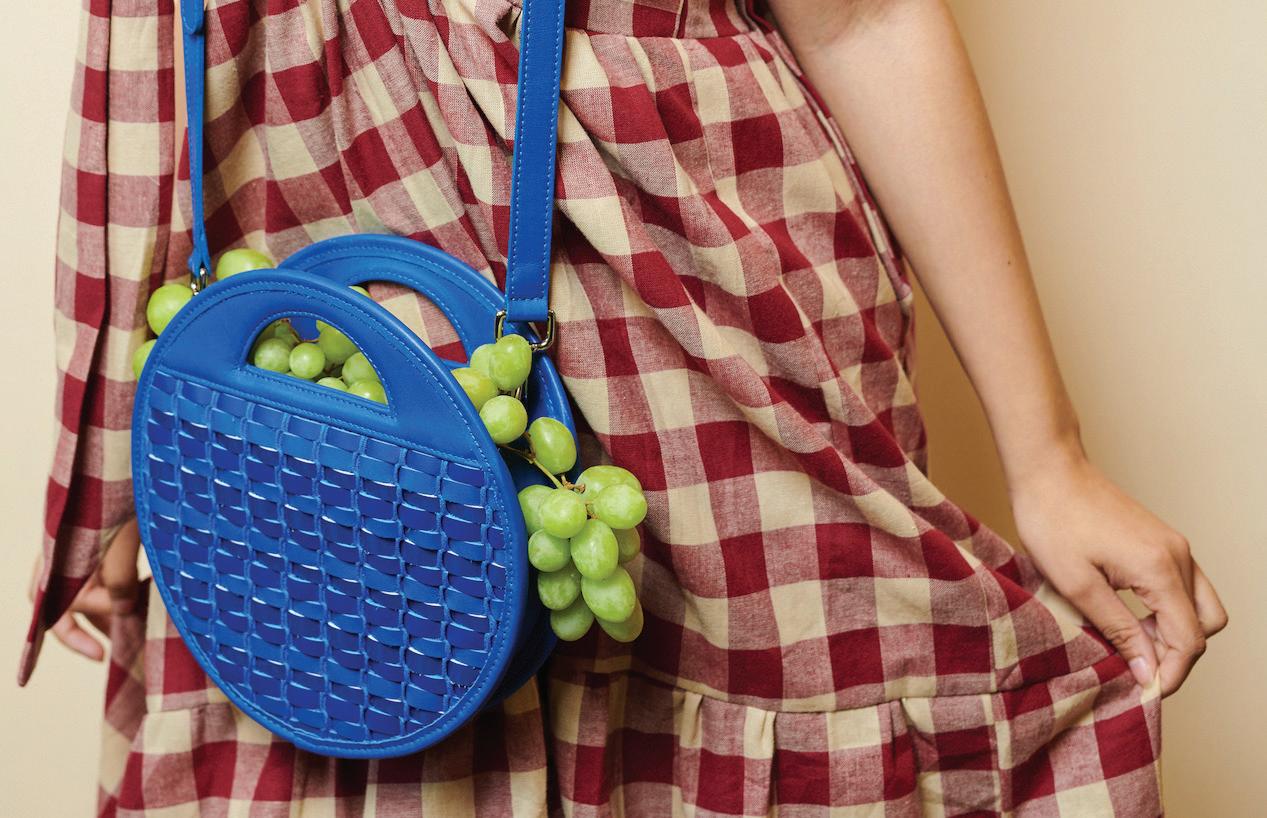
The basket-like weave of each bag, such as the Baguette Cappuccino and Baguette Matte Black, provide a springy-fresh, unique take on traditional Italian simplicity. Retro-inspired and mini-sized for versatile style, the best-selling Baguette line also provides neutral colors to effortlessly blend your Cara Benevenia companion with any outfit. Colorful and bold, the Billie shoulder bag adds a tropical sling to your accessories, inspired by Cara’s grandmother’s style in 1980s Miami. For convenience with any style, the Iconic Mini Crossbody bags are lightweight, spacious-yet-compact with a playfully circular silhouette perfect for a fun-loving, “clean-girl” theme.
Buttery-soft and fragranced with that distinct, snappy scent of real Italian leather, Cara Benevenia’s bags bring authentic Italian leather tradition into your wardrobe, and allow you to carry a piece of the Peninsula’s heritage wherever you go.
Shop Cara Benevenia at carabenevenia.com.
mannpublications.com April 2024 FM | 53 FEATURE

ZIMMERMANN IN ILLUSTRATION AT PARIS FASHION WEEK
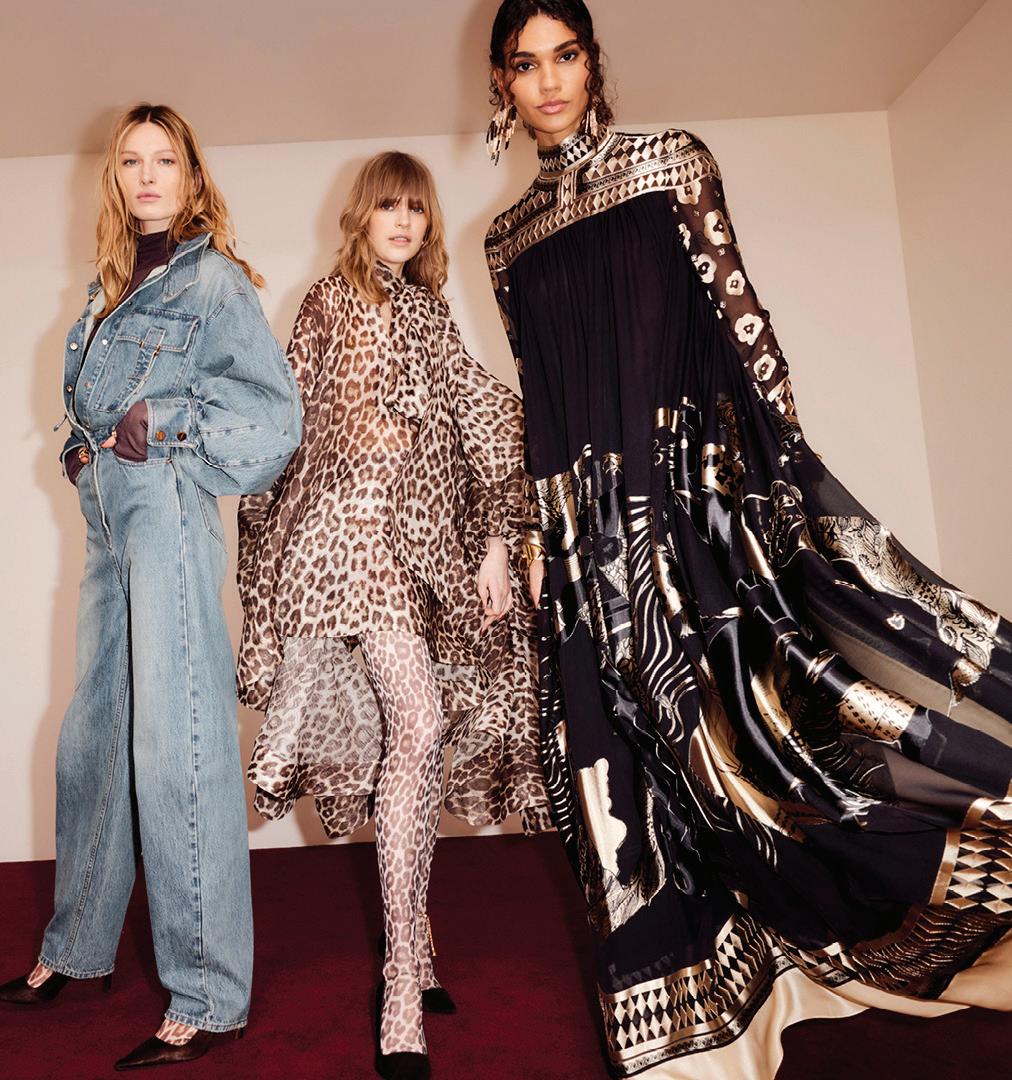
Zimmermann’s Fall 2024 Ready-To-Wear collection, In Illustration, was presented at Pavillon Cambon during Paris Fashion Week. This momentous presentation all started with a sketch. It’s a craft that Creative Director Nicky Zimmermann has built her design process on, and this season is no exception; turning a magnifying glass on the art of fashion illustration for Fall 2024.
“Fashion illustration as an art form in itself is something I’ve always been drawn to. I have a collection of fashion magazines from the 1920’s and they’re made up of so many beautiful hand-drawn illustrations,” said Zimmermann. “The mood of those drawings, the magazines themselves and the way fashion was depicted in the era became a key reference point for the season. The 20’s and the dramatic way the illustrations hero volume and texture and movement are themes that run through the collection.”
Taking cues from the 1920s when fashion illustration was the sole source of consuming fashion content, prints have been sourced from pages of legacy fashion magazines. An illustration from Australian actor Barry Otto created in the 70s from a past career, discovered serendipitously and sourced via the Otto family adorns the opening look: a freehand sketch on a graphic silk burnout dress with dramatic winged sleeves. Nouveau wallpaper prints and flapper silhouettes are modernized in plaited spaghetti-fringe draping and delicate lace-chiffon dresses are tied up by oversized bustier bows with lingerie-inspired appeal. Textural layers add warmth for the season with soft knits, fluffy tube dresses and velvet draped tops.
Ample outerwear offers an eclectic mix of fabrications and styles like a long leopard print silk coat; or a buttery leather oversized bomber jacket. Following her inspiration, the Bloomsbury group an informal group of prominent artists and writers in the early 20th century including Virginia Woolf and Vanessa Bell—also became a point of influence. This infused the collection with a dusty color palette and nods to a past era, modernized in fabrications and innovative details. Chocolate lace body suits with velvet trousers, paneled chiffon slip silhouettes in sepia tones and manish checked tailoring. Simple caped dresses and glittering gowns provide options no matter the mood.
Flared godets lined with tulle add interest and flounce to key looks. Leopard and ASMR sequins weave through the collection from looks to accessories. Air and volume are key themes of the collection, capturing the sense of movement and lightness from the original sketch in the true garment is a point of obsession for Zimmermann. Bold voluminous suiting, batwing sleeves and paint smock dresses in illustration and on the runway are one in the same as shape, color, even mood and energy are transformed from idea to reality.
courtesy of
FEATURE
Photos
Zimmermann

FEATURE

SUN PROTECTION FROM THE SKINCARE EXPERTS
kincare gurus everywhere can rejoice at the latest solution for all skin types, textures and tones. Lion Pose, the clinically-tested brand founded by Harvard-trained dermatologists, has launched its latest in third-party audited, diverse-skin type care products.
BY LAURIE MELCHIONNE
Meet the Ghost-Buster Broad Spectrum SPF, the lightweight, all-day-use sunblock that protects all skin types from UV rays. As spring’s sun intensifies in April, this SPF boosts the skin for allday hydration and fights the aging process before it can begin (courtesy of the sun’s wrinkling effects). With easy glide-on, the Ghost-Buster SPF leaves zero white cast behind (unlike traditional sunblocks), and envelops the wearer in subtle, summery fragrances reminiscent of the beach.
The Ghost-Buster sunscreen moonlights as both a moisturizer and a makeup primer. Upon application, the skin is bathed in a glowy mask for that coveted glassy fi nish. Glittering with antioxidant glutathione and moisture-locking squalane, this SPF is also 100% mineral and reef-safe. With Lion Pose’s Five-Point Clinical Testing Standard (third-party auditing, objective assessments, diverse skin tone application, statistically proven results and zero confl icts of interest), the Ghost-Buster has been clinically proven to increase the skin’s moisture levels by 136% after 8 hours. How do we know? It was tested with the use of a Corneometer®, a tool that uses electrically charged electrodes to assess the skin’s dielectricity (in layman’s terms, the skin’s hydration).
Over a decade ago, Lion Pose Founders Madhu Punjabi and Nisha Phatak met at the Harvard Business School. They discovered the same industry-wide problem in skincare: a lack of regulated formulas for high-quality products delicate enough for all skin types. While each skin type has its own needs and sensitivities, not every skincare brand out there provides the best, tailored solutions. What’s more, most skincare brands were way too harsh on the skin at the time.
With the help of dermatologists, Dr. Laura Scott and Dr. Suchismita Paul, Madhu and Nisha cultivated Lion Pose’s diverse selection of all skin solutions, for all skin needs. From acne-fighters like the Unspotted Acid Jelly Night Serum to healers of specific skin conditions like melasma found in the Ghost-Buster SPF, Lion Pose activates solutions through deep-skin barriers while maintaining a uniquely subtle reaction upon contact.
Shop the Ghost-Buster Broad Spectrum SPF on lionpose. com or use the Store Locator to spot it in Sephora.
Photos courtesy of Lion Pose FEATURE
THE GHOST-BUSTER BROAD SPECTRUM SPF BY LION POSE









THE FASHION MANNUSCRIPT PRESENTS: TECHWEAR
Bringing you the latest breakthroughs in software, I.T. and fashion technology. From creative solutions to insights from experts, we are the source for all things fashion tech.
courtesy of Unsplash
Photo
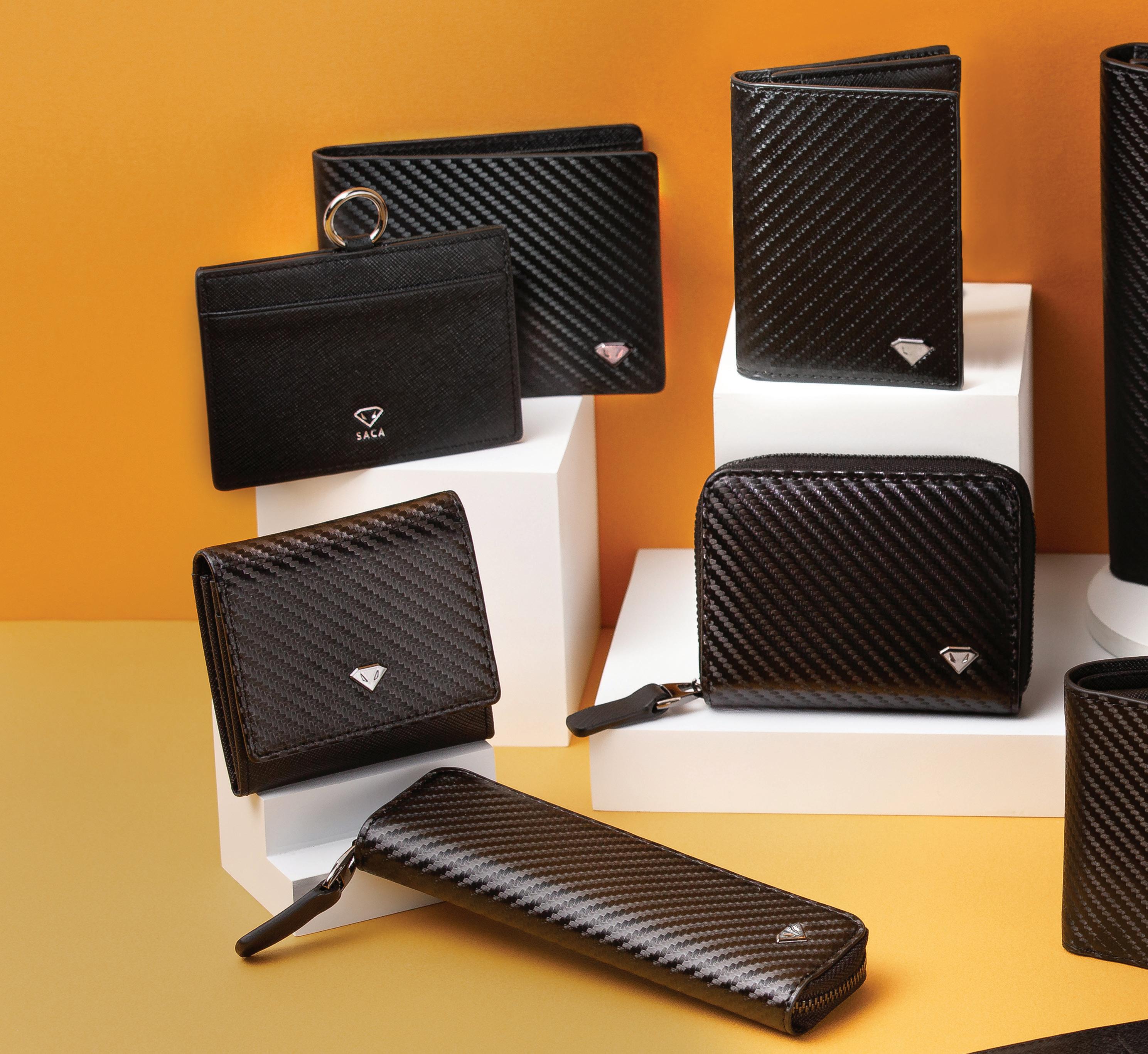
OFF TO THE RACES
SACA CARBON’S SLEEK RACECAR MINIMALISM
60 | FM April 2024 mannpublications.com TECH
Photos courtesy of SACA Carbon
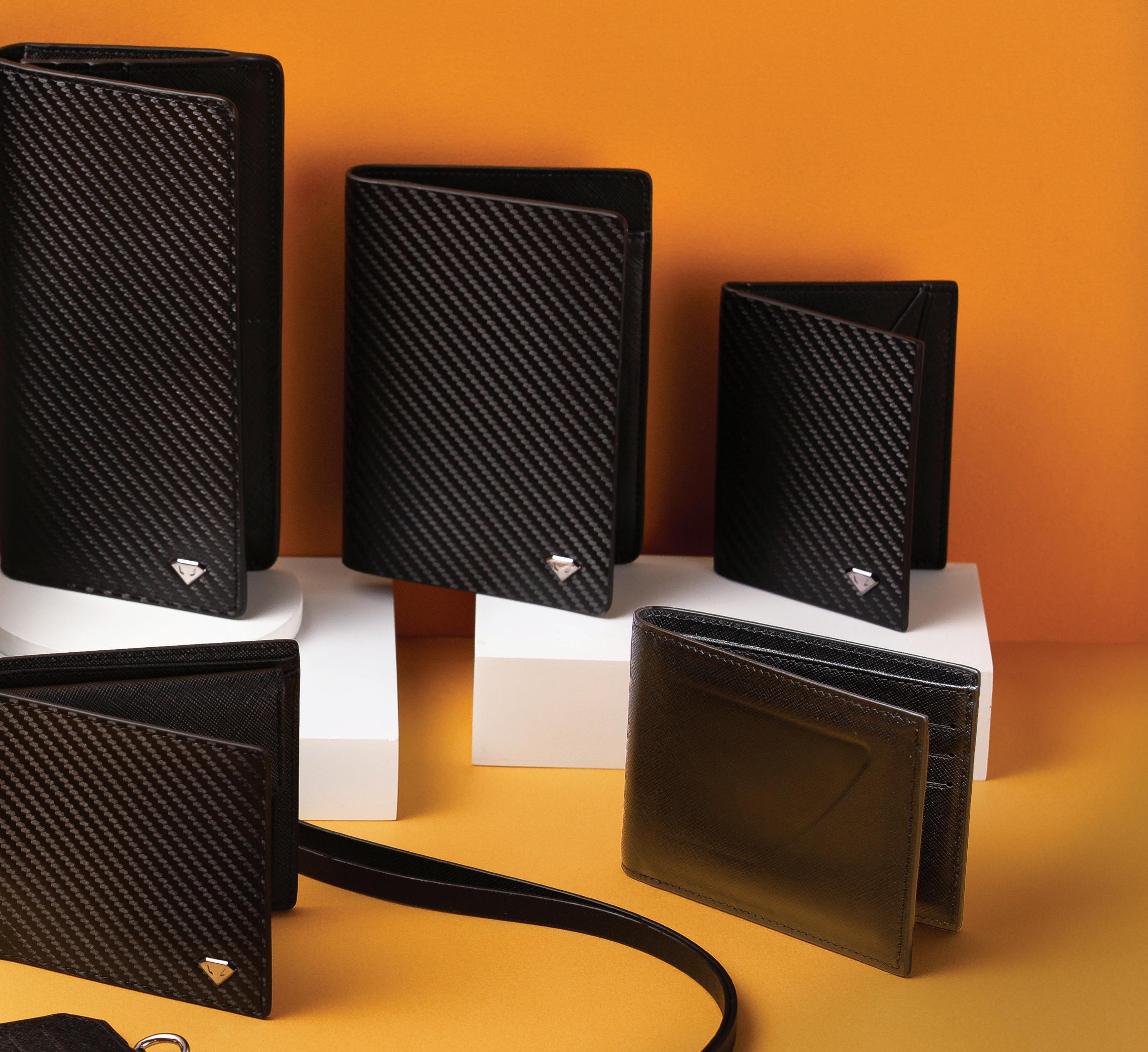
From the portfolio of TAELOR, the online menswear custom rental service, SACA Carbon features the latest in innovative, high-tech accessories. With everything from pens to umbrellas, SACA Carbon introduces carbon fiber fabric inspired by racecar interiors built for speed. Carbon fiber is the foundation for leather interiors of race cars, and provides the chic, sleek silhouettes both on the racetrack and within the closets of the SACA Carbon man. A signature of SACA’s carbon fiber line is its leather goods accessories: wallets, belts and bags. The result? Ultra-lightweight, sleek leather with bold, head-turning style.
SACA carefully selects cross-grain cowhide for the interior of its leather products, concealing the exclusive X technology woven carbon fiber fabric, which greatly enhances the functionality of the wallet and flaunts anti-RFID Signal Interference Prevention Mechanism. With a lightweight and minimalist design, SACA cultivates a closet of zero-burden fashion that effortlessly showcases the advantages of carbon fiber points.
Straight from SACA’s carbon fiber accessories line is the Carbon Fiber Fabric Integrated Cardholder and iPhone cases. These smartphone protectors are made with brand-new carbon fiber composite material, and offer exceptional protection while preserving the iPhone’s elegant curves. The woven lines bring a first impression of taste, with a comfortable and delicate touch that effectively prevents fingerprints and sweat stains.
Born in Taiwan in 2018, SACA Carbon is the result of German designers who blend technology with luxury accessories. Winner of the 2020 Muse Design Awards, SACA Carbon takes innovation to the next level with black, minimalist design merged with unique technology and crafted application techniques.
Take your daily accessories to new heights and discover the collections at taelor.style.
mannpublications.com April 2024 FM | 61 TECH
PUMA REDUCES GREENHOUSE GAS EMISSIONS BY 24% IN 2023
PUMA reduced its greenhouse gas emissions by 24% in 2023 compared to 2022, despite strong sales growth.
This was made possible by its core suppliers doubling their use of renewable energy in 2023 compared to the previous year, increasing the use of less carbon-intensive materials in its products, introducing low carbon shipment tariffs by PUMA’s logistics partner Maersk, by using renewable electricity or purchasing renewable energy certificates at its own operations and by investing in electric vehicles in its car fleet. Compared with the 2017 baseline, this means an absolute greenhouse gas emission reduction of 29%.
With an 85% reduction of its own emissions and a 65% reduction of supply chain emissions relative to sales, PUMA achieved its first science-based greenhouse gas reduction target in 2023, seven years ahead of the target year 2030. PUMA’s new climate goals, which were approved by the Science Based Targets Initiative (SBTi), aim to reduce PUMA’s emissions by what scientists say is necessary to keep global warming below 1.5 degrees. By 2030, PUMA aims to reduce its absolute Scope 1 and 2 GHG emissions by 90% from a 2017 baseline year. The SBTi has classified PUMA Scope 1 and 2 targets as in line with a 1.5-degree trajectory. By 2030, PUMA also commits to reducing absolute Scope 3 GHG emissions from its supply chain and logistics by 33% compared to 2017.
PUMA met its Plastics and the Oceans target by eliminating plastic carrier bags from its owned and operated stores and through researching biodegradable plastic options. An important part of this target was PUMA’s successful RE:SUEDE experiment, where it turned an experimental version of its classic Suede sneaker into compost under controlled industrial conditions. A commercial version will be launched in April 2024.
Other progress included scaling up the use of recycled materials in 2023, producing eight out of 10 products with a significant part of recycled or certified materials. Starting 2024, all of PUMA’s replica football jerseys will be made using PUMA’s RE:FIBRE recycling technology which focuses on polyester textile waste as the primary source of material.

62 | FM April 2024 TECH 411
Photo courtesy of PUMA on Business Wire
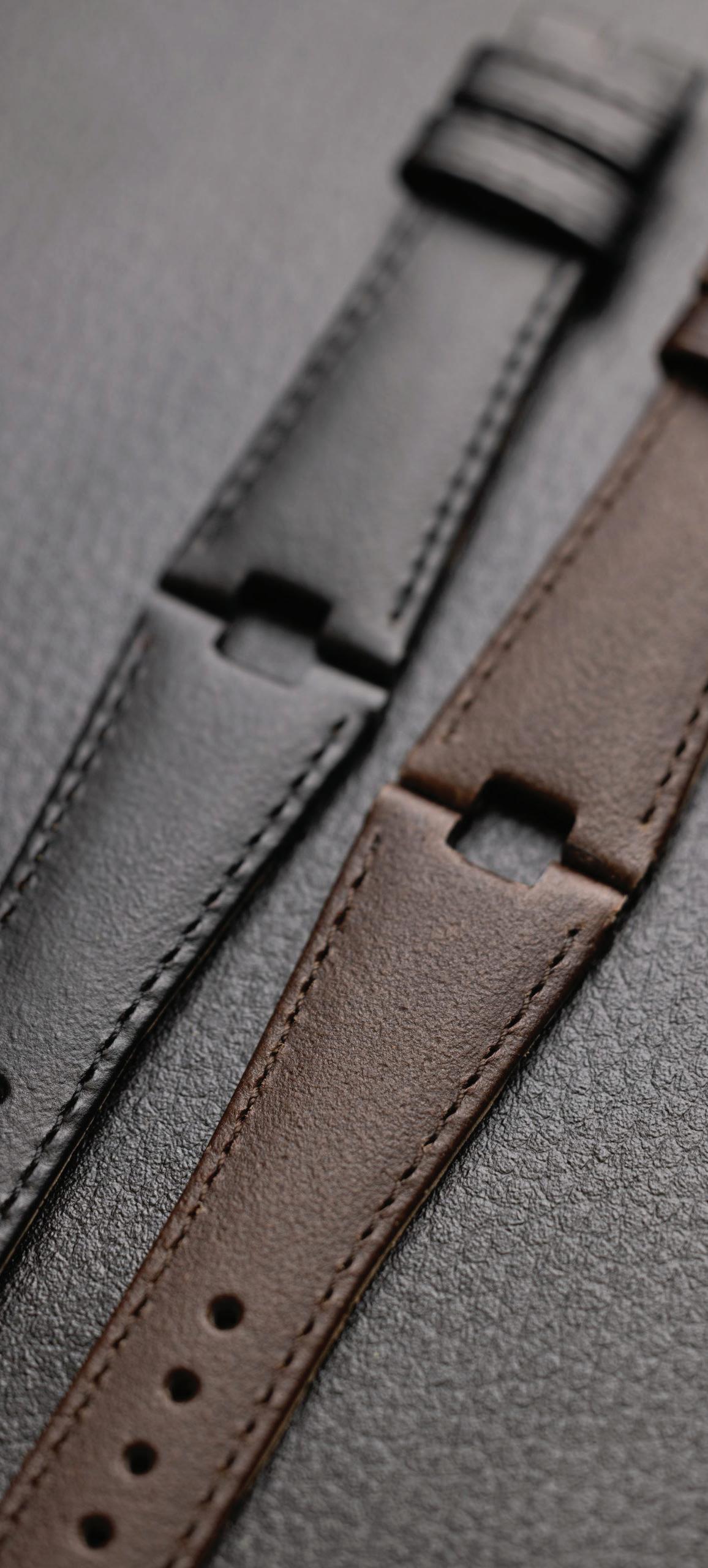
SAPPI NORTH AMERICA AND BIOPHILICA LAUNCH FIRST PLASTIC-FREE LEATHER ALTERNATIVE
Sappi North America Inc., a leading producer and supplier of diversified paper, packaging products and pulp, announced its innovative collaboration with Biophilica, the company behind Treekind®. Treekind is one of the only plastic-free leather alternatives that are 100% biobased, home-compostable, non-toxic and PETA vegan certified, notably benefiting from Sappi’s textured release paper to give the material an ultra-realistic look and feel.
Understanding the important role that touch plays in consumers’ relationship with products, it was paramount for Biophilica to create a product with an authentic, non-plastic-like feel. Touch has the power to shift consumers’ minds into a deeper level of engagement –one more conducive to building a lasting relationship and connection with a brand. To help facilitate this vision in 2022, Sappi stepped in to deliver a high-fidelity, 3D, leather grain solution to impart texture to Treekind through the application of Sappi’s Ultracast Viva® release paper.
“Curating the texture of Treekind to be as close to the feel of genuine leather as possible was a top priority for our team and brand, and what ultimately led us to seek Sappi’s textured release technology,” said Biophilica Founder and CEO Mira Nameth. “We’re elated to see an impressive 85% increase in positive feedback from brand partners such as ID Genève watches and international brands via Fashion for Good.”
Available now, Treekind currently uses Sappi’s leather grain textured release papers, however, Biophilica plans to use Sappi’s other finishes and textures, including glossy and matte finishes and varying grains for potential expansion in a premium line of goods.
April 2024 FM | 63 TECH 411
Photo courtesy of Sappi on PRNewswire
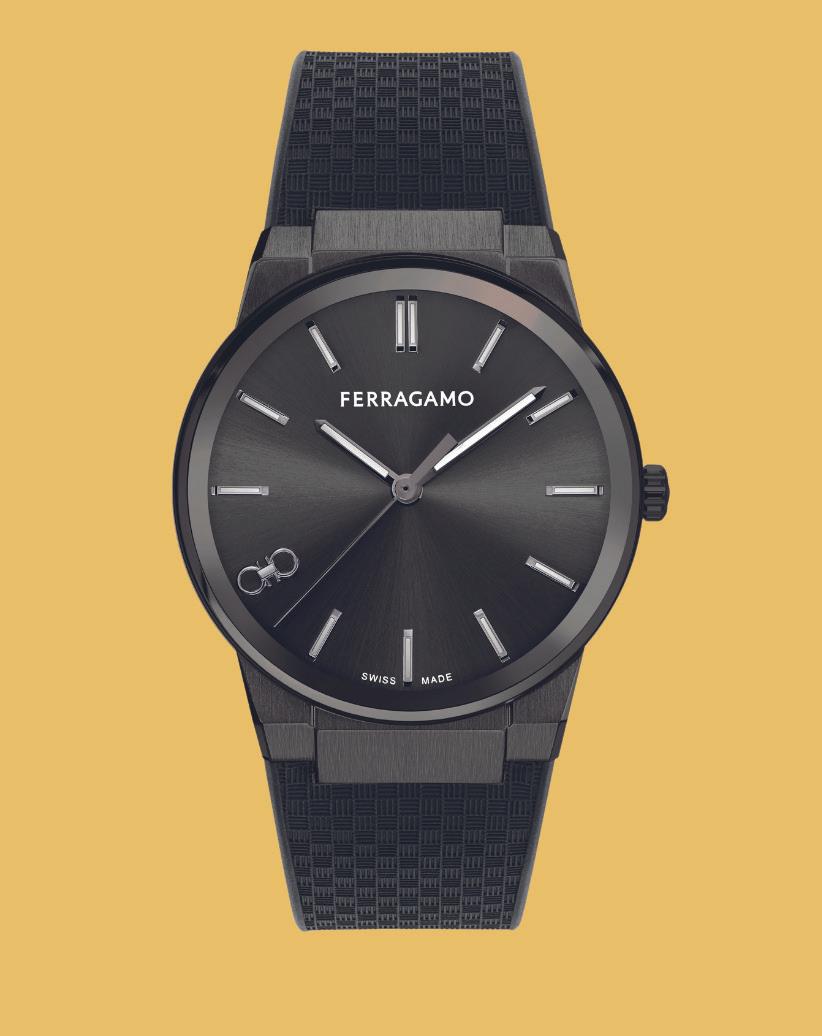
FERRAGAMO
SPRING/SUMMER 2024 COLLECTION LAUNCHES WATCHES
ITALY
Photos courtesy of Ferragamo
The new Ferragamo Watch Collection combines sophisticated aesthetics and technical excellence in a unique selection of exclusive styles. Creative Director Maximilian Davis interprets the notion of time with his bold yet essential vision, rendered through geometric cuts, subtle profi les, minimalist silhouettes and sporty constructions.
Precious craftsmanship and iconic details, such as the sunray fi nish and the Gancini emblem, elevate function and innovation to a new dimension of luxurious and versatile elegance rooted in heritage and envisaged for a contemporary pace. The Ferragamo Crystals, Ferragamo Sapphire, F-80 Tonneau Skeleton and Vega models are the quintessence of the House’s ever-evolving artisanal mastery, marking each moment with impeccable precision and an unmistakable flair.
Ferragamo Sapphire enhances the distinctive elements of this best-selling design distinguished by a sapphire glass that extends over the entire surface of the case, creating a unique play of light and reflection. The watch is presented in a total-black version with a minimalist dial enriched with the sunray fi nish, the Ferragamo logo and the iconic double Gancini motif at eight o’clock. The matching strap is made of recycled polyurethane.
Sleek and effortlessly bold, Ferragamo Watches’ latest collection is one not to be missed.
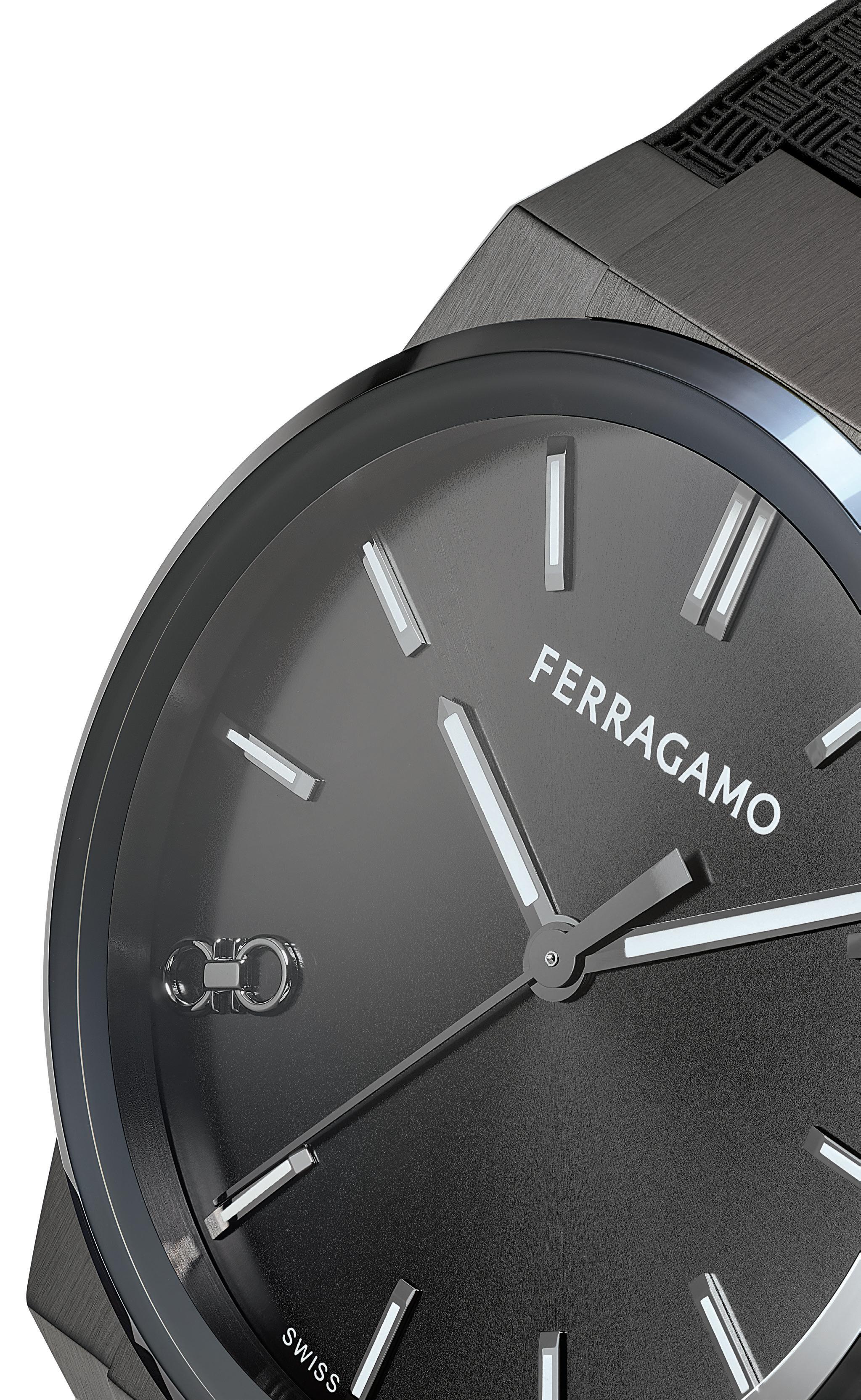
mannpublications.com
Photos courtesy of Versace.com








WORKING CAPITAL THAT KEEPS YOUR PEOPLE WORKING. Don’t let cash flow disruptions slow your staffing business down. Access the working capital you need to achieve your goals now and as your business grows, with up to 95% advance rates on your invoices. Our tailored suite of flexible financing solutions are customized around your unique needs, so you can tackle every phase of business with confidence. (212) 887-7999 | whiteoaksf.com/commercialfinance | info@whiteoakcf.com CONTACT US CONTACT US









mannpublications.com April 2024 FM | 63 Newly Built, High-end Full Floor 561 7th Avenue Northeast Corner of West 40th Street 212.398.1888 | Handler-re.com Darell Handler, COO | 646.597.6171 | dhandler@handler-re.com Kyle Galin, Vice President | 646.998.6012 | kgalin@handler-re.com Isaac Leader | 646.747.4686 | ileader@handler-re.com The information contained herein has been obtained from sources believed reliable. While we do not doubt its accuracy, we make no guarantee, warranty or representation about it. The prospective tenant should carefully verify each item, and all other information herein. ENTIRE 11TH FLOOR: 3,944 RSF • New Building Installation • Landlord will Build to Spec for Qualifi ed Tenant • 3 Sides of Windows • Flooded with light • 24/7 Building Access • Owner Occupied • Access to all transit


MAY 13, 2024
Reception: 11am-12pm
583 Park Avenue New York City


Please join us to celebrate the FGI Rising Stars in Fashion, Beauty, Accessories, Fine Jewelry, Technology and Content Creation.
FGI Rising Star Awards Luncheon
Luncheon and Awards: 12-2pm

Sponsored By:

64 | FM April 2024 mannpublications.com COLUMNS LIVE EVENT 8
More information FGI.ORG








mannpublications.com April 2024 FM | 65 High-end Midtown Pre-built Entire 16th Floor: 6,500 RSF 263 West 38th Between 7th & 8th 212.398.1888 | Handler-re.com Darell Handler, COO | 646.597.6171 | dhandler@handler-re.com Kyle Galin, Vice President | 646.998.6012 | kgalin@handler-re.com Richard Farley, SVP | 646.597.6179 | rfarley@handler-re.com Alex Bush, Senior Director | 646.517.8782 | abush@handler-re.com The information contained herein has been obtained from sources believed reliable. While we do not doubt its accuracy, we make no guarantee, warranty or representation about it. The prospective tenant should carefully verify each item, and all other information herein. PRE-BUILT SPACE AVAILABLE IMMEDIATELY • Built space in great condition • Concrete floors, raised ceilings + glass front offices • Creative + efficient floor plates • Access to all transit

If your goods were held at the port of entry for suspicion of wrongdoing, how would that affect your supply chain? Your credibility with your buyers? Do you know all the companies involved in making your clothes or textiles? You might think you do, but what you don’t know can hurt you financially as well as damage the reputation of your brand. The days of willful ignorance are long gone. Even then, suppose your shipment is detained; do you have the time or the people it takes to assemble those documents into a coherent response that Customs and Border Protection will accept to release it?
As part of the apparel and textile community, fashion brands realize that supply chains are fluid. In the current environment of social awareness, increasing federal regulations and global reach, it has become more challenging for companies to focus on their core business, the design and production of apparel and textile. Many companies have delegated a large portion of their sourcing to overseas partners with minimal domestic oversight. There are multiple tiers of subcontractors under your sourcing partners. All of them are going to be connected to your brand.
According to international human rights group Walk Free’s annual global slavery index, $147.9 billion worth of garments and $12.7 billion worth of textiles were at risk in 2023 of being produced by forced labor and imported by G20 countries. Some of the most serious violations occur in cotton production in China’s Xinjiang Uyghur Autonomous Region, where several human rights organizations report significant evidence of forced labor. This region produces approximately 20% of the world’s cotton.
The United States takes a strong stance regard-
FROM FIELD TO FABRIC: THE TECH TAKEDOWN OF FORCED LABOR
by Salvatore Stile, president & chairman of the board, Alba Wheels Up International
ing Human Rights by ratifying legislation such as the Uyghur Forced Labor Prevention Act (UFLPA), which bans the import of all goods from China’s Xinjiang Uyghur Autonomous Region (XUAR) and requires all importers to provide evidence that their goods do not contain any element that may have been made with forced labor. If the U.S. Customs Border Protection has reason to suspect goods are tied to forced labor, the goods are held, exported or forfeited. The importer must prove the lack of forced labor. As part of the regulation, importers are mandated to trace and map their entire supply chain for any forced labor risk. Since inception, the ruling has expanded to include more than 75 additional countries besides China.
Since the UFLPA went into effect in June 2022, Customs Border and Protection has engaged in thousands of UFLPA detention with an aggregate value exceeding billions of dollars. This ruling affects the importer of record directly, but regardless of your terms of sale, the delays and potential loss of cargo will affect your supply chain. Retailers are requiring more due diligence on the part of vendors to avoid potential delays and any negative brand impact.
The U.S. Customs Border Protection (CBP) requires a detailed mapping of the supply chain, including all suppliers, all relevant parties, relationships and, in many cases, down to the bill of materials. In addition, the mapping must consist of an assessment of forced labor risks along the supply chain from raw materials to the production of the imported goods. Many importers perform and manage this process manually and find it expensive and time-consuming. Enter artificial intelligence (AI) and machine learning, which leverages the latest technology to map the supply chain accurately, quickly and with useful outputs for the compliance teams of US importers to proactively assess risk. Alba Wheels Up, a customs brokerage and supply chain solutions provider, formed a strategic alliance with mesur.io, a provider of supply chain risk intelligence. The collaboration utilizes mesur. io’s advanced technology to empower importers with comprehensive compliance and traceability capabilities. You can monitor ingredients and their
origins, covering the entire journey from raw materials to manufacturing processes, including all factories and subcontractors:
1. Identify any legal or other relevant concerns associated with suppliers.
2. Discover any claims made against any entity within the supply chain, providing insights into potential risk.
3. Identify the presence of prohibited substances or the use of Forced Labor.
4.Analyze your supply chain for potential compliance risks, offering predictive insights and recommendations for mitigating these risks before they impact the business.
5.Instantly respond with evidentiary documentation in the event of a detention or hold.
Today, we are in a new phase of both this opportunity and challenge; automated supply chain transparency tools that leverage AI can play a crucial role in mapping the supply chain to identify risks for UFLPA compliance. By analyzing data from various sources, such as customer inputs, weather conditions, geopolitical factors and market trends, generative AI algorithms can help companies proactively identify and respond to potential disruptions.
In conclusion, the implementation of AI and machine learning in supply chain transparency is paramount in combating forced labor and ensuring UFLPA compliance. By leveraging these advanced technologies, companies can proactively trace their supply chain, identify risks and respond effectively, ultimately safeguarding their reputation, financial stability and commitment to human rights.


70 | FM April 2024 mannpublications.com
COLUMNS
Expertise you can count on no matter what path your business takes
WELLS FARGO CAPITAL FINANCE
FACTORING
ASSET-BASED FINANCING
ACCOUNTS RECEIVABLE MANAGEMENT
ACQUISITION FINANCING
INVENTORY FINANCING
IMPORT AND EXPORT FINANCING
LETTERS OF CREDIT
In an industry that endlessly strives for the next big thing, having the flexibility to adapt at a moment’s notice is key to success. With Wells Fargo, you get the strength and stability you need, along with the nimbleness you want. Our flexible financing may support your growth, and our proven track record in factoring and receivables management helps make sure you’re ready for whatever’s next.
Tap into our knowledge, experience, and broad o ering of products so that your business’ success never goes out of style. Learn more at wellsfargocapitalfinance.com/apparel.
Peter Pugliese
Senior Vice President, Regional Sales Manager
212-703-3551
peter.pugliese@wellsfargo.com
© 2018 Wells Fargo Capital Finance. All rights reserved. Wells Fargo Capital Finance is the trade name for certain asset-based lending services, senior secured lending services, accounts receivable and purchase order nance services, and channel nance services of Wells Fargo & Company and its subsidiaries. IHA-5534901

International brands are expanding, and healthrelated services are locating in the boroughs and the suburbs — retail is getting ready for summer!
All About Apparel and Accessories
H&M has opened a new brand destination featuring its first shop-in-shop with secondhand pieces in North America at 591 Broadway in SoHo. The nearly 10,000-square-foot store is a new concept for the brand, offering a unique, modern shopping experience with fashion-forward womenswear and elevated styling.
After testing a pop-up in the location, Uniqlo’s sister apparel brand Gu has taken 25,000 square feet at 568 Broadway, formerly occupied by Forever 21. Outerwear lifestyle brand Rains has opened a store dedicated to bags and accessories at the Moynihan Train Hall, 360 West 33rd St., Space 133, in the heart of the Penn District. Add Arc’teryx to the list of international brands with flagships on Fifth Avenue, in this case at 600, Aritzia’s former space.
Great Buys
Five Below has opened its newest store at 1451 Metropolitan Ave., in the Bronx. Located in Parkchester, a self-contained mixed-use pedestrian-oriented development, the new
Five Below, which opened mid-December 2023, occupies a 9,500-square-foot space near the center of the commercial district of Parkchester near Macy’s. Known for selling less than $5 products, the new Five Below store in Parkchester boasts an expansive range of items to cater to a wide range of interests and age groups. At the Parkchester
Five Below, customers can explore hundreds
DEB’S RETAIL DISH AND DEALS: IT’S RAINING RETAIL
By Debra Hazel, president and CEO, Debra Hazel Communications
of treasures from cutting-edge tech gadgets to trendy tees, sports balls, beauty products, remote control toys and an array of tempting candies.
Wining and Dining
Chef Guy Vaknin, an entrepreneur and culinary enthusiast known for founding City Roots Hospitality, has announced the opening of its newest New York City concept, Siete, at 37 West 19th St. The 4,300-square-foot space will serve as the vegan-focused restaurant group’s first Mexican concept. Comprised of a ground floor and lower level, the restaurant will seat approximately 72 people plus a bar. WatchHouse, a British coffee chain, is opening its second location in New York City at the Chrysler Building.
Food, Glorious Food
Cronut master Dominique Ansel has signed a 15-year lease for the grade-level retail space at 64 University Place, a new luxury boutique condominium developed by Argo Real Estate and Bsafal Inc. It will be the James Beard Awardwinner’s first foray into Greenwich Village and his third Manhattan outlet. The celebrity pastry chef is recognized worldwide for his creative Cronut pastry mashup, as well as such other unusual confections as the Cookie Shot and Cannelé de Bordeaux. The approximately 2,000-square-foot bakery and cafe will anchor the KPF-designed development.
Zooming
Ferrari has taken Nespresso’s location at 92 Prince Street, to sell … something, reports the New York Post. At press time, there was no word on whether it would offer apparel or serve as a downtown vehicle showroom.
To Your Health and Beauty
Prism Capital Partners has signed Club Pilates and Jag One Physical Therapy to 1 Orient Way in Rutherford, New Jersey. Club Pilates committed to 3,250 square feet, while Jag One Physical Therapy, offering comprehensive outpatient physical and occupational therapy services, took 2,500 square

72 | FM April 2024
COLUMNS

Kaufman Leasing Company consists of highly qualified professionals with a thorough knowledge and understanding of the New York City office, retail and specialty-use real estate sectors.
NOW LEASING
155 West 23rd Street
450 Seventh Avenue
100-104 Fifth Avenue
27-35 West 24th Street
13-15 West 27th Street
45-47 West 27th Street
19 West 24th Street
119-125 West 24th Street
111 West 19th Street
212 West 35th Street
132 West 36th Street
242 West 36th Street
237 West 35th Street
275 West 39th Street
462 Seventh Avenue
470 Seventh Avenue
519 Eighth Avenue
22 West 19th Street

www.kaufmanorganization.com
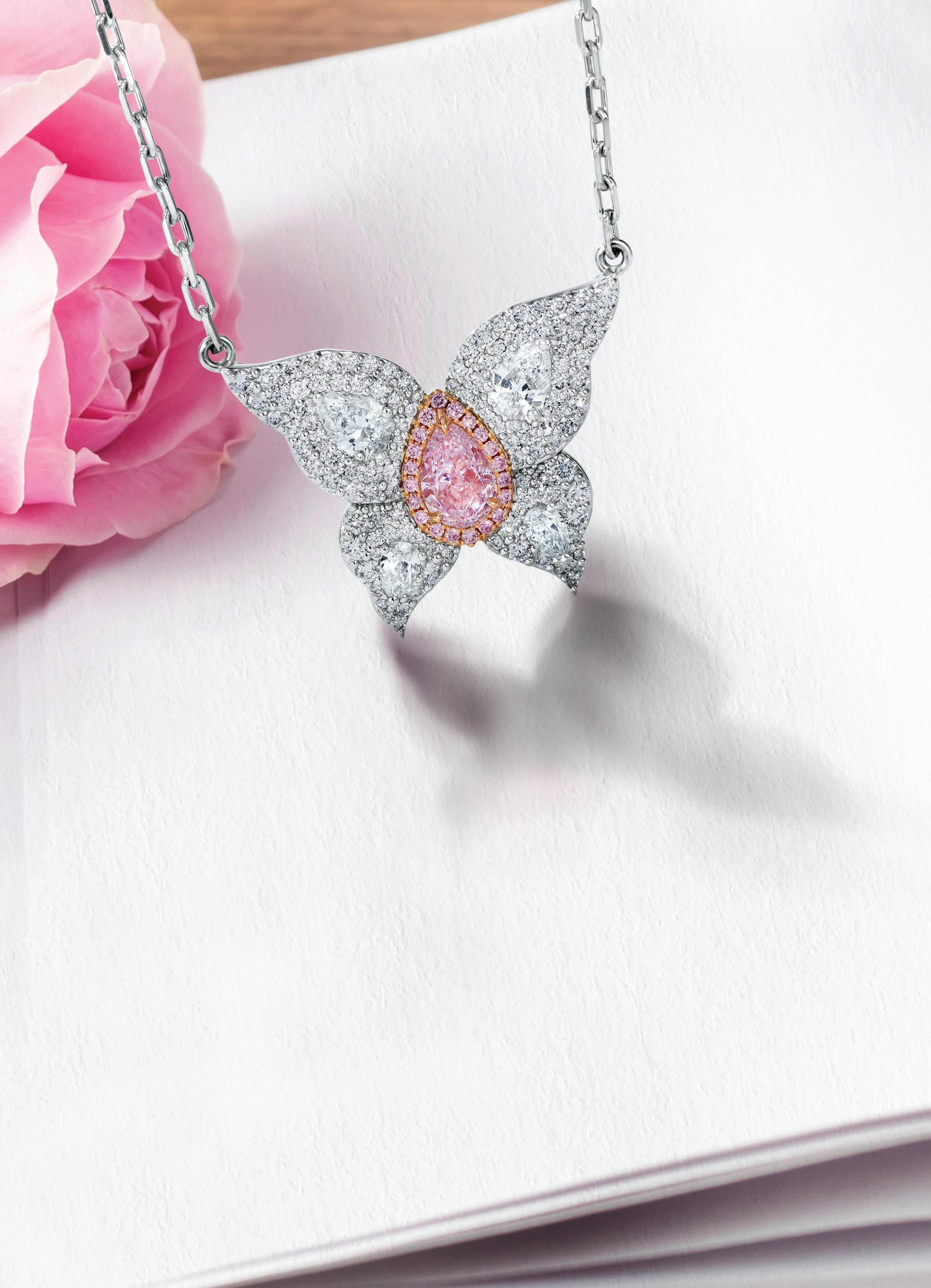

LEVIAN.COM/COUTURE • 877-2LEVIAN Design and Photo ©2024 Le Vian Corp. All Rights Reserved. LEVIAN.COM • 877-2LEVIAN • MLAA 484N, MLAA 484R HIGH JEWELRY COLLECTION
LOVE NATURAL FANCY LIGHT PINK DIAMONDS
PLATINUM
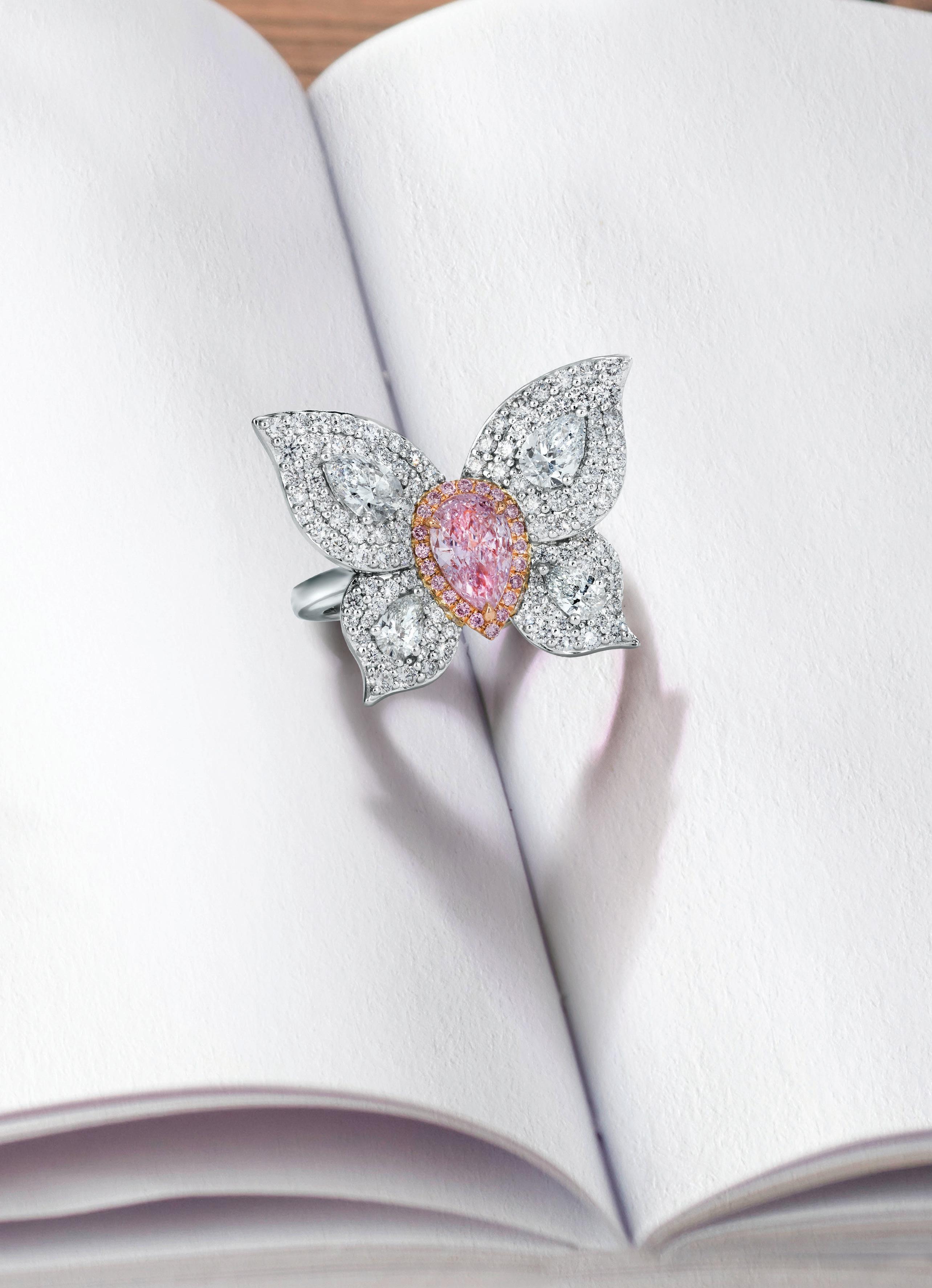






SAVE THE DATE JACK MARTIN FUND ANNUAL GOLF & TENNIS TOURNAMENT JOIN US AT FRESH MEADOW COUNTRY CLUB & DEEPDALE GOLF CLUB MONDAY | MAY 20 | 2024 HONORING THE LITTLE & SWERDLICK FAMILIES SPONSORED BY KAMCO SUPPLY CORP. & SEAVIEW MARKET For more information, please contact the Jack Martin Fund 212.713.9807 | P.O. Box 4952, New York, NY 10085 www.jackmartinfund.org In support of the Jack Martin Fund Division of Pediatric Hematology-Oncology at Mount Sinai.
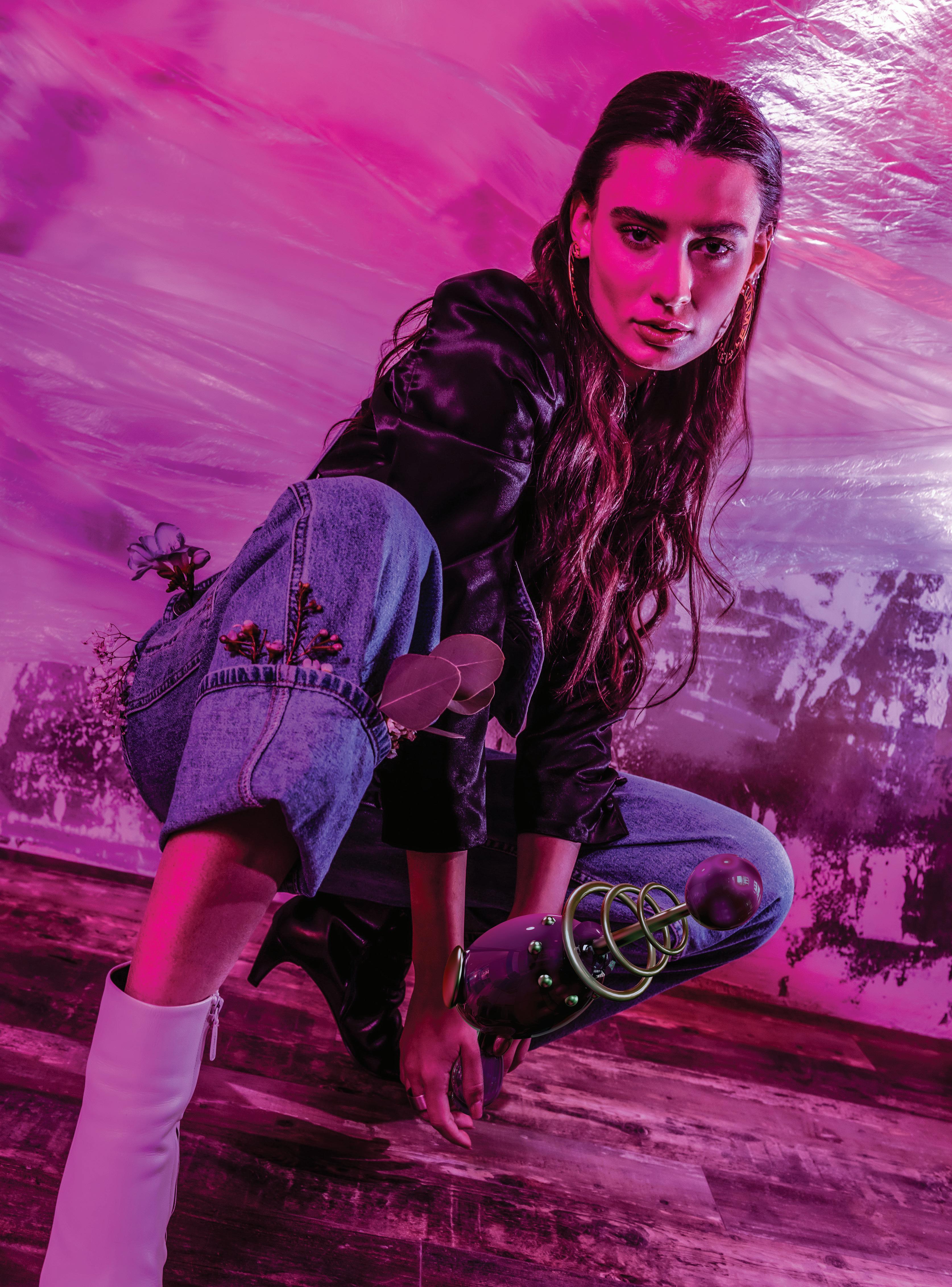

EXCLUSIVE DETAILS FOR SHOWS IN:
• Dallas
• Denver
• Las Vegas
• Los Angeles
• Nashville
• Orlando
• New York

MAGIC DELIVERS TREND AND YOUNG CONTEMPORARY BRANDS TO NEW YORK
MAGIC New York hit the Javits Convention Center to highlight must-have collections in women’s trend, young contemporary, modern sportswear, footwear and accessories for Fall/Winter 2024.
Over 340 brands were in attendance, 25% of which were new to show, including Katy Perry Footwear, Clara Sunwoo and Ellie Vail Jewelry. MAGIC New York had a strong international presence with Divineity, Canadian brand Mitchie’s Matchings and Italy-based Victoria Footwear among the brand lineup along with several women-owned lines, including BC Handbags, Jade by Jane, Meli Blanco and more.
In 2024, MAGIC is celebrating its 90th anniversary, and MAGIC New York will host fun community moments and proprietary research to honor its rich legacy. This includes happy hours and DIY bracelet-making. Additionally, MMGNET presented on-site programming dissecting the results from the MMGNET 2024 Fashon Consumer Report, which explores the intricacies of consumer purchasing habits.
“Our brand lineup is testament to the power of MAGIC,” noted Jordan Rudow, vice president, MAGIC. “We’re particularly proud of the percentage of new-to-show and international brands, affirming our growing reach.”
Noteworthy retailers at MAGIC New York included Anthropologie, Hemline, DTLR and Scout & Molly’s.
78 | FM April 2024 TRADESHOWS
Photo courtesy of MMGNET Group
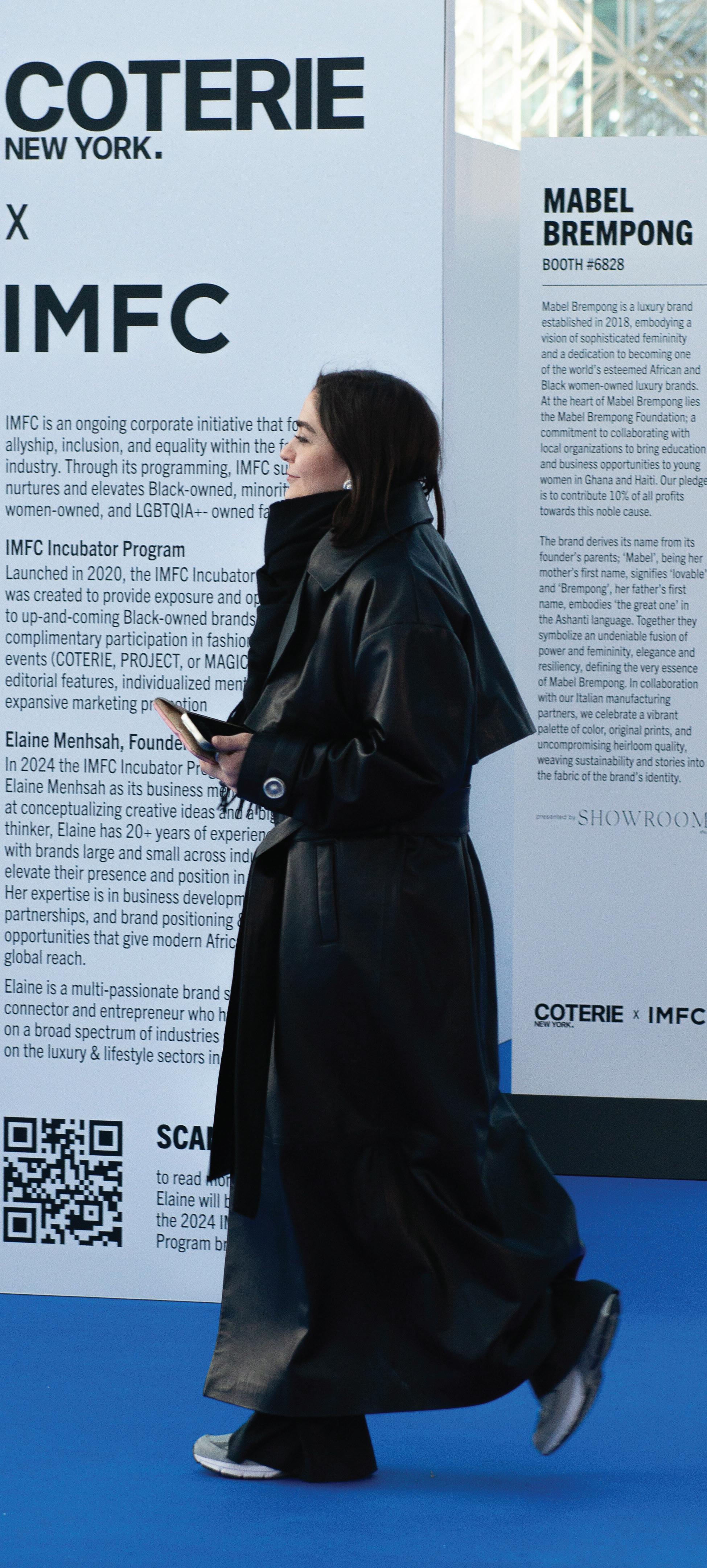
COTERIE NEW YORK PRESENTS
INTERNATIONAL CONTEMPORARY
BRAND LINEUP
COTERIE New York, the bi-annual wholesale fashion event merging the best contemporary and advanced contemporary women’s apparel, footwear, beauty and accessories, returned to the Javits Convention Center last month.
With a global audience of retailers, stylists and fashion experts, COTERIE New York highlighted the transformative power of technology and sustainability throughout the show. This season, the Verified Sustainable program returned with Brodie Cashmere, Haris Cotton, Y-Y and 1 People. In addition, COTERIE partnered with sustainability advocate Marina Testino and fashion stylist Barbara Velez to craft purposeful installations that showcased sustainable trends and explored future innovations in sustainability through an immersive activation brought to life by Arcadia Earth.
Other key moments at COTERIE included the AI Technology Lounge, an immersive experience showcasing artificial intelligence and augmented reality, which highlighted how machine learning and virtual experiences are reshaping fashion.
MMGNET presented on-site programming, dissecting the results from the MMGNET 2024 Fashon Consumer Report which explores the intricacies of consumer purchasing habits.
New to the show floor was Après Ski, a dedicated neighborhood presenting cold weather capsules and functional outerwear made for winter and ski holidays with Halfdays, Moose Knuckles, Canadian Classics and OOF Wear among the brand lineup. COTERIE’s exhibiting premium denim brands included Le Jean, Lee and Seventy + mochi. Jolie, Vacation and Ded Cool were featured alongside others in COTERIE’s beauty showcase.
Well known for a robust international offering, COTERIE fostered that growth with Italian brands Montereggi Point, Alienina and Giovanni Cavagna in attendance alongside Greedilous and Maison Nica from Korea and Turkish brands Occleus and Acaria Studio.
April 2024 FM | 79 TRADESHOWS
Photo courtesy of MMGNET Group




| April 2024 mannpublications.com







BE MORE ON TREND



The Las Vegas destination for top young contemporary brands and unmatched hospitality returns in 2024 with more resources than ever before. Starting this February, buyers can source from even more top lines and categories with the co-location of Womenswear In Nevada (WWIN) alongside Las Vegas Apparel at The Expo at World Market Center. Plus, gift and lifestyle crossover brands will be on display in the permanent showrooms that make this market unique among Las Vegas Fashion Week offerings. Together, the collaboration will create a new and exciting destination, filled with resources and amenities for buyers to enjoy. Don’t miss it!
Vegas




February 13–15, 2024
August 18–21, 2024

@apparelmarkets | LasVegas-Apparel.com





ATLANTA APPAREL REPORTS STRONG ORDER WRITING AND BUYER EXPERIENCE
Atlanta Apparel’s February 2024 market kicked off the buying year on a high note, with reports of strong orderwriting, supplemented by a wealth of well-attended market events, alongside the newly-designed Floor 5 buyer resource hub at AmericasMart Atlanta. “Buyers traveled far and wide to source all categories, and the momentum carried from pre-market appointments through the close of the show on Friday,” said Caron Stover, ANDMORESM SVP, apparel. “Market attendees travel and spend with intention, and Atlanta Apparel continues to be the premier one-stop-shop for retailers to find top wholesale apparel, accessory and shoe brands.”
Attendees traveled to Atlanta Apparel from 12 international countries and 44 U.S. states. Nearly 25% of Atlanta Apparel attendees were first-time buyers to the market. Atlanta Apparel opened with 475+ showrooms and 340+ temporary exhibits presenting a combined 3,280+ lines. Key categories in this market included accessories, contemporary, shoes, children’s, young contemporary and intimates. For the first time, the February market streamlined permanent showroom and temporary exhibit open and close patterns, allowing buyers to source the entire market on opening day.
In addition to exhibits, the new Buyer Resources on Floor 5 provided access to highly-attended trend and business education and pop-up brand activations, along with opportunities for networking, resting and recharging, in a convenient location between temporary exhibit and permanent showroom floors. The Floor 5 destination also debuted the exclusive new partnership between ANDMORE’s Apparel Markets and video commerce platform, CommentSold, providing booths with staff for buyers to “go-live” and sell virtually during market.
The next Atlanta Apparel market runs Tuesday, April 9 – Friday, April 12, at AmericasMart Atlanta. Permanent showrooms are open every day from 9 a.m. – 6 p.m., and temporary exhibits are open 9 a.m. – 6 p.m., Tuesday – Thursday and 9 a.m. – 3 p.m., Friday. ANDMORE’s five Atlanta Apparel markets feature the latest looks in contemporary, young contemporary, women’s modern, shoes, fashion accessories and more, plus specialty categories such as children’s and plus-size at AmericasMart Atlanta.
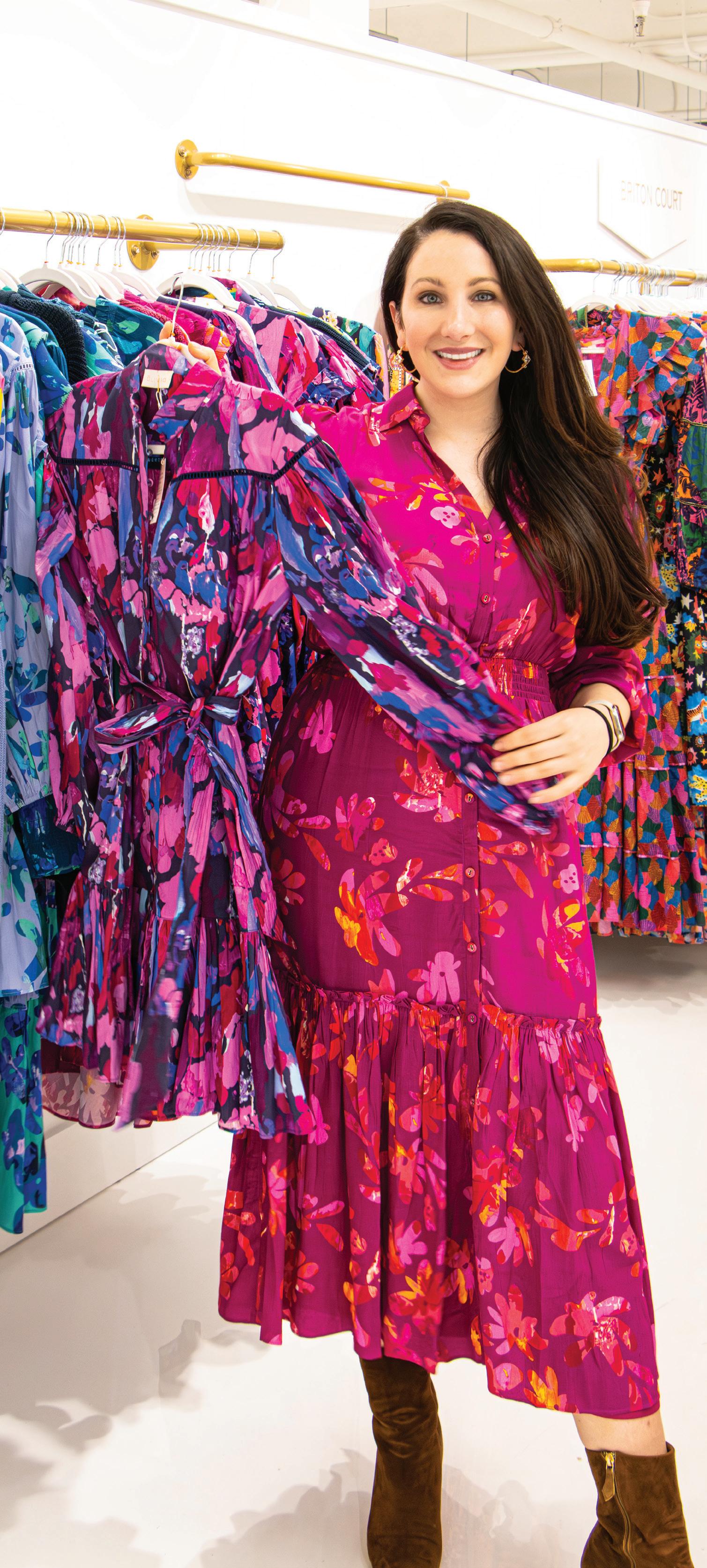
82 | FM April 2024 TRADESHOWS
Photo courtesy of ANDMORE
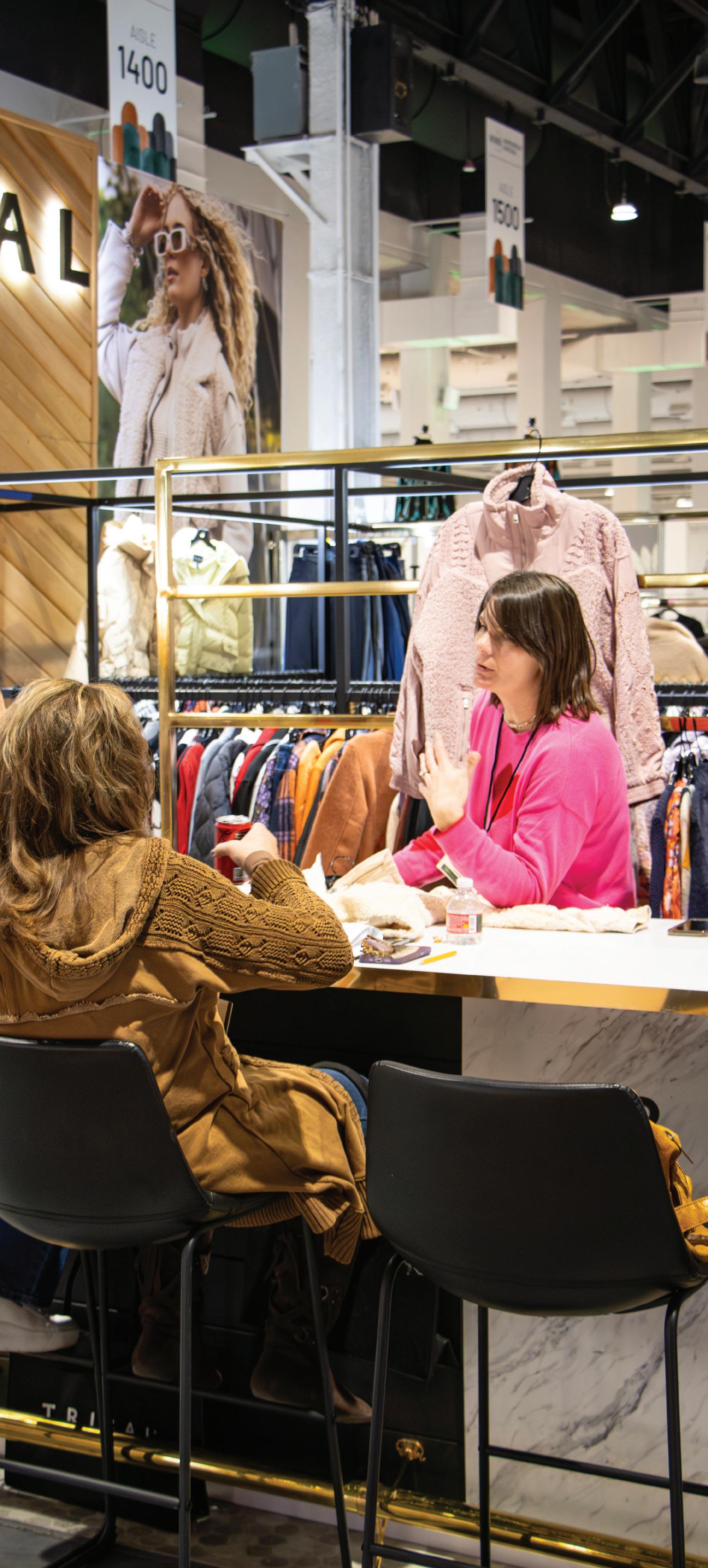
WOMENSWEAR IN NEVADA AND LAS VEGAS APPAREL’S PREMIERE COLLAB
On the heels of another successful edition of Las Vegas Fashion Week, Womenswear in Nevada (WWIN) and Las Vegas Apparel (LVA) celebrated the seamless culmination of their co-located buying events at The Expo at World Market Center Las Vegas.
This historic collaboration transformed The Expo at World Market Center Las Vegas into a bustling hub of commerce, creativity and innovation. Over three days, buyers and industry insiders converged upon the shows’ expansive space, immersing themselves in a whirlwind of fashion showcases, networking opportunities and business transactions. Throughout the event, attendees were treated to an unparalleled array of the latest trends, designs and collections from a diverse range of exhibitors. From cutting-edge young contemporary collections to premium women’s contemporary lines, the co-located events offered something for everyone, helping to reaffirm Las Vegas’ status as a global fashion capitol.
“The first co-located edition of Las Vegas Apparel and WWIN was electric, with positive feedback and energy throughout all three market days,” said Caron Stover, ANDMORESM SVP, apparel. “From the beginning, our collaboration with WWIN has just made sense, and last week’s combined market destination proved to be the right and best decision for buyers, brands and both show teams.”
The synergy between WWIN and LVA was palpable throughout the event, with buyers and exhibitors alike raving about the easy-to-shop, experience-driven location for the newly-combined Las Vegas Fashion Week staple markets. WWIN exhibitors and buyers who had never visited the Downtown Arts District were pleasantly surprised with how close the Expo is to other Fashion Week events as well as the quality of the nearby hotels and restaurants they explored. As the fashion industry looks ahead to future editions, market organizers Clarion Events and ANDMORE remain committed to building upon the momentum generated by this first-time collaboration.
The next editions of WWIN and LVA will return to their regular four-day, Sunday – Wednesday pattern, running August 18 – 21, 2024, at The Expo at World Market Center Las Vegas. For more information, please visit wwinshow. com and lasvegasapparel.com.
April 2024 FM | 83 TRADESHOWS
Photo courtesy of ANDMORE


FOUNDED BY JACQUES D’AMBOISE



ARTISTIC DIRECTOR KAY GAYNER
EXECUTIVE DIRECTOR JERMAINE JONES
48TH ANNUAL
BOARD CHAIR MARC S. SOLOMON



MONDAY, APRIL 15










6:00 PM COCKTAILS | 7:00 PM DINNER, PERFORMANCE, HONORS, AUCTION
THE ZIEGFELD BALLROOM

HONORARY CHAIRS
141 WEST 54TH STREET | NEW YORK CITY
HONORING
RICHARD E. FELDMAN President, SHS Foundation
BILL IRWIN
Tony, Drama Desk, OBIE, and MacArthur ‘Genius’ Award Winner
REMEMBERING
ARNOLD S. PENNER Dream Maker Award
WITH PERFORMANCES BY THE CHILDREN OF NATIONAL DANCE INSTITUTE
GALA COMMITTEE
Charlotte d’Amboise & Terrence Mann
Ariana DeBose
GALA CHAIRS
Paula & Jeffrey Gural
Helen Stambler Neuberger & Jim Neuberger
Amy Zhen & Christopher Schlank
Cindy Levine & Marc S. Solomon
GALA VICE CHAIRS
Madaleine Berley
Pamela Farr & Buford Alexander





Lauren B. Cramer
Trudy Chan & Thomas Discepola
Deborah Colson & Mark Diker
Jennie L. & Richard K. DeScherer
Valerie & Charles Diker
Patricia Dugan Perlmuth
Sari Chang Guthrie & Kevin Guthrie
Lisa A. Huestis & David E. Van Zandt
Laure & Maximilien Maisonrouge
Kathy & Joe Mele
Danielle Diniz & Daniel Ulbricht









ARNOLD S. AND MADALEINE PENNER FAMILY FOUNDATION
CHARITABLE TRUST WITH THANKS TO OUR SPONSORS

TO BUY GALA TABLES OR TICKETS: Please contact the NDI Gala Office at (917) 287-1399 or email ndigala@rcspr.com, or scan this QR code.


| April 2024 mannpublications.com
NATIONALDANCE.ORG
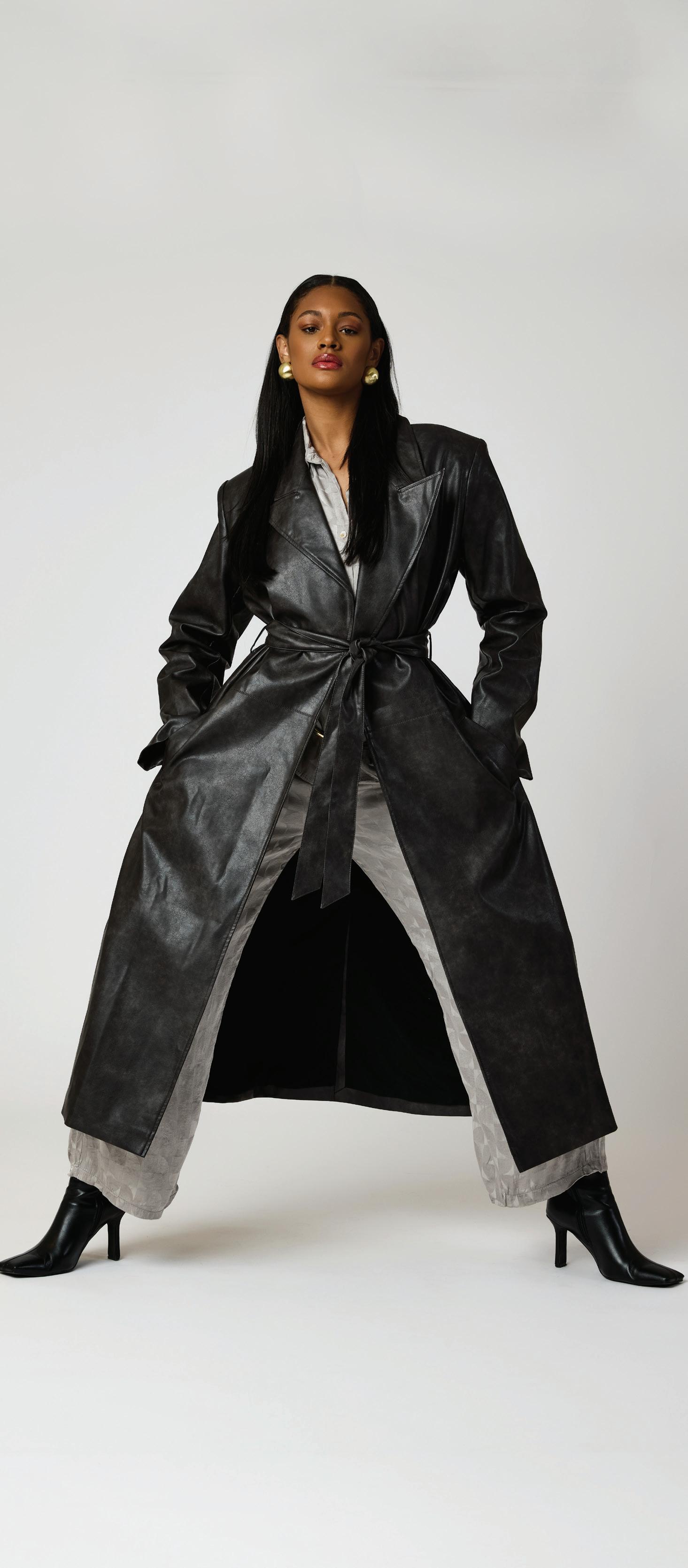
ATLANTA APPAREL RELEASES AUTUMN/WINTER 2024 TREND REPORT
Atlanta Apparel’s fashion office unveiled its extensive trend report for Autumn/Winter 2024, providing retailers with insights into upcoming colors, prints, essential apparel items, footwear and accessories. The April edition of Atlanta Apparel marks the season break, April 9 – 12, at AmericasMart Atlanta, with a continuing showcase of Autumn/Winter 2024 styles through June and August editions of Atlanta Apparel and the August edition of Las Vegas Apparel at World Market Center Las Vegas.
Must-have apparel items for next season focus on longevity with an emphasis on tailoring and easy-tostyle pieces. Staple items include: wide and pleated denim and trousers; column, asymmetrical and ribbed knit skirts and dresses; denim, sheer and romantic tops and cardigan sets; shaggy, shearling coats; oversized biker jackets; sharp shoulders, and cinched-waist power blazers; and trench coats.
The key colors for Autumn/Winter ’24 focus on mindful pastels energizing brights, timeless neutrals and tinted darks. A few of the season’s top colors include: Apricot Crush Orange, a wellness-inspiring color; Sustained Grey, Graphite, Italian Clay, Ground Coffee and Nutshell Brown, providing long-term wear and practicality; Panna Cotta Yellow, Fresh Mint Green, Nephrite Green and Cool Matcha Green, pulling a sense of optimism in foundational mid-tones; and Intense Rust Red and Midnight Plum Purple.
Footwear trends center around the idea that comfort is key, along with continuing classic styles and colors. For Autumn/Winter ’24, there will be a resurgence in styles including: Penny Loafers; Mary Janes; ballet flats; statement mules; the slingback and clogs. The non-shoe continues to grow in popularity, bringing mesh and seethrough designs to comfortable styles such as mules and flats. Numerous designs will capture the spirit of embracing life’s joys with metallic accents or sparkling rhinestone embellishments adorning playful styles such as: knee-high boots; court shoes and Y2K party shoes.
Accessories for the next season add embellishments to classic styles through the use of bold accents: statement earrings; belts with large buckles; pendants on necklaces; volume scarves and neckties; ribbons and bows; modern occasion clutch; and metallic hardware. Additional timeless trends for the Autumn/Winter ’24 season include: ankle socks; essential 90s and oversized shoulder bags; and baseball caps.
April 2024 FM | 85 TRADESHOWS
Photo courtesy of ANDMORE
















Join Jeffrey Mann and the Mann Charitable Foundation at the beautiful Fresh Meadow Country Club in Lake Success, New York for a great day of golf, food, and networking.
The Mann Charitable Foundation was founded over 20 years ago in memory of Marion and Irving Mann. Its mission is to fund research for geriatric diseases, and to ultimately find a cure for Alzheimer’s disease. Last year, the Mann Charitable Foundation expanded its initiatives to include Crohn’s and colitis, breast cancer, and liver diseases. This year we are expanding our donations to lymphoma and macular degeneration.
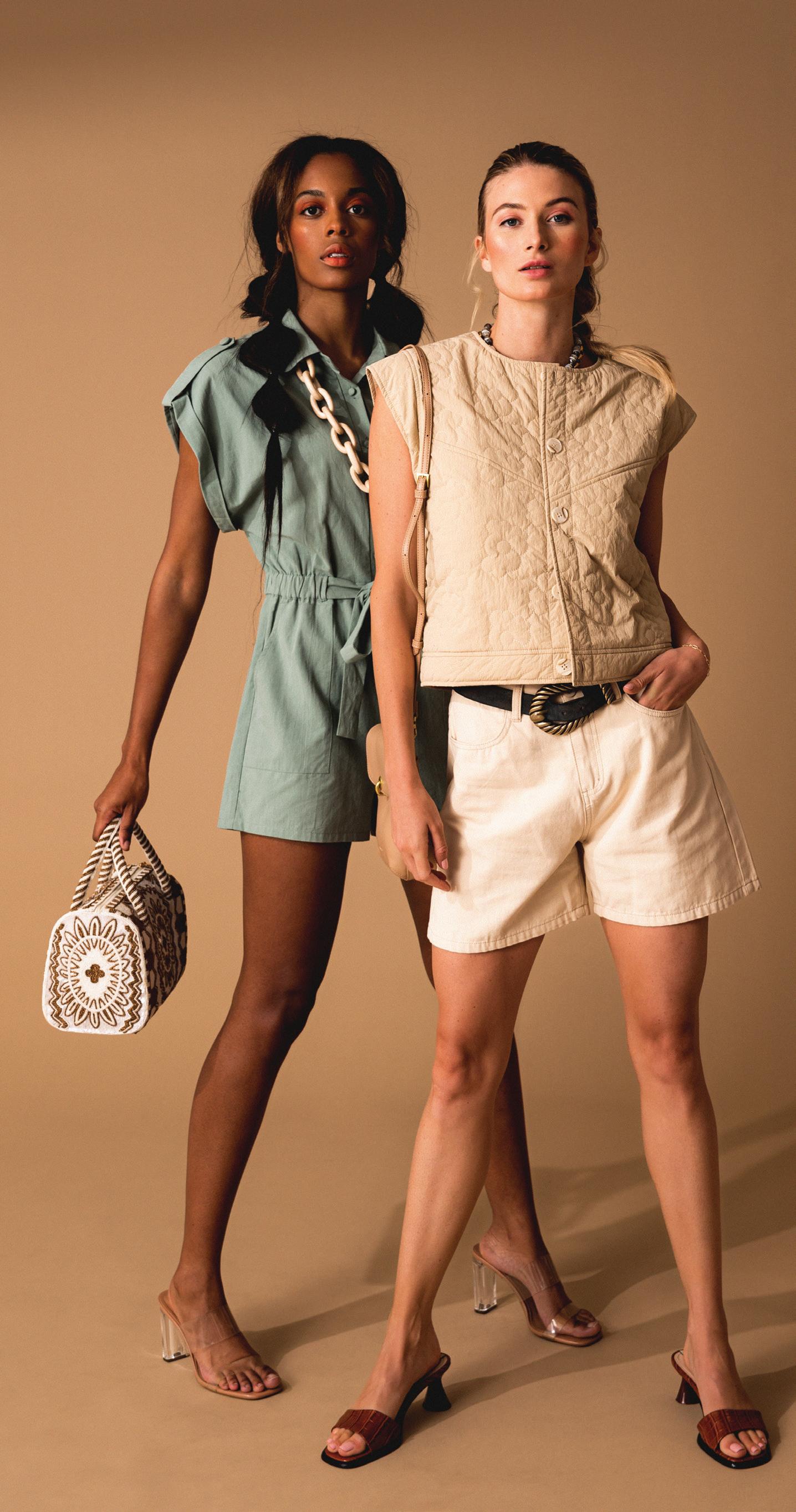
AUGUST 19
, 2024
Ticke GOLF
per person
per foursome DINNER & COCKTAILS ONLY $300 per person HONOREES T O BE ANNOUNCED N EXT MONTH ANNUAL GOLF OUTING
Herrera at 212-840-6266 x 313 pherrea@themanncharitablefoundation.com Itinerary 8:30 AM Arrival and Registration 9:00 AM Breakfast/Brunch 11:00 AM Call to Carts 11:15 AM(SHARP) Shotgun Start 5:00-6:00 PM Hors D’oeuvres and Cocktails 6:00-7:00 PM Dinner and Presentation of Golf Winners and Honorees For more information, please contact
$850
$3,400
Penelope
STEP INTO SPRING
Look ahead to bright days and sunny styles as you source Spring/Summer ’24 and more at Atlanta Apparel this October. See full collections for the next season as well as top brands for Resort, Accessories, and Shoes. Don’t miss the one market where you can find everything you need in one place, with affordable hotels and plenty of award-winning dining and entertainment options nearby, trend presentations to inspire you, and fun activations to make your trip memorable.
FUTURE MARKET DATES
October 10–14, 2023
February 6–9, 2024
April 9–12, 2024
June 4–7, 2024
July 30–August 2, 2024
October 15–18, 2024
Atlanta-Apparel.com
#atlapparel
mannpublications.com April 2024 FM | 87
| @apparelmarkets
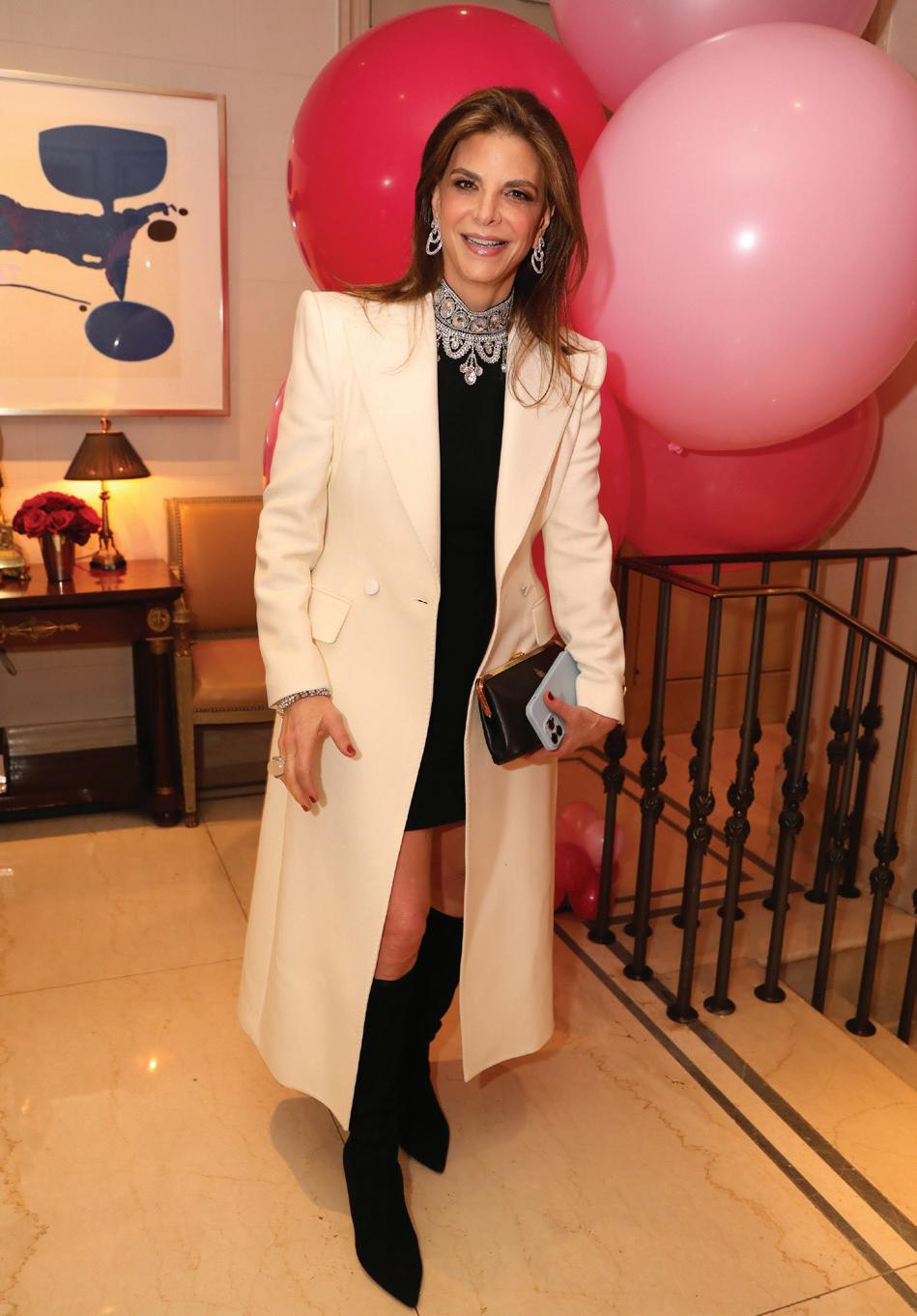
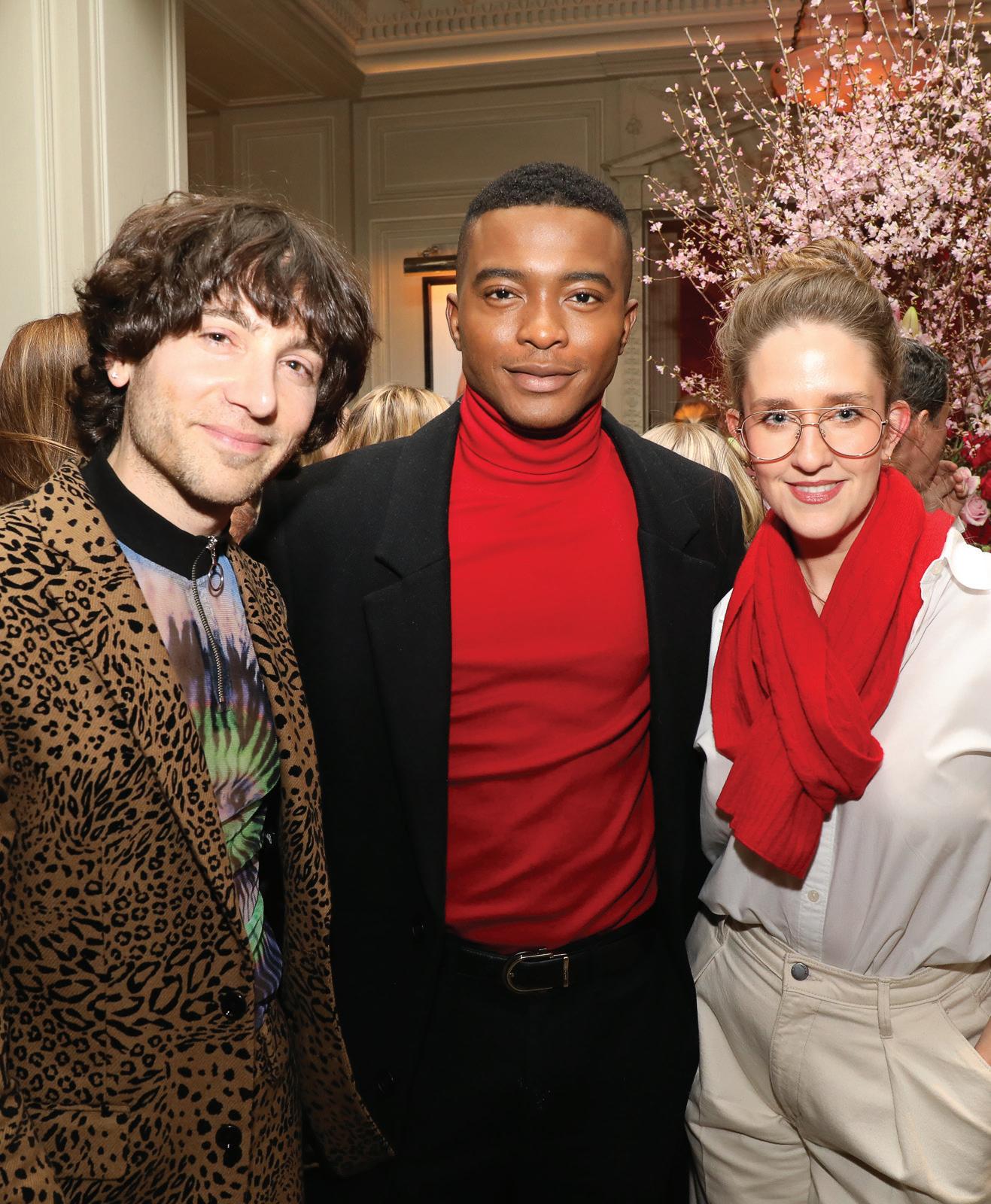
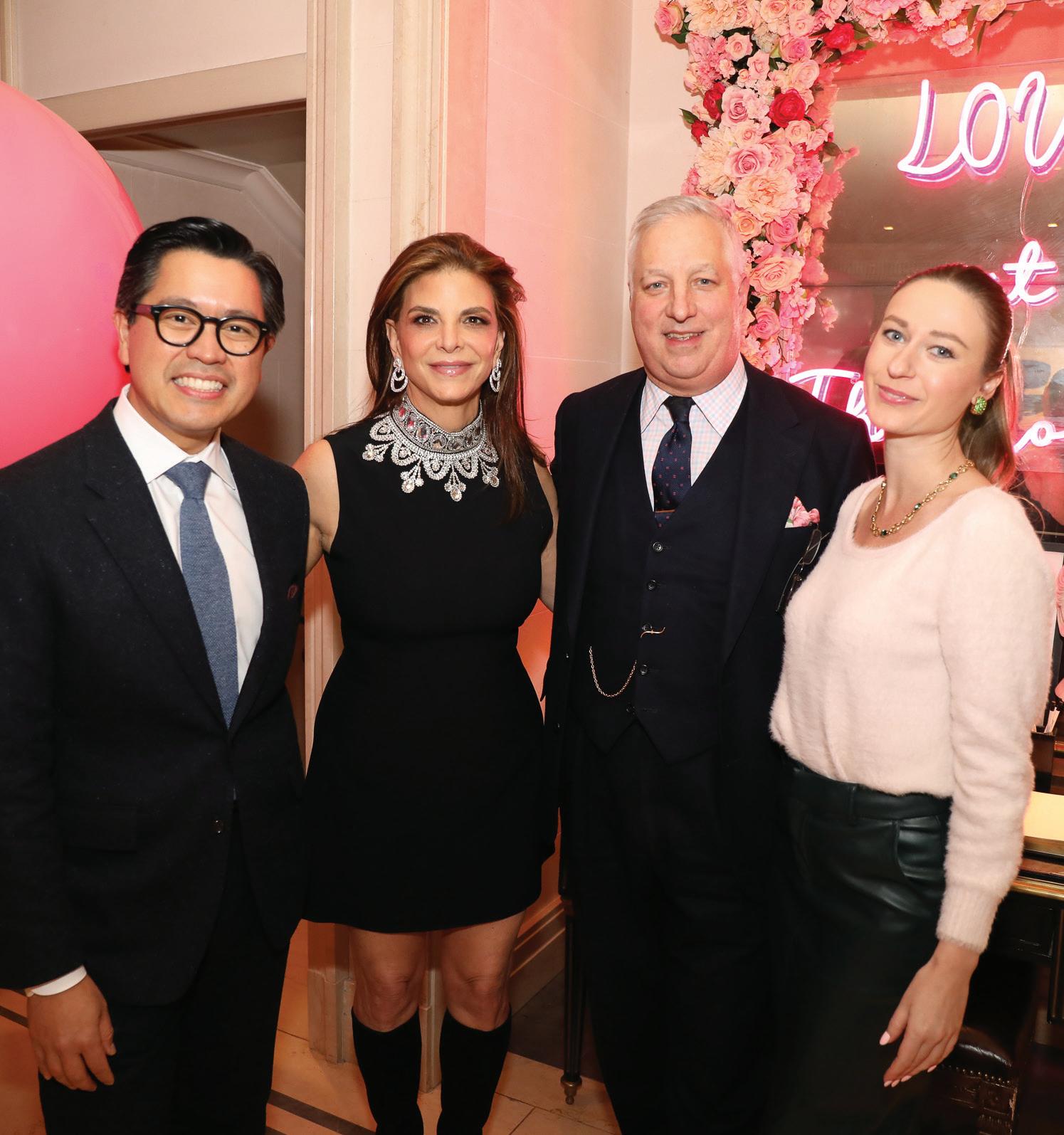

88 | FM April 2024 mannpublications.com FASHION RECAP
Oralia A. Villarreal, Sophie Saint Thomas
Gregory DelliCarpini, Igee Okafor, Nicole Vassallo
Dina De Luca Chartouni
Ernesto Floro, Dina De Luca Chartouni, Heiko Kuenstle, Sarah Bolton
THE LOWELL AND GRAFF CELEBRATE NEW YORK FASHION WEEK
Photos courtesy of John Calabrese
To commence New York Fashion Week (NYFW), The Lowell Hotel hosted “Love at The Lowell.” The event celebrated the launch of The Lowell’s new in-suite “Luxury of Love” package experience, created in collaboration with Graff. The event took place in the hotel’s iconic Club Room, adorned with festive decor including show stopping floral arrangements, a whimsical display of sweets and a sparkling showcase of Graff diamonds.
Attendees included Dina De Luca Chartouni (The Lowell Co-Owner), Katya Tolstova (Model), Camille Opp (Model), Gregory DelliCarpini (Tastemaker), Igee Okafor (Tastemaker), Karina Bik (Tastemaker), Hannah Harrell (Tastemaker), Kate Bartlett (Tastemaker), Kristopher Fraser (WWD Contributor), Kristin McNamara (New York Post), Alex Kirkman (Freelance Writer), Yara Askkari (Open Spaces Magazine Founder), among others.
During the NYFW season, The Lowell offered guests the “Luxury of Love” package that included overnight accommodations in a room of their choice, as well as a suite of gifts from Graff to charm their loved ones. The experience began with a half-carat heart pendant necklace, a sensual signature Graff scent diffuser, a box of Graff chocolates and a limited-edition coffee table book from the esteemed high jewelry house. The option to select a larger-carat pendant or other Graff jewelry was also available (price will vary). The items were beautifully presented in the suite with flowers, champagne and a custom note. Guests also enjoyed a three-course dinner for two at Majorelle and a full American breakfast for two.
The Lowell is a five-star luxury landmark hotel in the heart of Manhattan and rises 17-floors above an iconic residential neighborhood, a stone’s throw from the celebrated fashion houses of Madison Avenue and footsteps from Fifth Avenue and the vast oasis of Central Park. It is home to 74 rooms and suites which offer guests the feeling of a private New York apartment, many have spectacular views of Manhattan from beautiful terraces, gourmet kitchens and original, wood-burning fireplaces – a rare find in New York. Situated amongst the most exclusive addresses on the Upper East Side, the privately owned The Lowell was established as a luxury hotel in 1927 and is the definition of classic New York elegance and is a member of The Leading Hotels of the World. For more information, please visit www.lowellhotel.com.
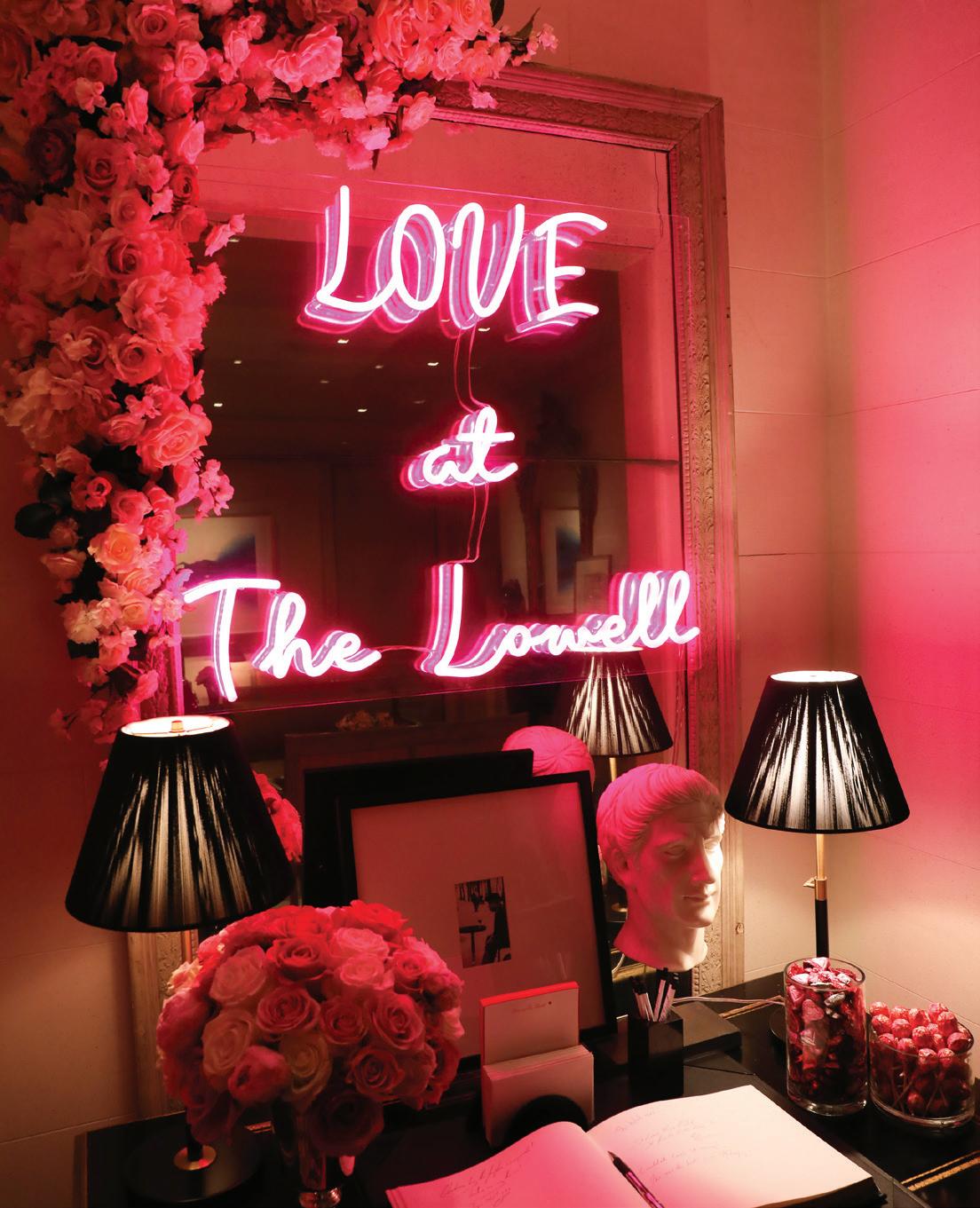

mannpublications.com April 2024 FM | 89 FASHION RECAP
The Lowell Hotel Writing Desk
Dina De Luca Chartouni, Isabella and Charles Ponti
PELLETTERIA ARTIGIANA VIVIANI
A LITTLE GUCCI, A LITTLE ARGENTINA,A LOT FLORENCE
By Laurie Melchionne
Leather handbags, synonymous with Florence’s diverse Renaissance spirit, find their quintessence at Pelletteria Artigiana Viviani. Nestled on Via Guelfa in Florence’s centro storico, the workshop and boutique are within walking distance away from Medicean landmarks like Palazzo Medici Riccardi, the Basilica di San Lorenzo and the iconic Cattedrale di Santa Maria del Fiore. Suffice it to say, when founder Renato Viviani chose the spot in 1965, the historic location was top of mind (it also happened to be the former studio of Giuseppe Poggi, the architect behind Piazzale Michelangelo).
Renato Viviani’s journey with the Pelletteria is as storied as the city of its birth. At the start of his career, Viviani apprenticed in the workshop of Guccio Gucci himself. While Viviani’s craftsmanship flourished, World War II’s clouds blackened Italy’s horizon and drove him across the sea to Argentina. There, he continued his trade in handbags, blending traditional Tuscan craftsmanship with Argentinian leather techniques. For years, he honed his unique aesthetic and dedicated production practices from his Calle General Escalada workshop in Buenos Aires.
By 1965, Viviani, his wife Delia, and their young daughter Viviana returned to Florence to deliver the family business home. Just a year later, Viviani—again—cemented the Pelletteria in legendary Florentine history. On November 4, 1966, the overflowing Arno River drowned most of the city—and Viviani’s brand-new workshop. A deadly catastrophe, the flood hurled at the City of the Baptist its worst blow since the war.
But in traditional Florentine spirit, the disaster did not break Viviani. The workshop was rebuilt. Business resumed as usual and eventually blossomed. Quality materials and head-turning designs flocked fashionistas to the Pelletteria. Before long, Viviani even had a new apprentice.
His daughter, Viviana.
Today, Viviana shares her father’s legacy with her own son, Leonardo. With her husband, Francesco, in charge of material cutting, you’ll find the mother-and-son team in the workshop handcrafting Tuscan leather with the Argentinian-Italian values, skills and techniques used by Renato Viviani in that same room. The workshop’s open layout reveals to customers a nostalgic glimpse of Florence’s retail of old: craftsmen at work, surrounded by hardware, tanned leather scraps and skiving and sewing machines.
Viviana and Leonardo are hands-on—literally. Stitching, dying and painting, embossing and hardware nailing are some of the daily techniques, all done by hand, that eventually become a bag.
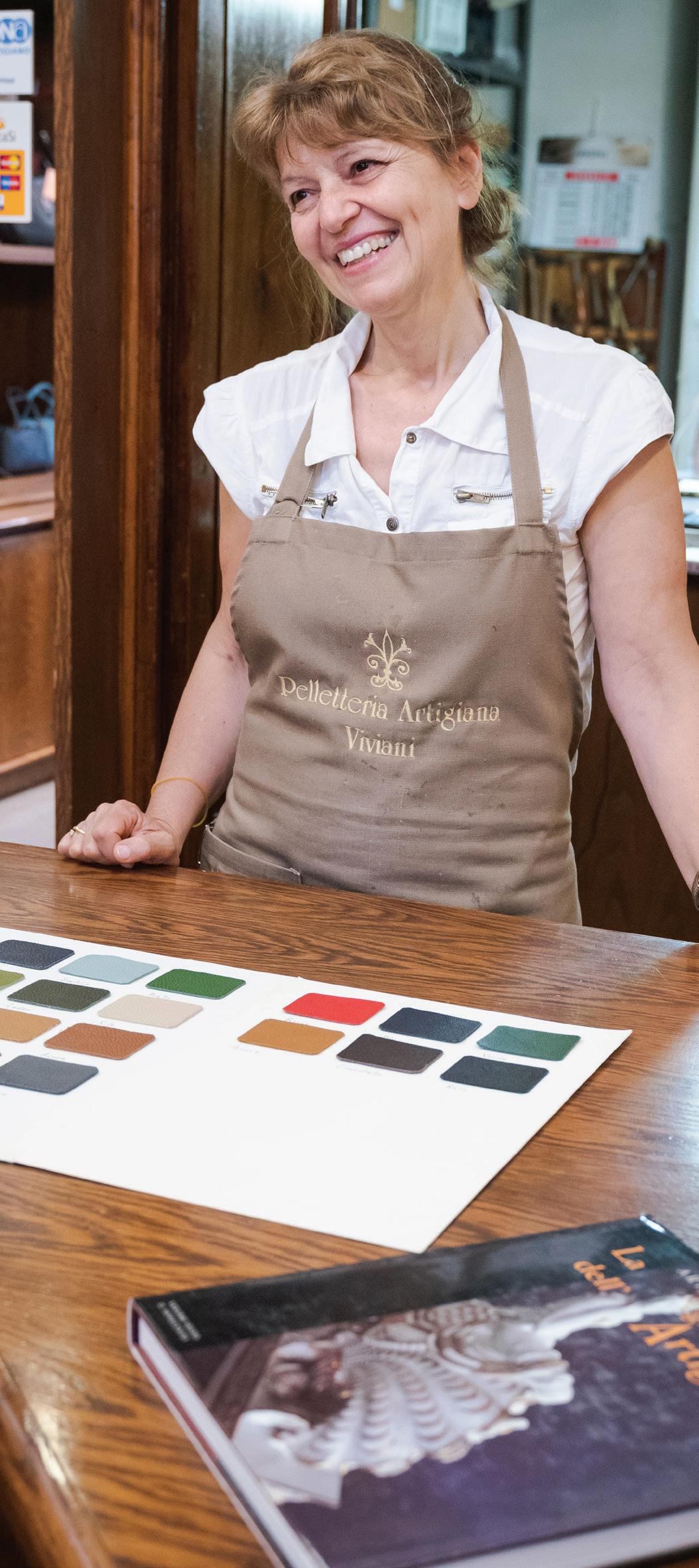
90 | FM April 2024 mannpublications.com
FASHION
HISTORY
FASHION HISTORY
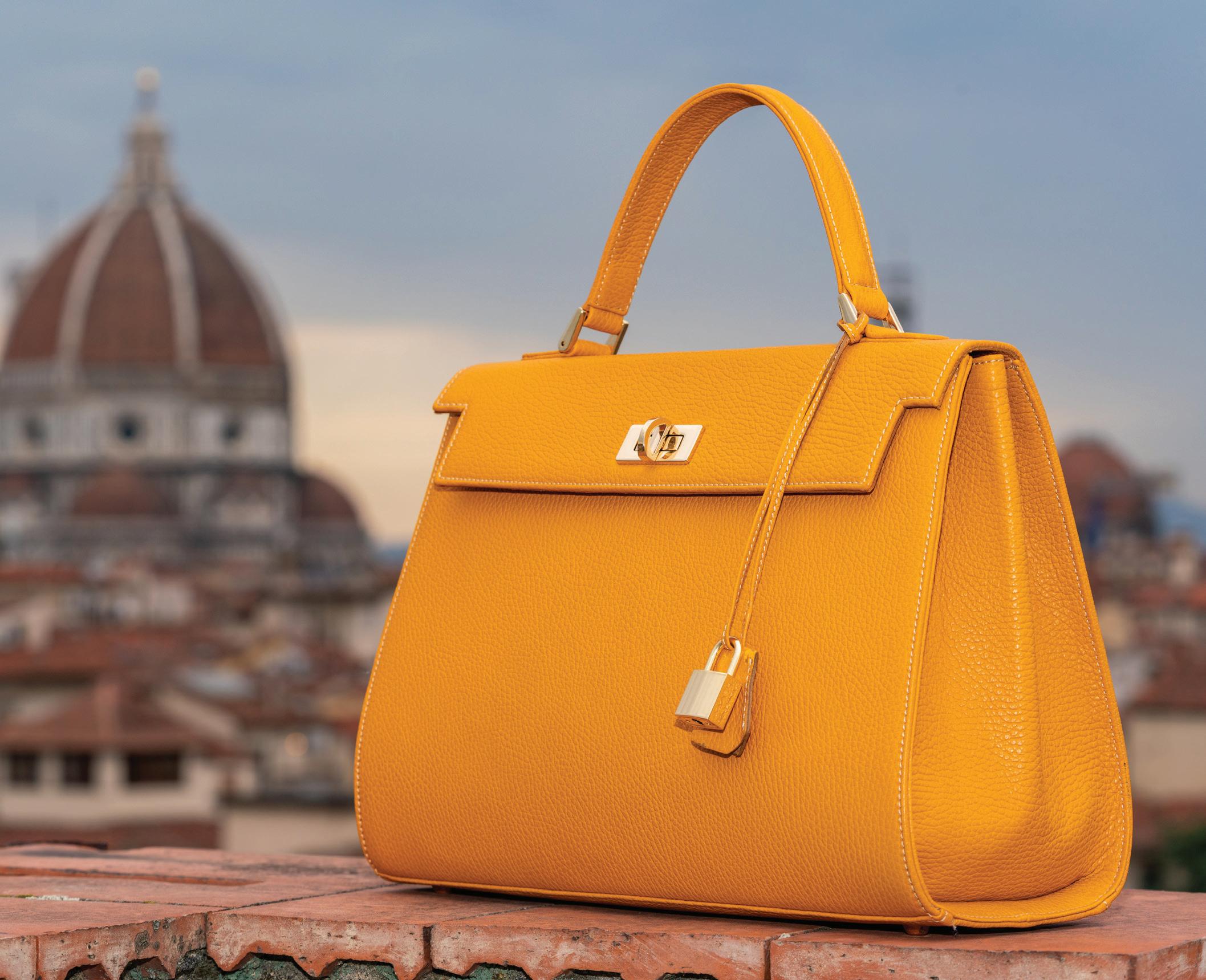
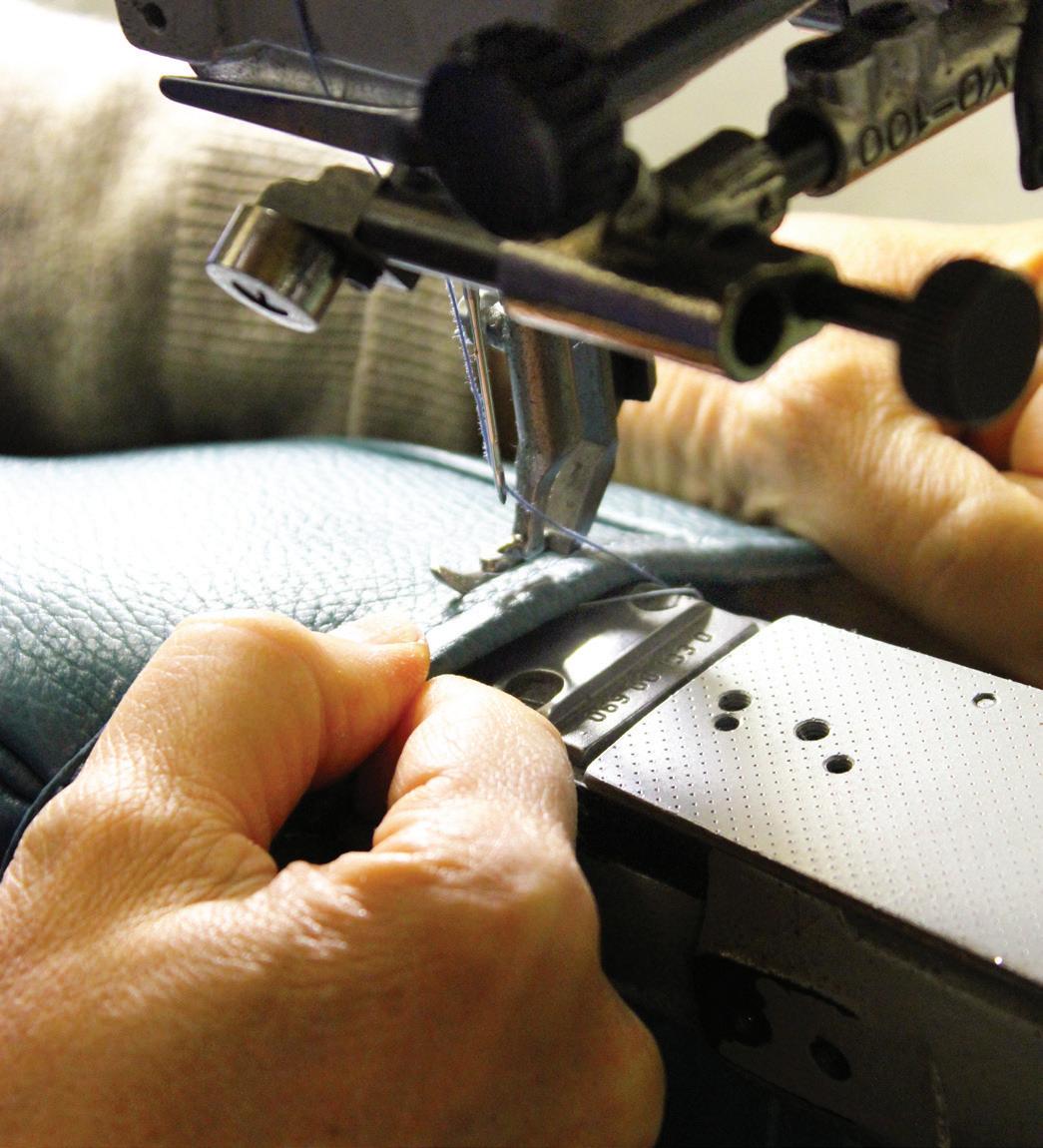
“The creative process is never-ending,” said Viviana. “In my everyday life, inspiration for a new design or modification on an existing model can come at any moment. The beautiful, genuine part of aritsan work is that we give each piece all the time and attention it deserves, focusing more on quality than on the number of bags we produce.”
The rest of the shop is a storefront. Lining its shelves is a rainbow array of handbags, backpacks, shoulder bags and more. Full-grain calf leather, the pinnacle of quality Tuscan leather, envelopes each design. Shoppers can select from nearly 30 color options, gold or silver hardware accessories and leather or bamboo handles. The options are as endless as each bag’s name; Lucrezia, Clara and Camille are just some of the “ladies” that can join your wardrobe. Christened with Italian women’s names, each bag pays homage to the Italian femininity and individualism that inspires Viviana’s designs. Pelletteria Artigiana Viviani proudly boasts its Made in Italy label and is also one of the Historical Listed Shops of the City of Florence (Esercizi Storici Vincolati). This designation brands the store an official Florentine Historical Shop and, amidst a rapidly evolving industry, lets it stand as a beacon of traditional craftsmanship. A living symbol of Italian quality, heritage and artistry, the Pelletteria is more than a bag brand. It is an ageless pillar of Italian fashion, one for the history books.
mannpublications.com April 2024 FM | 91
Photos courtesy of Christina Andolcetti
KNOW GREATER ADVICE
The challenges facing businesses today have never been greater – and access to smart advice has never been more important.
PKF Clear Thinking and its partners at PKF O’Connor Davies have one of the industry’s deepest benches of interdisciplinary advisory experts across multiple industries. This strength not only offers our clients a greater depth of resources, reach and talent – it solidifies our firm’s national presence.
From Investment banking and ESG to bankruptcy and restructuring, valuation services, cybersecurity and privacy, and more, our team has the experience and expertise to deliver strategic advice that drives real value.
With PKF Clear Thinking, our clients know greater service, know greater insights, Know Greater Advice







For


mannpublications.com | April 2024
more information visit pkfct.com


mannpublications.com April 2024 FM | 93 Risk & Insurance | Employee Benefits | Retirement & Private Wealth Ready for tomorrow. HUB International Northeast o Contingent Business Interruption o Credit Insurance o Ocean Marine Insurance o Price Valuation o Supply Chain Distribution o Much more! Insurance for the apparel industry’s every need. Reach for your goals with HUB. Let’s protect what matters most to you. hubinternational.com Frank DeLucia Senior Vice President (212) 338-2395 frank.delucia@hubinternational.com
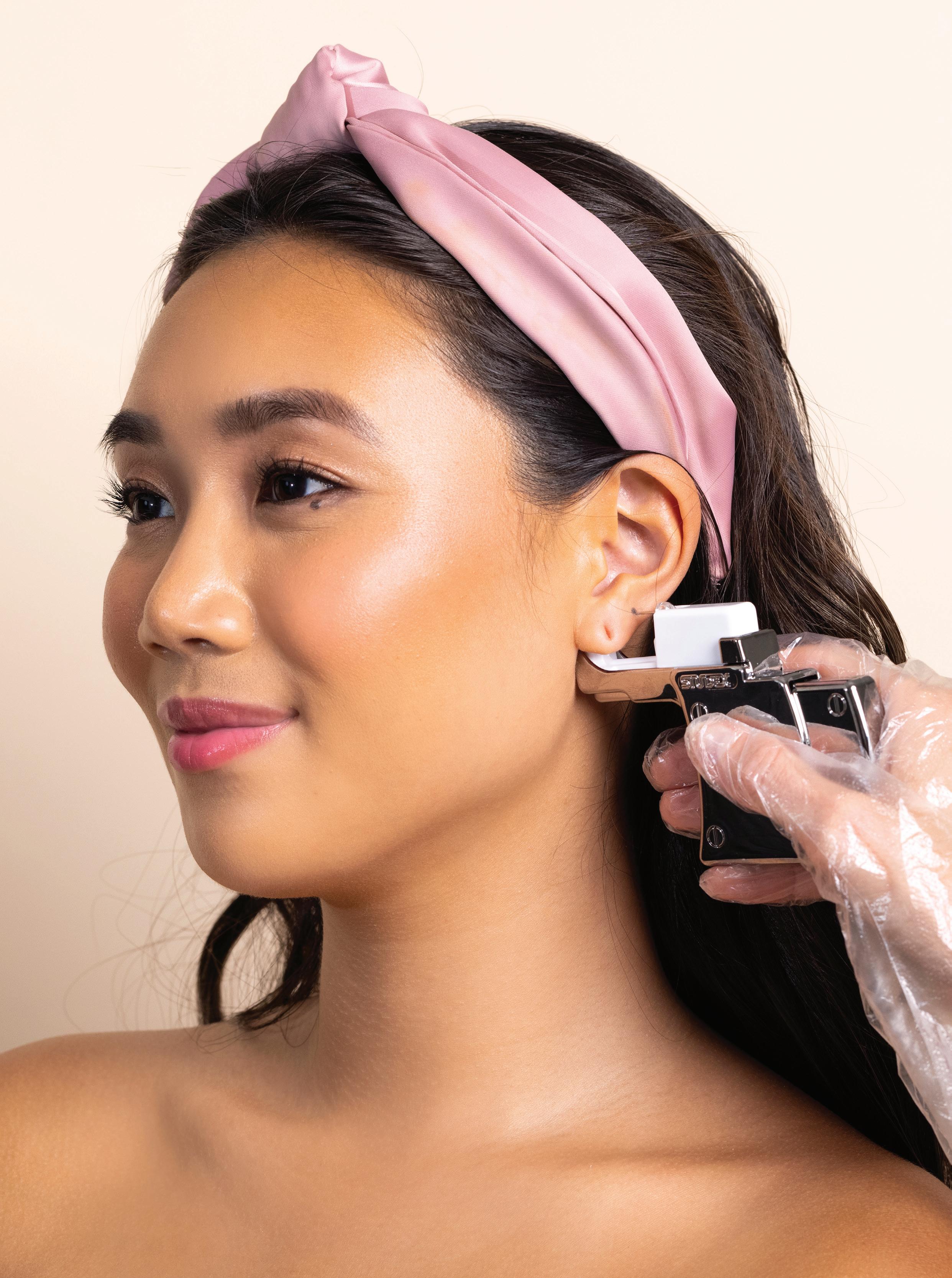
LAST LOOK
Photo courtesy of STUDEX
WELCOME TO THE STUDEX PIERCING ACADEMY: QUALITY PIERCING SOLUTIONS
By LAURIE MELCHIONNE
STUDEX, “the world’s largest ear piercing manufacturer” according to their website, is trailblazing in the world of piercings, whether at-home or in the studio. STUDEX provides piercing professionals the safe, trustworthy and high-quality piercing solutions for their clients. Not only does STUDEX provide accessories and piercing tools, but it also allows its users to take advantage of top-line piercing training, awarding professionals the lessons they need to know to provide customers excellent care and well-informed services that are clean, healthy and full of expertise.
We chatted with Maile Pacheco, CMO of STUDEX, about the company’s unique category solutions.
How did you get involved with STUDEX®?
I’ve always had a personal passion for body modification as a form of self-expression. In 2014, I founded a brand that helped others express their beauty by delivering hair, makeup and nail services in-home, beGlammed, now known as Priv App. In 2018, I was introduced to STUDEX® when we piloted ear piercing on demand, booked through the mobile app. It was a hit. Ear piercing quickly became one of the most requested beauty services for partnered events, conferences and music festivals. Fast-forward a couple of years and after an exit and a merger, in 2020 I joined the STUDEX® team more intimately as the chief marketing officer to help the brand evolve from a trusted legacy manufacturer to a consumer-friendly retail and pharmacy piercing partner.
Since then, with all hands on deck from our internal teams, we have helped to launch ear piercing services with partners like CVS Beauty, Five Below, Lovisa, Rowan (formally at Target) and Pandora (Europe), as well as expanding from ear piercing to nose piercing with our legacy partners, Banter by Piercing Pagoda, Claire’s and Icing.
How did STUDEX become a global ear-piercing manufacturer with a presence in almost every continent?
STUDEX® has been hot since 1976! The company was founded in California by Croatian native Vladimir Reil, who is still involved with the business today. Vladimir, who was a mechanical engineer making screws, nuts and bolts, was approached by a customer to produce piercing studs. After building molds, retro-fitting machines to make earrings and jewelry and investing in the new business venture, that customer disappeared and Vladimir expanded production to manufacturing a delivery system for the piercing stud, the very first ear piercing device and quickly realized his mechanical genius was a total white space in the piercing industry worldwide. Since then, STUDEX® has pierced over a billion ears, with home offices in over 46 countries and distribution to over 100 countries. With quality, safety and efficacy being STUDEX® highest lever, and with global relationships and trusted partnerships in high demand, STUDEX® dominated as a vertically-integrated supplier and manufacturer worldwide.
What sets STUDEX® apart from other ear-piercing tools/solutions?
STUDEX® dominates over 80% of the world’s market share in manufacturing piercing products, supplies and piercing partnerships, predominantly with pharmacy chains, retailers and jewelers. Many of our piercing partner relationships go back 20 years or more. Our partners share the
same values in product performance, safety, innovation, quality and integrated training programs. Additionally, they ultimately deliver a comfortable and memorable experience for the end consumer getting a piercing. That’s what sets us apart from others; we are more than a manufacturer and supplier.
What specific benefits does STUDEX® training offer aspiring ear piercing specialists/at-home ear piercings?
STUDEX® has recently revamped and optimized our educational programs for independent piercers and small businesses, now known as STUDEX’s Piercing Academy™. We offer several certifications, from a refresher course and personal ear piercing training in person or virtually, to enterprise level training for small groups and Train-the-Trainer programs for larger businesses. Alumni of the Piercing Academy™ are granted with additional discounts on products, virtual meet-ups with STUDEX® corporate educators and other Alumni, a media hub with downloadable signage and retail display assets for promoting piercing services and monthly newsletters with brand updates, piercing tips from our educators, and limited edition product offerings.
Tell us a bit about the piercing device and jewelry.
Our device has no trigger, no cock back, no bang and does not shoot an earring through the ear, like some legacy piercing devices that our grandparents may have utilized. In the USA and most global markets, the leading device that has dominated the industry for over 20 years is the STUDEX System 75™, an FDA medical piercing device that uses hand pressure to pierce ears, paired with pre-sterilized piercing cartridges containing stud earrings, made of high purity metals, like surgical grade stainless steel, 14K+ gold and titanium, making our earrings hypoallergenic and great for sensitive ears and skin. The piercing stud is the only part of the device that actually touches the ear; we like to say that our System 75™ device is contactless in that way. Unlike needles, no parts are ever reused or repurposed, and the earring leaves with the customer and the cartridge can be disposed of.
What is next for STUDEX? How can people find STUDEX®?
STUDEX® just got a makeover! As I mentioned before, we are taking our legacy look from manufacturer to consumer-friendly in our look, mood, tone of voice and packaging. We have become even more integrated with our long-standing partners and identifying key social moments to get in front of new customers and introduce STUDEX®, not as a new player in the game, but the piercing brand you didn’t realize you already knew. This April, we are partnering with Banter by Piercing Pagoda for the 2024 men’s college basketball tournament in Arizona, where we will see over one million people in just four days, and will be offering a unique piercing experience, themed with basketball in mind.
Additionally, STUDEX® will continue to innovate as customer demand evolves, and have recently launched lab-grown diamond piercing studs and elevated platinum piercing studs with Claire’s, Icing, and other partners.
mannpublications.com April 2024 FM | 95 LAST LOOK







mannpublications.com | April 2024 T WE NT Y- NIN TH ANN U A L GOL F OUT I NG Monday, July 22nd, 2024 SAVE THE DATE In vite/ Registration information to follow
marcumllp.com
people
answers
answers? Ask MARCUM MARCUM’S NATIONAL CONSUMER PRODUCTS GROUP LEADERS: MICHAEL SACCO, CPA Partner & National Consumer and Industrial Products Leader michael.sacco@marcumllp.com RONALD FRIEDMAN, CPA Partner & California Consumer and Industrial Products Leader ron.friedman@marcumllp.com
Ever wonder where the
with all the
get all the


STREAMLINING THE SHIPPING PROCESS


Dynamic’s latest online platform, DYNAMIC TMS, automates the tendering of a shipment to the preferred carrier based on your criteria. The system automates the routing, optimization, and real-time visibility of each transaction resulting in a more efficient cost saving solution.

Retailers are successfully using our new user-friendly technology and experiencing great results. Contact us today to learn how our new platform can improve your shipping experience.
973.344.6300 x 304
dynamiconline.com
