makingit_18_pp30-31_asia_3-column 11/05/2015 12:39 Page 31
Greening retail and supply One initiative implemented under the SWITCH-Asia programme in India is the Green Retail India project. Working with retailers in major cities, such as Bangalore, Chennai, Delhi and Mumbai, the project has used ambitious sustainability criteria to
establish 30 pilot stores from four major Indian retail chains. A first baseline study estimates a 40% reduction in energy consumption in these pilot retail stores is possible through energy efficiency measures, which can often be as simple as putting doors on fridges and freezers and improving airconditioning systems. An estimated reduction in solid waste by 30% in pilot retail stores by the end of the project is considered possible. The project not only looks at retail stores as such, but also works upstream with suppliers to initiate green supply chain measures. Based on the experiences from pilot stores, a roadmap for sustainability for the Indian retail sector is currently being developed. Another example from China is a project aiming to increase consumer awareness about sustainable lifestyles and green products in the cities of Beijing and Tianjin, which is being implemented in close cooperation with the consumer associations
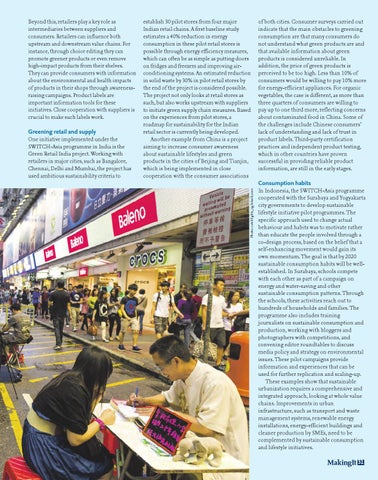
of both cities. Consumer surveys carried out indicate that the main obstacles to greening consumption are that many consumers do not understand what green products are and that available information about green products is considered unreliable. In addition, the price of green products is perceived to be too high. Less than 10% of consumers would be willing to pay 10% more for energy-efficient appliances. For organic vegetables, the case is different, as more than three quarters of consumers are willing to pay up to one third more, reflecting concerns about contaminated food in China. Some of the challenges include Chinese consumers’ lack of understanding and lack of trust in product labels. Third-party certification practices and independent product testing, which in other countries have proven successful in providing reliable product information, are still in the early stages.
Consumption habits Photo: catchlights_sg/istock.com
Beyond this, retailers play a key role as intermediaries between suppliers and consumers. Retailers can influence both upstream and downstream value chains. For instance, through choice editing they can promote greener products or even remove high-impact products from their shelves. They can provide consumers with information about the environmental and health impacts of products in their shops through awarenessraising campaigns. Product labels are important information tools for these initiatives. Close cooperation with suppliers is crucial to make such labels work.
In Indonesia, the SWITCH-Asia programme cooperated with the Surabaya and Yogyakarta city governments to develop sustainable lifestyle initiative pilot programmes. The specific approach used to change actual behaviour and habits was to motivate rather than educate the people involved through a co-design process, based on the belief that a self-enhancing movement would gain its own momentum. The goal is that by 2020 sustainable consumption habits will be wellestablished. In Surabaya, schools compete with each other as part of a campaign on energy and water-saving and other sustainable consumption patterns. Through the schools, these activities reach out to hundreds of households and families. The programme also includes training journalists on sustainable consumption and production, working with bloggers and photographers with competitions, and convening editor roundtables to discuss media policy and strategy on environmental issues. These pilot campaigns provide information and experiences that can be used for further replication and scaling-up. These examples show that sustainable urbanization requires a comprehensive and integrated approach, looking at whole value chains. Improvements in urban infrastructure, such as transport and waste management systems, renewable energy installations, energy-efficient buildings and cleaner production by SMEs, need to be complemented by sustainable consumption and lifestyle initiatives.
MakingIt 31