‘
makingit_12_pp22-29_keynote_print 11/11/2012 19:31 Page 29
The rise of emerging economies is not merely a phenomenon related to their high rates of economic growth or increased geopolitical importance. Many of these countries have also managed to realize unforeseen levels of technical innovation and knowledge creation. For example, we encounter novel ideas emanating from new centres of science, research and knowledge in Shanghai, Rio de Janeiro and Bangalore. A thriving private sector in emerging economies is shifting the global landscape of innovation. Research and development in India has grown threefold over the past decade. China has become a global hub for energy innovation and is now the world’s number one investor in clean energy. And Brazil has developed the world’s first sustainable biofuels economy from sugarcane-based ethanol. Many other emerging economies, such as Colombia, Indonesia, Malaysia, Mexico and South Africa, have also built cultures of innovation. These developments, and the technical innovations they have spurred, would not have been possible without the establishment of conducive economic environments in these countries that enabled local entrepreneurs to realize their ideas. These entrepreneurs often react to the special needs and problems faced by people in developing economies. With their new ways of thinking, these innovators change the lives of the people in their home countries by creating solutions that are tailored to the realities of their local environments. And these solutions often have the potential to benefit people in countries facing similar challenges to development. For example, simple technologies that revolutionize the lives of rural farmers in China can be equally beneficial for farmers in Kenya. With the emergence of innovative technology-based enterprises in the Global South, knowledge can increasingly flow in a South-South direction. To let innovative technologies and techniques benefit the lives of people around the world, it is necessary to forge new collaborations across countries and to intensify existing ones. The United Nations system, with its broad representation in most countries and regions of the world, is the ideal facilitator to foster inclusive partnerships and strengthen South-South knowledge exchange. One important way that the United Nations is fulfilling this role is the annual Global South-South Development Expo, showcasing successful Southern solutions to the complex challenges facing the South today.
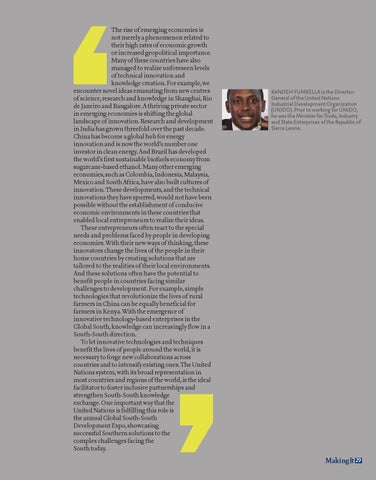
KANDEH YUMKELLA is the DirectorGeneral of the United Nations Industrial Development Organization (UNIDO). Prior to working for UNIDO, he was the Minister for Trade, Industry and State Enterprises of the Republic of Sierra Leone.
MakingIt 29
‘