In the Hall of Muses

 Sara Benninga

Sara Benninga
September 2023
Curator: Hadas Glazer
Catalogue editor: Orit Ephrat-Moscovitz
Design: Inbar Dekel
English translation and Hebrew Editing: Maya Shimoni
Photography: Shai Halevi
Installation Photography: Youval Hai
Measurements are given in centimeters, height x length
+972-3-7163897
www.litvakcontemporary.com


The works in Sara Benninga’s solo exhibition, In the Hall of the Muses, entwine drawing and painting, figures and patterns, exposed canvas, and opaque layers of colors in an encounter that shifts between disintegration and cohesion. Looking at Benninga’s paintings evokes a sense of mystery: The paintings draw the viewers straight to the artistic, material, and visual heart, while also demanding an engaged and active viewing. The pictorial world she unfolds is populated by figures in complex relationships and diverse situations – camaraderie, aggression, physicality, movement, sexuality, leisure, and voyeurism. Within and beyond the boundaries of each figure, there are overlapping parts of other figures, concealing and exposing one another. And so, the main conundrum in the painting is: Where should we look first? What precedes what? And what is more important? With that, the paintings challenge the sense of certainty we gain from direct observation, introducing questions about how we search and bestow meaning in the world of images around us.
Benninga works with a wide range of techniques and materials, from chalk and oil color to spray paint and printing. Her work is also deeply informed by art history, since in addition to being a painter, she also holds a PhD in the history of art. Out of her deep familiarity with the history of painting, the artist undermines its conventions and hierarchies. Thus, for instance, the power dynamic between figures and elements is ambiguous, as the separation between figure and background is eliminated, and each element can take on every pictorial role; figures are duplicated and at times can become a pattern; there is
no single perspective or one vanishing point; and large parts of the canvas are left completely exposed, serving as another color in the composition. This wealth allows her to elaborate and develop her techniques, creating new combinations. Each painting is done following a pre-determined limited color palette, usually blue, sanguine red, or black, while occasionally these are joined and mixed with other colors. And so, in each series of works, there are links between the various paintings, which function together and separately, like words in a sentence.
The exhibition’s title refers to the Hall of the Muses in the Vatican Museums, where statues of mythological gods and muses are displayed side by side. While the statues are Roman (often based on a Greek original), the hall itself, whose walls are painted in a bold Pompeian red, was created in the 18th century. Stepping into it, the hall evokes in the visitors a deep emotional and physical experience of beauty and awe, abundance and grandeur, fascination and wonder. Invoking this overwhelming experience, Benninga wishes to underscore the fact that the interpretive, religious, artistic, and historical excess that surrounds the place and the artworks fades in the face of the viewers’ physical and visual experience in the gallery.
The paintings draw from historical, artistic, personal, and imaginary sources of inspiration. Benninga often references
Old Masters’ paintings, mostly from the Renaissance, “extracting” figures from the historical scenes and marrying them to figures from other sources: ones that originate in life drawing in her studio, and others drawn from her
The figures and body parts are joined by patterns, plants, shapes, and lines. Viewing the painting reveals a “competition” for the viewer’s attention between the figures and the various elements, techniques, and inspirations when at times it is hard to identify the clear hierarchy at the basis of the painting. The experimental nature of the work offers introspection and contemplation, pulling the gaze in while simultaneously obstructing and pushing it out.
With the conflict, she incites within the paintings, the artist foregrounds the automatic mechanism through which appearance is associated with the meaning we award it – whether it is a narrative, associative, or hierarchical context. Most of the time, we are unaware of the automatic association between form and content and do not question what we see (for example, the connections between a painting or a sculpture and a certain historical aspect). Pointing to the mechanism illuminates the deceptive nature of sight – which binds us to the external world, but also reveals the inner complexities of our subjective biases, while exposing social and hegemonic constructs.
With the multiplicity of sources, in her paintings Benninga also offers a critical look at the gender power dynamic. For many centuries of art history, most art patrons and painters were men, who created art for a male perspective and gaze.
Today, both men and women artists enjoy artistic freedom. The art audience is also more eclectic and less predictable. Painters working in their studio can paint for themselves, for everyone, and for no one at the same time. If we were to trace a narrative in the exhibition, then it is one where the women are the protagonists and represent power and control, painted with a free hand and a sense of liberty.
The dissolution and fragmentation of the paintings are not a goal in themselves, but a practice that reveals the blind spots of the interpretation and allows a deeper understanding of the painting. Each painting is constructed as an event, which holds both harmony and unity as well as struggle and a sense of urgency. The paintings weave a dialogue that simultaneously feeds on and challenges the history of art. Adopting contemporary painting trends of deconstructing and reformulating narratives, they present questions about the role of art when it exists within a power/ religious/regime context, and on the other hand, generates a sense of sublime and transcendence. This is the artist’s way of undermining the dominance of the hegemonic gaze.


Sara Benninga
Swimmers 1, 2023
Charcoal, dry pastel, graphite, acrylic on canvas
100 x 222


Sara Benninga
Marsyas, 2023
Acrylic, oil, dry pastel on canvas
200 x 150


 Sara Benninga
Gazers, 2023
Acrylic, dry pastel on canvas
Sara Benninga
Gazers, 2023
Acrylic, dry pastel on canvas

 Sara Benninga
In the Bushes 2, 2023
Acrylic, dry pastel on canvas 120 x 100
Inquire
Sara Benninga
In the Bushes 2, 2023
Acrylic, dry pastel on canvas 120 x 100
Inquire
 Sara Benninga Intersection, 2023

Untitled (Sanguine), 2023
 Sara Benninga
Acrylic, dry pastel on canvas
80 x 50 Inquire
Sara Benninga
Acrylic, dry pastel on canvas
80 x 50 Inquire
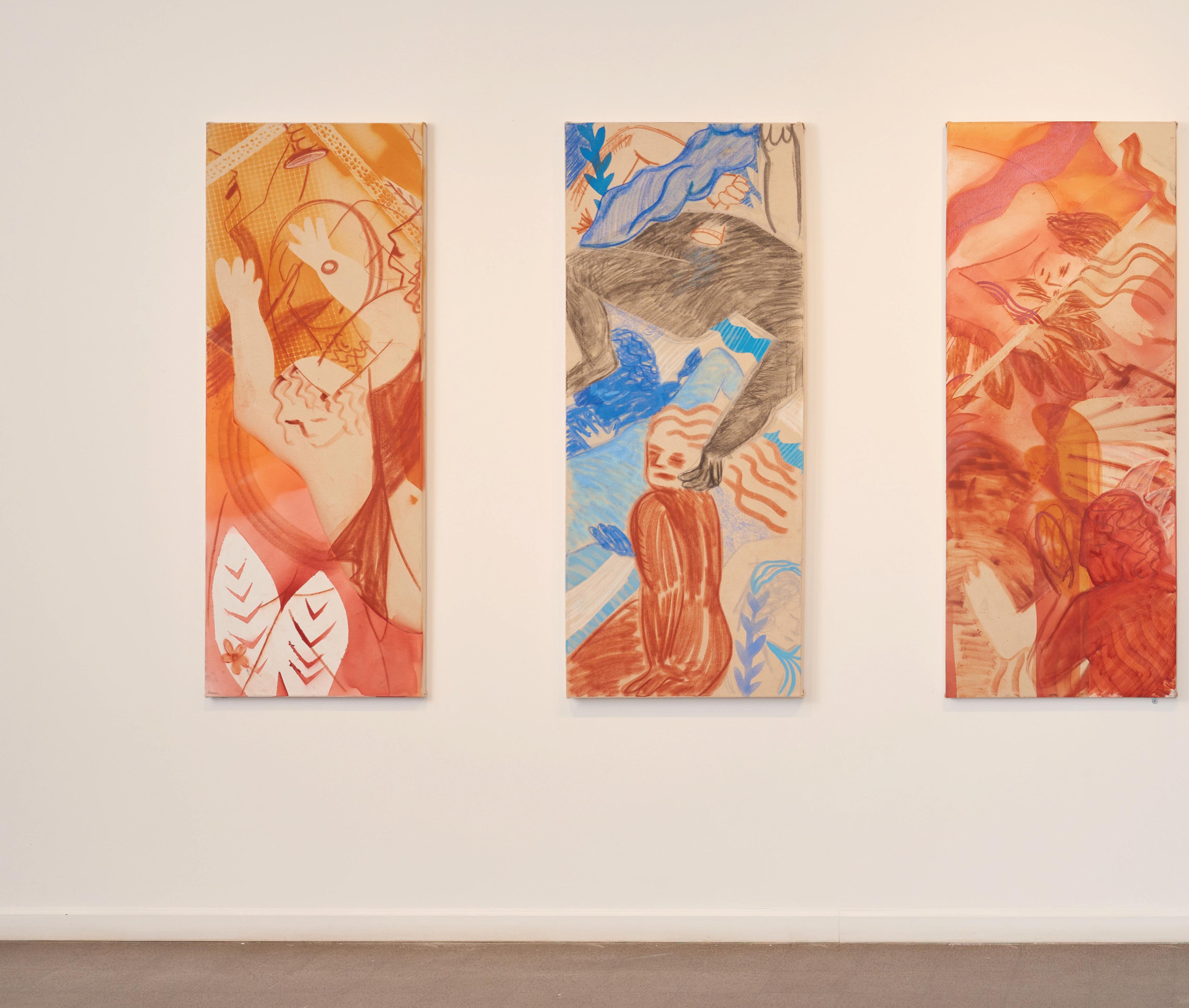

Sara Benninga
Caryatids, 2023
Charcoal, dry pastel, acrylic on canvas
89 x 89


 Sara Benninga
Downwards Glance, 2023
Acrylic, dry pastel on canvas
Sara Benninga
Downwards Glance, 2023
Acrylic, dry pastel on canvas
 Sara Benninga Flicker, 2023
Acrylic, oil, dry pastel on canvas
Sara Benninga Flicker, 2023
Acrylic, oil, dry pastel on canvas

 Sara Benninga
Blue Bushes, 2023
Acrylic, dry pastel on canvas
Sara Benninga
Blue Bushes, 2023
Acrylic, dry pastel on canvas

Behinde the Bushes, 2023
Acrylic, dry pastel on canvas
80 x 61
 Sara Benninga
 Sara Benninga
Blue Rhapsody, 2023
Acrylic, oil, dry pastel on canvas 70 x 55 Inquire
Sara Benninga
Blue Rhapsody, 2023
Acrylic, oil, dry pastel on canvas 70 x 55 Inquire


Music: Sleeping Vines - Untouched Ground
Voice: Sara Benninga
Video editing: Inbar Dekel
אלא ,םמצע ינפב הרטמ םניא םירויצב לוציפהו קוריפה ,תונשרפה לש ןורוויעה תודוקנ תא תפשוחה הקיטקרפ
הנבנ רויצ לכ. רויצה לש רתוי הקימעמ הנבה תרשפאמו
המילהו הינומרה םג ליבקמב םימייקתמ וכותבש ,עוריאכ
־ובש גולאיד םילהנמ םירויצה .תופיחד תשוחתו קבאמ םגו
ץומיא ךות .תונמאה לש הירוטסיהה תא רקבמו ןוזינ תינמז
לש שדחמ הינבו קוריפב תוקסועש יוושכע רויצב תומגמ
איהשכ תונמאה דיקפת לע תולאש םילעמ םה ,םיביטרנ ,ךדיאמו ,ינוטלש/יתד/ינחוכ רשקה ךותב תמייקתמ
תינמאה לש הכרד יהוז .תולעתהו תובגשנ תשוחת תרשפאמ
.ינומגהה טבמה לש תויטננימודה תחת רותחל
,םיטנמלאהו תויומדה ןיב הפוצה לש בלה תמושת לע
השק ,םיתיעל רשאכ ,םינושה הארשהה תורוקמו תוקינכטה
.רויצה ססבתמ הילעש הרורבה היכרריהה יהמ עירכהל
,הריקחו המנפה עיצמ הדובעה לש ילטנמירפסקאה יפואה
ותוא ףדוה ינש דצמו המינפ טבמה תא ךשומ דחא דצמ
.הצוחה
תינמאה תשקבמ ,רויצב תררועמ איהש טקילפנוקה תועצמאב
תועמשמל תרשקנ ןיעה תיארמ ובש ןונגנמה לע עיבצהל
יביטאיצוסא ,יביטרנ רשקה והז םא ןיב – הל םיקינעמ ונאש
הרוצ ןיב יטמוטואה רושיקל םירע ונניא ,בורל .יכרריה וא
ןפואה ,המגודל( םיאור ונאש המב קפס םיליטמ אלו ,ןכותל
.)םיוסמ ירוטסיה טביה םע םירשקנ לספ וא רויצ ובש הייארה לש עתעתמה העבט תא הריאמ ןונגנמה לע העבצהה
תא הלגמ םג לבא ,ינוציחה םלועה לא ונתוא תרשוק רשא –
,ונלש תויביטקייבוסה תויטהה לש תוימינפה תויובכרומה
.תוינומגההו תויתרבחה תוינבהה תא תפשוח ,תעב הבו
לע םג יתרוקיב טבמ הגנינב העיצמ ,רויצה תורוקמ יוביר ךרד
,תונמאה תודלות תונש תואמ ךרואל .ירדגמה תוחוכה ךרעמ
רובע תונמא ורציש ,םירבג ויה םירייצהו םינורטפה תיברמ
לש םתלחנל ךפה יתונמא שפוח ,םויכ .תירבג טבמ תדוקנ
תוחפו יארקא רתוי אוה םיפוצה להק .תוינמאהו םינמאה
רובע םירייצמ וידוטסב םידבועש תורייצו םירייצ .יופצ
הכורעתב .תינמז וב דחא ףא רובע םגו םלוכ רובע ,םמצע
םישנהש ירה ,םירויצב ביטרנ אוצמל ללכב רשפא םא ,וז
דיב תוריוצמ ןהשכ הטילשו המצוע תוגציימו תורוביגה ןה .תררחושמ היווהבו תישפוח
ללכשלו חתפל הל רשפאמ הזה רשועה .לולכמה ךותב עבצכ
הדובעה ,רויצ לכב .םישדח םיבוליש רוצילו תוקינכטה תא תללוכש ,שארמ תרחבנש תמצמוצמ תינועבצ הָטֵלָפּב תישענ
םעפ ידמ רשאכ ,רוחש וא ןיווגנס םודא ,לוחכ בור יפ לע לכב ,ךכו .םתיא םיבברעתמה םיפסונ םיעבצ םיעיפומ ,םינושה םירויצה ןיב םג םירשק םימקרנ ,תודובע תרדס
.טפשמב םיקלח ומכ ,דוחלו דחי םידקפתמה ,ןקיתווה ינואיזומב תוזומה רדחל סחייתמ הכורעתה םש .הז דצל הז ,היגולותימהמ םילאו תוזומ ילספ םיגצומ ובש םיססובמ םהמ םיבר ,תימורה הפוקתל םיכראותמ םילספה
18 ־ה האמב רצונ ומצע הגוצתה רדח וליאו ,ינווי רוקמ לע
םודא“ הנוכמש זע םודאב םיעובצ ויתוריקו
תינפוגו תישגר היווח הפוצה לצא תרציימ רדחב הייהשה
הכישמ ,דוהו רשוע ,האריו יפוי לש הקומע
ךכ לע עיבצהל הגנינב תשקבמ ,תפחוסה היווחל סחייתהב
תא ףפואש ירוטסיההו יתונמאה ,יתדה ,ינשרפה סמועהש תיתוזחהו תינפוגה היווחה לומ לא גגופתמ תוריציהו םוקמה
.ללחב הפוצה לש
,םייתונמא ,םיירוטסיה הארשה תורוקממ םיבאוש םירויצה
םירויצל סחייתהל הברמ הגנינב .םיניימודמו םיישיא
איה רשאכ ,יסאנסנר רויצ לע שגד םע ,תונמאה תודלותמ
םע ןתוא תבלשמו תוירוטסיהה תונצסהמ תויומד ”תרזוג“
םושירב ןרוקמש ולאכ :םירחא תורוקממ תועיגמש תויומד
תישפוח דיב תוריוצמה תויומדו ,וידוטסב תוננובתהמ לדומ ,םירזוח םימגד םיפרטצמ ףוגה יקלחו תויומדה לא .ןוימדהמ ”תורחת“ תפשוח רויצב תוננובתהה .םיווקו םימתכ ,היחמצ
,תוזומה רדחב ,הגנינב הרש לש דיחיה תכורעתב תוריציה
דב ,םירזוח םימגדו תויומד ,רויצו םושיר דחי תוגזממ .תודחאל קוריפ ןיב ענש שגפמב םימוטא םיעבצ דצל ףושח :ןירותסמ תשוחת הלוע ,הגנינב לש הירויצב תוננובתהב
ירמוחה ,יתונמאה בלה לא רשיה הפוצה תא םיכשומ םירויצה
תוננובתה םיעבותו ותוא םיליעפמ תינמז־ובו ,יתוזחהו
תויומדב סלכואמ תמקור איהש ירויצה םלועה .תיביטקא
ללשב תוראותמו תובכרומ םיסחי תוכרעמ ןהיניב תומייקמש
החונמ ,תוינימ ,העונת ,תוינפוג ,תוינחוכ ,הווחא – םיבצמ
דועו דוע םילגתמ תומד לכ תולובגל רבעמו ךותב .תונציצמו
המולעתה .וז תא וז תופשוחו תוריתסמש ,תויומד יקלח
המ ?טבמה תא תונפהל ןוכנ ןאל :איה רויצב תירקיעה
םירויצה םיקרפמ ,ךכ ךותב ?הממ בושח המו ?המל םדוק
םילעמו ,רישיה טבמה ונל קינעמש תואדווה תשוחת תא
תועמשמ םיקינעמו םישפחמ ונא ובש ןפואה לע תולאש .ונתוא ףיקמש םייומידה םלועב
םיריגמ ,םירמוחו תוקינכט לש בחר ןווגמב תדבוע הגנינב
תודלותמ תוקומע תעפשומו ,ספדהו יירפסל דע ןמש יעבצו
תודלותל ר”ד םג איה ,תרייצ התויה דצל ןכש ,תונמאה
לש הירוטסיהה םע הלש הקומעה תורכיהה ךותמ .תונמאה
ךכ .וב תולבוקמה תויכרריהה תחת תינמאה תרתוח ,רויצה
־דח םניא םיטנמלאהו תויומדה ןיב תוחוכה יסחי ,לשמל
לכו תלטבתמ עקרל תומד ןיב הדרפהה רשאכ םייעמשמ
ןמצע לע תורזוח תויומד ;דיקפת לכב שמשל לוכי טנמלא
הדיחי הביטקפסרפ ןיא ;םירזוח םימגדל ךופהל תולוכיו
םירתונ רויצה דבמ םילודג םיקלחו ;תחא זוגמ תדוקנ וא
םידקפתמ םהשכ ,ןיטולחל םיפושח

