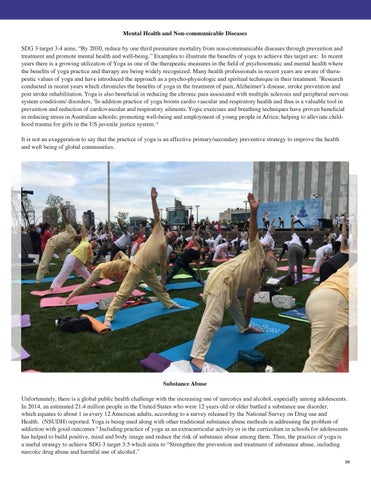
Mental Health and Non-communicable Diseases SDG 3 target 3.4 aims, “By 2030, reduce by one third premature mortality from non-communicable diseases through prevention and treatment and promote mental health and well-being.” Examples to illustrate the benefits of yoga to achieve this target are: In recent years there is a growing utilization of Yoga as one of the therapeutic measures in the field of psychosomatic and mental health where the benefits of yoga practice and therapy are being widely recognized. Many health professionals in recent years are aware of therapeutic values of yoga and have introduced the approach as a psycho-physiologic and spiritual technique in their treatment. 2Research conducted in recent years which chronicles the benefits of yoga in the treatment of pain, Alzheimer’s disease, stroke prevention and post stroke rehabilitation. Yoga is also beneficial in reducing the chronic pain associated with multiple sclerosis and peripheral nervous system conditions/ disorders. 3In addition practice of yoga boosts cardio vascular and respiratory health and thus is a valuable tool in prevention and reduction of cardiovascular and respiratory ailments. Yogic exercises and breathing techniques have proven beneficial in reducing stress in Australian schools; promoting well-being and employment of young people in Africa; helping to alleviate childhood trauma for girls in the US juvenile justice system. 4 It is not an exaggeration to say that the practice of yoga is an effective primary/secondary preventive strategy to improve the health and well being of global communities.
Substance Abuse Unfortunately, there is a global public health challenge with the increasing use of narcotics and alcohol, especially among adolescents. In 2014, an estimated 21.4 million people in the United States who were 12 years old or older battled a substance use disorder, which equates to about 1 in every 12 American adults, according to a survey released by the National Survey on Drug use and Health. (NSUDH) reported. Yoga is being used along with other traditional substance abuse methods in addressing the problem of addiction with good outcomes 5 Including practice of yoga as an extracurricular activity or in the curriculum in schools for adolescents has helped to build positive, mind and body image and reduce the risk of substance abuse among them. Thus, the practice of yoga is a useful strategy to achieve SDG 3 target 3.5 which aims to “Strengthen the prevention and treatment of substance abuse, including narcotic drug abuse and harmful use of alcohol.” 36