





The backpacks are out. The routines are coming back. And if you’re anything like us, you’re equal parts ready and not ready for all of it.
This month’s issue grew out of something personal. Our oldest son had been mouth breathing for longer than we’d like to admit. It wasn’t until a playdate last summer that our neighbor connected us with Nicole Cantello at Santa Barbara Myo. At the time, our 7-year-old had severe tonsillitis, a narrow nasal passageway, and a very small palate, which gave his tongue nowhere to go.

This journey, which started in our backyard, eventually led us to Dr. Swenson at SB Orthodontics, who explained the structural issue we’d actually been looking at. The symptoms — the fatigue, the restlessness, the sleep that never quite restores — aren’t random. They’re connected. And they’re treatable. We’ve since learned that even for our one-year-old, something as simple as gently closing her mouth when she breathes can help shape the development of her palate. It’s the kind of information that makes you wish you’d known sooner. Parenthood has a way of being humbling like that. We wrote this piece so you don’t have to wait as long as we did.
That same instinct, wanting your child seen, supported, and set up for something real, runs through everything else in this issue.
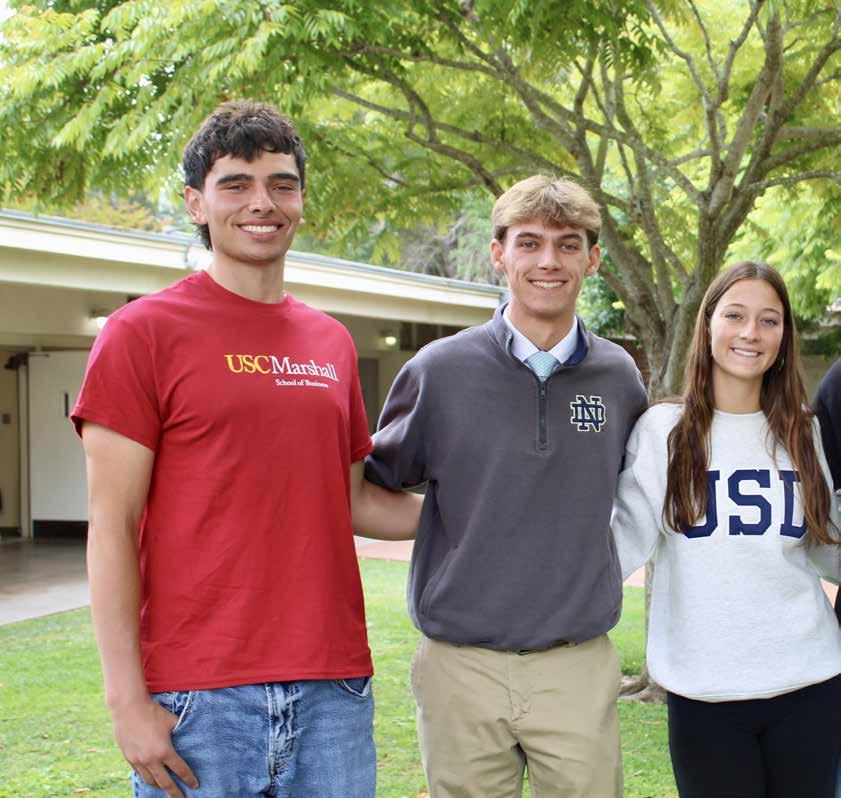
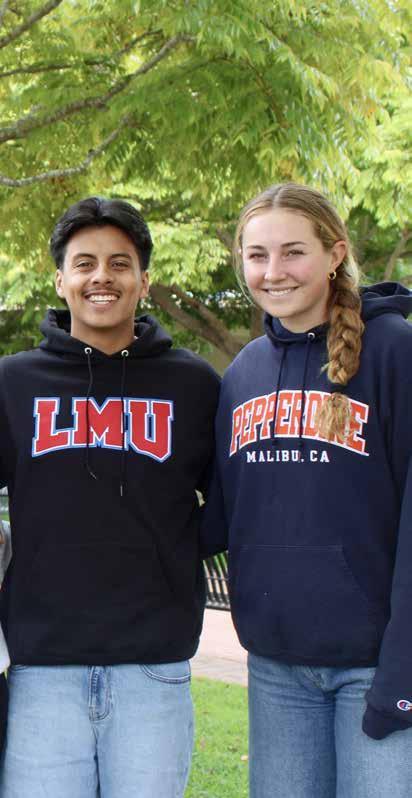
The Bishop Diego families said it better than we ever could. In their own words, what it felt like to watch their child finally land somewhere. To stop worrying. To see them become who they were going to be.
Sal Rodriguez has been doing that quietly for decades. His work with the Boys & Girls Club of Santa Barbara and Goleta has shaped thousands of kids who might not have had someone in their corner otherwise. We’re proud to introduce him as the first installment of Legendary Locals — a new recurring series for the people who show up for this community without ever asking for the credit.
Josh Nissan makes the case that some of the best things you can do for your kids right now are completely free. A pet. A favorite spot. A slow morning with nowhere to be.
Welcome to August. It’s a good one.

August 2026
PUBLISHER
Matt DeMarcus | matt.demarcus@citylifestyle.com
PUBLICATION DIRECTOR
Sara DeMarcus | sara.demarcus@citylifestyle.com
EDITOR
Lena Ibarra
CONTRIBUTING WRITERS
Sara DeMarcus, Matt DeMarcus, Grace Galloway, Kali Kasprzyk
CONTRIBUTING PHOTOGRAPHERS
Lena Britt Photography, Janie Jones
CEO Steven Schowengerdt
President Matthew Perry
COO David Stetler
CRO Jamie Pentz
CoS Janeane Thompson
AD DESIGNER Rachel Kolich
LAYOUT DESIGNER Adam Finley
QUALITY CONTROL SPECIALIST Hannah Leimkuhler


MATT DEMARCUS, PUBLISHER @SBCOASTCITYLIFESTYLE






With City Lifestyle’s co-branded print + digital packages, your business captures attention wherever our community is looking. Build unmatched local credibility on the page, and drive immediate action online.



Ready to double your local reach? Contact your local publisher by scanning below.







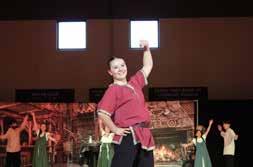

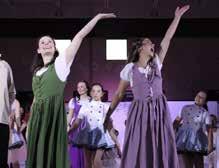
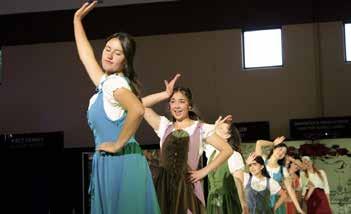


www.sisterbstudios.com weddings.lifestyle.







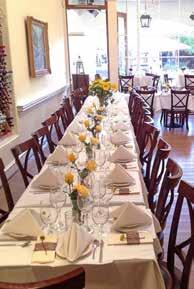
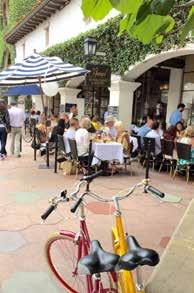
The Andersen’s Danish Bakery & Restaurant has delighted Santa Barbara since 1975 with authentic Scandinavian flavors and California charm. This family-owned gem serves flaky Danish pastries, marzipan chocolate cigars, Eggs Benedict Napoleon, Belgian waffles, and Scandinavian duck. Open for brunch, lunch, and dinner daily. Can’t make it in? They ship fresh pastries and gifts nationwide. 1106 State Street, Santa Barbara. andersenssantabarbara.com | 805-962-5085.
Photography by @andersensdanishbakerysb

Eternity Health Partners, powered by the Age Management Institute, brings an evidence-based approach to wellness, longevity, and feeling your best at every age. Specializing in hormone therapy, peptide therapy, medical weight loss, NAD therapy, and sexual health, their team designs personalized programs built around prevention, not just treatment. In-person and concierge services available. 533 E. Micheltorena Street, Suite 203, Santa Barbara.
Photography by @eternity_health_partners
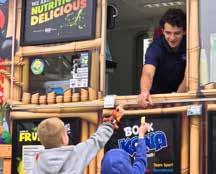
Kona Ice of Santa Barbara brings the party to you... literally. This beloved shaved ice truck serves schools, sports events, corporate gatherings, weddings, and community celebrations across Santa Barbara County. Guests flavor their own treat at the signature Flavorwave using Stevia-based syrups: gluten-free, vegan, and non-GMO. Book your next event at sbkonaice.com or by calling 805-452-6560. Mobile: serving all of Santa Barbara County.
Photography by @sbkonaice

Available to homeowners age 55* or better. Borrowers who qualify for a SecureEquity mortgage may access up to $4 million in home equity.
Eric D. Miller NMLS #582959 Reverse Mortgage Advisor Phone: (805) 570-8885 emiller@mutualmortgage.com MutualReverse.com/lo/Eric-Miller 1114 State St., Ste. 320, Santa Barbara, CA 93101
*Due to state restrictions, some states have a higher minimum age than 55. Minimum age for MA and WA is 60. Minimum age for NC, TX and UT is 62. Borrower must occupy home as primary residence and remain current on property taxes, homeowner’s insurance, the costs of home maintenance, and any HOA fees. The SecureEquity reverse mortgage is a proprietary product of Mutual of Omaha Mortgage, Inc. and is not FHA insured. Mutual of Omaha Mortgage, Inc., NMLS ID 1025894. Licensed by the Dept of Financial Protection & Innovation under the CA Residential Mortgage Lending Act, License 4131356. Subject to Credit Approval. Rates subject to change without notice. Phone #: (866) 200-3210. These materials are not from, or approved by HUD or FHA. nmlsconsumeraccess.org #1652268892 Expires 05/2028


The man behind one of Goleta’s great youth basketball traditions
ARTICLE BY MATT DEMARCUS PHOTOGRAPHY PROVIDED
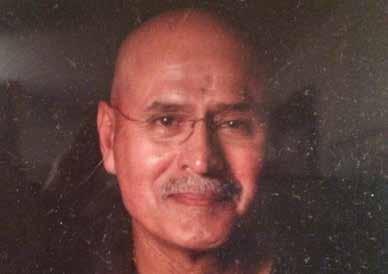
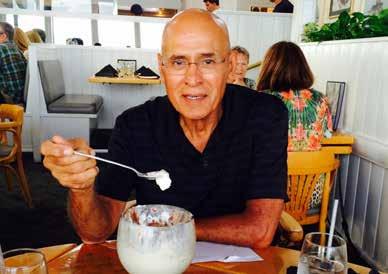
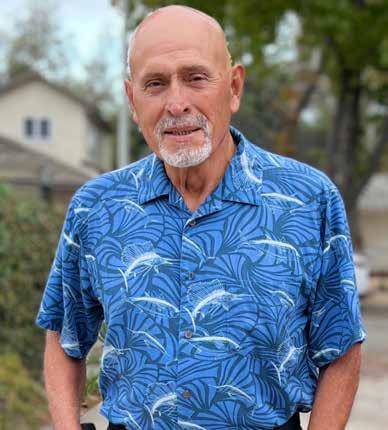
Every community has people whose impact is difficult to measure. They are not always the loudest names in the room, but they are the ones who show up, year after year, helping a place feel more connected and more like home. Our new Legendary Local feature is dedicated to those people. For our first installment, it only feels right to begin with Sal Rodriguez.
For more than 50 years, Sal has been a steady presence in Goleta and Santa Barbara. He first joined the Boys & Girls Club in Goleta in 1958, beginning a lifelong connection to local youth, athletics, and service. For generations of kids who came through the club, Sal was more than a coach or organizer. He was a familiar face, a steady hand, and someone who believed sports could give young people structure, confidence, friendship, and a positive place to belong.
Anyone connected to the Boys & Girls Club or youth sports in Santa Barbara County seemed to know Sal. He helped countless kids stay out of trouble, find sports, and learn lessons that lasted well beyond the gym.
One of his most beloved contributions was the Valentine’s Classic, also known as the Valentine’s Day Invitational. Started around 1970, the junior high basketball tournament became a countywide tradition, bringing together young athletes from across the area for competition, school pride, and fun. For nearly four decades, until about 2008, the tournament gave kids something to work toward and families something to gather around.
Now approaching 82, Sal is still finding ways to serve. Today, he volunteers driving a bus for Valle Verde in Goleta, a role that feels fitting for someone who has always loved being around people.
For his lifelong commitment to service, youth sports, and local kids, Sal Rodriguez is exactly what this feature is meant to celebrate: a legendary local.

Pets, families, and the love that needs no explanation.
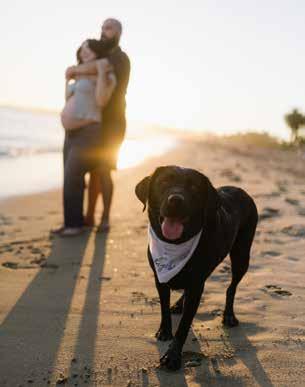
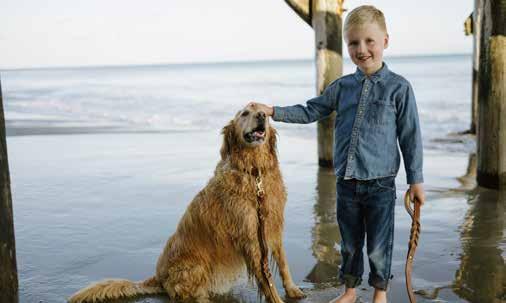
Some bonds don’t need an introduction. They simply exist, and they exist unconditionally. In the way a dog curls at the feet of a sleeping newborn, in the way a child reaches up without looking to find a familiar paw, in the way a whole family leans together for a photo, and someone in the frame has four legs and absolutely no idea they’re stealing the shot.
I’ve spent more than fifteen years documenting life’s most meaningful moments across the country and around the world. Weddings, elopements, growing families, new beginnings. But some of my most quietly powerful work happens candidly, in the unguarded moments when nobody is trying to be anything at all. When a golden retriever wanders into frame, when the family dog rests against a pregnant belly like it is already saying hello to the little wonder growing inside, when a toddler and a dog share a patch of afternoon sun, and neither one glances toward my camera.
That’s the work collected here.
These images aren’t styled. They aren’t posed into perfection. They’re authentic, nostalgic, and grounded. The real texture of life along the Santa Barbara coast, where animals aren’t accessories but full family members. Where pets meet babies before they arrive. Where kids grow up alongside creatures who teach them, without a word spoken, that love at its best is patient and uncomplicated and asks nothing in return.
Unconditional isn’t a word I reach for lightly. But watch a child with their dog for five unscripted minutes in the golden afternoon light, and you’ll understand why no other word comes close.
I’ve photographed families from Chicago to Oslo and everywhere in between. Something about the light and life along the Santa Barbara Coast always brings me back. I’m just so grateful to be the one who gets to pay attention.

“
Something about the light and life along the Santa Barbara Coast always brings me back.















ONE THING THEY ALL FOUND.
ARTICLE BY GRACE GALLOWAY PHOTOGRAPHY PROVIDED
Ethan Morales was the only student in his graduating 8th-grade class. He was quiet and creative and had never set foot in a traditional high school. He didn’t know a single person who would be at Bishop García Diego. When he walked onto campus for his tour, students who weren’t even assigned to him fell into step beside him. His mother, Gigi, still remembers what he said when he got home. “Mom, this is my school. This is where I want to be.” She pauses. “He’s shy. So I was shocked.”
That moment is the one Gigi returns to when other parents ask her about Bishop. She’s been a fixture at Cardinal football games for nearly a decade, selling tickets long after her two older sons graduated. She knows what it looks like when a school actually means it. What Gigi was looking for wasn’t just a school. It was a village.
“I needed support. More than just a school. I needed someone to mentor me, guide me, and give me constructive criticism. I needed a team. And that’s what I found in Bishop.”
Ethan arrived as a freshman with a dream that had been met elsewhere with polite uncertainty. He wanted to be an engineer. He wanted to go to Texas Christian University in Fort Worth. When he’d told people this before, the response was vague, encouraging in a way that quietly says, “That’s really reaching.” Bishop’s response was different. “When he told them what he wanted to do, they said, ‘Okay — and here’s exactly what you need to do to get there,’” Gigi says. “He felt relieved. Like, they have the answers I’ve been needing. And they don’t think it’s impossible.”
Ethan graduated from Bishop in 2020 and from TCU in 2024. He is now an electrical engineer in Texas. At one of his first internship interviews, evaluators were asked to write down what stood out about the candidate. His mother still knows what they wrote: a smile, a tie on correctly, a good handshake. “That was Ms. Carr,” Gigi says.
Ms. Carr, Dean of Students, checked in with both boys nearly every week. Called Gigi directly when something needed to be addressed. Dress-coded them, to their considerable annoyance. “And now,” Gigi says, laughing, “they are so thankful. Because it really has made a difference.”
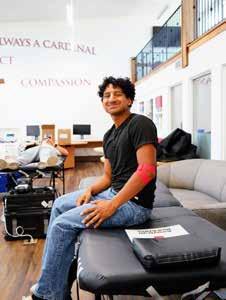

Her younger son, Eaven, now a sophomore at TCU studying pre-law, had his own turning point in his senior year. A concussion threatened to derail his college applications. Bishop’s college counselor, Ms. Coppa, sat with him and worked through his materials line by line. Within three weeks of arriving on campus, he confidently changed his major. He already had the information he needed. Gigi’s youngest, Masen, is in 8th grade and counting down. Someday, Ethan and Eaven want to create the Morales Brothers Bishop Scholarship. “That’s what it’s all about,” Gigi says. “Building a legacy. For your family. And for the future.”
The Maho family came to Bishop under different pressure — their triplet boys entered at the same time. Cost was the first question. Roughly 70 percent of enrolled families receive some form of financial assistance, a fact that reframes the decision for families who assume the door is closed before they’ve knocked. “We met with the school, and they helped us create a financial plan that was workable,” they recall. What decided it wasn’t a spreadsheet. It was a shadow day. “The students, the campus, and the entire environment were made very welcoming,” the family says. “They could see themselves as Bishop students.” By football preseason that fall, the question of belonging had already been answered.
Brad and Megan Hubbs knew the Catholic school framework well. When it came time for their daughter, Haley, Bishop felt like the natural next step. By sophomore year, she had hit her stride with student council, varsity tennis, and a circle of friends she’d carry past graduation. Her senior season, the girls’ tennis team won CIF. “I was just really so happy for all the girls who had that trophy,” Brad says. “They worked hard. It was a great moment
in time.” What he credits most isn’t the championship. It’s the teachers who saw Haley clearly and challenged her to meet herself. “The school was right for Haley,” he says. “Period.”
Tom Johnson, who has had three children graduate from Bishop and serves on its Board of Trustees, puts it simply. “The teachers find out who needs more attention and who doesn’t. Who’s more independent, and who might need a little more one-on-one time.” Nobody skates through unseen.
The faith component is one that prospective families, particularly those outside the Catholic tradition, often approach with caution. Those who’ve lived it describe it the same way: present, meaningful, and never exclusionary. The Maho boys didn’t come in with a strong religious foundation. What they found wasn’t pressure, it was an invitation. “The boys felt very welcome at Bishop, and the religious studies classes offered all the students a meaningful opportunity to explore their faith.”
But perhaps the moment that captures it most fully repeats itself every year, and no curriculum can manufacture it. The senior retreat. Students leave campus, share vulnerable parts of themselves, and return changed.
Brad witnessed the return. “For parents who have never experienced this, until you go through it, you’ll never understand it. Every single one of those kids was impacted. It was a really, really wonderful thing to see.”
Gigi Morales, still in the stands, still selling tickets, still watching the Cardinal family expand around the son who hasn’t even started yet, says it the way only someone on the other side of it can. “It’s not a fall-through-the-cracks kind of school. Even if you

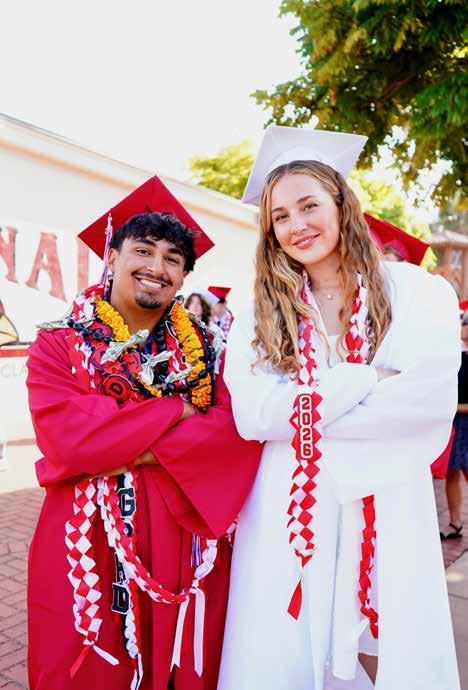
want to fall through the cracks — that’s not gonna happen.” She laughs quietly. That village she was looking for? This was it.
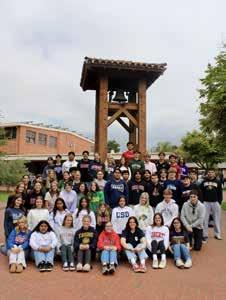
There is a bell tower at Bishop García Diego that students pass every day. Red brick underfoot, eucalyptus overhead — the particular quiet of a campus that sits close to nature and close to something else. A sense, described by nearly every family who comes through, that this place is paying attention.
What these families found at Bishop wasn’t a perfect institution. It was something more useful: a community scaled to the size of a human being. Small enough that a quiet kid from a school of one doesn’t disappear into a crowd. Small enough that a Dean of Students knows your name, calls your mother, and dress-codes you until you’re grateful for it. Big enough to field championship sports teams, offer rigorous AP coursework, and send graduates to universities across the country. And somehow, in that balance, exactly the right size to make sure no one slips through unnoticed.
That’s not a marketing promise. It’s what happened.
The question every parent carries through the door, “Will this place actually see my kid?” has an answer here. This place sees them.
1. The tuition number isn’t the real number. Roughly 70 percent of families receive financial assistance. Don’t let the published rate close the door before you’ve had the conversation.
2. Shadow day is worth more than any tour. Multiple families named it as the moment their child could picture themselves at Bishop. Schedule one before you decide anything.
3. The retreat will surprise you. Parents describe the senior retreat as one of the most meaningful experiences of their child’s high school years. Nobody sees it coming.
4. Your child doesn’t have to be Catholic. Students of all faith backgrounds find a genuine welcome here. The faith thread enriches; it doesn’t exclude.
5. The parent community becomes your community. From the Cardinal Club to the sidelines — parents stay involved, and those relationships last long after graduation.




THURSDAY AUGUST 20 TH , 2026 THE GREAT LAWN
2 PM - 5 PM
Join us for the Fifth Annual Miramar Best in Show at Rosewood Miramar Beach —a fun-filled afternoon for resort guests, locals, and their furry friends.
Enjoy bites, cocktails, exclusive VIP booths, shopping, and more. Compete for a chance to win the ultimate Miramar getaway, all while supporting Santa Barbara Humane.

Scan to learn more.

Three Santa Barbara spots that teach more than any lesson plan.
August belongs to kids and their pets. Anyone who’s watched a child sprint toward the water with a Lab at their heels already knows everything this column is going to say.
Something happens to a child around an animal. The pace changes. The voice drops. The nervous system, that frantic, overstimulated thing, finds a different gear. Most parents aren’t looking for a parenting strategy this August. They’re just looking for a good morning. Turns out those are often the same thing.
Researchers have found that children who grow up alongside pets tend to develop stronger emotional regulation. This results in lower stress responses, a greater ability to read others’ feelings, and a natural sense of empathy that builds quietly over time. Not from a lesson plan. From a dog that needs walking or a cat that wants to be held. The science is there, but most parents already know it intuitively. You can see it in the way a child softens around an animal. The way they listen differently. The way they slow down without being asked.
ARTICLE BY JOSH NISSAN
Three simple ways to let that happen this August.
HENDRY’S BEACH ON A WEEKDAY MORNING.
The parking lot is easy to access, the sand is wide, and dogs are welcome at the west end. A child running alongside a family dog in the shallow surf doesn’t know they’re building social confidence or learning to read non-verbal cues. They’re just having the best morning of the week. That’s often how the most useful things happen, without anyone announcing them. The walk back to the car, sandy and tired and happily worn out, is its own kind of reward. Plan for it to take longer than you think. That’s not a problem. In fact, that’s the point.
PARK ON A SLOW AFTERNOON.
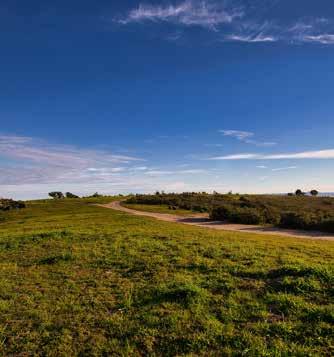
With 230 acres, nine miles of trails, a BMX track, and hang gliders launching from the south end, Elings is anything but quiet, and that’s exactly why it works. Find a patch of shade on the grass while the kids

explore. Let them watch the BMX riders for a while, or follow a trail to the top where the ocean opens up below. Then, when the energy settles, sit down together with the dog. There’s something in that combination that brings the nervous system down in a way that’s hard to explain and easy to feel. The big emotions that felt urgent an hour ago lose some of their edge. Bring extra water, snacks, and stay longer than you planned.
Letting a child choose a treat for their pet is one of the quieter ways responsibility takes root. They’ll stand in the aisle longer than you expect, reading labels, weighing options, and taking the decision seriously. That seriousness is

worth something. It carries over into other parts of their day in ways you won’t always see coming. A child who learns to care for something small eventually learns to care for much bigger things.
Empathy. Calm. A sense of purpose. Three things that are worth building in a child, and none of them require a structured plan or a screen. Just a pet, a little time, and a few of the places Santa Barbara does best.
The window before school starts is shorter than it seems. A pet and a slow morning spent together is a fine way to use it.
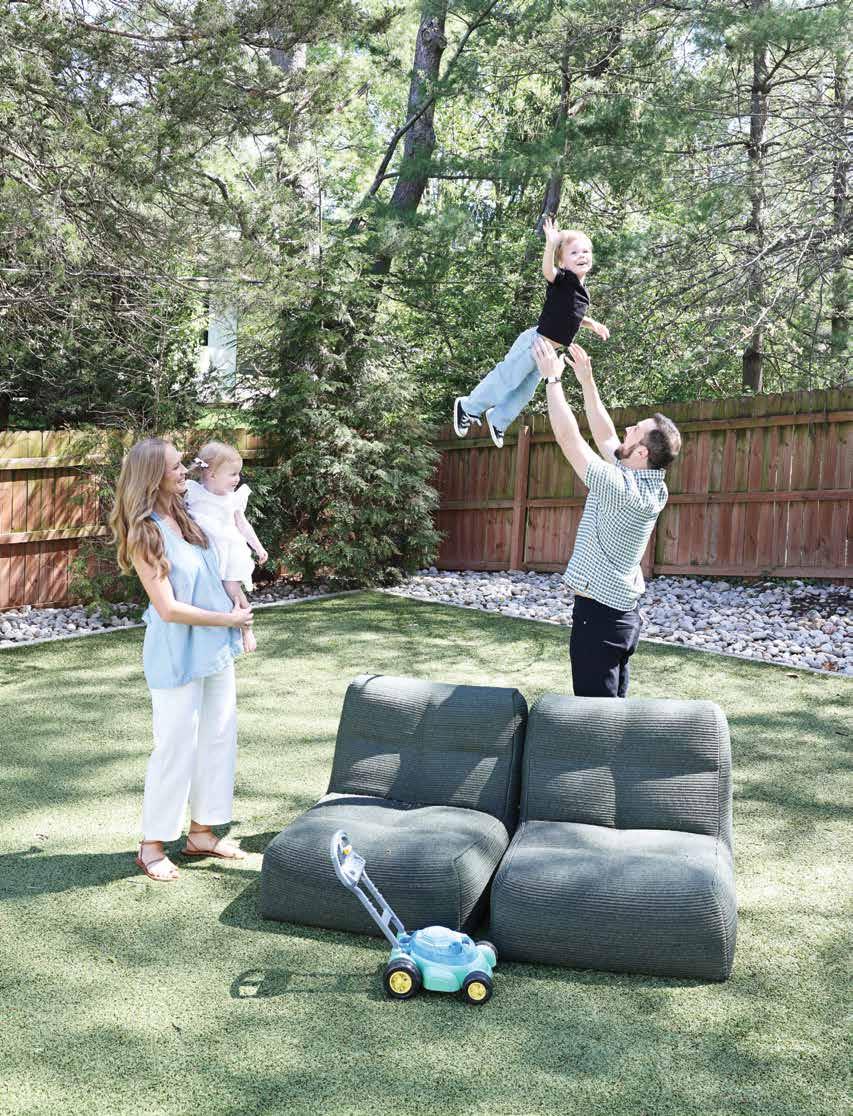
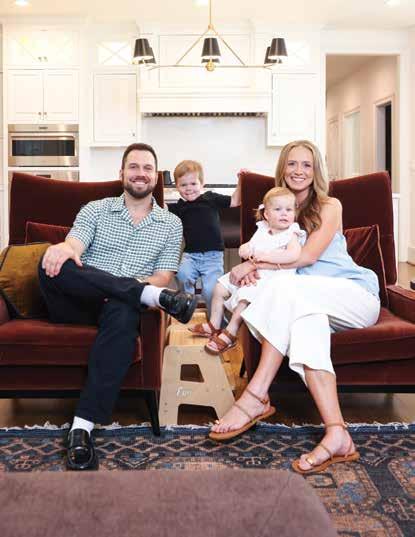
Trey Kennedy makes a living finding comedy in regular life. Marriage. Toddlers. Yoga pants. The Thursday-night scramble between school dropoffs, soccer practice, and whatever has to be done by morning. Twelve years in, it shows: millions of followers across every platform, three stand-up specials, a sold-out Relatable Tour, and a style of humor fans send each other captioned, “Are you watching me?” He delivers the kind of comedy that travels because everyone’s living some version of it.
Katie, his wife of six years, is a former biomedical engineer who also built a modeling career. She’s now raising their kids and co-hosting Correct Opinions alongside Trey — the show where the two of them swap takes on marriage, parenting, and whatever came up that week.
Trey has been at this longer than people realize. An Edmond, Oklahoma kid who grew up playing basketball described himself as a “shy kid who never thought he’d be an entertainer.” He started making videos while attending Oklahoma State University. After building millions of followers on Vine before the platform shut down, he gave himself six months on Instagram and Facebook to see whether he could rebuild from zero. He did. Stand-up soon followed. His first special, Are You For Real?, streams on YouTube; the second, Grow Up, on Amazon Prime; the third, built around the Relatable Tour, wrapped earlier this year. “I’ve been trying to be funny every week for like twelve years now,” he says. A slow climb, made one bit at a time.
ARTICLE BY KALI KASPRZYK
“I’ve been trying to be funny every week for like twelve years now.”
Most of what Trey writes lately starts in his own kitchen. Thomas is three and a half, and he is, in his father’s words, “a movie.” He narrates his own life from the moment his eyes open and mispronounces words in ways his parents now repeat to each other because no one else would believe them. His younger sister, Eva, is what Katie calls “the calm one.” With a third now in the mix, the Kennedys are officially outnumbered.
After six years of marriage, Trey and Katie have learned that the partnership runs best when it gets its own time on the calendar. So once a week, they leave the kids with a sitter and go out for coffee. “You need a system,” Katie says. “It’s about taking time to look each other in the eye. Not the kids. Not the cameras. Just each other.”
The same instinct shapes the work. Most of Trey’s trial and error happens onstage or on Instagram, but the first read is always Katie’s. “There’s only been one time ever I’ve had to be like, ‘you’re not doing that,’” she says. The rest of the time, she just laughs first.
FEATURING TREY & KATIE KENNEDY
Trey and Katie talk about marriage, parenting, and the moments that don’t make the Instagram feed.
Watch or listen to the full conversation wherever you get your podcasts.
ARTICLE BY GRACE GALLOWAY
PHOTOGRAPHY PROVIDED
The signs are there. Most parents just don’t
Your child snores. They wake up exhausted. They can’t sit still in class, and no one has been able to tell you why. You’ve asked. You’ve been told it’s a phase. You’re starting to wonder if you’re the only one who thinks something isn’t right. You’re not. And you’re not overthinking it.
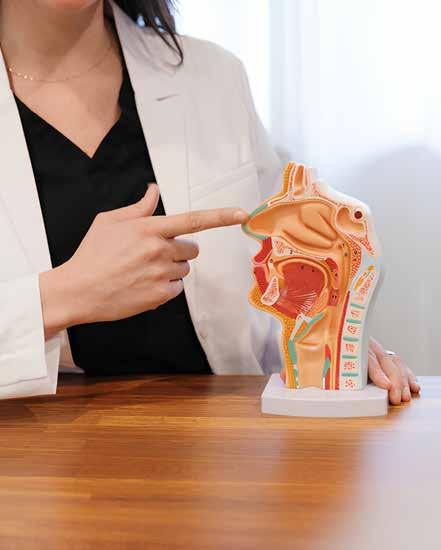
Mouth breathing, snoring, chronic fatigue, bed-wetting, teeth grinding, dark circles, difficulty focusing, and behavioral challenges — these symptoms look unrelated on the surface. In a pediatrician’s office, they often get addressed one at a time, in isolation. But for a growing number of children, a single common thread is that the muscles of the face, jaw, and airway aren’t functioning as they should.
It’s a condition most parents have never heard of. It’s called orofacial myofunctional disorder, and it’s more common than you’d think.
Nicole Cantello, a licensed orofacial myofunctional therapist and founder of Santa Barbara Myo, sees it every day. Families arrive in her office after months, sometimes years, of searching for answers. The list of symptoms she encounters reads like a checklist many parents would recognize: chronic mouth breathing, lips apart at rest, tongue thrust, nasal congestion that never fully clears, snoring, teeth grinding at night, dark circles, difficulty with attention and focus, behavioral challenges, and bed-wetting.
“You’d be shocked how many parents have been told that mouth breathing and snoring are normal,” Cantello says. “Just because something is common does not make it normal.”
What makes these cases particularly hard to catch is that the symptoms rarely arrive together with a clear label. A child who snores might be seen by an ENT. A child who wets the bed might be told they’ll grow out of it. A child who can’t focus might be evaluated for attention difficulties. Each issue is addressed in a silo, while the underlying pattern, the way the child breathes, holds their jaw, and uses their tongue, goes unexamined.
When a child breathes primarily through their mouth rather than their nose, the effects ripple outward. Sleep cycles are disrupted. Oxygen intake is reduced. The jaw and palate develop differently than they would with proper nasal breathing. The nervous system stays in a low-grade state of stress that can surface as restlessness, trouble concentrating, or bed-wetting long past the expected age. Many families arrive having already pursued treatment. Some children have had tonsillectomies, adenoidectomies, or tonguetie releases, procedures that address structural issues, only to find that their symptoms didn’t fully resolve. Cantello explains why: changing structure doesn’t automatically change function. The body has muscle memory. If a child has spent years breathing through their mouth, the muscles that support nasal breathing have gone underused and need to be deliberately retrained.
“Just because something is common does not make it normal.”
— Nicole Cantello, Santa Barbara Myo

That’s where a different kind of care comes in.
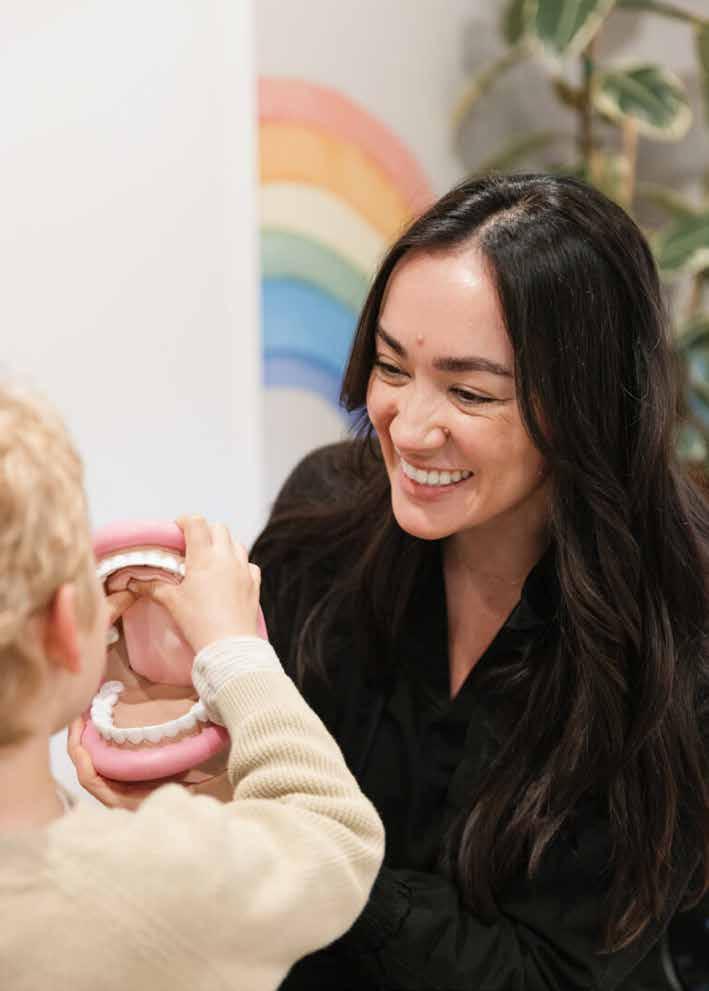
Orofacial myofunctional therapy (OMT) is a specialized treatment that retrains the muscles of the face, tongue, and mouth to function properly. Think of it as physical therapy for the airway: addressing breathing patterns, tongue posture, swallowing function, and oral habits that affect sleep, speech, facial development, and overall health.
Before treatment begins, Cantello says, the right providers ask a more fundamental question: why is this child mouth breathing? The answer may be structural, allergic, habitual, or neurological, and identifying the root cause shapes everything that follows. That’s why myofunctional therapists work as part of an interdisciplinary team, coordinating with ENTs, orthodontists, dentists, allergists, and speech-language pathologists based on each child’s specific needs.
“We believe wholeheartedly in interdisciplinary care,” Cantello says. “It’s all about the airway. Every parent deserves to understand that chronic mouth breathing can affect their child’s airway development. When we recognize and treat dysfunction in the early years, we can completely change the trajectory of their facial and airway growth and set them up for a future of healthy breathing and sleep.”
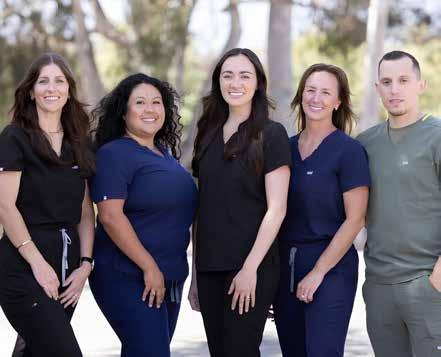
In Santa Barbara, that collaborative model is well developed. Santa Barbara Myo works closely with SB Orthodontics, led by Drs. Edstrom and Swenson, board-certified orthodontists whose practice focuses on the structural dimensions of airway health and facial development. Where Nicole Cantello retrains function, Drs. Edstrom and Swenson address form and timing; they say, “it’s everything.”
“In a growing child, the bones of the face and jaws are still malleable and responsive,” Dr. Swenson says. “That means we can guide development rather than correct it after the fact.” The difference that makes is significant: a narrow palate that would require surgery in an adult can often be expanded gradually and comfortably in a seven-year-old. Bite problems that develop over years can be intercepted before they affect speech, chewing, or even breathing. Early intervention doesn’t necessarily mean early braces; it means actively supporting the child’s development and
“Early intervention doesn’t necessarily mean early braces; sometimes it simply means watching carefully and acting when the timing is right.” — Dr. Swenson, SB Orthodontics

stepping in with targeted treatment when the time is right.
For children with more complex concerns, the pathway may also include a specialist like Dr. Soroush Zaghi in Los Angeles, a nationally recognized expert in airway health and tongue-tie release, for cases where structural intervention is warranted alongside therapy.
If any of this has resonated, here’s where to start.
Santa Barbara Myo offers orofacial myofunctional evaluations for children and can help determine whether therapy is the right fit. Many parents who bring their child in end up scheduling evaluations for themselves as well, because these patterns often go unaddressed for a lifetime, and it’s never too late to breathe better.
You don’t need a referral. You don’t need the right vocabulary. You just need to trust that the symptoms you’ve been noticing are worth a closer look and that asking questions is always the right first step.
The goal isn’t to alarm parents. It’s to give children the best possible foundation — for sleep, for growth, for learning, and for the long run. In this place we call home, care is available, it’s collaborative, and it starts with a conversation.
A day in the life of Santa Barbara’s happiest dogs.
ARTICLE BY MATT DEMARCUS | PHOTOGRAPHY PROVIDED
Most dog owners have played the game. The tail starts wagging so fast someone inevitably asks: “What do you think is going through his head right now?”
The answers are usually some version of: Treats. Squirrels. The beach. A ball.
But on certain mornings, for a particular group of Santa Barbara dogs, the answer might be something else entirely. Is that the van? It is. It has to be. Maybe today is swim day. Maybe all my friends will be there. Maybe if I bark a little louder, they’ll open the door faster. Because if that’s the Camp Canine van pulling into the driveway, there isn’t a second to waste.
Anyone who has ever watched a dog arrive at camp knows exactly what happens next. The ears perk up. The pacing begins. The tail reaches a level of enthusiasm that defies explanation. Camp has begun.
For the humans, it’s a familiar part of the daily routine—a quick goodbye before work, school drop-off, or a busy day ahead. For the dogs, however, it’s the start of something much bigger.
There are friends to reunite with. Pools to splash in. New smells to investigate. Counselors to greet. And, if everything goes according to plan, an absolutely exhausting amount of fun before heading home.
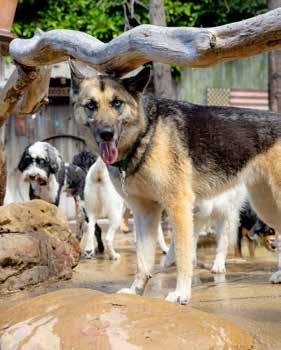
On any given day, the camp roster includes every personality imaginable. There are the social butterflies who greet every newcomer as if they’ve been best friends for years. The athletes who treat swim time like an Olympic qualifying event. The mayors who seem personally responsible for welcoming every dog through the gate. And the occasional introvert who spends the first few minutes pretending not to know anyone before inevitably joining the fun.


A golden retriever launches into the pool with absolutely no regard for physics. Two doodles race each other across the yard. A French bulldog patrols the perimeter like a tiny security guard. Somewhere nearby, another dog discovers a tennis ball and briefly becomes convinced it is the greatest discovery in human history. It turns out that organized chaos is still chaos.
CONTINUED >

Fortunately, Camp Canine has people who understand it.
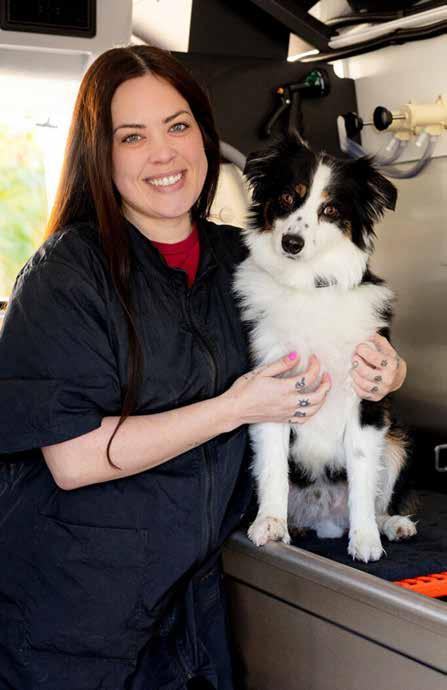
Jayne Sigman has spent years watching dogs arrive, play, nap, swim, and return home happily exhausted. Along the way, she’s learned something most dog owners already suspect: dogs aren’t particularly complicated. “They just want to be with you,” she says. “And when they can’t, they should be safe and cared for and loved.” That philosophy shapes everything at camp.
While the dogs are busy making friends and burning off energy, staff members are keeping a close eye on the details that owners may never see. Daily health checks, training, and attentive care help make camp feel less like boarding and more like a home away from home. “We treat the dogs as our very own,” Sigman says. “Any little concern is noticed and addressed.”
Dogs become part of the family rhythm. Children grow up alongside them. Vacations, routines, and daily life often revolve around them. Over the years, Sigman has watched countless reunions unfold at the end of the day. “We have seen so many children grow up with their pets,” she says. “It is heartwarming to have the whole family come in to drop off or pick up and see the excitement from both the dog and the child at the reunion.” And that reunion may be the best part of camp.
The gate opens. A familiar face appears. Suddenly, the same dog who spent the day swimming, playing, exploring, and making friends forgets everything else.
The tail starts wagging again. The child starts smiling. The parents laugh. And for a few seconds, everyone seems equally excited to see one another.
Families grow. Children get older. New puppies arrive. But some things never change. A dog who realizes it’s time to go to camp. And a dog who realizes it’s time to come home.

7:30 a.m.
Campers arrive, reunite with their friends, and burn off their excitement with morning play.
10:00 a.m.
Activities are in full swing. Some dogs head for the pool, while others chase tennis balls or socialize with their favorite friends.
12:00 p.m.
Time for a well-earned break. Campers recharge with rest, shade, and plenty of attention from counselors.
2:00 p.m.
Afternoon adventures begin with more play, exploration, training, and supervised activities.
5:00 p.m.
Pickup time. Tails wag, reunions happen, and campers head home happily exhausted... ready to do it all again tomorrow.

The jacket every guy needs in his closet.
From morning coffee runs to dinner dates.
Comfort, style and that lived-in feel he’ll never want to take off.
Designed in Montecito, California. Made in the USA.