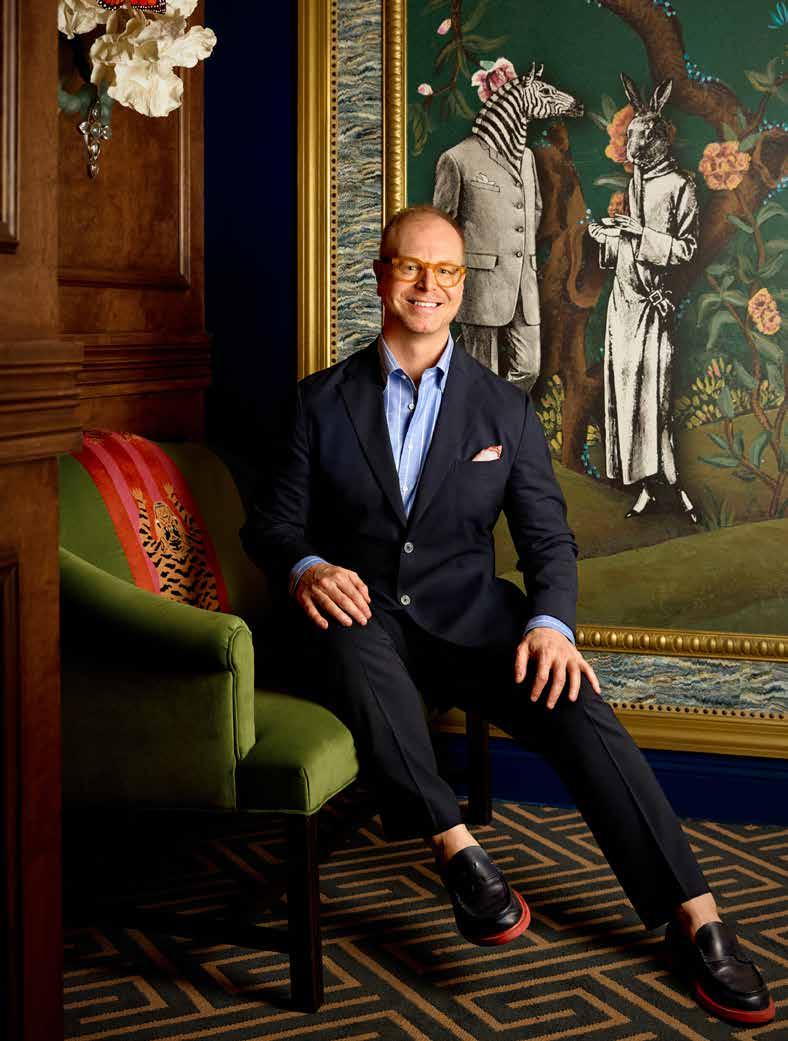
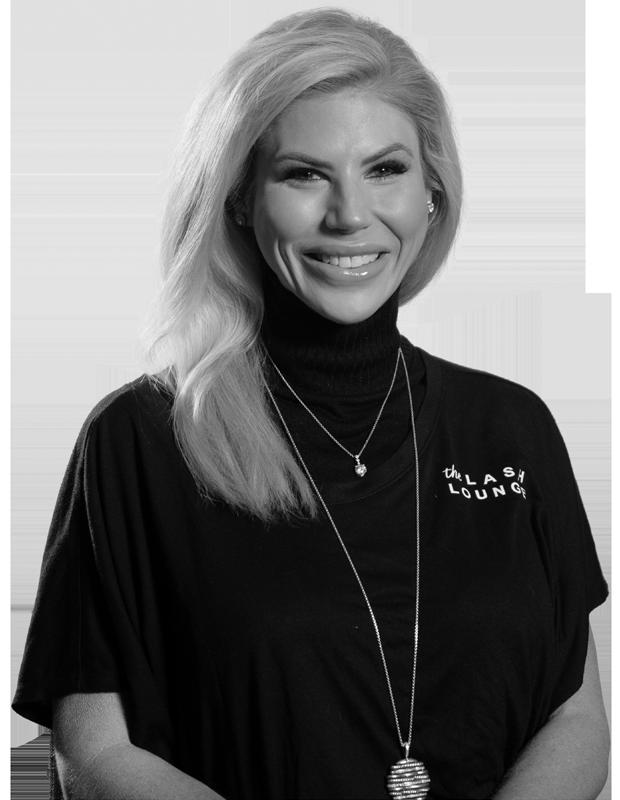
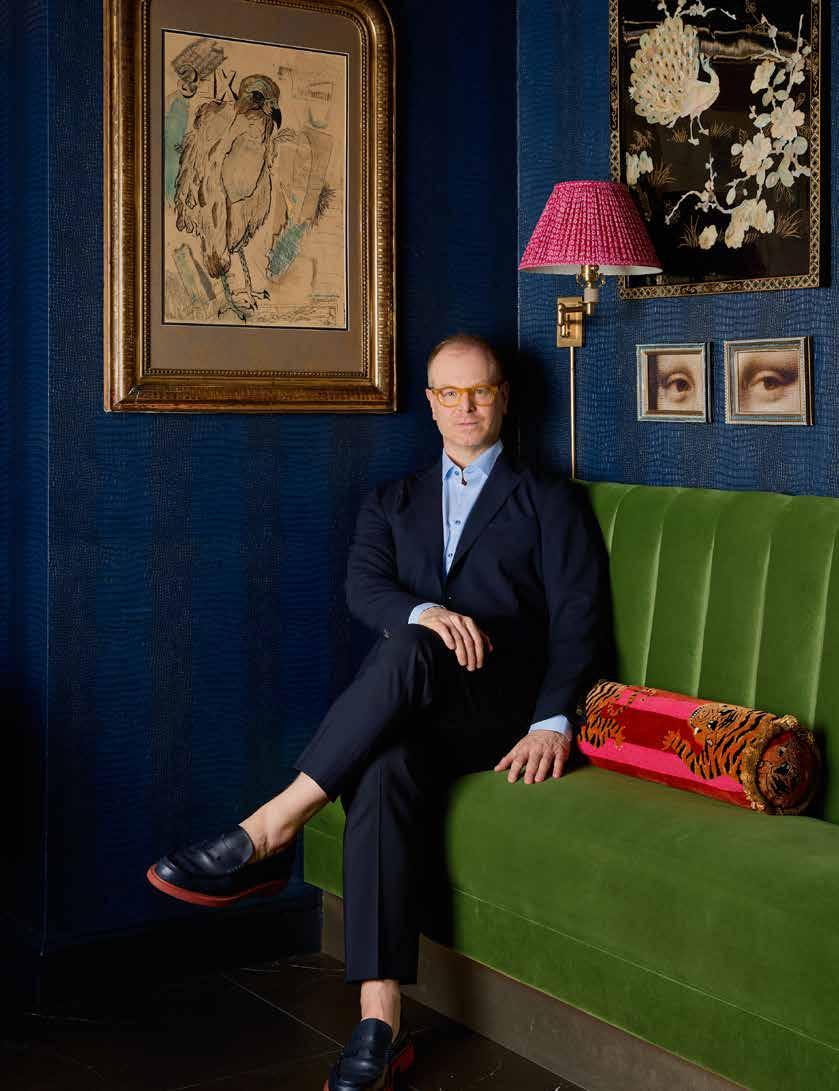
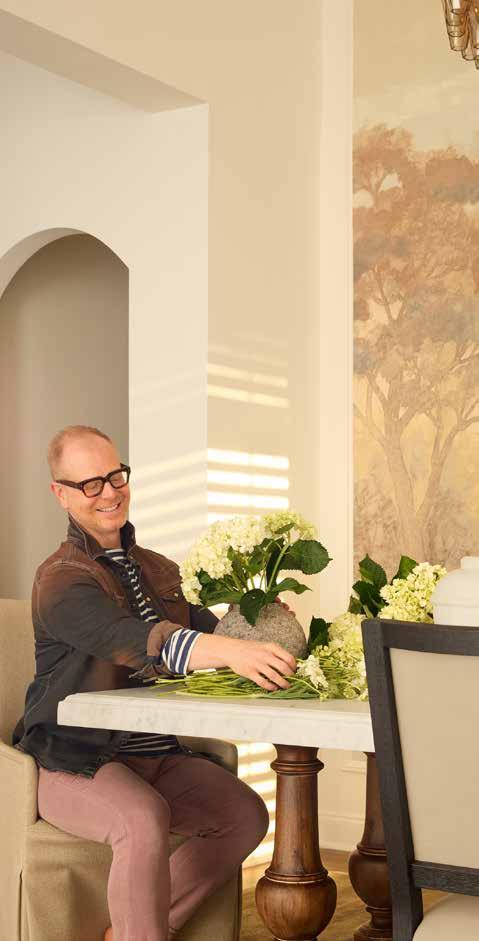
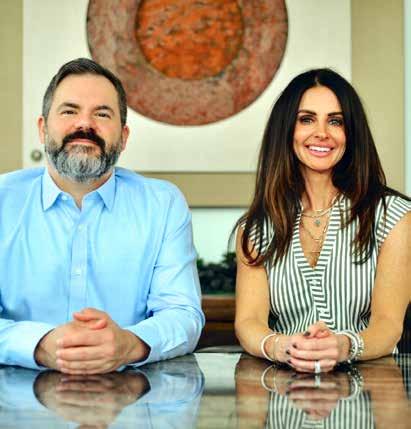
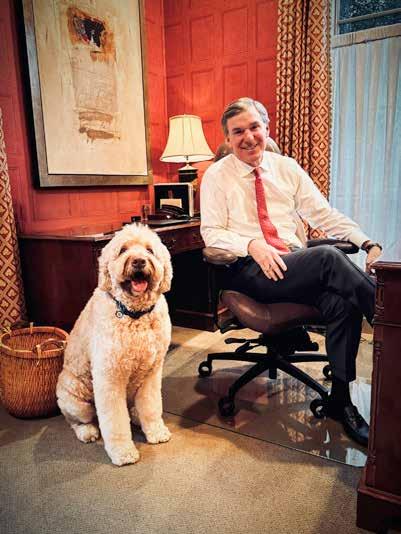
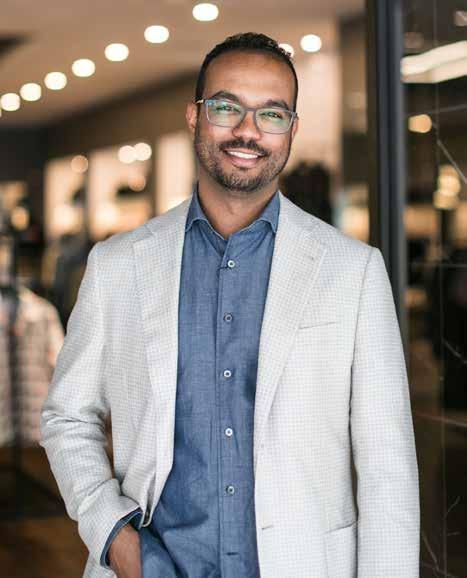
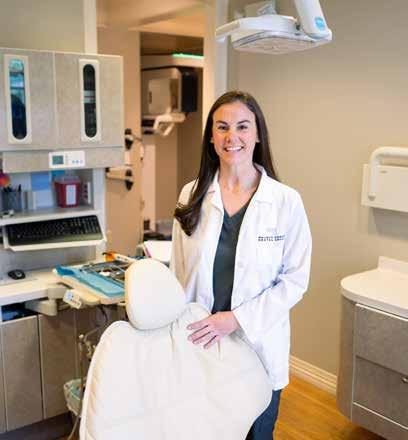
To me, banking is less about financial transactions and more about trust. I’m with i-bank because they have supported my business in so many crucial ways. Payroll issues become peace of mind. Business concerns become opportunities. The beauty business is all about trust, and I trust my bank. Thanks i-bank, I couldn’t have done it without you. Start your story with i-bank today, and find out why being proudly independent is the most rewarding way to bank.
i-bankonline.com
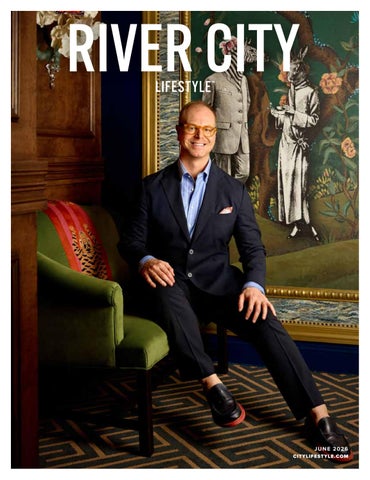
June - The Gentlemen's Issue
June in Memphis sheds the highly scheduled business of May and brings a revitalized energy that is uniquely tied to the summer months. Summer has a way of slowing the pace just enough to appreciate the moment we're in. Whether this summer is your last with kids at home, or your first after graduating from college, June kicks off a transitional few months where we celebrate, enjoy and explore.
With Father’s Day at the heart of this month, this issue reflects on the enduring influence of fathers and father figures: the men who lead with steadiness, generosity, humor and strength. As I prepare to welcome my first child, I find myself experiencing this season through a different lens, more aware than ever of the quiet sacrifices, consistency and love that define fatherhood. Watching my husband prepare to become a father while seeing my own dad step into the role of grandfather has made this season especially meaningful.
In this Men’s Issue, we celebrate men who are building meaningful lives, businesses and investing in communities throughout Memphis.
We feature Brett Grinder and the story behind Grinder Taber Grinder, the third-generation construction company that has quite literally helped shape our city.
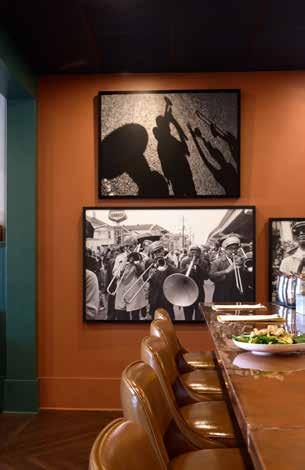
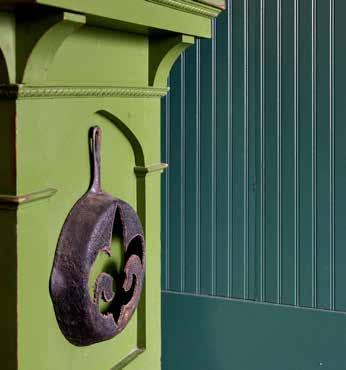
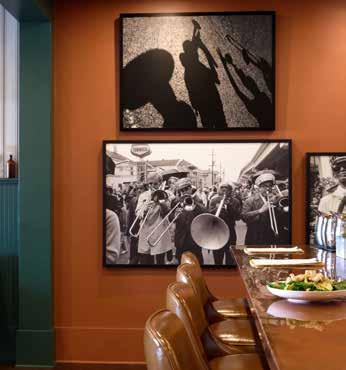
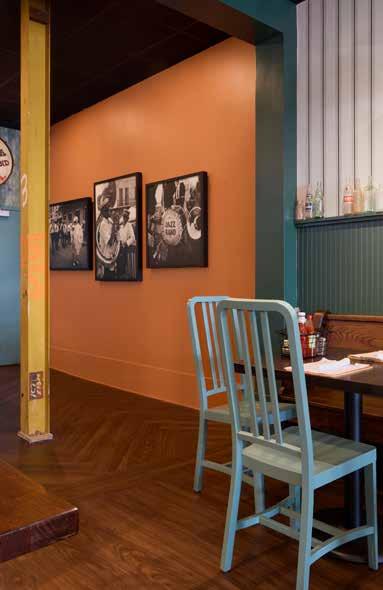
We visit Kelly English’s new location for Second Line, brought to life with the help of LP3, and spend time with Luc Olsen of JEM, whose warmth and curiosity create the kind of dining experience people remember long after the meal ends. We also dive into the art of “sous vide” cooking—just in time for patio season.
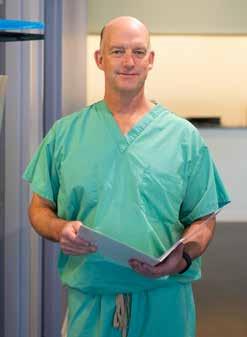
Elsewhere in the issue, Jonathan Caples shares his journey to becoming the new director of horticulture at the Memphis Botanic Garden, while Dr. Lucas Trautman offers a thoughtful perspective on building systems of stability, healing and love in psychiatric and addiction care. We also sit down with the talented Dr. Moneim Elomeiri of Plastic Surgery Group, who is new to Memphis, for a look at his local favorites.
To the fathers, mentors, husbands, brothers and friends who shape our lives with your everyday presence and love, thank you. The moments you create, the steadiness you provide and the love you give matter more than you know.
Wishing you a meaningful Father’s Day and a beautiful Memphis summer,
Dr. Owen Tabor, Jr.’s patients rate him a 4.9/5 stars! He is a fellowship-trained orthopedic surgeon specializing in hip and knee replacement. He has also been involved in research related to hip and knee replacement, including a long-term follow-up study of unicompartmental arthroplasty (partial knee replacement). When patients need an empathetic, capable orthopedic specialist to help get them back to the lifestyle they love, Dr. Tabor is often their first choice.
BUILDING A LEGACY OF EXCELLENCE
ARTICLE BY JEANNIE TABOR
PHOTOGRAPHY BY SARAH VOIGT
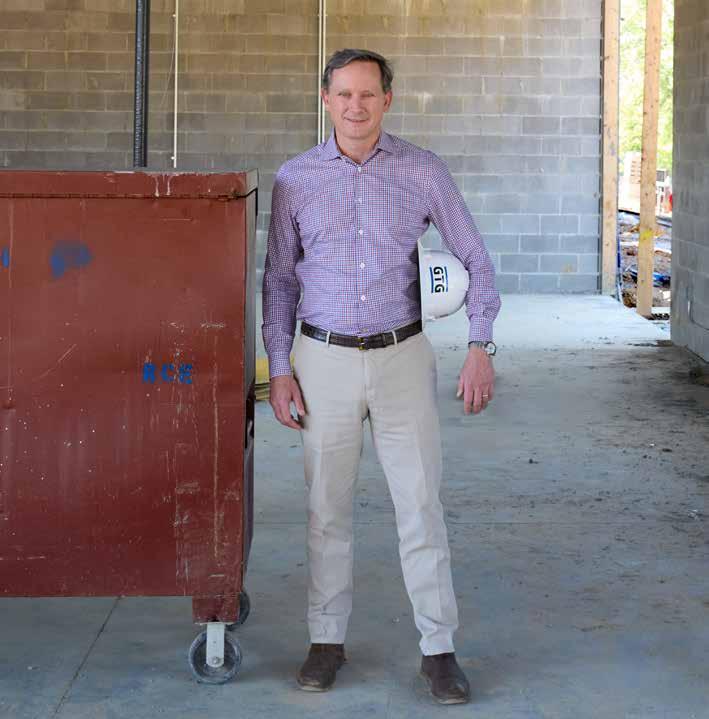
Driving through Memphis, it can feel like there is a Grinder Taber Grinder (GTG) sign on every corner. At the helm of this successful third-generation family construction business is Brett Grinder, who works alongside his father Fred and brother Justin on projects that continue to benefit our city.
“My grandfather taught me that we always want to ensure our projects go as fast as possible and be well organized...”
The story of GTG began in the postwar boom of the 1950s and 60s when Brett’s grandfather Ed and his great-uncle Curley moved to Memphis after serving in the Naval Construction Battalion during WWII. After gaining experience working on iconic projects like 100 North Main, they partnered with Harold Taber to found GTG in early 1968. Despite the tumultuous local climate following the assassination of Dr. King just months later, the founders persevered and remained profitable in their very first year.
Brett and Justin were involved in the family business from a young age. “Dinner conversations at our house and our grandparents’ always revolved around construction and what GTG was doing,” Brett recalls. After earning engineering degrees at Georgia Tech, both brothers returned to work with their father, where they now equally share ownership and responsibilities. “We know to play to our individual strengths, and we have worked together long enough
to know which of us is best to manage a specific type of project, handle a political issue or prepare a financial analysis,” Brett says.
GTG is well known for their ability to deliver projects on time and within budget, utilizing a data-driven cost estimating system. By combining current subcontractor pricing with an extensive database of past costs, they provide accurate budgets at the earliest design stages. This systematic approach has earned the trust of long-term partners like Metcalf Crump, Chairman and CEO of The Crump Firm-Architects, who has worked with Brett on hundreds of projects over the past 30 years. Crump says, “We and our clients have always benefitted from Brett’s skills, knowledge and integrity in his work on all our projects. Brett is known for his reliable preliminary cost-estimating during the design phases of each project, for maintaining excellent cost-control methods and for completing all projects on time as promised.”
Brett Grinder on the MUS construction site
While GTG has experienced consistent growth over the years, its trajectory has been intentional: “We never planned to be the largest construction company in town, but we always aspired to have the best reputation and highest level of service and technical ability.” This commitment to service is felt directly by clients. Elizabeth Troutman, Director of Operations at OrthoSouth, recalls being impressed by Brett’s personal involvement: “I was able to talk directly to Brett when I called to check up on various items throughout the projects, and he responded quickly.” She adds that GTG “always completed the jobs early and under budget.”
Working with a strong network of local subcontractors and treating them well is another key to GTG’s success. “My grandfather taught me that we always want to ensure our projects go as fast as possible and be well organized; that ensures that the subcontractors succeed alongside us,” Brett notes, emphasizing that mutual profitability is key to maintaining a top-tier talent pool.
While GTG has transformed landmark buildings like the Gibson Guitar plant into FedEx’s downtown headquarters and constructed the Crosstown Concourse, Brett’s current favorite project is deeply personal. The new Memphis University School (MUS) Arts & Sciences Building is an update to his alma mater and the school his wife’s grandfather, Alexander Wellford, helped to reopen in 1955. Set to finish in the spring of 2027, the facility will finally provide the space that the school’s high-caliber faculty and growing music program deserve. “The music program has grown so much in the past decade that the orchestra cannot fit on stage,” Brett says, highlighting the necessity of the new theater and science wings.
When he isn’t on a job site, Brett stays active within the Memphis community, serving on many local boards, including MUS - where he is honored to work with the outstanding faculty and administration as chairman of the academic committee. Brett also enjoys traveling with his wife, Megan, and their two children, Anne and Edward, as well as with his larger extended family.
Left to right: Brett Grinder, Justin Grinder and Fred Grinder
Looking ahead, Brett’s focus remains firmly on the longevity of the firm and the city. “Our generation of the family is largely immune to short-term thinking, given that we want GTG to be a durable bellwether in Memphis through good economic times and tough ones,” Brett says. With the potential for a fourth generation to join the company in the next decade, that vision feels well within reach.
For nearly six decades, Grinder Taber Grinder has helped shape the physical landscape of Memphis. Its most enduring contributions, however, may be less visible. It is a legacy of integrity, precision and partnership that continues to build the city from the ground up.
For more information, visit grindertabergrinder.com
CHEF KELLY ENGLISH BRINGS NEW ORLEANS SPIRIT AND HARD-EARNED PERSPECTIVE TO LAURELWOOD
SECOND LINE, SECOND ACT
ARTICLE BY LINDSEY TONKIN
PHOTOGRAPHY BY SARAH VOIGT
ENGLISH IS EXACTLY WHERE HE WANTS TO BE: IN THE CENTER OF IT ALL.
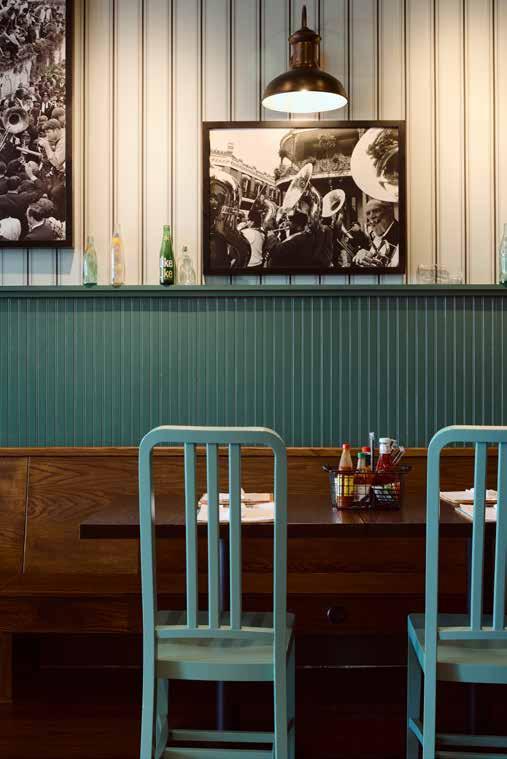
There’s a certain ease to the new location of Second Line in Laurelwood; the kind you feel before you even sit down. Maybe it’s the church pew sourced from First Presbyterian Church downtown that greets you just outside the door or the familiar glow bouncing off the copper bar. Or maybe it’s the quiet hum of a dining room that already feels broken in. Then there’s Chef Kelly English’s menu with those cheeky descriptions you can almost imagine him penning with a big, easy grin.
For English, the move east wasn’t about leaving Midtown behind. It was about timing, perspective and a path that, by his own admission, hasn’t always been linear.
A New Orleans native, English brought with him more than recipes when he landed in Memphis. He brought a spirit shaped by resilience and storms weathered. That sense of endurance would return years later, as he led his team through the uncertainty of the pandemic, guiding not just a business but the people—front and back of house—who keep it running day in and day out.
“THE DESIGN REMAINS ROOTED IN ITS NEW ORLEANS INFLUENCE, WITH SOME ELEVATED ELEMENTS TO REFLECT ITS SECOND CHAPTER AND TO PROVIDE A MORE
SEAMLESS EXPERIENCE FRONT AND BACK OF HOUSE,” - LAURYNAS PETRAUSKAS
He’s quick to deflect attention from himself, pointing instead to his team, which includes business partner Kimberly Guthrie. English leads with equal parts grit and heart. And while the past few years have tested even the most seasoned restaurateurs, they’ve also clarified something: what matters, what works and what works even better now.
That clarity is evident in the Laurelwood spot. English and his team had their eyes on the space next door to Restaurant Iris for some time, making the move feel less like a leap and more like a natural progression. With both restaurants now side by side once more and sharing a kitchen, operations are streamlined, and English is exactly where he wants to be: in the center of it all.
The space itself, renovated by LP3 and designed by Parker Design Group tells its own story. “We immediately understood how important it was for Kelly to preserve the authenticity of the original restaurant in its relocation to East Memphis, so we approached the new space with that intention at every turn,” says Laurynas Petrauskas of LP3. “From the copper bar top, exposing original metal beams and restoring pews from First Presbyterian
Church, the design remains rooted in its New Orleans influence, with some elevated elements to reflect its second chapter and to provide a more seamless experience front and back of house.”
English further explains that the exposed, unfinished support beams throughout nod to New Orleans—a city that knows a thing or two about rebuilding post-Katrina. Many other familiar touches from the original location made the move: the chandelier, the art and even the repurposed bathroom signs. But there’s a freshness here, too.
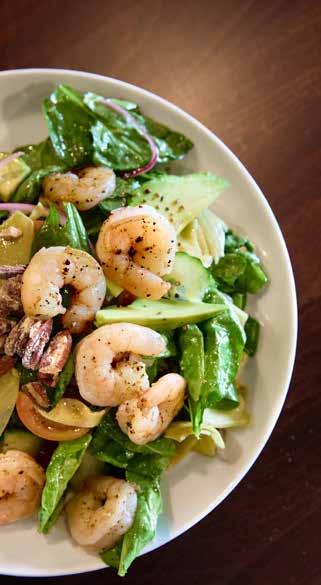
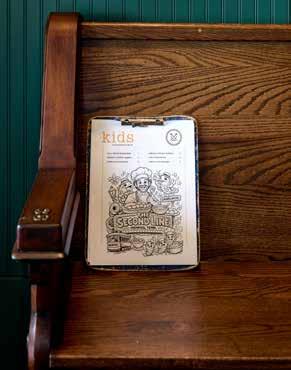
The menu follows a similar rhythm. Longtime favorites remain, grounding the experience in what guests have always loved about Second Line. But there’s also a sense of evolution, “A 2026 approach to 2015 when Second Line first opened,” as English puts it. New additions like a healthy salad have joined the lineup, as well as cocktails like the playful Right Lane on Poplar and When the Levee Breaks to keep things unmistakably authentic. The expanded kids menu includes dishes meant to please even the most discerning clientele and is inspired by the real-life preferences of English and co-owner Guthrie’s children.
It’s this balance between past and present, comfort and creativity that defines the new Second Line. Nothing feels forced. Nothing feels forgotten.
Meanwhile, the original Cooper and Monroe location is stepping into its own next chapter. The Swamp Bar will expand into the former Second Line space, offering a more casual counterpart with the popular Vietnamese-Creole influences and outdoor seating—another example of English’s instinct for growth that feels organic rather than rushed.
Second Line in Laurelwood is now open seven days a week, 359 days a year, a steady presence in a city that has, in many ways, grown alongside it. And while the setting may be new, the spirit remains unchanged. Because for English, it’s never just been about the food. It’s about the people who make it, the people who gather to enjoy it, and the winding path that brought them all here.
Life isn’t always linear. But sometimes, it leads you exactly where you’re meant to be.
“A 2026 APPROACH TO 2015 WHEN SECOND LINE
TAKE THE GUESSWORK OUT OF STEAK NIGHT WITH “SOUS VIDE” PRECISION.
SOUS VIDE LIKE A PRO
ARTICLE BY MORGAN ZANONE
When I was deciding what culinary article to write for the men’s issue, my husband had an immediate suggestion: “sous vide”. It is our favorite way to cook steaks because it is practically foolproof. There is almost no risk of overcooking, which makes it the ultimate “set it and forget it” method. While steaks are our go-to choice, “sous vide” also works beautifully for chicken, pork, fish and vegetables.
“PERFECT STEAK EVERYTIME”
The method was developed in France in the 1970s by Chef Georges Pralus and has since moved from restaurant kitchens into home kitchens everywhere. The key tool is an immersion circulator, which heats and circulates the water to maintain an exact temperature. Prices can range from about $50 to several hundred dollars, but for everyday home cooking, an affordable model works perfectly well.
You can also use a dedicated vacuum sealer, though it is not essential. We used resealable freezer
bags for years before purchasing one, and they worked just fine. Of course, if you enjoy kitchen gadgets, there are plenty of accessories available.
Our routine is simple. As soon as we buy steaks, we season them, vacuum-seal them and refrigerate or freeze them until needed. When it is time to cook, we fill a stockpot with water and set the circulator to 133 degrees for medium-rare. If you prefer a different level of doneness, simply consult the manual for
the recommended temperature. Once the water reaches temperature, the steaks go in for two hours. The beauty of “sous vide” is that if dinner gets delayed, the steaks will not overcook.
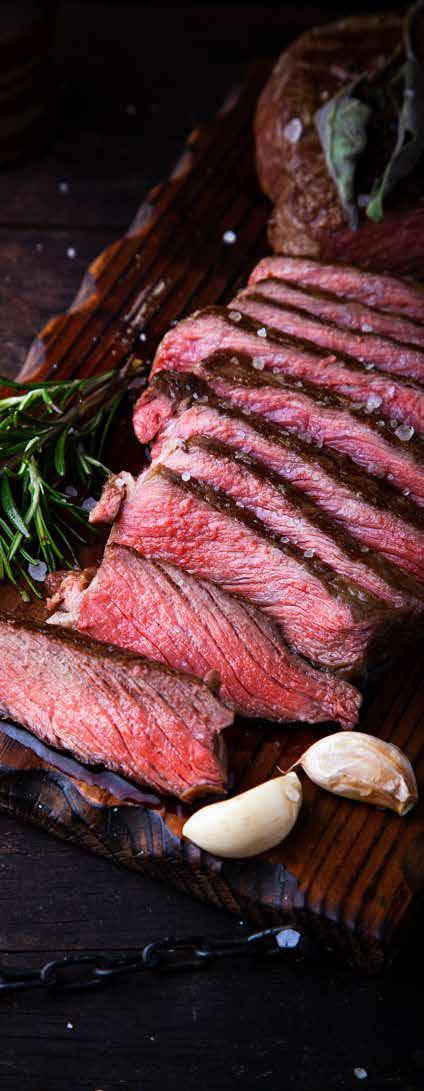
When the timer is done, my husband finishes them on a hot grill for a quick sear and that delicious, charred flavor. A cast-iron skillet or oven broiler works just as well.
“Et voilà”! A perfectly cooked steak, and the chef looks like a genius every time.
Sous vide
“Sous vide” is a French term meaning “under vacuum.” The technique involves sealing food in a bag and cooking it in a temperature-controlled water bath set to a precise, low heat. Because the temperature remains constant, food cooks evenly, resulting in tender, juicy and consistent results every time.
JEANNIE
DR. LUCAS TRAUTMAN ON BUILDING SYSTEMS OF STABILITY AND LOVE AND REDEFINING MODERN PSYCHIATRIC AND ADDICTION CARE
BEYOND THE APPOINTMENT
When Dr. Lucas Trautman speaks about his profession, he describes it as much more than a series of appointments and treatments. Trautman says, “My work sits at the intersection of addiction medicine, psychiatry and public safety.” Trautman is a fourth-generation physician and describes how his ancestors were leaders within their fields.
Trautman’s great-grandfather, John Andrew Trautman, was the first director of the NIH Clinical Center, appointed by Harry S. Truman. His other great-grandfather, Homer Lucas Skinner, was a pioneering
Oxford Treatment Center
(Courtesy of Perry Jenkins)
surgeon who performed advanced thoracic procedures at a time when that work carried considerable risk. His father, Robert Joseph Trautman Jr., built a distinguished dermatology practice in Memphis and set a clear expectation early on that Lucas would lead.
Dr. Trautman helps manage four distinct treatment centers, maintains working relationships with Homeland Security and the FBI and serves as a media expert. Trautman says, “Most days begin before sunrise with an acuity-driven review of patients at Oxford Treatment Center.” At Oxford’s large residential campus, he manages a high volume of individuals in acute withdrawal, reviewing overnight vitals, identifying instability and issuing operational briefings that direct the clinical day.
Dr. Trautman is also a consulting psychiatrist at Memphis Outpatient Detox and feels passionate about the benefits of outpatient addiction treatment. “One of the persistent failures in addiction treatment is the assumption that care requires a complete withdrawal from daily life – for many individuals, that is not realistic,” says Trautman. Memphis Outpatient Detox is designed to allow carefully selected patients to stabilize safely while maintaining their personal and professional responsibilities. Trautman adds, “If systems do not adapt to reality, people delay treatment. That delay is where risk escalates.”
“REGARDLESS OF STATUS OR CIRCUMSTANCES, THE UNDERLYING NEEDS REMAIN THE SAME – STABILITY, LOVE, CONNECTION.”
Oxford Treatment Center (Courtesy of Perry Jenkins)
As Medical Director of Child and Adolescent Psychiatry at Lakeside Behavioral Health System, Dr. Trautman’s psychiatric practice focuses on listening to his patients, taking time to understand their situations and remaining present in order to define and provide effective care. Trautman adds, “MDs must always love deeply.”
Over the past several years, Trautman has developed a role as a media expert on addiction, mental health and emerging threats affecting our youth. He has authored and contributed articles to major publications, including The Lancet, The Washington Post and Homeland Magazine. He has also served as a medical expert on national media outlets, including Fox News, the BBC and CNN. Notably, Dr. Trautman was the medical correspondent on the tragic death of Rob Reiner and his wife.
Beyond medicine, Dr. Trautman assesses behavioral threats in highstakes public safety settings alongside federal partners, including the FBI and Homeland Security. He has evaluated individuals showing patterns of online radicalization and potential violence, and his work has contributed to the disruption of a fentanyl pipeline bound for Tennessee communities
Trautman feels that the pattern is consistent across all of these environments.
“People are more similar than they appear. Regardless of status or circumstances, the underlying needs remain the same – stability, love, connection and the opportunity to recover.”
Dr. Trautman’s role is to build and lead systems that deliver those underlying needs.
This work requires clarity, so personal discipline is not optional for Trautman.
“I train consistently through swimming, strength work and hot yoga. I read and write daily. I am intentional about environment. I follow design closely and I have a strong appreciation for floral arrangement and composition.”
Trautman also credits wrestling at Christian Brothers High School and earning a black belt in Jiu-Jitsu for reinforcing discipline, accountability and responsibility to others. Trautman has embraced his role to shape systems and lead, not simply function inside them, just like his ancestors.
Start with Six Months
A new, structured introduction to partnering with River City Lifestyle.
Includes:
• Six monthly insertions
• Thoughtfully designed creative, tailored to your brand
• Introductory pricing credited toward a long-term partnership
Season Pass for Nonprofits
We have created a dedicated placement opportunity designed specifically for nonprofit organizations.
Includes:
• Six consecutive monthly insertions
• Professional ad design aligned with our publication
• Placement within a loyal, established readership
Designed to highlight individual listings in a clean, elevated format. These insertions offer a polished way to showcase available properties.
Includes:
• Ad design using agent-provided listing details and images
• The approved layout showing your listing(s) appears in our upcoming issue. Real
JONATHAN Caples
ARTICLE
BY
D’ANGELO
CONNELL PHOTOGRAPHY PROVIDED BY MEMPHIS BOTANIC GARDEN
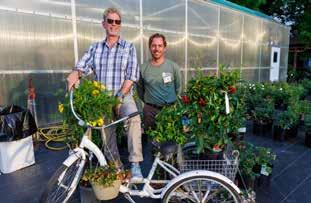
Long before Jonathan Caples held the title of director of horticulture and facilities at Memphis Botanic Garden, he was just a little boy in Texas, pulling carrots from his great-grandmother’s garden and chasing pecans across his grandparents’ sprawling 60-acre property south of Austin. Those early memories - dirt under his fingernails, the smell of fresh earth and his grandmother’s vibrant beds of zinnias and amaryllis - quietly planted a seed that would eventually bloom into a distinguished career in horticulture.
“My great-grandparents were farmers,” Caples says. “My grandma always had her flower beds. Going out there on the weekends, it was just a part of life.” When his older sister got involved in FFA (Future Farmers of America) in high school, Caples followed her lead. From there, he never looked back. That path took him through Texas A&M University, where he earned his doctorate in horticulture with interdepartmental research spanning both horticulture and entomology, and eventually to the rolling landscapes of North Carolina, where he served as head horticulturist at Juneberry Ridge, a 750-acre regenerative farm. In November 2025, it led him to Memphis.
“I came in the week before Thanksgiving, and everything was already brown,” he recalls with a laugh. It was hardly the most glamorous introduction to a new city, but Caples dove in headfirst. Within days of his arrival, thousands of tulip bulbs were coming through the door. For the next two months, he and his team planted them. They bloomed. Memphis fell in love with them. And now, just five months into the job, those tulips are being pulled to make way for the next chapter, a transformation of what was once Daffodil Hill into a sweeping azalea garden made possible through community donations of more than 700 plants.
“They look great now,” Caples says, “but in two, three or five years, it is just going to be incredible. You will have these walls and waves of pinks, whites and purples. It will almost mimic what we try to do with the tulips, but on a much larger scale.”
That kind of long-view thinking comes naturally to a man who learned patience from the land itself. Ask Caples how he knows spring has truly arrived, and he will tell you to look for the pecan trees. “The pecan tree is usually one of the last trees to bud out in spring,” he explains. “If the pecan tree has budded, you know spring is here. It is like the groundhog of spring. You are good to go.”
Adjusting to Memphis as a newcomer has not always been easy. Born and raised in Houston, Caples did not move more than two hours from home until his 40th birthday, when he packed up and headed to North Carolina. Memphis represents his second major move, this time into a larger city where friendly neighbors do not automatically show up at the door. “It has been a little slower on that side of things,” he admits. But what has made the transition smoother than expected is his team.
CONTINUED >
“MY GREAT-GRANDPARENTS WERE farmers . MY grandma ALWAYS HAD HER flower beds . GOING OUT THERE ON THE WEEKENDS, IT WAS JUST A part of life .”
“I look forward to Mondays,” he says without hesitation. His co-workers have invited him to dinners, Memphis Grizzlies games and the Orpheum Theatre, and have introduced him to spots such as Mind Body Haus in Cooper Young, where he has taken up yoga. “Inviting me to their houses, to go grab a drink, they have just been really great about getting me out.” The culture at the garden itself has also been a revelation. During a recent plant sale, with thousands of visitors on the grounds, education staff members came over unprompted to ask how they could help. “Everyone wants everything to be successful,” he says. “I have worked at some really great places, but I have never worked somewhere that seems this dedicated.”
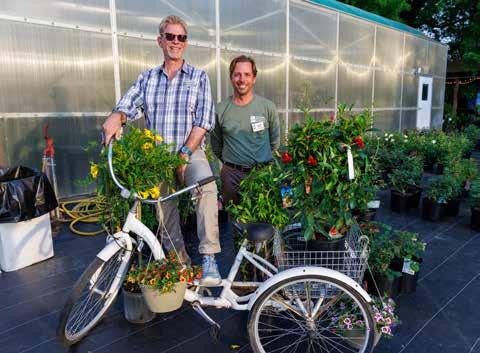
As he settles into Memphis, Caples has been quietly discovering the city’s layers, from the food scene downtown to the trails along the Wolf River he has not yet explored, to the bicycle he recently purchased with dreams of eventually commuting the eight miles from downtown to the garden. “There is a lot on my short list,” he says with a grin.
At the garden, that list is even longer. A multi-year vision plan is underway, with initiatives Caples can only hint at for now. But the foundation being laid, in azalea beds, community partnerships and a team that pitches in without being asked, already speaks volumes.
Like the pecan tree, the best may still be ahead. But the roots are strong.
D’ANGELO CONNELL
D’Angelo Connell is a Memphis-based photographer and writer who approaches his work with a focus on intention, storytelling and impact. After leaving a fiveyear career with the United States Postal Service to pursue his creative path fulltime, he has built a diverse portfolio spanning corporate events, fashion, sports and brand storytelling, including work connected to New York Fashion Week and SXSW. His photography centers on capturing authentic, unscripted moments, while his writing adds context and depth that extends the life of those visuals. Known for his professionalism and strategic mindset, D’Angelo creates digital assets that not only document experiences but help brands communicate clearly, connect with their audience and maintain a strong, consistent presence over time.
DR. MONEIM ELOMEIRI OF PLASTIC SURGERY GROUP
ARTICLE BY AMY BIRDSONG GOLDEN | PHOTOGRAPHY BY AMY THREADGILL
NEW TO
TOWN
Dr. Moneim Elomeiri runs along the Mississippi River as much as he can. A short drive to Harbor Town and he is transported. “I grew up on the Nile River. Different view - but it manages to feel the same. Nothing beats a sunset on a river,” Elomeiri remarks. Born in Wisconsin, he spent most of his childhood in Sudan and Abu Dhabi. His parents were agricultural engineers and worked for the United Nations. After completing his residency and fellowship training in the states, he joined Plastic Surgery Group as a surgeon in 2025.
Joseph Men: Corneliani shirt and blazer, AG linen pant.
“During my fellowship, a resident from Memphis heard I was considering the move. Dr. Teddy Klug told me in no uncertain terms that I should be in Memphis. And then he pulled up old YouTubes of him at the Grizzlies games when he was a kid,” he laughs. “I love it here and have enjoyed making it home.”
We sat down with Dr. Elomeiri to find out his culinary and city go-to’s and discoveries as a new Memphian.
HAVE YOU DISCOVERED SUMMER AVENUE YET?
Absolutely. If you haven’t been yet, Queen of Sheba is a fantastic Yemeni place. I highly recommend their red snapper dish. And I am trying to not eat too many biscuits from Bryant’s
WE TRUST YOU HAVE LEARNED THAT BBQ DOESN’T MEAN HAMBURGERS ON THE GRILL IN SOMEONE’S BACKYARD?
I knew that was first on the list. This might seem contrarian to those Memphis purists- but I love the brisket here. Bain BBQ on Cooper is incredible. Be warned: they sell out. And the brisket from Germantown Commissary is a must. Their hot bbq sauce is a favorite.
HOW
ABOUT
A WEEKEND NIGHT OUT –
WHERE ARE YOU DINING?
Downtown – Catherine and Mary’s I discovered during the Grizzlies season . East Memphis – Folk’s Folly. I am working on my steak at home, but I can’t touch their sides. If I am cooking at home with friends, I’ll hit up the Cordova International Farmer’s Market. I have a sweet tooth, and I’ll get the purple yam cake from Prince Tea House. I bet you haven’t had anything like it.
HAVE YOU EXPLORED OUR COFFEE SCENE?
I have a weekend routine. On Saturday, it’s JoJo’s Espresso Sundays I am at Sweet Eye Coffee which might be the most global coffee place in the city.
BETWEEN RUNNING ON THE RIVER AND FINDING YOUR NEW, LOCAL FAVORITES, YOU ARE ALL OVER THE CITY…
People here can talk about traffic; you do not have traffic. I find it’s the easiest city to navigate. I am currently renting near Shelby Farms. What a sight in the middle of the city. Also, who
knew you had buffalos? But, I hope to find a neighborhood near the Greenline and eventually a backyard with a greenhouse. Aesthetics is my career, but I like the challenge of working with plants and flowers.
WHERE CAN WE FIND YOU THIS SUMMER, OUTSIDE OF THE OPERATING ROOM AND YOUR PRACTICE?
I haven’t spent enough time in any of the museums. Yes, Graceland is on my list, too. I hope to spend time with 901 Runners Club – I don’t mind the heat! And definitely looking forward to the FedEx St. Jude Classic. The Memphis music scene is great, and its everywhere. I am discovering the Blues. So, hopefully you’ll find me in a new haunt or at an outdoor concert at Overton Park. For some creativity, I hope to take a pottery class behind the wheel at Belltower Studio. Memphis is such an accessible city and the real discovery has been the people.
Special thanks to Joseph Men for location. Styling by Colin Chapman of Joseph.
Joseph Men: Corneliani knit, Rag & Bone jean, Premiata sneaker.
AN EXCERPT FROM EPISODE 6 OF SHARE THE LIFESTYLE, A CITY LIFESTYLE PODCAST
Photographer: Brittany Dawn Short
Creative Director: Jen Birn
Stylist: Stephanie Coultress O’Neill
Location: Hotel Saint Cecilia, Austin, TX
MIKE JOHNSON HAS BUILT HIS LIFE AROUND ONE QUIETLY RADICAL IDEA: THE STANDARD YOU SET PRIVATELY IS THE ONLY ONE THAT MATTERS.
After eight years in the Air Force, a celebrated run on national television, and a health crisis abroad that sent him deep into supply chains and ingredient certifications most founders never touch, the result is Oshun — a luxury ritual brand built on provenance you can trace and integrity you can verify. In an exclusive conversation for the Share the Lifestyle podcast, Mike shares what it actually takes to build something worth putting your name on. Read the highlights below, then scan the QR code for the full episode.
Q: YOU BECAME A FAN FAVORITE ON THE BACHELORETTE AND THEN LEFT THE SPOTLIGHT. YOU MOVED TO MEXICO, LEARNED SPANISH, THEN COSTA RICA, AND BUILT A COMPANY. WHAT DID THAT EXPERIENCE TEACH YOU ABOUT HUMAN BEHAVIOR?
A: “If you’re a good person going in, that shows. If you’re not, that shows too. I also learned that people form this parasocial relationship with you — they assume things about you. When in all actuality, different circumstances bring out different parts of who you are. I was on TV trying to find love. The kindness people were showing after felt a bit fake, because they wanted to be a part of something that isn’t who I am individually, but a part of what they saw on TV. And so I had to get away from everybody and everything and the noise.”
THE QUIET STANDARD:
MIKE JOHNSON
“Too many people have prayed for me. So I’ve got to get up and do the walking.”
— Mike Johnson
Q: YOU JOINED THE AIR FORCE RIGHT OUT OF COMMUNITY COLLEGE. WHAT WERE YOU ACTUALLY RUNNING TOWARD?
A: “There was something in me that was saying: I’m not living up to my full potential. I was being a follower. My uncle said, ‘What’s going to make you become an adult the fastest?’ I said, obviously, the military. The Air Force broadened my thought process more than anything. We’re so caught up in our own perception — when you learn to understand different people’s perspectives, it adds to you in so many ways.”
Q: WITH OSHUN, YOU OWN YOUR MANUFACTURING, YOU EMPLOY A CHEMIST, EVERY PRODUCT HAS A BATCH NUMBER TRACEABLE TO ITS ORIGIN DATE. WHY DID YOU DECIDE TO GO THAT DEEP WITH THE BRAND?
A: “The EU bans 1,100 ingredients in personal care products. The U.S. bans nine. That’s my starting point. Oftentimes, it might be the same ingredient, but it comes from a place where it doesn’t have the highest purity. And 60% of what we put on our skin is absorbed. Every product Oshun makes carries a batch number that goes back to the exact day it was created — I can show you every single supplier, the date, the origin. I own more than one part of the supply chain because that’s the only way I can stand behind what’s in the bottle.”
This conversation is just the beginning. Mike goes deeper into why he’s buying land up north, the family in the Philippines who prayed over his factory floor, and what he’d tell every person ready to stop performing and start building. Scan the QR code for the full, exclusive City Lifestyle interview on the Share the Lifestyle podcast.
MIKE JOHNSON
artist: Trixie6
Season Pass
The Philosophy of Flavor
Memphis is filled with spaces that are comfortable and homey, based on the decor, the lighting or the location, yet the most important factor is the people. Luc Olsen, Beverage Director at JEM Restaurant in the Edge District, is a person who creates a welcome and congenial atmosphere. His enthusiasm and knowledge of flavors allow him to create unique cocktails, put together one of the most diverse wine lists in Memphis, and host delightful wine classes and dinners that challenge the mind and the palate.
Luc is not a native Memphian; however, after living in the River City for 15 years, he has found that Memphis suits him. Luc moved to Memphis to do a master’s program in Philosophy at the University of Memphis and found his niche with his fellow scholars and among the people he met while working in service roles during his studies. For him, Memphis is a place that embodies a Bohemian approach to life and one where he can be “decant(ing) one of the most expensive bottles of wine I’ve ever held and the next morning fish next to a stranger along the riverside sitting on five gallon buckets”.
ARTICLE BY ANNA GSANGER
PHOTOGRAPHY BY SARAH VOIGT
Luc has found a new passion in cocktails, wine and wine story-telling. He began at Kimbrough Wine and Spirits, categorizing wines and creating a wine club for the store, and honed his skills further while managing Knifebird Wine Bar. In both roles, he enjoyed the challenge of describing wines so that they appealed to those who were new to wine as well as wine aficionados who wanted a challenge.
If you’ve been fortunate enough to have encountered Luc’s hospitality or taken one of his wine classes, you know he has found balance in blending information on wine with the experience in the glass. He prides himself on hosting wine classes that are more than expected. Together with Charlie Purpura, formerly of Rootstock Wine Merchants, they have led wine classes focused on wines that tell a story, ranging from The History of Phylloxera to Rom Com Movies.
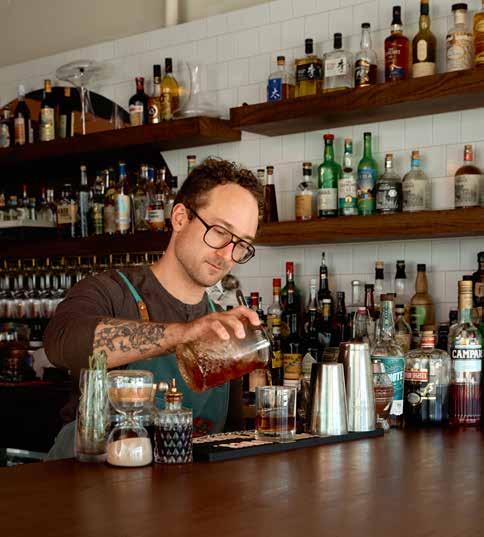
Luc Olsen embodies hospitality and curiosity at JEM Restaurant
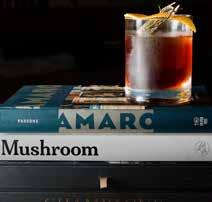
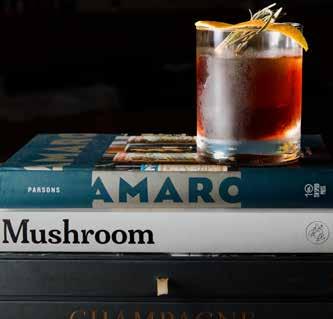
A part of Luc's inspirational library.
Charlie introduced Luc to Josh and Emily Mutchnick, the owners of JEM Restaurant. Luc was drawn to how Josh’s personality is reflected in the restaurant: it’s eclectic, intimate and rooted in personal passions rather than a genre or trend. This also reflects Luc’s style behind the bar. When he finds a new technique or wine region, he wants to know more about it so he can share it with his customers. Luc appreciates the decades of experience that Chef Josh has and values his feedback on cocktails and techniques. The restaurant gadgets available for experimentation are a real perk of his role, and there is no menu pressure. He can add a seasonal cocktail or new wine at any time, keeping his work current.
Outside work, Luc enjoys foraging. He believes that, “foraging is basically structured nature bathing”. It’s a way for him to step out of his professional role and influences his work behind the bar by reminding him to be thoughtful with every ingredient. Luc shares any extra infusions with the pastry chef, and she and Chef Josh share their work with him, with the goal of making new flavor combinations that enhance the guest experience.
In addition to lessons learned while foraging, Luc uses his philosophy background to help his customers find the words to describe what they like and don’t like. Luc takes the time to help his customers understand how something tastes and why. This helps him guide the customer in ordering and is a signature element to his excellent hospitality.
CONTINUED >
Luc Olsen behind the bar.
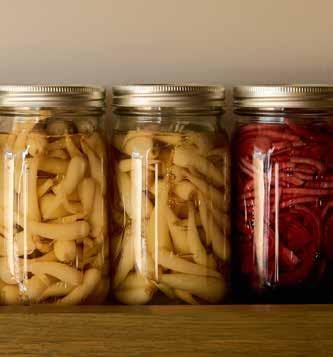
Pickled ramps and onions, homemade staples used throughout JEM.
Luc misses his philosophy studies and the ability to dig deep into a topic with his classmates; however, the partnership that he and Charlie started at Knifebird continues today and is an outlet for that intellectual curiosity. Luc and Charlie lead monthly wine pop-ups at JEM called Lucha (Luc + Charlie), a one-day-only wine menu that includes wines that are typically not part of the menu due to price or availability. These pop-ups span an array of varieties and producers and spark fun wine conversations that transcend a traditional wine class. They will be expanding the Lucha experiences with a blend of class, wine and food in the near future. Be sure to follow JEM Restaurant on Instagram or stop by for a drink any evening Wednesday through Saturday.
One of Luc’s favorite cocktail techniques is an oleo saccharum, Latin for oil sugar. Citrus peel and sugar work together overnight to pull the citrus oils from the peel to create a complex flavor profile. Just like a salad, you can’t mess up the chemistry regardless of your ingredients or portions.
Snap Pea Oleo Cocktail
INGREDIENTS
• 3 Lemons
• 3 oz of Snap Peas
• A few sprigs of fresh herbs
• 1 c of Sugar
• 1 pinch of Salt
• Your favorite clear liquor - Luc recommends White Rum or Gin
• Club Soda
DIRECTIONS
1. Peel your citrus. Mind the pith; it is full of tannin that can make the oleo bitter. Make sure you see some citrus pores from the underside. Set the citrus sections aside to be juiced the following day.
2. Toss the peels in sugar to coat with just a pinch of salt. Put into a container and refrigerate overnight.
3. After the mixture has rested overnight, pull out the sugary peels and replace with a handful of snap peas and your favorite fresh herbs.
4. Muddle the snap peas and herbs in the oily sugary mix. This step should not be done the day before. If it sits overnight, it will pull too much chlorophyll and tannin, making it bitter.
5. Let this mixture sit for an hour and taste. If you are happy with the flavor, add the juice from the citrus sections. If the flavor is weak, add more sugar, muddle again, and check in another 30 minutes and then add the lemon juice. Strain mixture.
6. You now have a flavorful, colorful, and slightly sweet juice, a sweet and sour for grownups. Add more sugar if it is too tart or if you just want it sweeter.
The fun part! Here are 3 options for using your juice:
• Combine two oz. of Snap Pea Olea with 1.5 oz. of white rum. Top with club soda.
• Mix it with some iced green tea for a mocktail.
• Toss it in a gin and tonic. Whatever you choose, have fun finding a glass that is as pretty as the drink. Cheers!
Luc uses innovative techniques for his cocktails
DAVID LUSK GALLERY
BLACK CAT, 2026, mixed media photo encaustic on panel, 40 x 40”