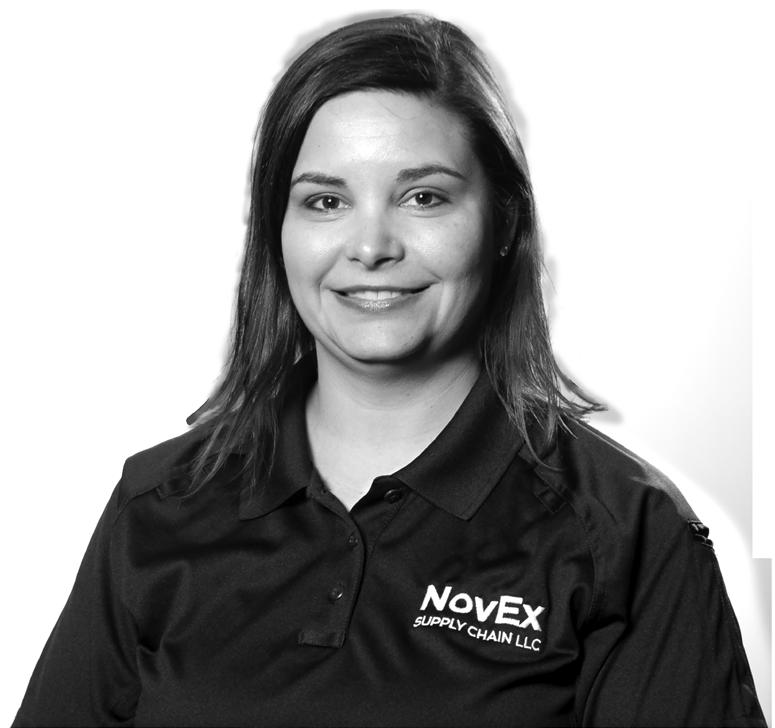
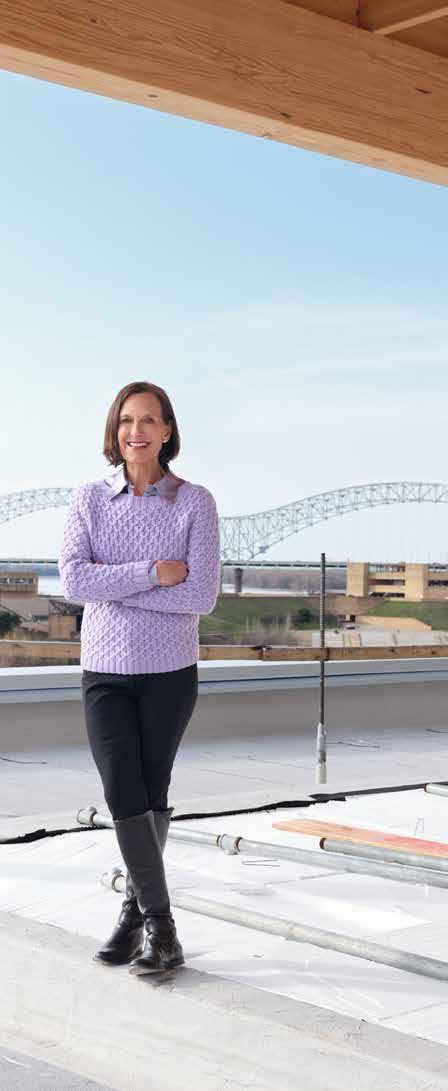
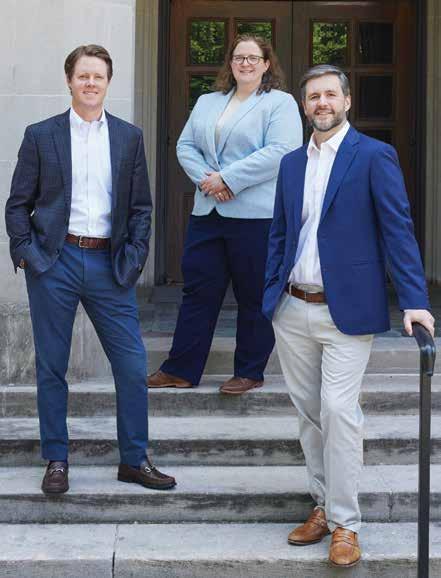
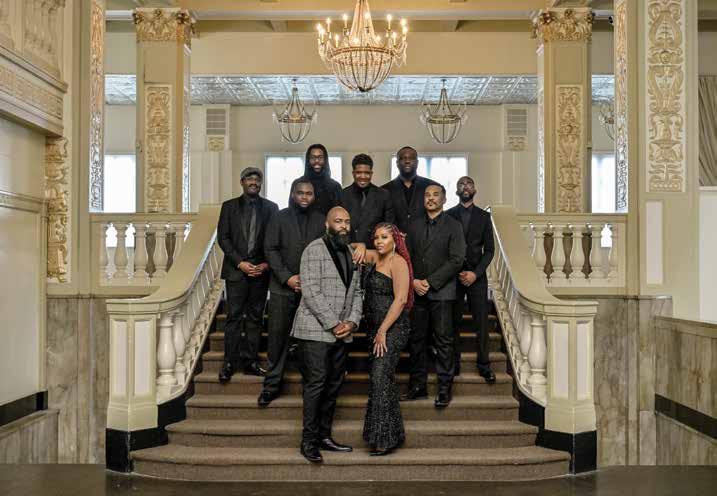
In the warehouse logistics business, new clients mean a demand for more space. Recently, that meant I had to physically grow my business–and quickly. Because of my relationship with i-bank, I secured a crucial line of credit to lease a larger facility with no loopholes to jump through or delays to endure. That didn’t just save me time and money, it gave me peace of mind. Thanks i-bank, I couldn’t have done it without you.
Kelsey Hensley President, NovEx Supply Chain
Start your story with i-bank today, and find out why being proudly independent is the most rewarding way to bank.
i-bankonline.com
Explore Memphis
We live in a world that prizes productivity and efficiency, where moments feel mapped, measured and planned. I’ll admit I fall into that mindset too—believing the only worthwhile activities are those that can be quantified and optimized. But a life that’s too structured misses something vital: space for exploration.
It doesn’t require an epic journey or a total departure. Start smaller, step off autopilot and let unfamiliar tasks nudge your habits. When you pause to explore, you notice what feels strange, reflect on what you’re learning and repeat with intention. That’s where the real magic happens: fresh connections, new patterns and a brighter way of seeing the everyday.
This issue invites you to challenge yourself to explore—whether it’s an adventurous trip out West or a quiet paddle on the Mississippi. Discover a new walking trail while reconnecting with a friend. Or, stumble upon a memory from canning tomatoes in your grandmother’s kitchen and teach your daughter the recipe.
Experiencing art is vital for our brains because it’s an open-ended workout for perception and emotion. Memphis artist Brantley Ellzey invites us into his studio for a well of inspiration, and leaders at the soon-to-be Memphis Art Museum share how they’re building something bigger than a building downtown.
So this summer, pitter-patter, meander and wander. Add “I’ve always wanted to…” to your to-do list. Make space for the unexpected, the unexplored and the new-to-you. There’s plenty right in your own backyard, Memphis—go find it.
Learn how to start your own publication at citylifestyle.com/franchise.
Proverbs 3:5-6
Where Building is Becoming
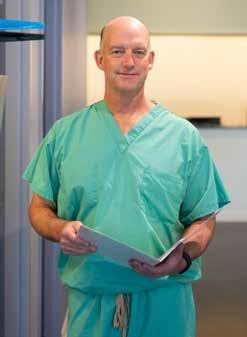
Dr. Owen Tabor, Jr.’s patients rate him a 4.9/5 stars! He is a fellowship-trained orthopedic surgeon specializing in hip and knee replacement. He has also been involved in research related to hip and knee replacement, including a long-term follow-up study of unicompartmental arthroplasty (partial knee replacement). When patients need an empathetic, capable orthopedic specialist to help get them back to the lifestyle they love, Dr. Tabor is often their first choice.
Deborah Craddock
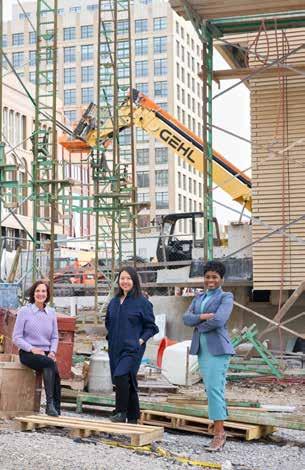
Three voices behind a new cultural landmark taking shape on the Mississippi
MEMPHIS IS BUILDING MORE THAN A MUSEUM
ARTICLE BY CHRISTIAN OWEN | PHOTOGRAPHY BY SARAH VOIGT
Memphis has always known the power of culture. Music became the city’s language. Its geography was shaped by the Mississippi River. Its moral gravity was defined by civil rights history. Now, with startling ambition, the city is beginning yet another transformation, one that’s rooted not solely in nostalgia but in cultural reinvention.
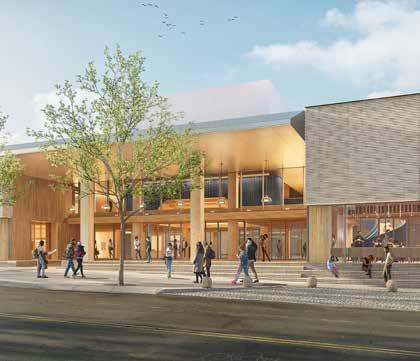
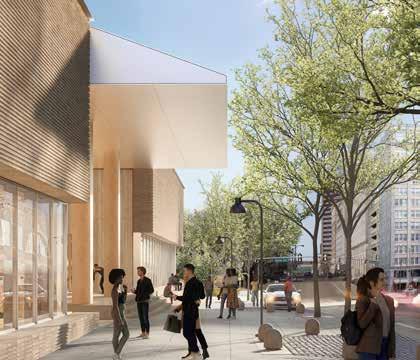
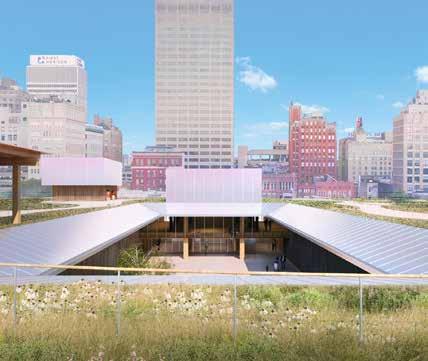
In December 2026, the Memphis Brooks Museum of Art will reopen downtown as Memphis Art Museum, a sweeping, new riverfront campus designed by the internationally acclaimed architecture firm Herzog & de Meuron. The 123,500-squarefoot museum will fill an entire city block overlooking the Mississippi River, providing 50 percent more gallery space and greatly expanding public access and community space.
But the real story is larger than a building.
The new museum arrives amid a wave of civic and cultural momentum in Memphis, with the National Civil Rights Museum expanding, the Metal Museum growing and many of the city’s landmark arts organizations marking milestone anniversaries. Together, these projects suggest a city investing in its cultural future with intensified confidence.
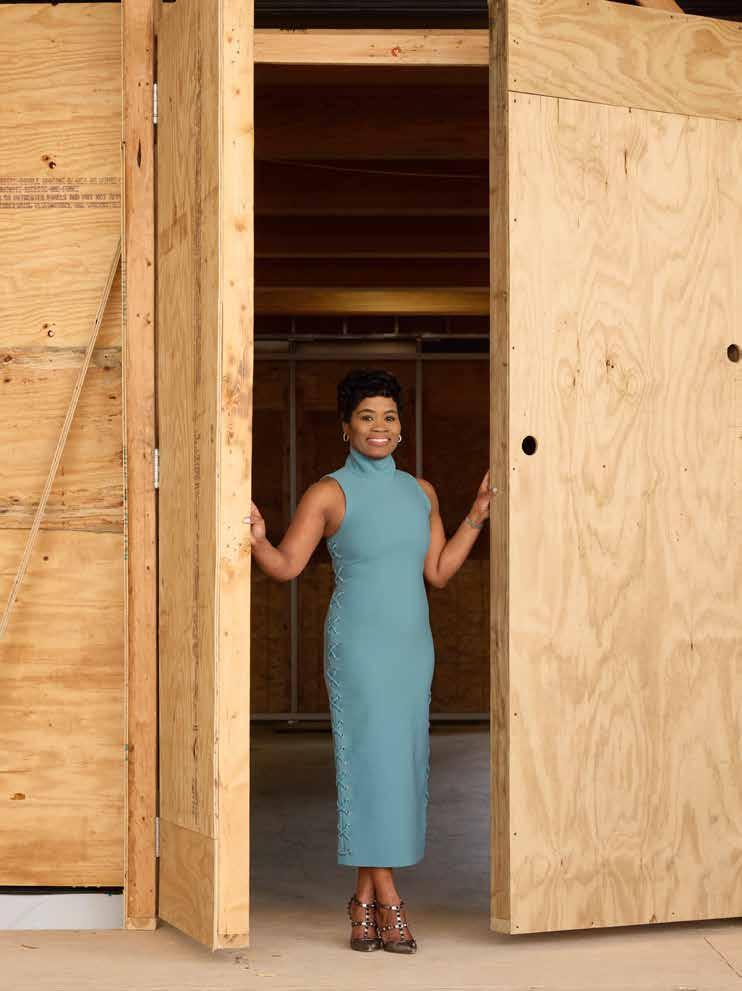
For Deborah Craddock, a long-time board member and building committee member for the museum, there’s something very emotional and uplifting about this project. “This moment matters because it reflects what Memphis believes about itself and what it wants to offer the world,” Craddock says. “A great art museum is not only a cultural asset; it is also a signal of confidence, ambition and civic pride.”
That sense of civic identity is built into almost every aspect of the museum’s design.
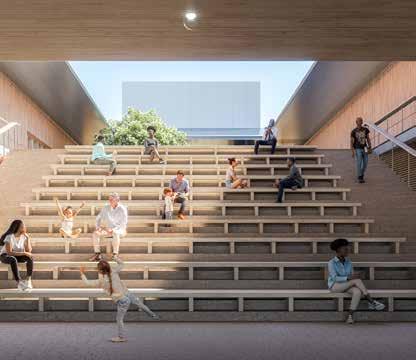
Unlike many traditional museums that feel elevated above the public, Memphis Art Museum has been intentionally conceived as porous, open and connected to daily life. Its glass façade is entirely transparent so that pedestrians can see into galleries right from the street. Wide walkways tie the city back to the riverfront. More than amenities, these spaces are designed to bring people together and break down the barrier between institution and community, including a central courtyard, rooftop sculpture garden, amphitheater and public plaza.
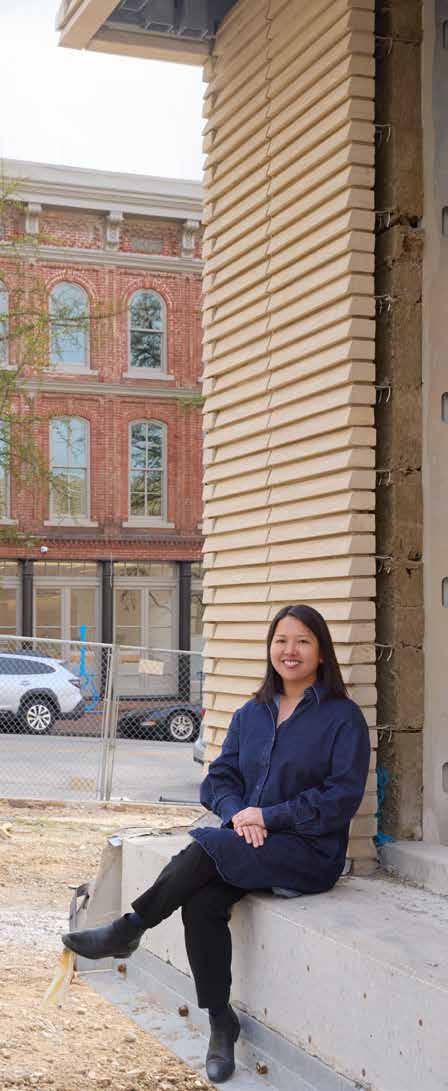
From an architectural standpoint, the museum will probably become one of the most unique cultural buildings in the American South. It’s one of the first large-scale U.S. museums built with laminated mass timber, a nod to Memphis’ historic role as the “Hardwood Capital of the World.” The building’s warm earth tones evoke the clay banks of the Mississippi River bluff, anchoring the building in the physical landscape of Memphis itself.
CONTINUED >
“This moment matters because it reflects what Memphis believes about itself and what it wants to offer the world.” - Deborah Craddock
Front Street Sidewalk, Memphis
Art Museum
Credit:
Courtesy of Herzog & de Meuron
Front Street, Memphis Art Museum Credit: Courtesy of Herzog & de Meuron
“Strong cultural institutions contribute to a stronger downtown and a stronger city.”
- Tanya Hart
Tanya Hart
The building will reconnect the city to the river in a fundamentally new way, according to the project’s architect, Ascan Mergenthaler, Herzog & de Meuron’s senior partner in charge. “The expansive courtyard with its connection to the river, and the spectacular roof terrace overlooking the Mississippi floodplain are all taking shape,” Mergenthaler reported in a recent museum statement. “Already, the civic nature of the building is tangible.”
That civic ambition matters in a city with a historical identity defined by the river, but often physically cut off from it. The design reorients Memphis toward the Mississippi River with overlooks, framed “river windows” and a rooftop walking trail that turns the landscape itself into part of the museum experience.
Tanya Hart, senior executive vice president and chief human resources officer at First Horizon, views the museum as an investment in downtown Memphis, both culturally and economically. “A vibrant museum downtown supports tourism, strengthens the business environment and adds to the energy that makes people want to live, work and invest in Memphis,” Hart says.
Hart has been engaged with the museum through civic leadership and board service, but she also considers the project through the prism of longterm city growth. To her, the new museum shifts the momentum well outside the arts world. “Strong cultural institutions contribute to a stronger downtown and a stronger city,” she says.
That momentum is already visible. Parallel to its architectural throughline is the museum’s changing curatorial philosophy. Since Dr. Zoe Kahr became executive director, the museum has grown its attendance by 40 percent, doubled its endowment, increased public programming, and added major acquisitions and national partnerships. Along with the downtown
move, the institution has received transformational gifts, including 80 works by contemporary Black artists through the Blackmon Perry Initiative.
This is not just an old museum moving to a bigger building. Memphis Art Museum is redefining the role and appearance of a Southern art institution.
Chief Curator Dr. Patricia Lee Daigle has developed a curatorial vision that favors dialogue, community, and contemporary relevance over the traditional chronological presentation. “The construction of a new museum has given us a rare opportunity to not simply display more art, but to reimagine how we think about history, power, creativity and connection,” Daigle says.
The museum’s galleries will be organized into 20 exhibitions, designed to establish conceptual relationships across time, geography and artistic media. Themes of liberation, race, identity, photography, music and Southern history will be interwoven throughout the museum experience.
One of the most anticipated additions is the Hooks Brothers Studio archive, which contains more than 75,000 photographs documenting Black life, excellence, music and community in the American South for much of the 20th century. The archive features iconic images of artists including B.B. King, Count Basie, Billie Holiday, Mahalia Jackson and Al Green, photographed on Memphis’ historic Beale Street.
The museum is also setting up internationally. A cultural partnership with Arts Council Korea is already exhibiting works from the Hooks Brothers archive in Seoul, introducing Memphis’ Black musical and cultural history to global audiences.
Another cornerstone of the museum’s shifting identity is an extraordinary acquisition of stained glass that could become one of the institution’s signature works.
CONTINUED >
In 2023, the museum acquired a rare 19th-century stained-glass window believed to be one of the earliest known representations in the United States of biblical figures as people of color. Made during the period of Reconstruction, soon after the Civil War, this masterpiece depicts Jesus, Mary, Martha and the Samaritan woman as Black figures. Its historical echoes are deep, especially in Memphis, where religious institutions were major players in the Civil Rights Movement.
The window will serve as the anchor for a gallery that explores ideas of liberation and racial identity in conversation with works that examine the role of jazz and abstraction in Black artistic expression.
These types of curatorial choices reflect a broader trend taking place at Southern museums: an increased openness to centering Black stories, grappling with the nuances of history and creating environments where scholarship and public discussion can coexist.
“Our new campus places art at the physical heart of downtown,” Daigle says. “That makes a statement about the importance of culture, creativity and public access to our community.”
Public access is one of the project’s defining characteristics. The museum announced in June that admission will be free for Shelby County residents forever.
The museum will have six times more free public space compared to the current institution, including community gathering spaces, rooftop walking trails, educational studios and outdoor programming spaces. Festivals, performances, seasonal art installations and public events will take place in the museum’s central courtyard, with the goal of extending the life of the museum beyond regular gallery hours.
That openness, for Craddock, is part of a bigger goal.
“What is so moving to me is that this project has always been about more than a building,” she says. “It has been about creating a civic space where art can shape everyday life.” Perhaps this will be the museum’s greatest contribution.
Memphis has long been known for music, civil rights and culture around the world. Still, its visual arts institutions have tended to draw less national attention than larger Southern cities such as those of Atlanta, Nashville or New Orleans. The new Memphis Art Museum intends to change that. Memphis Art Museum is positioning itself as more than a regional museum; it aims to become a cultural landmark of national relevance by combining ambitious architecture, expanded public access, internationally significant collections and a curatorial vision prioritizing community and contemporary dialogue.
Roof Garden, Memphis Art Museum Credit: Courtesy of Herzog & de Meuron
Courtyard River Window Stair, Memphis Art Museum Credit: Courtesy of Herzog & de Meuron
“The construction of a new museum has given us a rare opportunity to not simply display more art, but to reimagine how we think about history, power, creativity and connection.”
- Patricia Lee Daigle
And it is doing so in a way that feels unmistakably Memphis
That river is still there. Black history remains fundamental to the city. And music, photography, community and public life are still part of the experience. The building materials have a local meaning too.
Well before its doors are officially open, Memphis Art Museum is reimagining what it means to be from the River City. While Memphis’ identity is often tied to its past, the new museum has forward-looking vision, central to a city investing in culture not as mere decoration, but as civic infrastructure.
Chief Curator Dr. Patricia Lee Daigle
Walking in Memphis
Where you can walk “ten feet off” of more than just Beale
We are fortunate to have myriad parks and trails in and around Memphis. From the Mississippi to the much beloved Greenline, the opportunities are limitless to walk, skate, cycle or scooter. One of the best ways to explore the paths is with a goal in mind, particularly one related to the delicious food Memphis has on offer.
Here are several suggestions for an adventure in our beautiful town, along with a tasty reward for your hard work. You will definitely be walking on a proverbial cloud while appreciating our beautiful city.
Shelby Farms Greenline west to High Point Terrace
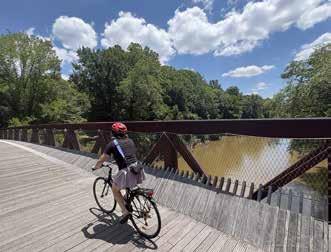
Shelby Farms Greenline and the Wolf River Greenway are ideal spots to start a Memphis adventure. There are several parking areas to launch, both in Shelby Farms and from Wolf River Drive. A trip to High Point Terrace is best done with a bicycle; it is 17 miles round trip (50
minutes each way). The path is beautiful with peaceful tree canopies through the Wolf River Greenway and along Sam Cooper Boulevard. High Point Pizza is a great midpoint reward before heading back. Their pizzas can be customized and are fuel for the return trip.
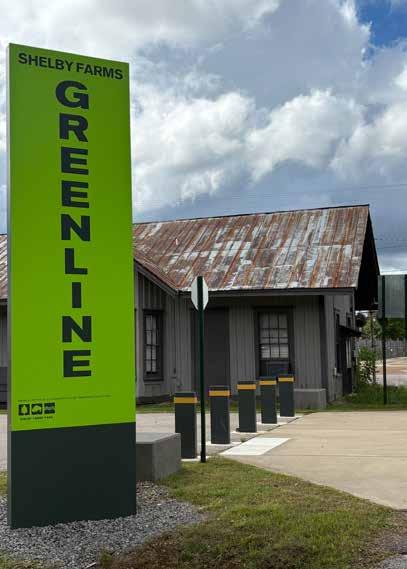
Shelby Farms Greenline east to Cordova Train Depot
If you are feeling that the wind is blowing you east rather than west, a trip to the Cordova Train Depot is a great destination. This round trip from Shelby Farms or Wolf River is 16 miles (45 minutes each way). A midway stop at the former Cordova Depot provides you with several food truck options ranging from barbecue to kebabs and includes a covered seating area to rest and catch your breath.
(While the Greenline previously ended at the Cordova Depot, it now continues further east if you’d like to continue your journey!)
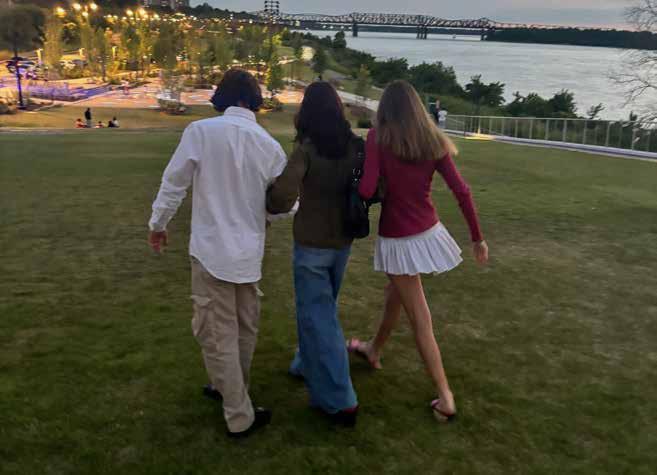
Walking in Tom Lee Park
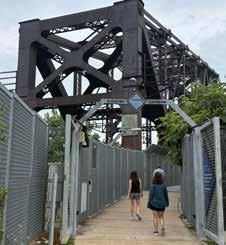
Big River Crossing follows the tracks
Big River Crossing
The Big River Crossing offers both short and long excursions along its many paths. It is the longest Mississippi River crossing by foot or bicycle. Park on the Tennessee side near The Church of the River and you will encounter the friendliest cyclists and pedestrians in Memphis. The mile-long bridge spans the river from Tennessee to Arkansas. You will see trains slowly traversing the river, barges navigating each way and the stunning Memphis skyline. Once you reach Arkansas, there are additional trails along the watershed that you can explore as your time permits. If you do the crossing in the morning, when you return to Memphis, stop by Hive and treat yourself to a tasty homemade bagel.
Tom Lee Park and Mud Island
If you’d prefer to stay on the Tennessee side of the river, there are two great options: Tom Lee Park and Mud Island. Both parks are part of the greater Greenbelt Park along the Mississippi. Newly renovated Tom Lee Park connects the city and bluff to the mighty
“No matter where your feet or wheels take you, adventures await - along with delicious food!”
river with walkways and beautiful park landscapes. On Mud Island, you can enjoy the river in a more tranquil manner. The walkways are surrounded by trees and the peaceful residences of the Island. Stop by Cordelia’s for a snack or Crazy Gander for a coffee if you visit in the morning. If you prefer an evening stroll, both parks are excellent to see a Mississippi sunset. These are just a few of the many wonderful options for exploring our river city. If you prefer seclusion, T.O. Fuller State Park and Meeman-Shelby State Park are great options. If you’d like to explore more urban areas, visit Overton Park and the V&E Greenline. No matter where your feet or wheels take you, adventures await - along with delicious food!
Sunset on the Mississippi
Greenline at the Cordova Depot
Biking to Shelby Farms through Wolf River
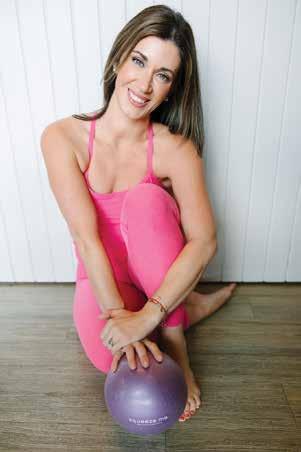
Your New Barre
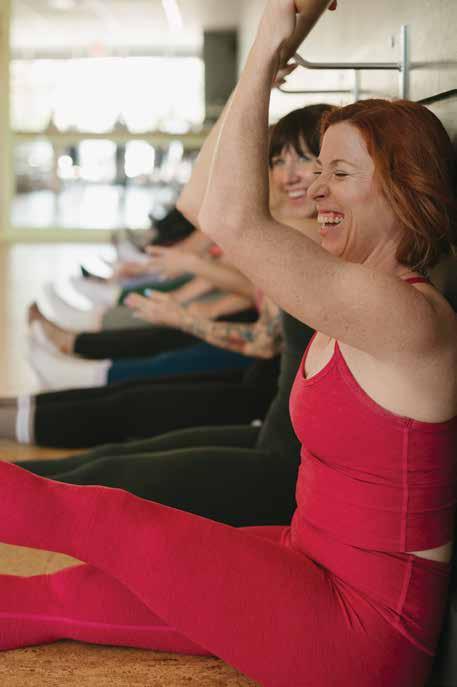
For more than a decade, Neighborhood Barre has redefined boutique fitness with classes that are equal parts effective, inspiring, and approachable. Our method is designed to sculpt strength, improve confidence, and create lasting results—without intimidation or unnecessary complexity.
From your first class, you’ll find a supportive environment, expert instructors, and a community dedicated to helping you feel your strongest and most confident.
Claim a complimentary class, just for being a reader of River City Lifestyle
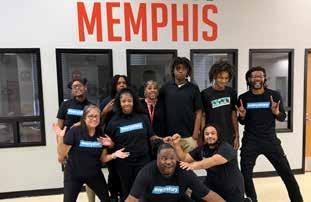
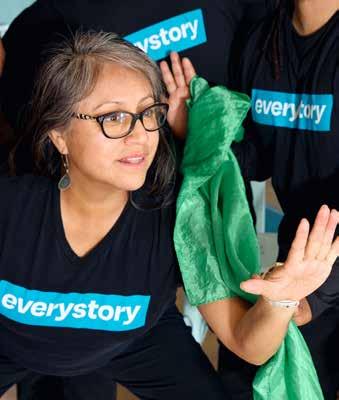
How Virginia Murphy and Everystory are helping Memphis youth build empathy and resilience through storytelling.
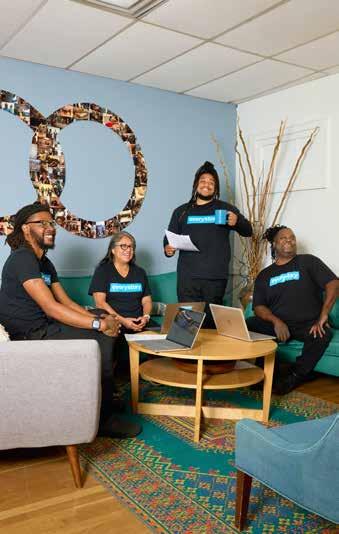
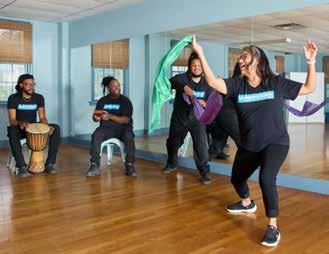
For nearly two decades, Virginia Reed Murphy has used the power of storytelling to heal Memphis. As the founder of Everystory, formerly known as Playback Memphis, Murphy has built a nonprofit rooted in the belief that people change when they feel genuinely seen and heard. In classrooms, community centers and performance spaces across the city, her organization creates opportunities for young people and adults alike to practice empathy, deepen emotional awareness and connect across differences.
At the center of Everystory’s work is Be The Peace, an innovative social-emotional learning program that blends storytelling, improvisation, mindfulness and Playback Theatre. The program serves students and educators through workshops and live performances designed to strengthen communication skills, emotional resilience and compassionate conflict resolution.
While the current program now focuses heavily on youth, its inspiration grew from a different audience.
ARTICLE BY JEANNIE TABOR | PHOTOGRAPHY BY SARAH VOIGT
For six years, Murphy facilitated a program that brought formerly incarcerated individuals together with law enforcement. The effect was profound, but limited in scale. As the organization began to evaluate how to broaden its reach, those participants helped shape the next step.
“The individuals who had been incarcerated wanted to see Playback programming grow in the schools because they felt if they had been exposed to Playback Theatre at a younger age, it could have made a needed difference in their lives, and potentially saved them from going down the path that led to their incarceration,” Murphy said. “Today we have one of those former participants now serving as programming staff.”
This realization served as the foundation for Be The Peace, a curriculum built around six core attitudes: gratitude, non-judgment, curiosity, patience, trust and humor. Murphy drew those principles from mindfulness-based stress reduction training she completed through the University of California, Berkeley, between 2021 and 2023.
“Playback Theatre training is grounded in the practice of mindful listening, so it was a natural fit,” she explained. “There is ample research demonstrating that mindfulness-based school interventions increase prosocial behavior, resilience and executive function, while decreasing anxiety, attention problems and conduct behaviors. Who wouldn’t benefit from strengthening these muscles?”
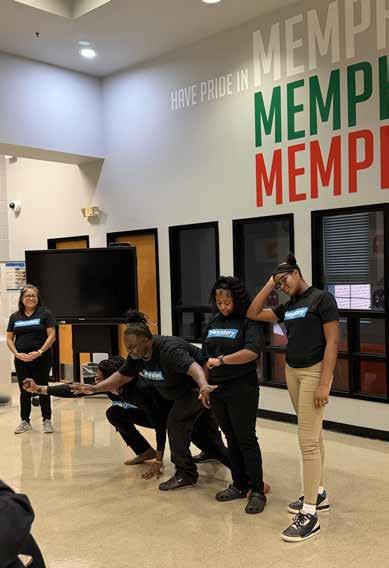
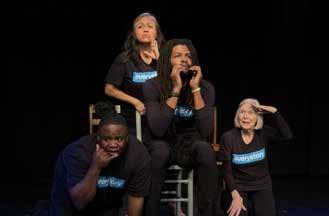
Inside a Be The Peace workshop, students are encouraged to reflect on personal experiences, listen deeply to one another and practice expressing emotions without judgment or fear. Sessions often culminate in live performances where members of the Everystory ensemble act out audience stories in real time, allowing participants to witness their own experiences transformed into art.
For many young people, particularly those struggling with confidence or emotional isolation, the experience can be unexpectedly powerful. “What I’ve learned about myself is that I’m very strong and it just needed to be pulled out of me,” said one student participant. “Playback Theater pretty much pulled the fearfulness out and put the courage back in.” Another student described the experience as “a way of opening up about things you never thought you would open up about.”
CONTINUED >
Dr. Melita Thomas, Director of the Division of Alternative Education for Memphis-Shelby County Schools, said this about the Be The Peace program.
“I have witnessed the transformation of the George Washington Carver students who were involved in the program. Many of the students walked into the program carrying the weight of labels – students who have been expelled, troubled students. As the program began, I watched those walls start to come down. Something powerful happened – the environment created by Be The Peace gave the students permission to let their guards down. They were speaking up, laughing - their innocence was shining through. When young people are given the opportunity to be heard, to be safe and to express themselves without judgment, you begin to see who they really are.”
Beyond the measurable outcomes, Murphy remains focused on something more difficult to quantify. She wants young people to understand that their stories carry value and that listening can itself become an act of healing.
“There is ample research demonstrating that mindfulnessbased school interventions increase prosocial behavior, resilience and executive function...”
That commitment continues to shape every workshop, every performance and every story shared. In a city well-acquainted with both struggle and resilience, Everystory is proving that the simplest act - giving someone the safe space to be genuinely seen and heard - is often the most revolutionary catalyst for healing.
After 18 years of living and leading transformative healing work through Everystory, Murphy will transition out of the organization this fall to focus on acquiring her licensure in professional counseling. She hopes to continue being a resource on and off the stage and is excited to join the Memphis Center for Mindful Living.
Photo provided by Everystory
Photo provided by Everystory.
Brantley Ellzey: Building Beauty from the Unexpected
FROM MAGAZINE PAGES TO SCULPTURAL FORMS, BRANTLEY ELLZEY REVEALS BEAUTY HIDDEN WITHIN EVERYDAY MATERIALS.
ARTICLE BY MORGAN ZANONE
PHOTOGRAPHY BY SARAH VOIGT, CHIP PANKEY PHOTOGRAPHY
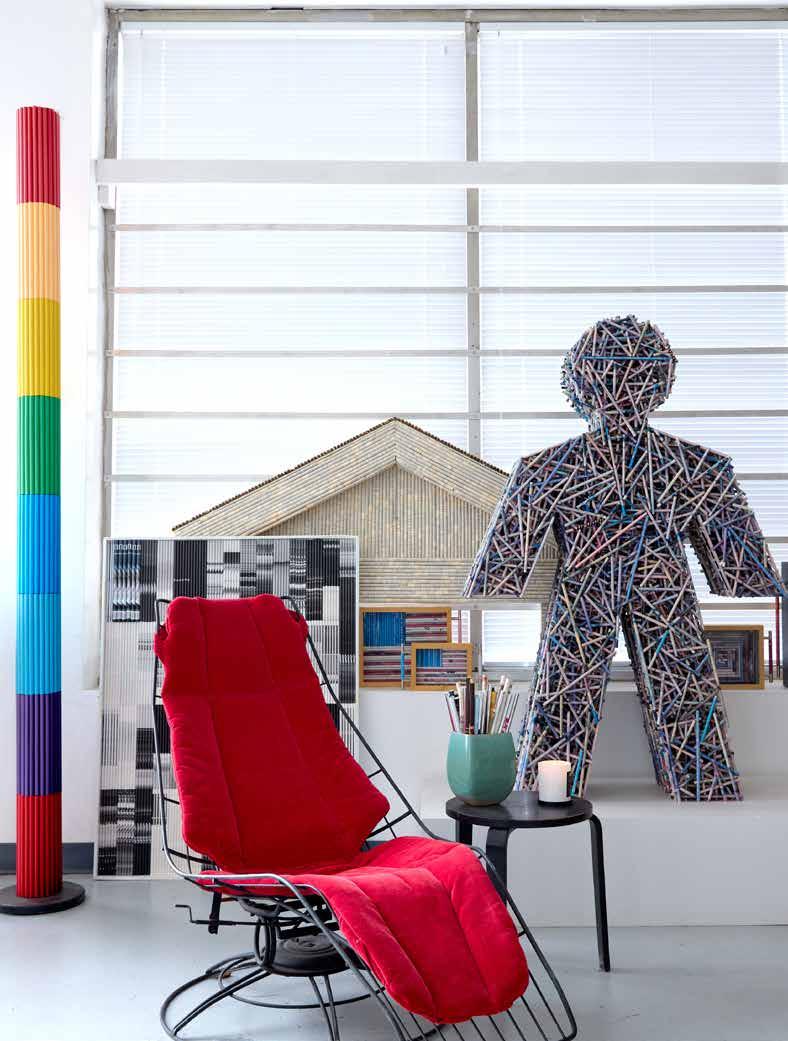
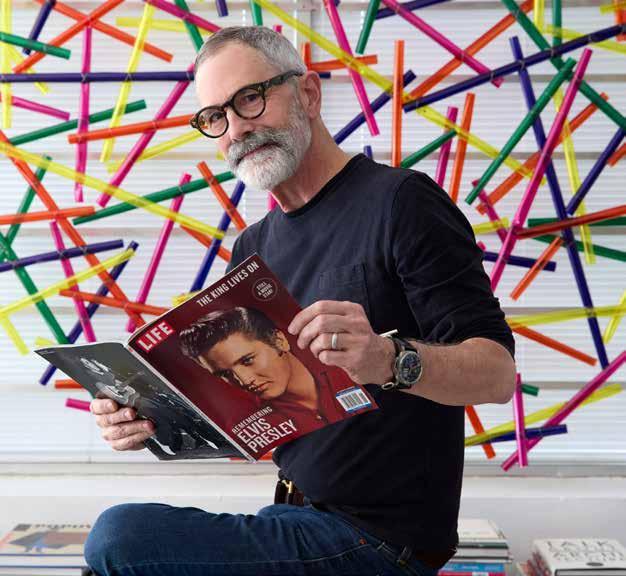
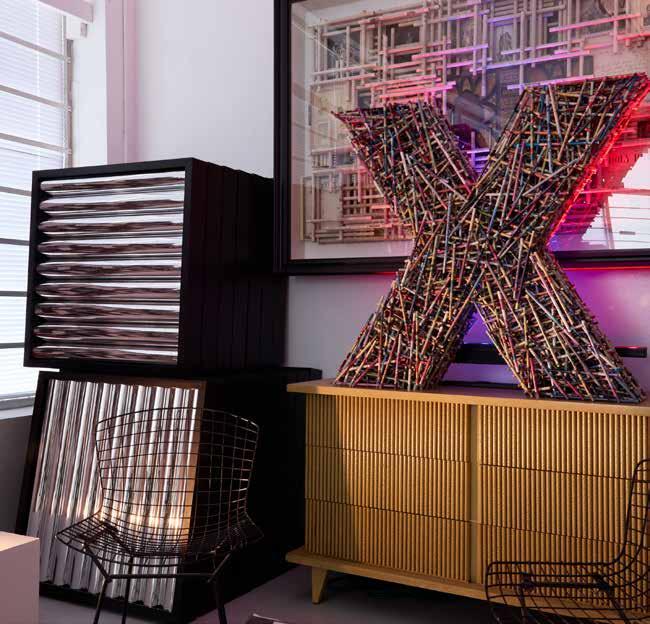
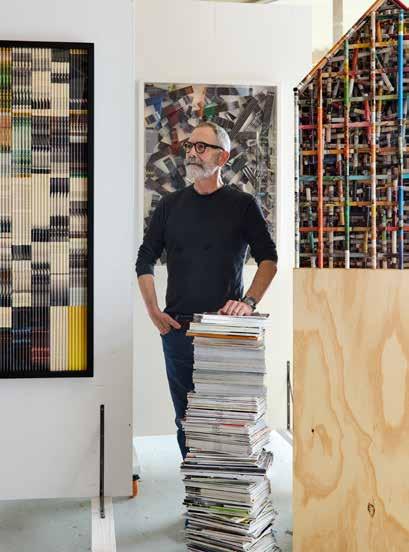
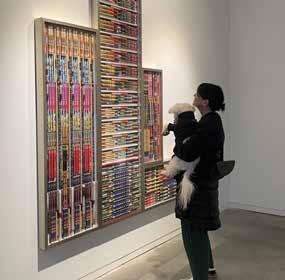
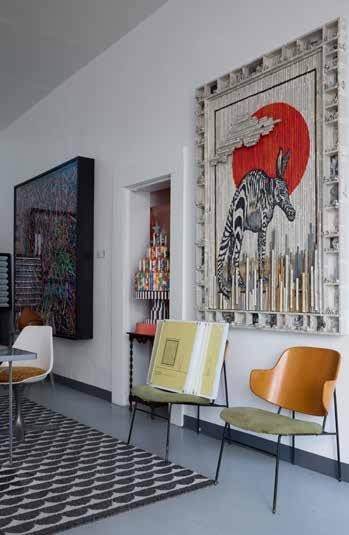
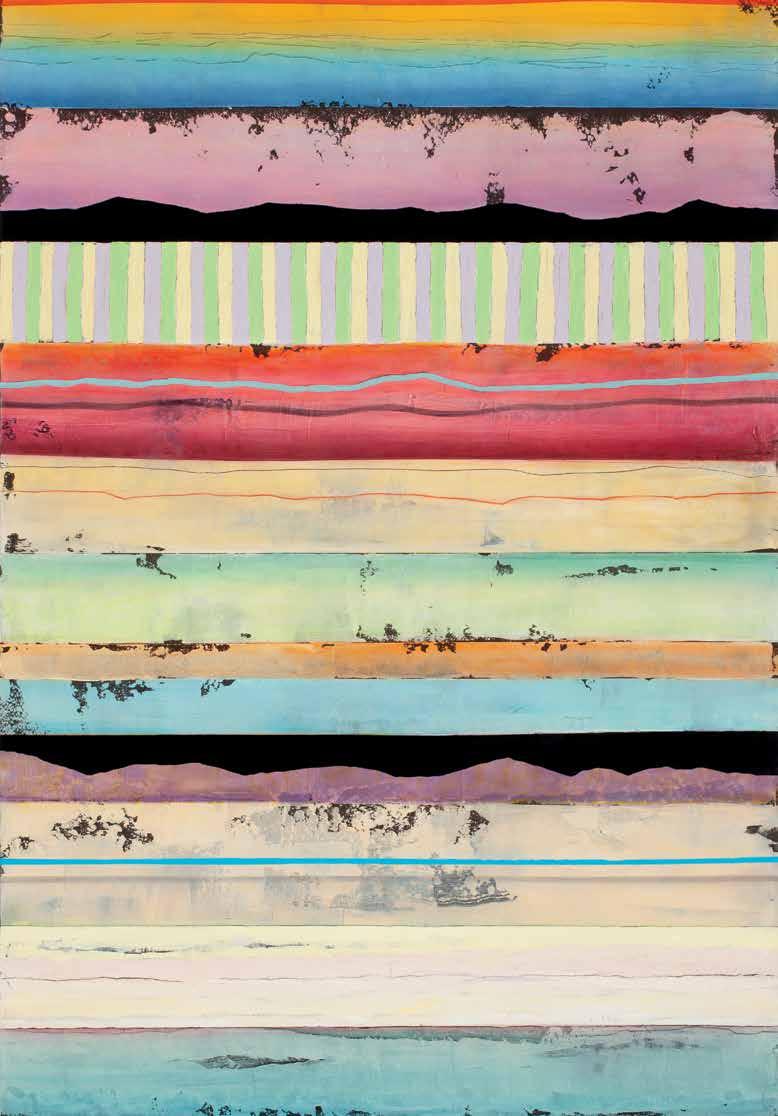
Born and raised in Osceola, Arkansas, artist Brantley Ellzey has built a distinctive career by finding beauty and possibility in unexpected places. Best known for his intricate mixed-media works, Brantley transforms magazine pages into sculptural compositions by rolling, layering and assembling them into richly textured pieces that blend collage and sculpture.
Raised by parents who encouraged hands-on projects and imaginative thinking, Brantley learned to see potential where others might not. He also credits his piano teacher with encouraging him to perform in community theater, an experience that taught him to approach creativity with intention and purpose. “Those experiences felt like a window beyond my small town and showed me there was a much larger world out there,” he says.
We sat down with Brantley to discuss his artistic journey, creative process and the influences that continue to shape his work today.
HOW DID YOUR STUDIES AND EARLY CREATIVE EXPERIENCES SHAPE YOUR ARTISTIC APPROACH?
I entered Tulane University as an undeclared freshman. After taking a set design class, the professor encouraged me to pursue architecture, and I eventually double majored in architecture and theater. That combination shaped my approach to my work. I’ve always been interested in the overlap between structure, narrative and performance.
In school, my work expanded beyond architecture into installation, performance, fashion and sculpture. I was less interested in staying within a single discipline than CONTINUED >
in experimenting with materials, form and visual language. My thesis project reflected that approach. It was a truck stop design presented as a series of mixed-media constructions rather than traditional drawings and models.
HOW DID YOUR BACKGROUND IN ARCHITECTURE AND SET DESIGN LEAD YOU TO THE SCULPTURAL, LAYERED WORK YOU CREATE TODAY?
After graduation, I lived briefly in New York before moving to Memphis to work in architecture. I eventually specialized in church design, which often included custom lighting and furnishings. Around that time, I started developing my own furniture concepts and remembered a craftsperson from my hometown who worked with rolled paper objects. I began thinking about rolled paper as a kind of decorative marquetry.
I returned to that idea later when I was invited to participate in an exhibition focused on shelter. I realized the rolled pages weren’t just creating texture and form. They were also preserving imagery, text and information, making the source material part of the meaning of the work. For that piece, I used Martha Stewart Living, which felt directly connected to ideas of domestic space and shelter.
Over time, my work evolved from flat, graphic compositions into more dimensional sculptural forms, drawing in part from my background in architectural model-making. I think of each piece as both object and archive, as a record of a subject, a moment and a way of seeing.
WHAT DOES YOUR CREATIVE PROCESS LOOK LIKE ON A DAY-TODAY BASIS?
My practice isn’t defined by sudden breakthroughs so much as a steady progression of thought and making. I grew up in a household where staying busy and productive was simply part of daily life, and I think that sense of discipline still shapes the way I work across different projects and mediums.
HOW DO YOU SOURCE AND SELECT THE MATERIALS YOU USE IN YOUR WORK?
The rolled paper pieces involve a very structured process. They usually begin with research, sketches and drawings, followed by selecting printed material that best expresses the idea visually and conceptually. I often work with multiple copies of the same publication, carefully considering color, imagery, text and how each page will function once it’s rolled.
There’s a strong sense of order that runs throughout the process. I determine the size of each roll, arrange them as a working palette and build the piece incrementally, one roll at a time. The process is repetitive and precise, but also meditative, and it allows the work to gradually reveal itself.
Even though the work requires a lot of discipline and concentration, I never want it to feel rigid. There’s always room for surprise, humor and unexpected relationships to emerge.
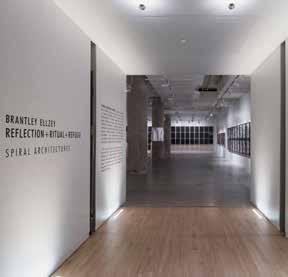
YOUR RECENT SHOW, REFLECTION + RITUAL + REFUGE , BROUGHT TOGETHER A RANGE OF MEDIUMS AND IDEAS. WHAT INSPIRED THE EXHIBITION, AND HOW DID YOU APPROACH ITS CREATION?
Reflection + Ritual + Refuge developed over the course of about a year, which gave me time to really respond to the spaces at Crosstown Arts and shape the work in relation to them. I was also thinking a lot about wanting to work at a larger scale and across multiple mediums in a more integrated way than I had before.
A lot of the emotional tone of the work came from that period: the intensity of the news cycle, the presidential election and the experience of constantly consuming information online. I found myself thinking about looking back as a kind of coping mechanism, and about how making work can function as a form of refuge within that.
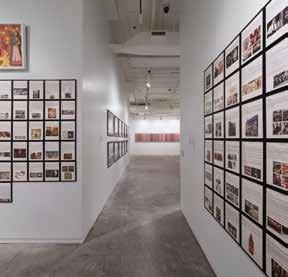
Ritual is something that runs through everything I do, not just in the studio process, but in how I organize time, attention and materials. This exhibition became an extension of that, but also an opportunity to expand into different forms. Alongside my rolled paper pieces, I worked with installation, photography, documentation, sculpture, film and graphic design.
In that sense, the show became a way of building a certain environment, one that could hold different kinds of making, different tempos and different ways of seeing. It allowed me to move between mediums while still staying connected to a single throughline of repetition, attention and return.
TELL US ABOUT YOUR THINGS I FIND AT MY STUDIO SERIES. HOW DID IT BEGIN, AND WHAT HAS KEPT YOU ENGAGED WITH THE PROJECT OVER TIME?
The series began as a daily ritual of picking up trash around my studio on Summer Avenue in Memphis. I moved into this space about five years ago after spending a decade in the Crosstown neighborhood, and over time, I started noticing small, discarded objects like packaging, receipts, broken items, little fragments of everyday life. I began photographing them and posting them with a date and hashtag.
The project connects to a lot of the same ideas that interest me in the studio: order, process, collecting and paying attention to things that are usually overlooked.
Over time, the images have become an accidental archive of the neighborhood, traces of behavior, economics and change. I’m interested in what these objects can reveal about a place and how those stories shift as neighborhoods evolve.
Chip Pankey Photography
Chip Pankey Photography
Chip Pankey Photography
LOOKING AHEAD, ARE THERE NEW MATERIALS, MEDIUMS OR CREATIVE DIRECTIONS YOU ARE EAGER TO EXPLORE?
I’m always interested in working with new materials and techniques. For Reflection + Ritual + Refuge, I directed my first experimental film. I designed a piece of jewelry for the opening, based on my rolled paper works, which I wore as a kind of translation of the work into another scale. I have a hyperactive mind, and I’m always interested in experiencing new things. Dorothy Parker once said, “Curiosity is the cure for boredom. There is no cure for curiosity.” This is pretty much my motto.
Throughout his career, Brantley Ellzey has remained guided by curiosity and discipline. Whether working with rolled magazine pages, found objects, photography or film, he approaches each project with detailed attention to his process. Today, he maintains an inventory of available work at his Summer Avenue studio in Memphis and welcomes visitors to experience the work in person. He also enjoys collaborating with collectors through commissions. Collaboration, he says, is at the heart of what inspires him. “Collaboration is something I value deeply, and I’m always interested in what emerges from working with others.”
As he continues to experiment with new materials and ideas, Brantley receives his inspiration from the city he calls home. “I feel fortunate to be part of the Memphis art community right now. There’s a lot of energy coming from new voices, new spaces and new conversations, and it feels exciting to be part of that moment.”
ARTICLE BY MARGARET LEDBETTER PHOTOGRAPHY BY BONNER MORGAN
It’s Tomato
Time
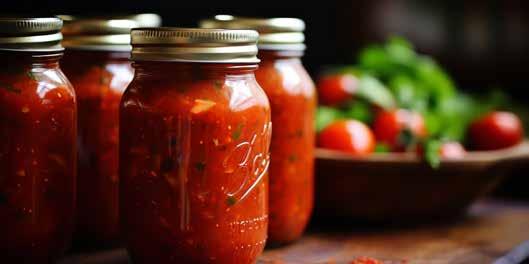
Canning tomatoes is more than just a kitchen task—it’s a seasonal ritual that connects generations. Every summer, as gardens overflow with ripe, juicy tomatoes, Memphis families and friends gather in home kitchens to preserve the harvest. The process ensures that the taste of summer can be enjoyed in soups, stews and sauces long after the last tomato vine withers.
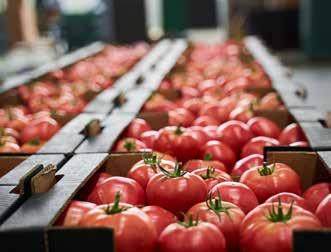
Tomatoes thrive in the long, hot Tennessee summers, often producing more fruit (yes, tomatoes are technically a fruit) than can be eaten fresh. Historically, canning was essential for survival, helping families store food for the winter months. Today, Memphians continue to can tomatoes for the unbeatable flavor of vine-ripened fruit and the process of preservation, a joyful, wholesome pastime shared by many.
Doyenne of the canning dynasty in Memphis is Connie Adams. Connie has taught hundreds her technique, a refined system she learned while living in California. While there, she befriended a first-generation Italian American family who shared their methods. “They were so good at using food. Nothing went to waste.” Of course, the best tomatoes were abundant in sunny California. Back in Memphis, Connie had to work a little harder to find the right produce for canning. She eventually sourced a farmer in Ripley, Tennessee to grow the Jet Star variety. Known for its high sugar content that balances the natural acidity of the fruit, Jet Stars offer a mild and sweet taste and firm texture that is ideal for canning. While her farmer is no longer growing tomatoes, the variety can be found at the Agricenter International and other farmer’s markets in the region.
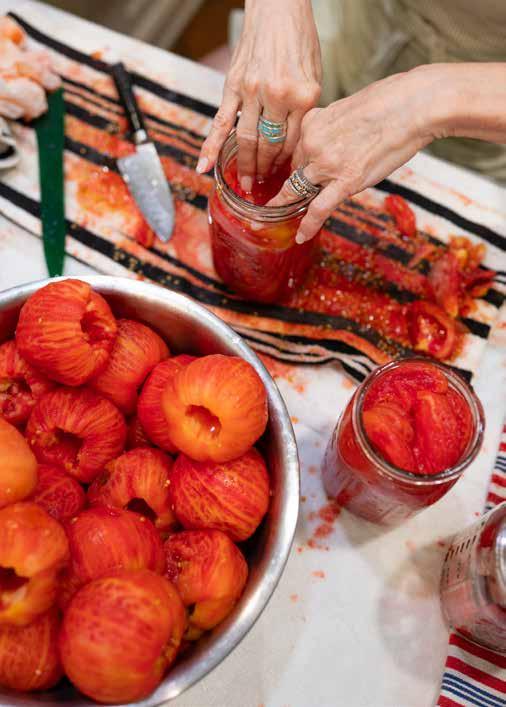
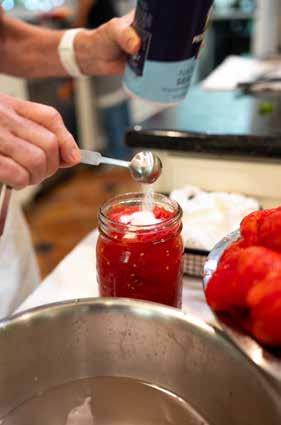
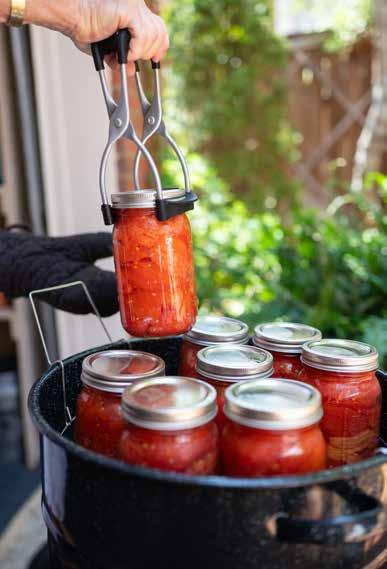
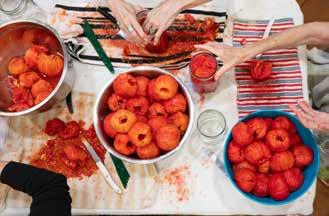
With the tomatoes in hand, Connie invites friends and family to her kitchen to help. The process involves a very specific set of jobs and lots of hands. The steps are a tight system of boiling, peeling, coring, stuffing jars, salting and sealing. She prefers the water bath method to sterilize and seal the jars. Connie often has multiple generations in the kitchen at the same time.
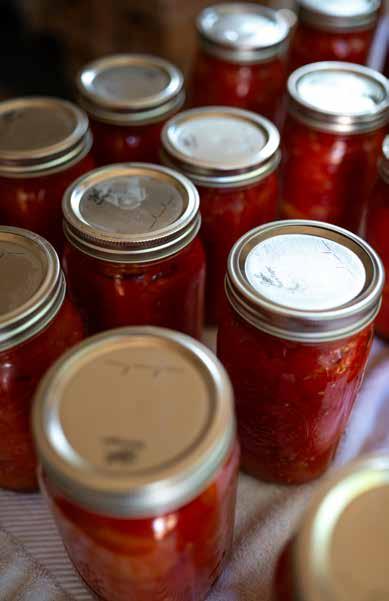
“The kids love to learn and they eventually ‘graduate’ from one job to the next,” she says. Canners bring their own sterile wide mouth quart jars and get busy on the assembly line this time of year. Each bushel or box of tomatoes typically produces eight quarts of tomatoes. Connie and her crew once canned 500 quarts in one summer.
The work is demanding, and Connie oversees quality control, insisting, “We do not put up anything except Blue Ribbon winners at the county fair.” Her high standards are what keep folks coming to her kitchen to learn. She also serves canners a memorable homemade lunch for a midday break. “Canning is better than therapy,” says Connie. She elaborates that a day in the kitchen around the table working together offers a singular opportunity for “sharing and community and connection.”
Cary Brown learned canning in Connie’s kitchen and has taken it even further in her home. With her family, she now pickles late-summer vegetables in addition to putting up tomatoes. A native of Mississippi, Cary grew up with a deep reverence for the land and produce lovingly grown in the garden. “Nothing goes to waste” she says. Think pomodoro sauce, chili, gazpacho and Bloody Marys.
“We don’t put up anything except
Blue Ribbon winners at the county fair.”
— Connie Adams
While there is nothing like fresh tomatoes all year round, putting up tomatoes is about more than filling pantry shelves— it’s about savoring summer memories during the cold months. Each jar opened in winter is a reminder of warmer days and the satisfaction of a job well done. Whether you’re a first-time canner or continuing a family legacy, the process keeps the ritual alive, one tomato at a time.
Photo provided
THE Rhythm OF THE Ranch
Family Adventure, Connection and the Enduring Magic of the American West
ARTICLE BY LINDSEY TONKIN
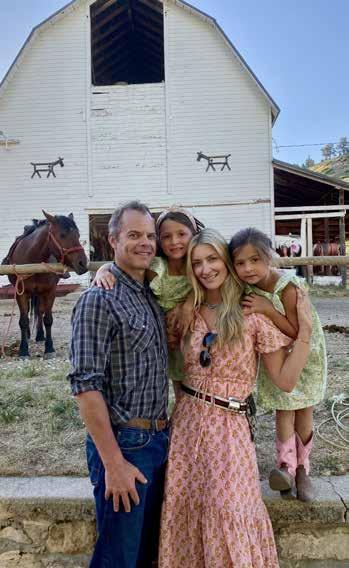
After the never-ending spring break of 2020, summer loomed ahead and, with five children spanning a decade in age, finding a vacation that genuinely appealed to everyone in our blended family was proving to be a challenge. The usual beach destinations felt crowded and uncertain, so I floated the idea of a dude ranch to my husband and we set our sights on the wild west for something entirely different.
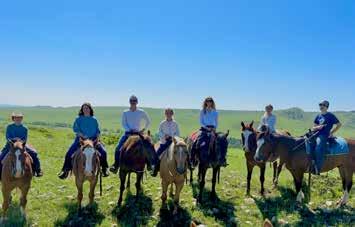
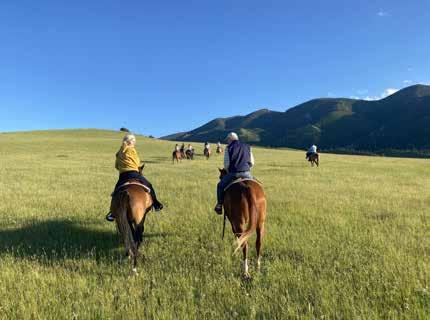
With guidance from a dear friend and seasoned Wyoming rancher, we landed on Eaton’s Ranch, founded in 1879 by the Eaton brothers near Wolf, Wyoming, just outside Sheridan. The oldest working dude ranch in the United States, Eaton’s is nestled among the pine-covered eastern slopes of the Bighorn Mountains and encompasses 7,000 acres of rolling hills, grassy meadows, lush valleys, red rocky cliffs and open skies that seem to stretch forever.
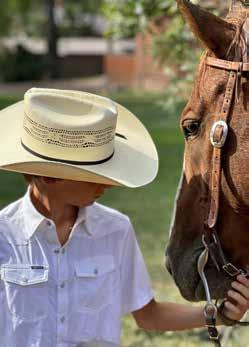
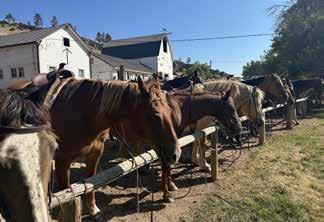
There is a rhythm to life at Eaton’s Ranch. Before sunrise, wranglers on horseback gather the horses and bring them to the barn, where they are paired with their riders for the duration of their stay. Fast friends are made over horse cakes tucked into saddlebags. Soon after daybreak, the breakfast bell echoes across the property, summoning guests to the dining room. Hats come off at the door, gentlemen. The day is about to begin.
Once in the saddle, adventure awaits. Trails with names like North Red, Indian Rocks, Roosevelt and Chocolate Drop wind through breathtaking landscapes, each offering a different view of Wyoming’s rugged beauty. While the horses know these routes well, every ride brings something unexpected.
One horse decides he must lead the pack. Another cannot be trusted bringing up the rear because he’d rather head back to the barn. A sudden mountain rain shower pops up or a snake along the path might spook. Someone spots an antler during a shed hunt or a beloved hat flies off. The unexpected moments become opportunities for problem-solving, teamwork and, hopefully, eventual laughter. For any family, there is something uniquely rewarding about navigating challenges together in the saddle.
At midday, dusty horses and riders alike take a well-earned break. Some guests head to the pool while others grab a book, start a puzzle, hunt for horseshoes, learn a new card game or skip rocks in the clear waters of the Wolf River. The pace slows, and something remarkable happens: people truly connect. Without the distractions of constant notifications and endless scrolling, conversations stretch longer. Siblings spend time together.
Parents become fully present and unplugged. Air conditioning is relegated to the common areas and Wi-Fi is even more rare. And somehow, that feels like part of the charm.
Following afternoons filled with fly fishing, skeet shooting, tie-dyeing, lassoing, boot branding, visits to nearby Sheridan for shopping and happy hours in the Saloon, the dinner bell rings. Families share three meals a day around the same table. In today’s world, that may be the rarest luxury of all. Stories from the day’s adventures are traded while the evening’s rides are eagerly anticipated.
Night rides are where Mother Nature gets to show off once more: antelope, prairie dogs and more wildlife emerge while sunsets stun even the most seasoned rider. Once back at the barn, horses are sent out to the pasture to graze beneath the stars that seem so close you could touch them, until the morning, when the ritual begins again.
A pleasant exhaustion settles over the ranch—the kind of tired that comes from time well spent rather than time merely passed. Dusty boots line cabin porches, the creak of wooden floorboards tells stories of generations who have walked these halls before and the whir of the fans lulls us to sleep.
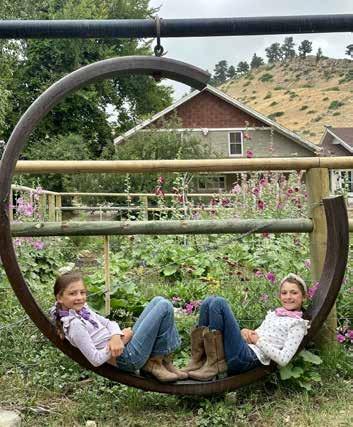
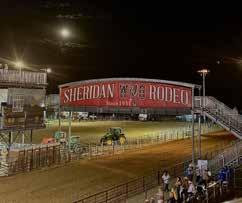
The ranch feels a bit like summer camp for families, where adults rediscover their sense of play and children of all ages gain confidence with every ride. Beyond the ranch, you encounter Indian reservations and storied battlefields. And, if you time it right, your visit might align with the Sheridan WYO Rodeo, an amazing showcase just a short drive from the ranch. Since 1931, locals and visitors from across the globe have gathered to celebrate the west and experience some of the best rodeo action in the world. Indian relay races, rodeo queens and clowns, bucking broncos, shopping and carnival rides meant big fun for our whole posse.
Departures don’t feel like goodbyes. Instead, they feel like promises. For five years we counted down the days until our return to the ranch. During our time at Eaton’s, we experienced countless firsts together—from first dances to first rodeos—and grew in ways we never expected. The lessons are subtle but meaningful: patience, resilience, adaptability and the value of working through challenges together. Alas, as our children grow into lives of their own, schedules and commitments mean this summer’s adventure will look a bit different. But Wyoming, we will see you later, partner. And thanks for reminding us what matters most. Happy trails...until we meet again.
ARTICLE BY KALI KASPRZYK
PHOTOGRAPHY BY JANIE JONES
MAKEUP BY MIKAYLA CRANE
The 10% Target Mindset
Jen Cohen ON THE PRACTICE OF ASKING FOR WHAT YOU WANT
Winnipeg in the winter, and a 17-year-old waits 45 minutes in the cold for Keanu Reeves. Her fingers are numb. She is not there for an autograph. She is there to ask him to appear in her audition tape for MuchMusic, Canada’s MTV. When he finally agrees, she writes her number on a gum wrapper with a borrowed lip liner.
He calls days later.
That 17-year-old was Jen Cohen — fitness expert, host of the Habits & Hustle podcast, and best-selling author. She has built a career on the premise her frostbitten afternoon proved. She calls the practice the 10% Target: 10 attempts at whatever you want most in life.
The premise is simple. Most people never make one attempt. Almost nobody makes two. The math works in favor of the person who keeps going.
The top-rated Habits & Hustle podcast has logged hundreds of conversations with high performers and the people who study what the body does to the mind. Her TEDx talk, The Secret to Getting Anything You Want in Life, has traveled widely inside Fortune 500 sales-training rooms. On the Share the Lifestyle podcast, Cohen sits down to share the working rules that are the foundation of her latest book, Bigger, Better, Bolder.
“You have to be the CEO of your own life.”
FEATURING JEN COHEN
Discover the full 10% Target Mindset framework.
1 2
MAKE TEN ATTEMPTS
The door opens, or another door does. The unmade attempt and the refused one leave you in the same place — except one of them teaches you something.
STACK THE DECK
Cohen frames her habits as a wager: How do I stack the deck so I win more than I lose? The workout happens first, and the food decisions follow. The email follow-up gets sent, and the answer arrives. The choices compound in a single direction.
3
DISCIPLINE IS A PRACTICED SKILL, NOT AN INHERITANCE
No one is born with it. The people who look disciplined are running a routine they have rehearsed long enough that it no longer feels like effort. The reps are the skill. Miss them, and the skill fades, the same as any other.
4
SELF-TALK ONLY WORKS WHEN THE BODY BACKS IT UP
Confidence does not arrive by repeating the word. It arrives after the body has done the thing — the workout finished, the cold walk endured, the email sent. The mind takes its cues from what the body proves it can do. Talk follows action, not the other way around.
5
NEVER MISS A MONDAY
The first decision sets the slope of the rest. Skip the Monday workout, and the rest of the week tends to follow. Hold the line on Monday, and the slope tilts the other way.
IF YOU ARE READING THIS... SO IS YOUR BEST CLIENT.
2 OUT OF 3 of our readers regularly purchase from our ads.
ADVERTISE WITH RIVER CITY LIFESTYLE™
51 Seashore Circle, Inlet Beach
SUMMER BUCKET LIST
For Kids of all Ages
ARTICLE BY AMY BIRDSONG GOLDEN
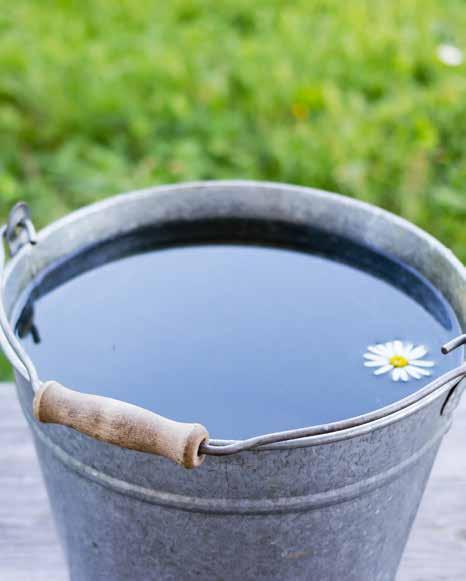
Is there a hole your bucket? Perhaps your tweens have rejected the idea of forming a book club for their mandatory school reading. We have already made “dot cakes” half a dozen times. Sufficient efforts have been made to become a pool rat. Ready for a summer spark? Let’s dive in.
Have you ever explored a beach along the Mississippi River? Book a professionally guided canoe trip with Mississippi River Expeditions and see Memphis in a whole new way. All trips are privately chartered, and each canoe fits ten passengers. We recommend a sunset or morning excursion where you’ll stop at an island beach, have some snacks and paddle back under the bridge.
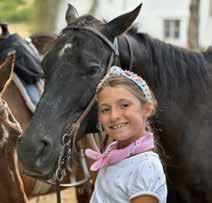
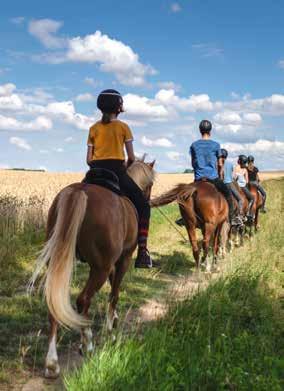
Your kid came home from summer camp with dreams of becoming an equestrian; you are not ready for #horselife. Head to Shelby Farms Stables. Kids ages 4+ can stay in the ring with a pony ride. Older riders can ride out through the pastures and shaded forest trails to spot the wildlife of Shelby Farms.
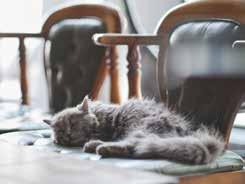
If the ‘cat distribution system’ hasn’t reached your family, you may need to take a short drive to Fancy Cat Cafe in Southaven, MS. Think cozy cafe vibes with feline charm. It’s coffee and pastries on one side and adoptable cats on the other. They rotate residents, ensuring new friends mingle daily and every visit supports rehoming efforts. A purr-fect summer stop.
CONTINUED >
And for those days when the temperature soars, you can thrive indoors. We liken an afternoon at Malco Theatres, with a cold drink and the comfiest seating, to a spa experience with a free movie. There are so many family-friendly movies out, and if you are lucky, everyone will sit still and be quiet.
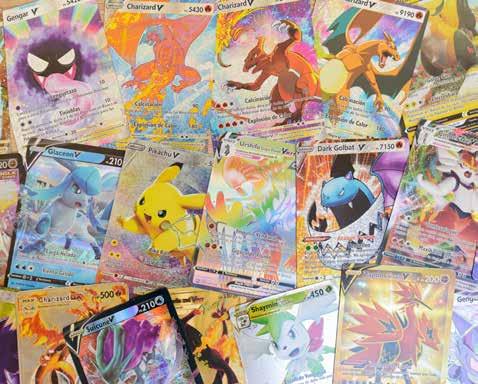
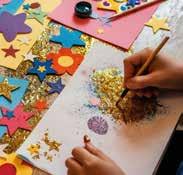
Even kids crave a palate refresh, so turn meal planning into a game. One sibling might tackle a first-time food, while another might move beyond the kids’ menu. Kick off a family foodie tour: list local spots, keep a running record, and compare favorites. It’s a delicious quest to crown the town’s best taco, discover sushi, find a new vegetable or settle the best steak debate. Other spots on our list with AC? For the trading card enthusiasts - Nashcards. When you don’t want glitter and paint in the house – book free play at Art Project. For the youngest Disney fans, Mickey Mouse Clubhouse is at the Children’s Museum of Memphis For just enough wacky and wonder - Baron Von Opperbean and The River of Time is an immersive adventure on Mud Island. No one is bored; you just need some new ideas!