


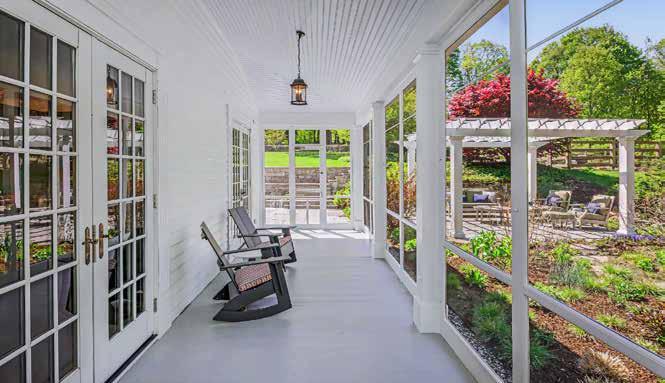
Beyond a gated entrance, this extraordinary mini-estate unfolds across nearly 5 private acres in one of Ridgefield’s most coveted settings. Beautifully reimagined for modern living, the property blends timeless architecture with refined, high-design interiors and exceptional amenities. The renovated Main Residence is complemented by a fully renovated legal 2BR Guest Cottage, ideal for extended family, guests or multi-generational living. Elegant Public rooms, exquisite millwork, fireplaces & sophisticated finishes create a residence of enduring style and warmth.

A dramatic Chef’s KIT anchors the home, opening to beautifully curated living spaces designed for both entertaining and everyday comfort. The luxurious Primary Suite features a spacious Bedroom with Fireplace, dual Baths and Dressing Rooms. Add’l highlights include a handsome Library, Home Office and separate Au Pair apartment. Spectacular grounds offer sweeping lawns, specimen trees, stone terraces, custom pergola, gardens, classic CT Barn and rare hotel-sized salt water pool. Moments to desirable downtown Ridgefield.
At Karla Murtaugh Homes, we are privileged to represent this extraordinary market and remain steadfast in delivering tailored guidance and exceptional results. Whether you are considering a purchase or preparing to sell, trust our award-winning team to provide a refined, seamless experience in 2026.
Consistently Ranked #1 in Ridgefield
We live in a world that constantly pushes us to be productive—to plan, optimize, and make the most of every minute. I’ll be the first to admit, I fall into that mindset more often than I’d like. It’s easy to feel like if something isn’t measurable or moving us forward, then it somehow isn’t worth the time.
But the more I think about it, the more I realize that a life that’s too structured is missing something essential—space to explore.

Not everything meaningful can be planned. Some of the best moments come when things don’t go exactly the way we expected—when we try something new, get a little off track, or simply slow down enough to notice what’s around us. There’s something powerful about being a beginner again, about stepping into the unknown without a clear outcome.
For me, that’s shown up in simple ways. Whether it’s heading out with my family without much of a plan, trying a new restaurant, or just taking a walk somewhere we haven’t been before, those moments tend to stick with us the most. It’s rarely the big, perfectly planned experiences—it’s the unexpected ones, the ones that allow us to connect, laugh, and just be present together.
Lately, I’ve been more mindful of how we spend our time as a family. Some of our favorite “adventures” aren’t really adventures at all—they’re just moments where we step away from our routines. A board game outside, exploring a new trail, or discovering a local spot we hadn’t noticed before. Those are the times that seem to matter most.
This month’s issue is a reminder to give yourself permission to explore—whatever that looks like for you. It doesn’t have to be a big trip or a major change. Sometimes it’s as simple as saying yes to something new, taking a different path, or carving out time for the people and moments that matter most.
Let’s make space for the unexpected. Because more often than not, that’s where the best memories are made.
Happy exploring,
BRUCE BERNSTEIN, PUBLISHER
@RIDGEFIELDLIFESTYLEMAGAZINE
July 2026
PUBLISHER
Bruce Bernstein | bruce.bernstein@citylifestyle.com
EDITOR
Katie Parry | katie.parry@citylifestyle.com
PUBLICATION DIRECTOR
Katie Bode | katie.bode@citylifestyle.com
CONTRIBUTING WRITER
Andrew C. Hopkinson
CONTRIBUTING PHOTOGRAPHERS
Jennifer Zarine Photography, Natasha Fleming Photography
CEO Steven Schowengerdt
President Matthew Perry
COO David Stetler
CRO Jamie Pentz
CoS Janeane Thompson
AD DESIGNER Rachel Chrisman
LAYOUT DESIGNER Amanda Schilling
QUALITY CONTROL SPECIALIST Marina Campbell







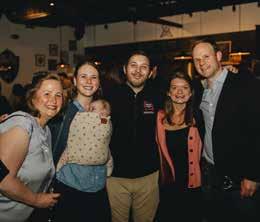



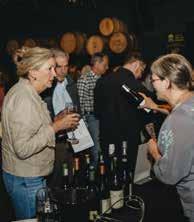

Ancona’s Wines & Liquors welcomed guests to its Spring Wine Fest at the Nod Hill Event Space for an evening of seasonal sipping and celebration. Attendees sampled more than 40 wines, spirits, and alcohol-free selections while enjoying cheese, charcuterie, and vegetable grazing boards in a lively atmosphere. A portion of the evening’s proceeds benefited the Ridgefield Symphony Orchestra. 1: Kristian Ording, Mike Connors, Bridget Connors, and Kyle Morehouse 2: Peter and Kimberly Ianne 3: Rogene Pejanovic, Olivia Wiessman, Adam Wiessman, Kate White, and Codey Foster 4: Sean and Stacy Heiligenthaler 5: Marcie Coffin and Emily Iverson 6: Michael and Janet Crystal 7: Codey Foster, Ludovic Coatanroch, and Emily Appedu





































Integrated Behavioral Health is a group mental health practice serving individuals, couples, and families across Connecticut, with locations in Ridgefield and Danbury. We offer therapy, psychiatric medication management, and psychological testing in one coordinated setting, making care more accessible and connected. Our clinicians support clients of all ages with a wide range of emotional, behavioral, and life challenges, including but not limited to anxiety, depression, ADHD, trauma, and life transitions, in a collaborative and welcoming environment. Visit integratedbehavioralhealthct.com to learn more and follow on Instagram @integrated.behavioral.health

Veronica Green Photography specializes in weddings, proposals, engagement sessions, portrait and event photography, bringing an editorial magazine-style aesthetic with an edge to every session—stylish poses, industrial landscapes, and authentic moments, all tied together by intriguing lighting and unconventional compositions. Veronica embraces whatever is given, finding something beautiful in the ordinary and extraordinary through the lens. Her approach is intentionally effortless: no heavy editing, just real, true-to-life images. See her work on Instagram @veronicagreenphotography and at veronicagreenphotography.com
Photography by Michele Williams

At newly opened Pawpaw Tree Vet in Branchville, we believe practicing great medicine starts with great relationships. We’re dedicated to keeping tails wagging, whiskers twitching, and hearts happy—all while delivering the highest standard of care. From puppy zoomies to sunny senior cat naps, we’re here for every life stage with kindness, integrity, and just a dash of humor (or maybe a few bad puns). Because caring for pets also means caring for the people who love them. Visit pawpawtreevet.com to learn more and follow on Instagram @pawpawtreevet
















WHY CLEAN AIR IS NOW PART OF PROPER LUXURY PROPERTY MAINTENANCE
Luxury homeowners invest heavily in architecture, finishes, mechanical systems, landscaping, security, and interior design. Yet the one thing they rely on every minute inside their home is often overlooked: the air they breathe.
Homeowners often notice the symptoms long before they identify the cause: persistent dust despite constant cleaning, rooms that never feel consistently comfortable, lingering odors, or air that simply feels stale.
ARTICLE BY ANDREW C. HOPKINSON
Indoor air quality is integral to a home’s performance, comfort, cleanliness, health profile, and long-term value. In high-end homes, poor indoor air quality is rarely caused by a single issue. More often, it results from multiple systems quietly failing to work together: HVAC, ductwork, humidity control, ventilation, filtration, building envelope, crawl spaces, attics, basements, and household maintenance.
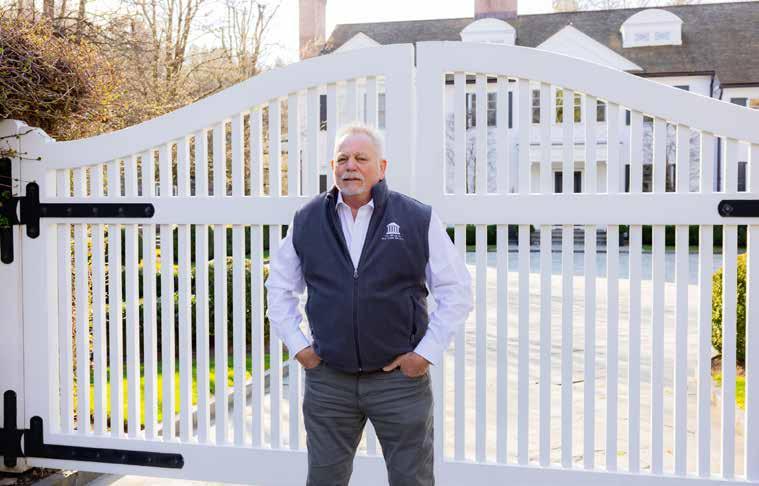
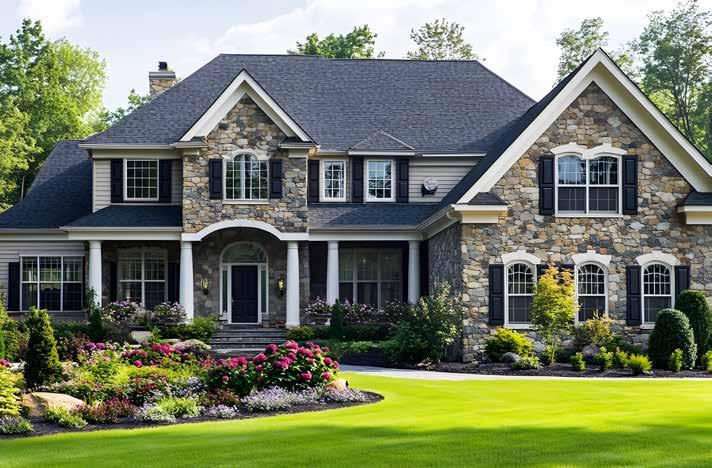
A luxury home that looks perfect can still have air quality problems behind the walls, inside the ducts, above the ceilings, and below the floors.
That is where professional indoor air quality management becomes critical.
Luxury homes are often larger, tighter, more mechanically complex, and more heavily finished than the average home. They may include multiple HVAC zones, finished basements, wine rooms, home gyms, theaters, pool houses, guest quarters, garages, workshops, and elaborate kitchens.
Each of those spaces can affect indoor air quality.
Common issues include dust migration from leaky ductwork, musty odors from basements or crawl spaces, excess humidity, poor ventilation, construction dust, pet dander, and chemical off-gassing from finishes and furniture. Garage air infiltration, uneven temperatures, and negative pressure pulling air from unwanted areas can all play a role as well.
If a home is moving air through dirty, leaky, or poorly balanced systems, the homeowner is breathing the consequences.
Many homeowners think indoor air quality begins and ends with an air purifier—but that’s only part of the picture.
Air purifiers may help, but they do not address the root causes. True indoor air quality management starts with understanding how the home performs as a system.
A properly managed large residential property should be evaluated for:
1. Air leakage: Where is outside air entering? Where is conditioned air escaping?
2. Duct leakage: Are supply and return ducts leaking into attics, basements, crawl spaces, garages, or mechanical rooms?
3. Ventilation: Is the home receiving enough fresh air without creating humidity or comfort problems?
4. Filtration: Are filters properly sized, installed, and maintained?
5. Humidity control: Is indoor relative humidity being managed year-round?
6. Pressure balance: Are rooms, zones, basements, attics, and mechanical spaces creating pressure problems?
7. Source control: Are contaminants being introduced by moisture, dust, chemicals, pets, combustion appliances, or poor maintenance?
A luxury home is not just a collection of rooms. It is a living mechanical environment. If the systems are not inspected and maintained together, problems get missed.
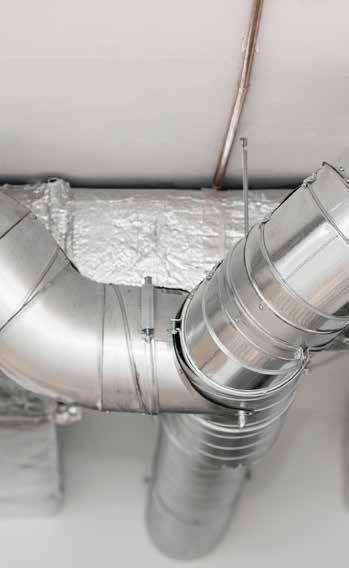
The duct system is one of the most important—and most overlooked—components affecting indoor air quality in a forced-air home.
Ducts move air throughout the home every day. If those ducts are dirty, leaking, poorly sealed, or drawing air from contaminated spaces, the entire home is affected.
Leaky ducts can pull air from attics, crawl spaces, basements, wall cavities, garages, mechanical rooms, and dusty
construction areas—carrying insulation fibers, mold spores, odors, and humidity directly into the living space.
This is why duct inspection, duct cleaning, and duct sealing matter. In many homes, duct leakage is not visible from the finished rooms. The homeowner only notices the symptoms: dust, odors, uneven comfort, high utility bills, or rooms that never feel right.
Professional duct cleaning, when performed correctly, is a legitimate part of long-term system maintenance. The process requires trained professionals using proper containment, agitation, negative pressure, and cleaning methods.
Duct cleaning may be appropriate when there is visible dust or debris in the ductwork, post-construction contamination, evidence of pests, mold concerns, odor complaints, long-neglected systems, or prior water damage. It’s also worth considering after renovations or when return-air filtration has been poor for an extended period of time.
In luxury homes, duct cleaning should be handled carefully. Finished surfaces, floors, millwork, furnishings, artwork, and mechanical systems must be protected. The job is not just about cleaning ducts. It is about protecting the property while improving the air distribution system.
Duct sealing is one of the most overlooked improvements in indoor air quality and energy performance.
Traditional duct sealing only works where technicians can physically reach the ducts. But many ducts in large residential properties are hidden behind finished ceilings, walls, chases, and mechanical spaces. That is where advanced duct-sealing technology becomes valuable.

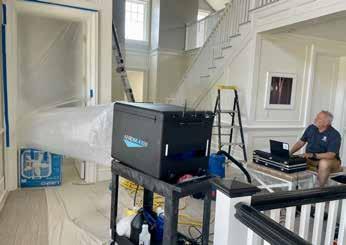
Aeroseal duct sealing allows leaks to be sealed from the inside of the duct system. This patented technology reduces duct leakage, improves airflow delivery, decreases dust infiltration, improves comfort, and supports better indoor air quality management. When duct leakage is reduced, the HVAC system has a better chance of delivering clean, filtered, conditioned air where it belongs. For luxury homes, that means:
• Cleaner air delivery
• Better comfort from room to room
• Less dust migration
• Reduced loss of conditioned air
• Better system performance
• Improved control over humidity and filtration
• Less contamination from attics, crawl spaces, basements, and wall cavities
Duct sealing is not just an energy upgrade—it’s an indoor air quality upgrade.
Moisture is one of the biggest threats to indoor air quality.
A home can be beautifully maintained and still have hidden humidity problems. Basements, crawl spaces, bathrooms, laundry rooms, kitchens, and poorly ventilated areas can all contribute to elevated moisture levels.

When humidity is not controlled, the home becomes more vulnerable to musty odors, mold-supporting conditions, dust mites, wood movement, condensation, and paint or finish problems— none of which are simple or inexpensive to address after the fact.
Luxury homes need active humidity management, not guesswork. That may include dehumidification, ventilation improvements, drainage corrections, crawl-space work, duct sealing, insulation repairs, and HVAC adjustments.
The target is not simply “make the house dry.” The goal is to keep the home in a healthy, stable humidity range without creating comfort or mechanical problems.
Many homeowners think upgrading to the strongest filter they can buy will solve everything. But that’s not always the right move.
A filter must match the HVAC system. If the filter is too restrictive, it can reduce airflow, strain equipment, create comfort issues, and even damage performance.
Good filtration depends on proper filter sizing, the right MERV rating (a standard that measures how effectively an air filter captures airborne particles), a tight fit with no bypass gaps, and regular replacement—all supported by clean return ducts, sealed ductwork, and well-maintained air handlers and coils.
A high-end home should not rely on random filter purchases from a hardware store. Filtration should be part of a planned maintenance program.
VENTILATION: FRESH AIR WITHOUT CREATING NEW PROBLEMS
Modern homes are often tighter than older homes. That can improve efficiency—but it can also trap contaminants indoors.
Fresh air matters—but uncontrolled ventilation can also introduce humidity, pollutants, pollen, smoke, odors, and comfort issues.
Luxury homes may require carefully designed ventilation strategies, including balanced ventilation systems, energy recovery ventilation, dedicated outdoor air systems, exhaust management, makeup air evaluation, pressure testing, and proper kitchen and bath ventilation review.
The goal is straightforward: introduce fresh air in a controlled, balanced way that supports comfort, efficiency, and indoor air quality.
Fox Hill Luxury Real Estate Services provides indoor air quality management (IAQ) as part of a larger luxury property maintenance approach. We understand that high-end homes require more than standard home maintenance. They require system-level thinking, careful diagnostics, clean execution, and respect for the property. Our indoor air quality-related services include:
• Duct inspection
• Professional duct cleaning
• Aeroseal duct sealing
• HVAC performance review
• Humidity and moisture evaluation
• Dryer vent cleaning
• Bathroom and kitchen exhaust review
• Crawl-space and basement inspection
• Filter and maintenance planning
• Dust and odor source investigation
• Building performance evaluation
• Luxury home maintenance planning
With affiliations including the Indoor Air Quality Association and the National Air Duct Cleaners Association, and training rooted in Building Performance Institute standards, Fox Hill Luxury Real Estate Services approaches indoor air quality from a practical, building-science perspective. The objective is to identify meaningful issues, correct them properly, and maintain the home’s systems with a long-term systems approach.
Luxury is not just marble countertops, custom millwork, and manicured landscaping—it’s also clean air, balanced comfort, controlled humidity, and a home that performs the way it should.
Indoor air quality management is no longer optional for serious luxury homeowners. It is part of protecting the property, protecting the people inside it, and preserving the value of the home.
A beautiful home should not just look clean. It should breathe clean.
Luxury Property Maintenance and Management Ridgefield, Connecticut Serving Fairfield County, Westchester County, and Litchfield County










FROM FLY THE COLORS TO TASTE OF RIDGEFIELD, THE ROTARY CLUB OF RIDGEFIELD HAS SPENT 85 YEARS SHOWING UP FOR THE COMMUNITY
ARTICLE BY KATIE PARRY
The story of The Rotary Club of Ridgefield is impossible to share in the span of a few short pages. Because it isn’t about just one fundraiser, one event, or one service project.
It’s scholarships for local students. Grants for nonprofits. Trees replanted along Main Street. Meals delivered to first responders. Thanksgiving baskets for families in need.
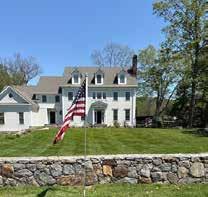
The more than 600 American flags flying proudly throughout town? That’s also thanks to the Rotary Club of Ridgefield. This year, they feel especially meaningful as the nation marks the 250th anniversary of the signing of the Declaration of Independence and Ridgefield prepares to celebrate another Fourth of July beneath a sea of red, white, and blue.
Ridgefield Rotary received its charter 85 years ago from Rotary International. Since then, the group has continually exemplified its motto: Service Above Self
“Service Above Self isn’t just our motto—it’s how we operate,” says Kathy Graham, who finished her tenure as president of the club in June. “Everything we raise goes right back into this community.”
Fly the Colors is Rotary’s annual subscription-based flag service program—and one of their largest fundraisers each year. The program was brought to town by Sue Manning, former First Selectperson and longtime Rotarian, in 2015.
For $80 the first year, and $40 each year following, a Rotary volunteer will come to your home, install a plastic pipe in your front yard to hold the flagstaff in place, and return to place the flag for the season before collecting it again at the end of summer. It’s simple and seamless.
Gary Roman, who oversees Fly the Colors, says the program raises about $25,000 annually. A portion of the funds is regularly donated to the United States Marine Corps.
Since the program began, roughly $125,000 has also been donated to the University of Connecticut’s Entrepreneurship Bootcamp for Veterans, a tuition-free training program that helps veterans and military spouses start or grow small businesses.
“When we’re out planting the flags, people say ‘thank you,’” Gary tells us. “And we say ‘thank you’ right back. They know the money isn’t going to some unknown cause—it’s going to veterans. And that’s exactly why they participate.”
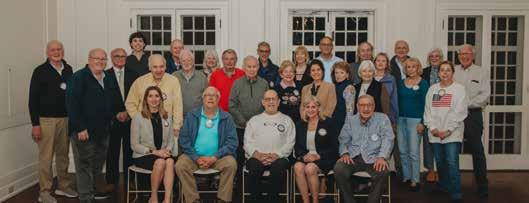
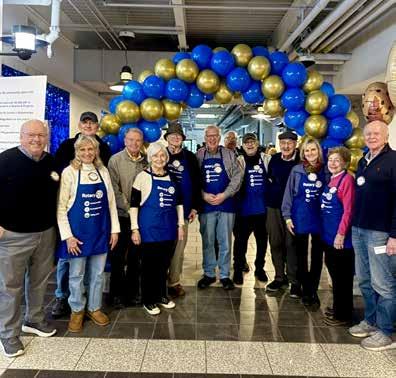
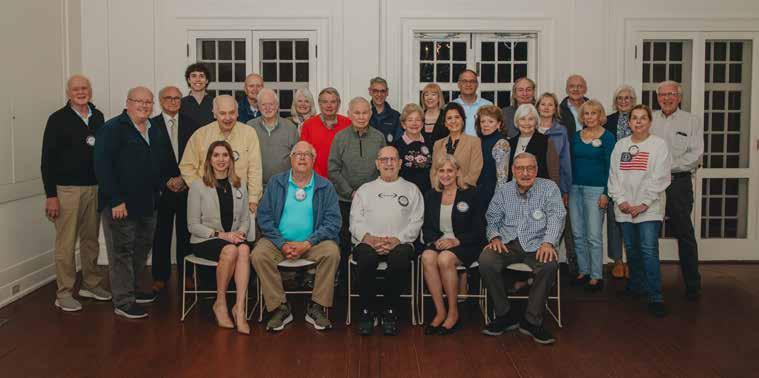
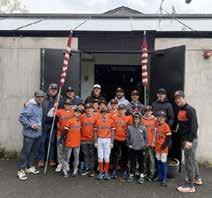
Rotary Club of Ridgefield has a core membership of about 40 volunteers—neighbors, professionals, and retirees committed to serving the community. High school students can also get involved through the Ridgefield Interact Club, sponsored by Rotary and widely regarded as an outstanding example of student leadership. For larger fundraisers, the club occasionally partners with organizations like Ridgefield Little League, Boy Scouts of America, and Boys & Girls Club of Ridgefield.
Despite its relatively modest size, the club has become one of the town’s most impactful organizations, consistently raising more than $100,000 each year—and giving it all away.
Between the NFL conference championships and Super Bowl Sunday each winter comes Taste of Ridgefield. This past February, the fundraiser celebrated its 25th anniversary. Local restaurants donate food and staff, guests purchase tickets to sample dishes from some of the best kitchens in and around town, and young volunteers help clean up afterward. The result is part fundraiser, part town tradition.
Then there’s RRRESTAFFLE in the fall, where participants can purchase $20 raffle tickets for the chance to win gift cards redeemable at roughly 65 local restaurants and eateries. Last year’s grand prize winner took home $2,500 in gift cards—25 different cards worth $100 each. Second place received 12 cards worth $1,200; third took 6 cards worth $600.
But Rotary’s generosity extends well beyond flags and food.
One of the defining features of Ridgefield is the canopy of mature trees lining its roads and neighborhoods. But decades of disease and aging growth have left gaps throughout town— and replacing trees is expensive. Rotary saw an opportunity not only to raise funds, but also to help restore part of Ridgefield’s landscape in the process.
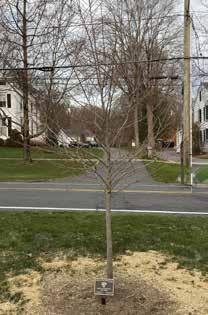
Rotarian Bill Wyman has spearheaded the Replanting Ridgefield project. For $4,000, donors can sponsor one tree; three trees cost $10,000. Each comes with a dedication plaque. So far, Replanting Ridgefield has raised $120,000.
“Some of the dedications are so poignant,” Kathy says. “One man bought three trees because Ridgebury firefighters had saved his wife’s life.”
Another moving dedication is for a tree planted in front of Keeler Tavern in honor of Rotarian Joel Third. Joel was a beloved community figure who passed away this spring.
“We have an award called the Making a Difference Award, which was just started last year,” Kathy says. “It was awarded to Joel and, as his prize, we planted a tree in his honor.”
Every year, Rotary awards the largest scholarship at Ridgefield High School. This year, the club is awarding two $10,000 scholarships through a blind review process. Committee members never see applicants’ names as they work through roughly 250 submissions, evaluating need, service, and circumstance.
“It’s truly remarkable what some of these kids are dealing with and still accomplishing,” says Joe Cleary, who oversees the scholarship program and recently took the helm as President. “It gets harder and harder to choose as you whittle it down.”
Rotary’s grant program—which any nonprofit can apply to— supports a wide range of local needs, with the club awarding roughly 50 grants each year to area organizations. Recent funding has helped provide everything from a washer and dryer at the Ridgefield Theater Barn to new computers at Woodcock Nature

Center. Both projects received special matching district grants, doubling Rotary’s contribution and bringing total support for each organization to about $5,000.
Then there are the more ephemeral efforts—ones that don’t necessarily show up on a balance sheet.
Every day in May, Rotary volunteers picked up meals donated by local restaurants and delivered them to first responders. Around Easter, there’s the Ballard Park egg scramble, where approximately 6,000 eggs are scooped up by Ridgefield children in roughly 90 seconds. There’s the monthly Grove Street cleanup, where volunteers collect litter. And there’s the annual Day of Service. This year, Rotarians are headed to Sunrise Cottage on Sunset Lane to seal the driveway and plant flowers.
And there’s work that reaches far beyond Ridgefield’s borders. This past year, Rotary members collected and shipped books to schools in the Philippines—funding the postage so that children halfway around the world could have something to read.
Closer to home, they restocked the library at The Center’s residential facility, The Patricia House, making sure to include titles in Spanish and Portuguese for bilingual families.
Each year, Rotary also hosts its Citizen of the Year dinner, honoring a community member who exemplifies Service Above Self. Held at Silver Spring Country Club, the event directly benefits the club’s scholarship and grant programs. This year’s honoree was Pete Nichols, a retired science teacher from Ridgefield High School who now volunteers with more than a dozen local organizations focused on conservation, public safety, housing, and community outreach.
The Rotary Club of Ridgefield is always looking for new members. The group meets weekly in the garden house at Keeler Tavern, and three out of four meetings per month feature a guest speaker. While Rotary once required weekly attendance, the club recently updated its bylaws to better reflect the realities of modern life, and this is no longer an absolute requirement.
“Service Above Self” isn’t just Rotary’s motto—it’s the club’s operating system. And in a town like Ridgefield, where the people who show up tend to really show up, it makes a certain kind of sense that a group like this has spent the last 85 years quietly, deliberately, endlessly making things better—not just for the citizens of this community, but for people around the world.
To learn more about Ridgefield Rotary or get involved, visit ridgefieldrotary.org.













The Past and Present Converge at Weir Farm National Historical Park, Where American Impressionism Remains a Living Tradition
ARTICLE BY KATIE PARRY
PHOTOGRAPHY BY JENNIFER ZARINE PHOTOGRAPHY
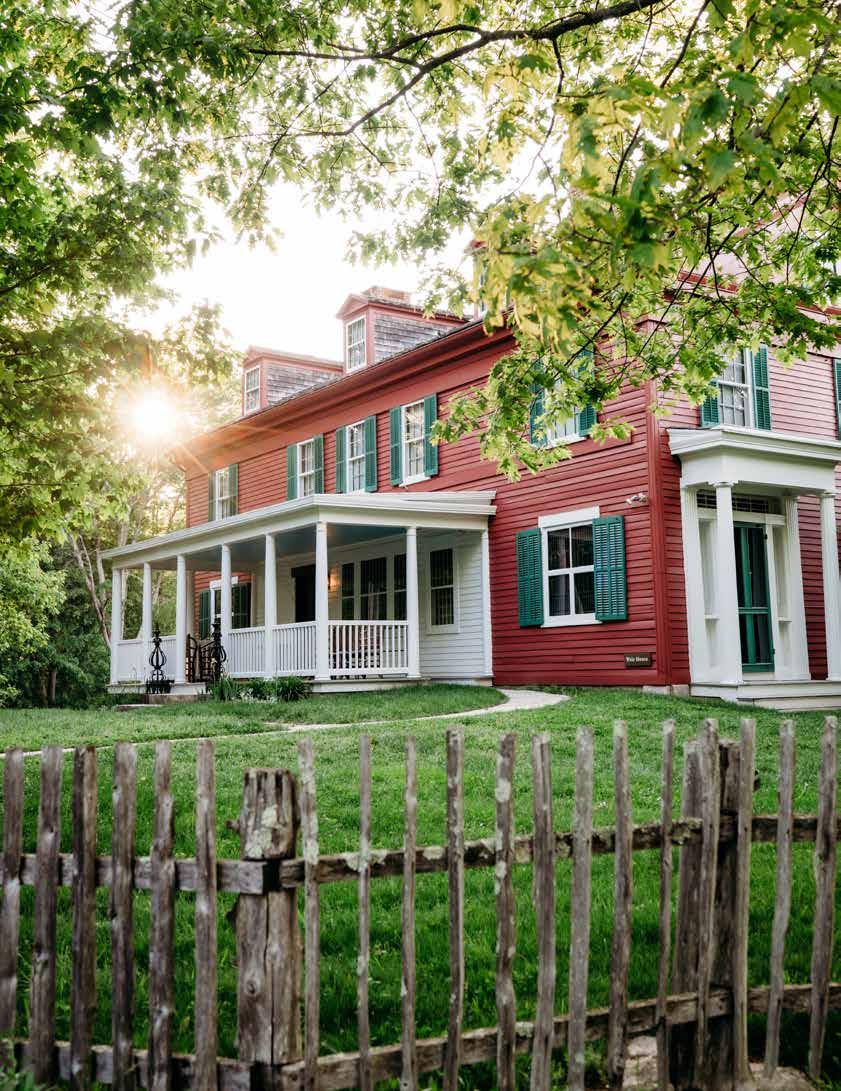
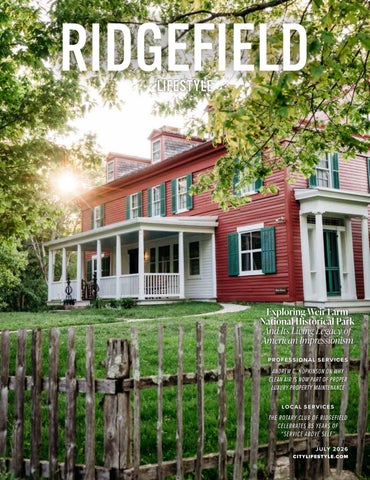
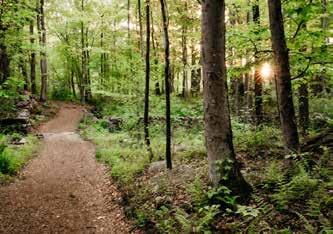
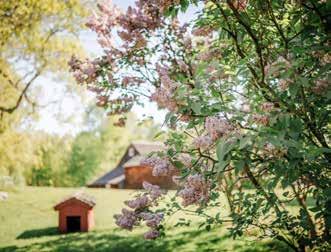
Most national parks ask visitors to leave no trace. A visit to Weir Farm National Historical Park—the only national historical park dedicated to painting—invites the opposite. Its lush, slightly overgrown but meticulously maintained grounds, antique storybook stone walls, and winding woodland paths seem to whisper to visitors: create
Julian Alden Weir—known professionally as J. Alden Weir—came from a family steeped in art, making it hardly surprising that his life, and later the lives of his children, gravitated toward artistic pursuits.
His father, Robert Walter Weir, was a painter of the Hudson River School and a professor of drawing at the United States Military Academy at West Point. His best-known work, “Embarkation of the Pilgrims,” hangs in the Rotunda of the United States Capitol.
His brother, John Ferguson Weir, was a painter, sculptor, writer, and educator who rented studio space in the Tenth Street Studio Building—the first facility of its kind developed to house artists in New York City. Located on West 10th Street between Fifth and Sixth Avenues, the building is credited with helping transform Greenwich Village into a hub for American art.
Weir studied at the National Academy of Design for three years before heading to Europe, where he spent four more at the École des Beaux-Arts under the academic painter Jean-Léon Gérôme.
For someone who would later become one of the fathers of American Impressionism, Weir was spectacularly unimpressed when he first encountered the movement at the Paris Salon. After viewing works by Claude Monet, Pierre-Auguste Renoir, Edgar Degas, Édouard Manet, and their contemporaries, he wrote home: “I never in my life saw more horrible things… They do not observe drawing nor form, but give you an impression of what they call nature. It was worse than the Chamber of Horrors.”
Weir returned to the United States in 1877 and established himself in New York City as a portrait and still-life painter, an art teacher, and an avid buyer and collector—a habit that would lead, in the most charming and fortuitous of ways, to one of the more remarkable trades in American art history.
But first came Anna Baker.
The 19-year-old from Windham, Connecticut had accompanied a friend to a painting class where Weir
was teaching. The couple became engaged within three weeks and went on to have four children: Caroline, Dorothy, Cora, and Julian, who died in infancy.
One of Weir’s most generous patrons, the collector Erwin Davis, had amassed an impressive collection by the 1880s—including works by Jules Bastien-Lepage, Manet, and Degas. But Davis had his eye on something in Weir’s own collection.
Davis owned a 153-acre farm in Branchville, at the intersection of Nod Hill Road and Pelham Lane. In exchange for a painting from Weir’s collection—and $10—he offered to trade. Although the identity of the painting has been lost to history, one has to wonder: might it even have been an Impressionist work?
“If I go up to Ridgefield tomorrow, I will look at the 153 acres and see if they are habitable,” Weir wrote to Anna in 1882. “If so we might have that as a sort of hunting lodge for part of the season.”
That “hunting lodge” would go on to become a wellspring of creative inspiration for Weir and his friends and contemporaries—among them Childe Hassam, John Singer Sargent, and John Twachtman— for the next three decades. Weir came to refer to it affectionately as the “Great Good Place.”
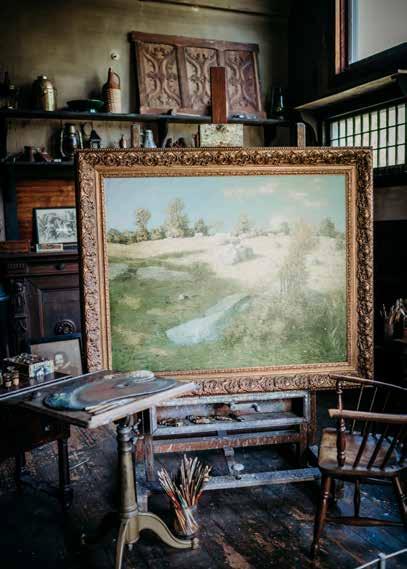
More than anything else, it was this Branchville landscape that converted him to Impressionism. He painted the countryside en plein air—outdoors, CONTINUED >
directly from life, captured in natural light—endlessly and joyfully, and invited friends to do the same.
“I feel that I can enjoy studying any phase of nature,” he wrote, “which before I had restricted to preconceived notions of what it ought to be.”
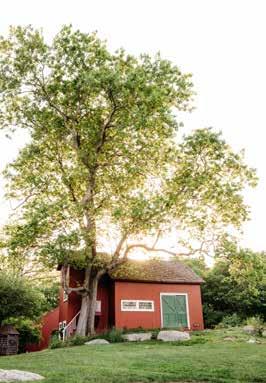
Weir eventually had a studio built on the property. Its ceiling was first painted a vivid blue and adorned with stars, though Weir later discovered that the color altered the quality of the light. This prompted him to have it repainted gray.
He further enhanced the property’s pastoral charm by using $150 in prize money from one of his paintings to construct Weir Pond. The pond became a favorite spot for fishing, swimming, leisure, and, of course, painting.
In 1898, Weir helped found The Ten American Painters— known simply as The Ten—a group that deliberately broke from the conservative mainstream of the American art establishment and brought renewed energy and ambition to their exhibitions.
But modernism was spreading. Post-Impressionism, Fauvism, and Cubism were reshaping the art world, and the 1913 Armory Show in New York introduced American audiences to many of these avant-garde movements in a single, landmark exhibition. Weir’s painting “The Factory Village” was included, yet he and his contemporaries increasingly found themselves overshadowed by artists such as Henri Matisse, Marcel Duchamp, Pablo Picasso, and Vincent van Gogh.
Weir responded with characteristic generosity to the shifting currents around him. “These young artists are getting at the real thing,” he said. “They are the ones to watch. Our work is a thing done.”
Weir died of heart disease in New York City in 1919. But the farm’s creative forcefield did not end with him. His three daughters became the stewards not only of his artistic legacy, but of the property itself.
The eldest, Caroline Weir Ely—known as Caro—worked across bookbinding, printmaking, etching, and painting. She maintained a studio in Old Lyme, Connecticut throughout her life, even after marriage and motherhood—a rarity for women artists of her time.
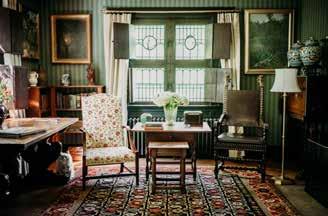
Dorothy Weir Young most fully embraced life as a painter, working in oils, watercolor, and woodblock printmaking. She studied under her father and became the “keeper of the flame,” preserving the family farm, his studio, and his letters, which she meticulously transcribed for eventual publication. Dorothy married the sculptor Mahonri Young, a grandson of Brigham Young, who built a studio on the property near Weir’s. There, he created numerous works for the Mormon Church and other commissions, including his most famous work, This Is the Place Monument in Salt Lake City.
The youngest daughter, Cora Weir Burlingham, became one of the property’s most passionate caretakers. Though not a painter herself, Cora possessed a deep love of landscape design and horticulture, studying at Parsons and later working with the New York Botanical Garden. After Dorothy gifted her the adjoining Webb Farm in 1931—today the Visitor Center—Cora painstakingly restored and reimagined the
property, creating an innovative sunken garden and commissioning extensive stone walls her brother-in-law Mahonri affectionately dubbed the “Great Wall of Cora.”
In the late 1950s, Weir Farm was purchased by New England painters Sperry and Doris Andrews, a couple who spent years painting and caring for the property and who had been friends with Young. But as Ridgefield’s population grew, the pastoral countryside known as “the Land of Nod,” which had inspired so many paintings, came under pressure from residential development.
Together, Cora, Sperry, and Doris launched a determined campaign of preservation. Cora organized Citizens to Preserve Weir Farm in the 1960s and later donated 37.5 acres of her own property to The Nature Conservancy—the first parcel in Weir Preserve, a 110-acre landscape adjacent to the park.
Their grit and determination ultimately paid off. On October 31, 1990, George H. W. Bush signed legislation establishing Weir Farm as a National Historic Site. In 2021, it was redesignated as a National Historical Park.
What those early advocates saved—and what the National Park Service and Friends of Weir Farm, its philanthropic partner that fundraises to support projects and programs—has so carefully stewarded ever since—is not simply acreage. It is a feeling, a philosophy, and an invitation to slow down, pay attention, and create art.
The 68-acre property is open to the public daily from sunrise to sunset. The Visitor Center is open Wednesday through Sunday beginning at 10 a.m., with tours of Weir House and the Studios beginning at 11 a.m.—offering an intimate look at Weir’s world: his paintings, his studios, his palette, and yes, the ceiling he ultimately had painted over, complete with the stars he had once added to it.
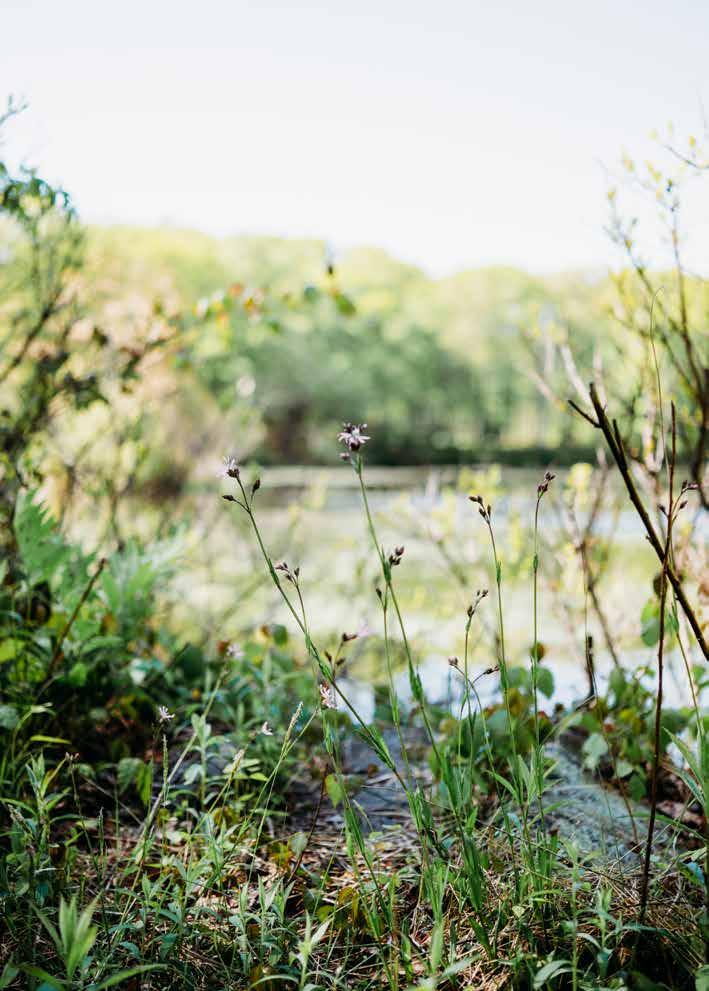
A newly restored stone causeway along the Wagon Trail loop connects the Visitor Center parking area to Weir Pond through wetlands once used for grazing livestock in the farm’s heyday. Stone causeways were a practical feature of southwest Connecticut farms, allowing people and animals to cross marshy ground, and a version of this pathway existed on the property even before Weir acquired the farm. Rebuilt using native stone and traditional masonry techniques, the crossing blends seamlessly into the historic landscape.
When the land was first farmed, stone walls were built to clear the fields and contain livestock. Over time, as the fields lay fallow, the forest returned and reclaimed the terrain—but the walls remain. Today they stand as reminders of the land’s earlier lives—both practical and inspirational—breaking up the woods with steady persistence. Three distinct types are still visible across the property: thrown, laid, and rubble-filled.
For artists—active and aspiring alike—the Weir Farm Artist Collective is perhaps the most natural extension of what this place has always been. A community of local painters and
creators, the Collective gathers twice monthly to do what Weir and his friends did here more than a century ago.
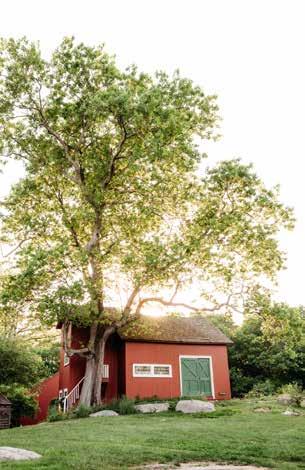
On the first Thursday of each month from May through October, artists convene in the Burlingham Barn for discussions ranging from exhibiting work and entering juried shows to sparking creativity and building community. On the third Thursday, they gather for a paintout en plein air, their easels dotting the meadows and pathways.
The Collective also exhibits twice annually at local libraries, including summer and fall shows at the Ridgefield Library and Wilton Library.
For those who want to try their own hand at Impressionism, master instructor Dmitri Wright leads free painting workshops at Weir Farm throughout the season. His workshops are free to the public and fill quickly.
Then there is the Artist-in-Residence program, one of the more magical traditions at Weir Farm. From May through October, one artist per month is selected from dozens of applicants nationwide to live on the property with full access to a working studio and the kind of uninterrupted creative time Weir himself once enjoyed here.
The park is especially welcoming to younger visitors, with free paint kits and sitting mats for children to take into the landscape and try their own hand at painting en plein air. Dogs are welcome on the trails,
“I feel that I can enjoy studying any phase of nature, which before I had restricted to preconceived notions of what it ought to be.” —J. Alden Weir
and the B.A.R.K. Ranger program offers a playful way for them to experience the park alongside their owners.
If you have not yet visited Weir Farm, plan a trip during golden hour. With the evening light illuminating the landscape, it is easy to see why Weir called it the “Great Good Place.”
His brother John once wrote to him: “I advise you to hang on to this place, old boy; a ‘lonesome lodge’—a pleasant place of retreat in times of storm or drought—is no bad thing to have for an artist. Keep it trim and untrammeled and you will find it a haven of refuge.”
More than a century later, Weir Farm remains exactly that: a haven of refuge, kept trim and untrammeled, and generously shared with all of us.
Visit nps.gov/wefa/index.htm to learn much more about this extraordinary local gem and find out upcoming events. Follow on Instagram @weirfarmnps













ARTICLE BY KALI KASPRZYK
PHOTOGRAPHY BY JANIE JONES
MAKEUP BY MIKAYLA CRANE
Winnipeg in the winter, and a 17-year-old waits 45 minutes in the cold for Keanu Reeves. Her fingers are numb. She is not there for an autograph. She is there to ask him to appear in her audition tape for MuchMusic, Canada’s MTV. When he finally agrees, she writes her number on a gum wrapper with a borrowed lip liner.
He calls days later.
That 17-year-old was Jen Cohen — fitness expert, host of the Habits & Hustle podcast, and best-selling author. She has built a career on the premise her frostbitten afternoon proved. She calls the practice the 10% Target: 10 attempts at whatever you want most in life.
The premise is simple. Most people never make one attempt. Almost nobody makes two. The math works in favor of the person who keeps going.
The top-rated Habits & Hustle podcast has logged hundreds of conversations with high performers and the people who study what the body does to the mind. Her TEDx talk, The Secret to Getting Anything You Want in Life, has traveled widely inside Fortune 500 sales-training rooms. On the Share the Lifestyle podcast, Cohen sits down to share the working rules that are the foundation of her latest book, Bigger, Better, Bolder.
“You have to be the CEO of your own life.”
FEATURING JEN COHEN
Discover the full 10% Target Mindset framework.


1 2
The door opens, or another door does. The unmade attempt and the refused one leave you in the same place — except one of them teaches you something.
Cohen frames her habits as a wager: How do I stack the deck so I win more than I lose? The workout happens first, and the food decisions follow. The email follow-up gets sent, and the answer arrives. The choices compound in a single direction.
3
No one is born with it. The people who look disciplined are running a routine they have rehearsed long enough that it no longer feels like effort. The reps are the skill. Miss them, and the skill fades, the same as any other.
4
Confidence does not arrive by repeating the word. It arrives after the body has done the thing — the workout finished, the cold walk endured, the email sent. The mind takes its cues from what the body proves it can do. Talk follows action, not the other way around.
5
The first decision sets the slope of the rest. Skip the Monday workout, and the rest of the week tends to follow. Hold the line on Monday, and the slope tilts the other way.




JULY 2026
JULY 4TH
Party
Ballard Park | 11:00 AM
Join the Ridgefield Commemorates America at 250 Committee for an unforgettable celebration of our nation’s 250th anniversary. Enjoy contra dancing, live music by Bourbon and Britches, and a wide range of family-friendly entertainment, from face painting to a magician. Then step into the spirit of 1776 with a special reading of the Declaration of Independence presented by Keeler Tavern Museum and History Center! 11:00 a.m.-2:00 p.m.
JULY 25TH
Main Street | 10:00 AM
Get ready for SummerFest 2026! This beloved community celebration brings together families, local businesses, and the entire community for a full day of energy, connection, music, food, and fun! SummerFest 2026 will feature more than 100 local vendors, sidewalk sales, live entertainment, carnival games, food and sweet treats, plus Touch-a-Truck and train rides at Lounsbury House. Fun for all ages! 10:00 a.m.-2:00 p.m.
JULY 26TH
Peter Parley Schoolhouse | 1:00 PM
The Peter Parley/West Lane District Schoolhouse is now a museum operated by the Ridgefield Historical Society. Step back in time during this free open house. Guests are invited to tour the historic one-room schoolhouse, last used in 1915, and learn about Ridgefield’s early schools. Volunteers Jack and Sally Sanders will be available for questions. Admission is free; donations are accepted. 165 West Lane, 1:00 p.m.-4:00 p.m.

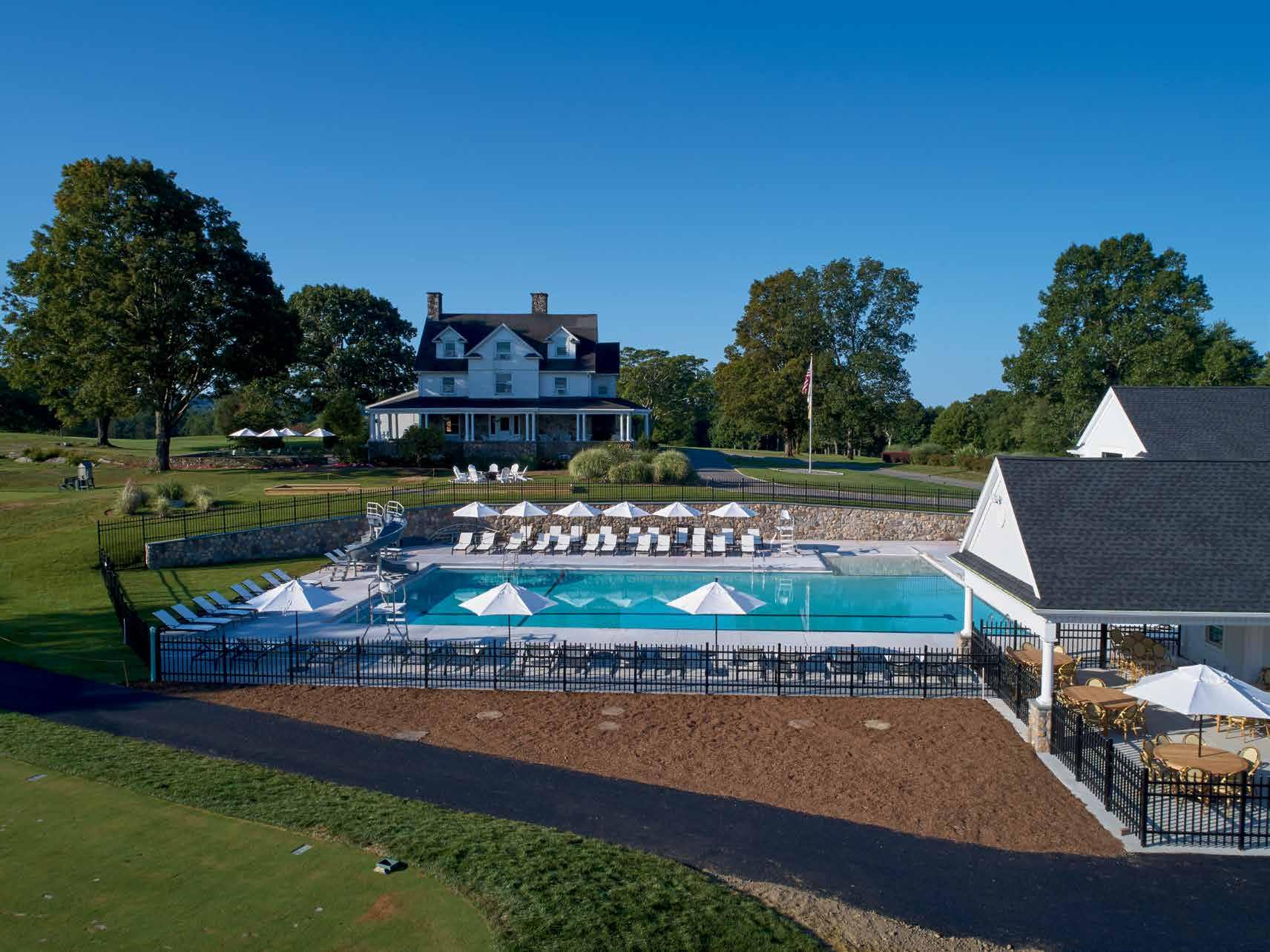

A life of wonder begins here.
Founded in New York City in 2006, Tribeca Community School has nurtured generations of young children following an approach rooted in curiosity, creativity, and empathy. In Fall 2026, we will bring that same spirit to Ridgefield, building a community inspired by the belief that children are capable, curious, and full of big ideas.
· For ages 6 weeks – 6 years
· Full-day
· Year-round
· Flexible schedule options
Explore TCS Ridgefield www.tcsridgefield.com