ROBERT GAMER TOOK UP SWIMMING AT 66. AT 80, HE’S COMPETING ON THE NATIONAL STAGE
Our Men’s Issue
Men of Purpose
Happy June, Ramapo Valley! In honor of our Gentlemen’s Issue and Father’s Day this month, I thought I’d open with a classic dad joke about construction, but unfortunately, I’m still working on it. If that earned an eye roll, I’d say we’re off to the right comedic start. Last month, our pages were filled with incredible women. This month, we’re celebrating the men. For me, that starts with Jake—the ultimate girl dad to our three daughters and now coach of our youngest daughter’s soccer team. Watching him balance encouragement, very little listening from the players and a whole lot of sideline energy has been a pretty perfect picture of fatherhood in real time.
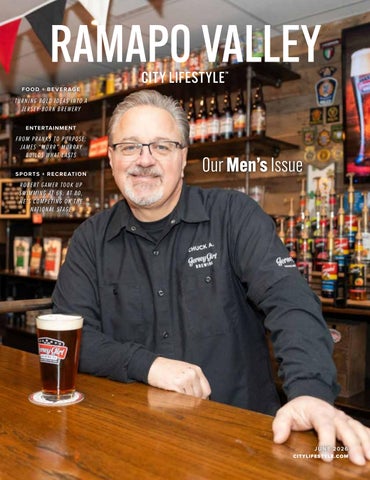
That same sense of purpose and persistence comes through in this month’s cover story. Head to page 30 for Charles “Chuck” Aaron of Jersey Girl Brewing Co., whose path from corporate executive to craft brewer is a great reminder that success does not always look the way you first imagined it would. What started as years of hard work, planning and patience became a business built from the ground up right here in New Jersey—and a brand people now know well.
Then turn to page 22 for Robert Gamer, whose story proves it is never too late for a remarkable second act. What began as a way to stay active in retirement turned into a serious competitive pursuit, eventually leading him to national-level swimming competition in his 80th year. His journey is disciplined, inspiring and such a great example of what can happen when you keep pushing yourself, no matter your age.
You’ll also find my story on page 12 featuring James “Murr” Murray, and writing that piece was such a fun experience. Sitting down with him was a great reminder that behind the humor and familiar TV presence is someone thoughtful, hardworking and deeply grounded. He was exactly as funny as you’d hope, but also sincere and reflective in a way that made the conversation especially memorable.
Here’s to the dads, father figures and everyday role models who lead with humor, patience and love—and to the men who show up, pitch in and make life a little better, dad bods and all. We hope this issue makes you smile and maybe even send a few Father’s Day compliments where they’re due.
Brandon Herman, Joe Papeo, Jack Morgan, Olga Kolleeny, TBS, Kylie Holt, Carly Mac Manus, Kartheek Photography, Robert Gamer, Michael Lago Creative Company
Corporate Team
CEO Steven Schowengerdt
President Matthew Perry
COO David Stetler
CRO Jamie Pentz
CoS Janeane Thompson
AD DESIGNER Andrew Sapad
LAYOUT DESIGNER Kelsi Southard
QUALITY CONTROL SPECIALIST Hannah Leimkuhler
JUNE 2026
city scene
WHERE NEIGHBORS CAN SEE AND BE SEEN
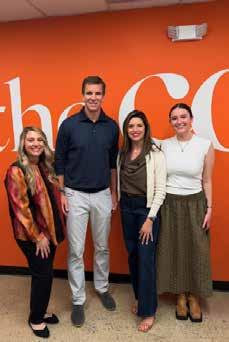
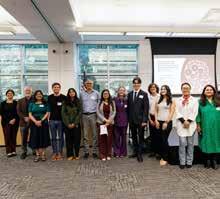
1: Jari Becker of Town & Country Compounding tabled at the T.H. Beauty Social event. 2: Jari Becker, RPh, attended HRT Symposium in Arizona on behalf of Town & Country Compounding. 3-4: NJ Decks earned second place at the NADRA National Deck Competition for one of their projects. 5: Eli Manning and Sushi Grade Media supported a local small business, highlighting community and creator engagement. 6: Ramapo Indian Hills geared up for Relay for Life 2026, uniting students for cancer awareness. 7: Ramapo College students presented research projects during the 14th Annual Scholars’ Day, showcasing academic achievement.
Want to be seen in the magazine?
JARI BECKER
JARI BECKER
JUDY VERBLAAUW
JUDY VERBLAAUW
THE COCO NJ
RAMAPO INDIAN HILLS REGIONAL HIGH SCHOOL DISTRICT
RAMAPO COLLEGE OF NEW JERSEY
INGREDIENTS:
• 1 pound busiate, or similar pasta
• 2 cups cherry or grape tomatoes
• 1/2 cup slivered almonds
• 2 to 3 cloves garlic
DIRECTIONS:
• 1/2 cup fresh basil
• 1/2 cup extra-virgin olive oil
• 1/2 cup grated pecorino romano
• Salt and black pepper to taste
Busiate al Pesto ALLA TRAPANESE
ARTICLE BY BROOKE BOYER
Chef Bill’s love of cooking began early—in his father’s pizzeria in Garfield, where he started working at 11 and learned the values of hospitality, hard work and tradition. Long before he launched Piatto Di Pasta, the kitchen was already home.
Over the years, Chef Bill worked across the food industry, from line cook to restaurant management, while studying hotel and restaurant management at Bergen Community College. He later worked in high-volume kitchens serving corporate facilities, private schools and universities, building the kind of versatility and consistency that only comes from experience.
But some of Chef Bill’s most meaningful lessons came from home. He learned traditional Italian and Sicilian recipes from his mother and grandfather, where food was never just about the meal—it was about family, memory and bringing people together. That spirit still shapes the way he cooks today.
1. If desired, lightly toast the almonds in a dry pan until golden; let cool.
2. In a food processor, blend garlic with a pinch of salt into a paste. Add almonds and process until finely ground.
3. Add tomatoes and blend until smooth. Add basil and pulse briefly.
4. With the processor running, slowly drizzle in olive oil until smooth and emulsified.
5. Transfer to a bowl and stir in grated pecorino. Season with salt and pepper.
6. Cook pasta in well-salted water until al dente, reserving a small amount of pasta water.
7. Add pasta to the sauce with a splash of reserved pasta water and toss until evenly coated.
8. Finish with olive oil and extra pecorino, if desired. Serve immediately.
A Sicilian Classic—Fresh, Emulsified and Rooted in Tradition
After surviving a heart attack and undergoing open-heart surgery, Chef Bill decided to fully pursue his passion. He founded Piatto Di Pasta to create hands-on cooking experiences centered on fresh pasta, shared stories and genuine connection.
For Chef Bill, dishes like Pesto alla Trapanese reflect the simple, rooted flavors that first inspired his love of cooking.
NOTES:
This Sicilian pesto from Trapani offers a fresh twist on the version many readers know. Made with almonds, tomatoes, garlic, olive oil, basil and pecorino, it is bright, rich and deeply tied to the flavors of the region.
To learn more about Chef Bill’s private cooking classes, pasta parties and events, visit piattodipastanj.com
A LOOK AT JAMES “MURR” MURRAY’S QUIETER STRENGTHS— PATIENCE, FRIENDSHIP AND THE WORK OF BUILDING SOMETHING THAT LASTS.
MORE THAN THE PRANK
When I sat down with James “Murr” Murray, one of the stars and creators of “Impractical Jokers,” I asked him whether he sleeps with one eye open. He laughed and told me that, after all these years, he was skeptical of almost everything. In fact, before agreeing to our interview, he said his team thoroughly vetted both me and City Lifestyle. In his world, a perfectly ordinary interview was exactly the kind of thing that could turn into a setup, and with a new season of “Impractical Jokers” in the works, he was not taking any chances. I told him that, should he ever need a willing participant for a future punchline, I would be more than happy to volunteer. Consider that my official hint—my offer stands.
It was a funny exchange, but it was also a revealing one.
The version of Murray most people know is the one on screen— quick-witted, charismatic, game for almost anything and always one beat from disaster. What people do not always see is the man underneath that amplified persona: a producer, writer and creative force who spent years working, pitching and waiting to bring his dream to life.
For all the chaos “Impractical Jokers” sells, Murray’s career tells a much steadier story. It is a story about patience, friendship and staying with the work long enough to create something that lasts.
That is what makes Murray a natural fit for our Men’s Issue. He is not just a familiar face from a hit show. He is someone who builds.
Long before “Impractical Jokers” became a success, Murray and his lifelong friends were doing improv together, sharpening the chemistry that eventually became the foundation of an entire franchise. The roots of that friendship go all the way back to high school. What audiences see on screen is funny because it is real. These are friends who grew up together and understand exactly
how to push, challenge and support one another. There is real trust there, and that trust is the backbone of everything they have built together.
Murray is also quick to point out that none of it happened by accident. “It was a very calculated business decision,” he says. Before “Impractical Jokers” ever landed on television, he spent a decade working in TV development, learning how shows were made and what networks wanted. He eventually went on to pitch his own show.
That kind of patience says a lot about a person.
It also says a lot about why the show has lasted. Nearly 16 years after its debut, with season 13 in the works, “Impractical Jokers” proves that meaningful success does not come from luck alone. It comes from consistency and caring long after it’s easy to coast. One of the most compelling things about Murray is that he does not sound like someone phoning it in. He still talks about the show with energy and sounds invested in what comes next.
When Murray talks about success, what comes through most is perspective. He tells me they were 34 years old when they finally got on TV, old enough to understand what it took to get there and wise enough not to take it for granted. By then, they were not just aspiring comics—they were adults with real jobs and responsibilities, which may be part of why the opportunity never seems lost on him. “It keeps us humble,” he says.
He also seems especially proud that “Impractical Jokers” is a show grandparents, parents and kids can all watch together. In a culture where shared entertainment is rare, that connection clearly matters to him.
That history gives weight to the advice he offers now. He knows what it’s like to work tough temp jobs in New York, paying bills by day and writing at night. So when he says, “Find what you love and do it and don’t give up on it,” you believe he means it.
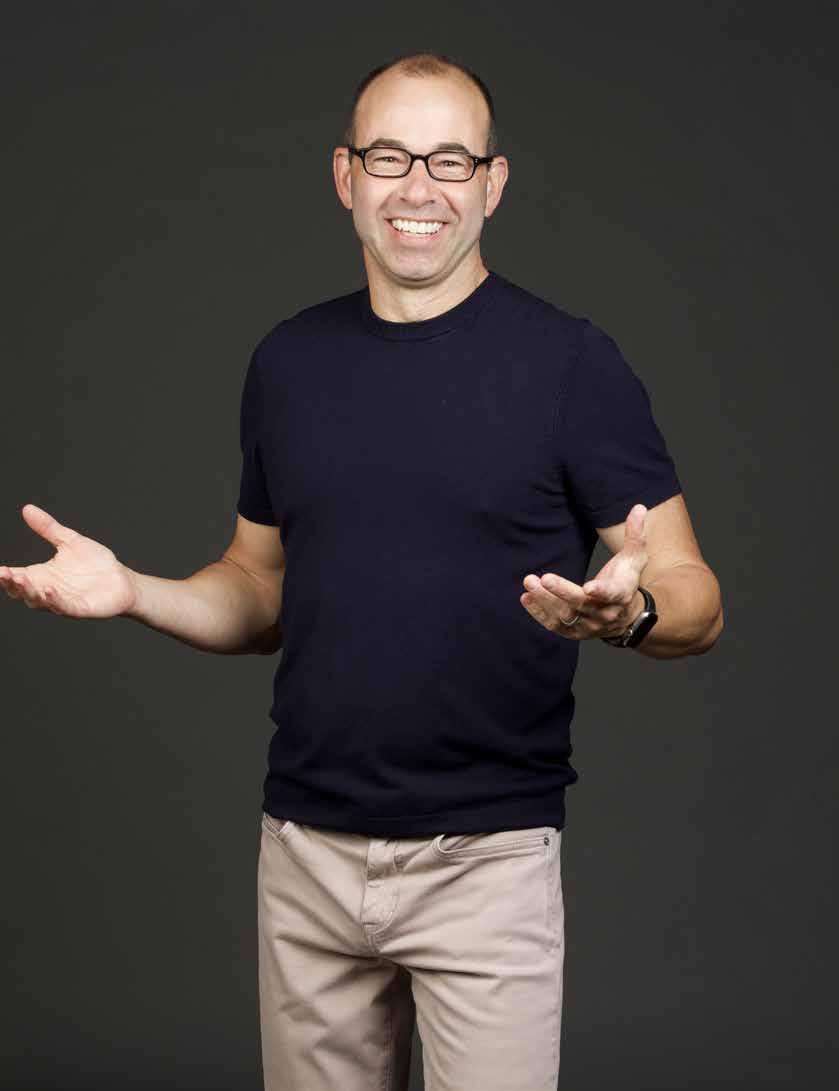
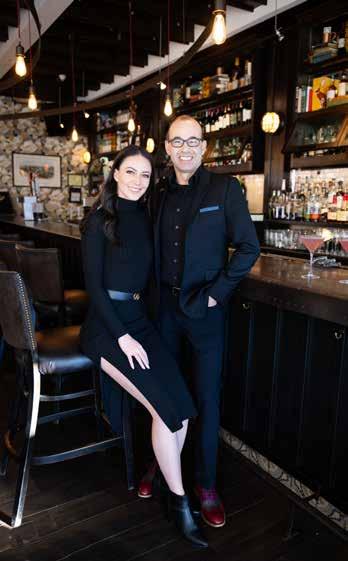
James “Murr” Murray and Melyssa Murray
Photo Credit: Brandon Herman
That same groundedness feels especially clear when the conversation turns to New Jersey. Murray lives in Princeton now, and some of the work he cares about most is happening just minutes away in Rocky Hill.
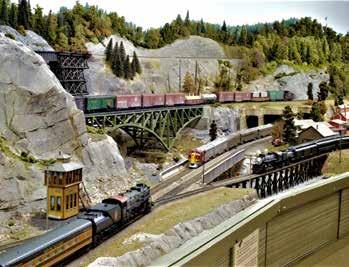
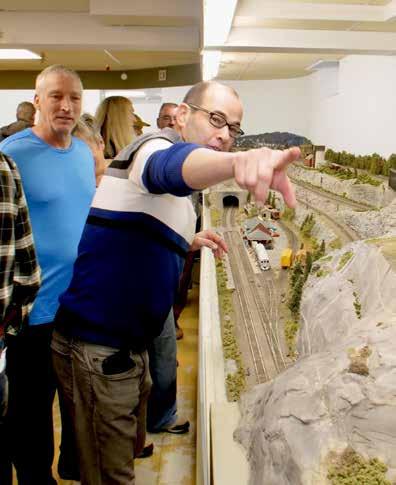
In 2025, Murray purchased the iconic Rocky Hill home that houses Pacific Southern Railway, a nonprofit model railroad club he was determined to help save. The property is the longtime home of the club’s legendary HO-scale railroad, a 5,000-square-foot layout with more than 12,000 feet of hand-laid track that has been a cornerstone of model railroading since 1964. After the passing of longtime steward Carl Pate III in 2024, the future of the layout was uncertain. Murray, a lifelong train enthusiast, stepped in and bought the property to secure its future.
That detail matters because it says so much about who he is. He did more than appreciate the railroad. He invested to preserve it.
When Murray talks about the railroad, what comes through is a real sense of care. This is not simply an interesting side project. It is a way of preserving wonder, protecting local history and keeping something tactile and imaginative alive in a world that increasingly lives behind screens. As Murray puts it, “You have to protect that and save it and grow it.”
The house itself becomes part of that vision. Under Murray’s ownership, Pacific Southern is expanding its reach with virtual memberships, a refreshed online presence and more community-facing events, including open houses and fundraisers.
He is also not done taking big swings.
Beyond “Impractical Jokers,” Murray continues connecting with audiences through Murr Live, his solo comedy tour, where fans get to see more of his off-screen storytelling and personality. He is also the author of several novels, continuing to stretch into a very different creative lane. His thriller, Don’t Move, originally published as a novel, has now grown into a film project set to be released soon. Murray is not coasting on one successful idea. He is still creating, still evolving and still building what comes next.
That forward momentum is what ties everything together—friendship, patience, creativity, longevity and local impact. Murray comes across as someone who understands that meaningful success rarely happens quickly. Sometimes it takes years of rejection, years of work and years of belief. The real gift is staying with it long enough to see what it can become.
James “Murr” Murray may be best known for making people laugh, but that is only part of the story. The fuller picture is even more interesting. He is still creating, still taking risks and still building something lasting—just with one eye open at night.
FOR MORE INFORMATION
MURR LIVE AND OFFICIAL UPDATES jamesmurrayofficial.com
PACIFIC SOUTHERN RAILWAY pacificsouthern.org
Photo Credit: Brandon Herman
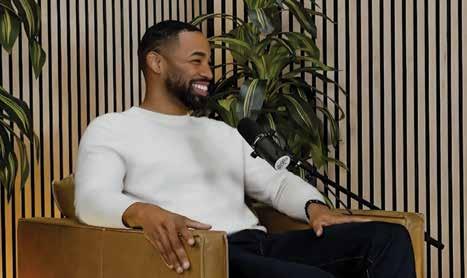
AN EXCERPT FROM EPISODE 6 OF SHARE THE LIFESTYLE, A CITY LIFESTYLE PODCAST
Photographer: Brittany Dawn Short
Creative Director: Jen Birn
Stylist: Stephanie Coultress O’Neill
Location: Hotel Saint Cecilia, Austin, TX
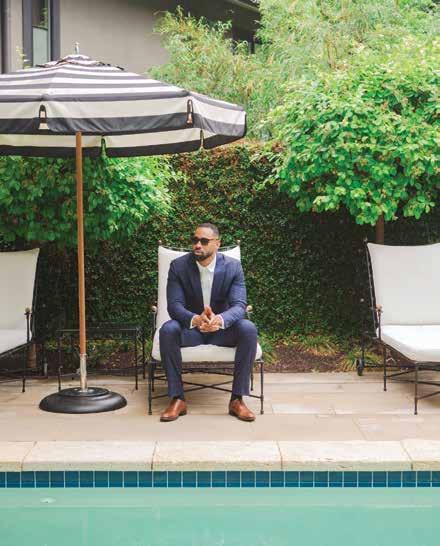
MIKE JOHNSON HAS BUILT HIS LIFE AROUND ONE QUIETLY RADICAL IDEA: THE STANDARD YOU SET PRIVATELY IS THE ONLY ONE THAT MATTERS.
After eight years in the Air Force, a celebrated run on national television, and a health crisis abroad that sent him deep into supply chains and ingredient certifications most founders never touch, the result is Oshun — a luxury ritual brand built on provenance you can trace and integrity you can verify. In an exclusive conversation for the Share the Lifestyle podcast, Mike shares what it actually takes to build something worth putting your name on. Read the highlights below, then scan the QR code for the full episode.
Q: YOU BECAME A FAN FAVORITE ON THE BACHELORETTE AND THEN LEFT THE SPOTLIGHT. YOU MOVED TO MEXICO, LEARNED SPANISH, THEN COSTA RICA, AND BUILT A COMPANY. WHAT DID THAT EXPERIENCE TEACH YOU ABOUT HUMAN BEHAVIOR?
A: “If you’re a good person going in, that shows. If you’re not, that shows too. I also learned that people form this parasocial relationship with you — they assume things about you. When all actuality, different circumstances bring out different parts of who you are. I was on TV trying to find love. The kindness people were showing after felt a bit fake, because they wanted to be a part of something that isn’t who I am individually, but a part of what they saw on TV. And so I had to get away from everybody and everything and the noise.”
THE QUIET STANDARD:
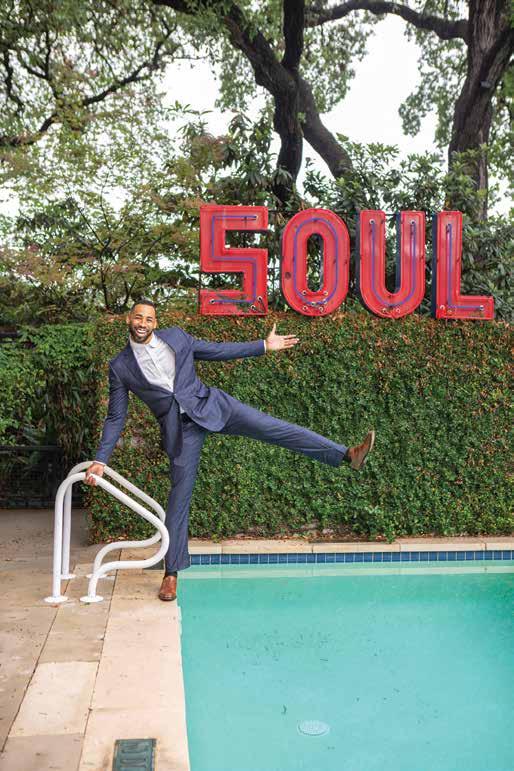
MIKE JOHNSON
“Too many people have prayed for me. So I’ve got to get up and do the walking.”
— Mike Johnson
Q: YOU JOINED THE AIR FORCE RIGHT OUT OF COMMUNITY COLLEGE. WHAT WERE YOU ACTUALLY RUNNING TOWARD?
A: “There was something in me that was saying: I’m not living up to my full potential. I was being a follower. My uncle said, ‘What’s going to make you become an adult the fastest?’ I said, obviously, the military. The Air Force broadened my thought process more than anything. We’re so caught up in our own perception — when you learn to understand different people’s perspectives, it adds to you in so many ways.”
Q: WITH OSHUN, YOU OWN YOUR MANUFACTURING, YOU EMPLOY A CHEMIST, EVERY PRODUCT HAS A BATCH NUMBER TRACEABLE TO ITS ORIGIN DATE. WHY DID YOU DECIDE TO GO THAT DEEP WITH THE BRAND?
A: “The EU bans 1,100 ingredients in personal care products. The U.S. bans nine. That’s my starting point. Oftentimes, it might be the same ingredient, but it comes from a place where it doesn’t have the highest purity. And 60% of what we put on our skin is absorbed. Every product Oshun makes carries a batch number that goes back to the exact day it was created — I can show you every single supplier, the date, the origin. I own more than one part of the supply chain because that’s the only way I can stand behind what’s in the bottle.”
This conversation is just the beginning. Mike goes deeper into why he’s buying land up north, the family in the Philippines who prayed over his factory floor, and what he’d tell every person ready to stop performing and start building. Scan the QR code for the full, exclusive City Lifestyle interview on the Share the Lifestyle podcast.
MIKE JOHNSON
UNDERSTANDING HORMONE HEALTH
|
ARTICLE BY CARLY MAC MANUS
PHOTOGRAPHY BY KYLIE HOLT, CARLY MAC MANUS
PHARMACIST JARI BECKER IS HELPING WOMEN TAKE CONTROL OF THEIR HEALTH THROUGH EDUCATION, TESTING AND INDIVIDUALIZED CARE
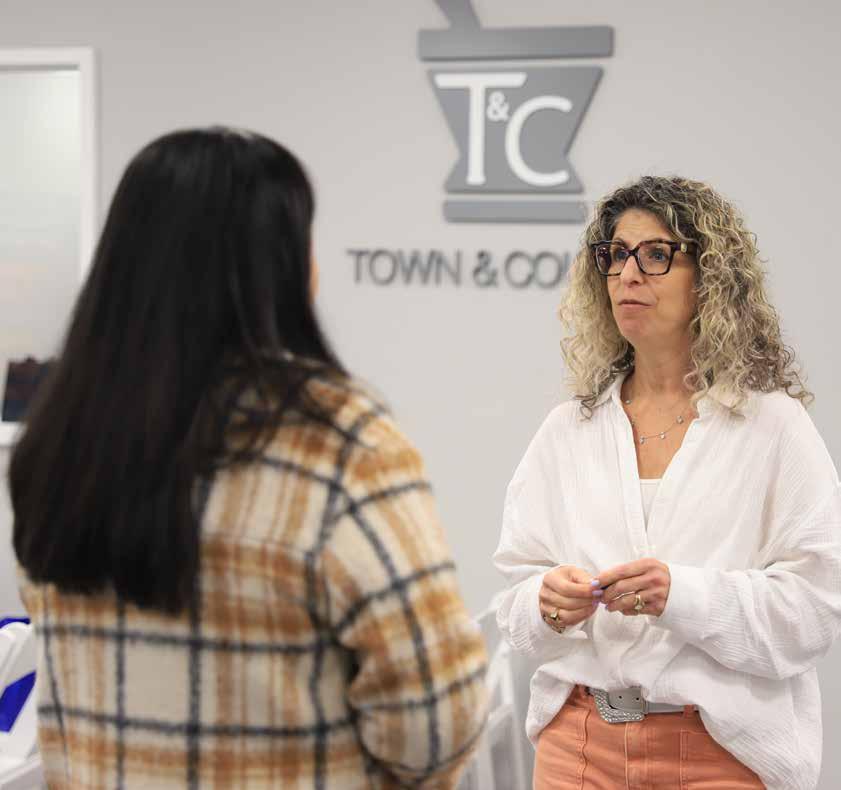
For many women, conversations about hormone health do not begin until symptoms start to disrupt daily life. Fatigue, mood changes, weight gain and restless sleep are often brushed aside as inevitable parts of aging. But Jari Becker, a registered pharmacist and director of women’s health at Town & Country Compounding, says those changes deserve closer attention.
“My approach is rooted in education first,” Becker says. “I want women to walk away from every conversation feeling informed and empowered enough to advocate for themselves.”
Through one-on-one consultations and community events, Becker helps women better understand the role hormones play in overall health and quality of life. She also collaborates with prescribing physicians, helping guide patients through testing, therapy options and ongoing management.
Hormone-related symptoms often appear gradually, which can make them easy to overlook. Becker says many women initially attribute symptoms to stress, aging or lifestyle changes.
Among the most common concerns she hears are hot flashes, low libido, weight gain and brain fog. Others report fatigue, hair loss, irritability, depression and sleep disruptions. While these symptoms may be associated with perimenopause or menopause, Becker emphasizes that they should not be dismissed.
“If something feels off, it deserves a conversation,” she says. “Many of these symptoms can also be connected to thyroid dysfunction, metabolic issues or other underlying conditions.”
Understanding hormone balance begins with evaluation. Becker often recommends saliva testing, which measures progesterone, estradiol, testosterone and DHEA, along with a four-point cortisol panel that evaluates stress hormone levels throughout the day.
Saliva testing measures the hormones your body can actually use—those available to interact with cells—unlike blood tests, which show total hormone levels.
“Cortisol plays a particularly important role,” Becker says. “Both physical and emotional stress can raise cortisol levels, and when cortisol is elevated, it can disrupt the balance of other hormones.”
She also encourages comprehensive testing that includes thyroid function, noting that thyroid health and hormone balance are closely connected.
For women experiencing symptoms or declining hormone levels, hormone therapy may be part of the solution. At Town & Country Compounding, prescriptions from licensed providers are prepared using bioidentical hormones, which share the same molecular structure as hormones naturally produced by the body.
Because the pharmacy specializes in compounding, therapies can be customized to meet individual needs. Hormones may be delivered in several forms, including capsules, creams, gels, troches and suppositories.
Customization is particularly important for medications such as testosterone, Becker says, noting that there are currently no commercially available testosterone products specifically designed for women.
“Compounding allows us to prepare doses that are appropriate for female patients, which is something the commercial market does not offer,” she says.
One of the greatest challenges Becker encounters is misinformation. Many women turn to social media or online forums for advice, but hormone therapy is highly individualized.
“What worked for someone else may not be right for you,” Becker says. “Hormone health is about balance across multiple hormones, not simply addressing one symptom with one therapy.”
She also notes that hormone therapy does not deliver instant results. The body needs time to adjust as hormone levels stabilize.
While hormone therapy can be helpful, Becker stresses that lifestyle factors play an equally important role in hormone balance.
Chronic stress, poor sleep and inconsistent nutrition can all disrupt hormonal regulation. Elevated cortisol levels caused by prolonged stress can interfere with other hormones, while sleep deprivation can disrupt the body’s natural circadian rhythm and melatonin production.
Nutrition is key. Diets that stabilize blood sugar, limit processed foods, and support gut health can improve hormone balance, while adequate protein helps maintain muscle and bone density, especially during and after menopause.
Exercise is another component. Regular physical activity helps maintain muscle, support metabolic health and improve overall well-being.
“Hormone therapy and lifestyle work together,” Becker says. “The best outcomes happen when both are addressed.”
Alongside hormone therapy, Becker may recommend supplements like magnesium (for sleep and mood), omega-3s (for brain health), B12 (for energy), and vitamin D3 with K2 (for bones and hormones).
Adaptogenic herbs such as ashwagandha may also help regulate stress and cortisol levels. However, Becker cautions against self-prescribing supplements based on online trends.
“Supplements can interact with medications or with each other,” she says. “It’s important to discuss them with a pharmacist or prescriber before adding something new.”
Above all, Becker encourages women to trust their instincts and advocate for their well-being.
“I want women to know that what they are feeling is real and that they don’t have to accept it as inevitable,” she says. “Hormonal changes are a natural part of life, but suffering through the symptoms is not.”
Every woman’s hormonal journey is different, she says, and care starts with listening, testing, and creating a personalized plan.
“Your quality of life matters,” Becker says. “And advocating for it is worth it.”
TOWN & COUNTRY COMPOUNDING PHARMACY 535 East Crescent Ave. Ramsey, NJ 07446 tccompound.com
Jari Becker
ROBERT GAMER’S CHAMPIONSHIP second act
TURNING 25-YARD STRUGGLES INTO NATIONAL SILVER MEDALS
ARTICLE BY PATTI ZIELINSKI
PHOTOGRAPHY BY KARTHEEK PHOTOGRAPHY, ROBERT GAMER
Robert Gamer
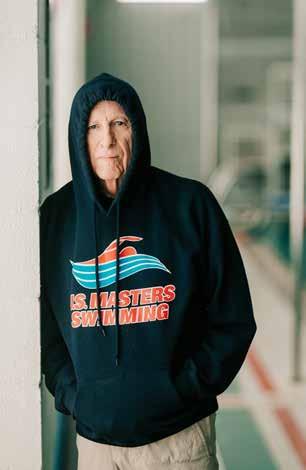
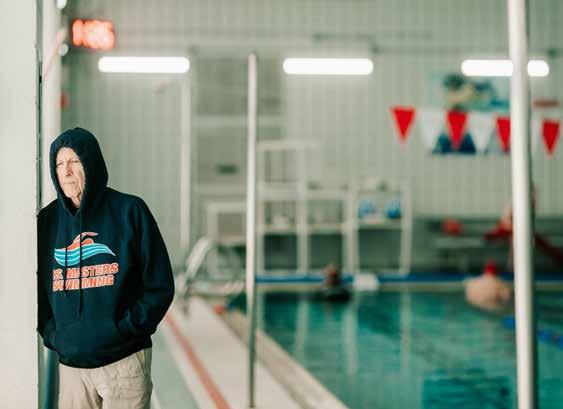
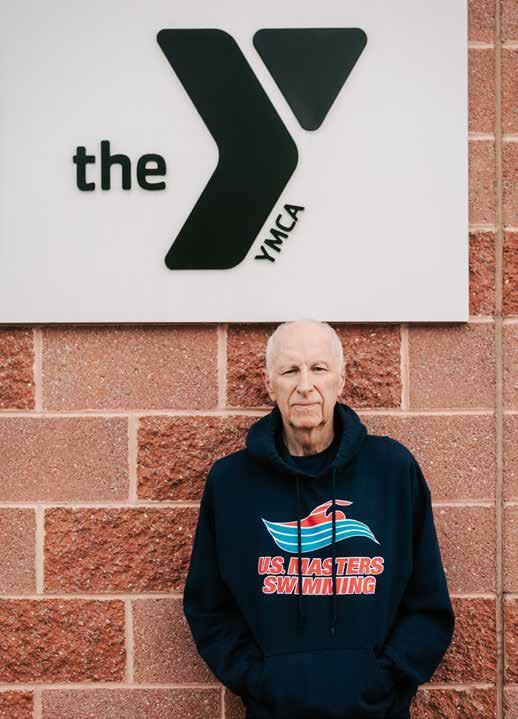
When Robert Gamer took up swimming at age 66 to keep in shape, he didn’t realize he was embarking on a momentous second act in his life, which would culminate in his 80th year: status as a national swimming competitor.
Gamer, who had only swam for fun as a child, took to the pool more seriously after he retired at age 66 in 2011. An Air Force Veteran, Gamer had been active throughout his life. In addition to playing sports, he biked from his home in Franklin Lakes to his job at UPS in Mahwah—seven miles away—at least three days a week. Swimming would give him some variety in his workouts.
“I joined the Wyckoff YMCA, an excellent facility with two pools and a very helpful staff, but when I got in the pool, I thought, ‘What’s the real point of this?’” he says. To give himself a focus, he started swimming with U.S. Masters Swimming, a program where swimmers are grouped by age, to give his lap time purpose. He started trying out strokes, primarily teaching himself with some tips from a swim coach. “I realized that my freestyle wasn’t very good, my backstroke was awful, but I was pretty good at the breaststroke and butterfly, so I stuck to those two strokes going forward.”
When he started swimming, Gamer says he was lucky if he could do 25 yards of butterfly. “But then I got to the point where I could do the 200yard butterfly. I thought, ‘Wow, I could be competitive in this,’” he says. “Then, the questions became: ‘Gee, could I do it a little faster? How do I compare with other people?’ So suddenly there was a reason for trying harder.”
CONTINUED >
Robert Gamer
Gamer began searching for every swim meet within 200 miles and learned the art of competing as he went. “Since I never swam competitively, it was eye-opening,” he says.
“In the first competition, I had no idea how fast the heats went. I saw the first heat was over and realized, ‘My God, I’m swimming next!’ I came running out, and they had already blown the horn. I jumped in and just did my heat. That’s how green I was.”
When he started competing, he recalls seeing a man at one of the meets wearing a warm-up jacket with patches that read “U.S. Masters Top 10” with corresponding years.
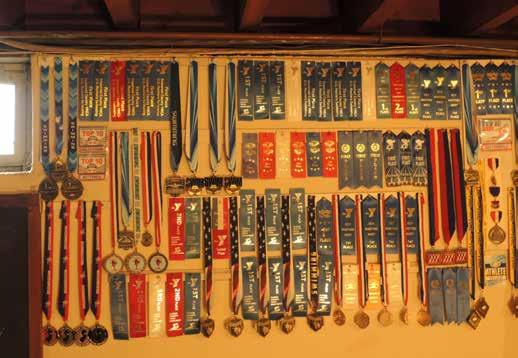
Over his 15 years of swimming, he estimates he has competed “roughly 120 to 140” times, including at the Garden State Olympics in 2017 winning 5 gold medals and in 2023 bagging 1 gold, 2 silver, and 1 bronze medals, and in 2024 at the Empire State (NY) Senior Games, winning 4 gold medals.
“I started swimming to stay in shape. I never expected it would take me to nationals.”
“If you were one of the 10 fastest swimmers in a year you would get one of these patches,” he says. “I thought, ‘This is like looking at Michael Phelps.’ But then I started thinking, ‘I want to get a patch.’ And that became what I was working for.”
— Robert Gamer
Unlike the other meets, athletes must qualify to participate in the National Senior Games, which is like the Olympics. In 2025, Gamer qualified for six events in Des Moines, Iowa. There, he felt the competitive vibe was intensified. “I was much more conscious of who I was swimming against,” he says. “We were eyeing each other up.”
In 2024, Gamer earned those patches: one for breaststroke and one for butterfly. And in 2025, he earned two more for those same strokes.
Gamer finished ninth in the 50-yard breaststroke, sixth in each of the 100-yard and 200-yard breaststrokes, and second in the 50-yard, 100-yard, and 200-yard butterfly events. “At the Nationals, I was number two in the Butterfly,” he says. “That’s pretty good.”
ARTICLE BY LINDA DITCH | PHOTOGRAPHY
summer is POPSICLE SEASON
KIDS AND POPSICLES ARE THE PERFECT SUMMERTIME PAIR
As temperatures rise, children race to the freezer for this frosty treat or wait anxiously for the approach of the musical ice cream truck. Making homemade popsicles is a fun, kid-friendly activity.
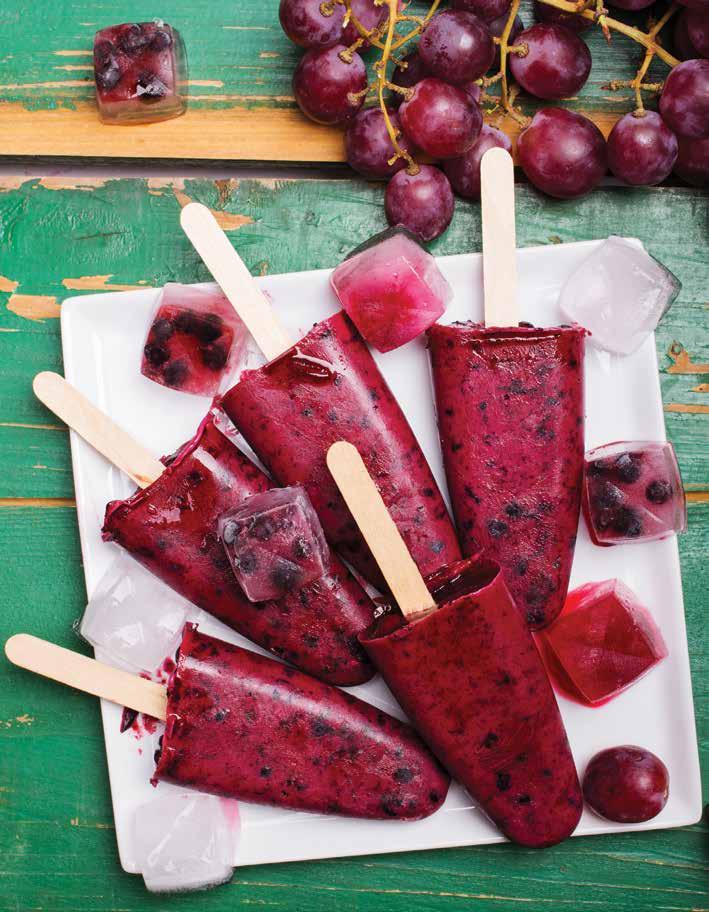
SPICED GRAPE POPSICLES
ingredients:
Makes 18 to 24
• 2 quarts Concord grape juice
• 1/2 cup sugar
• 12 whole cloves
• 4 cinnamon sticks
• 3 tablespoons whole allspice
directions:
Put all of the ingredients into a large saucepan. Bring the mixture to barely a simmer and let it cook for 30 minutes. Remove from the heat and pour the juice through a cheesecloth-lined strainer into a bowl or pitcher to remove the spices. Allow the juice to cool to room temperature, and then refrigerate until well chilled. Pour mixture into popsicle molds. Freeze until firm.
ARTICLE BY MIKAELA LEWIS
modern fatherhood: presence over providing
From provider to presence, how fatherhood is evolving in everyday life
Father’s Day gives us one day each year to celebrate dads. But what does it really mean to be a father today?
Here in the Ramapo Valley, where family life unfolds through packed school calendars, carpools, evenings at the field and weekends spent together around town, the answer feels different than it once did. In communities like Franklin Lakes, Oakland, Wyckoff and Mahwah, fatherhood is often visible not in grand declarations, but in the steady rhythms of daily life—the dad coaching from the sidelines, helping with homework at the kitchen counter or showing up for one more school event after a long workday.
For generations, fatherhood was defined by one word: provider. A good dad worked hard, kept the lights on and put food on the table. Love was measured in sacrifice, long hours and responsibility. For many families, that role mattered deeply. It still does. But it never told the whole story.
The third Sunday in June became officially recognized as Father’s Day in 1972 under President Richard Nixon, nearly six decades after Mother’s Day became a national holiday in 1914. That timing says a great deal about how American culture long viewed parenting. Mothers were
associated with care, nurturing and daily presence. Fathers were more often tied to work, discipline and financial support.
That division only became more pronounced through industrialization, when men increasingly left home for factory jobs and wage work instead of laboring alongside family. Later, wars pulled even more fathers away. World War I, World War II, the Korean War and the Vietnam War sent hundreds of thousands of American men overseas, reinforcing the idea that a father’s greatest contribution often happened somewhere beyond the walls of home.
For much of the 20th century, that model shaped the American household. Mothers were expected to raise children. Fathers were expected to support them financially. Even as family structures evolved and expectations shifted, many of those assumptions lingered.
But today, parenting looks very different.
In most households, both parents work. Women build careers, run businesses and contribute significantly to family income. Fathers are no longer defined only by earning power, yet many systems still treat mothers as the default parent. Schools often call mom first. Moms are still more likely to carry the
Modern fatherhood is becoming less about being the distant breadwinner and more about being present.
invisible work of family life: the scheduling, the mental checklists, the birthday gifts, the doctor appointments and the emotional temperature of the house.
For families in the Ramapo Valley, where life can feel both full and fast-moving, that imbalance can feel familiar. These are communities where parents juggle demanding jobs, active kids and the desire to stay connected in the middle of it all. And
within that reality, many fathers are navigating an in-between space. They are expected to be more involved than previous generations, but the culture does not always make room for them to be fully seen that way.
Still, the shift is happening in meaningful ways. Modern fatherhood is becoming less about being the distant breadwinner and more about being present.
It is the dad at pickup. The one who knows the pediatrician’s name, packs the sports bag, handles bedtime or texts the group chat about a schedule change. It is the father who knows which child is nervous about the test, which one forgot a water bottle and which one just needs five extra minutes of undivided attention. It is not about big, heroic moments. It is about consistency. It is about showing up.
That kind of presence matters deeply, especially in a place like the Ramapo Valley, where family life is built in small moments. Whether it is weekends at the ballpark, afternoons at the lake, hikes on local trails or unhurried meals together close to home, fatherhood here is not just about providing a childhood. It is about being part of it.
Maybe that is why the image of fatherhood is changing. Strength no longer has to look distant or silent. Leadership at home does not have to mean standing apart. More and more, it looks like attentiveness, flexibility and emotional presence. It looks like fathers who are not only supporting their families, but actively participating in the everyday work of loving them well.
Leadership at home does not have to mean standing apart. More and more, it looks like attentiveness, flexibility and emotional presence.
So maybe this Father’s Day, the conversation shifts a little. Maybe we celebrate dads not only for how hard they work, but for how they show up. Not just for the pressure they carry, but for the memories they help create.
That is also what makes local Father’s Day traditions feel meaningful when they are rooted in time together. A hike at Ramapo Valley County Reservation, an afternoon at Van Saun County Park or a family meal close to home all reflect the same idea. The destination is not really the point. The time spent together is.
Maybe that is what modern fatherhood asks of men most: not perfection, not performance and not just provision, but presence.
Ten Years on Tap
INSIDE CHARLES “CHUCK” AARON’S JOURNEY FROM CORPORATE LIFE TO BUILDING JERSEY GIRL BREWING
ARTICLE BY CARLY MAC MANUS
PHOTOGRAPHY BY MICHAEL LAGO CREATIVE COMPANY
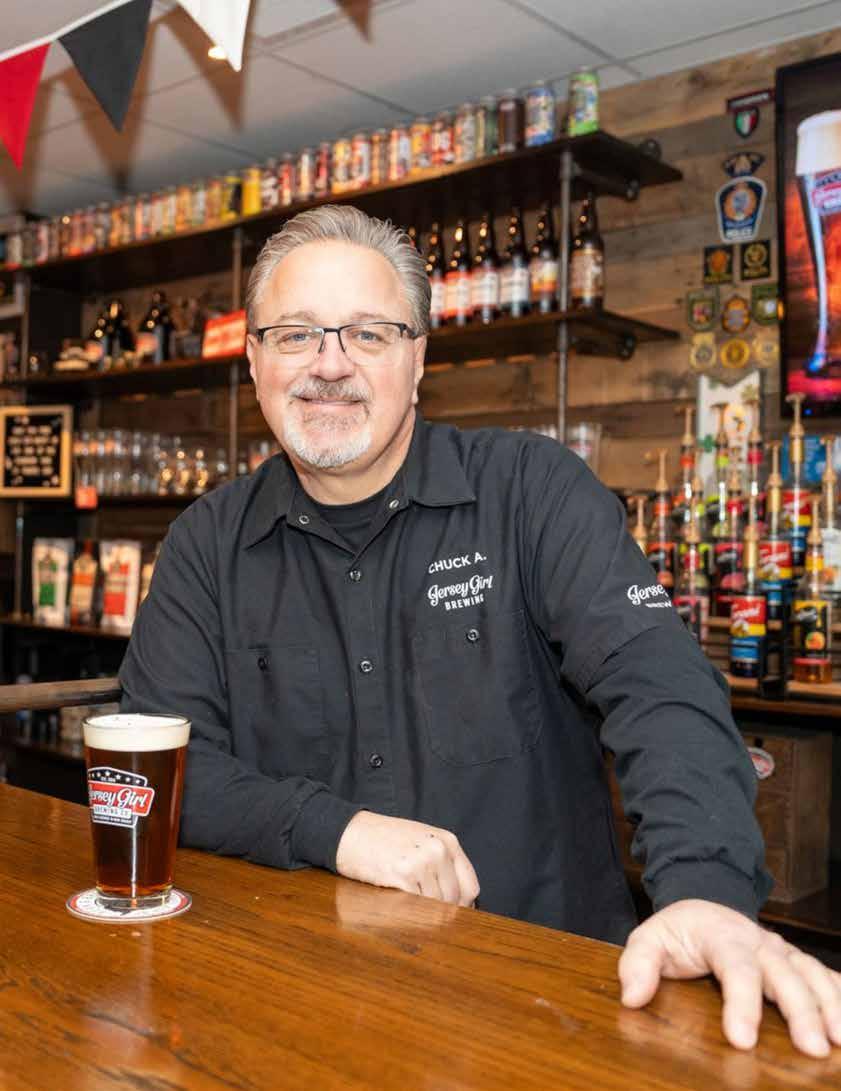
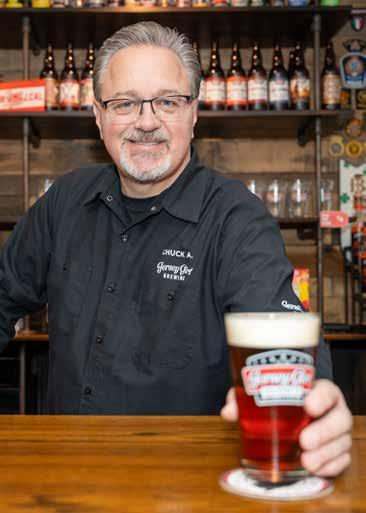
Charles “Chuck” Aaron
For Charles “Chuck” Aaron, president and founder of Jersey Girl Brewing Co., the path from corporate executive to craft brewer wasn’t impulsive—it was intentional.
After earning his undergraduate degree from Seton Hall University and a master’s degree from New Jersey Institute of Technology, Aaron spent years climbing the corporate ladder, working in emerging and growthstage companies both domestically and internationally. But while the career path looked successful on paper, it never fully fit. “I’m not a desk-jockey kind of person,” he says. “I wanted to be part of something that was building, evolving and doing something unique.”
That mindset would eventually lead him away from the corporate world and toward entrepreneurship— without leaving New Jersey behind. When a career move required relocation to Michigan, Aaron made a decision rooted in family. His wife, “the Jersey girl behind Jersey Girl,” was raised locally, and together they wanted to give their children the stability of growing up in one place. “I always knew I wasn’t leaving New Jersey,” he says.
At the same time, New Jersey’s craft beer scene was beginning to change. In 2012, new legislation allowed breweries to open tasting rooms—making small, independent brewing operations financially viable for the first time. For Aaron and a longtime friend and business partner, it was the opening they’d been waiting for.
“We had talked about opening a brewery for years, but the numbers just didn’t work,” he says. “Once the law changed, suddenly they did.”
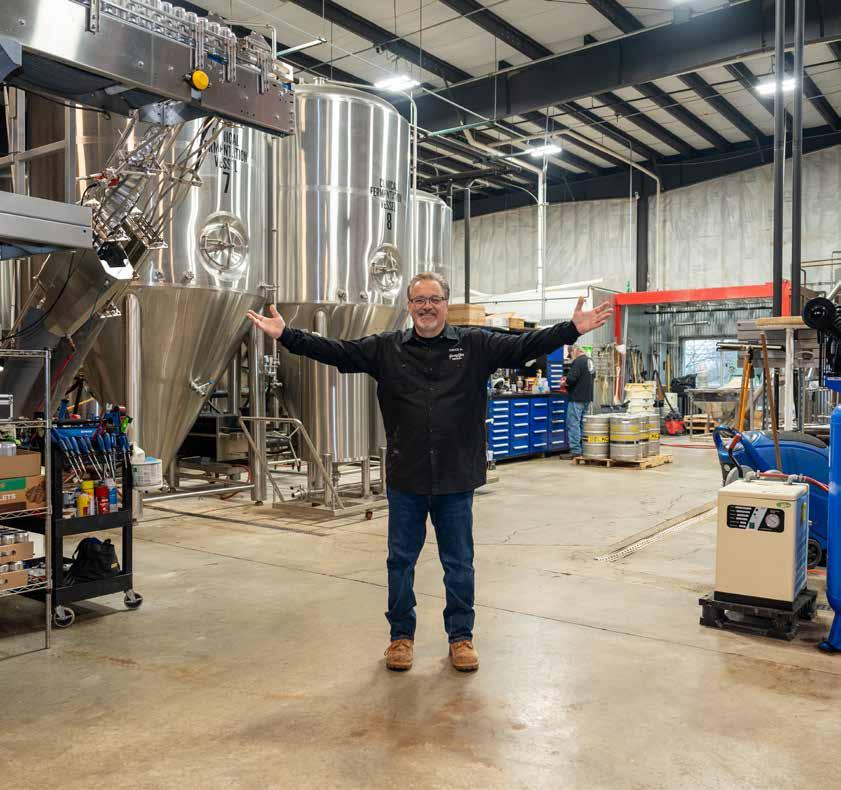
Aaron left his corporate role in 2014 and spent the next year and a half immersed in the demanding startup process—ordering and building equipment, securing a location, navigating regulations and preparing for launch. In April 2016, Jersey Girl Brewing officially opened its doors. This spring marks the brewery’s 10-year anniversary.
The early days were lean. When the brewery opened, just four beers were on tap. “Cash flow is critical when you’re starting a business,” Aaron says. “You have to stretch every dollar, get open and start driving revenue as quickly as possible.”
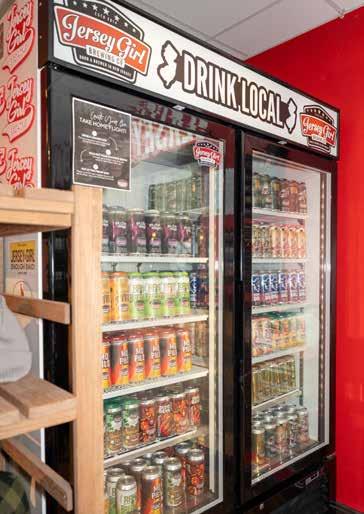
Today, the operation looks very different. Jersey Girl Brewing typically offers about 20 beers at a time, along with hard seltzers and nonalcoholic options. Over the past decade, the team has brewed an estimated 250 to 300 different beers, experimenting constantly to refine the brand’s identity.
“That first year alone, we brewed about 60 beers,” Aaron says. “The fun part is the testing and tasting. The hard part is deciding what becomes core—what people will recognize as a Jersey Girl beer.”
That effort paid off. Several of the brewery’s beers have earned regional and national recognition, including multiple award wins for its Belgian-style offerings. “It’s really a compliment to the team,” Aaron says. “They’re the ones doing the work behind the scenes, and it’s nice to see that recognized.”
As the brewery grew, so did the complexity of running it. Jersey Girl Brewing now distributes throughout New Jersey, Pennsylvania and the Philadelphia market, with plans to expand further into New York and additional neighboring regions. “Even within New Jersey, there’s still a lot of opportunity for us,” Aaron says.
But growth hasn’t been without challenges. Consumer behavior has shifted dramatically over the past decade, particularly since the pandemic. Readyto-drink beverages, hard seltzers and changing consumer preferences have reshaped the market. “It’s not just a COVID effect—it’s a change in taste, culture and expectations,” Aaron says.
For small brewers, chasing every trend isn’t realistic. “The big players have deep pockets and nationwide distribution,” he says. “We have to be strategic about where we fit and what makes sense for our brand.”
“Beer should be fun. It’s always been part of life’s moments—family, friends, celebrations. In moderation, it can still be part of a great experience.” —Charles Aaron
“The fun part is the testing and tasting. The hard part is deciding what becomes core— what people will recognize as a Jersey Girl beer.”
—Charles Aaron
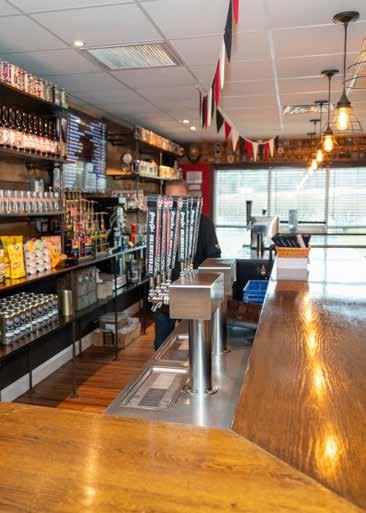
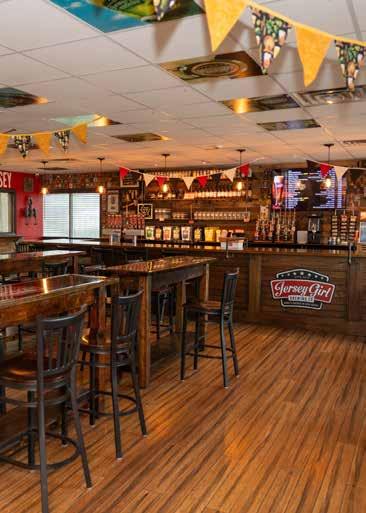
Rather than reinventing itself at every turn, Jersey Girl Brewing has leaned into experience. Aaron describes the brewery as “experience-driven”—a place where customers can learn about the product, connect with the brand and take that knowledge with them into the marketplace. “When someone sees our beer elsewhere, we want them to recognize it and remember the experience they had here,” he says.
That philosophy reflects Aaron’s broader view of leadership and business ownership. Unlike his corporate roles, the brewery carries personal responsibility—to his family, his employees and his partners. “It’s different when it’s your name and your livelihood on the line,” he says. “You feel that responsibility every day.”
Despite the volatility of the industry, Aaron remains grounded in why he started. “I love what I do,” he says. “We’ve built something people recognize. I can’t tell you how many times someone says, ‘Oh, I’ve had your beer.’ That never gets old.”
As Jersey Girl Brewing enters its second decade, the focus is less on rapid change and more on thoughtful evolution—expanding distribution, strengthening the brand and continuing to create a place where people can gather, relax and enjoy a responsibly crafted beer.
“Beer should be fun,” Aaron says. “It’s always been part of life’s moments—family, friends, celebrations. In moderation, it can still be part of a great experience.”
For him, that balance—between growth and authenticity, tradition and innovation—is what will carry Jersey Girl Brewing into its next chapter.
Learn more at jerseygirlbrewing.com.
Founded by Chuck Aaron, this experience-driven brewery offers more than 20 craft beers and seltzers. Known for award-winning Belgian-style ales and a commitment to NJ roots, they provide high-quality, local brews across New Jersey, Pennsylvania, and Philadelphia markets.
426 SAND SHORE RD
HACKETTSTOWN, NJ 07840
JERSEYGIRLBREWING.COM
JERSEY GIRL BREWING CO.
events
A SELECTION OF UPCOMING LOCAL EVENTS
JUNE 4TH
Kasschau Memorial Shell Concert Under the Stars
Veterans Field, 131 N. Maple Ave., Ridgewood, NJ 07450 | 7:30 PM
Bring a blanket or lawn chair to enjoy the season's opening outdoor concert at the historic Kasschau Memorial Shell. Set behind the Ridgewood Public Library, this beloved community tradition features live music under the stars. The family-friendly event is free to attend, offering a peaceful suburban summer evening. Find the lineup at kasschaumemorialshell.com
JUNE 4TH
Warwick Food Truck Festival
Mountain Lake Park, 46 Bowen Road, Warwick, NY 10990 | 4:00 PM
Celebrate summer at the 10th annual Warwick Food Truck Festival, located just across the state line. This premier culinary event features a massive lineup of gourmet food trucks, craft beverages and live music set to beautiful lakeside views. Admission is $20 per car, with proceeds benefiting the local charity Small Things Inc. Visit warwickfoodtruckfestival.com.
JUNE 7TH
Annual Strawberry Festival at the Ramsey Farmers’ Market
Ramsey Farmers’ Market, 2 W. Main St., Ramsey, NJ 07446 | 9:00 AM
The Woman’s Club of Ramsey hosts its annual Strawberry Festival, featuring complimentary strawberry shortcake samples at the train station and a full farmers’ market experience with local vendors, seasonal produce and artisan goods. More information at ramseyfarmersmarket.org.
JUNE 10TH
Women, Wellness and Wine
535 E. Crescent Ave., Ramsey, NJ 07446 | 6:30 PM
Join a wellness-focused discussion addressing women’s health topics including menopause, stress, sleep issues, hormonal changes and chronic disease prevention. Experts will provide guidance and answers in an open, educational setting designed to support long-term wellness and awareness. Details and registration available at tccompound.com/events.
JUNE 14TH
Wallisch Homestead Flea & Vintage Marketplace
65 Lincoln Ave., West Milford, NJ 07480 | 9:00 AM
Shop antiques, collectibles and handmade goods at this open-air marketplace set on a historic homestead. JC’s Flea and Vintage Fair features a wide range of vendors, food options and a relaxed atmosphere, making it a popular destination for vintage enthusiasts. Learn more at jcpromotions.info.
JUNE 20TH
MBCA June Jamboree
The Hermitage, 335 N. Franklin Turnpike, Ho-Ho-Kus, NJ 07423 | 8:30 AM
Experience a premier classic car show on the grounds of a National Historic Landmark. Hosted by the Mercedes-Benz Club of America, this elegant outdoor event features beautifully restored vintage vehicles displayed across the museum’s scenic lawns. Attendees can also explore the historic property. Find registration and entry details at thehermitage.org.