

“My parents let me be myself. That made all the difference.”
-Jeremiyah Love




“My parents let me be myself. That made all the difference.”
-Jeremiyah Love
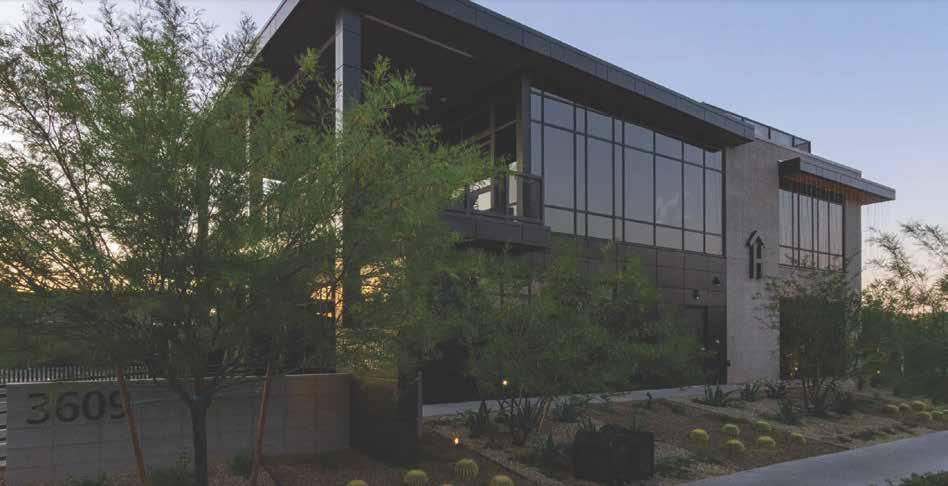
An extraordinary expression of contemporary architecture, this newly completed residence commands one of Ancala's most coveted vantage points. Framed by sweeping panoramic views stretching from Camelback Mountain to the city skyline, every space reflects an uncompromising commitment to craftsmanship, proportion, and timeless design.
Expansive indoor-outdoor living, refined natural materials, and resort-inspired amenities create a residence that feels both architecturally significant and effortlessly livable, where every room was designed to celebrate its extraordinary surroundings.


WE HAVE QUALIFIED BUYERS READY TO BUILD.











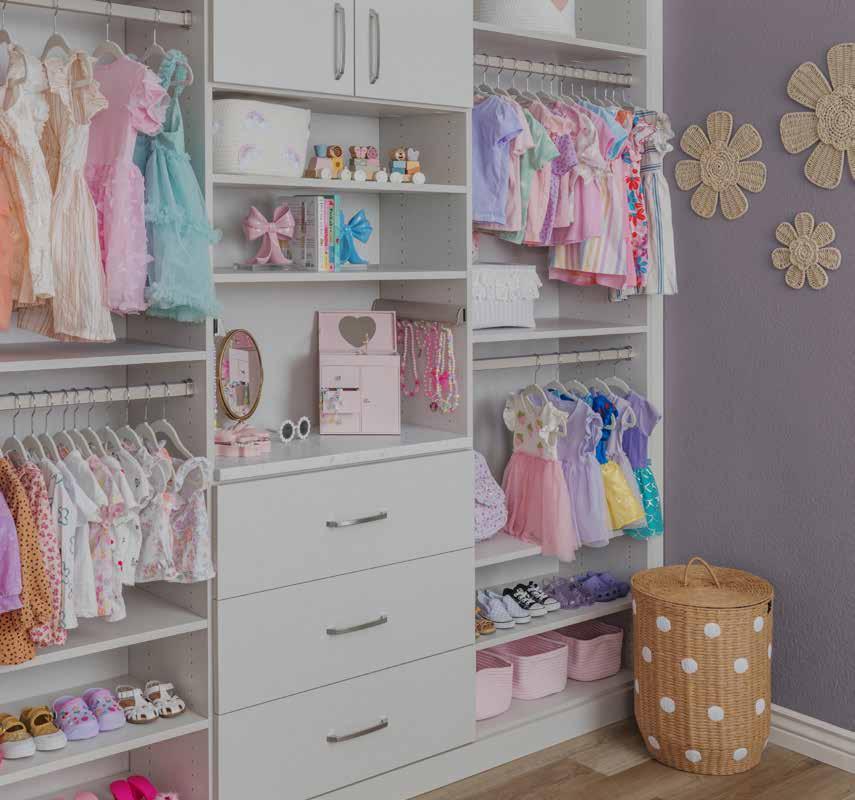

ROOM FOR TWIRLS. ROOM TO GROW.
“Talk about a company that lives up to its name! Dream Closets’ client service is second to none. They offer thoughtful suggestions, work quickly to find solutions, & bring incredible creativity to every customization while still respecting budgets. Collaborating with Jen and Adam made the entire process seamless.”
-JenniferBurgess,RETSY,onProjectHomestead (623) 263-0707 | dreamclosetsaz.com | v @dreamclosetsaz | b @DreamClosetsAZ
If you know me, you know my boys. They're my people, my pack, my entourage, my posse.
My boys have a way of keeping me grounded. While adults spend so much time worrying about what's next, kids are fully invested in what's right in front of them. A baseball game. A family trip. A new hobby. A dream. There's something refreshing about that.
Somewhere along the way, many of us lose a little of that.
That's what I kept coming back to while putting together our Kids & Pets Issue: reconnecting with the child within and honoring who we are at our core.
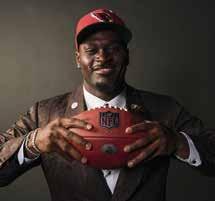
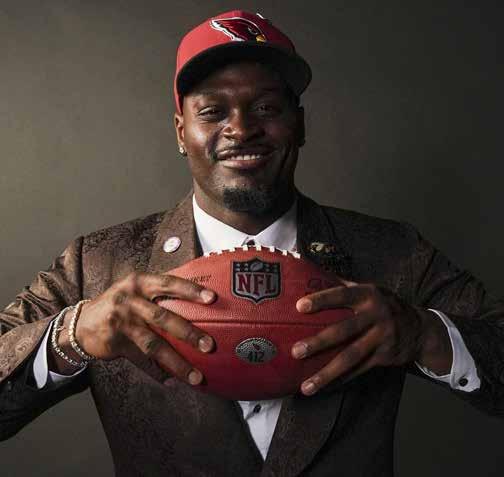
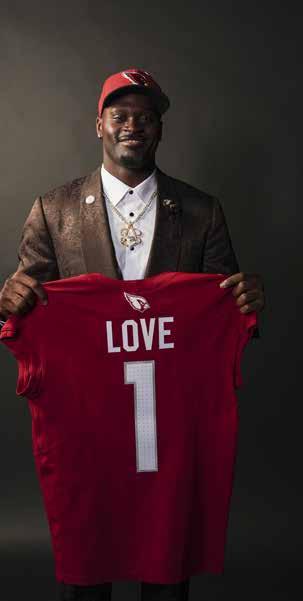
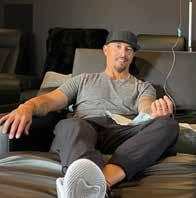
Our cover, Arizona Cardinals rookie Jeremiyah Love, may be living his NFL dream, but what struck me most had little to do with football. Jeremiyah spoke candidly about growing up as an introvert, not fitting in, keeping a small circle, and learning to embrace exactly who he was. Today, the anime-loving comic book creator is sharing his journey through his Jeremonstar series, proving that success doesn't require becoming someone else. In fact, sometimes it comes from leaning into what makes you different.
We also catch up with Larry Fitzgerald before his Hall of Fame induction later this month. While Larry's accomplishments speak for themselves, this story takes a different angle. Through the eyes of his oldest son, we explore what it means to witness greatness up close, learn from it, and ultimately forge a path of his own.
A meaningful story in this issue explores the "Sandwich Years," that season of life when many adults find themselves caring for both children and aging parents, as the roles between parent and child begin to quietly reverse.
Among these pages, you'll meet Raine Michaels, daughter of rock legend Bret Michaels, who is writing a story all her own. Next stop: Netflix.
And that's a theme you'll find throughout this issue. Different backgrounds. Different journeys. Different dreams. The common thread isn't fame or success. It's authenticity.
Our City Scene celebrates the incredible children who rocked the runway at the Childhelp Wings Fashion Show & Luncheon earlier this year, reminding us all what courage and confidence look like.
As summer gives way to a new school year, I hope this issue inspires you to reconnect with the passions, interests, and dreams that have always been part of who you are.
After all, the child within is still there.
NADINE BUBECK, PUBLISHER @PARADISEVALLEYCITYLIFESTYLE
August 2026
PUBLISHER
Nadine Bubeck | nadine.bubeck@citylifestyle.com
ADMINISTRATIVE ASSISTANT
Kennedy Rettew
EDITORIAL COORDINATOR
Jennifer Blalock
CONTRIBUTING WRITERS
Molly Stockley, Cameron Cox, Stephanie Conrad, DO, The Conrad Clinic
CEO Steven Schowengerdt
President Matthew Perry
COO David Stetler
CRO Jamie Pentz
CoS Janeane Thompson
AD DESIGNER Zach Miller
LAYOUT DESIGNER Andi Foster
QUALITY CONTROL SPECIALIST Marina Campbell





















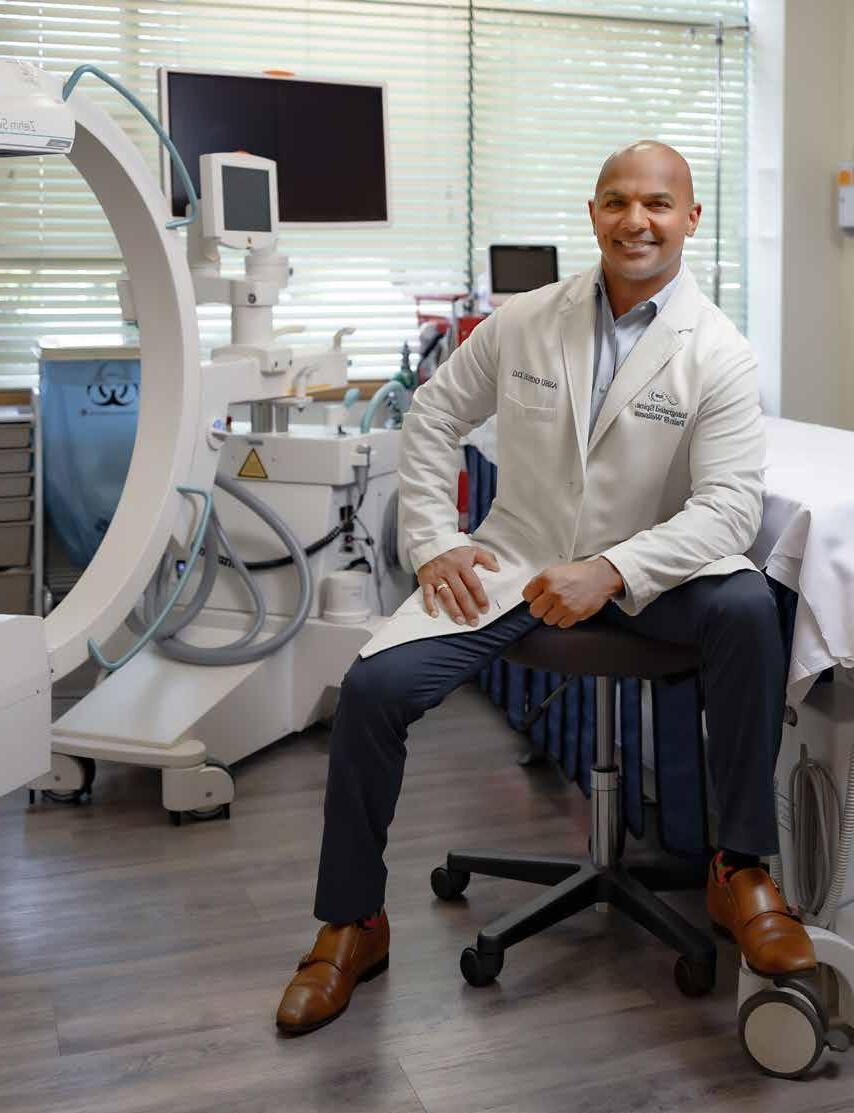
For active people living with joint pain or back pain who refuse to accept surgery, medications, or a slower life as the answer.
The Regenokine® Program was developed in Germany and has been quietly trusted by celebrities and professional athletes for years. It is minimally invasive, requires no surgery, no medications, and no downtime.
Only 8 physicians in the United States are certified to offer it.
Dr. Ashu Goyle is one of them.















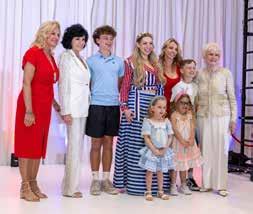
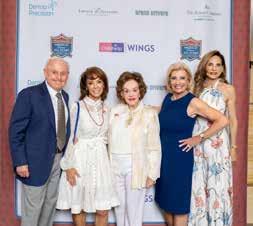

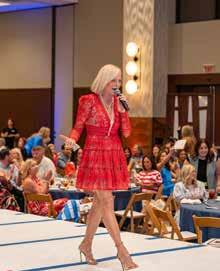
1: PVCL Owner & event emcee Nadine Bubeck kicked off the evening with the Suns Gorilla 2: Childhelp Youth Ambassadors opened the program, setting the tone for an inspiring event- The Phoenician 3: Thank you to PVCL partner Katie Wilson/The Garage Boutique & Concept Store for styling fashion show looks 4: Childhelp Wings Fashion Show & Luncheon Co-Chairs Jinger Richardson, Janell Richardson Grady, Missy Anderson, and Ashley Anderson with their families 5: Styled by The Garage Boutique & Concept Store, young models rock the Childhelp runway 6: Childhelp Co-Founder Sara O’Meara, Founding Mother Carol Hebets, Jim Hebets, & friends- Childhelp Wings Fashion Show & Luncheon 7: Auctioneer Leticia Frye energizes the crowd during the live auction at Childhelp Wings- The Phoenician


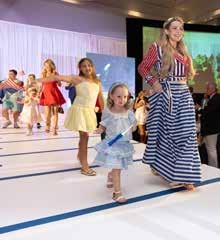
8: Styled by The Garage Boutique & Concept Store, these adorable young models rock the Childhelp runway 9: Styled by The Garage Boutique & Concept Store, young models rock the Childhelp runway 10: The grand finale of the 19th Annual Childhelp Wings Fashion Show & Luncheon- The Phoenician
Want to be seen in the magazine?
TAG YOUR INSTAGRAM PHOTOS WITH @PARADISEVALLEYCITYLIFESTYLE



















ARTICLE BY NADINE BUBECK PHOTOGRAPHY CREDIT ARIZONA CARDINALS
The Arizona Cardinals didn’t just draft one of college football’s most dynamic players when they selected Jeremiyah Love with the No. 3 overall pick in the 2026 NFL Draft.
They drafted a comic book creator, an anime fan, a self-described introvert, and a young man who spent much of his childhood feeling like he didn’t quite fit in.
Today, the Cardinals rookie hopes young fans see something bigger than football when they hear his story.
Here’s our 1:1 with the Cardinals rookie on staying true to who you are.
YOU CREATED A COMIC BOOK CHARACTER. WHERE DID THAT IDEA COME FROM?
The idea originally came from my dad. It was my junior year of high school. He wanted to try to tell my story, and he wanted to do it in a unique way; in a way that I thought was cool. He knew that I liked anime, and he knew I liked comics and manga.
So he thought of creating my own comic: Jeremonstar
Five years later, this past October, we came out with the first book. It did really well. So far, people love it.
It was a process. We had to find illustrators, marketing, and a publisher. My dad found a great team of people and got it done.
TELL US ABOUT JEREMONSTAR
Basically, it’s telling my life story, and sharing some of my struggles.
We wanted to tell it in a way that people understand you’re not always the main character in your life. Sometimes you’ve got to take the lesser role in order to achieve success. Things aren’t always peachy.
The heart behind it is giving back to the game. Football has given me so much. It’s gotten me this far... to the NFL... and changed my family’s life forever.
I want to inspire kids who face challenges or come from backgrounds similar to mine to become the best version of themselves while staying true to who they are.
WHO HAD THE BIGGEST INFLUENCE ON YOU AS A KID?
My mom and dad. They allowed me to just be myself.
My parents took me to the doctor when I was a kid. They were concerned I had tendencies of autism, OCD, and stuff like that. I never got diagnosed for any of it. My doctor was like: Don’t try to change him, just let him be himself and let him go out there and change the world.
My parents took heed of that.
They let me be myself. They let me do the things I loved and never tried to change who I was. They simply supported me, and that made all the difference.
If my parents had tried to change me, I probably wouldn’t be who I am today. I probably wouldn’t have the same morals or the same work ethic. And I don’t think I’d know myself the way I do now.
Because if you try to change somebody and they don’t want to be changed, it will only cause conflict.

“I was never the type to have many friends. My parents allowed me to be myself. They’re the reason I am who I am today.”
WHAT WAS THE HARDEST PART OF YOUR JOURNEY?
Just always being on the outside of everything.
I was never the type to have many friends. I had two best friends growing up, Chandler and Dylan. Those were the two guys I hung with.
While other kids were out playing together, I mostly kept to myself. It was always football, anime, and video games. That was hard because I wanted to bond with other kids. I wanted to connect with people. It’s just that people didn’t really see me as that type of guy.
I never went to parties and wasn’t really invited to much outside of hanging out with my two friends.
Back then, pursuing making connections was hard. Now it’s different. People want to connect with me, so it’s a lot easier.
But it also made me who I am today. It gave me the work ethic and the focus I needed to make it to the NFL.
WHAT’S ONE LESSON FOOTBALL HAS TAUGHT YOU THAT HAS NOTHING TO DO WITH SPORTS?
Choose hard in everything you do.
Whatever’s easy probably isn’t good for you. If something’s hard, it’s probably worth doing.
I learned that from my head coach, Coach Freeman, at the University of Notre Dame. He would say choose hard every single day.
That stuck with me, and I live by that.
I try to choose the hardest thing instead of taking the easy way out. That’s what helps me get one percent better every day.
That’s something you can apply to everyday life, no matter what you do.
WHAT DO YOU HOPE YOUNG FANS TAKE AWAY FROM YOUR STORY?
I hope they take away that they should just be themselves.
“You’re not always the main character in your life. Sometimes you’ve got to take the lesser role in order to achieve success.”
Don’t try to be like anybody else. If you have interests and other people don’t like your interests, that’s okay. Just do what you like to do.
In the long run, you’ll find people who enjoy the same things you do, and those can become some of the best relationships you’ll have for the rest of your life.
I hope that when you hear my story, you’re inspired to be the best version of yourself and to do the things you truly love.
IF A KID DREAMS OF PLAYING PRO ONE DAY, WHAT ADVICE WOULD YOU SHARE?
If you’re in elementary school or middle school, have fun. Don’t make it serious.
When you get to high school and college, not everything is fun. That’s when discipline matters. You’ve got to be consistent. You’ve got to put in the work when nobody else is.
If you do the same things everybody else does, you’re not going to get ahead.
The way you get ahead is by working while everybody else is sleeping, getting in an extra workout, or finding a way to do something productive every single day.
But while you’re a kid, keep it fun.
WHAT WOULD SURPRISE PEOPLE MOST ABOUT YOU?
Sure, off the field I’m pretty chill, but there’s an outgoing side to me also. Now I like being around people and socializing, but my social battery gets drained very fast.
I’m actually a pretty outgoing person in the moment.
WHAT EXCITES YOU MOST ABOUT JOINING THE CARDINALS AND BECOMING PART OF THE ARIZONA COMMUNITY?
Just being here. Being where my feet are. I get to be around great people every day. I get to be part of a great community.
Ever since I got to Arizona, I haven’t met or interacted with one mean or ill-intentioned person.
Around the Cardinals facility, everyone I’ve met has been excited to be here and fully present where their feet are.
They’re grateful for the opportunity to do what they love.
I’m excited to build relationships with people here and do what we all love together.
Founded by Arizona native Cole Derosier, Integrity Custom Cabinetry designs and builds refined, one-of-a-kind cabinetry and millwork for discerning homeowners across the Valley.
For Cole, integrity isn’t just the name. It’s the standard.
Every project is fully custom. Every detail intentional. Every finish precise.






WHAT’S BEEN THE BIGGEST ADJUSTMENT FROM COLLEGE FOOTBALL TO THE NFL SO FAR?
I would say the biggest adjustment when you first get into the league and go to the city that drafted you is the loneliness that comes with it.
You have to learn the area, learn the guys, and learn your coaches.
It takes time.
That feeling can linger a bit.
That’s probably been the biggest change.
WHAT EXCITES YOU MOST ABOUT YOUR FIRST SEASON?
I’m just excited to get on the field and play ball.
To score some touchdowns, make spectacular plays, hurdle somebody, juke somebody, run through somebody.
Arizona got a guy that just loves football.
IF
I
I
I
jeremonstarcomics.com instagram.com/jeremiyahlove








One Fitzgerald reaches football’s highest honor... Another is just getting started.
The applause inside Dominick’s Steakhouse at Scottsdale Quarter carried a little more meaning this year.
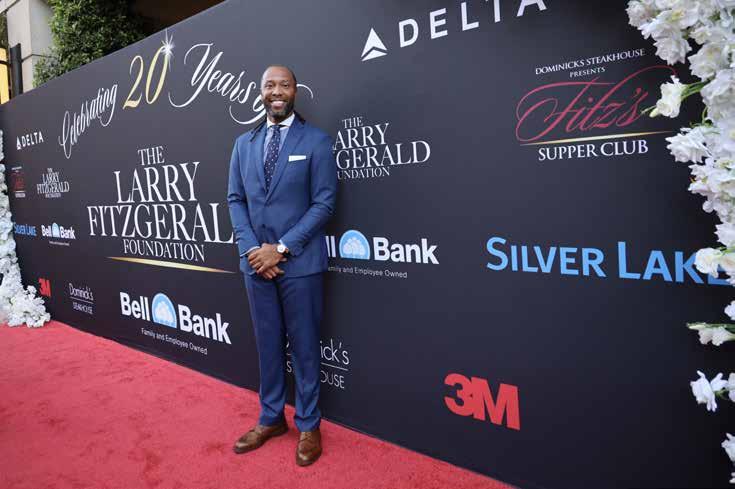
Supporters, community leaders, athletes, and longtime friends gathered for the final Fitz’s Supper Club, celebrating 20 years of The Larry Fitzgerald Foundation and the remarkable impact it has made through youth education, breast cancer awareness, STEM initiatives, and community outreach.
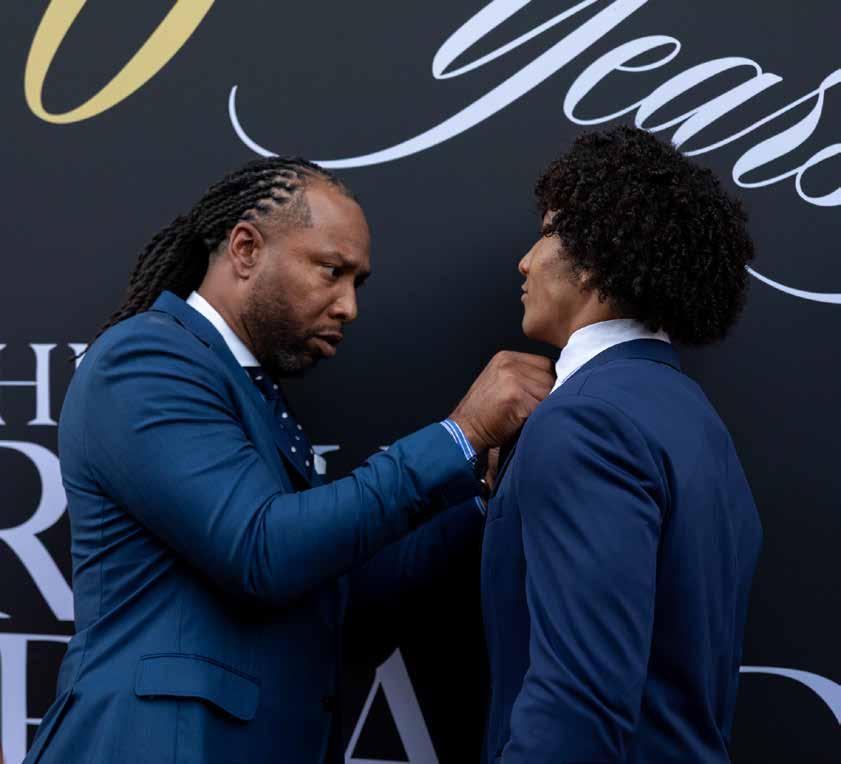
The evening marked the end of the Foundation’s signature fundraising event, but it also offered a rare opportunity to witness Larry with his three sons supporting their dad and to spend time with both Larry Fitzgerald and his son, Devin.
The timing couldn’t have been more fitting.
This month, Larry enters the Pro Football Hall of Fame, cementing a career that inspired a generation of football fans. At the same time, Devin begins his freshman season at Notre Dame, carrying one of the sport’s most recognizable last names while determined to build one of his own.
For Larry, however, the Hall of Fame isn’t about individual accomplishment.
“It’s a great achievement individually,” Larry says. “But it’s done collectively through a lot of other people. So I’ll be happy to celebrate that this summer.”
Those words say everything about the man Arizona has admired for nearly two decades.
Even during a night honoring his own Foundation, Larry’s attention quickly turned to the people who helped shape him.
“I’ve carried my mom’s license in my wallet ever since 2003,” Larry says. “Wherever I’m at, I feel like she’s with me everywhere. That’s kind of my silent tribute to her. Whenever times are difficult or tough, I can look at her license and it brings me some inspiration.”
Asked what she would tell him if she were here today, Larry smiles.
“I think she would tell me to shave, probably,” he says with a laugh. “And to keep working hard. I think she’d be proud of the work we’ve done in the community, and I hope I can continue to push it and keep pushing my boys too.”
For Devin, those values have always been part of growing up.
“I’ve been pulling up to these since I was young,” he says of the Foundation’s events. “What he’s doing for the community is amazing. To bring all these people together and have these funds support causes like breast cancer and technology for underprivileged kids, I think it’s awesome.”
One Foundation moment stands out above the rest.
Earlier this year, the Carol Fitzgerald Breast Health Center was dedicated in honor of Larry’s mother. Larry couldn’t attend, so he asked Devin to step in.
“It was right after a football game,” Devin recalls. “It was 12 o’clock at night on Friday, and my dad called me. He said, ‘I need you to do something for me. I won’t be able to make it. You’ve got to do the speech for me tomorrow.’”
Larry sent him the remarks that evening.

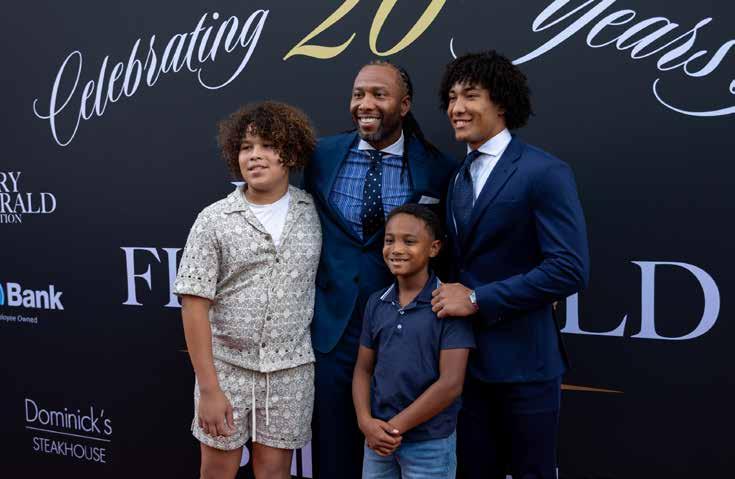
“I read over it a few times and got ready to do it the next morning,” Devin says. “It was a really meaningful speech that he put together. It was awesome to do that in his place, knowing it was all because of him and the work he’s done in this community.”
While one chapter reaches its pinnacle, another is just beginning.
Following a standout career at Brophy College Preparatory, Devin now heads to Notre Dame, where he’ll continue pursuing the dream he’s had since childhood.
“Yeah, of course that’s my dream,” he says. Still, he’s careful to separate his path from his father’s.
“It’s cool having a great role model,” Devin says. “But I’m just trying to make a name for myself.”
His goals are straightforward.
“To have a great few years, build great relationships, be excellent on and off the field, be the best Devin I can be, and go win a championship.”
Earlier this year, the late Larry Fitzgerald Sr. reflected on his son’s Hall of Fame induction with unmistakable pride.
“Dreams do come true,” he shared with sports anchor Cameron Cox in an exclusive interview. “I remember when he was just a small kid, sleeping with a football and telling me what he wanted to do. His mom and I did everything we could to help him along the way. He did the rest. He and God.”
He also revealed what mattered most to him.
“When people talk about Larry, they talk about the person first,” he said. “For his mother and me, character was so important.”
Those words carry even greater significance today.
Earlier this summer, the Fitzgerald family lost Larry Fitzgerald Sr., a devoted father whose belief, guidance, and unwavering support helped shape one of football’s greatest ambassadors.
And now, as Larry steps into Canton, he’ll do so carrying his mother’s driver’s license in his wallet and the lessons of both parents in his heart.
And as Devin begins his journey at Notre Dame, he’s carrying something, too.
Not the pressure of a famous last name.
The responsibility of living up to the values behind it.
That’s a legacy no Hall of Fame can measure.


ARTICLE BY CAMERON COX, 12NEWS SPORTS ANCHOR PHOTOGRAPHY PROVIDED
An op-ed by Cameron Cox, 12News Sports Anchor Larry!!!
I can already hear the crowd.
This month we’re celebrating the greatest Arizona Cardinal. Larry Fitzgerald built a Hall of Fame legacy on two things: commitment and character. His impact reaches far beyond the football field.
When someone has given so much to a franchise, a city, and a community, it’s hard to know where to begin.
So, Larry, here’s my letter to you.
Dear Larry,
A thank you seems so simple.
But knowing what I know about you and what you value in relationships, I’m hoping you can appreciate the personal touch that only a letter can deliver.
First, thank you for proving the late great Dennis Green right. The former Cardinals head coach knew you were the best player in the country coming out of college. But when he gave you your first job at such a young age, he also knew he’d found someone who would set the standard for hard work.
How does a ball boy from Minneapolis end up becoming as synonymous as a cactus in the desert… hands and heart!
Your amazing catches will live on NFL highlights reels forever, but these are the plays I’ll remember forever:
Seeing you play catch with kids before games. One game in Green Bay, a young fan was cold and in tears. Then you tossed him the football. The look on that kid’s face... and the smile on his dad’s... unforgettable.
I remember you trucking a defender down 30 in Atlanta, ripping the ball from a teammate after a crucial catch and racing it back to the line, saving the seconds that set up a major comeback in Cardinals history.
You once told me, “We don’t control the weather, how hot it is, how much traffic there’s going to be, but you always control your effort and your attitude.”
So thank you for all those times you acted like an offensive lineman running down the field. You made blocking for your teammates cool and tackling your friends funny.
Thanks for knowing that over the course of every season, fans will always react and overreact to wins and losses, but they’ll always rally around character.
So much has changed after 17 seasons and 20+ years all in the same place.
You have, too.
But at your core, shining the spotlight on others has always meant more.
In a day and age of “me, me, me,” to YOU, nothing mattered more than team, and that made it important to us.
CONTINUED >
12News Sports Anchor Cameron Cox Pens a Personal Tribute to Fitz ahead of his Pro Football Hall of Fame Induction
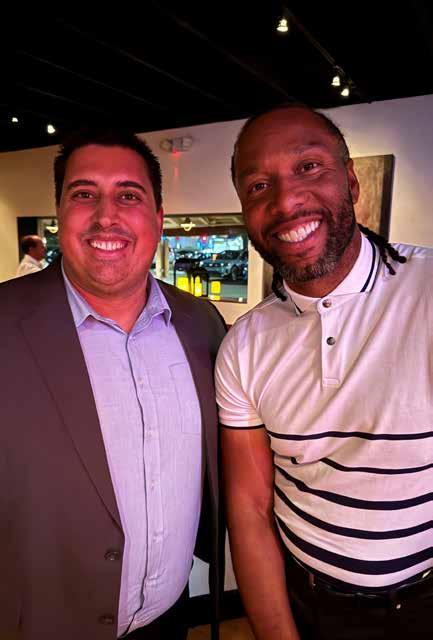
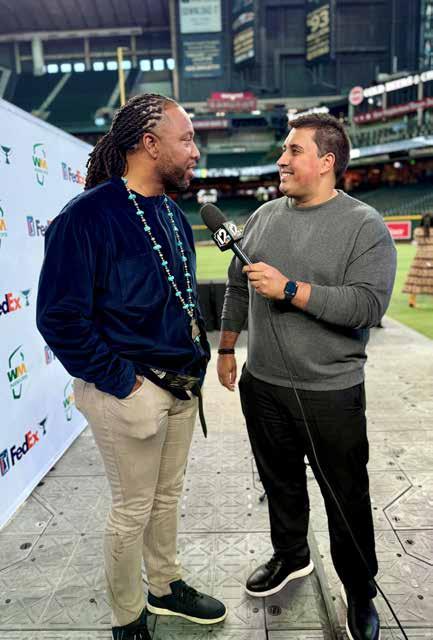
“When you were announced for the Hall of Fame, the first person I thought of was your dad. It will forever be one of my greatest career honors giving him the mic that night.”

You celebrate other people’s success more than your own. You treat the last guy on the roster and the equipment manager like they’re the Hall of Famer. And in my opinion, that’s your greatest accomplishment.
I don’t have kids yet, but I can’t wait to teach mine the value of sports. The same values we learned watching you handle success and failure.
I say failure but that’s not true. Not winning a Super Bowl, but showing up every day as if your were playing for one only serves as a greater teaching tool for everyone. No failure in that, only lessons.
Losing hurts. Winning is a shovel pass. But playing without class and grace, that’s unacceptable.
You learned that from your dad.
And speaking of the late Mr. Fitz, thank you for sharing him with us.
Talking with your dad on and around game days, following every catch of your career, was a joy. Hearing how much he loved you, your brother Marcus, and your family always reminded me of my own dad.
Tough love has a universal language.
When you were announced for the Hall of Fame in February, your dad was the first person I thought of. It’ll always be one of the greatest honors of my career to give him a mic that night.
Anytime I’d bring up something great you did on the field, you’d always remind me, “This game was great before I got here, and it’s going to be great after I leave.”
But let me remind you of something: the game is better because of you. Your kindness and relentless commitment to paying it forward changed all of us.
Thank you for your off-the-field generosity. I’ll never forget the times you showed up for Turkey Tuesday after the cameras stopped rolling.
The work you and your foundation continue to do in honor of your late mother, Carol, supporting those battling breast cancer is bigger than any touchdown. Your commitment, both time and financially, to making the world a better place doesn’t get nearly the attention it deserves.
Then again, you never sought attention.
I’ll end by saying this.
On behalf of all Cards fans, our message to you is the same one you’ve shared with your teammates so many times before:
“I love my teammates. It has been an unbelievable journey.
One I’m so incredibly thankful for.”
Larry, the feeling is mutual.
Congratulations, Hall of Famer.
Sincerely, Cameron
Cox, Lifelong
Fan
Cameron Cox is an Emmy Award-winning sports anchor at 12News in Phoenix, known for his energetic storytelling and trusted coverage of Arizona’s biggest teams and sporting events.
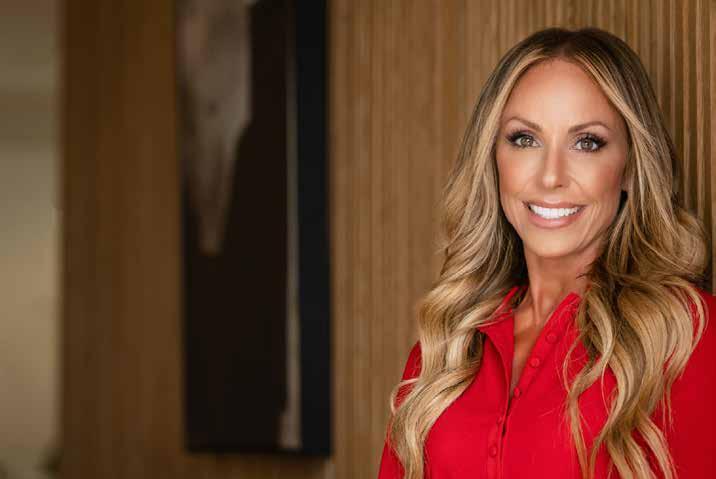












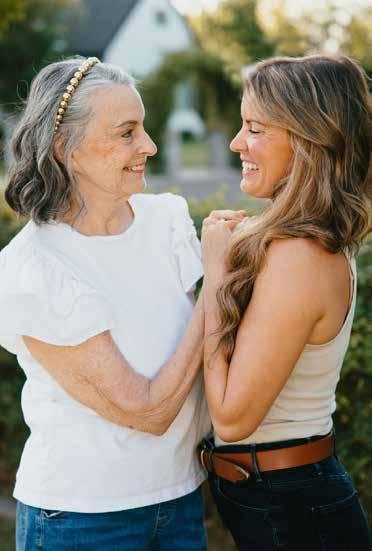
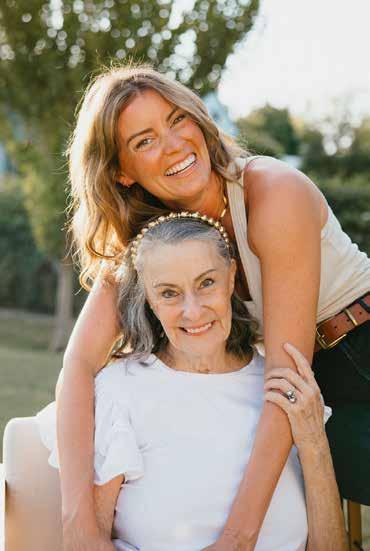
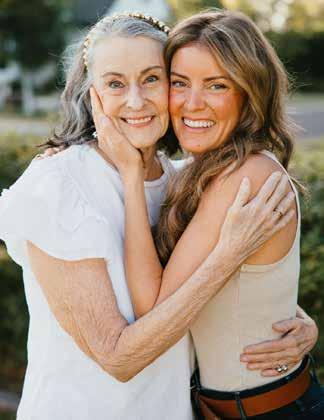
Most days, Adrianne Lentine is a regular Arcadia mom happily married over 18 years trying to keep up with the beautiful chaos that comes with raising three kids. Then her phone rings.
Sometimes it’s her dad calling because he needs to run errands. Sometimes it’s because her mom needs a change of scenery. Sometimes it’s simply because caregiving is exhausting and another set of hands would help.
Whatever the reason, Adrianne adjusts her plans.
Because while she’s raising three children, she’s also helping care for the woman who taught her how to be a mother.
At 40, Adrianne finds herself in the heart of what experts call the sandwich generation; adults simultaneously caring for children and aging parents. For Adrianne, however, the experience carries an added layer of heartbreak. Her mother, affectionately known as G-Ma to her grandchildren, is living with Alzheimer’s disease.
“Depending on the doctor, they either classify it through stages one through seven or they do beginning, middle and late,” Adrianne says. “My mom is entering the late stage. She’s Stage 6 out of 7.”
However, she cautions against focusing too heavily on labels.
“If you’ve met one person with Alzheimer’s, you’ve met one person with Alzheimer’s. Everybody’s journey is completely different.”
The diagnosis came six years ago, but the story really began long before that.
Growing up in Scottsdale, Adrianne never doubted how deeply she was loved.
“She never missed a thing. She was the ultimate mom.”
Years later, when Adrianne became a mother herself, that same devotion naturally extended to the next generation.
For years, her parents lived with her family, and G-Ma became an integral part of daily life. She wasn’t simply Grandma.
“She was my kids’ favorite person.”
In many ways, she helped raise them.
Then came the first sign that something wasn’t right.
Every year, Adrianne and her husband host a large holiday gathering. The night before the party, her mother agreed to bring Rice Krispie treats. Adrianne remembers seeing all the ingredients sitting on the kitchen counter and thinking everything was ready.

SCIENTIST. MOTHER. SURVIVOR.
After battling cancer and Lyme disease, Dr. Christina Rahm began asking a different question: not how to manage symptoms, but why they happen in the first place.
That question became her life's work.
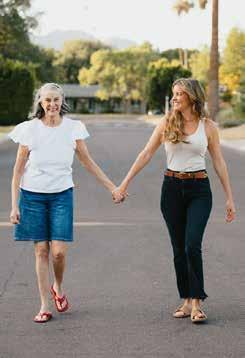
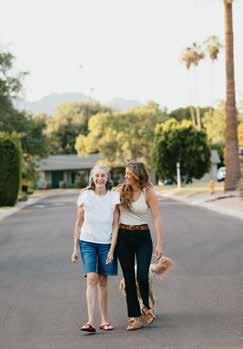
Today, as Chief Scientist of The ROOT Brands and CEO of DRC Ventures, Dr. Rahm leads the development of science-backed innovations designed to help people address the root causes of health challenges rather than simply masking them.
Her philosophy, Cure the Causes ® , has inspired a global movement serving people in more than 180 countries . Every formulation, innovation, and product begins with the same standard:
Would I give it to my own family?
The ROOT Brands | DRC Ventures THEROOTBRANDS.COM

The next day, her mother arrived without them.
“She said, ‘Was I supposed to bring something?’” Adrianne recalls.
When Adrianne reminded her about the treats, her mother looked confused.
“‘What Rice Krispie treats?’”
Adrianne immediately knew this wasn’t ordinary forgetfulness.
“I knew in my heart of hearts that something wasn’t right,” she says. “It didn’t feel like normal aging.”
Doctors initially diagnosed mild cognitive impairment. Within a year came the official Alzheimer’s diagnosis.
Like many families, they hoped it wouldn’t progress.
“So many people told us there was a chance it could stay where it was. Of course, that’s what you hope for.”
Her mother hoped for that, too.
“She would joke, ‘I just have a little bit of Alzheimer’s. Never hurt anyone.’ I think in her heart she believed she’d never forget us.”
From the beginning, Adrianne asked her mother what she wanted to do with the diagnosis. Keep it private… or share it?
The answer came immediately.
“She said if it could help one person feel less alone, then we should share it.”
At the time, Adrianne had already spent years documenting family life online. Long before Instagram reels and viral videos, she was blogging about motherhood, family, and home projects.
“I always wanted to remember everything,” she says. “I wanted all the photos, all the videos, all the things.”
She laughs when she talks about it now because the irony isn’t lost on her.
Before Alzheimer’s ever entered their lives, she was already afraid of forgetting.
“I’d think, I’m never going to forget this thing my daughter says,” she explains. “And then two years later I’d realize I couldn’t remember it. I always wanted to be able to look back.”
Today, that instinct has taken on a deeper meaning.
A woman who spent years preserving memories now finds herself documenting someone who is slowly losing access to her own.
Today, Adrianne shares glimpses of that journey online. Less than a year ago, she had roughly 13,000 followers. Today, that number is approaching 90,000.
The growth wasn’t fueled by home projects, parenting tips, or viral trends. It came from sharing something deeply personal.
“If there’s anything that could have made my social media grow, I would choose it to be this because this

has purpose. People aren’t coming for a lip gloss link. They’re coming because they’re walking through something similar.”
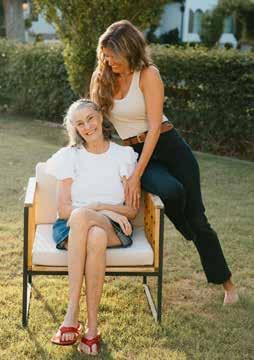
Followers tune in to watch the simple moments: singing in the car, dancing to old songs, holding hands, and sharing a laugh.
It was one video that changed everything.
As music played in the car, her mother suddenly stopped and asked a question.
“Am I okay?”
Adrianne reassured her.
Then came another question.
“It’s not Alzheimer’s or anything?”
The clip resonated with families everywhere because it wasn’t dramatic. It was real.
The video was viewed millions of times and transformed Adrianne’s platform almost overnight.
Every day, messages arrive from daughters, sons, spouses, and caregivers who see their own families reflected in hers.
“They’re pouring their hearts out to me.”
What surprised her most wasn’t the growth, but the community that formed around it.
“I feel like my little corner of the internet is the happiest little place.”
Adult children saw their own parents. Spouses saw their partners. Families saw themselves.
Yet Adrienne insists the videos were never created for an audience.
“I film a lot of our interactions and most of it never sees the light of day. I do it for myself. I want the mundane moments. I want the little things. I want to remember.”
That desire has become even more important as Alzheimer’s continues to progress.
Today, her mother’s world is much smaller than it once was. Conversations can be difficult. Questions can create confusion. Some memories appear unexpectedly, while others disappear completely.
Recently, while painting her mother’s toenails before the Fourth of July, Adrianne mentioned her birthday.
Her mother looked puzzled.
“Who’s Adrianne?”
Twenty minutes later, while sitting on the couch, she casually looked over and said, “Oh, Adrianne Lentine.”
Moments like that have taught Adrianne that Alzheimer’s rarely follows a predictable path.
“It’s wild. You just don’t know.”




What she does know is this:
“I know she feels safe with me. I know she feels safe with my kids.”
That feeling has become more important than memory itself.
When her mother arrives at Adrianne’s home, she often seems anxious at first. Then something shifts.
“After about thirty minutes, I get a whole different version of her. She’s calm. She’s happy.”
Joy has become one of the guiding principles of Adrianne’s caregiving.
“My goal every time I’m with my mom is to make her feel joyful, loved and safe.”
Those three words shape everything she does.
“She is a lover. She loves people more than anything else.”
Caregiving now looks different than it once did. Some days Adrianne styles her hair. Some days she helps her shower. Some days they simply sit outside together in the Arcadia sunshine.
“The beautiful thing is she’s really in the moment because that’s all she can be. She’s toddler-esque,” Adrianne says.
It is one of the unexpected lessons Alzheimer’s has taught her.
Her mother isn’t thinking about tomorrow and isn’t dwelling on yesterday. She’s simply experiencing what’s directly in front of her.
“At times, the role reversal feels heartbreaking. But because it was a gradual transition, it honestly feels natural now.”
But balancing motherhood and caregiving is a journey in its own.
“Some days it’s easy. Some days it’s compartmentalization. If I go from being with my mom for seven hours and then straight to my kids, it can be hard. I’ve learned I need a
little buffer. Sometimes it’s sitting in my car for twenty minutes. Sometimes it’s music. Sometimes it’s silence.”
What keeps her going is perspective.
“She was literally the best mom. If I give her anything less than that in return, it’s not even comprehensible to me.”
While Alzheimer’s has changed so much about their family dynamic, it has also revealed something extraordinary.
“My kids are phenomenal with her. I cry all the time. They open her car door. They help her get in. They buckle her seatbelt. They hold her hand when she walks. If nothing else, this has taught my kids a level of empathy and patience that you cannot learn otherwise.”
Watching that relationship unfold has become one of the gifts hidden inside an otherwise painful chapter.
Her children are learning something many adults spend a lifetime trying to understand: love doesn’t disappear when circumstances change.
Watching her mother’s decline has also transformed how Adrianne views her own health.
Today, brain health isn’t a trend or a buzzword; it’s personal.
“People ask if I’m driving myself crazy trying to prevent this. But honestly, it’s not about chasing prevention. It’s just healthy living.”
After years of research, conversations with specialists, and walking beside her mother through this disease, Adrianne has become passionate about the connection between lifestyle and brain health.
“Move your body. Lift weights. Prioritize your sleep. Manage your stress.”
She is quick to point out that she isn’t a doctor. But she believes many people underestimate how closely overall health and brain health are connected.
“So much of what you can do for brain health is what you should already be doing for your health in general.”
The topic has become such a passion that Adrianne now offers a complimentary brain health guide through her social platforms. The resource shares many of the habits, research, and lifestyle practices she has explored throughout her mother’s journey. While she is quick to remind people she isn’t a medical professional, she hopes the guide encourages families to become proactive and start conversations earlier.
“If you notice something with a parent, have the conversation. Be gentle with it.”
Looking back, she wishes her family had been able to make more lifestyle changes sooner.
“I firmly believe we could have gotten even more time with my mom. For years, I struggled with that. But at some point I realized I could either be frustrated and angry, or I could just enjoy her and love on her. So that’s what I do. I choose to live in the moment.”
Because while Alzheimer’s has changed so much, it hasn’t changed everything.
Her mother still lights up when she sees familiar faces.
She still reaches for the people she trusts. She still tells Adrianne she loves her.
Perhaps that’s what makes this season of life complicated: it is heartbreaking and beautiful at the same time.
When asked what she would tell her mother before Alzheimer’s, Adrianne doesn’t hesitate.
“Thank you for being the best mom.”
As a mother, Adrianne is helping her children navigate the realities of loss. As a daughter, she is learning how to let go of the woman she once knew while still loving the woman sitting in front of her.
instagram.com/adriannelentine
Listen to the full interview on the Now With Nadine podcast, streaming everywhere.




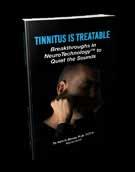
To learn more about tinnitus and available treatment options, you can request a free copy of Dr. Darrow’s book Tinnitus is Treatable by visiting TinnitusisTreatable.com or by calling (623) 263-8918.
When some people lose a limb, they can experience phantom limb syndrome, or pain in that limb they lost. Tinnitus, or ringing in the ears, is a similar phenomenon where there is damage in the auditory system. The ringing is your brain's way of alerting you that something is wrong.
Symptoms of tinnitus can vary from person to person and no two people experience it exactly the same way, which can make diagnosis and treatment difficult. One study found that tinnitus prevalence ranges anywhere from 5.2% to 45% of the population.
“Tinnitus is often the result of the nerves breaking down from the ear to the brain,” explains neuroscientist and clinical audiologist Dr. Keith N. Darrow.
While some people barely notice the sound, others find that tinnitus interferes with sleep, concentration, and daily life. Left untreated, it can also be associated with hearing loss, balance problems, and even cognitive decline.
The good news is that treatment options are available. Research over the past decade shows that proper hearing treatment and ongoing care from an audiology specialist can help restimulate the auditory system and reduce tinnitus symptoms. Prescription-grade hearing technology and sound stimulation therapies help the brain reorganize neural activity, which can significantly reduce or even eliminate the perception of ringing. Because tinnitus often signals underlying hearing damage, experts recommend seeking evaluation as soon as possible. Early treatment offers the best opportunity for relief and improved quality of life.
If left untreated, tinnitus will only get worse and could impact other aspects of your life. Knowing how detrimental it can be — and how much better life is after treatment.
"For anybody who's wondering if they should get treatment, specifically those who are suffering from tinnitus, I say do it," Steve, a current patient said. "Don't wait. It will change your life."
(623) 263-8918
10585 N. Tatum Blvd. Ste. D-135, Paradise Valley, AZ



Hi, I’m Shannon, and I’ve been specializing in chocolate chip cookies for over 25 years, baking custom cookies for every occasion.
I’m a proud mom to Maddie and Brandon. After losing my daughter Maddie, baking became a source of purpose and fulfillment... something that continues to inspire everything I create.
Classic batches and custom cookie cakes available, each made from scratch, delicious, beautiful, and crafted with care. Individually wrapped options available, perfect for gifting or events.
Thank you for letting me cater your next dessert! Plenty of options to choose from, all made fresh and from the heart.

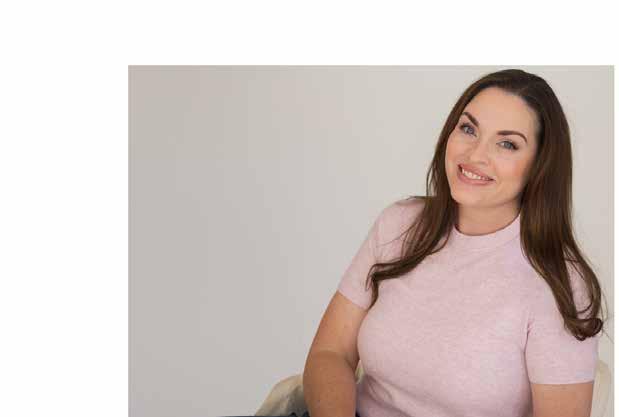

ARTICLE BY MOLLY STOCKLEY | PHOTOGRAPHY BY COLIN EGGLESFIELD & JESSICA WELLMAN
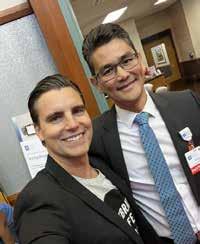
Actor and television host Colin Egglesfield is best known for his roles in All My Children , Melrose Place, and Something Borrowed . Yet one of the most meaningful chapters of his life unfolded far from Hollywood, at City of Hope Cancer Center Phoenix in Goodyear, where resilience, hope, and world-class care helped shape a journey that would change him forever.
In January 2025, at age 52, Egglesfield was diagnosed with prostate cancer, marking the third cancer diagnosis of his life after battling testicular cancer twice.
Facing cancer yet again reshaped his perspective on health, purpose and advocacy. Throughout his treatment, Egglesfield was supported by a multidisciplinary team focused on personalized, innovative care.
“At City of Hope, we design treatment plans around the individual, not just the diagnosis,” says Paul Gellhaus, M.D., Urologic Surgical Oncologist and Medical Director of the Genitourinary Program at City of Hope Cancer Center Phoenix.
That individualized approach proved critical in guiding Egglesfield through treatment with both confidence and compassion.

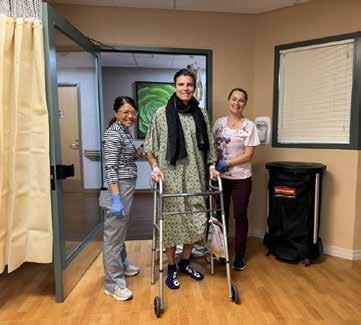

“Colin’s experience underscores the power of early detection and informed decision- making,” adds Alan Bryce, M.D., Chief Clinical Officer and Medical Oncologist at City of Hope Phoenix specializing in men’s cancers, and Professor in the Department of Medical Oncology and Therapeutic Research at Translational Genomics Research Institute (TGen), part of City of Hope. “Prostate cancer is one of the most treatable cancers when caught early, and his outcome reflects what is possible with timely, expert care.”
Today, Egglesfield is cancer free and feeling grateful for the road ahead.
“I’m grateful to be here,” he shares. “I’m just grateful that I’m on the other side of it and able to move forward with my life.”
He is now using his voice to advocate for prostate cancer awareness, encouraging men to prioritize screenings, start conversations and overcome the stigma that too often surrounds the disease.
City of Hope’s groundbreaking cancer treatments, combined with compassionate, personalized care, played a pivotal role in his recovery. Egglesfield’s journey stands as a powerful testament to hope, innovation and the life-changing impact of patient-centered cancer care.
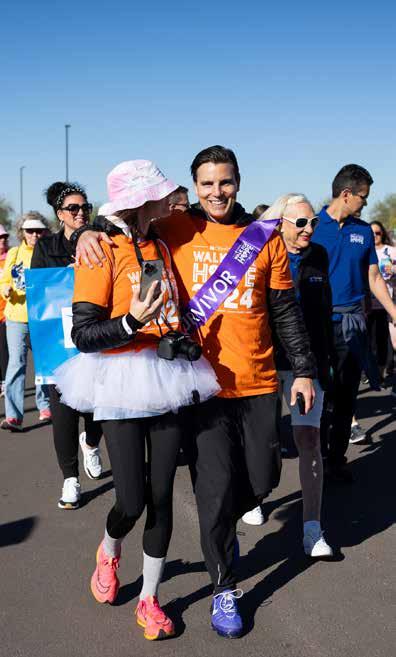
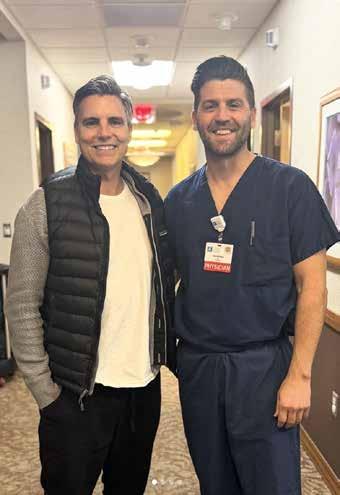
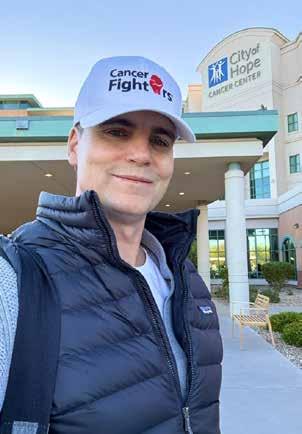
The accompanying photos offer a glimpse into the people and moments that became part of Colin Egglesfield’s experience at City of Hope Cancer Center Phoenix.
Featured throughout are members of the multidisciplinary team who guided his care, including Dr. Paul Gellhaus, Medical Director of the Genitourinary Program and Urologic Surgical Oncologist, and Dr. Alan H. Bryce, Chief Clinical Officer and Medical Oncologist specializing in genitourinary cancers. Their expertise, leadership, and commitment to personalized care played an important role in Colin’s journey.
Additional images capture Colin alongside members of his care team, reflecting the collaborative approach that defines City of Hope Cancer Center Phoenix and the many individuals who supported him throughout treatment and recovery.
The collection also includes moments from City of Hope’s annual Walk for Hope annually at the Goodyear hospital campus; a community event that brings together patients, survivors, caregivers, families, and supporters in a shared celebration of hope and perseverance.
Rounding out the gallery is Colin’s appearance at Camelback Ranch during the City of Hope Cancer Center Phoenix’s “Home Run For Life” annual event during a Los Angeles Dodgers spring training game, a meaningful milestone that honors resilience, gratitude, and the progress made along the way.
Keep in mind, many men will be diagnosed with prostate cancer during their lifetime. Prostate screenings are individualized, please consult your physician for more details.
City of Hope Cancer Center Phoenix is located in Goodyear, with locations in North Phoenix, North Scottsdale, Gilbert and a new location in Prescott.
For more information on prostate cancer treatment at City of Hope Cancer Center Phoenix, visit cityofhope.org/phoenix










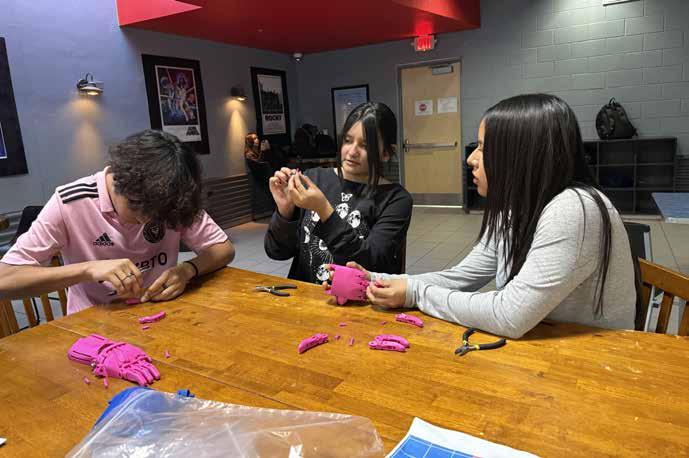
At WISE (World.Impact.Scholarships & Education), the prosthetic arm sitting on the table wasn’t just the result of a STEM project.
For the WISE scholars who built it, it was proof that what they were learning could matter to someone beyond themselves.
Working alongside e-NABLE and using 3D printers donated by Cox Communications, a group of WISE scholars from the Boys & Girls Clubs of Greater Scottsdale spent weeks designing, testing, revising, and assembling a prosthetic arm for a pediatric nurse in San Diego. The project demanded patience, teamwork, and problem solving. It also delivered something less tangible but equally important: confidence.
“Many students don’t lack ambition. They’re simply not exposed to all that’s possible. A mentor can change a perspective, and an experience can reshape a future.”
When the arm was complete, the WISE scholars saw firsthand how their effort could improve another person’s daily life.
That lesson sits at the heart of the WISE Scholarship Program.
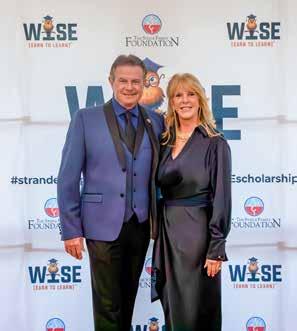
Founded by The Steele Family Foundation, WISE was created for students whose potential may exceed the opportunities available to them. While the program provides scholarship support, its focus extends far beyond tuition assistance. Through mentorship, leadership development, volunteer service, career exploration, wellness resources, and hands-on experiences, WISE scholars gain exposure to opportunities that help shape both academic and personal growth.
The approach is intentional. WISE scholars actively participate in earn to learn WISE Program by tracking academic progress, service hours, leadership milestones, and personal development goals through the WISE digital platform. The objective isn’t simply college acceptance. It’s helping students develop the skills, perspective, and confidence needed to thrive long after graduation, moving them into a well rounded global citizen.
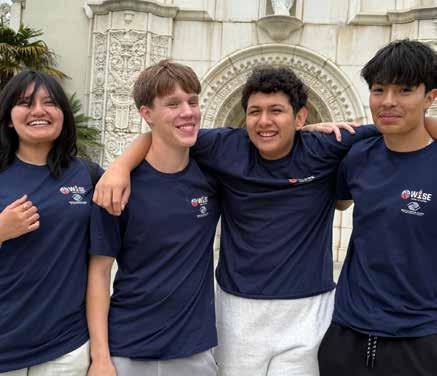
That growth is evident in scholars like Liliana, one of the WISE scholars from the Boys & Girls Clubs of Greater Scottsdale who helped build the prosthetic arm.
“The WISE Program has given me many opportunities and paths for bettering not only my future college and career paths, but it’s also bettered how I view myself. It’s mainly helped me reflect on who I am, who I want to be, and how I conduct myself around my friends and peers,” she says.
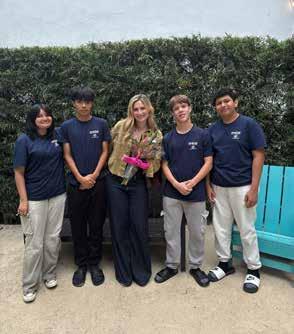
For Kim, Angel, and Nick, that journey began with a second chance.
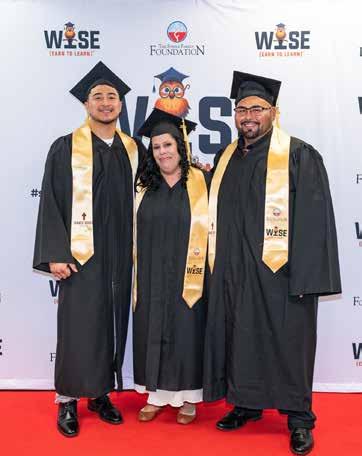
Through WISE’s partnership with Grace Sober Living, the three became members of the program’s first graduating class in the United States. Each arrived with a different story, but all shared a determination to move forward.
During their time in the program, they collectively completed more than 1,000 volunteer service hours with organizations including Andre House, St. Vincent de Paul, St. Mary’s Food Bank, Phoenix Rescue Mission, and Arcadia City Church.
The experience reinforced a simple truth: when young people are trusted with responsibility and given meaningful ways to contribute, they often begin to see themselves differently.
Kim reflects on what WISE has meant in her own journey.
“I’m so grateful for WISE and the opportunity it’s given me to rebuild my life through education. My faith has been my anchor through this journey, and I truly believe God is using WISE to open doors I never thought possible.”
For Dalila, that shift came through an internship at the Marine Mammal Care Center in Los Angeles.
Through WISE’s partnership with the Just Keep Livin Foundation, she gained firsthand exposure to environmental conservation, nonprofit operations, and animal care while working alongside professionals in the field. What began as an internship became an opportunity to explore interests, test strengths, and gain clarity about future possibilities.
Many students don’t lack ambition. They simply haven’t been exposed to all that’s possible.
While WISE scholars are building futures across North America and beyond, the program’s roots remain firmly planted in Scottsdale.
Longtime Arizona residents Mike and Stacey Steele established the Steele Family Foundation nearly two decades ago with a commitment to expanding access to education, mentorship, and opportunity. What began as a local investment has grown into a scholarship and leadership platform serving WISE scholars in the United States, Canada, Ghana, Turkey, Italy, and India. Earlier this summer, the Foundation received Charity of the Year recognition from the Canadian Choice Awards, reflecting the growing reach of its work.
“When young people are trusted with responsibility and given meaningful ways to contribute, they often begin to see themselves differently.”

Despite that growth, the mission remains deeply personal.
The most meaningful outcomes are not measured in scholarships awarded or hours logged. They are measured in the confidence gained by a WISE scholar who discovers a new path forward, the graduate who overcomes significant obstacles, or the young person who begins to recognize strengths they never knew they possessed.
A WISE scholarship can open a door. A mentor can change a perspective. An experience can reshape a future.
thesteelefamilyfoundation.com
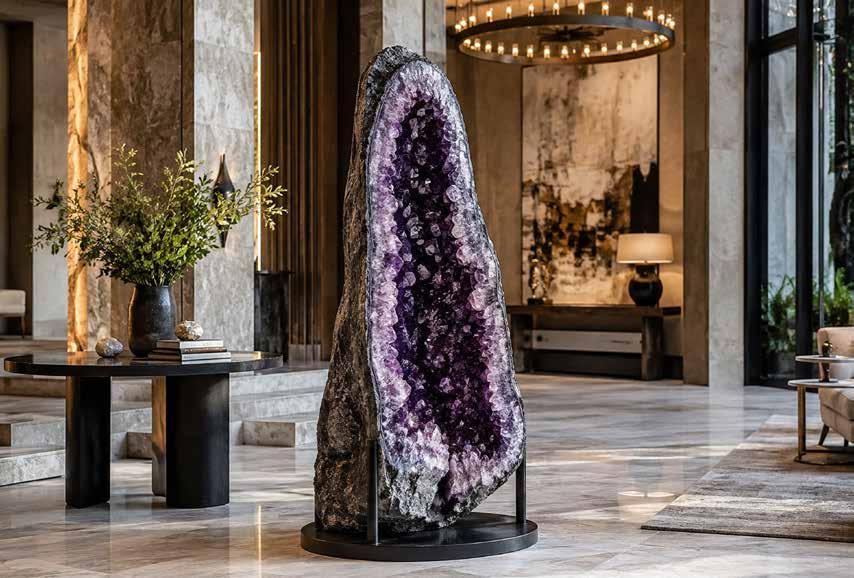
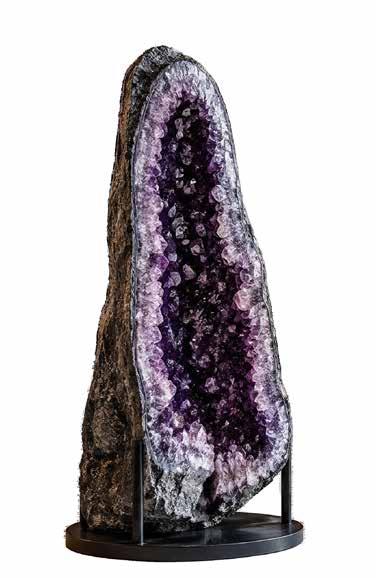
Some Art Is Made. Ours Is Discovered. Nature creates only one original.
From towering amethyst cathedrals to museum-quality mineral sculptures, each piece transforms a space into something unforgettable.
For collectors, designers, and those who believe extraordinary spaces deserve extraordinary art.
No two are alike.








ACTRESS JEN LILLEY ON FOSTER CARE, FAMILY, AND FINDING PURPOSE
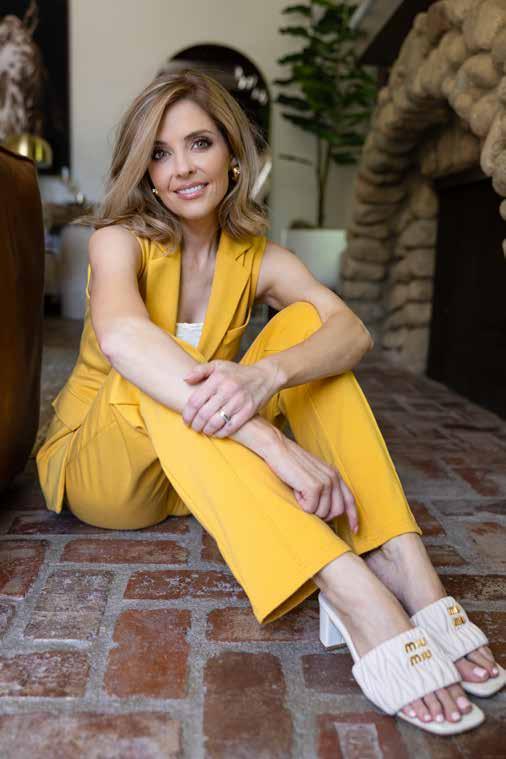
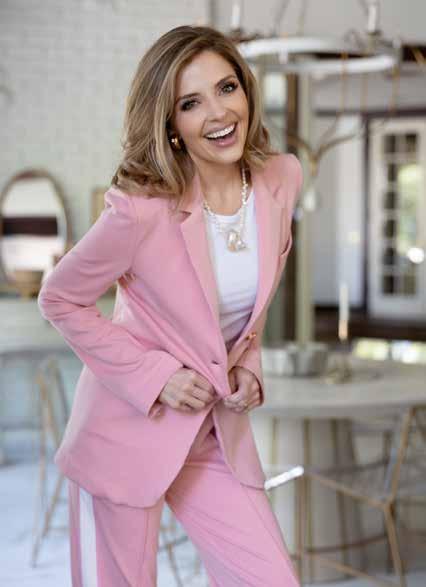
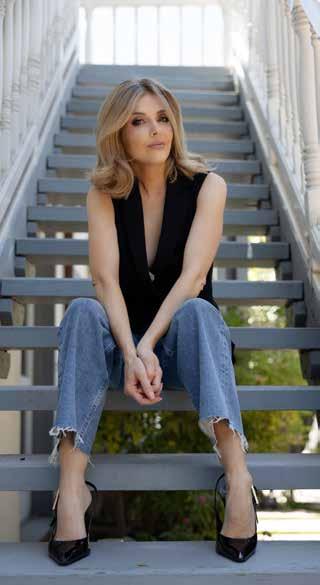
Jen Lilley still remembers the phone call.
She had spent weeks studying silent films, immersing herself in the work of Clara Bow and Charlie Chaplin while teaching herself the nuances of 1920s hair, makeup, and style. When a casting notice arrived for a small film called The Artist, Lilley had a feeling.
“EMPATHY ISN’T JUST SOMETHING I PORTRAY ON SCREEN.”
“I told my agent, ‘If you get me in that room, I will book it.’” She did.
The film went on to win five Academy Awards, including Best Picture, and became the launchpad for a career that would eventually include General Hospital, Days of Our Lives, dozens of Hallmark favorites, and a devoted fan base spanning generations. This November, Lilley will return to the big screen portraying Gloria Stewart in Jimmy, the highly anticipated film chronicling the life of legendary actor and decorated war hero Jimmy Stewart.
Looking back, however, Lilley doesn’t measure her life by movie premieres, red carpets, or television ratings.
“I love storytelling and I love empathy,” she says.
That sentiment surfaces repeatedly throughout our conversation. It appears when she talks about acting, motherhood, and when she discusses foster care, adoption, and the children who ultimately changed the course of her life.


“THE GOAL OF FOSTER CARE IS NOT ADOPTION. THE GOAL OF FOSTER CARE IS TO HELP FAMILIES HEAL SO CHILDREN CAN SAFELY RETURN HOME.”
Long before Hallmark Christmas movies became a staple in living rooms across America, Lilley was a college student in Virginia who never imagined acting would become a career. In fact, she thought she might become a journalist.
An open casting call changed everything.
After landing a role in an independent film, she discovered something unexpected.
“I got on set and was just like, ‘Oh, I love the camera. I’m not afraid of the camera. I’m good at ignoring it.’”
The industry took notice.
The Artist led to General Hospital. General Hospital led to Days of Our Lives. Days opened the door to Hallmark, where Lilley became one of the network’s most familiar faces.
Yet what resonates most with her isn’t fame. It’s impact.
Fans regularly approach her to share stories about how one of her films helped them through grief, illness, or an especially difficult season of life.
“I get messages like, ‘My mom died this year and your Christmas movie was the only 90 minutes I didn’t cry.’”
Others tell her they watched her films while undergoing cancer treatments.
“That makes acting feel like a job that’s worth doing.”
While her career continued to grow, Lilley found herself searching for a cause that felt equally meaningful.
After researching issues affecting children in the United States, she connected with Childhelp, the Arizona-founded organization dedicated to helping abused and neglected children. She became a celebrity ambassador and volunteered through the organization’s Special Friends mentoring program.
There, she met an eight-year-old girl who would ultimately change the trajectory of her life.
When the child faced reunification, which in her case was extremely dangerous, Lilley and her husband made a decision they never anticipated.
They became licensed foster parents.
Like many first-time foster families, they entered the process with optimism and more than a few misconceptions.
“We thought we’d foster, do our part, help a child reunify with their family, process the grief, maybe take a vacation, and then foster again,” Lilley says with a laugh. “We were idiots.”
The reality was far more complicated.
Their first foster placement was a four-month-old baby named Kayden. What was intended to be a temporary placement became a years-long journey through court hearings, uncertainty, and a system that often moves far more slowly than the families living inside it.
For more than three years, Lilley and her husband loved Kayden while waiting for decisions they could not control.
“You are living in limbo,” she says.
The experience taught her one of the lessons she now shares most often.
“The goal of foster care is not adoption. The goal of foster care is to help families heal so children can safely return home.”
It is a distinction many people misunderstand. Foster parents are asked to love children deeply while accepting that reunification may ultimately be the best outcome.
Lilley is equally passionate about challenging another misconception.
“Children in foster care have entered into a very broken system through no fault of their own.”
Many people assume foster children are troubled or difficult. Lilley sees something entirely different.
“More times than not, it’s neglect. Sometimes it’s neglect that could have been prevented.”
That perspective has also shaped the compassion she extends toward biological families. Rather than viewing foster care as a battle between parents and foster parents, Lilley believes many of the adults involved are carrying wounds of their own.
“Foster care is a cycle of abuse.”
The challenges are often far more complicated than they appear from the outside.
Eventually, Lilley and her husband adopted Kayden. Years later, they adopted his younger brother, Jeffrey.
Today, the boys are ten and eight years old.
“We don’t view them any differently than our two biological daughters.”
Their family may not have been built the way they originally envisioned, but Lilley wouldn’t change a thing.
The experience became the foundation for her newest book, Call to Foster? An Honest Guide to Getting Started.
Part memoir and part practical guide, the book combines real-life stories with practical advice for families considering foster care. Lilley shares the moments most people never see: the court hearings, the heartbreak, the uncertainty, the setbacks, and the victories. She wanted to create the resource she wishes she had when she first started.
Her goal isn’t to convince everyone to become foster parents.
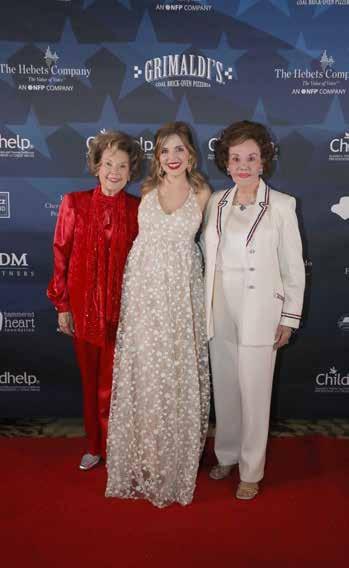
It’s to help people understand that everyone can play a role. Whether that’s mentoring a child, supporting a foster family, volunteering, donating resources, or simply learning more about the system, Lilley believes meaningful change begins when people choose to get involved.
Today, Lilley balances motherhood, advocacy, writing, and a thriving acting career that shows no signs of slowing down.
This November, audiences will see her portray Gloria Stewart in Jimmy, a film she believes arrives at the right moment.
“This film is going to remind us that we’re far more similar than we are different.”
When asked what lesson she carries with her every day, Lilley’s answer comes quickly.
“You really never know what another person is going through.”
For an actress whose career has been built around stepping into other people’s lives, it feels like a fitting conclusion.
Empathy isn’t just something Jen Lilley portrays on screen. It’s the principle that has shaped the life she has built beyond it.
instagram.com/jen_lilley
Listen to the full interview on the Now With Nadine podcast, streaming everywhere.



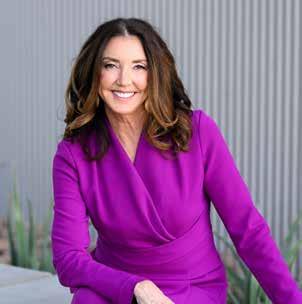
Dr. Karen Lisko
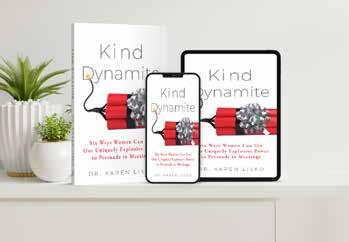
Dr. Karen Lisko is a dynamic speaker and debut author of Kind Dynamite, equipping professional women with persuasion strategies that move decision makers to action. Sharp, practical, and engaging, she delivers tools audiences use immediately. It’s why organizations continue to invite her back.
Now booking speaking engagements and corporate trainings.
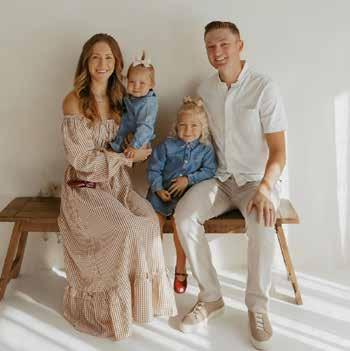
At Tristan's Trees, we honor the memory of our beloved son, Tristan, who was stillborn at 35 weeks. His absence leaves a void that we feel deeply every day. In the wake of our loss, we were gifted a tree to plant in his memory, creating a sacred space in our yard that brought us comfort, connection and healing. We aim to provide the same comfort and support to families who know this kind of loss.
Tristan's Trees honors the lives of children who have passed away by providing grieving families with the gift of a living tree. Planted in a yard, garden, or meaningful place, each tree serves as a symbol of love, remembrance, and the enduring legacy of a child whose memory will never fade.
With your support, we can continue providing these meaningful gifts to families when they need them most.
Help us plant hope, healing, and remembrance.
Learn more or donate today.


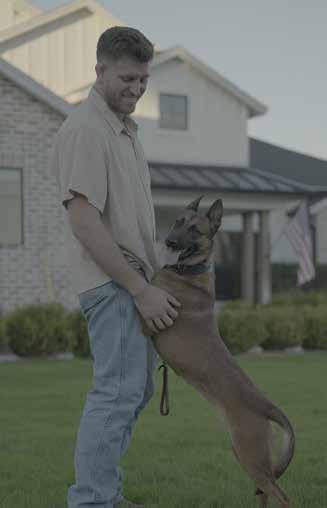
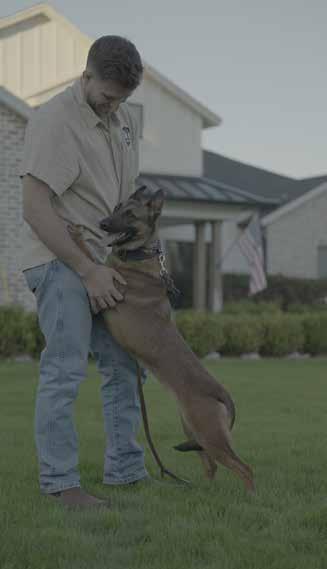
MEET THE DAD-AND-DOG DUO HELPING VALLEY FAMILIES UNCOVER WHAT’S HIDING BEHIND THEIR WALLS.
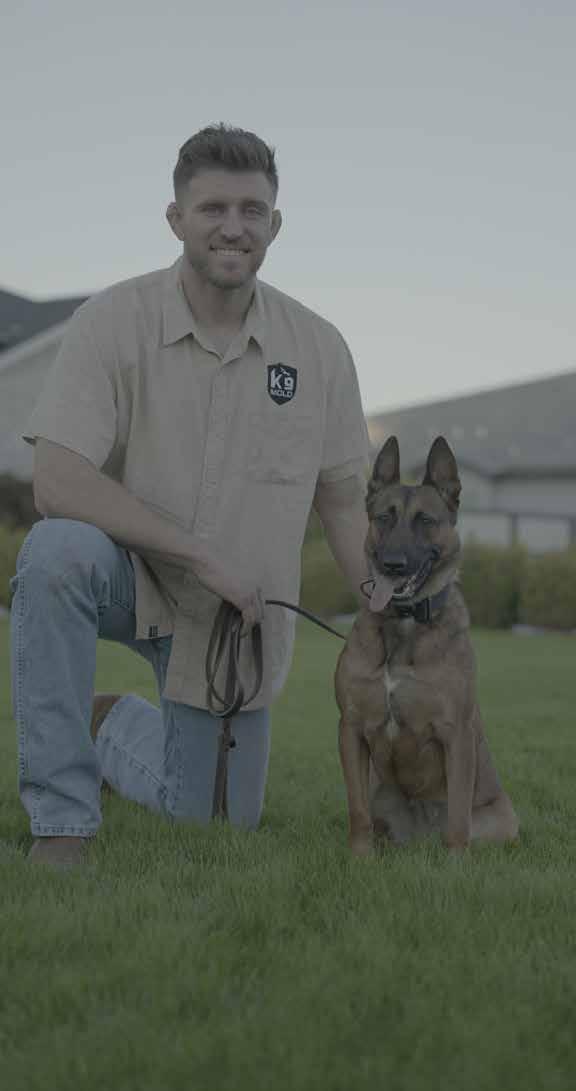
This is the story of Wes and Dolly.
But before we dive into the dad-and-dog duo helping families across the Valley, you need to understand how one family’s search for answers became their life’s work.
“My little sister was having seizures. A lot of them. And nobody could tell us why.”
It’s a memory Wes will never forget.
“My parents did everything right,” he says. “Doctors, specialists, test after test, thousands of dollars chasing answers that never came.”
As his sister’s health continued to decline, the symptoms only became more alarming. She battled seizures, severe depression, anxiety, brain fog, hair loss, and hormone issues.
PHOTOGRAPHY PROVIDED BY K9 MOLD
Meanwhile, his mother’s health was unraveling in ways doctors couldn’t explain.
“My mom was dealing with a lot all at once,” he says. “For a long time no one could tell her why.”
Every specialist focused on the symptoms.
No one looked at the house.
Eventually, hidden mold was discovered inside his sister’s bedroom. The contaminated materials were removed, and for a while, life seemed to return to normal.
Then everything came back.
“The actual water source was never fixed,” Wes says. “The mold came back. She moved out for a bit, then moved back into that same room, and the severe reactions and depression came right back.”
His family needed another answer.
That’s when they hired a mold detection dog.
“The dog marked all the spots we’d been told were already fixed. They cut those areas open a second time, removed more, and that’s when she finally started to improve.”
Watching that dog work changed everything.
“My mom sent me a video of the dog marking right on the wall where the mold was, and I thought it was one of the most amazing things I’d ever seen.”
But it wasn’t just the dog’s nose that stayed with him. It was what happened after.
“So many people in this industry just put a piece of tape on the wall and walk away. No report, no evidence, just tear it open yourself or pay me to.”
His sister recovered.
His family never recovered the certainty.
“To this day, my mom avoids the rooms that were remediated. When nobody gives you proof, you never stop wondering if it’s really gone.”
Looking back now, Wes wonders if mold had quietly been part of his own story long before anyone realized it.
“One home we lived in had a really bad basement with a sump pump,” he says. “I struggled to gain weight, had bad eczema, constant strep throat, nosebleeds, and bad flaking in my hair. At the time nobody connected any of it. In hindsight, it makes you wonder.”
That experience forever changed the way he sees families searching for answers.
“It gave me a real compassion for people living through it that I didn’t have before, because like most people, I never thought about mold until my own family lived it.”
Today, his mother sees purpose where there was once pain.
“My mom especially sees how many people I get to help now, and she knows helping people is simply who I am.”
He smiles.
“That’s really the whole thing for me.”
That purpose became K9 Mold.
“If you’re reading this because someone in your home is sick and no one can tell you why, that was us. That’s exactly who K9 Mold was built for.”
His partner just happens to have four legs.
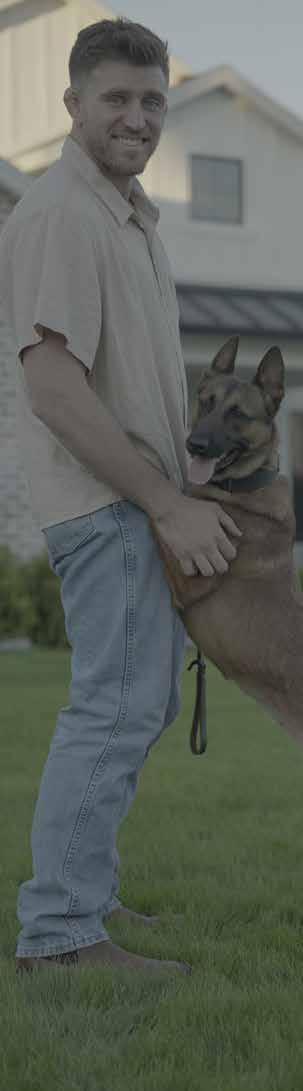
Dolly is a Belgian Malinois, a breed known for its intelligence, relentless drive, and work ethic. To Wes, she’s family. To homeowners, she’s often the first step toward finding answers.
Years ago, a mold dog changed Wes’s family’s life.
Today, Dolly is doing the same for other families.
“To Dolly it’s just a game,” Wes says with a laugh. “She finds a certain smell, and she gets her ball. That’s the whole job as far as she’s concerned.”
That ball is everything.
“I’ve never once seen Dolly unmotivated,” he says. “Her ball is her whole world, and it lets us harness her drive to work hard every single time.”
Dolly wasn’t Wes’s first dog. He originally trained with a dog named Mia, but she developed a genetic nerve disorder affecting her back legs.
“I ran inspections for about half a year without a dog. Then we found Dolly. We had a lot of dogs to choose from and just felt she was the right one.”
It took six months to train her.
Dolly trained under Matt Skogen of IronHeart High Performance Dogs in Kansas, one of the country’s most respected trainers of police, bomb detection, narcotics, and mold detection dogs. Wes continues her training using live mold samples grown across multiple species, ensuring she never becomes conditioned to detecting only one type.
“Dolly smells the VOCs, the gases that come off active mold, not the mold itself.”
Those gases lead her to hidden water damage inside walls, ceilings, and floors that homeowners often have no idea exists.
While trained mold dogs are commonly cited around 90-95% accurate, Wes never wanted families relying on one tool alone.
Today, Wes is the only inspector in Arizona combining a certified mold detection dog, military-derived InstaScope air-analysis technology, and comprehensive written reporting into a single inspection. According to InstaScope, his operation is one of only two in the country using this unique approach.
“The InstaScope changes everything because it doesn’t just tell us there’s a problem. It tells us what’s actually in the air,” Wes says. “Most devices measure particles or VOCs, but this technology identifies mold, bacteria, and pollen, giving families a much clearer picture of what they’re breathing.”
As he walks through a home, families watch the readings change room by room in real time.
Then he layers those findings with Dolly’s alerts and his own inspection.
“Each one is a separate point of data,” Wes says. “My inspection, the InstaScope readings, and Dolly’s nose. When you layer all three together, you get a very clear picture of where the issues are and what the next steps should be.”
That commitment to evidence also explains why K9 Mold never performs remediation.
“It was important to never do remediation because I didn’t want the conflict of interest,” Wes says. “I want to be an agent for the client, giving honest answers, not making a problem bigger than it is so I can sell the fix.”
He calls it proof over pressure.
Families deserve answers before anyone starts cutting into walls.
Sometimes, those answers reveal hidden mold.
Sometimes, they reveal there isn’t a mold problem at all.
“I’d rather spend seven hours in a home, find nothing, and tell you honestly, ‘I looked top to bottom, Dolly worked hard, the InstaScope is clean, there’s no mold here,’ than leave you with a pile of question marks.”
Today, Wes is also the father of four.
“Honestly, it hits even harder now,” he says. “With a newborn in the house, it scares me more because they’re so small and so vulnerable.”
If he could sit beside the younger version of himself watching his family search for answers, his advice would be simple.
“I’d tell him to trust his gut and not give up.”
Then he pauses.
“When you’re living in a home that’s making your family sick and no one can give you answers, you start to wonder if you’re imagining the whole thing.”
“You’re not.”
“The answer is there.”
“It’s just hidden.”
“And it’s worth digging until you find it, because the relief on the other side is everything.”
k9mold.com




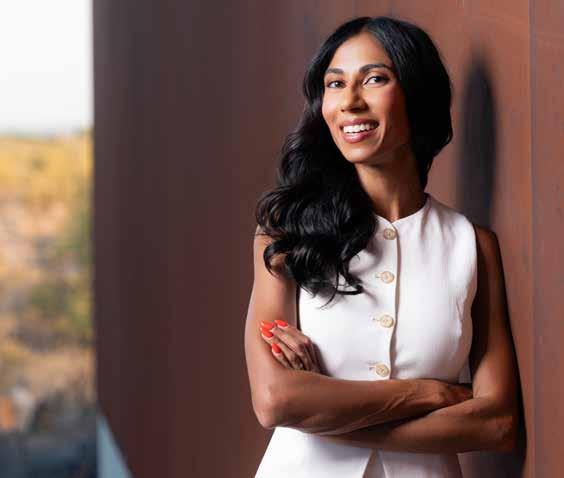
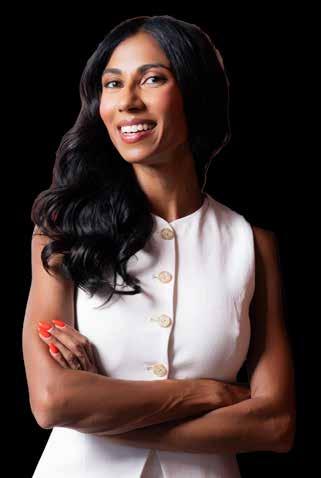
After more than a year with SERHANT., I’ve gained an even greater appreciation for how much the real estate industry has changed.
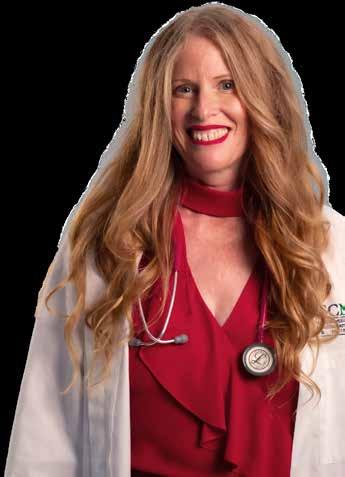
Today’s buyers discover homes differently. They consume content differently. They expect more than photos and a listing description. That’s why marketing matters.
In the past 15 months alone, SERHANT. has closed more than $9 billion in sales. That scale fuels investment in technology, digital strategy, content creation, and innovative marketing tools that help properties stand out in an increasingly competitive marketplace.
The goal is simple: put homes in front of the right buyers before they even begin actively searching.
As one of the most followed real estate brands in the world, SERHANT. continues to redefine how homes are marketed, while giving agents the resources to better serve their clients.
For me, it’s never been about being part of the biggest company. It’s about being part of a company committed to delivering the best possible experience and results.
At the end of the day, real estate is still about people, families, and helping clients confidently navigate one of life’s most important decisions.

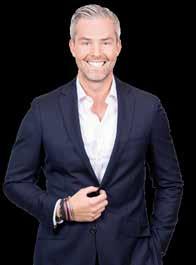
Ryan Serhant
Scan the QR code for my full notes on Believing, Behaving, Becoming Abundance.

Luxury isn’t defined by square footage - it’s defined by precision, trust and world-class execution. That’s the SERHANT. Standard.


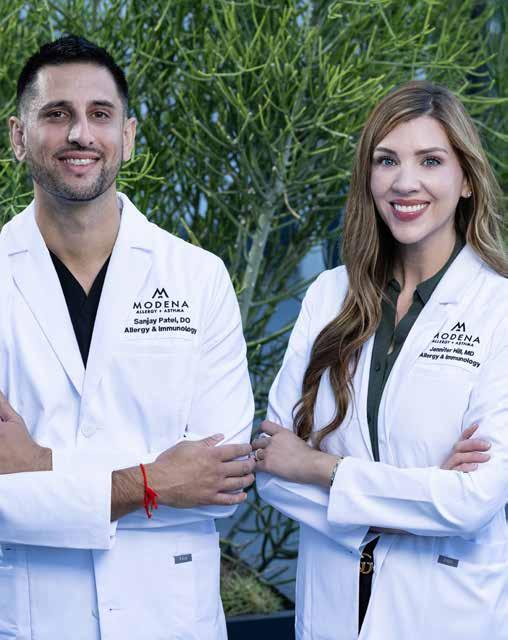
ARTICLE BY JENNIFER HILL, MD & SANJAY “JAY” PATEL, DO PHOTOGRAPHY PROVIDED
Back-to-school season brings excitement, fresh routines, and new opportunities. For families managing food allergies, however, it can also bring renewed anxiety. Will teachers recognize symptoms? Does the school have an emergency plan? Will my child speak up if something feels wrong?
Food allergies affect an estimated 1 in 13 children in the United States, meaning most classrooms now include at least one or two students navigating the realities of food allergy management. Yet despite increased awareness, many misconceptions persist. Perhaps the biggest misconception is that food allergy care looks the same today as it did a decade ago. It doesn’t.

Advances in diagnostic testing, emerging therapies such as Oral Immunotherapy (OIT) and biologic medications, and a deeper understanding of the emotional impact food allergies have on children and families are changing the way we approach care. In many cases, the conversation has shifted from simply avoiding allergens to reducing risk, building confidence, and improving quality of life.
As another school year begins, we’re addressing some of the most common allergy myths we hear from families and sharing the facts every parent should know.
MYTH #1: PEANUT-FREE SCHOOLS KEEP MY CHILD SAFE.
Fact: School preparedness is the real protection.
Many parents feel reassured when a school advertises itself as peanut-free. While allergen-aware policies can help reduce risk, no school can completely eliminate exposure.
Preparedness matters more than prohibition. The safest schools are those with trained staff, clear emergency protocols, and immediate access to epinephrine.
Before the first day of school, parents should ensure their child’s epinephrine is current, a Food Allergy Action Plan is on file, and school staff know how to respond in an emergency.
MYTH #2: EPINEPHRINE IS A LAST RESORT.
Fact: Epinephrine is the first-line treatment for anaphylaxis.
One of the most dangerous food allergy myths is that parents should wait until symptoms become severe before administering epinephrine.
In reality, delayed treatment is associated with worse outcomes. Many allergists worry far more about hesitation than giving epinephrine unnecessarily.
Treatment options continue to evolve, including newer delivery methods such as nasal epinephrine for certain patients.
As the school year begins, take time to review administration techniques with teachers, coaches, babysitters, and caregivers.
MYTH #3: MY CHILD WILL ALWAYS KNOW SOMETHING IS WRONG.
Fact: Early symptoms are often subtle and easy to miss.
Adults often imagine allergic reactions as dramatic and obvious. In reality, early symptoms can be subtle.
CONTINUED >
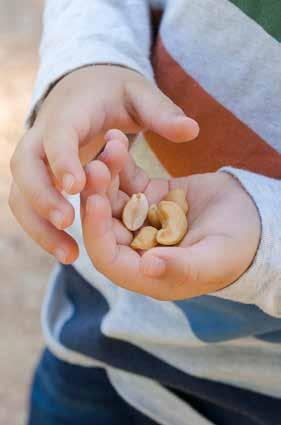

A child may report an itchy mouth, throat discomfort, stomach pain, coughing, or simply say they feel “funny.” Younger children often lack the vocabulary to describe what they’re experiencing.
Teaching children to speak up immediately, even when symptoms seem minor, is one of the most important safety lessons parents can reinforce.
MYTH #4: PAST REACTIONS PREDICT FUTURE REACTIONS.
Fact: Reaction severity can change unexpectedly.
This is one of the most important concepts in food allergy care: reactions are not predictable.
A child who previously developed mild hives could experience a much more serious reaction during a future exposure, while someone with a history of severe reactions may not react the same way every time.
Every exposure should be taken seriously, regardless of what happened in the past. That’s why allergists recommend reviewing emergency plans, medications, and school procedures at the start of every school year.
MYTH #5: AIRBORNE PEANUT EXPOSURE IS THE BIGGEST SCHOOL RISK.
Fact: Most severe reactions occur when a food is eaten.
Parents often worry about a peanut butter sandwich across the cafeteria. In reality, most severe allergic reactions occur because a food is consumed, not because it is nearby.
The most effective prevention strategies remain simple: no food sharing, careful label reading, handwashing, and clean eating surfaces. Hidden ingredients often pose a greater risk than visible foods.
MYTH #6: A POSITIVE ALLERGY TEST EQUALS A FOOD ALLERGY.
Fact: Testing shows sensitization, not necessarily a true allergy.
This is one of the most misunderstood concepts in allergy medicine.
Many parents assume allergy testing provides a simple yes-or-no answer. In reality, a positive test shows that the immune system recognizes a food, not necessarily that a child will react when eating it.
Diagnosis requires both testing and clinical context. At Modena Allergy + Asthma, evaluation may include skin testing, allergen-specific IgE blood work, and Oral Food Challenges, the gold standard for food allergy diagnosis.
One of the most rewarding moments in allergy medicine is helping a family learn that a food they feared for years may no longer need to be avoided. Accurate diagnosis matters because unnecessary food restrictions can affect nutrition, increase anxiety, and diminish quality of life.
MYTH #7: AVOIDANCE IS THE ONLY OPTION.
Fact: Food allergy treatment has evolved dramatically.
For decades, food allergy care focused largely on avoidance and emergency preparedness. Today, the conversation is changing.
One of the most significant advances is Oral Immunotherapy (OIT), which gradually exposes the immune system to carefully measured amounts of an allergenic food under close medical supervision. At Modena Allergy + Asthma, OIT is available for children as young as four and may be considered for allergies including peanut, tree nut, milk, egg, wheat, soy, and shellfish.
The goal is often misunderstood. For many families, success is not eating unlimited amounts of a food. It’s reducing the risk of a severe reaction after an accidental exposure.
That shift from fear to confidence can be life changing. Additional therapies, including biologic medications such as Xolair (omalizumab), are expanding treatment options and helping families gain greater peace of mind.
MYTH #8: FOOD ALLERGIES MEAN MISSING OUT.
Fact: Most children can safely participate in the activities they love.
Food allergies should not automatically exclude children from sports, field trips, camps, birthday parties, or school activities.
Today, the focus is increasingly on inclusion rather than restriction. The question is not whether a child can participate, but how to help them participate safely.
The goal is confidence, not exclusion.
MYTH #9: FOOD ALLERGIES ONLY AFFECT PHYSICAL HEALTH.
Fact: They can impact confidence, mental health, and family life.
Some of the greatest challenges associated with food allergies have nothing to do with food.

Children may worry about feeling different, sitting alone at lunch, using epinephrine in front of friends, or being excluded from social activities. Parents often carry the burden of planning around vacations, restaurants, parties, sleepovers, and school events.
As a result, many allergists now discuss mental health as part of routine care.
Sometimes the most important question a parent can ask is not, “What did you eat today?” but, “What worries you most about your allergy?”
MYTH #10: SAFETY MEANS ELIMINATING ALL ALLERGENS.
Fact: Safety starts with preparation and response. There is no such thing as a completely allergen-free school.
The safest schools are not the most restrictive. They are the most prepared. An anaphylaxis-ready school is one where students, families, teachers, coaches, and staff know how to prevent, recognize, and respond to allergic reactions.
Food allergy preparedness is a lot like fire safety. We hope an emergency never happens, but we prepare for one anyway.
modena-health.com/scottsdale












PHOTOGRAPHY PROVIDED BY APDO
WHAT YOUR PEDIATRIC DENTIST REALLY WANTS YOU TO KNOW
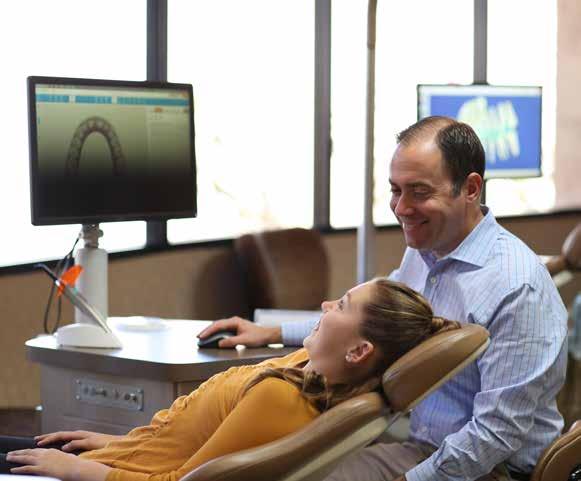
“Most of what worries parents turns out to be completely normal.”
“My child’s permanent teeth are coming in behind the baby teeth.”
It’s one of the most common phone calls Dr. Danielle Goldstein receives.
The answer surprises parents almost every time.
“That’s usually completely normal.”
After more than 30 years serving Valley families, Affiliated Pediatric Dentistry & Orthodontics has learned there’s often a big difference between what parents worry about and what pediatric dentists worry about. APDO, rooted in family leadership, has grown into one of Arizona’s most trusted pediatric dental and orthodontic practices, with a collaborative team of pediatric dentists and orthodontists caring for generations of children.
That kind of experience creates perspective.
“We see the same fears over and over,” Dr. Goldstein says. “But we also know what’s normal, what’s not, and how to help families make decisions that fit their individual child.”
Here are the lessons she wishes every parent knew.
Your child’s first dental visit isn’t really about teeth.
Many parents think the first appointment should happen when a child can finally sit still in the dental chair.
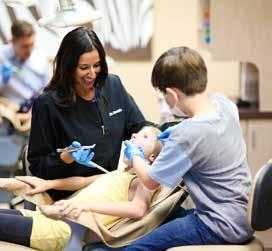

Dr. Goldstein says they’ve already waited too long.
The American Academy of Pediatric Dentistry recommends establishing a dental home by age one or within six months of the first tooth erupting. However, that visit isn’t centered on cleaning tiny teeth.
“It’s really about education,” she explains. “We’re reviewing home care, nutrition, dental habits, and discussing prevention, including fluoride or fluoride alternatives like hydroxyapatite.”
Rather than taking a one-size-fits-all approach, the APDO team evaluates each child’s cavity risk, diet, medical history, and family preferences before making recommendations.
“It’s individualized,” adds Dr. Tim Wilson of the APDO pediatric dentistry team.
Baby teeth matter much longer than parents think.
“People still say, ‘They’re just baby teeth,’” says Dr. Wilson.
They aren’t.
Baby teeth help children chew properly, develop speech, maintain space for permanent teeth, and even influence confidence and social development. They also stay around far longer than many parents realize.
“Most kids don’t lose their last baby tooth until they’re about 12 years old,” he says.
That means neglecting them doesn’t simply affect preschool; it can affect an entire decade of development.
Goldfish crackers are a bigger culprit than candy.
Parents often brace themselves for October.
APDO’s Dr. Abraham Itty worries more about Tuesday afternoon.
“We actually see quite a few cavities in preschool-aged children. Frequent snacking can contribute to cavities,” Dr. Itty says. And it’s not always chocolate.
Dry carbohydrates like crackers, chips, and snack foods break down into sugars and cling to teeth throughout the day. Add frequent grazing, juice boxes, and toddlers who seem to snack nonstop, and cavity risk rises quickly.
Brushing is harder than parents realize. One mistake he sees repeatedly?
Parents handing over the toothbrush too early.
Research shows most children don’t develop the manual dexterity needed to brush effectively until around ages 8 to 10.
Until then, parents are still the dental hygienists.
“If brushing your toddler feels messy, that’s okay. Give yourself grace. Stay consistent.”
Shark teeth usually aren’t an emergency.
Few things worry parents faster than seeing two rows of teeth.
Fortunately, pediatric dentists have a nickname for it: shark teeth.
“It’s one of the most common calls we receive,” says APDO’s Dr. Cecilia Kolstad Estrada.
Permanent teeth often erupt behind baby teeth before those baby teeth loosen enough to fall out.
“If the baby tooth is already loose, encourage your child to keep wiggling it,” says Dr. Kolstad Estrada.
If it isn’t?
That’s when the APDO team wants to evaluate it.
Another surprise during this stage?
Those new permanent teeth often look yellower than the baby teeth beside them.
“They’re naturally three to four shades darker. That’s normal,” she says.
Age seven doesn’t automatically mean braces.
The American Association of Orthodontists recommends an evaluation around age seven.
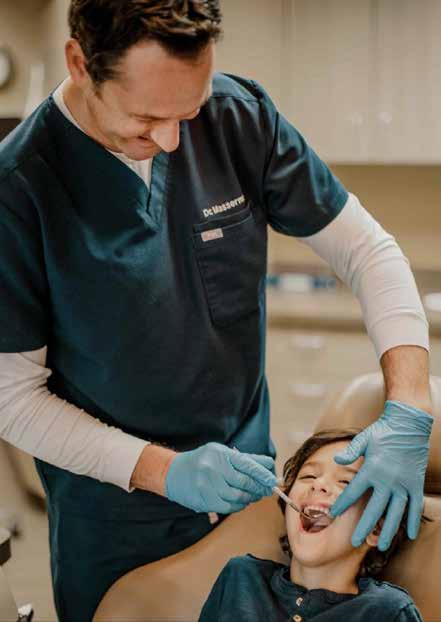




“Every child has different cavity risks and orthodontic needs. Pediatric dentistry and orthodontics are not one size fits all.”
Many families interpret that as, “My child probably needs braces,” says Dr. Michael Feinberg.
Not so fast.
“One of the biggest misconceptions is that every child needs early orthodontic treatment,” he says.
What the APDO team is actually evaluating is growth. Is the palate too narrow?
Is there a crossbite?
An underbite?
Is the jaw shifting to one side?
According to Dr. Tal Masserman, “A lot of times if you let the jaw grow and catch up, things balance out much more naturally. But there are times that early intervention is needed.”
Knowing the difference is where experience matters.
Pediatric dentistry has changed.
One of the biggest changes since Dr. Goldstein’s father helped found APDO isn’t all technology.
It’s philosophy.
Today’s focus is preventing cavities before they ever require treatment.
“There is a much larger focus on prevention,” she says.
That includes fluoride treatments, hydroxyapatite for families seeking an alternative approach, and silver diamine fluoride, or SDF, which can help slow the progression of certain early cavities and, in some cases, delay more invasive treatment.
The goal isn’t simply fixing teeth; it’s helping kids avoid needing treatment in the first place.
In terms of orthodontic treatment, state-ofthe-art digital robotic technology allows for more
efficient and streamlined orthodontic treatment.
A shorter time in braces means less risk for cavities and demineralization.
Sports can change things in seconds.
As children grow, another concern moves higher on Dr. Goldstein’’s list.
Sports injuries.
The APDO team treats trauma from nearly every sport imaginable.
“A properly fitted mouthguard dramatically reduces the risk of serious dental injuries.”
And if a permanent tooth is ever completely knocked out or fractured deeply enough to expose the nerve?
“That’s a time-sensitive emergency.”
Every minute counts.
The habit parents still underestimate.
“Flossing. It’s often treated like extra credit, but most of the cavities we see, at every age, start between the teeth.”
A toothbrush simply can’t reach those surfaces.
Floss can.
The best advice she gives parents?
“Worry less. Be more present.”
Don’t compare your child’s smile to their sibling’s.
Don’t compare braces timelines with friends.
Don’t compare your child to social media.
“Every child has different cavity risks and orthodontic needs. Pediatric dentistry and orthodontics are not one size fits all.”
smilesbyapdo.com







Moms are masters of maintenance. We color the gray hair. Buy the skincare. Take the supplements. Hire the trainer. Drink the protein shake. Yet most of those efforts focus on managing the symptoms of aging, not addressing what’s happening beneath the surface.
Stem cell therapy is different. As we age, the body’s natural ability to repair itself declines. Recovery takes longer. Inflammation lingers. Energy decreases. Joints become less forgiving. We begin noticing the effects in ways that impact everyday life. Stem cell therapy is designed to support the body’s own regenerative processes, helping restore what time, stress, pregnancy, hormones, and life itself gradually diminish.


MEET ADAM LOIACONO
That’s why so many women are exploring it. Not because they want to look younger. Because they want to feel better. They want the energy to keep up with their children. The stamina to travel. The mobility to stay active. The vitality to enjoy the life they’ve worked hard to build.
At Auragens, stem cell therapy is more than a treatment. It’s an investment in how you want to feel five, ten, and twenty years from now.
Because the best wellness strategy isn’t waiting until something breaks.
It’s supporting your body before it does.
Founder of The LEGACY Membership & host of Finding Small Wins
Dr. Adam Loiacono is a performance physical therapist with fifteen years across the NBA, MLS, and NWSL, including serving as Director of Rehabilitation & Performance for the Phoenix Suns. A Doctor of Physical Therapy and board-certified Sports Clinical Specialist, he merges movement, medicine, and precision systems to create measurable results.
Welcome to the next chapter in your LEGACY.
Learn more: www.AdamLoiacono.com/legacy www.auragens.com v theauragens


Eating disorders in children and adolescents are often misunderstood. Many families assume they will know when something is wrong. They imagine dramatic weight loss, obvious symptoms, or clear concerns about food and body image. In reality, eating disorders are often much quieter, more complex, and easier to miss.
A child may still be going to school, playing sports, earning good grades, and appearing “fine” on the outside while their body is under significant medical stress. They may not look underweight, and their labs are often normal. They may even be praised for discipline, healthy eating, or athletic dedication. Yet beneath the surface, their physical and emotional health can be suffering.
This is why early recognition is so important.
My passion is caring for children and adolescents with eating disorders through comprehensive, family-centered care. Treatment is about far more than food or weight. It requires medical oversight, collaboration with therapists and dietitians, and an understanding of how these illnesses affect the developing body.
ARTICLE BY STEPHANIE CONRAD, DO, THE CONRAD CLINIC
During my years at Phoenix Children’s Hospital, where I founded and served as Medical Director of the Inpatient Eating Disorder Team, I cared for hundreds of children and adolescents with eating disorders. Many families were doing everything they could, yet still felt blindsided by how quickly and quietly the illness had taken hold.
One of the things I value most in caring for children and adolescents with eating disorders is providing the thoughtful, coordinated care these families need. Many patients already have excellent therapists, dietitians, and pediatricians supporting them. Eating disorder recovery, however, often requires highly specialized medical monitoring, frequent reassessment, and close collaboration among providers, patients, and families throughout the recovery process.
Understanding the full clinical picture means closely monitoring growth, vital signs, and nutrition, coordinating with the treatment team, supporting families, and continually reassessing risk as symptoms change.
With close medical monitoring and a coordinated treatment team, many children and adolescents can recover in the outpatient setting. While hospitalization and residential treatment are sometimes necessary, my goal whenever it is medically safe is to help patients remain at home with their families, maintain as much normalcy as possible, and heal with the support of those around them.
That gap ultimately led me to create The Conrad Clinic.
The Conrad Clinic is a concierge pediatric medical practice dedicated entirely to children, adolescents, and young adults with eating disorders. Our role is not to replace therapists, dietitians, or pediatricians, but to serve as the medical home within a patient’s treatment team. We provide medical evaluation, stabilization, close outpatient monitoring, and ongoing support throughout recovery, working closely with families and treatment providers to ensure thoughtful, coordinated care every step of the way.
Eating disorders affect children across all body sizes, genders, and backgrounds. While many parents are familiar with anorexia nervosa, they are often surprised to learn that a child can have a serious eating disorder without appearing underweight. This presentation, known as atypical anorexia nervosa, meets the same psychological and behavioral criteria as anorexia nervosa but occurs in individuals whose weight remains in the average or above-average range.

Despite the name, there is nothing “atypical” about how medically serious it can be. Some of the most medically fragile patients I see have atypical anorexia nervosa. The body responds to malnutrition and rapid weight loss regardless of where a child starts, and complications affecting the heart, hormones, bone health, growth, and overall medical stability can be just as severe if not more severe as those seen in traditional anorexia nervosa.
Bulimia nervosa carries significant medical risks, including potentially dangerous electrolyte imbalances and heart rhythm abnormalities, even when a child appears healthy. ARFID, or avoidant/restrictive food intake disorder, can also cause serious nutritional and medical complications without any desire for weight loss. What may look like extreme picky eating can sometimes become a significant medical condition.
Others become focused on eating “clean,” building muscle, lowering body fat, avoiding certain foods, preventing vomiting, or controlling food in response to anxiety.
Previous generations compared themselves to classmates, athletes, actors, and magazine covers. Today’s children carry an endless stream of comparison in their pockets. Every day, they are exposed to content about appearance, fitness, nutrition, body composition, beauty, and self-improvement.
Increasingly, that includes something known as “looksmaxxing.”
While many parents have never heard the term, many middle school and high school students have.
Looksmaxxing refers to the pursuit of optimizing one’s appearance. At its most basic level, it may involve skincare, grooming, fitness, or fashion. On the surface, much of it appears harmless. But as a physician who specializes exclusively in caring for children and adolescents with eating disorders, I pay close attention to trends like this because they often reveal something larger happening beneath the surface.
The language around eating disorders has changed. Many young people are no longer talking about being thin. They are talking about being lean, muscular, optimized, disciplined, or improving themselves. They may focus on protein goals, supplements, body fat percentages, workout plans, jawlines, or “clean” eating.
Parents may see discipline. Coaches may see dedication. Friends may see motivation.
What can be missed is the anxiety underneath. The growing belief that self-worth depends on appearance, food, exercise, or control.
At The Conrad Clinic, every aspect of our practice was designed around a simple belief: families deserve time, access, and thoughtful medical guidance during one of the most challenging experiences they may face.
We take the time to understand not only a diagnosis, but the child, their siblings, and the entire family behind it. Siblings often carry invisible worries and deserve to be seen and supported throughout the recovery process. Medical records, growth charts, laboratory studies, nutrition, family dynamics, and mental health concerns all help shape an individualized treatment plan. Follow-up care is tailored to each patient because eating disorder recovery is rarely one size fits all.
The encouraging news is that recovery is possible. Early recognition and intervention can make an enormous difference.
Parents do not need to understand every diagnosis or every social media trend to protect their children. They simply need to remain curious, engaged, and willing to ask questions.
When health becomes rigid, pay attention.
When food rules become more important than connection, pay attention.
When exercise feels compulsory rather than joyful, pay attention.
When a child’s sense of worth becomes tied to food, weight, appearance, or control, pay attention.
Parents do not need to know exactly how serious something is before seeking help. That is what a thoughtful medical evaluation is for.
The goal is not to raise children who are perfectly optimized. The goal is to help children grow into healthy, connected, resilient young people who can fully participate in their lives.
Recovery is possible. Early recognition matters. And families do not have to navigate the journey alone.
theconradclinic.com











PHOTOGRAPHY PROVIDED/ SCOTTSDALE EVENT PHOTOGRAPHY
For former MLB player Dave Huff and wife Lisa, the next big idea came between games.


By the time Dave Huff retired from professional baseball, he had pitched for five Major League organizations, played internationally in Korea, Japan, Mexico, Australia, and Dubai, and spent more than two decades chasing a dream that began before he was old enough to tie his shoes.
Literally.
One of his earliest memories involves standing in a diaper on a baseball field, watching his older brother throw bullpen sessions with their father.
When his brother finished, Dave wanted a turn.
His father raised the glove. Dave fired.
The ball hit the target.
His father moved the glove.
Dave hit it again.
And again. And again.
A lightbulb went off.
“We’ve got something here,” his father thought.
What followed was a baseball journey that carried the Huntington Beach native from youth fields to the bright lights of Major League Baseball. Over the course of his career, Dave pitched for Cleveland, San Francisco, New York, Los Angeles, and Anaheim, while building a reputation as a reliable left handed pitcher who simply refused to stop competing.
His goal was always the same: pitch until 40.
He missed it by three days.
Today, the competition looks different.
Instead of navigating Major League lineups, Dave spends his days coaching young athletes, helping them navigate pressure, failure, confidence, and the mental side of sports.
Because if there is one lesson baseball taught him, it is that talent alone is never enough.
“Everybody is physically good enough,” Huff says. “The difference is mental. The mindset is what separates people.”
It is a lesson he learned firsthand.
In 2010, after years of focusing on statistics, results, and outcomes, Huff found himself at a crossroads.
“I focused too much on the negative,” he says. “It almost cost me my career.”
A shift in perspective changed everything.
“WE SHOW UP FOR FITNESS, BUT WE STAY BECAUSE OF THE LOVE, SUPPORT, GRATITUDE, AND COMMUNITY.”
– Jasmina
PERSONAL TRAINING
Customized coaching. Proven results.
GROUP FITNESS
High-energy classes. A community that keeps you moving.


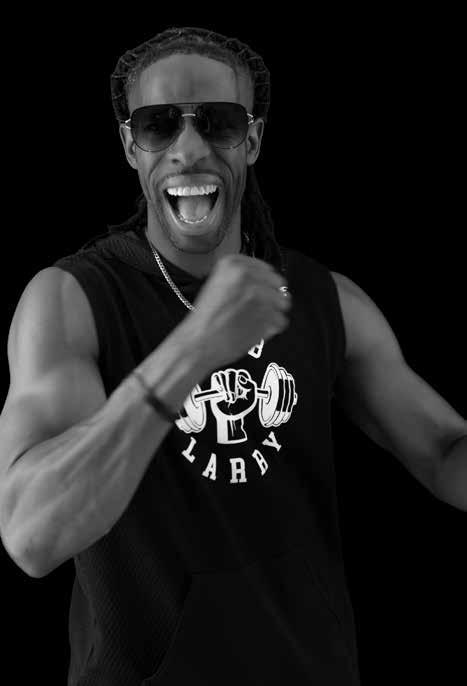
He began focusing on growth rather than outcomes, process rather than perfection.
Years later, those same lessons would become foundational in a completely different venture.
One created not on a baseball field, but around one.
The idea came from his wife, Lisa.
Like many sports parents, she found herself standing on the sidelines with a simple question: What exactly are we giving our kids?
As she assembled snack bags for youth sports teams, she found herself frustrated by the choices available. The products either tasted good and contained ingredients she did not love, or contained better ingredients and were rejected by kids.
There seemed to be no middle ground.
“I thought there has to be a better option,” she says.
Most people would stop there… but not Lisa.
What started as a conversation with another sports mom became a four year journey involving formulators, physicians, trademark challenges, investor conversations, product pivots, manufacturing hurdles, and more than a few tears.
“There were days I wanted to quit,” Lisa admits. “I’d call my dad and tell him I was done.”
His response never changed.
“Pilgrims don’t quit.”
Pilgrim is Lisa’s maiden name.
The phrase became her mantra, and the result is now LIIKE, a hydration brand designed specifically for active kids.
The name comes from the Finnish word for movement, a fitting choice for a family whose life has revolved around athletics, travel, resilience, and constant motion.
The electrolyte ratios were developed with children in mind. The ingredients were carefully selected. The formulas were tested repeatedly by the people who mattered most: their sons.
“We wanted something parents could feel good about and kids would actually want to drink,” Lisa says.
For Dave, watching his wife build the company has been every bit as impressive as anything he experienced in professional sports.
“She’s an absolute wonder woman,” he says. “The things she’s learned, the obstacles she’s worked through, the way she’s kept going. It’s incredible.”
The business may be new, but the mission feels familiar.
Both Dave and Lisa believe success is built the same way.
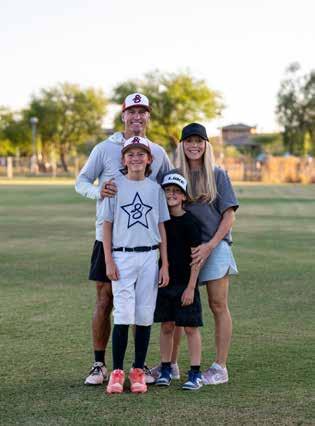
One day at a time, one challenge at a time, and one small win at a time.
It is the same philosophy Dave teaches the athletes he coaches today: focus on effort, growth, and the next pitch.
The same mindset that carried him from a Little League field to the Major Leagues is now helping shape the next chapter of their family’s story.
Because LIIKE is not really about hydration; it is about movement… moving through setbacks, uncertainty and toward something bigger.
And if the Huff family has learned anything through baseball, business, marriage, and parenthood, it is this:
The people who succeed are rarely the ones who avoid obstacles.
They are the ones who keep moving through them.
Follow Liike for launch dates, product updates, and availability: @drinkliike

“Like







“Everybody is physically good enough,” Huff says. “The difference is mental. The mindset is what separates people.”
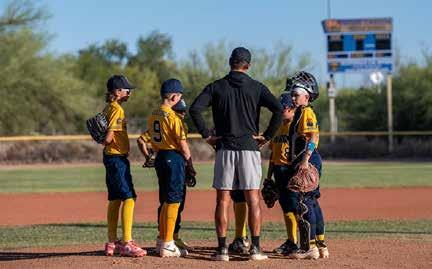
Today, Coach Huff spends much of his time coaching young athletes, including his two boys, Ethan and Dylan. While his playing career took him around the world, he now finds purpose in helping the next generation navigate competition, adversity, and the mental side of sports.
Here are Coach Huff’s two cents for sideline parents.
Let Kids Own the Dream
Parents can provide opportunities, encouragement, and support, but the desire to play has to come from the child.
“The athletes who last the longest are the ones who genuinely love what they’re doing.”
Focus on the Little Wins
Winning is great. Development is better.
Coach Huff encourages parents to celebrate the moments that often go unnoticed: a quality at bat, a smart defensive play, moving a runner over, or bouncing back after a mistake.
“We can lose a game 16-0 and still have wins.”
The Car Ride Home Matters
Young athletes usually know when they did not play their best. Instead of turning the drive home into another practice or postgame breakdown, Coach Huff believes it should be a safe place where kids feel supported regardless of the outcome.
Mindset is the Difference Maker
Physical talent can only take an athlete so far.
According to Coach Huff, confidence, resilience, and the ability to move forward after failure are what separate good players from great ones.
“The game is probably 80-90% mental.”
The coaches who had the biggest impact on Huff’s career did far more than teach mechanics.
They taught discipline, accountability, grit, and how to handle adversity.
Those lessons lasted far longer than any stat line.
Failure is Part of the Process
Baseball is built on failure. Even Hall of Fame players get out far more often than they get hits.
Coach Huff reminds players and parents alike that mistakes are not setbacks. They are opportunities to learn.
One Voice in the Dugout
Parents naturally want to help, but Coach Huff encourages families to trust the coaching process during games.
Save the instruction for before or after. During competition, consistency matters.
“When the umpire says, ‘Play ball,’ let the coaches coach.”
Before rankings, travel teams, and tournament schedules, there was simply a kid who loved the game. Protect that joy.
Because long after the trophies are forgotten, the memories and life lessons remain.
instagram.com/dave.huff45
The full interview with Dave & Lisa is now live on the Now with Nadine podcast, streaming everywhere.



smarter way to work. A joyful place to play.
Play & Stay offers a curated, supervised space for ages 0–6 to learn and play.
Work & Stay sits steps away, providing parents a quiet lounge with private offices, coffee, and livestream peace of mind.

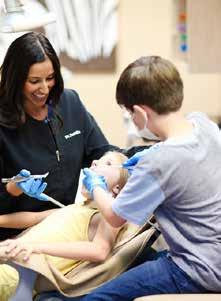


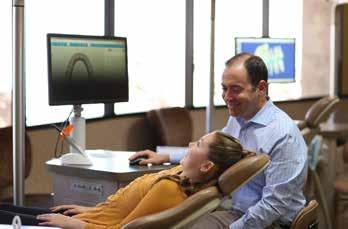
At APDO, kids run through our door with excitement to play in our treehouse and catch up with their favorite dentists. That’s not an accident — it’s how we’ve built trust with Scottsdale families for over 40 years. We specialize in pediatric dentistry and orthodontics for all ages, all in one place. Come see why your kids will actually look forward to the dentist.
2 Locations: Grayhawk & Agua Caliente Center













PHOTOGRAPHY PROVIDED BY RAINE MICHAELS


Raine Michaels is having a moment. Fresh off her Netflix debut on Calabasas Confidential , she’s introducing viewers to who she really is beyond the famous last name. But long before the cameras started rolling, she was growing up in Scottsdale, where she spent her days biking through DC Ranch, hunting for scorpions with a black light, and learning life’s biggest lessons from her parents.
As her dad, Bret Michaels, continues his legendary career, Raine is carving out one of her own, built on authenticity, kindness, and a passion for animal rescue. We caught up with the Arizona native to talk family, fame, and reality TV.
MOST PEOPLE KNOW BRET MICHAELS THE ROCK STAR. WHO IS BRET MICHAELS THE DAD?
He’s incredibly supportive, always picks up the phone when I call, and somehow always finds time for the people he loves. What surprises people most is how much he genuinely cares about others. Whether it’s family, friends, fans, or someone he’s never met before, he has a huge heart.
ARIZONA HAS LONG BEEN A SPECIAL PLACE FOR YOUR FAMILY.
Arizona will always feel like home to me. It’s where I spent some of the most formative years of my life, made lifelong friendships, and created so many memories with family and friends. Looking back, I feel incredibly lucky to have grown up there before moving to Calabasas for high school. CONTINUED
DO YOU HAVE A FAVORITE ARIZONA MEMORY GROWING UP?
Frying an egg on the sidewalk in the summer, going to the waterpark because it was too hot to be outside, having a 75-degree Christmas, watching haboobs roll in, and going scorpion hunting at night. We even had families of coyotes and javelinas living on our property. Looking back, it really was one of the coolest places to be a kid.
YOU SEEM REMARKABLY GROUNDED FOR SOMEONE WHO GREW UP AROUND FAME.
My parents always made sure my sister and I understood how fortunate we were, but also that nobody owes you anything. We were taught to work hard, be kind, and give back. A huge part of that also comes from volunteering and animal rescue.
WHAT’S A PIECE OF ADVICE YOUR DAD GAVE YOU THAT DIDN’T MAKE SENSE AT THE TIME BUT DOES NOW?
from being kind to people and treating everyone with respect, regardless of who they are or what they do.
YOUR DAD IS OFTEN OPEN ABOUT HIS HEALTH BATTLES. WHAT DID THAT TEACH YOU ABOUT RESILIENCE?
We always joke that my dad is like a cat with nine lives, and somehow he’s still got a few left. He’s faced some pretty scary health challenges, but he’s never let them define him. Watching him continue to show up for his family, his work, and the people he loves has taught me a lot about resilience, perspective, and gratitude.
“A 75-degree Christmas, watching haboobs, going scorpion hunting... looking back, it really was one of the coolest places to be a kid.”
— Raine Michaels
My parents always taught me to treat people the way I wanted to be treated. It sounds simple, but as I’ve gotten older, I’ve realized how important that advice really is. Some of the most meaningful relationships and opportunities in my life have come
WHAT’S THE MOST “DAD” THING BRET MICHAELS DOES?
Trying to wake the entire family up at 6 a.m. to play pickleball. He’s convinced everyone should be awake and active before sunrise, and somehow always has way more energy than the rest of us. I blame the coffee.
WHAT’S THE BEST THING ABOUT BEING BRET MICHAELS’ DAUGHTER?
Getting to learn from him. Obviously I’ve had opportunities because of who he is, and I’m grateful for that, but the greatest gift has been watching
how he treats people, how hard he works, and how much he loves his family.
WHAT MADE YOU SAY YES TO CALABASAS CONFIDENTIAL ?
I had already experienced reality television as a kid, but this felt like an opportunity to show who I am as an adult. People are always going to have assumptions, so I liked the idea of giving viewers the chance to get to know the real me.
YOU DESCRIBE YOURSELF AS THE “VOICE OF REASON” ON THE SHOW.
That’s just who I am. I’ve always been the friend who tries to see both sides and help people work through things. But I wouldn’t take advice from me all the time. I was also the one making FeetFinder jokes and dancing with random people whenever the opportunity presented itself.
WHAT ACCOMPLISHMENT ARE YOU MOST PROUD OF?
The work I’ve done in animal rescue. Whether it’s fostering dogs, fundraising, networking animals into homes, or using my platform to raise awareness, that’s the work that means the most to me. Modeling and television have given me incredible opportunities, but being able to use those opportunities to help animals is what I’m most proud of.
WHAT’S NEXT FOR YOU?
I’d love to do more hosting and storytelling. I’ve always loved connecting with people and hearing their stories, whether that’s in sports, entertainment, or animal rescue. My dream would be to build something that combines all of those passions in a meaningful way.
instagram.com/rainee_m
<<Website>> <<Address>>
know where to begin.
It’s not that you’re avoiding it. It’s that this part of life doesn’t come with a clear manual. And with so many options (wills, trusts, power of attorney), it’s easy to feel stuck in research mode.
At Mindful Counsel, we meet you right where you are. No overwhelm, nojudgment. We’ll walk you through exactly what you need (and nothing you don’t) to put a meaningful, personalized plan in place.

Clients often say: “I was surprised how doable it felt once I had the right person guiding me. Elisabeth explained things in a way that made sense and took the fear out of it.”
(480) 422-6246
www.themindfulcounsel.com
18835 N. Thompson Peak Pkwy, Ste. C220, Scottsdale, AZ v @mindfulcounsel b @mindfulcounsel

Whatseparatescoupleswhothrivefromthosewho simplycoexist?Well,itstartswithneverstoppingthe courtship.
Q: Many couples stop dating after marriage. Why does that happen?
A: During dating, connection is the priority. After marriage, life naturally fills up with careers, children, responsibilities, and routines. Most couples don’t intentionally stop dating each other; they simply stop making it a priority. The strongest marriages recognize that connection requires the same effort after “I do” as it did before.
Q: What’s the biggest mistake married couples make?
A: Assuming their relationship will take care of itself. Most people schedule meetings, workouts, kids’ activities, and appointments. Very few schedule time for their marriage. Relationships thrive when they are treated as a priority rather than an afterthought.
Q: How can couples reconnect when they feel more like roommates than partners?
A: Start small. Put the phones away. Ask better questions. Be curious about each other again. Many couples stop learning about one another because they assume they already know everything. Reconnection begins when you intentionally create space for conversation and shared experiences.
Q: What do the happiest long-term couples do differently?
A: They continue to pursue each other. They don’t stop flirting, expressing appreciation, showing affection, or making an effort. They understand that lasting love isn’t something you find once; it’s something you continually build.

Submit it anonymously to “Dear Matchmaker” at team@scottsdalematchmaker.com -your question could be featured in an upcoming issue! www.scottsdalematchmaker.com









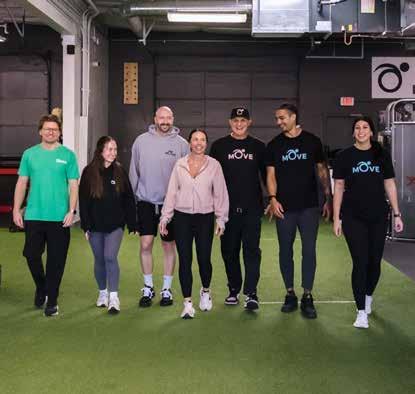

What every pet owner should know before leaving town.

Karen Chavez was on vacation when she received a call no pet owner wants to get.
Back home, her 16-year-old dachshund, Rusty, had developed glaucoma.
To most people, his squinting might have looked like minor irritation or simple fatigue. Fortunately, Rusty wasn’t being cared for by most people. He was being cared for by a trained veterinary professional who immediately recognized something was wrong and acted quickly.
“His vision was saved. Had she not been there, his life and ours would have been dramatically changed,” Karen says.
For Karen, the experience reinforced something she had long believed: the true value of a caregiver isn’t measured when everything goes according to plan. It’s measured when something doesn’t.
“The biggest mistake pet owners make is assuming everyone who loves animals is equally qualified to care for them,” says Karen.
It’s one of the reasons Karen co-founded VetterCare.
After years in veterinary medicine, Karen recognized a growing gap in the pet care industry. Pets were living longer, requiring more medications, recovering from more advanced procedures, and being treated more like family than ever before. Yet when owners traveled, their options often remained limited to traditional pet sitters, boarding facilities, or asking friends and family for help.
Karen believed there was a better solution.
Today, VetterCare connects pet owners with trained veterinary professionals who provide in-home support for everything from healthy puppies and kittens to senior pets, diabetic animals, post-surgical patients, and pets with chronic medical conditions.
Drawing on that experience, Karen shares what every pet owner should know before leaving town.
Traditional pet sitters provide companionship and basic care. Boarding facilities offer supervision and structure, often in an unfamiliar environment. Veterinary professionals bring an entirely different level of expertise.
They understand animal behavior, recognize early signs of illness, administer medications properly, and know when veterinary intervention may be necessary.
“It’s the combination of compassion and medical knowledge that sets them apart,” says Karen.
For healthy pets, that distinction may never become important. But for senior pets, diabetic pets, animals recovering from surgery, or pets with ongoing medical needs, it can make all the difference.

Animals are remarkably good at hiding discomfort.
Subtle changes in appetite, water intake, breathing, posture, activity level, or behavior are often the first clues that something isn’t right. Increased respiratory effort, dehydration, pacing, hiding, unusual fatigue, or signs
“THE TRUE VALUE OF A CAREGIVER ISN’T MEASURED WHEN EVERYTHING GOES ACCORDING TO PLAN. IT’S MEASURED WHEN SOMETHING DOESN’T. IF MY PET HAS A PROBLEM WHILE I’M AWAY, WHO DO I WANT BY THEIR SIDE?”
of discomfort may seem insignificant to an untrained observer but can signal a developing medical concern.
Recognizing those changes early often allows intervention before a situation becomes more serious.
Senior pets, anxious pets, newly adopted pets, and animals with chronic medical conditions often have the hardest time when routines change.
Many owners are surprised to learn how emotionally affected pets can become when their families leave town. Some become clingy. Others withdraw. Some lose their appetite or develop digestive upset.
Even confident pets can struggle with disruption to their routine.
Many people assume the answer is exercise. Others believe it’s companionship.
While both matter, Karen says routine and security are often the most important.
Pets thrive on familiarity. Remaining in their own environment with someone who understands their habits, routines, and individual needs can significantly reduce stress and help them feel more comfortable while their owners are away.

Before handing over the leash, Karen recommends asking three simple questions: What qualifications and experience do you have?
What happens if my pet becomes ill or has an emergency?
How will you communicate with me while I’m away?
The answers often reveal far more than a list of services.
They reveal whether your pet is simply being watched or truly being cared for.
Before traveling, Karen recommends creating an emergency directive that includes your veterinarian’s contact information, preferred emergency hospital, medication instructions, an emergency decision-maker, and guidance regarding emergency treatment.
“The best emergency plan is the one you never need but are grateful to have.”
Ultimately, Karen believes the conversation comes down to one question: If my pet has a problem while I’m away, who do I want by their side?
Peace of mind doesn’t come from knowing someone is checking on your pet. It comes from knowing someone can recognize when something isn’t right, advocate for your pet when you can’t, and respond confidently when the unexpected happens.
“Don’t just ask who is available. Ask who is qualified.”
vettercare.com

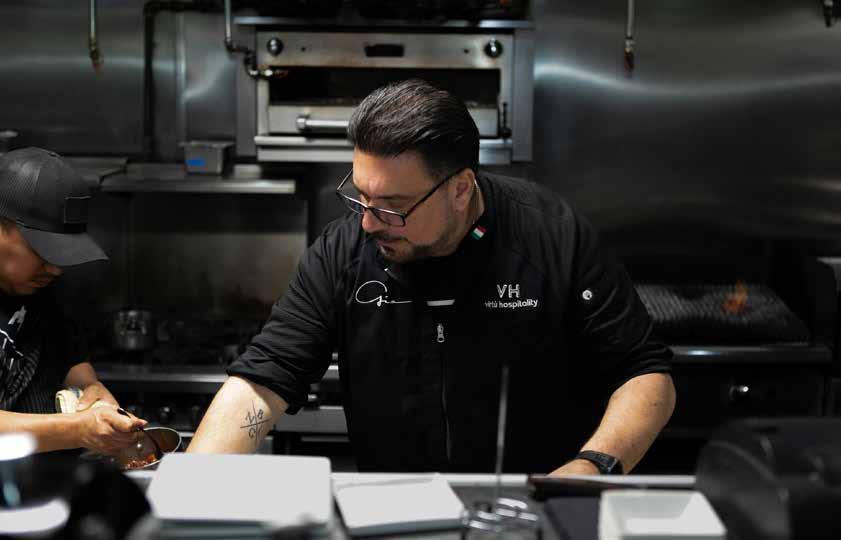
Family comes first. Food is a close second. Here’s Gio in his own words.
PHOTOGRAPHY PROVIDED BY CHEF GIO OSSO
Every month, we sit down with an esteemed Valley chef for a fun game of 21 Questions. This month, we’re chatting with acclaimed chef, restaurateur, and founder of Virtù Hospitality, Gio Osso.

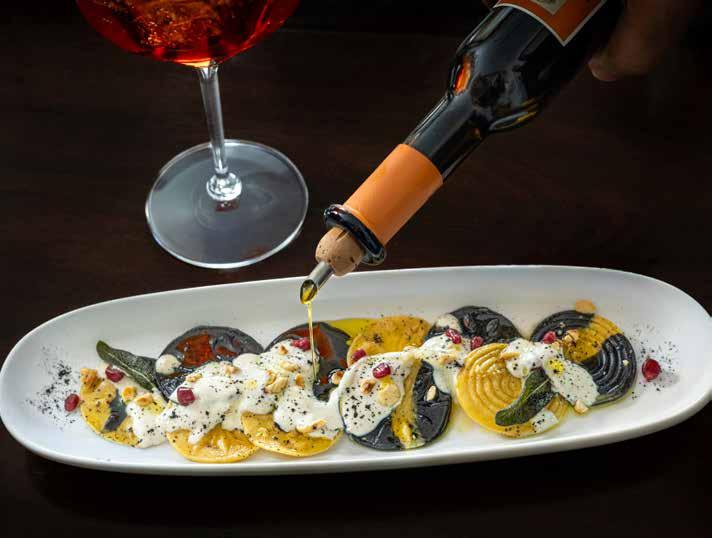
While he’s known for Virtù Honest Craft and Pizzeria Virtù, some of Gio’s favorite moments happen at home with his children in the kitchen.
“It’s less about teaching them how to cook and more about being together.”
Family, fatherhood and food... here’s Gio in his own words.
1. YOU JOKE THAT YOU’RE FROM THE “FAR LEFT COAST OF ITALY, NEW JERSEY.”
Yes, it was a lot like growing up in Italy. It was a closeknit community where neighbors looked out for one another, doors stayed unlocked, and family was at the center of everything.
2. HOW MUCH OF YOUR CHILDHOOD FELT ITALIAN?
From Sunday family dinners to making tomato sauce every summer, our parents and grandparents worked hard to preserve our traditions and pass them down.
3. WHAT ARE SOME MEMORIES OF SPENDING SUMMERS IN CALABRIA?
Family lunches. Everyone came together around the table, sometimes for three hours or more.
The food was incredible, but it was really about connection and belonging.
4. WHO SHAPED YOU THE MOST?
My mother. She passed away on my 24th birthday, but her influence is with me every day.
5. WHAT’S A FOOD MEMORY YOU’LL NEVER FORGET?
My grandfather would pick tomatoes from the farm at sunrise, and my grandmother would spend the day turning them into sauce for lunch. I’ve spent my entire career chasing flavors, but I’ve never forgotten that sauce.
6. WHAT DID YOU THINK YOU’D BE WHEN YOU GREW UP?
A professional soccer player. I used to sleep with a soccer ball next to my bed.
7. WHAT WAS YOUR FIRST JOB?
Delivering newspapers with my best friend.
8. WHEN DID COOKING BECOME MORE THAN A HOBBY?
It never was a hobby. Food was simply part of life. In our family, food wasn’t something you did.
“My grandfather would pick tomatoes from the farm at sunrise, and my grandmother would spend the day turning them into sauce for lunch.”

9. WHAT WAS THE BEST ADVICE YOUR MOTHER EVER GAVE YOU?
Learn from people you admire, but never forget who you are. Don’t lose your roots trying to become someone else.
10. WHAT DID NEW YORK KITCHENS TEACH YOU?
Discipline, precision, and excellence. I also learned you can demand greatness without tearing people down.
11. WHAT’S BEEN THE TOUGHEST PERIOD OF YOUR CAREER?
Right now. The restaurant industry has changed dramatically, and staying relevant requires constant evolution.
12. DID YOU EVER CONSIDER WALKING AWAY FROM IT ALL?
After my mother passed away. I spent years questioning whether the long hours were worth it. Eventually, I realized the answer wasn’t leaving the industry. It was finding a healthier relationship with it.
13. WHAT BROUGHT YOU TO ARIZONA?
A friend invited me to visit, and I fell in love with the people, the desert, and the opportunity to create something of my own.
14. WHAT DID ARIZONA GIVE YOU THAT NEW YORK COULDN’T?
The freedom to create my own path. Arizona allowed me to take everything I learned and build something uniquely my own.
15. WHEN DID ARIZONA START FEELING LIKE HOME?
Almost immediately. The culinary community embraced me from day one, and more than 20 years later, I’m still grateful for that.
16. WHAT WAS THE BIGGEST LEAP OF FAITH YOU’VE TAKEN PROFESSIONALLY?
Opening my own restaurant. There are no guarantees. You have to believe in yourself and take the leap.
17. WHICH ACCOLADE MEANT THE MOST TO YOU?
Being named one of Esquire’s Top 20 Best New Restaurants in America and becoming a James Beard Award semifinalist.
18. WHAT PIECE OF CALABRIA STILL EXISTS IN EVERYTHING YOU COOK?
Simplicity. Great ingredients don’t need much.
19. WHAT ARE YOUR FAVORITE MOMENTS WITH YOUR CHILDREN IN THE KITCHEN?
When we’re laughing, making a mess, and spending time together. If they learn a few recipes along the way, that’s a bonus.
20. WHAT DO YOU HOPE YOUR CHILDREN REMEMBER MOST ABOUT GROWING UP WITH CHEF GIO AS THEIR DAD?
I don’t care if they remember me as Chef Gio. I care that they remember me as Dad. If one day they look back and say, “I had a great dad,” that’s worth more than any award I’ve ever received.
21. IF YOU COULD HAVE ONE MORE MEAL WITH YOUR GRANDPARENTS, WHAT WOULD YOU TELL THEM?
I’d say thank you. Thank you for the sacrifices they made, the traditions they preserved, and the legacy they left behind.
virtuscottsdale.com






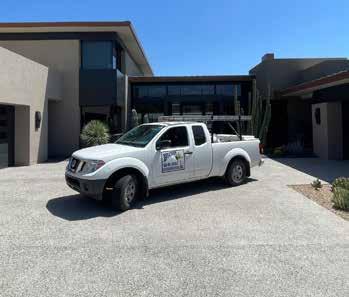






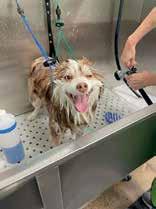







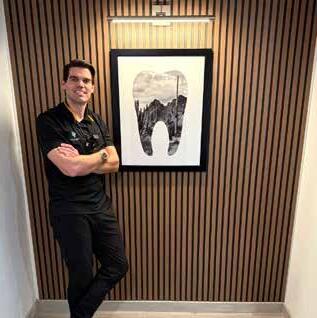



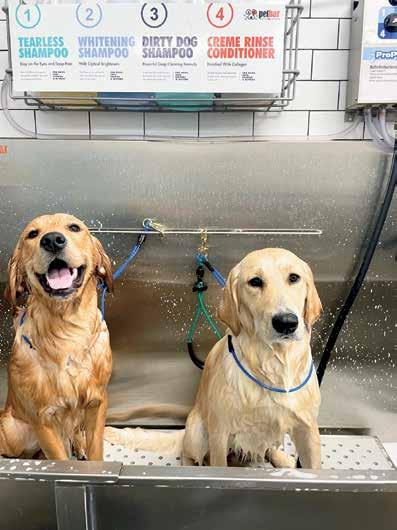


PHOTOGRAPHY PROVIDED
By day, it’s paddleboards, pool games, beach floats, and cannonballs.
By night, it’s caviar, wagyu, handcrafted cocktails, and one of the Caribbean’s most memorable tasting experiences.
Somehow, Kimpton Seafire Resort + Spa strikes the perfect balance between luxury for parents and nonstop fun for kids.
Located on Grand Cayman’s famed Seven Mile Beach, the Forbes Five-Star resort is celebrating its 10th anniversary this year. The milestone feels fitting. The moment guests arrive, it’s easy to understand why.



The Caribbean stretches beyond the resort in impossible shades of turquoise and blue. From oversized balconies overlooking the water to floorto-ceiling views throughout the property, the sea is never far from sight. Suites are spacious, thoughtfully designed, and ideal for families, with room to spread out, relax, and settle into island life. Kitchenettes make it easy to stock favorite snacks and drinks, while private balconies quickly become favorite gathering spots for morning coffee and sunset views.
Then there’s Seven Mile Beach.
Consistently ranked among the most beautiful beaches in the Caribbean, it’s also one of the most family-friendly. The water is calm, clear, and remarkably swimmable. Children spend hours floating, paddleboarding, kayaking, snorkeling, and exploring the shoreline while parents enjoy front-row seats to the fun.
At Seafire, those adventures begin right from the beach.
Complimentary non-motorized water sports allow families to spend their days on the water, while additional experiences like wave runner excursions add another layer of excitement. For those who prefer the pool, the energy continues there, with organized games and activities creating a lively atmosphere throughout the day.
Camp Seafire offers engaging programming for younger guests, while adults can escape to the Forbes Five-Star Spa at Seafire, recognized as one of the finest wellness destinations in the Caribbean. Others may simply choose a lounge chair, a good book, and a view of the sea.
Then comes dinner.
And that’s where Seafire distinguishes itself.
The resort’s culinary program rivals many standalone dining destinations. Breakfast at Ave starts the day overlooking the Caribbean. Lunch often unfolds at Coccoloba, where beachside bites pair perfectly with the restaurant’s beloved banana-infused piña colada. Don’t miss the daily 5 p.m. wine hour, where
complimentary pours and chef-selected bites offer a taste of Seafire’s hospitality before the evening begins. And for dinner, the spotlight shifts to ACT at Avecita.
Far more than a meal, the intimate chef’s table experience transforms dinner into theater.
Inspired by the ancient alchemical process of transformation, the multi-course tasting menu unfolds in a carefully choreographed progression of flavors, techniques, and storytelling. Intricately plated courses may feature scallops, premium wagyu, caviar, and other globally inspired ingredients, each paired to create an immersive culinary journey. Guests watch the experience unfold just feet from the chefs themselves, creating an evening that feels both personal and unforgettable.
After dinner, many guests make their way to Library by the Sea, Seafire’s award-winning cocktail bar, where literary-inspired cocktails and inventive presentations have earned international acclaim.
Yet despite the accolades, the spa, the dining, and the spectacular setting, Seafire’s greatest strength remains surprisingly simple.
It understands why families travel.
Not simply to get away.
But to spend uninterrupted time together; trading schedules for sunsets, swapping screens for shared experiences, and creating memories that will be savored long after the suitcases are unpacked.
This year, as Kimpton Seafire celebrates its 10th anniversary, the resort is inviting guests to celebrate milestones of their own through its “Come Celebrate Your 10 With Us” initiative, honoring everything from 10th birthdays and anniversaries to lifelong friendships and family traditions.
It’s a fitting theme.
Because while the resort may be turning ten, the memories created here have a way of lasting far longer.
And that’s what keeps families coming back.
seafireresortandspa.com
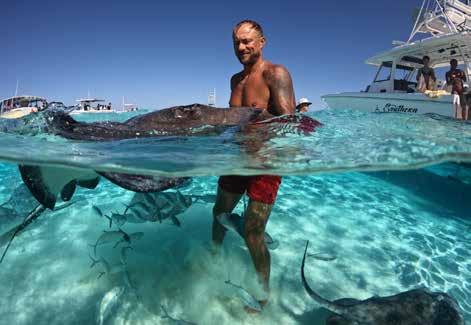
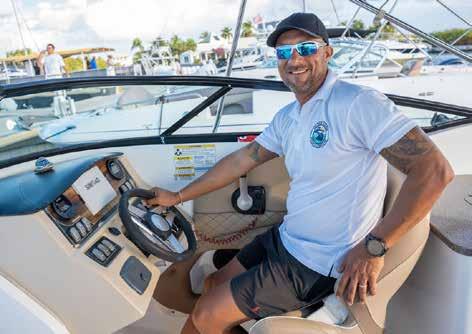

Skip the crowded tour boats.
Island Vision Charters offers a completely private, customized day on the water for your family or group. No strangers. No rigid schedule. No rushing through stops.
Just your crew, Captain Alex, and some of Grand Cayman’s most spectacular experiences.
For more than 60 years, southern stingrays have gathered at this shallow sandbar in Grand Cayman’s North Sound, creating one of the Caribbean’s most extraordinary wildlife encounters.
Standing in crystal-clear, waist-deep water as dozens of stingrays glide effortlessly around you feels almost surreal. Friendly, curious, and surprisingly gentle, they’ve earned the nickname “the puppies of the ocean.” Many visitors leave with a kiss and, if local legend is true, seven years of good luck.
Under Captain Alex’s guidance, even first-time visitors quickly feel at ease. It’s the stop everyone talks about long after the trip is over.
The exhale.
After the excitement of Stingray City comes one of Grand Cayman’s most peaceful corners.
Tucked into a quiet stretch of the North Sound, Starfish Point is home to calm, shallow water and vibrant orange starfish resting beneath the surface. The water is warm, crystal clear, and shallow enough for young children to splash, explore, and search for marine life.
It’s beautiful, unhurried, and the kind of place that makes everyone slow down for a while.

The underwater world.
Grand Cayman is home to some of the Caribbean’s most pristine reef systems, where visibility can stretch nearly 100 feet on the right day.
Because every charter is private, Captain Alex isn’t tied to the same route as larger tour operators. Instead, he chooses reef locations based on conditions, leading guests to calmer water, vibrant coral gardens, and some of the island’s best snorkeling.
Sea turtles, tropical fish, rays, and colorful coral make every stop a little different from the last.
Why arrive by car when you can arrive by boat?
One of the best parts of a private charter is the flexibility to make the day your own.
Want to stop for lunch? Captain Alex can dock at one of Grand Cayman’s waterfront restaurants, allowing guests to step straight from the boat to a leisurely island lunch before heading back out on the water.
Captain Alex.
A Cayman local with nearly two decades on the water, he’s equal parts guide, storyteller, entertainer, and ambassador for the island he loves.
Kids adore him. Parents trust him. His enthusiasm is contagious, his knowledge is impressive, and his personality is half the fun.
One boat, one captain, and one unforgettable day in Grand Cayman.
islandvisioncharters.com


SEVEN EXCLUSIVE OPPORTUNITIES TO BUILD THE CUSTOM HOME YOU’VE ALWAYS ENVISIONED.
DISTINCT HOMES. PREMIER LOCATIONS.
BUILT FOR THE WAY YOU LIVE.

At American Premier Builder, we believe the most exceptional homes begin with understanding how you want to live.
Whether building a custom home or transforming your current one, our approach is rooted in collaboration, craftsmanship, and a commitment to delivering an experience as remarkable as the finished home itself.











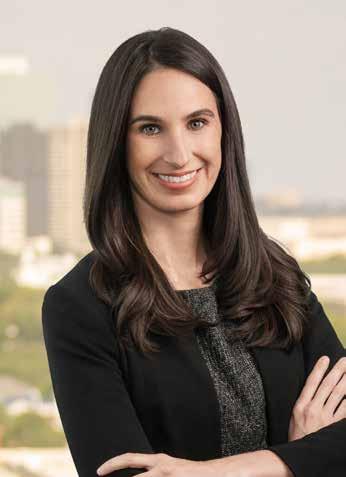
•
•
•
•
•
•
•
•

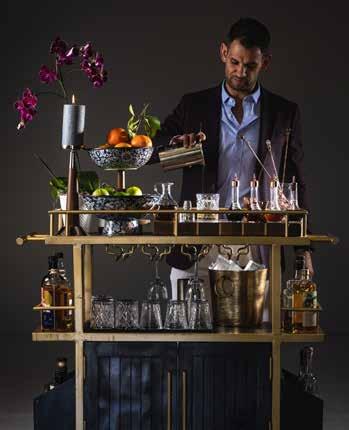





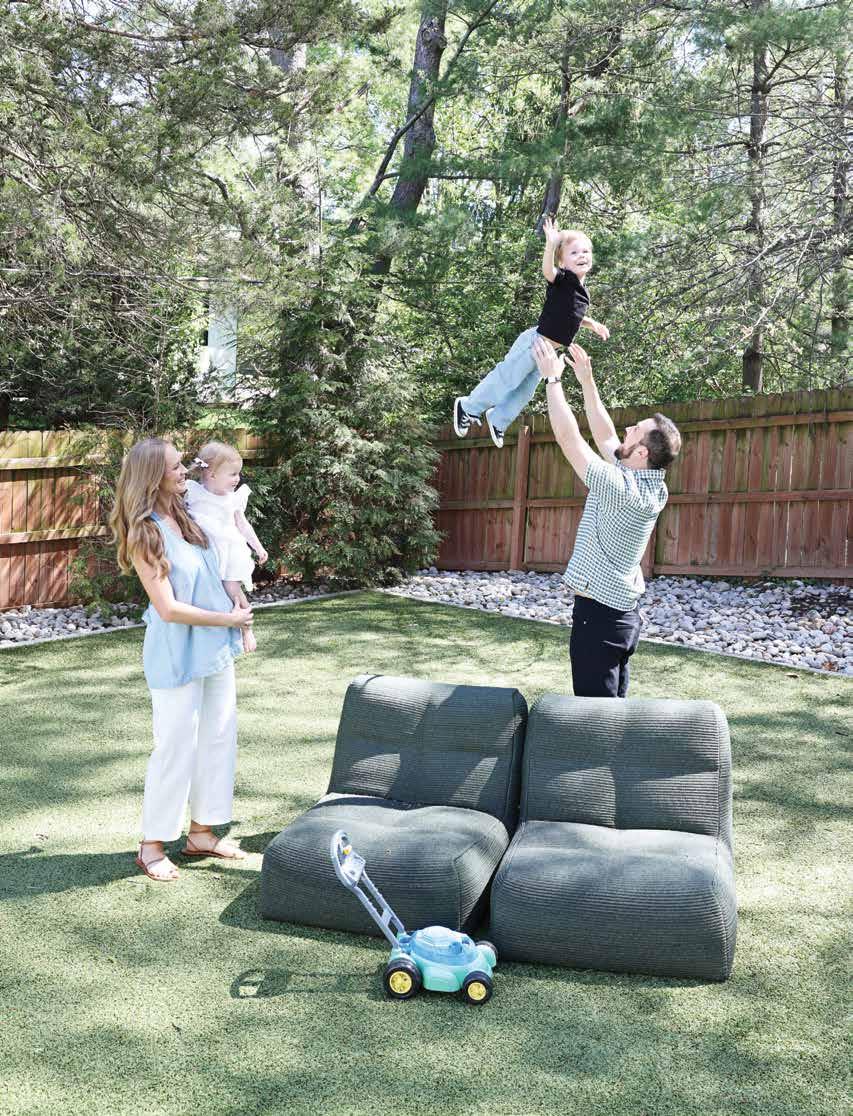
Trey Kennedy makes a living finding comedy in regular life. Marriage. Toddlers. Yoga pants. The Thursday-night scramble between school dropoffs, soccer practice, and whatever has to be done by morning. Twelve years in, it shows: millions of followers across every platform, three stand-up specials, a sold-out Relatable Tour, and a style of humor fans send each other captioned, “Are you watching me?” He delivers the kind of comedy that travels because everyone’s living some version of it.
Katie, his wife of six years, is a former biomedical engineer who also built a modeling career. She’s now raising their kids and co-hosting Correct Opinions alongside Trey — the show where the two of them swap takes on marriage, parenting, and whatever came up that week.
Trey has been at this longer than people realize. An Edmond, Oklahoma kid who grew up playing basketball described himself as a “shy kid who never thought he’d be an entertainer.” He started making videos while attending Oklahoma State University. After building millions of followers on Vine before the platform shut down, he gave himself six months on Instagram and Facebook to see whether he could rebuild from zero. He did. Stand-up soon followed. His first special, Are You For Real?, streams on YouTube; the second, Grow Up, on Amazon Prime; the third, built around the Relatable Tour, wrapped earlier this year. “I’ve been trying to be funny every week for like twelve years now,” he says. A slow climb, made one bit at a time.
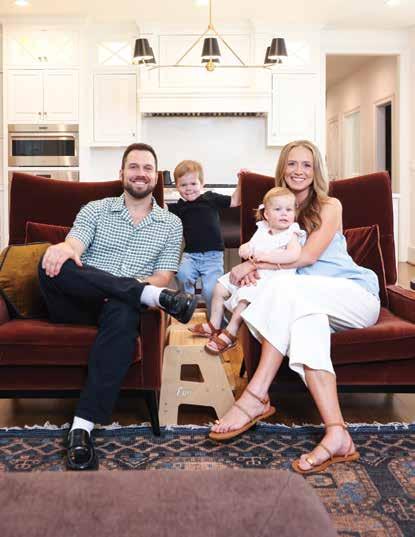
ARTICLE BY KALI KASPRZYK PHOTOGRAPHY BY JANIE JONES
“I’ve been trying to be funny every week for like twelve years now.”
Most of what Trey writes lately starts in his own kitchen. Thomas is three and a half, and he is, in his father’s words, “a movie.” He narrates his own life from the moment his eyes open and mispronounces words in ways his parents now repeat to each other because no one else would believe them. His younger sister, Eva, is what Katie calls “the calm one.” With a third now in the mix, the Kennedys are officially outnumbered.
After six years of marriage, Trey and Katie have learned that the partnership runs best when it gets its own time on the calendar. So once a week, they leave the kids with a sitter and go out for coffee. “You need a system,” Katie says. “It’s about taking time to look each other in the eye. Not the kids. Not the cameras. Just each other.”
The same instinct shapes the work. Most of Trey’s trial and error happens onstage or on Instagram, but the first read is always Katie’s. “There’s only been one time ever I’ve had to be like, ‘you’re not doing that,’” she says. The rest of the time, she just laughs first.
FEATURING TREY & KATIE KENNEDY
Trey and Katie talk about marriage, parenting, and the moments that don’t make the Instagram feed.
Watch or listen to the full conversation wherever you get your podcasts.






Eye In The Sky connects you to the invite only network of verified private jet owners, operators, and flyers on one integrated platform. View or post available seats or empty legs on private planes and communicate directly with other members. As a valued member of the Paradise Valley City Lifestyle community, you are invited to join this exclusive network and bypass the existing waitlist.