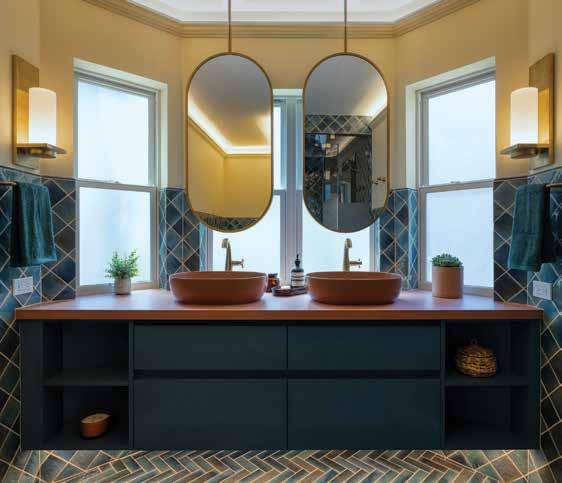
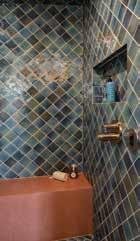
For 25 years, your Palo Alto neighbors have trusted American Vision Windows to do something deceptively simple: get it right. The right windows for the architecture. The right installation, often in a single day. The right experience, from the first consultation to the final walkthrough.
What makes the difference? American Vision Windows is 100% employee-owned, which means every person who walks into your home has a personal stake in your satisfaction. Not a contractor. Not a crew passing through. An owner.
Over one million windows installed across California. A reputation built one homeowner at a time.
Welcome to the August Publication
This month is all about the ones who truly run our homes: our kids and our pets. Personally, this theme hits super close to home. Growing up with six siblings, five nieces, and a nephew on the way, my life has always been perfectly chaotic. I know firsthand that the energy children and animals bring into our lives completely shapes how we experience our community.
In this issue, we’re spotlighting the local leaders who keep that energy thriving and help our families live well. First up, we sat down with Master Chin, a local Taekwondo instructor who is doing incredible work teaching discipline and confidence to the next generation. If you're looking for ways to keep your kids active and focused, his philosophy is a must-read.
We also caught up with Callum Parker, the mind behind Kalos Dexa Body Scans. He’s completely changing how we look at health and fitness metrics, giving parents and professionals the ultimate tool to optimize their wellness journeys with real data.
And finally, because no community issue is complete without an amazing meal, we take you inside Palo Alto’s famous Macarena restaurant. Whether you need a lively spot for a family dinner or a weekend escape, their space brings the perfect blend of flavor and neighborhood culture.
Palo Alto is filled with these fun voices making life here feel vibrant. I hope this issue inspires you to explore a new spot downtown, invest in your health, or just appreciate the beautiful chaos of family life.
With City Lifestyle’s co-branded print + digital packages, your business captures attention wherever our community is looking. Build unmatched local credibility on the page, and drive immediate action online.
double your local
Contact your local publisher by scanning below.
Photography by Alison Tsang
business monthly
A ROUNDUP OF NEWS FROM LOCAL BUSINESSES
BRYANT STREET COMMUNITY CENTER
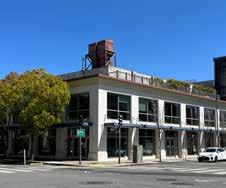
The City of Palo Alto held the grand opening of the Bryant Street Community Center on June 3, a two-story downtown hub at 429 Bryant Street. The ground floor serves daily senior lunches through La Comida, the Palo Alto nonprofit. Upstairs, The Rise teen center offers foosball, table tennis, video games, and a place to land after school. The building previously housed Form Fitness.
MODERN ANIMAL PALO ALTO | acquired by Chewy
On May 21, Chewy closed its purchase of Modern Animal, folding the membership-based veterinary chain into Chewy Vet Care. The deal expands Chewy's clinic footprint from 18 to 47 locations and includes Modern Animal Palo Alto at 215 Alma Street, led by Dr. Minda Newhouse. The clinic offers same-day urgent care, app-based booking, and 24/7 virtual care for members.
RIKYU MATCHA CAFÉ
Rikyu is a matcha café at 121 Lytton Avenue from the team behind Hiroshi's Los Altos omakase. The new spot opened this spring with matcha pulled from Shizuoka, Japan, alongside Japanese sandos and chirashi bowls. The name honors Sen no Rikyū, the sixteenth-century Japanese tea master.
Photography Courtesy of Rikyu Match Café
Photography Courtesy of City of Palo Alto
GOING
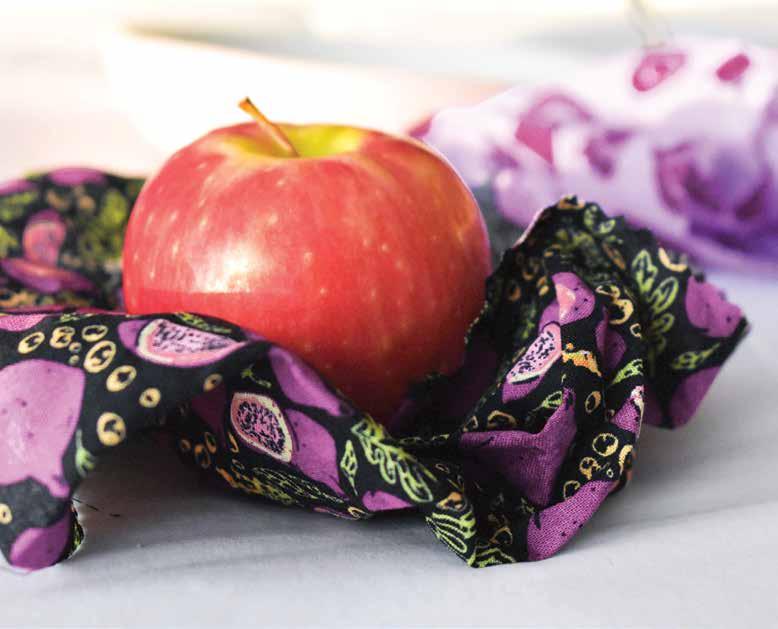
We’re saying goodbye to plastic wrap, Ziploc bags and aluminum foil, and hello to reusable wax food wraps you can wrap around anything your hungry (or full) heart desires.
HOW TO MAKE YOUR OWN REUSABLE WAX FOOD WRAPS IN 4 EASY STEPS
GREEN
ARTICLE BY NICOLETTE MARTIN
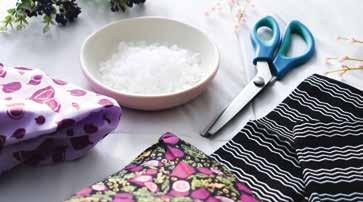
SUPPLIES:
• Beeswax beads
• Fabric
• Pinking shears
• Parchment paper
• Baking sheet
INSTRUCTIONS:
01. PREHEAT your oven to its lowest setting.
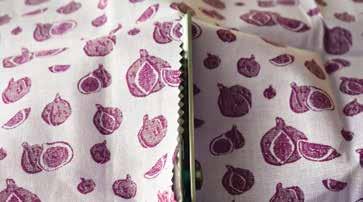
02. CUT FABRIC into desired shapes. Using pinking shears so the fabric doesn’t fray, you can cut your fabric into any shape or size you’d like. Consider what size or shape of food you store the most and use that as a guide.
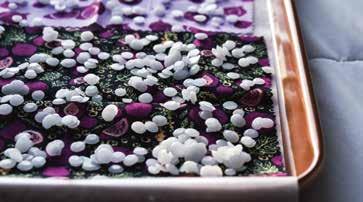
03. PREP + MELT. Cover your baking sheet with parchment paper and place the cut fabric on top. Sprinkle with beeswax beads and place in the oven to allow beeswax to melt for 5-10 minutes.
04. KEEP IT COOL. Remove fabric from baking sheet (careful, it’s hot!) and allow wax to harden and cool.
FOR REUSE, wash in cool water (you don’t want the wax to melt!) with mild dish soap and let air dry.
Tutorial adapted from ApartmentTherapy.com.
Backyard Whimsy
Creating a Kid-Friendly Backyard Space
ARTICLE BY ANGELA BROOCKERD | PHOTOGRAPHY BY JANIE JONES
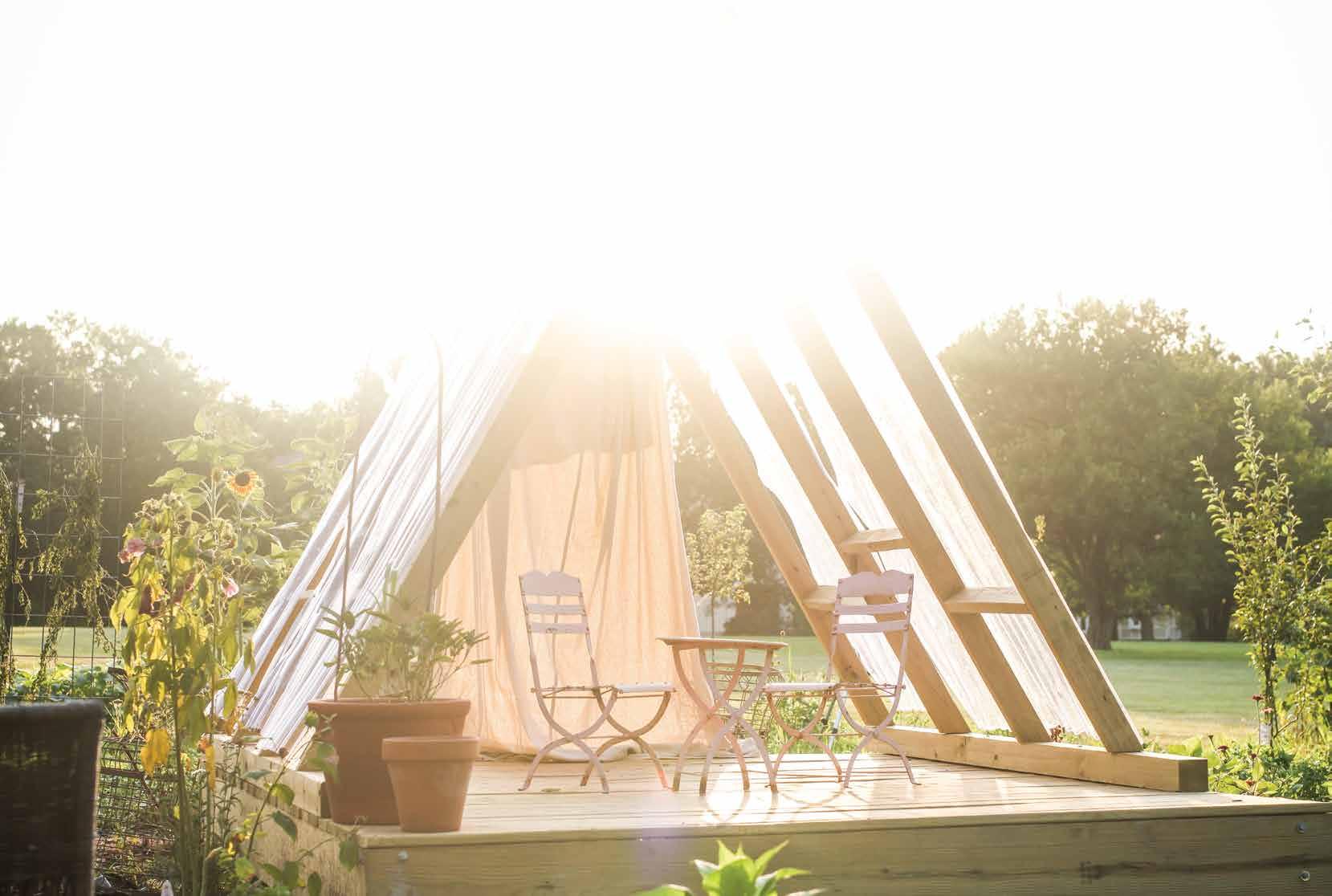
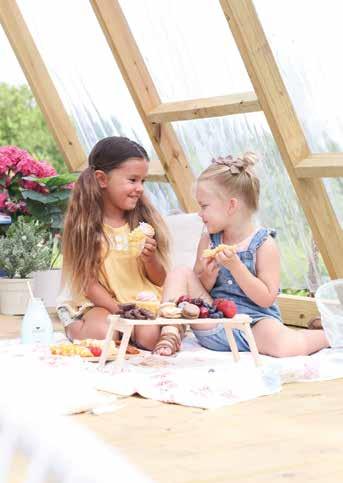
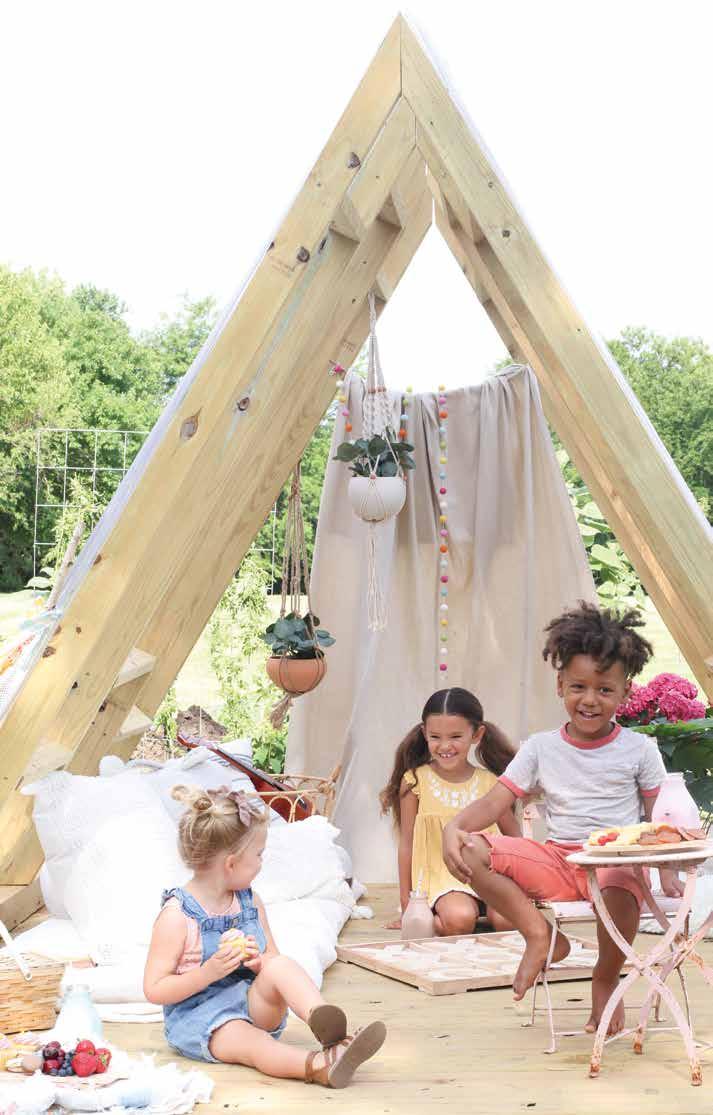
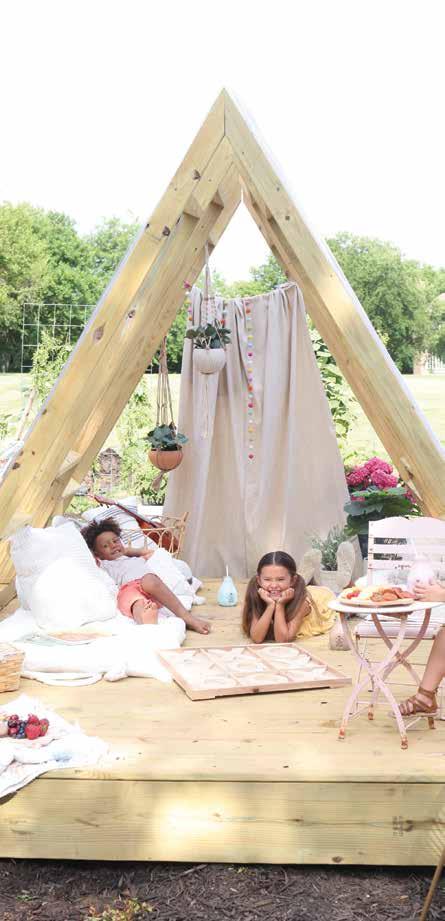
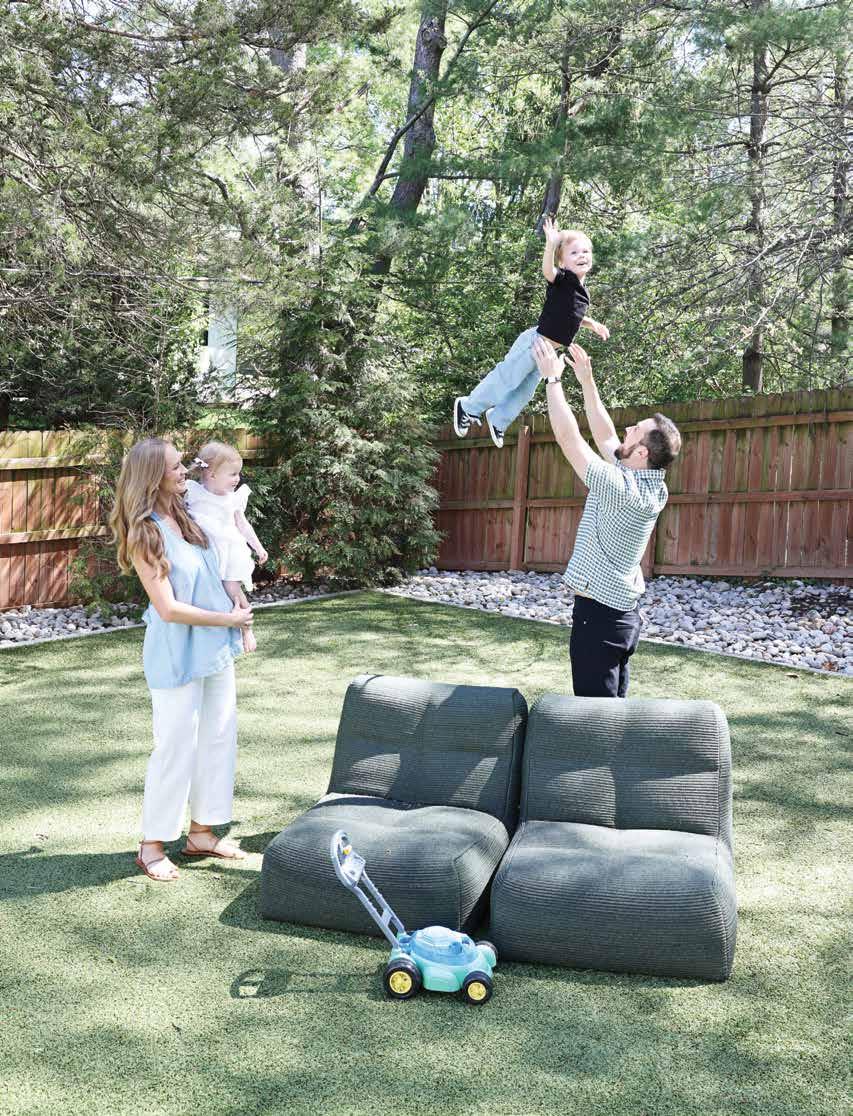
This adorable outdoor play space is not only easy and inexpensive to build, but it is full of charm and the perfect spot for the kids to play and lounge. The A-frame structure is easily customizable to any style and color scheme desired. Leave the wood bare, or add flare with paint or stain. An outdoor clubhouse provides a space that allows kids
to make it their own and to let their imaginations run wild spending time outdoors.
For this project, we visited our local hardware store to get all the necessary supplies we needed. The deck is an 8 x 10 decking so there is no need to cut down the length of any boards and pressure treated wood was used. First, dig holes
CONTINUED >
18 inches down to put the footers, which is a 4 x 4 x 8 treated post, and cut those into two foot lengths. Next, pour quick set concrete in the holes. Add water, and set the posts in and let it dry. We used lag screws to attach the base 2 x 10’s to the corner posts, and then 2 x 6’s for the joists with metal hangers. Now time to put on the decking boards with exterior screws. Don’t forget to constantly check with a level. Once the decking is finished, now it is time for the fun!
For the A frame you need a 60-degree angle at the top of the A, and a 30-degree angle at the bottom. You can run a 4 x 4 along the decking to attach the A frame to which adds a bit of height so adults can stand in it as well. Use heavy duty exterior screws to attach the A frame 2 x 4’s to the structure. The top of the A comes together and is held by exterior screws. For the roofing, we used 8-foot corrugated clear panels and screwed those into the A frame for a weather protecting cover. We left three feet uncovered so a chair and some pots with herbs and flowers could be added to the entrance. Decorate with outdoor pillows, a children’s table, outdoor rug and hanging flower pots to make it feel like a special place for kids to go. If entertaining friends, a few simple charcuterie boards are always a hit.
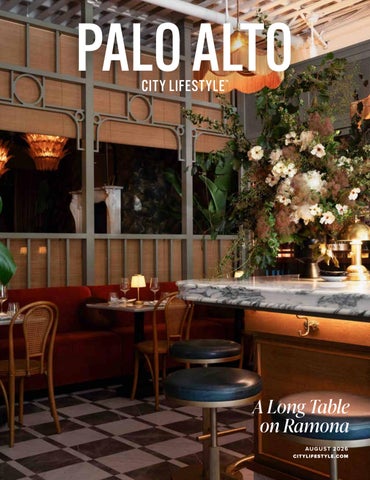
A LONG TABLE ON RAMONA
How David Linares and Elizabeth Reviriego built the Spanish dining room they could not find anywhere else in Palo Alto.
Twelve years ago, David
and Elizabeth
met in London. They were Spaniards working in other people’s restaurants, far from home. They opened a place in Madrid. Then they came to California and built their own on
Linares
Reviriego
Ramona Street.
David and Elizabeth had worked in hospitality since they were teenagers. He started at sixteen. She left home at nineteen. Both had spent their careers in Spanish restaurants in cities that were not Spain. London was where their lives crossed, both of them on the same side of the kitchen, both far from home.
They went back to Spain together. They opened a restaurant in Madrid, the first they owned. Before opening it they had also run a marketing company in Spain, but restaurants were where their hands had always gone, and where they returned. They began planning a second location. Before they could open it, an opportunity arrived to move to the United States, and the decision in front of them was whether they wanted to start a family before the next adventure, or after. They wanted to do one more thing before family. They sold what they owned in Spain, packed two lives into a flight to California, and started over.
That was seven years ago. For most of those years they lived on the peninsula and learned the Bay Area room by room. Good food was easy to find. The room
they wanted to eat in was harder. Not a destination restaurant. Not a chef’s table. A neighborhood Spanish dining room where the menu does not change much, where the meal slows down on purpose, and where the food gets better as the hours go on.
They began looking for the right space. They needed about 4,500 square feet, in a part of the peninsula where people would come for dinner. There were not many options. When the former Bird Dog space on Ramona Street became available, they recognized it. Another Spanish place a few blocks over, La Joya, had recently closed. Downtown Palo Alto was ready for a Spanish room and not getting one.
Macarena opened in March, named after the elegant Spanish grandmother who would sit at the head of a long family table and gather everyone around her. The restaurant David and Elizabeth had been carrying in their heads for years was finally a room with a door.
David is direct about why Palo Alto. The community here is well informed about Spanish food. There is a love for the cuisine in this part of the country that
"It was a restaurant that was being built for many years in our heads, until we finally made it happen." — David Linares
is harder to find in places where Spanish food is rarer. When customers walk in, they walk in already appreciative. They come back. They become regulars, and then they become friends.
For a Spaniard living abroad, Elizabeth says, that is the unexpected gift. Macarena is open every day, and every day the people walking through the door love the country David and Elizabeth come from. She calls it a dream come true.
The kitchen reads the same way. Macarena has four founders, not two. David and Elizabeth’s chef co-founders are Toni Santanach and Sergio Box, longtime friends who had each owned a restaurant in Spain. Toni came out of the Hofmann School in Barcelona, the culinary institute whose own restaurant
earned a Michelin star. Sergio came from Valencia, the region paella was born in. The four built the concept together. The four cook the dishes they grew up eating. Macarena is not reinventing Spanish food. Macarena is serving it. The menu is the food the four founders ate at home, the dishes their families have been cooking the same way for as long as anyone can remember, authentic and recognizable to anyone who has eaten in Spain. David puts it as a matter of history. You can keep combining new ingredients, he says, but the flavor you are looking for is the one your kitchen has been cooking for a hundred years.
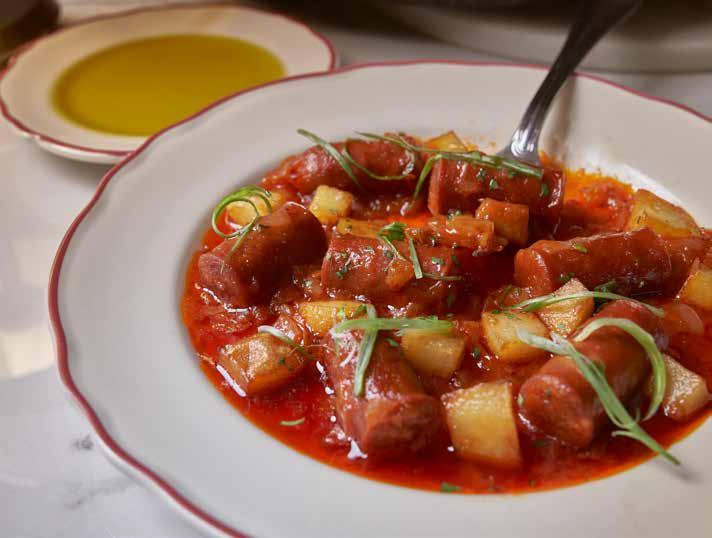
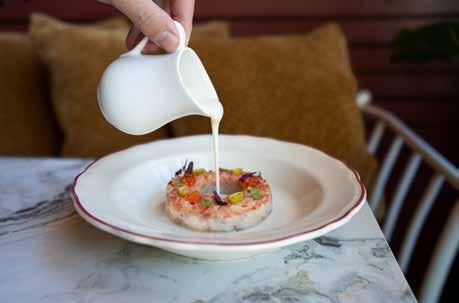
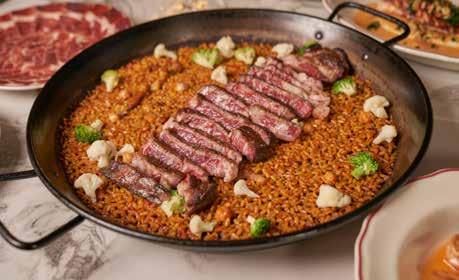
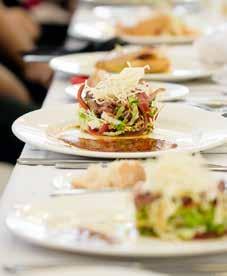
Three plates make the case for the kitchen. Cochinillo, a suckling pig roasted seven hours until the skin breaks under a
spoon. Fideuà, a paella built on thin pasta instead of rice, a Mediterranean-coast dish you almost never see on a US menu. Canelones, Catalan pasta cylinders filled with oxtail and béchamel, a dish that is Spanish despite its Italian-sounding name. The octopus, the jamón, the beef, and the rice are imported from Spain. David and Elizabeth bring the ingredient list home with them every time they go.
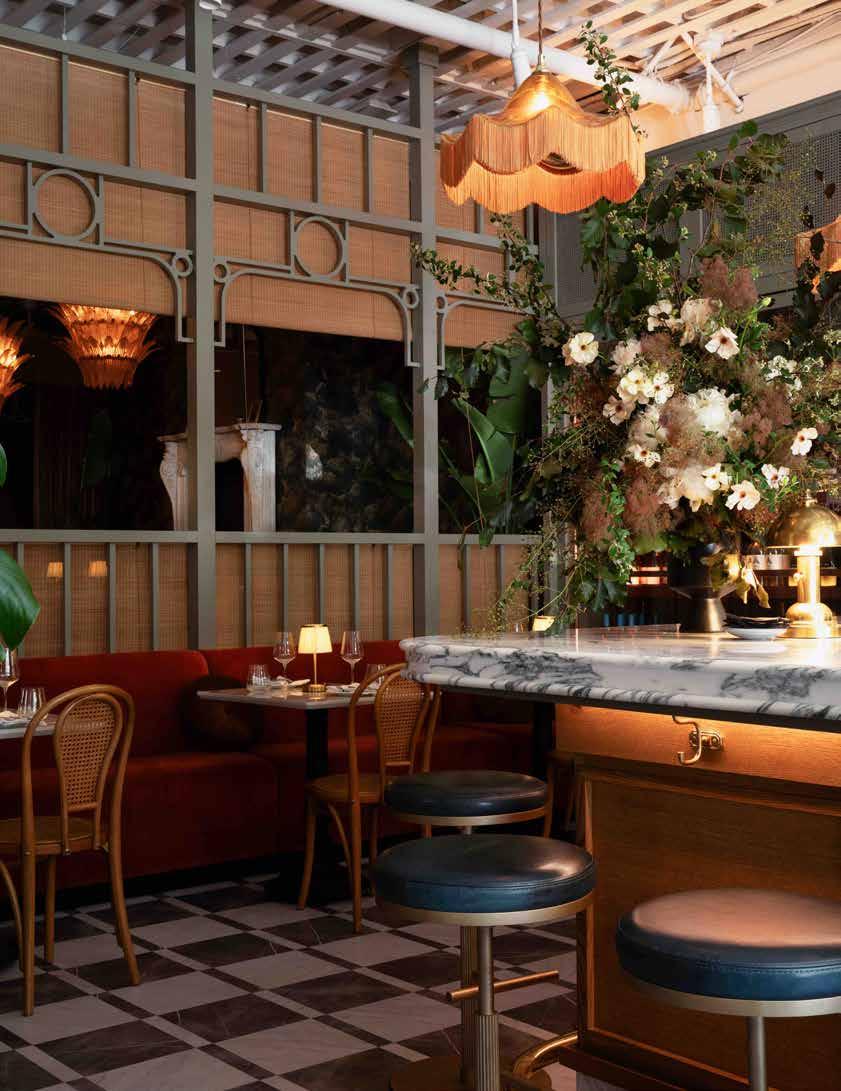
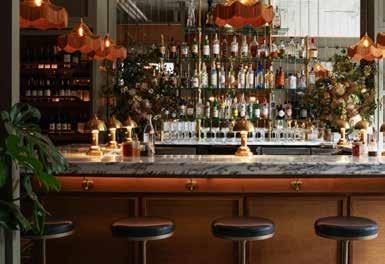
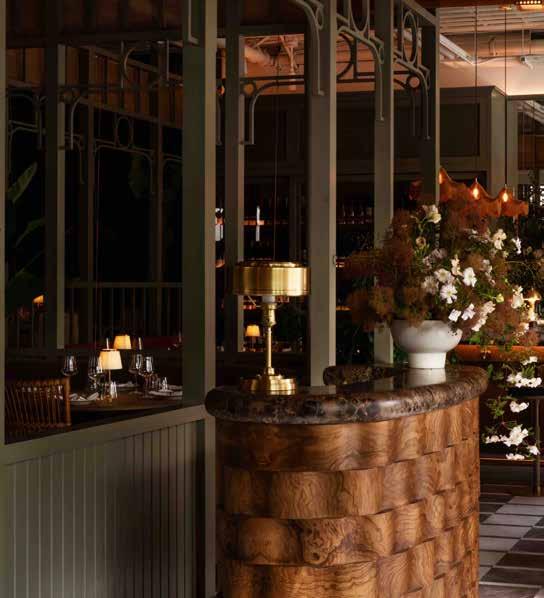
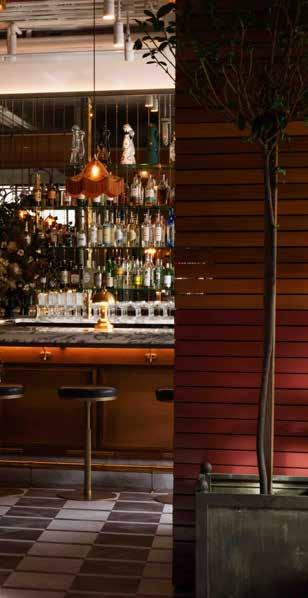
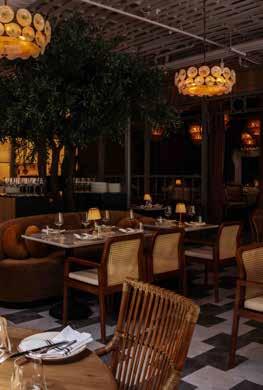
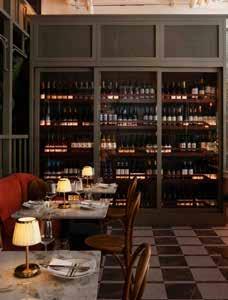
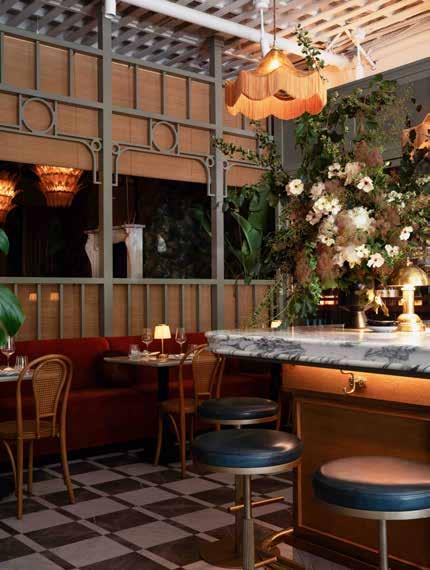
The room is the work of Alexa Nasifi of Adean Studios, who took the founders’ idea for the room and built it as a physical space. She closed the floor plan down from the open layout Bird Dog had run before. The new plan creates warmth and a sense of discovery rather than the wide sightlines of an American restaurant. The bones of the redesign are wood partitions in the shape of the patio andaluz, the inner courtyard of an Andalusian house, a shape Spaniards grow up walking through and Americans rarely encounter.
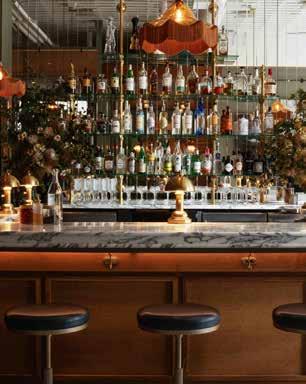
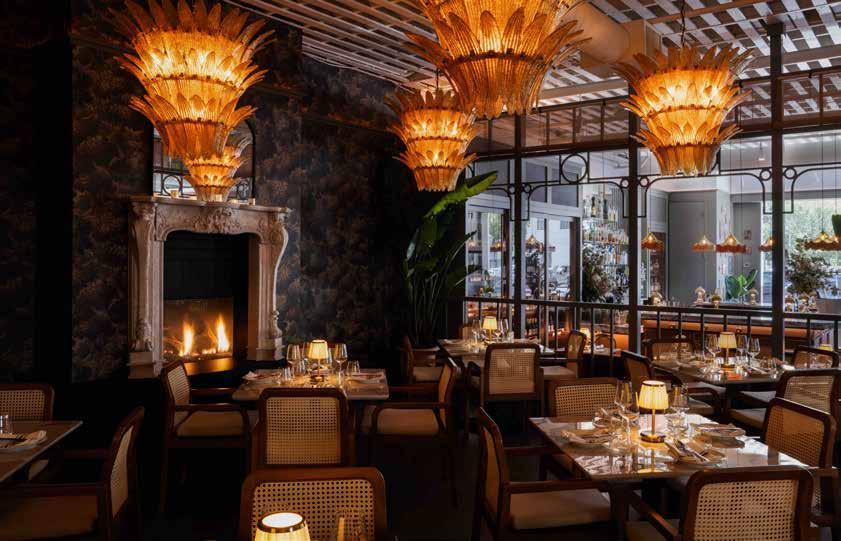
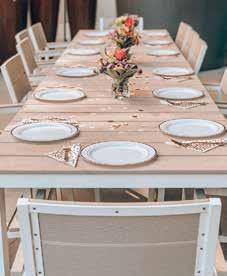
The partitions divide the restaurant into three rooms. The main dining room is moody, elegant, and timeless. Behind the wood partitions sits El Salón de Macarena, a private room with a fireplace, a long farm-style table, chandeliers low over the wood, and vintage-patterned wallpaper. At the other end is the Lounge, which takes its cues from Madrid and reads more modern: red banquettes, pop art colors, and black and white photography. Outside, on a patio nicknamed “the train” for its narrow shape, the doors open onto Ramona Street.
Roman shades on the wood partitions can be raised or lowered, so the private room becomes part of the main room when the night calls for it. The restaurant changes shape with the size of the party, which is how rooms work in Spain.
In 2026, the LIV Hospitality Awards in Zurich named Macarena their winner in the casual restaurant architectural design category. David says they CONTINUED >
were shocked. The recognition arrived from a country none of the founders was born in, for a restaurant in a town none of them grew up in, on the second venture of a hospitality life that started for David and Elizabeth as teenagers.
What the award noticed is what a Saturday-night reservation will notice. A room that did not exist anywhere in downtown Palo Alto before the four founders opened it. A room they spent years planning, then built.
David and Elizabeth came to California seven years ago to do one more thing before family. Macarena is what they did. Toni and Sergio joined them in California for it.
"Gastronomy is our way of speaking. This is the way we communicate with the community."
— Elizabeth Reviriego
Photos Courtesy of Macarena Restaurant
CALLUM PARKER Kalos After Cambridge
FROM A CAMBRIDGE SCHOLARSHIP TO A STOREFRONT ON FOREST AVENUE.
At seventeen, Callum Parker won the Sir Douglas Myers Scholarship to Cambridge. The Wellington newspaper called him a maths whiz.
He read economics at Gonville and Caius. In his final term he tried running, posted strong times almost immediately. In July 2021, racing in the UK, he ran 800 meters in 1:54. He was twenty-three. He had taken a job at Bain in London. After about two years he left. He says he was more focused on training for the 800 meters than on the consulting work.
What followed was a search. He went to Bogotá to work with Endeavor, the entrepreneurship network, and startup life caught. He came back to London and joined Terra, a fitness wearables AI company. He clashed with the founders and was let go after three months. He moved to Lisbon, took a freelance project in Guatemala building an AI tool for a business development team, and started coaching friends and family on the side. He set himself a personal goal: run a 4:30 mile and join the Thousand Pound Club on the same day. He thought he was probably the first person who had tried. He went on to win HYROX Vancouver & the Hot Chocolate 5K.
Through all of it, he was looking for where math, AI, athletics, and coaching could land in one place.
He had started getting DEXA scans, often, to see what was actually changing CONTINUED >
inside his body. One of the places he went to get scanned was a small room in San Francisco run by a Harvard graduate named Harsh Sinha.
Sinha had led the data team on Meta’s wearables product before starting Kalos, and had been a certified personal trainer at Equinox before that. Kalos at that point was one room on Battery Street with a DEXA machine. Callum flew out, slept on an air mattress in Harsh’s living room, and signed on as co-founder. Harsh would run strategy, Callum marketing and operations.
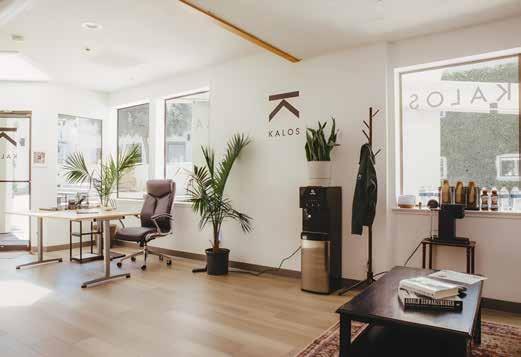
That was 2024. Kalos was where the parts of his career started to add up. Kalos is Greek for physical beauty, the root of the word calisthenics. Callum signed on for the idea: data, read by a real coach, changes what training does. Today the company runs four Bay Area locations, including the storefront at 195 Forest Avenue, between Nobu and Whole Foods. Thousands of clients have come through, with a staff of roughly twenty.
training program to help the client achieve their specific health and fitness goals and uses DEXA scans to measure progress and iterate on the approach. Members have 24/7 access to their coach throughout the program. Between scans the client logs every workout in the Kalos app. The next program is written against the pair: scan output and training input.
"It's human coaching that is enabled by AI to allow our coaches to reach people in a more effective way."
— Callum Parker
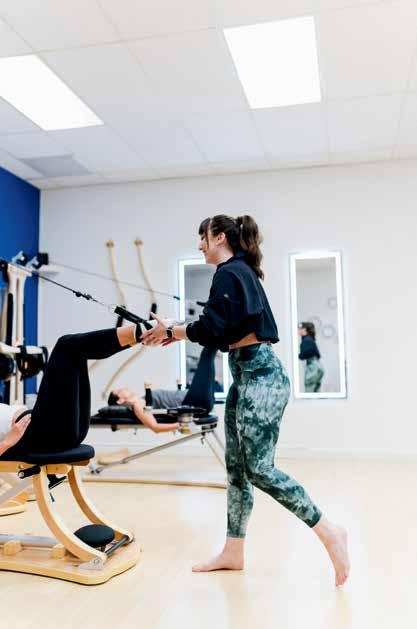
The way Kalos works is the same in every location. A client walks in. A DEXA scan reads their bone density, body fat percentage, where their fat is sitting, and how much lean tissue they are carrying. A Kalos analyst designs a personalised
Kalos calls it a closed-loop system. Coaches A/B test training inputs and nutrition adjustments against the DEXA numbers between scans to see what is actually moving the body composition. The company is training an AI model on its scan library so the program a new client gets is informed by what worked for the thousand bodies before them. Callum is firm that the model is meant to make the coach better, not to replace the coach. What drives him, he says, is competition. He wants to be the best at whatever he is doing. He has a 1:54 800-meter time, a HYROX Vancouver title, a Cambridge degree, and Kalos runs four locations running closed-loop body composition tests on over 1000 Kalos members in the Bay Area and he’s only twenty-eight.
Photos Courtesy of Kalos Health
CINNAMON MONKEY BREAD IS A FUN DESSERT FOR CHILDREN TO MAKE AND SHARE!
ARTICLE BY PAULI REEP
PHOTOGRAPHY PROVIDED
There is little more satisfying to your sweet tooth than ooey-gooey cinnamon rolls. Here is an easy and fun way to make this tearable, shareable treat!
aroun d
INGREDIENTS
• 1/2 cup melted butter
• 1/3 cup granulated sugar
• 1/3 cup firmly packed brown sugar
• 1 tablespoon ground cinnamon
• 3 (12 oz.) cans of buttermilk biscuits
COOKING INSTRUCTIONS
Preheat oven to 375 degrees. Generously coat the inside of a bundt pan with cooking spray or butter. Melt the butter in a pot or bowl. Mix the sugars and cinnamon in a separate bowl.
Open one can of biscuits, separate, and cut each into four sections. Next, roll each quarter into a ball and then put each one into the sugar mixture to coat. Place the balls in the bundt pan in a single layer and drizzle a little melted butter evenly over the top. Repeat with the other two cans of biscuits. Sprinkle the remaining sugar mixture over the top and bake for 30-35 minutes.
Be sure to let cool for a minute or two before turning the bread onto a plate and carefully removing the pan. If you leave the monkey bread in the pan much longer, it will stick and be hard to remove.
I sometimes make icing, a few tablespoons of milk, to about 1/2 cup of powdered sugar with a splash of vanilla.
Drizzle over the top while warm and enjoy!
TREY & KATIE KENNEDY
ON MARRIAGE, KIDS, AND THE COMEDY OF REAL LIFE
Trey Kennedy makes a living finding comedy in regular life. Marriage. Toddlers. Yoga pants. The Thursday-night scramble between school dropoffs, soccer practice, and whatever has to be done by morning. Twelve years in, it shows: millions of followers across every platform, three stand-up specials, a sold-out Relatable Tour, and a style of humor fans send each other captioned, “Are you watching me?” He delivers the kind of comedy that travels because everyone’s living some version of it.
Katie, his wife of six years, is a former biomedical engineer who also built a modeling career. She’s now raising their kids and co-hosting Correct Opinions alongside Trey — the show where the two of them swap takes on marriage, parenting, and whatever came up that week.
Trey has been at this longer than people realize. An Edmond, Oklahoma kid who grew up playing basketball described himself as a “shy kid who never thought he’d be an entertainer.” He started making videos while attending Oklahoma State University. After building millions of followers on Vine before the platform shut down, he gave himself six months on Instagram and Facebook to see whether he could rebuild from zero. He did. Stand-up soon followed. His first special, Are You For Real?, streams on YouTube; the second, Grow Up, on Amazon Prime; the third, built around the Relatable Tour, wrapped earlier this year. “I’ve been trying to be funny every week for like twelve years now,” he says. A slow climb, made one bit at a time.
ARTICLE BY KALI KASPRZYK
JANIE
“I’ve been trying to be funny every week for like twelve years now.”
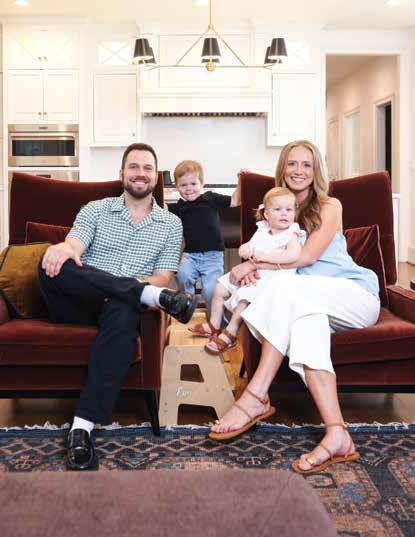
Most of what Trey writes lately starts in his own kitchen. Thomas is three and a half, and he is, in his father’s words, “a movie.” He narrates his own life from the moment his eyes open and mispronounces words in ways his parents now repeat to each other because no one else would believe them. His younger sister, Eva, is what Katie calls “the calm one.” With a third now in the mix, the Kennedys are officially outnumbered.
After six years of marriage, Trey and Katie have learned that the partnership runs best when it gets its own time on the calendar. So once a week, they leave the kids with a sitter and go out for coffee. “You need a system,” Katie says. “It’s about taking time to look each other in the eye. Not the kids. Not the cameras. Just each other.”
The same instinct shapes the work. Most of Trey’s trial and error happens onstage or on Instagram, but the first read is always Katie’s. “There’s only been one time ever I’ve had to be like, ‘you’re not doing that,’” she says. The rest of the time, she just laughs first.
FEATURING TREY & KATIE KENNEDY
Trey and Katie talk about marriage, parenting, and the moments that don’t make the Instagram feed.
Watch or listen to the full conversation wherever you get your podcasts.
PHOTOGRAPHY BY
JONES HAIR & MAKEUP BY MIKAYLA CRANE
AUGUST 2026
A SELECTION OF UPCOMING LOCAL EVENTS
JULY 31ST
Stanford Jazz Festival | Closing Weekend
Dinkelspiel Auditorium
Go catch the annual Stanford Jazz Workshop’s festival before they’re all wrapped up this month!
SATURDAYS IN AUGUST
Downtown Palo Alto
Farmers Market
Hamilton Ave & Gilman St, Palo Alto | 8:00 AM - 12:00 PM
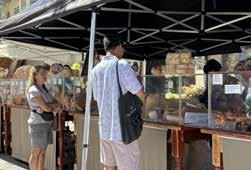
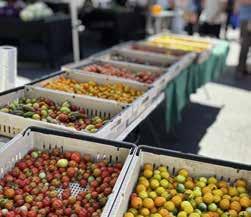
Come on out to this Saturday morning produce market off Hamilton Ave & Gilman St in Palo Alto.
SUNDAYS IN AUGUST
California Avenue Sunday
Farmers Market
California Avenue, Palo Alto | 9:00 AM - 1:00 PM
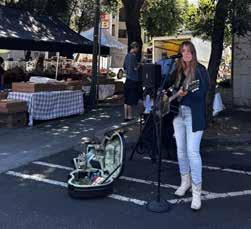
A weekly certified farmers market on California Ave. Strong family draw, kids love the music, and dogs on leash are welcome on the sidewalk.
TUESDAYS - SUNDAYS IN AUGUST Palo Alto Junior Museum & Zoo
Check out Stanford's free art museum, they are rotating exhibitions all throughout the summer into August.
DATE & TIME TBD
Stanford Cardinal Football | Home Opener
Stanford Stadium | 6:00 PM
You will not want to miss the season kickoff game hosted at the Stanford Stadium.
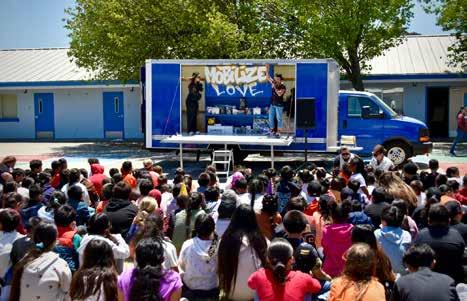
Through a fleet of outreach trucks, Mobilize Love meets physical needs, teaches personal life skills, and brings hope directly into underserved Bay Area neighborhoods. Together, we're helping children and families move toward a full and flourishing life. Showing Up Where Hope Is Needed Most
TAEKWON KIDS
How a software engineer turned a 2009 layoff into a Mountain View studio that benefits taekwondo programs in ten countries.
In 2000, Master Chin Sonu firsthandedly experienced how taekwondo can impact a child in a small remote village in Mexico. The trip was a short-term church mission to a farm town, about four hours south of Tijuana. He had been a
“I was praying and fasting and I was asking God what should be my next chapter”
software engineer for a decade and teaching taekwondo on his nights and weekends nearly as long. On the trip he assisted an older taekwondo master through a week of classes for the village children. The rest of the time was service work. He came home and stayed at the day job nine more years. But what he experienced in Mexico stayed with him. It marked him deeply, and he hoped one day he’d be able to make a greater impact.
Then 2009 came, and the mortgage crisis took the engineering job with it. “I was praying and fasting and I was asking God what should be my next chapter,” Master Chin says. “There’s nothing wrong with being a software engineer at a semiconductor company. But I wanted to do something more meaningful.” He had been teaching college students at his church and helping at a local studio. He decided to put his full weight behind it. The next
year he signed a lease on a two-thousand-squarefoot bay in a strip mall on West El Camino Real. He called it Taekwon Kids.
Opening day, the line wrapped out the door. Staff took names and credit cards by hand, twenty or thirty minutes a signup, and Master Chin still could not get to everyone, it was so packed. He partly credits a line he kept from business school: if you have to explain what you do, you are already losing.
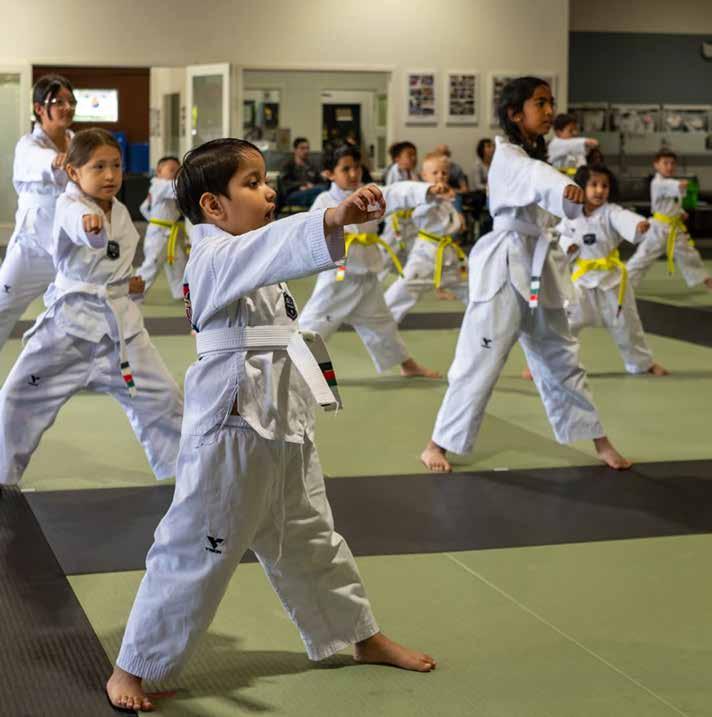
By about 2014 the studio had moved into six thousand square feet. Today it occupies roughly seventeen thousand at 2124 West El Camino Real, the storefront still visible from a busy stretch of road. Three mat-covered training rooms hold classes for children starting at age four, judo and archery alongside taekwondo, and a coaching bench that has included Olympic judokas and a world-champion archer.
CONTINUED >
Around the school, Master Chin built a nonprofit. He named it TAM, short for Taekwondo Alliance for Mission. TAM runs an Adaptive Martial Arts program for students with intellectual and physical disabilities. It supports taekwondo programs in ten countries: Madagascar, Tajikistan, Thailand, Kyrgyzstan, Jordan, South Korea, Indonesia, Tanzania, the United Kingdom, and Côte d’Ivoire. He took his students to serve in Africa, South America, Southeast Asia, the Middle East, and American Indians.
Master Chin compares Taekwon Kids and TAM to In-N-Out and its foundation: the business profit funds the foundation, and the two share the same building. It’s where his faith intersects with work and passion. He has found his “Ikigai” and credits God for everything. When you walk into the studio, you can’t miss the huge writing on the wall: “FOR HIS KINGDOM”. This represents his life verse Matthew 6:33 from the Bible.
On Sundays the dojang transforms. TAM Center has 3500 sf of dedicated space for worship and two congregations meet in the rooms where children kick and bow during the week. By Monday morning the rooms smell of new uniforms.
Children at Taekwon Kids start at four years old, in white doboks with the sleeves rolled at the wrists. They learn what taekwondo students have always learned. The bow comes at the start of class and at the end. They count to ten in Korean, beginning hana, dul, set. They learn how to fall. They are not told that part of their belt fees crosses an ocean. Master Chin says they tend to find out anyway. They ask why the school sends teams to Guatemala. They get the answer from their teachers and from each other.
Tonight a child in Africa will bow at the start of her class. Tomorrow a child in Mountain View will do the same. Both bows trace back to a strip mall on West El Camino Real.