The Men’s Issue
LIFE + CULTURE
BENEATH THE NORTON MUSEUM, HARVEY OYER’S STORY— 150 YEARS AND COUNTING





BENEATH THE NORTON MUSEUM, HARVEY OYER’S STORY— 150 YEARS AND COUNTING
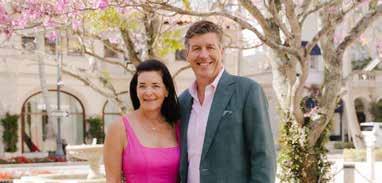
Here’s to the men in my life.
There aren’t many in my immediate family—just one brother and my strapping young son, who insists on living in London despite my ongoing campaign to have him move here. Having grown up in Scotland, perhaps it’s no surprise he wasn’t quite ready to leave the UK behind. That—and, of course, a very lovely English girlfriend—seem to have secured his place there for now.

While my side of the family may be light on men, I more than made up for it when I married into a family of eight boys. Yes—eight. No sisters. The stories alone could fill a book. They are Scottish, full of life, endlessly funny, and bound together by a kind of energy that is unmistakable. I arrived as a very young and somewhat naïve American, assuming this must be a “typical” Scottish family. It took me years—and many other homes—to realize they were anything but.
And I’ve loved them all the more for it.
The men in my life have shaped me in quiet but lasting ways. My dad was endlessly funny, always up for adventure, and taught me what it means to make people feel seen. My father-in-law was the definition of patience—a true gentleman who welcomed me completely from the moment I walked into his home. My husband of 35 years has been a steady, guiding presence—holding our family together with steadfast love, a servant’s heart, and a sense of humor that carries us through. And now our son-in-law, a welcome addition, brings a calm, thoughtful wisdom beyond his years.
My father-in-law’s spirit—shaped in part by his time as a seven-time Wimbledon champion—runs through that family: strong, steady, and enduring. It shows up in each of his sons, in his grandson, and now in his great-grandson.
And perhaps fittingly, the first grandchild—and great-grandchild—is a boy.
Strong men, across generations—steady, kind, and quietly shaping the lives around them.
This issue celebrates that kind of man. Here’s to them.

DELAUNAY-WOOD,PUBLISHER
June 2026
PUBLISHER
Denise Wood denise.wood@citylifestyle.com
AREA DIRECTOR
David Wood
david.wood@citylifestyle.com
MANAGING EDITOR
Arsine Kaloustian arsine.kaloustian@citylifestyle.com
MARKET SUPPORT DIRECTOR
Adam Sheetz adam.sheetz@citylifestyle.com
PUBLICATION DIRECTOR
Nancy Kumpulainen nancy.kumpulainen@citylifestyle.com
CONTRIBUTING PHOTOGRAPHER
Jason Nuttle
CEO Steven Schowengerdt
President Matthew Perry
COO David Stetler
CRO Jamie Pentz
CoS Janeane Thompson
AD DESIGNER Jenna Crawford
LAYOUT DESIGNER Lillian Gibbs
QUALITY CONTROL SPECIALIST Brandy Thomas







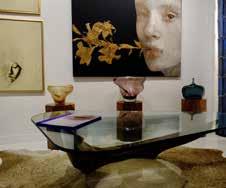

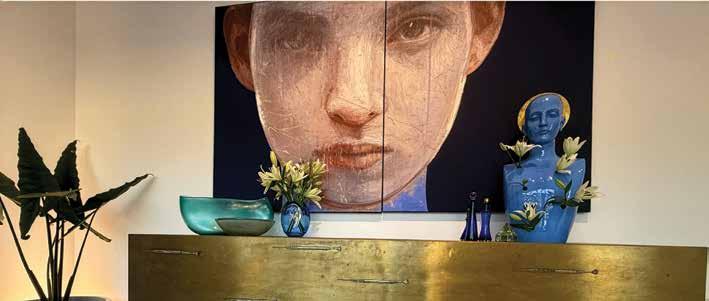
Sarafina Gallery, opened in 2024 on Georgia Avenue, specializes in mid-century modern design and iconic Murano glass alongside contemporary paintings. Founded by Sara Giordano, the gallery focuses on Italian craftsmanship, light-driven installations, and curated mixed-media works. Private viewings are available by appointment, positioning the space as a boutique destination for collectors seeking design-forward, European-influenced pieces in West Palm Beach’s growing arts corridor.
Scan to read more
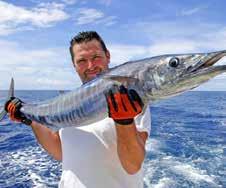
The Full Moon Wahoo Series returns July 25, August 29, and September 26, 2026, with weigh-ins at Sailfish Marina. Organized by the West Palm Beach Fishing Club, the series aligns competition with late-summer full moon cycles, targeting wahoo during peak offshore conditions. Teams compete for aggregate weight and cash payouts, reinforcing Palm Beach County’s year-round sportfishing circuit.
The Miami Dolphins are currently in their 2026 offseason program, with organized team activities and minicamp underway at the Baptist Health Training Complex in Miami Gardens. The annual camp includes a series of open practices, offering fans early access to the roster ahead of the NFL preseason. Full training camp is expected to open in late July, signaling the start of the fall football calendar in South Florida.

ARTICLE BY ARSINE KALOUSTIAN | PHOTOGRAPHY COURTESY OF NOBLE TREE GOLF
A BESPOKE ANSWER TO WHAT TO GIVE THE MAN WHO HAS EVERYTHING

The swing lasts only a second. The ball disappears even faster. And then, for a brief moment, there’s silence—before it registers: it went in.
For most golfers, a hole-in-one becomes a story told and retold, softened over time into memory. But for those who value the moment as much as the game itself, there is now a way to hold onto it—permanently.
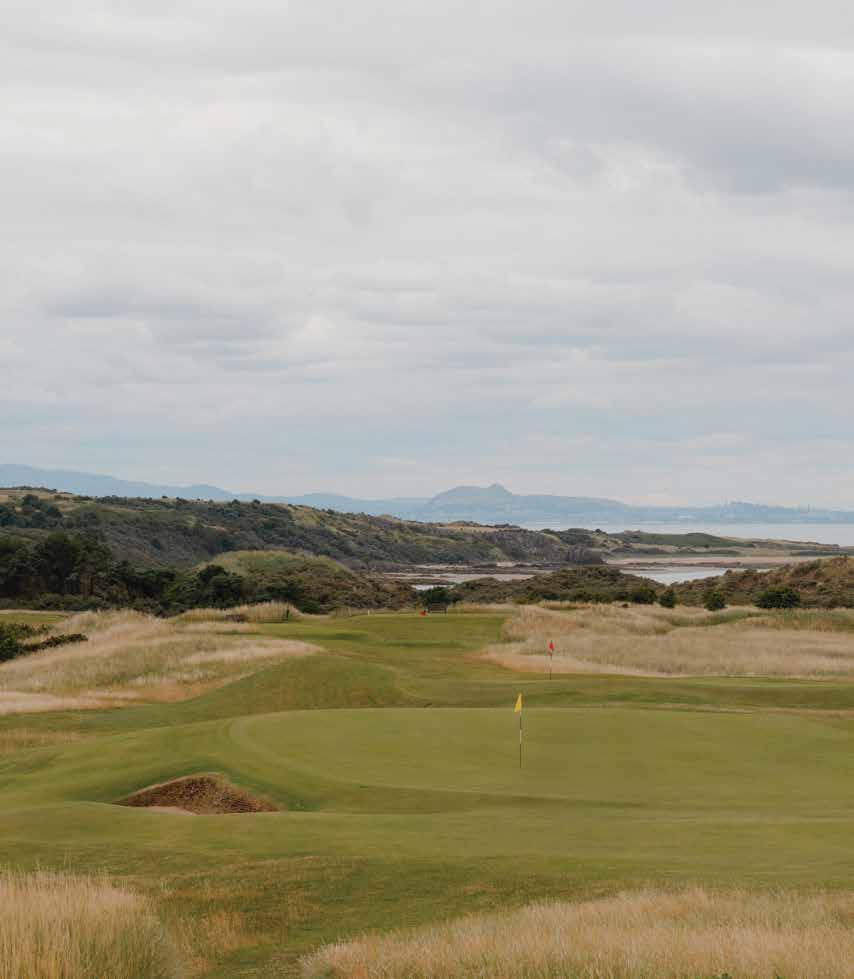
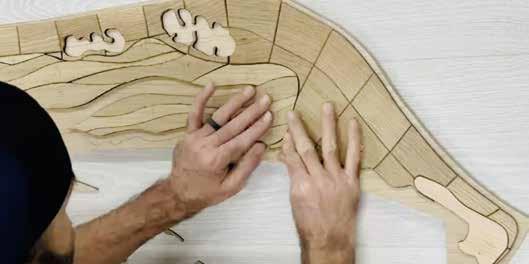
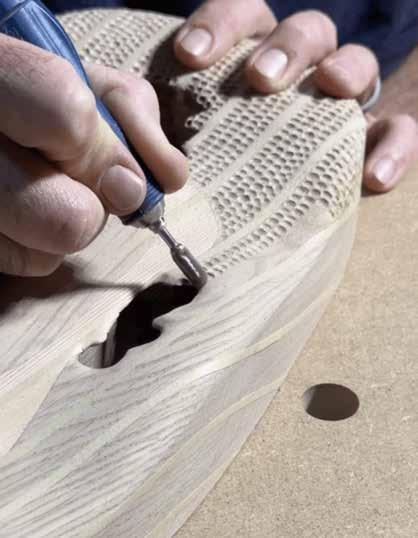
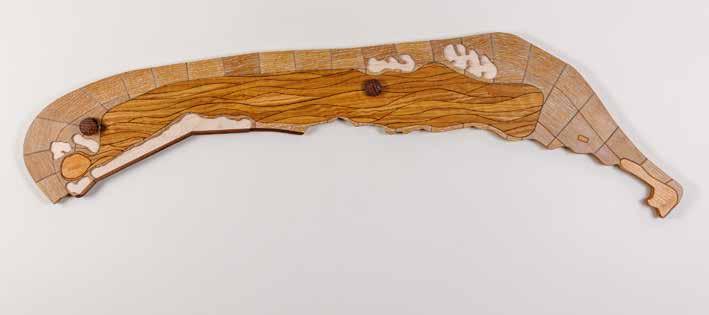
Noble Tree Golf creates custom, hand-carved wooden renderings of individual holes—precise, three-dimensional recreations of the exact place where the moment happened. Founded by Tyler Denoff, the studio offers something more personal than possession. For the man who has everything, the appeal isn’t in acquiring more—it’s in owning something that cannot be replicated: a single shot, a single day—precisely preserved.
With more than two decades of experience in custom furniture design, Denoff approaches each piece with the discipline of a craftsman and the mindset of a perfectionist. The idea took shape in clubhouses, where walls are often lined with traditional
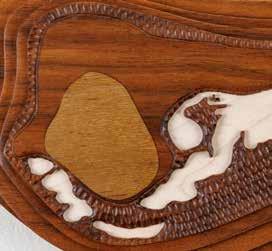
oil paintings of the course—handsome, but largely interchangeable, each one flattening a place defined by its contours into a single, static image. He saw an opportunity to create something more dimensional—something that didn’t just reference a place, but reconstructed it, preserving not only how it looked, but how it actually existed.
What began as a straightforward concept has evolved significantly over the past several years, each piece becoming more intricate as Denoff refined his process and pushed for greater accuracy. “I got a little obsessive about getting every contour exactly right,” he laughs—a mindset that ultimately defines the finished work.
Each commission begins with a combination of client photography and advanced mapping. Aerial imagery, topographic data, and survey resources are layered together to rebuild the terrain with remarkable precision. When working locally, Denoff often captures the hole himself using drone footage, translating real-time perspective into the final carving. For courses farther afield, the same level of detail is achieved through digital mapping. No matter where the shot takes place—from a local course to one halfway around the world—the approach remains the same: if it can be mapped, it can be made.
Over the course of six to eight weeks, raw material is transformed into something closer to sculpture than décor—an object that sits comfortably in a study, office, or club room. While often commissioned to commemorate a single shot, many pieces ultimately live as standalone works of art—designed as much for display as for memory.
Because in the end, the most meaningful gifts aren’t things at all. They’re moments—captured, considered, and made to last.



BEN EATH THE NORTON MUSEUM, A FAMILY STORY SPANNING MORE THAN 150 YEARS CONTINUES TODAY
ARTICLE BY ARSINE KALOUSTIAN PHOTOGRAPHY BY JASON NUTTLE AND COURTESY OF HARVEY E. OYER III
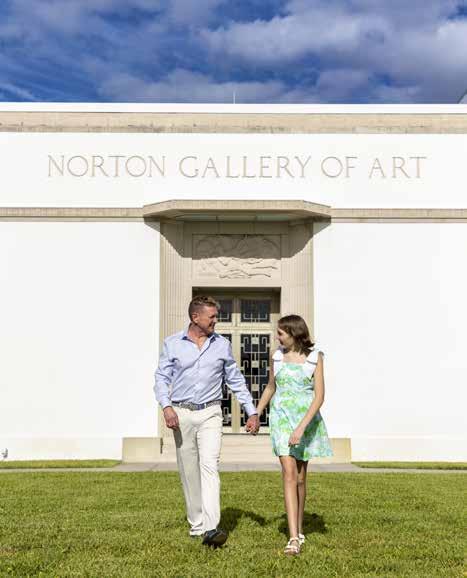
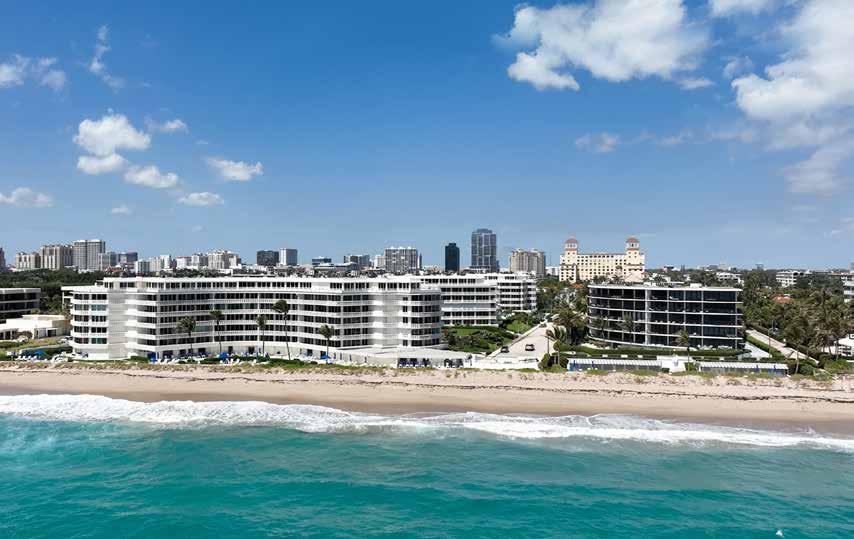
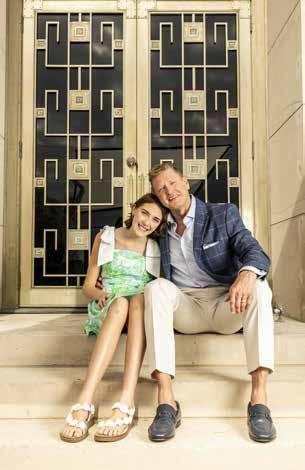
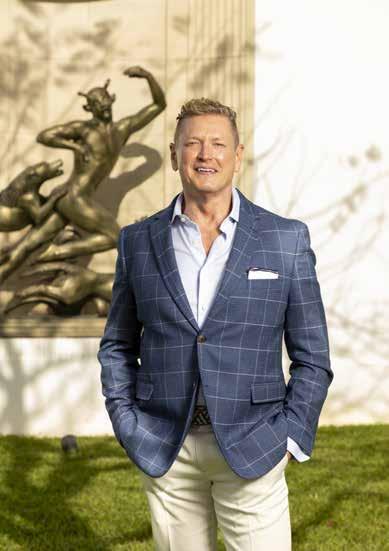
In the courtyard of the Norton Museum of Art, the light settles softly across the stone. Visitors pass through as they always do—pausing for sculpture, for shade, for a moment of quiet. It reads, at first glance, like any other afternoon in West Palm Beach. But beneath the courtyard, the story runs deeper.
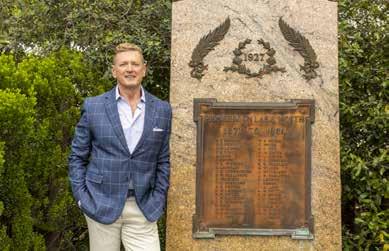
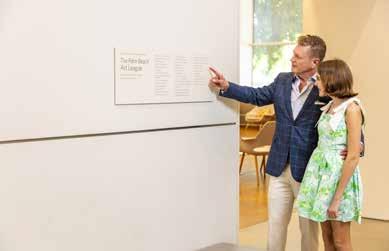
Forty of the area’s earliest pioneers remain buried here, on what was once the region’s first cemetery. Among them are the greatgreat grandparents of Harvey E. Oyer III. It’s a place he often visits with his 12-year-old daughter Eve—five generations behind him, and a sixth at his side.
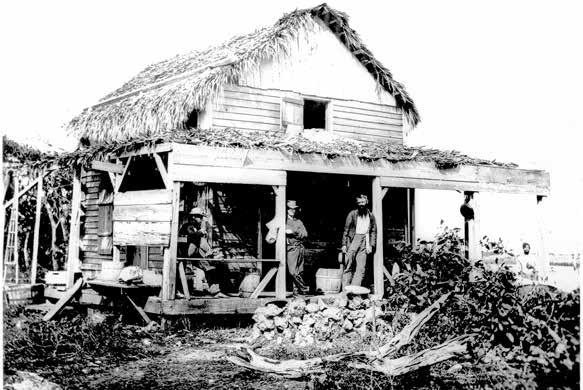
For Harvey, history has never been abstract. His lineage traces back to 1872, when his ancestors arrived in what was then a remote, undeveloped stretch of Southeast Florida— decades before Palm Beach County formally existed. His great-great grandparents, Captain Hannibal D. Pierce and Margretta Moore Pierce, are widely recognized as the first permanent non-Native American settlers in the region. Captain Pierce later served as Keeper of the Jupiter Lighthouse and homesteaded Hypoluxo Island, further anchoring the family’s presence in the area’s earliest days.
The stories that followed read less like recorded history and more like origin myth.
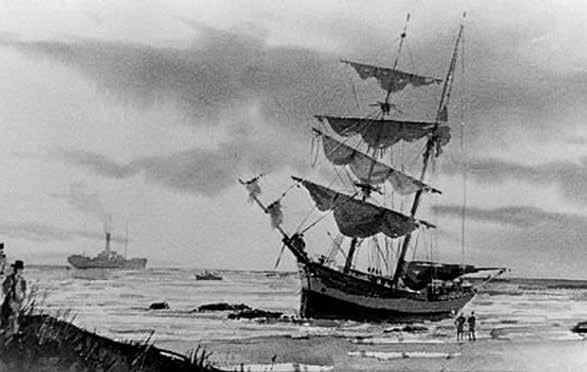
A shipwreck off the coast—the Spanish vessel Providencia—was carrying thousands of coconuts, which Harvey’s ancestors helped salvage from the wreck and plant along the same stretch of shoreline where the Bath & Tennis Club and Mar-a-Lago stand today. Those groves would later give Palm Beach its name.
But the throughline has never been spectacle. It has been continuity.
Generations of Harvey’s family lived not just in the region, but with it—helping shape the earliest communities across what is now Palm Beach County. His great-grandmother,
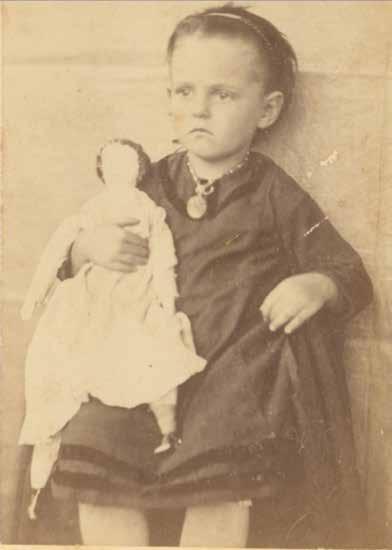
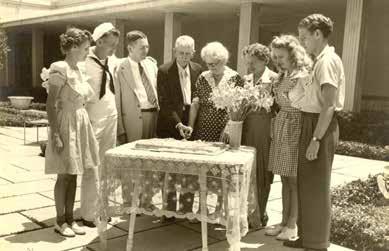
Lillie Pierce Voss, was the first non-Native American child born between Jupiter and Miami—an area that today is home to millions. As an adult, she and her husband helped bring Major Nathan Boynton to the area, laying the foundation for what would become the City of Boynton Beach, and later assisted William Linton and David Swinton in establishing what is now Delray Beach.
Her brother, Charles Pierce, was one of Florida’s famed Barefoot Mailmen and later became a noted historian and conservationist. He would go on to be recognized by the State of Florida as a Great Floridian , and his story would later be preserved in the children’s book series Harvey himself would go on to write— stories now read by tens of thousands of fourth graders across the state each year.
In a region defined by reinvention, Harvey has focused on preservation.
“If you lose the history, you lose the identity,” he says. “And once that’s gone, you don’t get it back.”
Over the course of his career, he has helped shape how Palm Beach County understands and protects its past—leading the effort to save and restore the 1916 Palm Beach County Courthouse and playing a central role in the creation of the Johnson History Museum. His work across institutions has been consistent in purpose: ensuring that growth does not come at the expense of identity.
That perspective extends beyond his work. Eve, poised and observant, is already part of the continuum. She has grown up attending the annual Pioneer Picnic held on these grounds—a tradition that has endured for more than a century. She moves through spaces layered with meaning, many of which carry her family’s imprint in ways both visible and unseen.
“I don’t feel like I’m teaching Eve history so much as introducing her to something she already belongs to,” Harvey says.
There is something distinctly Old Florida about that idea—the quiet coexistence of
past and present, of legacy and evolution. But rarely is it so clearly embodied.
Here, it is unmistakable.
The Norton itself has long been intertwined with Harvey’s family. Before it was a museum, this land was part of the original Pioneer Memorial Park cemetery, maintained by early settlers before public cemeteries were established. Many of those buried here were later reinterred across the street at Woodlawn Cemetery, but dozens remain—including members of Harvey’s family.
“This has always been a deeply meaningful place for my family,” he says. “Long before it was a museum, it was where our people were laid to rest and where we gathered to celebrate them and our common heritage.”
He has spent his life returning to this place—not just as a visitor, but as a participant: attending gatherings, advising on expansion, and watching as each generation leaves its own imprint.
Standing in the courtyard, the layers compress. The distance between then and now narrows.
A father. A daughter. Their connection to this place stretches back more than 150 years.
For Harvey, the work has never been about legacy in the abstract. It has been about stewardship—about understanding that what is inherited is not owned, but held in trust. And for Eve, that trust is already being passed forward, not through instruction alone, but through presence. Through place.
“At the end of the day,” he says, “it’s not just about looking back. It’s also about making sure there’s something worth passing forward.”
One day, Eve will return here on her own terms. Perhaps with a child of her own. The museum will look much the same. The courtyard will still hold its quiet.
In Palm Beach and West Palm Beach, history is often preserved.
In this family, it is carried.



ARTICLE BY ARSINE KALOUSTIAN
Palm Beach County doesn’t chase beer trends—it sets its own pace. No hype, no lines, just places that deliver every time. From polished taprooms to backyard-style hangouts, these are the spots that define the scene.
Civil Society Brewing Co. | Jupiter’s IPA benchmark. Hazy, hop-saturated pours with precision. Limited drops move fast. 1200 Town Center Dr #101 | 561-855-6680
Copperpoint Brewing Company | Crisp lagers, balanced IPAs, and a large, easy space in Boynton Beach. Ideal for groups and repeat rounds. 151 Commerce Rd | 561-508-7676
Mathews Brewing Company | Live music, packed nights, and “Florida Swamp Juice” are on repeat in Lake Worth Beach. Come for energy as much as the beer. 130 S H St | 561-812-3738
Tequesta Brewing Co | No-frills local. Strong across styles, steady taps, loyal crowd. The kind of place that stays in your weekly rotation. 287 US-1 | 561-745-5000
Royal Palm Brewing Company | Gastropub hybrid. Clean lagers, full kitchen, sit-down feel. Beer complements the night, not the other way around. 543 N State Rd 7, Suite 103 | 561-792-5822
Coastal Karma Brewing | Rotating sours, fruit-heavy pours, and unpredictable flavors. You’re seeing what works this week in Lake Park. 796 10th St | 561-249-1491
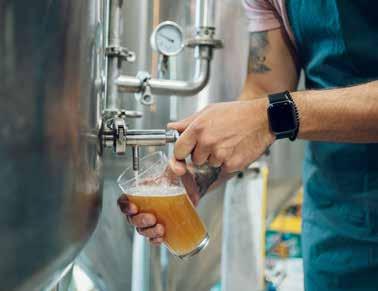
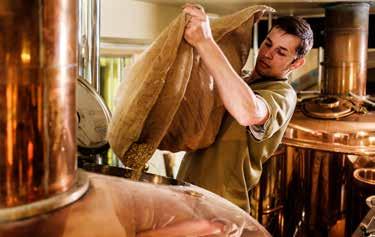

South Florida’s climate shapes the beer. High heat and humidity favor balance over excess—clean lagers, controlled IPAs, and beers that hold up over time. Palm Beach County’s breweries reflect that shift, prioritizing structure and drinkability. The result isn’t louder beer—it’s smarter beer, built for where it’s being consumed.





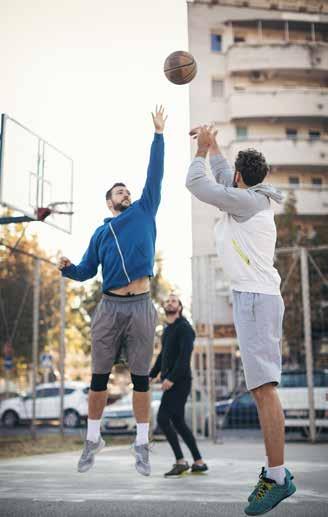
In Palm Beach County, staying active usually comes down to one thing: showing up. Not once, but every week.
Leagues fill quickly, schedules lock in, and what starts as a game turns into a standing commitment. Some play for competition, others for routine, others simply to break up the week. Across courts, fields, and courses, the pattern is the same—find your spot, and keep it.
ORGANIZED LEAGUES
Consistency. Competition. Structure. PERSEVERANCE BASKETBALL
Competitive and recreational leagues, plus training and high-level pickup runs.
ROYAL PALM BEACH STRIKERS
Club-style adult programming built around structured team play.
BEACHES ADULT SOCCER LEAGUE (BASL)
One of Florida’s largest amateur leagues, with divisions from casual to highly competitive.
JHOOPS BASKETBALL LEAGUE
Organized seasons, playoffs, and a loyal returning player base.
PALM BEACH COUNTY PARKS ADULT LEAGUES
Softball, soccer, and more—reliable, accessible, and consistently well attended.
SOCIAL / “BEER LEAGUES”
Competitive enough, social by design.
SOUTH FLORIDA CLUB SPORT
Multi-sport leagues with a strong young professional crowd and built-in social events.
CITY KICKBALL PALM BEACH
21+ leagues with low barriers to entry and a high emphasis on fun.
WAKA – WORLD ADULT KICKBALL ASSOCIATION
A national network known for its social-first format and active post-game scene.
RACQUET, CLUB & BEYOND
Flexible. Social. Enduring.
PALM BEACH GARDENS TENNIS CENTER
Leagues, clinics, and open play across all levels.
WEST PALM BEACH TENNIS LEAGUE
Self-scheduled matches designed for busy calendars.
NORTH PALM BEACH COUNTRY CLUB
Golf leagues, tournaments, and a strong, established men’s culture.
PALM BEACH SKATE ZONE (ADULT HOCKEY)
Multiple divisions and a fast-growing, tight-knit community.
PALM BEACH GARDENS & WEST PALM BEACH RECREATION PROGRAMS
Seasonal leagues in flag football, basketball, soccer, and volleyball—reliable, affordable, and often overlooked.
Competitive / serious play: BASL Soccer, JHoops, Perseverance Basketball
Social + networking: Club Sport, WAKA, City Kickball
Flexible scheduling: Tennis leagues, YMCA
Lifestyle + networking: Golf and country clubs
Something different: Adult hockey
ARTICLE BY ARSINE KALOUSTIAN










A PLAINTIFF'S ATTORNEY LAYS OUT HIS IRONCLAD ARGUMENT FOR THE MOST BELOVED RACK IN AMERICAN BARBECUE
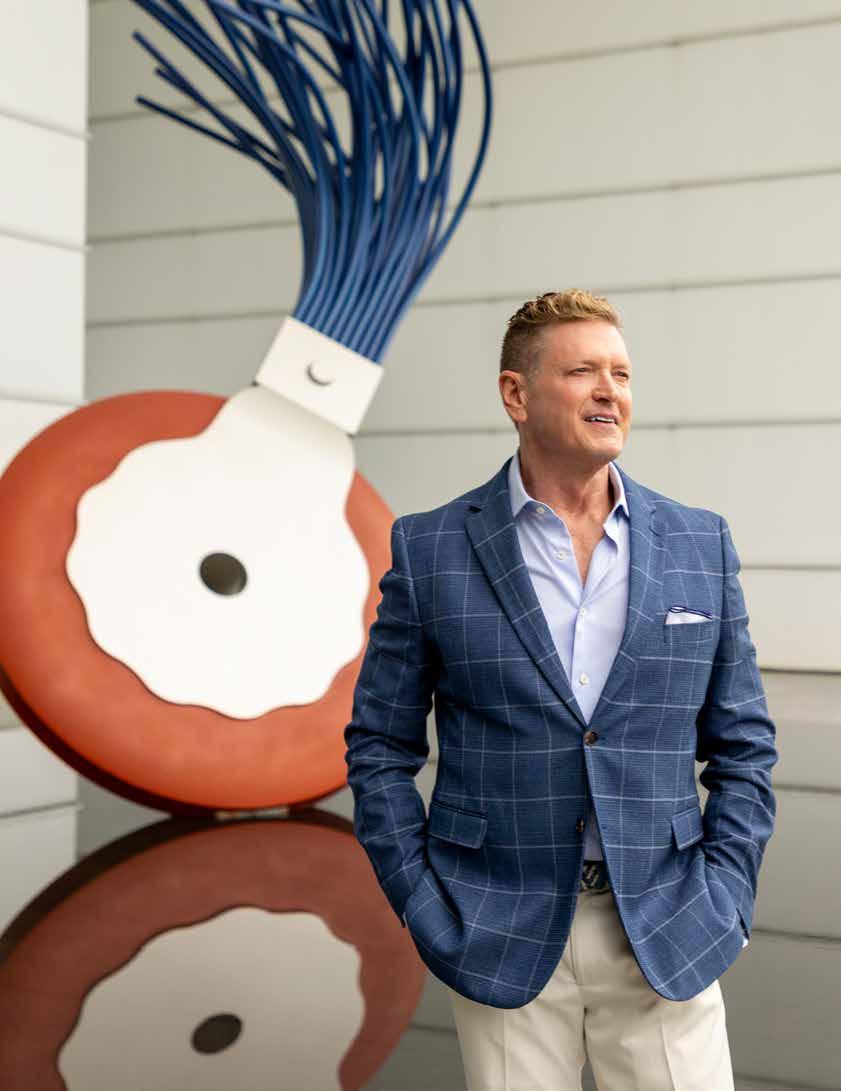
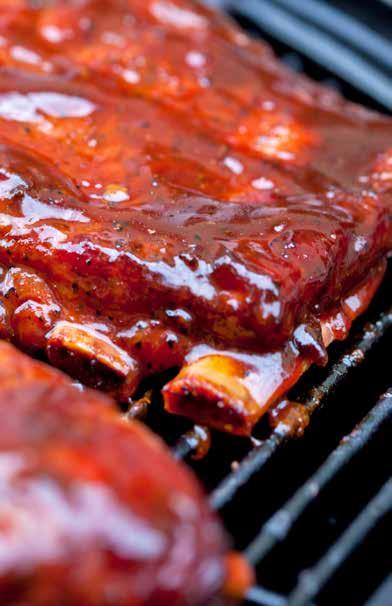
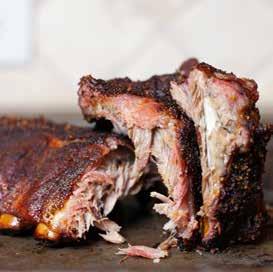
In nearly every courtroom dispute, there comes a moment when the facts are simply undeniable — when the evidence is so clear, so well-prepared, and so perfectly presented that no reasonable person could rule against you. Ladies and gentlemen of the jury, I submit to you that a properly smoked rack of baby back ribs is exactly that kind of open-and-shut case. I’ve spent years arguing on behalf of people who couldn’t speak for themselves, and I’ve spent just as many years letting smoked pork do the talking at the table. Today, I’m here to present both—my case, and the evidence.
ARTICLE BY TRENT SWIFT, A PARTNER AT LYTAL, REITER, SMITH, IVEY & FRONRATH

Know Your Cut: The Anatomy of the Baby Back
Before we fire up the smoker, let’s establish the record. Baby back ribs—also called loin backs—come from high along the ribcage, where the ribs meet the spine just beneath the loin. That’s the whole advantage. This is a less-worked part of the animal, which means the meat is leaner, more tender, and cleaner in flavor than the fattier spare ribs cut from the belly.
A full rack runs 11 to 13 bones and weighs around 1.5 to 2 pounds—compact, balanced, and built for low-and-slow cooking.
The “baby” refers to size, not age—the shorter, curved bones near the backbone. Don’t let the name mislead you. This is no junior varsity cut. Baby backs have anchored backyard cookouts and competition circuits for generations— approachable enough for a first attempt, but nuanced enough to spend a lifetime refining.
Historically, spare ribs were the working-class cut—richer, heavier, more forgiving. Baby backs became the premium option, eventually pushed into the spotlight by restaurant culture in the 1980s.
But real pit culture has always known: the magic isn’t in the kitchen. It’s in the smoke.
Why Low, Slow, and Smoke Is the Only Method Worth Arguing
There are those who oven-bake their ribs, wrap them in foil from the start, or finish them on a gas grill. I am not here to prosecute those individuals — that is between them and their conscience. What I will tell you is that if you have access to a quality ceramic kamado cooker, good hardwood, and a Sunday afternoon, there is simply no substitute for the real thing.
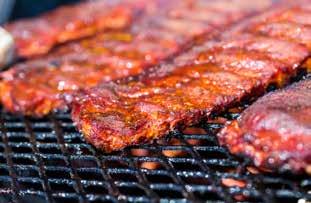
The science of low-and-slow smoking is well-established: cooking ribs at 225°F over several hours allows connective tissue to break down without drying the meat. The smoke isn’t just flavor — it’s chemistry. That signature pink smoke ring, just beneath the surface, is the mark of genuine pit barbecue.
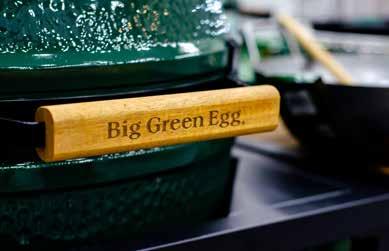
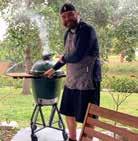
The Big Green Egg — my weapon of choice — is ideally suited to the task. Its ceramic construction holds heat with remarkable consistency, and its design allows precise airflow control, meaning you can maintain 225°F for hours without constant adjustment. In the language of my trade, it is an efficient and reliable instrument.
1. Remove the Membrane
Turn the rack bone-side up and remove the thin, papery membrane along the back. Left on, it becomes a chewy barrier that blocks smoke and seasoning. Slip a knife under one edge, grab it with a paper towel, and pull it off clean. It’s satisfying in a way not even a favorable verdict quite matches.
2. The Mustard Binder
Apply a thin, even coat of yellow mustard across the rack. I know what you’re thinking — mustard? Trust the process. It helps the rub adhere and tenderizes the surface. The flavor cooks off almost entirely. This is established science, and I don’t take cases I can’t win.
3. Apply the Rub
Season generously and press it in. A proper bark requires a confident hand. Use your own blend or a quality commercial rub — either way, don’t be shy.
4. Set the Heat — 225°F
Preheat your smoker or grill to 225°F with clean, steady smoke. Fruit and nut woods — apple, cherry, pecan — create a balanced, layered flavor. Once steady, place the ribs bone-side down.
5. Phase One — Leave It Alone
For the first 90 minutes, do nothing. This is where the bark sets and the smoke ring forms. Opening the lid releases heat and disrupts the process. Resist the urge.
6. Phase Two — Monitor & Spritz
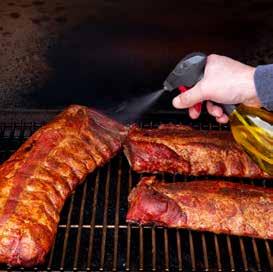
After 90 minutes, begin checking every hour. Maintain 225–250°F. If the ribs look dry, lightly spritz with a mix of apple juice and water. Lightly — you’re adding moisture, not undoing your work.
7. The Finish
Around hour four or five, the ribs will tell you they’re ready. The meat pulls back from the bones, and the rack flexes when lifted. Brush with sauce, raise heat to 250–275°F, and let it set. Perform the bend test: the rack should flex and slightly crack — but not fall apart. That’s your signal. Pull them.
THE VERDICT
Let’s address a persistent myth: “falling off the bone” is not perfection — it’s overcooking.
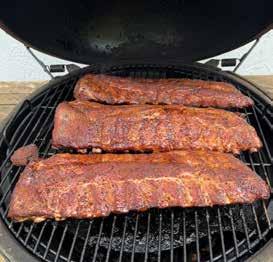
The mark of a great rib is one clean bite, a slight tug, and meat that releases cleanly while still holding structure. Tender, but not mush. The bark intact. The smoke ring visible. The sauce lacquered, not drowning.
That’s the standard. That’s what we’re after.
I’ve presented my evidence. The record is complete. I rest my case — and then I eat it.
ATTORNEY AT SLAW | PIT & PRECEDENT
Trent Swift is a Partner at Lytal, Reiter, Smith, Ivey & Fronrath in West Palm Beach, where he focuses on personal injury and civil litigation. When he’s not in the courtroom, he can be found at the grill, making a compelling case for low-and-slow barbecue.
Next Issue: The Brisket Brief — Building a Bark That Holds Up on Appeal


















The World Cup brings attention. FutbolTech is building access.
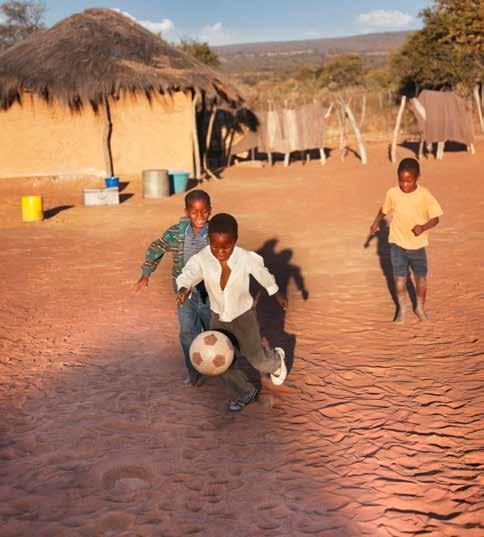
In a matter of weeks, the 2026 FIFA World Cup will kick off across North America. The buildup is already underway—cities preparing, brands activating, anticipation building. By June, the world will be watching the game at its highest level. But that level doesn’t appear out of nowhere. It is built much earlier, in places that don’t get cameras. FutbolTech operates in those places. Not as a traditional soccer program, and not as a typical nonprofit, the Florida-based organization has built a model that uses the game as a starting point, then layers in what most youth programs leave out: language, technology, and financial education. The premise is straightforward. Soccer gets kids in the door. What happens next determines whether that opportunity actually goes somewhere.
On the field, the structure is familiar—training sessions, drills, competition—but expectations extend beyond play. Attendance matters. Discipline matters. Progress is tracked. Off the field, that structure continues. Participants learn English not as an academic exercise, but as a practical tool tied to real opportunity. They are introduced to technology in a way that builds usable skills. And then there is the component that sets FutbolTech apart entirely: every action—showing up, training, learning—earns value.
ARTICLE BY ARSINE KALOUSTIAN
Through its FT Coin system, each participant accumulates units tied directly to Bitcoin. One FT Coin equals one Satoshi, the smallest unit of Bitcoin, and those earnings are deposited into a digital savings account in the child’s name. The structure is intentionally rigid. There are no early withdrawals and no shortterm access. The account unlocks at 18. It is designed to introduce financial discipline early while creating a tangible asset tied to consistent effort over time. In communities where access to traditional banking is limited or unreliable, that approach is not theoretical—it is functional.
The rest of the work is just as direct. FutbolTech has distributed more than 3,000 pairs of cleats, removing a basic but real barrier to participation. It supports women’s soccer initiatives that focus on confidence and leadership, and it provides university scholarships that create real pathways into higher education. The organization operates across the United States and Latin America, including

Colombia, Brazil, Mexico, Haiti, and Jamaica, working primarily in communities shaped by poverty, displacement, and limited access to opportunity. To date, it has reached more than 2,000 young people across eight countries.
For all the infrastructure—technology platforms, tracking systems, and financial tools—the model still depends on something far more basic: consistency. FutbolTech invests in local coaches, providing stipends and support so programs can operate reliably. These coaches are responsible for more than training. They set expectations, enforce standards, and create structure where it is often lacking. In many cases, they are the most consistent adult presence in a participant’s day-to-day life.

The World Cup will bring a surge of attention to soccer in the United States. Participation will increase. Visibility will expand. For a brief period, the sport will feel bigger and more accessible than usual. But moments like that do not build systems. Access does. FutbolTech works within that layer—the one that exists before the spotlight and remains after it moves on. It is the difference between watching the game and having a way into it.
Most of the young people in these programs will never play professionally. That was never the objective. What they gain instead is more durable: structure, exposure to opportunity, foundational financial literacy, and a clearer sense of direction. The World Cup will crown a winner. Programs like FutbolTech determine who even gets the chance to participate in the first place.








The Old Fashioned has always been a study in restraint—spirit, sugar, bitters, and little else. But in recent years, bartenders have begun to reinterpret that simplicity through a decidedly culinary lens. The technique leading the charge: fat-washing.
ARTICLE BY ARSINE KALOUSTIAN
Borrowed from the kitchen, fat-washing infuses bourbon or rye with rich, savory, or nutty elements—brown butter, bacon fat, coconut oil, even olive oil—then removes the fat itself, leaving behind only its essence. The result is subtle but transformative: a spirit with a rounder body, a silkier texture, and a depth that unfolds slowly on the palate.
Brown butter is perhaps the most intuitive entry point. It lends a warm, toasted richness—almost caramelized in character—that pairs naturally with deeper sweeteners and structured bitters. Bacon fat leans savory and smoky, coconut oil softens with a gentle sweetness, while more refined approaches— duck fat or olive oil—introduce a polished, almost chef-driven complexity.
The process itself is straightforward, though it rewards patience. A small amount of melted fat—typically two to four tablespoons per bottle—is combined with the spirit and left to infuse. After several hours, the mixture is frozen, allowing the fat to solidify and separate cleanly. What remains is strained to clarity: a whiskey that carries flavor without weight, richness without residue.
What makes fat-washing compelling is not just the novelty, but the way it reframes a classic. It introduces texture as a primary component of the cocktail experience. The drink feels fuller, less assembled, more composed.
And once that door is open, it invites further layering. Richer syrups, deeper bitters, more aromatic structures.
The Old Fashioned remains intact—but the possibilities endlessly expand.
In practice, it comes together in something like this:
A harmonious, layered take—nutty, caramelized, and quietly decadent.
Brown Butter–Washed Bourbon or Rye (make ahead)
• 750 ml bourbon or rye
• 2–3 tablespoons unsalted butter
Brown the butter over medium heat until golden and fragrant. Let cool slightly, then combine with the whiskey in a sealed container. Infuse for 3–4
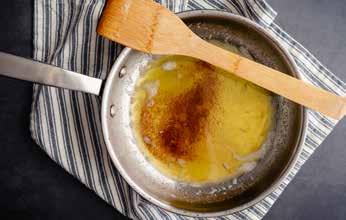
hours at room temperature, then freeze overnight. Once the fat solidifies, remove and strain through a coffee filter or cheesecloth until clear. Store refrigerated and use within 2–3 weeks.
Banana Demerara Syrup (make ahead)
• 1 cup demerara sugar
• ¾ cup water
• 2 very ripe bananas
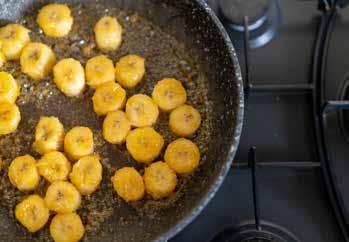
Slice the bananas and combine with sugar and water in a saucepan. Bring to a gentle simmer, breaking up the fruit as it cooks. Simmer 10–15 minutes until slightly thickened and aromatic. Cool, then strain thoroughly. Refrigerate for up to 1–2 weeks.
The Cocktail
• 2 oz brown butter–washed bourbon or rye
• ¼ oz banana demerara syrup
• 2–3 dashes black walnut bitters
• Orange peel, for garnish
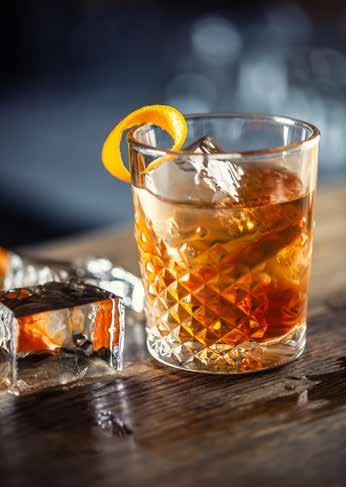
Add all ingredients to a mixing glass with ice. Stir until well chilled and properly diluted. Strain over a large ice cube in a rocks glass. Express an orange peel over the drink and garnish.










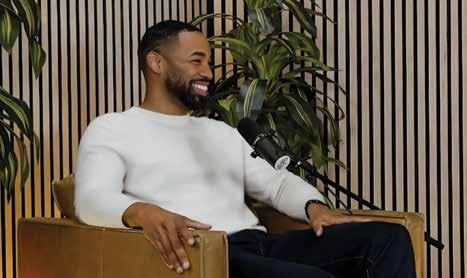
AN EXCERPT FROM EPISODE 6 OF SHARE THE LIFESTYLE, A CITY LIFESTYLE PODCAST
Photographer: Brittany Dawn Short
Creative Director: Jen Birn
Stylist: Stephanie Coultress O’Neill
Location: Hotel Saint Cecilia, Austin, TX
MIKE JOHNSON HAS BUILT HIS LIFE AROUND ONE QUIETLY RADICAL IDEA: THE STANDARD YOU SET PRIVATELY IS THE ONLY ONE THAT MATTERS.
After eight years in the Air Force, a celebrated run on national television, and a health crisis abroad that sent him deep into supply chains and ingredient certifications most founders never touch, the result is Oshun — a luxury ritual brand built on provenance you can trace and integrity you can verify. In an exclusive conversation for the Share the Lifestyle podcast, Mike shares what it actually takes to build something worth putting your name on. Read the highlights below, then scan the QR code for the full episode.
Q: YOU BECAME A FAN FAVORITE ON THE BACHELORETTE AND THEN LEFT THE SPOTLIGHT. YOU MOVED TO MEXICO, LEARNED SPANISH, THEN COSTA RICA, AND BUILT A COMPANY. WHAT DID THAT EXPERIENCE TEACH YOU ABOUT HUMAN BEHAVIOR?
A: “If you’re a good person going in, that shows. If you’re not, that shows too. I also learned that people form this parasocial relationship with you — they assume things about you. When all actuality, different circumstances bring out different parts of who you are. I was on TV trying to find love. The kindness people were showing after felt a bit fake, because they wanted to be a part of something that isn’t who I am individually, but a part of what they saw on TV. And so I had to get away from everybody and everything and the noise.”
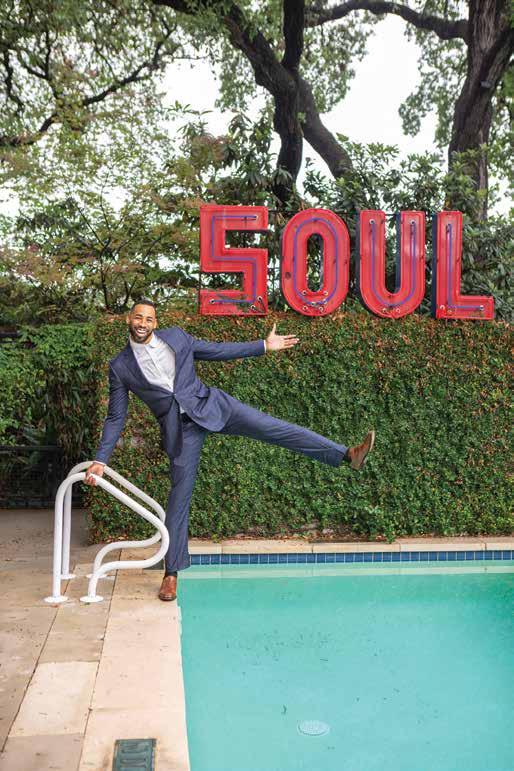
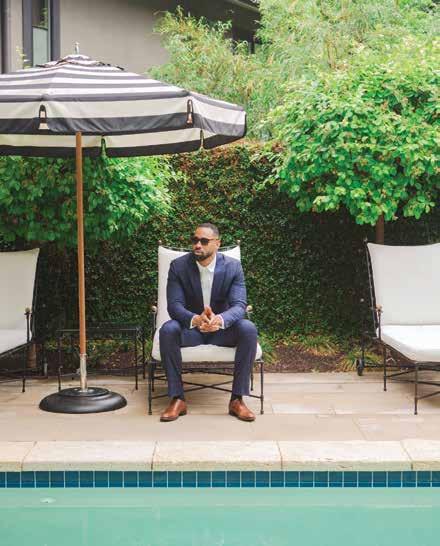
“Too many people have prayed for me. So I’ve got to get up and do the walking.”
— Mike Johnson

Q: YOU JOINED THE AIR FORCE RIGHT OUT OF COMMUNITY COLLEGE. WHAT WERE YOU ACTUALLY RUNNING TOWARD?
A: “There was something in me that was saying: I’m not living up to my full potential. I was being a follower. My uncle said, ‘What’s going to make you become an adult the fastest?’ I said, obviously, the military. The Air Force broadened my thought process more than anything. We’re so caught up in our own perception — when you learn to understand different people’s perspectives, it adds to you in so many ways.”
Q: WITH OSHUN, YOU OWN YOUR MANUFACTURING, YOU EMPLOY A CHEMIST, EVERY PRODUCT HAS A BATCH NUMBER TRACEABLE TO ITS ORIGIN DATE. WHY DID YOU DECIDE TO GO THAT DEEP WITH THE BRAND?
A: “The EU bans 1,100 ingredients in personal care products. The U.S. bans nine. That’s my starting point. Oftentimes, it might be the same ingredient, but it comes from a place where it doesn’t have the highest purity. And 60% of what we put on our skin is absorbed. Every product Oshun makes carries a batch number that goes back to the exact day it was created — I can show you every single supplier, the date, the origin. I own more than one part of the supply chain because that’s the only way I can stand behind what’s in the bottle.”
This conversation is just the beginning. Mike goes deeper into why he’s buying land up north, the family in the Philippines who prayed over his factory floor, and what he’d tell every person ready to stop performing and start building. Scan the QR code for the full, exclusive City Lifestyle interview on the Share the Lifestyle podcast.