


Next Summit: N e x t S u m m i t : Mount Baker - 10,781' M o u n t B a k e r - 1 0 , 7 8 1 ' July 2026 July 2026 Baker T HA NK Y OU T HA NK Y OU to our S P O NS OR S! to our S P O NS OR S! for making the for making the summit accessible to all! summit accessible to all!
Our mission in 2026 is to inspire individuals of all Our mission in 2026 is to inspire individuals of all abilities abilities to exceed perceived limits by pursuing pursuing extraordinary goals, extraordinary goals, envisioning a world where disability is viewed as a envisioning a world where disability is viewed as a perspective that enhances achievement and perspective that enhances achievement and inspires others. inspires others.







Across the wide breadth of banter that my husband and I share, the early onset of boredom in life is a recurring topic, mainly our shock and awe over it. Believe it or not, some people are hesitant to retire because they fear having nothing to do. Or maybe it's an overwhelmed parent who is in the throes of summer break with teenagers. What will they do for two or three months? But in Montana, we tend to have adventure dialed in. It comes down to two simple things: We have time. And we have things to do.

Philosopher Immanuel Kant once wrote the rules for happiness as having, "something to do, someone to love, something to hope for" and it's something that has always stuck with me. When I took early stock of who was happy, sort of in an accidental way by just steering clear of people I didn't want to end up living like, I noticed that unhappy people don't really have something to do. They work, sure. But that's mandatory for most. And someone to love? Well, loving someone takes a lot of effort, thoughtfulness, and risk. It's a doer's job as well. Hoping for something is just another way of saying having a dream, which is such an important part of the trifecta. It keeps the heart and mind fueled up, eyes on the horizon. Again, for the doer. Dream it, do it!
Which leads me to say, in the most roundabout way, that exploring is the best scenic route I know to happiness. Doing things. Being active outside is one of the biggest gifts you an give your mind and body, and it can be a gift to others, too. At any given point on a July evening on any trail in or around Missoula, you'll see mountain bikers smiling and nodding to you as a greeting. There are runners with dogs trotting at their hips, kids throwing stones in streams, and there is just a joyous event to be made of being in the open air with others, even if we are out by ourselves passing friendly strangers.
I've never known any cowboy or cowgirl who swung a leg off their horse and said, "It was ok out there," and I think that's the point I want to make with this issue. We are celebrating the way our community gets out there, the way they show up for one another, and the way we never quit exploring.

July 2026
PUBLISHER
Mike Tucker | MTucker@Citylifestyle.com
PUBLISHER ASSISTANT
Amanda Tucker | Amanda.Tucker@CityLifestyle.com
EDITOR
Chelsea Lyn Agro | Chelsea.Agro@CityLifestyle.com
STAFF PHOTOGRAPHER
Rick Szczechowski | RrSzczechowski@Gmail.com
CONTRIBUTING WRITERS
Marko Capoferri, Shelby Humphreys, Emma Trotter, Susie Wall
CHELSEA LYN AGRO, EDITOR @MVLMAGAZINE
CEO Steven Schowengerdt
President Matthew Perry
COO David Stetler
CRO Jamie Pentz
CoS Janeane Thompson
AD DESIGNER Evan Deuvall
LAYOUT DESIGNER Kelsey Ragain
QUALITY CONTROL SPECIALIST Anna Minnick


Learn how to start your own publication at citylifestyle.com/franchise.



Exploring
The
Inner




Behind each of our 200+ City Lifestyle magazines is someone who cares deeply about their community. Someone who connects people, celebrates businesses, and shares the stories that matter most. What if that someone was you?
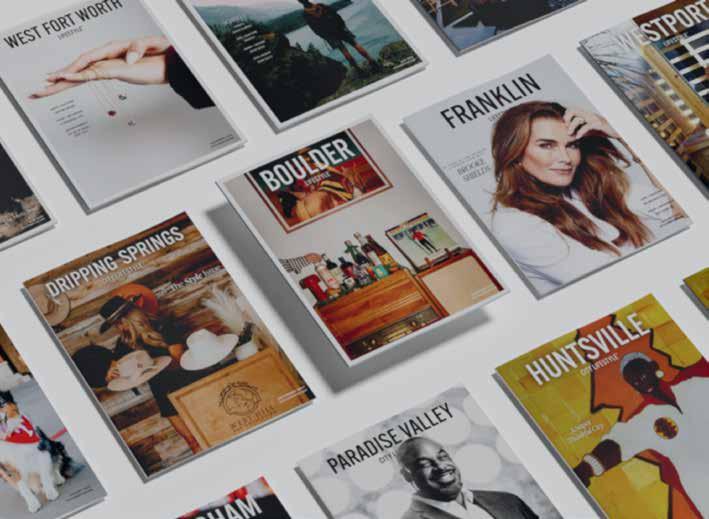
Or maybe it’s someone you know. If this isn’t the right time for you, but you know someone who could be the perfect fit, we’d love an introduction





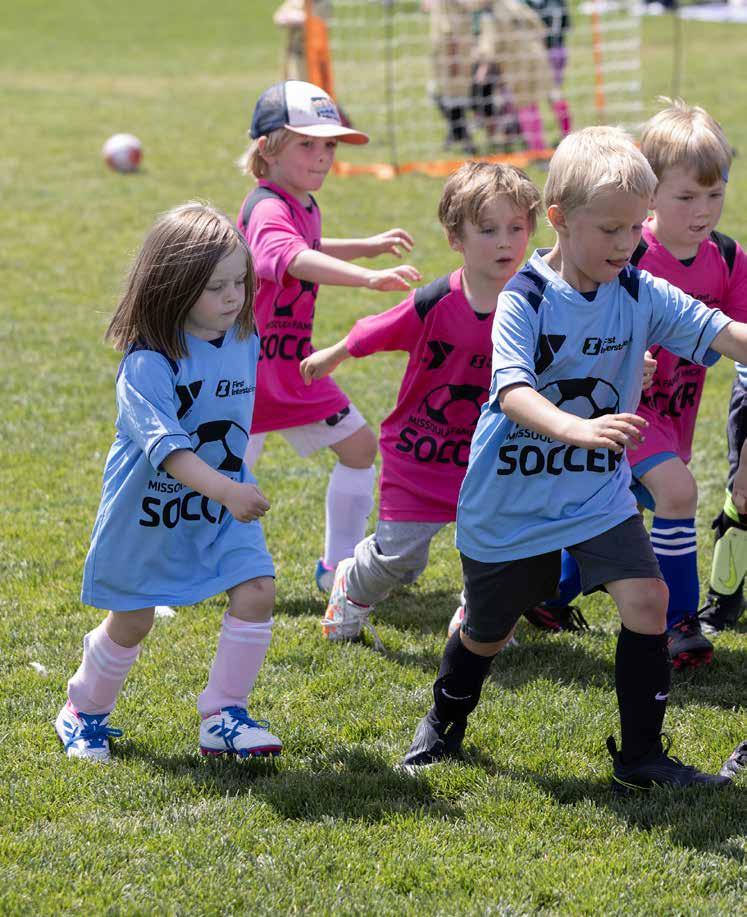

Soccer is an international pastime, as baseball is here in the States. In some countries around the world, soccer is as beloved as music or food: it’s just a part of the culture, inextricable, like language. Whatever the name—fútbol in Spain, sakkā (サッカー) in Japan, sepak bola in Indonesia—soccer has a foothold across the globe.
When thinking about the microcosms of activity and community that attend to soccer everywhere, it’s easy to be reminded of the old maxim: to think globally and act locally.
Locally, here in the Missoula Valley, soccer has a ubiquity. There are soccer clubs for competition or simply for recreation, from beginner to pre-professional. One, however, stands somewhat apart as being quite early to give soccer a home in our little corner of the world.
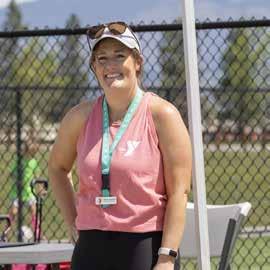
According to Katie Grutsch, Missoula YMCA’s Director of Youth Sports, this coming autumn will mark the 50th soccer season for the Missoula YMCA.
“So many people have grown up playing Y soccer in Missoula,” Katie says. “I think a lot of people in Missoula have fond memories of Y soccer. It’s cool that we’ve been doing it for so long.”
“And I think that game in 1977 was the first youth soccer game in Montana, for any organization,” she continues. “So, not only did a lot of people get their start with Y soccer, but Y soccer was kind of what started things in Montana.”
So, you can see that this is a big deal. And the Missoula YMCA’s 50th soccer season just happens to land in the same year as the World Cup, for a little extra dash of magic.
In the spirit of microcosms and community, Katie explains that the YMCA’s youth soccer program is about more than just soccer; it is, in some ways, an incubator for kids to figure out some things about life and the world and how to co-exist with others.
“In general, I think that sports are so great for kids for a variety of reasons,” she says. “You’re learning fundamental skills, and you’re exercising and getting to compete a little bit, and I definitely think that’s good for kids to learn that, that good healthy level of competition.”
“But I also think for kids, they’re learning how to listen to another adult, how to interact with other kids, both as teammates and opponents,” Katie continues. “You know, how do you treat an opponent, someone that maybe you don’t always see eye to eye with, that you have different goals from but you can still treat with respect and kindness.”
As much as the Y’s youth soccer program opens up the world for kids who partake, it also has the potential to deepen and strengthen what they already know.
“One of my favorite parts is just listening to kids interact with their parents or grandparents after the game,” Katie says, “and for the little conversations: ‘I’m proud of you, you did so good, that was awesome.’ Some kids have that environment, but I think sports brings out an opportunity for kids to be praised, and to have their family members take a moment to say they’re proud of them.
“I think it boils down to even little things like that that are so much more beyond just soccer.”
The more Katie talks about YMCA youth soccer, the more an ideal, idyllic vision of the world begins to emerge, all based around this relatively simple game. If that sounds grandiose, it shouldn’t: this stuff brings people out, and it brings out the best in them.
Missoulians love giving back; it’s in our DNA. Katie, in her twelve years as Director of Youth Sports, has seen this firsthand. The YMCA couldn’t do everything they do without a small army of folks volunteering their time to help make their community, and the lives of those in it, better.
“We have a lot of teams each season,” Katie says, “which means we need a lot of volunteers. This season we have, I think, 907 kids signed up. So, we’re at 94 teams. That’s a lot of volunteer coaches. We wouldn’t be able to do this without good community involvement and volunteers.”
This spirit of generosity goes all the way to the core of the YMCA’s youth soccer program, which is, ultimately, about access. It’s noncompetitive, and there’s no cost to participate, so kids get to gain those invaluable life skills that soccer imparts no matter their situation or their ability.
“I think one thing that’s really great about our program is we do have a pretty significant financial assistance program,” Katie says. “We raise funds every year just from community donations that go towards financial assistance for any Y programs, childcare, membership, but also things like soccer.”
“In a world where youth sports is becoming more and more exclusive,” she continues, “like we said with those life lessons, those are things every kid deserves, regardless of their parents’ financial ability to get them in a sport or not. Everyone gets the same jersey, everyone’s out there together playing, and you don’t necessarily know which kids are there with a sponsorship or not. It just kind of allows kids to interact with their peers in a different way than school.”
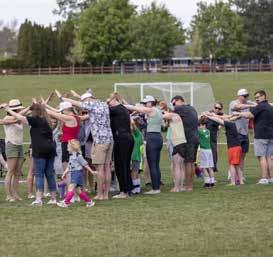
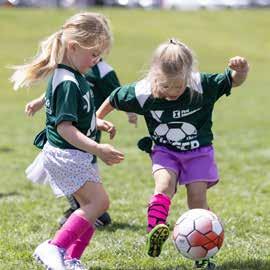
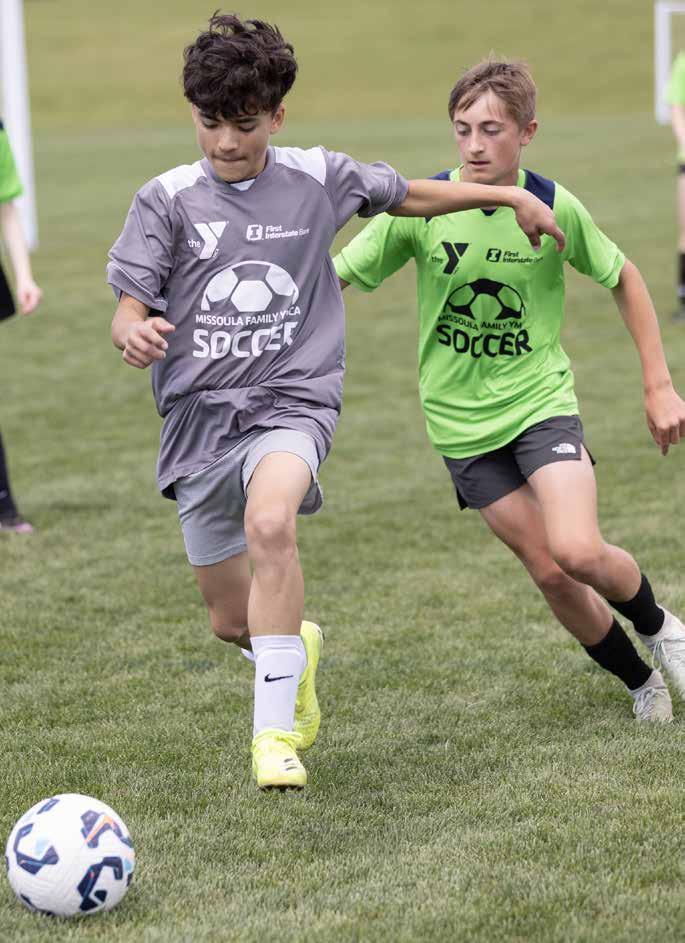
“IT JUST KIND OF ALLOWS KIDS TO INTERACT WITH THEIR PEERS IN A DIFFERENT WAY THAN SCHOOL.”













ARTICLE AND PHOTOGRAPHY BY EMMA TROTTER
EXPLORING WITH LITTLES IN TOW IS COURAGEOUS, OUTRAGEOUS, AND MAYBE CONTAGIOUS? FIVE TIDBITS FOR YOUR NEXT TRIP.
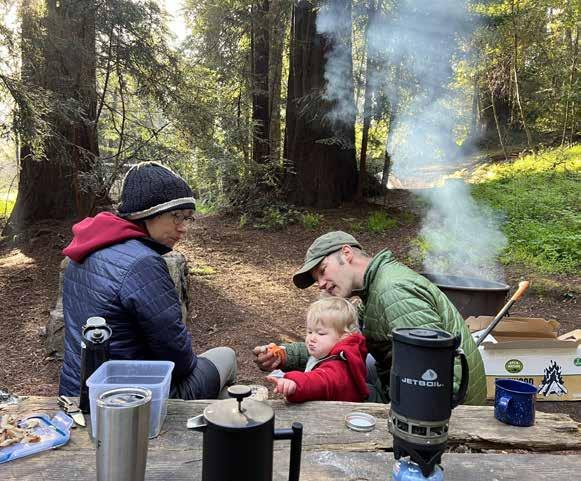
“We love camping and we want our kids to love it too.”
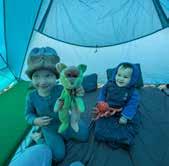
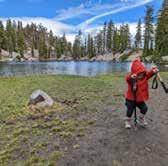
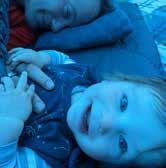
I was pregnant with my first child when I booked her first camping trip. Now that she’s 5—and her younger siblings are 3 and 1—my husband and I camp a bit less than we did before kids. But with some preparation and mindset-shifting, camping with young kids is totally doable—and occasionally even enjoyable, too.
It all starts with reserving a campsite. For a kid’s first camping trip, no more than an hour from home is still a grand adventure. Lucky for us here in Missoula, there are plenty of nearby options, including Beavertail Hill State Park along I-90, or Salmon or Flathead Lake farther north, and many more. This close, if you truly need to bail in the middle of the night, you can. Similarly, we only camp in summer and early fall, and still we left Glacier early because of a winter storm warning
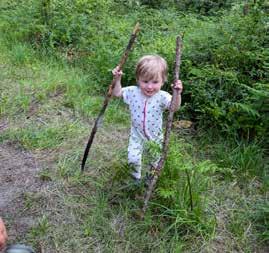
last year around the summer solstice. Looking out the window at gently falling snow while the fireplace glows is one thing. Being zipped inside your tent with your kids due to cold, wet weather is quite another!
For packing, I keep a Google doc with our list of essentials, and each trip we load the car in roughly the same layout so we know where everything is. We have a tote we call the “camping box” that is never unpacked and contains must-haves like headlamps and camp cooking utensils, meaning less we have to gather up each time we hit the road.
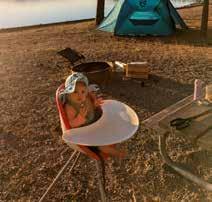
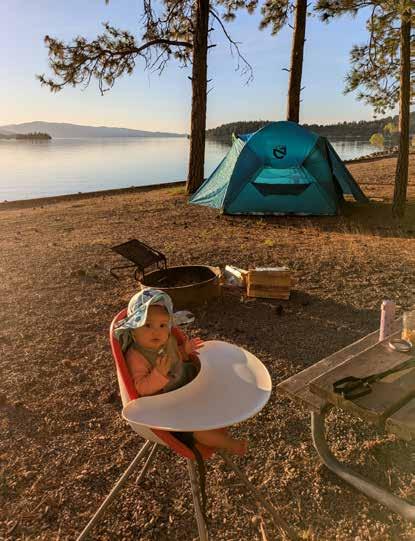
Once on the trip, we find it useful to have a loose itinerary so we’re not scrambling, but deviations are inevitable. Maybe we dreamed of two (short) hikes in one day, but the kids just don’t have it in them. So, we go back to the campsite early and let the older two play with trucks in the dirt while the baby supervises from her high chair. We make dinner with less time pressure and enjoy the luxury of a beverage while sitting down.
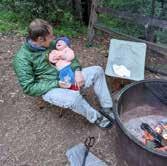
Eventually, it’s time for bed. One option is that by 8 p.m. at least one parent is stuck in the tent trying to shush the kids into submission. Another option is to simply…relax. We love camping and we want our kids to love it too, so we let them stay up—roasting marshmallows over the fire, watching the stars come out, hearing the unfamiliar nature sounds, and simply being together in the magic of their childhood.
01/
PACK TOYS—NOT TOO MANY.
Trucks and sand toys make the campsite a mini construction site. The tent only needs a couple books for bedtime and quiet play.
02/
PACK SNACKS—YOU CAN’T HAVE TOO MANY.
I would much rather go home with excess food than have hangry kids when rain delays dinner. We rely on peanut butter, nuts, chips, carrot sticks, apples, and M&Ms.
03/
PREP MEALS IN ADVANCE.
A go-to breakfast for us is bacon, potato, and leek hash with eggs cooked on top. We cut the bacon and leek together into one container before it goes in the cooler. The potato gets pre-baked nestled in the previous night’s fire.
04/
HAVE AT LEAST ONE CONTAINER FOR AN INFANT.
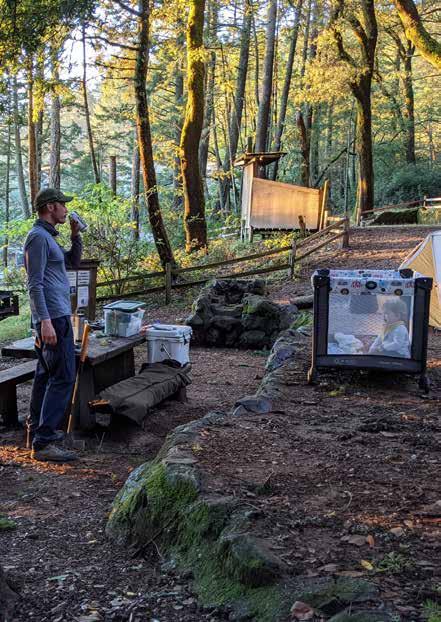
While setting up camp and cooking meals, it’s crucial to have a place to set the baby. A high chair and a pack-and-play work well.
05/
DON’T EXPECT BEDTIME TO BE AS EARLY AS IT IS AT HOME.
Kids will not quietly go to bed in the tent while the sun is still up. Embrace it! Build a campfire and have s’mores and let them run around until they are tired enough—and it’s dark enough—to sleep without protest.




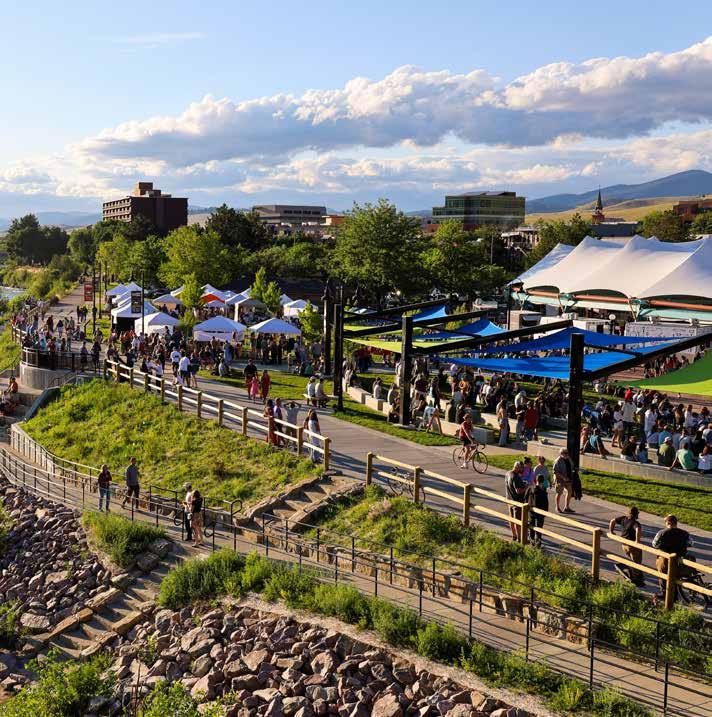
The quintessential seasonal staple, Downtown ToNight, spells summertime for Missoulians
In beautiful summer here in Missoula, it’s worth pausing to appreciate that downtown, you can find great music at a historic venue, an outdoor festival, or a street corner. Downtown, you can find a delicious meal at your long-time favorite restaurant or an upstart food truck. Downtown, you
“This sounds silly but I feel like you’re not a true Missoulian if you haven’t come to Downtown ToNight.”
- Downtown
Marketing & Events Director Kristen Sackett
can find the perfect gift for any occasion, at one of the many stores featuring local artisans.
Downtown, this summer, you might even find yourself.
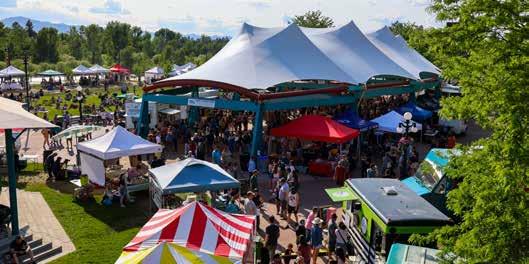
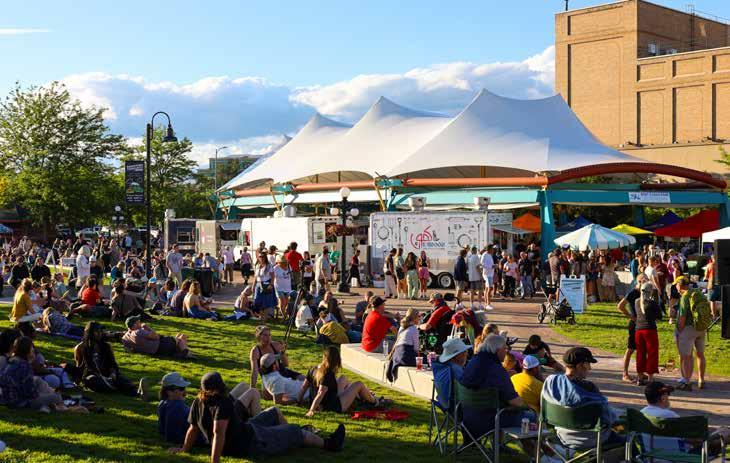
The community spirit of our city center shines brightly at Downtown ToNight, the Thursday night gathering in Caras Park of musicians, food trucks, local artists, and probably half the people you know in this town. Running from June to August, Downtown ToNight celebrates its 25th season this year.
It starts at 5 p.m., but by 4:45 the choicest parking is taken, the best picnic spots are filling up, and short lines have formed for the most popular food trucks. You’re happily listening to the band warm up and chatting with an acquaintance while getting your wristband for drinks. Steps away, light sparkles off the river rushing by, and kids splash in the shallows of the new terrace while kids-at-heart surf the wave.
Soon, emcee Reid Reimers’ familiar voice echoes across the crowd, introducing himself, without fail, as a third tier local celebrity. “That is my obnoxious tag line,” he says. “I make a joke, it’s a pretty big deal to read off a list of sponsors while people shove burritos in their faces. It’s just to be kind of tacky and add some levity to things.”
It’s important to Reid not to make too much of hosting a concert in the local park—which he has done since 2018—but he takes seriously his role to stage manage and assist the behind-the-scenes producers of the event, the Downtown Missoula Partnership.
The work of putting together the season starts in December with vendor applications, of which the team received about 50 this year, followed by seeking out sponsorships and coordinating bands—115 of those applied. Marketing & Events Director Kristen
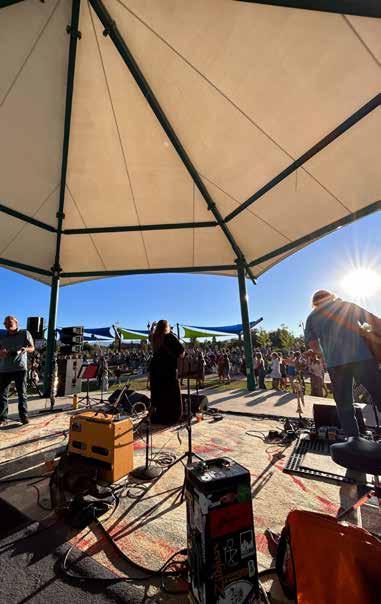
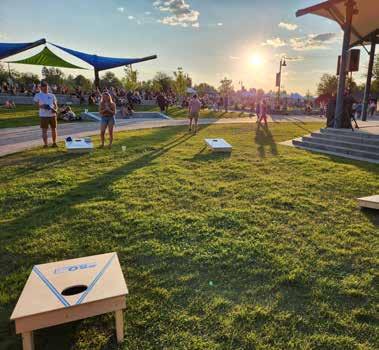
Sackett is involved in everything from early planning to blown electrical plugs at Caras.
But when she looks out over the crowd on a summer night, any residual stress gives way to awe.
“It does sort of blow your mind for a loop,” she says. “All this hard work in the months leading up and all the sudden the streets are full, the bridge, the riverfront terrace, under the bridge, shopping the markets. It’s all the best kinda vibes.”
For Kristen, the consistency and dependability of Downtown ToNight running for free all summer can’t be overstated.
“We’ve consistently put together this program that’s simple in nature, and more or less the same thing every year, but people just look forward to it,” she says. “It’s food trucks, it’s music, you can just show up and be in the space.”
“The other thing I think is really special is you can go and not spend a dime, you can bring a picnic if you want to,” adds Downtown Missoula Partnership’s Executive Director Linda McCarthy. “It’s really about bringing people together to experience all the things that make Missoula great: good music, great food, outdoor recreation. I think it’s the epitome of who we are as a community.”
“Where else would you want to be?” Kristen echoes. “This sounds silly but I feel like you’re not a true Missoulian if you haven’t come to Downtown ToNight. Only because it is the culmination, or whatever fancy word you want to use, of everything good about Missoula coming together.”
And it’s not just Missoulians coming to Downtown ToNight—tourists visit from all over the country and even the world. “People tell us, ‘We just heard music and we started wandering this way,’” Kristen says. “We’ve had people from other communities be like, ‘You’re so lucky to have this, I wish we had places like this.’”
“It’s not the flashiest and most existing thing in the world, but it’s really important to making a town feel like home to people, and making it feel welcome to people traveling through,” Reid adds.
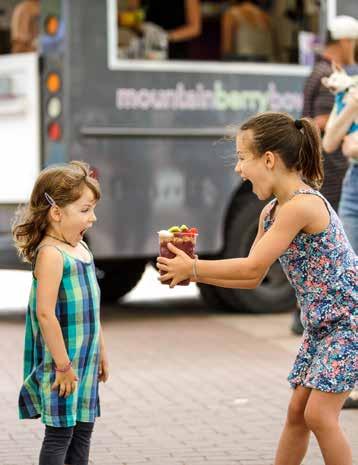
I think it’s the epitome of who we are as a community.” - Downtown Missoula Partnership’s Executive Director
Linda McCarthy
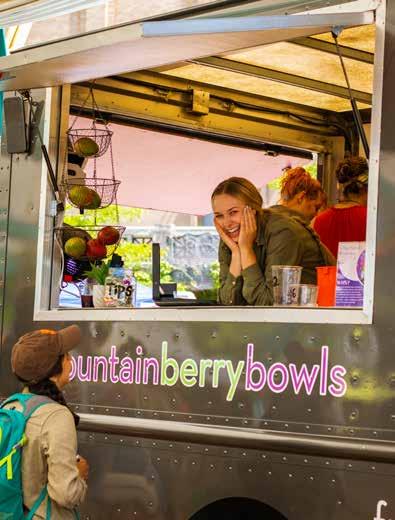
You might still be enjoying your burrito, adult beverage, conversation, dance party, newest artistic find, surf adventure?—the possibilities at Downtown ToNight are truly endless—when the set comes to an end at 9 p.m. or the summer winds down, both seemingly arriving all too soon. Deb Hicks, lead singer of local funky soul band Joan Zen, is no stranger to this bittersweet moment. She first performed at Out to Lunch in 2005 and her band has been playing the closing set at Downtown ToNight for the last five years.
“The last set is just full of bangers so that people get out there, dance together, get their toes in the grass,” she says. “The weather’s
changing, there’s a chill in the air. You see the same people you’ve seen for several decades and we’re aging together. Everything is kind of impermanent and there’s nothing more that everyone wants to hold onto than these last moments of summer.”
So get out there and savor it, and savor each other as we celebrate 25 years of this wonderful tradition.
“I’m so honored to be part of the soundtrack of people’s lives,” Deb adds. “That setting is so idyllic and everyone who comes there really feels the magic of Missoula in Caras Park. It’s a glorious feeling of aliveness when I’m there under that canopy.”









































ARTICLE BY KALI KASPRZYK
PHOTOGRAPHY BY JANIE JONES
MAKEUP BY MIKAYLA CRANE
Winnipeg in the winter, and a 17-year-old waits 45 minutes in the cold for Keanu Reeves. Her fingers are numb. She is not there for an autograph. She is there to ask him to appear in her audition tape for MuchMusic, Canada’s MTV. When he finally agrees, she writes her number on a gum wrapper with a borrowed lip liner.
He calls days later.
That 17-year-old was Jen Cohen — fitness expert, host of the Habits & Hustle podcast, and best-selling author. She has built a career on the premise her frostbitten afternoon proved. She calls the practice the 10% Target: 10 attempts at whatever you want most in life.
The premise is simple. Most people never make one attempt. Almost nobody makes two. The math works in favor of the person who keeps going.
The top-rated Habits & Hustle podcast has logged hundreds of conversations with high performers and the people who study what the body does to the mind. Her TEDx talk, The Secret to Getting Anything You Want in Life, has traveled widely inside Fortune 500 sales-training rooms. On the Share the Lifestyle podcast, Cohen sits down to share the working rules that are the foundation of her latest book, Bigger, Better, Bolder.
“You have to be the CEO of your own life.”
FEATURING JEN COHEN
Discover the full 10% Target Mindset framework.


1 2
The door opens, or another door does. The unmade attempt and the refused one leave you in the same place — except one of them teaches you something.
Cohen frames her habits as a wager: How do I stack the deck so I win more than I lose? The workout happens first, and the food decisions follow. The email follow-up gets sent, and the answer arrives. The choices compound in a single direction.
3
No one is born with it. The people who look disciplined are running a routine they have rehearsed long enough that it no longer feels like effort. The reps are the skill. Miss them, and the skill fades, the same as any other.
4
Confidence does not arrive by repeating the word. It arrives after the body has done the thing — the workout finished, the cold walk endured, the email sent. The mind takes its cues from what the body proves it can do. Talk follows action, not the other way around.
5
The first decision sets the slope of the rest. Skip the Monday workout, and the rest of the week tends to follow. Hold the line on Monday, and the slope tilts the other way.
















INN ER JOURNEY HEALTHCARE PUTS EMPHASIS ON EXPLORING THE PATHS IN FRONT OF YOU
ARTICLE BY SHELBY HUMPHREYS | PHOTOGRAPHY BY RICK SZCZECHOWSKI

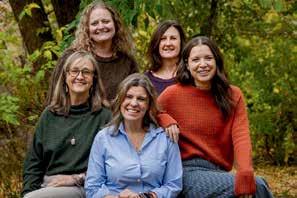
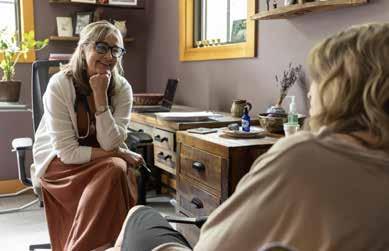
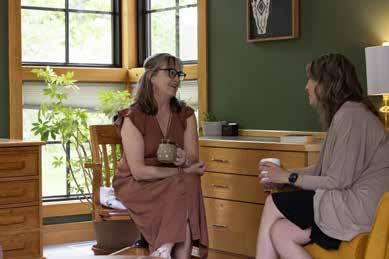
In Missoula, people are ready to explore. Whether that’s outside on the trails or through a more inward journey that touches soul and spirit, connection can be found in many ways. On Hickory Street, a behavioral health clinic called Inner Journey Healthcare holds that connection at the center of its practice.
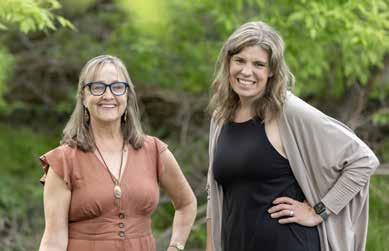
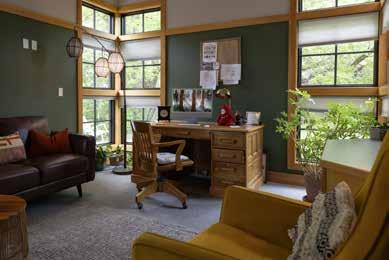
Inner Journey Healthcare began with its own story of connection. Doctors Donna Ryngala and Joey Banks had each been practicing for many years when a mutual friend suggested they meet. “We met at Clyde Coffee. What followed were walks on trails, more coffee, and the beginning of an idea. We dreamed of building a women-owned clinic that valued the whole person. We found a beautiful space just off the Milwaukee Trail, hired two therapists and our enthusiastic Patient Coordinator, Ali Kelly, then opened our doors in March 2025,” said Dr. Ryngala. “It’s an ideal partnership,” added Kelly. “Dr. Ryngala covers the psychological side and Dr. Banks the medical. We also have Marcia Brownlee and Adri Ramos on board to supplement with their own therapeutic modalities. We’re able to offer a full practice that includes traditional psychotherapy and are one of the few clinics in town that offers KetamineAssisted Psychotherapy (KAP).”
The clinic’s philosophy of patient care is to integrate science and spirit. Dr. Ryngala understands how to balance the evidence-based approach of science with the human side of healthcare. “In the field of psychotherapy, we rely on research about specific human struggles and how to best treat them. We strive to provide best practices based on this research. However, as someone who has called Missoula home for 26 years, I cannot ignore how spirituality is experienced in so many ways—in a mindful moment by the creek, in the quiet wilderness, or in the vibes of a shared smile as you pass someone,” said Dr. Ryngala. “At Inner Journey, we focus on what brings people closer to a life that they would choose for themselves. For example, we might start with the question, ‘What would you be doing if I could magically make this pain go away?’ The answer to this helps us
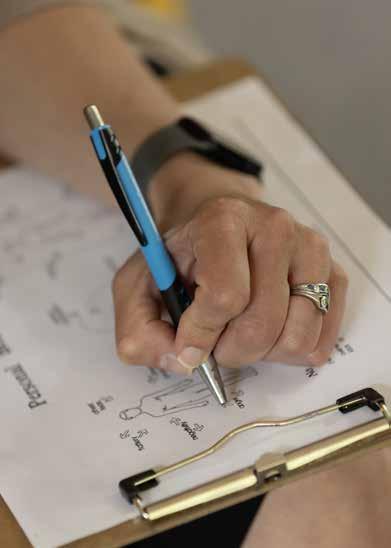
to know what direction to move toward and elucidates the path.”
Dr. Banks’ experience has taught her that effective care isn’t one-size-fits-all. “Working in rural Montana, Alaska, Africa, and with the Indian Health Service, I learned to stay open and curious about how different folks approach healing. While modern Western allopathic medicine focuses heavily on treating symptoms, most other cultures take a more holistic, whole-person approach by aiming to balance the body, mind, and spirit. It means listening without judgment as a person tells their story and asks for help in moving forward in a manner that seems best for them,” said Dr. Banks.
Patients at Inner Journey Healthcare come in with a variety of conditions. Providers are able to treat ADHD, PTSD, grief, eating disorders, menopause symptoms, depression, anxiety, burnout, and more. Marcia Brownlee, a Licensed Clinical Professional Counselor, is trained in ACT (Acceptance and Commitment Therapy) and CBT-I (Cognitive Behavioral Therapy for Insomnia). “Even a single session of CBT-I might provide information and guidance,” said Brownlee. “ACT can be most helpful for people interested in combining the exploration of inner experiences with practical skills in a way that feels more compassionate, flexible, and meaningful.” Adri Ramos, a Licensed Clinical Social Worker, also provides ACT and CBT. In addition, she focuses on working with complex trauma using EMDR (Eye Movement Desensitization and Reprocessing), mindfulness techniques, and somatic processes. “I increasingly find that even those of us who don’t consider ourselves traumatized can benefit from shifting our relationship with painful past experiences. Therapy, like life, can be challenging and intense, but we can also laugh and get it
wrong and try again. I like to normalize that,” said Ramos.
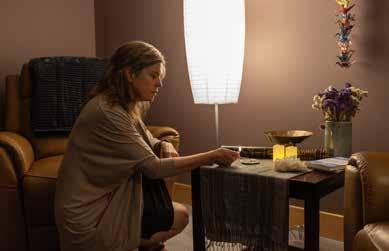
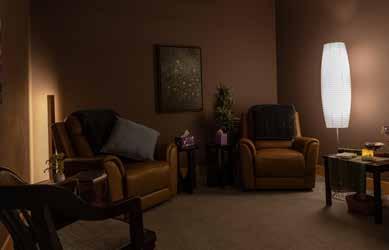
In addition to traditional therapies, Inner Journey Healthcare provides an emerging treatment for depression and anxiety called Ketamine-Assisted Psychotherapy. Since receiving FDA approval in 1970, Ketamine has been used in hospitals every day as an anesthetic. However, in the last twenty years, Ketamine has also shown promise with treatment-resistant mood disorders. The clinic offers KAP therapy in two ways: intramuscular injection and an FDA-approved nasal spray of Esketamine called SPRAVATO®. The clinic always combines Ketamine therapy with psychotherapy sessions. “Safety is our first priority for our patients,” said Dr. Banks. “Set and setting is so important to holding space for clients in vulnerable and psychedelic states. We do this well! We support each patient with prep, expectation discussions, and integration before, during, and after sessions.”
When medications or other therapies fail, KAP can go where other treatments can’t. “Mental health conditions are tricky,” said Kelly. “There’s a slow descent into not feeling good. Sometimes the most obvious thing is that we’re just really stuck. Ketamine can be a catalyst to getting unstuck,” she said. Dr. Ryngala has witnessed the anguish people go through when they cannot find a way out of pain, despite their best efforts. “Some say, ‘Yes, I get it. I know I should be kinder to myself. I know that these thoughts don’t help me or make sense, and yet I can’t stop them.’ In these instances, I might suggest Ketamine as a way to emotionally connect with the life that they value,” she said. As Patient Care Coordinator, Kelly has seen KAP help turn people’s lives around. “I remember the first time this one person came in. She was withdrawn and heavy in
“PEOPLE HERE ARE OPEN TO EXPLORING, AND THAT INCLUDES THEIR HEALTH CARE."
- PATIENT COORDINATOR
her body. Last time she came in, though, she had a lightness and a smile. She just charged right in and sat down; ready for her therapy session and ready to feel good.”
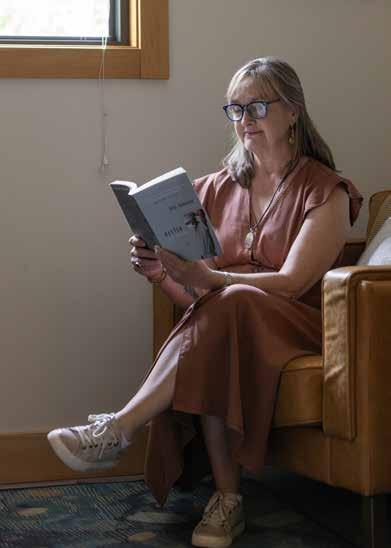
Since opening in 2025, the clinic credits the open nature of Missoulians for its success. “Missoula gets it,” said Kelly. “People here are open to exploring, and that includes their health care,” she said. Dr. Banks enjoys Missoula for its friendliness. “Missoula is an open and friendly community, and we find our clients are respectful and eager to show up to work on healing both in mind and body. We love our location near the trails and can even offer walk and talk visits sometimes,” she said. For Dr. Ryngala, Missoula is more than just a town—just like her patients are more than their symptoms. “Somewhere along the way I learned of an emotion called ‘homefulness.’ It was described as that feeling when you turn onto your street after a long day. It is the sense of ‘I am home.’ To me, people who feel this way about Missoula are just my kind of folk,” she said.
At Inner Journey Healthcare, healing is the way home, even when the path isn’t clear. “I really like the saying, ‘Life is meant to be experienced like a sunset and not figured out like a math problem.’” Dr. Banks hears echoes of the same sentiment in feedback from her patients. She often hears things like, “I feel heard, I feel safe, and I feel hopeful.” Kelly sees those feelings on the faces of people who walk through the door every day, and she understands why they are there. “People just want to feel better, and we want that for them, too.”


THREE MONTANA LOCATIONS TO SERVE YOU BETTER