




Our practice philosophy has been heavily influenced by Dr. Grella’s grandfather, who was a dentist for 40 years and always followed the Golden Rule: He never recommended dental treatments to patients that he would not believe in recommending for himself, and Dr. Grella upholds this same standard at his practice.
Dr. Grella has been practicing dentistry for over 15 years and he has extensive training from the Navy where he did his residency and active military duty.
Our office also has over 700 Google reviews... our patients LOVE our office and you will never find a dentist who is more passionate about Dentistry than Dr. Grella.
We promise if you come to our office you will love your experience and feel right at home.
June is here, and with it comes our annual Gentlemen’s Issue. It’s a celebration of the men in our lives — fathers, teachers, community leaders and businessmen who show up for their families and community every day. This month’s stories remind us that greatness doesn’t always announce itself loudly. More often than not, it’s a quiet storm that builds slowly, strikes deeply and leaves everything changed.

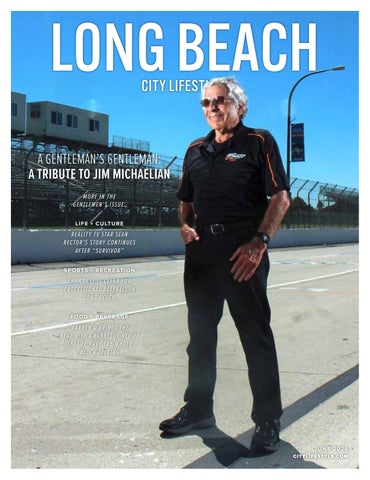
We open with a tribute to a man who embodied that truth. For more than five decades, one visionary leader helped transform a scrappy street race into one of Long Beach’s largest economic drivers. He was a businessman, a competitor, a mentor, and above all, a man of deep character. We hope his story moves you as much as it moved us to tell it.
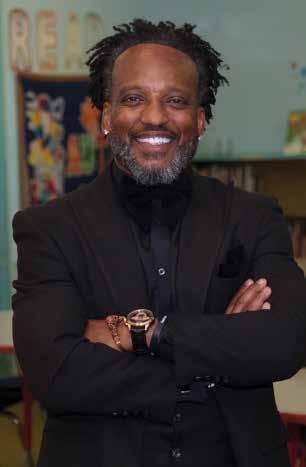
Next, we sit down with a Long Beach community pillar whose life reads like it was written for the screen — and for a moment in the early 2000s, it was. Channeling what he thought was a temporary career detour into his life’s calling, he has impacted more than 20,000 young lives across Los Angeles over the past 25 years.
Then we head to the ballpark. Long Beach has a new professional baseball team, and it’s already feeling like something the city has been waiting for. With deep community roots, affordable tickets and a lineup of events designed to feel more like a block party than a box score, this team is building something that goes beyond the game. We sat down with the founders, players and people behind the brand to find out what it means to finally bring pro ball home.
And because no Gentlemen’s Issue would be complete without something for the grill, we’ve included a celebrity pitmaster’s recipe that’s guaranteed to steal the show at your next backyard gathering. Whether you’re cooking for your family, your crew, or a table full of dads who think they already know everything about barbecue — trust us, you’ll want to bookmark this one!
Fire up the grill, and enjoy the read.
With gratitude,

ATIRA RODRIGUEZ, PUBLISHER @LONGBEACHCITYLIFESTYLE
June 2026
PUBLISHER
Atira Rodriguez | atira.rodriguez@citylifestyle.com
EDITOR
Stephanie Perez | stephanie.perez@citylifestyle.com
STAFF PHOTOGRAPHER
Nirav Solanki | mail@niravsolanki.com
CONTRIBUTING WRITER
Warren G
CONTRIBUTING PHOTOGRAPHERS
Brandon Richardson, Ariana Ruiz/Prensa Internacional, Hassan Haze
CEO Steven Schowengerdt
President Matthew Perry
COO David Stetler
CRO Jamie Pentz
CoS Janeane Thompson
AD DESIGNER Rachel Kolich
LAYOUT DESIGNER Adam Finley
QUALITY CONTROL SPECIALIST Hannah Leimkuhler


Learn how to start your own publication at citylifestyle.com/franchise.
Proverbs 3:5-6












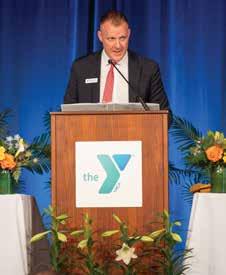
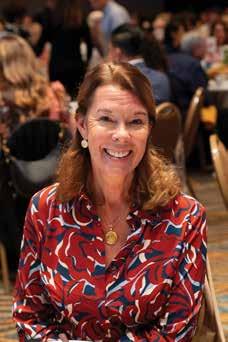

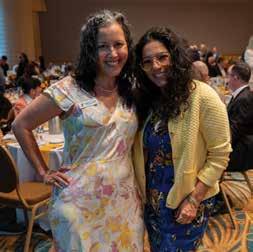

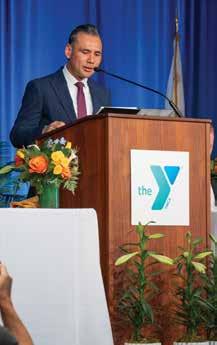
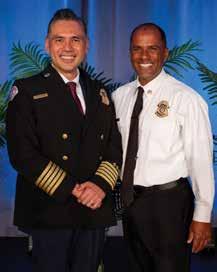
YMCA of Greater Long Beach 58th Annual Good Friday Breakfast, Apr. 3rd | 1: Steven Keesal, board member and master of ceremonies for the event. 2: Sumer Temple (center) and Linda Golson of Don Temple Storage with Lionel Gonzalez, LBUSD. 3: Port of Long Beach CEO Dr. Noel Hacegaba delivers the keynote address to the audience. 4: YMCA of Greater Long Beach Executive Director Andrea Sulsona and Director of Marketing and Communications Monica Wong. 5: YMCA USA President & CEO Suzanne McCormick. 6: Board Directors Steven Keesal, Rev. Dr. Phyllis E. Hayes-Reams, Henry Walker and Brian Russell. 7: Dr. Noel Hacegaba playfully dons Fire Chief Dennis Buchanan’s jacket.
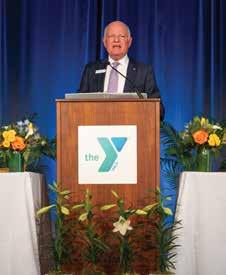
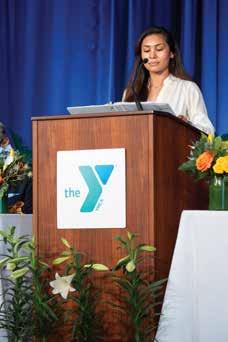
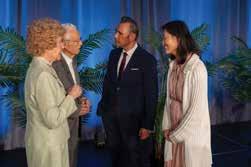
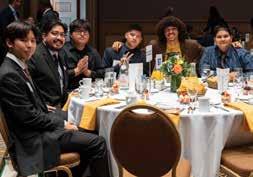
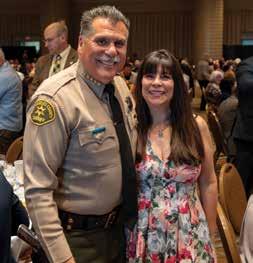
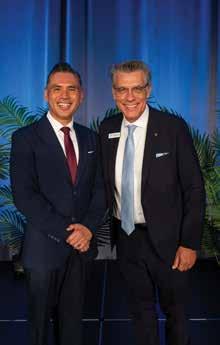
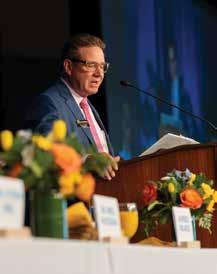
8: Board Chair Brian Russell addresses guests. 9: Dr. Noel Hacegaba and his wife in conversation with Presenting Sponsors Dr. Mike and Arlene Walter. 10: Dr. Noel Hacegaba and YMCA of Greater Long Beach President & CEO Alfredo Velasco. 11: YMCA Youth & Government program participants. 12: Board Director Theresa Cornwell reads the morning scripture. 13: Los Angeles County Sheriff Robert Luna with his wife Celines. 14: Board Director Henry Walker delivered the program benediction as the breakfast concluded.


Kiiwi, a mobile app from Long Beach, launched a service that helps local businesses connect with residents through special offers. The free app lets businesses share limited-time deals, and users can redeem discounts at restaurants, coffee shops, fitness studios and other local businesses. The service includes more than 50 businesses and over 3,000 users, and it is growing across the city.
The Downtown Long Beach Alliance, in partnership with Cal State Long Beach’s Institute for Innovation & Entrepreneurship and with support from Wells Fargo, awarded $10,000 in startup funding at its 10th annual PitchFest business competition. The Shark Tank-style event marked the end of a seven-week education series for entrepreneurs and small businesses. Plaid Safety, Upgraded, Sonar Conventions and Mana Outpost were selected as winners based on the strength of their business models and market readiness.
Sorry Not Sorry Creamery opened April 3 at 4918 2nd St. in Belmont Shore, its first Long Beach location. The ice cream shop serves scoops and rotating seasonal flavors featuring house-made baked goods. Described as a “not your average ice cream shop,” the new location adds a dessert option along the 2nd Street retail corridor.










A roundup of local veterans highlighting service, leadership and continued community impact
Flag Day, marked each year on June 14, is a moment to honor the service and sacrifice of those who have served in the U.S. military. In Long Beach, that recognition extends to veterans whose dedication continues to shape and strengthen the community.
ARTICLE BY STEPHANIE PEREZ PHOTOGRAPHY BY CITY OF LONG BEACH, VETERANS BANNER PROGRAM
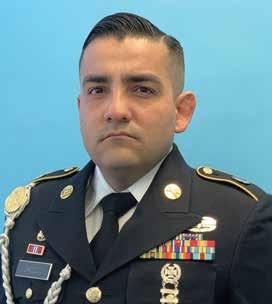
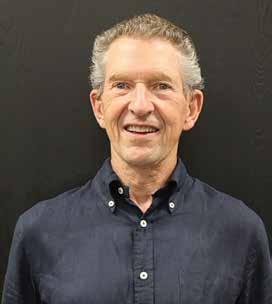
Gus Orozco was born in Jalisco, Mexico, and raised in Long Beach. He joined the Junior Reserve Officers’ Training Corps at Wilson High School and enlisted in the Army in 2005. Orozco served with the 2nd Stryker Cavalry Regiment in Germany and earned a Combat Action Badge during deployment to Iraq. He joined the Army Reserve in 2010 and became a drill sergeant. Orozco received a bachelor’s degree from Cal State Long Beach, was commissioned as a lieutenant in 2023, and now serves as company commander in Riverside. He lives in North Long Beach with his wife.
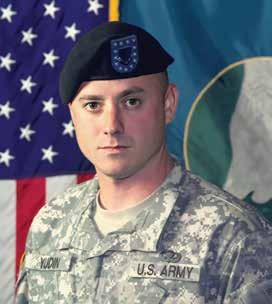
Samuel Yudin, a Long Beach resident, is a command sergeant major in the California Army National Guard and the senior enlisted member of the 224th Sustainment Brigade. He has served 26 years in the Army, most recently as the mission coordinator for the U.S. Army Europe Federated Intelligence Program. Outside the military, Yudin is a senior manager at Boeing in El Segundo. He graduated from the U.S. Army Sergeants Major Academy and holds degrees from Humboldt State University and the University of Texas at El Paso. Yudin is active in veterans organizations and community service.
Dr. James Dohn is a U.S. Marine Corps veteran and chiropractor who has lived in Long Beach for more than 40 years. He served two tours in Vietnam as an aviation ordnance technician. Since the 1980s, he has operated a chiropractic practice in Long Beach. He has contributed to community service through organizations such as the Optimist Club and Long Beach Organic. He has mentored youth, led Alcoholics Anonymous meetings for inmates at Terminal Island and taught yoga to residents.
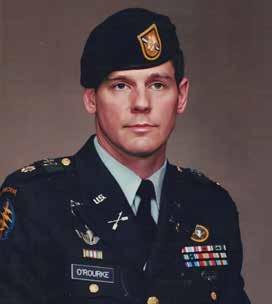
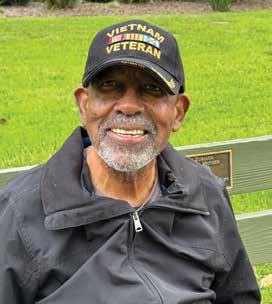
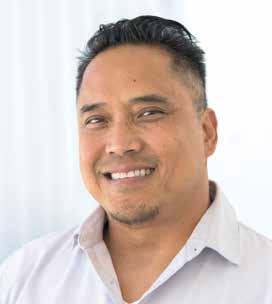
Dr. Patrick C. O’Rourke is a retired U.S. Army lieutenant colonel who served 22 years in infantry and Special Forces units. He trained as a China foreign area officer and helped establish the FAO training program in Beijing. On Sept. 11, 2001, he served at the Defense Language Institute Foreign Language Center, helping develop seven new languages for the global war on terror. O’Rourke later commanded ROTC programs at USC, Cal State Long Beach and Cal State Dominguez Hills. He earned a doctorate in educational leadership and has led the Language Training Center grant since 2011.
Joseph Daniel Davis is a Navy veteran who was homeported in Long Beach from 1963 to 1967. He served as a gun mate seaman aboard the USS Valley Forge, a helicopter carrier, and the USS Bayfield, an attack transport ship. Off the coast of Vietnam, he helped transport Marines during a rescue mission, earning a Gold Star commendation. Davis has lived in Long Beach on and off for 32 years and has lived at American Gold Star Manor since 2013.
Robert E. Villanueva’s family immigrated from the Philippines to Long Beach in 1982. He attended local schools and graduated from Long Beach Polytechnic High School in 1986. Villanueva served in the U.S. Navy from 1987 to 1991, spending a year at Long Beach Naval Station and completing two Western Pacific deployments. After his service, he worked at DENSO in West Long Beach while attending Long Beach City College. His children also attended local schools, and his family maintains strong ties to Long Beach and a tradition of military service dating back to World War II.






Behind North America’s longest-running street race was a man of character whose legacy outruns every car on the track
ARTICLE BY ATIRA RODRIGUEZ PHOTOGRAPHY BY BRANDON RICHARDSON, ATIRA RODRIGUEZ AND ARIANA RUIZ/PRENSA INTERNACIONAL
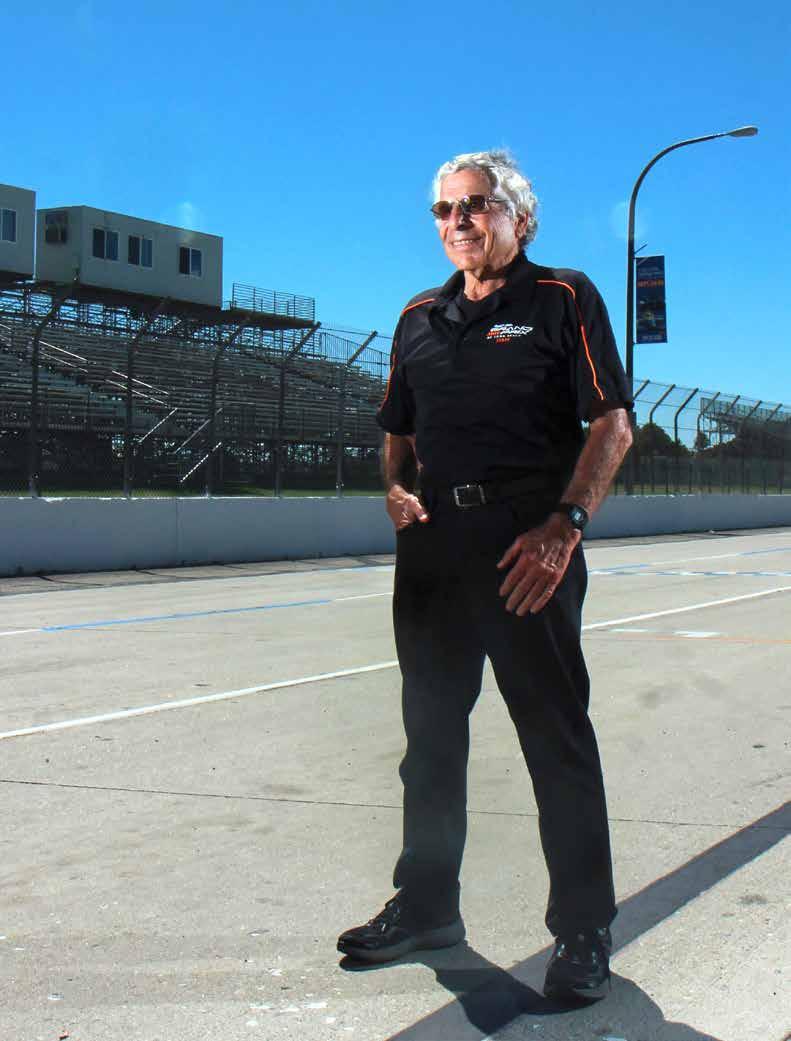
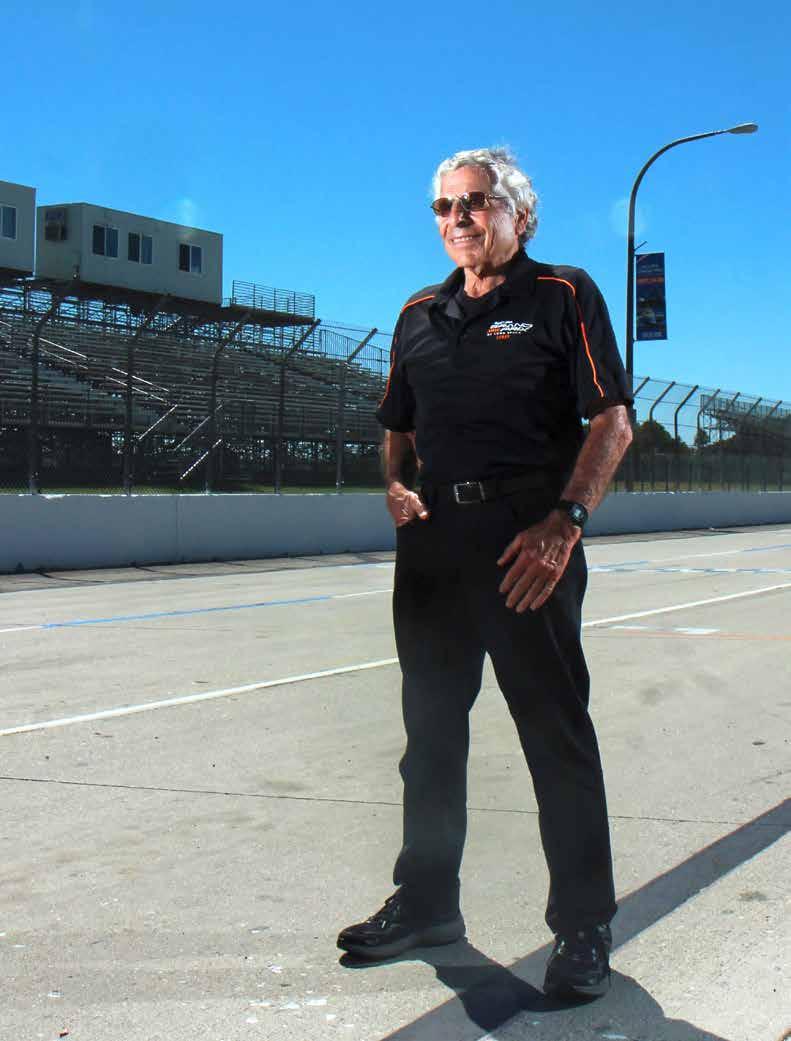
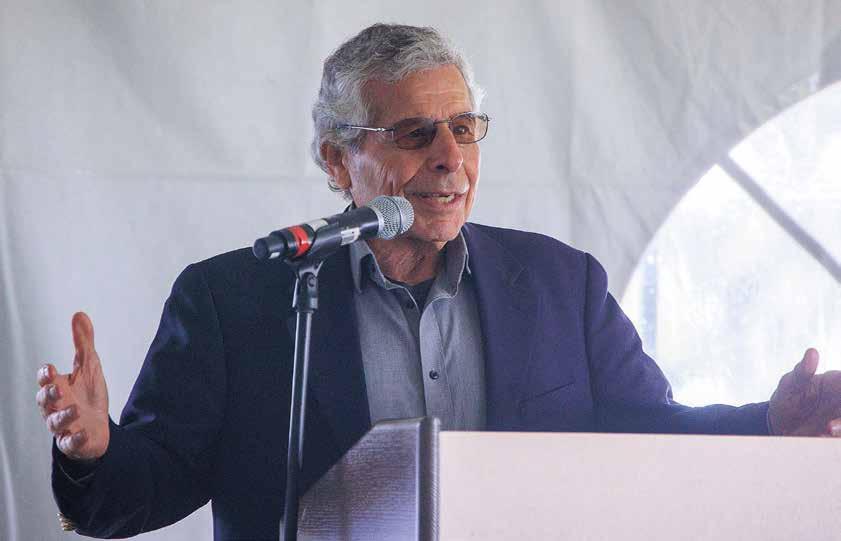
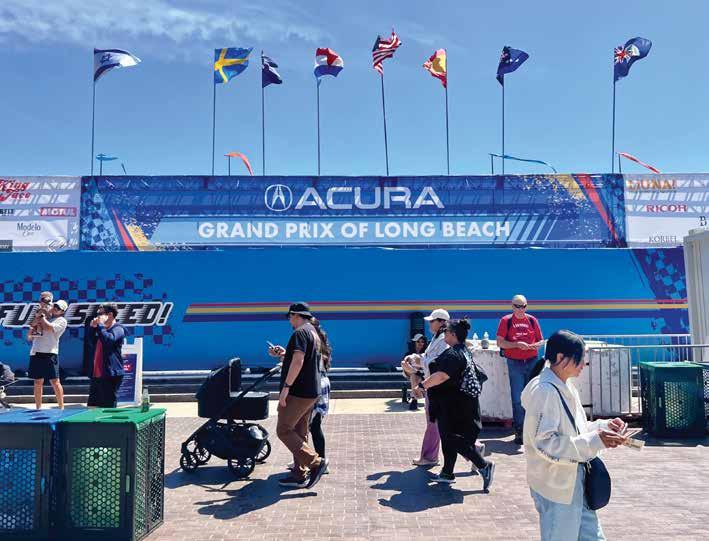
Jim Michaelian never wanted the spotlight, perhaps because his own light was bright enough. Each year at the Acura Grand Prix of Long Beach, he’d greet ticketing staff and watch fans file out after the checkered flag fell, making sure they’d had a good time. Half of them had no idea who he was, but that was just fine with him.

Jim Michaelian, president and CEO of the Grand Prix Association of Long Beach, passed away on March 21, 2026. He was 83.
He left us just four weeks before the Acura Grand Prix of Long Beach — the race he helped build from the ground up over 51 years — was set to roar again along the city’s shoreline. It would have been his final race before handing the reins to incoming CEO Jim Liaw.
Michaelian joined the Grand Prix Association as a young controller in the mid-1970s, when the idea of a world-class street race winding through Long Beach was still more vision than reality. He rose through the ranks — controller, chief operating officer — before being named president and CEO in December 2001. But his impact on the event surpasses any title.
“Dad understood that the Grand Prix was about more than racing,” says his son Bob Michaelian. “It was a catalyst for revitalizing a city. From the early days
when Long Beach was a run-down Navy town, he saw the event as a vehicle for economic growth, helping attract hotels, restaurants, and the kind of investment that transforms a community. His passion was for the sport and the city equally.”
Chris Esslinger, the Grand Prix’s director of communications, worked alongside Michaelian for 25 years and witnessed that passion firsthand.
“No one worked harder, and no one cared more about this event than Jim,” Esslinger says. “He was here before a lot of us in the morning, and he stayed later than a lot of us in the evening. He wasn’t afraid to get his hands dirty.”
Michaelian was always thinking ahead and innovating. In 2005, he invited a then-fledgling drifting series, Formula Drift, onto the Grand Prix event schedule — a move that seemed unconventional at the time. Jim Liaw, who led the organization from its

inception in 2003 until 2021, credits that invitation as a turning point in his career.
“He and Dwight — his right-hand man in operations — they said, ‘We’re in,’” Liaw recalls. “The forethinking of Jim and the team here was: we need to add a different flavor to the race. They brought us in.”
Formula Drift eventually became a Long Beach institution in its own right, and the relationship between Michaelian and Liaw deepened over the years into something more personal — quarterly meetings over coffee (Michaelian always ordered hot chocolate) where the two would catch up on the industry, the race and life.
When Michaelian began thinking about a succession plan, he called Liaw. “He said, ‘I’ve been asked to put a few names in the hat. I want to put your name in the hat,’” Liaw recalls. “That in itself — whether I got selected or not — was already humbling. The fact that he wanted to put me in consideration was a big deal.”
Liaw came aboard as general manager in early February, working alongside Michaelian to learn the nuances of the operation. The plan was for Michaelian to lead one last race before the transition was complete on July 1.
“His fingerprints are still all over this race,” Liaw said in the weeks before the event. “A lot of the decisions, the themes, the colors, the marketing — he already made those calls. We were going to ride this final wave with him.”
Then, on a Saturday morning in March, everything changed.
“A few of us came into the office,” Liaw says quietly. “We put the news out, made the rounds, called key partners, spoke with
the mayor [and] called every employee. Monday morning, we were back in here. It was a little somber — but everybody was like, okay, what do we need to do? They got right back on the checklist. He built a team that knows what they’re doing.”
Bob, who shared countless miles and memories with his father on and off the track, describes a man equally devoted at home. “For 40 years, Sunday dinner at Dad and Mom’s home was a weekly tradition — not out of obligation, but because he genuinely cherished those moments. He was the rock of the family, always present, always encouraging, always guiding. Whether it was a tennis match, a race or a difficult moment in life, Dad was either there in person or checking in with a text. Family came first — always.”
Allison Wilson, executive assistant to the president and manager of administrative services, worked for Michaelian for nearly 35 years. She started at the Grand Prix in 1991, at 23, and over time grew into more than an assistant — she became, as she puts it, family.
“Jim was like a father figure to me,” she says. “He came to my wedding. He was one of the first people to visit me when I had my child.”
She describes the atmosphere Michaelian cultivated within the office as something rare: “He created an atmosphere of family, which was very important to him. We were his family as much as his own family. And I believe that’s one of the biggest reasons so many people have worked here for so long — the integrity, the family unit.”
One afternoon in mid-March, Wilson wandered into his office to talk. Thinking of his upcoming departure from the CEO role, she looked at him and asked, “How am I going to do this without you?”
“He said, ‘You got this, tiger,’” she recalls. “I said, ‘Well, as long as you’ll always be here to answer my phone call.’ And he said, ‘I will always answer your phone call.’”
He passed away a few days later.
“He called a lot of people he felt very close to ‘tiger,’” she says. “That was a privilege.”
Since his passing, Wilson says she has found a small but meaningful ritual. “His office is connected to mine. I turn his light on every morning. He’s still here with me.” She pauses. “It’s not a sad atmosphere, actually. We’ve just really wrapped our arms around each other and become an even tighter unit. If there is one blessing in his passing, it’s that he’s brought us all closer together. And I know he would be extremely grateful and happy to hear that.”
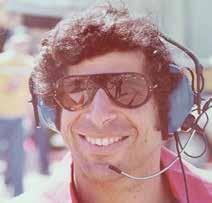
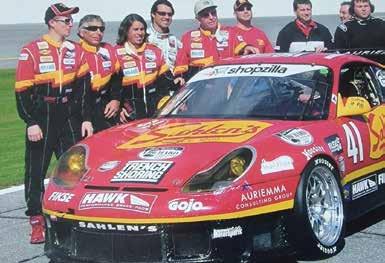
Michaelian wasn’t only a suit — he was a competitive sports car driver for more than 25 years, accumulating starts at Daytona, Sebring, Dubai, the Nürburgring and Le Mans. He did not advertise it.
“He was a very private man,” Wilson says. “People would come up and ask where Jim was, and I’d say, ‘Oh, he’s out of town.’ And it would take one of us — usually Chris — watching racing highlights and going, ‘Oh, Jim’s at Daytona. Oh, Jim’s at Le Mans. Oh, he’s at the Nürburgring.’ He didn’t talk a whole lot about it.”
In 2001, the same year he became CEO, Michaelian was diagnosed with cancer and lost an eye. He flew to San Francisco for surgery. Almost no one knew. He came back wearing a patch — and within weeks, he was back behind the wheel of a race car.
“That shows you the kind of person he was,” Wilson says. “He didn’t let anything come in the way of racing. I feel that passion for racing also led to the passion for this company. You’ve got this rush that brings you joy. I think that’s what racing did for him — and running this company did for him as well.”
In the days since his death, something unexpected happened. Messages flooded in — from people the Michaelian family never knew Jim had influenced.
“Perhaps what has been most surprising is the sheer scale of the lives he quietly touched,” Bob says. “Messages have poured in from people we didn’t even know he had mentored
“Dad was someone who always wanted to give and never wanted to receive. He stayed in the background, content to help drive things forward — an event, a city, a career, a family — without seeking the spotlight. That quiet generosity was the defining characteristic of the man.”
—Bob Michaelian
— individuals who reached out to Dad during moments of personal struggle, business conflict, or illness, and found in him a steady, generous guide. He sought no recognition for it. He simply showed up for people.”
“He just seemed like such a good guy,” Liaw says. “You would not expect that of someone in his position — not drunk on attention, not riding a very high horse. Just a good man.”
This past April, the 51st Acura Grand Prix of Long Beach roared through the city’s streets — the first without Jim Michaelian at the helm. The team he built saw it through, honoring him the best way they possibly could: with another successful race.
Esslinger, who hopes the Motorsports Hall of Fame will one day formally recognize Michaelian’s contributions to the sport, says of his far-reaching impact: “You’ll hear everybody from the Mario Andrettis to people [who] work in the city say the same thing — he always had a super positive attitude, even when things weren’t looking good.”
In the end, the common thread for anyone who had the pleasure of holding space with Jim Michaelian was simply that he was a man of true character. He was one of the good ones.
“Dad was someone who always wanted to give and never wanted to receive,” Bob says. “He stayed in the background, content to help drive things forward — an event, a city, a career, a family — without seeking the spotlight. That quiet generosity was the defining characteristic of the man.”
LON G BEACH’S SEAN RECTOR HAS SPENT A LIFETIME TUR NING SETBACKS INTO SOMETHING GREATER
ARTICLE BY ATIRA RODRIGUEZ | PHOTOGRAPHY BY HASSAN HAZE
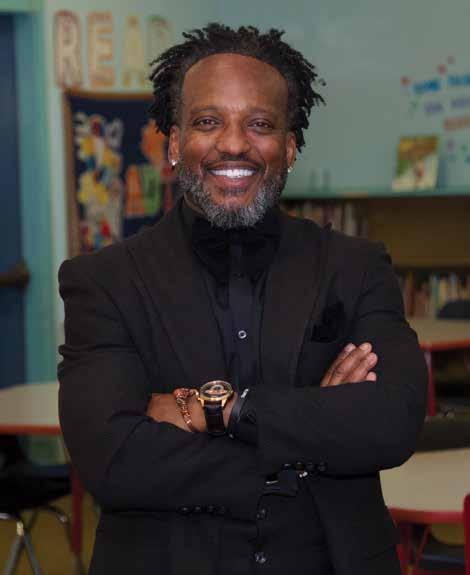
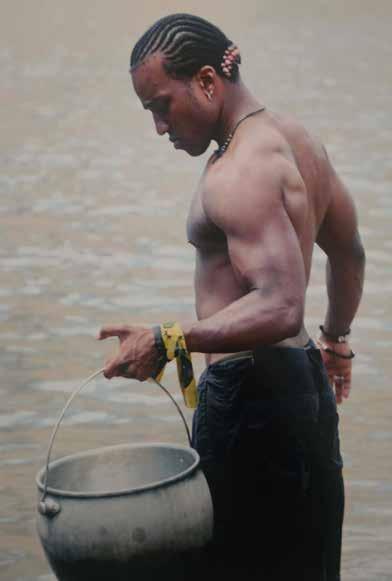
There’s a word Sean Rector uses when he talks about his life — navigate. He says it the way someone does who has had to learn, early and often, that the terrain is rarely what you expected and the map is rarely yours to draw. From the streets of Harlem to the hills of rural Pennsylvania, from a castaway beach in the Marquesas Islands to the classrooms of South Central Los Angeles — Sean has spent his life finding a way through.
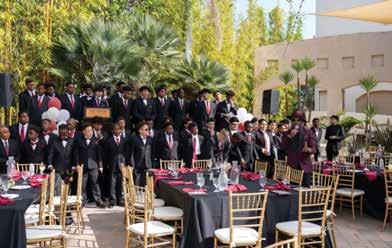
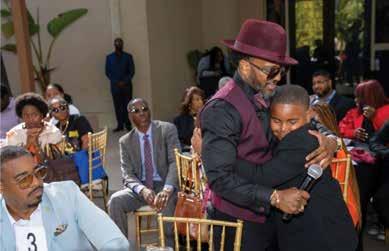
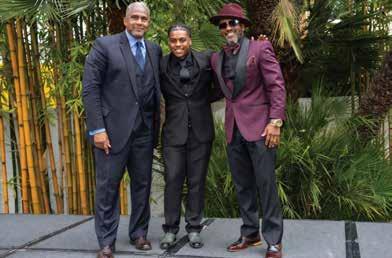
Sean was born in the heart of Harlem at Sydenham Hospital in 1971 — an era in New York City marked by urban decay, rising crime and economic decline. Raised by LaVerne Rector, a single mother who put herself through Bronx Community College, Sean spent his early years bouncing between Harlem and the Bronx, absorbing two worlds at once.
Much of his early childhood was spent with a neighbor he called Abuela — Carmela Apoyo — who cared for him while his mother attended classes. Spending so much time in a Spanish-speaking household, he became bilingual at a young age — so fluent that neighbors assumed he was Dominican. As he fondly remembers, his years in the Bronx were full of novelas, lucha libre and Café Bustelo.
He also grew up immersed in the rich culture of Harlem — the Apollo Theater, Dapper Dan and the birth of hip hop — breakdancing in ciphers, pop-locking in the street, and coming of age in an era that would later become the stuff of legend. “I grew up always in the sense of culture,” he says. “That was Harlem.”
In 1985, everything changed. Sean’s mother sat him down and asked what he thought about boarding school. LaVerne learned about Milton Hershey School, a K-12 residential school in Hershey, Pennsylvania, from a friend and saw an opportunity for her son that she knew she couldn’t provide on her own. Through the Deed of Trust left by the chocolate magnate and his wife, Catherine, MHS provides tuition, housing and life-changing opportunities at no cost for children from low-income families.
Sean agreed to take the admissions test, but his young mind was already made up that he wasn’t going anywhere.
Milton Hershey School called with the news that he had been accepted that fall, and despite Sean’s pushback, he was pulled from the performing arts school he was attending in Manhattan and enrolled at MHS in October of 1985 as a ninth grader.
It was not a graceful goodbye. “Y’all don’t love me,” he remembers telling his mother and uncle as they dropped him off at his
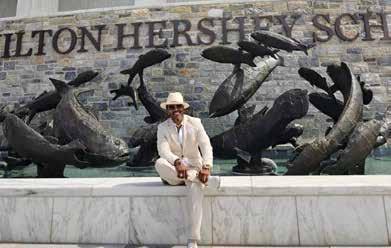
new residence at student home Southfield. But he stayed — all four years of high school — and he thrived. What the experience gave him, aside from a top-tier education and many lifelong friendships, was something he still draws on: the ability to walk into any room, read it, adapt and hold his ground without losing himself.
He came to Los Angeles in 1999 as an actor, having earned his stripes in New York theater, including a stint at the Roundabout Theatre on Broadway alongside the legendary Bill Irwin. He found a $213-a-month studio in Hollywood, across the street from Paramount, and pieced together a life — telemarketing, work at a youth homeless shelter and auditions. He picked up substitute teaching to fill the gaps, landing at John Muir Middle School in South Central, where he discovered something unexpected: he was good at it, and the kids needed him. When a veteran teacher abandoned the particularly difficult class Sean had been covering — apparently without warning — he stepped in.
Then “Survivor” called.
In 2001, just weeks after September 11, Sean flew to the Marquesas Islands to compete on the fourth season of the CBS reality phenomenon. He arrived as a teacher — with only his Bible as his luxury item — and left as a pioneer.
Sean navigated the game with a combination of strategy, humor and the kind of social intelligence forged over years of being the outsider in unfamiliar rooms. When conventional wisdom said his game was finished, he engineered what is now recognized as the first successful power shift in “Survivor” history, flipping three votes and blindsiding the alliance that thought they had him. He won two cars — a feat that still stands across all 50 seasons of the show.
He made it to day 36 when he was finally voted off the island, finishing in fifth place.
Still in pursuit of an acting career, Sean went home hoping to secure some solid gigs after being a fan favorite on the No. 6 most-watched show on TV that season. Unfortunately, the industry wasn’t so kind to reality stars in those early days of the genre, and the experience backfired on him. Meetings with the heads of Viacom and Showtime, a holding deal, face time with Bruce Willis — it all materialized and then evaporated. Sean returned to his classroom and watched the industry move on without him. He kept teaching. He kept coaching. He kept showing up for the kids.
Out of those teaching years, something organic and enduring grew. Starting with a group of about 40 to 50 boys from rival neighborhoods, Sean built the program that would eventually become the Boys to Men Enrichment Program.
The model was demanding in practice: you want to play ball, you must first learn to wear a shirt and tie. You learn to tie it yourself, then you teach another kid to tie his. You read the “Autobiography of Malcolm X.” You learn the four pillars — faith, integrity, culture and commitment. You memorize “The Man Is,” a poem every young man must recite to graduate.
Boys to Men eventually became the flagship program for The T.Y.M.E. Foundation, a 501(c)(3) nonprofit Sean founded in 2005, based in Long Beach. At its core, the mission is straightforward: develop positive young male and (and now also female) leaders to prevent the rise in gang affiliation, juvenile crime and high dropout rates. Through its culturally competent programming, The T.Y.M.E. Foundation offers tutoring, extracurricular activities and counseling — with the goal that every young person who comes through leaves valuing education, standing taller in their confidence and carrying a more hopeful vision of their future.
The program grew steadily through John Muir for nearly two decades — City Hall took notice, the LA Times covered it, and Mayor Antonio Villaraigosa personally visited the school and sat with Sean’s boys. Then, when community investment funds began flowing into districts across LA in the wake of 2020, The T.Y.M.E. Foundation was ready. Today, the program operates across 13 to 15 LAUSD schools — bringing its curriculum of accountability, leadership and culture to the classrooms that need it most.
He met his fiancée, Maggie — a fellow educator who is now an assistant principal — while they were both teaching at John Muir. When she was pregnant with their daughter, Amaya, they went looking for a place to plant roots together. In 2016, that search ended in Long Beach. “I never thought I’d live below the 10 freeway,” he laughed.
Fatherhood, for Sean, has never been separate from the work — it has always been woven into it. Many of the young people who come through The T.Y.M.E. Foundation are being raised by single mothers just as he was, and his programs instill the lessons often passed down by fathers.
His son Noah, from a previous relationship, has had the privilege of benefiting from his father’s lessons both at home and in the field. From the time he was a baby, Noah was there alongside
“God has to remove you from what you think you want to see if you’re worthy” —Sean Rector
his father, present in the rooms where boys learned to tie ties, recite poetry and become men. When he was old enough, he became a participant in the program himself. Today, at 22 years old, Noah is a staff member, helping his father run the very program he grew up in.
Sean has always had a heart for service, and, as the saying goes, charity begins at home. Maggie is a founding board member of The T.Y.M.E. Foundation and continues to serve today. Amaya, 9 years old and watching it all, is growing up in a household where service isn’t something that happens elsewhere — it’s how the family moves through the world.
These days, Sean is stepping back into a wider light on his own terms. He’s featured in a new book on “Survivor Legends,” due May 12, with 10 pages to his name — more than most winners in the volume received. And after a recent journey to Ecuador with a group of former “Survivor” contestants — a plant medicine retreat that he describes as a spiritual reckoning — he seems settled in a way that can’t be performed.
Mentoring youth still remains Sean’s top priority. Over the past 25 years, he has touched the lives of more than 20,000 young people, and he has no intention of stopping there. What began as a temporary assignment has become his life’s work.
“God has to remove you from what you think you want to see if you’re worthy,” he says. Sean has been removed, tested, overlooked and underestimated more times than seems fair. What he has built in the meantime is proof enough of the answer.













How Long Beach’s new pro baseball team is a home-field tribute to the city
ARTICLE BY STEPHANIE PEREZ
PHOTOGRAPHY PROVIDED BY LONG BEACH COAST
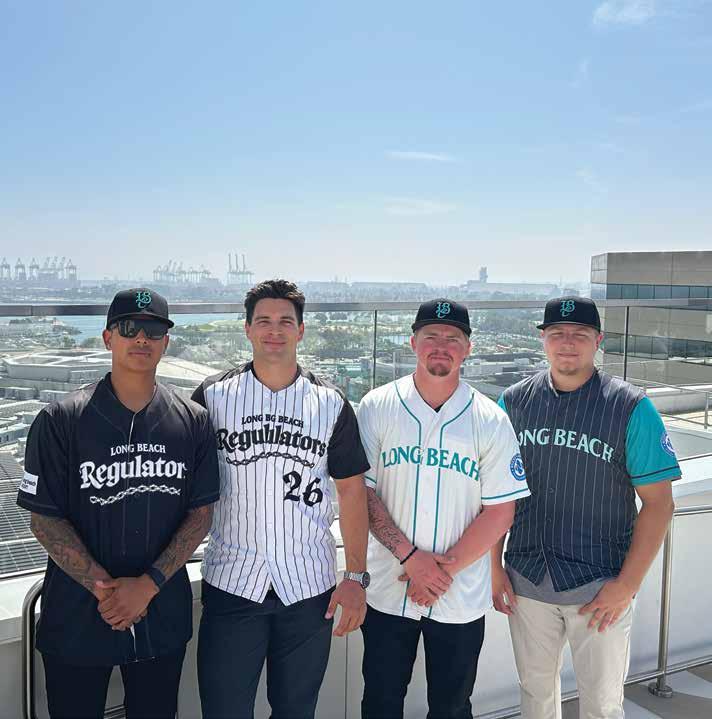
“Take Me Out to the Ball Game” is the beloved anthem sung during the seventh-inning stretch at baseball games. Fans “root, root, root for the home team,” and now, for Long Beach, that means the Long Beach Coast.
“Long Beach is the perfect place for a Pioneer League team,” said Paul Freedman, one of the founders. “To our knowledge,
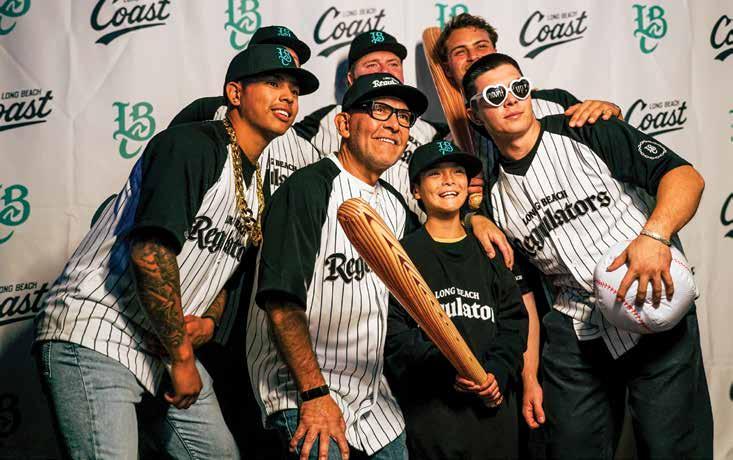
“A successful baseball team is also a lifestyle brand.”
Long Beach is the largest city in the country that doesn’t have its own baseball team, and it’s a community with a deep sense of pride.”
After helping successfully launch the Oakland Ballers, he and his partners looked for another city with a strong baseball connection, and Long Beach was at the top of their list. The city already has a history of professional baseball at Blair Field, and now the Coast will extend that tradition.
The Coast will play in the Pioneer Baseball League, an independent circuit that includes teams in Oakland and Idaho Falls. The league was founded in 1939, and Freedman noted how it serves as Major League Baseball’s rules innovation partner.
“When they want to test a rule, they ask us to try it first, and then, by the time it comes into Major League baseball, it’s already been worked out — how
it’s going to work, how the fans are going to receive it, how you even do it,” he said.
This reputation not only benefits fans but also draws in talented players.
“It’s a young league — it’s tough, it’s grindy and very competitive — so I think the fans and everyone involved, whoever wants to come see a game, is going to be pleasantly surprised with the talent and the body of work on the field,” said Jacob Jablonski, 27, a utility player who plays second base and outfield.
He has been around the game since he was 3, following in the footsteps of his father, who played for the Texas Rangers. He previously played with Idaho Falls, and now sees Long Beach as an opportunity to play closer to home and in front of everyone who has supported him.
Left-handed pitcher Brett Wozniak, 24, shares a similar story. A Cypress High School graduate who
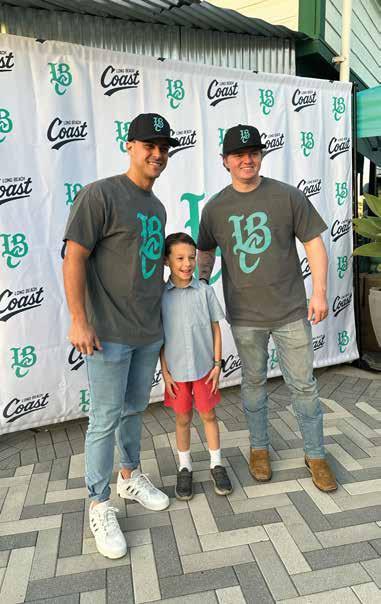
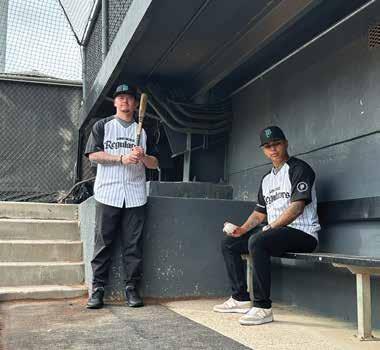
played at High Point University and spent last season with Yuba-Sutter in the Pioneer League, he sees pitching for the Coast as a chance for family and friends to watch him play professionally.
“Now you’ve got people coming and [saying], ‘Hey, can I get tickets? Can I get tickets?’ — people you haven’t talked to in forever,” Wozniak said. “... they’re excited just as much as we are.”
Jerome Williams, a former first-round pick by the San Francisco Giants who also pitched for the Los Angeles Angels and briefly played for the Long Beach Armada, is on the Coast’s coaching staff as pitching coach. His major league and independent ball experience helps him connect with players.
“I only live by three rules when I coach,” Williams said. “Be on time, give me 100% effort, and respect me, [and] I respect you. If you can do those three things, we have no problems because it’s life lessons too, not just in baseball.”
Beyond the field, the team’s impact on the community is equally meaningful.
“A successful baseball team is also a lifestyle brand,” Freedman said. “People choose what to wear, particularly hats, which is what baseball teams are known for…and being able to rock LBC is pretty special.”
Wozniak has seen that in small moments leading up to the first game.
“I was in Costco the other day wearing my Long Beach stuff, and this little grandma on her wheeler thing goes, ‘I have that shirt,’” he said. “She was so excited. That’s the beauty of being in the community and wearing that stuff out.”
With the season starting May 19 and its inaugural home opener on June 2, it won’t be long before Coast gear pops up all over the city.
“We want to become immersed and synonymous with the culture here in Long Beach and the city pride,” said Claire Duvendeck, head of marketing. “That we start to see teal and gray and black all around town.”
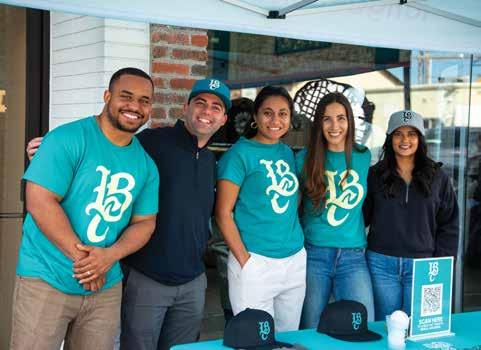
This season, the Coast will host 51 home games, including theme and heritage nights designed to bring people together. The team keeps tickets affordable, with promotions like $2 Tuesdays making it easy for everyone to experience a ballgame.
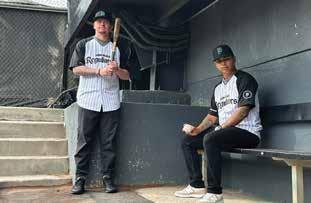
The team is also incorporating their alter ego, the Regulators, on select nights — tapping into minor league culture, where alternative brands help teams tell local stories and try different looks.
“Alt identities are really an opportunity for a bigger celebration of where the team is from or who it’s representing,” Duvendeck said.
Long Beach hip-hop artist Warren G is one of the Coast’s owners, and his “Regulators” legacy underpins the club’s alter ego.
“By the baseball team being called that name, they’re Regulators, you know,” he said. “And what that is, that we comin’ to win championship. We coming to play ball. We taking over. We want to win. We want to be champions.”
Beyond on-field goals, Warren G wants games to feel like events with performances and postgame shows, similar to what he and Snoop Dogg once did after a Cincinnati Reds game. Fans can watch the Coast play, then stay for live music without leaving the ballpark.
The experience at Blair Field is meant to be about more than baseball. The team brings together people from all walks of life, reflecting the diverse community and cultures that call Long Beach home.
“It’s going to be like a family reunion and a block party around a baseball field,” Freedman said. “And it’ll be reflected in smiles on kids’ faces and people saying, ‘That was so much fun. I want to come back.’”
AN EXCERPT FROM EPISODE 6 OF SHARE THE LIFESTYLE, A CITY LIFESTYLE PODCAST
Photographer: Brittany Dawn Short
Creative Director: Jen Birn
Stylist: Stephanie Coultress O’Neill
Location: Hotel Saint Cecilia, Austin, TX
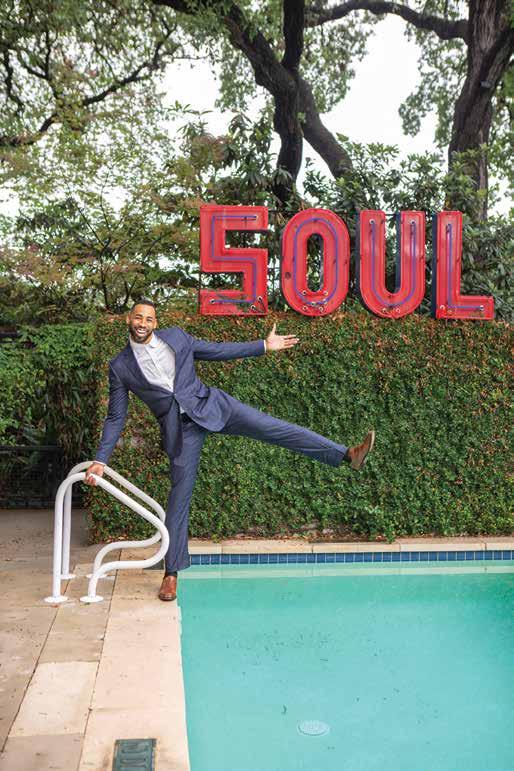
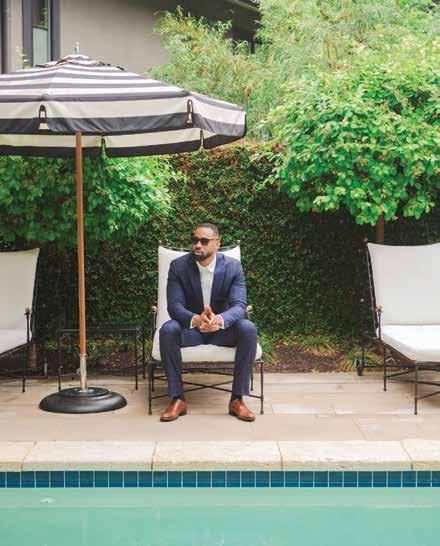
MIKE JOHNSON HAS BUILT HIS LIFE AROUND ONE QUIETLY RADICAL IDEA: THE STANDARD YOU SET PRIVATELY IS THE ONLY ONE THAT MATTERS.
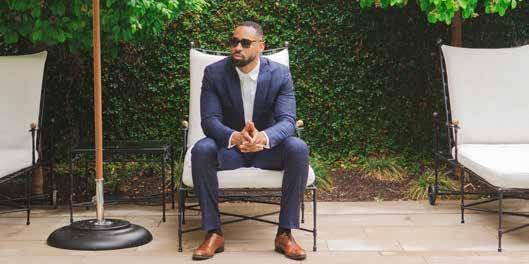
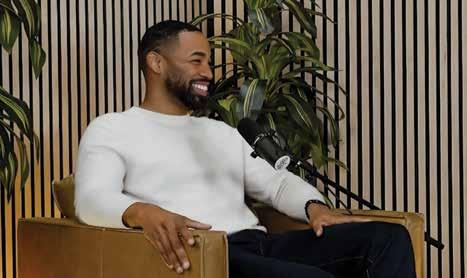
After eight years in the Air Force, a celebrated run on national television, and a health crisis abroad that sent him deep into supply chains and ingredient certifications most founders never touch, the result is Oshun — a luxury ritual brand built on provenance you can trace and integrity you can verify. In an exclusive conversation for the Share the Lifestyle podcast, Mike shares what it actually takes to build something worth putting your name on. Read the highlights below, then scan the QR code for the full episode.
Q: YOU BECAME A FAN FAVORITE ON THE BACHELORETTE AND THEN LEFT THE SPOTLIGHT. YOU MOVED TO MEXICO, LEARNED SPANISH, THEN COSTA RICA, AND BUILT A COMPANY. WHAT DID THAT EXPERIENCE TEACH YOU ABOUT HUMAN BEHAVIOR?
A: “If you’re a good person going in, that shows. If you’re not, that shows too. I also learned that people form this parasocial relationship with you — they assume things about you. When all actuality, different circumstances bring out different parts of who you are. I was on TV trying to find love. The kindness people were showing after felt a bit fake, because they wanted to be a part of something that isn’t who I am individually, but a part of what they saw on TV. And so I had to get away from everybody and everything and the noise.”
“Too many people have prayed for me. So I’ve got to get up and do the walking.”
— Mike Johnson

Q: YOU JOINED THE AIR FORCE RIGHT OUT OF COMMUNITY COLLEGE. WHAT WERE YOU ACTUALLY RUNNING TOWARD?
A: “There was something in me that was saying: I’m not living up to my full potential. I was being a follower. My uncle said, ‘What’s going to make you become an adult the fastest?’ I said, obviously, the military. The Air Force broadened my thought process more than anything. We’re so caught up in our own perception — when you learn to understand different people’s perspectives, it adds to you in so many ways.”
Q: WITH OSHUN, YOU OWN YOUR MANUFACTURING, YOU EMPLOY A CHEMIST, EVERY PRODUCT HAS A BATCH NUMBER TRACEABLE TO ITS ORIGIN DATE. WHY DID YOU DECIDE TO GO THAT DEEP WITH THE BRAND?
A: “The EU bans 1,100 ingredients in personal care products. The U.S. bans nine. That’s my starting point. Oftentimes, it might be the same ingredient, but it comes from a place where it doesn’t have the highest purity. And 60% of what we put on our skin is absorbed. Every product Oshun makes carries a batch number that goes back to the exact day it was created — I can show you every single supplier, the date, the origin. I own more than one part of the supply chain because that’s the only way I can stand behind what’s in the bottle.”
This conversation is just the beginning. Mike goes deeper into why he’s buying land up north, the family in the Philippines who prayed over his factory floor, and what he’d tell every person ready to stop performing and start building. Scan the QR code for the full, exclusive City Lifestyle interview on the Share the Lifestyle podcast.
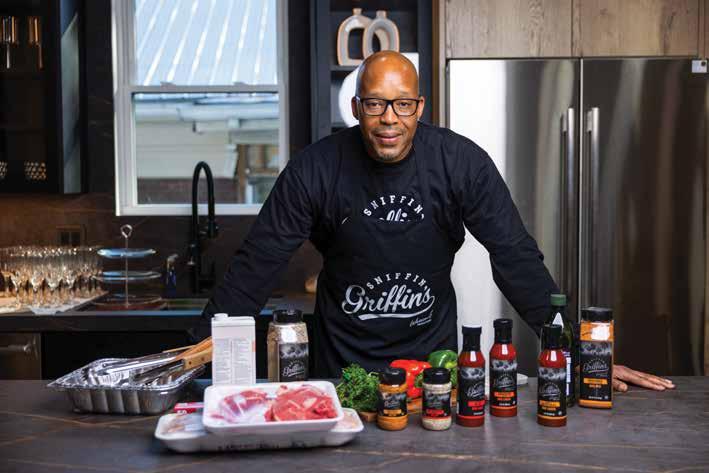
Celebrity pitmaster Warren G’s barbecue brisket recipe is guaranteed to steal the show at any family gathering
For brisket with that signature “G-funk” flavor, lean into Sniffin Griffin’s All Purpose Bite Through BBQ Rub. Founded by “Hip Hop’s Pitmaster” Warren G, whose father, Warren Griffin, Jr., was a chef and pitmaster, Sniffin Griffin’s BBQ celebrates community and bold flavor. This rub is built on a low-salt formulation of smoked garlic, onions and a bold pepper blend — perfect for building a heavy, caramelized bark without over-salting the meat.
Because when it comes to barbecue, there’s no fakin’ the funk.
ARTICLE BY WARREN G | PHOTOGRAPHY PROVIDED
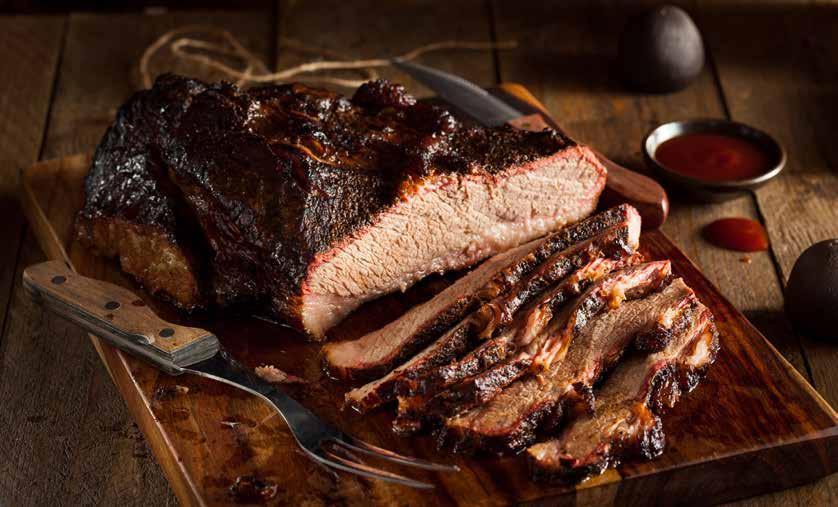
• Meat: 12 to 15 pounds of whole packer brisket (trimmed “competition style” with 1/4 inch of fat cap left on)
• Rub: 1 cup of Sniffin Griffin’s All Purpose Bite Through BBQ Rub
• Binder: Yellow mustard or olive oil to help the rub stick
• Spritz: Equal parts apple cider vinegar and water (optional, for every 2 hours of smoking)
• Slice against the grain into pencil-thick pieces.
• If you want to go full “Regulator” style, serve it with a side of Sniffin Griffin’s Keepin’ It Original BBQ Sauce for that OG flavor or We Brings Heat BBQ Sauce for a spicy kick.
1. The Prep & Seasoning
• Trim: Remove hard fat and silver skin. Shape the brisket so it’s aerodynamic, helping smoke flow evenly.
• Bind: Apply a thin layer of mustard or oil across the entire surface.
• Apply Rub: Season generously. Hold the bottle about 1 foot above the meat for even distribution. Don’t forget the sides!
• Rest: Let the seasoned brisket sit for at least 30 to 60 minutes, or overnight in the refrigerator, so the spices can absorb.
2. The Smoke (low and slow)
• Temperature: Preheat your smoker to 225°F–250°F using oak or hickory wood for a classic deep flavor.
• Placement: Place the brisket fat-side down to insulate the meat or fat-side up for a self-basting effect.
• Spritz: After 3 to 4 hours, spritz the edges every hour if they look dry to maintain moisture.
3. The Wrap (the stall)
• Timing: When the internal temperature hits 160°F–170°F and the bark is a dark, mahogany color, it’s time to wrap.
• Method: Wrap tightly in butcher paper for a crunchier bark or heavy-duty foil for more moisture.
4. The Finish & Rest
Learn more about Warren G’s collection of rubs and sauces at sniffingriffinsbbq.com
• Goal: Continue smoking until the internal temperature reaches 203°F–205°F. The probe should slide in as if it were piercing through room-temperature butter.
• Rest: Place the wrapped brisket in a dry cooler or an oven set to “keep warm” (around 150°F) for at least 2 hours. This crucial step allows the juices to redistribute and the meat to tenderize.
JUNE 6TH
Long Beach Amp Grand Opening: Snoop Dogg & Friends
Long Beach Amphitheater | 7:00 PM
Celebrate the grand opening of the Long Beach Amphitheater with a headlining performance by Long Beach native and rapper Snoop Dogg. The debut event marks a major cultural moment for the city, bringing one of its most influential artists home to open the new open-air venue and highlight its deep ties to the local music scene.
JUNE 6TH
Magnificent Mozart & Mahler
Terrace Theater | 7:30 PM
Experience an electrifying season finale featuring Wolfgang Amadeus Mozart’s Eine kleine Nachtmusik and Gustav Mahler’s Symphony No. 5. The program pairs Mozart’s elegant, lighthearted classic with Mahler’s powerful and emotional work, highlighted by the renowned Adagietto. From graceful melodies to a triumphant finale, the evening offers a dynamic and memorable night of live orchestral music.
JUNE 6TH – 7TH
Pacific Islander Festival
Aquarium of the Pacific | 9:00 AM
Celebrate Pacific Islander cultures at the Pacific Islander Festival at the Aquarium of the Pacific. The two-day event highlights traditions from Chamorro, Fijian, Hawaiian, Māori, Marshallese, Tahitian, Tongan and Samoan communities through cultural displays, craft demonstrations and dance performances. Guests can also explore the Tropical Pacific Gallery and see marine life native to island waters. General admission is required.
JUNE 13TH
LBMA Uncorked
Long Beach Museum of Art | 5:00 PM
This adults-only fundraiser for arts education and exhibition programming at the Long Beach Museum of Art is an evening of fine wines, food, live music and a silent auction showcasing emerging and established Southern California artists. Guests can enjoy curated wine tastings and food pairings from top Long Beach restaurants, including Due Fiori, Ellie’s, The Attic and Art du Vin, and more.
JUNE 19TH
Juneteenth Celebration
Aquarium of the Pacific | 1:00 PM
Celebrate Juneteenth at the Aquarium of the Pacific with a day of music, storytelling and cultural experiences highlighting the holiday’s history and significance. The annual event explores traditions within the African American community and beyond. General admission is required.
JUNE 27TH
Long Beach Japanese Cultural Festival
Japanese Cultural Center | 3:00 PM
The Long Beach Japanese Cultural Center will host its annual summer festival, featuring food, martial arts demonstrations, ondo dancing and live performances. The event includes demonstrations of ikebana, judo, karate, kendo and taiko, along with cultural activities and entertainment for all ages.