



One of my favorite songs is “Find Your People” by Drew Holcomb. The topic of making friends and quantifying what a friend is has come up a lot lately. There’s a quiet truth most of us carry but rarely say out loud: making new friends as adults is hard. The vulnerability required to say “Let’s be friends” feels too big and too much of a commitment. And while forging new friendships feels formidable, “finding your people” feels different and doable. (I know I just dropped a bunch of alliteration in that last sentence, but stay with me.) Jay and I were at dinner with friends, and we talked about what we’d want if we could have anything in the world. I said, “I want to find five people.” Author Jim Rohn believes we are the sum total of the five people we surround ourselves with. If that’s true, then I said I wanted to surround myself with five people who will completely change my life. I wanted to find five people who would inspire and challenge me to be a better version of myself. At that moment, I said I didn’t know who they were, but I’d know them when I met them. And then, one day I met someone for coffee at 9:00 am, and we talked until Kadi’s closed at 3:00 pm. She doesn’t know it, but she is one of my people. Last weekend, I went to support the Shrewsbury Fire Department’s Dog Adoption Day, and I ended up talking to someone I didn’t know that well for about an hour. I walked away from that conversation transformed. She was a person I didn’t even know I needed. There is one person who has been my North Star for a long time. I don’t think he knows it. Maybe he does. I should probably tell him. And, one person has been my light, my nightlight- always-on person, for about six years, and I wonder how I ever functioned without her. A million people consider her their friend. For me, she is my person. Maybe the construct of creating new friendships as adults can be broken down into simply finding our people. It’s an idea worth exploring.
RENEE MOORE, PUBLISHER @KIRKWOODCITYLIFESTYLE
July 2026
PUBLISHER
Renee Moore | renee.moore@citylifestyle.com
PUBLICATION DIRECTOR
Kate Berry | kate.berry@citylifestyle.com
EDITOR
Katrina Wright | katrina.wright@citylifestyle.com
CONTRIBUTING WRITERS
Katrina Wright, Lucy Rogers, Cindy Schulze, Lily Buehler, Baylor Knott, Ruby Collins
CONTRIBUTING PHOTOGRAPHERS
Filomena Dean, Carrie Campbell
CEO Steven Schowengerdt
President Matthew Perry
COO David Stetler
CRO Jamie Pentz
CoS Janeane Thompson
AD DESIGNER Evan Deuvall
LAYOUT DESIGNER Adam Finley
QUALITY CONTROL SPECIALIST Anna Minnick




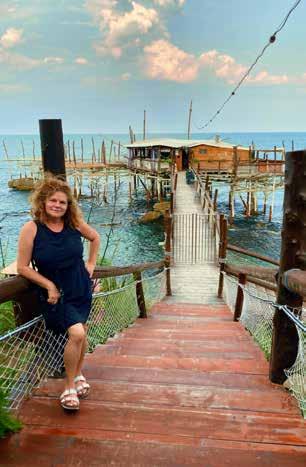

Explore Abruzzo, Italy through the eyes of Filomena Dean.
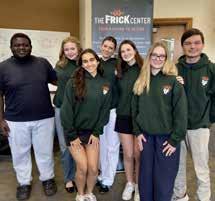
How the Frick Center shaped seven Webster Groves HS students.
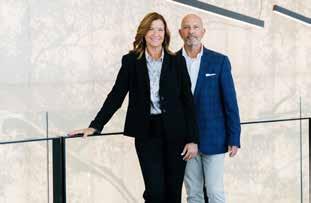
Pioneer Wealth Management’s power couple is helping women take control of their financial future.
Filomena Dean was born in Abruzzo, Italy.
Rockin’ Chair brings the music from Laurel Canyon to the Kirkwood Performing Arts Center.

Explore Abruzzo, Italy through the eyes of Filomena Dean

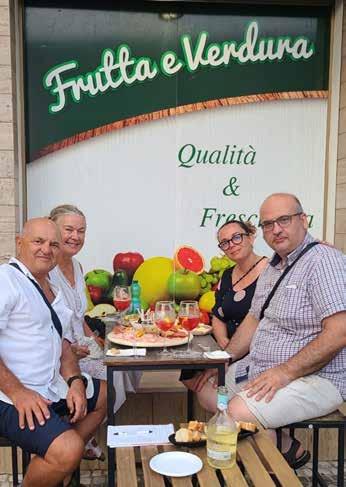
Some destinations earn their fame. Others simply wait, unhurried and unbothered, for the right people to find them. Abruzzo, Italy is the latter—a region of snow-capped mountains, Blue Flag coastline, and centuries-old olive groves that has somehow remained the best-kept secret in one of the world’s most visited countries. Filomena Dean knows this better than anyone. A native of the small hilltop town of Castelfrentano, she has spent a lifetime watching travelers rush past Abruzzo on their way to Rome and Tuscany, smiling quietly to herself every single time.
“People go north, they go south—they go to Rome, they go to Sicily,” Filomena says with the knowing smile of someone who has watched the masses miss the masterpiece. “But Abruzzo? It’s a kept secret.”
Filomena is the Retail Market Manager at Enterprise Bank & Trust. She moved to the United States as a teenager, built a life, and raised two boys on the recipes her mother and grandmother pressed into her hands like heirlooms. She fed her family simple sauces, handmade pasta, and olive oil so fresh it tasted like fruit. But Abruzzo never loosened its hold on her heart. She goes back every year. Each time, the drive from Rome—tunneling through mountains until the Adriatic suddenly bursts into view—still makes her catch her breath.
Abruzzo is one of the few places on earth where you can drive up to the snowcapped La Maiella mountain in the morning and spread your towel on a beautiful Adriatic beach that same afternoon. Even the roadside gas stations are stocked with fresh olive oil, prosciutto, regional wines,
“People go north, they go south— they go to Rome, they go to Sicily. But Abruzzo? It’s a kept secret.”
“There, even in the midst of a full day, they find time to savor life— and doing nothing for a moment is seen as something truly worthwhile.”
and handmade pastas. Budget fifteen minutes for a quick stop and emerge ninety minutes later, slightly dazed and carrying far more than you intended.
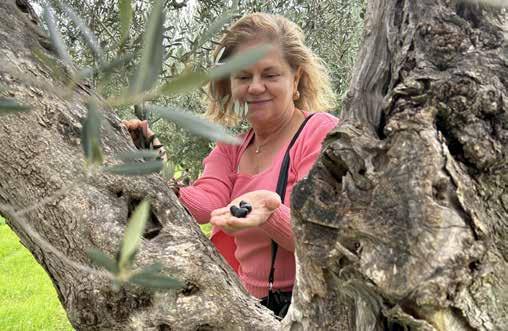
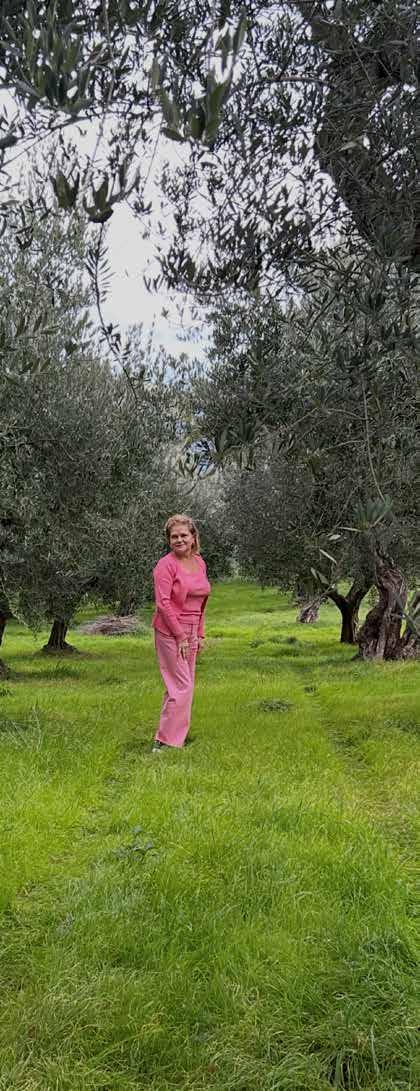
For Filomena, this region is not just a destination. Her family’s story is written right into the land itself. Her father built a three-floor marble home surrounded by gardens and an outdoor kitchen where her mother cooked pasta and pizza in a wood stove. It is a place where family, local amici, friends from afar gather for la festa, with cousins traveling from across Italy to reunite each summer. Nothing speaks to Filomena’s connection here more than the ancient olive grove behind her house. Her family has tended these trees for hundreds of years, passing them down as others pass down jewels. Every October, the family gathers with nets, rakes, and ladders to harvest the olives. They carry them to the local olificheria, where cold-press stones produce what Filomena simply calls the best olive oil in the world. “Fresh-pressed, it tastes like a Granny Smith apple at the finish,” she says. “Like real fruit— like something you can’t quite believe came from a bottle.”
This deep connection to the land is precisely why Filomena will tell you, quite plainly, that Abruzzo has the
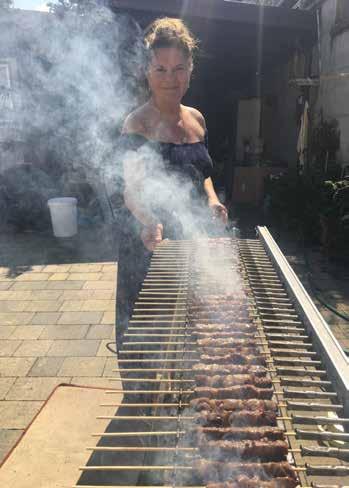
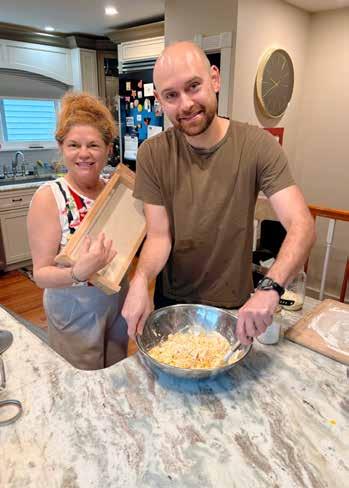
best food in Italy. Positioned between the creamy north and the tomato-rich south, the region blends both into something entirely its own. The signature dish is pasta alla chitarra. Locals roll the pasta across a wooden frame strung like guitar strings, cut it into perfect ribbons, and serve it with a barely-there tomato sauce with pallottine (tiny meatballs). The pasta, the guitar, the sauce—that is dinner, and it is extraordinary. Then you discover rosticini: tiny lamb skewers the length of a finger, slow-cooked over coal and sold at every town festa for one euro apiece. “Nobody in the world really knows about it,” Filomena says, leaning in the way someone delivers top-secret intelligence. Fresh cheeses arrive by dairy truck each week, announced through town like an ice cream van, and fish comes straight from the Adriatic every Wednesday. The food here doesn’t just feed you. It converts you.
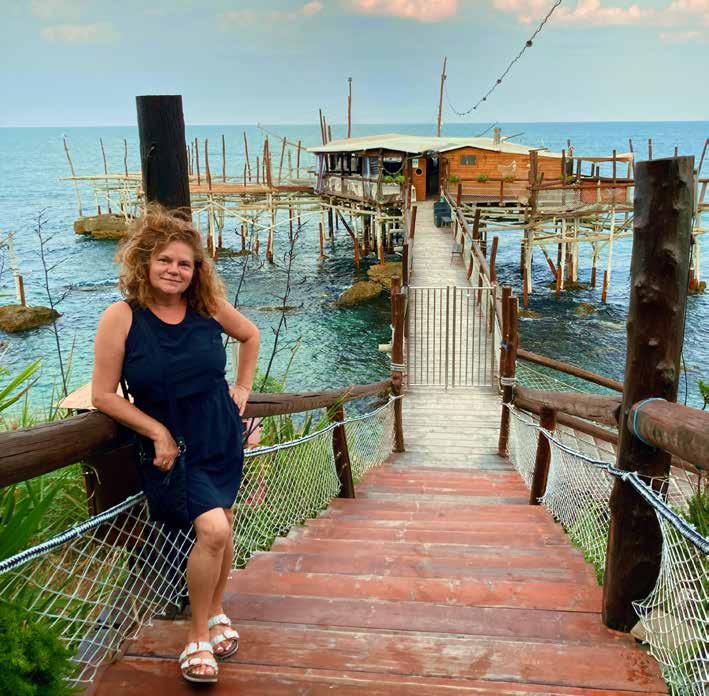
The region’s culinary magic extends right to the water’s edge. Along the coastline, ancient wooden fishing structures called trabocchi jut out over the Adriatic like patient sentinels. Builders crafted them hundreds of years ago, and they still stand strong today. Many have now become open-air
restaurants where a chef cooks the catch of the day while the sea rolls beneath your feet.
Between these meals and excursions, you discover the true rhythm of the region. Embracing leisure is an art form in Abruzzo, perfected through the nightly ritual of la passeggiata. Every evening after seven, shutters drop, shops close, and the whole town takes to the streets for a communal stroll. Neighbors swap stories, children beg for gelato, and dinner plans form as if by magic. This is the land of dolce far niente: the joy of doing nothing at all. “Here, it’s all about being busy,” Filomena laughs. “There, even in the midst of a full day, they find time to savor life—and doing nothing for a moment is seen as something truly worthwhile.”
It is exactly this blend of rich culture, incredible food, and slow living that inspired Filomena’s ultimate dream: a Bed and Pasta. She envisions an intimate retreat at her family property in Italy where guests wake up and learn to make pasta the way her mother and grandmother taught her. Imagine hiking in the mountains, hunting for truffles or fishing in the Adriatic Sea, and returning to cook your finds in the outdoor wood-stove kitchen. In October, guests would pick olives, press them at the olificheria, and take home a bottle labeled with their own name.
In Abruzzo, Filomena insists, you come as a guest and leave as family. Step back in time, savor the best meal of your life, and learn the gentle art of slowing down. Abruzzo may be Italy’s best-kept secret, but once you’ve been, you’ll find it impossible to keep it to yourself.




HOW THE FRICK CENTER SHAPED SEVEN
ARTICLE BY LUCY ROGERS PHOTOGRAPHY BY CARRIE CAMPBELL
This year, Webster Groves High School launched a two-hour daily deep dive into civic life, public service, and real-world internships. Seven students signed up—without a single peer to tell them what to expect. As the seniors of Webster Groves High School’s first Frick Center cohort prepare to head off to universities across the country—from George Washington to the University of Chicago to Mizzou—they’re carrying something most college freshmen won’t have: the practiced confidence to sit across from someone who thinks differently, and keep talking anyway.
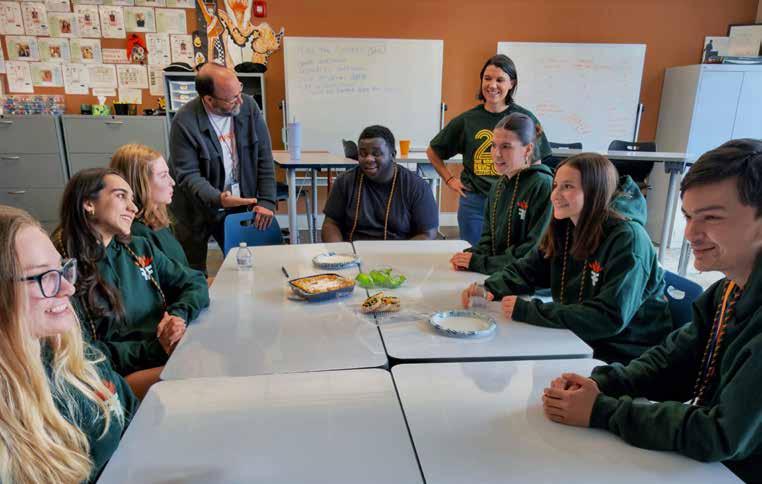
Brian Keller, K-12 Science and Social Studies Curriculum Coordinator at Webster Groves High School, noted that alumni Bob and Barbara Frick noticed a growing gap in how adults communicate. “They gave us a simple charge: create a course around civil discourse, free speech, and the economic impact of both,” said Brian.
Alison Bryar, AP Government and Politics and the Frick Center’s Program Coordinator, said, “We want the Frick Center to be an opportunity for students to explore ways civics makes positive change—through meaningful civil discourse and authentic experiences, including The Forum, which these seven students founded.”
Q: HOW HAS THIS CLASS CHANGED THE WAY YOU NAVIGATE CONVERSATIONS?
Kiran Bergfeld: We learned how to disagree and be okay with it. That alone makes every relationship easier.
Cassie Fischer: I used to see everything as black and white. This class pushed me into the gray. Now I’m comfortable being unsure.
Nicholas Phillips: We naturally surround ourselves with people who agree with us. This class forced us to hear every side. That’s rare.
Lucinda Thorn: I’m more confident starting conversations now. Talking with so many leaders and professionals made it feel less intimidating to approach new people.
Juliette Mueller: This class builds confidence in being able to respond. Now I’m more confident participating in conversations I would have shied away from.
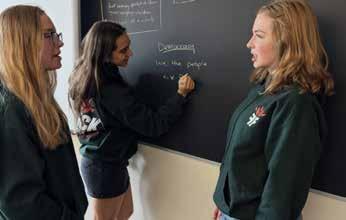
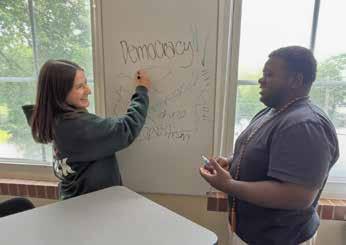
Ruby Reeves: We had site visits and guest speakers we would have never accessed otherwise. I feel so much more prepared to speak my opinion.
Austin Minute: I used to be extremely shy—I wouldn’t talk to anyone outside my friend group. By the end of the year, I self-nominated to be one of our commencement speakers.
Q: HOW DID YOUR INTERNSHIP EXPERIENCES SHAPE YOUR FUTURES?
Juliette Mueller: I interned with criminal defense attorney Elizabeth Ramsey. It completely reformed the way I think about the justice system. I want to pursue criminal defense, and that experience is a big reason why.
Ruby Reeves: I interned with Webster Groves Mayor Laura Arnold. Learning to read bills and interpret court cases opened my eyes to policy in ways I hadn’t expected.
Nicholas Phillips: I interned with reference librarian John Egel at the Webster Groves Public Library researching the history of local homes. It deepened my love of history and my desire to understand it from every perspective.
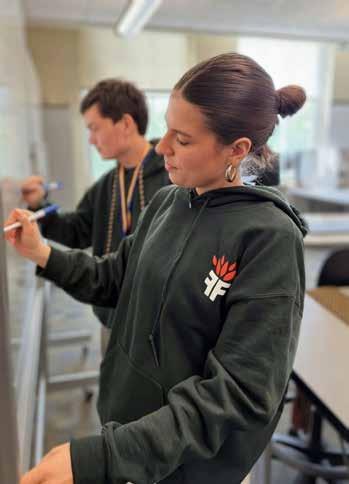
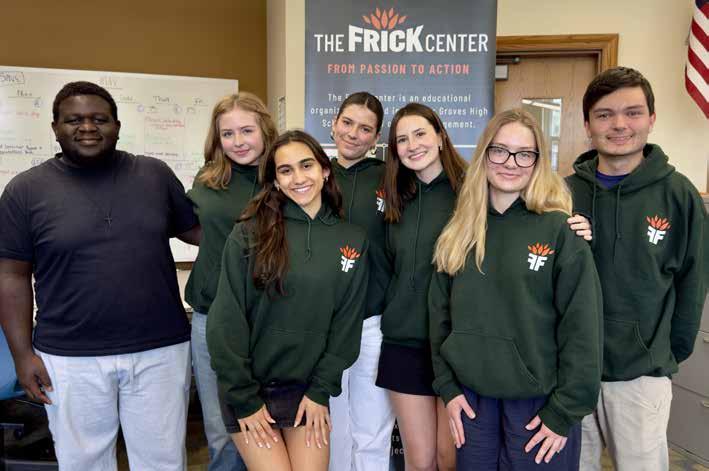
Lucinda Thorn: My internship was with the League of Women Voters, where I worked on social media outreach for young voters. It made me a more confident advocate—essential for any career.
Cassie Fischer: I took a philosophy class at WashU before choosing it as my major. This class taught me how much I don’t know—and how much I want to learn.
Austin Bennett: I interned with Shawn Finnegan at Webster Groves City Hall. This experience showed me how many different fields can create positive change for someone, somewhere.
Kiran Bergfeld: I interned with State Representative Jo Doll. It opened my eyes to public policy—and reminded me how much there is still to learn.
Q: HOW DID THE PROGRAM RESHAPE YOUR RELATIONSHIP WITH INFORMATION FROM ONLINE AND SOCIAL MEDIA?
Lucinda Thorn: This course stresses checking sources. It’s unproductive to have important conversations if your information isn’t valid.
Cassie Fischer: We were required to find Tier 1, peer-reviewed sources. Now, when I see something on social media, I actually investigate whether it’s true. That skill will stay with me.
Juliette Mueller: I took a WashU class on free speech through the program, exploring how social media has transformed free speech in America. It added a whole other layer of perspective.
Q: WHAT ARE YOUR KEY TAKEAWAYS?
Kiran Bergfeld: Being able to talk about hard things, being okay with different opinions, and practicing productive discourse— that’s vital to democracy.
Lucinda Thorn: I went from having no clue about my career to having too many choices. I would not have found that anywhere else.
Nicholas Phillips: A program like this would benefit younger students too. It would give kids a head start in developing the skills to talk to people they’d otherwise never meet.
Lucinda Thorn: There’s been talk about expanding The Frick Center to other districts. More students having access means more graduates prepared to step into the real world.
Cassie Fischer: We didn’t mention how close we all got. We call ourselves the Frick Family. That bond is one of the best parts of this year.
For more information about the Frick Center at Webster Groves High School, visit webstergroves.k12.mo.us.


ARTICLE BY KALI KASPRZYK
PHOTOGRAPHY BY JANIE JONES
MAKEUP BY MIKAYLA CRANE
Winnipeg in the winter, and a 17-year-old waits 45 minutes in the cold for Keanu Reeves. Her fingers are numb. She is not there for an autograph. She is there to ask him to appear in her audition tape for MuchMusic, Canada’s MTV. When he finally agrees, she writes her number on a gum wrapper with a borrowed lip liner.
He calls days later.
That 17-year-old was Jen Cohen — fitness expert, host of the Habits & Hustle podcast, and best-selling author. She has built a career on the premise her frostbitten afternoon proved. She calls the practice the 10% Target: 10 attempts at whatever you want most in life.
The premise is simple. Most people never make one attempt. Almost nobody makes two. The math works in favor of the person who keeps going.
The top-rated Habits & Hustle podcast has logged hundreds of conversations with high performers and the people who study what the body does to the mind. Her TEDx talk, The Secret to Getting Anything You Want in Life, has traveled widely inside Fortune 500 sales-training rooms. On the Share the Lifestyle podcast, Cohen sits down to share the working rules that are the foundation of her latest book, Bigger, Better, Bolder.
“You have to be the CEO of your own life.”
FEATURING JEN COHEN
Discover the full 10% Target Mindset framework.


1 2
The door opens, or another door does. The unmade attempt and the refused one leave you in the same place — except one of them teaches you something.
Cohen frames her habits as a wager: How do I stack the deck so I win more than I lose? The workout happens first, and the food decisions follow. The email follow-up gets sent, and the answer arrives. The choices compound in a single direction.
3
No one is born with it. The people who look disciplined are running a routine they have rehearsed long enough that it no longer feels like effort. The reps are the skill. Miss them, and the skill fades, the same as any other.
4
Confidence does not arrive by repeating the word. It arrives after the body has done the thing — the workout finished, the cold walk endured, the email sent. The mind takes its cues from what the body proves it can do. Talk follows action, not the other way around.
5
The first decision sets the slope of the rest. Skip the Monday workout, and the rest of the week tends to follow. Hold the line on Monday, and the slope tilts the other way.
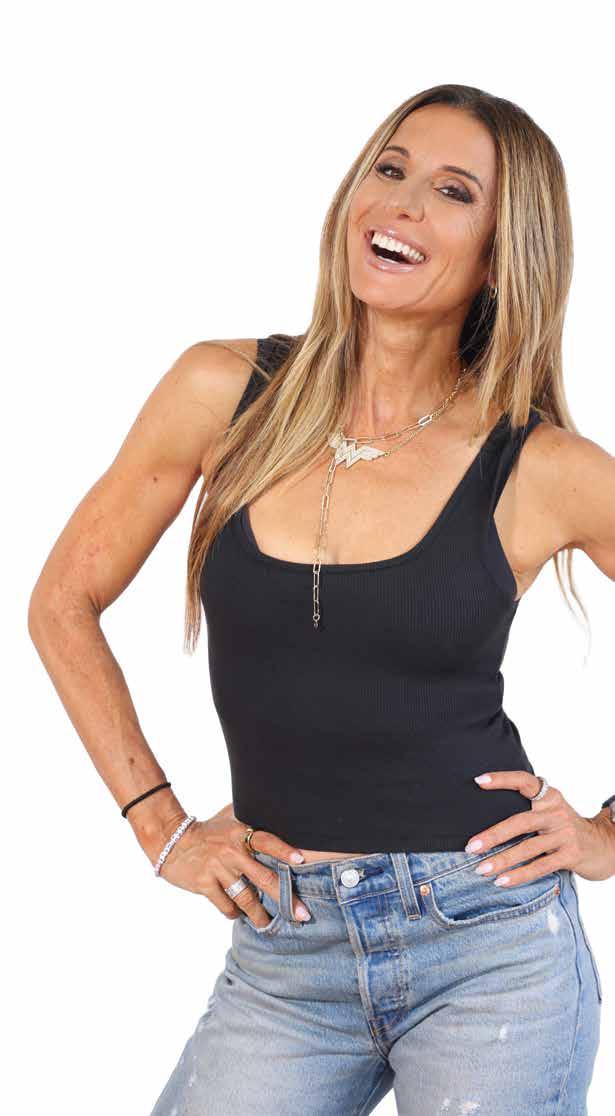




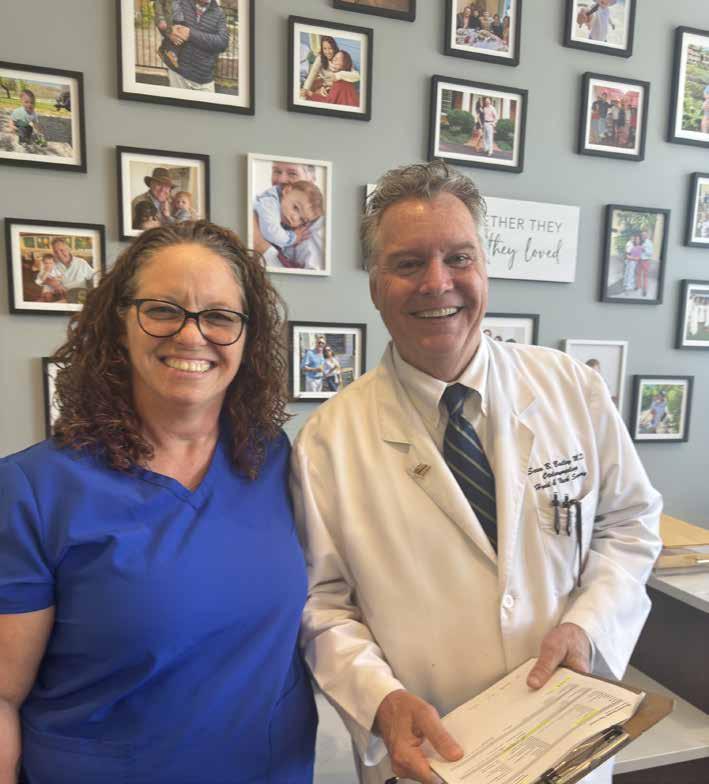
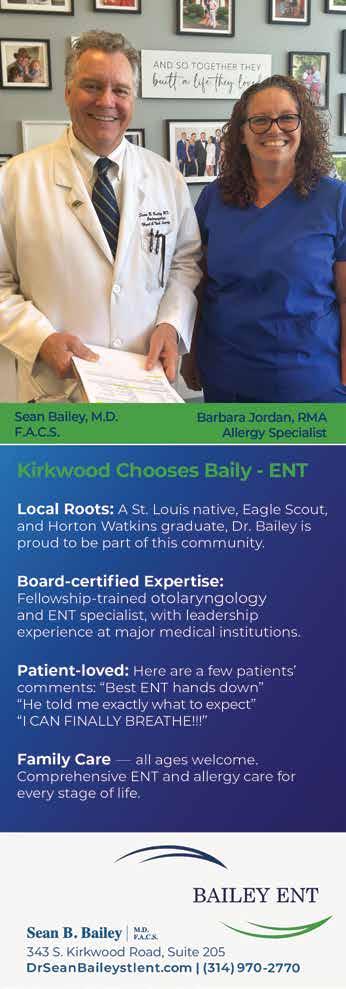
If you’ve lived in St. Louis for any length of time, you already know: this city is no friend to your sinuses. Between the rain, the mold counts, and the seasonal pollen swings, our community comes with a price tag for millions of allergy sufferers. Barbara Jordan, RMA, the allergy specialist at Dr. Sean Bailey’s Kirkwood practice, offers advice for navigating aggravating allergies.
IS ALLERGY SEASON ACTUALLY A SEASON, OR IS THIS A YEAR-ROUND PROBLEM?
Allergy season can run year-round. It spikes in spring and fall, but mold counts rise and fall throughout the year. With all the rain we’ve been getting lately, mold counts are rising, triggering a wave of symptoms for many patients.
A conversation with Barbara Jordan, RMA, allergy specialist at the practice of Dr. Sean B. Bailey, M.D., F.A.C.S.
ARTICLE BY RUBY COLLINS | PHOTOGRAPHY BY CARRIE CAMPBELL
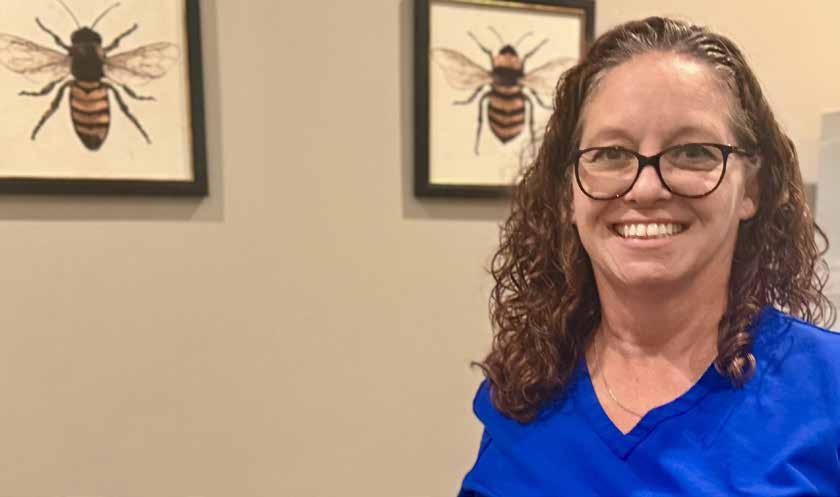
A LOT OF PEOPLE ASSUME THEY JUST HAVE A COLD OR A SINUS INFECTION. HOW DO YOU KNOW IT’S ACTUALLY ALLERGIES?
That’s one of the most common points of confusion we see. Patients come in convinced they have sinus infection, when many times it’s their allergies. Some symptoms can be similar and make it confusing to differentiate. Allergies will create clear, watery nasal drainage, with itching nose, eyes and throat. Some people can also have mild facial pressure, headaches and fatigue. These symptoms can last weeks, even months depending on the pollen season. I tell most patients, if you are having recurring symptoms and it becomes more bothersome, it is always worth getting checked.
WHAT DOES ALLERGY TESTING LOOK LIKE AT YOUR OFFICE?
It’s simpler than most people expect. We test for about 56 different environmental antigens — trees, weeds, grasses, pet dander, dust mites, and both indoor and outdoor molds. The procedure itself takes about an hour, and the best part is that you get your results, allergy avoidance measures and treatment options the same day.

WHAT ARE THE TREATMENT OPTIONS?
It really depends on what you are allergic to. Some people may benefit from daily antihistamine. Others are candidates for allergy desensitization. The typical therapy would be SCIT (subcutaneous immunotherapy) what most people know as allergy shots. Another option is SLIT (sublingual immunotherapy), which comes in two forms; a pill placed under the tongue daily, effective but limited to certain types of allergies, or daily allergy drops that are prepared in our office and administered at home. Whichever form you choose, treatment starts with a very low dose, gradually building up exposure to each antigen until your immune system adapts. Therapy typically lasts three to five years for full desensitization. But there is definitely an end. The goal is real, lasting relief, not just managing symptoms indefinitely.
CONTINUED >
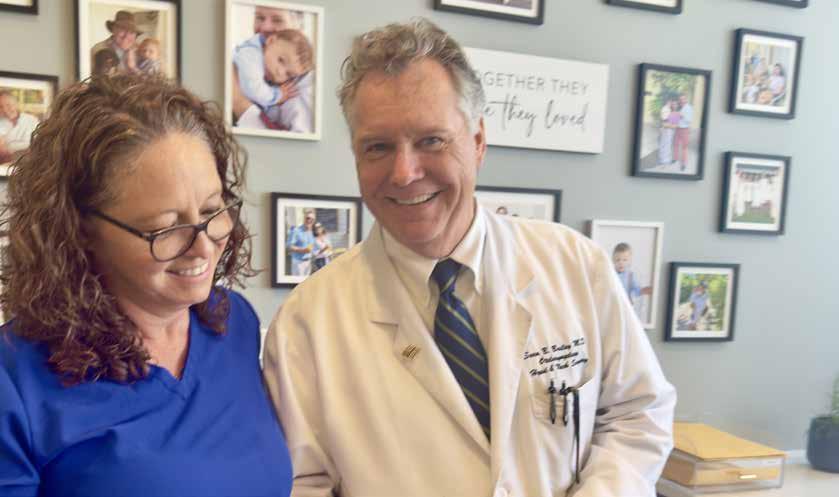
IS ALLERGY TESTING JUST FOR KIDS, OR ADULTS TOO?
Absolutely everyone — from children to seniors. And here’s something that surprises a lot of people: you can develop allergies at any point in your life. I grew up without many allergy issues, but when I moved to Louisiana, my symptoms spiked, and when I came to St. Louis, they spiked even more. So just because you’ve never had allergies before doesn’t mean you’re in the clear.
WHAT MAKES THE EXPERIENCE AT DR. BAILEY’S PRACTICE DIFFERENT?
We’re very personalized. We want every patient to feel like family. Patients have my direct number. We genuinely want to show them the love and concern you’d give a family member — while also delivering excellent medical care. Dr. Bailey has built a remarkable practice here in Kirkwood, and that culture of caring runs through everything we do.
FOR SOMEONE READING THIS WHO HAS BEEN SUFFERING AND JUST ASSUMING THIS IS THEIR LIFE — WHAT WOULD YOU SAY TO THEM?
You don’t have to live with it. That’s the message. If you’re wondering whether it might be allergies, come in and find out. The test is simple, the results are immediate, and relief is possible. We’re taking new patients and can typically get you in within a week.
Dr. Sean B. Bailey, M.D., F.A.C.S., is a board-certified Otolaryngologist serving Kirkwood and the greater St. Louis area. His practice is located at 343 S. Kirkwood Road, Suite 205, Kirkwood, MO 63122. To schedule an appointment, call (314) 970-2770 or visit drseanbaileystlent.com
Want to know if your symptoms might be allergy-related? Take the Sinus Quiz at drseanbaileystlent.com/test


Whether you're searching in Kirkwood, Webster Groves, Des Peres, or anywhere in the greater St. Louis area, I'm here to help you nd a home that checks ALL the boxes.
In today’s fast-moving real estate market, you deserve a knowledgeable, local professional by your side. As both a buyer and seller’s agent, I’m committed to making your experience smooth, successful, and stress-free — all the way to the closing table.
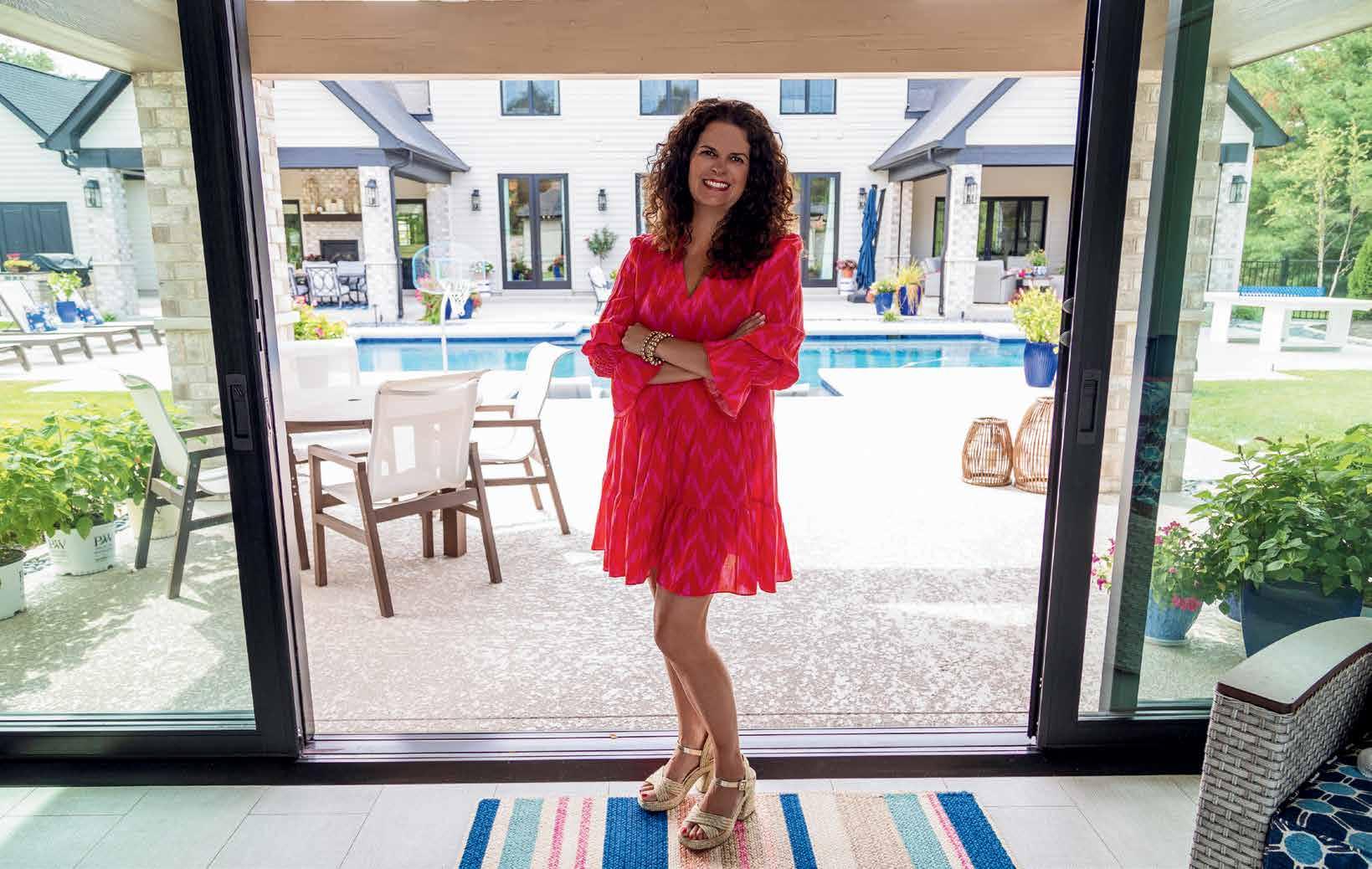
As a proud Glendale resident, I’d be honored to be your trusted partner. Whether you’re ready to move now or in the future, let’s create the best plan for you and your family.



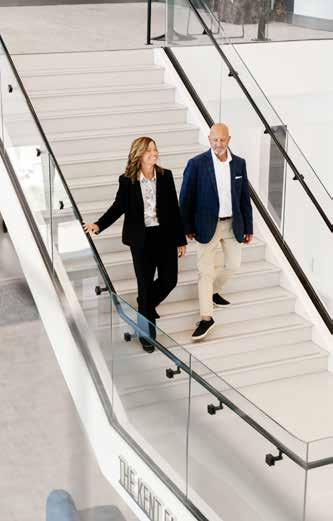
PIONEER WEALTH MANAGEMENT’S POWER COUPLE IS HELPING WOMEN TAKE CONTROL OF THEIR FINANCIAL FUTURE
I used to joke that my husband’s work was boring.
Tim would come home excited about empowering someone with a financial strategy—annuities, income planning, or the benefits of a Roth conversion. I’d smile politely. But Tim’s true calling was building Pioneer Wealth Management, a firm grounded in people and integrity, starting with meaningful conversations.
I could relate. For 22 years, I built my own career in corporate leadership at Charter Communications. I loved empowering teams, especially women, to lead with confidence. As I reflected on that journey, I started exploring what the next chapter of my life would look like.
My daughter said something that changed everything:
“Mom, you can do anything you want.”
In that moment, I realized my purpose was to keep empowering women—beyond the corporate world.
Tim said, “Why don’t you come work with me?” I felt that familiar sign from God-Wink. I asked Tim one question:
“Can I focus on women?”
He didn’t hesitate. “Absolutely.”
I went back to school. I earned my Florida 215 license in Health, Life, Annuities, and Variables, passed on the first try, and entered a world that felt both new and familiar.
The financial concepts were new. The conversations with women were not.
Women discuss everything—menopause, aging, health, kids, and careers—but rarely financial clarity in a safe, judgment-free way. Yet, in my experience, women in their mid-forties to early fifties are the most motivated and underserved clients in this industry.
And yet, the stakes for us are enormous:
• We live, on average, 10 years longer than men.
• M any of us will spend 2–3 decades in retirement.
• Most of us do not have pensions.
• Many of us have changed jobs multiple times, leaving old 401(k)s scattered like breadcrumbs across our careers.
One of the first things Tim taught me, and he knows more than I ever will, is that the real question isn’t how much you have saved, it’s how much money will you have coming in?
Our parents had pensions. They knew, with certainty, that $2,000 would arrive from Social Security and another $4,000 from their pension, and they built their lives accordingly.
We don’t have that.
Most of us have spent our careers contributing to 401(k)s because someone advised it, watching the balance grow, and assuming that number meant security. But that number alone isn’t enough.
When I explain it this way to my girlfriends, I watch something shift. Because we are all wired the same way. When we bought our first cars, we didn’t ask about the total cost — we asked about the monthly payment.
I sat with a close friend recently — someone who had worked at the same company for 39 years and knew exactly what her paycheck looked like every two weeks. She was terrified to retire. Not because she hadn’t saved. She had. But because she couldn’t picture life without a number showing up reliably in her account.
Tim built her a simple spreadsheet: here’s your income at 65, here’s what changes at 67 when Social Security kicks in, here’s your monthly number. That’s it.
She looked at it and said, “Now I know I can still get my nails done every other week.”
This is why the goal isn’t just the pile. The real goal is the paycheck.
I have one dear friend who is brilliant, successful, and fiercely independent. She’s been divorced since her thirties and has never set up a trust. She just never got around to it. She’s one unexpected event away from probate, but she doesn’t know that.
I’ve been married, the breadwinner, divorced, and lost my first husband at 48, leaving me to navigate finances with two daughters. I’ve remarried, rebuilt, and started over.
I’ve lived enough of the story that when a woman sits across from me and says, “I don’t even know where to start,” I don’t hand her a brochure. I listen.
That’s the superpower I bring to Pioneer Wealth Management. It’s not the technical expertise Tim has gained over decades, though I rely on that often and gratefully. It’s the ability to hear what a woman is really asking beneath the question she’s brave enough to voice.
What they’re really asking is almost always the same thing: Will I be okay?
You don’t need a certain balance sheet to deserve a plan. You don’t need to have it all figured out before you ask for help. You don’t have to do this alone.
This is exactly the gap I’m dedicated to closing for women. Financial empowerment is anything but boring.




Set your schedule. Make an impact.
Build a life you’re proud of.
Behind each of our 200+ City Lifestyle magazines is someone who cares deeply about their community.
Someone who connects people, celebrates businesses, and shares the stories that matter most.
What if that someone was you?
Or maybe it’s someone you know. If this isn’t the right time for you, but you know someone who could be the perfect fit, we’d love an introduction.

Many families know they should have an estate plan, yet it often gets pushed aside. Life is busy, priorities compete for our attention, and planning for the future can feel like it can wait until tomorrow. But one of the greatest benefits of estate planning is the peace of mind from knowing your family will be cared for and supported, no matter what the future holds.
I recently met with a family who had spent decades creating a life they were proud of. They had raised their children, created lasting memories in their home, worked hard, and saved carefully. Like many families, they thought estate planning was simply another item on a long to-do list.
As we talked, they realized what they truly wanted was assurance that their loved ones would be cared for, their wishes would be honored, and the values they had worked so hard to instill would continue for generations.
As we worked through their goals, they gained something they hadn’t expected: peace of mind. They found clarity about what mattered most, confidence in the people they trusted, and a path forward for their family. They left knowing they had taken an important step toward caring for those who matter most.
“The greatest benefit of estate planning isn’t paperwork. It’s peace of mind.”
Every estate plan begins with a conversation. We want to understand the people who matter most to you, the values you hope to pass on, and the future you envision for your family. We discuss what gives you peace of mind, what concerns you, and who you trust to help carry out your wishes.
Once those conversations are complete, we put the plan into action. That’s when trusts, wills, powers of attorney, and other planning tools help bring the plan to life. Their purpose is simple: to communicate your wishes and empower the people you trust to carry them out when needed.
At Estep Law Firm, our mission is simple: to help families protect what matters most, preserve what they’ve worked so hard to build, and move forward with confidence. Because the best estate plans are not measured by the documents they contain, but by the clarity, dignity, and peace of mind they provide for the families they are designed to serve.
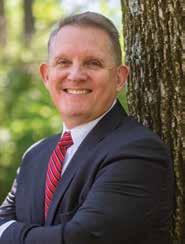
SHAWN ESTEP Principal Attorney
(636) 233-2017
info@esteplawfirm.com
16020 Swingley Ridge Road, Ste. 360, Chesterfield, MO 63017

If you close your eyes and let the right song wash over you, you’re suddenly there — winding roads, canyon air, and the unmistakable California sound that shaped a generation. Laurel Canyon became hallowed ground for rock music in the 1960s and ‘70s. Crosby, Stills & Nash, Joni Mitchell, the Byrds, Jackson Browne, Linda Ronstadt, the Eagles — artists who lived and wrote there and created a body of work that still rocks.
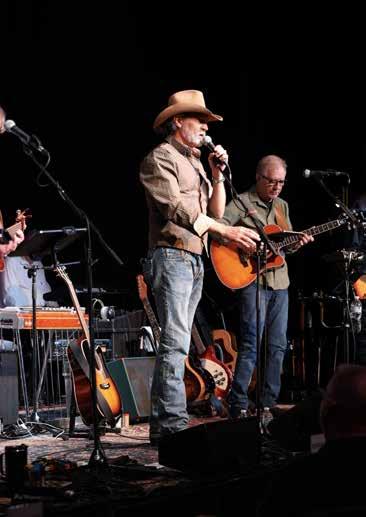
Kirkwood audiences don’t have to travel far to relive that canyon experience. Rockin’ Chair, a 13-piece St. Louis band devoted to that sound, has become a fixture at the Kirkwood Performing Arts Center. In 2026, the band partnered on a concert series inside the Strauss Black Box Theatre, each show dedicated to a different Laurel Canyon artist or album. The series continues this summer with a tribute to the Eagles’ Hotel California on July 18th at 7:30 PM, and Linda Ronstadt on July 19th at 3:00 PM.
Rockin’ Chair wasn’t supposed to last more than one night. In 2009, the members of Mesa — a 1970s regional band — reunited after 35 years to revisit songs from their past. “It was supposed to be a one-time event,” recalled founding member Myles Kelly. Their debut was a charity event with just 45 minutes of material. The response led them to recruit friends, grow the lineup, and build an identity around the California sound they’d loved since the ‘70s. “We decided to focus on that Laurel Canyon sound rather than compete in the broader Classic Rock genre,” Myles said.
Reproducing the Laurel Canyon catalog — spanning folk, rock, country, and pop — demands versatility. Lead guitarist Chuck Wade brings six or seven guitars to every show. Multi-instrumentalist Jerry Turnbow,
Rockin’ Chair brings the music from Laurel Canyon to the Kirkwood Performing Arts Center
ARTICLE BY LILY R. BUEHLER
PHOTOGRAPHY BY
K. FAGERQUIST AND K. GIBBS
“the secret weapon,” covers guitar, mandolin, banjo, Dobro, pedal steel, lap steel, and harmonica. Several other members double on instruments as well. Still, Myles is clear about what drives it all: “At the end of the day, Laurel Canyon is all about the vocals.”
Lead vocalists Jim Keefe and Colleen Bunten, backed by rich ensemble harmonies, give the band the depth to convincingly pull off the iconic voices of CSN and the Eagles.
FINDING A HOME IN KIRKWOOD
Seven shows in 2026 reflect how deep the band’s connection to Kirkwood runs. “The reception from


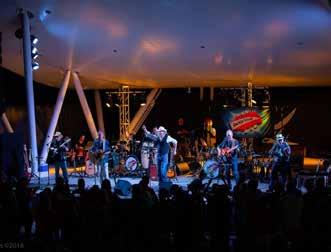
“We decided to focus on that Laurel Canyon sound rather than compete in the broader Classic Rock genre”
Kirkwood residents and surrounding communities has been amazing. It has become our favorite venue in the St. Louis area,” Myles said. Come to the concert expecting to hear both beloved classics and deeper cuts. “There is a large catalog from Laurel Canyon, and we try to choose the best songs, but also some tracks our audience may not know — songs that are a great representation of the sound.”
Rockin’ Chair: Laurel Canyon Series, Saturday, July 18, 7:30 pm - 10:30 pm. For more information, visit thekpac.org/events



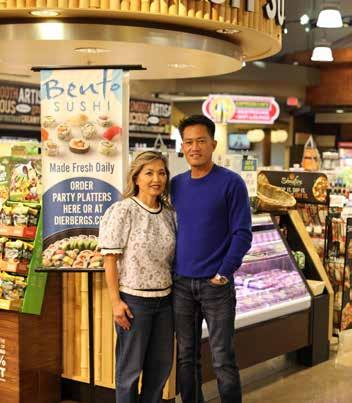


ARTICLE BY BAYLOR KNOTT
PHOTOGRAPHY BY DIERBERGS MARKETS
What if the best sushi in town wasn’t from some trendy restaurant — but waiting for you right inside your neighborhood grocery store? The Bento Sushi bar in Dierbergs is an authentic, family-owned favorite more than two decades in the making. Built on a simple belief that fresh, authentic sushi should be accessible to everyone, this is the story of Ricky and Rachel Msina’s passion for hand-rolled classics.
Ricky’s journey to becoming a sushi chef began when his family immigrated to St. Louis in 1984. Ricky’s grandmother became the household’s culinary compass. “We would help her prepare food, and she would teach us how to cook and use different ingredients,” Ricky recalls. By 16, Ricky was working in a Japanese restaurant. By 19, he was captivated by the art of making sushi and trained under Japanese sushi chefs. “They trained me for about a year to perfect the rice,” he says. “Good sushi starts with good rice.” Four years later, Ricky was ready to build something of his own.
In 2003, Ricky and his wife, Rachel, opened a Japanese restaurant featuring an authentic Asian menu and a sushi bar. At the time, only about three sushi bars existed in the entire city. In 2008, sensing an opportunity to extend their reach into the community, the Messinas approached Dierbergs Markets. “We knew Dierbergs was the only market we wanted to work with. Their commitment to providing quality food to the local community aligned perfectly with our Christian values and goals,” Rachel explains. By 2011, Bento Sushi had expanded into every Dierbergs location.
Bento Sushi’s top sellers are the California roll, the spicy roll, and the crispy roll. Rachel’s personal favorite is the seafood wrap, loaded with fresh vegetables and a standout dipping sauce. If sushi is new for you, explore basic sushi on Tuesdays; traditional rolls are just $6 at Dierbergs. Fresh sushi, made with heart, right in your neighborhood. Sushi Tuesday may become your favorite day of the week.


Melissa Hardage and Stephanie Swearingen, Bin There Dump That
Our story matters because it reflects who we are—a family-owned business built on hard work, reliability, and treating every customer like family. Whether we’re helping a homeowner with a cleanup project, supporting a contractor on a job site, or serving a local business, we’re committed to this community.
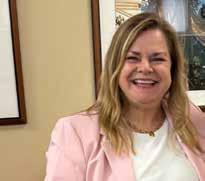
In our community, families don’t just look for a business logo; they look for a heartbeat and a helping hand. To truly serve our senior population, you have to show up, get involved, and give back authentically.
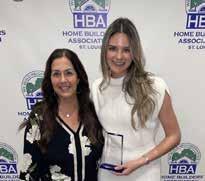
Sydney Rasch, BenchMark
It’s everything to live and work in this community. These aren’t just clients reading our story; they’re our neighbors and friends. We even had someone call us recently who said, ‘You’re the only builder in town I trust,’ and we’d never even met them. That comes from being present each month, sharing our story, and showing up the right way over time. Places like Kirkwood and Webster are special because people truly care, and that makes what we do more meaningful.

Tim and Cindy Schulze, Pioneer Wealth
Kirkwood and Webster still feel like true neighborhoods. People support local businesses, volunteer, serve on boards, attend community events, and genuinely care about one another’s success. There’s a strong sense of connection here that is becoming harder to find.
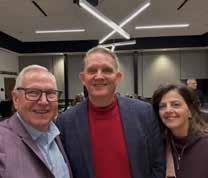
Sharon Belleau, Transitions for Senior Living
Being involved with this community helps us build relationships with business owners, professionals, and leaders who often learn that family and friends are struggling to find the right care for a loved one and know Transitions for Senior Living and the hands-on, personalized service we provide at no cost.

Connecting with homeowners and businesses is about building trust long before a project begins and long after it’s complete. Every relationship is an opportunity to listen, understand needs, and create lasting value. When our neighbors succeed, our businesses succeed, and that’s a connection worth investing in every day.
ARTICLE BY
KIRKWOOD CITY LIFESTYLE
PHOTOGRAPHY PROVIDED
Describe what community connection means to you.
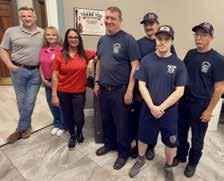
When the Shrewsbury Fire Department needed to renovate its firehouse, we were happy to donate flooring and tile. This community has done so much for us.
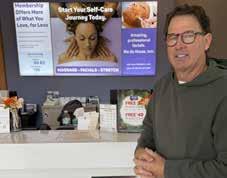
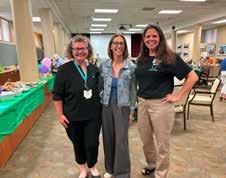

Collaborating with other business owners and leaders to create unique events that serve our community is

JULY 7TH
Tour starting/ending points are included in your booking info. | 9:00 AM Kirkwood has more to explore than you think. Explore it all with local historian Amanda Clark: the charming downtown, the Jefferson-Argonne historic homes district, and the community that has navigated great challenges and triumphs over the past 170 years. See STL walking tours are 2 hours long and wheelchair accessible. For more information, visit mohistory.org/events
JULY 22ND
Kirkwood Community Center
10:00 AM
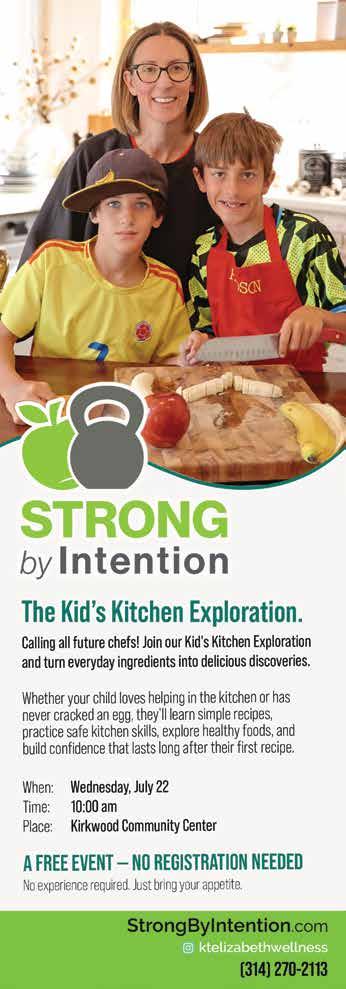
Discover what the kids are cooking up! Bring your kids and grandkids to this fun, hands-on event that explores all the ways to get them involved in the kitchen. We’ll show how cooking builds confidence, encourages adventurous eating, teaches life skills, and creates a positive relationship with food. Led by kids, for kids, with practical tips for parents.

You're getting through your day but by the end of the day, you feel drained. Your back is tight. Your knees are talking to you. You have less energy left for the things you enjoy.
That's not always age. It’s often declining strength, stability, and physical capacity.
The good news? Your body is remarkably adaptable. With the right training, many people can improve strength, balance, movement, and confidence at any age.
At BODY20 Des Peres, we help you rebuild the foundation that makes everyday movement feel easier.
For golf. For travel. For grandkids. For the long game.