

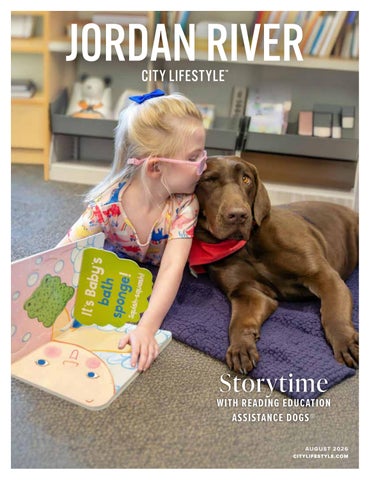
Hello neighbors, and welcome to our Kids & Pets issue!
August marks that final, sun-soaked stretch before the school bells ring again. It’s a time when kids are squeezing out every last drop of vacation, and our four-legged friends are looking for a cool patch of shade.
This month, we are dedicating our pages to the young ones and their furry friends who bring so much joyful chaos into our homes. More importantly, we are highlighting the incredible ways our community serves and supports them.
First, we feature an organization making big deposits in the lives of vulnerable youth. Celeste Edmonds of Christmas Box International is investing in the dignity of foster children. The organization has provided brand-new clothes and essential resources to over 185,000 children, proving that every single child in our community is worth the investment.
Next, we are thrilled to spotlight Dr. Devan Griner and the Utah Smiles Foundation. Their incredible work ensures that children across our community have access to the coordinated medical care they need to have a chance at a happy and healthy life. It’s a beautiful reminder that investing in a child’s welfare is one of the greatest gifts we can give.
We also explore how local creators are fostering self-acceptance for our little ones. We highlight author Johnathan Aubrey’s inspiring book Am I Different and share the story of how Huggabuddies toys came to be. Together, they are helping kids navigate their lives with confidence, teaching them that it is okay to stand out—especially with a cuddly friend by your side.
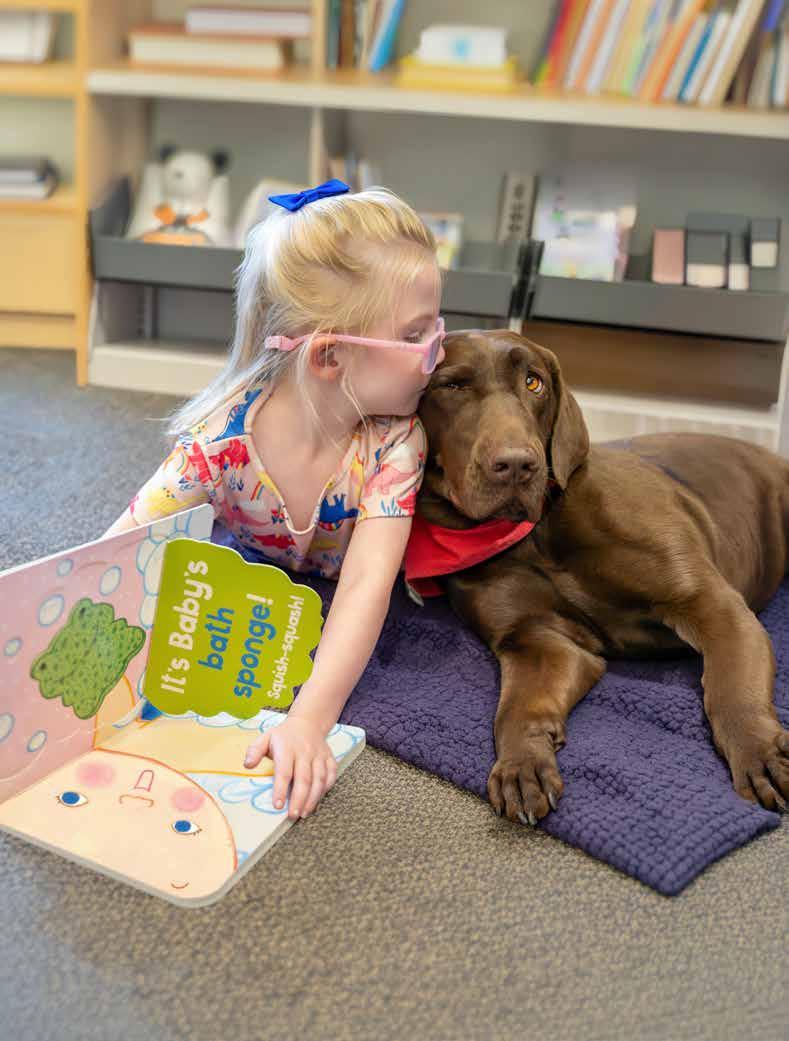
Finally, what would a Kids & Pets issue be without bringing the two together? We sit down with the wonderful Reading Education Assistance Dogs (R.E.A.D.) program, an amazing initiative where kids improve their literacy skills by reading aloud to registered therapy animals. It's the perfect blend of education and the unconditional love that only a furry friend can provide.
Whether you are wrangling toddlers, teenagers, or terriers this month, we hope this issue inspires you to celebrate the innocent, playful energy they bring to our neighborhoods.
Happy August!
Best,

August 2026
PUBLISHER
Mike Bean
mike.bean@citylifestyle.com
EDITOR
Heather L. King
heather.king@citylifestyle.com
EDITORIAL COORDINATOR
Kellene Ricks Adams
kellene.adams@citylifestyle.com
CONTRIBUTING WRITERS
Heather King, Kellene Adams, Abi Falin Horspool
CONTRIBUTING PHOTOGRAPHER
Jen Fox Photography
CEO Steven Schowengerdt
President Matthew Perry
COO David Stetler
CRO Jamie Pentz
CoS Janeane Thompson
AD DESIGNER Josh Govero
LAYOUT DESIGNER Lillian Gibbs
QUALITY CONTROL SPECIALIST Anna Minnick


MIKE BEAN, PUBLISHER @JORDANRIVERCITYLIFESTYLE
Proverbs 3:5-6



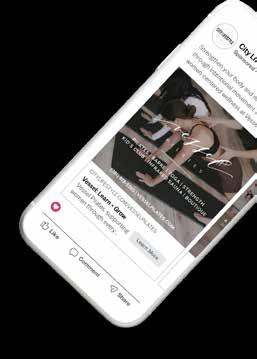
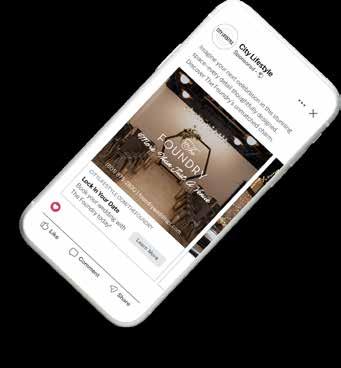
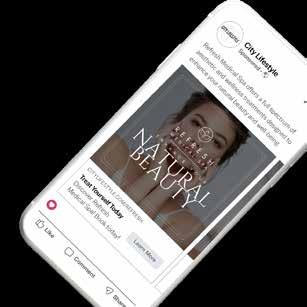
With City Lifestyle’s
print + digital packages, your business captures attention wherever our community is looking. Build unmatched local credibility on the page, and drive immediate action online.






Move
the




the
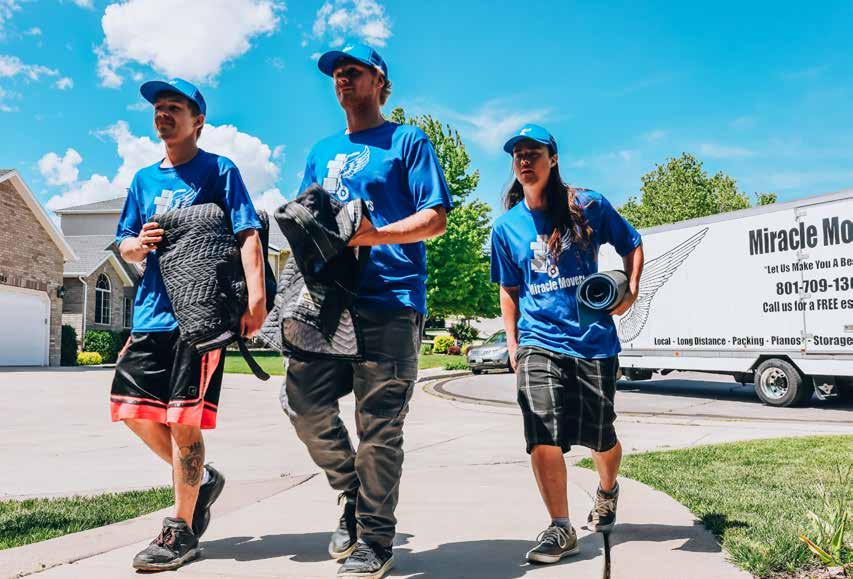
We protect your home, your belongings, and your peace of mind—every step of the way.
When you’re moving, the last thing you want is damaged furniture, scratched floors, or unreliable crews. At Miracle Movers, we specialize in high-quality, detail-driven moves for South Jordan homeowners who expect things done right the first time.
Professionally trained crews
Clean, fully equipped trucks
Careful handling of furniture, floors, and walls
Over 900 five-star reviews
Whether you’re moving across town or across the country, we make the process smooth, organized, and stress-free.


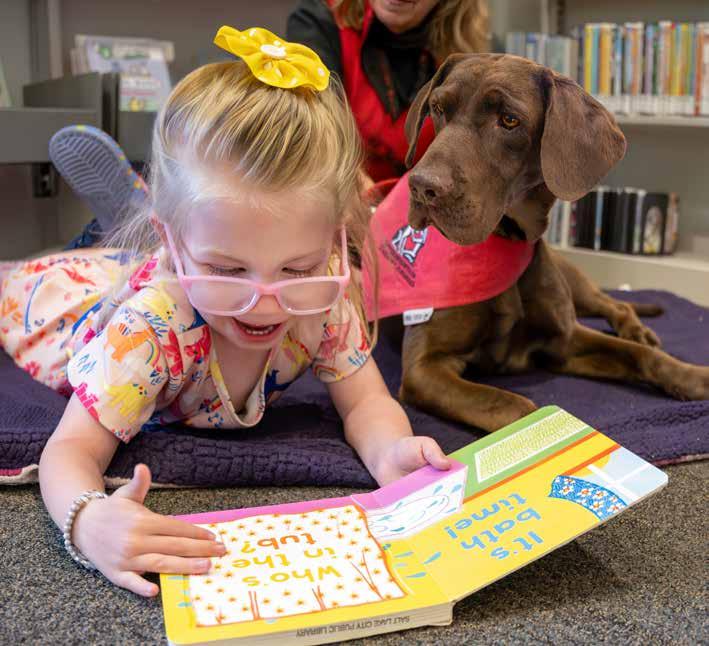
How Reading Education Assistance Dogs® Help Children Find Their Voice One Book at a Time
ARTICLE BY HEATHER L. KING
PHOTOGRAPHY BY JEN FOX PHOTOGRAPHY
Inside a neighborhood library, an unlikely reading partner is helping children discover the joy of books.
Sitting cross-legged with a story open in their lap, a child hesitates over a difficult word, carefully sounding it out. They glance around the room, worried someone might laugh or correct them. Then they look down.
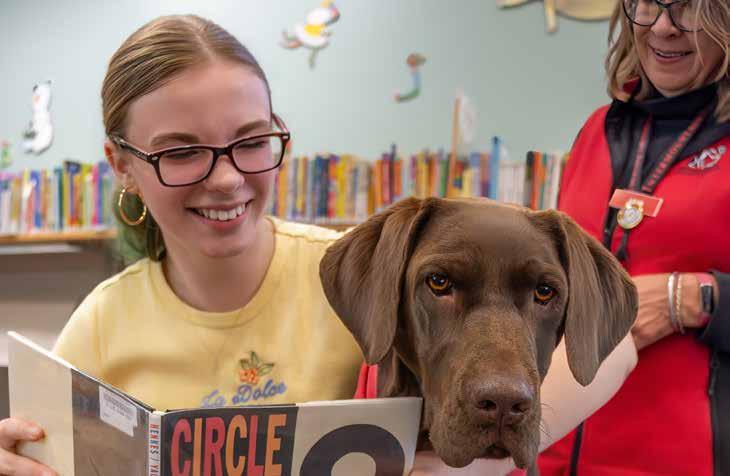
“Reading Education Assistance Dogs® is a groundbreaking literacy program that allows children to read to a registered therapy animal.”
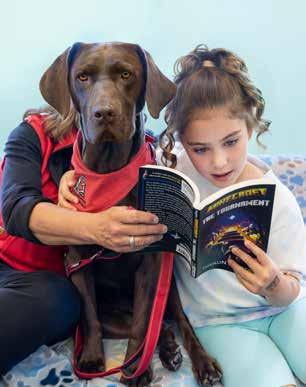
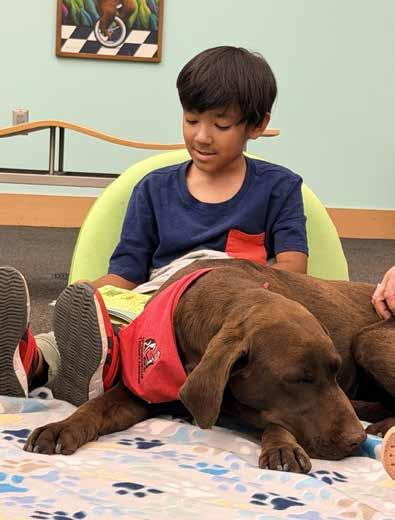
Curled quietly beside them is a furry therapy dog listening with patient eyes, a wagging tail, and absolutely no interest in judging pronunciation. The dog doesn’t notice the mistakes at all. Reassured, the child smiles, pets the dog, and continues reading.
Across Utah and around the world, moments like these are transforming young readers through the Reading Education Assistance Dogs® (R.E.A.D.®) program, created by Intermountain Therapy Animals (ITA) in Salt Lake City. Since its launch in 1999, the groundbreaking literacy program has paired more than 7,200 registered therapy animals and their volunteer handlers with children who need something many traditional classrooms cannot always provide: a judgment-free audience.
The concept is wonderfully simple.
Children read aloud to a certified therapy dog, and unlike a parent or a teacher might, the dog doesn’t interrupt. It doesn’t criticize. It doesn’t rush.
Instead, the animal offers calm companionship while the handler quietly encourages the child through the reading experience.
For struggling readers of all ages, that emotional safety can be life changing and before long, hesitant readers begin turning pages with a little more confidence.
Research has shown that children who participate in R.E.A.D. programs often improve not only their reading skills, but also their motivation, confidence, communication, and overall attitude toward books. The therapy animals help replace reading anxiety with curiosity and even excitement to read to a dog.
Today, thousands of registered R.E.A.D. teams serve schools and libraries across the United States and 28 other countries. The program began in Utah where ITA pioneered the idea that a dog’s unconditional acceptance could unlock a child’s potential.
One ITA volunteer is Jan Abramson, whose therapy dog, Izzie, has become a familiar face and wagging
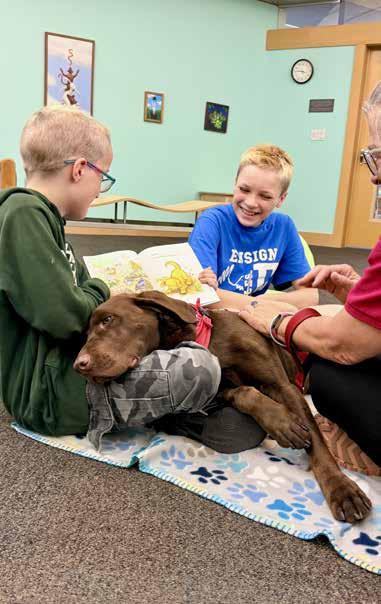
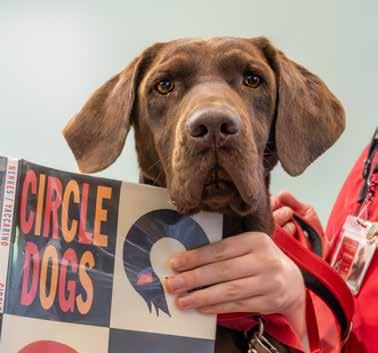
tail to children who visit libraries across the Salt Lake valley.
“I first learned about Intermountain Therapy Animals and the impact of volunteer teams when I was at Guadalupe Center,” Abramson recalls. “Volunteering with ITA became an aspirational goal. Then the right dog showed up in my life.”
That dog is Izzie.
The pair officially became an ITA team in November 2022, and in just a few years have contributed more than 600 volunteer hours, serving as both a R.E.A.D. team and through Salt Lake City International Airport’s therapy animal program where they help calm weary travelers.
Those hours represent hundreds of individual stories—children finding confidence to tackle a new chapter, reluctant readers discovering a favorite book, nervous students smiling as they scratch a furry head between pages.
The science behind the program is compelling, but the magic often happens in moments too small to measure.
A child who barely whispered during the first session begins reading with expression by the fourth visit. A student who avoided books starts checking them out from the school library. A struggling reader realizes they are capable after all.
The reason is simple.
Dogs don’t care how quickly someone reads. They don’t notice missed punctuation. And they never roll their eyes at mispronounced words.
Instead, they provide exactly what educators have long recognized children need most: encouragement.
During reading sessions, handlers facilitate comprehension and vocabulary but rather than correcting every mistake, children become the storyteller as they read to their canine companion.
Researchers have documented improvements in children’s enthusiasm for reading, reading fluency, and confidence. Other studies have found that the presence of a friendly therapy dog can reduce stress during reading activities, making practice something children actually look forward to rather than avoid.
For volunteers like Abramson, however, success isn’t measured only by statistics. It’s measured by connection.
Throughout her career in higher education and nonprofit leadership, she built programs designed to help others succeed. Volunteering with Izzie became a natural extension of that work.
“I was fortunate to have a career that made significant impact on others, in the community, and
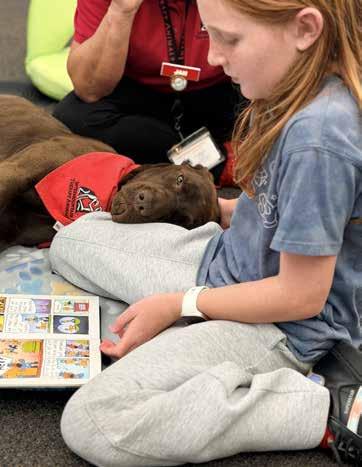
“As parents search for ways to foster a lifelong love of reading in their children, R.E.A.D. demonstrates that success can begin with a good book, a quiet room, and a therapy dog.”
advancing research and science,” she explains. “That impact aligns with my personal philosophy to pay it forward.”
Every time Izzie settles onto a library rug beside a young reader is another opportunity to positively change a child’s future.
Sometimes the child arrives nervous. Sometimes they’re convinced they hate reading. By the end of the session, they’re asking if Izzie will be back soon.
As parents search for ways to foster a lifelong love of reading in their children, programs like
R.E.A.D. demonstrate that success can begin with a good book, a quiet room, and a therapy dog waiting patiently to hear the next sentence. Literacy can be achieved through encouragement, patience, and relationships with those who have four paws.
Because sometimes, the best teacher in the room never says a single word, and Izzie is always waiting to hear the next story.
To learn more about Intermountain Therapy Animals and the R.E.A.D. program, visit therapyanimals.org/read.
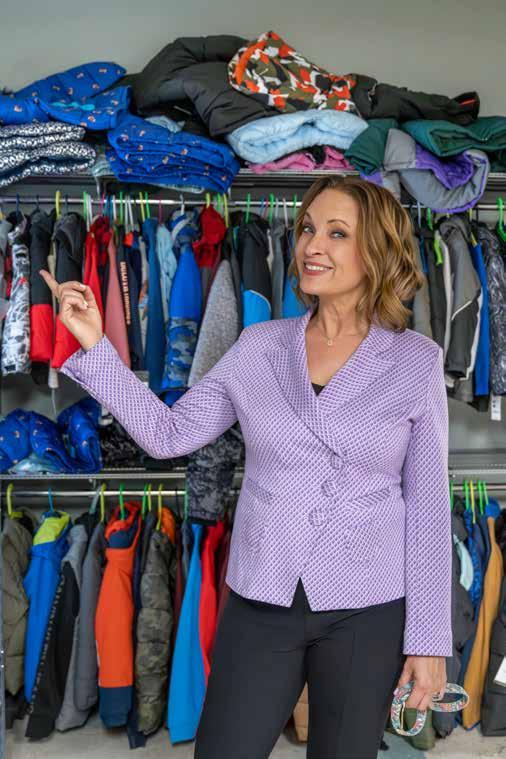
Every six months, Celeste Edmunds packed her entire life into a garbage bag.
Growing up in the foster care system meant instability, starting over frequently, and not knowing how long she would stay. And at one point, it meant losing a brother and sister because there wasn’t someone who could take care of all three of the siblings together.
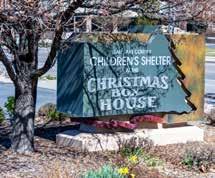
Now the executive director of The Christmas Box International, Edmunds ensures that no foster child leaves one of their short-term emergency shelters with their belongings in a garbage bag.
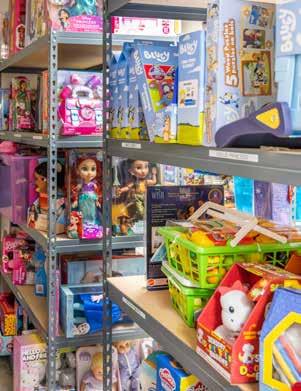
Children who pass through The Christmas Box get to choose a duffel bag or a backpack full of brand-new clothes, hygiene kits, books, toys, and shoes.
“The new items represent this sense of dignity and belonging that they deserve to have,” Edmunds says. “They’ll hang on to that feeling of ‘I’m worth more than the items I’m going to put in a garbage sack.’ So we only accept new donations for that reason.”
Edmunds helped found the organization three decades ago alongside author Richard Paul Evans and his wife, Keri. In that time, she says the nonprofit has “provided safety and resources to more than 185,000 children.”
For 30 years, The Christmas Box has been committed to keeping siblings together by accepting youth up to 18, allowing older brothers and sisters to remain in the same place.
Between its Salt Lake City and Ogden locations, the organization keeps about 1,000 siblings together each year.
Edmunds describes her work as rewarding, even when it’s emotionally difficult. She’s learned to ground herself and remember why she’s there.
“It’s pretty cool to come back as a former foster child and say, I get to look at the system and all the ways that failed me, which was 100% of them,” she remembers. “Now I strategically reach out to those partners that failed me due to lack of resources and support them so they can do better for children. I get to own my voice and choose how I want to use that to hopefully better the lives of other people.”
The nonprofit serves about 14,000 children each year through shelter care, resource rooms located in state offices, holiday programs, and more than 100 community partnerships. It processes nearly a million dollars of in-kind donations annually, and ensures none go to waste. If they can’t use a donation, they find someone who can.
At its core, The Christmas Box mission is about rallying a community around vulnerable children.
“Systems are just not designed to raise children. People are designed to raise children, villages, and communities,” she states. “And so that’s what The Christmas Box International does. We rally a community around these children.”
Edmunds encourages community members to consider how they can serve vulnerable children in their area. “When people ask me, what do you need here?” she says, “Well, if your kids need it, so does a Christmas Box kiddo.”
There are many ways to help kids in need, from service projects, to donating, to simply sharing a message on social media. Edmunds invites locals to “reach out and figure out what feels good for them,” because “everybody has a role to play. Everybody has their way to give.”
Edmunds’ role is proof that painful beginnings do not define the end of the story.
“Everything awful that happened to me had to happen in order for me to be exactly where I am today,” she concludes. “And it’s beautiful.”
Learn more about The Christmas Box International at TheChristmasBox.org
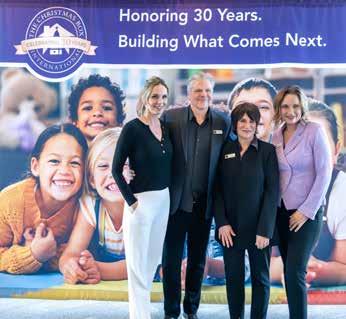
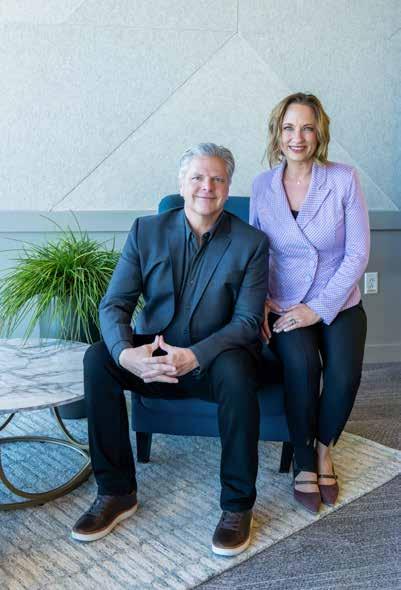
“THE CHRISTMAS BOX SERVES ABOUT 14,000 CHILDREN EACH YEAR THROUGH SHELTER CARE, RESOURCE ROOMS LOCATED IN STATE OFFICES, HOLIDAY PROGRAMS, AND MORE THAN 100 COMMUNITY PARTNERSHIPS.”

Utah Smiles helps children born with facial differences find confidence, belonging, and hope.
For Dr. Devan Griner, the path to medicine— specifically pediatric surgery—became clear while he was still in high school.
The son of a television news photographer, Griner grew up thinking he might follow his father’s footsteps behind the camera. But everything changed after he watched an award-winning documentary his father had shot about children receiving cleft lip and palate surgeries overseas.
“I remember watching children being screened for surgery and seeing some of them sent home because there weren’t enough resources,” Griner recalls. “It broke my heart. After that, I wasn’t the same.”
The experience inspired him to start a fundraising club while still in high school and eventually join a medical mission to Vietnam. By the time he returned home, he knew exactly what he wanted to do with his life.
Today, that passion is reflected in Utah Smiles, the nonprofit foundation Griner created to help children born with cleft lip, cleft palate, and other craniofacial conditions receive the specialized care they need. Children with these conditions often require multiple surgeries and years of treatment involving numerous specialists. Yet insurance limitations, financial challenges, and gaps in access to care can leave families struggling to obtain timely treatment.
ARTICLE BY KELLENE RICKS ADAMS PHOTOGRAPHY COURTESY OF UTAH SMILES
“We wanted to create a system where every child could receive the care they need regardless of insurance status or financial circumstances,” says Griner, who returned to Utah in 2016 after earning his medical degree and dual board certifications, as well as pursuing specialized training in pediatric plastic and craniofacial surgery. He started his own practice, Peak Plastic Surgery, because “it’s hard to support a family with a nonprofit,” he observes. “So my private practice pays the bills and Utah Smiles fulfills my passion to change lives.”
Founded seven years ago, Utah Smiles brings together an expert team of surgeons, dentists and orthodontists, audiologists, psychologists, ENT specialists, speech pathologists, and others who collaborate on individualized treatment plans. One of the unique aspects of Utah Smiles is the foundation’s approach of all caregivers meeting together once a month with each patient and their family.
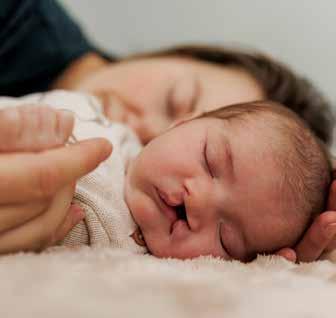
“Rather than requiring families to coordinate appointments across multiple offices, the team works together to streamline care,” explains Griner. “Families shouldn’t have to spend months trying to coordinate appointments between specialists. We bring everyone together so parents can leave one visit with a clear plan and the support they need.”
The foundation has helped more than 500 patients and continues to support hundreds of children at various stages of treatment. The work extends beyond surgery. Utah Smiles provides emotional support, including hosting an annual cleft retreat where children and their families gather for recreation, community, and encouragement.
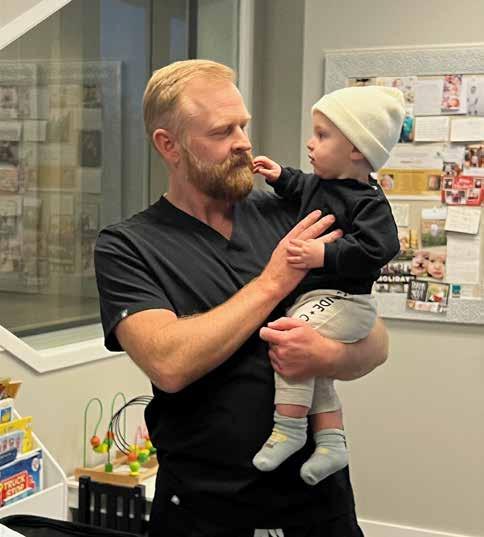
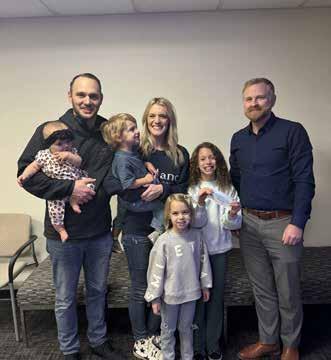
“We always say it does no good to fix a child’s face if we break their soul in the process,” Griner says. That philosophy was reinforced by one patient whose treatment journey left a lasting impression on Griner.
“One young man told me that after treatment, he finally felt like he fit into the world,” he recalls. “We take for granted how important it is to communicate, to feel accepted, to belong. Helping a child gain that confidence is one of the most rewarding parts of what we do.”
Looking ahead, Griner continues to have a clear goal in mind. “My dream is to build a true center of excellence where we can help more children, train surgeons from around the world, and share a model of care that improves outcomes everywhere,” he explains. For Griner, the mission that began with a documentary decades ago continues today through every child helped, every family supported, and every life transformed.
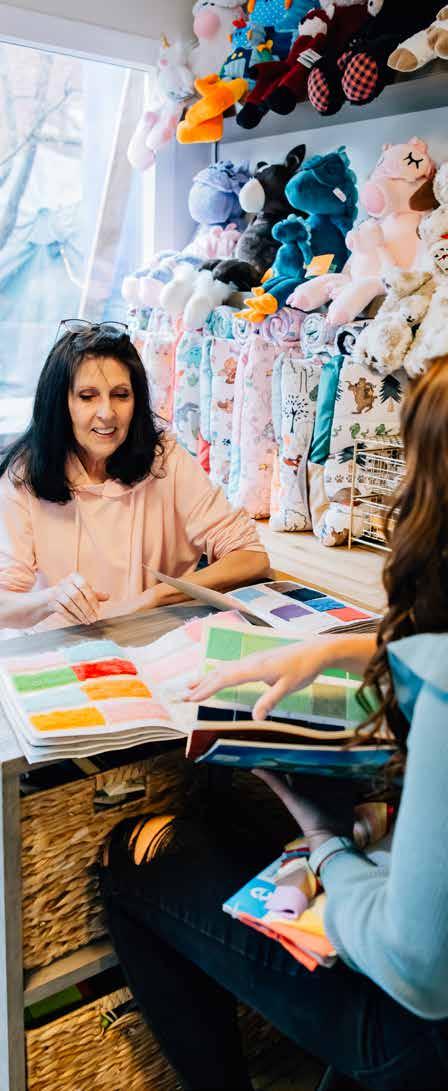
Family-created bedtime Huggabuddies products help children feel safe, loved, and connected.
ARTICLE BY KELLENE RICKS ADAMS PHOTOGRAPHY COURTESY OF HUGGABUDDIES
The inspiration for Huggabuddies began with a quilt and a newly blended family.
After marrying Megan Erickson and creating a blended family, Steve Nelson was touched when her mother, Elaine, almost immediately made quilts for his four children. The blankets weren’t store bought. They were cozy and handmade. He discovered that Elaine had spent years creating quilts, stuffed animals, and other comfort items for each of her grandchildren, which now number 25.
The feelings of warmth and love the quilts created were tangible, and Steve, who had a business background, wanted to create a way for other children to experience
those same feelings. Consequently, what began as one grandmother’s way of expressing love for her grandchildren grew into Huggabuddies, a company dedicated to helping children feel safe, connected, and supported at bedtime.
Today, Elaine, Megan, and Steve (joined by Elaine’s husband, Joseph, and Megan’s brother, Nathan) have transformed her creations into a growing collection of products, including plushy stuffed characters, designed to help children navigate the transition from playtime to bedtime while promoting comfort, emotional regulation, and meaningful family connections.
Huggabuddies characters and quilts are available separately or in coordinated bundles that include other items, such as sleep masks, journals, and even storybooks. Megan writes the books while Elaine illustrates them. “I always wanted to write children’s books,” Megan says. “But we wanted the stories to be more than cute. Each character represents a value that parents can talk about with their children at bedtime.”
Those lessons range from sharing and helpfulness to healthy hygiene and looking out for others. Journals encourage children to reflect on their day and identify emotions they experienced, introducing simple mindfulness practices that support emotional well-being.
At the center of the collection are the company’s signature weighted quilts. Designed for comfort and portability, they fold into backpack-style carriers that children can take to sleepovers and grandparents’ homes, as well as on family vacations and other adventures.
“We wanted to create something children could take anywhere that helps them feel safe, comforted, and loved,” Megan says. “The goal is to create positive bedtime associations and something they can always count on.”
Today, Huggabuddies remains a true family endeavor. The long-term vision for the company is inspired by Erickson’s 25 grandchildren: creating a collection of 25 unique characters, each with its own story and lesson to share.
However, for the family behind Huggabuddies, success isn’t measured simply by sales. It’s measured by the children who carry a favorite blanket, hug a beloved stuffed animal, and drift off to sleep feeling a little more secure.
To learn more, visit huggabuddies.com
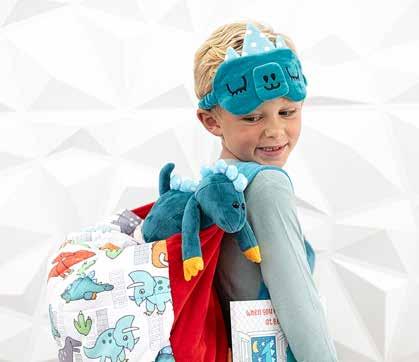
“We wanted to create something children could take anywhere that helps them feel safe, comforted, and loved,” Megan says.












ARTICLE BY HEATHER L. KING
When Utah author and motivational speaker Johnathan Aubrey walks onto a stage, audiences quickly discover that his message is about possibility.
“Differences don’t have to impose limitations,” he says. “Differences may impose obstacles, but they can be seen as opportunities for growth.”
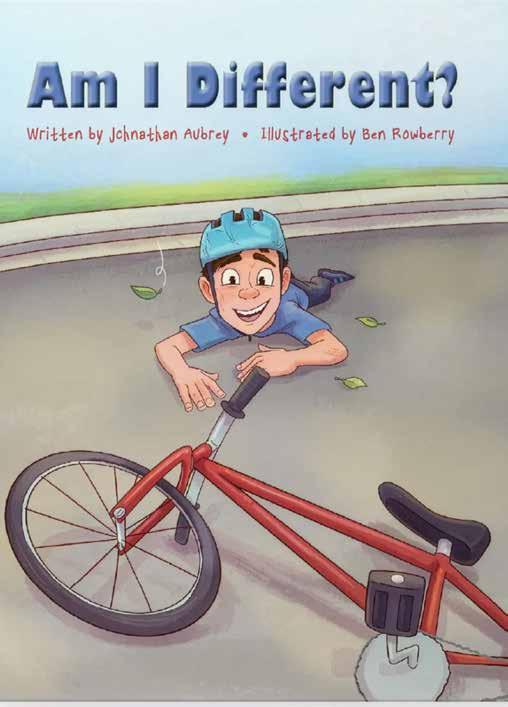
That optimism resonates with readers of Am I Different?, a children’s book he published in 2024, that encourages children to recognize that being different is not a weakness. The story follows Aubrey’s own childhood journey to accomplish what many believed he couldn’t: learning to ride a bike.
Born with cerebral palsy, Aubrey has spent a lifetime refusing to let physical challenges determine what he can accomplish. Instead, he built a career that inspires everyone from students to business leaders, encouraging them to embrace life’s obstacles and grow from them.
Illustrated by Ben Rowberry, Am I Different follows a young boy who questions whether his differences will prevent him from participating in the same experiences as other children.
“The story is about a young boy who shares the joy of overcoming obstacles by doing hard things,” Aubrey explains. “Despite his obstacles, it’s not stopped him from moving forward and doing things in his life that he likes.”
That lesson came from lived experience. As a child, Aubrey believed cerebral palsy meant he would never ride a bike after an early accident convinced him the challenge was simply too great. Years later, loneliness motivated him to try again. After hours of practice—and more than a few painful falls—he finally succeeded.
“It was painful,” Aubrey recalls, “but the success was so huge that it didn’t matter because I rode a bike.”
Rather than dwelling on limitations, Aubrey encourages readers to discover the confidence that comes from perseverance.
That personal breakthrough became the foundation of both his speaking career and the book.
When he presents to students in schools, Aubrey frequently asks them a simple question: Is it important to do hard things? The enthusiastic response serves as the opening to a broader conversation about courage, resilience, and choosing growth over comfort.
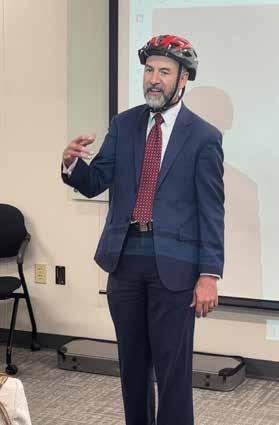
“Any time we don’t do something hard, it’s because we are looking at how hard the pain is,” Aubrey explains. “When we look at our desires, goals, and dreams, and we make it big enough, it becomes bigger than the pain of doing the hard things and then it doesn’t matter.”
His perspective shifted even further in adulthood after years of feeling that cerebral palsy had limited his future. Eventually, he reached what he describes as a life-changing realization.
“Once I realized cerebral palsy was a blessing and not a curse, and the decks weren’t stacked against me—they were stacked in favor of me—that’s when I started speaking on winning despite obstacles,” Aubrey states.
Whether speaking to elementary school students or corporate leaders, Aubrey delivers the same timeless message: our greatest victories often begin the moment we decide that the freedom waiting on the other side of fear is worth the effort it takes to get there.










Meet Jordan River City Lifestyle’s Dirty Soda: Jordan’s Stone Cold Quencher
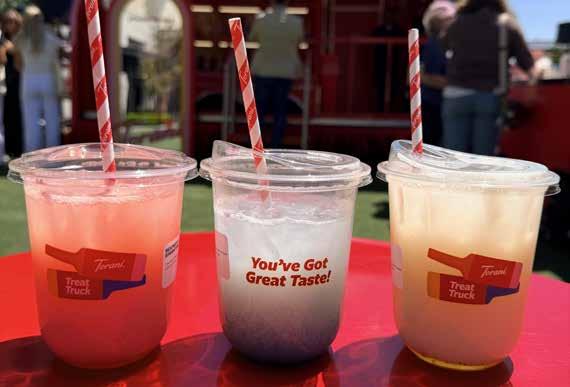
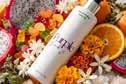
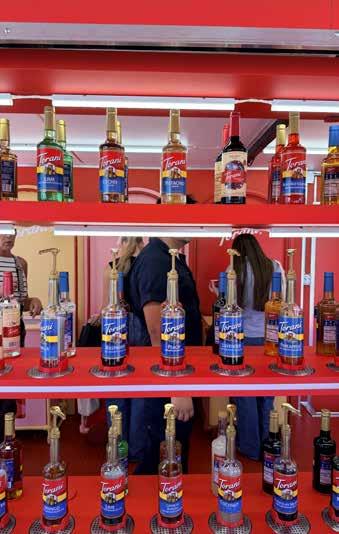
If there’s one place in America where dirty sodas are a cultural phenomenon, it’s Utah. Long before this creation became a national trend, Utahns were mixing flavored syrups, fruit juices, carbonated drinks, and cream into creative and customized beverages. Today, the state is widely regarded as the epicenter of the dirty soda movement—and Torani’s 153 flavored syrups have been there every step of the way over the past two decades.
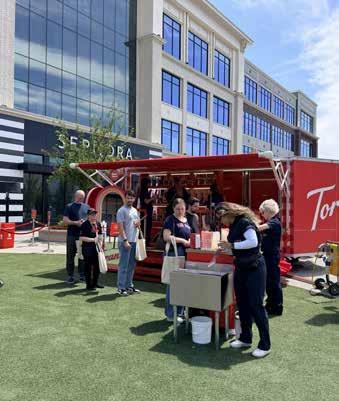
“Utah is forging its own path,” explained Torani flavor trend expert Andrea Ramirez as the Torani Treat Truck tour, a nationwide pop-up experience designed to help discover America’s next favorite flavor, rolled into Riverton’s Mountain View Village earlier this summer. “There’s dirty soda heritage here.”
Torani, which celebrated its 100th anniversary last year, is focused on flavor exploration across America. Before the Torani Treat Truck arrived in Riverton, residents voted on their favorite flavor.
In Utah, the winner was coconut—a result that surprised no one familiar with Utah’s beverage scene.
“When we noticed the dirty soda phenomenon here, it seemed like almost overnight we were shipping pallets of coconut syrup to Utah,” Ramirez recalled. “It was such an anomaly that everyone asked: ‘What are they doing with this much coconut syrup? What’s going on?’”
What they discovered was the beginning of Utah’s dirty soda beverage culture. Today, many of the flavor combinations that originated here have gained national attention.
ARTICLE AND PHOTOGRAPHY BY HEATHER L. KING
“In Utah, it’s the fruit flavors,” she continued. “Strawberry, raspberry, blue raspberry, peach, lime, lemon. We also see things like pomegranate having a lot of popularity here.”
Even banana, she notes with a laugh, has had a moment.
“People love customization. They like to make their drinks their own,” Ramirez concluded. “Everybody likes them to taste great. Whatever your flavor profile, we have something you’d probably like.”
As dirty soda continues its rise from regional favorite to national trend, Utah remains at the center of the conversation. The state’s passion for customization, entertaining, and flavor experimentation has helped shape a beverage category that continues to grow. And if history is any indication, the next big drink trend may already be bubbling up somewhere in Utah.
After all, when it comes to dirty soda flavor innovation, the state has been ahead of the curve for years.
In honor of Utah’s status as the dirty soda nexus, Torani helped Jordan River City Lifestyle create our own flavor: Jordan’s Stone Cold Quencher.
Ingredients:
• 1 Tbsp. white peach Torani syrup
• 1 Tbsp. mango Torani syrup
• 8 oz. sparkling water or lemon/lime soda
• 2 Tbsp. half & half or heavy cream
Directions:
1. Fill a large glass with ice.
2. Add Torani syrups over ice.
3. Add sparkling beverage.
4. Top with cream, stir, and enjoy!
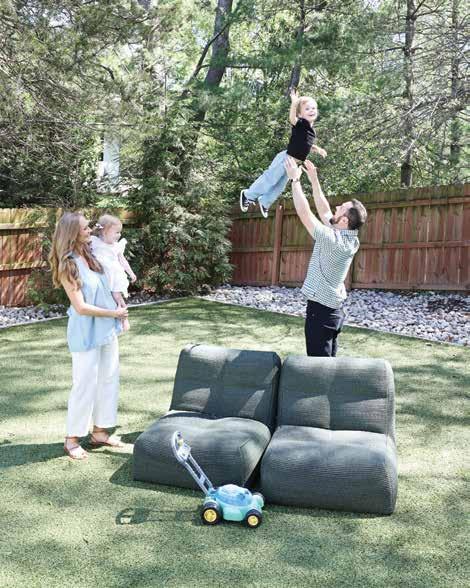
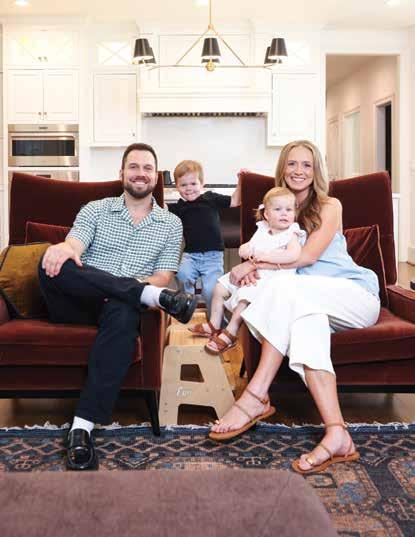
Trey Kennedy makes a living finding comedy in regular life. Marriage. Toddlers. Yoga pants. The Thursday-night scramble between school dropoffs, soccer practice, and whatever has to be done by morning. Twelve years in, it shows: millions of followers across every platform, three stand-up specials, a sold-out Relatable Tour, and a style of humor fans send each other captioned, “Are you watching me?” He delivers the kind of comedy that travels because everyone’s living some version of it.
Katie, his wife of six years, is a former biomedical engineer who also built a modeling career. She’s now raising their kids and co-hosting Correct Opinions alongside Trey — the show where the two of them swap takes on marriage, parenting, and whatever came up that week.
Trey has been at this longer than people realize. An Edmond, Oklahoma kid who grew up playing basketball described himself as a “shy kid who never thought he’d be an entertainer.” He started making videos while attending Oklahoma State University. After building millions of followers on Vine before the platform shut down, he gave himself six months on Instagram and Facebook to see whether he could rebuild from zero. He did. Stand-up soon followed. His first special, Are You For Real?, streams on YouTube; the second, Grow Up, on Amazon Prime; the third, built around the Relatable Tour, wrapped earlier this year. “I’ve been trying to be funny every week for like twelve years now,” he says. A slow climb, made one bit at a time.
ARTICLE BY KALI KASPRZYK PHOTOGRAPHY BY JANIE JONES
“I’ve been trying to be funny every week for like twelve years now.”
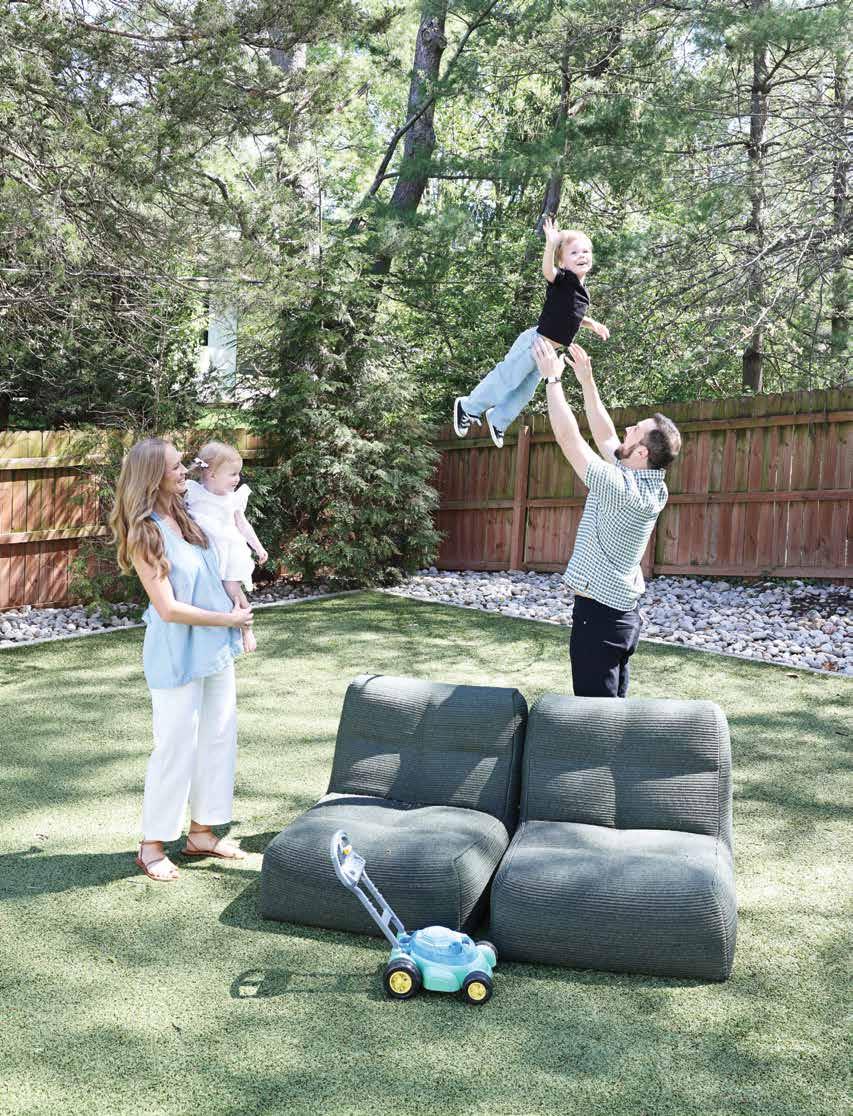
Most of what Trey writes lately starts in his own kitchen. Thomas is three and a half, and he is, in his father’s words, “a movie.” He narrates his own life from the moment his eyes open and mispronounces words in ways his parents now repeat to each other because no one else would believe them. His younger sister, Eva, is what Katie calls “the calm one.” With a third now in the mix, the Kennedys are officially outnumbered.
After six years of marriage, Trey and Katie have learned that the partnership runs best when it gets its own time on the calendar. So once a week, they leave the kids with a sitter and go out for coffee. “You need a system,” Katie says. “It’s about taking time to look each other in the eye. Not the kids. Not the cameras. Just each other.”
The same instinct shapes the work. Most of Trey’s trial and error happens onstage or on Instagram, but the first read is always Katie’s. “There’s only been one time ever I’ve had to be like, ‘you’re not doing that,’” she says. The rest of the time, she just laughs first.
FEATURING TREY & KATIE KENNEDY
Trey and Katie talk about marriage, parenting, and the moments that don’t make the Instagram feed.
Watch or listen to the full conversation wherever you get your podcasts.
AUGUST 1ST
Adult Night Out: ’50s Prom
Viridian Event Center, West Jordan | 7:30 PM
Slip into your poodle skirts, leather jackets, and saddle shoes for a rockin’ ’50s throwback dance. Twist the night away to a live band playing classic hits, sip on soda floats, and swing by enchanting photo ops. Dress in your best ’50s fashion or vintage formalwear for a chance at prom royalty. Be there or be square. Registration required.
AUGUST 14TH
Friday Fun Night


Riverton City Park | 5:30 PM Friday Fun Night in Riverton is a blast. Bring the family or join your friends for food trucks, summer market vendors, and music. Cap off the evening with an outdoor movie at dusk. Three playgrounds and a splash pad round out the fun.
AUGUST 15TH
Demolition Derby
West Jordan Rodeo Arena | 7:00 PM
Experience the adrenaline of a demolition derby, where drivers push their vehicles to the limit in a battle of strength, strategy, and survival. Engines roar as cars collide head-on, metal twists, and sparks fly in an action-packed arena. The goal is simple: outlast the competition and be the last car still running. Tickets required.





CONTINUED
AUGUST 20TH
Cruise Night
SoDa Row | 5:00 PM
For many people, cars are more than vehicles. Come check out dozens of classic and collector cars, chat with other car enthusiasts, and decide which car is your favorite ride.
AUGUST 22ND
Dragon Boat Festival
Oquirrh Lake/Eastlake Park | 8:30 AM
Join Utah’s only Dragon Boat Festival and be part of a great cause. Watch the races with official 40-foot dragon boats, eat traditional Asian food, play games, and watch cultural performances. The short 200-meter race is for novice racers; a portion of the race team fees go to the Refugee & Immigrant Center, an Asian Association of Utah charity. Registration required.
AUGUST 29TH
New West Coast Fest
Zions Bank Stadium, Herriman | 12:00 PM
The New West Coast Fest debuts in Herriman this year. A music and culture festival dedicated to the modern West Coast hip-hop and Latin urban movements, the festival features live performances, a vendor village with streetwear brands, curated food trucks, sponsor activations, and even a pop-up barbershop. Tickets required.