




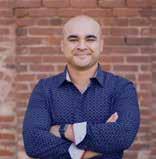
There is something about July. The heat, the fireflies, the smell of something good on a grill drifting through the neighborhood. And this July, there is an extra charge in the air that none of us should take lightly. On July 4, 2026, our nation marks its semiquincentennial: 250 years since the signing of the Declaration of Independence. A quarter of a millennium. A once-in-a-lifetime moment to pause and feel the weight of what was built, what was sacrificed, and what we are still becoming together.
This month, we are inviting you to explore Canton in every sense of the word. Our July "Explore" issue takes you outdoors onto the trails of Blankets Creek Mountain Bike Trail System, one of the most popular trail systems in the United States, maintained by the incredible volunteers of SORBA Woodstock right here on Sixes Road. We take a historical look back at Canton and Cherokee County's deep connection to America's 250th anniversary, because this land has a story worth telling and this milestone is the perfect moment to tell it. We spotlight Explore Canton, the tourism arm of our city, and all the reasons there is still so much here waiting to be discovered across both zip codes of this community. Beginning this issue and running for the next six months, the Downtown Canton Corridor is our love letter to Downtown Canton & The Mill on Etowah, featuring some of our favorite places to eat, drink, and play right in the heart of the city. Consider it your insider's guide, updated and expanded one issue at a time.
But Canton is not just a city with a Main Street corridor; it is two zip codes that stretch across Cherokee County, stitching together communities, services, and neighbors who might not always realize how much they share. The literal Front Porch to the foothills of the Blue Ridge Mountains and shaped by the winding Etowah River, Canton is a place where past and present come together in unexpected ways. And the honest truth is, most of us have only scratched the surface of what is here.
There has never been a better summer to go find the parts of it you have been missing. Happy July, Canton.
This is your City. This is your Lifestyle.

July 2026
PUBLISHER
Chicka Elloy | chicka.elloy@citylifestyle.com
MANAGING EDITOR
Jennifer Elloy | jennifer.elloy@citylifestyle.com
CONTRIBUTING WRITERS
Gregory Patchett, Bruce Baker, Tony Dodemaide
CONTRIBUTING PHOTOGRAPHERS
Naomi Hopkins, Jacky Cheng, Explore Canton
CEO Steven Schowengerdt
President Matthew Perry
COO David Stetler
CRO Jamie Pentz
CoS Janeane Thompson
AD DESIGNER Mary Albers
LAYOUT DESIGNER Jamie Housh
QUALITY CONTROL SPECIALIST Brandy Thomas


CHICKA ELLOY, PUBLISHER @CANTONCITYLIFESTYLE


Around
LGE
Pause before you click Scammers are becoming more convincing every day. If something feels urgent or suspicious, verify the source before moving forward!
Strengthen your passwords
Using unique passwords is extra important for important accounts like banking & email. Consider using a password manager to keep track.
Stay up-to-date on security tips
Check out the latest on data privacy to keep your finances safe and your personal information secure at LGEccu.org/MemberSecurity.
Remember: burn ban issued! Georgia’s summer outdoor burn ban is in effect until 9/30/2026. Even after the ban, burn with caution – dry heat and winds can turn small burns into big problems in a flash.
Give your grill some space
Hosting the cookout? Keep your grill at least 10 feet from your home, deck railings, and overhanging branches.
Skip the at-home fireworks
Catching your local fireworks show is a great way to enjoy an extra-impressive spectacle while leaving pyrotechnics to the professionals.


WHERE NEIGHBORS CAN SEE AND BE SEEN
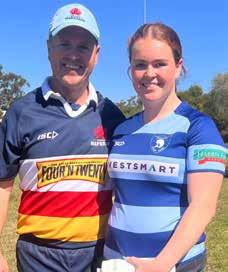


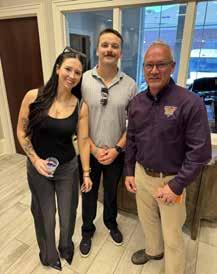
1: Flynnie is a proud dad from Sydney, and he likes his pies. Go Straya 2: River Rock Concert Series in Etowah River Park feat. Harry and Stacey
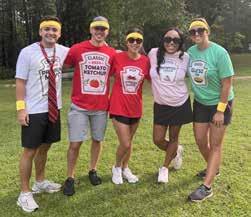
3: A day trip up the East Coast from Ball Ground. First Class 4: Condiment crew throws the best EGGS. Leadership Cherokee represents!
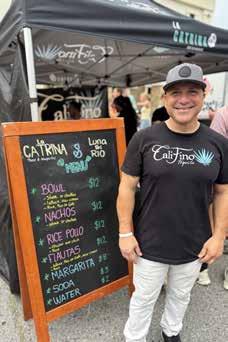
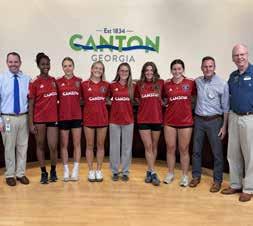
5: Luna Del Rio at First Friday is always led by the famous Jose Luna! 6: The WPSL GA Impact team serves Must Ministries with the Canton Rotary. 7: Ben and Brittany discuss The 9-1-1 Foundation with Shane Bonebrake, director of the Cherokee 911 center

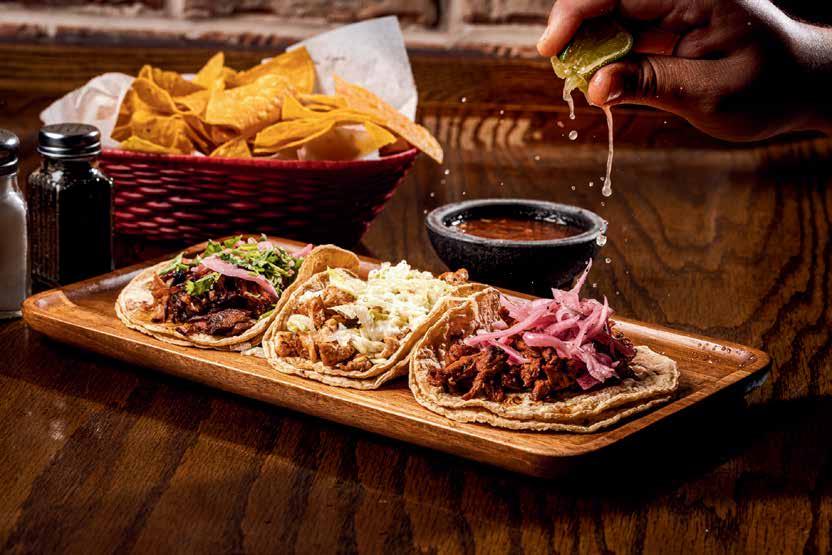






The Forge Club is Canton’s premier indoor golf experience, designed for golfers who want to play, practice, and improve year-round in a premium private-club atmosphere. Featuring state-of-the-art golf simulators powered by advanced technology, members and guests can enjoy world-class courses, detailed swing analytics, leagues, tournaments, lessons, and club fittings all in a modern, welcoming environment. Whether you’re sharpening your game, playing with friends, or escaping bad weather. More than a simulator facility, it’s a community built around the Visit: TheForgeClub.net




IN THE HISTORY OF THESE UNITED STATES
The Utopia that General James Oglethorpe envisioned for the Georgia Colony has been a long time in coming, but we're getting closer. Slavery, initially outlawed, crept in quickly and took almost 100 years to eradicate, over the objections of Georgia Governor and Canton resident Joseph Emerson Brown. Alcohol restrictions would take even longer, with Cherokee County's John Henry Hardin producing corn liquor during Prohibition on a scale large enough to be branded as "The Moonshine King."
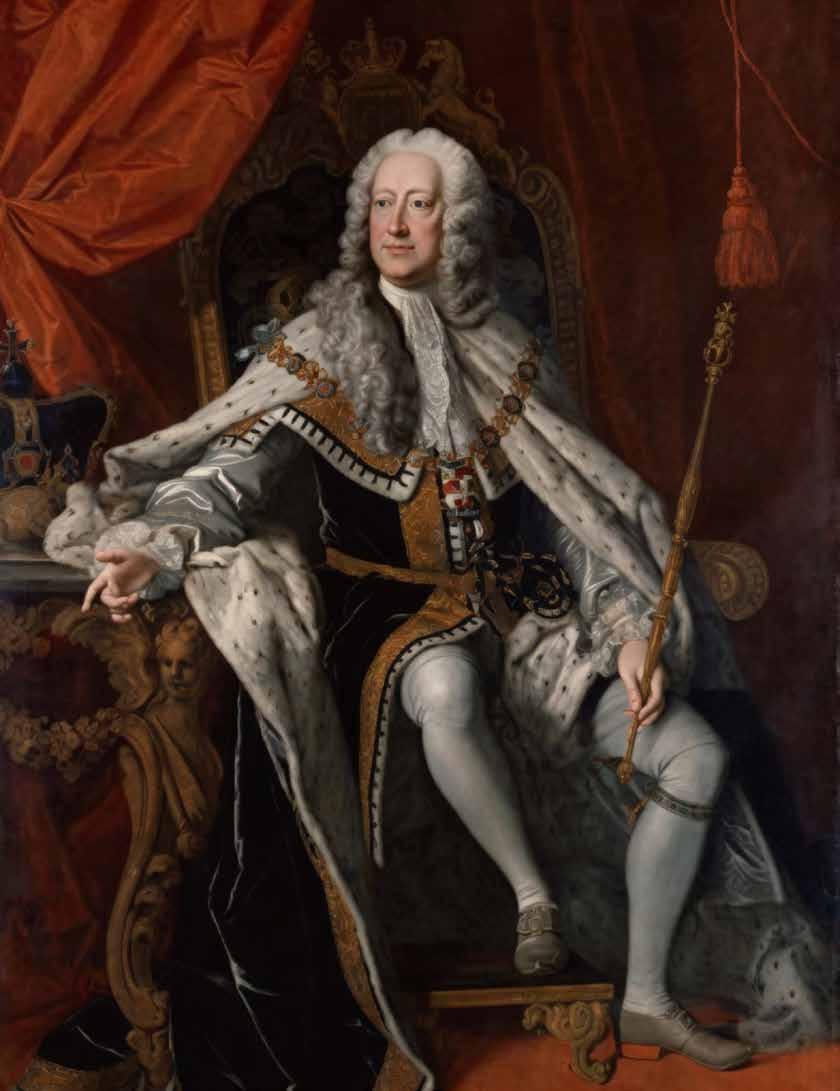
It was on June 9th, 1732, that the charter for the Georgia Colony was finalized, the state named in honor of King George II, who granted the charter. It was the last of the 13 colonies, chartered just over 50 years after the twelfth (Pennsylvania). From the beginning, the gap between his vision and that of the King and the various corporate entities involved was vast.
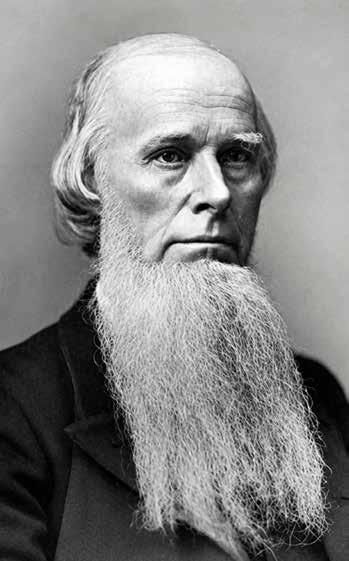
The Crown, the Carolinas Company, and the Virginia Company saw it as a buffer state and garrison province to defend the southern colonies against Spanish Florida. They imagined a province populated by stalwart farmers that would guard the border. Oglethorpe imagined a colony populated by English subjects imprisoned for debt, "the worthy poor" as he called them, who would be given a chance to start anew. At Oglethorpe's insistence, slavery was outlawed, as were alcoholic beverages. When one realizes that the Southern Colonies were founded on rum, slavery, and tobacco, Georgia emerges as entirely different than its neighbors. Oglethorpe also enforced a system of smallholdings rather than plantations, in part to avoid slavery and in part to allow for a greater population of farmers/citizens. When Oglethorpe returned to Britain in 1743, his vision of Utopia went with him. He never returned; in 1751, the slavery ban was lifted, and by 1755, the proprietary colony failed outright, and the province returned to being a Royal Colony. By 1760, King George III now ruled England, and at the conclusion of the French and Indian War in 1763, he extended Georgia's southern boundary to its current border, along the St. Mary's River. The British would control Florida for
the next twenty years, so Georgia was no longer needed as a buffer colony, and by now, Oglethorpe's restriction on liquor and his maximum allowance of fifty acres were both gone as well.
It's fair to say Georgians were drug into the war after violence erupted in Massachusetts. Radical patriots stormed the royal magazine in Savannah and carried off its ammunition. Loyalists were expelled, and in 1776, a provincial congress declared independence and created a constitution. The last Royal Governor, James Wright, had dismissed the Royal Assembly late in 1775 and escaped to a British warship in February of 1776 after briefly being captured by the revolutionaries. Wright regained control of Savannah on December 29, 1778, restoring British rule along the coast, driving the patriots inland. In 1779, the Continental Army attempted to retake Savannah but failed; in 1781, it succeeded in retaking Augusta. By 1782, the War was over, and in July of that year, British forces evacuated Savannah.
By the end of the War of Independence, Georgia had become like every other Southern Colony, with the exception that, while legal, slavery remained unpopular, especially with Scottish settlers. Scots settlers used to colder climates, mountains, and skilled miners preferred the piedmont and North Georgia mountains to the plains, and so it's no surprise that when the vote for succession came into play, most of the northern counties voted against; the greater number of voters of the southern plains counties carried the day. Canton's own Joseph E. Brown, the Governor at the time, was representative of the prevailing attitude. He thought slavery benefited the state's economy as a whole and was against its abolition. At the same time, he had no interest in allowing Richmond to simply replace Washington as having Federal Authority. When he asked Jefferson Davis to allow some of the state's volunteers to defend Georgia's borders, Davis declined. Later when Davis asked for additional troops, Brown would turn him down. Governor Brown believed that the South's only real hope lay in preserving the Confederate industrial
production and supply chain in Georgia. It was the engine critical to the Confederate cause. The Union agreed, thus Sherman's march through Chattanooga to take and burn Atlanta, followed by his march to the sea, which did in fact break the back of the Confederacy.
Governor Brown, for his part, would be imprisoned less than a month before receiving a pardon from President Andrew Johnson. He'd renounce slavery and embrace reconstruction. He even championed the education of emancipated blacks after the war, believing that "having been granted freedom, we must now teach them what they have gained," and by extension how to profit from it. Oglethorpe's dream of abolition in Georgia had now been achieved, 120 years after his departure, and only after a conflict that had almost permanently divided the colonies.
And what of his ban on alcohol? Here, a longstanding battle between Scottish Highlanders and British tax collectors left the shores of the United Kingdom and
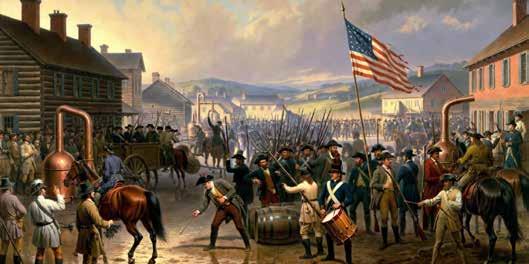
replayed itself in the American Colonies. At the end of the Revolutionary War, President Washington introduced a tax on liquor designed to collect enough to repay the nation’s war debt, enacted at the suggestion of Alexander Hamilton. In the absence of taxes on other industries, farmers viewed the tax on their production as unfair, and from 1791-1794 Washington personally led the US militia westward through Pennsylvania to quell the Whiskey Rebellion. Some of the rebel leaders lost their lives, and around 150 rebels were captured. Ultimately, ten of the fourteen ring leaders of the Whiskey Rebellion were pardoned by President Washington, and the usurious tax was repealed.
The tax was reintroduced by the Union during the War between the States, once again to cover the costs of the war effort. The Confederacy never enacted such a tax; when the War ended and Southern farmers found themselves subject to a tax, they unsurprisingly rebelled just as
Pennsylvania farmers had 70 years before. North Georgia farmers in particular continued to produce untaxed and therefore illegal liquor; revenue agents sent to collect the tax faced immense danger. Federal troops were sent in to enforce the tax, but moonshining went on, more or less unabated. In 1885, moonshiners from Moccasin, Georgia, actually laid siege to a hotel in Highlands, North Carolina, to free men arrested for producing moonshine. The North Georgia Whiskey War was in full swing.
By 1908, the State of Georgia had entered the effort, enacting a statewide prohibition of liquor long before the Federal Prohibition in 1920. While state and later federal efforts to control liquor production increased, it only served to intensify the "war" as moonshiners and bootleggers continued to clash with authorities. Bootleggers modified cars to outrun "revenuers," from which stock car racing emerged. Federal Prohibition of alcohol ended in 1933; Georgia ended its prohibition in 1935, but many counties and localities continued to prohibit its sale into the 1970s.
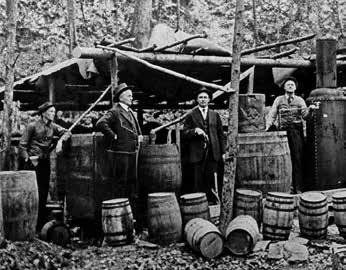
Here in Cherokee County, this is where the legendary moonshiner John Henry Hardin, the "King of Georgia Moonshiners," rose to fame. John had worked at the Franklin-Creighton Gold Mine until it collapsed and closed for good in 1908. Thereafter, he bought large tracts of farmland along the Cherokee-Bartow County border, fertile but also subject to flooding because they were adjacent to the Etowah River. In 1916, flooding ruined his crop; a farmhand suggested that the flood-damaged crop could still be used to make corn liquor, and, facing foreclosure, the Sunday School Teacher and choir member at Sixes UMC learned how to do it. For the next quarter of a century, Hardin produced corn liquor at such a scale that he became the second largest employer in the County and ran the largest moonshine operation east of the Mississippi.
John Henry Hardin never imbibed his product. Likewise, he never transported it; if you wanted it, you came and got it. He'd buy his neighbor's production at half price and resell. He made the rounds each morning in his truck, driving neighborhood children to school. He was released on his own recognizance before his federal trial, on the belief that if Hardin said he'd be there, he would. Even the revenue agent who secured his conviction, Duff Floyd, stated, "Outside of his illicit liquor business, John Hardin is the most ethical man I know."
Of course, Georgia's contribution to these United States is so much more: it's Ty Cobb, Bobby Jones, Jackie Robinson, Hank Aaron, Dominique Wilkins and Herschel Walker. It's also Margaret Mitchell, Flannery O'Connor, and Alice Walker. It's MLK and Jimmy Carter; it's Ray Charles and James Brown. It's Georgia Pacific, Home Depot, and Coca-Cola, and it's gold, granite, and marble. And it's Sequoyah, the creator of the Cherokee alphabet. For more stories like this one, check out "Witness of the Times," a history podcast by Dr. Bruce Baker.
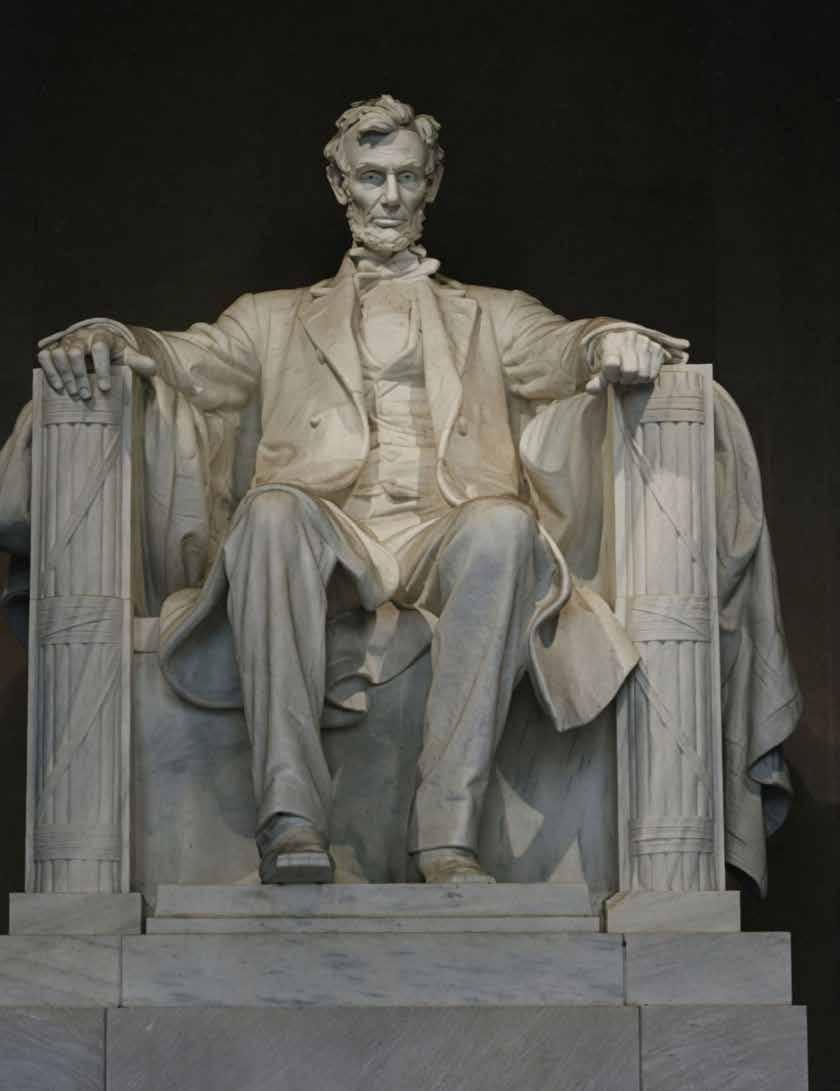
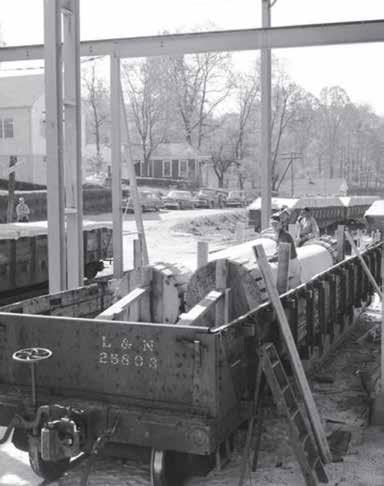
Many of us know that America's first gold rush was here in North Georgia, with the US installing a mint in Dahlonega to convert the gold mined into coinage. But Georgia's greatest ore contribution to the US, by far, is marble. Marble of many different colors and shades has been mined extensively in Cherokee, Pickens, and Gilmer Counties, and graces many of the buildings and monuments in our nation's capital: The Lincoln Memorial, The US Capitol, the Air and Space Museum, the John Adams Building, and most of the gravestones in Arlington National Cemetery. It was used to build Chicago's iconic water tower, and in New York, the New York Stock Exchange Building, the Museum of Modern Art, and the Swan Building are all made of Georgia marble. Here locally, you can see the linen white Murphy Marble on the old Cherokee County Courthouse in Canton, and the rosy salmon Etowah Marble of the Tate House in Pickens County. The History Center even has an exhibit that has a slab of deep green Serpentine marble from an old mine in Holly Springs.










EXPLORE CANTON IS LEADING THE CITY’S BOLDEST TOURISM VISION YET.
ARTICLE BY CANTON CITY LIFESTYLE
PHOTOGRAPHY BY EXPLORE CANTON
“TOURISM IS HOW OUTSIDE DOLLARS FIND THEIR WAY INTO OUR RESTAURANTS, LOCAL SHOPS, AND NEIGHBORHOODS.” —KIRIT PATEL, OWNER, CANTON FAIRFIELD BY MARRIOTT
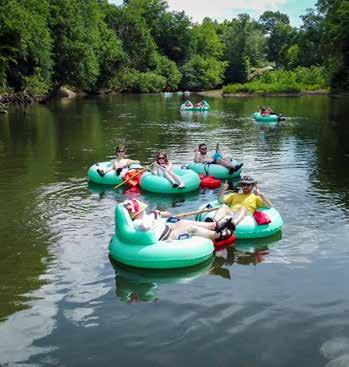
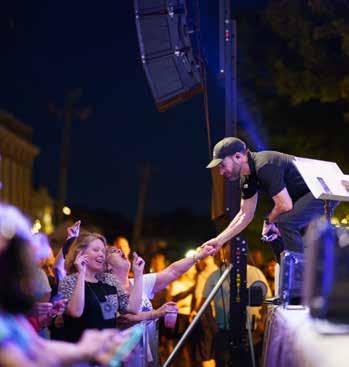
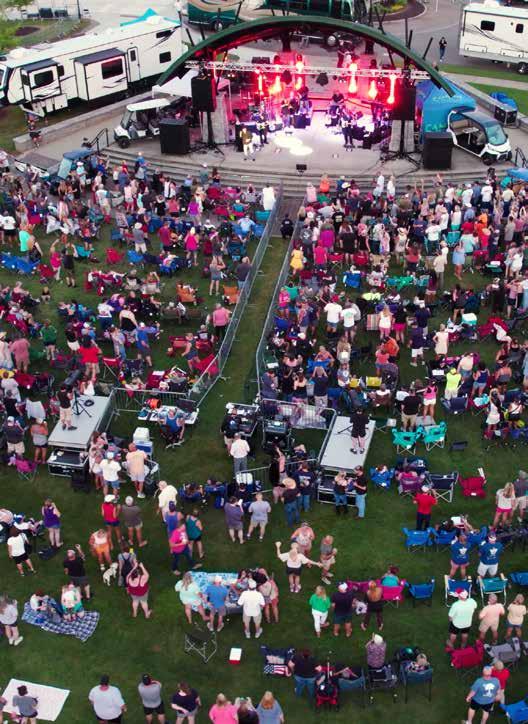
Something has been stirring in Canton. It shows up in the packed streets on First Friday. In the kayaks slipping beneath the West Main Street bridge. Families gathering around tables at one of the city's standout restaurants, sharing a meal with relatives making the drive up from Atlanta. And its name: Explore Canton.
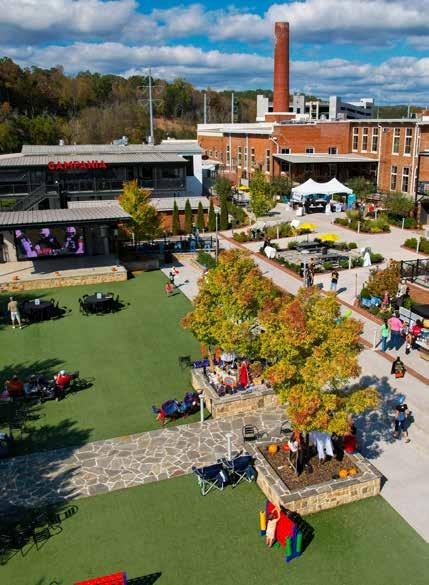
For anyone who has ever wondered about the difference between the City of Canton, Downtown Canton, The Mill on Etowah, and Explore Canton, the answer is actually simple. The City of Canton is the municipality, the governing body that builds parks, paves roads, and determines budgets. Downtown Canton is the historic district, managed through Main Street Canton's programs. The Mill on Etowah is an iconic private development: a 120-year-old former cotton mill transformed into one of North Georgia's most celebrated adaptive-reuse destinations. And Explore Canton? It is the city's official tourism brand: the voice that invites the world in and the thread that connects all of these stories into one compelling reason to visit, stay, and spend.
Think of it as the front-of-house ambassador for everything Canton has to offer.
“CANTON IS ALREADY ONE OF NORTH GEORGIA'S MOST COMPELLING COMMUNITIES. OUR JOB IS SIMPLE: MAKE SURE THE PEOPLE WHO HAVEN'T FOUND IT YET HEAR THE STORY, FEEL THE PULL, AND COME SEE IT FOR THEMSELVES.”
—DANA COX MALLETT, CANTON TOURISM BOARD CHAIR
Leading that effort is Aundi Lesley, the City's Economic Development Manager, whose work bridges economic strategy and tourism growth for Canton's boldest chapter yet.
The numbers behind Canton's tourism story are worth knowing. In 2023, the city's hotel and motel tax collections surpassed $1 million for the first time in Canton's history, a milestone Mayor Bill Grant cited in his State of the City address as proof that Explore Canton was already bearing fruit. By 2026, Canton is home to approximately 40,000 residents, growing at nearly 3 percent annually, a pace faster than 94 percent of similarly sized American cities. Cherokee County is projected to grow by 53 percent between 2020 and 2050, making it one of the fastest-growing regions in the nation.
That geography is both an opportunity and a calling card. Canton sits forty miles north of downtown Atlanta via I-575, precisely where the city gives way to the foothills: a front porch between the metro and the Blue Ridge Mountains, where day-trippers have every reason to become overnight guests. Georgia welcomed a record 174.2 million visitors in 2024, generating $45.2
billion in visitor spending and ranking as the state's second-largest economic contributor. In 2026, those numbers are poised to climb: Atlanta is hosting eight FIFA World Cup matches, with projections of 300,000 spectators and a $500 million economic impact for Georgia.
What most residents may not realize is how directly those numbers flow home: every dollar the city collects in hotel and motel tax comes from a visitor's bill, not a local taxpayer's pocket. Under Georgia law, any portion of the lodging tax above 3 percent must be reinvested directly into tourism. Visitors arrive, stay, pay into a dedicated fund, and that fund goes back to work, drawing more of them in. A self-reinforcing cycle, where every investment in Canton's identity as a destination strengthens the next.
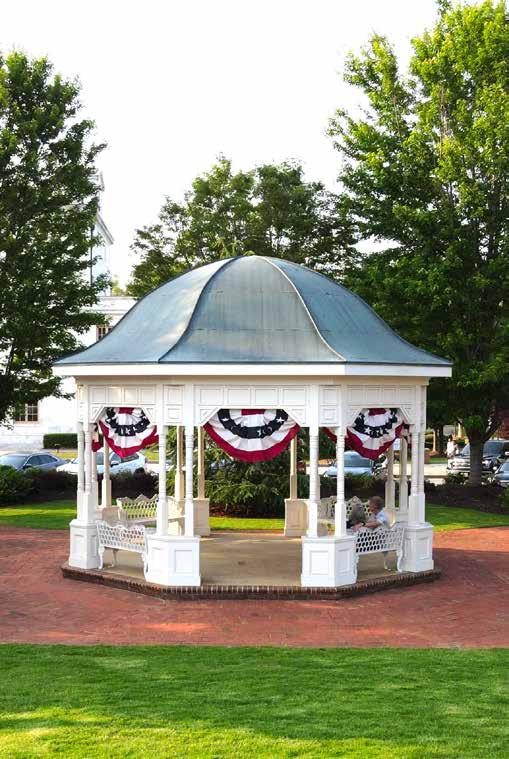
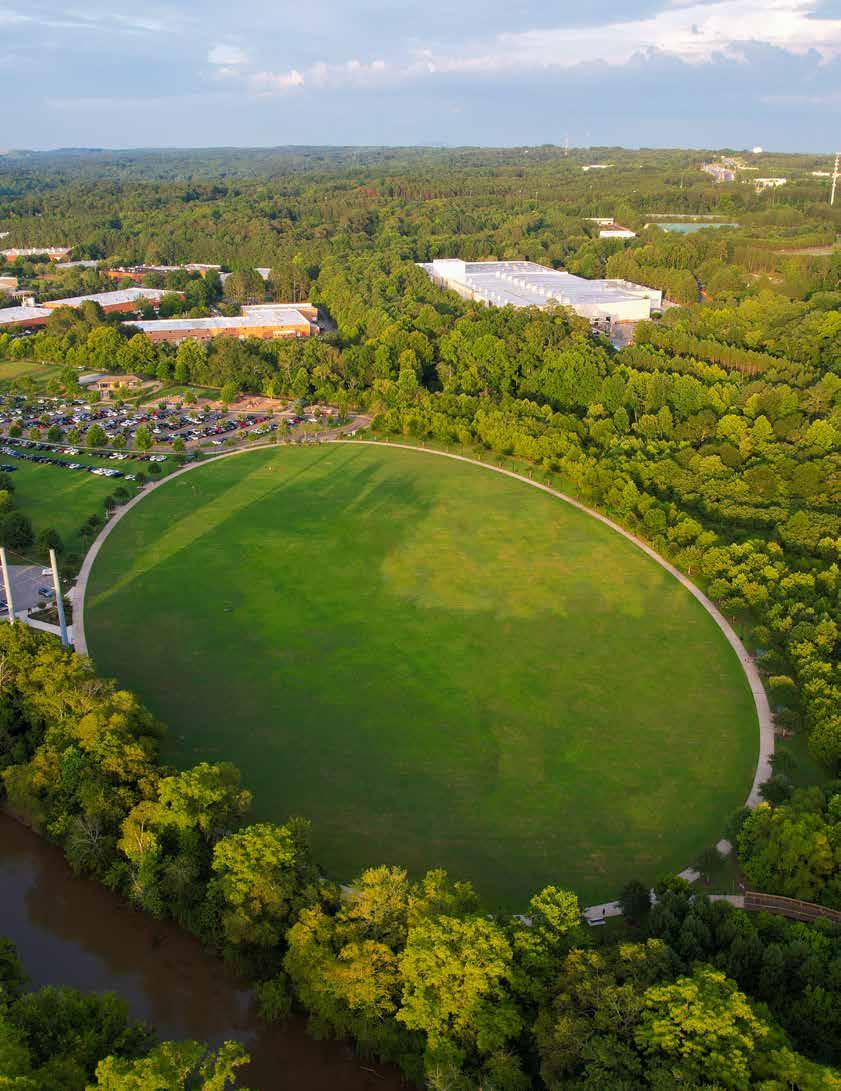
And that identity has a clear centerpiece: the Etowah River, flowing through 8.5 miles of the city, anchoring its history, its outdoor recreation economy, and the development taking shape along its banks. From kayaking at Etowah River Park and an adaptive reuse story of The Mill on Etowah, Canton's riverfront holds a story no other North Georgia city can quite claim.
Lesley, who led downtown development for the City of Rome before joining Canton's team in November 2024, sees the moment with real clarity. "We are building something intentional here," she said. "The goal is for Canton to be the destination visitors choose, not the one they pass through on the way to somewhere else." For residents who have watched Canton transform over the past two decades, the rise of Explore Canton may feel like the city finally catching up with its own story. From a population of roughly 7,700 just twenty years ago to a community of more than 40,000 today, Canton has proven it can grow. The question now being answered is how it grows with intention.
That intentionality lives in Explore Canton's 2026 vision: to position the city as North Georgia's front porch, a place warm enough to welcome strangers, authentic enough to keep them coming back, and engaging enough to make residents proud. The Etowah River, the Mill District, Historic Downtown, and the trails that lace together the city's green spaces are not being marketed in isolation. They are being woven into a single, cohesive story of place.
The lodging investments currently being explored for downtown Canton and Lake Canton represent the next chapter: overnight guests who wake to the sound of the Etowah, walk to coffee in the morning, and spend their afternoon at the Mill. Every dollar a visitor leaves in Canton finds its way into the restaurants, shops, trails, and events the whole community loves. For Canton, the city's front porch is open: Visit ExploreCantonGA.com

“THE WHOLE IDEA OF A FRONT PORCH IS A SIMPLE INVITATION: TO SLOW DOWN, LOOK AROUND, AND DISCOVER WHAT CANTON HAS ALWAYS KNOWN ABOUT ITSELF.” —JACKY CHENG, EXPLORE CANTON DIGITAL CONTENT SPECIALIST


Support Local: Eat . Drink . Shop . Explore
ARTICLE BY THE KOLAB ACTIVATION MARKETING
Downtown Canton is full of places worth revisiting, so you'll never run out of reasons to take a walk, try something new, and keep it local. Here are two favorites to try and fly by this July!
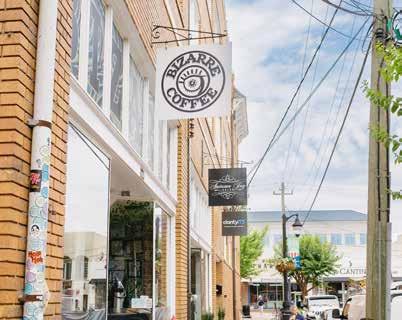

What started as a farmers market dream on a folding table is now one of North Georgia's most beloved coffee brands. Bizarre Coffee has quietly been building a latte empire. Now, they are literally expanding next door, taking over the former salon space to give their East Marietta Street crowd a community space. With Roswell already open and Acworth on deck, 2026 belongs to Bizarre. Come for the Good Mood Juice. Stay for the vibe.
The 2026 World Cup is here and Canton has the perfect setup. Reformation Brewery and the Mill on Etowah Events Green are where everyone is gathering to watch every match this summer. Cold craft beer, an open-air lawn, and a crowd that shows up for the beautiful game. Add in the hometown pride of Georgia Impact professional players lighting up the local soccer scene, and this summer at the Mill is one for the books. Grab your crew. Canton has your seat.







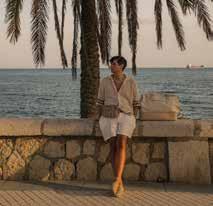
YOU WORK HARD ALL YEAR—YOUR VACATION STYLE SHOULD FEEL CINEMATIC, EFFORTLESS, AND UNMISTAKABLY MAIN CHARACTER.
Effortless vacation style isn’t about having the perfect outfit for every moment—it’s about having the right foundation to make every moment look intentional. When you know how to build a capsule travel wardrobe, you’ll avoid agonizing over what to wear and spend more time actually enjoying your getaway, all while looking like you have a personal stylist tucked in your carry-on. Here’s your go-to list for this season’s travels:
1. THE EFFORTLESS STATEMENT SET
A coordinated two-piece (linen, silk, or cotton) that transitions from day to night. Sets are easy to wear, photograph, and offers effortless ways to look put together. Bonus: you can mix and match the pieces with other items that you pack. I would recommend packing multiple sets to make it even easier to mix and match. For both men and women, simply focus on neutrals and, if you want to add color, make sure it coordinates well with other items in your luggage.
2. THE MOOD-ALTERING PIECE
A sweeping dress in a bold print or luscious fabric that makes you feel sensual, grounded, and free. Find something that moves with you and captures light beautifully. This is your dreamy piece— flowy fabrics with movement that captures the eye and works for any kind of event.
3. THE LUXE FLAT OR SCULPTURAL SANDAL
Find footwear that balances style and comfort. Look for interesting shapes or materials (like leather with architectural cutouts or metallic finishes). More than shoes—they’re anchors for adventure, grounding your aesthetic wherever you land. This goes the same for men.
Your footwear can also make an impact through the braided details of your sandals or the canvas of a casual slip-on loafer.
4. THE TRANSITIONAL THIRD PIECE
Think: kimono, over-sized linen blazer, a lightweight duster, or a gauzy button-down left open. This is your layering hero that adds polish without effort. It’s an aura amplifier that instantly makes your outfit feel styled and intentional.
5. INTERESTING AND IMPACTFUL SUNGLASSES
Sunglasses with personality is a must. They could be over-sized, cat-eye, or tinted lenses that feel more like “cinematic escape” than “just functional.” Because you’re not sightseeing—you’re starring in your own travel film.
6. A SCULPTURAL CARRYALL
A bag that holds your essentials but looks like art—think woven textures, unique shapes, or buttery leather. Practicality meets poetry. You deserve a vessel that carries your dreams...and your SPF.
7. SIGNATURE SCENT OR TRAVEL CANDLE
Pack travel-sized fragrance or a tiny candle that evokes your essence or complements the location. Scent is meant to ignite memories and set the tone—infuse your travels with an olfactory signature.
8. ACCESSORIES WITH A STORY
A few intentional pieces such as a ring from a market you found during your travels, a layered necklace that serves as an easy throw-on, or a straw hat to protect your face from the sun (even if it’s a cooler climate, because remember, safety first: don’t get burnt).
ARTICLE BY COURTNEY STONE SMITH





THE VOLUNTEER-POWERED TRAILS PUTTING CHEROKEE COUNTY ON THE NATIONAL MAP.
ARTICLE BY TONY DODEMAIDE PHOTOGRAPHY BY SORBA WOODSTOCK
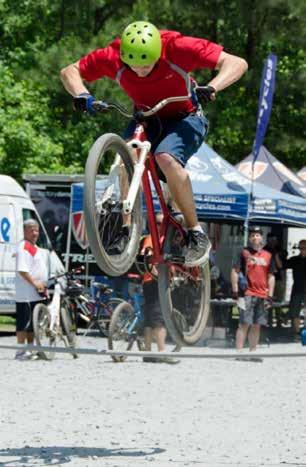
Just off Sixes Road, a few miles from I-575, the Georgia forest opens into something that mountain bikers from Florida, North Carolina, and beyond seek out by name. Blankets Creek Mountain Bike Trail System in Cherokee County has quietly earned a reputation as one of the top-rated singletrack destinations in the entire Southeast. More than 150,000 riders roll through its gates each year, chasing 15 miles of winding red clay, roots, and ridgeline views. Behind every inch of it stands a small, passionate, all-volunteer group that built these trails from scratch and keeps them alive.

It started with a chainsaw and a dream. In the fall of 1999, a determined group of mountain bikers walked into the woods along Blankets Creek and began cutting trails by hand, in the pouring rain, and not a single one of them turned back. That original spirit is still the heartbeat of SORBA Woodstock, the Southern Off-Road Bicycle Association's local chapter, which has been building, maintaining, and expanding Cherokee County's trail network for 25 years. Today, Blankets Creek alone draws more than 150,000 riders per year, ranking it among the most visited singletrack systems in the Southeast.
SORBA Woodstock is a 100% volunteer-run nonprofit. That detail surprises most people. Many assume the trails are funded by the city or the county. They are not. While Cherokee County Parks and Recreation and the City of Woodstock manage the parking lots and restroom facilities, every dollar that goes toward actual trail maintenance comes from memberships, donations, and community fundraising. “Every mile of trail out there has a volunteer’s hands behind it,” says Nikki Adams, SORBA Woodstock’s current president. “That is something this community should be proud of.”
That reality hits differently when you consider the numbers. SORBA Woodstock brings in roughly $40,000 per year. This year, the organization has already spent nearly $30,000 resurfacing the Dwelling Trail, one of Blankets Creek's most beloved and most-ridden tracks. Last year, a comparable investment was made in the Explorer Trail at Memorial Bike Trails at Olde Rope Mill Park. Professional trail builders were hired for both, keeping the systems up to standard and protecting against erosion.
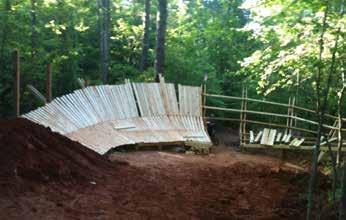
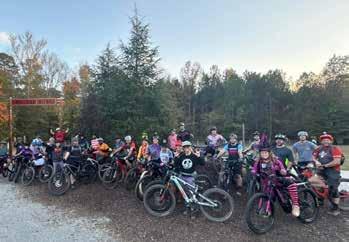
With 30 miles of trail under their care, SORBA is also preparing to welcome a third system: Yellow Creek in Ball Ground, a Cherokee County Parkssupported project expected to add another 7 to 10 miles of singletrack when it opens.
The community's role in all of this cannot be overstated. On the third Saturday of most months, SORBA holds a volunteer work day, welcoming school groups, church congregations, families, and newcomers. July's work day is tentatively set for July 18. "We can put anyone to work," Nikki says. "Even if it's just picking up trash or clipping back trees, the trail crew leaders know how to match the job to the person."
The trails are open, the forest is waiting and Cherokee County has something rare: 30 miles of world-class trail maintained entirely by the people who love riding them. That is worth exploring and protecting, and it starts with showing up. Join as a member, make a donation, or volunteer on the third Saturday of the month. The trails will still be here for the next generation because of what this community does today.
ARTICLE BY KALI KASPRZYK
PHOTOGRAPHY BY JANIE JONES
MAKEUP BY MIKAYLA CRANE
Winnipeg in the winter, and a 17-year-old waits 45 minutes in the cold for Keanu Reeves. Her fingers are numb. She is not there for an autograph. She is there to ask him to appear in her audition tape for MuchMusic, Canada’s MTV. When he finally agrees, she writes her number on a gum wrapper with a borrowed lip liner.
He calls days later.
That 17-year-old was Jen Cohen — fitness expert, host of the Habits & Hustle podcast, and best-selling author. She has built a career on the premise her frostbitten afternoon proved. She calls the practice the 10% Target: 10 attempts at whatever you want most in life.
The premise is simple. Most people never make one attempt. Almost nobody makes two. The math works in favor of the person who keeps going.
The top-rated Habits & Hustle podcast has logged hundreds of conversations with high performers and the people who study what the body does to the mind. Her TEDx talk, The Secret to Getting Anything You Want in Life, has traveled widely inside Fortune 500 sales-training rooms. On the Share the Lifestyle podcast, Cohen sits down to share the working rules that are the foundation of her latest book, Bigger, Better, Bolder.
“You have to be the CEO of your own life.”
FEATURING JEN COHEN
Discover the full 10% Target Mindset framework.


1 2
The door opens, or another door does. The unmade attempt and the refused one leave you in the same place — except one of them teaches you something.
Cohen frames her habits as a wager: How do I stack the deck so I win more than I lose? The workout happens first, and the food decisions follow. The email follow-up gets sent, and the answer arrives. The choices compound in a single direction.
3
No one is born with it. The people who look disciplined are running a routine they have rehearsed long enough that it no longer feels like effort. The reps are the skill. Miss them, and the skill fades, the same as any other.
4
Confidence does not arrive by repeating the word. It arrives after the body has done the thing — the workout finished, the cold walk endured, the email sent. The mind takes its cues from what the body proves it can do. Talk follows action, not the other way around.
5
The first decision sets the slope of the rest. Skip the Monday workout, and the rest of the week tends to follow. Hold the line on Monday, and the slope tilts the other way.







take me to the best credit union in Canton
coosa valley credit union

number. At Coosa Valley Credit Union, we are committed to banking with kindness, and just doing what is right.
Every day. Every member. Come join us.