



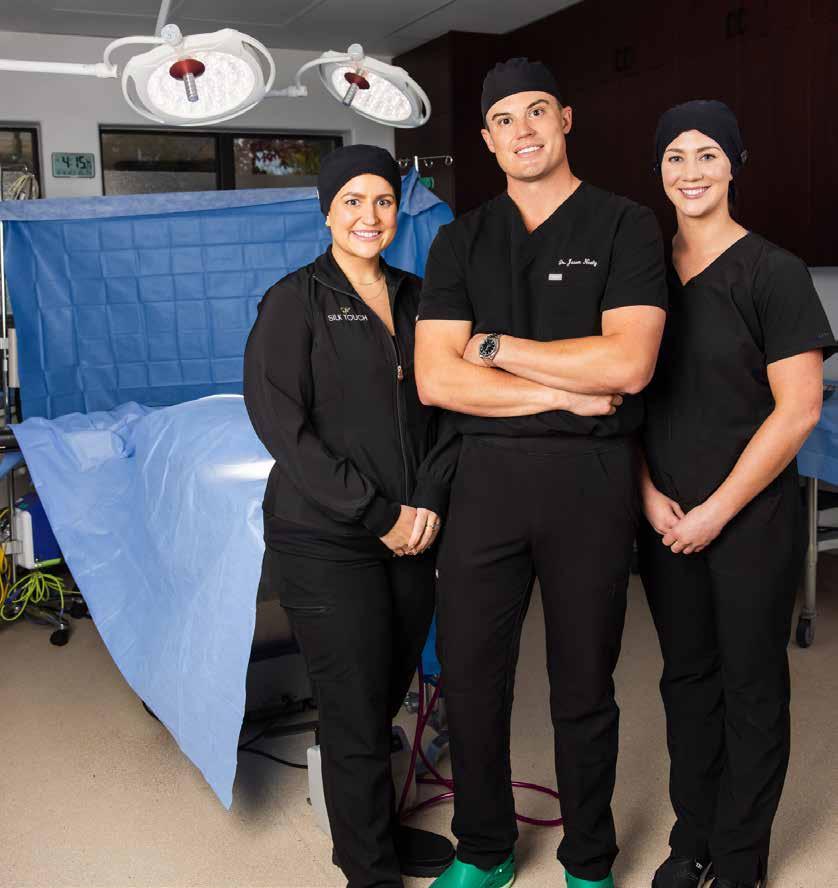

Silk Touch is Idaho’s premier cosmetic surgery, liposuction, and medical spa center, dedicated to helping you achieve your aesthetic goals.
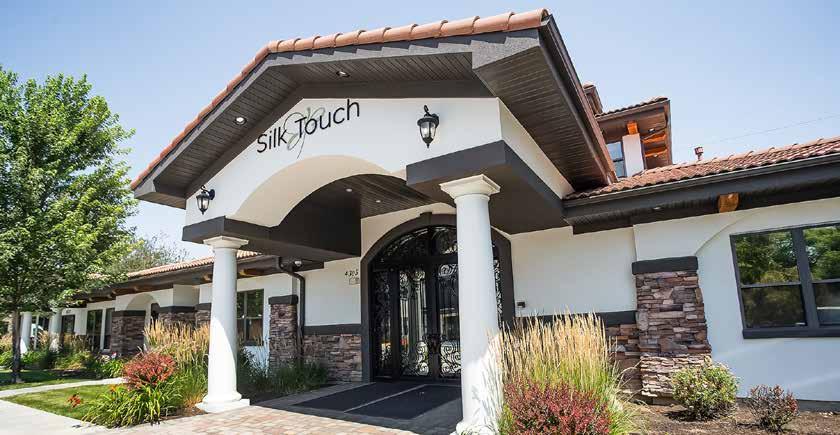
Silk Touch is Idaho’s premier cosmetic surgery, liposuction, and medical spa center, dedicated to helping you achieve your aesthetic goals.
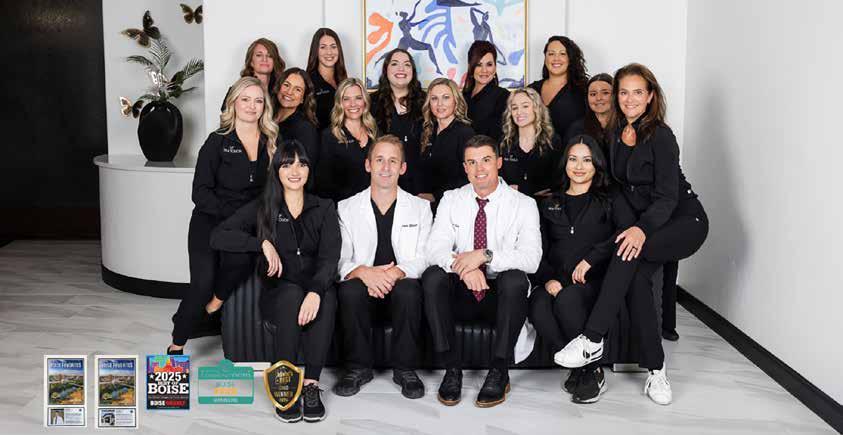
We offer a comprehensive range of services, including advanced body contouring, breast augmentation, hair restoration, facial rejuvenation, neurotoxins and fillers, and state-of-the-art medical spa treatments. From your first consultation to your final results, trust our expert, award-winning team to enhance your confidence and natural beauty.
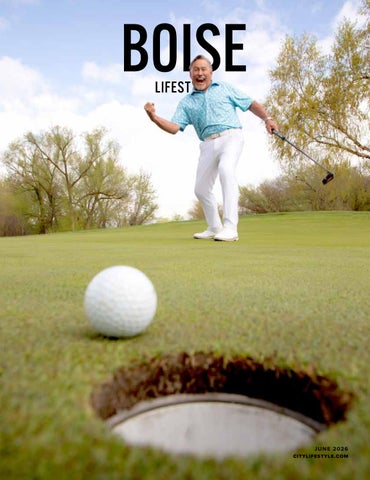
Boise has a way of pulling you into the moment.
You notice it this time of year. Evenings stretch out. People linger. Nobody seems in a hurry to get home.
It’s not one big thing that defines it. It’s a collection of smaller ones. Conversations that run longer than planned. Workdays that don’t really end at five. People taking the time to do things the right way, even when no one’s paying attention.
That’s the part that sticks with me.
This issue is built around that idea.
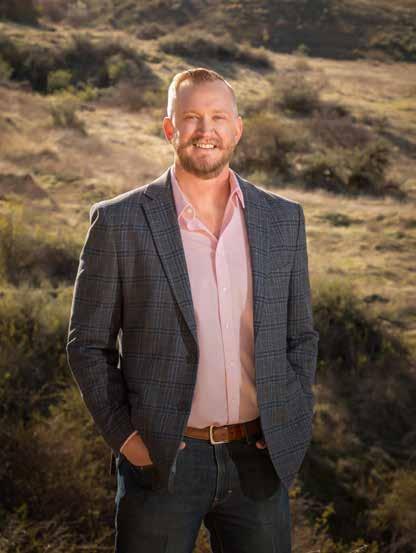
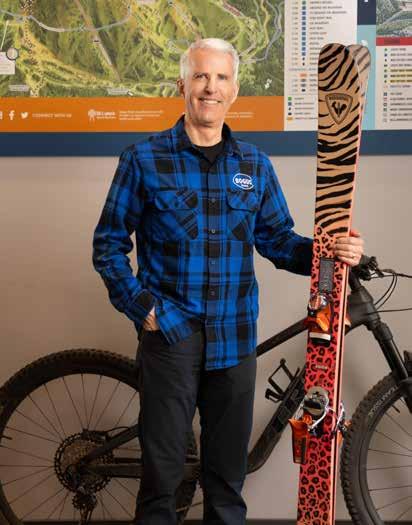
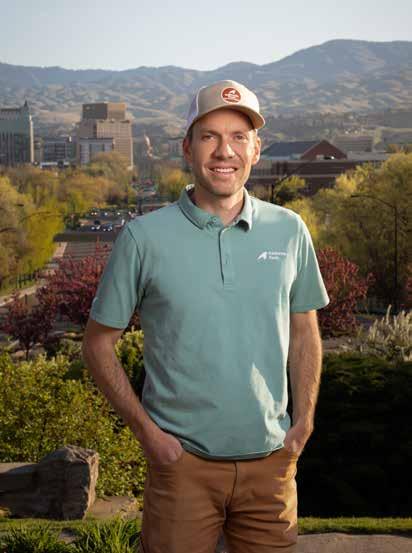
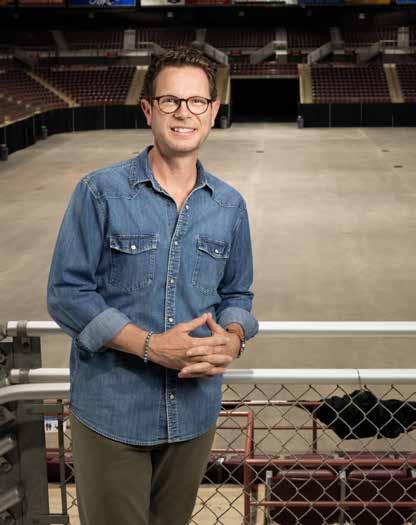
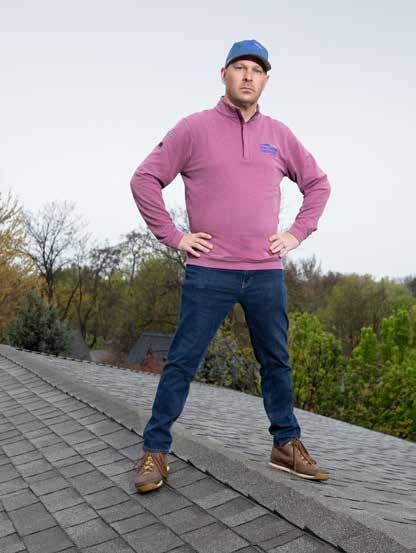
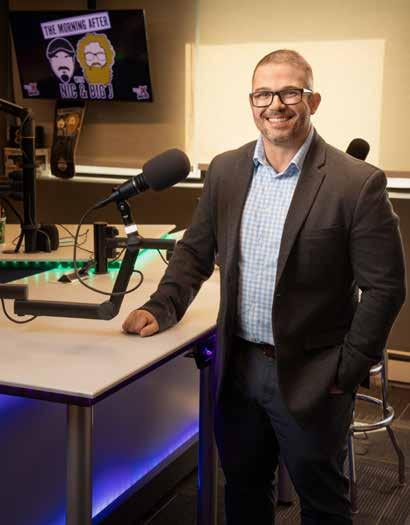
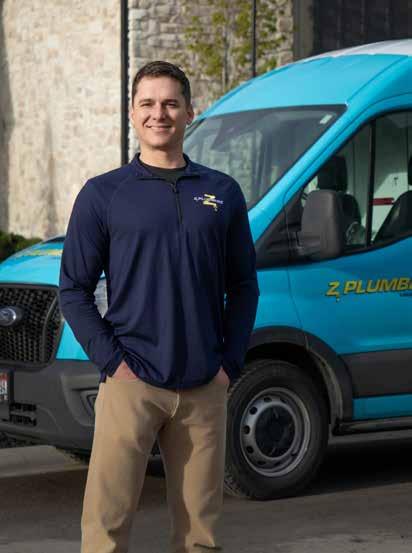
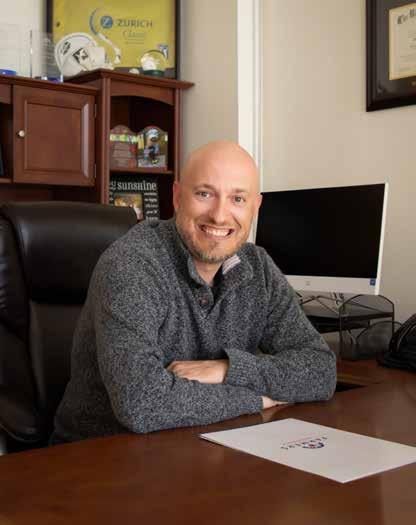
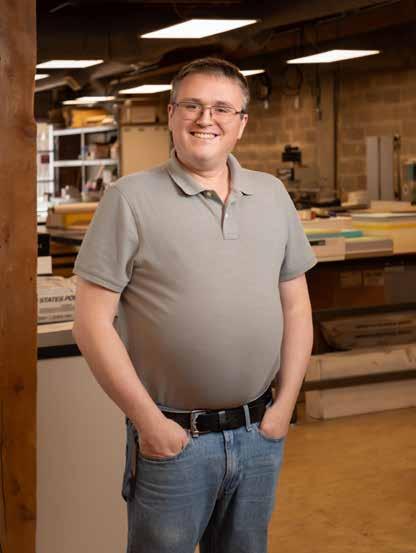
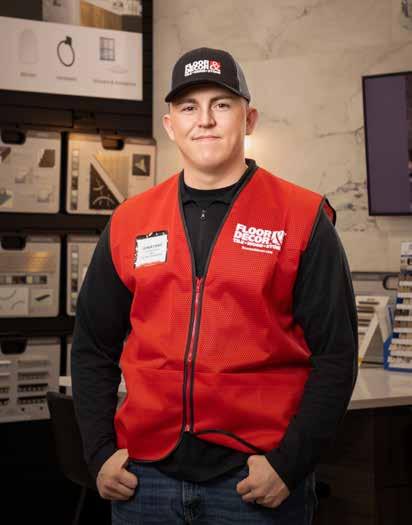
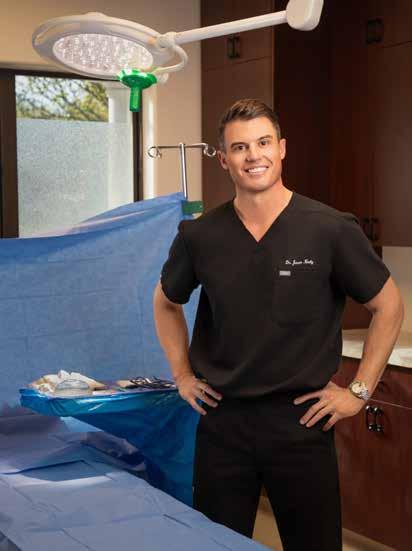
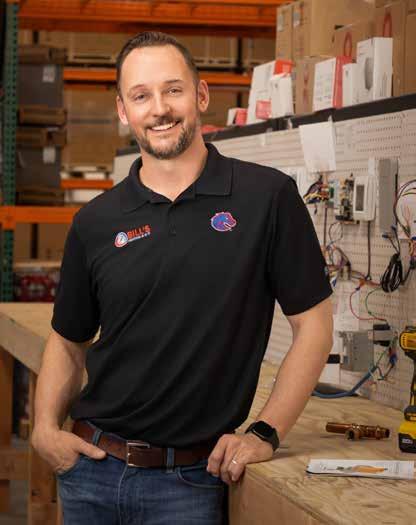
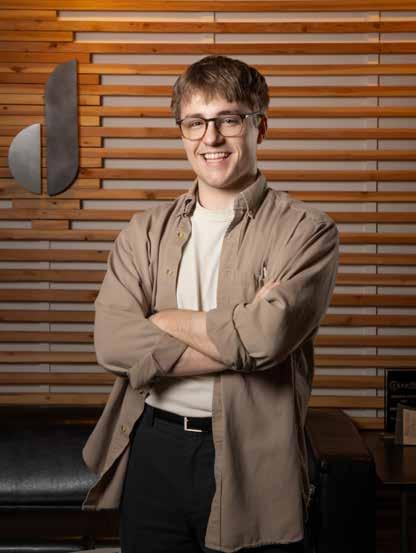
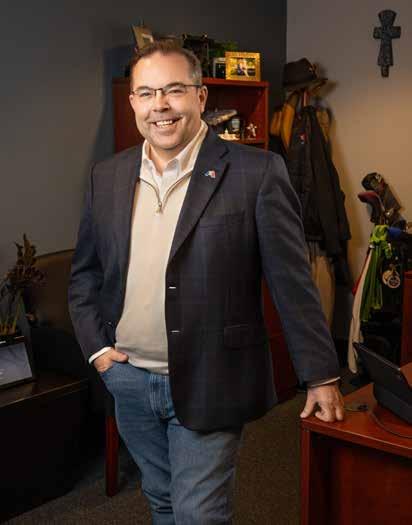
The men you’ll see in these pages come from different places and different lines of work. Some are leading organizations. Some are working in trades. Some are out front, others behind the scenes. Different paths, but a similar approach. They show up. They follow through. They handle what’s in front of them.
You’ll see it in the conversation with Garden City Mayor Bill Jacobs, and in a very different way through Mark Johnson’s firsthand account of a career in broadcasting. Different perspectives, but both shaped by experience and time.
There’s also a thread running through this issue around how priorities shift. How financial risk gets reconsidered. How responsibility changes the way you make decisions.
That tends to happen whether you’re expecting it or not.
There’s a steadiness in the valley. Even as things change, the way people show up for their work, their families, and their community holds.
That’s what makes this place feel like home.
It’s not perfect. Never has been.
But it’s real.
And for a lot of us, that’s more than enough.

VINCE GEWALT, PUBLISHER @BOISELIFESTYLE
June 2026
PUBLISHER
Vince Gewalt | vince.gewalt@citylifestyle.com
EDITORIAL COORDINATOR
Tricia Busalacchi | tricia.busalacchi@citylifestyle.com
STAFF WRITER
Jordan Gray | editorial@boisecitylifestyle.com
SALES SUPPORT ASSISTANT
Maria Serondo | support@boisecitylifestyle.com
SOCIAL MEDIA COORDINATOR
Russell Detablan | editorial@boisecitylifestyle.com
CONTRIBUTING WRITERS
Jana Kemp, Mark Johnson, Jordan Gray, Renee Van Ausdle, Louis Katz, Bill Overton, Denise Llorente
CONTRIBUTING PHOTOGRAPHERS
Phil White, 8th Street Studio, Bill Overton, Brittany Dawn Short, Alexandra Gold,
CEO Steven Schowengerdt
President Matthew Perry
COO David Stetler
CRO Jamie Pentz
CoS Janeane Thompson
AD DESIGNER Evan Deuvall
LAYOUT DESIGNER Kirstan Lanier
QUALITY CONTROL SPECIALIST Marina Campbell


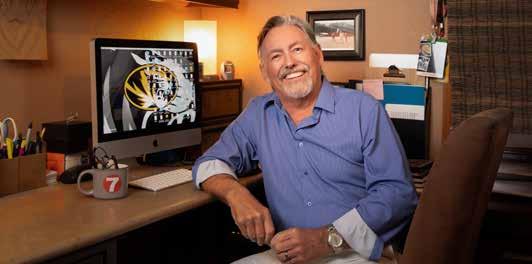


HOW MAYOR BILL JACOBS IS SHAPING GARDEN CITY THROUGH RELATIONSHIPS
ARTICLE BY JANA KEMP PHOTOGRAPHY PROVIDED
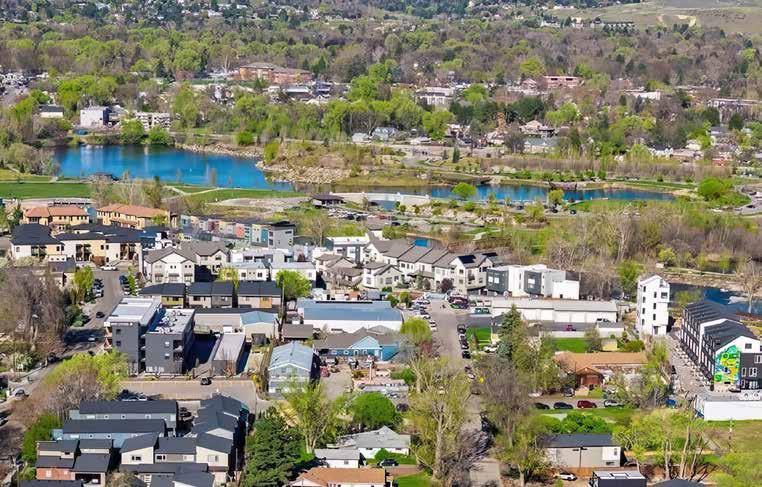
Garden City sits in the middle of the Treasure Valley in more ways than one. With just over 13,000 residents and a footprint of a little more than four square miles, it is a small city surrounded by larger ones—connected by the Boise River, the Greenbelt, and a network of relationships that extend well beyond its boundaries. It is a place where businesses, recreation, and community life intersect closely, and where growth looks different than it does elsewhere in the region.
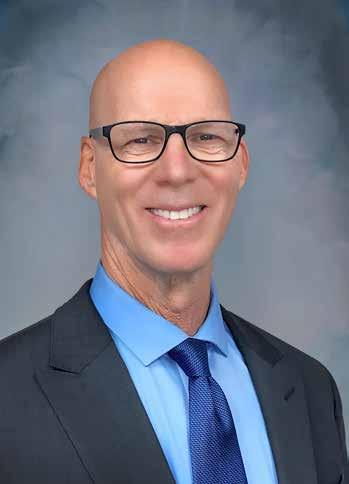
For newly elected Mayor Bill Jacobs, that setting defines the work.
Jacobs came into office with more than 35 years of experience owning, managing, and developing businesses, along with service on the Garden City Council. He was familiar with the mechanics of the city. What he has come to understand more fully, is the scope of its connections.
“One surprise,” Jacobs said, “has been the ownership of the relationships.”
Those relationships stretch across the Treasure Valley—to local and state agencies, other mayors, Ada County Highway District, the Idaho Transportation Department, county commissioners, business owners, chambers, and developers. In a city like Garden City, where there is little open land left to develop and no ability to annex, progress often depends on how well those relationships function.
Every day, Jacobs finds himself in multiple meetings—working to build, maintain, and navigate those connections.
That interconnectedness is part of what makes Garden City distinct. It is also part of what makes the role of mayor both complex and personal.
Jacobs says one of his priorities is strengthening communication with residents. He has begun hosting town halls, meeting with homeowners associations, and planning a city newsletter to keep people informed and involved.
“I like it,” he said. “Garden City is small enough to get to know individuals and businesses.”
That scale allows for a kind of accessibility that is harder to maintain in larger cities. Jacobs emphasizes an open-door approach, inviting residents to reach out, ask questions, and share ideas.
At the same time, the city’s physical constraints shape its future. Garden City is largely built out, with development happening parcel by parcel rather than through large-scale subdivisions. It has its own water system, with nine wells, and works within existing infrastructure to support both residents and businesses.
Those realities influence Jacobs’ approach.
“We want to say ‘yes’ more than we say ‘no,’” he said, describing a goal of making the city easier to work with—for the public, for businesses, and for partner agencies.
He also speaks about wanting Garden City to “be the envy of the Treasure Valley,” not in size, but in the quality of its services—police, public works, parks, and the Greenbelt that runs through the entire city.
That Greenbelt is central to how residents experience Garden City. It connects neighborhoods, businesses, and public spaces, and remains one of the city’s most defining features.
“Everyone in Garden City can walk to the Greenbelt,” Jacobs said. “I want to protect that.”
The city continues to evolve around it.
Expo Idaho, though owned by Ada County, sits within Garden City and remains a major regional draw.
CONTINUED >
The Boise Hawks continue to play in their longtime stadium. The Athletic Club Boise soccer team has taken shape in a renovated facility, drawing strong community support. Nearby, a 50-acre park along the river is planned for completion in late summer 2026, adding to the network of public spaces.
Garden City’s history is layered into its present. Incorporated in 1949 and named for the Chinese gardens that once flourished in the area, it has grown into a place where creatives, small businesses, recreation, and residential life meet along the river corridor.
Jacobs sees that mix as part of the city’s strength.
Looking ahead, he speaks with optimism about its future, describing Garden City as “the heart of the valley” because of its central location and the activity that flows through it.
For Jacobs, the role is ultimately about service.
He is active in the community, serving on YMCA boards, volunteering at the Morrison Center, and coaching youth soccer. He enjoys time outdoors— hunting, fishing, biking—and remains involved in his church. He and his wife, Kristen, have been married
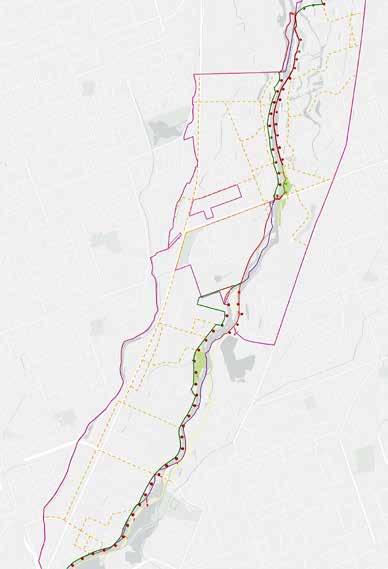
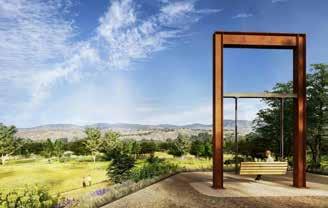
In Garden City, the Greenbelt isn’t off to the side. It runs straight through it—connecting people, places, and the rhythm of everyday life along the Boise River.
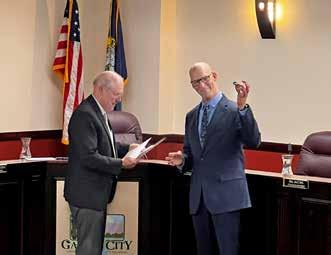
“Everyone in Garden City can walk to the Greenbelt. I want to protect that.”
for 33 years and raised two daughters, and their years living in Latin America left him fluent in Spanish.
Those experiences inform how he approaches the work.
“I enjoy the City and the staff,” he said. “We work together to solve problems for the good of Garden City and ongoing improvements.”
It is a practical outlook, grounded in collaboration and steady progress.
In a city defined by its connections—to the river, to surrounding communities, and to the people who live and work within it. The work of leadership often comes down to something simple: staying engaged, staying accessible, and keeping those connections strong.
And in Garden City, that may matter more than anything else.



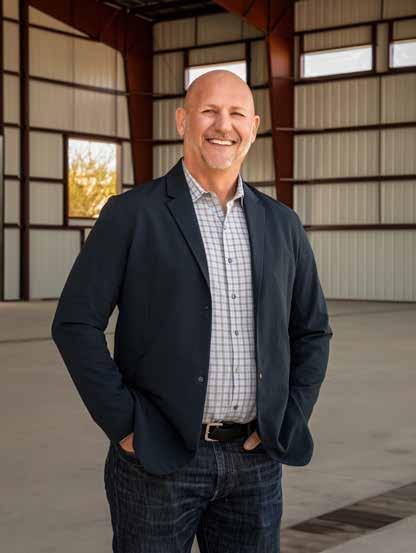
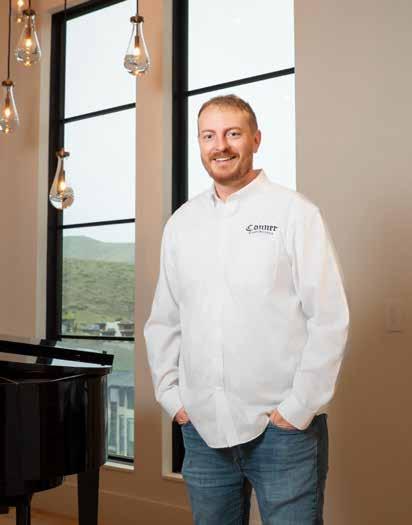
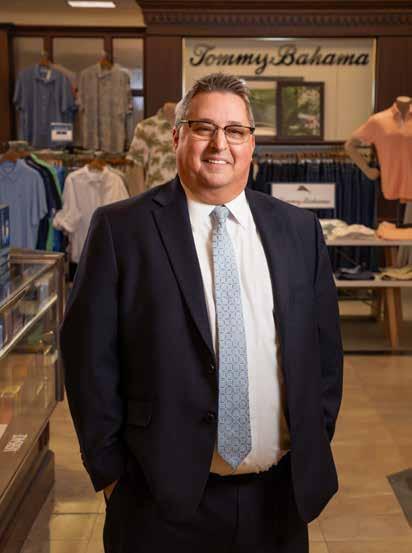
A look at the men doing the work that keeps the Treasure Valley running
Spend enough time in the Treasure Valley and you start to see the people who keep things moving.
Not always in obvious ways. Sometimes it’s in how a business is run day to day. Sometimes it’s in the work that happens early, or late, or behind the scenes. It’s the kind of consistency you don’t always notice until you step back and realize how much depends on it.
This issue brings together men who are part of that.
They work in different fields and come from different paths. Some lead teams or run businesses. Others are in roles where the work is more hands-on, or less visible, but no less important.
What connects them is a sense of responsibility for what they do and who it affects.
That doesn’t always show up in big ways.
More often, it’s steady. It’s following through, being reliable, and staying with something long enough to see it through. Over time, that adds up.
There isn’t a single story here.
But taken together, these men reflect a part of the Treasure Valley that is practical, grounded, and essential to how this place works every day.
Editor’s Note: Know someone making an impact? Editorial@BoiseCityLifestyle.com
PHOTOGRAPHY BY PHIL WHITE, 8TH STREET STUDIO
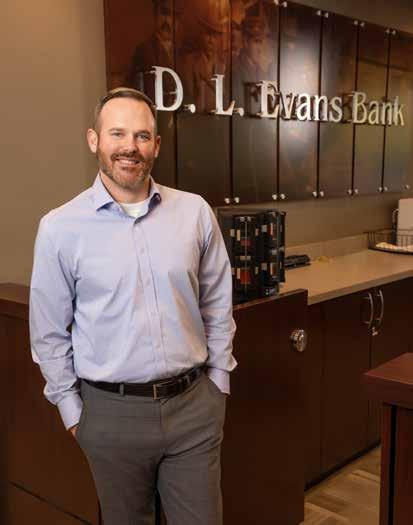





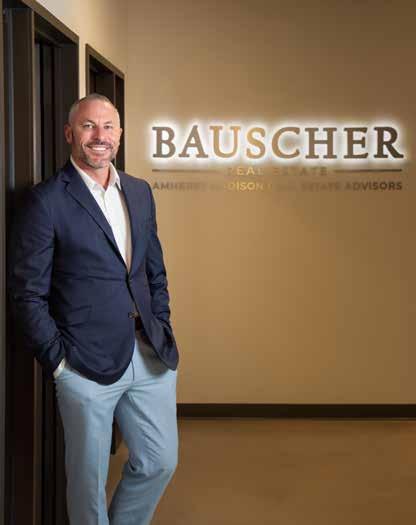



Karin Otto Owner

A career spent bringing moments, memories, and meaning into Idaho homes
ARTICLE BY MARK JOHNSON
8TH
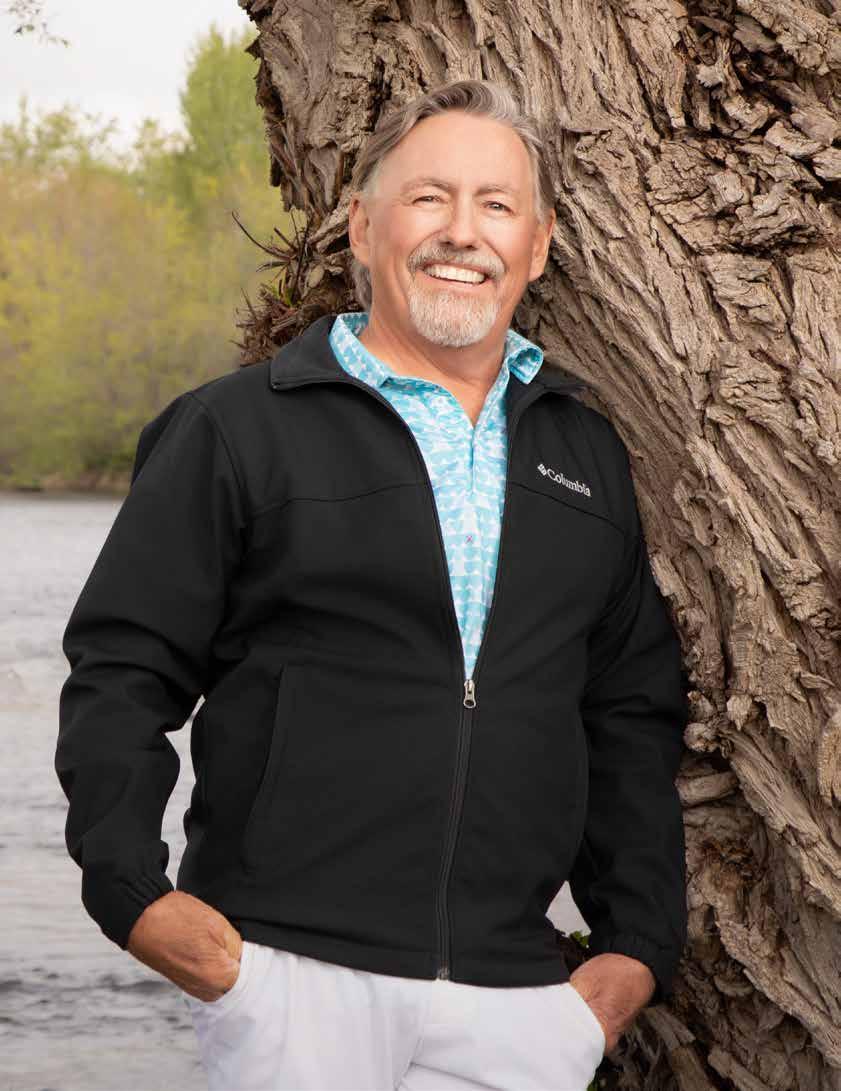
For more than four decades, I had a privilege few people will ever experience—an invitation into thousands of living rooms every night.
As a sports and news anchor, I spent 40 years telling the stories of communities, athletes, leaders, and ordinary people living extraordinary moments. Along the way, I was fortunate to receive an Emmy Award and a national Edward R. Murrow Award.
But awards aren’t what stay with me.
What stays with me are the people, the stories, and the journey that took me from small-town Missouri to some of the biggest stages in sports and politics—and eventually back home to Idaho.
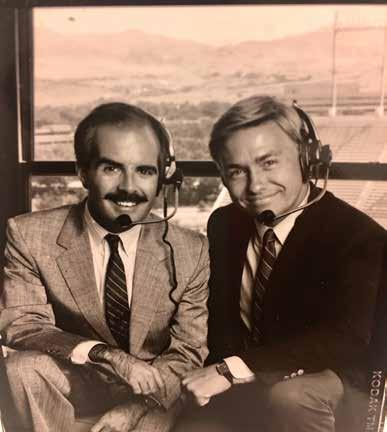
Graduating from the University of Missouri in 1978, I was eager to get into the business. My first job was at KFVS-TV in Cape Girardeau, Missouri.
I was what we called a “one-man band.” I shot my own video, wrote and edited my stories, and anchored weekend sports. It was exhausting—but there’s no better way to learn television journalism than doing every job in the newsroom yourself.
Ironically, the industry has come full circle. Many young reporters today are once again shooting, writing, and editing their own stories for multiple platforms.
In 1983, KTVB in Boise called and offered me the opportunity to become Sports Director. My wife and I packed up and headed west.
Those five years helped shape me professionally and personally. I fell in love with Idaho—the mountains, the people, and the sense of community that defines the state.
Life moved quickly. In December 1984, we welcomed twin daughters—my first set of twins. I would anchor the late news, then head home for midnight feedings.
It was exhausting and wonderful all at the same time.
After five great years in Boise, I faced a tough decision. In 1988, I accepted a position at WISN-TV in Milwaukee.
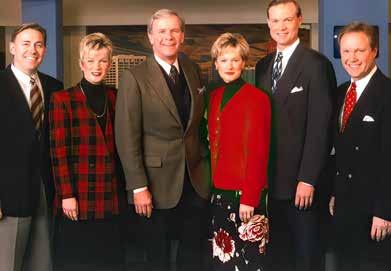
Milwaukee was a bigger television market and one of America’s great sports towns. I covered the Green Bay Packers, Milwaukee Brewers, Milwaukee Bucks, and the PGA Tour. Over time, I was honored to receive several Wisconsin Broadcaster of the Year awards.
I also hosted the Wisconsin Lottery’s Money Game. That 30-minute show was a blast every week. CONTINUED >
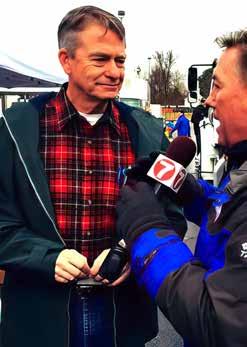
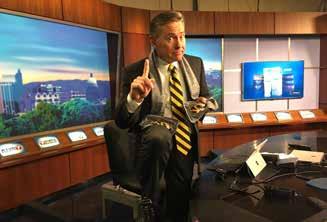
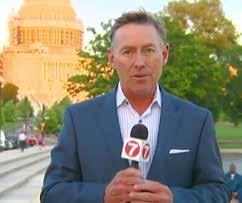
At one point, believe it or not, we actually beat Saturday Night Live in the Saturday night ratings in Wisconsin.
Milwaukee also brought major changes in my personal life.
I went through a divorce and remarried in 1992—to a Wisconsin girl who has now been my partner for more than three decades.
Then in 2002, we welcomed another set of twin daughters.
Two sets of twins, eighteen years apart. I guess lightning really can strike twice.
In 1995, I moved to Pittsburgh to become the main sports anchor at WTAE-TV.
If you want to understand how deeply sports can matter to a city, spend some time in Pittsburgh. The Steelers, Penguins, and Pirates are woven into the rhythm of life there.
I covered Super Bowl XXX when the Steelers faced the Dallas Cowboys. I had the privilege of getting to know Arnold Palmer, one of golf’s most beloved legends, and I witnessed Mario Lemieux’s
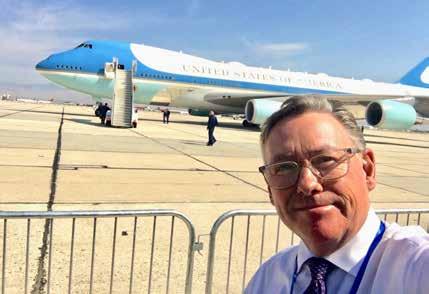
comeback from non-Hodgkin lymphoma—one of the most inspiring stories in sports.
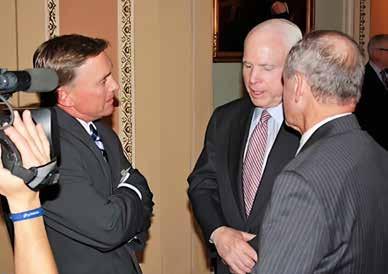
Over the years, I had the opportunity to interview some of the most recognizable names in sports and public life—Muhammad Ali, Michael Jordan, Wayne Gretzky, Mitt Romney, John McCain, and Joe Biden among them.
Those conversations taught me something important.
Behind every famous face is a human story.
And good journalism is about telling that story honestly.
Then in 1997, Boise called again.
The offer meant taking a pay cut. I remember telling my wife, “We can’t afford to go back, right?”
She looked at me and said something I’ll never forget: “The twins are there. We can’t afford not to.”
I cried.
And we went home.
Back at KTVB, my role gradually shifted from sports to news. I eventually moved into the main anchor chair, covering stories that shaped Idaho and the region.
I reported on Governor Dirk Kempthorne’s nomination hearings during the George W. Bush administration and co-produced and anchored an award-winning “Day in the Life” piece on Senator Jim Risch.
I also had the opportunity to report from several Olympic Games, including Sydney, Salt Lake, Athens, Torino, and Vancouver.
Those 30-day assignments were some of the most gratifying moments of my career.
Some of the most unforgettable points of my career happened right here in Idaho.
I stood on the sidelines for Boise State’s historic Fiesta Bowl victories—moments that electrified the entire state.
But journalism also means covering tragedy. I reported on heartbreaking crimes and tragic cases, as well as devastating wildfires and other natural disasters across our state.
Through it all, I watched southern Idaho transform into one of the fastest-growing and most vibrant family- and sports-friendly regions in the country.
While journalism was always the job, community service became the mission.
Years ago, a KTVB president told me something that stayed with me: “News is the heart of a television station, but community service is its soul.”
I tried to live by that philosophy—supporting nonprofits that serve children, vulnerable families, the food-insecure, and refugees starting new lives in Idaho.
That commitment hasn’t ended in retirement.
I’m an active member of Inspire Excellence, which helps young people pursue careers in the trades while showcasing nonprofits making a difference across our state. I’m also involved with the Borbonus Family Foundation and its work supporting veterans and advancing education for students at CWI and beyond.
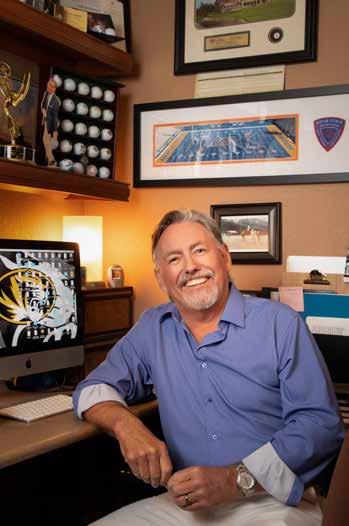
The television industry has changed dramatically during my career. Streaming platforms and mobile news alerts have transformed how audiences consume information. The days when families gathered around the television at 6 and 10 p.m. to watch one of three local stations are fading.
Today’s journalists must reach viewers across multiple screens and platforms. It’s increasingly a young person’s profession—and if I’m being honest, keeping up with that pace of change in the final years of my career wasn’t easy.
I’m in awe of how hard the current generation of broadcast journalists works to tell their stories.
Through it all—career moves, championships, tragedies, and raising two sets of twin daughters—I tried to live by a simple rule: Tell the story honestly.
Never forget the people behind the story.
And never forget the people watching it.
I tried to “do right” by those principles, and they guided every broadcast.
And when I look back now, the truth is simple.
I wouldn’t change a single chapter of the story.


The Outlaw Field series brings live music, local crowds, and laidback summer evenings together
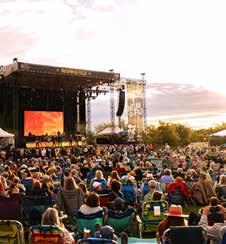
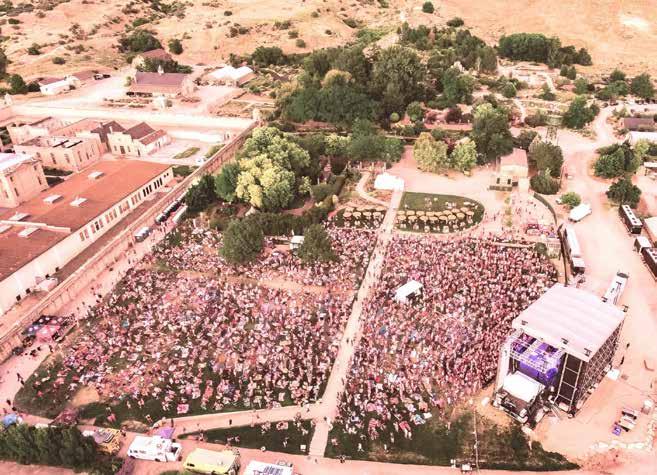
By early evening, the lawn at Outlaw Field begins to fill—blankets spreading across the grass, conversations rising, and the quiet sense that something is about to begin. When the summer concert series returns June 12th at Outlaw Field in the Idaho Botanical Garden, Boise audiences will once again experience live music the way it was meant to be—up close, laidback, and unmistakably Idaho.
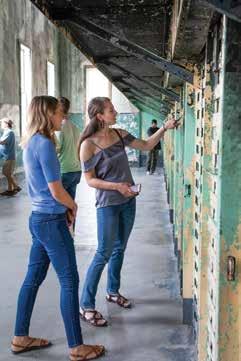
For more than a decade, Outlaw Field has been part of Boise’s summer rhythm, drawing crowds to the Idaho Botanical Garden at the edge of the foothills just off Old Penitentiary Road. The 4,000-seat outdoor venue has grown into one of the city’s most familiar seasonal traditions, hosting thousands each year—including nearly 60,000 attendees across 17 shows in 2025 alone. Once the recreation grounds for the Old Idaho Penitentiary, the space still carries its history quietly in the background, now softened by evenings filled with blankets, conversation, and live music as daylight fades over the hills.
AN EVENING ON THE LAWN
I arrived early as people filtered into Outlaw Field, settling into spots across
the grass and opening coolers as they got situated. Vendors drew steady lines, and the smell of grilled food carried across the lawn. I returned with a hot dog and a glass of wine as the crowd continued to build.
Around me, the crowd was a mix of families, couples, and groups of friends scattered across the lawn, all settling into the music in their own way. A couple nearby swayed together in a slow dance while laughter from kids drifted through the air.
Two young boys in oversized cowboy hats stood out as they sat in the grass, laughing with each other as they worked through melting popsicles in their hands.
The venue has become a summer staple in Boise, known for its open layout and foothills backdrop. As the sun dropped behind the hills, the atmosphere shifted. Conversations quieted, and movement slowed as attention turned toward the stage.
When the lights came up, the sound carried cleanly across the field. Headliner Billy Currington took the stage, drawing an immediate response from the crowd. With minimal distance between performer and audience, the setting created a more direct, intimate experience than a typical arena show.
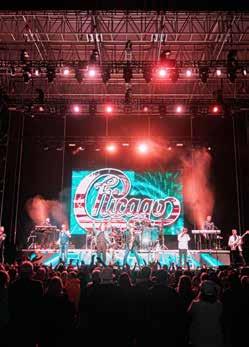
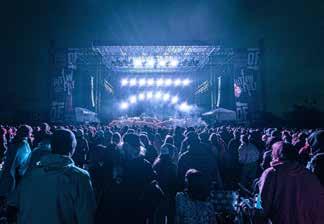
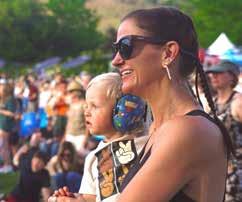
Concertgoers stood quickly, singing and dancing as the energy moved across the lawn. The combination of warm air, open space, and clear acoustics shaped the experience as much as the performance itself.
That sense of familiarity is part of what keeps people returning each summer. Concert-goer Bella in Boise has attended multiple Outlaw Field concerts in past seasons and says the experience feels uniquely local.
“The overall experience is quintessential to the Boise community,” she said. “All of the vendors are local, and the overall vibe is always positive. It’s the kind of place you must go to at least once in the summer. The Botanical Garden venue is truly one of the most beautiful spots in Boise—it doesn’t matter what show you are seeing, because the layout and overall experience are always worth it.”
The 2026 Outlaw Field Summer Concert Series begins June 12th, with additional performances scheduled throughout the summer and tickets available through Ticketmaster. Guests may purchase a general lawn admission ticket or a VIP experience. Organizers will continue to announce new artists in the coming months, adding to a lineup that evolves each season while maintaining the tradition of live music at the Idaho Botanical Garden.
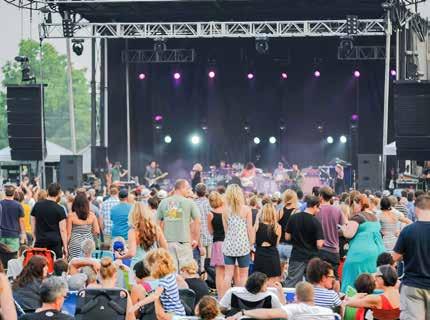
Doors open at 5:30 p.m., with showtimes ranging from 6:30 to 7:30 p.m. The current lineup includes Iration with Tribal Seeds, Kaleo, Rainbow Kitten Surprise with Spacey Jane, Max McNown with The Jack Wharff Band, Alabama Shakes with Billy Allen & The Pollies, Slightly Stoopid, Australian Pink Floyd, and Bonnie Raitt, with more artists still to be announced.
For more information, visit Idaho Botanical Garden, IdahoBotanicalGarden.org













New chamber leadership reflects the quiet work shaping how a small city continues to evolve
ARTICLE
BY STAFF WRITER | PHOTOGRAPHY PROVIDED
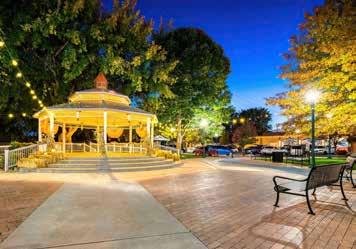
In Eagle, growth does not always arrive all at once. It shows up in small ways, a new storefront, a familiar name in a different place, a quiet shift in how people move through town.
It is easy to think of a chamber of commerce as the group behind ribbon cuttings and events. And that is part of it. But in a place like Eagle, much of the work happens in the spaces in between, conversations, introductions, and the kind of connections that tend to stick.
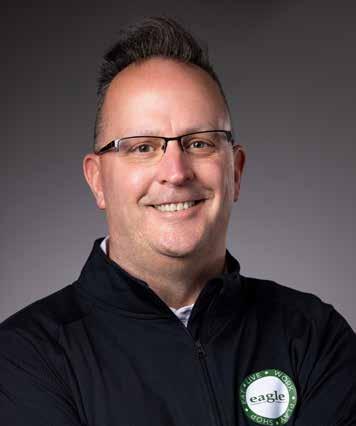
That is where Ryan Doremus finds himself as the new executive director of the Eagle Idaho Chamber of Commerce.
He has lived in the Treasure Valley for about 15 years after growing up in Omaha. His background includes time as a college athlete, a radio host, and later in advertising sales, work that comes down to understanding people.
Eagle still feels like a place where that matters.
Close to Boise but a step removed, the city has held onto a slower pace even as the region grows around it. New businesses arrive, longtime ones adapt, and there is an ongoing question of how much change feels like too much.
For now, Ryan seems content to take it in stride, getting to know the people already here and where he fits.
In a community like Eagle, things tend to move forward that way.





As retirement approaches, time becomes more valuable than returns, changing how we evaluate investment risk
ARTICLE AND PHOTOGRAPHY BY BILL OVERTON
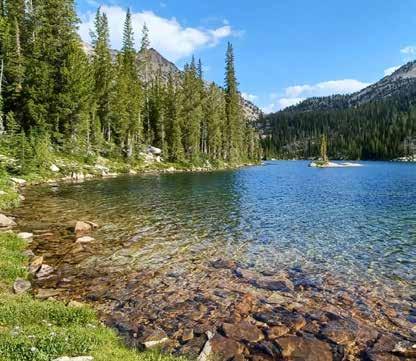
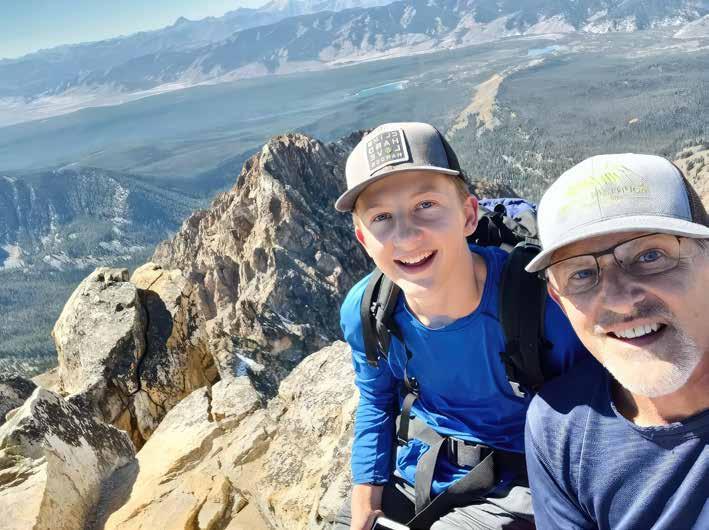
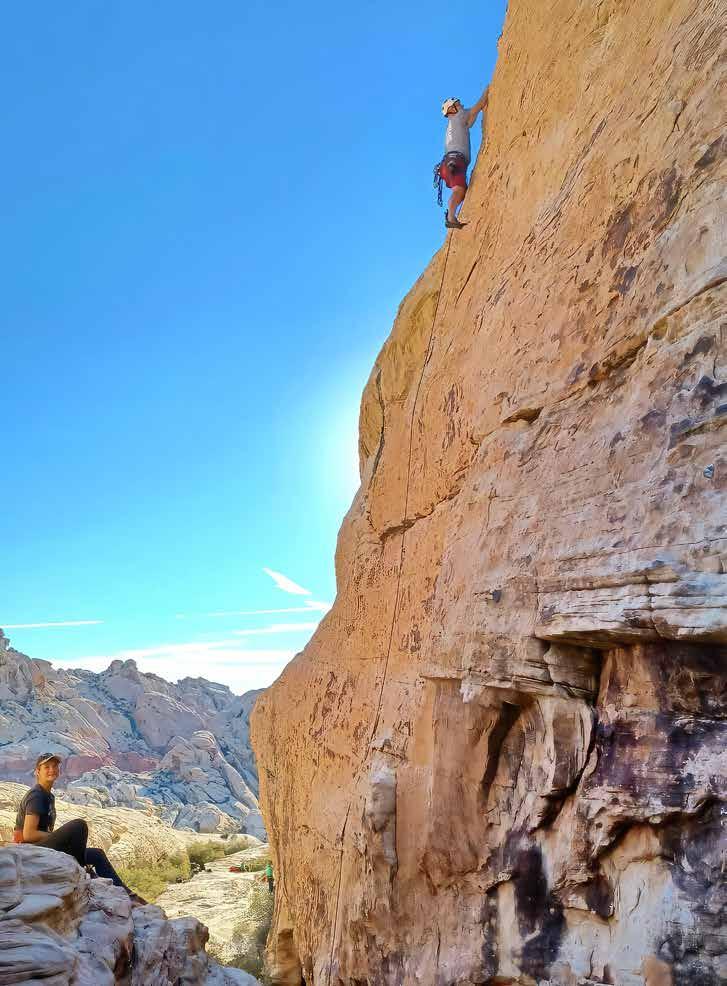
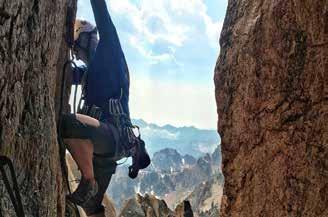
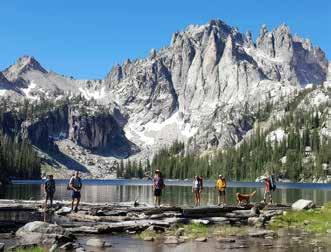
When I was younger, my calculus for risk in my outdoor pursuits was pretty straightforward. Could this kill me? If so, how likely is that outcome? Could this seriously injure me? If so, how likely is that outcome?
Risk assessment complete. Boom. Done.
If I felt comfortable with the answers to those questions, I was good to go. As a young man, I was confident and bold in my ability to assess the dangers and overlay my skills and limitations — and, if I’m honest, probably a little bit stupid. Fortunately, I am still alive and have never suffered any serious injuries from those pursuits. It’s true what they say: sometimes it’s better to be lucky than good.
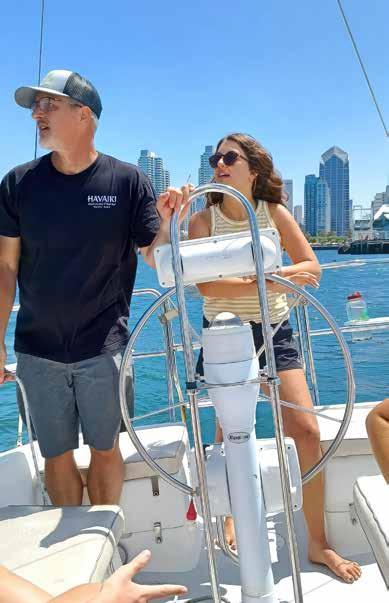
Now that I’m older — and at least a little wiser — my calculus for risk has changed significantly. I still enjoy many of the same pursuits, but my physical limitations are greater, and the consequences of an undesired outcome feel heavier. Recovery takes longer. Injuries linger. Responsibilities are different. I still participate, but my risk assessment process is more nuanced and a lot less bold.
Interestingly, I see our investment risk tolerance follow a very similar trajectory as we age.
When retirement is a distant concept somewhere beyond the horizon, risk feels abstract. A downturn is inconvenient, but it’s temporary. As long as you have time on your side, the math tends to work itself out. But as retirement begins to come into view — and as
CONTINUED >
our accumulated savings represent decades of disciplined effort — something shifts. We begin to recognize that we now have a lot more to lose.
Even the biggest risk takers eventually understand that, at some point, protection begins to matter more than growth.
As we age, our most valuable commodity is not the balance in our retirement accounts — it is time. If your retirement portfolio takes a 40% to 60% hit while you’re in your 30s or 40s, it’s painful but survivable. You have years, maybe decades, to recover. But that same hit in your 50s or 60s can be devastating, primarily because of the time required to recoup those losses.
After a major setback, your account must earn back every dollar it lost before it can begin compounding again. And if you are already in retirement and
“At some point, protecting what you’ve built becomes more important than chasing what you might gain.”
withdrawing funds, the recovery becomes even more difficult because growth must occur from a smaller earning base. In some cases, you may never fully regain what was lost.
If you are in that window where retirement is visible on the horizon, it makes sense to reevaluate your risk tolerance. The calculus changes. What once felt bold and appropriate may no longer be wise.
Time is our most precious asset. Plan your investment strategy accordingly.
Bill Overton is a financial advisor with Advanced Financial Solutions in Idaho.


Ourshowroomisconstantlyrefreshedwithstylish,highqualityfurnitureandhomedécor witheachpiece thoughtfullystaged&pricedtomove. Fromtimelessclassicstomodernstatementpieces,you neverknowwhatyou'llfind...butyou'llalwaysfind somethingyoulove.


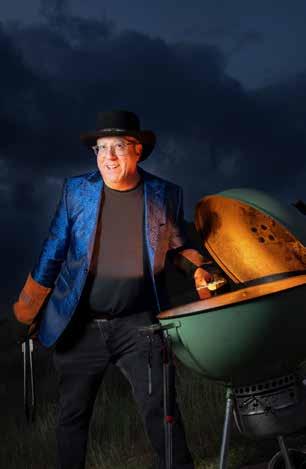
You ever wonder what it would be like to BBQ on the moon? Nobody’s ever done that before. Seems like the sort of thing a Boise gentleman ought to do.
It’s tough when you realize there’s not one, single square inch of planet Earth left to explore. Somebody’s already been there. And brought back souvenirs. Or wrote a book or made a movie about what they discovered. Maybe even claimed it. That’s how the West was won. And the East. And everything in between. I’m not here to judge. That’s just where we’re at. Now we’ve got to look beyond Earth, to the moon, and the stars. To Mars!
I’d love to go to Mars, as much as I enjoy being here in Boise. I think Mars looks a lot like Sedona, which isn’t even in Idaho. I’ve been there. You don’t need life support equipment in Sedona, and it’s too easy to get to. You can drive, or fly into Phoenix and drive from there. And no matter how good your imagination, the minute you arrive, you know you’re not on Mars. That’s not exploring. That’s traveling. Nothing against it, it’s just not the same thing.
ARTICLE BY LOUIS KATZ
PHOTOGRAPHY BY PHIL WHITE + PROVIDED
The moon would also be cool. All that gray dust, and what a view! Again, elaborate life support needed. What fun is that?
Maybe God should start over with a creature that can handle different atmospheres. He’s done it before when things weren’t going His way.
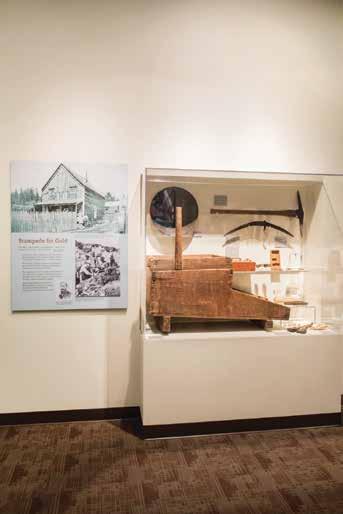
When I think of the old explorers who have passed through the Treasure Valley, like Donald Mackenzie, who was part of John Jacob Astor’s enterprise to build a network of fur trading posts headquartered down at the mouth of the Columbia River (oh, so that’s how Astoria got its name!), I feel a twinge of regret for not having been born when there were still wild frontiers to conquer. True, he lost three Owyhees (which is what they used to call Hawaiians back then), whose names we’ll never know, but he or somebody else named the Owyhees after them. Small consolation to their families, but thoughtful, nonetheless.

And what a thrill it would have been to stand safely behind Rube Robbins making raspberries at Cherokee Bob the day Rube ended Bob’s reign of terror up in Florence! Cherokee Bob was as tough as he was bad. After Rube shot him, he clung to life for three days before finally giving up the ghost. I have no idea what happened to his companion, Red-Headed Cynth, after that. Maybe she stayed on as a cocktail waitress at The Boomerang?
That’s the saloon old Cherokee Bob took by force, threatening to shoot the previous owner in the face if he didn’t hand it over. Supposedly, the old owner’s partner owed Cherokee Bob a lot of money. Maybe true, maybe not. Regardless, nobody wants to get hurt. I get it.
No places left to discover. What’s a Boise man to do? BBQ. I pride myself
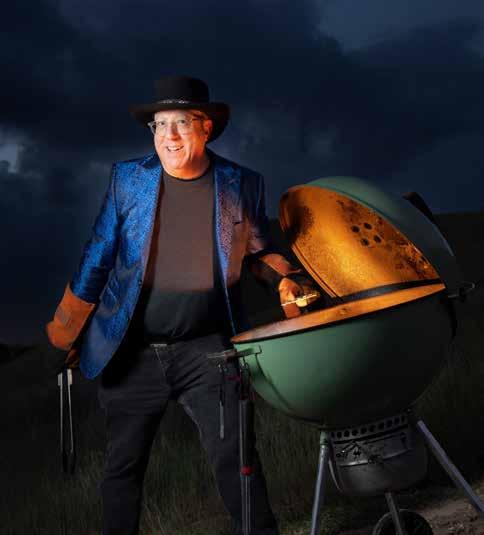
on being out there no matter what the weather. Sun, rain, snow. I don’t care. I’m going out there and firing up the Weber Smokey Mountain. Does it even snow here anymore?
I BBQ a lot. At least three times a week. Five years later, I’m still not good at it. Too much wood. Too few briquettes. Not enough air. Too high temperatures. Too much peeking. Always something. I’d rather struggle with BBQ than throw something in the oven. It just doesn’t taste the same.
I do like canned soup, though. It’s the sort of thing a rugged individual keeps in his back pocket to prove he can survive a crisis. If only you could get Thai or Chinese soup in a can. I haven’t seen it down at Fred’s or Albertson’s. Does that mean it doesn’t exist? Probably.
CONTINUED >
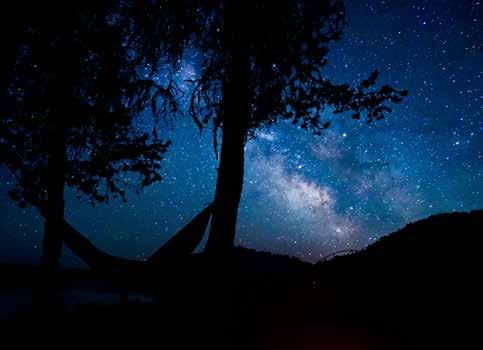
Between meals, or sometimes during, I like to read a good book. Almost never all the way through. Buying books gets expensive, which is why I finally got a library card. For the longest time, I wasn’t reading at all. I could never remember the beginning by the time I got to the middle, and by the end, I’d forgotten both the beginning and the middle. Frustrating. So I gave up. But then I figured, who cares what you remember. The act itself is satisfying.
Having a library card after so many years without one, felt novel and wondrous. I kept finding books to check out. Pretty soon, there were two armloads of books on my desk, mostly unread. I made it through the one about Sonny Liston, and the one about Donald Mackenzie. I read a few pages here and there from the Bob Dylan books. The vast majority just sat there, taunting me. I started to wake up in the middle of the night, dreading the overdue notices that hadn’t arrived yet. When the first one showed up, I hauled all the books back to the library, not wanting to end up like George Washington, who once checked out a book and never returned it. It took nearly two hundred years for that book to finally make it home to the library. No wonder they canceled his holiday.
I thought it might be extraordinary to BBQ on the moon. But how? According to ChatGPT, not even a Boise gentleman can get around the local conditions. It’d be extraordinary, all right. An extraordinary pain in the backside. I decided I’m not willing to do it.
I doubt I’ll ever make it to Mars, or the moon, or anywhere no one has ever gone to before. But I’ve got my wife and a kid who lives out in Oregon, and I’ve got my home, my dogs, the cat, and I’ve got some books I can read over BBQ chicken or canned soup. That’s all you need to be a gentleman in Boise.

Three campuses.

PreK - 12th
Two educational models.
One classical Christian community.
We invite you to learn more about what a classical Christian education could mean for your family by taking a tour of one of our three campus locations: Locust Grove (Meridian), North (Boise), and Bridge (Garden City).

Sign up for a tour or request more information at TheAmbroseSchool.org/Admissions





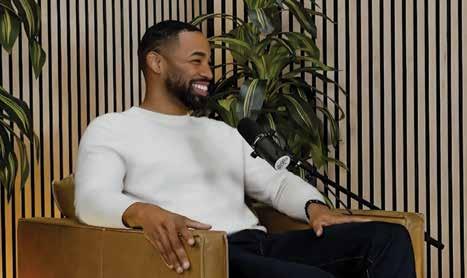
AN EXCERPT FROM EPISODE 6 OF SHARE THE LIFESTYLE, A CITY LIFESTYLE PODCAST
Photographer: Brittany Dawn Short
Creative Director: Jen Birn
Stylist: Stephanie Coultress O’Neill
Location: Hotel Saint Cecilia, Austin, TX
MIKE JOHNSON HAS BUILT HIS LIFE AROUND ONE QUIETLY RADICAL IDEA: THE STANDARD YOU SET PRIVATELY IS THE ONLY ONE THAT MATTERS.
After eight years in the Air Force, a celebrated run on national television, and a health crisis abroad that sent him deep into supply chains and ingredient certifications most founders never touch, the result is Oshun — a luxury ritual brand built on provenance you can trace and integrity you can verify. In an exclusive conversation for the Share the Lifestyle podcast, Mike shares what it actually takes to build something worth putting your name on. Read the highlights below, then scan the QR code for the full episode.
Q: YOU BECAME A FAN FAVORITE ON THE BACHELORETTE AND THEN LEFT THE SPOTLIGHT. YOU MOVED TO MEXICO, LEARNED SPANISH, THEN COSTA RICA, AND BUILT A COMPANY. WHAT DID THAT EXPERIENCE TEACH YOU ABOUT HUMAN BEHAVIOR?
A: “If you’re a good person going in, that shows. If you’re not, that shows too. I also learned that people form this parasocial relationship with you — they assume things about you. When all actuality, different circumstances bring out different parts of who you are. I was on TV trying to find love. The kindness people were showing after felt a bit fake, because they wanted to be a part of something that isn’t who I am individually, but a part of what they saw on TV. And so I had to get away from everybody and everything and the noise.”
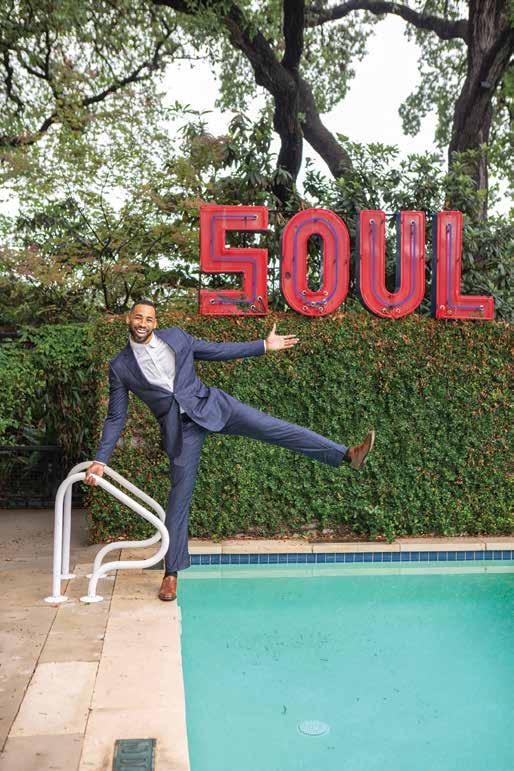
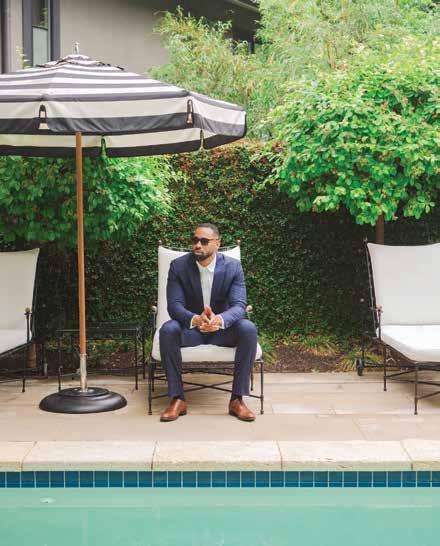
“Too many people have prayed for me. So I’ve got to get up and do the walking.”
— Mike Johnson

Q: YOU JOINED THE AIR FORCE RIGHT OUT OF COMMUNITY COLLEGE. WHAT WERE YOU ACTUALLY RUNNING TOWARD?
A: “There was something in me that was saying: I’m not living up to my full potential. I was being a follower. My uncle said, ‘What’s going to make you become an adult the fastest?’ I said, obviously, the military. The Air Force broadened my thought process more than anything. We’re so caught up in our own perception — when you learn to understand different people’s perspectives, it adds to you in so many ways.”
Q: WITH OSHUN, YOU OWN YOUR MANUFACTURING, YOU EMPLOY A CHEMIST, EVERY PRODUCT HAS A BATCH NUMBER TRACEABLE TO ITS ORIGIN DATE. WHY DID YOU DECIDE TO GO THAT DEEP WITH THE BRAND?
A: “The EU bans 1,100 ingredients in personal care products. The U.S. bans nine. That’s my starting point. Oftentimes, it might be the same ingredient, but it comes from a place where it doesn’t have the highest purity. And 60% of what we put on our skin is absorbed. Every product Oshun makes carries a batch number that goes back to the exact day it was created — I can show you every single supplier, the date, the origin. I own more than one part of the supply chain because that’s the only way I can stand behind what’s in the bottle.”
This conversation is just the beginning. Mike goes deeper into why he’s buying land up north, the family in the Philippines who prayed over his factory floor, and what he’d tell every person ready to stop performing and start building. Scan the QR code for the full, exclusive City Lifestyle interview on the Share the Lifestyle podcast.













JUNE 2026
3 — ARCHWALKS
Luby Park, 10 AM: Explore Boise’s history and architecture. preservationidaho.org
4-6 — WILLY WONKA
Nampa Civic Center, 7:30 PM: Golden tickets and a factory tour! nampaciviccenter.com
5-6 — CINDERELLA
Morrison Center: Ballet set to Prokofiev’s score. morrisoncenter.com
6 — MONSTER TRUCKS LIVE
Albertson’s Stadium, 6 PM: For the first time in Boise! hotwheelsmonstertruckslive.com
5-28 — FIREBIRD LINE-UP
Firebird Raceway: Drag racing and highspeed cars! firebirdonline.com
7-28 — BOISE FARMERS MARKET
1500 Shoreline Dr, Saturdays 9 AM: Local produce, food vendors, artisan goods. theboisefarmersmarket.com
7 — SAVOR IDAHO 2026
Idaho Botanical Garden, 1 PM: Wine and cider tasting event. idahowines.org
8–13 — TOUCHED BY ART WEEK
Create Gallery: Movement classes, tactile workshops, open studio exploring sensory experience. CreateGalleryandframes.com
9 — SENSORY-FRIENDLY LEARNING
Discovery Center of Idaho, 5 PM: A quieter, low-stimulation visit. dcidaho.org
9-14 — MAMMA MIA!
Morrison Center: A wedding, three dads, and ABBA hits. morrisoncenter.com
10 — CREEKSIDE KIDS
Indian Creek Plaza, 5 PM: Hands-on, playful learning, kid-friendly. indiancreekplaza.com
10-13 — EAGLE RODEO
Eagle Rodeo Grounds: Top cowboys competing! eaglerodeo.com
11-25 — THURSDAY ALIVE AFTER FIVE Grove Plaza, 5 PM: Free concerts, regional and national acts. downtownboise.org
11 — SUPER SOAKER SHOWDOWN
Indian Creek Plaza, 11 AM: Citywide water battle! indiancreekplaza.com
12 — HABITAT EVENING
FarWest Landscape & Garden Center, 5:30 PM: For affordable housing and homeownership. tvhabitat.org
12 — FRYDAHO
JUMP Park, 4 PM: Free fries and family fun! jumpboise.org
12 — BLUEGRASS JAM SESSION
Meriwether Cider Company, 8:30 AM: Jam with other musicians. google.com
13–15 — MERIDIAN DAIRY DAYS
Storey Park & Downtown: Parade, carnival, community events. dairydays.org
13 — TERRA-TACTILE: BIG MACHINES IN THE PARK!
Bernie Fisher Park, 11 AM: Hands-on exploration of machinery. kunacity.id.gov
13 — TEN AT THE PEN
Old Penitentiary, 12 NN: A thank-you to the community. meriwethercider.com
13 — FIERCE & FURIOUS
Expo Idaho, 3 PM: Get ready for the fastest sport on eight wheels! tvrderby.com
16-20 — SNAKE RIVER STAMPEDE
Ford Idaho Center: One of the nation’s top pro rodeos! snakeriverstampede.com
17-20 — 90TH EMMETT CHERRY FESTIVAL
Emmett City Park: Parade, carnival, concerts! emmettcherryfestival.com
19 — JUNETEENTH MOVIE NIGHT
Cherie Buckner-Webb Park, 9 PM: Bring blankets and picnic! idahobca.org
19 —IDAHO SHAKESPEARE FESTIVAL
Warm Springs Ave: Ms. Holmes & Ms. Watson. idahoshakespeare.org
20 — DANDELION FESTIVAL
KRISTIN ARMSTRONG MUNICIPAL PARK, 2 PM:
Festival about nature and community. cityofgood.com
21 — SRS WINEDOWN
Ford Idaho Center, 2:30 PM: Stampede finale featuring wine and more! fordidahocenter.com
21 — FATHER’S DAY CONCERT
Ste. Chapelle Winery, 11 AM: Featuring Highstreet Party Band. stechapelle.com
22 — WELCOME PARTY GALA
Sun Valley Culinary Institute: Wine, food, and auction. sunvalleyculinary.org
24 — NEIGHBORHOOD CONCERT SERIES
Sunset Park, 5 PM: Bringing live music to local parks. morrisoncenter.com
26 — THE SECRET SHOW
Liquid Lounge, 8 PM: Hear and share secrets anonymously! downtownboise.org
26-28 — ACE ACADEMY
Gowen Field, 8 AM: Aviation and space careers. idahoaviation.com
27 — MOUNTAIN BIKE FESTIVAL
Bogus Basin, 9 AM - 7 PM: Celebrate, Educate, Advocate. boisemtnbikefestival.com
26-27 — BOISE MUSIC FESTIVAL
Expo Idaho, 10 AM: Marshmello, Sean Paul, Evercelar, and more! boisemusicfestival.com
27 — WILD WEST BREWFEST
Indian Creek Plaza, 4 PM: Western-style festival fun! indiancreekplaza.com
27 — MGK WITH WIZ KHALIFA
Ford Idaho Center, 7 PM: Lost Americana Tour! fordidahocenter.com
27 — LAVENDER FESTIVAL 2026
WM Knight Lavender & Flowers, 9 AM: Lavender fields, U-pick bundles. wmknightlavender.com
27-28 — IDAHO CHESS OPEN
Riverside Hotel: 5-round weekend chess tournament. Mychess.events


WILD ONE SKELETON CHRONO
THE ULTIMATE HIGH-PERFORMANCE
SPORTS WATCH