


Have you ever paused to think about the impact fathers have on their homes and families? The truth is, the role of a father is immeasurable. Fathers shape homes, nurture growth, and provide the foundation upon which children can thrive. And as a dad, the level of impact you choose to have is entirely in your hands.
A father’s gifts are unique and lasting—his strength, his words, his guidance—all create an impact that ripples through generations. Here are just a few of the ways fathers build up their homes:
• A father’s strength can be a steady anchor.
• His words can encourage and inspire.

June 2026
PUBLISHER
Kali McNutt | kali.mcnutt@citylifestyle.com
STAFF PHOTOGRAPHER
Mary Fehr
PUBLISHER ASSISTANT
Shellye Andrus
COPY EDITOR
Denise K. James
CONTRIBUTING WRITERS
Blair Moore, Kali McNutt, Jake Callahan
CONTRIBUTING PHOTOGRAPHERS
Caleb Chancey, Clay Morrison
• A dad’s hugs can provide comfort in difficult times.
• A smile from a dad can instill joy and confidence.
• Time spent with a dad is filled with both fun and productivity.
• His guidance can be life-changing.
• A father’s correction is sometimes life-saving.
• Adventures with a dad create unforgettable memories.
This month, let’s celebrate fathers everywhere. If you have a father or father figure in your life, let them know how much they matter to you. And if you are a dad, thank you. You are an invaluable part of your family, your community, and the world.
Happy Father’s Day to all the incredible dads out there!

MCNUTT, PUBLISHER
CEO Steven Schowengerdt
President Matthew Perry
COO David Stetler
CRO Jamie Pentz
CoS Janeane Thompson
AD DESIGNER Matthew Endersbe
LAYOUT DESIGNER Kathy Nguyen
Hannah Leimkuhler
QUALITY CONTROL




Lynlee strongly believes in and supports residential growth in Birmingham. Since obtaining her license in 2014, Lynlee has completed over 688 transactions totaling over $322 million dollars of real estate sold in the area. “I have made a huge effort to be intimately engaged in the central city and surrounding “city suburbs” from Forest Park to Homewood, Mountain Brook and Vestavia, so that I can provide the greatest benefit to my clients, which I strongly believe is market knowledge”. Her greatest motivation is her clients: She says, “Success to me is doing what I love every day and knowing my contributions positively impact my clients, my company and my city and that I have produced the highest quality of work.”













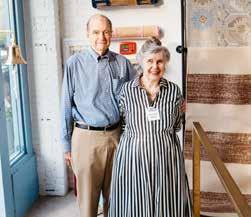

Birmingham Lifestyle clients and friends celebrated the launch of the April





Grace House Ministries Annual Fundraiser, Fostering Compassion, was held at the Fennec. 8: Reena Powell, Kristen
Hughes, Britt Puckett, Kylie Drummond, Kathryn Gay, Lana Shoultz. 9: Hancock Construction, a long-time supporter of Grace House Ministries and Leadership Sponsor of Fostering Compassion, will build the future Lois G. Coleman Mission Center. Mark Hancock, CEO, and Ryan Harbuck, President, with their team. 10: Back (L-R): Ashley Jackson, Jordyn Keesing, Lisa Burton, Pamela Reed Phipps, Lauren Sisler, Derrick Pope Front: Melissa Pierce, Hannah Rutledge, Devin Lewis, Jacquelyn Guhl Photography by Christina Hontzas






STILL Studios is Greater Birmingham’s first and only flat-fee neurotoxin studio - one service, done exceptionally well. The price is the price. The units are unlimited. The experience is seamless from booking to post-appointment. No math. No upsell. Just results. Dr. Elizabeth Adams built it that way on purpose. Visit be-still.com.

HUM Concierge welcomes Tracy Sproule as Partner and COO. Sproule joins founder Sarah Robinson — together bringing decades of experience in corporate consulting, law, and operations — to lead a team dedicated to giving clients back the time, energy, and focus to fully enjoy the life they’ve built. Walking through your front door should feel like an exhale. HUM makes sure it does. humconcierge.com


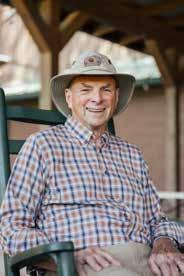
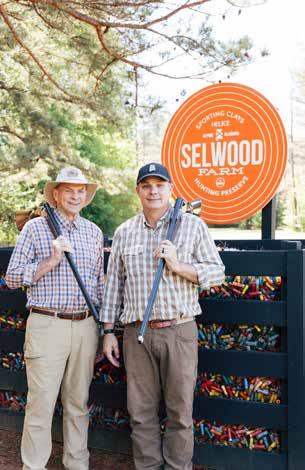
Three generations built Selwood Farm on tradition, family, and the great outdoors
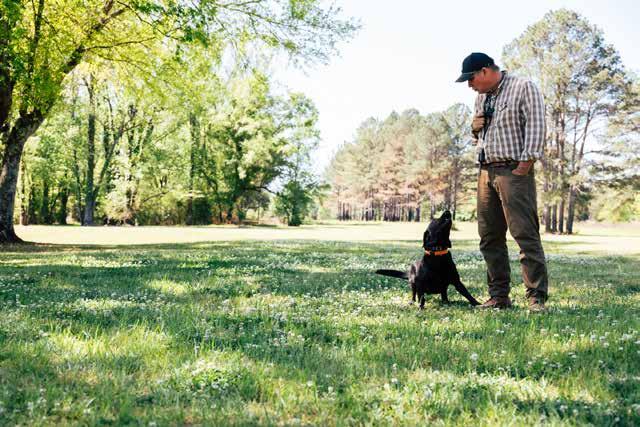
ARTICLE BY BLAIR MOORE | PHOTOGRAPHY BY MARY FEHR
Some of the best stories are generations in the making. Such is the case at Selwood Farm, where a piece of farmland has become a living family legacy rooted in tradition and values.
The property came to the Hill family in 1946, when O.V. Hill purchased it from the family who had settled there in 1834. A county extension agent and natural builder, O.V. experimented with crops, cattle, poultry, sheep, and turkeys, always looking for what might work next.
Beyond the farm, he helped bring Talladega Superspeedway to Alabama. Family history — and an old Plainsman account — also credits him with delivering a wounded golden eagle found near his property to Auburn University while making a delivery of Thanksgiving turkeys. The bird, later known as War Eagle II, recovered with help from the veterinary school and became part of the tradition that grew into Auburn’s famed raptor program.
When O.V. Hill died in 1968, his son Dell was 27.
Dell and his wife, Carolyn, had a decision to make: continue their life in Auburn or move their young family to Selwood and expand what O.V. had started.
They chose the more adventurous option. Their 9-year-old son, Alan, was unsure about the move at first, but the promise of a dirt bike helped ease the transition. He still looks back fondly on growing up in the country.
“Sure, sometimes I wished I had neighbors, but whenever I brought friends out there, they were just blown away by how awesome it was.”
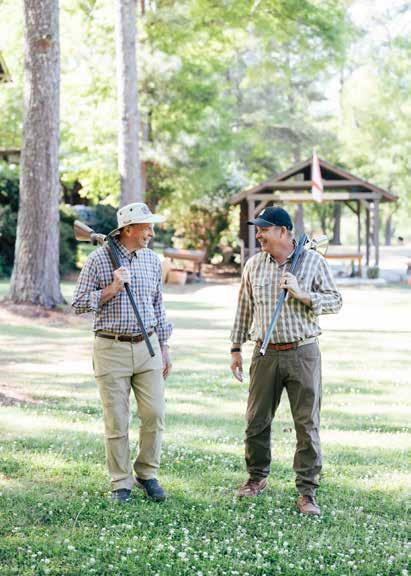
At Selwood, there were decades of smoked turkeys, holiday gift boxes, and cattle. There were lean years, too. By the early 1980s, the cattle side of the business was no longer profitable.
“Disposal of the land is not an option,” Dell explains. “Continuation is the option. So we just changed direction.”
He repurposed Selwood toward recreational use of the land. In time, the property became home to one of Alabama’s earliest hunting preserves and, later, the state’s first sporting clays course.
What Dell built was never meant to be the old stereotype of a hunting camp.
“We wanted Selwood to be a place where, if you walked in unannounced with your wife and your young child, you’re not going to see or hear anything that’s going to be an embarrassment,” he says.
That says as much about the family as it does the business. Their approach has made Selwood the kind of place that becomes part of other families’ traditions.
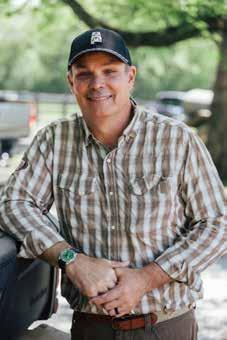
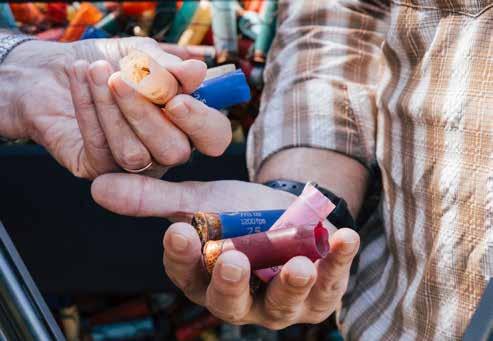
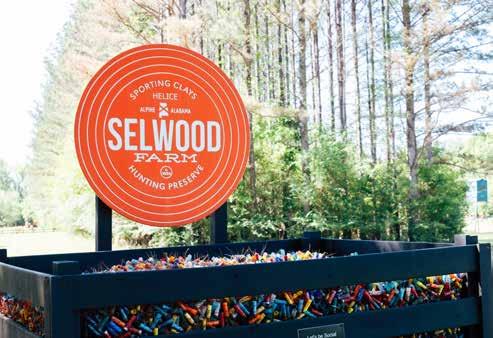

“We had a family that hunted with us the Friday after Thanksgiving for at least 25 years. The kids grew up down here. It was just part of their tradition,” Dell says.
But things changed, as they do. The children grew up, got married, and began traditions of their own. This year, they did not come. The father called Dell and told him he hoped they would find another family who could create the same kind of memories his family had made there.
“That spoke chapters to me,” Dell says, his voice catching. “Maybe we’ve done something right.”
About 11 years ago, the Selwood story turned again when Dell’s son, Alan, stepped away from a career in commercial insurance and into the family business full-time.
“Dad had laid a really good foundation and character of the business,” Alan says, “and we both saw a lot of potential areas for growth.”
He and his father are different men. Alan describes himself as more creative and strategic, while Dell is more black-and-white.
“We lock horns once or twice a year,” Alan says with a laugh. “But I think now we’re pretty well aligned.”
Dell, age 84, speaks of his son with unmistakable pride.
“I think he inherited a work ethic to do what needs doing,” he says. “And he has a natural talent with people.”
He praises Alan’s ease with guests, his eye for growth, and his talent as a shooting instructor.
When asked about the importance of time outdoors for children, Dell offers a sermon that includes the role of a father.
1834 — Original family settles the property
1946 — O.V. Hill purchases Selwood Farm
1968 — O.V. Hill passes; son Dell takes the helm at age 27
Early 1980s — Cattle operation ends; Dell pivots to recreational use
Late 1980s — Selwood becomes one of Alabama’s first hunting preserves
Early 1990s — Alabama’s first sporting clays course opens on the property
2014 — Alan joins full-time, bringing a new generation of leadership
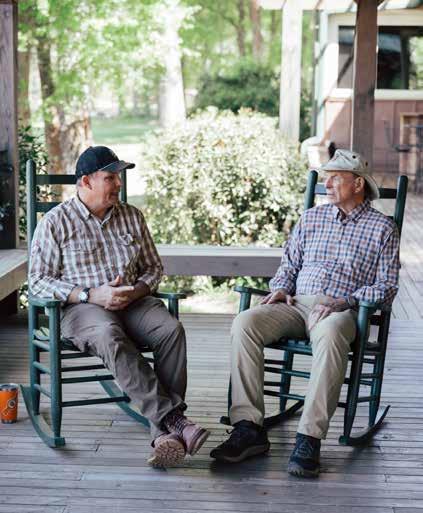
“Kids need more time outdoors, but even more than that, they need the association with their daddy.”
— Dell Hill
“Kids need more time outdoors, but even more than that, they need the association with their daddy.”
“He was there,” Dell says of his own father. “He was involved.”
O.V. was not a hunter or fisherman himself, but he made sure his son spent time with men who were. He showed up for Little League games, high school activities, and even college events whenever he could. Friends were always welcome at the house. He took an interest in whatever interested his son.
Dell did not have many years with his father in adulthood. But he remembers what mattered most.
“He was there,” he says again. “And it made a difference.”
People often tell the Hills what a pretty piece of property they have.
“Well, if you like it, you’d better get started,” they laugh, “because it took 40 years to get here.”
But more than the beautiful land, they are proud that Selwood is a place where people come to make memories and pass along the joy of the outdoors and shooting sports.
“You know you’ve been coming a while when the young lady who’s been in the country house 20 years knows if you want cream and sugar in your coffee when you come in,” Dell says. “That’s the kind of culture we wanted to create. And hopefully we’ve done that, and it passes on to the next generation.”









THE ONE QUESTION EVERY GOLFER IS REALLY ASKING
ARTICLE BY KALI MCNUTT
PHOTOGRAPHY BY CLAY MORRISON
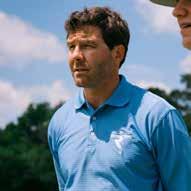
Thomas Twitty
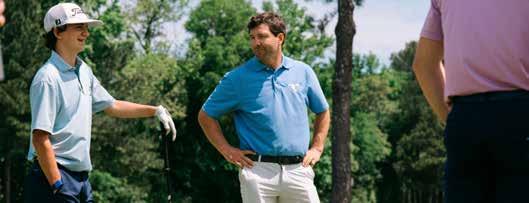
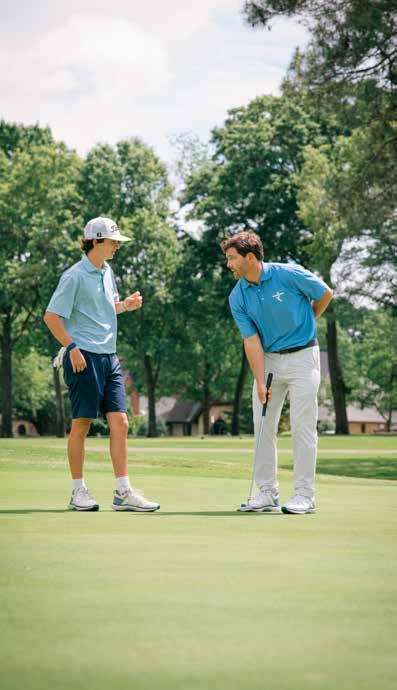
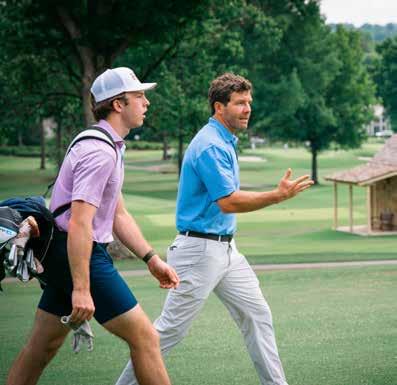
The lab work wrapped up yesterday. Sensors, movement screens, and two hours of Thomas Twitty watching data tell the truth about golf motion. Today, the setting shifts from lab to fairway. Finn Burkholder, a college-bound senior from Houston, is walking the course with Twitty, putting yesterday’s findings into action. His father follows a few steps behind. Joining them is SJ Thomas, a standout freshman at Mountain Brook High School and a longtime ETRAK client, who knows this drill well. Between holes, Twitty talks. Between shots, he says almost nothing — a single word, a color, a letter. The kind of shorthand that only works when the groundwork has already been laid.
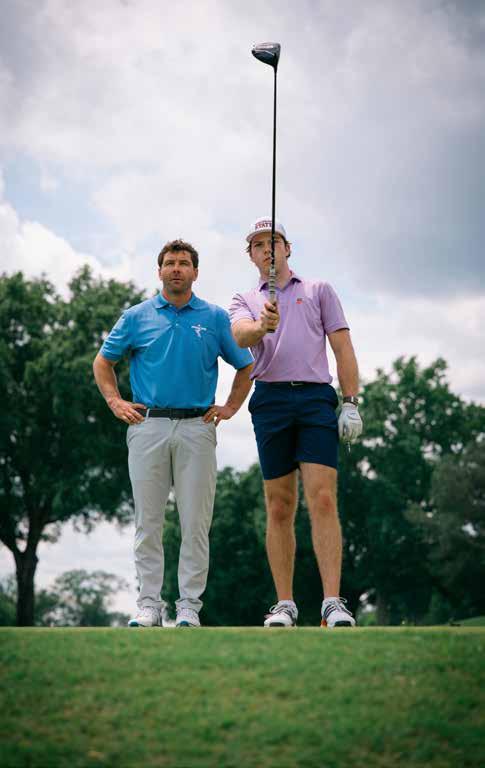
“MOTION IS LIKE MUSIC. IT’S SCIENTIFICALLY BASED, BUT ARTISTICALLY EXPRESSED.” -THOMAS TWITTY
This is the second time Finn and his family have made the trip from Houston to Birmingham. They met Twitty through Axis Golf Academy, one of Houston’s premier junior academies, where he has built a devoted following among players and coaches. Finn recently signed to play college golf at Mississippi State, where Twitty and ETRAK will now be within driving distance. “If he needs help,” his father says, “Thomas is just a drive away.”
Finn’s father played and coached basketball at UNC Charlotte. He is not a man who uses words carelessly. “A lot of golf teachers are teaching geometry,” he says, watching his son line up a shot. “Thomas teaches physics. He’s teaching my son time, tension, width.” He pauses. “And he can do it the old school way, but also with data.”
Finn is equally precise. “He’ll say a word like tension, and I realize I’ve been tensing the wrong things instead of just making my swing wider,” he says. What clicked most was understanding his own effort ranges. “I have a blue swing, kind of a cruising effort, a green swing that’s stock, and a red one where I’m trying to kill it. Thomas helped me see I was living in the blue range when I didn’t need to be.”
That kind of self-knowledge is exactly what Twitty has spent 20 years trying to give people. But to understand why ETRAK exists, it helps to understand what happened to golf.
Twitty believes the sport shifted permanently during the Tiger Woods era. “If that swoosh had never been on Tiger’s hat,” he says, “I don’t know if Finn’s standing here right now.” What Nike and Tiger did together, he argues, was usher in the athletic era of golf. Once the hobbyist became an athlete, equipment manufacturers responded. Drivers got larger. Golf balls curved less. Players swung harder because equipment now allowed it. The athletic revolution, however, CONTINUED >
came at a price. Injuries became more frequent because the body wasn’t equipped to handle this new age of firepower. Then sports science entered the equation — what Twitty calls performance engineering. “The rapid evolution of golf from hobby to sport,” Twitty says, “requires us to now engineer performance if we are going to do it safely and effectively. The rise of performance engineering is why ETRAK exists.” He isn’t being dramatic. He means ETRAK literally would not need to exist if golf were still what it was in 1985.
The gap his company fills is specific. “We hear clients say ‘It looks great, but it feels bad,’ and that’s the disconnect we help solve.” A player can make a motion that looks textbook on video, but still feels incomplete to the person making it. The reason, Twitty explains, is that feel and function are two different things, and bridging the gap in instruction without performance engineering is extremely difficult. “Feel is never real,” he says. “What you’re feeling is rarely accurate, and it’s rarely as big or exaggerated as it seems to you.”
His journey to bridge the gap started with the founding of Pure Performance, a data-driven training facility in Birmingham, back in 2013. Seeing a need for more performance engineering solutions, ETRAK Technologies was founded in 2019. ETRAK’s first product was the Phoenix — a high-performance wearable device built with a Birmingham engineering firm that captures precise movement data in real time across every plane of motion. In the lab, it doesn’t just show what a swing looks like. It reveals why
it works — or why it doesn’t. “Most people are so into right and wrong,” he says. “They struggle to understand cause and effect. That’s where we help clarify what’s actually happening.”
Today, ETRAK brings performance engineering to life through a two-day experience called Stay and Play: day one in the lab, where the data does the talking, and day two on the course, where players learn to feel what those findings actually mean.
Twitty’s process begins with understanding how a player naturally moves before asking them to change anything. “We don’t want to change you first,” he says. “We want to understand you.”
From there, progress happens through small sequences of drills layered over time. He compares it to learning an instrument. “Motion is like music,” he says. “It’s scientifically based, but artistically expressed. When you know something well enough, it’s only then that you can be creative with it.”
His clients range from PGA Tour players and coaches to entrylevel beginners. “No one is immune to the fundamentals of motion. We all need insight and a process to get better,” he says. “Without data, you’re building a feeling on a guess.”
He built all of this in Birmingham, his hometown, which he considers an advantage rather than a limitation. “Birmingham is the best-kept secret in the country,” he says. “Here, the product comes first.”
Back on the course, Finn lines up another shot. One word from Twitty. The next swing is smoother, simpler, better. Yesterday, the lab showed them the physics. Today, Finn is feeling it.

The process begins with a discovery call, followed by a two-hour evaluation covering physical screening, motion analysis, and a personalized training workflow. The Stay and Play option pairs a lab day with an on-course session to put the findings into practice immediately. ETRAK works with competitive juniors, college and professional players, and recreational golfers at all levels.
Visit ETRAK.tech or email info@etrak.tech to learn more.





ARTICLE BY PAULI REEP
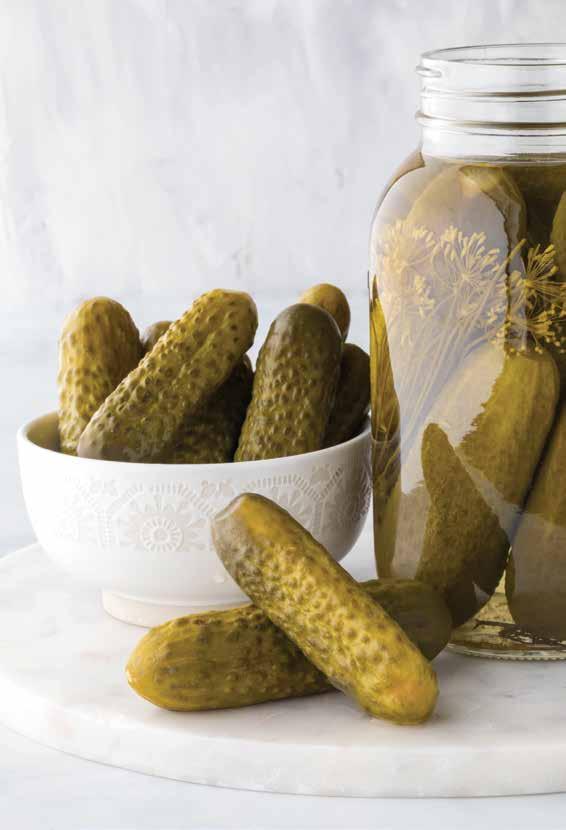
PICKLE-BRINED CHICKEN WINGS SOAR TO THE NEXT LEVEL WITH ALABAMA WHITE SAUCE.

INGREDIENTS
• 2 pounds chicken wings (flats and drummettes)
• Pickle juice - enough to cover wings
• 1 – 2 teaspoons garlic salt
• ¼ teaspoon pepper
• 6 tablespoons butter
• A few dashes of hot sauce
• 2 tablespoons fresh dill, chopped
INSTRUCTIONS
I’ve spent years searching for the perfect wing flavor, never quite satisfied, until I heard a podcast suggestion: brining chicken wings in pickle juice. It sounded strange at first, but it yields incredibly tender and flavorful wings! Since then, I save pickle juice from every jar I buy just to recreate these beloved wings. If I run out of pickle juice, olive juice works too. I air fry mine, but if you don’t have an air fryer, cook them as you normally would. Don’t forget to toss them in a buttery dill sauce and try the Alabama white BBQ sauce for an extra layer of goodness!
1. Place chicken wings in a non-reactive container and pour pickle juice over chicken wings until completely covered.
2. Place it in the fridge and let it marinate, covered, for at least 8 hours.
3. Drain wings, discard pickle juice, and completely pat wings dry.
4. Put dried wings in a bowl and sprinkle with garlic salt and pepper. Mix well.
5. Place wings in an air fryer basket, being careful not to crowd. Cook at 400 degrees for 28 minutes, turning every 8 minutes until crispy. If you don’t have an air fryer, bake them in the oven for 35 - 40 minutes at 400 degrees, flipping halfway through.
6. Melt the butter and add a few splashes of hot sauce of your choice and mix in a bowl. Add wings and completely cover with butter mixture. Sprinkle with fresh dill and toss a few times, and serve with my white barbeque sauce.
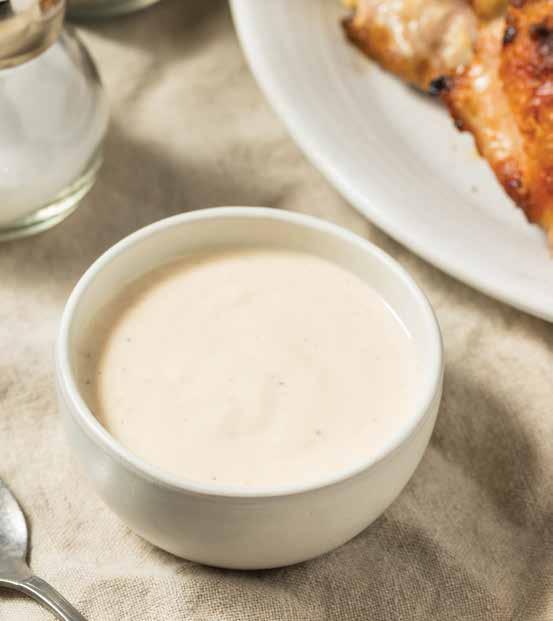
• 1 ½ cups mayonnaise (I prefer Duke’s)
• ¼ cup water
• ¼ cup white wine vinegar
• 1 tablespoon pepper, coarsely ground
• 1 tablespoon Creole mustard
• 1 teaspoon salt
• 1 teaspoon sugar
• 2 garlic cloves, minced
• 2 teaspoons prepared horseradish
INSTRUCTIONS
Whisk all ingredients together until blended. Dip your pickle juice-brined wings in this sauce and taste the joy! Store in the refrigerator for 1 - 2 weeks.


ARTICLE BY KIM HILL
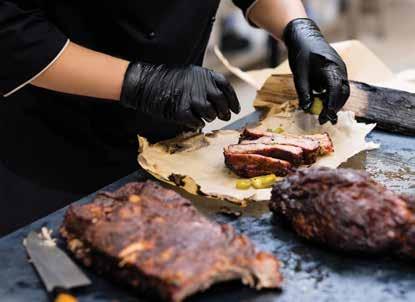
Has it been too long since your tribe gathered to rib and one-up each other as only guys can do? To help plan a getaway for just the guys, City Lifestyle gathered an eclectic list of locations offering tons of things to see, do and experience. Here’s hoping the only ribs one will get on this guys’ getaway are the kind to hold in hands while barbecue sauce drips onto shirts. Scottsdale/Phoenix
There’s no other tournament on the PGA Tour like the Waste Management Phoenix Open and no hole like the legendary 16th, where 20,000 boisterous fans boo the tee shots that miss the green. The other 51 weeks of the year, golfers can play TPC Scottsdale or try one of more than 200 courses in the Scottsdale area, a top golf destination. Another winter event is the BarrettJackson Collector Car Auction. Even if one’s only collector car was a Hot Wheels, it’s a blast to peruse the acres of autos for sale before heading inside to watch the unique or renowned cars crossing the auction block. When it’s time to get moving, the strenuous hike up Camelback Mountain in nearby Phoenix
is a bucket-list item. Need a more moderate trail? Experience the same magic of the majestic saguaro cactus in the McDowell Sonoran Preserve.
It’s always a party in New Orleans (NOLA), especially when it comes to festivals, many of them centered around music. Folk to funk, gospel to jazz, zydeco, blues, African and other musical styles are celebrated on the Jazz and Heritage Festival’s 12 stages. If free admission is more desired, don’t miss the French Quarter Festival featuring local musicians and food vendors representing dozens of New Orleans restaurants. Part of the fun of Mid-City Bayou Boogaloo is admiring revelers’ watercraft, some of them homemade just for this festival on the banks of Bayou Saint John. If one of the festivals can’t be attended, there’s still plenty of NOLA live music, particularly the jazz clubs on Frenchmen Street. And when a break from crowds is needed, take a guided swamp tour. Kitschy, yes, but it’s a hoot to cruise around on a swamp buggy while looking for alligators.


Bowling Green, Kentucky
“America’s Sports Car” is produced at the Bowling Green Assembly Plant, where visitors can join guided tours to observe Corvettes being built and learn the fascinating history of these sexy autos. See examples of all Corvette generations at the National Corvette Museum. And if the need for speed is still felt, a few times a year Xtreme Experience offers driving or ride-along events in exotics like Ferraris or Lamborghinis at the National Corvette Museum Motorsports Park. After getting all revved up, cool down at Mammoth Cave National Park, the longest known cave system in the world and a World Heritage Site, where guided tours take participants through tunnels humans have used for thousands of years. And after all this touring, the Bowling Green area is the southernmost point in the Kentucky Bourbon Trail of distilleries.
Austin
Live music rules here, with iconic venues such as Antone’s, The Continental Club, the White Horse and hundreds of other locations, from dive bars to big stages. From rock and blues to country and urban, music is heard every night of the week (and many afternoons as well). When guys are hungry, there are tons of barbeque and Tex-Mex joints. Unique food trucks are truly a thing here, with nearly 2,000 food trailers in town. Burn some calories biking or running the Southern Walnut Creek Trail or one of many paved paths. Get out on the water in a kayak, canoe or stand-up paddleboard on Lake Travis or Lady Bird Lake. Take a dip in the historic Barton Springs Pool, where the underground springs keep the water around 68 degrees all year.
FOUR GREAT PLACES FOR GROOVES, GRUB AND GAWKING WITH BEST BROS














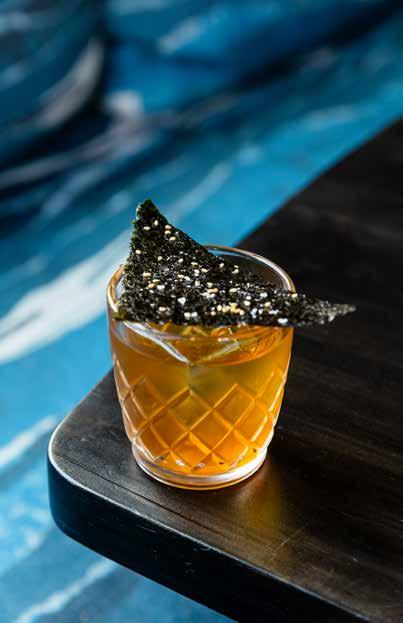
• 2 oz Roasted SesameWashed Bourbon
• .25 oz Clarified White Miso Caramel Syrup
• 3 dashes Fee Brothers Black Walnut Bitters
• 4 drops of 10% Saline Solution
• Garnish: House-prepared Premium Nori Snack
METHOD:
1. Add the sesame-washed bourbon, miso caramel, black walnut bitters, and saline droplets to a mixing glass filled with ice.
2. Stir for 20 to 30 seconds until well-chilled and properly diluted.
3. Strain over a single large, clear ice cube into a chilled double rocks glass.
4. Rest the nori snack on the rim of the glass.
PHOTOGRAPHY BY CALEB CHANCEY
Roasted Sesame-Washed Bourbon: Infuse 1 liter of bourbon (recommend Buffalo Trace) with 2.5 ounce of Kadoya Pure Roasted Sesame Oil. At Current, this mixture is whisked together, frozen to solidify the fats, and double-strained, leaving behind a velvety mouthfeel and an intense toasted aroma.
Clarified White Miso Caramel Syrup: Caramelize 500g of pure cane sugar until deep amber, then integrate 500g of hot water. Temper 75g of white miso paste (recommend Namikura Kyoto Shiro White Miso) into the warm syrup. To ensure a refined, sediment-free presentation, pass through a fine-mesh strainer and a cone filter.
The Garnish (House-Made Nori Snack): Take sheets of premium-grade nori, lightly brush them with toasted sesame oil, and season with Maldon Sea Salt and toasted sesame seeds. Place the seasoned nori sheets in the dehydrator for 2 hours, or until they are completely dried. This provides a crisp, savory texture that enhances the cocktail’s umami notes.
The saline solution can be made by combining 10g of salt with 90g of warm water. Just a couple drops act like seasoning, making the miso and caramel flavors pop.
Feel free to use store-bought nori for your garnish. Salgado recommends Gimme Organic Roasted Seaweed Snacks (Sea Salt) or Kirkland brand Organic Roasted Seaweed Snack. To achieve the desired crunch, Salgado recommends popping the nori in the oven at around 1700 to gently crisp the nori until it’s perfectly dried and brittle.
Kendall Salgado is Bar Manager and Beverage Director at Current Charcoal Grill
Visit Current at 1625 2nd Ave South.
At Current Charcoal Grill, Kendall Salgado reinvents a classic where sesame is the star




TWENTY YEARS AFTER WINNING AMERICAN IDOL, TAYLOR HICKS PLAYS ON
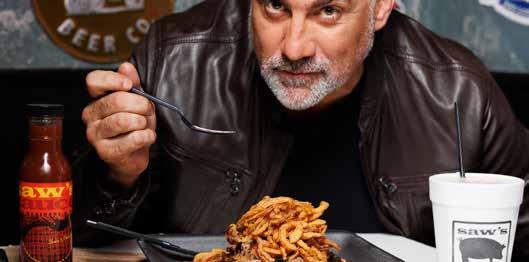
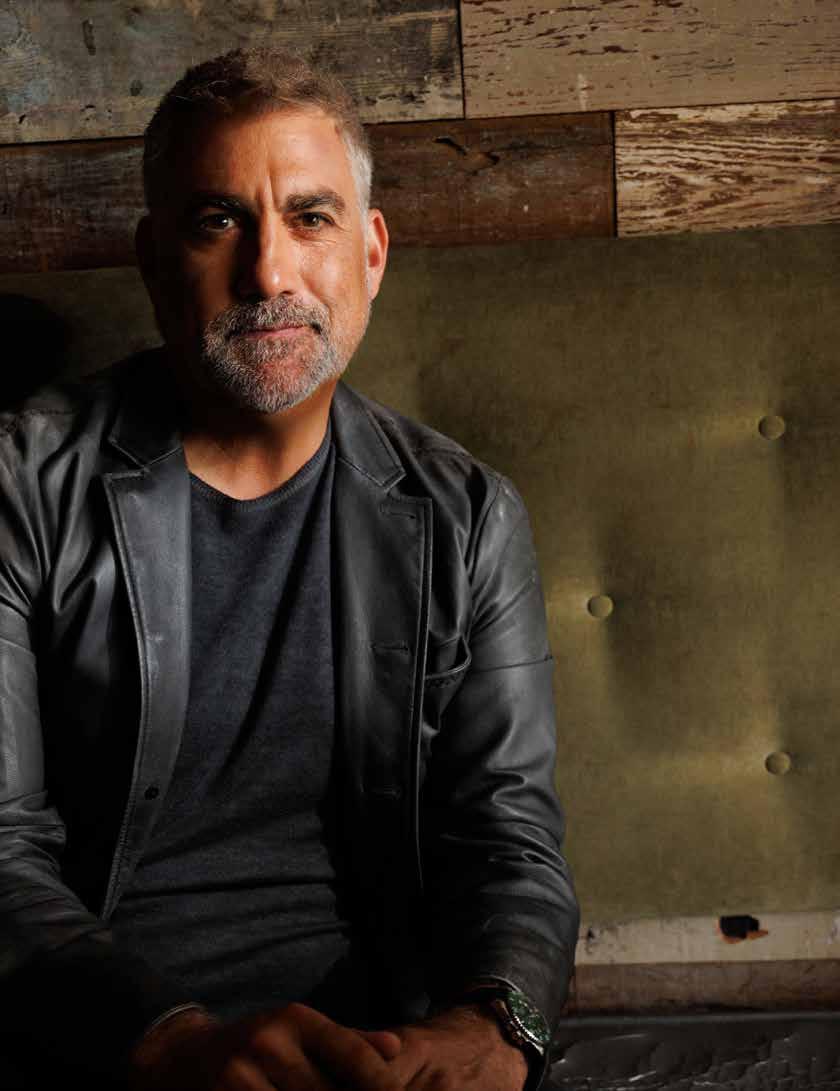
From the Saw's Juke Joint parking lot, you can smell smoke, char, and something sweet. It's 10 a.m. on a Monday, and inside the restaurant, deliveries are unloaded and staff prep tables. Taylor Hicks, unhurried and genuinely warm, greets me like an old friend.
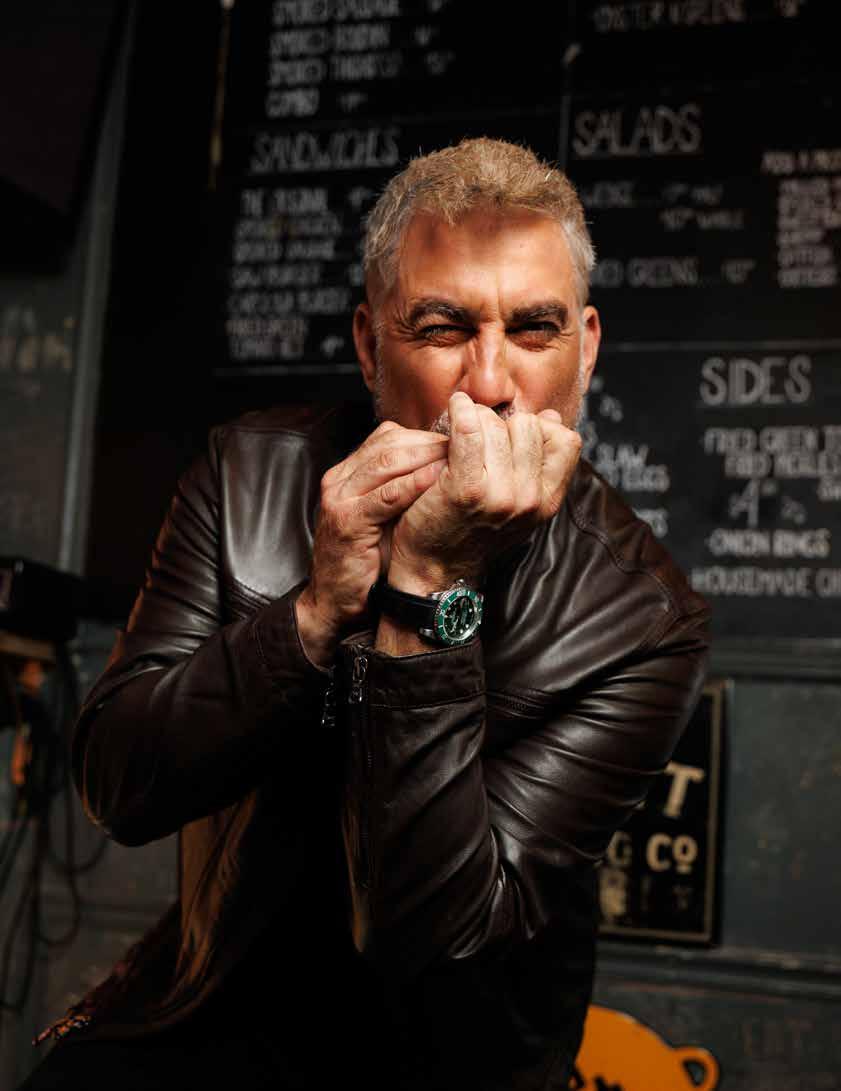
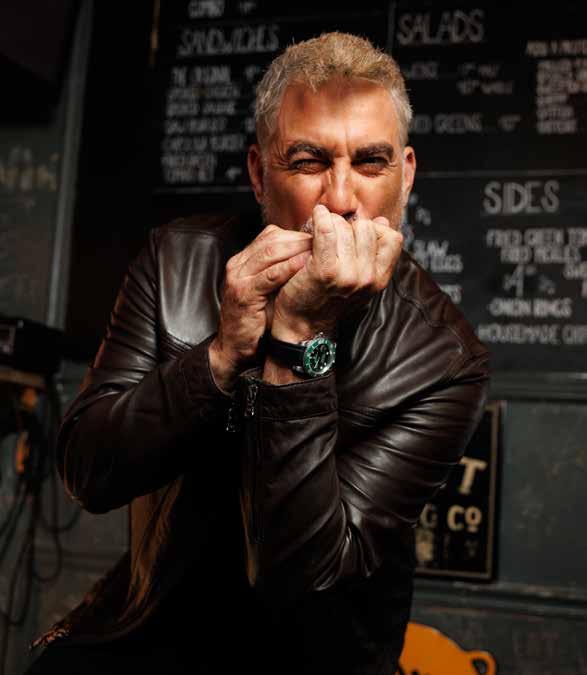
For the photo shoot, he didn’t bring a guitar. He brought a harmonica — the same instrument that first made people stop and stare 20 years ago. He plays to the camera the way he plays to a crowd: totally unguarded, fully committed.
At one point, two women approach and ask if he works there. “Yeah, how can I help?” he says. It takes him saying his name out loud for the connection to click. He doesn’t seem to mind. If anything, he seems to prefer it that way.
Twenty years ago, Hicks won Season 5 of American Idol in front of 200 million viewers, becoming the show’s unlikeliest champion — a soulful, gray-haired kid from Hoover whom Simon Cowell said would never make the final round. He proved Cowell wrong, went platinum, played Broadway, and enjoyed a long-term residency in Las Vegas.
These days, Hicks splits his time between Nashville and Birmingham, making it back to his hometown at least once a month — usually to play golf at Shoal Creek, eat at Bottega or Hot and Hot, and check in at the restaurant he opened in 2012 with the late Mike Wilson. Hicks is quick to credit managing member Jennifer Wilson with the restaurant’s continued success: “She’s done an amazing job making sure the brand and the barbecue stays as strong as it’s ever been,” he says.
Tonight is the Saw’s Juke Joint Jamboree, his annual party with John Daly on the eve of the Regions Tradition Celebrity Pro-Am. We sit down before the lunch rush and talk about Ray Charles, Bob Seger, Snoop Dogg, his new music, and life since Idol.
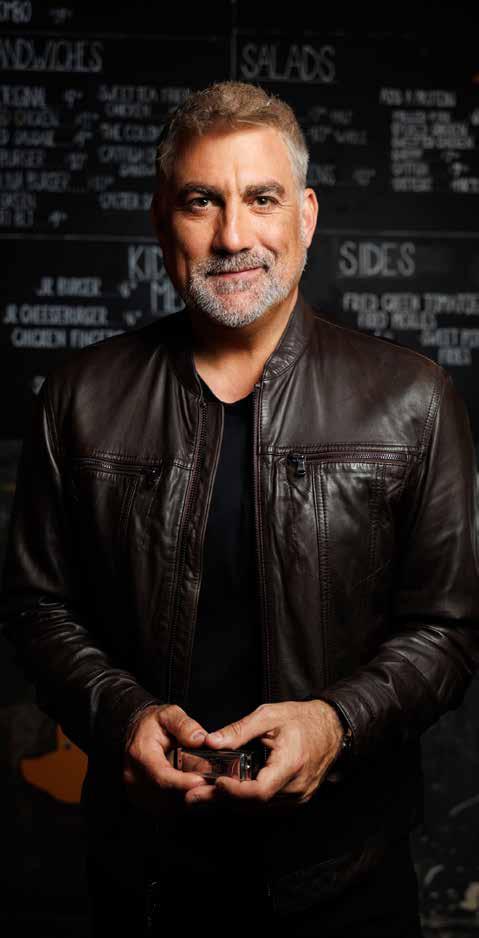
What’s your Saw’s order?
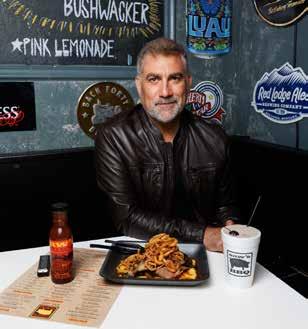
I think our wings are the best in the South—and our fried catfish and greens. The sweet tea fried chicken sandwich cut into fourths — they become bite-sized, which is nice. Fried okra is a summer staple. You really can’t go wrong. It’s Mike Wilson’s vision and his flair for Alabama barbecue. Saw’s is very Alabama-centric, and that’s what I love about it.
And to drink?
You can’t go wrong with one, and only one, bushwhacker.
With a floater?
With the floater. The bushwhacker with a Skrewball Peanut Butter Whiskey floater is like a frozen Reese’s. The sweetness is what kills you.
Why a restaurant? How did the Juke Joint come about?
One of my first gigs was playing the Flora-Bama at 18. Being around longtime owners Pat McClellan and Joe Gilchrist taught me a lot about the service industry. When the bar would close at the end of the night, they would clean up the tables themselves. That’s the TLC you need to make sure people enjoy their experience. So I always felt like owning a restaurant was a natural next step for me as an entertainer: music and food. Mike Wilson and I were close. He had started Saw’s in Homewood, and we got together and decided a juke joint would be great because we both loved live music and good food. It was a really great match — his menu and my music.
You’ve said Birmingham’s food scene dwarfs Nashville. I believe it. As much as Nashville has grown, it doesn’t come close. The culinary scene here is extraordinary. Between Frank and Pardis Stitt, Chris Hastings, and newer additions like Little Betty, it’s worth a trip just to eat.
You hosted a food-and-travel show covering all 50 states. Most underrated food state?
Maine. Fresh lobster for $10. Homemade blueberry pies at roadside stands. Mostly organic, very earthy, and absolutely gorgeous.
What was the first music that really impacted you?
Ray Charles was the root of my musical tree. When I was really young, I had bad environmental allergies — bad conjunctivitis. I couldn’t see well, couldn’t really be outside in the spring. And I stumbled upon Ray Charles. There was empathy there, growing up the way he did, wanting to be outside but really not able to. Not seeing well sharpened my listening ear. So the music was just a calling from an early age. I studied the Stax Soul Revue, and looking back on it
now, a 9 or 10-year-old kid doing that — there were signs. And then buying my first harmonica at the flea market in Bessemer for two dollars.
I learned harmonica, then guitar; started writing; went to Auburn; played in bands. Once you put all those pieces together, you kind of know God has a plan. You just have to stick to it and trust. Sometimes that’s hard — pursuing the vision of being a successful entertainer is like finding a needle in a haystack. But catching that break in Las Vegas [with American Idol] was a blessing.
You grew up playing at the Open Door, the Flora-Bama. There’s a version of your life where American Idol never happened.
I was playing the Open Door when I was 22. As a kid in Center Point, I used to do homework at Reese’s Hot Dogs — a little hot dog stand. I’ve just always been around this world. Idol was a chapter, but this — the music, the restaurant, being here — this was always the life. But I can’t understate how Idol changed my life — I went from playing Marty’s and Oasis to touring Southeast Asia in the span of six months. "Do I Make You Proud” is still making the rounds on Indonesian airwaves. Twenty years later.
You play a lot of Bob Seger. What’s your favorite song of his?
“You’ll Accomp’ny Me.” Hands down.
And your favorite to perform?
“Fire Lake.” But I do it reggae-style.
You once performed with Snoop Dogg. How does that even happen?
Back when Birmingham had City Stages, Snoop and I had the same manager. He was in town to perform, and I asked him if he’d ever thought about having a blues harmonica on “Gin and Juice.” There was a rite of passage involved that I won’t get into, but we did perform “Gin and Juice” together. One of my favorite collaborations, for sure.
Who would you still like to collaborate with?
Tyler Childers — I would love to write with him. I love his music. And Ella Langley. Willie Nelson, absolutely. Van Morrison — I actually got bumped for Van Morrison on Regis and Kelly once, so I got to meet him briefly. And Ray Charles, obviously, if that were still possible. He's always been the one. There's also a really great writer and singer named Laci Kaye Booth — she’s got a song called "Luck of the Draw," and I think she's just tremendous. Not enough people know her yet.
Bucket list venues?
The Gorge Amphitheatre in Washington. The Colosseum in Rome. And Bethel Woods up in Woodstock, New York.
CONTINUED >
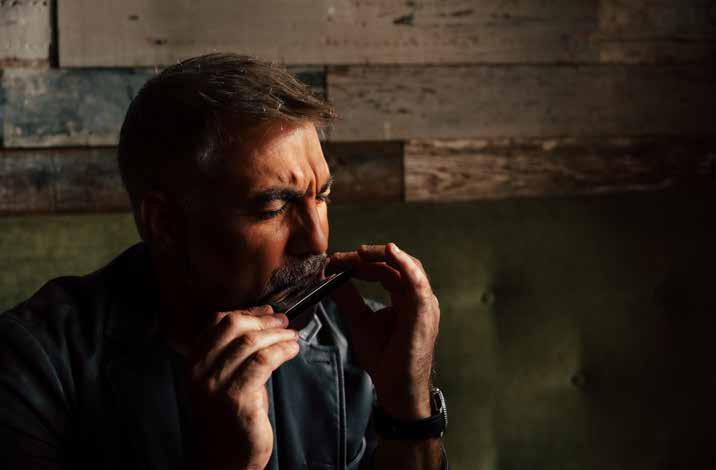
What’s it like playing the Grand Ole Opry?
I live in Germantown, about 10 minutes away. I can be in my pajamas, throw on some stage clothes, drive over, and perform. They kind of have me on speed dial — if someone has to cancel, they know I’m close. And I always learn something musically every time I'm there.
You played Charlie Anderson in Shenandoah at Serenbe Playhouse in Georgia — your first serious dramatic lead role.
A lot of people don't know that, and I'm really proud of it. Taking that role seriously, being able to do that — it's allowed me to audition for film and television in a more serious space.
Tell us about your new music.
My new single, "The Mirror," comes out May 4. We recorded at Southern Ground, Zac Brown's studio in Nashville. And I'll be releasing singles from the new album throughout the coming year — I want each one to have its moment. And the American Idol Season 5 reunion was just announced, 20 years after we all did it, which is pretty surreal.
What do the next 20 years look like?
More of this. More music, more Birmingham, more good food. I’ve got a show on July 3 at American Village in Montevallo for the United States’ 250th birthday celebration. Playing the Flora-Bama on July 11. And in December, a show at the Lyric to raise money for Toys for Tots. That one matters to me. But honestly? I just want to keep doing what I love, in the places I love, for the people I love. That’s the whole thing.

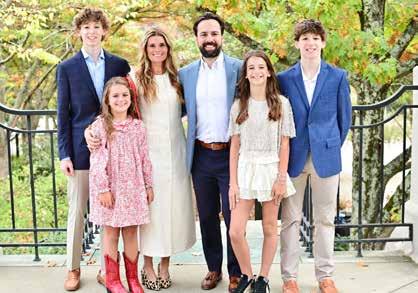
When Birmingham’s work crosses state borders, we’re there to help. And as our city grows, so does our commitment to its people, its progress, and its future.

www.210tutengroup.com


Reflecting on a year that changed everything
ARTICLE BY JAKE CALLAHAN | PHOTOGRAPHY BY MARY FEHR
It has been one year since I woke up from what I thought would be a routine procedure—only to learn that my reality had changed in an instant. What was expected to be a simple surgery turned into something far more serious: a diagnosis of colorectal cancer.
That moment didn’t just alter my health. It reframed my life.
Looking back, the signs were there. For nearly two years, I had been dealing with symptoms that were easy to dismiss—weight gain, brain fog, extreme exhaustion, and occasional gastrointestinal issues. Nothing seemed urgent. Nothing screamed cancer.
Like many men in their 30s, I told myself I was fine. I stayed busy. I kept going.
But I wasn’t fine.
I had my testosterone levels checked. They came back on the lower side, but still within what was considered a “healthy” range. I thought maybe I had slipped into a deep depression. Maybe I was just burned out from work.
At some point, it all started to make me feel crazy.
In the summer of 2024, I finally met a doctor at Birmingham Gastroenterology who truly listened – not just to my symptoms, but to my concern that something wasn’t right. We began a deeper dive, running bloodwork, scheduling scopes, and looking beyond surface-level explanations. I made lifestyle changes, adjusted my diet, took supplements, and worked toward a healthier routine. Some things improved, but deep down, I knew something still wasn’t adding up.
Then, in early 2025, everything escalated. I developed a growth. At the same time, my energy hit a level I can only describe as debilitating. There were days I couldn’t get out of bed. Days when even taking a shower felt like an impossible task. That was the moment I knew I couldn’t ignore this anymore.

At my follow-up appointment in May, I was referred to a specialist at Grandview. Surgery was scheduled. I went in expecting a routine hemorrhoid removal.
I woke up to a completely different reality.
A mass roughly the size and shape of an almond had been removed and sent to pathology. Following that, additional imaging, including MRIs and PET scans, gave a clearer picture of what we were dealing with. Later, I learned I had Stage II—borderline Stage III—colorectal cancer, with a second lesion involving nearby lymph nodes. It hadn’t metastasized, but it was far more serious than anyone initially expected.
And while that diagnosis brought fear, it also brought an unexpected sense of validation. Deep down, I had known something wasn’t right. For years, I had felt it, questioned it, and tried to explain it away. In that moment, I finally had answers. I finally understood what my body had been trying to tell me all along.
At the same time, I felt something I didn't expect — embarrassment, and even a bit of shame. It's not something people openly talk about.
As I researched colorectal cancer, I came across James Van Der Beek, who had been diagnosed just two summers before me. Seeing someone speak openly, advocate, and share their story gave me a different kind of strength.
After hearing of Van Der Beek’s passing in early 2026, I felt even more compelled to share my story and to emphasize
something that cannot be said enough: Early screening is crucial. It saves lives.
I began treatment at Grandview Cancer Center in August. Through 30 rounds of radiation and chemotherapy, I experienced a level of physical and mental strain that was agonizing to get through at times.
As a father and a husband, my strength came from wanting to be there for the moments that matter most: Friday night pizza and movie nights, watching my son learn to drive, and long summer days spent by the pool. The everyday moments we so often take for granted quickly became everything to me.
In December 2025, I received the news I had fought and hoped for: I was in remission.
As men, we are conditioned to push through discomfort. To minimize symptoms. To avoid slowing down. We tell ourselves we’ll deal with it later. We convince ourselves it’s stress, age, diet— anything but something serious.
But here’s the truth: your body whispers before it screams.
And if you don’t listen, it will eventually force you to.
If there is one thing I want other men, especially those in their 30s, to take from my story, it’s this: Pay attention to the signs. Advocate for yourself. If something feels off, don’t ignore it. Don’t settle for being dismissed. Keep pushing until you get answers.
Because your life is worth that fight.
Jake Callahan is a realtor with Ray & Poynor.
AN EXCERPT FROM EPISODE 6 OF SHARE THE LIFESTYLE, A CITY LIFESTYLE PODCAST
Photographer: Brittany Dawn Short
Creative Director: Jen Birn
Stylist: Stephanie Coultress O’Neill
Location: Hotel Saint Cecilia, Austin, TX
MIKE JOHNSON HAS BUILT HIS LIFE AROUND ONE QUIETLY RADICAL IDEA: THE STANDARD YOU SET PRIVATELY IS THE ONLY ONE THAT MATTERS.
After eight years in the Air Force, a celebrated run on national television, and a health crisis abroad that sent him deep into supply chains and ingredient certifications most founders never touch, the result is Oshun — a luxury ritual brand built on provenance you can trace and integrity you can verify. In an exclusive conversation for the Share the Lifestyle podcast, Mike shares what it actually takes to build something worth putting your name on. Read the highlights below, then scan the QR code for the full episode.
Q: YOU BECAME A FAN FAVORITE ON THE BACHELORETTE AND THEN LEFT THE SPOTLIGHT. YOU MOVED TO MEXICO, LEARNED SPANISH, THEN COSTA RICA, AND BUILT A COMPANY. WHAT DID THAT EXPERIENCE TEACH YOU ABOUT HUMAN BEHAVIOR?
A: “If you’re a good person going in, that shows. If you’re not, that shows too. I also learned that people form this parasocial relationship with you — they assume things about you. When all actuality, different circumstances bring out different parts of who you are. I was on TV trying to find love. The kindness people were showing after felt a bit fake, because they wanted to be a part of something that isn’t who I am individually, but a part of what they saw on TV. And so I had to get away from everybody and everything and the noise.”
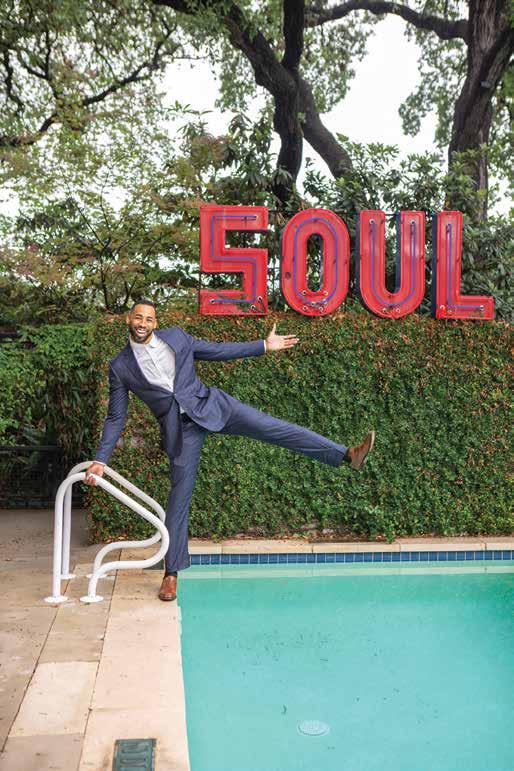
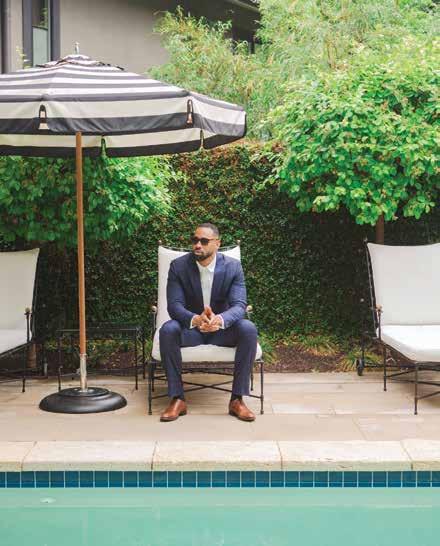
“Too many people have prayed for me. So I’ve got to get up and do the walking.”
— Mike Johnson

Q: YOU JOINED THE AIR FORCE RIGHT OUT OF COMMUNITY COLLEGE. WHAT WERE YOU ACTUALLY RUNNING TOWARD?
A: “There was something in me that was saying: I’m not living up to my full potential. I was being a follower. My uncle said, ‘What’s going to make you become an adult the fastest?’ I said, obviously, the military. The Air Force broadened my thought process more than anything. We’re so caught up in our own perception — when you learn to understand different people’s perspectives, it adds to you in so many ways.”
Q: WITH OSHUN, YOU OWN YOUR MANUFACTURING, YOU EMPLOY A CHEMIST, EVERY PRODUCT HAS A BATCH NUMBER TRACEABLE TO ITS ORIGIN DATE. WHY DID YOU DECIDE TO GO THAT DEEP WITH THE BRAND?
A: “The EU bans 1,100 ingredients in personal care products. The U.S. bans nine. That’s my starting point. Oftentimes, it might be the same ingredient, but it comes from a place where it doesn’t have the highest purity. And 60% of what we put on our skin is absorbed. Every product Oshun makes carries a batch number that goes back to the exact day it was created — I can show you every single supplier, the date, the origin. I own more than one part of the supply chain because that’s the only way I can stand behind what’s in the bottle.”
This conversation is just the beginning. Mike goes deeper into why he’s buying land up north, the family in the Philippines who prayed over his factory floor, and what he’d tell every person ready to stop performing and start building. Scan the QR code for the full, exclusive City Lifestyle interview on the Share the Lifestyle podcast.



Life Like No Other At Kirkwood, we don’t just share a campus; we share a legacy. Our landscape is shaped by the stories of the people who call it home. Hear from women in our community in this month’s feature, “Pearls of Wisdom,” and see how a lifetime of experience creates a community like no other. Visit kirkwoodbytheriver.com or call 205-956-2184 to schedule a personal tour today.