
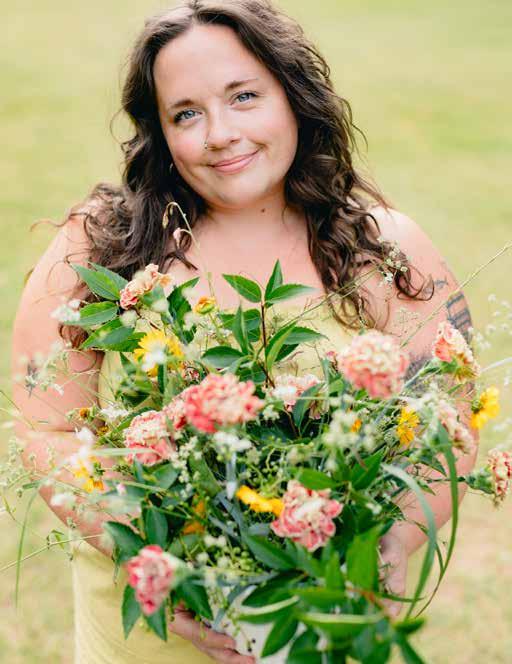
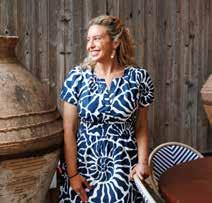
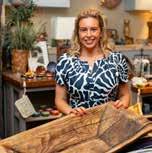
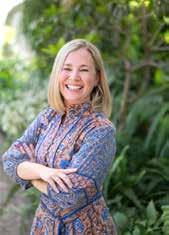
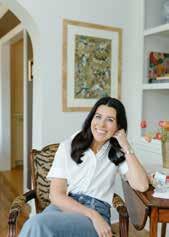
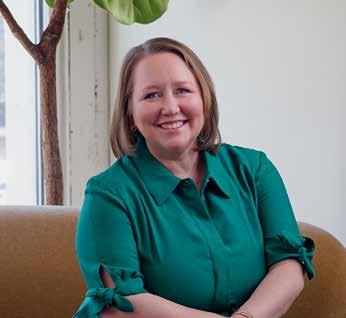
Kaitlyn Clements | Owner & Lead Designer
Our inspiration stems from nature and the shapes and colors it offers. Sustainably working alongside local flower farmers, we use in-season blooms to create floral art unique to each client.
vernalflorals.com










Kaitlyn Clements | Owner & Lead Designer
Our inspiration stems from nature and the shapes and colors it offers. Sustainably working alongside local flower farmers, we use in-season blooms to create floral art unique to each client.
vernalflorals.com
I’m writing this somewhere over Newfoundland, at 34,000 feet, headed to London for what is becoming an annual tradition — a summer reunion with college friends in the Cotswolds in a spot so dreamy I’ve been sworn to secrecy about the exact whereabouts.
I almost didn’t come. There were plenty of reasons to stay home. But my friends kept asking, and frankly, I’m the easiest sell. So, with an utterance of “YOLO,” I booked the flight.

Our annual Explore Issue is full of people who did the same thing.
Later this summer, my family will explore Split, Croatia, for a wedding, and from there we’ll venture to France to celebrate my mom’s 70th in Cap Ferret — a place serving up laid-back summer perfection à la française: the freshest oysters, white Bordeaux, bike rides, morning markets, and wild Atlantic beaches.
Where to next?
It’s the question this issue keeps asking.
The answer, it turns out, is everywhere. And, here.
I’m especially proud to feature my friend and high school classmate Dorothy Sarris — back in Birmingham after eight years living in Athens, Greece. Dorothy didn’t just visit. She stayed. Long enough for it to stop being an exciting trip and start being home. She learned the heartbeat of a place: its neighborhoods, its secrets. Truly the most rewarding kind of travel.
I’ll tell you what I told her after my most recent stay in Athens: it matches my circadian rhythm. Athens is a place for night owls. The streets of Psiri are almost dormant until darkness falls — then the atmosphere transforms. Crowds spill out of restaurants and shops stay open until midnight. Athens is not a caricature of itself, the way some European cities can feel. It feels authentic – concept stores with genuine points of view, surprising design, coffee and cocktails taken seriously and slowly. In Psiri, I recommend both Monument Hotel Athens and Mona. In Kolonaki, The Modernist is a great option. Whatever you do, don’t sleep on Athens.
The spirit of exploration threads through everything in this issue. It’s in Birmingham lawyer Eric Guster, who got his pilot’s license and turned Saturday mornings into family adventures. It’s in Rebecca Egeland turning grief into music, in Birmingham restaurants riffing on a dish invented in Venice, in the travel advisors who know the undiscovered next best spot. It’s in the American Village asking the oldest question in the American experiment: can we keep what we built? And it’s in a Lake Martin home that proves you don’t have to go far to arrive somewhere extraordinary.
Come home to Alabama when you’re ready. The lakes are waiting. So is the Gulf.
But first — go somewhere.

July 2026
PUBLISHER
Kali McNutt | kali.mcnutt@citylifestyle.com
PUBLISHER ASSISTANT
Shellye Andrus
STAFF PHOTOGRAPHER
Mary Fehr
CONTRIBUTING WRITERS
Alice Welsh Doyle, Blair Moore, Christiana Roussel, Denise K. James, Kali McNutt, Val Crofts
CONTRIBUTING PHOTOGRAPHERS
C.W. Newell, Liesa Cole, Mary Fehr
COPY EDITOR
Denise K. James
CEO Steven Schowengerdt
President Matthew Perry
COO David Stetler
CRO Jamie Pentz
CoS Janeane Thompson
AD DESIGNER Matthew Endersbe
LAYOUT DESIGNER Kathy Nguyen
QUALITY CONTROL SPECIALIST Brandy Thomas


KALI MCNUTT, PUBLISHER

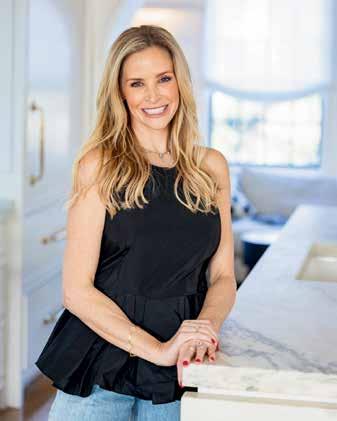
Lynlee strongly believes in and supports residential growth in Birmingham. Since obtaining her license in 2014, Lynlee has completed over 688 transactions totaling over $322 million dollars of real estate sold in the area. “I have made a huge effort to be intimately engaged in the central city and surrounding “city suburbs” from Forest Park to Homewood, Mountain Brook and Vestavia, so that I can provide the greatest benefit to my clients, which I strongly believe is market knowledge”. Her greatest motivation is her clients: She says, “Success to me is doing what I love every day and knowing my contributions positively impact my clients, my company and my city and that I have produced the highest quality of work.”










After
Interior
Costanzo


NATURE AND NURTURE
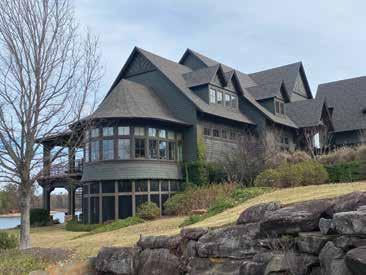
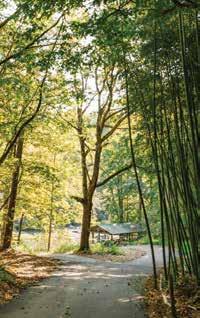
Wooded trails. Riverfront views. A campus that invites you to discover something new every day.
A life well-lived deserves a home that invites you to keep exploring. Located along the Cahaba River, Kirkwood offers peaceful walking trails, beautiful resident gardens, and a community that makes every step worth taking. Schedule your personal tour today. kirkwoodbytheriver.com | 205-956-2184
INDEPENDENT LIVING | ASSISTED LIVING | MEMORY CARE SKILLED NURSING | REHABILITATION
When Birmingham’s work crosses state borders, we’re there to help. And as our city grows, so does our commitment to its people, its progress, and its future.







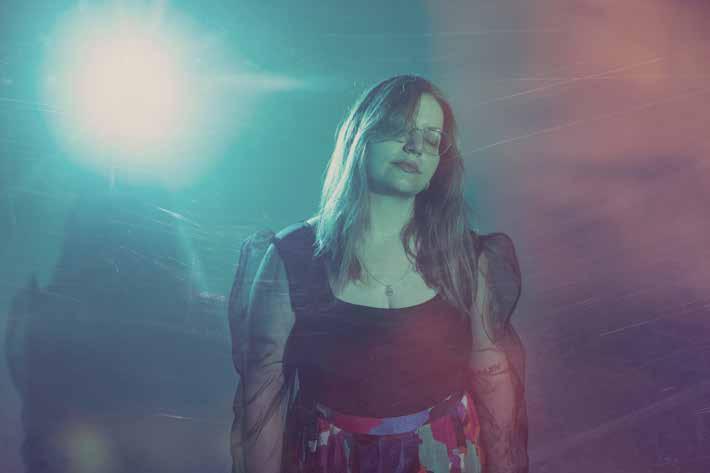
Rebecca Egeland has never written a song she didn’t live first
In Birmingham’s independent music scene, authenticity still matters — and Rebecca Egeland has built her music around exactly that. Her songs are not manufactured stories or carefully polished fiction. They are lived experiences: grief, joy, longing, healing, memory, and the quiet work of learning how to keep going.
Ahead of the July 10 release of her new six-song EP, Fine is a Figment, Egeland describes songwriting less as performance or work and more as emotional processing.
“Almost all of my songs are true things that have happened in my life or feelings that I’ve had,” she says. “I’m not sure how to write about things I haven’t experienced.”
Music has followed Egeland since childhood. Raised in Birmingham, she grew up singing church hymns with both of her grandmothers and listening to Billy Joel in the car with her mother. Her first concert was a sold-out Billy Joel show at the BJCC — a formative memory for a young girl.
ARTICLE BY KALI MCNUTT | PHOTOGRAPHY BY LIESA COLE
But the true beginning of her artistic voice came during one of the hardest periods of her life. After receiving a ukulele for Christmas during her sophomore year at UAB, Egeland’s mother passed away just weeks later, in January 2013. Suddenly unable to articulate her grief in ordinary conversation, she turned inward and began writing songs.
“A lot of what the music started as initially was processing grief and loss,” she says. “Living with what is now and not what used to be.”
That emotional honesty still anchors her work more than a decade later. While her music has expanded beyond what she calls her “mom songs,” themes of healing, memory, and resilience continue to thread through her catalog. Her upcoming EP explores those ideas through what Egeland calls different “sound worlds” — atmospheric, textured songs tied together by her unmistakably intimate writing style.
The project’s title, Fine is a Figment , emerged after she noticed how often the idea of being “fine” appeared throughout her work. “Sometimes you say you’re fine when you’re not actually fine,” she says. “So what even is fine?”
Recorded at Boutwell Studios with producer Brad Lyons, the EP moves beyond the stripped-down acoustic recordings Egeland first released in 2018. Together, the pair carefully crafted sonic textures that match the emotional nuance of the songs.
That attention to emotional atmosphere extends beyond the music itself. The EP artwork, photographed by Birmingham photographer Liesa Cole, uses soft lavenders and blues — colors Egeland says reflect both heaviness and hope. Many images were shot inside her downtown Birmingham home. “Sharing songs feels like giving away pieces of yourself,” she says. “So I might as well welcome you into my home.”
Though deeply personal, Egeland’s music ultimately centers on connection. Whether she’s playing intimate songwriter rounds, teaching dance fitness classes at the Mountain Brook YMCA, or organizing community-driven music spaces around Birmingham, her work consistently returns to the same belief: community matters.
“Life is about community,” she says. “You’ve got to connect to people to build communities.”
Rebecca Egeland’s EP, Fine is a Figment, releases July 10, with a release show scheduled for July 12 at The Upstairs at Avondale Brewing Company. While you can stream Egeland’s body of work on all streaming platforms, nothing can compare to the in-person experience. We’ll see you there.




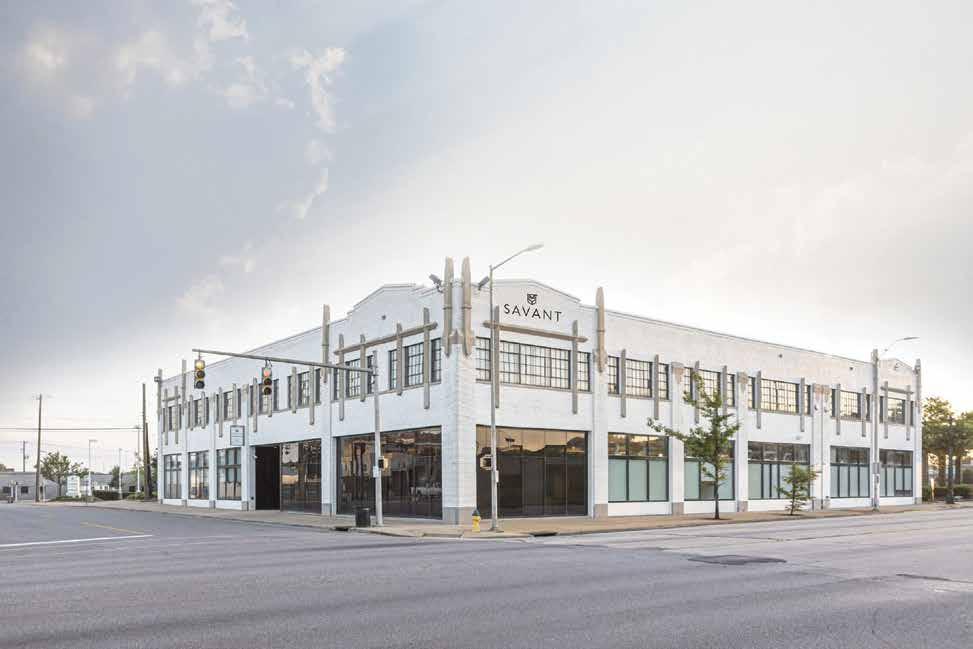





As life and wealth grow more complex, it's easy for financial decisions to become disconnected. We can help design a plan to bring things together. Savant Wealth Management’s experienced Birmingham team serves individuals, families, and business owners with integrated investment, tax, and estate planning. As an independent, fee-only firm, we strive to bring clarity and coordination to help you pursue your ideal future.




Tonight, there’s a high school graduation dinner for 40 on the patio at Fish Market. Last weekend, there was a wedding for 500 at Saint Mark the Evangelist. Regulars drift toward their usual tables and order the same thing they’ve been eating for years: Athenian shrimp, gumbo, Greek snapper.
In the middle of it all is Dorothy Sarris — answering phones, filling in when someone calls out sick, greeting blue-blood Birminghamians and construction workers with the same easy smile. She moves through the dining room with the calm authority of someone who has been doing this since elementary school, because she has.
Fish Market feels like a return to an older Birmingham in the best possible way: bigger portions, hushpuppies without apology, and dinner plans not dictated by Instagram. Dorothy’s stepmother, Rose, calls it “Greek Cracker Barrel” — an unpretentious place to gather.
Her father, George Sarris, opened the restaurant in 1983, a year before Dorothy was born. He had come over from Greece with nothing and washed dishes at Niki's West until he had enough money to buy a deli. He sold the deli and then bought the place that would become a Birmingham institution. Dorothy was peeling shrimp at Fish Market before she was in middle school, and was proficient at the cash register by fifth grade.
"Fish Market is Birmingham to me,” she says. "Birmingham is Fish Market. It's home."
She left anyway. In 2018, newly minted with Greek dual citizenship, she flew to Athens and stayed for nearly eight years — nannying and teaching English for a Greek family, living in different corners of the city, and immersing herself in a different version of the Greek life her father had given up to build hers in Birmingham. She came back last May.
Her father noticed something early. “Dorothy always liked to buy, to sell,” George says. “When she left for Greece, I always
knew she would come back. She is not afraid to travel, to bargain, to be assertive — this is a big plus.”
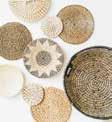
Now, she runs the import side of the business: hand-painted ceramics, silk scarves, handmade jewelry, and pashminas sourced from workshops in Izmir, Turkey, alongside large-scale urns from Greece, all sold from a small boutique tucked in the back of Fish Market. Above the display hangs a banner reading “Sarris and Sons” — despite the fact that, these days, it is George Sarris’s daughter running the operation. Dorothy laughs that traditional Greek culture tends to favor the sons anyway, whether or not they’re the ones actually doing the work.
Tell us about growing up at Fish Market.
"I could make change and help customers completely unassisted. Around fourth or fifth grade, I started working one day a week. That carried through middle school, and in high school I was here a couple of days a week, right after school until closing."
Did you always know this is where you'd end up?
"In the back of my mind, yeah. I always thought, if I'm in Birmingham, I'm going to be at Fish Market. When we're really busy on a Friday or Saturday night, I get a high from it. It's an adrenaline rush. When I'm not here, I miss it."
What's the biggest trait you inherited from your father?
"Stubbornness. It doesn't always serve me well, but it is what it is. I think it's a Greek thing. All Greek people are stubborn. But I don't give up very easily, so in many ways, that stubbornness does help. And I really do like people. He loves to talk to customers, and I have that same knack."
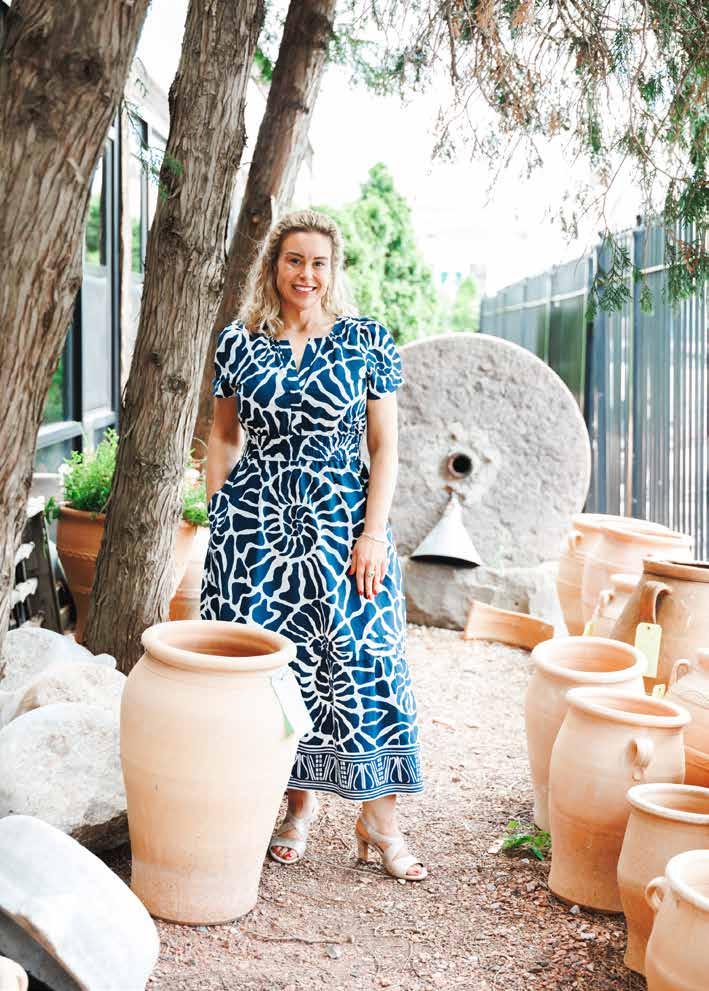
“Fish Market is Birmingham to me,” she says. “Birmingham is Fish Market. It’s home.”
Tell us about your first experiences of Greece.
"I spent most of my summers in Greece. The summer before first grade was the first time I went. My grandparents would go from May to September, and Dino, my younger brother, and I would go for four to six weeks. My dad came with us for the first time when I was seven — that was the first real vacation he'd taken since coming to America. It was a huge deal."
What made you finally go and stay?
"I had a really bad day at work — I was managing the business office at our catering company — and I called my dad and said, 'How hard do you think it is for me to get dual citizenship?' He said, 'I think you can do it.' And I said, 'I think I want to go for six months or a year.' He said, 'Yeah, you should.' Zero pushback. I was shocked. The next day, I was on the phone with the Greek embassy in Tampa. That was October 2017. I moved in July 2018."
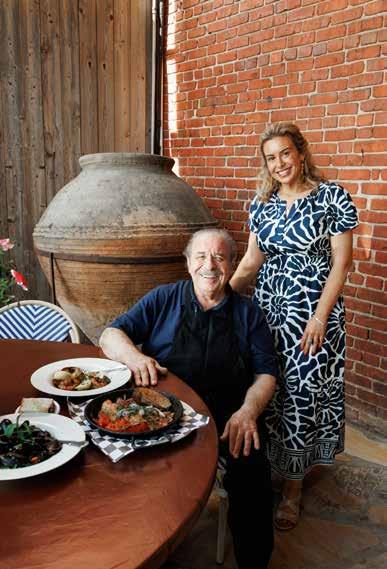
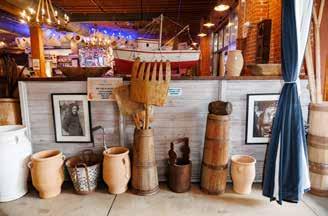

“When we’re really busy on a Friday or Saturday night, I get a high from it. It’s an adrenaline rush. When I’m not here, I miss it.”
What brought you back?
"Family. My brother’s family is growing. My parents are aging. And the cost of living in Greece has risen enormously, but salaries haven't kept pace. It didn't make sense to live there while I still needed to work and earn money. Would I retire there? One thousand percent. But to work and make real money, I needed to come back to reality in America."
You came back to run the import side of the family business. Tell me about that.
"Dino had been doing it himself for the last couple of years, but wanted to focus more on the food import company, Kalimera. They said, ‘You can help with the boutique, bring in goods from Turkey and Greece.’ I was very interested. I placed one order without having gone to Turkey, and then for my second big order, they said, ‘You need to go. Boots on the ground.’ So this past February, I went to Izmir on a buying trip."
What came back with you?
"I focused on hand-painted ceramics — coffee cups, little ring dishes, jewelry. Pashminas at a price point I don't think you can find anywhere else in Birmingham. Some silk scarves. The bags always go fast — every time I bring them in, they're gone within the first couple of weeks. I never buy enough."
How is Greek food in Greece different from what you grew up eating here?
"We are very Americanized. A Greek salad has no lettuce. It's tomatoes, onion, a couple of olives, green pepper, a lot of cucumber, oregano, a big hunk of feta, olive oil drizzled on top. That's it. No romaine, no iceberg, no dressing. I love our Greek salad here, but it is not a Greek salad."
What's your favorite thing to eat in Greece?
"Anything with eggplant. The area where our family is from — Leonidion, in the Arcadia region — is famous for its eggplant. They have an eggplant festival every year. Stews, jellies, all kinds of preparations. It's extraordinary."
What do you miss most about living in Greece?
"The simplicity. In Greece, you can sit at a café and have one cup of coffee, and it lasts four or five hours. No one's in a rush. Here, I can't tell you the last time I went to a coffee shop and just talked to someone. It doesn't happen — I'm in a work meeting, or I'm working. In Greece, your dinner lasts three or four hours, and you're there until two in the morning. That does not exist in Alabama."
What has coming home looked like for you personally?
"I recently purchased a home for the first time. I was moving around for so long, and I was unsure about buying in Greece. It feels good to know — okay, I'm going to be here for a while. It feels good to be putting down roots."
Eight years of living as a local. Here’s what she’d tell a first-timer.
Start your morning right.
Skip the hotel breakfast. Find a local bakery and order a pie — spanakopita, chicken pie, or wild greens. Then get a freddo cappuccino or freddo espresso. The best coffee was invented in Greece — it blows the Italians out of the water. Beach hack: make your first coffee of the day a freddo espresso, no sugar, add Baileys. It sets your day up for success.
Morning: Monastiraki
The flea market neighborhood has its own metro stop and is pedestrian-only. Skip the tourist shops and go deeper. If you want cool art, vintage, old stuff — it’s amazing. I found a needlepoint from 1910 of Athena riding a horse. I also recommend Yannis Michalopoulos in Plaka for rugs, art, and textiles.
Lunch: Exarcheia
Athens's counter-culture, graffiti-covered neighborhood is worth half a day. Some of the best food in Athens - I love Avli Gefsipoleion. There are lots of really great art galleries, too.
Dinner: CTC
Eleven courses, and the menu changes constantly. Book ahead and budget at least three hours. It's a culinary experience you won’t forget.
Neighborhoods worth knowing
Kolonaki is where moneyed Athenians live. Great cafes, pretty streets, and a Saturday farmers' market. Amaya Jewels is worth a stop. Psiri is the more bohemian option with great restaurants and bars.
Museums
I hope everyone goes to the Acropolis Museum. The Greeks put a lot of time, effort, and money into that museum, and it's really incredible. The Cycladic Museum and the Benaki Museum are worth adding if you have the time.
Beyond Athens: Dorothy’s top three places in Greece
Arcadia (Leonidion and Poulithra) — By far my favorite place in Greece. The small beach village of Poulithra anchors the market town of Leonidion (population ~5,000), which has quietly become a world destination for rock climbers. The people are so happy you're there. They're not jaded like on some of the islands. And they have some of the best food in Greece.
Meteora — Monasteries rising from rock spires, roughly two hours from Athens. It's kind of life-changing.
Sifnos — A Cycladic island known for its food and pottery workshops. It’ll be as popular as Milos in a couple of years. The beaches are great, the food is great. It’s quiet and beautiful and small.
her imports
ARTICLE BY CHRISTIANA ROUSSEL
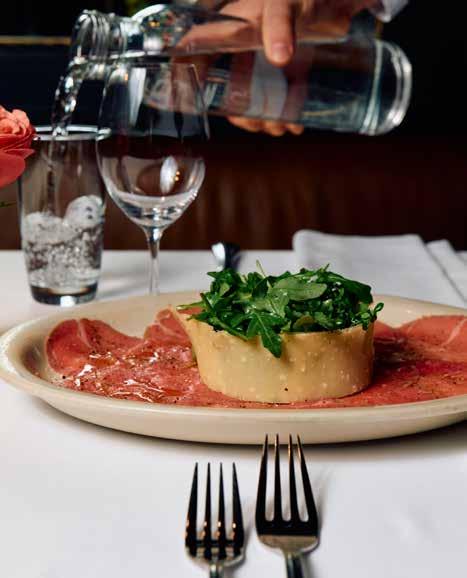
Carpaccio is one of my all-time favorite items on any menu. If I see raw beef listed, it will literally direct my entire ordering process. Legend has it that the original dish traces back to Harry’s Bar in Venice, where restaurateur Giuseppe Cipriani (also credited with inventing the Bellini) created it in 1950 for Countess Amalia Nani Mocenigo, who had been advised by her doctor to eat raw meat for her health.
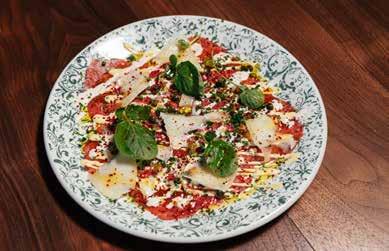
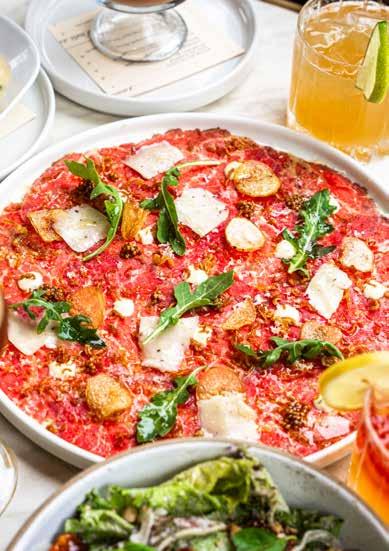
Cipriani sliced the raw beef paper-thin, arranged it on a plate, and dressed it with a simple sauce of mayonnaise, lemon juice, Worcestershire, mustard, milk, and pepper. He named the dish after Venetian Renaissance painter Vittore Carpaccio, whose work was on exhibit in Venice at the time – the deep reds and whites of the newly created dish echoing the palette of the artist’s paintings. Since then, the dish has been riffed on in numerous ways, and we’re fortunate to have several varieties on menus around the Magic City.
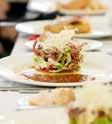
• Bottega Cafe – the Frank Stitt version is a classic, featuring Bear Creek beef sliced whisper-thin and layered over his signature horseradish cream sauce. Served with a mound of peppery arugula and ribbons of Parmigiano, it is as good as it gets.
• Gianmarco’s – the Homewood take on the Venetian dish comes with large caper berries that lend a saltiness, complemented by roasted garlic aioli sauce, red onion, arugula, and Grana Padano cheese.
• Lapeer – At this Rotary Trail restaurant, carpaccio is made from shaved American Wagyu beef and served with horseradish cream sauce, shallots, capers, and Grana Padano. Truffle salt and a side of toasted Bandit sourdough bread take it to the next level.
• Bocca – The Tom Saab version of carpaccio is made simply with beef tenderloin and finished with horseradish, capers, sea salt, and arugula, letting the ingredients speak for themselves.
• Lé Fresca - Owner Marco Butturini, an alum of the Stitt Hospitality Group, makes this dish in the classic style with arugula, capers, and Parmigiano, making it the perfect starter to a great Italian meal downtown.
• Little Betty – Perhaps the most deluxe version of all, where the thin Wagyu beef slices are dotted with caviar bumps and a truffle aioli. Pickled mustard seeds truly gild the lily.
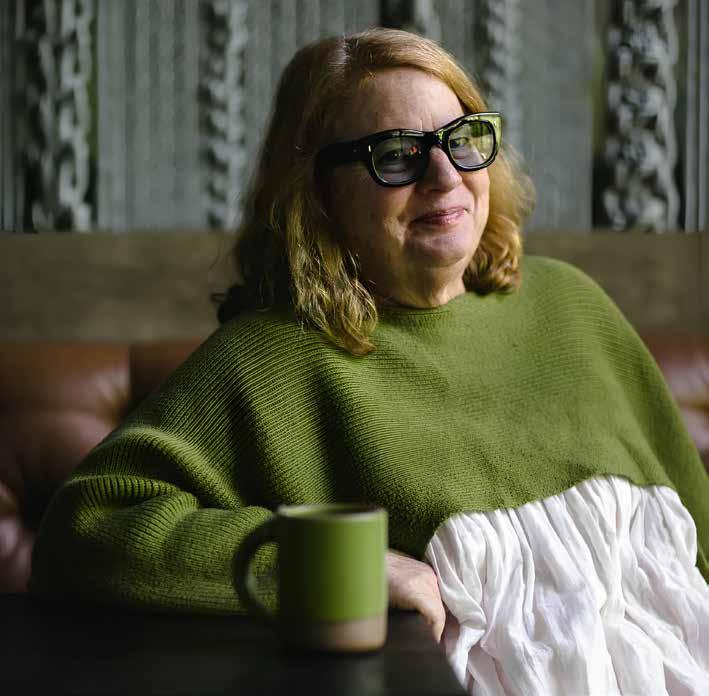
“I’ve always been a fan, admirer, and friend of Pardis and Frank. I got to know them through SFA – and I got to know Birmingham as a city through them.” -Anne Quatrano
Atlanta-based chef Anne Quatrano is no stranger to Birmingham. A longtime member of the Southern Foodways Alliance, she frequently stopped in the Magic City for a meal at Niki’s West on her way to SFA media symposiums in Oxford, Mississippi. Niki’s was “close to the highway,” she says, and she appreciated its distinctive menu of Greek and Southern cuisine.
In the last two decades, Quatrano has gotten to know the Birmingham food scene as a whole – “I’ve seen it grow like crazy,” she says – as well as major players Frank and Pardis Stitt. So it’s rather fitting that at this year’s Southbound Food Festival, she’ll be presented with the 2026 Frank Stitt Award for Industry Excellence, as well as leading the festival’s signature kickoff, the Heritage Dinner: Chicken & the Egg.
“I’ve always been a fan, admirer, and friend of Pardis and Frank,” Quatrano says. “I got to know them through SFA – and I got to know Birmingham as a city through them.”
A graduate of the University of Vermont and the California Culinary Academy of San Francisco, Quatrano worked in restaurants nationwide, from the Bay Area to New York City, before arriving in Atlanta. In addition to the Frank Stitt Award, her intentional use of local ingredients has earned her additional accolades, including the James Beard Outstanding Chef Award and recognition from the MICHELIN Guide.
And Quatrano doesn’t just cook with local produce; she grows it. At her 60-acre family farm, Summerland in Cartersville, Georgia, she grows a variety of produce, ranging from fruits and vegetables to specialty crops such as fennel and rainbow carrots. She also raises animals, including hens for fresh eggs.
“My mom’s family is from Georgia, and they had this property in Cartersville and lived on it and farmed it since 1840,” she says. “My mom had someone who farmed it while I was growing up in Connecticut, but we came to visit each summer. Then, in 1992, my husband and I moved down to Georgia and took over the farm.”
The Heritage Dinner is the kick-off event to Southbound’s 10-day celebration of Birmingham’s magnetic food culture
featuring ROOTED: Women in Food, a celebration of female culinary leaders and storytellers; HOSTED, a series of collaborative dining experiences at restaurants across Birmingham; Food & Fire, the festival’s flagship open-fire tasting event with acclaimed chefs, pitmasters, live music, and chef demos at Sloss Furnaces; as well as Funk Brunch: Juke Jam, a soulful finale blending Southern flavors and live entertainment.
Every year, the Heritage Dinner spotlights a regional ingredient – and how it shapes Southern foodways – to kick off the Southbound Festival. Bringing together local and regional chefs, the Heritage Dinner is a multi-course feast of creative dishes featuring the year’s spotlight: in this case, the chicken and the egg. And, of course, the evening includes honoring the recipient of the Frank Stitt Award for Industry Excellence.
At the 2026 Heritage Dinner: Chicken & the Egg, Birmingham residents will have the opportunity to taste what put Quatrano on the food map as founder of Atlanta-based restaurants such as Bacchanalia, Star Provisions, and, coming soon, Summerland, a breakfast spot named after her farm and her 2013 debut cookbook.
The evening promises to be a celebration of Southern food, with dishes prepared by Quatrano in collaboration with a few regional chefs she respects. These include Chef Joël Antunes, Chef-in-Residence at Auburn’s 1856 Culinary Residence; Chef Shaun Doty, Executive Chef at the Jules Restaurant at Barnsley Resort; Chef Drew Belline, who worked in Ford Fry’s Rocket Farm restaurants in Atlanta; Carla Tomasko, Pastry Chef at Anne’s Bacchanalia; Candace Foster, Pastry Chef at Birmingham’s Helen; and Rita Bernhardt, Chef and owner of Homewood’s Salice.
“I’ve had so much admiration for Frank and Pardis and how they treat staff and run their restaurants – they’re exemplary in our industry,” Quatrano says. “And for me, the most important accolades come from peers you respect. So yes, I’m thrilled.”
southboundfoodfest.com/heritage-dinner
BY C.W. NEWELL
BY ALICE WELSH
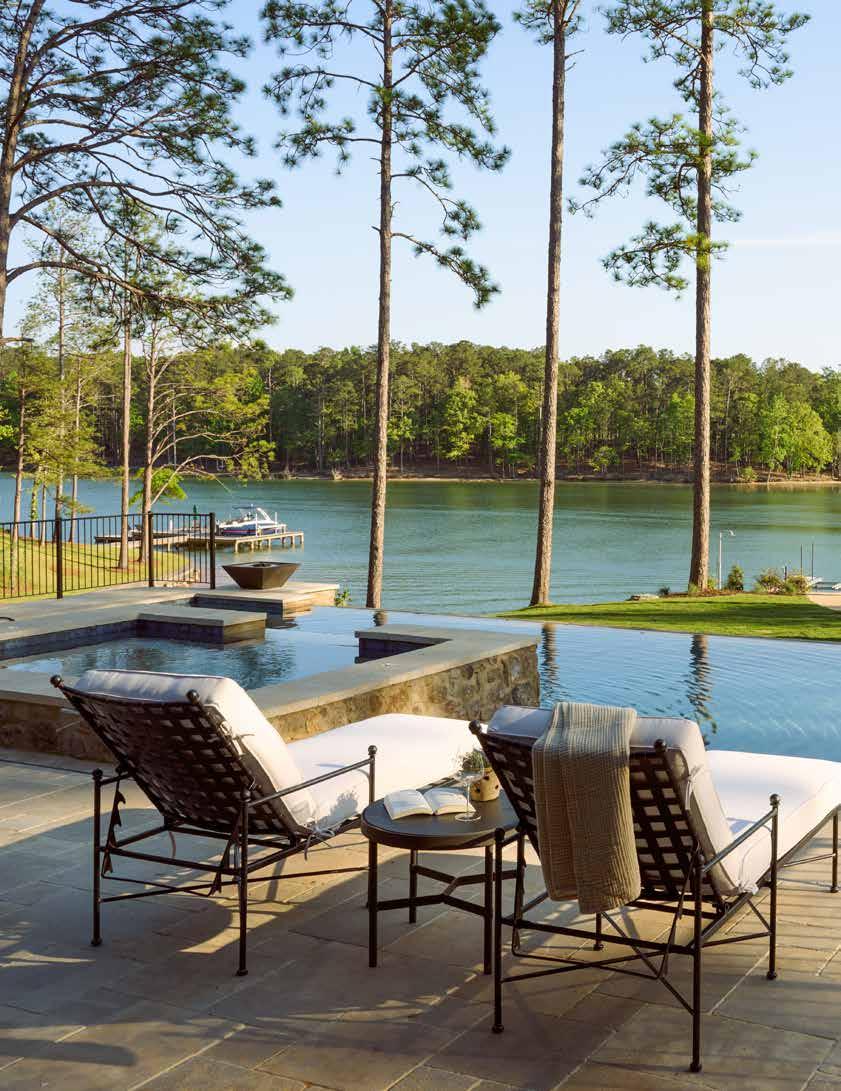
INTERIOR DESIGNER LAURIN WHITE AND ARCHITECT MATTHEW V. COSTANZO CREATE AN ELEGANT, LIGHT-FILLED HOME ON LAKE MARTIN
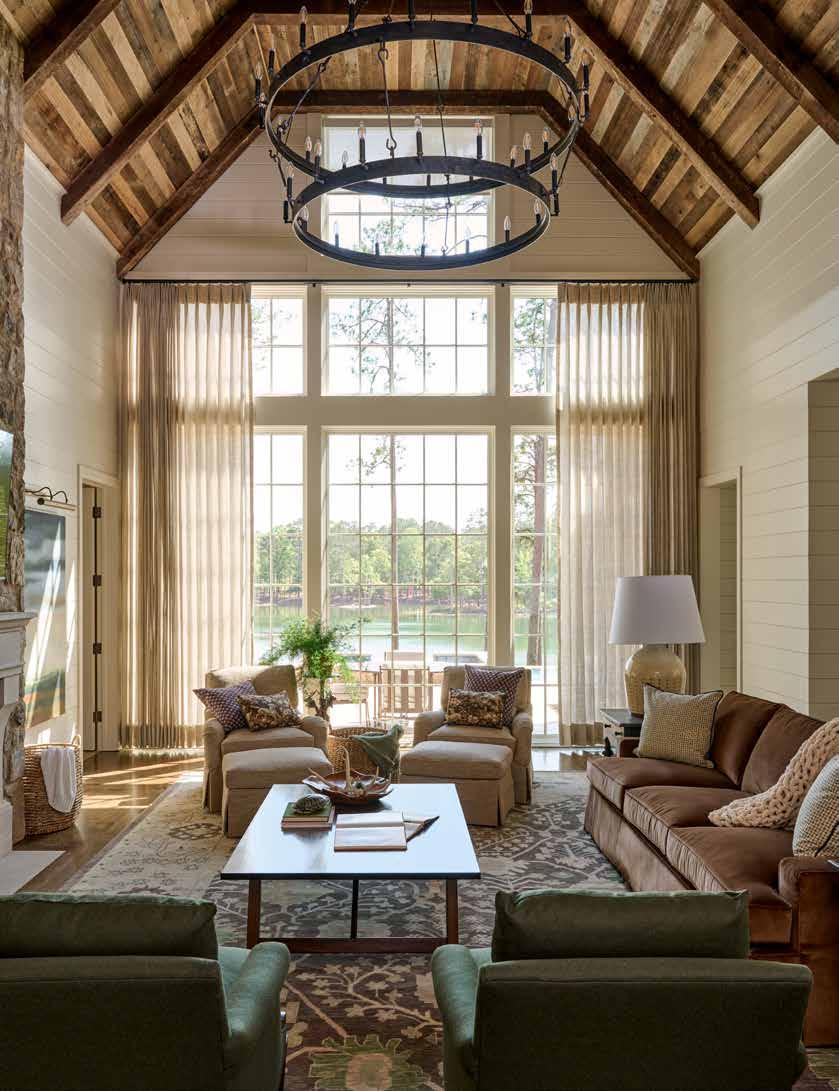
“Our goal was to make this lake house more than a getaway, but rather somewhere ethereal, beautiful, comfortable, and seasonless,” says interior designer Laurin White of Cambridge Row. “We avoided anything too trendy or lake specific and focused on authentic materials with lasting appeal instead.” Laurin was teamed up with architect Matt Costanzo for the project in Russell Lands Heritage development, and the two were soon thick as two design thieves can be. “It seems
cliché perhaps to say, but trusting in our collaboration was what made it such a success,” says Matt. A simpatico partnership was especially important as these clients preferred a more hands-off approach to the process, and everyone was remote. “We were trying to figure out what was really important to them when the homeowner showed us this French limestone she wanted to use for the flooring, which helped us realize the kind of look they were hoping to create,” says Matt. “That was sort of a tipping point in the project.”
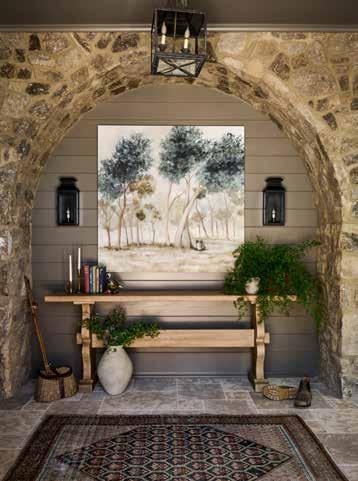
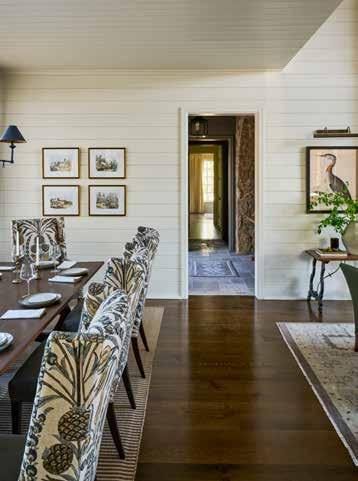
Adds Laurin, “We layered in as many special, luxurious materials as we could to give the rooms dimension and personality rather than relying as heavily on wallpaper or floral fabrics.” In addition to the French limestone, materials include reclaimed barn wood for the ceiling, wide-plank dark-stained oak floors, and painted tongue-andgroove paneling on walls and ceilings. All these selections formed a refined foundation with just enough rusticity to allude to the setting and ready for Laurin to fill in with details.
“OUR GOAL WAS TO MAKE THIS LAKE HOUSE MORE THAN A GETAWAY, BUT RATHER SOMEWHERE ETHEREAL, BEAUTIFUL, COMFORTABLE, AND SEASONLESS.” - LAURIN WHITE
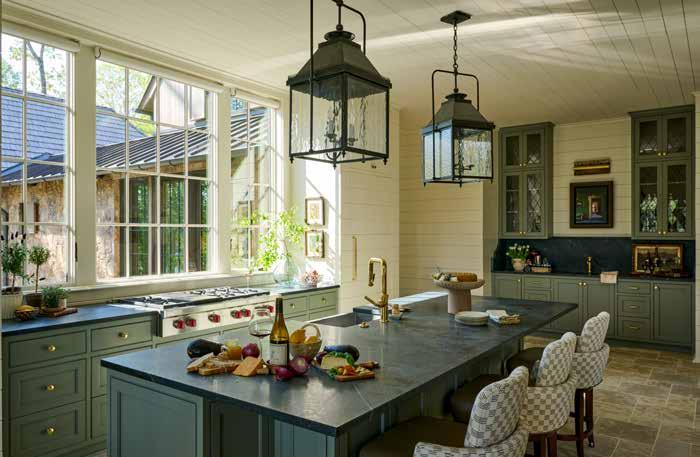
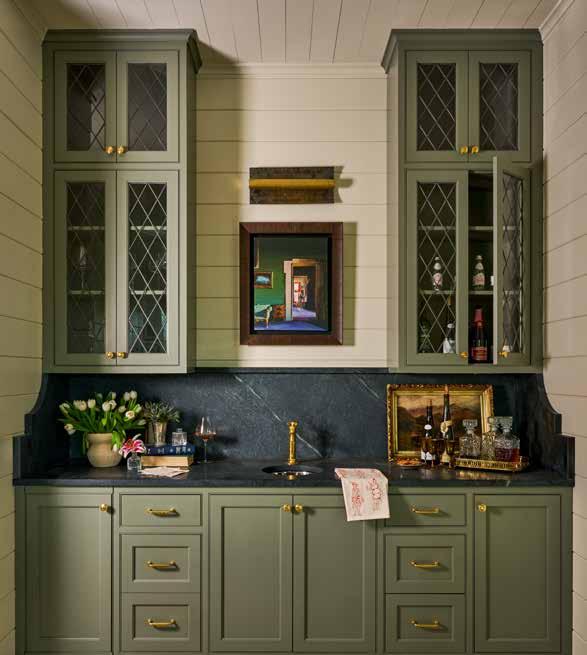
“Before the house was even built, I closed my eyes and thought about how I envisioned the spaces Matt had created—everything was a little bit aged with existing patina or patina that would develop over time, like unlacquered brass hardware and soapstone countertops—pieces with staying power that were not too perfect,” Laurin says. The designer paid special attention to the lighting, with aged-bronze lanterns in the kitchen and one hand-forged piece from Brandino Brass for the living room ceiling. The tiered fixture provides an artistic presence and some gravitas against the tall vaulted ceilings. Floor coverings were given the royal treatment as well—either antique or specifically colored to blend with the palette by Angie Burge of English Village Lane, using fabric swatches Laurin provided.
Craftsmanship extended beyond the architectural materials to include a hand-made oak dining table that seats up to 10 and a walnut coffee table, both from Moses Tables in Homewood. And while there are custom pieces and luxurious, tactile fabrics such as velvet and wool, Laurin included practical elements; for example, chairs and bar stools (with seats in a Kravet bleachable fabric) swivel to take in the views or for conversation.
The designer also imbued the home with some English flavor. “I love the British countryside ‘lived in’ look, so I chose smaller prints by Chelsea Textiles and a Schumacher hound dog pattern to reference their love of hunting and the outdoors,” says Laurin. When it came to decorative accents, she took a light-handed approach. “I wanted to give them space to add special photos and pieces from their travels. Any art we curated was in keeping with their personality and passions,” notes Laurin. “For example, we found a painting with a deer walking through a door with a soccer ball, and we commissioned one art piece for the foyer that includes the family’s two hunting dogs.”
CONTINUED >

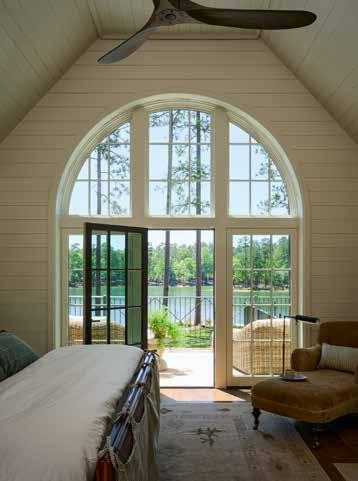

“FROM THE MOMENT YOU STEP OUTSIDE, TUNES PLAY AS YOU WALK DOWN TO THE WATER; THE WHOLE FEELING OF THE SOUND AND THE LIGHT IS JUST MAGICAL AND TRANSPORTIVE.”
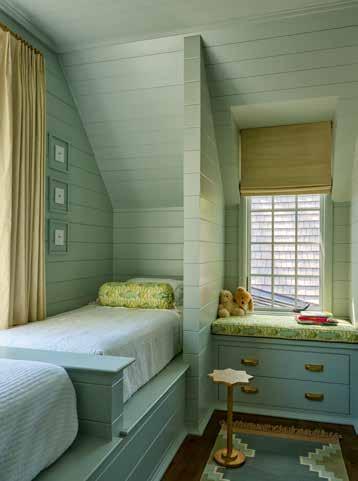
What’s just as important to the enjoyment of the home is something sensed but not seen—an emphasis on the views and outdoor living and the control of natural light in the interiors. The architect made sure all five bedrooms look out over the lake, and there are several porches for a variety of activities, including grilling and television viewing. Subtle interior light adjustments come in through motorized shades employed to great effect. Hidden
screens are tucked inside the large arched window in the primary suite, for example, while double walls of glass allow sunlight and privacy for the bathroom soaking tub. The sound system is another unseen joy. “Our audio/visual technician created a music-filled journey,” says Laurin. “From the moment you step outside, tunes play as you walk down to the water; the whole feeling of the sound and the light is just magical and transportive.” Welcome to the lake.

As America, Alabama, and the American Village get ready for the celebration of the semiquincentennial (250th) birthday of the Declaration of Independence on July 4th, it is a perfect time to reflect on the Declaration's meaning and to learn more about it and those who wrote it.
The Declaration was more than just a statement of rebellion against King George III. It is the cornerstone of our nation and a statement that all are created equal and are endowed with the unalienable rights of life, liberty, and the pursuit of happiness, which are given to them by their Creator. These principles remain as important today as they were in 1776. Today, when our understanding of our government and its history, as well as civil debate and discussion, are becoming rarer, places like the American Village remind us that freedom depends upon an informed and engaged citizenry.
By bringing history to life through immersive programs and educational experiences, the American Village connects visitors directly to the people and ideas behind America’s founding. We place visitors in the history book and let them walk through history, meeting the founders of our nation, taking part in historical debates, and learning how these courageous and inspirational individuals shaped our nation.
The ongoing pursuit of equality, justice, and freedom is a journey that requires every new generation to understand and cherish the principles upon which our nation was built. The American Village stands as a bridge between our past and present. By teaching the lessons of liberty, civic duty, and democratic values, it helps make sure that the spirit of the Declaration continues to inspire Americans for generations to come. As we commemorate 250 years of independence, it is so vital that we recommit ourselves to learning, preserving, and living out the ideals that define our nation so that we can maintain the government we have.
Benjamin Franklin’s famous quote from 1787 is appropriate to always remember. When asked what form of government the Founders had created, Franklin replied, “A republic, if you can keep it.” Those simple words remind us that liberty is not perpetual. Our nation depends on citizens who are willing to learn their history, participate in local, state, and federal government, respect our democratic institutions, and protect the freedoms passed down by previous generations.
As America marks 250 years of independence, the American Village reminds us that freedom depends upon an informed and engaged citizenry
ARTICLE BY VAL CROFTS

We are at a vital time in our history. As we commemorate 250 years of independence, it is essential that we all recommit ourselves to learning, preserving, and living out the ideals that define our nation — because, as Franklin warned, maintaining our Republic ultimately depends on each one of us. The Declaration of Independence continues to serve as both a foundation and a challenge for Americans today, calling upon each generation to uphold the values of liberty, equality, and self-government in an ever-changing world.
Val Crofts is Chief Education and Programs Officer at the American Village in Montevallo, Alabama. He is also one of 16 private citizens appointed by the U.S. House and Senate leadership of both parties to serve on the nonpartisan U.S. Semiquincentennial Commission.



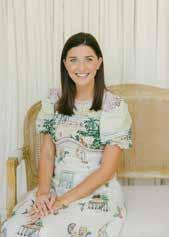
Virginia Moore
Best hotel you’ve stayed in the past year–
Cheval Blanc St-Barth. They anticipate every need before you think to ask. They already knew where my dinner reservation was each evening and would call a taxi 30 minutes in advance without me asking.
What are your clients asking for that they weren’t two years ago?
A slower pace. Less interest in rushing through five cities on one trip. More time at each place, slower mornings, wellness experiences — trips that actually feel relaxing rather than exhausting. Don’t sleep on–
Anguilla. The beaches are incredible, the hotels are exceptionally well done, and it has a much calmer feel than most Caribbean islands.
If you are going to splurge–
The hotel, every single time. A well-connected hotel can unlock reservations, experiences, and access that completely change the quality of a trip. The best concierge teams know which restaurants are worth your time, which tables to request, and which beaches are worth the drive.
Don’t sleep on–
Vietnam. American travelers flock to Thailand, but Vietnam has just as much to offer.
What’s the most overrated destination right now?
Italy isn’t overrated, but almost every first-time visitor requests Rome, Florence, and the Amalfi Coast. Italy has so much more.
Best trip you’ve ever taken?
South Africa. Safari, Cape Town, and the winelands make for a perfect combo.
If you are going to splurge–
VIP airport meet-and-greet on arrival. It saves time and makes for a far more enjoyable start to a trip.
The place that surprised you most?
Iceland. I don’t love the cold, but the food is delicious, and the people are so funny. I felt like we laughed the entire time.
Best hotel you’ve stayed in the past year–
Singita Ebony Lodge in Sabi Sand, South Africa. It felt like staying in someone’s personal safari lodge.
What are your clients asking for that they weren’t two years ago?
Ultra-personalized experiences. Private Mass at the Vatican. Private hot air balloon over Tuscany. Center Court Wimbledon tickets. VIP Andrea Bocelli tickets.
Don’t sleep on–
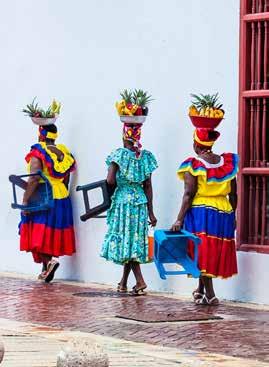
Colombia. A four-hour flight from Atlanta, the second most biodiverse country in the world. Best trip you’ve ever taken?
Gorilla trekking in Rwanda. One of the cleanest countries I’ve ever visited, and the conservation efforts around the gorillas are extraordinary. What’s the most overrated destination right now?
The Amalfi Coast. It has become so crowded. I’d recommend Ischia instead — easier and far more relaxing.
If you are going to splurge–Go to Africa. It will change your life.
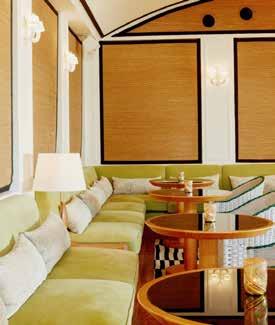

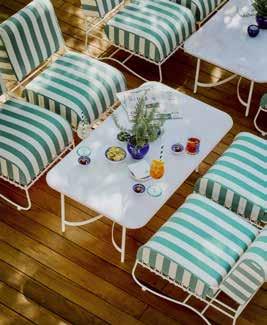
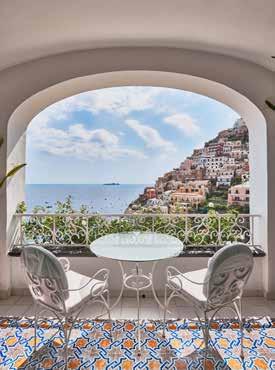

“Italy.
The classic VeniceFlorence-Rome itinerary is giving way to the Dolomites, the lake regions, Sicily, and Sardinia. Empty nesters are also shifting to spring and autumn travel to avoid summer crowds.”
- Marydee Snow
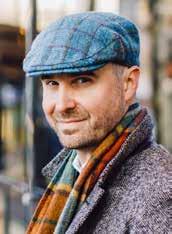
Best hotel you’ve stayed in the past 12 months?
The Rosewood Amsterdam. Waterfront canal views, extraordinary original art throughout — including an art vending machine — and sumptuously sleek rooms. One of the most impressive new hotels I’ve seen.
One destination that’s changed completely in the last five years?
Italy. The classic Venice-Florence-Rome itinerary is giving way to the Dolomites, the lake regions, Sicily, and Sardinia. Empty nesters are also shifting to spring and autumn travel to avoid summer crowds.
What are your clients asking for that they weren’t two years ago?
Pairing travel with major events — F1, tennis, golf, live music. One recent trip ended in Belfast for Van Morrison’s 80th birthday concert.
Where are you going next?
My own honeymoon in September — the Amalfi Coast. After years of planning hundreds of honeymoons for clients, it feels full circle. Our final stay is at Le Sirenuse in Positano. It’s family-owned, and you can feel how deeply they care. I’m especially excited for their new beach club, Le Sirenuse Mare.
What are your clients asking for that they weren’t two years ago?
Travel insurance. It’s the least glamorous part of this industry, but more clients than ever are prioritizing it to protect their investment. Peace of mind has become a consistent theme. Don’t sleep on–
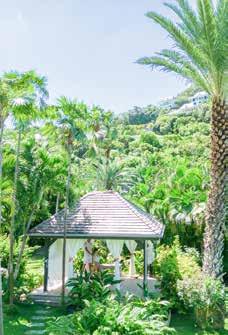
Grand Cayman, especially Palm Heights on Seven Mile Beach. You can have your toes in the sand by noon and feel a world away. It’s also become a favorite for celebrities looking for a low-key escape — you never know who you’ll bump into.
The place that surprised you most?
Slovenia. For such a small country, it offers everything — beautiful landscapes, great food and wine, and you can reach Ljubljana in under three hours from Venice. Within two hours of the capital, you have lakes, mountains, vineyards, and coastline. Every client I’ve sent there has been blown away.
Best hotel you’ve stayed in the past 12 months?
Mezzatorre in Ischia. The moment you arrive, you feel at peace. It sits at the end of a long private driveway with its own beach club and a spa with thermal baths. The staff makes you feel completely at home.
Where are you going next?
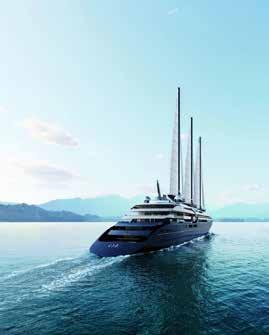
The brand-new Orient Express Corinthian sailing yacht on the French Riviera. The Orient Express brand launched its La Dolce Vita train in Italy last year, opened a hotel in Venice, and now this. When you love what you do, every trip is a pleasure.
Don’t sleep on–
Ischia. An hour from Capri by private boat, but a world apart. Rugged coastlines, lush hills, natural hot springs, and understated luxury. It’s for people who want to truly connect to a place — not the see-and-be-seen crowd.
Best trip you’ve ever taken?
Morocco and India, and I can’t choose between them. Experiencing Morocco during Ramadan was something else — arriving in Fes, then watching Marrakech come alive during Eid al-Fitr, then hiking the High Atlas Mountains. India was equally extraordinary: a private gala at the City Palace in Jaipur, tiger trekking in Bandhavgarh.




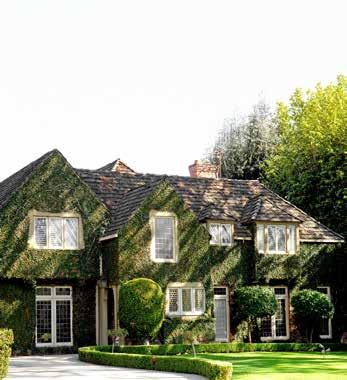
It’s been my privilege to help these families successfully sell their homes through expert guidance, strategic marketing, skilled negotiation, and exceptional service. My goal is to achieve the best possible outcome while ensuring a smooth, stressfree experience. Whether you’re buying, selling, or exploring your options, I’d welcome the opportunity to discuss your real estate goals and how I can help.


205-447-7724
www.Birmingham-Realtor.com 600 Olde English Ln, Suite 104, Mountain Brook, AL 35223




“Daddy,” one of Eric Guster’s children might say, peering at his phone, “It’s sunny in New Orleans. Can we go get some beignets for breakfast?”
Some mornings, the answer is yes.
Within an hour, backpacks are packed, and the family is heading toward a private terminal near Birmingham-Shuttlesworth.
Another Saturday, the kids might be eyeing Orlando on the map.
“Can we go down to Disney today?”
Often, the answer is, “Why not?”
For Eric Guster, a Birmingham lawyer and real estate developer, flying began as a practical decision. He earned his pilot’s license, hoping to scout development sites across the Southeast and still make it home for dinner.
Somewhere between work trips and weather reports, the airplane became part of family life.
“The best part is my family can fly on Fridays, Saturdays, and Sundays, and we can go wherever we want to go in the Southeast within a couple of hours,” he says. “It’s just so much fun.”
Now, Nashville feels nearby, and Orlando is a simple outing.
“It makes the world so much smaller,” Eric says.
“On the weekends, my kids think it’s an Uber,” he says, laughing.
For all the novelty of private flight, much of the plane feels familiar: crayons tucked nearby, books within reach, and headsets waiting for small travelers.
“Our plane looks like an SUV,” Eric says. “Our kids have their books, binoculars, and crayons in seat organizers.”
His youngest, Jordan, now 1, climbs aboard as though this, too, is simply part of family life.
Eric’s wife, Jamie, remembers hearing the plan while pregnant with Jordan.
“So, I’m six months pregnant right now with two small children, and you’re gonna go pick the most dangerous hobby that you can think of?” she says, laughing.
Still, she knows her husband.
“He’s a dreamer, but he’s a doer,” Jamie says. “When he dreams something up, you can pretty much guarantee that he’s going to make it happen.”
From the first flying lesson, she could tell where things were heading.
“Once we were paying for lessons,” she says, laughing, “I just knew, ‘This man is going to buy a plane.’”
Eric never treats flying casually.
Before taking the family on their first trip, he flew the route eight times alone.
“Safety is number one,” he says. “Having my whole family on this plane is something I do not ever take lightly.”
Flying proved harder than Eric expected.
“It’s the most difficult thing I’ve ever done,” he says. He still flies at least twice a week to stay proficient.
If the forecast looks questionable, they stay home.
“If there’s a five percent chance we’ll have problems on the flight, like weather, we don’t go, period,” he says.
That matters to Jamie.
“I trust him,” she says. “I would trust him to walk me off a cliff if he said we needed to.”
These days, even the children know the routine. Erin, 6, checks weather maps and already knows which clouds to avoid.
“We make sure there are no cumulonimbus clouds!” she says proudly.
Sometimes, weekend plans end at Café Du Monde, where powdered sugar comes first and the playground nearby proves harder to leave than the city itself.
By now, the Guster children have become playground connoisseurs.
“My kids were on the last playground for two and a half hours,” Eric says. “I finally told them, ‘We’ve got to fly home, kids.’”
Sometimes, weekend plans come together a few days ahead. Other times, they begin with a passing wish.
Recently, Ella, 4, announced she wanted to watch the sunrise from the airplane.
“All she had to do was tell her daddy that,” Jamie says.
So, one Saturday at 4 a.m., the family was headed to Memphis, sleepy children tucked into their seats as morning slowly arrived outside the windows.
Ella was the first to notice.
“The sky is turning yellow!” she announced.
By lunchtime, the family was at the Memphis Zoo—one more Saturday for a family waking up to the wonder of where the day might take them.
“When he dreams something up, you can pretty much guarantee that he’s going to make it happen.” - Jamie Guster
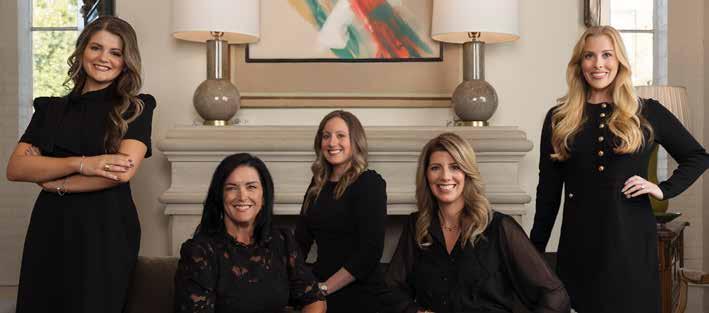















ARTICLE BY KALI KASPRZYK
PHOTOGRAPHY BY JANIE JONES
MAKEUP BY MIKAYLA CRANE
Winnipeg in the winter, and a 17-year-old waits 45 minutes in the cold for Keanu Reeves. Her fingers are numb. She is not there for an autograph. She is there to ask him to appear in her audition tape for MuchMusic, Canada’s MTV. When he finally agrees, she writes her number on a gum wrapper with a borrowed lip liner.
He calls days later.
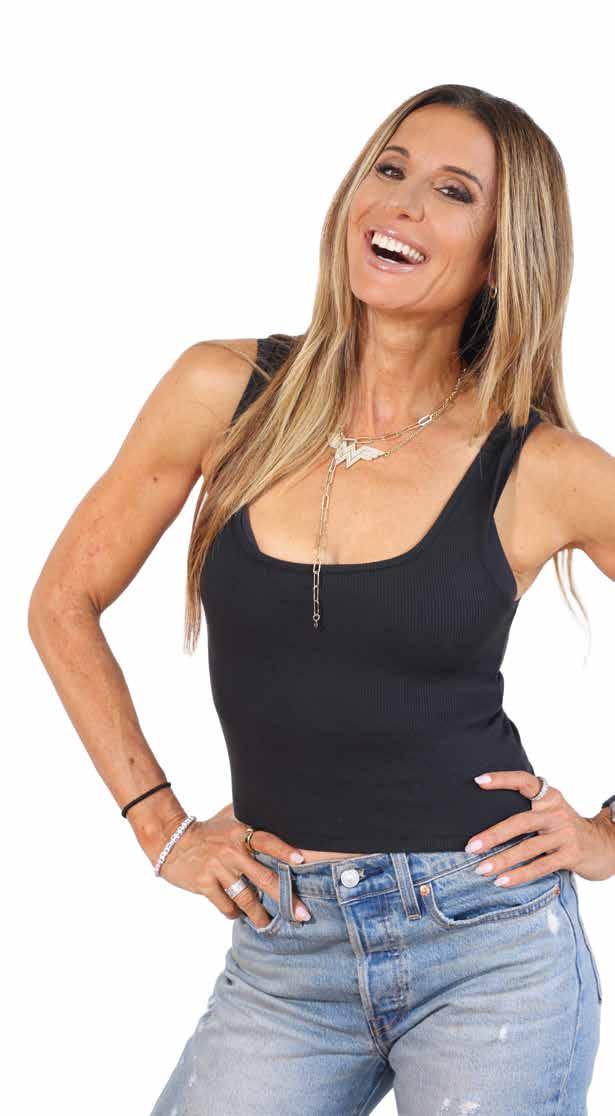
That 17-year-old was Jen Cohen — fitness expert, host of the Habits & Hustle podcast, and best-selling author. She has built a career on the premise her frostbitten afternoon proved. She calls the practice the 10% Target: 10 attempts at whatever you want most in life.
The premise is simple. Most people never make one attempt. Almost nobody makes two. The math works in favor of the person who keeps going.
The top-rated Habits & Hustle podcast has logged hundreds of conversations with high performers and the people who study what the body does to the mind. Her TEDx talk, The Secret to Getting Anything You Want in Life, has traveled widely inside Fortune 500 sales-training rooms. On the Share the Lifestyle podcast, Cohen sits down to share the working rules that are the foundation of her latest book, Bigger, Better, Bolder.
“You have to be the CEO of your own life.”
FEATURING JEN COHEN
Discover the full 10% Target Mindset framework.


1 2
The door opens, or another door does. The unmade attempt and the refused one leave you in the same place — except one of them teaches you something.
Cohen frames her habits as a wager: How do I stack the deck so I win more than I lose? The workout happens first, and the food decisions follow. The email follow-up gets sent, and the answer arrives. The choices compound in a single direction.
3
No one is born with it. The people who look disciplined are running a routine they have rehearsed long enough that it no longer feels like effort. The reps are the skill. Miss them, and the skill fades, the same as any other.
4
Confidence does not arrive by repeating the word. It arrives after the body has done the thing — the workout finished, the cold walk endured, the email sent. The mind takes its cues from what the body proves it can do. Talk follows action, not the other way around.
5
The first decision sets the slope of the rest. Skip the Monday workout, and the rest of the week tends to follow. Hold the line on Monday, and the slope tilts the other way.