
& Pets



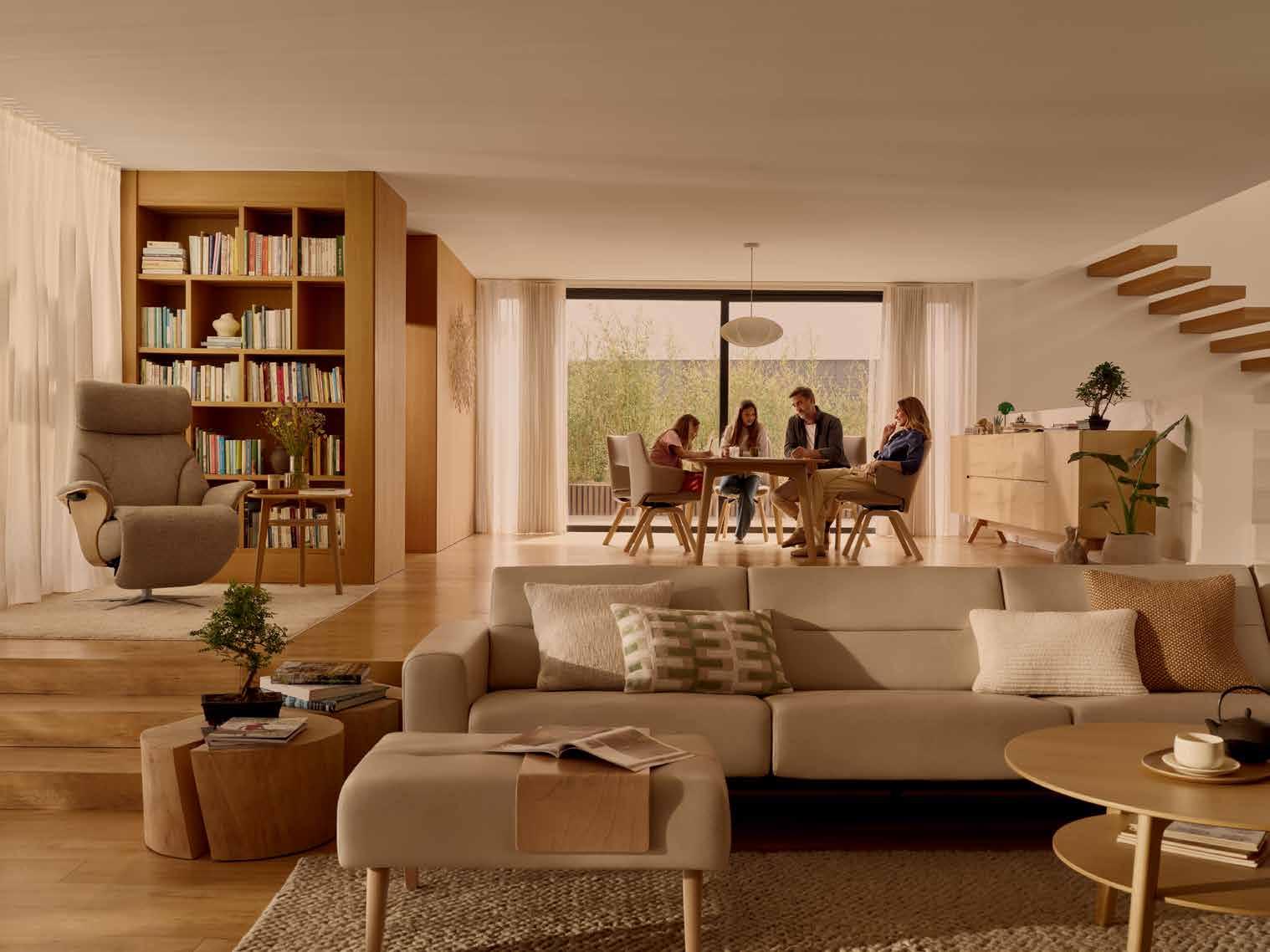

Stressless Laurel Dining Chair
Stressless Stella Sofa






Kids & Pets Issue
A couple years ago I found myself in need of some direction. A counselor simply advised “get a dog.” I found the advice simplistic and, frankly, stupid—she must not “get it.” What books could I read? What guru could I pay to fix my life? I needed to meditate, journal, run, read, and get some medication.

It took years before I was seemingly settled enough to get a puppy. Like many of you readers, my husband and I welcomed a Covid puppy into our home in 2020. Along with my mom, we drove to Dodge Center, Minnesota that August to pick up a pair of 10 week old sisters—French Spaniels. After the tragic, premature passing of my parents’ English Setter, I realized that 1) I love dogs more than I realized 2) I really needed one of my own.
We named our French girls Clémentine “Cleme” and Choupinette “Nettie”. Honestly, what else are you going to do in the middle of a lockdown than hop in the car and drive 15 hours for some pups? It turned out to be—just like that strange therapist said—the best thing ever.
Nettie is a shedder. A licker. A 360 degree jumper, and the fastest dog I’ve ever seen. Her retrieving skills leave room for improvement, and she prefers to be hand-fed. Some people aren’t dog people, and that’s OK. For me, the best days are the ones that end covered in dog wispy white hair and kisses.
Cheers to all the lovable creatures in our lives.

August 2026
PUBLISHER
Kali McNutt | kali.mcnutt@citylifestyle.com
PUBLISHER ASSISTANT
Shellye Andrus
STAFF PHOTOGRAPHER
Mary Fehr
COPY EDITOR
Denise K. James
CONTRIBUTING WRITERS
Blair Moore, Denise K. James
CONTRIBUTING PHOTOGRAPHERS
Ashley Walker, Mary Fehr, Black Elm Photography, Laurey Glenn
Corporate Team
CEO Steven Schowengerdt
President Matthew Perry
COO David Stetler
CRO Jamie Pentz
CoS Janeane Thompson
AD DESIGNER Matthew Endersbe
LAYOUT DESIGNER Kathy Nguyen
QUALITY CONTROL SPECIALIST Brandy Thomas


Learn how to start your own publication at citylifestyle.com/franchise.

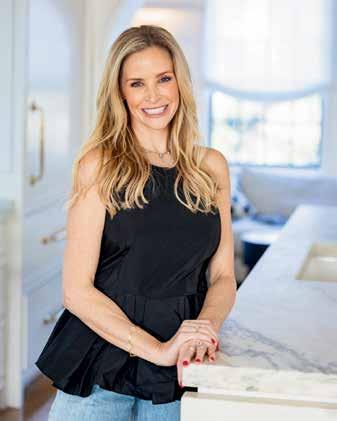
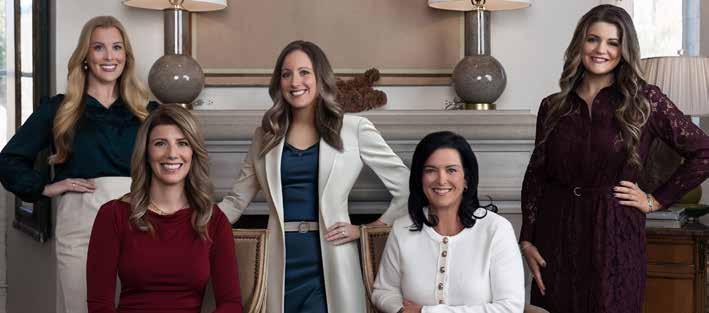
Lynlee strongly believes in and supports residential growth in Birmingham. Since obtaining her license in 2014, Lynlee has completed over 688 transactions totaling over $322 million dollars of real estate sold in the area. “I have made a huge effort to be intimately engaged in the central city and surrounding “city suburbs” from Forest Park to Homewood, Mountain Brook and Vestavia, so that I can provide the greatest benefit to my clients, which I strongly believe is market knowledge”. Her greatest motivation is her clients: She says, “Success to me is doing what I love every day and knowing my contributions positively impact my clients, my company and my city and that I have produced the highest quality of work.”














With City Lifestyle’s co-branded print + digital packages, your business captures attention wherever our community is looking. Build unmatched local credibility on the page, and drive immediate action online. Ready



TOP D OG
Where Your Dog Is Family
NOW OPEN:
Top Dog Homewood is Alabama’s first small-dog-only daycare for dogs weighing 35 pounds or less. Also offering grooming and boarding.
BIRMINGHAM
2222 5th Avenue South Birmingham, AL 35233 205-201-4782
@topdogbirmingham
HOMEWOOD
2804 Crescent Avenue Homewood, AL 35209 205-326-7317
@topdoghomewood_


READY TO ROCK
IRON CITY REVIVAL
IS A FIVE-PIECE BAND OF FRESH TALENT
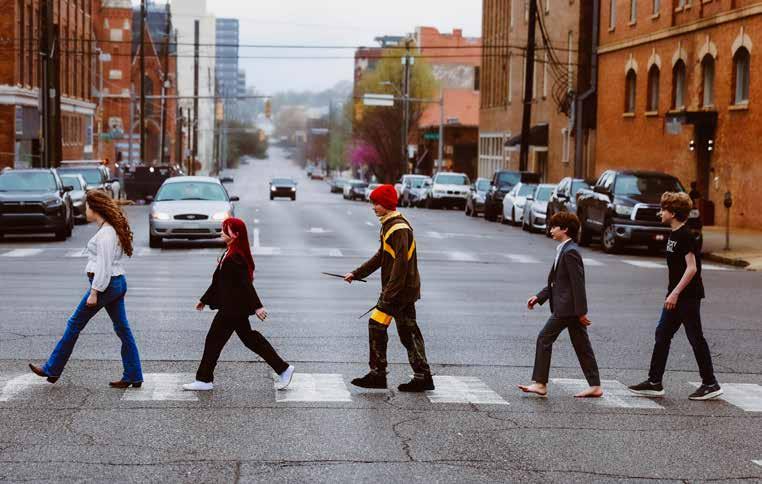
It’s a Wednesday afternoon in early summer, and Birmingham’s brightest musicians are gathered to talk – and play – rock n roll. The energy among the kids is palpable. Ranging in age from 11 to 14, they’ve been in tune since meeting one year ago as students of Birmingham’s Mason Music, where each one signed up for Rock Band League. The program groups kids around the same age and skill level, and for these five, it was quite the serendipitous arrangement.
“We figured out that we’re terrific together as a band,” says guitarist and singer Maggie Harelson, age 14. “We performed so well together, we decided to keep working together.”
ARTICLE BY DENISE K. JAMES PHOTOGRAPHY BY BLACK ELM PHOTOGRAPHY
The kids have different backgrounds and interests and attend different schools, but music is their unifying factor, and all five agree that music was already shaping their lives long before they met. Lead singers Maggie and Falynn Duggar, age 11, both began working on their voices at a young age. Trey Lockhart, age 13, the band’s drummer, first perfected his rhythm on coffee cans while listening to the band 21 Pilots. “I drummed on some coffee cans, my mom saw that I liked drums, and I got my first drum set,” he says.
In some cases, choosing an instrument took trial and error. Grey Rains, age 12, began playing the piano until a friend of his grandmother’s offered him a guitar. His hands couldn’t quite fit around the guitar’s neck, so he pivoted to a ukulele for a while and is now the band’s lead guitarist. Similarly, Finn Nunnelley, age 11, started with a ukulele as well – “my sister got one, and I was jealous,” he admits – and currently plays bass.
The five bandmates share musical tastes you might not expect from kids of their generation – Falynn readily named Weezer as one of her top artists, along with the Beatles and Nirvana. Other influential artists for the group include the Rolling Stones, Jimi Hendrix, Creedence Clearwater Revival, Red Hot Chili Peppers, Green Day, The Doors, Radiohead, and Queens of the Stone Age.
“My tastes span every genre except jazz and country,” Trey declares, to the amusement and delight of his fellow musicians.
“The band has ignited my passion for music,” Grey remarks. “I was playing the guitar as a side hobby before, and now I enjoy playing and listening – I’m more inspired.”
The name Iron City Revival is credited to Maggie, who says the word “revival” reflects the band’s desire to energize an audience. Though the kids were nervous at their first live show – Finn had a broken arm from football practice and Falynn was recovering from the flu – they are seasoned performers at this point, playing at multiple venues through the Mason Music Rock League program, such as Woodlawn Theatre, Saturn, and Workplay, as well as on their own at Irondale Pickers, Vulcan Park, and in the Rocky Ridge Battle of the Bands, which they won.
As you read this, Iron City Revival has released a second single, Nina Simone’s “Feeling Good,” in the style of Muse, on major streaming platforms, following the success of their first single, “Come Together,” in the style of the


Beatles. The group takes practicing seriously, either in the studio space available at Mason Music or in Trey’s basement. “At Mason, we usually practice on Sundays, and we meet at my house before concerts for extra practice,” Trey says.
In addition to growing as music performers, the five bandmates are growing in friendship, bonding through the experience of being part of something bigger than themselves.
“I feel like I have a lot more friends now,” Finn muses. “I’ve got all these guys and girls now. And I work harder on my music.”
Maggie agrees. “I’ve had a hard time making friends,” she shares. “But then I met my band, and I feel like they’ve become my best friends. This has changed my life.”
ironcityrevival.com
Two weeks after my interview with these young stars, I traveled to see them perform at Lakeview Club’s Battle of the Bands, just outside of B’ham. Not only were they the youngest band on the schedule, they moved the crowd, me included, to an uproar reserved for the finest rock ‘n roll stars -- and, naturally, they won the entire competition. If you love music, please don’t miss your chance to see them live.

Top L-R: Maggie Harelson, 14; Falynn Duggar, 11; Trey Lockhart, 13
Bottom L-R: Grey Rains, 12; Finn Nunnelley, 11












A Little Slice of Wonder
FROM BUTTERCREAM BOWS TO UNEXPECTED FLAVORS, LINDSAY STRICKLAND CREATES CAKES THAT BECOME PART OF THE CELEBRATION
ARTICLE BY BLAIR MOORE | PHOTOGRAPHY BY MARY FEHR
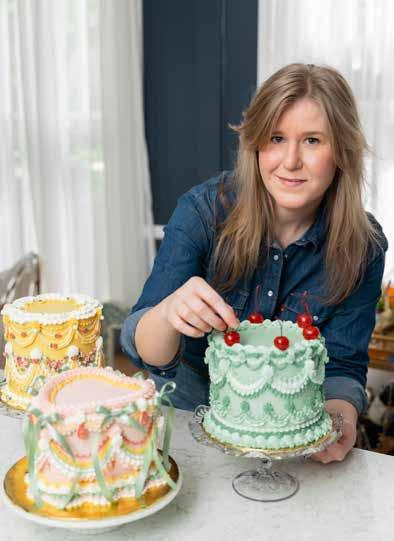
Tiny frogs peek out from the frosting. One cake is crowned with a miniature cake of its own. Others are finished with buttercream bows, vintage piping, and delicate ruffles.
While other kids were watching cartoons, Lindsay Strickland was watching HGTV. She loved The Carol Duvall Show, spent her allowance painting plaster figurines, and cooked her way through her mother’s Betty Crocker Cookbook , carefully marking favorite recipes with little paper tabs. The cookbook still sits on her shelf today.
Not every creative experiment ended well.
Once, while trying to make candles from old wax, Lindsay accidentally set the pot on fire while her mom was at the grocery store. She ran the pot under the faucet, which only made things worse because a dried eucalyptus swag hung above the kitchen window.
Fortunately, she just kept making things.
“I’ve always had my hands in something,” she says.
Before opening Buttersweet, her custom, scratch-made bakery, Lindsay sold hand-painted pillows through Etsy, made her own wedding cake, and baked for friends and family. Along the way, she discovered she could paint pet portraits with buttercream and even sculpt a three-dimensional cat’s face onto a cake.
“I was never great at sculpting,” she says. “But I guess buttercream is my medium.”
One of Lindsay’s favorite creations is a bold green floral cake finished with ruffles, dainty flowers, trailing drop strings, and tiny gold pearls. While chatting with strangers at a cocktail bar in New York, she showed them a photo.
“It looks like Victorian wallpaper,” one observed.
For Lindsay, who loves antiques and has often been described as “a bit of a maximalist,” it felt like one of the highest compliments she could receive.
Her flavor combinations are just as imaginative: bright lemon cake with strawberry filling and thyme frosting; Earl Grey cake with apricot; and peach Biscoff tucked between layers of vanilla cake and buttercream.
“A cake is a fleeting thing, so it’s the perfect opportunity to lean into playfulness as an adult.”
- Lindsay Strickland

She finds inspiration in pastries, cocktails, herbs, teas, and her travels, often asking herself, “How could I turn that into a cake?”
“I want my cakes to make people feel joyful,” Lindsay says. “Even more than that, I hope seeing them encourages a sense of whimsy.”
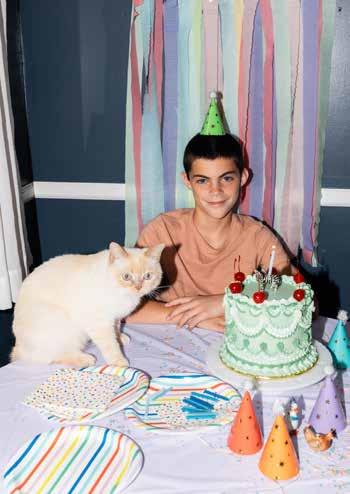
That spirit has inspired cakes featuring dragons, Gary the Snail, pets wearing birthday hats, and even a princess-style jewelry box complete with toy rings for a woman in her 30s.
Children, Lindsay says, are impressed by different things than adults. They enjoy the wonder of a buttercream unicorn but aren’t surprised by it.
Adults, on the other hand, are often caught off guard by their own reactions.
“They’re usually much more excited,” Lindsay says. “Sometimes they’re even a little emotional. A cake is a fleeting thing, so it’s the perfect opportunity to lean into playfulness as an adult.”
To see more of Lindsay’s latest creations, visit @buttersweetbham on Instagram.

Rooted in Relationships. Growing Together.
When Birmingham’s work crosses state borders, we’re there to help. And as our city grows, so does our commitment to its people, its progress, and its future.










"
- Marilyn Marshall Hart
SLEEP, PLAY, SLAY
ARTICLE BY KALI MCNUTT
PHOTOGRAPHY BY LAUREY
GLENN
STYLING BY KATHLEEN VARNER
LEIGH MISSO BUILDS HOMES THAT HANDLE MUDDY PAWS, HOMEWORK, AND EVERYDAY LIFE WITHOUT SACRIFICING AN OUNCE OF STYLE
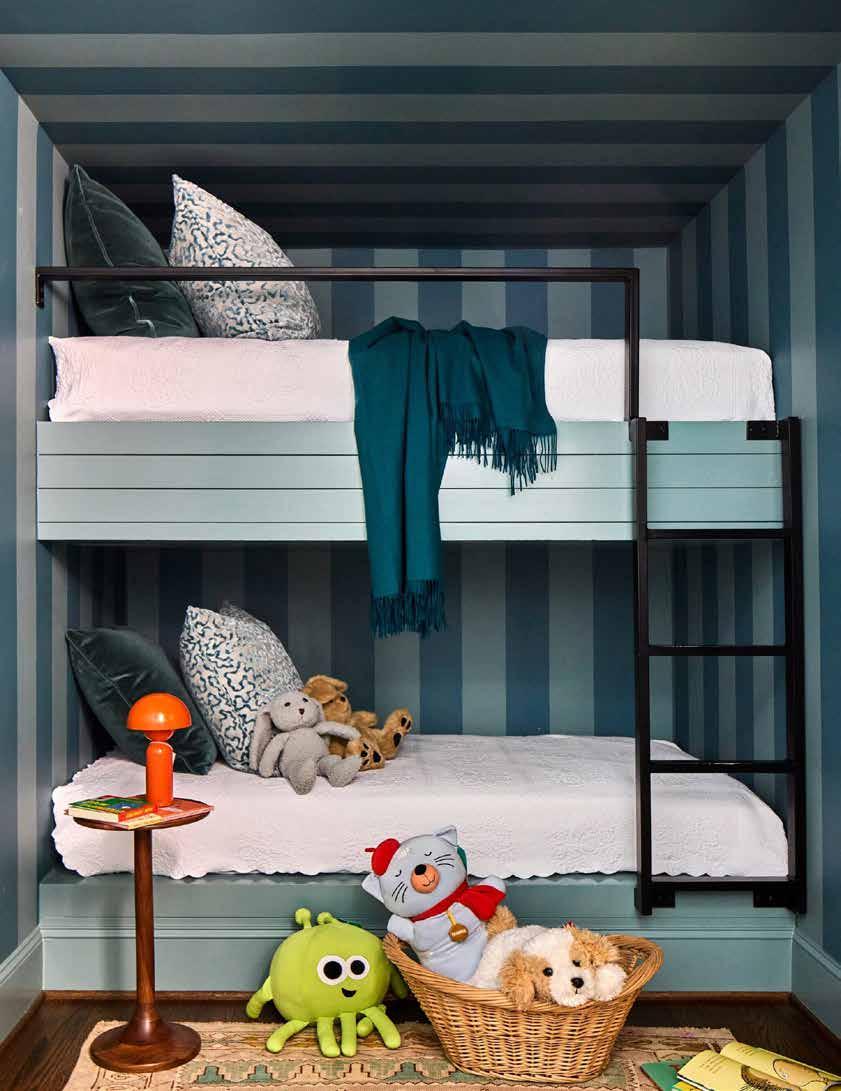
As the co-owner and lead designer of River Brook Design & Construction, Leigh Misso has designed countless spaces for kids – and pets – that prove elevated design and family life can coexist. With three young children and a family dog, her personal life directly informs her professional one — every design decision filtered through the lens of a mother who knows exactly what a family really needs from a home.
"I understand firsthand that a home has to work for real life — it needs to handle muddy paws, toys, homework, and all the beautiful chaos that comes with raising a family. At the same time, I never wanted to sacrifice good design in my own home, and that’s the approach I bring to every project."
That thinking shows up in every material decision River Brook makes. Misso specifies natural stone that develops character, hardwood floors with forgiving finishes, unlacquered brass that
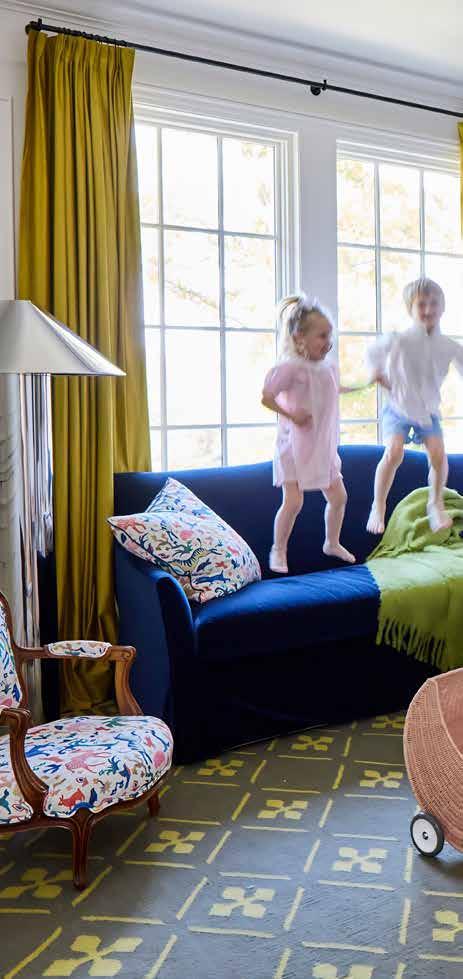
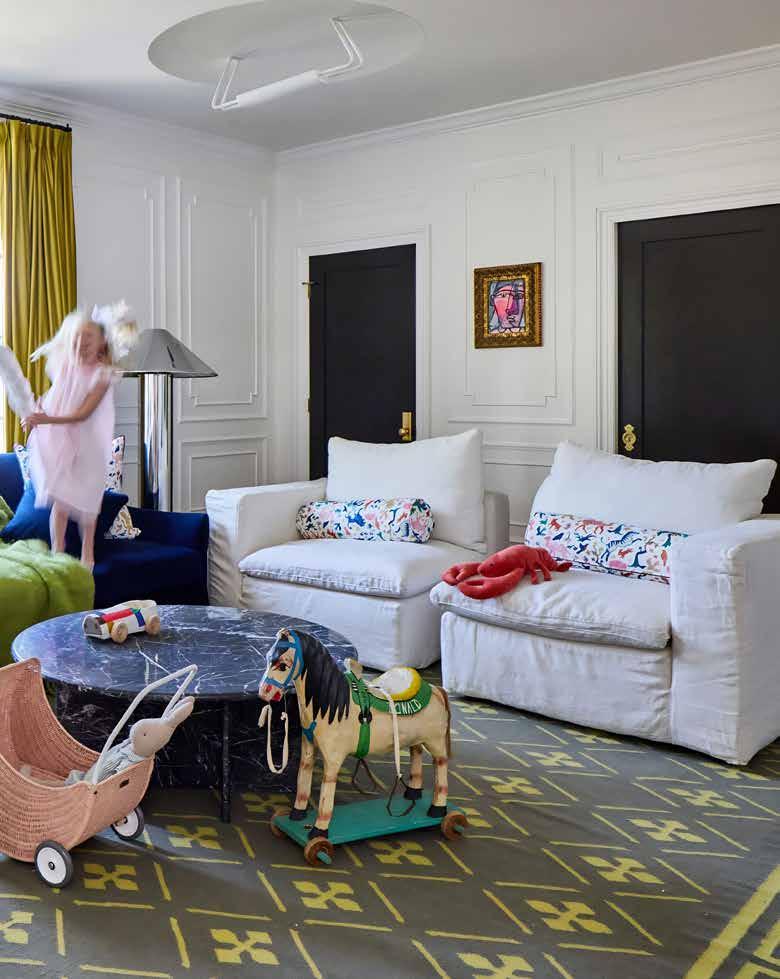

develops character rather than showing every fingerprint, performance fabrics that feel luxurious but are incredibly durable, and washable rugs that survive real life. Vintage and antique pieces earn a particular place in her process. “They already have a story and patina — you don’t have to worry about them being perfect."
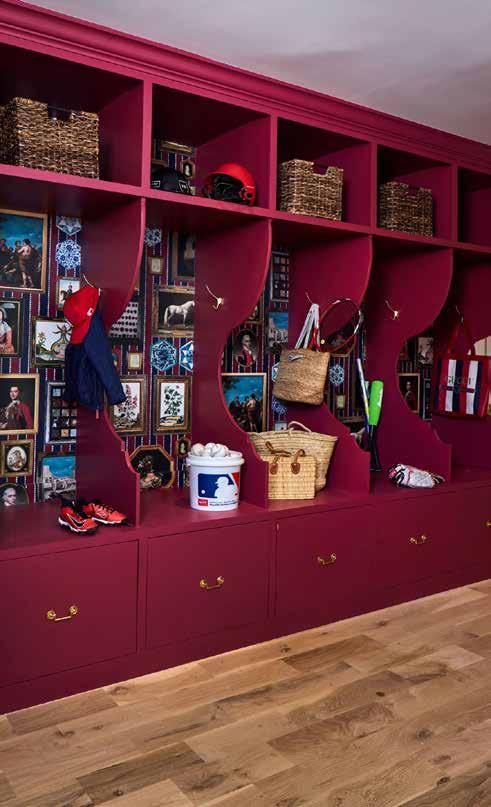
Built-in storage is another non-negotiable. Mudrooms with cubbies, hidden toy storage, window seats with drawers — these aren’t afterthoughts at River Brook; they’re part of the design intent from day one. “Thoughtful storage solutions help keep clutter contained and make it easier for kids to participate in tidying up. It keeps the home feeling calm and organized, even during busy seasons."
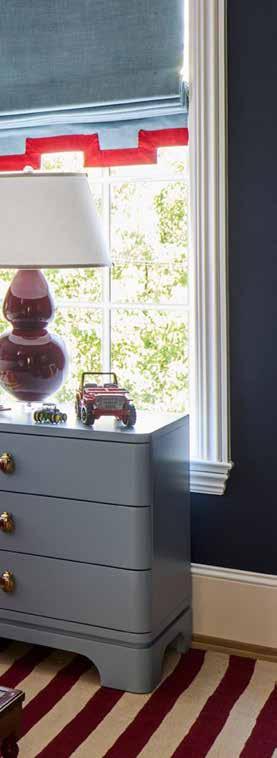
When it comes to children’s rooms, Misso resists themed design entirely. She involves her children in the process — letting them weigh in on color, fabrics, a few special pieces — but keeps the design decisions firmly in her own hands. "My goal is to create a room they’ll love today, but that will also grow with them over time. Rather than designing around a short-lived theme, we create a timeless design and let a kid’s personality come through in artwork, books, bedding, and accessories that are easy to change as their interests evolve.”
She’s equally clear about how children should relate to beautiful spaces. “Our home is meant to be lived in, and I never want
“ILOVETHEIDEATHAT PRACTICAL SPAC
them to feel like they’re walking through a museum. Of course, we teach respect for our home and the things in it — but we also believe furniture is meant to be sat on, tables are meant to gather around, and a home should be filled with laughter and life.” Some of her most treasured pieces are antiques — a rocking horse, a doll carriage — woven into daily life rather than set apart from it. “Those are the pieces I hope my children will remember one day, not because they were off-limits, but because they were woven into everyday life."
Across the four projects featured here, certain client requests surface consistently. Large kitchens that truly function as the heart
of the home. Sculleries and walk-in pantries that keep everyday clutter out of sight. Flexible spaces that evolve as children grow. Open sightlines so parents can keep an eye on kids while cooking or working. And one request making a quiet comeback: the dedicated dining room. “Families are realizing there’s something special about having a space intentionally designed for gathering, hosting friends, celebrating holidays, and lingering around the table together.”
Nowhere is River Brook’s approach more visible than in its utility spaces. Rather than treating mudrooms as afterthoughts, Misso gives them the same creative investment as any formal room. “The mudroom is one of the hardest working spaces in our home, so I
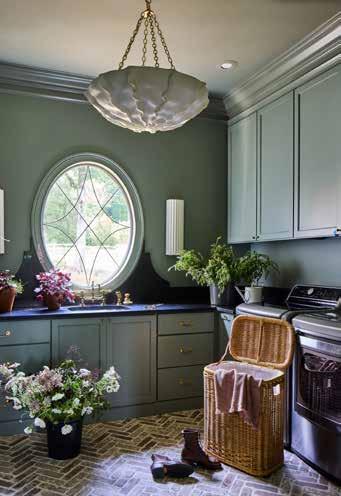
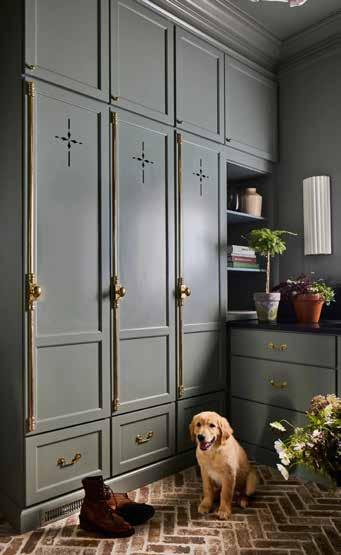
wanted it to feel joyful instead of purely utilitarian. I love the idea that practical spaces can still surprise you — those are often the spaces where the most memories are made.”
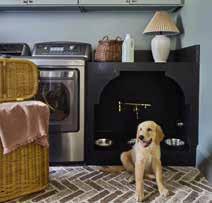
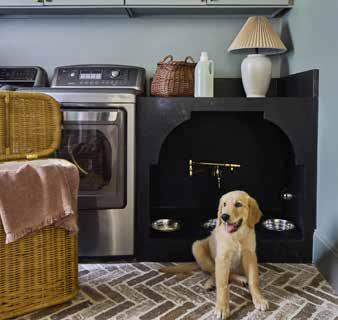
Living spaces for family pets receive the same thoughtful consideration. A custom dog station — black stone, brass pot filler, built-in bowls beneath an arched niche — is perhaps the clearest expression of what River Brook does best: a solution so considered it stops looking like a solution and starts looking like a design decision.
"We design homes to be lived in, not looked at. When every detail is intentional, a home can feel elevated yet comfortable enough for little feet, homework at the island, and everyday life. To me, that’s where great design really succeeds."












As
We





THE DAY I FELT Like a Kid Again


HOW A CUSTOMIZED CREATIVE RETREAT WITH ARTIST CARRIE PITTMAN HILL HELPED ME RECONNECT WITH CHILDLIKE JOY
ARTICLE BY BLAIR MOORE PHOTOGRAPHY BY ASHLEY WALKER
May nearly broke me this year. Between end-of-year awards, last-minute costume days, and two children moving on to new schools, I was a wreck—in complete sensory overload and often on the brink of tears. Something about rushing everywhere while trying to savor every sweet moment left me in a state no hot bubble bath could fix. That’s when I remembered artist Carrie Pittman Hill’s invitation to a creative retreat at her studio on the gorgeous grounds of Selwood Farm, which is run by her husband, Alan.
I first heard about Carrie while furniture shopping. I mentioned that I was looking for artwork to hang above my couch, and two women immediately lit up. They told me all about her whimsical abstracts and insisted I look up her work. Not long afterward, I commissioned a piece. Somewhere along the way, I learned she was beginning a new venture: one-onone retreats designed to help people reconnect with their creativity. By May, the timing felt providential.
Driving down the gravel road, with fields and trees unfolding around me, I felt some of the weight I’d been carrying begin to ease. Then I stepped into Carrie’s studio, where she had prepared a completely personalized experience. Art supplies were arranged just for me, a thoughtful gift awaited, and she had even created a presentation built around my responses to a pre-retreat questionnaire. Before we ever picked up a paintbrush, she made me feel seen.
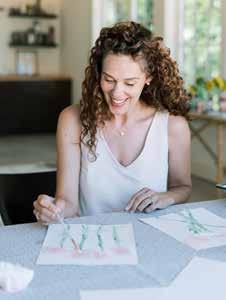
Carrie opened our time together by reading a devotion from Streams in the Desert. Then we warmed up my creative flow by painting pastel florals. From the start, she made it clear that her goal was not art instruction. She wasn’t there to teach technique or critique my work. Instead, she wanted to help me reconnect with creative expression and joy.
We chose colors and painted blooming stems side by side as sunlight streamed through the studio windows. For the first time in weeks, I wasn’t thinking about schedules, deadlines, or the thousand small responsibilities that usually occupied my mind. I was simply making something.
One of the things I appreciated most was that Carrie let me guide the day. Every retreat is shaped around the person who walks through the studio door.
Next, I chose a nature walk. Carrie joined me for part of it, sharing stories about the farm and pointing out details I might have otherwise missed before
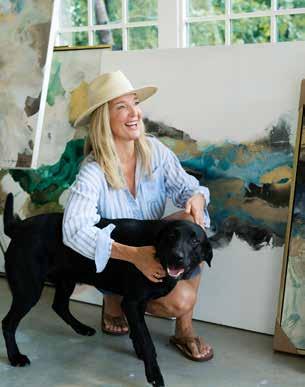
Artist Carrie Pittman Hill in the studio where she leads faith-centered creative retreats.
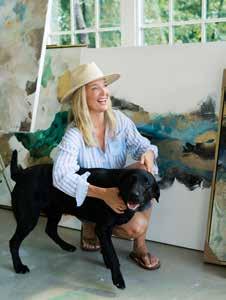

encouraging me to venture farther on my own. For others, the afternoon might include a personal training session—another of Carrie’s gifts—but that day, I was craving fresh air, sunshine, and room to think.
I spent a while beside the sparkling pool before making my way back to the studio apartment, where I curled up with a stack of books on creativity and enjoyed my favorite lunch: an açaí bowl, which Carrie had thoughtfully prepared for me.
Throughout the day, faith was woven into every part of the experience. Carrie prayed with me and told me she had spent much of the previous day praying over every aspect of the retreat before I ever arrived.
By the time lunch was over, I felt lighter and ready to get my hands in the paint, stop worrying about whether anything turned out perfectly, and enjoy the pleasure of creating something from nothing.
Carrie had queued up a playlist of ’80s hits—my favorite—and pulled out larger canvases. Using the colors from my bedroom as inspiration, we painted complementary abstracts side by side. By then, I had stopped worrying about whether I was doing anything “right.” I was choosing colors I loved, making bold marks, and enjoying the process.
Then Carrie rolled out a giant sheet of canvas across the floor.
Feeling bolder and freer, I reached for brighter colors. Bright pinks, teals, and golds swirled across the canvas. My hands soon matched the painting. I smeared, layered, splattered, and experimented while Carrie cheered me on.
Somewhere between the music, the color, and the freedom to create without an agenda, I found myself feeling delight—the
kind children seem to access so easily. For an afternoon, I wasn’t trying to produce something. I was just playing. I lost track of time.
Today, the paintings hang on my walls, not because they are masterpieces (I assure you they are not), but because every brushstroke reminds me of that day. They remind me of sunlight pouring through studio windows, “The Power of Love” playing in the background, answered prayers, and the sheer joy of creating without worrying whether I was good at it.
I arrived at Carrie’s studio exhausted. I left with several original creations, paint under my fingernails, and a reminder that adults need permission to play every now and then.
And next time, I’m staying overnight.
Explore Carrie Pittman Hill’s artwork and learn more about The Art of Rest, her faith-based creative retreat experience, at carriepittman.com or on Instagram at @carriepittmanart.
About Carrie Pittman Hill
A self-taught expressive artist, Carrie Pittman is known for abstract paintings that explore vulnerability, authenticity, and the beauty of letting go. Working intuitively, she creates pieces filled with color, movement, and the unexpected.
Her work has been featured in Architectural Digest and Cottage Living and included in collections and collaborations with brands such as Neiman Marcus, Horchow, and John-Richard. Through her creative retreats, she encourages others to embrace curiosity and to rediscover the joy and freedom of creative expression.

Writer Blair Moore, left, and artist Carrie Pittman Hill.
The Kids are Alright
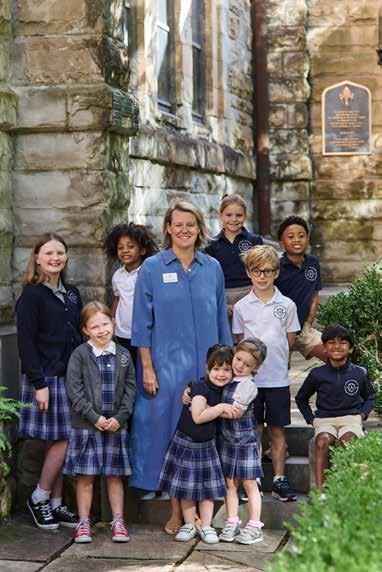
Advent Episcopal’s Head of School Claire Vaughn on what thriving kids - and families - have in common
You attended Advent from pre-K through 8th grade. How has Advent changed, and how has it remained the same since your time as a student? What specific memories stand out?
What’s remained constant is a culture of high expectations held together with genuine belief in kids. That duality— we expect a lot of you, and we believe in you—was true when I was a student, and it’s true now. I had teachers at Advent who genuinely cared about me, who I’m still close to today.
What’s changed most is our increased intentionality about being a downtown Birmingham school—not just in the sense of convenience, but as a core part of our identity and curriculum. We have a program called Discover BHam that gets our kids out into the city in real, structured ways. McWane, Children’s Theater, Jones Valley Teaching Farm, the Museum of Art, the Civil Rights Institute—those have always been walkable from our front door. What we’ve worked to build is making them living parts of how we teach, not just field trip destinations.
My specific memory has to be the second grade play. Every year, our second graders do a musical. When I was a student, we performed Goin’ Buggy, and I can still sing nearly every song! I keep a photograph (bubble paint and everything) from that production in my office today. This year, our second graders performed at Terrific New Theatre. That tradition is alive and only getting better.
And there’s something I still haven’t gotten used to—walking up a stairwell to a teacher meeting or into the pre-K classroom and being able to close my eyes and still feel like a student. That sense of memory keeps me grounded. The decisions I’m making about this place, the culture we’re building—I understand in a visceral way that they matter, because I lived it here first.
What role do you think Advent does and should play in Birmingham’s overall academic landscape?
Our role is to demonstrate what’s possible when you hold two things together that people sometimes treat as opposites: high expectations and high nurture. At Advent, those aren’t in tension—they reinforce each other—and I think that’s what makes us distinct.
Birmingham has extraordinary schools—public and independent—and I don’t think our job is to compete with them so much as to offer something genuinely different. We’re a JPK–8 school in the heart of downtown, rooted in an Episcopal tradition that takes the whole child seriously—intellectual, spiritual, social, emotional. What I’m most proud of is the community we’ve built—students from more than 40 zip codes across Birmingham, with genuinely diverse backgrounds, learning alongside one another every day. That’s not an accident—it’s something we actively cultivate, and I think it makes the education richer for everyone.
For families who want small classes, teachers who really know their kids, a diverse community, and an urban environment that’s part of the education itself, we’re the answer.
I’d love for Advent to be the school that proves downtown Birmingham is a place you choose for your family— not a place you feel like you need to leave.
What are the biggest and most critical challenges facing educators today?
Honestly? Attention. Not just students’ attention — everyone’s. We’re all living in an environment that constantly fragments our focus, and schools haven’t fully reckoned with what that means for how kids learn and how teachers teach. The cognitive science is pretty clear: deep learning requires sustained, focused engagement. That’s hard to build when the culture outside school is optimized for the opposite.
The other challenge I’d name is the gap between what we know about how kids learn and what actually happens in classrooms every day. Research on reading, on memory, on how kids retain information — a lot of it has been around for decades. The hard part isn’t knowing it. The hard part is making it real in every classroom, every day, for every kid. That’s where I spend a lot of my energy.
What is your stance on smartphones in school?
Fortunately, Advent has had a no-phone policy for a long time—we sometimes joke that where we once felt behind the curve, we found ourselves ahead of it!
But in all seriousness, smartphones simply aren’t necessary in a child’s school day. Our kids have a cart we call “Dolly Carton”—she works from 8 to 3—and students drop their phones off at the beginning of the day and pick them up on the way out. They’re not sitting in lockers; they’re not sneaking into bathrooms. There’s a shared understanding that we want kids fully present.
What’s actually more interesting to me is the harder question: what’s the role of the smartphone for the adults in the building? Phones have given teachers and staff real benefits—connection, security, access to information, and materials. But adults can find themselves just as distracted as kids. The easy answer is no phones for students. What becomes harder—and more honest—is reckoning with what we’re asking of adults, too.
How should educational leaders address some of the mental health challenges facing children, based on social media, screens, and other factors?
Mental health challenges facing kids aren’t new—but we are seeing them more frequently, and in younger and younger students. I don’t think we can point to any single cause. Social media, screens, the pace of modern life, the loss of unstructured time—it’s a perfect storm, and it would be too simple to blame any one thing.
What I do believe is that when we talk about educating the whole child, this has to be part of it—not as an afterthought, but as a genuine institutional commitment. At Advent, we’ve invested in a strong school counselor, we’re fortunate to have a full-time school nurse, and our Dean of Students works closely with both to make sure we’re seeing kids clearly and responding well.
But what I’d want any educational leader to understand is this: no single meeting, no single plan, no single policy will fix it. We have to approach mental health the same way
we’d approach any significant health challenge—with sustained support, humility about what we can and can’t do, and a real commitment to walking alongside families.
How can and should schools address the number of students being diagnosed and living with ADHD?
We have to address ADHD with more nuance than the diagnosis alone provides. ADHD is real, and it manifests very differently in different kids. A diagnosis is a starting point, not a ceiling—and it’s not an invitation to lower expectations.
What it is an invitation to do is understand the brain science and identify the supports that allow that student to be successful. I’ve seen kids flagged as behavior challenges where what you're really seeing is undiagnosed ADHD. I've seen kids whose ADHD presents as hyperfocus rather than inattention—a child who can spend four hours on Legos but struggles to sit through a science lesson, yet thrives in math because they love it. A single diagnosis doesn't define a student, and it rarely tells the whole story.
What I find most compelling is that many of the strategies that help students with ADHD—movement, chunked tasks, clear structure, retrieval practice—are just good teaching. The diagnosis often surfaces practices that benefit every student in the room.
How can parents better prepare children for college and the process of choosing one?
This one actually comes up more than you'd think—sometimes even when we're talking with a family considering Advent for their 3-year-old!
I think it's worth stepping back and reorienting the question. Rather than "how do I get my child into a good college," the more useful question might be, "what does my child need to become a capable, curious, resilient adult?" Those questions often lead to the same place—but organizing around the second one tends to produce better decisions along the way.
Practically, I'd encourage families to think broadly about fit and belonging. There is extraordinary education happening at schools you've heard of and schools you haven't—at state flagships, at small liberal arts colleges, at universities that might surprise you. The right college is the one where your child will be challenged, supported, and stretched. That's a wider and more hopeful universe than the college rankings conversation sometimes suggests.
A particular college may be a wonderful outcome of the goals you set for your child. I'd just encourage families not to mistake it for the goal itself.
How is AI changing education, and how should schools respond? What is Advent's current stance?
AI is the most significant shift in how humans interact with information and knowledge production since the Internet. The temptation for schools is to go all in or shut it out entirely—and I think both responses miss the more interesting question: what does it mean to know something now? What does human judgment, synthesis, and creativity look like in a world where a machine can produce a passable essay in seconds?
The skills that will matter most are those that make AI an amplifier rather than a crutch—problem-solving, critical thinking, and discernment. And here's the thing: You can't use AI to amplify thinking you haven't done yet. You have to understand how the parts come together before a tool like this can genuinely extend you.
At Advent, we're very much in that conversation with our faculty right now. We're thinking about how AI can enhance what we're doing as a school—and we're being deliberate about the student side. We're having some early conversations with our middle schoolers, but I'm comfortable with the fact that we're not rushing it. So much of developing those critical thinking and discernment skills comes from doing the original work yourself first. Once students have that foundation, they'll be genuinely equipped to use these tools well.
In an age of screens and AI, what human skills matter most?
I touched on critical thinking and problem-solving in the last answer, but the human skill I keep coming back to—especially in the context of screens and AI—is connection. Real, in-person, human connection.
There's something genuinely powerful about technology that lets you FaceTime a friend who's moved away or stay close with grandparents across the country. I don't want to dismiss that. But I think screens and AI can create a kind of protective lens—they make us feel connected while also keeping us at a safe distance. And over time, I worry that distance becomes a barrier to the deeper connection that humans actually need.
The ability to sit across from another person and have a real conversation—to be present, to be uncomfortable, to work through something together—that's a learned skill. And it's one we have to be much more intentional about cultivating, because so much of the world right now is making it easier to avoid.
How can parents and educators work better hand in hand?
It starts with assuming good faith on both sides. Parents who push back on a grade or a decision aren't always being difficult—sometimes
CLAIRE VAUGHN
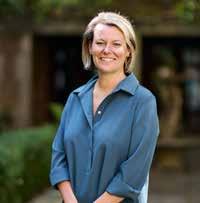
Claire Cassady Vaughn serves as Head of School at Advent Episcopal School, where she once walked the halls as a student from pre-kindergarten through eighth grade. An Advent alumna (Class of 2003), she returned to the school after more than a decade in independent school leadership, including roles at Indian Springs School and Saint Mary’s School. Claire earned bachelor’s and master’s degrees from Vanderbilt University and is currently pursuing a doctorate in Learning and Leadership in Organizations. A graduate of Leadership Alabama’s Alabama Leadership Initiative (Class IV), she is active in the community through organizations including the Junior League of Birmingham, Jefferson County Greenways, the Ballet Guild of Birmingham, and Red Mountain Park.
they have information the teacher doesn't. And a teacher raising a concern isn't attacking your child—they're doing their job. The relationship works best when both parties treat it as a partnership toward the same goal.
I use the analogy of sitting at a table. We're not across from each other, going back and forth. We're sitting next to each other, with the child's needs in front of us both.
What I ask of parents is the same thing I ask of teachers: Recognize what each person brings. You are the expert on your child. The teacher is the expert in the classroom. The magic happens when those two kinds of expertise come together in service of the student.
What habits or routines do you see in thriving students and families?
I want to be sensitive here because what works for one family doesn't work for every family. But there are some things I've observed that consistently seem to help.
The biggest one is talk. Are you asking your child about their day—what they learned, what happened with their friends? And timing matters more than people realize. When your child gets in the carpool line at three o’clock, they are exhausted. They've had a full day, their cognitive load is high, and the last thing that happened is often the first thing out of their mouth—which means you might hear about the scuffle on the playground at 2:30 before you hear anything else. Families that can resist reacting to that one thing tend to do better. Save the real conversation for the evening—dinner, bedtime, whatever works for your family— when everyone has had a chance to decompress.
As kids get older, I’d also encourage parents to resist the urge to fix everything. When your middle schooler comes home upset, try “that sounds really hard—what do you think you’ll do about it?” rather than reaching for the
phone to call the teacher. Building that sense of agency in kids is one of the most valuable things a family can do.
On activities—every family has a different threshold for busy, and I’d encourage parents not to compare. Some families thrive running in a million directions. Others need to pick two things and protect the white space. Trust what you know about your own family.
What books do you recommend every parent read? Students?
For parents, a few books I keep coming back to. The Anxious Generation by Jonathan Haidt has gotten a lot of press—and I know that can sometimes make you want to skip something—but it really is worth the read. It’s just good information that equips you in a meaningful way.
Two you might not have heard of: Play by Stuart Brown and Grit by Angela Duckworth. Brown makes a compelling case for what unstructured play does for kids’ development—cognitively, socially, emotionally—and it’s honestly a little humbling given how much our culture has scheduled it out of childhood. Duckworth’s research on perseverance over raw talent is equally eye-opening, and it pairs well with the third book I’d recommend: Mindset by Carol Dweck. She’s a cognitive psychologist, and the book is about growth versus fixed mindset—but what makes it so useful for parents is that it’s really about the language we use with our kids every day. The way we praise them shapes how they respond to challenge and failure in ways most of us don’t realize. I keep coming back to it.
Students should read what interests them. Books are a wonderful escape, allowing us to see ourselves reflected or to recognize experiences beyond our own. Keep reading with your kids even after they’ve learned to read on their own. We tend to read aloud to young children, and then, somewhere along the way, that stops. But reading alongside your middle schooler— or even just reading in the same room—has real benefits. Don’t give that up too soon.












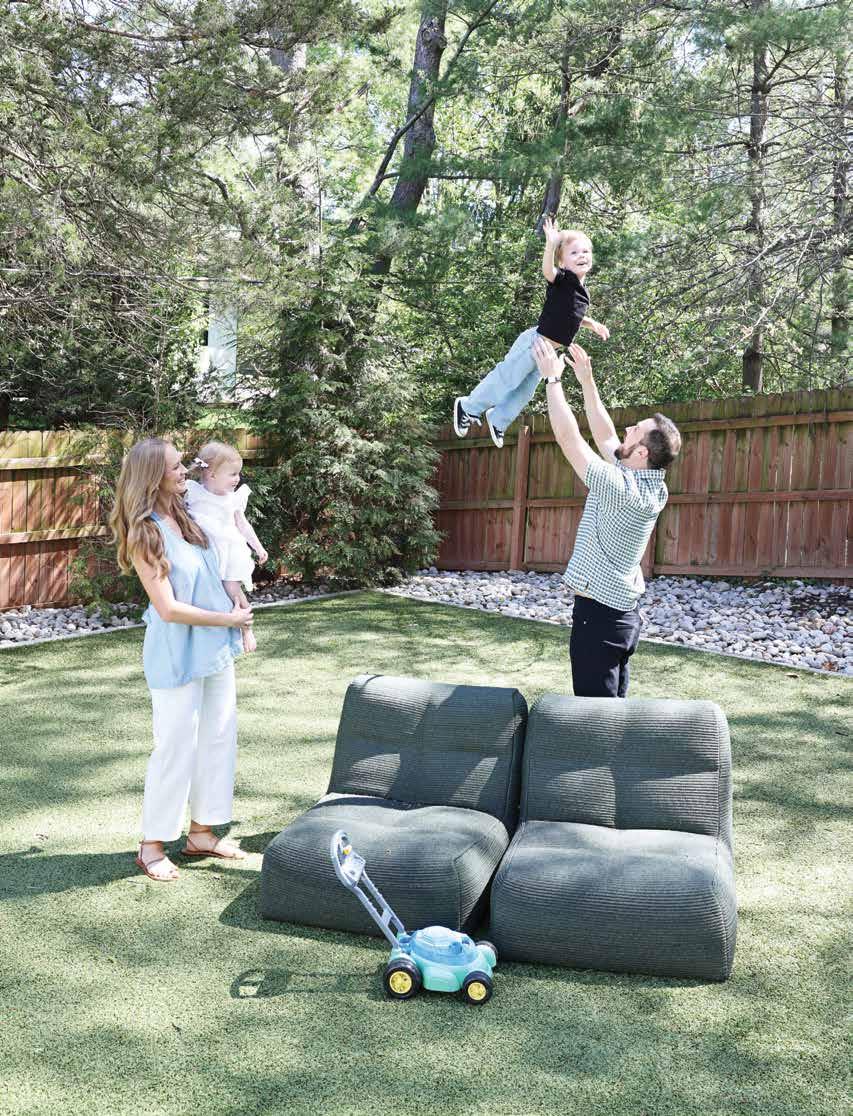
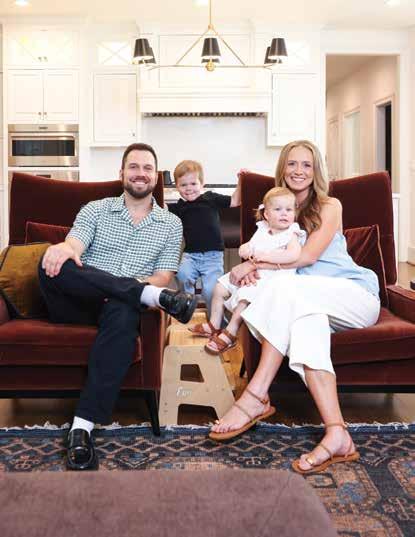
TREY & KATIE KENNEDY
ON MARRIAGE, KIDS, AND THE COMEDY OF REAL LIFE
Trey Kennedy makes a living finding comedy in regular life. Marriage. Toddlers. Yoga pants. The Thursday-night scramble between school dropoffs, soccer practice, and whatever has to be done by morning. Twelve years in, it shows: millions of followers across every platform, three stand-up specials, a sold-out Relatable Tour, and a style of humor fans send each other captioned, “Are you watching me?” He delivers the kind of comedy that travels because everyone’s living some version of it.
Katie, his wife of six years, is a former biomedical engineer who also built a modeling career. She’s now raising their kids and co-hosting Correct Opinions alongside Trey — the show where the two of them swap takes on marriage, parenting, and whatever came up that week.
Trey has been at this longer than people realize. An Edmond, Oklahoma kid who grew up playing basketball described himself as a “shy kid who never thought he’d be an entertainer.” He started making videos while attending Oklahoma State University. After building millions of followers on Vine before the platform shut down, he gave himself six months on Instagram and Facebook to see whether he could rebuild from zero. He did. Stand-up soon followed. His first special, Are You For Real?, streams on YouTube; the second, Grow Up, on Amazon Prime; the third, built around the Relatable Tour, wrapped earlier this year. “I’ve been trying to be funny every week for like twelve years now,” he says. A slow climb, made one bit at a time.
ARTICLE BY KALI KASPRZYK
“I’ve been trying to be funny every week for like twelve years now.”
Most of what Trey writes lately starts in his own kitchen. Thomas is three and a half, and he is, in his father’s words, “a movie.” He narrates his own life from the moment his eyes open and mispronounces words in ways his parents now repeat to each other because no one else would believe them. His younger sister, Eva, is what Katie calls “the calm one.” With a third now in the mix, the Kennedys are officially outnumbered.
After six years of marriage, Trey and Katie have learned that the partnership runs best when it gets its own time on the calendar. So once a week, they leave the kids with a sitter and go out for coffee. “You need a system,” Katie says. “It’s about taking time to look each other in the eye. Not the kids. Not the cameras. Just each other.”
The same instinct shapes the work. Most of Trey’s trial and error happens onstage or on Instagram, but the first read is always Katie’s. “There’s only been one time ever I’ve had to be like, ‘you’re not doing that,’” she says. The rest of the time, she just laughs first.
FEATURING TREY & KATIE KENNEDY
Trey and Katie talk about marriage, parenting, and the moments that don’t make the Instagram feed.
Watch or listen to the full conversation wherever you get your podcasts.
PHOTOGRAPHY BY JANIE JONES HAIR & MAKEUP BY MIKAYLA CRANE



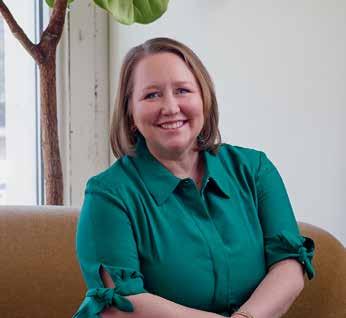
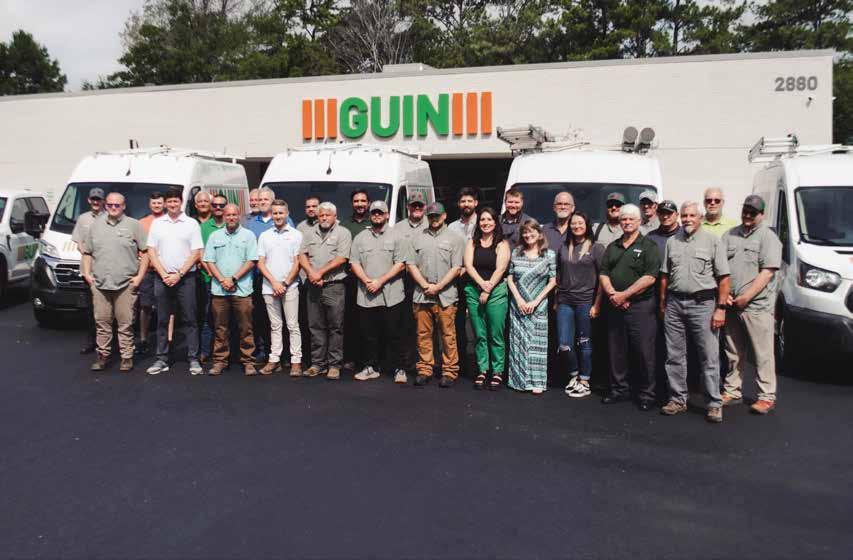

We’re excited to announce the launch of Guin Cares, a new community initiative created to recognize and support people who quietly make a difference in the lives of others. Some people show up for their neighbors, support their families, and make our community better through simple acts of kindness, leadership, and sacrifice. Guin Cares was created to honor those individuals and give back in a meaningful way.


Driven to Serve.