TOURISM
It’s a spectacular and culturally rich route with very different areas and iconic coastal scenery
Aims of the Wild Atlantic Way ■ Re-package the
Atlantic seaboard as a destination to overseas and domestic visitors ■ Increase visitor
numbers, dwell time, spend and satisfaction PHOTO: FÁILTE IRELAND
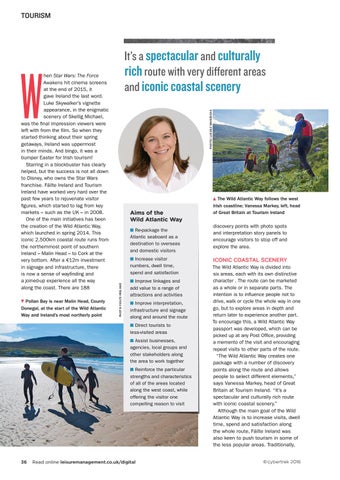
Pollan Bay is near Malin Head, County Donegal, at the start of the Wild Atlantic Way and Ireland’s most northerly point
PHOTO: LUCASZ WARZECHA
W
hen Star Wars: The Force Awakens hit cinema screens at the end of 2015, it gave Ireland the last word. Luke Skywalker’s vignette appearance, in the enigmatic scenery of Skellig Michael, was the final impression viewers were left with from the film. So when they started thinking about their spring getaways, Ireland was uppermost in their minds. And bingo, it was a bumper Easter for Irish tourism! Starring in a blockbuster has clearly helped, but the success is not all down to Disney, who owns the Star Wars franchise. Fáilte Ireland and Tourism Ireland have worked very hard over the past few years to rejuvenate visitor figures, which started to lag from key markets – such as the UK – in 2008. One of the main initiatives has been the creation of the Wild Atlantic Way, which launched in spring 2014. This iconic 2,500km coastal route runs from the northernmost point of southern Ireland – Malin Head – to Cork at the very bottom. After a €12m investment in signage and infrastructure, there is now a sense of wayfinding and a joined-up experience all the way along the coast. There are 188
■ Improve linkages and
add value to a range of attractions and activities ■ Improve interpretation,
infrastructure and signage along and around the route ■ Direct tourists to
less-visited areas ■ Assist businesses,
agencies, local groups and other stakeholders along the area to work together ■ Reinforce the particular strengths and characteristics of all of the areas located along the west coast, while offering the visitor one compelling reason to visit
36
Read online leisuremanagement.co.uk/digital
The Wild Atlantic Way follows the west Irish coastline; Vanessa Markey, left, head of Great Britain at Tourism Ireland
discovery points with photo spots and interpretation story panels to encourage visitors to stop off and explore the area.
ICONIC COASTAL SCENERY The Wild Atlantic Way is divided into six areas, each with its own distinctive character . The route can be marketed as a whole or in separate parts. The intention is to influence people not to drive, walk or cycle the whole way in one go, but to explore areas in depth and return later to experience another part. To encourage this, a Wild Atlantic Way passport was developed, which can be picked up at any Post Office, providing a memento of the visit and encouraging repeat visits to other parts of the route. “The Wild Atlantic Way creates one package with a number of discovery points along the route and allows people to select different elements,” says Vanessa Markey, head of Great Britain at Tourism Ireland. “It’s a spectacular and culturally rich route with iconic coastal scenery.” Although the main goal of the Wild Atlantic Way is to increase visits, dwell time, spend and satisfaction along the whole route, Fáilte Ireland was also keen to push tourism in some of the less popular areas. Traditionally, © cybertrek 2016