2023
The role of sustainability certification in building design TRAINING AT THE LEAD SHEET TRAINING ACADEMY
Beard unveils ambitious south-coast growth plan
ENERGY, DESIGN AND COP27: How can the construction industry keep up with net zero targets?

JAPANESE KNOTWEED LTD & ENVIRONMENT CONTROLS Don’t let nature impact your progress!
LIGHTBULB CREDIT BUSINESS CREDIT RATINGS EXPLAINED

CONSTRUCTIONMAGUK.CO.UK
August


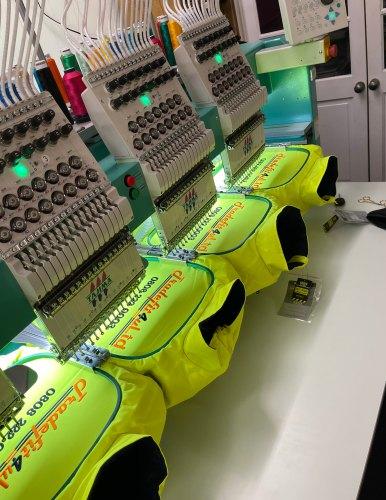
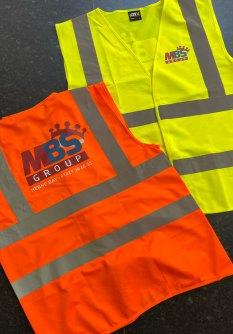

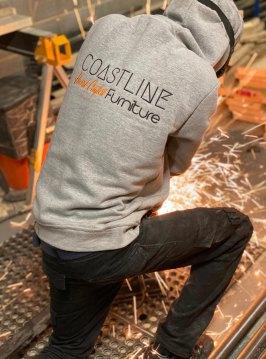

01843 446459 07525 348426 All printed or embroidered with your company branding www.evoworkwear.co.uk info@evoworkwear.co.uk evoworkwear
Sales Executive Hannah Marshall hannah@constructionmaguk.co.uk


Sales Manager Adam Jeakins adam@constructionmaguk.co.uk
Circulation Manager Leo Phillips subs@constructionmaguk.co.uk

Tel: 01843 808 106
Website: www.constructionmaguk.co.uk



Twitter: @constructionukm



LinkedIn: @constructionmaguk


Cover image by Tomas 74 Every effort is made to ensure the accuracy and reliability of material published in Construction UK Magazine however, the publishers accept no responsibility for the claims or opinions made by advertisers, manufactures or contributors. No part of this publication may be reproduced or transmitted in any form or by any means, mechanical, electronic (including photocopying) or stored in any information retrieval system without the prior consent of the publisher. 30 40 57 60 08 64 72 12 August 2023 Contents 08 Sherwin-Williams: Protecting the building blocks 12 Planning permission granted for new Park Royal logistics hub 20 The role of sustainability certification in building design 30 Berwick hospital well underway in Cramlington offsite manufacturing factory 38 Fire Safety: The Importance of Quality Fire Doors 40 The Building Safety Act – Frequently Asked Questions 57 Kildean Business Park scoops national award 60 Company News: 70 Years of innovation from Doorfit 68 Early education the key to encourage more women into construction 72 VR technology at heart of pioneering fire protection training venture 74 Ever thought about changing up your career? Transition to teaching! 68 64 Tool theft on the rise: Tools stolen every 15 minutes Lapthorn Media Ltd 5-7 Ozengell Place, Eurokent Business Park, Ramsgate, Kent, CT12 6PB Editor Maria Lapthorn editor@constructionmaguk.co.uk Editorial Assistant Francesca Amato editorial@constructionmaguk.co.uk Production/Design Laura Whitehead laura@constructionmaguk.co.uk Accounts Richard Lapthorn accounts@constructionmaguk.co.uk
Construction UK Magazine - August 2023 03
LAW CHANGES PUT MILLIONS OF CONSTRUCTION WORKERS IN DANGER
The lives of millions of construction workers and the people who live and work in the buildings they create could be put at risk if the Government pushes through plans to overturn safeguards proposed as amendments to the Retained EU Law [Revocation and Reform] Bill 2022.
The Association for Project Safety [APS] is urging peers to reject changes removing a safety net previously created in the House of Lords. That would have made sure Parliament – and, if appropriate, the devolved administrations - had both adequate time and the right to debate and vote on major changes to UK laws and regulations.

APS is asking peers to stand by their original suggestions and vote against Government amendments 1A and 42A when the Bill goes back to the House of Lords on Tuesday 6 June 2023.
The Government does not like the original Lords’ proposals which would have meant all major changes would have had to be openly debated and voted on in both House of Parliament or, if the law was devolved, the legislature in Holyrood, Cardiff and Stormont. Amendments would have meant parliamentarians would have had at least 30 days to consider the implications of any proposed changes. Old laws would also stay in place If agreement could not be reached.
APS past-President Jonathan Moulam, who heads up the cross-industry Construction Industry Council’s working group on the Retained EU Law [Revocation and Reform] Bill said:
The UK has a proud tradition of improving and upholding the health and safety of all workers across our four nations and particularly those working in the built environment. The Association for Project Safety [APS] opposes government plans to silence Parliament and allow laws to be wiped out with no opportunity for debate or time for reflection as the association believes this puts at risk, the lives of construction workers and the people who live and work in the buildings they create.
“The Government’s proposed amendments to the Retained EU Law [Revocation and Reform] Bill 2022 could wipe out the safety net for millions of people. By rejecting sensible reforms suggested by the House of Lords – giving parliament the right to vote on, and time to consider, important legal changes – the government puts in jeopardy years of steady improvement to the health, safety, and wellbeing of workers across the UK’s built environment. APS does not believe safety standards should be thrown away without anyone being able to stand up for them or without Parliament having a chance to debate the changes.”
EXTRA SUPPORT SECURED FOR SCOTTISH ELECTRICAL APPRENTICESHIPS AFTER “INTENSE LOBBYING” FROM SECTT, SJIB & SELECT
Scotland’s leading electrical bodies are celebrating another training boost for the industry after it was confirmed that the next intake of electrical apprentices and adult trainees will again be financially supported.

The Scottish Electrical Charitable Training Trust (SECTT), Scottish Joint Industry Board (SJIB), Unite the Union and campaigning trade association SELECT had been lobbying for additional places after initial fears that there would be another shortfall in funding for new learners signing up for 2023-24.
However, it has now been confirmed that all 926 places on next year’s intake have been awarded – the second time this year that additional resources have been allocated after campaigning by the bodies.
SECTT, the SJIB, SELECT and Unite helped secure additional funding for the 2022-23 intake of electrical apprentices and adult trainees in March this year after making an urgent appeal to the then Deputy First Minister John Swinney.
After initially saying it had no more funding, SDS agreed to meet the cost of an outstanding 87 apprentice and 68 adult trainee places for 2022-23.
The appeal came after SDS announced a cap on additional apprentice places in October 2022, shortly after SECTT had confirmed a record intake of 960 learners for 2022/23 – some 300 over its contracted number.
04 Latest News Construction UK Magazine - August 2023
Jonathan Moulam
POOR MENTAL HEALTH PUTS THOUSANDS IN CONSTRUCTION AT RISK
More than 150,000 construction workers may be suffering in silence from common mental health problems figures from the Mental Health Foundation reveal.
Association for Project Safety [APS]

President Ray Bone said fewer than half of male sufferers were able to talk about their problems posing a major challenge in an industry employing over 1.1 million men - around 85 per cent of the total workforce. Bone said the construction sector had to address its behaviours and attitudes, stop avoiding difficult conversations and start taking mental health seriously considering three out of four suicides are men and it is the leading cause of death in those under 45.

Figures from the Mental Health Foundation reveal around one in eight men suffer from common mental health conditions - like anxiety, stress or depression. The week is focussing on the
impact of technology and social media on men’s health and Bone said this is particularly important in a sector where workers often work away from home and are prone to turning to their phones and devices for company and entertainment.
APS President, Ray Bone said: “The Association for Project Safety [APS] believes the construction sector needs to do more to tackle mental health issues in the industry. Construction is still a very male dominated environment and – because it is clear men find it hard to open up and talk about their problems – we all need look to the behaviours and attitudes that are contributing to this often hidden health crisis. APS is supporting men’s mental health week to raise awareness of the issue.
“Everyone needs to find ways of talking about our problems and helping our colleagues who may be suffering in silence. But talking is not enough. The industry needs to look at how it behaves and how
workers are treated. We are all responsible for the way we treat each other, and we need to understand the effect we can have on the people around us.
“It is not the responsibility of people who are ill to have to highlight problems –we need to look out for each other and remember how we act is how we will be judged. The internet has brought many benefits but, when people are often working away from home without family support nearby, an easy click can lead to long-term problems with addictive & risky behaviour.”
– wherever you ʼre installing them.
PolyBounce: Rubber chippings for parks and playgrounds



PolyFlex:


PolyMulch: Rubber bark for pathways and play areas


Binders: Get the soft play feel without the loose look
Tools: All the tools to get the job done right
Create the perfect rubber surface for your customers. All our wet-pour and rubber crumb paving supplies are in stock and available for next-day delivery at low prices. next-day delivery at low prices. RUBBER CRUMB | WET POUR POLYFLEX | BINDERS | TOOLS | MIXERS FREE DELIVERY ON ORDERS OVER £795 WITH CODE FREE795 RUBBER CRUMB SUPPLIES YOU CAN TRUST
rubber crumb surfaces provide a natural draining and low-maintenance alternative for schools, golf courses, equestrian centres, play areas, leisure centres and many other industries.
polybound.co.uk
Polybound
NEW WEBSITE | SAME QUALITY & SERVICE VISIT polybound.co.uk polybound.co.uk info@polybound.co.uk 01274 044199 Discover a world of resin, rubber and construction supplies all in one place at our newly launched polybound.co.uk website
05 Latest News Construction UK Magazine - August 2023
Ray Bone
People On The Move
LOVELL PARTNERSHIPS APPOINTS SEASONED PROPERTY EXPERT TO HEAD UP SALES AND MARKETING TEAM IN NORTH EAST REGION
Leading house developer, has recruited an industry-leading light to head up its sales and marketing team, continuing its impressive trajectory of growth in the North East as it expands its current portfolio of developments.
Tracy Iles joins the team bringing more than 20 years’ new homes and construction experience to the role. Before Lovell, she previously worked for four

national housebuilders, working her way up from field sales manager to senior sales manager, before becoming sales director.
She joins Lovell as its new sales and marketing manager, where she’ll be responsible for directing marketing initiatives to promote new developments and enhance sales. Tracy’s new role will also see her managing and recruiting sales staff and assessing land opportunities.
CAVANNA HOMES COMPLETES ITS SUCCESSION PLAN WITH THE APPOINTMENT OF NEW CHAIRMAN

The Torbay-based Cavanna Group of companies has announced the appointment of Keith Miller as Group Chairman, replacing Jeremy Cavanna who becomes a non-executive director.
The move marks the final part of a succession plan for the family business which was founded in 1923 by Jeremy Cavanna’s grandfather, PD Cavanna and PD’s brother Ray.

COSTELLO ELEVATED TO MD ROLE AS DEVELOPER TARGETS NEXT STAGE OF EXPANSION
One of the West Midlands’ leading independent developers has named a new Managing Director to help it realise ambitious expansion plans.
Elevate Property Group, which currently has six live residential sites across Birmingham, Derby, and Nottingham, has promoted James Costello to the role after a hugely successful two years as Development Director.
The move sees founder Steve Dodd become Chief Executive Officer, giving him more time and capacity to focus on long-term strategy and pursuing exciting new opportunities that will regenerate city centre sites with a nod to their historical pasts.
It follows an exciting twelve months for the company that currently has more than £165m worth of residential developments in production.
James, a Chartered Quantity Surveyor, has spent more than twenty-five years in the construction industry, gaining experience working with a host of renowned local practices and spending seven years overseas working as a Regional Director in the Middle East.
Whilst the business continues to be family owned and supported by a family council, all land and property operations are now managed by a professional team with Group Managing Director Grayham Tucker at the helm.
Keith, 53, who joined the company in 2017 as Group Managing Director of Cavanna Homes, transferred to the role of Deputy Chairman on the appointment of Grayham Tucker in January this year.
Keith and three non-executive directors including Stephen Trusler, John Lougher and Jeremy Cavanna, will ensure the ongoing engagement between the business and the family – something they have placed a great focus on establishing during the role out of the succession plan.
Group MD Grayham Tucker is already pressing ahead with the implementation of even higher standards of housebuilding across all of the company’s West Country development sites.
06
Construction UK Magazine - August 2023
KAZ FOR PRESIDENT
GEZE UK MD Kaz Spiewakowski looks to focus on education and further developing relationships with RIBA and overseas members as well as ensure value for members as he takes over the two-year presidency of the Guild of Architectural Ironmongers (GAI). Kaz has already held the vice president role for the last two years working closely with outgoing president Mario Del-Signore.
The focus on education will look at improving the process for developing new material and how it is delivered. The GAI will explore getting the content validated and third party audited as well as looking at producing new content.
People On The Move
Said Kaz ‘I am delighted to be taking over the presidency of the Guild. CPD and compliance is vital for our members - becoming trained and demonstrating competence. The work done over the past few years has increased the focus on professionalism, particularly the REG AI status and the aim is to continue that.’

Simon Forrester, Chief Executive of the Guild of Architectural Ironmongers added ‘We are delighted that Kaz has taken over the role of GAI President. We have a long association with GEZE with many of their team holding GAI qualifications or sitting on Guild committees. We wish Kaz a successful presidency.’
Architectural Ironmongers provide specialist scheduling service and technical support for architects and contractors, specifying and installing products that are fit for purpose whilst ensuring compliance to the many standards.
For more information about GEZE UK’s comprehensive range of automatic and manual door closers call 01543 443000 or visit www.geze.co.uk
WYATT HOMES APPOINTS FIRST EXTERNAL MANAGING DIRECTOR
Poole based Wyatt Homes has appointed Shaun Pettitt as its first ever external Managing Director, whilst founder, David Wyatt, transitions to Chief Executive.
DAVID JOHNSON JOINS SOPHE IWG COMMITTEE
He looks forward to supporting SoPHE and its Public Health members and will be assisting the committee with the organisation of the London Annual Dinner later this year.
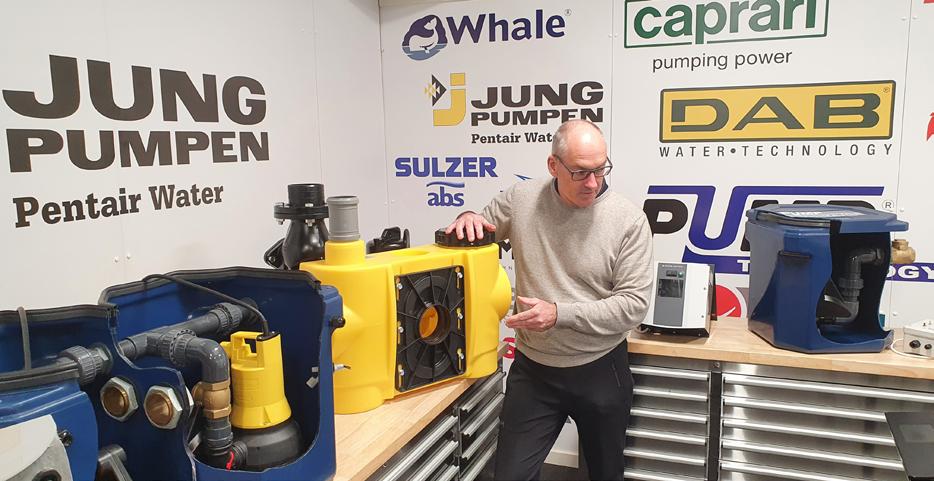
Last year, Pump Technology Ltd., who are specialists in wastewater and sewage pumping solutions and are the largest Jung Pumpen GmbH authorised distributor and stockist in the UK, were the first company to sponsor the SoPHE Young Engineers Award.
Pump Technology Ltd 0118 9821 555
www.jung-pumps.co.uk
Shaun, 40, from Purbeck, Dorset joined the regional housebuilder in May as it enters into a new phase of growth, marked also by the construction of its own, purpose built office at its prestigious Rivers Edge development in nearby Wimborne Minster.
With a background in town planning, immediate and strategic land acquisition, and more latterly as Managing Director for a national developer, Shaun is ideally placed to see operations through to the next chapter.
 (L to R): Outgoing President Mario DelSignore hands over the presidency to Kaz Spiewakowski.
David Johnson, Marketing & Business Development Manager for Pump Technology Ltd., has just joined the SoPHE IWG committee.
(L to R): Outgoing President Mario DelSignore hands over the presidency to Kaz Spiewakowski.
David Johnson, Marketing & Business Development Manager for Pump Technology Ltd., has just joined the SoPHE IWG committee.
07
Construction UK Magazine - August 2023
PROTECTING THE BUILDING BLOCKS
With its low cost, timesaving and sustainability-based attributes, modular construction has seen tremendous growth in the last few years. Rick Perkins, global technical manager passive fire protection at Sherwin-Williams, examines the advantages of this approach and how intumescent coatings play a key role in ensuring high levels of fire safety in modular buildings.
Modular construction is the process of creating buildings using off-site prefabricated building components. These components are manufactured in a controlled environment and then transported to the construction site for final assembly. Although this method of construction has been around for decades, in recent years it has gained popularity due to its many advantages.
Probably the most significant advantage of modular construction is its speed. Modular constructions manufactured in a factory can be completed in a fraction of the time of traditional on-site structures.
Safety first
Being produced in a factory also means there are fewer hazards than on a traditional construction site – modular buildings are built to strict safety standards to ensure that they are structurally sound and safe for occupants. This is especially evident in their ability to protect against the potentially devastating effects of fire.
A large part of this is due to the intumescent coatings that are applied to the structural steel frames that are used in their construction. These are designed to expand when exposed to high temperatures, forming a thick, insulating
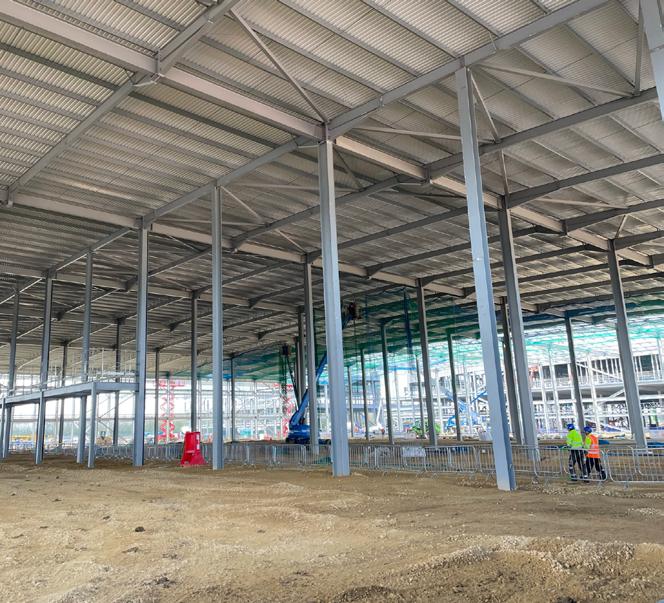
layer that helps to protect the underlying steel from the heat of a fire. This delays, or prevents, structural failure and collapse, giving occupants longer to evacuate and firefighters more time to respond.
Every second counts
Since assembled modules are transported and erected as a unit, intumescent coatings make a great choice for fire protection as they are the lightest and most compact form of fire protection available. There are several types of intumescent coatings available, each with their own unique properties and application methods.
It is important to engage with a coatings manufacturer as early in the design stage as possible in order to ensure that the most appropriate solution is applied. Depending on the building’s design and structure, intumescent paint has the ability to protect steelwork for 30, 60, 90 or 120 minutes in a fire, as required by the building regulations. It is applied by airless spray to a thickness according to the level of protection required and, if the steelwork is visible in the final design, it will not detract from the appearance.

Application form
When applying an intumescent coating, it is important to follow the manufacturer’s instructions and coating specification carefully to ensure that it is used correctly and provides the desired level of fire protection. This may involve applying multiple layers of the coating, preparing and priming the surface before application and allowing the coating to dry and cure properly.
Using an appropriate intumescent product will mean that it is durable both once in service in the finished building, as well as during construction/erection phase, when it may be exposed to weathering. Some of the latest generations of intumescent coatings are not only very fast drying, they also have excellent mechanical resilience, making them a fantastic option when steelwork may need to be further worked on quickly after coating application.
Look ahead
The future of modular construction looks bright, with increased adoption likely to transform the way we build and design buildings long-term. However, like any other type of building, fire protection should be a primary concern, so intumescent coatings from leading manufacturers should be used to provide an effective, versatile and reliable solution.
For further information please visit https://bit.ly/3iovJNg
Probably the most significant advantage of modular construction is its speed. Modular constructions manufactured in a factory can be completed in a fraction of the time of traditional on-site structures.
Modular Buildings 08 Construction UK Magazine - August 2023
David Harris
ENERGY, DESIGN AND COP27: HOW CAN THE CONSTRUCTION INDUSTRY KEEP UP WITH NET ZERO TARGETS?
Following COP27, the construction industry asks – ‘how can we change, before it’s too late?’ David Harris, managing director, Premier Modular, discusses progress to net zero targets and the next steps needed to ensure carbon efficient buildings for the future.
Can we achieve net zero?
COP27 led to less hope and optimism than COP26, as it failed to achieve an allparty commitment to phase out all fossil fuels to maintain net zero progress.
Setbacks, including greenhouse gas emissions increasing by 1% in 2022, have meant previously agreed targets are now much harder to achieve. This leaves an opportunity for immediate action to ensure net zero targets are met.
Although 2050 seems far into the future, we’ve met a point of no return for net zero, which is why it’s time to act now.
Building’s role
COP27 revealed the construction industry’s progress – or lack of progress – towards net zero. Despite increases in
investment into energy efficiency, CO2 emissions were up 5% from 2020
The construction industry represents 40% of Europe’s energy demand, so it’s an important area for investment to prompt real change. This means:
1. Investing now
Despite the industry’s growth, only 3% of investment in new construction is sustainable. This means the buildings under construction now – which will be in operation in 2050 – aren’t supporting targets.
2. Considering energy sources
80% of 2050’s buildings already exists, which is why we need to consider fuelling current and future homes. A priority is improving efficiency for existing buildings. However, instead of increasing, we’ve seen insulation rates stall
To drive greater efficiency and reduce reliance on fossil fuels to achieve net zero, homes will need to run on electricity. This means ensuring no gas boilers in operation by 2050
3. Understanding processes as a whole
We need to think holistically about building. When it comes to net zero, it’s about more than just design – it’s about ensuring we’re monitoring sustainable practices throughout a supply chain.
Reports show only half of construction companies have significant visibility of
their own processes, and only 16% into suppliers’ processes. It’s time to ensure we’re only working with those with the same sustainability values.
The reality of net zero
With weak outcomes from COP27, some companies are taking a step back from sustainability.
Recently, an age-old problem has become an extreme hurdle: costefficiency. Materials have increased in cost by 27% in the last year, which has led to companies cutting costs elsewhere. This has raised the stakes for achieving net zero targets, with sustainable materials often priced out the market.
A modern solution
Making building projects more efficient – while meeting budgets – is bringing modular construction into focus.
Taking place in a controlled factory setting, offsite construction offers more precision as the building goes from design to reality. This precision is essential for energy efficiency. Modular building means meticulous connections, which retain warmth and keep bills low.

Manufacturing in a factory is a sustainable alternative to traditional construction, not only in operation but also throughout the build. Modular building additionally reduces waste –and at Premier Modular, our factories generate zero waste to landfill.

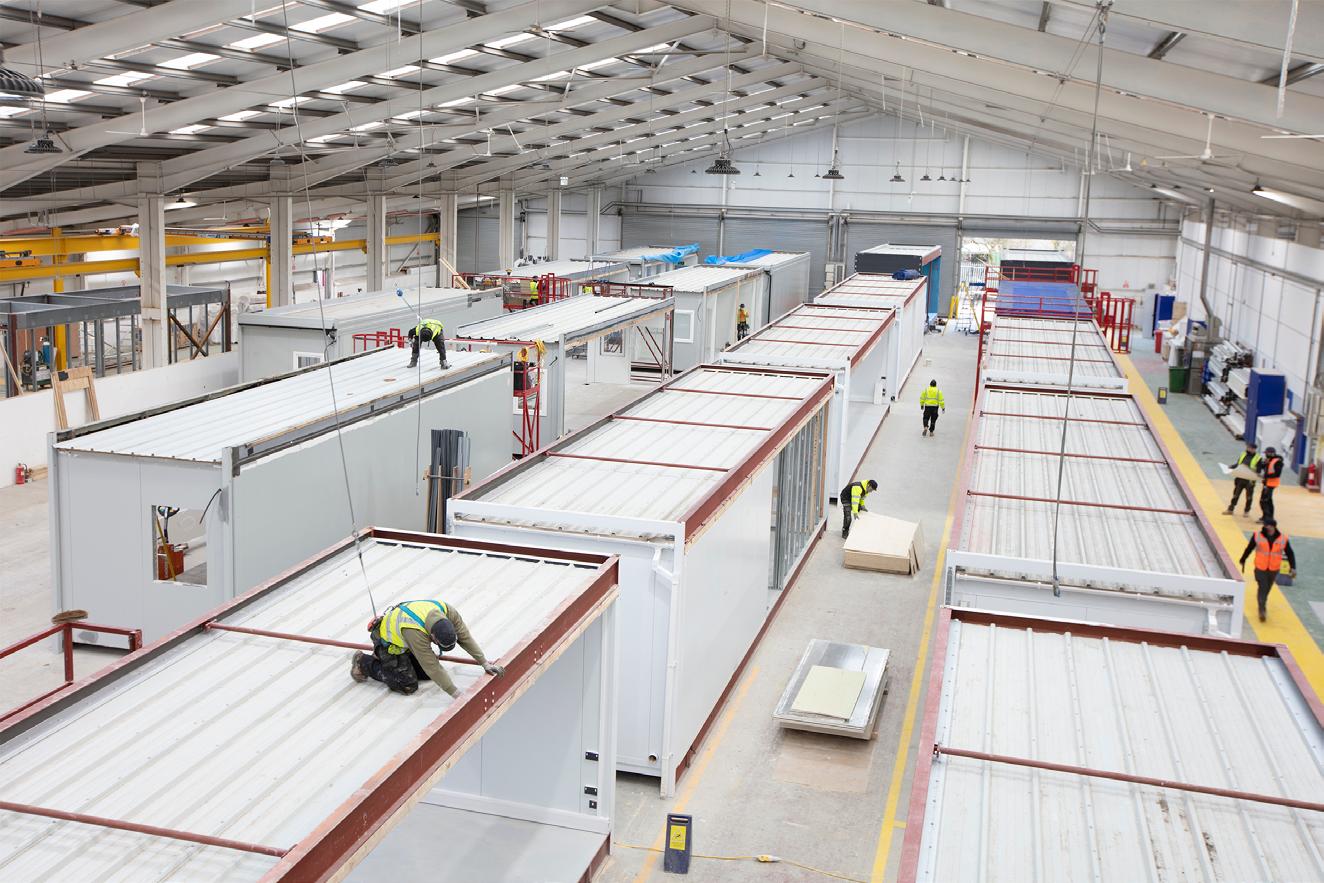
In addition, the reliability of modular means your project is more likely to meet budgets and stick to timeframes – up to 50% faster.
Making a difference
Everyone in the build process has the responsibility to make a difference. That’s why Premier Modular has committed to being net zero by 2035. It’s critical to act now, so we work together to create a better tomorrow for generations to come.
09
Construction UK Magazine - August 2023
Modular Buildings
PARTNERS TO BUILD ANOTHER 109 MODULAR HOMES IN DORSET AND WILTSHIRE
An innovative partnership has agreed to create more than 100 modern, energyefficient new homes for people in the South West.
Housing association Magna, Wiltshire Council and Dorset-based manufacturer Rollalong joined forces last year to tackle the housing crisis using modular building methods. They have pledged to build nearly 1,000 new affordable homes by 2026.

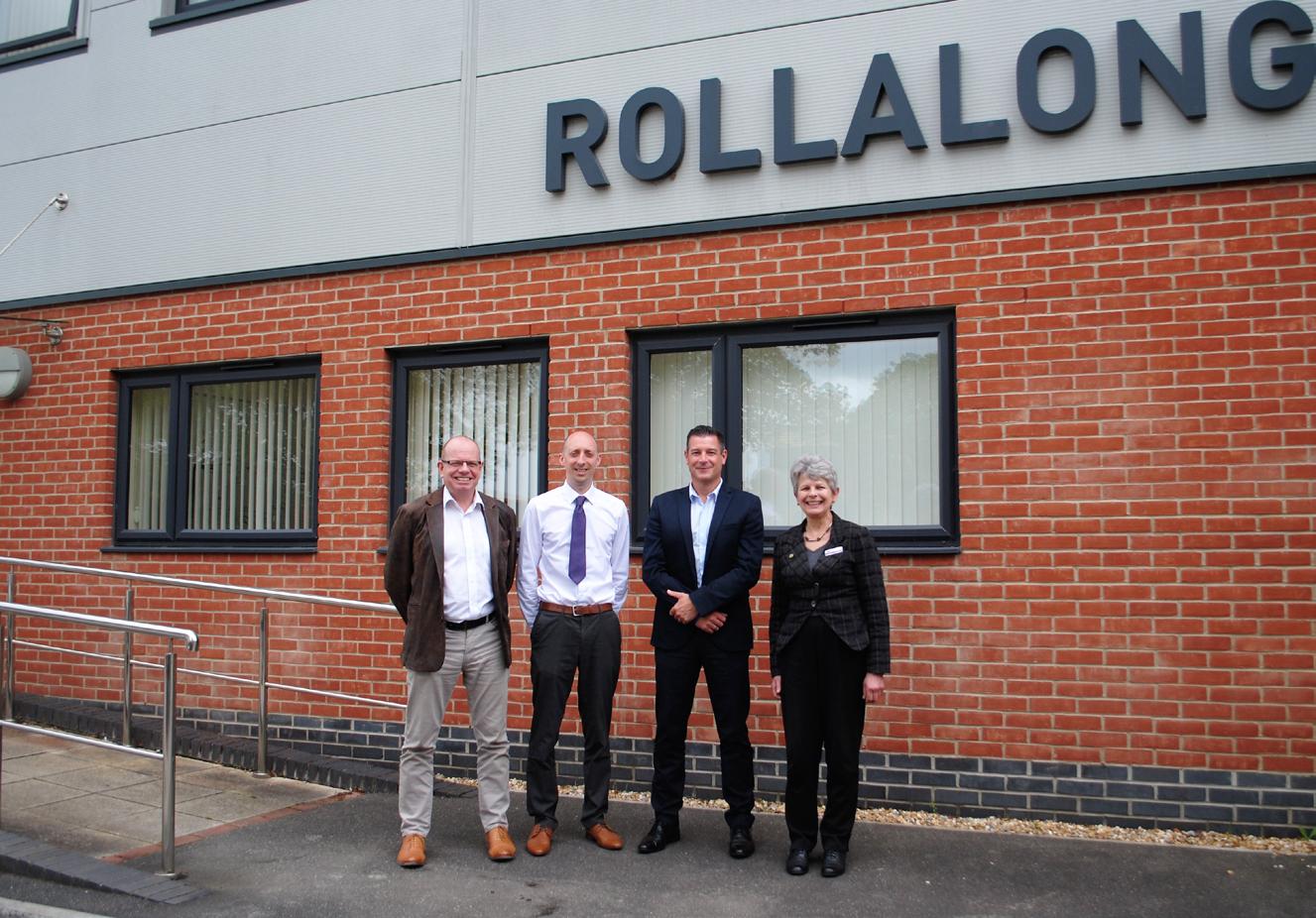
Magna and Wiltshire have now taken another step towards that goal by placing orders for Rollalong to manufacture 109 new, modular homes for five sites across two counties.
The partners have used their joint purchasing power to get better value under a money-saving framework created by the South West Procurement Alliance (SWPA).
Magna will make 26 of the homes available for affordable rent or shared ownership in Dorset. They will include 14 at Webber’s Piece in Maiden Newton and 12 at the site of the former Royal Manor Arts College on Portland, adding to the 29 Rollalong has already manufactured for the 41-home development.
In Wiltshire, the council will create a further 83 new affordable homes across three sites within the county.
Rollalong uses precision engineering techniques to manufacture high-quality modern homes as modules in its factory near Wimborne Minster. These are then transported, fully fitted with kitchens, bathrooms and electrics, to sites where they will become attractive, energy efficient homes.
Modular manufacturing has potential to deliver much-needed new homes faster and more sustainably than traditional brick housebuilding. Overall, the process generates less waste and has a lower carbon footprint. It also creates less disruption to local people, with fewer deliveries to site over a shorter time.
The partners’ latest range of modular house types are built to be ‘net zero in use’, in line with the Government’s proposed Future Homes Standard, which will require new homes built from 2025 to produce 75-80% less carbon. The all-electric homes will be heated by air-source heat pumps, with a thermally
efficient fabric retaining warmth and helping residents keep their energy bills lower.
The homes can be tailored to the local, often rural setting, with a range of house types and finishes influenced by customer feedback. The partners also have the only modular approach in the UK accredited by the National HousingBuilding Council (NHBC) able to ‘step and stagger’ terraces of houses so that they have more visual variety.
Paul Read, Magna’s Director of Sustainability and Investment, said: “These are among the most important new homes Magna has delivered, with our ambition to build the right homes of the right quality in the right places. By collaborating with others and modernising how we build, we are creating homes for local people that will help address the cost
of living, energy challenges and contribute towards the UK’s net zero targets.
neighbouring the new, modular houses at Webbers Piece.
“These older homes will benefit from external wall insulation, new windows and doors, and air-source heat pumps. The timing means we can look at creating a real sense of place in this rural community.”
Steve Chivers, Managing Director of Rollalong, said: “We are delighted to have been awarded this latest contract by Magna Housing and Wiltshire Council to design and build a further 109 modular homes under the partnership. The aim of our innovative partnership is to deliver almost 1,000 high-quality, affordable, Net Zero-ready future homes in the South West using a local workforce and local suppliers.
“Manufacturing homes offsite in modules is the future for our industry, and our unique partnership provides the volumes we need to make these modern methods of construction work. These are the homes of the future designed for living today, and we’re pleased to have the opportunity to promote the benefits of modular housing as a response to a nationwide housing crisis.”
Thanks to Government retrofit funding, we also have the opportunity to decarbonise our existing homes, including those
10 Modular Buildings Construction UK Magazine - August 2023
TEMPORARY WATER SUPPLY
Have you ever thought about what you’d do if you were working on a site where you required welfare and a water supply, or maybe just the water if you have your own welfare facilities?
Don’t worry! We can do the thinking and deliver you one or a combination of the equipment below to suit your requirements and set up a temporary system on a long- or short-term basis.
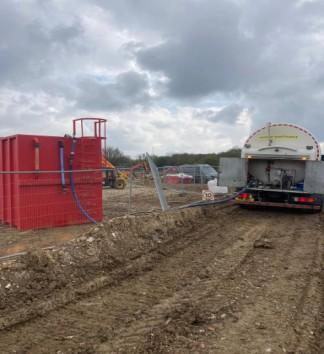
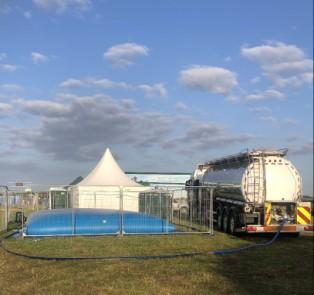
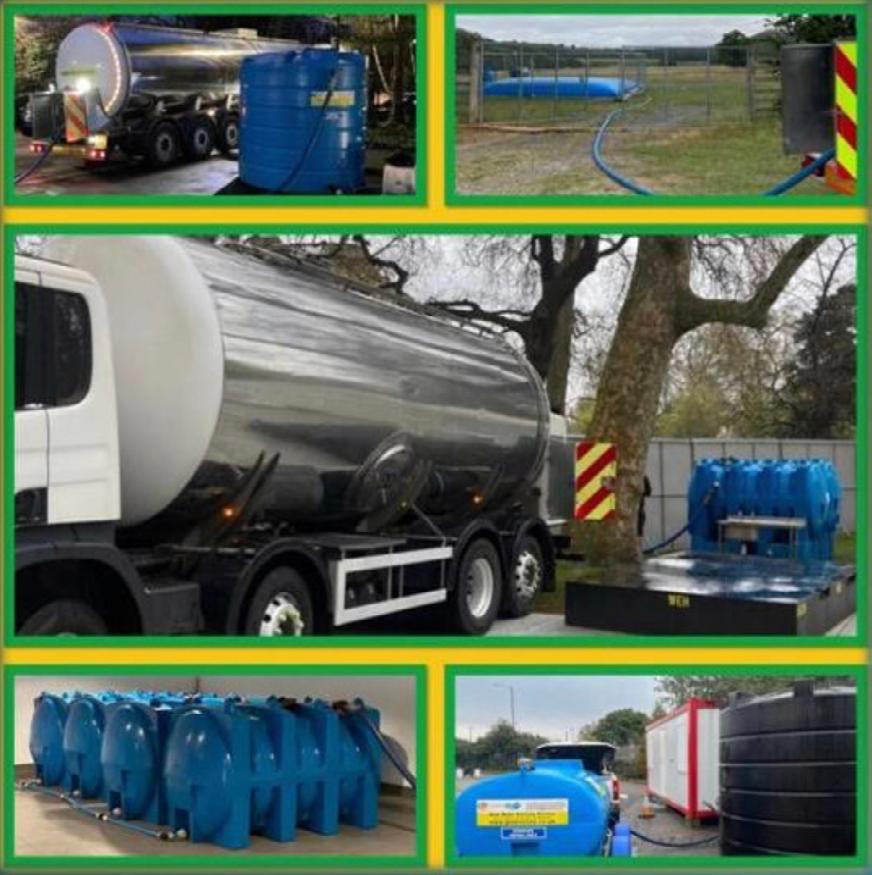
• 2,000 litre Water Bowser
• 2,500 - 10,000 litre Storage
Static Tanks
• 4,000 - 50,000 litre Water
Storage Pillowtanks
• 16,500 - 30,000 litre Road
Water Tankers
• Demand Pumps
• Water Standpipe
Get in touch – 01256 225635
Once you are set up, we offer an ongoing 24/7 water quality management service, so no need to panic if you need us! We are only ever a phone call away.
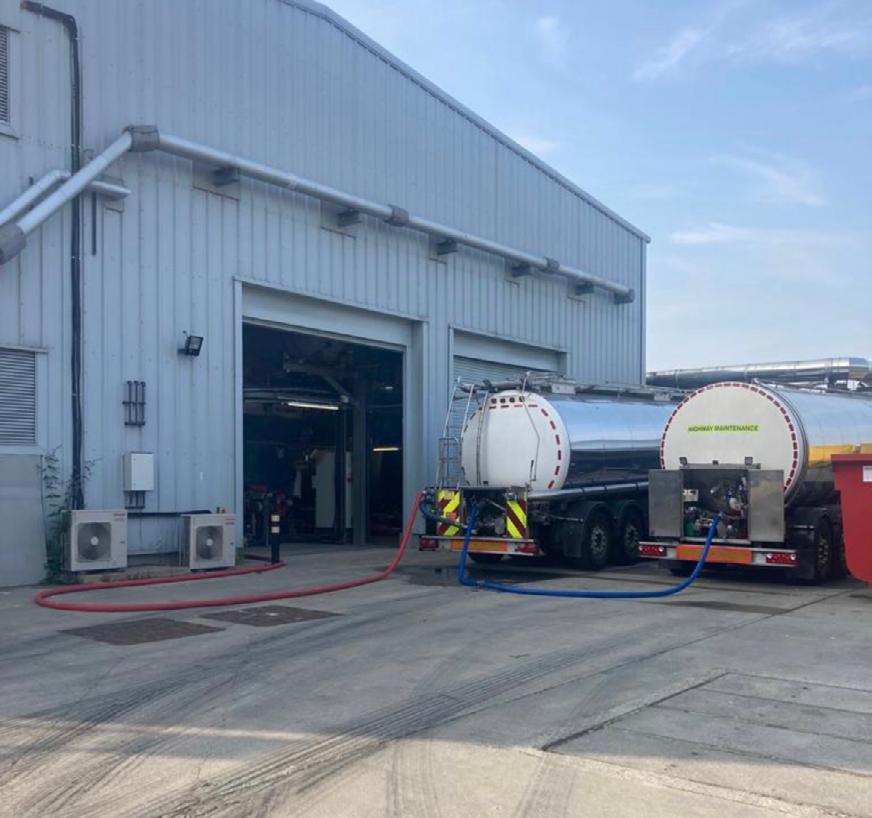
If you don’t require any water storage equipment and would just like a quality assured bulk water delivery then we also offer this service to any sector across the UK, ensuring our customers are always in supply.

Visit our website – www.greensh2o.co.uk

Get In Touch
Website - https://www.greensh2o.co.uk/ Office - 01256 225635
24/7 Emergency - 07717 846059
Greens H2O Hire, the UKs favorite potable tanker company providing wholesome drinking water for Utilities, Construction and Manufacturing. Non potable and natural spring water is also available. We provide bespoke temporary water systems and emergency water for life’s unplanned interruptions. We are a dedicated company and always try to exceed expectations. We provide a 24/7 service 365 days a year so no need to panic when you get a problem, we are only a phone call away!
All of our road tankers and bowsers are cleaned & disinfected to a high standard and comply with the BS standard. Certificate s and tanker sheets are readily available and are issued by our drivers upon delivery, all of our tankers carry water testing equipment to allow drivers to g ive on the spot readings for chlorine and turbidity.
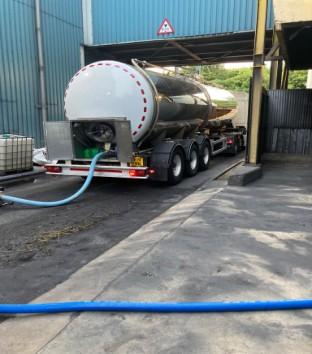
• Dedicated mobile water quality service
• Full onsite management during your event
• Free advice and planning service for any event size
• Design and build of pressurised and chlorinated water networks
• On Site water treatment
• Bottle refill stations
• Tested quality assured supplies
• Dedicated drinking water tankers
• Various sized dedicated water tanks
• Bulk water storage
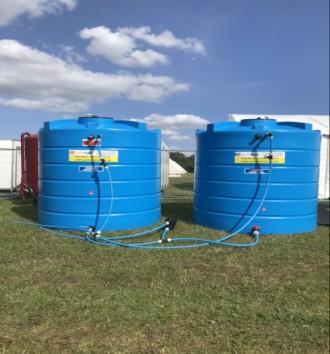
• Bulk water delivery
• Full compliance with BS8551 water regulations
• Trade equipment hire
2.5k tanks fresh
10k tanks fresh
10k tanks waste
4k-100k Pillowtanks fresh
4k-100k Pillowtanks waste Tanks, Pillowtanks, pumps
• Highly maintained fleet of Water Tankers.

• 2k bowsers inc self serve bib taps
• Tanker certification, Chlorination and Sample
11
Modular
Construction UK Magazine - August 2023
Once you are set up, we offer an ongoing 24/7 water quality management service, so no need to panic if you need us!
Buildings
PLANNING PERMISSION GRANTED FOR NEW PARK ROYAL LOGISTICS HUB


GLi – a joint venture between KSP and PATRIZIA - has received planning permission for its second Park Royal site - PR2, a new prime ultrasustainable warehouse.
PR2 is at the heart of Park Royal, West London’s premier industrial location. It boasts exceptional connectivity via the North Circular Road, A41 and M25, and complements the GLi platform’s existing acquisitions in the area with its first site, PR1, already pre-let to Classic Fine Foods.
The new scheme continues GLi’s expansion and further bolsters its Greater London offer. Aiming to meet an increasing market demand for last mile logistics space within the M25, other GLi locations include Charlton, Croydon, and Mitcham.
As with all GLi properties, the new Park Royal site will be highly energy efficient and redeveloped on a net zero carbon basis with sustainability a key priority. It will be 100% electric powered, offer fully equipped car and delivery van
EV charging points and will be built to accommodate future battery storage in line with tenant requirements, responding to market demand for environmentally responsible real estate that saves on occupier energy costs. PR2 will also deliver biodiverse landscaping and rainwater harvesting.
Park Royal, otherwise known as London’s food basket, is an established location for industrial and occupiers, particularly within the food, film, logistics and creative industries. PR2 aims to meet the needs of businesses in these sectors and beyond by offering modern, energy efficient units with 25% more cubic capacity than other buildings in the area. It is designed with employee wellbeing considerations at its heart, with access to natural daylight, air conditioning and bicycle storage.
GLi is a partnership between Londonbased asset manager and developer KSP and global real asset investment manager PATRIZIA. The GLi platform aims to invest in assets in strategic locations across Greater London.
12 Project News Construction UK Magazine - August 2023
BELLWAY TO COMPLETE CONSTRUCTION AT SEVEN SITES ACROSS NORTH EAST DELIVERING MORE THAN 1,100 NEW HOMES
Construction work on all homes at seven Bellway developments across the North East is due to be completed this year, delivering more than 1,100 new homes for people in the area.
Building work is nearing the final stages at Arcot Manor in Cramlington, Moorfields in Killingworth, Burdon Rise in Ryhope, Havannah Park in Hazlerigg, Ottermead at Jameson Manor and The Listed at Ottermead in Ponteland and at Northdene in North Shields.
As well as providing muchneeded new homes, Bellway is contributing £7.8 million to improve local facilities and infrastructure as part of the planning agreements with local authorities for these developments.

By the end of the year Bellway will have delivered 226 homes at Arcot Manor in Cramlington, as well as investing £1.9 million in local infrastructure, while at Havannah Park in nearby Hazlerigg, 224 homes will have been built, with funding from Bellway of £2.2 million towards local services including education, healthcare, roads and wildlife.
At Moorfields in Killingworth, 336 homes have been provided by Bellway, with Ashberry Homes, part of Bellway Group, continuing work on a further 91 homes at Moorfields View to complete the wider 427-home neighbourhood – which has generated investment of more than £900,000 for schools, roads, healthcare and parks.
Meanwhile, in Ponteland, two developments are nearing completion on the former Northumbria Police HQ site off North Road. Ottermead at Jameson Park consists of 184 new homes, while The Listed at Ottermead comprises 22 Grade II-listed Arts and Crafts-style properties which have been carefully restored into apartments and houses. The redevelopment of the site has also seen £1.5 million provided for local facilities.
At Northdene in North Shields, a further 75 new homes have transformed a disused former reservoir site, as well as bringing more than £460,000 in contributions for primary schools, parks, play areas, sports facilities, playing pitches, allotments, wildlife and employment and training.
And at Burdon Rise in Ryhope, Bellway has built 109 new four and five-bedroom houses, as well as investing £1.5 million in the local area, with funding for affordable housing, primary schools, play equipment, ecology and habitats, and roads.
CONSTRUCTION
UNDERWAY FOR NEW SUSTAINABLE AFFORDABLE HOUSING DEVELOPMENT IN MOSTON
Construction of 60 affordable homes for people living and working in Manchester is well underway, with the first homes due to be ready next spring.

The sustainable housing development is located on land off Ashley Lane, in Moston, and is set to regenerate the unused site, which was formally the Manchester College Moston campus.
All 60 homes are affordable and will be energy efficient with solar panels fitted and air source heat
pumps providing hot water. The estate also includes electric vehicle charging points and bike storage facilities.
The new estate will have 50 two-bed and three-bed houses. Of these, 33 will be for affordable rent and 17 houses for rent-to-buy. The remaining 10 homes comprise one and two-bedroom apartments, which will all be available for social rent.
Properties will be landscaped with trees and will feature front and private rear gardens.
13 Project News Construction UK Magazine - August 2023
NEXT PHASE OF WORK PROGRESSING AT BOORLEY GREEN HOUSING SITE
The next phase of work at a new housing development set to ultimately deliver 323 homes is underway on the outskirts of Southampton.
Boorley Gardens, currently being built by Miller Homes off Winchester Road in Boorley Green, near Botley, has moved into its second phase of 103 new homes, which includes 25 affordable properties. When completed, the development will comprise 323 new homes, including 125 affordable properties available through shared ownership or affordable rent.
The developer has built and opened two show homes at Boorley Gardens, both three-bedroom houses, and has already handed over the keys to many new homeowners.

Katrina Crawford, sales and marketing director for Miller Homes Southern, said: “Work is really moving at a pace at Boorley Gardens, as we recently moved into phase two of the development which coincided with the official public launch of our next phase of homes on site. We are building a wide range of property sizes and styles in Boorley Green and the feedback we’ve received from customers to-date has been very positive towards this latest phase of new homes.
“Boorley Gardens is part of an up-and-coming residential area on the edge of Southampton, close to Botley. The site benefits from its proximity to Botley train station, the M27 motorway and an array of leisure and retail facilities in nearby Hedge End. For these reasons, we’ve catered to many customers with our mix of houses and apartments, ranging from one to fourbedrooms in size. With our first residents already moved in, and a new phase of homes currently being built, we are starting to see a real community form at Boorley Gardens and it is our now our job to continue this good work through to the completion of the site.”
Work began on the site in 2021, and is due to be completed in 2026.
HIGHWAYS’ PROVIDERS TRANSFORM “UNSAFE” NORTHAMPTON PRIMARY SCHOOL GARDEN INTO VIBRANT LEARNING SPACE

Pupils at the Stimpson Avenue Academy in Northampton have returned from their half-term holidays to a transformed garden space, courtesy of Kier, West Northamptonshire Council’s highways providers.
The school first approached Kier regarding safety concerns over the space – such as its cordonedoff, disused pond and overgrown vegetation - seeking help to return the space to its former glory.
Kier was joined by Bridge and Highways Maintenance Ltd and five of its fellow supply chain partners – which spent three months designing the space and receiving donations to bring their vision to life.
Over 30 volunteers rolled up their sleeves to support the cause, who spent three days during the half term renovating the space, with
some parents donating plants and seeds to support the cause.
The garden is now equipped with a sensory footpath; a new pergola; recycled tyre planters painted as ladybirds and bumble bees; a wildflower garden space; raised planters; a compost area; bug hotels; and a log seating, campfire area.
The works also included filling in an old disused pond which was unsafe for the children to play near but too costly to fill in. The highways team filled in the hole and shredded the vegetation that had been cut down and filled the top of the pond with it over a membrane - making their own woodchip, before building a wigwam to place over the top.
Parents were invited to see the final result alongside a class of pupils, and were joined by Cllr Phil Larratt Cabinet Member for environment, transport, highways and waste, and John Coombes, general manager for Kier Highways. Also generously donating materials and their time to complete the makeover were, PGR, NC & JC Construction, EM Pell & Partners Ltd, Hanson, R&C Williams, Swarco and Wickes.
14 Project News Construction UK Magazine - August 2023
Leading timber supplier Premier Forest Products has made a major investment in machinery to increase production and extend its product range for customers.
Premier Forest Products has invested over £1million in equipment across the business, including its Duchy Timber and Merlwood Timber branches. The stateof-the-art, market leading machinery, which was installed earlier this year, has already doubled the production capacity at the company’s sites in Cornwall and Pembrokeshire.
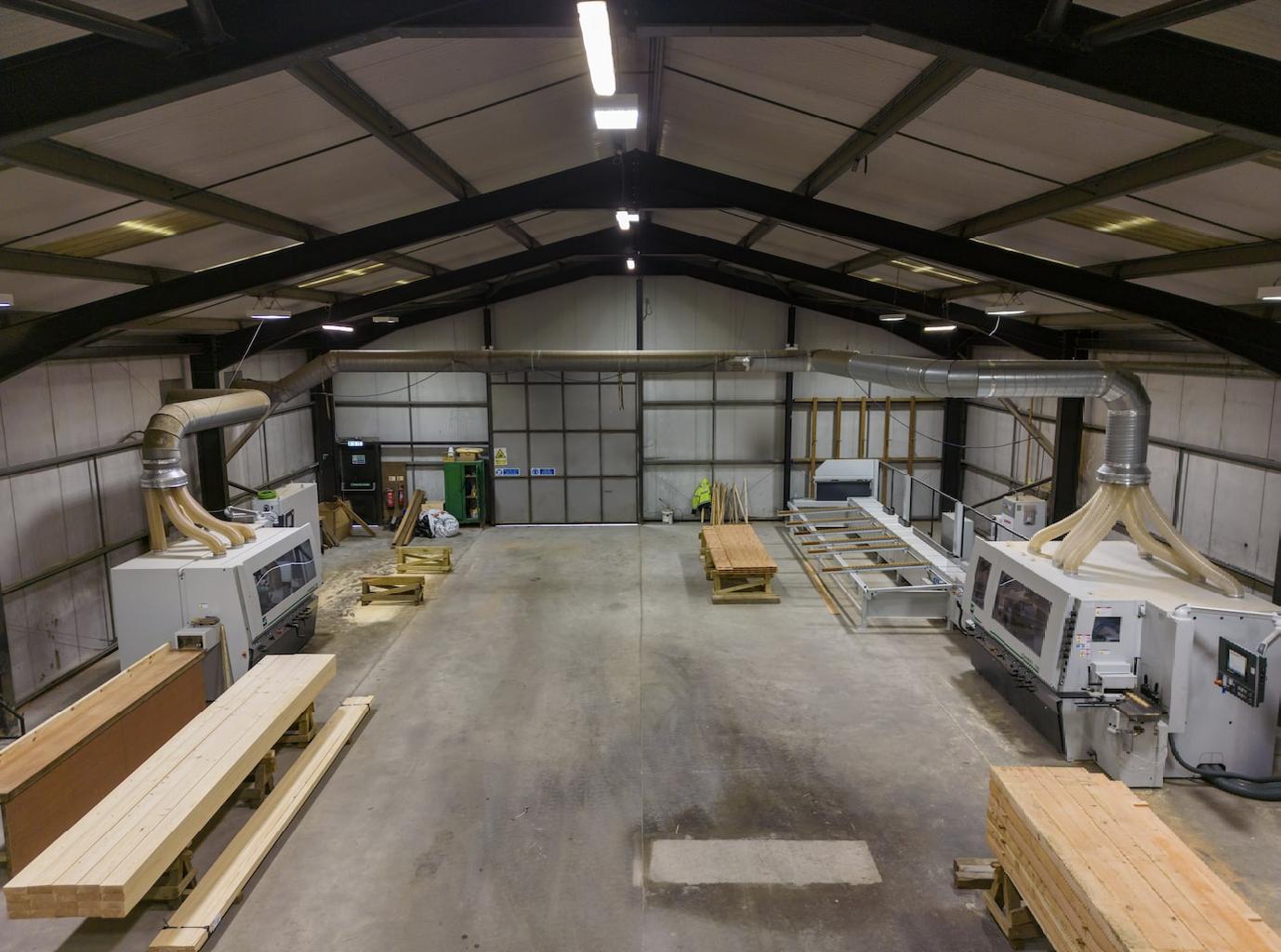
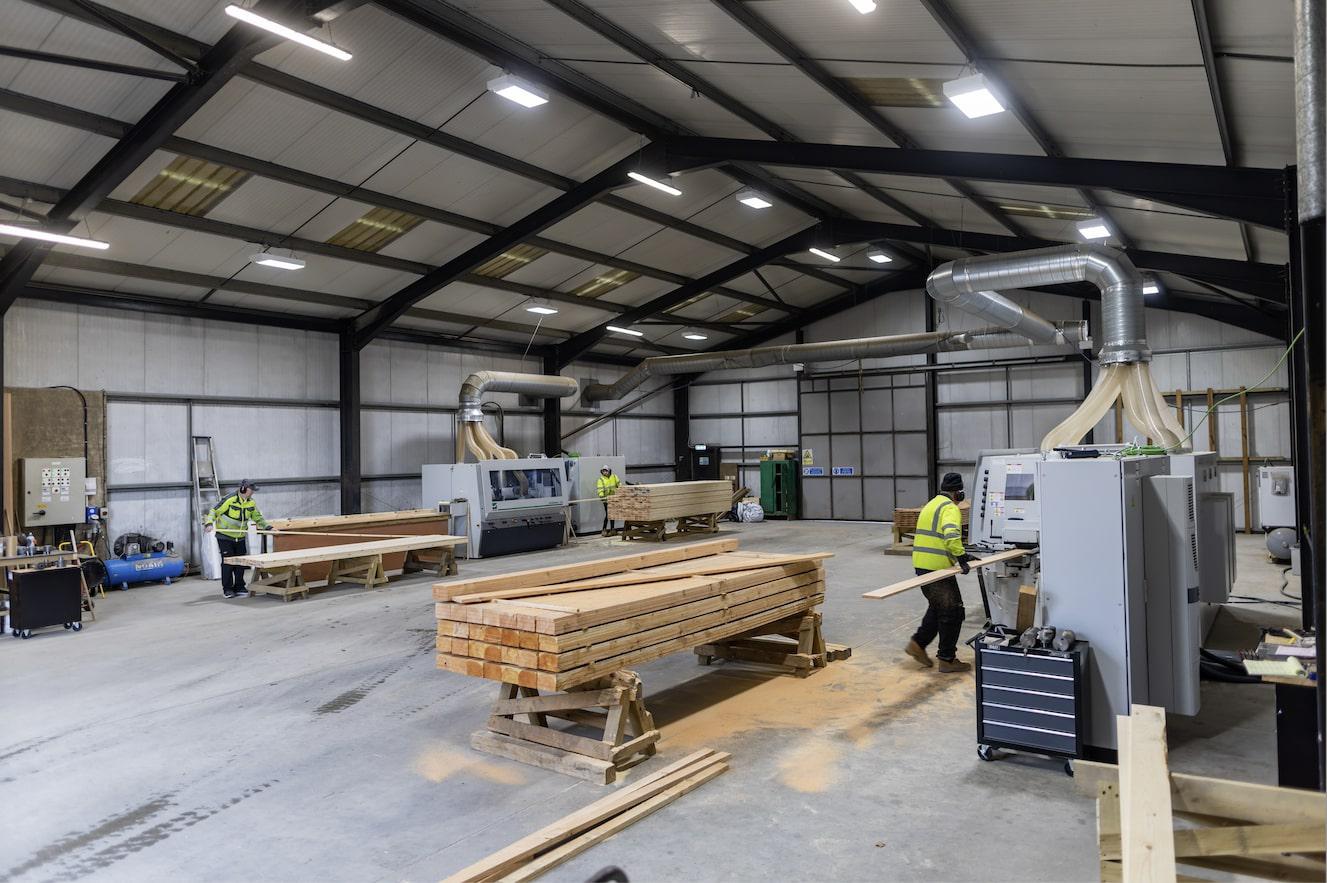
The new machinery, supplied by global specialists Weinig, includes a Powermat 1500 moulding machine which can cut widths up to 300mm, and a Powermat 700 moulding machine.
The machines are entirely flexible and can be used to make most timber mouldings including, cladding profiles, skirtings, architraves, door frames, stair components, and door liners in both hardwood and soft wood.
The company has purchased the Rondamat 960 grinder/profiling machine which makes templates for profiles so they can create bespoke profiles for customers. Once the template is made, it can be used repeatedly to make precisely the same profile which is ideal for continuity in large projects, where the same product is to be supplied frequently over time.
Editor’s Choice
Premier Forest has also invested in an Opticontrol measuring stand which is used to accurately measure the tool cutters and a Unicut P3 crosscut saw which has more than doubled Premier’s capacity to accurately crosscut timbers to length.
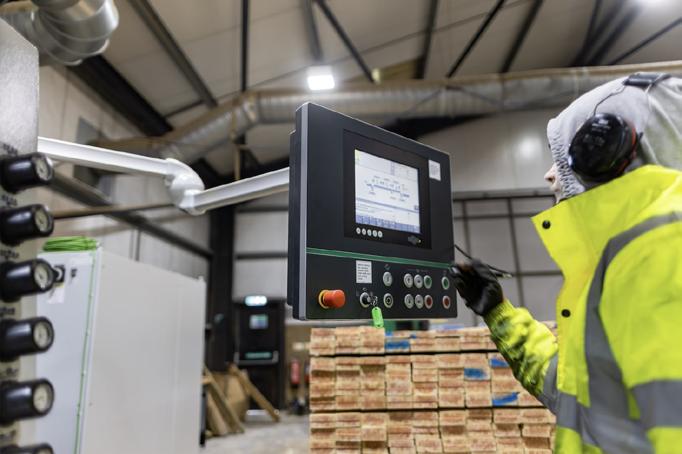
Terry Edgell, Co-founder & CEO of Premier Forest Products said, “Recent investment in additional state-of-the-art milling machinery is enabling Premier to increase productivity and improve efficiency at two of our key manufacturing sites.
“Our in-house manufacturing facilities mean that we have complete quality control and the capacity to ‘turn up’ production to meet volume orders for our customers. Together with our nationwide-wide distribution network, we can quickly turn-around orders and deliver in volume, across the UK.
“We’re now in the position that we can work with customers to support anything from bespoke, specialist renovation jobs to full-scale construction projects such as hotels, schools, apartments and housing sites. Our timber is sourced from responsibly managed forests, so we meet the stringent environmental requirements of modern building projects.”
Premier Forest Products is engaged in the importation, processing, merchanting and wholesale distribution of timber and timber products from multiple sites across the UK.
For more information visit: www.premierforest.co.uk/service/ premier-mouldings/
Our timber is sourced from responsibly managed forests, so we meet the stringent environmental requirements of modern building projects.
PREMIER FOREST PRODUCTS MAKES MAJOR INVESTMENT IN MOULDING EQUIPMENT 15 Construction UK Magazine - August 2023
Project
£15M REDEVELOPMENT OF BRO DDYFI COMMUNITY HOSPITAL MACHYNLLETH NOW COMPLETE
Construction has completed in the significant redevelopment of Bro Ddyfi Community Hospital in North Wales, creating an integrated health and wellbeing facility on the site of the former Machynlleth Union Workhouse, initially built in 1860.

The project has created a multidisciplinary facility, housing community and primary healthcare, adult mental health treatment, outpatient facilities, and women’s and children’s clinics, all under one roof. Intended to improve the lives of people living in Dyfi Valley for generations to come, construction is now complete, with the first patients coming through the doors last month.
Operating under Perfect Circle’s unique collaboration, leading independent property, construction, and infrastructure consultancy Pick Everard was appointed through the SCAPE Consultancy Framework to provide specialist project management, cost management and CDM advisory services, with Willmott Dixon delivering the design and construction.
Alex Dovey, director of project management at Pick Everard, said: “Working with an existing site always brings unique challenges, particularly for older structures.
There were several instances throughout the phased project where collaborative efforts across the delivery team were critical to success, such as securing the business case for funding and amendments to the design, born from concerns of the existing timber frame’s ability to bear a second storey load.
“To ensure the all-important harmonisation, we implemented a positive, clear and assertive communications strategy. This kept everyone energised and coordinated throughout a three-phased build and helped to minimise any potential disruption to occupied areas of the site.

“Working on a project like this, that brings together so many varied stakeholders from across the NHS, social care, third sectors and the construction supply chain, reflects the collaborative approach that we are passionate in delivering for every client. We’re incredibly proud to have been involved in a scheme that will create a true lasting legacy for the people of Machynlleth.”
Welsh government funding has been crucial to the viability of the project, with robust designs being key to the initial business case, securing the necessary backing. Combined with the finished facility incorporating a variety of health services, engagement formed a central pillar to project strategy, coordinating

the various requirements and expectations across stakeholders.
The scheme responded to targets set out in the Welsh Government’s publication Prosperity for All: A Low Carbon Wales, with a decarbonisation report developed by the design team as part of the Full Business Case (FBC) documentation.
Additional funding was made available by Welsh Government to develop a number fabric and Mechanical, Electrical and Plumbing (MEP) interventions that successfully impacted the CO2 emissions of the building.
This resulted in initiatives such as solar panels fitted between the natural slate roof tiles, helping the building conform with the planning constraints of being in a conservation area.
The insulation in the building fabric was also enhanced, with triple glazing helping to improve acoustic as well as thermal performance. Electrical vehicle charging points were also introduced at the site, with the containment infrastructure futureproofed to allow for additional points as demand increases.
With the hospital holding such a prominent position within the local landscape, the project team worked closely with the community to respect and build upon the site’s history, while also achieving the maximum benefit for people in the future.
To provide further positive social impact to the community, the project engaged with schools in the local area, with students helping to design the therapeutic gardens by agreeing a list of features to be included within the final design.
Wayne Tannahill, associate director of capital, estates and property at Powys Teaching Health Board, said: “Pick Everard has worked very closely with the Health Board to offer professional project management and cost advice services, which have played a significant role in the collaborative effort to steer this complex and challenging refurbishment and reconfiguration project through to a successful conclusion. The Pick Everard team can be proud of their contribution to this great healthcare facility, which will provide significant benefits for the Bro Ddyfi community for many years to come.”
16
Construction UK Magazine - August 2023
Cloudcell Technologies helps Thakeham Homes get connected
Overview
Thakeham Homes are one of the South East’s leading developers delivering private residential development and quality a ordable homes, all with a strong focus on community, family and well-being.

The Need
Prior to engaging with Cloudcell, Thakeham Homes had been using a provider that simply wasn’t delivering on time. The site solution consisted of an MPLS circuit with a BT line – this caused lots of delays and was having a big impact on site delivery.
They trialed the use of their own 4G Vodafone solution, which worked on some sites, but was limited to sites covered by this carrier and was a time-consuming process managing all the routers and SIMs. Thakeham required a fully managed connectivity solution that would provide reliable, day-one connectivity to a variety of construction sites across the South of England.
The Solution
The rst step in identifying the best solution to Thakeham’s challenges was to survey the location so that we could give the client a concrete idea of the performance levels they could expect before we deployed their solution.
Once the client was assured that they would get the connectivity and speeds they needed, the Cloudcell engineers undertook a thorough test of all the networks at the planned location for the welfare cabins.
Case Study
Following this, our engineers installed a collection of solutions:
• Cellular internet connectivity
• Fixed IP remote access to the clients DVR (CCTV recorder)
• WiFi Access points to provide additional WiFi coverage in their o ces
Once installed, tests were run and a fully supported and managed service was implemented across their sites.
The Benefit
We were able to deliver a fast and reliable connectivity solution from day-one which is now available across all Thakeham sites, with ultimate peace of mind built-in with our fully managed service. Our on-site connectivity support team took full responsibility for the delivery and management of the solution, enabling Thakeham to focus on the what they do best, knowing their much-needed connectivity was in place.
Discover Connectivity Built for Construction Get your sites connected in under 48 hours www.cloudcelltechnologies.com 03330 049 444 | hello@cloudcelltechnologies.co.uk Fixed Line Services Consultancy VoIP Broadband & Wi-Fi
“I now don’t have to do a lot! Having the solution fully managed is easier, quicker, and delivers a better service for our sites. I know if there is a problem Cloudcell are just an email or phone call away and can solve any issues without me having to go to site. Cloudcell have taken a huge headache away from what I had before and made my life a lot easier!”
Andrew Satchwell, Head of IT, Thakeham Homes
PLASTIC-FREE JULY: WHY DO WE NEED TO REDUCE PLASTIC PIPES IN THE BUILT ENVIRONMENT?
To celebrate Plastic-Free July, the Copper Sustainability Partnership (CuSP) spoke to Paul Hagar from Safe Piping Matters to uncover the risks of using plastic pipes in the built environment and how we can reduce their use.


What impact does the construction industry have on the environment?
Constructing and operating buildings are responsible for significant CO2 emissions, with the United Nations Environmental Programme linking the building sector to 38% of the global total. Construction also represents a big source of pollution – the Alliance for Sustainable Building Products lists construction as the second-largest user of plastic in Europe and states that the industry generates close to 2 million tonnes of plastic waste per year.
Plastic piping materials have become increasingly common in recent years, but what are the risks of this material to the planet?
The risks vary by type of material, but PVC plastic pipes are particularly harmful. The Healthy Building Network says the entire PVC supply chain uses one or more types of “toxic technology” in its production, including mercury and asbestos. A new report from Beyond Plastics named ‘The Perils of PVC Plastic Pipes’ also identifies the numerous ways that toxic PVC plastic and its hazardous ingredients – including vinyl chloride – cause serious harm to people and the environment all along the plastics pipeline.
What effect does the production of plastic piping have on the environment?
Plastic production facilities are big polluters of air and water and the first part of the lifecycle has a big impact. Plastic comes from fossil fuels, using oil and natural gas to generate the pellets that become feedstock for manufacturing pipes and other products. Plastic manufacturing has exploded over the past 30 years and the United Nations predicts that impacts from production will grow a further five times by the end of this decade.
What happens to plastic pipes at the end of their life?
They are either landfilled, adding to plastic pollution, or incinerated, emitting toxic chemical by-products, and further amplifying their carbon footprint. Recent research on microplastics pollution and chemical leachates from plastic waste in landfill shows significant negative impacts on water, air and soil.
What about the safety of plastic pipes? Can they withstand a building fire?
Plastic pipes used for drain, waste, vent, water distribution and sprinkler systems are combustible yet, despite this, they run through buildings. Construction teams must put more complex assemblies in place to offset the risks posed by melting and burning plastic pipes, adding components that will prevent fires from
Plastic production facilities are big polluters of air and water and the first part of the lifecycle has a big impact.
18 Construction UK Magazine - August 2023 Sustainability
moving from room to room via holes left by melted and burned plastic pipes. In practice, fire safety experts often find these more complex systems are installed incorrectly. Safe Piping Matters has just released a report with recommendations on firestopping, which can be read on the Safe Piping Matters website
How do synthetic materials compare to natural materials in a building fire?
The Fire Safety Research Institute conducted an experiment and found that interiors with more plastic and synthetic materials became fully engulfed in flames in less than five minutes. By contrast, an interior using materials like metal, wood and natural fibres lasted more than 29 minutes before it was fully burning. The implications of this extra time on allowing occupants to escape, and fire fighters to put out the fire, are clear.
Can plastic pipes cause water contamination and leaching when they burn? What compounds are released and what effect does this have on health?
Andrew Whelton of the Centre for Plumbing Safety at Purdue University has studied what chemicals are released into water from melted and burned plastic pipes. He found carcinogenic benzene at levels 40,000 times the safe limit, as well as scores of other chemicals with negative health effects. What’s even more concerning is the fact the chemicals released have unknown effects on health and safety – we simply don’t know what they will do.

With leaching in mind, are there certain applications where plastic pipes can’t or shouldn’t be used?
The conditions for safe and reliable installation of plastic pipes vary by the type of plastic material used. Speaking generally, plastic pipes are more susceptible to leaching when exposed to
heat and they can also be impacted by the substances flowing through them, due to chemical interactions with the pipe material. Plastic manufacturers publish extensive lists of building conditions and chemical exposures that can damage the pipes they make.
And what about the chemicals plastic pipes release into the air when they burn?
According to the report ‘Releases of Fire-Derived Contaminants from Polymer Pipes Made of Polyvinyl Chloride’ PVC plastic pipes emit toxic substances when they burn including methylene chloride, allyl chloride and vinyl chloride – all of which are carcinogenic. A study from the Firefighter Cancer Support Network shows clear correlations between the increased use of plastics in buildings and the incidence of cancer over the past 30 years.
What piping materials offer a safe, sustainable alternative to plastic?
There are several options for piping systems inside buildings that can limit leaching and fire risks, as well as avoiding the environmental and pollution impacts of plastic production and disposal. For example, copper pipe is a resilient, stable and highly recycled material. Iron and steel also perform similarly to copper in terms of both stability and recyclability.
Plastic pipes used for drain, waste, vent, water distribution and sprinkler systems are combustible yet, despite this, they run through buildings.
19 Construction UK Magazine - August 2023
Paul Hagar
Sustainability
THE ROLE OF SUSTAINABILITY CERTIFICATION IN BUILDING DESIGN
Written By Abhilash Rajan MEI
In an era defined by climate change and environmental consciousness, the design and construction of buildings play a pivotal role in shaping a sustainable future. As the world strives towards achieving net zero emissions and fostering cleaner, greener environments, sustainability certifications have emerged as a crucial tool in evaluating and promoting sustainable practices within the building industry. These certifications provide a standardised framework for assessing the environmental, social, and economic impact of buildings, fostering a holistic approach towards sustainable design and operation.
The role of sustainability certifications



A sustainability certification is a process where independent third-party organisations assess and verify the sustainability performance of a building. The certification evaluates various aspects of the building’s sustainability, including energy efficiency, water conservation, indoor environmental quality, waste management, and materials selection.
The role of sustainability certifications in building design is multifaceted.
Firstly, they encourage and incentivise architects, engineers, and developers to adopt environmentally responsible practices from the inception of a project. By providing guidelines and criteria for energy efficiency, water conservation, waste management, and indoor environmental quality, these certifications spur innovation and drive the implementation of sustainable technologies and strategies.
Secondly, sustainability certifications serve as valuable tools for assessing and benchmarking the performance of buildings. Through rigorous evaluation and third-party verification, they provide objective measures of a building’s
sustainability performance, facilitating informed decision-making for building owners, operators, architects and facility managers. By quantifying and comparing the environmental impact of different buildings, these certifications empower stakeholders to make choices that align with their sustainability goals.
The most widely recognised sustainability certification programmes are LEED (Leadership in Energy and Environmental Design) and BREEAM (Building Research Establishment Environmental Assessment Methodology) which have gained widespread recognition and adoption globally. These certifications go beyond mere compliance with building codes and regulations, aiming to raise
Many of the sustainability measures evaluated by certification programmes, such as energy-efficient lighting and HVAC systems, can also help to lower operating costs for buildings. By reducing energy and water consumption, buildings can save money on utility bills and maintenance costs.
20 Sustainability Construction UK Magazine - August 2023
the bar and set higher benchmarks for sustainability in the built environment.
Key uses for sustainable certification in building design
Sustainability certifications help to meet environmental targets by providing a standardised framework for evaluating and improving the environmental performance of buildings. By meeting the criteria for certification, buildings can demonstrate that they are meeting or exceeding established environmental targets.
Buildings are significant consumers of energy which is why improving energy efficiency is a key goal of sustainability certification programmes. By designing buildings to be more energy-efficient, organisations can reduce their energy consumption and lower their carbon footprint.
Many of the sustainability measures evaluated by certification programmes, such as energy-efficient lighting and HVAC systems, can also help to lower operating costs for buildings. By reducing energy and water consumption, buildings can save money on utility bills and maintenance costs.
Sustainability certification programmes also often include criteria related to indoor air quality and other aspects of occupant comfort and health. By improving these factors, certification can help to create healthier and more productive indoor environments. which can have a positive impact on occupant

health and wellbeing. This includes reducing exposure to harmful chemicals, improving ventilation, and enhancing natural lighting.
Sustainability
We work closely with built environment clients to design and implement sustainable solutions that meet certification requirements. For example, B&W’s engineers and sustainability consultants work together to develop sustainable designs that incorporate energy-efficient lighting, HVAC systems, and renewable energy technologies such as solar panels and wind turbines. They also help clients to manage their energy use and reduce their carbon footprint. Our expertise in sustainability certification allows us, as a design consultancy, to provide valuable guidance and support to clients seeking to achieve certification for their buildings and facilities and ensure that their buildings are being designed and operated in an environmentally responsible manner.
Design-led sustainable building solutions
At B&W, as design engineers, we work closely with building owners, operators and architects to design and deliver sustainable building projects that meet the criteria for certification under various sustainability certification programmes, including LEED, BREEAM, WELL, GSAS, and Estidama. We have a dedicated team of sustainability experts who are wellversed in these certification programmes and can help clients achieve certification by designing and implementing sustainable building solutions that meet certification requirements.

Overall, sustainability provides a way to promote and measure progress toward more sustainable practices. By meeting sustainability criteria, buildings can demonstrate their commitment to environmental responsibility, while also enjoying benefits such as lower operating costs and improved occupant health and comfort. As more buildings become certified, a positive feedback loop is created, where sustainable practices become the new standard, accelerating the transition to a low-carbon future.
In conclusion, sustainability certifications play a vital role in building design by promoting sustainable practices, providing performance benchmarks, and contributing to the global drive towards net zero and cleaner, greener buildings. As the urgency to combat climate change intensifies, these certifications act as powerful tools in transforming the building industry and shaping a sustainable future for generations to come.
As more buildings become certified, a positive feedback loop is created, where sustainable practices become the new standard, accelerating the transition to a lowcarbon future.
21
Construction UK Magazine - August 2023
MORE EFFICIENT, LIGHTER SPACES, NATURALLY
Hambleside Danelaw’s unique honeycomb Insulator offers significant improvements to light transmission and diffusion in industrial rooflights. Its lightweight transparent cell structure is perpendicular to the plane of the rooflight, maximising natural daylight from every angle.

Unlike traditional alternatives, Insulator can deliver extremely low U-Values without compromising light transmission; and with a fraction of the embodied carbon.
And at the end of its service life, Insulator is compostable. The natural choice for low-carbon daylight. www.hambleside-danelaw.co.uk
DRYSEAL: LONG-LASTING PEACE OF MIND
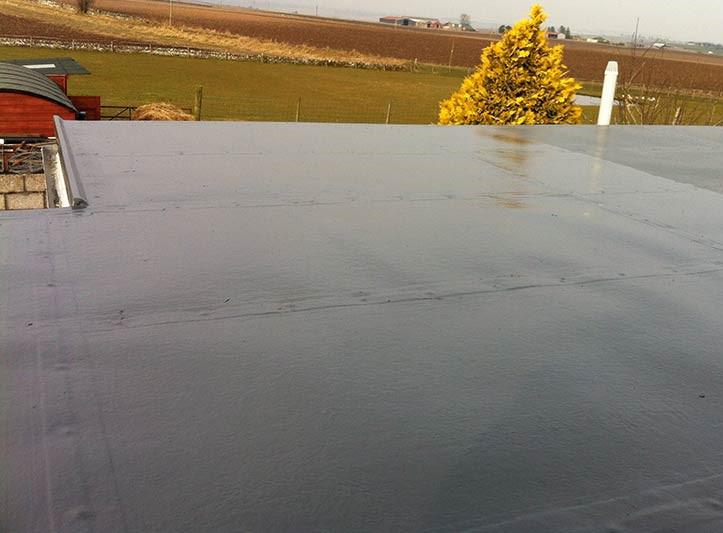
Two domestic roofs in Angus, Scotland which were originally waterproofed with Dryseal back in 1998 had reached the end of their 20-year guarantee in 2018. Having remained watertight for 20 years, the homeowners decided to have the Dryseal roofs refurbished and take advantage of the offer to extend the ‘leakfree’ water tightness guarantees until June 2028. The work was successfully completed in 2018 by long-standing Forfar Dryseal Contractor Artisan Rooftech Ltd.
Susan Elliott, Director of Artisan Rooftech, said: ‘The refurbishments were completed to both our clients’ satisfaction and are they are delighted that they have been awarded a further 10 years onto their leak free guarantee providing
them with much peace of mind. We believe that this shows the quality and longevity of Dryseal to be a strong market leader in the GRP roofing world. Positive word of mouth advertising has been given by both of these clients which has led to new leads and new Dryseal roofs being completed.’
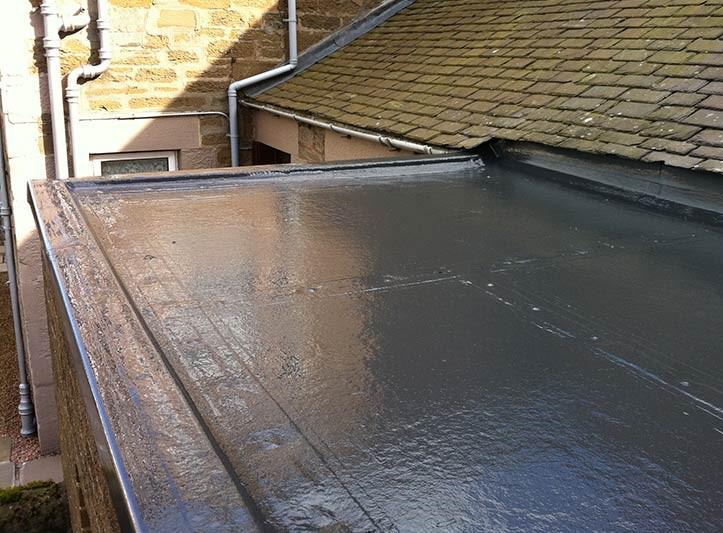
Dryseal’s 20-year watertightness guarantee and demonstrable longevity are examples of some of the many reasons to choose Hambleside Danelaw’s flat roofing system.
 Zenon Insulator for GRP Rooflights
To learn more about Dryseal, see www.dryseal.org or get in touch via 01327 701 910. 22 Sustainability Construction UK Magazine - August 2023
SURESET RESIN BOUND: PAVING THE WAY FOR SUSTAINABLE EXTERNAL WORKS



In an era where sustainability is paramount, finding eco-friendly alternatives for external works is crucial. SureSet Resin Bound emerges as a gamechanger in the construction industry, offering a myriad of sustainability benefits that make it the ideal choice for a range of outdoor projects. This innovative solution not only delivers exceptional durability and aesthetics but also contributes to a greener future.
Enhanced Permeability:
One of the standout features of SureSet Resin Bound is its remarkable permeability. Unlike traditional impermeable surfaces, this eco-friendly resin bound system allows rainwater to seep through, replenishing the natural groundwater system. By mitigating surface water runoff, SureSet promotes effective drainage, reducing the risk of flooding and water contamination while replenishing local water sources.
Sustainable Materials:
SureSet Resin Bound is a BBA certified product formulated using natural materials, including aggregates and a natural derived resin binder. These sustainable components are backed by our commitment to ISO 1400. By opting for SureSet, architects, builders, and homeowners can actively contribute to a sustainable environment.
Longevity and Low Maintenance:
The exceptional durability of SureSet Resin Bound ensures a long-lasting, lowmaintenance solution for external works. Its robust composition withstands heavy traffic and adverse weather conditions, reducing the need for frequent repairs or replacements. This longevity not only saves costs but also minimises waste production, making SureSet a sustainable investment in the long run.
Improved Urban Heat Island Effect:
Cities often face the challenge of the urban heat island effect, where concrete and asphalt surfaces absorb and radiate heat, increasing temperatures in built-up areas. SureSet Resin Bound offers a cooler alternative by allowing water and air to pass through the voids and reflecting sunlight to reduce surface temperatures. This feature helps mitigate the urban heat island effect, creating more comfortable outdoor spaces and reducing the energy demands of cooling systems.
Conclusion:
SureSet Resin Bound stands as a sustainable champion for external works, providing permeability, sustainable materials, longevity, and a solution to the urban heat island effect. By embracing this innovative resin bound system, we can pave our way towards a greener, more
resilient future. Let’s choose SureSet and make a lasting impact on the sustainability of our outdoor spaces.
For more information visit: www.sureset.co.uk
23 Construction UK Magazine - August 2023
Sustainability
WHAT THE DEMOLITION INDUSTRY IS DOING TO RAZE UNSUSTAINABLE PRACTICES AND ACHIEVE ITS CLIMATE GOALS
By Simon Barlow, the Managing Director & Founder of Rye Demolition

In 2023, the climate outlook is decidedly bleak. The global temperature has already risen 1.1ºC above its pre-industrial level, with glaciers melting en masse. Sea levels are rising, leading to frequent coastal flooding, while unseasonal droughts are displacing millions of people, causing widespread poverty and hunger. By 2030, an estimated 700 million people will be at risk of displacement by drought alone, according to the United Nations [UN].
It is clear that the world cannot afford to continue on its current trajectory. This is why the UN has called on countries to contribute to cutting global greenhouse gas emissions by 43 per cent by 2030, and then to net zero by 2050. Indeed, at November’s COP27 summit, our prime minister, Rishi Sunak, reaffirmed the UK’s commitment to reducing its emissions by at least 68 per cent by 2030.
At November’s COP27 summit, our prime minister, Rishi Sunak, reaffirmed the UK’s commitment to reducing its emissions by at least 68 per cent by 2030. This target was initially set out by the government in its 2020 net zero strategy, ‘Build Back Greener’, which tasks the economy’s key sectors with significantly reducing their CO2 emissions.
24 Construction UK Magazine - August 2023 Sustainability
This target was initially set out by the government in its 2020 net zero strategy, ‘Build Back Greener’, which tasks the economy’s key sectors with significantly reducing their CO2 emissions. Among these is the built service sector, which plays a vital part in helping to address the UK’s housing crisis, as well as in enabling businesses to expand their operations.
The problem, however, is that the sector – which incorporates construction, excavation, and demolition – account for 62% of the UK’s waste, according to a report by the House of Commons Environmental Audit Committee. Despite this alarming statistic, the demolition industry in particular has adopted a range of corrective measures, recognising its important role in tackling climate change. Nonetheless, the industry needs to do more to showcase the changes it has made, and the efforts that are in process to secure a greener future for us all.
The path to progress
When most people think of demolition, images of wrecking balls wantonly crashing into buildings, causing violent explosions of bricks, dust debris, likely spring to mind. The reality, however, is that the process is well-planned and highly controlled by skilled professionals, with approximately 98 per cent of all materials re-used and recycled rather than thrown onto a landfill. Wood from demolished buildings is regularly repurposed for future projects or burnt for fuel, while metal can be melted down, purified, or used elsewhere. Furthermore, aggregates such as bricks and concrete are crushed and pressed into roads, pavements and foundations for future builds. Essentially, current demolition practices are paving the way for better, more modern and sustainable living, all while ensuring that the impact on the environment is minimal.
Despite this, there is always more that can be done to improve recycling efforts. This is precisely why many demolition companies are increasingly investing in emerging tech designed to help them sift through various types of rubble and soil, or separate metals and concrete. Meanwhile, significant energies are being put towards reducing the use of harmful fuels that power essential machinery. For example, the National Federation of Demolition Contractors [NFDC] introduced a policy asserting that each of its 140 accredited members should phase out the use of diesel, and switch to hydrotreated vegetable oil [HVO] fuel. Produced from waste oils like chip fat, HVO can reduce emissions by as much as 90 per cent when compared to more conventional alternatives.
Simply by making changes like this, therefore, the demolition industry can demonstrate just how much more sustainable it can become. There are challenges relating to this in regards to price and supply – issues that government and industry need to work on together to smooth the transition to sustainable fuel options.

In addition to this, contractors are changing how they operate to be more environmentally friendly. Local talent is largely prioritised over hiring from far afield, meaning the carbon footprint created by travelling between projects is minimised. Also, where furniture and appliances are left in buildings scheduled for demolition, efforts are being made to donate to charity shops, small businesses,
or schools that can make better use of them. In this way, demolition can greatly benefit local communities, and help instil a culture of recycling.
The demolition industry can’t go it alone
While the demolition industry still has some way to go in limiting the impact that its practices have on the environment, the steps taken so far are hugely promising for a greener and more prosperous future ahead. However, the sector cannot hope to achieve all targets by itself; construction companies and architects also have a role to play. By working with demolitionists, construction organisations can ensure that upcoming projects are built with more sustainable designs, ensuring that all materials used can be repurposed for use on other projects in the future. This will help to optimise the reuse of materials and normalise recycling practices for generations to come.
There’s no denying the need for demolition. Yes, it is an option for when all others are off the table, but in such scenarios, it is necessary for repurposing potentially unsafe buildings into impressive new infrastructure. As such, demolition forms an integral part of the built services sector, but that is not to say that that it cannot move towards becoming more sustainable. While the industry is already working hard to be greener, it should not be beyond reproach or criticism. Scrutiny is essential for ensuring that demolition organisations stay on track as they strive to meet their net zero targets, just as businesses in the UK’s other key sectors are. However, the industry also needs the understanding and encouragement from all its stakeholders – including the government – if it is to succeed in its goals, given its nature and fundamental importance to the UK.
Essentially, current demolition practices are paving the way for better, more modern and sustainable living, all while ensuring that the impact on the environment is minimal.
25 Construction UK Magazine - August 2023
Where furniture and appliances are left in buildings scheduled for demolition, efforts are being made to donate to charity shops, small businesses, or schools that can make better use of them.
Sustainability
CASE STUDY: FLEET VALLEY POCKET PARK (RAIN GARDEN) – LB CAMDEN

A densely built-up street, northwest of Clerkenwell, bordering Islington, home to the London Borough of Camden. Mount Pleasant Street gained its name in the 1730’s after locals began to dump cinders and other refuse. An often-used ironic term.
The renowned “Mail Centre” (formally Coldbath Fields) has undergone continuous development as a sought-after brownfield site. Transforming the landmark site into to an inspiring new neighbourhood, named “Postmark” housing 650 luxury apartments, wellness centre, swimming pool, landscaped courtyard, cinema, and surrounding public spaces.
Mount Pleasant lies in one of the borough’s critical drainage areas and surrounding flood risk zones. Following the success of another, it was decided to construct a pocket park close to Farringdon Road to help alleviate pressure on the nearby combined sewer.





The SuDS pocket park, replaces previous impermeable paving, designed to provide a wealth of vegetation, enabling a biodiverse haven, capturing surface water and
providing water storage volume to the capacity of 48m³ which is now avoiding the sewer network.
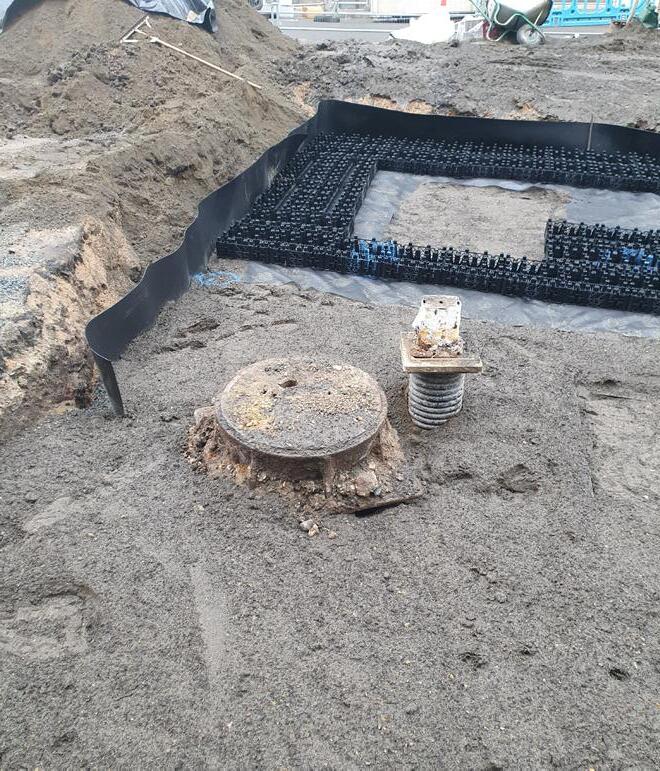
Working with Land Use Consultants and the London Borough of Camden GreenBlue supported with designs, with many underground constraints, including avoiding the main water pipe and nearby sewer. GreenBlue supported with a root management strategy, being that the nature-based solutions had to be designed within the first meter of the garden.
Products included RootSpace 600, 1 cell deep, Ribbed Root Barrier again at 600mm deep for root guidance, additional flat barrier for the protection of the new surrounding paving, ArborCell to provide an additional layer of attenuation, Arborguy, guying for the 4 planted trees, Aborvents to enhance the aeration through to the ArborSoil Hydro, fed by Mycorrhiza and irrigation with RootRain Urbans.
The full package includes, load bearing drainage, mesh and hessian all designed as the perfect rain garden solution, with products all manufactured and distributed in the UK.
Being that the project was supported and funded by Thames Water, working alongside LB Camden and their Surface Water Programme, LUC as designers, Volker Highways for civils and Idverde for installation, GreenBlue Urban is proud to have been a collaborative support from design to install to a valued area that will enable public amenity, provide health, well being and enhanced social cohesion.
Achieving our vision of creating healthier urban spaces in harmony with nature.
www.greenblue.com @GreenBlueUrban Tel: 01580 830800
26 Sustainability Construction UK Magazine - August 2023
The Four Pillars of SuDS
GreenBlue Urban’s stormwater management solutions replace conventional piped drainage designs with green infrastructure features such as swales, rain gardens and tree pits.

Manufactured in the UK from 100% recycled and recyclable material. GreenBlue Urban have more than 30 years of experience in creating healthier urban spaces in harmony with nature.


RootSpace StormForm HydroPlanter
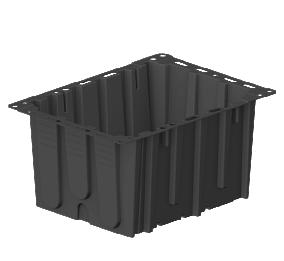
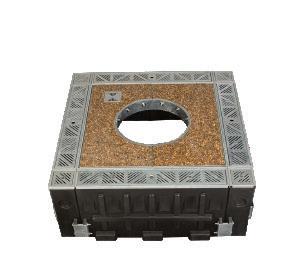

T: +44 (0)1580 830 800
E: enquiries@greenblue.com
W: greenblue.com
Suspended pavement support system
Multifunctional SuDS tree surround Modular ‘Plug & Play’ Rain Garden
W a t er Quantity
Biodi versi t y
Water Quality
ytinemA
Creating healthier urban spaces in harmony with nature
QRScan
TRAINING AT THE LEAD SHEET
TRAINING ACADEMY
Lead is one of the most recycled materials in widespread use which has the highest end-of-life recycling rate of all commonly used metals. This is a result of the physical chemical properties of the metal and product design, which makes lead-based products easily identifiable and economic to collect and recycle. High recycling rates, coupled with the fact that lead-based products and architectural lead sheet are manufactured from recycled material, makes it one of the few products that operate in a true closed loop. Even the waste material created in the production process is recycled.
• Lead is made from 100% recycled material.
• Lead is 100% recyclable.
• Lead has a 50-year lifetime warranty.
Lead is in the BRE Green Guide – which outlines the environmental impact of building materials – and is an A+ or A rated material.
Lead’s low melting point means that it has a lower CO2 carbon footprint from that of other metals used in roofing. If you were offered a construction product, that was 100% recycled, that was 100% recyclable, had a 50-year installed warranty and the waste produced by the manufacturing process was also recycled, you would, wouldn’t you?
The Lead Sheet Training Academy is at the forefront of training for those using lead or hard metals in the construction industry.
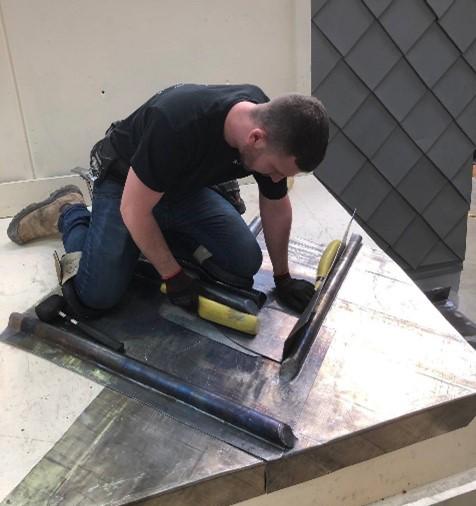
To deliver this training the LSTA operates from a purpose-built training facility in East Peckham, Kent, which is open fivedays a week all year round. The training centre includes full scale training rigs and resources as well as providing a wellequipped environment in which to learn as it re-creates real-life situations. We can also deliver basic courses in lead and hard metals at locations around the UK.
The centre is recognised as a CITB Approved Training Organisation. Our tutors are industry qualified and experienced trainers, holding qualifications in leadwork, hard metals, and teaching, they have experience of working on-site and are CITB-approved assessors. The LSTA can offer pay-as-you-learn charges for courses longer than 5-days.
https://leadsheet.co.uk/funding/
Funding
As a CITB Approved Training Organisation. Training courses run by LSTA are grant eligible for CITB registered construction employers. Most grants are now paid for achievement on satisfactory completion of the course and will be paid automatically without you needing to apply. For more details on CITB grants click https://www. citb.co.uk/levy-grants-and-funding/ grants-funding. CITB Grants can be used to offset the employer contribution towards courses. Funding available will significantly reduce the cost to you as an employer and allow you to support the next generation of Lead or Hard Metal workers.
CITB also offer assistance with accommodation, food & Travel for the Specialist Applied Skills Programme through the CITB “Travel to Train” please use the following link, Travel to TrainApprenticeship travel and accommodation grant 80% of the costs are covered through this scheme.
On successful completion, CITB-registered employers will receive Tier 3 (£240 in 2023/2024) short-course completion grants towards the course fees. For the two longer Intermediate Courses, Tier 3 grant will be paid on successful completion of each of the four modules. Course fees (as at 1st April 2023) are available https:// leadsheet.co.uk/service/lsta-course-fees/ Please note small employers and the selfemployed that don’t need to pay the levy may also be able to apply for a grant. You must meet the requirements as set out by the CITB and register your company with the CITB before making an application.
LSTA - Specialist Applied Skills Programme (SAP) Course
Places are now available for the Lead & Hard Metals Specialist Applied Skills Programme (SAP) from April 2023 through to January 2024. Candidates will achieve the following:
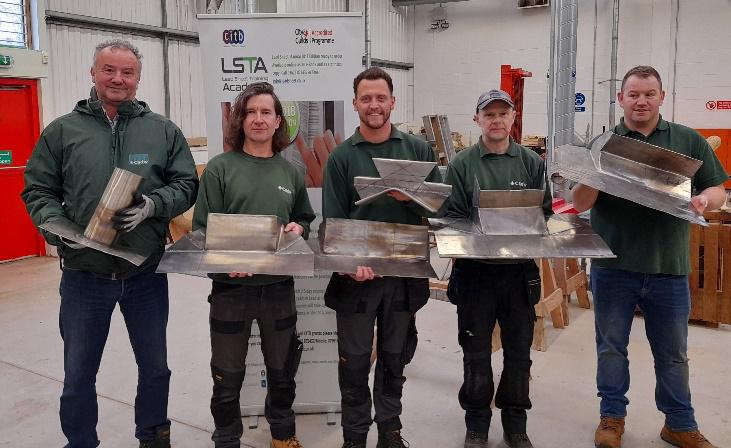
• NOCN Level 2 NVQ Hard & Soft Metals Roofing Operative & City and Guild Accreditation in Traditional Intermediate Hard or Soft Metal craft
• NOCN Level 3 NVQ Heritage Hard & Soft Metals Roofing Operative & City and Guild Accreditation Traditional Advanced/Heritage Hard or Soft Metal craft
Please

contact the LSTA on 01622 872432 or 07961 659802 and by email info@leadsheet.co.uk for help in choosing the right course for you and receiving further information on fees, grants, course dates and booking places on courses.
28 Sustainability Construction UK Magazine - August 2023

WORK UNDERWAY ON NEW PRIMARY SCHOOL FOR CRINGLEFORD
Work is now underway on the much-needed 420-place new primary school in Cringleford near Norwich.
A ground-breaking ceremony, which traditionally marks the beginning of construction for new building projects, was attended by: Norfolk County Council, which is funding and commissioning the new school; Inspiration Trust, which will be running it; and RG Carter which is building it.

The new school is being built on land off Colney Lane on the edge of Norwich. It will be a second primary school for the growing village of Cringleford, which is due to see around 1,300 new homes built.


The new school will be two storeys with car parking for staff and visitors, including electric charging
spaces, and external hard and soft surfaced outdoor play areas.
Its design and layout has been carefully done to reduce net carbon in the operational energy demands of the school and respects the local area and new housing.
The new building would have solar panels, passive stack natural ventilation, air source heat pumps and an all-electric kitchen.
The school is due to open in September next year.
It is one of a proposed 26 new schools proposed for the county within the next 10 years as part of Norfolk County Council’s £308 million Local Growth and Investment Plan to ensure sufficient places in areas of major planned housing growth.
BERWICK HOSPITAL WELL UNDERWAY IN CRAMLINGTON OFFSITE MANUFACTURING FACTORY
The long awaited, new £35 million Berwick hospital is being built one year quicker compared to traditional methods of construction by using offsite proprietary integrated platform technology.
Leading industrialised construction and manufacturing specialist Merit, based in Northumberland, has work well underway on the new hospital at its offsite manufacturing factory in Cramlington.
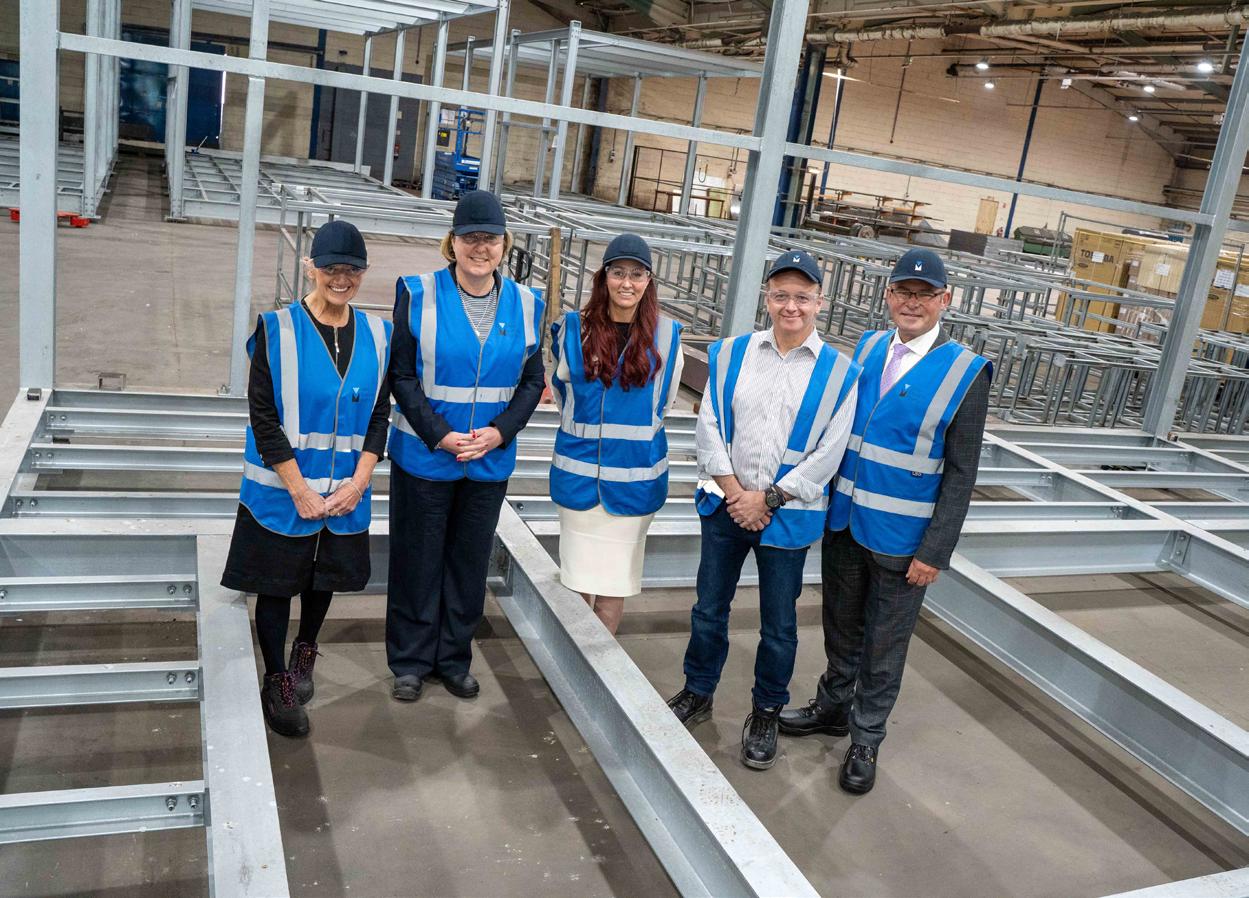
The Merit approach also offers a zero carbon emissions-design, class leading lower energy consumption, enhanced infection control and is technically enabled for the future of health care.
The factory recently played host to a visit from Berwick’s MP, Anne-Marie Trevelyan, and nearby Blyth Valley MP, Ian Levy, enabling them to see for themselves the construction of Berwick hospital. They were able to view the start of the build of the 800+ pre-assembled modules (PAMs) and 17 UltraPODs® that will be delivered to site to form part of the state-of-the-art building.
The parliamentarians also received a demonstration of Merit’s factory robot, just one of the Industry 4.0 initiatives in progress along with computer numerical control (CNC) technology, automation and digitalisation.
30 Project News Construction UK Magazine - August 2023
LEFT: Marion Dickson (left) pictured with Merit’s chair Kirsty Wells, Anne-Marie Trevelyan MP, Merit’s CEO Tony Wells, and Ian Levy MP, inside Merit’s Cramlington factory
£1.3M IN SOCIAL VALUE DELIVERED IN BEFORDSHIRE SCHOOL EXTENSION


Eight new classrooms have been added to a Bedfordshire school to accommodate more youngsters from a growing community in the next term.
Further facilities, including a rest area and multi-use hall, have been included in the twostorey extension to Wixams Tree Primary School.
Improved outdoor playground areas, new green and creative areas, as well as a reconfigured nursery, rest areas and a multi-use hall have also been established on the site by Hertfordshire-based construction company Willmott Dixon.
Throughout the months spent on site, the Willmott Dixon team supported the community, contributing £1.3m in social value, from time spent in staff hours working with young people, having local staff on the project and focusing on a supply chain within a small radius of the site.
CONQUIP WINS COMPETITIVE TENDER FOR MAJOR MIXEDUSE DEVELOPMENT PROJECT IN LONDON, UK
Conquip Engineering Group, the engineering and manufacturing organisation supplying products and services to customers globally, announces that it has been awarded a project to deliver a complex, four level temporary works propping scheme by contractor John F Hunt.
John F Hunt has been engaged to deliver basement excavation and construction on a mixed-use development project in the City of London in the UK, by main contractor, Mace.

The ambitious development requires full demolition of One Liverpool Street and development of a 10-storey building for office use with two levels of partial basement.
John F Hunt selected Conquip for the supply of the temporary propping over other bidders as it demonstrated a clear understanding of the project requirements and desired construction methods. Its ability to deliver a complex and demanding scheme in an agile way was proven when Conquip modelled the work within a BIM process and provided guidance with sequencing and methodology.
Temporary Works Propping at One Liverpool Street is expected to start in Q4 2023.
This project extends the relationship between Conquip and John F Hunt, with Conquip supporting JF Hunt for more than a decade with a wide range of
Leading independent property, construction, and infrastructure consultancy Pick Everard was also on board the project, delivering project management, quantity surveying, NEC supervision, and health and safety services.
During the project, Willmott Dixon colleagues helped more than a hundred students at three different schools, including Wixams Tree Primary and Academy, Bedford College and Parkfields School, to learn about employability skills, by arranging workshops, assemblies and working with them in the classroom.
The company has also created strong links with Grange Academy, Kempston, and Grey’s Education Centre, Kempston, and will continue to mentor young people during future projects. Willmott Dixon has also established a partnership with Bedford College’s construction team, to create opportunities for students to engage with its supply chain partners from September.
products and services. Of note was the St Pancras Campus basement excavation project in London, where Conquip value engineer designed, manufactured and supplied the temporary propping solution, prior to the construction phase of a sustainability-first three building scheme.
Conquip has an extensive track record of innovation, problem-solving capabilities and safety in temporary propping since 2018, with client-focused designs and efficiencies through value-engineering leading to economical schemes for clients. Compared to structural steel solutions, Conquip’s proprietary temporary propping system leads to improved sustainability, cost efficiency and speed to installation.
31 Project News Construction UK Magazine - August 2023
WINVIC BEGINS HIGHWAY PROJECT ON A16 FOR LINCOLNSHIRE COUNTY COUNCIL
Winvic Construction Ltd, a leading main contractor that specialises in the design and delivery of multi-sector construction and civil engineering projects has commenced its first project under the Lincolnshire County Council highways framework contract; the General Works’ Lot contract is to deliver new infrastructure assets as well as infrastructure improvements across the county over 4 years.
The works to Marsh Lane roundabout on the A16 and works to improve active travel links in Boston near Wyberton Low Road are the first set of Lincolnshire ‘Levelling Up’ road improvements to be carried out. The Marsh Lane roundabout improvements and Boston Active Travel are expected to cost a total of £5.7 million. Winvic commenced construction on 16 May and the scheme is expected to be complete within six months.
The major improvements to Marsh Lane roundabout will reduce congestion on the A16, improve safety and future-proof the roundabout for future A16 upgrades down the line. 3,070 m2 of carriageway on the approaches to the existing roundabout on the A16 will be widened to two lanes, as will the roundabout. The alignment of the roundabout will be moved to facilitate its widening from 21.5m diameter to 27m. 410m of new drainage will be installed as part of the roundabout upgrade. Mass traffic signals infrastructure works
will be undertaken to the crossroad junction with 4,025m2 of carriageway treatment works.
The works also include the creation of a three-quarter mile active travel route in Boston, addressing the conflict between cycle users and HGVs on Marsh Lane through the Riverside Industrial Estate. The pavements will be widened and a new cycle lane will be installed.

The two-lane carriageway will be reduced to one with traffic management on the A16 for up to 10 weeks. Later in the project, temporary traffic signals and a series of nighttime road closures will be used.
Both projects will be funded by a portion of the £20m in ‘Levelling Up’ funding awarded to the county council in October 2021. The remaining funding will be used across four projects, including improvements to Spalding’s A16/A151 Springfield Roundabout and A16/B1180 Greencell Roundabout.
The ‘General Works’ Lot was awarded to Winvic by Lincolnshire County Council in April 2022. Works to be undertaken by Winvic on A and B class roads in Lincolnshire are likely to include the construction of roundabouts, major highways widening or dualling, bridge construction and service diversions and installation as well as the installation of drainage and street lighting.
TILBURY DOUGLAS MARKS THAT CONSTRUCTION WORK IS UNDERWAY ON THE MILLBROOK MENTAL HEALTH UNIT PROJECT
Tilbury Douglas, a leading UK building, infrastructure, engineering and fit-out business, has marked and celebrated that construction work is underway on the Millbrook Mental Health Unit project, which it is delivering on behalf of Nottinghamshire Healthcare NHS Foundation Trust.

The project, which was procured via the P22 Framework, includes the construction of a new single storey dementia ward, as well as refurbishment of two existing wards. The new ward, which will offer a low-stimulus environment, will contain 18 single bedrooms with ensuite toilet and shower facilities.
In attendance to mark this milestone was Nottinghamshire Healthcare’s Chair, Chief Executive and other Trust colleagues.
Simon Butler, Managing Director Building Central at Tilbury Douglas, said:
As the main contractor working on this project, it was important to be able to mark this milestone. We will continue to work collaboratively with all key stakeholders to ensure the project is delivered efficiently without impacting on the rest of the site which remains open.
32 Project News Construction UK Magazine - August 2023
WIELAND GIVING POWER TO YOUR HEALTH AT BRIGHTON 3TS HOSPITAL
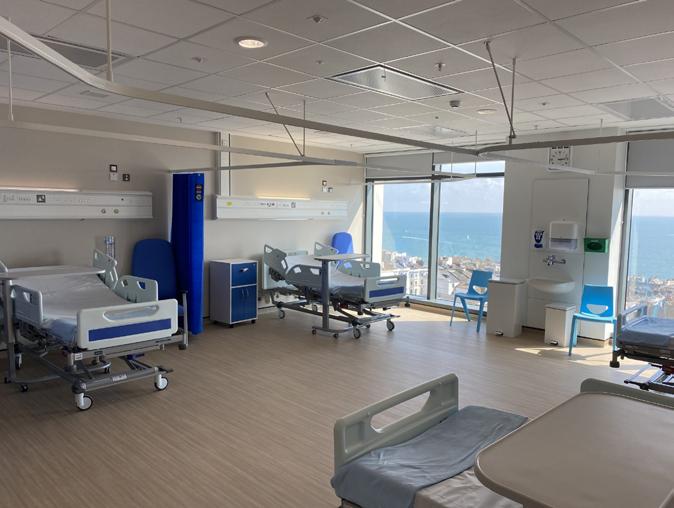


Wieland Electric have recently delivered a fully pluggable modular wiring system to feed power and lighting throughout the new 11 storey Louisa Martindale Building at the Royal Sussex County Hospital in Brighton. The new building is the first of the three stage 3Ts Redevelopment programme that is replacing all the facilities on the front half of the hospital with two brand new clinical buildings and a much-needed service yard.
All Wieland products were delivered as a ‘plug and play’ system, pre-wired and pre-tested, reducing installation time and allowing for tight deadlines.
Metalynx2 represents a new, smarter generation, helping to deliver even greater savings on costs and installation time, with structured wiring now firmly established as the norm for fast-track projects. As a result, it is suitable for power distribution and lighting control (including DALI and KNX), and the ability to customise Metalynx2 components for unique projects provides endless design flexibility.
Furthermore, Metalynx2’s inherent flexibility ensures that any changes to the system can be accommodated swiftly and with minimal downtime. The Dali lighting control also used Wieland’s popular gesis® GST connectors to deliver power and control signals to the luminaires.
THINK DUNE EVO, SAY ARUBA
Zentia celebrates in style as popular Dune eVo family is renamed Aruba.

Leading UK ceilings manufacturer Zentia has refreshed one of its most popular ranges of ceiling tiles with a new name, including a new high humidity variant.
As part of the company’s transition from Armstrong to Zentia, Dune eVo will now be known as Aruba, a name inspired by the white sandy beaches of the Caribbean and the finely sanded finish of the tile’s surface.
The new high humidity variation is being introduced to support the product family’s flexibility. Aruba hH offers stability at humidity levels of up to 99% RH, making it particularly ideal for high humidity areas such as changing rooms. It also offers Class C sound absorption and good sound attenuation for excellent acoustic performance.
This new addition sits alongside Aruba, Aruba Max and Aruba dB, each bringing their own performance capabilities. Together, they deliver a complete acoustic ceiling solution with the benefits of a continuous face pattern across entire projects.
To celebrate the launch of the Aruba range, Zentia is running a competition to win £5,000 worth of holiday vouchers. Please see the Zentia website for full T&Cs and details on how to enter. https://www.zentia.com/en-gb/the-aruba-family/
For more information visit: www.wieland.co.uk

33 Construction UK Magazine - August 2023
AMEY CONSULTING ATTAINS CHARTERED MANAGEMENT CONSULTANT (CHMC) ACCREDITATION
Amey Consulting, one of the UK’s leading engineering consultancies, is now an accredited organisation supporting their consultants towards completing the Chartered Management Consultant Award (ChMC).
ChMC is awarded to consultants who establish and maintain excellent standards in the management consulting profession. The engineering consultancy, known for its high-profile roles as National Highway’s data science partner and as systems integration contractor on the Thames Tideway project, joins more than 20 leading consulting firms offering chartership to their consultants.
The ChMC accreditation signals Amey Consulting’s achievements in providing a learning and development framework that provides a professional standard of career excellence for management consultants to aspire towards and clients to benchmark against.
APPLEBRIDGE CONSTRUCTION APPOINTED TO £12M ENGINEERING TRAINING CENTRE DEVELOPMENT AT MIDDLESBROUGH COLLEGE
Applebridge Construction has been appointed by Morgan Sindall Construction to carry out foundation works at Middlesbrough College’s new state-of-the-art engineering facility.
The multi-million-pound engineering centre will act as a replacement and relocation of the College’s current TTE site and could transform Teesside’s net zero aims.
Being developed on the College’s Middlehaven campus, the new facility, which is due to open in September 2024, will train over 300 full-time students, 300 apprentices and 500 adults each year, alongside a thriving international cohort of students.

Applebridge will support on creating the foundations, floor slabs, drainage and attenuation, as well as first floor slabs and external works.
Group Operations Director Andy Ray said: “Middlesbrough College Group is the largest engineering training provider for school leavers in the country and it is an exciting project for Applebridge to get
involved in on several fronts. Not only is it the start of a new working relationship with Morgan Sindall Construction, but it’s once again an opportunity to help the educational infrastructure of our region. The engineering and trades industry has been dealing with a skills shortage through recent years and this investment in Teesside will bring about new opportunities and encourage the next generation of North East engineers.”
Alex Isted, area director from Morgan Sindall Construction, said: “We’re delighted to have appointed Applebridge Construction to be part of the team that will deliver this exciting new training centre for Middlesborough College. The training that will be delivered at this facility when complete will help create a skilled workforce for the sectors that will be instrumental in net-zero targets being reached.”
College Principal Zoe Lewis has stated an ambition for the facility to support the expansion of renewable energy in the region, with no fewer than 36,000 jobs in offshore wind expected to be created in the next 12 years.
Speaking on the announcement, Alex Gilbert, Managing Director of Amey Consulting, said: “We are delighted to achieve ChMC accreditation.
“To continue to be agile and meet clients’ needs we must invest in developing our internal capabilities and expertise.
“This is a fantastic step forward for Amey Consulting in elevating our commitment to excellence and providing our consultants with an industry recognised status of high-quality.“
Tamzen Isacsson, Chief Executive of the Management Consultancies Association (MCA), said: “We congratulate Amey Consulting on achieving the ChMC accreditation, which is a testament to their commitment to maintaining and upholding excellent standards in the management consulting profession.
“ChMC accreditation is a valuable recognition of the high-quality work delivered by management consultants and provides clients with confidence in the expertise of their chosen consultancy.
“We commend Amey Consulting for investing in the learning and development of their people and their continued dedication to providing exceptional services to their clients.”
The ChMC was created in a joint partnership between the Management Consultancies Association (MCA), the trade association for the UK’s leading consulting firms and the Chartered Management Institute (CMI), the leading professional Chartered body for Management and Leadership, to ensure that chartered status is relevant to both the individual and the profession.
34 Company News Construction UK Magazine - August 2023
BARRATT DEVELOPMENTS DONATES £20K TO CANCER SUPPORT CHARITIES IN NORTH OF SCOTLAND
Housebuilder Barratt Developments
Scotland, which includes Barratt Homes and David Wilson Homes, has donated £20,000 to charities which support children and adults living with cancer in Aberdeen and the Highlands.
Friends of ANCHOR and Abbie’s Sparkle Foundation are two of five Scottish charities to benefit from a share of the housebuilder’s £50,000 fund, with good causes across the country each receiving a £10,000 boost.

Abbie’s Sparkle Foundation, based in Elgin, provides support for children with cancer across the UK. The organisation gives children gifts and grants - referred to as “sparkles” - in memory of Abbie who passed away aged 15 on Christmas Day in 2017, after living with Sarcoma - a rare form of cancer.
The donation will go towards Abbie’s Christmas Sparkle gift bags, donated to children affected by cancer throughout Scotland.
Tammy Main, Abbie’s Mum and Abbie’s Sparkle Foundation Charity Manager said:
Abbie’s Sparkle Foundation are delighted to receive this hugely generous donation from Barratt Developments. We are all volunteers and they made their giving as easy as possible for us. It was lovely to meet Doug McLeod at the David Wilson development in Elgin to share Abbie’s inspirational story and for him to hear the amazing difference this donation will make. We really do appreciate all the support we receive from our kind community.
Friends of ANCHOR, based in Aberdeen, has a collection of specialised wards and clinics within Aberdeen Royal Infirmary and invests in medical equipment and research to help diagnose, treat and care for those diagnosed with cancer.
Barratt Development’s donation will go towards funding specially-crafted experiences such as a once-in-a-lifetime trip or simply quality time with friends and loved ones, available for those receiving end of life care for an oncology or haematology illness in North-east of Scotland and the Northern Isles.
KIER AND TERRAFFIX EMBARK ON NEW PARTNERSHIP TO DECARBONISE ROADSIDE
VEGETATION CLEARANCE
In a UK first, the RSK Group company TerrAffix, is embarking on a feasibility study with Kier to look at how vegetation removed from highways projects can be reused on site to make significant cuts to carbon.
Biochar is created through the process of pyrolysis when organic materials are turned into solid carbon under high temperatures in the presence of little or no oxygen.

The study will assess if the vegetation removed from large highway schemes can be processed on site using a mobile pyrolysis plant, with the aim of using the resulting biochar in the landscaping programme, which takes place once construction has been completed. The study will outline how best to use the biochar to gain maximum benefit from the overall scheme.
The benefits of this approach include reducing carbon emissions and costs. Often, vegetation on site is removed using large vehicles such as lorries, which increase a project’s carbon emissions. The vegetation is then processed, creating a slow carbon dioxide release to the atmosphere, contributing to climate change.
RSK and Kier embarked on this new partnership after sharing ideas and aspirations at the Highways UK event. Kier then engaged RSK to undertake a study to provide further information on the process and its application.
Following on from the study, the next steps of the project are to identify a site to trial pyrolysis on. This will allow TerrAffix and Kier to collect further data and understand the added benefits associated with the project.
35 Company News Construction UK Magazine - August 2023
CALLS FOR INDUSTRYWIDE ADOPTION OF PRODUCT TRACEABILITY POLICY GROWING TOO LOUD TO IGNORE
By Ross Matthews, Head of Sales at BSI Identify
Dame Judith Hackitt has once again called for product traceability to form part of regulatory measures to increase building standards and safety.
Following her post-GrenfelI ‘Independent Review of Building Regulations and Fire Safety’ report which highlighted a need for a ‘golden thread’ of digitallystored data to improve property design, maintenance and safety, Dame Judith’s reiterated her recommendation for product identification to play in a part in the process. This sends a further reminder to the building industry of the culture change needed to bring greater accountability to construction’s product specification and installation phases.
However, the building sector isn’t renowned for its ready embrace of practices that are designed to result in smarter, more efficient ways of working. So, perhaps we shouldn’t be too surprised at the apparent reticence amongst some manufacturers to fully buy-in to the idea of product traceability, despite the undoubted clarity it’ll bring to supply chain as a whole.
Best practice framework
Dame Judith’s latest statement on the importance of product ID in relation to best practice was given in her capacity as Chair of the International Building Quality Centre working
group, which has created the Building Products Performance Good Practice Regulatory Framework. Resulting from consultations with a coterie of global building products’ specialists, the framework provides a means for countries worldwide to assess and identity where its products’ regulatory system could be improved.
have on a building’s safety performance. Although she expects the UK government to follow the framework’s recommendations, Dame Judith lamented that measures to improve building protocols, such as product traceability, were not being adopted fast enough in general.

No more building blind
Product traceability forms part of the framework’s assessment process, which is good news for long-time advocates of the system as an example of best practice. In the UK, for too long we have been building blind using products whose origins and performance remain a supply chain mystery. It’s a practice that fits with a ‘That’ll do’ mindset that not only jeopardises structural integrity and building safety, it’s left the UK with a property portfolio that is among the least thermally efficient in Europe.
The fact that product ID hasn’t been enshrined in regulation shouldn’t deter manufacturers from adopting it, particularly if doing the right thing by building owners and occupiers is a motivating factor. And why wouldn’t it be? In some ways construction is a vocation as much as a profession, as many will have been driven to join the industry in order to make a positive difference to people’s lives and the environment.
Getting ahead of regulators and competitors
But let’s be realistic. Profitable businesses aren’t driven by feats of altruism. Therefore, it’s worth pointing out that early adopters of product traceability services such as BSI Identify will not only be one step ahead of the regulators, they’ll be stealing a march on less foresightful competitors. Developers who have sensed the winds of change are already making product ID a requirement for building projects. This means traceability-compliant manufacturers will be more likely to circumnavigate the queue when it comes to ‘getting in front’ of potential specifiers. It will also protect their assets from being swapped out at the installation stage.
So, there is much to recommend getting on board with product identification before regulators demand it. It will hallmark participating manufacturers as ambassadors of best building practice, which from a reputational point of view, is extremely good business.
In an interview with Construction Management magazine, Dame Judith spoke of the ‘huge bearing’ products
For more information about BSI Identify click here
Product traceability forms part of the framework’s assessment process, which is good news for long-time advocates of the system as an example of best practice. In the UK, for too long we have been building blind using products whose origins and performance remain a supply chain mystery.
36 Safety, Security & Fire Protection Construction UK Magazine - August 2023








FIRE-RATED ACOUSTIC LAMINATED TOUGHENED GLASS REFURB, RENOVATION OR NEW BUILD PROJECTS SHORT LEAD TIMES YOUR ONE STOP SPECIALIST GLASS SHOP FIRAS CERTIFIED INSTALLATIONS THE SAFER CHOICE WEWON’TBEPRICEBEATENON &QUALITYSAFETYFOR:THAT’SSERVICE THEFIREGLASSPROMISE your NE STOP GLASS SHOP 0121 667 9089 WWW.FIREGLASSUK.COM TRUST THE EXPERTS MIDLANDS 0121 667 9089 NORTH 0161 532 8371 SOUTH 01206 805 922 WEST 01174 528 800 SCOTLAND 0131 526 4141 INSTALLATION 0121 667 9089 NATIONWIDE DISTRIBUTION FROM WELL-STOCKED LOCAL BRANCHES
THE IMPORTANCE OF QUALITY FIRE DOORS
In this article, Louise Frost, a senior marketer at Door Controls Direct, discusses the importance of fire doors and the role they play in keeping built environments safe and secure.
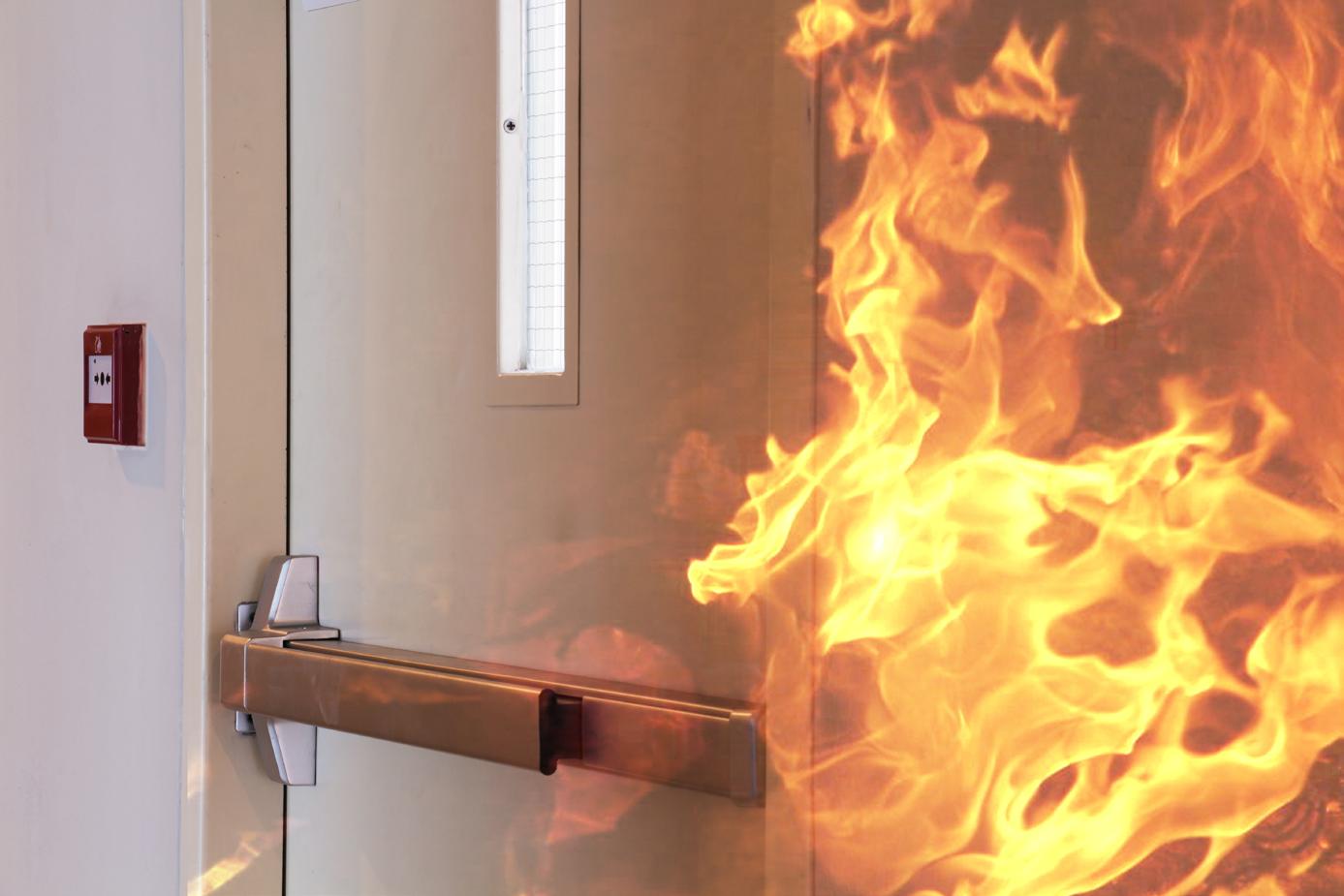
Since Grenfell, fire safety has become an important and ingrained part of the public consciousness. It changed the game in facilities management. As we witnessed the now iconic high rise residential building burn, we were all asking the same question… how could something like this possibly happen?
The truth is tragedies on the scale of Grenfell needn’t happen and often it’s actually gross negligence on the part of multiple people that leads to such disasters.
A vital part of the fire safety puzzle is fire doors. Due to the disaster six years ago, and an on-going lack of compliance and ignorance toward fire safety measures, we’re now experiencing a period of regulatory review and reform.
Fire safety is now a socially and politically charged topic for debate. Ensuring compliance with new and upcoming fire safety regulations is going to be both a legal and moral obligation for responsible persons.
Recent research by Inside Housing has found that just 18.9% of social housing high rise buildings have sprinklers installed, while a meager 12% had fire alarms. Active fire protection systems are life-critical. So is passive fire protection.
Fire-resistant floors, walls, and fire doors play a crucial role in protecting a building’s users, the property itself, and the building’s assets. Data from over 100,000 FDIS inspections in 2019 found that 76% of fire doors were condemned as they were not fit for purpose. We cannot continue to put lives at risk due to the negligence of the dutyholders in public and private facilities.
In recent months we have seen changes to the Building Safety Act which details new responsible persons. In January 2023 the Fire Safety (England) Regulations came into force following the Phase 1 report of the Grenfell Tower Enquiry and new fire safety guidance is set to follow in October this year.
As individuals, suppliers, manufacturers, and contractors get up to speed with this changing landscape of legislation and fire door regulations we’ll discuss the important role that fire doors play, and why your fire doors should be of high quality, correctly installed, and regularly maintained.
Life Saving Fire Safety Measures
As we’ve mentioned, fire doors are a critical component in fire safety, but why?
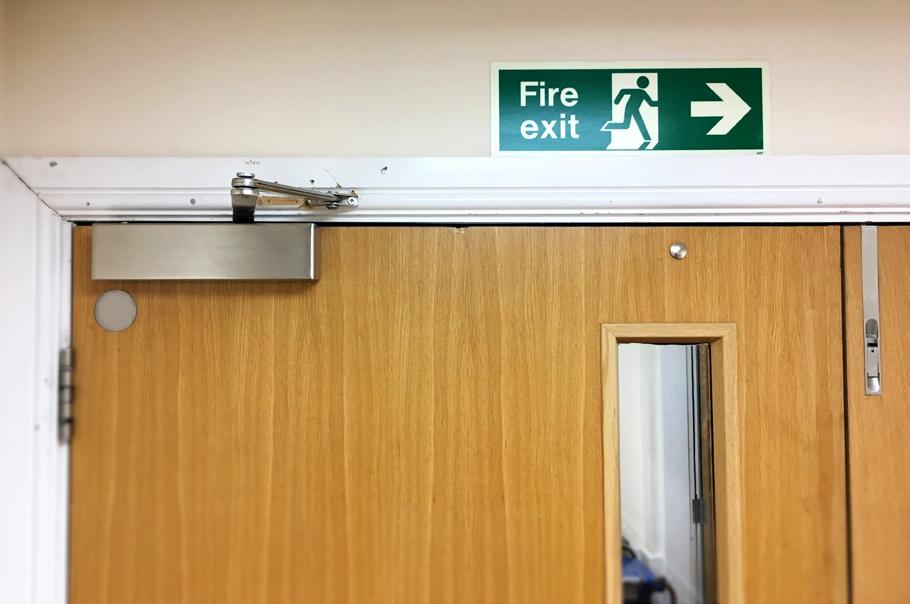
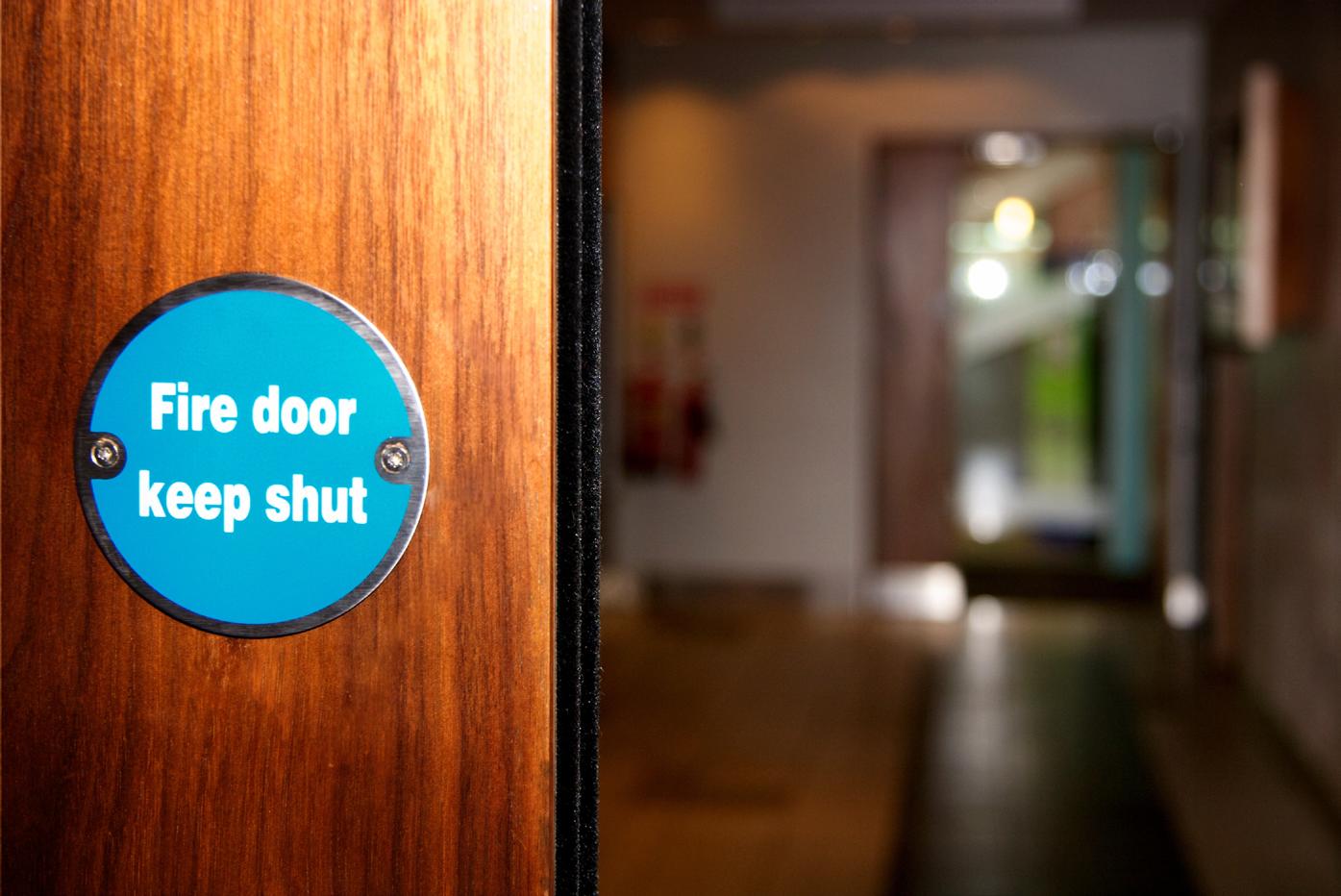
It is all about the protection of people and property. As building methods, materials, and the use of buildings change, new hazards arise, which we don’t always anticipate. It is the legal obligation of the responsible or accountable person (RPs and APs) to prevent fires from occurring and carry out all reasonable steps to control them if they do.
The HSE has outlined the new responsibilities under the Building Safety Act Part 4 for accountable persons for residential high rise buildings, which include individuals, businesses, or organisations. Responsibility for fire safety includes contracted service agents, facilities managers, and landlords but our focus today is the importance of quality fire doors.
A fire rated door is made of fire-resistant materials, to rigid requirements, tested to strict standards, and certified to retain
38 Construction UK Magazine - August 2023 Safety, Security & Fire Protection
Safety, Security & Fire Protection
its integrity for a minimum period of time. This could be a timber FD30 fire door to a steel FD240 door. They should all still allow for ease of use and control access throughout a facility.
Containment
Prevention is always better than a cure but no matter the due diligence applied, not all circumstances are within our control. Whether it’s a fault with a cooking appliance or the ignition of combustibles by an electrical appliance, fires occur daily.
One of the many key roles a fire door has is to act as a fire stop. The early suppression of fire, keeping it within its area of origin, buys everyone time. In an emergency situation, time is a life-saver. Research conducted by the University of Leeds in 2021 notes that timely intervention has a direct correlation with rescue fatality rates.
Compartmentalisation
Building Regulations Approved Document B (fire safety) notes a compartment to be “one or more rooms, spaces or storeys” that act as a fire break, preventing the spread of fire. Whilst walls, floors, and glazing all form part of fire compartmentation, openings such as doors are critical.
Fire doors are only effective when they are closed. They need compliant third party accredited door hardware fitted and installed within an effective fire door frame. A sealed door within a frame can reduce heat transfer and the direct passage of fire.
High risk areas should be afforded particular attention. It is common for many fire doors to be half hour rated, providing a 30 minute barrier to smoke and fire. However, critical areas where there is a higher risk of fire or a greater risk to life should be given additional protection by an FD60 or FD120 door.
Escape Routes
Panic. Fight or flight. Our in-built response in an emergency is to remove ourselves from the situation. To avoid injury or incident in an emergency, users should have a clear, designated escape route and means of egress. Alongside the correct fire exit signage and emergency lighting, fire doors have an important function.
Good quality, effective fire doors protect escape routes. By retaining their integrity for set periods of time they contain the fire, leaving corridors, stairwells, and entranceways clear for people to safely exit. Fire doors can be supplied as complete doorsets, often with ironmongery. By installing a fully certified
and tested doorset, you ensure peace of mind for residents and users, whilst giving confidence to the responsible person that they are fulfilling their legal obligations with compliant fire safety measures.
Installation, Maintenance, and Inspection
No matter the type of fire door, whether it is timber, steel, glazed, a side hung, sliding, or a pocket door, the Regulatory Reform (Fire Safety) Order 2005 states that they should all be installed by a competent person.
The Fire Safety Regulations that came into effect in January detail responsibilities around the regular checks of fire doors in common areas and flat entrance doors in buildings over 11 metres.
If you are installing new fire doors, or replacing existing ones, ensure they meet the required standards and are supplied with up to date test evidence. Half measures with fire safety risk lives.
Fire door inspections should be undertaken on a regular basis with individual building’s and company’s fire risk assessments identifying any specifics. Minimum inspection requirements are set out in the law, whether this is quarterly or annually. However, depending on the age and condition of a building and its use, inspections could be carried out much more frequently.
Why Take the Risk?
None of us want to be responsible for the death or injury of another person so why take the risk of installing a sub standard fire door or ignoring regulations?
Good quality fire doors are important as they ensure the safety and security of a building’s users and extend the longevity of the building itself. They save lives and protect premises and their assets. Will you risk the safety of others by cutting corners or making cost savings with life-safety products and hardware?

Our outdated and overlooked public and private buildings are crying out for investment due to long periods of neglect but can that neglect continue considering the events of recent years? The correct fire safety measures save lives but have other benefits over and above this.
Above all though, fire safety is a moral obligation. Lives are at risk due to the devastating effects of fire. We need to act now to tackle the thousands of unsafe buildings and ensure new builds are constructed in a way that we can prevent further disasters like Grenfell. So, why take the risk?
39 Construction UK Magazine - August 2023
Prevention is always better than a cure but no matter the due diligence applied, not all circumstances are within our control.
THE BUILDING SAFETY ACT – FAQS
We’re here to answer all your top questions and shed some light on the new Building Safety Act (BSA). Whether you’re a homeowner, a tenant, a business owner, or just someone curious about building safety, we’ve got answers to your questions.
Let’s get started and explore the ins and outs of the Building Safety Act.

What is the Building Safety Act,2022 (BSA 2022)?
This new act has been brought about to enhance the regulatory system governing buildings to ensure better safety and a stronger voice for building occupants.
Why has this act been introduced?
Following the Grenfell tower fire and the Edinburgh school closures in 2017, an independent review of building and fire safety carried out by Dame Judith Hacket proposed that current fire safety in high rises were not fit for purpose and that a clear culture change was required with respect to relative responsibilities of building owners and those responsible for building maintenance.
What is classified as a High-Risk Building?
A building of seven-storeys or 18 metres high which incorporates at least two residential units, a care or hospital.
Care homes and hospitals are exempt from the requirement to register as
this is done through the Care Quality Commission.
Other exemptions include:
• Secure residential units
• Hotels
• Military barracks.
When do buildings need to be registered?
All occupied buildings must be registered by 30 September 2023.
After 1 October 2023 all new highrisk buildings must be registered on completion.
What are the penalties for not registering?
Not registering relevant buildings will be a criminal offence punishable by up to two years in prison and a fine.
What do I need to register a building?
Building information will be input into a government website portal.
The information required at this stage is:
• No. of AP or PAP and which parts of the building they are responsible for
Is complying with the Building Safety Act, 2022 mandatory?
The BSA is expected to become law in 2024 and registration of relevant buildings will be a legal requirement.
Who is responsible for registering a building?
This is to be done by the accountable person (AP). This is the individual or organisation that owns the building or is responsible for the maintenance of the building. Where there is more than one AP, a principal AP will need to be nominated.
• The no. of floors at or above ground level
• Building height in meters
• The no. of residential units
• Year of building completion
• It’s address or addresses
• Building type - single, connected or structure of multiple parts
• If the building was completed by the 6 April 2023, the date and reference number of the building control completion certificate and the body who issued the certificate
• Registration fee.
This new act has been brought about to enhance the regulatory system governing buildings to ensure better safety and a stronger voice for building occupants.
40 Safety, Security
Protection Construction UK Magazine - August 2023
& Fire
Safety, Security & Fire Protection
TRAINING OFFERS GATEWAY TO TURNSTILE STANDARD

The Automatic Door Suppliers Association (ADSA) is launching a new training course as a ‘gateway’ to a new standard that regulates power operated pedestrian entrance control equipment such as powered turnstiles, swing lanes and retractable lanes.
The introduction of BS/I.S. EN 17352:2022* is the first standard for this product group.
It addresses industry concerns about safety in use and sets out a machinery safety standard: requirements and test methods, to ensure systems are safe.
ADSA’s standards accreditation outlines its requirements, ensuring all systems can be correctly specified, fitted, inspected, and maintained and enables employees and their employers to demonstrate their knowledge of the safety requirements and test methods within this product group.
This is a classroom-based course suitable for sales, project staff and technicians.
The course costs £190 including examination. For more information visit: www.adsa.org.uk/exams-and-training
What happens after registration?
After registration you will be asked for “Key Building Information (KBI)”, including:
• Any ancillary buildings
• Building usage e.g. residential, office, commercial, shop, recreational, industrial or storage
• Basement provision and usage
• Building materials used and percentage split of building material
• Insulation materials. If more than one type is used, the percentage split must be stated
• Roof type, pitch, insulation and waterproofing
• Any fixtures attached to the building and the materials that have been used for these
• The number of staircases
• Type of energy supply and energy storage to the building
• A list of fire and smoke equipment and their locations in the building
• Building evacuation strategy.
What happens after providing the Key Building Information?
The Building Safety Regulator will instruct you to make an application for a Building Safety Assessment. This will include the provision of a safety case, mandatory occurrence reporting system and a resident engagement.
What if I do not have all the information?
The HSE require that you make all efforts to obtain the information required or at least show the steps you have taken to obtain all necessary information.
What is a Safety Case?
This is a study of all the potential fire and structural hazards within your building. The safety case has to show what these potential risks are and how they are managed. Usually this will involve a fire and structural survey.
What is a mandatory occurrence reporting system?
The appointed person/principal appointed person must establish and operate an effective mandatory occurrence reporting system. This system should include:
• Be known to, understood by and accessible to AP’s / PAP’s
• Form an ongoing integral and regular part of the building safety risks management process
• Maintain a “whole of building” approach and be built to allow for urgent safety reporting
• Identify and capture safety occurrences
• Enable safety occurrences to be formally reported to the Building Safety Regulator.
What is a resident engagement strategy?
The resident engagement areas are:
• Providing residents with building safety information
• A resident’s engagement strategy
• Complaints
• Contravention notices.
What other responsibilities of the appointed person /principal appointed person?
The AP/PAP is responsible for maintaining a “Golden Thread” of building information. This is essentially an accurate information trail of all building information and works carried out. This information must be held digitally.
Photos courtesy of Record UK
41
Construction UK Magazine - August 2023
Safety, Security & Fire Protection
At Door Controls Direct we pride ourselves on being your dependable source for comprehensive door solutions and quality door hardware. We are dedicated to delivering superior products, exceptional service, and expert guidance to help you find the perfect solutions for your project or facility.

Whether you are searching for commercial door closers, mechanical locks, access control systems, or any other door hardware products, you can depend on Door Controls Direct. Our GAI-qualified technical sales team can help you to find the right product for the right job, ensuring compliance with building regulations and product standards.
Fire Door Ironmongery
We recognize the critical role that fire doors and compliant fire door ironmongery play in the operation of any building. Whether you require door hardware for commercial, industrial, or residential settings, you can rely on us to deliver.

Our extensive product range encompasses a wide variety of overhead and concealed door closers, panic hardware, and CE marked door hardware tailored to meet your specific requirements. Shop for fire door signage, CE marked fire door hinges, intumescent seals, and more with our Fire Door Essentials range
With numerous changes to fire safety regulations this year, with more to come in October, ensure that any existing fire doors meet the new requirements, and that any new fire rated doors have CE marked compliant door hardware installed.

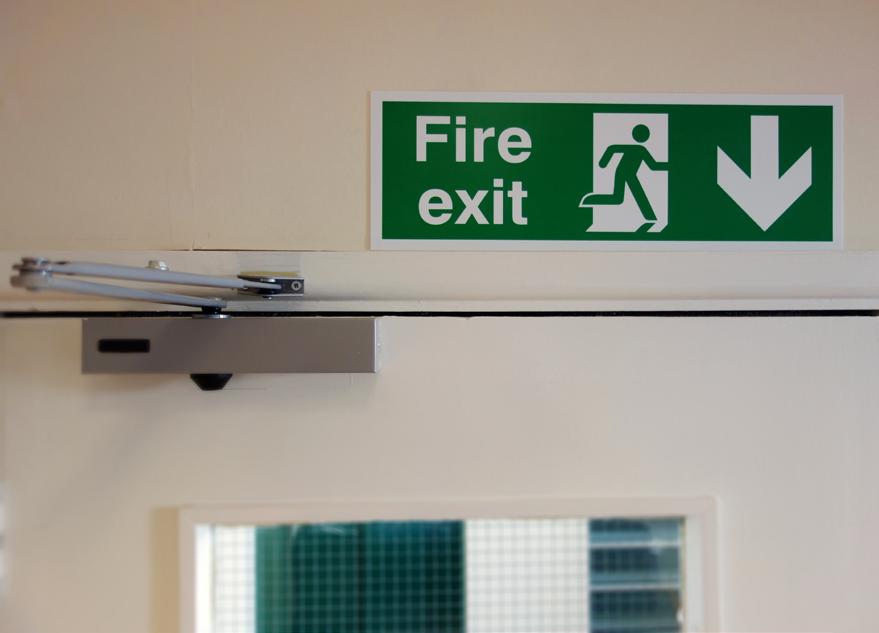
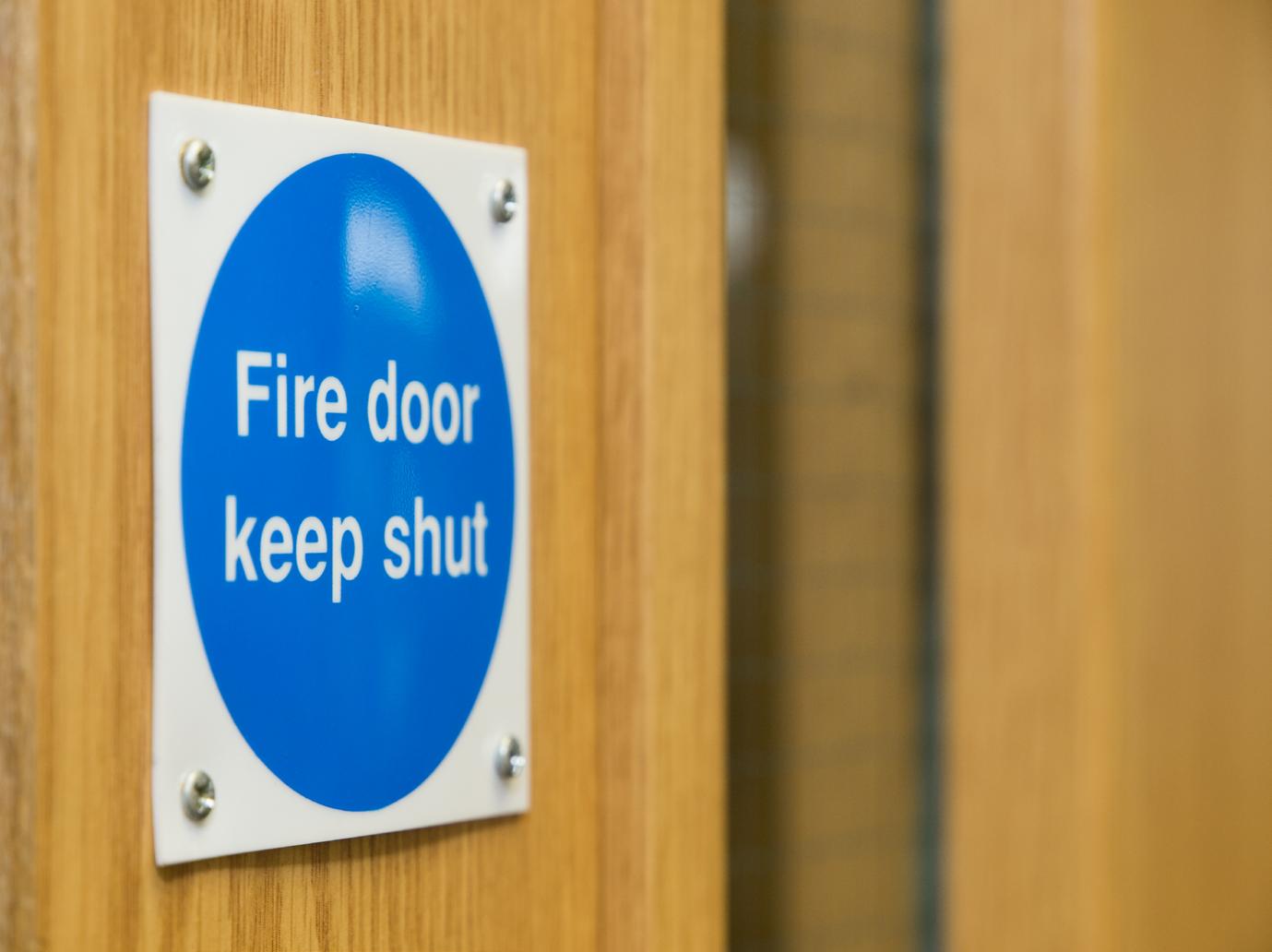
Shop online with us and as well as quick delivery on certified ironmongery you can view and download product documentation, so end-users are provided
with the certification for their door hardware, and you can be sure you have the right product for your FD30 or FD60 fire doors.
Not sure what you need? We have compiled our own fire door ironmongery kits that cover locking and nonlocking doors, escape doors, lift to lock bathrooms, and access control doors. Intumescent kits are included for hinges and lockcases. Separate intumescent packs are also available for concealed door closers, digital locks, and flush bolts.
The Dependable Door Controls Solution
Unlock the difference that dependability makes when you choose Door Controls Direct for unmatched reliability in door hardware and access control solutions.
For more information on our fire door ironmongery and door hardware product range, your can visit our website: https:// doorcontrolsdirect.co.uk/ to view our range or download our product catalogue. You can also contact our sales team on 01305 263300 sales@doorcontrolsdirect.co.uk
42
Construction UK Magazine - August 2023


www.doorcontrolsdirect.co.uk 01305 263300 sales@doorcontrolsdirect.co.uk Dependable Door Control Solutions At Door Controls Direct, we understand the unique requirements of the fire safety and building industries, and we provide a wide range of fire-rated and compliant products to keep people safe and secure. www.doorcontrolsdirect.co.uk
door solutions
will keep people
and
Door Controls Direct, your dependable source for
that
safe
secure.
THE IMPORTANCE OF SITE SAFETY AND SECURITY AND HOW TO MITIGATE RISK
There is an ever increasing need to protect people, plant and other construction site assets. With cost of living rises and supply chain issues, construction theft is higher than ever.
More than £100 million of tools stolen in the UK since 2020*. Whilst the government pushes forward with the Equipment Theft (Prevention) Bill we still need to prevent theft of high value tools and machinery happening in the first place. Investing in sustainable security for your construction sites is vital as the costs incurred through loss of valuable equipment far outweigh the expense of protecting it. We have a wealth of experience in professional construction site security and protection – from mobile, solar-powered CCTV towers with NSI Gold Accredited remote monitoring, to PPE monitoring and body worn cameras.
A robust, cost-effective and sustainable CCTV security solution
Our rapid deployment, solar/wind/battery powered inView CCTV Tower is perfect for sites with limited or no access to power/ phonelines. Installed in 20-30 minutes, fully live and monitored within a couple
of hours, these towers require little to no maintenance and can be repositioned or removed easily.
Towers comprise a telescopic 6m mast, with a high-definition PTZ digital camera providing coverage in every direction. Via connection to multiple remote sensors, they provide 360-degree coverage of even the largest areas, with in-built capacity for night illumination and infrared vision they provide a visual deterrent whilst capturing footage 24/7/365. Communication is via the mobile network, with footage and arm/disarm viewable and controllable from remote devices, ensuring your site is always viewed and secured.
Additional Site Security Solutions:
• Full range of bodycam and helmet cam devices
• Manned guarding / K9 patrols
• Site access control
• Perimeter security
• Temporary CCTV
• Temporary alarms
Our towers can be remotely monitored in real-time by our NSI Gold Cat ll Alarm Receiving Centre (ARC). Bespoke construction site monitoring is a costeffective, proven service that provides assurance that your site is professionally protected whilst reducing expensive around the clock physical security.

Ensuring the correct PPE usage
The construction industry made up a quarter of fatal injuries to workers in 2022. Protect your staff and reduce your liability with our automated, AI-powered edge and cloud-based solution for PPE monitoring and compliance. This solution can be deployed with our inView Towers or via clients’ existing IP CCTV system to detect Health and Safety breaches/risks, with real-time detection and notification to our cloud-based analytics platform.
Ensuring correct PPE usage not only reduces workplace injuries, which in turn means a reduction in absence, but also helps companies avoid prosecutions, fines and legal fees.

The system generates automated email notifications and near miss reporting, with snapshots of the non-compliant wearing of all PPE. It can also be easily tailored to monitor the minimum PPE requirements of specific sites (eg. hard hats, jackets), detection zones can be implemented to mitigate false alerts for areas where PPE isn’t required.

Contact Clearway today for expert advice on securing your siteenquiries@clearway.co.uk 0800 085 8695 www.clearway.co.uk
*IronmongeryDirect
Safety, Security & Fire Protection 44 Construction UK Magazine - August 2023
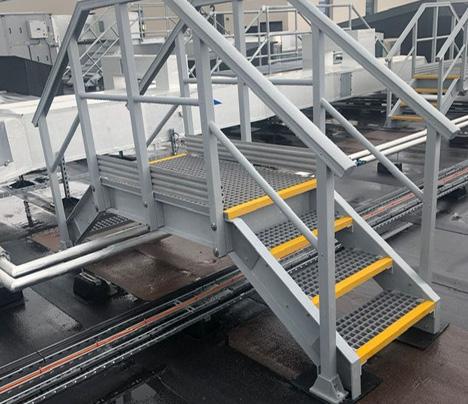






GRP Step Overs & Platforms - Anti-Slip Access Solutions for the CONSTRUCTION INDUSTRY www.steponsafety.co.uk 01206 396 446 Getting him through his working day. Safely.
NEW CRANESAFE™ AND CRANECAM™ FOR SAFE AND SECURE TOWER CRANE PROTECTION
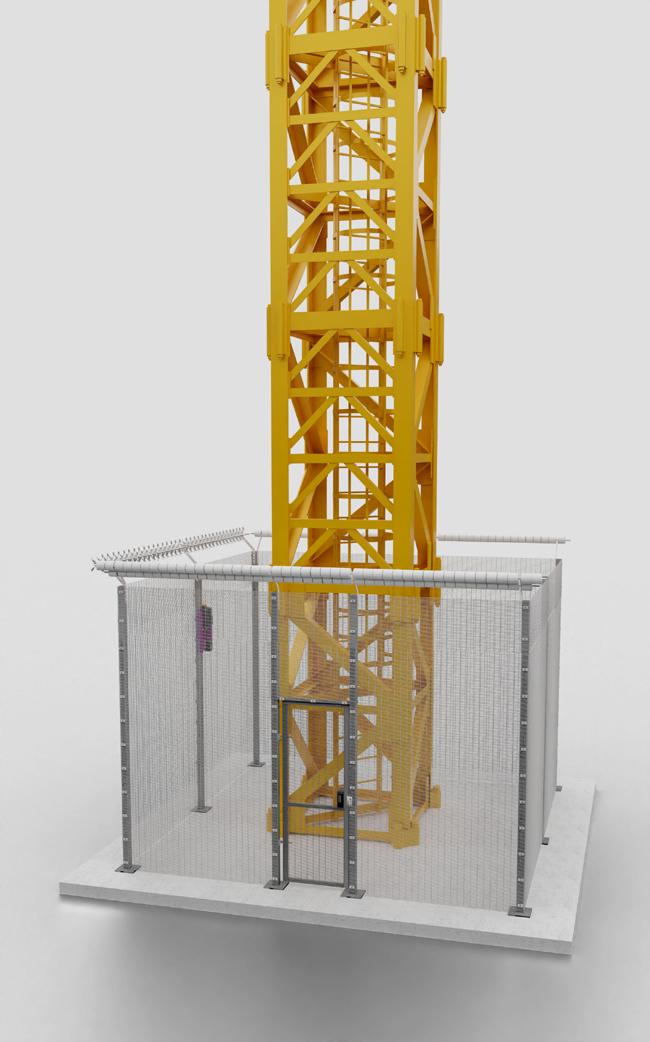
Panthera Group is delighted to introduce its newest innovation, CraneSAFE™; a high security fence system designed primarily for the protection of tower cranes. It can also be used to protect hoists, Haki staircases and other vulnerable high risk access points.
The first system of its kind, it is purposedesigned to be independently supported from the tower crane by creating a gap between the fence line and the crane and offers optimal security while maintaining the independence of the crane itself.
Its closed-loop, modular design improves sustainability and offers commercial, safety and operational benefits when compared to traditional plywood and standard mesh fence enclosures and, depending on site requirements, it can be specified as a complete kit or tailored to suit.
The hot dipped galvanised system is quick to install and quick and easy to assemble on site. It consists of multi-functioning 3mm steel posts that bolt down onto the crane base slab onto which high security galvanised panels are secured using 8mm security clips. A high security gate comes with wired restrainers tested to 250kg, overhead gas closures and a choice of external grade hardware as standard. Standard panels are 3m height, with the option of a higher 3.6m panel for additional security if required. A range of security toppings is available to further enhance protection and reduce risk of access.
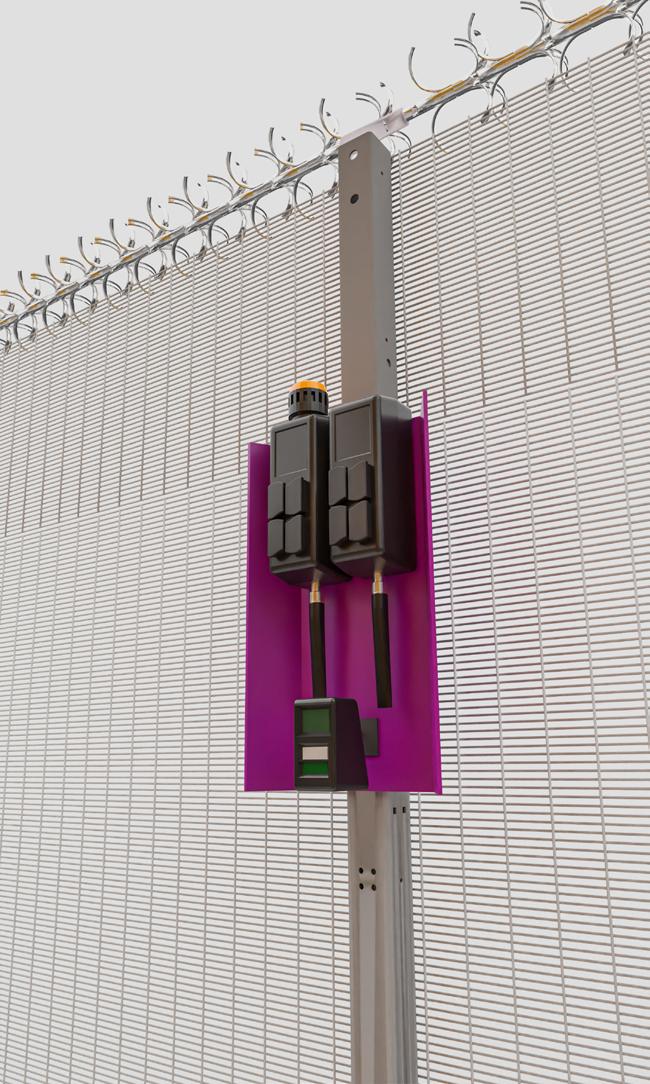
Strong, durable and safe, the system offers multiple benefits:
• One Day Installation – including all kit options and enhancements
• Modular & Reusable Design – quick to assemble, adapt and dismantle reducing both current and future labour and material costs
• Temporary Works compliant - designed to meet all three UK wind zones
• Zero-to-Landfill - 100% reusable system
• Health & Safety - mesh panels allow full visibility at the base of the crane and assembly process improves manual handling

• Security - anti-tamper fixings, cranked security toppings and anti-climb 358 mesh
• Zero Maintenance - hot dip galvanised with no on-going maintenance or downtime
• Procurement Options - purchase with buy back option or contract hire.
As well as the new CraneSAFE™, the team at Panthera Group has designed CraneCAM™ to work alongside the tower crane. The alarm system offers HD quality images day and night by using an Artificial Intelligence (AI) technology. When an activation is confirmed, the system provides a local visual and audible warning. A site contact can be alerted immediately via mobile or via Panthera Group’s NSI Gold monitoring station. CraneCAM™ is available for hire only.
For more information, please request a brochure via www.pantheragroup.com/contact
The alarm system offers HD quality images day and night by using an Artificial Intelligence (AI) technology.
Safety, Security & Fire Protection 46 Construction UK Magazine - August 2023
Serving the construction industry since 1997
Specialist manufacturers of height safety and rescue equipment

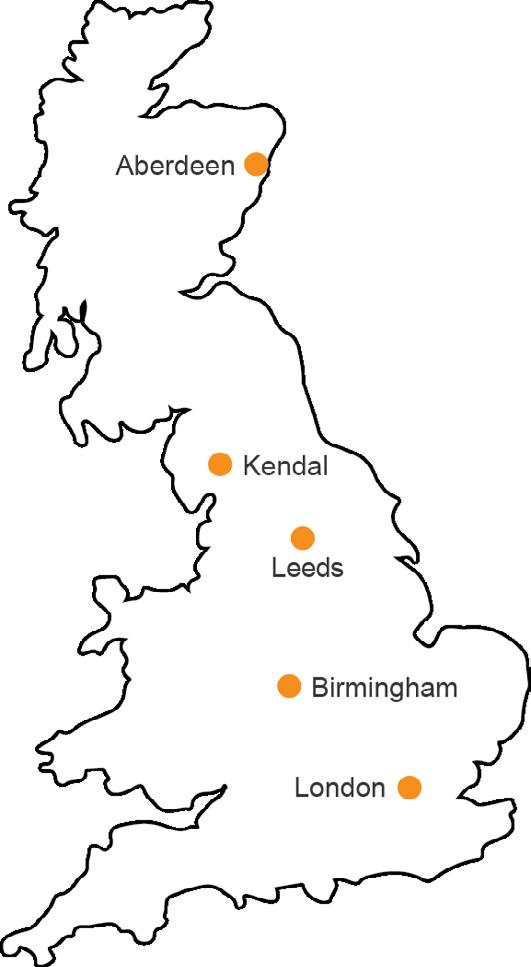

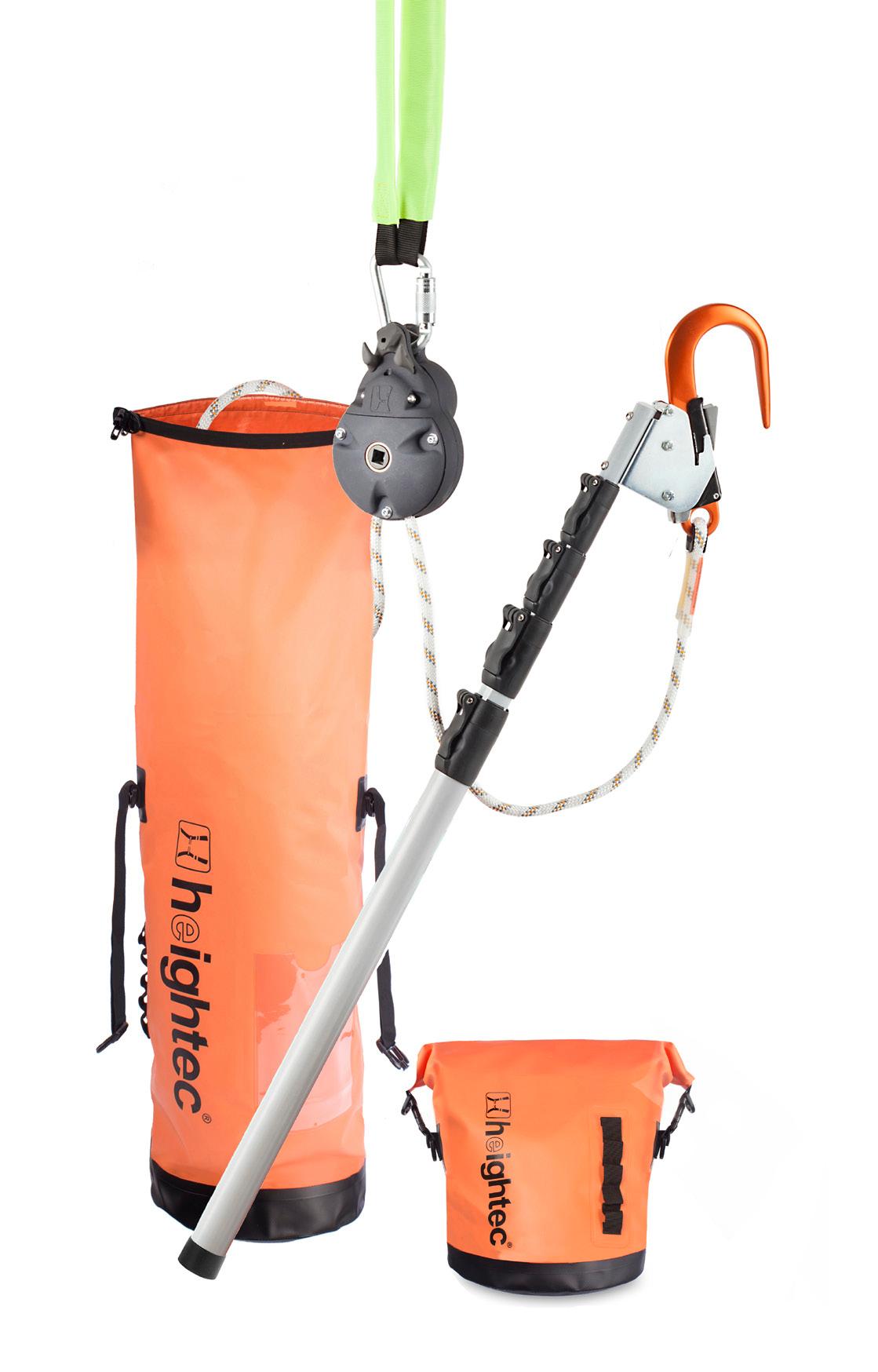
NEW ROTOR Tower Crane Rescue System - ProSeal
For rescue of a fallen person / casualty from a tower crane, jib or ladder
• Configured for construction industry
• Can lift & lower
• Manual or automatic operation
ProSeal:


• 10+ year lifespan
• Total protection
• Guaranteed functionality
• Supremely simple inspection
click for details
Tower Crane Rescue Training
Practical course on rescue / evacuation of a person from a tower crane e.g. cab, crane structure, ladder, walkway
Equipment & training complies with the requirements of CPA technical note TIN013
heightec.com
WHAT DO THE POTENTIAL CHANGES TO THE WORKING AT HEIGHT REGULATIONS MEAN?
The Work at Height Regulations, which have long been the cornerstone of safety measures in the construction and powered access industries, are currently undergoing potential changes that could impact the safety of many workers in the UK. In this article, John Young, Managing Director at JPS Platforms, will delve into the proposed modifications to these regulations and discuss their potential effects on the construction and plant hire trades.
For years, The Work at Height Regulations have played a vital role in ensuring the safety of workers who are exposed to the risks associated with working at height. The 2005 regulations saw the guidance and protection finally extended to people in all industries who work at height, not just construction. The year before, in 2004, there were 67 fatal falls in British workplaces, making up 29% of total fatalities. In 2021, there were 29 fatal falls, less than half of what it was before the regulations were implemented.
However, recent discussions have raised concerns about the potential repeal of
certain aspects of these regulations, leading to increased scrutiny and debate within the industry.
A bill is currently making its way through UK Parliament that threatens to remove longstanding legal protections and guidance for safety when working at height. This is an implication of the Government’s intention to scrap retained laws that were in place from the UK’s time as part of the EU. The Work at Height Regulations are at risk of facing significant amendments that aim to simplify the regulations and reduce the perceived bureaucratic burden for businesses.
If the Bill passes without a specific reassurance from the Government to retain certain aspects of the regulations, the rules will automatically be axed on 31 December 2023.
Here at JPS, the safety of our employees, clients and contractors is at the heart of our business. Being a company that provides access equipment as well as welfare services and safety training, we are passionate about keeping businesses

informed and accountable when it comes to safety at height. The construction industry as a whole, heavily relies on The Work at Height Regulations to ensure the safe operation of aerial work platforms, from scissor lifts, and boom lifts to tower installations and scaffolding solutions.
These regulations provide clear guidelines on training requirements, equipment inspections, and safety procedures, ensuring that workers are adequately protected when working at height.
If the proposed changes result in the repeal or significant modification of the existing regulations, the powered access industry may face several challenges. The potential risk of a diluted safety framework raises concerns about the welfare of operators, increased accidents, and the potential negative impact on productivity and reputation.
Should changes to The Work at Height Regulations occur, it is essential for the powered access industry to take proactive steps to mitigate potential risks. Here at JPS we will be encouraging firms to reinforce their commitment to safety by investing in comprehensive training programs for their employees. These programs should educate on the proper use of equipment, risk assessment, and safe work practices. Training programs are a valuable resource even whilst The Work at Height Regulations are still in place, so now is a great time to invest and prepare yourself for any eventuality.
Additionally, powered access hire businesses should consider implementing their own internal safety standards that go beyond the minimum legal requirements. By maintaining strict safety protocols and conducting regular equipment inspections, you can ensure a safer and more productive working environment for your employees and clients.
It is vital for the powered access industry to come together and advocate for safety. Associations, such as the International Powered Access Federation (IPAF), can play a crucial role in representing the interests of the industry and promoting the importance of robust safety regulations. As far as personal action go we all have a responsibility to keep this conversation alight, write to our MP’s and continue to demonstrate diligence at work.
John Young, Managing Director at JPS Platforms
Safety, Security & Fire Protection 48 Construction UK Magazine - August 2023

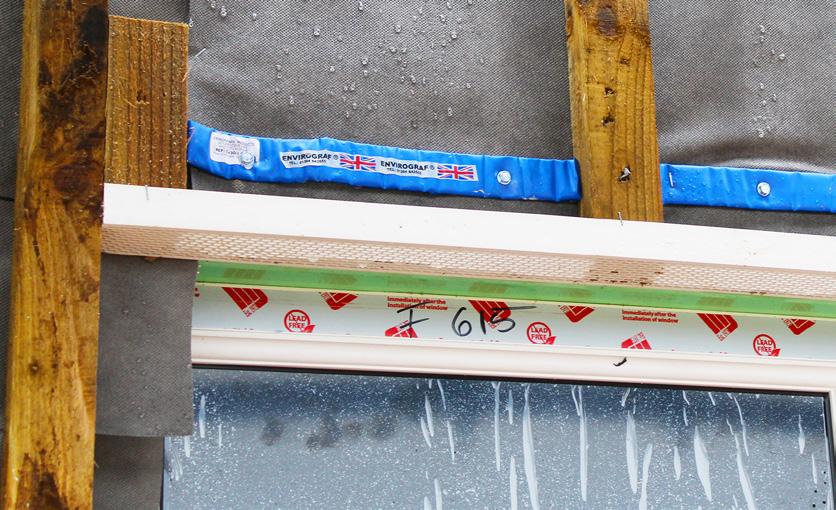

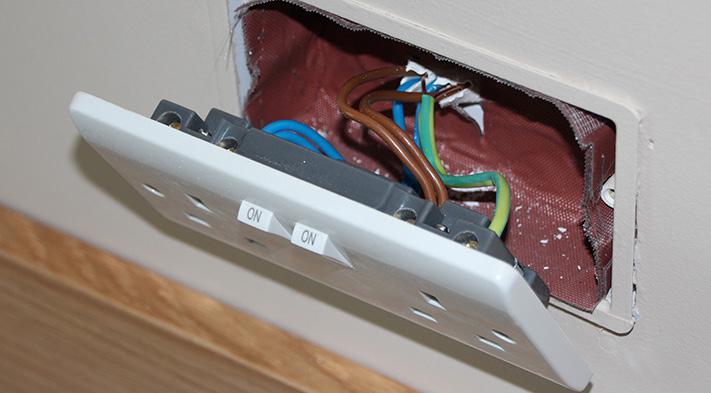


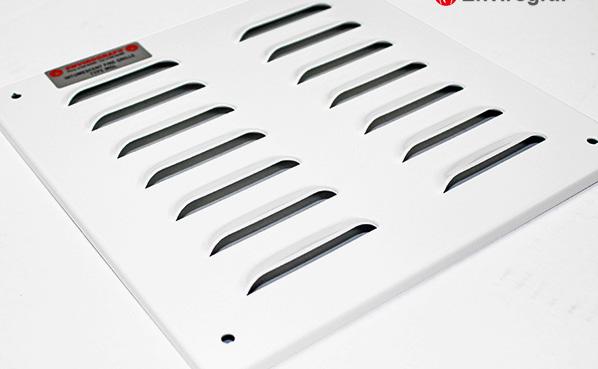

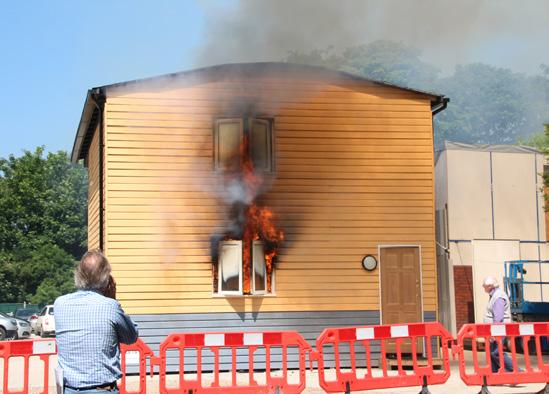


We manufacture the largest range of passive fire products including: www.envirograf.com 01304 842555 sales@envirograf.com Envirograf ® FIRE BARRIERS Up to 240 minutes fire protection for all types of cladding systems FIREPROOF COATINGS for wood, metal, wallpaper, plaster, concrete, fabrics & artificial foliage ELECTRICAL & PLUMBING For cables, pipes, services, lights, ECUs, trunking & sockets FIRE DOORS Kits, seals and accessories to upgrade existing doors to fire rated doors SMOKE & ACOUSTIC SEALS Protection against fire, smoke, noise, pollution, weather & draught systems VENTILATION Fireproof ventilation protection for both internal and external purposes INSULATED PANEL CONSTRUCTION SYSTEM WITH BUILT-IN PROTECTION FROM FIRE & FLOOD • A low waste, low water-consumption method of construction • Completely fire resistant • Thermally tested by BBA, no heating system required • Protected from flood damage by unique metal sub-frame • Speedy construction • Low air permeability • Houses, bungalows & home/garden office buildings SCAN TO SEE OUR DEMO HOUSE FIRE VIDEO NEW
SOCOTEC UK CARRIES OUT FIRE SAFETY MANAGEMENT FOR WEST END GATE DEVELOPMENT
West End Gate, located in Edgware Road, Marylebone, London, is a prestigious residential development comprising of eight buildings ranging from eight to 29 storeys. The development boasts modern architecture, efficient transport links, and state-of-the-art facilities.

SOCOTEC Fire Engineering and Fire Risk Assessment have been appointed since 2018 to provide comprehensive fire safety support throughout the construction process.
SOCOTEC’s involvement in West End Gate began in 2018 with the commencement of Phase 1 and continues into Phase 2, which is expected to conclude in 2026. One of the primary objectives was to produce a detailed report outlining the necessary measures to meet life safety requirements and contractual obligations set by the site’s insurer.
To provide fire safety during construction, SOCOTEC relied on two essential guidance documents: HSG168 and the Joint Code of Practice on the Protection from Fire of Construction
Sites and Buildings Undergoing Renovation (JCOP). These documents guided the information provided to the contractors, covering various critical topics, including:
A. Protection of temporary structures: Ensuring the safety of welfare containers and other temporary structures on-site.
B. Means of escape: Establishing safe escape routes from the construction site.
C. Protection of sleeping occupants: Implementing fire safety measures for occupied areas of the complex after handover.
D. Managing ignition risks: Properly managing activities such as hot works to prevent fire incidents.
E. Preventing fire growth and spread: Effectively managing the storage of combustible and highly flammable materials, temporary compartmentation, and other fire prevention measures.
F. Preventing external fire spread: providing guidance on preventing external fire spread between building on the site and existing buildings outside the site boundary. This include the strategic installation of (temporary) fire stopping and the management of combustible materials.
G. Providing firefighting facilities: Establishing temporary firefighting facilities on-site.
The construction fire safety strategy developed by SOCOTEC was regularly checked on-site by qualified and experienced fire risk assessors. These professionals identified deficiencies and potential fire risks, ensuring the information provided in the strategy remained updated and aligned with the current conditions on-site. The collaborative approach between SOCOTEC’s fire safety engineers and the fire risk assessors
ensured a comprehensive and effective fire safety management system throughout the construction process.
The West End Gate project presented several challenges that required innovative fire safety solutions. Some of the notable challenges included:
A. Provision of basement storage and basement welfare, including phased handover of the basement: Ensuring safe storage practices in the basement area to mitigate fire risks, including providing smoke clearance systems and ventilated lobby protection to the protected stair cases following handover.
B. Compliance with social distancing restrictions: Adapting welfare areas to adhere to social distancing guidelines while maintaining adequate fire safety measures, during the COVID-19 pandemic.
C. External fire spread between the buildings under construction: Some of the blocks are within close proximity to each other. Static temporary fire stopping was placed, as well as the management of combustible materials employed to prevent any fire spread between the blocks under construction.
The primary aim of SOCOTEC’s involvement in the West End Gate project was to meet the expectations of the site’s insurer and the construction company’s requirements for safe management of a large, complex, and high-rise construction site. While prioritising life safety requirements, many of the fire safety recommendations also contributed to property protection, reducing the potential for property damage in case of fire incidents.
SOCOTEC’s comprehensive fire safety management approach for the West End Gate development demonstrates their expertise in ensuring compliance with life safety requirements and contractual obligations. By incorporating guidance documents, conducting regular site checks, and addressing project-specific challenges, SOCOTEC played a vital role in creating a safe environment during the construction process.
50 Safety, Security & Fire Protection Construction UK Magazine - August 2023

SAFE IN THE KNOWLEDGE
Effective performance is everything when it comes to fire safety products. However, without knowing it, many of us could be making compromises when it comes to our choice of fire foams and fire rated sealants.
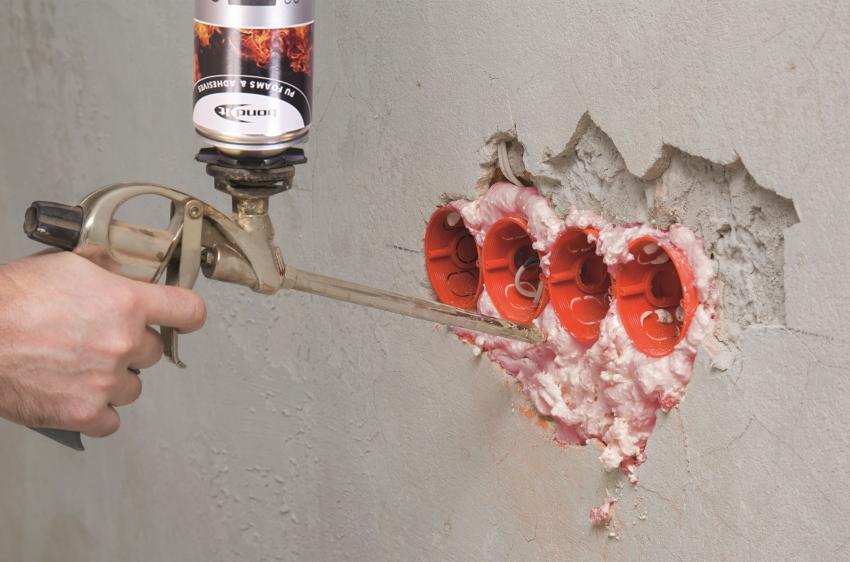
As a company that manufactures sealants, adhesives and other building chemicals, you might expect us to advocate increased awareness when it comes to choosing fire foams. But self-gain never has, and never will, be Bond It’s main motivation for urging greater consideration when it comes to these products.
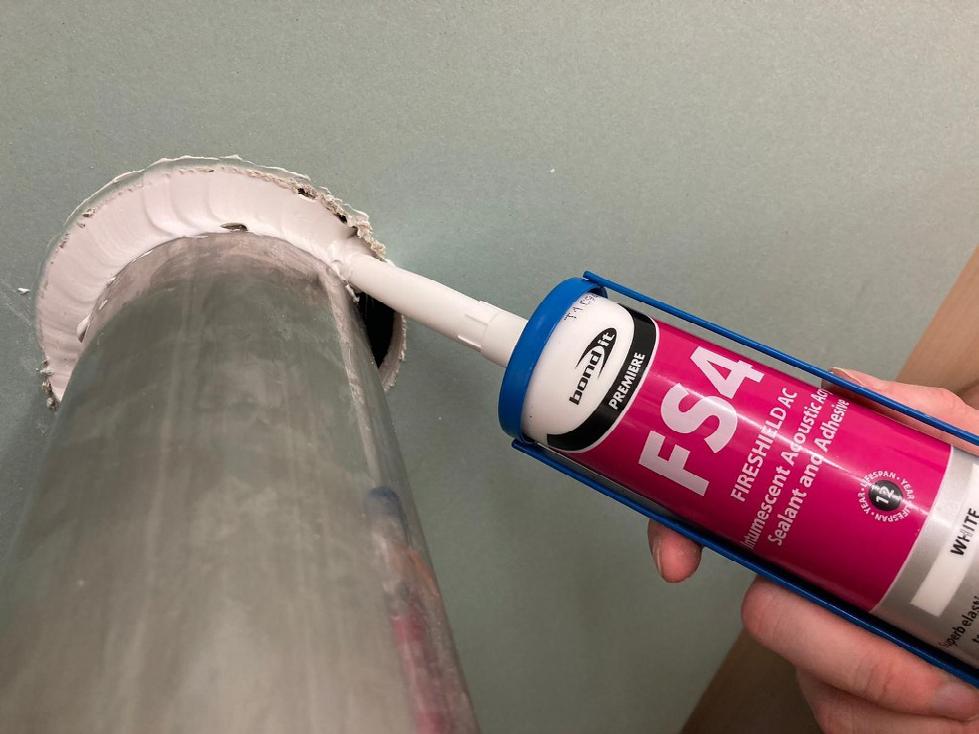

Instead we believe the building industry in the UK is affected by a serious issue
with equally serious, and potentially lifethreatening, implications.
With lives at stake, and against a backdrop where we are all increasingly accountable for our work and where they have been a number of high profile examples of poor building practices contributing to the spread of fire, we see it as our responsibility to share our knowledge.
The problem stems from the existence of too many different but similar sounding classification systems. This has created a degree of confusion which has left many in the sector at risk of inadvertently using fire foams with levels of performance that fall woefully short of the mark.
Not all fire foams are created equal
Years ago specifying a fire foam was a lot simpler and arguably safer than it is today. You had the choice of either a standard foam or a fire foam with both types available in either a gun or handheld form.
To benefit from its classification, fire foam had to comply with BS476 part 20. This meant it would act as a barrier to fire for 4 hours giving a building’s occupants vital time to escape.
Then, with an influx of European foams into the UK came a proliferation of different standards. The most widespread was a German standard based on a sliding scale. This ranged from A1 (100% noncombustible) through to A2, B1, B2 and B3 with the latter offering the worst levels of performance.
If the introduction of a whole new standard system and a large number of differing classifications didn’t serve to create enough confusion, the way of assessing the UK and European standards was also totally different.
The UK standard meant a fire foam had to act as a barrier to prevent fire transferring from one room to another for a period of four hours. The German standard meanwhile was based on someone trying to ignite the foam itself - not a very realistic scenario.
Depending on the product formulation, application and backing material, an intumescent sealant can be resistant to fire for up to 4 hours.
52 Construction UK Magazine - August 2023 Safety, Security & Fire Protection
Savings - but at what cost?
One of the most widely seen classifications people now find on fire foams is B2 and it’s not hard to understand why. B2 strikes a fine balance between offering some fire resistance and at a cost that won’t hurt budgets – or margins.
However, in our opinion, B2 ‘fire’ foam’s performance is totally inadequate and we don’t think it should be sold as fire foam at all. Yes, there are savings and profits to be made, but at the end of the day, what price do you put on property or even more poignantly, on someone’s life? As we near the 4th anniversary of the Grenfell Tower fire, we are hoping lessons have been learnt.
Like most of our competitors, we react to market demand and do supply a B2 PU foam as part of our range. However, we are strict about this not being referred to as a “fire” foam and it is not marketing under this guise at all. We clearly state what the products performance characteristics are and what it is tested to.
Safety, Security & Fire Protection
Sealants also play a big part in ensuring the integrity of fire resistant seals and joints. These are used in re-establishing the fire-rated integrity of a wall or floor assembly compromised by the inclusion or exclusion of a penetrant. Flames and smoke can spread through the smallest of gaps causing extreme damage to buildings and even human lives. Applying an intumescent sealant to linear joints, around pipes and between cables to close all the gaps and add fire resistance. An intumescent seal slows down the burning process and does not contribute to spread of flames. Therefore, it can minimize the damage by protecting structures, giving fire fighters more time to arrive and take the fire under control as well as fireproofing escape routes allowing for efficient evacuation.
How does intumescent sealant work?
Intumescent seals are known as means of passive fire protection, but what is an intumescent sealant in practice? Also known as expansion sealant, intumescent sealant expands when it becomes exposed to extreme heat and can swell up to 40 times its original volume. The sealant increases in volume but decreases in density forming a char layer. The expanded sealant does not actually catch fire, but the char burns eventually, still much more slowly than most building materials. Depending on the product formulation, application and backing material, an
intumescent sealant can be resistant to fire for up to 4 hours. Buildings require different levels of fire resistance depending on their size and whether they have a residential purpose.

Better safe than sorry
Of course, it would be remiss of Bond It to highlight an issue as grave as current fire foam classification and misclassification without proposing a solution. Thankfully, there is one - and it’s also fairly easy to implement.
In its simplest terms, our advice would in every circumstance if you need fire protection from your foams nothing less than B1 is really acceptable as a bare minimum standard and for sealants we would recommend a fire tested sealant. Look for the standards EN1366-4, EN1366-3, EN ISO 10140-2 and EN135012 on packs - which are proof that the foams and sealants will do their job and you can be safe in the knowledge that you’ve chosen a true fire foam or fire rated sealant that will leave people safe in their homes, offices and other buildings.

For more information on Bond Its Fire Rated products contact our Sales Office on 01422 315300 or visit www.bonditgroup.com.
53 Construction UK Magazine - August 2023
Safety, Security & Fire Protection

7833 228 sales@fireretardantuk.com
HR
Allows wood to breathe naturally
Internal/external application
Colourless - Odourless
EN 13501 - 1
Non Toxic - No Solvents
BS 476 part 6 & BS 476 part 7
Euro-class B-s1-d0 and C-s1-d0
BM TRADA ISO 9001 Certificate
Meets the highest EU standards No HR Prof With HR Prof
Classification Reports & Certificates; Pine, Spruce, Scots/Siberian Larch, West Red Cedar, Oak & More www.fireretardantuk.com



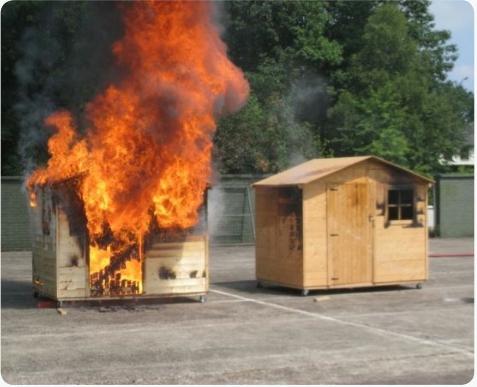

FIRE RATED ACCESS PANELS

Ceildoor’s 1 hour and 2 hour Fire Rated Access Panels are amongst our most popular products. They are chosen by hundreds of contractors across the UK when structural integrity and thermal resistance is required.

Our Fire Rated Access Panels can also be used as flue inspection hatches for heat producing appliances and are used in residential, commercial, retail and education environments.
Ceildoor’s Fire Rated Wall Access Panels meet UK Building Regulations, and were re-tested by Warrington Fire on 2 March 2023 in accordance with the European Standard EN 1364-2:2-18.
01902 733645
ceildoorproducts.co.uk
IT’S
sales@fireretardantuk.com 54 Construction UK Magazine - August 2023

EASY TO
Built to withstand heat ONLINE SHOP
ORDER VIA OUR NEW
0800
PROF THE ECO-FRIENDLY FIRE RETARDANT
HRPROF is manufactured and approved to ISO 9001-2008
Water based - does not leach
0800 7833 228
BRITCON CELEBRATES QUADRUPLE BRITISH SAFETY COUNCIL AWARD WINS

Britcon (UK) Limited, one of the North’s leading civil engineering, building and steelwork solutions contractors, is celebrating winning four prestigious British Safety Council awards at the International Safety Awards 2023.
Britcon won awards including ‘Best in Sector’ business for the Construction and Property industry; as well as winning an International Safety award (Distinction). In addition, Britcon received the ‘Best in Country’ award by scoring highest from all UK applications and finally, the company won The Chief Adjudicators award, which is given to the company that achieves the highest score overall in the British Safety Council awards this year.
Britcon’s Managing Director, Nick Shepherd, explains: “We are absolutely delighted to win four British Safety Council awards. We are 100% committed to ensuring health, safety and wellbeing within the workplace as recommended within the Construction Playbook and winning these awards underlines our continued commitment and the robust practices we have in place. I am so proud of our team, who embed our health and safety culture within all our activities, to ensure that our employees, subcontractors, clients and suppliers enjoy a comfortable and safe working experience.”
Britcon received the awards at the British Safety Council’s International Safety Awards Gala Dinner on 19TH May 2023, held at the Landmark Hotel in London.
The Gala Dinner was hosted by exFormula One driver (and secret racing driver from BBC TV’s Top Gear) ‘The Stig’ Perry McCarthy.
At the awards event, Peter McGettrick, Chairman of the British Safety Council, said: “The commitment to health and safety in this room is an inspiration to us all, and we thank you for your dedication to keeping our workplaces and communities safe. We applaud your hard work and commitment, and these awards remind us that health and safety is not just the responsibility of those at the top, but one that requires everyone to take responsibility for their own health, safety and wellbeing.”
This year’s British Safety Council awards involved organisations from across
the globe, including Africa, Asia, India, mainland Europe and the Middle East. 2023 has been another game changing year for Britcon, achieving Planet Mark carbon neutral certification and status in January this year, aligned to the PAS 2060 standard.
Britcon also expanded its business operations earlier this year, adding a new office in Stockton on Tees in the North East to its existing offices in Yorkshire and its production plant in Scunthorpe, to support new framework and contract wins. The North East office is serving new contracts in the education sector, including the building of a college and a school, Britcon also has a pipeline of other work opportunities in the region across a variety of sectors.
Britcon’s Managing Director Nick Shepherd explains: “This is an exciting time for our business, as we see many opportunities in the North, which is due in part to the Levelling Up work that is taking place in the public and private sector. We have worked within the region for many years and have an established local supply chain, there is great potential for us to grow further in the commercial and industrial sectors in this area.”
In addition to the new office, Britcon announced earlier this year that the business had achieved Planet Mark carbon neutral certification. This was achieved through various initiatives such as implementing sustainable procurement policies, switch it off campaigns, a renewed approach to fleet management and targeting behavioural change to reduce unnecessary waste.
The company, which has three offices and production plants – Scunthorpe, Yorkshire and North East, worked in line with the internationally recognised PAS 2060 specification to achieve Carbon Neutral status.
This is an exciting time for our business, as we see many opportunities in the North, which is due in part to the Levelling Up work that is taking place in the public and private sector.
For more information about Britcon, visit www.britcon.co.uk or call 01724 280022.
Right Middle - Matt Searston (Commercial Director) Left Middle - Callum Volrath (Health, Safety and Well Being Advisor) receive the British Safety Council awards for Britcon.
News 55 Construction UK Magazine - August 2023
Awards
GLEEDS TAKES HOME MAJOR US PROJECT MANAGEMENT AWARD
International property and construction consultancy Gleeds has been presented with a Construction Management Association of America (CMAA) Project Achievement Award, following recognition by the organisation’s South Atlantic Chapter for its work on Georgia State University’s (GSU) Convocation Center. The win is the business’ 18th major award in the past 18 years.
The CMAA is dedicated to the practice of professional construction management and represents more than 16,000 members in 30 chapters across the US. The South Atlantic Chapter comprises over 600 members from Alabama, Georgia, South Carolina, and Tennessee with its leadership based in Atlanta, GA. Its regional Project Achievement Awards recognise outstanding accomplishments in the built environment, promoting professionalism and excellence throughout the construction process.
This year, Gleeds was acknowledged for its outstanding program management services on the construction of Georgia State University’s new 132,000ft2 multi-use Convocation Center. The consultancy was praised for its unwavering commitment to communication with both the client and the supply chain, fostering a

collaborative environment which ultimately enabled the delivery of a state-of-theart facility that caters to the University’s long-term needs and benefits the local community.
Graham Harle, CEO of Gleeds said, “Gleeds has a strong track record at the CMAA Awards and I am thrilled that the team’s work with GSU has been recognised with this latest accolade.
The construction market in Atlanta is notoriously competitive, but we were resolute in our desire to deliver a building which worked for the University and the surrounding neighbourhood, maximising available funding and minimising disruption to its events schedule.
APPRENTICES EXCEL AT THE SCOTTISH PLUMBING APPRENTICE OF THE YEAR COMPETITION

Three of Scotland’s brightest and most promising plumbing apprentices have demonstrated that the future of the profession is in safe hands after being awarded the prestigious title of Scottish Plumbing Apprentice of the Year at Glasgow Clyde College.
Finlay John Macaulay from Alpah and Moray College UHI (University of Highlands and Islands) took home
first place in the competition’s Copper Category following his impressive demonstration of technical skills. Paul Marshall from James Frew Ltd and West College Scotland, and Callum Westwood from Park Plumbing and Heating and Perth College UHI claimed second and third place, respectively.
Finlay Calder emerged victorious in the new Renewable Category, introduced for the first time this year’s competition. Representing R&I Cruden Limited and Inverness College UHI, Calder’s profound understanding of renewable energy technologies set him apart from his peers. Thomas Pender from Solway Heating Services Ltd and Glasgow Kelvin College, and Tommy Smith from Moray Council and Moray College UHI, took second and third place, respectively.
In the Lead Category, Shaun Wilcox of Moray Council and Moray College UHI showcased exceptional precision and commitment, securing the top spot.
Runners-up were Marion Lisa Stewart from G&A Barnie Group Ltd and Moray College UHI, and Ryan McCrone from Cruden Building (Scotland) Ltd and Glasgow Clyde College.
University of Highlands and Islands triumphs at the Scottish Plumbing Apprentice of the Year competition
One of the noteworthy highlights of this year’s competition was the exceptional performance by apprentices from the University of the Highlands and Islands (UHI), who claimed a record-breaking six out of the nine top prizes.
56 Events & Awards News Construction UK Magazine - August 2023
KILDEAN BUSINESS PARK SCOOPS NATIONAL AWARD
SDA’s landmark office building for M&G plc is named as the Best New Build Development Outside of London.
Stirling Development Agency Limited’s (SDA’s) Kildean Business Park has scooped a top accolade at this year’s Office Agents Society Development Awards (OAS).
SDA is a joint venture between Cromwell Property Group and Stirling Council.
The office building for M&G plc was voted the Best New Building Outside of London at the awards, which took place on Thursday 15 June at the Honourable Artillery Company in the centre of London.
More than 300 investors, developers and property agents from across the UK attended the event.
Built on a six-acre riverside site, close to the entrance of Kildean Business Park, the £22.4 million bespoke office building provides 77,380 sq ft of Grade A sustainable office space across three floors for M&G. The striking landmark building has panoramic views towards Stirling Castle and the National Wallace Monument. Designed by Michael Laird Architects, the building has been designed to BCO 2019 standards, accredited ‘BREEAM ‘Excellent’ and has achieved an EPC ‘B’ rating.

SISK WINNERS AT PRESTIGIOUS PRCA AWARDS FOR ITS SUSTAINABLE
BUILDING APPROACH
John Sisk & Son (Sisk) were winners at the Public Relations Consultants Association Ireland (PRCA) and Public Relations Institute of Ireland (PRII) Awards 2023 at an event held at The Mansion House, Dublin.

Sisk won in the ‘Best Long-Term Campaign’ for its ongoing PR campaign surrounding the launch and execution of its ongoing sustainability roadmap: Building Today, Caring for Tomorrow. Sisk was shortlisted out of over 200 entries into the awards and were the only building contractor among the best in public relations, public affairs and internal communications across the public/ private sectors and the world’s leading multinational organisations.
Sisk has had some significant sustainable milestones over the past three years
including extending its fleet of Electric Vehicles (EVs) as part of a €2.8 million investment alongside the launch of its sustainability roadmap in 2021. Other notable milestones include, Sisk switching to HVO fossil fuel oil across all of its UK and Irish sites, its investment in digital technology and the purchase of Ireland’s first JCB electric telehandler.
PRII Awards judges said: “The judges agreed that there was one ‘stand out’ entry. This campaign was an exemplary corporate change programme delivering solid results after three years and embedding environmental sustainability in a difficult and frequently criticised sector.”
Tom Byrne Head of Communications, Sisk said: “We are delighted to be recognised among some of Ireland’s leading public and private sectors. Our 2030 roadmap outlines an ambitious set of targets and actions aligned with UN Sustainable Development Goals.
“Our in-house PR team alongside our colleagues at Drury PR have supported the business to tell the great stories within Sisk and the significant milestones achieved so far. The construction sector still has a lot of work to do in this space and as a business we are fully committed to achieving our sustainability targets.”
Celebrating 30 years in existence, the awards are hosted by the Public Relations Consultants Association Ireland (PRCA) and the Public Relations Institute of Ireland (PRII) to recognise the best in Irish public relations, public affairs and internal communications across the public and private sectors.
57 Events & Awards News Construction UK Magazine - August 2023
BUSINESS CREDIT RATINGS EXPLAINED –RATINGS MATTER NOW MORE THAN EVER, PARTICULARLY IN THE CONSTRUCTION SECTOR:
James Piper, MD of Lightbulb Credit explains why knowing and being able to improve your company’s trade credit ratings will be key to unlocking cash, funding, and growth for construction.
The UK trade credit market
There are several key trade credit ratings agencies in the UK – Creditsafe, Experian, Equifax, Dun & Bradstreet, and Red Flag Alert. These agencies assess your credit rating and publish a score on a scale of 0 -100, this determines your recommended credit limit. The scoring methodology for each agency is different, but all utilise data from Companies House, historical trends, alongside payment data collected from your suppliers to evaluate your payments against agreed credit terms.
These ratings and limits impact many areas of your business, construction firms particularly:
1. Working capital, directly impacting your trade terms.
2. Access to funding and the rates you pay. The higher your business is rated, the easier you can access finance/ leasing, and at better rates.
3. Tendering is a significant factor in Construction. Tenders will be judged against your credit rating, gaining, or losing you larger contracts.
What does all this mean?
These agencies impact construction firms, specifically due to the “working capitalintensive” nature of the sector, along with volatility in market sentiment – recent insolvencies have increased this adverse reaction.

The slightest drop in score can impact negatively on operations as issues with credit ratings can arrive unannounced, only flagged up when a business experiences an unexpected rejection. This could occur in tendering for a contract, being denied credit terms, or maybe suffering credit terms reduction or removal.

Why knowing all of the key ratings matters?
When it comes to trade credit ratings and recommended credit limits, the economic forecast is mixed, with many challenges ahead. However, the construction sector is a key element of the UK economy and traditionally one of the quickest to recover following financial uncertainty. There is also a universal recognition that a strong construction sector in the UK is vital.
Awareness of your business rating can help you manage working capital volatility, furthermore, understanding how your business is viewed by all the UK agencies is a hugely positive and powerful insight valued by our many clients.
Knowing your credit rating and having the ability to improve it quickly is a persuasive case for you to contact Light Bulb, but to make the decision compelling, we are offering a completely FREE Credit Insight report, along with a 60-day FREE trial of our unique monitoring solution by simply visit https://lightbulbcredit.com/cme
Ratings matter now more than ever in Construction.
Construction is one of the key sectors experiencing significant challenges as the economy recovers from Covid. It makes sense therefore to ensure your credit rating is the best it can be giving your business a distinct advantage. Firms failing to address the credit rating negativity in their operations will quickly experience disappointment for all the reasons outlined above.
Still unsure? See how we have helped other construction companies improve their credit scores here
https://lightbulbcredit.com/cmcs

58 Construction UK Magazine - August 2023
If we could improve your company’s credit ratings in as little as 72 hours, would you be interested?
SIMPLY CLICK HERE TO LEARN MORE.
We offer a completely FREE Credit Insight Report showing all of the UK’s key trade credit ratings.
WHY DO THESE MATTER?
Because ratings can be costing your construction business a lot...
Our Clients enjoy:
Boosted Suppliers Trading terms
= more cash in your bank for longer
Access to funding & finance, and the rates you pay improve
= reduced cost
Winning Tender work where credit ratings matter = more work
Our unique “success fee” based solution means that you don’t pay a penny if we can’t help... ...and it takes just 72 hours

lightbulbcredit.com/cma 0115 6970825 enquiries@lightbulbcredit.com
here, scan the code or
www.lightbulbcredit.com/cma to get
and take the first step to improving how
is rated
Click
visit
your report
your construction business
70 YEARS OF INNOVATION FROM DOORFIT
Reflection & Projection
Milestone anniversaries are always a moment for both reflection and projection, particularly for family run enterprises. Reflection, on the journey and achievements to reach the anniversary and projection, into the future to signpost the innovations ahead for customers.
At 70 years young, Doorfit has an enviable reputation for specifying and supplying high quality products in the areas of architectural ironmongery, timber doorsets, entrance doors and

garage doors. The company is delighted to celebrate its history and share some insights on new directions.
Projection first!
Keen as ever to look forward, the Doorfit team knows that success has been built on delivering solutions that are responsive to customers’ needs. Innovation is key to ensuring the offer remains fresh and relevant to today’s market. The new Protus Timber Doorsets are a great example. Doorfit’s deep and extensive experience with architectural ironmongery has been wrapped into a new product offering, Protus Timber Doorsets.
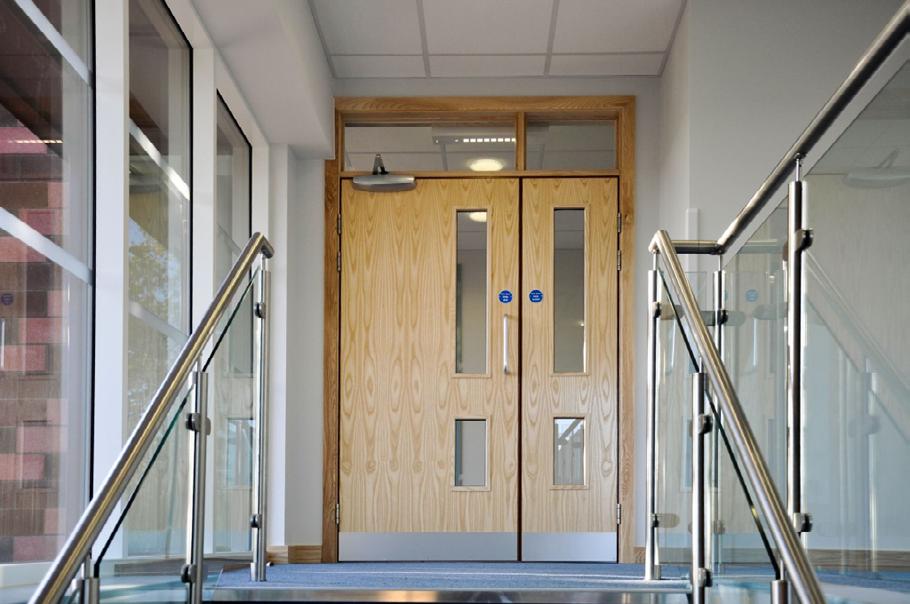
In the wake of Grenfell, demonstrable compliance is central to Fire Doors.
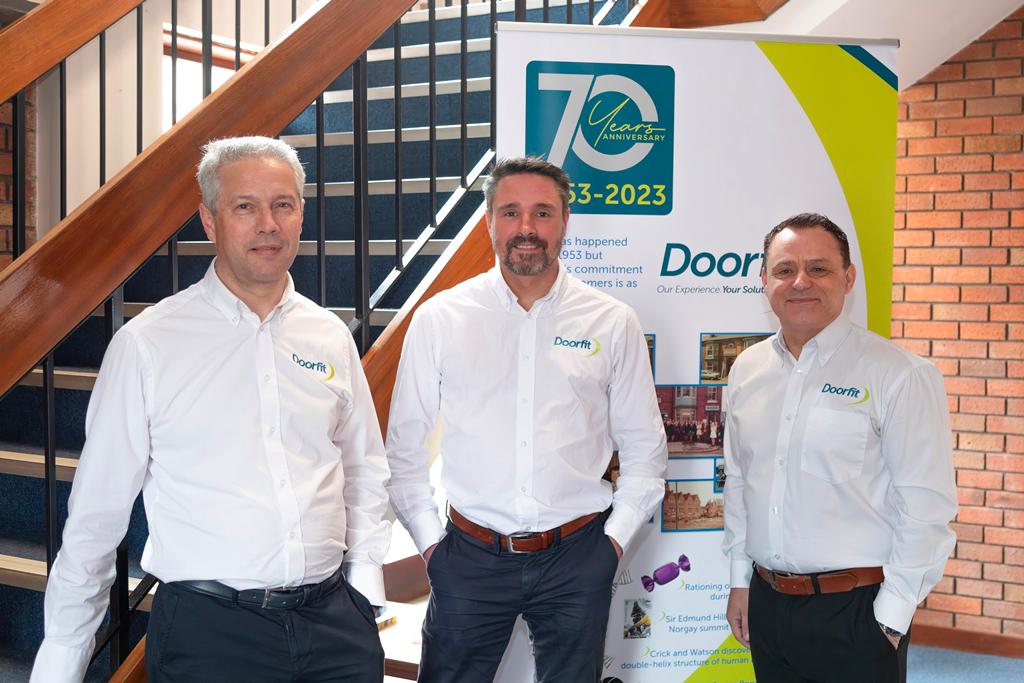
Protus is available now and already gaining traction as architects, specifiers and contractors tap into the expertise we layer onto this exciting new product.
60 Construction UK Magazine - August 2023
Doorfit’s Protus Doorsets are now the simplest way to ensure fire doors are certified for all necessary building and fire regulations. Protus Doorsets are a complete assembly of door leaf, frame, seals, vision panels and hardware. PAS 24 security and dB ratings are also available. Protus is factory prepared to precise tolerances.
“Protus is a big step forward. Our ironmongery knowledge is second to none and applying that capability to our own line of doorsets gives customers a truly complete package – well considered architectural ironmongery for the optimum user experience and access management, combined into fully certified doorsets for effortless compliance. Protus is typical of our approach, which has seen Doorfit continually evolve and innovate over the last 70 years.
“Protus is available now and already gaining traction as architects, specifiers and contractors tap into the expertise we layer onto this exciting new product. It’s liked by installers too, as fitting is fast and straightforward, saving significant time over traditional joiner fabrication and the inherently challenging compliance from this approach,” Robert Neil, Doorfit’s joint M.D. commented.
Aligned to product development, is the enablement of easier customer access to Doorfit’s products online. 2023 sees Doorfit’s online hardware shop receiving upgraded capabilities to allow trade customers to check stock availability, pricing and checkout using the trade account facility.
The combination of a strong digital presence and our trade counter completes the service circle with the arrival of a Click and collect option for all online products.
Reflection
Commencing from modest premises in 1953, Doorfit began its life in Vyse Street near the heart of Birmingham’s Jewellery Quarter in a Victorian terraced house that is now adjacent to the Jewellery Quarter railway station.
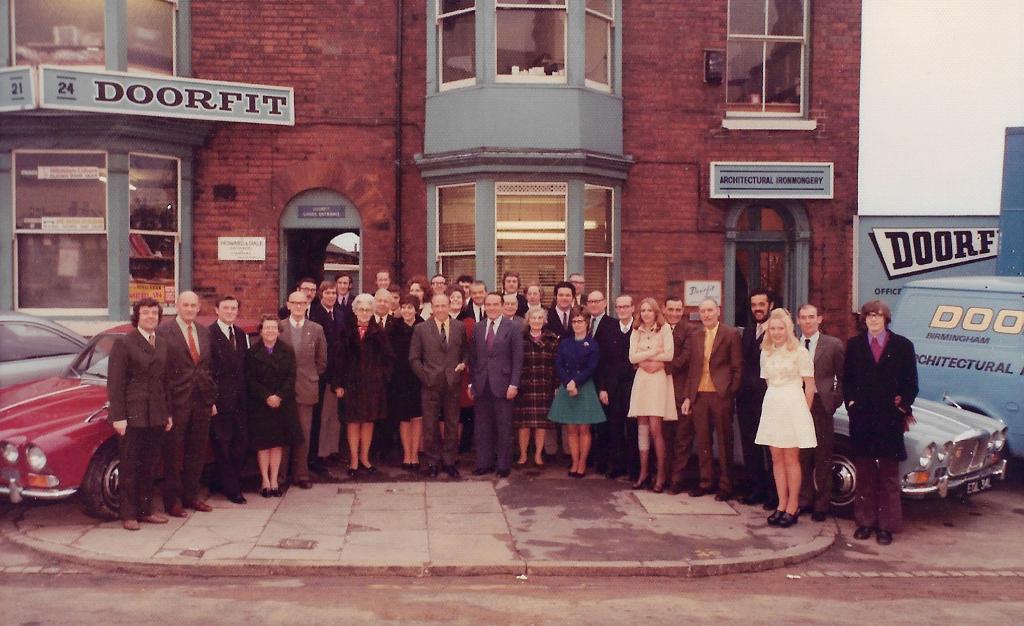
The business was started by brothers John and George Neil who, having recently been demobbed from the RAF and Navy, set their sights on supplying the post war rebuilding of Birmingham and its surrounding area.
In the 1960’s PC Henderson asked the brothers if they would take on their new range of Garage Doors. From that point onward the Garage Door business became an integral part of Doorfit’s future, however it became apparent that they may struggle to store Garage Doors in a Victorian terraced house... Some minor adjustments had to be made!
It wasn’t all plain sailing, in 1976 the company suffered a damaging fire that triggered the first thoughts of building their own premises. By 1978 a plot of land had been purchased in Heaton Street and during the August Bank Holiday weekend of 1979 they moved in.
Sadly, George died unexpectedly in 1980. John continued on his own until the early
90’s when John’s sons, Philip and Robert joined the business.
John Died in 2017, aged 93 having retired just 2 years’ earlier.
Today, Doorfit has a turnover of £11.5m and 50 staff, who’s knowledge and expertise back its products as Doorfit continues to be the name to trust for its values and customer-led approach.
“We’ve come a long way and it’s genuinely exciting to begin the next chapter of Doorfit’s story. Sincere thanks to all our team and customers.” Doorfit…
61 Construction UK Magazine - August 2023
We’ve come a long way and it’s genuinely exciting to begin the next chapter of Doorfit’s story. Sincere thanks to all our team and customers.
BEARD UNVEILS AMBITIOUS SOUTH-COAST GROWTH PLAN
Beard Construction is today unveiling an ambitious plan to extend its market footprint and open an office on the south coast.
The family-owned company already has bases in Bristol, Guildford and Oxford, with a head office in Swindon. The location of the new office is now being finalised and will
open in the first quarter of 2024. Guildford Director Pat Hughes will run the new southcoast base. He will be replaced in Guildford by new director Tom Jenkinson, who has joined Beard after 20 years at Willmott Dixon, most recently as a director leading the firm’s Central South regional construction office.
Beard recently won a place on the South West section of the £8.2bn Southern Construction Framework, which relates to construction for all public and third sector organisations in the region. The new office will give Beard a base in the region from which to tender for framework contracts.
The company has already carried out some projects in Hampshire and East Sussex, where it has an established network of construction partners and peers.
In advance of the handover, Tom will work closely with Pat and Beard director Mike Hedges, who will oversee Tom’s transition to Guildford director and the launch of the new office.
Tom Jenkinson joined Willmott Dixon as a trainee quantity surveyor in 2002 while studying at Guildford College and London South Bank University. He progressed through several commercial roles before becoming a director and part of the leadership team of Willmott Dixon’s Central South construction office.

Tom is a fellow of the Chartered Institute of Building. He is a passionate about creating construction environments where team members can learn, develop and continually deliver exceptional service while they build brilliant buildings. He is particularly committed to creating a more diverse and inclusive workforce.
GROUND BREAKING CEREMONY KICKS OFF GROUND BREAKING EDUCATIONAL PARTNERSHIP
Main contractor Kori Construction has broken ground on a new care home in a move that marks the start of a partnership aimed at helping train the next generation of construction professionals.
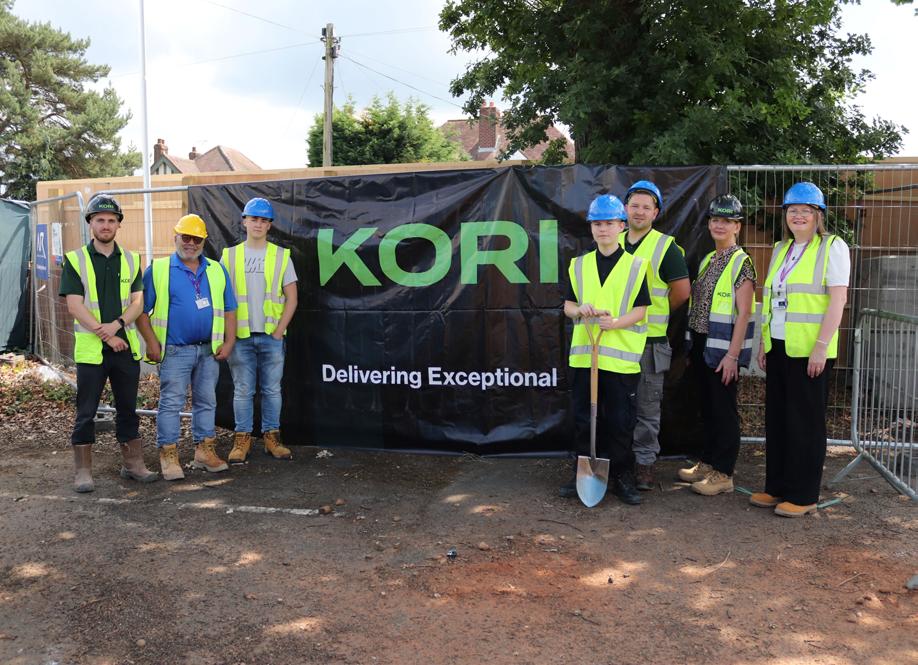
The Northamptonshire-based business has teamed up with Kidderminster College on the development of a high quality, 60-bed care home on Norton Road in Stourbridge, being built on behalf of Barchester Healthcare.
The partnership will see Kori Construction work closely with long-term unemployed
people enrolled on the college’s Skills Bootcamp in Green Construction and Retrofit Technology, to equip them with vital skills they need to enter the jobs’ market.
From September, the business will also work with HNC Construction Management, Electrical, Bricklaying and Carpentry students at the college, offering meaningful work placements and career talks.
Elaine Kendall, Head of Sustainability and Communications at Kori Construction, said the partnership was part of the company’s social value strategy which aims to get the best outcomes for clients, the environment, and for local communities, from every development they are involved in.
As part of their work with the Skills Bootcamp, Kori will be delivering sessions on CV writing, preparation for interviews, and role playing interview
situations to help attendees upskill and build their confidence.
Skills Bootcamps are free and flexible courses run by Kidderminster College giving people the opportunity to learn new skills, and fast-tracking them to interviews with local employers. Anyone over 19 who lives in England and has the right to work in the UK can apply to join.
The ground breaking ceremony, which was attended by students from Kidderminster College, kicks off the start of construction, beginning with the demolition of the former Greyhound pub to make way for the new £9m care home.
The design of the facility will be light, bright, and spacious, providing easy access for residents to a range of high quality amenities including lounges, a bistro, cinema, a hairdresser, and attractive, landscaped outdoor areas.
The development will also be in walking distance of further amenities including a dentist practice, local food shops, a post office and a pharmacist, and will help meet demand for much-needed care facilities in the town.
62 Company News Construction UK Magazine - August 2023
DM HALL MOVES INTO ENGLAND FOR THE FIRST TIME WITH THE ACQUISITION OF CUMBRIA CHARTERED SURVEYORS HYDE HARRINGTON
DM Hall, one of Scotland’s leading firms of Chartered Surveyors, is expanding into the wider UK for the first time with the acquisition of the highly regarded Chartered Surveying Practice in the north-west of England region of Cumbria.

The move, which comes on the heels of DM Hall’s 125th anniversary last year, will see the firm absorb Carlisle -and Kendal-based Hyde Harrington an established company which has been operating in the area since 1994.
The agreed acquisition is the first step in in a growth strategy that will see the firm continue to actively seek further opportunities in the North of England and beyond.
The Directors and staff at Hyde Harrington will remain in place and in time the firm will be rebranded as part of the DM Hall group.
Mr Gordon said that the expansion strategy reflected the evolving profile of the 26-strong DM Hall partnership, and the ambitions of a highly motivated group of Partners.
He said that Hyde Harrington would enjoy access to DM Hall’s vast client bank, not to mention the firm’s groupwide head-office functions.
He also said that, as well as organic expansion, the firm’s eyes would now be open to new opportunities across the UK, and in particular firms such as Hyde Harrington which share DM Hall’s core values of professionalism and high standards of customer service.
WILLMOTT DIXON BOOSTS INFRASTRUCTURE WORKLOAD WITH PRIME ROLE IN DARLINGTON STATION OVERHAUL
Willmott Dixon has landed a £30m contract from Tees Valley Combined Authority to transform the entrance to Darlington Station as part of Network Rail’s £140m masterplan to deliver extra train capacity and better passenger facilities at the station.

Willmott Dixon’s work on the huge overhaul of Darlington Station also includes a new multi-storey car park integrated within the bigger entrance area that is the station’s gateway to the town. Network Rail will start work later this summer on creating two new platforms to improve rail connections both within the Tees Valley and beyond via the East Coast Main Line.
The station overhaul will be completed in 2025 in time for the Stockton and Darlington Railway bicentennial celebrations. The station project has been primed with £33million from the Tees Valley Combined Authority and Tees Valley Mayor Ben Houchen alongside more than £100million in Government funding so far.
Willmott Dixon is behind several major infrastructure developments, including the Stockport Interchange, Halifax bus station and North Tyneside Transport Interchange.
In Darlington, the company is working with Napper Architects and F&G as QS. Nick Corrigan, North East director for Willmott Dixon, said: “We’re proud to say that, as well as creating a vibrant and transformative new gateway into Darlington, the station development really will be changing lives
and creating opportunities for local people. In addition to new local jobs, apprenticeships and training weeks, in partnership with Tees Valley Combined Authority, we are creating employment opportunities for local people facing barriers to work through our dedicated Building Lives Academy programme.
Over the coming months, we will be working with the likes of Darlington Borough Council’s Youth Employment Initiative and Aycliffe Secure Centre, to deliver Building Lives Academies for local young people who are not in education, employment or training. This is a project for the people of Darlington, built by the people of Darlington and we’re committed to spending £12m with local supply chain businesses.
This is the latest project for Willmott Dixon in Darlington. The company is currently transforming the Darlington Railway museum into a cutting-edge tourist attraction and also building Innovation Central as a specialist office and laboratory space for Darlington’s SMEs. Previously, it refurbished the Hippodrome Theatre in Darlington into a modern entertainment venue hosting some of the UK’s best acts.
63 Company News Construction UK Magazine - August 2023
TOOL THEFT ON THE RISE: TOOLS STOLEN EVERY 15 MINUTES
• In total, 35,098 tools thefts were reported to the police in 2022 –up 13 per cent from the 31,161 reported cases the previous year. This equates to a tool being taken every 15 minutes, a rise from 17 minutes in 2021
• Over half (55 per cent) of tool thefts reported in 2022 occurred from a vehicle (19,147), this equates to once every 27 minutes, a 10 per cent increase on 2021
• A total of £66 million worth of tools were stolen from tradespeople’s vehicles in 2022
New analysis of police force data from Direct Line business insurance reveals that tools were stolen every 15 minutes in 2022 across England, Wales and Northern Ireland. In 2022, there were 35,098 incidents of tool theft reported to police forces – a 13 per cent increase from 2021.
In 2022, 19,147 cases of tool theft specifically from a vehicle were reported. This makes up over half (55 per cent) of all tool theft cases in the year. A tool theft occurred from a vehicle almost every half an hour (27 minutes) in 2022, which equates to a 10 per cent increase in incidents from the previous year.
Tool theft can prevent tradespeople from being able to carry out their jobs and significantly impacts them financially. Additional research
from Direct Line business insurance found that the average value of tradespeople’s tools that had been taken from their vehicle was £3,425. This equates to a combined loss of £66 million, from the 19,147 cases of tool theft from vehicles in 2022.


Thefts reported to London’s Metropolitan Police represented 58 per cent (20, 2019) of all cases, and London also came out on top when the population density of the jurisdictions was considered.
Police forces with the highest levels of tool theft per resident – Direct Line business insurance, 2023:
Alison Traboulsi, Product Manager at Direct Line business insurance
commented: “The rising frequency of tool theft up and down the country is alarming. Our research shows that over half of all tool thefts occurred from a vehicle, highlighting the importance of keeping tools secure, as well as having the correct insurance in place if theft does occur. Tool theft is hugely disruptive for hardworking tradespeople who rely on their tools for their livelihoods, so it’s vital that they do all they can to help protect themselves. We would encourage tradespeople to take steps to help secure their tools, such as parking their vehicle in a safe, well-lit location, fitting additional locks or installing an alarm system and forensically marking their tools.
“At Direct Line, we know the impact of tool theft can be devastating, and we’re committed to giving tradespeople the protection they need to enable them to do what they do best. We offer flexible insurance cover options allowing tradespeople to build a policy which covers their specific insurance needs, whether that’s cover for during the day at work or tools locked in a vehicle overnight.”
For more information about Direct Line’s tradesperson tools cover, please visit our website: https://www. directlineforbusiness.co.uk/publicliability-insurance/insurance-for-tools
For tips on how to keep your van and tools safe please see: https://www. directlineforbusiness.co.uk/vaninsurance/knowledge-centre/yourvan-and-your-business/what-vansecurity-improvements-can-i-make
Ranking Region 1 Metropolitan Police 2 West Yorkshire 3 City of London Police 4 Cleveland Police 5 Northumbria Police 6 South Yorkshire Police 7 Cambridgeshire Police 8 Hertfordshire 9 Bedfordshire Police 10 Derbyshire Constabulary
64 Tools Construction UK Magazine - August 2023
INTRODUCING CAVITY TRAY CLEANER: A REVOLUTIONARY TOOL FOR THE BUILDING INDUSTRY
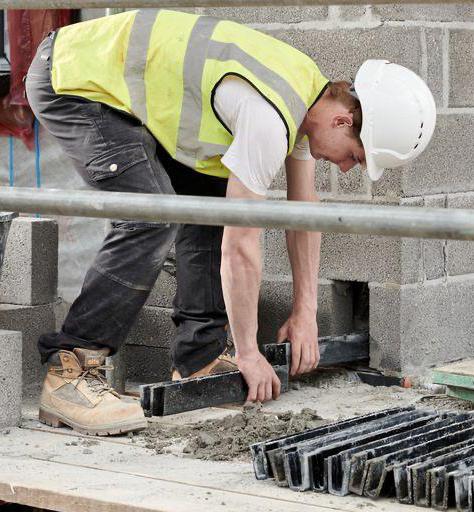


The Cavity Tray Cleaner is an innovative and time-saving tool designed specifically for bricklayers and builders in the United Kingdom. Developed by a professional bricklayer, this tool collects excess mortar that falls onto the cavity tray, saving both time and money.
With its simple three-part assembly, the Cavity Tray Cleaner can be easily clipped together and disassembled within minutes. Its efficiency is unparalleled, capable of effortlessly cleaning a 10m long run. For larger projects, sets of up to 40 meters are available, making it ideal for full house constructions.
“The traditional method of cleaning cavity trays is outdated,” says Ashley Williams, founder of the Cavity Tray Cleaner. “It’s a laborious and time-consuming task that costs bricklayers valuable hours and money. After witnessing this problem firsthand, I’m proud to introduce a product that will revolutionize the industry. The Cavity Tray Cleaner is not a luxury but a necessity for professionals who value efficiency, time, and cost savings.”
The Cavity Tray Cleaner features a train-like design, connecting in a series. Made in the UK using recycled plastic, these ecofriendly trays are reusable. The scorpionlike tail design ensures that mortar does not track back into the tray, keeping it clean throughout the cleaning process.
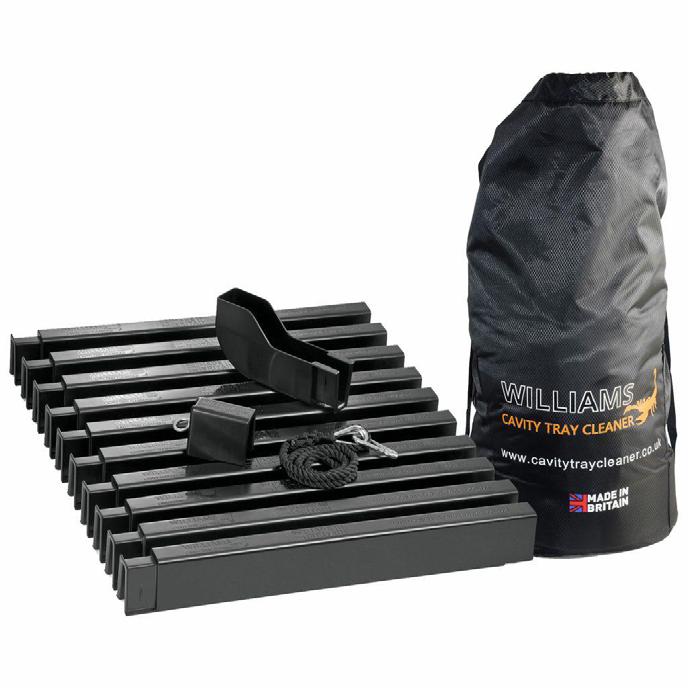
“This tool is perfect for both experienced and trainee bricklayers,” adds Ashley Williams. “It accelerates training and saves valuable time spent on scraping with wooden battens or struggling with muck-filled trays. No matter how skilled you are, dropping some mortar in the cavity is inevitable. The Cavity Tray Cleaner eliminates the wasted time and money associated with traditional methods.”
In addition to reducing cleaning time, the Cavity Tray Cleaner prevents damage to the cavity trays and ensures that ‘weep holes’ remain unobstructed. It is a sustainable investment for builders and bricklayers, meeting the standards set by the NHBC (National House Building Council).
The Cavity Tray Cleaner is set to become an invaluable tool for thousands of professionals and companies across the country, revolutionizing the way cavity trays are cleaned and maintained.
more information visit:
For
www.cavitytraycleaner.co.uk
Tools 65 Construction UK Magazine - August 2023
LEEDS COLLEGE OF BUILDING PLUMBING DEPARTMENT RECEIVES TOP EXAM RESULTS
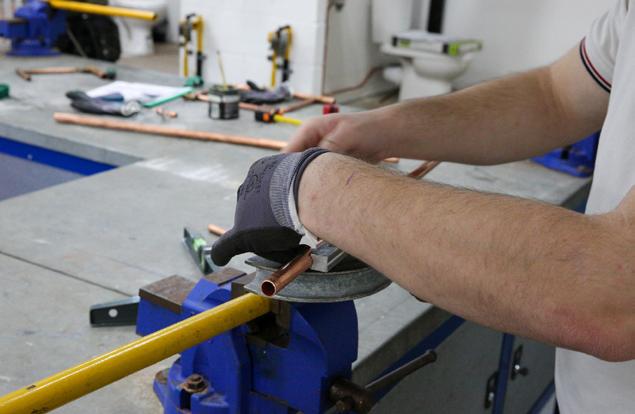
A recent examination report for Level 2 and 3 ‘technical’ plumbing qualifications at Leeds College of Building reveals exceptional results for 2023.
Overall pass rates for the exam element of the City & Guilds Level 2 Technical Certificate in Plumbing Studies at the College were 100% compared to a national average of 87%, with 40% of students achieving a Distinction grade.
The Level 3 Advanced Technical Diploma in Plumbing Studies at Leeds College of Building also achieved an impressive 94% pass rate compared to the national average of just 58%.
In total, 80 students study the Level 2 and Level 3 qualification at the College.
The practical assessment of these qualifications
will be released in the summer by the City & Guilds awarding body.

Students who have completed both technical and practical assessments are now finalising the employer-involvement element of their qualifications. The work is in preparation for progression
in further education, moving into the workplace, apprenticeships, and other positive destinations.
Boosting qualified plumbers is welcome news following the most recent UK Trade Skills Index for 2023 which pointed out an ‘alarming’ skills gap impacting the construction sector, with plumbing one of the trades most affected. The index, commissioned by Checkatrade and compiled by Capital Economics, found that an estimated 73,700 new plumbers are needed by 2032 in the UK.
Leeds College of Building has an established reputation in plumbing training. It currently offers courses for school leavers as well as adults looking to retrain or upskill from Level 1 through to Level 3. The College also provides Plumbing & Heating Apprenticeships.

To find out more about Plumbing training or for further information about enrolling on courses starting soon, visit the Leeds College of Building website
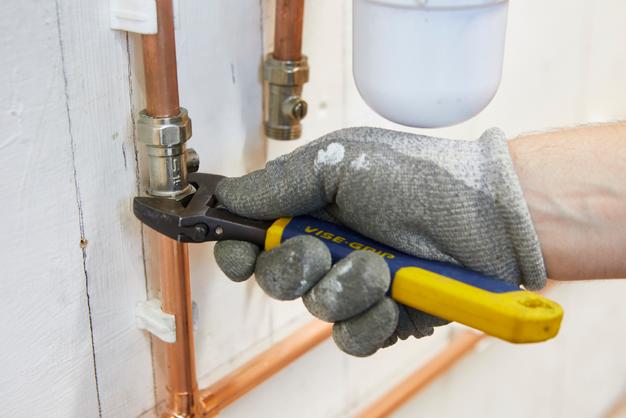
66 Tools Construction UK Magazine - August 2023




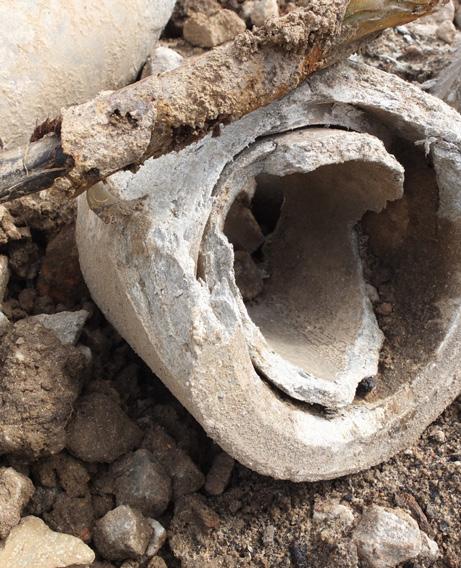


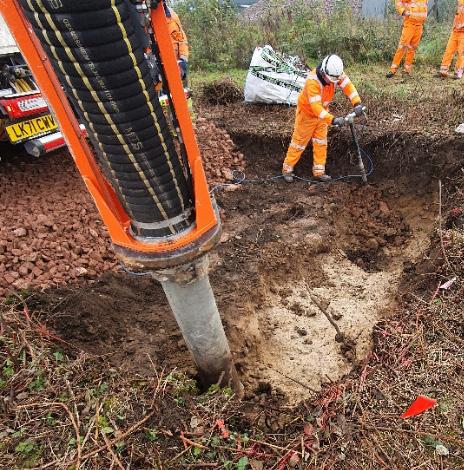





contact@knotweed.co.uk Don’t let nature impact your progress! Our commercial services will get your project back on track. Japanese knotweed, other invasive plants such as Giant hogweed, Himalayan balsam and Hemlock and non-licensable asbestos contaminated ground can damage your property, cause health and safety risks and bring development projects to a halt. NATIONAL SPECIALIST CONTROL SERVICES
environmentalcontrolsgroup.co.uk 0333 2414 413
JAPANESE KNOTWEED LTD & ENVIRONMENT CONTROLS
EARLY EDUCATION THE KEY TO ENCOURAGE MORE WOMEN INTO CONSTRUCTION
Going out to construction sites is an essential part of the job for Clare Connolly.
As social value co-ordinator, she works for procurement experts Fusion21 and believes early education is the key to inspiring more women to consider a career in the industry.
Clare, 33, regularly visits maledominated construction sites for the Prescot-based social enterprise specialists to ensure social value is embedded into projects.
She supports firms to deliver on recruitment and community commitments they’ve signed up to, such as apprenticeships, work placements, and voluntary work, which help the local economy.
Clare started her career as an estate agent, visiting existing buildings, new build properties and student homes developments on new construction sites. Her other roles in the industry were office manager and administrator positions helping to manage multiple sites, construction and maintenance jobs.
She said: “I’ve worked in the construction industry most of my working life, I love the variety of my job currently and seeing the impact we’re making on people’s lives in our local communities.
“The barrier is understanding how to get into the field. Early education is absolutely
the key point, from the age of four or five upwards. Why can Bob the Builder not be Beth the Builder? And at secondary school, when girls get the option to take on courses, we should be encouraging them to consider some of the more traditionally male focused courses such as DIY and woodwork.
Young girls need to hear
women who work on construction sites or female plumbers and decorators love their jobs and the many opportunities that are available to work in the industry. Women aren’t just admin. They are also brilliant quantity surveyors, contract managers, site developers. Having a relatable person is so important.
Her comments come following Women in Construction Week (6-12 March) which celebrates women for their hard work and dedication to their craft.
According to latest figures by the Office for National Statistics (ONS), women in the UK construction industry currently only accounts for 15 per cent of the workforce but is expected to continue to grow in the coming years.
The week highlighted the growing number of women who are making a
significant impact in the industry, and Clare praised the positive support from Fusion21 for women in construction.
She said: “Fusion21 encourage all suppliers and partners to have women attend construction career talks and events to help showcase the opportunities there are for young females.

“We work with so many sites across the UK and when new jobs become available, we send them to our partners to help get them recruited.
“They value you and are really eager to give you the chance to shine, whether that’s presenting at webinars, conferences or pushing me to do my CSCS card or leadership courses, which all go towards making me a better leader.
“When I’m on site most of the men I meet are friendly and so welcoming. They offer you a cuppa and are happy to sit down and talk about what they need to do in terms of social value. They really support women in construction and what we’re trying to do. Once you realise they’re just people who really want to help, there isn’t this barrier that sometimes people assume there is.”
Fusion21 works with housing, local authority, education, blue light and health sector organisations to help them with their procurement. It focuses on maximising social value in contracts.
Sarah Maguire, social value manager at Fusion21, added: “At a time when the industry is facing challenges with workforce shortages and skills, it’s massively important to encourage more women into the industry.
“Hearing the perspectives and first-hand experiences of women like Clare will help to inspire the next generation of females to consider jobs in construction, which will ultimately create a more diverse and inclusive industry.
“We’re committed to promoting a workplace culture that values and supports women in construction, and have a successful track record supporting local authorities, developers, and contractors to drive social value, education, and employment opportunities in the industry.”
To date, Fusion21 has created more than 9,600 employment outcomes and generated more than £136m in social impact.
why
L-R: Sarah Maguire, social value manager, and Clare Connolly, social value co-ordinator at Fusion21
68 Training & Education Construction UK Magazine - August 2023


For more details visit www.mkctraining.com/citb Funding available NOW for the Level 3 Leadership and Management in Construction Qualification www.mkctraining.com courses@mkctraining.com +44(0)1634 383080 This qualification would normally cost £1,900+VAT but you can get it FREE right now, thanks to CITB! All you would need to cover is the ILM registration fee of £137. Register your staff now as funding is limited! Increased cost control Reduced man hours of staff on site An increase in productivity from your employees A safer working environment for all staff ensuring best safety practice Managers with ILM certified skills for tenders and major contracts Improved retention of employees from supporting long term, continuous professional development Gain an Academically Qualified Person CSCS card
THE IMPACT OF THE DIGITAL SKILLS SHORTAGE IN CONSTRUCTION
Like many industries, construction is facing a skills shortage. But more to its detriment, the industry is battling a digital skills shortage that it’s struggling to fill. Here, Ryan Jones, co-founder of the UK’s largest data jobs platform with listings for data-specific jobs in construction, OnlyDataJobs, explains the impact of the industry’s digital skills shortage.

Big data and analytics have been transforming the construction industry for a few years now, particularly in the use of building information modelling (BIM) and artificial intelligence (AI). But while construction businesses are waking up to the potential of data, accessing the talent that can turn that data into organisational change remains challenging.
Data in construction
Harnessing the power of data is one of the smartest things the construction industry can do. But a report by consultants FMI Corporation found that 96 per cent of data generated in infrastructure projects is not used and 90 per cent data generated by the engineering and construction industry is unstructured. Here the industry is missing significant opportunities.
To combat this, data analysts can make sense of the data produced from a range of construction activities to inform a business. A data analyst collects, organises and studies data to provide information that is used to provide insight into business performance and solve problems.
Specifically in construction, data analysts can support with completing projects more effectively, which saves time and costs. By identifying trends in data, analysts use their findings to help project decision makers identify potential issues and take preventative action to limit their impact. Furthermore, analysing data in construction can improve building efficiency, reduce environmental impact, increase deadline completion, and even make working conditions safer.
For example, collecting and studying volumes of data can help with asset management — something that’s crucial for projects to run on schedule. This involves monitoring equipment performance for parameters such as temperature, machine vibration and overall equipment health. By analysing this data, experts can predict if a piece of machinery is operating in an unsafe manner or if it’s due to fail. Data from multiple machines can be mapped to help make predictions, so the onsite team can act before any damage occurs.
Elsewhere, data can help make construction operations greener. The built environment currently accounts for around a quarter of UK greenhouse gas emissions, and the ability to capture environmental and operational data and share it across multiple build sites is key to enacting more sustainable energy use and material selection.
Understanding the skills shortage
The skills shortage in construction is no secret and it’s more than just a reference to the level of qualification a candidate requires. It also constitutes the difficulty in finding the right candidate for a job at the cost an employer is afford and that meets the terms of employment.
Research by recruitment specialist, Search Consultancy, found that 83 per cent of businesses within the construction industry were feeling the strain from a lack of skilled workers — ranking fourth highest out of 17 industries. One of the main reasons cited for the UK’s construction industry skills shortage is an ageing workforce. As construction workers reach retirement age, there are now fewer people joining the industry to replace them.
By identifying trends in data, analysts use their findings to help project decision makers identify potential issues and take preventative action to limit their impact.
Ryan Jones
70 Training & Education Construction UK Magazine - August 2023
Unlike decades ago, when manual labour jobs were mandatory in some cases, the uptake of labour jobs has declined due to technical and technology-based jobs becoming more popular. For example, according to Corr Recruitment, the most popular jobs of 2022 include cyber security specialists and software developers, architects and graphic designers. And many don’t realise how the construction industry can provide such digital opportunities.

Dedicated digital skills





In its Building back in a Post-Pandemic World: Reconstructing Skills report, KnowledgePoint reveals how the global architecture, engineering and construction (AEC) sector is being constrained by a shortage of specialist digital skills.

While, like for many industries, the COVID-19 pandemic has accelerated the adoption of technology and digital construction solutions, construction is now lacking in a digitally and data skilled workforce to support this uptake.





The report also discussed the impact of digitalisation in the sector, highlighting how the adoption of 3D modelling, prefabrication and virtual (VR) and
augmented reality (AR) has increased the need for new roles with digital skills. As a result, there’s significant demand for immersive skills in new job postings. For instance, a significant percentage of all job postings for engineers request 3D modelling technologies such as AutoCAD or Solidworks.
It makes three recommendations. Strengthen the skills pipeline by ensuring young people are equipped for the skills required for an increasingly digitised and automated sector, invest in collaborative programmes across key curriculums supported by industry and academia and lastly, recognise the importance of certification.
Helping the industry to secure available talent is data dedicated jobs board, OnlyDataJobs, which currently lists over 13,000 job descriptions, with over 55 data related jobs advertised in the construction and property sector. Job roles vary from data analysts to data engineers all over the UK, which can be filtered by software and programme knowledge including Azure, AWS and Python. A platform like this is crucial for construction businesses to filter and find the digitally skilled talent they need to enhance their operations to a data-driven state.
The advantages of analysing data are endless, but despite data centricity being a top priority for businesses, the lack of skilled workers is hindering what construction companies can do. A retiring workforce, lack of ineffective upskilling programmes and a shortage of talent means the industry is struggling with the impact. It’s therefore vital that data professionals realise construction is not what it once was and that there are a plethora of digital roles within the sector, seeking specialists.

The skills shortage in construction is no secret and it’s more than just a reference to the level of qualification a candidate requires. It also constitutes the difficulty in finding the right candidate for a job at the cost an employer is afford and that meets the terms of employment.
71 TALENT- ctct CONCRETE QUALIFICATIONS FOR ALL On-line training leading to Institute of Concrete Technology qualifications Concrete Technology & Construction • General Principles • Practical Applications Courses approved by The Institute of Concrete Technology Enrolments now invited! FURTHER INFORMATION: info@talentconcretetraining.org.uk 01723 567432 www.talentconcretetraining.org.uk Training & Education Construction UK Magazine - August 2023
VR TECHNOLOGY AT HEART OF PIONEERING FIRE PROTECTION TRAINING VENTURE
A new venture focusing on passive fire protection and health and safety training in the property and construction sector has been launched in the north west with virtual reality at its heart, in what is thought to be the first of its kind in the UK.

Jason McKnight and Joseph Dillon have set up trainingEXP as a sister company to their construction and project management business RECOM Solutions, which is based in Salford Quays.

The duo have invested a six-figure sum in the venture and have recruited experienced fire protection professional Adam Steed to head its team of trainers.
Adam has joined trainingEXP from Warringtonfire, a testing, inspection and certification company. He was an inspector of fire protection systems registered under Warringtonfire’s Fire Certification Scheme (FIRAS).
The new venture is providing in-depth passive fire protection training aimed at the residential, health and social care, commercial, leisure, education, heritage and industrial sectors as well as fire and rescue services, professionals such as architects, tradespeople and operatives.
VR training that replicates live environments to raise awareness of common fire protection hazards in buildings is a key feature of the courses.
Jason McKnight said: “We have developed innovative and bespoke software which is unlike anything else available in the UK and Europe. It works in a similar way to the hazard perception section of the driving
theory test. By replicating live environments, such as hospitals, users can take virtual walks around buildings to carry out passive fire surveys and identify fire protection hazards in an immersive way. Unlike other available software, this is entirely interactive and our delegates can interact with the simulations we have created.”
He added: “We are committed to improving fire safety awareness, knowledge and skills across the built environment and to help raise standards. It’s a growing industry and there has been recent legislation which has made the provision of quality hands-on training even more necessary. We initially created a training academy for our own specialist passive fire protection operatives, supervisors, project managers and surveyors. However, in response to client demand we decided to expand it into a full-scale venture.
“We believe there is a great need for this service, and we are using VR as a central component of the training to enhance the experience. Given our project management and construction experience, the new venture aligns well with what we do as RECOM and we are confident our experienced trainingEXP team led by Adam will deliver a compelling service to the sector.”
The range of online health and safety courses launched by trainingEXP focus on construction environments and cover areas such as asbestos, design, regulation, first aid and manual handling.

All courses are recognised or accredited by industry bodies such as the Institution of Occupational Safety and Health and FireQual.
Adam said: “It’s an exciting opportunity to head trainingEXP. Our mission is to help companies and organisations better understand their obligations and provide industry professionals with specialist knowledge that will improve fire safety. The training aims to create an in-depth understanding that passive fire protection is a life safety feature and compliance within this industry needs to be fully understood to move forward.”
RECOM’s own passive fire protection division is the fastest-growing arm of the group. A raft of contract wins has seen it expand into a nationwide operation, and it has doubled the size of its team of directly-employed installers to over 40 in the past 12 months. The team undertake projects at locations including NHS trusts and hospitals, schools and universities, government offices, social housing schemes, apartment blocks and office buildings.
RECOM is an approved contractor under FIRAS for its fire protection services, which include passive fire protection installation, fire door surveys and installations, repairs and upgrades, fire strategy reviews, compartmentation surveying, advice and guidance, training, development and support.
The company, which was founded in 2015 by Jason and Joseph, also undertakes construction project management and main contracting work across sectors including healthcare, education, retail and leisure, commercial and residential. It also provides consultancy services to assist in the design and delivery of health and safety, sustainability and cladding projects.
Training and Education 72 Construction UK Magazine - August 2023
BRADFORDS BUILDING SUPPLIES LAUNCHES INNOVATIVE EMPLOYEE
DOMESTIC RETROFIT TRAINING SCHEME, IN PARTNERSHIP WITH TARGET CO2
In a move that supports its employees to reduce energy bills long term and rapidly upskill them on the retrofit agenda, Bradfords has rolled out a scheme to offer employees a free home energy assessment.
In partnership with local domestic retrofit experts Target CO2, Bradfords has offered in-person home energy surveys to all homeowning employees who have requested to join the initiative so far.

The Target CO2 team assessed employees’ homes, providing them with an end-to-end retrofit plan, including an up-to-date EPC, a ventilation guide and condition report. In addition, they receive guidance on recommended solutions and products with an indication of increased energy efficiency reduction in carbon emissions achievable if measures are installed.
With all employees attending the retrofit assessments as they are conducted, they can easily identify with the examples in the retrofit plan and the products and scenarios they see every day. This makes it all the more relatable when they discuss retrofit with colleagues and customers. Those Bradfords employees taking part in the scheme will be expected to share their learning with colleagues to help build the capability of Bradfords to provide a quality solution for retrofit enquiries across the South West.
With the recent introduction of the Minimum Energy Efficiency Standards (MEES) regulations now impacting landlords, and expanding government funding schemes for low-carbon heating, this scheme supports Bradfords customers – from trades to DIYers – to meet these changing regulatory requirements.
Giles Bradford, Head of Sustainability at Bradfords, said: “By providing this initiative to employees, we not only give them an actionable plan to reduce their own bills and emissions but also a solid understanding of the requirements of domestic retrofit which they can share with peers and customers.
“Between now and 2050, over 26 million homes nationally and 2 million across the South West will need retrofitting.
Our scheme may be a drop in the ocean as far as this target goes for now, but along with our wider partnership with Target CO2, it sets us up to be able to best support the UK domestic retrofit agenda as it gains momentum.
Ben Smith, Co-Founder at Target CO2, said: “Understanding how to tackle a retrofit project is complex, and will differ greatly from house to house, so it is vitally important that all sectors of the construction sector get to grips with the solutions available. That is why it is so

fantastic to be part of this scheme and witness the engagement from Bradfords staff, who will be able to pass on their knowledge to customers and beyond.”
Feedback so far has been overwhelmingly positive, with employees noting the relative ease of some of Target CO2’s recommendations, such as installing thermostatic radiator valves or addressing ventilation gaps, as well as the potential for larger scale projects to install additional insulation, heat-pumps or solar panels.
Jo Flint, Facilities Administrator at Bradfords, who took part in the scheme, said: “The home energy assessment really opened my eyes to how insulation and ventilation are linked to each other and to energy and cost savings. I will be implementing the advice around trickle vents and extraction fans, and sharing the knowledge I have gained, as well as considering renewables solutions such as solar panels.”
Information about the employee properties that have been assessed will be used to develop a picture of the region’s retrofit needs to inform Bradfords’ domestic retrofit proposition, whilst this initiative helps Bradfords and TargetCO2 to develop their partnership to provide the best retrofit solutions across the region.
73 Training & Education Construction UK Magazine - August 2023
EVER THOUGHT ABOUT CHANGING UP YOUR CAREER? TRANSITION TO TEACHING!
If you enjoy working in the construction industry but wonder how you can change up your career, we have a perfect solution for you!
The education sector offers a fulfilling career that allows you to share your knowledge and expertise with others and help shape the next generation of construction workers. With the next academic year around the corner, now is the perfect time to start looking for a teaching job to secure your ideal role.
Role and benefits
Further education teachers work with 16 to 19-year-old construction students. They need someone like you to share practical and theoretical knowledge with them and assess their work before they go onto site.

Teaching offers job security, competitive salaries, and excellent benefits, including pension schemes, holiday entitlements, sick pay, and flexibility.
Teaching offers job security, competitive salaries, and excellent benefits, including pension schemes, holiday entitlements, sick pay, and flexibility. You can teach part-time, full time or on an ad-hoc basis. Teaching is also a rewarding career where you can positively impact your students’ lives and improve the future quality of workers.
Am I the right person for the job?
The requirements vary depending on the subject area, level of teaching, and location. However, if you enjoy working with young people, have good communication, time management, organisational and interpersonal skills, and have experience working in construction, you will be suitable for the role.
What do I need to start my teaching career?
You will need to pass a DBS check as you will be working with students under 18. Your DBS check can be done through us; our in-house vetting team can support you with that. Experience working with young people would also be an advantage, so make sure to add that to your resume if you have it.
Most colleges in the UK do not require teaching qualifications or a degree to get started. Our specialists will be able to advise you on what is needed to get your ideal role.
What do I do next?
Start by researching the subject and levels you’d like to teach in, prepare your CV with a list of your qualifications and past work experience, and get in touch with our team. Our consultants will support you further in the process, provide tailored offers to meet your requirements and help you secure your new job ahead of the competition.
If this sounds interesting to you, get in touch with our team today! Email us directly contact@bostonrose.co.uk or, alternatively, call our office on 01179 296 200 to find out more.
Training & Education 74 Construction UK Magazine - August 2023
“CABE are very supportive of the work Sava has been doing in bringing much needed new talent into the building professions and creating opportunities for people who might not otherwise be able to access a professionally-recognised qualification.
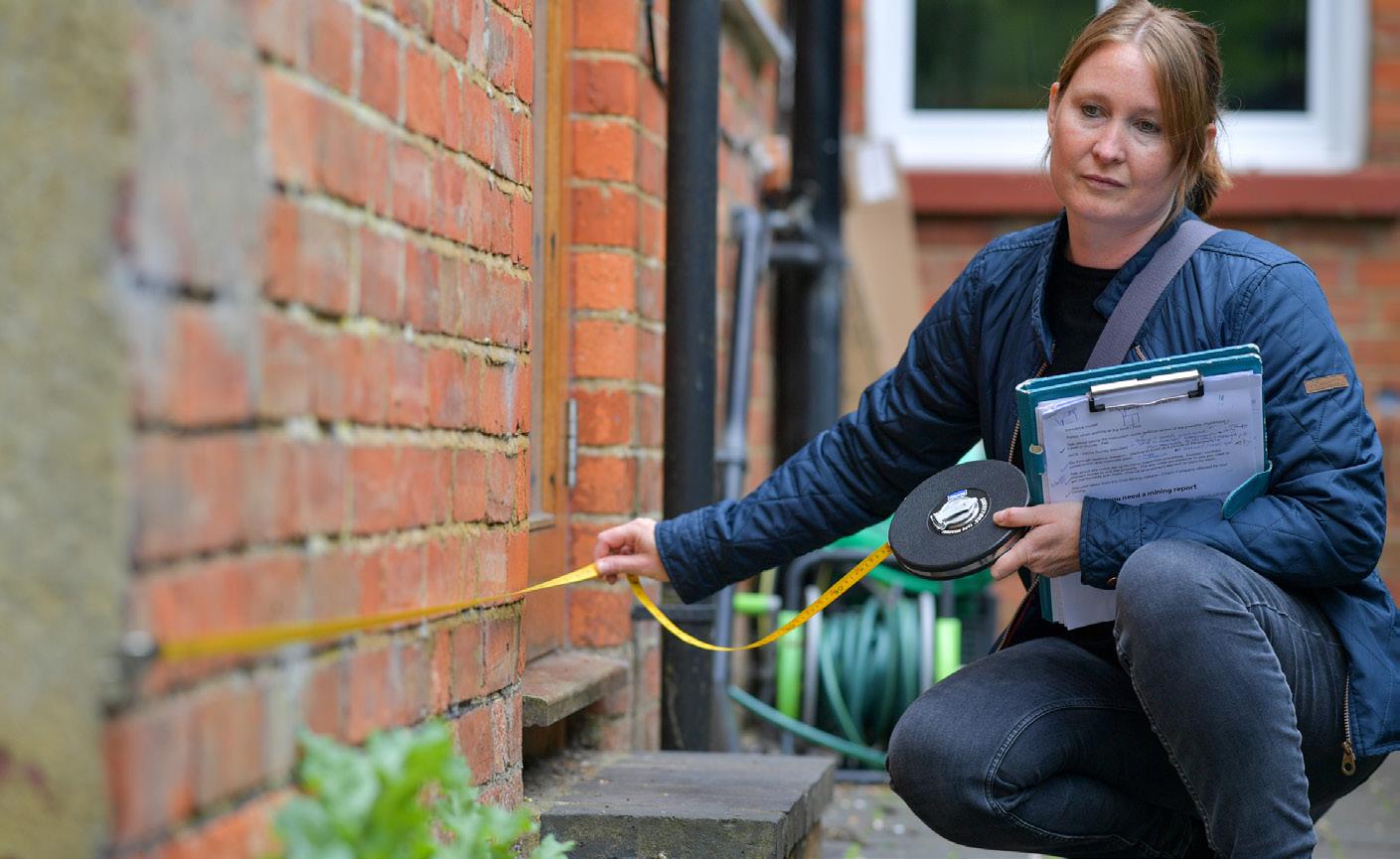



Anecdotal feedback about Sava graduates is very positive and employers are delighted with the knowledge and skills that they bring”
Dr Gavin Dunn Chief Executive Chartered Association of Building Engineers (CABE)


Study to become a Residential Surveyor Introducing the Diploma in Residential Surveying 01908 442158 hello@sava.co.uk www.sava.co.uk
Diploma Delivered by industry experts Recognised by RPSA and CABE Training locations across the UK Part-time, blended training FIND OUT MORE Join a surveying firm offering building surveying services Self-employed surveyor supported by an organisation such as the Residential Property Surveyors Association (RPSA) Work with a social housing provider - you will have an excellent working knowledge around construction and how buildings go wrong Add additional services to the range of services you already offer your client base (e.g. if you do asbestos surveys, you could offer client defect specific reports)
are the opportunities
you
Level 6
What
when
qualify?
