KONSHUU
Sherlock Holmes

William James Moriarty
Moriarty the Patriot
Art By Catherine Chen
vol. 58 #1

Sherlock Holmes
William James Moriarty
Moriarty the Patriot
Art By Catherine Chen
vol. 58 #1
ANIME RECOMMENDATION
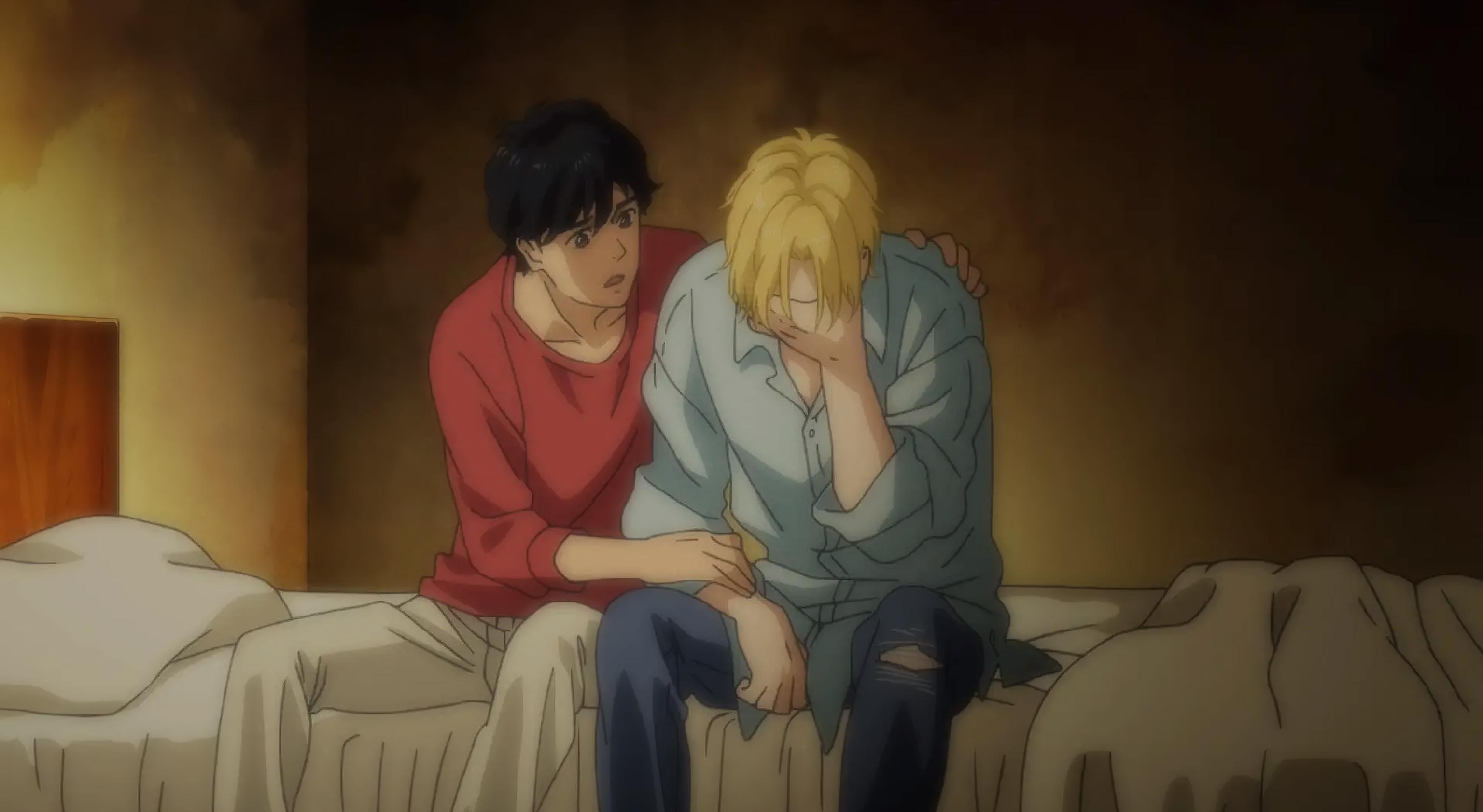
BY RAHM JETHANIA tale of life, death, and heartbreak, Banana Fish is a beautifully well-made anime that excels at connecting the audience to its characters. Surrounding the central romance between Eiji Okumura and Ash Lynx is a world full of violence and conspiracy, which creates stunningly emotional moments and high-stakes scenes you won’t soon forget.
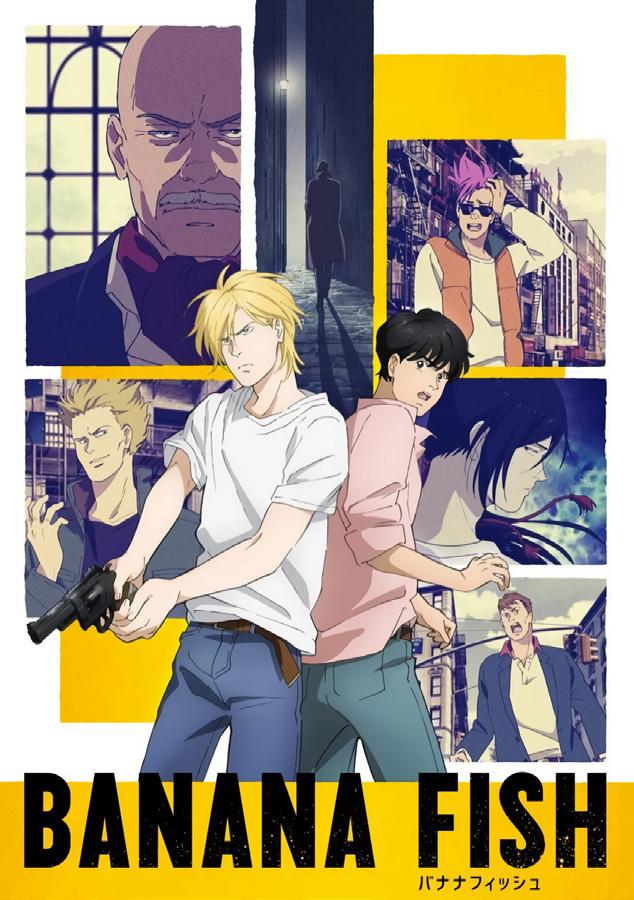
 BY RAHM JETHANI
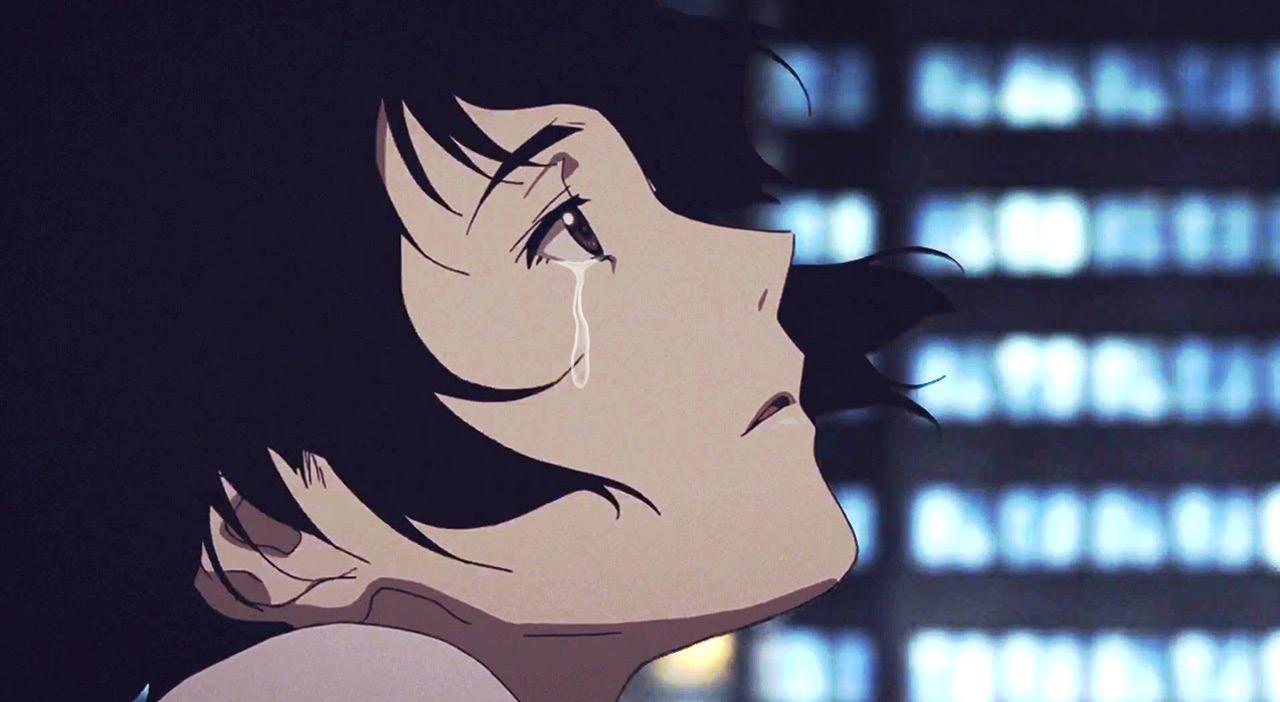
Making the most of its short runtime, Zankyou no Terror is a mystery story that takes place from the terrorists’ point of view. The sorrowful music, cold and lonely atmosphere, and phenomenal writing all contribute to making a once-in-a-blue-moon anime that will leave you on the edge of your seat until the very end.
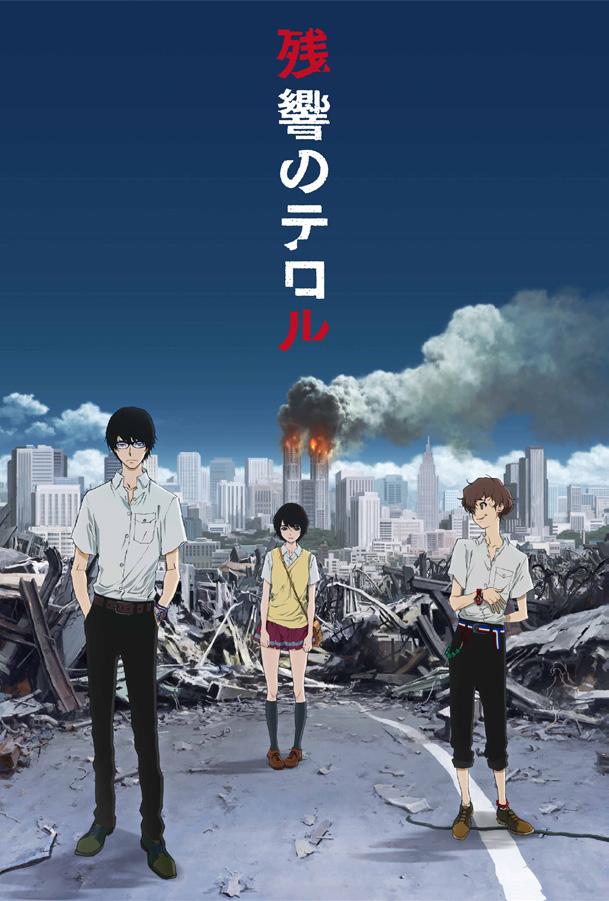
 Summer 2018, MAPPA Directed by Hiroko Utsumi 24 episodes

I like rivals who are competent and villainous but in a self-aware way. I cannot stand overt self-righteousness in a villain.
Who is your favorite rival character (and why)?
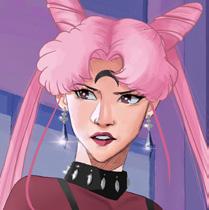
The mind games between Emma and Isella in the promised neverland- very well done suspense.
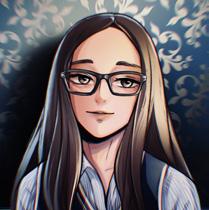
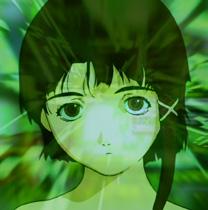
A set of ideological beliefs that might not inherently oppose the protagonists', but don't necessarily mesh perfectly.
I believe rivals should have respect for one another. A good rival has to realize the person they are up against has power that they either believe they are better than or strive to be better than. If rivals sees each other as chumps then it can get lame.
Not really an anime but I enjoyed seeing Aang and Zuko fight against each other, especially since Zuko grew to respect Aang and note that he can be dangerous even if he is a child.
Unnecessary… feelings.
I bet you know I'm gonna 'accuse' Edgeworth of being too cute (and just a right bit of tsundere).
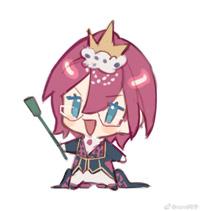
The Digimon anime series’ strongest aspect is, and always has been, its strong focus on character growth and thematic evolution. This is especially the case in the many “Adventure” series, which mainly follow a constant set of characters, as opposed to the wide variety of one-off groups featured in other Digimon series. The first Digimon Adventure series was released back in 1999, and it was praised for its creative exploration of what it meant to grow up. Not only this, but ideas of true friendship, destiny, sacrifice, and other heavy subject matters were talked about in a more mature way than many localized shows of the time. This respect for the audience, the admittedly marketable and “cool” Digimon, and the simple yet charming storyline helped propel the following Digimon anime series to new heights.
However, most likely due to the other series being so self-contained, the Digimon Adventure series kept receiving new outings, such as the multiple movies and Digimon Adventure Tri series. Despite their hit-or-miss nature though, each new installment aimed to further the relationship dynamics between the characters in a meaningful way. While the sentiment of this was largely appreciated, its execution was received very poorly due to structural problems, as seen especially with the Tri series. The reception towards Tri prompted the writers to ask themselves a challenging question. Should they be content to end the Adventure series with this failed product, or would they try to redeem themselves with a risky last project that risked further alienating the entire fanbase? After much time, the team did pick the latter option, and a few years later, released Digimon Adventure: Last Evolution Kizuna
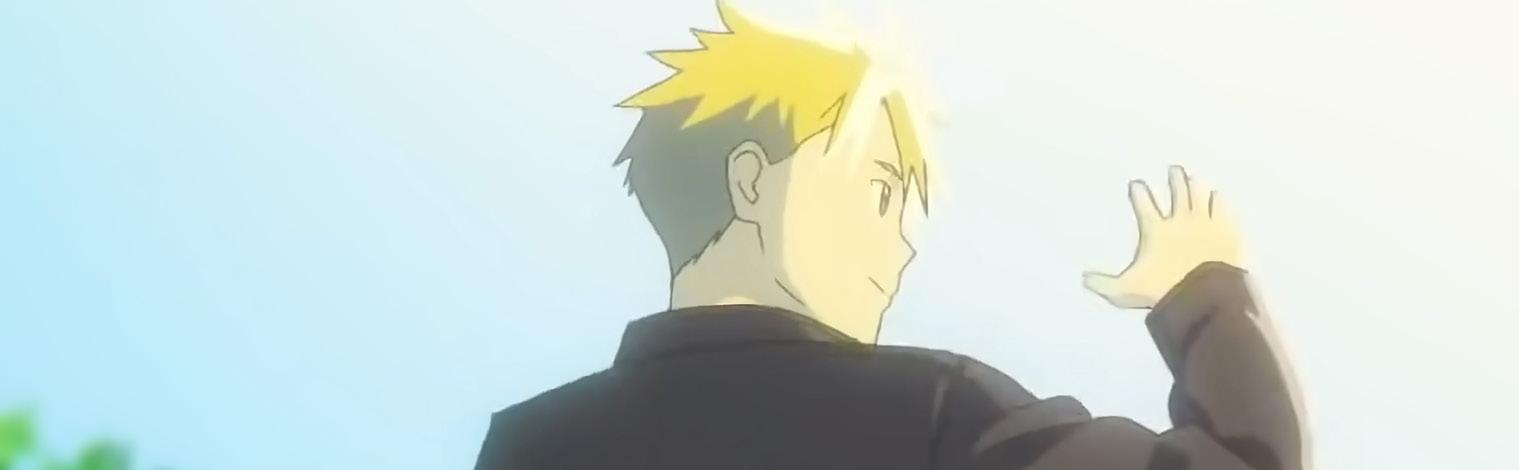
In order to understand what the Kizuna movie sought to do, we first need to take a look back at two essential “bad” moments that defined the identity of the Digimon Adventure series leading up to the movie. Firstly, there’s the famous ending of Digimon Adventure 02, which shows all of the main characters as adults. The main character Taichi ends up being a diplomat with his partner Digimon, Agumon. The rival character Yamato is seen as an astronaut on the moon with his partner Gabumon. Similar futures are shown for all the original cast which, in isolation, works as a hopeful sendoff. The problem with this is its recontextualization
in the secondary “bad” moment in the Digimon Adventure series: Digimon Adventure Tri Tri struggles with many aspects, but in particular it fails to give any hints towards the characters’ futures. The series shows different sides to the cast that, while undoubtedly good in terms of evolving their characters, conflict with the future version of them. We wonder how Yamato goes from being in a rock band to studying astrophysics instead of Koushiro, we wonder how Taichi’s new sense of uncertainty leads him to becoming a diplomat, we wonder how Mimi becomes a celebrity chef when she’s better suited to Sora’s job of fashion design. At the end of Tri, these questions are no closer to being answered than in the beginning, as if the writers forgot that Digimon Adventure has always been about the characters’ lives rather than them fighting a specific dangerous Digimon. This ends up making an unsatisfying conclusion to a series that was supposed to be a thematic close to the Digimon Adventure series.

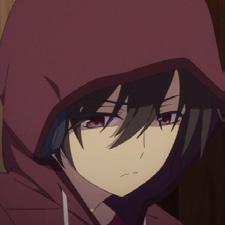
Digimon Adventure: Last Evolution Kizuna is the perfect end to the series. It takes what made the original series so special, and pairs it with a refined message that caters to its core audience who have now also grown up. Furthermore, one of its boldest decisions is one that I think should have been done a long time ago: the writers disregard the ending of Adventure 02. I personally don’t care about “canon” as long as the story being told is a good one, so whether or not Kizuna is now the true “canon” doesn’t matter. What does matter about this movie’s choice to stray from an already-decided future is that it not only allows for better storytelling potential, but it also lines up with Kizuna’s plot so much that this decision actually increased the enjoyment and thematic fulfillment. It embraced the new characterization the Tri films brought, and rather than only half-committing, it leaned into the personality traits that the characters had begun to exhibit. This not only created more believable character moments throughout the movie, but also continued the sense of forward momentum the series was famous for. In addition, role reversals between characters like Taichi and Yamato were displayed intentionally to
RAHM JETHANI
2nd Year, English & Japanese
“We may not be able to change our fate, but our lives aren’t preordained!”
highlight the uncertainty of this point in their lives.
I want to quickly touch on the relationship dynamic between Taichi and Yamato, because its growth up until this movie is indicative of their current mental states. At the start of the series, Taichi is the bold leader of the friend group. His occasional airheadedness was complemented by his desire to protect those close to him, which we learn is a result of a traumatic moment in his childhood. Meanwhile, Yamato is initially presented as a cold, closed-off loner who would frequently argue with Taichi over decisions. It is revealed later that Yamato was like this due to his own childhood, after his parents divorced and forced him away from his younger brother. In a way, these characters are similar, and their interactions together both highlight this, as well as provide them opportunities to grow from it. Their various interactions spawned their fierce rivalry, which later turned to a friendly one as they understood each other more.
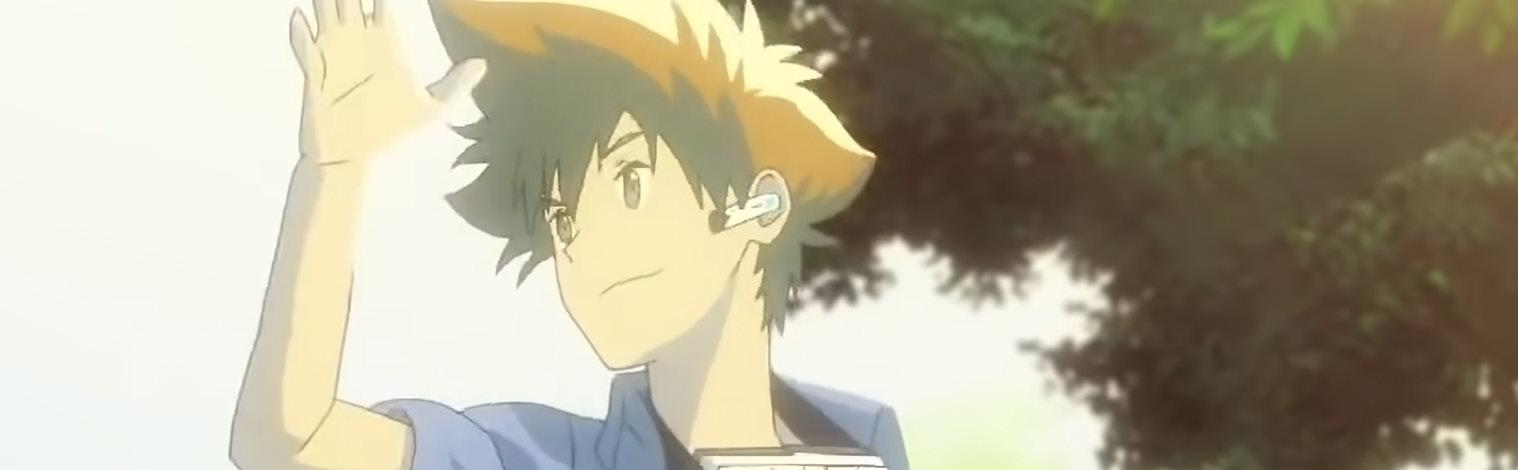
Something that Tri reached for was to shift the dynamic between them, where Taichi would become more passive and unsure of himself, and Yamato would take on the leader role when no one else would. This change was done in a somewhat jarring fashion, but Kizuna’s solution to this problematic change was as simple as it was appropriate to the movie’s tone: have all the characters grow apart. In the movie, everyone is off pursuing their own paths, and Taichi’s uncertainty is something he struggles with precisely because he isn’t able to act as a strong leader anymore. Yamato, while also feeling trepidation towards the future, is more sure of his path, and would sometimes provide emotional support for Taichi. Their dynamic shifted away from childish rivalry and into an adult friendship, and this evolution is perfect for Kizuna’s message.
film about loss, destiny, and growing up… which is very similar to everything else in the series. What sets Kizuna apart though, is its finality. Tragedy happens in this movie that can and will never be undone, and we as an audience have to live with that. The good news though is that given time, these tragedies will bloom into a beautiful hope. In this movie, the main characters’ partner Digimon (although primarily Taichi’s and Yamato’s) only have a small amount of time left to live due to the characters growing older. The more the Digimon fight, the more their remaining time left is consumed. Compounding this is a villain who threatens the lives of all the DigiDestined in the world, hence creating a high-stakes situation.
As expected for Digimon, the good guys win and the bad guy is defeated, et cetera, et cetera. The form this structure takes though, is interesting. For one, most of the original cast is absent from the movie’s action, due to having their own lives to live. Sora, Mimi, and Joe in particular have moved on in their lives, and don’t feel the need to be actively involved in this last battle. Koushiro, too, takes more of a backseat here, as his computer knowledge doesn’t act as the deus ex machina it used to. Secondly, rather than achieving new power through friendship, bravery, or any other overused trope, the “new power” of this movie is solely caused by Taichi and Yamato’s acceptance of the imminent loss of their partners, as they make one final push in the film’s climactic battle. This acceptance isn’t rewarded by arbitrary good endings either, as the final heart-wrenching moments of the film see Taichi & Agumon’s and Yamato & Gabumon’s last moments together, each Digimon asking what their human partners will do tomorrow. In that moment, after some thought, Taichi and Yamato figure out what they want to do. Taichi’s uncertainty doesn’t paralyze him anymore, and Yamato’s adrift mindset disappears. But after they each turn to tell their partner, they realize that they’ve already disappeared.
This moment reveals to us a facet of Digimon that the writers, while approaching it rapidly, have been afraid to talk about for 20 years. Being a DigiDestined and having a Digimon meant that these kids were never able to fully grow up. They were all used to facing their problems the same way, and could have never grown as people without losing their Digimon. This was necessary for the main characters, and this is reflected by their realizations of what they wanted to do coinciding exactly with their respective partner’s disappearance. This ending is the perfect conclusion to a show like Digimon, which strives to explore the consequences of its fantastical imaginings. While there are many more Digimon stories yet to be told, Digimon Adventure: Last Evolution Kizuna proudly stands as the definitive thematic culmination of everything the series stood for.

This might be incomprehensible to someone who hasn’t read Bakuman…
There’s a point in Ohba Tsugumi and Obata Takeshi’s Bakuman wherein the main characters, brainstorming their next series to submit for serialization in Weekly Shounen Jump, discuss the idea of a story utilizing the tropes of battle shounen series without the actual fights. In the context of Bakuman’s internal story, it’s an interesting point that conceptually stems from the characters’ previous tendencies to write stories slightly edgier and less mainstream than what would be expected from a manga anthology directed primarily towards male adolescents. What makes this small mention tucked somewhere within the series’ twenty volumes (I couldn’t be bothered to go back and find its exact location), deeply fascinating and memorable to me is that in many ways that concept encapsulates the appeal of Bakuman, alongside the authors’ previous work, Death Note, themselves. And while I find random references generally annoying in stories, Bakuman utilizes them in a way that very much accentuates the main arc of the story and makes it all the more meaningful.
The reductive description of Bakuman is that it’s a manga about drawing manga. But as someone without much visual artistic talent, that fails to capture the real appeal of the series: its focus on developing characters in pursuit of a goal not unlike that of traditional fighting series. In particular, the way Bakuman frames its non-physical battles utilizes an interesting plot gimmick, the real-world Weekly Shounen Jump reader polls, upon which the characters compete for the highest ranking. Where many series fail to grasp the audience’s attention regarding why the main goal is something that should be held in esteem, Bakuman kind of gets away rather easy because the rankings are something that have actual importance - most readers have likely read a battle shounen series prior to Bakuman, and hence there’s an inherent understanding that the competition the characters partake in is something that produced art that the reader has enjoyed.
There is no greater embodiment of this fundamental strength than the main rival character, Niizuma Eiji. Where Bakuman’s dual protagonists, Takagi Akito and Mashiro Moritaka, are fairly generic in so far as having more innocent, pure goals (something that actually contributes to the

one major flaw of Bakuman, its romantic subplot), Eiji is a pure prodigy in the sort of mythic savant qualities that figures like Toriyama Akira or Oda Eiichiro have been imbued. In fact, the latter is who Eiji is based upon. The real world connection to a figure that is lauded as a genius of manga isn’t itself what makes the character interesting, but it allows Eiji to serve a unique role wherein he is continuously head and shoulders over the main characters. Niizuma Eiji is the stand-in for their goal to be the top mangaka as he represents the antithesis of their literary style while being a foil in terms of talent. In representing the platonic ideal of what a Japanese mangaka should traditionally be expected to output, Eiji becomes the characters’ goal whilst also acting as a counterpoint as his more mainstream sensibilities match the protagonists’ more niche-appeal stories. What more, Eiji also serves almost as a mentor figure of sorts; where many characters in Bakuman differ in their advice as art is inherently subjective, Eiji is the one character who, given his prodigious talent, is almost never wrong in any assessments made towards others’ works.

Great battle shounen are often made by rival characters, who serve as antagonists, allies, and/or mentor figures in various capacities. Where protagonists are usually somewhat more reactive, rivals are proactive and push the story and worldbuilding further. Bakuman, in presenting the character of Niizuma Eiji as the ultimate obstacle for the characters to overcome, manages to do just that. This works on multiple levels. With Niizuma being effectively a stand-in for the most popular Shounen Jump series this millennium, One Piece, his inclusion indicates what the authors hope to do with their series, in broadening the very idea of what a battle shounen story can be, beyond more traditional story structures. With the in-universe creation of the Bakuman characters being a series which is, for all intents and purposes, basically the authors’ Death Note series, their victory over Eiji is made all the more meaningful. Concepts like serious humor, non-traditional battles, and standalone chapters that don’t stand alone which both the Bakuman characters and the actual authors employ in all their works have gone on to influence other series. The quality may be variable, but series like The Promised Neverland or Dr. Stone are a perfect example of this. Where references normally serve as a non-diegetic element that brings audiences out of the story, Bakuman is in a unique position where almost all of its references, whether overt or more subtle, accentuate the points the authors are attempting to make about creation, and the intrigue of the concepts that the characters toy with. Niizuma Eiji’s characterization both in the text and between the lines is a perfect representation of this and cements Bakuman as my favorite manga series.

3rd Year, Molecular Cell Biology
Or well, how she's just pretty cool.

The Precure franchise has evolved to be something of a peculiarity in the modern mahou shoujo landscape, having its franchise norms being rather set in stone for the twenty-or-so years of its run. To deem it sterile would be an over exaggeration considering the consistent energy that it brings every year, but it is a toss-up as to how far each series’ producers choose to push the envelope with the material—usually not far enough to step on the showrunners’ toes, ergo safe. As a rule of thumb, Precure protagonists tend to stay largely within what is considered “good” behavior, and while that is not a bad thing at all, it is always interesting to see when Precure produces the odd character that defies those norms.
Yuni from Star Twinkle Precure is a rather unique case, and I am not just talking about her role as a shape-shifting phantom-thief cat-girl who also happens to be a singing idol on the side, although that alone is enough to make her one of the most awesome characters in anything ever. In the story, Yuni starts off as somewhat of a rival and occupies a space that opposes the main villains but parallel to the Precures. She does have an inherent sense of goodness, but she also isn’t above manipulating others or using underhanded techniques to reach her goals. It’s interesting to draw parallels here, because Yuni does come from a similar moral place as the Precures but is influenced by a completely different worldview (fitting, as she doesn’t even come from Earth). Yuni’s moral disconnect from her adversaries becomes a centralizing part of her character, and even as she is granted the power to become a Precure herself, she struggles to understand exactly why someone might care for another person that they’re not directly connected to. The examination of the contrast between Yuni’s heroism and everyone else’s heroism stands out as something unique, pulling more so from the likes of the tokusatsu genre.

Drawing from the line of this difference in morals, Yuni notably also has a different agenda from the gang, something that retains even as she becomes a Precure. While the other Precures are focused on their larger cosmic duty as legendary warriors, Yuni remains single-trackedly focused on her personal goal of reviving her own planet, spending large chunks of an episode away from the cast (usually chilling with the neighborhood cats instead) or

even going on solo escapades away from the main plot. The Precure formula can be iterative and it is usually expected for any new additions to the cast to become fully integrated within a couple of episodes, so for Yuni to be kept away like this speaks to the unique approach to her character. The consistency in applying this approach deserves to be applauded in terms of how it informs a large part of her interactions with the rest of the cast. When Yuni is dragged along to the summer festival with the other girls, she struggles to have any fun with them. While this may seem like standard fare for the average tsundere character, Yuni instead has difficulty engaging because of her aforementioned disconnect from others, especially seeing this as wasted time that could be spent otherwise doing world-saving activities, calling back to her goal-oriented mind. The differences in morals also come to a head in a later episode: driven by the anger that she feels from her circumstances, Yuni resorts to her old ways to steal back a treasure that was native to her planet, to the dismay of her teammates. This once again put a spotlight on how the combination of her aloof personality and non-conventional methods serve as a conflict between her and the rest of the cast.
Of course, it stands to reason that Yuni does eventually grow to care for her teammates and see them as friends, but the degree to which Yuni was allowed to retain her personal agenda is just such a refreshing approach that goes a long way in making the relationship between her and the rest of the cast feel that much more organic. Yuni is the sort of rival character that is rare for the franchise and the genre, but she really serves as a testament to the effectiveness of when Precure chooses to push the envelope on what is considered acceptable. It is usually said that the best characters are the ones that are relatable, but the breezy concept and refreshing approach to Yuni’s character, in addition to other aspects like her interactions with the rest of the cast and the dynamic use of shape language in her character design, simply compels me to call her the perfect character.
SEPTEMBER 27, 2023
facebook.com/calanimagealpha
instagram.com/calanimagealpha
cal.moe/discord


cal.moe/youtube

Follow us on social media or visit cal.moe for updates!

Weekly Showings:
Tuesdays 8-9pm Wheeler 202
Weekly Socials:
Thursday 8-9pm Dwinelle 182
Rahm Jethani
Editor-in-Chief
Catherine Chen
Artist/Graphic Designer
Miranda Zhang
Artist/Graphic Designer
Sophia Xue
Artist/Graphic Designer
Cas Geiger
Artist
Catherine Rha
Artist
Ellya Kim
Artist
Heaven Jones Artist
Mio Kurosaka Artist
Skylar Li Artist
Willow Otaka Artist

Max Rothman
Writer
Tony T. Writer
Wai Kwan Wu Writer
Konshuu accepts guest submissions from club members! If you’d like to have content featured, please visit:


j.mp/konsub
