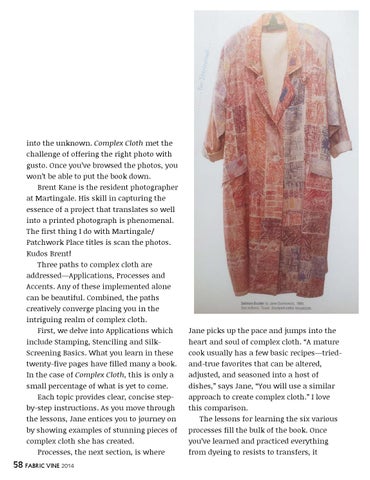
into the unknown. Complex Cloth met the challenge of offering the right photo with gusto. Once you’ve browsed the photos, you won’t be able to put the book down. Brent Kane is the resident photographer at Martingale. His skill in capturing the essence of a project that translates so well into a printed photograph is phenomenal. The first thing I do with Martingale/ Patchwork Place titles is scan the photos. Kudos Brent! Three paths to complex cloth are addressed—Applications, Processes and Accents. Any of these implemented alone can be beautiful. Combined, the paths creatively converge placing you in the intriguing realm of complex cloth. First, we delve into Applications which include Stamping, Stenciling and SilkScreening Basics. What you learn in these twenty-five pages have filled many a book. In the case of Complex Cloth, this is only a small percentage of what is yet to come. Each topic provides clear, concise stepby-step instructions. As you move through the lessons, Jane entices you to journey on by showing examples of stunning pieces of complex cloth she has created. Processes, the next section, is where
58 fabric vine 2014
Jane picks up the pace and jumps into the heart and soul of complex cloth. “A mature cook usually has a few basic recipes—triedand-true favorites that can be altered, adjusted, and seasoned into a host of dishes,” says Jane, “You will use a similar approach to create complex cloth.” I love this comparison. The lessons for learning the six various processes fill the bulk of the book. Once you’ve learned and practiced everything from dyeing to resists to transfers, it