Construction does not tend to change in big, dramatic leaps. This makes sense given the sheer size and scope of the sector – it is the equivalent of an oil tanker. More often, change happens in smaller, incremental ways.
Those changes can be easy to miss when viewed in isolation. But they are happening and, taken together, they tell a much clearer story about where the industry is heading.
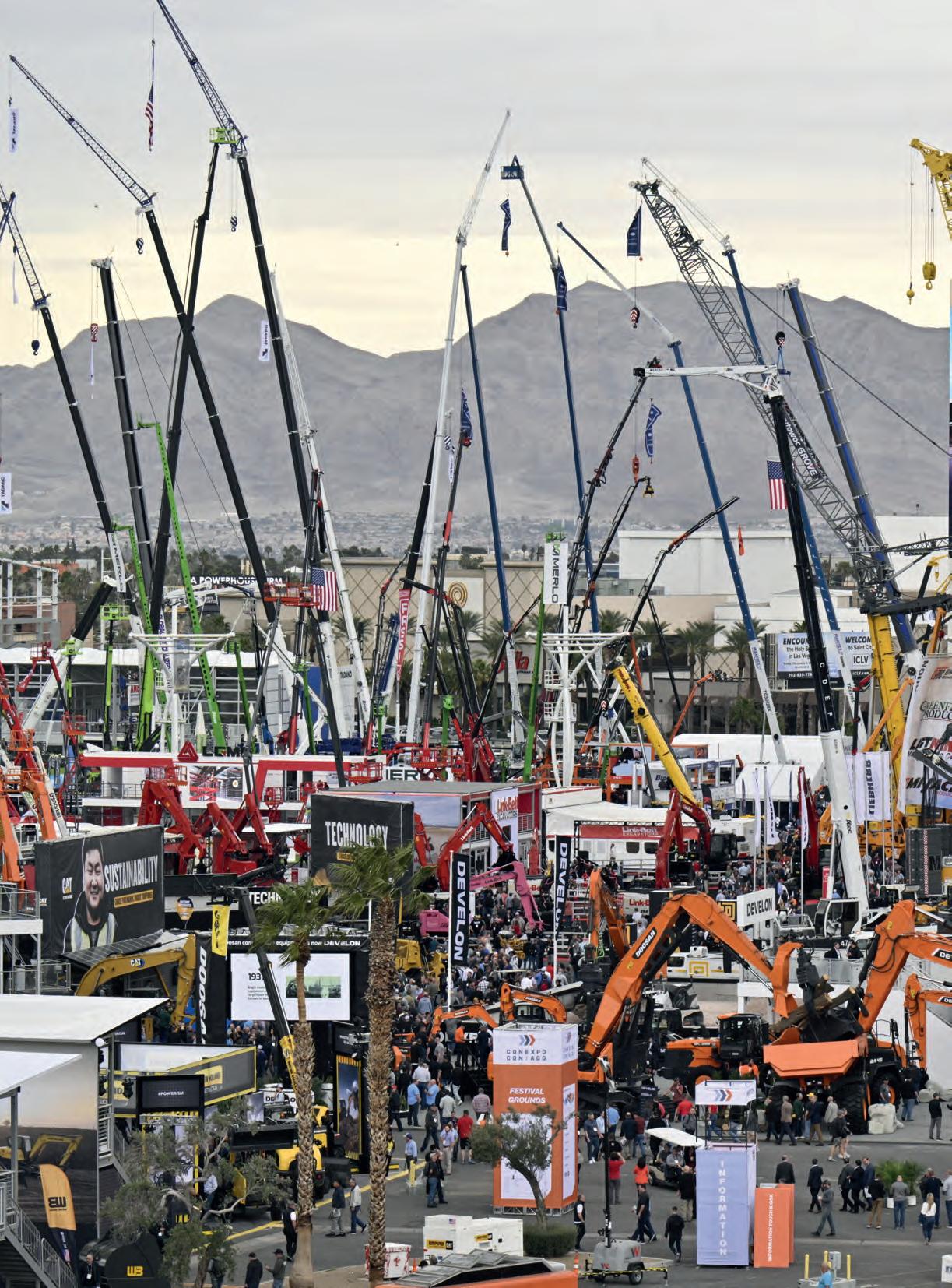
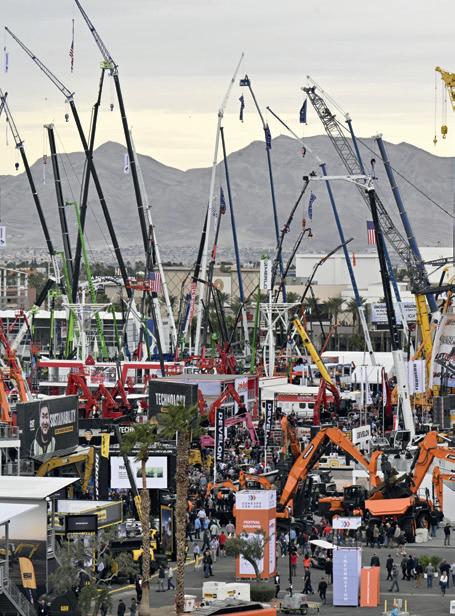
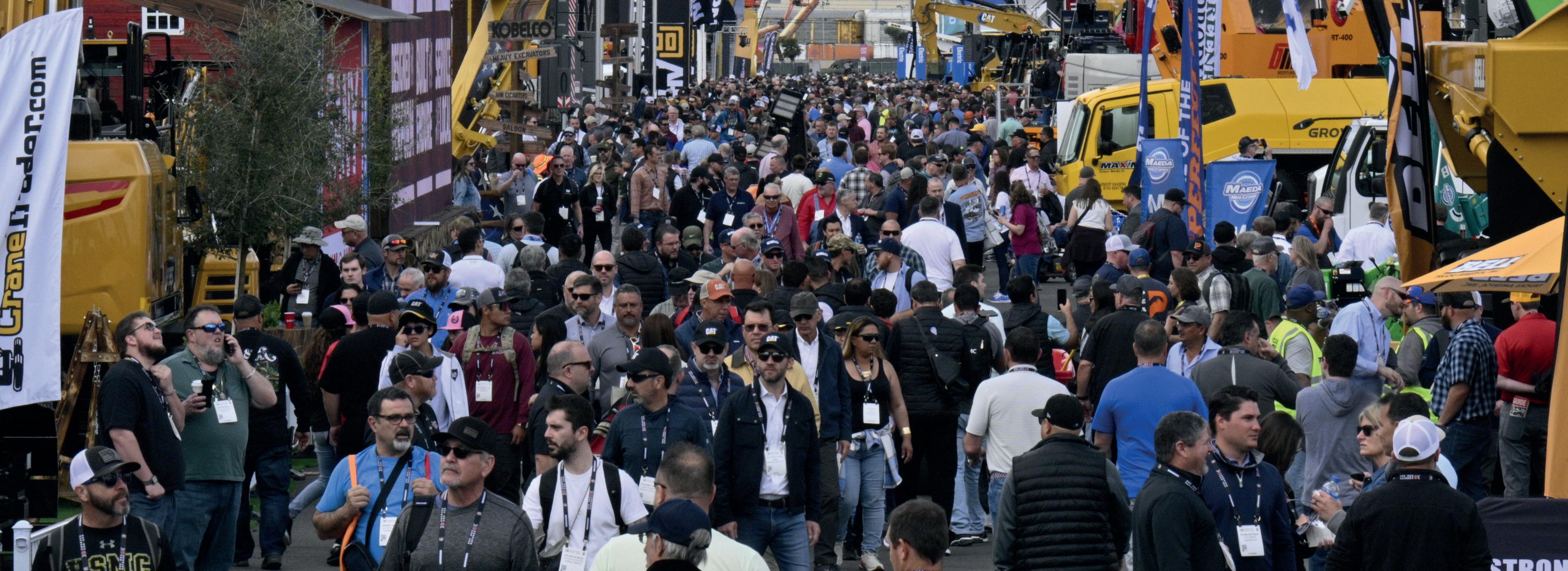
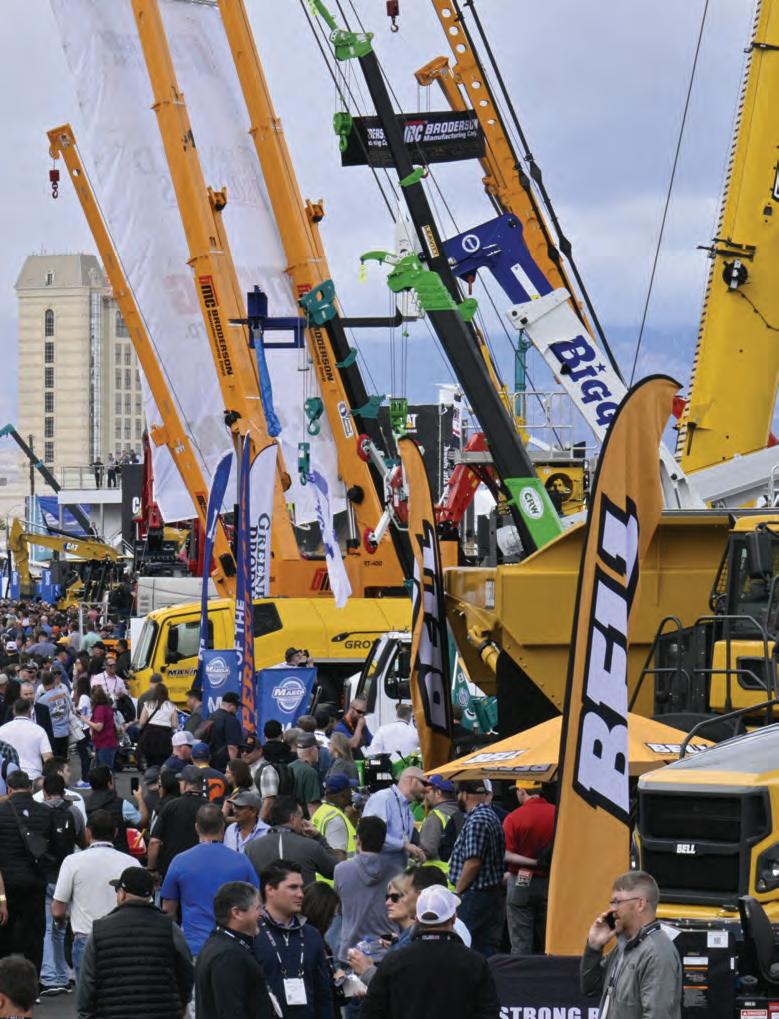
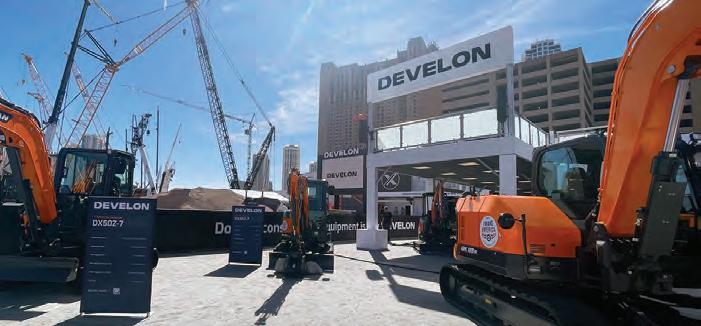
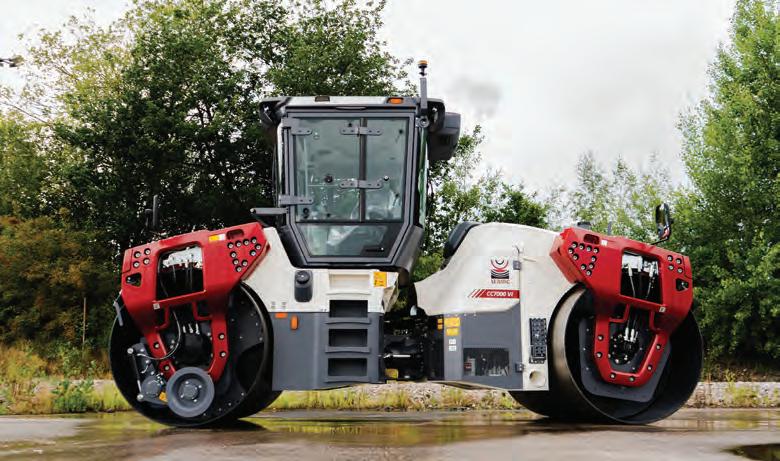
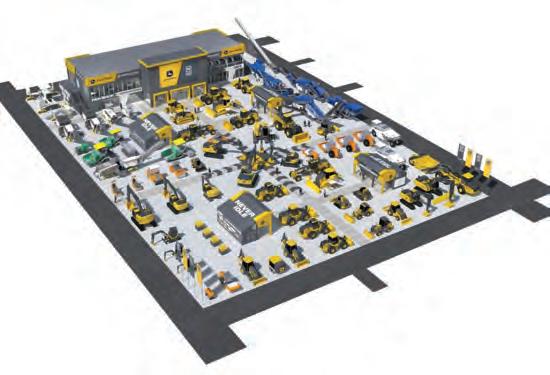
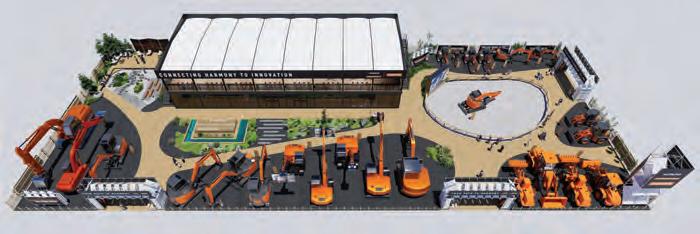
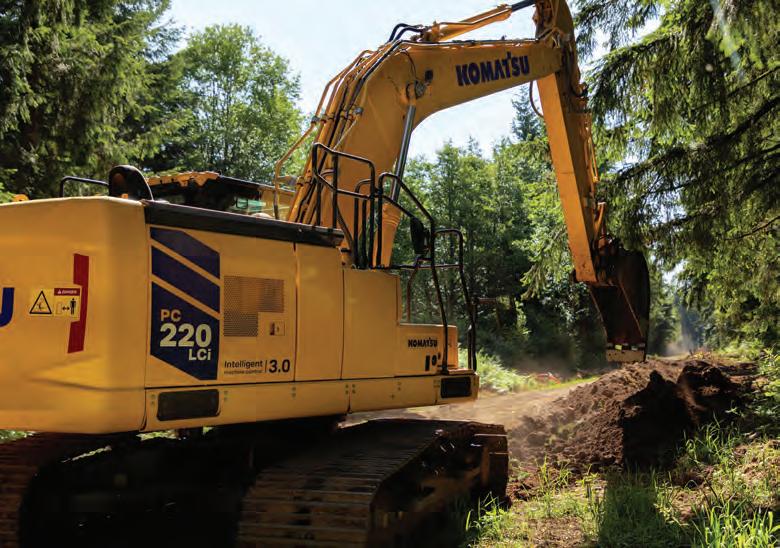
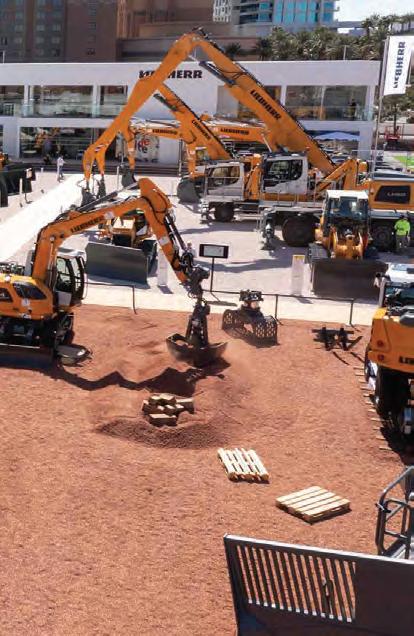
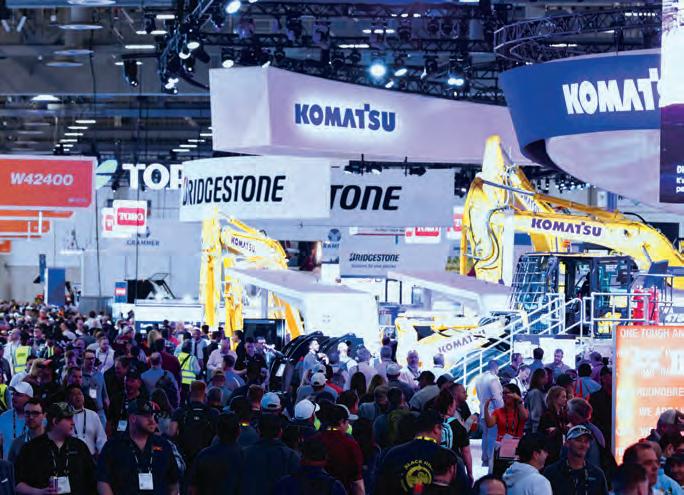
ConExpo is one of those moments where many of these threads come together. Beyond the scale and spectacle, the Las Vegas show is a useful sense-check on the state of the industry: what technology is being pushed as standard and next generation, which power options OEMs are placing their bets on, and how the sector is addressing its pain points.
I will be at the show and am looking forward to seeing this first-hand and, of course, reporting back. Starting on page 34, you can find our comprehensive ConExpo show guide.
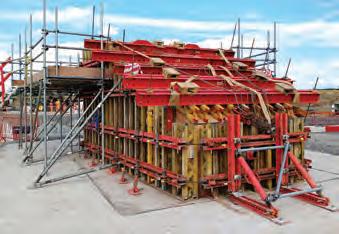
Elsewhere, we take a look at falsework and formwork – specifically how temporary works are becoming central to safety, project certainty and carbon performance. Following this feature, we speak with Doka CEO Robert Hauser, who argues that the sector could prove to be construction’s secret weapon in its push to improve productivity and sustainability.
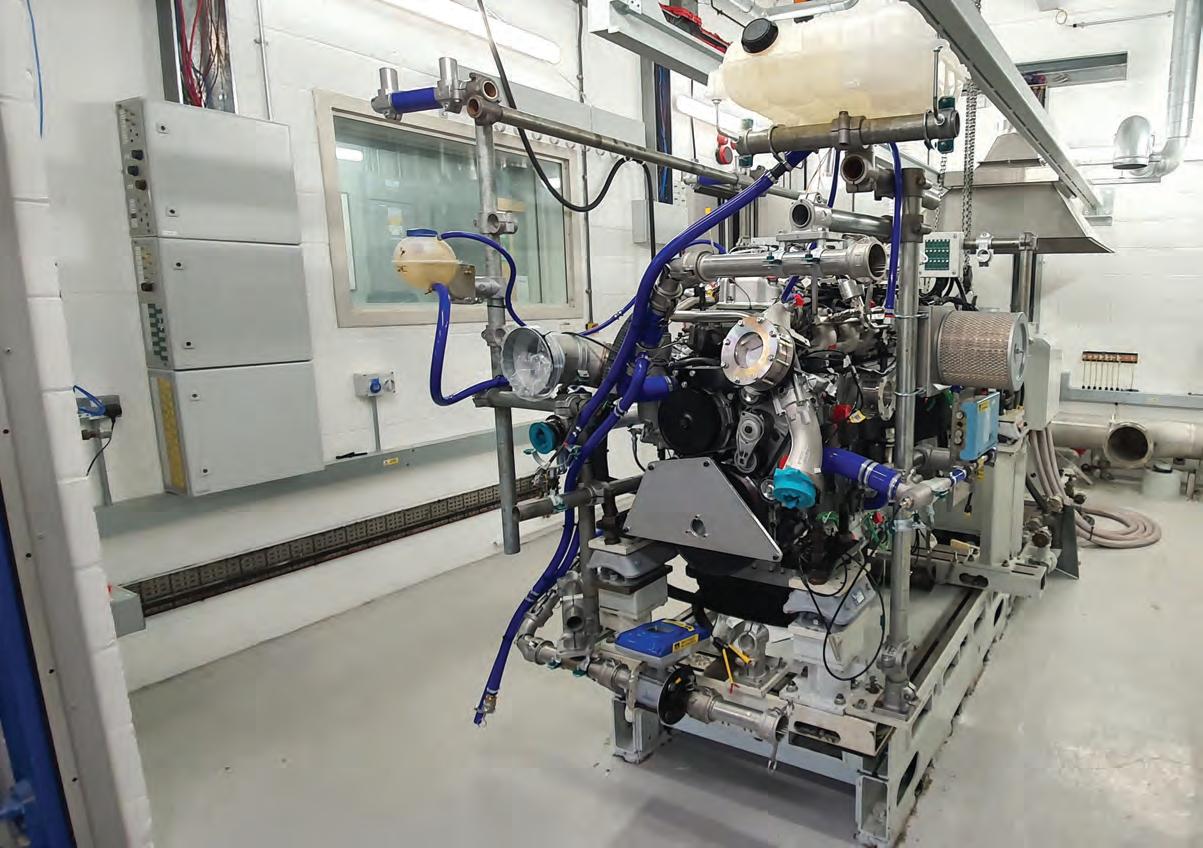
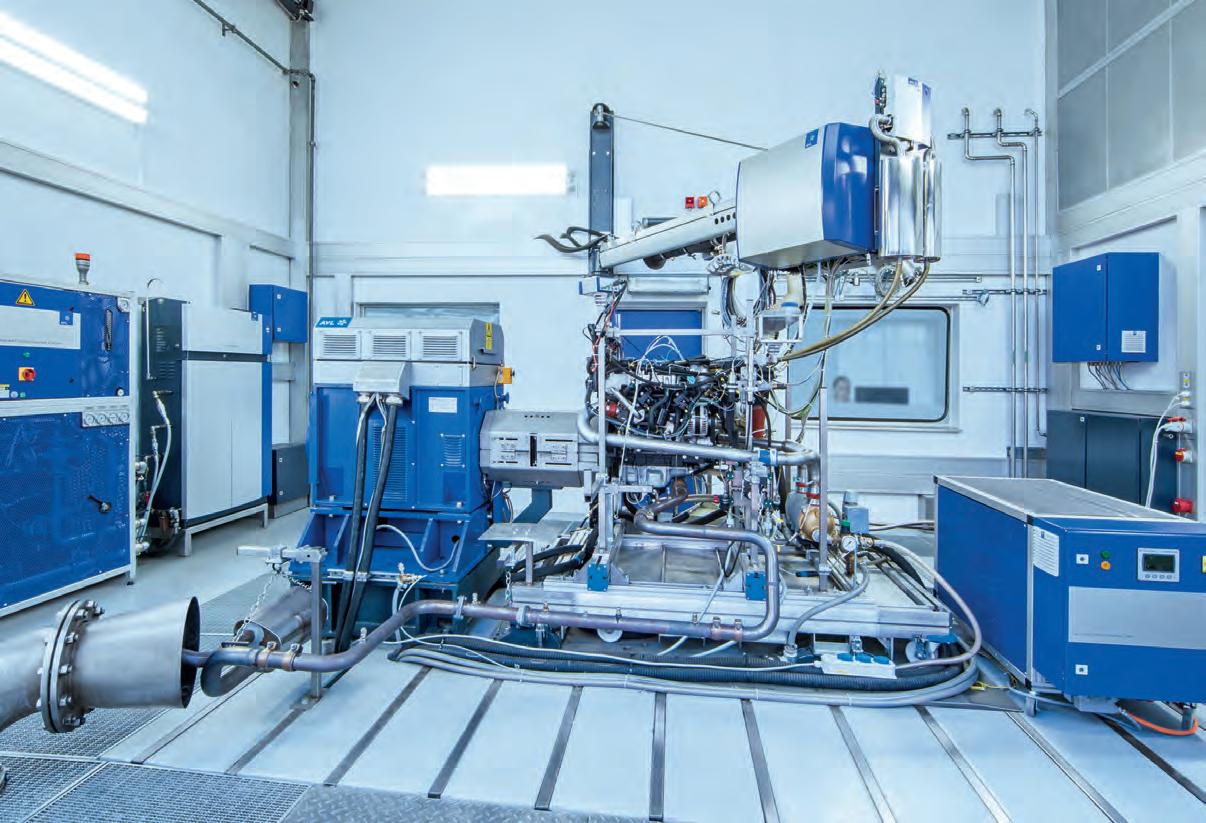
On the subject of sustainability, we also examine the tightening landscape around engine regulations, where OEMs are being forced to think much harder about testing, compliance and power strategies.
It is only when you take a step back and view all these incremental changes together that you realise quite how much construction is evolving. The oil tanker is on the move.
www.khl-infostore.com
NEWS ROUND-UP
India targets infrastructure; New Zealand deal for Vinci; deals up for China's Belt and Road.
NEWS IN PICTURES
STAFF LIST
EDITOR Andy Brown andy.brown@khl.com | +44 (0)1892 786224
CONSTRUCTION BRIEFING EDITOR
Neil Gerrard
TECHNICAL EDITOR Julian Buckley
DIRECTOR OF CONTENT Murray Pollok
EDITORIAL MANAGER Alex Dahm
GROUP EDITORS Lindsey Anderson, D.Ann Shiffler, Hannah Sundermeyer, Euan Youdale
Charlotte Kemp charlotte.kemp@khl.com | +44 (0)1892 786262
CLIENT SUCCESS & DELIVERY TEAM
Alex Thomson, Ben Fisher, Olivia Radcliffe
GROUP DESIGNER Jade Hudson
DATA MANAGER Anna Philo
DATA EXECUTIVE Vicki Rummery
HR MANAGER Sharron Brown
FINANCE MANAGER Yasmin Toumi
EVENTS MANAGER Steve Webb
EVENTS DESIGN MANAGER Gary Brinklow
CREATIVE DESIGNER Kate Brown
CLIENT SUCCESS & DELIVERY DIRECTOR Peter Watkinson VP SALES, CONSTRUCTION DIVISION Peter Collinson
GLOBAL VP SALES Alister Williams
CHIEF FINANCIAL OFFICER Paul Baker
CHIEF EXECUTIVE OFFICER James King
After 140 years, Sagrada Família nears completion.
Numbers are crunched by Scott Hazelton
ECONOMIC OUTLOOK US
Is the demand for data centres papering over other issues in US construction, asks Neil Gerrard
ROAD CONSTRUCTION
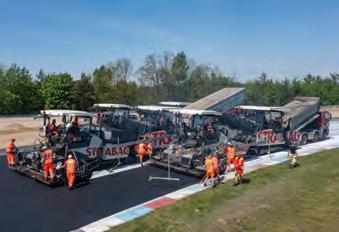
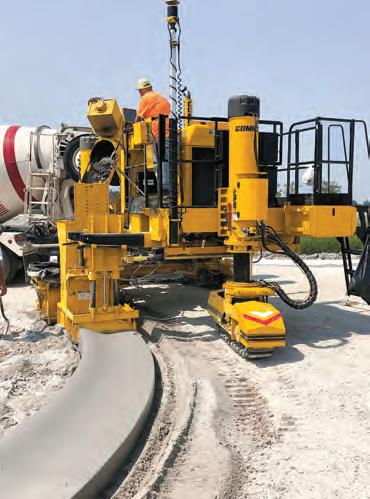
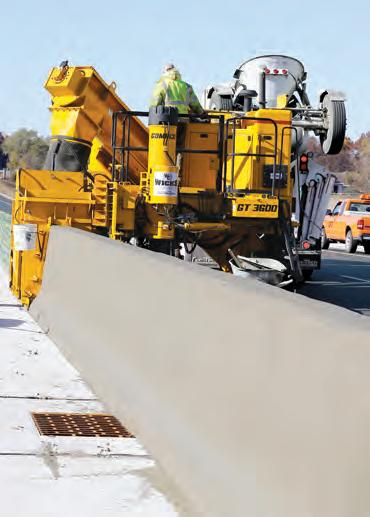
Andy Brown examines how precision is helping to reshape road construction.
DEMOLITION BRIEFING
News round-up from important sector.
Falsework and formwork, writes Cristina Lago, plays a key role in projects being completed to schedule.
INTERVIEW
Doka CEO Robert Hauser talks to Andy Brown
SHOWGUIDE CONEXPO
Essential guide to Las Vegas show.
EUROPEAN ENGINE EMISSIONS
The technology and testing that goes into making engines cleaner are looked at by Julian Buckley
INDUSTRY ASSOCIATION
Update from leading European association.
CONTECH SURVEYING TECH
Neil Gerrard looks at how technology is changing the construction surveyor's role.
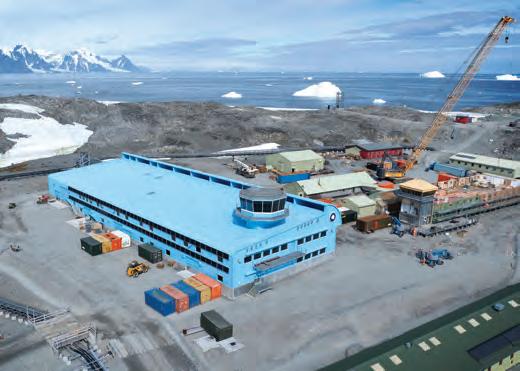
Building, Antarctic.
NETHERLANDS What is reported to be the world’s first bridge made with CO₂neutral concrete that permanently stores captured carbon has been completed. The 7m pedestrian bridge is made of a fully CO₂-neutral concrete mix containing 75% circular raw materials, with no primary sand or gravel.
It was built by Netherlands-based construction and infrastructure company Heijmans and Paebbl, a firm that turns captured CO₂ into permanent carbonstoring materials.
US Investment in two new facilities has been announced by John Deere, as the OEM unveils plans to move all excavator manufacturing from Japan to the US. Deere will open a distribution centre near Hebron, Indiana, and an excavator factory in Kernersville, North Carolina. This investment is part of the company’s commitment to invest $20 billion in US manufacturing over the next ten years. The US$70 million factory in North Carolina will bolster Deere’s manufacturing capabilities, leveraging advanced technologies to produce excavators previously manufactured in Japan.
SAUDI ARABIA Saudi Arabia’s Olympic Committee and the Olympic Council of Asia have agreed to postpone the 2029 Asian Winter Games, which the kingdom was to host at a mountain resort that forms part of its NEOM megaproject.
The winter games, together with the 2034 FIFA World Cup and the 2030-2031 Riyadh Expo, had provided clear deadlines for advancing vast megaprojects, central to the kingdom’s goal of reducing reliance on hydrocarbon revenues. NEOM, with a projected population of nine million, has faced delays and alterations to its scope.
FRANCE Bouygues Construction has appointed a new chief executive officer, as the French group reorganises its construction businesses. Pierre-Éric SaintAndré will take the helm at Bouygues Construction, as Pascal Minault moves to oversee all the Bouygues construction businesses. Minault will remain chairman of Bouygues Construction. Bouygues recently announced that it was creating a new Construction Division, which incorporates Bouygues Construction itself, as well as civil engineering firm Colas, and French real estate firm Bouygues Immobilier.
US CONSTRUCTION
WHAT HAPPENED?
Companies are releasing their financial results for the fourth quarter of 2025 and for the year, enabling industry patterns to be seen.
Caterpillar is often seen as a bellwether for the industry. The US-based firm revealed that for the fourth quarter of 2025 sales for its Construction Industries division were US$6.92 billion, an increase of 15%, compared with the fourth quarter of 2024.
Volvo Construction Equipment (Volvo CE) saw sales drop in the fourth quarter but did see its machines and services order intake increase, underpinning optimism for 2026. Epiroc reported a decrease in order intake of -1% in Q4 due to currency movements, but said its orders received grew organically by 11%.
Access industry giant JLG saw sales up marginally in the fourth quarter of 2025, compared to a 13% fall across the year and Manitou also reported a recovery in its final quarter of 2025, but reported a big decline in North America related to tariffs.
DOOSAN BOBCAT ENDS DISCUSSIONS WITH WACKER
Doosan Bobcat has announced that discussions between it and Wacker Neuson SE regarding a potential acquisition of a majority stake in Wacker Neuson, as well as a possible public takeover offer, will not be continued.
Towards the start of December 2025 Wacker Neuson said in a press release that, “Doosan
Bobcat is considering acquiring shares amounting to approximately 63% of Wacker Neuson’s share capital from major shareholders and launching a public takeover offer in the form of an all-cash offer to all remaining Wacker Neuson shareholders.”
German-based construction equipment manufacturer Wacker Neuson added that its Executive Board was in “advanced discussions” with the South Korean-based OEM.
In a short press release issued on January 22 Doosan Bobcat said that it, “remains committed to its 2030 strategy by accelerating innovation, allocating capital to the highest-value opportunities and balancing targeted investments with shareholder returns.”
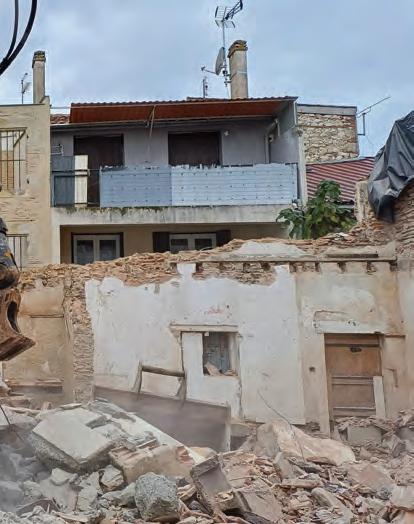
Doosan Bobcat is one of the world’s 15 biggest OEMs by sales IMAGE: DOOSAN BOBCAT
Construction OEMs are reporting their financial results IMAGE: ADOBE STOCK
Aerial view of Mumbai, one of India’s largest cities IMAGE: ADOBE STOCK
Visit www.construction briefing.com for your daily fix of all construction related news
WHAT IT MEANS
Generally speaking, the OEMs that have released their financial results for the year have posted positive results for the last quarter of 2025.
Volvo CE saw sales drop but did report that machine and service orders are up, which feeds into the narrative that 2026 will be a strong year for sales for equipment manufacturers.
A common theme in the results was companies referencing the negative impact of tariffs by the US administration on sales.
Manitou said revenues in North America were 20.4% down in the quarter, the result of “increased customs duties, an uncertain economic environment, and unfavourable exchange rate effects.” Sales were also down in North America for Volvo CE.
NZ DEAL FOR VINCI
Vinci Construction has signed an agreement to acquire Fletcher Construction, a subsidiary of New Zealand-based Fletcher Building Group.
Subject to approval by the relevant authorities, the acquisition is expected to be finalised in 2026. Founded in 1909, Fletcher Construction generates annual revenue of approximately NZ$1.3 billion (US$761 million).
Its core areas of expertise include hydraulic, maritime, port, airport, railway and road works. In addition, it has a growing presence in the renewable energy sector.
Alongside HEB Construction, the acquisition will help Vinci Construction in its goal of becoming a major player in New Zealand’s infrastructure construction market.
India’s Finance Minister Nirmala Sitharaman has presented her annual budget for 2026-27, announcing higher infrastructure spending and measures to support domestic manufacturing.
India’s federal government will spend a record 12.2 trillion rupees (US$133 billion) on infrastructure in fiscal year 2027, an 11.4% annual rise.
The budget introduced the Scheme for Enhancement of Construction and Infrastructure Equipment (CIE), an initiative to boost domestic manufacturing of high-value machinery.
The scheme will provide support for manufacturing through investment in production systems, automation and engineering processes. It will also support the development of a construction equipment supply base in India and increase localisation of components.
“The Budget’s continued focus on infrastructure-led growth beyond metros is a positive signal. Greater emphasis on connectivity and localised development can help accelerate economic activity across semi-urban and rural markets,” said Puneet Vidyarthi, head of brand marketing, Case Construction, India.
The budget also proposed an Infrastructure Risk Guarantee Fund – this will offer partial credit guarantees on loans extended to infrastructure projects. This is expected to make banks more comfortable lending to large projects, especially during the construction phase.
Sunil Nair, CEO of Ramky Infrastructure, said that it was a, “particularly forward-looking intervention, [as] it directly addresses one of the biggest hurdles in the sector: risk perception during the early stages of project development and construction.”
WHAT’S NEXT?
US-based companies, which generate the majority of their sales in their home market, were – understandably – less exposed to the tariffs, though not entirely immune. Both US-based Caterpillar and JLG reported strong increases in North American sales in the last quarter of 2025.
For example, fourth quarter sales at JLG increased 1.3%, to $1.17 billion, primarily thanks to higher sales in North America.
Construction is operating in an increasingly volatile geopolitical climate. It is often the case that the companies that perform the best are those with a varied portfolio, both across products and geographies, as it means that if one particular area is down other areas can compensate for the decline.
BELT AND ROAD GROWTH
Chinese construction companies saw the value of contracts they were awarded around the world under the Belt and Road Initiative (BRI) increase sharply in 2025.
A new report found that 2025 saw the highest level of BRI engagement ever, even as a trade war with the US broke out.
Chinese firms were awarded construction contracts worth US$128.4 billion during the year (+81% on 2024), while investments China made under the BRI around the world totalled $85.2 billion (+62%).
Countries with the highest construction engagement were Nigeria ($24.6 billion), the Republic of Congo ($23.1 billion), Saudi Arabia ($19.8 billion), and Iraq ($4.5 billion).
At the time of writing not all OEMs and contractors had released their fourth quarter and full 2025 results, so it will be interesting to see if there are any major variations in results and trends.
The results posted thus far suggest that 2026 should be a positive year or, at the very least, have a positive start to it, with the order books for OEMs looking strong. There is no denying that tariffs are an issue that are impacting sales – when major US-based companies like Caterpillar and John Deere explicitly reference tariffs in their financial reporting it is clear that they are having a large effect.
Forecasting firm Off-Highway Research predicts that global construction equipment sales will increase in 2026, 2027 and 2028.
EUROPE EXITS SLUMP
The European Union’s construction sector will see production increase by 1.5% in 2026, as it finally exits a prolonged slump, according to a forecast from Dutch bank ING.
The sector saw a 1.5% drop in output in 2024 and zero growth in 2025.
ING forecast the strongest output growth in 2026 from Turkey (+6%), Poland (+3%), Germany (+2.5%), and Spain (+2.5%). All major EU markets are expected to grow but performance is expected to be more muted in Belgium, France, and the Netherlands (all +0.5%).
Maurice van der Sante, ING, said, “We forecast that growth will return to the EU construction sector in 2026.”
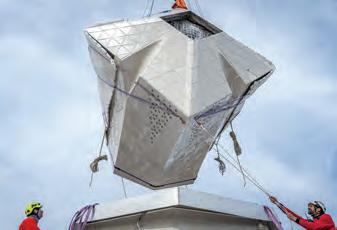
The fourth horizontal arm of the cross at the Sagrada Família in Barcelona, Spain, has been installed.
The placement of the fourth arm of a statue of Jesus Christ follows the placement of the third arm a few days before this. The lower arm, core, and horizontal arms of the Nativity and Passion facades have also been installed.
The arms are square shaped at the outer end and octagonal at the inner end, which connects to the core. Each piece weighs approximately 12.8 tonnes and measures 4.40m x 4.50m x 4.50m.
ALL PICS COURTESY OF SAGRADA FAMÍLIA
Once completed, the cross will be 17m high, approximately the height of a five-storey building, and 13.5m wide.
Designed by the architect Antoni Gaudí, the place of worship has been under construction in the centre of Barcelona for more than a century. The first stone of the Sagrada Família was placed in 1882.
The Sagrada Família became the tallest church in the world in 2025, after workers situated the first part of a cross at the top of its central tower, meaning that it measured 162.9m tall. When completed later this year the final height will be 172.5m. iC
With new multi-billiondollar projects announced seemingly every week, data centres are a boon to US construction. But, asks Neil Gerrard, is a glut of orders in this segment papering over cracks elsewhere?
It’s a rare thing for a run-of-the-mill appointments news story to shoot to the top of International Construction’s website, constructionbriefing.com’s most-read stories.
The fact that a seemingly innocuous article about Fluor hiring two data centre and semiconductor leaders did so tells you something about the topsy-turvy nature of the US construction market.
Both of them are former Bechtel employees. Data centres are booming and big contractors are competing fiercely for the best talent and resources. That’s even as some other segments show signs of struggle and construction firms face an unusual combination of headwinds.
Data centre sugar rush
A recent report from economists at ConstructConnect found that value of construction starts on data centres in the US in 2025 will almost certainly exceed $60 billion amid the rush to fuel demand for artificial intelligence (AI) compute capacity. That would represent a doubling of the value of construction starts in the segment every year since 2021.
Meanwhile, Deloitte noted in its outlook in engineering and construction for 2026 that many large engineering and construction (E&C) companies are reassessing their project portfolios to align with new priorities as they invest to compete for data centre megaprojects. It has proven a valuable source of work, particularly for bigger firms. According to the Associated Builders and Contractors’
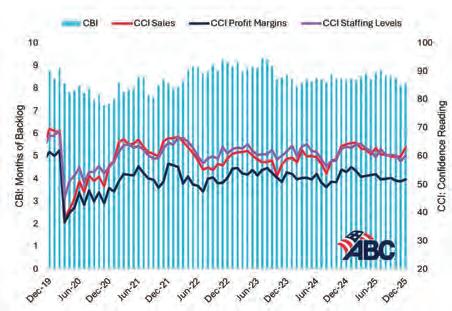
(ABC) latest Construction Backlog Indicator, companies with greater than US$100 million in annual revenue recorded their highest backlog in December 2025 since 2021, at 14.2 months. Although it should be noted that small firms with less than $30 million in annual revenue recorded their lowest level of backlog since 2021, at just 6.7 months.
Separately, a survey by the Associated General Contractors of America (AGC), published in January 2026, found that contractors are more positive about the prospects of data centre work this year than any other segment, with a net score of +57% expecting the value of projects to be higher in 2026 than in 2025.
Power promise
One of the big potential constraints on data centres is the availability of power. So it’s little surprise that after data centres, it was this segment that was the area respondents to AGC’s survey felt most positive about.
By 2035, Deloitte estimates that power demand from US data centres could grow more than fivefold, from 33 gigawatts in 2024 to 176 gigawatts.
A form of power that the Trump administration has, on several occasions,
Contractors in the US are cautiously optimistic about 2026
IMAGE: ADOBE STOCK
projects received stop work orders, after all leases were paused for large scale projects, with the US Department of the Interior citing national security concerns identified by the Department of War.
Instead, the US government has signalled that it wants to build nuclear power stations. In October 2025, it announced a partnership with Westinghouse Electric to build at least $80 billion worth of new reactors.
Writing about the outlook for the industry in 2026, Deron Brown, president and COO, US operations, at PCL Construction, said that while utilities and private developers are racing to add new generation capacity to power data centres, he expected natural gas plants would still be the source of most new energy capacity in 2026.
“The renewed interest in nuclear power is encouraging, but widespread adoption – both investing in existing units and developing small modular reactors – is still several years away from significant deployment,” he said.
Other promising sources of new work are expected to come from healthcare facilities like medical labs, hospitals, water and sewer works, according to AGC’s survey.
Non-residential slowdown
Another strong source of construction spending in recent years has been manufacturing, boosted by funding under the Infrastructure Investment and Jobs Act, the CHIPS and Science Act, and the Inflation Reduction Act. Warehouse construction also increased after a dramatic rise in e-commerce during the pandemic. Both of these areas of non-residential construction are now weakening.
demonstrated its lack of enthusiasm for is offshore wind power. Most recently, in December 2025, five major US offshore
A July 2025 report by the American Institute of Architects (AIA) forecast a cutback of 2% in 2025 and 2.6% 2026 from the $230 billion spent on the construction of manufacturing facilities in 2024.
Meanwhile, warehouse construction peaked in 2022 after the pandemic and has been slowing ever since, although it is expected to rebound slightly (1.4%) in 2026 after a 20% decline in 2024 and a 5.8% fall in 2025.
And other segments of the US construction market also look less rosy. According to AGC’s survey, lodging (hotels, motels, and resorts), private office, and retail construction were the sectors respondents felt most negative about in 2026. Also showing weak expectations in
OUTLOOK FOR US CONSTRUCTION EQUIPMENT SALES
This year could be a better one for construction equipment sales in North America, according to Off-Highway Research managing director Chris Sleight.
There was a 5% decline in North American equipment sales in 2024 – more limited than it could have been, Sleight said. That was thanks to a relatively strong housebuilding market, despite high interest rates, which helped to sustain compact equipment sales. And a glut of data centre and semiconductor fab projects in the US has also helped to keep the non-residential construction sector strong.
Nonetheless, Off-Highway Research expected North American construction equipment sales to fall 11% in 2025. If that figure turns out to be correct, it would represent the biggest decline of any major market in 2025.
Sleight also warned that, if enacted, August 2025’s Section 232 tariffs on steelderived products would be “crippling”, as a result of the high steel content of construction equipment. Imported machines, which make up 20% of the North American market would be almost 50% more expensive.
Meanwhile, machines from US-based manufacturers largely using components sourced in the US could see cost increases of about 20% due to the components they import from abroad and the foreign content in the parts they source within their borders.
Nonetheless, Sleight suggested 2026 could prove to be better than 2025 in terms of North American equipment sales, helped by fundamental drivers like housing demand and the data centre boom.
2026 is education construction, with both K-12 (Kindergarten to 12th Grade) and higher education showing decelerating growth since 2022.
Contractors remain moderately positive about transportation structures like airports and rail projects, but their expectations have also fallen considerably from where they were a year prior.
Headwinds impacting confidence
In general, AGC warned of potential headwinds in several different areas that are affecting contractor confidence. Those include worries
about the state of the economy, tariff impacts, and enhanced immigration enforcement.
“While there are pockets of optimism in select private-sector markets, contractors’ overall sentiment has dampened notably compared to last year,” said Jeffrey Shoaf, AGC’s chief executive officer. “One reason for their lowered expectations is that contractors are increasingly worried about the broader economy, the possibility of a recession and the outlook for materials costs.”
On the issue of skilled labour, the US faces an unusual situation: Construction’s unemployment rate remains relatively low but the industry is adding fewer jobs than it has for several years. The sector added just 14,000 net new jobs in 2025, according to ABC chief economist Anirban Basu. That is the worst 12-month performance since 2011, when construction was still reeling from the effects of the Great Recession.
“Despite this dismal performance, the industry’s unemployment rate remains relatively low, down 0.2 percentage points from the same time last year,” Basu explained. “This
‘HISTORIC’ SEMICONDUCTOR MEGAFAB BREAKS GROUND
Chip manufacturer Micron has broken ground on a semiconductor manufacturing ‘megafab’ in the town of Clay, Onondaga County, New York, which it claims is the largest in US history.
Contractor Gilbane won a deal to provide preconstruction services on the $100 billion project back in August 2025.
Micron claims that once complete it will be home to the “most advanced memory manufacturing in the world” and will help meet the growing demand of AI systems. Up to four separate fabs will be located at the site, with the project now moving forward after an environmental review and all necessary permit approval.
WHITE HOUSE’S NEW BALLROOM
One of the most prominent projects underway in the US currently is President Donald Trump’s new ballroom for the White House in Washington, DC.
With controversial demolition works to the East Wing that were challenged in the courts by conservation groups largely completed, the architect Shalom Baranes set out plans for the new $400 million ballroom to a commission that oversees federal building construction early this year.
It is expected to be around 22,000 square feet in size and designed to accommodate 1,000 seated guests, according to Baranes. Trump wants the ballroom, which is being funded privately, finished before his term concludes in three years’ time.
unusual dynamic – decreasing employment but a steady unemployment rate – likely reflects the effects of immigration policy on the industry’s workforce.”
As a result, wages are also going up: Average hourly earnings for production and nonsupervisory construction workers were up 4.5% on a year-over-year basis in both November and December. Nonetheless, contractors remain optimistic about hiring over the next six months.
Meanwhile, 70% of respondents to AGC’s survey reported being affected by tariffs this year. Some 40% responded to actual or proposed tariffs by raising bid prices and 20% of companies added price-sharing adjustments or other terms to contracts.
Their biggest concern for 2026, however, is the prospect of an economic slowdown or recession, identified by 63% of respondents.
Addressing challenges
To weather those potential headwinds, Deloitte noted that big construction companies are increasingly turning to digital tools, as well as strategic partnerships that help them to manage the complexity and scale of projects.
Other techniques like modular construction – long touted as an answer to the industry’s productivity problem – are also moving to the fore.
“Meanwhile, mid-market companies, which do not possess the scale or specialisation to compete for large projects, are focusing on operational improvements, workforce development, and digital adoption to remain competitive,” Deloitte’s report added.
Deron Brown from PCL Construction advocated early contractor involvement and a measured approach to risk to insulate
companies from shocks. “The contractors that perform best will be those who compete on certainty, not just price,” he said. The teams that collaborate early and structure contracts that effectively manage risk will find the most success.
For all that expectations among contractors for 2026 may be less positive than a year ago, it’s also worth maintaining some perspective: the AGC found that 39% of firms still say their current backlog is larger than it was a year ago, compared to 30% reporting a smaller backlog. And while the figure is lower than it was in 2025, the majority (63%) expect to increase headcount in 2026.
“With supportive infrastructure funding, workforce, trade and permitting policies in place, construction can continue to grow the economy, deliver essential projects and expand access to high-paying career opportunities,” the AGC’s chief executive officer Jeffrey Shoaf concluded. iC
Construction in the US is not adding enough workers to keep up with demand
A digital render of Micron’s semiconductor megafab in Onondaga County, NY
The construction of US President Donald Trump’s White House ballroom continues in Washington, DC REUTERS/KEVIN
US real Gross Domestic Product (GDP) slowed to 2.2% in 2025 (from 2.8% in 2024) and is expected to increase slightly to 2.3% in 2026 and retreat to 1.9% in 2027. The factors responsible include restrictive monetary policy, ceased tailwinds that boosted growth through 2023, a strong (but declining) US dollar, and foreign and domestic uncertainties, from tariff and health care policies to tensions with Venezuela and Iran.
Core construction spending has become a drag on growth because infrastructure spending, which soared in 2022 and 2023 under the Infrastructure Investment and Jobs Act, has flattened as peak program spending ended.
Private nonresidential spending on the computer/electronic/electrical category, which skyrocketed in 2022 and 2023 under the CHIPs Act and the Inflation Reduction Act (IRA), is also sliding as these programmes pass their peak spending. Indeed, the One Big Beautiful Bill Act (OBBBA) removes energy conservation construction that was previously authorised by the IRA.
Residential construction spending will contract in real terms in 2026 and 2027. While home improvement spending will eke out 0.5% growth in 2026 and 1.4% growth in 2027, both new single family (-6.3%) and multi-family (-2.0%) construction will overwhelm to the negative. While mortgage interest rates have moderated, they remain high and the US Federal Reserve seems likely to maintain current rates at least until fall.
Home sales paint a positive picture
Existing home sales increased 5.1% to 4.35 million at an annual rate in December –the fourth straight increase and the highest reading in 34 months. Sales of single-family homes reached 3.95 million, also a 5.1% gain; condo/co-op sales increased 5.3% to 400,000
While
core construction, which soared in 2022 and 2023 under the Infrastructure Investment and Jobs Act, has flattened, a seemingly insatiable appetite for data centres is boosting the US industry, reports Scott Hazelton
sales. Sales increased 4.5% in the fourth quarter to a 4.2 million rate. Improved single family sales are an important driver of home improvement spending.
The median selling price of a single-family home in December, at $409,500, was 0.2% higher than a year earlier in nominal dollars and down 2.4% after adjusting for inflation. Mortgage rates have fallen by more than 70 basis points since July, and real home prices have also fallen, making housing more affordable. While residential construction will remain tepid, the seeds of improvement have been planted.
Real construction of nonresidential structures contracted 3.4% in 2025 and is poised for further declines in 2026 (-3.1%) and 2027 (-2.5%). Manufacturing is the hardest hit structure type with insufficient new projects in the pipeline to replace new factories for electric vehicle batteries and microprocessors built over the past three years.
The OBBBA does provide significant tax breaks for new equipment and facilities.
CONSTRUCTION OUTLOOK FOR MAJOR CONSTRUCTION TYPES
However, with GDP growth running below trend, we do not expect this to drive significant construction activity in the near term. To the extent that some companies will move some production to the US to benefit from favorable tariff treatment, there could be some uptake, but we expect this to be marginal.
Commercial construction spending declined by 6.4% in 2025, the fifth consecutive yearover-year decline. Only the lodging segment is expected to offer growth in 2026 and 2027 at 6.7% and 7.5% respectively as the OBBBA will increase personal income and discretionary spending.
Data centre construction jumps
Datacenters, subsumed under the office segment, jumped 36.0% in 2025 and are expected to grow 41.9% and 24.2% in 2026 and 2017 respectively. We currently project that growth could tail off at a very high level of spend by 2028, by which point, we will have had five years of roughly 40% to 50% growth. While demand for AI and cloud computing seems insatiable, historical precedent with technical adoption suggests a slowing, particularly if governments impose regulation on AI.
The worst declines are over for retail; it will nearly hold its own over the forecast. Still, this will be largely renovation spend as existing stores and restaurants are re-purposed. Warehouse construction boomed as shippers filled holes in their supply chains during and immediately after the Covid recession. However, warehouse construction has been in decline since 2024, and we expect this segment to be challenged for the foreseeable future. Indeed, anecdotally, proposed warehouse projects are being repurposed.
While limited, the best opportunities for nonresidential structures growth will come
OUTLOOK FOR KEY PRIVATE STRUCTURE TYPES
(PERCENT, REAL 2017 US$)
from the institutional segment. Healthcare offers the strongest growth, but that will still be only around 2%. Educational structures construction will be virtually flat, particularly as immigration policy reduces the child age population. Government office construction is expected to shrink over the next four years as the Trump administration consolidates employment and facilities. Public health care will outpace private facility construction, although the strongest growth in this segment will be new hospitals.
Total construction spending growth was carried by the infrastructure segment under the Biden administration. However, the net new spending under the IIJA has peaked, and spending patterns are largely defaulting to the usual modest growth of the Highway Bill. Water and sewer construction was the slowest element of the IIJA to be adopted, but even that will begin to contract in 2026.
Growth for power infrastructure looks to be relatively strong for the next couple of years, although the mix is likely to change. Wind
S&P GLOBAL is an American publicly traded corporation headquartered in Manhattan, New York City. Its primary areas of business are financial information and analytics. It is dedicated to sharing essential economic intelligence with those working in and affected by global markets. Its experts provide a 360-degree perspective across countries, risks, industries, and commodities.
turbine construction was in decline even before the Trump administration cut large offshore projects. New solar projects benefit from favorable tax treatment through 2028 when incentives expire.
We currently project power infrastructure to grow 4.5% in 2026 and 3.0% in 2027. However, the rapid growth in data centers will require a massive increase in power generation. It appears that these facilities are opting to develop their own power rather than wait for public utility investment. iC
Connected machines and digital construction tools are changing how roads, runways and specialist surfaces are built – improving quality while cutting rework and cost, reports Andy Brown
When it comes to road construction it is common to think of the roads and highways that wheeled vehicles across the globe use to transport their passengers or goods to work or leisure activities. Reports estimate that around 1.2 million kilometres of new roads are built every year and the vast majority of these will be ‘standard’ ones to connect urban and rural regions
However, there is also more specialist road construction that takes place with higher degrees of specification. These often provide good examples of how far the road construction sector has developed in recent years.
Paving the track for gateway
One of these took place at Vancouver International Airport (YVR), one of North America’s busiest gateways. A recently
Vancouver International Airport is one of North America’s busiest gateways
completed runway rehabilitation project demonstrated how advanced materials, digital construction technologies, and tightly coordinated execution can redefine how critical infrastructure is renewed.
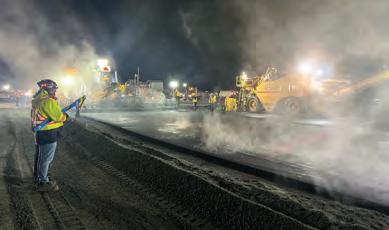
The six-month overnight rehabilitation was delivered through a partnership between Amrize and Kiewit. The project involved the placement of more than 154,000 tonnes of high-performance asphalt while maintaining uninterrupted flight operations – an increasingly common requirement for major international airports worldwide.
The project saw the first deployment in Canada of a 20-metre echelon asphalt milling and paving operation, achieved using two
synchronised 10-metre screeds. Working within rigid eight-hour closures, crews rehabilitated a three-kilometre runway segment night after night, completing milling, paving, compaction, inspection, and full site clearance before morning departures.
“Transforming YVR’s North Runway was a once-in-a-generation project,” said Lincoln Kyne, regional president, Aggregates and Construction Materials, Amrize Building Materials. “The combination of advanced paving methods and high-performance materials was essential to meeting both the operational constraints and long-term performance requirements of an active international airport.”
Digital construction technologies were used on the runway rehabilitation project at Vancouver International Airport
According to Amrize, material design played a central role. The asphalt mix was engineered and produced locally at Amrize’s Mitchell Island facility and certified with an Environmental Product Declaration. Designed to perform under heavy aircraft loads and wide temperature fluctuations, the mix is said to reflect a broader global shift toward durability, lifecycle performance, and environmental transparency. Digital construction technologies were said to support execution precision. An mmGPS paver control enabled millimetrelevel accuracy, while thermal imaging systems monitored temperature uniformity across the asphalt mat in real time. Amrize says that these tools allowed consistent quality to be maintained despite the project’s scale and compressed construction windows.
Racing to complete project
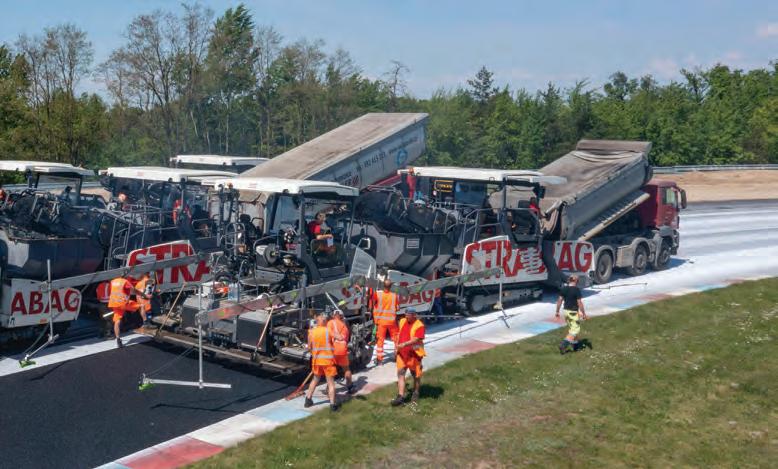
Another surface that requires a high level of precision is a racing track – when motorbike riders are shooting round it at speeds of 300 km/h, attention to detail is critical. The 5.4km Brno race track in Czech Republic was recently resurfaced by Vögele machines using special asphalt produced in a Benninghoven mixing plant.
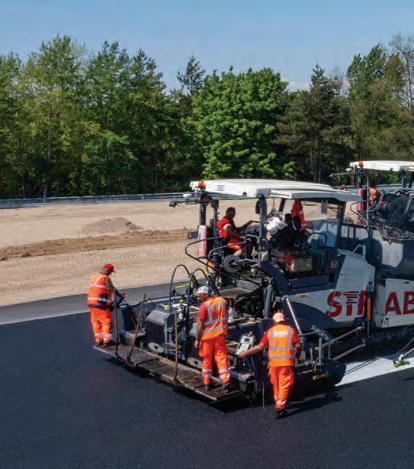
As an international track there are stringent requirements for evenness, grip and a homogeneous texture. Three Vögele pavers and material feeders paved a 2.5cm thick level-regulating course and a 4cm thick surface course across an average width of 15m.
There is more data than ever before available for those in road construction
would soon force open any expansion joints. The project was completed on time, with a total of around 14,000 tonnes of asphalt mix paved at Brno Circuit.
Smarter, not faster
Regardless of whether a contractor is building a landing strip on a runway, a race track for bikes to hurl themselves around at breakneck speed, or a highway to connect one city to another, they are looking for the job to be completed as quickly and as accurately as possible, and at the first time of asking.
One of the main ways that productivity is increasing, says Klára Entlerová, marketing and communication specialist, Ammann, is through machine design.
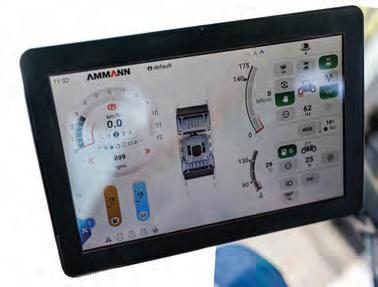
“For Ammann, the largest productivity gains are coming from machine design and smarter control and automation in compaction, not simply faster machines. Our compactors are already highly productive mechanically. Technologies like Ammann Compaction Expert (ACE) add real value by applying the right compaction energy in real time, reducing passes, fuel use and rework while delivering consistent results. The real leap happens when intelligence is added,” she says.
“Technologies like ACE help operators apply the right energy at the right time by
The work had to be completed to a strict deadline as the track had to be ready two months before a Grand Prix was held there, meaning the team had a short preparation period of four weeks.
“The tight schedule demanded precise coordination between all those involved, as well as utterly reliable, high-performance machinery,” said David Tejkal, construction manager at general contractor for the project, Strabag.
Consulting engineers Hart Consult drafted a resurfacing concept for the track that had to be agreed by the International Motorcycling Federation. The special asphalt was produced in a Benninghoven BA 4000 asphalt mixing plant from Brnenska Obalovna/Strabag.
The special asphalt had to be paved without interruptions and without any loss of temperature.
Thermally-insulated trucks delivered the material straight to three Vögele material feeders. They took on the load in the shortest possible time and continuously conveyed material to the pavers. A sensor-controlled conveyor belt heating the material feeders ensured that the asphalt arrived at the pavers without any heat loss.
Paving itself was implemented using the hot-to-hot method – otherwise, says Vögele, the high shear forces on the track
MAJOR US ROAD CONTRACT AWARDED
A joint venture between two firms has won what the Kansas Department of Transportation (KDOT) claims is the biggest construction contract in its history.
KDOT awarded the US$288 million deal for the reconstruction of US 54 and K-96 to the Dondlinger Wildcat EKC1 joint venture.
Construction on the roads is expected to start in spring this year. It involves a total of 26 bridge replacements, including the US 54 interchanges at K-96, 143rd, and 159th streets, as well as a total of 32 new retaining walls, and several two-lane frontage roads to support local business access.
The project is part of KDOT’s Eisenhower Legacy Transportation Program (IKE), a 10-year, $10 billion program.
IMAGE: AMMANN
The 5.4km Brno motorcycle race track in Czech Republic was recently resurfaced by Vögele machines using special asphalt
Aerial view of Kansas City skyline at dusk, viewed from Penn Valley Park. Kansas City is the largest city in Missouri IMAGE: ADOBE STOCK
measuring soil or asphalt stiffness in real time and autonomously adjusting compaction automatically. This leads to faster achievement of target density, fewer passes, lower fuel consumption and more consistent results –regardless of operator experience. Productivity improves because compaction is done right the first time, across the entire surface.”
Road projects generate huge amounts of data but key to improved performance is that data being available in real-time and being acted upon. “As a manufacturer we provide key data for live monitoring of jobsites and in-depth analysis afterwards – while easy accessibility is ensured. From our perspective, Track and Trace solutions can be considered as state of the art in the construction industry today,” says Johannes
NEW PRESIDENT OF FAYAT ROAD EQUIPMENT DIVISION
The Fayat Group has announced the appointment of Paul Hense as President of the Fayat Road Equipment Division, effective October 1, 2025.
Hense previously worked as Vice President of Fayat Road Equipment Division and has had many senior leadership roles, first at Atlas Copco, then within Dynapac, when the company was acquired by Fayat in 2017. He succeeds Jörg Unger, who decided to step down as President after successfully establishing and expanding the Division. Jörg Unger now serves as an advisor within the Fayat Road Equipment Division.
Hense, as new President of the Fayat Road Equipment Division, is leading the biggest and most international Division of the Fayat Group. The division accounts for 37% of Fayat revenues, with 30 plants around the world.
Zametzer, associate director digitalisation & production systems, Wirtgen Group.
“Questions such as the current location of a machine and the amount of fuel in its tanks can thus be answered, providing greater transparency across construction projects. These insights can be used to manage logistics, materials and workforce flows more efficiently.”
In practice, this means that those working can see precisely how much material has already been milled or crushed, and which areas have been paved and compacted.
Pooja Gupta, senior product manager, Hitachi, agrees and adds that, “Modern fleet management systems do produce large amounts of data that can aid decision-making, not just after the event but also within active projects to improve productivity.
“By using GPS and onboard diagnostics, real-time data can be collected and transmitted on subjects such as location, runtime, engine efficiency and fuel consumption. These details can be used to make decisions that improve productivity on site.”
Productivity gains
It’s an old adage and one that has become popular again through Lee Child’s Jack Reacher books: measure twice, cut once. This saying has endured for a reason – it speaks to a universal
Paul Hense, President of the Fayat Road Equipment Division
IMAGE: FAYAT
A Hitachi excavator working on a road construction project IMAGE: HITACHI
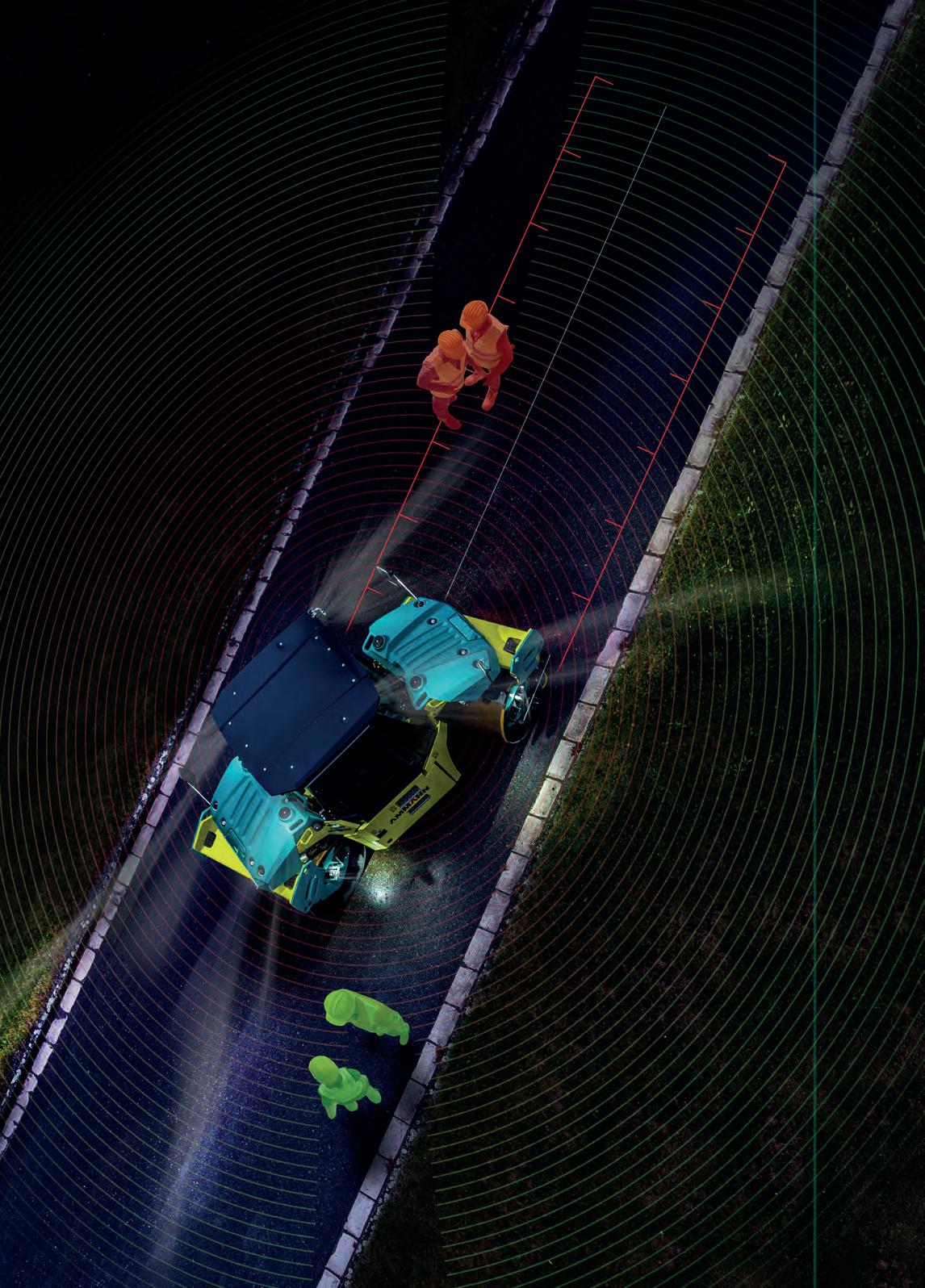
AMMANN SAFE ASSIST (ASA)
CONTINUOUSLY MONITORS THE DISTANCE between the machine and surrounding obstacles
AUTOMATICALLY REDUCES SPEED or engages the brakes when a potential collision is detected
ENHANCES
OPERATIONAL AND JOBSITE SAFETY especially on congested jobsites or in adverse weather conditions
RECYCLED PLASTIC BOTTLES
COULD PAVE MORE ROADS IN AFRICA
Aerial view of road construction in Africa IMAGE: THOMASLADZ/WIRESTOCK CREATORS
More African roads could be built from recycled plastic bottles after an agreement was signed by the African Development Bank (AfDB) and three Japanese companies. Shimizu Corporation, Kao Corporation and The Nippon Road Co signed a letter of intent that establishes a framework for cooperation on testing and deploying climate-resilient road maintenance solutions, with a particular focus on the use of “PET Asphalt Concrete” – an asphalt mixture reinforced with waste polyethylene terephthalate (PET).
By incorporating PET bottles, the solution aims to extend the lifespan of roads, reduce maintenance backlogs, and advance circular economy practices across the continent.
Under the agreement, the AfDB will coordinate with governments, promote awareness, build local capacity, and explore financing for the roll-out of the technology. The companies will carry out demand and feasibility studies, pilot PET Asphalt Concrete in different African environments, and assess investment prospects for scaling up.
Shimizu has already begun trial applications in Kenya.
truth that the best way to do something is to get it right first time. When it comes to road construction and the financial costs and CO2 emitted, it becomes more important than ever.
“The biggest opportunity is doing compaction right the first time,” states Klara from Ammann. “Intelligent compaction avoids over- and
under-compaction, cuts unnecessary passes and prevents early failures. With ADS providing clear documentation, quality is verified without added cost or risk – reducing waste, rework and lifecycle costs.”
This is also where technology comes into play, as this vastly increases the chances of work
being done right at the first pass. Zametzer from the Wirtgen Group believes that all these things go hand in hand.
“Smarter control and automation not only make machines faster, but also enhances work precision and product quality, leading to superior outcomes. An intuitive machine interface, combined with helpful assistance and automation systems, enables even less experienced personnel to operate equipment efficiently,” he says.
Whether it is across runways, racetracks or highways, the common thread is not speed for its own sake, but control. Through precision paving, intelligent compaction and real-time data from connected machines, road construction is becoming less wasteful. The gains are often incremental rather than headline-grabbing but, over thousands of kilometres, they add up.
As pressure builds to deliver infrastructure faster, safer and with a smaller environmental footprint, the sector’s focus is increasingly on getting it right first time. In that context, the most valuable advances are not those that promise to transform construction overnight, but those that steadily improve consistency and confidence on site, project by project. iC
WORLD DEMOLITION SUMMIT 2026 REGISTRATION AND CALL FOR PAPERS
Taking place from 3 to 5 November 2026 in Madrid, Spain, this year’s World Demolition Summit (WDS) will explore the theme “World Class Demolition & Recycling: Driving growth through innovation, safety and sustainability.”
Now in its 18th year, the annual event provides a platform for contractors, engineers and industry leaders to share real-world insights and best practices, focusing on technological advancements, safety standards and recycling strategies that will define the
SHEAR EFFICIENCY ON COMPLEX SITES
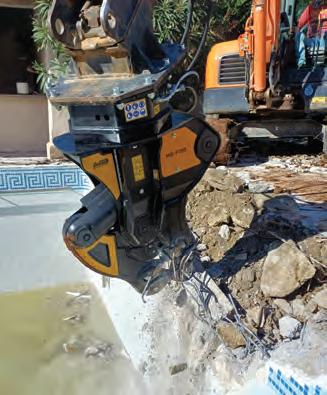
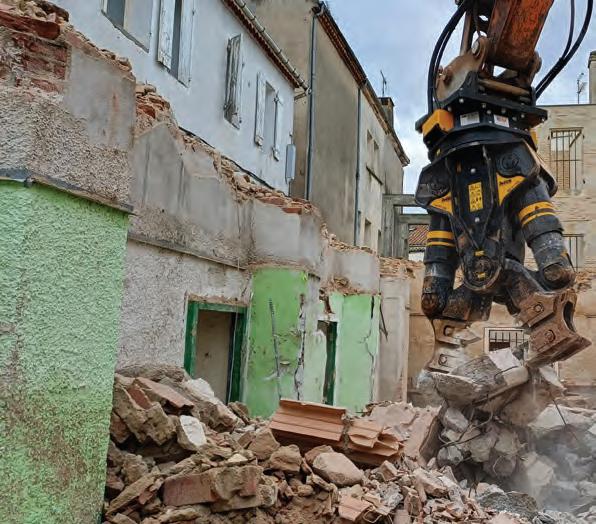
MB Crusher has highlighted a series of five European demolition projects carried out in 2025 across Italy and France, where its shears were used on constrained urban sites and sensitive structures.
The Italian manufacturer of attachments for heavy equipment said contractors selected its equipment for projects in historic city centres, urban development projects and confined spaces, where precision and control were essential.
future of demolition.
Registration for WDS 2026 is open and with that a call for speakers has been issued. Interested parties should contact the programme organiser: neel.madsen@khl.com.
D&Ri Briefing official sponsor
NEW EDITOR FOR DEMOLITION BRAND
KHL Group has welcomed Neel Madsen as the new editor of Demolition & Recycling International (D&Ri) Joining the company at an exciting juncture in the history of the title, Neel brings with her over 15 years of trade industry experience, having worked across several titles as editor, journalist and freelance writer in the print and packaging manufacturing sectors.
Based at KHL’s HQ in Wadhurst, UK, Neel will be heading up all aspects of the D&Ri brand including managing the D&Ri website and newsletters, as well as helping organise the programme for the World Demolition Summit and Awards.
Demolition & Recycling International brings you the latest major demolition projects and news from across the globe
DEMOLITION PHOENIX RETURNS TO THE DESERT
The industry gathered for Demolition Phoenix as the NDA’s Annual Convention and Expo “returned to the desert” during 4 to 7 February 2026.
Building on its previous success in the city, the North American National Demolition Association chose Phoenix for its flagship event.
Hosted at the convention centre downtown, the event saw workshops, bootcamps and presentations, along with a supplier exhibition, complemented by equipment demonstrations taking place on the outskirts of the city.
Look out for the upcoming report about this key event from our editorial team.
CHANGES AT STEELWRIST
Steelwrist has appointed Peter Gaj as VP Region Americas and expanded its manufacturing and assembly operations in Connecticut, US.
Gaj has led the OEM’s sales organisation across North and South America over the past three years. Based at the US headquarters in Newington, he took up the new position on 1 February.
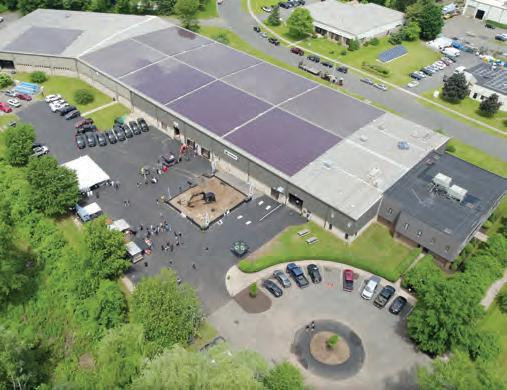
In addition, Steelwrist has expanded its operations at the facility in Newington, with increased local assembly and testing capabilities.
D&Ri Briefing official sponsor
From crane-free climbing systems in city centres to sensor-enabled concrete pours on HS2, formwork and falsework are quietly becoming critical tools for improving productivity, safety and programme certainty on complex projects, reports Cristina Lago
The design and execution of temporary structures have a decisive impact on a project’s schedule, cost, safety record and environmental impact.
Traditionally, formwork has been assembled on site by skilled workers, relying heavily on crane capacity to lift heavy panels and platforms into position. In highly populated urban areas or difficult terrain conditions, limited crane availability becomes a common bottleneck, stretching construction timelines and raising labour expenses.
Furthermore, the safety risks associated with heavy formwork lifting using cranes are prompting contractors to explore alternative methods for installing temporary structures.
To address these challenges, formwork and falsework companies are thinking outside the box and applying cutting-edge technology solutions, including those involving artificial intelligence (AI) and the internet of things (IoT).
Building information modelling (BIM) now informs the layout of formwork before any steel or timber arrives, while AI tools generate custom moulds that fit complex geometries with minimal waste.
Embedded concrete compaction sensors provide real-time feedback during pours, improving quality control and reducing the need for rework. Together, these developments are making formwork and falsework more predictable, safer and less carbon-intensive, while ensuring that complex projects are delivered within budget and on schedule.
Reducing crane dependency
One of the usual hurdles faced by formwork construction is crane availability. If a project needs to lift formwork repeatedly a shortage can cause delays and jeopardise schedules.
Peri UK worked with specialist engineering contractor McGee to significantly reduce crane dependency during the construction of the concrete cores of two 10-storey office buildings in the South Molton Triangle, a £500 million (US$685 million) mixed-development project in central London.
The project’s location in the heart of the West End, London, UK, posed significant logistical roadblocks.
“Our client, McGee, came to us with a very specific challenge for this project: reducing crane dependency on a highly congested site,”
explains Nick Mills, national climbing sales manager at Peri UK.
“South Molton Triangle was operating with just two tower cranes and a single pit lane for deliveries, making crane time a heavily contested resource and a major risk to the programme. They didn’t want cranes tied up repeatedly positioning and repositioning formwork at the expense of other critical activities.”
In April 2025, Peri deployed for the first time anywhere in the world its RCS MAX Shaft technology – an overhead gantry system for internal formwork in high-rise building cores. Peri was developing the system when McGee approached it. This project, Mills says, presented the “ideal opportunity” to deploy it under real site pressures, in a tight location and on a demanding schedule.
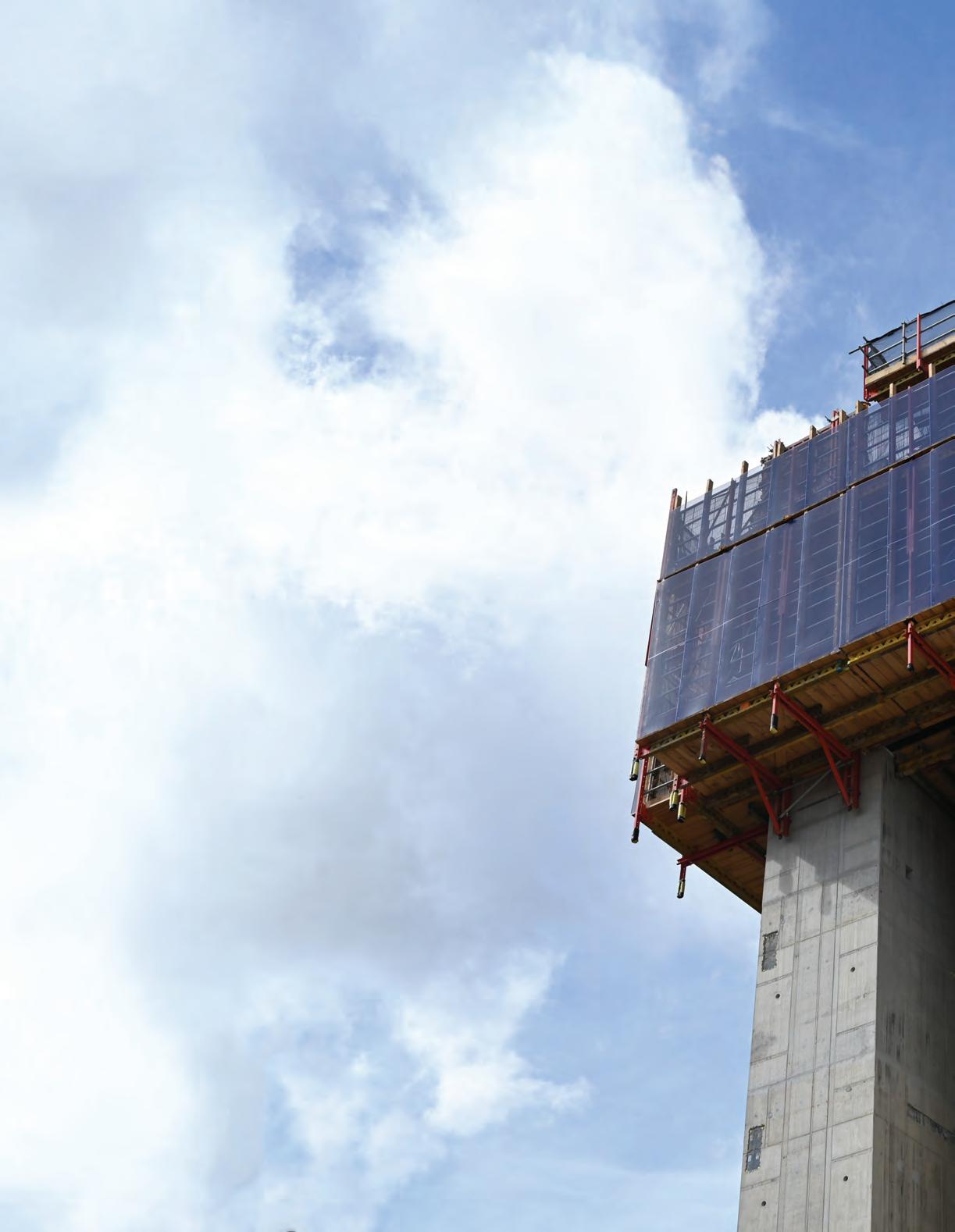
The technology’s design allows the shutters to be positioned in and out of place for each concrete pour without the need for a crane. The entire system then climbs hydraulically at the push of a button using Peri’s RCS MAX Module 2 rail system, a rail that integrates hydraulic actuation, allowing the gantry to climb automatically and raise up to 20 tonnes of formwork and platforms without cranes.
“The system freed up crane capacity by saving around six crane lifts per cycle and allowed the core to continue climbing in high winds when cranes would typically be shut down, improving programme certainty,” Mills adds.
“We also supported the project by prefabricating platforms and key shaft components off-site and carefully coordinating the delivery sequence, reducing on-site assembly time and minimising the need for space on an already constrained site.”
Global projects
A residential development in Santiago, Chile, is being positioned as a reference project for complex concrete construction and bespoke formwork solutions.
Parque Arboleda II, developed by Inmobiliaria
Peri’s precision-engineered internal mould was positioned within the main formwork to shape the footbridge’s complex internal geometry IMAGE: PERI
Peri’s RCS MAX Shaft system rises up one of the two cores on the South Molton Triangle project IMAGE: PERI
Paz, comprises 59 apartments across eight storeys above ground, with two basement levels and a total floor area of 25,279m². The project is said to feature a distinctive structural layout that includes non-standard, multi-angled concrete columns.
A key construction challenge has been the execution of so-called ‘tetradrop-shaped’ columns, which incorporate multiple angles, dense reinforcement and a complex concreting sequence. To address this, formwork specialist Ulma worked with the project team from an early stage, developing bespoke formwork solutions supported by 3D modelling.
The use of digital modelling enabled detailed analysis of the columns' geometry and advance planning of each construction phase. This resulted in a two-stage construction methodology, with the base of each column cast first, followed by the three upper arms, helping to improve accuracy and execution.
Alongside the customised formwork, Ulma supplied several additional systems to support programme, safety and build quality. Orma vertical formwork was used for the basement walls, while a KSP Shaft Platform was installed in the lift core to provide safe working platforms over openings.
According to the project team, close coordination between the contractor and Ulma’s technical specialists – including daily collaboration – was critical to maintaining progress and achieving the required finish on the structurally demanding elements.
Another project to make use of the falsework
A residential development in Santiago, Chile, is being positioned as a reference project for complex concrete construction and bespoke formwork solutions IMAGE: ULMA
Paschal supplied the formwork and supporting structure for a 530m long inspection tunnel being built under a reservoir in Germany IMAGE: PASCHAL
STOCKHOLM METRO EXPANSION
The expansion of the Stockholm metro includes building Sweden’s longest escalator at Nacka Station, currently under construction.
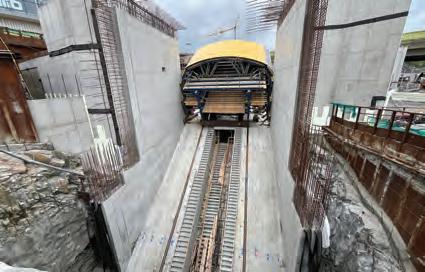
At around 100m long with a vertical rise of 41m, the formwork for the escalator’s shaft, inclined at 27.3 degrees in a tunnel where no crane could be used, presented a particular challenge. Different lengths of concrete sections and tight space conditions inside and outside the tunnel made the work even more difficult.
Doka worked with main contractor Skanska to design a customised SL-1 tunnel traveller to enable the safe and precise concreting of the escalator tunnel. Using Doka UniKit primary and secondary beams, the system was first assembled horizontally outside the tunnel.
The 80-tonne SL-1 traveller was then positioned at the required angle and carefully lowered into place with support from Skanska’s specialist teams.
A two-stage assembly and concreting sequence allowed work to continue efficiently: while the first section was used for the initial 3.6m concrete pour, the second section was assembled in parallel. Once connected, the full SL-1 tunnel traveller enabled the remaining section to be completed safely and on schedule.
The formwork for Nacka Station’s escalator shaft has an inclination of 27.3 degrees in a tunnel where no crane could be used IMAGE: DOKA
and formwork sectors' increasing flexibility and use of technology was the revamp of Happurg power station in Germany. At the site work is underway to rebuild the municipality’s power station, a 160-megawatt pumped-storage hydroelectric facility that was shut down in 2011 following damage to the upper reservoir.
As part of this project, Paschal supplied the formwork and supporting structure for a 530m long inspection tunnel being built under the reservoir. Once the base slab was constructed, the 1m-high side walls were built in the second concreting section before the semi-circular tunnel arch with a diameter of 2.20m was finally put in place.
The inner formwork of the arch was developed by Paschal as a special steel formwork, which was equipped with joints for dismantling and lowering.
Props, frames and yoke beams from the GASS shoring system were used as the supporting substructure, as was the radius-adjustable trapezoidal girder, which served as external formwork.
The inner and outer formwork was braced together, and concreting openings were installed at regular intervals in the segments of the outer formwork for pouring the concrete. With the formwork, 54 panels with lengths between 4 and 12m were planned. It was moved and manoeuvred by lowering it onto castors mounted under the shoring.
As the tunnel is nearly always built on almost level ground, the formwork could be moved completely by hand without any additional technical aids.
“After completion, the inspection corridor will run under the future reservoir floor,” explains site manager Stefan Louen.
“Drainage pipes, which are laid under the reservoir sealing level, are connected to this corridor. This makes it possible to check
and localise whether and where water losses are occurring in the reservoir.”
Construction began in December 2024 and is expected to be completed in March 2026. The decommissioned plant in Happurg is expected to be up and running again in 2028.
Technology applications
While freeing up crane capacity solves an important logistical bottleneck, the next challenge is making the formwork itself smarter and easier to assemble.
A previous KHL Group and RMD Kwikform survey of more than 135 international engineering contractors and consultants found that one of the top productivity drivers in the industry was the adoption of formwork and falsework systems that are quick to assemble and dismantle.
This is where digital technologies are playing an essential role in helping companies to create quicker and safer temporary works. Main sector firms such as Doka, Ulma and Paschal promote BIM-compatible planning tools, noting that clients now expect a high level of technology on their contracts.
However, the use of digital tools for falsework and formwork is nothing new. BIM and 3D models have become essential to improving efficiency and enable early coordination, especially for large and complex projects.
“Digitalisation is equally critical on the jobsite,” says Doka’s CEO, Robert Hauser. “Smart sensor technologies provide real-time data on concrete pressure and strength, helping contractors determine the optimal stripping time. This improves safety, reduces waiting times and supports faster construction cycles.”
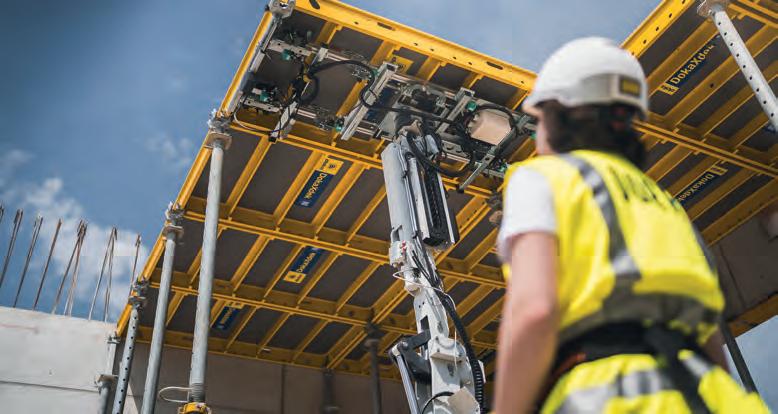
Doka is also investing in robotics to improve safety and reduce manual handling during assembly, striking and repositioning of formwork. The company has created a semiautomated robot that can be operated at a distance to position slab formwork panels.
The DokaXbot lift takes over heavy and repetitive overhead work at heights of up to 5.7m. Read more from Hauer in an exclusive interview that follows this feature.
Technology is also helping to overcome the formwork challenges presented by complex concrete geometry. As engineers look to reduce embodied carbon in infrastructure by using less concrete and placing it only where structural loads are highest, foundation and substructure geometries are becoming more complicated, explains Dan Biggs, senior sales engineer at Peri UK.
the UK in a new HS2 footbridge in the Warwickshire countryside in England.
In a bid to minimise concrete usage and improve the project’s carbon footprint, HS2 engineered the W129 Footbridge Pier’s foundation with 13 different facets and angles. Instead of a conventional rectangular block, the shape places concrete only where structural loads are highest, requiring special planning and innovative solutions to address these challenges.
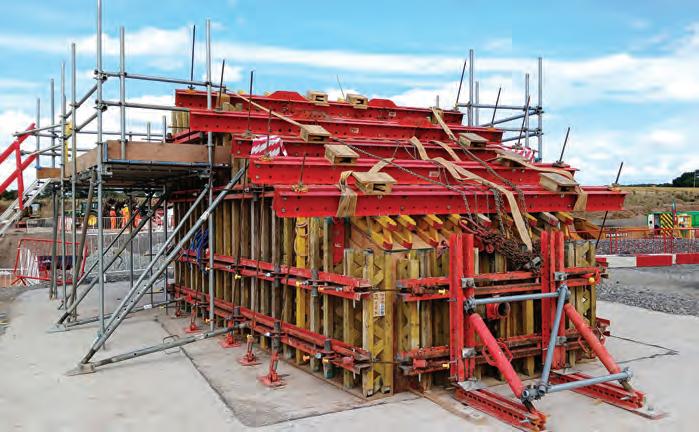
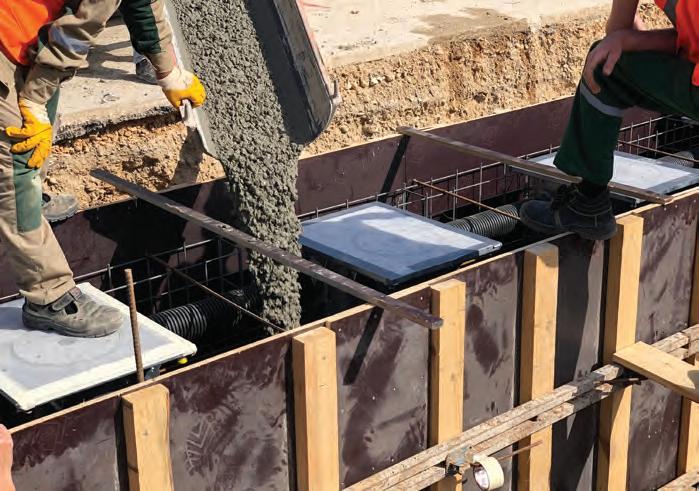
Peri’s system combined a new AI-driven 3D void former technology to fabricate the internal mould with accuracy. Integrated concrete sensors monitored the fill level and compaction during the blind pour into the sealed formwork.
“Instead of forming concrete as a simple rectangular block, the design required a bespoke internal mould – known as a void former – made of plywood to sit inside the main formwork,” explains Biggs.
“Rather than fabricating that void former manually, we fed the 3D model directly into our software, which automatically generated the cutting patterns for the plywood to be CNC-cut and assembled according to precise instructions.”
This digital workflow, Biggs adds, allowed Peri to produce highly accurate and bespoke formwork more efficiently than traditional methods.
But once the void former is installed, the formwork assembly becomes a sealed box, making it impossible for the site team to visually monitor the concrete pour, which could result in risks of incomplete filling or poor compaction.
Peri deployed its AI-driven and IoT formwork technology for the first time in
To address this, Peri used digital concrete compaction
sensors placed inside the formwork to provide real-time data on fill and compaction levels. These were put at strategic locations inside the sealed formwork before pouring commenced.
“As the concrete is pumped in, you can’t tell by looking how fast it’s filling up or when it’s got to the top,” Biggs says. “These sensors detect where the concrete is in real time. Crucially, they also tell you when the concrete is properly compacted, which is vital for achieving the high quality required.”
Thanks to this use of real-time data, the HS2 team had the assurance that the concrete had filled every part of the complex shape and was compacted to the correct specification.
Wider construction ecosystem
What stands out across these projects is not any single technology, but the way temporary works are being rethought as part of the wider construction system. From congested city centres to remote infrastructure sites, formwork is increasingly designed, planned and monitored with the same level of scrutiny as permanent structures. Digital tools and automation are helping to remove uncertainty from some of the most complex and risksensitive stages of construction.
That shift comes at a critical moment for the industry. As contractors face tighter programmes, labour shortages and growing pressure to reduce carbon and rework, temporary works can no longer be an afterthought. Instead, they are becoming a proving ground for how digital planning, smarter logistics and data-driven decisionmaking can translate into tangible site benefits. If these approaches continue to mature, formwork will likely play a bigger role than ever in the future in shaping how complex projects are delivered in the future.
Dan Biggs, senior sales engineer at Peri UK IMAGE: PERI
Formwork is a major factor in the concrete finish of a structure IMAGE: ADOBE STOCK
CONSTRUCTION SITE
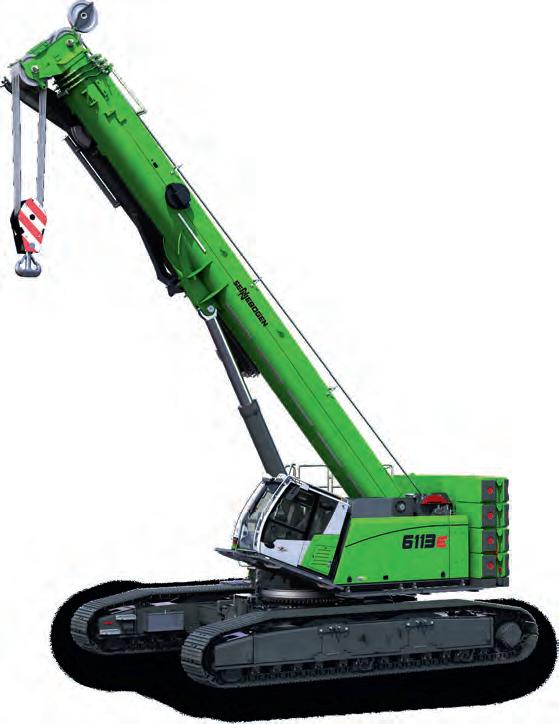
Maximum flexibility on the construction site thanks to telescopic crawler cranes from SENNEBOGEN
9 different models, from 16 - 200 t operating weight
Easy to transport and ready to use in a short time
Doka CEO Robert Hauser tells Andy Brown that contractors are underestimating
the role formwork can play in speeding up projects, cutting costs and improving sustainability
For all construction developments, from small residential renovations to multibillion-dollar mega-projects, the holy grail remains the same: bring the project in on time and on budget.
Robert Hauser, CEO of Doka, an international producer and supplier of formwork and scaffolding, believes that the construction industry is missing a trick in not viewing formwork companies as an important factor in helping them achieve their ambitions.
“I wish that more clients would see us not as just a cost in their production or in their construction project, but as a big lever and multiplier to boost their productivity and sustainability,” says the CEO in an exclusive video interview with International Construction.
“I believe that formwork and scaffolding play a very essential role in a jobsite and that we can provide far more than just a sheer panel of formwork. By further developing our products and our digital services, we can help to boost productivity.”
Hauser makes the point that formwork has a direct impact on the speed of an overall construction project and its cost. Labour cost is one of the largest for a project and so, the longer workers are on site and being paid, the higher costs become.
Sustainability is an increasingly important topic for construction, with the sector under pressure to bring down emissions. Concrete is an essential substance – there is no other material that can do what it does and be produced in such quantities – but it is one of construction’s biggest polluters.
“Concrete is one of the largest CO₂ emitters – we know that and we have to contribute our share in reducing that. But construction cannot live without it. Many jobsites couldn’t do without concrete because of its structural abilities and because of sheer availability. If you replace concrete with wood on all construction sites worldwide you would run out of wood pretty soon,” he says.
“Therefore, right now we don’t have any alternatives. That’s
Robert Hauser has been CEO of Doka since 2021
IMAGE: DOKA
why we see our responsibility clearly. We don’t produce concrete. But we can strongly influence how efficiently and sustainably it’s used on the job. Formwork is still the determining factor of the concrete finish of the final structure.”
A flexible approach
Doka is a global company – only around 8% of the firm’s revenue comes from its home market of Austria – and Hauer raises a wry
He adds that – perhaps more even more than construction machinery – the sectors that Doka serves have different requirements and needs from country to country and region to region, which is why localisation is a key pillar in their strategy.
To further this aim the company bought Malaysian-based MFE, incorporating their extensive range of aluminium formwork, which is popular in Asia and thus increased their capabilities in this area.
“With our strategy, we are broadly diversified geographically and portfolio-wise. This gives us the strength to manage through times that are characterised by high geopolitical uncertainty,” reveals the CEO.
Autonomy in action
The benefits of autonomy are tantalising for an industry suffering from a shortage of workers and, while the full benefits are still some way off on the horizon, they are getting closer. Doka’s own contribution to this is the DokaXbot Lift.
This is a semi-automated robot with a working height of up to 5.7m that can help facilitate the safe and precise positioning of panels from the ground. The robot has been shown at trade shows, but it is now being tested in live jobsites in Austria and Germany.
“The customer feedback is quite positive, and they confirm that it’s increased safety and efficiency. It also improves the job site attractiveness for the teams because the heavy lifting work is now done by the machine. It’s a first step – we are not just talking in theoretical terms, this is now happening at jobsites.”
Hauser is more tight-lipped about when
the DokaXbot Lift might be commercially available, saying that it partly depends on the feedback that they receive from the sites it is being tested on. However, it is clearly in the final phase of product development and the smart money would be on it being available at some point in the next 12-18 months.
Regarding the question of autonomy, he makes the point that change will be “incremental” but says he sees automation as a positive for workers. Rather than taking jobs away from humans, autonomy can remove some repetitive, difficult and boring tasks.
“Skilled labour is already a scarce resource and optimisation [and automation] will protect them and make the life of the workers easier and more attractive. It’s not man against machine; it’s man with machine.”
Autonomy may still be some way off, but the sector is embracing technology such as BIM and 3D models to run a job digitally first to detect any potential problems or clashes.
Digital sensors that measure real-time data on a jobsite and on concrete pressure, temperature and strength are increasingly common.
Hauser admits that there are challenges with this technology; one of these is the somewhat disjointed nature of digital tools and data.
“When you look at the digital landscape, it’s
still relatively fragmented. There are several tools available. Is there one fully integrated solution? Not yet.
“Interoperability is a problem because you have segregated applications. Data maturity on job sites is another topic. At times, we’re lacking reliable data, structured data and therefore we cannot really analyse it and draw meaningful conclusions from it. That is something that we need to optimise,” he says.
He also points to a cultural battle that sometimes needs to be fought. “The technology is ready. The challenge is more the integration
and the adoption. Connecting the tools, creating the database and making visible to the job site teams that they have a real benefit from it. But it has started and the speed of penetration will accelerate.”
This brings the conversation back to Hauser’s opening point. In an industry focused on squeezing timescales and managing costs, formwork is often treated as a commodity rather than a contributor. But if construction is serious about improving productivity and sustainability, it may need to rethink the role of the systems that literally shape the build. iC
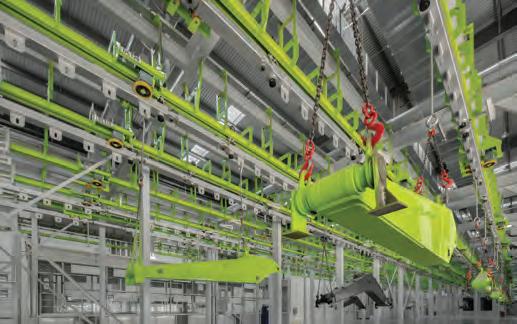
ZOOMLION UNVEILS ITS SMART FACTORY
– AND A NEW PHILOSOPHY FOR A HIGH-MIX, LOW-VOLUME FUTURE
For decades, heavy construction equipment manufacturing has been dominated by scale: vast factories, long production runs and rigid processes designed to maximise output of standardised machines.
That model delivered efficiency in stable markets, but it has struggled to keep pace with today’s reality of volatile demand, expanding product ranges and rising expectations for customisation.
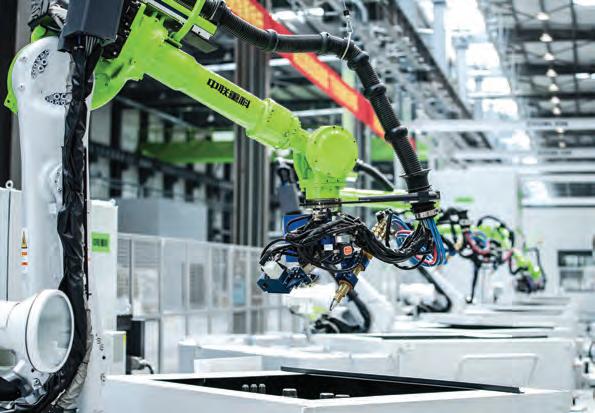
At its new Earthmoving Machinery Manufacturing Smart Factory in Zoomlion Smart City, Changsha, Zoomlion has deliberately set out to rewrite those rules.
Developed over three years between 2020 and 2022, the facility represents not an automation upgrade, but a complete rethink of how heavy equipment can be designed, built and delivered.
The result is a factory capable of producing an excavator every six minutes, while switching instantly between different models without stopping the line. This combination directly addresses the challenges of highmix, low-volume manufacturing.
“The smart manufacturing philosophy builds from a highly automated production line to achieve end-toend digital transformation of the manufacturing process,” says Mr Shi Heng, assistant to the general manager of Zoomlion Zvalley Co.,Ltd..
Why excavators led the transformation
Excavators were chosen as the starting point precisely because they are difficult to manufacture. Thousands of parts, complex assembly processes and tight quality requirements make them one of the most demanding products in construction machinery. For this reason, long changeover times have been accepted as unavoidable.
Zoomlion took a different view. “We knew that, if we could solve mixed-flow
manufacturing for excavators, the model could scale across other product lines,” says Shi.
Shared mixed-flow manufacturing at the core
At the heart of the new factory is what Zoomlion calls shared mixed-flow manufacturing. Instead of dedicating production lines to individual models, the system can build more than 100 excavator variants on the same line, back-to-back, with no changeover time. This capability is enabled by:
♦ 21 flexible workstations equipped with AI vision, force control and multimodal sensing
♦ Adaptive welding, machining and tightening, allowing processes to selfadjust in real time
♦ An AI-driven scheduling engine that coordinates thousands of components and process routes
From the first steel plate to final assembly, a complete excavator now takes just 6.5 days to manufacture.
Logistics becomes part of production
Mixed-flow production depends on absolute precision in material delivery.
To achieve this, Zoomlion replaced traditional storage-heavy logistics with a system described internally as “transport replacing storage”.
Key elements include:
♦ Heavy-duty three-dimensional logistics systems
♦ Integrated air and ground transport
♦ AI-based forecasting to deliver parts exactly when and where they are needed
The result is a reduction of around 70% in work-in-process inventory for structural parts, enabling continuous flow regardless of product variation.
Built-in quality and a new business model
Every component in the factory is digitally coded and tracked, enabling full traceability from raw material to finished machine. More than 30 AI-based inspection technologies operate across key processes, supported by digital twins and process simulation. Quality
is engineered into the workflow, not inspected at the end.
The operational gains have also enabled a shift from make-to-stock to make-to-order production. Instead of building standard machines for inventory, Zoomlion can now manufacture customer-specified excavators directly from raw materials, making it possible for domestic orders to be delivered in as little as two weeks.
A blueprint beyond a single factory
The Changsha facility is designed as a lead plant within a wider “one blueprint” manufacturing strategy. Shared manufacturing centres for steel processing and stamping support excavators, cranes, concrete pumps and aerial work platforms, delivering material utilisation rates above 90% and cutting construction costs by around 15%.
More than 20 Zoomlion smart factories worldwide now follow this blueprint, signalling not just a new factory, but a new manufacturing philosophy for the construction equipment industry.
Visit us at CONEXPO-CON/AGG Stand number: F42027
The Smart Factory is not an automation project, but a full digital transformation
Continual motion is a feature of the structural workshop at Zoomlion’s Smart Factory
As the industry gathers in Las Vegas, International Construction rounds up the key machines, technologies and trends exhibitors are bringing to North America’s biggest construction show
EVENT DETAILS
WHAT The largest construction trade show in North America, which connects professionals from all aspects of industry
WHERE Las Vegas Convention Centre, Las Vegas, US
WHEN March 3-7
As the global construction industry gathers in Las Vegas, ConExpo will, once again, provide a snapshot of where OEM priorities – and contractor expectations – are heading. From new machine launches to updates of existing platforms, the show has become a key part of the calendar and an opportunity for manufacturers to signal how they are responding to pressures around productivity, emissions, automation and total cost of ownership.
This guide brings together the main announcements and exhibitor highlights from across the show floor, offering an overview of how the world’s leading equipment makers plan to position themselves to their buyers, partners, and the world’s media.
AMMANN
Ammann will be showing a series of updates across its compaction and paving portfolio, targeting productivity gains, lower operating
ConExpo is the biggest construction show of 2026
IMAGE: AEM
Ammann will be showing a series of updates across its compaction and paving portfolio
IMAGE: AMMANN
costs and improved operator comfort across road construction and civil engineering applications.
The updates span both light and heavy compaction equipment, as well as the company’s digital compaction technologies.
In the light compaction range, Ammann has introduced the ATR 59 and ATR 66 rammers, which it said deliver higher productivity alongside 25% longer service intervals.
Also in the light equipment segment, the ARW 65 S walk-behind roller features a pivoting mechanism that allows forward, backward and lateral movement, reducing operator fatigue while maintaining consistent compaction on soil and asphalt.
In the heavy compaction category, Ammann highlighted the ARS 70 single-drum roller, which incorporates its ECOdrop initiative to reduce fuel and fluid consumption, and the ARX 26.1-2 tandem roller, which does not require a diesel particulate filter and
features a maintenance-free articulation joint.
The company has also continued to expand its digital offering through its ACE compaction technologies. ACE provides realtime compaction measurement and automatic adjustment on selected machines, while ACEforce for heavier equipment is designed to reduce passes and ensure uniform compaction, supported by ADS documentation for quality control.
Alongside its compaction portfolio, Ammann said its ABG brand continues to support asphalt paving operations through a combined offering of plants, pavers and compactors, intended to cover all phases of the paving process.
The company will also be showing a range of asphalt mixing plants.
CATERPILLAR
Caterpillar is set to expand its presence at ConExpo by nearly 10,000 sq ft compared
to the previous show in 2023.
Its total presence in 2026 will approach 80,000 sq ft, as it creates a 70,000 sq ft outdoor Festival Grounds exhibit (F29929) featuring its Operator Stadium, where visitors will be able to see more than 30 machines in action.
But it will also expand its presence with a West Hall display covering 5,400 sq ft (booth W40416), which will be dedicated to compact construction equipment. Cat Industrial Power Systems will also exhibit its latest industrial diesel engine innovations in a 4,000 sq ft stand the South Hall (S80229), bringing the total to 79,400 sq ft.
At the Operator Stadium, Cat will host the nine finalists participating in its third Global Operator Challenge.
The company said it would showcase its latest construction technology, including the evolutions in autonomous machines and the impact of artificial AI on the industry.
It will also show off its VisionLink system; Cat Command’s remote-control, semiautonomous, and autonomous capabilities; Cat Grade; and the latest addition to the Cat Detect portfolio, Collision Mitigation.
Specific machines on display include the new compact radius Cat 319 small hydraulic excavator at the Operator Stadium, and the AP1055 asphalt paver with the latest updates and a new extended-life smooth plate for the Cat SDX Screed Plate system.
CM LABS
CM Labs Simulations will showcase new developments in simulation-based training aimed at addressing skills gaps and labour shortages in the construction sector.
Exhibiting at booth N11839, the company said it will demonstrate new features within its Intellia Training System, designed to improve instructor oversight and training efficiency.
CM Labs will also present an expanded construction equipment simulation portfolio, which it said is intended to give organisations greater flexibility when developing operator training programmes.
The company will highlight advancements to its soil simulation technology, which it said to improve realism and accuracy by influencing machine behaviour and helping operators develop judgement in changing conditions.
Live technology demonstrations are planned throughout the show, offering attendees a preview of next-generation capabilities ahead of their official release.
“Simulation is entering a new era, and we’ve been quietly pushing boundaries behind the scenes,” said Alan Limoges, manager of product growth and partnerships at CM Labs.
“Visitors to our booth will get a first look at what’s coming next and how it will reshape the way crews learn, work, and operate.”
CUMMINS
In a virtual press conference Cummins announced it will feature a diverse range of products and solutions in its booth (S80414) under the theme ‘Legendary Inside and Out’ during ConExpo.
“At Cummins, innovation is about more than what happens inside the engine,” said Mariana Pivetta, Off-Highway Segment leader, Engine Business Unit, at Cummins. “It is the engine ecosystem, which includes digital tools, connected platforms, powertrain components and integration and multiple energy pathways.”
The company’s display will include a selection of engine, axle and mobile generator offerings, as well as a VIP customer lounge, interactive product configuration and the launch of the PowerTalks series, consisting of daily presentations highlighting trends redefining the industry’s future.
ConExpo marks the North American debut of the Next Gen X15 off-highway engine, a 15 L engine platform incorporating a newly optimized HE 550 turbocharger, advanced combustion with steel pistons and enhanced sensor technology.
DANFOSS
Danfoss Power Solutions (Danfoss) will exhibit a range of mobile and industrial hydraulics, eHydraulics, electrification, digitalisation, autonomy and software products.
A key focus at the event will be eHydraulics portfolio, with products such as the Danfoss ePump and eTraction systems with PLUS+1 software showcased.
More than 100 products organised by subsystems: propel, steer, work and control
CONEXPO WORLD RECORD ATTEMPT
The North American construction industry is preparing to make history at ConExpo-Con/ Agg 2026, with organizers planning a Guinness World Records attempt for the most people wearing high-visibility vests during the trade show’s opening ceremony in Las Vegas, Nevada, USA.
Taking place at the Las Vegas Convention Center, the attempt will bring together thousands of attendees wearing high-visibility orange safety vests, with the goal of surpassing the current record of 2,499. The effort is intended to underscore the foundational role safety plays across the construction industry while highlighting the sector’s estimated US$2.2 trillion economic impact in the US alone.
Held every three years, ConExpo is expected to attract nearly 140,000 attendees and more than 2,000 exhibitors from around the world. The event showcases the latest equipment, technology and solutions from major manufacturers, alongside a speaker programme featuring companies such as Caterpillar, John Deere, AWS and Autodesk. Participants in the record attempt will receive commemorative safety vests and be formally recognized for their role in the historic gathering. The attempt will be officially adjudicated by Guinness World Records as part of the show’s opening-day programming.
will be on display.
Two versions of a two-wheel loader system architecture can be observed. One will be a modern hydraulic-powered machine and the other an electric version, which according to Danfoss will “demonstrate how its components work together as systems to maximise efficiency and productivity.”
A steering simulator will allow visitors to experience the controllability and operator comfort of the company’s steering solutions.
DEVELON
Develon will return to ConExpo where it plans to launch its next-generation excavators alongside a broad range of construction equipment.
The OEM will once again exhibit in the show’s outdoor Festival Grounds area, at booth F32054. Develon said the stand will feature new heavy and compact machines equipped with productivity, safety and uptime protection features designed for a range of jobsite applications.
In addition to the excavator launches, Develon will display articulated dump trucks,
dozers, wheeled loaders, mini excavators and compact track loaders. Live demonstrations of a Develon excavator, dozer and wheeled loader are planned throughout the week.
“It’s been nearly three years since we launched our new brand at ConExpo-Con/ Agg, and we’re glad to be back at North America’s largest construction trade show,” said Morgan Stallings, senior director of dealer development and marketing at Develon.
Mixed reality and virtual reality simulator experiences will also be available, providing hands-on virtual operation and maintenance training.
DOKA
At ConExpo formwork and shoring solutions company Doka says that it will announce several new solutions.
Located in the Platinum Lot, Booth number 8411, Doka’s 60 ft x 80 ft, three-level outdoor exhibit will invite visitors to experience firsthand how the company’s advanced form and shoring technology, sustainability, and digitaliSation are shaping the future of concrete construction.
Doka’s exhibit will feature live demonstrations, interactive digital stations and full-scale systems.
“We’re not just giving attendees a look at our newest formwork and shoring advancements, we’re showing what’s possible when you combine proven systems with digital intelligence and a customer-focused mindset,” said Michael Kennedy, executive vice president America & CEO Doka USA.
ENGCON
The manufacturer of tilt rotators and related attachments will be at the Las Vegas-based show.
An image of Develon’s stand at the last Conexpo IMAGE: DEVELON
While the Swedish company’s offering centres on tilt rotators, these can also be used as a tool carrier that potentially eliminates the need for other individual machines.
In some cases, tools can be swapped over from within the operator cabin, helping to improve safety. This is supported by integrated and automated hydraulic couplers (available with optional oil link) on the machine arm. According to Engcon, a tilt rotator can improve job site work performance by 30%. On top of this, the flexibility to use different tools can reduce the need for labour.
“The construction equipment sector is going through a transformation due to labour shortages, so we need to improve productivity in other areas,” said CEO Krister Blomgren. “There’s also a sustainability aspect, but productivity is critical as costs increase.”
FAYAT GROUP
Fayat Group has outlined its priorities for the North American road construction market ahead of ConExpo, where it will present a broad range of new equipment, technologies and connected solutions through its numerous road equipment brands.
According to the company, its approach is centred on three core priorities shaping the future of road equipment in North America: driving innovation through advanced technologies, maximising productivity and operational efficiency, and promoting sustainability through electrification and operator-focused design. These priorities are underpinned by digitalisation, AI and connected solutions across its product portfolio.
The Fayat Road Equipment Division supports all stages of the road construction lifecycle, including asphalt production, paving, compaction, road maintenance, sweeping, cold milling, stabilisation and recycling, soil
compaction and urban jobsite applications.
At the show, Fayat brands ADM, Bomag, Dynapac, Ermont, LeeBoy, Marini and Mecalac will exhibit under a unified road construction and urban development theme.
The group said it will demonstrate how integrated solutions across these brands are intended to support road construction, maintenance and rehabilitation projects, as well as city-centre works.
Fayat confirmed that 58 machines will be on display at the show and highlighted four new innovations: a Bomag single-drum roller with remote control technology; the LeeBoy PR900 patented dual-spray asphalt distributor; the ADM, Ermont and Marini Vision system for real-time asphalt plant monitoring and predictive maintenance; and Dynapac’s Seismic Asphalt technology, which automatically adjusts vibration frequency during compaction.
In addition, seven world premieres are planned across the group’s brands.
HITACHI
Hitachi Construction Machinery will use ConExpo to showcase a range of new digital, autonomous and machine
guidance technologies, alongside more than 20 machines and over 15 attachment types.
The OEM’s 30,000 sq ft stand will feature live technology demonstrations, full-scale equipment displays and interactive digital exhibits.
Hitachi says the showcase will highlight how its engineering heritage is evolving to address future jobsite challenges, including labour shortages and productivity pressures.
Among the technologies on display will be new Machine Guidance functionality designed to improve jobsite precision, the Landcros Connect fleet management and machine monitoring system, and autonomous haulage solutions for mining applications.
Visitors will also be able to see semiautonomous excavator technology capable of learning and repeating operator-led tasks.
HYUNDAI
In addition to showcasing representative models from its full line of construction equipment, HD Construction Equipment Hyundai North America will be unveiling the first models of its Next Generation HX crawler excavators to be available in the US and Canada.
Hyundai will also be hosting an operator challenge at its indoor booth in West Hall (W42500) with $1,000 in prize money to each day’s winners.
The new Next Generation HX excavator models integrate advanced technologies
Dynapac is one of the Fayat Group brands that will be at ConExpo
IMAGE: FAYAT GROUP
A render of Hitachi’s ConExpo stand
IMAGE: HITACHI
John Deere and Wirtgen Group will be on the same stand at ConExpo
IMAGE: JOHN DEERE
that build on Hyundai’s core qualities of productivity, operator comfort, safety and serviceability, while delivering significant improvements in fuel efficiency.
The Hyundai Operator Challenge will run Tuesday, Wednesday and Thursday (March 3, 4 and 5), with contestants competing on a Hyundai HX19E electric excavator.
JOHN DEERE/WIRTGEN GROUP
John Deere and the Wirtgen Group say that they will be delivering a customer-focused experience in their joint booth (Silver Lot SV2415) during ConExpo.
The exhibit will total 80,000 sq. ft. of indoor and outdoor booth space and include world premieres of equipment designed to help solve customers’ challenges.
The companies said attendees can expect to find 24 market launches, including 18 world premieres of brand-new equipment from John Deere and six market debuts from the Wirtgen Group.
There will also be 25 technology-focused machines, including 11 John Deere machines that feature SmartGrade control, SmartWeigh or SmartDetect functionality, and 14 Wirtgen Group machines equipped with the latest technologies, as well as seven electric and hybrid-electric machines.
In addition, 15,000 sq. ft. will be dedicated for live demonstrations.
A innovation center will be located in the middle of the outdoor booth and will focus
on new solutions centered around helping customers solve everyday challenges. The first floor will highlight the John Deere Operations Center, a jobsite-centric tool that serves as a digital hub for machine and work data. On the second floor, aftermarket digital solutions will be on display.
Inside the West Hall (W40442), an additional 10,000-sq.-ft. space will highlight John Deere Power Systems and E-Power solutions.
New this year, John Deere and the Wirtgen Group will be participating as a presenting sponsor supporting the Shop Talks and Walks. Through this engagement opportunity,
customers can learn how to perform a quality daily walkaround through a new, interactive virtual simulation. In addition, attendees can practice gathering critical service information such as fluid analysis and machine health insights through their own devices.
KOMATSU
With new machines and digital offerings, Komatsu says that it will show how to turn equipment insights into practical business results that may help enhance productivity, promote safety and control total cost of ownership.
Komatsu’s exhibit, located in booth W41945, will include several machines that will be unveiled to the North American market for the first time.
The OEM will be showing excavators including the new PC220LCi-12 excavator and PC365LC-11 multifunction plus excavator, both designed for enhanced operator comfort. An additional new excavator will also be unveiled.
Komatsu will also be displaying wheeled loaders – including the models WA48511 and WA475-11 – two next-generation dozers, and the HD605-10 haul truck with enhanced performance and Smart Quarry integrations, along with Smart Quarry Autonomous.
“Owners and fleet managers want equipment and technology that work together to create value across the entire enterprise, not
Komatsu will be showing excavators including the new PC220LCi-12 excavator and PC365LC-11 multifunction plus excavator
Liebherr has expanded its booth size for ConExpo 2026 IMAGE: LIEBHERR
IMAGE: KOMATSU
OFF-HIGHWAY RESEARCH
Specialist forecasting and market research company Off-Highway Research will be holding a briefing during ConExpo on Wednesday March 4 to provide its latest outlook on the construction equipment market.
The ticketed event is designed to give OEMs and component manufacturers a clear view of the current state of equipment markets, along with what lies ahead.
Off-Highway Research Managing Director Chris Sleight said, “I have never known such complexity in construction equipment markets around the world. Today, OEMs and component suppliers have to navigate tariffs and trade tensions, and think about what that means for their global footprint.”
independently as one-off solutions,” said Rod Bull, CEO, Komatsu North America.
LIEBHERR
Liebherr is the latest major construction equipment OEM to announce an expanded presence at ConExpo.
Liebherr said it would be one of the largest exhibitors, with booths spanning more than 71,000 sq ft of space. That is an increase of roughly 10,000 sq ft on 2023.
Among the exhibits will be the latest construction machines, material handling
equipment, mobile and crawler cranes, concrete technology, deep foundation machines, and digital innovations.
The main Liebherr booth (F35055) will also include 10,000 sq ft of interactive demonstration area, with live demonstrations taking place daily throughout the week.
A dedicated technology pavilion will showcase digital tools such as MyLiebherr, CranePlanner and Diagnostic tools.
Featured machines will include: the MK 140-5.1E five-axle, mobile construction crane; the L 586 XPower wheel loader; LH 60 electric material handler; 38 XXT truckmounted concrete pump; LB 35.1 drilling rig; and 91 K fast-erecting tower crane.
MANITOWOC
Manitowoc says that it is going ‘Big and Bold’ at ConExpo with product launches and a major showcase of its industry-leading customer support offerings.
Range-topping crane introductions from Grove and National Crane will be showcased alongside new aftermarket products and services to expand Manitowoc’s goal as a total lifecycle lifting solutions company. The Manitowoc booth will also feature one of North America’s most popular rough-terrain cranes, the Grove GRT780.
“Manitowoc is focused on building around the world the infrastructure and communities of today and tomorrow. Our CRANES+50 strategy guides us as we work to become a
full-lifecycle service lifting provider for our customers,” said Aaron Ravenscroft, president and CEO of the Manitowoc Company.
SBM
SBM Mineral Processing will showcase its mobile crushers and concrete mixing plants together for the first time at ConExpo, including the North American trade show debut of the REMAX 600.
The Austrian manufacturer will exhibit in the Silver Lot, Booth SV3122.
SBM said its mobile plant technology is designed to deliver high mobility, uptime and controlled product quality for rock processing and concrete production. The company is a full-line supplier to the building materials production industry and brings decades of engineering experience to the North American market.
On display will be the tracked REMAX 600 large impact crusher. The 80-ton machine can be used as a primary crusher with a maximum capacity of up to 600 tonnes per hour and a feed size of up to 40 inches, or as a mobile gravel or recycling plant producing up to five end products in a single pass.
STEELWRIST
Swedish tiltrotator and quick coupler specialist Steelwrist has been building its presence in the US since entering the market in 2017. This has included expanding activities at its national headquarters in Newington, Connecticut,
SBM Mineral Processing will showcase its mobile crushers and concrete mixing plants together
EXCELLENCE IN FOUNDATION ENGINEERING
As a leading manufacturer of premium machines and experts of methods in special foundation engineering, we deliver innovative solutions for every construction site. From the right equipment to the best method.
where equipment undergoes final assembly and testing before customer delivery.
The company is set to have a sizeable presence at this year’s ConExpo with its 6,600 square foot stand as its largest yet.
New VP of Sales, Americas, Peter Gaj, revealed that Steelwrist will show five new models of its XTR tiltrotator range. These will feature across a series of live demonstrations on the stand, which will see a Volvo ECR25 Electric compact excavator fitted with an XTR2 DF/S30 tiltrotator and a Case CX 145 excavator using an XTR15 S60/SQ60 tiltrotator coupler that features a new interface.
TADANO
Tadano says it will display the breadth of its expanded global portfolio under the theme ’Reaching New Heights’, reflecting the company’s continued evolution into a full-line lifting and access solutions provider.
Building on key developments since ConExpo 2023, Tadano will present a more comprehensive offering for North American customers, including former Manitex product lines now fully integrated into the Tadano portfolio -–supporting a “one-stop” approach across lifting, access and jobsite solutions. Innovation will be a central focus, with
multiple new and enhanced machines making their ConExpo debut. Among the highlights is the AC 5.250L-2 all terrain crane, featuring a bifold jib designed to increase flexibility and efficiency on site.
Tadano says its presence will extend beyond traditional crane technology. The company added that it will highlight its growing aerial work platform offering for the North American market.
VISIT US
KHL will, once again, have a stand at ConExpo. We welcome all members of the industry to stop by to say hello, pick up a magzine and sign up to the newsletter most suited to them.
COMPLETE
With Curtis Instruments now part of Parker Hannifin, off-highway OEMs gain expanded mobile electrification capabilities. The combined portfolio offers motors, inverters, controllers, power conversion, hydraulics, thermal management, HMIs, and software designed to work seamlessly together. This streamlines development, minimizes risk, and enables faster time to market for scalable electrified platforms.
See our expanded electrification portfolio at CON EXPO Booth #S81628
Tadano says it will display the breadth of its expanded global portfolio
IMAGE: TADANO
STAND N12525 in the North Hall
INSIDE PRECISION. OUTSIDE CONFIDENCE.
The next-generation Cummins X15 isn’t just built, it’s crafted with precision at its core and confidence in every component. From the inside out, it’s designed to deliver legendary durability and power for the toughest jobs ahead.
From live PowerTalks covering critical industry topics, to integrated power units, standby generators, drivetrain components and digital tools, experience what’s next in off-highway power and how Cummins can help you improve your uptime and bottom line.
MARCH 3–7, 2026
Since 1997, standards for internal combustion engine emissions have been made successively tighter. Julian Buckley looks at ways engines and peripheral hardware are being improved to meet new regulations
European standards outlining the maximum legal emissions levels for offhighway machines have been in place since 1997.
The latest of these are the Stage 5 emissions standards, otherwise known as EU Regulation 2016/1628 of the European Parliament. These standards were rolled out from 2019, when engines producing less than 58kW and more than 130kW were required to meet the emissions standards before being made available on the market.
From 2020, medium-power engines between 58 and 130kW – the category commonly used across off-highway machines – was required to meet the same standards.
Gaseous pollutants covered by the Stage 5 emissions standards include carbon dioxide (CO2), hydrocarbons (HC), and oxides of
nitrogen (NOx); NOx being made up of nitric oxide (NO) and nitrogen dioxide (NO2).
Particulate matter (PM) was also included, with measurements taken covering particles greater than 23 nanometres (nm, one billionth of a metre).
The Stage 5 emissions regulations imposed tighter limits on all of the above. The greatest change was the reduction of particulate matter.
From Stage 4 to Stage 5, acceptable PM levels
for non-road diesel (compression ignition) engines with a power output between 56 and 130kW fell from 0.025 to 0.015 grams/kWh power output.
Up until this point, US Tier standards had largely been aligned with European regulations, but the introduction of Stage 5 standards in Europe effectively required an emissions aftertreatment system (EATS, using diesel particulate filter, etc.) to achieve compliance.
A heavy-duty 13-litre hydrogen IC engine in a Ricardo test cell
IMAGE: RICARDO
An EATS unit is not always required to meet US Tier 4 Final standards.
Engine testing
To achieve Stage 5 certification, engines undergo both steady-state (NRSC) and transient (NRTC) cycles to measure emissions across different operating loads. Testing is carried out in lab conditions and also on public roads. Additionally, since 2018/2020 (dependent on year of introduction), manufacturers have been required to carry out in-use testing in real-world conditions to ensure continued compliance.
For this, telematics systems can be used to monitor engine performance, together with EATS performance, including measurement of AdBlue, a urea treatment fluid used to breakdown pollutants in the exhaust stream.
Penalties for non-compliance with Stage 5 regulations can be substantial. In the UK, a penalty of up to £50,000 (US$68,000) can be issued for false declaration of performance data during the type-approval process. In the field, authorities can impose fines of up to £50,000 for each non-compliant engine or machine. In London and other areas with ultra-low emissions zones, a legal notice can be issued to stop work on the site using non-
compliant machines, that could then be seized as evidence.
Approval process
Type approval is clearly of critical importance when bringing a new engine and/or machine to market. To get the inside track on this International Construction spoke with two experts from AVL, a leading mobility technology company that is active in the engineering, simulation and testing of new power technologies across a range of application areas, including passenger cars, commercial vehicles and off-highway machines.
Looking at type approval for all engines, each country in the EU has its own test authority. In Germany, for example, this is the KBA (Kraftfahrt-Bundesamt, or Federal Motor Transport Authority). While also responsible for driver licensing and vehicle registration, the KBA issues type approvals for engines, vehicles and machines.
Asked if they work in conjunction with the KBA to manage type approval of engines, AVL’s Kurt Engeljehringer, business development manager, Emission Testing, said, “We work with them very closely; the test beds used by the KBA come from AVL. We work together if there is new legislation, working on
the draft and offering feedback. But the test infrastructure used by most authorities across Europe, that comes from us.”
OEMs will deliver their new engines to AVL for testing prior to market launch to ensure the model will be successful in receiving type approval. “When I started at AVL some time ago, we had engines from all over the globe at our test facility in Graz, Austria,” explains Anton Arnberger, director of Business and Product management, IC Powertrain. “But since then, we have extended our reach to where we’re operating in 29 countries, so engines from India are tested in India, etc..”
AVL carries out tests covering a series of key areas, including fuel economy and emissions treatment system performance, but Arnberger says the company also completes engine calibration. “Every engine has an ECU (engine control unit) and these control fuel injection events, actuators, valves. But they also monitor engine performance in terms of emissions and this needs to be calibrated correctly to achieve best performance.”
As for areas that are being targeted by OEMs to achieve improved emissions reductions Arnberger says that most are looking at ways of cutting CO2, which correlates with fuel consumption and pollutant reduction,
An engine test bed at AVL IMAGE: AVL
SERIOUS POWER. Small footprint.
Delivering big-engine performance in a compact footprint, the Perkins® 904 Series is engineered to meet your toughest power demands. Together, we power ahead. Visit us at stand S-80229 to learn more
A STRIKING 105KW,
Having the best in class engine under the hood, the 4TN101 engine is your best excuse to take on any job. Giving you 105kW and a staggering 550Nm of torque, it can handle anything you put it up to. With over 100 years of experience and our renowned Japanese engineering, Yanmar is your partner in high performance engines and true reliability. More info? Visit yanmar.com/eu/industrial
managed by the emissions reduction system.
“To cut CO2 further, you can use low- or zero-carbon fuels, or you can improve engine efficiency. The off-highway power sector has made some significant steps in this area over the past decade; in the heavyduty on-highway sector, we’re close to 50% thermal efficiency when the engine is operating in its sweet spot. But there’s not just one area of concentration, this is achieved through a holistic approach that covers all areas, friction and thermodynamics, through to improved component performance, such as turbochargers.
“But while this can contribute to a higher brake thermal efficiency, it can also produce higher levels of NOx. So to achieve those cuts in CO2, you need to have an emissions system which can eliminate NOx at those higher levels,” Arnberger concludes.
Sustainable powertech
The Cummins
B6.7H hydrogen IC engine – this was developed based on initial testing that used a one-cylinder hydrogen IC engine that was supplied by Ricardo
recirculation (EGR) and turbochargers have the largest impact among engine systems.
Another company involved in testing new engines and mobility technologies is Ricardo. From its headquarters in the UK and across its global network of offices, the company provides a range of consulting services to support development of sustainable power tech.
Looking at emissions reduction, Dr. Richard Osborne, global technical expert, sustainable engines, says, “Exhaust aftertreatment systems dominate the changes made to meet emissions reductions. If we exclude aftertreatment, then fuel-injection equipment and exhaust gas
CAPTURING THE DUST
Another solution for reducing brake particulates relates not to the actual hardware, but capturing the dust. Developed by Mann+Hummel and ZF, the Maxx brake dust capture system was presented at Busworld 2025 in Brussels, Belgium. Combining a passive filtration system and a coated rotor, the unit can capture the fine dust particles emitted under braking.
This retrofit solution was produced as part of AeroSolfd, a project supported by the European Commission and a consortium of eight European nations.
Although legal limits for PM10 particulates covering heavy-duty vehicles are not expected until the early 2030s, it is possible that new brake hardware and such filtration systems will become a requirement to achieve related compliance.
“State-of-the-art engines with EGR currently feature up to 2200-2700 bar injection pressures depending on engine rating. These pressures may increase further to meet future emissions legislation in Europe and the US.”
In addition to higher fuel injection pressures, Osborne says that adoption of electricallyoperated wastegate turbo units could become more widespread due to new emissions regulations, while turbochargers with ball bearings (rather than an air/oil ring) could be used to extend longevity.
It is this, states Osborne, together with upgraded fuel injection hardware/software
AeroSolfd Maxx brake dust capture system
and EGR systems, that will offer the best return in investment when it comes to reducing engine emissions. But despite these changes, he says aftertreatment systems will continue to play a major role.
“Achieving compliance with future emissions standards will be dominated by the development of exhaust aftertreatment systems, and OEMs will get the biggest returns from these systems.”
More solutions
Adding an electrical system to an internal combustion engine can reduce engine load, meaning less fuel is burned and a reduced emissions volume is produced. Osborne notes that the fuel economy and emissions benefits of hybrid systems are highly dependent on the application and specific customer duty cycle; this will determine the opportunities for energy recovery and real-world efficiency improvements, which impact total cost of ownership.
“Automatic idle shutdown is already being used to reduce fuel consumption over prolonged idling, while 48V mild hybrids are expected to be used for thermal management of aftertreatment systems, while supporting engine downsizing,” he explains.
“Kohler, FPT, Carraro and Perkins provide mild hybrid products aimed primarily at small industrial and agricultural machines with less than 130 kW of total power. Small machines will compete with full electric solutions and larger machines may choose to adopt alternative strategies for aftertreatment thermal management, which may potentially limit widespread adoption.”
Adoption of sustainable fuels is another area where OEMs are considering their investment, whether this is for support of drop-in fuels such as HVO or new fuels like hydrogen.
In this regard, Osborne says it’s important to distinguish between greenhouse gas (GHG) emissions and pollutant emissions. While HVO delivers significant lifecycle GHG reductions, there are still tailpipe emissions. On the other hand, zerocarbon fuels such as hydrogen produce no tailpipe emissions other than those from very minimal lubricant combustion.
“Both routes have benefits in terms of pollutant emissions,” says Osborne. Using hydrogen in an IC engine can deliver NOx and particulate counts 20 times lower than an equivalent diesel engine. HVO produces more
modest but still valuable emissions benefits, particularly for particulate emissions.”
Test equipment upgrades
According to Tim Bassett, head of test at Ricardo, it is the “widening of species” that is now creating the greatest challenge in engine testing, with the introduction of such fuels as hydrogen, methanol, ethanol and ammonia. Perhaps surprisingly, this is not related to the ability to measure criteria, but having the hardware able to withstand the fuel.
“Technology already exists to measure the species required, however, new hardware may be required to be more resilient,” he explains.
He adds that hybridised and electric systems have meant new investment into
test capabilities, with battery systems requiring different validation regimes, possibly including dedicated test facilities.
Further, the engine systems are changing as needed to support the requirements of high-voltage power supplies, which can necessitate new testing procedures and equipment to better measure electrical current and voltage while also understanding performance levels.
Euro 7 standards
Euro 7 emissions regulations will start to come into effect towards the end of 2026.
While there has been little change in standards covering gaseous emissions limits compared to
FACTORY INTEGRATED CAT® GRADE 3D.
IT’S
WHAT YOU CAN’T SEE THAT
MAKES
THE DIFFERENCE. YOU
The technology may be virtually invisible. But when you buy a Cat® machine with factory-integrated CAT GRADE 3D, you’ll clearly see how it can help you get to design plan faster, with improved accuracy and efficiency thanks to features like automated blade and bucket control.
To find out more visit cat.com or contact your local Cat dealer.
Euro 6 regs, exhaust emission particulates will now be measured down to 10nm, where those below 23 nm were not previously measured. There are other factors to be considered for Euro 7 compliance, though. From November 29, newly type-approved passenger and light commercial vehicles will need to meet regulations covering brake pad and brake disc abrasion. From November 29, 2027, these same regs will apply to all newly-registered light vehicles.
In one case, OEM supplier Otto Zimmermann says it has introduced carbidecoated brake discs, where the wear-resistant coatings “significantly reduce abrasion” and related particle release. Further to this, optimised friction mixtures reduce the volume of released particles.
In a related press release, a spokesperson for Otto Zimmermann said, “We are aware of the importance of the Euro 7 standard and see it as a great opportunity for innovation.
That is why we are already developing our own solutions for brake discs in combination with specially developed brake pads during the ongoing negotiations.”
The tightening of emissions standards has forced a rethink not just of engine design, but of how performance is measured, validated and sustained over a machine’s working life. Advances in calibration, aftertreatment and testing infrastructure are now just as critical as hardware innovation, particularly as regulators expand the range of pollutants and operating conditions under scrutiny. iC
A Perkins 2600 engine – modern engines are cleaner than ever IMAGE PERKINS
As the
European Commission is preparing to revise the EU Public Procurement Directives, FIEC warns that it will raise fresh questions for construction firms about cost, competition and clarity
FIEC
In the second quarter of 2026, the European Commission is expected to present its proposal to revise the EU Public Procurement Directives. For the occasion, it is presenting “competitiveness”, “strategic autonomy” and “sustainability” as the three new priorities meant to structure the reform.
New priorities, really? These three slogans strongly echo the objectives already foregrounded during the last overhaul of the procurement rulebook. Back then the legislator gradually moved away from a strictly competition-based approach, to fold in aims driven more overtly by political agendas, mainly social and environmental. Yet, by the Commission’s own admission in its evaluation report, those ambitions were not fully met.
Today, the difference lies less in the revision’s overall philosophy than in the desire to make the consideration of “European interests” more explicit. This new objective draws, in particular, on the report, Much more than a Market. It then resurfaces in several official texts, to the point that some observers see it as a weakening of the sustainability objective.
European preference could be pushed into the background by the clear pushback seen in several member states against a “Buy European” approach – unless recent shifts in Washington’s trade policy end up reshaping how those states perceive their own interests.
It is hard to anticipate what form this notion will take: will it be killed off at birth, absorbed into the already expansive concept of the Much Most Economically Advantageous Tender,
or treated as a standalone criterion alongside sustainability? Or will it ringfence certain strategic sectors?
The Commission’s neat triad of objectives also jars with the difficulty of reconciling them. A concrete example of the contradiction between these objectives in the construction sector is the obligation to install solar equipment on certain public buildings at a time when the panels currently available on the market are largely imported from China.
Contradictory objectives
At this stage, there are few clues as to how such trade-offs will be settled. On the one hand, the European Parliament, via its own-initiative report, assigns these directives a multitude of objectives – sometimes contradictory –without ranking them. Reflecting political divisions within the competent parliamentary committee, the resulting message is blurred. On the other hand, in its consultation summary, the Commission describes a fragmented landscape: a narrow majority here, a sizeable minority there, but no clear direction.
The construction sector argues for a clearer reading of the priorities the Commission should tackle in this revision. For European firms, the central issue remains the ability of contracting authorities to act as attractive, reliable and predictable clients. These requirements are a precondition not only for economic operators’ participation, but for the proper functioning of the public procurement market as a whole.
Procurement directives must remain faithful
The European Commission is expected to present its proposal to revise the EU Public Procurement Directives
to their primary purpose: enabling public authorities to acquire works, goods and services on the best possible economic terms, through competition grounded in the principles of free access, equal treatment and transparency.
Environmental, social or “European preference” objectives cannot be pursued in isolation. They must be integrated in a coherent way, without undermining competition or turning procurement into an overly prescriptive industrial policy tool – at the risk of reducing participation and driving up costs for contracting authorities.
As for the debate on European preference, that principle suggests that any measures taken in its name should, above all, aim to guarantee fair and equitable competition between European construction companies and their non-European rivals – notably by using and strengthening tools that already exist.
These include rules on reciprocal access to procurement markets under the WTO Agreement on Government Procurement and bilateral deals; the possibility of excluding economic operators from third countries where no such agreements apply; a tougher approach to abnormally low tenders; and the strict enforcement of social, environmental and labour-law obligations.
Before reaching a definitive view, we should wait to see what shape such European preference will take, while flagging the risks: higher costs, more complex procedures and, in practice, fewer bidders. The saying is apt: the road to hell is paved with good intentions. iC
IMAGE: ADOBE STOCK
40 YEARS OF INNOVATION
For four decades, DYNASET has manufactured compact equipment designed to improve machine productivity and versatility. An extensive range of integrable solutions crafted to simplify your work and withstand even the most demanding conditions.
NEIL GERRARD speaks to companies at the forefront of digital surveying technology to understand how new technology is reshaping the role of construction surveyors
Construction surveying has come a long way from the tape measure and the total station. Digital technology has had a fundamental effect on how the surveyor’s role on a construction project is defined, how it is performed, and how it is valued.
From handheld scanners and drones to drone photogrammetry, mobile LiDAR, cloud platforms and increasingly autonomous workflows, digital tools are reshaping surveying.
From a discipline centred primarily on manual measurement, it is becoming one focused on data management, validation,
coordination and decision-making.
That shift is no longer just confined to large infrastructure projects. It is playing out daily on construction sites across the world, changing how surveyors divide their time between field and office, how they interact with contractors, designers and project managers, and what skills are now required – not just to enter the profession but to remain relevant in it.
CONTINUOUS DIGITAL CAPTURE
Lydia Walpole, senior director of account performance at Bentley
Systems, highlights just how much things have changed. “I started my career in front line engineering – setting out and surveying major infrastructure projects,” she recalls.
“The same core principles remain today as they did 10-15 years ago, but what has improved our working practices today is being able to visualise the environment – the risks, challenges, and reducing planning time.
“We can go to site knowing exactly what needs to be done. We can now access all site documentation at a push of a button. Ten years ago, we were still printing paper drawings and taking them to site and hoping we had the correct revision, all the necessary drawings and that it wasn’t raining!”
Chris Davison, chief executive of NavLive, a company that helps enable high-precision AI-powered building site scans with their own scanner and portal, describes a clear change.
“We’ve certainly observed a shift from manual measurement to more continuous digital capture,” he says. “Thanks to innovation in handheld scanning technology, construction surveyors are now spending less time re-visiting sites and have more confidence
CAPTURING
in the data captured on their initial site visit.”
Rather than collecting a limited set of measurements for a specific task, surveyors are increasingly capturing richer datasets that can be interrogated repeatedly as projects evolve, often without the need for additional site visits.
At US-based software company Looq AI, the scale of that change is framed even more starkly. Dominique Meyer, CEO and co-founder of the company, characterises it as a “massive shift” away from manual labour and towards what he describes as “spatial intelligence”.
“Just a few years ago, an as-built survey of a transmission pole with a total station was a multi-hour ordeal,” he says. “Today, our users are doing that same capture in 45 seconds.”
And with a background as a surveyor himself, Gael Basseville, vice president of business development for positioning solutions EMEA at Topcon, describes how the profession has shifted “from manual operators in my time into integrated workflow managers”, driven by the combined adoption of GNSS, reality capture, machine control and advanced software platforms.
In practical terms, he argues, this has moved surveyors closer to the centre of project delivery. Rather than operating as isolated technical specialists, lead surveyors increasingly manage digital workflows from design through execution to as-built verification.
MORE OFFICE-BASED WORK
As reality capture technologies mature, they are also reshaping how surveyors allocate their time between field and office.
According to Davison, technology is improving efficiency on both sides of that divide. “Technology is making both fieldwork
and office-based work more efficient,” he says. “Scanning and data capture are now far quicker and simpler, allowing more data capture and less time modelling.”
That shift changes the character of site visits. Rather than focusing on lengthy equipment set-up and repetitive measurement, surveyors can concentrate on evaluating site conditions, identifying risks and confirming that the right information is being captured. Office-based work becomes less about reconstructing the site from limited data and more about analysis, interpretation and decision-making.
Meyer explains how teams can now revisit sites digitally through georeferenced data, with Looq AI’s tools reducing the risk of missed information and the need for return visits.
“Instead of sending a crew back to the field because they missed a measurement, project teams view georeferenced data and export features right from their desks,” he says. “We are seeing a 43% margin improvement because we’ve eliminated the costly re-fielding that eats up project budgets.”
At Topcon, Basseville says that digitalisation is a way of ensuring surveyors are physically present on site only when their expertise is genuinely required. That was not always
the case, he notes. He looks back to his own experience as a surveyor in France, prior to the advent of these tools. “At that time, I was managing five or six sites, but with the traffic jams and other delays, I was never in the right place at the right time.”
According to Trimble’s Tomas Larsson, senior director of product marketing for geospatial, as once highly specialised field tasks transfer to broader teams, licensed professionals are becomming ‘data custodians’.
“One key advantage of this shift is the ability to work with constructible models rather than traditional drawings. This allows us to identify and resolve errors in the design phase rather than during construction, where corrections are significantly more expensive,” says Larsson.
HUMAN JUDGEMENT STILL CRUCIAL
Despite the rapid advance of automation professional judgement is as important as ever. Its focus, though, is shifting as technology absorbs more of the routine aspects of data capture work.
Davison argues that, while digital tools have transformed how quickly and efficiently site data can be captured, interpretation remains a human responsibility. “Professional judgement is still essential, particularly on complex sites, when setting controls, and when conditions on site are unclear or evolving,” he says.
Meyer draws a similar distinction between automated processing and expert oversight. While Looq AI’s algorithms handle much of the photogrammetry and feature extraction, manual expertise remains critical where accuracy requirements tighten. He notes that, while the platform can deliver 2–5cm global accuracy without ground control, surveyors still rely on their expertise with survey markers to achieve residuals measured in millimetres.
Walpole also thinks human judgement remains essential, particularly when interpreting data in complex or constrained
A DRONE FLYING OVER A CONSTRUCTION SITE
A DRONE TAKES OFF ON SITE
Carved by a lifetime of hard work, Rokbak articulated haulers are built to perform. Day after day. Decade after decade. From the heat of the desert to the cold of the arctic, you can rely on Rokbak. rokbak.com
environments. “Digital tools amplify expertise, but they do not replace the professional judgement that surveyors bring to the field,” she says.
At DroneDeploy, that balance between automation and judgement is a recurring theme. Ryan Hippenstiel, survey solutions lead and a professional land surveyor by training, stresses the importance of understanding sensors as surveying instruments rather than simply data collection devices.
As drones, scanners and other sensors proliferate, Hippenstiel argues that surveyors must develop a deeper understanding of uncertainty, error sources and how to maintain accuracy through digital workflows.
“The data is easier to collect but you should not just automatically assume it’s accurate,” he says.
That perspective reflects a broader concern across the industry. As tools become easier to use, there is a risk that underlying assumptions go unchallenged in the absence of rigorous validation and professional oversight.
DRONEDEPLOY’S AERIAL PRO CAN ALERT USERS TO POTENTIAL ISSUES SUCH AS GROUND CONTROL POINTS BEING OBSCURED
MANAGING LARGE VOLUMES OF DATA
The move towards continuous reality capture has inevitably led to a rapid increase in the volume of site data that surveyors are expected to manage, validate and interpret.
“Surveyors need solutions built specifically for these new scenarios, because there is simply too much information for any one person to process manually,” reveals Larsson.
Trimble’s answer to this challenge is Trimble Connect, a common data environment where project teams collaborate and update information in real time, he explains. “This platform acts as a central digital hub where AI-powered features turn raw reality capture data into actionable insights. So instead of a technician spending weeks manually digitising features, AI handles the automatic extraction of infrastructure assets from point
THE WIDENING SKILLS GAP
All six companies International Briefing spoke to point to a growing skills challenge as technology advances faster than the workforce can adapt.
At NavLive, Davison identifies a gap in digital confidence across different parts of the workforce, exacerbated by fragmented software ecosystems and varying file formats. His view is that intuitive, open systems help lower barriers to adoption and allow surveyors to integrate new tools into established workflows more naturally. He adds, “At NavLive, we’ve designed our technology to be as open as possible, giving surveyors access to the raw data without restrictions.”
Meyer describes the situation more starkly, referring to a “quiet crisis” driven by demographics. With the average age of licensed surveyors rising and fewer new entrants joining the profession, Looq AI’s approach has also been to make sophisticated technology usable by junior technicians.
At DroneDeploy, Hippenstiel notes that the education sector as well as industry has a role to play in bridging the skills gap. He describes tensions within academic programmes, where adding courses on drones and virtual data capture can come at the expense of traditional surveying fundamentals such as boundary law, land title and legal principles.
For Hippenstiel, the challenge is not choosing between old and new skills but ensuring that graduates emerge with competence in both. Industry, he argues, has a responsibility to feed back to academic institutions and professional bodies as definitions of surveying continue to evolve.
Larsson also acknowledges a skills gap but argues that technology’s ability to take over manual tasks makes surveying more appealing as a career. “Deep geodetic expertise remains the secret sauce and the ultimate value provided by construction surveyors, but the required skill set has expanded into the digital realm over the last decade.
“With the industry facing a massive drain on expertise, new surveyors must think like data managers and interpreters rather than just data collectors. The reality is that technology like AI is taking over the manual, repetitive tasks, which actually makes the profession more appealing to a younger generation.”
Topcon’s response has been to invest directly in training infrastructure, including dedicated training centres and partnerships with educational institutions. Basseville also echoes Meyer’s point on the importance of open platforms.
clouds in a fraction of the time,” he says.
For Davison, effective data management starts with capture discipline. “Managing larger volumes of data starts by capturing the right level of detail,” he says.
Equally important, he adds, is how data is structured and accessed once captured. Well-designed cloud systems make it easier to organise, revisit and share scan data across teams, while open access to raw data allows surveyors to continue working within familiar CAD environments rather than being constrained by proprietary platforms.
At DroneDeploy, Hippenstiel describes a growing emphasis on iterative software feedback to support data validation. By providing alerts when issues such as poorly placed or obscured ground control points are detected, platforms can help users refine their workflows without removing responsibility from the surveyor.
TOMAS LARSSON, SENIOR DIRECTOR OF PRODUCT MARKETING
FOR GEOSPATIAL AT TRIMBLE
However, both Hippenstiel and Sonia Kelly, senior product marketing manager for aerial solutions at DroneDeploy, acknowledge the challenge created by the speed at which data can now be generated and shared. As Kelly notes, the “democratisation of surveying” has resulted in multiple people on site being able to collect spatial data, raising questions about governance and accountability.
“The surveyor was always the single source of truth, the accuracy authority, and now you’ve got five people running around with rovers on a site, taking measurements - who’s keeping track of all this?,” she asks.
In that environment, Hippenstiel sees the surveyor’s role expanding rather than diminishing. Rather than being displaced, surveyors increasingly act as programme managers, overseeing multiple data collection
IMAGE COURTESY OF TRIMBLE
IMAGE COURTESY OF DRONEDEPLOY
SURVEYING TECHNOLOGY
streams and ensuring consistency, traceability and accuracy across platforms and stakeholders.
SINGLE SOURCE OF TRUTH
Digital surveying tools are also reshaping how surveyors interact with contractors, designers and project managers.
Historically, limited access to current site information often resulted in repeated visits, requests for information and follow-up queries. AI-enabled real-time scanners are helping to address this by allowing surveyors to share accurate data much earlier and more widely across project teams.
That shared visibility helps teams coordinate more effectively and resolve issues before they escalate into costly problems.
The tools themselves can also facilitate that communication, as Walpole points out. “We see on major projects like airport expansions, surveyors using Synchro 4D to participate directly in coordination and planning sessions, sharing visual, time-based insights that are easily understood by non-surveying stakeholders,” she says. “This common digital language improves alignment between contractors, designers, and project managers.”
However, Larsson only sees digital workflows as one piece of the puzzle. “These tools enable a new level of collaboration, but they can only do so much if the relationships between contractors, owners, and general contractors don’t evolve as well,” he notes.
“Traditional design-bid-build models often create friction and data silos that trap information within a single software stack, forcing teams to waste time searching for the right information. We are seeing a shift toward new contract models, such as Integrated Project Delivery, where multi-party agreements allow everyone to share risks and rewards while promoting better outcomes from the start.”
LOOKING AHEAD
Looking to the future, the interviewees all see the surveyor as taking an increasingly strategic role, focused less on data collection and more on oversight, interpretation and risk reduction.
Davison expects surveyors to be relied on more heavily for insight, decision support and regulatory assurance, as technology takes on a greater share of capture tasks. Meyer envisages surveyors becoming curators of living
digital twins, managing continuously updated representations of assets rather than static datasets.
At DroneDeploy, interest is growing around robotics and autonomy, although expectations remain measured. Kelly suggests there may be a future in which surveyors manage fleets of autonomous systems, potentially operating outside normal working hours. However, both she and Hippenstiel emphasise the complexity, safety considerations and unpredictability of construction environments as limiting factors.
Hippenstiel argues that, while certain tasks may be automated, the experience gained through time on site remains difficult to replace. As a result, surveying may increasingly be performed from dashboards and control rooms, but with human expertise still central to troubleshooting, decision-making and accountability.
Digital technology is not diminishing the role of the construction surveyor but redefining it. As tools become faster, cheaper and more capable, the value of the surveyor lies less in measurement itself and more in making sense of an expanding digital representation of the built environment. CT
Hillhead Quarry Buxton | Derbyshire | UK
PST/ES-E (315) UP TO 60 T AXLE LOAD AS STANDARD.
The tougher the challenge, the more the electronically-steered PST/ES-E (315) self-propelled transporter shines. At 2,430 mm base width, it’s flat rack compatible and delivers up to 60 ton axle loads – achieved with standard pneumatic tires, no TPMS, polyfill or mileage limitations required. Even compact configurations can handle the heaviest payloads. Goldhofer’s PST/ES-E (315) redefines the benchmarks for performance, flexibility, and cost-effectiveness.
LAS VEGAS
What is it? Discovery Building at Rothera Research Station
Where is it? Antarctica
Estimated cost?
US$135 million
The British Antarctic Survey (BAS) has officially opened the £100 million (US$135 million) Discovery Building at Rothera Research Station, marking the ontime and on-budget delivery of the largest construction project ever undertaken by the UK in Antarctica.
The facility was delivered as part of the governmentfunded £670 million (US$904 million) Antarctic Infrastructure Modernisation Programme in partnership with BAM, Ramboll, Sweco, G&A Barnie Group, Turner and Townsend and Hugh Broughton Architects.
The building, with an internal floor area of 4,500 square metres, features over 100 rooms and spaces spread over two floors. It will serve as the operational centre of the UK’s main Antarctic research station, providing all power,
Did you know? With periods of extreme cold reaching minus 22 degrees Celsius, Rothera Research Station is the one of the world’s most extreme construction sites
drinking water, and communications.
The building, alongside its new network of services, has been formally opened to mark the completion of the project, which began in 2019.
The Discovery Building has been delivered following a six-year programme of design, logistics planning and phased construction in one of the most extreme environments on the planet and where materials must be transported more than 8,000 miles to site.
The new facility replaces ageing infrastructure spread across multiple buildings. It is designed to provide a safer and more efficient environment for staff, alongside reducing station carbon emissions by 25% through improved energy efficiency.
Aerial view of the Discovery Building at Rothera Research Station
The Worldwide Leader in Concrete Paving Technology