



























BROKERS 2026: WINNERS REVEALED Nearly













Helping first home buyers with the Australian Government 5% Deposit Scheme


ANZ and Brokers.
Working better together.


CONNECT WITH US
Got a story or suggestion, or just want to find out some more information?
x.com/MPAMagazineAU
facebook.com/Mortgage ProfessionalAU
















02 Editorial
Brokers facing headwinds head-on
04 Statistics









Less is more for this year’s Top Commercial Brokers as the trend shifts towards fewer but higher-value deals that prioritise quality over volume
BIG INTERVIEW
DAVID SMITH
Liberty’s chief distribution o cer steers brokers through volatile markets with a focus on clarity and consistency
















FEATURES COMMERCIAL LENDING
Brokers power through turmoil, exploring bold new territories in commercial lending
Regional markets outperforming the capitals
06 Opinion
Where brokers win in the AI shift
14 Bright spots in commercial
Amid uncertainty, new opportunities emerge for brokers in commercial property
24 SMEs at the coalface
As cost pressures bite, SMEs seek broker advice for fast, flexible funding
28 A new funding frontier
Brokers eye development finance but must tread carefully





12 FEATURES NON-MAJORS ROUNDTABLE
34 A bumpy road for A&E finance


Second-tier lenders look beyond price towards innovation, flexibility and human-centric service

Rocky markets reshape asset finance, putting speed and structure in focus
65 Mastering empathy
How leadership rooted in empathy builds employee trust and loyalty
68 Leading in crisis
Seven leadership traits that are critical when the going gets tough
72 Other life
Virtual reality boxing and cold showers sharpen broker Julian Choo’s focus


50 PEOPLE BROKERAGE INSIGHT




70

Gippsland Finance Solutions steps up for borrowers as banks leave town
Our daily newsletter. Keep on top of property market trends, business strategy, and what industry leaders have to say.



On 20 July 1969, Australians from all corners of the country sat in awe around their black-and-white TV screens as Neil Armstrong became the first man in history to put feet on the moon.
It would take 57 years after that giant leap for mankind for Australia’s 31st prime minister, Anthony Albanese, to bring the country to a collective standstill of such magnitude as his wartime address resounded across the eight states and territories. “ This is a testing time for our nation,” Albanese proclaimed. “The war in the Middle East has caused the biggest increase in petrol and diesel prices in history.”
Channelling the ANZAC spirit, he called on Australia’s fine men and women to make sacrifices for the greater good. Take the bus where possible, he advised. Work from home if you can. Save fuel for the truckies and farmers who keep our nation running.
While Albanese’s broadcast address to the nation – the sixth of its kind on record, with previous instances concerning the outbreak of World War II and the onset of COVID-19 – was maligned for being an overblown status update, it at least threw
Despite the multitude of challenges, the resilience and adaptability of the Australian broking community shine through
into sharp relief the severity of the US-Iran war’s impact on the domestic economy.
Energy price shocks have torn up the script for interest rates; consumer sentiment and business confidence have taken a hit; and house-building targets are under pressure from higher input costs. T hese are all challenges that are set to have a dramatic e ect on the broking community. MPA’s 2026 Commercial Lending Guide shows that business owners are dipping deeper into defensive mode, causing a rethink of the broker-borrower relationship.
But despite the multitude of challenges, the resilience and adaptability of the Australian broking community shine through. It was impressive to hear how brokers are shifting with the times, facing headwinds both new and old head-on to extend their influence over the commercial lending market even further.
The cream of the commercial broking crop is celebrated in MPA’s Top Commercial Brokers 2026 report on page 39. These are the professionals truly pushing the industry forward to deliver the best outcomes for their clients while serving as advocates for the broking community as a whole.
The news cycle might be shifting from hour to hour, but at least one thing is constant – the broking industry is only going from strength to strength.
William Farrington, editor, MPA
EDITORIAL ENQUIRIES tel: +612 8437 4711 william.farrington@keymedia.com
SUBSCRIPTION ENQUIRIES tel: +61 2 8311 5831 • fax: +61 2 8437 4753 subscriptions@keymedia.com.au
ADVERTISING ENQUIRIES claire.tan@keymedia.com
www.keymedia.com
Australia, Canada, USA, UK, NZ and Asia
MortgageProfessionalAustralia is part of an international family of B2B publications and websites for the
AUSTRALIAN BROKER simon.kerslake@keymedia.com T +61 2 8437 4786 NZ ADVISER alex.knowles@keymedia.com T +64 9 200 1319
MORTGAGE







































































86%
of brokers say AI will be essential within two years
Australian dwelling values rose 9.9% in the year to March 2026, with regional markets (11.7%) outpacing capitals (9.3%). Growth was strongest in Perth, Darwin and the WA and Queensland regions, while Melbourne and regional NT saw comparatively modest gains, Cotality reports.
65% of brokers have no documented AI strategy in place
37% of brokers use AI regularly and confidently in business
CommBank customer data shows today’s typical first home buyer is younger, borrowing more with a smaller deposit and increasingly purchasing with others, as flexible pathways, government deposit schemes and co-buying arrangements help more Australians step into homeownership sooner than they did in 2021.
3%
of brokers have formal AI policies for governance today
Source: Connective, TheStateofAIReadinessinAustralianBroking report
Cotality’s latest Pain & Gain report shows profitmaking resales reached 95.9% in the December quarter, the highest level in more than 20 years, with a record median gain of $365,000 and only a small share of resales selling at a loss.
RESALES: PROFIT VS LOSS
Rising prices are reshaping daily life and eroding Aussies’ financial confidence. New Youi research finds most Australians felt greater cost of living pressure in 2025, with more than two in five worse o financially and over a quarter hit by higher costs every day.
say cost of living pressures increased more in 2025 than in previous years feel the impact of rising living costs daily feel their financial situation has worsened
Source:
Source: Cotality Pain&Gainreport
New research from NGM Group shows regional Australia is drawing skilled workers and city dwellers, with a ordability a key lure and most movers reporting a better quality of life, underscoring the regions’ growing appeal as places to live and work.
AUSTRALIA'S REGIONAL DRAWCARDS
40% 47% 78% of Australians surveyed say the regions are attracting more highly skilled and professional workers of respondents believe more a ordable housing is a key regional drawcard of metro Australians find the idea of regional living highly appealing of movers to the regions report a better quality of life
Source:
AI is upending the broking industry, but brokers will always be the gatekeepers, argues LMG’s Sam White
AT LMG’S recent Growth Summit, we talked about how quickly artificial intelligence is changing the way businesses operate, and the di erent ways people are responding to it. We framed it around three groups:
• Doomers: focused on the risks, the possibility of job losses, and what could go wrong with the rise of AI
• Boomers: using AI where it saves time, but not pushing it further
• Zoomers: who are inspired by AI and rebuilding how they run their businesses with AI at the centre
between brokers who know how to use it and those who don’t.
The ‘human in the loop’
The idea that AI replaces brokers misses the point about why customers choose a broker in the first place: It’s not the back-end e ciency. It’s the support.
Buying a home or making a big financial decision is emotional, complex and often stressful. People want someone in their corner who understands that.
Good brokers don’t just find a loan. They help clients understand what’s possible, what’s
Good brokers don’t just find a loan. They help clients understand what’s possible, what’s smart and what fits their life, not just today but over time
Within the broker industry, I see business owners across all three groups every day. Almost every service-based industry will be reshaped by AI. But I believe brokers are in a unique position compared to most.
At the Growth Summit, we kept coming back to one idea: high-tech, high-touch. AI will change how the work gets done. But the value of a broker isn’t disappearing; it’s becoming clearer. Our future isn’t broker or AI – it’s broker and AI. The real divide will be
smart and what fits their life, not just today but over time.
Customers still want a ‘human in the loop’. Someone who understands their situation and can talk candidly about trade-o s, challenge assumptions and connect lending decisions to real life: family, business, future plans.
For customers with complex lending scenarios, self-employed clients, investors and business owners, brokers are part of the inner circle alongside accountants, planners and
solicitors, so their lending strategy complements a customer’s broader plans.
Trust shows up in the real moments in life – the late-night call about a property they’ve fallen in love with, the deep dive into their numbers to project future earnings from equipment purchases, or the long-term plan to get a family released as guarantors from their son’s or daughter’s mortgage.
It’s this combination of personal guidance, long-term relationships and support that AI can’t replace.
What AI will do is take a bigger share of the admin and analysis. We’re already seeing brokers use AI tools in MyCRM for things like note writing, quality assurance checks and faster turnaround.
Throughout 2026, LMG’s roadmap will have more automation across documents, smarter performance insights, earlier signals on client risk, and tools that help brokers act sooner, not later – all within one platform. By embracing, rather than avoiding, AI, we’ll have less Boomers and more Zoomers. And these tools will give brokers more time to focus on client relationships, strategic guidance and referral partnerships.
Brokers remain the gatekeepers AI works fast, but it’s not perfect. And without human judgement, it can get things wrong quickly.
That’s where brokers come in. Interpreting, challenging and applying it properly – with professional oversight.
Brokers are still the gatekeepers of the finance journey. As one panellist said at our Growth Summit, “If there’s a problem, ASIC will pursue you, not ChatGPT.”
The brokers who win won’t choose between tech and relationships. They’ll be the ones who master both and move faster than the rest of the market.


























Chief distribution o cer David Smith is sharpening Liberty’s
TWO YEARS after joining Liberty as chief distribution officer following more than 15 years at Aussie Home Loans, David Smith has made himself comfortable. Having taken the wheel of the broker channel at the prominent non-bank lender, he has become the face of a strategy built on consistency, communication and adaptability – non-negotiables in the cutthroat world of alternative finance.
It helps that he jumped aboard a welloiled machine that has, over multiple decades, established itself as a non-bank powerhouse with brokers at the core of its identity.
With almost 30 years behind it, “Liberty has a clear sense of purpose and curiosity, and that really shows in how people work together,” Smith tells MPA
“Liberty has always represented choice and possibility. From the beginning, our free-thinking mindset has guided the way we approach lending.”
But while he has taken command of a ship with its rudders firmly in place, Smith is not one to sit back and let the tide take its course. He is acutely aware that past success doesn’t guarantee future relevance, particularly in a market where new entrants emerge quickly and customer expectations reset constantly.
Smith has proactively navigated major challenges over the past two years while keeping Liberty’s competitive edge and service proposition at the front of brokers’ minds.
There has been no shortage of challenger brands moving into the alternative lending space in recent years, while an increasingly bullish private credit market is upping the stakes for what was already a competitive environment.
Amid this diversity of financing options, brokers’ and clients’ demands for fast turnaround times, flexibility and high-touch
lending only becoming more sophisticated over the past 24 months.
To supercharge its SME capabilities, Liberty acquired a controlling stake in cash flow lending specialist Moula last year, e ective from 31 December 2025. Smith is excited to see where this relationship goes.
“[Moula’s] digital-first technology and credit expertise complement our own approach and help brokers with business
“Spending more time listening to brokers and focusing on clarity and consistency has been incredibly rewarding”
support from BDM and credit teams are as high as they’ve ever been.
All the while, the macroeconomic environment has been wildly unpredictable, punctured by wild swings in funding costs, consumer sentiment marred by cost of living pressures and, more recently, an energy crisis spurred by Middle East conflict with profound implications for the domestic mortgage market.
For Smith, doubling down on what makes Liberty unique, while implementing improvements where necessary, has been a fine balancing act.
Diversification has become a strong focal point, with o erings across SME, SMSF, commercial, asset finance and personal
clients who need fast and flexible options,” he says.
“For brokers, a diversified o ering means more opportunity. It helps them meet more customer needs, build deeper relationships and grow their businesses with confidence.”
Whether it’s through expanded SME o erings, SMSF lending advancements or updated residential lending policies, Smith stresses the importance of keeping brokers in the know.
“I’ve enjoyed strengthening the way we respond to brokers in a market that’s been moving quickly,” he says.
“Spending more time listening to brokers and focusing on clarity and consistency has been incredibly rewarding. Trust really


Name: David Smith
Role: Chief distribution o cer
Company: Liberty
Years in the industry: 20+
Recent career achievement: Named an MPA 2025 Global 100 Mortgage Leader
comes from consistency. We put a lot of focus on being easy to work with, responding quickly and communicating clearly. When brokers feel they can rely on us, everything else falls into place.”
Smith makes sure his team is laser-focused on actively listening and responding to broker demands. “Whether a broker works with us regularly, or is yet to, their feedback helps shape what we do next. If they tell us they need more speed, more clarity or more support, we take that seriously.
to support them, and earning that trust is something we work on every day.”
Empathy also matters. “When you understand the pressure brokers are under, you can design processes that make their lives easier.”
Australia’s leading lenders use NextGen to accelerate time-to-yes. They’re probably using us.
“We always encourage brokers to reach
Outside of work, Smith understands the virtue of maintaining a balanced approach to life, and he always makes sure to set aside time for other interests.
“Travelling gives me perspective, and I always love to visit somewhere I’ve never been before; even better if there happens to be a Formula 1 Grand Prix there!”
“Liberty has always represented choice and possibility. From the beginning, our free-thinking mindset has guided the way we approach lending”
out early in the process. Our team is great at exploring options, and a quick conversation often opens pathways that aren’t obvious at first glance. Over time, that builds genuine partnership.”
But the challenge isn’t always about keeping up – it’s about continually raising the bar.
“By listening closely and staying adaptable, we make sure Liberty strives to become a leading partner in all environments.”
Reflecting on the personal attributes that allow him to excel in his role, Smith highlights the importance of resilience in a fastmoving industry. He understands the virtue of cutting through the noise and staying focused on what matters, while maintaining a sense of curiosity. Staying aware of industry trends and broker pain points is a must-do.
“In my role, determination, collaboration and communication are essential. You need to bring people together behind shared goals and deliver consistently for brokers. And you need to take accountability. Brokers trust us
Despite the abundance of industry-wide challenges, Smith reckons the future is bright for Liberty and the alternative lending space as a whole. If anything, market pressures have highlighted how important responsibly operated alternative lenders truly are.
“Customers benefit from having choice, and alternative providers play a key role in making that possible,” he says.
“Liberty is in a strong position, with solid momentum across our products and a distribution network that continues to perform well. The focus now is on building on that strength and finding even more ways to improve the experience for brokers and customers.”
As for what’s next, Smith wants Liberty to continue being seen as a trusted and reliable partner – and to reiterate, one that o ers “free-thinking solutions”.
“More broadly, I want our brand to represent accessible finance backed by genuine care for customer outcomes. A brand that continues to evolve while staying true to the values it was built on.”




Commercial applications don’t have to mean a different system, a different workflow, or a different experience for your brokers.
ApplyOnline® is the platform Australia’s brokers already know and trust for residential lending — and it handles commercial loans with the same streamlined, digital process.
Why lenders are extending to commercial on ApplyOnline
One platform
All loan typesresidential, commercial, bridging, and SMSF
Built-in tools available
Digital VOI, Open Banking, and automated document management
Subject to lender activation.

No re-training
Brokers lodge commercial the same way they lodge residential
Fully configurable
Complex entity structures, debt service calculations and lender credit policy
Join the growing network of lenders choosing digital over manual for commercial distribution. Get started today.


Higher funding costs and geopolitical shocks are reshaping commercial finance, yet resilient businesses and savvy brokers continue to drive strong deal pipelines
THIS YEAR’S Commercial Lending Guide comes to you at a particularly uncertain time for the Australian business environment –and the world as a whole.
At the time of writing, a nervous ceasefire was in place between the US and Iran following weeks of conflict that shook markets across the globe. However, with peace talks between the two countries collapsing without a deal, no end to the conflict was in sight.
Meanwhile, here in Australia, energy price shocks have torn up the script on interest rate forecasts, with all major banks increasing their odds on more cash rate hikes to come from the central bank.
This hawkish reassessment of interest rates has fed through to higher funding costs for residential and commercial borrowers alike, while the fallout from higher dayto-day living expenses has yet-to-be-seen consequences for productivity.
Business sentiment was trending lower even before the war escalated, with the NAB Business Confidence Index falling into negative territory in February, ending nine straight months of positive sentiment.
Business confidence proceeded to collapse to COVID-era lows in March, with April’s print not expected to fare any better.
But all this fear, uncertainty and doubt doesn’t change the fact that commercial finance deals are powering ahead.
The many lenders, brokers, aggregators and technology providers that MPA sat down with to gather insights for this guide said the same thing: businesses are resilient, cunning and highly adaptable to market shocks.
True, the landscape is changing. Alternative lenders are creating waves in the higher-risk end of the pool; SMEs are shifting from expansionary mode to protective mode; commercial property sentiment is highly sector dependent; and asset and equipment finance is becoming concentrated on incomegenerating purchases.
But the broking industry is adapting to the changing winds of commercial lending with vigour. The diversified broker is a well-worn trope by now, but it’s an accurate one. MPA’s first-ever development finance guide highlights how brokers are moving into bolder new territories of the broader commercial lending landscape.
The experts who contributed to this guide universally agreed that commercial lending is a huge opportunity for brokers, and as more business owners look to the broking industry for a holistic approach to their financing needs, market share has only way to travel: up.
Going with the flow is not an option as rising rates, global shocks, surging migration and tech reshape Australia’s commercial market
“FIRM AND PATIENT optimism always yields its rewards,” Mexican oligarch and former world’s richest person Carlos Slim once said. A bit of that wisdom wouldn’t go astray for commercial brokers right now.
Amid falling business confidence, lower capital growth expectations, high CBD vacancy rates and, of course, a Middle East war that threatens to disrupt all corners of the Australian business environment, few would blame you for being jittery about the commercial property outlook.
Yet across Australia’s diverse business landscape, new opportunities are emerging for commercial brokers within certain sectors, regions and demographics.
Speaking with MPA, industry experts across the banking, non-bank lending and technology sectors universally acknowledge that the headwinds are real, but so is Australian businesses’ ability to roll with the punches.
Stuck in the middle
“Right now, we believe the commercial property market sits somewhere in the middle,” says Liberty chief distribution officer David Smith. He notes that the tone is cautious as clients await clarity on how current global events will impact market conditions in the long term.
Chris Thomas, executive commercial broker and equipment finance sales at NAB, phrases the mood as “tilting cautiously towards optimism”, even as parts of the broader economy “remain uneven”. While business confidence softened in the March
quarter, “conditions have broadly held up, sustaining the gains made through 2025”.
Brighten’s head of commercial lending, Ben Mckell, cautions that, with the Reserve Bank of Australia’s tightening cycle bringing the rate back up to 4.1% in March, volatility in valuations and borrowing costs is on the rise. Higher rent, medical and insurance costs haven’t helped, while trade-related volatility “has further weighed on economic confidence and investment planning”.

might be more considered, the activity is still there.”
Thomas is confident that underlying momentum will remain in place, with forward indicators such as capital expenditure plans and orders heading in the right direction.
AT ORDE Financial, director of distribution Lee Prior says, “What we’re hearing from brokers is there’s still plenty of movement, especially from SME owners, and that’s a
“Where the fundamentals are good, confidence tends to follow. Brokers who really understand their local markets will be finding solid opportunities”
David Smith, Liberty
Mckell doesn’t dance around the issues. “No one expected fuel to be hitting $3.50 a litre, and no one thought a rate rise would come again so soon,” he says. “Inflation is unfortunately out of control, and it creates a cyclical impact; tenants, whether residential or commercial, are going to see their rents significantly increase over the next three to six months or at their next rental review.”
That said, Smith is still seeing businesses investing where it makes sense, all the while relying on experienced brokers “to help them navigate risk and structure deals in a complex environment … While the conversations
positive sign.” Business owners are being practical with their lending needs: while conditions are far from perfect, they’re working with brokers to get their businesses in the best position available to them. This can range from buying their premises outright to lock in certainty, to refinancing or restructuring debt to optimise cash flow.
But “it’s certainly not a boom”, adds Craig Stuart, head of commercial at MA Money, “and performance across commercial assets remains highly dependent on asset quality and sector dynamics. The biggest headwinds are likely linked to broader economic uncer-

“Today’s commercial brokers are looking for faster clarity, greater flexibility and deeper relationships with their lending partners – not just sharper pricing”
Chris Thomas, NAB
tainty, particularly given ongoing global events. The impact of Middle East tensions means we’re seeing upward pressure on inflation, leading to cash rate increases and localised rate increases.”
Australia’s industrial powerhouse
The industrial property segment – including warehouses, workshops and mixed-use properties – seems to be a hive of activity in 2026, thanks to a combination of limited stock and strong demand that has driven price appreciation.
NAB data shows that industrial continues
to outperform on sentiment, capital growth and rental expectations, due to low vacancy rates and ongoing demand linked to logistics, warehousing and supply chain resilience.
“That’s translating into sustained borrower confidence and a steady pipeline of highquality deals,” says Thomas.
At MA Money, over 35% of enquiries are currently geared towards the industrial segment, fuelled by growth across e-commerce, logistics and manufacturing.
“Tenant demand appears to remain high in many markets and in some cases is outstripping supply,” says Stuart. He is seeing strong
appetite for vacant land in growth regions on the fringes of metropolitan areas.
Outside of industrial, Mckell has witnessed a renewed interest in some specialist commercial property assets. “We have seen quite a few examples of just your normal residential property investor looking at diversifying and buying boarding houses, which fall in that commercial realm,” he says. Additionally, childcare centres are being seen as an attractive asset class with good rental yield.
‘Silo warehouses’ are gaining traction as a hybrid solution for online businesses, combining storage, light industrial and flexible workspace in one. “Unlike residential, there is still a good supply for commercial assets, hence it represents great opportunities for investors diversifying into the space,” says Mckell.
While office spaces remain in a postCOVID slump, with vacancy rates still higher than expected, there is “selective interest in retail and office assets, particularly in
locations with strong tenant profiles”, says Smith. “Where the fundamentals are good, confidence tends to follow. Brokers who really understand their local markets will be finding solid opportunities.”
Migration redrawing the commercial map
Through ORDE’s work with demographer Bernard Salt, the lender has zeroed in on how migration is reshaping the commercial property market across the country.
Research shows that around 32% of Australians were born overseas and, in many outer-metro and regional corridors, migrant communities aren’t just settling. “They’re starting and growing businesses, which naturally drives demand for commercial property like workshops, warehouses, o ce and clinic suites and mixed-use sites tied directly to the business,” says Prior.
This shift is most evident across the country’s commercial heartlands in the eastern seaboard cities of Brisbane, Melbourne and Sydney, where new employment precincts

“Inflation is unfortunately out of control, and it creates a cyclical impact; tenants, whether residential or commercial, are going to see their rents significantly increase over the next three to six months” Ben Mckell, Brighten
and SME clusters are forming alongside population growth.
Prior says “investment across Australia’s commercial heartlands remains strong, underpinning business confidence, job creation and the growth of new precincts and communities”.
ORDE’s data shows that commercial and industrial building approvals are up around
27% compared to pre-pandemic levels.
“[This] tells us businesses are still planning and investing,” says Prior. “And when you look at segments like tradies (a big driver of SME activity), the numbers continue to grow, with close to two million tradies nationwide, many of them running their own businesses.”
For brokers, those trends translate directly into commercial opportunities as business
owners move from renting to owning, while upgrading to more suitable premises or bringing property into SMSFs.
“These are also the areas where brokers are most active,” Prior says. “Our role as a non-bank is to back brokers in those moments with lending solutions that reflect how these businesses operate. From our perspective, understanding how these shifts play out business by business is what ultimately drives commercial property loan activity.”
As brokers capture an ever-greater share of the commercial property market, technology is becoming fundamental to their growth.
Systems like NextGen’s ApplyOnline platform, the standard bearer of Australian loan application and lodgement, play a pivotal role in driving this expansion. NextGen







Introducing two new home loans packed with features and flexibility for you and your clients.






chief customer o cer Tony Carn says, “NextGen’s role is fundamentally about removing the friction that has historically made commercial lending feel out of reach for brokers who’ve built their practice around residential.”
ApplyOnline is already ubiquitous in the Australian broking industry, which means most brokers can manage commercial applications on a platform they’re already familiar with.
“Importantly, as brokers work through commercial applications on the platform, the structured workflows and lenderspecific requirements built into ApplyOnline actively help them understand how commercial loans are put together – so the platform itself becomes part of the learning curve,” says Carn.
ApplyOnline supports brokers by outlining each lender’s policies and requirements while o ering dynamic checklists that change from deal to deal and lender to lender.
But tech can only take brokers so far. Commercial lending is inherently more complex, and involves considerably more variables, than residential lending.
Carn regularly sees brokers approaching commercial applications with a similar mindset to residential lending, which can frustrate and delay the loan application process. This underscores the importance of user-friendly systems and portals at the lender level.
“[Brokers’] demands haven’t just changed; they’ve crystallised,” Carn explains. “Commercial brokers now expect the same guided, structured lodgement experience they have for residential, and lenders are increasingly recognising that providing that experience is a competitive advantage in attracting broker business.”
Thomas attests to this. Brokers’ expectations of their lending partners continue to rise, “and rightly so”, he says. “Today’s commercial brokers are looking for faster
clarity, greater flexibility and deeper relationships with their lending partners – not just sharper pricing.”
Brokers are looking for early, informed conversations that quickly surface whether a deal is feasible, so they can manage client expectations with confidence. They also value lenders who can tailor solutions around a customer’s broader goals, rather than taking a one-size-fits-all approach.
NAB is meeting these demands “by leaning into our relationship-led model”, says Thomas. He explains how bankers retain lending authorities, enabling real-time credit discussions and faster decision-making.

NextGen and integrated with ApplyOnline, allow brokers to collect data straight from banks, which reduces the risk of AI-altered or fraudulent documents. It also removes the back and forth of manual document collection that slows down the application process and frustrates clients.
“For business borrowers, having transaction data that accurately reflects cash flow and income patterns – rather than relying solely on what can be captured in tax returns – can make a genuine di erence to both the speed and the outcome of a credit decision,” says Carn. “That’s a real value-add a broker can o er their commercial clients.”
“Commercial property decisions today are rarely standalone … Brokers who stay close to their clients – and build strong working relationships with accountants, advisers and other intermediaries – tend to create deeper, longer-term opportunities as needs evolve” Lee Prior, ORDE Financial
NextGen plays its part by working with its lender partners to build out commercialspecific configurations within ApplyOnline “so that the platform does more of the heavy lifting in guiding brokers through what each lender actually needs, at the point of submission”.
Open banking is also becoming increasingly relevant to the commercial lending conversation, “particularly for the selfemployed and small business borrowers that commercial brokers typically work with”, notes Carn.
Systems like Frollo, which is owned by
From banks to non-banks and tech providers, all commercial property experts agree on one thing: the sector represents a massive opportunity for brokers.
Current estimates put broker share of the broader commercial lending space somewhere between 30% and 40% (unlike residential, there is no cold, hard data), but the only way is up.
Mckell estimates that the share has risen from the upper 20% range just two years ago to the mid 30% range today and is expected to hit 50% over the next two to five years.





“Brokers are becoming increasingly confident in the commercial lending space, and we’re seeing a noticeable shift in mindset,” says Mckell. If anything, Brighten’s substantial growth over the past 24 months, expanding its distribution team from six to 20, with dedicated commercial BDMs in

more strings to their bow, multiplied by clients having more confidence in the broker market to help with their business and commercial needs, naturally we can expect greater participation,” predicts Stuart.
“We expect more mortgage brokers to step into commercial lending by drawing on
“Our commercial product range shares similarities with our residential product suite, ensuring a more simplistic approach that most brokers can resonate with” Craig Stuart, MA Money
Victoria – and New South Wales and Queensland soon to follow – proves that brokers are increasingly influencing the commercial landscape.
Stuart believes education plays a big role in advancing brokers’ influence in the commercial space, with industry bodies the MFAA and FBAA performing “excellent work” in educating and training brokers on commercial property opportunities.
“Combine the fact brokers are looking for
the relationships they already have,” adds Smith. “It often starts with a simple conversation about future plans, such as moving into self-employment or expanding operations. It’s all about asking the right questions. Liberty works closely with brokers to build their knowledge and confidence so they can identify these commercial opportunities and workshop scenarios with us.”
As uncertainty around growth, inflation and interest rates has increased, “brokers
have become more central to helping customers navigate trade-offs between timing, structure and risk, and are increasingly supporting customers to plan for a wider range of potential outcomes”, says Thomas. He is seeing brokers move beyond transaction execution into a more advisory, end-to-end role by supporting clients earlier in the journey, shaping funding strategies and helping customers weigh up risk, timing and structure.
“At the same time, the quality of brokers entering commercial lending has lifted,” says Thomas. “More experienced professionals are stepping into the space, raising the standard of deal preparation and customer engagement.”
“Commercial lending isn’t new, but the opportunity for brokers has never been clearer,” continues Prior, who describes a holistic approach to growth.
“Commercial property decisions today are rarely standalone. They sit alongside broader business and personal considerations for the client, which is why brokers who stay close to their clients – and build strong working relationships with accountants, advisers and other intermediaries – tend to create deeper, longer-term opportunities
as needs evolve … Brokers are far more central to these conversations now.”
Despite the increasingly diverse needs of borrowers, Smith says it’s a common misconception that commercial loans are too complex. “While some applications do require more detail, many are more straightforward than brokers expect … With the right support, brokers can start to see possibilities in the commercial space, rather than challenges, which in turn strengthens their own o ering to their clients,” he says.
Prior believes complexity often comes from business owners’ “layered financial situations”. He explains, “They might have strong turnover and solid businesses but also ATO debt, legacy lending structures or short-term facilities that were put in place during tougher periods and no longer make sense.”
While that can look risky, “in reality, it often just needs the right structure and the right lender”, says Prior. He notes that commercial lending has been central to ORDE’s growth over the six years since it opened its doors. Today around 80% of ORDE’s book supports SME owners and operators. “This isn’t niche or fringe lending. These are everyday business owners who keep the economy moving – employing people, investing locally and adapting as conditions change.”
As a relatively new player in the commercial world, MA Money is “mindful that awareness is paramount”, says Stuart. To build awareness, MA Money has recruited a national BDM team to meet brokers where they operate. Simplicity is the name of the game at MA Money. “Our commercial product range shares similarities with our residential product suite, ensuring a more simplistic approach that most brokers can resonate with. The aim is to not overcomplicate the process,” says Stuart.
Brighten, meanwhile, is meeting broker demands “by continuing to invest heavily in our people, our processes and the way we
support brokers”, says Mckell. “Brokers value responsiveness and clear scenario guidance, so we have expanded our team to ensure we can respond quickly and provide meaningful support at every stage of a deal. We are also simplifying our internal.”
NAB is also investing heavily in broker capability, education and support – from credit skills workshops to dedicated banker coverage across Australia – so brokers know exactly who they’re dealing with and where to go for help. In 2025 alone, NAB delivered 29 commercial credit skills workshops to

“We are watching global political developments closely and considering how they may impact financial markets, inflation and energy prices,” says Smith. “Shifts in these areas typically flow directly through to commercial confidence. For brokers, understanding how customer needs change in this environment will be key. The more tailored the solution, the better the outcome could be for the borrower.”
For now, uncertainty reigns. As Mckell explains, “When we look at market interest at the moment, it really is hard to predict. Locally
“NextGen’s role is fundamentally about removing the friction that has historically made commercial lending feel out of reach for brokers who’ve built their practice around residential”
Tony Carn, NextGen
around 650 brokers, alongside a further 10 bespoke sessions tailored to key aggregator partners. “The focus is simple: reduce friction, improve certainty and support brokers to deliver better outcomes for their customers,” says Thomas.
There remain some pretty sizeable question marks hanging over the commercial property outlook. Despite well-documented resilience among Australia’s small business community, there’s no way of knowing how the ripple e ects of the Iran war will play out.
Energy shortages are a pervasive threat that risk causing price shocks in all corners of the Australian economy – commercial property included. If the most hawkish of RBA rate predictions play out, alongside persistent supply chain pressure, there could be challenging times ahead.
in Australia, the current mood is shaped by the fuel crisis, the rising cost of living and rising interest rates, along with what’s happening overseas.”
Stuart also cautions that tighter disposal income among Australian households “could lead to softer consumer spending and potentially temper momentum in certain sectors”.
But this uncertain economic climate only serves to reinforce the importance of brokers in delivering personalised solutions for business owners.
As Prior says, “SME owners need support across property, debt and growth, and brokers who understand di erent borrowing structures – and work with lenders that can accommodate them – are well placed to support clients as their needs evolve.”
Is it business as usual right now? Perhaps not, but nor is it as bleak as the news cycle would have you believe.



8042 reviews on




Amid rising costs and compliance pressures, SMEs turn to faster, flexible funding options and full-scope broker advice to protect cash flow resilience

WITH SMES making up 97% of all Australian businesses and employing 42% of the national workforce (per official government data), they are often the first to feel the turbulence when the economy hits a stormy patch.
Such is the situation today as business owners weigh headwinds blowing in from both home and abroad.
Amid the geopolitical strife that has muddied the outlook on interest rates, along with wobbly consumer sentiment and tightening lender risk appetites, SMEs are being particularly strategic with their financing needs. This is rapidly reshaping the brokerSME relationship as the market shifts from a growth mindset to an aware stance – but within this fast-evolving landscape lies an opportunity for the broking community to truly prove its worth.

“SMEs aren’t just looking for funding; they’re looking for speed, someone to help them through the process and a structure that matches how they actually operate” Roberto Sanz, Prospa
SME credit demand can be best described as “steady overall”, according to Prospa general manager sales and partnerships Roberto Sanz. While large-scale purchases aren’t rolling in en masse, they’re in need of more “operational” financing. “We’re seeing many businesses seeking funding to smooth cash flow and stay flexible, rather than borrowing purely to chase growth,” says Sanz.
It’s no secret why this is the running theme of SME finance right now. Cost pressures –chiefly payroll and bills – remain high, and suppliers are taking their time to pay receivables.
“When businesses don’t have large buffers, they seek certainty and access to capital to keep trading with confidence,” says Sanz. “We continue to see strong demand across flexible, revolving funding solutions, which
reflects the broader SME need for certainty and adaptability, particularly during busy periods like EOFY [end of financial year].”
These are certainly not new struggles for SMEs, but they are becoming more pronounced in a more demanding macroeconomic environment. Compliance obligations have never been higher for businesses, and interest rates are playing havoc with funding costs. SMEs tend to be at the coalface of these headwinds.
Global economic uncertainty – like the little matter of the USIran war – is also playing a role. “What happens on the world stage continues to impact Australian inflation, and SMEs – the backbone of the economy – often feel that pressure first,” says Sanz.
As they face up to these challenges, SMEs are demanding speed and certainty from their lending partners. Unfortunately, this often comes up against rigid credit settings that don’t align with how small businesses tend to operate.
Anmol Dhingra, director and mortgage broker at WIN Financial Group, says it’s becoming “selectively harder” for SMEs to access funding from the major banks. “Banks are tightening credit appetite and risk models, meaning more SMEs fall outside policy, despite being viable,” he says. Amid increased regulatory pressure and strict capital requirements, their preference is for propertybacked, lowerrisk lending, as opposed to cash flow lending without strong security.
“It’s not that banks don’t want to lend to SMEs, but you have to be clean. Your story needs to make sense,” says Dhingra.
Irregular and seasonal revenue fluctuations – a wellknown bugbear across the entire SME space – can throw up additional hurdles in the application process and lead to unpredictable deal outcomes, especially if a business looks unconventional on paper.
While traditional lenders play a dominant role in providing finance for businesses that match their risk appetite, SMEs are increasingly using nonbank lenders “because these
of SMEs say they can remain cash flow positive over the next 12 months
2.7 months of expenses on average Businesses hold
30%
allows them to maintain control over their financing requirements,” he adds.
The move towards alternative lending options “is one of the biggest shifts I’ve seen in my career”, says Dhingra. “Nonbanks are no longer ‘lenders of last resort’; they’re becoming first choice for many SMEs, especially for shortterm and working capital needs. Faster turnaround times are also a big win with nonbanks.”
Dhingra believes this upheaval of the SME lending landscape is “positive and revolutionary. It will increase competition, which means more products will come into the market to support SMEs. It will also have better pricing”.
But as more lenders pile into the space, the onus is on brokers to properly educate themselves on the funding options at their clients’ disposal. “The more you know the better,” says Dhingra.
14%
of SMEs only have one month or less of expenses in reserve of SMEs have no reserves at all of SMEs plan to access external finance in the next 12 months (up from 31% in September 2025)
Payday super is shaping up as the next big compliance crunch for Australia’s small businesses – and a pivotal opportunity for brokers to step in as strategic partners.
Source: Prospa SMESentimentReport/YouGov SME Sentiment Research (Feb 2026)
providers offer the certainty, speed and relevance essential to business continuity”, says Sanz.
“SMEs are seeking solutions that meet their highyield needs, combining funding with speed and a service proposition that
From 1 July 2026, employers will need to pay super at the same time as wages rather than quarterly, effectively removing a key shortterm liquidity buffer from SMEs’ cash flow.
While the change may sound incidental, it’s causing a stir in the SME lending community. Many business owners are already grappling with higher costs and softening demand, yet Prospa research shows that nearly a third of SMEs are completely unaware of the change, and a significant cohort are unsure they can meet the new schedule.
With 30% holding one month or less of expenses in reserve and 14% with no reserves at all, the margin for error is thin.
“The compliance changes to payday super will have a massive impact on SMEs’ cash flow,” says Sanz. “For businesses with thin buffers, moving super payments forward
compresses working capital. The risk isn’t the rule itself; it’s being caught unprepared and being non-compliant.”
Sanz emphasises that cash flow planning is going to be key for businesses. “If you don’t have or can’t create the reserves to fund this new change, it’s time to plan a funding line to support your cash flow through this change.”

super payments a year to paying super every pay cycle, which reduces flexibility and leaves far less margin for error – particularly for businesses with variable payrolls or uneven revenue.
“With cash reserves already low for many SMEs, this makes active cash flow management and access to flexible funding more important than ever.”
“It’s not that banks don’t want to lend to SMEs, but you have to be clean. Your story needs to make sense” Anmol Dhingra, WIN Financial Group
For brokers, this is a timely trigger to broaden conversations beyond rate and product. Payday super is an obvious entry point to review payroll timing, cash bu ers and upcoming obligations, then align flexible funding solutions with real operating needs such as wages, BAS and supplier payments.
As Sanz notes, “The main risk with payday super is not higher costs but the change in payment cadence. It impacts SME cash flow right away by forcing businesses to increase the number of super payments, adding extra pressure on already-tight cash positions.
“Many SMEs will move from making four

Lift awareness: particularly for the 41% of SMEs who either don’t understand the change or aren’t aware of it at all
Whether it’s about payday super, cash flow management or operational matters, brokers continue to play a quintessential role in guiding SME clients through the full spectrum of financing needs.
Dhingra believes brokers should move away from a purely transactional mindset to give clients a more personal touch. “It is not transactional and rate focused any more. It’s more advisory focused where a broker will not just focus on the transaction in hand but on long-term growth of their clients, which involves funding strategies, cash flow planning and navigating di erent lender options.”

Strengthen liquidity and cash flow planning: especially for businesses holding less than three months of cash reserves
Because of this shifting broker-SME dynamic, it’s becoming increasingly important for brokers to work alongside SMEs’ wider professional services partners to effectively coordinate applications.
“A lot of businesses I meet have a great turnover, but they fail to understand that banks rely on what’s left over,” says Dhingra. “I have started involving clients’ accountants more often [it helps that Dhingra comes from an accounting background]. The best brokers are becoming long-term business advisers, not just deal writers.”
Over the coming months, Sanz expects low cash reserves, global economic conditions and inflationary pressures to reshape how SMEs prepare for the rest of 2026. For many, this is likely to increase demand for cash flow solutions to help them plan for future uncertainty.
“From our side, we expect to continue investing in our partner and customer propositions, enhancing products and services that help SMEs navigate volatility with confidence,” says Sanz. “The focus remains on flexibility, relevance and supporting real-world business needs.
“Taken together, 2026 is less about chasing big growth and more about resilience, timing and staying in control, with less room for error.”
Match funding solutions to real operating needs: including products that provide flexible, on-demand access to capital









As brokers diversify into brave new territories, development finance is moving into their crosshairs – but brokers must tread with caution
be the next great growth opportunity for brokers?
In world where broker market share of the residential lending space is nearing its terminal limit, brokers have become adept at transferring their skill sets into brave new territories. This has led to rapid growth in broker market share of the commercial lending market; within that broad umbrella lies development finance, encompassing land acquisition and construction of residential, mixed-use and commercial projects.
Development finance is still a niche, technically demanding space, full of complexities and trip hazards for the ill-prepared. It requires firm knowledge of project feasibility, exit strategy and presale require-


“With Australia’s housing requirements over the next five years, brokers have the opportunity to play a much larger role in facilitating funding for developers” George Lyall, Millbrook
ments. Yet that hasn’t stopped a growing cohort of brokers from eyeing the sector with zeal, drawn by larger deal sizes and deeper client relationships.
To get the lowdown on where the space is going – and how brokers fit into the equation – MPA caught up with a panel of leading development finance specialists
for this edition’s inaugural development finance pulse check.
Amid shifting risk appetites, both traditional and non-bank lenders play an important role in the development finance sector. Banks are highly active in this space where
it fits their credit parameters, but they can be hobbled by issues like presale requirements and leverage limits.
“That’s where non-bank and private credit lenders have been playing an increasingly important role,” says James Munn, commercial and development finance expert and director of Sydney-based brokerage Chifley Securities. “They can often offer more flexibility around structure or parameters, and in situations where timing is critical they can move more quickly.”
One such non-bank lender is La Trobe Financial, whose chief lending officer, Cory Bannister, says it can assess credit “holistically, rather than purely through rigid covenants and policy settings”. This allows La Trobe Financial to support viable projects
that fall outside the metrics required by some major lenders, which is “of critical importance in addressing the housing supply gap in this country, now and in the future”.
Risk appetite varies from project to project and from asset class to asset class, while private lenders often stick to a particular niche. So the challenge isn’t necessarily accessing capital but “understanding which lender is best suited to a particular deal”, says Munn.
Millbrook Group general manager George Lyall has seen the market become more “tiered”, with banks funding lower-risk projects and alternative lenders supporting projects that require more flexibility. “The major banks remain active but are generally more selective and focused on experienced sponsors, strong presales and lower-leverage structures,” says Lyall.
Pallas Capital group executive Jason Arnold has seen a clear increase in both loan volumes and loan sizes in the private credit space. “A major driver has been the continued retreat of banks from higher-risk segments –particularly construction finance, higherleverage transactions and projects with lower levels of pre-commitments such as presales or pre-leases,” he says.
Arnold also explains how the growing participation of institutional capital in Australian private credit has materially expanded the sector’s capacity, supporting growth in both settled loan volumes and the size of individual facilities.
“We’re also seeing many borrowers gravitate towards a single, flexible lender who can provide the entire capital stack, whether that’s first mortgage, second mortgage or preferred equity,” adds Arnold. “The ability to offer higher leverage and faster execution is contributing to both higher deal volumes and larger loan sizes across the space.”
Between a rock and a hard place Development finance is a unique challenge for banks. On the one hand, they have a regulatory obligation to tightly manage
risk. On the other hand, they have the unregulated private credit space breathing down their necks. Could this lead to a rethink on risk appetite among the major Australian banks?
In the UK and US markets, where private credit is substantially more mainstream, Munn has seen the banks gradually reassess

running. This does vary depending on the project type, with broadly appealing projects like high-density, affordable residential apartment complexes more likely to attract more easy-going presale requirements than, say, a luxury complex in Darling Point. It is, however, early days. Lyall explains that banks are still generally looking for 50%
“As market conditions remain somewhat uncertain, developers are increasingly turning to brokers for access, structuring expertise and lender navigation”
Cory Bannister, La Trobe Financial
their lending appetite and approach to remain competitive.
Munn has already seen some Australian banks start to ease up on presale requirements, which have historically been a major bottleneck for getting projects up and
• Usually short-term, ranging from 6 to 36 months
• Capitalised interest during construction
• Generally up to 70–80% LVR of total development costs or gross realisable value (GRV)
• Staged drawdown funding based on construction milestones
• Repaid upon project completion through the sale of units or refinancing
presales by debt coverage, while alternative lenders may be willing to work with lower thresholds in exchange for stronger equity or pricing. Millbrook doesn’t have a presale requirement at all.
Traditional banks are also becoming more open to providing residual stock facilities, previously a domain largely controlled by private credit. Chifley Securities recently handled a project that saw a property developer refinance away from a private construction funder to provide the developer with sufficient time to partially sell down and lease up the project’s residual stock.
But Bannister doesn’t see the major banks meaningfully re-entering the development finance space any time soon. “Pullback from development finance by major lenders began some time ago and has been a consistent feature of this cycle, rather than a recent shift,” he says.
Although recent headlines have suggested banks may be pivoting back into the space, prevailing geopolitical uncertainty and broader macro volatility are likely to keep them cautious for longer.
Higher interest rates and elevated labour and construction costs “are undermining
• 58% of property developers planning new projects within the next six months (above series average of 47%)
• 49% of developers targeting residential projects (53% in Q3)
• 20% of developers targeting industrial property (up from 19% in Q3)
Just 4% of developers targeting offices (down from 17% in Q3)
8% of developers targeting retail (up from 3% in Q3)
effects of the Iran war are yet to be fully quantified), “but the legacy of volatility means lenders remain cautious”, says Lyall.
He adds, “Developers who have locked-in contracts with reputable builders and conservative feasibility assumptions are still able to access funding, but the margin for error is much smaller than it was a few years ago.”
Nonetheless, overall development finance activity remains strong across all lender categories, and appropriate funding terms can be found across all asset types – as long as the broker knows where to look.
Industrial remains a highly financeable asset class due to robust tenant demand, while institutionally backed build-to-rent and affordable social housing projects are going well. Data centres are also emerging as a specialist asset class.

project feasibility and increasing perceived lender risk”, notes Arnold. In response, lenders are taking steps to derisk transactions, whether by reducing LVRs or implementing higher-contingency and interestreserve allowances.
As a result, “credit appetite remains constrained”, says Bannister. He calls it a “bifurcation” of the market. While presale requirements remain tight at the majors, non-banks like La Trobe Financial “are taking a more pragmatic approach, assessing the entirety of the project, including sponsor strength, asset quality and exit strategy, rather than relying solely on pre-funding commitments”.
Lyall is seeing lenders require larger contingencies and more rigorous quantity surveyor oversight “to ensure projects remain viable if costs shift during construction”.
On the bright side, construction costs appear to be stabilising (although the ripple
on gearing levels and the lender’s confidence in the developer’s ability to meet key milestones throughout the loan term,” he adds.
“The determining factor is rarely the asset class itself, but rather how the project aligns with a lender’s specific credit parameters,” explains Munn.
“Lenders ultimately assess a range of factors, including feasibility, market demand, sponsor capability, construction risk, exit strategy and other factors. However, each lender weighs those factors differently and has its own internal requirements around leverage, presales and project structure.”
A warning to the curious
While diversification is all the rage in the broking space, development finance is not somewhere to tread lightly. The skill set required is vastly different from the residen-
“Development finance is inherently complex and significantly more involved than traditional lending … a number of issues can arise if these complexities are not managed carefully”
James Munn, Chifley Securities
Residential projects, such as townhouses, apartments and land subdivisions, “remain the most attractive from a financing perspective”, says Arnold. “This is largely driven by Australia’s significant housing undersupply, strong population growth and sustained demand.”
Lenders are also showing greater flexibility around presale requirements for projects in metro or high-demand locations. According to Arnold, this is most evident in stronger segments such as residential build-to-sell and industrial.
“That flexibility is still highly dependent
tial property space, involving knotty issues like feasibility assessments, construction risk, capital structuring and arcane lender credit parameters.
“Development finance is inherently complex and significantly more involved than traditional lending,” says Munn. “In our experience, a number of issues can arise if these complexities are not managed carefully.”
Munn has seen situations where builders needed to be replaced mid-project, construction contracts including variations were not reflected in the original feasibility, and developers faced delays due to labour or trade
shortages. He says, “Projects can also stall when lender requirements are not fully understood or key information is provided late in the process. In other cases, previously undisclosed liabilities emerge during due diligence, or valuation and quantity surveyor reports come back materially di erent from early feasibility assumptions.”
Although the sector presents a great opportunity for broker diversification, “I strongly encourage brokers to invest in the right training and education before stepping into development finance,” says Arnold.
To those new to the sector, he suggests partnering with an experienced broker for the first few transactions or working closely with a specialist construction lender who can guide them through the process. “The right lender will collaborate with both the broker and the client to ensure a smoother process and help build confidence as you take on more complex deals.”
Bannister often sees brokers engaging their business development manager too late in the deal process. “Development finance rewards early structuring,” he says. “Not all lenders assess risk the same way, and selecting the wrong partner can materially impact execution. It’s for this reason that all La Trobe Financial BDMs are trained in development finance, meaning brokers spend less time chasing answers and more time structuring a submission.”
• Traditional banks taking on lower-risk projects
• Non-bank lenders o ering flexibility for non-standard projects
• Private credit taking on more complex, higher-risk projects


“I strongly encourage brokers to invest in the right training and education before stepping into development finance”
Jason Arnold, Pallas Capital
Lyall agrees that the complexity of development finance is not always understood, although he believes it can be a valuable diversification strategy for brokers who want to expand beyond traditional residential lending.
However, Lyall stresses the importance of approaching the sector with the right level of education and support. He advises partnering with experienced development finance specialists or capital advisers who can help brokers understand deal structuring and lender expectations.
“For brokers starting out, the best way to find opportunities is by building relationships with property developers, builders, planners and commercial agents within their network,” says Lyall.
While there is no precise data to estimate broker share of Australia’s development finance market, it’s undeniably a nascent space with ample room to grow as developers increasingly recognise the value that brokers bring to the table.
“Broker market share of development finance is very unclear,” says Bannister. “What is clear, however, is the increasing number of brokers becoming active in the space. As market conditions remain somewhat uncertain, developers are increasingly turning to brokers for access, structuring expertise and lender navigation. That trend is only likely to accelerate as projectspecific complexity increases.”
Lyall agrees. “With Australia’s housing requirements over the next five years, brokers have the opportunity to play a much larger role in facilitating funding for developers,” he says. “As the lending landscape becomes more fragmented, I expect broker participation in development finance will continue to increase.”
Arnold explains that brokers are most active in the mid-market development finance segment, handling deals between $5 million and $50 million. He estimates that that broker share of the bandwidth now sits somewhere between 50% and 60%, although it could increase to 70% over time.

























After a brief rebound, asset and equipment finance faces geopolitical shocks, shifting credit appetites and rising demand for speed and flexibility
SOMETIMES WHEN things are looking up, a dip in the road to recovery emerges to mess everything up again.
Take the current state of asset and equipment (A&E) finance. Following a rather drab 2025 potholed by high interest rates, weak consumer confidence and a slowdown in the construction sector, a turning point was up ahead. As a new year emerged on the horizon, volumes were trending higher and brokers were reporting a resurgence in enquiries. Then along came the little matter of the US-Iran war, and A&E finance is now facing the fact that recovery was merely fleeting after all.
If this were the stock market, an analyst might call it a dead cat bounce – a rather ugly term for a false recovery in a downwardly trending market.
At the turn of the year, Blake Buchanan, general manager of mortgage aggregator SFG, witnessed a momentary uptick in demand from SMEs that had delayed capital expenditure decisions in 2025. But “there’s now more caution in the market again due to international affairs”, he says. “Businesses considering reinvestment in productivity and efficiency, which is a strong leading indicator for A&E demand, will pause and reassess. Prior to this it has not been a sharp rebound, but a steady, more sustainable recovery was underway.”
Amid these choppy conditions, prominent A&E finance lenders are being strategic with their financing activities.
Resimac, for instance, has kept its settlement volumes on an even kilter. “In the first half of 2026, settlements were broadly in


“In 2026, brokers are expected to have a deeper understanding of industries, not just products. Speed still matters, but so does the ability to guide clients through increasingly complex credit and policy settings” Blake Buchanan, SFG
line with the first half of 2025, which was a deliberate decision by us,” Michael Stavroulakis, Resimac’s head of product, asset and equipment and SBLs, tells MPA. “We prioritised higher-quality deals over volume, and we targeted applications from more resilient sectors.”
In the current lending environment, Stavroulakis stresses the need to be clear on where Resimac stands, policy-wise. “We price strongly on well-documented deals, with quality assets and experienced borrowers. We’re not in the market for deals that need aggressive pricing, and while we focus on
portfolio performance, we’ll always support brokers and customers where the numbers stack up.”
Stavroulakis adds, “We seek the right business for the risk we take. This means refining our credit appetite for current conditions and keeping customer outcomes front of mind.”
Lenders are also having to accommodate greater demands for flexibility, particularly for SMEs with variable cash flow. Stavroulakis highlights the popularity of balloon payments, while he is also seeing a high volume of refinancing and consolidation requests.

continually invest in broker CRM direct lodgements to speed up efficiencies,” says Buchanan. Alternative lenders have become more prominent in the A&E space for the simple reason that their flexibility, faster credit processes and willingness to look at more complex or outside-policy deals “make them highly competitive”, Buchanan says.
He notes that the prime space remains the forte of the big banks and traditional lenders, “but their growth is more measured due to tighter policy settings and longer turnaround times”.
“Customers want choice and speed, and brokers play a critical role in advising on structure and lender choice to land the right solution” Michael Stavroulakis, Resimac
One of the biggest emerging trends – perhaps because no one really knows what tomorrow will bring these days – is the emphasis being placed on deal speed.
In A&E finance, where asset availability and business timing are critical, speed has become “a non-negotiable”, says Buchanan. This has led to significant investments into automation and credit decisioning among the lenders, he notes, “and we’re seeing strong improvements in turnaround times as a result”.
Resimac, says Stavroulakis, knows how critical speed is for A&E customers, “and that’s why we are investing in improving the broker and customer experience, making the credit assessment more efficient to meet that expectation. We know delays in financing can cost revenue or business contracts and can also reduce productivity. That’s why time to yes matters”.
However, performance isn’t exactly uniform across the market – and brokers are making their voices heard by favouring lenders that can marry speed with consistent settlement follow-through. “Lenders would do well to
If anything, the volatile nature of the business environment has thrown into contrast the increasingly important role brokers are playing in A&E finance.
“The relationship is becoming more advisory-led,” says Buchanan. “Clients are no longer just asking ‘can I get finance?’; they’re asking ‘what structure makes the most sense for my business?’ ”
Stavroulakis strikes a similar tone. “Brokers are increasingly acting as an adviser for their business customers,” he says. “Their deep understanding of a client’s business allows them to offer better guidance and seek out lenders who they can work closely with.”
Clear communication and timely feedback from a lender are essential, adds Stavroulakis, as they enable brokers “to present lending options that best suit their clients’ needs, with confidence”.
In 2026, brokers are expected to have a deeper understanding of industries, not just products, continues Buchanan. “Speed still matters, but so does the ability to guide clients through increasingly complex credit
and policy settings. The brokers who win will be those who can combine responsiveness with genuine commercial insight.”
Brokers are clearly up to the task, as their share of the A&E market goes from strength to strength.
“Broker share in the asset and equipment space is likely to keep increasing,” Stavroulakis predicts. “Customers want choice and speed, and brokers play a critical role in advising on structure and lender choice to land the right solution.”
While precise figures are not readily available, Buchanan estimates that brokers originate somewhere in the vicinity of 70% of new A&E volumes, and as brokers expand their capabilities, that share is trending higher. “The complexity of deals and the need for lender choice plays strongly into the broker value proposition,” he says.
It helps that diversification in the broking industry is a trend that’s only getting stronger. More brokers – particularly those with a residential lending background – are expanding into A&E finance to diversify their business revenue and deepen client
Australia Business Confidence Index (points)
relationships. Concurrently, more A&E brokers are diversifying their businesses into residential lending.
“Broker diversification is absolutely continuing, and in many ways it’s a positive development,” says Stavroulakis. “It expands market reach and brings more borrowers into the A&E space.” However, he stresses the importance of lenders educating brokers about the unique nuances of A&E finance, including deal structuring and credit expectations.
Diversification “is a positive for the industry overall, but it does raise the bar in terms of capability”, adds Buchanan. “A&E finance requires a di erent level of credit understanding and commercial awareness. Aggregators and lenders have a role to play

in supporting brokers with education, policy clarity and deal structuring guidance to ensure quality advice remains high as participation grows.”
A clear trend is emerging in the market: demand is being driven by incomegenerating assets, as both Stavroulakis and Buchanan have noted.
Commercial vehicles remain a standout, particularly in the logistics, trade and services sectors where utilisation is high. Electric and hybrid vehicle finance is also growing but from a smaller base, and it’s still influenced by cost and infrastructure considerations.
Demand is strong “where the asset is essential to day-to-day operations”, explains
Stavroulakis. Construction, maintenance and field equipment has shown early signs of improvement after a softer period, while commercial vehicles remain relatively resilient.
“Overall, clients are prioritising assets that either directly increase revenue or reduce operating costs,” says Buchanan.
As 2026 progresses, the road is likely to remain bumpy for A&E finance, but the journey will power on regardless.
“Broker and customer experience has become more important than ever,” says Stavroulakis. “Simply providing an approval is no longer enough to stand out. What truly di erentiates is clarity and speed in funding. While price remains a factor, it’s not the only consideration.”





























placing


Brokers are writing fewer
and making






THE COMPLEXITY of commercial broking in Australia continues to rise, with greater choice of funding structures and higher borrower expectations. This has changed how performance is defined and what separates the Top Commercial Brokers from the rest.
MPA’s latest data reinforces a pattern that emerged last year and shows what now defines performance at the top end of the market. Median loan values have continued to rise –from $122.8 million in 2022 to $190.5 million in 2025 – pointing to a move towards larger
transactions. Top-end volume peaked in 2024 and remained elevated in 2025, with the leading broker settling more than $1.1 billion, well above volumes of earlier years.
Deal counts have declined, with the top broker writing 61 loans compared to 98 in 2024 and 130 in 2023. The spike of 547 loans in 2024 didn’t carry into 2025, with volumes returning to a more typical range. Across the four-year period, performance remained anchored to larger deal sizes rather than higher transaction counts.
At the firm level, Stamford Capital Australia stands out, with five individuals ranked among this year’s top performers.
“Funnily enough, we haven’t done much differently,” says managing director Peter O’Connor. “We’ve stayed true to our core values, invested in our team’s growth and development and fostered strong relationships with lender partners and clients. We’re proud that our top five brokers represent every Stamford office around the country and a mixture of positions in the business.”



La Trobe Financial congratulates MPA’s Top Commercial Brokers for 2026.
This year’s list recognises the industry’s highest-performing commercial brokers, professionals who consistently deliver strong outcomes for their clients and play a vital role in supporting Australian businesses and communities.
In a market defined by ongoing economic uncertainty, heightened credit selectivity and increasing regulatory and funding complexity, this year’s award recipients have demonstrated exceptional leadership, adaptability and execution. Their ability to cut through complexity, structure tailored solutions and deliver certainty when it matters most continues to set the benchmark for excellence across the commercial broking industry.
At La Trobe Financial, we believe that strong broker partnerships are
Stamford approaches commercial property with a long-term view, prioritising enduring client partnerships over transactions, with results built over years of dedication from its brokers and support teams.
Among them is the top-ranked broker, Bill Moskovich, whose trajectory refl ects both individual performance and the firm’s broader approach. He joined Stamford Capital after a chance meeting with co-founder Michael Hynes led to an internship and has since progressed to executive director, now leading the Sydney team. In 2023, he cemented his reputation by settling more than $1 billion in loans in a single calendar year (see profile on page 47).
“Every year, it’s me versus me. I’m always looking to be better, to improve and to build on last year’s results,” Moskovich explains. “I don’t measure myself against other brokers. I measure myself against what I did last financial year and ask how I can beat it. But a big part of my role now is mentoring, giving back and building up the next generation of Stamford Capital brokers.”
MPA identified the Top Commercial Brokers 2026 through broker submissions covering 2025 performance, including












essential to long-term success. For more than 70 years, we have worked alongside brokers through multiple market cycles, backing deals, supporting growth and providing consistency in challenging conditions. In a market where certainty matters, our focus is simple: to be a reliable, flexible partner that brokers can depend on.
We congratulate all of the Top Commercial Brokers for 2026 on their outstanding achievements and thank them for the trusted partnerships they continue to build. We wish you every success as you help shape the future of the industry.
total loan value, number of deals, lending mix and team structure. Aggregators verified all entries, with the final top 34 each settling more than $100 million, ranked by total commercial loan volume across the year. While the ranking is based on total loan volume, the data and industry insight point to a broader shift in how performance is defined among the market’s best mortgage brokers.
Across the leading cohort, larger deal sizes, stronger risk discipline and ongoing client relationships are increasingly shaping how that volume is generated and sustained. Industry data from the MFAA reinforces that shift, with broker-written commercial lending rising more than 30% year-on-year and nearly one in three brokers active in the segment.
Daniel Adams, co-founder and CEO of Engine Capital, points to the expanding range of lending options as a factor. Brokers operate across secured and unsecured lending, development finance and specialist commercial products, requiring a level of judgement that extends beyond deal placement. He describes the role as one of rapid assessment, directing clients to the most appropriate
To nd and recognise the Top Commercial Brokers 2026, MPA invited brokers from across the country to submit their gures from the 2025 calendar year.
e online form asked for details such as the total value of commercial loans settled, the number of commercial loans settled and the proportion of loans in the following areas: commercial real estate, equipment and asset nance, SME lending, debtor nance, unsecured business lending and development nance.
Brokers also supplied information such as the number of support sta on their team, their number of years as a commercial broker, and their aggregator details. Aggregators were then required to verify the details submitted. e nal ranking of the top 34 brokers, each of whom settled over $100 million, was determined by the total value of commercial loans they originated during the 12-month period.
MPA’s Top Commercial Brokers for 2026 is proudly sponsored by La Trobe Financial.
funding path. “It’s like a triage nurse,” he says. For Joel Harrison, head of partnerships and distribution at Thinktank Australia,
that judgement is central to performance. Volume remains important, but it’s an outcome rather than a measure of capability. High-performing brokers stand out for their ability to determine how a deal should be structured and which lender is best placed to deliver the result.
“Consistently successful commercial brokers understand where a deal belongs – which lender, which structure and which approach will deliver the best outcome for the borrower,” Harrison says. “That insight comes from acquired experience, continual learning, and building trusted lender relationships that allow for open, proactive deal discussions.”
The role itself is also broadening. Brokers are increasingly seen as longterm advisers who support clients across the life of a business, not just at the point of funding. Anita Lindsay, NAB’s head of commercial broker and equipment finance for Western Australia, South Australia and the Northern Territory, says sustainable performance depends on quality submissions, sound risk governance and consistent client outcomes. Lenders and aggregators are placing greater weight on how brokers manage risk and maintain relationships over time, not just how much they settle. “Brokers who deliver clean, well-structured deals that stand up over time consistently outperform those chasing short-term growth,” she says.
Technology is accelerating these changes, but not without trade-o s, the experts note. Digital tools are improving efficiency in areas such as financial analysis and submission preparation while introducing new risks around data quality and verification.
Deloitte’s 2026 Commercial Real Estate Outlook shows adoption remains uneven, with 19% of organisations still early in their AI journey and 27% reporting implementation challenges.
Lindsay emphasises that e ciency comes with added responsibility. “Strong brokers will use AI and data as tools while applying
sound judgement, validation and robust processes to ensure the right outcomes for their customers,” she says.
to reposition the transaction, articulating how the acquisition would strengthen both gaming and accommodation revenue streams. “By leveraging our network, we placed the deal with a lender that has a genuine appetite for the industry and the client’s longer-term strategy,” he says.



Martin Kennedy Quantaco Capital MPA rank:

Martin Kennedy’s approach is defined by his ability to reframe complex transactions. In a recent deal involving a multi-venue pub group acquiring a large freehold hotel, the client’s existing lender could not accommodate the structure, given the complexity of the group’s existing debt position across multiple projects.
He drew on his understanding of the group’s strategy and the hospitality sector
Fast read with Martin Kennedy, Quantaco Capital
Outlook: What is one development you expect will have the biggest impact on commercial lending over the next 12 months, and why?

“Outside of political interest rate risk, lenders are becoming more specialised as the market tightens. Generalists are pulling back, so success depends on matching clients with lenders who have a clear appetite for speci c sectors and understand the risks.”
Edge: What’s one game-changing tool, strategy or mindset that brokers will need to stay competitive?
“Deep vertical expertise. Brokers must become indispensable advisers within their chosen niche, not just facilitators of debt. Understanding your client’s industry be er than the lender does is the ultimate competitive advantage.”
Scaling tip: What is one practical change brokers should make if they want to grow their business sustainably?
“Hire experienced professionals supported by support sta keen to learn and progress. Investing in senior talent who can manage deals from end to end builds a scalable, resilient business model that doesn’t rely solely on the founder for growth.”
A key decision behind that performance was expanding internal capability. Bringing an experienced business banker into the team has increased capacity for complex deals while allowing Kennedy to focus on strategy and client relationships, contributing to stronger deal flow and revenue.
MPA rank: No. 6


Preparation as a competitive edge
Luke Radford’s performance begins well before a deal is in play. Working with a long-standing rural family client with ambitions to expand, he spent months refining capacity, risk profile and growth appetite rather than waiting for an opportunity to emerge. “That preparation proved critical,” he says. “As with
Fast read with Luke Radford, Homestead Agribusiness
Outlook: What is one development you expect will have the biggest impact on commercial lending over the next 12 months, and why?

“Continued tightening of credit and more selective lender appetite will have the biggest impact. Brokers who can structure deals properly and present them well will stand out.”
Edge: What’s one game-changing tool, strategy or mindset that brokers will need to stay competitive?
“Strong lender relationships combined with the ability to structure deals commercially, not just package them, will be the di erence.”
Scaling tip: What is one practical change brokers should make if they want to grow their business sustainably?
“Be selective with the work you take on and build processes that support consistency. Growth comes from repeatable, high-quality execution, not just volume.”
any family-run agribusiness, aligning all parties was essential.”
When the right property became available, that groundwork allowed the deal to move decisively. By setting out the strategy, funding structure and implications for both the business and family early, the transaction was structured appropriately and completed within a tight time frame, supporting longterm objectives and sustainability.
That same approach informed a key decision over the past year, with Radford investing in resources and team capability to support growing demand while maintaining standards. “The impact has been clear in both performance and the level of service we’re able to sustain as the business scales,” he says.
• 76.8% of all new residential home loans are now written by brokers (March 2025), up from 74.6% six months earlier
• Brokers settled $203.8 billion in residential loans over six months to September 2024
• Total settlements reached $378.9 billion over 12 months, up 8.06% year-on-year
• Broker channel loan volumes grew 16.25% year-on-year over the same six-month period
• $22.68 billion in commercial loans settled via brokers, up 31.2% year-on-year
• 7,023 brokers writing commercial loans
• 31.54% of brokers active in commercial lending
• Broker participation in commercial lending up 24.21% year-on-year
• 22,265 brokers nationally, up 12% year-on-year



MPA rank: No. 7
Daniel Kelly’s work extends beyond traditional broking. In a Northern Beaches project, he was engaged by a client who had assembled a site over time but lacked both the capital and delivery capability to move forward.
He structured a solution that addressed both debt and equity requirements, introducing a capital partner and a builder at the partnership level to bring the project to life. The result transformed a stalled opportunity into an active development, with construction underway and strong buyer interest emerging.
The deal reflects an approach that brings together both funding and delivery capability. “What was once an unsolvable problem for the client has turned into an enormous opportunity to build his brand and deliver a quality boutique project in a blue-chip market,” he says.
Kelly has taken a disciplined approach to time management, mapping out his month, week and day to maintain momentum.
Source: MFAA Industry Intelligence Service 19th Edition, 1 April–30 September 2024
Outlook: What is one development you expect will have the biggest impact on commercial lending over the next 12 months, and why?

“I think AI is going to have a big impact on a lot of the commercial lending division. Not by replacing jobs but by enhancing them for those who are willing to learn.”
Edge: What’s one game-changing tool, strategy or mindset that brokers will need to stay competitive?
“Se ing personal goals and tracking your achievement.”
Scaling tip: What is one practical change brokers should make if they want to grow their business sustainably?
“Start implementing AI to assist with basic administrative tasks and apply more of a personal touch on client-based tasks.”
in Albury, he helped unlock equity created through presales and permits despite the client having only $100,000 in the deal. By aligning the right valuer and lender to recognise that uplift in a regional market, the project secured funding and moved forward as a career-defining development for the client. “The client bought on delayed terms but did not realise the uplift they had created,” he says. That outcome reflects a broader investment in systems and processes, with Sheedy creating structured workflows to maintain consistency and keep every stage of a transaction on track. “This has created a standard that delivers exceptional results for our clients,” he adds.

MPA rank: No. 12
Angus Sheedy’s approach focuses on identifying value others may miss. In supporting a young client developing 26 industrial units
MPA rank: No. 15
Selective focus, faster outcomes
Grant Rex’s work is defined by speed and precision. In one transaction for a new
As


Anita
Lindsay Head of Commercial Broker and Equipment Finance – WA/SA/NT, NAB
Daniel
Adams Co-founder and Chief Executive Officer, Engine Capital
Joel
Harrison Head of Partnerships and Distribution, Thinktank Australia
client, he structured a cross-collateralised facility spanning the acquisition of a specialised asset and the commencement of a large-scale multi-residential development.
As a standalone transaction, the specialised asset would not have supported the required leverage. By structuring the facilities across a combined security pool, Rex was able to present the strength and diversity of the assets to lenders.
Rather than broad outreach, he approached just three lenders with the appetite and capability to execute a facility exceeding $100 million within a six-week
Outlook: What is one development you expect will have the biggest impact on commercial lending over the next 12 months, and why?

“More cash rate increases and in ation not under control could have an impact on commercial lending over the next 12 months, adding to the cost of borrowing and reducing con dence in the market.”
Edge: What’s one game-changing tool, strategy or mindset that brokers will need to stay competitive?
“Using and adopting AI to streamline internal due diligence and processes.”
Scaling tip: What is one practical change brokers should make if they want to grow their business sustainably?
“It is crucial to know and deeply understand the feasibility and/or serviceability. This allows brokers to accurately and con dently present opportunities to clients and lenders, which will result in greater outcomes for the client.”
window, securing a term sheet within days and settling funding across both properties. That focus reflects a broader shift in his approach as he becomes more selective about the projects and clients he takes on to deliver better outcomes. “I realised I do my best work when I’m focused on a smaller number of quality opportunities,” Rex says.
Outlook: What is one development you expect will have the biggest impact on commercial lending over the next 12 months, and why?

“The potential regulation of the non-bank and private credit markets. If regulation were introduced in a heavy-handed way, it could create additional barriers for developers and further complicate the delivery of new housing stock to the market.”
Edge: What’s one game-changing tool, strategy or mindset that brokers will need to stay competitive?
“There are hundreds of lenders in Australia with seemingly similar product o erings, but the real value lies in knowing which lenders are genuinely competitive, where pricing is moving, and who has the strongest appetite for each asset class or sector. Staying current on that landscape is what allows a broker to deliver the right outcome e ciently for a client.”
Scaling tip: What is one practical change brokers should make if they want to grow their business sustainably?
“Employ a capable analyst.”

MPA rank: No. 16
Execution discipline under pressure
Guy Smith’s work often occurs within fast-moving acquisition environments. Supporting a long-standing client undertaking multiple acquisitions in a short period, he faced the challenge of determining a true earnings position while performance was still evolving.
By working closely with lenders to assess normalised EBITDA and establish a sustainable run rate, taking into account the annualised impact of those acquisitions, Smith secured funding across each transaction where conventional metrics alone would not have held.
Outlook: What is one development you expect will have the biggest impact on commercial lending over the next 12 months, and why?

“Global economic conditions and uncertainty, along with the ow-on impacts on consumer and business con dence, will be exacerbated if the RBA continues to increase the cash rate. With rising interest rates and higher input costs, it’s important to test whether forecasts appropriately re ect these factors, particularly where there is limited capacity to absorb them.”
Edge: What’s one game-changing tool, strategy or mindset that brokers will need to stay competitive?
“Be a problem-solver. Find the best solution for your client’s complex needs.”
Scaling tip: What is one practical change brokers should make if they want to grow their business sustainably?
“Leverage people, not money. Similar to a law or accounting rm, originate work and delegate to your team.”
Over the past year, Smith has fine-tuned his focus on execution, prioritising the right deals at the right time to move them through to completion. That discipline has reduced work in progress, freed up capacity and improved overall pipeline performance.
“Sometimes you are just putting out fires and inching forward on many fronts,” he says.
Adam Miller

MPA rank: No. 28
Adam Miller’s approach centres on how a deal is presented. Working with a developer to secure a $21 million construction facility for a new retail centre, the challenge was ensuring lenders recognised the value already created on the site over several years.
Through detailed technical modelling and structured presentations to major banks and select non-bank lenders, he demonstrated the project’s valuation uplift as real equity, reframing how the deal was assessed.
Miller’s performance has been supported by investment in people, with team expansion in South Australia strengthening delivery and capacity.
The 2026 rankings highlight a clear shift in what defines success at the top end of commercial broking, moving away from transaction volume and towards the quality of decisions made before a deal reaches market.
• Performance is becoming more selective: Top brokers are not doing more deals; they are choosing better ones, structuring them earlier and moving decisively when the fit is right. Fewer deals, larger size and higher conviction define performance.
• The edge comes before the deal: The strongest brokers are involved before a transaction is live, shaping structure, capital and timing up front. Preparation is where advantage is built.
• Scale is built, not produced: Sustained performance comes from teams, systems and delegation. The top end is about building a model that can handle complexity without slowing down.
Outlook: What is one development you expect will have the biggest impact on commercial lending over the next 12 months, and why?

“The Middle East crisis, including the risk of further escalation and its impact on global and domestic markets, could a ect lender appetite and risk pro les and place upward pressure on construction costs.”
Edge: What’s one game-changing tool, strategy or mindset that brokers will need to stay competitive?
“Stay closest to your most trusted and best clients.”
Scaling tip: What is one practical change brokers should make if they want to grow their business sustainably?
“Use your time where it is best applied in building relationships, identifying and delivering solutions. Rely on your team around you for support so you can stay focused on the main game.”

Cory Bannister of La Trobe Financial with Top Commercial Brokers 2026 winner Bill Moskovich of Stamford Capital Australia
Sustained performance at scale underpins Bill Moskovich’s approach to commercial mortgage broking. Named No. 1 on MPA’s Top Commercial Brokers list for the second consecutive year in 2026, he has built his practice on consistent delivery across high-value transactions, with volumes exceeding $1 billion annually and systems designed to maintain performance as that volume grows.
A chance meeting with Stamford Capital co-founder Michael Hynes while driving for Uber led to an opportunity that has since developed into a decade-long career. Now leading the New South Wales office, Moskovich operates within a business expected to write more than $4 billion in FY26, reflecting both his individual performance and the scale of the platform he works within.
“I obsess over mastering my craft, over the outcome and over the value delivered to clients,” Moskovich says. “That’s what separates being No. 1 in your field from being just another broker.”
Maintaining quality across a large pipeline requires close control over delivery. No transaction can lose momentum, and each client must receive consistent attention. The same discipline applies to external variables, including cost pressures, policy changes and broader market disruption, where the focus is on structuring deals that
Executive Director, Stamford Capital Australia
remain viable and providing clients with certainty throughout the process.
High-volume deal flow relies on constant market presence. More than 30 calls a week, regular engagement with developers and agents and ongoing visibility across industry channels keep that pipeline active. He closely tracks activity, from active sites and approvals to developer pipelines, identifying where deals are likely to emerge. Referrals from existing clients follow, forming a steady source of new business built on repeat delivery and trust.
“I’m constantly thinking about the return my clients are getting from working with me,” he says. “If you’re delivering that value, they continue to work with you and refer you.”
That focus on outcomes is matched by a specialist approach. Moskovich works exclusively on commercial property transactions across asset classes, including residential development, industrial and mixed-use projects. His work spans land banking, construction finance, residual stock and investment loans, with an emphasis on structuring complex transactions. He is deliberate about operating as a specialist rather than a generalist, focusing only on deals that require this level of structuring.
Understanding client objectives is central to that work. Early engagement is focused on identifying constraints, mapping risk and defining where value can be added across the
transaction. That preparation supports a role that extends beyond brokerage, positioning him as an adviser through complex negotiations and shifting market conditions.
“You need to listen more than you talk in the first meeting,” he explains. “That’s how you identify where you can add value and guide the transaction.”
As his role has expanded, so too has Moskovich’s focus on developing others within the business. Mentorship and team growth now form part of his remit, with an emphasis on building capability across Stamford Capital’s next generation of brokers while maintaining the performance standards that underpin his own results.
Each year is measured against the last. “I’m relentless on execution. I always put my clients’ needs first and stop at nothing to ensure their deal gets done,” he says.
$1,117,315,602
Total value of loans settled
61
Total number of loans settled
9
Number of years as a broker



Bill Moskovich Executive Director, Stamford Capital Australia


Phone: 0423 768 708
Email: bill.moskovich@stamfordcapital.com.au Website: stamfordcapital.com.au
Jean-Pierre Gortan Managing Director, Simplicity Loans & Advisory
Peter Kitcher Director, Connective
Joshua Diab
Associate Director – Sales, Simplicity Loans & Advisory
Martin Kennedy
Executive Director and Head of Capital Advisory, Quantaco Capital

Phone: 0418 379 232
Email: martin@quantaco.co Website: quantaco.co

Luke Radford Director, Homestead Agribusiness


Phone: 07 46325 777
Email: admin@homesteadagri.com.au Website: homesteadagri.com.au
Daniel Kelly Director, Stamford Capital Australia
Phone: 0406 774 779
Email: daniel.kelly@stamfordcapital.com.au Website: stamfordcapital.com.au
Mark Churchill
Daniel Green Director,

Jon Gawley Managing Director, Kanebridge Finance
Angus Sheedy Director, Stamford Capital Australia


Phone: 0488 712 377
Email: angus.sheedy@stamfordcapital.com.au Website: stamfordcapital.com.au
Paul Frazis Director, George Capital Finance Solutions
Danny Alvarez
Associate Director – Sales, Simplicity Loans & Advisory
Grant Rex Director, Stamford Capital Australia
Phone: 0421 522 724
Email: grant.rex@stamfordcapital.com.au Website: stamfordcapital.com.au
Guy Smith
Managing Director, BMG Financial Services

Phone: 0403 464 587
Email: gsmith@bmgfinancial.com.au Website: bmgfinancial.com.au
Tom Williams Head of Commercial, Podium Financial Group
Jean Philippe Bosquet Director, Moreton Partners
Brecken Curtis Founder, Seasoned Finance
Anthony Arida
Associate Director – Sales, Simplicity Loans & Advisory
Scott Ewen Managing Director, Bold Bridge Capital




David Pruscino





Jarrod Smith Director, Transact Finance and TAG Financial Group
Associate Director – Sales, Simplicity Loans & Advisory
Barry Thatcher Founder and Director, Thatcher Finance
Larry Zhou
Managing Partner, Link Capital Finance
Mark Trayner
Managing Director, STAC Capital
Darrin Findlay Director, Darrin Findlay Financial Services
Adam Miller Director, Stamford Capital Australia
Phone: 0431 075 315
Email: adam.miller@stamfordcapital.com.au Website: stamfordcapital.com.au
James Kelder
Finance Consultant, Green Finance Group
Matt Spears Managing Director and Mortgage Broker, Evoke Capital
Jeff Pang Managing Director, Reginsun Group
Dale Sparke
Managing Director, STAC Capital
Mick Ristevski Director, Porta Finance Group
Chris Bourke Director – Agribusiness and Commercial Finance Broker, Darrin Findlay Financial
We know that time to decision is critical when you have a customer waiting. With Suncorp Bank SunLight, our automated solution for lower-risk home loan applications, we’ll give you and your customer a final decision within just 48 hours* (excluding weekends and public holidays) if the application meets the following eligibility criteria at lodgement:
• Customers borrowing as individuals
• Predominant income is PAYG or income meeting ‘basic’ self-employed validation requirements#
• A minimum Equifax credit score of 838
• LVR of 80% or less
• Debt to income ratio below 5.5
• Valuations must be held upfront
• A maximum of 4 facilities, and
• A maximum of 2 securities.
Not available for: Comprehensive self-employed borrowers, non-residents or those seeking construction loans. Banking you can feel good about.







HOW ARE Australia’s second-tier lenders meeting the increasingly complex demands of brokers and borrowers? How are they providing the flexibility and consistency that are more highly sought after than ever? In times of unprecedented technological change – artificial intelligence, automation, digitisation, to use a few buzzwords – and rising fraud risk, how are these lenders fostering client trust?


As the economic winds blow interest rates higher, what are they doing to separate themselves from the pack, beyond just pricing?
These were just a handful of the compelling themes explored at MPA ’s 2026 Non-major Banks Roundtable.
Five representatives from across this dynamic, innovative sector talked candidly about culture, channel conflict, post-settle-
ment care and the delicate balance between AI-driven efficiency and human support. With brokers now writing the lion’s share of Australian home loans, they stressed that they couldn’t just be another option on a 30-strong lender panel.
Each panel member – Grant Roden, executive manager business support, home buying distribution at Bankwest, Travis Hall, national manager broker distribution




Australia’s second-tier lenders are looking beyond pricing towards innovation, flexibility and human-centric service to win broker loyalty


at AMP Bank, Sergio Delvescovo, national sales manager and acting head of mortgages at ING Australia, Johnny Lockwood, general manager broker and strategic partnerships at BOQ Group (including brokerfocused brand ME Bank), and Shane Davis, acting head of broker partnerships at Suncorp Bank – had different views on how to go about that, but they aligned on the point that matters most: non-major banks
are a crucial component of the Australian financial system, and broker relationships are more important than ever.
Representing the broker voice at the roundtable, Azura Financial’s Avril Clutterbuck and Indigo Finance’s Melanie Cunliffe relished the opportunity to press the banks on topics of utmost importance to the mortgage broking industry.
Here’s what the panellists had to say.
What is your value proposition for brokers, and how are you differentiating yourself in the market beyond just pricing?
ME Bank’s proposition is centred around certainty, capability, and solutions tailored for brokers. “Besides being a strong challenger brand, we’re committed to ensuring you and your customers consistently receive excellent service at every step,” said Lockwood.







Over the past four years, Suncorp Bank has put a lot of effort into creating a consistent experience. “One of the things we get feedback from brokers on is, when they submit a certain transaction to us, they’d like to have a pretty good idea it’s going to be approved from the outset,” said Davis.
Davis noted that brokers have direct access to the bank’s credit team, “so you’re talking to the decision-maker on a file. That’s been really valuable for brokers in the market.”
Roden outlined the four Ps at Bankwest: people, policy, process and product. “It’s all driven by our people,” he said. “Our BDMs are often ranked right up there, and they’re delivering brilliant policies, fast processing, and we’re looking to offer more solutions for brokers to then offer to their customers.”
“While price remains important, brokers are telling us it’s not the key driver,” Roden added.
Hall said AMP Bank’s focus is on transparency, highlighting its new Simpologypowered digital platform that lets brokers track applications “from start to finish, which they haven’t previously been able to do”.
This visibility delivers a quicker turnaround time and a clearer understanding of each deal’s progress. Hall noted that 81% of AMP Bank’s documents are issued within 90 seconds of being instructed. “That’s a massive change for AMP Bank,” he said. “That supports
brokers to take the customers out of market.”
Ease of doing business, for both brokers and customers, is the name of the game at ING.
“For us that means clear policy, simple processes and consistent pricing, service and decision-making. In my experience, that’s what really delivers value,” said Delvescovo.
ING has been “quite deliberate” in removing friction from the application process, including investing heavily in streamlining and digitising the process. “As broker demand has grown – we had a strong 2025 – we’ve expanded our BDM team across the country and lifted the way we support brokers.”

Broker question from Melanie Cunliffe: In the non-major space, what would be the one thing you’d be most proud of disrupting or transforming, and how would you plan to achieve it?
AMP Bank made the bold move in 2025 of reinventing its broker platform using Simpology. For Hall, this was an important decision that set AMP Bank up for the future of digital integration and broker e ciency, including tackling the scourge of duplication.
“We can continue to be nimble in market, continue to change as brokers give us feedback, and continue to evolve. That’s really important,” said Hall.
That’s all well and good, but Cunli e reiterated, “What’s the one thing you want to be known for?”
“That would be our digital platform,” Hall replied.
As for Suncorp Bank? It’s looking both forward and backward. On the looking backward front, Davis drew attention to Suncorp Bank’s SunLight automated home loan approval process. Primarily used for low-risk applications that require less human activity, it’s designed with productivity in mind. “We can get through up to five assessments in the time it takes us to do one traditional assessment,” said Davis. “That produces speed of answer to the broker and also [means] less information that has to be provided up front.”
Looking forward, Davis wants to push this model even further. He sees enormous potential in tapping directly into tax portals and harnessing open banking to remove even more of the manual work currently performed by brokers, customers and bankers. Removing friction, to put it simply.
“We’re focused on making life easier for brokers,” said Delvescovo. “We really want to be seen as the bank of choice for brokers, where the process is redesigned around what helps make them more e cient.”
If ING had a claim to fame, it would be “supporting brokers and helping them manage the full life cycle of a customer, not just a mortgage”, he added.

Lockwood agreed that, because the scale and market share of the broker channel is undeniable, “every lender has to do a really good job at having a great proposition, and it’s really competitive … you’ve got products, platforms – we’re all trying to win in that area”.
But if he could pinpoint one key point of di erence for ME Bank, it would be culture.


It’s a tough question to be lucky last on, but Roden seized the opportunity to say what makes Bankwest di erent from the crowd.
“Everyone’s chasing speed and e ciency, taking out friction,” he said. “I don’t think that’s anything new; the whole market’s chasing that. What’s equally important is the actual solutions a bank can arm brokers with to help support their customers, whether
“While price remains important, brokers are telling us it’s not the key driver”
Grant Roden, Bankwest
Lockwood said the bank’s strength lies not just in what it o ers but in the quality of its people and providing consistent service. Brokers appreciate meeting ME Bank’s BDMs face-to-face and developing a great rapport with them, whether that’s at the ME Bank o ces or when BDMs are out on the road, meeting brokers in their patch. “Helpful, good people, within a supportive culture is what really matters,” said Lockwood.
that’s policy, thinking outside the square in terms of policy, or the digital solutions that we’re coming up with, not only for brokers but for your customers.”
Roden emphasised that customers are a broker’s greatest referral source. “If brokers can o er great solutions for their customers, those customers are more likely to refer them to their friends, and that’s going to enhance their business.”































On the back of these comments, Cunliffe wanted to know what the banks round the table were doing post-settlement to support the customer journey.
First to respond, Roden highlighted the enhancements Bankwest is making to its digital banking app. “The onboarding journey is critical,” he said. “We want brokers recommending customers to Bankwest, so we’ve got to onboard them really, really well.”
Delvescovo said automation at ING is about removing friction, not relationships. “We want to be known for supporting brokers through complexity, using technology to make things easier while keeping personalised service where it matters most.”
A question was lobbed back at Cunliffe: Does she think the non-majors are doing a good enough job of telling brokers what their proposition is and why brokers should pick them over someone else?
Not always, seemed to be the vibe. “I feel I learned some new things today, so maybe that answers the question!” said Cunliffe.

Majors are increasingly targeting proprietary lending. How are you, as non-majors, taking advantage of this development?
At AMP Bank, where 96% of lending volume comes through the broker channel, “the broker is not a strategy … it’s actually our business model”, said Hall. “Everything that we do evolves around how we consult, how we continue to get feedback from our brokers.”
To that end, AMP Bank conducts roundtables and information sessions, which are particularly important given the bank’s recent platform overhaul. “The reason why we built the platform is to be nimble, to use that information to make the broker’s experience and the customer’s experience better than it was previously,” Hall said.
At ME, Lockwood said, “We’re dedicated to brokers. This isn’t just an extra channel; it’s a key growth driver. We’ve invested heavily in a new platform for brokers and are still allocating resources and hiring staff to support
“Everything that we do evolves around how we consult, how we continue to get feedback from our brokers” Travis Hall, AMP Bank
She stressed how important it is to genuinely understand a brand to confidently recommend it to a customer. “As humans we’re very relatable to stories or brands. I wonder how we, as brokers and brands, are connecting, because when we are positioning something with a client, if we’re connected with that brand in a way, that flows on to when we’re talking to the client.”
Hall took the chance to tout AMP Bank’s personalised videos that go out to brokers’ customers. “It’s bespoke to that customer and their individual needs and requirements, and it talks them through the entire formal approval or even the settlement process,” he explained. “The customer now feels that they’re receiving that from you. It mentions you as the broker in the video and is an extension to your business.”
their needs. Our financial commitment speaks for itself.”
With 97% of ING’s production coming through brokers, “it’s clearly at the core of our business”, said Delvescovo. “Since arriving in Australia, we’ve been consistently committed to brokers.”
Customers vote with their feet, noted Delvescovo. When four out of five customers choose a broker for their home loan in Australia, it’s clear where the market is heading.
“For ING, being a broker-led distribution model creates a huge opportunity for us to grow our market share, and that’s exactly what we’re focused on.”
At Bankwest, over 90% of flow is derived from brokers. “It’s a key channel for us,” said Roden. “We’ve been in broker for three
decades now; that hasn’t changed.”
Bankwest’s broker relationships were never more important than when it made the tough decision a few years ago to transform into a fully digital bank. “Part of that decision was to win in broker, and that’s written into our plan,” said Roden. The decision has allowed Bankwest to invest heavily into digital solutions, “not only for brokers but also their customers”, he added.
“It’s about being where your customer is,” continued Davis. And with broker share at over 75% of the residential lending market, partnering with them makes simple, logical sense.
Davis believes there’s room for both the broker and direct channels at Suncorp Bank, and a lot of this comes down to regional footprint. With a strong branch network in Queensland, proprietary lending will remain a core part of that state’s business. In other states where Suncorp Bank’s brick-andmortar footprint is smaller, brokers are critical to growing the brand.
“Over the best part of the last five years, we’ve really doubled down on the broker space, and that’s following customer choice. Customers have chosen brokers,” said Davis. He has seen generational broker businesses develop lifelong relationships with customers that simply cannot be replicated elsewhere.
It was a good opportunity to bring guest broker Avril Clutterbuck into the discussion. As a new-to-industry broker of less than a year – and a former banker no less – what does she think of the channel conflict debate?
“For me personally, channel conflict hasn’t been a major issue, but I’d say there are probably some lenders out there – less so the nonmajors – who seem to be saying all the right things about supporting the broker market, but then take a different approach in their internal strategy/allocation of resources,” said Clutterbuck.
Davis stressed how important it is to stop channel conflict in its tracks whenever it emerges. “There are plenty of customers out there,” he said. “We should compete for the customer, but we shouldn’t compete for the

“AI and automation have made processes more efficient for both brokers and for us, but the personalised service stays, especially when things get complex”
Sergio Delvescovo, ING Australia
channel when the customer has already chosen us via a broker or vice versa.”
“Brokers aren’t just competing with banks; they’re competing with each other,” noted Delvescovo. That competition “keeps brokers honest and focused on delivering genuine value”.
As a non-major, ING’s priority is simplicity. “We want to make it as easy as possible for brokers to deliver great service and the right advice,” said Delvescovo. “Once customers are on board, we need to service them in a way that caters for their personalised lifestyle, and with the broker still central to provide support where needed.”
Cunliffe stressed that post-settlement
servicing is “really critical” to providing the best customer service.
There is a lot of noise around deal consistency and turnaround times. How much of this stems from brokers submitting subpar scenarios or not taking guidance early, and how do you encourage better upfront conversations to improve the submission process?
Roden said he had “a lot of empathy” for brokers trying to navigate panels of 30-plus lenders, each with their own risk appetite and document requirements. Keeping across

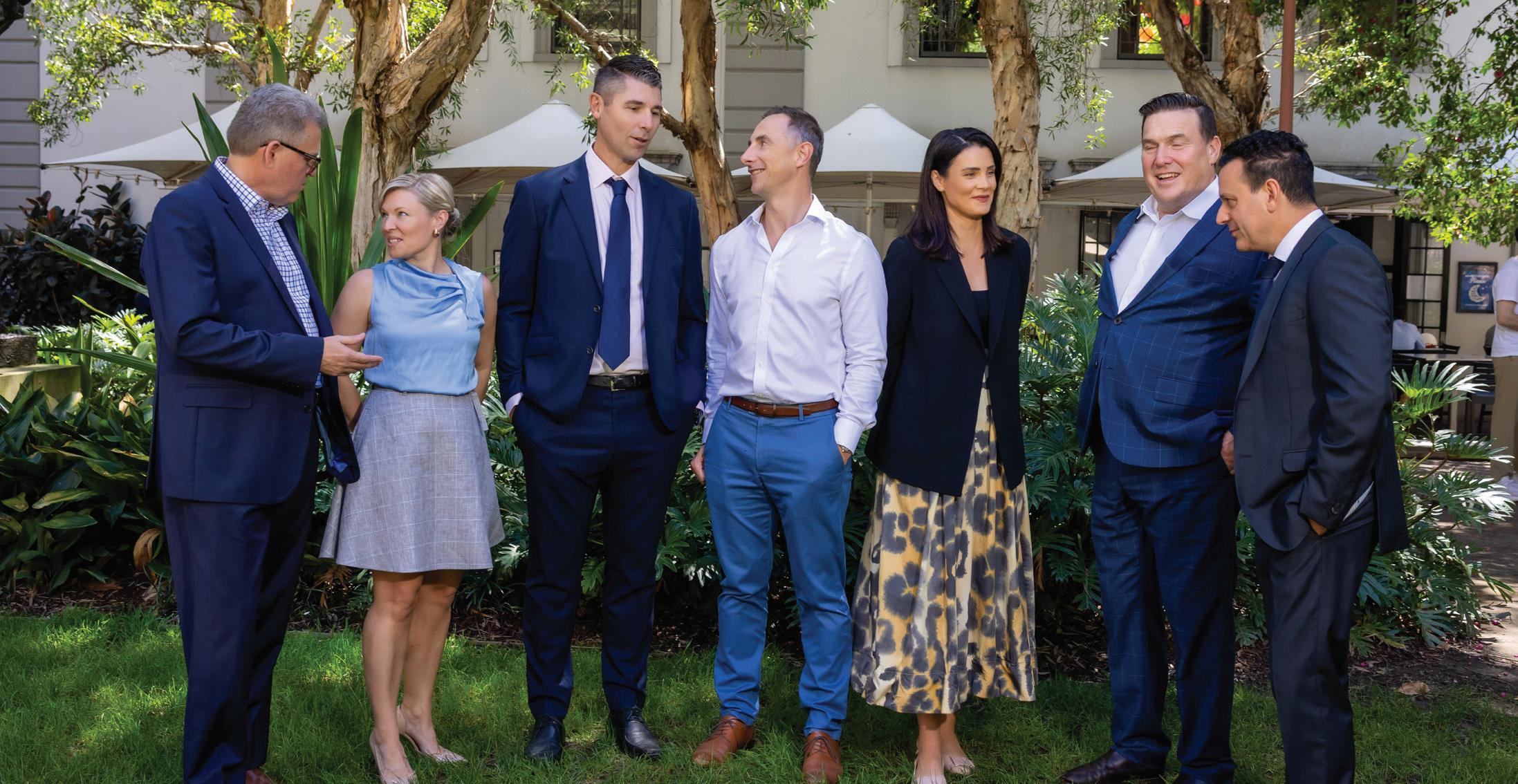
that ecosystem, he acknowledged, could be “a nightmare”.

At the same time, he believes lenders must own their part in simplifying the process: being clear about what they ask for and making it easy for brokers to provide the right documents once they have chosen a lender.
Roden drew on his own experience as a broker two decades earlier. “I empathise; I’ve been on that side. I started as a broker 20 years ago. A lot’s changed, and it will continue to change, but we need to play our part.”
“We’re a challenger brand, so we can’t just sit there and wait for business to come rolling in” Johnny Lockwood, BOQ Group
Bankwest has and will continue to invest in tools such as its proprietary DocBox – a secure document hub where files land on the application instantly and any missing information requests can be turned around quickly. The bank is also building a digital intuitive checklist that tailors documentation requirements to the specific deal, rather than forcing brokers through a generic list every time.
Hall echoed the message of shared responsibility. Yes, “lenders’ SLAs and turnaround times are only as good as the quality of the application submitted”, but he argued that digital technology is now critical to helping brokers meet those expectations. He said, “Brokers accepting and trusting those systems that lenders are introducing actually makes their lives easier. It’s less documentation they’re required to provide, and it fasttracks the system for them.”
Tools such as digital ID verification and
digital income verification reduce the documentation burden and accelerate assessment – provided brokers are comfortable adopting and trusting those systems.
Hall noted that AMP Bank has embedded its credit policies directly into its broker platform. At each stage of the process, the system signals whether the scenario is on or o policy, giving brokers clarity and helping them avoid surprises down the track. For him, it’s a partnership: brokers bring quality submissions, and technology plus clear policies make the whole ordeal easier.
Davis agreed that the complexity of lender panels and varied credit policies is real, but in many ways it’s a strength of a competitive market. To support brokers, Suncorp Bank has integrated a dynamic checklist into its ApplyOnline process, guiding brokers through which documents are needed for a given scenario. Davis sees future potential for technology that goes even further, such as scanning payslips to highlight inconsistencies or common issues before submission.
Davis also highlighted the importance of











proactive human support, especially for newer brokers. “Having that two-way conversation between the person assessing the risk and the broker is really powerful in building familiarity. One of the challenges as a non-major is that brokers don’t always deal with us regularly, so it’s about getting that regular rhythm that helps build knowledge,” he said.
From ING’s perspective, Delvescovo noted that brokers must navigate not one set of policies and systems but dozens. “That’s why we’re building a more intuitive application experience that guides brokers step by step through what’s needed for their specific scenario.”
At the same time, ING has grown its support base so brokers can speak directly to the team when a scenario gets complex, and Delvescovo actively encourages brokers to lean on BDMs to navigate tricky cases quickly.
“While the industry talks a lot about ‘time to yes’, and while we’re focused on that as well, for us it’s about creating a seamless endto-end experience,” he said. “Customers remember the moments that matter. From approval through to settlement and how smooth the journey was. And in areas where speed really counts, like refinances, we’re
currently averaging around 10 to 12 days, which makes a big difference to that overall experience.”
In Delvescovo’s view, there is little value in a lightning-fast approval if the customer is then left waiting weeks to settle.
Clutterbuck said the real test of service often comes with more complex selfemployed clients. “Having the ability to workshop scenarios up front is really important,” she said, as is access to credit experts or even securing a preliminary reference from a credit coach. Some lenders, Clutterbuck noted, already offer credit coaching models that she and her colleagues value highly.
“We see this very much as a shared responsibility,” Lockwood said. “There’s so much for
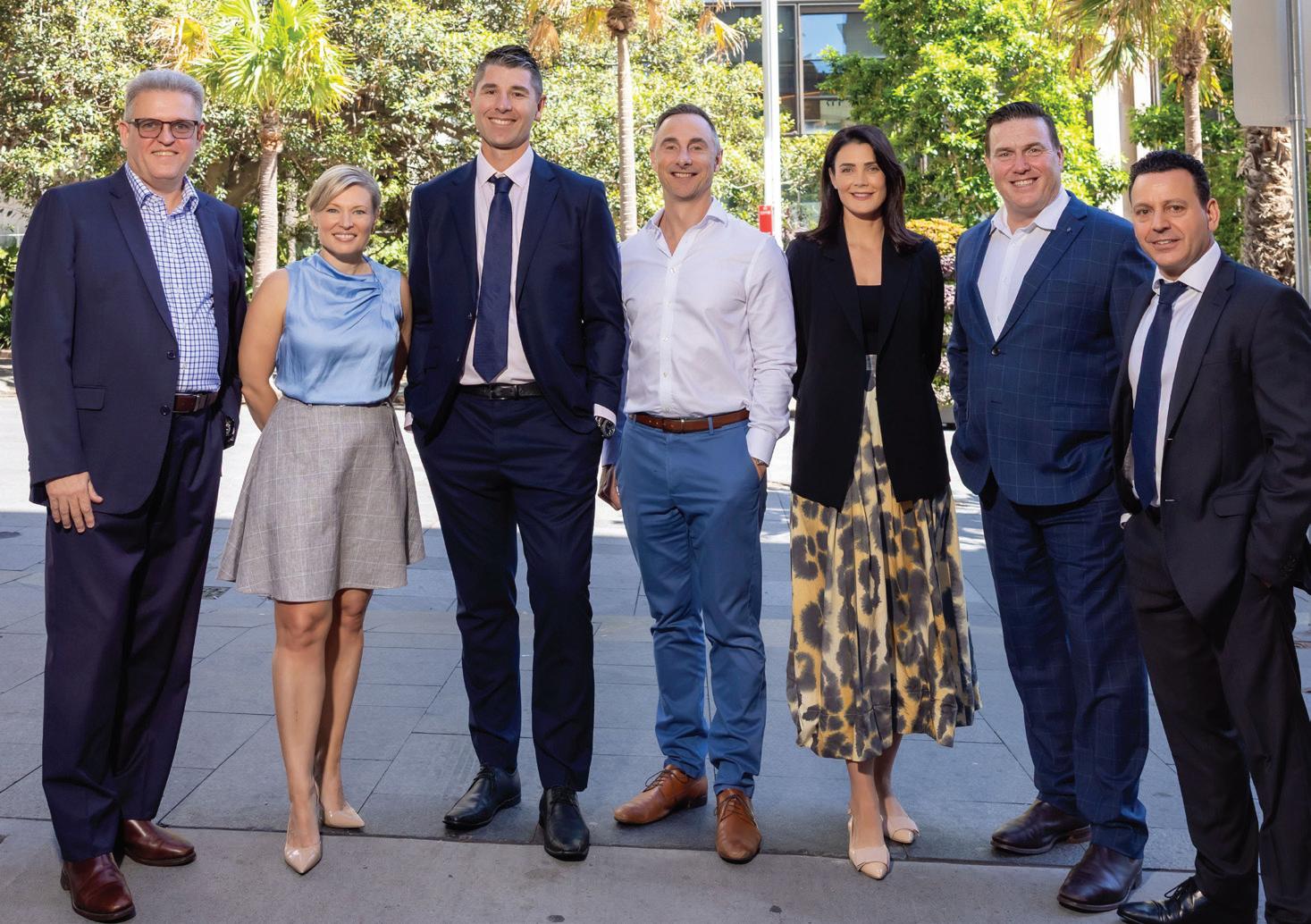
brokers to get across. It doesn’t matter how many awesome tools and self-serve digital options we offer through the portals, there’s still going to be that need for excellent support on more complex lending. Demand for high-quality assistance remains, especially regarding complex lending such as selfemployed applicants and negative gearing.”
ME Bank has focused on upskilling its BDMs to support these conversations, while also granting brokers direct access to assessors once deals are submitted. BDMs receive ongoing capability training, which enables them to effectively collaborate with brokers on individual scenarios. “On the policy side, we’ve expanded our capability and our credit appetite by providing more options for selfemployed customers, which now includes wages-only, one-year and two-year financials, giving more flexibility and alternative paths to assessment,” Lockwood said.
“You should expect the BDM and assessor support from ME Bank to be pretty up to speed and to stick with you through the process from start to finish,” he added.
If you were sitting in a broker’s chair today with a panel of lenders available and a client expecting certainty and speed, what would make you confidently choose your bank over a competitor?
Hall highlighted AMP Bank’s deliberate emphasis on retirees and pre-retirees preparing for retirement. “If you have a scenario that is quite in-depth, we can run that past our senior credit team and give you approval in writing before you submit it. You’ll
have the confidence that, as long as you package it up the same way the scenario came in, you’ll have an approval from a credit team,” he said.
Hall also returned to AMP Bank’s Simpology-powered broker platform, which is evidently a major source of pride for the bank.
Switching to ME Bank, Lockwood said, “We’ve been working hard to broaden our relevance for brokers. For most of what you’re looking for, we can deal with it, but if we can’t, you’ll get a quick no from us.”
ME Bank aims to hit the trifecta of “certainty, speed and reliability”, said Lockwood. “And we can probably cater for 95% of what you’re going to do.”
Roden believes Bankwest provides the most solutions for any customer in terms of its credit policies, including its one-year self-employed policy, the market-leading expat policy, and flexible treatment of bonuses and overtime.
“We’ve consistently been in the top three banks in ‘time to approval’ for the last 12 months,” said Roden, referring to MPA’s Brokers on Banks survey results. “As a broker,


For Suncorp Bank, “it’s about target segments,” said Davis. The bank’s approach to self-employed income assessment is intentionally straightforward, even if it doesn’t offer some of the more flexible one-year poli-
“One of the challenges as a non-major is that brokers don’t always deal with us regularly, so it’s about getting that regular rhythm that helps build knowledge” Shane Davis, Suncorp Bank
you’ve got to have different solutions for different customers. Not every customer is the same; they have different needs, different requirements, and their income is changing. The world is changing with digital, so people are earning income in different ways.”
Behind the scenes, Bankwest’s credit quality managers (CQMs) work alongside BDMs to workshop challenging deals, often providing conditional comfort that, if structured as discussed, a deal can proceed.
cies that other lenders do. The trade-off, Davis explained, is a consistent, transparent offering backed by firm turnaround-time promises: 48 hours to documents for Suncorp Bank SunLight PAYG, and self-employed transactions assessed using the bank’s basic selfemployed process; five days for most other deals and longer only for the most complex, comprehensive self-employed cases.
ING has been “broadening our credit policy to expand into new segments because
our challenge and opportunity is to become the lender that brokers recommend most often”, said Delvescovo. Brokers only recommend lenders they trust. “They need to know that their customers will be looked after, not just at approval and settlement but post-settlement as well,” he said.
Flexibility and a common-sense approach to credit are more important than ever. How are you delivering on these demands?
“Clear and flexible credit policy is critical,” said Delvescovo. “This has been a strong focus for us. We’ve made several policy enhancements and entered new segments.”
ING’s investment lending was enhanced around 18 months ago. It was designed to improve borrowing capacity and has already driven strong growth in investor flows. The bank is now turning its attention to the self-employed market, where it had a relatively limited presence for close to eight years. Recent enhancements include options for one-year financials and greater flexibility around ownership structures.
The bank has invested in expanding and
upskilling its credit assessment team and is running frequent education webinars to support brokers in navigating complex self‑employed scenarios and better under standing company financials. “For us, it’s about having clear and broad credit policy to cater for more customers,” said Delvescovo.
Davis framed flexibility through the lens of clarity and risk. “We’re very clear about what type of customer we can bank and what type of customer we choose not to. That quick ‘no’ is really valuable. You need to know that an application is not going to meet our risk settings with us.”
Suncorp Bank, explained Davis, uses a strongly risk‑based approach: where clients have strong fundamentals – such as excellent credit history, stable employment and solid equity – there may be room for more flexibility elsewhere in the deal. Where those founda tions are missing, the bank is more cautious. The aim is to help brokers understand where Suncorp Bank sits on the risk curve and where it will, as Davis put it, “tap out”.
“There’s no such thing as a vanilla deal,” Lockwood said. “The ideal is a vanilla deal that goes through untouched, but in reality there’s always something that needs to be spoken about at some point.”
ME Bank’s approach is to connect the broker directly with the assessor “so both can walk through the detail together”. The bank has also invested heavily in upskilling BDMs to support this collaborative approach and broadened its product and policy suite to increase its relevance.
“We are focused on increasing our market
share,” said Lockwood. “We aim to process more deals by being top of mind and offering flexibility, so brokers see ME Bank as capable of handling a wider range of transactions.”
Under its Built by Brokers program, Bankwest has actively sought feedback from frontline brokers to ensure its policy changes are meaningful and commercially relevant. Policies for self employed, bonus income, expats and, soon, high LVR lending have all been shaped and refined based on what brokers say they need.

AMP Bank’s “highly experienced senior credit team” is crucial for delivering the flex ibility brokers expect. Hall explained, “We’re continuing to invest in educating and upskilling our other credit teams and making sure they have the right delegated lending authority to make informed deci sions. It’s about using the data and docu ments we have available about the customer’s circumstances to then make a commercial decision on whether it’s fit for AMP Bank as well as the customer.”
“Having the ability to workshop scenarios up front is really important”
Avril Clutterbuck, Azura Financial
“I think we’re pretty well known for our flexibility and common sense,” said Roden. “Brokers have got such a wide range of customers; we can offer solutions to the majority of them, which gives brokers a great opportunity to recommend us to your customer.”
Bankwest’s CQM team works with BDMs to workshop tricky scenarios and look beyond single data points – for example, a missed repayment – to the full context of a custom er’s situation. As the Bankwest mantra goes, “Never say no until you’ve got the full picture.”
Hall stressed that, regardless of how much technology a bank brings into its business, “there still needs to be a commercial decision based on the person’s circumstances. That can’t be removed.”
How are you balancing investment in AI and automation with maintaining the human element and support that brokers and customers value?
Hall discussed how important it is for banks to continually invest in AI to create efficien cies within teams, not necessarily to replace humans for the purpose of doing so. “It’s about using data and information as best as possible and using AI to get an outcome that supports human decision making and creates efficiencies,” he said.
Roden reinforced that the mortgage industry is “human led, built on human interaction”, and he doesn’t see that changing. While people using AI and digital tech will undoubtedly be able to stay ahead of the
curve, “the human element is always going to be there”, said Roden.
Bankwest has developed “numerous digital tools” and continues to build more “not just for brokers but for their customers as well”, but Roden stresses that people remain “one of the key pillars to delivering these”.
As for the broker experience, Cunliffe said that “as brokers, we’re always focused on how we can bring in AI and tech so we can have more customer-facing time”. She worries that with some bank initiatives, “it’s about distancing from us with technology”.
Cunliffe also drew attention to the unintended consequence that, with more tech in play, brokers are now spending a lot of time dealing with tech support. She pressed lenders to explain how they are providing tech support for brokers “to navigate those issues when things go wrong or when the tech doesn’t quite work”, and whether BDMs or lender teams are effectively being positioned to help with the tech support piece.
“It’s a really good question,” Davis responded. “Where it’s on the lender, it often does fall to BDMs to help navigate that. We provide BDMs with the knowledge they need before we launch anything into market so they can support brokers and troubleshoot.”
Clutterbuck recalled numerous instances where lenders had rolled out certain AI advances that had removed the human element a little too much, “and that’s caused a lot of issues”.
“It’s about balancing that and making sure there is still a human touch to deal with that transition,” said Clutterbuck.
At ME Bank, “we are digitally enabled, relationship-led”, said Lockwood, in one of the best soundbites of the day. “We’re invested heavily in a new platform with tools available for brokers. We’ll utilise industry technologies that are out there to provide familiarity for brokers, but we’ll also look to innovate and make things very simple.”
When dealing with ME Bank, “you’re always going to have the BDM there, you’re always going to have the assessor there”, Lockwood continued. He agreed that new
How brokers view AI in the next 1-2 years

“We’re always focused on how we can bring in AI and tech so that we can have more customer-facing time”
Melanie Cunliffe, Indigo Finance
product launches can be difficult for brokers.
To combat this, “our BDMs have a hypercare channel which facilitates direct communication to the platform and program teams for rapid identification and resolution of any issues. We make sure we’re plugged in through brokers and the sales team.”
Delvescovo encapsulated ING’s approach succinctly: “Our view is simple – technology should remove friction, not relationships. Our goal is to utilise technology to support a more efficient process but ensure we keep personalised service every step of the way, particularly where there’s complexity.”
Complex scenarios are where brokers value that support and personal service most, Delvescovo explained. “AI and auto-
mation have made processes more efficient for both brokers and for us, but the personalised service stays, especially when things get complex. Ultimately, we want to help brokers write more business and help ourselves write more business.”
Rounding off the question, Cunliffe reminded the roundtable that it’s not just about how fast lenders are when everything goes smoothly, but how quickly they can resolve issues when something goes wrong.
Competition is good for consumers. What is your role in promoting competition in the Australian mortgage market? Roden said you “can never control what

anybody else does”, so Bankwest’s focus is on what it can influence: “We’ve just got to continue to offer more solutions, continue challenging processes and getting more efficient.” As long as the bank keeps lifting its own game, he believes “competition stays strong within the market”, giving brokers and customers more genuine choice.
“It’s a bit of a catchphrase, but we’re customer-centric,” said Davis. “We’re always asking what’s the best we can do for our customer. That’s the best form of competition if everyone is thinking that way – providing value to customers.”
“Competition is totally healthy,” added Lockwood. “We’re a challenger brand, so we can’t just sit there and wait for business to
come rolling in. We’ve got to try harder than some of the big five. For us, that means continuing to innovate and invest, not just in platforms but in people as well.”
For Lockwood, “it’s great being a challenger because you can do things a little differently, but you’ve got to work pretty hard, and we’re going to continue to do that”.
Hall sees AMP Bank’s role as a challenger as helping “raise the bar” for everyone. “As a challenger bank with a strong desire to continue to innovate, I think that’s important for everyone because it promotes others to continue to raise the bar,” he said.
Whether AMP Bank or another player is “setting the benchmark high, we’ve got something to strive towards”. In his view, the ulti-
mate winners are “brokers and customers”, which is why he strongly supports “continuing to innovate as a challenger bank”.
Bringing the day’s discussion to a close, Delvescovo shared his view: “Non-majors play a critical role in ensuring brokers can deliver fair value to customers. That’s not just on price but on policy, service and core execution. That’s what delivers value to customers.
“ING’s growth ambitions combined with our commitment to the broker channel drive competition in the market. The fact that we want to grow, and that customers choose brokers four out of five times, shows we’re contributing to a more competitive market where customers get better value.”
flourishes when diverse perspectives are nourished, argues speaker, leadership
WE ARE living in a paradox. Organisations are more connected than ever through technology and systems, yet employees report feeling increasingly disconnected from their work. Across industries, people are disengaged, resistant to change and struggling to bring their best thinking to work. This disconnection erodes trust, slows decisionmaking and limits innovation. For CEOs facing complex business challenges, the question is no longer how to manage change but how to lead the human experience of it.
Empathy is the leadership capability that will define competitive advantage. Far from being soft or a ‘nice-to-have’, it’s essential for understanding the human dynamics behind organisational decisions while balancing them with rational clarity. Leading with empathy enables CEOs to break through resistance, create alignment and shift organisational focus with intent and clarity towards what matters most.
Empathy drives performance and engagement
Disconnection has a measurable cost. Nearly 60% of employees worldwide report feeling disengaged at work, leading to higher turnover, decreased productivity and
reduced psychological safety. Employees are twice as likely to remain in organisations where leaders demonstrate empathy.
At the executive level, consider a board navigating a major strategic pivot. Different divisions hold conflicting priorities, and the executive team is resistant to change. A CEO who listens to concerns, acknowledges competing pressures and co-creates the plan secures alignment across the organisation. Empathy here builds trust. Those small acts of trust − what I describe as performance multipliers − compound over time, accelerating collaboration and turning connection into measurable results. Organisations led with empathy see a 21% boost in profitability and a 17% increase in productivity.
Empathy enables innovation, inclusion and the next-generation workforce
Innovation flourishes when diverse perspectives are valued and a culture of psychological safety is present. Most organisations today are composed of culturally diverse teams, each with distinct communication styles and perspectives on the world. Leaders who adapt their approach
to meet the needs of different people open doors to authentic dialogue and deeper understanding.
The workforce of 2026 will be more diverse, digitally native and values-driven than ever before. Employees will expect purpose, connection and flexibility, not just financial reward. Environmental and social conditions, hybrid and flexible work models, and technology-driven disruption are shaping expectations for leaders who can meet them. Empathy is the skill that allows leaders to understand what drives, motivates and challenges people in this new context.
In a globally connected business environment, senior leaders across regions bring different perspectives shaped by local culture, market dynamics and social norms. A CEO who intentionally seeks input from quieter or underrepresented voices − whether regional heads, minority groups or cross-generational teams − uncovers insights that reshape strategy, identify opportunities competitors may overlook and ensure decisions resonate across geographies. By anticipating societal shifts, leveraging diverse insights and creating environments in which people thrive, empathetic leaders turn connection into organisational advantage, accelerating

A CEO who intentionally seeks input from quieter or underrepresented voices … uncovers insights that reshape strategy
by perception and experience. The most effective leaders balance rational clarity with empathy.
Consider a large-scale technology or AI adoption a ecting thousands of employees. While a board may focus on e ciency and competitive advantage, the CEO must also consider the human impact. Involving executives in designing implementation strategies, clearly communicating purpose and anticipating resistance ensures buy-in without eroding trust.
environment − not only physically but psychologically. Empathetic leadership helps identify risks early, understand pressures on teams and implement proactive measures that meet legal compliance while maintaining trust and engagement. Leaders who ignore these obligations expose their organisations to regulatory risk, employee harm and reputational damage − highlighting that empathy is as much a governance tool as a human one.
Empathetic organisations often report up to 40% lower turnover and a 25% improvement in customer satisfaction. This alignment of head and heart reflects what leadership research confirms: 80% of CEOs rank empathy as critical to leadership success.
Empathy as a leadership imperative
Today’s workforce demands authentic, inclusive leaders who balance performance with human connection. Empathy is a strategic imperative, enabling CEOs to unlock engagement, foster innovation and drive change towards what truly matters.
For leaders preparing for 2026, the question is clear. Can you a ord the hidden costs of disconnection, with disengaged teams, slowed decision-making and low productivity? Or will you embrace humanfirst leadership, harnessing the dynamic duo of head and heart to create trust, alignment and performance multipliers across your organisation? The leaders who act now are defining the future of leadership.
The dynamic duo of head and heart
Many leaders still rely heavily on rational analysis, strategy and financial metrics. Yet organisational success ultimately depends on human behaviour, which is shaped
Balancing the head and heart connection also requires recognising the legal obligations every organisation holds. Under each state’s Workplace Health and Safety Act, boards and executives must provide a safe work













Melinda McCormack is the founder of Impact with Empathy, a sought-after speaker, leadership futurist and author of PULSE:EmpathyIsYourEdge.Her mission is to help solve the disconnection crisis and create lasting change. Her signature ve-step, science-based PULSE framework applies empathy as the competitive edge to build trust, accelerate engagement and drive performance. For more information, visit www.melindamccormack.com. decision-making, agility and innovation. Inclusive leadership rooted in empathy is directly linked to loyalty: 92% of employees in empathetic organisations say it strongly influences their commitment to their employer. CEOs who lead human-first, recognising the needs of multigenerational and multidiverse teams, will unlock engagement, innovation and adaptability, creating a workforce prepared for the challenges of 2026 and beyond.








Crisis is the ultimate test of leadership. As a founder-CEO, you need to learn how to lead in difficult times, and the team will be watching you even more intently, writes Dane Hudson in this edited book extract
A COMPELLING VISION will inspire your team when times are good but also hold them together when times are tough. Furthermore, in a crisis the stakeholders will look to you for calm, clear and disciplined actions to lead the business back into growth and profitability.
In a crisis – whether it’s the loss of a major customer, a critical team member’s departure, a brand or reputational issue or a global shock like COVID-19 – your role as CEO is to lead deliberately, to role-model how you want the rest of your team to lead, and to maintain focus on what matters in this moment but with an eye on the future. This is when your behaviours matter most because your leadership is intently watched and evaluated in this situation.
When leading in a crisis, most of your leadership behaviours should be the same as when there is no crisis – because at all times you must lead the business with urgency.
We are all human, and crises affect us. It’s OK to feel the pressure and momentarily dip. This could be evident in your visible frustration or disappointment with an outcome, but you need to bounce back quickly.
The seven critical leadership traits
These seven leadership traits are especially critical in a crisis, and you need to be deliberate in how you use them:
• Be aware of your leadership shadow: Times of crisis magnify your leadership shadow as the team watches you even more closely. Long after the crisis, people will remember whether your decisions were fair and respectful, and consistent with the company values.
while laying out the roadmap to take the business forward.
• Be out front, visible, and communicate with the team: In times of crisis, the team is looking for you. Think about the president or prime minister of a country. When there is a crisis in the country, the media love to find out the leader was nowhere to be seen or, worse still, at some holiday resort. You need to keep the team informed; and remember, it’s impossible to overcommunicate.
Tell your stakeholders as much as you can without increasing uncertainty. Sometimes, too much information can fuel confusion and fear rather than reduce it
• Be a person of hope and a simplifier: The team needs someone who is confident about the future but also pragmatic about current realities. You must cut through the noise, communicating clear perspectives on the current situation
Increase your engagement with frequent all-hands meetings. Keep the team informed about business developments and celebrate small wins. Step in and take ownership of significant issues. Your presence reassures the team.

• Know the details intimately: Step above the chaos but also understand the specifics. In times of crisis, superficial knowledge isn’t enough. Ask yourself: What is most important right now? What am I missing? Is my team being fully honest, or are they telling me what they think I want to hear? Am I being too optimistic? How could this crisis unfold? What are the best – and worst – case outcomes? Which stakeholders need to be updated – banks, investors, the board, your family? Am I hoping for the best but planning for the worst?
• Get close to the front line: Information flowing through multiple levels of an organisation can be slow and affect the accuracy of this information. Get close to the front line to understand exactly what is happening. Speed and accuracy in crisis management can mean the di erence between minor setbacks and major failures.
• Focus on less to achieve more: What is important right now? It’s almost always about cash flow. What are the three or four levers you can pull to help that situation? For example, growing the business uses cash, so you might dial back your sales and business development initiatives to conserve cash. Think, ‘What else can we stop doing?’ Sales and business development are good examples, but what other controllable investments can you reduce (such as tighter inventory management)? Be ruthless in your prioritisation; every minute and dollar spent on non-essential e orts in a crisis puts your business further at risk.
• Emphasise your company values: They are a filter by which you make decisions. In a crisis, regularly challenge yourself and your team to ensure that your actions align with those values. If transparency is one of your values, tell your stakeholders as much as you can without increasing
uncertainty. Sometimes, too much information can fuel confusion and fear rather than reduce it.
A final thought ties back to the quote, ‘hope for the best, plan for the worst’. An approach to protect you from being too optimistic is to appoint someone on your team to be a devil’s advocate to challenge your thinking. This person should ask tough questions, stress-test your assumptions and force you to consider worst-case scenarios. It’s not a fun role, but it is an essential one.




Dane Hudson is the author of BeatsVision:HowtoBetheLeaderYour CompanyNeeds–Starting Monday published by Wiley. This is an edited extract from the book.

Jaime Savory established Gippsland Finance Solutions with a clear goal in mind. Twelve years on, her focus hasn’t changed
LIFE CAN be pretty good in Lake’s Entrance, the scenic coastal town nestled in Victoria’s East Gippsland region. Kilometres of white sandy beaches stretch along the Tasman Sea, while a vast network of inland waterways provides endless opportunity for water sports, hiking and wildlife spotting.
Head into town and you can find some of the freshest seafood in all of Victoria, prized by tourists and locals alike. But while oysters and local wine are in abundance, there is one thing missing in this desirable slice of oceanside living – banks, and not the sand kind.
Following numerous branch closures, just two banks now serve Lake’s Entrance’s 5,000-plus residents, making it a textbook case of regional Australia’s shrinking access to finance.
What happens, say, when a first home buyer, new to the world of mortgage finance and needing guidance, is unable to secure a loan at either of the two branches available to them? Do they just give up?
It’s a scenario that Jaime Savory, founder of brokerage Gippsland Finance Solutions (GFS), hears about all too often.
It’s also a perplexingly modern contradiction: Why, when populations are increasing and the need for finance has never been higher, are banks shutting their branches?
“It just didn’t make any sense to me,” says Savory. So she set out to create a mini mortgage broking empire in the Gippsland region by stepping up for homebuyers when so many banks had shipped out.
Since founding GFS back in 2014, Savory’s passion for bringing finance solutions to regional communities has not wavered one bit.
GFS’s success is built on a simple philosophy: “It’s all about the relationship. Clients
It’s little wonder that GFS has had such resounding success since Savory opened her first o ce in Bairnsdale 12 years ago. Today it spans four o ces housing a star team of predominantly female brokers. In
“Clients want a relationship, and that’s the culture we have at GFS. You can walk into any of our o ces, or we can meet you wherever you are”
want a relationship, and that’s the culture we have at GFS. You can walk into any of our o ces, or we can meet you wherever you are.”
That’s a far cry from the modern digital banking landscape, where customers are, to use Savory’s words, dealing with “some random in a Sydney high-rise … they’re just not comfortable with that”.
fact, GFS’s 20-plus team of finance experts includes just one bloke (for now) – Jaime’s husband, Heath.
GFS has become something of an incubator for regionally based women entering the finance industry. The brokerage’s latest recruit, for instance, is a single mother of three hoping to reignite her career.
Gippsland Finance Solutions (GFS) has seen a rise in sea-change clients since COVID-19, many of them selling $2 million homes in Melbourne to relocate to coastal Gippsland towns where properties cost less. That shift has driven demand for bridging finance – a product founder Jaime Savory says the brokerage “hardly” used to write in regional Victoria. But serving those clients brings its own challenges. Many bridging finance providers impose strict postcode restrictions and won’t lend in regional areas, forcing GFS to rely heavily on non-standard lenders that are more flexible. The ability to access these specialist lenders allows GFS to deliver “a di erent o ering to rural clients that some of the majors just can’t do”.















“You shouldn’t have to pick between being a mum, having a career and living in the country versus living in the city,” says Savory. “I’m pretty passionate about giving mums an option to be able to do that.”
Savory calls “rubbish” on the idea that you must move to Melbourne or Sydney to make good money in a successful career. She should know.
Grit and determination
GFS was born out of both frustration and conviction. Savory was working at a major bank when, during maternity leave with her second child, she was asked to return early. A disagreement over how that return would look – particularly around flexibility – ensued, and she realised the bank’s expectations no longer aligned with her own ethics and priorities. The vibe was well and truly o .
Savory resigned in December and, the following January, opened GFS in Bairnsdale










Name: Gippsland Finance Solutions
Headcount: 20
Established: 2014
Offices: Bairnsdale, Traralgon, Warragul, Sale
Services offered: Home loans, investment loans, SMSF loans, commercial and business loans
home buyers, farmers or seasoned investors – can have that face-to-face contact that’s unfortunately getting harder to come by these days.





with modest ambitions: work three days a week, “pay for the groceries” and preserve a genuine work-life balance.
Within a month she discovered she was pregnant again. “How the heck am I going to do this?” Savory recalls thinking to herself. Indeed, preparing for a third child on one hand and running a startup business on the other is not for the faint of heart.
Nonetheless, GFS went from strength to strength, with loan volumes going through the roof.
A defining moment came when Savory had to hire her first admin person.
“I was terrified of employing someone,” Savory says. “I was thinking, now I don’t just need to worry about putting food on my table; I’ve got this whole other family that I have to equate for. It took me years to build up the courage to do that.”
Today, GFS is not just a local institution; it’s an essential one. Clients – whether first
And as bank branches dry up, GFS is only becoming bigger. Having built three o ces from scratch in Bairnsdale, Traralgon and Warragul, GFS opened a fourth shop in Sale in late 2025.
This was “a little bit di erent than the other three startups we did”, says Savory, because it was an acquisition of an existing business rather than a de novo o ce.
Savory says she is regularly approached to buy regional Victorian books of business, but is highly selective, only considering those that fit GFS’s culture and clientele and align with how the firm wants to look after its clients. She won’t, for example, buy “a huge book of commercial clients that don’t ever want to be contacted”, because “that’s just not what we do”.
Did Savory ever envision GFS would grow to the size it is now?
“Absolutely not. That was never the plan. But in saying that, if I knew what I know now, I would have done it earlier.”
Now, GFS is preparing for its next major milestone: a second bloke is about to join the team.
“Do I actively seek out women? No, but do they naturally come to us? Absolutely,” says Savory.







3

“ The best habits are simple, enjoyable and consistent. When you look forward to them, showing up becomes the easy part ”

2,000
100,000
Loan Market broker Julian Choo uses virtual reality shadow boxing and cold showers to sharpen his focus
FOR LOAN MARKET broker Julian Choo, a simple experiment to boost his energy has become a non-negotiable performance habit.
“One of the most impactful habits I have developed recently is exercising through virtual reality [VR] shadow boxing,” Choo says.
What began as a way to get through his
first year in business is now the anchor of his mornings.
Like many new brokers, Choo found his early days in the job exciting but demanding and went looking for more “energy, structure and consistency” in his schedule.
Conversations with mentors revealed a pattern: high performers rose earlier and
protected a set routine. After reading Robin Sharma’s The 5 AM Club, Choo built his own version around two rules: “Do it every day, and never skip more than one day.”
At its core is 20 minutes of VR shadow boxing, followed by a bracing cold shower that delivers “a sense of clarity and reset” before the workday begins.













For 40 years, we’ve helped Australians make it happen. Our experience and solutions give brokers the confidence to deliver more for their clients. More options. More support. More for what's next. Make it happen with Resimac.