





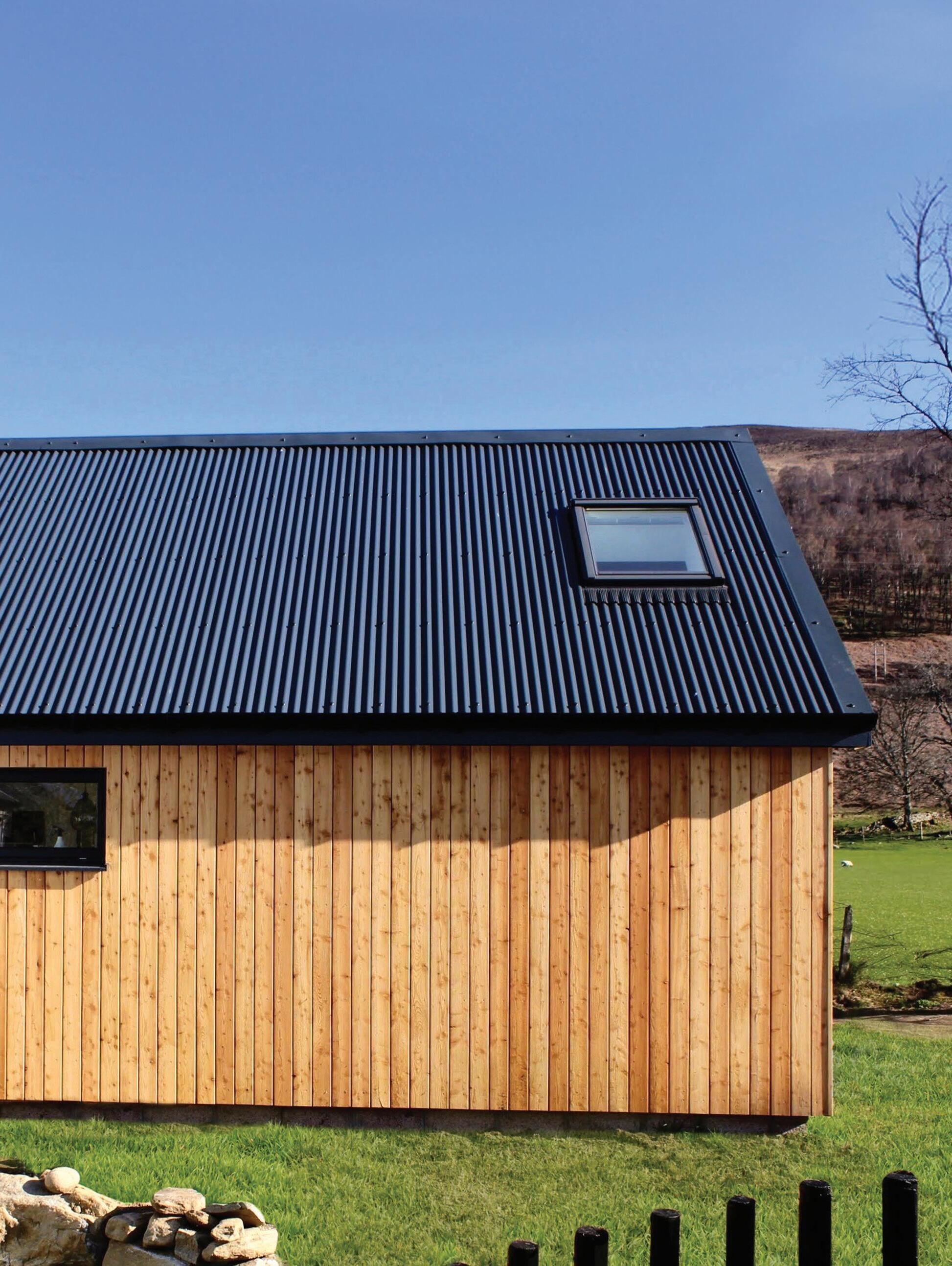
Cladco Steel Roofing Sheets are suitable for agricultural, industrial and domestic applications, available in up to 14 colours. Speak to our expert Sales team to find out more.

Corrugated, Box Profile, Tile Form and Standing Seam Roofing Sheets Available Cut To Custom Lengths
Polyester Paint, PVC Or Prelaq Mica Coatings

Pictured: 13/3 Corrugated Roof Sheets Nationwide Delivery Or Collection
Andover Branch 55 Reith Way, Andover, Hampshire SP10 3TY
Mon-Fri 8am to 5pm, Sat 8am to 1pm
Head Office Beardown Road, Exeter Road
Industrial Estate, Okehampton, Devon EX20 1UA
Mon-Fri 8am to 5pm, Sat 8am to 1pm
SOUTH EAST FARMER
Kelsey Media, The Granary, Downs Court Yalding Hill, Yalding, Maidstone, Kent, ME18 6AL 01959 541444
EDITORIAL
Editor: Malcolm Triggs
Email: sef.ed@kelsey.co.uk
Photography: Martin Apps, Countrywide Photographic
ADVERTISING & MARKETING
Jamie McGrorty 01303 233883 jamie.mcgrorty@kelsey.co.uk
GRAPHIC DESIGN
Jo Legg 07306 482166 jo.legg@flair-design.co.uk
MANAGEMENT
DIVISIONAL MANAGING DIRECTOR: Steve Kendall
PUBLISHER: Jamie McGrorty
RETAIL DIRECTOR: Steve Brown
SUBSCRIPTION MARKETING MANAGER: Claire Aspinall
PRINT PRODUCTION MANAGER: Kelly Orriss
DISTRIBUTION
Distribution in Great Britain: Seymour Distribution Limited 2 East Poultry Avenue, London EC1A 9PT Tel: 020 7429 4000 www.seymour.co.uk
Distribution in Northern Ireland and the Republic of Ireland: Newspread Tel: +353 23 886 3850
Kelsey Media 2024 © all rights reserved. Kelsey Media is a trading name of Kelsey Publishing Ltd. Reproduction in whole or in part is forbidden except with permission in writing from the publishers. Note to contributors: articles submitted for consideration by the editor must be the original work of the author and not previously published. Where photographs are included, which are not the property of the contributor, permission to reproduce them must have been obtained from the owner of the copyright. The editor cannot guarantee a personal response to all letters and emails received. The views expressed in the magazine are not necessarily those of the Editor or the Publisher. Kelsey Publishing Ltd accepts no liability for products and services offered by third parties.
Kelsey Media takes your personal data very seriously. For more information on our privacy policy, please visit www.kelsey.co.uk/privacy-policy/
If at any point you have any queries regarding Kelsey’s data policy you can email our Data Protection Officer at dpo@kelsey.co.uk

Healthy soil, healthy plants.
GRAIN HARVEST REPORT
John Smith of Weald Granary Ltd reviews the 2024 harvest.
31 PLOUGHING MATCHES
A full list of the region's fixtures.
38 TETLOW KING
Autumn planning roundup.
41 STEVE PACK AGRICULTURAL SERVICES
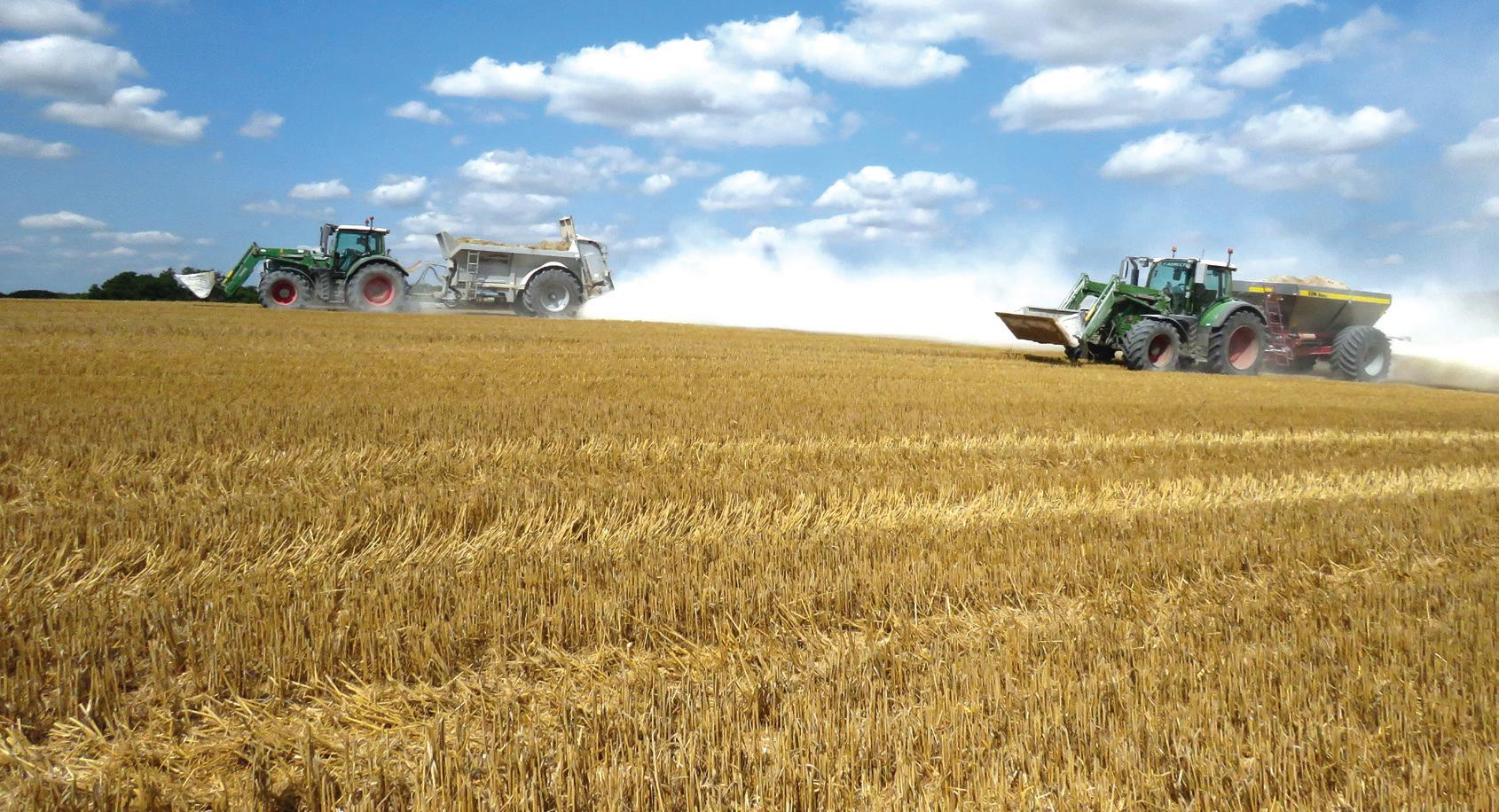
Few can equal the complete package offered when it comes to liming and fertiliser spreading.
44 JRJ CONSTRUCTION
www.kelsey.co.uk
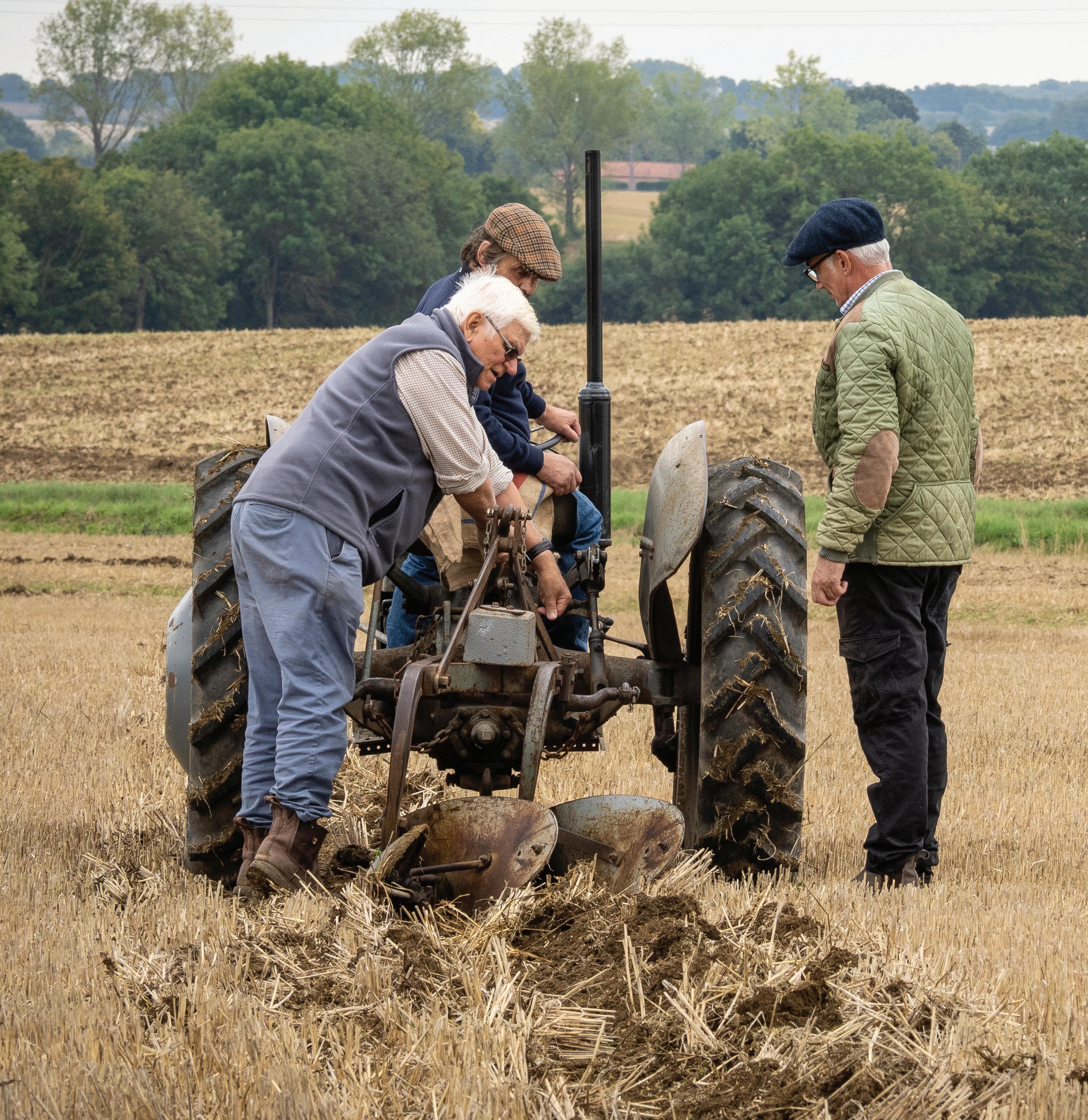
Cover picture: Ongar Ploughing Match
While all businesses recognise the value of repeat customers, Jez Reddecliffe has turned it into an art form.
A move to make British berry growers pay for the recruitment and travel costs of the seasonal workers they employ could cost the industry £60m a year, a leading figure and former grower has claimed.
Nick Marston, chair of British Berry Growers, said the changes proposed by the Supplier Ethical Data Exchange (SEDEX) to its SMETA 7.0 audit regime could “wipe out the berry sector at a stroke”.
The changes would require farming and growing businesses to pay for the recruitment and transportation fees of their seasonal workers under the ‘employer pays’ principle.
“British berry growers employ thousands of seasonal workers each year to help pick berries and work on our farms,” Nick said. “The new auditing requirements could cost the berry industry an extra £60 million per year. That is simply unsustainable.”
He went on: “The new requirements have been announced without proper consultation and ahead of a British Retail Consortium (BRC) and DEFRA impact assessment into the workability of the employer pays principle.
“That assessment is due to be completed in Spring 2025. Right now, there is no clarity on how the supply chain is going to pay for these new requirements. We are concerned that growers could be forced to foot the bill; a bill they simply cannot afford.
"This new standard has the potential to cause chaos and stress in the berry industry if introduced without appropriate consultation across the whole supply chain."
British Berry Growers wants the requirement for the employer to pay for travel and visa costs to be removed from the SEDEX proposals and for the BRC to confirm that no action will be taken if suppliers do not meet these targets.
It is also calling for a fair consultation across the whole supply chain. It said in a
statement: “In future all farm packhouse assurance schemes should have a mandatory requirement for a proper governance structure which allows for full consultation of all stakeholders that considers all the consequences of the scheme requirements, including both cost and practically.”
The organisation also wants additional costs related to the employer pays principle to be shown separately so that they can be recompensed.
“The burden of the cost cannot be absorbed by our members without the cost being underwritten by either retailers or the Government. There are serious implications for the UK food price inflation and security,” said Nick.
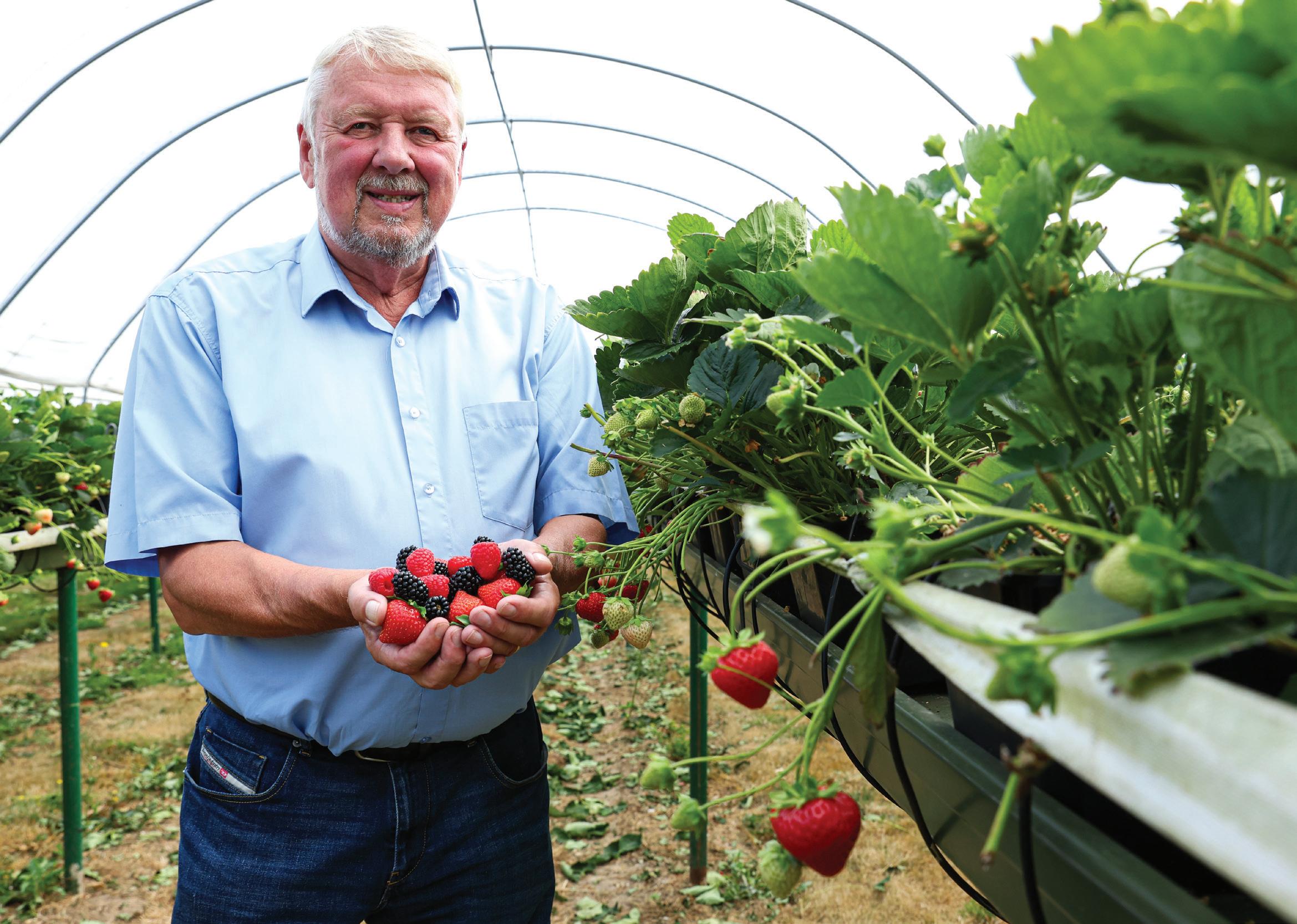
Nick Marston
Potential farmers of the future have been shortlisted for awards that will be presented at the National Federation of Young Farmers’ Clubs’ (NFYFC) YFC Achiever Awards in November.
Forty finalists, including a number from Kent, Oxfordshire and Hampshire, have been shortlisted for their achievements in rural communities after being interviewed by the judges in eight different categories.
The award ceremony on 2 November in Birmingham will be supported by Kelvin and Liz Fletcher, stars of ITV’s Fletchers Family Farm, who helped judge the Young Farmer of the Year Award, sponsored by The Farm Safety Foundation.
NFYFC President John Lee OBE DL said the finalists showed what could be achieved by being part of a Young Farmers’ Club. “I feel immense pride to be involved in the YFC Achiever Awards 2024, especially after meeting some of the finalists and seeing the contribution they are making to our organisation and the skills they have gained by being part of it,” he said.
The Heart of YFC Award, for which Oxfordshire’s Jack Saunders is in the running, will see the finalists facing an online public vote as well as a judging panel.
Other South East finalists are Ashford & District YFC, Kent, whose members are hoping to win the Club of the Year category, and Mark Horner from Oxfordshire and Hampshire’s Martin Attwell, who are competing for the YFC Supporter of the Year crown.
Another Kent Club, Weald of Kent YFC, is amongst the finalists in the Community Spirit Award category, while Ashford’s Megan (surname withheld) and Hampshire’s Sian Grove are both hoping to be named Young Farmer of the Year.
The fourth annual tractor run in aid of a children’s cancer charity is being held this year on 22 September.
Organiser Becky Ward, whose son Joey Ward-Bates died from a brain tumour aged just six in 2019, is hoping as many tractor owners as possible will support the Abbie’s Army research charity.
The run will begin and end at Riggs Hill Farm, Otterden in Kent, with those taking part paying £10 for the privilege, with all the proceeds going to the charity. The plan is to meet at 10am and set off half an hour later.
“After my son Joey passed away from this deadly brain tumour I began organising this tractor run in his memory,” explained Becky. “I am a farmer’s daughter and have a smallholding myself.
“This will be the fourth year of the run and I would love to get as many tractors there as I can in order to raise as much money as possible.”
Refreshments will be available and Becky can be contacted by emailing Joeysarmy13@gmail.com

It was a relief when that spell of hot, humid, sleep-denying weather that was with us for a few days in August passed, but the more ambient conditions that followed seemed to mark a distinct change in the weather.
It may have been my imagination, but it suddenly felt almost autumnal, with the evenings drawing in apace and a definite change to the morning sunshine, along with a cooler feel to the air.
It’s not been a great summer, particularly for those who depend on the weather to ripen their crops rather than just for the ‘feelgood’ benefits of warm sunshine, but harvest marks the opportunity for a new beginning as well as the end of the current growing season.
This September, of course, sees the start not just of the annual crop cycle but of a five-year political cycle with a new party at the helm.
Perhaps reassuringly, the incoming Labour Government isn’t promising a “new start”. While that might be welcome – and, indeed, has been promised – in some quarters, farmers have had enough change over the past few years and need stability rather than innovation.
Trusting politicians amounts to wishful thinking at best, but the initial noises from the team at DEFRA’s helm have been reassuring.
Farming Minister Daniel Zeichner told members of the NFU at its summer reception that his boss, Secretary of State Steve Reed, had confirmed the new Government was “not going to upset the apple cart”, and followed it with a quip about doubting whether “all those Australian Pink Lady apples” still came by cart anyway.
It wasn’t a great gag, but the message – in essence: we’re not going to change direction, we are going to support British farming and we believe in food security – will have been welcomed by farmers making vital calculations around whether to plant wheat or wild flowers in some of their fields following this year’s harvest.
With wild flowers in mind, it’s interesting to note that DEFRA has added more actions to the list of Sustainable Farming Incentive options that can only be implemented across 25% of an applicant’s land.
As the Australian growers no doubt point out when loading all those Pink Lady apples on the cart: “It’s all about balance.”


EMAIL YOUR VIEWS, LETTERS OR OPINIONS TO: sef.ed@kelsey.co.uk or write to the address on page 3
® MALCOLM TRIGGS - EDITOR
DEFRA has announced further changes in the way the Sustainable Farming Incentive (SFI) will operate for farmers, with the latest terms and conditions available on the website.
The new DEFRA team has also added to the capital grants on offer, with help available for options including planting agroforestry woodland and agroforestry fruit trees, creating an agroforestry plan and installing tree guards. There is also a ‘species diversity bonus’ available. There are now 105 capital items and five plans that can be applied for, either as standalone grants or to support SFI actions.
Pointing out that “record numbers of farmers are now in an ELM scheme”, a DEFRA update blog said: “We’ve been working with ministers on how we can optimise our schemes and grants so that they produce the right outcomes for farmers, food security and nature recovery in a fair and orderly way.
“Right now, we want to maintain the momentum that built over recent months.”
Farmers and landowners looking to take advantage of the expanded SFI offer, which is now underway across 102 actions, including more than 20 new opportunities, first need to register an expression of interest with the Rural Payments Agency (RPA), which will then invite an application as part of the ongoing ‘controlled rollout’.
The recent changes mean more options will now be subject to a 25% limit on the amount of land that can be included within the scheme, a limit DEFRA first placed on some options in March to avoid too much land
being taken out of food production.
In-field grass strips, bumblebird mix, unharvested cereal headland and cultivated areas for arable plants have now been added to the options subject to the cap.
Many of the 102 options currently available are designed to run for three years, rather than five, to make them more accessible to tenant farmers.
A number of SFI actions that target certain priority habitats or species, or heritage features, are known as ‘endorsed actions’ and
will need approval from Natural England or Historic England before agreement can be granted.
As well as updated guidance and new conditions around some options, DEFRA has produced new ‘good practice’ voluntary advice which offers information and examples.
“This guidance is optional and something that farmers asked us to provide,” the DEFRA website points out, adding: “You don’t have to follow it.”
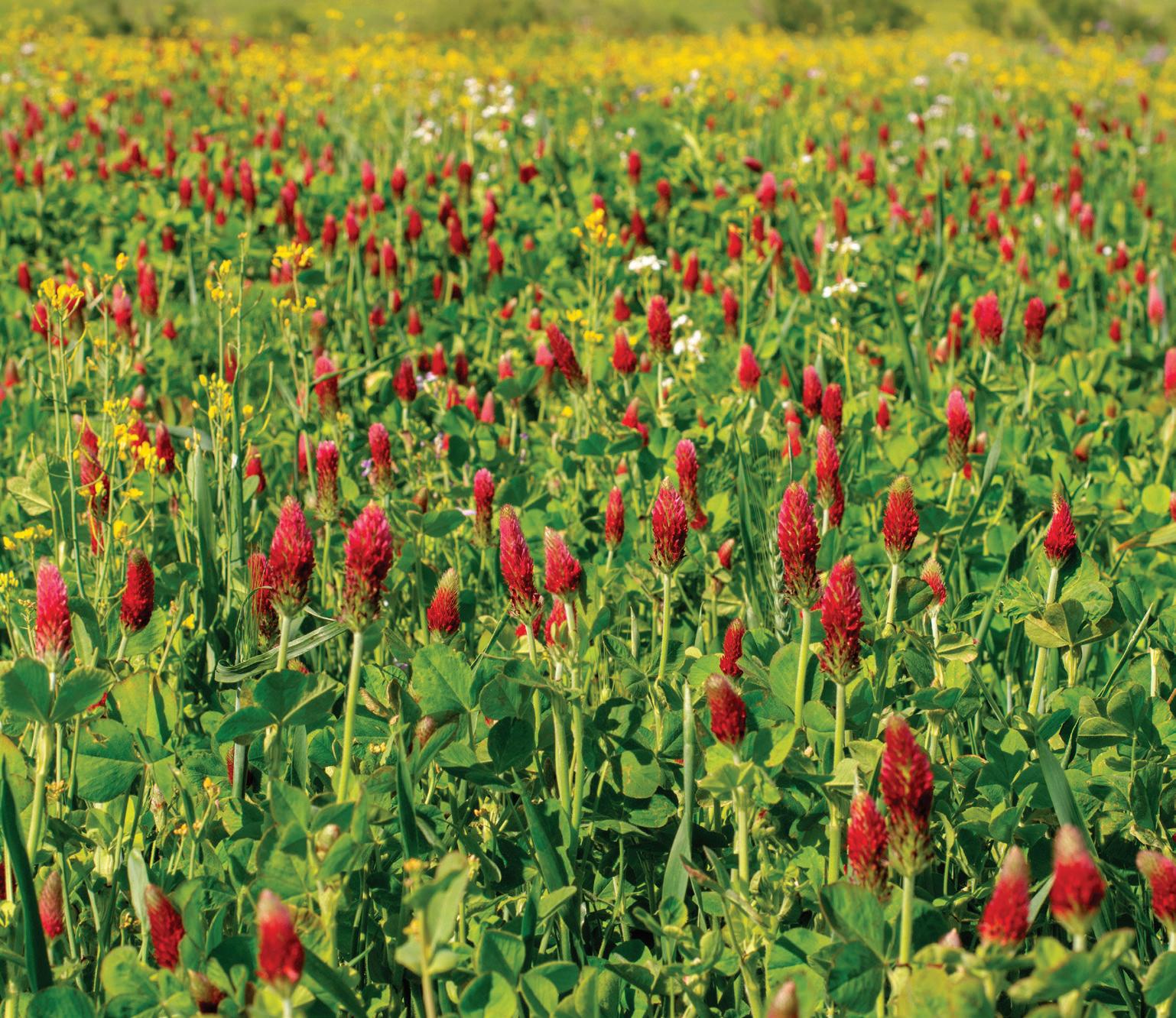
By 5 August 2024, just under 5,300 farmers and land managers had submitted an expression of interest (EOI) in the expanded SFI offer since May, with EOIs continuing to be received. DEFRA says the Rural Payments Agency (RPA) is steadily working through the submissions.
More than 600 applications have been received from those who were invited to apply after submitting a successful EOI, and 70 agreements have been offered so far. The first agreements went live on 1 August.
The above figures only relate to the expanded SFI offer. DEFRA says record numbers of agri-environment agreements are now in place, with more than 65,400 operating as of 16 July, well above the previous record number of 59,200 in 2010.





The new team at DEFRA is headed up by Secretary of State Steve Reed OBE, MP for Streatham and Croydon North.
He will be supported by Daniel Zeichner MP as Minister of State. Mr Zeichner, who served as shadow minister for environment, food and rural affairs from 2020 to 2024, is responsible for food security and rural affairs. Previously he was shadow minister for Transport.
Emma Hardy is the new Parliamentary Under-Secretary of State (Minister for Water and Flooding), a role which could prove challenging as climate change increases the risks posed by heavy rain.
As well as floods and emergencies, Ms Hardy has taken on responsibility for environmental regulation, pesticides, clean air, net zero and climate change.
The new Parliamentary Under-Secretary of State (Minister for Nature) is Mary Creagh CBE, whose responsibilities include planning and land use, domestic biodiversity, environmental targets, protected landscapes, tree planting and forestry.
The ministerial line up also features Baroness Hayman of Ullock, who sits in the Lords as Parliamentary Under-Secretary of State.
Incoming farming minister Daniel Zeichner has stressed the stability of the industry’s apple cart in a speech to the National Farmers’ Union.
At the union’s summer reception, held shortly after the new DEFRA team took up their posts, the Minister of State outlined the new Government’s commitment to farming and reminded the meeting that his boss, Secretary of State Steve Reed, had confirmed: “We’re not going to upset the apple cart.”
Agreeing that farmers were under a number of pressures, he outlined several. “The climate issues, which have led to flooding in an unprecedented way, are a real challenge. The threat of disease, which we know is all too real. And of course, the cost pressures.
“And we know that, put together, they’re putting a huge toll on people’s mental health. And let’s be frank, uncertainty. Uncertainty about policy direction and change - all of which contributes to making life really, really hard.”
Switching to a more positive mode, he said: “We absolutely recognise the need for stability” and said the idea that “food security is national security” was “absolutely at the centre of Labour’s mission to grow
the economy and … underpins the agendas of multiple government departments and constituencies”.
Mr Zeichner went on: We’re absolutely determined to boost rural economic growth and enhance Britain’s food security with a new deal for farmers. We really, really want to seek a new veterinary agreement with the EU to get our food exports moving and absolutely want to make sure that farmers aren’t undercut by low welfare and low standards in trade deals.”
He added that the party was “committed to the first ever cross-government rural crime strategy”, covering agricultural theft, fly-tipping and livestock worrying as well as personal safety.
“More positively,” he went on, “we want to empower agricultural businesses to upskill the workforce through a reformed apprenticeship levy”, adding: “We want to tackle mental health and loneliness, with a mental health hub in every rural community and 8,500 more mental health professionals.”
Moving on to the Environmental Land Management scheme, now taking shape through the Sustainable Farming Incentive options, he confirmed the Government was
still committed to the transition but added: “Of course, there will be tweaks, changes; it’s been an iterative process so far and that will continue to be the case.
“But we’re absolutely committed to working with you to make sure that this system works for farmers and delivers both food security and … the protections we need for our environment.”
Mr Zeichner also stressed that the incoming Government was “determined to eradicate bovine TB” and had set a target date of 2038, which he agreed was “quite a long time away”.
Describing it as his “top priority,” he commented: “We absolutely believe we can do a lot through biosecurity, herd management and speeding up the development of a vaccine that works with an effective test and all the things that need to come in terms of trade and so on,” and said he appreciated the “huge passion on both sides of the argument” around culling.
The current round of culling licences, he said, would be honoured, adding: “I absolutely believe we’re only going to eradicate bovine TB by working closely and constructively together to use all the science and everything that we’ve got to beat it.”
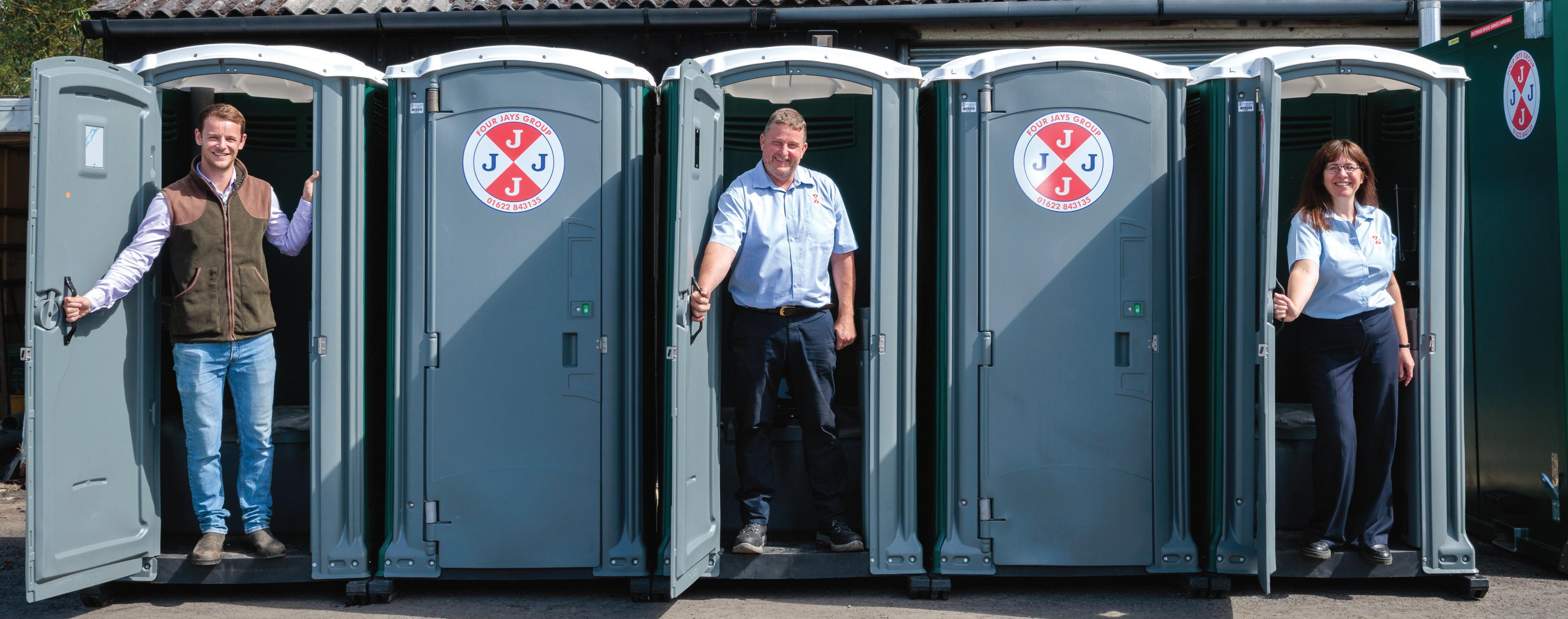
One of the best-known names in the toilet and welfare hire industry in the county of Kent has been acquired by leading resource management group Heathcote Holdings in conjunction with its plant hire division.
Maidstone-based Four Jays Group, which has supplied toilets to many of the fruit farms and vineyards across Kent for their seasonal workers, will become part of what is thought to be the South East’s largest familyowned toilet, welfare and commercial hire companies.
The deal is part of family-owned Heathcote Holdings’ ambition to be the South East’s one stop solution company of choice. The
company has said it will invest in new hire equipment, service vehicles and IT systems at Four Jays to make the customer experience as simple and efficient as possible.
Following the acquisition, the company will be able to supply nearly 2,500 mobile toilets and more than 200 welfare units – which offer temporary facilities including toilets, seating areas and kitchens – supported by 20 service vehicles.
Nathan Heathcote will take over the day-to-day management of Four Jays’ operation, which is based near Sutton Valence, from previous owners Jonathan and Sarah Worsfold.
“Four Jays has much in common with our
company. We are both family businesses and serve customers involved in construction, events and hospitality, as well as the agricultural community,” he said.
Nathan added: “Through the combination of Four Jays, Countrystyle Recycling and FGS Plant we are now able to offer sites and events the complete package, from welfare to plant hire and a full waste management service.
“The fit is perfect as our waste and plant hire companies serve many of the same industries that Four Jays has done for the last 50 years, and we have exciting plans to invest in the business. We’re keeping the Four Jays name because, like ours, it is known for trustworthiness and customer service.”
More than 100 farms are now part of the FarmBuddies social care farming service in the South East, using their farms to provide therapeutic, social or educational support to people with mild or moderate additional needs.
Stephen Sellers, regional farm co-ordinator for the service, told South East Farmer about two FarmBuddies initiatives planned for October 2024.
On 7 October farmers will be meeting at Bore Place, a 500-acre regeneratively managed historic estate on the Surrey/Kent border, to pool information on referrals being made by GPs to farms across the region.
“We know a sustainable link with the NHS will be far from easy, but given the state of waiting lists, we feel compelled to increase our offer of help when and where it is needed,” Stephen explained.
In the same week, the 100 member farms across the region will be asked to support the innovative Postcard to GPs campaign being run by The Wildlife Trusts. The campaign encourages anyone who
has benefitted from ‘social prescribing’ to send one of four postcards produced by The Wildlife Trust to their GP to let them know how much it has helped.
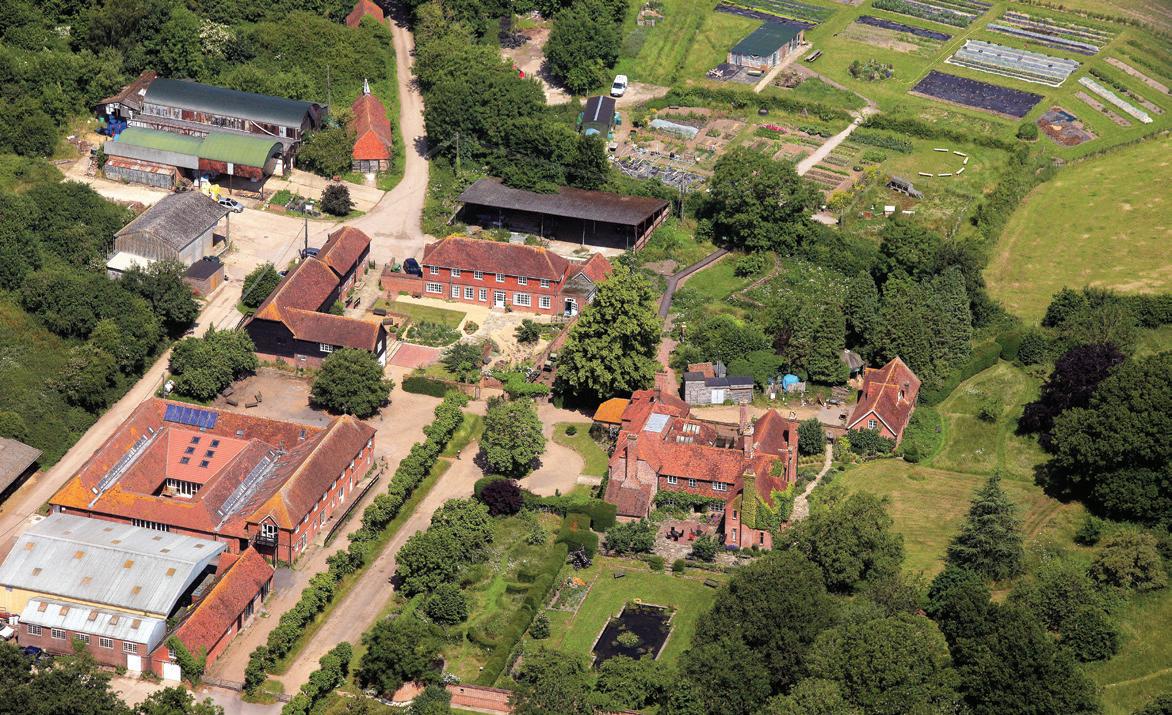
Bore Place
www.farmbuddies.org.uk
www.wildlifetrusts.org/nature-helps
Farmers or landowners thinking about extending their legacy by “giving something back” to the local community are being offered support from Kent Community Foundation (KCF).
“Philanthropy can be a deeply fulfilling experience, but navigating the world of charities and distributing hard-earned funds can feel overwhelming,” explained KCF’s senior philanthropy adviser Rachel Vinton. “And that’s where a community foundation can help.
“KCF understands that farmers and landowners are deeply invested in the health and wellbeing of their local communities and the environment they share. For over two decades, we have, as a professional grantmaking body, been the trusted partner for those who want to make a meaningful difference.”
Rachel explained that giving through a grant-maker meant donors could avoid “the hassle of going it alone” by taking advice from KCF’s team of philanthropy experts.
“The main solution we offer is the setting-up of a charitable fund with KCF,” she went on. “The foundation will help identify causes that align with your values and visions for local communities. We manage the entire process of finding, vetting and liaising with organisations that match your criteria, ensuring that your donations reach those organisations which can have the greatest impact.”
Community foundations have supported many rural and farming-related charities and community groups. As an example, the Kent
Federation of Young Farmers’ Clubs received funding for projects aimed at making farming a safe, inclusive and successful way of life. The foundation works closely with individuals, families and businesses who want to give, helping them decide how and where they would like funds to be awarded.
“We have an unrivalled understanding of the local needs and challenges facing communities, especially those affecting rural areas,” added Rachel. “This ensures that your donation goes directly to support the causes you care about most, from agricultural initiatives to youth development programmes,

for example. We aim to make being a fundholder both enjoyable and fulfilling.”
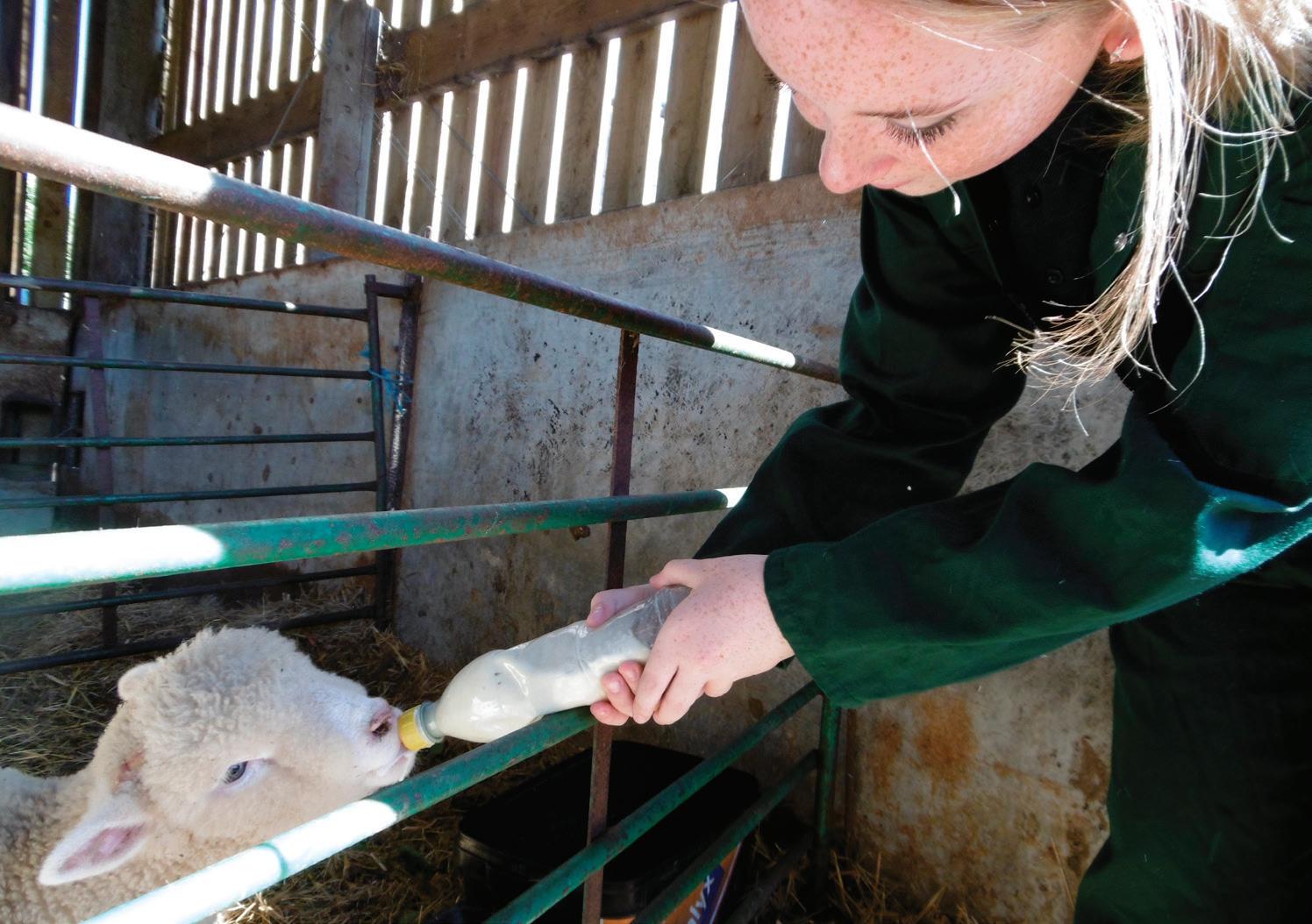
The photograph is of Wye Community Farm, one of the organisations supported by the Kent Community Foundation. The farm promotes the benefits of locally produced food, provides training and job opportunities, helps protect the environment and educates the public about food and farming.
To find out more, contact Rachel by emailing Rachel@kentcf.org.uk. The KCF team can also put farmers and landowners not based in Kent or Medway in touch with their local community foundation.

Dear Sir,
August 12 marks the start of the grouse season. This year, grouse numbers are low, but the conservation work that goes on across moorland landscapes to support grouse and the many red and amber listed species that also live there will continue.
Grouse shooting is vital for the economic health of rural upland communities. Spending on grouse shooting has a substantial ripple effect, with 60% to 80% of the money spent benefiting the local or regional economy.
Despite the lower grouse numbers, the dedicated efforts of moor owners and gamekeepers, and the considerable private investment that goes into supporting biodiversity, wildfire mitigation, restoring habitats and promoting conservation, will carry on.
Managing our uplands for shooting has far-reaching benefits for conservation, and the fact that work carries on even in the absence of a sustainable harvest of grouse is to be celebrated.
Eoghan Cameron, Chairman, The British Association for Shooting and Conservation
Dear Sir,
Reading my current edition of South East Farmer, which I have enjoyed and found informative for many years, I wondered why the use of sheep wool seems to have such little importance.
I realise from the farming aspect that meat is your primary consideration, but without correct husbandry the secondary aspect, wool and its quality from this animal, is rarely considered.
In the present financial situation for families and homeowners, the cost of living has become paramount. The building trade has begun its attempt by incorporating fleece in building homes, so why not consider free insulation in our homes, reduce the electricity bill and adapt the
Scandinavian number one practice of using wool for home insulation.
Let us use wool to heat our children’s cots, double beds and hospital beds as well as our elderly people’s homes.
After training in Northern England, (where I was taught that Kent was second best for wool production in the UK), I received an RSA Bursary to study in Scandinavia, following which I worked for the British Wool Marketing Board (textiles) for many years and in educational posts.
Pure wool bed warmers, which use no electricity, sell all over the globe, yet this ‘free warmth’ has not been accepted in the UK, although some adult education students make their own in their spare time.
For more information see the Association of Guilds of Weavers, Spinners and Dyers, whose members I know rely on British Wool. Please consider the insulating effect of British fleeces, which is far superior to any chemical invention! Readers may also be interested in seeing more of my work at https://ryijy.uk/
Karen Garwood-Young NDD, Life FRSA Staple, Kent
Dear Sir,
The Government is right to commit to a brownfield-first approach on development that could deliver 1.2m homes, but the CPRE believes that rather than housing targets that fuel speculative development, we need ambitious targets for brownfield homes, homes for social rent and genuinely affordable homes.
The Government’s definition of grey belt land is too subjective and could lead to unintended consequences, damaging the very openness that people value.
The green belt is the countryside next door for 30 million people in the UK. We agree we need a green belt fit for the 21st century, enhanced for people and the planet, not run down and then built on by profithungry developers.
Roger Mortlock, Chief Executive, CPRE the countryside charity
Dear Sir,
Of historical interest to readers, the following might bring back memories.
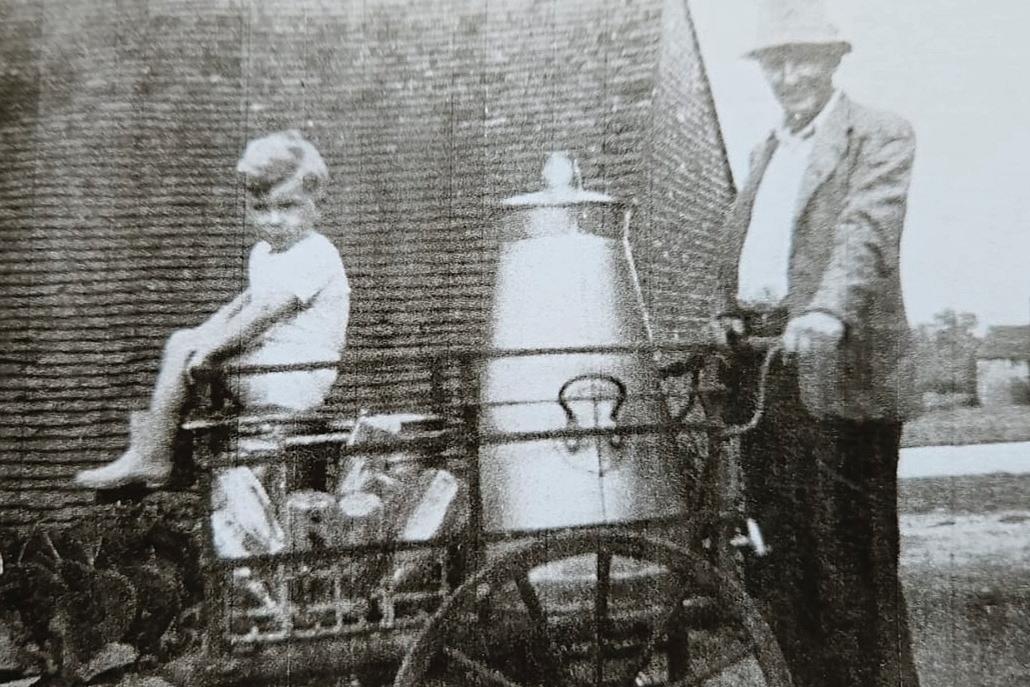
Well before the second world war, Newick milk deliveries from the seven small, handmilked herds in the parish were made by conical churns mounted and pushed on a three-wheeled float. Milk was decanted at each house and cash exchanged.
The picture shows Edgar Richards with his Uncle Eddie adjacent to the village green and behind the bakery and the blacksmith's shop which was handy for the shoeing of the heavy horses that collected coal and coke from Newick Station for regular village deliveries.
From the Ketches Farm herd, I remember, even in the early 1940s, daily deliveries from the Manor House up to Ballinger Stores. I have a photograph of three delivery vans taken in February 1939 at Broomlye Farm.
The fact that these vans could travel some distance, despite fuel rationing, sometimes to Gold Bridge, Barcombe and Chailey, as well as Newick, in turn reduced the need for small herds. They could not compete with the new, bottled milk that had G E Sclater printed in red on each bottle and guaranteed early morning deliveries of milk and cream. The van drivers were Alf Fuller, George Wells and Will Roser.
Of interest is that up until about 1939, the seven small herds within easy reach of the village likely produced maybe 1,000 litres daily from 100, probably Shorthorn-type, cows. Today, I suspect some 15,500 litres are produced each day from two 400-cow herds on the Newick Estate.
Ted Sclater, Ibthorpe, Hampshire
Dear sir,
Bolstering the farming budget is key to kickstarting long-term growth in the rural economy and delivering on many of the government’s environmental targets.
The CLA has set out a powerful rationale for increasing the agriculture budget to £3.8bn a year by 2027/28, offering the industry the certainty it needs at a vital time of the transition process post-Brexit.
Traditionally farmers received payments based on acreage, but since Britain left the EU the Government has been gradually moving to a new era of sustainable food production coupled with public payments for public goods in areas such as soil health, flood management and access to nature.
The current £2.4bn budget, though, has remained static since 2014, despite spikes in inflation, major shifts in the importance of domestic food security in a changing world and recognition of the scale of the environmental challenges.
Landowners can feed the nation and improve the environment – but they can't do it on a shoestring budget. Now is the time for a budget reset. Without the right economic, regulatory and political conditions, farmers will be unable to deliver on the multitude of societal demands that ultimately fall on them.
The CLA applauds the government’s ambition to reverse the decline
A stable workforce with identifiable roles and responsibilities is crucial for farm employers in such a labour-heavy industry. Regular employees and casual workers together make up a third of the agricultural workforce, the remainder consisting of farmers, business partners, directors and spouses.
An individual’s status is currently separated into three categories – employee, worker and self-employed – each of which is afforded differing levels of employment rights. Generally speaking, ‘workers’ includes zero hours or casual staff. They do not have protection from unfair dismissal or redundancy rights, which reflects the casual nature of their engagement.
The Labour Government plans to introduce a new regime where individuals are either workers or self-employed. Under Labour’s plans, individuals categorised under the new worker status will be entitled to full employment rights including holiday pay, redundancy rights and protection from unfair dismissal.
Combined with the Government’s proposal to ban ‘exploitative’ zero hour contracts and make protection from unfair dismissal a day one right, a large proportion of farm staff will gain new employment rights. This will
in nature, pave the way to a net zero society, create homes and jobs in the rural economy, clean up rivers and stimulate health and wellbeing by encouraging community engagement on our farms – with the right budget. Many CLA members are already well along this journey – but we need to know the Government's ambition is real and not just a good soundbite. Achieving their aims costs money, and the Treasury must put its money where its mouth is.
Tim Bamford,
Regional director, CLA South East
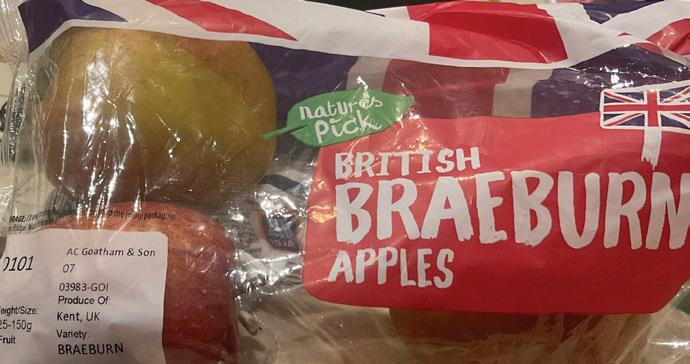
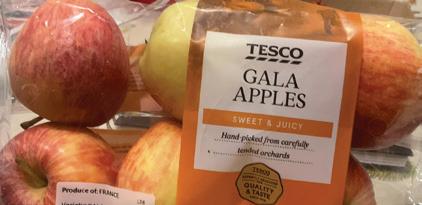
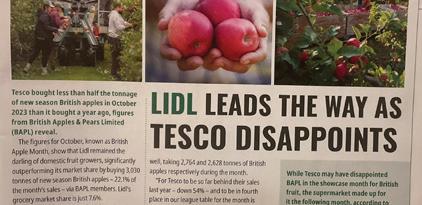
My wife had a @Tesco order delivered today, we also had the latest @SouthEastFarmer in the post, I read the article about apple sales and I looked to see what apples had been delivered B French Gala, we live next to 25Ha of Gala I buy from @AldiUK Kentish apples
William Harbour@billat_foxhill
increase the costs of taking people on and make it more difficult to let people go, as the flexibility to make quick changes to the workforce will be removed.
We recommend that employers review the make-up of their workforce and assess how many staff may fall under the new worker status. Employers can then consider how best to plan ahead for the potential changes and the need to comply with workers’ new statutory entitlements.
Given the seasonal nature of the industry, employers will want to retain flexibility to hire and let people go according to the demands
of the business. This may lead to an increased use of agency workers to avoid farmers being the employer and so liable for any unfair dismissal claims.
The proposal to create a single worker status will require further consultation and is not part of Labour’s plan to legislate within the first 100 days in government. However, given the proposal, agricultural employers should stay alert to any updates regarding the proposal and consider how their workforce may need restructuring in the future to retain the flexibility that currently comes with engaging workers rather than employees.
BEN STEPNEY
Partner in the Employment team, Thomson Snell & Passmore T: 01892 701179 | E: info@ts-p.co.uk | www.ts-p.co.uk





















By Declan Hughes, founder of the Irish Veterans military history charity.
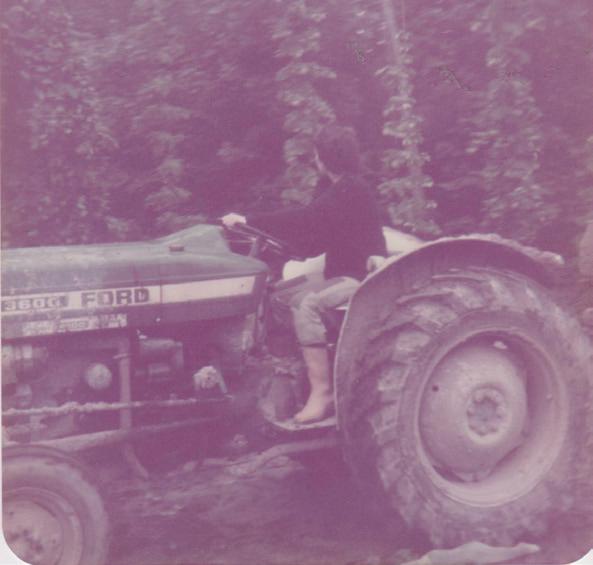
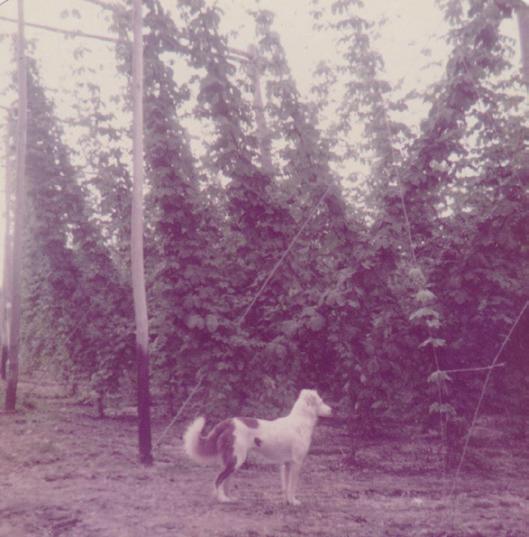
In common with many Irish, I spent a chunk of years living and working in England, in my case some 20 years in London, Essex, Oxfordshire and the beautiful Kent countryside, 11 of them on Tanyard Farm, slap-bang in the middle of Bedgebury Forest. Tanyard was primarily a hop farm where myself and Leah, my beautiful collie/springer-cross, lived and looked forward to September and the hop picking season, with new arrivals to greet and evaluate and ‘old sweats’ to re-connect with.
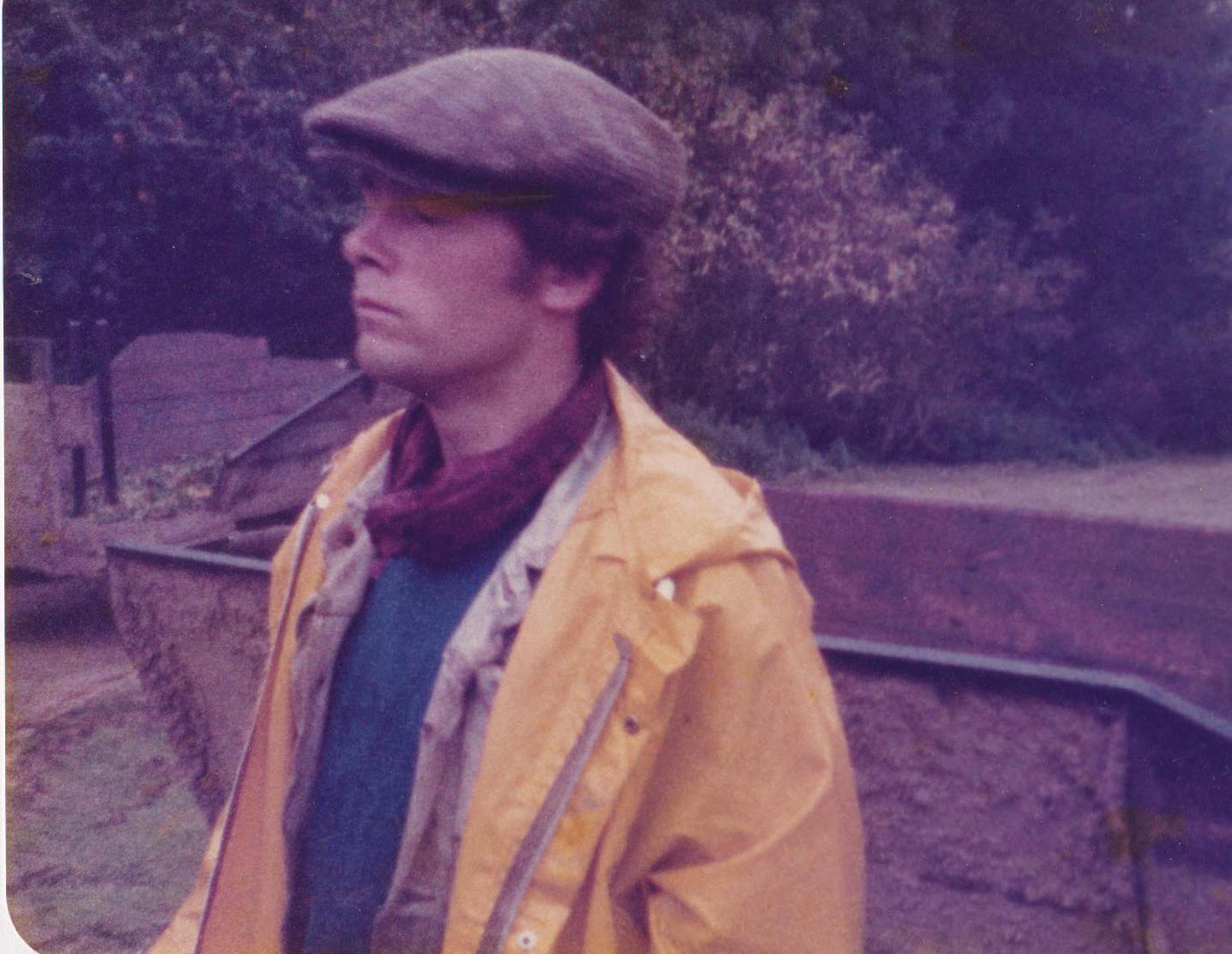
From mid-August we saw individuals and small groups beginning to gather on hop farms around the country, with many nationalities outnumbering the smaller British cohort. In the 1970s and ‘80s, hop-picking was a closely guarded secret amongst a small, wordof-mouth cohort of Irish – perhaps a WhatsHop group? Over the years I rubbed shoulders with, and was largely responsible for, many individuals, some of whom went on to become soul and jazz singers, musicians, an Irish Senator, a music journalist, a radio scriptwriter, a French aristocrat, artist, bass player and a Royal Navy Able Seaman who served in The Falklands.
Sadly, Tanyard was sold up some years ago, and on a visit I paid to my former home in 2010 I struggled to find a stray hop, even in the hedgerows.
I often wondered if the Crown Estates held any hop gardens among its portfolios and, if so, how they undertook the hop-picking season and organised the rest of their year in the hop gardens.
One of the highs for me while watching the coronation of Charles III was the presence, not just of the Irish Prime Minister but of the President of Ireland and his wife. Having lived, loved and worked in the UK for two decades or so, voted in a number of local and national elections, become invested in the UK’s political system and taken a keen interest in the general politics of the state, it was of more than passing interest seeing my country’s leaders attend.
From 1971 to 1990, in the wake of so many atrocious acts, it was sometimes necessary to state that terrorism, of whatever stripe, generally has little or no regard for the multitudes who make their homes, and bring up their families, in every corner of the UK, as the Irish had done over centuries in all parts of the British Isles.
In 2011, the late Queen Elizabeth set her feet in the Republic of Ireland for her one and only visit. In the course of that trip, she openly and publicly acknowledged the sacrifices of those who, historically, had fought for Irish freedom. This was a huge step for anyone to take, let alone the Queen of England, but she took it in her stride, with the accumulated wisdom of almost a century. Upon her passing, and in a condolence letter to her son, I wrote that “…I recognise the good she wrought, particularly during her unforgettable visit to the Irish Republic… Shame on all that she only had the one visit, but what a visit!”
A few years ago, the Irish Veterans military history group curated a unique military museum in Kinsale, West Cork, focusing on the Irish connections to the US Congressional Medal of Honor – the American equivalent of the Victoria Cross.





Greeting visitors from around the globe every day, I especially looked forward to hearing a British accent, and a conversation would invariably ensue. I always made the point that, irrespective of the history between our two countries (and my, has there been some history!) the Irish, English, Scots and Welsh have been inter-trading and inter-breeding for millennia, so much so that we are all cousins.
Fast-forward to the coronation of the King just over a year ago and my president and PM were in lockstep with their remarks to the media. It’s important that leadership leads rather than hiding behind old enmities and grievances. It’s often said of certain politicians on my island that they “practise the politics of the 17th century”. It’s an all-too-easy trap to fall into but has little or no relevance to where we are today. Our president said attendance at the event “demonstrates what is required in terms of good relations between countries”, while our PM remarked that the relationship “…is a much better one, a much deeper one, one of neighbours and one of equals”.
I don’t know if there’s an answer in the public sphere to my original question on whether or not the King has a ‘husbandry’ interest in UK hop gardens, but I would love to delve into the Royal Archives and uncover hitherto neglected details of some royal hop-picking that, perhaps, stretches back centuries. After all, for how long were brewers and ale houses so important to the health of the nation, when drinking the water was a very hazardous undertaking indeed?
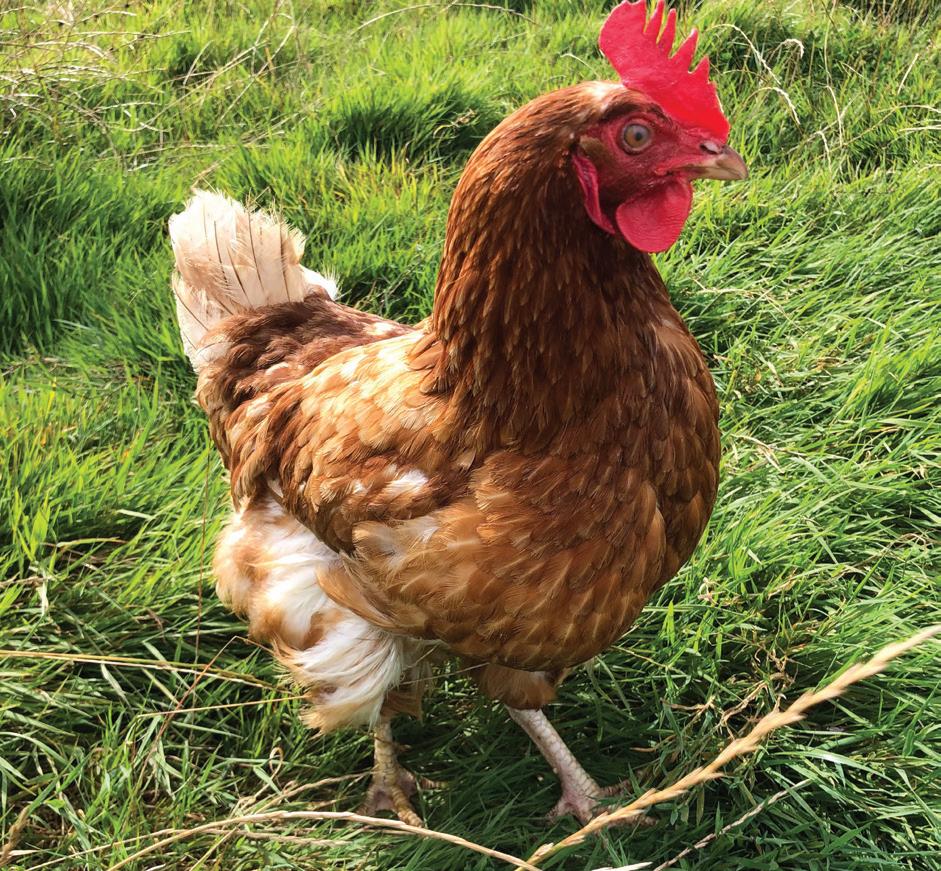
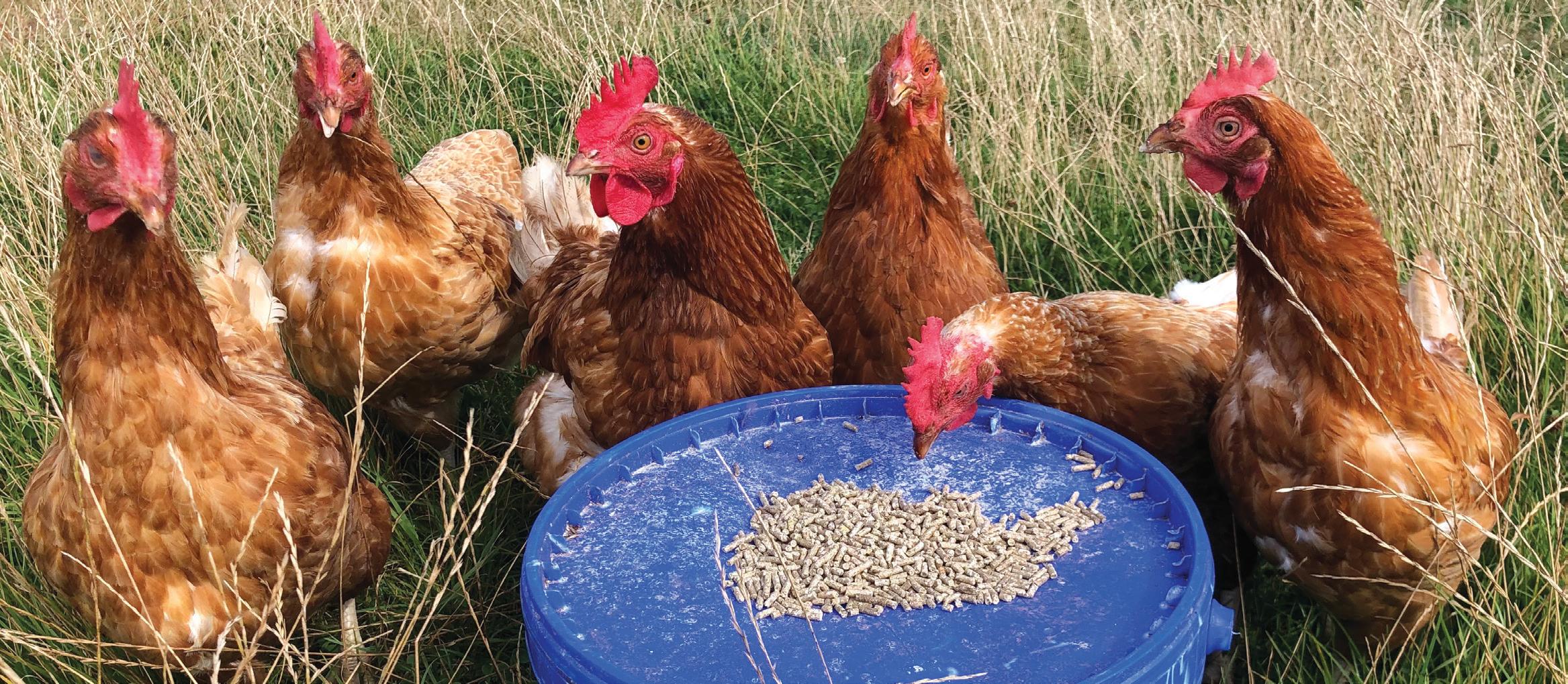
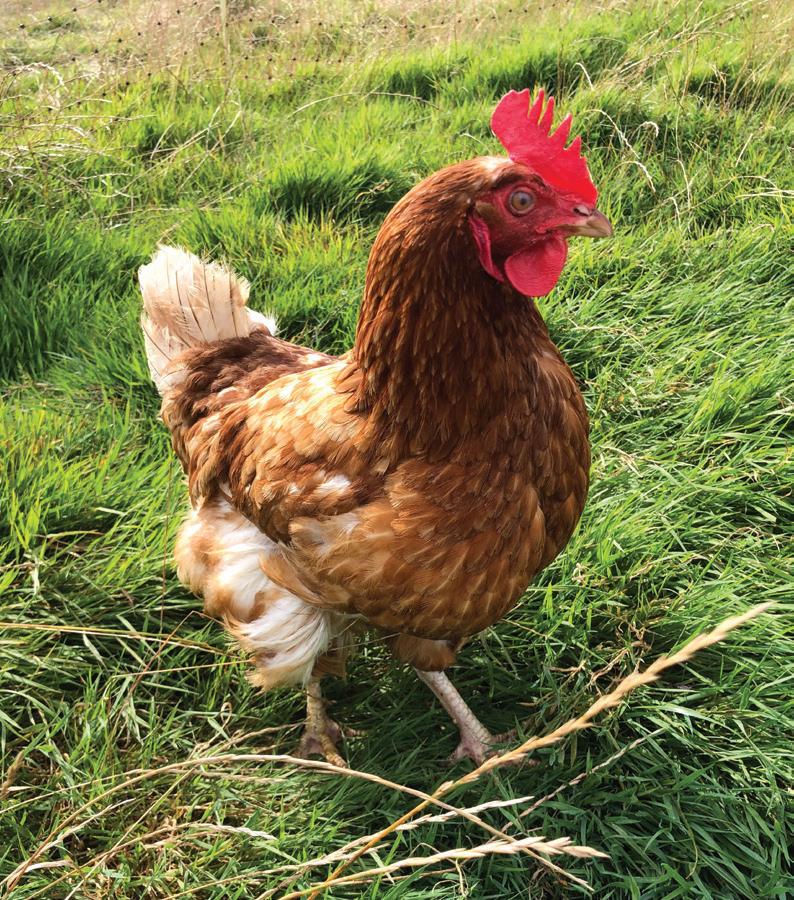
Our two chickens, “the survivors”, have been free ranging since losing their colleagues. These birds are so inquisitive that they always turn up when you don’t want them. I was both horrified and amused when they took it upon themselves to be ‘front of house’ on farm gate sale day, dodging cars, greeting customers and escorting them towards the cheese, meat and salad counters.
These chickens have earned the names of Good Hen and Bad Hen, dutifully laying daily in separate nesting sites, noisily announcing to the farmyard when their task is done, but whereas Good Hen leaves her egg intact, Bad Hen eats hers unless it is quickly collected.
Two eggs a day isn’t enough to keep our family supplied, so we boosted hen numbers up to eight. Shortly after the newcomers’ arrival, Bad Hen and one replacement became fox fodder. All hens are now restricted to exploring behind an electrified fence, at least until we get short of a unit for other stock. I miss their farmyard antics, although it’s less stressful. Good Hen might have to change her name to Bossy Hen, as she is happily deployed in letting the new chickens know the full meaning of ‘pecking order’.
I’ve just been online and registered as a keeper of poultry. With only six hens this has not previously been necessary, but from 1 September 2024, keepers of less than 50
birds are required to register them.
It was a pleasantly straightforward form to fill in, requiring contact details, location, species, numbers and why you keep them. I understand there will be a mandatory yearly update required and I will henceforth be supplied with crucial information and guidance about bird care.
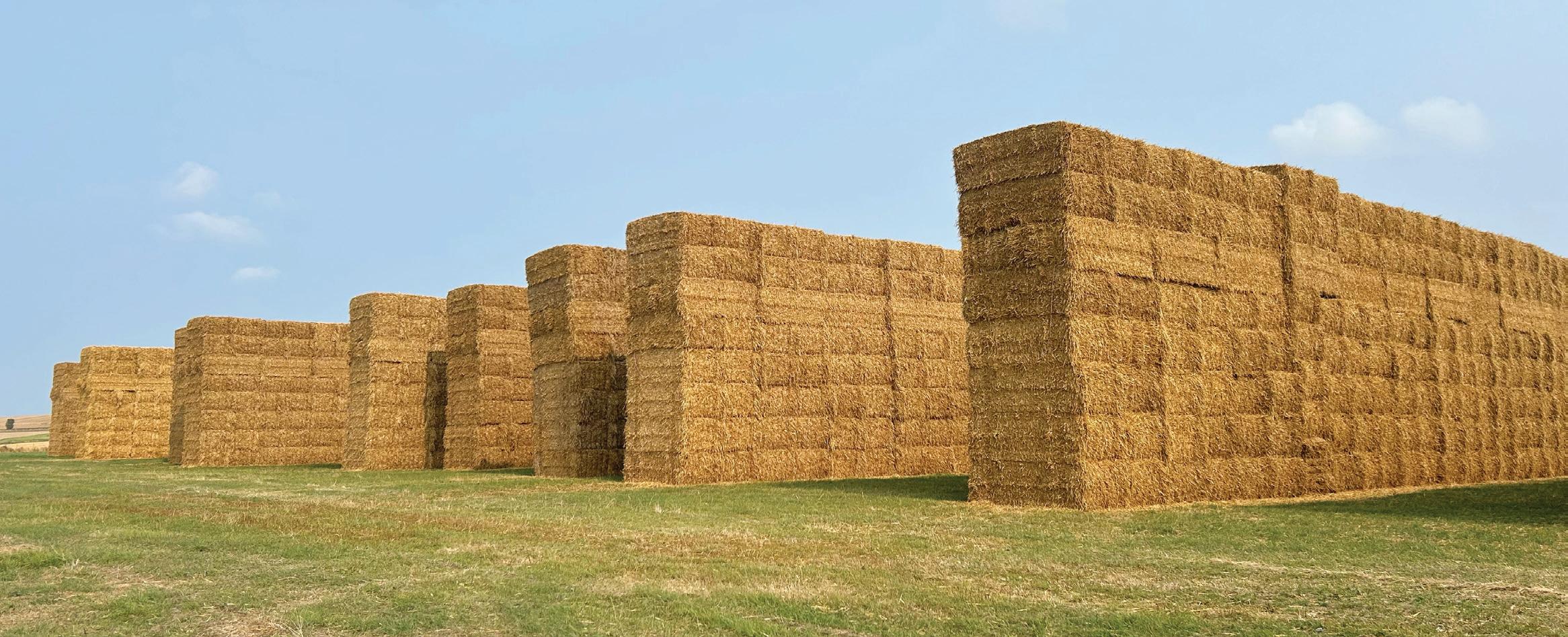
Harvesting is going on all around us. The wet winter took its toll on autumn-sown crop yields, but hopefully the spring corn will fare better. Our grandchildren are keen to check out the action. There’s a strong demand for straw, and its price reflects this. Consequently, bedding up stock yards with straw is an expensive business. To reduce costs we use rushes/rough hay and wood chip to eke out our straw supply. We are busy gathering up our hay bales and the rushes have been cut. Mob grazing is another method of reducing housing time and costs.
Wetter winters are proving challenging. We’ve had to add capacity to our farmyard drainage to create a system that can cope with the downpours that are ‘the norm’ in our present climate. To avoid flooding, gutters need to be larger and drains capable of getting the deluges of water away quickly.
We used to wean lambs late in August. Our vet advised us to wean earlier, saying both ewes and lambs would benefit from it. I tend to be a soft touch, thinking “poor lambs”, but
at the same time witnessing strapping twins lifting their mother’s back legs off the ground in their enthusiasm to feed from her also deserves sympathy.
I’m now convinced that weaning earlier is the way forward. It gives the poorer ewes longer to recover, and once the lambs get over the initial shock of not having parental guidance, they grow well. It also makes shepherding management much easier.
Ideally the first time you gather weaned lambs it needs a gentle touch to reduce stress. I was rather chuffed with myself as I herded them all into the pen from the comfort of Jimny, but I hadn’t reckoned on help from two enthusiastic young sheepdogs that leaped into action when I got out to close the gate.
I thought they were going to help hold the lambs in the pen, but no, before I could get the gate shut they rushed into the pen and flushed every last lamb back out into the field. The exuberant pair came back to me clearly expecting praise, but of course I was seething. The re-gather didn’t go quite so smoothly, despite the dogs’ best efforts. There’s no denying they love their work, but they aren’t always in tune with my thinking.
The lambs mostly look well; a couple with scald and one with rot. The Clik Extra applied early in the season is still working. Unable to get Ovivac P, I’ve used Covexin 10 vaccine this year and I’ve also given them a bolus

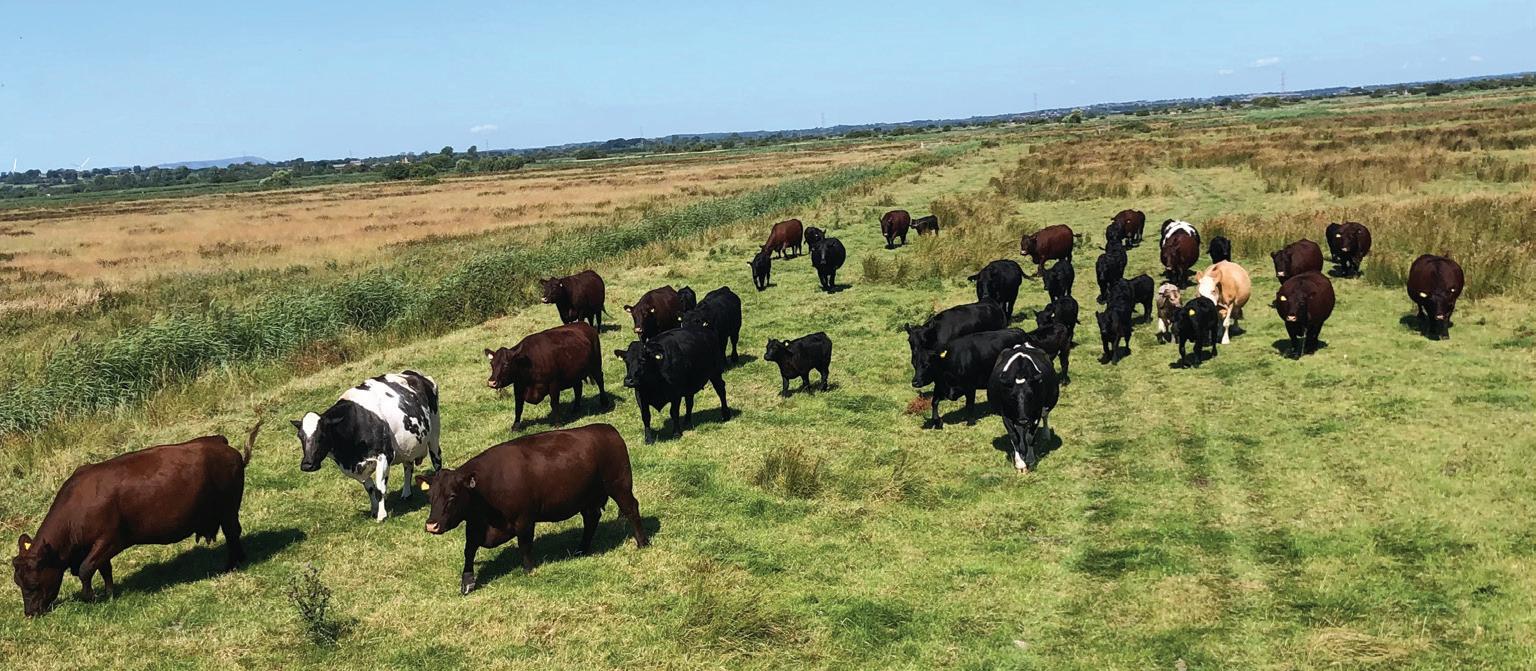
containing cobalt, iodine, selenium and zinc, plus vitamin B1. They have so far received one white drench and one clear drench. I’m trying to improve my skills at faecal egg counting so that I can keep better track of worm burdens. The ewes had fly cover applied five weeks post-shearing; pulling out culls and foot vaxing keepers is on my ‘to do’ list. Emerald has settled down and is taking his herd responsibilities seriously, and the cows are liking their new bull. Thankfully, he is now respecting the dykes as boundaries. The marsh cattle are much easier to see than our
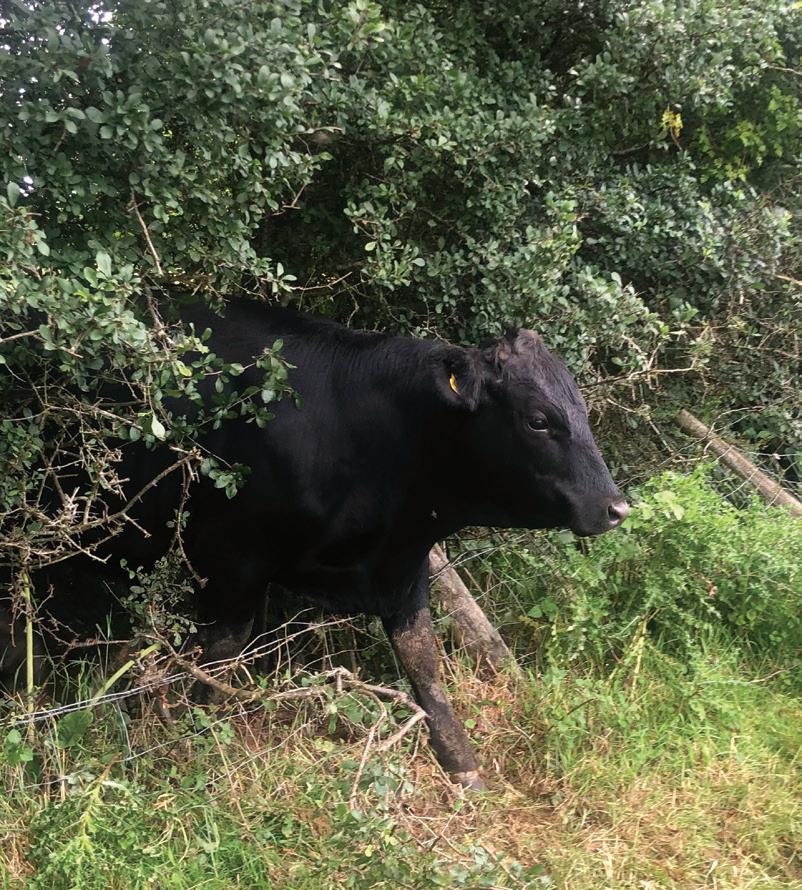
You are not supposed to be in there
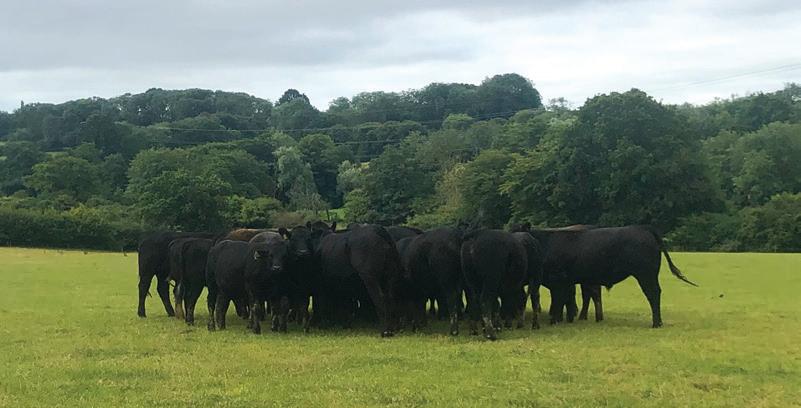
This bunch like to play hide and seek
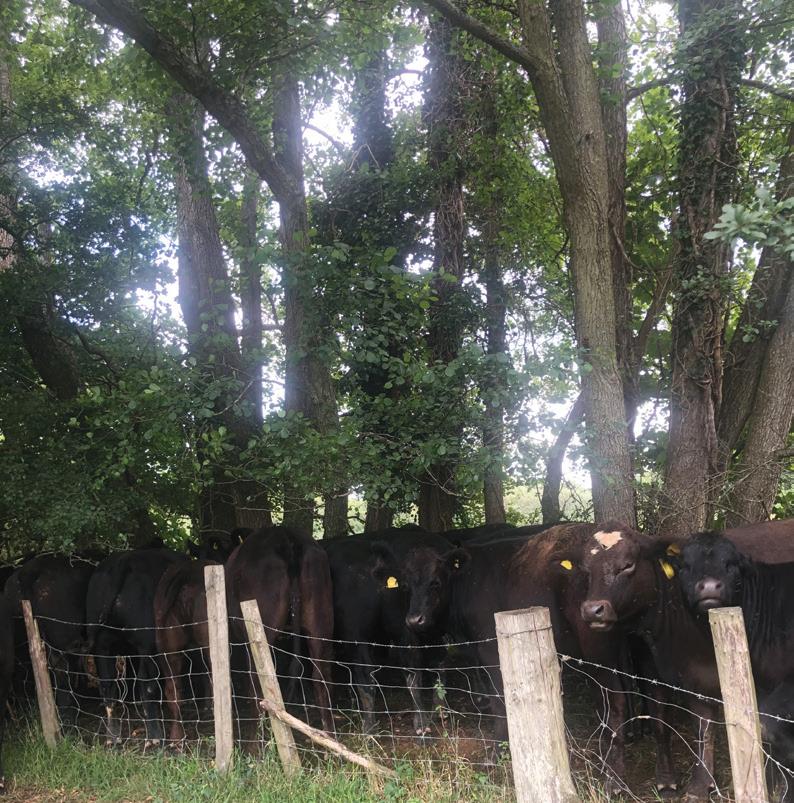
bunch of yearlings. You would think 33 animals running together would be easy to find, but it’s amazing how they can hide up. Low water levels in the stream mean they simply cross it, so they have access to a large area including woodland and ponds.
We’ve run out of electric fencing posts, so Nigel ordered some new ones which, it turns out, need assembling. Banging wedges into insulators to keep them in place before you can use them, is not my idea of fun. Nigel has been conspicuously absent when it comes to doing this task, so we still haven’t managed to restrict
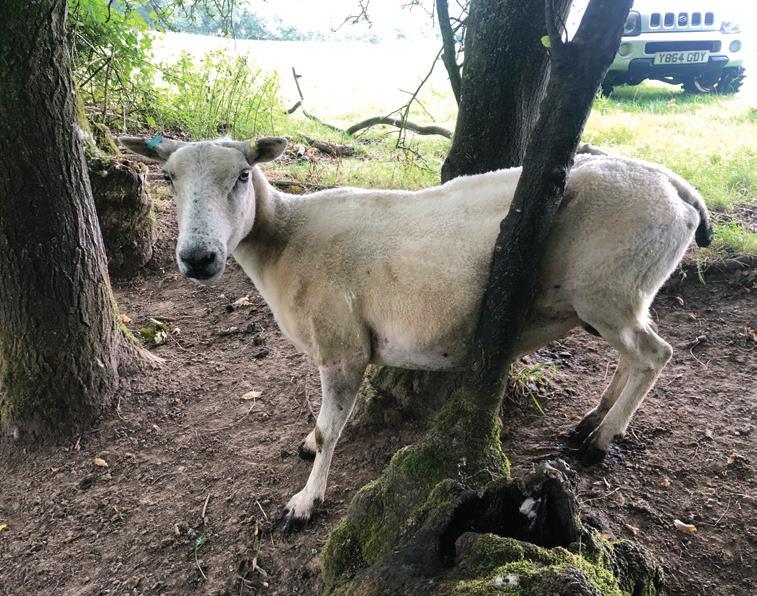
Only a sheep could get in to this predicament
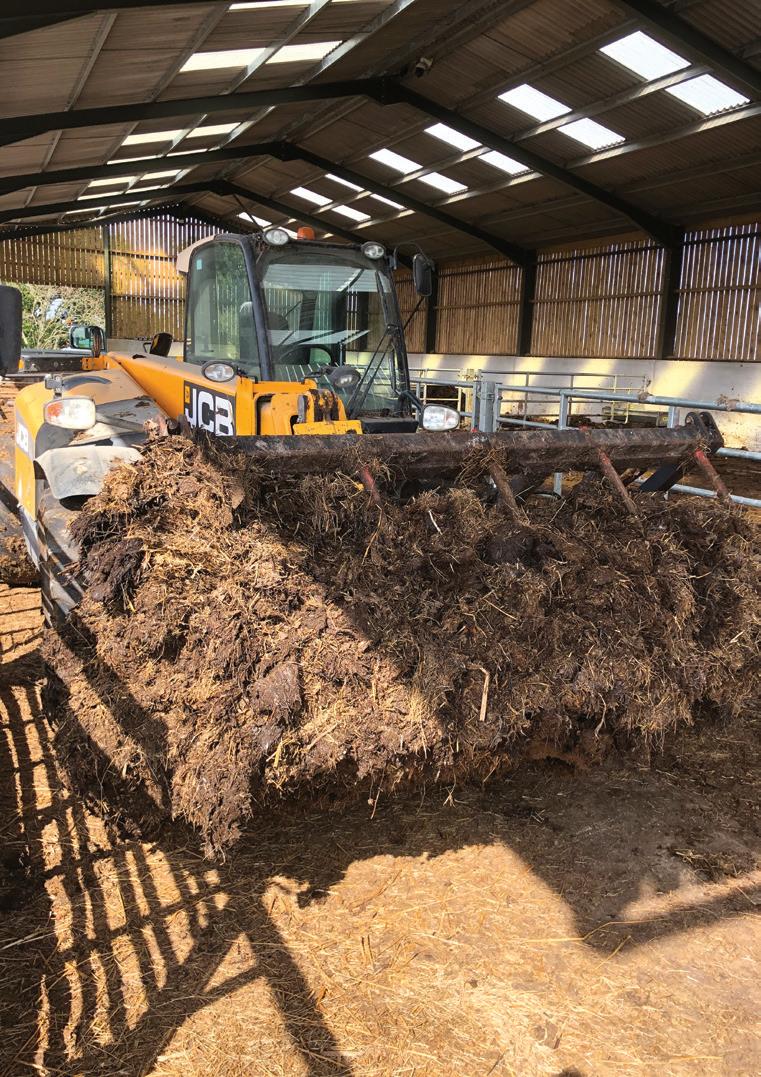
Cleaning out the yards ready for autumn
the cattle’s grazing area.
I enjoy attending the East Sussex Ploughing Match, which is being held this year on 7 September at Marnhull farm, BN27 3SX. It’s good value for money, our generation can get nostalgic about the ‘good old days’ and the grandchildren will be fascinated by the horses and awed by modern tractors. Those with dogs can battle it out in the show ring; good fun for all. Now to make plum jam. Signing up for the Sustainable Farming Incentive is coming up our list. I’ll keep you updated on progress.



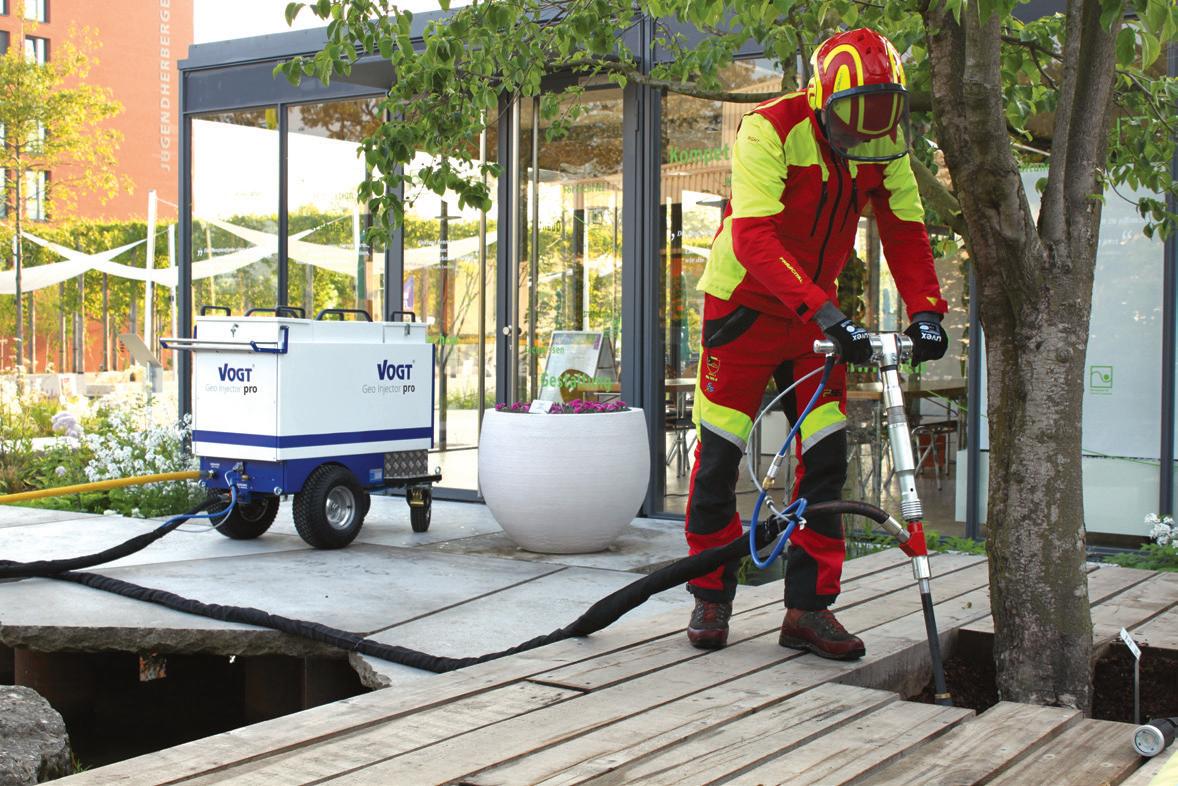


Back in his farming days, Tom Clifton would have planted a deep-rooting variety of radish to alleviate soil compaction and drain and aerate his fields.
Now, though, with his focus on high end gardens, he’s using an impressive piece of soil injection equipment, allied to 40-plus years of experience, to tackle the same problem for those who want their lawns, flower beds and trees to look their absolute best.
With a long background in farming, Tom, who has set up The Soil Doctors with wife Maggie, has always been fascinated by soil, its




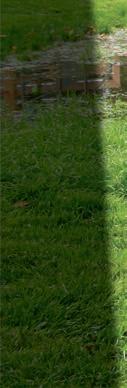




impact on plants and how to get the very best out of it.
“I was doing what’s now called ‘regen agriculture’ before it was a thing,” he recalled. “I’ve always worked with the soil and tried to cut down on expensive chemicals. Healthy plants don’t need a lot of chemicals – just decent soil.”
Given that scenario, the only question is how to make sure the soil is as good as it can be, particularly when it’s underneath an immaculately laid and beautifully mown lawn.
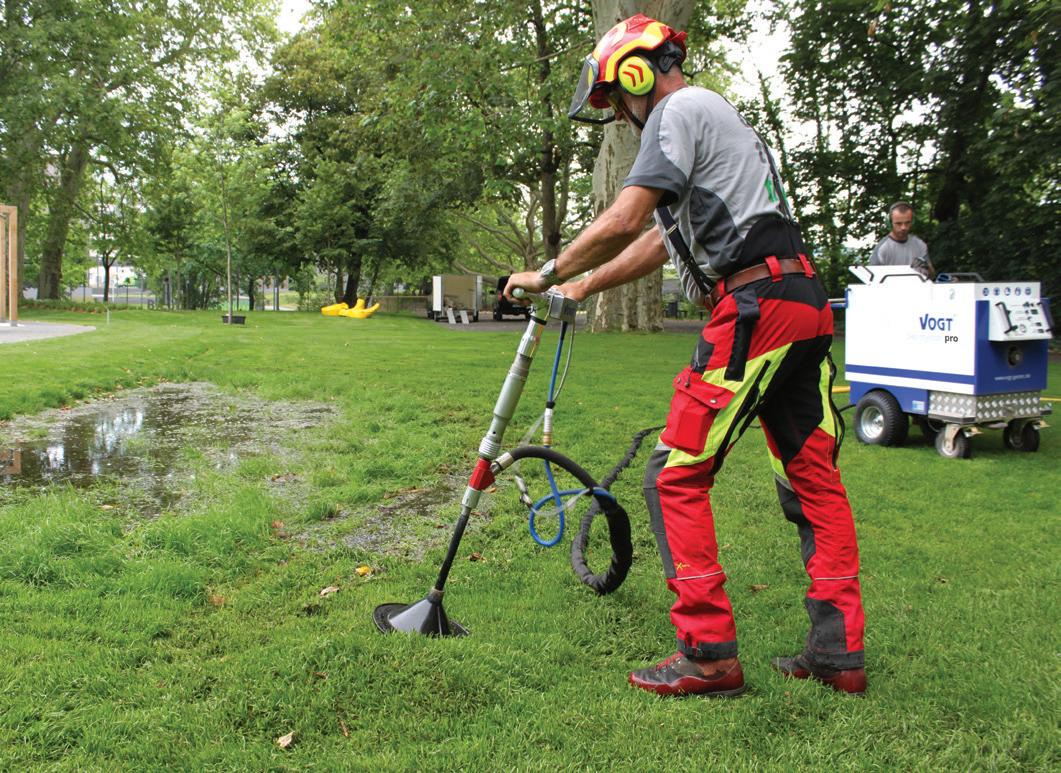
With radishes out of the question, Tom has invested in a Vogt Geo
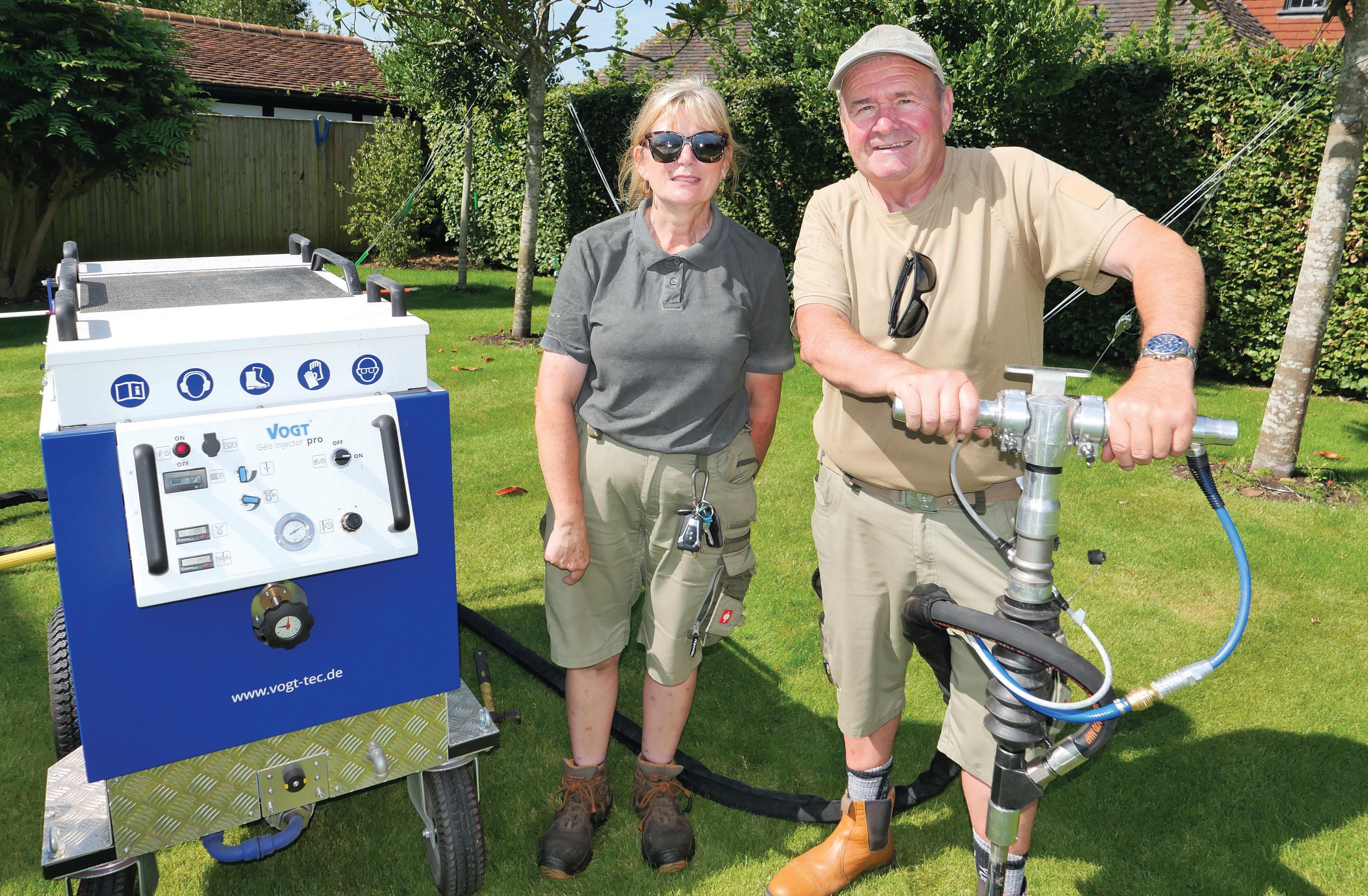
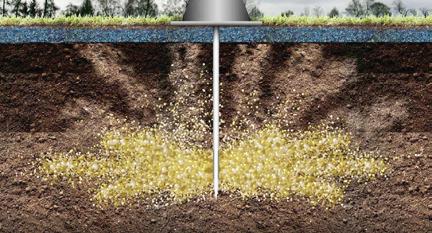
Injector Pro, a high-tech soil injector that injects vital soil improvers and other additives into the soil at regular intervals while opening it up to ensure better drainage.
While the additives – such as biochar and zeolite – are important, the main component of the injection will always be air, and it is a measure of Tom’s determination to get every last detail right that he has invested in a high-end compressor that can deliver 12 bar of air pressure to ensure the soil is fully fractured.
“It’s just not possible to hire a compressor that will deliver pressure this high, so we went out and bought our own,” he explained, highlighting his determination to do the best possible job for all his customers.
Before work starts, The Soil Doctors carry out a full assessment of the soil. “Clearly soil varies enormously, so we take a sample, analyse it and then use our experience to calculate the best mix of nutrients and additives to make it as good as it can be while also improving the drainage if that’s an issue,” Tom explained.
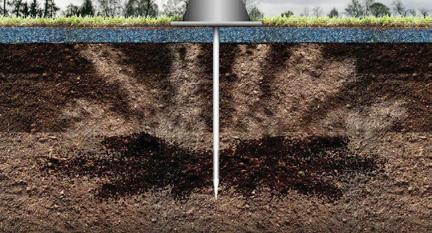
While the nozzle on the injector goes vertically into the ground, the injector holes are in the side, so high pressure air blasts its way horizontally through the compacted soil. The results are impressive, not just for lawns but for trees and other planted areas.
The Soil Doctors are often brought in to ‘rescue’ high end gardens that have been planted with many thousands of pounds worth of exotic plants, shrubs and trees with no thought as to the soil in which they are being planted.
“People move into a nice property and invite a garden designer to come up with a wonderful scheme and then someone else comes along and plants it, not always terribly well, and then a few months later the homeowner wonders why his or her £5,000 worth of plants aren’t doing terribly well on a pure clay topsoil,” Tom explained.
The Soil Doctors have even managed to find a combination of additives which can revive box hedging, which many gardeners have resorted to pulling up recently. “We’ve had a lot of success with box – it responds well to this treatment,” Tom said.
Tom’s interest in soil goes back to his childhood. He grew up on the family farm on the Cambridgeshire/Norfolk border, where his grandfather Harry ran the last threshing contracting business in Cambridgeshire.
He pulled a plough behind a Fordson Dexta at the age of seven (“Not sure that would be allowed today”, he commented) and so it was no surprise that he went into farming, working as a contractor and then as a farm manager before going it alone at the helm of T&T Garden Services, the parent company of The Soil Doctors.
The company has built up an enviable reputation for supplying quality garden services and has no fewer than 22 lawnmowers, all designed to do a specific job in particular circumstances. They run from a 21” Allett cylinder mower to a ride-on Ariens Zero-Turn 52”.
Tom and Maggie’s daughter Anneka works with the business, along with Melvin Lehkyj and Luke Frankson, and the company’s attention to detail is highlighted by Tom insisting that members of the team use a prismatic grass gauge when cutting lawns. “When I say I want it cut to 35mm, I mean 35mm, not 40mm,” Tom pointed out.
And while he has decades of experience, Tom is always keen to learn and to make the most of new technology like the Vogt injector. “Other people go on holidays; I go on courses,” he chuckled.

Our advanced soil aeration service restores gardens and golf greens to full health

Our advanced soil aeration technique uses the Vogt Geo Injector pro for maximum aeration with minimal disruption. How the Vogt Geo Injector pro works:
Stage 1


3
Years ago, when we lost several chickens one night, I trapped and shot the culprit: a fox. Certainly, most farmers would do the same and point accusatory fingers at predators for the parlous state of British wildlife.
Controlling predators appears obvious, and a solution widely advocated by the Game and Wildlife Conservancy Trust (GWCT). The fox, though, would have lived if I hadn’t forgotten to shut the hutch. There are usually better alternatives, and an excellent joint study by the GWCT and RSPB published in 2016 showed predator control was not essential for restoring farmland biodiversity unless predator numbers were unusually high or we had introduced the predators.
Wildlife numbers depend upon available food, so could masses of game poults and food waste be ready meals for more predators? When we had many outdoor pigs, our Corvid numbers reached pest proportions because the pig nuts were so readily accessible to wily, agile jackdaws and rooks.
The invisible elephant in the room is really us, for we dominate the planet and our effect is often, perhaps usually, harmful.
Let me invite you to consider this thought experiment. Imagine highly advanced beings, from a distant planet, had scanned their accessible universe for somewhere else to live, having outgrown their original home, and alighted on Earth as the ideal venue.
It is a racing certainly that these invading creatures would be products of ‘Darwinian evolution’ by natural selection of the fittest, and would therefore be fully equipped to consolidate their arrival on the new ‘promised land’.
The invaders wouldn’t be entirely surprised to find this equable planet already inhabited with myriads of species, including one that appeared dominant, even quite advanced. In fact, this bipedal species and its domesticated species account for 95% of all mammals on Earth, probably at the expense of many other
organisms useful to the incomers. These resident bipedals would be the top predator and the principal competitor facing the incomers.
What would our alien invaders do, bearing in mind their vast superiority and ability to bend the laws of physics? They would exert their dominance and progressively utilise available resources to suit themselves, and, if the resident ‘top dogs’ got in the way or became a nuisance, they would cull them.
If, however, these residents were at all useful, they would be domesticated and, if edible, eaten too. When their new home’s resources were exhausted they would move on, provided they still retained the know-how.
Back to reality, for such an invasion is vanishingly improbable. We humans, however, are that species. Not from outer space but evolved here from our great ape ancestors, through early hominids, to the current species, Homo sapiens.
Our particular species evolved in Africa and moved to Europe as recently as 60 thousand years ago. Our predecessors lived harmoniously with the environment almost until the industrial revolution and the rapid rise in population, facilitated by agriculture and medicine.
We are now no longer in harmony with the planet and its other inhabitants. We are facing the serious consequences of human profligacy and we can’t move out despite Bezos, Branson and Musk’s efforts.
We are the planet’s principal predator, and our numbers are high. The world population has passed eight billion and will approach ten by 2050.
The predatory pressure we deliver is not just what we eat but what we destroy in pursuit of business and pleasure. Not only are numbers escalating but our per capita consumption is rising; a double whammy that is not sustainable, exemplified by the current prediction of a temperature rise of 3.5°C by the end of the century.
This paradox is brought into sharp focus by India; a country today of 1.5bn souls and rising, with only 5,500 tigers. Africa is the same, with some 30,000 lions, and both already boil during the hot seasons.
Here in Britain, we have eliminated all major predators and competitors and have fits of hysterics at suggestions of reintroduction. Nevertheless, we must find solutions to the mess we have made and continue making.
Farmers manage 75% of UK land, so we are in prime position to mitigate the effects of human misbehavior, while our politicians and society grapple with the problem of our numbers and consumption.
The NFU and the mass of farmers argue that we are just in the business of producing food, which is simply not true. Managing land today is about producing food, yes, but just as important is water management, carbon sequestration, maintaining a vibrant biodiversity and providing a haven for our mental wellbeing. Much of the fresh produce in supermarkets is imported (because we can’t/won’t grow it) and too much of what UK farmers grow feeds us through other animals. By the end of this century, however, we will eat less animal product, and much of that will be cultured in industrial laboratories. Similarly, many fresh greens and fruit will be produced hydroponically in controlled pest and pesticide-free environments using renewable energy.
This will allow us to use the land more gently to produce food alongside, and interwoven with, the environmental services we need so desperately. We will also require a re-jigged distribution system, shortening food miles to stop wasting energy by transporting food across continents; a quite profound social change.
What I envisage will be anathema to most farmers of my generation, but the number of our cluster members who are already articulating this same vision encourages me that it can, will and must be done.
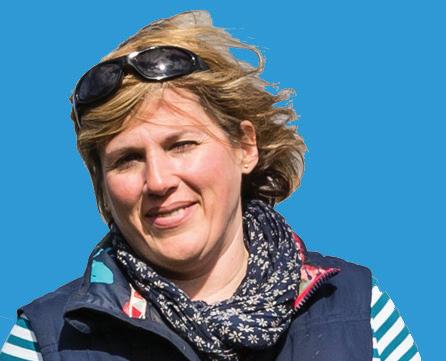
ANITA HICKSON Farmer
Where has the summer gone? So much has been achieved and there is so much left to achieve.
Harvest is very nearly over, and fields are beginning to turn brown again. It won’t be long before drilling starts in earnest. In the South East corner we appeared to be more fortunate than other areas with the weather this summer; two weeks of sunshine helped us make great inroads into our harvest.
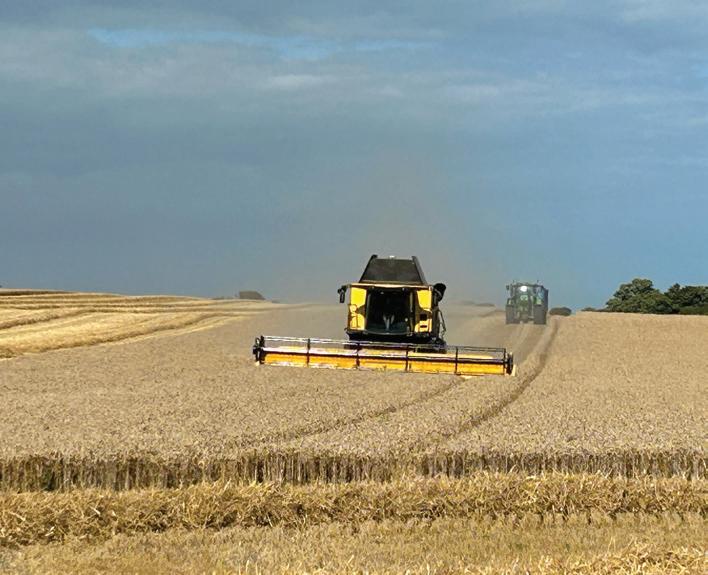
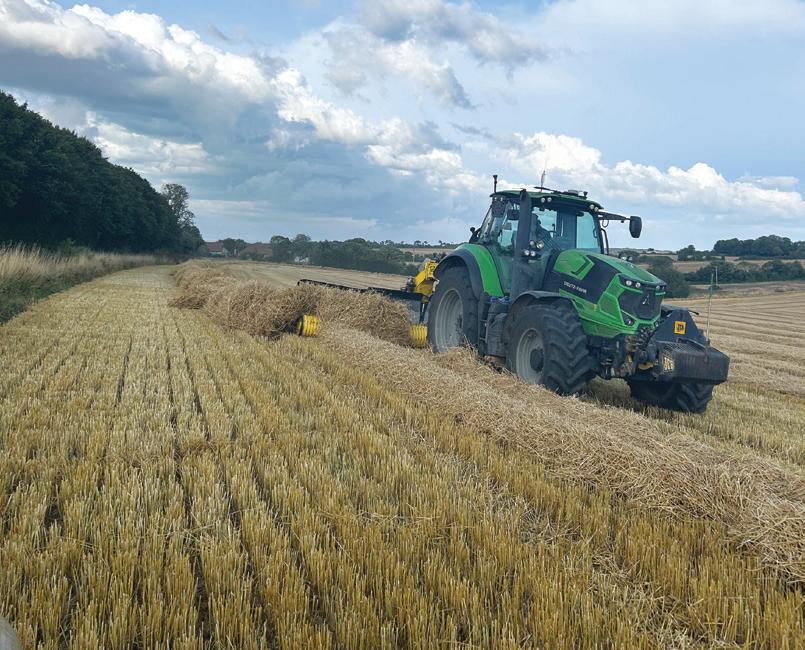
Combining for us was relatively straightforward, with no major issues this year. The baler and trans-stacker have been incredibly busy, and Fergus has shifted a vast number of bales, working throughout the night on several occasions (the roads are so much quieter at 2.30am, or so he leads me to believe; personally, I like my bed at that time).
The cows have now started the new season’s silage and, considering the weather conditions, the analysis has been very good. They appear to be milking well at the moment. Fingers crossed it stays that way.
Having recently read several articles on the glyphosate topic I was amazed to find out that farmers are still being blamed for glyphosate poisoning in rivers. How can this be?



This would explain the mysterious glyphosate content in rivers that has been linked to farming and farmers.
So, what are water companies doing about it? The answer is nothing at all. Yet again farmers are being blamed for pollution. Water companies continue to expel raw sewage and many other substances into many places that are illegal and accept the fines that are imposed upon them for doing so.
Perhaps the situation is similar to the atrazine issue, where it was banned for use in agriculture only to discover later that the railway companies were using it neat on the railway tracks to control weeds, which is where the pollution was coming from.

It would now appear that most of the glyphosate is coming from additives contained in detergents and household cleaning products. In recent research carried out in conjunction with water companies, it transpires that a substance used in washing powder/liquid transforms into glyphosate during the wastewater treatment process.
I am writing this in the middle of a field at the Pony Club Championships, thankfully a successful trip but one that has seen me walking more than 17miles a day. GCSE ‘A Level’ results day has left us incredibly



proud of Monty for gaining the grades he required to go to Reading University to study agriculture with business.
This was a fantastic achievement while working full time on the farm. I am sure he will have a blast at uni and make lifelong friends as we did. I hope all those who have taken exams this year have realised their dreams, but remember that there are many roads to Rome, not all of them involving exams.

School is looming for Ted and Zara; a 5.30am alarm is not a prospect to which I am looking forward. The cold, dark mornings are looming ever closer, and I am sure that the weather will turn very quickly. Summer seems to be over in a flash. Life at 100mph is something we all seem to thrive on, but the longer days certainly make it easier.

I wish you all a successful new crop season. Until next time stay safe.
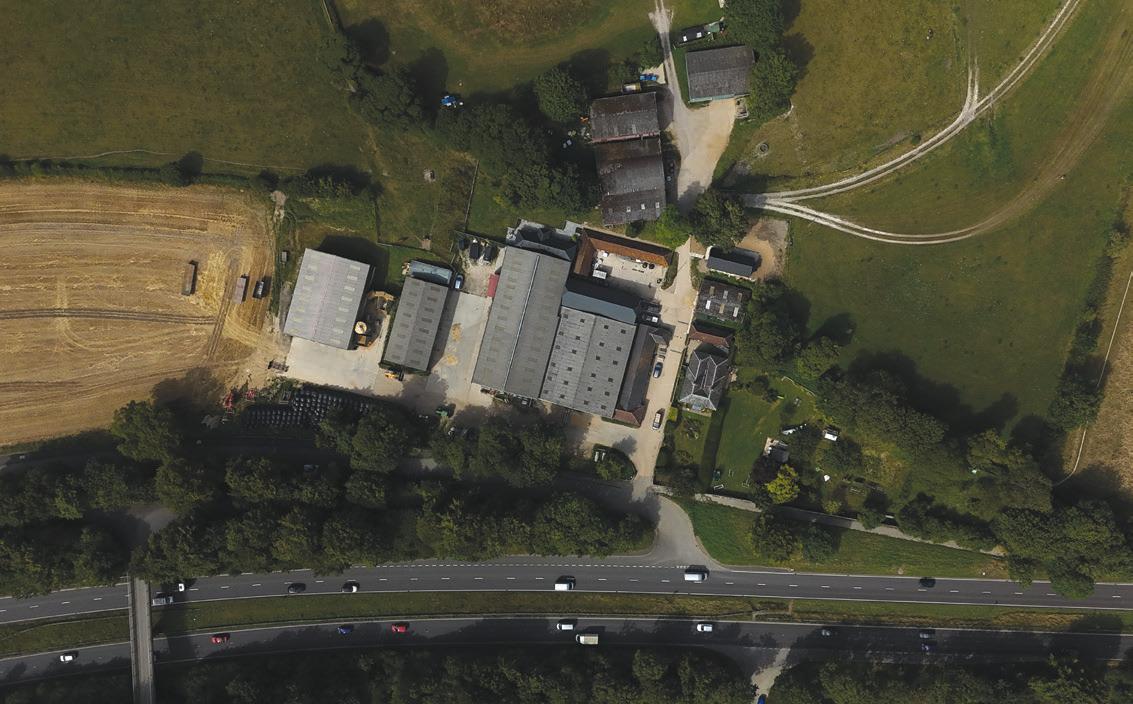
Housedean farm is in the South Downs National Park just off the busy A27 dual carriageway between Lewes and Brighton. Arriving off the slip road, I parked outside the camp site reception and café, where I was greeted by father and son team David and Nick Taylor.
Nick had been busy carting wheat back to the yard, he said, and they were hoping to finish off the last couple of fields to complete harvest before the rain arrived.
David headed off in the John Deere tractor, leaving Nick and I to chat. “Compared to last year, harvest has been relatively straightforward, but yields are down,” he said.
The best winter wheats have been coming off at around nine tonnes to the hectare, he explained, but they would normally expect closer to 10.
The wet winter hasn’t helped, but they’ve also had issues with a new disc drill and a fertiliser spreader that left stripes in the fields. “We are having trouble getting to the bottom of the issues,” he said.
Their spring barley has been coming off at about six to six-and-a-half tonnes a hectare, where they would normally expect sevenand-a-half to eight.



After a couple of profitable years for arable farmers, this year has been a big reality check, he said. With Basic Payments rapidly decreasing, Nick said he was glad they no longer relied on just the farm for their income.
This month Nigel Akehurst visits Housedean Farm in Lewes to meet father and son team David and Nick Taylor to find out more about their mixed family farming and diversification businesses.
siblings (one of whom – Ben Taylor, the managing director of Iford Estate – I interviewed last February) Nick never dreamed of taking over the farm.
“I went to university because that’s what everyone did. I was quite happy in my job but started to think: ‘Can I imagine doing this for the next 30 years?’” he said.
He was an environmental consultant and found himself spending more and more time in the office as he became more senior. Getting a bit fed up, he started a small farm camp site as a side hustle at the weekends.

now has 28 camping pitches (with each pitch capable of taking up to eight people), three pods, a shepherd’s hut and a pig ark, complete with outdoor bath.
The site charges £16 per adult and £7 per child for the pitches and all bookings are taken upfront via their website: www.housedean.co.uk.



When full, the camp site can accommodate up to 120 people, which is the maximum capacity the block of loos and hot showers can handle, he said. Weekends are nearly always fully booked and the site is also busy through the week during the school summer holidays.


Started in 2010 with a few camping pitches and a portable toilet, the venture quickly took off. It wasn’t long before Nick decided to leave his job to focus on the camp site full time.
Growing up on the farm with four other


Fast forward 14 years and the camp site


I asked Nick whether he had any trouble gaining planning permission. “Planning was okay,” he replied, explaining that it went through before the area became a national park, so the council was a little less hot on things like tents and cars.



The camp site opens at the end of March or the beginning of April and closes from October onwards, when it’s nice to get the place back for the off-season, he added.
“It’s been a good farm diversification,” he said, with the venture having grown big enough to employ a manager and a small team of helpers.
Nick said that before they employed someone it had been getting too time consuming, taking him away from doing what he needed to be doing, which was being more involved in the management of the arable enterprise.
Over the years, Nick has become more involved in the running of the farm, and he moved into the farmhouse three years ago with his wife Lydia and their three young daughters (his parents David and Bridget now live down the road, he explained).
As well as working on the farm alongside his dad, Nick has managed to set up other farm diversification ventures, something he finds rewarding.
“It’s not so much running the diversifications I find rewarding, but setting up the business and knowing you’ve got a guaranteed income that doesn’t rely on the weather,” he clarified.
In 2019 they converted an old cattle hovel into a one-bedroom holiday let with the help of LEADER funding under the tourism and leisure diversification fund, which they finished just as Covid-19 hit.
They named it The Hovel and it is let via Sawdays and has been a great success, bringing in around £170 a night during peak times.
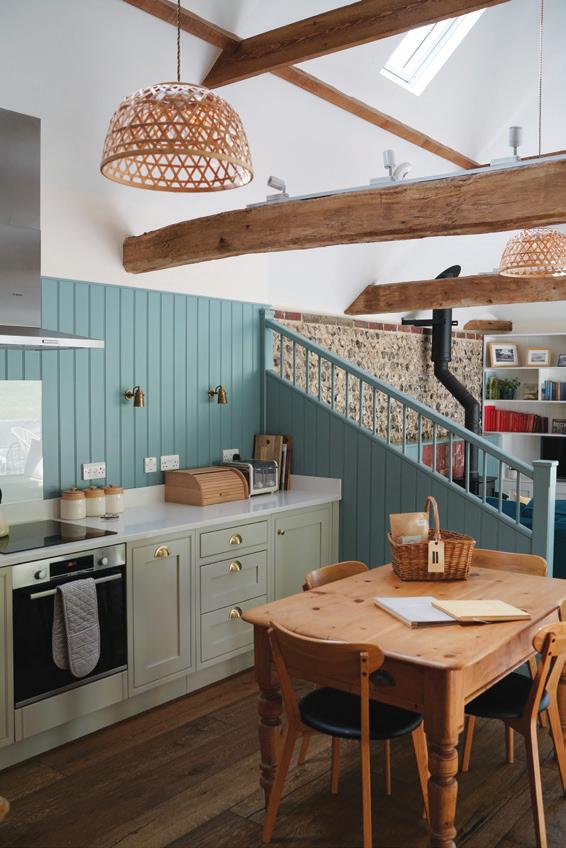
Looking around the space, it was clear that the renovation, made viable by the LEADER funding, has been done to a high spec.
“It’s always difficult because we’re tenants; it’s hard to justify spending money on someone else’s building so you’ve got to be sure you’re going to get a return on it over a reasonable timescale,” he explained.
Nick is now the tenant at Housedean Farm, carrying on the Agricultural Holdings Act tenancy for his lifetime. They also have other bits of land on farm business tenancies.
“We have been prepared to invest in buildings and treat the farm as our own. If you
don’t, everything can easily become run down and tired,” he added.
The latest diversification is a fitness studio housed in a sleek, new, black barn. Inside the spacious ply-lined building with Crittal windows, is an impressive collection of weightlifting equipment belonging to the personal trainer tenant.
The total cost of the build was supported by a 40% Farming in Protected Landscapes grant. Nick doesn’t expect it will take long to see a return on their investment.
I asked him if they had reached a tipping point where the farm diversifications brought in more money than the farm. He replied that had often been the case, apart from the past couple of years when the arable prices had been a bit better. But he said the farm was necessary to facilitate the diversification and added that it was good to have the variety of income streams.
“Some years in the past the farm has just broken even, and Basic Payment has been the profit. With the BPS decreasing, the farm diversifications can bring in useful income with less risk and less work,” he said.
The father and son team is currently considering whether to continue arable farming on the same scale or focus more on environmental schemes, with their current Countryside Stewardship agreement coming to an end in January.
For interest, Nick asked their farm advisors CLM to do a desk-based exercise to look at how much they could make if they put the whole farm down to Sustainable Farming Incentive schemes.
• Located in the South Downs National Park
• 270 hectares of arable, split between winter wheat, oilseed rape and spring barley
• 170 hectares of grass
• All chalk downland with some areas of clay capping
• 40 suckler cows and recently bought a Shorthorn bull to replace their old Simmental
• Stores sold at Hailsham market at between 12 and 14 months
• A tiny camp site started on the farm in 2010 has grown to 28 pitches and five glamping units, with a full-time camp site manager during the season
• All bookings taken via their website www.housedean.co.uk
• Converted an old cattle hovel into a high-spec, one-bedroom holiday let with the help of LEADER funding in 2019
• New on-site fitness studio built with help of Farming in Protected Landscapes funding
• Moving from Countryside Stewardship to Sustainable Farming Incentive next year
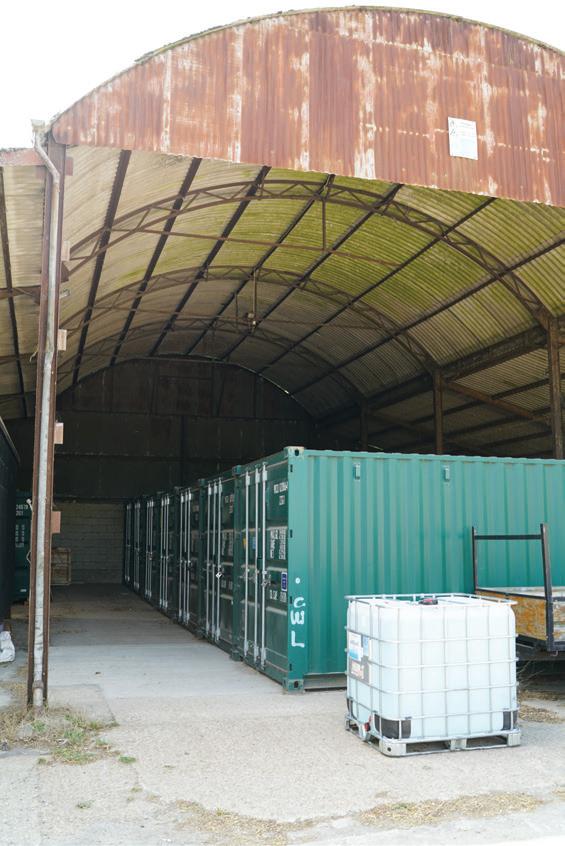
• Storage containers housed undercover in barns
“It was a significant sum, but you would have to get rid of most of your equipment and perhaps just keep a tractor, a drill and a topperenough kit to drill cover crops,” he said.
His hesitation is over the possibility of the Government changing the SFI rates in three years. “You’re either in or you’re out, once you’ve sold all your kit it’s very hard to go back,” he said.
“We can’t cut down our arable area any further without our fixed costs being too high.”
On the topic of food security, Nick said: “I do think food security is important for the country but I don’t feel a personal responsibility on our farm to produce food, particularly because the land we farm is relatively unfertile.
“We’re contributing, but as I say to dad, we’re producing malting barley for beer and we’re producing wheat for animal feed - so we’re not directly producing food for humans.
“Ultimately, we’ve just got to run a business that’s profitable, that makes money. We can’t just keep farming out of habit; we have got to look at it like any business person would and if we’re not making money then we need to ask how we can change to make sure we remain profitable.”
I asked if scale was the answer. Scale probably would help but then there’s more risk; your fertiliser bill is twice as big, you need more labour and there’s more rent to pay. It’s not a step we are thinking of taking. If anything we’ve downsized a bit, losing 80 hectares a few years ago, he replied.
Since getting more involved in the arable farming side of the business, David and Nick have started planting more cover crops and moved to min tilling rather than ploughing.
They’ve also taken up more environmental options, but Nick said the interface between farming and countryside stewardship wasn’t easy. He has seen a big increase in weeds, and black grass has become a big issue since they stopped ploughing, he added.
This autumn they plan to reintroduce the plough again to bury the weeds but will continue to reduce tillage where possible to build soil organic matter.
They are also using a variable rate nitrogen spreader to apply nitrogen where it is needed, but admitted they’ve had a few issues with machinery, resulting in large stripes in the fields.
John Barrow, their main tractor driver, has worked for the family for 45 years, and when he decides to retire it will be difficult to replace his skills and the knowledge of the farm that he has built up over those years.
The other main farming enterprise on the farm is a herd of 40 suckler cows that grazes the 170 hectares of grass, mainly bits of ground that aren’t suitable to be cultivated.
“We don’t have enough animals to eat all the grass, but we do have a bit of sheep keep,” Nick added.
Dad is very much the “cow man”, he said, adding that they’d had a tricky couple of years with difficult calvings and some deformed calves due to toxicity from their silage.
They are now in the process of changing from Holstein cross cows to Shorthorn in the hope of easier calvings and fewer problems. They have got rid of their old Simmental bull and replaced him with a Shorthorn.
Currently they calve in July and wean in May, selling stores in Hailsham Market at around 12 to 14 months. The best steers can fetch around £1,200, he said.
AND ENVIRONMENT FOCUSED JOURNALISM AND DIGITAL CONTENT CREATION
Storytelling through interviews, features, case studies, photography and videos.
For enquiries contact Nigel Akehurst via email on nigel@indiefarmer.com
Instagram @indiefarmer www.indiefarmer.com
All the cattle come into the barn during the winter months, but Nick would like to try out-wintering to free up valuable barn space.
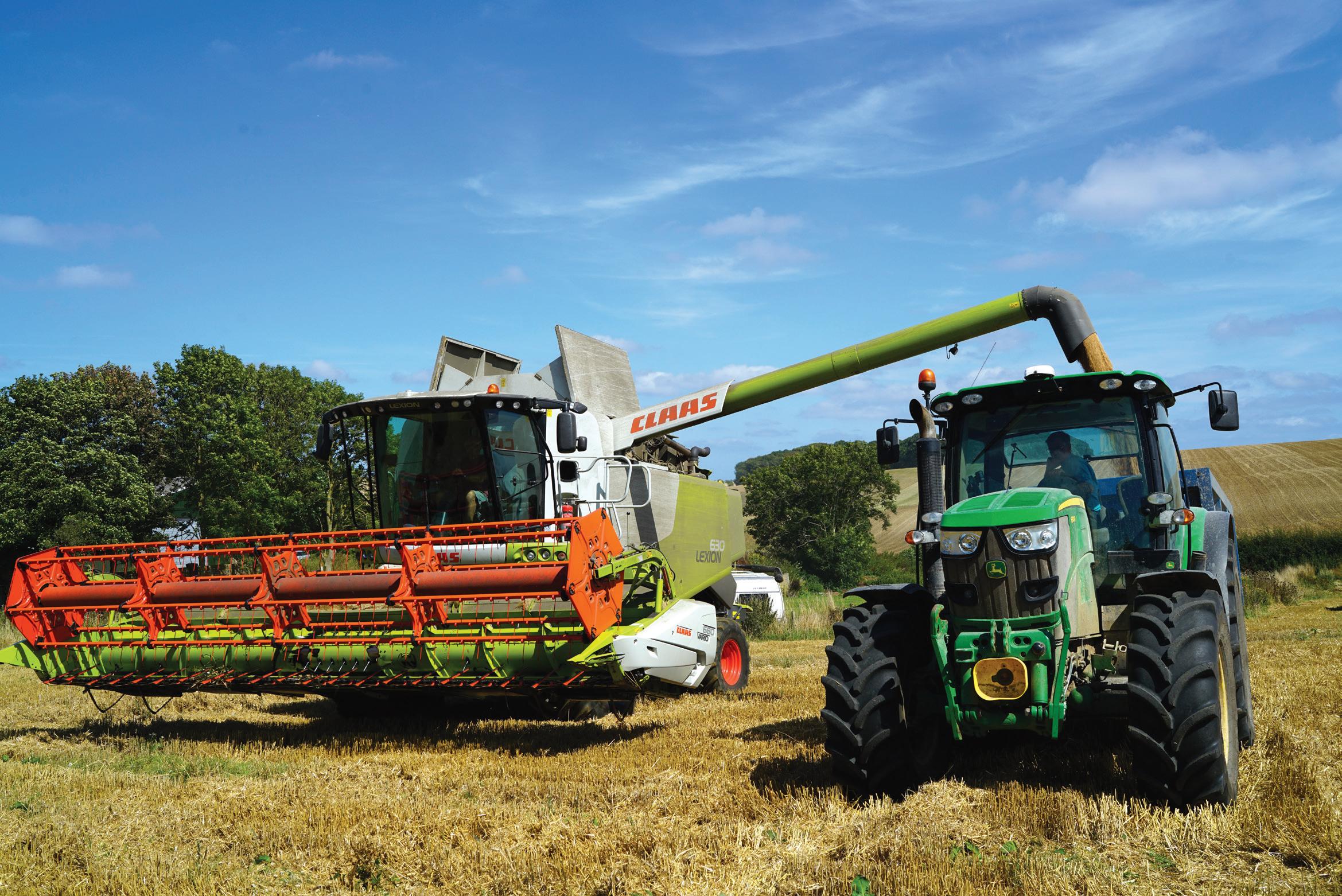
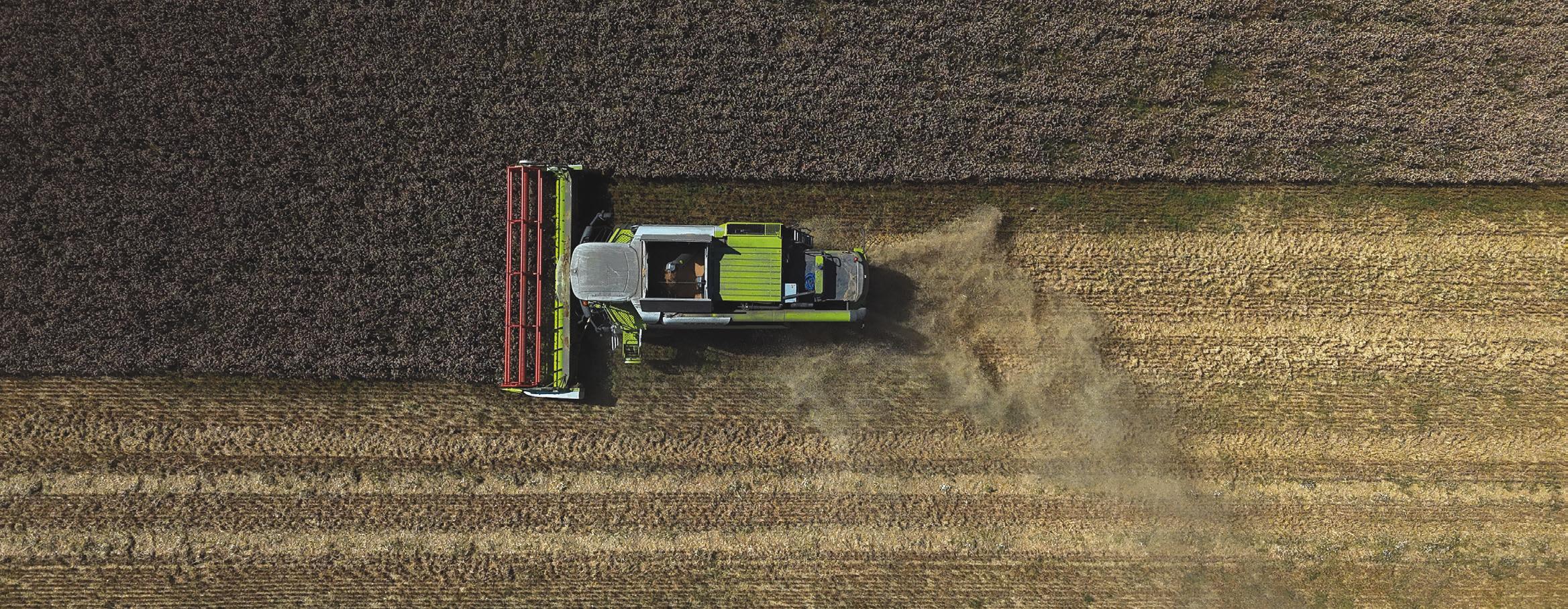
With my visit coming to an end, we jumped in Nick’s pickup and headed out to see their Claas combine working in the field..
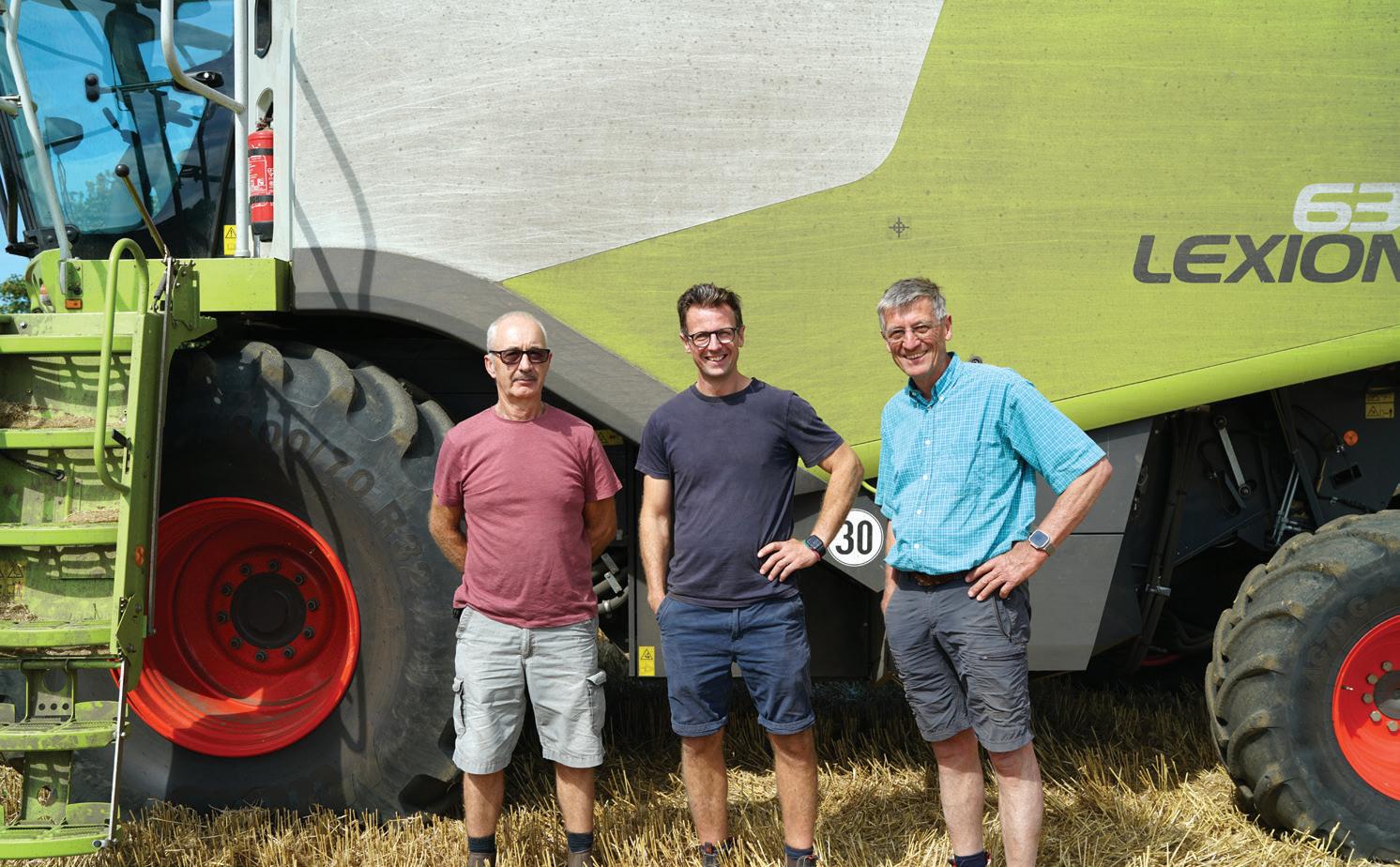
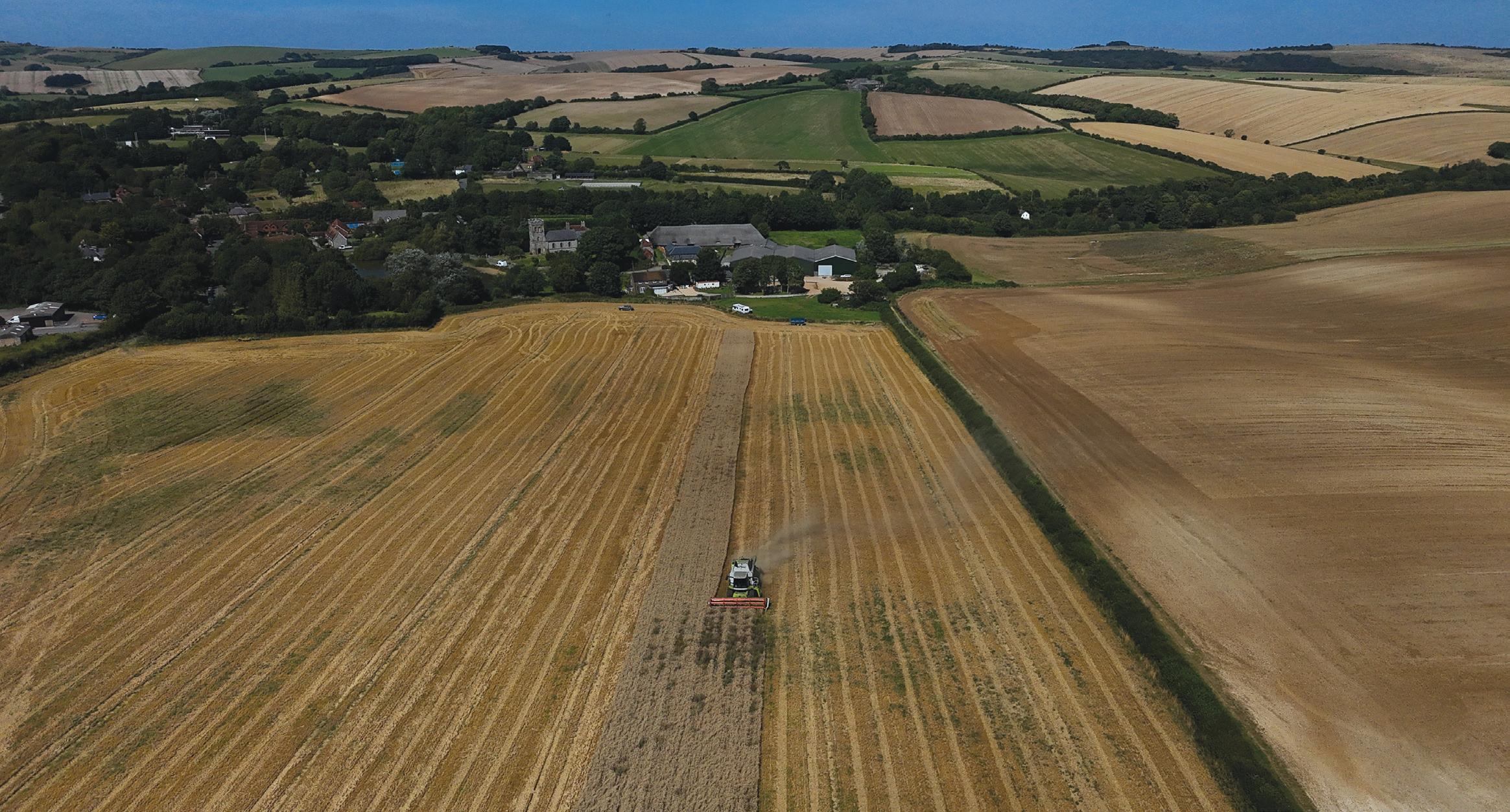
As someone who grew up on a small farm in the High Weald, I am always blown away by the scale of the fields on the South Downs and managed to get a few good drone shots of the combine with the Amex stadium in the background (Nick is a Brighton FC season ticket holder). I also captured a team shot of Nick, David and John standing in front of the combine.
Driving back to the farmyard, I asked Nick if he had any other plans for farm diversification. He replied that they might expand the small cafe in the camp site reception, which has worked well, attracting cyclists on the South Downs Way that runs through the farm. He also said they were planning to upgrade a few of the ageing glamping pods to more bespoke units.




With the main bulk of harvest completed, our attention turns to field preparations for the next season's crop. The 2024 season has left its challenges of slugs, grassweeds and disease very fresh in our mind.
Unsurprisingly there are many compaction issues to rectify, especially on tramlines. Examine soil structure before any deep cultivations and sub-soiling, making sure compaction layers are being removed. Where sub-soiling needs to be undertaken, ensure conditions are good to help get the ‘shattering’ required to break any pans.
Stale seed beds often prove valuable for controlling grass weeds and will be effective where moisture is present. Timing of cultivation is critical to produce a fine firm stale seed bed; cultivating to a depth no greater than 5cm and rolling afterwards keeps the weed seed in the germination depth, maximising germination and allowing removal with glyphosate before the crop is drilled. If dry conditions continue, more grass weed seeds may be lost through predation and natural losses over time.
Where levels of grass weeds are at a very high level, ploughing to bury as many seeds as possible should be considered. This will only be effective if ploughing has not occurred for several years and full furrow inversion can be achieved. Where Brome species are on the
increase, ploughing is also the best cultural control method.
The presence of slugs this season has been a constant reminder that we must do everything possible to reduce their impact on the new crop. This season has seen slugs present throughout the season in all crops, and with an increase in Sustainable Farming Incentive options, managing their destruction and trash management in a timely manner will help reduce potential issues.
Although slug activity may not be as visible during hot and drier weather, they will soon be present given the right conditions. An integrated approach is vital, along with paying attention to trash levels, particularly after cover crops/legume fallow. Any cultivation before drilling will help reduce the number of both slugs and eggs. Bait trapping before drilling will help assess the levels in each field, while creating a fine, consolidated seedbed will help reduce their impact. If seedbed conditions are poor, slugs are likely to be active, so attention to detail will be key this autumn.
Timing of oilseed rape (OSR) establishment also needs careful consideration. Getting the crop to four true leaves is paramount to ensure it is robust enough to survive cabbage stem flea beetle and slug attack.
The first priority is to ensure there is plenty of moisture for quick establishment;
the second is avoiding the crop being at a vulnerable growth stage at the point the flea beetle migration occurs.
Flea beetle invasion usually occurs towards the end of August or the beginning of September. In the past few years, the best approach has been to wait until after the main migration has taken place and sow when there is sufficient soil moisture. Some of our better OSR yields over the past few years have been from 15 to 22 September drillings. Choosing varieties with good autumn vigour and turnip yellow virus resistance is essential when looking to establish a strong healthy plant in the autumn.
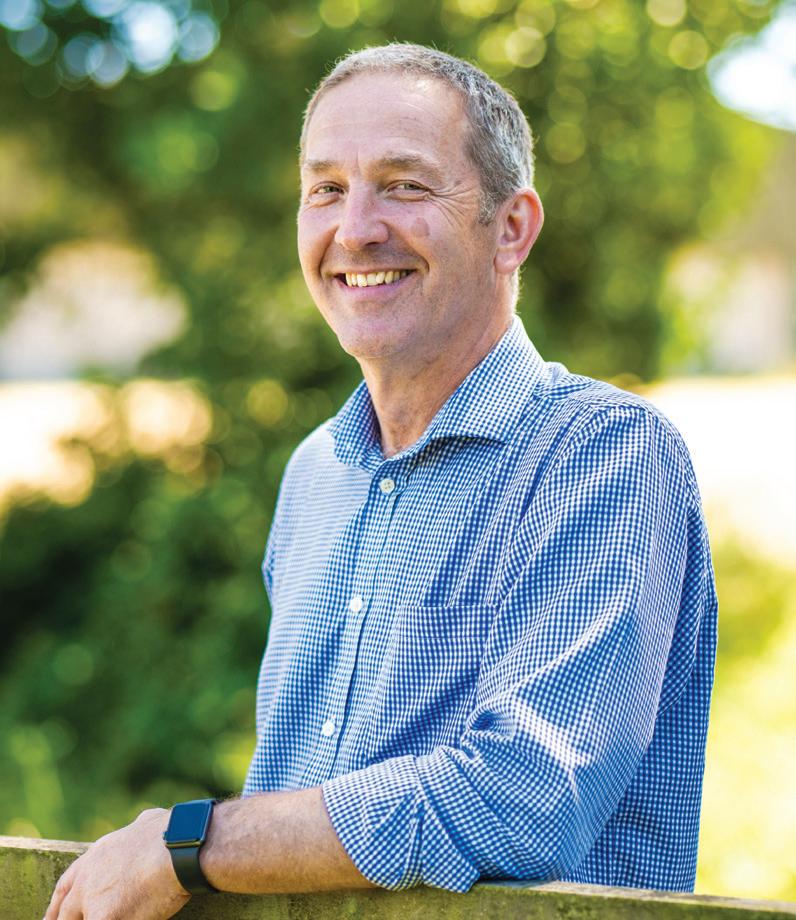
John Smith, Managing Director, Weald Granary Ltd, reviews the 2024 harvest
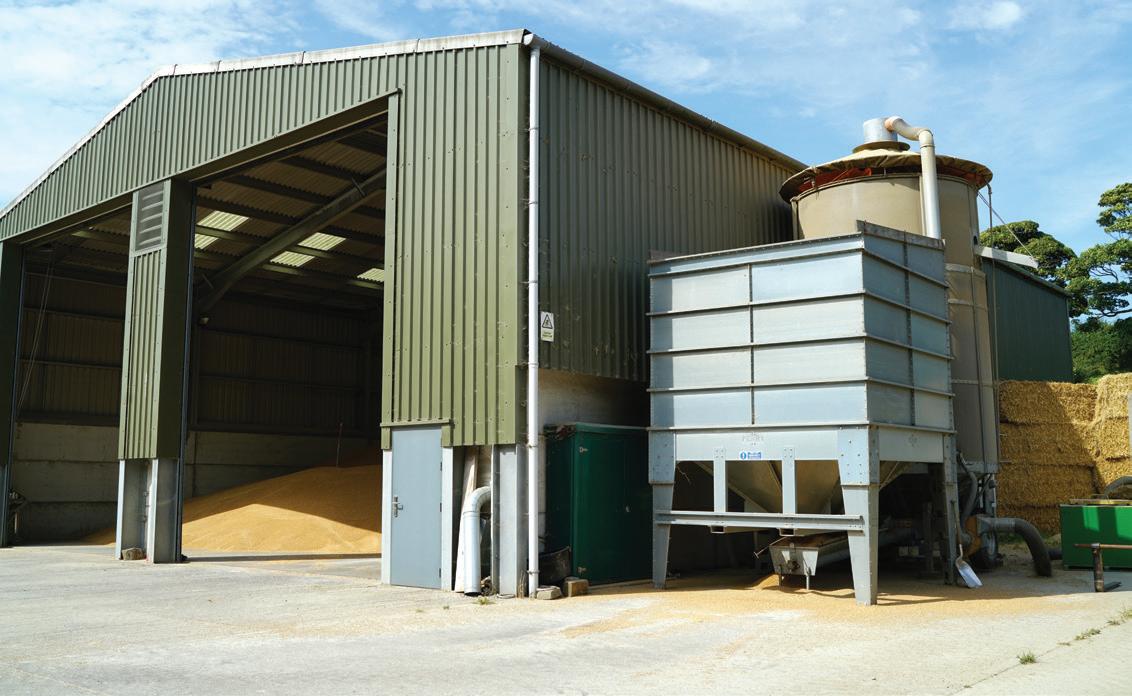
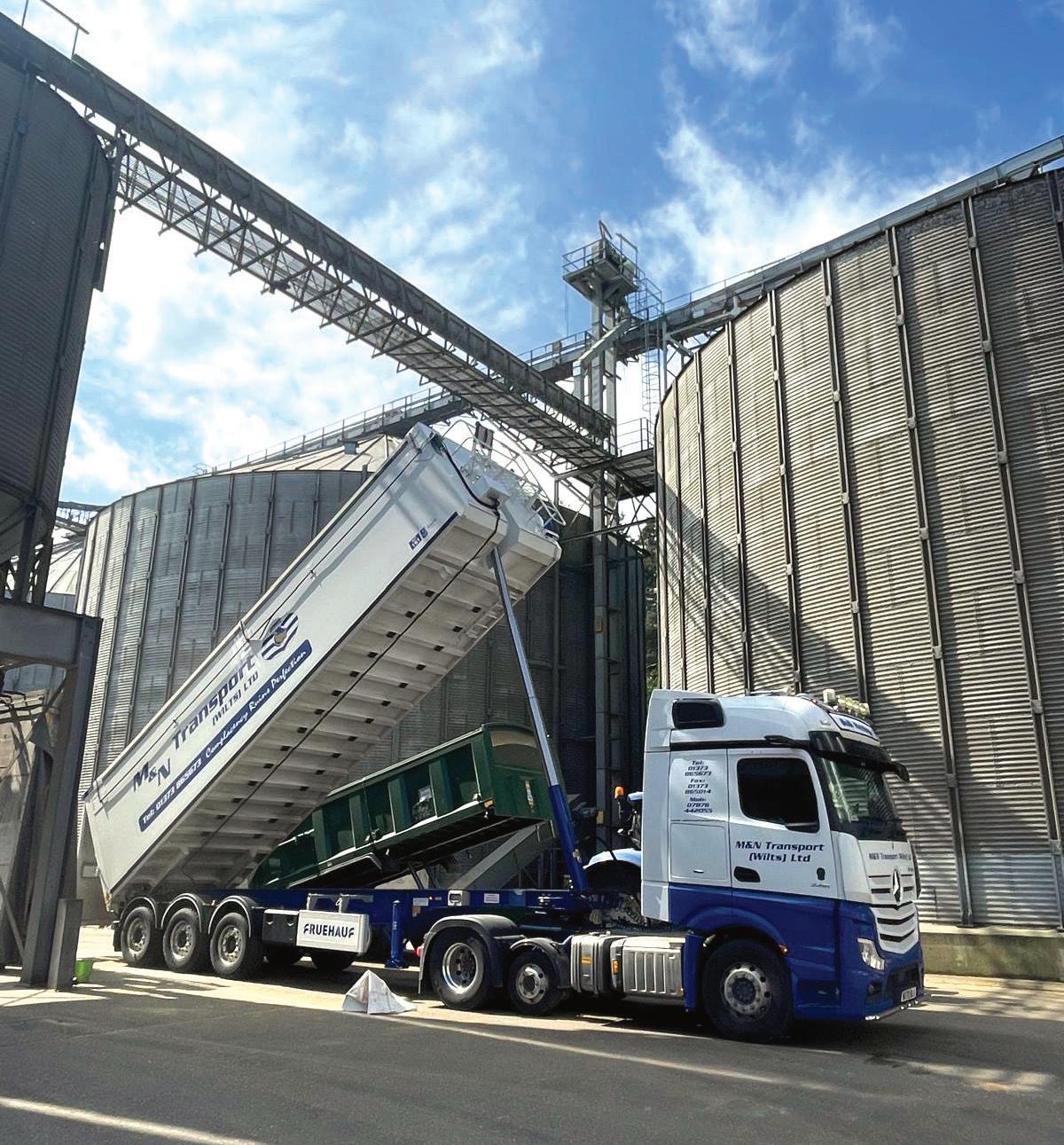
Harvest is in full swing again at Weald Granary, where we are taking in around 3,000 tonnes a day for our farmer members as we reach full capacity on the intakes and driers.
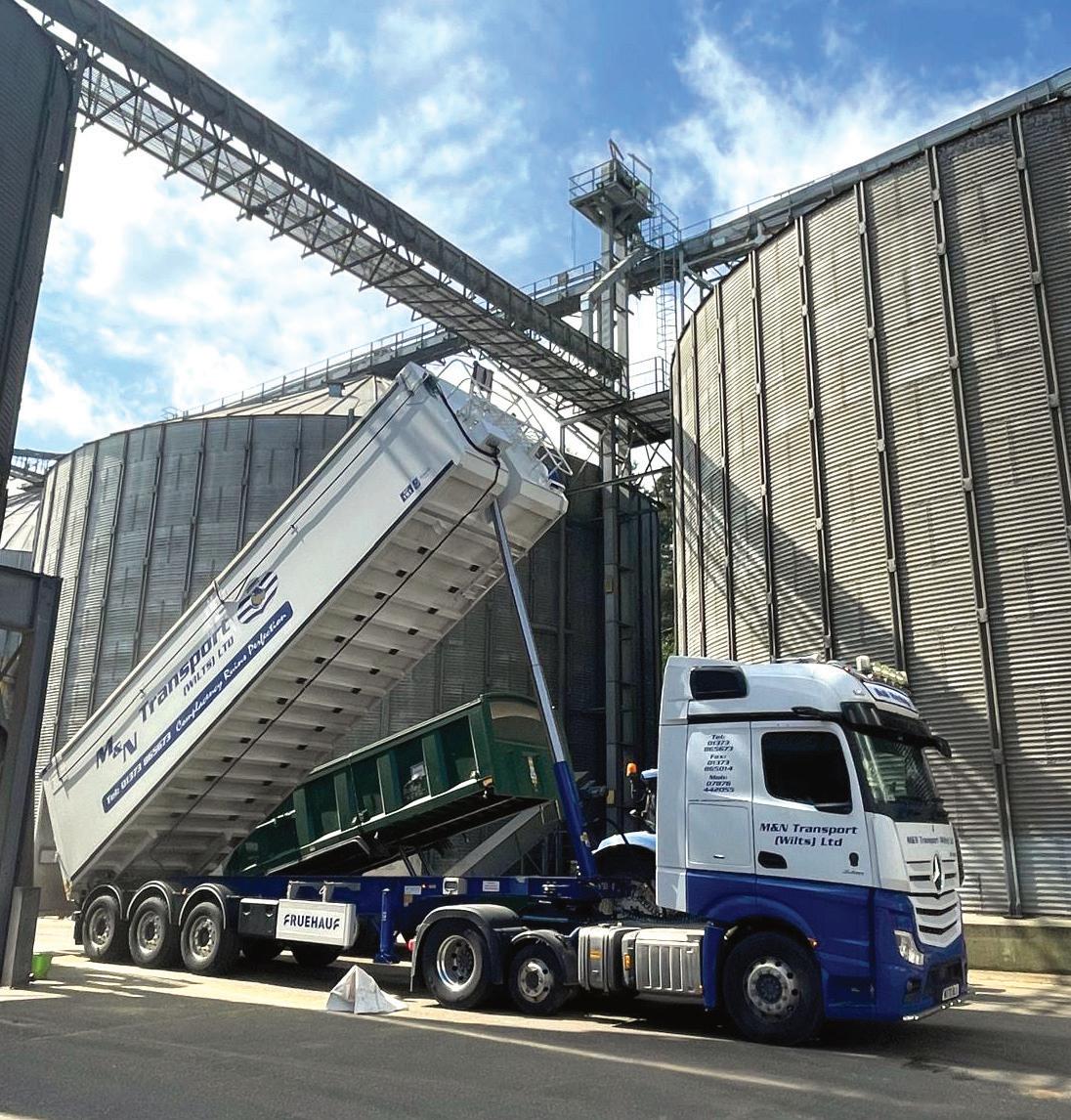
Weald Granary has 23 to 25 trucks available at any one time (allowing for breakdowns) servicing 180-plus farmer members and end users, is doing its best to keep everyone cleared in a timely manner and making sure deliveries reach customers on time.
The drivers, staff and students are all going the extra mile to ensure harvest goes as smoothly as possible for all, although it did seem strange drying grain in temperatures of 30 degrees-plus!
Harvest 2024 has been a mixed bag, as in recent years, with quality and yields varying widely over the region. Oilseed rape has in the main performed to expectations, with the majority dry and recording decent 45% oils. Winter and spring oats are nice quality and at 50+ specific weights, with a good 29t on a truck as opposed to barely 20t last year.
We are seeing a lot of low nitrogen (1.2% to 1.5%) in barley and low protein (8.5% to 11%) in milling wheat, particularly Extase, along with increased levels of cereal and grass ergot. In general, the later-cut crops coming in now are showing improving protein and reduced ergot levels.
A zero ergot tolerance was recently introduced on the new AIC (Agricultural Industries Confederation) contract, so fine cleaning and colour sorting will be required on a significant quantity of crops this season. Any ergot present in a 2Kg representative sample is recorded and attached in a bag with the retained samples in the lab.
Last year, ergot charging was: one to two pieces £2/t; three to five pieces £4/t; more than six pieces £8/t. We are currently reviewing ergot charging in light of the increased levels we are seeing.
Charges to members will be set to cover costs plus a small margin to cover wear and tear etc. Any third-party work is charged at a commercial rate.
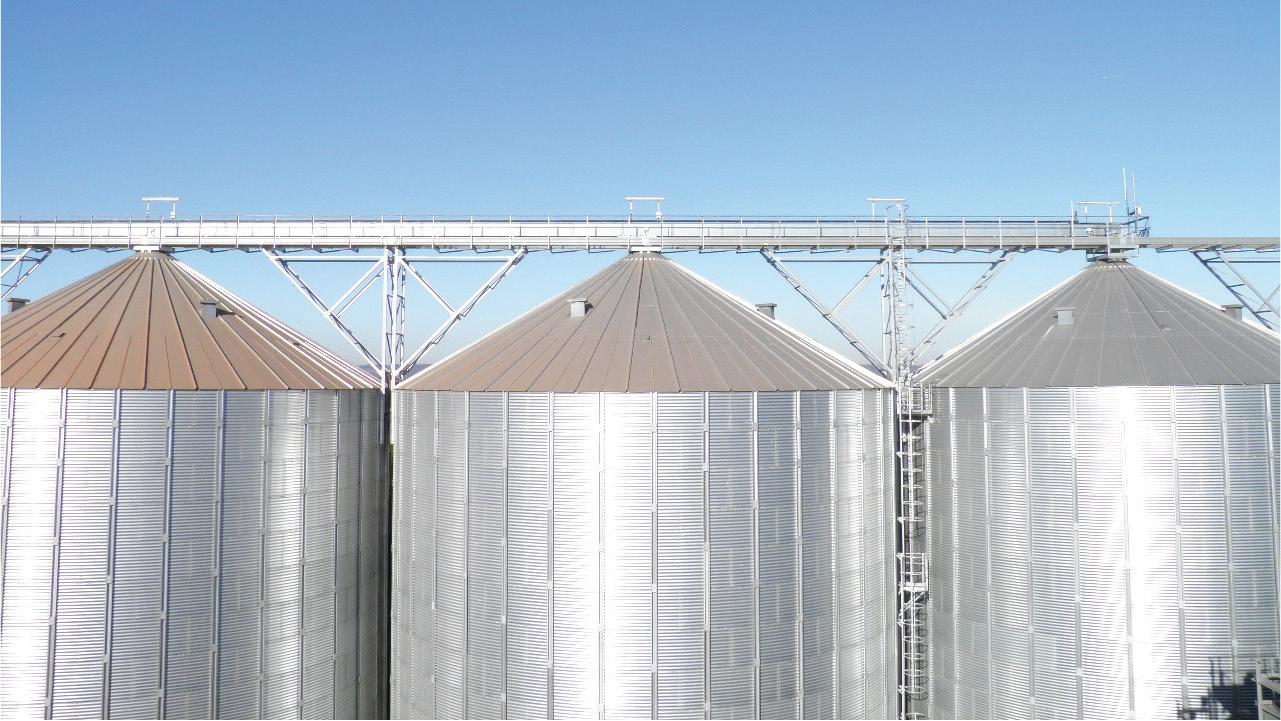
Weald Granary recently made a significant investment in a sevenchute 30tph Cimbria colour sorter which will be operational by early November. This will ensure Weald Granary can supply ergot-free cereals to customers.
Last year the granary introduced additional premiums for Group 1 and Extase over 13% protein and a premium low grade in the category 11.45% to 11.95% protein. This is a significant niche benefit to members and not available in the wider market.
Quality claims are applied in line with store policy to reward members for the quality delivered and to offset any claims on delivery out and







store blending costs. The granary intends to apply the same policy to the 2024 crop in order to reward members fairly for the quality delivered.
Overall, we are 65% complete on intake and bean harvesting is now underway, which is always a sign that the end is near; time for a welcome break, a few cold beers, a reintroduction to family and friends and some mackerel fishing from my 1968 Hurley 22 bought earlier this year.

Hutchinsons is proud to announce the launch of the latest functionality added to the Omnia digital farming platform to support farmers in efficiently managing and recording Sustainable Farming Incentive (SFI) actions.
Through the new functionality it is now possible to add land use options as well as crop use and management use options into Omnia.
“Integrating SFI data such as this with other farm management information within Omnia simplifies farm management and supports the overall efficiency of farming activities as there is no need for multiple platforms,” said Georgina Wallis, head of environmental services for Hutchinsons.
Georgina explained how the intuitive interface of Omnia ensured that all necessary data could be entered quickly and accurately, creating easy-to-use and easy-tointerpret maps.
“Where cropping plans are already mapped out in Omnia, it is now possible to add in another layer of detail with the options functionality without interfering with the actual cropping, which is key in what is already an extremely busy workload,” she said.
“For example, it is easy to record in map form where an oilseed rape crop is being grown with a companion crop or where the crop is teamed up with a soil management plan etc.
“It is also possible to record where options like buffer strips, winter bird food or pollen and nectar mixes are in each field. These can then be printed off and displayed for all the workforce to see, helping to reduce
accidents such as where a spray contractor, for example, didn’t realise the field was under no insecticide in the SFI.
“So it is now easier than ever to look at the impact of sustainable practices across the farm and the best ways to adjust farm management strategies to improve outcomes.”
Georgina added that the new functionality maed it easier for farmers to stay compliant with SFI requirements from the Rural Payments Agency (RPA) by generating yearly reports.
“For example, when a cover crop is established, a picture of this and the seed ticket describing the mix can be easily uploaded into Omnia through the field diary and is then geo-located on the farm.
“When the RPA requests evidence of the crop, with a ten-day turn around, the user has it all to hand at the press of a button. The same principle applies for soil or nutrient management plans or integrated pest management plans.
“It just takes the stress out of the whole process and helps in managing schemes from one year to the next.”
She noted that the functionality also worked for those needing to produce compliance reports for the food chain, as reports can be easily accessed through the field diary as and when required.

GEORGINA WALLIS Head of Agroecology
T: 07825 431647
E: georgina.wallis@hlhltd.co.uk
Canterbury: 01227 830064 www.hlhltd.co.uk
Sadly, I haven’t bought any farmland since 2001 when I paid £3,200 per hectare (£1,300 per acre) for a 32ha block. Since then, farmland prices have been a one-way bet, with values surging ever upwards to the point where quite ordinary land in the South East is often priced at £37,000 per hectare (£15,000 per acre). But might this relentless rise in farmland prices be about to change, with larger acreages now reported to be coming to the market?
One thing that is said to be causing more land to be sold is the cost of borrowing. Apparently, banks are getting jumpy about the amount of money some – particularly arable – farmers have borrowed. These loans are at interest rates of 9% in some cases where the arrangements are on overdraft and a 1.5% annual arrangement fee is levied. These finance charges, combined with low grain prices and the imminent disappearance of the Basic Payment Scheme, are causing banks to question whether or not certain farmers are actually capable of servicing their debts, so are insisting that a number of their farmer clients sell some land.
Overall, agriculture and forestry businesses actually had £428 million less borrowed at the end of May this year compared to a year earlier, according to Bank of England figures. But this masks a growing difference between those who have good financial security and those who do not.
Just where farmland prices are headed is, of course, difficult to predict. This is particularly so, given that many of the factors which determine what a hectare of land is worth have nothing at all to do with food production.
Agricultural Property Relief and Capital Gains Rollover Relief, for example, both support farmland prices. But our new Labour Government is reported to be considering the capping or scrapping of both these tax reliefs because they are deemed to have driven up farmland prices to the point where ordinary farmers trying to buy land to farm have been priced out.
The Government is also reported to be looking into ways of ‘capturing value’ from farmers where their land is zoned for development. There is even talk of introducing a ‘land tax’ to drive farmland prices down.
Even in the unlikely event that the Government did introduce all these measures, that still leaves plenty of other demands for farmland that are nothing to do with farming. Land will continue to be needed for renewable energy, re-wilding under Environmental Land Management schemes and for biodiversity net gain schemes through which developers will pay farmers to return their farms to nature to compensate for the loss of natural habitat where houses and factories are built.
If we do see the Government make a determined effort to drive down farmland prices through tax reforms, we may well see farmland prices edge down quite a bit. That said, I’m not holding my breath until they get back to £3,200 per hectare.









beef, Southdown-cross lamb and fruit and vegetables from the farmhouse kitchen-garden.
Precision Soil Sampling
Accurately measure your soil pH, health, organic matter and nutrient indexes. Soil sampling provides accurate and reliable measurements of soil health and fertility enabling the targeted and efficient use of fertilisers and lime.
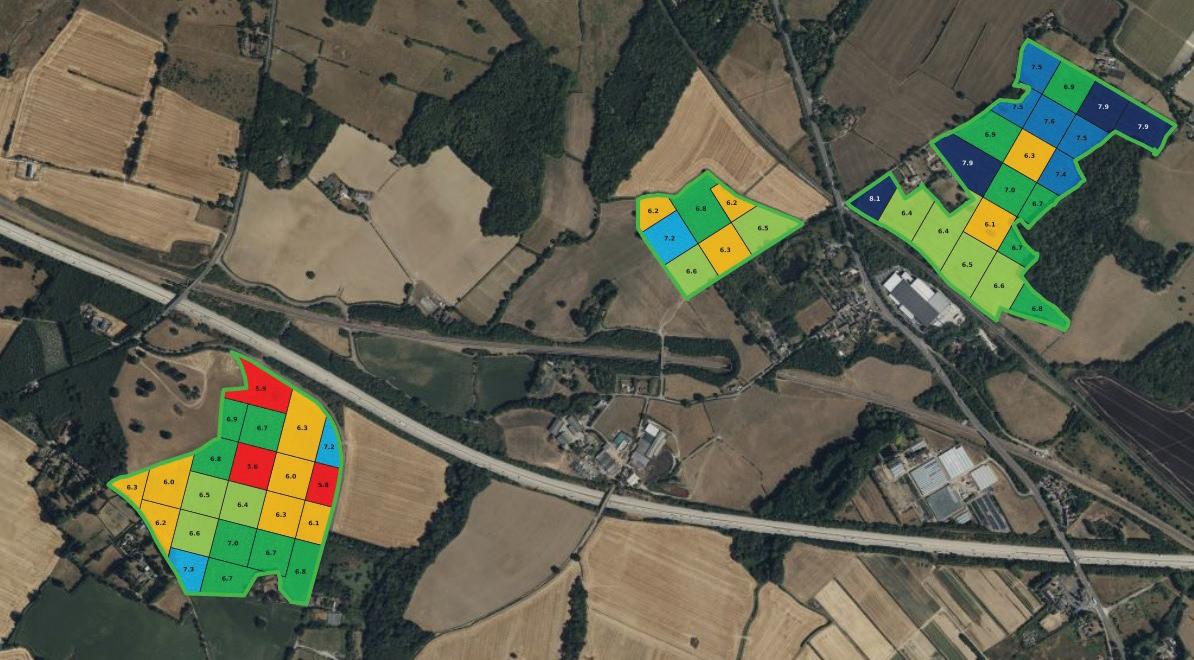
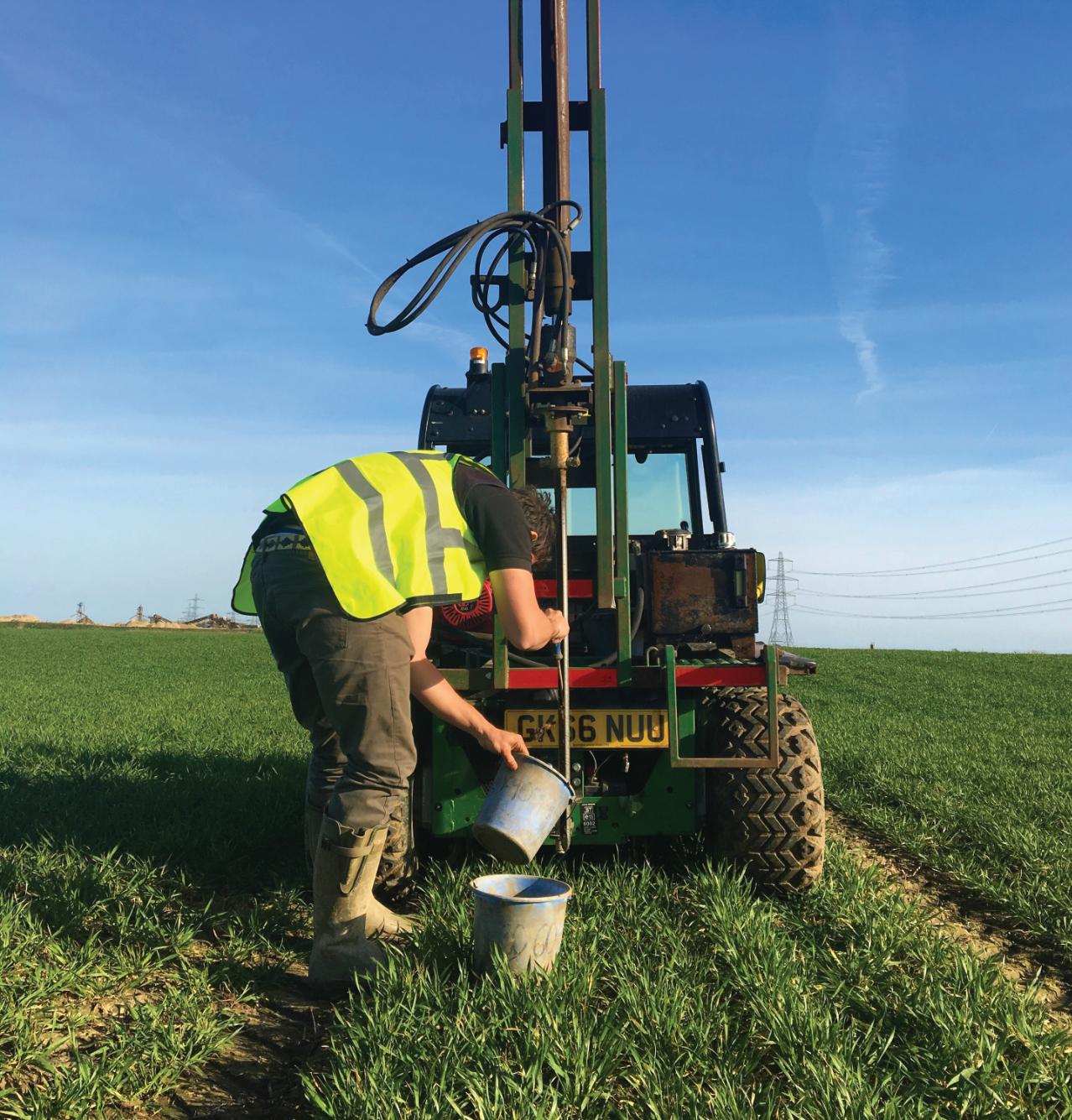
In 2023 the UK was 62% self-sufficient in food, which means that If we were only to eat UK-produced food, it would have run out by 14 August.
The NFU has lobbied for greater selfsufficiency; for as long as I can remember; our home-produced proportion has been creeping ever lower as our consumption grows.
Every day I see the health impact of not enough food, healthy or otherwise. I see the damage to people and communities and I hear about reports that will make you fear for our economic stability in the future.
Farming UK ’s headline on 14 August was UK’s self-sufficiency in fresh vegetables hits record lows. Depressing.
Professor Tim Lang spoke at a City Harvest event at the beginning of last month. I’ve written at length about my admiration for his work and clarity of thought. In his book Feeding Britain he reminds us about the precarious situation we faced between the first and second world wars.
In 1935 an independent inquiry by Viscount Astor and Seebohm Rowntree was published detailing the poor diets of people in York, against a backdrop of falling productivity in farming, which, following the depression, was providing only a third of national food. Their report also detailed the state of British farming and its importance for security.
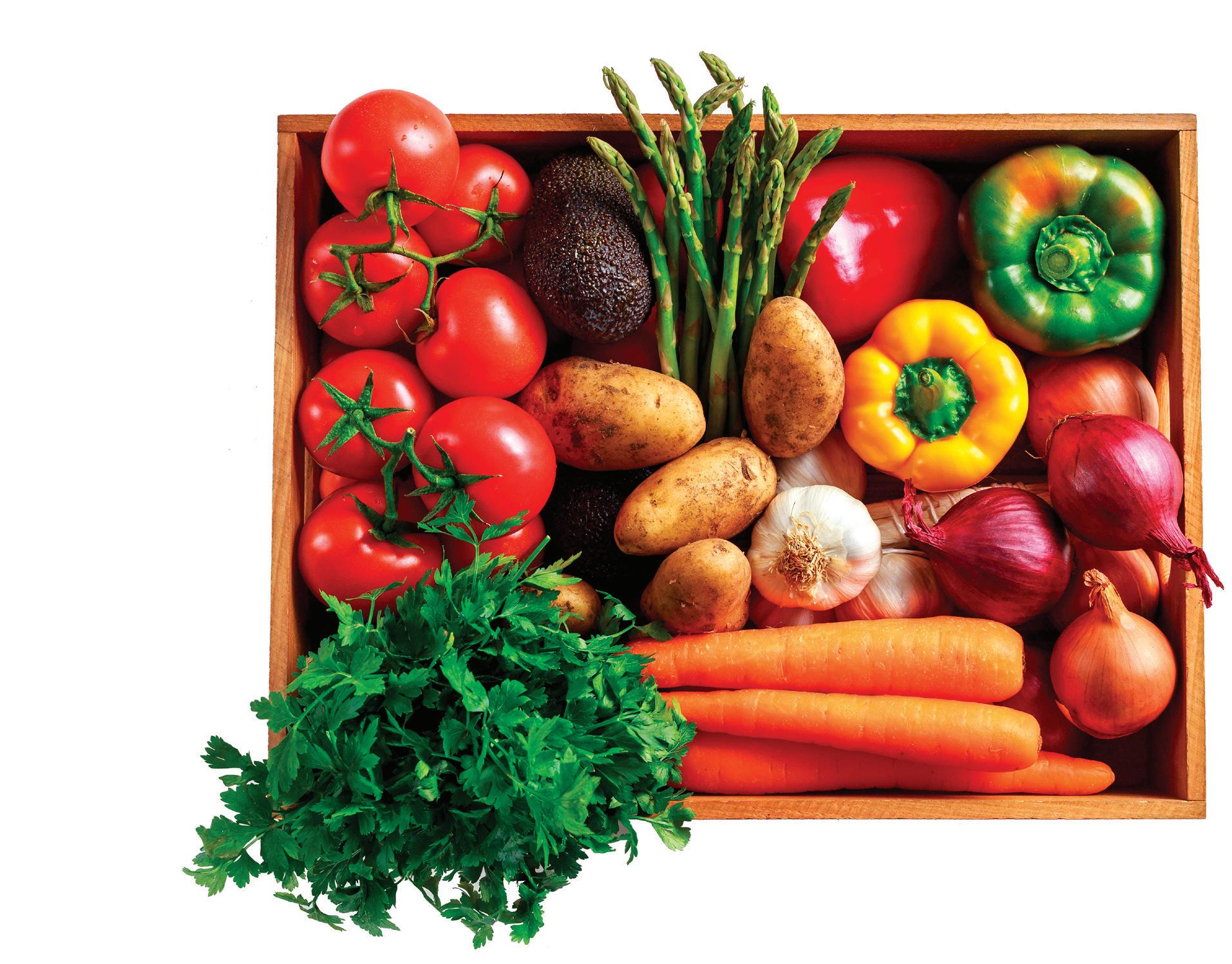
the Department of Health and in recent Food Foundation Reports.
seismic chunk of constitutional change and a very brave government to tackle it.
The Astor and Rowntree report also focussed on food poverty and health, the appalling state of the ‘working class’ diet – poor housing, poor food at work, an impoverished food culture and ill health. Rowntree also championed the plight of women who lacked kitchens and the means to earn money to feed their families.
The medical world weighed in, denouncing the state of diet-related ill health. There is a study from 1936 called Food, Health and income which detailed how bad the diet was. Almost word for word, its finding are echoed in recent work by the College of Midwives and








SARAH CALCUTT Honorary Chair, National Fruit Show

The reports of the day were used by Sir William Beveridge as he produced briefs during the second world war on social policy; we are still in his debt for his influence on constitutional policy on food, housing, food security, health and education. He was part of an extraordinary generation of academics and social policy analysts who viewed food as a national scandal but one which could be addressed and resolved.
We are at a Beveridge moment; we need to change our food system. Just think, when Henry Dimbleby left government, his enormous resignation letter, his book entitled Ravenous, detailed the almost one million homes that don’t have a cooker because they cannot afford one.
When Beveridge wrote his report, the pressures were economic and technological. Massive advances have been made in farming and the potential of the UK industry is sizable, but the current dual economic and environmental challenge is going to take a
The World Economic Forum has released a report stating that the amount of water we have extracted from deep aquifers has tilted our planet by almost 80cm so far. This contribution to the climate crisis, coupled with a national reliance on food from water stressed nations, is a compelling reason for a shift to a food system that supports home grown above anything else; restoring a thriving British farming industry, supporting a healthy national diet and decreasing our reliance on environmentally bankrupt imported products.
I’ll step off my soap box, but now is the time to jump on yours. Despite the horrendous start to the farming year, I am hearing good things about this year’s crop. Go and shout about how significant it is, shout about how good you are at delivering the healthy diet people need, how you are caring for the environment in which it is produced. And yes, demand proper money for it, because that needs a reset too, doesn’t it?
On the back of last year’s bumper crop, the potential for the 2024 crop load was always going to be lower. The wet weather that commenced during flowering caused stuck flower caps, which prevented pollination and reduced the overall fruit set.
As a result, the early sites and early varieties generally achieved a reasonable fruit set, but later sites generally have poorer crop prospects. The lower crop load, however, does have some benefits. The practical theory of maintaining crop balance (bunch to leaf ratio), means that with a reduced crop load comes less need to thin and therefore reduced canopy management costs.
At this stage in the season, with harvest nearly upon us, the main aim is to encourage the crop to ripen. Potassium sprays can encourage sugar development, while boron and zinc help to enhance colouring of berries and brix levels. Growers may also want to consider an application of foliar nutrition influenced by the underlying soil type.
Typically, for chalky soils consider applications of iron and for sandy soils, consider boron and zinc. Clayey soils generally maintain a higher nutritional value, but due to the dry conditions at the end of the season, the soils have cracked, meaning that unless the roots are well established a good dose of nitrogen, phosphorous and potassium is suggested.
The major issue for this year has been downy mildew. The spores germinate in warm and wet conditions and are splashed onto the lower leaves of the canopy by rain or carried by wind. The spores grow a germ tube which can be likened to a human arm and enters and attaches itself through the leaf cell.
The fungus continues to develop and spread inside the leaf. It is important to understand the functionality of downy mildew spores because few chemical controls have the ability to control spores once they are inside leaf cells. The focus of control is protective measures rather than eradicants for this very reason.
In high pressure periods, reduce the spray application interval to seven days and track the forecast so that you are applying the products at the right time. The key element to downy mildew germination is the 10:10:24 model: conditions of 10°C, with 10mm for 24 hours, presents optimal spore germination. Consider applying Ametoctradin and Dimethomorph as eradicant measures
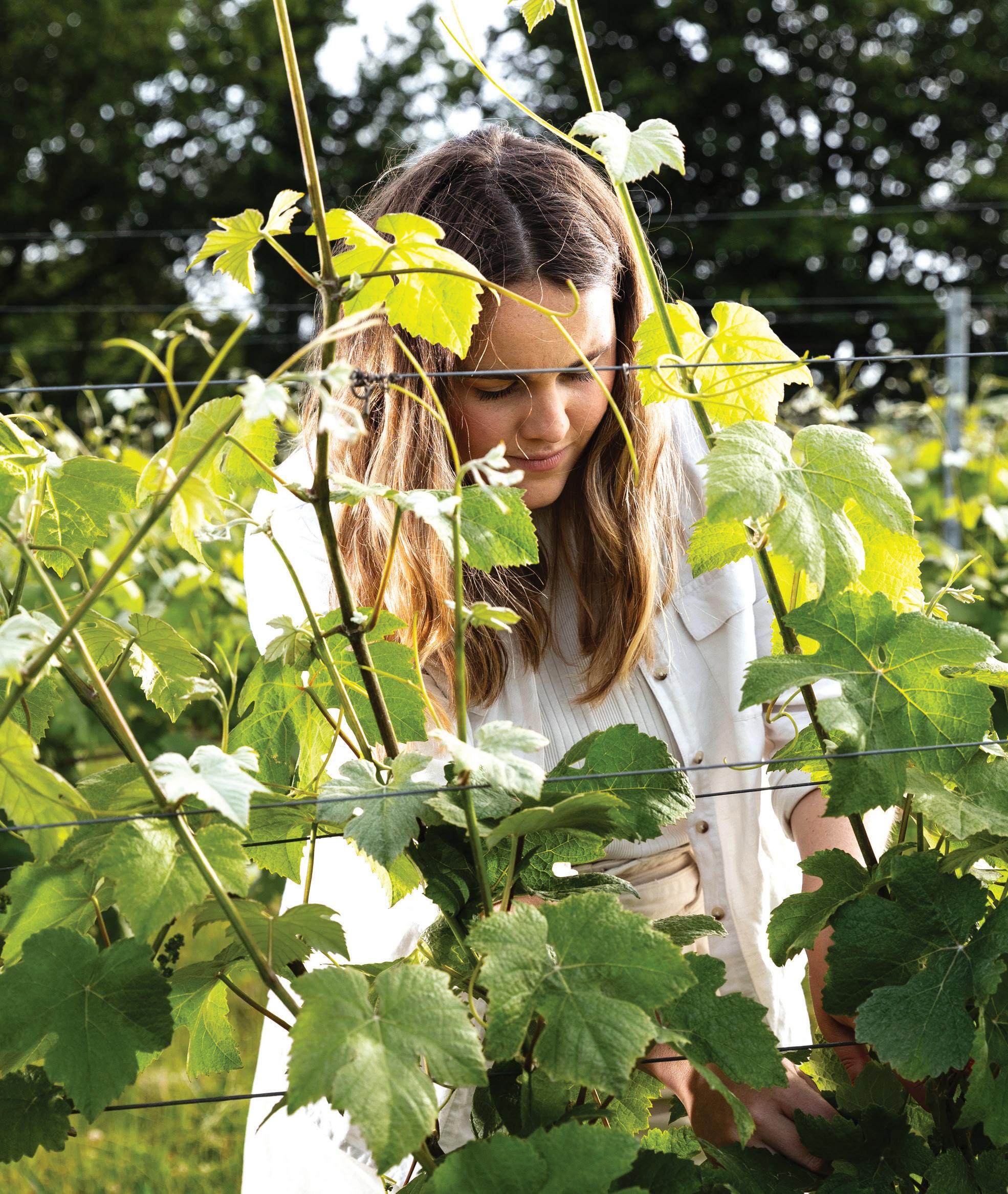
and Cyomoxanil combined with potassium phosphite for protection. If your vineyard hasn’t got a patch of downy mildew this year, please let me know; I would love to know your secret.
Finally, as we head into harvest and sugar levels develop, watch out for opportunistic Botrytis, wasps, spotted wing drosophila and anything else that likes to eat sweet, juicy fruits. Damage from pests and Botrytis come hand in hand when it comes to impacting maturing grapes.
Botrytis is an opportunistic pathogen, meaning it infects through wounds, and so fractures to the grape skin caused by feeding damage will increase the chances of infection. Other potential means of damage can include machinery, rubbing or splitting through wind and rain and too much of a heavy crop load. You can create an environment within the canopy that discourages infection by allowing good air movement and increasing the UV light interception to the fruiting zone, which should give a relatively dry environment.










Scan for more information on the 6 Series and to find your nearest dealer.
‘Models shown for display purposes’












COME AND SEE THE SPECIAL EDITION AT ROMNEY MARSH PLOUGHING MATCH - 1st September & EAST KENT PLOUGHING MATCH - 25th September * PACKAGE INCLUDES:





5
DRIVER PACK + POWERED IN CAB FRIDGE
*Contact Bell Agricultural Ltd for more information on the full package.
*Finance for business purposes only. Subject to acceptance and affordability checks. Applicant must be 18+. UK only. Promotion valid until 30.09.24. Available on new equipment only. Payment profile of 1+59 monthly payments @ 0%, 1 + 5 Annual Payments @ 0%. Based on maximum balance to finance of 40% of RRP. The finance product offered under this promotion is Hire Purchase. 1st payment, full VAT and a doc fee of £100 are all due on signing. An option-to-purchase fee of £100 (+ VAT) will be collected with the final payment. You will own the equipment when all payments have been made. Alternative finance options are available. T&Cs apply. Annual admin fee of £40 (+VAT). Images are for illustrative purposes only. Finance provided by BNP Paribas Leasing Solutions Limited, Northern Cross, Basing View, Basingstoke RG21 4HL. Registered in England No. 901225. As funder we may pay a commission, fee or other
us, please contact them if you require more information.
Follow us on
DEUTZ-FAHR is a brand of
"Ploughing through the ages" is the theme of what will be the East Sussex Ploughing Match Society’s 58th match, which will take place at Marnhull Farm, BN27 3SX, on 7 September by kind permission of C H Ellis LTD and F S Major and Sons.
Chairman Jim Braiden said the society was grateful to the event’s hosts after having had some difficulty in locating a site for this year’s match. He also paid tribute to the work of Katie Plumley, who has joined the society as secretary and has proved to be “a most welcome addition to the team” and to the support of Hailsham Young Farmers’ Club, whose members, he said, “play an integral role within the society”.
Jim added: “The society would like to thank all the sponsors, advertisers and trade stands that help support the society. Without the support of all of you, running the event in its present form would be exceedingly difficult.”
This year’s charity, St. Wilfrid’s Hospice, will receive a proportion of the day’s income, which Jim pointed out depended on the number of people attending. “You not only support the society, you also support a very worthy cause,” he said.
This year’s "ploughing through the ages" theme will see up to four teams of horses competing, plus steam ploughing and vintage, classic and modern classes, with the best ploughman able to go forward to plough at the Sussex Ploughing Championships on 19 October.
The day also features a domestic section, with several different categories for all age groups and wide-ranging skill sets, along with a fun dog show which has proved popular in the past, and grain and hay sample competitions which will also feed into the Sussex championships.
“With ever-changing agricultural pressures, it is becoming difficult to find a site for the event, and moving forward we are looking for a site in 2025,” said Jim. “If anyone can help the society, please contact one of the members.”
Date: 7 September 2024
Venue: Marnhull Farm, BN27 3SX
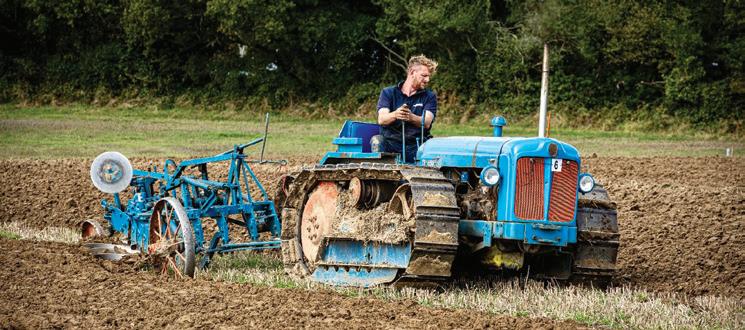
Ploughing match season is here!
This year’s North Kent Ploughing Match will take place on 28 September at Speedgate Farm, Fawkham, Longfield, by kind permission of the Hollands Family.
The event will feature strong vintage ploughing classes plus contemporary set-ups and will provide an enjoyable farming day on the North Downs within 15 miles of central London. Refreshments and a limited number of trade stands will add to the attraction.
Date: 28 September 2024
Venue: Speedgate Farm, Fawkham, Longfield
The Fairford, Faringdon, Filkins and Burford Ploughing Society will hold its annual show on 28 September at Little Faringdon Road, Langford GL7 3LA, by kind permission of A J Cole & Son and Mr P Kirby.
This will be the society’s 76th annual ploughing match and country show, held at a different location in the South Cotswolds area on the last Saturday of September each year and organised and managed by a team of dedicated volunteers.

The horse and tractor ploughing competitions will as always be the main attraction, with 16 classes in total along with
two hedge-laying classes.
Visitors will also be able to enjoy seeing steam ploughing in operation, along with lots of other attractions that can be seen around the show site.
Attractions include demonstrations in the working area, a homecraft tent and, throughout the day, displays of falconry, tractor tug-of-war and gun dogs in the main ring, where a tractor parade will end the day. The fun starts at 9am and runs through until 5.30pm.

Trade stands and local businesses will be joined by an array of craft stalls, allowing
visitors to check out the latest machinery and services on offer or make an early start on Christmas shopping. There will also be a variety of food and drink on offer at what promises to be an enjoyable day out for all the family.
Advance tickets for the show are available at a reduced rate by following the link from www.ploughingmatch.co.uk

Date: 28 September 2024
Venue: Little Faringdon Road, Langford GL7 3LA
Match starts: 9:am
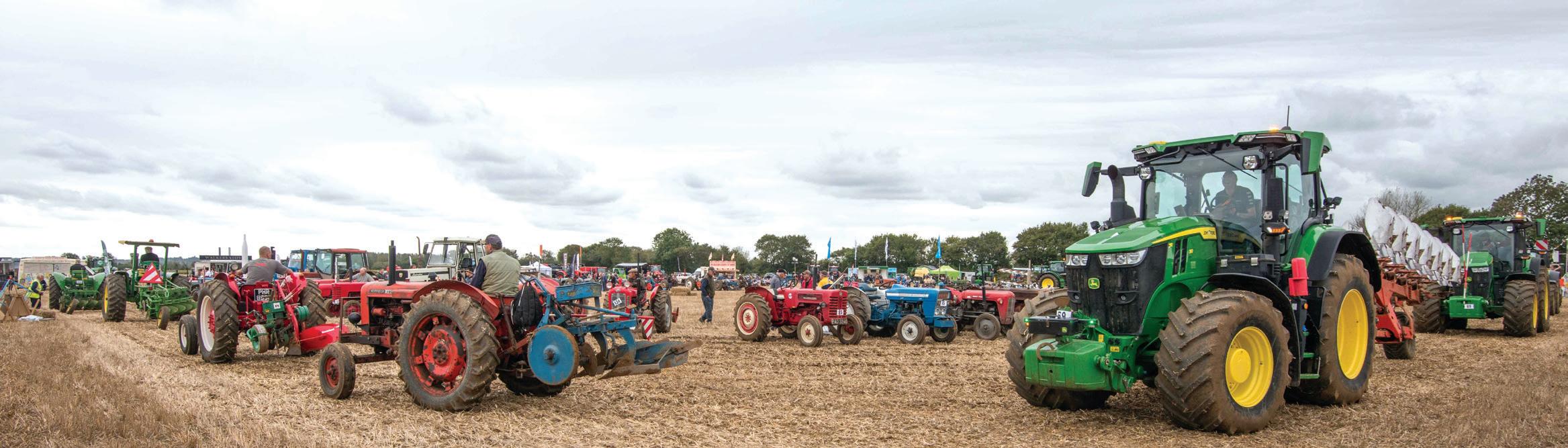




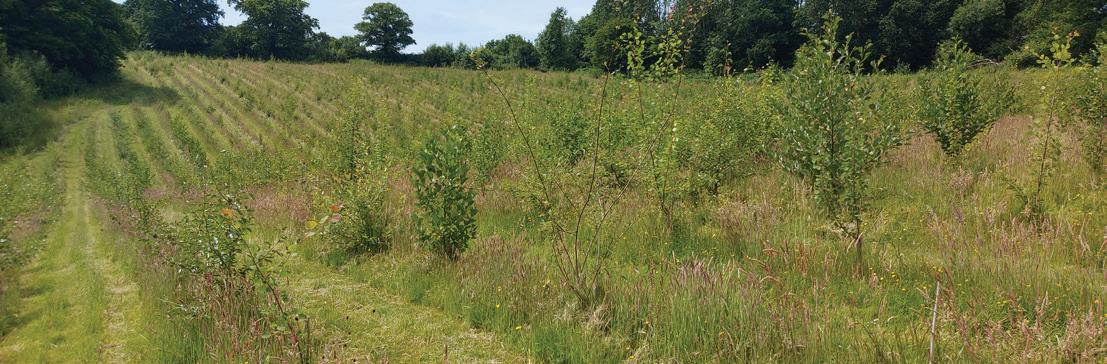
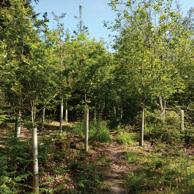







Legal firm Brachers is again supporting this year’s Weald of Kent Ploughing Match and the East Kent Ploughing Match, which it describes as key milestones in the county's agricultural calendar.
Brachers will be joining more than 80 other exhibitors, while the Weald of Kent event on Saturday 21 September will also host a farmers’ market at which local farmers and vendors will be selling local produce.
The Weald of Kent match is being held at Honey Farm, Munday Bois Road, Pluckley, near Ashford and costs £10 per adult. Along with conventional, classic, vintage and reversible ploughing categories and a novice class, there will be a chance to ‘have-a-go’ with the assistance of Mid Kent Training.
Gun dog displays and terrier racing will add to the day’s excitement, along with a horse show and gymkhana and traditional horse-drawn ploughing. The main ring will feature a broad range of demonstrations and parades.
Date: 21 September 2024
Venue: Honey Farm, Munday Bois Road, Pluckley Cost: £10 per adult Info and discounted advance tickets: www.wkpma.co.uk
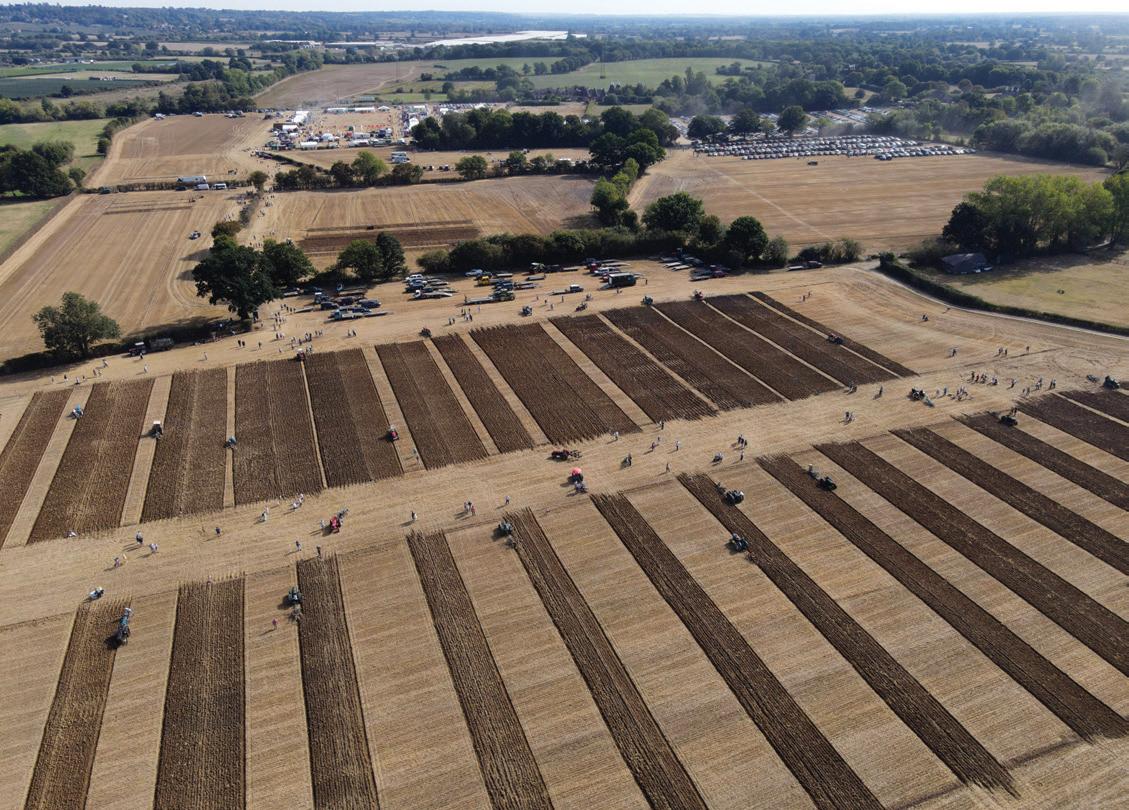
The East Kent match on Wednesday 25 September will be held at Great Bossington Farm, Adisham, again with an entry fee of £10 per adult.
There will be a wide range of classes for ploughs of all kinds, along with an arts, crafts and cookery competition, trade stands and other attractions.
Date: 25 September 2024
Venue: Great Bossington Farm, Adisham Cost: £10 per adult Info: www.ekpma.co.uk
More than 60 ploughmen and women are expected to compete in seven different classes at the Ongar Ploughing Match being held on Saturday 21 September at Spains Hall, Willingale, Ongar, the home of the Bosworth Family.
The day will feature vintage and classic ploughing classes plus trade demonstration
using modern-day ploughs. There will also be a ‘pace the chain’ competition, a straight furrow competition that will allow visitors to have a go themselves and refreshments, including burgers, teas and coffees and a bar that will be open from 10.30am.
Date: 21 September 2024
Venue: Spains Hall, Willingale, Ongar
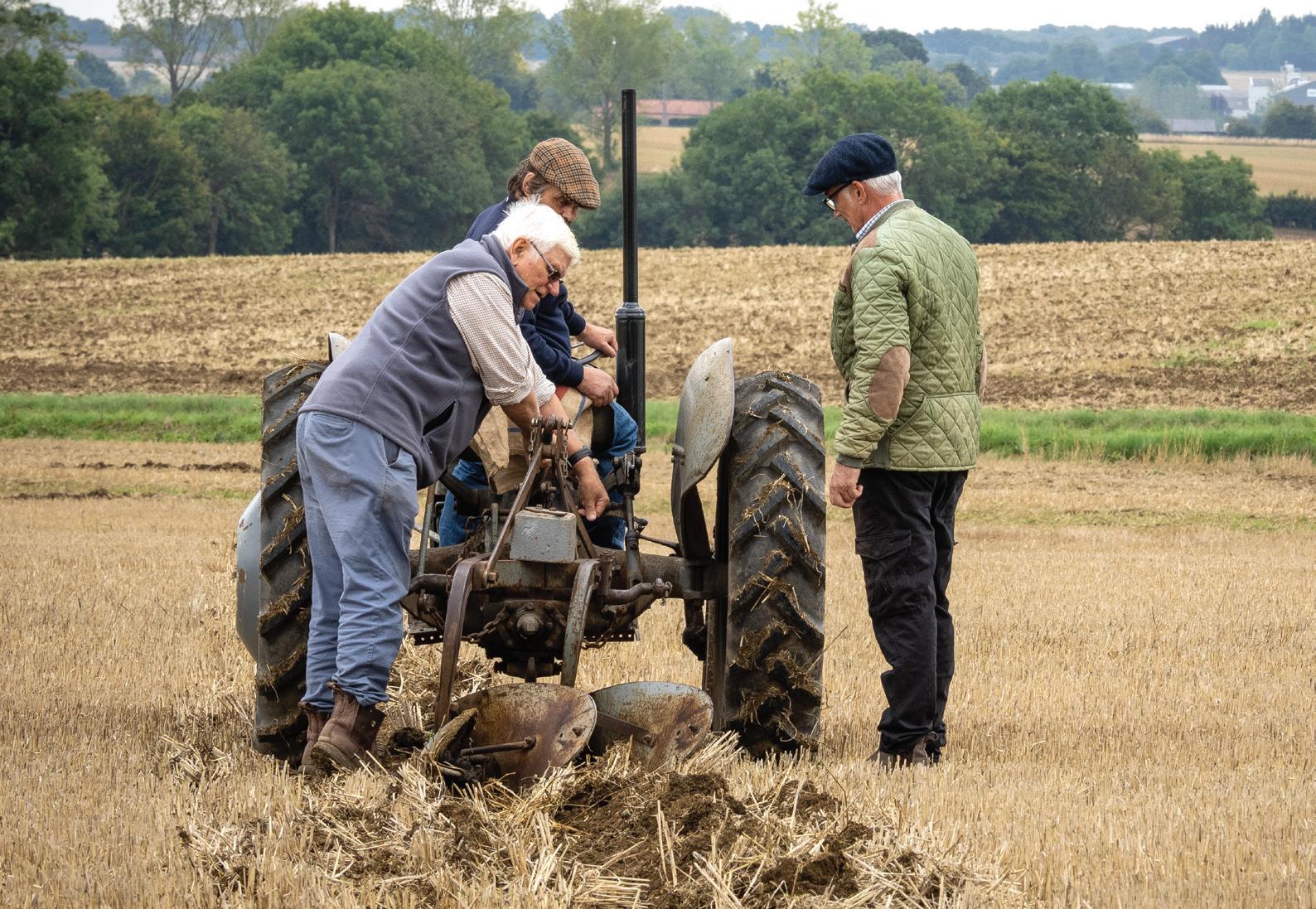
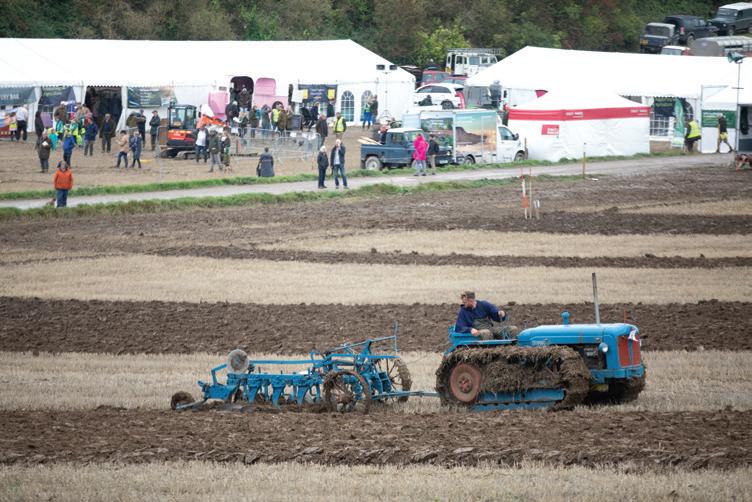
Laughton and District ploughing match begins at 9.30am at Church Farm, Litlington, on Wednesday 18 September, by kind permission of the Ellis Family.
Entries are rolling in, with all classes set to display fantastic machinery and operator skill. The horse ploughing section will be demonstrating the old art and always draws big crowds. Entries are also being received for the family section, which includes baked items, fresh produce, art and crafts.
The society's hedge laying competition is being held on Saturday 7 September starting at 8.30am at Black Ven Farm, Nutley.
Date: 18 September 2024
Venue: Church Farm, Litlington Match starts: 9:30am
Sunday 1st September
Romney Marsh Ploughing & Cultivations Society
By kind permission of Tim Bush. Includes a National Vintage Area Final and a Ferguson Area Final.
MAP-MARKER Caldicott Farm, Lydd, Romney Marsh, Kent, TN29 9QQ
�� Diana Wimble 07821 009693
Saturday 7th September
East Sussex
MAP-MARKER Marnhull Farm, Sheepcote Lane, Chalvington, BN27 3SX
✉ secretary.espms.@btinternet.com
�� Jim Braiden 07540 598877
Swale Area
By kind permission of the Vant family.
MAP-MARKER Redborough Farm, Stalisfield Road, Stalisfield ME13 0HX
Sunday 8th September
Chertsey Agricultural Association
Includes a National Vintage Area Final.
MAP-MARKER Wey Manor Farm, New Haw, Addlestone, Surrey, KT15 3JQ
�� Emma Brace 07920 099339




National Vintage Tractor & Engine Club
– Thames Valley Group
By kind permission of Eric Denton.
MAP-MARKER Rinneralm, Mattingley, Hook, Hampshire, RG27 8LJ
Wednesday 11th September
Royal Forest Agricultural Association
By kind permission of The Crown Estate.
MAP-MARKER Windsor Great Park, Windsor, Berkshire
NVTEC Ouse Valley Group
By kind permission of The Cook Family.
Includes a National Vintage Area Final.
MAP-MARKER Bourne End Farm, Wootton, Bedford, MK43 9AP
Saturday 14th September
East Grinstead & Three Counties
Agricultural & Ploughing Association
By kind permission of Mr B Foster.
MAP-MARKER Ashlea Farm, Turners Hill Road, East Grinstead, West Sussex, RH19 4LB
�� Kate Lewis 07811 202493
Gravesend & Rochester Agricultural Association
MAP-MARKER North End Farm, Park Corner Road, Southfleet, Gravesend, Kent, DA13 9LJ.
Sunday 15th September
Rochford Hundred Vintage Tractor & Engine Club
MAP-MARKER Hawkwell Hall Farm, Hawkwell, Rochford, Essex, SS5 4LL
South Eastern Vintage Agricultural Club
By kind permission of Jack Weatland and Mayes Estate.
MAP-MARKER Mayes Estate, Grinstead Lane, Sharpthorne, RH19 4HS
Wednesday 18th September
Laughton & District
Agricultural Society
MAP-MARKER Church Farm, The Street, Litlington, Polegate, BN26 5RA
Saturday 21st September
Isle of Wight Ploughing Match
MAP-MARKER Churchills Farm, Dodpits Lane, Chessell, Yarmouth PO41 0UB
Weald of Kent Ploughing Match Association
By kind permission of Mr D Gwillim.
MAP-MARKER Honey Farm, Munday Bois Road, Pluckley, Ashford, Kent, TN27 0SU
Ongar & Essex Hunt Agricultural Society
MAP-MARKER Spains Hall, Willingale, Ongar, Essex, CM5 0QE
�� Helen McTurk 07831 138403 or 01279 87615
✉ opmsecretary@btinternet.com
West Grinstead & District Ploughing & Agricultural Association
MAP-MARKER Westons Farm, Itchingfield, Horsham, West Sussex, RH13 0BD.
�� Rowan Allan 01903 879488
�� Felicity Elliott 07866 202588
Sunday 22nd September
Chichester Ploughing Match
By Kind permission of Basal and Nick Baird.
MAP-MARKER Common Road, Funtington, Chichester, West Sussex PO18 9DW
�� Mike Rowland 07891 075715
Royal East Berks Agricultural Association
By kind permission of Chris and Lucy Zeal and Nick Philp.
MAP-MARKER Castle End Farm, Castle End Road, Ruscombe, Berkshire, RG10 9XQ
Wednesday 25th September
East Kent Ploughing Match Association
MAP-MARKER Bossington Farm, Adisham, Canterbury, Kent
Crowborough Ploughing Match
MAP-MARKER Renhurst Farm, Mark Cross, East Sussex, TN6 3NR
Saturday 28th September
North Kent Ploughing Match
By kind permission of the Hollands Family.
MAP-MARKER Speedgate Farm, Fawkham, Longfield, DA3 8NJ
Petworth & District Agricultural Association
By kind permission of Nicholas & Jonathan Scrase.
MAP-MARKER Scrase Farms, Black Gate Lane, Pulborough, West Sussex, RH20 1DF
Fairford, Faringdon, Filkins and Burford Ploughing Society
By kind permission of AJ Cole & Son and Mr P Kirby.
MAP-MARKER Little Faringdon Road, Langford GL7 3LA
Sunday 29th September
Hurstpierpoint
MAP-MARKER Bulstrode Farm Ltd, Staplefield Lane, Warninglid, RH17 5SR
Wednesday 2nd October
Royal South Bucks Agricultural Association
179th Ploughing Match.
By kind permission of the Swerling Family.
MAP-MARKER Upper Bottom House Farm, Chalfont St Giles, HP8 4EG ✉ Secretary@rsbaa.co.uk
Saturday 5th October
Guildford & District Ploughing Association
By kind permission of Hugh Broom.
MAP-MARKER Milton Court Farm, Westcott Road, Dorking, Surrey RH4 3LY
Basingstoke & District Agricultural Society ploughing match
MAP-MARKER Folly Farm, North Waltham, RG25 2BS What3Words ///descended.leathers.webcams
Saturday 12th Sunday 13th
73rd British National Ploughing
Championships & Country Festival
By kind permission of Thoresby Farming.
MAP-MARKER Thoresby Estate, near Newark, Nottinghamshire
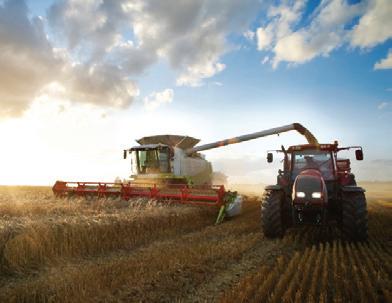
�� Society of Ploughmen 01302 852469
Saturday
Newbury & District Agricultural Society
MAP-MARKER Rookery Farm, Curridge, Berkshire, RG18 9EA
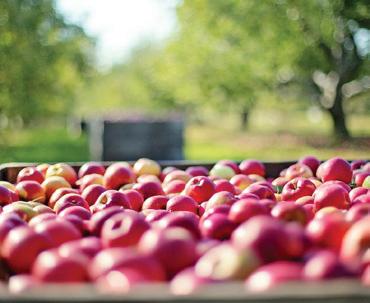
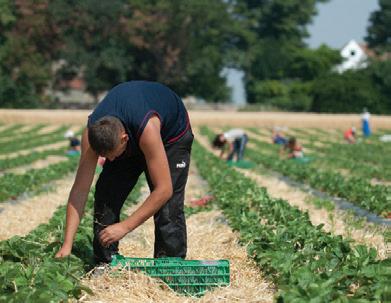
Sussex County Ploughing Association
By kind permission of Mr & Mrs D Alexandra and Mr Jim Wallace.
MAP-MARKER Goldbridge Farm Newick BN8 4QP �� Jim Braiden 07540 598877 ✉ jgbraiden@hotmail.co.uk
Fordingbridge & District
MAP-MARKER South Allerton Farm, Damerham, Hampshire, SP6 3JP




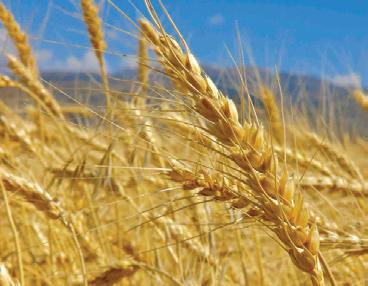
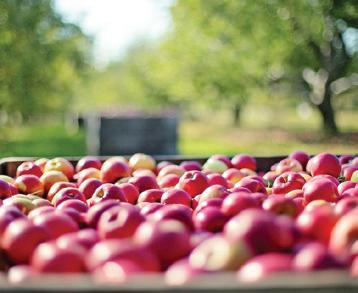


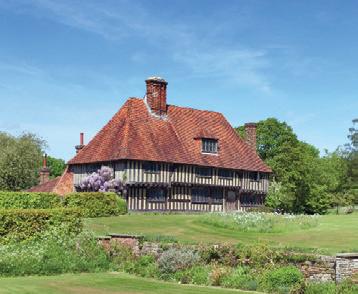












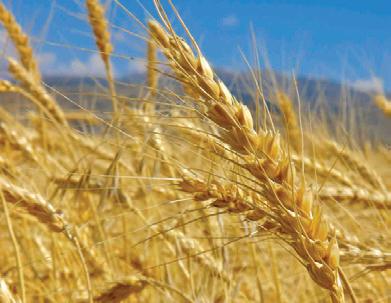
“A celebration of tradition and community” is how the Royal South Bucks Agricultural Association (RSBAA) describes the annual ploughing match that has been taking place locally for nearly 200 years.
Secretary Liesel Nelms explained that the association had been established in 1833 “for the encouragement of industrious labourers and servants and of improvements in agriculture” and had “sought to achieve these aims by organising an annual show in South Buckinghamshire, of which the central attraction is the ploughing match”.
She went on: “The ploughing match is followed by a four-course hot lunch and is a celebration of tradition and community that has been held every year since 1833 except during times of exceptional national crises such as world wars, foot and mouth disease and Covid-19.
“It is always held on the first Wednesday of October, and is hosted by a different member farm each year. In addition to the ploughing, a domestic tent hosts a competition across 36 classes and the results of the 30 farm classes, judged over the summer, are announced during the lunch.”
The 179th RSBAA Annual Ploughing Match and Show will be held on
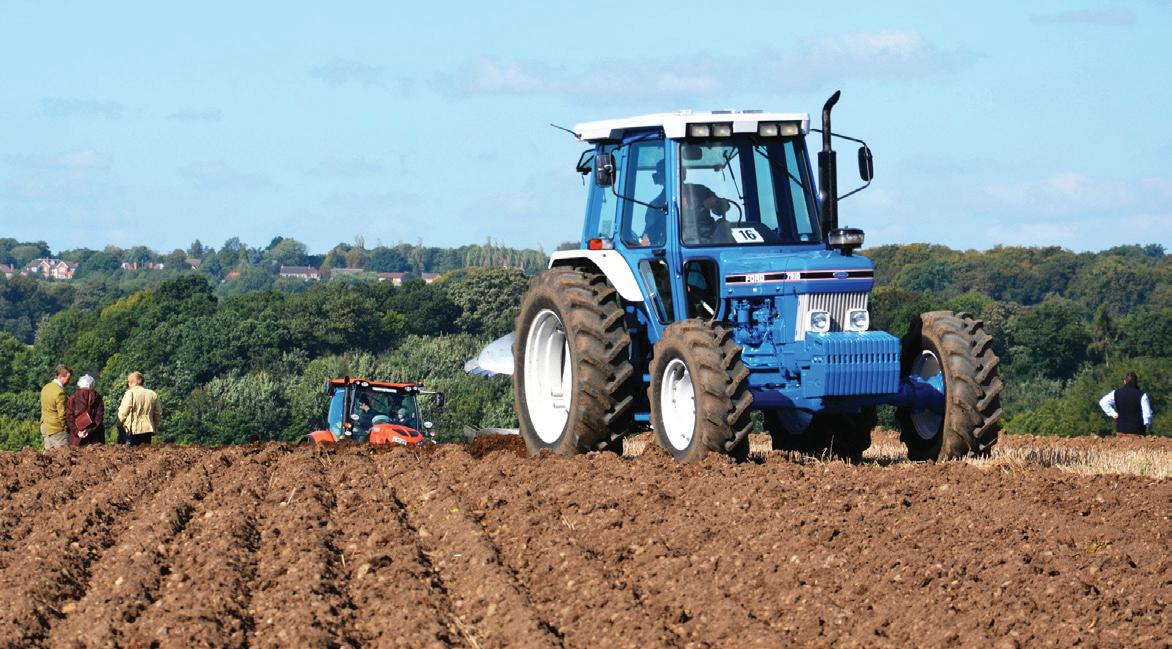
Wednesday 2 October by kind permission of the Swerling family at a site on their farm in Chalfont St Giles.
Ploughing begins at 8am and ends at 11.45pm and is free to enter. Ploughmen can purchase a ticket to lunch for themselves at a subsidised price of £30. Entry for horse ploughmen is free and includes lunch, and sponsorship is available for transport costs.
Members and their guests can purchase tickets to the lunch, which starts at 12.30pm, at a cost of £75 per person.
The association hosts a winter lunch each February and hosted its first inter-agricultural association clay shoot in May this year. For more information, email Secretary@rsbaa.co.uk
Date: 2 October 2024
Venue: Upper Bottom House Farm, Chalfont St Giles, HP8 4EG Match starts: 8am Cost: Free
Providing peace of mind and bespoke, practical legal advice to generations of farming families. We undertake a wide range of legal work for farmers, rural landowners and businesses including:
• Agricultural & rural property
• Buying/selling a business
• Commercial agreements
• Diversification
• Employment
• Estate administration
• Planning & land promotion
• Property development & construction
• Residential property & conveyancing
• Selling or leasing land
• Sporting rights
• Wills, estate & tax planning

The 171st Royal East Berks Annual Ploughing Match and Show will take place on 22 September at Castle End Farm, Ruscombe, Berkshire. It will feature 10 ploughing classes including categories for horses, trailed and hydraulic vintage tractor ploughs, open conventional, match ploughs and reversibles.
Local ploughmen will compete for the coveted Sir Richard Haddon Challenge Cup, while the equally prestigious Sir Benjamin Ryecroft Challenge Cup will be presented to the supreme champion ploughman.
In addition to the ploughing there will be trade stands, vintage tractor and machinery displays, falconry demonstrations, a fun open dog show, produce competitions open to all, a produce auction, a selection of food and drink and live music from the Waltham St Lawrence Silver Band.
Date: 22 September 2024 Venue: Castle End Farm, Ruscombe, Berkshire Public entry: 10am Cost: £10 per car Info: www.rebaa.co.uk
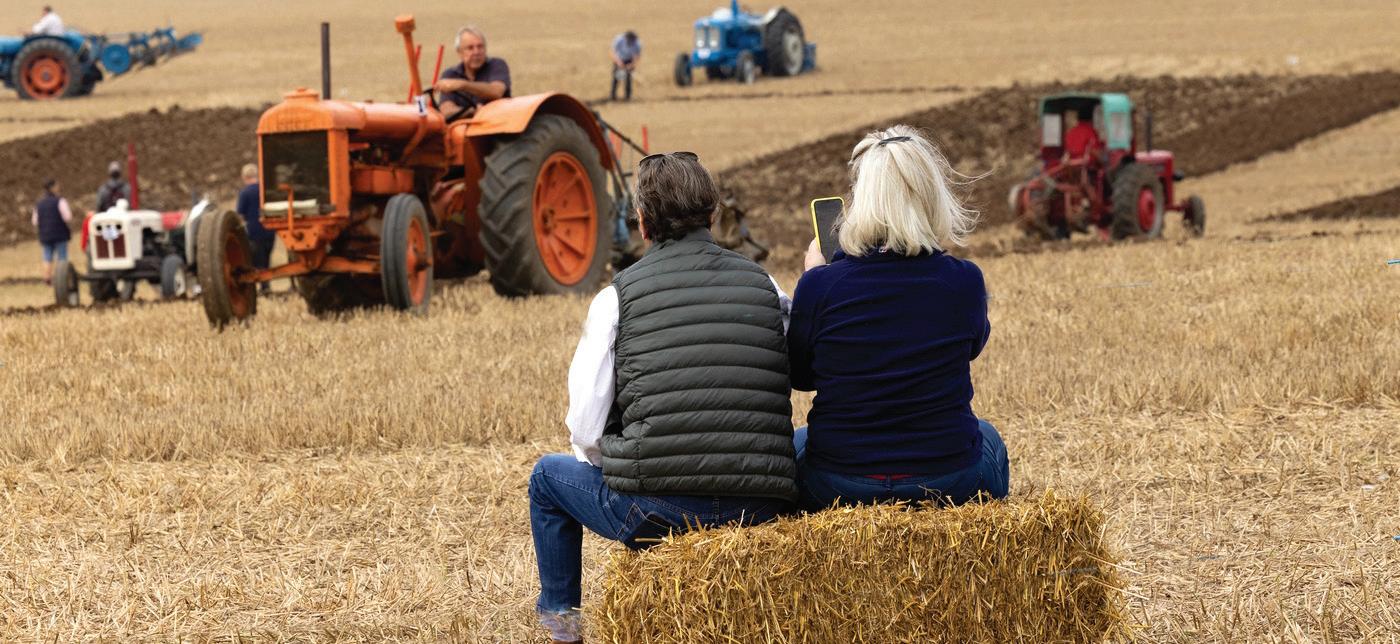
The Sussex Ploughing Championships, featuring the best ploughmen from affiliated societies across the county, will be held at Goldbridge Farm, Newick, on 19 October by kind permission of Mr and Mrs D Alexandra and Mr Jim Wallace. After the disappointing cancellation of the 2023 championships because of the rain, the Sussex Ploughing Championship Association (SPCA) is looking forward to better weather for this year’s event, which will be the 70th match and will allow the overall champion to compete in the British National Finals in 2025.
Although last year’s county match was cancelled, Sussex ploughman Will Tupper, from Bignor, won the premier reversible championship in the 2024 British Nationals and went on to compete in the world championships in Estonia in August, finishing a creditable 15th overall.
Nearly £10,000 was raised by the community, the South of England Agricultural Society and ploughing associations including the SPCA to help pay the costs involved in getting Will and his plough and tractor to the competition in Estonia.
The SPCA welcomes members of the public to the day’s display of countryside skills, with refreshments available. Around 40 ploughmen will be competing in categories including horse, vintage, classic and modern ploughing.
The day also features an open ploughing class for novice skilled ploughman who have not qualified for championships but are enthusiastic about their craft and want to compete for enjoyment.
Date: 19 October 2024 Venue: Goldbridge Farm, Newick Match starts: 8am


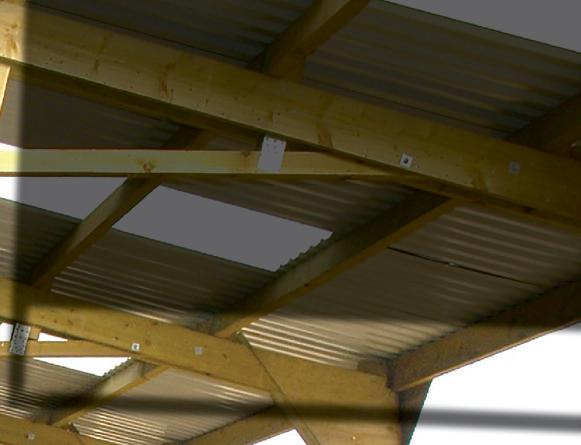
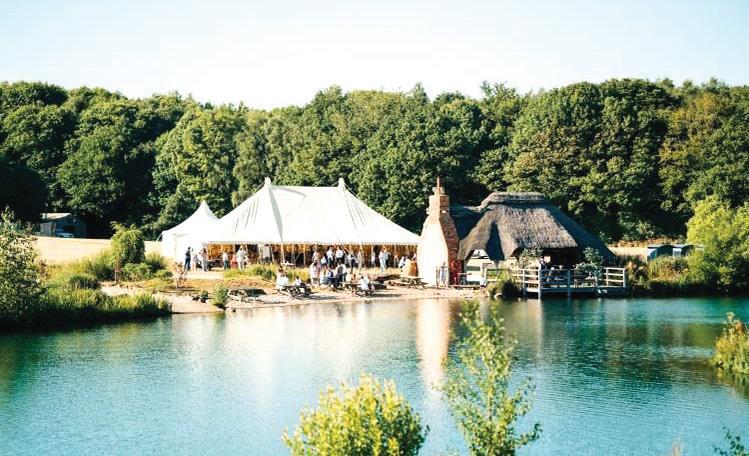

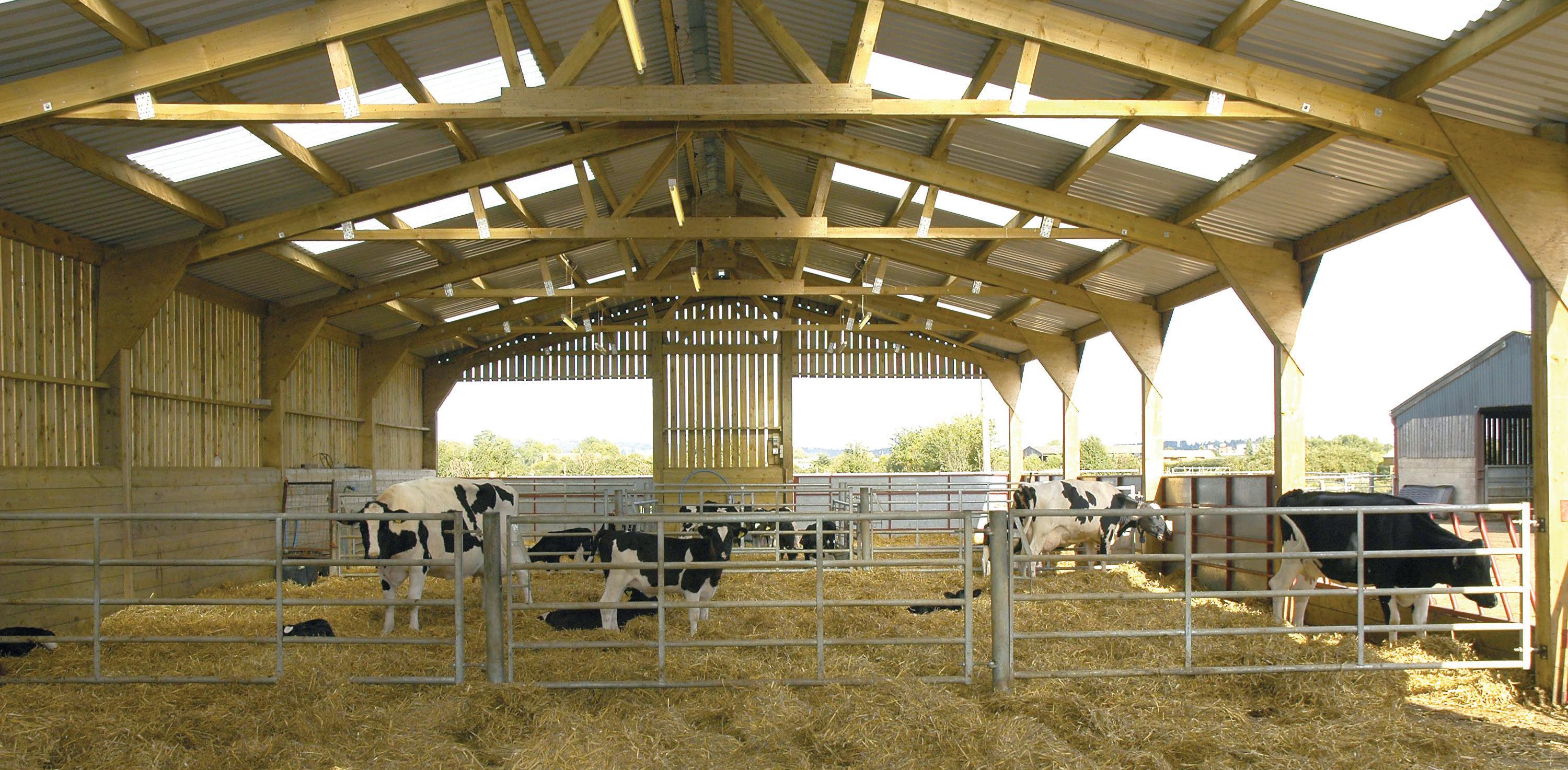
Tetlow King continues to offer planning advice to the rural sector including farmers. Regular enquiries continue relating to work such as:
• Removal of agricultural occupancy conditions
• Certificates obtained to prove sons and daughters wishing to live on the farm in mobile homes to take over the farm do not require permission
• Class Q (barns to residential) conversions
• Class R (barns to business) conversions
• New agricultural buildings through the permitted development route or via full planning
• Equestrian and stable work
• Listed building and enforcement work
• Vineyard work.
It has been a busy few months since Telow King featured in South East Farmer in January. A change in government, changes to planning policy and, in particular, proposed changes to the green belt to add a ‘grey belt’ definition, can all offer opportunities for landowners.
A couple of changes worthy of note are changes to Class Q regulations (farm buildings to dwellings). Previously the buildings had to be agricultural, but that has now changed to allow other farm buildings to be considered as long as they are on the farm.
In addition, buildings can be extended to the rear as part of the application.
These are good changes which will benefit farmers whose barns previously did not benefit from Class Q, such as equestrian buildings and stables. Meanwhile the numbers permitted have jumped from five to 10, so those who have used five already now have a further five opportunities.
Class R (farm buildings to business use) has seen the floorspace allowed doubled to 1,000m2. This enables a significant business use to be obtained that can help diversify the farm and provide additional commercial rental income.
Farm diversification continues to be a strong driving force. A recent success includes gaining permission for Kentfield Country Estate to run weddings from the site using a marquee, but with a permanent consent. A permanent consent was needed to justify the additional financial investment needed to upgrade the facilities on site and make the events more popular, moving the business forward.
Despite significant objections from local residents, Tetlow King was able to overcome the concerns and convince the council to recognise the merits of the case and support the principle of the application without the need for it to be reported to the planning committee.
Another success saw permission granted
for a new equestrian yard, including two new-build holiday lets to enable riders to visit and stay with their horses. The holiday lets will substantially help the finances of the yard.
For advice on planning issues contact: JONATHAN LEE
32 High Street, West Malling, Kent, ME19 6QR
T: 01732 870988
M: 07511 178001
Email: Jonathan.lee@tetlow-king.co.uk www.tetlow-king.co.uk
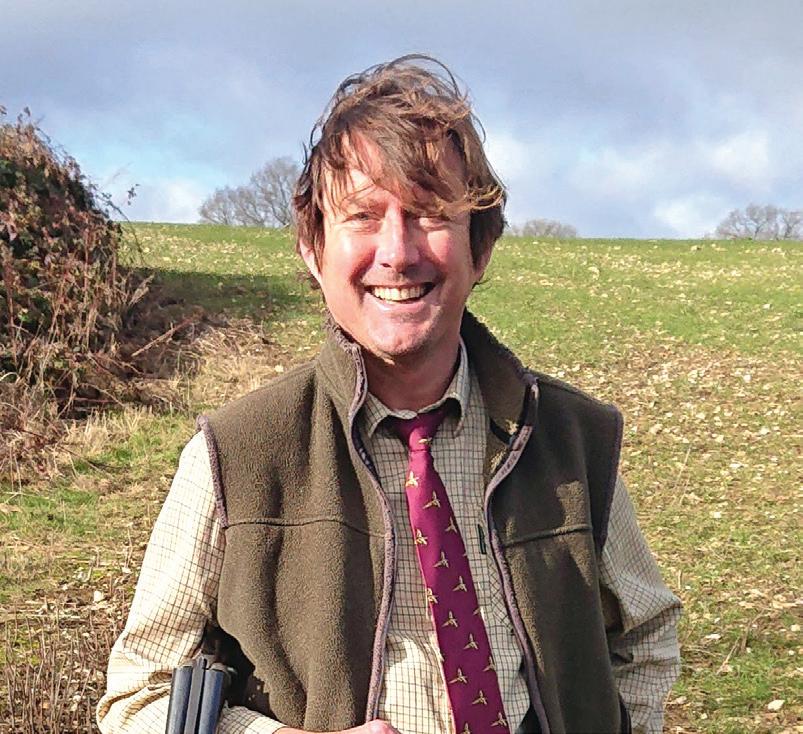

⚪ Rural and Agricultural Planning
⚪ Strategic Land Promotion
⚪ Planning Policy Advice and Representation
⚪ Planning Appraisals
⚪ Planning Applications
⚪ Planning Appeals/Expert Witness
⚪ Community Engagement
⚪ Advertisements
⚪ Environmental Assessment (SEA)
⚪ Monitoring
⚪ Research/Good Practice
⚪ Housing Needs Assessments
⚪ Education/Training
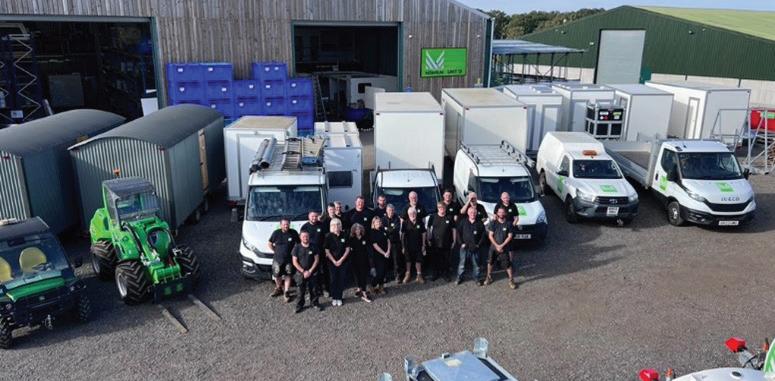
We provide professional advice to a range of clients across the public and private sectors with experience in planning for all types of development.
All Directors and Planners are Chartered Town Planners and are bound by the regulations of the Royal Town Planning Institute. We are proud to support our graduates in achieving Chartered status.
For any advice on planning issues please contact Jonathan at the Kent Office: 32 High Street, West Malling, Kent, ME19 6QR T: 01732 870988 M: 07511 178001
Email: Jonathan.lee@tetlow-king.co.uk
Less than 100 tonnes remaining for 2024

87.5 kg /ha of plant available Phosphate
A typical application of 250 kg/ha returns the following benefits to the soil:
Essential nutrient for all crops
Essential for root development
87.5 kg /ha of plant available Phosphate
Essential role in the growing tip of the plant
Vital for seedlings and young plants
Essential nutrient for all crops
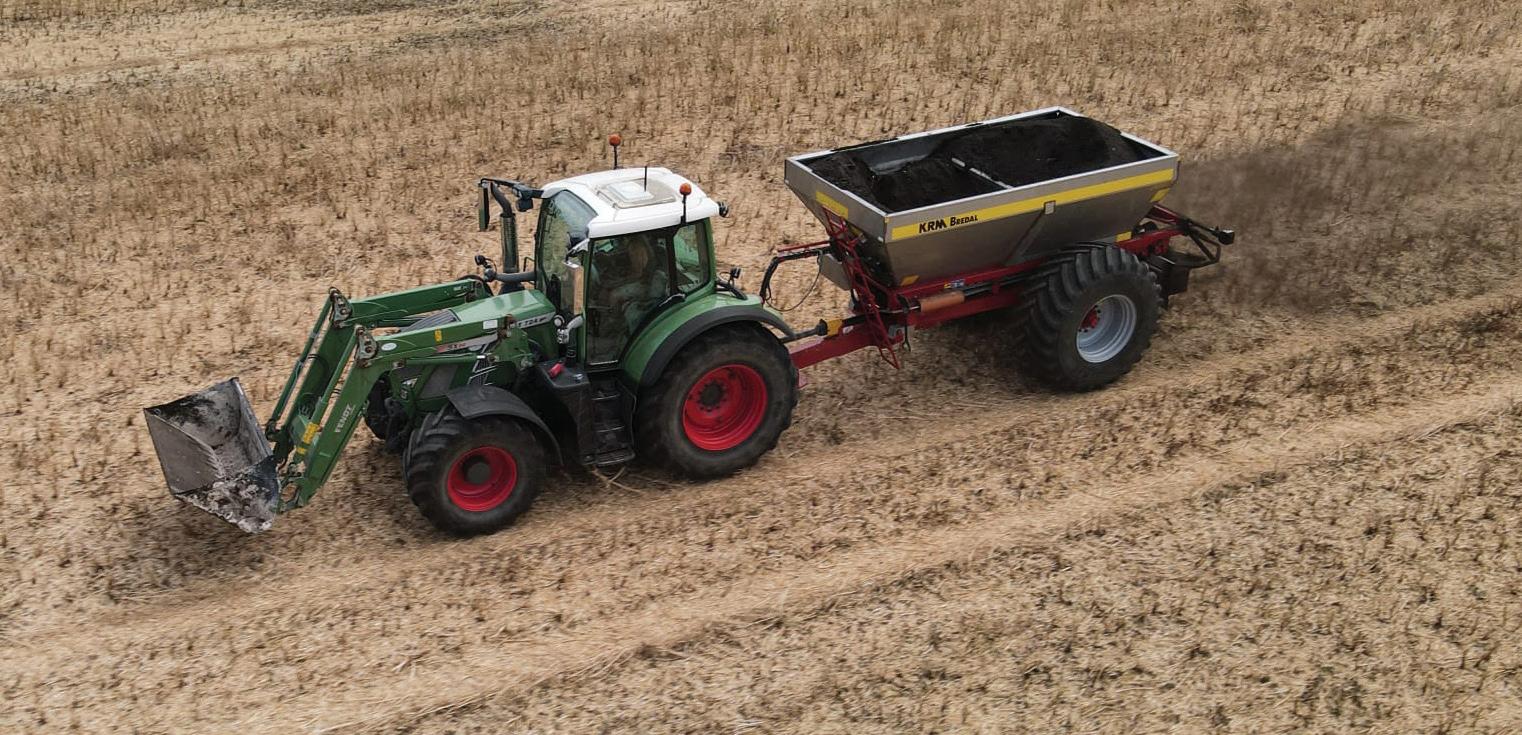
of 250
Typically around 12.5 kg/ha of elemental carbon
Phosphate in two different forms
Essential for root development
Essential role in the growing tip of the plant
Phosphoric Acid – immediately available to the establishing crop
Comparable properties to Biochar to increase soil fertility and crop productivity
Vital for seedlings and young plants
Phosphate in two different forms
Silicon Phosphate – immediately available, and can reduce locking up issues and improve availability of phosphate to the crop for longer
Phosphoric Acid – immediately available to the establishing crop
Silicon Phosphate – immediately available, and can reduce locking up issues and improve availability of phosphate to the crop for longer
Typically around 12.5 kg/ha of elemental carbon
Comparable properties to Biochar to increase soil fertility and crop productivity
Returning carbon directly to the soil

Returning carbon directly to the soil
Typically around 120 kg / ha of organic matter
Typically around 120 kg / ha of organic matter
Influences cation and anion exchange capacity, nutrient stability, water holding properties, aeration and workability
Influences cation and anion exchange capacity, nutrient stability, water holding properties, aeration and workability
Typically around 37.5 kg/ha of diatomaceous earth
Typically around 37.5 kg/ha of diatomaceous earth
Ability to enhance soil structure
Ability to enhance soil structure
Improves water retention and drainage
Improves water retention and drainage
Increases nutrient availability
Increases nutrient availability
Provides essential minerals
Provides essential minerals


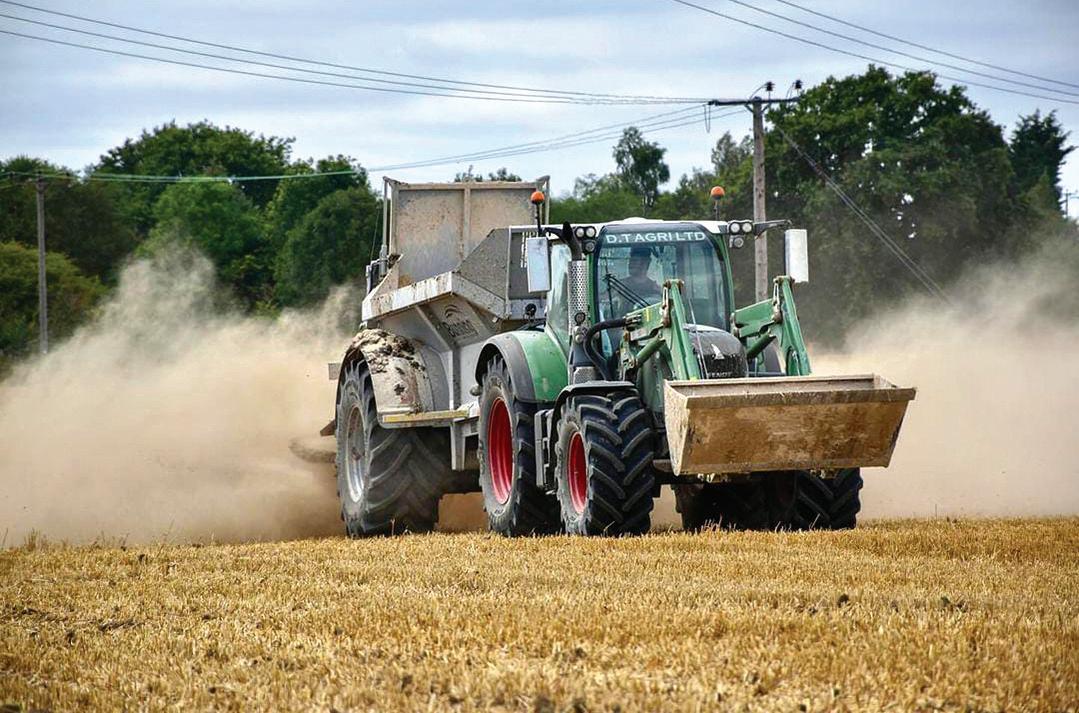




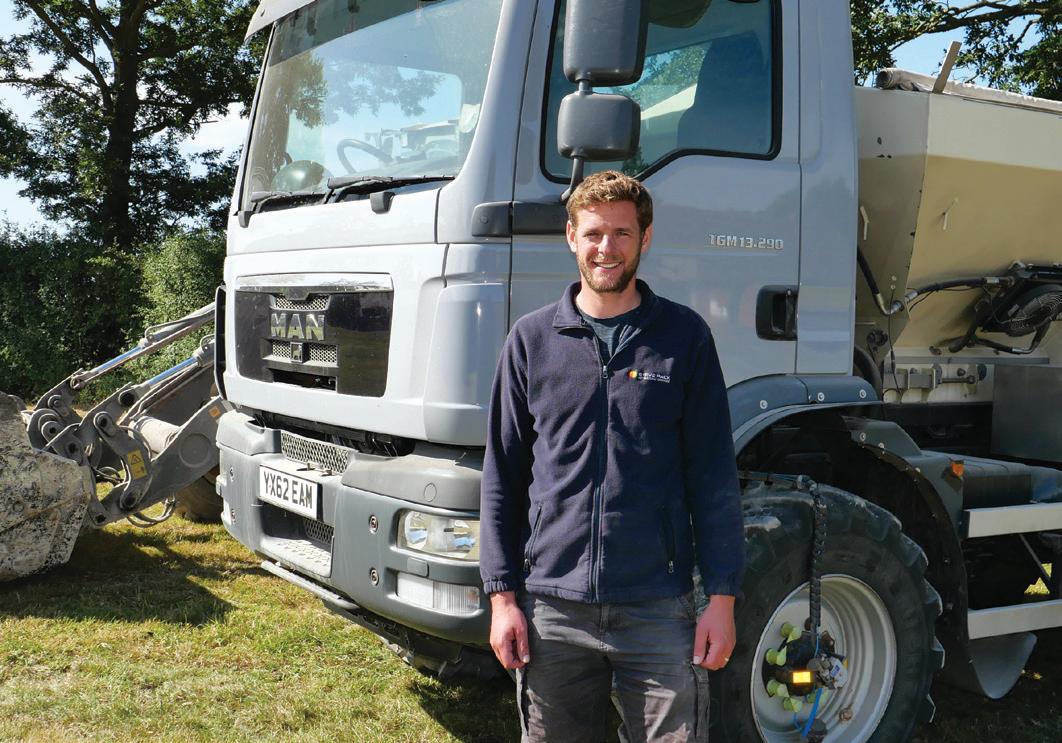


While lots of contractors take pride in providing a “comprehensive” service, few can equal the complete package offered by Steve Pack Agricultural Services when it comes to liming and fertiliser spreading.
Steve not only carries out the soil sampling and analysis that ensures the right amount of lime or fertiliser can be spread in exactly the right places, but he makes his own products and keeps large supplies in stock to ensure he can always meet his customers’ needs.

With his own fertiliser plant making the renowned XOP (Xtra Organic Phosphate) and a unique supply chain that ensure he always has stocks of Envirocal 70, a fine grained lime product with additional trace elements and boasting 98% reactivity, Steve Pack Agricultural Services offers an unbeatable service from analysis to spreading.
Materials are usually delivered on Steve’s own fleet of lorries, ensuring they reach customers in good time before, in most cases, being spread by Dan Tong of DT Agri Ltd.
Dan uses Steve’s spreaders, one a custom-built Bunning 120 HBD Compact designed to his own specifications (“a game changer” in his view) and the other a top of the range Bredal K105 with a stainless steel hopper, weigh cells, auto calibration and full GPS-controlled autosteer.

For smaller loads in far-flung locations where driving a tractor to site would be impractical and expensive, Steve uses a MAN spreader with a similarly high spec. It has central tyre inflation so that the pressures can be dropped while on the field, reducing compaction, and then re-inflated for the journey back to base, along with 750mm tyres on the rear axle and full GPS connectivity for
guidance and variable rate spreading.
Now based at Ivy End Farm, Pluckley in Kent, Steve has a range of business interests with a focus on delivering top quality lime and fertiliser spreading services to farmers, fruit growers and vineyards across Kent, Surrey and Sussex.
Steve Pack Agricultural Services carries out pH sampling as well as sampling for phosphate, potassium and magnesium (P, K and Mg) and then spreads products according to the results of the in-house analysis, with processing and reporting carried out by Lizzie Hyde and Vicky Pack.

Meanwhile Steve set up Newbury Fertilisers Ltd in Sittingbourne in 2016, taking over and modernising a plant that makes the popular XOP fertiliser, a product that sells out each year and is unique to Steve Pack Agricultural Services.


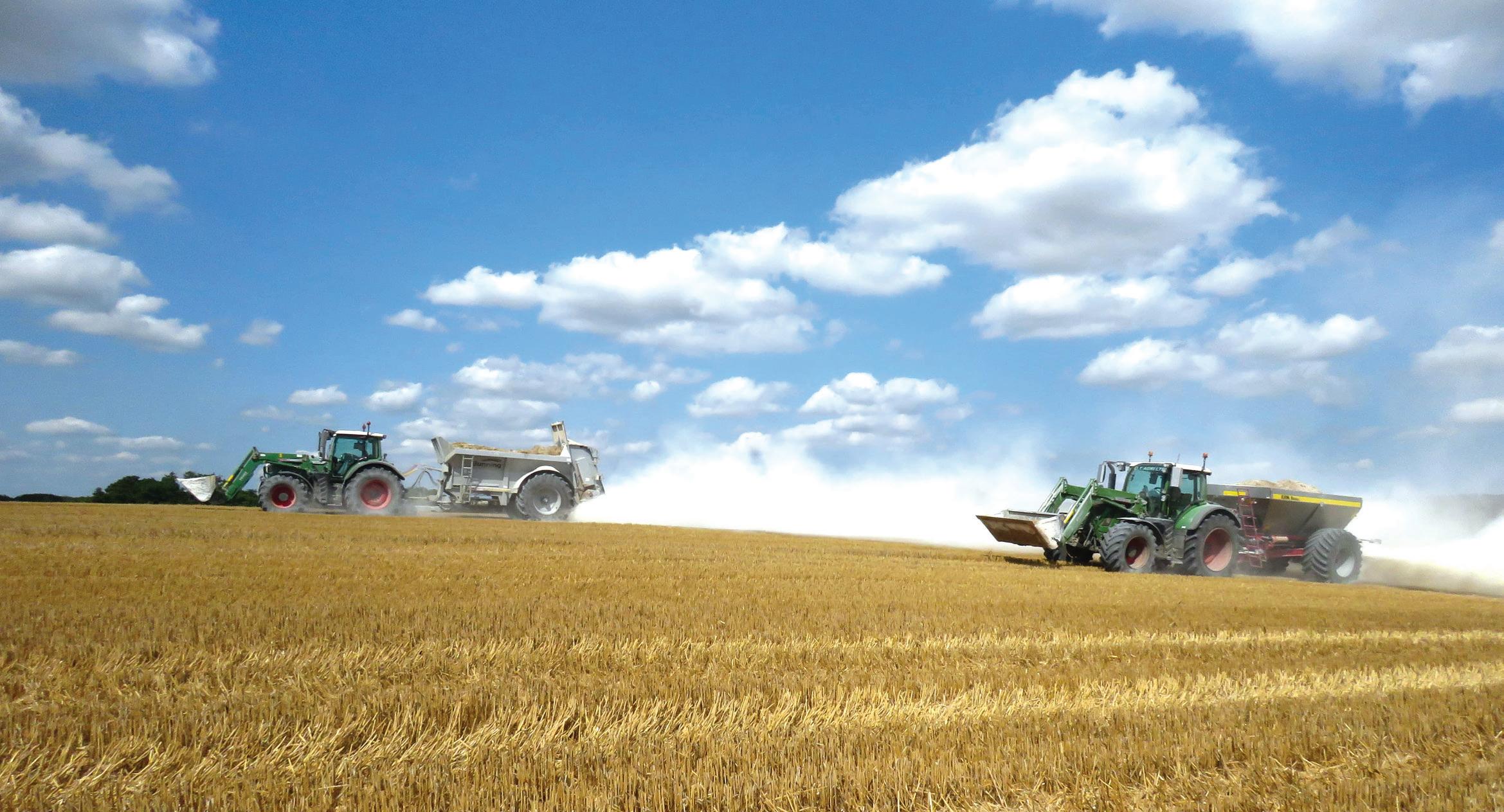
<< whether they need lime, fertiliser, compost, manure or chicken litter.”
The naturally based, recycled product is rich in silicon phosphate, which makes the phosphate readily available to the plants, and also contains 5% elemental carbon. “Farmers love it and most of it is sold as repeat orders each year,” Steve commented. A new screening and blending plant to create XOP was installed last year.
Steve’s third linked company is Resource Services Ltd, which has the contract to take Envirocal 70, another recycled product, from the Tate & Lyle sugar refinery on the River Thames in London.
Envirocal 70 is a fine lime which has a number of advantages over quarried chalk, although Steve Pack Agricultural Services offers both to its customers. “It’s a matter of personal preference,” he said, “but the benefit of Envirocal is that we always have plenty in stock – up to 10,000 tonnes at times – and it’s ideal in the spring when it can be difficult to find chalk after a wet winter.
“At the end of the day the three businesses are all focused on the same goal, which is to help Steve Pack Agricultural Services deliver the best possible service to the customer,


When Steve moved to the 13-acre Ivy End Farm site three years ago, he gained 21,000 square feet of buildings. The site, now the main base of the business, provides one of a number of product stores he has across Kent, while a converted section of one building is now the home of HB Oak Frames, which builds oak-framed homes and other buildings.
“They moved in as regular tenants, but when they realised that I also had planning permission to build a home on the site, they persuaded me to let them build it,” said Steve, before showing South East Farmer around the impressive, half-finished, oak-framed house.
While working in agriculture as a contractor, Steve confessed that he had always wanted “to produce something”, which is why he has recently been granted planning permission to build a substantial cattle finishing unit on the land at Ivy End Farm.
“I grew up on a beef and arable farm with my dad Sam in Hertfordshire and I have always wanted to take my farming beyond the


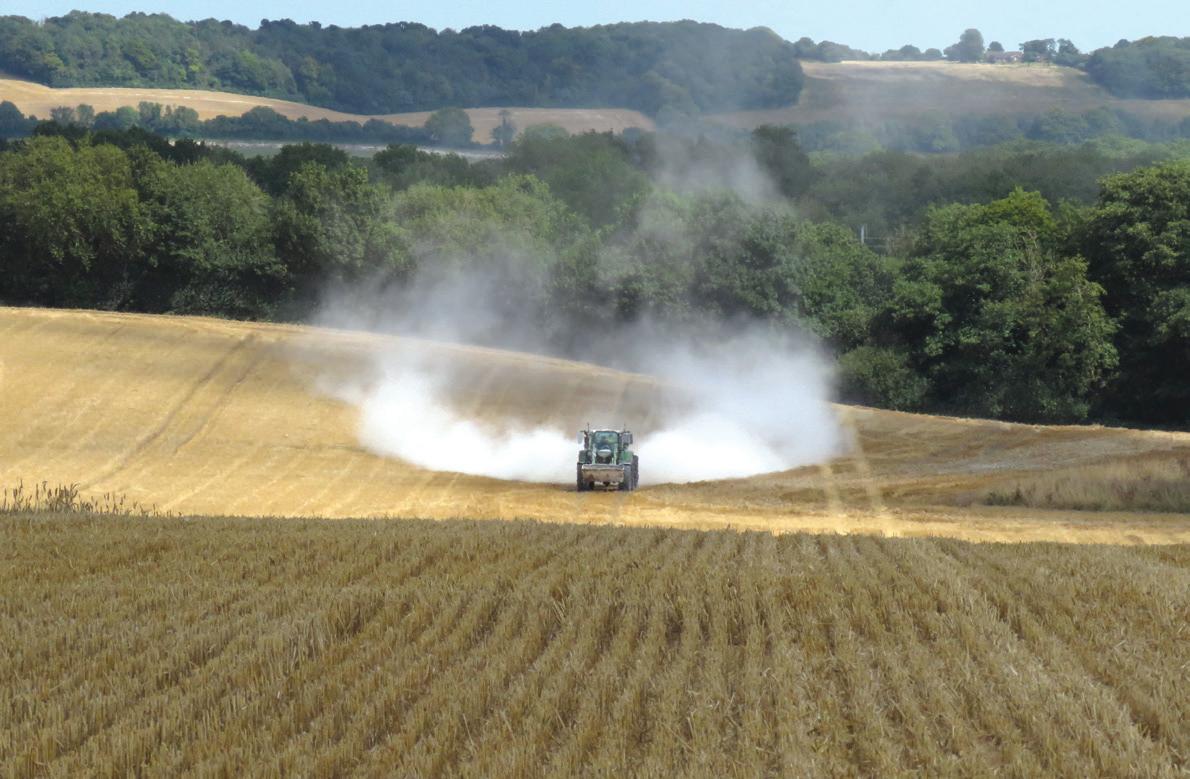
liming service,” explained Steve, who worked on a beef finishing unit while at Harper Adams University, where he graduated with a first class degree in agriculture and land and farm management. The unit will be big enough to take 100 head of cattle for finishing.
Achieving planning consent for the house and the finishing shed has been a challenging process and one that has benefited from the support of Price Whitehead planning consultants, the firm which also helped Steve achieve planning consent for the fertiliser processing plant at Sittingbourne in 2016.
“Price Whitehead has been invaluable in providing planning consultancy and advice,” said Steve. “Bruce and Helen Whitehead run their own cattle farm alongside the planning, design, and surveying practice, so they have a tremendous level of understanding and expertise.”
Joining Steve, Vicky and Lizzie to complement the team at Ivy End Farm are Jon Topping, who runs the Sittingbourne fertiliser plant and is responsible for soil sampling, and Andy Taylor, who oversees the day to day operations of Resource Services.


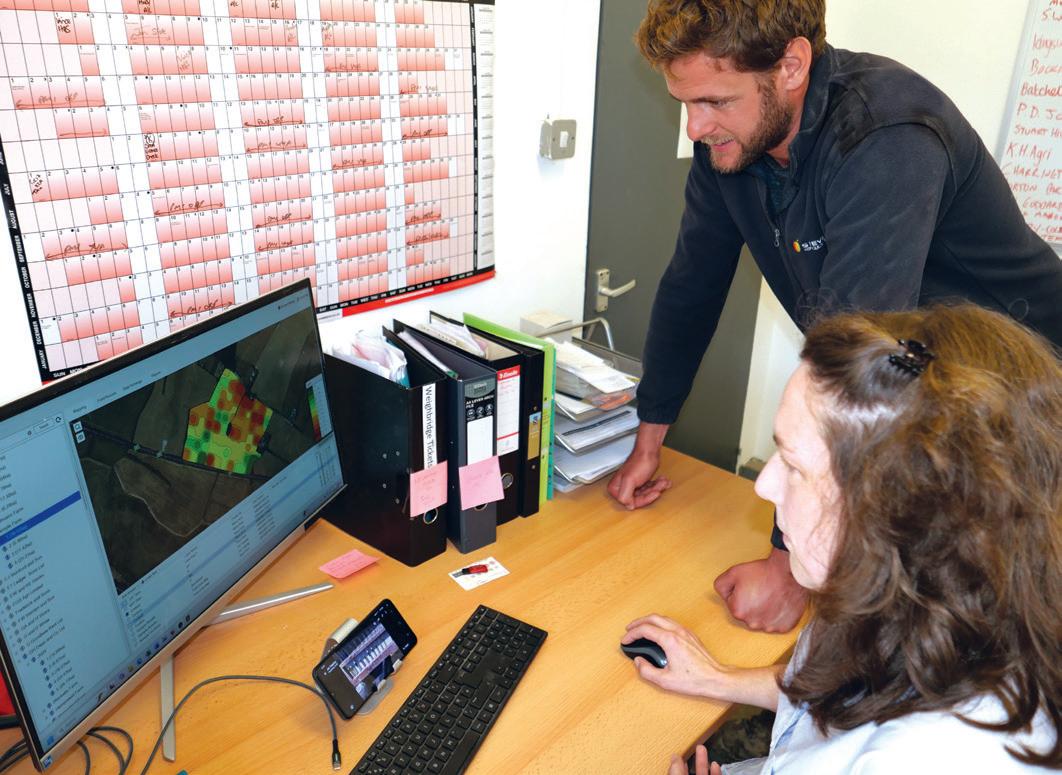



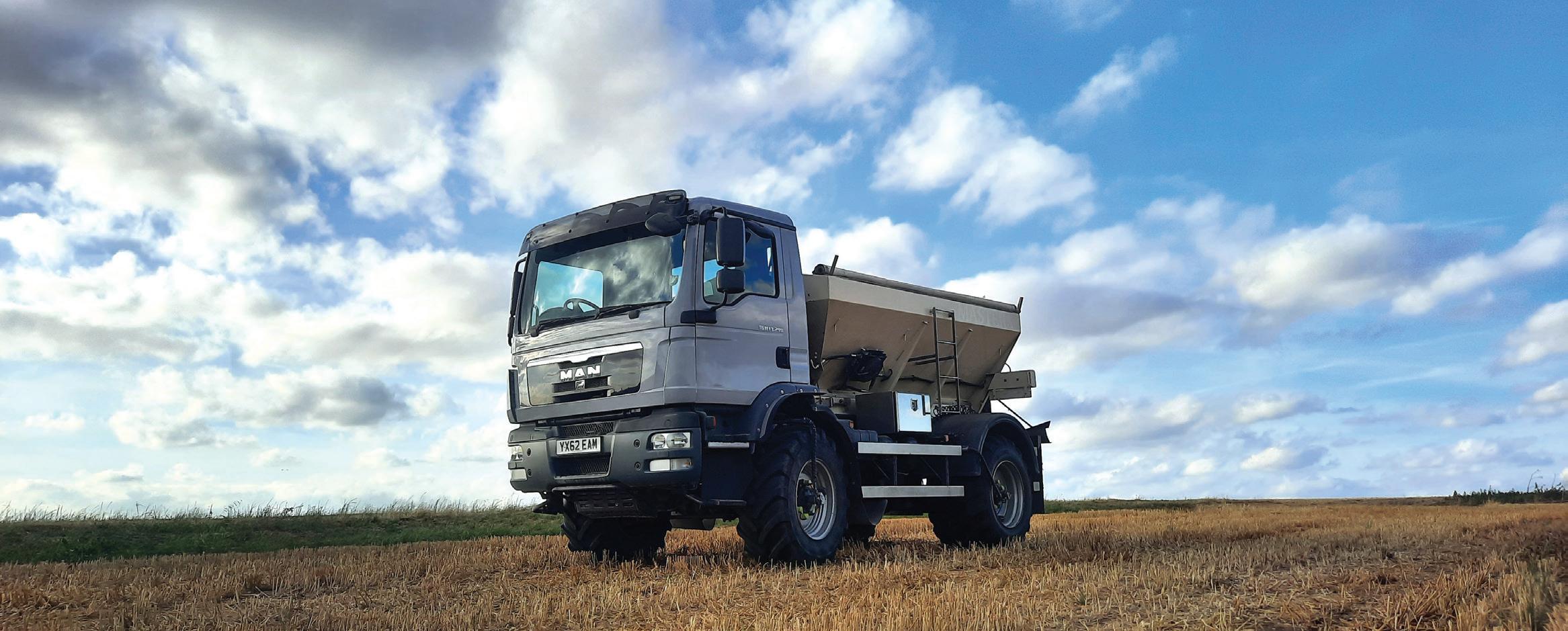


While all businesses recognise the value of repeat customers, Jez Reddecliffe of JRJ
Construction has turned it into an art form.
His responsive, quality workmanship and attention to detail has ensured that in many cases an initial enquiry has resulted in a valuable pipeline of ongoing conversion, refurbishment and new build projects supporting farmers and landowners across Kent, Sussex and beyond.
“I would say 90% of our work is repeat business,” said Jez, who offers a complete service, from repairs and maintenance projects to groundworks, on-site steel fabrication and welding, cladding, roller shutter doors, mezzanine flooring and roofing.
At Priest Hawes Farm at Hailsham, East Sussex, Jez was asked to look at a leaky gutter with a view to installing a liner. After chatting to the owner about the best way to keep the buildings, which were being used for caravan storage, in good repair, JRJ Construction was asked to replace the roofs and guttering on two buildings.
“I offer sensible, straightforward advice and make sure my pricing is competitive,” Jez explained. “Customers value that approach

and once they know they can rely on you to do a good job they keep you on speed dial for any future projects.”
Guttering seems to be a recurrent theme in JRJ’s impressive pipeline of projects. At Odden Farm, Woodchurch, near Ashford, the company was first brought in to replace a valley gutter.
“I guess we did a good job, as the farmer then contacted me when he wanted to lay on a power supply to the farm that would allow him
to diversify into business units,” he recalled. “Up until that point he had been relying on a diesel generator.”
Jez was asked to lay a concrete base suitable for the pre-formed kiosk that would house the three-phase supply. “It sounds like a simple job, but it had to be exactly the right size, built to UK Power Networks’ specification and have chamfered edges and all the right ducting ready for the cable connections,” he explained.


With the power supply installed, JRJ Construction is now working on the actual conversions so that the units can be let to clients. The company is currently turning one 30m by 20m building into three units, carrying out on-site steel fabrication and installing roller shutter and personnel doors, as well as refurbishing a second building.
Much of JRJ Construction’s work is around converting farm buildings in support of renovation projects, although it also carries out new build work, including completing a new 25m by 12m store for the Biddenden branch of Youngs Timber & Builders Merchants.
Again, being asked to build the new store followed an earlier project which saw JRJ

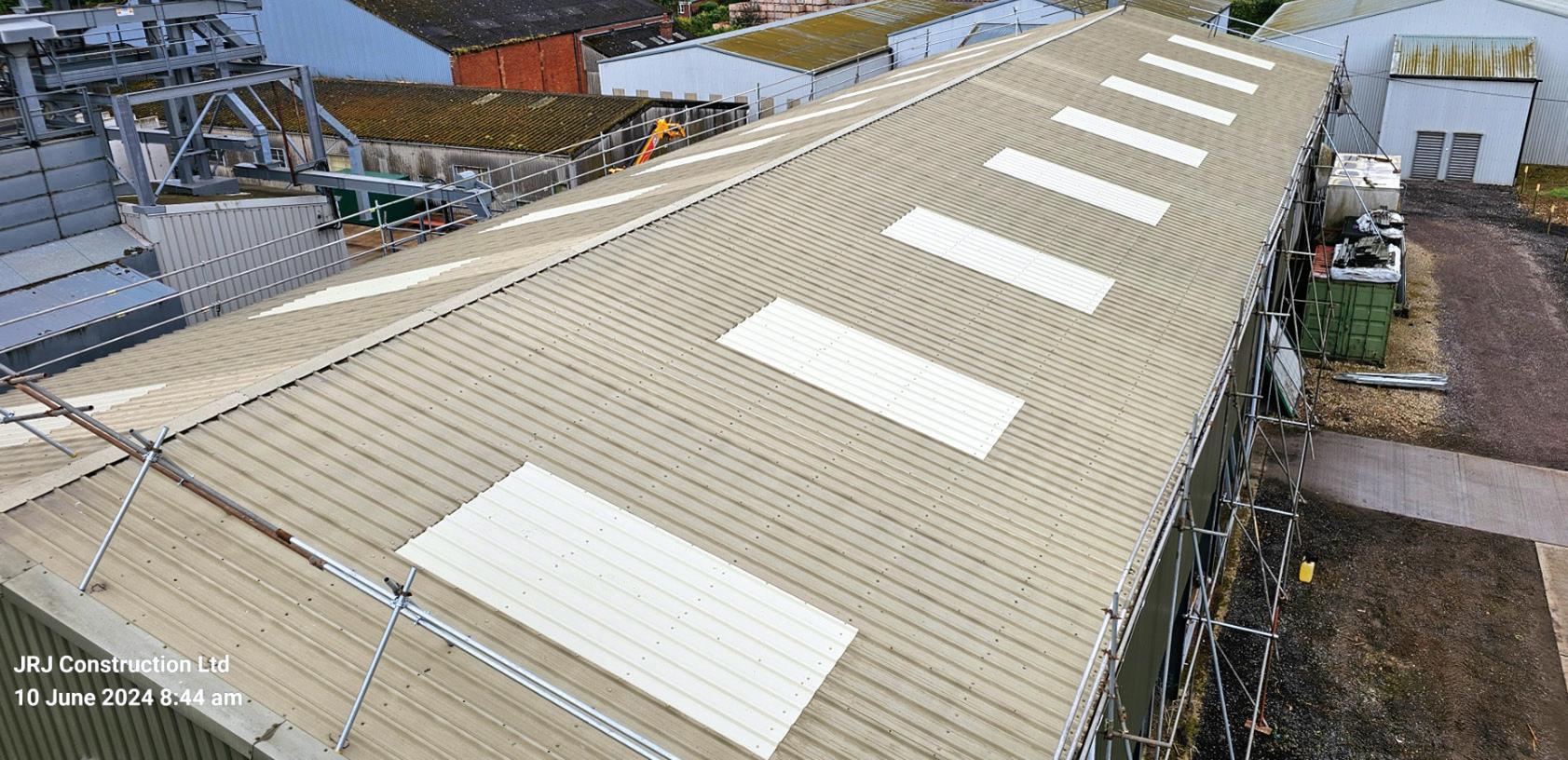
Construction brought in to carry out some refurbishment work to the roof or the independent company’s Dymchurch store. “The roof work led to us being asked to carry out the Biddenden project and we are about to do some repair work for Youngs’ Folkestone branch,” Jez said. At Biddenden, the team installed precast concrete panels and carried out the roofing and cladding work, as well as installing roller shutter doors and personnel doors.
When it comes to cladding, JRJ Construction turns on every occasion to Southern Sheeting for supplies of everything from steel sheets and flashings to rooflights, fixings and insulated panels. “We get great customer service from the team at Southern Sheeting
and it’s an ideal ‘one stop shop‘ for everything we need,” said Jez
The highly diversified A A Clifton Ltd farming, renewables and lettings business based on Romney Marsh has also come to depend on JRJ Construction for a range of work in support of its wide-ranging enterprises.
After initially being asked to carry out repair and refurbishment work for the diversified family business, Jez was asked to replace steel grain walling in a 1987-built grain store at its headquarters at Haguelands Farm, Burmarsh.
As with so many of his other clients, Jez has since become the company’s ‘go to’ contractor for a wide range of building projects large and small.




Steel frame buildings.
Sheeting, cladding and oversheeting.
Gutter replacement, repairs and lining.
Steel frame, concrete frame alterations and repairs.
Asbestos removal.
Roof light and sheet changes.
Refurbishments and usage changes.
Demolition, groundworks and site clearance.
24 hour call out in the event of fire or break in.
Roller shutters, sliding and personnel doors. Condition reports and dilapidation work before solar panel installation Mezzanine floors
Insurance and repair work
On site welding and steel fabrication
Solar panel installation ALL WORKS GUARANTEED


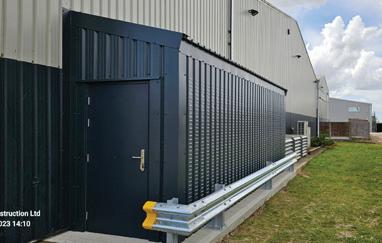

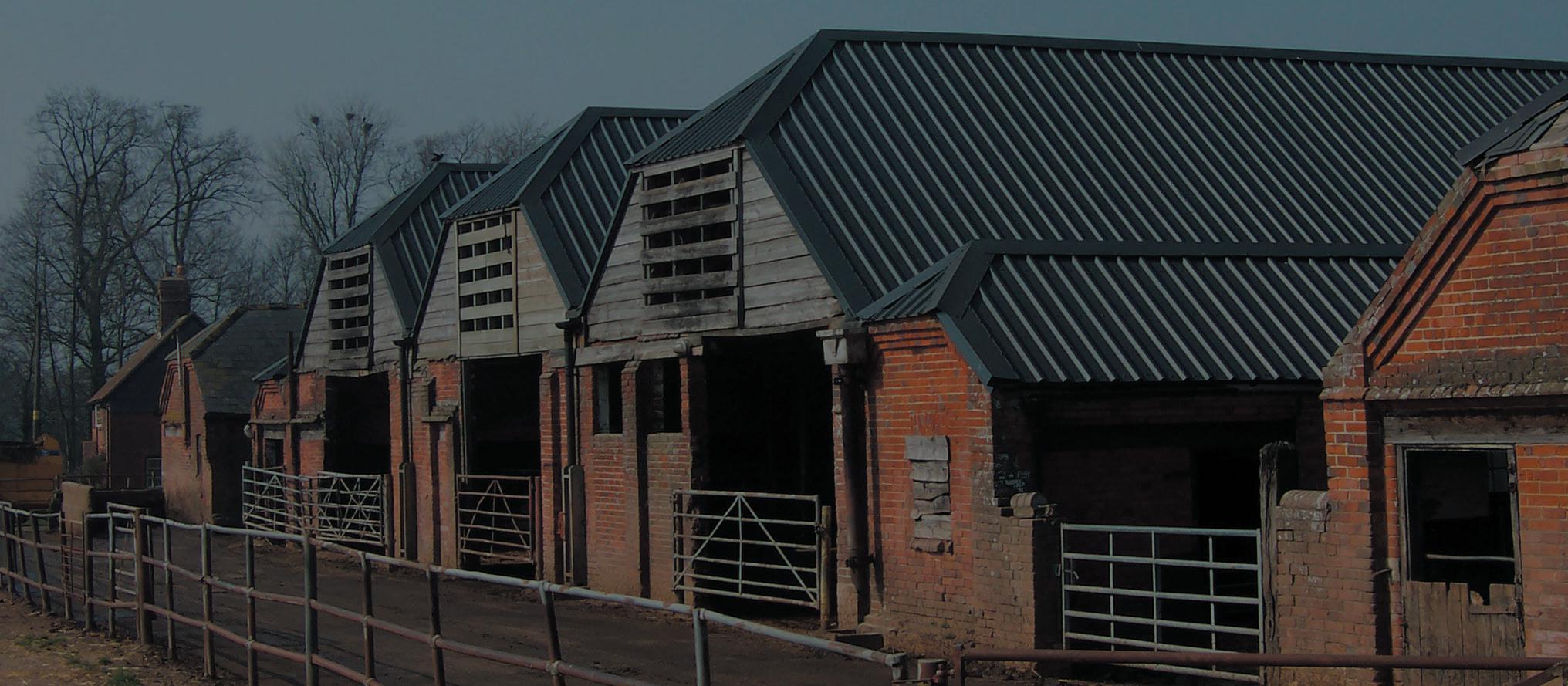

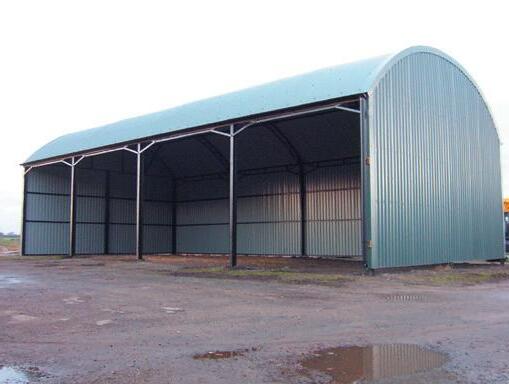
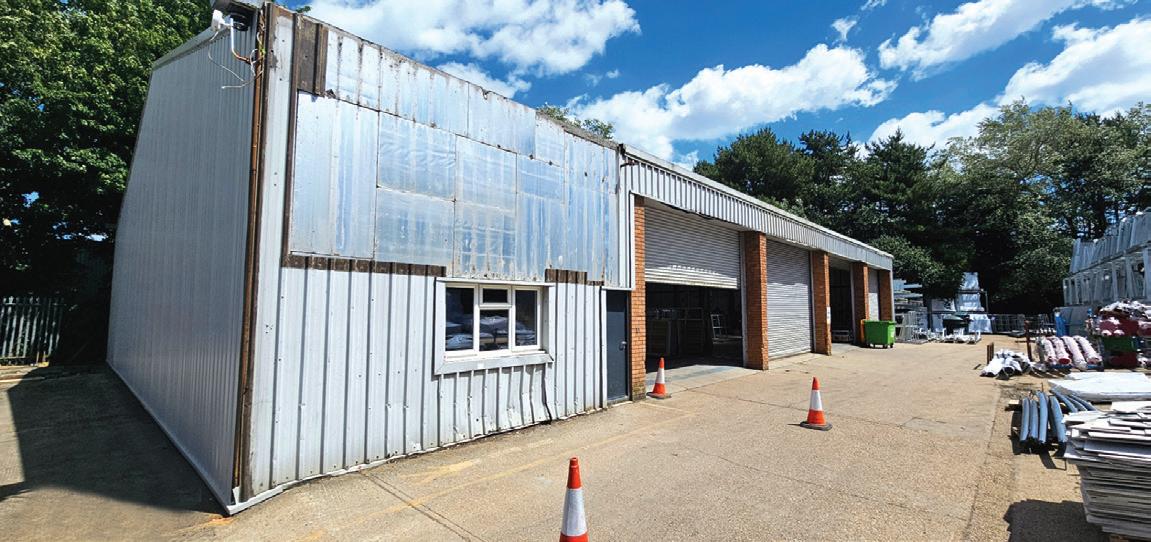
At nearby Sycamore Farm, where A A Clifton has a number of industrial units for rent, JRJ Construction is working through a range of refurbishment projects, recladding the buildings and carrying out any necessary repairs to keep the units in good repair for the site’s varied customer base.
“We tend to tackle one major refurbishment a year, along with a range of other maintenance and repair projects that crop up along the way,” explained Jez, who runs JRJ Construction with the support of wife Jade, who is also kept busy looking after their five year-old son Roman. Jez and his long-standing staff member Daniel Vasile are supported by trusted sub-contractors when a bigger team is needed. Streetspace, which manufactures covered space structures and urban street scene products, turned to JRJ Construction for help in smartening up the tired headquarters they were leasing in Lympne, Kent. Jez and his team re-clad the building and replaced all the flashings, creating a smarter and fitting headquarters for the company.
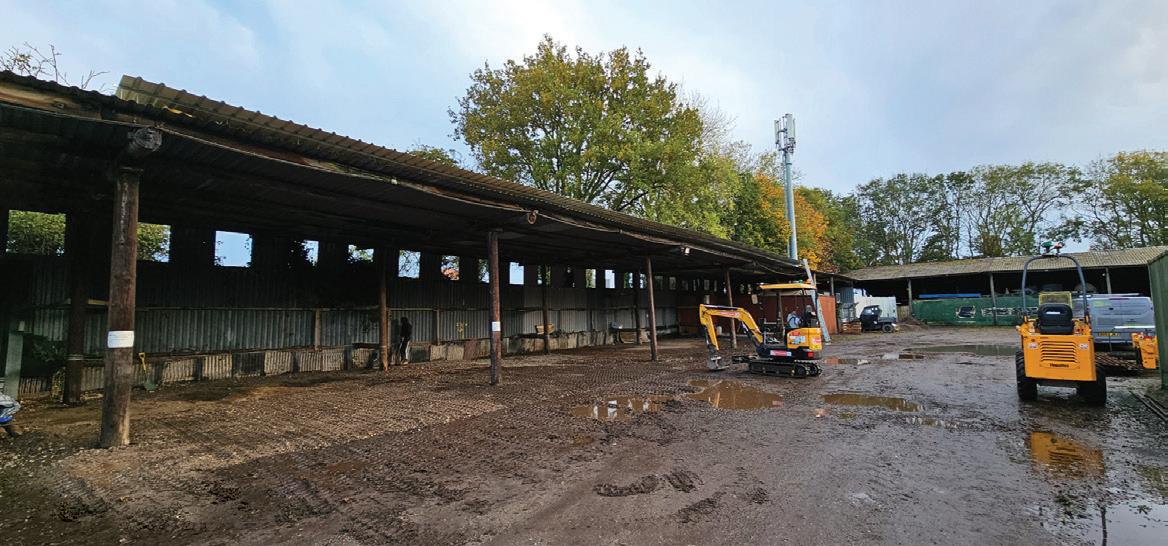
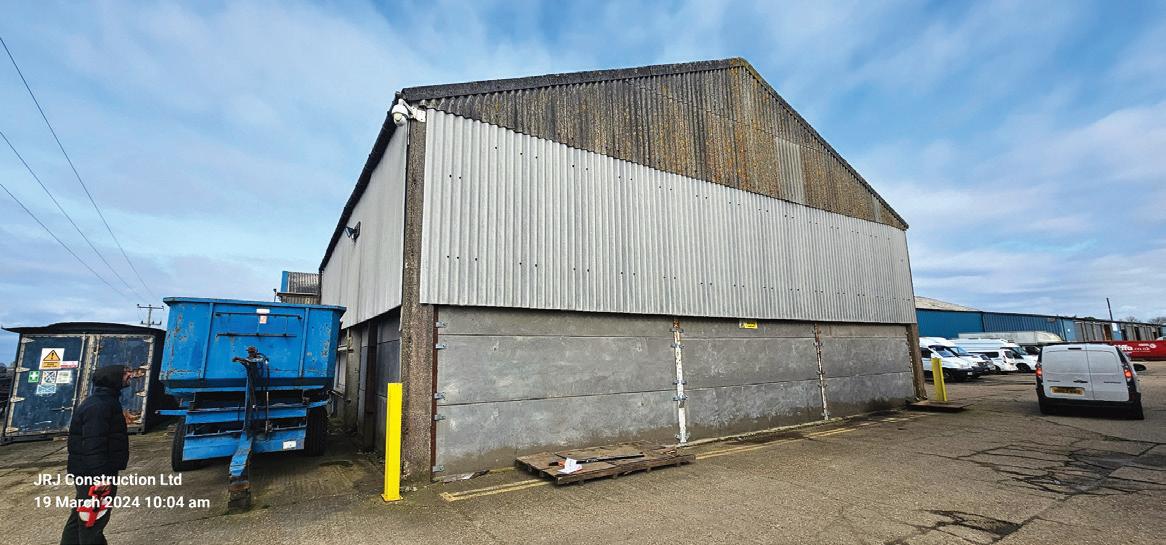
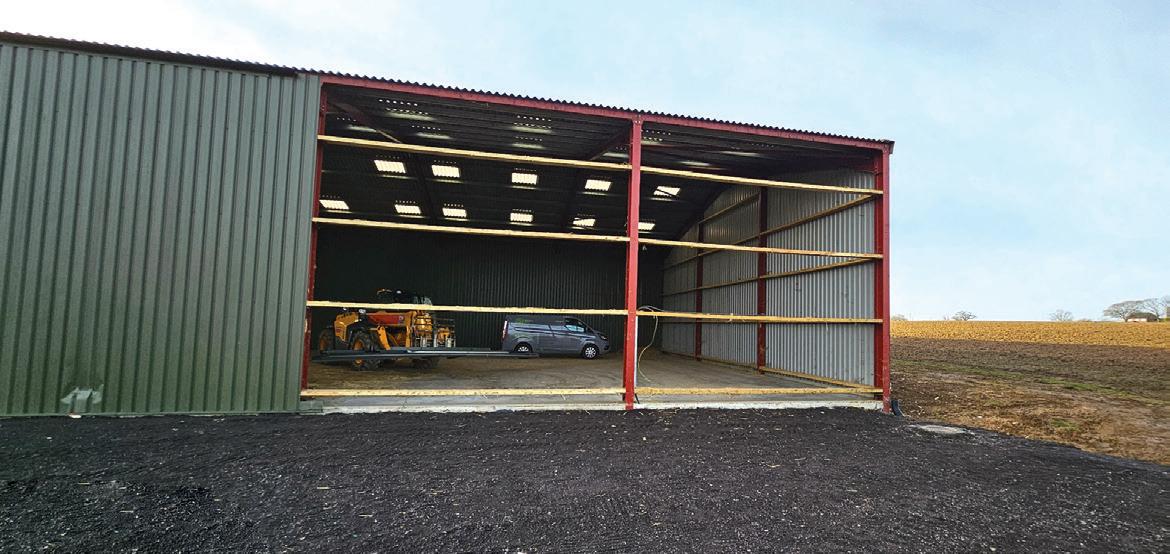
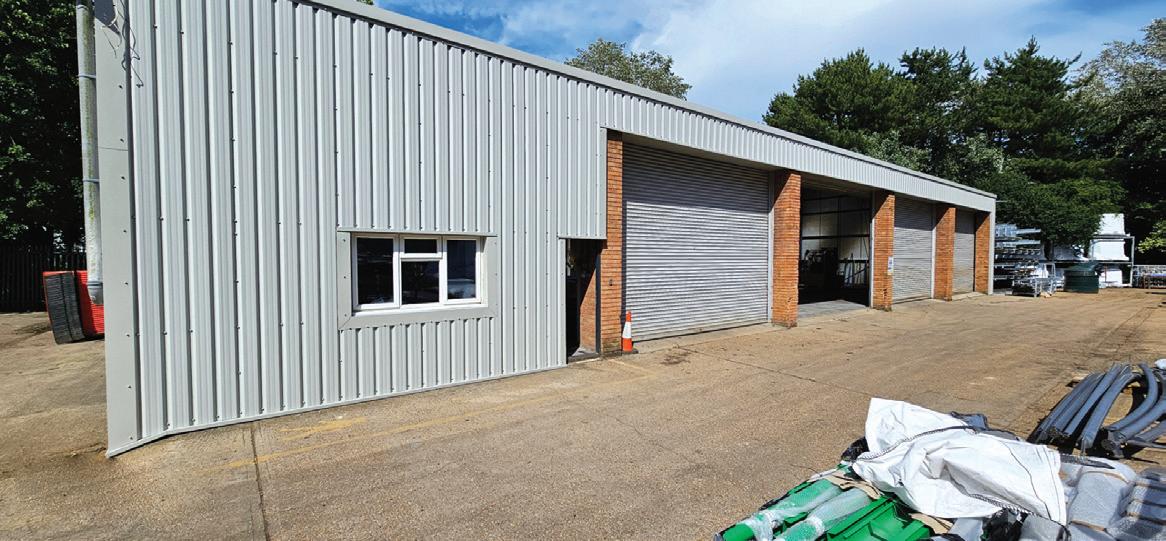
One of JRJ Construction’s most impressive transformations saw a 1990s built, open-fronted pole barn at Spratling Court Farm, Manston, converted into four industrial units for David and Piers Steed, complete with a concrete floor and steel work. “It was a challenge to turn an old pole barn that had been open to the elements for decades into a usable modern building, but the end result was worth the effort,” said Jez.
At Great Brooksend Farm, Birchington, the salty coastal air had made life tricky for farmer David Snell by corroding the roller shutter doors to his grain store and making them hard to operate. JRJ Construction made life easier by replacing them with new, electrically powered roller shutters and making the doors higher to make loading easier at the same time.
“Our success to date reflects our attention to detail,” said Jez. “It may only be replacing a valley gutter, but if you make a good job of it, there’s no telling where it will lead.”
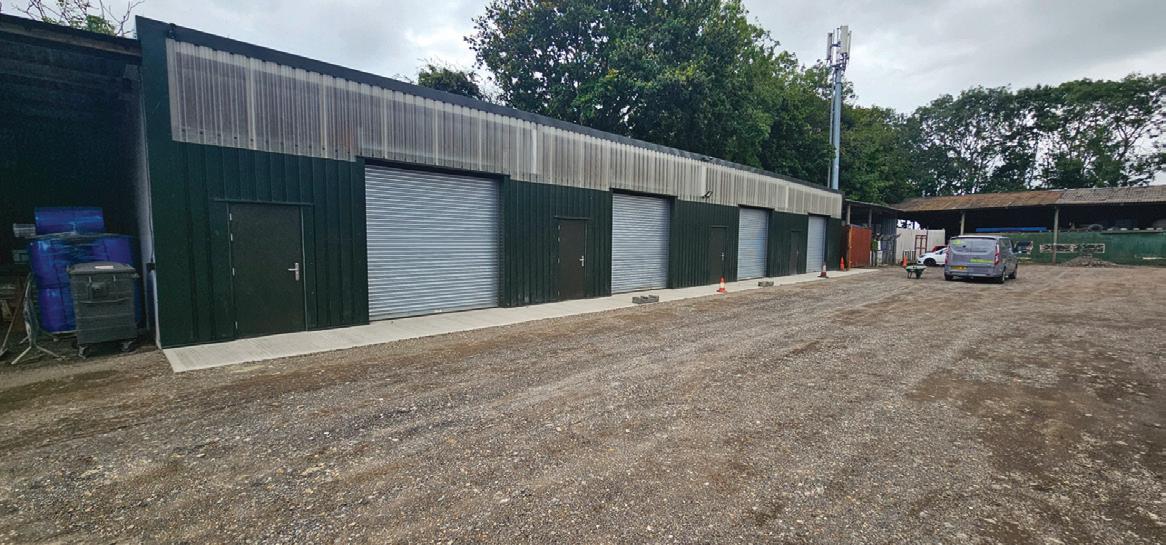
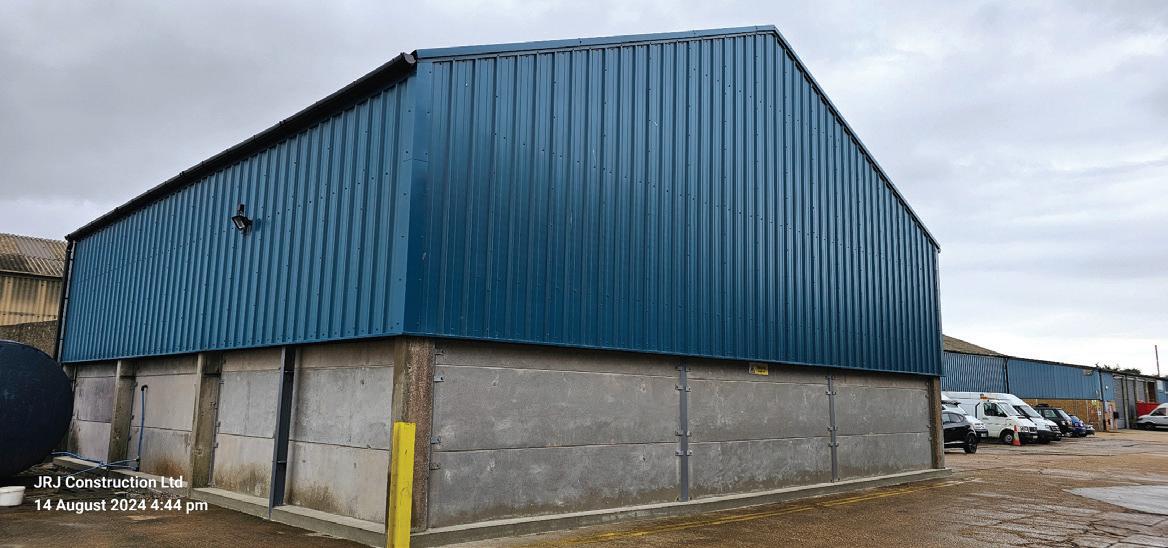
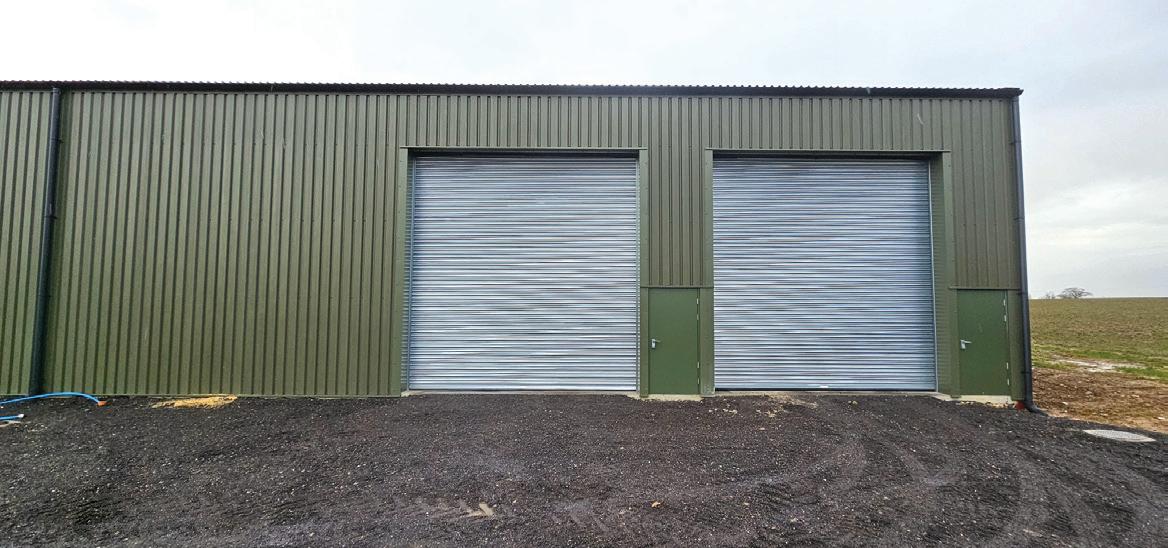
As this report was being written in mid-August, harvest was well forward, with the dry, warm weather helping farmers gather in the crops after a very difficult growing year. Yields are very variable, particularly on the later drilled crops which were put into wet ground. Issues are also being seen with weed growth, in particular with high infestations of black grass and rye grass affecting some yields.
As always, some arable farmers have been looking to drill oilseed rape as early as they possibly can and looking for rain to establish that crop. It is certainly not going to be a record harvest and prices were also disappointing as this report was being written.
In the livestock markets, the strong beef trade continued for the best quality cattle, with numbers totally inadequate. Many more could be sold to advantage, despite the large quantity of cheaper imported beef which is a strong competitor for catering meats; quality meat always sells and is always wanted. Best prime cattle are still trading over 300 pence per kilo in the live ring, despite pressure on supermarket-spec cattle. As stated, numbers are inadequate.
With the number of cull cows coming forward being reduced as always at this time of year, trade remained firm throughout the early summer period.
Store cattle were short; those that were available were keenly sought by buyers looking to restock yards. With national reports of much reduced registration of calves, it is likely the beef situation is not going to change dramatically.
In the sheep markets, a downward trend was seen at the beginning of the period but there was an increase in trade, particularly for the
GRAHAM ELLIS FRICS FAAV FLAA
For and on behalf of Stanfords T: 01206 842156 E: info@stanfords-colchester.co.uk www.stanfords-colchester.co.uk
heavy lambs with meat and good conformation. There was generally a shortage of these lambs throughout the country. Again, with the reported national flock being much lower, and many ewes having been killed in the spring, it is unlikely this situation will change dramatically.
Best lamb was still trading at well over 300 pence per kilo in the live market, which was seeing strong lambs at between £150 and £180 a head per week. More again could be sold to advantage in the live markets. As always, a premium is being paid for meat, but several leaner lambs were being taken for further feeding.
The first stores have also been coming forward. There is a concern with the bluetongue-affected areas, where lambs were tending to fetch less money than the bluetongue-free areas earlier this year; it will be interesting to see how this trade develops.
The ewe trade is remaining strong and was, indeed, getting dearer throughout the period, with numbers again short.
In the pig market, trade stayed firm but, in all honesty, supply equalled demand and any increase in supply may reduce the trade. It was disappointing to see the cull sow trade reduced, but this is quite typical for the time of year.
As always, support the live market system, which gives a true barometer of the trade and allows all quality of stock to be sold on a competitive basis.
No matter what kind of land your flock runs on or what market you target, the critical factor affecting income from your sheep enterprise is the number of lambs reared. Empty sheep simply do not pay the bills.
Having ewes at the correct body condition score (BCS) throughout the year reduces variation in the flock and makes feeding simpler. Ewes with the correct BCS have better fertility and superior lamb performance. Generally speaking, lowland sheep should aim for a BCS of 3.5 and upland sheep 2.5 - 3 BCS.
Having ewes in the right condition at tupping is key but it takes six to eight weeks to move up one BCS point and it is hard to change BCS during pregnancy without affecting lamb development. Putting on body condition between weaning and tupping will allow for maintenance during mid-pregnancy.
Ewes in better BCS at tupping and through mid-pregnancy will milk better, rear heavier lambs and be in better condition at the next weaning.
Independent university studies have clearly shown that ewes fed Crystalyx Extra High Energy at grass throughout the flushing and tupping period:
• Gain condition and liveweight faster than on good grass alone (+2kg extra liveweight in six weeks)
• Ovulate more to increase lamb numbers at scanning (+11% to 20% in UK studies)
• Conceive faster to the ram, significantly shortening the lambing period (22 vs 49 days in a Crystalyx research study conducted by Aberystwyth University).
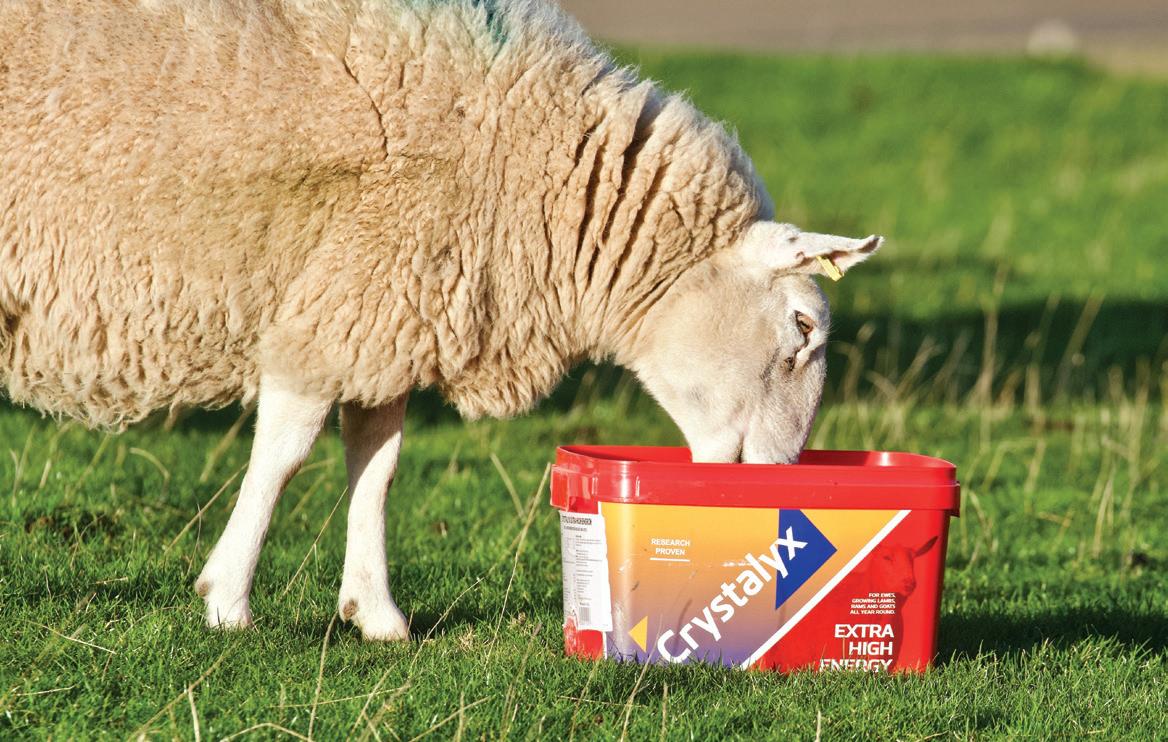
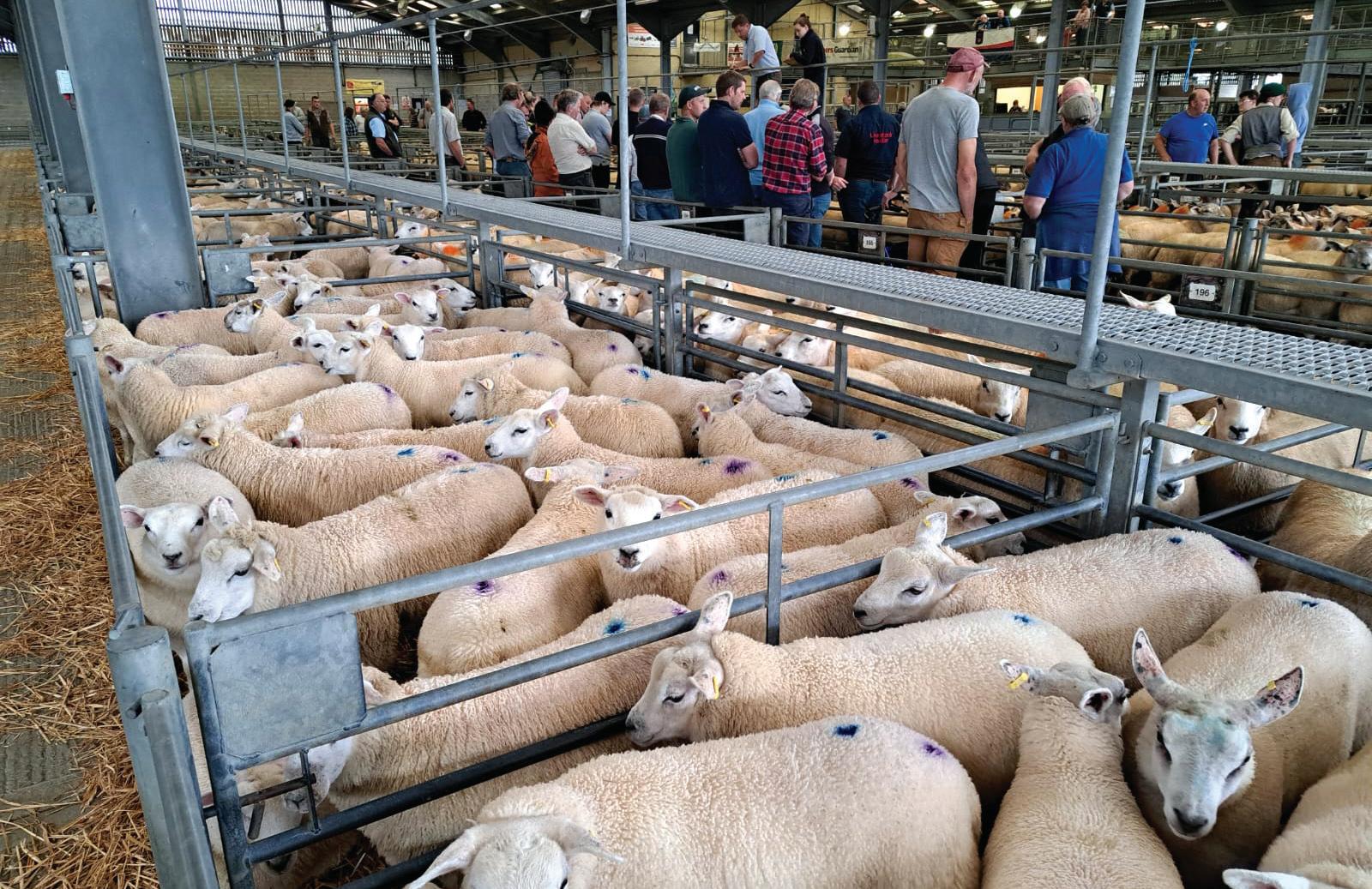
JOHN ROSSITER
Reporting on the market at Ashford T: 01233 502222
www.hobbsparker.co.uk
It is 30°C in Ashford and the grass is getting browner and dryer as each day passes; great news for those with their combines rolling through the wheat crop, but less good for the livestock farmers across the South East.
Finished sheep are selling very well at the time of writing as we look to be entering into a time of shortage once again, with the tail end of the fed lambs from the early feeding flocks and grass types not quite having enough finish to satisfy demand for larger and well covered carcasses.
Prices in this section are often in excess of £150/head and at times touching £180 for the heavier examples. These prices are at a level we can potentially sustain and, without huge over supply or shortages, hopefully will be with us for most of the autumn selling period.
Reports of these prices will certainly be music to the ears of store lamb sellers in our region, and following our second sale of store sheep in Ashford we can report a good demand for the 10,000 or so lambs that have been through the ring in total so far. The
overall size of the lambs sold has not been as strong as last year, as with the very high finished prices a lot of the forward single lambs have been sold on a Tuesday as opposed to being in the head pen of many vendors’ stores on a Friday. In addition to this, a number of smaller lambs were sold in the first sale and averages were adversely affected.
With the overall average for all store lambs sold to date being approximately £95/head, about £8 up on last year at the same time, things are moving in the right direction and all sellers are now benefiting from increased sheep prices in the UK. We must not forget that the store lamb sellers last year did not see any of the high prices from Christmas 2023 onwards, but finally their time has come. Despite these high prices, I must now put a sensible head on and look further down the line to what the prospects are for these lambs as we go on through 2024 and into the spring of 2025.
Finishing lambs throughout the winter and selling in the spring as hoggets is a risky game that can bring great reward in the
good times, but the costs and gamble can be equally as large. In recent years we have seen some of the better times, but it is not only about the sale price on the day they leave the farm but about the cost of getting them to that point that is often the determining factor affecting the margin at the end of the day.
Purchase price is obviously the largest chunk of the cost in store lamb fattening, as we are all aware, but the smaller factors of haulage, medicines, dipping or shearing and winter keep have now risen considerably and eat away at the margin figure.
In the case of winter keep, many finishers are currently unaware of whether or not crops will grow in the dry autumn, or even if they will be planted at all, due to a number of arable farmers choosing to devote large areas to stewardship schemes which cannot be grazed.
As livestock auctioneers, we would like to sell all lambs for as much money as we possibly can, but we must see both sides of the coin and be realistic about what our buyers will be able to achieve with their purchases.
Well this year seems to be continuing in much the same sort of vein as it started; an up, down, stop, start sort of a season. Summer is turning into a rather on/off one, a couple of nice, warm, sunny days punctuated by a few days of significantly colder and generally wet weather, meaning nobody knows quite where they are.
It has proved to be a difficult summer for both arable and livestock producers, with harvest and hay-making seemingly equally disrupted; even grass does not appear to be doing quite as well as one would expect given recent warm and wet growing conditions, with much of it struggling, I suspect, to catch up with what was a rather poor start to the year.
In spite of this, sheep seemed to have fared reasonably well, even when the weather has impacted on grass supplies and quality. The weather did delay shearing for many, and the wet spring will probably have an effect on wool quality. I know when the coats finally came off our sheep some of the fleeces, which looked well with good colour and style in the autumn, were quite disappointing. They were OK but I certainly didn’t have one, even off the ewe tegs, that I considered good enough for a show fleece.
Both the ewes and lambs were in remarkably good condition at weaning, all things considered. The latter looked particularly good; their mums, having obviously milked well, really did them well. I did expect that the ewes might have been milked off their backs a bit, but they appear to have both milked well and mostly held much of their condition, which is testament to the efficiency of the breed. They have had grass in front of them all season, although at times supplies have been a bit tight and of rather questionable quality; they have obviously dug deep.
The one down side has been the level of lameness this season, almost all down to scald, both in ewes and lambs. It’s not surprising, considering what they have had to tolerate in terms of wet and often long grass, but it has at times been a struggle to keep on top of it. Thank goodness for a bit of ‘blue spray’; a timely application generally knocks it on the head and a few ewes that were repeat offenders have already been culled. We have hit them quite hard this year. Foot problems generate a lot of unnecessary handling and soak up time, quite apart from the costs of treatment.
Having moved the lambs onto a bit of fresh grazing post weaning, their scald problems seem to have disappeared (hopefully), the ewes no doubt having been the source of infection. It’s an old saying that 90% of foot problems are generated by 10% of the sheep. I hope that’s correct and that having now culled the worst offenders we shouldn’t see too many further problems. The culling of repeat offenders is indirectly selecting the more resilient to foot problems, inasmuch as they have all been exposed to the same challenge and some (the problems), have succumbed and others haven’t. Anyway, for the rest of this summer it will be a blitz on foot problems, with
strict monitoring, rapid and appropriate treatment of any sheep that show any signs of favouring a foot, and liming around the water troughs. The use of foot-rot vaccine is always an option, but to me that would simply
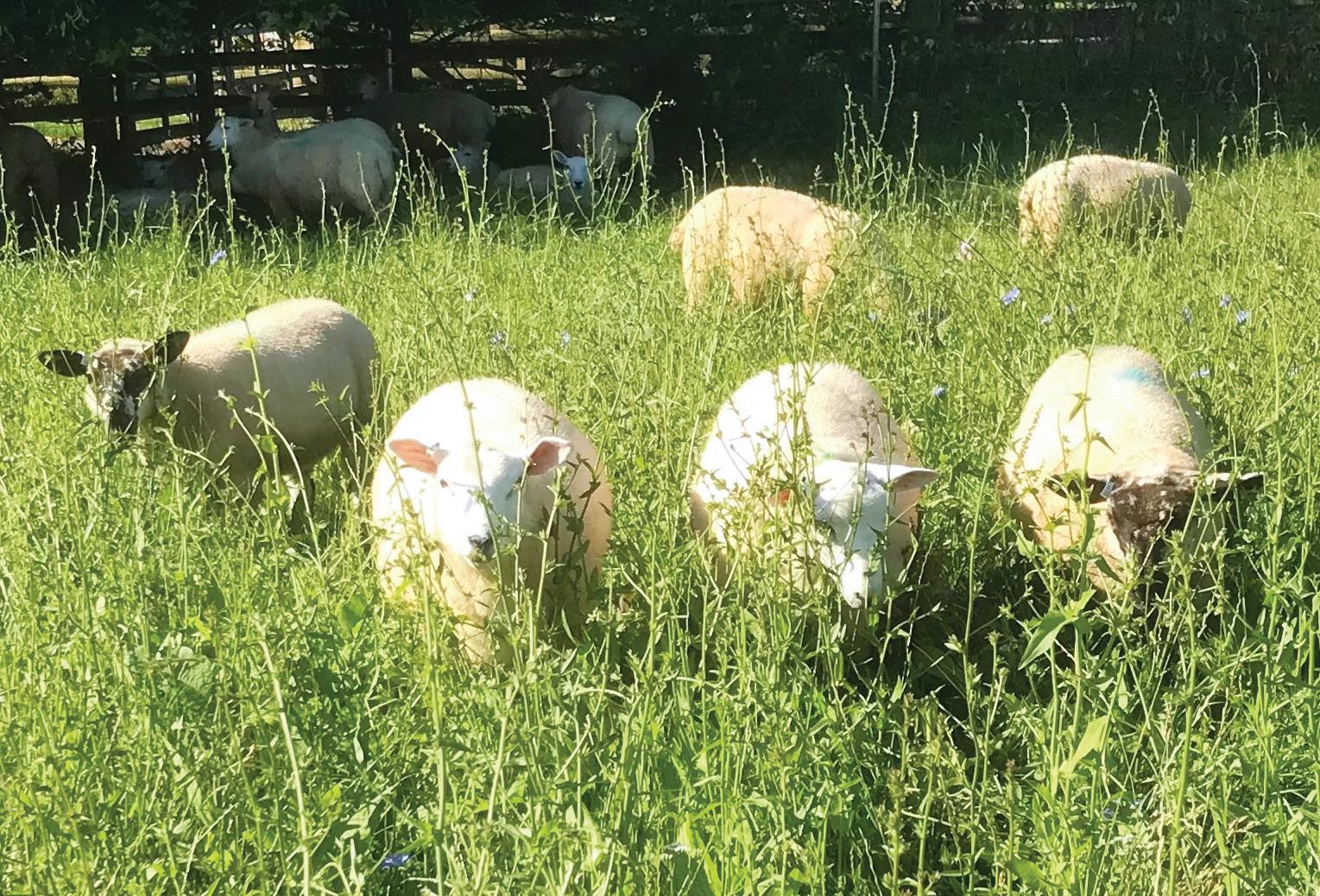
be an admission of defeat, plus the fact that it becomes rather more difficult to identify and select for the more resilient sheep if problems are masked by vaccination. It’s also a nasty vaccine to use (apologies to vaccine manufacturers).
Undoubtedly, talking to people locally and at Sheep ’24 has confirmed that I am far from being alone; almost everybody I spoke to said that they had experienced significantly more foot problems this season (largely scald) than they would normally expect. Worm problems seem to be rather more varied, with some having had a terrible season and others reporting considerably fewer problems than they would normally expect. Fortunately we fall into the latter category.
With having only sheep and using basically the same grazing platform for the past 35 years, we know we have an issue with worms; with a bit of away grazing we do try to keep a few paddocks sheep-free for four or five months over the winter, but we accept that we need to worm lambs for the first time generally at about four weeks after lambing. This year, however, some early faecal egg counts (FEC) somewhat surprisingly showed a low incidence of worm eggs, particularly as, following current advice, the only ewes that were wormed at lambing were a few that were not quite as fit as their contemporaries and the first time lambers.
Past experience would have indicated that we needed to worm, but we could probably have got away without an early worm dose. Erring on the side of caution, and with a rising risk of Nematodirus at the time, rightly or wrongly we wormed anyway; in our defence I would say that it was only a dose of white wormer so not ridiculously expensive. We are not quite sure why we should have had such a low FEC; testing was good, so not an error there. The only things we can think of are that the hot, late summer may have had an impact on pasture contamination levels, that a few months on some clean grazing may have reduced further contamination when the ewes came back home for lambing or that having access to chicory, which has known anthelmintic properties, may have significantly reduced ewe worm burdens; it was probably a
combination of all of these.
Anyway, the lambs only had one other dose of wormer at weaning, we haven’t had any dirty lambs and they are all growing very well, I think we have been rather lucky.
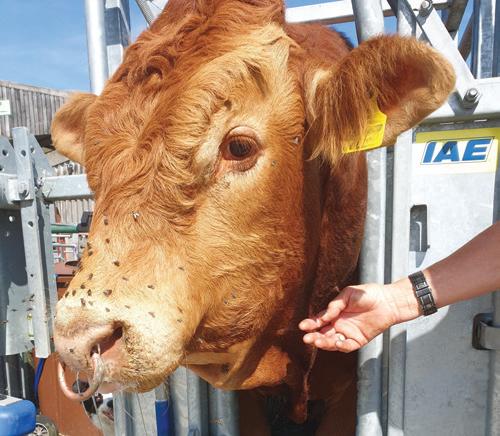
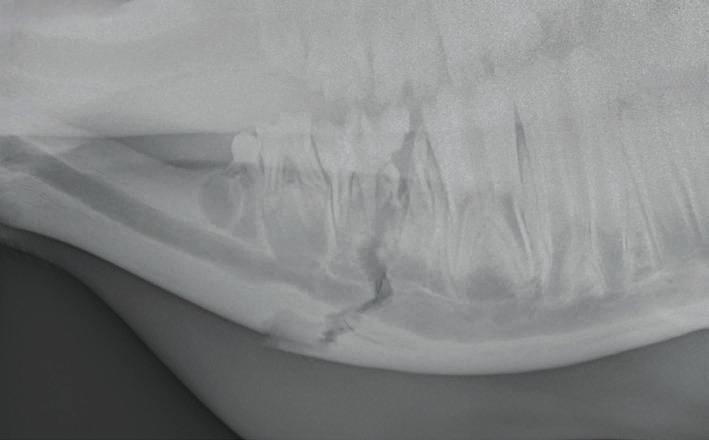
It’s mid-August and a lot of our mixed farms in Sussex have only a few days of harvest left. I think its fair to say that the crops have been variable, with some farms reporting higher than expected yields but some lower quality grain, but there seems to be a fair bit of straw around for the winter stock.
On the livestock side, it has been a busier than usual summer. It tends to be our quieter time, but with staff on holiday it sometimes doesn’t feel that way. We are planning to move Cliffe Farm Vets to revamped premises at our Laughton Clinic at the end of August, so there is plenty of planning to be done to get that sorted in time.
It will be nice to have our own standalone dedicated farm vet offices above a front-of-house shop for farmers to pick up medicines and supplies. We have been busy with the start of the sheep reproduction season, with artificial insemination and embryo transfer already in full swing. We are flushing more ewes this year, with more breeds being represented. Our fourth year of the VESBA (Vaccinating East Sussex Badgers) vaccination project is also well under way. We have recruited more farms from outside the original area and have started to offer training courses in badger surveying, trapping and vaccination to other interested parties. Since the season started in May this year, we have vaccinated more than 420 badgers.
We had an interesting case of a valuable bull with a fractured jaw, which needed the help of our Cliffe Equine colleagues to carry out an x-ray. The bull had fractured his jaw in two places, and the fracture was stabilised with wires. Although not out of the woods yet, he seems to be making good progress.
Another interesting case I saw last week was some six- to sevenmonth-old single suckled calves with ill-thrift and mild scours of seven to 10 days duration. They had been grazing some marshy brook land and, despite the clear lack of sheen in the calves, their dams still looked in great condition.
The farmer performed some faecal worm egg counts on the worst affected few and we were able to rule out worms and coccidiosis. I blood sampled the calves and tested them for copper and liver fluke. Copper deficiency can sometimes be difficult to diagnose due to liver storage and interactions with other trace elements such as molybdenum and sulphur, but these calves were so profoundly low on blood copper that it was a relatively straightforward diagnosis. The calves are being dosed with a copper oxide bolus today and hopefully will bounce back without having lost too much ground.

NICK PILE Cliffe Veterinary Group
T: 01273 473232 E: nick.pile@cliffevets.co.uk





September may see summer come to an end, but for many students it marks the start of another exciting academic year of possibilities.
And if you are having second thoughts about sixth form, it still isn’t too late to join us here at Hadlow College for this academic year.
As Kent’s only rural and land-based college, Hadlow offers a huge range of courses to suit the needs of many different students.
These cover agricultural engineering, agriculture, animal management, equine management, fisheries management, floristry and horticulture and garden design.
In addition, carpentry and joinery courses are run in our dedicated workshop and the college has a fully functioning garage, diagnostic centre and workshop as the base for its motor vehicle courses.
All our full-time courses include a significant amount of work experience which is gained out in the workplace.
For some real hands-on experience, the college also offers apprenticeships in many sectors, ranging from horticulture landscape to golf course manager. This involves spending
20% of your working hours in training and development, which is often at college or sometimes in your workplace. The remaining 80% of the time is spent in the workplace applying the skills and knowledge you are learning in a working environment.
Students can also experience university life at the leafy Hadlow campus as the college offers a number of higher education courses and has residential accommodation.
At Kent’s only rural and land-based college, students benefit from both our stunning location and our cutting-edge facilities.
The campus is set in the beautiful surroundings of a large, managed estate that includes more than 265 acres of prime arable land, woodland, a natural river, three commercial farms, established show gardens and horticultural glasshouses, lakes and other natural habitats.
The college has invested heavily in stateof-the-art facilities such as our ‘concept orchard and vineyard’ that showcases the latest technology, including automated AI management systems, innovative crop diversity, cleaner storage and robotic fruit picking.
At the most recent Ofsted grading, in February, inspectors rated North Kent College, which includes Hadlow College, as ‘good’ overall, with an assessment of ‘outstanding’ in behaviours and attitudes.
The inspection team said: “Learners and apprentices rightly appreciate the welcoming, inclusive and supportive environment that staff create at North Kent College”, before concluding: “Learners develop into wellrounded, responsible individuals during their time at the college.”
Our facilities were also praised, with the report saying: “Learners benefit significantly from the high-quality, often industry-standard resources that leaders provide.”
If you are feeling that your current academic chapter is not quite right for you or if you need a change of scene, get in touch.
Call 01732 850551 for more information and we’ll talk you through all the options available.
Or, if you are looking to start at the college in September 2025, attend our open event on Saturday 9 November, from 10am to 1pm, for a chance to explore our facilities and speak to our industry trained lecturers and current students.
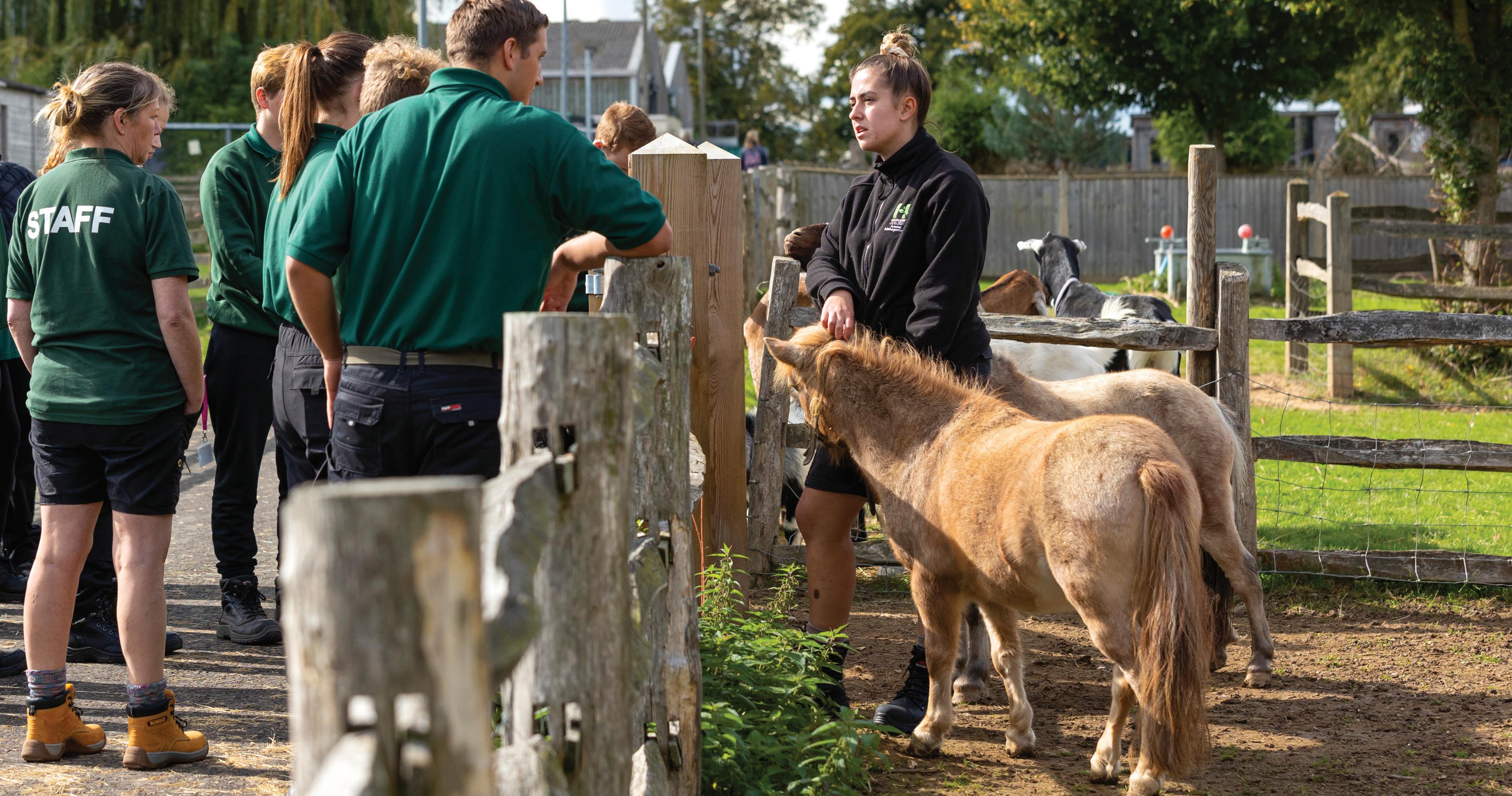

Olivia Casey at Chelmsford looks at the benefits of tandem tech services in calf rearing.
As the first cohort of veterinary technicians is due to graduate from Harper Adams’ veterinary technician higher apprenticeship, it is an opportunity to reflect on how veterinary technical services benefit both the veterinary and farming industries, and how they enable us to provide an advanced service to our clients.
One of the areas where vet technicians have successfully made their mark is in the calf-rearing sector, providing services in tandem with a vet or independently, where appropriate. Vet technicians can perform several tasks relating to animal husbandry and early detection of disease, including the use of Wisconsin scoring of calves in their first week of life or on arrival at the calf rearing unit.
This entails a full body exam of the calf from nose to tail, identifying any early signs of respiratory or gut diseases, as well as umbilical or joint inflammation, or simply an increased body temperature or quiet demeanour. This early detection allows for earlier treatment and intervention by the vet and farmer and prevents a more significant setback to the calf’s health and future growth rates. The vet technician may also record data on body weights of the calves at the beginning of their life and again at weaning, providing insight into the growth rates of the calves in the system. This can then be linked back to specific health events in the calf’s life, which may trigger an alteration in protocols, from sourcing of calves to the addition of preventative treatments such as targeted vaccines.
While veterinary time is taken up with dairy routines, our vet technician can consider general husbandry on the farm and has the knowledge and experience to advise on potential improvements or reinforce good practice. Aspects such as bedding, water and feed buckets, hygiene and environmental factors such as drainage, air flow, temperature and humidity can be considered and discussed with the vet technician and vet. Hygiena scoring can also be implemented to identify bacteria on feeding equipment like buckets, teats, stomach tubes, colostrum vessels and
in the environment around calf housing or hutches. It targets areas that look to be clean already, either to provide evidence that it is as clean as it looks or to suggest that cleaning procedures could be improved to minimise calves’ exposure to bacteria that could cause disease or set their growth rates back.
The veterinary technician aids significantly in data collection on calf units and can interpret data such as serum total protein, providing insight into the effectiveness of colostrum management on farm, as well as being able to assess the quality of the colostrum. These results enable vets to advise farmers more effectively and target the areas of concern. This data, alongside Wisconsin calf scoring, can be benchmarked anonymously against other farms, to help farmers track their progress against comparable systems. In some set ups, we can track the long-term progress of individual calves to see if our efforts to prevent disease, rather than solely curing livestock, are proving effective.
From a veterinary perspective, employing vet technicians has hugely impacted farmer compliance with veterinary advice, as they can provide a second pair of hands to perform tasks such as administering respiratory vaccines. They are also able to perform other tasks such as disbudding, rubber ringing and ear tagging and, while on farm with a vet, can assist with veterinary procedures like surgical castration or lung scanning. Lung scanning is a useful tool to assess the respiratory health of calves not showing signs of disease and select the best calves for rearing. Technicians help to save veterinary time and provide a more cost-effective alternative for the client. With effective communication between vet and tech, they also help to provide a more collaborative and advanced service, with multiple people working towards the same goals.
As for the relationship between technician and farmer, we find that vet technicians provide an open line of communication as they can dedicate more time to individual farms. Their skills can be used to reduce on-farm labour and provide a second pair of hands, as well as a fresh set of eyes. Our technician has a background in livestock and arable farming
so understands the pressures that farmers are under year-round and is established in the farming community, as a member of the Farming Community Network and an NFU ambassador. There is also scope for veterinary technicians to become approved TB testers, providing more opportunities for the technician to be on farm during pre- and postmovement TB tests at rearing units.
The benefits of tandem vet and veterinary technician services in calf rearing are numerous, and we hope that the role of a vet technician continues to grow. So far, embracing technical services has allowed us to provide the best service to our clients and achieve our goal of preventing disease and optimising productivity in young calves, while sharing the care responsibilities across a multi-disciplinary team.
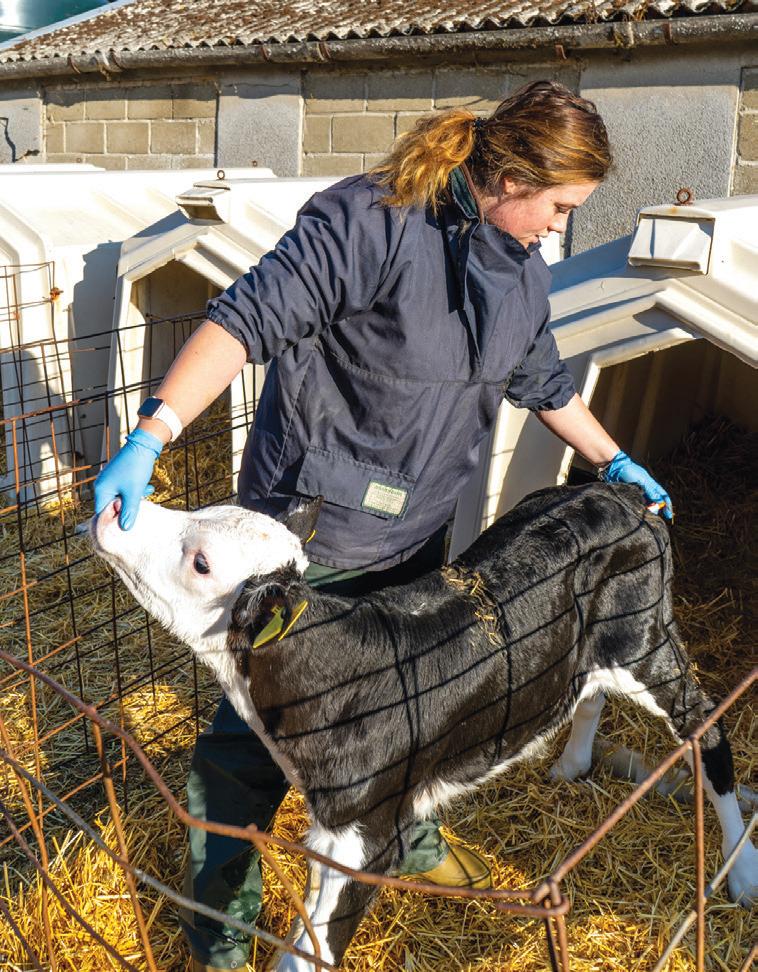

Call us today or visit our website: 01227 763939 furleypage.co.uk
Tom Potts, a partner in the corporate agriculture team at national law firm Clarke Wilmott LLP, discusses how the new Labour Government will meet its pledge to double the number of agricultural co-operatives and mutuals.
A key Labour manifesto pledge for agriculture was to double the number of co-operatives and mutuals in the industry from the current level of around 800. Approximately half of UK farmers are members and co-owners of these businesses, which play an important role in the UK’s agricultural sector by giving them more control over the supply chain, helping them cut costs on key inputs through economies of scale and supporting innovation to boost output and productivity. Successful examples include Arla, one of the country’s biggest dairy co-operatives, owned by 2,000 British dairy farmers and responsible for supplying more than a quarter of the nation’s milk.
The volatility and uncertainty currently facing UK agriculture means farmers are already looking at alternative business models. Joint ventures, share/contract farming and producer organisations (POs) all offer opportunities and benefits. Government support for creating more of these businesses will be welcome, but sound legal advice will be key in ensuring their success.
The new administration plans to introduce a comprehensive package of measures designed to encourage the formation and growth of co-operatives and mutuals. This includes:
• Financial incentives: Introducing grants and low-interest loans specifically for the development of co-operatives and mutuals.
• Education and training: Giving farmers
access to education and training on the benefits and mechanics of forming co-operatives.
• Regulatory support: Simplifying the regulatory framework to make it easier to establish and operate co-operatives. Forming a co-operative is currently a separate process, overseen by the FCA, from setting up a typical private company registered at Companies House. While Companies House charges £50 and typically processes the application within 24 hours, the FCA can levy fees of up to £950 and aims to register a co-operative within 15 working days. Any measures that narrow this gap, while ensuring the unique ethos of co-operatives is maintained, will be welcome.
• Partnerships and networks: Facilitating partnerships between co-operatives and research institutions to drive innovation and efficiency.
• Marketing support: Helping co-operatives develop strong marketing strategies to promote their products both domestically and internationally.
Labour has proposed a dedicated task force that will work closely with industry stakeholders, legal experts and financial institutions to overcome barriers to the creation and expansion of co-operatives. There are many aspects to consider when joining a co-operative or mutual, including the rules, standards and contracts that you will be committing to. It is also important to
think about what returns you are expecting. There is a fundamental difference between private companies, where profits and capital are distributed in accordance with how many shares are owned, and co-operatives, where returns are typically based on how much someone has participated in, or traded with, the society.
As with any contract, it is important to consider the impact it will have on the business operation, succession planning and the flexibility that may be needed if circumstances change. While using a standard document such as model articles of association for companies, or a co-operative sponsoring body’s model rules, may be convenient in the short term, it can lead to problems further down the line. As such it is important to take experienced legal advice based on the particular circumstances.
In the words of the incoming Farming Minister Daniel Zeichner, “doubling the number of co-operatives and mutuals is not just a target; it's a necessary step towards a more resilient and self-sufficient agricultural sector. By empowering farmers through co-operation, we can build a future where they have greater control, security and prosperity.”
As the new government takes the reins, the agricultural community looks forward with cautious optimism, eager to see how these promises translate into tangible improvements on the ground. The success of this pledge will be a critical test of the new administration's commitment to revitalising the agricultural sector and supporting the nation's farmers.
Is now the time to gift the family farm?
The question of when to pass the family farm to the next generation is often a difficult one to answer. With many aspects to consider, it’s easy to see why it’s a topic often avoided by those in farming families. However, having a plan in place is the most effective way to safeguard the future of your farm and ensure a smooth transition when the time comes to hand over the reins.
A common query from Brachers’ clients is whether a gift should be made during lifetime or left until death, and timing is an important factor to consider. Handing over significant assets too soon can cause difficulties for a number of reasons. For example, is the recipient truly committed to pursuing the family business/trade? What are the tax consequences? Might the gift inadvertently trigger a charge to capital gains tax (CGT) or leave an unpalatable exposure to inheritance tax (IHT)? Nevertheless, there might still be good reason to consider gifting some or all of the family farm or farm business sooner rather than later. A legal advisor can help you assess the financial implications of the timing of your gifting, as well as advise on the discussions you need to have with your family around the broader succession planning process.
More broadly, we are all aware of the uncertainty surrounding the future of farming. Could this uncertainty be an opportunity to accelerate succession plans? Here are a few things to consider:
Timing the gift at a point when land and property prices are lower can be tax efficient. Gifting at this time could mean that the value of the gift that lingers in your estate for the next seven years is lower than the value that it might be at any point during that period. With a new government in power, possible tax changes, particularly to CGT, would potentially stagnate the market and lower prices. It is useful to be alert to this opportunity if the property market does take a fall.
It would be sensible to consider taking advantage of IHT reliefs such as agricultural property relief and business property relief (BPR) while these reliefs are still as favourable as they are. Before it was disbanded, The Office of Tax Simplification made recommendations that may make IHT reliefs, particularly BPR,
SARAH MANNOOCH
Partner, Brachers LLP
T: 01622 767735
E: sarahmannooch@brachers.co.uk www.brachers.co.uk

harder to achieve. With a new government potentially eyeing up changes to increase tax revenue, it may be prudent to take advantage of the current window.
Post-Brexit changes mean the agricultural sector has needed to diversify income streams and innovate farming practices to maximise income. Innovation is likely to be critical to success and therefore needs to be encouraged. What better way to do that than to incentivise the next generation by giving them ownership and control of decision making? Gifting to the next generation may well incentivise innovation to help long-standing family businesses continue for years and generations to come. There are, therefore, many reasons why this might well be a good time to consider passing on the family farm to the next generation. Any proposal to do so needs, however, to be carefully considered to ensure problems do not arise.
As with any gift, a balance needs to be struck between giving and retaining sufficient means for the future so as not to leave yourself short. It will be important to avoid inadvertently triggering a charge to tax if the gift is not given in the appropriate way. That said, gifting is certainly something which should, in the present climate, be considered, given so much uncertainty about the future. It is always recommended that professional advice is taken when considering any sort of gift.
Land use will be the vital question at the heart of the South of England Agricultural Society’s (SEAS) 2024 Farming Conference taking place on Wednesday 13 November at the South of England Showground in Ardingly, West Sussex.
This year's event, which will take place in person and online, will address the question: What is our land for? It will again be chaired by Charlotte Smith, presenter of BBC Radio 4’s Farming Today
The event will feature an in-depth discussion with a panel of distinguished guests who will be invited to focus on the unique challenges and opportunities related to land use in the South East of England. As always, the conference will conclude with a question and answer session that will provide ample time for audience interaction and debate.
Duncan Rawson, a SEAS-sponsored Nuffield Scholar and chair of the conference organising committee, said: “The South East is a microcosm of the broader issues facing the UK. It encompasses bustling urban centres, vast agricultural lands and areas of significant natural beauty and biodiversity.
“The land here supports a high population density, a robust economy and crucial infrastructure. However, this also brings challenges such as housing shortages, environmental degradation and the impacts of climate change.
“Moreover, the region’s agricultural land is often of marginal quality, which poses
significant challenges for profitable food production when we see increasing pressure on the land and decreasing government support for agriculture. This reality compels us to consider whether or not the focus should shift from food production to enhancing environmental and biodiversity outcomes; whether we should embrace the relentless tide of commercial development or resist it at all costs. Where does the balance lie? What is our land for?”
Discussing this vital question will be a distinguished panel of leaders in their fields – Paul Christian, managing director of Sentry; Tom Heap, journalist, author and BBC Countryfile presenter; Tim Slaney, interim chief executive officer of the South Downs National Park Authority and Ben Taylor, managing director of Iford Estate.
• Paul Christian: Paul leads Sentry, an employee-owned farming and advisory business specialising in rural asset management, contract farming and management services for private and corporate landowners. Sentry operates nationally, covering 23,000 hectares of land, producing 200,000 tonnes of produce annually and providing additional management and advisory services across 40,000 hectares for clients and associates. Paul is a passionate advocate for local food production.
• Tom Heap: Tom is a regular presenter on BBC1’s Countryfile, specialising in the more

investigative films, and has made many BBC Panorama documentaries on food, energy and the environment. Tom is also the presenter of Radio 4's new Rare Earth series and was the anchor of The Climate Show on Sky News. He was the creator and presenter of BBC Radio's flagship climate change podcast, 39 Ways to Save the Planet, and his latest book is Land Smart: How to Give People and Nature the Space to Thrive.
• Tim Slaney: Tim oversees the vision and strategy for the South Downs National Park Authority, focusing on nature recovery, climate action and being a “national park for all”. He is passionate about Britain’s newest national park being accessible to everyone and promoting the multiple benefits the area offers to residents and visitors.
• Ben Taylor: Ben manages a 1,200-hectare mixed farming business within the South Downs National Park. The estate has launched a progressive biodiversity project to restore habitats and create spaces for nature while retaining food production on its most fertile land. This project aims to generate new income streams through the sale of biodiversity net gain credits to developers and other companies looking to offset their environmental impact. The online conference will run from 7.30pm to 9.30pm, while those attending in person can enjoy pre-event refreshent from 6.30pm and post-event refreshments and networking opportunities until 10.30pm.

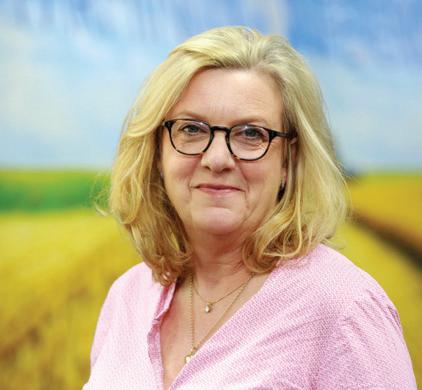
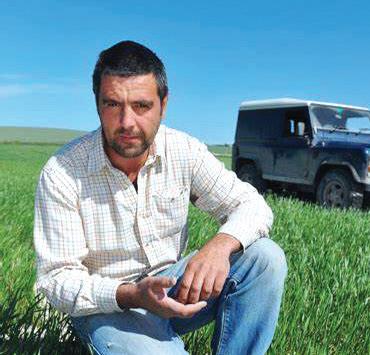

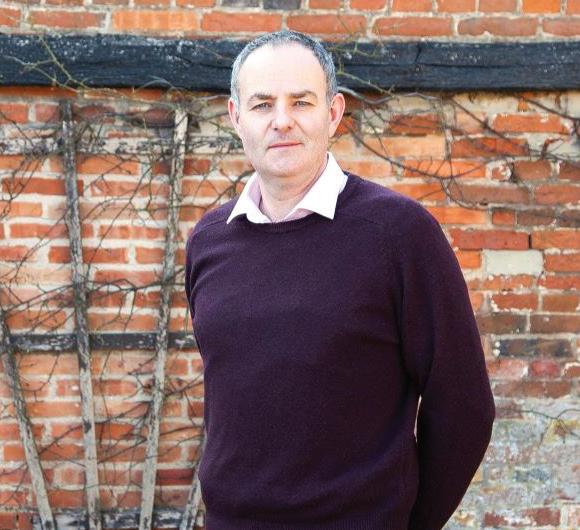

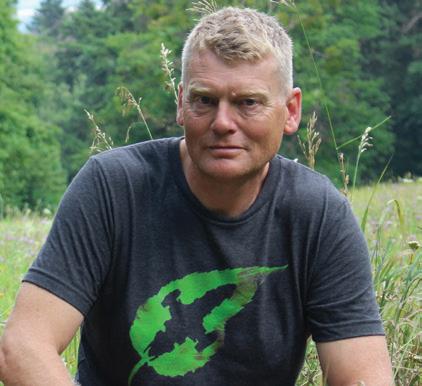

opportunity to acquire a residential, commercial and pasture farm in a rural location east of Newdigate is on the market with Batcheller Monkhouse. The property is approximately 99.69 acres and is for sale as a whole.
The property consists of a family home, three bedroom cottage, livestock farm and commercial enterprise comprising:
• A detached Grade II listed six bedroom house with garaging, mature lawned gardens with greenhouse and garden shed. This has considerable scope for modernisation and refurbishment, with accommodation spread over three floors.
• A range of brick and tile period outbuildings including courtyard, stables, stores and a two storey hay loft. These may be suitable for development (subject to planning consent).
• A detached cottage dating from the 1950s “Corner Cottage” provides extra accommodation with the benefit of three


bedrooms, garden and garaging.
• A further three bedroom detached cottage, Blanks Farm Cottage, attached to the north of the farm and available with 1.31 acres by separate negotiation.
• A range of farm buildings including an Atcost six-bay concrete framed cattle yard with various agricultural stores, five-bay steel framed open fronted buildings and three-bay open fronted, timber-framed barn. There is an additional pole barn to the east of the main farmyard.
• Two ex-poultry buildings, “Tin Barn” (a two bay steel framed building) and an open sided pole barn with seven bays, let
as light industrial units. Approximate area below:
– Unit 1: 1,455ft²
– Unit 1A: 4,242ft²
– Unit 2A: 1,572 ft²
– Unit 3A - 1,971ft²
– Units 2 and 3: 2,317ft²
– Units 4 and 5: 3,159ft²
– Tin Barn (area from EPC): 1,130ft²
– Total: 15,846ft²
The land is mainly pasture with useful field sizes, mature hedgerows, some woodland and road frontage. There are several access gates and the land is relatively flat. Much of the eastern boundary follows Beam Brook.

For an appointment to view please contact the Pulborough Office on 01798 872081 or email sales@batchellermonkhouse.com




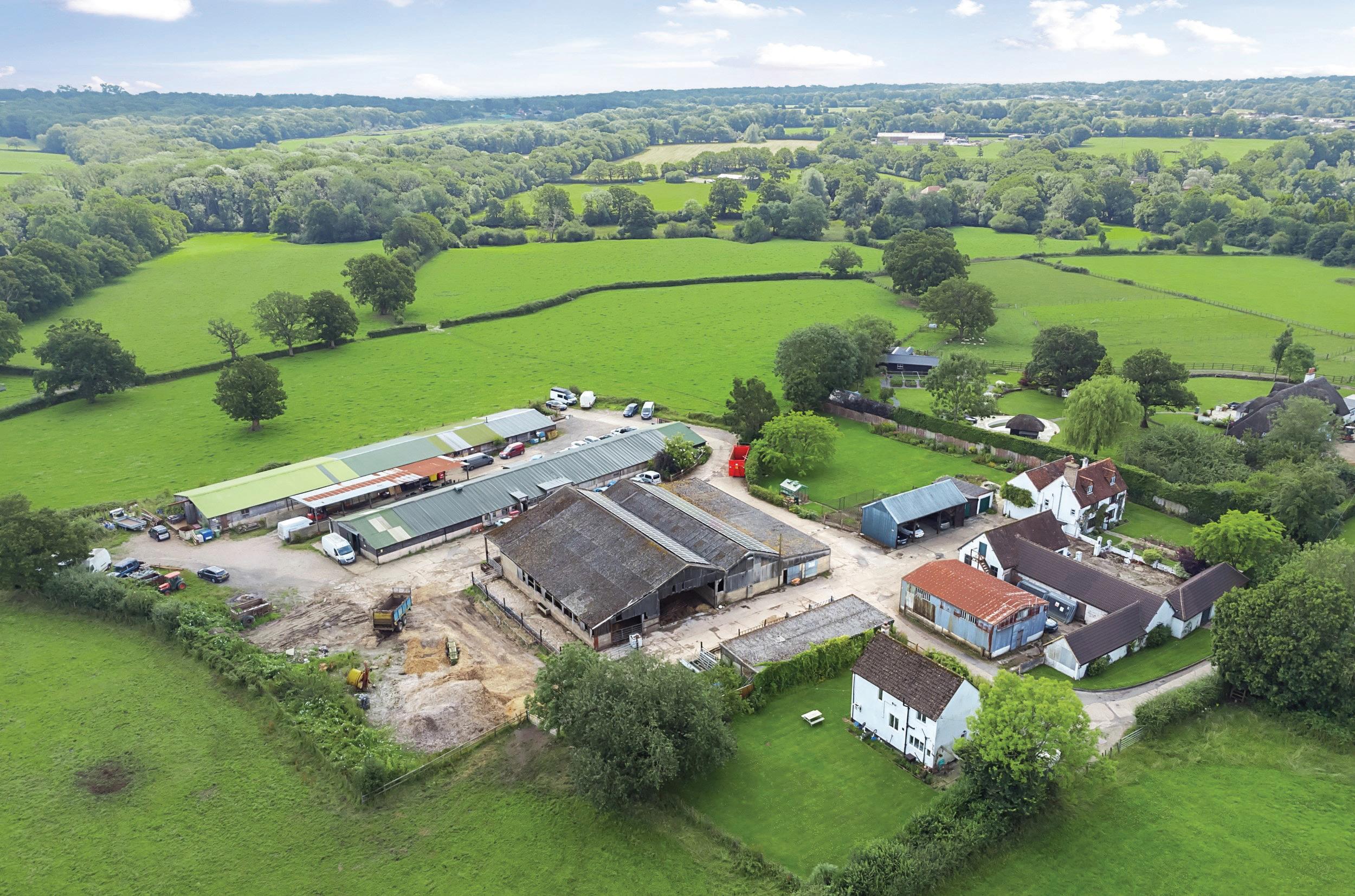
Many column inches have been written about how the new Labour administration will impact farming, so I will not add much other than to say that the whole country benefits from a sustainable agricultural industry. To enhance the farmed environment, improve biodiversity, protect inland waterways and, above all, produce high quality food in a sustainable way, we need support.
It is interesting to note that it is not just the NFU asking for budgets to be increased at DEFRA. Other organisations with a more environmental bias are also lobbying. There are some tough decisions to be made, both with the overall DEFRA budget and, more importantly, about how that money is allocated within the department.
The balance between supporting food production and improving the environment does not have to be a battle between two opposing camps. The Environmental Land Management scheme is endeavouring to lead farmers and land managers in the direction of environmentally sympathetic production methods, but we must keep emphasising that food production needs to be front and centre.
Is it time to look at farm infrastructure, much of which is aging, outdated and inefficient? A prime example is land drainage. Changing weather patterns with higher rainfall have highlighted that old drainage systems cannot cope. This is not surprising, as land drains have a limited life, slowly silting up over time; although some remedial work can help keep old drains running, there is a point at which this is no longer possible.
The drainage we have at home is a good example. Like many similar farms, we have varying soil types, loamy sands over clay through to heavy weald clay. The common factor is that all subsoils are impervious clay.
All fields have been drained at some point in history. The most recent schemes date from the late seventies and early eighties, but there are some 1960s schemes and others dating back to the early 19th century. The most recently installed systems still work fine, but the old ones are breaking down and doing more harm than good, creating wet holes. If farmers considered that the effort of hand digging land drains over 200 years ago was justified, then surely it is today.
The benefit to farm productivity is instant. Yields of winter wheat increase by well over
a tonne a hectare without any extra input in terms of fertiliser and chemicals. There is even a good chance that blackgrass that thrives in waterlogged soils would become less prolific.
If water can get through the soil and away down a drain, this leads to less surface ponding and less surface run off. Soils that are well drained support more life and healthier roots, which is what we are all striving for and helps create stable and productive soils.
I can foresee that without investment in replacement land drainage, the country’s best winter cropping land will become unfarmable. This is already happening, with fields being taken out of production and placed in environmental schemes. As part of maintaining UK farmland and long-term food security, land drainage has so far been overlooked; let’s hope this changes.
SFI24 was launched with much fanfare, offering more actions to appeal to a greater number of farmers. It did not take long, though, to realise that some of the rule changes from SFI23 were more restrictive. NUM3 legume fallow was a rotational option under SFI23 but became non-rotational under the new SFI24, which stated it must be in the same field for three years.
This was a backward step, and the NFU lobbied hard for NUM3 legume fallow to be reverted to a rotational action. DEFRA listened and on 5 August changed the rules; it’s now rotational again. I find it encouraging that strong, reasoned argument is being listened to; there are more actions that need to be reworked and fine-tuned, and farmers can rest assured the NFU is working to make the rules sensible and practical.
Let’s hope DEFRA keeps listening.
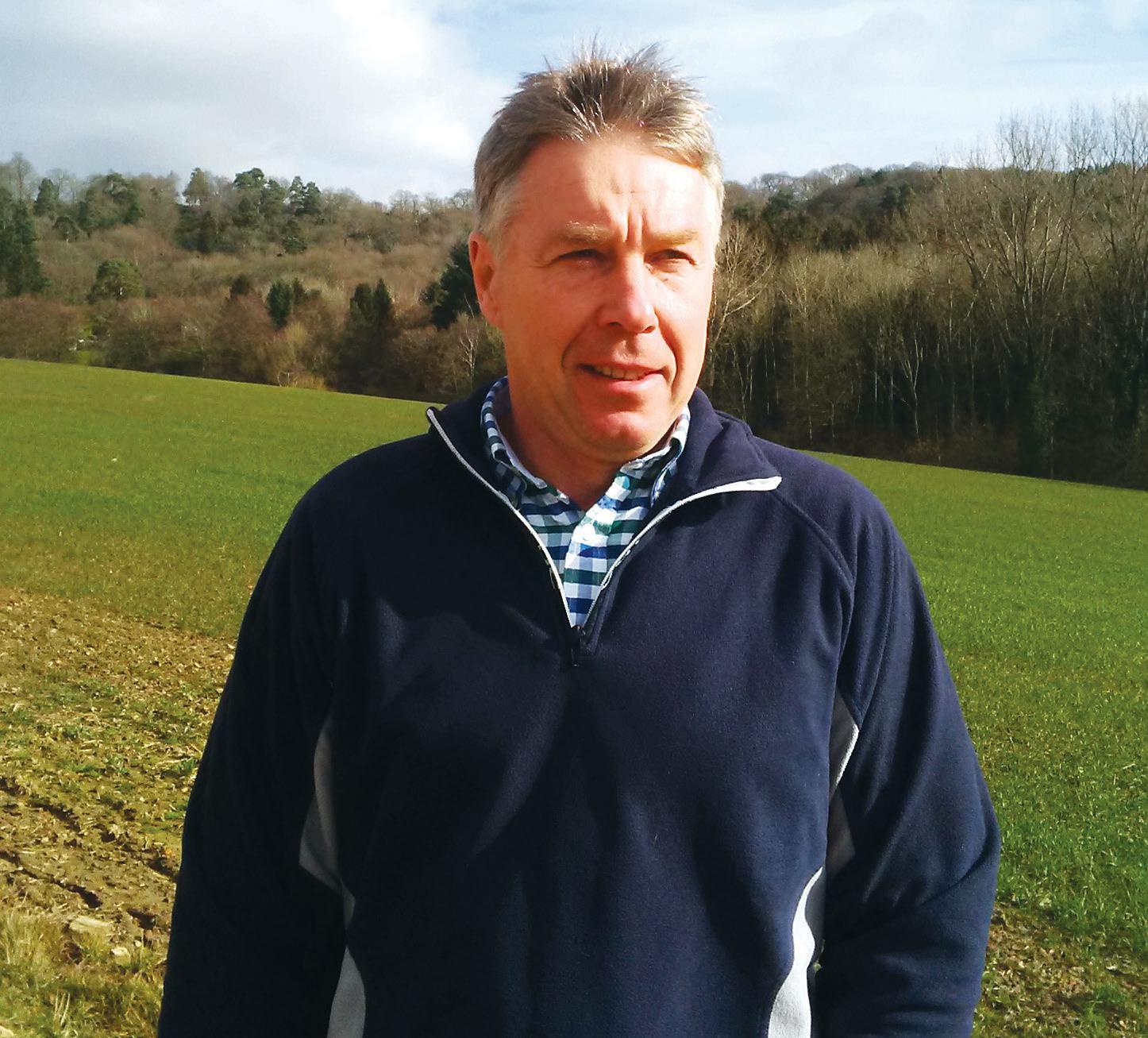
An appealing block of pasture land, Dutch barn and planning permission for new agricultural building is on the market with Batcheller Monkhouse.
Situated in attractive countryside, the farm is currently used for livestock purposes. It comprises a level block of pasture land situated on the southern edge of Nyewood.
The fields are of a versatile and useful size. There is a mixture of fencing, established hedgerow and streams. There is a woodland boundary running along the northern perimeter.
The steel-framed Dutch barn is approximately 19.5m x 6.5m and there is a hard floor. There is planning permission for a new barn approximately 36m x 10m.
The land, which totals approximately 47
A Wealden farm with significant income from both commercial units and holiday lets has come to the market through Savills.
Graywood Farm, near East Hoathly, East Sussex, includes a spacious, newly constructed five-bedroom farmhouse, a separate traditional-style four-bedroom farmhouse (subject to an agricultural occupancy condition), a range of modern buildings which are mostly converted for commercial use and three yurts used for holiday lets.
The farmstead is surrounded by about 87 acres of attractive mixed farmland. It is predominantly arable in temporary grass, with


1:


several belts of woodland and shaws, including a glen of willow along a pretty stream.
Chris Spofforth, of Savills rural agency team in the South East, said: “The sale of Graywood Farm presents an excellent opportunity to acquire an attractive grassland farm in a lovely
and peaceful location with the advantage of a substantial income from non-farming uses, providing a diverse and rare property package.”
Graywood Farm is being marketed by Savills for a guide price of £4,250,000. acres (19 hectares), is offered for sale as a whole or in six lots.

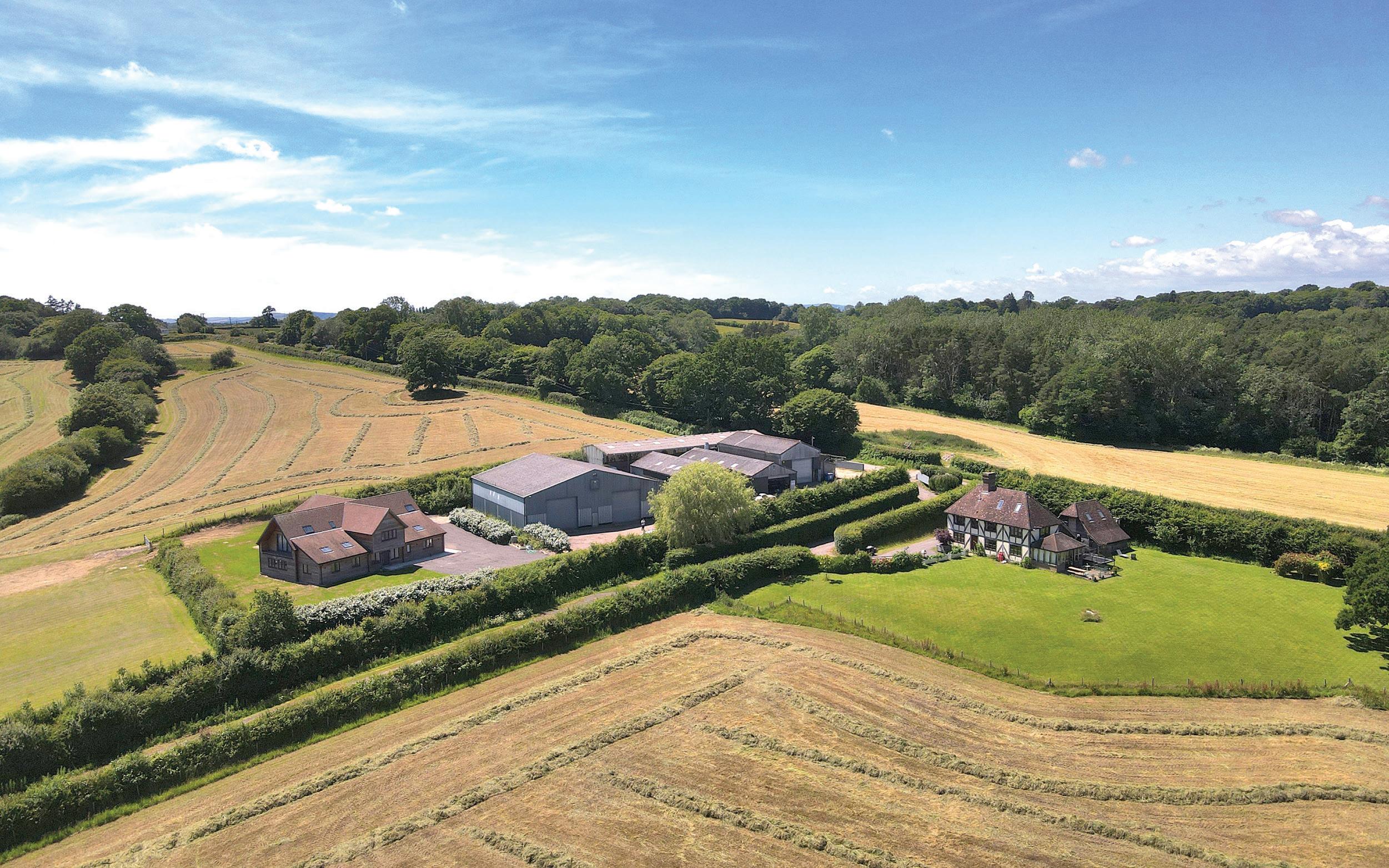

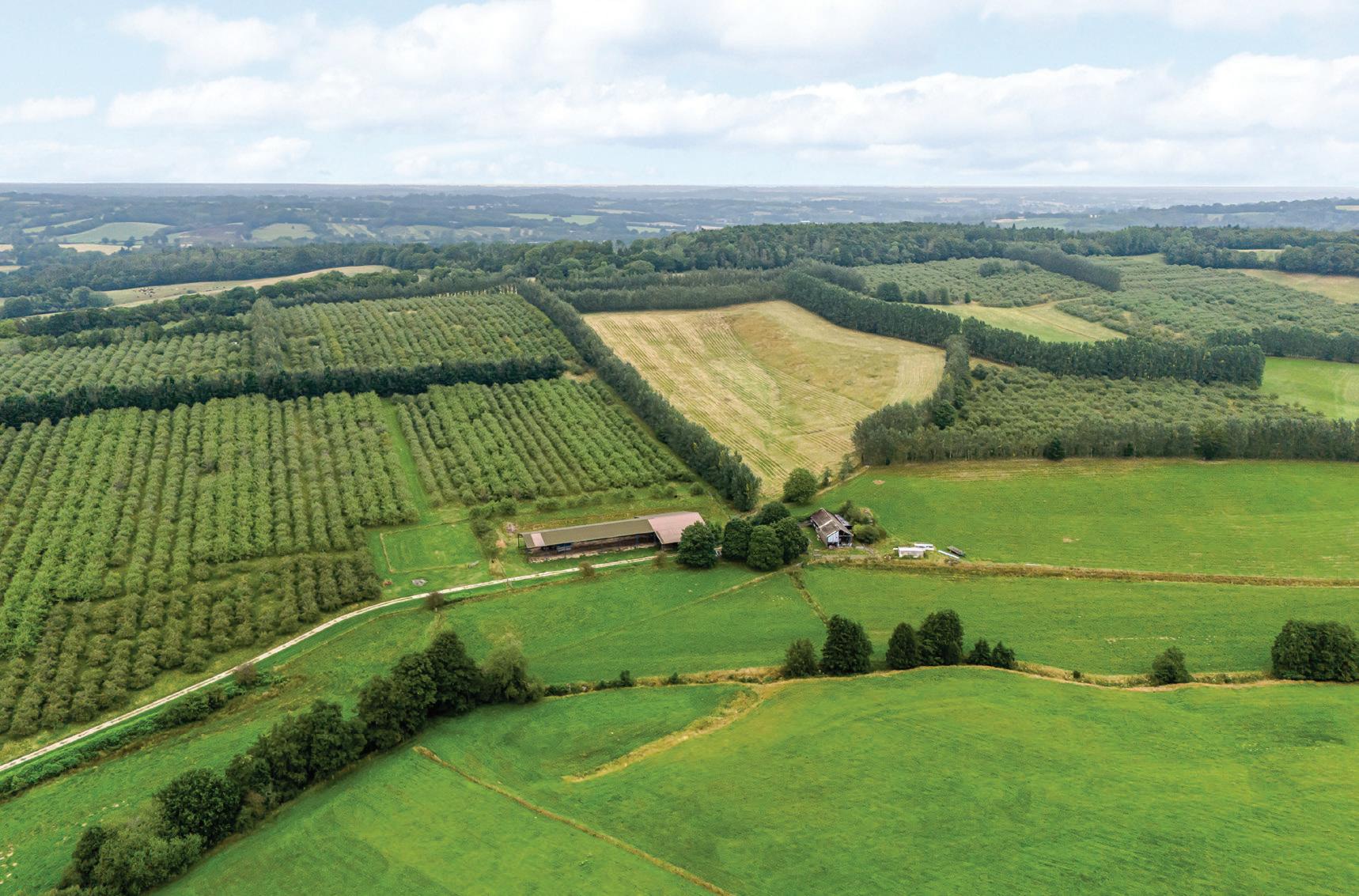
NEW POND FARM, ROBERTSBRIDGE, EAST SUSSEX
GUIDE PRICE
£2,300,000
A traditional grassland farm in a sought after location with a 4-bed farmhouse (AOC), an extensive range of farm buildings (25,000 sq ft+) some with potential (STP) and land extending in all to some 164.39 acres (66.52 Hectares). Situated off a country lane on the outskirts of the parish of Salehurst in East Sussex. FOR SALE
SUSSEX OFFICE 01435 873 999
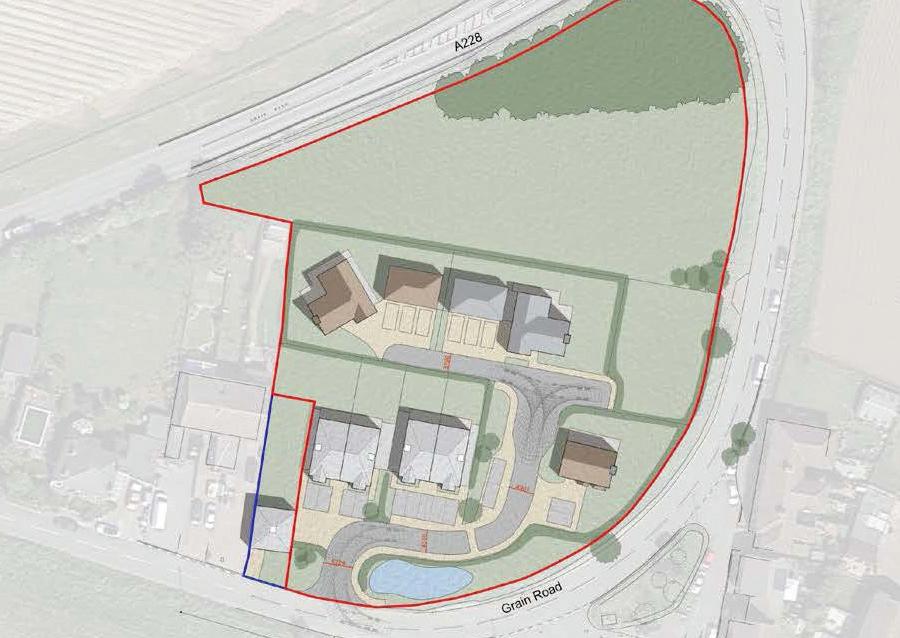
FOR SALE
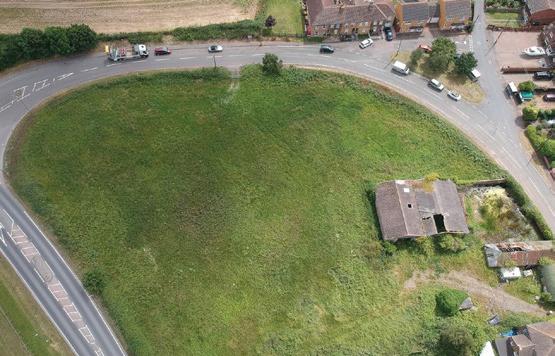
GUIDE PRICE
£1,050,000
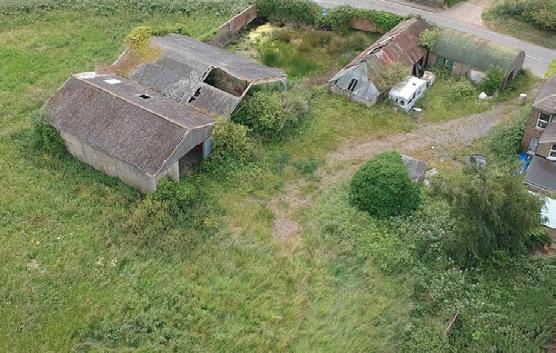
A range of former farm buildings and agricultural land with outline planning permission for 7 dwellings. Site area 0.82 hectares.
KENT OFFICE 01892 832 325


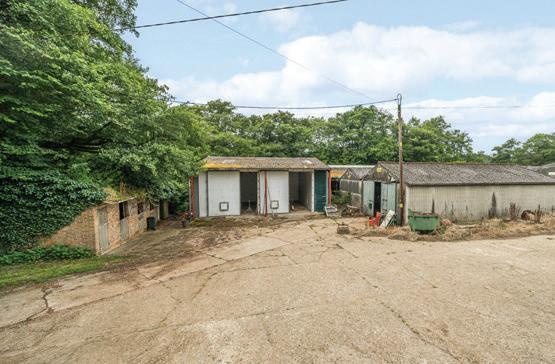
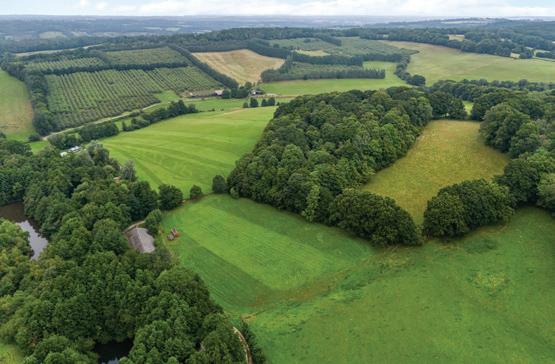

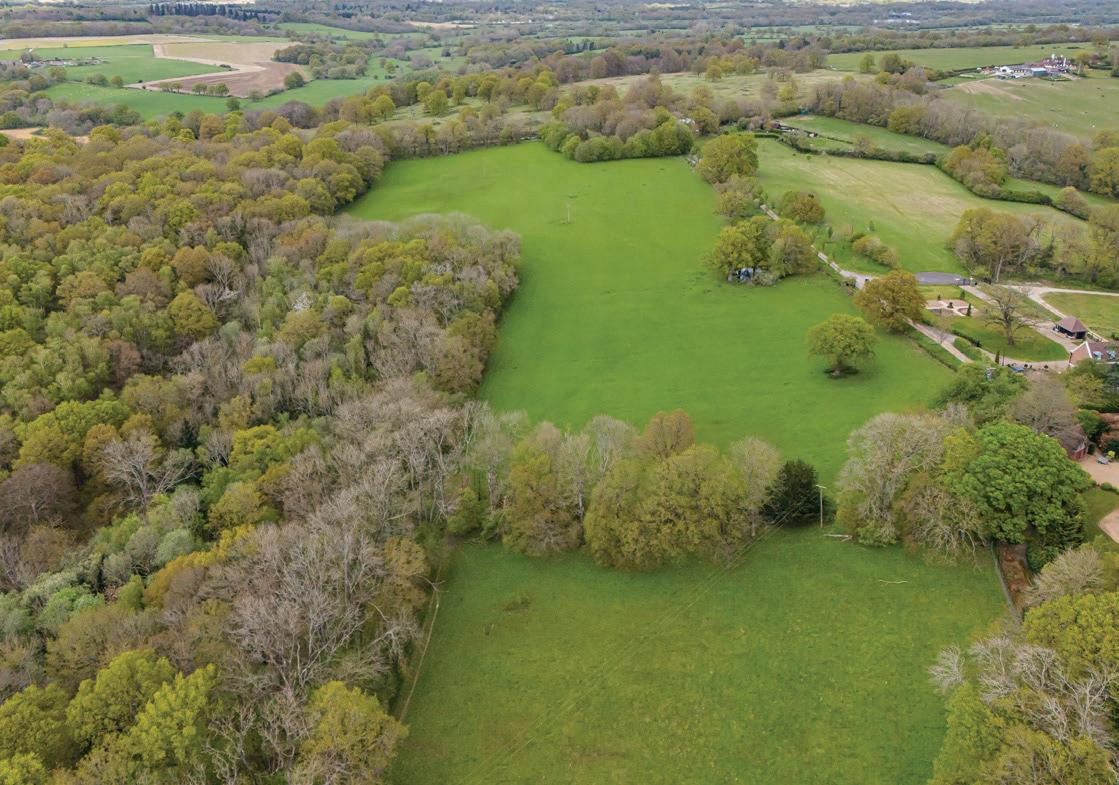
FOR SALE
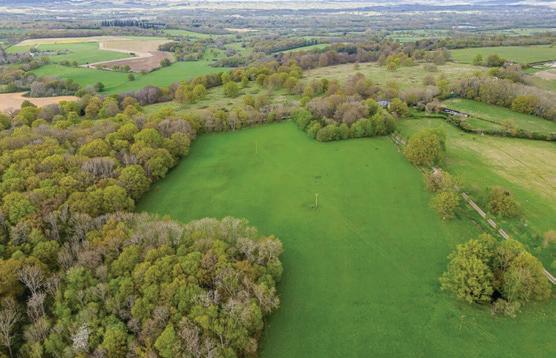
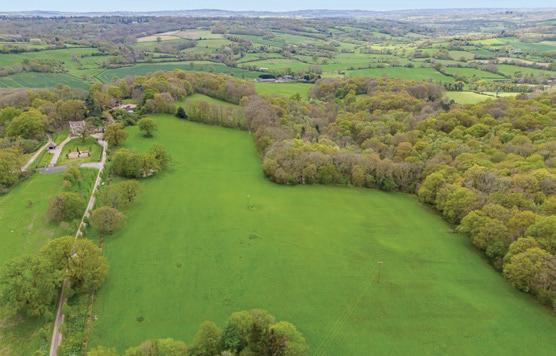
MEADOW WOOD LAND, PENSHURST, ROYAL TUNBRIDGE WELLS
GUIDE PRICE
£355,000
A rare chance to purchase 26.3 acres/10.64 hectares of pasture and ancient, semi-natural woodland in between Penshurst and Bidborough with high amenity value and ideal for equestrian use.
KENT OFFICE 01892 832 325

As we approach Michaelmas, our rural professional team are entering into a busy period of negotiating new Farm Business Tenancies (FBTs), acting on behalf of both Landlords and Tenants, and drawing up Contract Farming Agreements (CFAs), often acting between parties. It remains a challenging time on many farms, coping with the fall out from rising costs, reducing BPS payments and grappling with the new Sustainable Farming Incentive (SFI) scheme, and of course the knock-on affects of the atrocious weather we experienced earlier in the year. With this back drop, negotiations have drawn out some points of interest:
With specific regard to the reduction in BPS payments, which this year will be broadly at 50% of what they were, one might expect this to have been reflected in a reduction in farm rents. By and large, this has not been the case in our experience. Whilst some rents may have seen a small reduction of say £10–£20 per acre, most rents are holding firm with the best land still being sought after by the larger farmers and growers looking to spread fixed costs. Of course, the rental value for each farm or block of land will turn on the facts, with consideration needed for both its physical attributes and more and more its ability to earn income through environmental schemes. For more specialist crops, the availability of water is becoming ever more important.
Essentially the template lease terms for a new FBT have remained broadly consistent for many years. A new agreement will deal with all the changes in regulations, particularly those that have been introduced following our departure from the EU, but otherwise the obligations and responsibilities on each party are as they have always been. Where a great deal of time and effort is often spent is on the rent review, compensation and repairing clauses.
■ Rent review – at a review the rent must fairly reflect both the productive
capacity of the land but also the opportunity for both parties to benefit from future farm payments under the SFI or Stewardship schemes, as well as private funding from the likes of water companies and other large corporates. With both funding/payment streams being in their infancy and constantly evolving, the opportunity to review the rent at an early stage will be important whilst hopefully allowing for a longer fixed term, providing the tenant with the security to invest in the holding for the benefit of all.
■ Compensation – long-term improvements and diversifications need to be encouraged for self evident reasons. The corresponding compensation provisions need to fairly reflect the Tenant’s investment whilst not placing an unreasonable financial risk on the Landlord at the end of the fixed term.
■ Repairs – the cost of repairs and/ or reinstatement e.g. grubbing up orchards, has seemingly increased exponentially. Maintaining a programme of repair and having suitable and fair repairing obligations are key to avoiding disputes when it comes to end of tenancy situations.
Defra reports that there has been 17% increase in the use of CFAs compared to FBTs since 2023. With concerns over
Agricultural Property Relief on short term tenancies and the adoption of the evolving environmental schemes, that statistic does not surprise us and chimes with our own experiences. Critical to the success of a CFA is having the two parties working together and of the same mindset. Broadly the principles of an agreement are unchanged, but terms must evolve and this has been seen in such things as fuel escalators to protect the contractor from spikes in fuel costs and contractor payments related to labour and machinery for not only growing crops but also for managing land in environmental schemes.
The three key principles of the newly published Agricultural Landlord and Tenant Code of Practice are clarity, communication and collaboration. Such principles are, of course, key to any negotiation, particularly with an evolving landscape of environmental schemes, wide ranging and competing land uses and in a time of political change.
If you require any assistance on any matter relating to agricultural tenancies or CFAs, please contact a member of the rural professional team.
WEST KENT OFFICE 01892 832 325
EAST KENT OFFICE 01303 814 444
SUSSEX OFFICE 01435 873 999


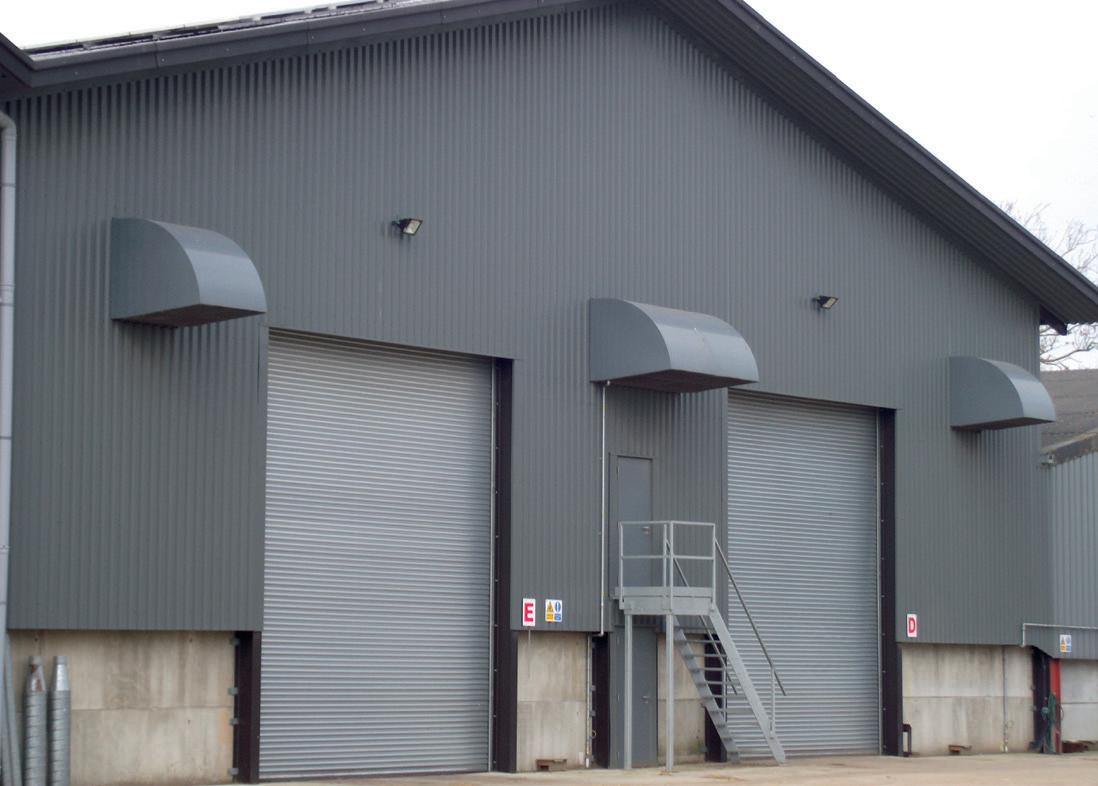
• Steel frame buildings
• Sheeting and cladding
• Guttering and repairs
• Groundworks and drainage
• Demolition and asbestos removal
• Refurbishment and change of use
• Concrete frame and steel frame repairs
• Insurance and general repairs
• Concrete floor and block paving
www.gjelgarconstruction.co.uk
For more information contact us:
t: 01233 623739 m: 07860 414227
e: office@gjelgarconstruction.co.uk
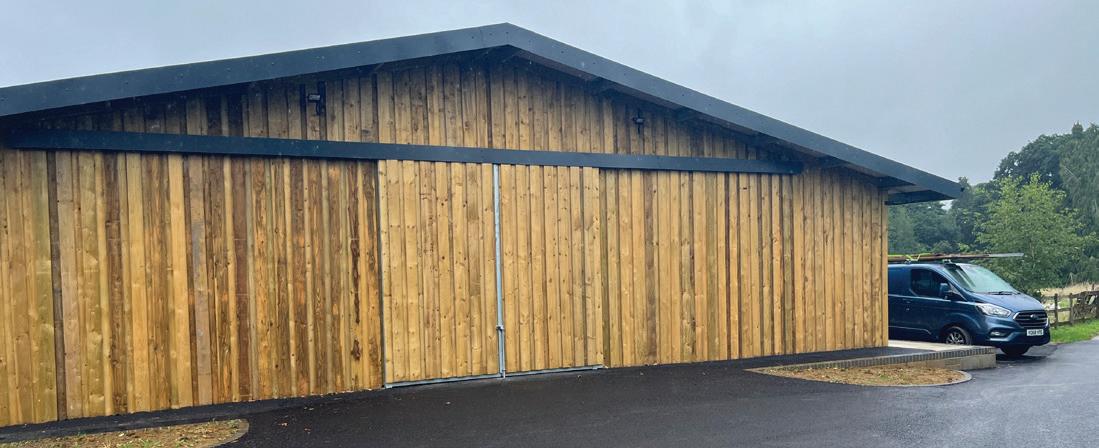
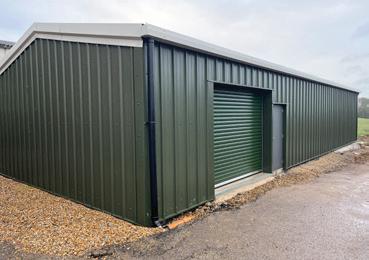
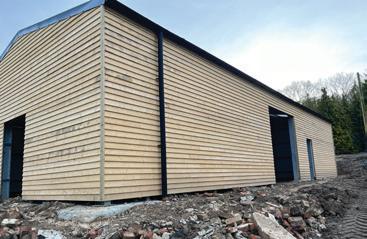
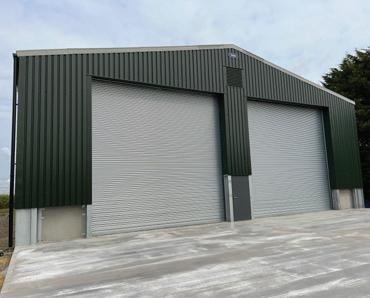
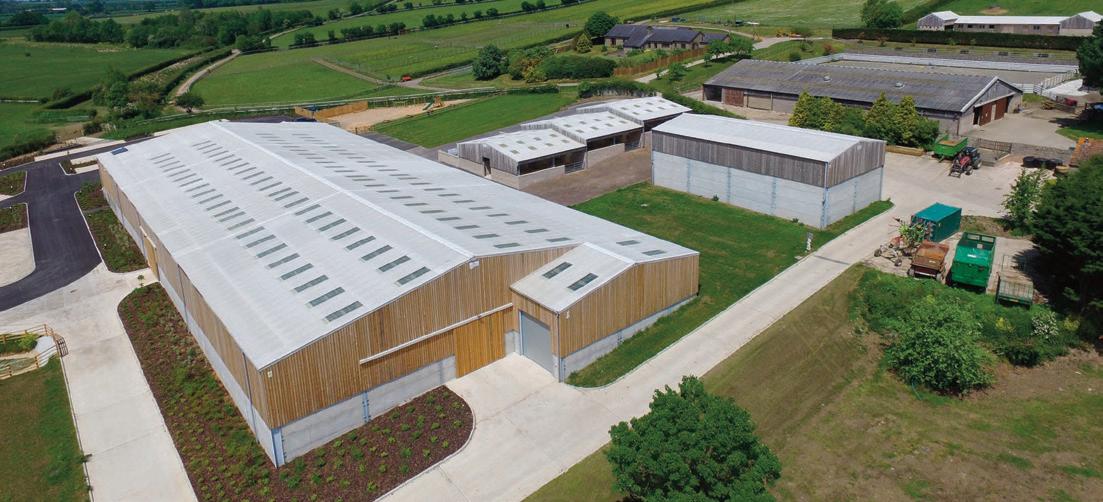
Steel-frame buildings for your farm
+ Supply only or supply & erect
+ Construction all over the UK
+ Award winning company
Strength, Security, Style
Shufflebottom Ltd
Cross Hands Business Park, Cross Hands, Llanelli, Carmarthenshire SA14 6RE



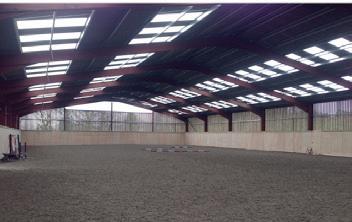

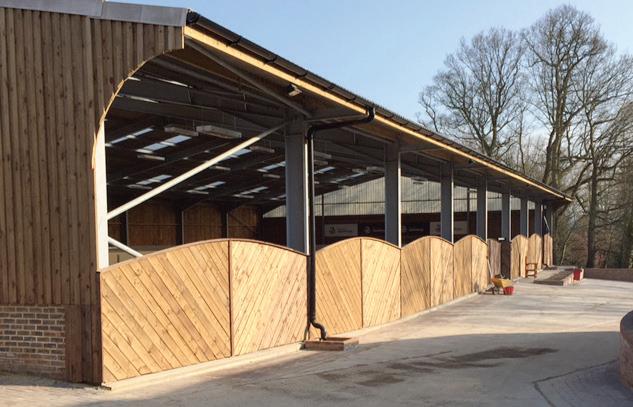



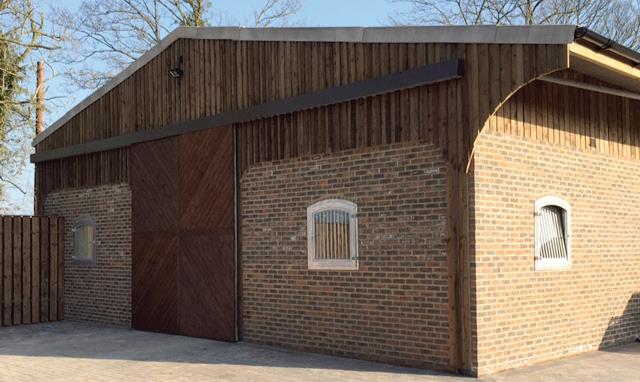



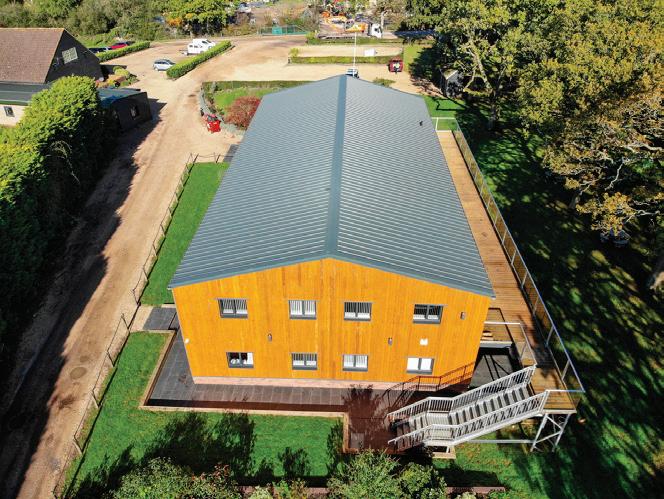
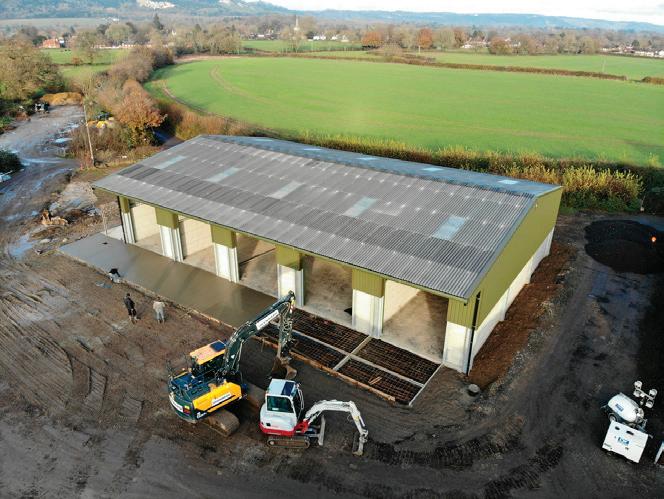

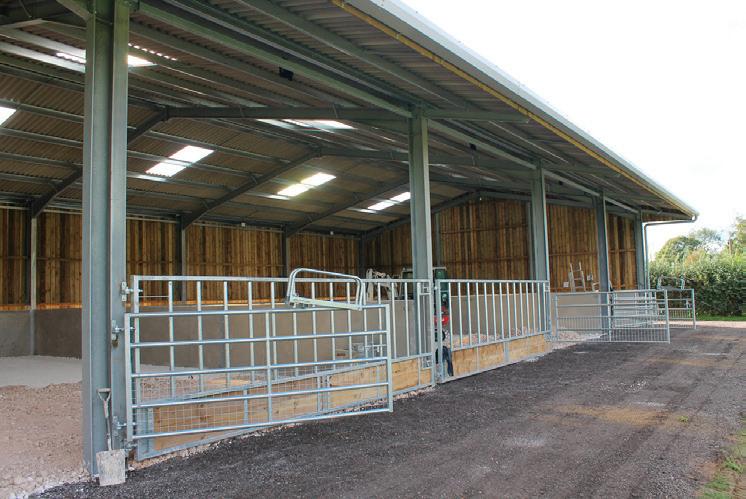
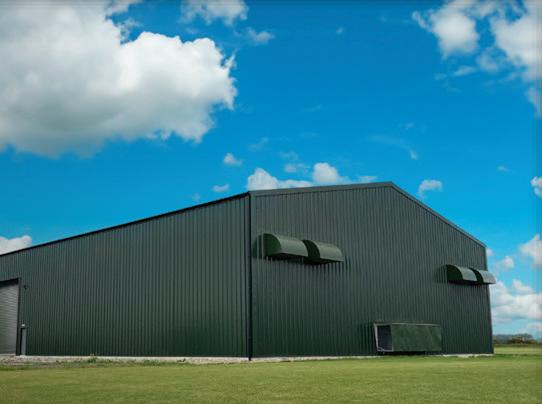


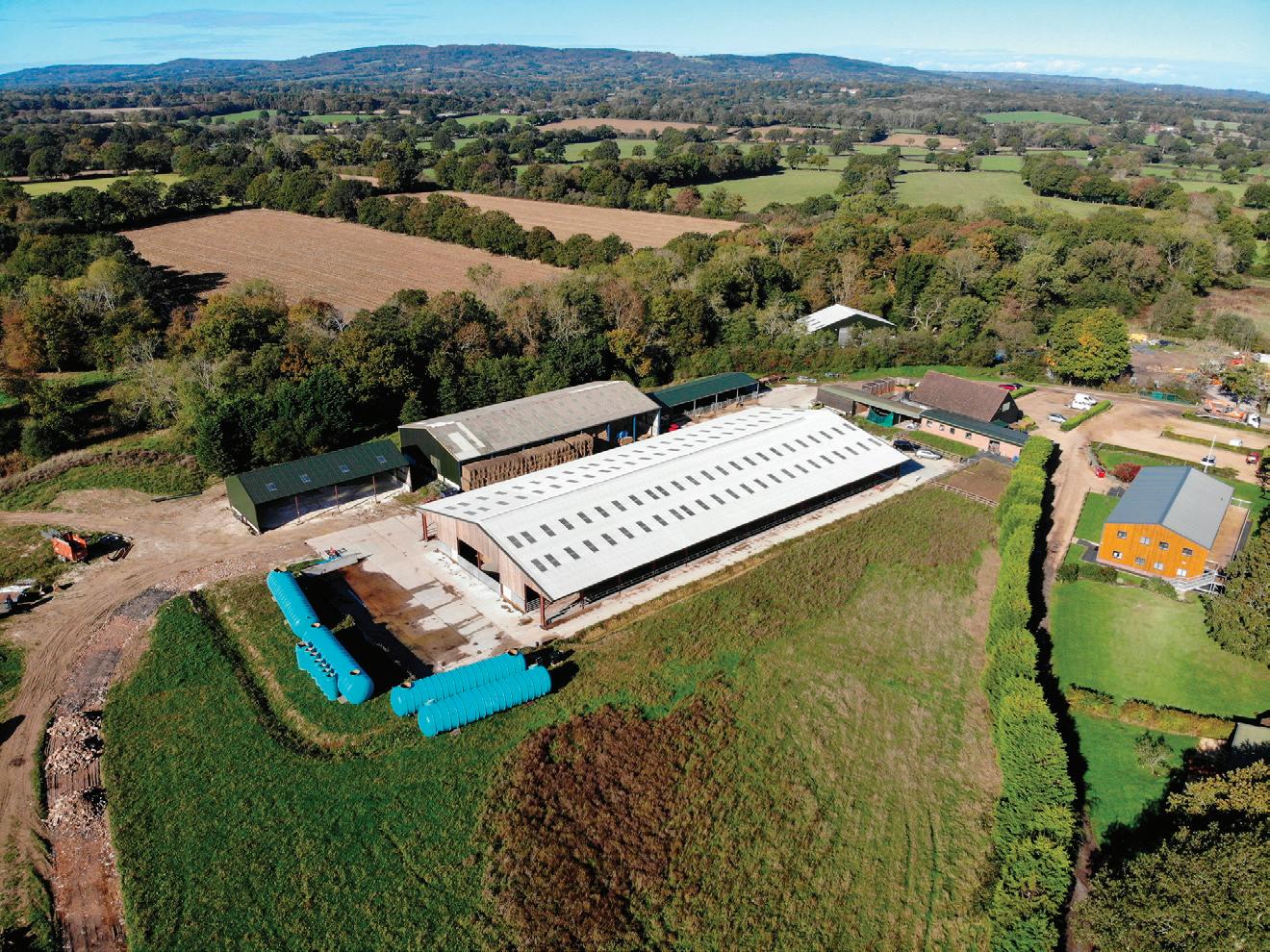
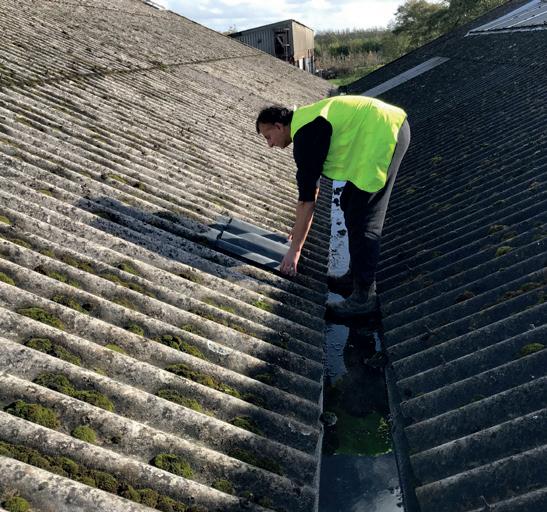


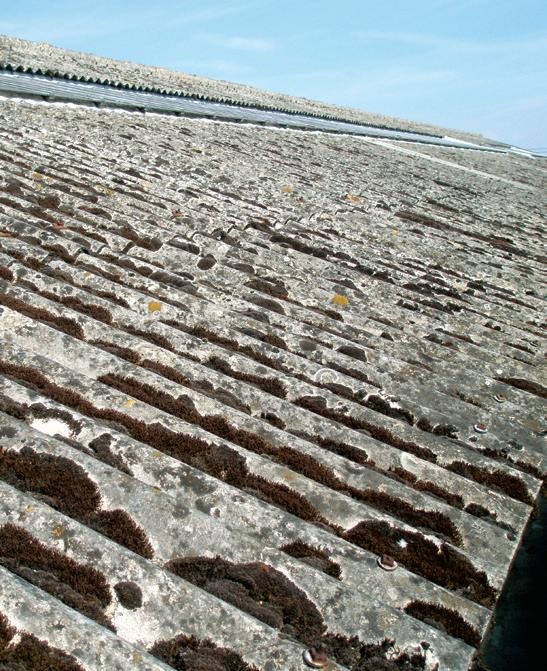

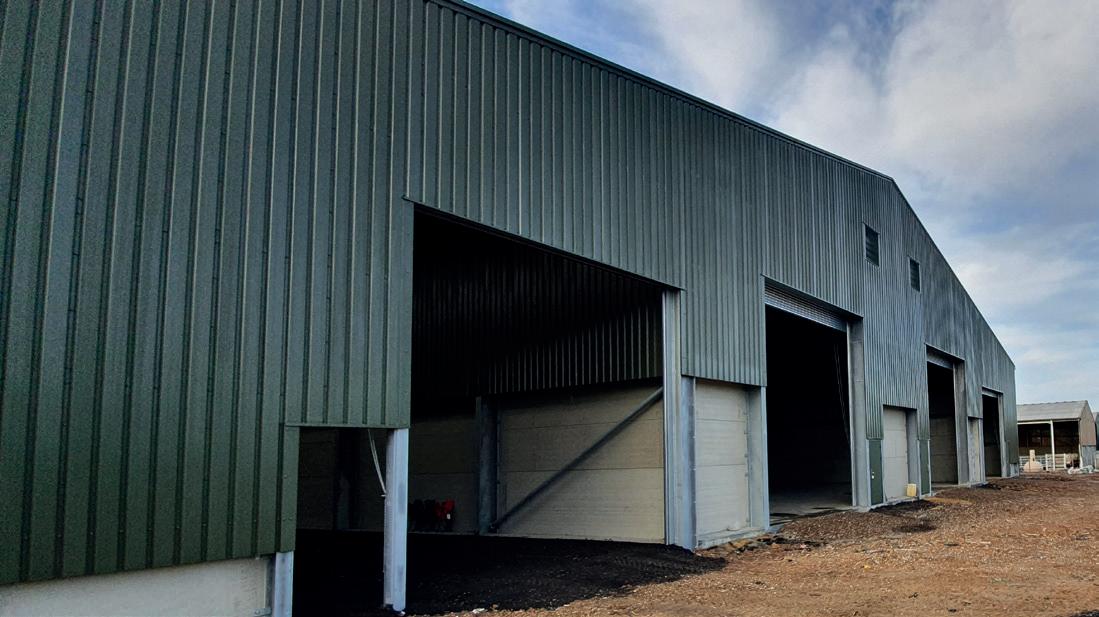
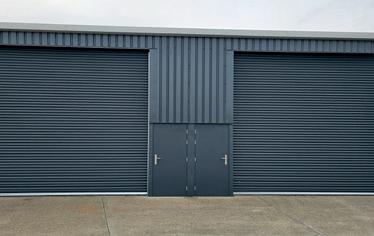

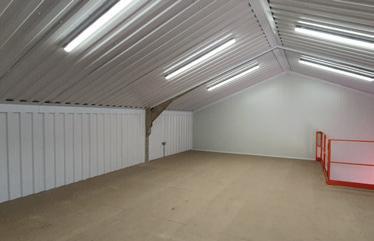
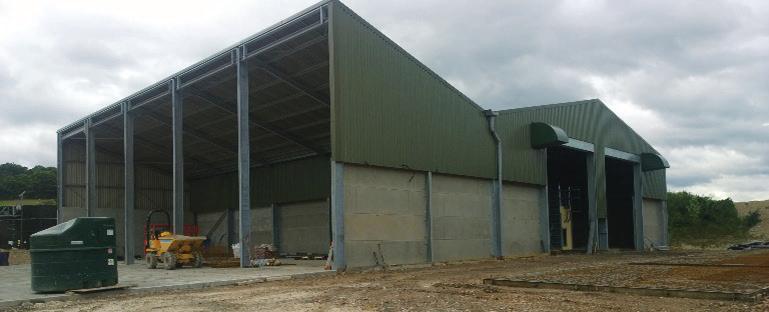
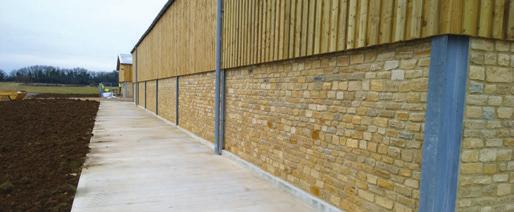
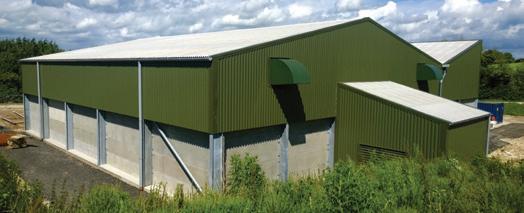



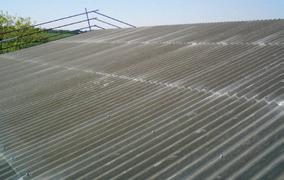
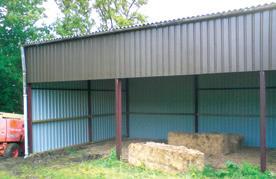
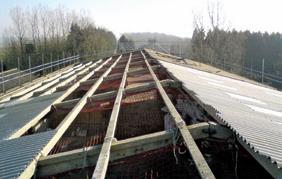


Roofing & Cladding - Strip & Re-sheet - Repairs
Metal Profile - Fibre Cement - Insulated - Timber Boarding
Asbestos Sheet replacements - New Roof lights
New Roofs Projects & Insulated Over-SheetingValley Gutter repairs & Re-lining
Asbestos Stripping & Environmental Waste Disposal
Refurbishments & Extensions to existing buildings
Change of Use & Rental Unit Conversions
Insurance Claim Works for Fire, Flood & Storm Damage
Same Day - Next Day, Site Visit, Inspection Service
Making Building/Premises Safe - Secure
Emergency Clear-Up Operations
Asbestos Stripping & Environmental Waste Disposal
Demolition & Site Clearance Works
Ground Works, Roads, Drives & Drainage Works
Re-Instatement Works
ALL WORKS GUARANTEED
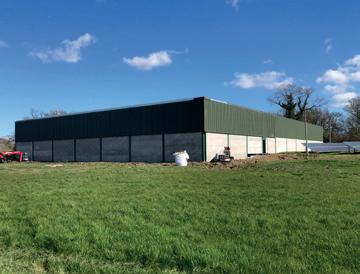
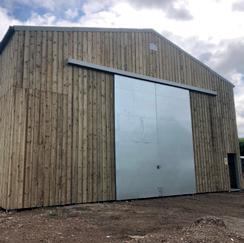
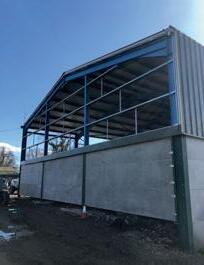

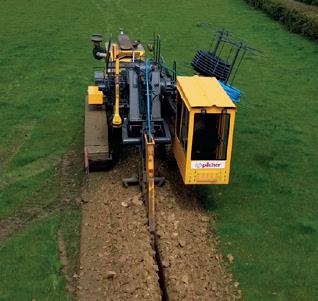
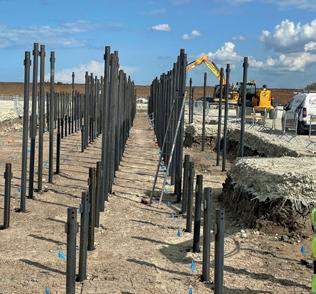





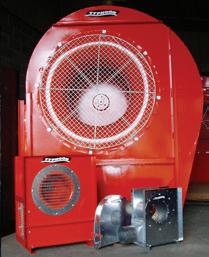

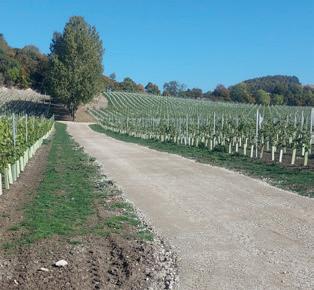
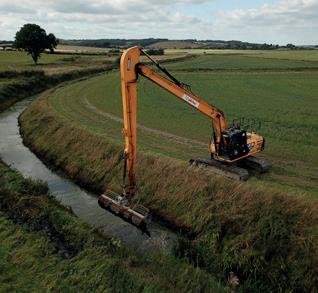



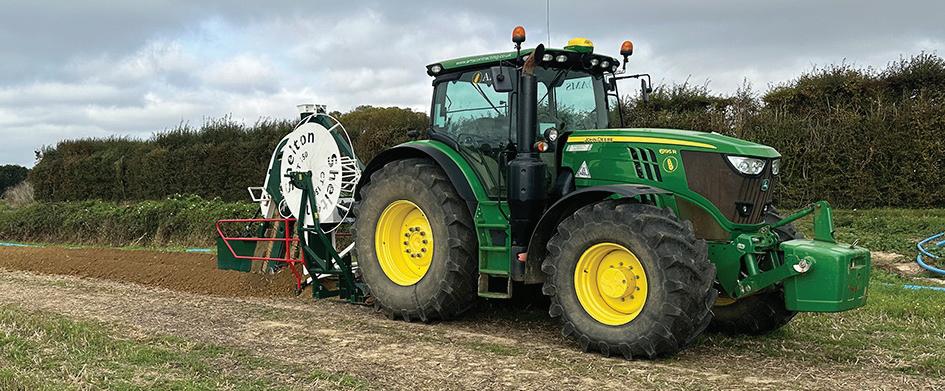








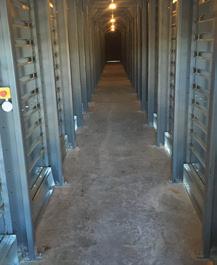
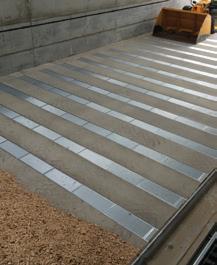


CWP fencing
Cleft field gates
Cleft field gates
Fencing
Fencing stakes
Fencing stakes
Straining posts
Straining posts
Chestnut fencing
Chestnut fencing
Chestnut fencing
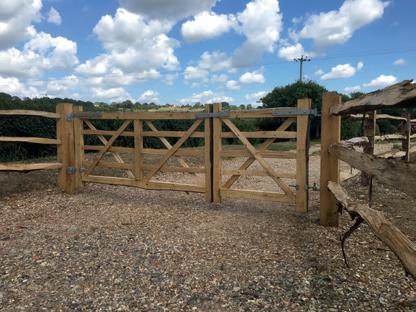
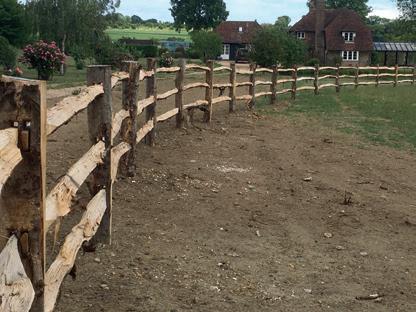
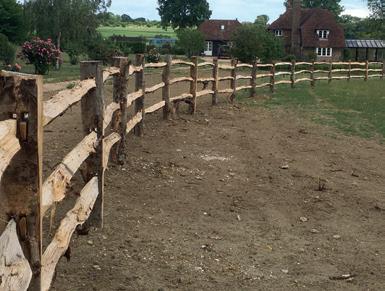
Tel: 07985 298221 colin@cwpfencing.co.uk
Tel: 07985298221 colin@cwpfencing.co.uk
Tel: 07985298221 colin@cwpfencing.co.uk Standing Sweet Chestnut Wanted Cleft post and rail
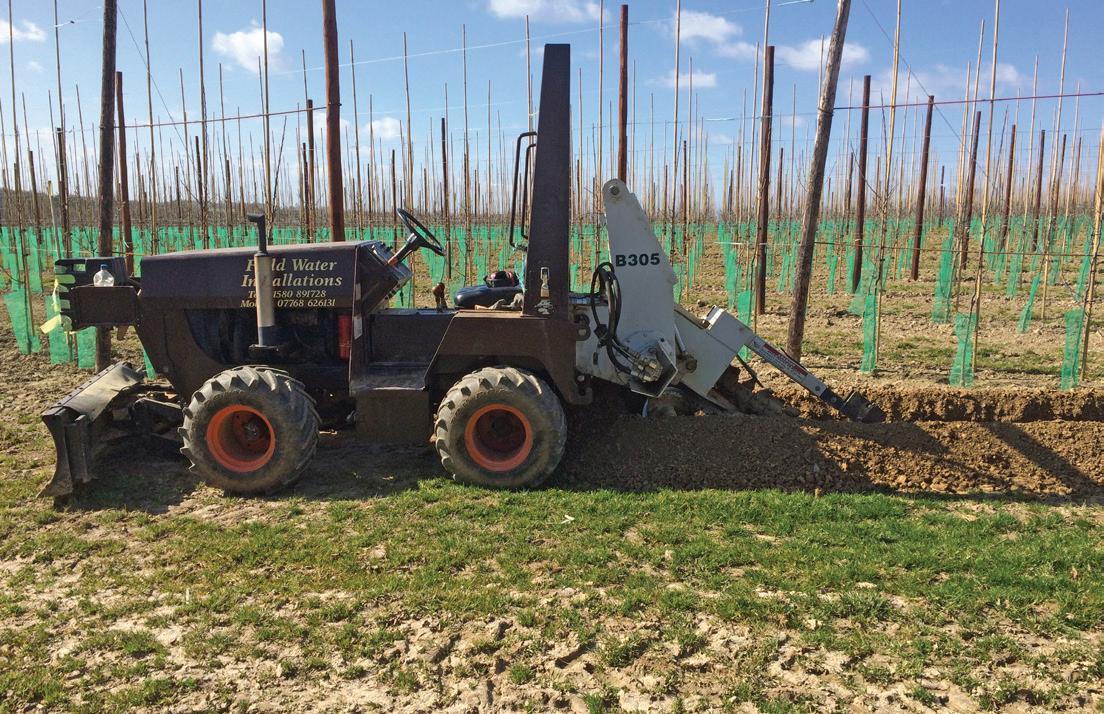
Tel: 01737 821220 Mob: 07768 931891
Email: redhillfarmservices@gmail.com
Stock, Deer and Equestrian
Covering:
Covering:
Tel: 07583 027089
Tel: 07583 027089
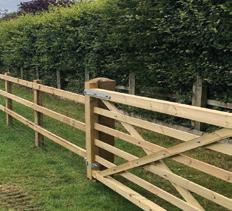
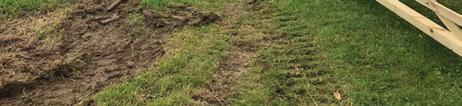

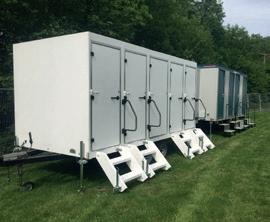
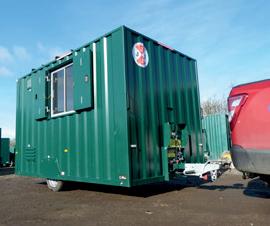
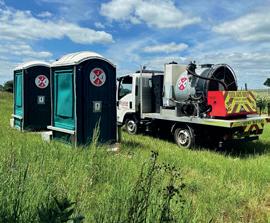
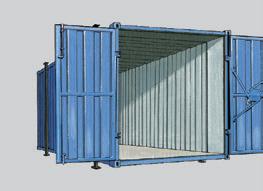
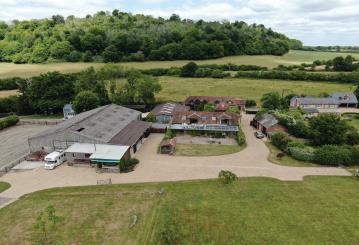









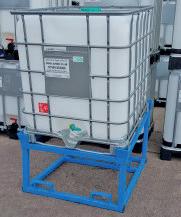

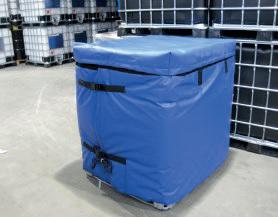


ACROSS
1 Nautical term (9)
5 Reproduce (5)
8 Scottish gamebird (9)
9 A group of birds attacking a predator (3)
11 Jane Austen novel (4)
12 Desert or leave (7)
13 Gamebird, open season starting 1 September (4,9)
15 Cricket term (3,3)
17 Cut of beef (5)
19 Dog breed used for hunting (7)
21 Legend (4)
23 Underwater vehicle (9)
24 Meteor shower (8)
25 Grip (4)
DOWN
1 Evening meal (6)
2 Wake up call (5)
3 Explosive dence (4)
4 Maths that uses letters (7)
6 Goose breed (5)
7 River running through Hampshire and Berkshire (7)
10 River that forms northern part of the border between Poland and Germany (4)
13 One of the longest UK rovers flowing through Buckinghamshire (5,4)
14 Concept (4)
16 Flying mammal (3)
17 Sifter; colander (5)
18 Used to open a lock (3)
20 Avoid (5)
21 Annual division (5)
22 Safeguard; protect (5)
LAST MONTH’S ANSWERS:

*Subject









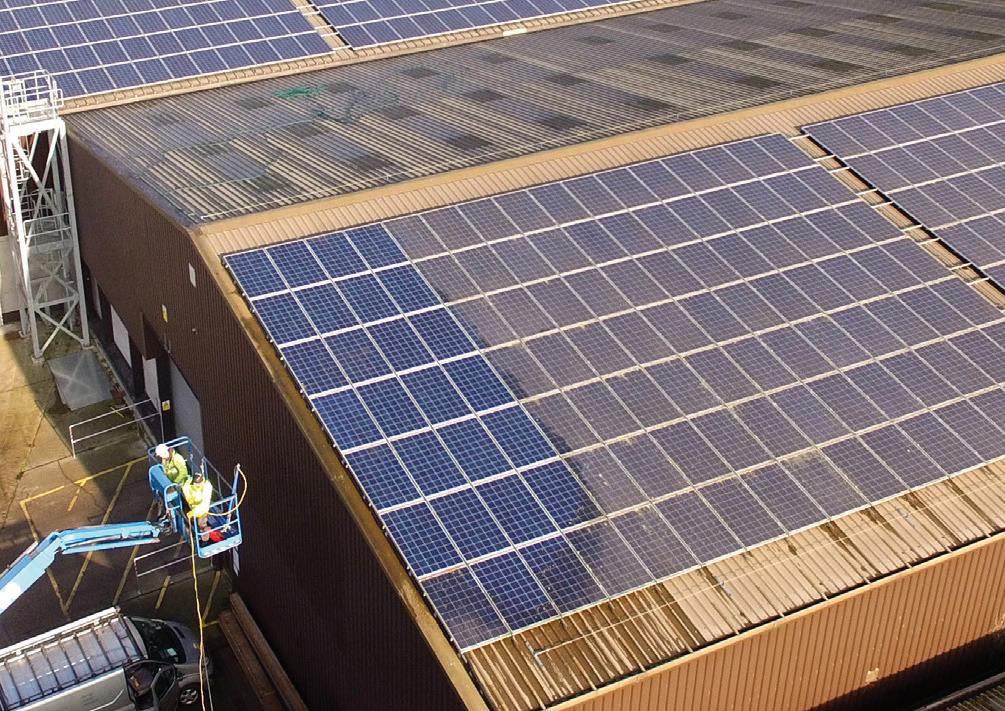
Having inspected hundreds of solar installations, we’ve discovered dozens of systems underperforming by over 30%, simply due to burnt out connections, faulty inverters or dirty panels.
The idea that solar power is a fit-and-forget technology is incorrect; not only are some issues not immediately apparent, you could find that some issues get worse the longer they are left. Additionally, most insurers will insist that your solar array is inspected at least annually by a suitably qualified engineer in order to maintain cover. Finally, it’s important to remember that the job of a solar panel is to turn light into electricity – therefore the cleaner your solar panels, the better they will perform.