


























• Farm business & estate management • Planning & development • Subsidies & grants • Land sales & acquisitions • Viticulture • Succession • Biodiversity net gain • Ecology • Natural capital • Residential and commercial property letting and management 01892 770339 www.c-l-m.co.uk Farm business consultants with our roots in the South East ® May 2024 Est 1982 COWS TO CONES Nigel Akehurst meets a fourth generation dairy farmer turned gelato impresario AS FARMERS CONTINUE THEIR PROTESTS AND DEFRA CHANGES SFI RULES, CONFERENCE DELEGATES CALL FOR ACTION ON FOOD SECURITY TIME FOR CHANGE? Access to strong membership Southern Farmers Ltd.

£7.16 excl. VAT per metre







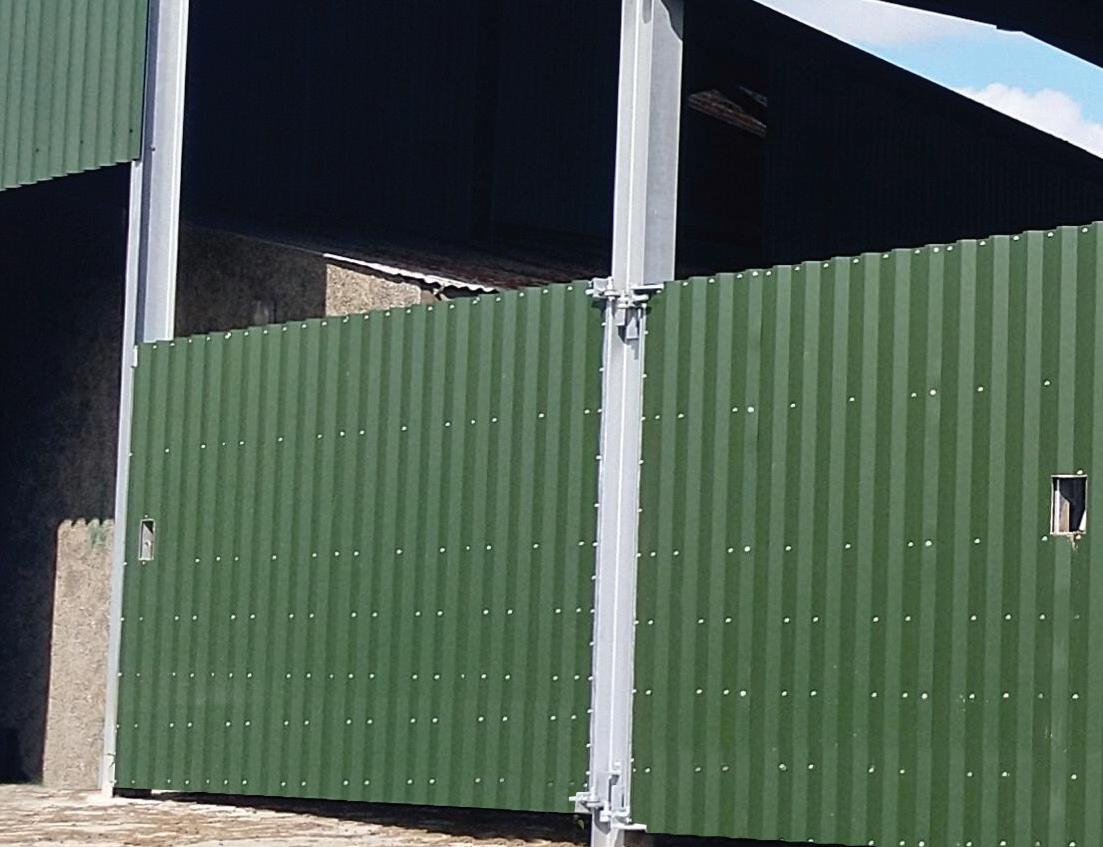

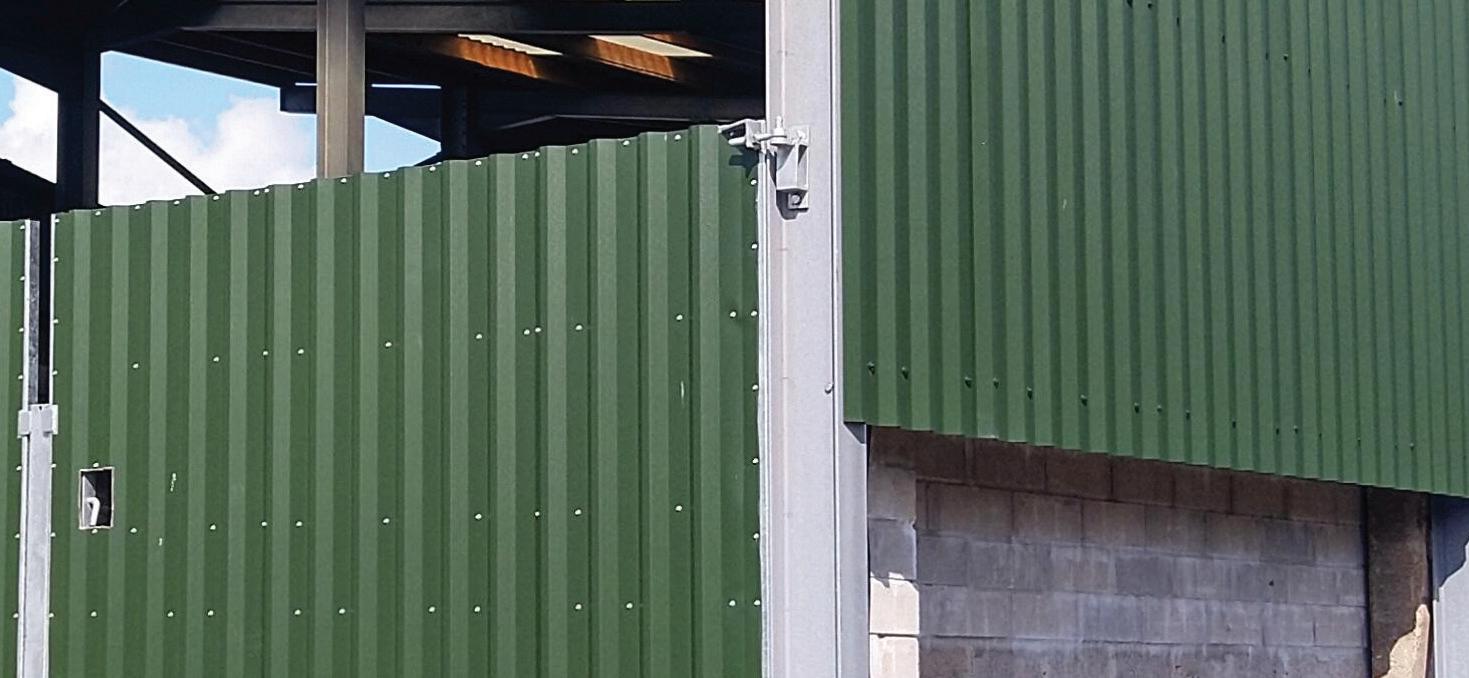
34/1000 Box Profile Roofing Sheets
Did
you know...
You can now order high-quality Steel Roofing Sheets for collection or delivery from our Andover, Hampshire Branch. Cladco Roofing Sheets are incredibly versatile and stand testament to both quality and reliability, providing the perfect balance of functionality and aesthetic appeal.
Easy installation
•Low maintenance
Cladco Profiles is the UK’s Leading Supplier of Roofing Sheets. Manufactured since 1972 using top-grade steel, Cladco Roofing Sheets ensure peace of mind for customers seeking a highquality roofing solution that lasts for years to come. Manu facturing Roof Sheets I n Andover

Head Office Beardown Road, Exeter Road
Industrial Estate, Okehampton, Devon EX20 1UA
Mon-Fri 8am to 5pm, Sat 8am to 1pm
Andover Branch 55 Reith Way, Andover, Hampshire SP10 3TY Mon-Fri 8am to 5pm, Sat 8am to 1pm
•Cost-effective
•Custom lengths

Box Profiles, Corrugated And Tile Form Sheets
Polyester Paint, PVC Or Prelaq Mica Coating
Fibre Cement
Roofing Sheets Available
Collection Or Delivery From Andover
Now Available From Our Andover Branch
From
01264 598231 www.cladco.co.uk Nationwide Delivery
Collection
Or
www.southeastfarmer.net
SOUTH EAST FARMER
Kelsey Media, The Granary, Downs Court Yalding Hill, Yalding, Maidstone, Kent, ME18 6AL 01959 541444
EDITORIAL
Editor: Malcolm Triggs
Email: sef.ed@kelsey.co.uk
Photography: Martin Apps, Countrywide Photographic
ADVERTISING & MARKETING
Jamie McGrorty 01303 233883 jamie.mcgrorty@kelsey.co.uk
GRAPHIC DESIGN
Jo Legg 07306 482166 jo.legg@flair-design.co.uk
MANAGEMENT
DIVISIONAL MANAGING DIRECTOR: Steve Kendall
PUBLISHER: Jamie McGrorty
RETAIL DIRECTOR: Steve Brown
SUBSCRIPTION MARKETING MANAGER: Claire Aspinall
PRINT PRODUCTION MANAGER: Kelly Orriss
DISTRIBUTION
Distribution in Great Britain: Seymour Distribution Limited 2 East Poultry Avenue, London
EC1A 9PT Tel: 020 7429 4000 www.seymour.co.uk
Distribution in Northern Ireland and the Republic of Ireland: Newspread Tel: +353 23 886 3850
Kelsey Media 2024 © all rights reserved. Kelsey Media is a trading name of Kelsey Publishing Ltd. Reproduction in whole or in part is forbidden except with permission in writing from the publishers. Note to contributors: articles submitted for consideration by the editor must be the original work of the author and not previously published. Where photographs are included, which are not the property of the contributor, permission to reproduce them must have been obtained from the owner of the copyright. The editor cannot guarantee a personal response to all letters and emails received. The views expressed in the magazine are not necessarily those of the Editor or the Publisher. Kelsey Publishing Ltd accepts no liability for products and services offered by third parties.
Kelsey Media takes your personal data very seriously. For more information on our privacy policy, please visit www.kelsey.co.uk/privacy-policy/
If at any point you have any queries regarding Kelsey’s data policy you can email our Data Protection Officer at dpo@kelsey.co.uk


FEATURES
08 FUTURE OF FARMING CONFERENCE
Impressive and impassioned opening speech.
16 FROM FARM TO FORK
Italian manufacturing excellence in the ‘farm to fork’ sector was on the agenda when some of the country’s business leaders highlighted the benefits of collaborating with Italian companies at the first Made in Italy Day.
30 SOUTHERN FARMERS
Southern Farmers, with 1,200 members, can lay claim to being the largest buying group in the South East of England.
50 SPRING PROPERTY REVIEW
www.kelsey.co.uk
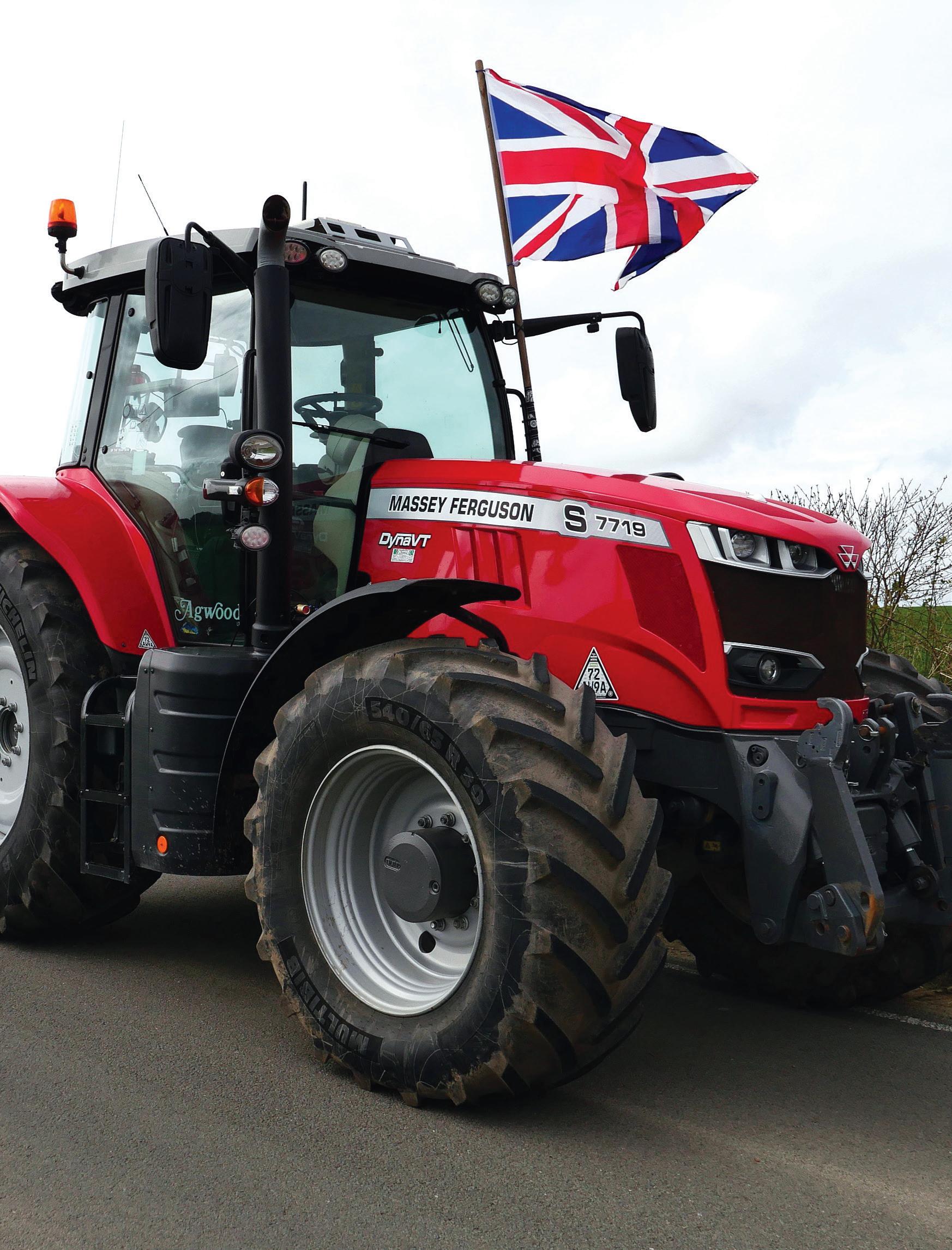
Cover picture: Tractor protest
A flurry of farms to kick start the spring market.
NEWS & REPORTS 05 Protest highlights the challenges faced by farmers. 06 Huge attendance at auction 07 Slaughter and misinformation. REGULARS 14 MONICA AKEHURST Shepherding is not for the faint hearted. 18 NIGEL AKEHURST VISITS... "Latchetts Farm", based at Heaven Farm in Furner’s Green, Uckfield, to meet fourth generation dairy farmer turned gelato impresario Grant Butler. 24 ALAN WEST 26 ADVICE FROM THE VET 28 MIKE KETTLEWELL
East Farmer is delighted to welcome Mike Kettlewell as a regular correspondent. 41 SARAH CALCUTT MAY 2024 CONTENTS 28 16
South
® 50 30 43 STEPHEN CARR 45 ANITA HICKSON 48 LEGAL
Food security needs to be taken seriously OPINION
If every cloud has a silver lining, then perhaps the succession of rain-bearing clouds that have dumped so much water on the South East’s fields over this interminable winter will play a part in persuading this government to take food security seriously.
Might we eventually look back on the wettest of wet winters and see it as a turning point in the fight to have the value of farming recognised? That was certainly the feeling at the South East Future of Farming conference at Plumpton College a week or so ago.
Perhaps it will take crop shortages caused by bad weather (itself caused by climate change), allied to the knock-on effects of conflicts around the world, to make the politicians take domestic farming seriously. After all, the air miles associated with importing tasteless strawberries in December do nothing to help the country’s carbon neutral ambitions.
DEFRA’s swift action to restore the balance between the amount of land used for growing and rearing food and the amount devoted to wild flower meadows, butterflies and birds has certainly been widely welcomed as indicating a bit of a rethink in the department.
Limiting environmental actions intended to make good, nature-friendly use of small field corners and areas of unproductive land to, err… small field corners and areas of unproductive land is surely a step in the right direction, even if has come too late to stop the one per cent of farmers who decided to put 80% or more of their land into ‘non-productive’ Sustainable Farming Incentive measures. Nice work if you can get it.
Farmers, although perhaps not that particular one per cent, continue to enjoy the support of the public, as the ongoing rallies across Kent and now London have shown. The public, it seems, back UK farmers and want to buy British food, but when money is tight, cheaper imports can be tempting.
As well as preventing our growers and livestock farmers from being undercut by food produced to lower standards, the Government needs to get a grip on food labelling. Clever supermarket labelling terminology continues to fool consumers who think they are buying home-grown food when in reality that’s far from the case.
DEFRA has shown it can react when things seem to be out of kilter. If they can follow their SFI step change by making real progress on labelling, food security and the other issues that not just farmers but the public want to see, then perhaps this winter of discontent will turn into a glorious summer (with apologies to The Bard).

SFI LAND TAKE LIMITED
The NFU has welcomed news that the Government is limiting the amount of land farmers can take out of food production under the Sustainable Farming Incentive (SFI).
The announcement followed fears that some farmers were entering large amounts of land into actions that benefited the environment but had a disproportionate impact on what has always been the main purpose of farming, growing food.
DEFRA has said the new rules, which came into effect on 26 March, will ensure the scheme continues to support farmers to produce food sustainably while improving the environment.
NFU Deputy President David Exwood welcomed the announcement, which he said would promote a better balance between the two aims of growing food and enhancing the environment.
He also welcomed the fact that it would protect some tenant farmers who might otherwise have found their livelihoods threatened. “This will help keep active farmers on the ground while encouraging them to farm more sustainably,” he said.
Under the changes, SFI applicants will only be able to put 25% of their land into six SFI actions that take land out of direct food production. The actions are:
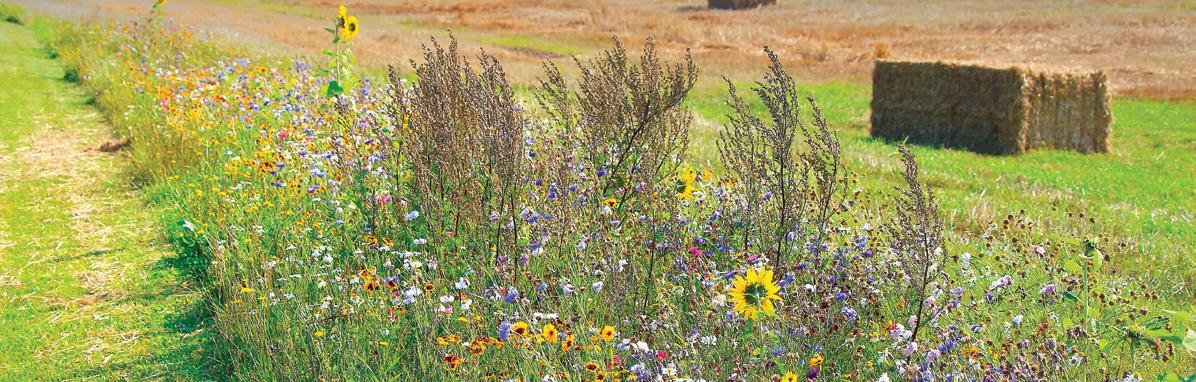
• Flower-rich grass margins
• Pollen and nectar flower mix
• Winter bird food on arable and horticultural land
• Grassy field corners and blocks
• Improved grassland field corners or blocks out of management
• Winter bird food on improved grassland.
Farming Minister Mark Spencer said: “Food production is the primary purpose of farming and today we are taking action to clarify this principle.
“The six actions we are capping were always intended to be implemented on smaller areas of land, and these changes will help to maintain this intention and continue our commitment to maintain domestic food production”.
The department has said it “may limit other actions in the future to ensure that we maintain balance between food production and looking after the environment.”
DEFRA statistics show that around 1% of farmers who applied to SFI 2023 applied to put 80% or more of their farm into these six non-productive actions. More than 15,000 SFI applications have been made so far.
 MALCOLM TRIGGS - EDITOR
EMAIL YOUR VIEWS, LETTERS OR OPINIONS TO: sef.ed@kelsey.co.uk or write to the address on page 3
The changes will not apply to SFI applications already submitted, agreements which have already been offered or existing SFI agreements.



4


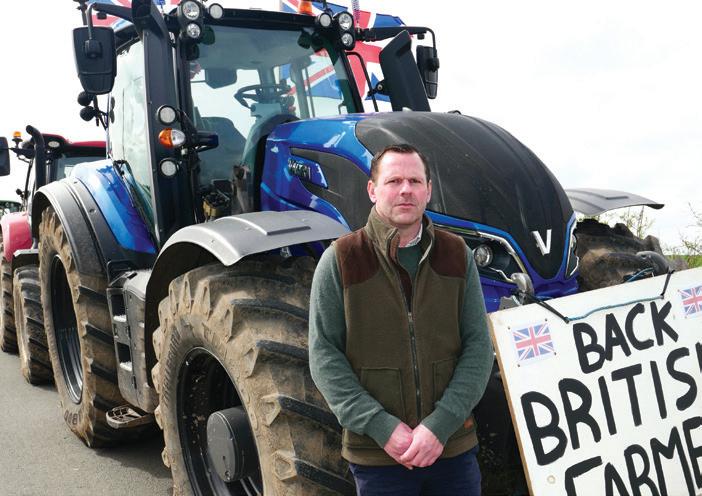

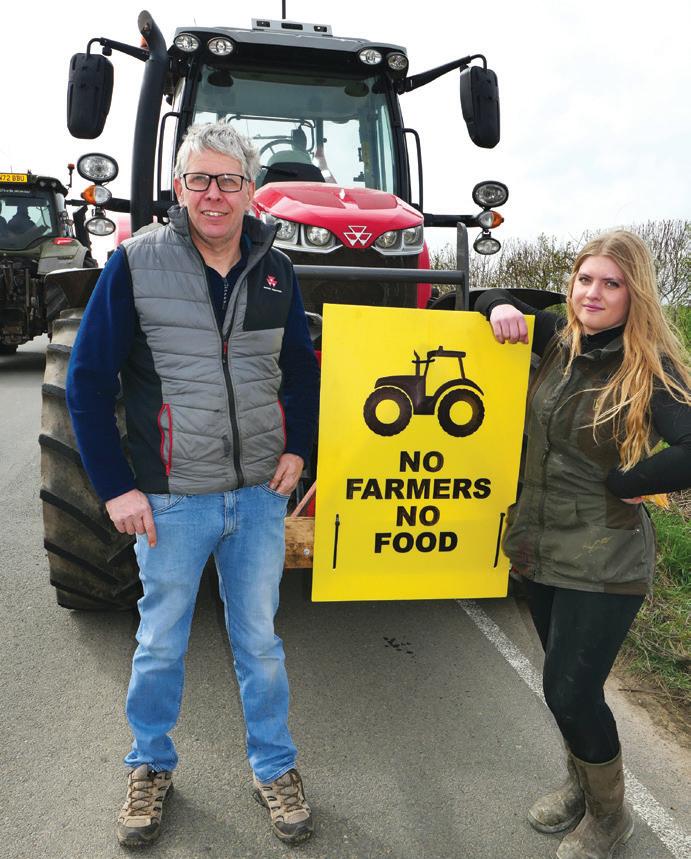
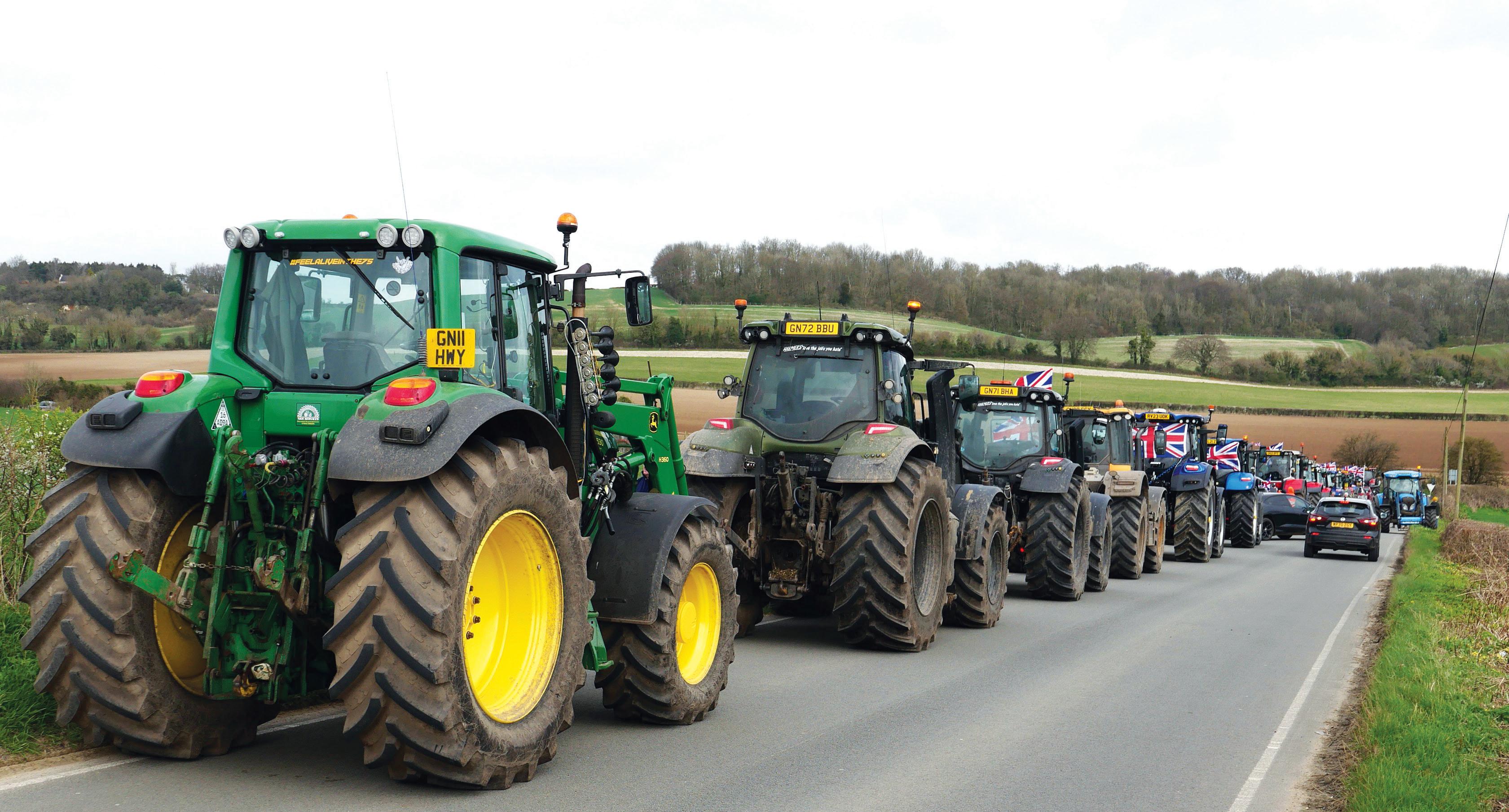
More than 100 farmers made the slow journey by tractor from Kent to London to continue the campaign against below-par food imports.
They were joined by fellow campaigners from Hampshire and Reading, while others flew in from Ireland or arrived by train from across the UK.
Organiser Matt Cullen, a beef farmer and contractor from Staple, Near Canterbury, was delighted with the response. He led the first Kent group, which set off from Charing before picking up another cohort at Wrotham and another at Swanley on the way to New Covent Garden.
“It’s very impressive. We expect to have well over 100 tractors and other vehicles in the convoy by the time we reach the capital,” he said.
The London rally at the end of March followed protests in Dover, Ashford and Canterbury which gave Kent’s farmers the chance to explain the challenges facing farmers to members of the public, most of whom backed the campaigners.

The campaigners have three aims, which Matt said were “to ban substandard imports, make labelling honest and promote the need for food security”.
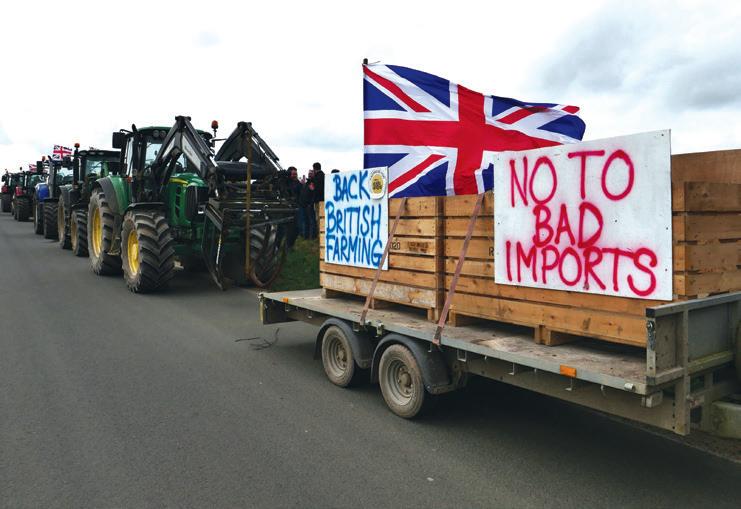

From New Covent Garden, the go-slow convoy was given a police escort to Parliament Square, where farmers were able to make their points to the politicians they hope will legislate to make life fairer for the UK’s farmers.






HIGHLIGHTING THE CHALLENGES
farming. If British farmers are expected to meet high standards, it is contradictory to then permit the sale of inferior imports.
The protest also won the support of Riverford’s ‘Get Fair About Farming’ campaign, which saw its petition to the UK government debated in Parliament in January.
“The request made by Kent Fairness to Farmers for the Government to block substandard imports is a further example of unfairness within the farming supply chain,” the organisation led by Guy SinghWatson, founder of organic veg box company Riverford, commented.

“Allowing lower quality imports not only undermines UK production standards but also devalues the efforts and quality of domestic
“We know that agriculture can negatively impact the environment, and adopting nature-friendly farming methods is essential, but farmers cannot do this if they are being undermined by cheap imports and unfair prices from retailers.”





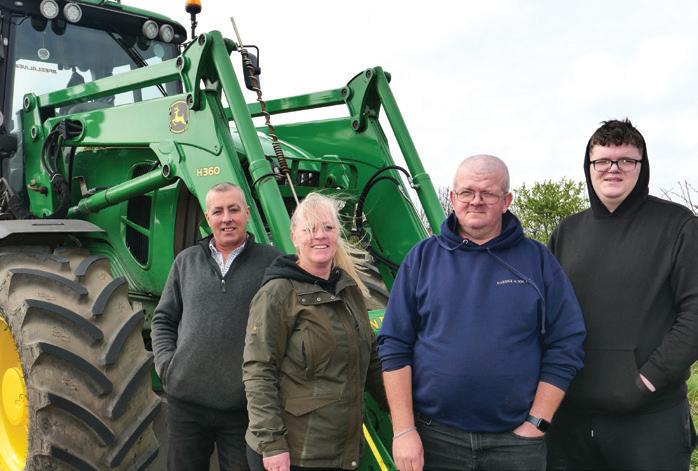
 Paeter Hawkes, Kerry Goddard, Phil and Josh Ward
WWW.SOUTHEASTFARMER.NET | MAY 2024 5 TO ADVERTISE CALL 01303 233883 NEWS
Matt Cullen
David Shannon and Christy Clark
A NEW FORCE IN AGRICULTURAL MARKET RESEARCH
Three leading independent market researchers have joined forces to deliver what they are hailing as “an enhanced service to clients” in agricultural data collection.
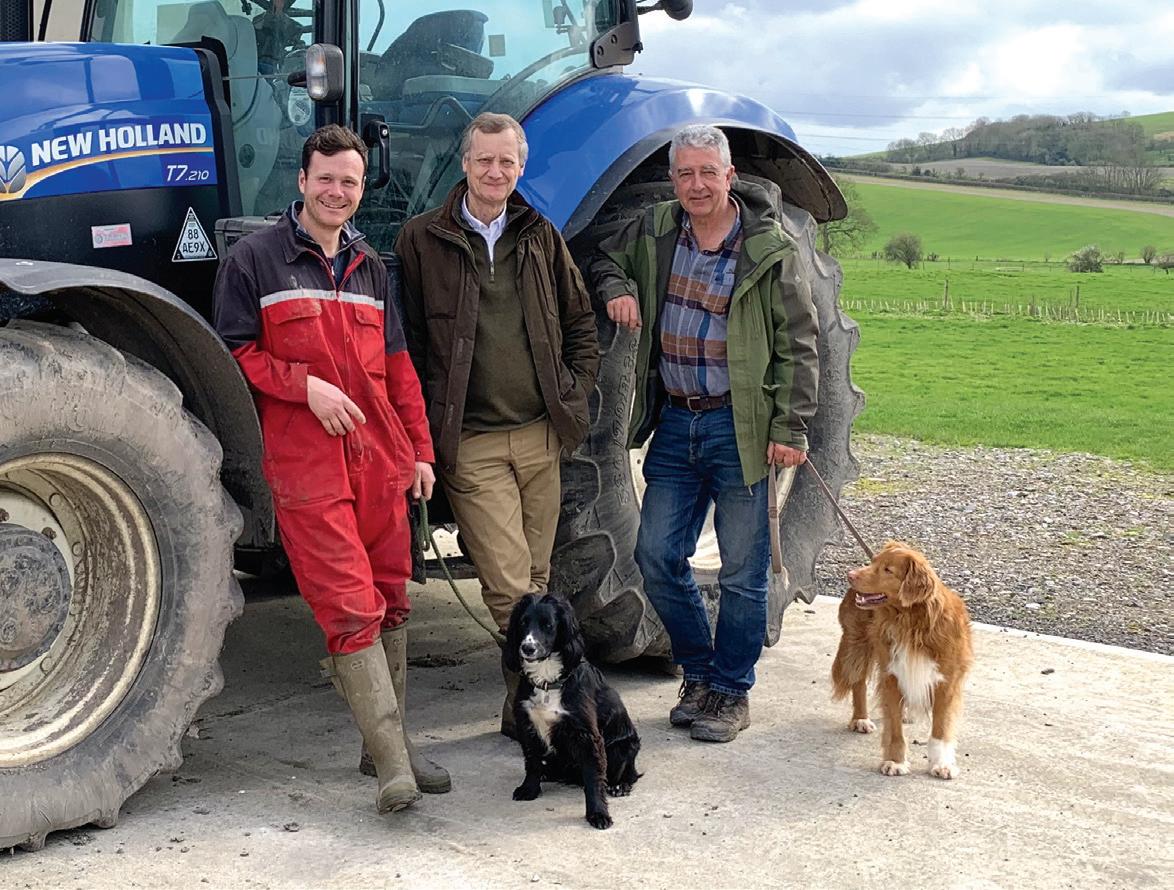
Independent Business Resource (IBR-Ltd), run by Roger Pratchett, has joined forces with David Dower of Closer to Customers and Ben Cooper of Easton Research to form the Ag Market Researchers Group (AgMRG).
AgMRG is promising to provide “a robust, highly experienced, well connected and practical alliance of three independent leading players within the UK agricultural market research sector, for the benefit of clients”.
The new partnership brings together Roger Pratchett’s career-long agricultural experience in technical roles for major field input companies and 24 years in consulting, market research and managing field input panels, David Dower’s 30 years research experience and Ben Cooper’s practical farm experience and strong track record in market research.
HUGE ATTENDANCE AT AUCTION
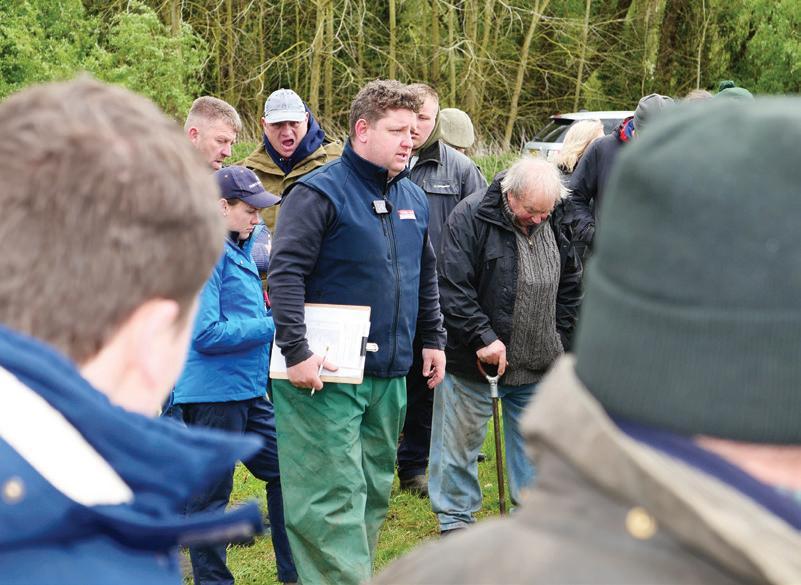
As the clipboard-carrying Pied Piper rang his bell and strode purposefully across the grass, hundreds of farmers, growers and other interested parties followed him to the start of what was to be a long session for Ashford auctioneers Hobbs Parker.
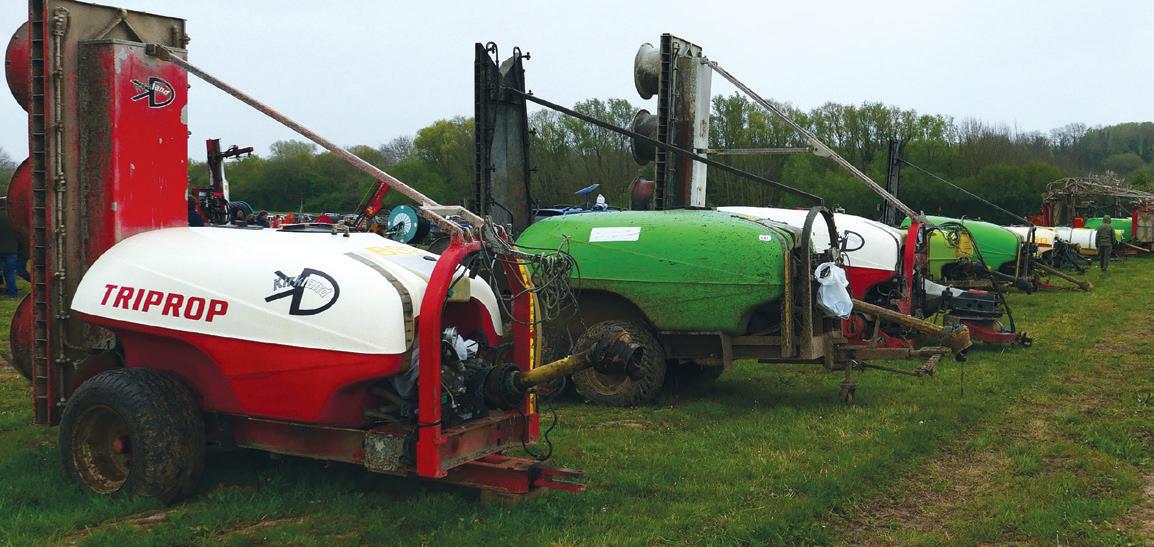
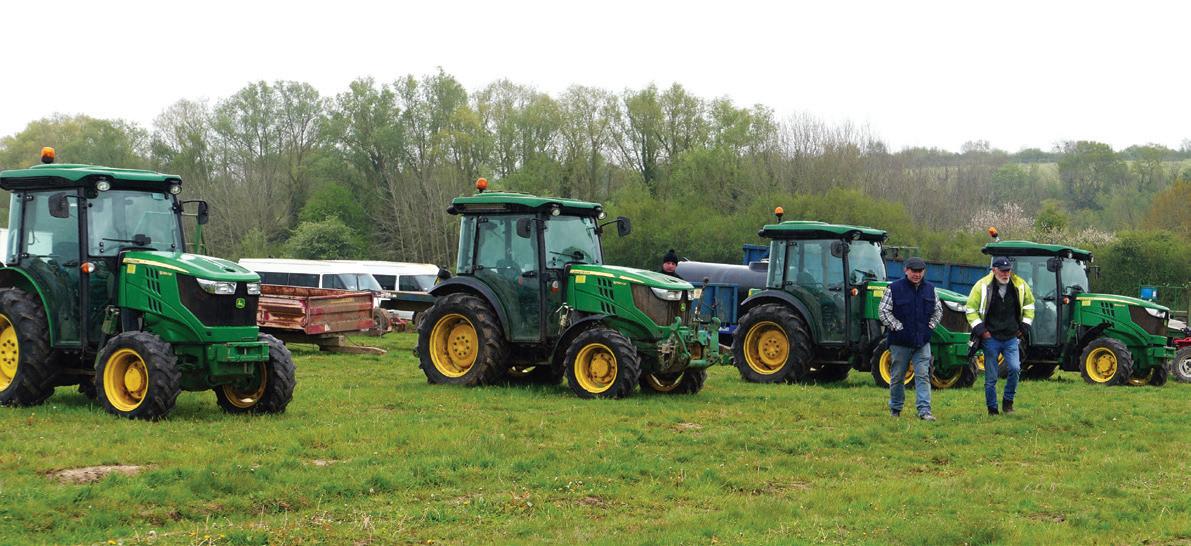
It was auctioneer and Hobbs Parker director John Rossiter who kicked off proceedings at the former Chartham headquarters of Bardsley England, where everything from hydraulic hoses to John Deere tractors, mobile homes and bare-root fruit trees was up for sale.
There was almost a festival atmosphere at the site, with portable toilets and a burger van there for the convenience of what looked like most of the South East’s fruit growing community.
With 800 lots to get through, John made the rules clear, with minimum £5 bids, a warning not to wait too long before bidding and a request for bidders to keep a path clear ahead of him. “We’re going quickly – and
mind the holes in the field,” he commented, before starting the bidding on a random box of fittings.
The sale, which went on despite a huge downpour within the first half an hour, followed Bardsley England’s decision to cease trading after a number of attempts to sell the business as a going concern with its assets included.
Despite John and his fellow auctioneers’ speedy, well-practised sales patter and what was close to a sprint as the huge crowd moved from one lot to the next, the sale took all day and was described by John as “very busy and very successful”.
While not prepared to reveal any figures, he said the auction had realised roughly as much as he had anticipated and described it as “probably the biggest fruit sale ever held in Kent”.
Alongside what he described as a “huge attendance” at the site itself, the sale attracted more than 600 registered bidders online, allowing growers from all over the
country to attempt to pick up a bargain.
Lots on offer included fruit storage crates, posts, tractors, telehandlers, trailers, pick-up trucks, spares and tools, along with a large amount of orchard spraying equipment by the likes of Orvin, Munckhof and Votex.
John said more than 200 individual customers had purchased items in the auction. A quarter of all the lots on offer received an online bid and 11% of the items in the catalogue were bought online. The average lot price was £1,500.
6 NEWS
Ben, Roger and David
With the badger cull aimed at reducing bovine TB (bTB) in cattle sparking debate in South East Farmer ’s letters page, the Badger Trust has said “slaughter and misinformation” has seen more than 230,000 badgers killed since 2012.
The organisation, let by outspoken executive director Peter Hambly, has suggested that in some areas “the Government can’t find any more badgers to kill”.
The Government’s own figures show 19,570 badgers in England were killed in 2023 as part of the cull, taking the total number killed since 2012 under the policy to 230,125. The figures for cull areas in the South East are given in the table.
In response, the Trust said: “In many areas, particularly in heavily culled parts of Cornwall, Devon and Dorset, shooters found it hard to reach anywhere near their minimum kill targets – they simply didn't find the badgers.
“This chilling reality of the effect of mass badger killing underlines what was submitted to the Bern Convention – that we are in danger of local extinction in England’s cull areas, and badger populations are not recovering.”
Querying the evidence for a “causal link” between culling badgers and a reduction in bTB, the trust went on: “Badger culling has always taken place alongside more effective on-farm cattle measures, such as restricting cattle movements, improving biosecurity and better cattle testing – measures that do work”.
It claimed 94% of bTB spread was due to cattle and added: “Without mandatory cattle measures, the cycle of bTB infection in farmed cattle will continue regardless of how many badgers are culled.”
SLAUGHTER AND MISINFORMATION

badgers must stop. It doesn’t work in bTB control; it never has. Now, the government plans to kill even more with no end date, without the science case or business case to back it up.
“When they can’t find the badgers to
kill, you know we are near local extinction events. After 250,000 years of badgers on this land, we may be nearing the end of the badger in some areas. This is a national nature scandal – let’s end the badger cull before it’s too late.”
The two cattle Burke Perpetual Challenge Trophies will this year be presented at the Royal Three Counties Show at Malvern in Worcestershire in response to recent Bluetongue outbreaks.
Although the temporary control zones for the disease in Kent, Suffolk and Norfolk were lifted in February, The Royal Agricultural Society of England (RASE), the Royal Norfolk Agricultural Association and the Three Counties Agricultural Society have agreed to the switch of venue as a precautionary move.
Peter Hambly commented: “The killing of history of Bluetongue cases in the east.”.
RASE chief executive David Grint explained: “The Burke Trophies attract higher numbers of cattle from a wider area to enter at the show where they are hosted, so moving the cattle trophies to be hosted in the west of the country is the appropriate decision given the recent
NEW LOCATION FOR THE 2024 CATTLE BURKE TROPHIES
The Royal Norfolk Agricultural Association will still be hosting the machinery Burke Trophy this year and will host all three trophies together in 2025.
The Royal Three Counties Show is hosting a record 17 national breed society shows this year along with the largest gathering of rare and minority breeds in the country.
WWW.SOUTHEASTFARMER.NET | MAY 2024 7 TO ADVERTISE CALL 01303 233883 NEWS
Area Badgers removed (killed) Updated minimum number Updated maximum number Area 49 – Oxfordshire 277 260 353 Area 56 – Hampshire 156 134 182 Area 57 – Berkshire 27 20 27 Area 61 – Oxfordshire 311 268 364 Area 62 – Buckinghamshire 705 624 847 Area 67 – Hampshire 210 201 273 Area 69 – Oxfordshire 271 234 318
SOUTH EAST FUTURE OF FARMING
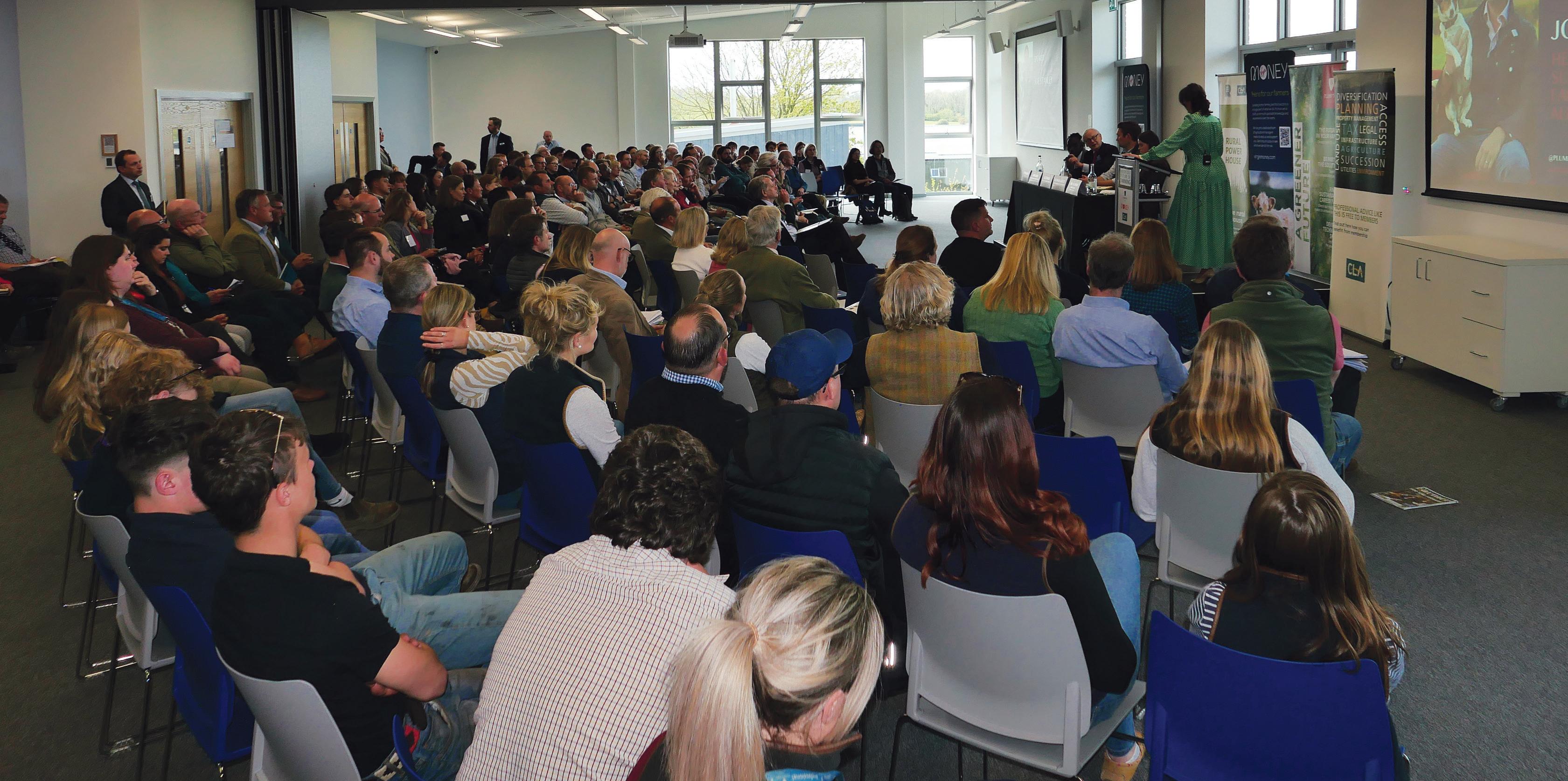
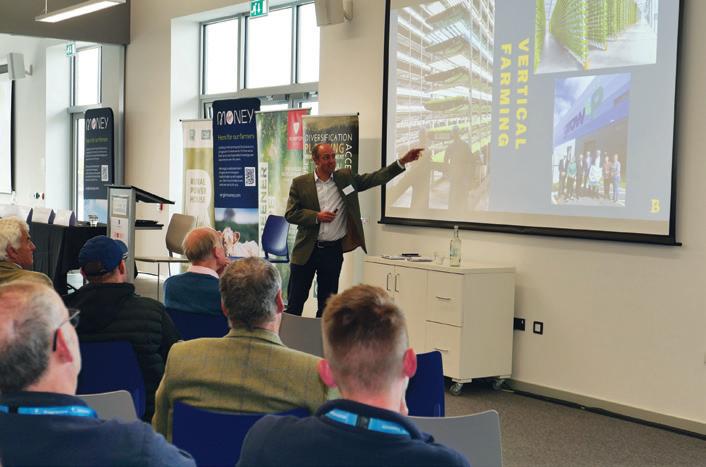
Farmers need to press home the importance of food security in an uncertain world by presenting a coherent programme to the Government and leading from the front, a high profile conference heard.
“We need to give them solutions, not problems,” Lord Deben told the South East Future of Farming conference hosted at Plumpton College’s impressive new AgriFood Centre with sponsorship from Virgin Money and the Country Land and Business Association (CLA).
At the end of an impressive and impassioned opening speech, he said the industry needed to demand certainty over policy and an acceptance that the country had to produce as much home-grown food as was possible.
Pointing out that since there was no reason for party political differences over food security, farmers should be looking for a policy that was fixed for ten years, he added: “Politicians will eventually get the blame [for food security failures] so make them realise that.”
During an upbeat event that featured what panel chair Emily Norton described as “a stellar line-up of diverse thinkers”, there was a growing feeling that the difficulties created by the exceptionally wet winter could be used to advantage in persuading the politicians of the importance of food security.
While Lord Deben’s outspoken, note and PowerPoint free presentation narrowly
IMPRESSIVE AND IMPASSIONED OPENING SPEECH
stole the show, there were impressive contributions from the other panellists, farmer and conservationist Joe Stanley, social media champion Eleanor Gilbert and Kenyanborn tenant farmer, butcher and chef Flavian Obiero, himself no stranger to the likes of TikTok and Instagram.
All highlighted the importance of farming in an uncertain world and the vital need for the industry to continue growing and rearing food as well as focusing on protecting and enhancing the environment.
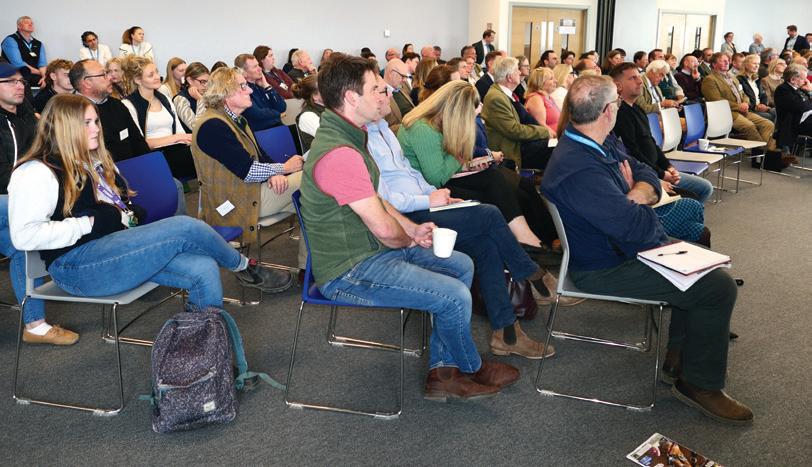
The conference was entitled Driving Productivity and Profitability in a Sustainable Way, a broad enough headline that allowed the speakers to focus on the issues of importance to them and to a capacity audience that enjoyed a dynamic and well-organised afternoon and early evening event.
Predictably, it was supply chain fairness, food security, protecting the soil, connecting with the public and dealing with the impacts
of climate change that regularly came to the fore in a lively debate that saw some equally thoughtful contributions from the audience.
In a short welcoming address, Brian Richardson, Virgin Money’s head of agriculture, welcomed a number of Plumpton College’s students to the event, pointing out the institution’s contribution to the future of farming, and set the scene by remarking that farmers needed to be given “a clear direction of travel” by the Government.
Lord Deben, the UK’s longest-serving Secretary of State for the Environment and a former Minister of Agriculture Fisheries and Food, was dismissive of recent ministers. He said the industry needed DEFRA to be headed up by someone who had “a proper connection with agriculture” and didn’t treat it as “a moving on job for a year”.
On the impact of climate change on farming, he commented: “After the wettest period in recorded history we must accept that climate
MAY 2024 | WWW.SOUTHEASTFARMER.NET 8

change will be a major issue” and said the “number one certainty” was that farmers would face weather patterns they had never before had to deal with.
On food security he said that while in the past there had been a view in government that “we could always bring in food from elsewhere”, that was no longer viable.
Pointing out the importance of continuing to press the Government on the need for the UK’s farmers to grow food, he said it was “nonsense to say that public goods do not include producing food”. And on the lack of clarity around farming policy, he added: “Farmers don’t know how to take into account what the Government wants because it doesn’t know what the Government wants.”
His comment that Brexit had been “a complete disaster” and an exercise in selfharm brought a spirited response from one audience member who bravely attempted to justify the decision during the Q&A session that followed.
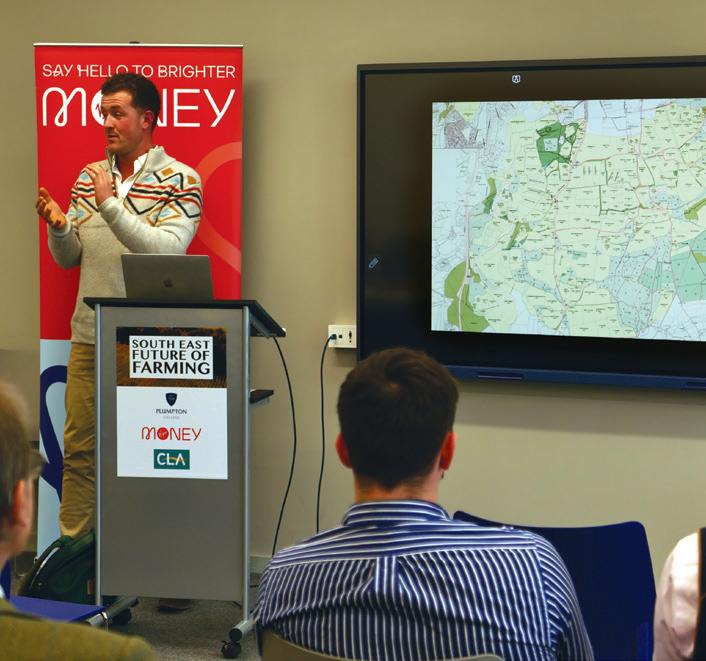
Joe Stanley, head of sustainable farming at the Game and Wildlife Conservation Trust’s Allerton Project, reinforced the view that farming could continue alongside conservation measures and produced plenty of scientific evidence highlighting the benefits of a more environmentally aware approach.
One example was a slide showing the placement of beetle banks aimed at enhancing the farm’s integrated pest management system around a line of telegraph poles. As well as providing a vital
habitat, using that part of the field in this way meant he was less likely to hit the pole with a sprayer boom, he pointed out.
As the youngest member of the panel, Eleanor Gilbert, otherwise known as @berkshirefarmgirl and the BBC’s Countryfile Young Countryside Champion for 2022, had plenty of ideas about ways in which farmers could better communicate with the public.
Despite having 20,000 viewers across various social media platforms to keep entertained and educated, Eleanor, who was introduced to farming on her step father’s farm in her teens, is also studying agriculture and crop management at Harper Adams University, where she is in her final year. She
highlighted the need for more education and careers advice around farming and for farmers to embrace technology and engage more with the public.
There was plenty of hands-on, practical advice from Flavian Obiero, who moved to the UK at 15 after growing up in Kenya. Now a Hampshire County Farms tenant, he outlined his “steep learning curve”, the challenges he had faced and the ways he had dealt with them in an engaging presentation.
A trainee butcher with a strong belief in finding new direct sales markets for his pigs, sheep and goats, he joined the calls for supply chain fairness and transparency and said farmers had to “stop being price takers”.

WWW.SOUTHEASTFARMER.NET | MAY 2024 9 TO ADVERTISE CALL 01303 233883


















MAY 2024 | WWW.SOUTHEASTFARMER.NET 10 SALES AND SERVICE M A BROWN & SONS LTD & M&A Brown & Sons Ltd, Iden Green Farm, Cranbrook Road, Goudhurst, Kent TN17 2PA info@mabg.co.uk 01580 211599 www.mabg.co.uk Comprehensive range of professional tractors from 19hp to 75hp WORLD CLASS POWER TOOLS OPEN DAY 9 MAY 2024 – 12 noon until 6pm Unit 6, Martells Quarry, Slough Lane, Ardleigh, Colchester, Essex CO7 7RU 01206 982260 www.npclimited.co.uk Retaining Walls Our discreet and efficient service helps you get the best price for your distressed grains Verigreen purchases distressed, out of spec grains, including contaminated, wet and burnt consignments Benefits of selling grains: Maximises return of discarded grain Provides nutrient rich animal feed for farmers Creates energy through anaerobic digestion www.veri-green.co.uk Contact us now for your free quote 03316 300 727 Generate income from your distressed grains
The ‘D’ word – diversification - is the norm for landowners and farmers these days as, let’s be honest, most farms are nowadays a very long way from single income operations. Most have gone beyond the standard rental farm cottage with micro-breweries, music festivals, pizza restaurants, ‘glamping’, long-term lets, short-term lets and Tough Mudder courses now a common use of farm land.
But with all these potential opportunities for farmers, is rural holiday letting still a good option? Will the recent tax changes, as announced in the budget, put off farmers, developers and landowners here in the South East?
Looking back at the past few years, holiday letting in the UK since the pandemic has been a rollercoaster ride. As the demand for British breaks soared during 2020 and 2021, holiday makers rediscovered self-catering holidays and accommodation providers, from campsites to castles, responded by creating more beds in the market.
To try to address this as well as professionalise the holiday accommodation market, the spring budget laid out plans to abolish the furnished holiday lets (FHL) tax regime and the financial benefits associated with it. In other governmental moves, there are proposals to introduce a registration system for all new holiday lets coming to market and to require them to obtain planning permission for ‘change of use’ status.
For some, these changes spell doom and gloom but also promote a ‘jumping ship’ scenario, where those owners who want to avoid the scrutiny will likely sell up, which could push up prices where accommodation (especially rural) is sparse.
At Bloom Stays we don’t think these changes should provoke a change of heart amongst farmers, landowners and property developers who have long been champions of rural hospitality. Indeed, we think this new regulation will potentially improve the whole holiday letting industry for tourists, guests and owners, and while costs may rise initially, it won’t be at a hugely inflated rate. Indeed, in some cases, owners may find that one or two more bookings per year is enough to absorb some of these costs, which seems a reasonable price to pay.
The rural estates that come to us for advice on developing and then managing their
HOLIDAY LETS –
DON’T LET TAX CHANGES HOLD YOU BACK
Rowena Owen, co-founder of Bloom Stays holiday letting consultancy explains why tax changes in the spring budget should encourage farmers to develop and upgrade their holiday let opportunities.
holiday letting properties are also changing their focus in light of wider changes to the tourist market.
Our digitally enabled savvy customers are looking for great deals (no change there) but making up their minds and booking just hours, rather than weeks, ahead. They’re looking for experiences beyond bricks, mortar and beds, so if our holiday let houses can offer cinema rooms, large, eat-in kitchens, long tables for all their friends and family to dine around and outstanding décor and design features then we know that house will sell and sell.
Of course, swimming pools and tennis courts ace early bookings, but now so do hot tubs and ice baths, fully catered meals, electric vehicle chargers, lambing experiences and bikes delivered to the door. And don’t forget the dogs. Comfy beds, doggy ice creams and designated garden spaces are taking the lead for younger dog owners who prefer walkies to babies right now.
We’re also seeing mixed developments on the larger estates becoming more popular
so that smaller but linked holiday let units (say five, two-bed properties) are developed alongside larger long-let houses, larger, venue-type spaces and even campsite facilities.
Great Higham Farm, outside Faversham, is a great example of a working fruit farm that has transformed its oast house, barns and stables into a fully flexible venue with accommodation, swimming pool, tennis courts and games rooms to house over 50 people. With our specialist help, this property has shaken off doubts on long-term financial stability while achieving outstanding occupancy rates.
As the summer approaches and, with a fair wind (and some reasonable sunshine) the South East gears up to welcome guests from all over the world, we’d like to see farmers and landowners with an interest in self-catering accommodation embrace this changed – and changing – market.
With so much going for the Garden of England, let’s tax ourselves with the question of how to maximise our assets and leave the Chancellor to his returns.

WWW.SOUTHEASTFARMER.NET | MAY 2024 11 TO ADVERTISE CALL 01303 233883 NEWS
Rowena Owen (right) with co-founder Nicky Russon
LETTERS
ANOTHER PROTECTED SPECIES HEADING THIS WAY
Dear sir,
I am writing in response to Mr Hambly’s letter (“Unnecessary attack on badgers”) in the April edition of South East Farmer. Needless to say, I disagree with what he says. It seems it is everyone's fault except the badgers. Badgers eat hedgehogs, ground nesting birds and copious quantities of worms which the birds want, as does the farmer for his soil.
There is now another protected species heading this way; the pine marten. Natural England, one assumes, would like to establish them in Bedgebury and/or Ashdown Forest. These animals eat small birds, birds’ eggs, mice – which presumably includes dormice – voles, berries in hedges which birds need, hens by climbing up the pen wire and the odd baby lamb. There is much more to dislike about them, which is why they were exterminated from these parts years and years ago.
Please make sure you give Kent Wildlife Trust your views.
Edward Stenhouse Hartfield
RESIGN NOW
Dear sir,
I have a word or two of advice for Peter Hambly of the Badger Trust (“Unnecessary attack on badgers“, letters page, April). It is very simple… “Resign now, join the bumble bee trust, the hedgehog trust and the ground nesting birds trust and perhaps you would then be doing something useful.”
My father started two large shoots in South East Kent in the late sixties and early seventies. At that time, badgers were at an acceptable level. If you knew where to look, you could find them and if one was caught in a fox snare, my father would release it.
At that time TB was manageable and not the problem that it is today because of the surge in the number of badgers. The badger population is now so huge that most badgers are seen dead by the side of the roads. The reason for this is that they travel much further from their setts due to
overcrowding, looking for a new site.
In the sixties and seventies the badgers stayed in ancient setts and I know of gamekeepers who would make sure that no new setts were started, which was a way of helping to keep their numbers in check.
The keepers would also be able to see whether or not they were healthy (sick and ill badgers would probably carrying TB). Now their numbers have swelled and we do not have the keepers, etc, the badgers are digging around electric poles in open fields. This never used to happen; you would have the odd sett on secluded chalk banks.
As badgers have no known predators, surely Peter Hambly has the common sense to realise it cannot carry on like this, and vaccination is certainly not the answer. No farmer or gamekeeper ever wanted to destroy all badgers and they never did.
The Badger Trust should stop scaremongering and tell the truth about the bumble bees, the hedgehogs and ground nesting birds which their badgers have destroyed.
Stephen Skinner Dover, Kent
WE SHARE GOAL BUT QUESTION HOW IT CAN BE ACHIEVED
Dear Sir
We share Peter Hambly’s goal of “reducing bTB as quickly as possible” (“Unnecessary Attack on Badgers”, letters page, April), but question how this can be achieved without addressing all possible sources of infection for cattle herds. In some parts of the country, this includes infected badgers.
The government’s consultation is seeking views on a more targeted approach to dealing with bTB in badgers which would enable culling under licence in distinct ‘clusters’ and for a defined period of time. This would be followed by a period in which badgers would be vaccinated against bTB.
Within this cluster-based approach, farmers would also be required to comply with reasonable biosecurity measures (the 5 Point Plan) and with any “temporary
additional TB control measures” introduced within the cluster. The aim is for this targeted approach to be used in the ‘high risk’ and ‘edge’ areas of England.
It is interesting that Mr Hambly questions the findings of Birch et al published in the highly regarded Nature journal. This peerreviewed scientific paper shows badger culling has resulted in a 56% reduction in the number of new breakdowns each year.
Mr Hambly claims that this has “arisen as a consequence of other variables and factors”, though the speed and magnitude of the reduction in TB makes it hard to argue that cattle measures alone are responsible. We wonder whether Mr Hambly would have challenged the method had the outcome supported his views. Despite his claim, the figures are publicly available through the supplementary information section of the online journal.
It is unfortunate that Mr Hambly omitted to recognise the efforts of those involved in the Vaccinating East Sussex Badgers (VESBA) project, a DEFRA-funded initiative to understand the success factors for delivering a large-scale, farmer-led badger vaccination project. Now entering its fourth year, the dedicated and respected team of lay vaccinators and trappers has vaccinated over 1,300 badgers to date, more than 600 of those in 2023.
The VESBA project demonstrates that the farming community is dedicated to using all available tools to reduce bTB as quickly as possible. Those involved feel that the proposed targeted wildlife intervention will give hope to the farmers across England who are affected by bTB on a daily basis.
Continuing the risk management programme offered by the TB Advisory Service, improved trading practices, novel diagnostics and TB testing, together with targeted culling and vaccination of badgers, is a sensible, evidence-based and holistic way of improving the health and welfare of both cattle and badgers.
Nick Pile MRCVS
VESBA Project Director
Cliffe Veterinary Group
Peter Appleton
VESBA Steering Group Chair
MAY 2024 | WWW.SOUTHEASTFARMER.NET 12
SEND YOUR VIEWS OR COMMENTS: SEF.ED@KELSEY.CO.UK @SOUTHEASTFARMER SOUTH EAST FARMER
NEW RULES WELCOMED
Dear Sir,
The Country Land and Business Association welcomes the introduction of new rules that will ensure money raised from fixed penalty notices for fly-tipping and littering is ringfenced to be spent on local clean-up and enforcement.
On the back of this welcome confirmation from Recycling Minister Robbie Moore, we urge local authorities to use the revenue to help clear up waste dumped on public and farm land and clamp down hard on offenders. With one million incidents on public
land alone last year, fly-tipping blights communities and the landscape, damaging the environment, risking public health and costing taxpayers thousands to clear up.
As well as incidents on public land, farmers are also victims of fly-tipping and have to pay to have dumped waste removed from their land, only adding to the injustice. That is why fixed penalty notice receipts must be used to help clear up incidents on both public and private land.
Victoria Vyvyan, President, Country Land and Business Association
A PRECARIOUS POSITION
Dear sir,
While measures that ensure the SFI scheme supports farmers to produce food sustainably alongside improving the environment are welcome, OF&G believe farmers would benefit from a consistent and a coherent agricultural strategy.
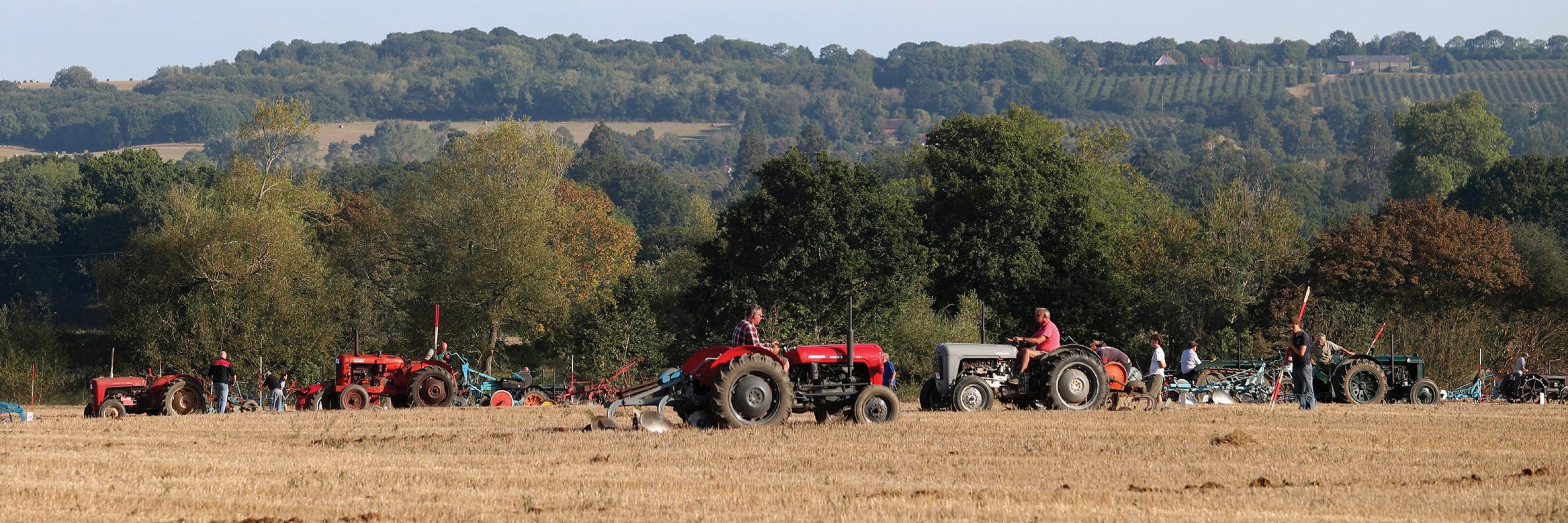
The 2023 Weald of Kent Ploughing Match saw 19 local and national charities benefit from a total of £10,000.
Recipients ranged from the Kent, Surrey & Sussex Air Ambulance Trust, RABI and the Riding for the Disabled Association through to Pukka Ponies Equine Rescue, Childhood Interstitial Lung Disease, Mount Lodge Young Farmers' Club and Hands of Hope.

Guy Eckley, Chairman of the Weald of Kent Ploughing Match Association, said: “The ploughing match remains an important date in the farming and rural calendar and, in addition to providing a great day out, we are delighted to raise funds to support the work of our local, rural charities.”
It does seem a bit of a nonsense for the farming minster to say DEFRA is “taking action to clarify” that “food production is the primary purpose of farming”. Recent protests outside Westminster and the Senedd would indicate that farmers are acutely aware their livelihoods are under threat.
Constant revisions and policy updates only serve to undermine the precarious position that many farmers find themselves in.
This latest announcement is a timely reminder that the organic farming industry is comprised of a brilliant food and farming system which operates within the highest level of compliance that delivers on four key fronts: climate, nature, economy and food.
With only 15,000 SFI applications received, it seems the government’s endless flipflopping only serves to alienate those it should be supporting; those who are working to deliver food sovereignty while preserving the environment for the benefit of the nation.
Roger Kerr, Chief executive, OF&G (Organic Farmers & Growers)
£10,000 FOR PLOUGHING MATCH CHARITIES
The association has also revealed that this year’s match will take place on Saturday 21 September at Honey Farm, Munday Bois Road, Pluckley, TN27 0SU by kind permission of Mr D Gwillim.




Bookings for trade stands and the farmers’ market can be made by emailing secretary Liz Miles at secretaryWKPMA@gmail.com

WWW.SOUTHEASTFARMER.NET | MAY 2024 13 TO ADVERTISE CALL 01303 233883 LETTERS
SHEPHERDING IS NOT FOR THE FAINT HEARTED
Our 2024 lambing started on Easter Monday, nine days earlier than scheduled. As I entered the field I could see from a distance an older mule forlornly wandering to and fro along the hedge line, bleating mournfully as she went.
It was such a sad sound, I immediately knew it would be a tale of woe. The rest of the flock was grazing in an adjoining field. The ewe led me to a twin-sized lamb which she had licked; there’s no telling if it was alive when born. A short distance away lay a fresh black tail, the body gone, no doubt carried off by a predator.
Shepherding is not for the faint hearted. Nearby, a robin was perched high in the hedge, chest puffed out, singing loudly as if confirming spring has arrived.
It was five days later before we had any more lambs born. It had been all quiet the evening before and early next morning I
discovered two sets of triplets, a single and three sets of twins. It’s a relief to get live lambs; it restores your faith in nature when they are born unassisted. It was time to wander the rest of the flock down the lane back to the field next to our house. Ed, our shearer, kindly left his own flock to dag out our ewes; he’s so much quicker and more efficient than me.
All farmers have found the wet ground conditions challenging this winter. It’s been bad enough in the south, but the north has suffered even worse, which is unimaginable. Shrek (ATV) has been struggling to get about, and I’ve only used it to carry energy blocks. It already lacked a functioning four-wheel drive when the steering also went wrong prior to lambing; it’s going to cost a fortune to fix.
I threw my toys out of the pram. The Kawasaki monster we call Shrek had to go, but what to replace it with? A quick fix was
needed. After asking other shepherds for recommendations, I tried out a Honda quad, which was impressive, but the constant fear of having it stolen made me reluctant.
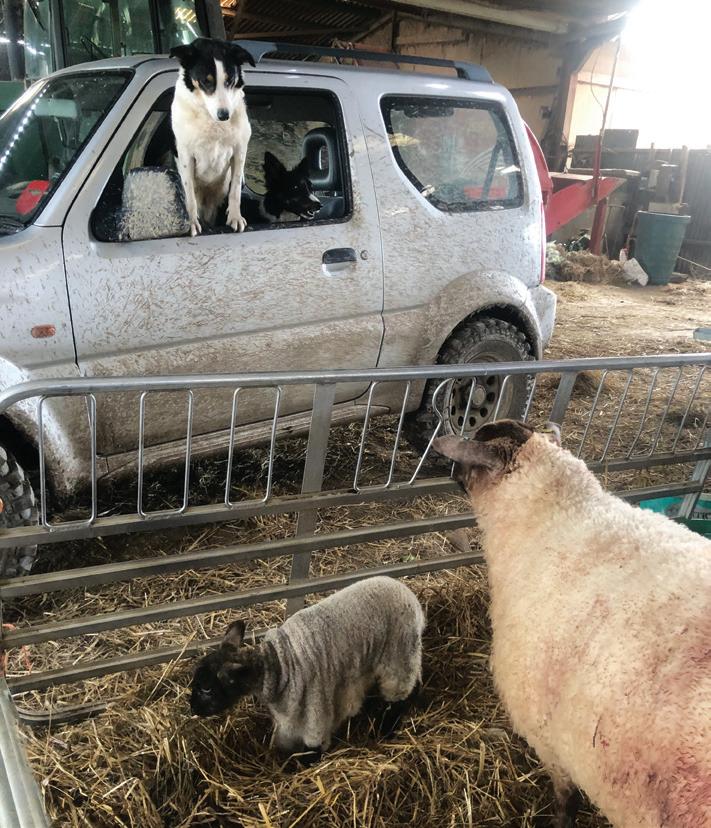
We were offered a Suzuki Jimny and this has certainly got us out of trouble. I’ve changed from road tyres. I was given a choice of all-terrain tyres designed to use 50/50 road/ off road, or mud tyres designed to use 20/80 road/off road. I went for the latter and they are brilliant. I’m so pleased with my new farm vehicle; it’s proved invaluable. Brie, my sheepdog, inadvertently stood on a purple spray can, liberally coating herself and the inside of Jimny in purple, so it’s well marked.
We’ve had some sharp April showers, it’s been mild and there’s plenty of grass, and it’s becoming less soggy underfoot. This year there seems to be a notable number of bees around, which is good. We’ve also endured
MAY 2024 | WWW.SOUTHEASTFARMER.NET 14 MONICA AKEHURST AT THE KITCHEN TABLE
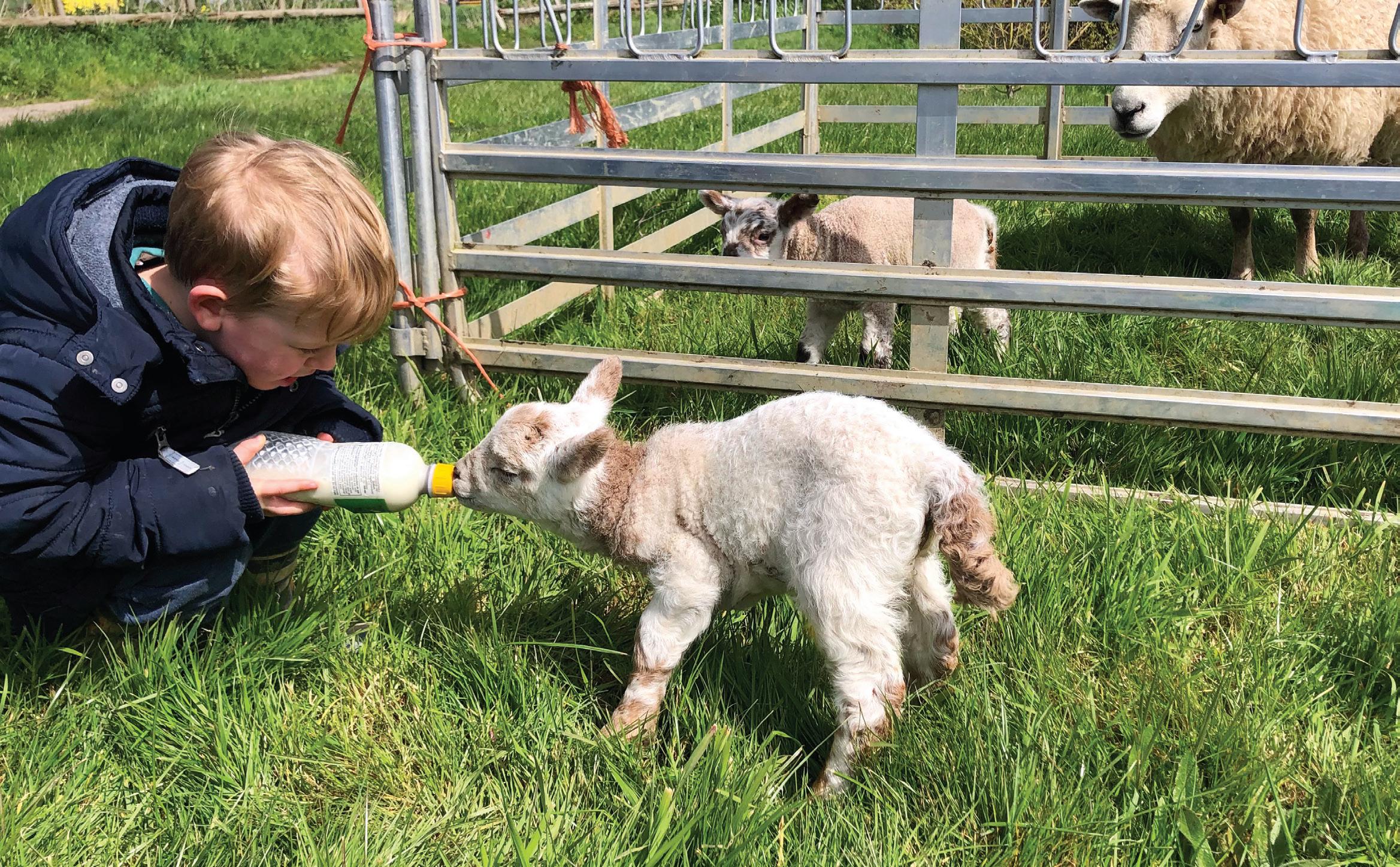
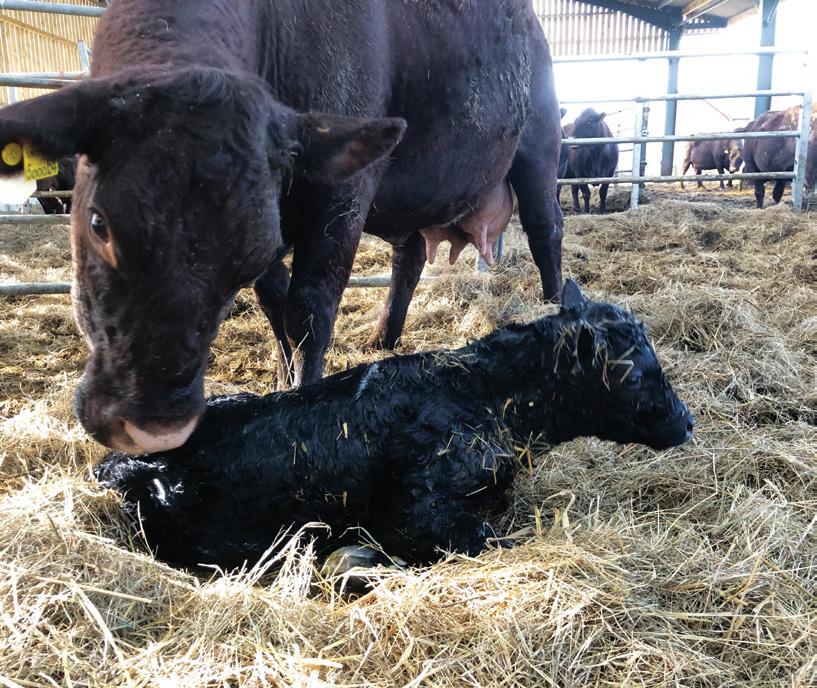
Angus bottle feeding
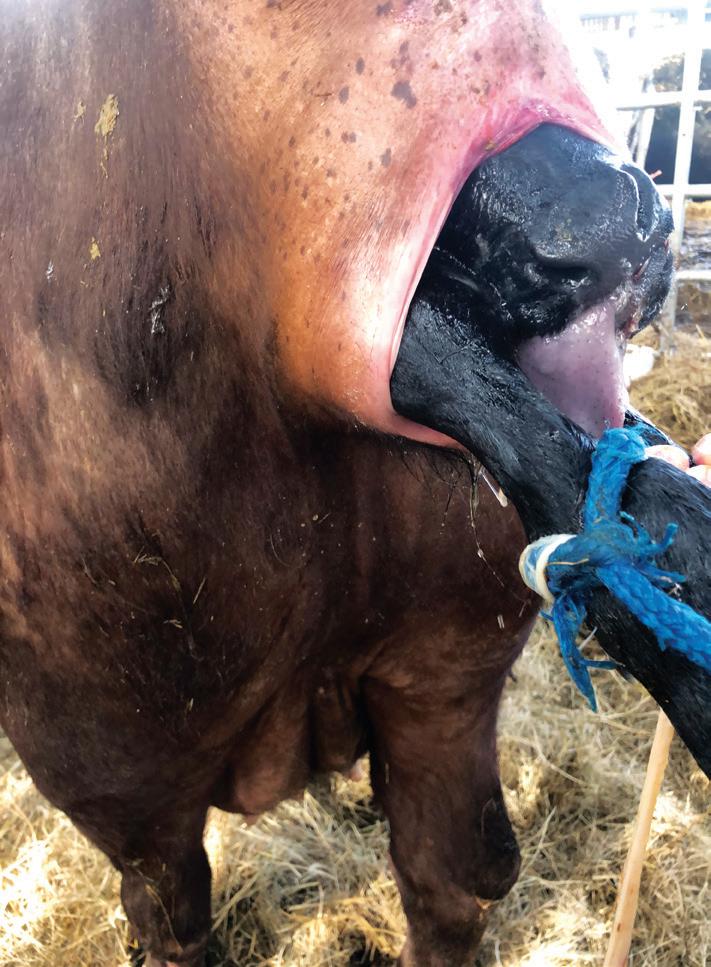
Calving; good presentation, rope on
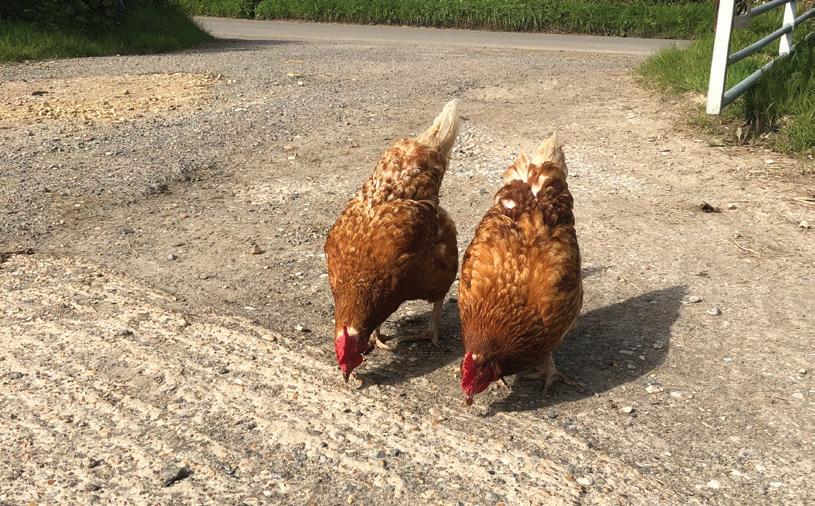
Adventurous chickens
an influx of midges that appear in abundance during the evening, their company a nuisance to sheep and humans alike. The flock is checked at dusk and then at first light. I enjoy listening to the dawn chorus, along with the ewes chattering to their new arrivals, and witnessing the sunrise is a benefit of crawling out from under the covers at unearthly hours.
The first couple of nights we lost newly born lambs to foxes. I found one twin with blood all around its neck; on close inspection I could see fresh bite marks. The mother had blood spatters on her face, so I reckon she made the fox back off.
I got them into the barn, sprayed up the wounds and the lamb survived. After this we used electric fencing to create an enclosure at the top of the hill, close to the house and away from the wood, into which we gathered the flock during the hours of darkness. This seemed to cure the problem.
With hindsight, I suppose we had fair warning, because pre-lambing the fox did
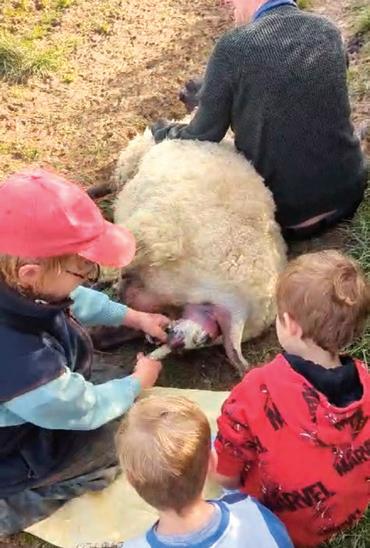
Everyone is happy – safe delivery
run off with three of my five chickens one afternoon. I had gone to check on stock away from home, while other half was on his tractor cleaning out the home sheds. You’d think the remaining two chickens would be cautious, but not a bit of it. They are very intrepid, oblivious of danger. One minute they’re heading for the wood and the next they’re in the road. I’ve told them to learn the green cross code, because two eggs daily is essential for cakey…… the grandchildren expect it. Lambing time is very much a family affair; everyone pitches in and helps in some way or another.
Sheep in the shed have been kept to a minimum, only newborn triplets, ewes with milk slow to come in, a couple with mastitis and singles that we’ve fostered a second lamb on to; some wet fostered and a couple of skinned ones where the ewe produced large lambs which died during the birthing process.
One Charolais ewe has completely refused to rear her own lamb. I’ve tried every trick I know of, to no avail; this ewe is adamant she’s not

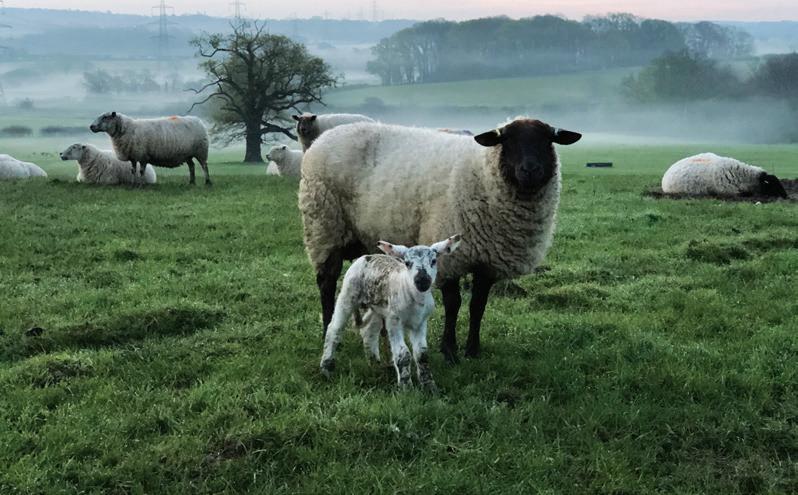
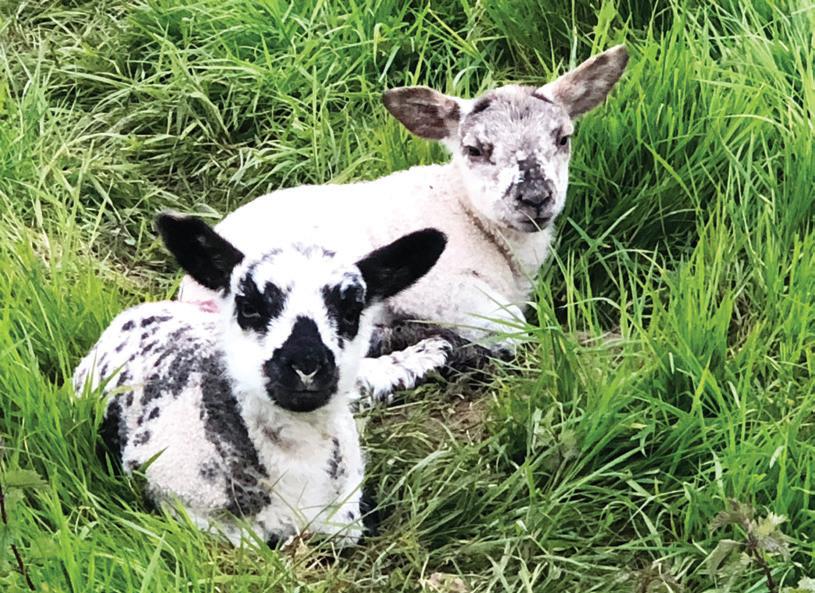
Early morning arrivals
rearing her offspring. I’ve warned her we do not keep freeloaders on this farm.
We’ve also been calving and have appreciated the user-friendly facilities provided by the new cattle shed. Calving has gone well. We’ve only had to assist one Sussex cow who struggled with the delivery of a ‘large for her’ calf, compared with a 30% assisted rate for lambing. Other half is keen to point out that sheep are more needy.
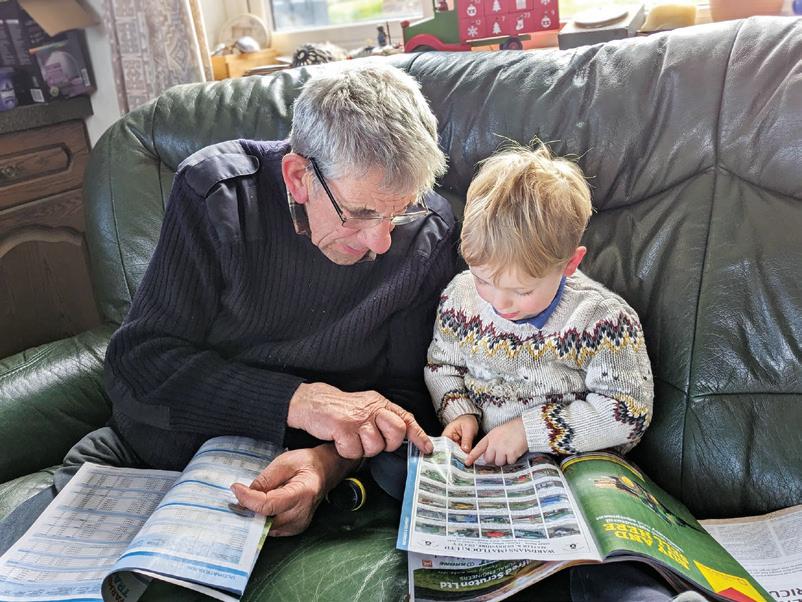
On Grand National weekend we did a family sweepstake, and as I drew out the favourite, I exclaimed: “The favourite never wins.” I was wrong, though, so at the end of the weekend I gave my two grandsons £10 each for their help with lambing. George (five) said he’d buy a Harry Potter umbrella. Angus (four) announced he was going to buy …… a hundred million lambs. Granddad commented that he would not be offering to work for Angus. I suggested that with that many sheep, Angus might need a tractor as well, which prompted a beaming smile.
WWW.SOUTHEASTFARMER.NET | MAY 2024 15 TO ADVERTISE CALL 01303 233883
Brie in Jimny encouraging foster mum to love lamb
Showing the grandchildren how to help a ewe lamb
Granddad and Angus discussing farm machinery adverts
FROM FARM TO FORK
Italian manufacturing excellence in the ‘farm to fork’ sector was on the agenda when some of the country’s business leaders highlighted the benefits of collaborating with Italian companies at the first Made in Italy Day.
A well-attended event in the opulent surroundings of the Embassy of Italy in central London allowed the Italian Trade Agency to showcase a number of Italian businesses that already work closely with UK companies.
Alongside an exhibition highlighting the history, products and skills on offer from five selected businesses – Irritec, Maschio Gaspardo, Omnia Technologies, Guala Closures and the La Doria Group – around 200 invited guests enjoyed a panel discussion around Italian manufacturing and the benefits of working with the country’s sector-leading businesses.
With Italian wine and fine cuisine to enjoy at the end of a fascinating evening, those present were given a real taste of the country’s current contribution to the UK’s agri-food industry as well as the potential for greater collaboration in the future.
While it was the first event of its kind, it was certainly given a high profile, with a welcome to guests from His Excellency Inigo Lambertini, the Italian Ambassador, followed by an introductory speech from Giovanni Sacchi, the director of the Italian Trade Agency in London, who stressed the fact that both countries had been quick to
embrace technology and robotics.
Undoubtedly the exhibitor on display best known to the South East’s farmers was Maschio Gaspardo, which manufactures a broad range of cultivation and crop protection products, including ploughs, subsoilers, disc harrows, seedbed cultivators and Cambridge rollers.
Last year the company opened its first UK subsidiary in Lincoln, allowing Maschio to offer new lines including fertiliser spreaders, mounted and trailed sprayers, direct drills, hedgecutters, balers and inter-row cultivators to farmers in this country as well as in mainland Europe.
Managing director of the UK operation, Warren Rivers-Scott, was one of the speakers on the panel at the Made In Italy event and said it was the Italian “eye for detail” and “desire to make something that does the perfect job” that set the manufacturer’s products apart. He added that UK farmers tended to use bigger machines, often operating in difficult conditions, which made good build quality vital.
Later in the panel discussion, hosted by Bloomberg journalist Anna Irrera, he pointed out that with cultivators essentially a
succession of discs and tines or tines and discs, the important thing was that they were able to “cover more ground, more efficiently and more reliably”, which was where quality became the decisive factor.
Italy, so the exhibition explained, “is the second largest exporter of machines and technology for the food and beverage sector in the world”, which explained the presence of Omnia Technologies and Guala Closures, both leading lights in the wine and spirits industry and beyond.
Omnia, represented at the event by Filippo Cannoni, is a leading company in developing automated solutions for the wine, spirits, beverages, food, dairy and pharmaceutical industries, creating bespoke systems for everything from processing to packaging.
Arturo Martorelli, representing Guala Closures, told those in the audience that if they had ever drunk whisky or gin, the bottle they drank from had probably been sealed by one of his company’s products.
Guala, which has a 70-year history, now has a strong UK presence, with plants in Scotland, producing closures not just for spirits but for wine, edible oil, water and a wide range of

MAY 2024 | WWW.SOUTHEASTFARMER.NET 16 MADE IN ITALY
other beverages. The company claims “each closure is a small work of art, capable of protecting and presenting the content at its best”. Arturo told the audience that the key to the company’s success was “innovation”, pointing out that it had 210 patents and continued to look for new markets.
More than £3m worth of distillation equipment was exported from Italy to the UK in 2023, while exports of cereal and legume processing equipment were worth a further £2m. The UK is the fifth most important customer for Italian agricultural machinery manufacturers, while Italy is the second largest exporter of food and beverage machinery and technology in the world.
While Maschio Gaspardo would have been the name most farmers were familiar with, the products most people in the room would have consumed most often would undoubtedly have come from La Doria, Europe’s leading producer of peeled and chopped tomatoes, pulses and private label ready-made sauces.
A leading supplier to the UK since the 1960s and a supplier of ‘own brand’ products to our supermarkets since the late 1970s, La Doria may not be a household name to everyone in the UK, but most of the population will have had its products on their kitchen shelves at some time.
Enzo Lamberti said that for the La Doria Group, “Made in Italy is our heritage and gives us great pride”. He stressed that partnerships with UK buyers were based on flexibility, an observation other panellists made on a number of occasions.
While Irritec, which manages drip irrigation products, was not present on the day, the company’s case was well made by one of its customers, Deya Nikol Yordanova, from UK-based Immaculate Garden. She pointed out that her family’s business had been using Irritec products for 20 years because it delivered “quality and value for money”.
During a panel discussion on innovation, Deya pointed out that when Immaculate Garden had needed a specific piece of equipment to meet a challenge, Irritec had worked with the UK company to design and manufacture exactly what it needed.
As the formal part of the evening came to an end, La Doria’s Enzo Lamberti told South East Farmer that Made in Italy Day had been a good opportunity to highlight the support that Italian manufacturers could give to UK businesses and to make new connections with stakeholders.







WWW.SOUTHEASTFARMER.NET | MAY 2024 17 TO ADVERTISE CALL 01303 233883
VISITS:
COWS TO CONES
This month Nigel visits “Latchetts Farm", based at Heaven Farm in Furner’s Green, Uckfield, to meet fourth generation dairy farmer turned gelato impresario Grant Butler.
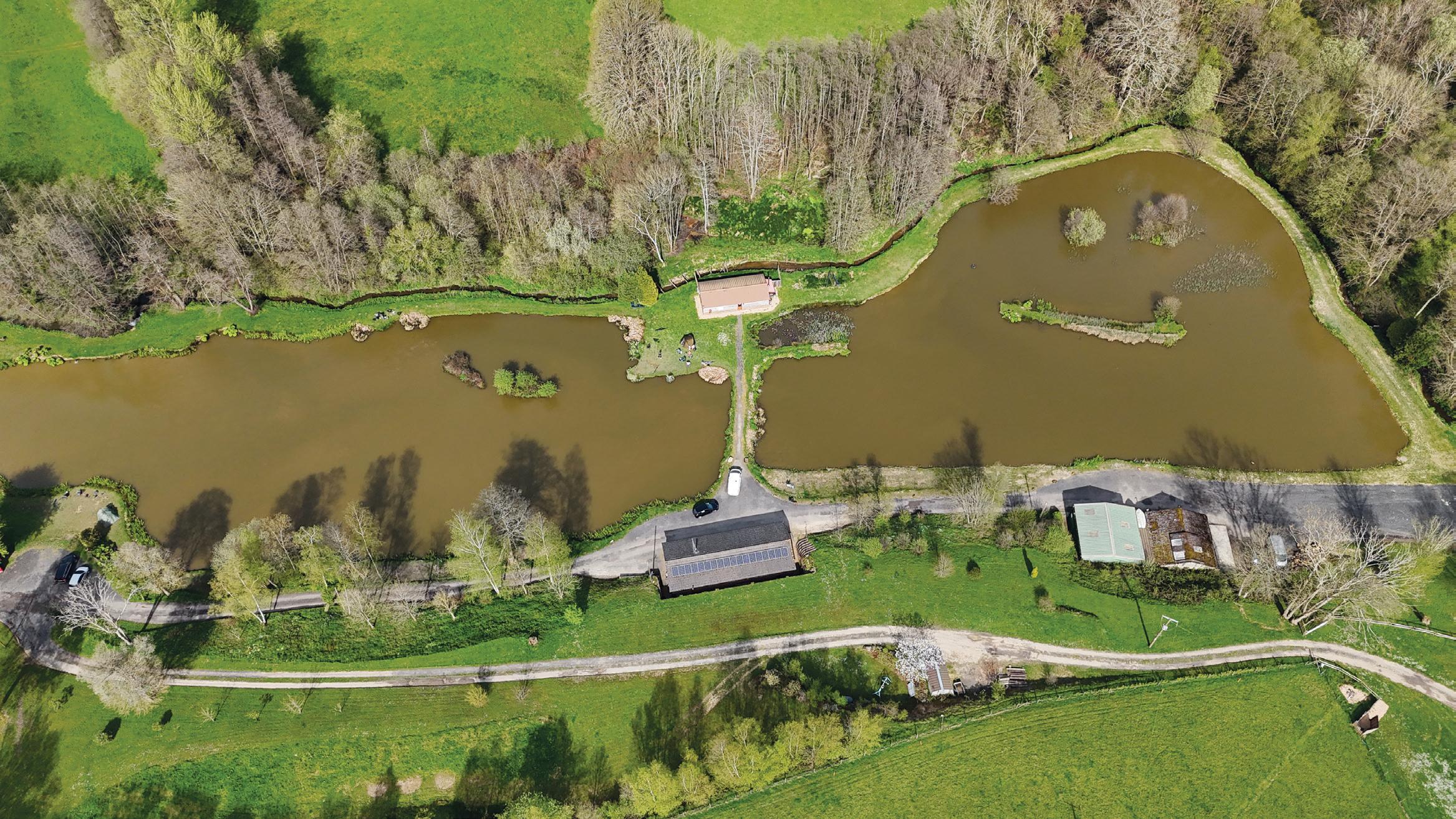
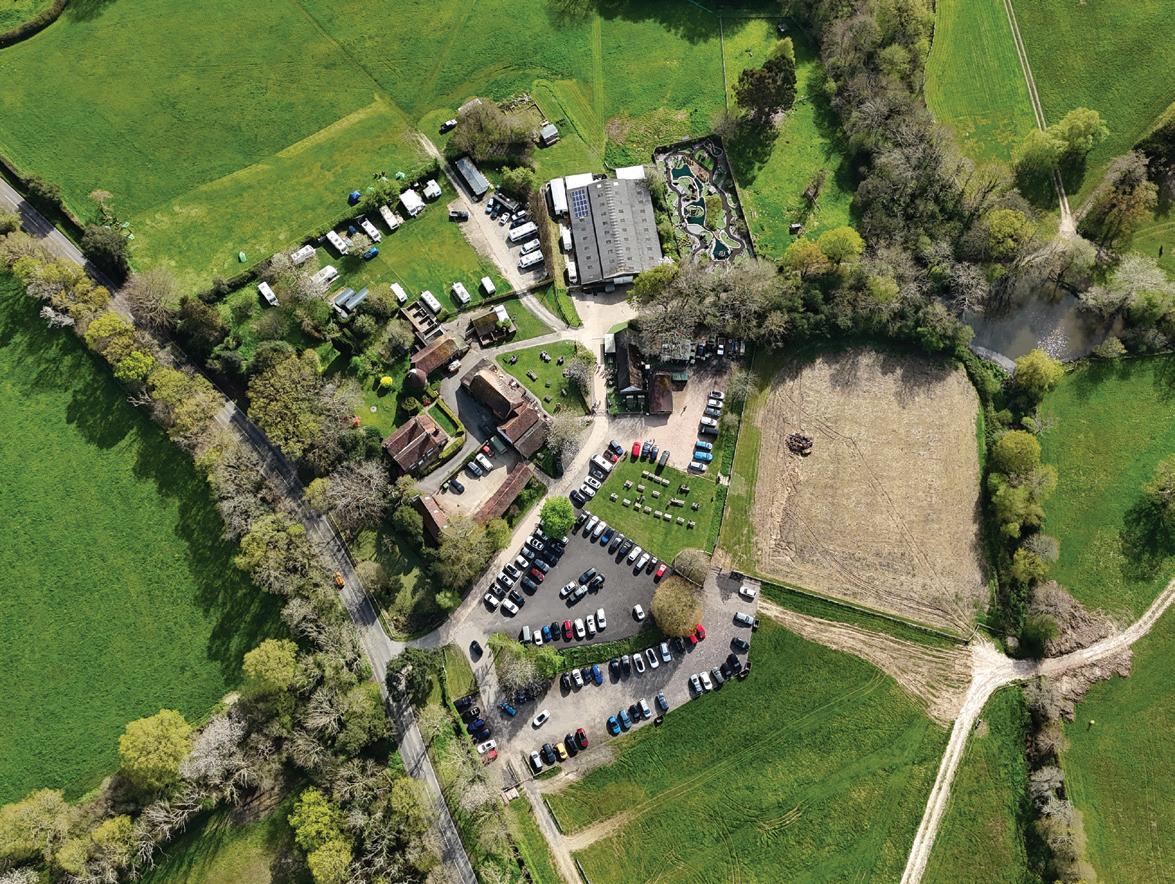
Latchetts is located on the busy A275 road between Sheffield Green and Danehill at Heaven Farm, a 100-acre farm and diversification venue owned by the Butler family.
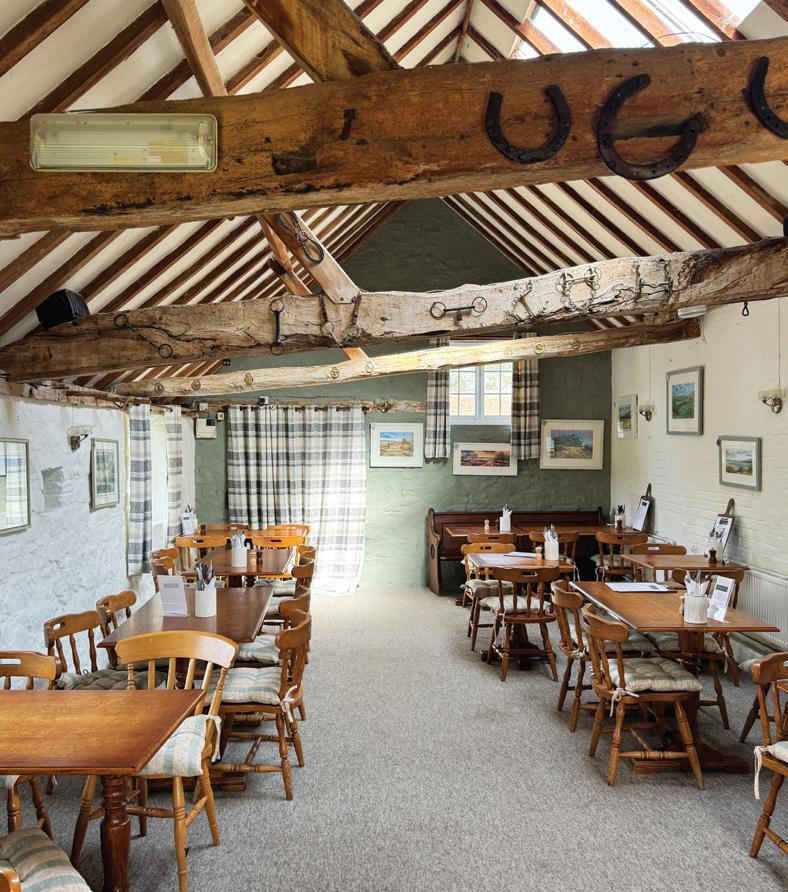
As I arrive on a sunny and warm spring day, the farmyard is heaving with people. The large car park is nearly full, and after finding a space I make my way to the cluster of old farm buildings which houses Butler’s Pantry - a tea room, bar and soon to be open farm-to-table restaurant.
Grant comes down from his office to meet me and we sit down for a chat on one of the picnic benches located outside.
He explained that he grew up on one of the family’s dairy farms, Flitterage farm in Fletching, run by the family business FJ Butler and Sons.
At one point the family farmed 1,800 to 2,000 cows across several farms in Sussex
and Dorset, he said. Most of the land was farmed on contract farming agreements, farm business tenancies and tenancies, but after suffering TB breakdowns and milk price crashes, they were forced to scale back. Grant’s dad, David Butler, ended up selling the farm in Dorset.
The family was then left with Heaven Farm, owned by Grant’s family, Flitterage Farm, Watlands Farm and Tremains Farm, a tenanted farm in Horsted Keynes run by the family business F J Butler and Sons. After exhausting all avenues to extend the tenancy on Tremains Farm, Grant began exploring diversification opportunities at Heaven Farm. He looked at cheese, cabins and holiday lets. “Anything to bring some money in,” he said.
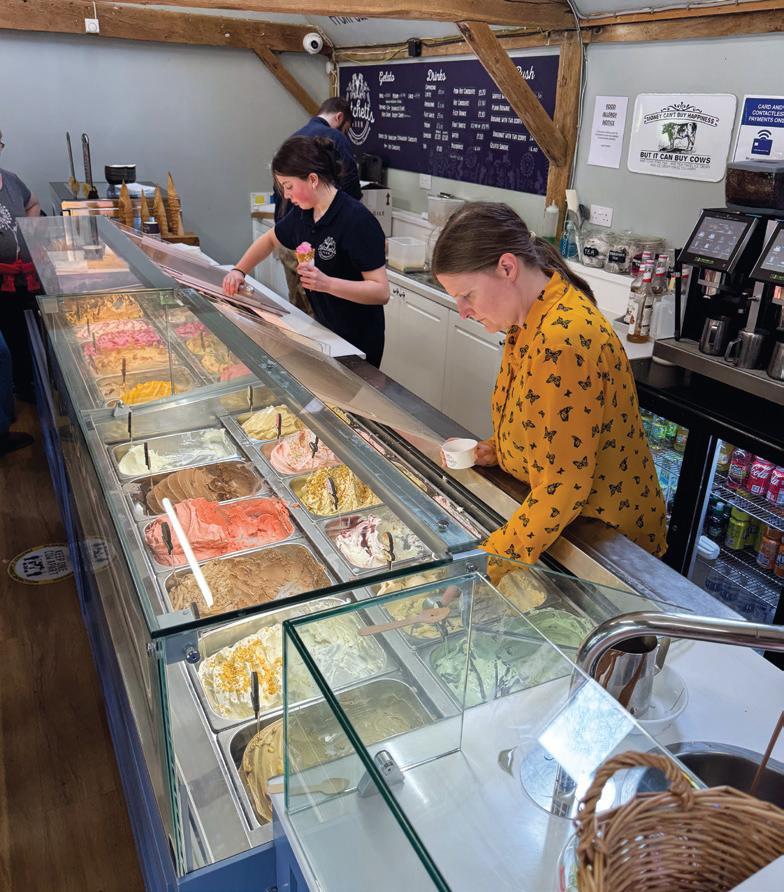
Spotting a gap in the market for gelato ice cream, he set up a small shop at Heaven Farm in 2019. He bought Italian gelato making
equipment and started turning small batches of their British Friesian milk into fresh gelato to sell from the farm.
Grant named the business Latchetts Farm after the place where his great grandfather Jack Butler had started FJ Butler & Sons in 1949, with six cows and a bicycle.
Where a lot of dairy farms wholesale ice cream and gelato, not many do retail as they don’t want to deal with the pubic, Grant explained.
He bucked the trend and went for the retail market, which allowed him to set his own price and make a better margin.
It’s a strategy that’s paid off, and nearly five years on they make about two and half tonnes a week, with an annual footfall of around 200,000 people through the shop. In addition to retail they now wholesale to a select few places, mainly restaurants, which take large four and five-litre tubs.
MAY 2024 | WWW.SOUTHEASTFARMER.NET 18 NIGEL AKEHURST
LATCHETTS FARM
FARM DIVERSIFICATION AND ENTERPRISE STACKING
Farm diversification runs in the family. Grant explained that it was his grandfather John who originally opened Heaven Farm to the public after clearing the woods and creating a woodland trail in the wake of the Great Storm of 1987.
He then realised that people might want a cup of tea, so decided to convert an old stables behind the farmhouse into a tea room. Over the years the tea room has grown in popularity, receiving around 30,000 customers a year before Grant opened his gelato shop.
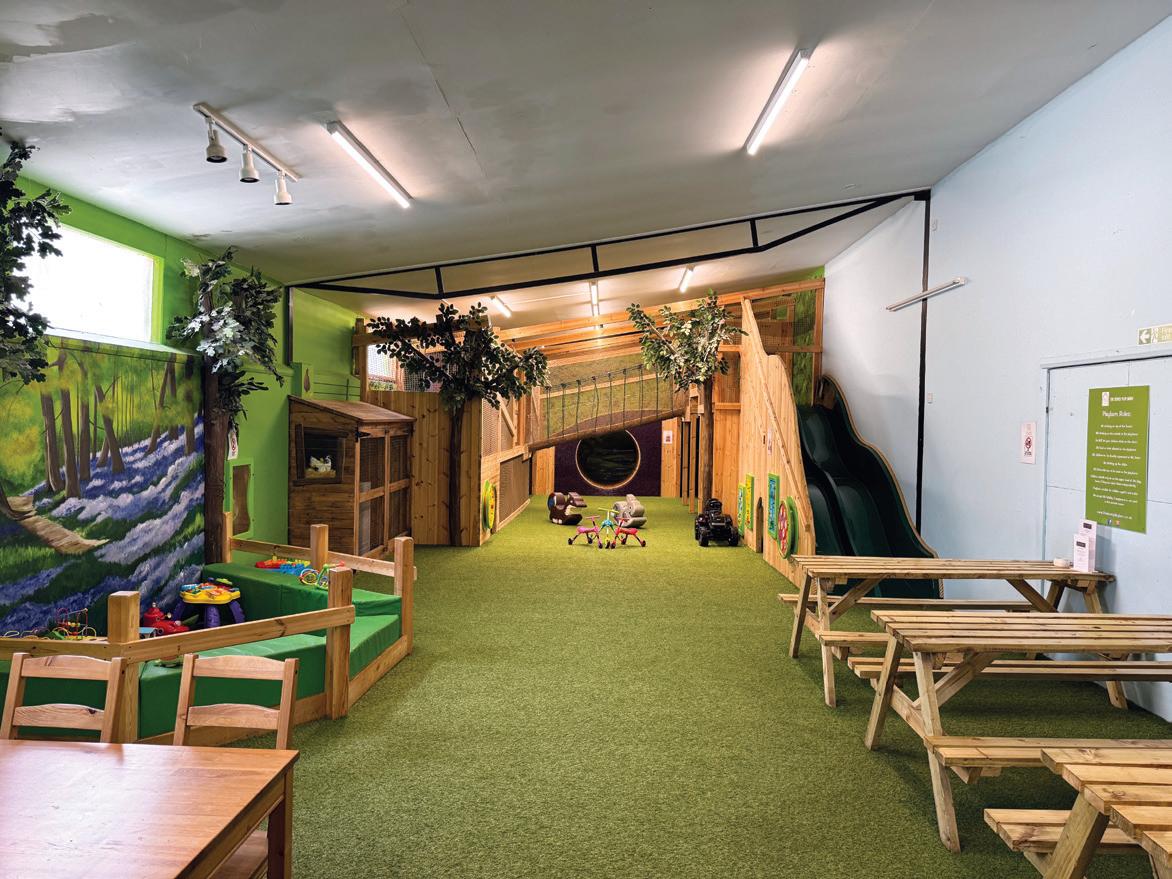
With Covid-19 hitting the following year, footfall jumped significantly, he remarked. With many places shut, people flocked to the farm to enjoy some time outside and an ice cream. To capitalise on the rise in demand, Grant decided to convert an existing beef barn into a soft play area, called the Doves Play Barn. It has a small toddler area for under-fives and a big inflatables park next to it.
Converting the barn and buying all the kit was a sizeable investment, around the cost of a new tractor, he said, but he described the payback time as “insane”. The inflatables were installed in December 2022 and had paid for themselves in the first year, along with all the other capital expenditure, highlighting how profitable these ventures can be.
Their next venture was a crazy golf course called the Cow Putt, which was professionally designed and installed.
Showing me around the course, Grant pointed out various bits of old farm machinery kept by his granddad, including an old grey Fergie.

FARM FACTS
• Butler’s Pantry, Farm Kitchen and Bar –in the process of opening a new farm-to-table restaurant
• Launched Gelato ice cream business in June 2019 under Latchetts Farm brand
• Cow Putt crazy golf course
• Doves Play Barn
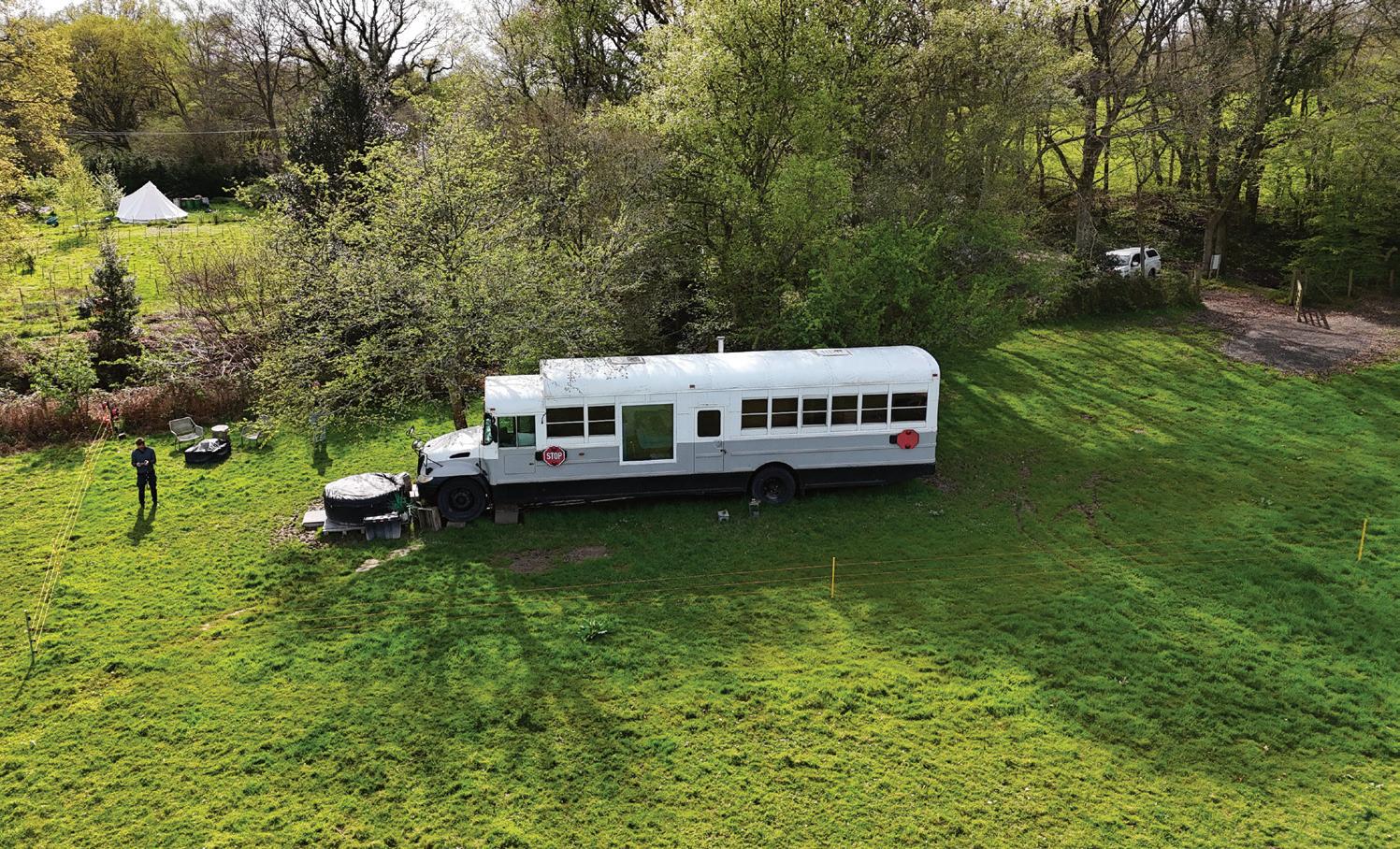
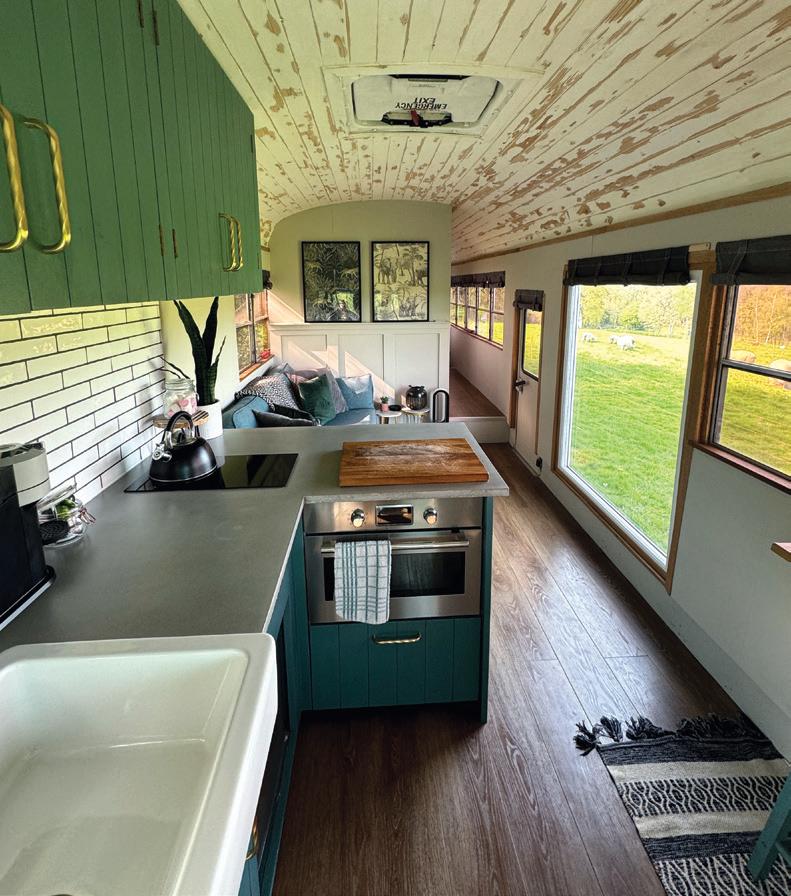
• American school bus Airbnb joint venture located above fishing lakes (85% occupancy)
• Plans to install a high ropes course in the woods next summer
• Plans to expand camping and glamping
• Pumpkin patch
• Maize maze
• Gone from around 30k to 200k footfall per year
• 300 acres of arable crops, 100 acres of CS and SFI crops and remaining 200 acres of pasture.
>> WWW.SOUTHEASTFARMER.NET | MAY 2024 19 TO ADVERTISE CALL 01303 233883
NIGEL AKEHURST VISITS: LATCHETTS FARM
He found the psychology behind the design of the course fascinating, likening it to a milking parlour and the need to minimise pinch points. He said it had been another popular attraction and it was at capacity on the day of my visit.
There is also a lot of other seasonal outdoor activities such as a maize maze, sunflower picking, pumpkin picking and frisbee golf.
The farm also has a caravan site and campsite, offering seasonal camping for 50 pitches, glamping (including an American school bus Airbnb) and a fishery across the road that the family managed to buy when it came up for sale offering “enormous marriage value”.
To help promote their business and various activities they have a modern website at www.latchetts.co.uk and use social media channels to market directly to customers.
Grant said he was nervous about the cost-of-living crisis but so far had not seen any drop in the number of customers coming to the farm.
“We don’t have any gate entry charge. You can turn up and just have an ice cream, just play golf, just have lunch. You can come and have a few hours for not a lot of money and get outside,” he said.
He admitted their location was also a big advantage.
“We’re smack in between Eastbourne and London. There’s nowhere else really until you get to Tulleys Farm, which is a very different model to this,” he said.
WHAT’S THE DIFFERENCE BETWEEN GELATO AND ICE CREAM?
Eager to learn more about gelato, I asked Grant to show me their make room, where they have four Italian TELME machines supplied by RSS Hereford, the company that designed all their ice cream making and selling areas, he said.
To make the gelato they add sugar, skimmed milk powder, dextrose and glucose to the milk and then cook it to 85 degrees to pasteurize it. The temperature is then reduced to four degrees in an hour and a half. From there it is taken out a bucket at a time to flavour before going into batch freezers.
I asked Grant what the main differences were between gelato and ice cream? There are, he said, no eggs in gelato and the fat content is a lot

<< MAY 2024 | WWW.SOUTHEASTFARMER.NET 20

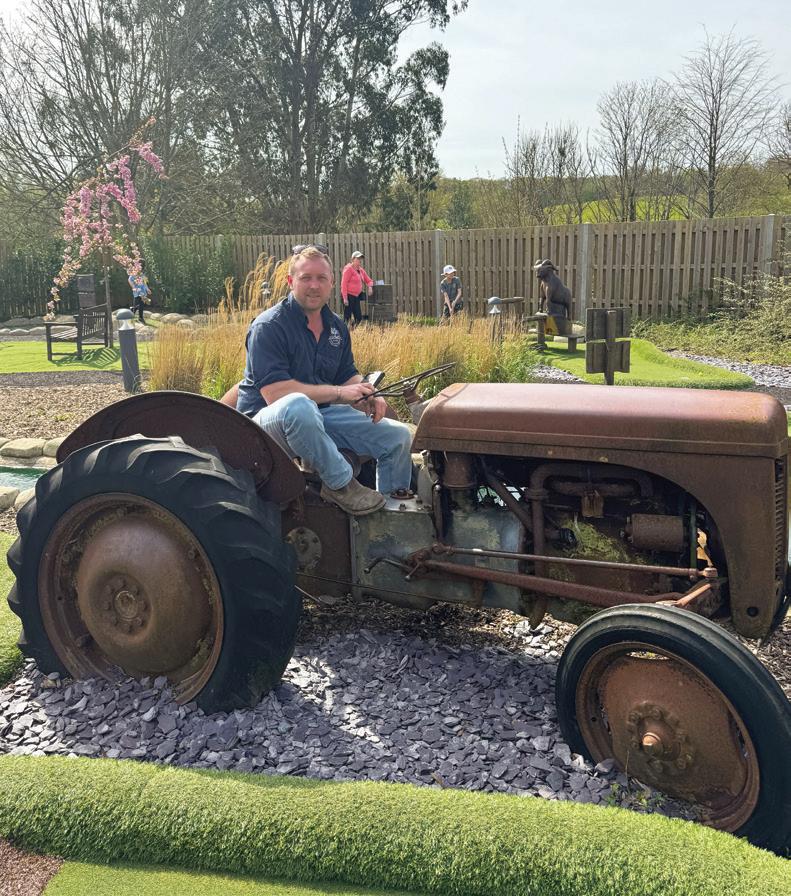 Grant Butler
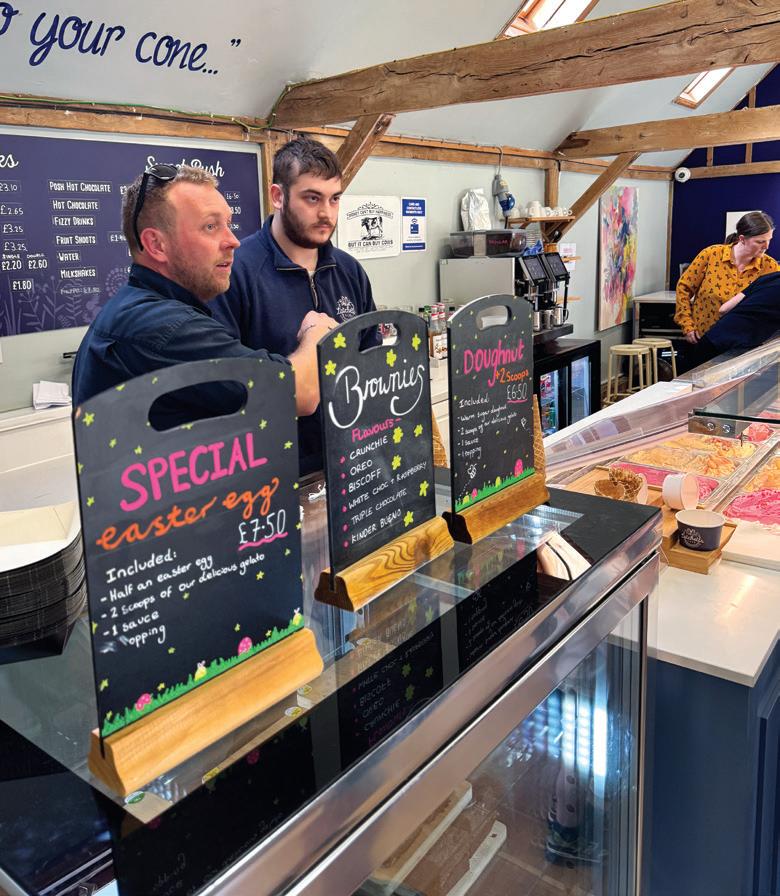
lower. The makers aim for around 8%, whereas ice cream is anything from 18% to 24%, he replied.
Another key difference is in the air content, which is about 20% in gelato, making it taste a lot more dense and creamy compared to ice cream, which can contain up to 60% air.
Going through into the shop, four members of staff were busy behind the counter serving customers gelato in cones and small tubs, with a sizeable queue out of the door.
KEY CHALLENGES AND ADVICE TO OTHER FARMERS CONSIDERING FARM DIVERSIFICATION
One of the main challenges of running a business this size is staffing, said Grant. He needs at least 11 members of staff on site per day and has 37 team members on the books. Due to the nature of the work a lot of the staff are quite young, he said. At times he struggled when dealing with young people but he quickly learned to delegate and now has managers in place so he can focus on growing the business.
Another challenge has been parking. Grant said the business had done everything it could to avoid putting in more hardstanding, using grass mats, but was forced to increase the amount of parking this winter after so many cars kept getting stuck. On planning, he said they were very much farmers and admitted it hadn’t always been done the right way to start with.
Grant advised farmers considering farm diversification to find a good insurance broker. They have worked with a number of brokers over

the years, he said, and currently use Lycetts, which had been helpful in steering them away from potential pitfalls and providing guidance on how to comply with regulations.
When they set up their soft play barn, Lycetts recommended installing security cameras and keeping nine months of footage to avoid fraudulent claims, advice which helped when they recently received a fraudulent claim from a parent after 35 days.
FARMING
Grant said the business was now farming around 600 acres in total, two-thirds of which is arable and the rest grass. He runs about 40 sucklers and plans to increase that to around 100 cows with the Stabiliser breed to supply the restaurant.
“Although it’s the backbone of where everything comes from, it’s really my hobby now as I can’t justify employing anyone. It’s my get away from this place,” he said.
PLANS FOR THE FUTURE
Next on his list of activities is a high ropes course in the woods, which Grant hopes to have installed by next summer. He also plans to improve the existing activities and add more educational elements, including growing more crops for people to see.
Before leaving I asked Grant what he hopes to achieve with his farm diversification ventures. “To earn enough money to one day return to traditional farming on a larger scale,” he replied.
DEER PROBLEMS?

WWW.SOUTHEASTFARMER.NET | MAY 2024 21 TO ADVERTISE CALL 01303 233883
Let Wealden Game help. We have a field to fork policy. Full time professional deer cullers with our own butchery. We are one of the only full time professional deer culling contractors in the South East Visit www.wealdengame.co.uk Call 07789 224466 or email wealdengame@yahoo.co.uk TORRAN CONSTRUCTION LIMITED Cold Stores & Grain Stores Full Planning & Drawing Service A professional service at a competitive price Contact John Rodgers on 07795 678389 or john@torran.biz Jason Glanville on 07743 937875 or jason@torran.biz Agricultural & Industrial Buildings Commercial Building Renovation Full Groundworks Package
AT COLCHESTER MARKET
RECORD LIVESTOCK PRICES
Following last month’s report on exceptionally high prices for beef and sheep in livestock markets, that trade continued throughout the next period, with prices hardening and record prices being obtained.
It’s extraordinary to be seeing prime hoggets over £200 on a regular basis and in all honesty it would be fair to say the quality is probably not as good as it was in February and early March, when prices were much lower. What is remarkable, as we reported last month, is that prices are some 100p/kg dearer than 12 months ago, when the top price in Colchester for the week beginning 4 April 2023 was £151 a head; in 2024 it was £237 a head.
Also, the average price for standard quality quotation (SQQ) lambs that week in 2023 in Colchester was 278p/kg, while in the same week in 2024 they averaged 414.57p/kg. These are prices producers could only dream about in the past but were stabilising while this report was being written in early April.
We also saw the benefit for livestock producers of lower feed cost, although somewhat offset, of course, by higher labour prices and





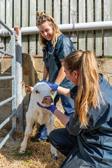


100% Farm Vets
info@westpointfarmvets co uk | westpointfarmvets co uk
Allied teams: vet tech services, foot trimmers, consultants, and front line, dedicated farm animal veterinary surgeons
Catering to all livestock needs: commercial, smallholdings and companion farm animals Meeting the needs of our clients with tailored services, health planning, preventative medicine and emergency care 24/7
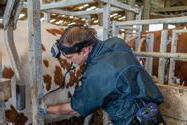




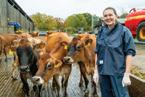
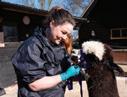

Efficient Sustainable Productive: Our PRO: services focus on health, welfare and productivity on commercial farms; with access to experienced vets with specific qualifications

Our practices can offer: fertility and advanced breeding services, laboratory diagnostics, second opinion care, access to health schemes, export services and more



other outgoings. Farmers were probably dreaming of this situation for many years.
New season lambs continued to come out in very small numbers but, again, last year in the week beginning 4 April we saw a top price for new season lambs of £150 a head; this year they are £189 a head. The price per kg, meanwhile, has jumped from 315p/kg to 437p/kg.
It is also good to see the cull ewe trade high compared with 12 months ago, with plenty of demand for all ewes and £200 not uncommon.
Let us hope this trade can continue with the sheep market. it does need to, but will very much depend on the saleability of lamb and how wholesalers and butchers can pass on the extra cost to the end user, ie the public.
In the cattle ring we also saw a strong trade throughout with, again, prices rising on the year, although not as steeply as for sheep. Numbers, however, are still short and many more could be sold to advantage.
The £2,000 per head barrier is now broken every week, and 300p/kg for quality cattle is a regular occurrence. This is reflected throughout the prime beef trade and the cull cow trade, where numbers are insufficient. More stock could still be sold on a weekly basis through livestock auctions to maximise returns.
Let us hope, again, that beef returns aren’t a flash in the pan and are here to stay. There are still serious concerns with regards to imported meat and lower levels quoted for that commodity, but with all the uncertainty in the world there does seem to be a basis for confidence.
With the trade for beef and sheep still strong, it was also good to see this being reflected in the pig market, with deadweight pig prices maintaining the higher levels seen since 2023 but not rising.
Of some concern for pig producers is that lower prices were being quoted on the continent, but these had not yet reflected on the British trade as this report was being written. Let us also hope again that this level of prices continues, with demand remaining strong.
In the arable world, at last some drier weather which has allowed farmers to start actively drilling into difficult seed beds. It will be interesting to see the level of harvest produced but British farmers will always do their utmost to produce as much as possible and it is going to be very much needed.
In early April potato planting was well behind schedule, with the cold, wet ground putting off many producers from planting early. Sugar beet is also behind schedule and spring barley is being drilled late. Crop failures were being reported from wet fields and many farmers are looking to maximise the availability of non-production subsidies. An interesting time for all.
MAY 2024 | WWW.SOUTHEASTFARMER.NET 22
GRAHAM ELLIS FRICS FAAV FLAA For and on behalf of Stanfords T: 01206 842156 E: info@stanfords-colchester.co.uk www.stanfords-colchester.co.uk
westpointfarmvets westpoint vets
A s h f o r d | C h e l m s f o r d H o r s h a m | S e v e n o a k s | W i n c h e s t e r | Y o r k
PRICES NEVER SEEN BEFORE AT
With swallows in the air and a spell of sunshine to dry the ground, it is perhaps the right time for us to count our blessings after a rotten, long winter!
Clearly prices are relative to the time in history that they are created, but I think it is fair to say that we have never before seen the level of trade being currently achieved for sheep and cattle.
The finished sheep market hits a new high each week, with the undoubted shortage of hoggets creating prices in the open live market that have been accelerated by religious festivals, a shortage of imports and the continued support of the consumer.
Mid-April and with festivals over for the time being, one might have expected to see an easier trade? Nothing of the sort! Hoggets, still with lambs’ teeth and with plenty of weight, sold to £320/head from RH Smith & Partners, Bexhill. Others sold over £300, but perhaps more remarkable is the fact that the total entry of close to 1,400 hoggets averaged £198.83 per head and 420p/kg, topping at an astonishing 510p/kg.
It is not only the prime lambs that have taken a serious lift in price. Ewes should be out in fields with lambs alongside at this time of the year, but there are those that have been grazed empty, fed on roots or suffered a difficulty along the way. Plenty of best continental ewes have been exceeding £200, with Texel ewes from Ellie Husk, Dover, setting the pace at £263.
In a month that has again seen inflation fall, in part due to falling meat prices (presumably
chicken and pork), we can also report exceptional rates for the best finished cattle. Outstanding homebred Limousin x cattle from MB Farms, Sittingbourne, are regularly well over 320p/kg, selling this month to top at 348p/kg for their heifers, with their steers grossing up to £2,271. They are not alone at this high level of quality, with RF & EA Simmons, Hythe, WG Vant & Sons, Faversham, L Smith, Cranbrook and W Alexander (Shoreham), Sevenoaks seeing cattle realise over 310p/kg.
It is not only the prime cattle that are in demand. Ashford stands out clearly as one of the leading cull cow markets in the country, drawing vendors from distance to find first class facilities and a first class trade. Cows from MB Farms have sold to 263p/kg, £1,943/head this month, with an entry of 90 cull cows mid-month averaging £1,284/head, with 14 over £1,600. T Pateman & Sons, Ware, Hertfordshire, brought 20 cull cows to market which sold to £1,809 and averaged £1,377.
Of course, this is the time of the year when farmers are pleased to open the gate and turn stock to grass. It has been so wet that turnout is later, but the grass has grown well, and stock will soon catch up.
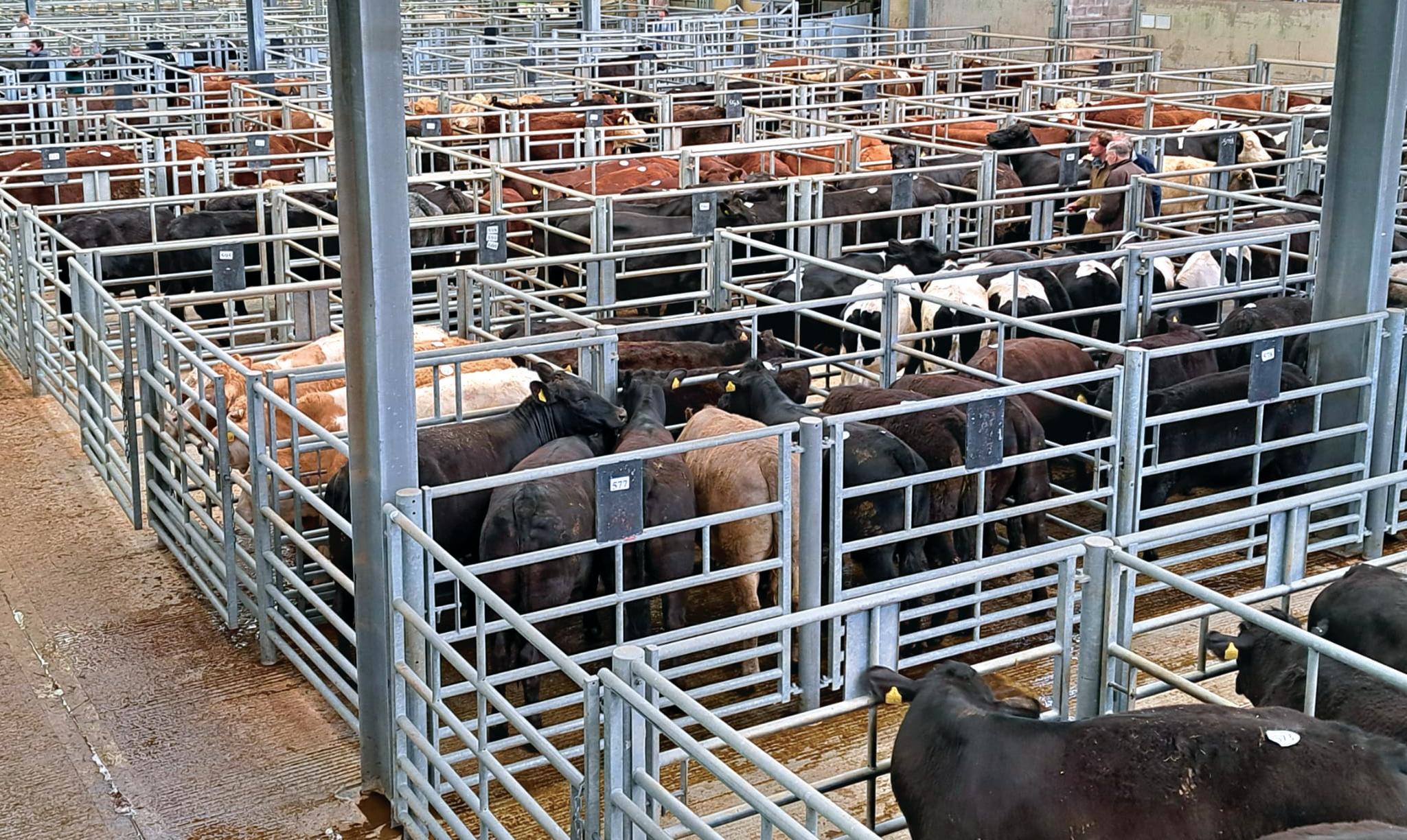
Over 500 store cattle were penned one Tuesday in early April, with the quality on offer a credit to the producers of the south and east of England. Mostly yearling continental cross cattle, prices flew to top at £1,690 for Limousin x steers from HJ Emery & Son, Staplehurst and £1,600 for Limousin x heifers from NC & CG Hedges, Staplecross.
PETER KINGWILL
T: 01233 502222
www.hobbsparker.co.uk

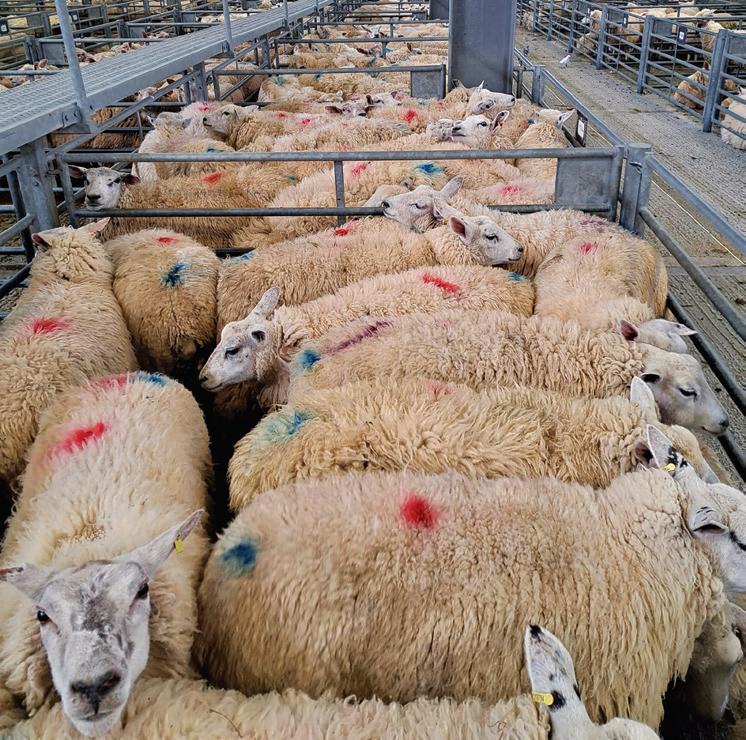
It was pleasing to welcome cattle from GD Black & Son, Woodbridge, Suffolk, selling Limousin x steers to £1,650. Such was the standard of the cattle and the strength of the trade that the overall average for the day was £1,067/head to include beef bred, dairy bred and minority breeds. It was good to see the Sussex breed`s commercial support so strong, with a pen of 18 month Sussex heifers from JC & C Lewis, Sheerness, selling at £1,380, pushed forward by the current strong demand for bulling heifers.
These are great times for beef and sheep farmers and, undoubtedly, these returns and the confidence it generates will filter down to more producers as the cycle of the year rotates, but one lesson it does teach us is that agricultural livestock production or, at least, the hard work stuff of sheep and cattle, is positioned dangerously close to levels that cannot sustain demand from home and our close proximity neighbours abroad.
Unlike the factory-based world of pigs and chickens that can expand and contract, almost at a flip of a switch, the commitment to lambing ewes and calving cows is far greater.
The decline in numbers of livestock farmers is all part of this rise in prices and our industry, and our government, must be careful to recognise the dangers of losing the wealth of knowledge from the older tiers without finding a way of supporting those coming forward to replace them. At the moment many are leaving but few are starting.
WWW.SOUTHEASTFARMER.NET | MAY 2024 23 TO ADVERTISE CALL 01303 233883
ASHFORD MARKET
ALAN WEST SHEEP TOPICS
Lambing is almost done. We have just a couple of Herdys to go, but they will do what they do, when they want to do it; the tup went in at the same time as the other tups but, true to form, nothing happened for a couple of weeks (it's the ewes, the ram’s always keen), while the Lleyn and Suffolk rams just got on with it.
The Lleyn started lambing almost on cue; 145 days would have seen the first lambs hitting the ground on 9 March and in the event the first arrived on the 11th. This was a lovely pair of twins, looking good, the next a cracking single accompanied by a mummified foetus which, by its size, I would estimate as being about six to seven weeks in. This should have rung alarm bells, but sheep being sheep you do the usual and consider it to be just one of those things; it happens.
To be fair, all of the lambs born have been good and strong, with virtually no assisted lambings. The average weight at around 5kg is about right for the Lleyn and there have been some smart looking lambs amongst them, plus the mums have been full of milk; both good indicators that the feeding has been just about right. But numbers have been appalling; in terms of lambing percentage it has been my worst lambing in 35-plus years, and that in spite of lambing in some horrendous weather in the past. We only had one set of triplets, which is no bad thing, but far too many singles.
To further compound the problem, a good week into lambing it was becoming increasingly obvious that things were not as they should be. Lambing outside I do not crutch the ewes; a bit of wool around the rear end affords a degree of protection to the udder during inclement weather, so udder development is not always that easy to spot, but there were a few that I thought should have been showing more bag than was apparent. Having gently walked them all up into the yard one morning, I quietly drafted out those that I thought weren’t showing the udder I expected; there were a few with small, tight udders which I quite like –those ewes with nice tight udders do generally last longer, but there were several with absolutely no sign of any udder development.
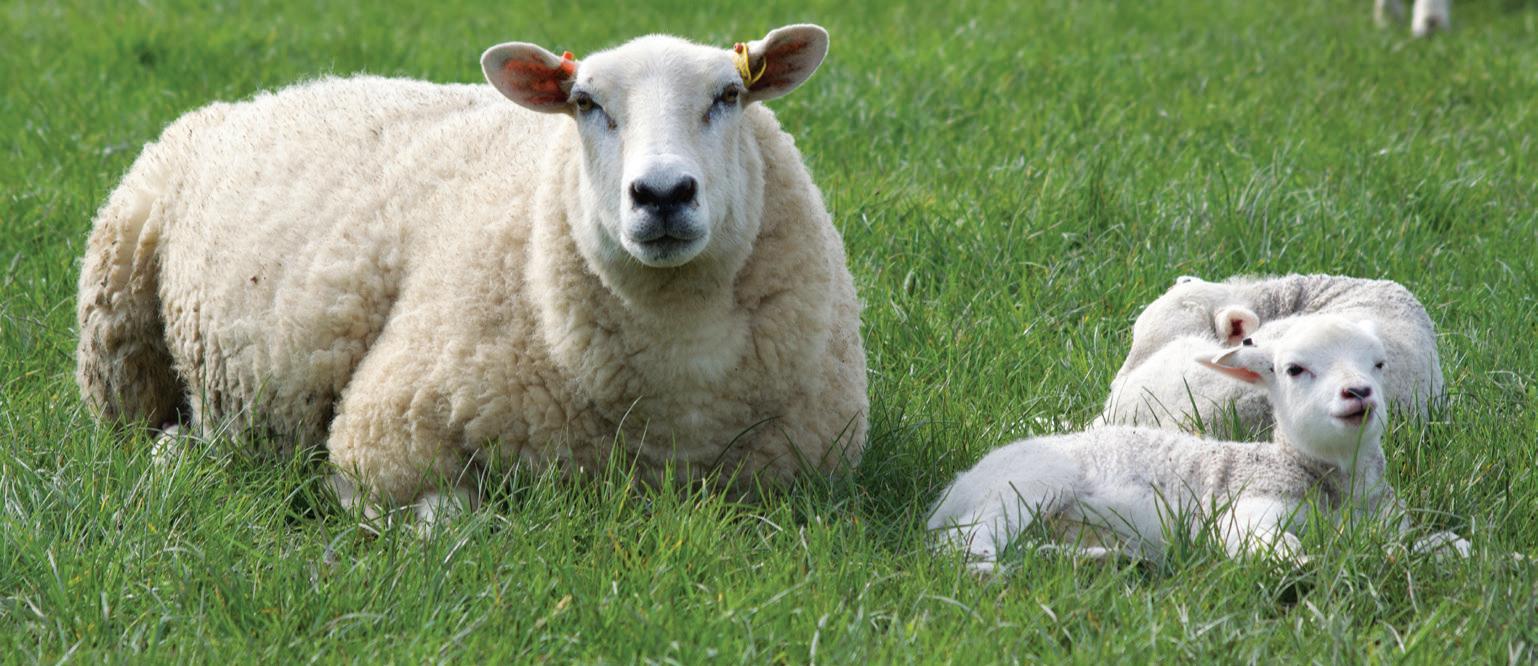
One of the few dry days during lambing and a rare opportunity for a bit of lamb sunbathing
WELL THAT WAS “INTERESTING”
I knew that they had all taken the tup very quickly (12 days) last autumn and, being unusually cautious, had left the ram in for almost two full cycles in case some of the earlier marked ewes hadn’t held in lamb; none were over-marked and even if some had come back to the ram unnoticed, they should all have been showing some udder. It is pointless regretting what one hasn’t done, but for a few moments I did lament not scanning this year. I realised, somewhat belatedly, that I had a number of empties, in fact significantly more in just this year than I’ve had in total over the past eight or more years. I didn’t go back through records prior to 2016; what is done is done.
Considering the season, all of the ewes were, at about BCS 3.5, in good condition going to the tup. Tupping had gone smoothly, as had post-tupping management, nothing different to normal. I really could not work out what had gone wrong, but I knew that something was amiss. A long chat to the vet and really no further forward, we considered and ruled out all of the normal suspects and concluded that it was either the impact of the hot and dry weather extending into the early autumn or, just possibly, Schmallenberg hitting the flock early in pregnancy.
quite a stressful time. Nothing could be done to alter the problem and it didn’t make it go away, but a shared problem always seems a bit less of an issue.
Subsequent conversations with breeders in other parts of the country have highlighted similar problems elsewhere, from the West Country to Wales, with some sadly being very much harder hit; one friend and fellow breeder in Wales has lost more than 25% of his lamb crop to Schmallenberg, something that really does put my problems into some sort of perspective. Locally I have come across several flocks within a half-mile radius of me and who tupped at around the same time, that have had very similar experiences, one almost identical. It does seem to be a rather patchy and localised issue, whatever the cause.
ALAN WEST Sheep farmer
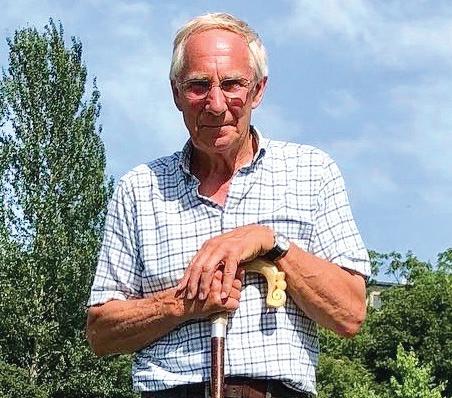
The discovery that a significant number of other producers across the region were experiencing similar problems didn’t make things better, but knowing that I was not alone at least provided some reassurance, a good illustration of how important it is for flock owners to talk to each other at what can be
All I/we can hope for is that for those lambing just a bit later, i.e. into April, the problems had worked their way through the system before they put their tups in. The Herdys, for example, tupped just a bit later, and in a different location all seem to be fine; they have all bagged up and are producing some cracking lambs. At the rate they are going they may even outperform the Lleyn this year, something that, if it does prove to be the case, I’m sure I will be reminded of on a fairly regular basis for some time to come.
But that’s sheep. It’s what makes them interesting, but just occasionally it would be nice if they were just a little less ”interesting”; 2024 will be a year to remember and one that will of necessity simply need to be put down to experience.
MAY 2024 | WWW.SOUTHEASTFARMER.NET 24
ORF AND ORPHANS
These two Os – orf and orphans – have been keeping my mind occupied during what has passed for spring this year. The only signs of spring I have seen have been in lambing sheds or when called out to a calving, lambing or even a few kiddings. The best yet was receiving a picture of beautiful twin beef calves born to artificial insemination.
For the rest, spring is still not showing itself in the weather. Cows are still in and getting desperate to have their first run out, lambs are dying from hypothermia and Gaters are getting stuck in mud.
I certainly think this horrible weather has been playing a role in the first O. Orf seems to have reared its ugly head again this year on several farms. Once in the flock, it can spread fast and some of the lesions have been severe. Big wartlike structures, usually on the mouth, that are ulcerated and bleed easily, often then causing orf on the ewe’s teat, which then leads to Mastitis.
It's so sad seeing these lambs struggling and wasting away as they are finding it hard to suck or eat. And there isn’t much you can do to treat it. I have heard many suggestions, including Blue Spray and iodine, and I have even tried oregano oil on my own lamb, but in the end it is caused by a virus and the lamb will have to use its own immunity to fight it.
All we can give is supportive treatment. It is this immunity though, or lack of it, which is, I think, why this year some outbreaks have again been severe. Either lambs (and ewes) have been kept in longer than normal and become overstocked, increasing the infection pressure or, if they are outside, they are struggling because of the wet conditions. Both these situations put pressure on the lamb’s immune system and ability to fight the virus. What is important is to start thinking about a vaccination policy for next year. This might involve vaccinating the lambs soon after birth, or in worse cases it might even be necessary to vaccinate the ewes prior to lambing. If lambing indoors, it's important to clean and disinfect the barn after lambing. A disinfectant containing an iodophor or hypochlorite should kill the pox virus. The




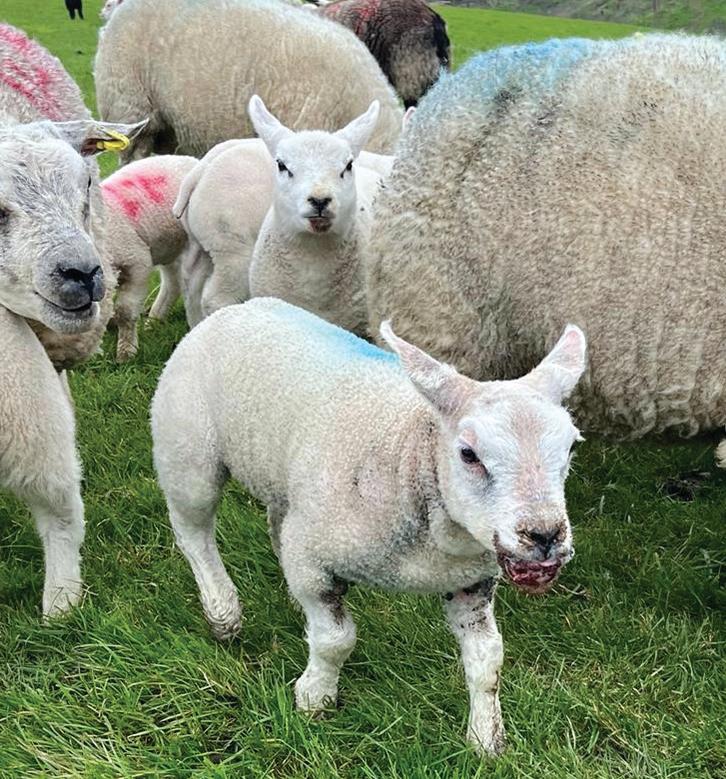

control outside is trickier as the pox virus can remain infective for many months in dried scabs.
Besides orf, I have also been discussing bloat in orphan lambs on several occasions. I guess it does make sense. Orphan lambs are more prone to bloat as, however hard you try, feeding regimes will never be the same as a lamb suckling from its ewe. But there is nothing more frustrating than doing all the hard work getting these lambs through the first weeks to then see them suddenly drop dead from bloat at four or five weeks old.
There do seem to be some things you can do to try to reduce the risk. Ideally, feed small amounts of milk throughout the day. For this I have seen different solutions, from the top-notch milk feeder machine through to the heat wave system and the shepherdess system. If it is not possible to feed with any of these systems and the bottle is used, then it's important to try to feed at the same concentration at the same times every day. Feeding the milk cold(er) after the initial two weeks of milk feeding does seem to slow the drinking speed and hence reduce the risk of bloat.
We have also discussed the quality of the creep feed that is being fed. Bloat is usually caused by Clostridium species, but these bacteria need an optimum environment to multiply in. Warm milk can create such an environment, but also changes in the diet that change the gut flora can create good conditions for multiplying. Hence it is often seen around weaning, when the feeding


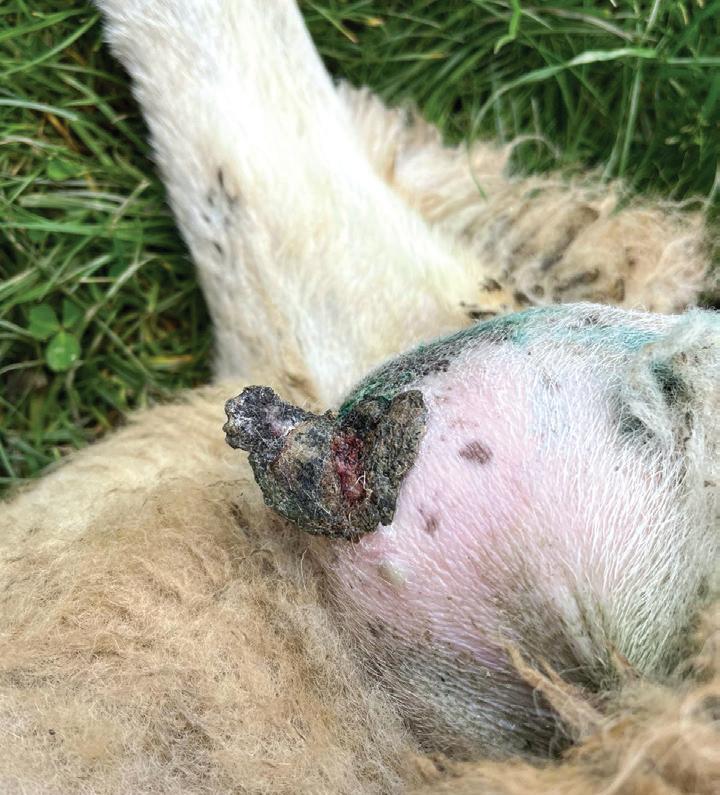

regime is changed. The quality of the creep feed will also have an effect on this flora, so it is important to invest in good quality feed. On top of this, lambs need access to some good quality forage.
One interesting way to reduce the incidence of bloat I read about was by adding yoghurt to the milk.
This is a Norwegian technique that has been adapted by a Waikato farmer called Claire Bull. An online search will find the technique, which is slightly more involved than just adding yoghurt, but the pro- and pre-biotics in the yoghurt have a positive effect on the lamb's guts and help prevent bloat.
For treatment, if you get the chance, there are several different options. A non-steroidal anti-inflammatory drug (NSAID) certainly has its place, and treatment with electrolytes and a source of bicarbonate of soda seem to be helpful, too. The conversation I had with someone about keeping the lamb moving was definitely the funniest, though, as I pictured someone running around after the lamb until the bloat had reduced.


WWW.SOUTHEASTFARMER.NET | MAY 2024 25 TO ADVERTISE CALL 01303 233883 VET DIARY ANJA VERKUIJL Cliffe Veterinary Group T: 01273 473232 E: nanja@cliffevets.co.uk www.cliffefarm.co.uk
WHAT DOES SUSTAINABLE FARMING ACTUALLY MEAN?
By Mia Ellis.
Sustainability in a farming context is the ability to continue to produce food that meets the demands of the present population without compromising future generations’ food supply.
Another way to consider this would be farm resilience, which encompasses economic aspects, livestock health and welfare, crop productivity and the farm’s response to a changing climate. The sustainability triad defines this under a one health umbrella as ‘an approach that recognises that the health of people is closely related to the health of animals and our shared environment’.
SUSTAINABLE FARMING
There is a lot of terminology thrown around in this area, including agroecological farming, organic farming and regenerative farming. Essentially, they all have the same underlying principles surrounding protecting ecology, holistic farm management, minimising inputs, knowledge transfer and considering social impact. These not only focus on the resilience on the individual farm but how that connects to the whole food system in the UK, with the aim of building a flexible agricultural system for the future. Many farms using one of these terms to define their business will be using principles from all three practices.
Agroecology encompasses all sustainable farming methods that are working towards a functional ecosystem to produce food. Agroecology is an integrated farming system that focuses on diversity of and within species and aims to create a resilient farm that values social traditions and utilises natural resources with a high production but low external inputs. It has been considered to be one of the best nature-based solutions for land use in the UK to protect the ecosystem and food security.
Organic farming is the only one of these practices that has an assurance scheme that is widely recognised throughout the world, providing some accountability to the label. The
key principles include health, which is more than just the absence of disease but focuses on improved quality of life, ecology by reducing chemical impact and protecting nature, fairness and care. Although this is a more prescriptive way of farming, organic systems should encourage adaptation to change and allow flexibility for local conditions.
Regenerative farming doesn’t have one definition as it is meant to be individual to the farming system, based on preventing degradation to the land. There is a strong focus on soil recovery and protection as this is key in water cycling, therefore practices that are often used include no/minimum tillage, cover crops and integrating livestock. The main difference being that although synthetic inputs are minimised there is still the use of them in this style of farming. In the UK there is no certification for regenerative farming, making it an easy-access farming style if there is the mindset to move away from conventional farming.
THE BIG CHANGE
Most farms are needing to consider some sustainable practices due to changes in legislation and funding, but this doesn’t mean that everyone needs to convert to a small diverse farm. Many changes being made by large scale, conventional farms are part of the sustainability principles, with highly efficient housed livestock units producing some of the highest welfare, lowest impact products. There are a few things that every livestock farmer can consider changing to make their farm more sustainable, which include slight alterations to grazing management, animal selection and a reduction in anthelmintic and antibiotic use.
Genetic selection sounds complex and time consuming, but selection of animal traits that suit your farming system is something you are likely to be doing already. For example, only breeding from animals that calve/lamb without assistance, keeping breeding stock that have
good udders and mothering instinct, breeding from animals that produce young with high growth rates. These are all factors that can be easily monitored with a small amount of data recording such as birth weights and birthing ease. This ensures you have livestock suited to your system, that will have fewer health issues, therefore requiring fewer synthetic inputs, and have greater feed conversion.
Anthelmintic resistance is well known, with many farmers already trialling different strategies to reduce this risk. The use of faecal egg counts to determine whether or not animals need worming, rather than blanket treatment, and using accurate weights and dosing accordingly both reduce resistance. Anthelmintics also have a negative impact on certain species such as dung beetles, with a ricochet effect on the ecosystem. By using them unnecessarily we are also killing off the natural system that reduces parasite build up on pasture. Utilising grazing strategies such as mob grazing, rotational grazing and adaptive multi-paddock grazing all break the gastrointestinal parasite life cycle without the use of anthelmintics. By just splitting a field in half and rotationally grazing it farmers can reduce the use of anthelmintics and save some money.
Sustainable farming is a way of making your farm and system resilient to future changes.
MAY 2024 | WWW.SOUTHEASTFARMER.NET 26 ADVICE
Westpoint Horsham T: 01306 628086 Westpoint Ashford T: 01306 628208 Westpoint Sevenoaks T: 01959 564383 Westpoint Winchester T: 01962 779593 Westpoint Chelmsford T: 01306 628489 E: info@westpointfarmvets.co.uk www.westpointfarmvets.co.uk
you would like to discuss anything covered in this article contact your local Westpoint practice
FROM THE VET
If
ENHANCED ANIMAL PERFORMANCE AND
IMPROVED PROFITABILITY
Turning stock out to grass in spring comes as a relief to many farmers, but animal performance and health can suffer if stock are not maintained on a nutritionally balanced diet.
Careful supplementation at grass can be the catalyst for enhanced animal performance and improved profitability. Crystalyx products offer tailored supplementation throughout the grazing season.
Crystalyx Cattle High-Mag helps maintain normal blood magnesium levels during times of risk to reduce the risk of grass staggers. Containing 10.5% magnesium from a unique blend of three different magnesium sources, Cattle High-Mag is formulated with dehydrated molasses to ensure palatability even on lush pasture.
Incorporating a full range of essential trace elements and vitamins, Crystalyx Cattle High-Mag perfectly balances deficiencies in grass.
Independent research has shown that feeding Crystalyx Cattle Booster at grass significantly improves daily live weight gain and fertility thanks to a more efficient rumen fermentation. Feeding Crystalyx makes the rumen bugs work harder so they digest forages more effectively and efficiently, improving overall diet digestibility and enhancing animal performance.
During the warm days of late spring and early summer, flies can be a constant pest of grazing cattle, reducing the time spent grazing, which in turn decreases forage intake and can result in a significant loss of performance.
Crystalyx Garlyx contains a concentrated source of garlic to ward off biting insects, together with a full complement of essential minerals, trace elements and vitamins to balance the recognised deficiencies in spring and summer grass.
So whatever the time of year, there is a Crystalyx feed lick to help keep stock healthy and performing at their best.


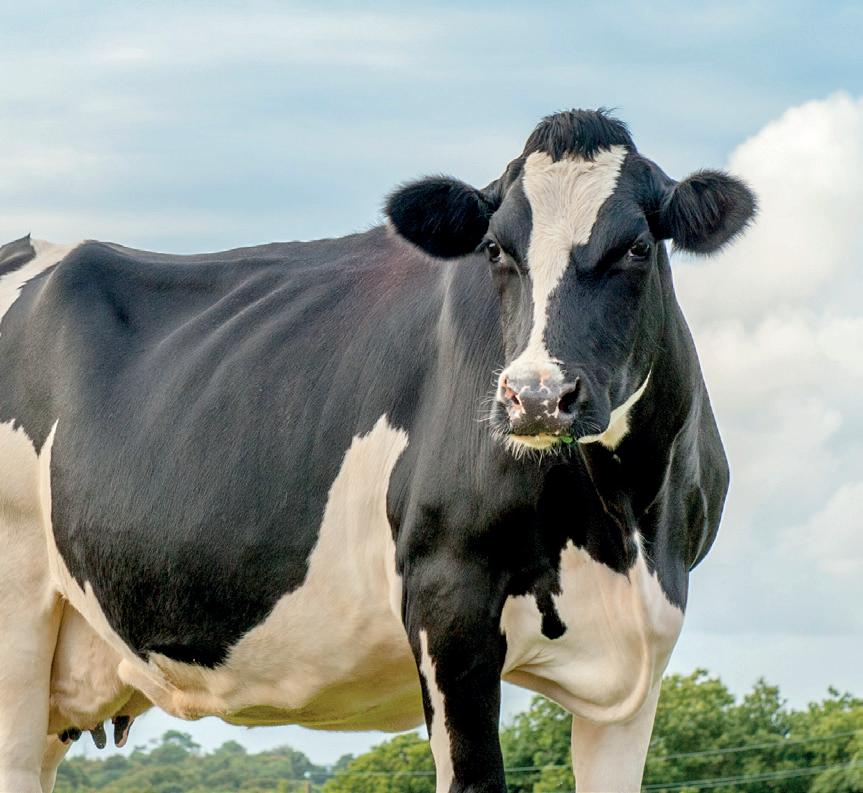


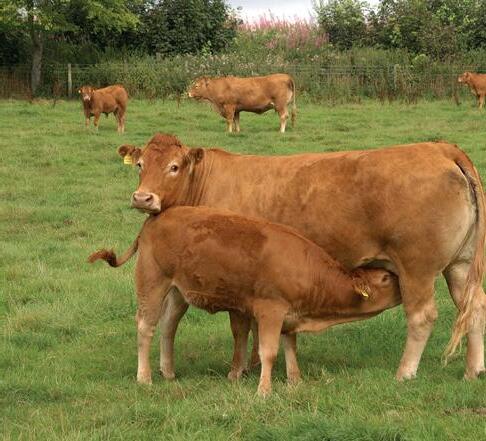

















WWW.SOUTHEASTFARMER.NET | MAY 2024 27 TO ADVERTISE CALL 01303 233883
LIVESTOCK
RESEARCH PROVEN GET READY FOR A SUCCESSFUL TURNOUT! CHOOSE CRYSTALYX THIS GRAZING SEASON. +44 016973 32592 | info@crystalyx-global.com Find your nearest stockist at crystalyx-global.com Crystalyx UK REDUCES THE RISK OF FLY AND MIDGE BITES HIGH MAGNESIUM TO BALANCE SPRING GRASS IMPROVES FORAGE INTAKE AND DIGESTION FOR ENHANCED PERFORMANCE
South East Farmer is delighted to welcome Mike Kettlewell, who has contributed a number of occasional columns to these pages in the past, as a regular correspondent. Mike is a member of a farming partnership which encompasses 400 acres of arable land, South Devon cattle and stewardship in the Cotswolds.
FEEDING FARMLAND BIRDS
Feeding birds in the garden over winter is no longer a mark of eccentricity but is firmly embedded in suburban culture, and has spawned profitable businesses supplying suburbia with tempting food mixes. For decades the RSPB has actively promoted feeding, and its efforts have been rewarded by the rise in suburban species and bird numbers, documented via the RSPB Garden Bird Count.
Farmers, with a few notable exceptions, have been much slower to take up this pastime on farm, even though arable work is less pressing during winter. It just isn’t real farming. Even DEFRA was slow to add feeding to its environmental schemes. Things are picking
up now though, with increasing numbers of farmers contributing to the GWCT’s annual ‘Big Farm Bird Count’.
We have been feeding on our patch of land for over 20 years. It all started when a redoubtable lady, who ran a small local Bird Aid group, accosted me on one of our public footpaths. She suggested I might consider feeding our farmland birds? My grudging reply was that “I fed my garden birds, and planted wild bird seed mixes and the farm was broke, but if she provided the feed, I would indulge her and have a go”.
To my great surprise it worked. It worked far better than I thought possible. I was hooked and started recording the birds present. That
first winter, I noticed a few unusual sparrows. Tree sparrows, with their brown heads and black cheek patches! This caused a flurry of local excitement.
Tree sparrows, once common, are now very rare. Dr Alan Larkman, chair of the Oxford Ornithological Society, was consulted and he suggested adding hanging feeders of millet and nest boxes. The numbers of these tree sparrows increased incredibly over the next few years, to many hundreds. Big numbers were maintained for five years then gradually dwindled to disappear completely in 2018. The tree sparrow decline coincided with rising numbers of house sparrows and we suspected the latter out-competed their cousins for
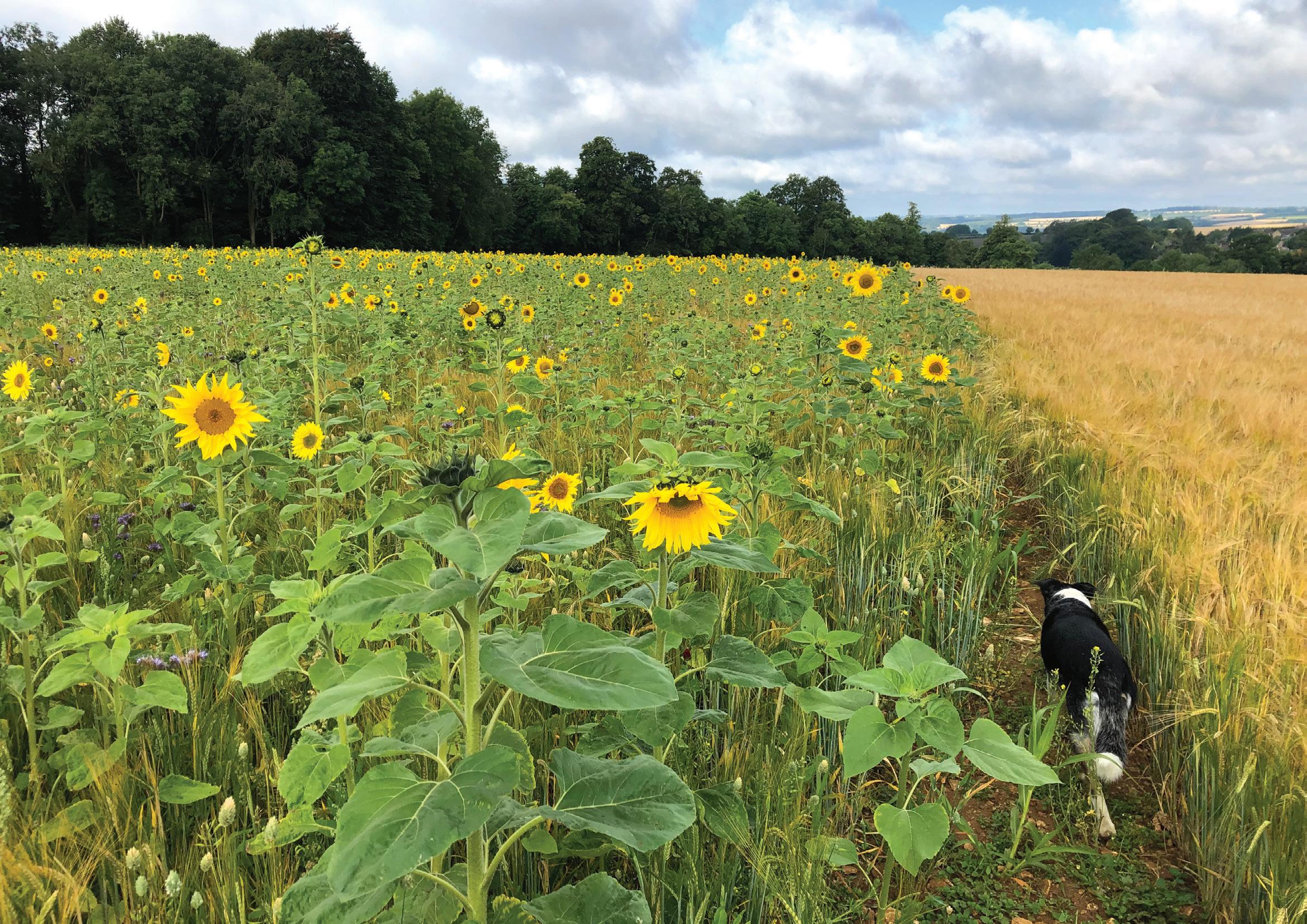
MAY 2024 | WWW.SOUTHEASTFARMER.NET 28 MIKE KETTLEWELL IN PERSPECTIVE
breeding habitat. A dramatic demonstration of rapid ecological flux, if we needed one, to show how easy it is for mankind to affect the ecosystem for good and ill. Lasting solutions are less easy.
The supplementary feeding programme, now well supported by DEFRA, seemed so successful that we undertook a threeyear study with Ian Wilkinson (Farm ED and Cotswold seeds) to supply a scientific backbone to our observations. This showed conclusively that sown mixes don’t last beyond midwinter and that supplementary feeding was effective, consistent and repeatable. In today’s farmed environment it is a lifesaver, but we must earnestly hope that the new environmental schemes will provide enough incentive and resource to regenerate a vibrant ecosystem, alongside profitable agriculture, without supplementary feeding.
We are nearing the end of this season’s feeding period, though we will continue with reducing amounts until mid May, depending on the weather and uptake, to ensure the small birds are in good condition to breed. It is also already time to be thinking about next winter. DEFRA has vamped up its program and payments for 2024 to make it well worthwhile for all farmers to consider. Sown mixes (AB9 & AHL2) are paid £853/Ha with the addition of £366/Ha for supplementary feeding (AB12). Supplementary feeding is currently linked to hecterage of sown, which I think is a shame. It should also be available as a stand-alone provision paid at a higher rate.
Mental health is, sadly, a pressing issue for farmers, largely attributable to stress, financial uncertainty and isolation. Preserving and enhancing our wildlife is not just a faddish public good but a very valuable personal therapeutic tool. Taking a little time each day, perhaps in company, to watch birds flocking to feed; listening for a few moments to birds singing to claim territory as the weather warms, followed later by masses of fledglings skittering in the hedges.
Appreciating all the butterflies and bumblebees on the margins and meadows with more insects on our windscreens in summer to be followed by the glorious autumnal palette of a beautiful thick mixed hedge full of berries. These precious sights, scents and sounds are strong medicine for the troubled mind and so well worth the effort and with no ill effects.
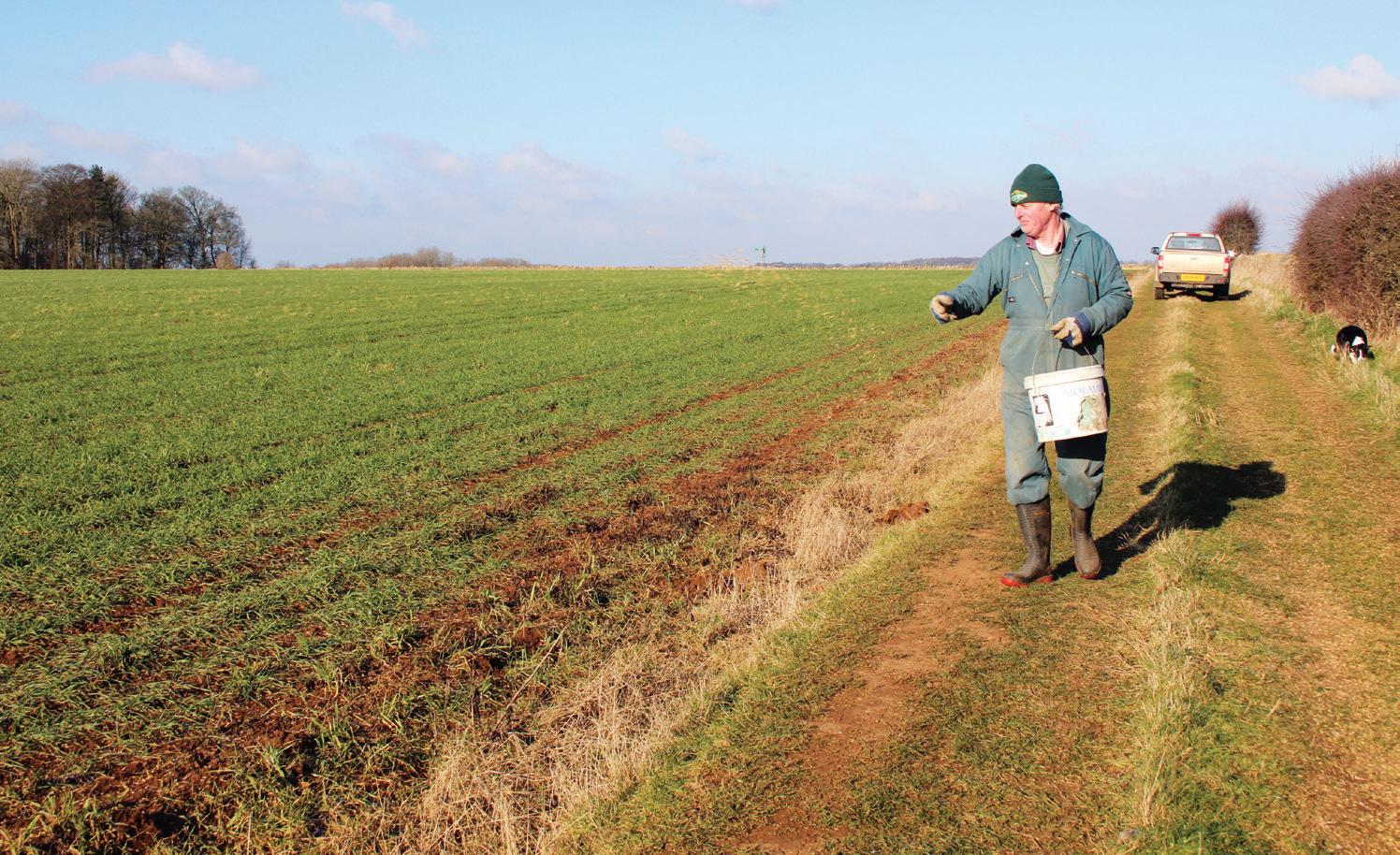
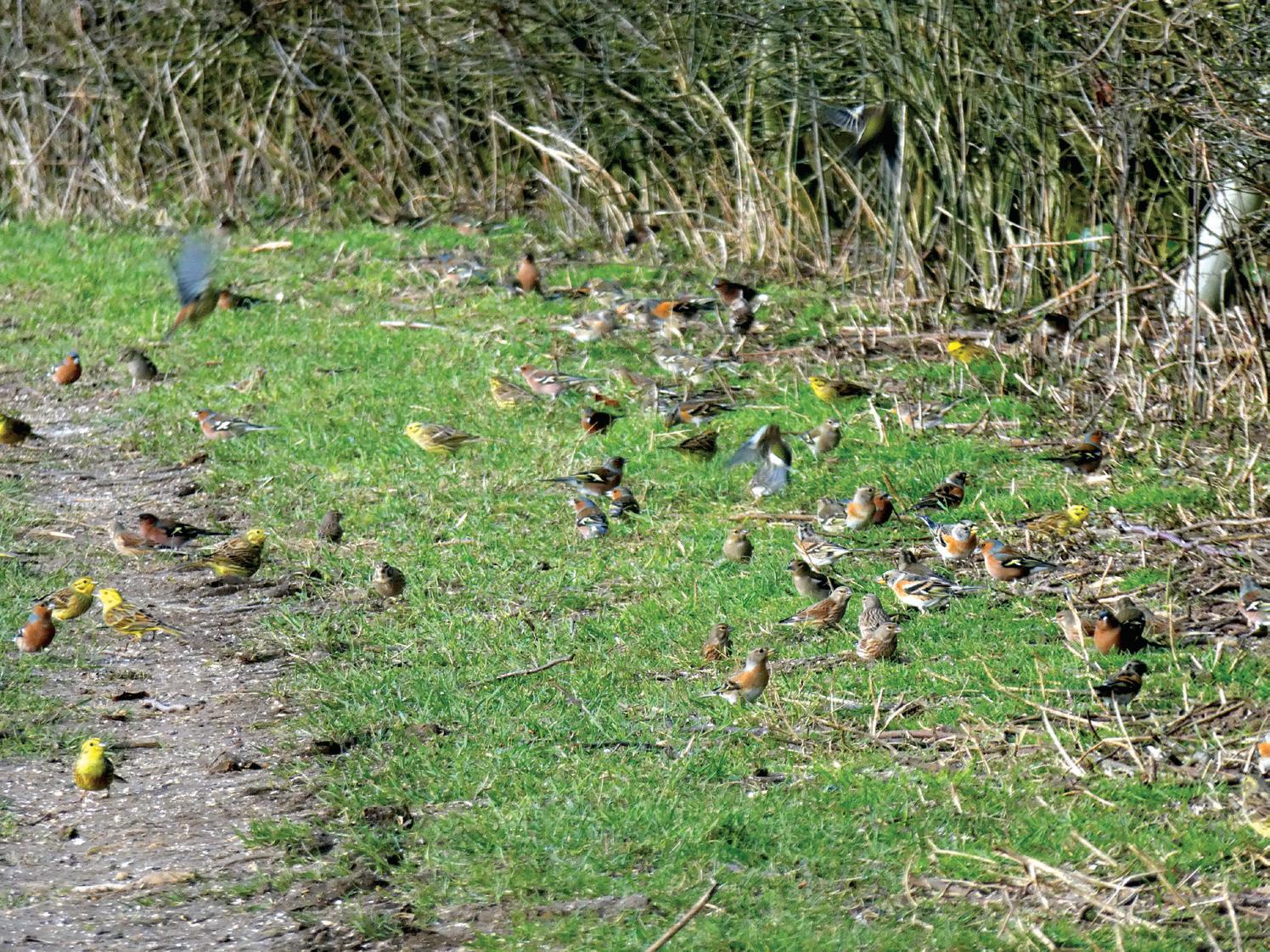
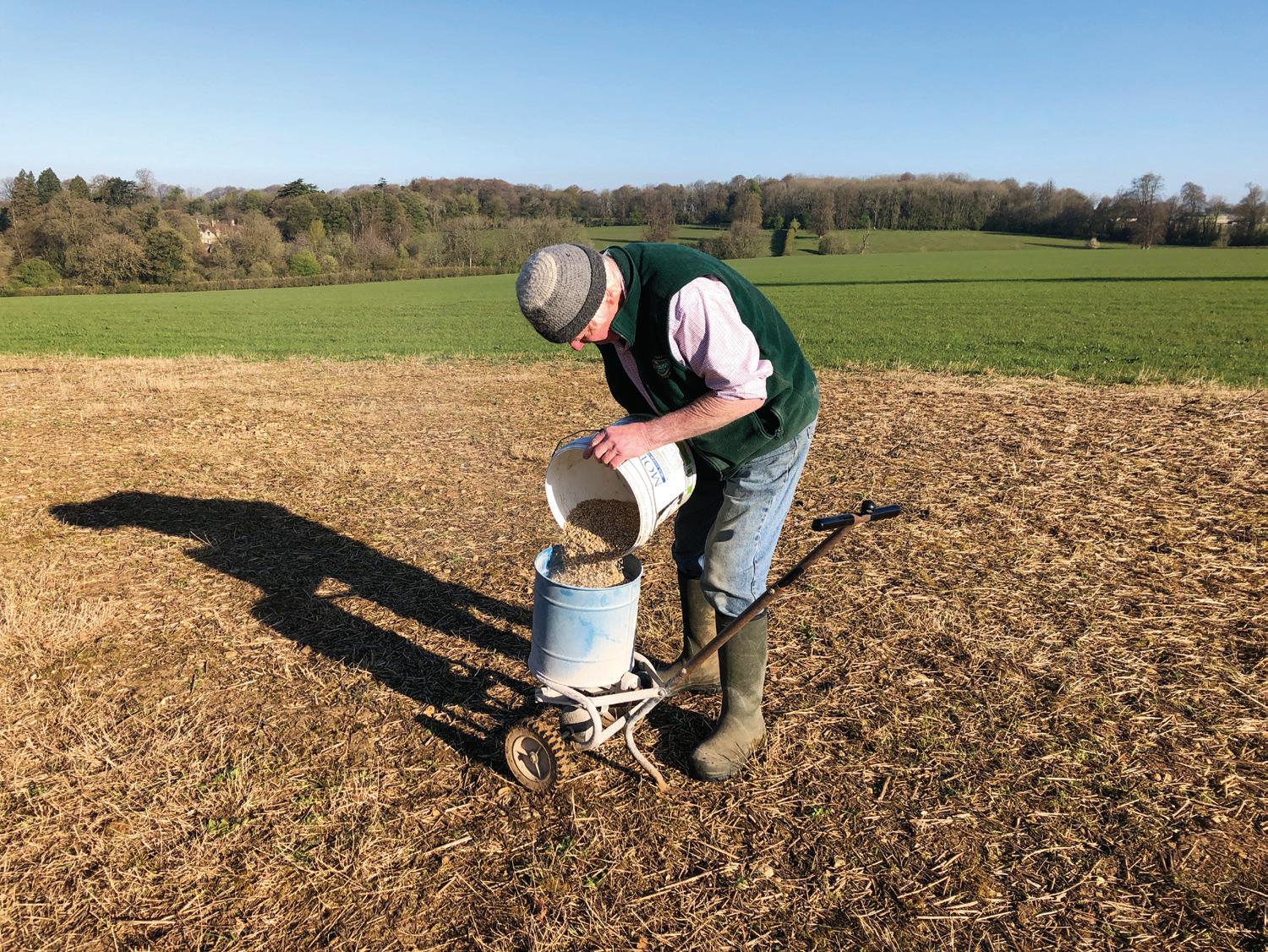
WWW.SOUTHEASTFARMER.NET | MAY 2024 29 TO ADVERTISE CALL 01303 233883


Kent’s Premier Aggregates, Concrete and Masonry Solution
Gallagher Aggregates operate the only two hard rock quarries in the South East of England, as well as six concrete plants throughout Kent. We can deliver over 100 different products including:
• Primary aggregates
• Recycled aggregates
• Ready-mix concrete and flowing screeds
• Roller compacted concrete (RCC)
• Hydraulically bound mixtures (HBM)
• Kentish Ragstone building stone
With our additional on-site landfill and recycling capabilities we can provide a complete materials solution for your next project.
Call: 01622 726262
Email: quarry@gallagher-group.co.uk www.gallagher-group.co.uk
| GROUNDWORKS AND CIVILS |
E info@bfsfertiliserservices.uk www.bfsfertiliserservices.uk BFS New Ad 2.qxp_Layout 1 17/07/2023 16:40 Page 1

PolyNPlus, BFS’s foliar nitrogen fertiliser range, dramatically increases the efficiency of nitrogen usage by plants and virtually eliminates nitrate losses.
Optimise crop economic productivity AND take care of the environment by using PolyNPlus.












OVER 1,000,000 TONNES OF PRIMARY AND RECYCLED HARDCORE, GENERAL FILLS AND SUB-BASES AVAILABLE FOR YOUR SOUTH EAST PROJECTS.

Aggregates QUALITY ASSURED. HIGHWAY SPECIFICATION APPROVED. NEXT DAY DELIVERIES

Foliar nitrogen fertilisers from BFS

“...this product ticks all the boxes on the environmental front” «...the yields and quality of the products we harvested were excellent”
Contact BFS or your local distributor for more information: BFS Fertiliser Services Ltd T 01245 325849

MAY 2024 | WWW.SOUTHEASTFARMER.NET 30
EXCELLENCE.
AGGREGATES
PROPERTY
DELIVERED.
GIVE YOUR PROJECT THE BEST FOUNDATION TO SUCCEED! CALL OUR SALES TEAM NOW 01622 726262
ISO
Gallagher
9001:2015
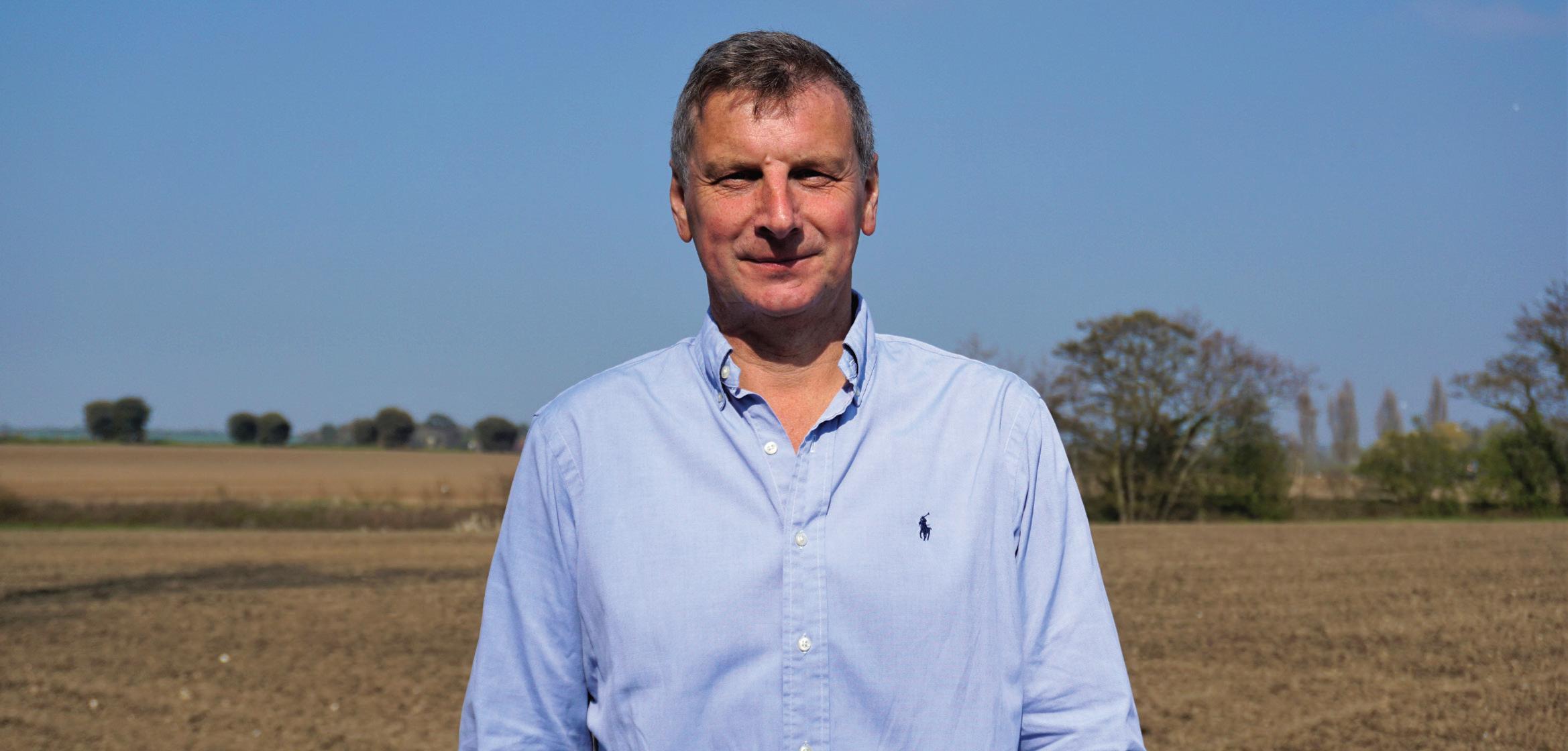
LARGEST BUYING GROUP IN THE SOUTH EAST OF ENGLAND
Foreword from David Fuller, Chairman.
Buying groups evolved in the 1960s and 70s when groups of farmers started clubbing together to try to gain economies of scale when buying their farm inputs.
At that time, farming tended to be viewed by suppliers as ripe for picking. As an industry, holdings tended to be fragmented and isolated, with price comparisons confined to the markets and pubs. The size of the groups and joining criteria varied, but the more successful ones proved effective at purchasing and gave their members a competitive advantage.
Over the years the number of farmers has declined through a natural process of mechanisation and improved productivity. This process has put pressure on some buying groups, which lacked the critical mass to pressure suppliers as members fell away. This led to closures and amalgamation and a decline in the number of groups.
Southern Farmers, with 1,200 members, can lay claim to being the largest buying group in the South East of England, covering an area that stretches from Hampshire in the west over to the tip of East Kent.
With a turnover in excess of £58 million, it remains well placed to leverage the best possible deals for members. Fees are modest and membership gives members access to a complete back office.
The purchasing team is very knowledgeable and can prove helpful when a member is looking to make a purchase in an area with which they are not familiar. The team’s technical knowledge, particularly regarding building products, aggregates and veterinary products, is impressive.
Southern Farmers is a broad church, and members’ turnovers range from a few thousand pounds to several million per annum. If the idea of a low cost, admin backup for your business appeals, do get in touch.
This feature looks to address some of the most common questions raised when both suppliers and potential members approach the group. Being an approved supplier gives companies access to a large customer base and to potential customers who might not have heard of them.
For potential members, we have outlined the basic cost structure of membership and the areas in which the group can be of help. Once an approach is made, the team will be only too happy to answer any queries.

WWW.SOUTHEASTFARMER.NET | MAY 2024 31 TO ADVERTISE CALL 01303 233883 BUYING GROUP FEATURED COMPANY: Southern Farmers Ltd.
COMMERCIAL sales@setyrescommercial.com www.setyrescommercial.com
and
Rapid response breakdown & fitting vehicles in your area. All major brand & economy tyres for agricultural machinery supplied and fitted. Discount for Southern Farmers Members. Contact us: T: 0344 880 8555 (Local rate call) KENT – SUSSEX – ESSEX
David Fuller
Largest stock of Commercial
Agricultural tyres in the South East.

envirolac
butacup extra








MAY 2024 | WWW.SOUTHEASTFARMER.NET 32 NATIONWIDE DELIVERY • EXTENSIVE RANGES IN STOCK southernsheeting.co.uk Supplying profiled roofing products to contractors, builders and farmers for over 40 years visit www.southernsheeting.co.uk for our full range or call 01342 590 357 to speak to our friendly sales team Our main products off the shelf include: • Metal sheeting • Insulated panels • Fibre cement • Rooflights • Onduline • Fixings and accessories • Flashings and fabrications LARGE DISCOUNTS available to Southern Farmer members CS3152 SS SE Farmers 190mm x 133mm advert 2023.indd 1 20/04/2023 16:35 Available now from Southern Farmers. For further information call James at UFAC UK: 07538 763832, or contact Southern Farmers directly: enquiries@southernfarmers.co.uk | 01580 241401 Formulated to meet the cow’s requirements for specific fatty acids using locally sourced fats and marine oils. • Higher milk yields • Increase in butterfat and protein • Improved feed efficiency • Reduction in milk carbon footprint • Does not affect dry matter intake or methane • Increase in milk short-chain fatty acids and DHA Increases overall energy supply Supplies essential fatty acids and C16 fat • Improves overall liver function • Reduces the risk of fatty livers • Provides glycerine to boost the utilisation of fat in the diet • Boosts the immune system • Reduces heating of TMR diets
proven palm-free fat supplement for high-yielding dairy cows The unique fat supplement for efficient butterfat production
Scientifically
How many suppliers do you hold accounts with, and which areas do they cover?
We are pleased to say we hold accounts with over 500 suppliers covering a range of areas. It has always been a priority of the group to ensure we can support all of our members’ agricultural needs and, in addition, assist with any alternative projects in which they may be partaking. For example, if members are diversifying to holiday lets, we already hold accounts with suppliers who could assist, such as builders’ merchants, compost suppliers and kitchen companies.
What are the perks to suppliers for coming on board with Southern Farmers and how can I promote my company through the group once joined?
We offer access to our 1,200 strong membership, payment by guarantee and support from our dedicated accounts team. Our membership is spread across the whole of the South East, stretching primarily between Hampshire and Essex.
When suppliers initially come on board, Rosie Budd, our supplier liaison, will promote the supplier in our monthly newsletter, set them up with access to our suppliers’ portal on the website and inform the purchasing team of the supplier and what they can offer.
Once on board, suppliers are able to advertise offers on our website for free or submit an advertisement in our newsletter for
ACCESS TO 1,200 STRONG MEMBERSHIP
Answering some of the questions prospective suppliers have about Southern Farmers.
a small fee. There is also the opportunity to advertise in our annual special in the South East Farmer magazine, as many have chosen to do this time.
What does it cost to become a supplier? It is entirely free to become a supplier to Southern Farmers. In turn we ask for preferential rates for our members. Our members are passed copies of original invoices and charged a small admin fee to cover processing. We also settle accounts at the end of the month following invoice date, so it is
important that suppliers are confident they can manage a 60-day account.
I think I would like to become a supplier to Southern Farmers, how can I join?
We have a supplier liaison who manages all prospective applications. If you would like to enquire about joining, or would like further information, you can email Rosie on rosieb@southernfarmers.co.uk
Please note, although it is free to be a supplier there is still an application process and acceptance is not guaranteed.
WWW.SOUTHEASTFARMER.NET | MAY 2024 33 TO ADVERTISE CALL 01303 233883 BUYING GROUP FEATURED COMPANY: Southern Farmers Ltd.
Southern Farmers Ltd. FIND OUT MORE Supplier Liaison Rosie Budd: rosieb@southernfarmers.co.uk




MAY 2024 | WWW.SOUTHEASTFARMER.NET 36 01732 863834 sales@geoffboorman.co.uk www.geoffboorman.co.uk T&Cs: 'TANKED' code expires 31st July 2024. Minimum order of 2,000 litres of diesel (DERV or Gas Oil) or 500 litres of kerosene (including Aga Oil and PremPure). Not to be used in conjunction with any other offer. Prize winner to be announced in August 2024. Talk to us about prescription nutrition t: 03333 239 230 e: enquiries@originfertilisers.co.uk www.originfertilisers.co.uk ® Looking for a prescription fertiliser? We are here to help With 17,000+ different grades, our sites in Ipswich and Great Yarmouth can meet all your prescription needs by matching fertiliser to soil and crop requirement. l No excess nutrient l No deficiency l No compromise saves money and protects the environment improves yield and soil fertility match soil sample results & crop need
Membership administrator Sarah Tester:
COVERING A RANGE OF AGRICULTURAL ENTERPRISES
Answering some of the questions prospective members have about Southern Farmers.
How big is Southern Farmers, and what criteria is required for membership?
We have over 1,200 members, covering a range of agricultural enterprises. The only criterion is that any business looking to join the membership has an agricultural interest. There is no requirement to be a certain size before members can join, but we suggest an annual spend of £5,000 to warrant the membership fee and administration charges.
You mention a membership fee and administration charges; could you explain these in further detail?
We charge £125 plus VAT per year, split bi-annually into £62.50 plus VAT charged every April and October. In addition to this, there is a small admin fee charged on each invoice. This is worked out as a percentage ranging from 0.35% (or 95p minimum charge) to 2.5% (capped at £25). This gives peace of mind to those running large, expensive jobs, knowing the admin will never be more than £25 per invoice.
As a not-for-profit company, these funds are used to run the office day to day, leaving us a small amount in reserve for capital projects.
Can I only purchase agricultural throughputs through Southern Farmers?
Certainly not. We hold accounts with suppliers for a range of products, including your usual agricultural throughputs but also a variety of other sectors, building, utilities and mobile phones to name a few. Prospective members are often surprised by the variety in our list of suppliers, which can be found in the centrefold of this article or on our website.
What other benefits are there to maintaining good contact with the purchasing team?
Aside from being able to access prices from numerous suppliers with just one phone call, there are other perks to placing an enquiry with the office.
Firstly, we offer bulk buys on a range of products throughout the year when the market allows. Secondly, we work with our suppliers to ensure we are kept well informed regarding products that are in short supply, fertiliser windows, the straights markets, sheep vaccines, etc. Lastly, there is very little that our purchasing team hasn’t heard before. There has been many an occasion where a phone call starts with: “This might be a strange enquiry…” or: “I’m not sure you’ll be able to help but thought I’d try…”
Members are often surprised to learn that it’s very rare that it’s something we haven’t heard of or been asked for before. We’re fortunate that if we can’t help, we often have the contacts in our suppliers to be able to point us in the right direction.
NEGUS CHASE LTD


GEA milking equipment
Volac calf & lamb feeders
Permastore slurry storage Slurry separators and handling equipment to include Houle, JOZ, Eisele, Landia, Fan, Bauer
Robot scrapers & feed pushers
Briggs dirty water irrigation
Ventilation fans & foot baths
WWW.SOUTHEASTFARMER.NET | MAY 2024 37 TO ADVERTISE CALL 01303 233883 BUYING GROUP FEATURED COMPANY: Southern Farmers Ltd.
For all your Dairy requirements
Colin Raines 07710 476647 Dairy chemicals | Milk Powder All sundry consumables Chapmans Farm – TN12 0HH 01580 891199 info@neguschaseltd.co.uk
Farm van sales
sarah@southernfarmers.co.uk
BUYING GROUP
What methods are there for placing orders through Southern Farmers? I’ve used my feed rep for years and am not looking to take the business from them.
Southern Farmers are never looking to break down relationships between prospective members and their current suppliers, and nor do we look to move your business to an alternative supplier unless that is something you have requested. If you are joining the group to save money, then there is the potential that we can source goods at a preferential rate; you just need to let us know at the point of enquiry.
With that said, there are a number of ways you can place an order using your Southern Farmers account. Initially, we have a six-strong purchasing team based in Rolvenden which is experienced in purchasing on behalf of our members across a hugely varied field of requirements. Members are able to call, email or submit an enquiry via our website, and the team will handle it accordingly.
We understand that this approach isn’t for everyone, so if members prefer to visit suppliers’ branches directly, or speak to the local rep, then that is perfectly acceptable also.
When we set up our terms with suppliers, it is made clear that the preferential terms need to be available for any of these options.
How can Southern Farmers save me time when managing my accounts?
The simplicity of the Southern Farmers account is by far one of the most popular features of the membership. No matter how many different suppliers you have booked with during the month, you will only receive one statement via email per month, with a copy of each invoice on the back for you to peruse.
If you are happy there are no queries, we will collect the statement balance from you via direct debit and pay each individual supplier on your behalf. We are also able to accommodate deferred payments that you have agreed with suppliers, so you will never need to worry about a range of payment terms again.
Secondly, our dedicated accounts team is on hand to assist with any queries you may have, reconcile accounts and ensure there is always someone at the end of the phone if you wish to discuss your account further.
I think Southern Farmers could really suit my business. How do I find out more about the application process?
You can find further information on our website at www.southernfarmers.co.uk, and even download an application form while you’re there.
Once it’s received at the office, we will allocate a director who will come and visit you on site, to chat about your business and how Southern Farmers could benefit you further. This is vital as, because we are a not-for-profit company, our directors are responsible for ensuring we aren’t taking any unnecessary risks with the business or with our members’ money.
Meanwhile, we will apply to the trade references included in your application form, and once these are returned they are, along with the director’s report, sent around the board for approval.
We aim to have a decision to you within four to six weeks from application, depending on the time of year, as the majority of the board are themselves actively farming.
LOOK TO BALANCED FATTY ACID SUPPLEMENTS AT SPRING TURNOUT
With this spring turning out to being one of the wettest on record, and with herds in and out of the sheds, it is important to keep cows on track,” advises James Hastings-Molyneux, UFAC business manager for the Midlands and South East.
“Normally at this time of year we would be looking at butterfats at turnout but we are also facing the challenge of a lack of energy.”
Early grazing data highlights that energy is limited for grazing animals, with Milk Yield from Grazing (MYFG) values continuing to fall, which could be problematic for spring calving herds turning fresh cows out. With early grass having a very low dry matter content this year, and energy levels lower than usual, dry matter intakes will also be limited.
A family-owned business and Southern Farmers supplier, UFAC-UK manufactures specialist energy, protein and omega 3 supplements, with particular expertise in the use of oils, fats, amino acids and liquid sugars. To help support nutrition at spring turnout, UFAC has created specialist balanced fatty acid supplements.
For butterfat production, James recommends Buta-Cup Extra. With 75% C16 fat coming from both sustainably sourced palm oils, and fats from vegetable sources to support butterfat production, Buta-Cup Extra contains three times the energy content of carbohydrate-based feeds such as cereals and beet pulp.
“It can be fed with no risk of acidosis, and the inclusion of glycerine
has a direct effect on fat digestion by the cow, meaning more of the energy is used and less wasted. Glycerine is also an effective preservative, helping improve TMR preservatives,” says James.
To provide additional energy, James suggests feeding Envirolac, which is designed to increase dietary energy density (with 29.8ME/kg DM).
“Envirolac is the solution for dairy farmers conscious of their environmental sustainability, as it is proven to increase milk yields and quality, while offering a lower carbon footprint than palm oil-based supplements,” James explains. “It helps optimise rumen fermentation and prime liver function, in order to increase milk yield and constituents, and improve cow health and fertility.”
UFAC products are now available from Southern Farmers. Speak to the purchasing team.




MAY 2024 | WWW.SOUTHEASTFARMER.NET 38
FEATURED COMPANY: Southern Farmers Ltd.


S
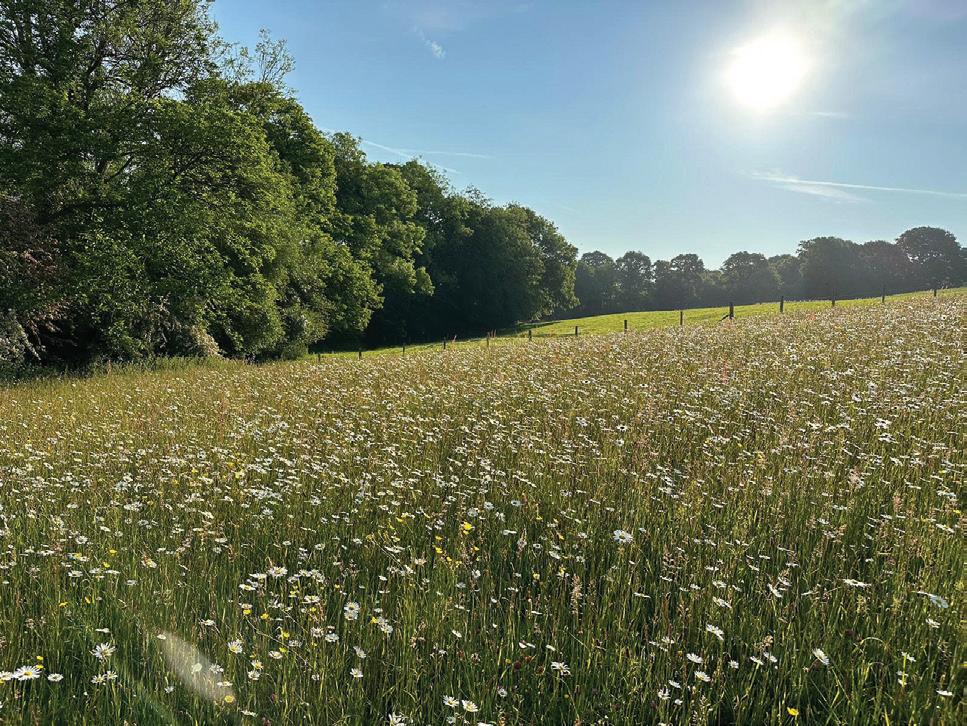
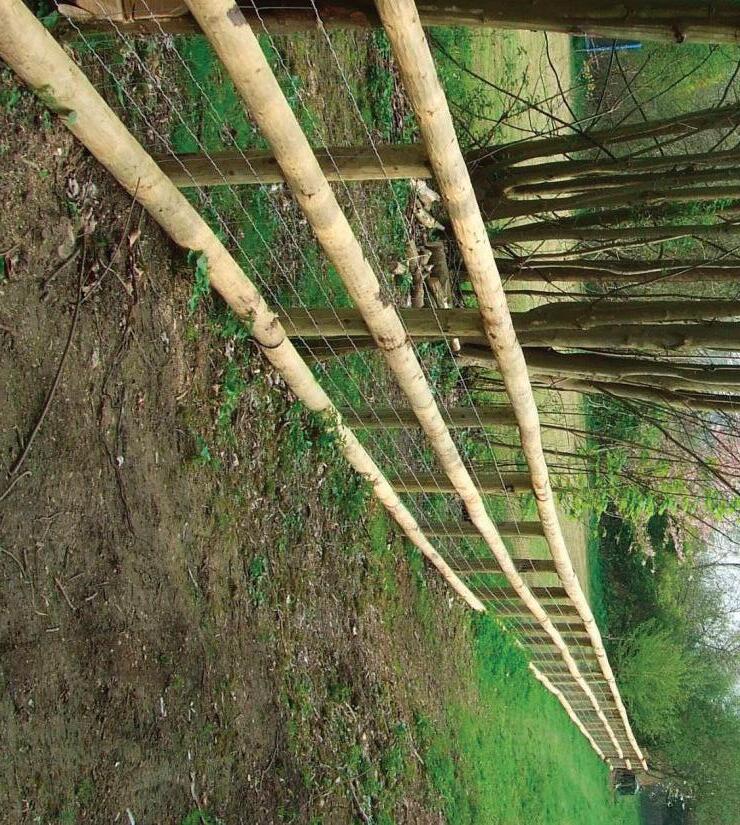
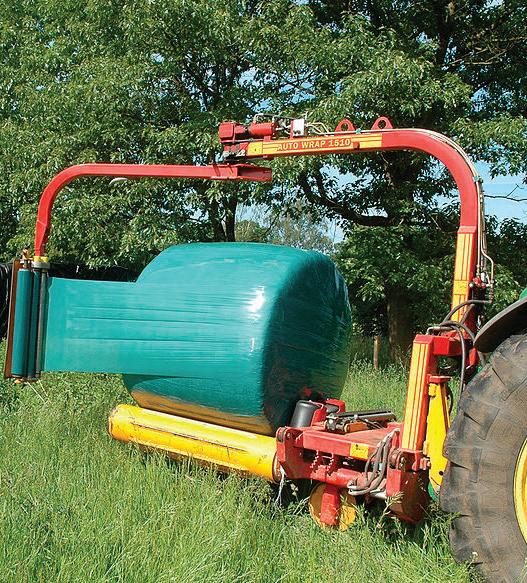


WWW.SOUTHEASTFARMER.NET | MAY 2024 39 TO ADVERTISE CALL 01303 233883 A G R
T O R S S O U T H E R N L T D L O C A L P R O V E N A N C E M E A D O W S E E D A V A I L A B L E , H A R V E S T E D F R O M F L O W E R R I C H M E A D O W S I N T H E W E W E A L D N A T I V E O R I G I N W I L D F L O W E R S | G S 4 | G A M E C O V E B U F F E R S T R I P S | V I N E Y A R D P R E P A R A T I O N | B N G | S T E W A R D S
I F A C
A M | L A W N S E E D | S O I L T E S T I N G | Y E L L O W R A T T L E | S F I | N R Y E G R A S S E Q U I N E M I X E S | L E G U M E & H E R B | S P O R T S F I E L D H I G H P R O D U C T I O N G R A S S | B E S P O K E M I X T U R E S | M A I Z I N T E R R O W D R I L L I N G | N E C T A R R I C H | H I G H P R O D U C T I O N G R A S S | G A M E C O V E R | S A N D S P E A D I N G | S P E C I A L O R D E R O R G A N I C | A H L D I S E A S E R E S I S T A N C E | W I L D B I R D S E E D | A B | F O R A G E C R O P S | F L O W E R R I C H M A R G I N S | G R A N U L A T E D L I M E T H E W I L D F L O W E R A N D G R A S S S E E D S P E C I A L I S T S I N Y O U R L O C A L A R E A w w w a g r i f a c t o r s c o u k s a l e s @ a g r i f a c t o r s c o u k | 0 1 4 3 5 8 6 3 9 6 4 S W A R D M A S T E R WEALD NATIVE ORIGIN WILDFLOWERS | GS4 | GAME COVER | BUFFER STRIPS | VINEYARD PREPARATION | BNG | STEWARDSHIP | SAM | LAWN SEED | SOIL TESTING | YELLOW RATTLE | SFI | NON RYEGRASS EQUINE MIXES | LEGUME & HERB | SPORTS FIELDS | HIGH PRODUCTION GRASS | BESPOKE MIXTURES | MAIZE INTERROW DRILLING | NECTAR RICH | HIGH PRODUCTION GRASS | GAME COVER | SAND SPREADING | SPECIAL ORDER ORGANIC | AHL DISEASE RESISTANCE | WILD BIRD SEED | AB | FORAGE CROPS | FLOWER RICH MARGINS | GRANULATED LIME www.agrifactors.co.uk sales@agrifactors.co.uk | 01435 863964 www.mcveighparker.com 01622 891095 01403 784250 PROUDLY WORKING WITH SOUTHERN FARMERS Kent Headcorn Sussex Billingshurst PRODUCT BROCHURE Ashford 2 Victoria Road, TN23 7HJ (01233) 620599/662297 Canterbury 85 Sturry Road, CT1 1DA (01227) 464328/453966 Hastings Keats Close, TN38 0PP (01424) 422224 Northfleet Unit 2, Grove Road, DA11 9AX (01474) 327855 Maidstone 1a Hope Street, ME11 2TF (01622) 764449/672952 Medway London Road, ME8 6YX (01634) 364255 Sittingbourne St Michaels Road, ME10 3DN (01795) 472354 On Site Tyre Repair or Replacement Great service Great choice Great value since 1962 YOUR NO.1 INDEPENDENT TYRE DEALER The South East’s Agricultural Tyre Specialist Tractor, Trailer and all Agricultural Tyres at the Best Prices www.watlingtyres.co.uk
LOOKING FORWARD TO THE NEW SEASON AHEAD
Curriculum Manager Alan Johnson reports.
At Plumpton College, lambing is now well underway, and the lambs are doing well as the weather is reasonably mild. Fieldwork will soon start, which the students will enjoy as it allows them to develop their skills further.
Our annual Open Day & Spring Fair is on Saturday, 11 May, when our students will be able to take part and show off what they do at college. Visit openday.plumpton.ac.uk to learn more.
At Plumpton, students study wide-ranging agriculture topics, exploring crops and cropping, mechanisation, nutrition, farm management and livestock production.
Third-year students can specialise in either arable or livestock while developing their skills further in farm business management. They explore management techniques used for decision-making in agricultural businesses.
Students boost their employability and professional skills during their second year in industry before returning to college for their third year.
Our students also enjoy practical workshops and demonstrations from employers, including farm business planning and control, and get to apply their knowledge to real farm case studies.
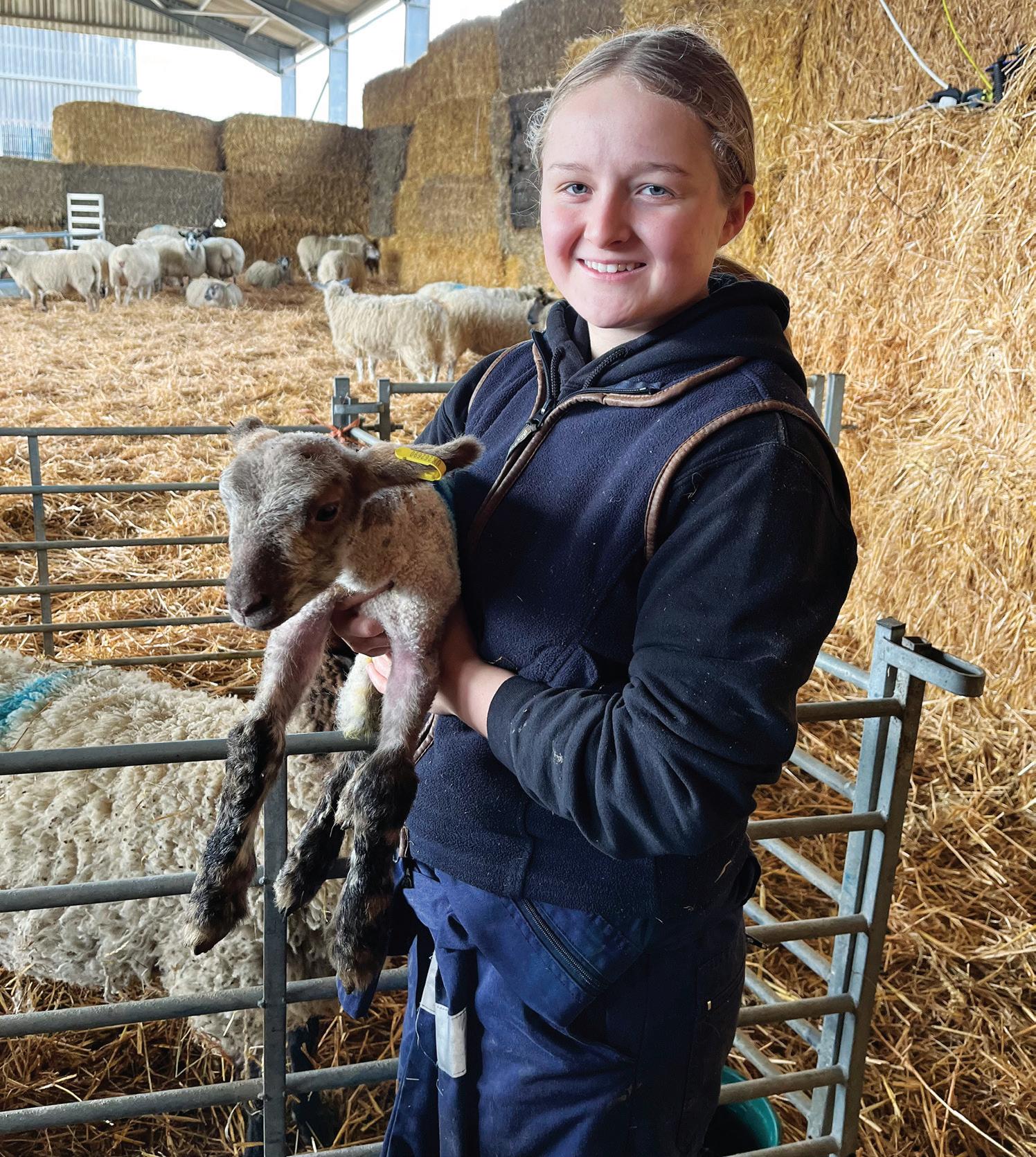
ALICE HUDSON
This term, lambing has begun for our mule ewes. In January, we had our South Down ewes lambing. Now, it’s the turn of the 200 mules. During practical sessions, we had the opportunity to go down into the lambing shed and participate in stock tasks such as tagging and ringing lambs. We can also see and learn about lambing and how to ensure survival for the lambs in the first few hours of life.
As well as learning about lambs, it’s important to keep an eye on the ewes and make sure they are healthy after giving birth, doing visual checks and physical checks, such as checking the udders to make sure they are producing enough colostrum and milk for the newborn lambs and don’t have mastitis.
We went to the Farm Expo held in Kent and found it interesting to see the continued advancement of the different pieces of machinery and learn about them by seeing and listening to the information talks. Students really enjoy events such as these, where many different companies are there to educate people about their products and what they do. This was an excellent opportunity to speak to other farmers, building a connection in the industry while being taught about farming safety.
OLLIE MATTOCKS
This month we have been quite busy with lambing and calving. We are approaching the end of it, though. I have managed to get one of the licences that Plumpton College offers to agriculture students, in this case my telehandler ticket, which the college funded. I would also like to get my chainsaw ticket in the future so I am more employable and can do more at work, for example, felling trees or loading up trailers with grain and other activities, so I can be more valuable and helpful on the farm.
MAY 2024 | WWW.SOUTHEASTFARMER.NET 40 EDUCATION Visit www.plumpton.ac.uk
Alice Hudson
FOCUS ON FRUIT SARAH CALCUTT













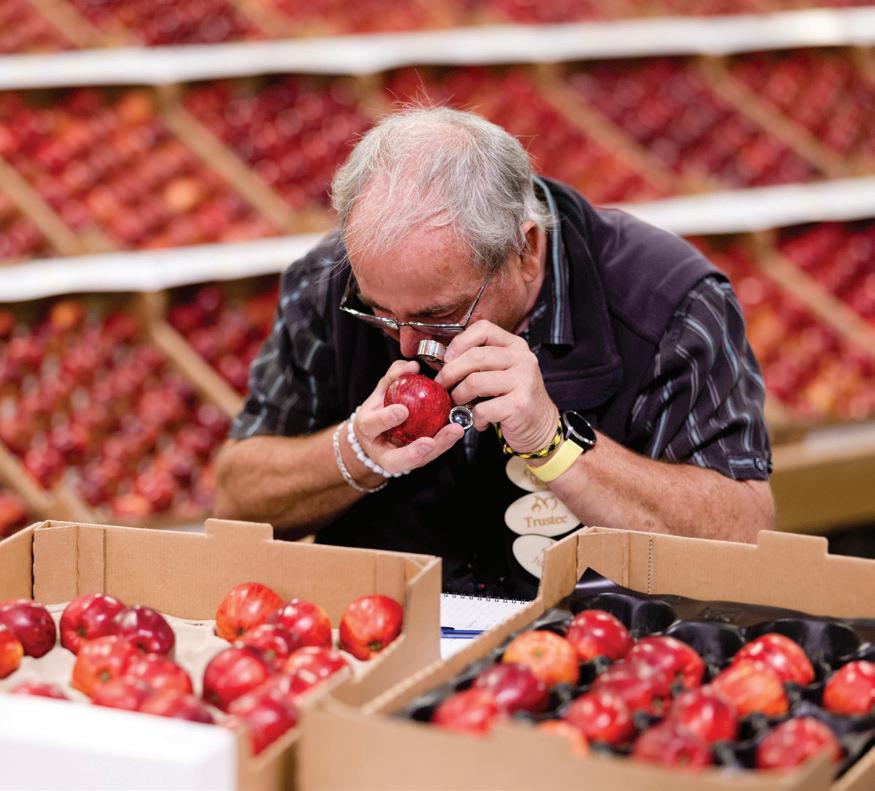

Wednesday 17 April 2024 will go down as a significant date in the 91 year history of the Marden Fruit Show Society. The National Fruit Show has always mirrored the fortunes of the industry it was created to support, and just as the industry goes through challenges and changes, so too does the fruit show’s format and the team behind it.
Despite multiple illnesses and changes in the delivery team, an outstanding event was delivered for the 90th anniversary last November, a show that also marked the last event for a number of key people for the show society.
The new office holders will be led by Nigel Bardsley, who I am delighted to say has replaced yours truly as chair of the society. With wife Annette as his vice-chair (as well as taking on the responsibility of running the eponymous hard fruit competition) this gives the society an unbeatable, well networked, expert couple to take the society forward to its centenary.
Chris Morris remains as honorary treasurer, while Andrew Tinsley has been replaced as chair of trustees by Claire Seymour, with Robert Mitchell elected vice-chair of Trustees. Colin Bird, now retired, has resigned from both the general committee and as a trustee and has been replaced as a trustee by Chris Morris.
Sam Smith stood down as the educational programme leader at the show last year, with Mandy Hounsell taking the helm. The general committee has also seen significant changes, following the retirement of committee members Brian and Norma Tompsett, John Guest, Colin Bird, Andrew Tinsley and Rebecca Cassidy. The committee has been boosted by the appointment of Jon Hatch and James Goldsworthy. Alongside the restructuring of the general committee and trustees, the society has had to make some difficult decisions on staffing. A change in the management structure has seen the sad departure of chief executive Sally Flanagan and of Rachel Heather, who looked after the exhibitors.
The change in approach reflects the cost of delivering the 90th anniversary show, which reduced the society’s reserves. In future there




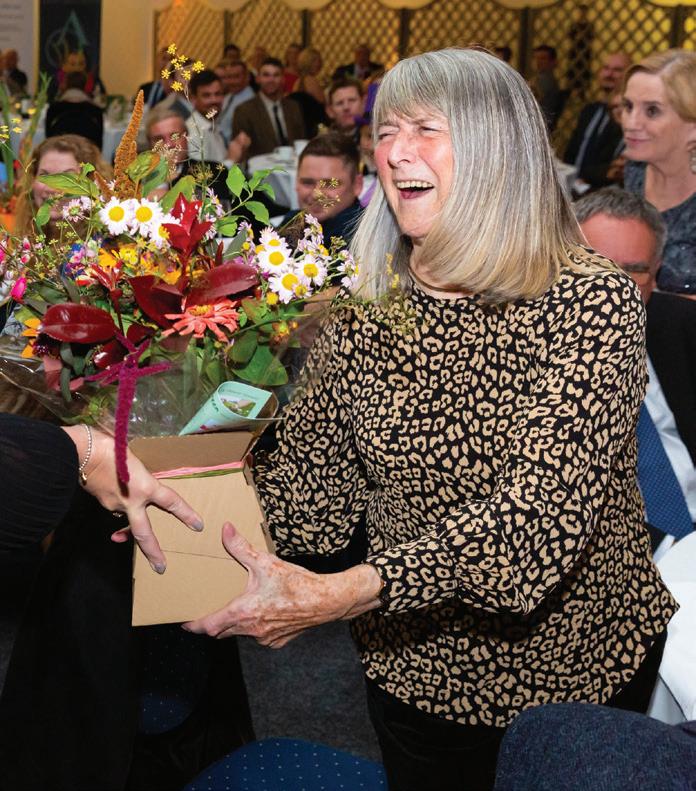

ALL CHANGE AT THE MARDEN FRUIT SHOW SOCIETY
will be a new style show, focussed on delivering the organisation’s core objectives.
With growers and industry leaders at the helm, the show is in a strong position. This year’s show will see a smaller format, but with the hard fruit competition remaining at its heart. It will deliver a one-day show, a packed exhibition space, a significant industry figure to open it and a great celebration of the winners at the end of the day. For now, there will be no dinner and no conference space.
I expect to see great things from the team, which has such expertise and love for this industry and a focus on delivering a beneficial show for an industry that needs it. The core purpose of the event is to bring the industry together. The show was created by growers for growers and that will be at the heart of everything as the event moves forward.
I’ll be there in the background if needed. I’ll also (hopefully) be one of the judges of the competition. My daughter Aurelia would never forgive me if she didn’t get to go to the show, having never missed one in the 15 years I’ve been in the chair.
Show President Catherine Paice opened the annual meeting with a well-positioned speech about fortitude, expertise and knowledge, reminding us all that the society has a pivotal role in the industry.

WWW.SOUTHEASTFARMER.NET | MAY 2024 41 TO ADVERTISE CALL 01303 233883
SARAH CALCUTT
Honorary Chair, National Fruit Show
Sally Flanagan Colin Bird
Norma Tompsett
W.H.Skinner & Sons GRUBBING, TIMBER & GROUNDWORK SERVICES Orchard grubbing Windbreak removal Timber extraction Fallen tree removal Ground contouring Land clearance Excavations Cultivations Pond dredging 01622 744640 - 07711 264775 www.whskinnerandsons.co.uk
This announcement represents a major digital leap forward in crop production which confirms Omnia as the most advanced and easy-to-use farm management system available.
The EasyPlan upgrade offers a set of exciting developments within Omnia, allowing for paperless record keeping and work management, setting a new standard for farm management technology in the UK.
It’s a British system for British farmers and one not currently offered by any other precision software provider.
Since its launch as a precision mapping system eight years ago, Omnia has evolved into a broader digital farming system offering a range of valuable and user-friendly business modules.
With its user-friendly interface and unparalleled functionality, the EasyPlan upgrade takes this one step further and underlines Hutchinsons’ focus on innovation and excellence and unwavering commitment and vision for Omnia.
WHAT MORE DOES OMNIA OFFER WITH THE EASYPLAN UPGRADE?
1. FIELD DIARY MODULE:
A significant extension of current Field Diary information into a fully comprehensive farm management system.
Previously, farm records such as field inspections could be held in the Omnia Field Diary, but it was not possible to record live operations or manage work orders as they happened. It is now possible to plan and record all live field operations digitally, from rolling through to spraying, with the new task management functionality. With a calendar view for task planning, multiple plans can be combined into a single task which can be logged in a specific area for operators to access.
As with previous Omnia functionality, this is compatible with the most popular machines and platforms and it can be accessed online from any device (although those who want to run a paper-based system can still do so). These field records are then automatically shown within the existing Production module, to allow complete gross margin analysis.
2. STOCK MANAGEMENT
The addition of real-time stock management.
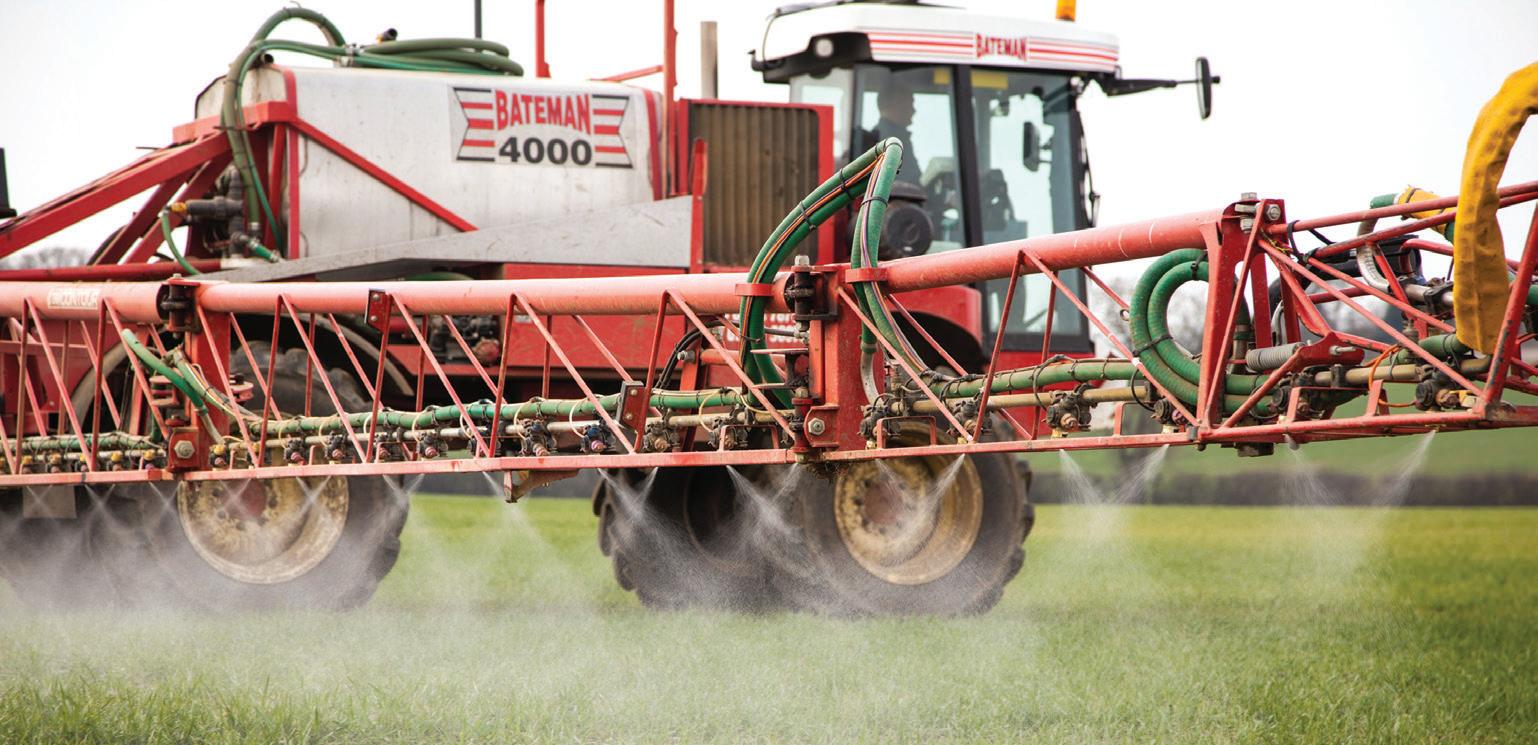
OMNIA EASYPLAN UPGRADE
Crop production specialists Hutchinsons has launched a major upgrade to its Omnia Digital Farming system, creating the next generation in farm management software for British agronomists and farmers, according to Hutchinsons Head of Omnia, Oliver Wood.
The upgraded module allows for a realtime, feature rich, stock management system for keeping track of orders and physical inventory based on what is actually being used.
3. SPRAY PLAN MODULE
A new module which allows users to create spray plans which are then audited by Hutchinsons bespoke HALO crop protection database.
Agronomists and BASIS-registered farmers can now write their own spray recommendations. The new HALO database on which the Spray Plan module is based uses the industry standard regulatory data as its core, checked and enhanced daily by Hutchinsons’ in-house technical experts to ensure regulatory compliance.
The Omnia Scout app will be upgraded this summer to bring some of this new functionality into farmers’ pockets. The update will allow operators to view and complete tasks in the field, along with providing an interactive tank mix tool for spray plans to help operators with product and water requirements. The Omnia Scout app is available for both Android and iOS devices.
DATA SECURITY KEY TO UPGRADE
Data security and governance has also been a major focus of the upgrade, Gordon McKechnie, Hutchinsons managing director, explained. Significantly, Omnia is now the first system ever with both an ISO 27001 ‘Information Security Management' and ‘Farm Data Principles’ certifications – the belt and braces of data security.
These two schemes are evidence of the robust policies and procedures followed by Hutchinsons to govern and protect data and give users full control over access to their data and account security. New functionality provides the ability to manage access and permissions for others on the account, such as farm staff.
To find out more visit Hutchinsons at the Cereals event on 11-12 June at Newnham Farm, Hertfordshire.
MAY 2024 | WWW.SOUTHEASTFARMER.NET 42 GROUND-BREAKING
AGRONOMY OLIVER WOOD T: 01780 919010 E: oliver.wood@hutchinsons.co.uk Canterbury: 01227 830064 www.hlhltd.co.uk
STEPHEN CARR
ROTATIONS DICTATED BY CLIMATE CHANGE
One aspect of the more extreme weather we are getting is that my choice of arable rotation is no longer down to me but is being dictated by climate change.
This week’s sowing activity is a case in point. My plan for a low-lying 25ha field was to drill it with a second feed wheat last autumn on the basis that the blackgrass population was sufficiently under control to take the risk. But no sooner was the P&K spread and the seed delivered than we received what felt like an entire winter’s rainfall in the month of October to the point that the only vehicle suitable to travel across the field was a rowing boat rather than a tractor.
Given further wet weather this spring, an initial plan to sow the field with spring barley also had to be abandoned. Fortunately, I hadn’t been able to find any spring barley seed anywhere in the country as it was sold out, so as wet weather persisted through February and March and into early April, it dictated that spring beans were my best bet as a) I could actually find the seed and b) they are a crop that can still yield well when drilled as late as mid-April.
But it’s not only crop rotations that are going to be dictated by climate change (sorry to any diehard climate change-denying readers out there, but the game is now up; the figures for this year in Europe are truly alarming, and the 10 warmest years on record globally have all occurred in the past 15). British farmers’ cultivation techniques are already changing to min-till to conserve moisture in the upper soil profile and improve soil structure to reduce the impact of extreme dry and wet weather.
Plant breeders are working increasingly hard to create more drought-resistant crop varieties to withstand hot summers. Such crops will certainly soon be needed in southern Portugal as the region is forecast to suffer regular summer daytime highs of 55 degrees Celsius by 2050 if current trends continue; that’s hotter than the hottest days the Sahara Desert currently endures.
What all this means for the longer term for UK arable farmers is difficult to predict. If vast areas of currently productive land in southern Europe are to become deserts, perhaps British farmers might enjoy better times as the area of land available for growing combinable crops shrinks. That said, as the permafrost retreats north in Russia, it liberates an area of fertile land the size of East Anglia each year for crop production.
So, while we all like to pretend that we’re in charge of our farms, the truth is that there are powerful forces at work, climate change among them, that make most of our decisions for us.
















Precision Soil Sampling
Accurately measure your soil pH, health, organic matter and nutrient indexes. Soil sampling provides accurate and reliable measurements of soil health and fertility enabling the targeted and e cient use of fertilisers and lime.
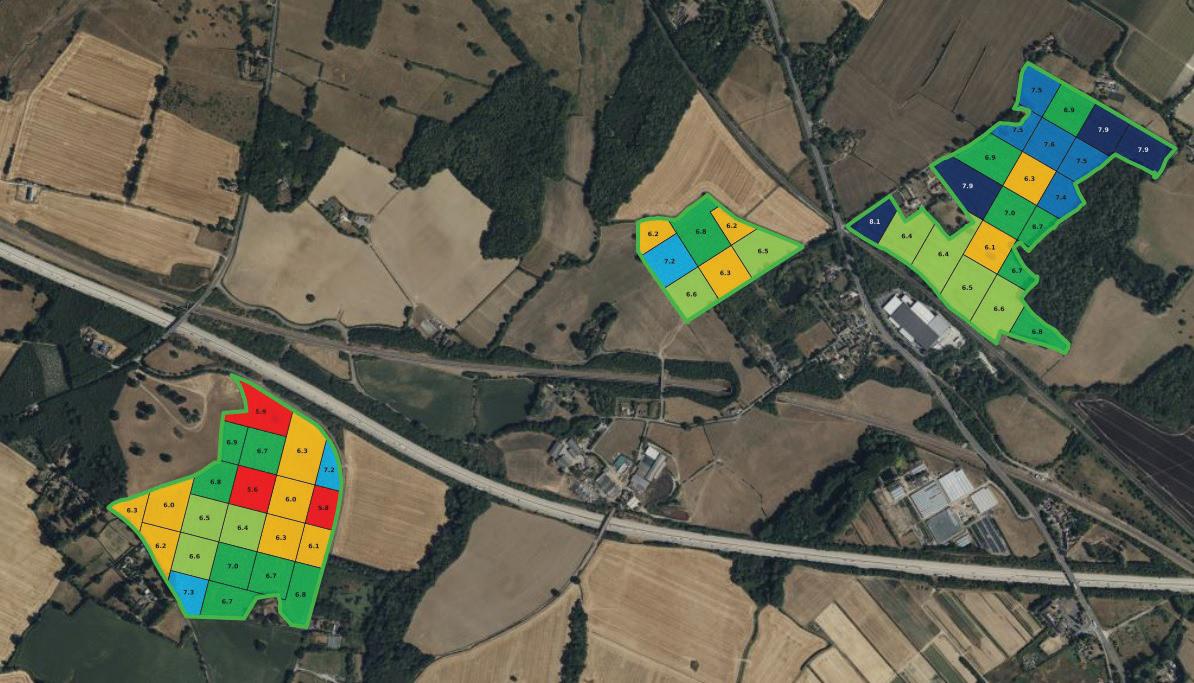
The benefits you can expect from soil sampling:
• Enables precision management of soil fertility and pH levels
• Provides field-specific data for more e ective decision-making
• Identifies low and high nutrient indexes
• Improves crop yield and quality
• Enhances soil health and biodiversity for long-term productivity
• Supports sustainable farming practices
Soil Sampling is one of an ever-expanding suite of apps available within SoilSmart – the online precision farming portal, giving you the opportunity to monitor and manage your crops and fields more e ectively.
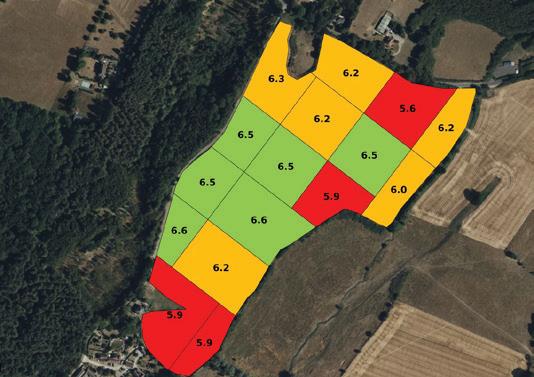
Start the conversation Call 01233 740247 / 07384 214359 Email: enquiries@farmimage.co.uk
www.farmimage.co.uk
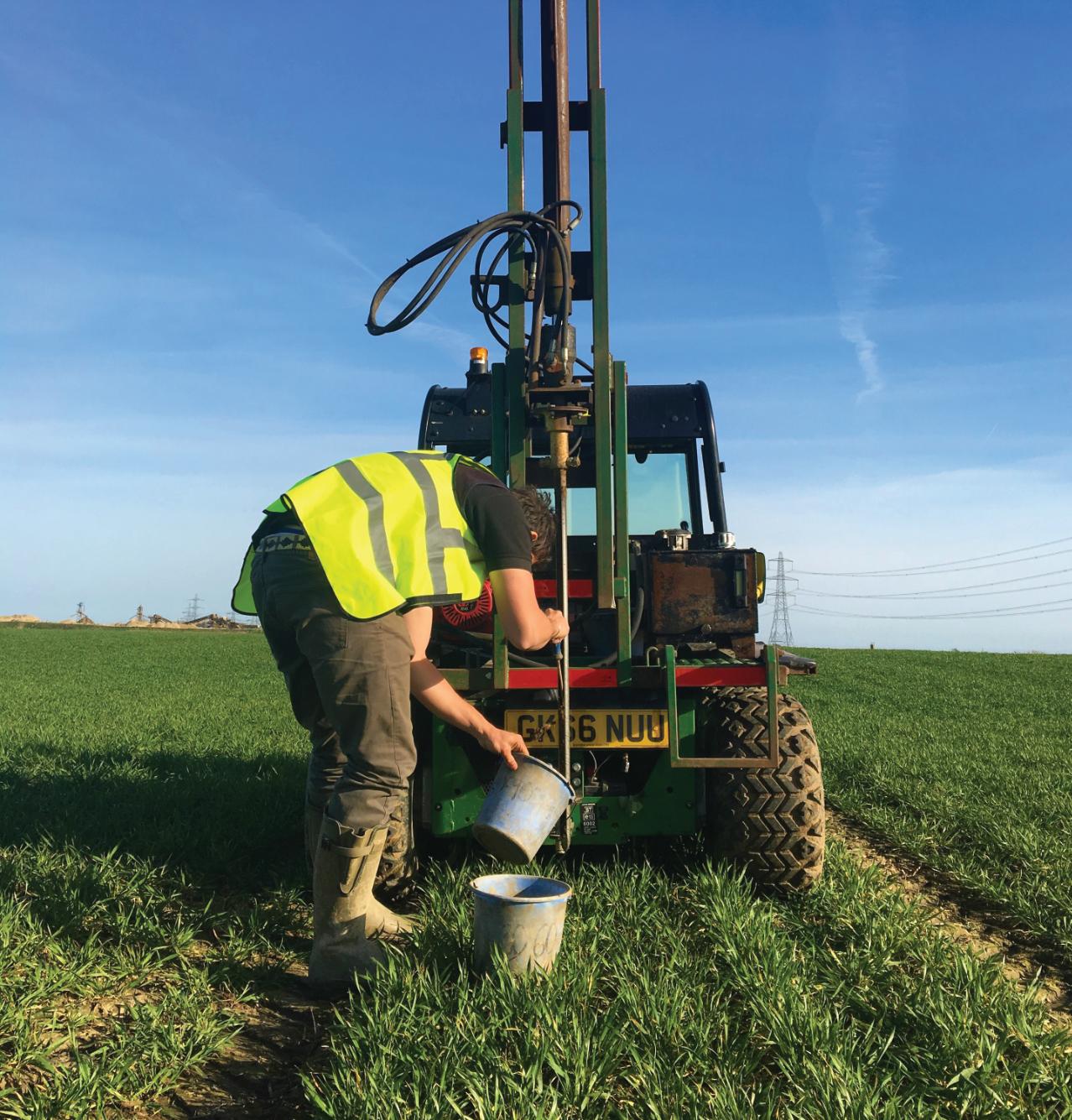
WWW.SOUTHEASTFARMER.NET | MAY 2024 43 TO ADVERTISE CALL 01303 233883
STEPHEN CARR
Stephen farms near Eastbourne in East Sussex in partnership with
his wife and four of his daughters. The farm has a pub, the Sussex Ox at Milton Street, which serves the farm's pedigree Sussex beef, Southdown-cross lamb and fruit and vegetables from the farmhouse kitchen-garden.
productssupplied, andspreadtoyourfarm. Offering20years’experience insoil servicestailoredforyouand yourbusiness Soilsmartsampling,GPSprecision, Verissoilscanning,NCore,Ph,PCN 01233740247 www.acsrecycling.co.uk
KNOW YOUR FIELD, GROW YOUR YIELD BENEFITS
Improve and maximise your agricultural e ciency Making your life easier and more profitable by farming smarter
ARABLE NOTES
FLEXIBILITY TO ADAPT
This month’s contribution comes from Howard Nason of Crop Advisors, who sources seed for game cover and Sustainable Farming Incentive (SFI) needs, and Oli Pilbeam, CCC agronomist and Farm Business Consultant with CLM.
HOWARD NASON
The Sustainable Farming Incentive has adopted a change in approach compared to the prescriptive set of rules that had to be followed for Countryside Stewardship.
This change, which gives farmers more flexibility to adapt the approaches to suit the season or rotation, is very helpful, but growers must always keep in the back of their minds the importance of ‘meeting the aim of the action’.
While the wording in the SFI handbook can be interpreted in various ways, pushing the interpretation too far by sourcing the wrong mix, cutting sowing rates or drilling at a time of year when the species in the mix will struggle to achieve their potential, risks the farmer not meeting the action’s aim and, ultimately, having to re drill.
One of the most challenging options to get right is SAM3 herbal leys, particularly where growers are looking to over-sow herbs and legumes into an existing sward. Getting the mix right is crucial; many herb species will struggle to compete in a perennial ryegrass sward and will get shaded out. Drilling no deeper than 10mm with good seed soil contact when the existing sward growth has slowed down is vital for a successful outcome.
At Crop Advisors we source the SFI seed requirements for Chichester Crop Consultants' clients. As a buyer it is important to ensure we are comparing like with like and assessing mixes from an agronomy point of view. An example of this would be drilling wild carrot as part of IPM2 mixes. This needs consideration as the plant can spread and cause problems in adjacent arable crops which can be expensive to put right.
OLI PILBEAM
As well as progressing through the backlog of spraying and the outstanding fertiliser plans, it’s important that any SFI or Countryside Stewardship options are given
the same attention as traditional spring crops. The attractive payment rates should put the planting and the conditions at planting at the forefront of our minds, particularly this year, when quarterly SFI payment will be welcomed.
The seed mixes are often expensive, and so it’s imperative to plant when conditions are right; ideally when there is moisture, followed by a good heavy roll. This is perhaps easier said than done, especially when looking back through recent springs.
Most mistakes are made with AB9 or AHL2; these are often planted too early, allowing competition from weeds (particularly polygonums) or planted into very dry soils, providing bird food for the crows.
Often the best results are achieved by planting as late as mid-June on a stale seedbed, although planting too late will not provide enough bird seed to last through the winter, falling short of the action’s aims.
The action NUM3 offers good flexibility and is attracting interest, which is understandable considering what seems to have been a never ending winter. We must, though, be wary of a knee-jerk reaction and remember that this is a three-year commitment and has a cost associated with establishing and managing it correctly. We also live with volatile commodity markets. You never know, one day farmers might actually be encouraged to grow actual food for the growing population.
If managed correctly, NUM3 will help to reduce the blackgrass populations. The key is topping at the correct height and at the right growth stage; just as the blackgrass starts to head. This may mean two or three mower passes, but don’t be persuaded to cut it too low to early.
In my experience, the true soil and wildlife benefits come in the second year after establishment. There would be some gain in an annual mix, but I certainly question the idea that a six-month term would be meeting the action’s aim.
MAY 2024 | WWW.SOUTHEASTFARMER.NET 44
Howard Nason
Oli Pilbeam
IN CONJUNCTION WITH

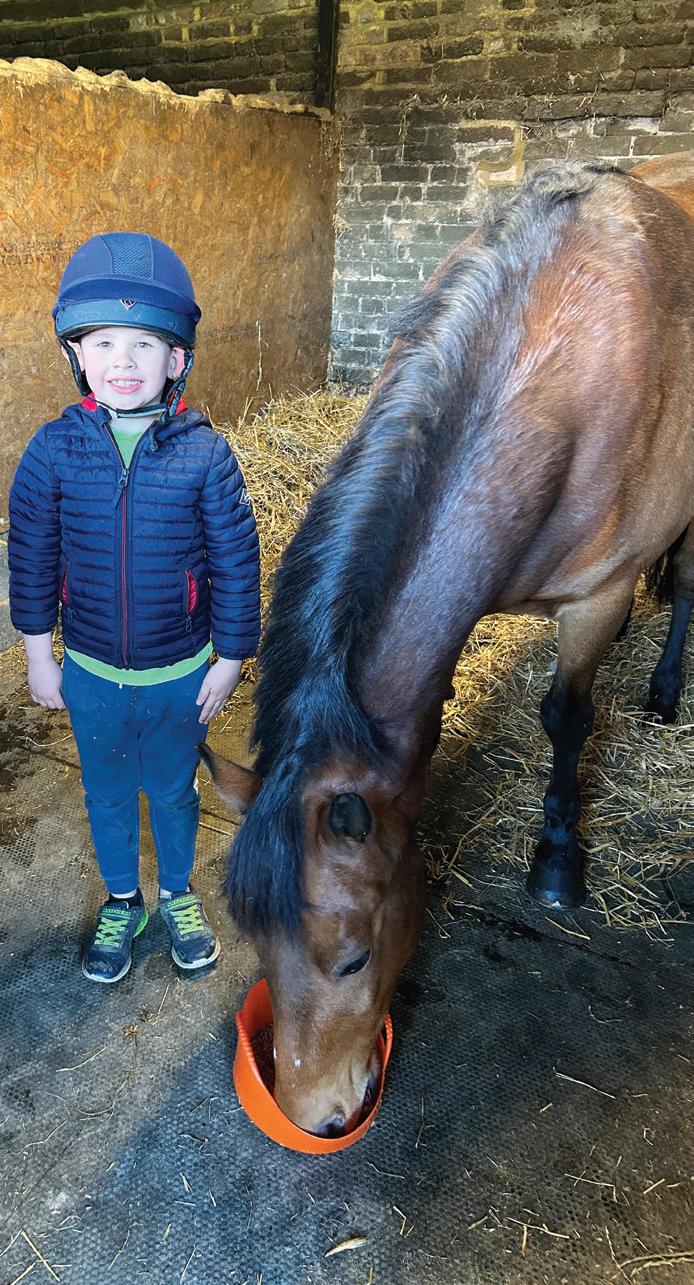

ORGANISED CHAOS ANITA HICKSON



With the children back at school after an amazing holiday, life would appear to have a little more routine, albeit for a short while. Late nights, early mornings and lunch on the run appeared to feature throughout the holidays.
The longer days and the lighter evenings are a blessing to us all. Alas, first cut silage will be upon us and ‘silly season’ is well on its way. Monty is now in the midst of his ‘A’ levels, and we wish him all the luck in the world. Fingers crossed he will be off to university in September.
Lambing has been and gone, thankfully. The weather was very unreliable and seemed to change from 2°C to 21°C in a matter of hours. Mis-mothering and Schmallenberg lambs seemed to be a common feature of this year’s lambing. Sock lambs galore and a few visits from “Mr Fox” – although, fingers crossed, his days are numbered. The price of lamb remains high and makes losses all the more frustrating. Puppies are the order of the day around here, with both the red lab and the spaniel due any day now. A little more work, but so rewarding. A new four-legged friend arrived so Mr Teddy can enjoy hacking out with Zara.






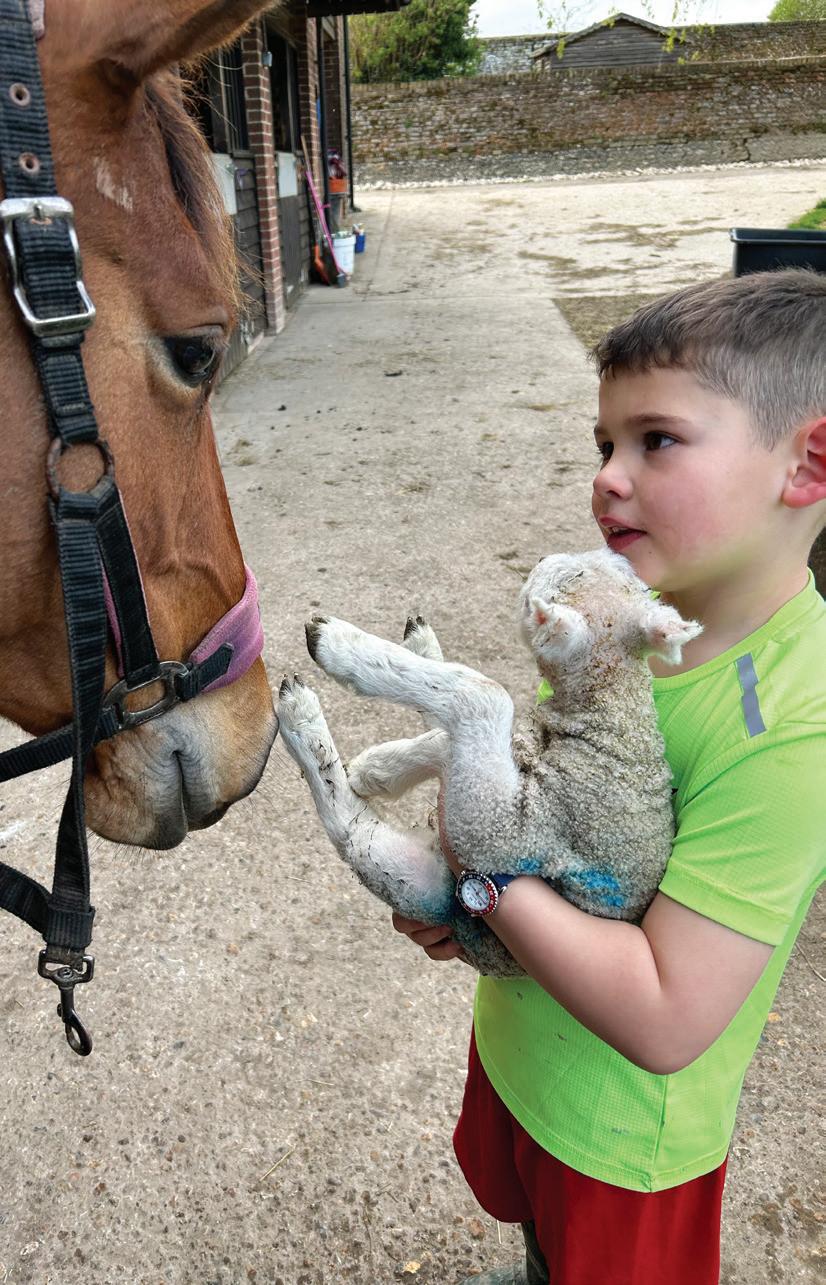



SOCK LAMBS GALORE
He has decided he will aim to be a professional ‘cowboy’ at a ranch in Arizona.
The baler and wrapper are serviced and ready to go go go. The grass is growing rather rapidly and a break in the weather is a welcome sight. The smell of freshly mown grass as the evening draws in is a smell that I love. All hands on deck to start gathering in the harvest for 2024. The maize will hopefully all be in the ground by the time you read this.
Mr Grumpy has been somewhat temperamental of late with our impending milk supplies inspection due any moment now. The compliance rules and regulations seem to change by the month and the standards are getting harder and harder to adhere to. It never rains but it pours with inspections around here. Firstly, crop assurance, followed by dairy assurance and then Red Tractor. If they all got together and combined as one assurance, it would certainly save a fortune in lost working hours. They would also dramatically improve their carbon footprint. One clipboard coming down the drive instead of three is somewhat appealing. In an ideal world all inspections would take place in quiet periods, but as yet I am unable to convince
myself as to when a quiet period starts or ends. We have a lot to be thankful for in the South East; the weather appears to have been kinder to us than to many farmers in the rest of the country. Lots of fields remain bare, with no winter or spring crops having been drilled, and land remains flooded in many areas. Farmers have been running out of forage and straw and at the moment little change in the weather seems to be on the cards.
The event season has started with a bang, with Zara finishing third in the BE100 at Larkhill in 50mph gale force winds and achieving a great result at Oxstalls with her six-year-old completing his first BE100. So many events have been cancelled because of the weather that travelling three to four hours has become the norm. Hopefully the season carries on as it has started for her. At least we get to survey the land in the rest of the UK.
Until next time, stay safe and keep well.

WWW.SOUTHEASTFARMER.NET | MAY 2024 45 TO ADVERTISE CALL 01303 233883
ANITA HICKSON Farmer
COLLEGE SET TO BLOSSOM AT RHS CHELSEA FLOWER SHOW
Kent’s only rural and land-based college will have an exhibit at the RHS Chelsea Flower Show, which runs from 21-25 May.
The exhibit highlights the importance of modern horticultural practices in food production, biodiversity conservation and landscape design, while celebrating the many and varied careers available in horticulture and floristry and how horticulture affects and influences the modern world.
Divided into three sections, the design includes a modern orchard, tomato glasshouse and a public garden, all centred around a large, upturned tree stump incorporating a bonsai tree, symbolic of the vital work of horticulturists within the fields of landscape and amenity design.
The exhibit also looks at the year-round hydroponic production of edibles, including climate monitoring and integrated pest management, while the orchard section showcases the ‘fruit wall’ production method, demonstrating cutting-edge techniques in irrigation, frost protection and autonomous monitoring and management.
Alan Harvey, head of curriculum for horticulture and floristry at Hadlow College, is eagerly anticipating the event, and commented: “We are excited to be exhibiting at RHS Chelsea Flower Show this year. Our students are involved in the build of the garden and also growing the plants which will be included in the design. As Kent’s only rural and land-based
FIND OUT MORE
www.hadlow.ac.uk/courses/subject-list
The college is also holding an open evening on 5 June from 3pm to 7pm.
See www.hadlow.ac.uk/events
www.rhs.org.uk
Hadlow College is set to take its place at what is often called “the greatest flower show on earth” later this month.
college, we are passionate about supporting the industry and enabling as many students as possible to gain fulfilling careers in the horticulture sector. We are looking forward to taking lots of people around our show garden.“
EMBRACING TECHNOLOGY
Hadlow College’s exhibit is influenced by some of the high-tech facilities that play an integral part in horticulture courses at the college.
In 2022, Hadlow opened its state-of-the-art glasshouse, which features cutting edge technology such as suspended gutters running hydroponics for tomatoes and peppers in separate houses, LED and high-pressure sodium lighting and misting systems for plant propagation.
Students work alongside practitioners from leading industry grower Thanet Earth to develop their skills and produce hydroponic tomatoes in the Venlo glasshouse.
The following year an innovative orchard and vineyard using robotics was unveiled.
This two-hectare area showcases next generation innovations including automated
AI management systems, a state-of-the-art irrigation, fertigation and frost protection system and automated fruit picking.
The crops are grown with sustainability in mind at all times. Drones are used to monitor bud set, predict yields and monitor the growth of the crop, allowing precise applications of nutrition, pest and disease control methods.
Sensors installed throughout the orchard monitor, amongst other things, moisture, relative humidity, photosynthetically active radiation (PAR) and rainfall.
FIND OUT MORE
The college has a rich history at the RHS Chelsea Flower Show. Former students have won gold, silver gilt and best show garden awards, while the college was named Floristry College of the Year in 2015.
Set amongst 265 acres of prime arable land, Hadlow College offers a wide range of floristry and horticulture courses. All benefit from firstclass facilities, strong links with the industry due to Hadlow’s illustrious history and lecturers with experience in the fields they teach.

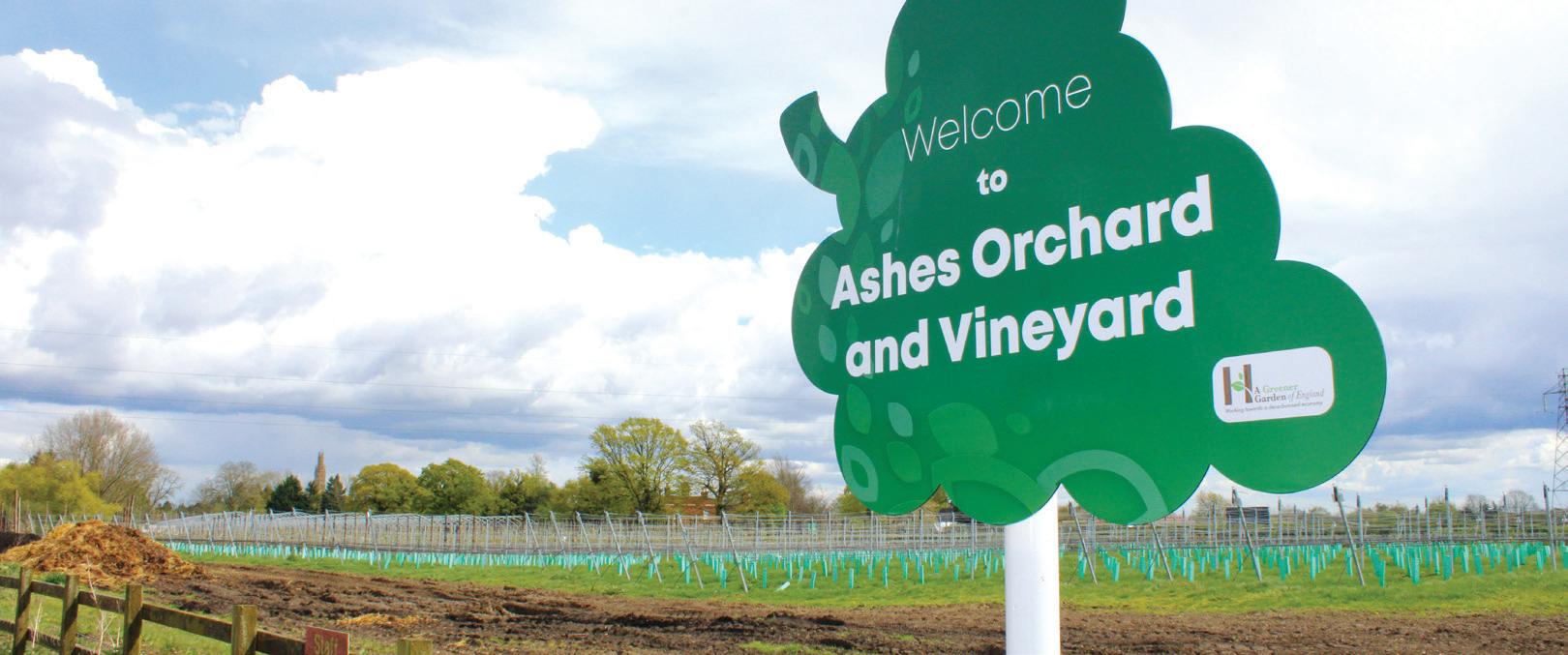
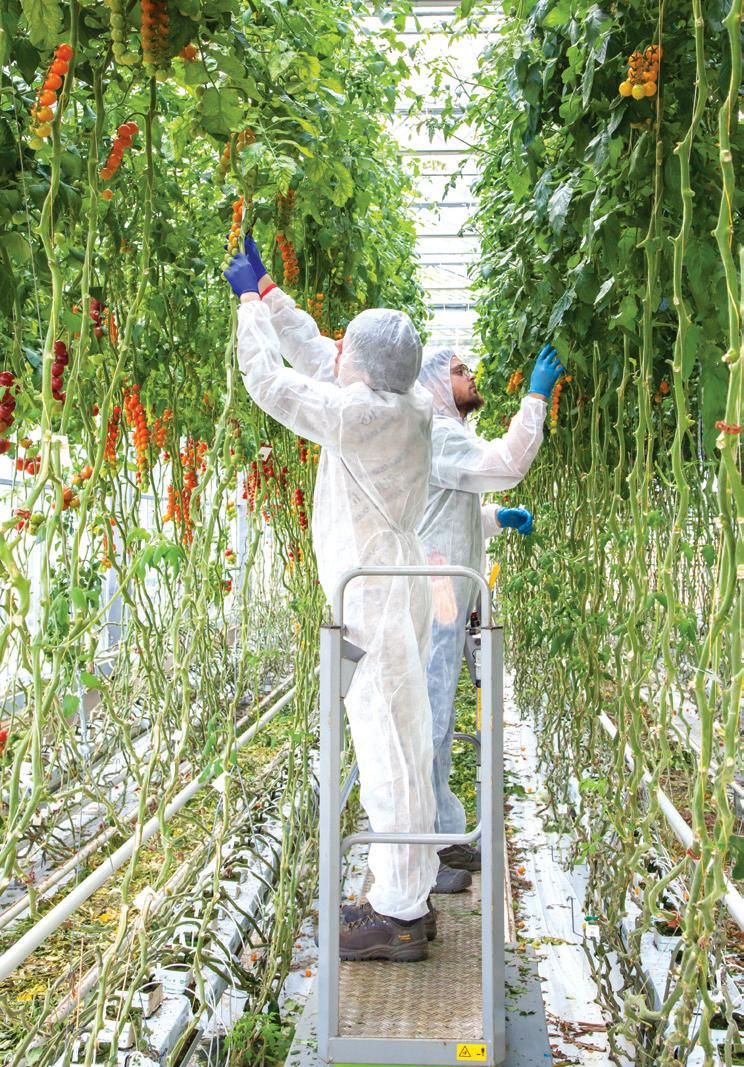

MAY 2024 | WWW.SOUTHEASTFARMER.NET 46 RURAL UNIVERSITY EDUCATION
Visit www.hadlow.ac.uk to find out more or call 01732 850551 CHELSEA FLOWER SHOW
Spring has finally sprung! After the wettest winter since the1800s, some farms have been absolutely devastated and I pray we have kinder weather ahead.
There is something magical about lambing and this time of year, even if at 2am in the lambing shed, with no one else around, you examine a ewe that is due to have triplets and find just a tail, indicating a full breach presentation. Having carefully lambed the breach lamb, you discover the second one with its head twisted back and no legs presented. But not long after, you have a happy ewe and three live lambs up and suckling. This gives you a sense of pride to be a farmer.
All farmers involved in whatever sector of farming should give themselves enormous credit. We are all producers of something, the food we eat and the landscape everyone can enjoy. That is what a farmer is.
I have been a member of the Institute of Agricultural Management for more than 20 years now. Recently, we had a meeting in Kent where the LNRS (Local Nature Recovery Strategy) was explained to us. Later that week, to discuss the same subject, I joined an online call for the Sussex consultation, which seemed to consist of me, one other farmer and more than 125 representatives of non-farming but interested parties. It appears to involve the mapping of nature and habitat across all 48 counties,
SOMETHING MAGICAL ABOUT LAMBING
By John Marland, Chair of the NFU Tenants Forum.
covering every inch of England, rather like the Domesday Book! My question to the panel was “Will landowners be notified before their land is mapped?” The answer seemed to be “no!” I have always, throughout my farming career, actively encouraged nature and biodiversity on any of the land that I have been lucky enough to farm and live on but I think collaboration would give the best result.
At the time of writing, the NFU National Tenant Farmers’ Conference is one day away, and what an opportunity to have most of the major land owning institutions in one room. We will be able to ask them how they perceive the short and long term future of their tenanted farms.
On a personal note, my wife Sue and I have just updated our wills, which should ideally be reviewed at least every five years. We also decided to write lasting powers of attorney for both wealth and health. All documents have to be prepared while you are of sound mind. The benefit of having these in place is that when you and your family are at your
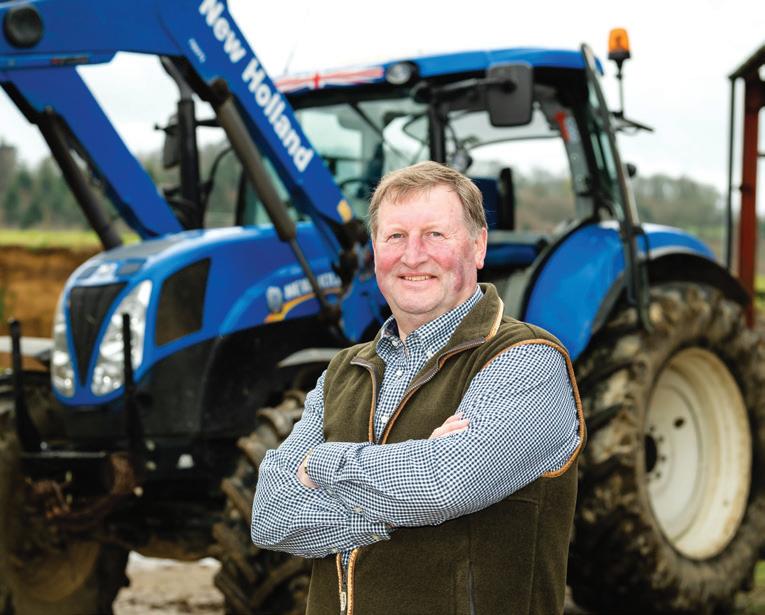
most vulnerable they can be a tremendous help and your wishes can be respected.
The Agricultural Landlord and Tenant Code of Practice for England was published on 8 April and comes as a consequence of the Rock Review, something I am proud to have been involved in. One third of Baroness Kate Rock’s 70 plus recommendations have already been implemented.
This spring we will all be under time pressure; please take a moment to think of your safety and that of those around you.
NEW SPECIALIST STRENGTHENS SEED OFFER
Agrovista Seeds has appointed James Barlow as eastern seed sales manager to help meet increasing demand from growers looking for technical expertise and advice.
James grew up on an arable farm in Nottinghamshire and gained a degree in agriculture at Lincoln University. He will be covering the South East as well as the East Midlands and East Anglia, and explained: “My main role is working with Agrovista’s agronomists, who are trusted first points of call for many of our growers.
“I supply those agronomists with key information to help customers make the best variety choices for their farms without having to go through what can be a laborious decisionmaking process.”

WWW.SOUTHEASTFARMER.NET | MAY 2024 47 TO ADVERTISE CALL 01303 233883 IN CONJUNCTION WITH
FROM THE FRONT LINE
James Barlow

Legal services for farmers & rural businesses
Call us today or visit our website: 01227 763939 furleypage.co.uk
A recruitment company has warned that the new minimum wage means employers who are paying salaries rather than hourly rates could be unknowingly breaking the law and risking a serious fine.
“With the increase in the minimum wage, farmers who are paying salaries and expecting people to work 50 to 60 hours a week are in serious danger of paying that person below the minimum wage,” explained Paul Harris, CEO at staff specialist REAL Success.
“For someone working a 55-hour week, which is common in the agricultural sector, the minimum wage for someone over 21 years old would be £32,718.40,” he explained.
“But for someone working 37.5 hours a week, which is more of a standard week, the minimum wage would be £22,308.”
If accommodation is provided with the job, however, there could be an accommodation offset. “This is £69.93 a week, which can be added to the salary if the person is not contributing to the accommodation, and assuming the person lives in the accommodation full-time,” Paul explained.
REAL Success provides recruitment and people development support,
ARE YOU PAYING THE CORRECT MINIMUM WAGE? PASSING WITH FLYING COLOURS
Amy Cowdell, partner and head of agriculture at full-service law firm
Shakespeare Martineau, is celebrating success after passing her Agricultural Law Association (ALA) Fellowship exam with flying colours.
The ALA is the UK’s largest inter-professional organisation devoted to the law and business of the countryside and accepts just 20 candidates for the fellowship each year.
The course puts lawyers through their paces at a two-week residential course relating to various aspects of agricultural practice, from litigation and tax to succession planning and landed estates. The fellowship builds strategic and technical competence, enabling successful candidates to advise those in the rural sector better.
Amy said: “Being an agricultural lawyer

working primarily in the agriculture sector.
“The issue is that the industry needs to face up to the fact that people cannot be working for 10 days on and two days off, with 10-hour days; people need to be working shorter weeks,” Paul said.
It is a criminal offence for employers not to pay the minimum wage or national living wage. “Farmers need to check now if their staff are being paid the right amount of money,” he added.
is different to other disciplines as we are servicing a sector with a variety of considerations to take into account, not least the interplay between running a successful farming enterprise and managing multigenerational family dynamics along the way.
“It’s crucial to consider all aspects of their farming business and family succession and the impact certain schemes and dispositions may have on that. I wanted to do the course to expand my own knowledge to ensure I can give the best possible and full-rounded advice to clients. I am absolutely thrilled to have my expertise recognised as a Fellow of the ALA.”
With almost 20 years’ experience, Amy specialises in agricultural property law including buying and selling farms and estates, agricultural tenancies and
Agricultural Holdings Act tenancy matters, easements, bank security work and advising on diversification projects such as commercial lettings, biodiversity net gain and selling land for development.




MAY 2024 | WWW.SOUTHEASTFARMER.NET 48
The term ‘public right of way’ is used to denote a minor ‘highway’, such as a footpath or bridleway, which can be lawfully used by the public at all times, regardless of whether or not the land is in private ownership. How the right can be exercised differs depending on its type. For example, a bridleway may be used by pedestrians, riders on horseback and pedal cyclists. Some public rights of way can even be used by motorised vehicles.
The exercise of public rights of way can be burdensome for the landowner. For instance, landowners must ensure that the right of way is maintained, that animals do not prevent the public from using it and that gates or stiles are kept in good condition. Landowners must also not exhibit notices that discourage the public from using the way.
HOW CAN A RIGHT OF WAY ARISE?
It is helpful for landowners (as well as the public) to be aware of the location of current public rights of way and how new rights can arise.
The ‘definitive map’ and its accompanying ‘definitive statement of public rights of way’ together comprise a legal record maintained by the local council of public rights of way. The council is also under a duty to ensure that such rights of way are maintained for public use. These are public documents that are usually available to view at the council’s offices or via the council’s online portal.
Despite the use of the word ‘definitive’, definitive maps and statements are not
PROTECTING LAND FROM PUBLIC RIGHTS OF WAY
Dawn Cole, senior associate in commercial property at Brachers, explains how public rights of way could be created over your land, and how to prevent it.
comprehensive. Historic routes of public rights of way often go unrecorded (but are still public rights of way) and new routes may become established that could be the subject of an application to note them on the definitive map and statement.
New public rights can be created by ‘express dedication’. As the term suggests, they are made by the landowner expressly dedicating the land for such public use.
Alternatively, ‘presumed dedication’ can arise if land has been enjoyed for use as a right of way by the public as of right, and without secrecy or interruption, for 20 years (in some cases a shorter period is sufficient).
PREVENTING NEW RIGHTS OF WAY
A landowner can attempt to defend new claims to presumed dedication by demonstrating that they lacked the intention to dedicate the land as a public highway. This could be shown by actions such as:
• Preventing people from using the route e.g. by locking gates for some days
• Restricting use of the highway to a particular class of person (meaning access
DAWN COLE
Senior Associate in Commercial Property
T: 01622 767726
E: DawnCole@brachers.co.uk www.brachers.co.uk

“Brachers has the personal touch, listening carefully to clients’ needs in a friendly, sensitive and helpful manner.”
Proud
is not available to the public at large)
• Challenging users of the route
• Displaying notices making it clear that there is no right of way.
These methods are not always sufficient to ward off a claim, however.
A good way to prevent a public right of way developing is to lodge a highways ‘statement’ and plan (and thereafter a ‘declaration’) to the relevant council which identifies any current public highways on the owner’s land, for entry on the definitive maps.
The ‘declaration’ confirms that there is no intention to dedicate any more public rights of way. Provided the declaration is made before a new public right of way has been established by at least 20 years’ use as of right, it will stop the clock and prevent any such new public right of way coming into existence. Such declarations need to be renewed every 20 years (every 10 years in respect of pre-2013 statements) to prevent a claim for a public right of way by 20 years’ use.
Be aware that the council will not issue reminders to landowners to renew their ‘declaration’ every 20 years, so the onus is on the landowner to note and remember when a new declaration should be lodged.
If you are worried that public rights of way could be created and registered against your
WWW.SOUTHEASTFARMER.NET | MAY 2024 49 TO ADVERTISE CALL 01303 233883 LEGAL
Maidstone | Canterbury w ww.brachers.co.uk
to be recognised for our agricultural expertise in leading directories, Chambers and Partners and The Legal 500
Romney Marsh, Kent
Ashford: 16 miles, Tenterden: 14 miles
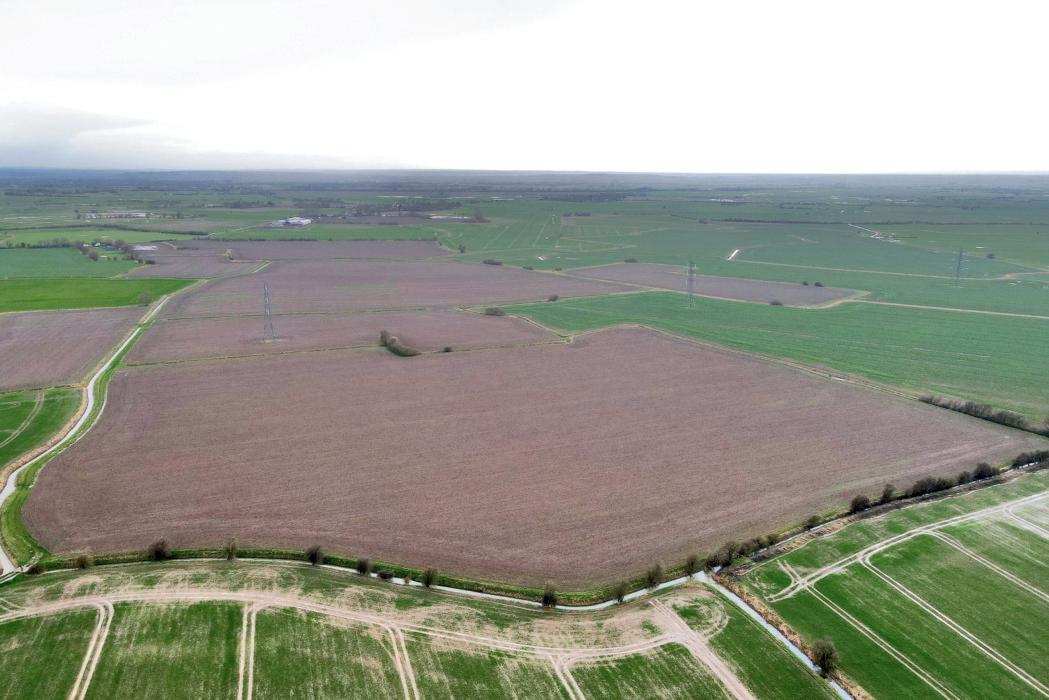
Two farms let on AHA tenancies. Available as two lots. Moat and Squires Farms (M&S) 308.71 acres of highly productive arable land. Grain store and 3 bed detached cottage. The Gooselands and Hammonds Corner (G&H) 126.6 acres of highly productive arable land in two blocks.
About 435 acres in total I Guide (M&S) £1.5 million (G&H) £600,000
Chris Spofforth Farm Agency 07812965379 cspofforth@savills.com
Hannah Riches Farm Agency 07967555724 hriches@savills.com
savills.co.uk | savills
FOR SALE



Springtime is Prime Time
Warmer weather, brighter skies and a blossoming property market. With demand for houses in Surrey, Kent and Sussex strong, now is the ideal time to sell. Contact us today!

HISTORIC MOATED MANOR
BTF Partnership has launched for sale Washenden Manor, just to the east of Biddenden, in Kent. This is a small, private country estate with historic Grade II listed moated manor, converted oast house, detached Kent Barn with potential and a further unlisted three-bedroom cottage with planning permission for replacement with a four-bedroom dwelling. This is all ringfenced in approximately 85 acres of stunning farmland and woodland.
Approached via a long, private, sweeping driveway, the restored manor house is of 17th century origin and measures 4,530ft². It has three reception rooms, six bedrooms and gardens surrounded by a water-filled moat.

Outside the moat is the spacious threebedroom oast measuring 2,364ft² that has previously been used as a holiday let and is currently let on an assured shorthold tenancy agreement providing a useful income. It also has an attached double garage and farm workshop occupied by the vendor.
The Kent Barn has potential as a party barn or further dwelling, subject to necessary approvals, and is currently used for agricultural storage. Measuring 2,213ft², it has a traditional Kent peg roof and ancient beams and there are stunning views across the land from the rear. Adjacent to the barn is a modern stable building with three loose boxes and tack room set in a small fenced concrete yard. In addition, there are two field shelters for horses or livestock.
At the foot of the driveway is The Cottage, measuring 997ft², which has planning permission for replacement with a stylish and larger two storey, four-bedroom home under planning reference PA/2022/2400.

The manor is surrounded by pasture land extending to 62.67 acres which is classified Grade III. There are parcels of woodland situated either side of the access drive which extend to 19.03 acres with a small brook running through it. At this time of year, the woodland is carpeted in bluebells, wood
anemones and primroses.
Alex Cornwallis at BTF Partnership commented: “This is a property where you can literally pull up the drawbridge and leave the world behind. This is a truly unique property with a real ‘wow’ factor as you come down the sweeping drive in the heart of the Weald of Kent.
“The property has considerable flexibility for a new owner who might be looking to generate an income from the existing residential properties and barn or for someone who just wants the peace and privacy of their own space, surrounded by their own land. There are not many places like Washenden left in Kent, and I believe it will not take too long for someone to fall for its charm, tranquillity and position.”

Washenden Manor is located two miles from the village of Biddenden, which has local shops/amenities and a vineyard. Biddenden is located five miles from Headcorn to the north and Tenterden to the south.





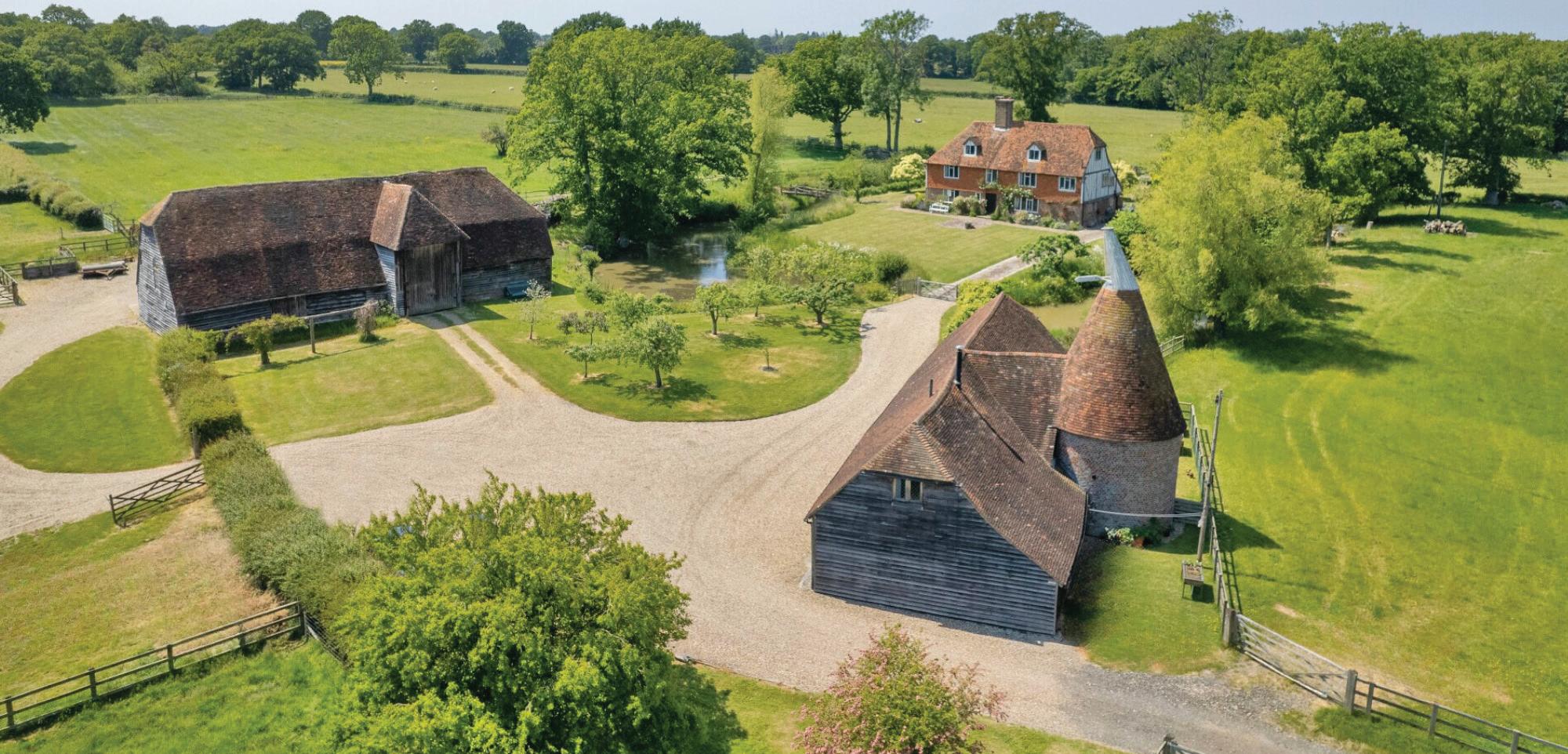
51 TO ADVERTISE CALL 01303 233883 LAND AND FARMS SPONSORED BY BATCHELLER MONKHOUSE
85
BIDDENDEN
For further details visit www.btfpartnership.co.uk TOPPICK
POA
ACRES
| KENT
WWW.SOUTHEASTFARMER.NET | MAY 2024
Visit batchellermonkhouse.com
SOLD SOLD SOLD
Farms & Land
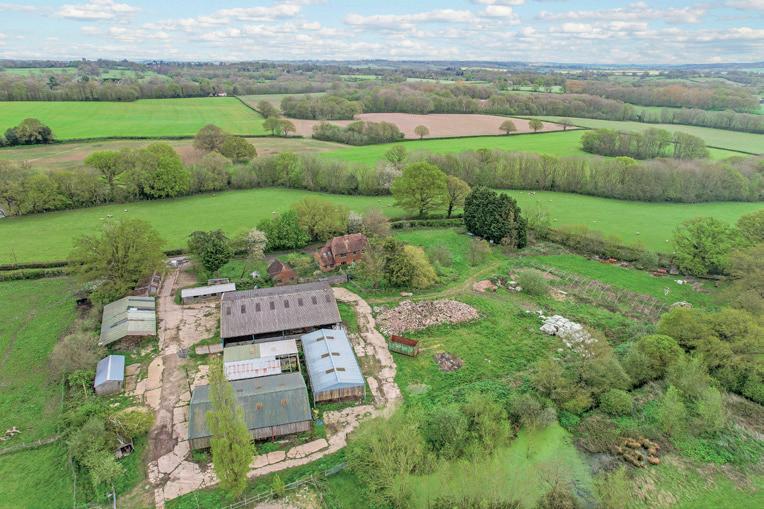
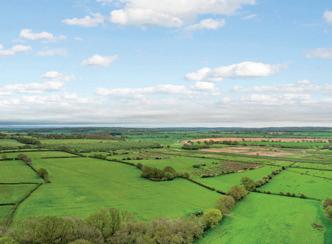
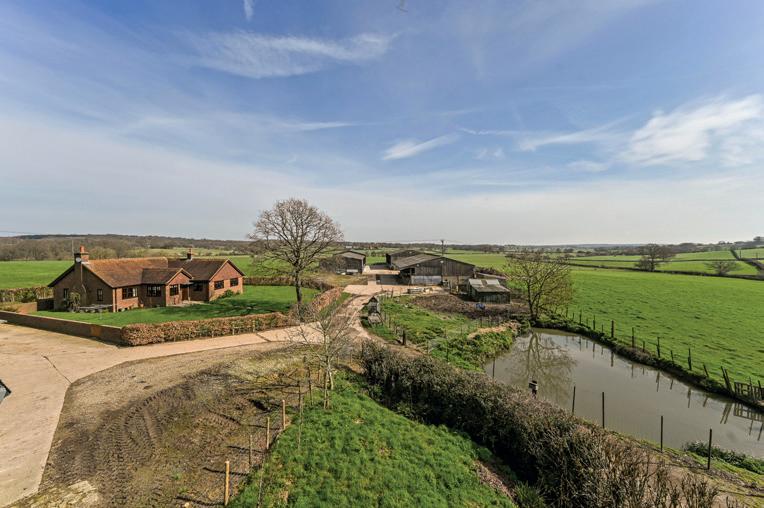
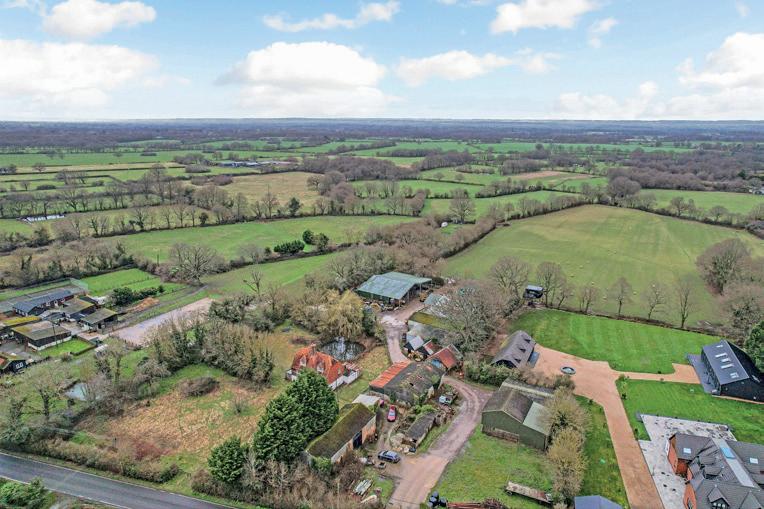

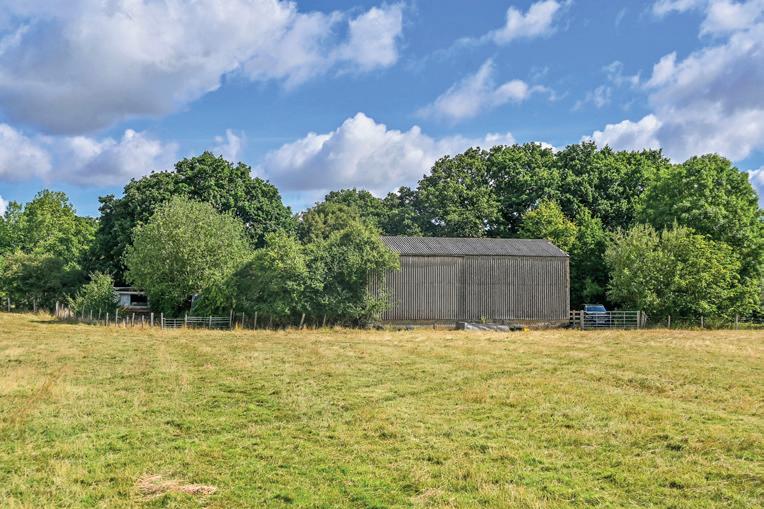
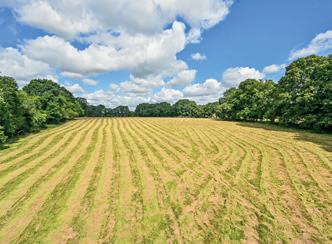
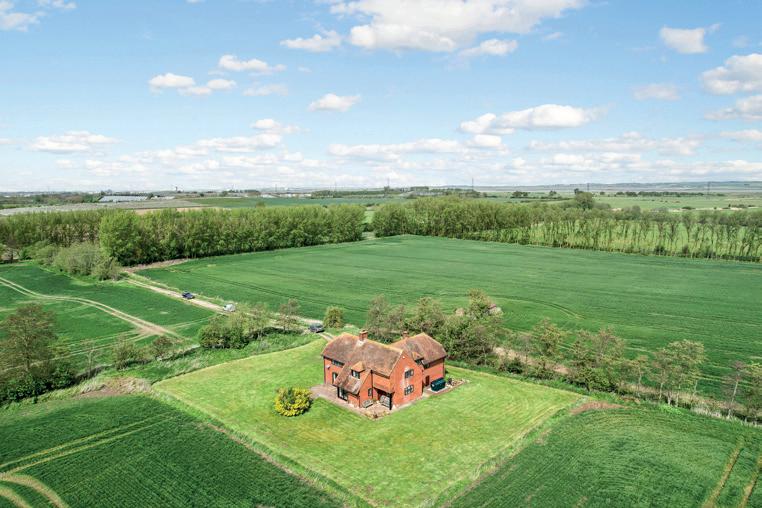
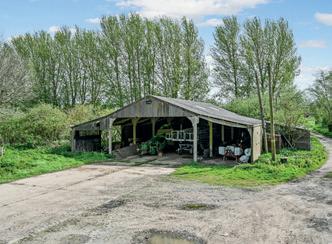

#TheGardenOfEngland Estate Agents Hobbs Parker Estate Agents www.hobbsparker.co.uk Ashford 01233 506260 Tenterden 01580 766766 Rolvenden £2,250,000 - £2,350,000 Grassland farm, farmhouse, buildings. As a whole or in up to 3 lots. About 165 acres. Sandhurst £1,595,000 Livestock farm, farmhouse, farm buildings, pastureland. About 59.50 acres. Woodchurch £1,950,000 Grade II listed house, building with potential, pastureland. About 81.75 acres. Bethersden £1,000,000 Mobile home, farm buildings and pastureland. About 60.40 acres. Teynham £3,350,000 Arable and grassland farm, 2 dwellings, farm buildings with potential. About 309.50 acres. Egerton £3,200,000 Grade II barn, separate cottage, pastureland and ponds. About 47 acres. Dartford £3,175,000 Productive arable land within the M25. About 285.75 acres. Dymchurch £225,000 Productive Romney Marsh arable land. About 22 acres. FOR SALE FOR SALE SALE AGREED SOLD FOR SALE FOR SALE SALE AGREED SOLD


FLURRY OF FARMS TO KICK START THE SPRING MARKET
Following a record year in 2023 for its farms and land agency team, Hobbs Parker is delighted to be launching a number of farms in Kent and East Sussex to the market this spring.
In the High Weald, Hobbs Parker has been instructed on two farms.
Little Forsham Farm and Little Thornden Farm at Rolvenden is a 165-acre traditional grassland farm. Little Forsham Farm comprises a detached, five-bedroom farmhouse with an agricultural occupancy condition (AOC), a useful range of modern farm buildings, stabling and pastureland extending to 57.5 acres.
Nearby, Little Thornden Farm is a block of grassland with frontage to the Hexden Channel and includes a useful steel-framed barn. The farms will be offered for sale as a whole, or in up to three lots, with a total guide price of £2,250,000 to £2,350,000.
Just down the road, Frenchurst Farm at Sandhurst is a productive livestock farm peacefully situated at the end of a ‘no through lane’ and comprises a detached bungalow (AOC), a range of livestock buildings and surrounding pastureland extending to about 60 acres. The farm is offered at a guide price of £1,595,000.
basis:


Further north in Kent, Little Frognall Farm near Teynham represents a rare opportunity to purchase a 310-acre mixed arable and grass farm close to the Swale estuary. The farm comprises a detached farmhouse and a separate two-bedroom bungalow (subject to AOCs), farm buildings which may offer potential for Class Q conversion and productive
Grade I arable land and permanent pasture. The land is subject to a farm business tenancy until 2032, although the tenant has indicated that he would consider an early termination of the tenancy. The guide price is £3,350,000.
Closer to Ashford, we are currently offering two small residential farms.
Stone Hill Barn and land at Egerton, which includes 47 acres of pasture, is currently for sale at a guide price of £3,200,000. It includes a substantial Grade II listed barn, separate cottage, large barn and barn stables.
Mayshaves Farm on the edge of Woodchurch, comprising an attractive Grade II listed farmhouse offered with 19 acres, has a guide price of £1,300,000.
A number of other land sales are expected to be coming to the market soon, including a large block of mixed fruit and arable land in the Ashford area.
Hobbs Parker has recently agreed a sale on King Farm, Woodchurch, a traditional livestock farm with a Grade II listed farmhouse, buildings and pastureland extending in all to about 82 acres. The guide price was £1,950,000.
In cases where a more discrete marketing service was preferred, we have agreed significant off-market sales on arable land in the Ashford area and in east Kent.

A grassland farm in the High Weald. Farmhouse, buildings and pastureland – 165 acres
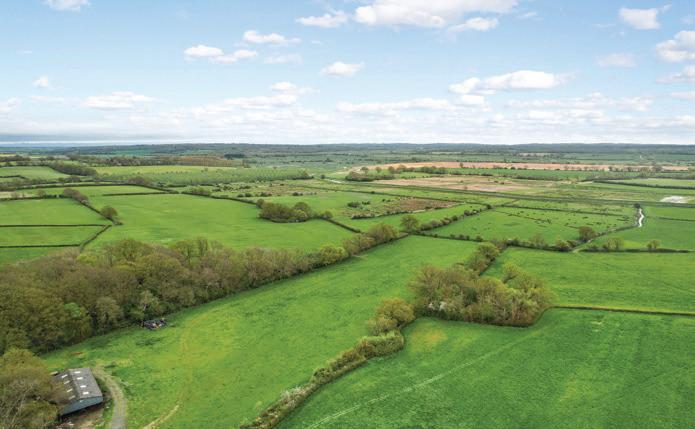

With an election looming, all major parties have mentioned potential changes to tax, whether capital gains tax, agricultural property relief or business asset disposal relief. Political change is likely, and if this is the case changes to tax will be on the agenda even if they are just aimed at making tax simpler.
This, together with the phasing out of basic payments, higher interest rates and margins being squeezed, could lead to more land coming to the market which could in turn have an impact on the values of farms and farmland. Now could be a sensible time to sell. Taking specialist advice and targeting the correct market will be crucial to achieving a successful outcome. Please speak to us for confidential expert advice.



Looking ahead, demand for farmland remains high and there appears to be a significant amount of rollover money still looking for a home and increasing interest from natural capital markets. While some reports are suggesting that land prices may be levelling off, here in the South East the supply and demand imbalance means prices are holding firm.

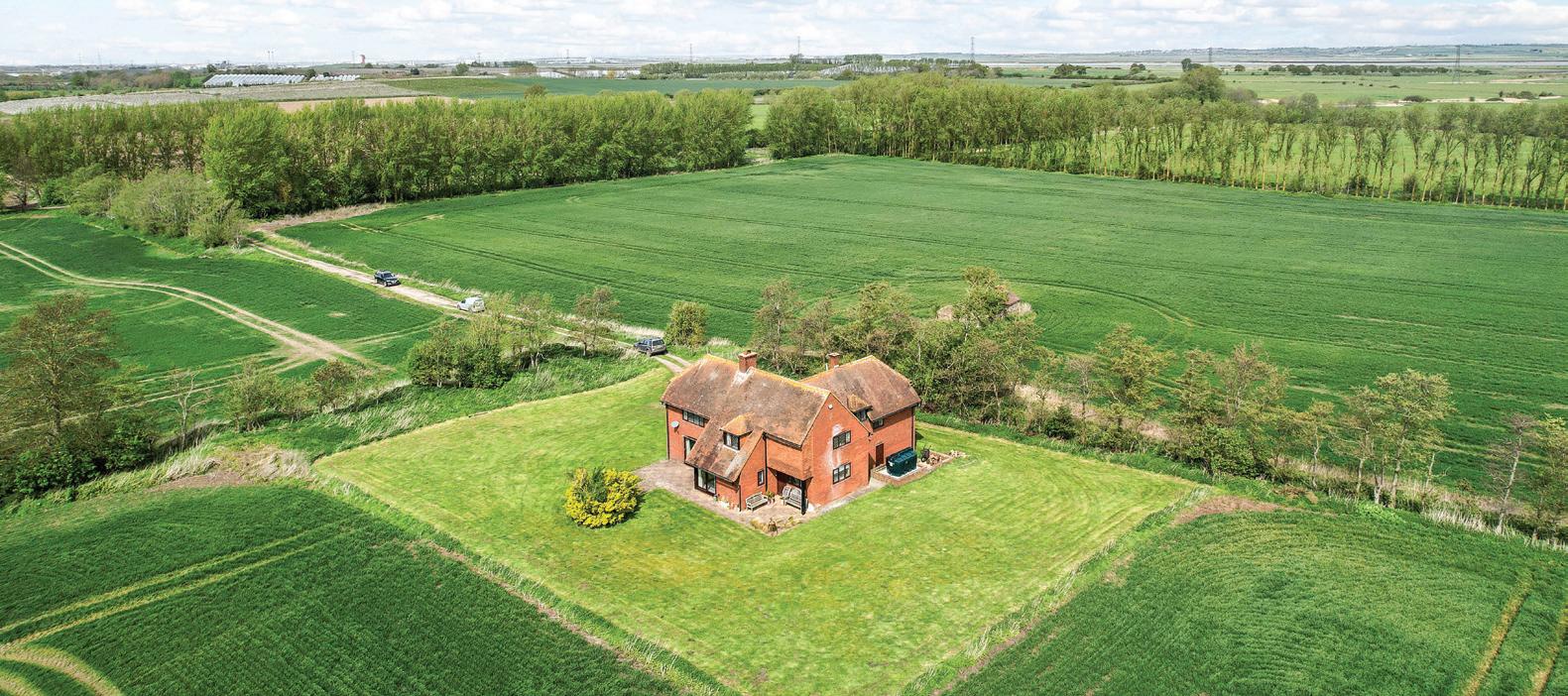




JAMES HICKMAN
Director
E: james.hickman@hobbsparker.co.uk
JON RIMMER Group Chairman
E: jon.rimmer@hobbsparker.co.uk
SAM SNART Director
E: sam.snart@hobbsparker.co.uk
MATTHEW SAWDON Director
E: matthew.sawdon@hobbsparker.co.uk
WWW.SOUTHEASTFARMER.NET | MAY 2024 53 TO ADVERTISE CALL 01303 233883
PROPERTY REVIEW
SPRING
T: 01233 506 260 www.hobbsparker.co.uk Sam Snart Director James Hickman Director team on a confidential
Romney House | Monument Way | Orbital Park | Ashford | Kent TN24 0HB 01233 506201 Guide £5,200,000 Guide £3,175,000 Guide £1,100,000 Guide £1,000,000 Offers in excess of £2,000,000 Northfleet Arable farmland in 3 lots. 160 acres. Guide £1,275,000 Hamstreet Arable land. 68 acres. Guide £685,000 Challock Useful farm building with potential. Guide £325,000 Guide £1,400,000 Hoath AOC house and land. 10.55 acres. Guide £1,000,000 Alkham Pasture land. 19.5 acres. Guide £180,000 Dymchurch Arable land. 22 acres. Guide £225,000 Farms and Land SOLD SOLD SALE AGREED SALE AGREED SALE AGREED SALE AGREED 16/11/2023 09:27:29
A mixed arable and grassland farm. Two dwellings, farm buildings – 309.5 acres


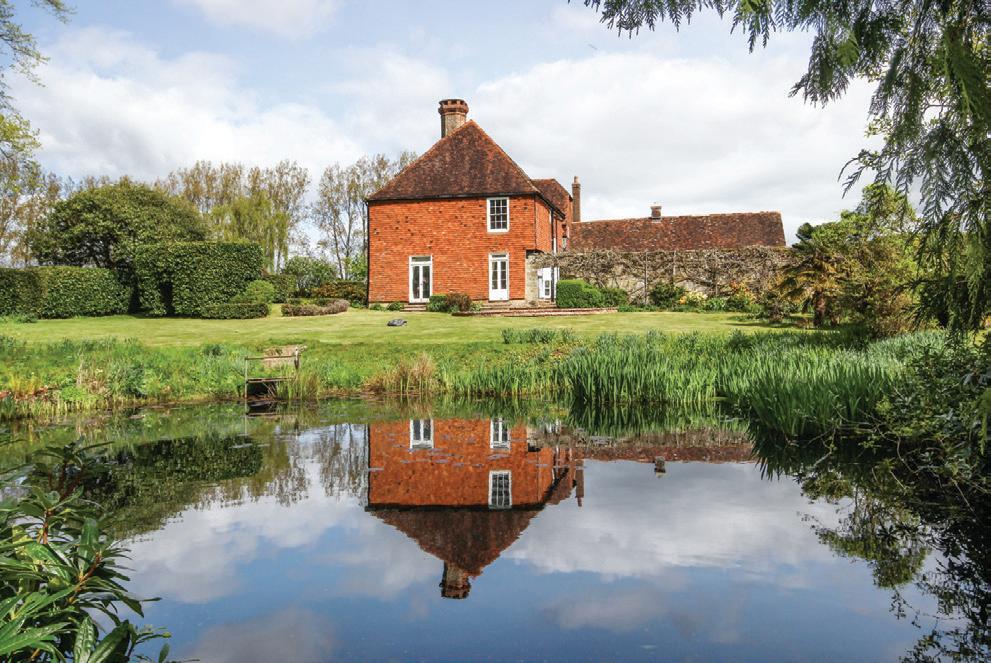
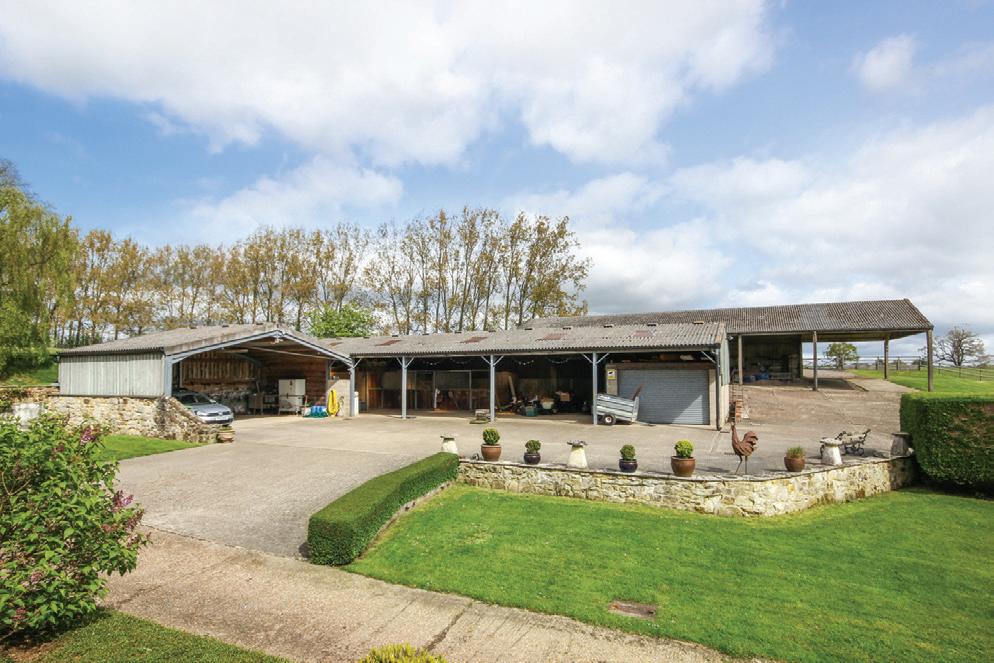
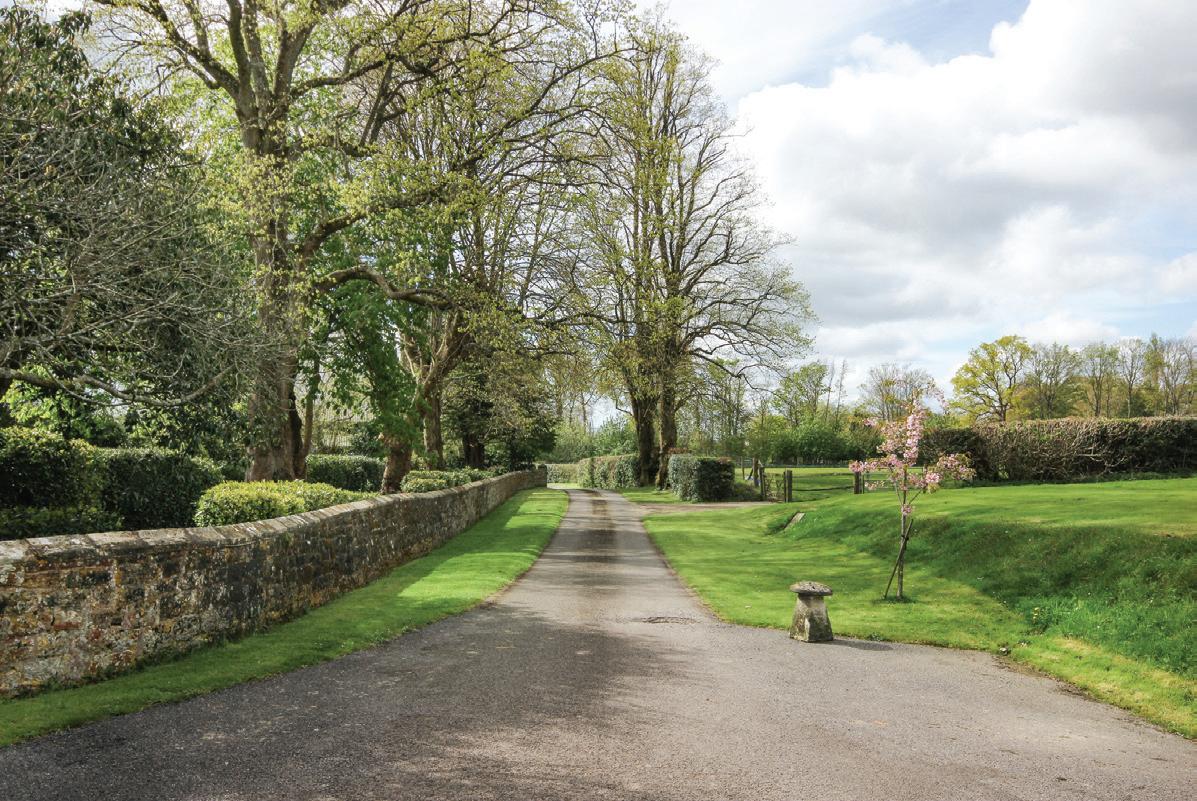


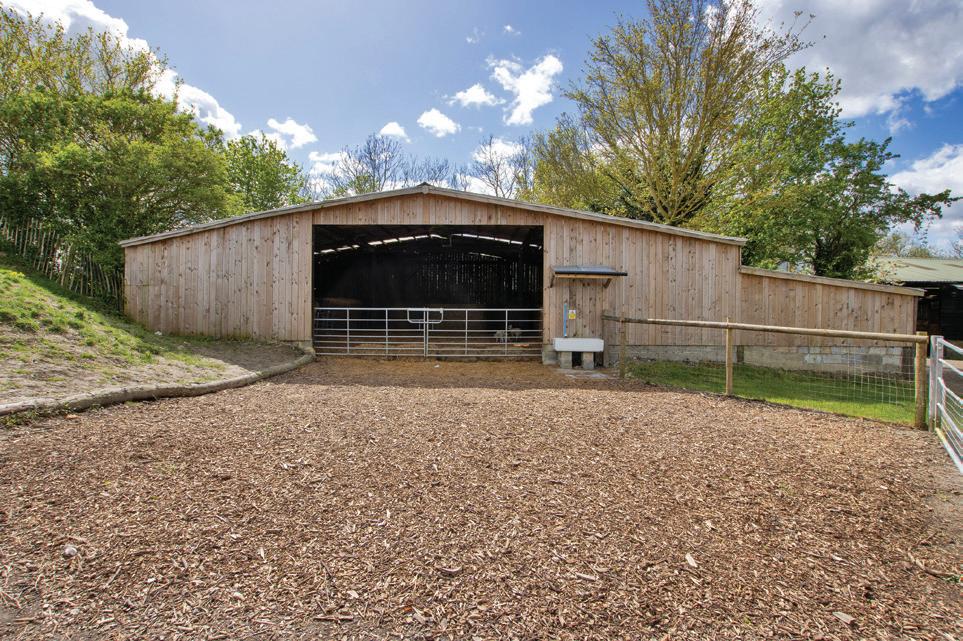
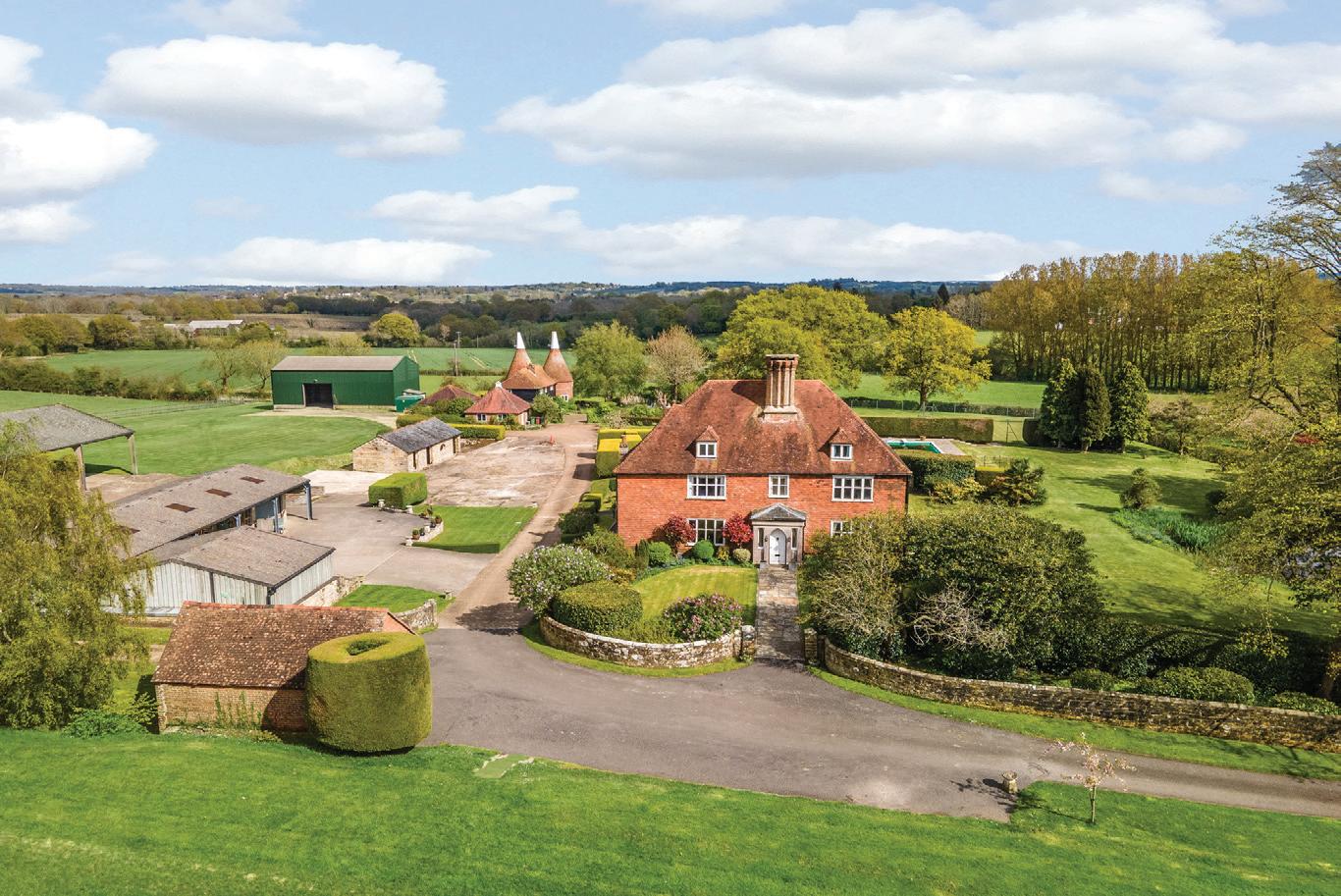
A charming Tudor Grade II Listed 6-bedroom farmhouse with a separate self-contained 2-bedroom
A range of sporting and equestrian facilities including a swimming pool (in need of modernisation), tennis court, ménage and stables
A variety of substantial outbuildings, with commercial planning permissions, residential and income potential
w w w b t f p a r t n e r s h i p c o u k c h a l l o c k @ b t f p a r t n e r s h i p c o u k A diverse farm with residential development opportunities and agricultural land F A R N I N G H A M | K E N T Lot 1 0 1 2 3 3 7 4 0 0 7 7 House, gardens and paddock land - 5 85 acres Guide Price: £1,750,000 Lot 2 Old stable yard with consent for 4 residential dwellings - 0 28 acres Guide Price: £850,000 Lot 3 Lot 2 Lot 1 Buildings & yard with consent for 7 dwellings - 2 79 acres Guide Price: £1,500,000 Lot 4 The Sheep Shed with residential consent - 2 23 acres Guide Price: £650,000 Lot 5 Sout h facing agricultural land 28 71 acres Guide Price: £500,000 As A Whole - 39 86 acres - Guide Price : £5,145,000 Lot 5 Lot 4 H A W K H U R S T | K E N T
annexe
Guide Price
£3,995,000 L a n d & P r o p e r t y E x p e r t s t
A mixture of pasture, woodland and wealden ponds extending in total to approximately 82 acres.
:
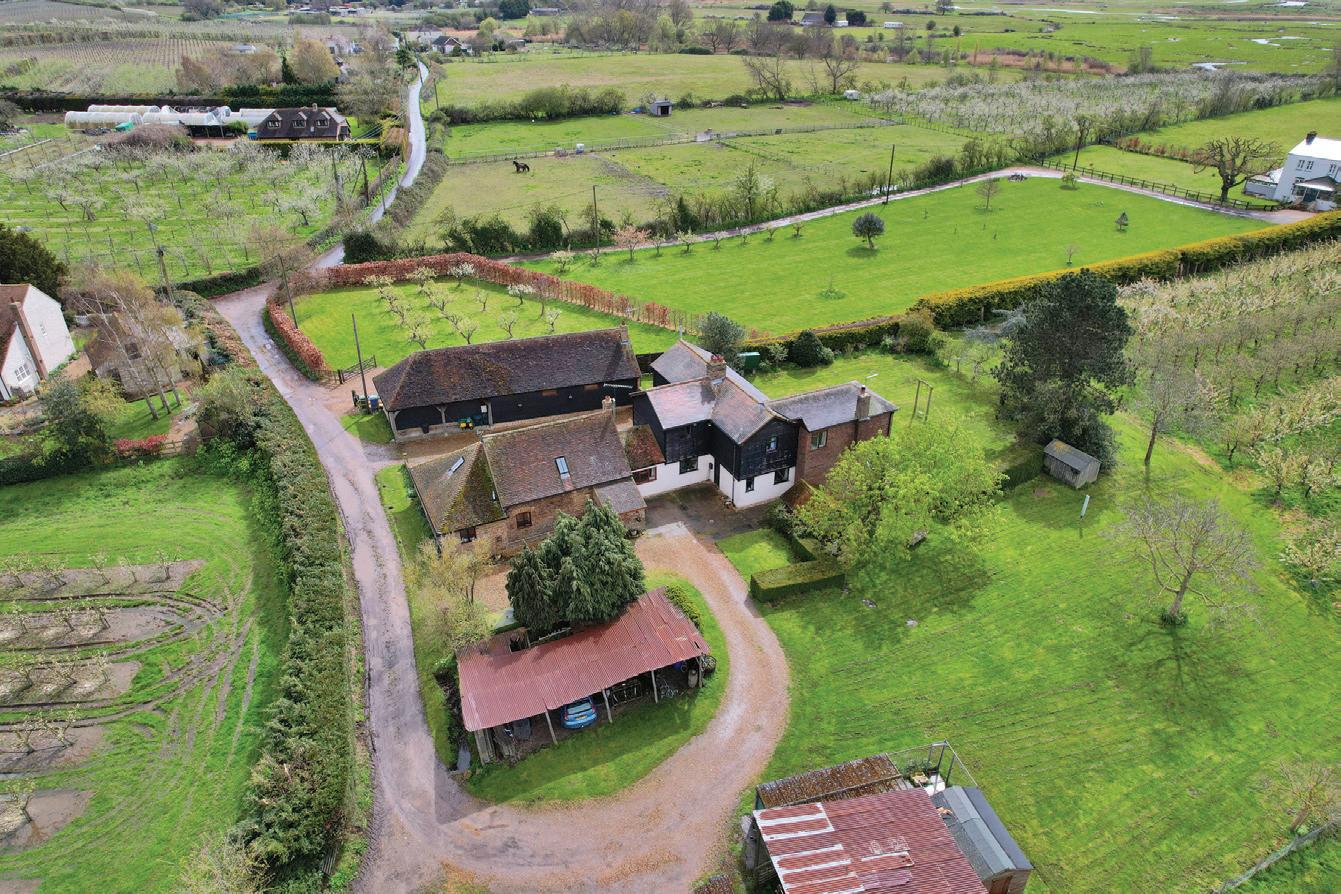
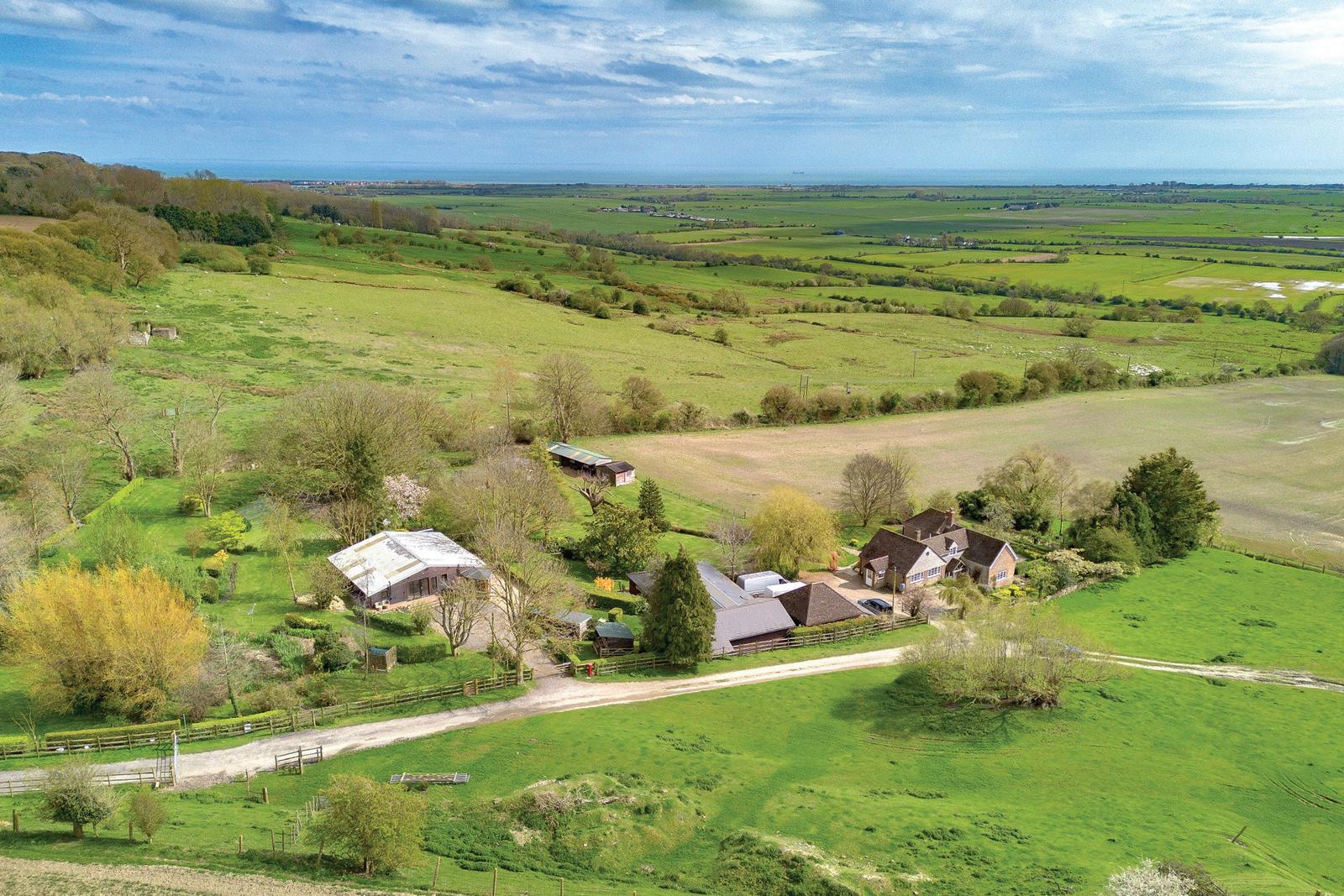
Small holding set in a semi-rural location with income potential and paddock land
L ot 1
5-bedroom farmhouse which has been modernised and extended over the last 20 years. Holiday let and a variety of outbuildings Extending to 3 77 acres Guide Price : £900,000
L ot 2
A 3-bedroom holiday let with a private lawned garden and driveway Extending to 0 21 acres Guide Price : £325,000 As A Whole - 3 98 acres - Guide Price : £1,225,000
3-bedroom farmhouse with a 1-bedroom annexe and extensive mature gardens and grounds
2 holiday lets which have been finished to a high-standard and provide year-round income
A commercial building with potential and agricultural grazing land
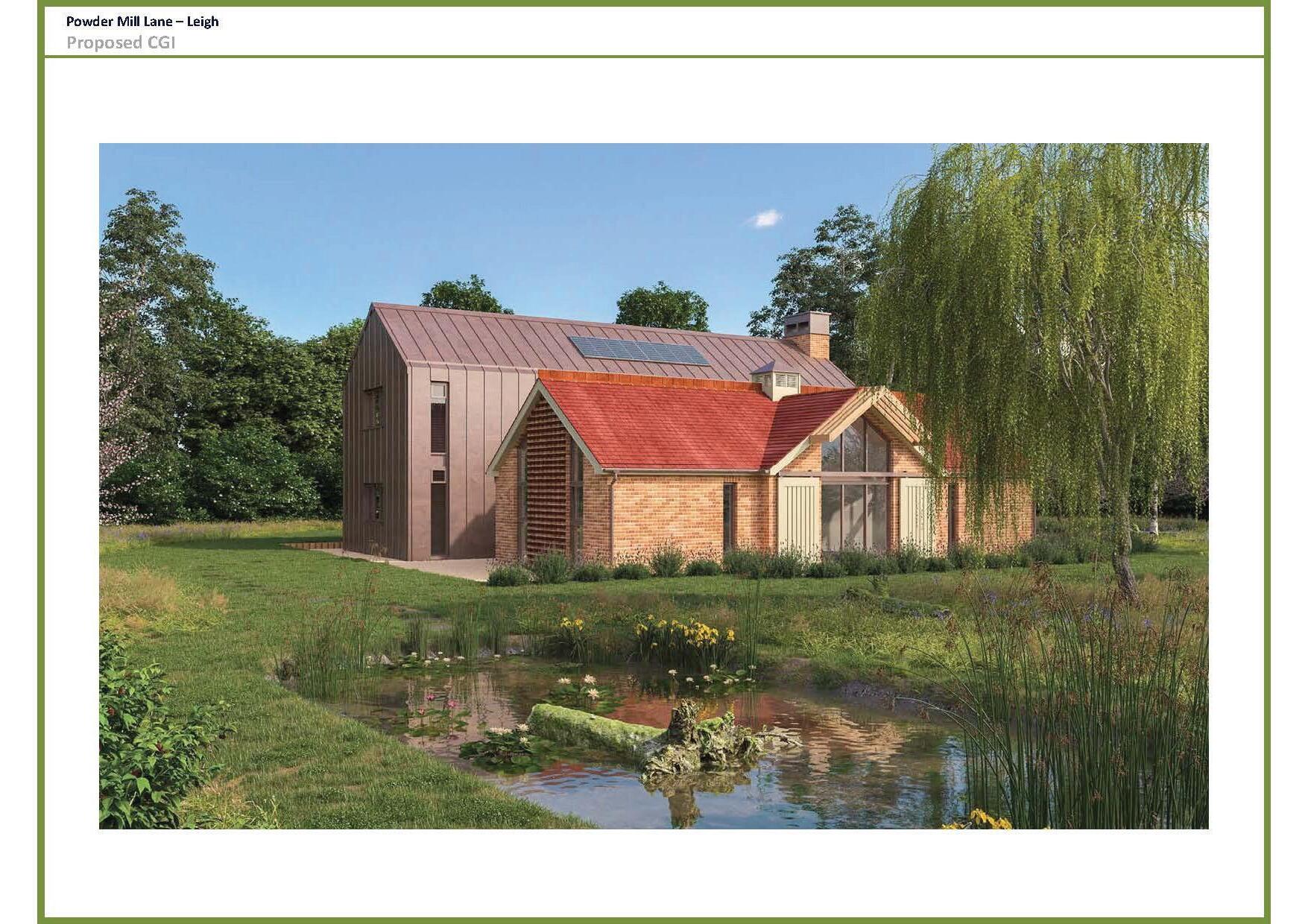
Planning consent for a new build 4-bedroom contemporary dwelling with large landscaped garden and pond
Desirable village location and set within a private plot
House totalling 2825sq ft
Extending in all to approximately 3.80 acres.

A detached 3-bedroom Oast house with pasture small holding
Over 6,500 sq ft of farm buildings and stores with potential for a variety of uses
Extending in all to 4 81 acres
w w w . b t f p a r t n e r s h i p . c o . u k c h a l l o c k @ b t f p a r t n e r s h i p c o u k
P C
U R C H
K E
0 1 2 3 3 7 4 0 0 7 7 ART
I ON
U
H
|
N T
I S T S I MPRES S
L A
B E R H U R S T
K E N T Guide
L
M
|
Price : £550,000
E I G H | K E N T
H Y T H E | K E N T
Entire plot extending to 0 63 acres Guide Price : OIEO £725,000
Guide Price :£1,750,000
L a n d & P r o p e r t y E x p e r t s t

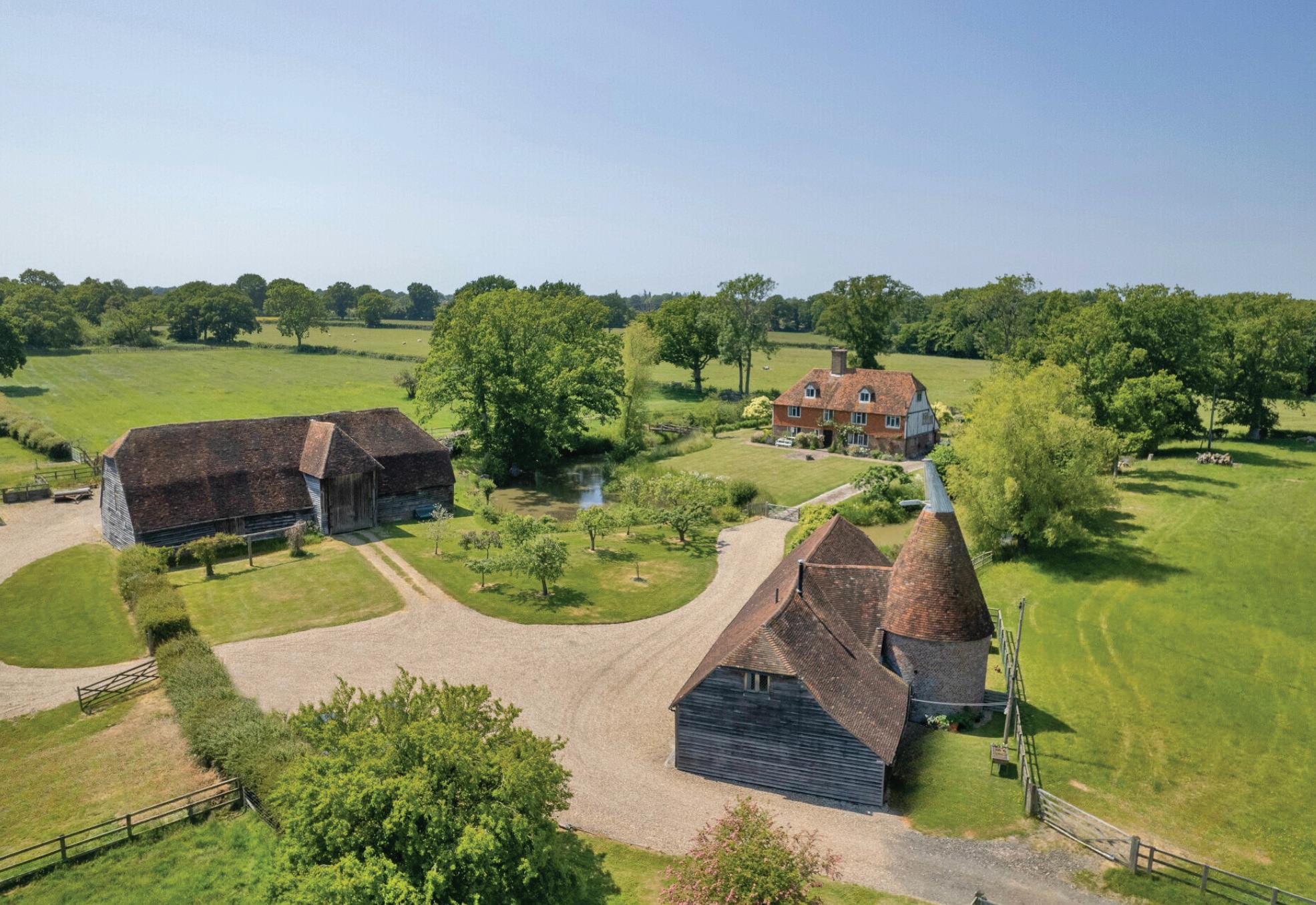
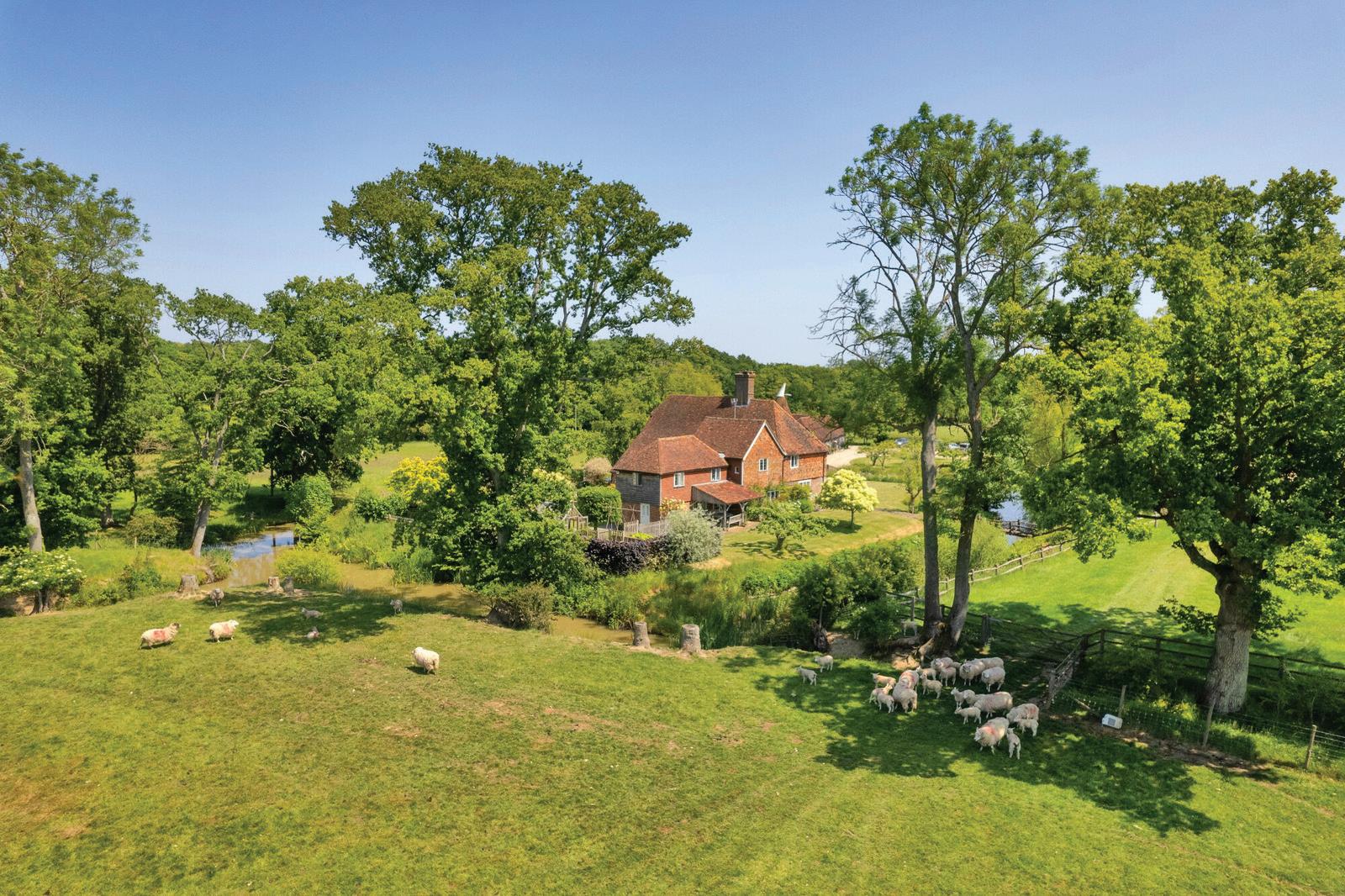
B I D D E N D E N | K E N T
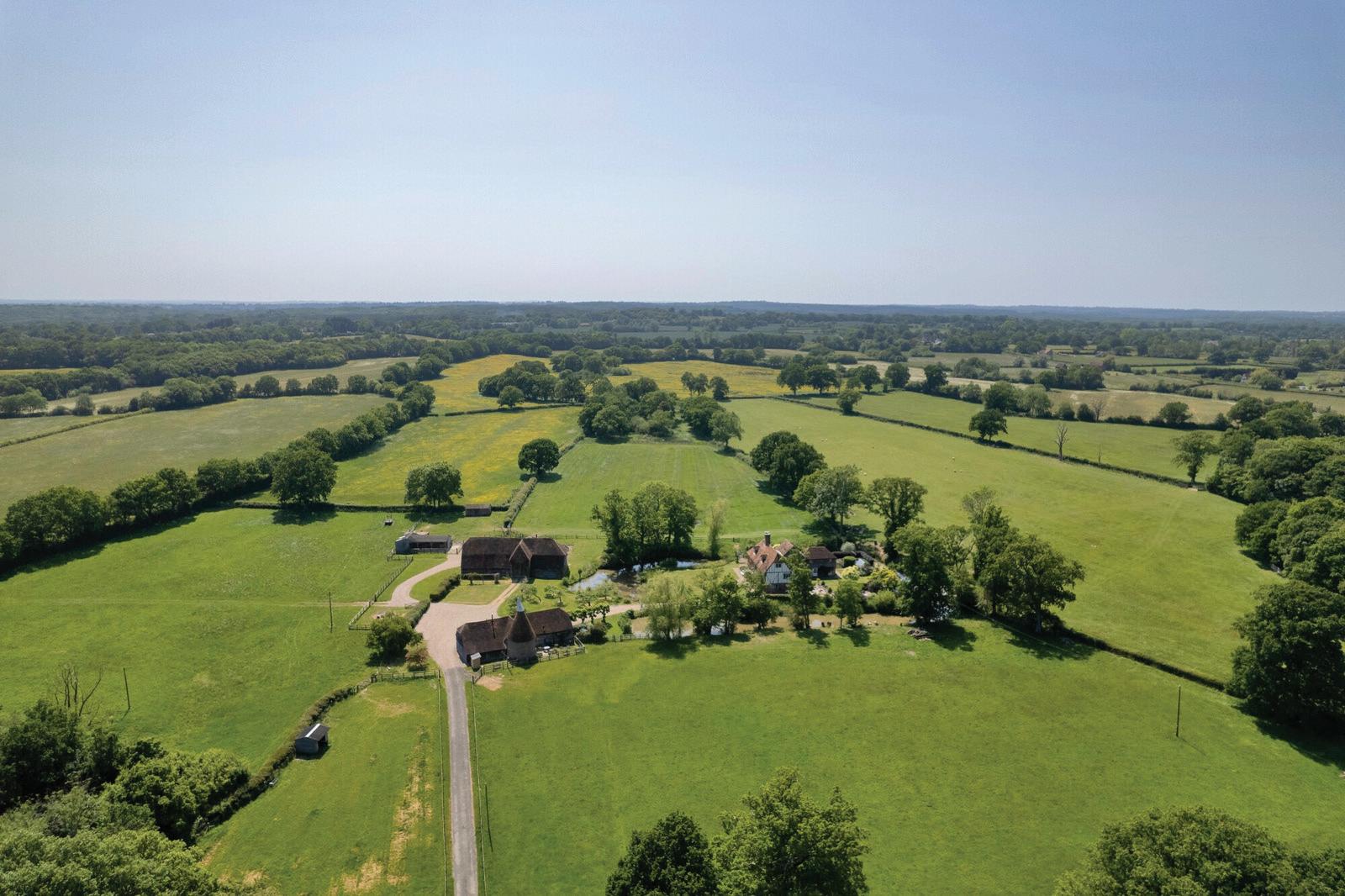
A n e n c h a n t i n g s m a l l e s t a t e i n t h e h e a r t o f t h e W e a l d O f K e n t w w w b t f p a r t n e r s h i p c o u k 0 1 2 3 3 7 4 0 0 7 7 a l e x c o r n w a l l i s @ b t f p a r t n e r s h i p c o u k
6 - b e d r o o m G r a d e I I L i s t e d m o a t e d f a r m h o u s e
3 - b e d r o o m G r a d e I I L i s t e d d e t a c h e d c o n v e r t e d o a s t
3 - b e d r o o m c o t t a g e w i t h p l a n n i n g p e r m i s s i o n f o r a 4 - b e d r o o m h o u s e
G r a d e I I L i s t e d K e n t b a r n w i t h p o t e n t i a l
S t a b l e s , f i e l d s h e l t e r s a n d l a n d I n a l l a p p r o x i m a t e l y 8 4 . 2 6 a c r e s
The supply of farmland in the South East continues its upward trajectory, according to the latest analysis by Savills.
Research from Savills shows the market in Great Britain as a whole is 44% larger in supply terms, year on year, including a 6% rise in the South East. However influences including Brexit and Covid-19 led to an uncharacteristically quiet market until recently, so analysing market activity against a baseline of 2012 to 2016 is more insightful.
The results show supply in Q1 of this year was 33% higher across GB than the average from 2012 to 2016 (see chart). The South East and South West have seen increases of 12% and 57% respectively over the same period.
Andrew Teanby Associate Director Savills rural research commented: “In January we said 2023 represented a step change in farmland supply and forecast the volume would increase further this year. Early indications suggest this will be correct.”
The question is why? If the decline in market activity was linked to Brexit and uncertainty whilst the UK governments developed their new national agricultural policies, then it follows once this policy emerges farmers will evaluate their options and begin to make longterm business and investment decisions with more confidence again.
Triggering change has been a specific government objective and in England an exit scheme was introduced to encourage farmer retirements. The future without the baseline stability provided by the basic payment looks more complex, and the outlook is
FARMLAND MARKET SUPPLY CONTINUES UPWARD TRAJECTORY
exacerbated by lower margins as costs have risen and commodity prices have dropped considerably since the initial impact of the invasion of Ukraine. Consequently, some farmers are changing how they run their farms, and others are retiring leading to some farmland sales.
WHAT DO BUYERS WANT?
Relative to last year 15% fewer new applicants registered in the first quarter of the year, but more than in 2021 and 2022. Chris Spofforth of Savills rural agency in the South East commented: “Higher supply and fewer buyers offer an opportunity for those in the market to be more selective and focus on higher-quality properties. The quality of a farm’s infrastructure for example is influencing values strongly. Farms with goodquality buildings suited to modern agriculture tend to attract more interest and competition in the current market, which can lead to a sale being agreed more rapidly.”
Another wet autumn and spring mean buyers are scrutinising drainage more
carefully, free-draining land is generally favoured unless yields are seriously impacted in drier weather. Where productivity is dependent on underdrainage, records and the quality of this system are becoming more important to buyers and will be factored into their offers given the expense of investing in new field drainage systems. Similarly, the security of water supplies for irrigating specialist cropping is coming under greater scrutiny.
Chris added: “Water and, more particularly, the potential financial benefits landowners can receive through stewardship schemes have also risen up the agenda – flood alleviation, nutrient neutrality and more active water meadow management, all offer welcome alternative financial returns.
“In terms of farmland values, at this early stage in the year, low volumes of transactions have been completed so our overall average regional and national farmland values have changed very little from Q4 2023. As supply is likely to increase relative to demand in 2024, a greater variation in values is expected.”
57 TO ADVERTISE CALL 01303 233883 SPRING PROPERTY REVIEW WWW.SOUTHEASTFARMER.NET | MAY 2024
2024 Q1 against the 'pre-Brexit' five year average
200% 150% 100% 50% 0 -50% -100% Change in supply 2012-2016 average to 2024 (%) East Midlands -47% West Midlands 48% England 43% Scotland -14% Wales 53% Great Britain 33% East of England 168% North of England 50% South East 12% South West 57%
Source: Savills Rural Research
As we celebrate our 20th anniversary, we want to say thank you to all our clients, past and present, for trusting us with your business. It’s been a privilege to work with you.
We look forward to working with farmers and landowners across the South East for the next 20 years.
Please do come and say hello and join us for a celebratory drink on our stand at the Heathfield Agricultural Show on 25th May 2024.
Visit www.c-l-m.co.uk or call us on 01892 770339 Sackville House, Hartfield, East Sussex TN7 4AW Email: info@c-l-m.co.uk Web: www.c-l-m.co.uk
at 20 • Farm Business & Estate Management • Planning & Development • Succession • Land Sales & Acquisition • Biodiversity Net Gain, Ecology & Natural Capital • Diversification • Residential and Commercial Property Letting & Management • Subsidies & Grants • Viticulture ELEC
ING OU R 2 0 TH ANN
YRAS20 CLM CLM ANNIVERSARY LOGO - COLOUR VERSION CELEBRATING 20 YEARS G OU R 2 0 TH A CLM ANNIVERSARY LOGO - BLACK & WHITE VERSION
B R A T
I V E R
DON’T GET TIED TO THE MAST
The rise and rise of mobile phones has changed the dynamics of the relationship between agricultural landlords and telecoms operators, and left farmers and landowners in a much weaker position.
New legislation in response to the political and market imperatives around increasing the number of telecoms mast sites to deliver higher quality data, faster, across the whole of the country, has strengthened the operators’ hands to an enormous extent. Where a farmer or landowner might once have been happy to be paid between £5,000 and £7,000pa in rent for a rural mast site, renewals are now typically being offered at just £1,000 or, at best, £1,500 – a drop of around 80%.
Meanwhile the operators are demanding more, offering less and making life more difficult for the landlord, backed up by changes to the Electronic Communications Code (the Code).
STRENGTHENED HAND FOR THE TELECOM OPERATORS
Further legislation in the form of the Product Security and Telecommunications Infrastructure Act 2022 (PSTIA) came into force on 6 December 2022, with many of its provisions being introduced in stages.
The Act makes several changes to the Code which strengthen the operators’ position yet further. Alongside a lower rent, it gives operators greater rights to access the landlord’s property and upgrade and share their equipment, which can mean larger
equipment and antennae and increasingly frequent and disruptive visits. What was once a benign tenant providing a reasonable income can quickly become disruptive and difficult to control.
Given the changes, landlords with an existing agreement should not be in a hurry to suggest a renegotiation, as the existing lease will almost certainly have been agreed on far better terms than a new one could hope to achieve.
Those who are approached by the operator regarding a new letting should make sure they take professional advice from an experienced agent who will seek to agree terms that protect property rights and minimise the burden on the landlord’s own operations.
HOW DO I GET RID OF A MAST ON MY PROPERTY?
There has been a significant increase in the number of landlords seeking advice on how to remove or relocate radio masts, often because the changing nature of the business has seen farmers bringing forward plans to redevelop part of their land or diversify in a way that isn’t compatible with hosting the hardware.
Landlords understandably want to protect their ability to control the use of their land, including the potential to develop it, and will want to be confident that they are able to secure vacant possession.
The problem is that, under the Code, there are very few ways in which a landlord can require an operator to remove their
equipment. The landlord needs to prove that they intend to redevelop all or part of the land, or any neighbouring land, and could not do so unless the equipment is moved.
REDEVELOPMENT BREAK CLAUSE IS ESSENTIAL
Assuming there are no substantial breaches by the operator, a lease can only be terminated by the landlord if it includes a redevelopment break clause, which means it is crucial for the landlord to evaluate their future development intentions before agreeing any renewal. Farmers and landowners should seek advice from a telecoms specialist to ensure a suitable redevelopment break is included in the agreement.
Operators will often argue that as there are no existing plans to redevelop, no break clause should be included in the lease, which would effectively give the telecoms operator a 10-year term and leave the landlord no way of removing the apparatus from their property.
The removal process itself can be a complex and prolonged process, as it requires a two-stage process that may last two years and may involve the operator seeking to relocate the mast to another part of the property, a right they are often able to exercise.
The current complex legislation favours the operator in their drive to site or relocate a mast on land. The need to seek expert help is accepted, with the operator generally agreeing to pay legal and agents’ fees.
 TOM BODLEY SCOTT MRICS FAAV Head of Telecoms
T: 01892 509280
E: t.bodley.scott@batchellermonkhouse.com
WWW.SOUTHEASTFARMER.NET | MAY 2024 59 TO ADVERTISE CALL 01303 233883 PLANNING


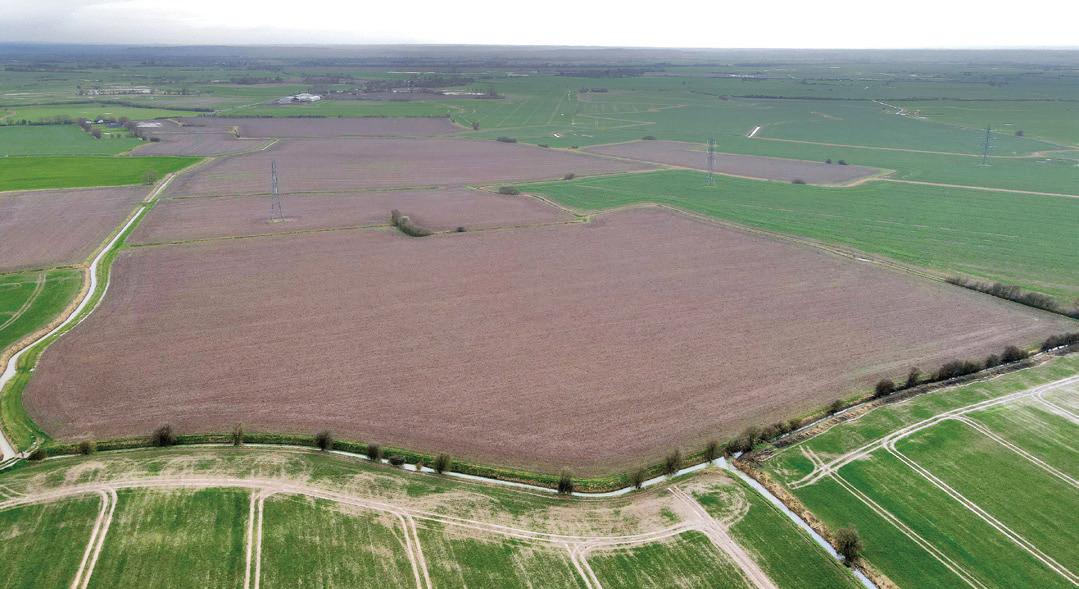

A rare agricultural investment opportunity has come to the market on the Romney Marsh, Kent.
Two farms, Moat and Squires Farm and The Gooselands and Hammonds Corner, have come to the market, both of which are let on Agricultural Holdings Act tenancies (AHAs). The farms total about 435 acres and are available in two lots.
Situated between the villages of Ivychurch and Newchurch, Moat and Squires Farms are two separate parcels totalling 308 acres of highly productive, Grade 1 and 2 arable land, with a grain store and a three bedroom detached cottage.

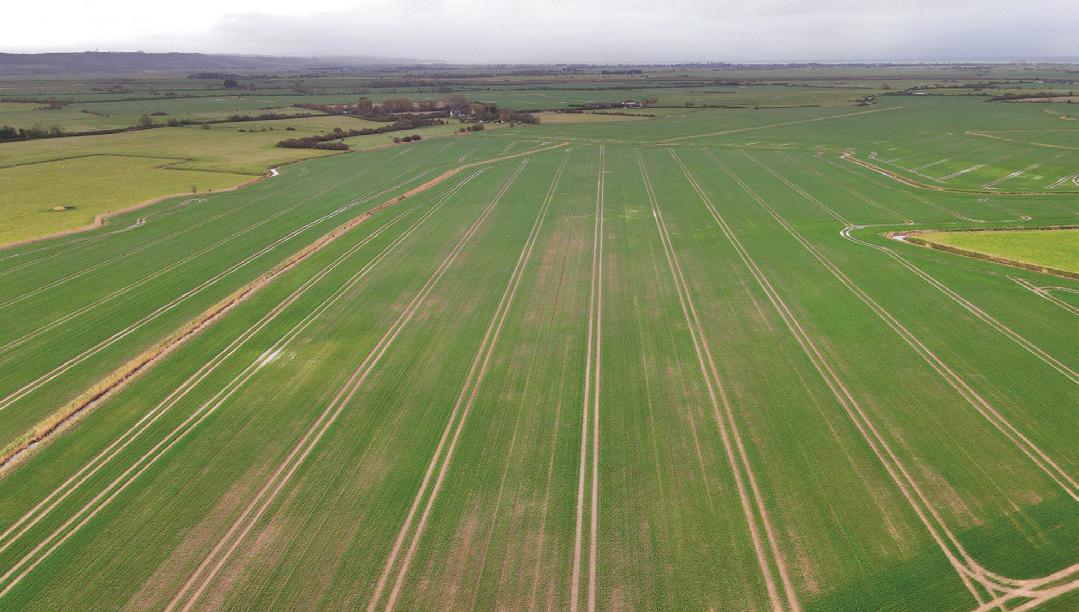



RARELY AVAILABLE INVESTMENT OPPORTUNITY
The Gooselands and Hammonds Corner are located between Old Romney, New Romney, Ivychurch and Saint Mary in the Marsh, and comprise 126 acres of highly productive Grade 1 and 2 arable land, again in two blocks.
Chris Spofforth, of Savills’ rural agency team in the South East, said: “The sale of these two farms offers a significant and
exciting investment opportunity to buy a let farm on the Romney Marsh, in an area where such opportunities rarely come to the market.”
Moat and Squires Farm is being marketed for a guide price of £1.5million and The Gooselands and Hammonds Corner has a guide price of £600,000.
For more information, contact Savills’ rural agency team in the South East on 07812 965379 or 07967 555724



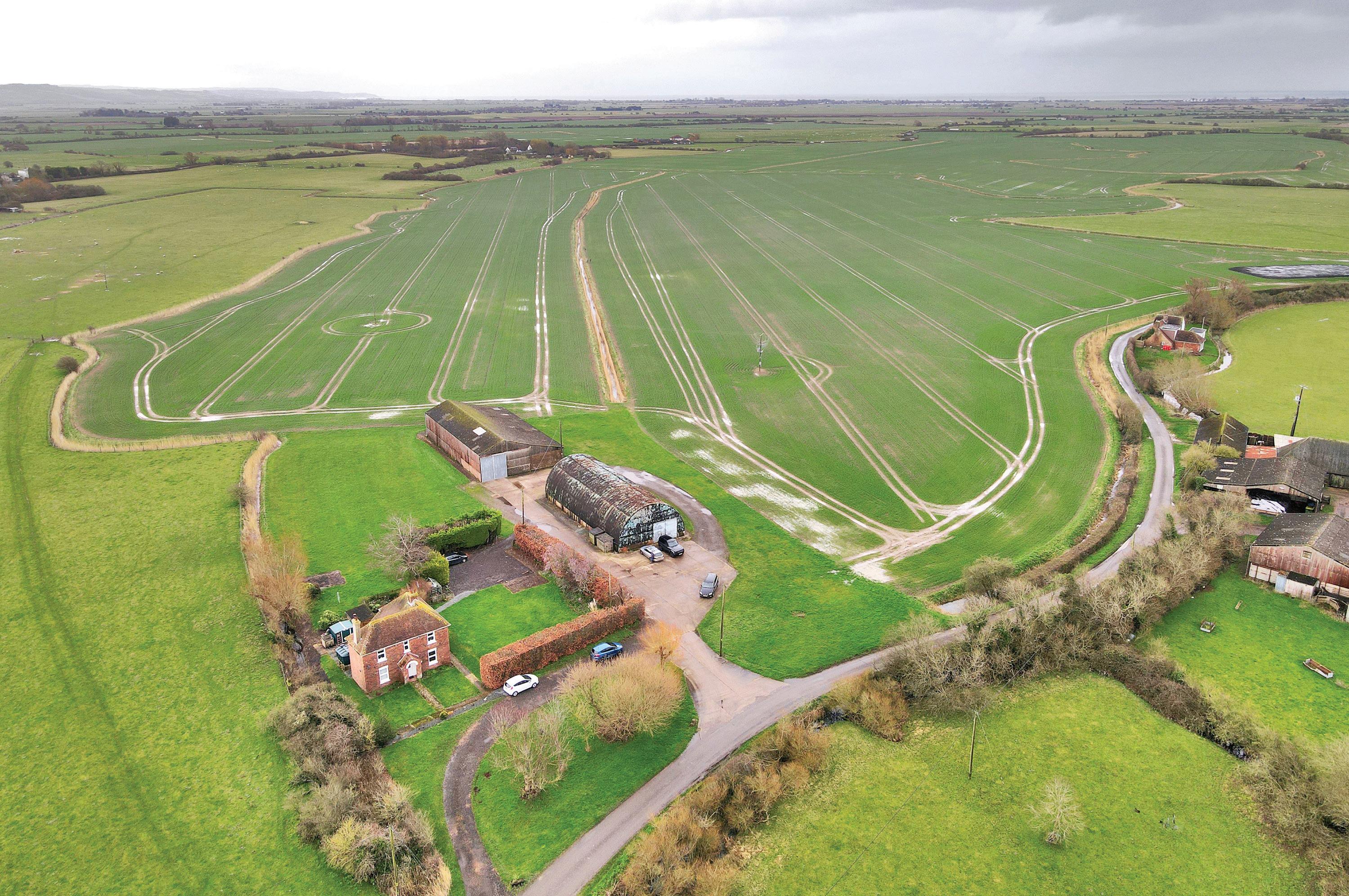
MAY 2024 | WWW.SOUTHEASTFARMER.NET 60 SPRING PROPERTY REVIEW TOPPICK GUIDE PRICE: £1.5MILLION / £600,000
435 ACRES
ROMNEY MARSH | KENT
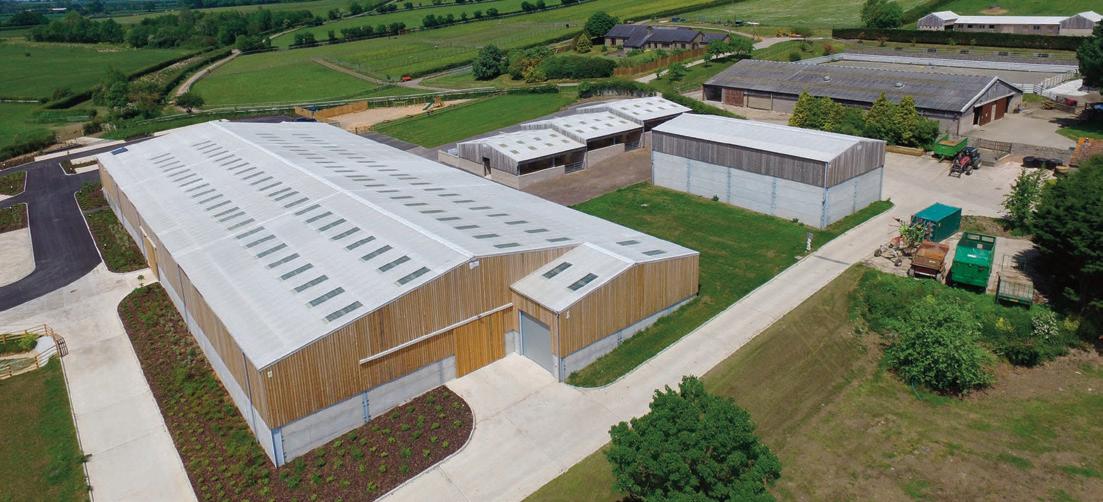




•
•
•








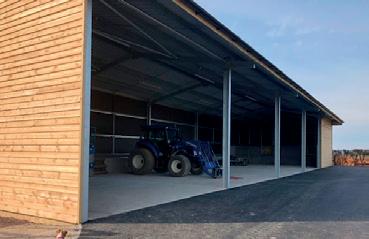
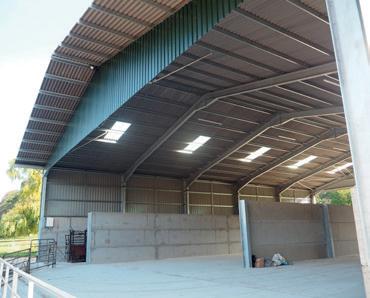
WWW.SOUTHEASTFARMER.NET | MAY 2024 61 TO ADVERTISE CALL 01303 233883 CLASSIFIEDS CONSTRUCTION CONSTRUCTION Industrial & Commercial | Structural Steelwork | Agricultural & Equestrian Contact us for a free quotation 01269 831831 enquiry@shufflebottom.co.uk www.shufflebottom.co.uk
Ltd Cross Hands Business Park, Cross Hands, Llanelli, Carmarthenshire SA14 6RE Shufflebottom Agricultural Buildings Steel-frame buildings for your farm + Supply only or supply & erect + Construction all over the UK + Award winning company Strength, Security, Style Office 01825 371500 � info@formabuild.co.uk www.formabuild.co.uk We specialise in the supply and construction of steel framed buildings together with the repair and refurbishment of existing farm buildings. Based in the heart of Sussex, covering the South East. Sussex builders since at least 1605. Forma offer all aspects of steel framed construction and cladding together with groundworks and electrical fit out if required. formabuild.co.uk 100% British designed & built Over 35 Years experience Site visits Call to arrange a site survey All our panels are marked Gary White 07812 599679 Jason White 07941 274751 Based in Lewes, East Sussex G.E.WHITE & SONS Ltd All refurbishments & repairs undertaken. Call for a free quote today. AGRICULTURAL, EQUESTRIAN & INDUSTRIAL STEEL FRAMED BUILDINGS We supply CONCRETE PANELS – Any size to suit your needs All aspects of steel work, cladding & groundwork. Family run business with 45 years experience. “You tried the others, now try the brothers” All our buildings are marked www.gjelgarconstruction.co.uk For more information contact us: t: 01233 623739 m: 07860 414227 e: office@gjelgarconstruction.co.uk • Steel frame buildings • Sheeting and cladding • Guttering and repairs
Groundworks and drainage
Demolition and asbestos removal
Shufflebottom
•
•
Refurbishment and change of use
Concrete frame and steel frame repairs
Insurance and general repairs
Concrete floor and block paving G. J. ELGAR CONSTRUCTION Ltd
•
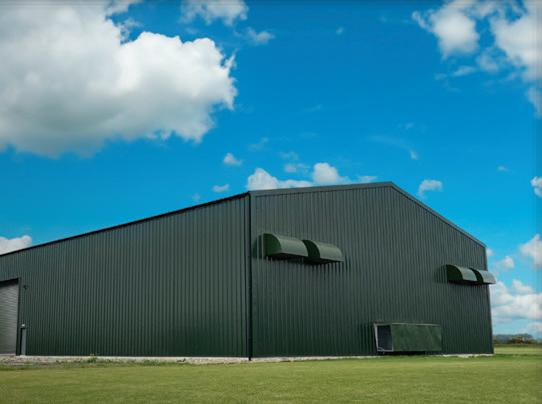


BUILDING REPAIRS
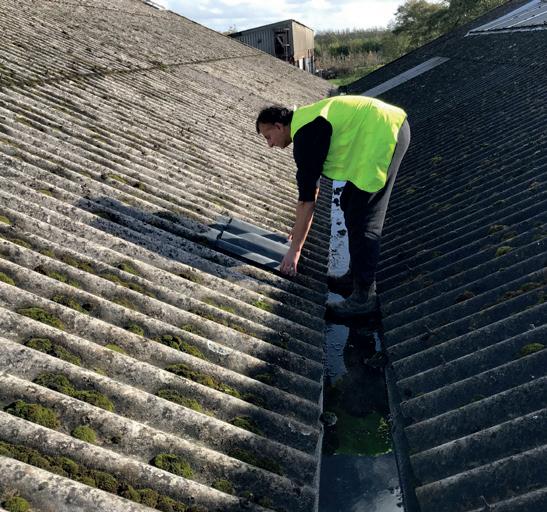



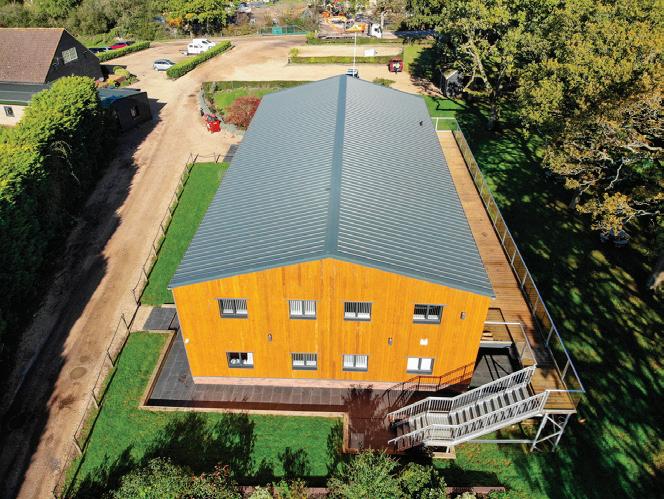
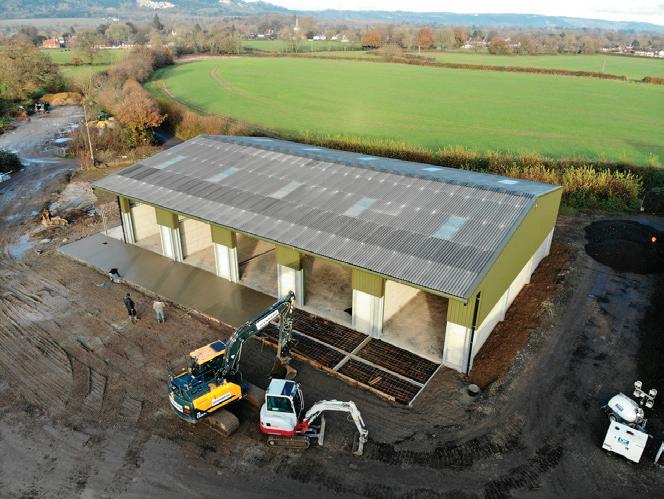

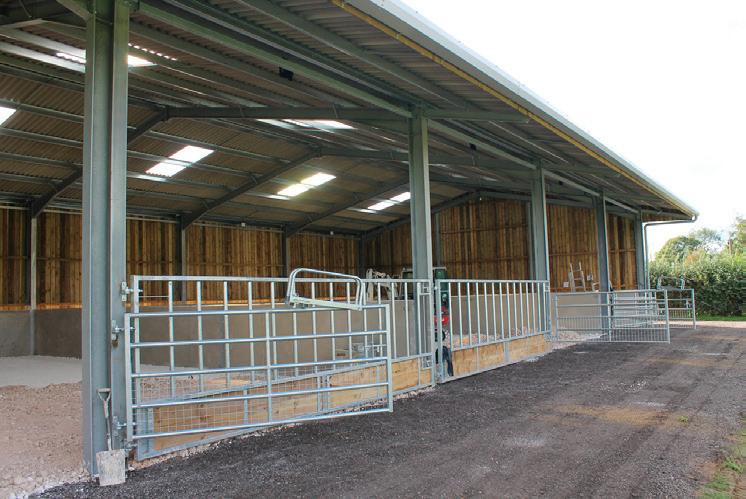
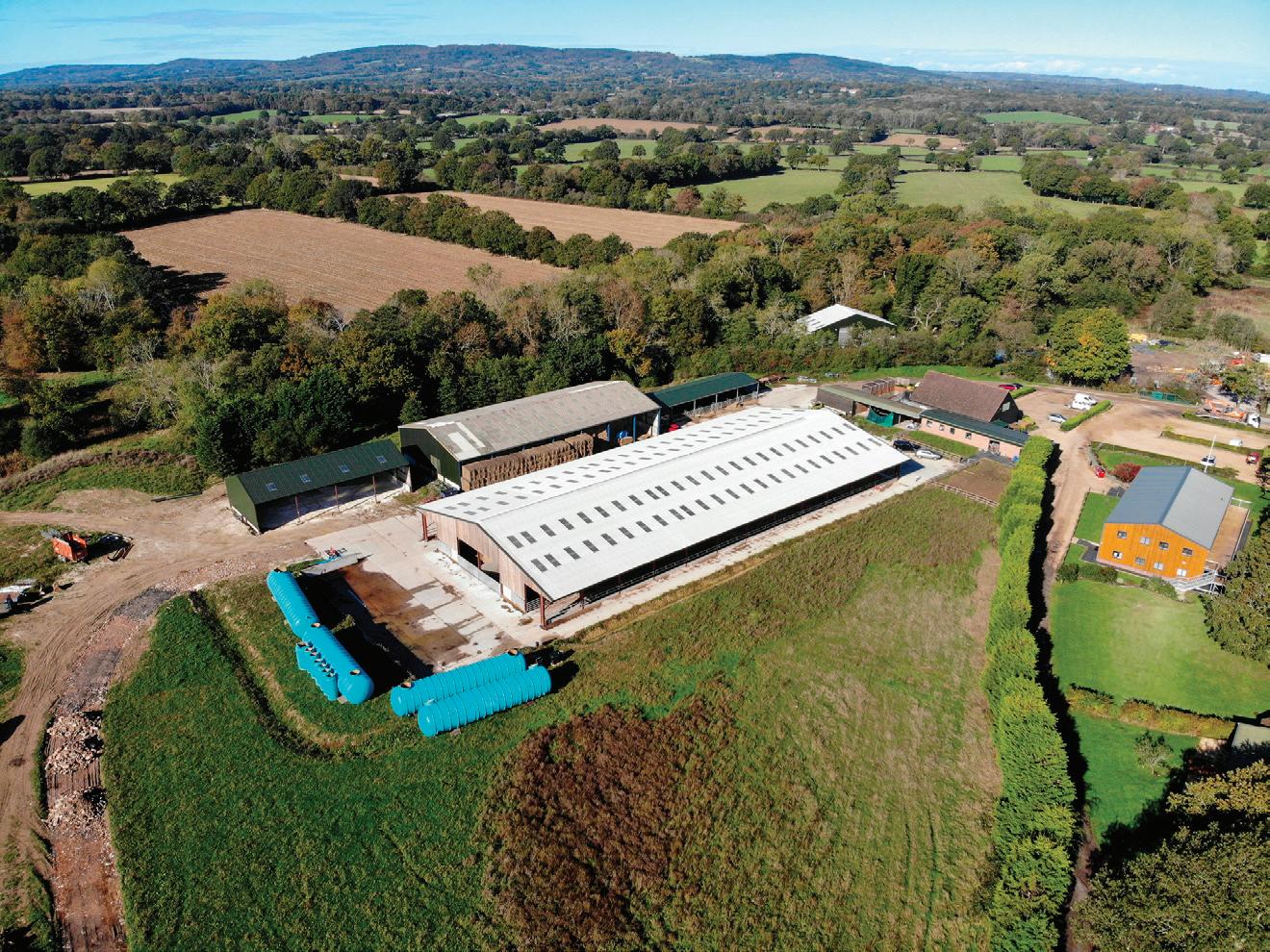


MAY 2024 | WWW.SOUTHEASTFARMER.NET 62 CLASSIFIEDS CONSTRUCTION CONSTRUCTION CONSTRUCTION Agriculture ~ Cold Storage ~ Equestrian ~ Industrial ~ Waste Recycling • Agricultural Buildings • Cold Store Buildings • Equestrian Buildings • Industrial Buildings • Waste Recycling Buildings • Structural Steel • Drawing Services • Design Services • Mezzanine Floors • Custom Steelwork 01323 890403 www.danddconstruction.co.uk info@danddconstruction.co.uk To advertise in South East Farmer telephone 01303 233883 FREEPHONE: 01233 659129 from BT land-line charlie.woodger@btinternet.com REFURBS, BIG 6 ROOF SHEETS, ROOF LIGHTS, RIDGES, VERGES, VALLEY GUTTERS, BOX GUTTERS, BOUNDARY GUTTERS, ASBESTOS, SHEETING Single Sheet To Whole Roof Roller Shutters Accidental or Storm Damage Works Demolition Refurbishments Waste Clearances CALL TO DISCUSS YOUR PROJECT! ALL WORKS KENT & SUSSEX Professional Services to the Agricultural, Industrial & Equestrian Sectors FARM
Supplying pro led roo ng products to contractors, builders and farmers for over 40 years visit www.southernsheeting.co.uk for our full range or call 01342 590 357 to speak to our friendly sales team Our main products o the shelf include: • Pro led steel sheeting • Insulated panels • Fibre cement • Roo ights • Onduline • Fixings and accessories southernsheeting.co.uk OFFICIAL DISTRIBUTOR • EXTENSIVE RANGES IN STOCK LARGE DISCOUNTS AVAILABLETOFARMERSOUTHERNMEMBERS CS3152 SS SE Farmers 190mm x 133mm advert 2023_NOV.indd 1 16/11/2023 14:20





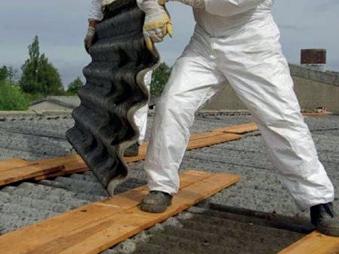




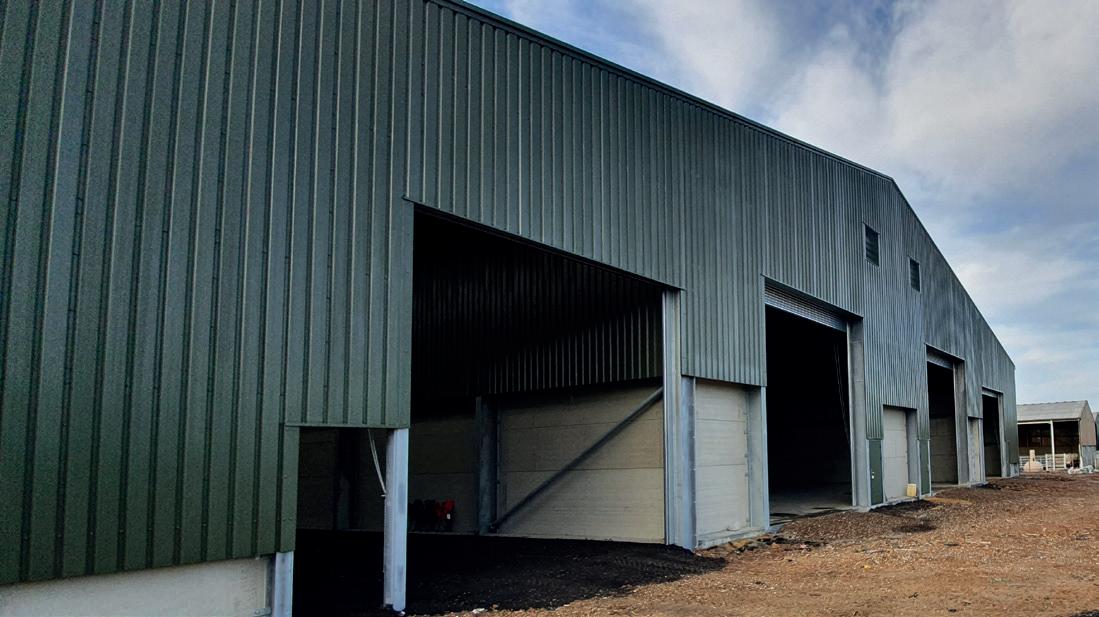


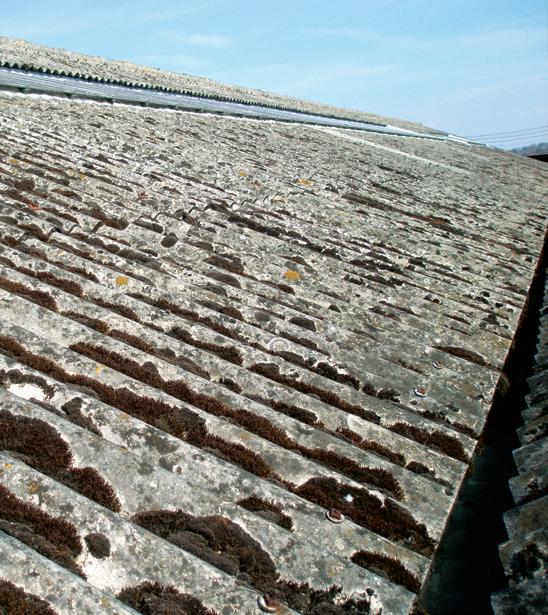
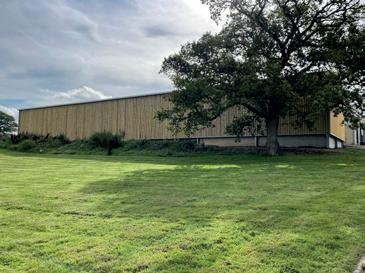



WWW.SOUTHEASTFARMER.NET | MAY 2024 63 TO ADVERTISE CALL 01303 233883 CLASSIFIEDS CONSTRUCTION CONSTRUCTION Specialists in the Agricultural, Industrial and Equestrian sectors Steel frame buildings. Sheeting, cladding and oversheeting. Gutter replacement, repairs and lining. Steel frame, concrete frame alterations and repairs. Asbestos removal. Roof light and sheet changes. Refurbishments and usage changes. Demolition, groundworks and site clearance. 24 hour call out in the event of fire or break in. Roller shutters, sliding and personnel doors. Condition reports and dilapidation work before solar panel installation Mezzanine floors Insurance and repair work On site welding and steel fabrication Solar panel installation ALL WORKS GUARANTEED 01227 918723 Quality of work Reliability and honesty Unbeatable on price 07784 619603 jez@JRJconstruction.co.uk www.JRJconstruction.co.uk Penfold’s commercial, agricultural and residential building specialists with over 40 years experience – Standing seam – Snaplock systems – Aluminium – Zinc – Copper METAL ROOFING – Composite cladding – Metal cladding – Fibre cement cladding – Timber cladding CLADDING – Removal – Disposal – Surveys ASBESTOS REMOVAL 07864 823 476 07889 481618 Nextgen Cladding Ltd www.nextgencladding.co.uk We are a Hampshire-based family run company specialising in the refurbishment, renovation, alteration and upgrade to the external envelope of buildings within the industrial, commercial and agricultural sectors. Our services Structural Steel Cladding Systems Roof Repairs Doors Gutter Maintenance Asbestos Removal Tel: 02380 617383 Email: info@symesindustrial.co.uk Web: www.symesindustrial.co.uk Units 6 & 7, Upper Norton Farm, Sutton Scotney, Hampshire SO21 3QF Industrial Commercial Agricultural FREEPHONE: 01233 659129 from BT land-line charlie.woodger@btinternet.com Asbestos roof sheeting removals Asbestos encapsulation Asbestos fire damage, clearance & re-instatement works Asbestos clearance & de-contamination Asbestos disposals by licenced registered company New metal roofs installed over old asbestos roofs Roof light & sheet repairs Gutter repairs Gutter replacements & re-lining Strip & refurbishment works Change of use projects Demolition & Groundworks CALL TO DISCUSS YOUR PROJECT! Professional Services to the Agricultural, Industrial & Equestrian Sectors ALL RISKS LTD ASBESTOS ROOF REMOVALS To advertise in South East Farmer telephone 01303 233883

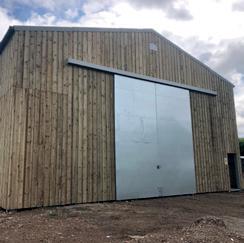









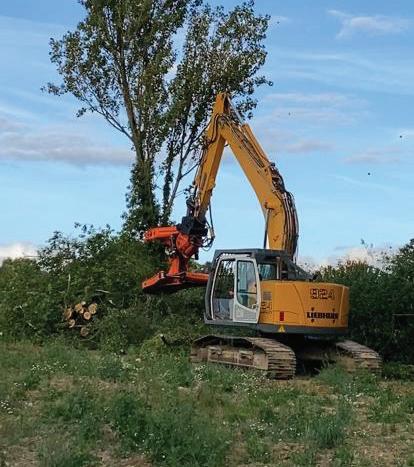
Asbestos



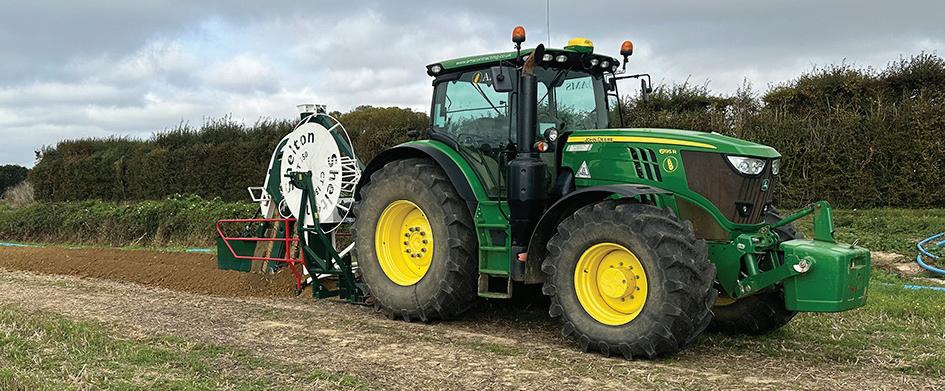



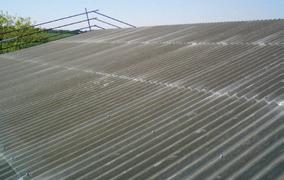
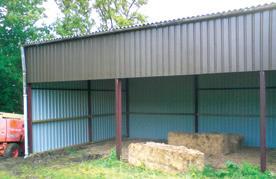

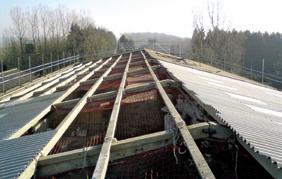
Projects & Insulated Over-Sheeting -
Gutter repairs & Re-lining
& Environmental Waste Disposal Refurbishments & Extensions to existing buildings Change of Use & Rental Unit Conversions
Claim Works for Fire, Flood & Storm Damage Same
- Next Day, Site Visit, Inspection Service Making Building/Premises Safe - Secure
Operations
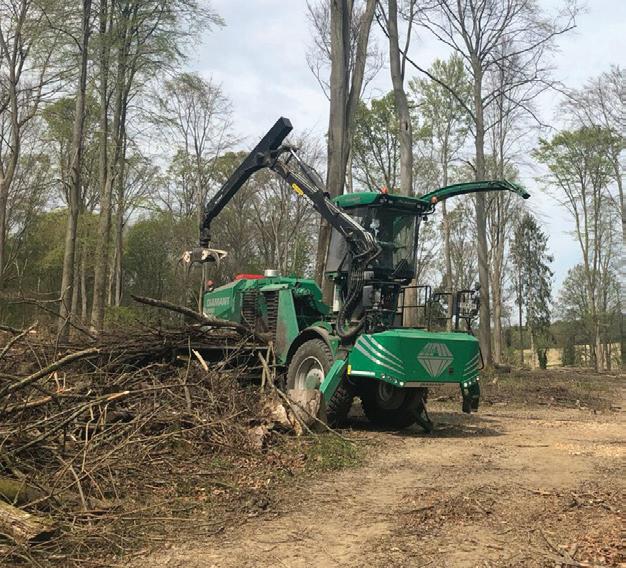



MAY 2024 | WWW.SOUTHEASTFARMER.NET 64 CLASSIFIEDS To advertise in South East Farmer telephone 01303 233883 To advertise in South East Farmer telephone 01303 233883 JPR ROOFING
CONSTRUCTION
Professional Services to the Agricultural, Equestrian & Industrial Sectors. Roofing & Cladding - Strip & Re-sheet - Repairs Metal Profile - Fibre Cement - Insulated - Timber Boarding
Sheet
Roofs
&
LTD
Asbestos
replacements - New Roof lights New
Valley
Demolition
Works, Roads, Drives
Drainage
Re-Instatement
ALL WORKS GUARANTEED Covering: Canterbury, Dover, Kent, East & West Sussex & London MOBILE: 07813 142 145 CONTRACTORS Mobile: 07976 287836 Email: sales@shortlandstructures.com www.shortlandstructures.com • STEEL FRAMED BUILDINGS • CLADDING • ERECTING • • EXTENSIONS • ALTERATIONS • CONCRETE PANELS • ROLLER/SLIDING/PERSONNEL DOORS • SHORTLAND STRUCTURES LTD ● LAND DRAINAGE ● DITCHING ● POND WORK ● WATER SUPPLIES ● SEWAGE TREATMENT PLANTS ● GROUNDWORKS ● PLANT HIRE 360° EXCAVATORS FOR ESTIMATES & ENQUIRIES (01622) 890884 G & S BROWN Drainage Contractors Working with farmers since 1947 Email: info@brownsdrainage.co.uk www.brownsdrainage.co.uk CONTRACTORS Land drainage with GPS controlled trenchers Sports field drainage Groundworks: Farm tracks, concrete bases, large-scale earthworks Reservoirs, ponds, lakes, ditches Agricultural operations Rewilding and conservation works Sports Turf & Land Drainage Contractors Tel: 01243 511337 - www.amscontracting.co.uk CONSTRUCTION CURTEIS FORESTRY Managing trees in the South East since 1995 Contact Richard Curteis 01622 745503 | 07831 749285 richard@curteisforestry.co.uk | www.curteisforestry.co.uk • Woodchipping for biomass • Mechanical tree felling • Windbreak pollarding/removal • Roadside trees WANTED: Standing timber for Biomass ie Poplar, Leylandii, Alder Keen Builds Refurbishment Re/Cladding Repairs Demolition Groundworks STEEL BUILDINGS Clinton Keen - 07786 004045 keenbuildings249@yahoo.com STEEL BUILDINGS New Builds Refurbishment Re/Cladding Repairs Demolition Groundworks Clinton Keen - 07786 004045 keenbuildings249@yahoo.com
Stripping
Insurance
Day
Emergency Clear-Up
Asbestos Stripping & Environmental Waste Disposal
& Site Clearance Works Ground
&
Works
Works
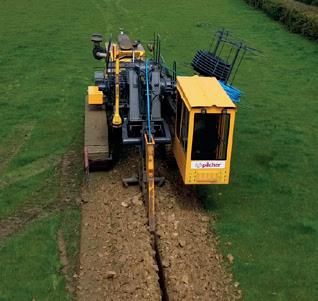
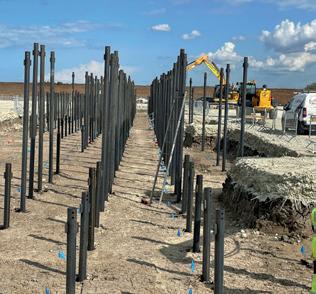
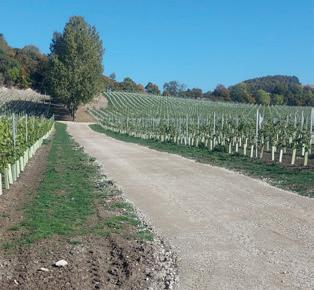
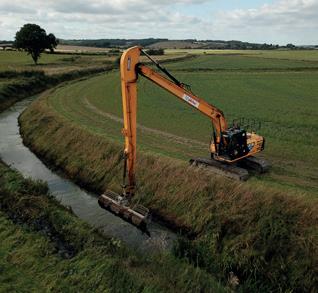
• Livestock fencing
Estate fencing • Deer fencing
• Equestrian
• Bespoke bridges

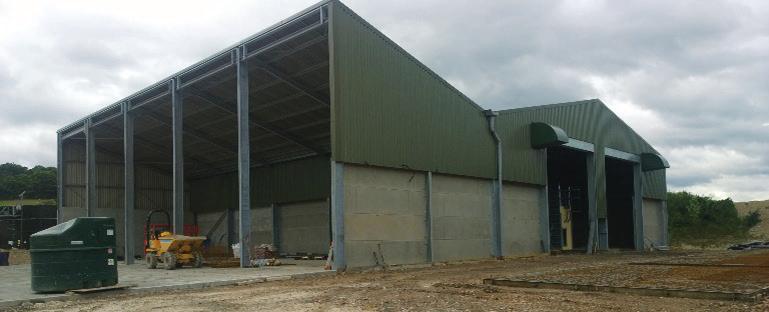

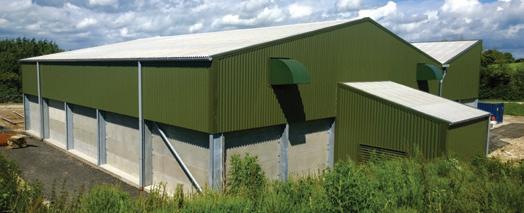






Post and Rail
Gates
Ground
Bespoke bridges
Ground clearance
are based between Crowborough and Tunbridge Wells on the Kent and East Sussex border.

WWW.SOUTHEASTFARMER.NET | MAY 2024 65 TO ADVERTISE CALL 01303 233883 CLASSIFIEDS To advertise in South East Farmer telephone 01303 233883 FENCING CONTRACTORS LAND DRAINAGE, EARTHWORKS, GROUNDWORKS & CONSTRUCTION FULL LAND DRAINAGE SERVICE Sportsfields, amenity and irrigation systems using Mastenbroek trenchers PONDS, LAKES & RESERVOIRS Construction and maintenance GROUNDWORKS & CONSTRUCTION Primary excavations, aggregate sub-base, agricultural construction and concreting ENVIRONMENTAL HABITATS Water course maintenance and improvement works VINEYARD SERVICES Trackways, access roads, parking areas, washdown bays and water harvesting For all enquiries call 01233 860404 or 07770 867625 (Harvey) J D RICHMOND & SON LTD All aspects of agricultural and industrial construction - Steel framed buildings - Demolition - Plant hire - Groundworks - Asbestos removal - Concrete works - Retaining walls - Design - Planning T 01403 266124 M 07880 746474 / 07921 123920 E richmond.46@btinternet.com www.jdrichmondandson.co.uk CWP fencing Tel: 07985 298221 colin@cwpfencing.co.uk Standing Sweet Chestnut Wanted Cleft post and rail Cleft field gates Fencing stakes Straining posts Chestnut fencing Tel: 07985298221 colin@cwpfencing.co.uk Standing Sweet Chestnut Wanted Cleft post and rail Cleft field gates Fencing stakes
posts Chestnut fencing Tel: 07985298221 colin@cwpfencing.co.uk Standing Sweet Chestnut Wanted Cleft post and rail Cleft field gates Fencing stakes Straining posts Chestnut fencing Ltd FENCING RICHARDS T: 01892 770186 E: enquiries@richards-fencing.co.uk W: richards-fencing.co.uk Livestock fencing Estate fencing Deer fencing Post and Rail Equestrian Gates Bespoke bridges Ground clearance We are based between Crowborough and Tunbridge Wells on the Kent and East Sussex border. Ltd FENCING RICHARDS T:
E:
W:
Livestock fencing Estate
Gates
Straining
01892 770186
enquiries@richards-fencing.co.uk
richards-fencing.co.uk
fencing Deer fencing Post and Rail Equestrian
We
•
•
•
•
clearance
are based between Crowborough and Tunbridge Wells on the Kent and East Sussex border. T: 01892 770186 E: enquiries@richards-fencing.co.uk W:
Redhill Farm Services: Fencing Division ALL TYPES OF FENCING & GATES Supplied and erected & Repairs Tel: 01737 821220 Mob: 07768 931891 Email: redhillfarmservices@gmail.com ® CLASSIFIEDS FROM £65 To advertise in South East Farmer telephone 01303 233883 Stock, Deer and Equestrian Fencing completed to the highest standard Tracked machines used minimizing ground damage Covering: Buckinghamshire, Oxfordshire and surrounding areas Tel: 07583 027089 Email: tmcontracting20@aol.com Stock, Deer and Equestrian Fencing completed to the Highest Standard T.M Fencing Contractors Tracked machines used minimising ground damage Covering: Buckinghamshire, Oxfordshire and surrounding areas Tel: 07583 027089 Email: tmcontracting20@aol.com CROP DRYING www.pellcroft.com | sales@pellcroft.com | 01526 342466 PELLCROFT Manufacturers of centrifugal, low volume and portable fans, air tunnels, drive over oors, grain stirrers and gas burners
We
richards-fencing.co.uk
PRESSURE WASHERS

























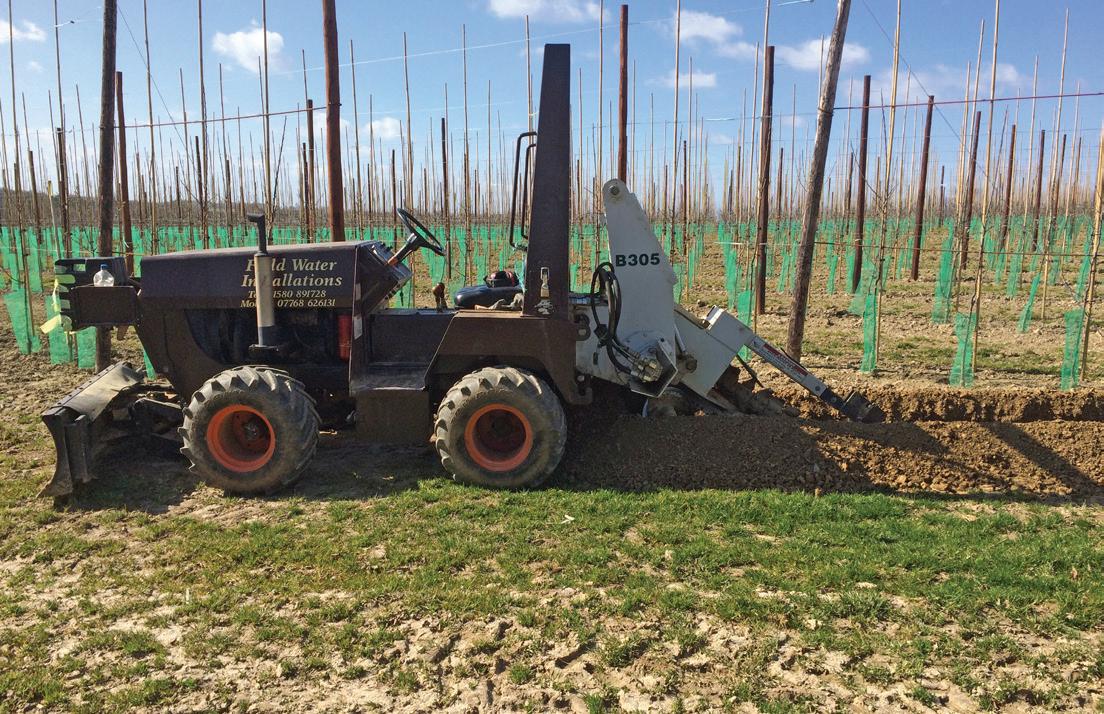






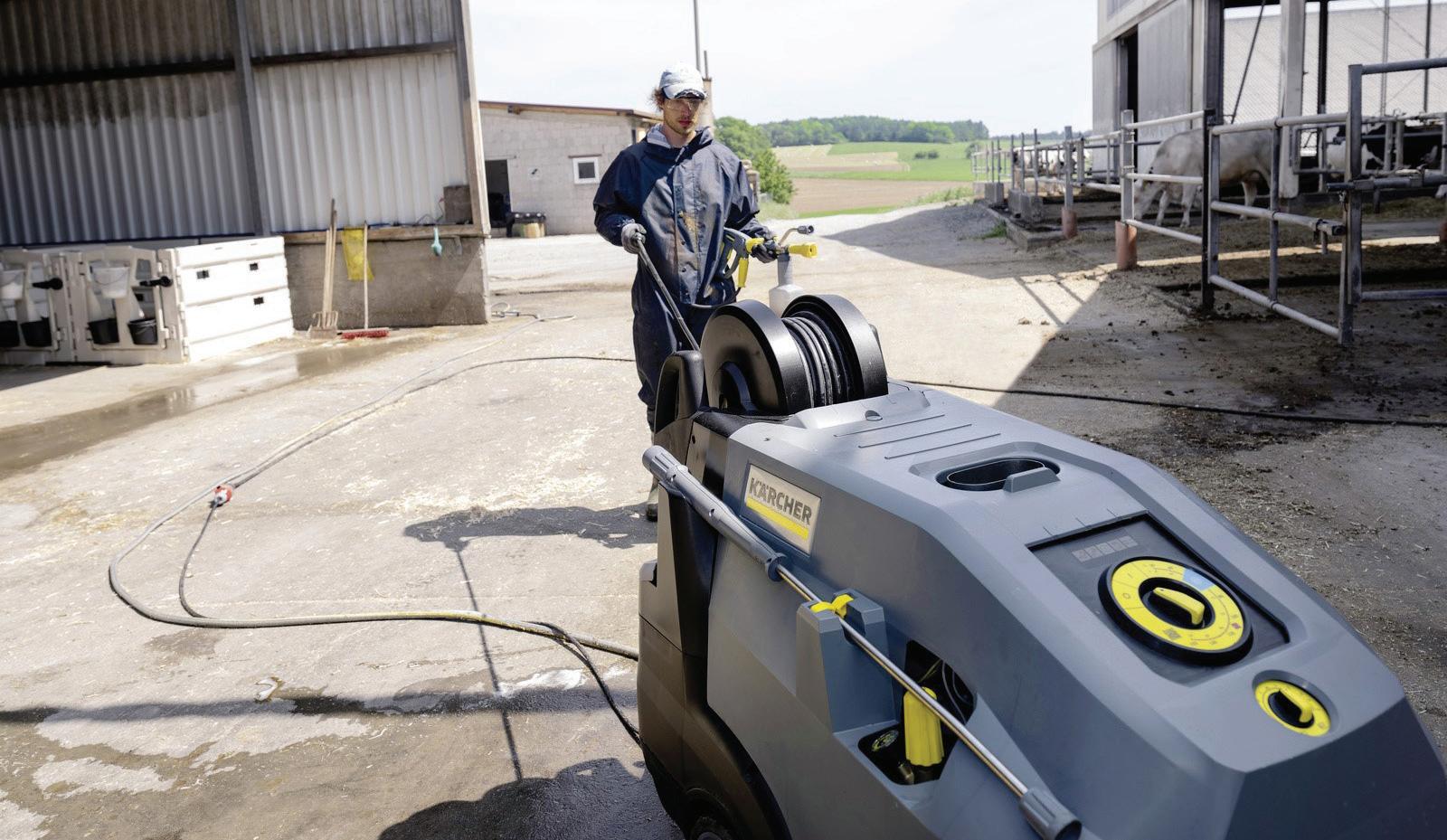

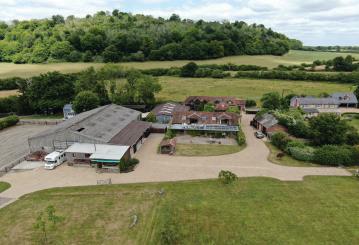



MAY 2024 | WWW.SOUTHEASTFARMER.NET 66 CLASSIFIEDS To advertise in South East Farmer telephone 01303 233883 To advertise in South East Farmer telephone 01303 233883 PROPERTY
STORAGE TANKS Visit www.smdd.co.uk or call 01594 833308 Buy from stock. Visit us to collect or same day dispatch with nationwide delivery. New and recycled IBC tanks. Plastic and steel drums. Water tanks & plenty of fittings. Smiths of the Forest of Dean The Tank and Drum Experts Visit www.smdd.co.uk or call 01594 833308 Buy from stock. Visit us to collect or same day dispatch with nationwide delivery. New and recycled IBC tanks. Plastic and steel drums. Water tanks & plenty of fittings. Smiths of the Forest of Dean The Tank and Drum Experts IRRIGATION Sale and Letting of Country & Equestrian Property • SALES & LETTINGS • EQUESTRIAN • LAND • FARMS • COUNTRY HOUSES • VALUATION SERVICES www.churchillcountry.com | Tel: 01403 700222 Sale and Letting of Country & Equestrian Property • SALES & LETTINGS • EQUESTRIAN • LAND • FARMS • COUNTRY HOUSES • VALUATION SERVICES www.churchillcountry.com | Tel: 01403 700222 CHURCHILL COUNTRY & EQUESTRIAN We are a leading supplier and an approved repair centre With 50 years trading in the cleaning industry. With our strong ties and long term relationship with the leading manufacturers 01825 705777 Unit 4, 72 Bell Lane Uckfield, East Sussex TN22 1QL enquiries@pressureclean.co.uk SALES SERVICE HIRE Enquiries FieldWaterInstallations@gmail.com 01580 891728 or 07768 626131 www.fwi-trenching.co.uk Installation of: Irrigation and water pipes • Utility cables and ducting • Repairs to water pipes • Impact moling • Est 1993 • Toilets & Showers for hire • Large range of Temporary canteens, stores & welfare units • E uent Tank Emptying • Events also catered for with toilets, chiller & shower trailers FOUR JAYS GROUP Tel: 01622 843135 enquiries@fourjays.co.uk www.fourjays.co.uk HIRE SPECIALISTS ACROSS THE SOUTH EAST units FOR HIRE ® CLASSIFIEDS FROM £65 To advertise in South East Farmer telephone 01303 233883 GROUP Call QiK Group today for a competitive price 01233 713555 or check out www.qikgroup.co.uk BIG PROJECT? ON SITE? NEED A TOILET?
COMPLETE OUR CROSSWORD TO WIN
A mixed box of 500ml sparkling ciders including four bottles of Biddies 5, Red Love cider and Biddies 8
ACROSS
1 Ship that set sail in 1620 (9)
4 Dish on which food is served (5)
7 Breed specimens of plants (9)
8 Musical set in Argentina (5)
9 Simple (4)
10 ------- orchid, native orchid (7)
12 A practice in a theatre (5,9)
15 Commit a crime (6)
17 Wax stick used for drawing (6)
20 Developed (7)
23 Large receptacle for rubbish (4)
24 Fraudulent (9)
25 Lacking energy (9)
26 Post, stake, pillar (4) DOWN
1 ----- syrup (5)
2 A person who does not tell the truth (4)
3 Protective covering (7)
5 Very angry (5)
6 Largest moon of Uranus (7)
11 Part of the foot (3)
12 Imperfect (9)
13 Offspring (3)
14 A term used as a lament (4)
16 The time directly before an event (3)
17 A box that holds treasure (5)
18 Tree (3)
19 Transparent (6)
21 Stringed instrument (5)
22 Alkaline cleaning solution (3)
23 Use less than required (5)
To enter, simply unscramble the anagram (5,6) using the green squares.
Email your replies with your name, address and phone number to sef.ed@kelsey.co.uk
Correct entries will be entered into a draw which will take place on 21 May. The winner will be announced in the June edition.

We are offering readers the chance to win a mixed box of our 500ml sparkling ciders including four bottles of Biddies 5, Red Love cider and Biddies 8. For more information about the vineyards, please visit www.biddendenvineyards.com or call 01580 291726.
*Subject to availability
Correct answer: Oxford Down
LAST MONTH’S WINNER: P Andrew from East Grinstead, West Sussex
WWW.SOUTHEASTFARMER.NET | MAY 2024 67 TO ADVERTISE CALL 01303 233883 ® VI NE YA R DS VI NE YA R DS LAST MONTH’S ANSWERS: PRIZE ANAGRAM: Invasive species (5,6) CROSSWORD 1 2 3 4 5 6 7 8 9 10 11 12 13 14 15 16 17 18 19 20 21 22 23 24 25 26 1 2 3 4 5 6 7 8 9 10 11 12 13 14 15 16 17 18 19 20 21 22 23 24 25 26 R I V E R M E O N S H A M A A E N H N B A L D E A G L E M I R T H I I D A F R I D O D O A G I T A T E G T E R E M E T A L D E T E C T I N G Y R L S C R E A M S E A S O N O N I W R S T D A I S I E S T E R N O L H V U A E X P L I C A T E L T I A R I C A N T I S E P T I C P U S H
Crossword by Rebecca Farmer, Broadstairs, Kent
