





































• Farm business & estate management • Planning & development • Subsidies & grants • Land sales & acquisitions • Viticulture • Succession • Biodiversity net gain • Ecology • Natural capital • Residential and commercial property letting and management 01892 770339 www.c-l-m.co.uk Farm business consultants with our roots in the South East March 2024 Est 1982 DOVER PROTESTS Battle to tackle unfair competition RUMINANT HEALTH SOLUTIONS Supporting the farmer’s bottom line FOR THIS YEAR’S LAMBING WEEKEND – PAGE 18 THE MIRACLE OF LIFE
Doyougrazeorfarminthe
Joinusforfreeeventsonfarmsintheregiontoshareideas,research andadviceonhowtoenhancetheresilienceofyourfarmbusiness
Farmersaroundthecountryare sharinghowadaptingtheirgrazing practicesarehelpingtoachieve:
•Improvedpasture,soilhealthand landscapemanagement
•Mitigationoftheeffectsofextreme weather
•Reductioninworkloadandcost associatedwithindoorhousing

Forupcomingeventsemail isabella@pastureforlife.org
Photo:RolyPuzey,SaddlescombeFarm
•Reducedwormburdenonstock
•Increasedbiodiversity


SouthDownsNationalPark?
Findoutmore
Wanttoboostprofits and biodiversityonyourfarm?
JoinoureventsacrossEnglandbyscanningtheQRcode Farmingfurtherafield?
www.southeastfarmer.net
SOUTH EAST FARMER
Kelsey Media, The Granary, Downs Court
Yalding Hill, Yalding, Maidstone, Kent, ME18 6AL 01959 541444
EDITORIAL
Editor: Malcolm Triggs
Email: sef.ed@kelsey.co.uk
Photography:
Martin Apps, Countrywide Photographic
ADVERTISING & MARKETING
Jamie McGrorty 01303 233883
jamie.mcgrorty@kelsey.co.uk
GRAPHIC DESIGN
Jo Legg 07306 482166
jo.legg@flair-design.co.uk
MANAGEMENT
DIVISIONAL MANAGING DIRECTOR:
Steve Kendall
PUBLISHER: Jamie McGrorty
RETAIL DIRECTOR: Steve Brown
SUBSCRIPTION MARKETING MANAGER:
Claire Aspinall
PRINT PRODUCTION MANAGER:
Kelly Orriss
DISTRIBUTION
Distribution in Great Britain:
Seymour Distribution Limited
2 East Poultry Avenue, London EC1A 9PT
Tel: 020 7429 4000
www.seymour.co.uk
Distribution in Northern Ireland and the Republic of Ireland:
Newspread
Tel: +353 23 886 3850
Kelsey Media 2024 © all rights reserved. Kelsey Media is a trading name of Kelsey Publishing Ltd. Reproduction in whole or in part is forbidden except with permission in writing from the publishers. Note to contributors: articles submitted for consideration by the editor must be the original work of the author and not previously published. Where photographs are included, which are not the property of the contributor, permission to reproduce them must have been obtained from the owner of the copyright. The editor cannot guarantee a personal response to all letters and emails received. The views expressed in the magazine are not necessarily those of the Editor or the Publisher. Kelsey Publishing Ltd accepts no liability for products and services offered by third parties.
Kelsey Media takes your personal data very seriously. For more information on our privacy policy, please visit www.kelsey.co.uk/privacy-policy/
If at any point you have any queries regarding Kelsey’s data policy you can email our Data Protection Officer at dpo@kelsey.co.uk

58 LEGAL
04 Bluetongue restrictions eased.
05 Battle to tackle unfair competition.
06 An annual, UK-wide, food security index unveiled by Prime Minister Rishi Sunak at this year’s NFU Conference was welcomed by outgoing president Minette Batters as “significant’.
08 The 64th Doe Show.
REGULARS
12
14
18
Hoggett prices have been worth waiting for.
Hadlow
part of North Kent College, to learn about Kent’s only rural and landbased college. He caught up with three
FEATURES
15 FUTURE OF FARMING CONFERENCE
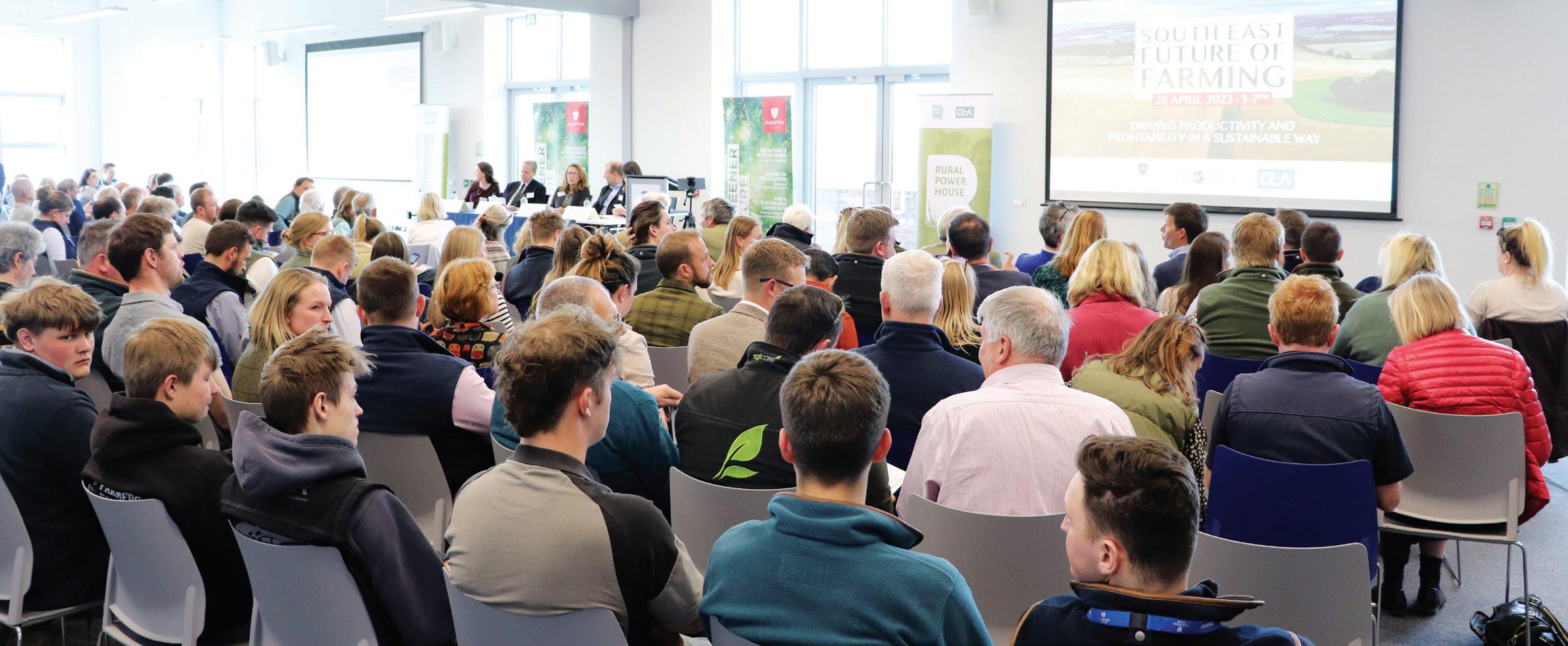
Last year’s successful inaugural South East Future of Farming conference is returning for its second year on Thursday 17 April.
17 VIRGIN MONEY
Financial planning for successful diversification.
22 NEWS FROM THE VINEYARD
Clayhill Vineyard in the beautiful Crouch Valley is the fascinating story of a successful mixed farming enterprise.
27 WILTSHIRES
Long recognised as a specialist dealer for the class-leading Merlo range of telehandlers, the agricultural and ground care machinery dealers found their customer base increasingly asking them to supply a similarly high-spec tractor.
44
45
46
www.kelsey.co.uk
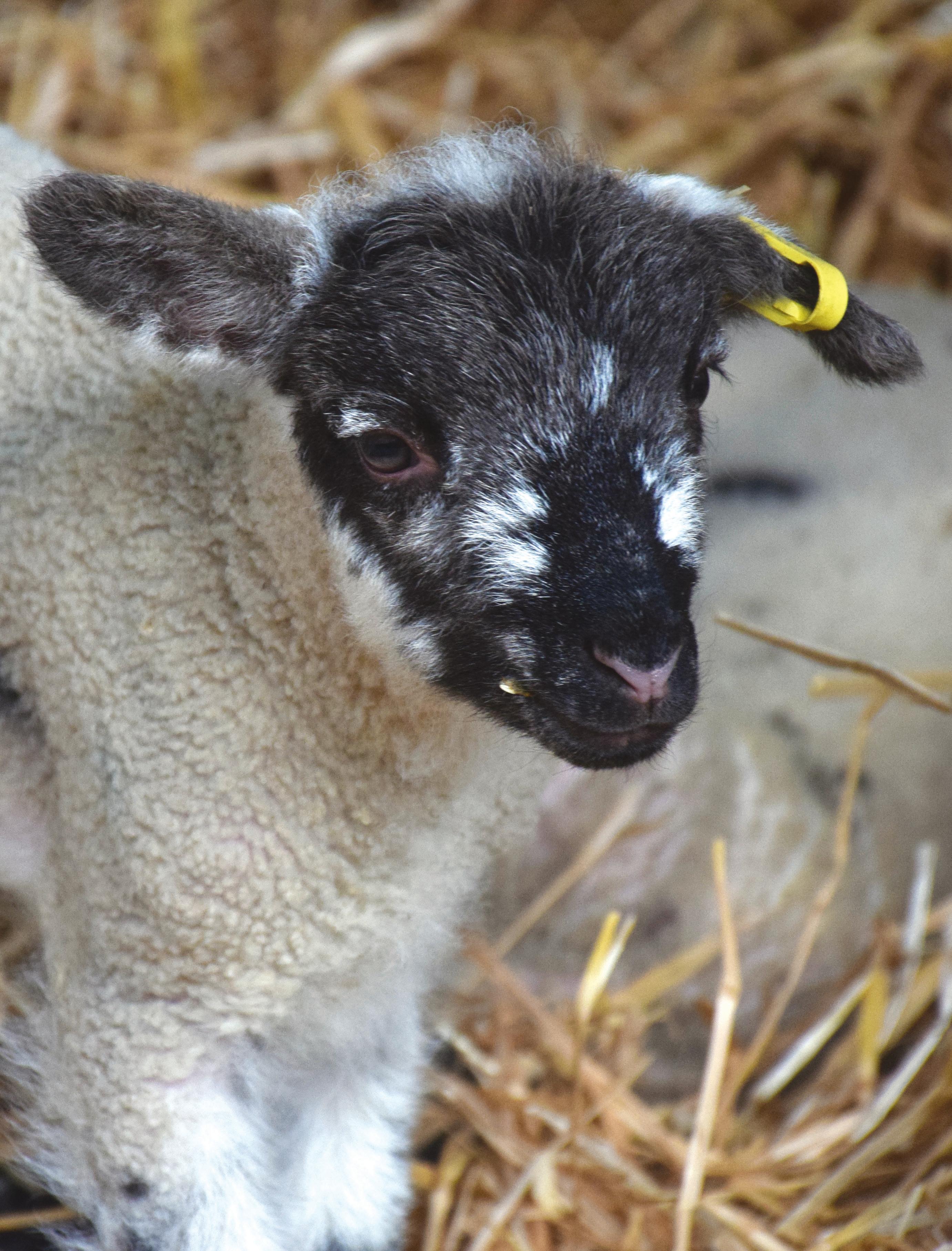
Cover picture: Lambing at Hadlow College
50 RUMINANT HEALTH SOLUTIONS
Supporting the farmer's bottom line.
66 MIKE KETTLEWELL
Mike explains the workings of the North East Cotswolds Farm Cluster.
NEWS & REPORTS
MONICA AKEHURST
SARAH CALCUTT
NIGEL AKEHURST VISITS...
STEPHEN CARR
College,
students and the farm manager. 39
ALAN WEST
ANITA HICKSON
ADVICE FROM THE VET Evaluation of bull fertility.
NICK ADAMES MARCH 2024
50 27
49
CONTENTS
12 66
®
60 LAND AND FARMS
OPINION
Determined not to allow themselves to be ‘conquered’
It’s a long while since horses played a significant part in the average farmer’s day, but Kent farmers are no doubt aware of the significance of the white horse in the county’s flag.
The horse goes by the name of Invicta, although in reality it merely stands proudly above the word Invicta on the flag, and while the origins of the claim are open to debate, they probably go back to William the Conqueror’s days and are said to highlight Kent’s ‘unconquered’ status.
Those farmers who have been protesting in Dover are surely reflecting the county’s proud motto by standing up to what they see as unfair competition from imported food that is set to follow unimpressive trade deals with the likes of Australia and New Zealand.
Determined not to allow themselves to be ‘conquered’ by cheap imports, they have been out in force, applying a carefully considered approach to making their point without upsetting potential supporters.
After using their modern-day horses to disrupt traffic on the first occasion, they changed tactics a week later to engage with shoppers in a Tesco car park, putting their point across without spoiling anyone’s day –and undoubtedly bringing joy to the lives of many a small child whose potentially boring trip to Tesco was enlivened by an encounter with a range of exciting farm machinery.
Even at their most outrageous the protests here have been nothing compared with those that have caused considerable chaos across Europe, and so far only Kent’s farmers have found their voice.
Farmers in other parts of the country are either happy with their lot or have decided that “discretion is the better part of valour”, an attitude which, had their ancestors back in the 11th century taken a similar approach, would have seen Kent conquered and the natives looking for a different flag.
Those ancestors wouldn’t have used that expression, of course, as it wasn’t coined until William Shakespeare put it in the mouth of Falstaff in King Henry IV Part One. Meanwhile it was Richard III who famously said: “A horse, a horse, my kingdom for a horse!” He was fighting the Battle of Bosworth Field – today’s farmers are fighting a different battle, but one that could have a huge impact on the future of farming.


BLUETONGUE RESTRICTIONS EASED
Restrictions imposed following Bluetongue outbreaks in Kent, Norfolk and Suffolk have been eased, but the UK’s Chief Veterinary Officer has urged farmers to remain vigilant.
The Animal and Plant Health Agency (APHA) and the Pirbright Institute identified the first case of the disease in November through the annual bluetongue surveillance programme but have confirmed that there is currently no evidence that there is circulating virus.
Lower temperatures mean midge activity is currently lower and the midges (which carry the disease) are not actively feeding. It also means the virus cannot replicate in the midge, again reducing the risk of transmission.
A statement from DEFRA said “Considering current environmental and vector conditions, we have taken the decision not to cull infected animals where test results indicate older infection and the presence of BTV antibodies. Infected animals may still be restricted at their current locations and other disease mitigation measures taken as appropriate.”
Although the Kent and Norfolk Temporary Control Zones (TCZs) were lifted on Monday 19 February, the statement went on: “Positive high-risk animals will remain under restriction as well as premises in the zones which have not yet been sampled. APHA has contacted livestock keepers in the zones to discuss what this means for them.
“Surveillance of susceptible animals and epidemiological assessments will continue. We will keep the situation under review.”
DEFRA’s figures show that there are 112 bluetongue cases in England (106 in cattle and six in sheep) on 64 premises in three counties.
 MALCOLM TRIGGS - EDITOR
EMAIL YOUR VIEWS, LETTERS OR OPINIONS TO: sef.ed@kelsey.co.uk or write to the address on page 3
Chief Veterinary Officer Christine Middlemiss said: “Bluetongue does not pose a threat to human health or food safety, but the disease can affect livestock, reducing farm productivity."
Aled Edwards, APHA’s head of field delivery England, confirmed that with restrictions lifted, “where there is no risk of disease spreading, farmers will be able to resume movements of animals. Where there is a known disease risk, or unknown risk status, APHA will contact these premises directly to restrict specific animals within the premises.”



4 See Anita Hickson’s column on page 45
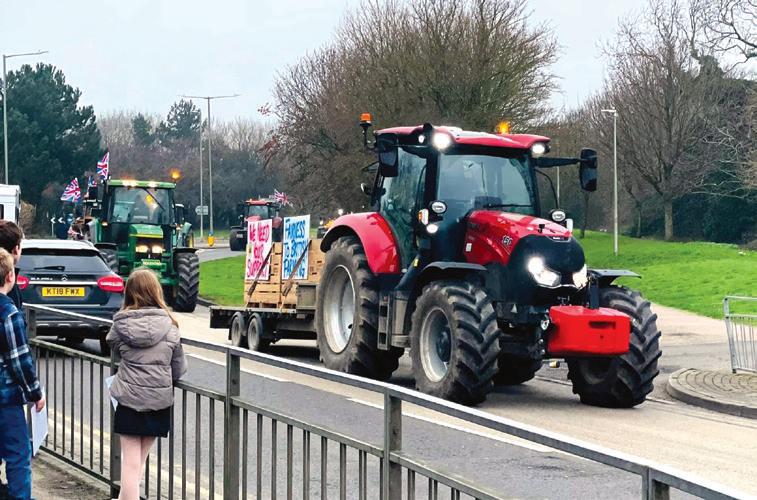
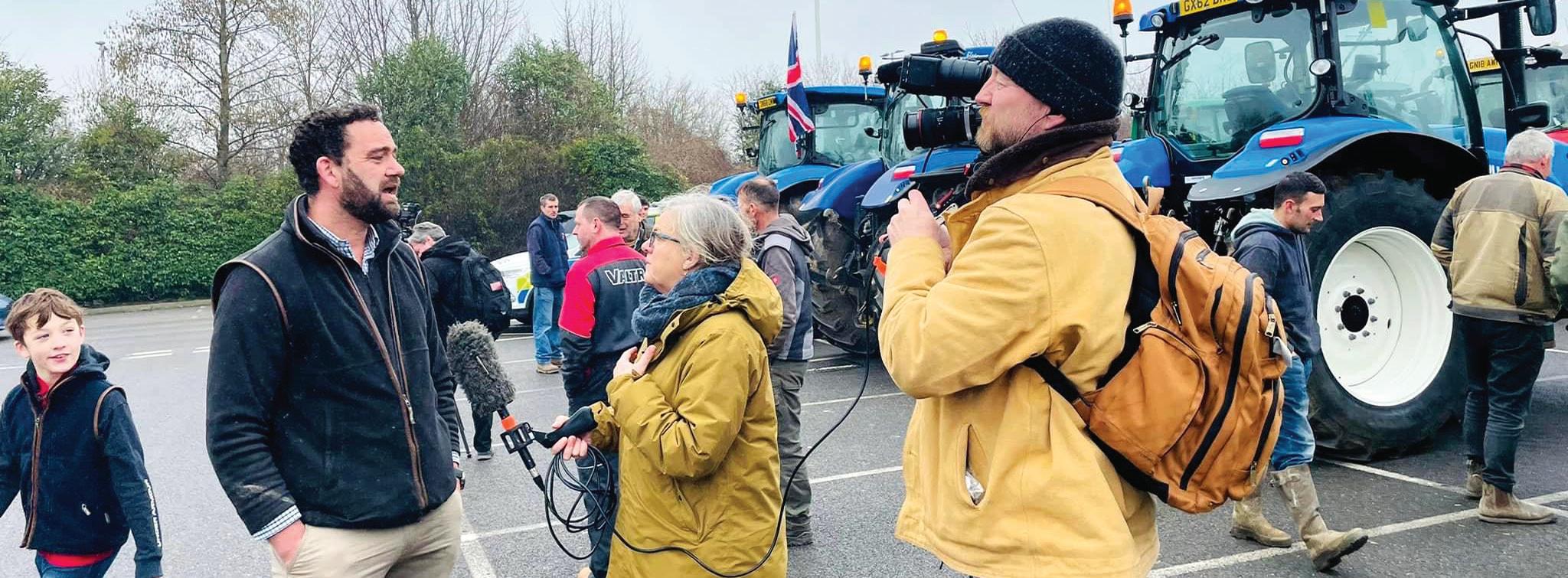
Farmers were out in force in Dover as they sought to win the hearts and minds of shoppers in their battle to tackle what they see as unfair competition.
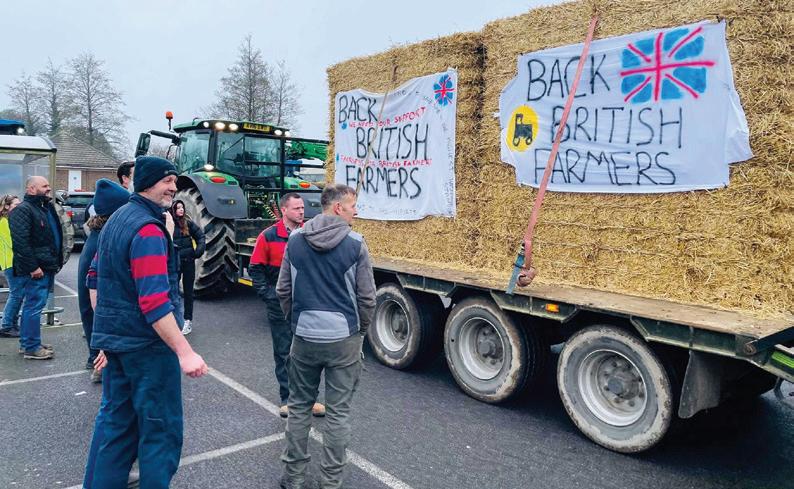
Around 35 tractors and other farm vehicles parked up at Tesco in Whitfield in the latest stage of their ongoing protest against food produced to lower standards than in the UK being imported and stocked in the country’s supermarkets.
The supermarket demonstration, which was agreed in advance with Tesco and with Kent Police, followed a protest the previous week which saw around 40 vehicles block roads by driving slowly around the port for several hours.
The Kent protests, which so far have not been replicated across the country, follow more dramatic action across Europe as farmers across the continent seek to highlight wideranging threats to their standard of living.
Romney Marsh shepherd Dylan Vetara, one of the spokespeople for the Dover protests, told South East Farmer that the farmers were out to make a point and to spell out their grievances to the public “without upsetting too many people”. He said they had been given a great reception and had found shoppers interested to hear their point of view.
The car park demonstration was followed by a parade through Dover, although on this occasion it was not designed to hold up the traffic. The organisers say more events are planned, although they are keeping their cards close to their chest to maximise the impact.
“People were very interested in what we had to say,” said Dylan. “A lot of them say they try to buy British produce but clearly not everyone can afford to during the current cost of living crisis.” He said the group had made it clear to shoppers that imported meat and


other products could undercut home-grown products because farmers were able to use chemicals banned in the UK.
“Farmers in the UK are proud to provide food to the highest standard,” he said, adding that they were being undercut by government deals that allowed lower quality produce to be imported and sold in supermarkets.
Although Dylan was critical of the NFU, which he said had not offered active support to the Kent protestors, South East Farmer understands that senior officials have been in touch with campaign leaders behind the scenes to discuss their grievances.
On the broader issue, the NFU’s outgoing president, Minette Batters, said: “Here in the UK, we share European farmers’ concerns and frustration.
“Years of unsustainably high production costs and crop losses because of extreme weather are putting farming families under mounting pressure.
“But the British public have demonstrated invaluable support. In 2020, more than a million people signed the NFU’s petition to safeguard British food and farming standards









BATTLE TO TACKLE UNFAIR COMPETITION
which led to greater government scrutiny over trade deals, and in 2023 nearly 50,000 signatures led to the Prime Minister hosting a Food Security Summit.
“We do not take this support or its influence for granted, and it’s why protests or blockading public roads should always be a last resort.”
The Government, meanwhile, has said it is “looking at ways to further improve fairness in the supply chain and support British farmers and growers, as well as ensuring customers have access to high-quality fresh British products”.
Dylan said public support for the Kent campaign had been strong, and he thanked the people of Dover for their understanding. “We simply want to start the conversation,” he said. “We are civilised people and we want to talk about the issues.”
On the Government’s response, he said: “It’s one thing to say they support British farmers but it’s another to actually do something.” He added: “You’ve only got to look back to Covid-19 to see the importance of sustainable British farming.”
WWW.SOUTHEASTFARMER.NET | MARCH 2024 5 TO ADVERTISE CALL 01303 233883 NEWS


"WE'VE GOT YOUR BACK"
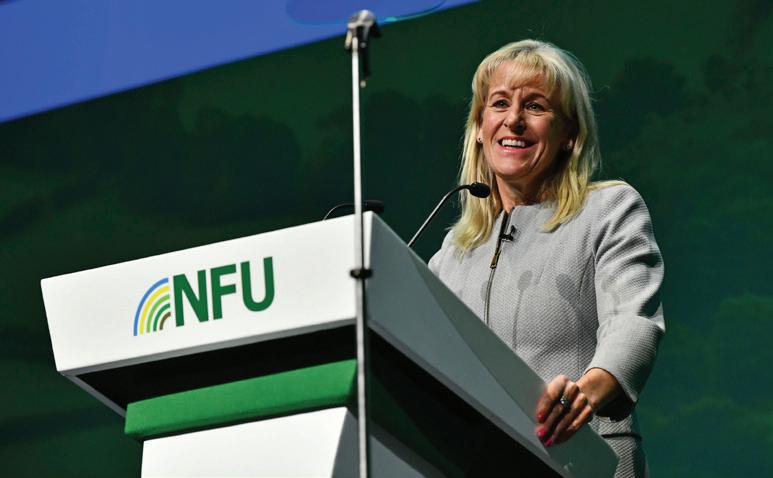
An annual, UK-wide, food security index unveiled by Prime Minister Rishi Sunak at this year’s NFU Conference was welcomed by outgoing president Minette Batters as “significant’.
The Prime Minister’s address – the first since Gordon Brown took to the stage in 2008 –began with a tribute to Ms Batters’ “forceful” leadership during a tumultuous time for farmers and included a pledge to the audience that he had “got your back”.
Mr Sunak pledged that “every penny” of the £2.4 billion farming budget would go to agriculture and referred to the myriad of grant schemes available, expected to total £427 million in the current financial year, making it the largest ever grant offer for farmers.
While noting that the grant announcements
did not represent ‘new money’, Ms Batters welcomed the Prime Minister’s high profile show of support for the industry and was particularly pleased to see his commitment to an annual food security index, which follows sustained pressure from the NFU on the subject.
The NFU’s food security campaign saw more than 45,000 members of the public join the call for the Government to take action. Moving from the original five year index to an annual update would, Ms Batter said, “allow us to monitor the situation, see if we have a problem and do something about it.”
The Prime Minister also confirmed that the Farm to Fork Summit will be held annually and announced a £15 million fund to help tackle food waste by enabling farmers to redistribute
surplus food that cannot be used commercially at the farm gate.
In a nod to the upcoming general election, Ms Batters said she hoped “all parties commit to hosting a domestic food security summit each year”.
She also raised the issue of imports of food produced to lower standards than in the UK, one of the main drivers behind the ongoing farmer protests in Dover (see page 5).
“Commitment to core standards will also be key,” she said. “We have to implement core standards that will mean our negotiators will have a clear mandate on which to negotiate these trade deals. That has to happen.” In another successful campaign, the NFU saw more than one million people sign a petition aimed at preventing imports of food produced

MARCH 2024 | WWW.SOUTHEASTFARMER.NET 6 NEWS
Prime Minister Rishi Sunak
Minette Batters
Environment Agency chair Alan Lovell
in ways that would be illegal in the UK.
A significant week for the NFU and its high profile president also saw new legislation laid before Parliament that will tackle unfair practices and abuses of power in the dairy supply chain, something that was raised by the union’s SoS Dairy Campaign more than a decade ago.
The NFU welcomed the breakthrough, pointing out: “In response to ongoing campaigning by the UK farming unions, the government held an industry-wide consultation in 2020 which found unfair practices within the supply chain linked to buyers having the power to set and modify the terms of a contract with no negotiation with the producer and little notification.
“The new regulations, a commitment set out at the Prime Minister’s Farm to Fork Summit last year, will establish transparency and accountability across the dairy supply chain by stopping contract changes being imposed without agreement. There will also be a system in place to enable farmers to verify the calculation of variable prices.
“The regulations also include an enforcement regime, backed up by the ability for the Secretary of State to impose substantial financial penalties in respect of any breaches.” Similar legislation is to be introduced for the pig and egg sectors.
Other highlights of Mr Sunak’s speech were a commitment to provide around £220m for future-focused technology and productivity schemes to increase automation and fund energy measures such as rooftop solar – a figure that more than doubles last year’s figure of £91m – and a doubling of the management payment for SFI schemes which will mean an extra £1,000 this April for those on existing agreements.
BURSARIES FOR POSTGRADUATE STUDENTS
Bursaries of up to 75% of course fees are on offer for postgraduate students studying agriculture in the UK.
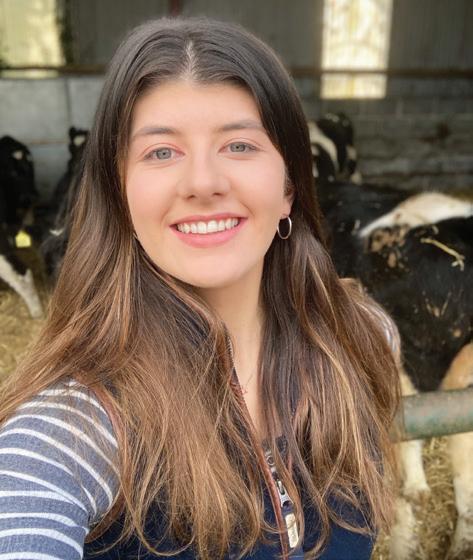
Promising students are being invited to apply for the NFU Mutual’s 2024 Centenary Award, which provides bursaries to students undertaking a Master’s or PhD course during the 2024/2025 academic year after achieving a 2:1 or above in agriculture or a related degree.
The Centenary Award was created by the NFU Mutual Charitable Trust in 2010 to celebrate the rural insurer’s 100th anniversary. To date, 52 agricultural students have received bursaries to help further their studies.
At least one of the following areas must form part of the applicant’s postgraduate course:
• The application of science and innovative technologies to enhance productivity, efficiency, and profitability for UK farming businesses
• Building resilience and safeguarding the physical and mental wellbeing of those living and working in the UK agricultural industry
• Tackling the risks of climate change, whilst maintaining food security, to improve the sustainability of UK agriculture
• Identifying opportunities for supporting nature and biodiversity in the development of farming and land management practices in the UK.
The judging panel will be looking for applicants who are not only excellent academic performers but also have a real passion for UK agriculture and demonstrate potential to become a future industry leader.
Bursaries were awarded in 2023 to:
• Megan Phillips: MSc Sustainable and Efficient Food Production, Aberystwyth University
• Peter Reis: MSc Ruminant Nutrition, Harper Adams University
• Ludo de Falbe: MPhil Crop Sciences, University of Cambridge.






The application closing date is 30 June. For more information visit www.nfumutual.co.uk or email centenary_award@nfumutual.co.uk
Farmer wanted for part of the team managing arable/livestock on mixed biodynamic farm.
Previous experience: machinery maintenance, fieldwork, nurturing soil, understanding of biodynamics, willingness to turn your hand to any task.
Flat management structure: good communication essential. Full-time, accommodation provided including bills, 20% discount in shop.
For salary and full job description visit www.plawhatchfarm.co.uk/careers




GRAZING LICENCE
Battlefield Grazing, Battle, East Sussex
Situation: North of Powdermill Lane and south of Battle Abbey School and ruins
Area: c. 41 hectares in total
Type: Conservation grazing for sheep only
Size: Up to (maximum) of 300 sheep
Date: Licence offered from March until end of September 2024
Visitors: The site is open to visitors all year
Fee: Licence Fee – to be agreed
WWW.SOUTHEASTFARMER.NET | MARCH 2024 7 TO ADVERTISE CALL 01303 233883 NEWS
Ludo de Falbe and Megan Phillips
All enquiries should be directed to: ⏹ Bruce Nutman ⏹ 07500 835199 ⏹ Bruce.Nutman@english-heritage.org.uk
Send a CV and covering letter to info@plawhatchfarm.co.uk

The months roll by, and in mixed weather in early February crowds of interested and knowledgeable visitors flocked to Ulting, near Maldon in Essex, for the largest agricultural, construction, viticulture and groundcare machinery dealer show in the UK.
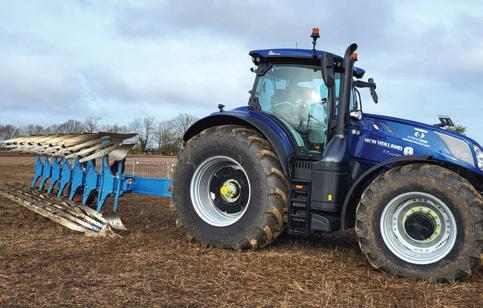
Highlights of the display were the world’s highest capacity combine, the New Holland CR11, plus the highest horsepower tractor in mainstream production today, the Case IH Quadtrac 715. Managing Director Angus Doe said: “We’re proud that it was the first ever dealer showing of the CR11.”
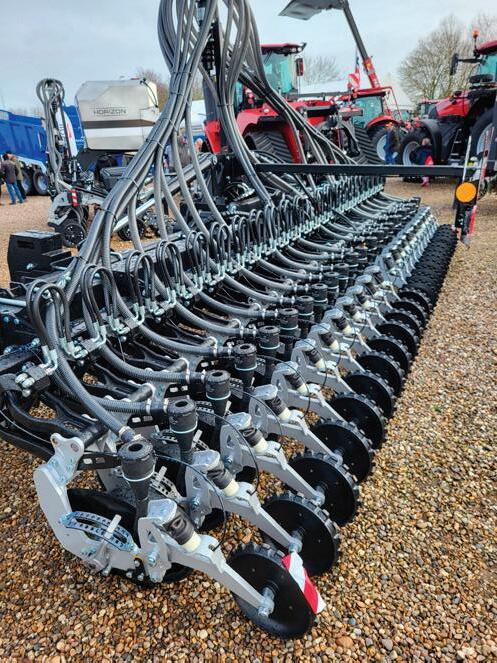
Building on the small viticulture display at last year’s show, the much larger viticulture machinery display featured a wide range of specialised equipment for vineyards and fruit growers. Morgan Williams, Doe’s technology and product support technician based at Ringmer, explained that this was a growing part of Doe’s business as the whole UK viticulture business expands.
In the groundcare section, the new Ransomes Aurora Lithium Electric Outfront mower caught the eye. There was a live demonstration of Husqvarna robotic lawnmowers, with the largest model having great appeal to golf courses as they can do the work normally carried out by ride-on equipment, thus obviating the need for an operator.
Husqvarna explained that this was a steadily increasing market for their products. From Germany, Wiedenmann was showing, for the




WORLD’S HIGHEST CAPACITY COMBINE
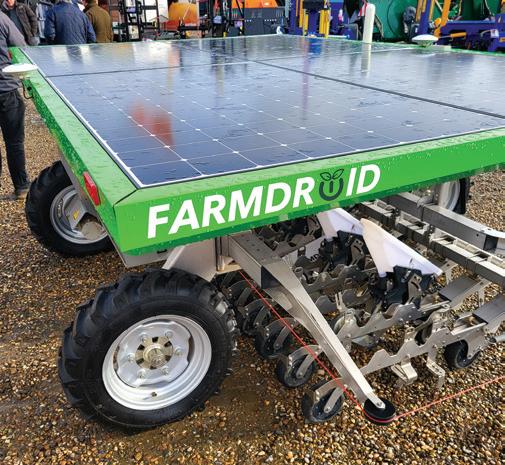
first time anywhere, the new small, tracked, electrically powered groundcare tool carrier which is operated remotely.
Always popular at the Doe Show were the machinery demonstration areas. In the fields at the rear of the show area, Case IH and New Holland tractors were pulling a range of cultivation equipment, while on the digging plot in the construction zone there were Hyundai excavators moving vast quantities of Essex clay accompanied by Thwaites dumpers, Bomag compacting equipment and Engcon attachments.
The ever-popular vintage ploughing display, again organised by Paul Wylie, attracted considerable attention. Naturally at the Doe Show, the 1961 Doe Triple D and the 1965 Doe 130 starred, but were ably supported by Max Cherry’s 1922 Fordson Model F, Paul Wylie’s 1943 Fordson Model M, Martin Shelley’s 1951 Fordson E27N and Terry Stinson’s 1960 Fordson Dexta.
The displays of new farming machinery and equipment were, as always, impressive. Of course, as is the case nowadays, much of it comes with a large price increase. To counteract this, Doe had a large quantity of
lightly used demonstration or ex-hire tractors and combines available, all appearing in remarkably good condition.
Exhibitors reported a high level of interest from the large crowds, most of whom were there with a serious purpose rather than just having a day’s outing away from the farm. There was most definitely something for everyone; every kind of machine plus the supporting services and equipment such as tools, lubricants, washers, diagnostic equipment, tyres and wheels and spare parts (both new and used). In addition, the large country store was open and featured a display of every type of country clothing and footwear.
There was a large range of new, used and ex-hire machinery on display and Ernest Doe was keen to point out that with the tax year end getting near they had some impressive 0% finance deals on offer. The dealership also offered extensive back-up service and warranty packages. For example, on new tractors over 150 bhp they had a deal for three years’ service, three years or 3,000 hours warranty and three years finance at 0%.
This impressive show is always worth a visit and will return from 4 to 6 February 2025.
MARCH 2024 | WWW.SOUTHEASTFARMER.NET 8 THE 64TH DOE SHOW



Farmers, pest controllers and gamekeepers have two years to prepare for a significant change in access to second generation anticoagulant rodenticides (SGARs) covered by the UK Rodenticide Stewardship Regime.
Despite resistance from several farming organisations, the stewardship regime operator, the Campaign for Responsible Rodenticide Use UK (CRRU), decided that change was essential to ensure the regime could achieve its purpose.
From January 2026 onwards, all buyers and users of professional SGAR products must hold either a stewardship-specific training certificate less than five years old, or an older one with proof of membership of a stewardship-specific continuing professional development (CPD) scheme. As five-year expiry dates approach, holders can either requalify or join a CPD scheme.
When it was set up in 2016, the regime was tasked with reducing the exposure of wildlife to rodenticides as measured by the incidence of SGAR residues in annual surveys of dead barn owls sent to the Predatory Bird Monitoring Scheme by members of the public. Every year, the main causes of death have been vehicle impact or starvation.
CRRU chairman Dr Alan Buckle pointed out that despite all three user groups making widespread advances, including improved competence and best practice, along with a greater understanding of the potential adverse impacts of rodenticides on wildlife, this target has not yet been met.
“The most recent headline is that a stubbornly static 80% of barn owls carry residues of one or more SGARs,” he said. “These changes are designed to strengthen stewardship and protect essential uses of rodenticides for all professional user sectors, especially farmers.
“Another important strengthening measure, announced in May 2023, was that from July 2024, none of the five SGARs available in the UK can be purchased for use in open areas away from buildings. Clearly, this change makes it more important than ever to read rodenticide product labels carefully and make sure they can be applied legally in the intended locations.”
Since January 2023, all stewardship-specific training and certification approved by CRRU has been independently regulated by Ofqual. All qualifying CPD schemes will also be CRRU-approved.



WWW.SOUTHEASTFARMER.NET | MARCH 2024 9 TO ADVERTISE CALL 01303 233883
PREPARE FOR CHANGES ONLINE ENTRY NOW OPEN: www.heathfieldshow.org Heathfield Agricultural Show THE SOUTH EAST’S PREMIER ONE DAY AGRICULTURAL SHOW SATURDAY 25TH MAY 2024 8.30AM – 5.15PM Little Tottingworth Farm, Broad Oak, Heathfield, East Sussex TN21 8UE Livestock entries closing date: 13th April Horse entries closing date: 30th April LANDRAIS E Do you need... › A new building? › To build a noise bund? › To create a hardstanding to store silage or straw? › To build up an area to prevent flooding › To fill in an old lagoon? We may be able to help We can subsidise your costs by building up areas with subsoils classed as non-hazardous inert waste. We can gain all planning permissions needed so give us an opportunity to reduce some or all of your costs on your next project or improvement. East Sussex area preferred. RAISE THE LEVEL OF YOUR LAND Robins of Herstmonceux (Est 1962) 01323 833181 Email: helen@robinsofherstmonceux.co.uk
FROM HOP-GARDENS IN KENT TO THE FRENCH COUNTRYSIDE
By Declan Hughes, founder of the Irish Veterans military history charity.
Do old farmworkers, I wonder, fade away, just like old soldiers? I ask because I feel I’m in the latter stages of ‘fading away’ as I reach my ‘three score and 10’ in not the best of health.
In the early 1980s I was given the opportunity to broadcast a short piece on BBC’s Farming Today. Advancing age does not allow me to recall the year, the topic (though I strongly suspect it was ‘farm workers’), nor the fee, but I like to think it is preserved somewhere in the archives. Forty-odd years is a long time.
A new year can be something of a time for mature reflection – not merely on the year just gone, but on all the years “just gone”.
There is a tiny village in north-east France I revisited recently, courtesy of Google. The village is called Fontenois-les-Montbozons, and I lived and worked there for much of 1976, some 47 years ago. Wikipedia informed me that the population is currently about 337 souls. I don’t know what it was 47 years ago, but the image that went with the entry was of The Wash House.
The Wash House was a domed-in facility
that allowed the women of the village to do their washing, over the centuries. The domed structure was supported by a ring of stone pillars under which the women would gather to hand-wash everything that required washing – in all weathers. They would have been looked on as peasant landworkers.
Directly opposite The Wash House was the house of Andre and Collette, their children, his mother, and for a time, me. Outside the kitchen door was the barn where four or five ‘house cows’ lodged, and every morning it was my job to muck them out, piling the dung on the trailer parked outside the door.
When the trailer was full, I would hitch up the tractor and drive up the mountain to the “high field”. There, using the ploughed land as a guide, I’d set the front wheels into the furrows, place the tractor in first gear at minimum revs and, as the tractor followed those furrows, I would climb off and, walking beside the trailer, use a dung fork to offload the rich goodness.
My recollection was that it was always winter, with frost and snow covering the
small fields and my breath drowning my beard and moustache. And you know what? With the benefit of decades of hindsight, I loved it. Up in the high fields, overlooking three neighbouring countries, cold and frosty, driving a tractor and trailer, being responsible, doing something useful.
I was 23, and while I may have gone to France in pursuit of a woman, I came away with knowledge I might have read in books but couldn’t have physically touched.
1976 was only 31 years after the end of World War II, and my French family had been all-but destroyed when the war touched their village. In the latter stages, when the Gestapo passed through, they had stopped long enough to take a number of the younger men, Andre’s brothers and uncle among them, put them against the pillars of The Wash House, and execute them.
Wars have been fought over the heads, and lands, of millions of ‘peasant land-workers’ down the centuries. It is playing out in the Ukraine countryside now in the 21st century. Do old soldiers, I wonder, fade away just like old farmworkers?
MARCH 2024 | WWW.SOUTHEASTFARMER.NET 10
DECLAN HUGHES HOP TALES
DON’T TAKE RURAL COMMUNITIES FOR GRANTED
Dear sir,
People in the countryside have faced a generation of economic neglect. Despite covering 85% of our land, rural communities feel unseen, and this is why they could deal the biggest shock of the coming general election.
The Conservatives’ roots traditionally run deepest in the countryside. But according to a Country Land and Business Association (CLA) and Survation poll of 1,100 rural voters, this historic bond could be about to break.
Months before the UK goes to the ballot box, Labour has overtaken the Conservatives in England’s 100 most rural constituencies, polling at 37% to the Tories’ 34%. Compared to 2019, this means Labour has surged by 17% and the Conservatives have collapsed by -25%. Seats across the South East could turn from blue to red, or yellow.
Before the Labour Party starts celebrating, they should be under no illusion: more needs to be done to earn these votes.
The rural economy is 19% less productive than the national average. This translates to £43 billion of missed economic opportunity, and turning this around requires nothing less than radical ambition.
This is why the CLA is stepping in. Rural England doesn’t want to be treated like a museum. Like anywhere else in the UK, we just want policies that match our aspirations.
The CLA has launched six missions, designed to help policymakers unlock the potential of rural communities, for the good of our countryside, and our country as a whole. Anyone interested in rural votes in this election – take note. We need at least £4 billion a year to invest in a world-class agriculture policy, so our farmers are no longer trying to create a sustainable future on a shoestring budget.
Let’s build enough housing to encourage lifelong communities. Rural crime, rarely acknowledged like urban crime, must stop blighting neighbourhoods. Public rights of way must be funded and maintained properly, so everyone can respect and enjoy our beautiful countryside.
Recently, the electoral map has developed a habit of redrawing itself. Last time it was the ‘red wall’, this time it could be the ‘rural wall’. The only thing for certain is that, for the first time in decades, the countryside is politically homeless and its votes are up for grabs.
Tim Bamford, Regional Director, CLA South East






WWW.SOUTHEASTFARMER.NET | MARCH 2024 11 TO ADVERTISE CALL 01303 233883 SEND YOUR VIEWS OR COMMENTS: SEF.ED@KELSEY.CO.UK X-TWITTER @SOUTHEASTFARMER facebook-square SOUTH EAST FARMER
SALES AND SERVICE M A BROWN & SONS LTD & M&A Brown & Sons Ltd, Iden Green Farm, Cranbrook Road, Goudhurst, Kent TN17 2PA info@mabg.co.uk 01580 211599 www.mabg.co.uk Comprehensive range of professional tractors from 19hp to 75hp WORLD CLASS POWER TOOLS
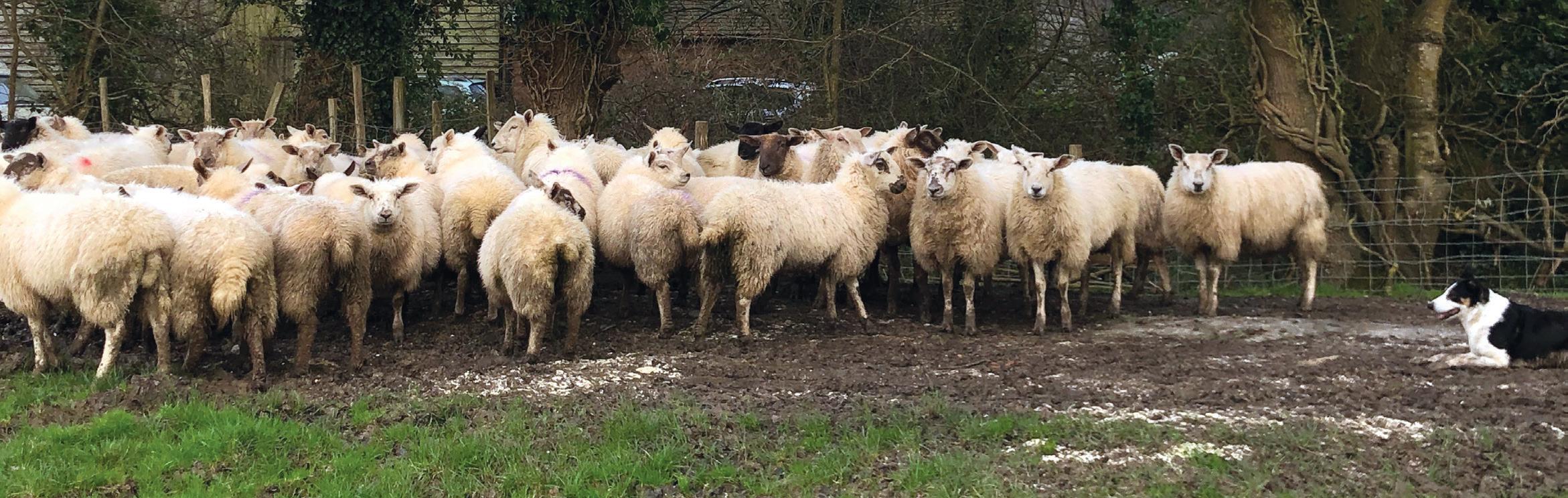
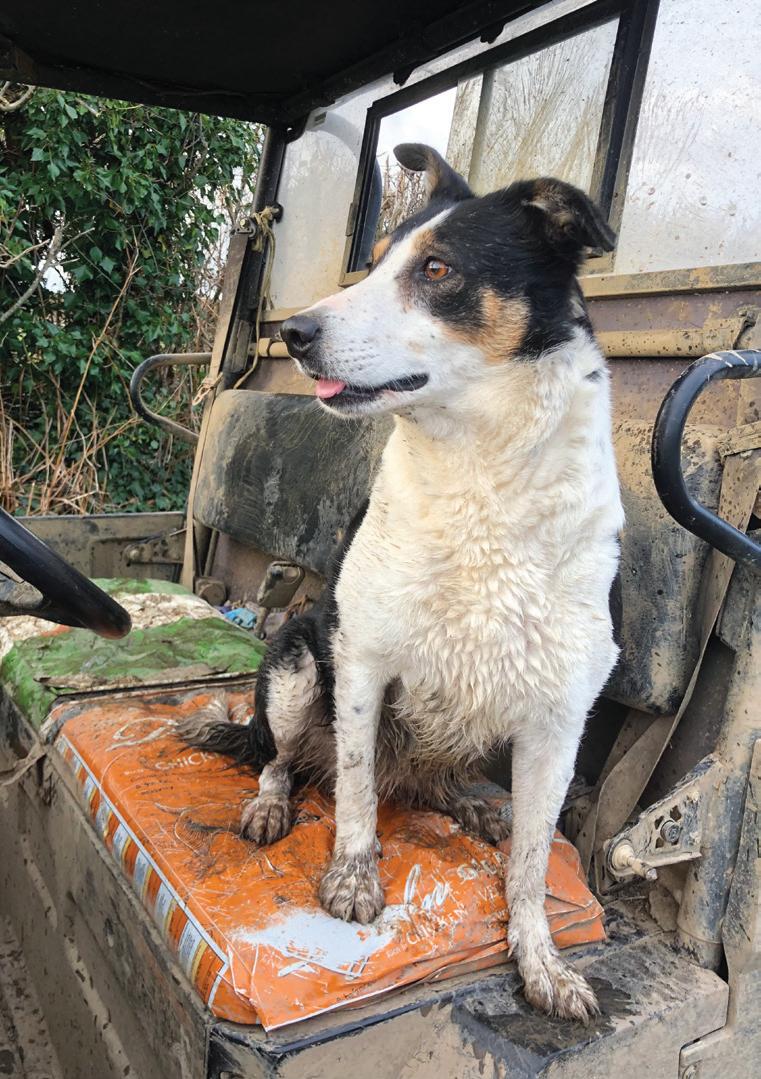
Dogs and children always know best and, just sometimes… they’re right. A look can speak volumes. When I advised Brie to stay on Shrek (ATV) as I slowly started to gather a bunch of hoggets, she gave me a very reproachful look. Ignoring my command she immediately hopped down, going about her work getting the flock penned. I stopped and watched. As the last sheep went in the pen she lay down in the entrance and triumphantly glanced back at me, as if to say “see, I know what I’m doing, now come and shut the gate”. I obediently obliged, and I swear Brie smiled when she jumped back aboard Shrek.
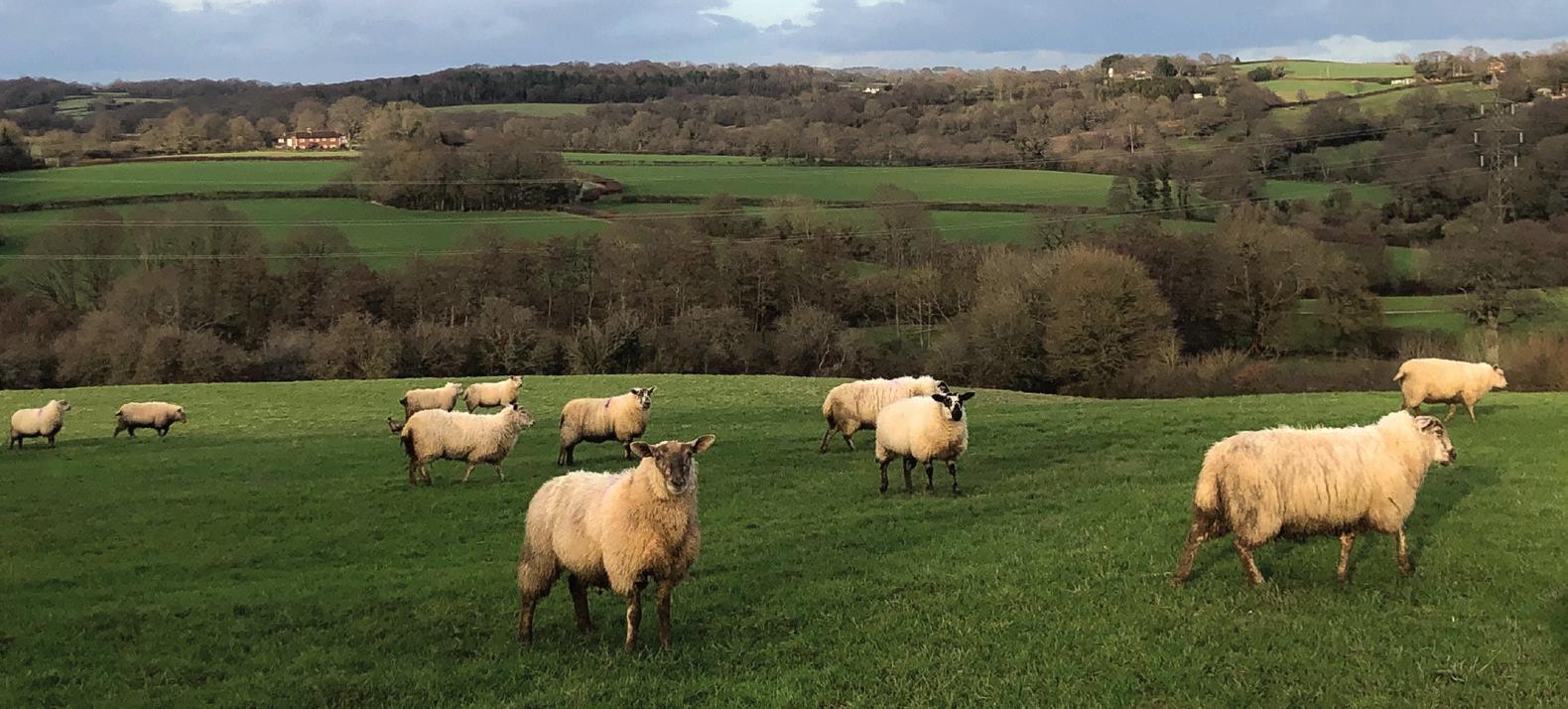
I’ve been drawing hoggets for market on a regular basis; recent prices have been worth waiting for. I’m informed this good fortune is all due to the problems in the Red Sea. I’m no longer bemoaning the slowness of hoggets finishing but am marveling at our present good fortune. It’s uplifting to be well remunerated for the work that’s gone into producing finished livestock, galvanising our sense of purpose. Increased margins are encouraging and allow you to make improvements, effectively investing in the future.
This year I managed the hoggets in two flocks, one grazing extensively just on grass while the others grazed in a field rotation receiving supplementary feeding of oats and barley. They’ve been finishing at equal rates and, with reduced numbers, I’ve combined the flocks and introduced access to silage. I had been promised some shed room, but this hasn’t materialised as the cattle appear to be monopolising it. Maybe if the sheep bring in more money it will give them more leverage.
Ideally, I’d like the hoggets gone before long as my ewes will soon be home from grazing on the marshes, where they are
PRICES HAVE BEEN WORTH WAITING FOR
thriving. I’ve not scanned this year, so I’ll need to be extra vigilant. We start lambing in the second week of April, when hopefully the sun will be shining. I’m looking forward to a year off from the vagaries of ewe-lamb antics, and any troublemakers will be well marked with a one-way ticket to market. I’m trying to implement a strategy to improve the flock performance, including getting on top of foot problems.
I’ve attended an update on sheep lameness. The experts advise no trimming. Routine foot trimming was a thankless task, so I’ll happily comply with this. I’m one of those naughty people who occasionally uses foot clippers on misshapen feet or if there’s a hoof flap which is trapping dirt/soil because this must be uncomfortable, plus it provides the perfect conditions for infection to set in.
Treating within three days of a sheep going lame is desirable but not always achievable. I generally try to cull if two doses of antibiotics don’t cure the problem. In my experience, Footvax helps reduce the incidence of lame sheep within the flock. In our case we became complacent and allowed the routine annual immunisation to lapse. This was a costly error.
I also went to a suckler cow meeting with a focus on dealing with calf scours, which was informative. One of the most useful nuggets I gleaned was that it is possible to buy a ‘scourcheck’ kit which you can keep on farm. When you see a calf scouring you can immediately test to see what pathogens are causing the scour. Knowing
what you’re dealing with is half the battle. The instructions look easy to follow and you get a result in ten minutes, so you’ll know if it’s Rotavirus, Coronavirus, E. coli or Cryptosporidium. I haven’t used one yet myself; being ever wishful, I’m hoping having one in stock will ward off the problem.
I don’t want you to think I spend my time going to meetings. I do get the work done on the farm, although I admit I never quite get through my ‘to do’ list. To be fair the house suffers more; where does all that dust come from? Mostly from farm clothes, muddy wellies, grandchildren, grownups and – the biggest culprits – the dogs, but I couldn’t be without them. Why do visitors always arrive when it’s total chaos and not after I’ve blitzed it? I do worry, but not that much, because you only get one life so you might as well enjoy it.
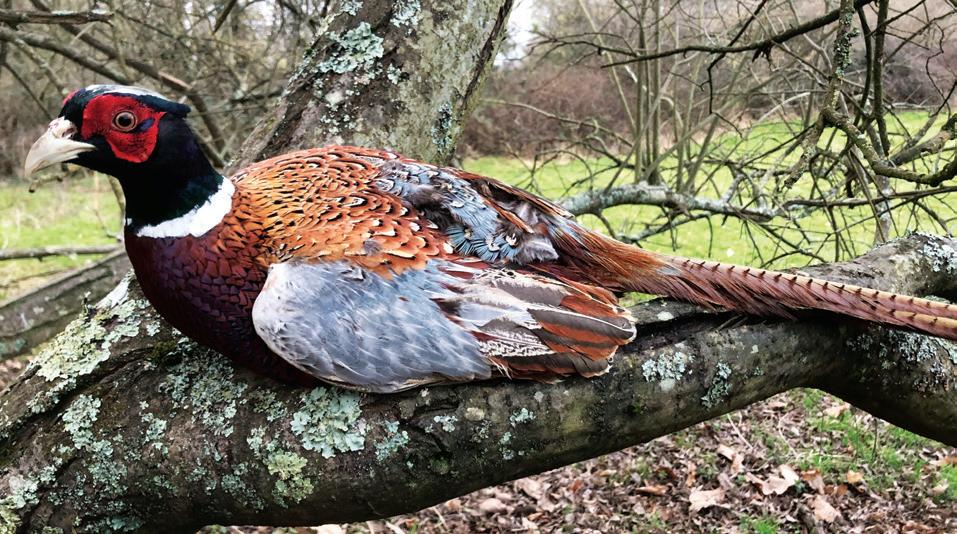
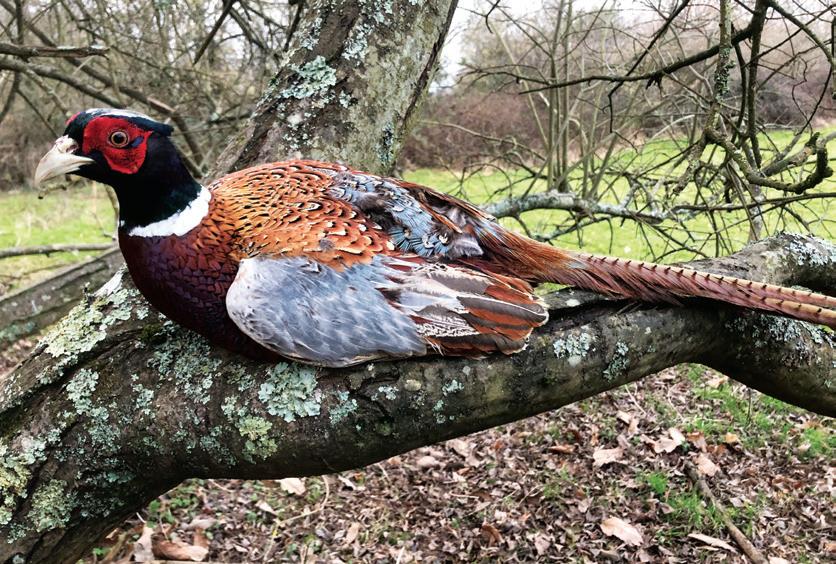
A few days after the shooting season finished, my spaniel triumphantly presented me with a very handsomely marked cock pheasant. How was she supposed to know that after 1 February they are no longer fair game? Not wanting to offend, I praised her, and she happily rushed off to look for more. I was left surveying the bird, marveling at the colouring in its feathers. He tipped his head on one side and his bright little eyes twinkled almost apologetically for getting caught. We have plenty of pheasant meat in our freezer and I checked he had no injuries other than hurt pride. When Floss wasn’t looking, I popped him on a branch, took a photo and away he went.
MARCH 2024 | WWW.SOUTHEASTFARMER.NET 12
AKEHURST AT THE KITCHEN TABLE
MONICA
Brie has it under control
If you want us to work, a little bit of dust is a small price to pay
It’s a dilemma, post season
During the shooting season, I made time to accompany the spaniels on beating and retrieving duties, because it’s fun. Witnessing the dogs’ enthusiasm and their natural love of working tirelessly along with you deepens the bond between you. The look of sheer pride and happiness when they hand over their retrieve; their joy is infectious, and that’s why you turn out in all weathers. Seeing Floss swim (admittedly slightly splashily at first until she’d perfected her technique) across a lake retrieving a duck and collecting up pheasants, pigeons, squirrels (or tree rats as they are commonly called – one less to damage the trees) is rewarding.
Farm work is often carried out alone, so it’s good socially to be part of the rural community, working as a team, encompassing all ages, (five to 80). There’s

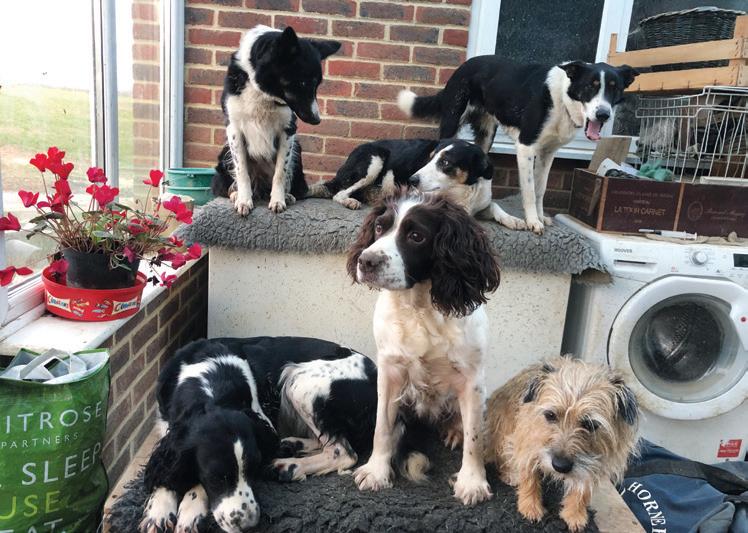
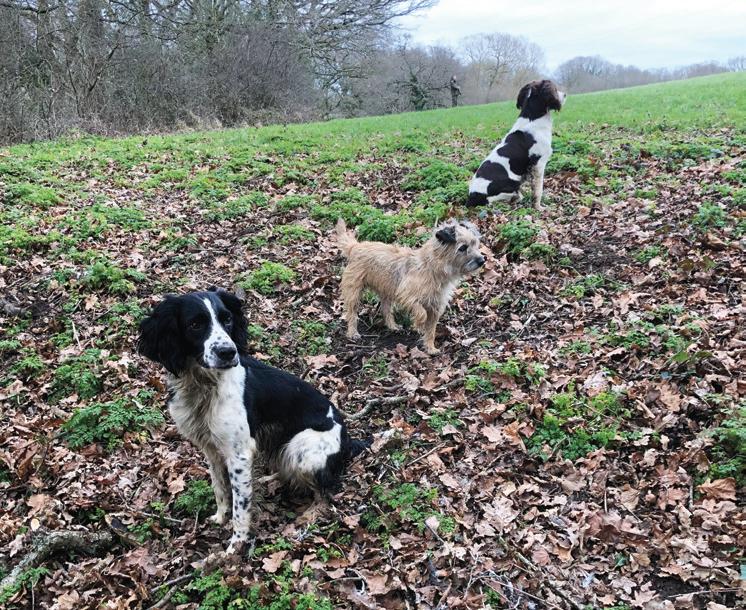
Ready for action
jokes, laughter and banter, and if you get into difficulties there’s always help at hand. Beating in woods and game cover can be challenging. Keeping up with the youngsters keeps you fit. Did I mention the elevenses, so yummy, second to none, and a well-deserved cool beer at the finish?
Good luck with the lambing, folks.


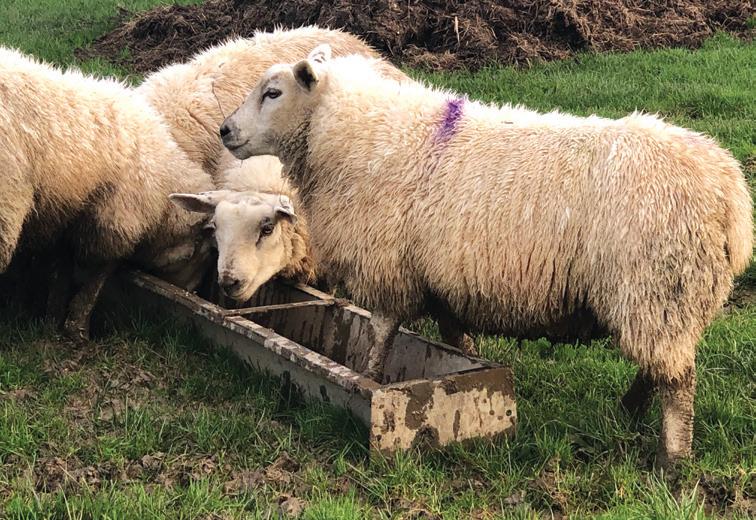
Why do some put their feet in the trough? So annoying



WWW.SOUTHEASTFARMER.NET | MARCH 2024 13 TO ADVERTISE CALL 01303 233883
Brie aboard her command centre
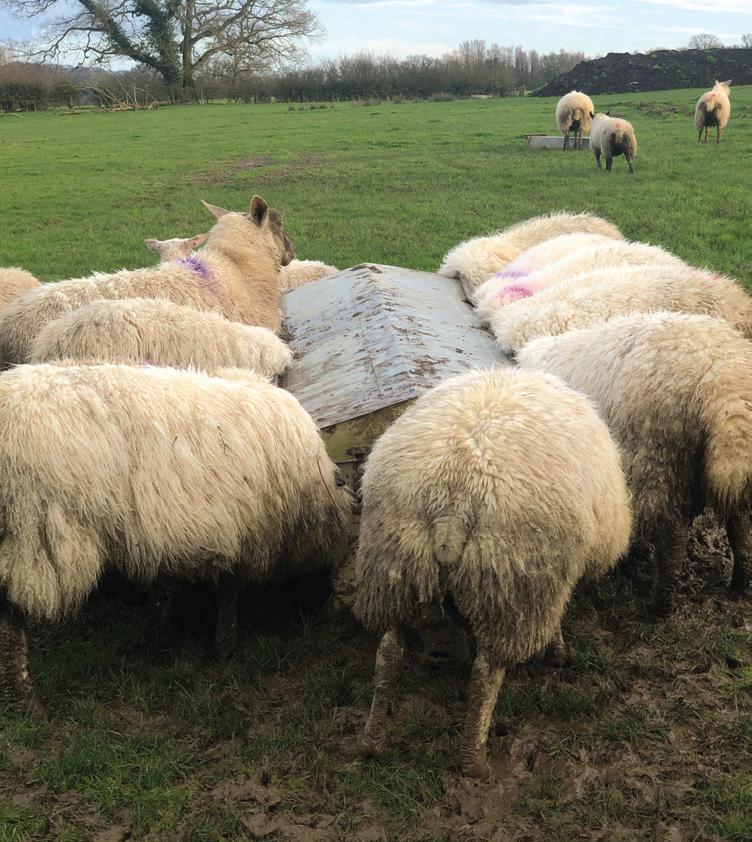
Hoggets, wet but grass is growing
Trough feeding some hoggets
TORRAN CONSTRUCTION LIMITED Cold Stores & Grain Stores Full Planning & Drawing Service A professional service at a competitive price Contact John Rodgers on 07795 678389 or john@torran.biz Malcolm Cook on 07543 801328 or malcolm@torran.biz Agricultural & Industrial Buildings Commercial Building Renovation Full Groundworks Package Farm Waste Recycling Experts Providing waste solutions to Agriculture, Horticulture & Equestrian Collection & Recycling of... All types of Farm Plastics Workshop Wastes Veterinary Waste Waste Oil Waste Tyres Redundant Agri chemicals WasteTyresCardboard Tel 01264 736733 ian.kitson@kitsonrecycling.co.uk www.kitsonrecycling.co.uk No Membership fees



 SARAH CALCUTT Honorary Chair, National Fruit Show
The first two months of the year see the final round of macroeconomic trend briefings for the city for the financial year. I've been fascinated by the far-reaching subject matter and the incredible number of 'doh!' moments I have had when realising why things have happened, or the wider ranging implications of something that I had assumed only affected my previously narrow career focus.
For instance, the impact of panic solutions brought in during the pandemic live on with the cultural changes that the six-foot rule created. This didn’t come from a robust scientific study; there appears to have a been a shrug, a statement somewhat along the lines of: “It would be better if people kept their distance” and an arbitrary six-and-a-bit feet (or two metres) was chosen. Classrooms closed,

INSPIRATIONAL LEADER
everything closed, plunging us into social and economic freefall.
The effects are still manifest. Going to work and school became optional, quiet quitting became a thing (for those who have avoided this phenomenon, it's putting in the minimum effort required to remain employed, no volunteering to help, nothing extra, no additional hours and no proactive behaviour, a new work to rule) and many businesses are now frantically revising contracts to try to get their teams working in a cohesive way again and help train recruits who need their peers to be present.
So, how does this affect fruit farming? Well, coupled with Brexit and the war in Ukraine, it’s a major contribution to our economic freefall. We're less economically productive at a time when we need to increase productivity and profitability so that wages can rise. To afford a wage rise, we need to be able to trade freely, crawl out of a recession, again, and then pay a proper value for our food.
If you read Prof Tim Lang's book Feeding Britain, he details the cyclical hell that farming is in from a policy perspective; he maps how we lurch from our inability to feed ourselves, with a reliance on less nutritious
imports, to returning to shooting ourselves in the foot (from a policy perspective) once we are nearing the point of healthy productivity.
Look at the costs of the latest round of proposed border control to businesses.
The Office of National Statistics has indicated a 4% rise in consumer prices compared to January 2023, maintaining the inflation rate observed in December.
The Chancellor’s remarks demonstrate the challenge of achieving the 2% target essential for easing household economic pressures, and the much longed for lowering of interest rates. And now there is an added complication of the new border controls, which will have a serious impact on businesses and consumers as they affect both plants and flowers.
The Government's approach has received stark criticism from Nigel Jenney of the Fresh Produce Consortium, who has cited the estimated 8% to 16% increase in costs. The result is that while some inflationary pressures might be easing, the sector faces high additional and avoidable costs imposed by government.
Naturally, simple solutions like the ability for a business to become approved to receive imports and complete official inspections at commercial premises, instead of the costly and lengthy delays of inspections at the port, have been ignored.
I cannot write this month without mentioning Minette Batters, who has reached the end of her epic term of office as president of the NFU. I was invited to the first of the round of ‘farewell and thank you’ parties, at which it was wonderful to see a strong turnout of ministers past and present, as well as some of those in the vanguard of food and farming production and policy.
Minette has been an inspirational leader, absolutely the person we needed to guide the industry through the past few years. It will be interesting to see where she lands next, as there will surely be another significant role for her.

MARCH 2024 | WWW.SOUTHEASTFARMER.NET 14 SARAH CALCUTT FOCUS ON FRUIT
Minette Batters with Sarah Calcutt
W.H.Skinner & Sons GRUBBING, TIMBER & GROUNDWORK SERVICES Orchard grubbing Windbreak removal Timber extraction Fallen tree removal Ground contouring Land clearance Excavations Cultivations Pond dredging 01622 744640 - 07711 264775 www.whskinnerandsons.co.uk
SOUTH EAST FUTURE OF FARMING CONFERENCE
After last year’s successful inaugural South East Future of Farming conference at Plumpton College, the event is returning for its second year on Thursday 17 April.
Sponsors the Country Land and Business Association (CLA) and Virgin Money are again partnering with the college to host this exciting event in the smart surroundings of Plumpton’s new Agrifood Centre.
Keynote speakers and workshops at the event, which will run from 3pm to 7pm, will provide practical solutions for farmers and landowners, with a focus on driving productivity and profitability in a sustainable way.
Boasting a dedicated agricultural team, Virgin Money has a long history of supporting the agricultural sector across the South East. Justin Ellis, agricultural business manager with Virgin Money, explained: “Our agricultural industry is operating in one of the most challenging periods for generations. While farmers continue to produce food, there is unprecedented change in climate, policy and consumer attitudes in how we grow, process and market our produce.
“There has never been a time where we need to be closer to our consumers and have both the desire and skills to adapt our food production methods while enhancing nature and the environment. The 2024 Future of Farming Conference will showcase inspiring stories of those already showing leadership to help the industry move forwards.”
The conference will be chaired by Emily Norton, Norfolk-based farmer and independent rural policy and strategy advisor. She will be joined by the following keynote speakers:
PRACTICAL SOLUTIONS
• Lord Deben, former chair of the UK’s Independent Committee on Climate Change:
How farmers can adapt to current climatic challenges.
• Joe Stanley, head of sustainable farming at the Allerton Project: How British farmers can be global leaders through an increased focus on regenerative techniques and the adoption of greater technology.
• Eleanor Gilbert, farmer: The challenges and opportunities for young people in farming, the future of farming and the role of social media.
• Flavian Obiero, farmer, chef and apprentice butcher: His inspirational journey through agriculture and his current life as a young tenant farmer.
This will be followed by a panel question and answer session, chaired by Emily Norton, and breakout workshops.
Following the conference itself, delegates will be able to network and enjoy produce from the Plumpton Estate.
The CLA represents thousands of farmers, landowners and rural businesses across the South East. Regional director Tim Bamford said: “The CLA is delighted to be supporting this conference once again, after the success of the inaugural event last year.
“With a general election on the horizon, this is a crucial time for farming and the rural economy. We look forward to hearing from
a diverse range of experts and case studies focusing on sustainability and productivity, and demonstrating how British farmers are global leaders.”
Tickets for this event are £10, with all the proceeds going to the Royal Agricultural Benevolent Institution (RABI), which provides guidance, practical care and financial support to those in need within the farming community. The closing deadline for booking tickets is 6pm on Thursday 11 April.
Jeremy Kerswell, principal of hosts Plumpton College, added: “Plumpton has a pivotal role to play in the future of our land-based industries, not only through our training of new entrants but in our work with farmers and landowners. We are delighted to be able to build upon last year’s hugely successful conference in our new Agrifood Centre to enable people to come together, share, learn and take away practical solutions for their own businesses.”
The Agrifood Centre at Plumpton College was opened in 2023 as part of the ongoing development of the college, which was established in 1926 and originally offered agricultural courses. Now a lead player in land and environment education in the region, it has grown to offer 19 different courses including 14+, college-aged courses, apprenticeships, degree courses and adult education. It is about to embark on the final stage of its £20m investment, an institute of technology for animal and veterinary science.
WWW.SOUTHEASTFARMER.NET | MARCH 2024 15 TO ADVERTISE CALL 01303 233883
FOR FURTHER DETAILS AND TO BOOK
01264 358195
Call
Back in September I commented on the Sustainable Farming Incentive (SFI). At the time I said payments were not good enough and that the detail on management of some options was not clear enough. I had concluded that SFI was not for me at that time, as we have a sizable stewardship scheme at Burgate which runs until December 2024.
The past six months have seen a series of changes; more announcements on SFI, seriously challenging autumn weather and a continuing slide in commodity prices. We have no control over the weather, and farmgate prices move unpredictably, being more aligned to world prices than to any local issues we have in the UK.
The only predictable element is SFI payments, a three-year scheme with known returns, which is quite unique in our industry and has made building a proportion of SFI income into a business plan more appealing. From a show of hands at a recent NFU branch meeting, many farmers are thinking the same way. I asked who had applied for SFI or intended to in the next six months and more than 90% raised their hands.
The stability of income and realistic payments being offered on some of the options that take land out of production are not all good news and is leading to some short-sighted decisions being made; landlords are contemplating taking land back in hand and entering the whole farm into SFI. It would be wise to remember that it is only a three-year scheme, payment rates are not set in tablets of stone, there is a change of government on the horizon and scheme rules are fluid and subject to change.
The NFU asked for the scheme to be flexible to enable options to fit in with changing land areas as cropping rotations moved around the farm. To be fair the rules have a reasonable degree of flexibility, all be it that the flexibility is leading to some opaqueness and differing views of what is allowable.
It has not gone unnoticed by DEFRA and the Rural Payments Agency that some folks are looking to ‘work the system’. Farms minister Mark Spencer recently stated that it was not the intention of SFI that whole farms be used for wild bird feed. So, do not be surprised if the rules become less flexible with area limitations for some options being introduced.
The other area of flexibility is the ability
LOOK AT THE BIGGER PICTURE
Writes Peter Knight, managing director of Burgate Farms Ltd, Hambledon, Surrey.
to add to SFI schemes at their anniversary. Start a scheme in February 2024, see how it goes and add to it in February 2025. It is also possible to set up a new scheme on the same holding, ie. have more than one scheme running at the same time, though I have to say I worry slightly about this. It will make inspections and audits complicated, as not all options will be running concurrently and there will be overlap of options between schemes.
I am also concerned that the consequences of SFI on cropping have not been fully appreciated. Do break crops make financial sense any more? Farmers are always searching for a consistent reliable break crop that pays; gone are the days when oilseed rape fulfilled our needs, and I don’t think beans ever did, despite growing them!
We all tend to remember the good years, not the disasters. Because we are born optimists, we believe next year will be a good one. Now we have another break crop, SFI NUM3 legume fallow, paying £593 ha. It is not a fortune but is risk free, means quarterly payments and builds fertility into the soil.
As already mentioned, with volatile markets and unpredictable weather conditions it is likely that the area of beans and other highrisk crops will fall. With this happening at a time when we should be aiming to be less reliant on imported protein, why not a protein crop payment as an option within SFI? After all, peas and beans are summer flowering crops that attract bees in just the same way a legume fallow will.
Come on DEFRA, think about the bigger picture.
MARCH 2024 | WWW.SOUTHEASTFARMER.NET 16 FROM THE FRONT LINE IN CONJUNCTION WITH
FINANCIAL PLANNING FOR SUCCESSFUL DIVERSIFICATION
As changes in farming policy and increased costs continue to impact dramatically on the agricultural industry, many farmers are considering how they can diversify their income streams to support their businesses in the future. Justin Ellis, Virgin Money Agriculture Relationship Manager, suggests how farmers should plan for the investment they will need and outlines what the lender looks for in any funding application.
At Virgin Money, we work closely with all our farming customers to understand and support their plans, and it helps to engage with your bank manager as early as possible. As a lender, the bank is ideally placed to support you in developing your proposals to secure the funding you need, but your own preparation and planning are imperative. Here are some pointers as to what you need to consider as part of this preliminary work.
DIVERSIFICATION
There are so many options for farm diversification, but what works for one farm may not be suitable for another. Research is critical, as is professional advice, but the best starting point is to capture what you want to achieve. Desired outcomes may vary from:
• Cashflow to support an existing business
• Employment or a business interest for family or staff members
• Capital growth
• Better use of assets.
I always find it beneficial to consider more than one investment opportunity. This allows some relative strengths and weaknesses to be considered, but also how they measure up against the original objectives.
RETURN ON INVESTMENT
This is often used to assess the relevant benefits and, from a financial perspective, can be a good measure, but something often forgotten when pursuing new enterprises is that other
non-financial matters can be just as important:
• Can the existing business still run with your focus diverted elsewhere?
• What is the impact on staff, who often bear the burden of change?
• Do you have, or can you access, the necessary skills?
• How resilient do you consider yourself and have you planned for unforeseen issues?
PROFESSIONAL ADVICE
This should be taken as early as possible and from whatever source is available, such as an accountant, solicitor or land agent – and never forget to discuss with family. Typically, lenders will be looking to satisfy themselves on the following key factors:
• Have planning approval and permissions been secured? Lenders may require sight of these, depending on the project size
• If you are looking at re-purposing or erecting a new building, has this been costed and competitively quoted?
• Is the project realistically funded to deliver a completed project within timescales, with adequate contingencies?
• Does the venture require licensing and, if so, is it in place?
• What corporate structure will the venture take, e.g. a new limited company?
BUSINESS PLAN
A bank will also typically require a business plan, but prepare this for yourself primarily. A good business plan should provide confidence to you, family and lenders, identify areas to focus on and ensure risks are accounted for. Assume the reader of your plan is not an expert. Create a clear summary page covering what you are planning, how much funding you require and how you are going to pay it back. Your plan should also cover issues such as:
• What makes the venture unique or different
• The local competitive environment
• Customer research – have you done, for example, test trading or direct research? Is there evidence of demand?
• How you are going to market your offering – e.g. social media? What platform, what content and why?
• The numbers; do they look too good to be true? If so, that’s how the lender may view them
• Assumptions and research that underpins your numbers
• Budget projections for different scenarios –best, worst, most likely etc
• Repair costs. Your venture has to be like new for every customer.
Remember, cash pays back loans, not profits. Does your plan spell out the cash cycle of your new venture?
WHAT THE LENDER WANTS
Expect to be challenged on the numbers. You need to understand them fully, but lenders challenging your numbers is the best way to ensure they are robust. The lender needs to have confidence that every aspect of your proposed investment stands up to scrutiny, so they’re looking for a business plan that shows them:
• A proposition that is well considered and well researched
• A balanced funding proposal, clearly defining your stake in the new venture
• Contingency plans B and C if the proposed business levels are not achieved
• The route to the repayment of their funding, and when.
Virgin Money has a long heritage of working with, and supporting, the farming industry and working closely with customers on any requirements, both short term and long term. We understand how important it is for any farming business to invest in the future, and we are fully committed to helping our farming customers turn their plans into success.
JUSTIN ELLIS, B.SC. PMIAGRM
Agricultural Business Manager (South East) Virgin Money
WWW.SOUTHEASTFARMER.NET | MARCH 2024 17 TO ADVERTISE CALL 01303 233883 FINANCE
E: justin.ellis@virginmoney.com www.virginmoney.com
WIDE RANGE OF COURSES
This month Nigel Akehurst visits Hadlow College, part of North Kent College, to learn about Kent’s only rural and land-based college. He caught up with three students and farm manager Tania Bucknell to find out more.
Hadlow College has been based at its current site, just outside Tonbridge, for over 50 years and boasts a proud heritage within the land-based sector. Its history can be traced back over 100 years, with many former students having won major prizes in prestigious national events and playing a key part in the country’s rural economy.
Hadlow offers a wide range of courses for both school leavers and those looking to change career, including agriculture, horticulture, gardening, agricultural engineering, aquaculture and fisheries management, equine, animal management and floristry.
MEETING STUDENTS

Visiting the college’s Blackman’s Farm site, home to its beef herd, I meet three students in Hadlow’s Rural Regeneration Centre to find out more about their experiences and plans. I was interested to note that none of them came from a farming background. Level 3 agriculture student Clementine Young said she had grown up wanting to be a farmer and was enjoying the mix of practical training and
theory the course provides. Currently in her first year, she had already studied soil science, machinery operations and animal husbandry. With a week’s work experience of milking cows under her belt, she has her sights firmly set on getting a job on a mixed farm with cattle and sheep.
Izaak Mann, a second-year student, said he hoped to work on an arable farm and maybe in agricultural contracting, so he could do a bit of silaging.
He highlighted one unit that covered sustainability issues, a topic he feels passionate about. He said we need to move forward and make farming better for the environment and improve the world in which we live.

Higher education student Finn SelbyGreen, who is in the second year of a foundation degree, said he wanted to stay on at Hadlow to do a third year top
up and get a BSc Honours. After that, he’d like to go travelling to New Zealand and Australia, where he hopes to do some sheep work before coming back to work in farm management or consultancy.
All three students were positive about the future of farming and felt mixed farming operations offered the best financial and environmental outcomes.
Finn also highlighted the ‘current issues facing the farming world’ unit they study, which looks at everything from COP 28 to the latest Sustainable Farming Incentive options and different forms of farm diversification.
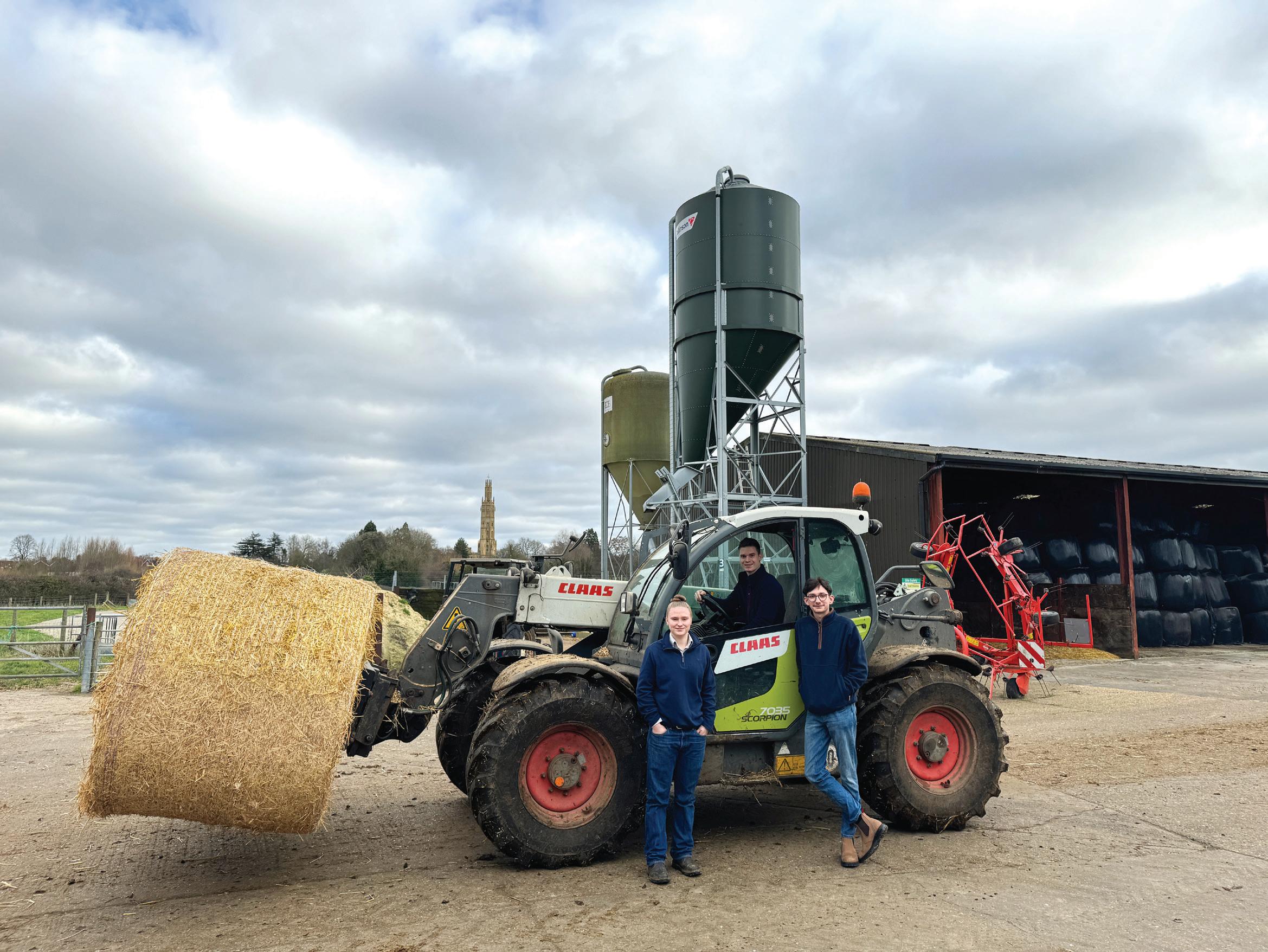
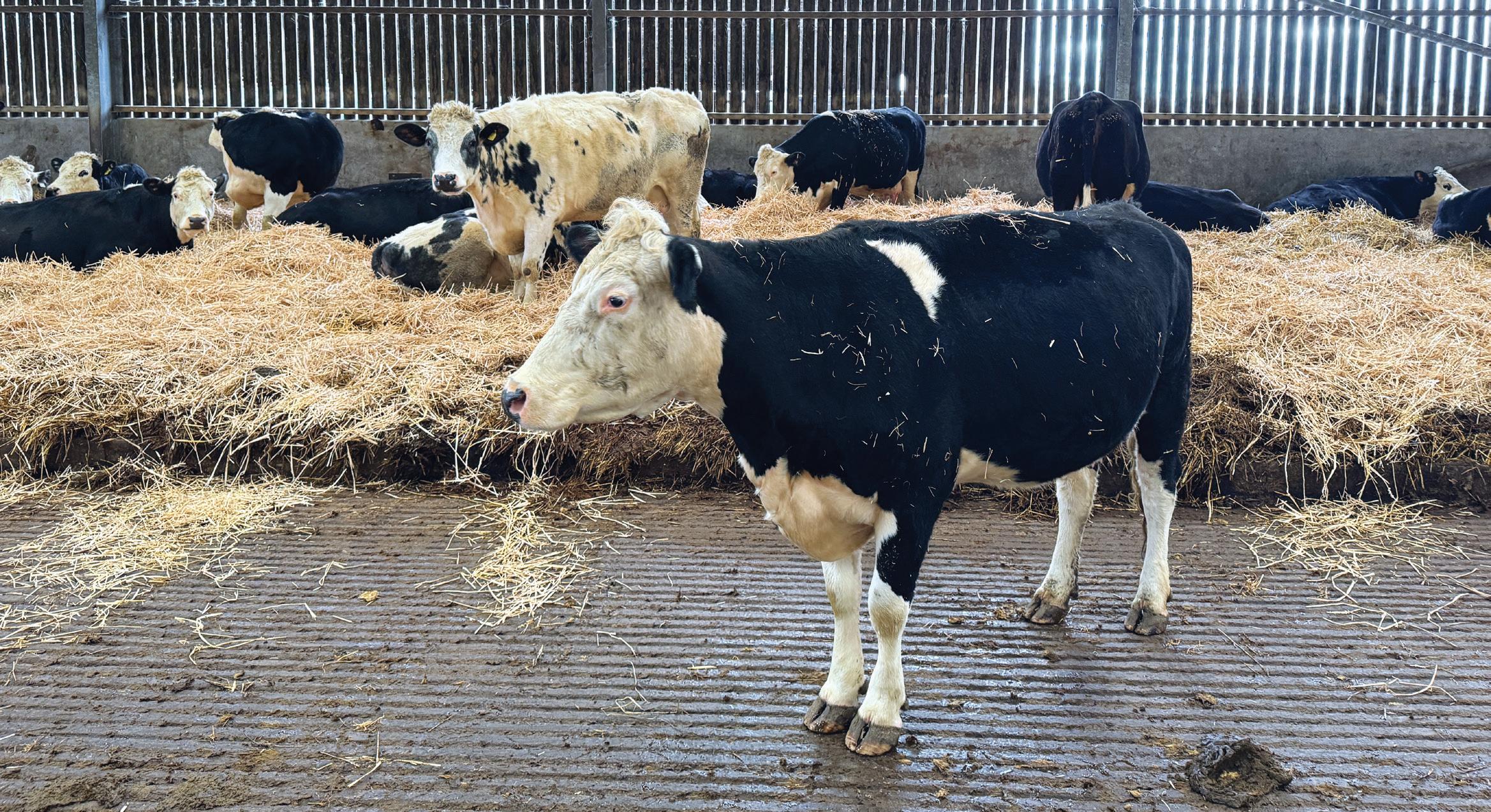
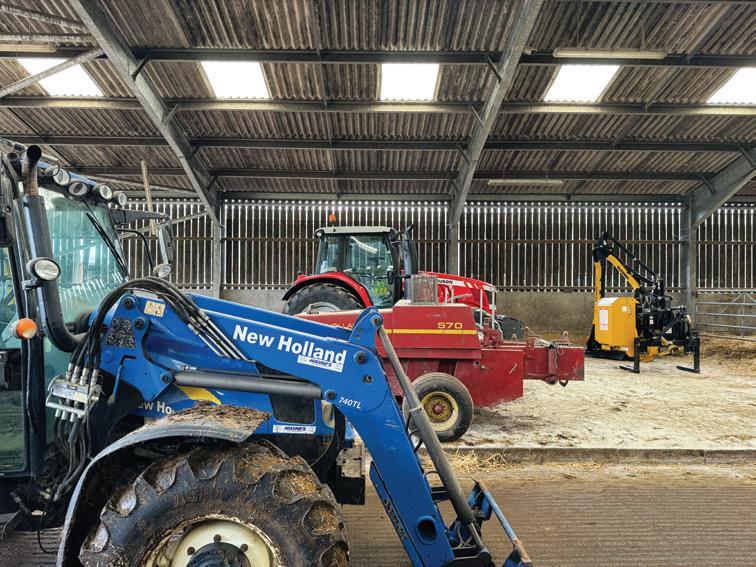
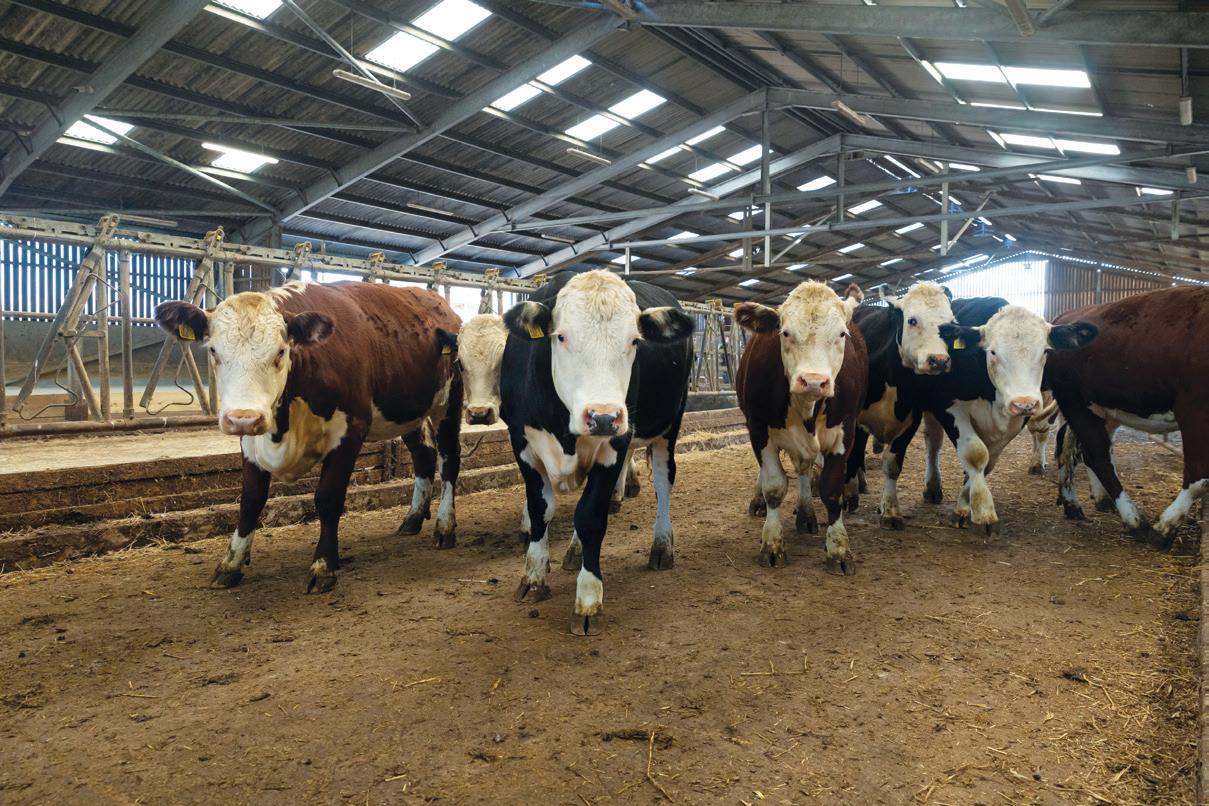
After our chat we headed outside for a quick tour of the farmyard. The students showed me some of the different machinery in use on the farm, including a Claas telehandler. We also saw the suckler herd of Hereford cross cows in the large covered yards.


MARCH 2024 | WWW.SOUTHEASTFARMER.NET 18 NIGEL AKEHURST VISITS: HADLOW
COLLEGE
Clementine, Finn and Izaak
MEETING THE FARM MANAGER
Next, I sat down with farm manager Tania Bucknell for a broader chat about the college farm, their flock of sheep and some of the challenges and opportunities facing agriculture.
Tania has worked at the college for 18 months, initially supporting the previous farm manager by running the college’s flock, supporting the lecturing staff with student practical sessions and assisting with the back-office processes. When he left to pursue another opportunity, Tania stepped up to run the farm.
She clearly loves her role and relishes the challenge of training up the next generation of farmers. Having previously worked in business herself, she is determined to run the farm as commercially as possible and give students a realistic experience of the farming industry.
IMPROVING THE FLOCK
To try to make the sheep enterprise more efficient, Tania has started to make some flock improvements. The college had previously run a flock of mostly North Country and Suffolk mules. Tania quickly introduced pedigree Lleyns to the mix. “The Lleyns have got so much going for them. They are a highperformance ewe; they are milky, motherly and have good prolificacy”.
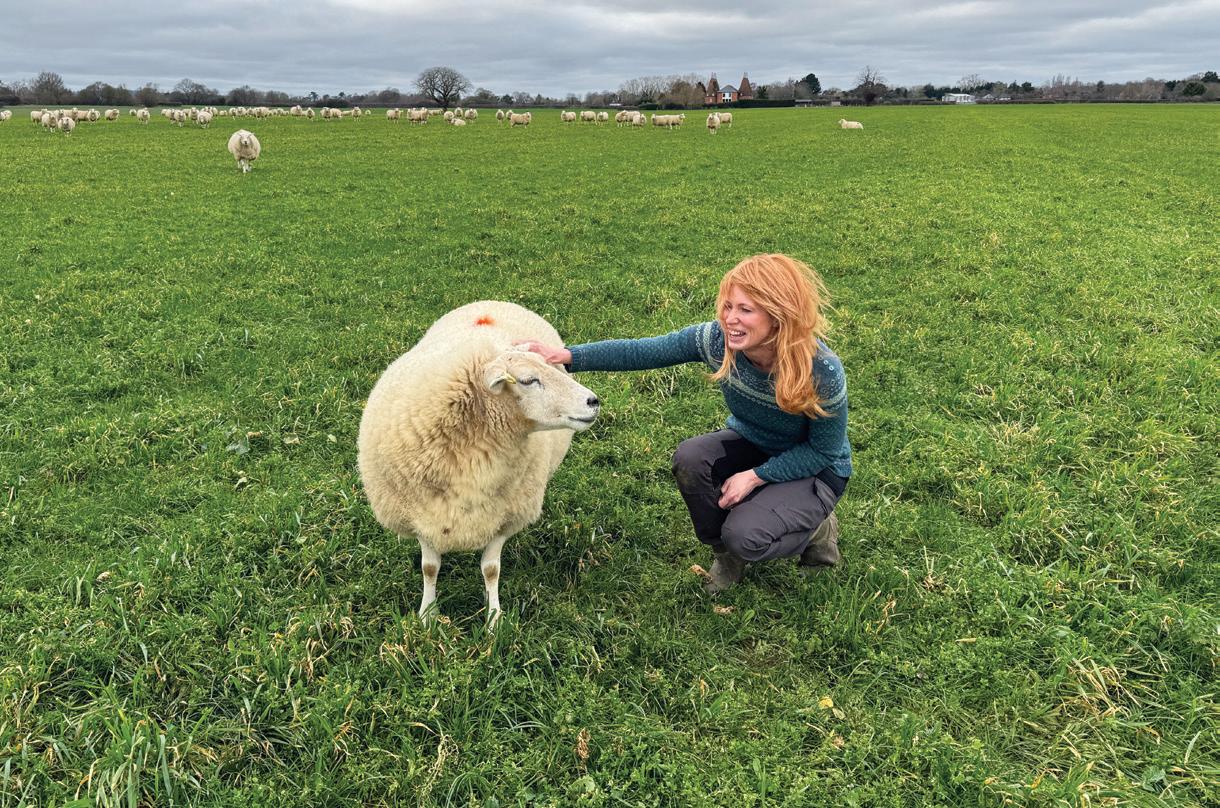
After her first year at the college, she dispersed the mules and replaced them with Romneys. “The Romney breed is part of Kent’s heritage and, as Kent’s only land-based college, it feels natural they should be part of our landscape. Being from the area they are also naturally adapted to some of the challenges we face with our grass platform.”
Last year Tania purchased two pedigree Romney tups from the Skinner family, which she put to their best Romney ewes, including a few pedigree tegs, with the aim of starting the college’s own pedigree flock.
The rest of the Romney flock was put to Chartex rams (Charollais x Beltex) in the hope that their continental conformation will produce a more commercial lamb. The Lleyn flock ran with pedigree rams. Tania said one of these was a shearling purchased from South East Farmer ’s own Alan West who breeds a flock designed to be hard working. She feels confident his offspring will have the best chance of being well suited to the conditions on Hadlow College’s farm.
LAMBING WEEKEND
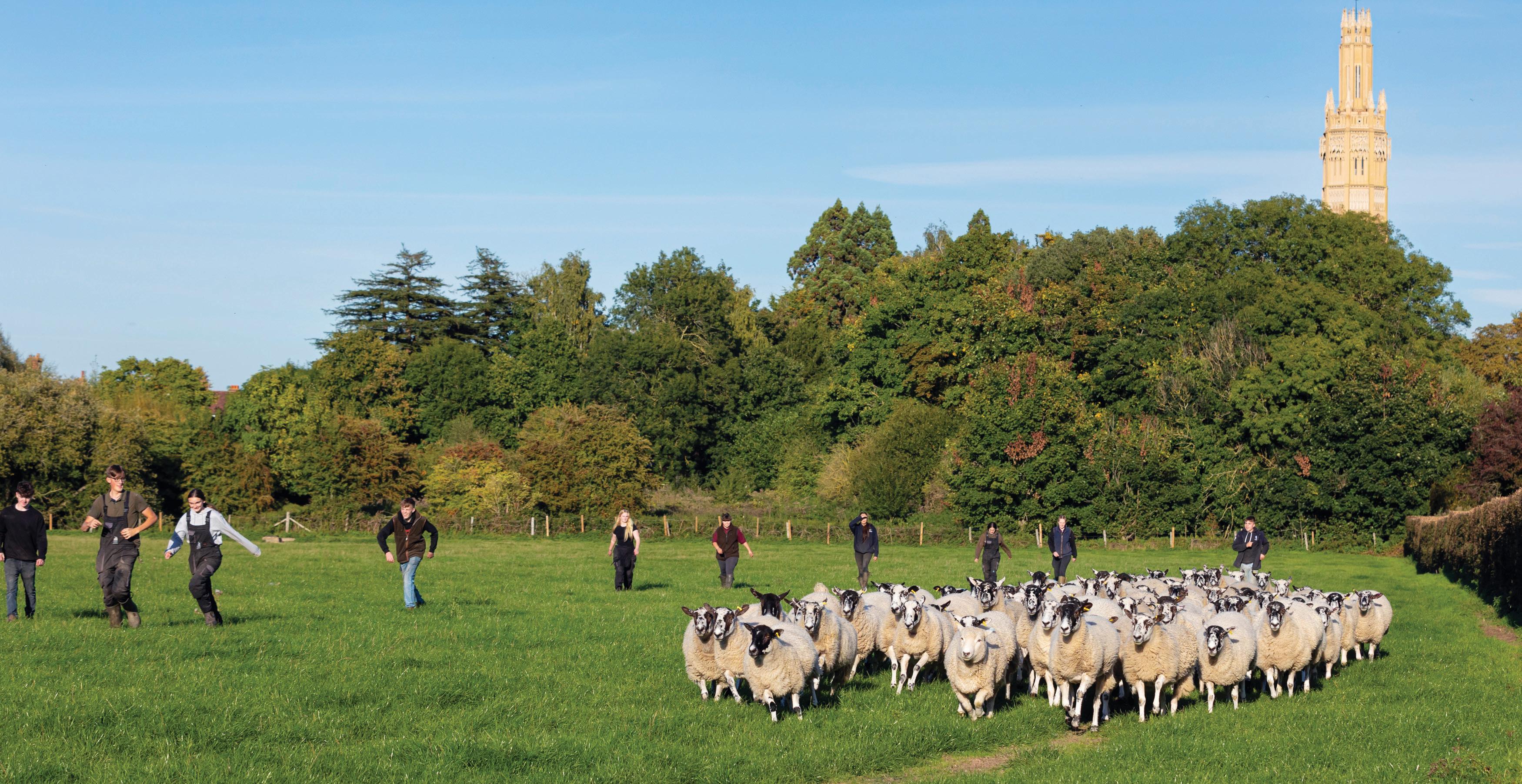
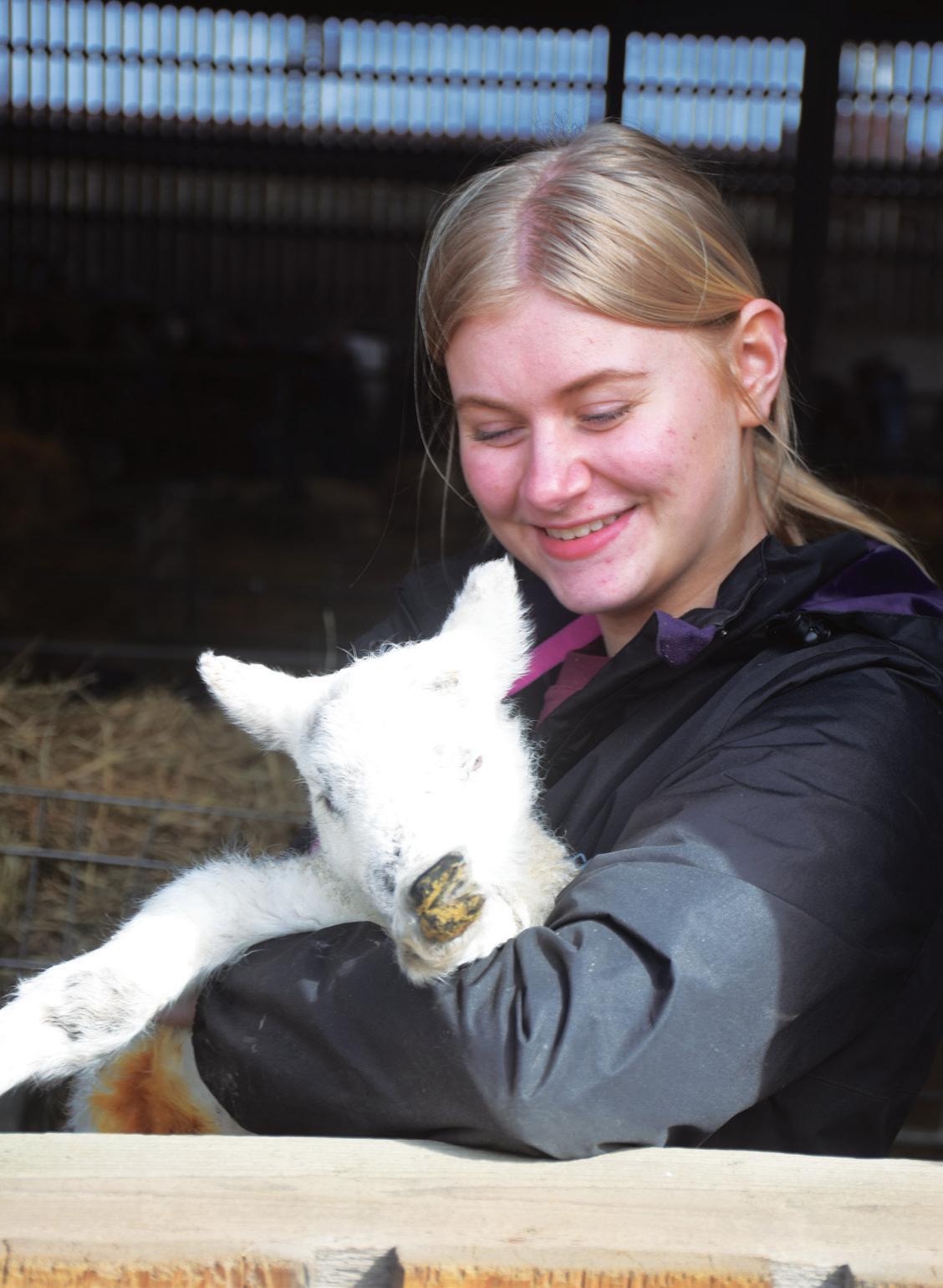
Lambing is carried out indoors and is due to start in April to coincide with one of the college’s biggest public events of the year. Lambing Weekend takes place this year from 20 to 21 April. Last year it was attended by nearly 10,000 visitors. >>
FARM FACTS
• 300 Breeding Ewes (50% Romney and 50% Lleyns) with a total of 400 head
• Lamb inside in April to coincide with lambing weekend
• 24 suckler cows (Hereford Crosses) plus 35 to finish/follow
• 97 hectares of grassland, including a mix of permanent grass, improved grass and herbal leys
• One twin-span polytunnel for seasonal plants linked to weather station
• Glasshouse with three compartments (two hydroponic production for tomatoes and one section for propagation)
• A vertical farm with three layers for salad production
• Four hectares of formal and woodland gardens
• Extensive equine facilities, with 50 horses kept on site.
• Resources include a mechanical horse, equine treadmill and a racing simulator.
WWW.SOUTHEASTFARMER.NET | MARCH 2024 19 TO ADVERTISE CALL 01303 233883
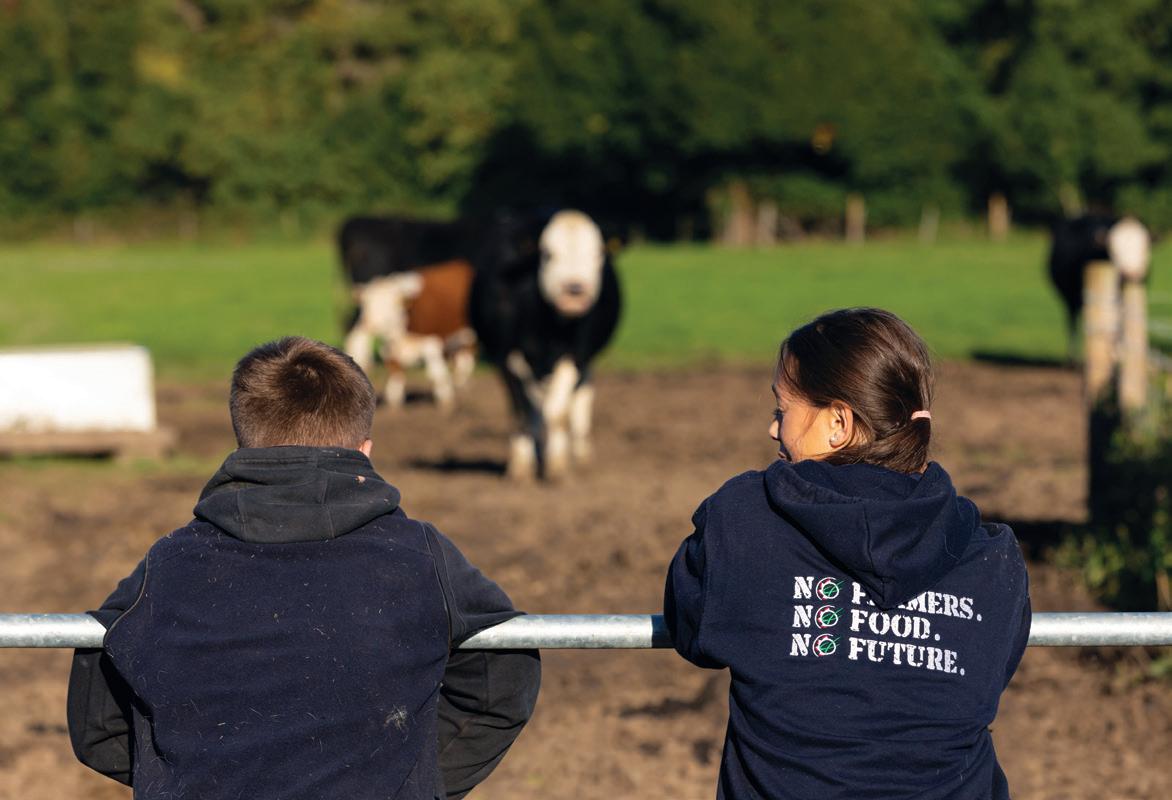
“It’s a big opportunity to showcase the college and the courses we offer,” said Tania. As well as showcasing lambing, the college has a large array of stalls and experts on hand to answer questions. To find out more or purchase tickets, visit the website (www.hadlow.ac.uk)
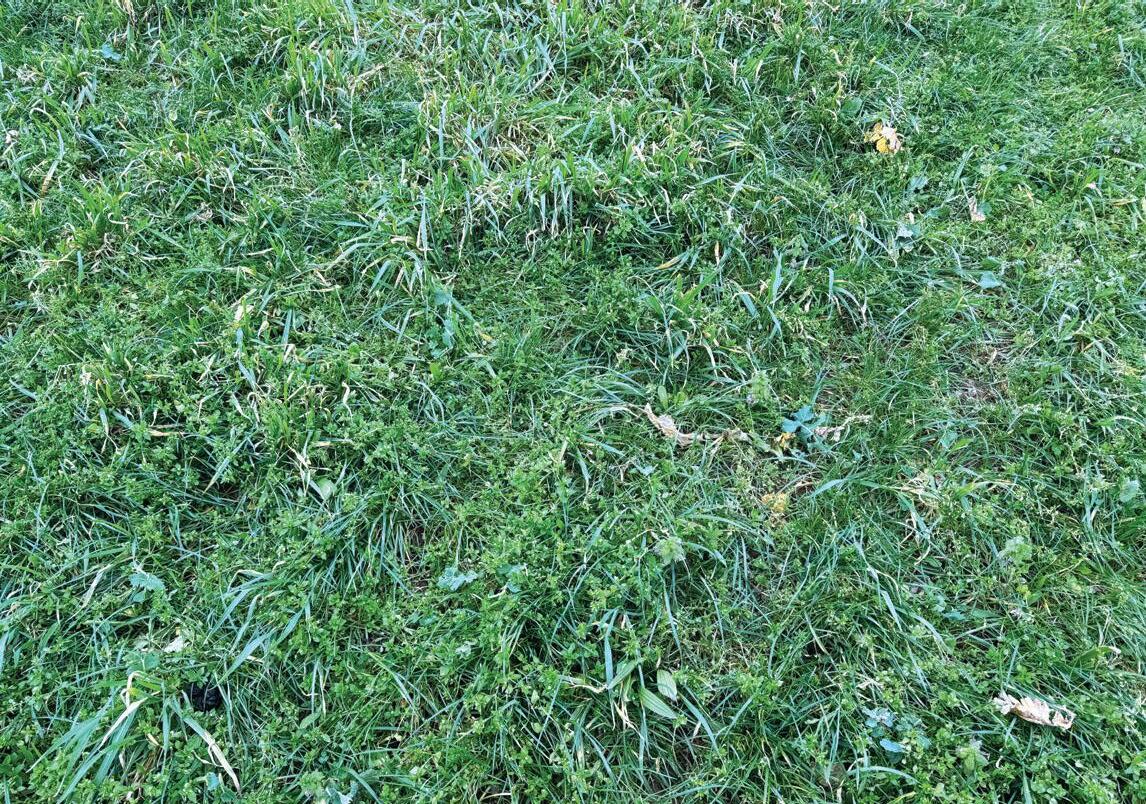
HERBAL LEYS
COLLEGE
flock, performance recording to improve flock genetics.

The college plans to sell some of its own animals as pedigree breeding stock and, by being part of breed societies, open up that contact network to students, too.

Another area Tania has been keen to improve is the 97 hectares of grazing, a mix of permanent grass, improved grassland and herbal leys. Coming from a grassy farm in Wiltshire, she has been surprised by how dry it gets in the summer in Hadlow, with grass running tight early in the season. To help combat this, the college has established a number of herbal leys across the farm, allowing the enterprise to benefit from GS4 Countryside Stewardship funding.
BEEF CATTLE AND DAIRY FARM PARTNERSHIP


When the permanent pasture bakes dry, the new herbal leys are holding up well, thanks to deeper rooting varieties such as chicory, she explained.


“Every challenge is an opportunity for learning,” added Tania, who works with around 50 different students across three different year groups.
SHEEP OUTLETS


The college now has a suckler herd of 24 Hereford crosses and a pedigree Hereford bull, which were all indoors at the time of visiting. The college also works closely with the local Pickering family. George Pickering manages the dairy enterprise at nearby Park Farm. Students go there to gain experience working on a commercial dairy, including morning milking duties.
It’s a partnership that works well, said Tania. “We need to understand what the farming community is looking for in their workforce to ensure our students are enterprise ready.”

RAISING THE PROFILE OF FARMING AND ENCOURAGING MORE NEW ENTRANTS
Love him or hate him, Jeremy Clarkson has improved the profile of farming amongst the public, said Tania.


Historically they’ve struggled to finish lambs off the grazing platform, with a small batch sold fat at Ashford and the rest sold as stores to preserve enough grass for tupping, said Tania. Going forward, with the new flock established, she plans to run a closed







He has raised the profile of agriculture and farming to a wider audience, which in turn encourages more young people to consider a career in the industry, she added.

MARCH 2024 | WWW.SOUTHEASTFARMER.NET 20 NIGEL AKEHURST VISITS: HADLOW
<<
GS4 herbal ley
CHALLENGES AND TRACTOR PROTESTS
Some of the key challenges facing agriculture include climate change, resistance to wormers and the economics of food production, said Tania. I ask what she makes of farmers demonstrating on the continent?
“It will be interesting to see what happens as a result of the protests. I think it is important for UK farmers to unite as one voice.”
On falling farm incomes, she commented that somehow the value lost needs to come back to the farmer, to protect the future of the industry. Having worked with supermarkets in a previous career, Tania warned that they are good at protecting their margin. She added that as big employers, they also hold huge sway with the government.
Finishing on a more positive note, she said more people were beginning to understand the importance of supporting local food systems and the impact food can have on health.
OTHER COURSES
Heading back to the car park, I pass some polytunnels and an impressive looking glasshouse, which I am told has three compartments; two have hydroponic production for tomatoes and one section is for propagation, student research and general crop production.
There is also a vertical farm with three layers for salad production and a three-hectare orchard and vineyard which produces grapes for wine, apples, cherries, plums and apricots. They benefit from all the latest technology, including drones and robotics.
Hadlow also offers state-of-the-art equine facilities, with just over 50 horses on site and a variety of resources including a mechanical horse, an equine treadmill and a racing simulator.


WWW.SOUTHEASTFARMER.NET | MARCH 2024 21 TO ADVERTISE CALL 01303 233883
DEER PROBLEMS? Let Wealden Game help. We have a field to fork policy. Full time professional deer cullers with our own butchery. We are one of the only full time professional deer culling contractors in the South East Visit www.wealdengame.co.uk Call 07789 224466 or email wealdengame@yahoo.co.uk
Tania, Farm Manager
















BRAVE CHOICES
Clayhill Vineyard in the beautiful Crouch Valley is the fascinating story of a successful mixed farming enterprise. Writes Rebecca Farmer, Editor of Vineyard magazine.
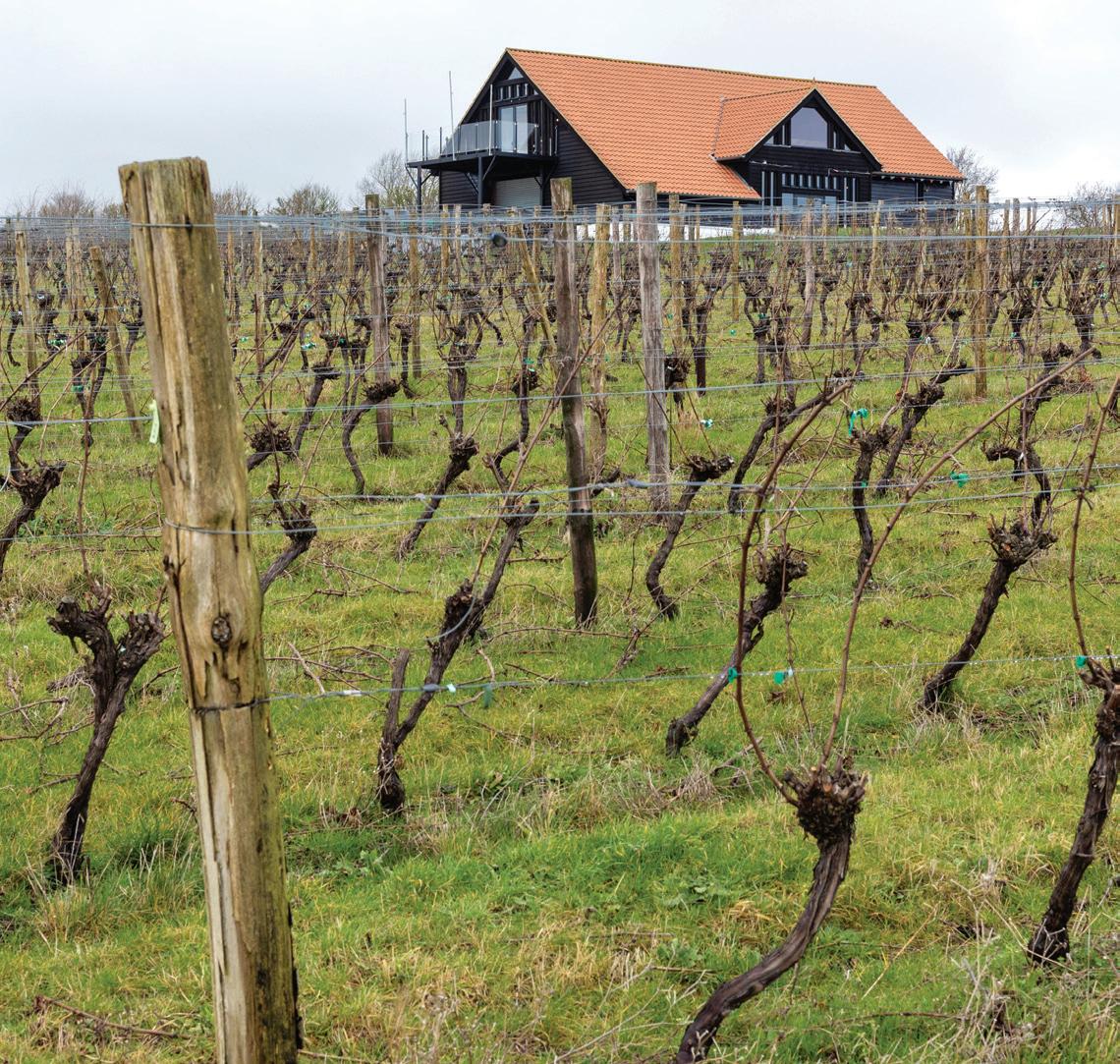
There are many unique aspects to Clayhill Vineyard, the first being the fact that the vines were planted on the site in 2006.

At the time of planting the only other vineyard in the region was New Hall Estate, so it was a brave move to say the least, but what makes Crouch Valley farmer Dale Symonds’ story truly unique is that while his family farm at Clayhill has been a successful mixed farming enterprise for decades, he is now not only a contract grape grower but also a wine maker with his own on site winery.
Dale explained: “I was a student at Plumpton when they planted the original
vines and the students all got involved in that. I would have always regretted it if I had not planted the vines at Clayhill.” As the number of vineyards has expanded in the region, that regret is thankfully not something that Dale has to live with. Instead, the vineyard has grown to 30 acres since 2006. The vineyard is to grow a further 20 acres next year.

to farm the land in the Crouch Valley over 60 years ago. Dale explained that in general consumers are not willing to pay more for the price of bread, but they will pay a premium for a bottle of wine. “We have diversified to keep the farm going,” said Dale.
Dale points to the 20 acre block that is already being prepared for the new vines. This land has been taken out of the arable rotation of the mixed family farm.
The farm has been in Dale’s family for decades as his father moved from Cornwall

“In 2005 the wheat price had become very low and I saw an article in a magazine about the English Wine Group looking for growers to contract grow grapes. I had always joked with my dad that with the climate we should be planting oranges and olives, but we went for vines instead,” said Dale with a chuckle.
Lizzy Tresadern has enjoyed working in the















22 NEWS FROM THE VINEYARD MARCH 2024 Clayhill Vineyard in the beautiful Crouch Valley is the fascinating story of a successful mixed farming enterprise Brave choices INSIDE An insight into grapevine diseases Sweetness and light The rise and rise of the Crouch Valley LAND & PROPERTY CONSULTANTS Expert advice for viticulture: Site-finding Sales acquisitions Planning applications Environmental schemes grants matthew@c-l-m.co.uk VIN E YAR D ™ For Growers & Winemakers in Great Britain
Visit shop.kelsey.co.uk/subscription/VIN PROPERTY Vineyard sits beautiful painters The art of wine INSIDE words of the Grange Winery inextricably linked. Past, present and future Visiting vineyard on the site of medieval abbey Agreeable symmetry VINEYARD CONSULTANTS INSIDE them Deep connection Mountfield le site. VIN E YAR D For Growers & Winemakers in Great Britain Why not subscribe to Vineyard magazine? THINKING OF GETTING INTO VITICULTURE?
vineyard for nine years now, but her story started quite differently. “Back in 2015 I was looking for an apprenticeship,” explained Lizzy. At that point the farm had a pig enterprise and in conjunction with a course at Writtle college Lizzy joined the business.
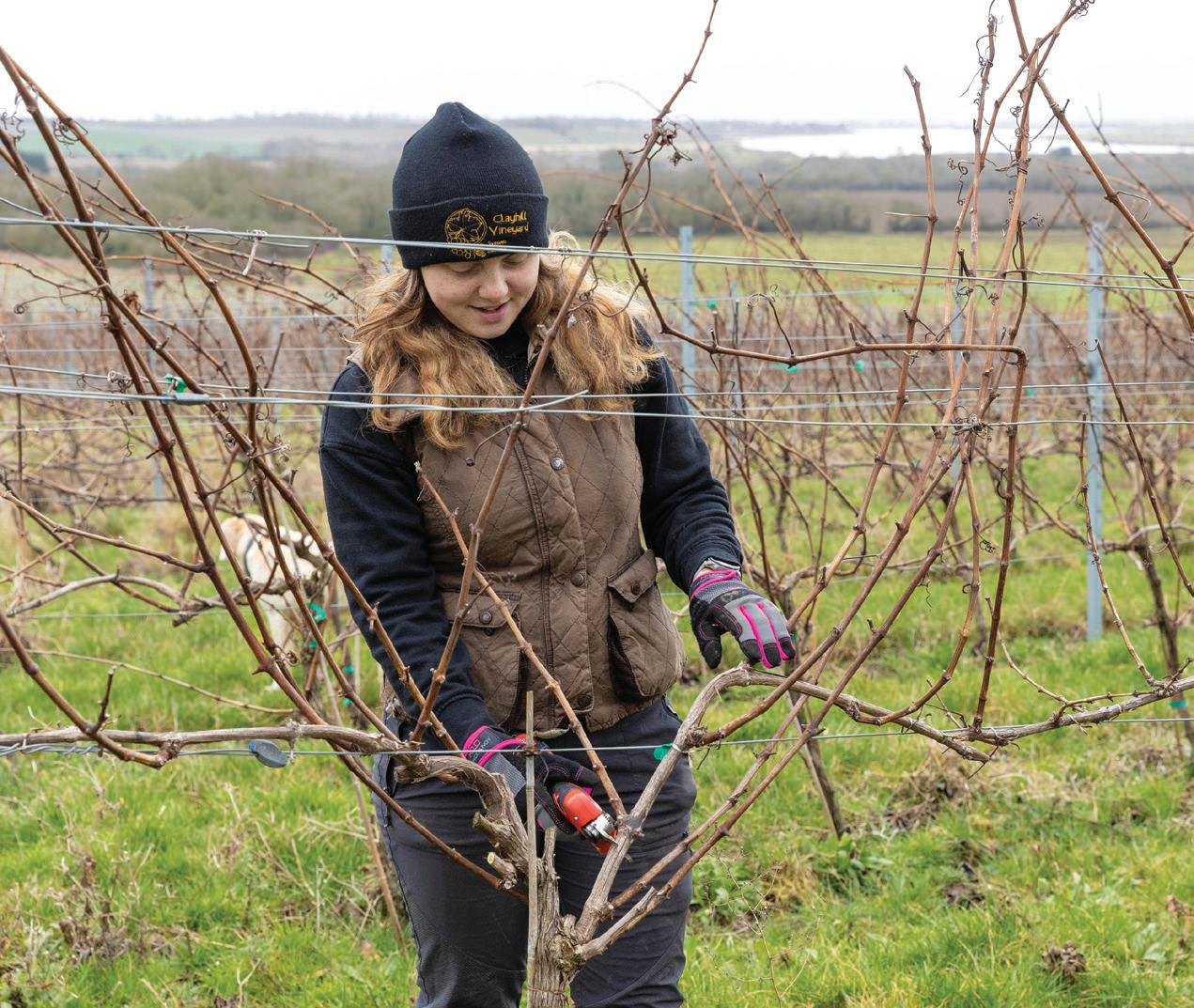
Both Dale and Lizzy talk about how everyone gets involved with all aspects of the farming enterprise. “On a Friday I would spend all day in the vineyard and in 2017 I was involved in the planting of 10 acres of vines,” said Lizzy.
When the pig enterprise had to close in 2019 due to prices being unsustainable, Lizzy moved full time to the vineyard. “We were all sad to see the pigs go,” she said. This full time move to the vineyard may not have been part of the original plan, but it has proved a good move for Lizzy, who is now involved in the whole process, from ground to glass.
currently a beautiful undulating gentle view of the River Crouch. For his involvement in this campaign Dale has been nominated for a Countryside Alliance Award.
It is clear from a discussion on this subject that Dale is not opposed to development providing it is sympathetic and blends with the surroundings. It is the wholesale destruction of the beauty of the local landscape to which he is opposed.
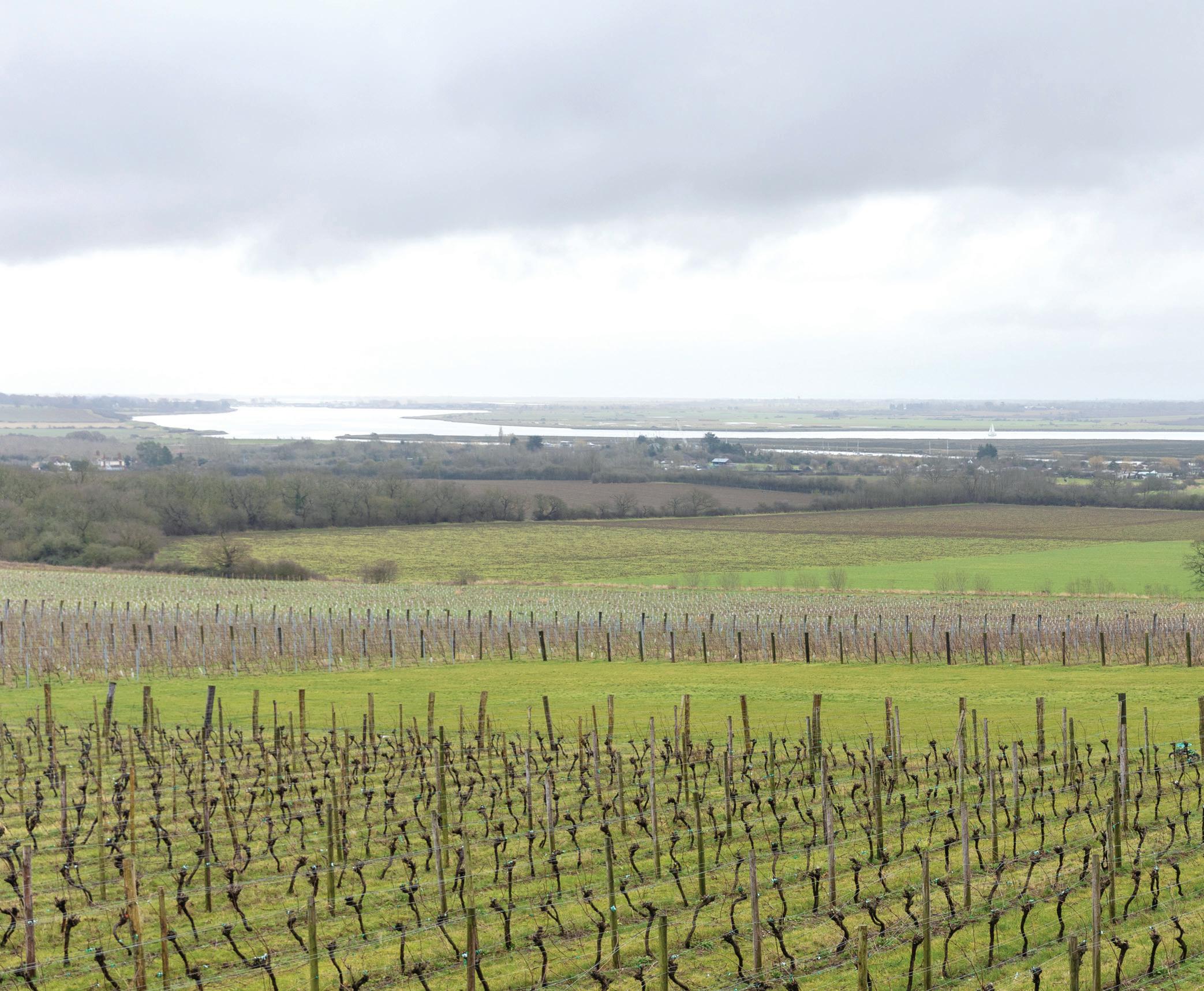
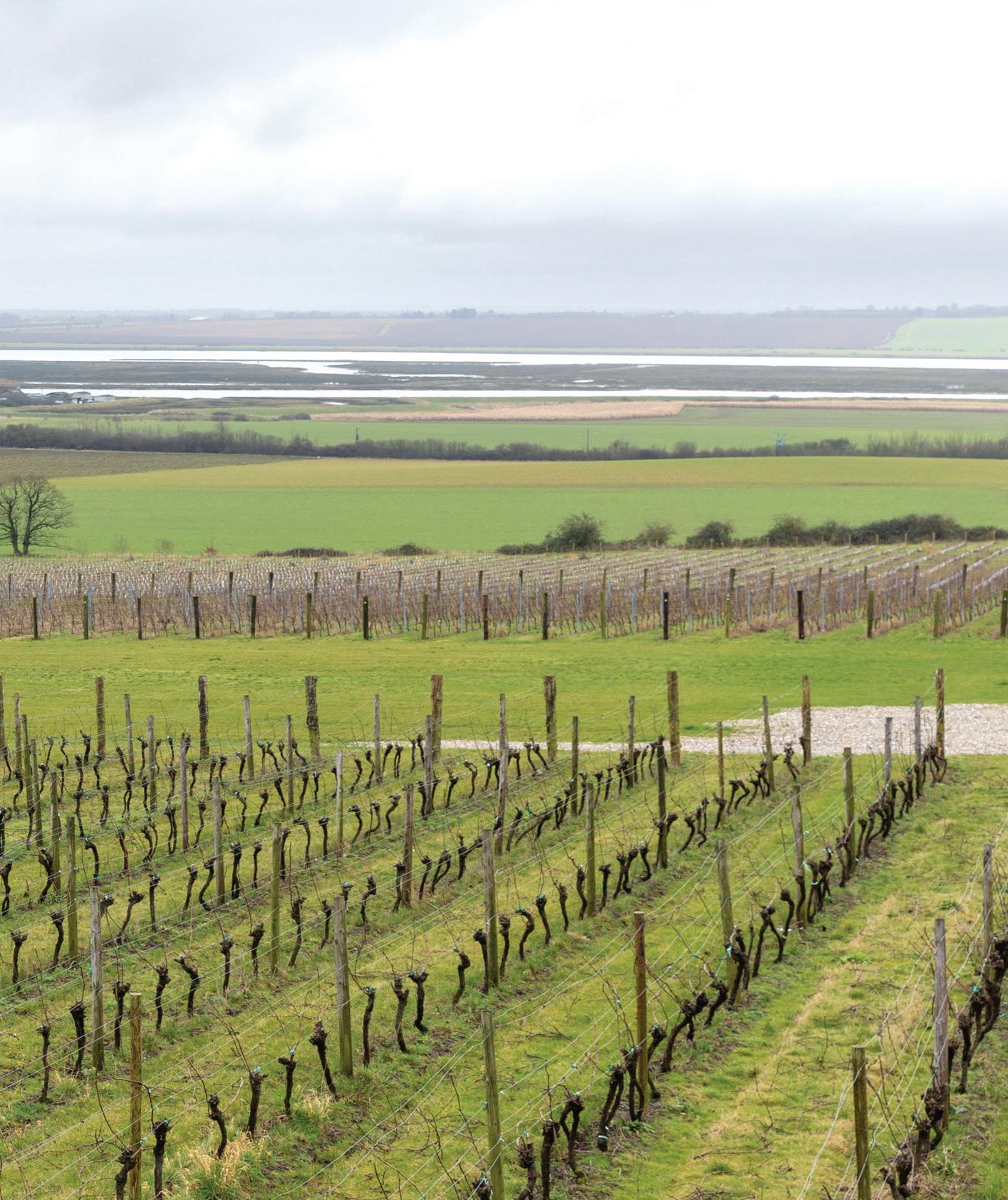
The vineyard sits between the River Blackwater and the River Crouch, and it is this that gives a unique environment to the Crouch Valley area. Dale explained that, although the Crouch Valley is famous for London Clay, all the areas farmed locally have a different soil type. This is one of the things that gives the grapes grown at Clayhill their unique character.

Like all good viticulturists and winemakers, she has an eye for the details. Lizzy explained that she absolutely loves the vineyard work but that she also finds the artistic side of winemaking really rewarding.
In the villages surrounding the vineyard are numerous posters that state in bold letters: Don’t Kill the Crouch Valley, which is a campaign that is opposed to a large housing development that would literally blot what is

Most of the vineyard is planted at a density of 1,500 plants per acre but “the new plantings are slightly higher as they are specifically planted for premium still wines,” explained Dale.
Dale was clear that he did not want to limit his options. The original vines were planted under a contract agreement with a vineyard in Kent and that agreement still exists. “They have been great to work with and they are a great team,” said Dale.
WWW.SOUTHEASTFARMER.NET | MARCH 2024 23 TO ADVERTISE CALL 01303 233883 AS FEATURED IN MAGAZINE VIN E YAR D For Growers & Winemakers in Great Britain
<<
<<
Those original vines were Chardonnay and Pinot Noir. That original planting had 13 clonal rootstocks; since no two growing seasons are the same, Dale was ensuring that the whole vineyard would never suffer at the same time. “We planted using Burgundian clones which at the time was an unusual choice,” he added.
It is clear that at Clayhill Vineyard there is much that is unusual. The influence of a mixed farming enterprise is evident in many ways. Dale explained that he undertook an intensive course at Plumpton to understand what the winemakers would want from him as the grower, which shows how he was really committed not just to producing the best crop he could but also to fulfilling the needs of his customers.
Over the years Clayhill Vineyard has worked with many wineries and Dale made it clear that he will always err on the side of caution when it comes to crop estimates. The vineyard consistently yields on average 3.8 tonnes/acre across the varieties. “If I make a promise to deliver a certain quantity of fruit I will stick to it,” said Dale earnestly.
It is not always an easy balance between the farming interests and the commercial vineyard operation. For example, while Dale explained that the grapes produced for sparkling wine production (about 50% of the total area) are relatively easy, those produced for still wine are more stressful as the extra hang time they require gives the team “more to panic about”.
Added to this, some seasons produce stresses in other areas of the farming
enterprise. For example, on the back of three wet winters in 2013 it was a struggle to get the harvest off the fields. “There is a balance between what the vineyard needs and what he farm needs,” said Dale.
Another area that shows the influence of other agricultural operations on the commercial vineyard is in the machinery that the vineyard has, including a “homemade canopy trimmer that utilises combine side knives,” said Dale. While he is content with this piece of kit, there is still a shopping list for the vineyard including a shoot remover and an inter row cultivator, and then further into the future a pre-pruner as both Dale and Lizzy feel this would bring significant efficiency savings.
With a clear vision for the future, Dale did not want to limit the options at Clayhill to planting vines that were suitable only for sparkling or only for still. “In 2006 I wanted to plant Bacchus, but I could not get an agreement from anyone who would buy it,” said Dale. “I would not plant without somewhere to send the grapes.” Bacchus did finally get planted at Clayhill vineyard in 2017, along with Riesling, Pinot Gris and some other varieties.
Speaking in the vineyard about pests and diseases, it is clear that there are not many predators that Lizzy and Dale have to deal with. The typical predators such as birds, deer and badgers have not been a problem here and the vineyard has never suffered a frost event. In terms of disease, Dale said that the Chardonnay can be susceptible to powdery mildew and in the growing season Lizzy walks
the vineyard every day. “She is the eyes on the ground in the vineyard,” said Dale, showing how much he values those who work with him in this venture.
This includes Tom Hammond, who started a vine manager level 3 crop technician apprenticeship at Plumpton College in January 2024. After his GCSEs Tom, who, like Lizzy, is local but not from an agricultural background, came to the vineyard for some experience and found he loved working on the vineyard. Tom approached Dale with the idea of starting an apprenticeship with Clayhill Vineyard and is really enjoying his new role. “I wanted to take on an apprentice but had been waiting for the right person,” said Dale.
“It is enjoyable to learn something and then be able to use what you have learned,” said Tom. Speaking with Tom about his first harvest
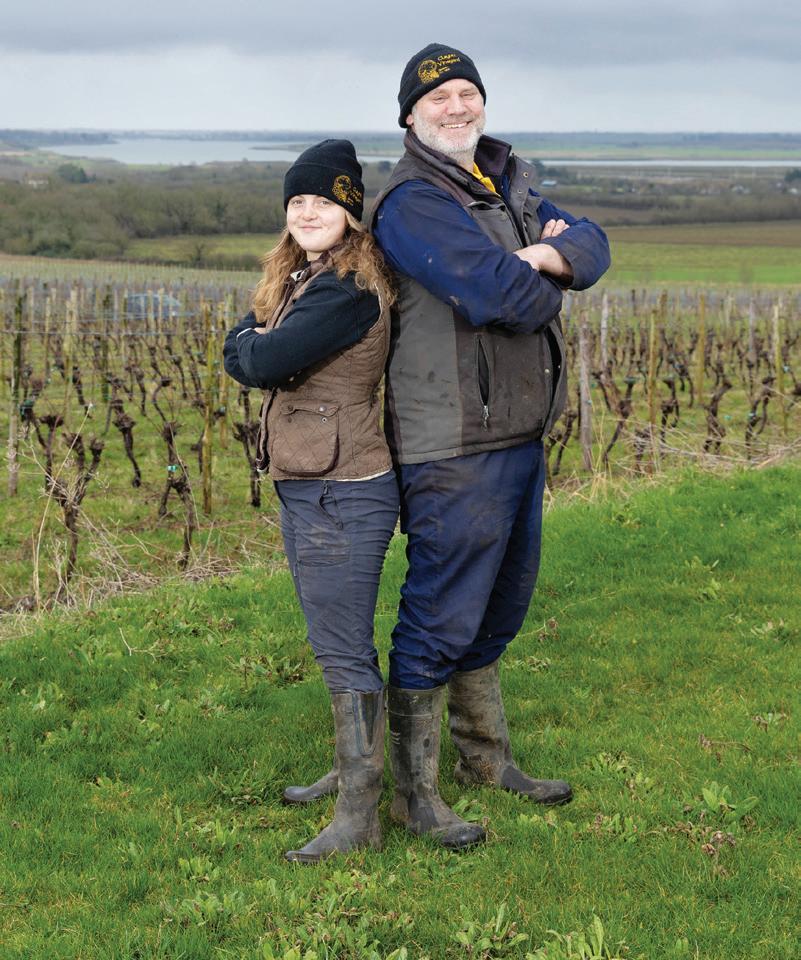
MARCH 2024 | WWW.SOUTHEASTFARMER.NET 24 NEWS FROM THE VINEYARD
Lizzy Tresadern and Dale Symonds
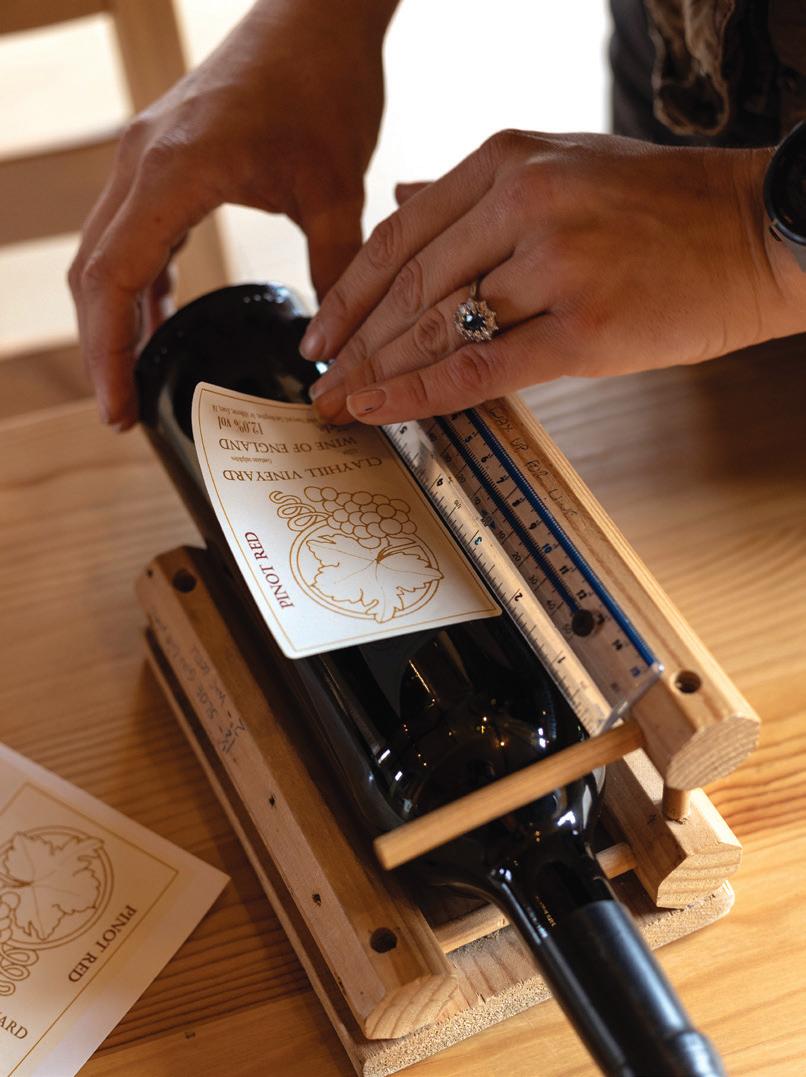
experience, he said: “There is a real community feel and it is hard work, but there is a sense of energy from everyone."
Clayhill Vineyard offers employment at harvest to a cross section of the local community. “We have a real mix of people, including some who fit picking around the school run so on picking days there are people coming and going alongside those who are in the fields all day,” said Dale. Energy levels are also supported by Dale’s mum and his motherin-law, who between them supply both sweet and savoury sustenance for the vineyard workers.
Clayhill Vineyard has its own winery, which has allowed the vineyard to embrace the art of winemaking. This is situated on the farm (in an adapted butcher’s shop), so the grapes have a short distance to travel. The number of bottles Clayhill produces is small but has grown every year. Dale and Lizzy now produce wine in every variety that they grow. Dale was at first reluctant to produce a sparkling wine “but it was not as scary as I thought,” he said, laughing.
Having overcome his initial reticence, he soon embraced the unusual with a sparkling red Pinot Noir aptly named The Trials of the Red.
Visitors to the onsite café, which opened in 2017, benefit from being able to try one of the 11 wines on the menu. There are three sparkling wines, including Decimes and Messenger, both made with Chardonnay and Pinot Noir but differing in the amount of lees aging, with Decimes receiving up to 36 months on lees. The third sparkling wine produced is
the previously mentioned sparkling red.
The still wines are all varietal, with Chardonnay, Riesling, Pinot Gris, Bacchus and Auxerrois as the white wines, plus two versions of Pinot Noir Rosé and finally a Pinot Noir Red.
While the first trial wines were produced in 2009, the first commercial wines were released in 2010. “Originally we produced 250 litres of our own wine, but this has now increased to 250 litres of every variety,” explained Dale.
It is not just in the winery that Clayhill adopts the theme of trials, and in answer to my questions about the varieties that are to be found in the vineyard, Dale and Lizzy exchange glances and it is clear there are developments ahead for the future of this vineyard. Lizzy let slip that Sauvignon Blanc is her favourite variety to work with. “You look out in the vineyard and see this patch of bright green; the vines are so happy,” she said with a smile.
Dale explained: “The trial varieties are planted in blocks of four 100m rows, which gives us enough to play with”, but as to what those varieties might be he would not be drawn. He did intimate that some are outside of the norm for the UK.
When talking it is clear that Dale researches each trial variety carefully, looking for profiles similar to those that already work well on the site. Think less Pinot Noir and more Viognier, was his only hint.
That there is much patience involved in viticulture is beyond doubt, but at Clayhill the patience Dale and Lizzy have shown has brought benefits. “When the first wines were produced from the Pinot Gris, I felt they were
a little underwhelming,” said Dale, but with time both the wines and the vines are now performing exceptionally. Lizzy explained that in the café the Pinot Gris is particularly popular. For any vineyard and winery that ability to get feedback directly from the consumer is invaluable.
The café is open every weekend throughout the year except for January, when it shuts for repairs. The café is also the ideal place for the vineyard to host a string of events, including a monthly cheese and wine evening. The café is run by Amy, and Lizzy has taken over the social media and organising the events. I find myself wondering if the visitors are aware that the grapes grown on the vines they can see from the café are part of some of the most wellknown and extra special award winning wines in England.
Dale recounted how he had once spoken to a grower of grapes under contract that went on to produce award-winning wines, about how no one knew who had grown the grapes. “The grower told me that it was OK because he knew that they were the grapes from his vineyard, and that was enough. I feel exactly the same; I know who grew those grapes,” he said, as he pointed to the block of Chardonnay vines which have a very special place in his heart.
Trying to encapsulate all that this wonderful vineyard has to offer, it feels like Clayhill Vineyard is the commercial vineyard with the heart of a family and a creative mind. Perhaps that is the perfect combination to nurture confidence and the freedom to push the boundaries and gather momentum.
WWW.SOUTHEASTFARMER.NET | MARCH 2024 25 TO ADVERTISE CALL 01303 233883 AS FEATURED IN MAGAZINE VIN E YAR D For Growers & Winemakers in Great Britain











new






Series in stock along with a host of other Deutz-Fahr models – please get in touch for more information and demonstration opportunities.















Follow us on DEUTZ-FAHR is a brand of
have the
RVSHIFT TRANSMISSION IT’S ALL ABOUT SIMPLICITY! Scan for more information on the 6C Series Model shown 6135C RVSHIFT Alfold Road Dunsfold Surrey GU8 4NP 01483 200516 DEUTZ-FAHR 6C SERIES RVSHIFT 116 TO 143HP AGRICULTURAL AND GROUND CARE MACHINERY
We
6C



COMPREHENSIVE RANGE REFLECTING HIGH STANDARDS
Deutz-Fahr UK’s Tim Lawrence is very clear about what makes the tractors he sells special. “It’s the dealer,” he pointed out, nodding meaningfully towards Laura Wiltshire, managing director of Dunsfold, Surrey-based Wiltshires.
Tim, area sales manager for the impressive Deutz-Fahr range, explained: “We can continue to develop the product and make it as good as we can, but at the end of the day what’s important is the hard-won relationship between the customer and the dealer. That’s what sells the hardware.”
That customer focus played a large part in Wiltshires’ decision to take on the Deutz-Fahr range, which runs from 50hp to 340hp and includes a range of transmission options.
Long recognised as a specialist dealer across Surrey, East and West Sussex and Hampshire for the class-leading Merlo range of telehandlers, the agricultural and ground care machinery dealers found their customer base increasingly asking them to supply a similarly high-spec tractor.
“We have built up a special relationship over many years with farmers who regularly buy telehandlers from us, and we wanted to be able to supply them with the tractors they were asking for, and so we got in touch with Deutz-Fahr,” said Laura.
“Deutz-Fahr offers a comprehensive range of well-built, reliable and efficient machines which reflect the high standards we are used to with
Merlo and our other franchises, and we are delighted to be able to supply them to our loyal customer base.”
One thing that is certain is that the paperwork that cemented the Deutz-Fahr deal was more complex than the dealership’s founder, Laura’s father Albert, had to deal with when he began selling Merlo telehandlers in 1996.
“John Iles, the co-founder of Merlo UK, came in to see me and look around the place,” Albert recalled. “We chatted for a bit, shook hands and the deal was done.”
The handshake began a remarkable relationship with Merlo that has continued over the past 28 years and helped establish the dealership’s reputation for supplying and maintaining quality equipment to both agricultural and ground care customers.
As a tribute to the machinery’s longevity, Laura pointed out that the first telehandler the company sold in 1996 is still in the yard at the dealership. “We bought it back in part exchange some time ago and we now use it ourselves for moving things around,” she explained.
Albert, the son of tenant farmers, moved to Dunsfold at the age of three and later studied engineering at Rycote Wood Agricultural College.
In 1970 he started up in business, repairing farm machinery in a lean-to barn close to the current premises, and ten years later neighbouring farmer David Renmant joined the business as Wiltshires began selling second hand machinery, mainly tractors.

WWW.SOUTHEASTFARMER.NET | MARCH 2024 27 TO ADVERTISE CALL 01303 233883
MACHINERY DEALER
FEATURED COMPANY: AGRICULTURAL AND GROUND CARE MACHINERY
>>




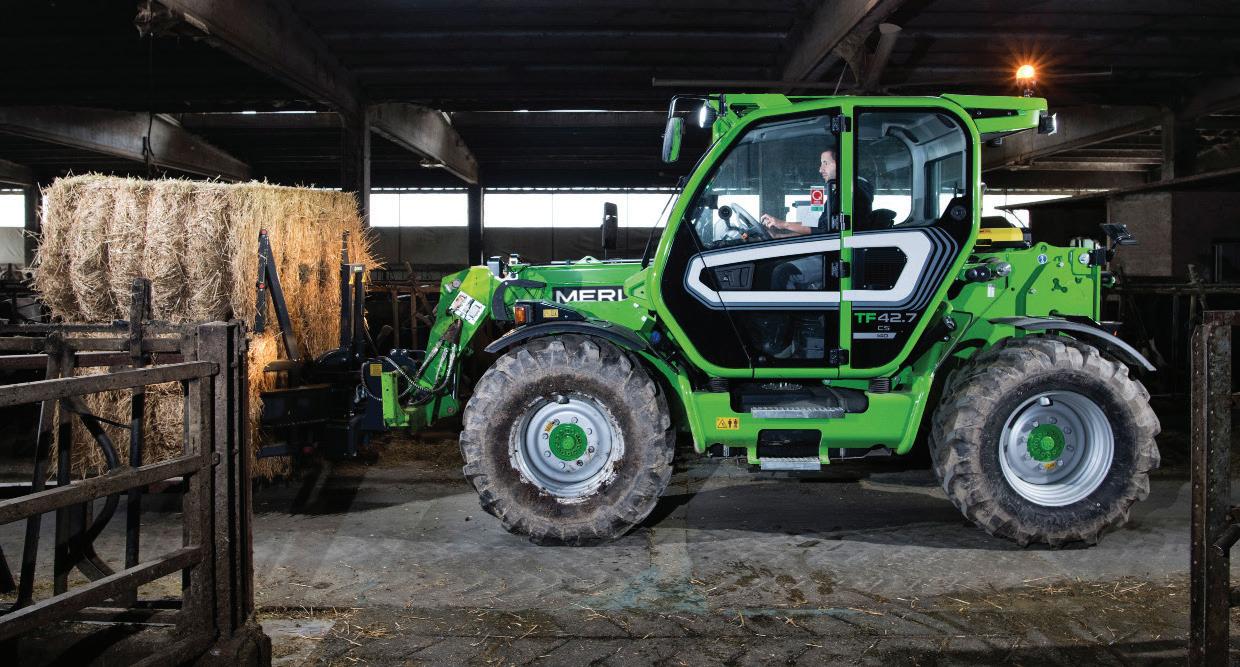








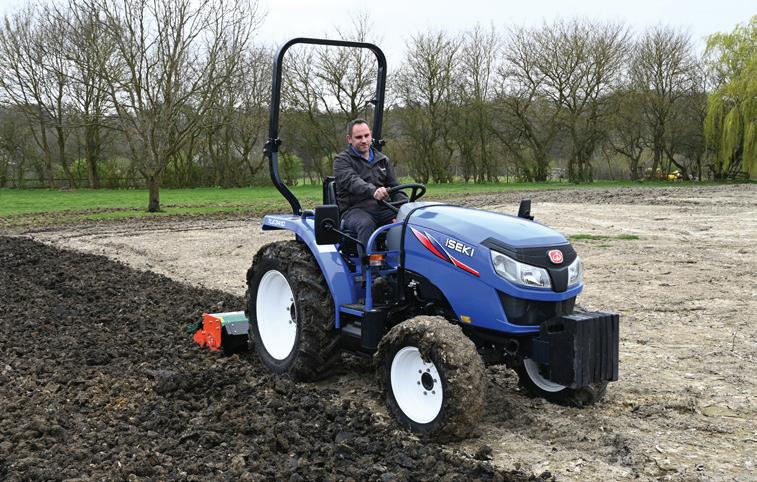





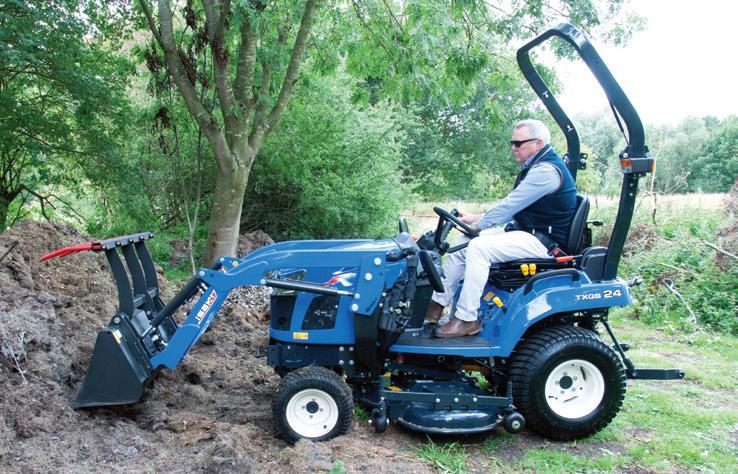












MARCH 2024 | WWW.SOUTHEASTFARMER.NET 28 Turbofarmer 42.7 Don’t settle for second best Merlo Turbofarmers have been developed to offer greater telescopic performance to aid you in every day work. Some notable features of the TF42.7 include the portal axles allowing an increase in the ground clearance. Additionally, the cab is in a higher position in order to ensure that the operator has 360 degree visibility. merlo.co.uk 4.2 ENGINE 136 LIFT HEIGHT 7 TONNES LIFT CAPACITY AGRICULTURAL AND GROUND CARE MACHINERY QUALITY THAT’S BUILT TO LAST Designed and engineered in Japan, ISEKI offer the most reliable, high quality diesel collecting mowers and compact tractors on the market for the most demanding of users. Please contact Wiltshires, your local ISEKI dealer for further information and a demonstration. www.iseki.co.uk SE Farmer 133x90mm.indd 1 22/02/2024 09:31
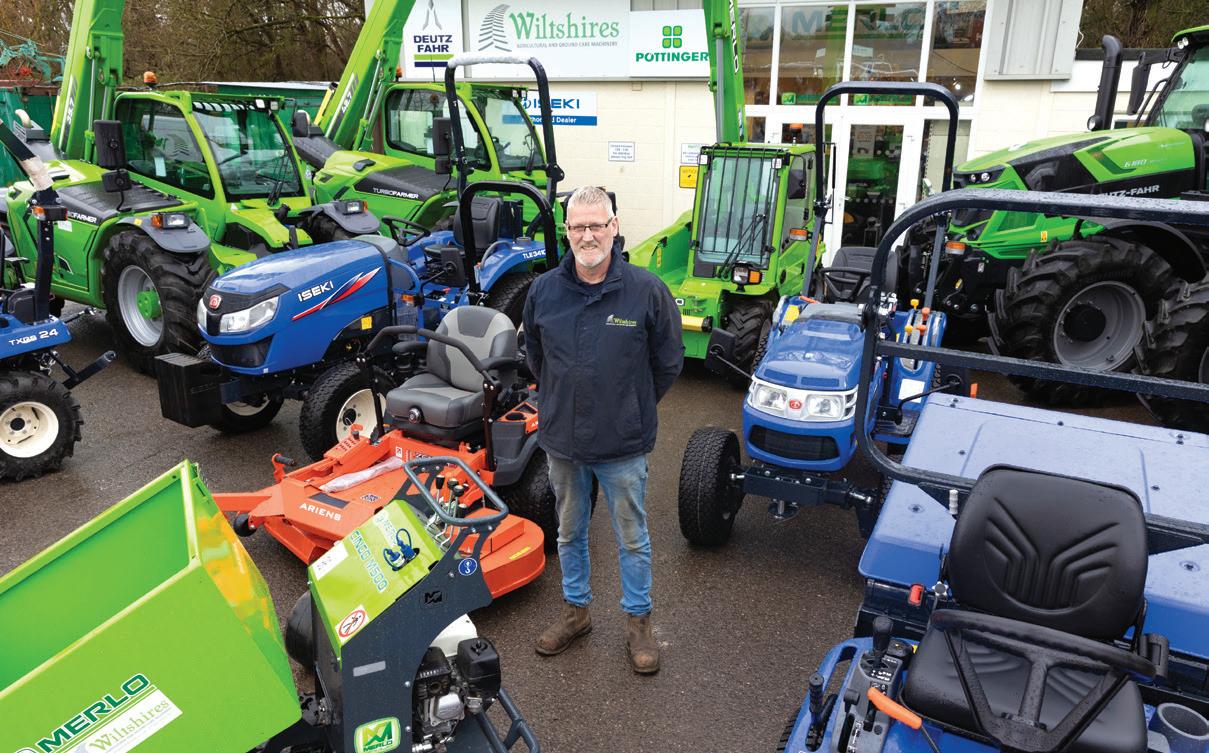
<< The business took a further leap forward in 1996 when Darren Parks, who had been working at Wiltshires as an engineer, decided he wanted to move into sales, prompting the decision to offer new machinery by taking on the Merlo dealership and selling Deutz tractors.
A few years later Laura, who had trained and worked as a psychiatric nurse, joined the business. “Dad rang and said he wanted to install a better IT system, and would I come in and help with the project,” she recalled. “I never left.”
Although it was a considerable career change, Laura sees some similarities between running an agricultural dealership and the
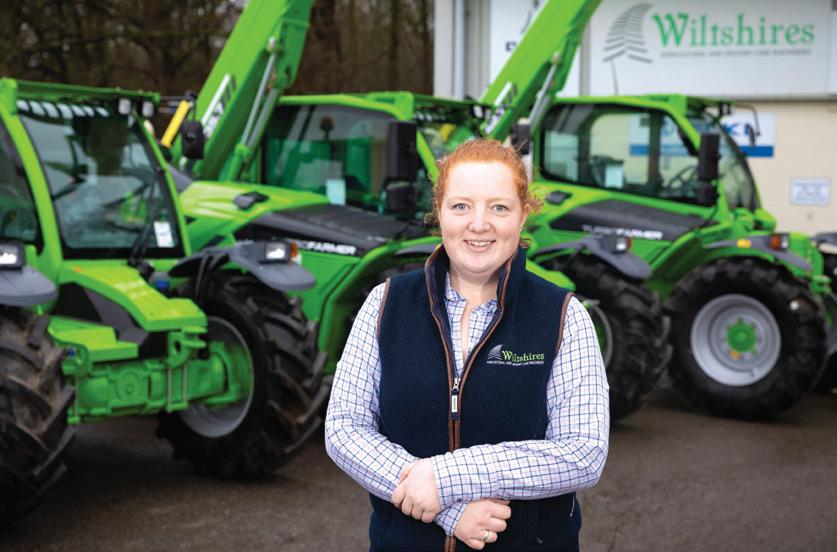


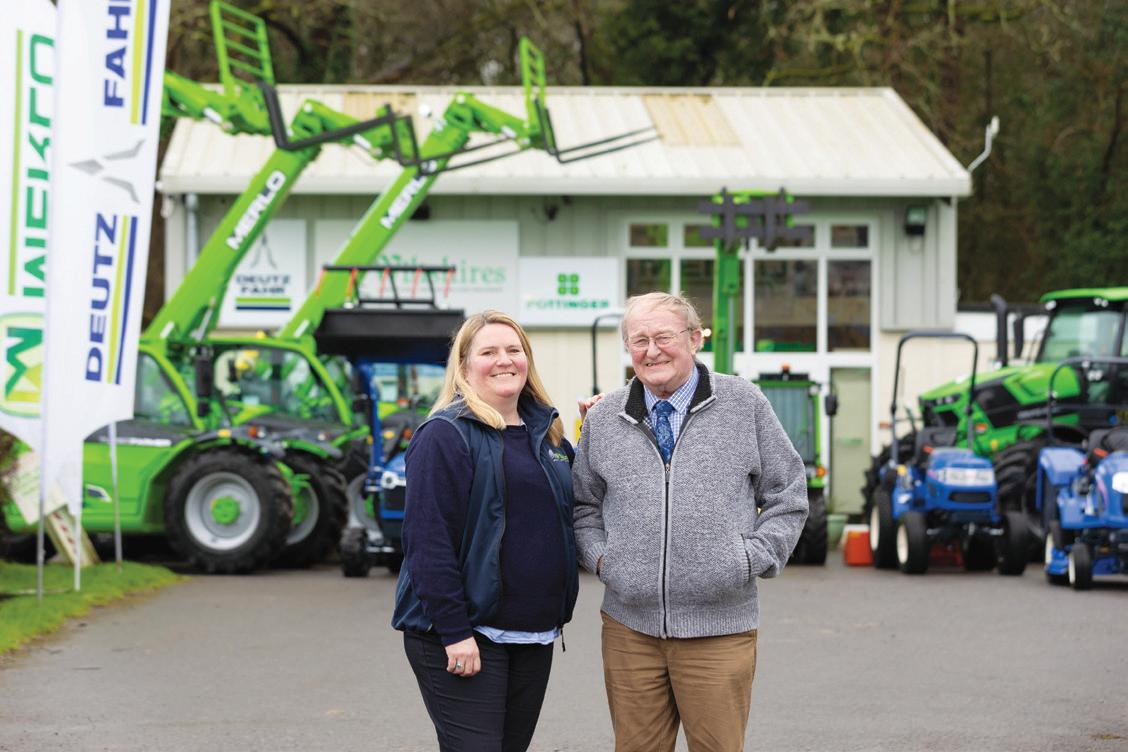
career she left 25 years ago. “There were plenty of transferable skills, particularly around dealing with people,” she recalled. “As a company we focus very much on personal service, and understanding people is a large part of that.”
Wiltshires prides itself on being a family business, and another family link saw Jess Parks, daughter of Darren, who now helps run a family contracting business, join the team as parts manager.
It wasn’t a role she stayed in for long. “Jess quickly got involved with all aspects of the business and is now sales manager,” explained Laura. “She started by selling a lawnmower to a ground care customer and never looked
back.” Jess is supported on the sales side by Andrew Wragg.
The dealership began a successful parts delivery service to ground care customers in the late 1980s and now keeps local golf clubs well stocked with tools and consumables such as oils and filters. Laura introduced key franchises that allow Wiltshires to offer new ground care machinery in this sector, too.
Ian Simpkin, who joined the parts department in 1988, is still a key part of the three-person team headed up by parts manager Sue Kemp. Sue joined the dealership in August 2023 and has 30 years’ experience in the industry. The third member of the team is parts assistant Joan Tomkinson.

WWW.SOUTHEASTFARMER.NET | MARCH 2024 29 TO ADVERTISE CALL 01303 233883 MACHINERY DEALER FEATURED COMPANY: AGRICULTURAL AND GROUND CARE MACHINERY >>
Andrew Wragg, Sales Assistant
Laura and her father Albert Wiltshire
Jess Parks, Sales Manager
Photos: Martin Apps, Countrywide Photographic
MACHINERY DEALER
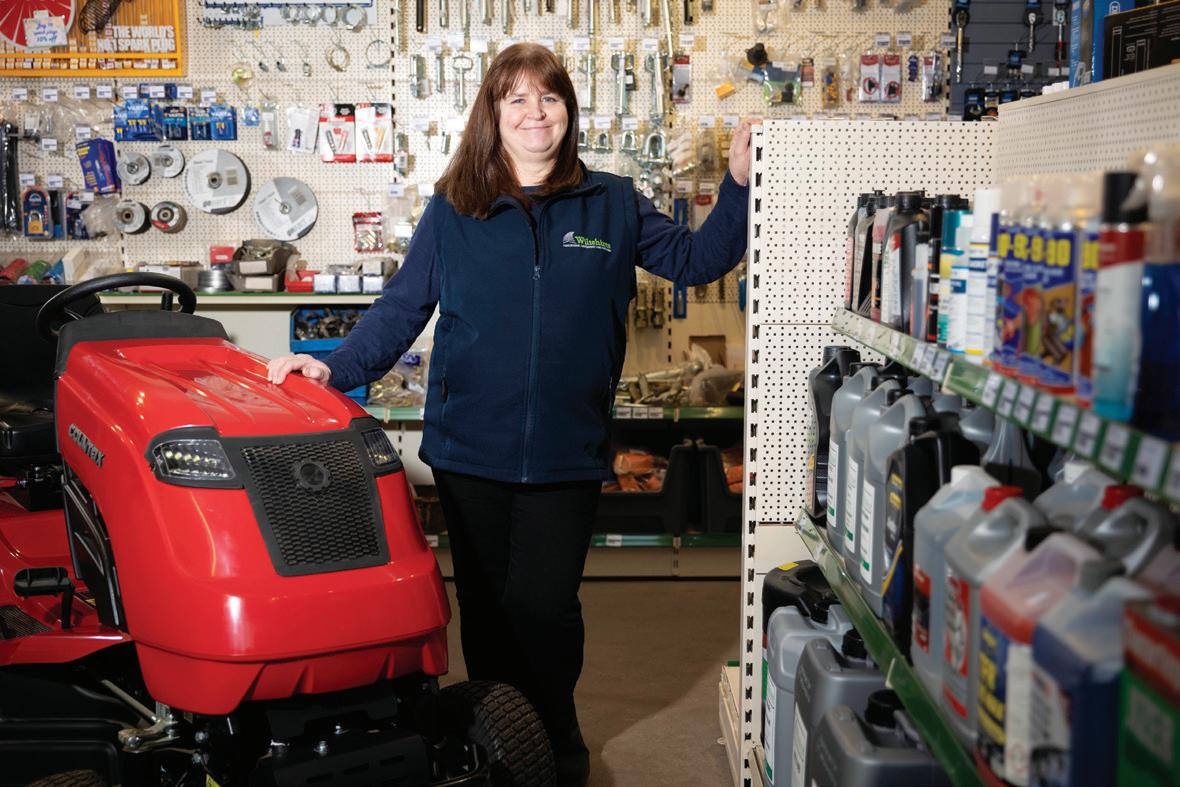
<< The ground care side of the business was designed to cater not just for golf courses and other amenities but for home owners with large lawns in the more affluent parts of the region. It was a clear attempt to diversify and has become an important part of the business, although agriculture has always been at the heart of the operation.
“Where there used to be three combines on a farm you now have one contractor doing all the harvesting,” pointed out Albert. “And dairy farms have all but disappeared from this part of the world, so you have to keep looking for new ways to grow.”
While diversification has been successful, it was the Merlo telehandler business that really established Wiltshires as a major player. And while the reliability of the brand and the
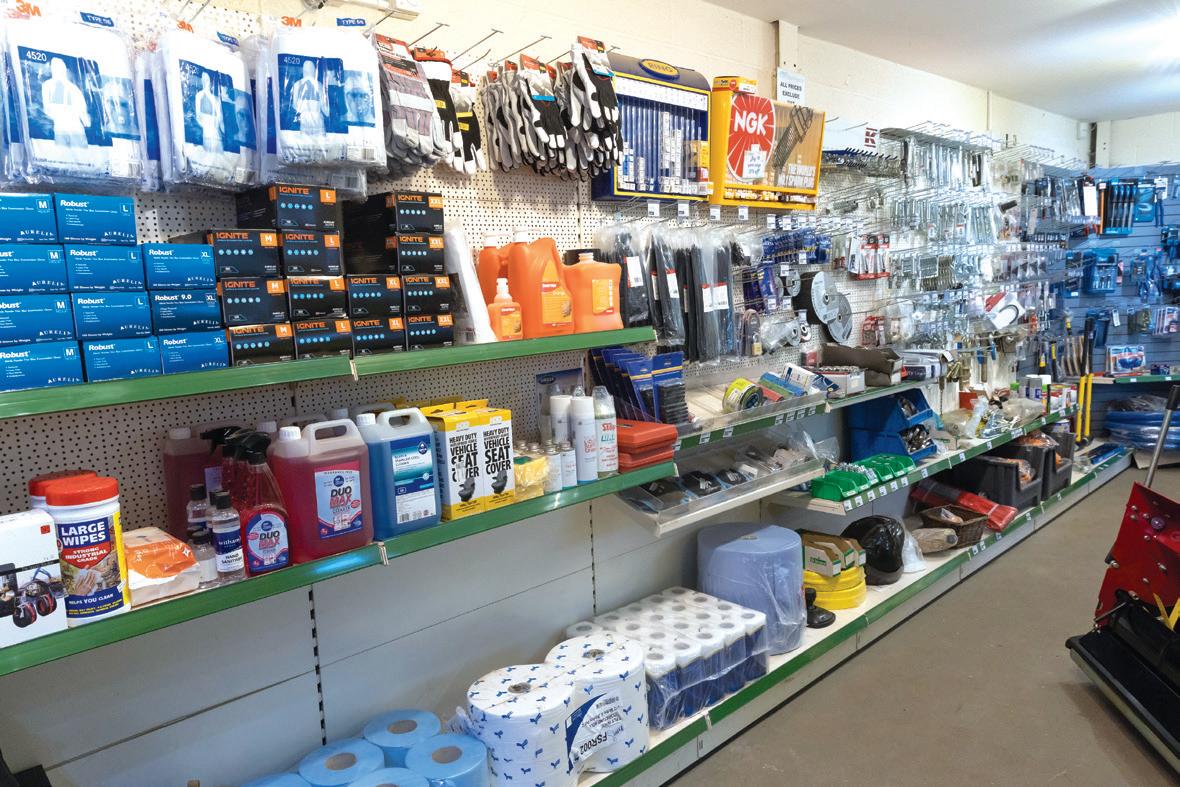
comprehensiveness of the range is undoubtedly part of the story, great customer service has also played a part. Wiltshires has been a Gold Dealer since 2018 and was named Merlo UK Dealer of the Year at the end of 2022.
“The focus on telehandlers has given us the well-established customer base that has now prompted us to move back into tractors with Deutz-Fahr,” commented Laura. “In that sense we have come full circle.”
The restyled Deutz-Fahr range appealed to Wiltshires not just because of the quality of the product, the technology and the broad range on offer but because of the company ethos, which Laura said reflected the dealership’s own values.




MARCH 2024 | WWW.SOUTHEASTFARMER.NET 30
Sue Kemp, Parts Manager
FEATURED COMPANY: AGRICULTURAL AND GROUND CARE MACHINERY
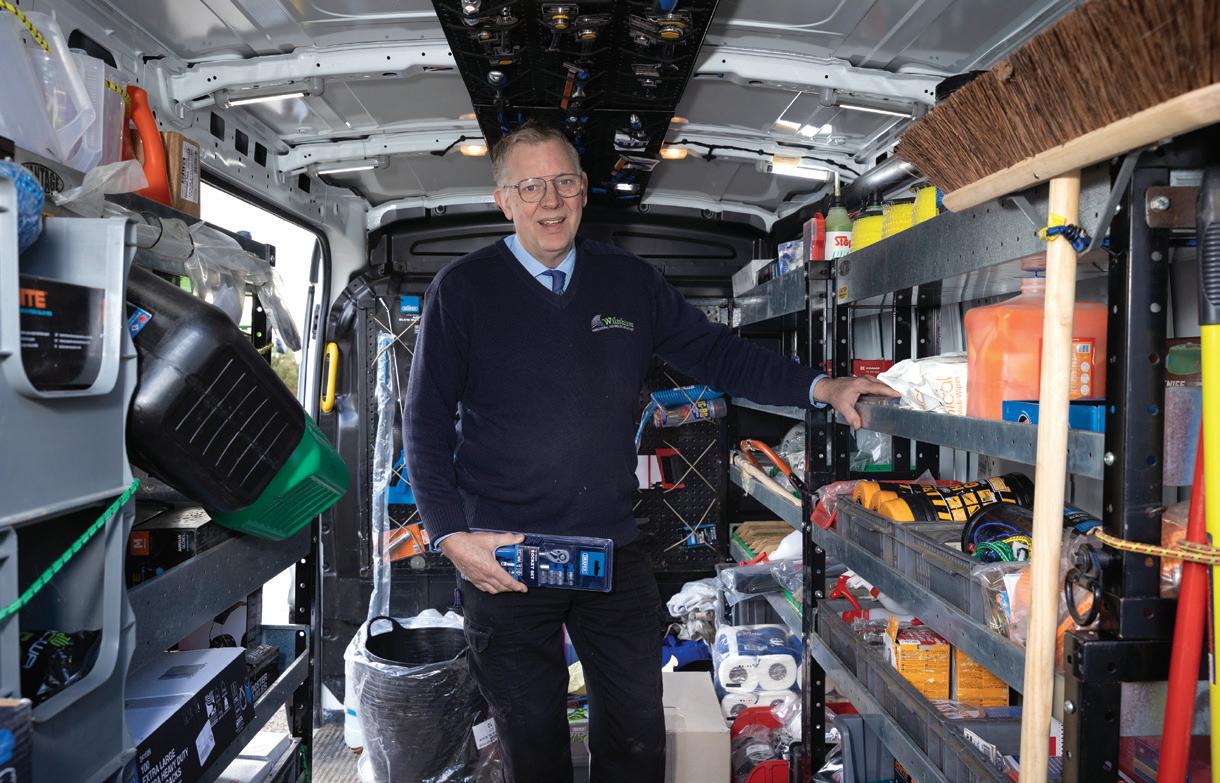
“There are people still working with Deutz-Fahr who were there when dad first dealt with them in 1996,” she said. “That says a lot about the business and the way it operates.”
Laura feels similarly about Merlo UK. “Sadly, the original Mr Merlo passed away in 2022, but his son Paulo is now at the helm. The family has a passion for their machines and as a result it’s a fantastic company to work with,” she pointed out.
Laura said the Merlo had won over a solid core of customers because of its simple design, panoramic vision and ‘bomb-proof’ construction –coupled with Wiltshires’ parts and service back up.
Craig Footman, regional sales manager with Merlo UK, pointed out that the brand had recently celebrated its 30th anniversary in this country – making Wiltshires one of the earliest stockists – and its 60th anniversary in Italy, where the family business is based.
He stressed the unique nature of many of the Merlo range’s features and pointed out that it was the first telehandler to be fitted with a side-mounted engine, allowing its boom to sit lower to improve visibility. The machines are usually more compact than competitors because the weight is concentrated in the chassis, boosting the telehandler’s stability.
Cab suspension, chassis levelling and boom sideshift are additional features, while the Multifarmer range is unique in boasting a three point linkage and power take off (PTO). Although the engines are bought in, most of the manufacturing is carried out in Merlo’s own factory in Cuneo.
The agricultural range (Merlo also makes bigger, constructionfocused telehandlers) goes from a 2.5 tonne, five metre boom model up
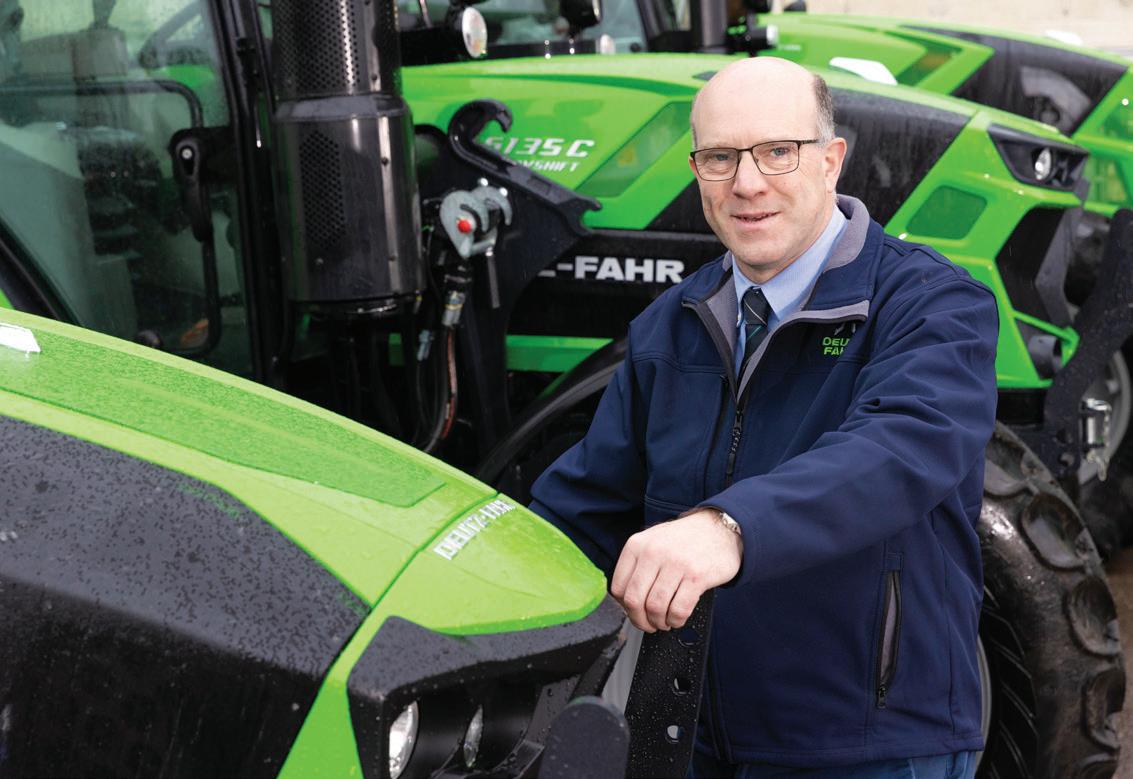
to a 6.5 tonne, nine metre machine. Wiltshires’ current demonstration stock includes a TF42.7, a TF35.7, an EW25.5 and a compact TF33.7.
While Tim Lawrence was quick to put the sales team at the forefront of his list of Deutz-Fahr attributes, he was also happy to highlight some of the features that make the tractor range special.
With a range that runs all the way up to an impressive 340hp, Deutz-Fahr caters for a broad range of customers, with standard stick-shift manual transmission available to 200hp sold alongside the manufacturer’s TTV transmission, which is standard on some of the bigger models. Deutz-Fahr claims its Series 6 TTV drivetrain offers “unprecedented smoothness and ride comfort and significantly improved efficiency”.










WWW.SOUTHEASTFARMER.NET | MARCH 2024 31 TO ADVERTISE CALL 01303 233883 MACHINERY DEALER FEATURED COMPANY: AGRICULTURAL AND GROUND CARE MACHINERY >>
Ian Simpkin, Parts representative
Tim Lawrence, Deutz Fahr Regional Sales Manager
TO DISCUSS YOUR INSURANCE NEEDS Call your local office in Godalming on 01483 414 016 ALL-WEATHER WORK BOOTS Comfort and safety from V12 Stocked at
V2130 Lynx
Pictured:



















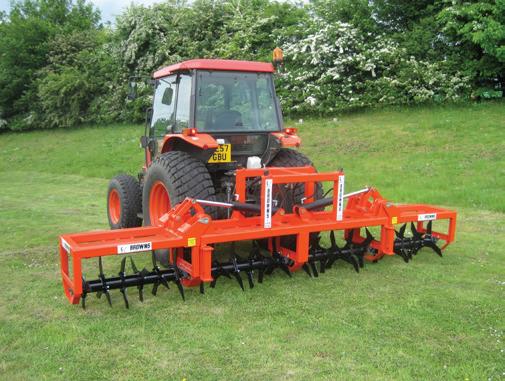
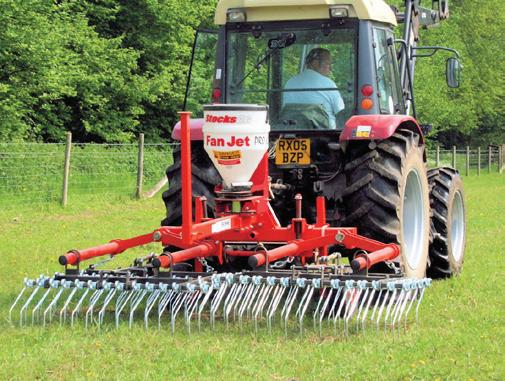
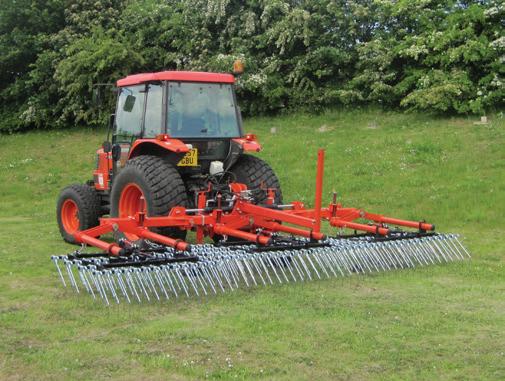



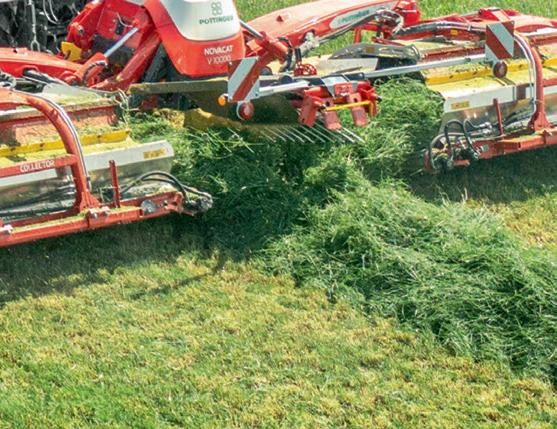



MARCH 2024 | WWW.SOUTHEASTFARMER.NET 32 APEX A COMMERCIAL-GRADE ZERO-TURN
Ariens APEX represents the very pinnacle of zero-turn performance. With a range of innovative features designed around the operator, it’s a commercialgrade mower that has been designed to be used all day, every day. Features a 726cc Kawsaki FR691 engine and 132cm (52”) or 122 (48”) cutting widths. Want to know more? Visit www.ariens.eu or call 01844 278800 or visit your local dealer BROWNS Slitmaster Rigid (Grassland) Grassmaster with seed broadcaster Slitmaster Hydraulically Folding (Grassland) Grassmaster (spring tine grass harrow) Est 1830 BRITISH MADE Browns Agricultural Machinery Co Ltd Grovebury Road, Leighton Buzzard, Bedfordshire LU7 4UX CALL US 01525 375157 VISIT US www.brownsagricultural.co.uk Flexible operation - hydraulic side shift adapts up to 370 mm Hydraulic weight alleviation with optional, automatic ground pressure adjustment depending on the set working width Convenient – Section Control capability for automatically lifting and lowering the mower units at the headland The high performance mower NOVACAT V 10000 0% Finance available
The

<< Tim described the range as “progressive and forward thinking”, with top-end technology, including RTK satellite navigation, increasingly optional in the lowerspec models.
He said many Deutz-Fahr tractors also boasted “true four-wheel braking”, an ergonomic layout offering a high level of driver comfort and air cab suspension on all models above 150hp. “Many of our tractors can be loader-ready as an option straight out of the factory,” he added.
“We believe the Deutz-Fahr range matches absolutely the kind of performance, build quality and specifications that our customer base is looking for and we are delighted to be able to offer such an appealing product as we move forward,” commented Laura.
For the many Wiltshires customers looking for something slightly smaller, the dealership

also offers Iseki compact tractors and diesel mowers, alongside petrol mowers from Ariens and Countax.
The well-stocked dealership also offers Pottinger mowers and grassland/tillage equipment plus small trailers, rollers and harrows from Fleming and robotic mowers from Stiga.
Class-leading ground care machinery from Wessex International is popular with business and amenity customers such as golf courses, and the manufacturer also offers an impressive range of ATV (all-terrain vehicle) attachments.
Wiltshires’ many equestrian and soft fruit customers rely on the dealer for a range of machinery, from smaller tractors through to Merlo telehandlers, and as the drive towards ‘net zero’ continues, the team is increasingly stocking electrically powered options.

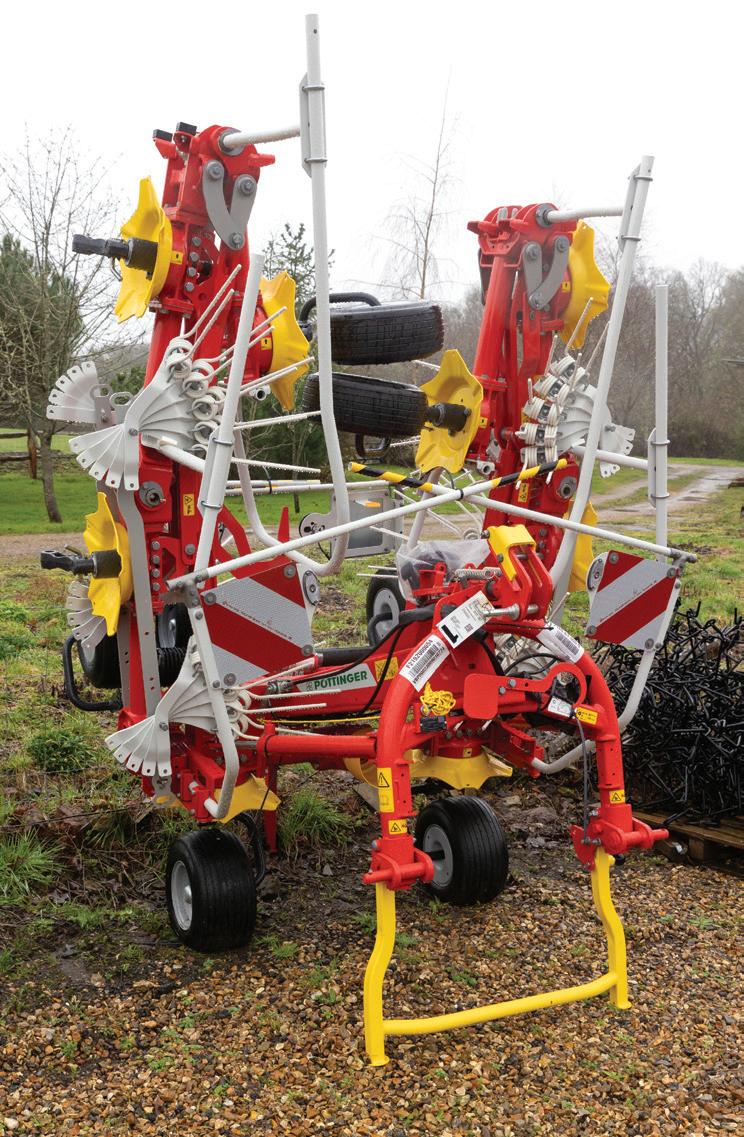
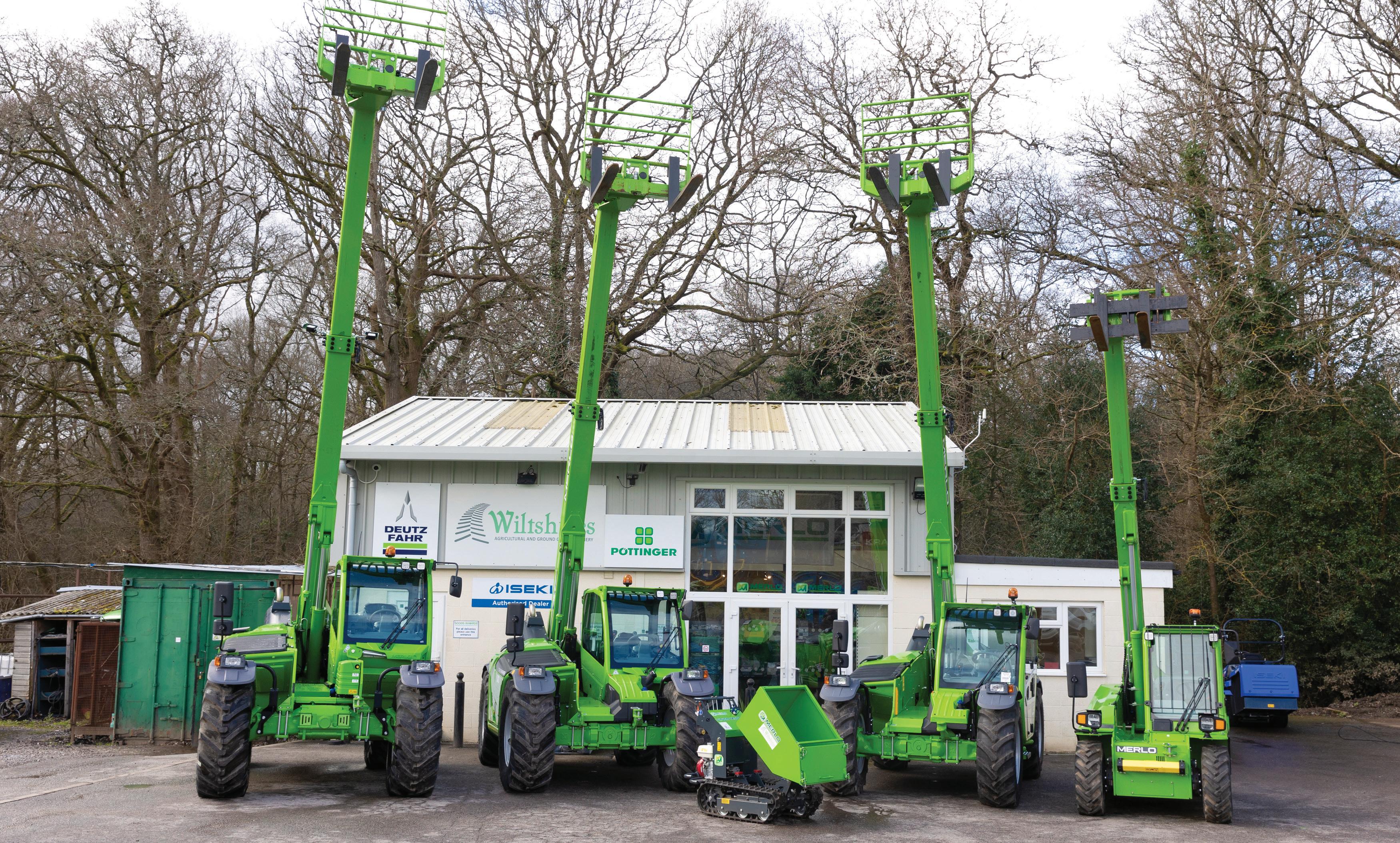
WWW.SOUTHEASTFARMER.NET | MARCH 2024 33 TO ADVERTISE CALL 01303 233883 MACHINERY DEALER FEATURED COMPANY: AGRICULTURAL AND GROUND CARE MACHINERY >>
Craig Footman, Merlo UK Ltd Regional Sales Manager
Merlo Cingo M500DM
Flick
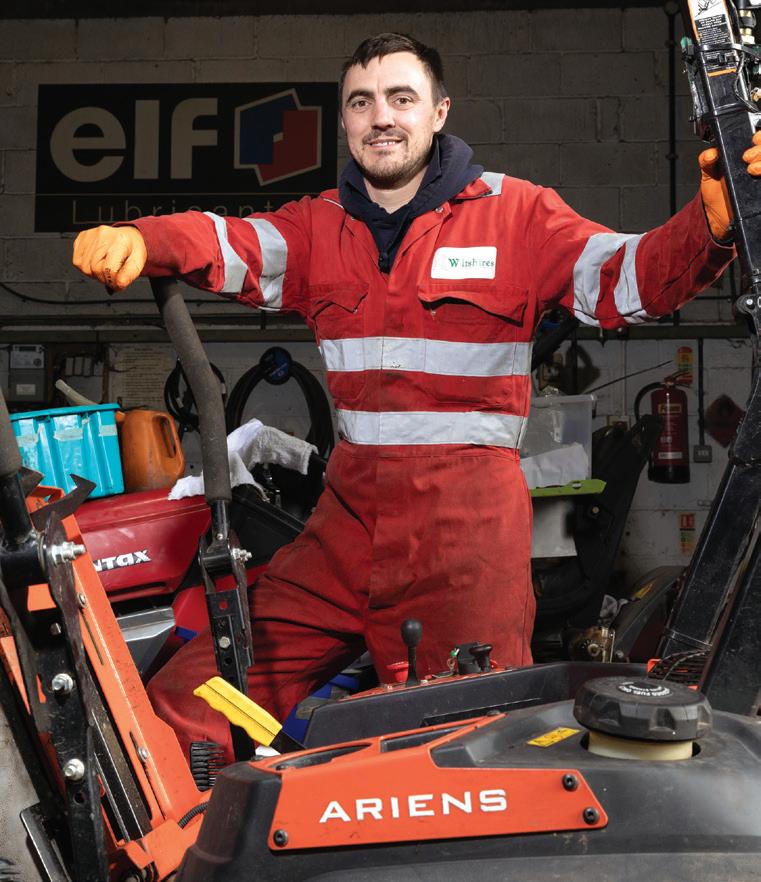


<< The family business is also keen to help young people progress, with two out of the three engineers in the workshop having originally joined as apprentices. Ben Jimmison and Patrick Reffell-Stevens are valued members of a team headed up by workshop manager Jason Reeve, who has been with Wiltshires for 12 years.
“We like to bring in new people and see them develop new skills and we are currently looking for another apprentice,” said Laura.
As well as looking to develop the skills within the team, Wiltshires maintains a steady focus on the customer, as was demonstrated on the day South East Farmer visited the busy showroom to find the team organising a rescue mission to a customer who had phoned Laura’s mobile phone at 7.30am to say his 20 year-old telehandler had broken down on the beach.
“Now we’ve just got to get it working so we can shift it before the tide comes in,” Laura explained.
INVALUABLE ATTACHMENTS RANGE
Albutt Attachments has been a proud supplier of agricultural attachments to Wiltshires for over 25 years of the manufacturer's 50 year history.
Wiltshires was Albutt Attachments’ first South East dealer, with managing director Alistair Albutt dealing directly with Albert Wiltshire as two family-run English businesses joined forces. The company has watched the dealership go from strength to strength and was delighted to see Laura Wiltshire and her team named Merlo UK Dealer of the Year.
The Albutt Attachments range has proved invaluable to Merlo dealers such as Wiltshires over the years, with its hardwearing, versatile and solution-focused product range.
The B600HXG series range of enduring manure forks and grabs is specifically designed for handlers with a four tonne-plus lift capacity. The ultra-heavy duty design comprises a Hardox tine base, full width base wear strip, grab stops for ram and pin protection and a strategically placed fork back for hydraulic and head stock protection. The B series is offered in five sizes, from 6’6” to 9’.
Albutt’s buckrake ranges include forged steel tines ideal for tractors and telehandlers and the Hardox tine range for large tractors and wheeled loading shovels. Both ranges use ergonomic design to create a high strength to weight ratio, while large capacity flow share valves ensure an even push. The full mesh gates ensure the operator always has a clear view, complemented by work lights for those long working days.
The dealer/manufacturer communication continues, with Albutt Attachments’ innovative design team continuously seeking to overcome issues for today’s farmer and ensure it can support the next generation.

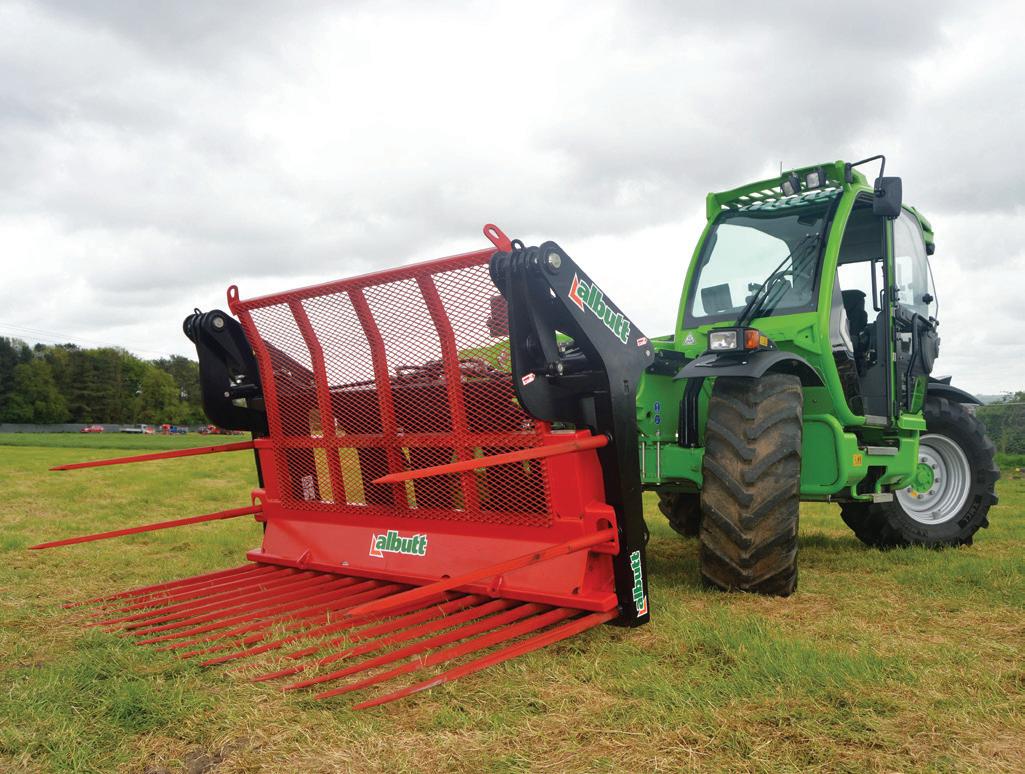
MARCH 2024 | WWW.SOUTHEASTFARMER.NET 34 MACHINERY DEALER FEATURED COMPANY: AGRICULTURAL AND GROUND CARE MACHINERY
Ben Jimmison, workshop engineer



















AGRICULTURAL AND GROUND CARE MACHINERY 01483 200516 www.wiltshires.co.uk PARTS 01483 200516 parts@wiltshires.co.uk WORKSHOP 01483 200516 team@wiltshires.co.uk SALES 01483 200516 / 07572 106315 jessparks@wiltshires.co.uk ® by changing to our new generation of composite extinguishers. Annual cert f cation couldnot be easier Watch our training video online to ndoutho w quick and simple certi c ation is. CHERRY PRODUCTS ®
FIELDS HAVE VERY LITTLE
RESIDUAL NITROGEN
A new monthly column contributed by Chichester Crop Consultancy (CCC). This month's comes from Jonathan James.
It is reassuring to see how well most crops look now despite being drowned by over half a metre of rain since October. As we enter March with warmer temperatures and drier weather (hopefully), fertilising, spring drilling and grass weed herbicide applications are at the forefront of our minds.
NITROGEN
January and February saw many fields tested for soil mineral nitrogen (SMN) levels. Unsurprisingly, given the rain, many fields have very little residual nitrogen. There are exceptions, however, where fields have had organic manures and cover crops in the rotation. In instances where SMNs are much higher than expected, we will be able to cut back nitrogen applications this spring.
It’s important before carrying out any nitrogen applications that spreader calibration tests are carried out. The past couple of years have seen many farms switching between products to ensure they buy at the best price. Each product will spread differently and a coefficient of variation above 20% will lead to visible striping in crops, possibly a reduction in yield and the chance for your neighbour to have a good laugh at your expense.
 Jonathan James
Winter barley, oilseed rape and second wheats should all be prioritised for early nitrogen applications where early growth and tiller survival are essential to yield. Backward crops that have been suffering from wet feet should also be targeted early to encourage early root growth and tillering. While tiller numbers on average are down this year, any forward crops won’t want pushing too early with nitrogen, as it will increase Septoria pressure and lodging risk. If crops are very forward, an early application of a plant growth regulator may be required. Sheep grazing could be considered, but this should be done in February before crops begin to extend. As we approach T0 timing it will pay to be vigilant regarding yellow rust activity, with current temperatures favouring the disease. Later drilled crops are usually a higher risk, especially in varieties like Skyfall and Zyatt.
HOW MUCH NITROGEN TO APPLY?
This ultimately comes down to three things: the soil nitrogen supply, yield potential and protein requirements for end markets. With nitrogen still at around 90p to £1/kg, it is still the most expensive input on farm so should be used economically.
For feed wheats, working out your break-even ratio is a great way to determine nitrogen totals. Feed wheats give the biggest scope for cutting back nitrogen levels if there is no minimum protein level set on the contract. Given the current price of feed wheat, cutting back nitrogen totals by 5% is likely to lead to a greater gross margin, but protein levels will also drop and premium markets could be missed.
Many of our growers are still growing milling wheat and aiming for 13% protein. With premiums in the region of £60/t, cutting back nitrogen totals here could be a high-risk strategy. Varieties such as Crusoe are more efficient at converting nitrogen into grain protein and will give some scope to cut back compared to the likes of Skyfall and Zyatt.
INTRODUCING… CCC AGRONOMY
The farmer member-run co-operative agronomy service was set up almost 40 years ago by a small group of farmers based around Chichester who recognised a need for advice they could trust and which had their business interests at heart. CCC prides itself on delivering independent, research/science led, agronomy advice with no commercial bias and has seen the business grow from a local service to one that supports farms across the south of England, from Kent to Somerset. CCC works closely with crop advisors who coordinate independent group purchasing on crop inputs as well as sourcing cover crop/environmental scheme seed mixes. The aim is to provide the best advice and source competitively priced products while saving members time and money.
Oilseed rape is possibly the hardest crop to predict in terms of yield. If Cabbage Stem Flea Beetle larvae pressure is high, early nitrogen applications will help the plant get away from damage. If yields are likely to be impacted where stunting from larvae feeding is evident, it may pay to cut back nitrogen later on. Where crops have good yield potential, nitrogen totals should be based on reaching an optimum green area index of 3.5 by yellow bud and adjusting totals on yield expectation of the crop.
SPRING HERBICIDES
The one benefit of a wet autumn is the increase in performance from residual herbicide activity. However, where fields have not received a residual herbicide, or where there are grass weed pressures, a contact herbicide may be warranted. In warm conditions, treatment before the weeds get too big seems to pay off, but don’t apply to stressed or waterlogged crops.
Chervil has been causing issues for a few years now on a growing number of sites. Early treatment is essential for good control, and in some cases leaving it until April may be too late.
For beans, now a ‘major crop’, we have seen the arrival of Emerger (aclonifen), which will help with broad leaf weed control, especially useful for Polygonum and Cruciferous species.
MARCH 2024 | WWW.SOUTHEASTFARMER.NET 36 ARABLE NOTES IN CONJUNCTION WITH

MILESTONE REACHED ON CARBON ACCOUNTING STANDARDS
DEFRA’s long-awaited report aimed at helping farmers and landowners understand the market for buying and selling carbon has now been published.
The report, Harmonisation of Carbon Accounting Tools for Agriculture, provides guidance on appropriate standards for carbon reporting. It aims to achieve more accurate outputs from carbon calculation tools and sets compliance standards for farm-level carbon assessments.
The project looked at 81 global carbon calculators and analysed the six most relevant for UK farming in detail.
Dr Emily Pope, managing director of knowledge and collaboration at Trinity AgTech, welcomed the report, which she said put forward clear minimum standards for carbon accounting tools.
She explained: “Farm-level carbon accounting is currently completely unregulated, meaning there is significant divergence in calculation methodology and the resulting information; this is reducing trust, stalling decarbonisation efforts and preventing proper recognition and reward.”
Pointing out that most businesses accounting for carbon in the UK were using old tools that linked to outdated standards, she welcomed DEFRA’s acknowledgment that the poor alignment of old tools to modern standards was restricting the ability of farmers to access incentives and requirements around emissions reduction.
She went on: “That’s why this report was so desperately needed. Businesses need to understand which standards to align to and which software achieves these standards.”
Dr Pope added that the only calculator that aligned with the standards endorsed by DEFRA was Trinity’s own Sandy navigation platform, denoted as calculator E in the report.
“It’s always been Trinity’s vision to develop a practical, scalable, and agile natural capital navigator that aligns with the latest reporting standards and that has the power to deliver an agricultural transition in which everyone benefits,” she said.




To read the report in full see:






WWW.SOUTHEASTFARMER.NET | MARCH 2024 37 TO ADVERTISE CALL 01303 233883
https://sciencesearch.defra.gov.uk/ProjectDetails?ProjectId=20967%0A
are leading suppliers
healthy,
landowners
farmers across the South. • Fast quotations • Expert advice • Excellent service and delivery • Full range of accessories Plant Healthy certification is awarded to organisations that can demonstrate that their plant health management systems and practices comply with the Plant Healthy Standard. The scheme makes it easy for customers to identify organisations that handle plant material in a manner that promotes plant health and biosecurity. English Woodlands is among the first organisations to receive this certification, following an independent audit in 2020 T. 01435 862992 sales@englishwoodlands.com www.englishwoodlands.com Hedging and Woodland Plants Plant health and quality assured Our discreet and efficient service helps you get the best price for your distressed grains Verigreen purchases distressed, out of spec grains, including contaminated, wet and burnt consignments Benefits of selling grains: Maximises return of discarded grain Provides nutrient rich animal feed for farmers Creates energy through anaerobic digestion www.veri-green.co.uk Contact us now for your free quote 03316 300 727 Generate income from your distressed grains
English Woodlands Tree Nursery
of
high quality plants to
and
The exceptionally wet autumn and winter presents serious difficulties for crops in the ground, as well as those still to be drilled.
While there are some good-looking winter crops that were sown early and escaped the worst of any flooding, others have been hit hard.
Crucially, when soils become waterlogged, this starves roots of oxygen, causing them to stop functioning, preventing the movement of water or nutrients from the roots up to the top growth.
Ironically, the stomata close, almost like in drought conditions, which affects photosynthesis, with knock-on effects for nutrient uptake, tillering and biomass accumulation.
In severe situations, crops can also “cannibalise’ nutrients from older leaves to support newer growth, causing early leaf senescence.
Roots often adapt to wet conditions by growing closer to the surface to facilitate gas exchange in anaerobic soils. Shallow rooting presents issues as the season progresses though, especially when conditions turn dry and crops need more scavenging ability for water and nutrients.
SO WHAT CAN BE DONE?
Building early nutrition to boost root development and build biomass is crucial, and early nitrogen is one of the most important considerations.
The first N-Min results for this year show there is less residual nitrogen in the soil than normal, primarily because of nitrate leaching. But it’s a quadruple whammy; there’s less nitrogen in the soil, less in the crop, poorer rooting and reduced mineralisation due to the impact of waterlogging on soil microbes. We’re facing a very different scenario to previous years.
Applying nitrogen in ammonium nitrate form is generally preferred, as this is more
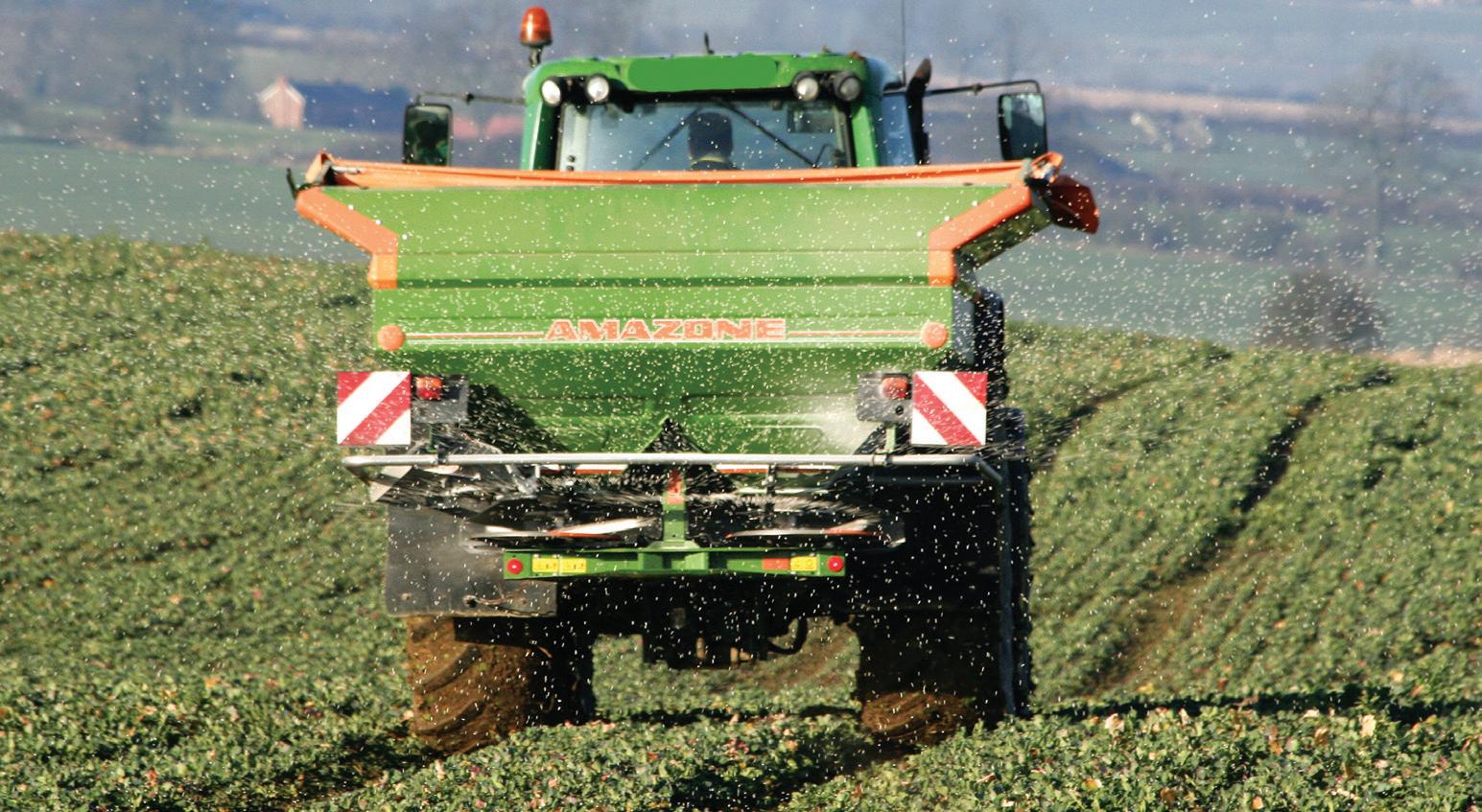
SPRING ADVICE FOR STRUGGLING CROPS
Hutchinsons' crop nutrition manager Tim Kerr examines the impact of the wet winter on crops and how to manage them this spring.
readily available to plants than urea-based fertiliser, which must go through two chemical changes – both reliant on microbial activity – for it to become plant-available.
Plants are slower to respond to urea fertiliser In normal conditions, but if soils are in a less than ideal state, that process could be even slower. Inhibited urea is even slower to work, so be careful what you use.
Early sulphur will also be important on almost every soil this year as sulphate, like nitrate, is easily leached. Ideally, apply sulphur with the first nitrogen, or alongside the potash. Rates should generally be in proportion to the amount of nitrogen applied.
Boron is another easily leachable nutrient, and testing of samples in recent years shows over 70% to be low in boron, especially on lighter land. Deficiency symptoms are rarely
KEY ACTIONS:
TIM KERR
T: 07880 870992
E: tim.kerr@hlhltd.co.uk
Canterbury: 01227 830064
www.hlhltd.co.uk
seen, but boron plays a vital role in root and shoot development. Trials in 2020 showed a positive response from foliar boron applied at GS 30 and GS 39.
Potassium and magnesium are other nutrients to consider, as they can be easily lost from lighter soils with a low cation exchange capacity, while phosphate availability may also be lower this year, not because of leaching but due to losses from soil run-off in heavy rain.
In cold, wet soils, the microbes that convert exchangeable phosphorus to available phosphorus slow down, so crops can quickly exhaust the soil solution, resulting in deficiency symptoms, even where soil indices are high. Foliar products are an option if there is sufficient leaf area, but phosphites may be a more effective option to develop rooting and improve future scavenging ability.
• Assess fields to identify issues and decide on the most appropriate management
• Do test digs to assess the impact of waterlogging on soils and root development
• Check plant populations to determine a realistic yield potential
• Tailor inputs to crop need and yield potential, considering all available options
• Consider re-drilling or sowing spring cover crops on worst areas with no viable crop.
MARCH 2024 | WWW.SOUTHEASTFARMER.NET 38
AGRONOMY
REVOLTING PEASANTS
Whatever one’s view of the importance of reducing agricultural pollution, British farmers must be impressed by the impact of their EU peers’ recent protests. In just a few weeks, by burning tyres on the autobahn, tipping dung on the steps of Hotels de Villes and clogging up the streets of Brussels with tractors, they’ve driven a metaphorical flail topper through Ursula von der Leyen’s plans to make EU agriculture carbon neutral by 2040.
Why, many are asking, don’t British farmers do the same? The first problem is that I’m not sure British farmers could ever agree on what they do actually want in terms of a post-Brexit farm policy. Personally, I always loathed the EU’s Basic Payment Scheme (BPS) as it seemed so unimaginative and wasteful in terms of reducing greenhouse gas emissions, encouraging wildlife or increasing food production, so I wouldn’t protest to save that.
Similarly, were someone to suggest I demonstrate to pressure the Government to abandon commitments to make British agriculture carbon neutral, I would also refuse. This issue must be challenged if our planet is to have any hope for the future, and agriculture must play its full part.
I would, though, turn out for a demo against the cheap beef and lamb due to flood markets in Great Britain once the catastrophic trade deal that ex-Trade Secretary Liz Truss signed with Australia kicks in.
But there are other things holding British farmers back from street demonstrations. For one thing we are unsure about how much public support we would get if we blocked roads in rush hour and piled farmyard manure outside government offices.
Also, we have learnt from bitter experience that past demonstrations don’t achieve much in terms of persuading British governments to change farm policy. In 2016, I was one of 5,000 farmers who marched through London to highlight the crisis in British agriculture, particularly in the dairy sector.
It was only after a humiliatingly long wait outside the Whitehall gates of Downing Street that our leader was eventually permitted to ‘deliver a letter’ to No 10, and the demo did nothing to stop the trend towards fewer but larger dairy herds, with an increasing number now ‘zero grazed’ in the name of cheap milk.
And then, of course, there is the natural reticence of British farmers to do something as radical as block a road. I think the problem is that too many large-scale farmers aspire to mimic the landed gentry socially and politically, making the idea of a street demonstration challenging.
Indeed, when I first attended farmer meetings in the 1980s the older generation would often turn up dressed like hereditary peers who’d taken a wrong turn from the House of Lords rather than downtrodden sod-busters. And I reckon you’re still more likely to see the younger generation of British farmers sporting a racing green Schöffel gilet than a gilet jaune.
Time, of course, will tell if I’m wrong and we see a mass of disruptive farmer demonstrations in Britain to protest sharply declining farm incomes. But if it does happen, I’ll eat my tweed breeches.









STEPHEN CARR
Stephen farms near Eastbourne in East Sussex in partnership with his wife and four of his daughters. The farm has a pub, the Sussex Ox at Milton Street, which serves the farm's pedigree Sussex beef, Southdown-cross lamb and fruit and vegetables from the farmhouse kitchen-garden.
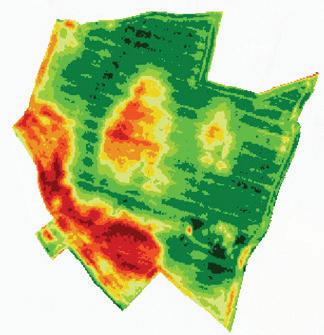
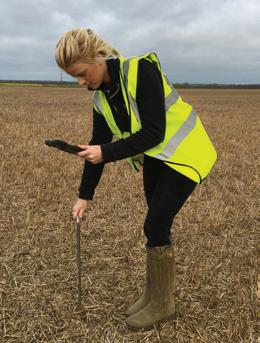
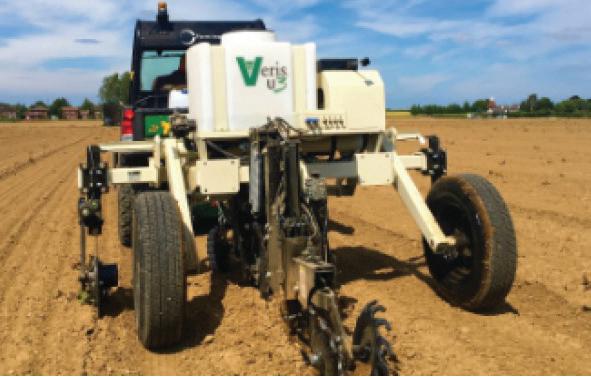
⚪ Ultimate Soil Scanning – High definition in-field scanning of major field properties including pH, Organic Matter, Electrical Conductivity and Topography
⚪ Precision soil sampling and mapping – We have a Wintex automatic sampler which can accurately sample to various depths and separate soil into 3 profiles, perfect for measuring soil carbon and deep core nitrogen
⚪ Biomass Imagery
⚪ Standard Soil Sampling – P, K, Mg and pH
⚪ Potato/Pea Cyst Nematode Analysis (PCN)
⚪ Deep Core Nitrogen Sampling
⚪ Manure, Slurry and Product Analysis
⚪ Lime supply and variable rate application
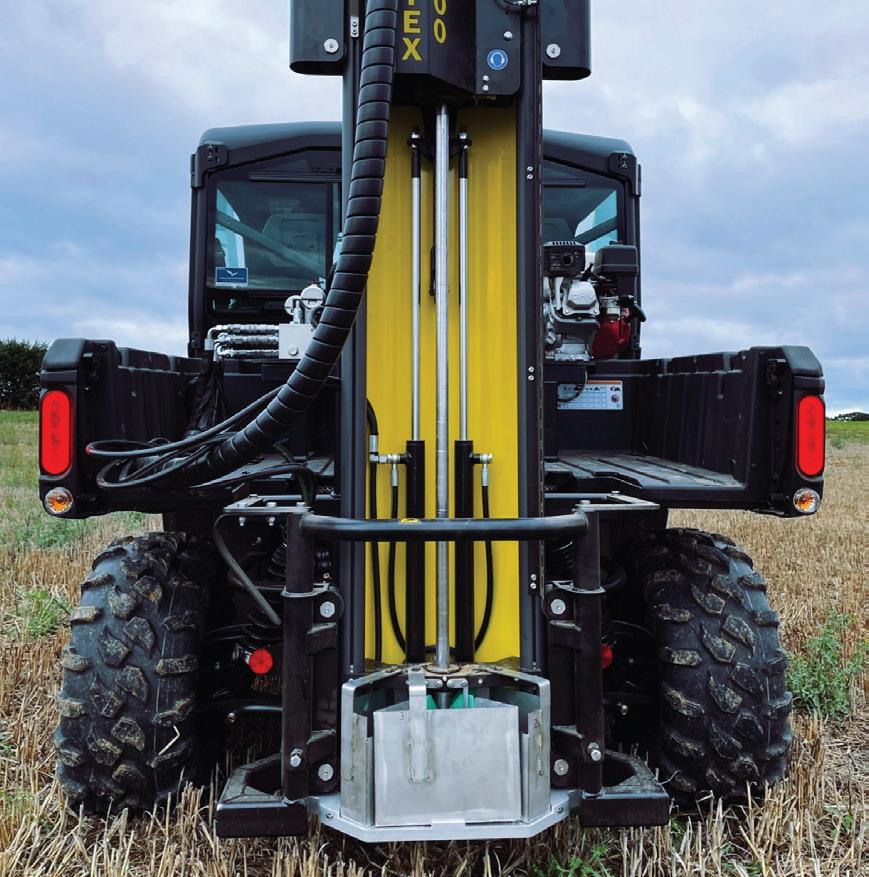
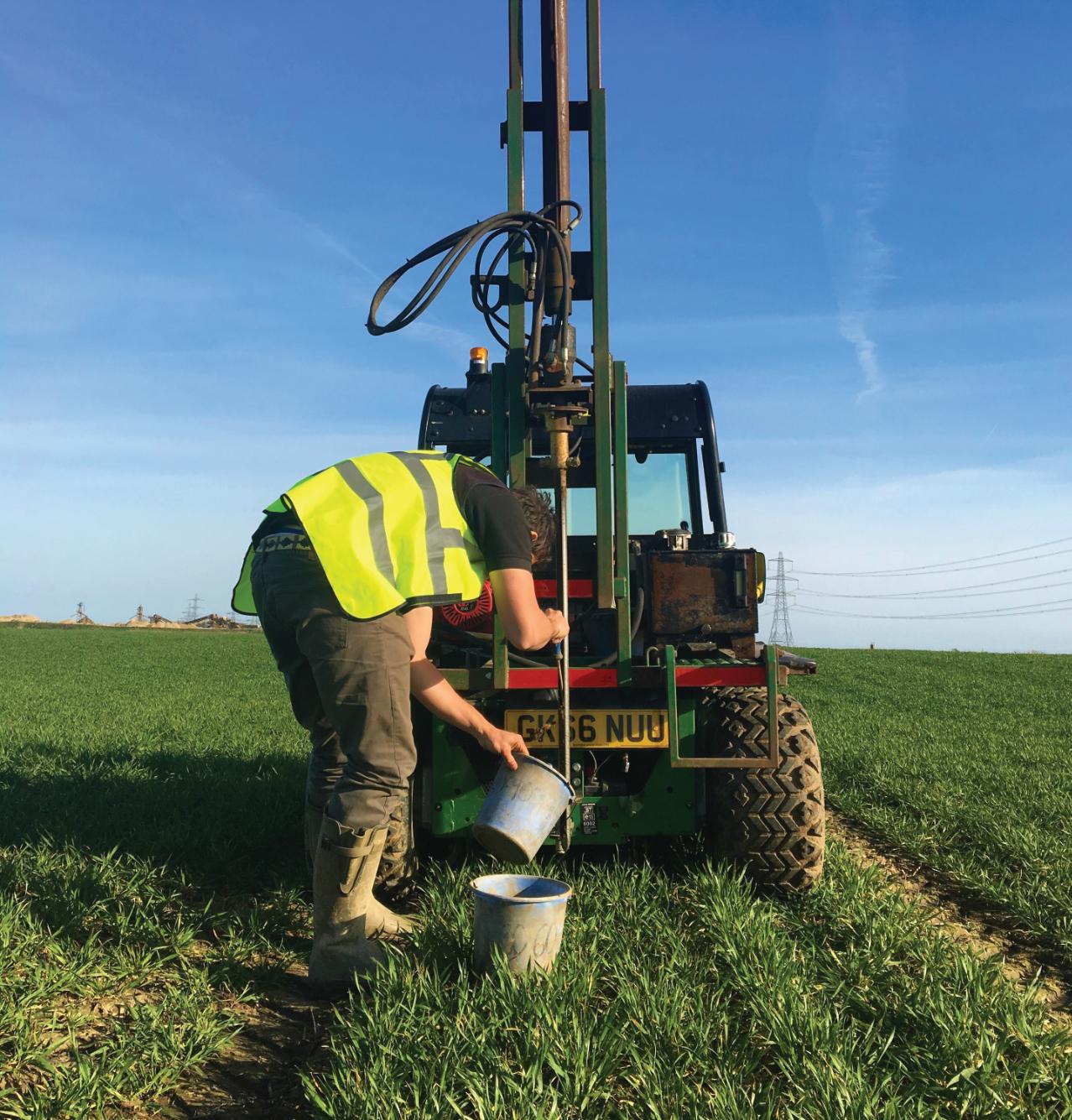
WWW.SOUTHEASTFARMER.NET | MARCH 2024 39 TO ADVERTISE CALL 01303 233883 STEPHEN CARR
productssupplied, andspreadtoyourfarm. Offering20years’experience insoil servicestailoredforyouand yourbusiness Soilsmartsampling,GPSprecision, Verissoilscanning,NCore,Ph,PCN 01233 740247 enquiries@farmimage.co.uk www.farmimage.co.uk
A DAY IN THE LIFE…
...of an animal management student.
As Kent’s only rural and land-based college, Hadlow College offers a vast range of courses, all set in the beautiful surroundings of a 265-acre campus that includes woodland, working farms, horticultural glasshouses, lakes and more.
Pay our leafy campus a visit and you will never be too far from an animal or two, with Hadlow College being home to everything from horses to meerkats.
Hadlow’s animal management unit houses more than 500 animals from 125 different species and is one of the country’s leading educational animal collections.
South East Farmer caught up with Oz Byard, a level 3 animal management student, to find out what an average day looked like for him.
WHAT IS ANIMAL MANAGEMENT AND WHERE CAN IT LEAD?
Animal management provides an introduction to all aspects of animal care and mixes theory work in the classroom with practical work in Hadlow’s custom-built animal management unit.
Students are involved in all aspects of animal husbandry and management, from planning animal collections and designing and maintaining enclosures to day-to-day animal care within an animal collection set up as a commercial enterprise.
An animal management qualification can lead to a variety of careers, ranging from an animal nutritionist or physiotherapist to a zookeeper.
Back in the dorm: “I live on-site at college, which means that during breaks I can return to my dorm room and have time to complete assignments or study.”
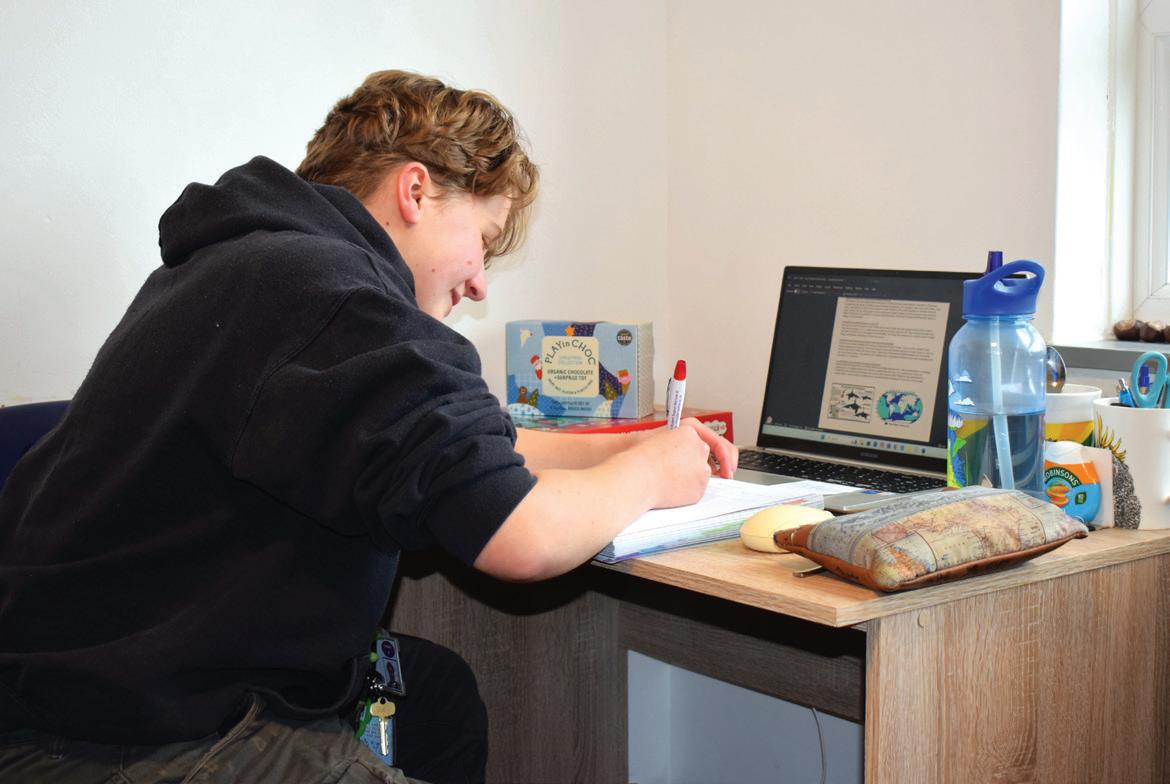
To find out more visit the Course Explorer section of the website at www.hadlow.ac.uk/courses
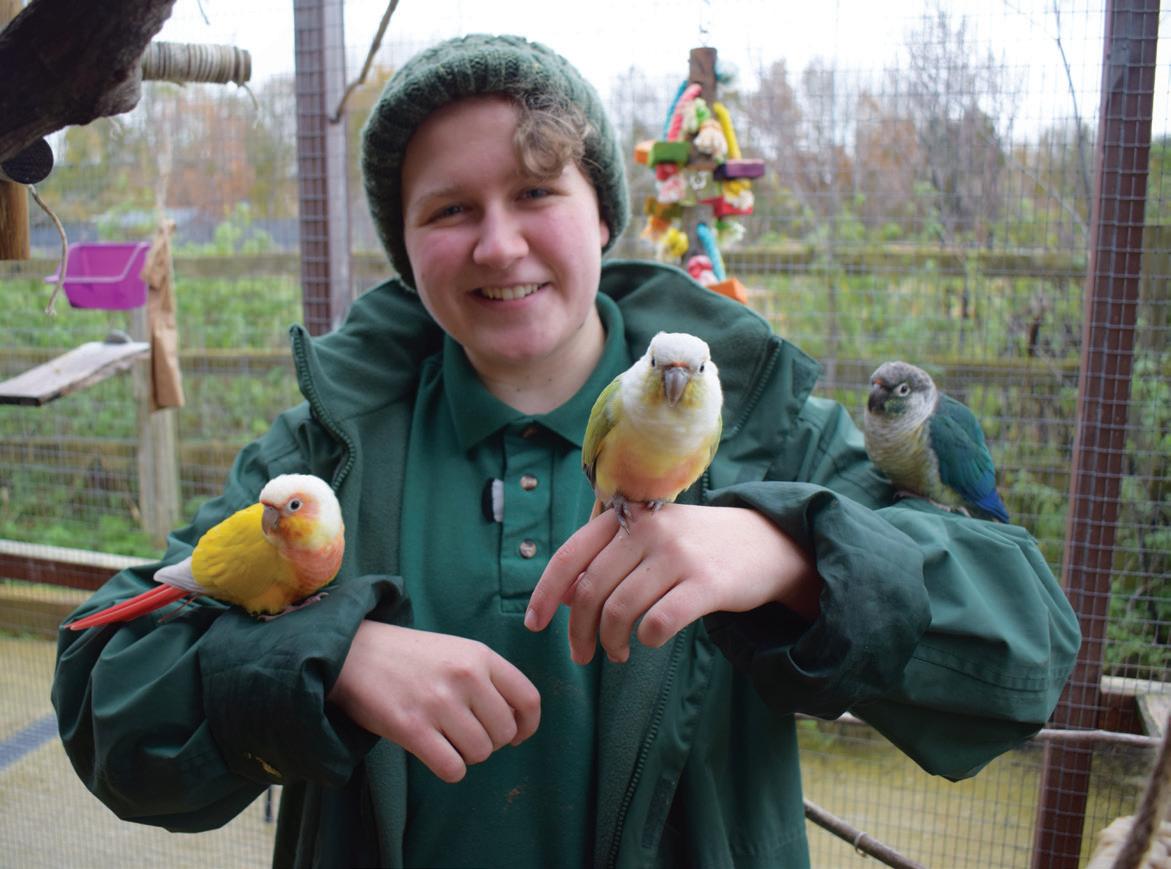
Caring for the conures: “Me and my birds! These little parrots are called conures; I've known them for almost two years and visit them almost every week to feed and clean them as part of my regular duties. They are kind and inquisitive if you give them a chance, but most students think they are annoying!”
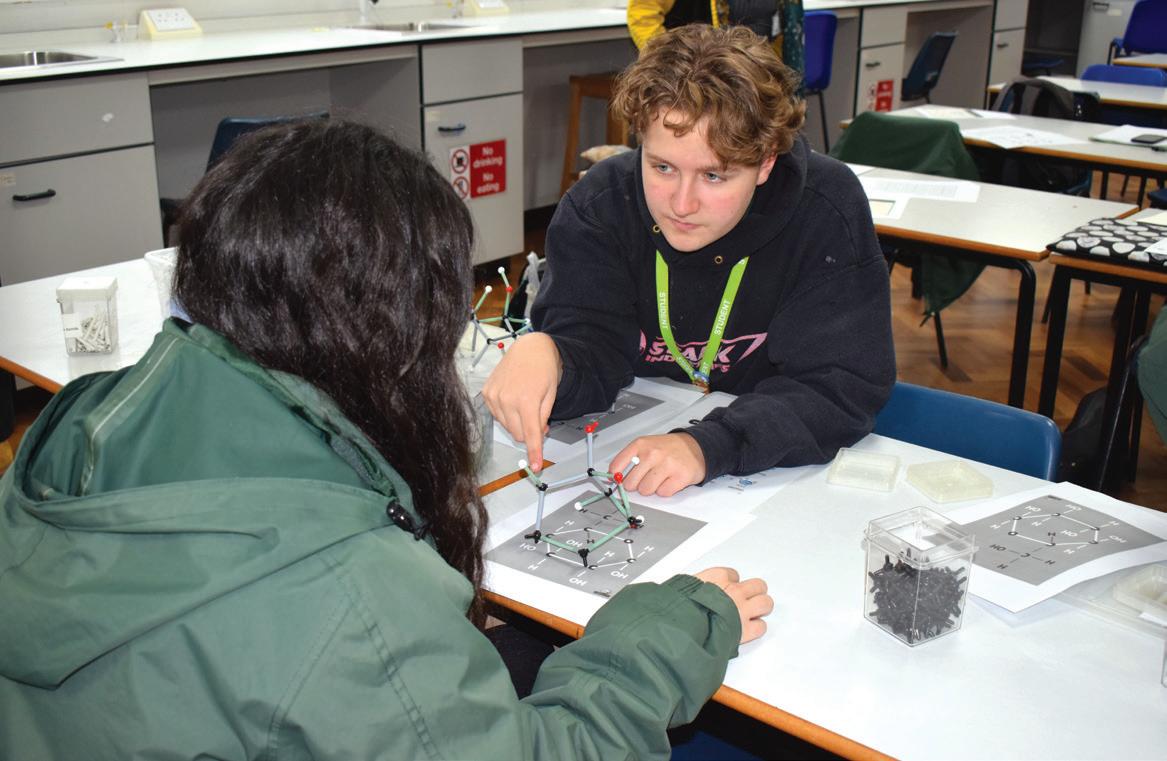
Moving into the classroom: “During lessons I’ve been learning about the bonds and structures of different compounds. This is me teaching a fellow student how to make a glucose molecule.”
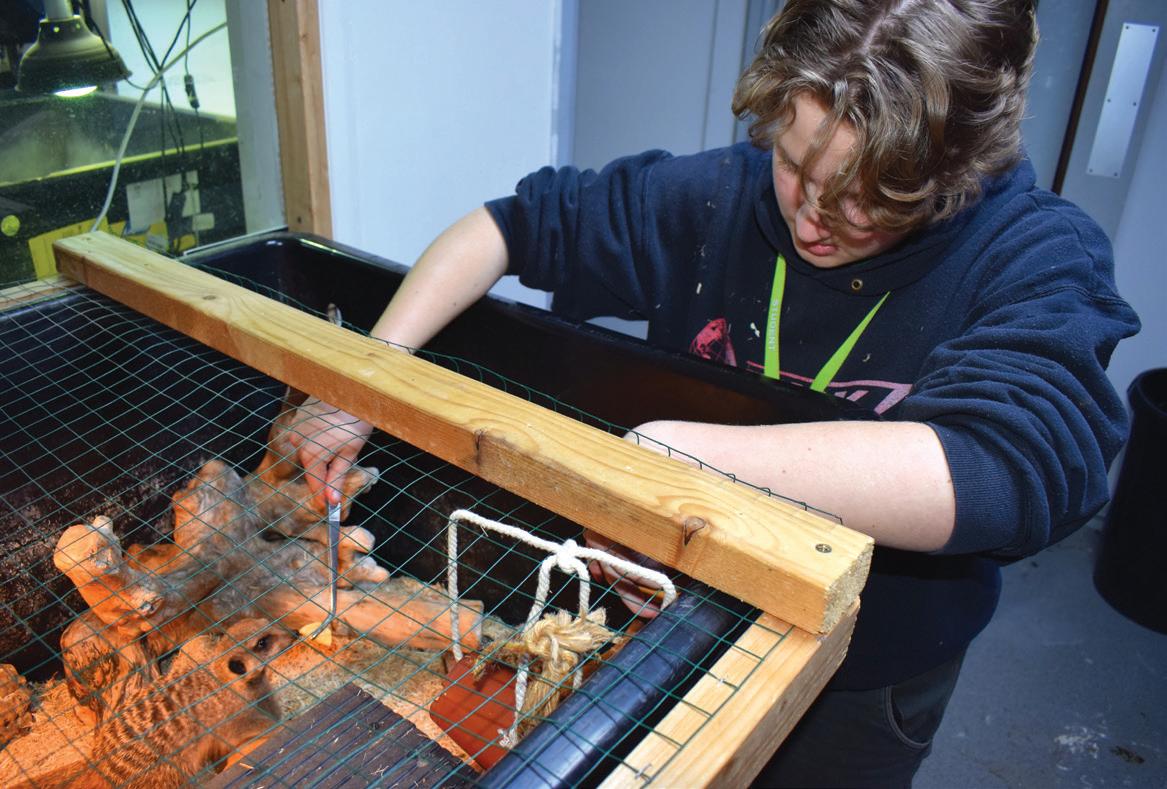
Meerkat time!: “I spend a lot of time at the National Centre for Reptile Welfare, located within the college estate. Recently, I've been caring for two beautiful baby meerkats, named Impi and Teddy by me and my friend.”

MARCH 2024 | WWW.SOUTHEASTFARMER.NET 40 RURAL UNIVERSITY EDUCATION
Visit www.hadlow.ac.uk to find out more or call 01732 850551
MORE
FIND OUT
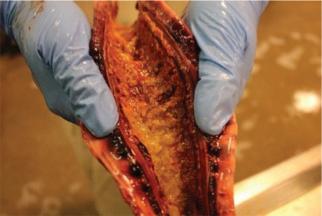
CATTLE
A recent conference in Edinburgh on infectious diseases of cattle discussed infectious bovine rhinotracheitis (IBR). Although common and widespread in the UK, it is a disease that is sometimes overlooked because many people already vaccinate their stock and severe symptoms are relatively uncommon.
IBR is caused by Bovine Herpes Virus 1 (BoHV-1). Primary infection of naïve animals has variable impact, with some animals being very mildly affected and some having severe clinical signs, for example:
• High temperature
• Ocular and nasal discharge
• Milk drop
• Abortion
• Infertility.
The severity of symptoms depends on the herd stress level and co-infection with bovine respiratory disease complex (BRDC). It is possible for a herd to have an outbreak with many animals infected but no apparent clinical signs or impact on performance. Once recovered from primary infection animals become latently infected.
Re-activation then occurs during times of stress, for example at calving, during transport, with concurrent diseases or when facing nutritional stress. Once re-activated, further shedding occurs, leading to the cycle of infection. It is worth noting that calves infected during a period of maternal antibody cover can develop a latent infection without an antibody response. These animals will test antibody negative but will be latent carriers and can re-activate and shed at any time.
DIAGNOSIS OF IBR
Swabs can be taken by a vet in acute clinical disease, ideally before secondary bacterial infection occurs. The vet can take swabs from the nose or eyes up to two weeks after infection.
Blood tests for the IBR antibody are used to diagnose the latently infected animal.
Post mortem samples can be taken from aborted calves.
Regular bulk milk antibody is used to monitor negative dairy herds.
OPTIONS FOR CONTROLLING IBR
The control strategy will vary depending on the farm, so speak to your vet. Options include:
• Bio-exclusion (to prevent IBR being brought into the herd)
• Regular herd testing
• Vaccination (not for export stock). Vaccination reduces the severity of clinical signs, reduces shedding and reduces the likelihood and duration of shedding after re-activation. Vaccination does not prevent latent infection or re-activation.




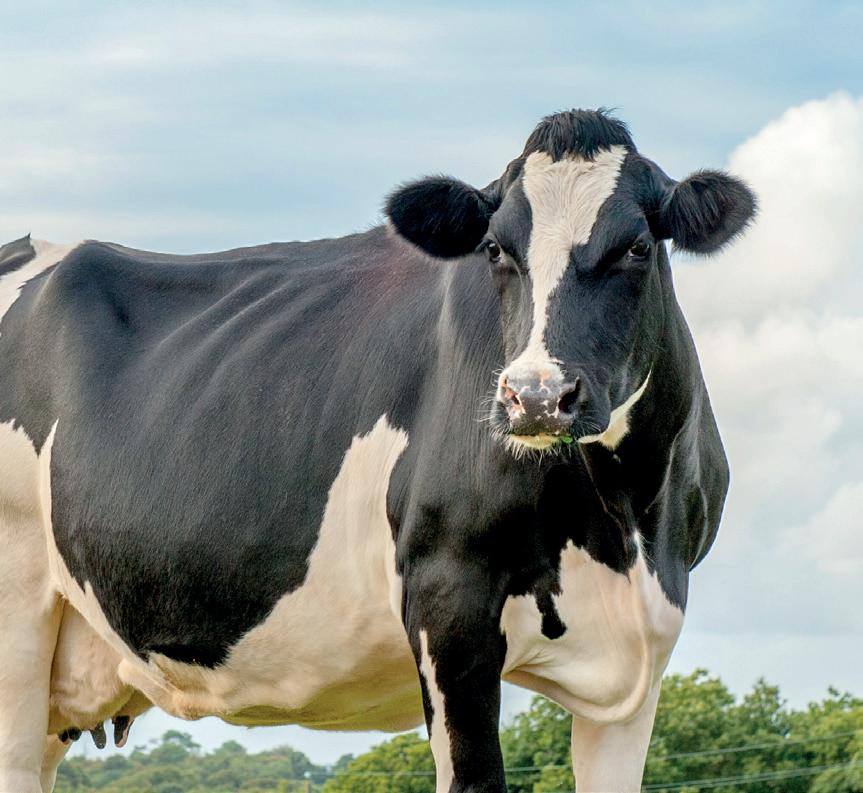


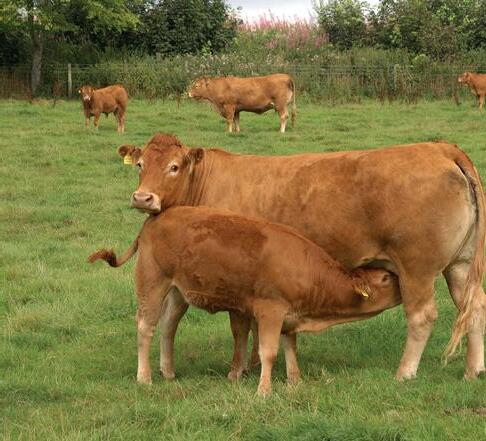

















WWW.SOUTHEASTFARMER.NET | MARCH 2024 41 TO ADVERTISE CALL 01303 233883 VET DIARY
INFECTIOUS BOVINE
IN
CLAIRE THORPE BS c BVM&S MRCVS Cliffe Veterinary Group T: 01273 473232 E: Claire.thorpe@cliffevets.co.uk www.cliffefarm.co.uk Post mortem of the inside of the windpipe from a cow with severe IBR Photo: ©SRUC Veterinary Services RESEARCH PROVEN GET READY FOR A SUCCESSFUL TURNOUT! CHOOSE CRYSTALYX THIS GRAZING SEASON. +44 016973 32592 | info@crystalyx-global.com Find your nearest stockist at crystalyx-global.com Crystalyx UK REDUCES THE RISK OF FLY AND MIDGE BITES HIGH MAGNESIUM TO BALANCE SPRING GRASS IMPROVES FORAGE INTAKE AND DIGESTION FOR ENHANCED PERFORMANCE
RHINOTRACHEITIS
AT COLCHESTER MARKET
GRAHAM ELLIS FRICS FAAV FLAA
For and on behalf of Stanfords
T: 01206 842156
E: info@stanfords-colchester.co.uk
www.stanfords-colchester.co.uk
RECORD PRICES
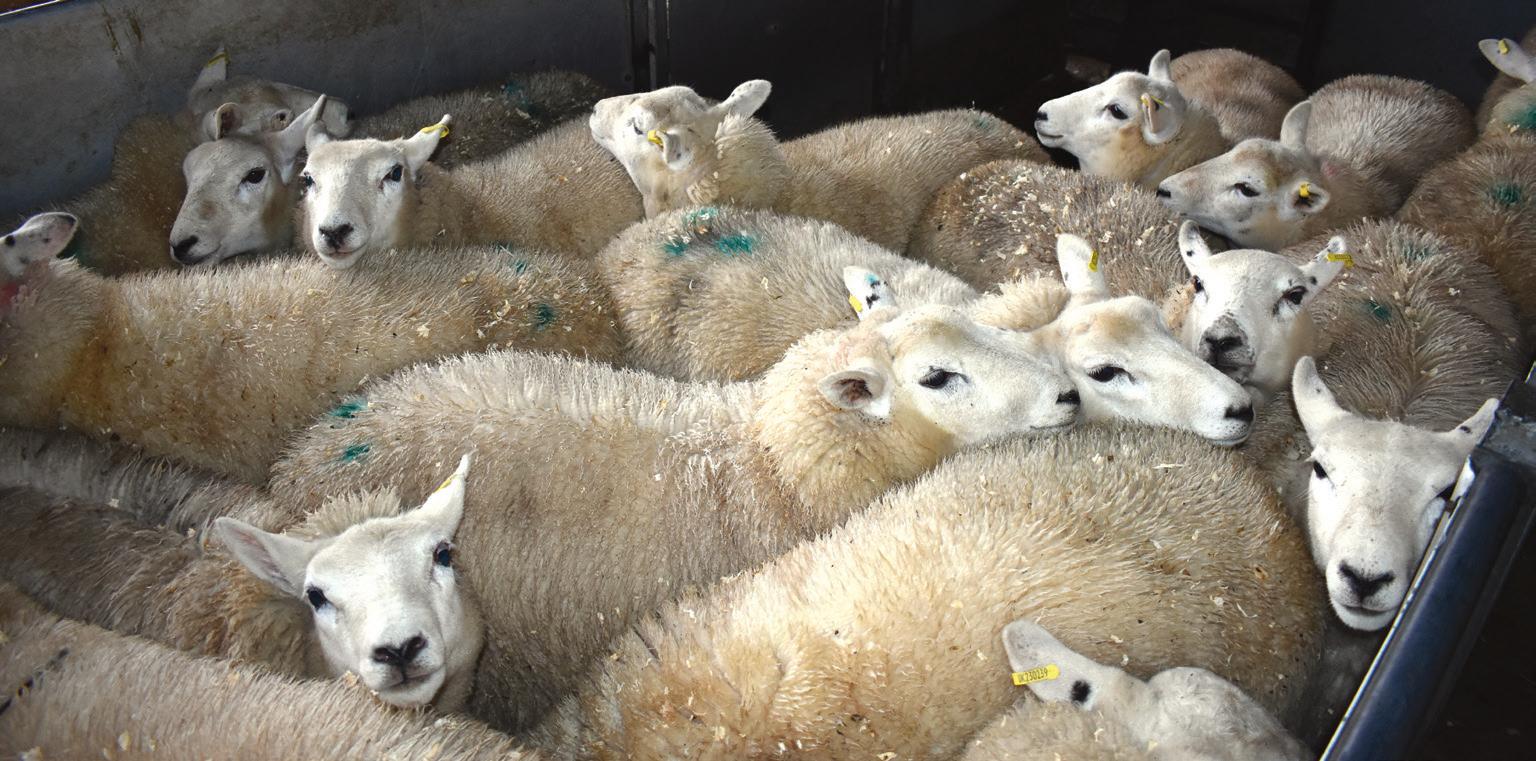
The year has certainly started interestingly in the livestock markets, with cattle and sheep at record prices and the pig market remaining firm despite serious concerns about the continental pork price.
We have also seen marketing in East Anglia and the South East being hit severely by the Bluetongue restricted areas around Canterbury in Kent and Cantley in Norfolk which have caused serious implications for many graziers and farmers. The Animal and Plant Health Agency has regularly changed its mind on how to deal with the situation, which has not helped. Uncertainty is never good, and people’s livelihoods have been seriously affected by the current position.
It is uncertain how the matter will resolve through the spring, but with warmer weather as this report was being written at the beginning
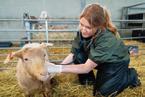

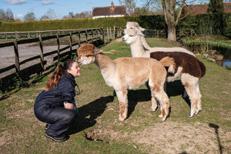
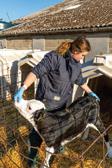
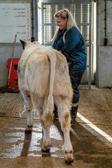


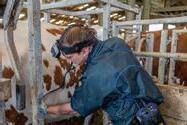



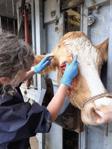

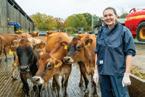
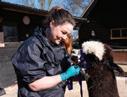
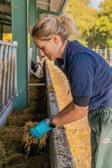
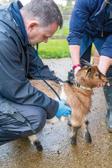
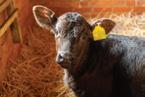

of February, the midge season will soon be upon us, which is a serious concern for all in those areas and, indeed, the surrounding areas.
The beef cattle trade, as mentioned above, is at record levels, with numbers inadequate in the markets for buyers’ requirements despite horror stories of cheap beef being available. The British public seem still to want to buy the best beef, and that is home killed and local.
We have seen prices regularly over 300p/kg up to 320p/kg liveweight in Colchester, with averages in the late 200s including all stock.
There is strong demand for all heavyweight cattle as well, with cattle regularly fetching over £2,000 a head and up to more than £2,500. This is a remarkable trade considering where we were two years ago. Let us hope the trade can continue and the local buyers are supported by the public.
We have also seen an increasing demand for cull cattle, which is normal for this time of year and is at good levels which reflects shortage throughout the country.
Store cattle, as always, are short at this time of year, but where available there is a strong demand as people try to fill the yards.
It is also helpful that feed prices are lower, which is positive for the livestock farmer but not so good for the arable farmer.
Sheep are also at record levels, with old season lambs regularly trading at over £150 a head for the heavyweights and above 300p/kg liveweight. This has resulted in a strong trade for all store sheep in the period as there appears to be adequate stubble turnips and other fodder around, a complete change from 12 months ago.
With the warmer weather at the beginning of February, many arable farmers are looking to get onto the land and root feeders are under some pressure to remove the sheep as soon as possible, this will cause a problem in the Bluetongue restricted areas, where movement can only go to abattoirs other than for pre-tested stock.
The ewe trade is remaining firm but no fireworks; numbers are generally sufficient for demand.
Moving onto pigs, these have remained strong on the local deadweight market despite, as stated, serious concerns about the continental pork price.
With the industrial action being taken by continental farmers meaning some supplies were restricted, this did at the time help firm the pig price, but only in the sense of maintaining price levels. It is interesting to see the difference between continental and British farmers’ reactions.
With many acres of arable crops not yet drilled due to the extreme wet weather in the autumn and early winter, better weather was enabling drilling to take place in February, with farmers pleased to move forward. But weather is, of course, variable and it could all change.
MARCH 2024 | WWW.SOUTHEASTFARMER.NET 42
Allied teams: vet tech services, foot trimmers, consultants, and front line, dedicated farm animal veterinary surgeons Catering to all livestock needs: commercial, smallholdings and companion farm animals Meeting the needs of our clients with tailored services, health planning, preventative medicine and emergency care 24/7 Efficient. Sustainable. Productive: Our PRO: services focus on health, welfare and productivity on commercial farms; with access to experienced vets with specific qualifications
practices can offer: fertility and advanced breeding services, laboratory diagnostics, second opinion care, access to health schemes, export services and more westpointfarmvets westpoint vets
Our
Farm Vets info@westpointfarmvets co uk | westpointfarmvets co uk A s h f o r d | C h e l m s f o r d H o r s h a m | S e v e n o a k s | W i n c h e s t e r | Y o r k
100%
CATTLE REMAIN A FIRM TRADE
Winter still seems to be holding firm, with yet more rain providing a damp and soggy backdrop to this article. Earlier in the week we saw signs of spring with a little sunshine. More importantly we are seeing a significant spring in the trade for most classes of stock sold here at Ashford. Both cattle and sheep have been selling well so far this year, with sheep prices firming significantly over the past few weeks.
On Tuesday, finished hoggets averaged £130 per head, with prices per kilo reaching over 350p. The store lamb trade is following the finished trade, with finishers seemingly desperate to get their hands on stock and trade for all stores averaging £101 per head as of Tuesday 13 February. It appears this is not just as a result of buyers rushing home to flip pancakes.
Cattle remain a firm trade; with numbers remaining tight, we are still seeing best finished well over the 300p mark. Store cattle look well demanded, with numbers slowly starting to come forward and cull stock as strong as ever.
In the calf ring we have seen a strengthening of trade over the past few weeks, with numbers appearing to be tighter nationally. Supply has been tight locally, with a handful of regular sellers caught up with Bluetongue restrictions. Fortunately, we have seen some sense applied, with stock now allowed to be moved on subject to testing, This is taking significant pressure off stocking rates and labour at a time when indoor space is generally at a premium.
Best calves are always most sought after. With trade regularly topping £300 plus for continentals, we have recently seen many Aberdeen Angus calves top the £300 mark, with buyers prepared to spend on the right animals. Younger calves and those that are perhaps not the show winners have seen the most uplift in recent weeks, with averages generally up £30 to £50 per head from before Christmas.
Away from the rostrum, the year seems to have started at the pace at which 2023 ended. Many of our clients are now benefiting from Sustainable Farming Incentive schemes, with early adopters reaping the rewards of the 25% upfront payment offered for schemes starting before the end of 2023. Meanwhile we are continuing to advise on new agreements; with clients now seeing neighbours benefiting from earlier applications, confidence is growing in the new era of farm support.
What is also evident is that DEFRA seems committed to updating the schemes and working with farmers to deliver a practical system, demonstrated further by the January announcement of 50 new actions for summer 2024. With SFI seemingly here to stay, we would encourage those who are on the fence to look more closely at entering a scheme sooner rather than later. We cannot predict the future, but with a general election around the corner it is possible we may see a fresh government with fresh ideas on agricultural policy. Don’t get left behind waiting to see what the future holds.
Aside from SFI, the net zero target for 2050 is set in stone regardless of those residing in Number 10. To achieve this, significant upgrades to the electricity network are required which, combined with the upgrades
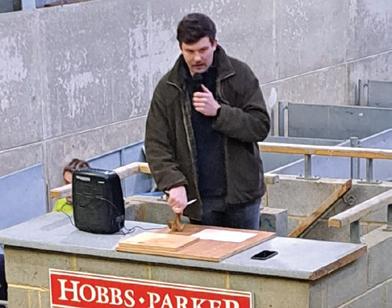
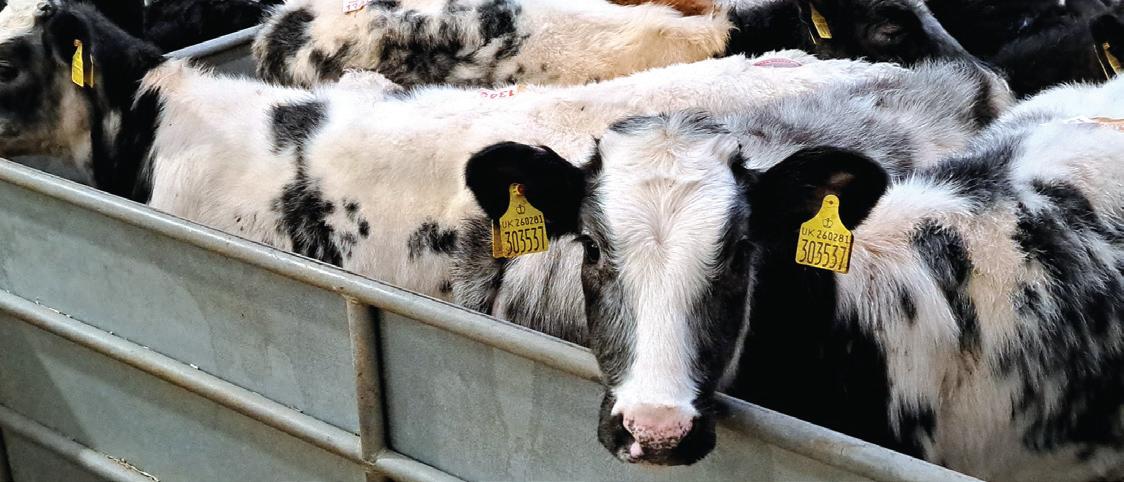
required to other infrastructure, means I find myself advising clients on all manner of requests from various utility firms.
Understanding your rights is imperative if you are going to achieve a fair and reasonable outcome for your business; having an agent on board to liaise with the other side and advise you is essential in making the process as smooth and stress free as possible.
The impact of a scheme on your business may not seem obvious to a contractor tasked with undertaking the work. They are generally experts at laying infrastructure and not producing food, so having someone to bridge the gap will help both parties. Best of all, the other side should pay your professional fees as part of your compensation.
Whether it is advice on marketing your stock to maximum potential or maximising your SFI scheme, we are here to help you and your business, so don’t hesitate to pick up the phone.





WWW.SOUTHEASTFARMER.NET | MARCH 2024 43 TO ADVERTISE CALL 01303 233883
THOMAS HAMPLETT MRICS FAAV Chartered Surveyor and Auctioneer RICS Registered Valuer T: 01233 502222 www.hobbsparker.co.uk AT ASHFORD MARKET
SUSSEX CATTLE SOCIETY SALE BULLS SEMEN BREEDING FEMALES TIMED online AUCTION Starting 9am Friday 15th March Ending Saturday 16th March 01580 880105 enq@sussexcattlesociety.org.uk www.sussexcattlesociety.org.uk
ALAN WEST
Sheep farmer
Coming into the second week of February I am struggling to see just where the first month of 2024 has gone, and it only seems a short time since the new year. People say it’s a sign of advancing years, but there are plenty of others, considerably younger than I, who seem to hold to the same view.
At the time of writing, lambing is due to start in a little over four weeks, a time scale which, at the current rate of progress, will disappear very quickly, so I am determined to get everything in place ahead of schedule just to avoid any last-minute hiccups. The ewes have been home for a little over a week now, and are looking remarkably well, although I really shouldn’t be over optimistic, a route that, all too frequently, ends in disappointment.
In being able to get them away for a while I have, fortunately, been able to build up a decent, but not excessive, wedge of grass in front of them for lambing and post lambing grazing. I had a decent wedge before they
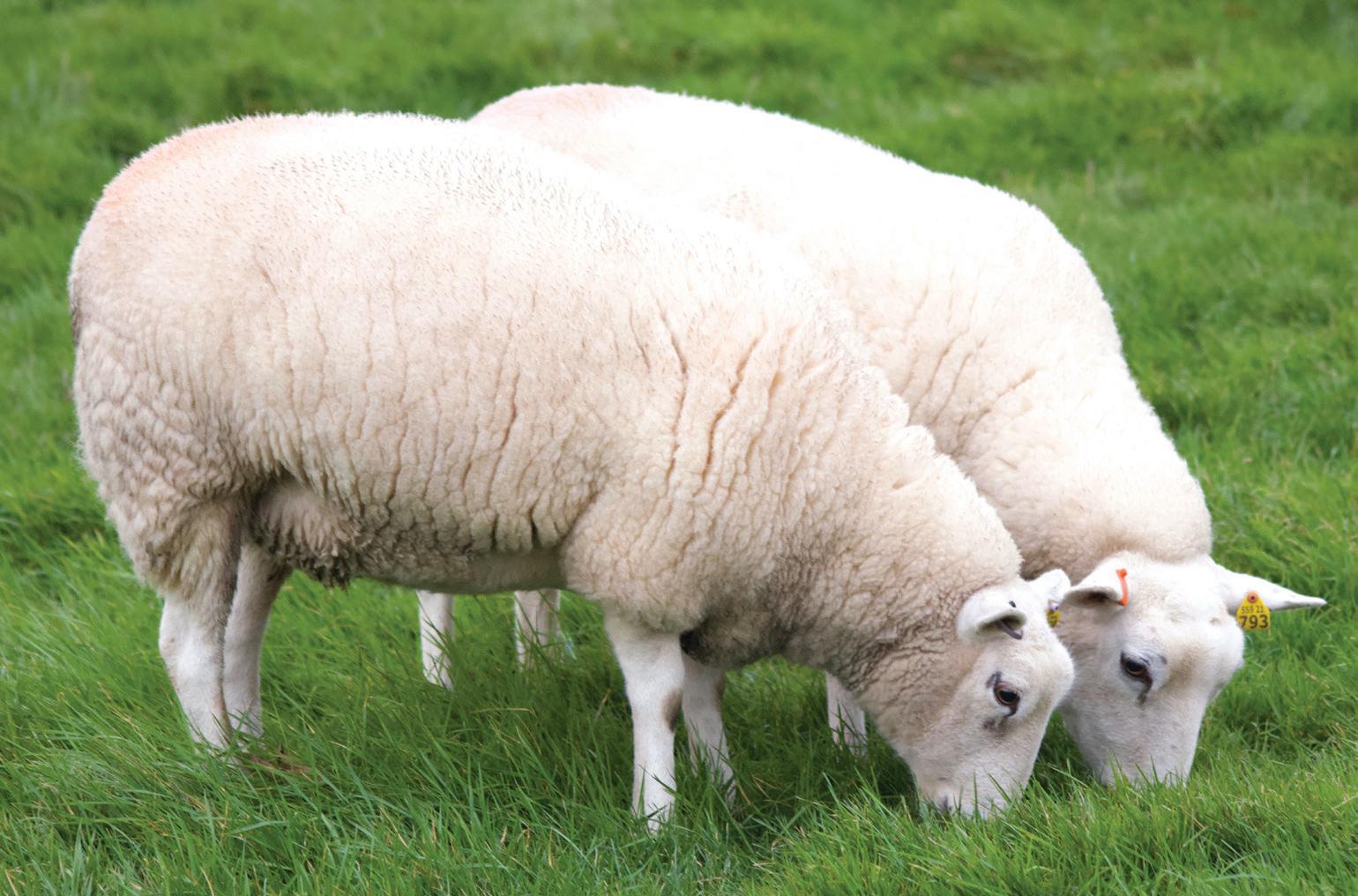
LAMBING IS ALMOST UPON US
went away, rather too proud, and I was somewhat concerned that if we got some hard weather it would get burnt off, so I took the risk and ran the ewes over it. This time it has, somewhat fortuitously, worked to my advantage. The grass emerged from the cold spell a couple of weeks ago relatively unscathed; the cold checked growth but the subsequent warmer weather has seen it starting to grow away again, whereas colleagues who had a lot more grass have seen it burn off in the frosts and turn to mush.
Since the the girls returned home I have introduced a bit of hard feed, for a number of reasons; although they have ample grass in front of them, as permanent pasture I’m not sure of the feed value, plus a little bit of extra dry matter will just reduce grass consumption a bit and, with the risk of more cold weather forecast, help stretch grazing a little. Most importantly, it will put some quality nutrients into lamb growth at a critical time and later into milk production. It’s a considered and strategic approach; I know that having at least introduced some concentrates the rumen is beginning to transition to deal with a different feed, and should I need, in the event of some hard weather, for example, to up the feeding a little it will not generate any issues for the pre-conditioned rumen.
The ewes have certainly welcomed that bit extra. It’s remarkable how, once they have experienced some hard feed, they never forget the rattle of a feedbag; even though they returned to a paddock with plenty of good(ish) grass and were all contentedly laying down the
following morning, at the sight of a feed bag they were all at the gate waiting to be fed.
I almost always ground feed my ewes. They don’t seem to waste any even in some fairly dreadful weather in the past; there will always be the odd ewe determined to extract the last bit of feed from the grass or mud, and it works well for me. Rather than linear I feed in a large circle which tends to stop a bit of the rushing backwards and forwards quite so much, with small drops of feed each about four metres apart (the length of two ewes back to back) allowing access all around each drop without trampling.
With a significantly reduced flock these days it is good to have a bit of time to observe sheep behaviour. It is interesting to see differing reactions to feeding; some will pick a feed drop and largely stay with it, while others are determined to follow the bag around the circle, grabbing a little from each drop as they go. You get to recognise the latter fairly quickly, the same faces following the bag not just from day to day but from year to year. Some can be a real pain; the only problem is, as years go by, being able to stay in front of these trouble makers while feeding seems to become a little more challenging each season.
No matter how smoothly things are proceeding currently, as the start of lambing rapidly approaches it is rather too easy for a degree of apprehension to creep in. Although I am not much given to worrying about things that are beyond my immediate control, it is difficult not to feel a slight sense of unease until the first few litters
MARCH 2024 | WWW.SOUTHEASTFARMER.NET 44 ALAN WEST SHEEP TOPICS
A contented pair of ewes, half-sisters, a shearling and a two shear. Out of the same mum, different sires, but almost always seen grazing together; a family bond or simply coincidence?
 ANITA HICKSON Farmer
Well, well, well… Where do I start? Be prepared for a rant and a half! We have heard today that the restrictions relating to the TCZ (temporary control zone) in response to Bluetongue in our area are to be lifted in six days’ time.
“Why not now?” I ask. Is six days going to make a vast amount of difference? This is absurd. Our neighbouring farmer two miles down the road is not in the zone, so a midge is airborne and can travel from Holland, but clearly in the UK it won’t travel more than two miles? Well, not according to DEFRA or the Animal and Plant Health Authority (APHA). We are now in a vector-free period, apparently, where the midges cannot reproduce in temperatures below 14°C. The last time I looked the average temperature was around five degrees and had been for a few weeks, so why has it taken so long for them to react? In fact, while spending a night in the lorry while Zara was training, we reached the dizzy ‘heights’ of minus five degrees. The answer, obviously, is that they don’t care about the suffering of farmers.
I had a long conversation with one of the senior vets regarding moving cull cows to the abattoir. We are only allowed to move cows to an approved abattoir within a 100-mile radius; the abattoir with which we have built up a good working relationship is over 100 miles away, but is in a predominately dairy area and so the graders are used to grading dairy cows. We had to use an approved abattoir that is predominately prime stock, the grading was significantly different and it resulted in yet
WHY SO LONG TO REACT?
another cut in our pay check.
The vet also told me that I had to understand that a few farmers in East Kent may have to be sacrificed for the good and great of our country. Seriously? Who does he think he is?
Over the past four months DEFRA has held sway over whether or not we are allowed to sell our stock and to whom we can sell it, by only licensing it to be sold to approved abattoirs. This is unfair trading and I urge the NFU to take legal action.
DEFRA and APHA are totally risk adverse, as no transmission from animal to animal takes place and there is no risk to animal health, so why are we doing this? Why are they enforcing this? The same DEFRA vet told me that it is to protect our live exports. Living so close to the port, I don’t believe I see one lorry of live animals leaving Dover in a month, let alone on a daily basis.
The chaos that DEFRA and APHA have successfully created over the past four months is pushing most farmers in East Kent and Norfolk to the very limit. The protocols, policies and general rubbish being circulated is really something to behold. The movement licences, blood testing, extra feed costs and extra labour involved over this period has cost our farm alone tens of thousands of pounds.
We had to have 50 calves pre-movement blood tested (costing in excess of £1,000) before applying for a movement licence,
of lambs hit the ground; it is only then that there is any reassurance, assuming that they are good strong lambs with good milky mums, that all of the care, feeding and preparation over the preceding couple of months has produced the desired outcome.
It is a situation that has been made somewhat worse this year by the fact that we have both Bluetongue and Schmallenberg hovering in the background like the sword of Damocles. Lambing is for me and for many one of those things in life that is eagerly, if apprehensively, looked forward to, but once commenced its end is regarded just as enthusiastically; having had a nice tight tupping last autumn I am hoping that the gap between start and finish will be
which involved giving all details of ear tags, blood test results, haulier, insecticide used, movements on and off the farm within the past 80 days and movements onto the new holding within the past 80 days. This is all information that they hold on a continuous basis. Nothing has changed but they will not grant a licence unless it is written in black and white on every single licence you apply for.
Will we receive any compensation? No. We have spent more than £45,000 responding to government demands and achieved absolutely nothing. We, like many other farmers, are incredibly angry at the way in which we have been treated by both agencies. This is an example of officials basing their knowledge on outdated information and not following the science of the virus.
The Dutch authorities are laughing at the way we have handled this situation. They have let the virus take its course and are now coming through it. They have not blood tested or slaughtered throughout this period.
At least with the restrictions lifted we can now attempt to get the farm back on course, and fingers crossed that we don’t have a reoccurrence. I’m not sure we could survive another one.
Until next time stay safe and keep well.
DEFRA was invited to respond to the points made by Anita but failed to reply.
relatively short. Only then is it possible to relax, just a little.
It is important that we all remember just how stressful a time lambing can be, particularly if for some reason things start to go awry. It is a time not necessarily of hard physical effort but of long hours, and can be quite draining both physically and emotionally. It is a time to give a little bit of thought to others; a quick ‘phone call can make a lot of difference if someone is struggling a bit.
While in the thick of it, particularly after a bad day, it is easy for small problems to assume huge proportions; a quick call and the ability to share problems can suddenly put things into a rather more meaningful context – so phone a friend!
WWW.SOUTHEASTFARMER.NET | MARCH 2024 45 TO ADVERTISE CALL 01303 233883 ORGANISED CHAOS ANITA HICKSON
Maintaining a yearly supply of calves is one of the cornerstones of a successful beef cattle operation, writes Mike Rauch at Westpoint Horsham. While there are many factors that influence the overall number of calves being born on a farm each year, bull fertility is arguably the most important – and often one of the most overlooked.
When questions regarding a lower than average pregnancy rate arise, farmers are often quick to assess cow nutrition or disease status. However, it is important to start from the beginning and ensure our bulls are fertile and fit to breed.
There are multiple aspects of a breeding soundness examination of a bull, but the first aspect to consider is whether or not he is physically fit to cover a group of cows. Lameness can be a major cause of decreased libido (sex drive) in breeding bulls, so it is important to mobility score breeding bulls regularly both during the breeding season and the months leading up to it.
Obvious lameness should be evaluated and treated in coordination with a vet. Approximately 90% of cattle lameness can be traced to a foot problem. These issues, if treated promptly, may be resolved in a matter of days or weeks. Yearly foot trimming can decrease the number of lameness issues and should be performed before the breeding season.
It is also important to evaluate a bull’s genetic conformation, as these issues can not only decrease libido but may be passed on. Breeding bulls should be in appropriate body condition. Liver fluke and parasite treatment should be performed before breeding. Both underweight and obese bulls can have decreased fertility.
As well as being given a proper physical examination, bulls should be checked for infectious diseases. Bovine Viral Diarrhoea (BVD) is an endemic viral infection of cattle in the UK that causes a wide array of clinical signs. Simple blood testing of both bulls and cows, alongside a well-followed vaccination protocol, can ensure that BVD is not present in a herd during breeding.
Campylobacter is another prevalent bacterial infection that causes endometritis and early/mid-term abortion in cows. Campylobacter is a venereal disease, meaning the primary means of transmission is via
EVALUATION OF BULL FERTILITY
breeding an infected or carrier bull to a cow. This can be prevented by maintaining a closed herd when possible or ensuring that only virgin bulls are brought onto farms. When these options aren’t possible, testing new bulls can ensure the risk of Campylobacter infection and subsequent abortions are minimal.
One of the most important aspects of a bull fertility examination performed by a vet is evaluation of semen. Collection may be performed manually or via an electroejaculator probe. Semen is first evaluated for colour and volume. The presence of blood or pus warrants further investigation.
Microscopic evaluation of sperm is based on two primary aspects: motility and morphology. Motile sperm can be classified by percentage of movement of a sample under a microscope. It is important that semen be evaluated on a heated stage, particularly during cold weather, to prevent falsely decreased motility.
It is also important that sperm are “progressively motile”, meaning that sperm cells are actively moving in a relatively straight direction as opposed to sperm with defects causing tight circling or aberrant movement. After initial evaluation of sperm motility, a smear is created on a microscope slide and stained to evaluate semen morphology.
A high percentage of all sperm collected should be free of defects to the head, midpiece, and tail. Any defects help give a better overall picture of a bull’s fertility. If the number of defective sperm is too high, a bull may “fail” a fertility examination and it may be recommended that he be retested in the future. It takes 50 to 60 days for a bull to completely cycle through new sperm cells, so retesting should be performed after this.
During collection of semen, it is important that the penis and reproductive organs are evaluated for any evidence of disease or trauma. Injuries acquired during breeding can involve the penis, sheath or testis and
lead to decreased fertility or complete prevention of coverage.
Corkscrew penis is an acquired abnormality of bulls which prevents vaginal insertion and can be diagnosed when eliciting erection using an electroejaculator. Similarly, injury during breeding may cause a penile hematoma or other swelling of the penis or prepuce that prevents intromission during breeding. Penile prolapse, from inability to retract the penis into the sheath, can lead to lacerations or other injuries and prevent breeding.
The testicles should be evaluated for size and conformity. Testicular abnormalities prevent a bull from adequately regulating the temperature of semen.
Scrotal circumference has been shown to positively correlate with bull fertility. A healthy two year-old bull should have a testicular circumference of at least 34cm. Conversely, abnormally large testicles can be a sign of infection which requires treatment. Rectal examination by a vet of the seminal vesicles and prostate can ensure no infection or abnormalities which could cause abnormal sperm production.
Fertility examination of breeding bulls may not only prevent decreased calf yields but can also ensure tighter calving seasons and a healthier herd.
If you would like to discuss anything covered in this article contact your local Westpoint practice
Westpoint Horsham T: 01306 628086
Westpoint Ashford T: 01306 628208
Westpoint Sevenoaks T: 01959 564383
Westpoint Winchester T: 01962 779593
Westpoint Chelmsford T: 01306 628489
E: info@westpointfarmvets.co.uk
www.westpointfarmvets.co.uk
MARCH 2024 | WWW.SOUTHEASTFARMER.NET 46 ADVICE FROM THE VET
Unique to the UK, the full honours degree programmes are condensed into ‘accelerated degrees’, meaning students can graduate in just two years. This significantly reduces study costs, with tuition fees totalling just £10,800 per year, a total of £21,600 rather than the £27,750 total cost of a traditional three-year honours degree.
The programmes, subject to validation, form part of a wider suite of land and management courses the college provides, including degrees in sustainable horticulture management and sustainable land management.
Endorsed by the sector, the new degrees have been developed in partnership with the Central Association of Agricultural Valuers (CAAV) and a panel of land agents and businesses, ensuring the programme modules equip graduates with the key skills and knowledge to succeed as a future land agent, chartered surveyor or estate manager.
Location doesn’t have to be a barrier; the programmes are studied in ‘blocks’ of weeks, one week on campus just outside Lewes, Sussex, where students live in Ofsted ‘Outstanding’rated accommodation, and the rest of each month spent in the workplace, studying while earning.
Jeremy Kerswell, principal of Plumpton College said: “We are seeing a significant rise in the number of students who wish to get into the workplace quicker, progress through their industry and lower the time and cost of study.
“These degrees, unique within land and environment higher education, offer access to careers and employers in a way not offered at other institutions. The four land and environment degree courses at Plumpton College have been informed by the significant changes in the UK agricultural industry both post-Brexit and in the context of climate change as well as global challenges in sustainability, food security and natural resource management.
“These unique and innovative shorter
NEW FAST-TRACK RURAL LAND MANAGEMENT & AGRICULTURE DEGREES
Plumpton College has launched two new degree programmes, rural land and business management and sustainable agriculture, with its higher education partner the University of Greenwich.
degrees support students into employment and help meet the increasing challenge of resourcing this sector which is crucial to the rural economy.”
The BSc (Hons) in sustainable agriculture features modules such as emerging technologies and precision cropping systems, ecology, biodiversity and natural resources, and livestock and crop production. The programme draws on developing theories of sustainable and regenerative agriculture incorporating a practical focus. Graduates could enter several career roles including farm management, policy development or agri-food supply chain management.
Providing a pathway for graduates to their Royal Institution of Chartered Surveyors (RICS) accreditation and taking the Assessment of Professional Competence (APC), the BSc in rural land and business management equips students with the critical skills and knowledge to advise clients both large and small on how best to optimise the use of their property and business assets.
This could lead graduates into careers such as agricultural consultancy, property agency, investment and development or infrastructure development and land acquisition. It is recommended that when not at the university centre studying, students acquire a trainee graduate position within a land agency, getting a kickstart into their career and the vital workplace experience to succeed in this field.
Jeremy Moody, CAAV Secretary and Adviser, said: “Rural professional work is busy and growing. The traditional work including rural land management, agricultural tenancies, taxation-related work and compulsory purchase is now joined by work with changing agricultural and environmental policies, rural diversification, the policies for mitigating and adapting to
climate change, emerging natural capital markets and the competing uses for rural land.
“While the CAAV now has more Fellows and more in training than ever before, the increasing volume and range of the needs of rural clients means that the profession needs to attract more people than are coming through the present university courses. The prospect of additional recruits joining the profession through Plumpton College’s proposed courses is very welcome.”
Leo Hickish, chairman of rural chartered surveyors Batcheller Monkhouse, firmly endorses these degrees, together with many colleagues from other firms: “The demand across our sector for graduates continues to grow. At a time of great change within the rural sector we see these new degrees as a much-needed boost. Plumpton College is to be commended for the innovative approach adopted here, allowing students to graduate quicker and earn while they learn.”
Students will have access to the campus’ 2,500-acre estate based in the heart of the South Downs. The college has outstanding practical resources including one of the largest commercial educational farms within the UK, with beef, dairy, sheep, and pig enterprises and lectures taking place in the newly opened AgriFood Centre.
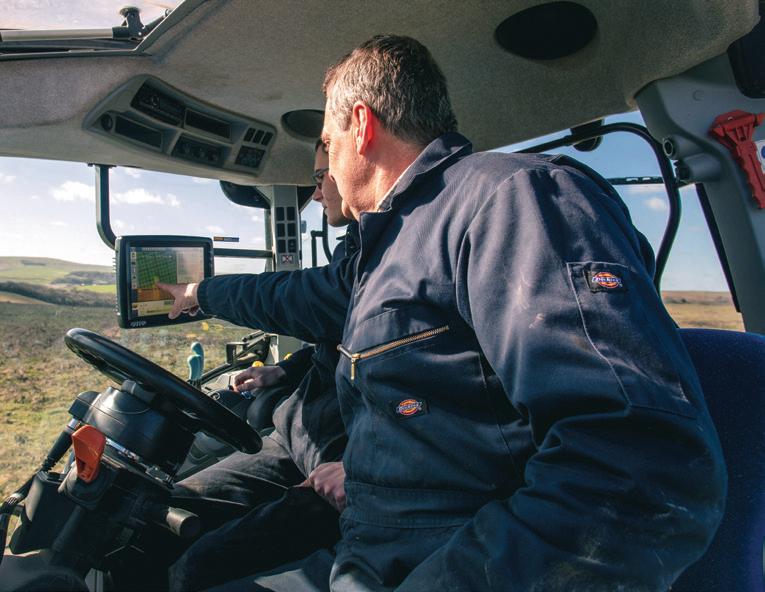
WWW.SOUTHEASTFARMER.NET | MARCH 2024 47 TO ADVERTISE CALL 01303 233883 EDUCATION Visit www.plumpton.ac.uk
The Government’s decision to halt trade talks with Canada after failing to reach agreement over food quality issues has been welcomed.
A spokesman said at the time: “We have always said we will only negotiate trade deals that deliver for the British people. And we reserve the right to pause negotiations with any country if progress is not being made.” He said the UK was open to restarting talks in the future.
Tim Bamford, regional director of Country Land and Business Association (CLA) South East commented: “The UK government is right to reject the Canadian demand for the UK to allow imports of hormone-treated beef – it is simply too big a price to pay.
“British farmers rear cattle to the very highest animal welfare and environmental standards. It would be an unfair market for British farmers if they have to compete with imported meat produced to lower and cheaper standards than would be legal here.
TRADE TALKS WITH CANADA HALTED
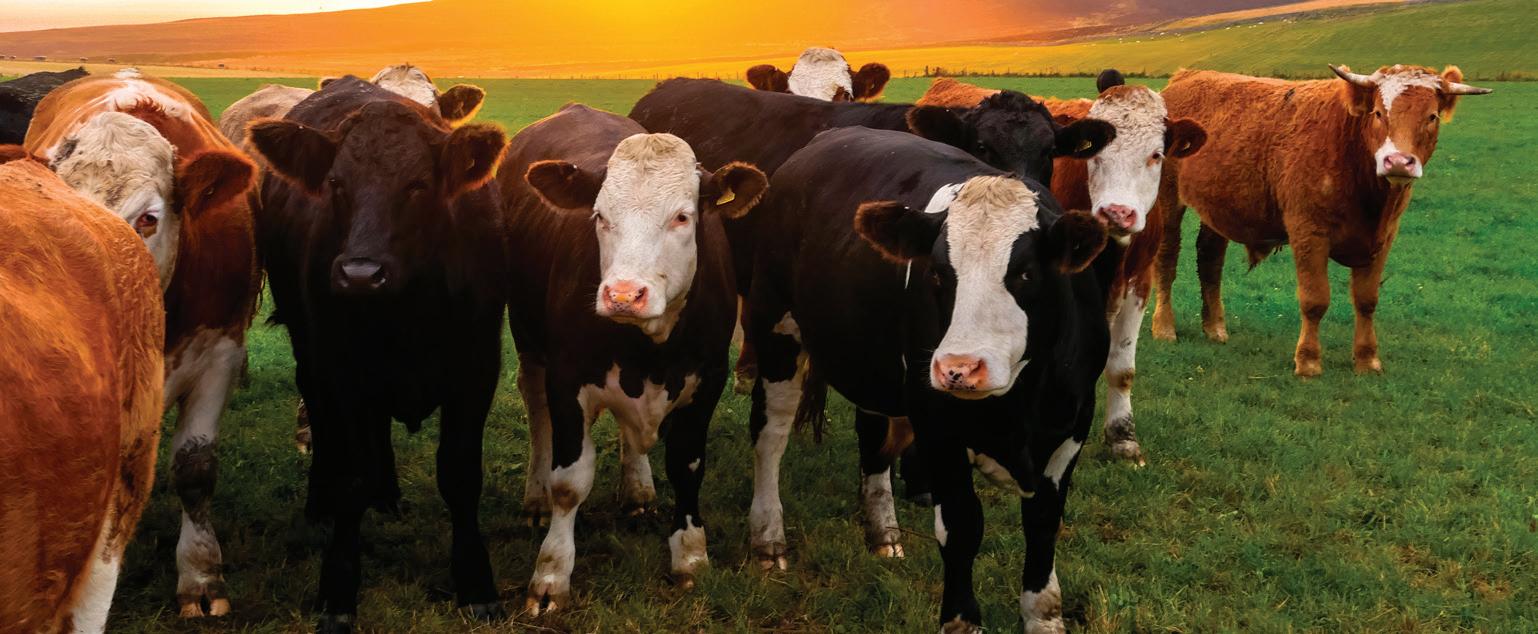
“Free trade deals represent an opportunity for the UK food sector, but only if our world-class standards are protected in the process.”
NFU President Minette Batters responded to the news by pointing out: “On products such as beef and cheese, Canada was demanding too much and offering too little.”
GET READY FOR A SUCCESSFUL TURNOUT
Turning stock out to grass in spring comes as a relief to many farmers, but animal performance and health can suffer if stock are not maintained on a nutritionally balanced diet. Careful supplementation at grass can be a catalyst for enhanced animal performance and improved profitability. Crystalyx products offer tailored supplementation throughout the grazing season.
Crystalyx Cattle High-Mag helps maintain normal blood magnesium levels during times of risk to reduce the risk of grass staggers. Containing 10.5% magnesium from a unique blend of three different magnesium sources, Cattle High-Mag is formulated with dehydrated molasses to ensure palatability even on lush pasture. Incorporating a full range of essential trace elements and vitamins, Crystalyx Cattle High-Mag perfectly balances deficiencies in grass.
Independent research has shown that feeding Crystalyx Cattle Booster at grass significantly improves daily live weight gain and fertility, due to a more efficient rumen fermentation. Feeding Crystalyx makes the rumen bugs work harder so they digest
forages more effectively and efficiently, improving overall diet digestibility and enhancing animal performance.
During the warm days of late spring and early summer, flies can be a constant pest of grazing cattle, reducing the time spent grazing which in turn decreases forage intake and resulting in a significant loss of performance.
ADVERTISER'S ANNOUNCEMENT
Crystalyx Garlyx contains a concentrated source of garlic to ward off biting insects, together with a full complement of essential minerals, trace elements and vitamins to balance the recognised deficiencies in spring and summer grass.
So, whatever the time of year, there is a Crystalyx feed lick to help keep your stock healthy and performing at their best.
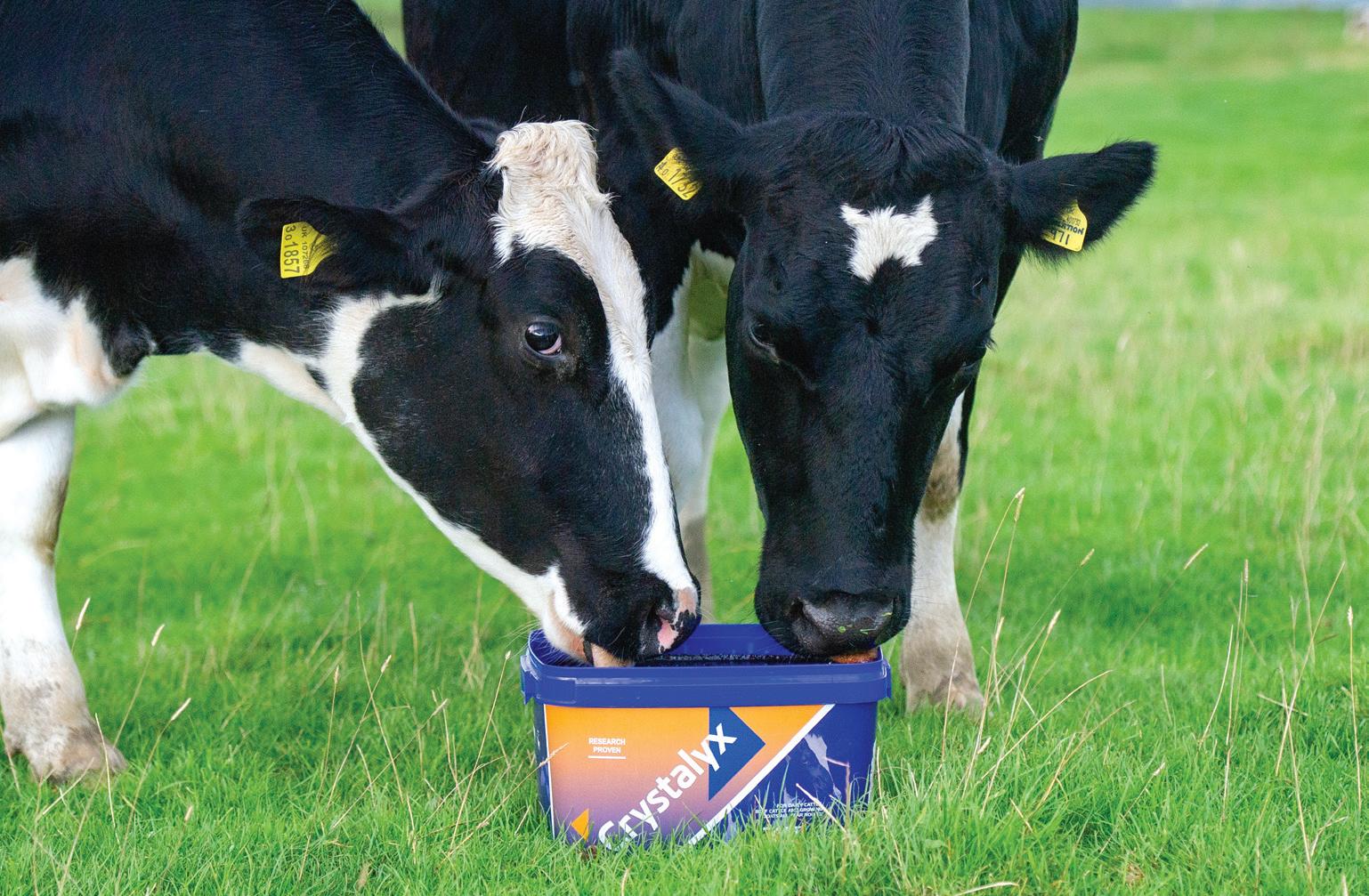
MARCH 2024 | WWW.SOUTHEASTFARMER.NET 48 LIVESTOCK
 NICK ADAMES
Former dairy farmer
Not only have we farmers had to bear the neglect of our rifes along the south coast but inland, along the banks of the River Arun, farmers have had equal frustrations with the ‘responsible’ body for the past decade.
We have been waiting for two years for
WAITING TWO YEARS FOR REPAIRS TO THE RIVERBANKS
repairs to the riverbanks, which have been gradually eroding as high tides have topped the banks and washed their bases away. Finally, late last summer, we heard they had set up a deal with another company to do the long-awaited task, work that was finally finished just in time for the winter weather to hit us. Within a couple of weeks it became apparent there was a major problem, as high tides quickly came over the top of the repaired river banks.
In January the extent of the trouble was exposed when, within just one really high tide, some 200 acres was under up to 10ft of river water. When we were able to get close enough to take photos, it became apparent that the river bank repair had been finished off between two and six inches below its original height, so allowing the next very high tide to pour over and, with it, wash out huge chunks of the newly reinstated bank work.
It’s not easy to contact the senior staff concerned as they don’t like bad news or are ‘on leave’. So the only person we could speak to was the local “FCRM advisor (not sure what that means) of the Arun and Adur Asset Performance Team”. A man one can have a discussion with, he admitted that he had been telling the contractors that they were ‘finishing’ the banks too low, but was ignored. Now we can see who was right. Doubtless the senior managers of the ‘asset and performance team’ will be given good bonuses at the end of the financial year.
Meanwhile we and so many other farmers along these ill-maintained waterways wait and hope some less limp administration takes hold of the problem and gets our rivers flowing as designed, and then sees that they are maintained. When they perhaps revert to something close to the old internal drainage boards, staffed by locals and run by people with practical experience and costing a tiny fraction of the present setup. When maybe even local farmers might again be involved?
We are slowly progressing towards our woodland scheme with great cooperation from the Forestry Commission. Nothing is done quickly these days once any government body becomes involved. Fortunately, we are getting strong support for the scheme from both our agent and the commission’s woodland creation officer for the South East who is proving a great assistance and appears almost as keen as I do to get the land planted and protected from the insatiable developers.
It isn’t until one ventures into a plan like this that one realises the complexities involved, beyond getting an overall grip on what’s needed, which is quite basic. “I want to plant a wood” sounds easy? But then there are little things, allowances for the likes of public footpaths, underground electricity, sewers and water mains; overhead electricity pylons, too, but in this case they are of minimal concern.
We had concerns about the best way to protect the trees; tubes or deer fencing? We have decided to go for the latter, which also takes care
of some footpaths which can just be fenced off. Then you need to find a grower who meets the commission’s environmental requirements, as well as having available the tree species you want. I have gone for mixed native species, which sadly excluded ash, but with the final emphasis on an oak woodland with several hundred years' life.
Since this scheme is immediately adjacent to the farmhouse and neighbours, it’s important it's done so it only has positive features. We won’t live to see it to maturity, but it has to be right, and its planting needs to consider how it will develop. For example, other properties will need good access to light and to be free of falling timber, so large species need room to grow and to drop limbs without causing damage. It seems it will all be possible without any local objections, since the residents of my little hamlet appear to be strongly in favour, given their alternative is being overrun with newbuild housing!
Already I am getting offers to assist with the planting, although aching backs and winter weather may cause the enthusiasm to wane quite fast. It is, though, a chance for local people to do something they, and their families, will be able to get pleasure and satisfaction from for generations to come.
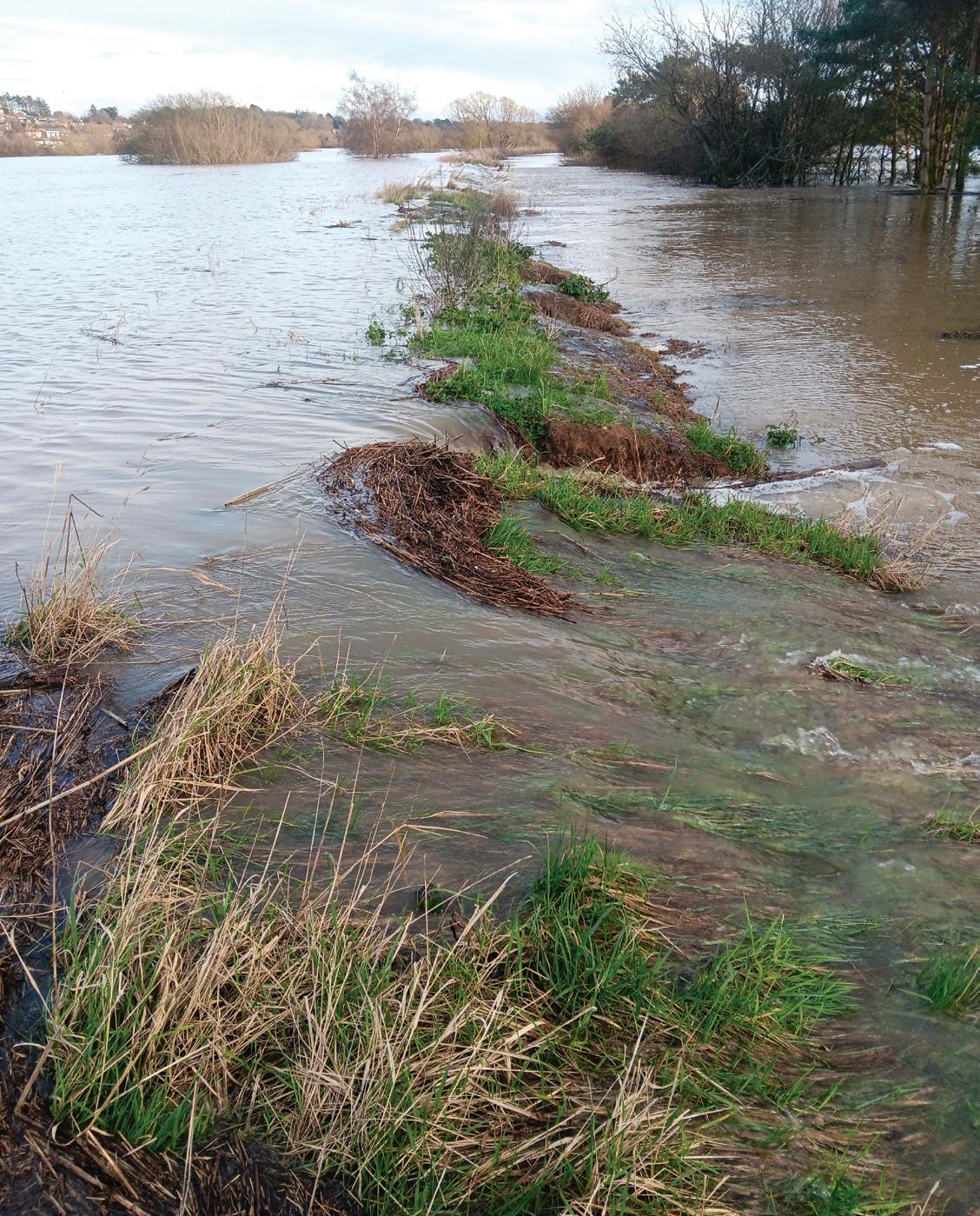
WWW.SOUTHEASTFARMER.NET | MARCH 2024 49 TO ADVERTISE CALL 01303 233883 WEST SUSSEX DIARY NICK ADAMES
The River Arun, left, pouring through and over its banks into farmland ten feet below
SUPPORTING THE FARMER’S BOTTOM LINE
While every vet’s focus will always be on the health of the animals he or she is caring for, Rob Drysdale knows that from a business point of view, the farmer has at least one eye on the cost of production.
Ensuring that the animal is giving as much milk, or putting on as much meat as possible, and that the whole set up of the business is keeping costs as low as possible was not high on the list of priorities in the James Herriot days of emergency vets dashing to the aid of sick animals, usually in atrocious weather and inevitably in the small hours.
Now, though, it is very much the priority, with the vet – in surveys regularly the most trusted on-farm adviser – able to give a far
broader range of technical advice aimed at supporting the farmer’s bottom line.
And cost of production is something Rob, whose new business Ruminant Health Solutions has just opened a new office near Horsham in West Sussex, knows plenty about.
After finishing a Nuffield Farming Scholarship looking at dairy beef production, Rob and his wife Bonnie developed their own farming business, including a beef unit in Somerset, in 2015.
Although they spent several years building the business through a tough period for the beef industry, the Covid-19 shutdown ended the dream when big buyers like McDonald’s dropped out of the market and exports halted overnight.
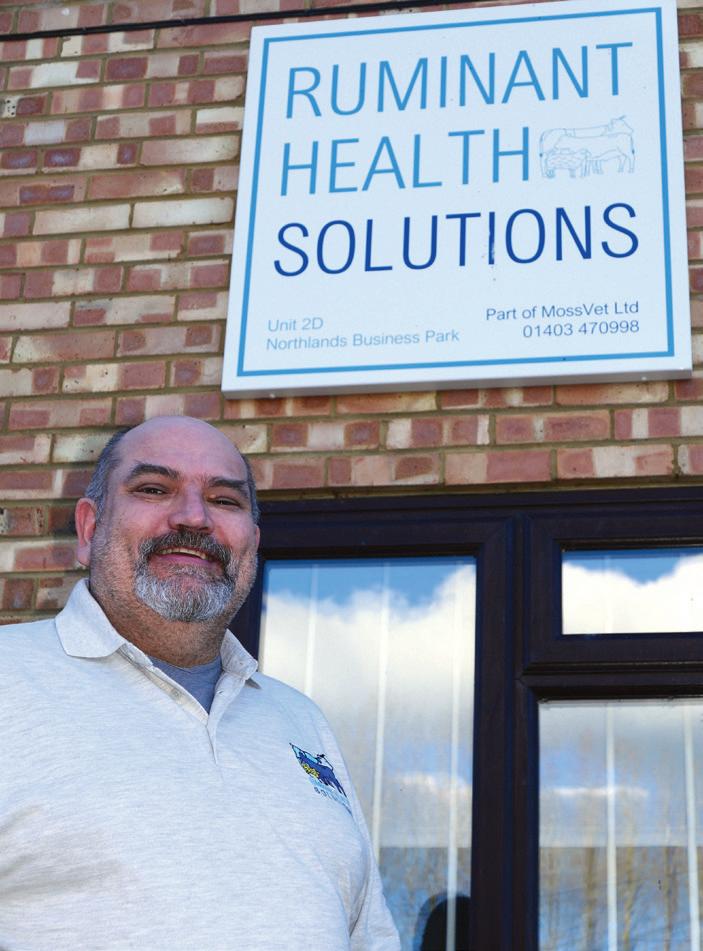
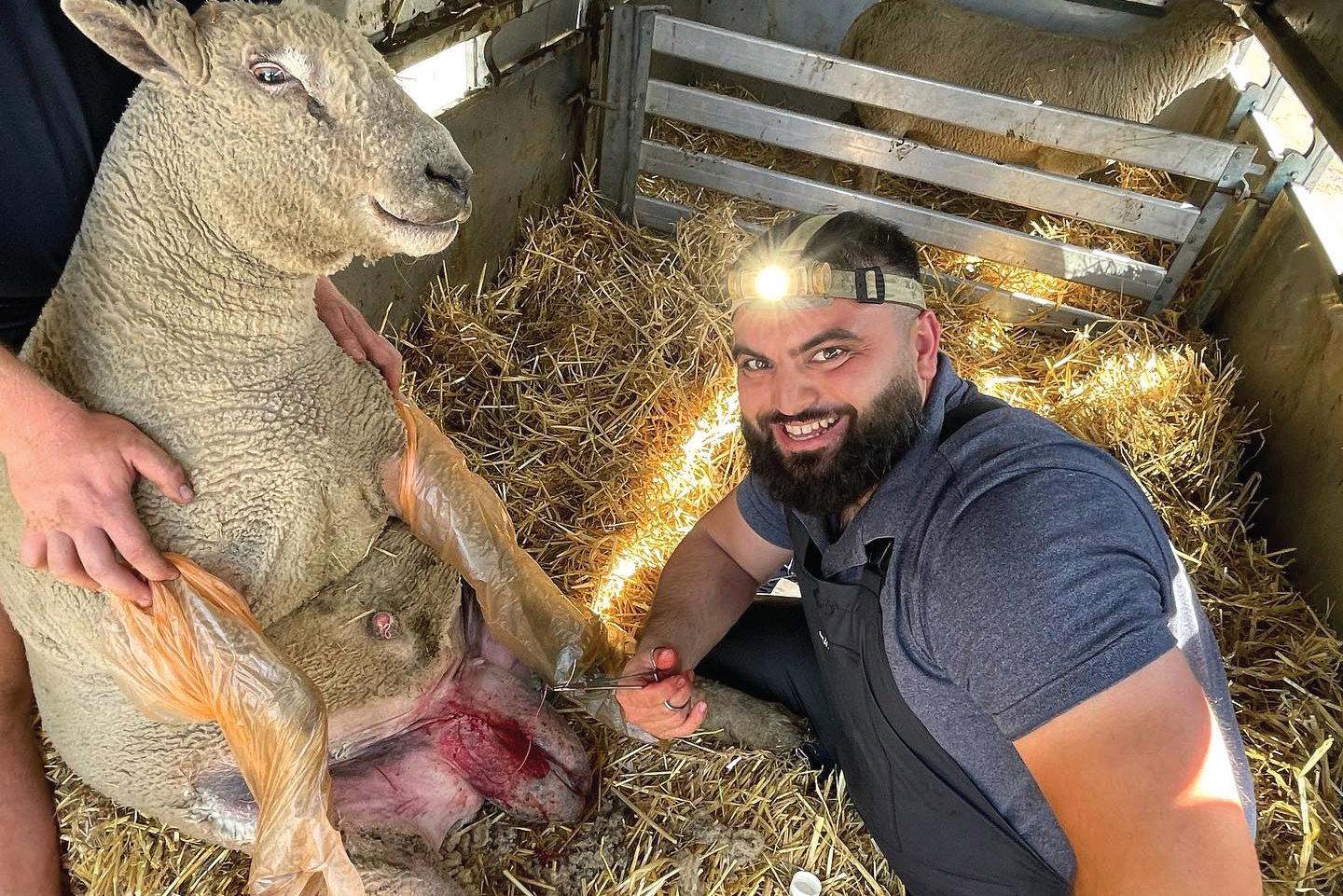
MARCH 2024 | WWW.SOUTHEASTFARMER.NET 50 VETERINARY HEALTH
FEATURED COMPANY:
Ruminant Health Solutions
>>
Radu Morindau
Rob Drysdale MRCVS MBIAC
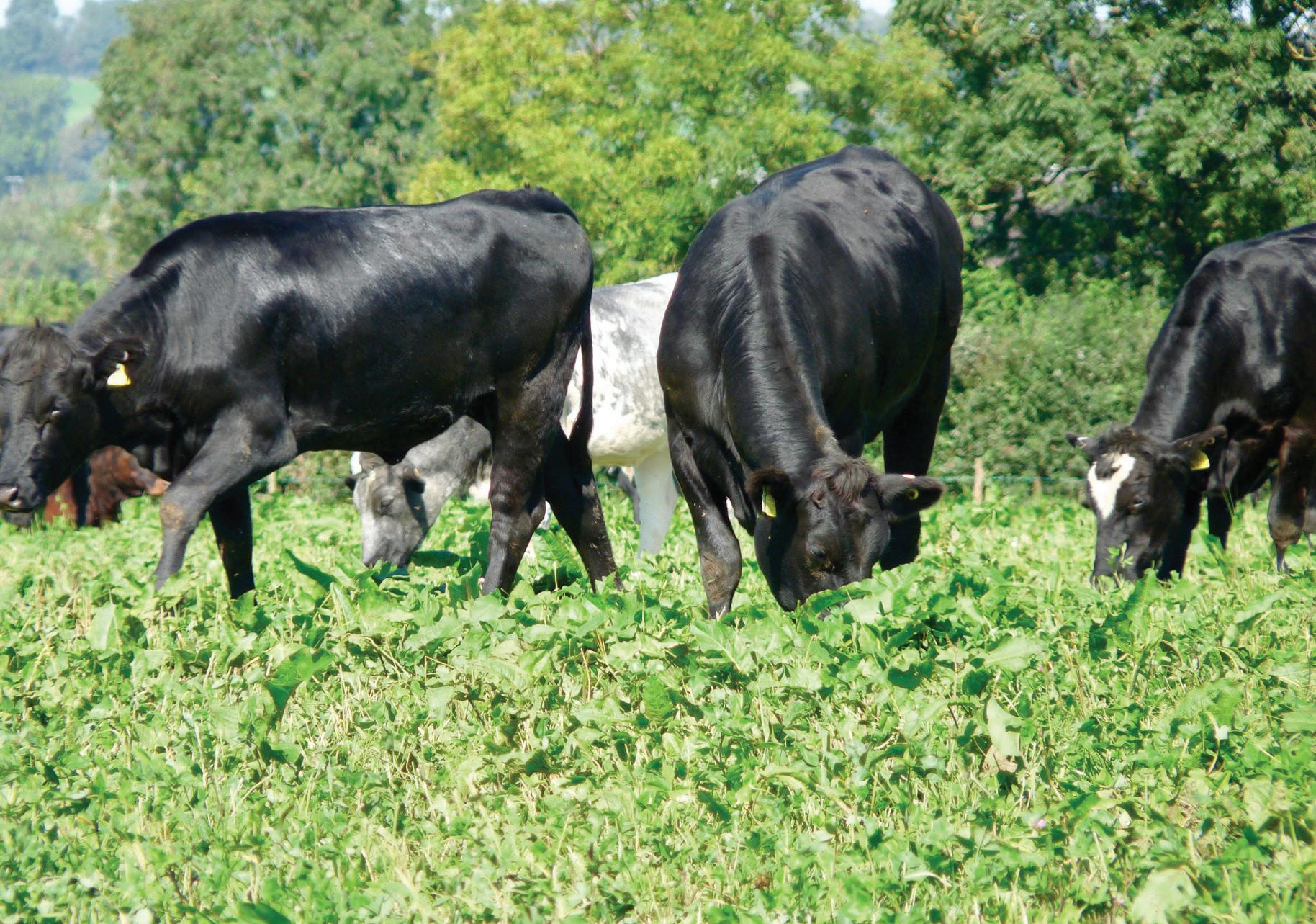
Market units in Ashford, Hailsham & Salisbury on market days and active local representation across the South East.
Founded in 2011, Barkers Animal Health has grown and ourished by serving dairy farmers across the south of Britain. Having discovered many game changing products for sheep farmers, we have turned our attention to cow health and together with our innovative supply chain, have found several products and protocols that solve many “age old headaches”, such as:
Transition Cows
Calf Rearing Problems
Fertility Issues
Sub clinical Acidosis
Digital Dermatitis
Mastitis & Teat Condition
Parasite Control
BARKERS SUPPLY:
Medicines
Minerals

Milk Powders





We have a team of 10 on farm representatives o ering, herd health planning, competitive pricing, friendly practical advice and an excellent delivery service.





Chemical & Teat Spray
Forage Preservatives
Calving Essentials
Feed Additives


Protective Workwear







Over 50 years of industry experience have combined to bring you a company who can help you achieve desired yield & solids, minimal disease & de ciency and be there when NEEDED.
the team direct to discuss our range in more detail, arrange a Rep visit or to place an order Telephone: 01460 242432 or Email: o ce@barkersahl.co.uk
WWW.SOUTHEASTFARMER.NET | MARCH 2024 51 TO ADVERTISE CALL 01303 233883 Ruminant Health Solutions Your partner for a better future Comprehensive farm & livestock veterinary service Working with farmers to maximise profitability through better health Responsible prescribing with our preventative protocols and treatment plans Providing AHWP funded health plans and cost-effective medicines to your farm
Contact us today ���� 01403 470998 ✉ office@bovinehealth.co.uk
Call
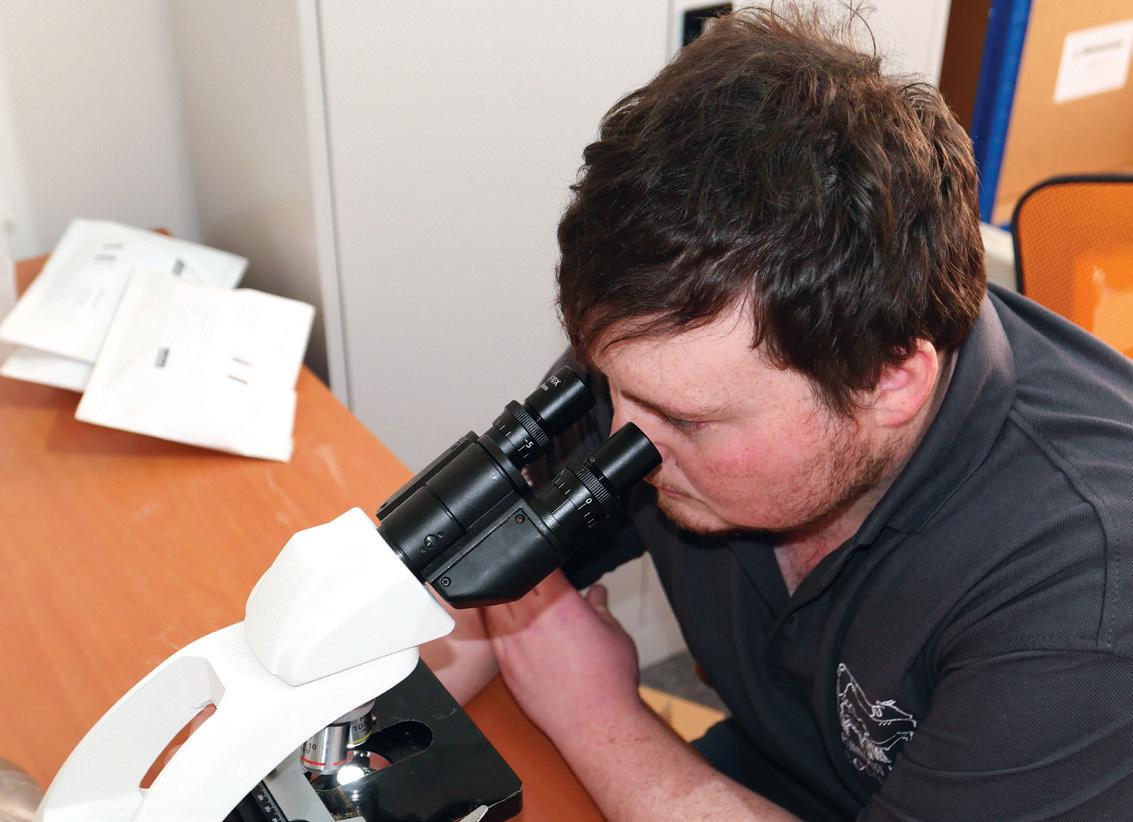
While a difficult time for them, the experience highlighted the importance of keeping the cost of production low and outputs high and helped Rob understand the pressures facing farmers and their need to focus at all times on priorities.
“A vet might visit a beef farm and point out a number of relatively minor health issues or management changes that need to be tackled but then be disappointed on his or her next visit to find that the farmer hadn’t implemented all the suggestions,” he commented.
“In reality, though, that farmer will be under huge time and cost pressures right across the business. While they may want to take all the vet’s suggestions on board and understands the thinking behind them, they may not be able to do everything immediately. It’s about
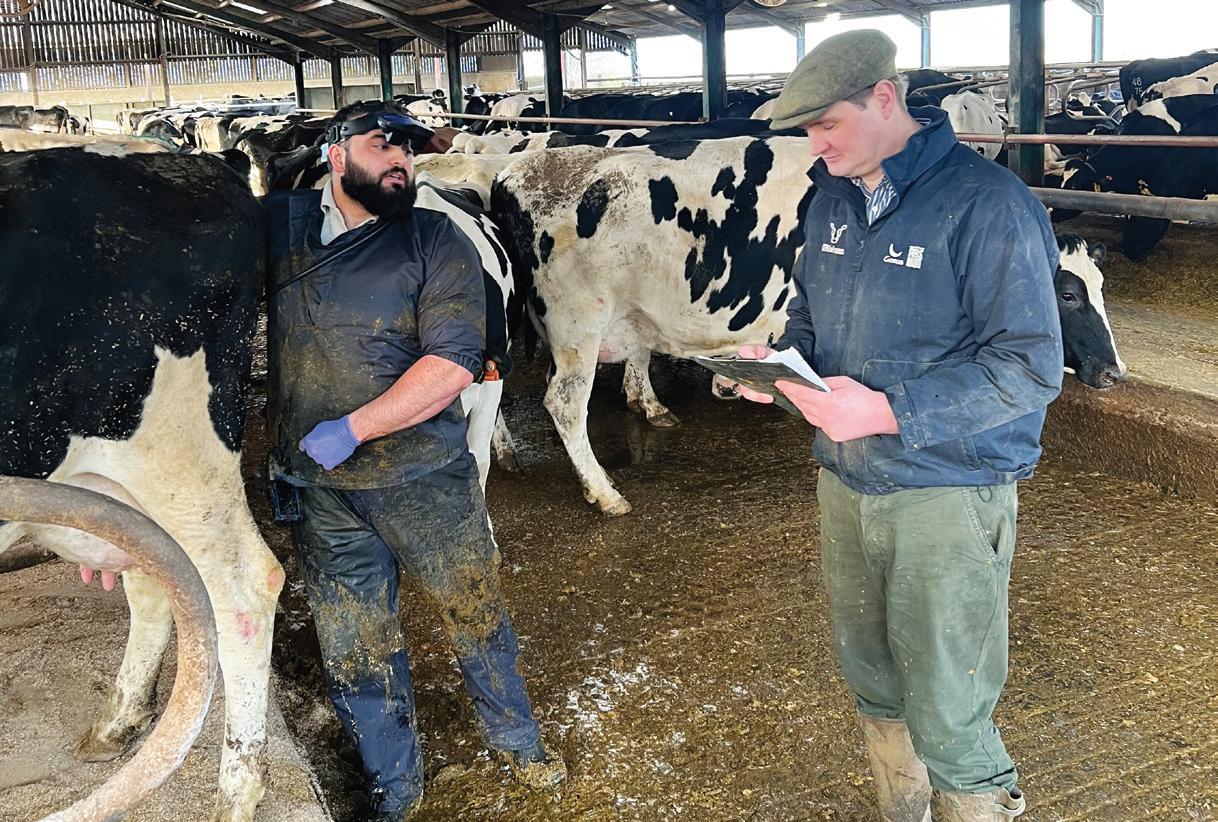
short, medium and long-term targets, and having been there and done that, I know it’s not easy.”
While Rob has a huge amount of experience with cattle, he’s also more than qualified to launch the new veterinary business, having set up a previous farm animal practice based in Warnham, just up the road, in 2000.
While he started out on his own, by the time the business was sold 14 years later it had grown to a 120-strong workforce, including 57 vets, and was operating from Cumbria to Cornwall and to Kent.
Ruminant Health Solutions is starting out at a more modest scale, but with a focus that is very much aimed at providing well-researched, data-backed technical advice to support the business alongside the
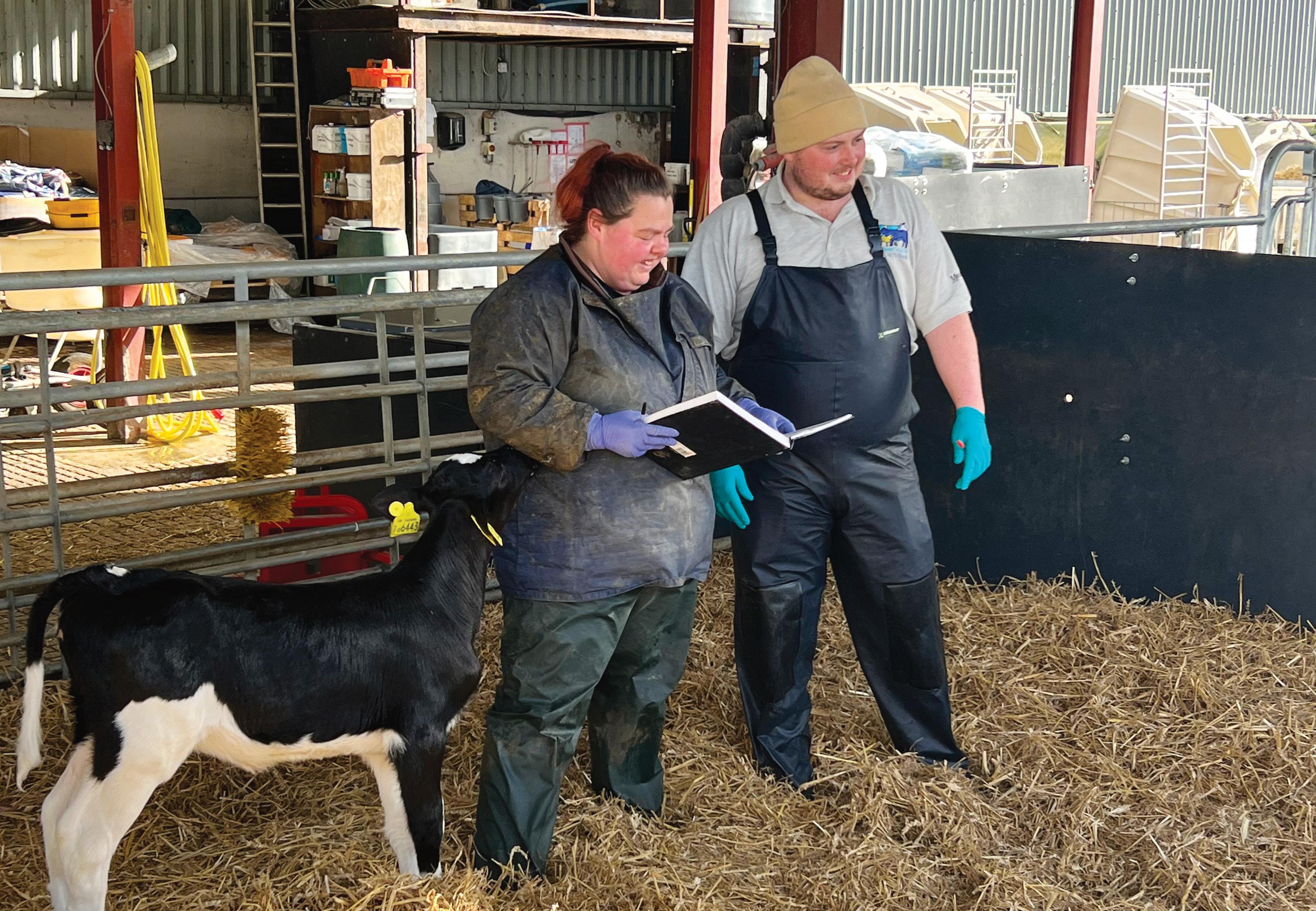
MARCH 2024 | WWW.SOUTHEASTFARMER.NET 52 VETERINARY HEALTH
<< FEATURED COMPANY: Ruminant Health Solutions
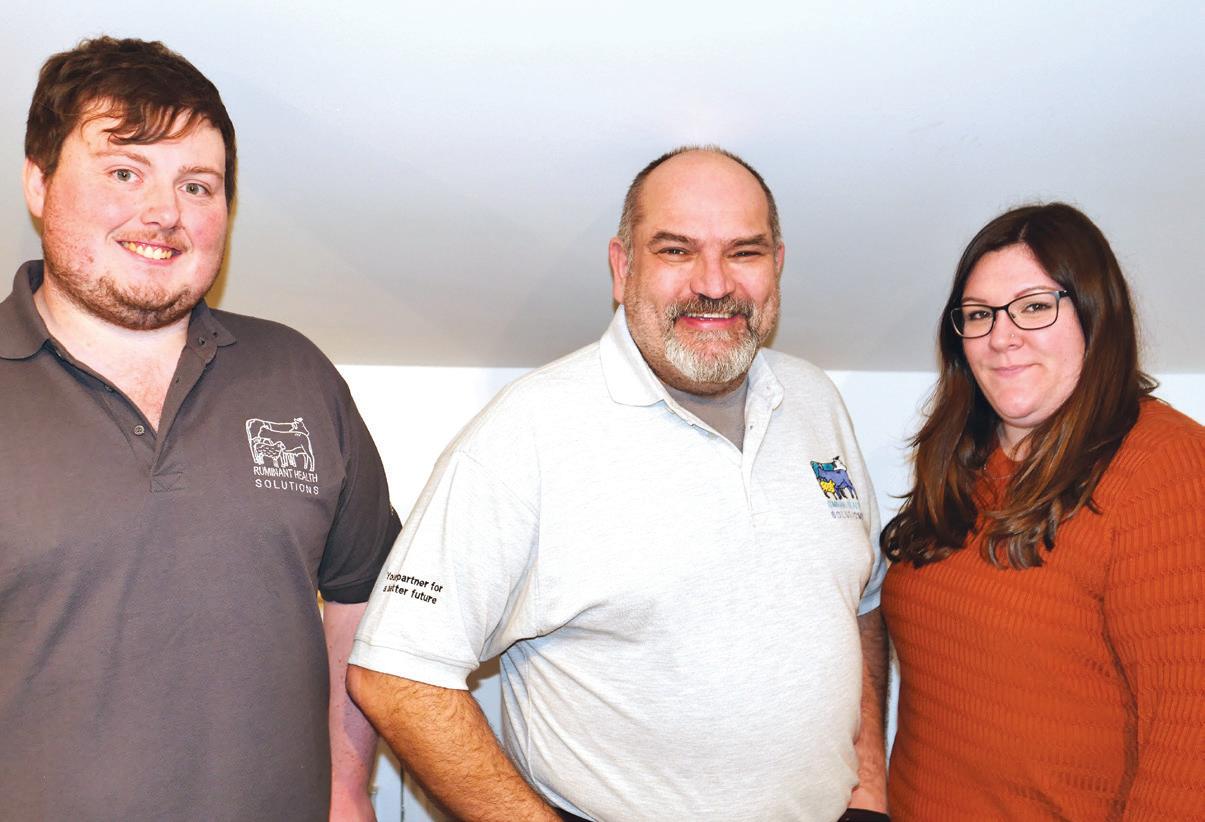
usual hands-on help with sick or injured livestock.
Having launched as Bovine Health Solutions in 2021, Rob changed the name when industry friends pointed out that he was in danger of losing business from sheep farmers confused by the name. “We most definitely look after all ruminants,” he commented.
Rob has always believed that ‘transparent pricing’ is vital for farmers and vets to work together. “We need to keep medicines separate from the true cost of advice,” he explained, “Having the right product at a value the farmer sees as cost effective means not hiding excessive margins in the medicines.” He has now introduced that separation by prescribing and working in partnership with Mossvet Ltd.
Mossvet is based in Northern Ireland and has outlets in Eire and the UK. “The business has to keep prices keen, because if the farmers in Northern Ireland think they aren’t getting good value they simply hop over the border and buy them in the south,” he pointed out.
The link means that when a Ruminant Health Solutions vet discusses a vaccination or treatment strategy, he or she will prescribe any prescription only medicines through Mossvet for the farmer to purchase direct. “And if the farmer can source them cheaper elsewhere we will simply write them a prescription,” Rob explained.
“It means that they know what they are paying for the advice and can judge the value it offers. Nothing is hidden and the farmers can see we aren’t bumping up our prices while making an unreasonable profit on the medicines.”
The advice from Ruminant Health Solutions comes from Rob and his growing team, which includes vets Radu Morindau and Olly Giles alongside Devon-based Fiona Dolan. New recruit Jess Walker started as practice manager in February to further develop the medicine supply chain. With the business already growing steadily, there are plans to employ two more vets in the coming months.
While the advice will often be about animal health, it’s just as likely, under Rob’s innovative approach, to be about the quality of the silage or some other aspect of the farm management or systems that is reducing efficiency and making the business less profitable.
“The business of farming is more than the sum of its parts,” Rob explained. As an example, silage production and feed usage makes a big difference in terms of costs to the business and lost efficiency in milk or beef production. Making better home-grown feeds and using them more efficiently, perhaps in youngstock rearing or milkers’ diet, could be worth tens of thousands of pounds each year.” >>
Medicine supply quick and simple:
✓ Contact the office to request a quote
✓ Confirm your order with the office
✓ MossVet requests a prescription from your vet
✓ Order is dispatched upon receipt of the signed script
✓ Next day delivery via courier is included in the price
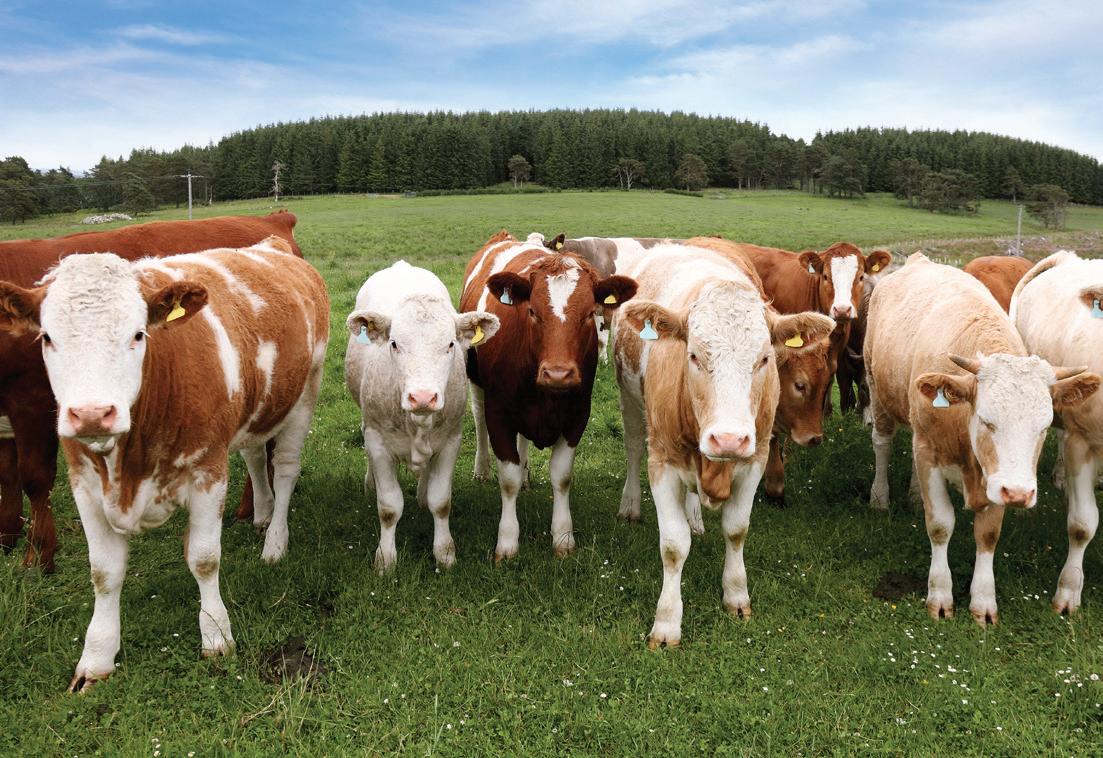
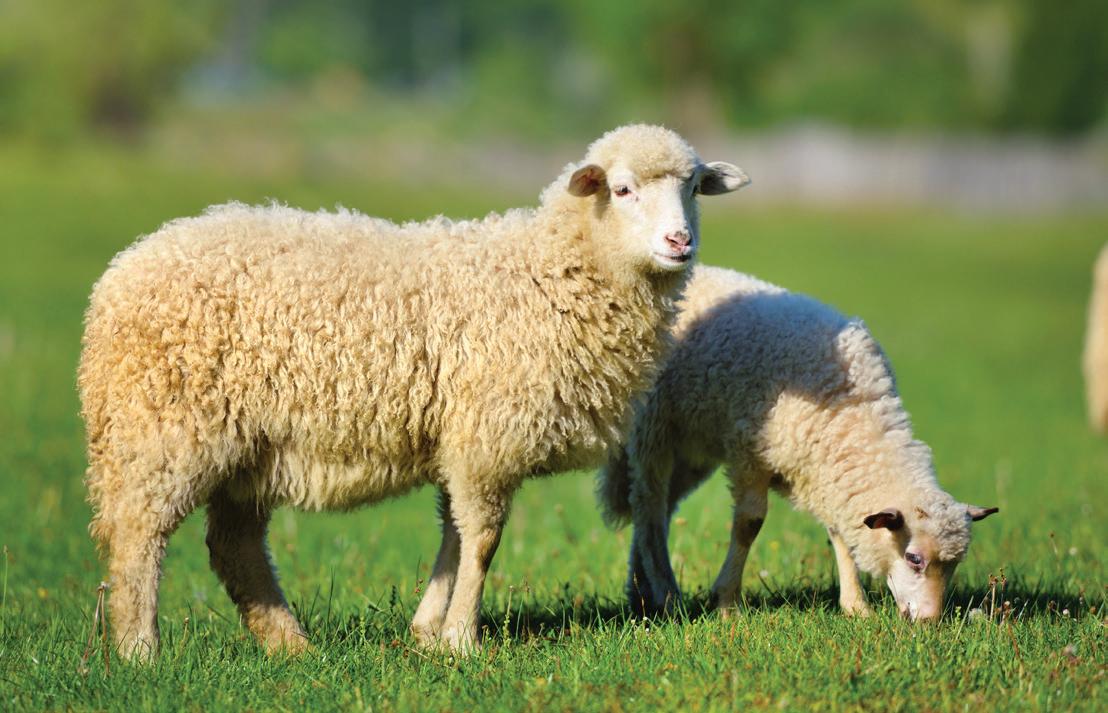
WWW.SOUTHEASTFARMER.NET | MARCH 2024 53 TO ADVERTISE CALL 01303 233883
Vets Olly Giles and Rob Drysdale with Office Manager Jess Walker
MO SSVET LTD. Specialist farm animal practice with its own wholesale business supplying farms in the UK.
For more information please contact our South of England partner Ruminant Health Solutions on 01403 470998 SEASONAL OFFERS FOR SPRING 2024: Scour vaccine from £7.50 per dose IBR vaccine from £1.80 per dose Lepto vaccine from £1.80 per dose Teat sealant from £1.30 per tube
It’s that kind of broader thinking that Rob believes will set Ruminant Health Solutions apart as a vet with an approach that is driven by helping farmers reduce their costs and increase their output as well as looking after the health of their livestock. “And it’s usually about management, not a new brand of fairy dust,” he added.
<< farmers, and their customers, look for a new approach. Developing young vets also takes time and costs the practice in time as well as reduced income, while very few graduates are even looking to enter production medicine. Ruminant Health Solutions aims to develop farm animal vets within this changing profession.”
“Today’s farm vet needs to be more than just a health professional; we need to understand the production process and offer advice to the farmer that saves costs and maximises returns.
“The pandemic made it a tough few years for our beef business, but we learned an awful lot about the true costs of production and about grazing, forage, cropping, grassland management and so on,” he explained. “I realised that it’s all about incremental gains. If you make a small change that increases a cow’s output by a litre a day, it doesn’t sound a lot, but across a herd of 1,000 cows it makes a difference, particularly when you calculate it over a year.
“Farm animal practice is changing. The traditional income stream from supplying antibiotics is under severe pressure as
Building a team that understands costs and has the freedom to spend time with the farmer are key areas for the practice, with Rob believing that vets have much to offer in terms of developing closer relationships with farmers. “We spend a lot of time just chatting and getting to know the stock and the way the farm operates,” he explained. “The larger, more corporate, practices find it hard to cost that kind of activity because it doesn’t fit neatly into a charging category.”
As well as using Mossvet for prescription only vet-licensed medicines, Ruminant Health Solutions has close links with Barkers Animal Health Ltd for the likes of wormers and fly treatments alongside other products that vets routinely include in health plans and protocols.
Rob explained: “I have always wanted to have links with agricultural merchants, as
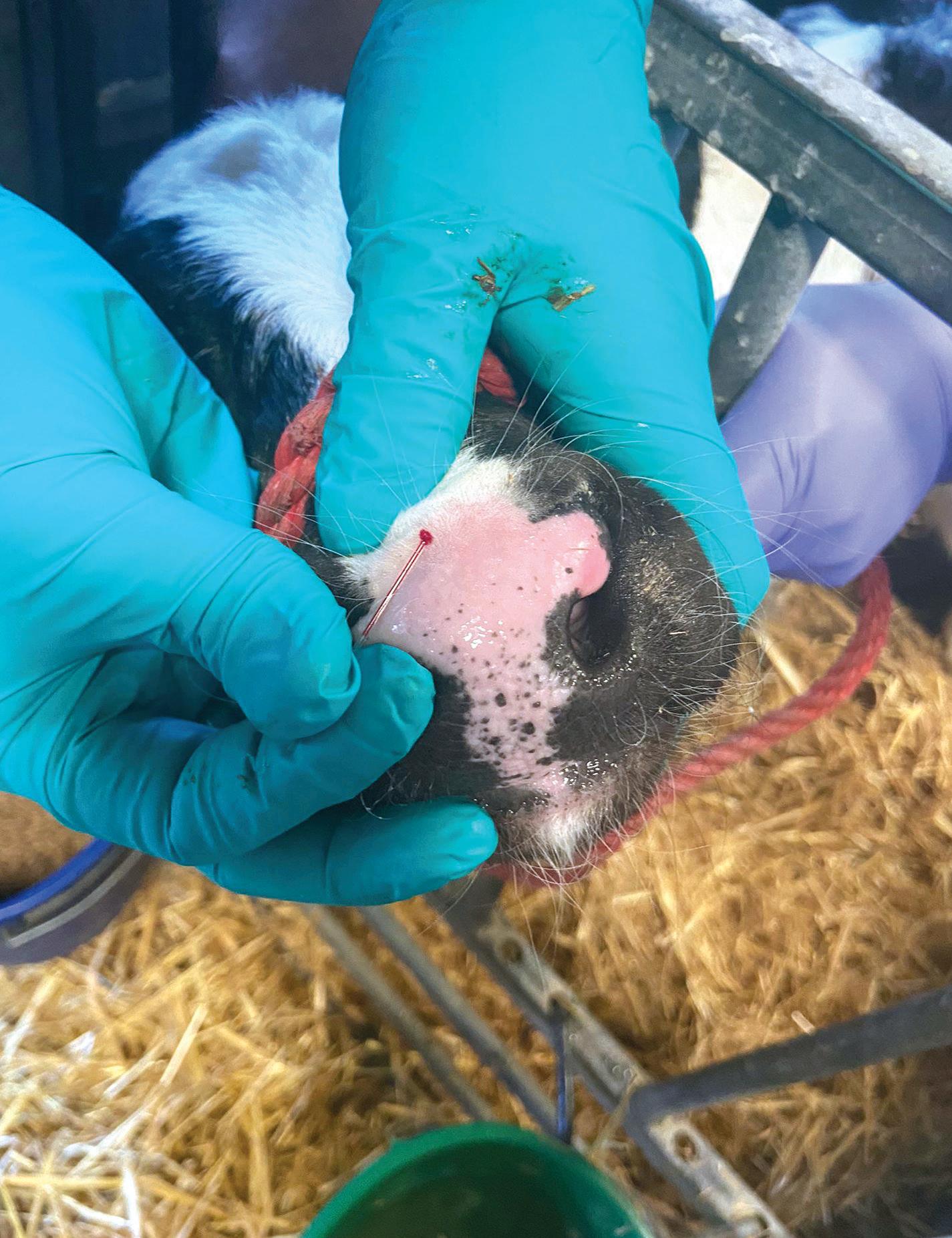
the supply chain sometimes creates friction rather than cooperation that would benefit the farmer.
“Ultimately we are working together to marry excellent solutions and products aimed at improving health and production at the lowest possible cost.” This system has developed over the past three years, with the team from Barkers offering local service, products and deliveries through Ruminant Health Solutions.
“It’s also worth remembering the government support packages that are in place,” Rob added. “Farmers can access additional funds through things like the animal health and welfare pathway or the TB Advisory Service. There are funds we can use to help offset the costs of health planning, so if you need a visit towards your farm assurance, talk to us about doing it properly and making it deliver real benefits for your farm.
“Health plans used to be something that farmers updated a day before their Red Tractor inspection, just for assurance purposes. We want to change that so that health planning is an integral part of running a successful business.”
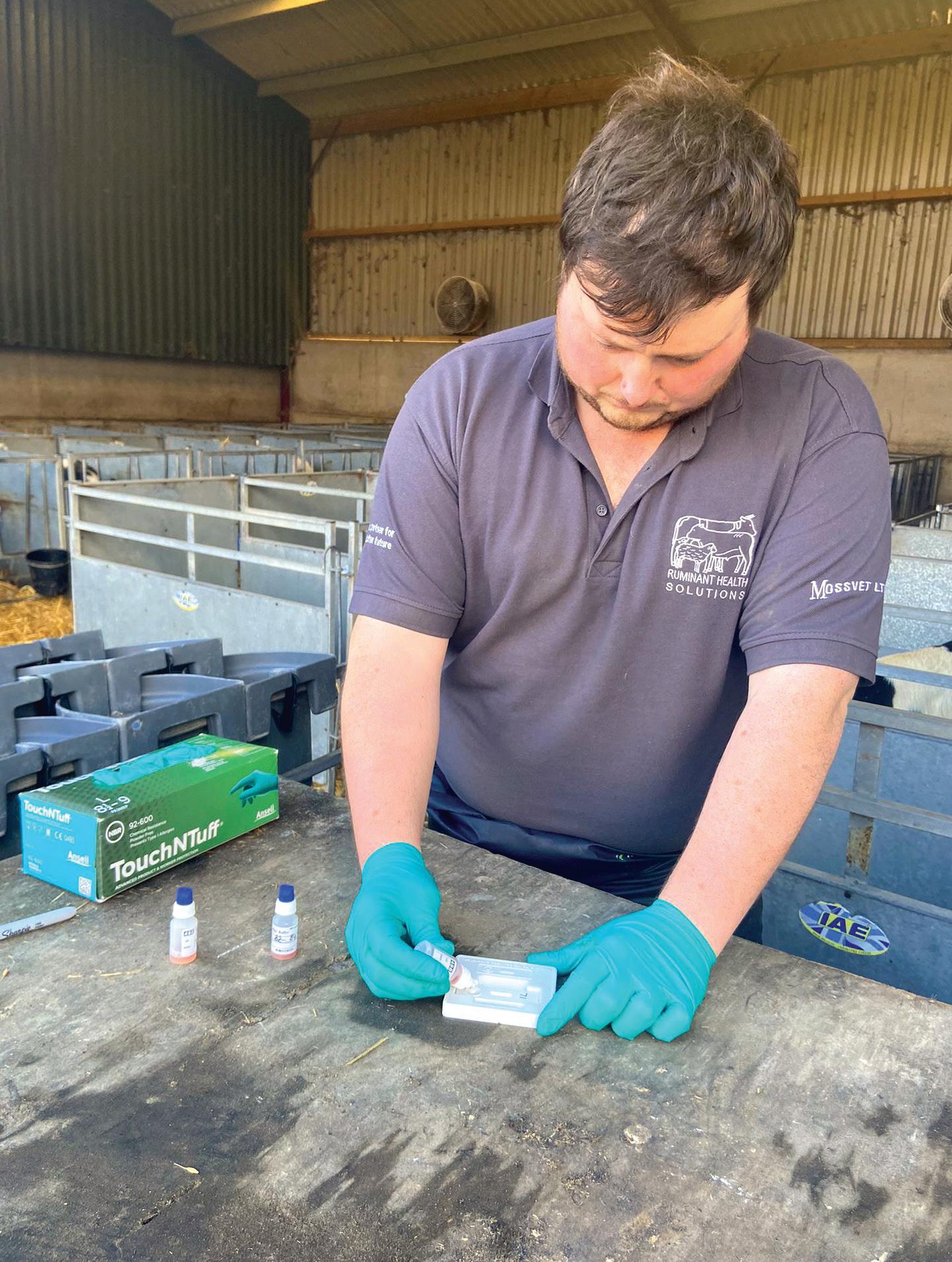 Taking a blood sample from calf’s nose for testing
MARCH 2024 | WWW.SOUTHEASTFARMER.NET 54
HEALTH
Olly checks the IgG levels from colostrum
VETERINARY
CALF HEALTH – MEANS LONG TERM BENEFITS
Taking calf and youngstock health to the next level has been shown to make a difference not only in the early animal’s life but through into beef finishing or dairy production.
Rob Drysdale has spent years developing an approach that works with dairy farmers or calf rearers to maximise their calf health and beyond. From pre-calving through to weaning, then on through the farm system, having healthier stock can save both time and feed costs plus increase production efficiency. The returns are easy to see: bigger calves at weaning, younger stock at breeding or slaughter and reducing the carbon footprint at farm level through lifetime milk or beef production.
The latest part of this approach has been the use of rapid, on farm, immunoglobulin testing for calves. This has already proved its worth by helping Ruminant Health Solutions vets improve early calf management on several farms. By sampling not just the colostrum quality but now the calf IgG level, protocols for feeding, vaccination



and treatments can now be tailored to each farm.
The value of scour vaccination has also been proved – helping the farmer understand pre-calving feeding for the heifers and cows, transition management and avoiding disease in the calf pens. “The costs of early calf feeding and management quickly build up,” explained Radu Morindau. “When we are advising a vaccine like Fencovis along with more milk feeding and adding staff time per calf, if the performance or disease levels do not match this spend then the new IgG test can really help us as we review the whole process.”
Visiting the farm, sampling and testing for disease problems now sits beside the vets routinely helping manage the data such as weight gains and other key performance indicators. Targeting performance for healthier calves, stronger weanlings and ultimately driving youngstock health and productivity is one of the key areas Ruminant Health Solutions has identified for better returns of its farmer clients.


• Ready to use injections available in 1, 5, and 25 dose packs
• Available from your veterinary surgeon
To



WWW.SOUTHEASTFARMER.NET | MARCH 2024 55 TO ADVERTISE CALL 01303 233883 FEATURED COMPANY: Ruminant Health Solutions
ADVANCING PROTECTION AGAINST CALF SCOUR HELPING END THE NIGHTMARE OF CALF SCOUR FOR A FAIRYTALE START FENCOVIS® Stimulates immunity against Rotavirus, Coronavirus and E.coli K99 in pregnant cows and heifers, so that calves receive added protection via the colostrum. • Prevents scour caused by Rotavirus and E. coli K99 • Inactivated vaccine with an oil-free adjuvant • 2 ml single dose intramuscular injection • Administered to the dam 12-3 weeks before calving
Fencovis® suspension for injection contains inactivated E. coli expressing F5 (K99) adhesin, strain O8:K35; inactivated bovine rotavirus, serotype G6P1, strain TM-91; inactivated bovine coronavirus, strain C-197. Fencovis® is indicated for active immunisation of pregnant heifers and cows in order to stimulate the development of antibodies against bovine rotavirus, bovine coronavirus and E. coli expressing F5 (K99) adhesin and to increase the level of passive immunity of calves against neonatal diarrhoea caused by bovine rotavirus, bovine coronavirus and E. coli expressing F5 (K99) adhesin. Fencovis® has been shown to prevent neonatal diarrhoea caused by bovine rotavirus and E. coli expressing F5 (K99) adhesin, reduce the incidence and severity of neonatal diarrhoea caused by bovine coronavirus and reduce faecal shedding of virus in calves infected with bovine rotavirus and bovine coronavirus. UK: POM-V IE: POM. For information about side effects, precautions, warnings and contraindications please refer to the product packaging and package leaflet. Advice should be sought from the prescriber. Further information available in the SPC or from Boehringer Ingelheim Animal Health UK Ltd, RG12 8YS, UK. UK Tel:01344 746957 IE Tel: 01 291 3985. Email: vetenquiries@boehringer-ingelheim.com. Fencovis® is a registered trademark of Boehringer Ingelheim Vetmedica GmbH, used under licence. ©2023 Boehringer Ingelheim Animal Health UK Ltd. All rights reserved. Date of preparation: Nov 2023. BOV-0114-2023. Use Medicines Responsibly.
find out more scan the QR code or find us at calfmatters.co.uk and calfmatters.ie
Preventing problems and mitigating losses should be the real goal of a farm vet in 2024, according to Radu Morindau, one of the team at Ruminant Health Solutions.
“Aiming to avoid emergency visits and sick animals and reduce wastage through better use of farm data, health audits and farm health planning, in order to create protocols and a working health plan, has been shown to make substantial improvement to a farm’s bottom line,” he explained.
“Any vet should be able to operate on a cow, but working out why, for instance, the stomach has become displaced, and changing the systems on the farm to prevent similar cases in future, is where the real value lies,” he went on.
A good example of the benefit of the farm team approach is Watchingwell Farm near Eynsford. Radu and Rob have worked with herd manager Iain McGeoch, the staff at Bower Park Dairy and nutritionist Christine Pederson over the past 18 months. In this period the farm has seen overall health improved while increasing milk sales by over 900 litres per cow.
Farm herd
Iain
HEALTH PLANNING IN ACTION
“When Rob first visited in September 2022 we spent an afternoon reviewing the farm, our systems and protocols, current problems and targets,” said Iain. “He then presented a plan that included set areas for improvement coupled with a vet services contract and the various medicines required to help achieve our goals.”
Yields have increased through incremental gains following a range of changes:
• Targeting transition cow health with the help of a calving barn, fresh cow protocols and specific early cow management
• Fertility protocols with less reliance on treatments, aiming for healthy ovaries and targeting reproduction
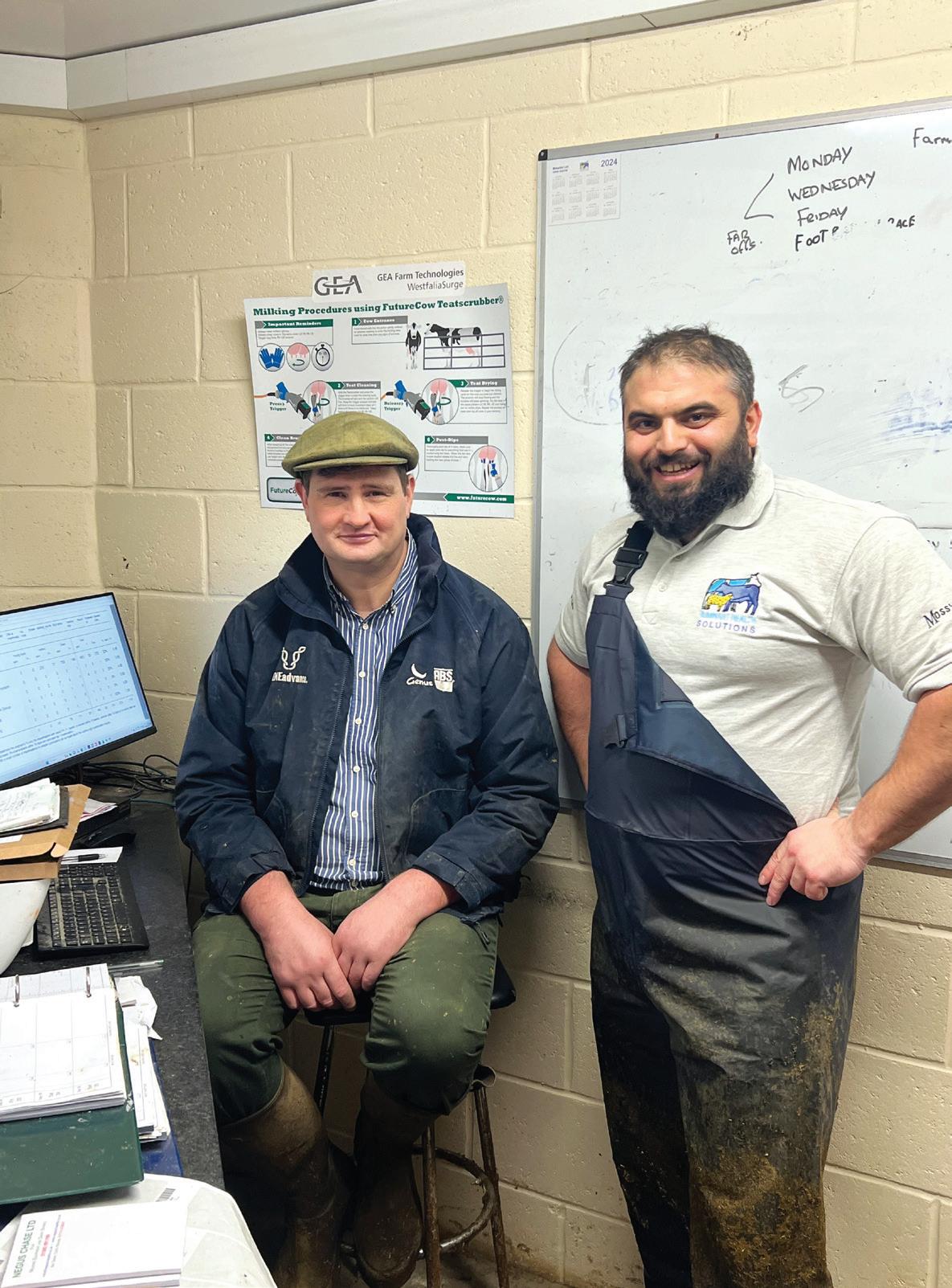
• Udder health and mastitis management protocols to reduce losses in the parlour
• Calf health and youngstock planning to drive heifer health, reduce age at first calving and improve performance while reducing costs.
“One area reviewed was vaccination regimes. In terms of calf health, we moved to Fencovis for early scour prevention and Radu or Olly check colostrum regularly,” Iain added.
“Rob identified udder health as another area of concern. We introduced StartVac vaccination to reduce the losses from mastitis and sick cows. This has really helped our productivity as well as reducing the stress on the milking team.”
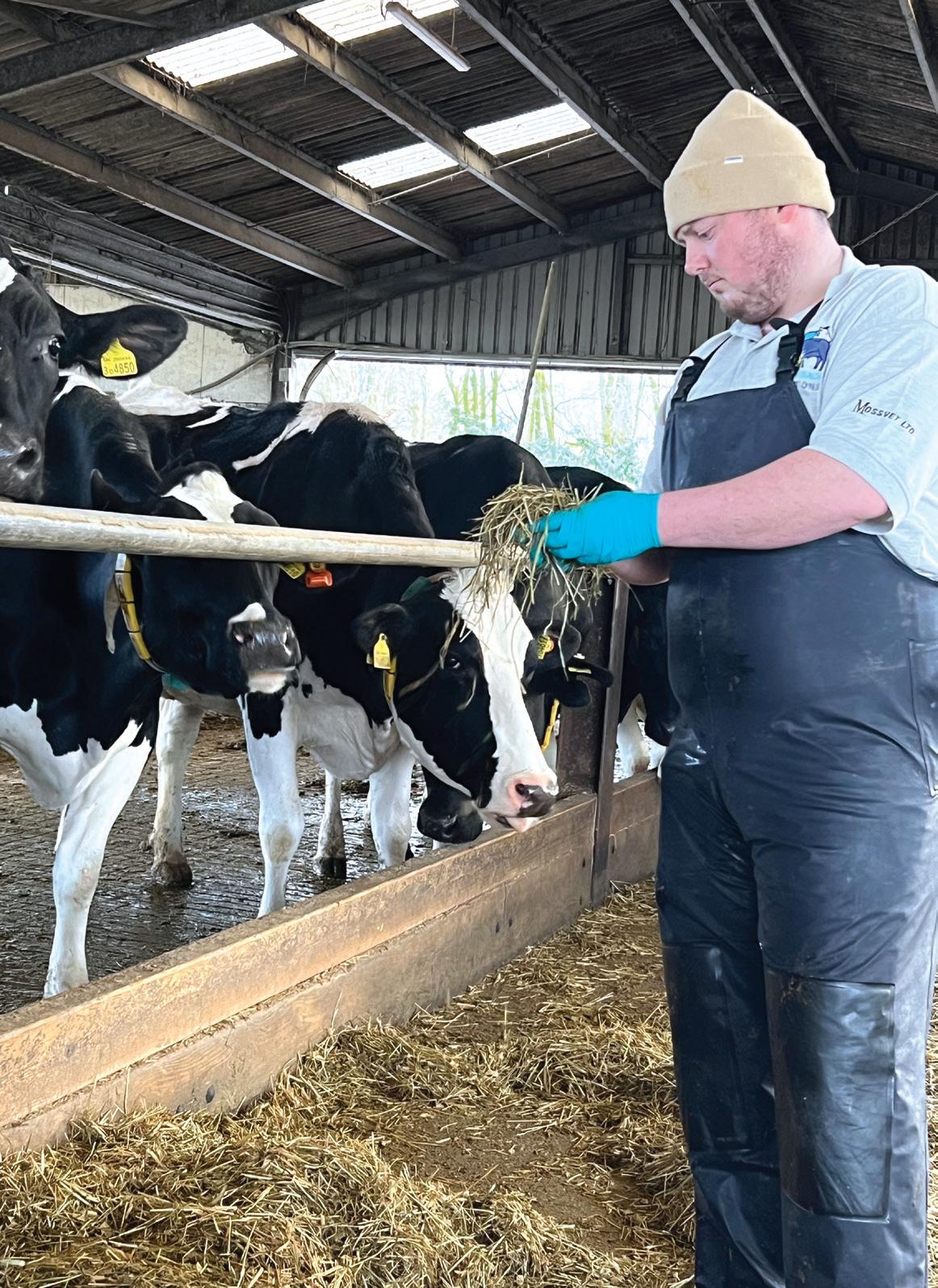 Watchingwell
manager
McGeoch checking data with Radu Morindau
Watchingwell
manager
McGeoch checking data with Radu Morindau
MARCH 2024 | WWW.SOUTHEASTFARMER.NET 56 VETERINARY HEALTH
Olly checks the feed
FEATURED COMPANY: Ruminant Health Solutions

Indications:
route: Intramuscular use.
vaccinations
of the
or
Dosage: Administer one
deep intramuscular injection in the neck muscles at 45 days before the expected parturition date and 1 month thereafter administer a second dose (at least 10 days before calving). A third
should be administered 2 months thereafter. The full immunization program should be repeated with each gestation. Side effects & Contraindications: Adverse reactions: Slight to moderate transient local reactions may occur after the administration of one dose of vaccine. They would mainly be: swelling (up to 5 cm2 on average), which disappears within 1 or 2 weeks at most In some cases, there may also be pain at the inoculation site that spontaneously subsides in a maximum of 4 days. A mean transient increase in body temperature of about 1°C, in some cows up to 2°C, may occur in the first 24 hours after injection. Anaphylactic-type reactions may occur in some sensitive animals which might be life threatening. Under these circumstances, appropriate and rapid symptomatic treatment should be administered. Contraindications: None. Withdrawal period: Milk: None. Special Precautions: Only healthy animals should be vaccinated. Allow the vaccine to reach a temperature of +15 °C to +25 °C before administration. Shake before use. Special precautions for the person administering the medicament: This product contains mineral oil. Accidental injection/self injection may result in severe pain and swelling, particularly if injected into a joint or finger, and in rare cases could result in the loss
HIPRA UK AND IRELAND.
Foxhall Business Centre, Foxhall Lodge, Foxhall Road, Nottingham, NG7 6LH
United Kingdom
TEL: (+44) 0115 845 6486 ukandireland@hipra.com
www.hipra.com
60 %
of the affected finger if prompt medical attention is not given. Can be used during pregnancy and lactation. Store and transport refrigerated (+2 °C to +8 °C) and protected from light. Do not freeze. Further information available from SPC Packaging: Cardboard box with 20 vials of 1 dose. Cardboard box with 1 vial of 5 doses. Cardboard box with 1 vial of 25 doses. Under veterinary prescription. Marketing Authorization Numbers: UK (NI): EU /02/08/092/001-010; UK (GB): Vm 17533/5010 Marketing authorisation holder: LABORATORIOS HIPRA, S.A Avda la Selva, 135. 17170 Amer (Girona) Spain. Tel. (972) 430660 Local representative: HIPRA UK AND IRELAND LIMITED. Foxhall Business Centre, Foxhall Lodge, Foxhall Road, Nottingham, NG7 6LH. United Kingdom. Tel: (+44) 0115 845 6486. E-mail: ukandireland@hipra.com Web: www.hipra.com Legal category: UK: POM-V. ROI: POM. Use medicines responsibly. Did you know you can vaccinate for mastitis? Ask your vet today
STARTVAC Polyvalent inactivated vaccine, bovine mastitis, in injectable emulsion. Composition: Escherichia coli (J5) inactivated > 50 RED60* Staphylococcus aureus (CP8) strain SP 140 inactivated, expressing Slime Associated Antigenic Complex (SAAC) >
50
RED80** *RED60: Rabbit effective dose in
of the animals
(serology). **RED80: Rabbit
effective dose in 80 % of the animals (serology).
For use in healthy cows and heifers, in dairy cattle herds with recurring mastitis problems, to reduce the incidence and the severity of the signs of clinical or sub-clinical mastitis caused by Staphylococcus aureus, coliforms
coagulasenegative staphylococci Administration
The
should be preferably administered on the alternate sides
neck.
dose (2 ml) by
dose

In the realm of land ownership, the responsibilities and liabilities associated with public access roads on private estates can be complex and often overlooked. As the boundaries between private property and public thoroughfares blur, James O’Connell, business law partner and head of the viticulture team at Sussex law
HOW PRIVATE FARM OR ESTATE ROADS BECOME SEMI-PUBLIC WITHOUT YOUR SAY
firm Mayo Wynne Baxter, discusses the myriad of legal obligations farmers and other landowners might find themselves suddenly saddled with.
Regular public access transforms private roads into a distinct category with its own set of rules and obligations.
The Highways Act 1980 casts a wide net, encompassing offences applicable to both public highways and private roads open to the public. From nuisance to wilful damage, obstruction to failure to maintain, landowners bear a whole suite of responsibilities to maintain safety and order on these semi-private thoroughfares which they simply don’t have in respect of private roads.
With public access comes heightened civil liability. Landowners are entrusted with the duty to ensure the safety of individuals traversing these roads, warranting greater care and diligence in maintenance
and management.
Finally, dialogue with insurers becomes imperative to ensure public liability cover is still valid for these publicly-accessed roads: no more uninsured 15-year-olds driving farm machinery on those roads.
A MULTIFACETED APPROACH
The practical application of these laws is often nuanced, subject to interpretation and enforcement discretion. And while in an era of constrained resources proactive enforcement may be rare, the threat of accidents leading to an explosion of unexpected criminal and civil liability is a real possibility.
In the event of a serious accident, landowners could find themselves facing criminal prosecution and civil claims, with insurers unwilling to foot the bill. With this in mind, preventative measures should be put in place.
Start by identifying and classifying estate roads, putting up no-entry signs where necessary to indicate restricted access and mitigate trespassing risks. If a member of the public goes somewhere where it is clear they should not be, they become a trespasser, and you owe far fewer duties to trespassers.
Review public access roads from a safety perspective, implementing signage and road markings to enhance public safety and ease liability risks. This will make it harder for someone to claim you were negligent in your obligation to take steps to protect their safety.
If feasible, consider having a sign at the entrance to the estate setting out terms of access, as well as a note on your website pointing out there are access conditions. This will enable you to say people entered knowing there were restrictions regarding their liability.
Introduce policies to mitigate the risks associated with unlicensed drivers and non-road legal vehicles on public access roads. If there is an accident with an unlicensed staff driver or a non-road legal vehicle, the question will be who, if anyone, was negligent and whether or not they drove in a dangerous, careless or reckless manner. The risk of being found negligent at least will be reduced if you can show you had thought about the potential problems in advance and had put in place reasonable measures to avoid the problem occurring.
Have a procedure to record any accidents that do occur to protect yourself against any bogus claims. For trade visitors with whom you have contracts, consider adding a clause where you decline to accept responsibility for any damage occurring on your public access roads other than that mandated by law.
Finally, engage in a detailed dialogue with insurers to ensure adequate coverage for public access roads, mitigating financial risks associated with potential liabilities.
MARCH 2024 | WWW.SOUTHEASTFARMER.NET 58
Legal services for farmers & rural businesses Call us today or visit our website: 01227 763939 furleypage.co.uk www.ts-p.co.uk @pragmaticlawyer T 01892 510000 Weeding out problems, encouraging growth. Providing peace of mind and bespoke, practical legal advice to generations of farming families. We undertake a wide range of work for farmers, rural landowners and businesses including: • Selling or leasing land • Agricultural & rural property • Sporting rights • Property development & construction • Planning & land promotion • Employment • Commercial agreements • Buying/Selling a business • Residential conveyancing • Estate administration • Wills, trusts & tax planning.
While we may try to provide for our loved ones when we die, there are occasions when those we leave behind do not feel that they have been properly taken care of. This can result in claims made under the Inheritance (Provision for Family and Dependants) Act 1975 (the “Act”) by one or more of the following:
• A spouse or civil partner
• A former spouse or former civil partner who has not remarried
• A child (including adult children)
• A cohabitee who was living with the deceased in the two years before their death as if they were a married couple or civil partners, or
• Any person who, immediately before the death, was being maintained by the deceased.
Many cases are brought by spouses, particularly where there are second marriages. Often in these cases, provision has been made for children from previous relationships, but the current spouse is left with insufficient financial provision to maintain the standard of living to which they are accustomed, or perhaps even to meet their daily expenses. If you’ve remarried, it’s important to update your Will to ensure your wishes will be met.
WHAT IS REASONABLE FINANCIAL PROVISION?
Broadly speaking, for a claimant who is a spouse or civil partner, the level of provision is based on what is reasonable for them to
CAN MY WILL BE DISPUTED AFTER I’M DEAD?
By Emily Thurgood and Deborah Cain, Brachers’ Private Wealth Disputes team.
receive in all the circumstances of the case, whether or not it is needed for maintenance. For any other eligible claimant, the level is limited to maintenance. What the provision looks like varies from case to case, and the court has a wide discretion.
WHAT WILL THE COURT CONSIDER?
The factors to be considered when deciding the level of financial provision are set out in the legislation itself, specifically section 3 of the Act. One of the factors in marriage or civil partnership cases is the application of the divorce principle as a cross-check. While a starting point might be a 50/50 split of matrimonial assets, the length of the marriage is also a factor, as are whether or not the estate assets were acquired prior to the marriage. For example, a wife of a 30-year marriage

“Brachers has the personal touch, listening carefully to clients’ needs in a friendly, sensitive and helpful manner.”
who supported the deceased in building a family business will be in a stronger position than a wife of seven years where the estate includes a family business built up before the marriage. The court will also consider the financial situation of the surviving spouse, including their personal assets, their income and if this is sufficient (alongside any provision made for them in the Will) to provide the appropriate level of financial provision.
After all the factors set out in the Act are applied, the court has a wide discretion. It may be that all your personal assets are required to provide reasonable financial provision for your spouse but your business can comfortably pass to your children without any further dispute. Alternatively, the court may award your spouse a share of the business if it is required for reasonable financial provision to be made.
No-one wants their loved ones to be at odds with each other after they’ve died, so it’s important to ensure that you have consulted a solicitor and made a Will to mitigate against
WWW.SOUTHEASTFARMER.NET | MARCH 2024 59 TO ADVERTISE CALL 01303 233883 LEGAL DEBORAH CAIN Partner, Brachers LLP T: 01622 655297 E: deborahcain@brachers.co.uk www.brachers.co.uk
Maidstone | Canterbury w ww.brachers.co.uk Proud to be recognised for our agricultural expertise in leading directories, Chambers and Partners and The Legal 500
LAND FORSALE
Land at Newlands Farm
Farleigh Court Lane, Nr Warlingham, Surrey
Approximately 57 acres of level Grade 3 arable land. Available as a whole or in 2 lots.
Currently in temporary grass and available with Vacant Possession upon completion. The land will be sold subject to an Overage and Restrictive Covenants.
Guide Price: £625,000 for the whole
Viewings strictly by appointment only. Please contact Emer Edwards for more details.

Emer Edwards MRICS
01892 509280
e.edwards@batchellermonkhouse.com

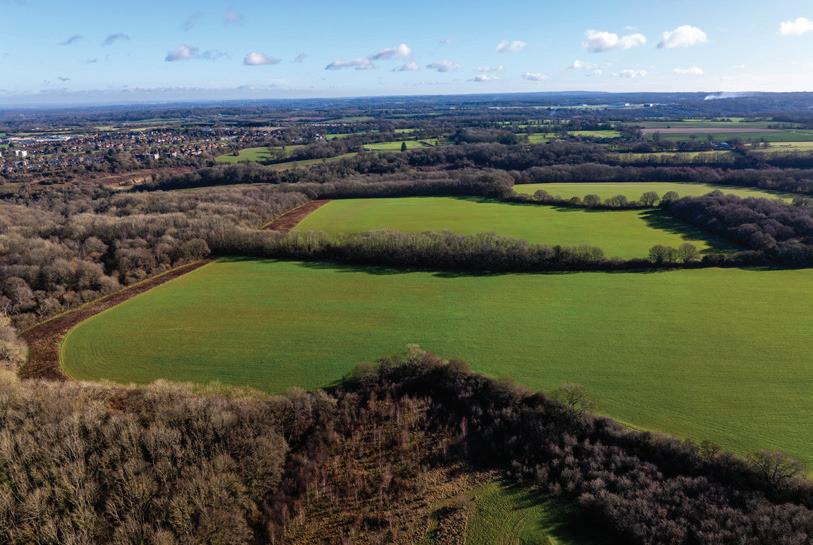

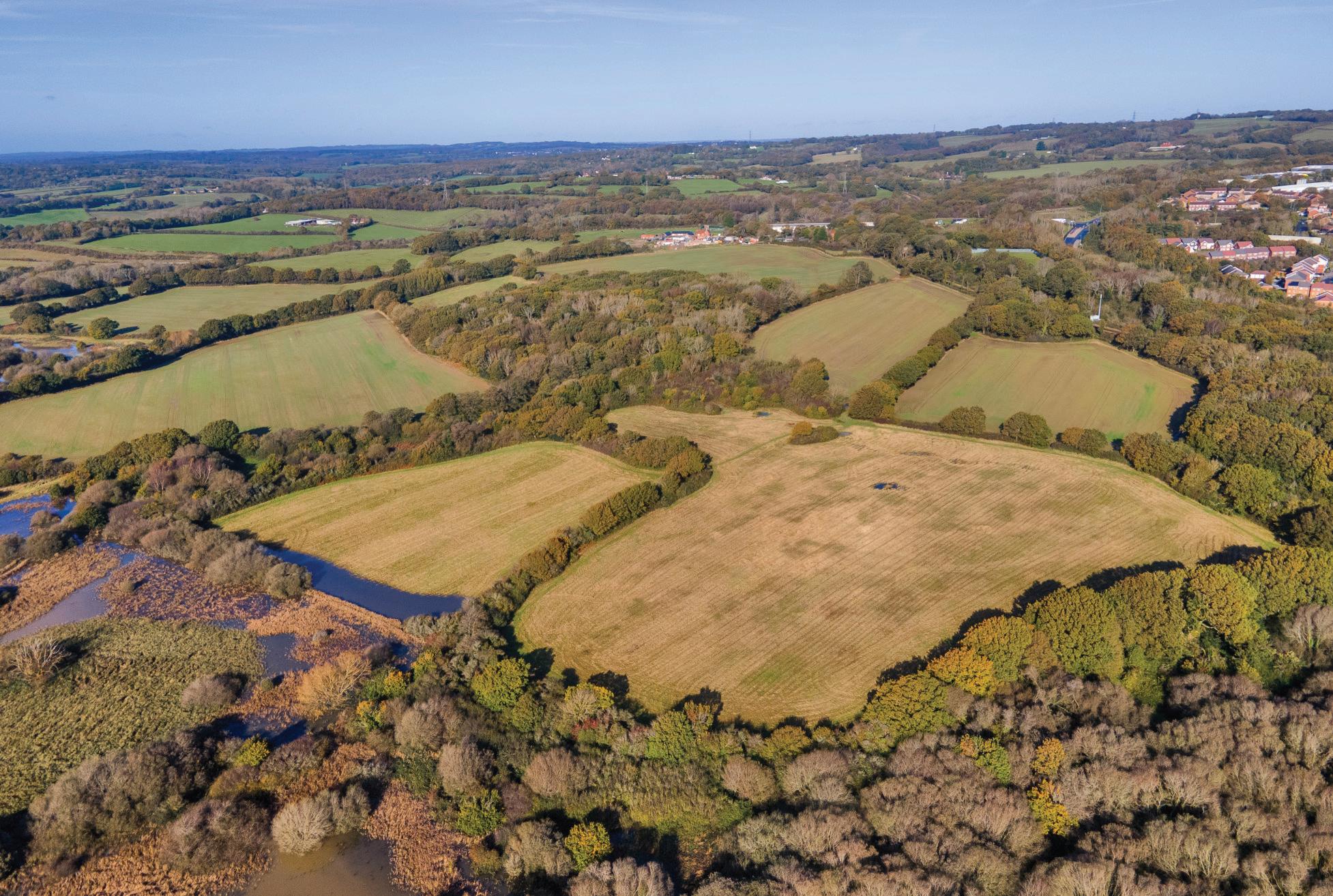
T 01435 810077
www.samuelandson.co.uk
Land at Crowhurst, East Sussex, TN38
On the instructions of Hastings Borough Council.
An attractive block of approx. 182.78 acres with significant environmental & BNG potential situated on the outskirts of Hastings & Bexhill, comprising:
• 36.95 acres of grassland
• 59.92 acres of arable land
• 26.10 acres of woodland
• 55.75 acres of marshland
Offers in the region of: £1,500,000
MARCH 2024 | WWW.SOUTHEASTFARMER.NET
60
E info@samuelandson.co.uk




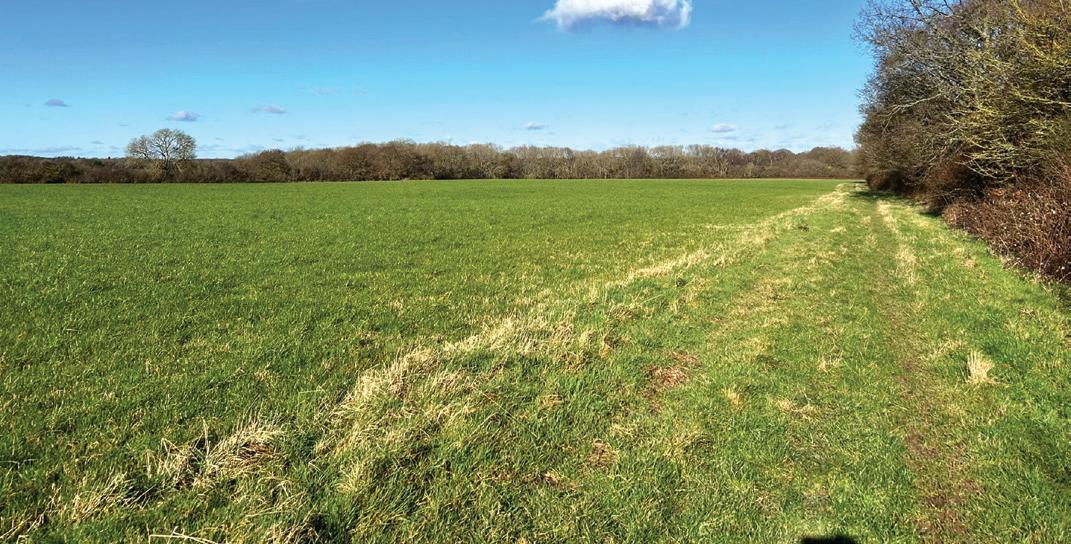


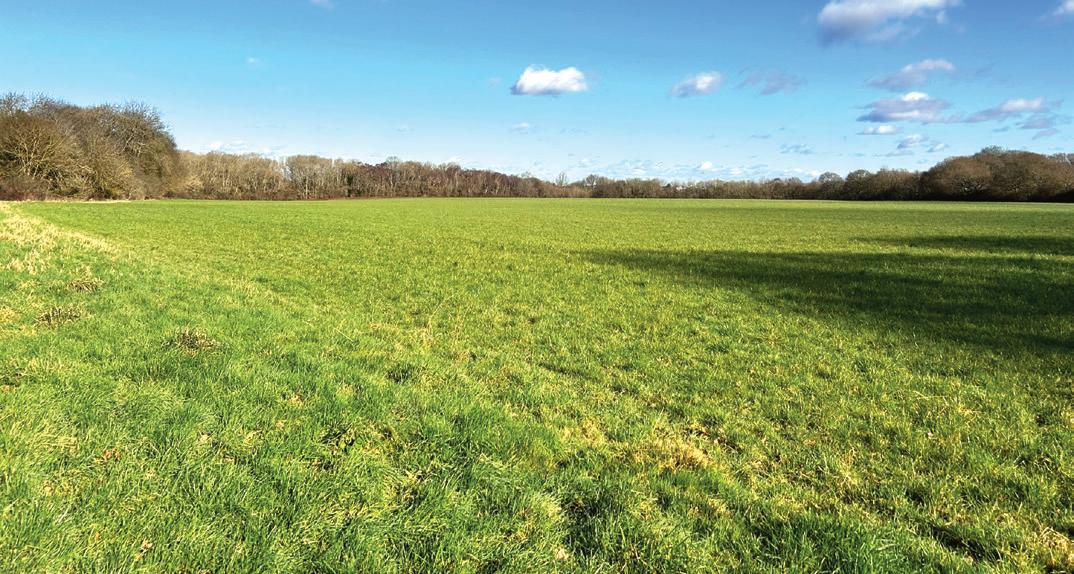

GRADE 3 ARABLE LAND WITHIN THE M25
The Land at Newlands Farm provides a rare opportunity to purchase approximately 57 acres of Grade 3 arable land in an accessible location within the M25. The land is available as a whole or in two lots.
The land at Newlands Farm is in an attractive location surrounded largely by open farmland and woodland. Farleigh Golf Club is adjacent to the property on the western boundary. The property is close to the villages of Warlingham and New Addington and is located within the Metropolitan Green Belt. The vendor is retaining a farm building and some land. They will erect a boundary fence enclosing this area.
The land comprises approximately 57.06 acres of Grade 3 arable and woodland. The woodland, included within Lot 1 extends to approximately 2.45 acres and is comprised of a mix of broadleaf species. The land is available as a whole or in two lots:
LOT 1
Lot 1 extends to 28.93 acres in total and comprises 26.49 acres of arable land and approximately 2.45 acres of mature broadleaf woodland and is currently in temporary grass. The previous years’ cropping is shown in the table. If the land is not sold as a whole, Lot 1 will not be sold prior to a sale of Lot 2.
LOT 2

Please register your interest with the sole agents Batcheller Monkhouse by contacting Emer Edwards MRICS on e.edwards@batchellermonkhouse.com or 01892 509280.
Lot 2 extends to 28.13 acres in total. The land is currently in temporary grass. Use of the access is limited to use for agricultural, equestrian or forestry purposes. The purchaser would be required to maintain this portion of the track in no worse condition than at the outset. There are newly installed 30ft double galvanised steel gates providing access from the track to the land.
There is a public footpath entering the property from the south and running alongside the edge of the woodland in Lot 1. There is access to a public bridleway directly from Lot 2.
The vendor will retain an overage across the whole of the property at 25% for a period of 40 years to cover any residential development. It will also cover any commercial development. This overage would be triggered upon either the implementation of the planning permission or the sale of the land with the benefit of planning permission, whichever is sooner.
WWW.SOUTHEASTFARMER.NET | MARCH 2024 61 TO ADVERTISE CALL 01303 233883 LOT 1 GUIDE
£310,000 LOT 2
£315, 000 APPROXIMATELY 57 ACRES WARLINGHAM | SURREY
PRICE:
GUIDE PRICE:
Lot 1
Year Crop 2019 OSR, fallow 2020 Naked spring oats 2021 Spring wheat, winter wheat 2022 Winter wheat, temporary grass 2023 Temporary grass ✓ For relocation of an exiting plant nursery business supplying to the general public. ✓ East or West Sussex considered ✓ Must be near main road for access ✓ Mains Water supply for irrigation ✓ Minimum area 17,000ms / half acre for poly tunnels etc SITE REQUIRED Call Dan Sutton: 07772 869645 Email: Suttonnursery@gmail.com LAND AND FARMS SPONSORED BY BATCHELLER MONKHOUSE Leading the Way in Farm, Land and Equestrian Property Sales! Visit batchellermonkhouse.com Ready to sell? Contact us today.
Lot 2

Attractive farmhouse in an elevated location with south facing views on the edge of the popular village of Brenchley in the Weald of Kent. Offered for sale with 10.69 acres of pasture and a useful range of farm buildings with previous commercial consents. For sale as a whole.
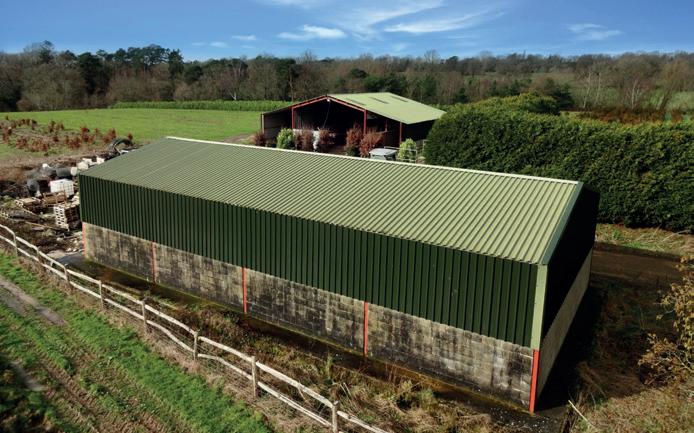
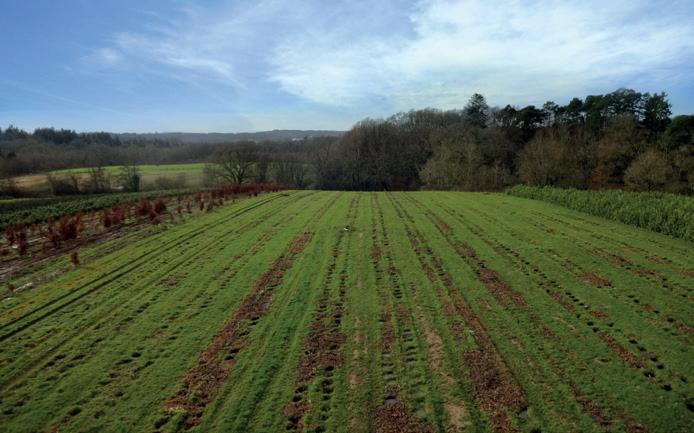
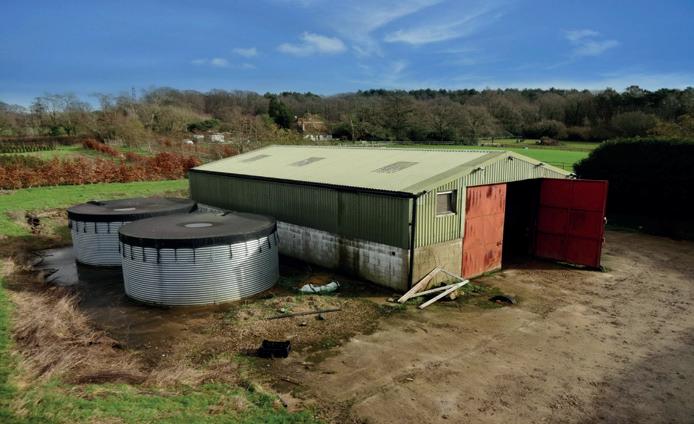

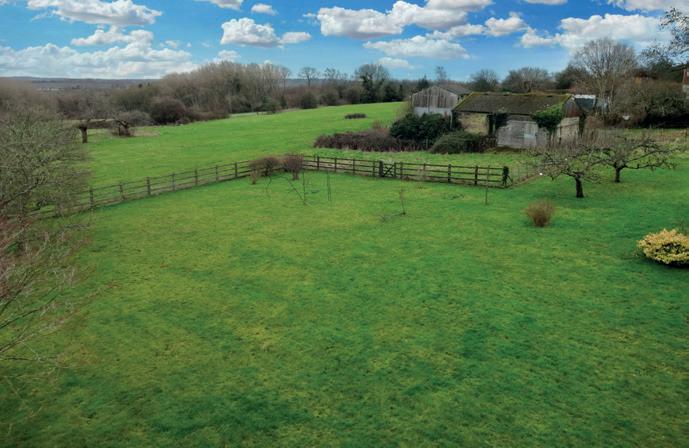

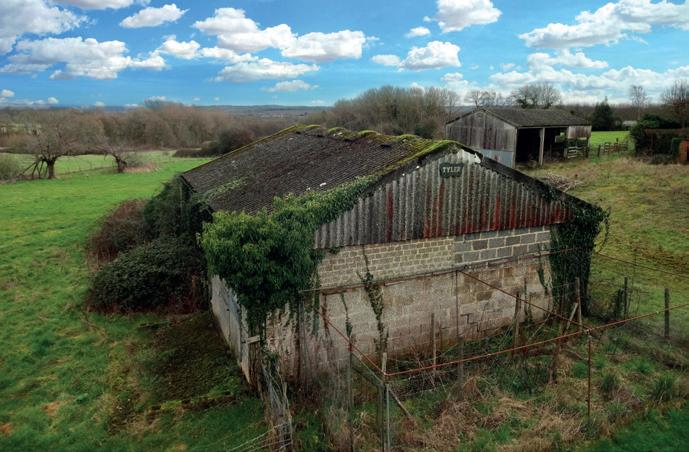
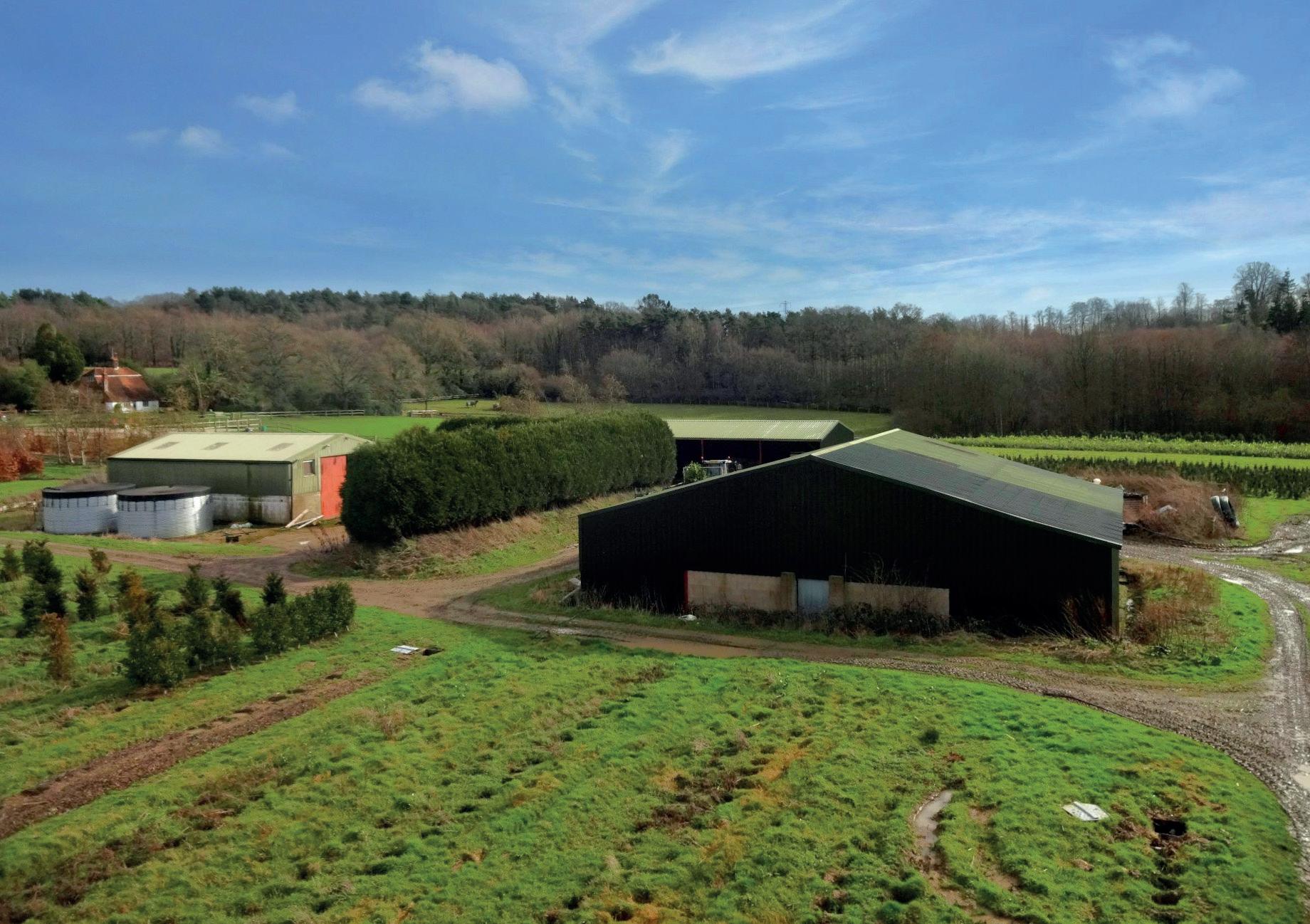
Three modern farm buildings with individual planning permissions to convert to three character dwellings, each offered with acreage. The site enjoys far reaching southerly views. The barns have consent for individual dwellings of 1,453 sq
sq ft standing in 22.94 acres / 9.28 hectares. For sale as a whole or in 3 lots. Within the favoured Cranbrook School Catchment Area.

WWW. LAMBERTANDFOSTER.CO.UK Alan Mummery MRICS FAAV KENT OFFICE Tel. 01892 832 325 Will Jex MSc KENT OFFICE Tel. 01892 832 325 VIEW ALL AVAILABLE PROPERTY AT FOR SALE PROPERTY PROFESSIONALS FOR OVER 120 YEARS
BRENCHLEY, TONBRIDGE, KENT GUIDE PRICE £1,250,000
FOR SALE
SANDHURST, KENT GUIDE PRICE ON APPLICATION
1,732
ft
2,646
ft,
sq
and



What's the latest?




Sustainable Farming Incentive

It's been a busy few months submitting SFI applications for a range of clients. To provide some context to the level of income being generated, the table below gives some real-life examples by farm type. It is worth noting that the Actions often allow 12 months for the applicant to meet the requirements, but payments will start flowing three months from the date of the agreement being awarded.
EXAMPLE AGREEMENTS AWARDED IN THE LAST SIX MONTHS:
Main SFI Actions included in application
340 ha dairy farm with permanent grassland (40ha) and improved grassland (300ha)
40ha top fruit farm
[SAM1/IPM1/NUM1] Soil, IPM and Nutrient Management plans. [NUM2] Establishing legumes by stitching clover into existing leys. [LIG1] Managing permanent grassland with low nutrient inputs
[SAM1/IPM1/NUM1] Soil, IPM and Nutrient Management plans. [AHL4] Buffer strips beyond the orchard headland [IPM2] Establishing/maintaining flower-rich grass strips in the orchard rows. [HRW1-3] Hedgerow management.
SFI 2024
The increase in payment rates that were announced at the Oxford Farming Conference are certainly welcome, as are the new Actions expected to go live in the summer (see below).
Below are some examples of Actions to come later this year:
No till farming £73/ha
Variable rate application of nutrients £27/ha
Manage species rich flood plain meadows £1,070/ha
Manage grassland for flood and drought resilience and water quality £938/ha
Simple ditch management £4/100m
Permissive access to land £92/ha
Interestingly, it would seem that there has now been a shift from doubting SFI, to concern that it is too attractive:
Are the payment rates now at a level whereby food production and UK selfsufficiency will be negatively impacted?

180 ha arable farm
20 ha permanent grassland livestock farm
[SAM1/IPM1/NUM1] Soil, IPM and Nutrient Management plans. [NUM3] Legume fallow on marginal land and included in rotation on land with persistent grass weed problems. [IPM4] No use of insecticides.
[SAM1/IPM1/NUM1] Soil, IPM and Nutrient Management plans. [IGL2] Winter bird food on improved permanent grassland by leaving sward to go to seed after May/June hay cut. [LIG1] Managing permanent grassland with low nutrient inputs.
After a wet autumn and winter, and with ongoing challenging trading conditions, the certainty of SFI payments is becoming increasingly important for some of our farming clients. If you would like to discuss your SFI application, please contact a member of the rural professional team below.




Do the Actions which take land out of production support the Government’s objective to aid and stimulate productivity? Or do they have the opposite effect of providing “risk-free” options to farmers/ landowners, giving a baseline fall back position akin with BPS?
We believe it is too early to tell the medium/long term outcomes, but we would rather these questions are being asked than ones that focus on a lack of meaningful support.
ADVISING FARMING & RURAL BUSINESS CLIENTS
*Average payment per hectare across the farm for all Actions included in the Agreement. Jon Booth BA (HONS) MSC MRICS FAAV KENT OFFICE Tel. 01892 832 325 Esther Goodhew MSC MRICS FAAV KENT OFFICE Tel. 01892 832 325 Dan Page BSC (HONS) PGDIPSURV MRICS FAAV MBIAC SUSSEX OFFICE Tel. 01435 873 999 WWW.LAMBERTANDFOSTER.CO.UK
£100/ha £650/ha £240/ha £340/ha Farm Average payment*
SIGNIFICANT ENVIRONMENTAL AND BNG POTENTIAL
A very attractive block of land with significant environmental and biodiversity net gain potential situated on the outskirts of Hastings and Bexhill is on the market with Samuel & Son.
The land comprises a mix of pasture, woodland and marshland in an elevated position, with access off Crowhurst Road.
The land is subdivided by a network of traditional hedgerows and fencing into several enclosures of permanent pasture to the north part of the land, with woodland predominantly to the centre of the block and the wetland/marshland, to the south. The land is largely Wealden Clay formation and classified predominantly as Grade 3 on the agricultural land classification.
The land slopes gently from the north to south towards the area of wetland/marshland.
• Arable Land: 59.92 acres
• Grassland: 36.95 acres
• Woodland: 26.10 acres
• Marshland: 55.75 acres
• Misc (including waterways/tracks etc): 4.06 acres


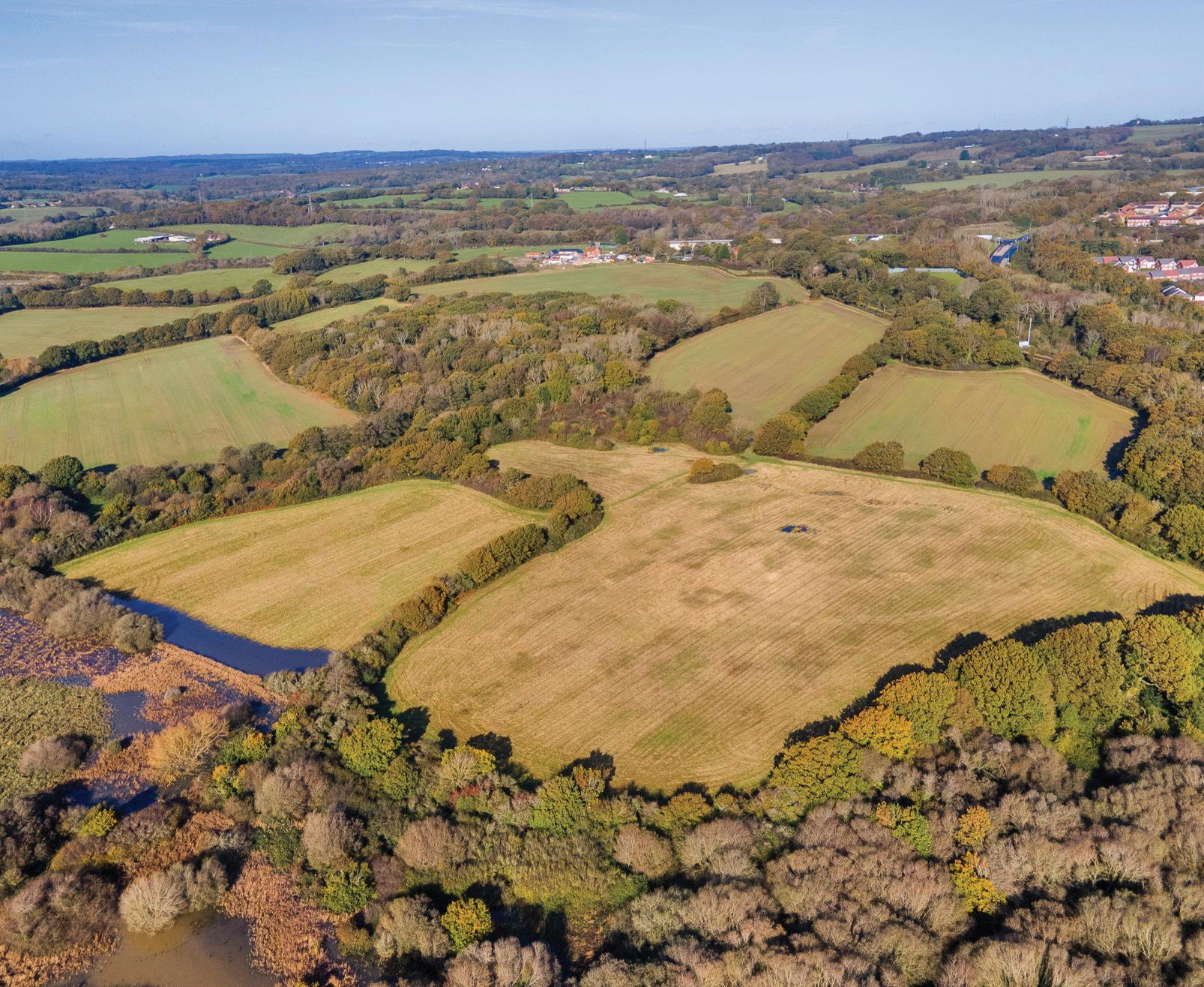
KEY DATES FOR BIODIVERSITY NET GAIN
Developers have been required to deliver a net gain in biodiversity on new planning applications for major development made under the Town and Country Planning Act 1990 since 12 February. From 2 April 2024 it will be mandatory for small developments. Major development includes residential developments with 10 or more dwellings, or where the site area is greater than 0.5 hectares.
Small site developments have been split into residential and commercial for the purpose of biodiversity net gain (BNG):
• Small site residential development refers
to fewer than 10 dwellings or a site area of less than 0.5 hectares
• Small site commercial development is where the floor space created is less than 1,000 square metres or the total site area is less than one hectare.
ARE THERE ANY EXEMPTIONS TO BNG?
There is a range of specific exemptions and transitional arrangements for BNG. More information can be found on the DEFRA website, but these include:
• Development below a de minimis threshold
• Householder development
• Biodiversity gain sites
• Small scale self-build and custom housebuilding
• The high speed railway network.
ARE THE BNG REQUIREMENTS RETROSPECTIVE?
The Government has said BNG will only apply for planning applications submitted on or after the dates above. It has put transitional arrangements in place so that BNG will not apply to a planning application if it was made before those dates.
MARCH 2024 | WWW.SOUTHEASTFARMER.NET 64 LAND AND FARMS
GUIDE PRICE: £1,500,000 IN ALL APPROXIMATELY 182.78 ACRES CROWHURST | EAST SUSSEX Viewings strictly by prior appointment with Samuel & Son, Horam Tel: 01435 810077
TOPPICK
Kate Jardine, partner with Thomson Snell & Passmore, outlines the new legislation.
Since the start of the year, there have been several announcements concerning the Environmental Land Management schemes, with the Oxford Farming Conference used as a platform to communicate these updates.
Following this, DEFRA has increased the payment rates for many Countryside Stewardship (CS) higher-tier and mid-tier actions, specifically those which focus on creating or conserving distinct habitats. The most notable payment rate increases include AB10 unharvested cereal headland (£1,072 per ha), AB5 nesting plots for lapwing (£765 per ha), GS13 management of grassland for target features (£528 per ha), GS15 haymaking supplement (£157 per ha) and GS6 management of species rich grassland (£646 per ha).
Small and large scale farms with low input grass meadows have benefitted from CS options such as GS6 and GS15. Farmers have adopted various methods of increasing their species rich grassland through bale grazing, delaying their hay cuts and even using sheep to tread in the wildflower seed. Before applying for these higher tier options, Natural England’s support is crucial.
Farmers and landowners looking at the species-rich options need to be aware that the Rural Payments Agency is likely to request that field parcels be resurveyed if they have not been reviewed in the past five years. As payment rates increase for various CS and Sustainable Farming Incentive (SFI) options, this will inevitably lead to increased farm audits to ensure agreement holders satisfy the option requirements. We have already seen an increase in spot checks for CS agreements. It is reassuring to hear, however, that a more pragmatic approach has been promised, with less emphasis on applying fines and penalties.
Turning to CS capital item grants, the extension from two-year to three-year agreements to complete capital works has been welcomed. Another shake up is that businesses could have multiple agreements running concurrently. This can allow capital works to be staggered over a more realistic timeframe, which can be useful for cashflow
NAVIGATING THE ENVIRONMENTAL LAND MANAGEMENT SCHEMES
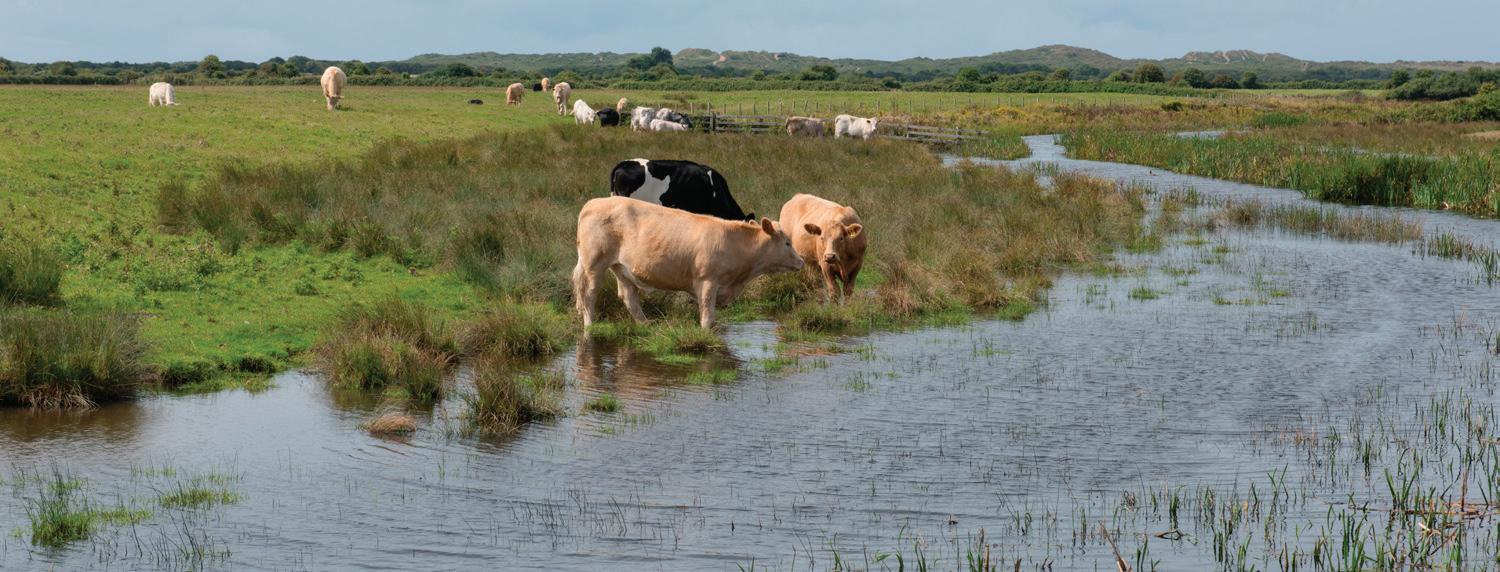
purposes and project management.
The opportunity to have more than one agreement per business should be taken.
It is prudent to seek advice from the local catchment sensitive farming officer (CSFO). While for certain CS items their support is necessary, they are also able to advise on matters that otherwise may not have been given consideration, but with the offer of funding may be of interest. These can include rainwater harvesting items, for example.
With the rule changes surrounding cross compliance, catchment sensitive items are worth taking time to consider while the grant funding incentive is still available. The future approach to enforcing compliance measures remains unclear, but safeguarding water quality is unquestionably going to remain a priority and so items which can support this now should not be overlooked.
Another update is the option to transfer from an existing Environmental Stewardship (ES) or CS agreement, across to SFI. We have noticed a particular rise in interest in transferring from ES following the latest payment rate increases.
The announcement that SFI and mid-tier CS will be a combined scheme moving forwards
is promising. This will mean that options can be selected under both schemes, to achieve a more tailored agreement. This should encourage agreements that offer greater environmental benefits which integrate with the farm business. This is worth serious consideration. Where an existing agreement is too complex, the new options might be more financially attractive or complement the land management to a greater extent.
The option to amend SFI agreements annually on the anniversary date allows applicants to add new field parcels, look for different options and increase the areas of existing options. This gives farmers greater flexibility to start small initially and enter only what they can realistically manage.
All SFI and CS agreement holders must keep appropriate records and photographs to ensure they meet the management requirements. These can include cropping and grazing records and soil testing results. We emphasise the importance of keeping these records and are willing to advise and provide support on this. Our advice would be to ensure your existing agreement is working for you. If not, now is the time to explore these new revenue options.
WWW.SOUTHEASTFARMER.NET | MARCH 2024 65 TO ADVERTISE CALL 01303 233883 LAND MANAGEMENT
THOMAS Tunbridge Wells T: 01892 509280 E: b.thomas@batchellermonkhouse.com www.batchellermonkhouse.com HELEN CLOUTING MRICS FAAV Haywards Heath T: 01444 412402 E: h.clouting@batchellermonkhouse.com
BETHANY
GUEST FEATURE FARM CLUSTERS
ENVIRONMENTAL HEALTH AND RESTORATION A COMMON THEME
Mike Kettlewell explains the workings of the North East Cotswolds Farm Cluster.
A favourite farmer hobby is peering over the hedge to compare crops or stock, and when a cocky neighbour has his speculative winter sowing drowned or a crass planning application turned down, there is that inescapable whiff of schadenfreude.
Competition gets even keener in the summer show rings, yet this competitive effort and spirit gets us nowhere in the market place, where we are dwarfed by business giants.
The ugly reality is that the open market ruthlessly exploits relative weakness and size matters. We are generally price takers and not price makers.
One solution would be for large venture capitalist companies to acquire vast portfolios of land so that their market power equals that of the supermarkets. This, in my opinion, would be socially corrosive and a disaster for our environment.
An alternative that is gaining popularity
is the farm cluster, where farmers formally cooperate on common goals while retaining individuality. Environmental health and restoration is a common theme in nearly all cases and 100 such clusters have already been registered, with more forming almost daily.
The Game and Wildlife Conservation Trust (GWCT) has successfully fostered a number of such clusters. Other NGOs have done similarly and there is also keen interest from DEFRA. The movement has considerable merit and momentum, with much to offer nature, society and farmers.
Clusters are locally based ‘cooperatives’ in contrast to the Nature Friendly Farming Network, which is a countrywide network of like-minded farmers. The two approaches are, however, complementary.
The cluster that includes our farm was formed three short years ago from the efforts of three visionary enthusiasts, Matt Izod,
Samantha Sandberg and Henry Astor. There are now 150 farms, of all sorts, shapes and sizes, participating in a loose confederation that covers more than 45,000 hectares of the NE Cotswolds (NECFC).
This cluster, possibly the largest in the country, is a Community Interest Company; its structure is three directors, two salaried facilitators and a six strong advisory group, with the unifying theme of riparian health, ecological restoration and successful farming in the upper Thames catchment. Such is the local enthusiasm that it has already spawned a sister cluster based on the River Cherwell catchment.
The project is unquestionably ambitious and should deliver real improvement to the Thames area, particularly if Thames Water Company really improves its record of sewage discharges. The aim is to slow winter river flows and hold more winter water, carbon and
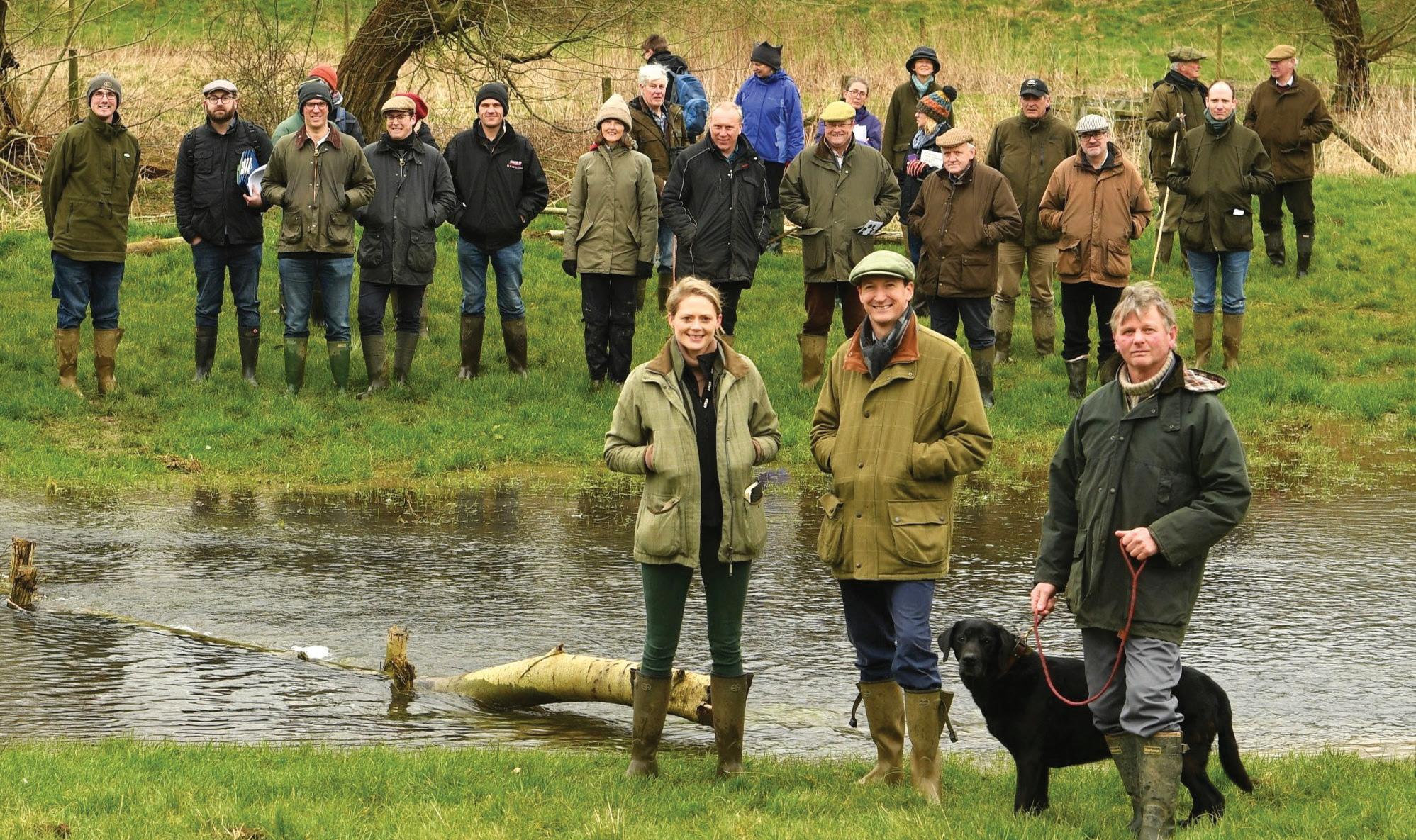
MARCH 2024 | WWW.SOUTHEASTFARMER.NET 66
Visiting a meander created in a tributary of the Evenlode, summer 2023
A JOURNEY WITH A FLEXIBLE DESTINATION
• Through discussions with the co-design team it was clear that the journey to the final destination is critical and needs to be flexible to fit with the landowner's business.
• The co-design team's initial vision is to have initial quick establishment within six months (eg. herbal ley) with a view to add new species (eg. wildflowers) later. The herbal ley would strip nutrients to facilitate green hay/wildflowers in a floodplain meadow which require nutrient poor soils.
• The landowner wants land to be a productive grassland that fits within a wider rotation (eg. hay cut, flexible grazing)

Multiple benefits
nutrients on flood meadows.
The river’s improving health and biodiversity follows major reductions in nutrient and silt run-off. Recreating many of the botanically rich Thames valley water meadows is absolutely key.
The most immediate benefit to us farmers has been knowledge exchange, collaboration and social intercourse which has provided a sense of cohesion. This stems from a series of farm visits on subjects such as hedge restoration, herbal leys, carbon capture, biodiversity net gain, green hay and managing wild deer, all fueled by coffee and cake.
The cluster is lucky to have at its geographic centre Ian Wilkinson’s FarmED, with tremendous facilities for workshops, demonstrations and to hold strategy meetings. Costs to farmers are kept low at £1/ha annually, with running costs built into grant applications.
This cluster has already gathered support from DEFRA, Wild Oxfordshire, the Cotswold National Landscape board, the Environment Agency, Natural England and Thames Water, amongst others.
"Working and sharing knowledge with others has been the most rewarding thing about the cluster. Farmers together are key to landscape recovery and increased biodiversity,"
Matthew Izod, Cluster founder/director
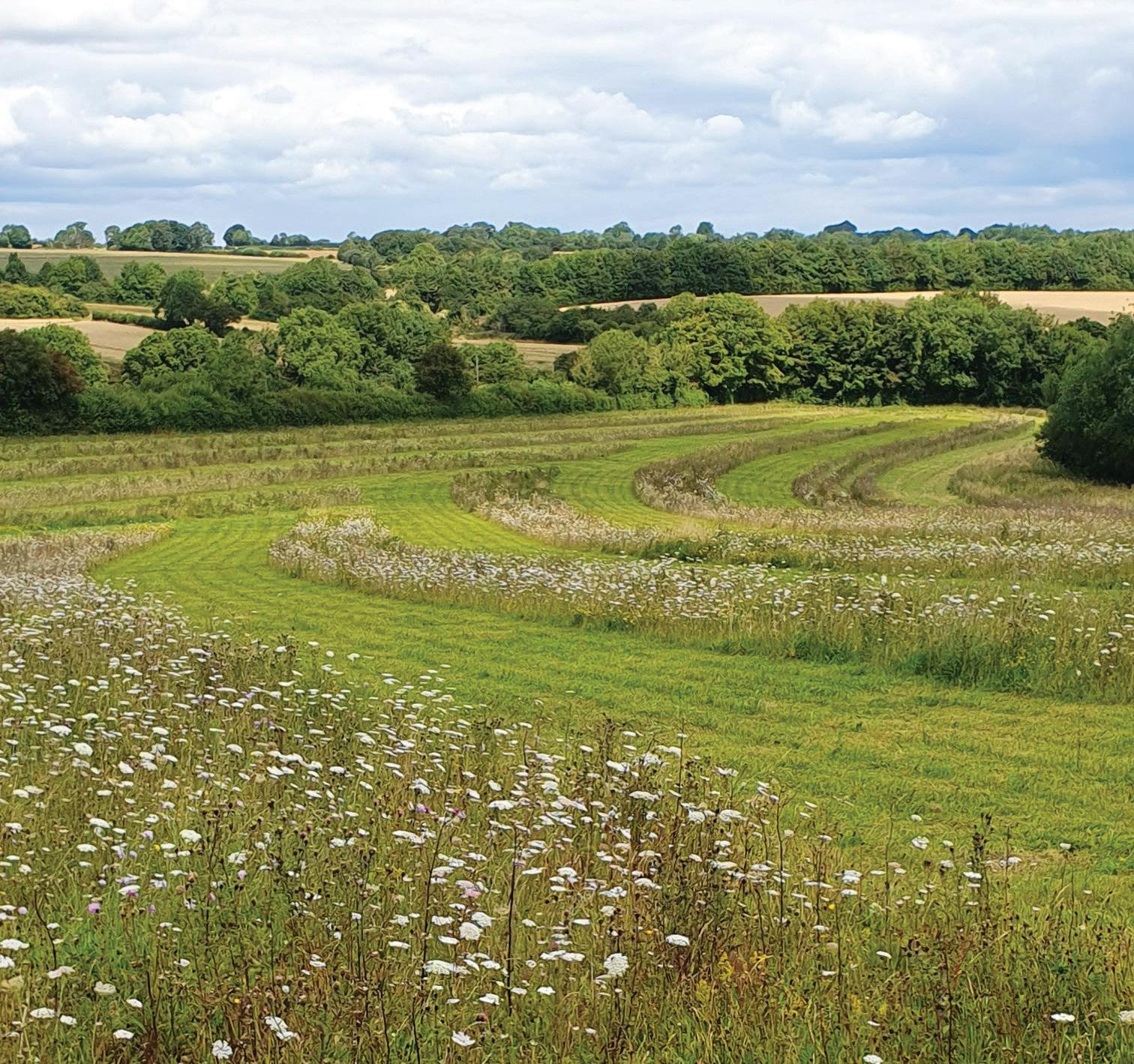
The cluster’s most ambitious project is a large, long term, landscape recovery scheme that covers 14% of the cluster area. Tim Field, a science and agriculture alumnus of St Andrews and Reading Universities, directs this project. The goal is nothing less than restoring the pristine health of the Evenlode river, followed later by the Windrush, mitigating flooding, improving biodiversity and enhancing climate resilience. It is a complex project that involves contributions from numerous agencies, with >>
ecologists, hydrologists, interested bodies and economists adding their expertise.
A very important step on this journey has been the development of the One Field Project based on one field, belonging to the Izods, that floods regularly. This exercise models the consequences of changing from conventional arable cereal cropping through no till, grass ley and herbal ley to diverse flood plain meadow
and ending with a mosaic field of several habitats.
The effects of each change upon soil loss, carbon capture, nutrient retention, water retention, knowledge transfer and diversity are being calculated and tabulated. The most dramatic finding from this exercise is how much is gained progressively with each step down the path to a mosaic.
WWW.SOUTHEASTFARMER.NET | MARCH 2024 67 TO ADVERTISE CALL 01303 233883
Green hay donor site cut to leave variable habitat for animals living and breeding in the field
GUEST FEATURE FARM CLUSTERS
Monetising these gains from all sources gives a financial yield eight times greater than commodity sales, all for a trivial loss in food production. Matt and Nathan Izod's field is starting down this path and the changes will be measured and rolled out to others. Some farms have already taken major steps, bypassing the intermediaries, so persuasive are the models.
Farming in Protected Landscapes (FiPL) has provided several three-year grants for smaller scale exercises. The first was for feeding farmland birds over winter. It delivered quick results, and now 42 farms are taking part in this, our third year.
This winter’s 65 tons of feed, made from seed sourced from within the cluster, was crushed and mixed by the Izods at Priory farm, for collection by participating members. The home mix comes with very useful cost savings and we anticipate supplementary feeding (AB12) will now be added to participating farms’ stewardship agreements.
It is wonderful to see how much relaxation and enjoyment so many hard-nosed farmers have had from this simple exercise that delivers so well. Other grants followed for baseline measuring soil carbon on 17,000ha to enable reliable assessment for future carbon capture; another was to predict the rise in soil carbon from increasing soil health.
The botanical state of 900ha of Windrush
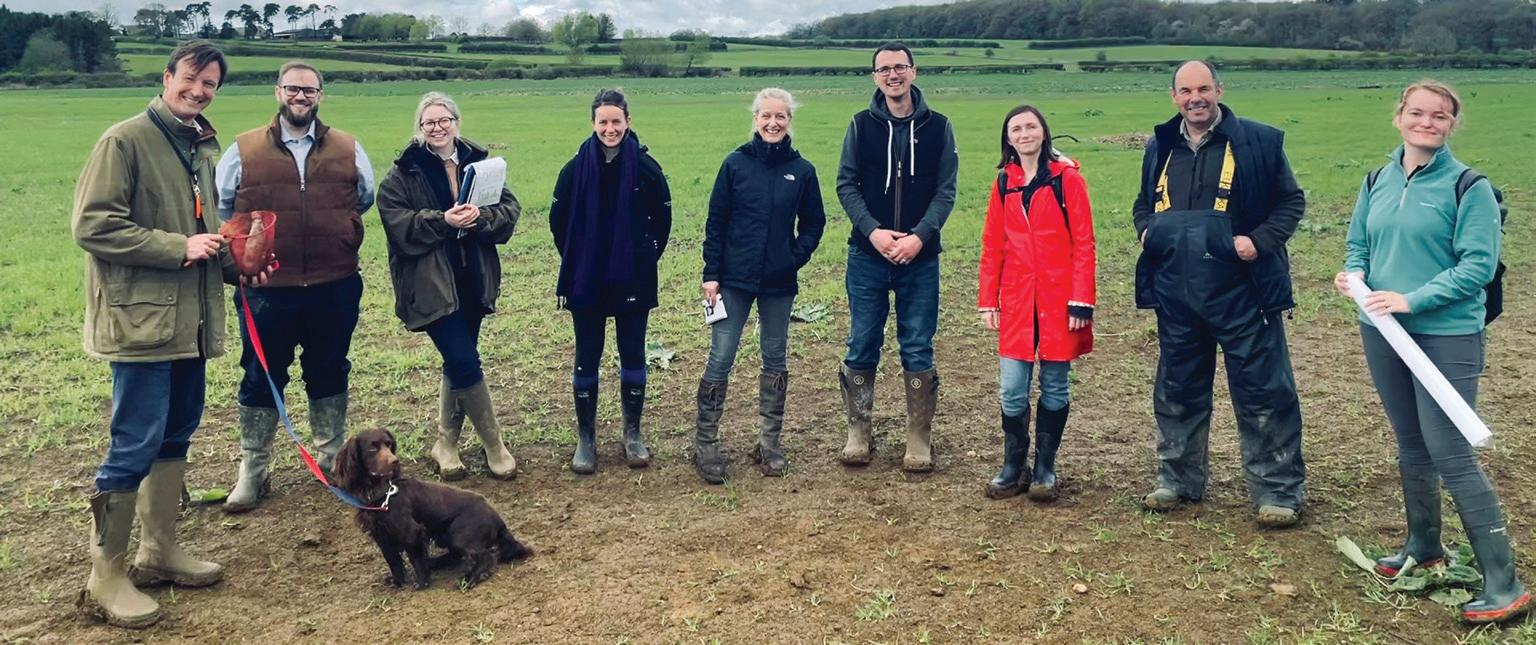
river floodplain meadows has also been recorded on 42 farms and is now on the Open University QRCode project; this is all playing a crucial role in building ecological resilience in this area of the Cotswolds.
Modern food chains are long and tortuous and have a high carbon footprint. Although the UK carbon dioxide emissions are declining steadily, this is largely from the loss of our heavy industries. We don’t make heavy kit any more. But, as the Oxford economist, Professor Sir Dieter Helm, points out, if we measure our per capita carbon cost, it is still rising from imports and its transport.
Localising food production and consumption is therefore clearly important but becomes difficult with the loss of local abattoirs. Finding a solution to this issue is important because so many cluster farms are small to medium-sized stock keepers whose livestock are vital engines of regeneration.
A common thread is maximising the uptake of stewardship options on all farms to deliver financial security and maximise ecological gains.
Tim and the steering group are also developing tools to take part in the emerging markets of biodiversity net gain and carbon sequestration, teamed with Rothamsted. They anticipate that commercial buyers will be attracted by the potential of such a large acreage.
Members are also seeking to market more farm produce locally, fostering local cohesion. One member, Tim Coates, a co-founder of Oxbury Bank, brings financial expertise to natural capital and other projects undertaken by cluster members.
The cooperative climate has certainly given everyone a sense of optimism, facilitated the exchange of ideas and created a buzz of enthusiasm to counter the enveloping political chaos and gloom.
To make all this work we have been very lucky to have had the enthusiasm and skill of Tim Field and Caroline Greenwood, our facilitators, who have been key midwives of the cluster and the welcome face of an efficient, light touch management structure, keeping us together while moving forward.
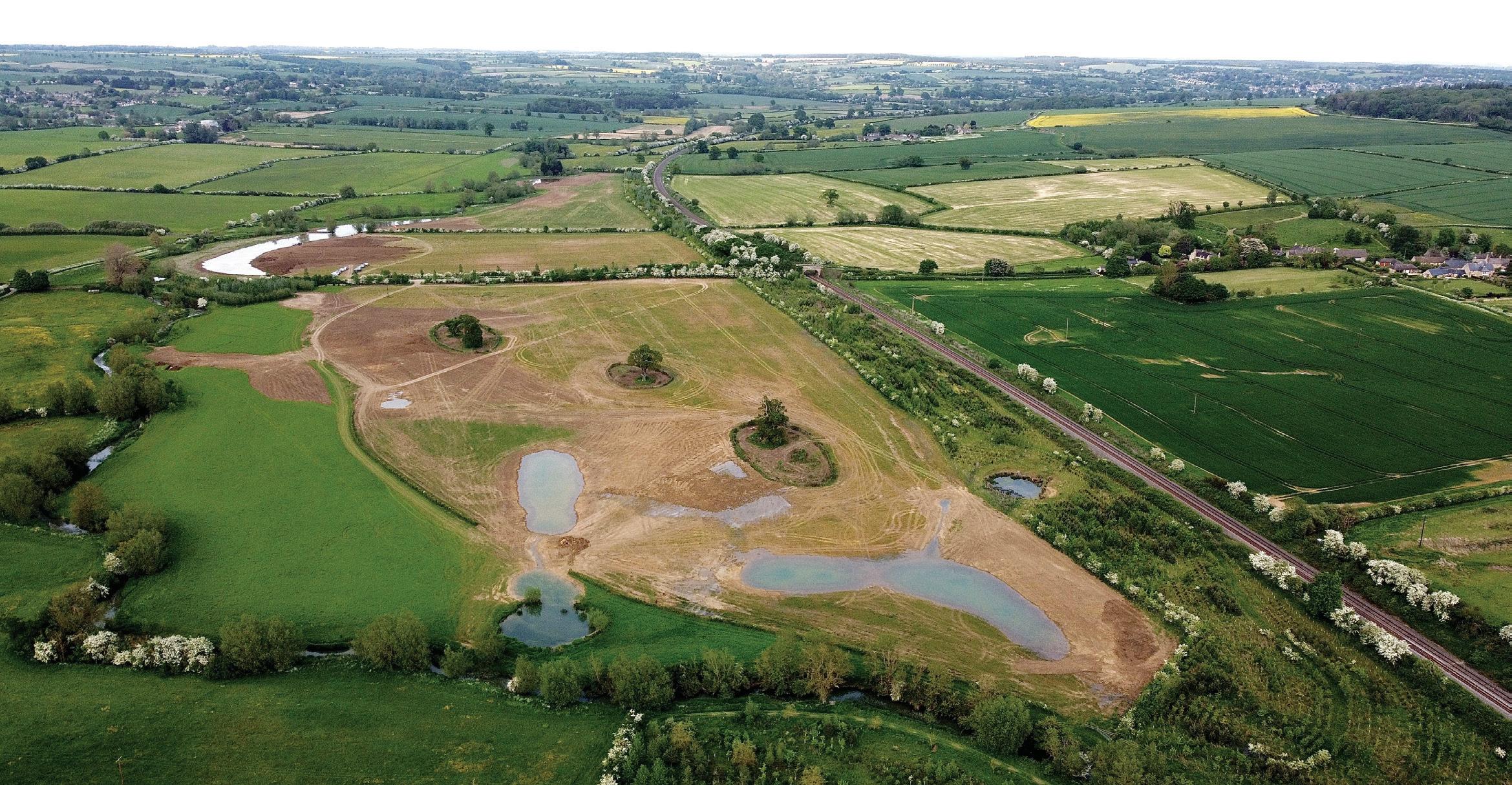
MARCH 2024 | WWW.SOUTHEASTFARMER.NET 68
<<
Pudlicote Farm, Ascot-under-Wychwood, showing 2023 habitat/flood works
The One Field team on the field in question; Matt Izod is fourth from the right and Caroline Greenwood is centre
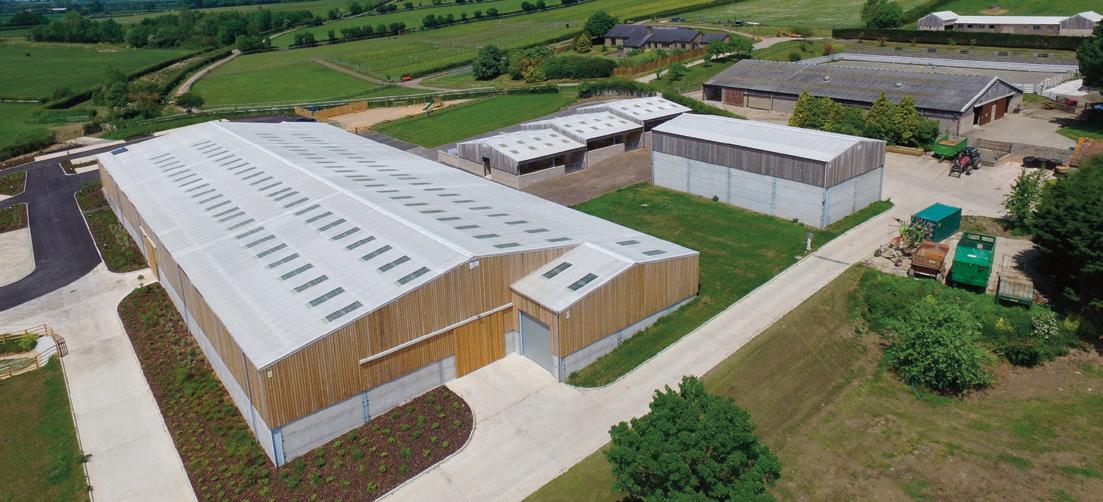


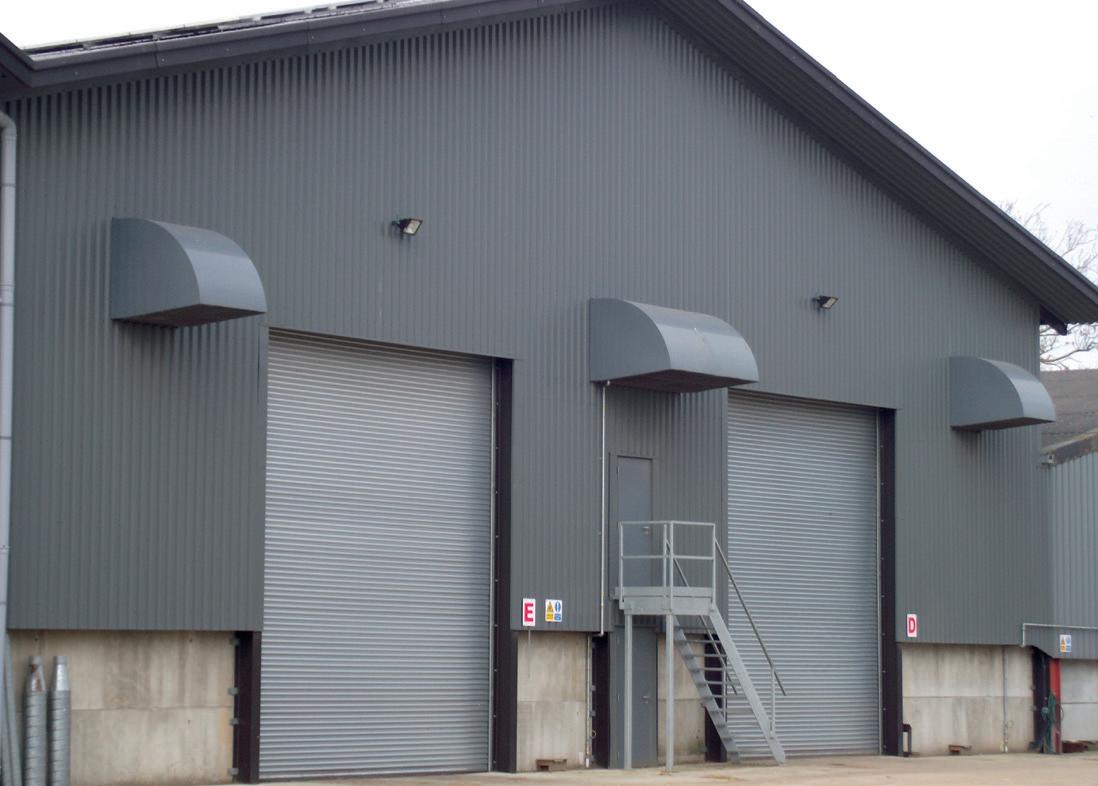




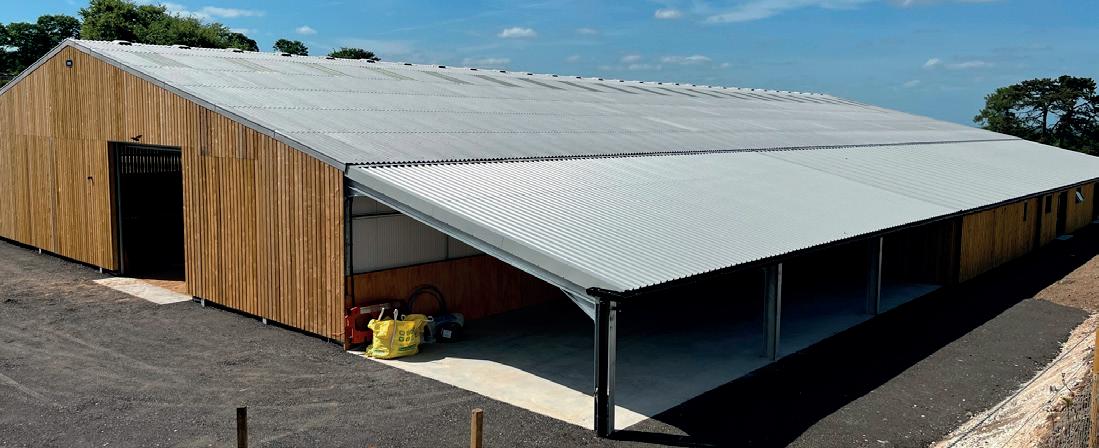

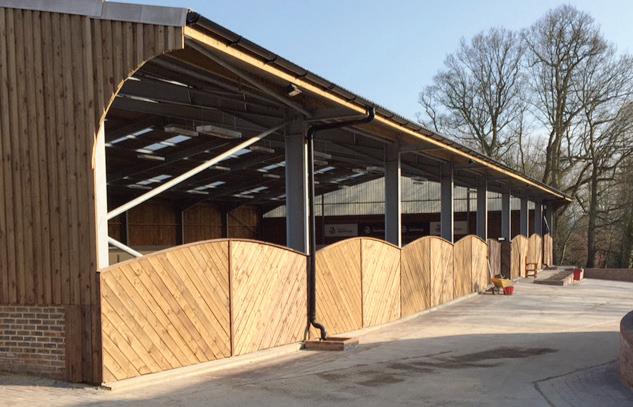




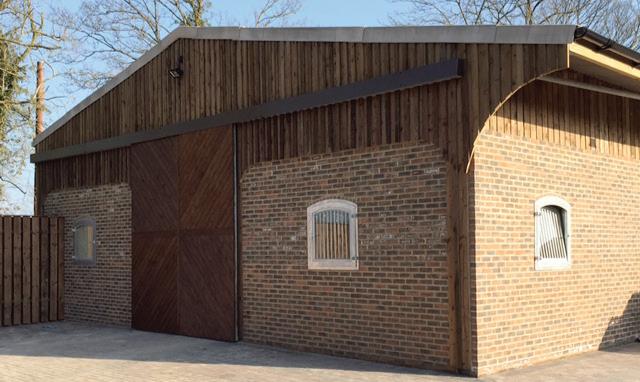

WWW.SOUTHEASTFARMER.NET | MARCH 2024 69 TO ADVERTISE CALL 01303 233883 CLASSIFIEDS CONSTRUCTION CONSTRUCTION Industrial & Commercial | Structural Steelwork | Agricultural & Equestrian Contact us for a free quotation 01269 831831 enquiry@shufflebottom.co.uk www.shufflebottom.co.uk Shufflebottom Ltd Cross Hands Business Park, Cross Hands, Llanelli, Carmarthenshire SA14 6RE Shufflebottom Agricultural Buildings Steel-frame buildings for your farm + Supply only or supply & erect + Construction all over the UK + Award winning company Strength, Security, Style Office 01825 371500 � info@formabuild.co.uk www.formabuild.co.uk We specialise in the supply and construction of steel framed buildings together with the repair and refurbishment of existing farm buildings. Based in the heart of Sussex, covering the South East. Sussex builders since at least 1605. Forma offer all aspects of steel framed construction and cladding together with groundworks and electrical fit out if required. formabuild.co.uk 100% British designed & built Over 35 Years experience Site visits Call to arrange a site survey All our panels are marked Gary White 07812 599679 Jason White 07941 274751 Based in Lewes, East Sussex G.E.WHITE & SONS Ltd All refurbishments & repairs undertaken. Call for a free quote today. AGRICULTURAL, EQUESTRIAN & INDUSTRIAL STEEL FRAMED BUILDINGS We supply CONCRETE PANELS – Any size to suit your needs All aspects of steel work, cladding & groundwork. Family run business with 45 years experience. “You tried the others, now try the brothers” All our buildings are marked www.gjelgarconstruction.co.uk For more information contact us: t: 01233 623739 m: 07860 414227 e: office@gjelgarconstruction.co.uk • Steel frame buildings • Sheeting and cladding • Guttering and repairs • Groundworks and drainage • Demolition and asbestos removal • Refurbishment and change of use • Concrete frame and steel frame repairs • Insurance and general repairs • Concrete floor and block paving G. J. ELGAR CONSTRUCTION Ltd






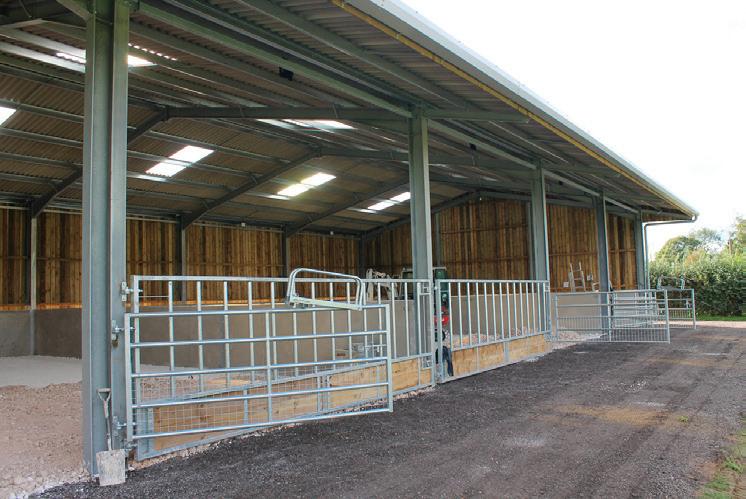
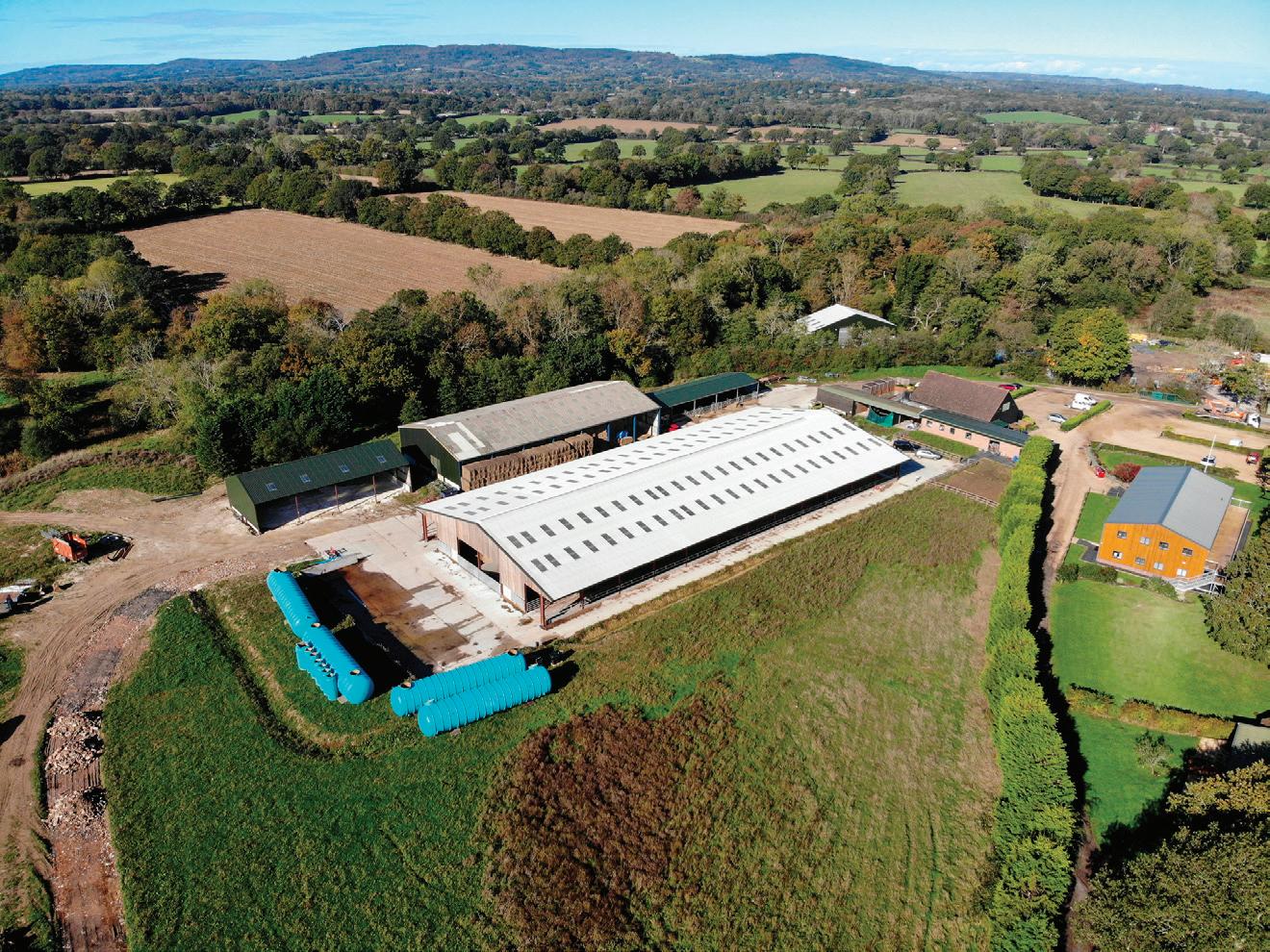


MARCH 2024 | WWW.SOUTHEASTFARMER.NET 70 CLASSIFIEDS CONSTRUCTION CONSTRUCTION CONSTRUCTION Agriculture ~ Cold Storage ~ Equestrian ~ Industrial ~ Waste Recycling • Agricultural Buildings • Cold Store Buildings • Equestrian Buildings • Industrial Buildings • Waste Recycling Buildings • Structural Steel • Drawing Services • Design Services • Mezzanine Floors • Custom Steelwork 01323 890403 www.danddconstruction.co.uk info@danddconstruction.co.uk To advertise in South East Farmer telephone 01303 233883 FREEPHONE: 01233 659129 from BT land-line charlie.woodger@btinternet.com REFURBS, BIG 6 ROOF SHEETS, ROOF LIGHTS, RIDGES, VERGES, VALLEY GUTTERS, BOX GUTTERS, BOUNDARY GUTTERS, ASBESTOS, SHEETING Single Sheet To Whole Roof Roller Shutters Accidental or Storm Damage Works Demolition Refurbishments Waste Clearances CALL TO DISCUSS YOUR PROJECT! ALL WORKS KENT & SUSSEX Professional Services to the Agricultural, Industrial & Equestrian Sectors FARM BUILDING REPAIRS Supplying pro led roo ng products to contractors, builders and farmers for over 40 years visit www.southernsheeting.co.uk for our full range or call 01342 590 357 to speak to our friendly sales team Our main products o the shelf include: • Pro led steel sheeting • Insulated panels • Fibre cement • Roo ights • Onduline • Fixings and accessories southernsheeting.co.uk OFFICIAL DISTRIBUTOR • EXTENSIVE RANGES IN STOCK LARGE DISCOUNTS AVAILABLETOFARMERSOUTHERNMEMBERS CS3152 SS SE Farmers 190mm x 133mm advert 2023_NOV.indd 1 16/11/2023 14:20








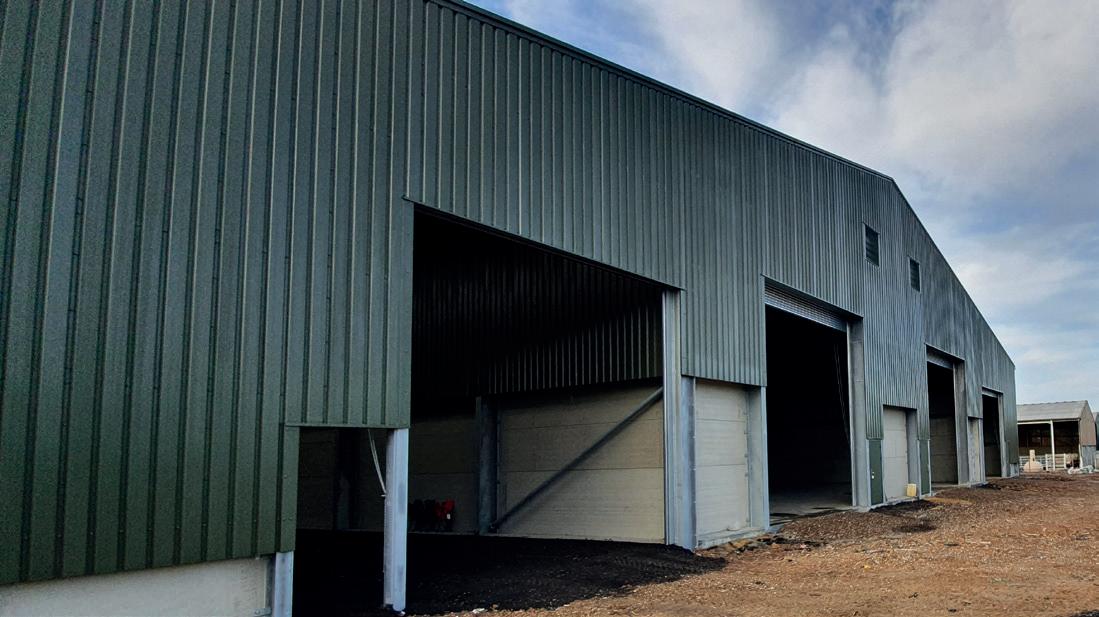



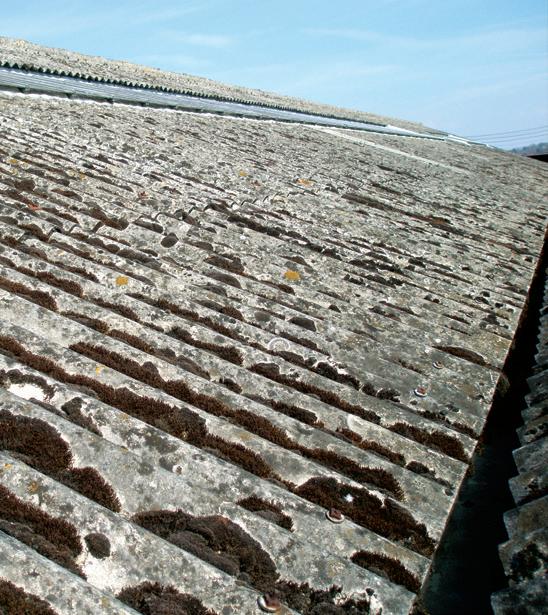



WWW.SOUTHEASTFARMER.NET | MARCH 2024 71 TO ADVERTISE CALL 01303 233883 CLASSIFIEDS CONSTRUCTION CONSTRUCTION Specialists in the Agricultural, Industrial and Equestrian sectors Steel frame buildings. Sheeting, cladding and oversheeting. Gutter replacement, repairs and lining. Steel frame, concrete frame alterations and repairs. Asbestos removal. Roof light and sheet changes. Refurbishments and usage changes. Demolition, groundworks and site clearance. 24 hour call out in the event of fire or break in. Roller shutters, sliding and personnel doors. Condition reports and dilapidation work before solar panel installation Mezzanine floors Insurance and repair work On site welding and steel fabrication Solar panel installation ALL WORKS GUARANTEED 01227 918723 Quality of work Reliability and honesty Unbeatable on price 07784 619603 jez@JRJconstruction.co.uk www.JRJconstruction.co.uk Penfold’s commercial, agricultural and residential building specialists with over 40 years experience – Standing seam – Snaplock systems – Aluminium – Zinc – Copper METAL ROOFING – Composite cladding – Metal cladding – Fibre cement cladding – Timber cladding CLADDING – Removal – Disposal – Surveys ASBESTOS REMOVAL 07864 823 476 07889 481618 Nextgen Cladding Ltd www.nextgencladding.co.uk We are a Hampshire-based family run company specialising in the refurbishment, renovation, alteration and upgrade to the external envelope of buildings within the industrial, commercial and agricultural sectors. Our services Structural Steel Cladding Systems Roof Repairs Doors Gutter Maintenance Asbestos Removal Tel: 02380 617383 Email: info@symesindustrial.co.uk Web: www.symesindustrial.co.uk Units 6 & 7, Upper Norton Farm, Sutton Scotney, Hampshire SO21 3QF Industrial Commercial Agricultural FREEPHONE: 01233 659129 from BT land-line charlie.woodger@btinternet.com Asbestos roof sheeting removals Asbestos encapsulation Asbestos fire damage, clearance & re-instatement works Asbestos clearance & de-contamination Asbestos disposals by licenced registered company New metal roofs installed over old asbestos roofs Roof light & sheet repairs Gutter repairs Gutter replacements & re-lining Strip & refurbishment works Change of use projects Demolition & Groundworks CALL TO DISCUSS YOUR PROJECT! Professional Services to the Agricultural, Industrial & Equestrian Sectors ALL RISKS LTD ASBESTOS ROOF REMOVALS To advertise in South East Farmer telephone 01303 233883
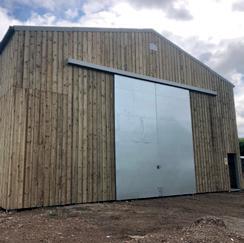
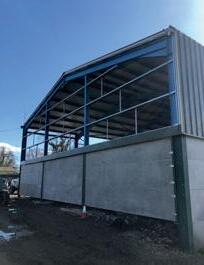






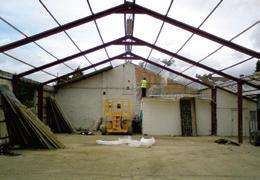


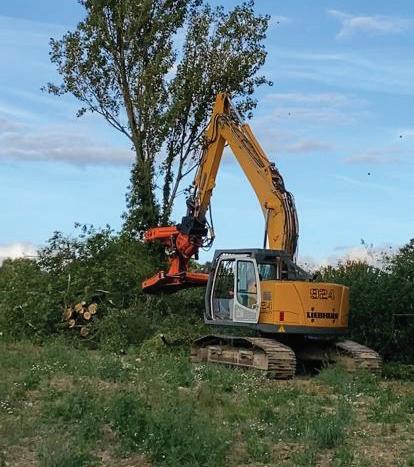



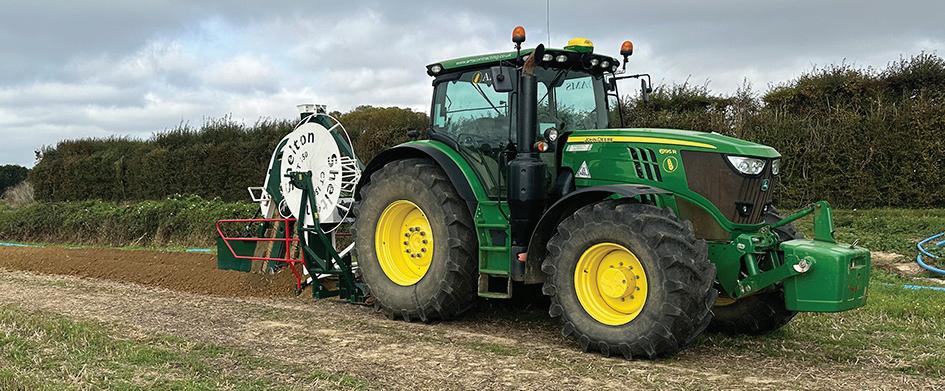




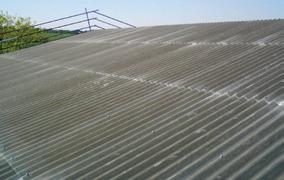
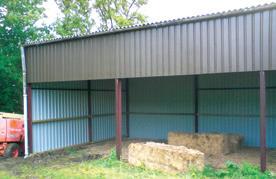
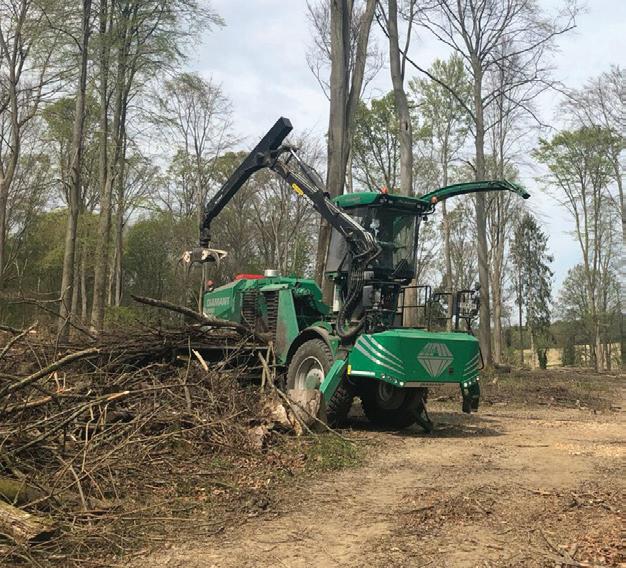



MARCH 2024 | WWW.SOUTHEASTFARMER.NET 72 CLASSIFIEDS To advertise in South East Farmer telephone 01303 233883 To advertise in South East Farmer telephone 01303 233883 JPR ROOFING & CONSTRUCTION LTD Professional Services to the Agricultural, Equestrian & Industrial Sectors. Roofing & Cladding - Strip & Re-sheet - Repairs Metal Profile - Fibre Cement - Insulated - Timber Boarding Asbestos Sheet replacements - New Roof lights New Roofs Projects & Insulated Over-SheetingValley Gutter repairs & Re-lining Asbestos Stripping & Environmental Waste Disposal Refurbishments & Extensions to existing buildings Change of Use & Rental Unit Conversions Insurance Claim Works for Fire, Flood & Storm Damage Same Day - Next Day, Site Visit, Inspection Service Making Building/Premises Safe - Secure Emergency Clear-Up Operations Asbestos Stripping & Environmental Waste Disposal Demolition & Site Clearance Works Ground Works, Roads, Drives & Drainage Works Re-Instatement Works ALL WORKS GUARANTEED Covering: Canterbury, Dover, Kent, East & West Sussex & London MOBILE: 07813 142 145 CONTRACTORS Mobile: 07976 287836 Email: sales@shortlandstructures.com www.shortlandstructures.com • STEEL FRAMED BUILDINGS • CLADDING • ERECTING • • EXTENSIONS • ALTERATIONS • CONCRETE PANELS • ROLLER/SLIDING/PERSONNEL DOORS • SHORTLAND STRUCTURES LTD ● LAND DRAINAGE ● DITCHING ● POND WORK ● WATER SUPPLIES ● SEWAGE TREATMENT PLANTS ● GROUNDWORKS ● PLANT HIRE 360° EXCAVATORS FOR ESTIMATES & ENQUIRIES (01622) 890884 G & S BROWN Drainage Contractors Working with farmers since 1947 Email: info@brownsdrainage.co.uk www.brownsdrainage.co.uk CONTRACTORS Land drainage with GPS controlled trenchers Sports field drainage Groundworks: Farm tracks, concrete bases, large-scale earthworks Reservoirs, ponds, lakes, ditches Agricultural operations Rewilding and conservation works Sports Turf & Land Drainage Contractors Tel: 01243 511337 - www.amscontracting.co.uk CONSTRUCTION CURTEIS FORESTRY Managing trees in the South East since 1995 Contact Richard Curteis 01622 745503 | 07831 749285 richard@curteisforestry.co.uk | www.curteisforestry.co.uk • Woodchipping for biomass • Mechanical tree felling • Windbreak pollarding/removal • Roadside trees WANTED: Standing timber for Biomass ie Poplar, Leylandii, Alder Keen Builds Refurbishment Re/Cladding Repairs Demolition Groundworks STEEL BUILDINGS Clinton Keen - 07786 004045 keenbuildings249@yahoo.com STEEL BUILDINGS New Builds Refurbishment Re/Cladding Repairs Demolition Groundworks Clinton Keen - 07786 004045 keenbuildings249@yahoo.com
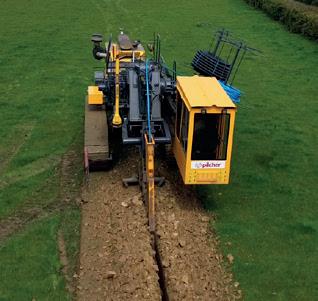
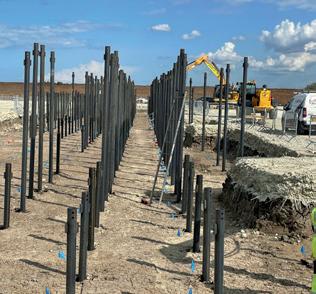
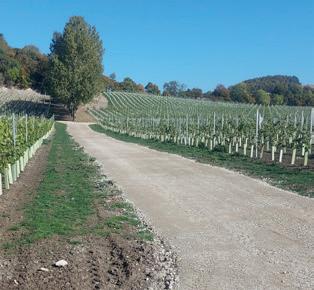
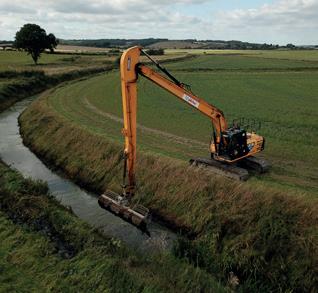
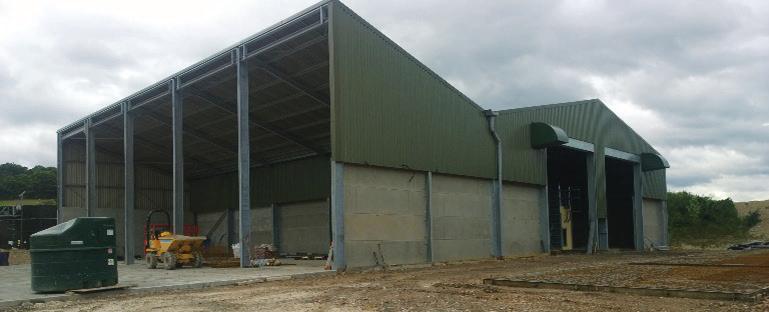
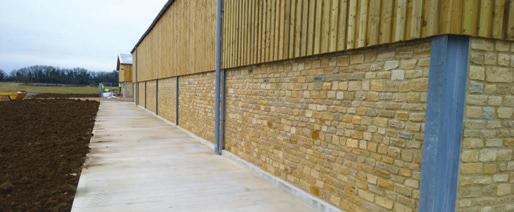


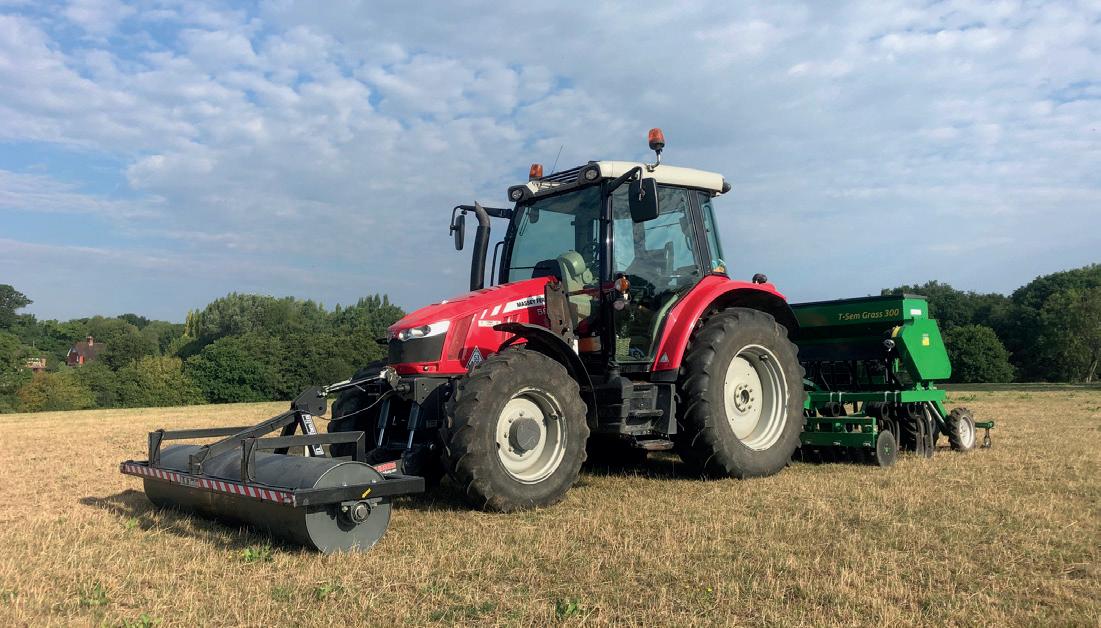
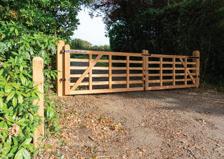
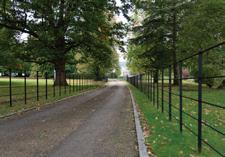
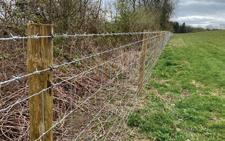
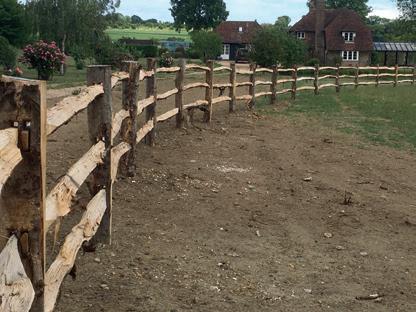
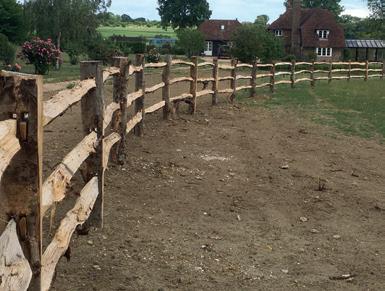
WWW.SOUTHEASTFARMER.NET | MARCH 2024 73 TO ADVERTISE CALL 01303 233883 CLASSIFIEDS To advertise in South East Farmer telephone 01303 233883 To advertise in South East Farmer telephone 01303 233883 To advertise in South East Farmer telephone 01303 233883 FENCING CONTRACTORS LAND DRAINAGE, EARTHWORKS, GROUNDWORKS & CONSTRUCTION FULL LAND DRAINAGE SERVICE Sportsfields, amenity and irrigation systems using Mastenbroek trenchers PONDS, LAKES & RESERVOIRS Construction and maintenance GROUNDWORKS & CONSTRUCTION Primary excavations, aggregate sub-base, agricultural construction and concreting ENVIRONMENTAL HABITATS Water course maintenance and improvement works VINEYARD SERVICES Trackways, access roads, parking areas, washdown bays and water harvesting For all enquiries call 01233 860404 or 07770 867625 (Harvey) J D RICHMOND & SON LTD All aspects of agricultural and industrial construction - Steel framed buildings - Demolition - Plant hire - Groundworks - Asbestos removal - Concrete works - Retaining walls - Design - Planning T 01403 266124 M 07880 746474 / 07921 123920 E richmond.46@btinternet.com www.jdrichmondandson.co.uk Competitive Direct Drilling Service Using our proven Simtech Aitchison direct drill we seed into all surfaces - grasses, clovers, brassicas, cereals, pulses, maize and all mixtures. The unique T-slot boot allows a perfect environment for the seeds to germinate, along its 3m sowing width with 20 rows (15cm). Town Place Farm, Haywards Heath Tel: 01825 790341 Mob: 07970 621832 Email: Charlie@townplacefarm.co.uk This method saves time and money compared with more traditional re-seeding methods, but is also capable of stitching and rejuvenating existing crops. Undertaking all CSS crop options RTK Accuracy CWP fencing Tel: 07985 298221 colin@cwpfencing.co.uk Standing Sweet Chestnut Wanted Cleft post and rail Cleft field gates
stakes
posts Chestnut fencing Tel: 07985298221 colin@cwpfencing.co.uk Standing Sweet Chestnut Wanted Cleft post and rail Cleft field gates
stakes
Chestnut
Tel: 07985298221 colin@cwpfencing.co.uk Standing Sweet Chestnut Wanted Cleft post and rail Cleft field gates
fencing PHILIP JUNIPER Fencing Services Covering the South East Tel: (01403) 700509 Mobile: 07836 219344 www.philipjuniper.co.uk Specialists in Stock, Deer and Equestrian Fencing Ltd FENCING RICHARDS T: 01892 770186 E: enquiries@richards-fencing.co.uk W: richards-fencing.co.uk Livestock fencing Estate fencing Deer fencing Post and Rail Equestrian Gates Bespoke bridges Ground clearance We are based between Crowborough and Tunbridge Wells on the Kent and East Sussex border. Ltd FENCING RICHARDS T: 01892 770186 E: enquiries@richards-fencing.co.uk W: richards-fencing.co.uk Livestock fencing Estate fencing Deer fencing Post and Rail Equestrian Gates Bespoke bridges Ground clearance We are based between Crowborough and Tunbridge Wells on the Kent and East Sussex border. • Livestock fencing • Estate fencing • Deer fencing • Post and Rail • Equestrian • Gates • Bespoke bridges • Ground clearance We are based between Crowborough and Tunbridge Wells on the Kent and East Sussex border. T: 01892 770186 E: enquiries@richards-fencing.co.uk W: richards-fencing.co.uk Redhill Farm Services: Fencing Division ALL TYPES OF FENCING & GATES Supplied and erected & Repairs Tel: 01737 821220 Mob: 07768 931891 Email: redhillfarmservices@gmail.com ® CLASSIFIEDS FROM £65 To advertise in South East Farmer telephone 01303 233883
Fencing
Straining
Fencing
Straining posts
fencing
Fencing stakes Straining posts Chestnut
























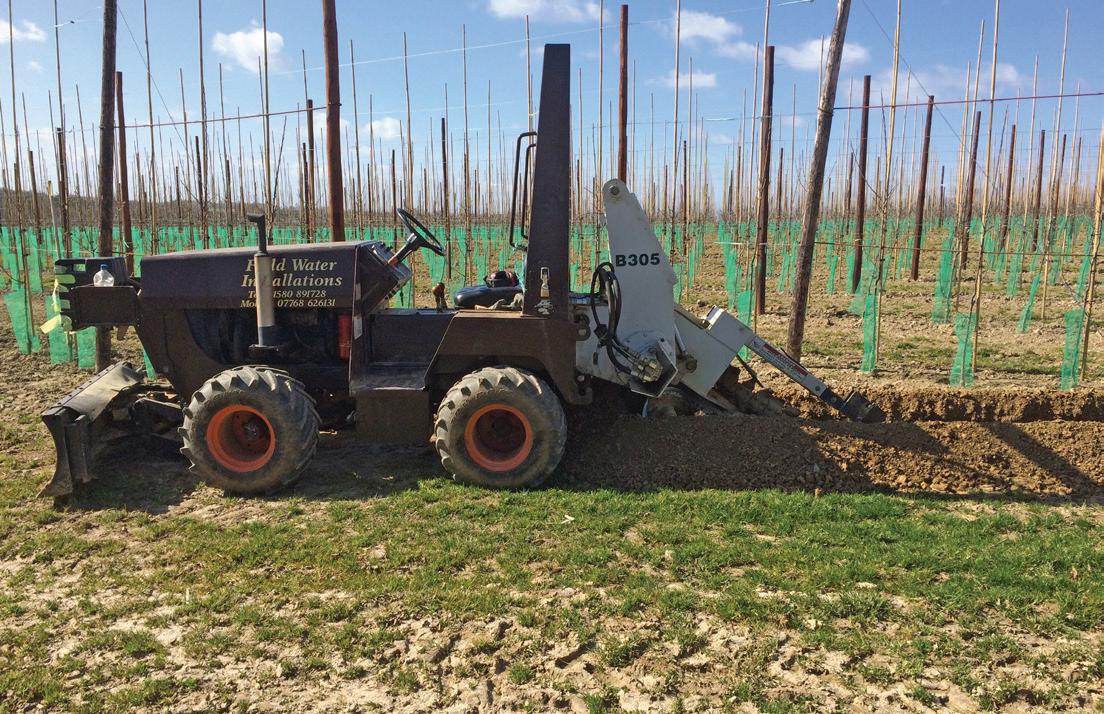




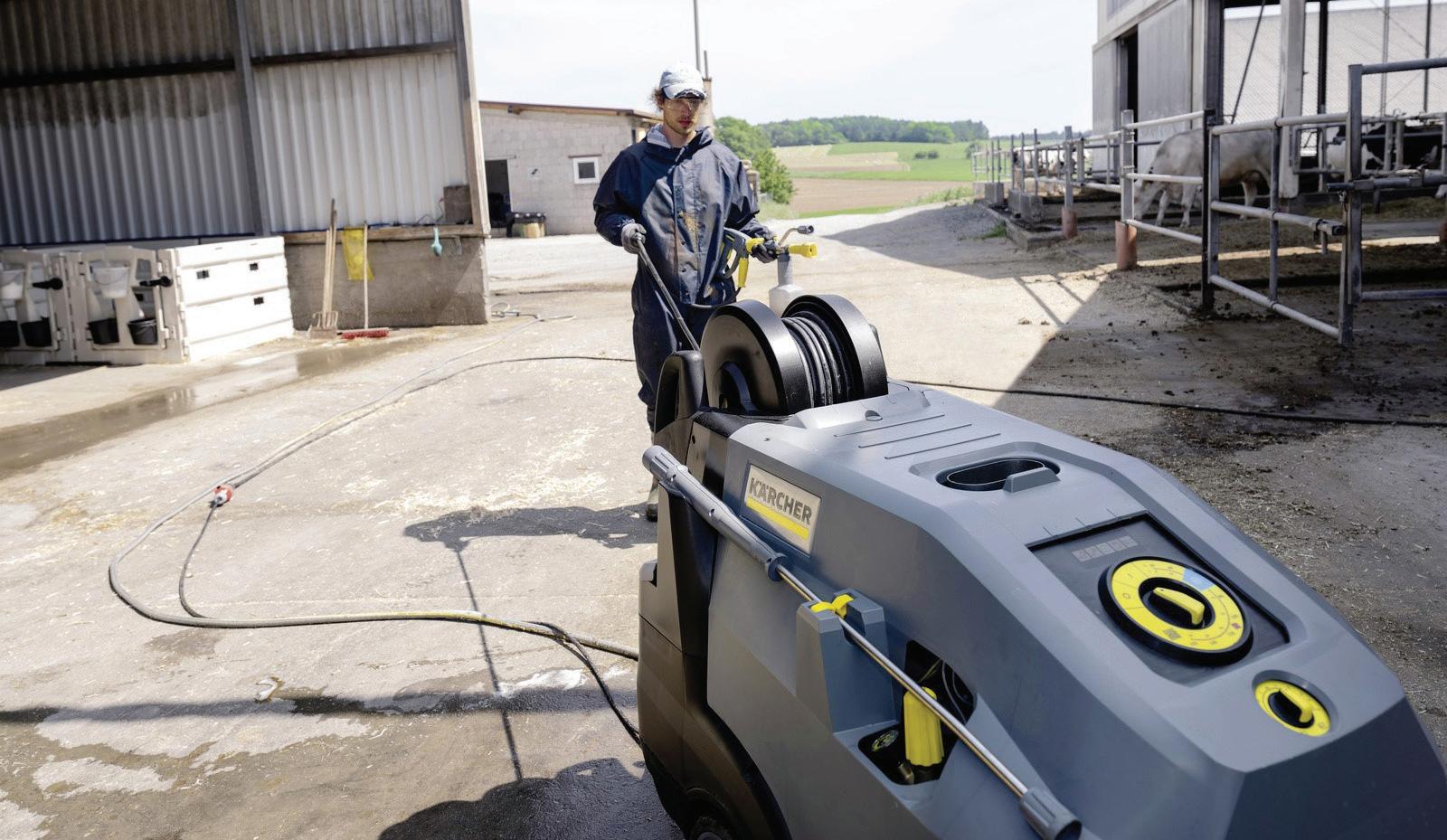

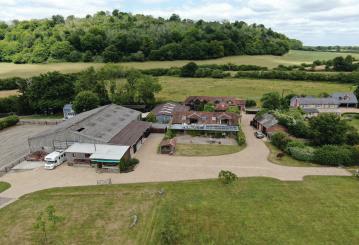




MARCH 2024 | WWW.SOUTHEASTFARMER.NET 74 CLASSIFIEDS To advertise in South East Farmer telephone 01303 233883 To advertise in South East Farmer telephone 01303 233883 PROPERTY PRESSURE WASHERS CROP DRYING STORAGE TANKS Visit www.smdd.co.uk or call 01594 833308 Buy from stock. Visit us to collect or same day dispatch with nationwide delivery. New and recycled IBC tanks. Plastic and steel drums. Water tanks & plenty of fittings. Smiths of the Forest of Dean The Tank and Drum Experts Visit www.smdd.co.uk or call 01594 833308 Buy from stock. Visit us to collect or same day dispatch with nationwide delivery. New and recycled IBC tanks. Plastic and steel drums. Water tanks & plenty of fittings. Smiths of the Forest of Dean The Tank and Drum Experts IRRIGATION www.pellcroft.com | sales@pellcroft.com | 01526 342466 PELLCROFT Manufacturers of centrifugal, low volume and portable fans, air tunnels, drive over oors, grain stirrers and gas burners Sale and Letting of Country & Equestrian Property • SALES & LETTINGS • EQUESTRIAN • LAND • FARMS • COUNTRY HOUSES • VALUATION SERVICES www.churchillcountry.com | Tel: 01403 700222 Sale and Letting of Country & Equestrian Property • SALES & LETTINGS • EQUESTRIAN • LAND • FARMS • COUNTRY HOUSES • VALUATION SERVICES www.churchillcountry.com | Tel: 01403 700222 CHURCHILL COUNTRY & EQUESTRIAN We are a leading supplier and an approved repair centre With 50 years trading in the cleaning industry. With our strong ties and long term relationship with the leading manufacturers 01825 705777 Unit 4, 72 Bell Lane Uckfield, East Sussex TN22 1QL enquiries@pressureclean.co.uk SALES SERVICE HIRE Enquiries FieldWaterInstallations@gmail.com 01580 891728 or 07768 626131 www.fwi-trenching.co.uk Installation of: Irrigation and water pipes • Utility cables and ducting • Repairs to water pipes • Impact moling • Est 1993 • Toilets & Showers for hire • Large range of Temporary canteens, stores & welfare units • E uent Tank Emptying • Events also catered for with toilets, chiller & shower trailers FOUR JAYS GROUP Tel: 01622 843135 enquiries@fourjays.co.uk www.fourjays.co.uk HIRE SPECIALISTS ACROSS THE SOUTH EAST units FOR HIRE ® CLASSIFIEDS FROM £65 To advertise in South East Farmer telephone 01303 233883
COMPLETE OUR CROSSWORD TO WIN
ACROSS
1 Cause a stumbling block (9)
5 Stomach used in cooking (5)
8 Excessive indulgence in luxury (9)
9 A comic play (5)
11 Fencing weapon (4)
12 Type of rasher of bacon (7)
13 Fundamental mathematical operation (14)
15 ------ Brook, River Thames tributary (6)
17 Shape (6)
20 Not man made (7)
23 Musical instrument (4)
24 Breed of goose (6,4)
25 Turning fibre into yarn (8)
26 Energy, flair, enthusiasm (4)
DOWN
1 Boundary formed of bushes (5)
2 A special market (5)
3 Travel on a horse (4)
4 Unceasing (3,4)
6 Prepared (5)
7 Tomato variety (7)
10 Winemaking waste (4)
13 The ---------, longest running play in the world (9)
14 River in West Sussex (4)
16 2,240 lbs (3)
17 Clothing accessory (5)
18 Bone attached to the spine (3)
19 UK's smallest bird of prey (6)
by Rebecca Farmer, Broadstairs, Kent
To enter, simply unscramble the anagram (7,4,6) using the green squares.
Email your replies with your name, address and phone number to sef.ed@kelsey.co.uk
Correct entries will be entered into a draw which will take place on 19 March. The winner will be announced in the April edition.
21 Fruit of an oak tree (5)
22 Relating to a city area (5)
23 Fruit of a tree used to make oil (5)




To celebrate Mothering Sunday (10 March) we are offering readers the chance to win one bottle of Gribble Bridge White, one bottle of Gribble Bridge Rosé and a bottle of Gribble Bridge Sparkling White. For more information about the vineyards, please visit www.biddendenvineyards.com or call 01580 291726.
WWW.SOUTHEASTFARMER.NET | MARCH 2024 75 TO ADVERTISE CALL 01303 233883 ® VI NE YA R DS VI NE YA R DS
ANSWERS: PRIZE ANAGRAM: Agricultural equipment (7,4,6) CROSSWORD 1 2 3 4 5 6 7 8 9 10 11 12 13 14 15 16 17 18 19 20 21 22 23 24 25 26
LAST MONTH’S
*Subject to availability
One bottle of Gribble Bridge White, one bottle of Gribble Bridge Rosé and a bottle of Gribble Bridge Sparkling White
Correct answer: Acidosis LAST MONTH’S WINNER: Julia Feakes from Shipley, West Sussex 1 2 3 4 5 6 7 8 9 10 11 12 13 14 15 16 17 18 19 20 21 22 23 24 26 27 28 K E R F U F F L E S T E E L E O L I R T O U C H D O W N M O O N C N O P O D H I D E A D J O U R N I F E L N D I L L Y D A L L Y I N G I E A I S O L A T E L A R D E R R Y A D M I E E C O L O G Y T U R N G U I E H D M A R Y T U D O R R E R U O N I D I O P A T H I C W I L T
Crossword
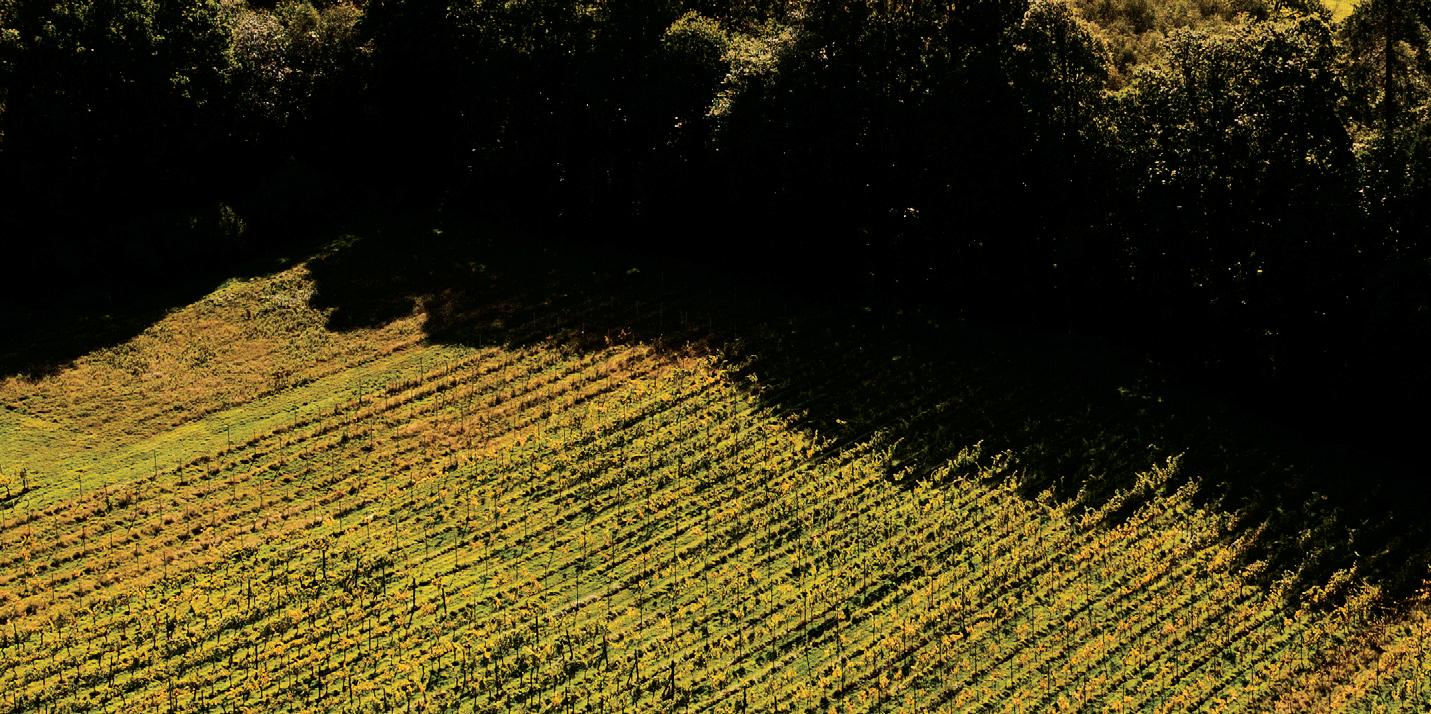

CONFERENCE 18 TH APRIL 2024 3-7 PM
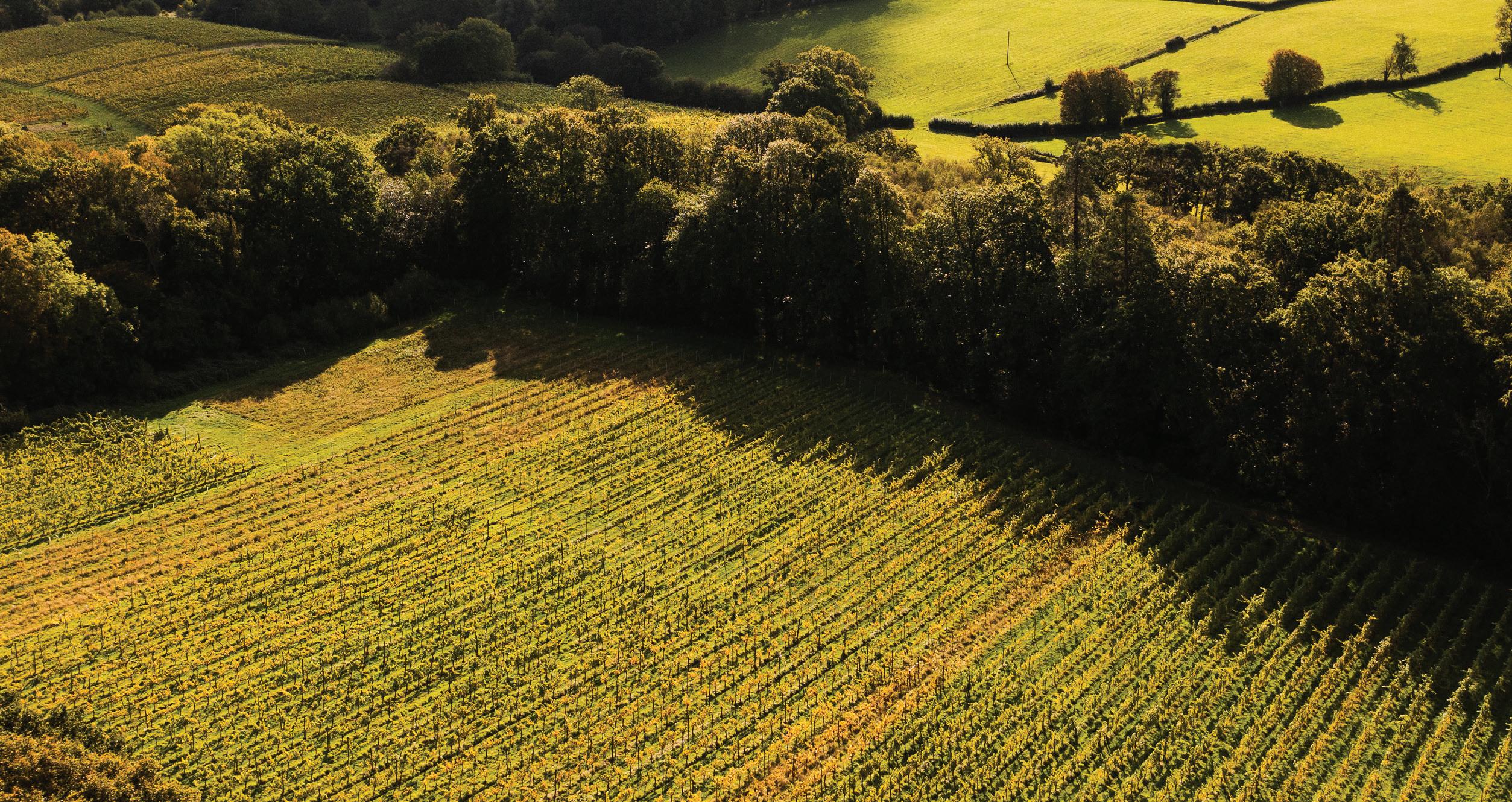


JOIN US AT THIS ANNUAL CONFERENCE PROVIDING INSPIRATION, INSIGHT AND USEFUL PRACTICAL TAKEAWAYS FOR FARMERS AND LANDOWNERS ON SUSTAINABILITY AND PRODUCTIVITY
CONFERENCE CHAIR
Lord Deben
Emily Norton Farmer and Rural Policy Advisor
KEYNOTE SPEAKERS
Former Chair of UK Independent Committee on Climate Change
Eleanor Gilbert
Young Farmer and BBC Countryfile Young Countryside Champion 2022
Joe Stanley Head of Sustainable Farming, The Allerton Project
Flavian Obiero
Known as ‘Kenyan Pig Farmer’ - Farmer, Chef and Apprentice Butcher
Followed by Q&A panel, workshops, networking, refreshments and buffet
SCAN OR TELEPHONE 01264 358195
TO BOOK YOUR £10 TICKET
ALL PROCEEDS DONATED TO ROYAL AGRICULTURAL BENEVOLENT INSTITUTION (RABI)
Venue:
AgriFood Centre, Plumpton College, Wales Farm Lane, Lewes BN7 3AE