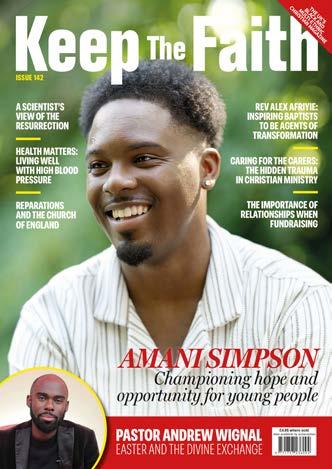
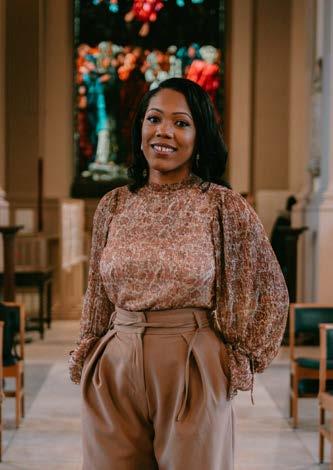
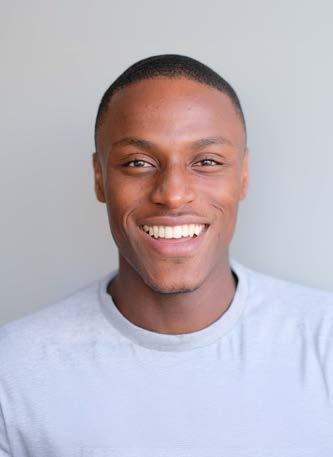
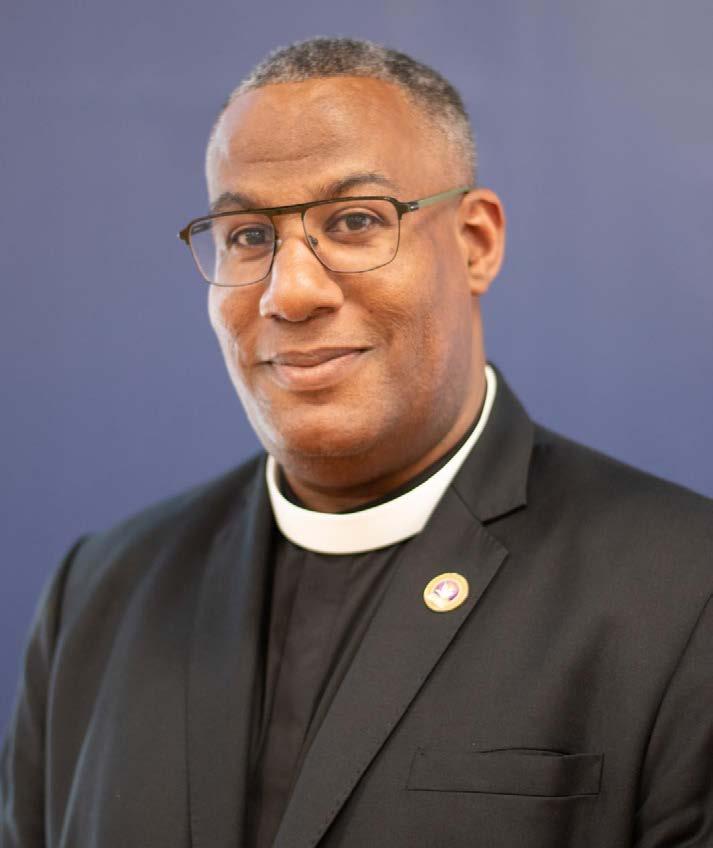
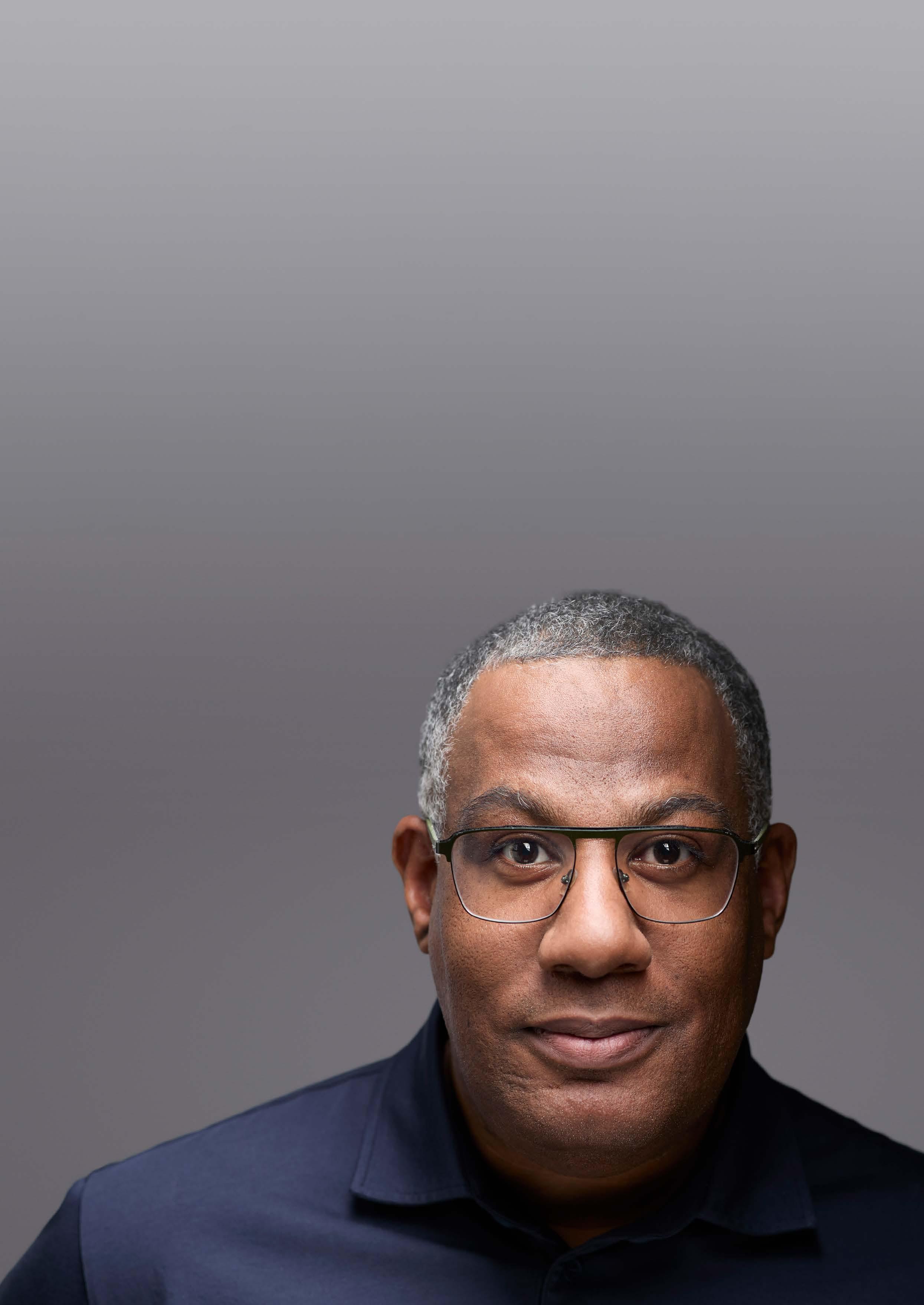
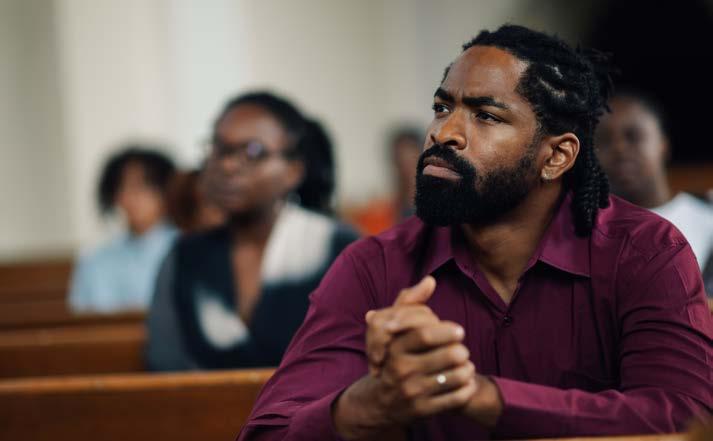
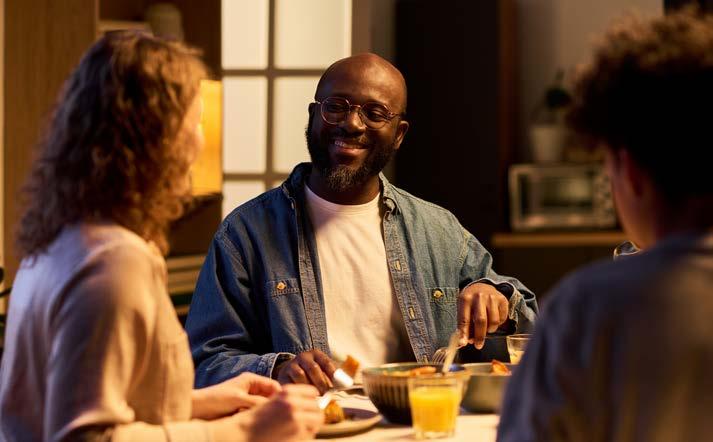
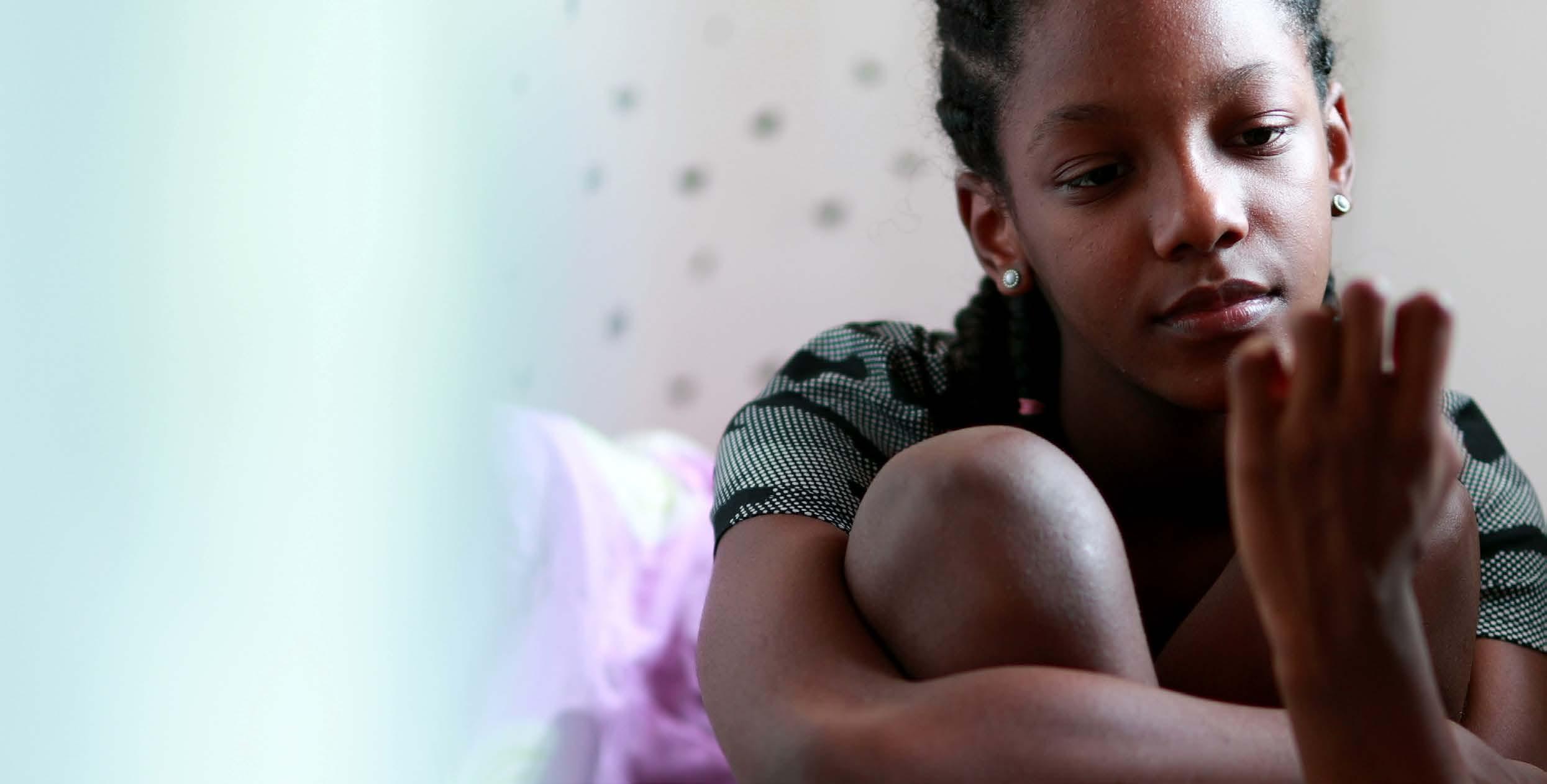
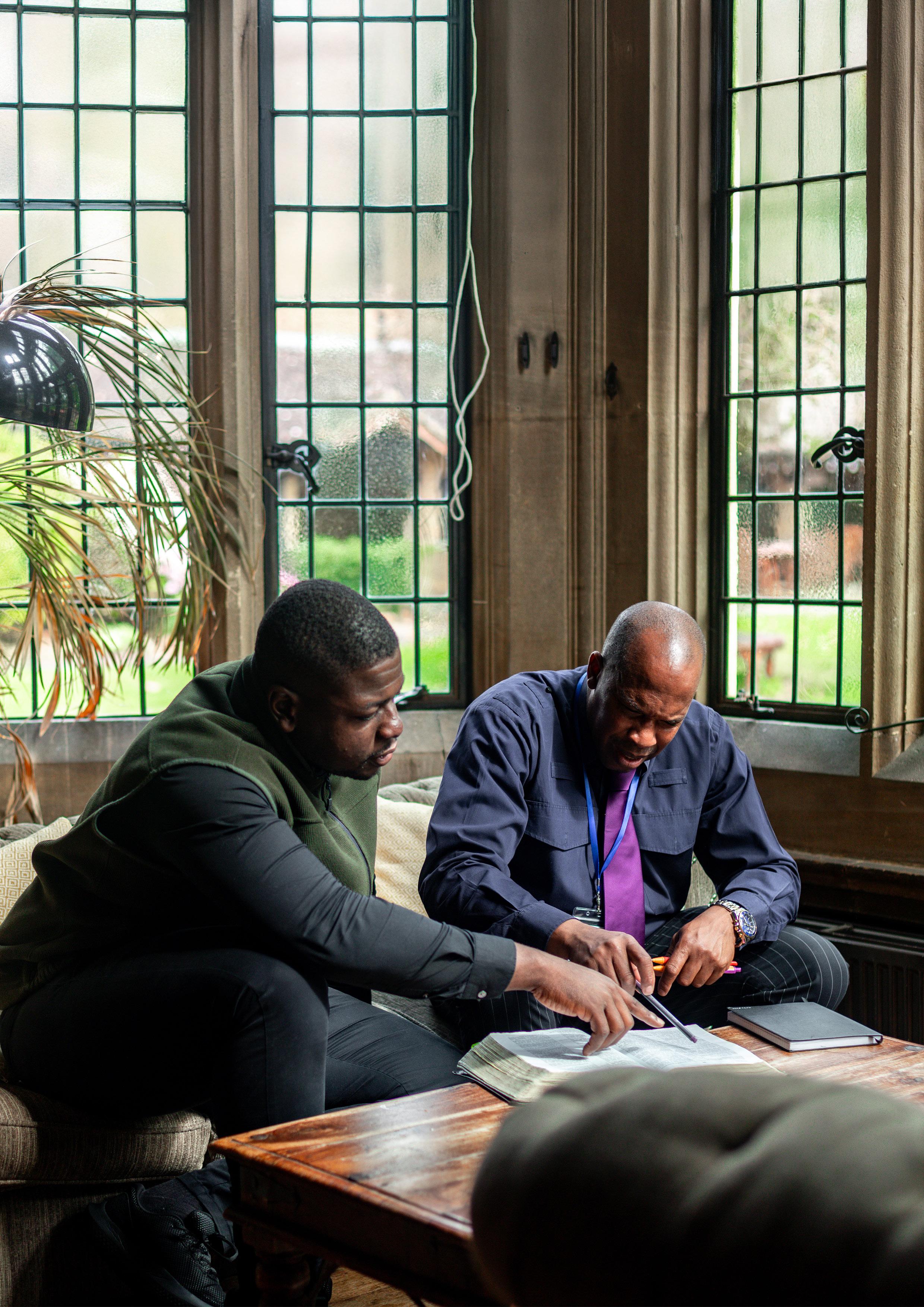
STEPFATHERS: THE MAJOR ROLE THEY PLAY IN FAMILY LIFE
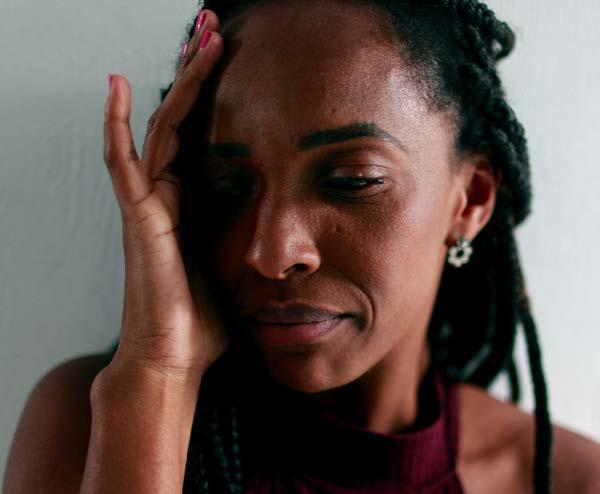
BLACK MEN: HOW TO LIVE HEALTHILY AND STRONG
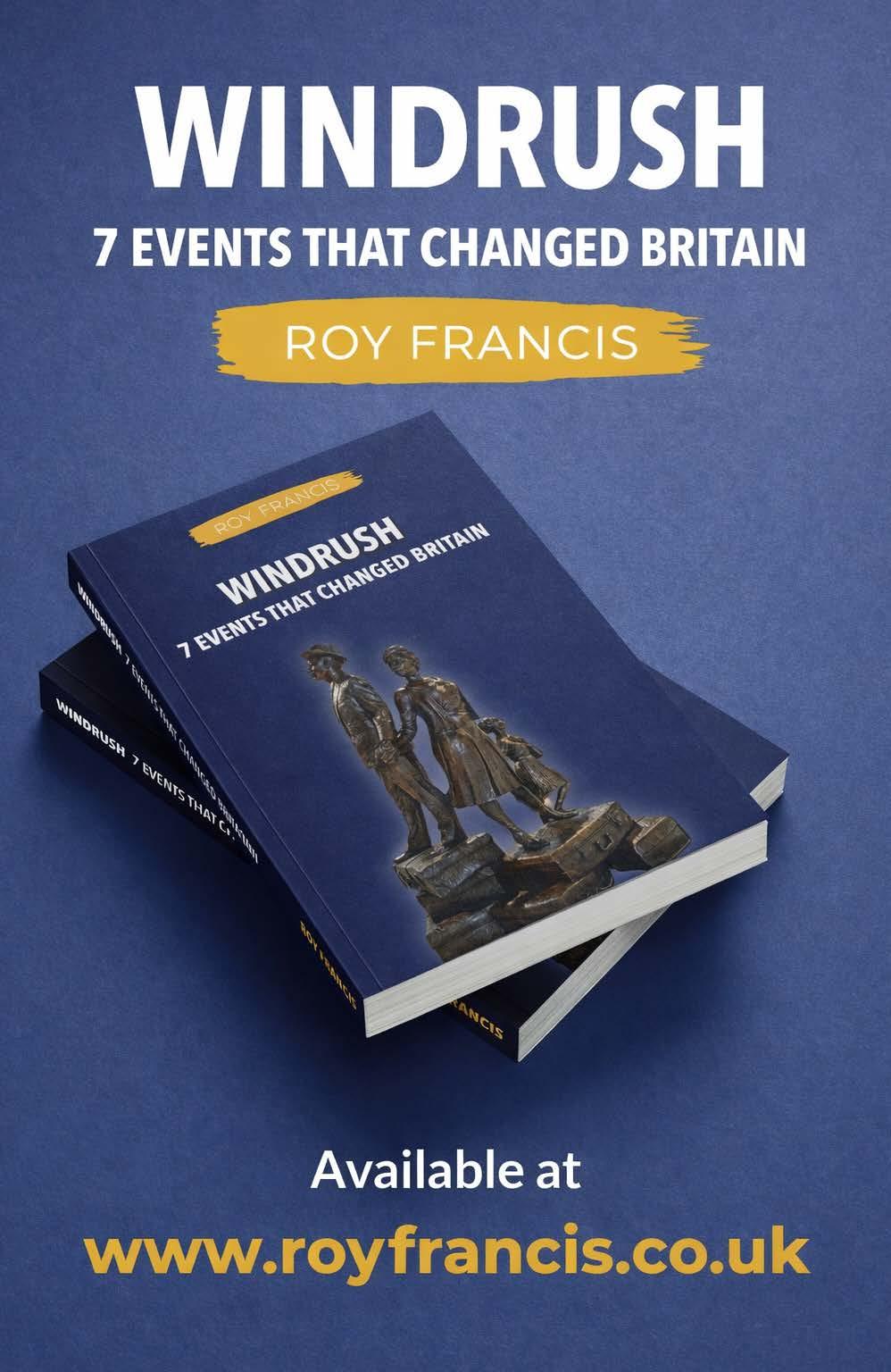
THE WINDRUSH SCANDAL: THE ONGOING FIGHT FOR JUSTICE
YOUNG PEOPLE AND THE CRISIS OF BELONGING MEN OF INFLUENCE
LIST 2026
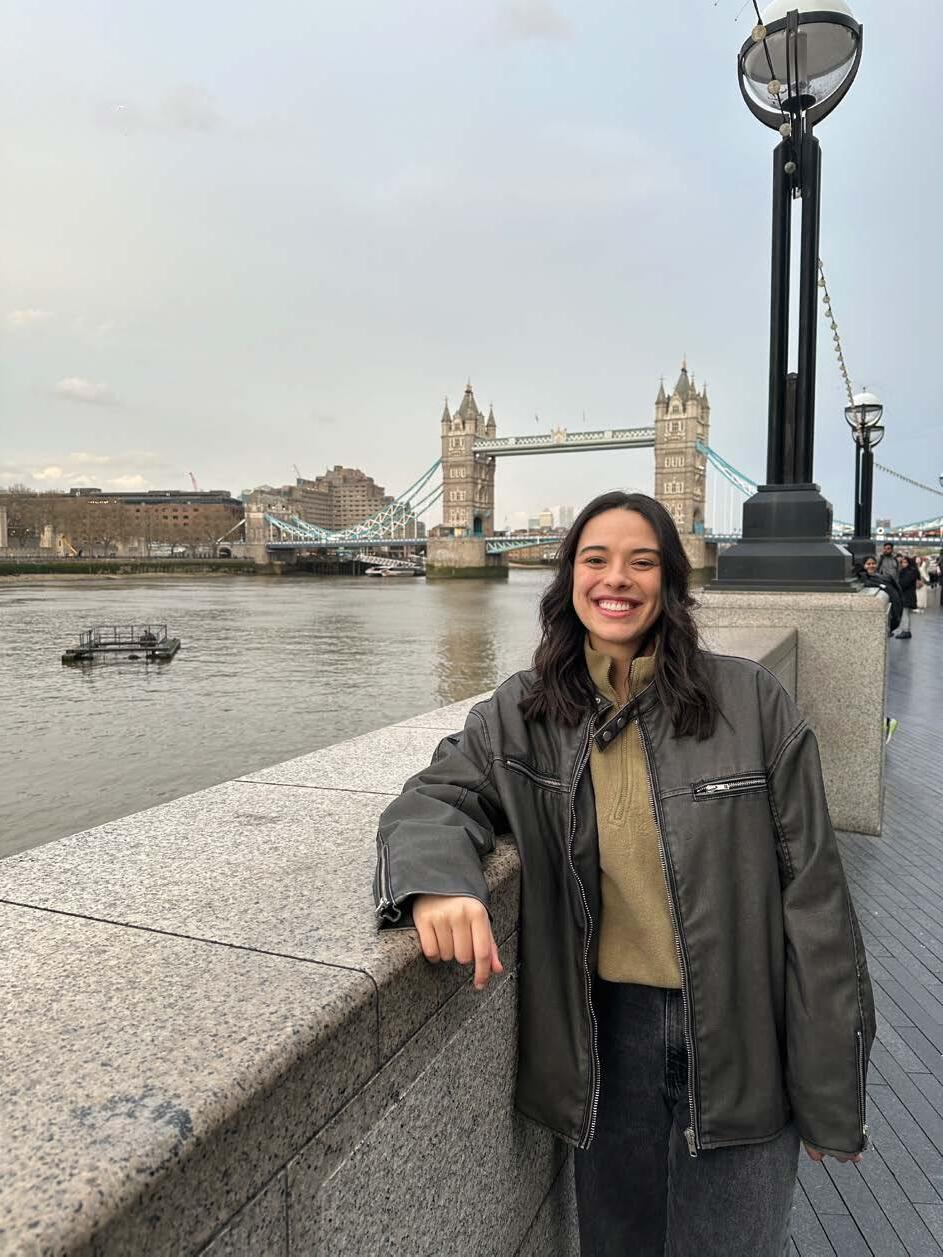
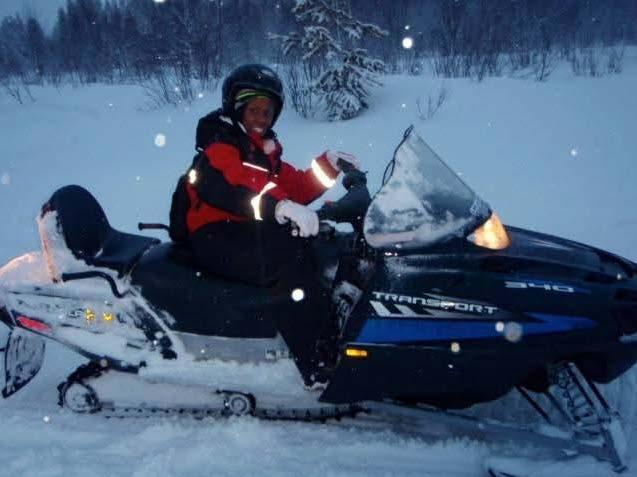
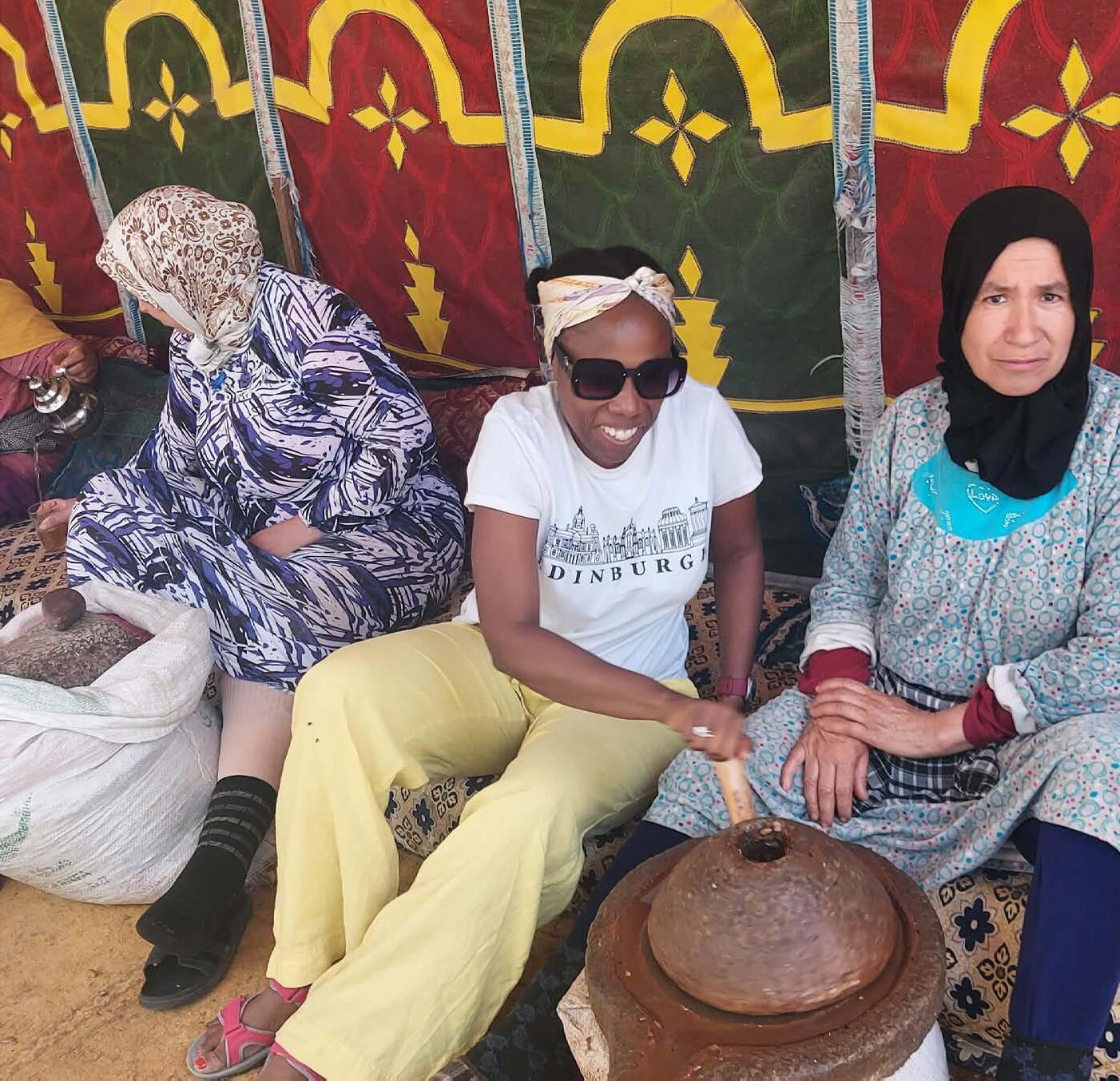
HAVING FUN TRAVELLING, ONE COUNTRY AT A TIME
EDITOR
Marcia Dixon MBE editor@keepthefaith.co.uk
GRAPHIC DESIGNER
Becky Wybrow
SUB-EDITOR
Jackie Raymond ADVERTISING
Valerie San Pedro advertising@keepthefaith.co.uk T: 0203 868 0664
MARKETING
Karen Seronay karen@keepthefaith.co.uk
Mairem Honrada-Magarro mairem@keepthefaith.co.uk
ACCOUNTS AND SUBSCRIPTIONS finance@keepthefaith.co.uk
PUBLISHED BY
MTD Publishing Ltd 71 -73 Sheldon Street London WC2H 9JQ T: 0845 193 4431 www.keepthefaith.co.uk
Facebook keepthefaithmag X @keepthefaithmag Instagram keepthefaithmag
THE PUBLISHER WOULD LIKE TO THANK:
Dr T Ayodele Ajayi, Shirley Anstis, Kemi Bamgbose, Elsa Caleb, O’Neil Dennis, Akosua DF, Leondre Douglas, Chioma Fanawopo, Juliet Fletcher, Revd Clive Foster, Roy Francis, Silvano Griffith-Francis, Marilyn Johnson, Esther Kuku, Dr Jacky McLeod, Revd Steve Muneza, Revd Ronald Nathan, Benjamin Odeku, Pastor Tim Femi Oladipo, Chelena Peart, Kirly Sue, Verona White, our advertisers and supporters
The opinions expressed in this publication are not necessarily those of the Publisher.
Editor’s Note
Dear Readers
I have a confession to make. I spend too much time on social media and get easily drawn into some of the ‘interesting commentary’ on the various platforms.
In recent months, the algorithm has brought to my attention videos on the topic of dating, relationships and men. And what I find disturbing is the number of women who seem to be giving up on men and relationships.
I fully understand why, but it’s important to recognise that men are part of God’s glorious creation and it was a Man – Jesus Christ – who died on the cross for us.
Men are needed. They play such an important role in our world.
Some of the articles in this edition of Keep The Faith – the interviews and articles providing thought leadership and advice – have a focus on men, with the aim to
inform, empower and uplift. Our society needs men. Good men. And they do exist. This edition highlights this.
There are also articles about travel, business, LinkedIn, vegan food, spiritual healing and much more.
I will leave you with this thought: If we want to see more exemplary men in our world, let’s point them to Christ, who provides the perfect example of how a man should aim to be.
Amen.
Happy reading!
If you enjoy reading this magazine, do consider supporting us by subscribing to the magazine. It costs just £25 for an individual subscription, or perhaps consider giving a donation. Our account details are:
Account name: MTD Publishing Ltd
Account no: 30121325
Sort code: 06-04-05
Bank: Tide (Clearbank)
Once you’ve made a payment, email your postal address to finance@keepthefaith.co.uk and we will set up your subscription.
10 08 12 16 18
05-07 Latest news
08 StepFWD Gospel News By O'Neil Dennis
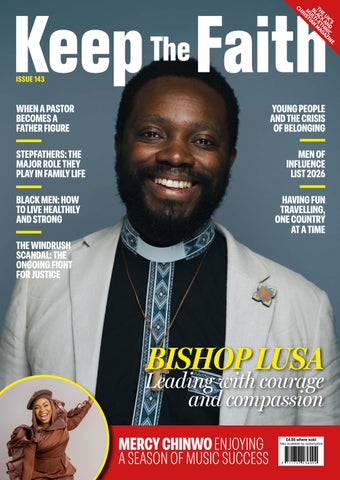
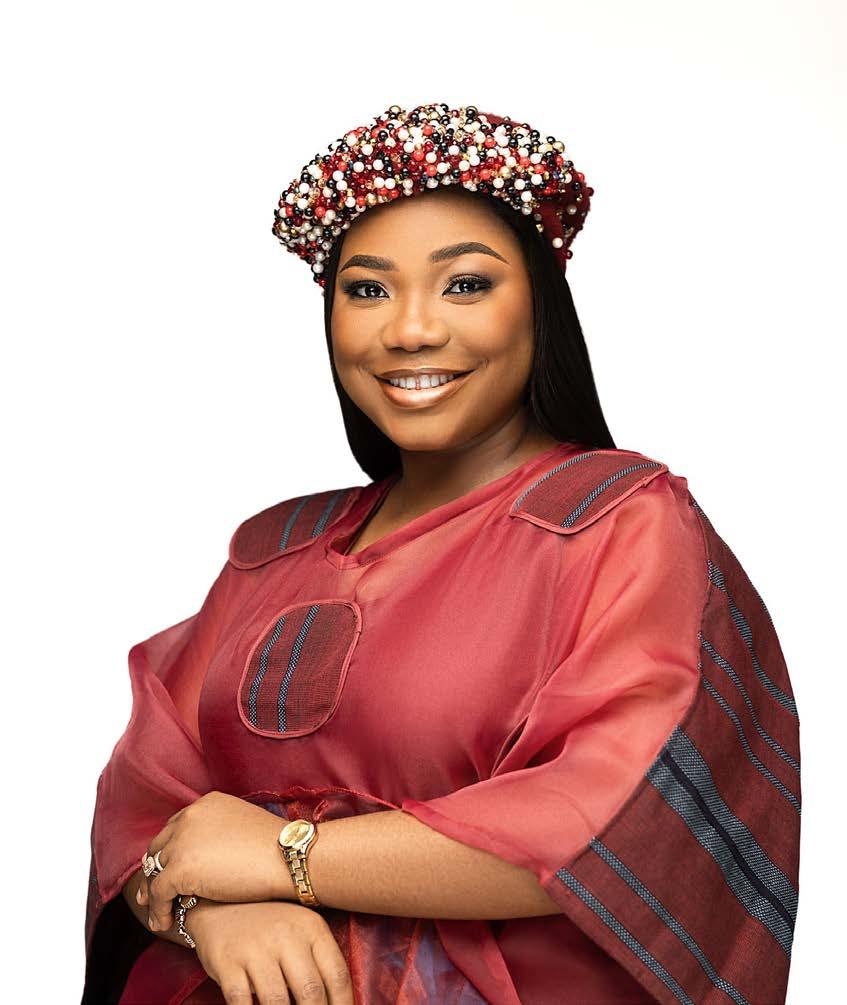
10 Mercy Chinwo: The singer enjoying a season of alignment with God By Akosua DF
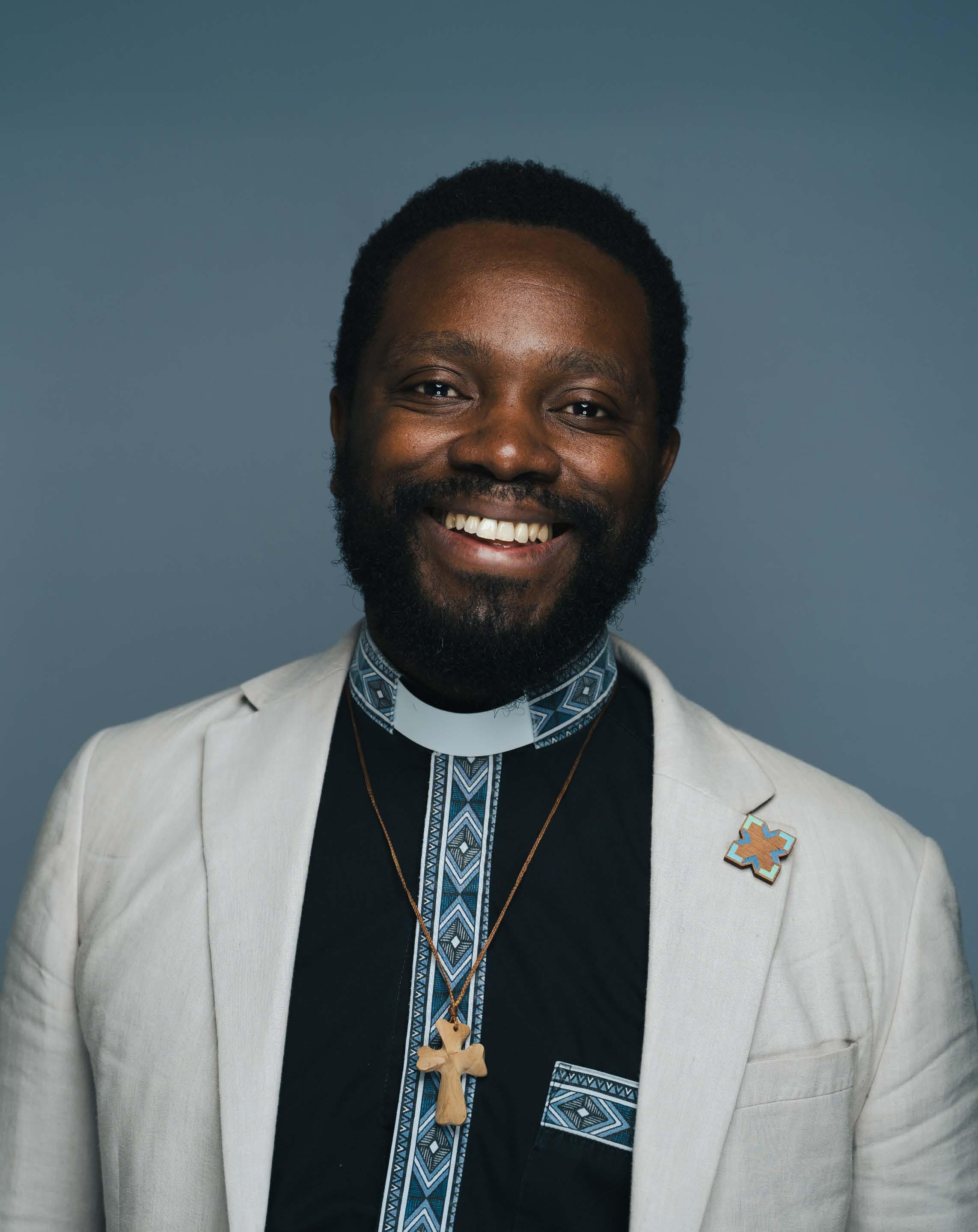
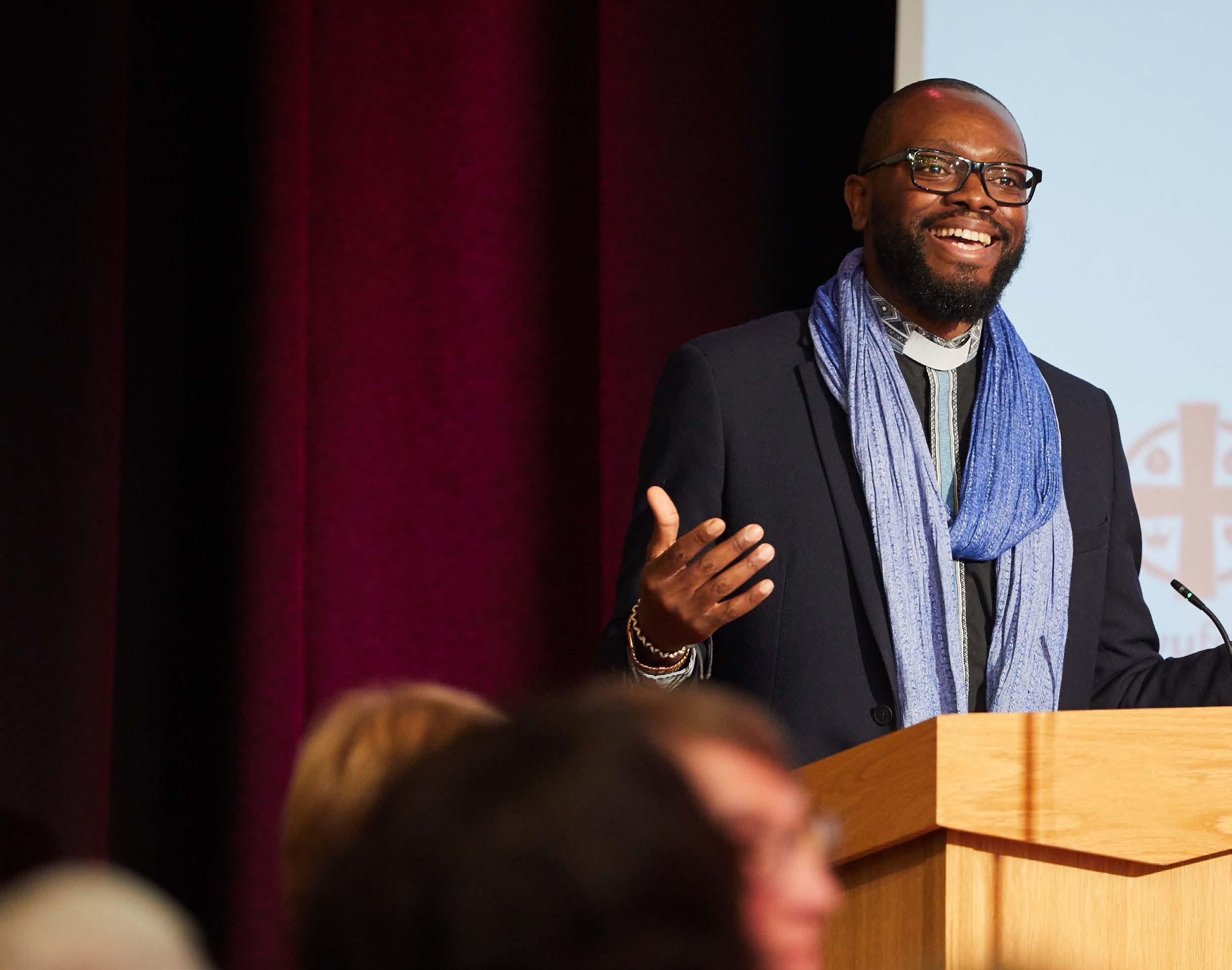
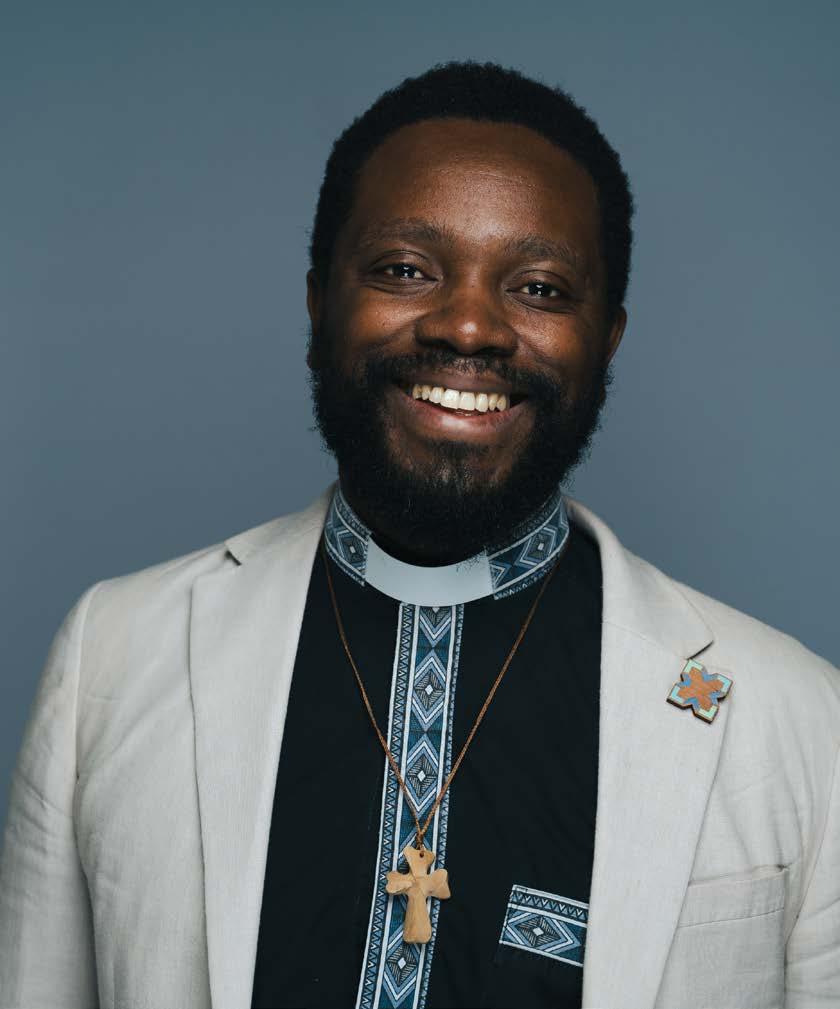
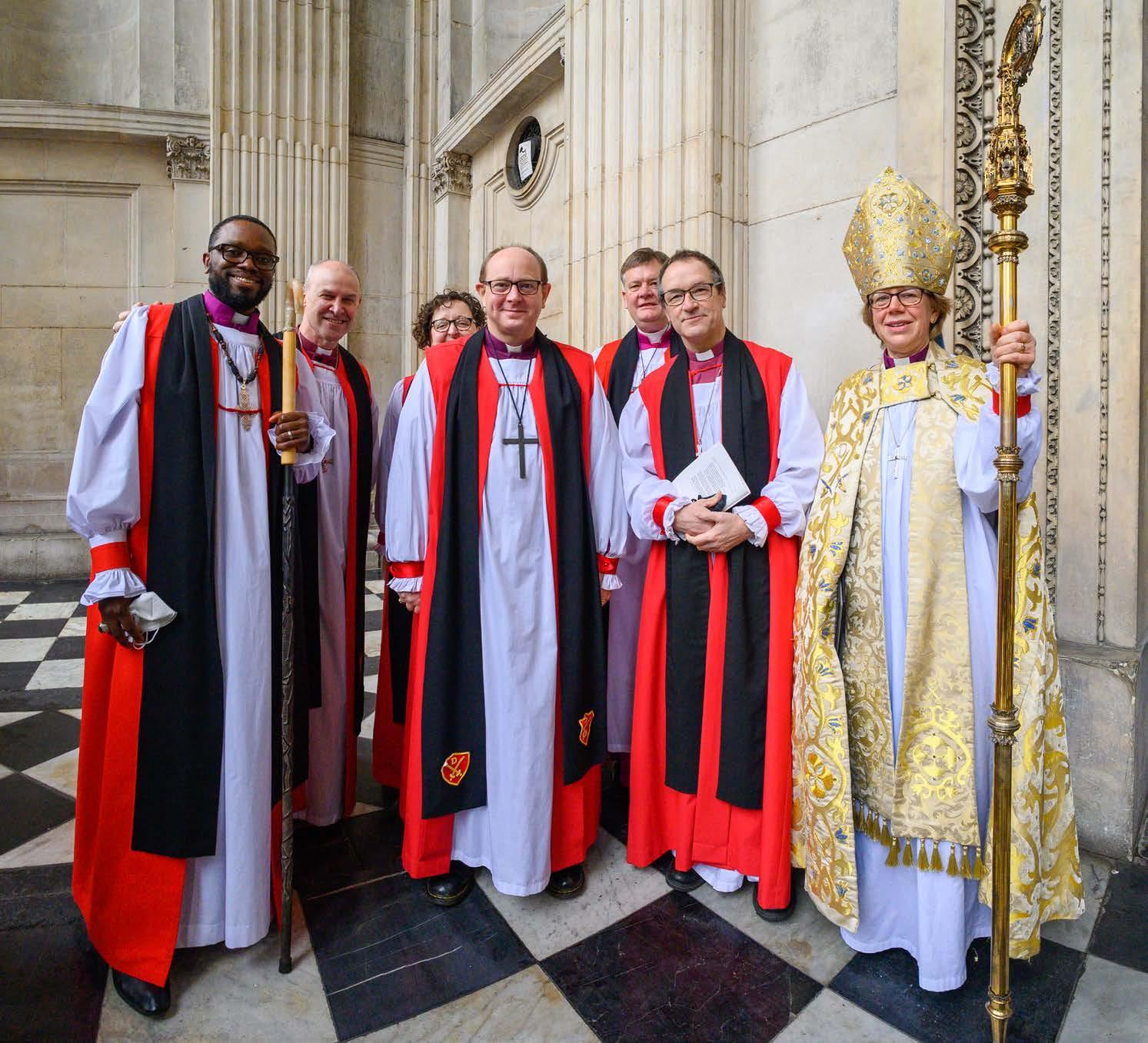
12 Bishop Lusa Nsenga-Ngoy: An advocate for bold, courageous ministry By Marcia Dixon MBE
16 Nick Myers: Building brands whilst living out God’s calling By Juliet Fletcher
18 More than a pulpit: When a pastor becomes a father figure By Pastor Timothy Femi Oladipo
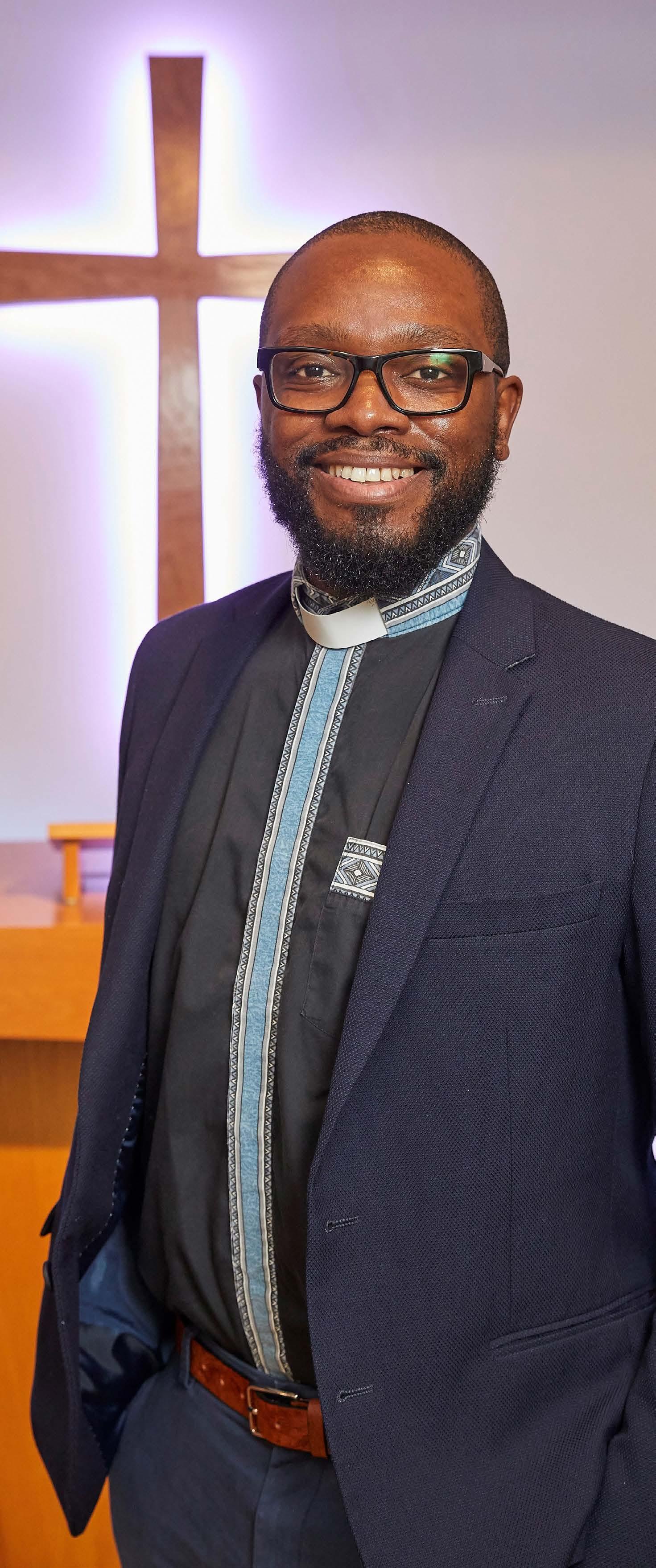
20 Stepfathers: The men who raise and lead children who aren’t their own By Esther Kuku
22 Restoring fathers, rebuilding families By Benjamin Odeku
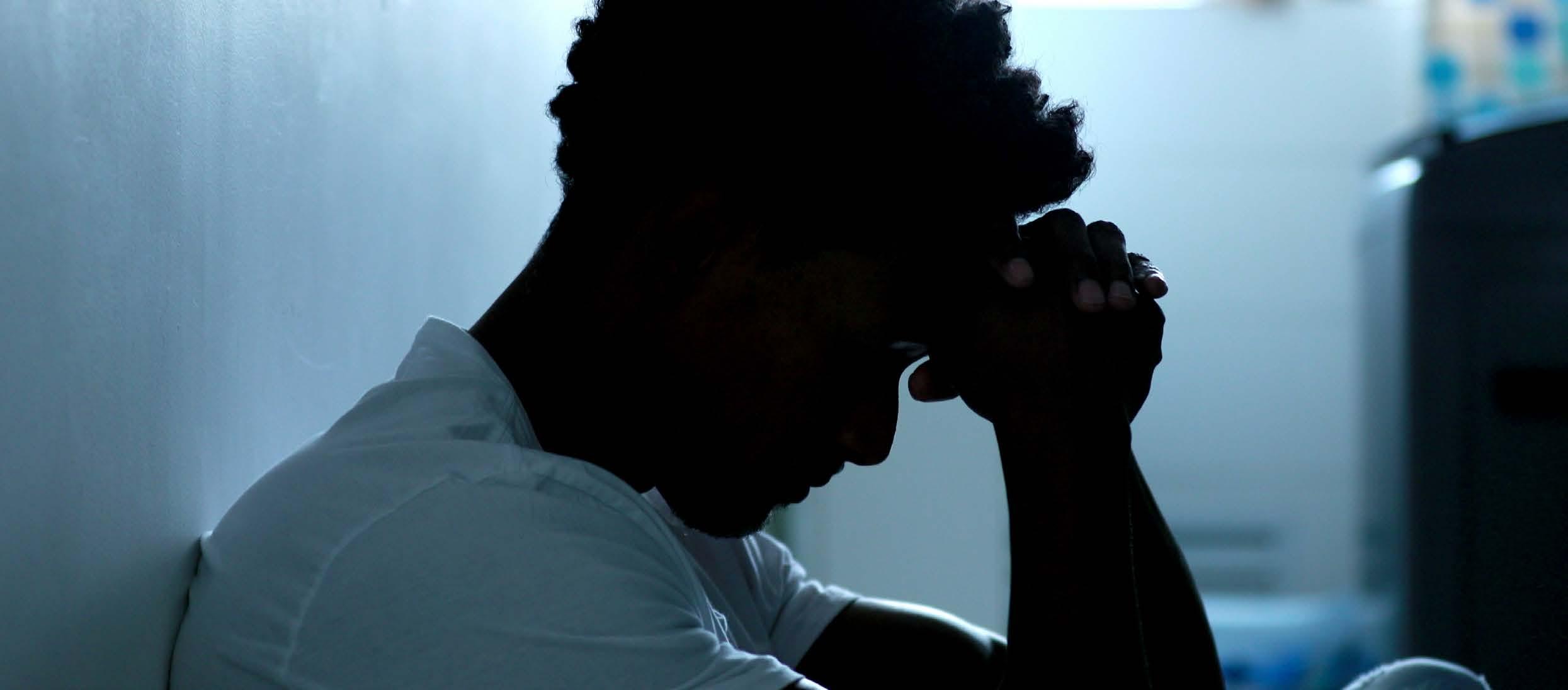
23 Unveiling the hidden wounds and trauma in men By Dr T Ayodele Ajayi
24 Black men - Live well, live healthily, live long By Dr Jacky McLeod
26 Men of Influence 2026 By Marcia Dixon MBE
32 Crossing waters, shaping worship: How Black Pentecostal churches are changing By Roy Francis
34 Celebration, legacy and the ongoing fight for justice By Revd Clive Foster
35 Food 4 Thought By Marcia Dixon MBE
36 Do men hate women? By Leondre Douglas
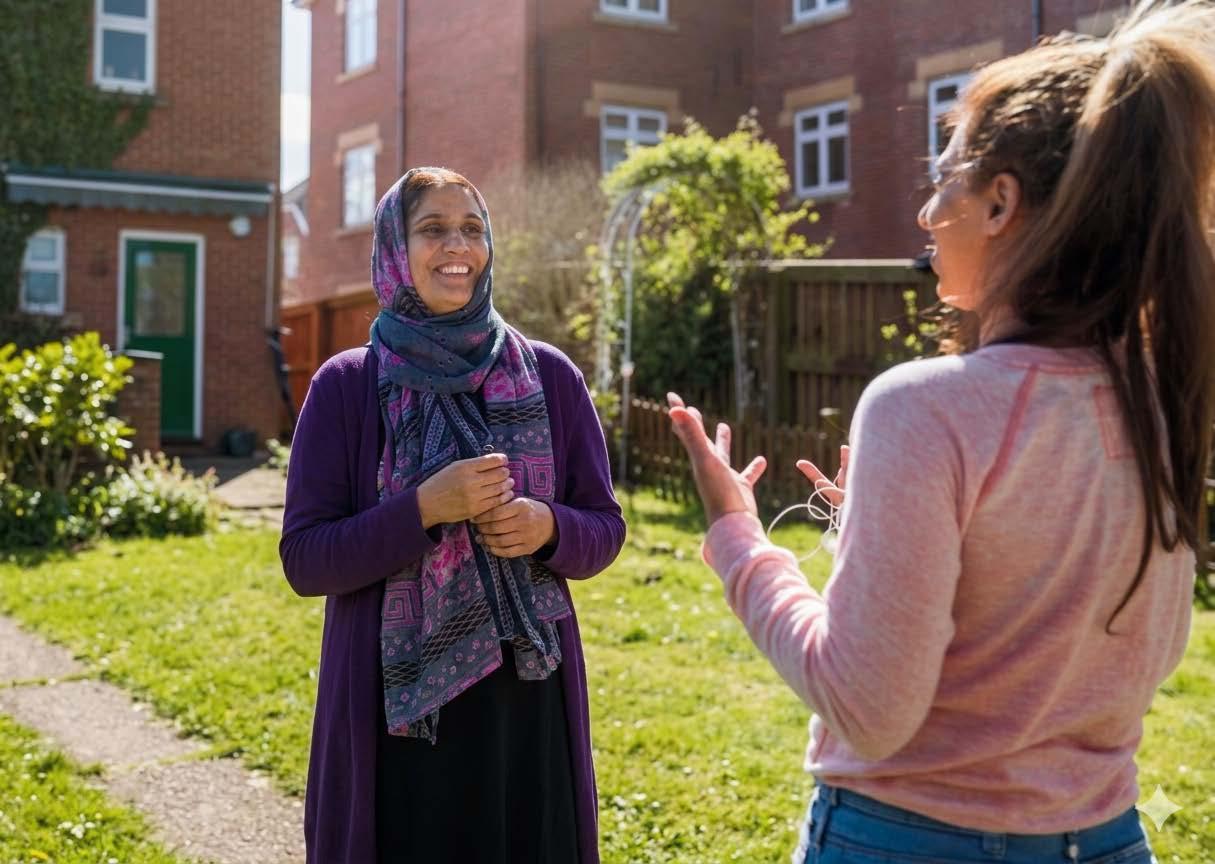
38 Young people, community and the crisis of belonging By Chioma Fanawopo
39 The ever-developing relationship between faith and science By Revd Steve Muneza
40 Managing and maintaining a healthy ego By Shirley Anstis
42 When faith is used and misused publicly, believers must act!!! By Ronald A. Nathan
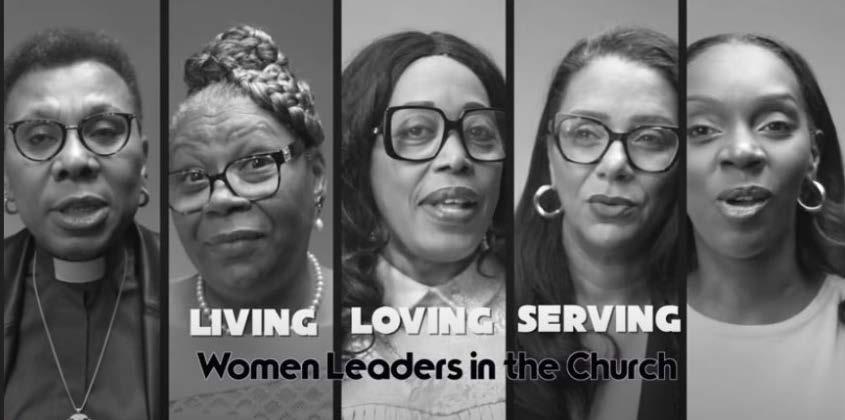
43 How Living, Loving, Serving is inspiring hearts and minds By Marcia Dixon MBE
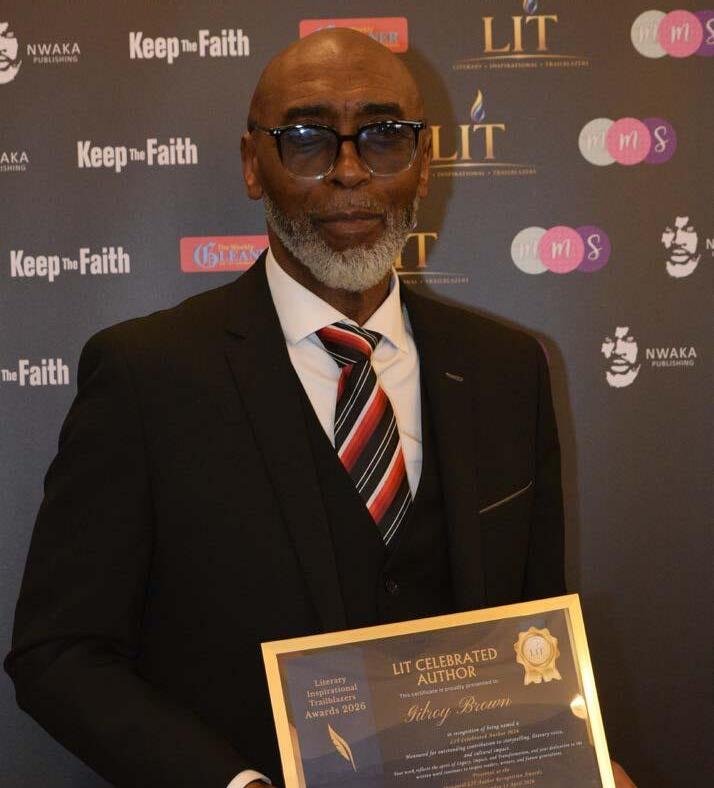
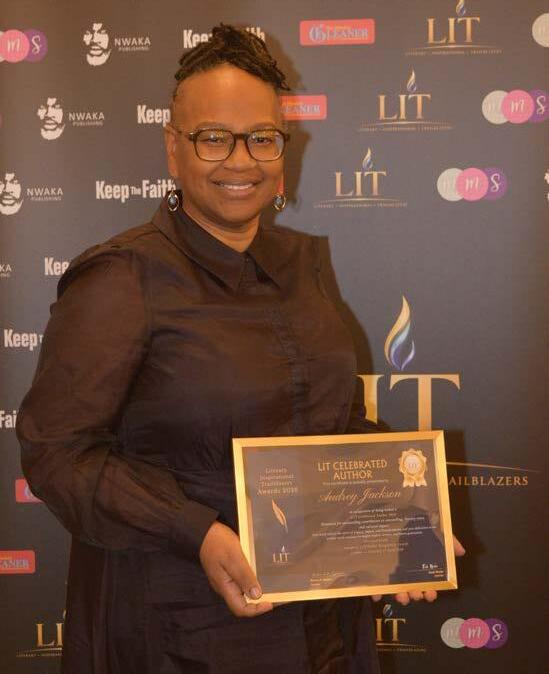
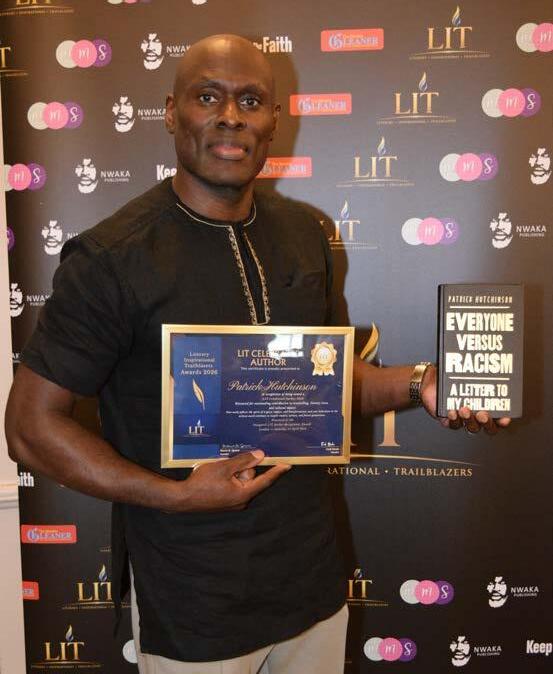
44 Inaugural LIT Awards honours contribution of Black authors
46 The earth is the Lord’s - and I’m exploring it one country at a time! By Silvano Griffith-Francis
48 Christian Entrepreneurs: The importance of growing and scaling your businesses By Elsa Caleb
49 Sharing the Gospel in the online space By Kemi Bamgbose
50 How to optimise LinkedIn as a church leader or professional By Chelena Peart
51 Men need hair care advice, too!!! By Verona White
52 Kirly-Sue’s Kitchen: Vegan food column By Kirly-Sue
54 The journey to restoration, healing and finding God’s purpose in your life By Marilyn Johnson
WALSALL CHARITY TO CELEBRATE 40 YEARS SERVING THE COMMUNITY
Leading Midlands charity, Walsall Black Sisters Collective (WBSC), is set to commemorate their 40th anniversary with a black-tie event on July 4 at the Pallet-Track Bescot Stadium, Walsall. Nikki Tapper MBE is the MC, Angie Le Mar will provide comedic entertainment, and Olympian Dame Denise Lewis DBE will deliver the keynote speech.
Formed in 1986, following the Birmingham riots, the WBSC works to address the inequality and discrimination faced by the Black community, focusing specifically on Black women.
For the past 30 years, Maureen Lewis has served as CEO of WBSC, which she believes has greatly impacted people’s lives because of their many community initiatives. She said: “Over the years, we’ve run numerous projects, ranging from projects around children’s education and raising attainment, to projects on Black history, personal development and women’s empowerment training. When I look back and see people who were part of the original journey and where they are at now, it makes us so proud.”
Other WBSC initiatives include a food bank, health awareness and community wellness programmes, an elderly daycare centre, and business capacity development services. They are also working on a book celebrating the early Windrush Generation of women in Walsall, and the history of Walsall Black Sisters Collective.
Maureen estimates that WSBC has supported over 10,000 people since it started. A Christian since the age of 11, Maureen is committed to serving others. “What I love about community work is that sometimes the smallest thing can make a big difference. Sometimes, people just want a hug and that can be massive for some people, because they don’t receive love.”
Maureen initially joined WBSC as an administrator, after spending four years working at McDonalds, and doing agency work. She evolved into the role of CEO after making a successful funding application. She left to work for a local authority but was invited back to continue working at WBSC.
WBSC’s 40th anniversary celebration is set to be a memorable occasion and a reminder that positive outcomes are the result when women join together to address community problems.
DRESS DESIGNED FOR ROYAL WEDDING FEATURED IN EXHIBITION
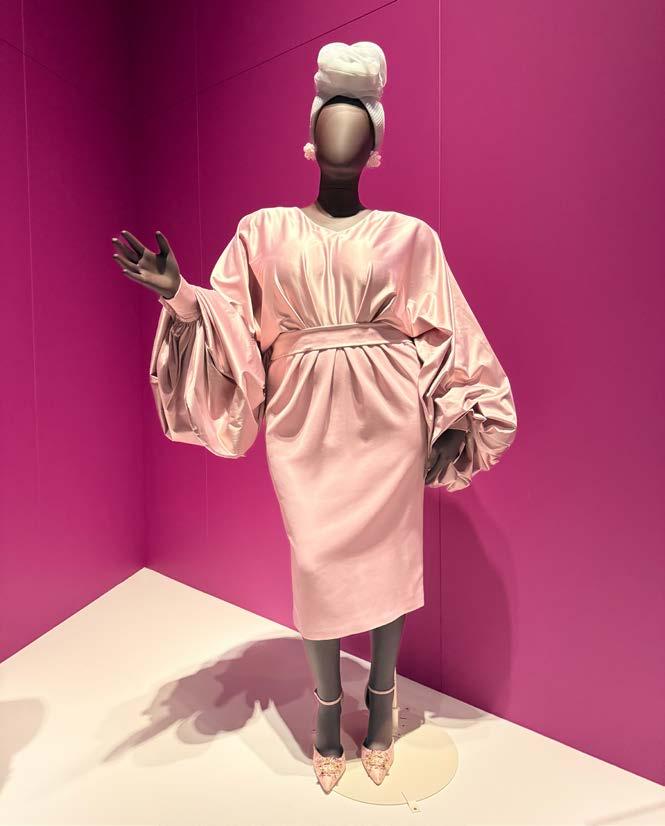
The work of Christian fashion designer and stylist, Jeanette Young, was seen by millions when Karen Gibson MBE wore the dress she designed, whilst directing the Kingdom Choir at the Royal wedding of Prince Harry and Meghan Markle in 2018.
Now, eight years later, that unforgettable dress will be seen again by the public, as it has been included in The Music is Black, an exhibition at the V&A East Museum highlighting how Black British music has shaped British culture.
The Royal wedding turned Karen Gibson and the Kingdom Choir into one of the UK’s most sought-after gospel acts in the world, and has now cemented Jeanette’s name in history as the woman who created and styled Karen’s memorable outfit.
Jeanette is excited about her dress being included in The Music is Black exhibition. She told Keep The Faith: “I feel deeply humbled and proud to have designed a dress for Karen Gibson to wear for the Royal Wedding, and to now see that same dress featured in the V&A East’s Music Is Black exhibition feels incredibly meaningful, particularly as a representation of gospel music and my Christian faith.”
Visit www.vam.ac.uk/exhibitions/ The Music is Black exhibition runs until January 2027.
FLOATING BOOK FAIR TO TOUR UK
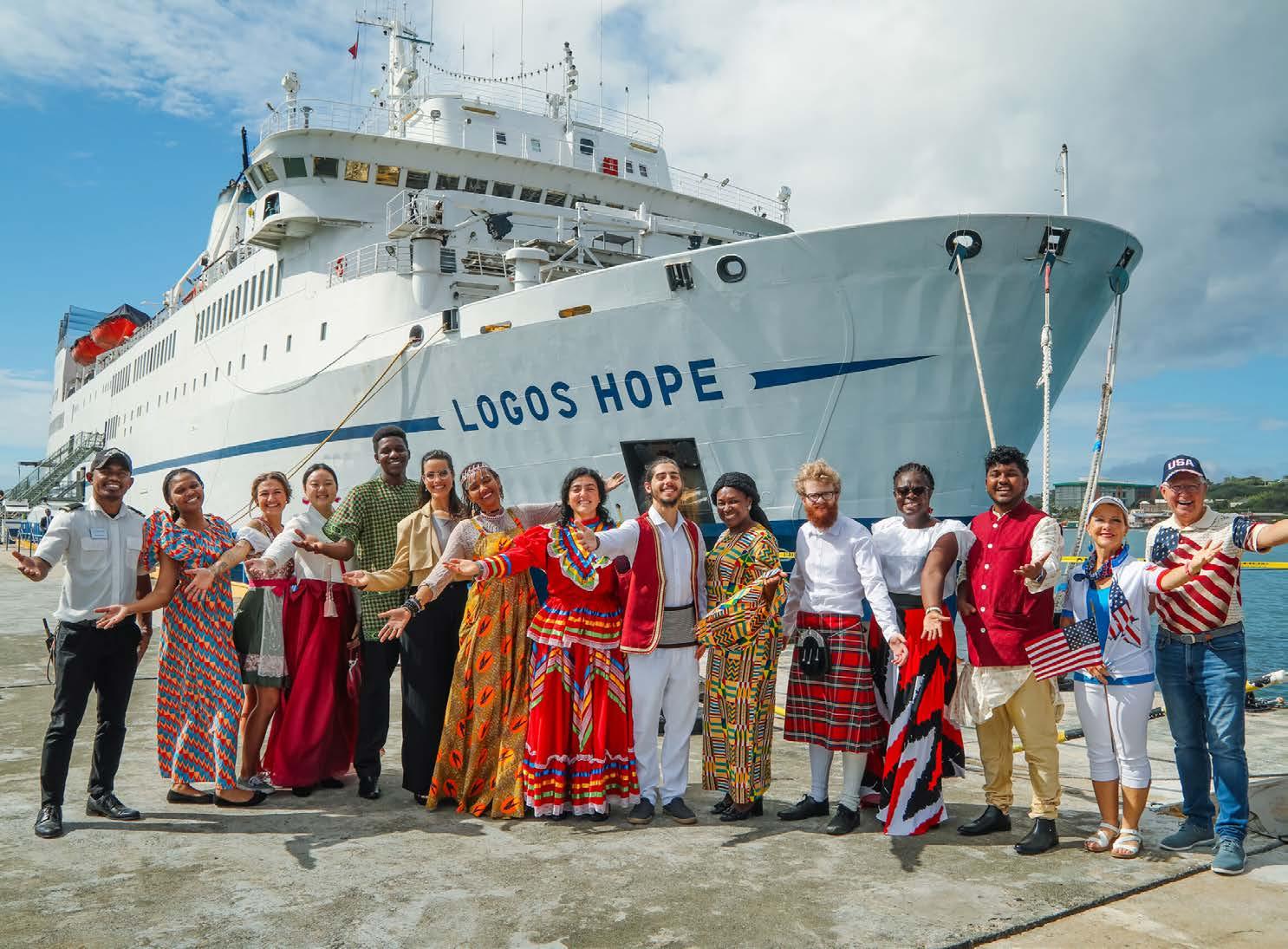
The world’s largest floating book fair, Logos Hope, is set to visit six UK ports from June to November 2026, on a mission to share hope and to inspire a new generation of Jesus followers.
This vessel is operated by Operation Mobilisation (OM) Ship Ministry and will be part of their Waves of Hope Tour, marking the longest-ever UK tour by any vessel in the fleet.
The tour aims to encourage churches, mobilise new believers, and share hope across the nations. It is also hoped that the OM tour will inspire people to pray, give and participate in God’s mission.
Logos Hope plans to make the following stops: London – 18 June to 7 July 2026; Edinburgh – 9 July to 21 July 2026; Aberdeen – 21 July to 5 August 2026; Cardiff –10 September to 29 September 2026; Belfast – 1 October to 21 October 2026; and Liverpool – 22 October to 4 November 2026. Visit www.uk.om.org/logos-hope-uk-tour-2026
PASTOR IN COURT DUE TO DEATH AT BAPTISM SERVICE
Court proceedings have begun in the case of Pastor Cheryl Bartley, 48, who is accused of gross negligence manslaughter (GNM) after Parkinson’s disease sufferer Robert Smith, 61, died during a baptismal service held in Erdington, Birmingham.
Pastor Bartley, Founder of Life Changing Ministries, appeared at Birmingham Magistrates Court on May 14 and did not enter a plea. The district judge David Wain told Bartley: “These matters are so serious they can only be held at a Crown Court.” She was released on bail, with conditions that she did not perform baptisms or leave the UK.
It is alleged that, during the baptism, which was held in an inflatable pool in a back garden, Smith was submerged in the water for four minutes. He had travelled up from Brixton, south London, to be baptised. His illness had left him with disabilities and difficulties walking.
Pastor Bartley is due back in court on June 11.
KTF ONLINE TALK ABOUT 21st CENTURY PARENTING
Put 7.30pm on June 8 in your diaries. This is the time and date of the next Keep The Faith Online Talk, where special guests speak on an issue pertinent to the Black Christian community.
Our guest speaker is Dr Kenisha Jackson, who will be exploring parenting techniques. She will also provide insights on how Black parents can raise emotionally healthy children, who fulfil their potential and resist the temptation to get involved in risky and harmful behaviours, like gangs, crime or drugs.
Dr Kenisha is an ordained minister and an award-winning consultant; a registered child and adolescent psychoanalytic psychotherapist; and founder and lead professional at KEW Education and Therapy – a consultancy for children and families, established in 2007, which supports children and families to aim high and become the best version of themselves.
More recently, Kenisha has offered therapeutic well-being spaces for professionals balancing careers, businesses and growing families, which has had a global reach.
She has plenty of information to share on how to parent well in this current climate.
Full details of this Online Talk can be found on Eventbrite.
NEW EXHIBITION NEW EXHIBITION EXPLORES BLACK WORSHIP
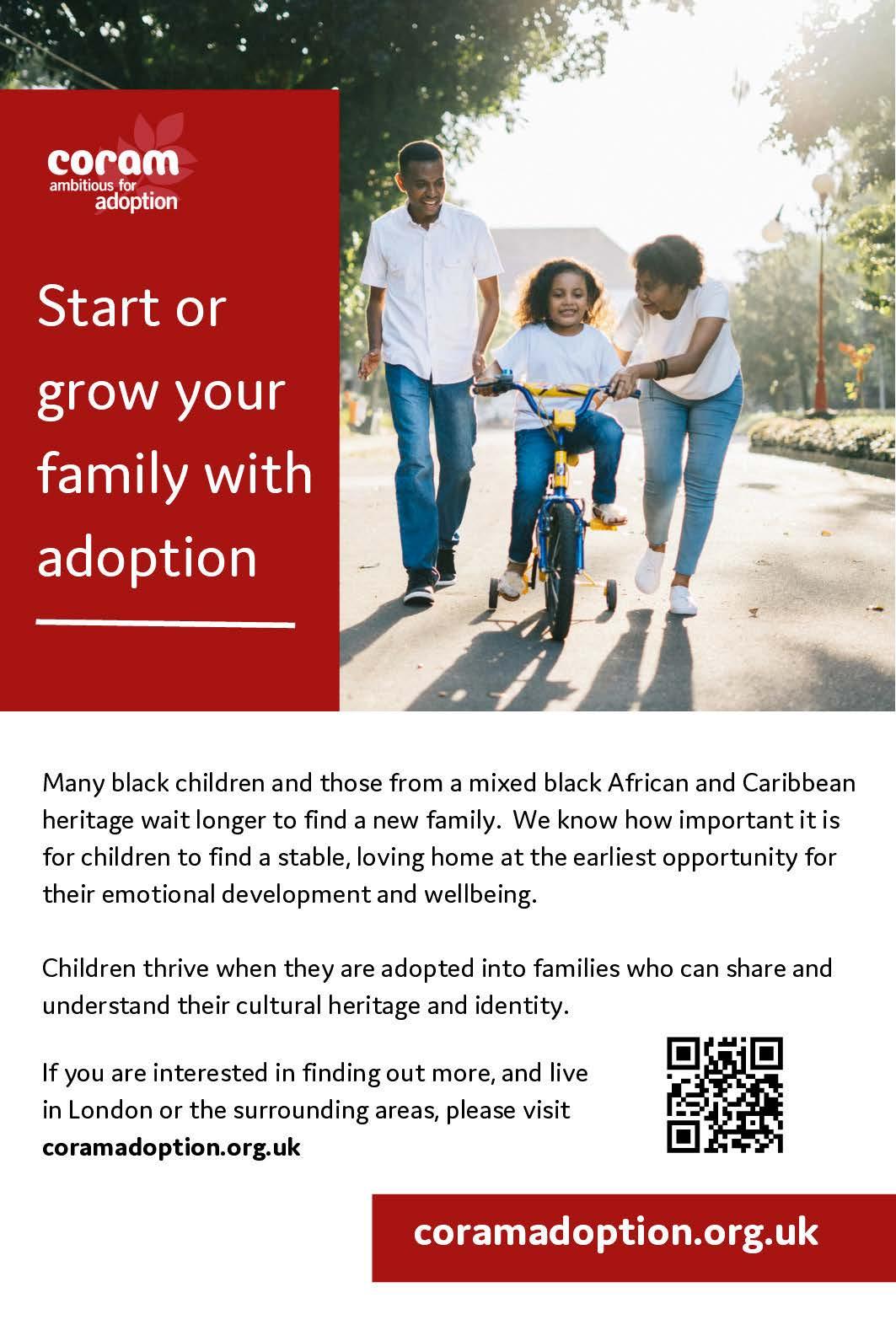
Coram, a London based Voluntary Adoption Agency, welcomes people from a wide range of backgrounds and life experiences who can meet the diverse needs of children waiting for adoption. When you adopt with us you won’t be alone. We’ll support and guide you throughout the adoption journey from those first steps, all the way to becoming a family, and beyond. Coram is particularly interested in hearing from black African and Caribbean families who would like to consider adoption.
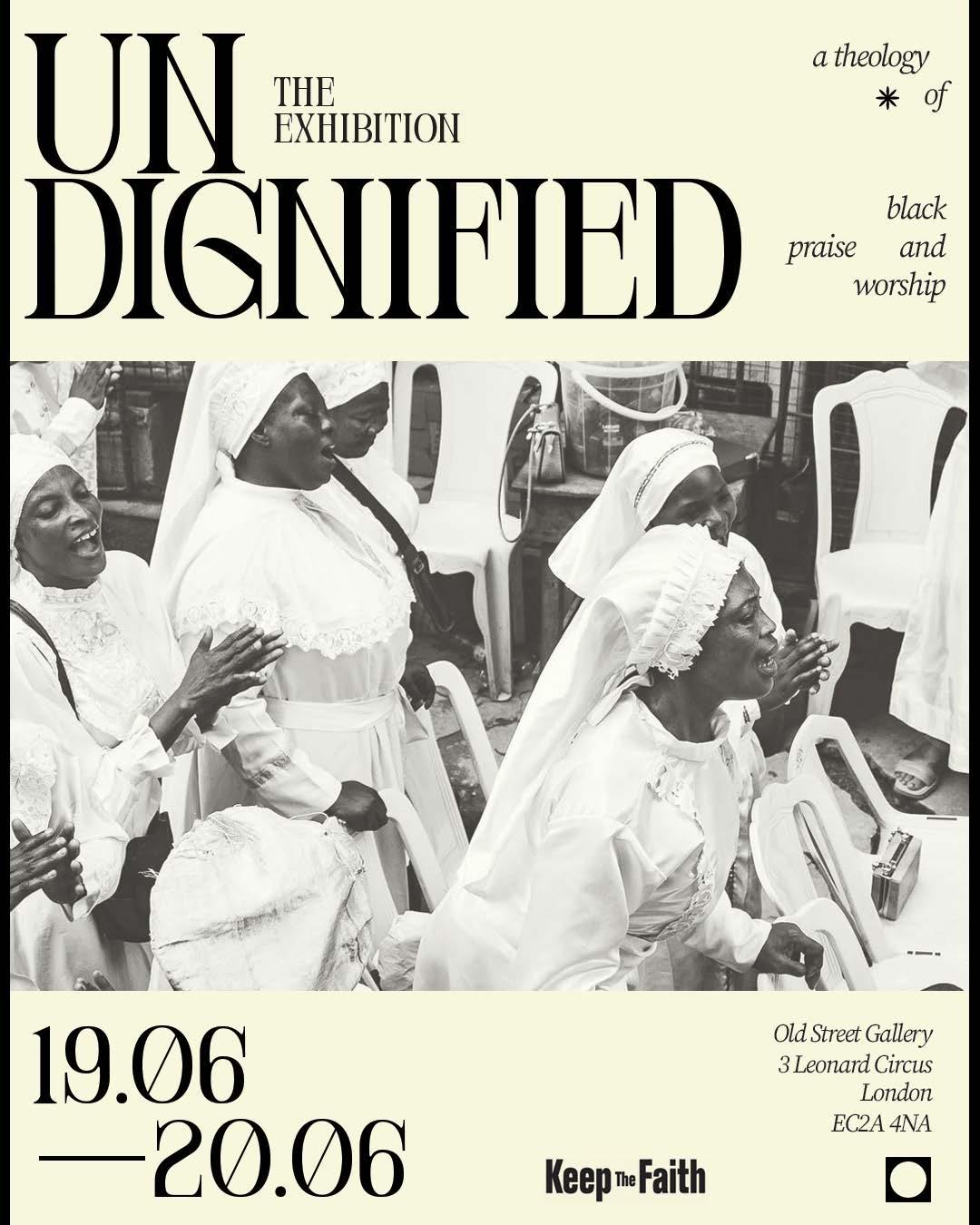
Cultural producer, historian and Christian, Sewa Olukoga, is getting ready for the opening of her two-day multi-disciplinary exhibition UNDIGNIFIED, which explores Black praise and worship. Through archival research, photography and visual installations, the exhibition examines the beliefs, biblical principles and histories that have shaped worship in Africa, the Caribbean and the diaspora.
The exhibition, sponsored by Keep The Faith, takes place on 19–20 June at Old Street Gallery, 3 Leonard Circus, London EC2A 4NA. It will feature images taken in Black-majority churches.
Sewa told Keep The Faith: “I curated this exhibition, mainly in obedience to God but also to give language to the topic of race, faith and expression in the Western Church, which is often taboo. I hope people walk away with an understanding that diversity isn’t a bad thing.”
Visit https://www.eventbrite.com/e/undignified-theexhibition-tickets-1988558958375 to get your ticket.
Sewa Olukoga
GOSPEL NEWS
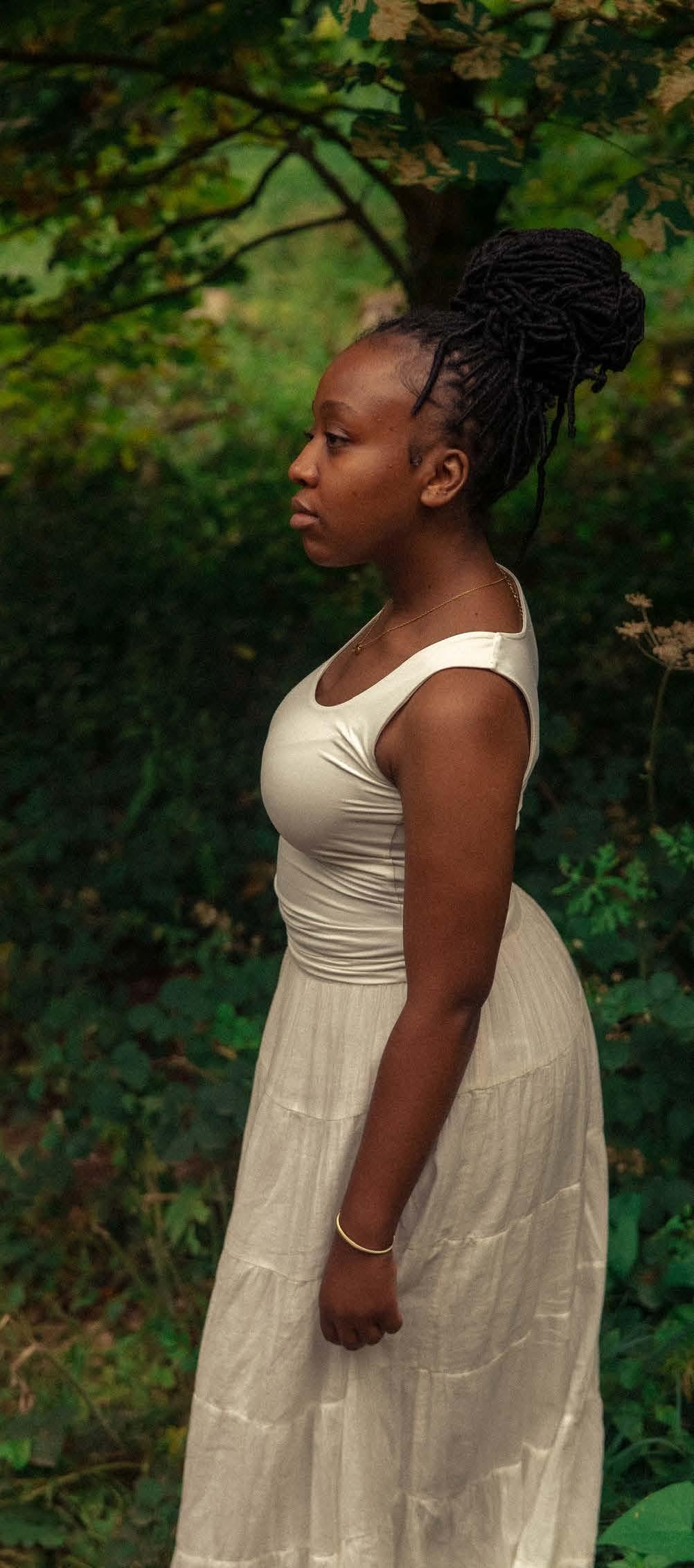
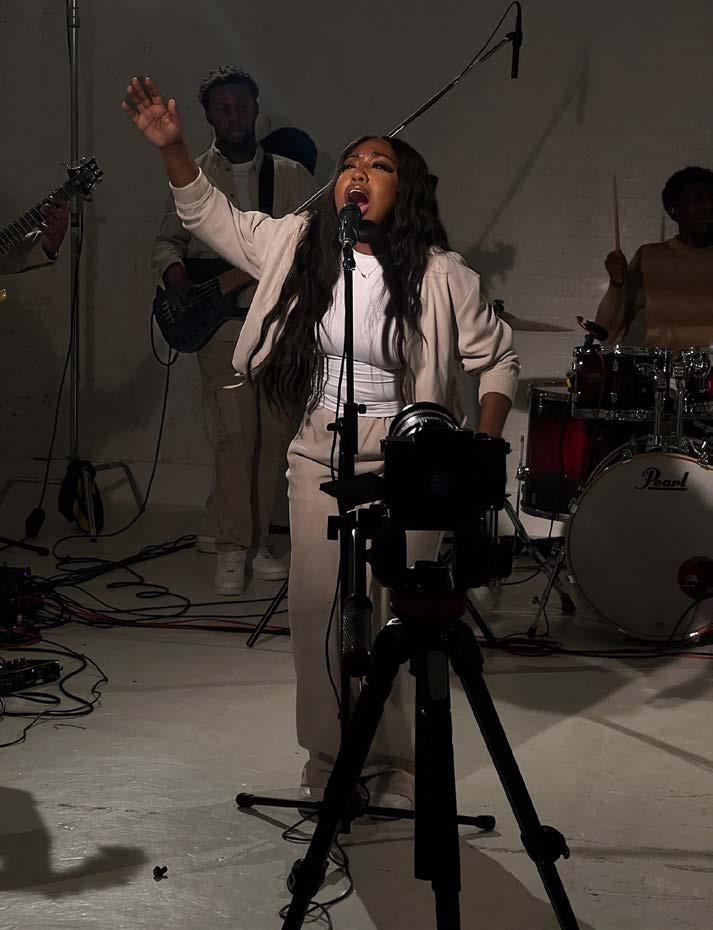
At just 23, Chantelle Rutendo is quickly becoming one of the most exciting voices in UK Christian and Gospel music. Raised in Bristol and shaped by music-loving parents and her time in the Bristol Cathedral Choir, Chantelle has built a sound that feels genuine and full of purpose.
A small girl with a big God:
The story of chart-topping
CHANTELLE RUTENDO
Her debut album, To My Friend and My King, was released in August 2025. From an engaged community of listeners to a Best Newcomer nomination at the Premier Gospel Awards, that momentum carried into 2026 when her single ‘There’s This King That I Know’ reached number one on the Official Charts Company’s Official UK Christian & Gospel Singles Chart, developed in collaboration with AStepFWD and launched in April, making her the first female artist to reach the top spot.
With a growing audience drawn to both her music and her personality online, Chantelle represents a new generation of artists confident in their faith and unafraid to be fully themselves. In this conversation for Keep The Faith, she talks about success, identity, creativity and what she wants her life and music to stand for.
ASTEPFWD (ASF): You’ve recently reached number one on the Official UK Christian & Gospel Singles Chart. What was going through your mind when you found out?
Chantelle Rutendo (CR): I don’t know if it has really sunk in yet! With the charts being so new, hearing that ‘There’s This King That I Know’ had reached number one was surreal. It only recently dawned on me that this was a historical moment, being the first female artist to have a song reach number one on the Official UK Christian & Gospel Singles Chart. The whole message of the song is communicating how a revelation of God as King has marked me; so, above all, I’m really glad that so many people are being blessed by it and being brought into their own different revelations of Him through this sound.
ASF: For readers who may be discovering you for the first time, who is Chantelle Rutendo beyond the music? What inspires you and keeps you grounded?
CR: The simple way to answer this is “a small girl with a big God” and I really mean that. Chantelle Rutendo beyond the music is just a normal 23-year-old girl from Bristol, who loves the Lord. I am a sister, a daughter, a friend and I would say that I’m a person who feels and loves very deeply. I believe you can draw inspiration by observing other people’s life experiences, from your own life experiences, and from the things that God teaches you through them. Genuinely, what keeps me grounded is knowing where I’ve come from and knowing that everything I am today is a product of the grace and mercy of God who has gone ahead of me.
ASF: Your music carries both honesty and strong faith. When you write, what are you usually drawing from?
CR: One of my main rules for my approach to writing songs is that I can’t write about anything that’s not real to me. I write about things I’ve experienced, things God is teaching me, and things I don’t even really yet understand. Songwriting for me is an extremely intimate and personal process that allows me to give language to some thoughts that I would otherwise never be able to communicate or articulate. For me, songs are born when I’m able to capture what God is saying to me and what I’m saying to Him in a way that can only be communicated by adding a melody to the message.
ASF: At 23, many young people are still figuring out identity, purpose and direction. How has your faith helped you navigate this season of life and career?
CR: I feel like my faith has helped me navigate this season of life and my career by being the constant reminder of what I’m doing, why I’m
doing it, and who I’m doing it for. I think that, in the music industry in particular, it is so easy to be swayed by people’s opinions or to be influenced by what other people are doing and trying to replicate that. Especially when you’re new or young, it’s easy to just do what you’ve seen done before, but I think God has been so intentional in making me understand and fall in love with the individual and personal expression He’s given me. Faith has killed comparison for me, killing that need for validation outside of the will of God. It’s given me such a strong sense of purpose and direction in everything that I’m doing.
ASF: Christian music in the UK is gaining more visibility in mainstream spaces. Have you ever felt pressure to separate your faith from your artistry, or has staying authentic always been non-negotiable for you?
CR: Staying authentic has always been non-negotiable for me, because I only write about what is true to me, and a big part of the foundation of my life is my faith. My music is everything to do with the truth that has been revealed to me, and that is Jesus. I don’t think I can make music that is separate from that revelation. Even as the Christian music scene in the UK gains more visibility, I feel like it’s so important to maintain the integrity of the message, so that even as it reaches spaces outside the four walls of the Church, it is still able to impact lives, make a difference, and bring people to the knowledge of Jesus.
ASF: Outside of music, what’s something people would be surprised to learn you care deeply about?
CR: I know it sounds weird, but I actually care deeply about nature and the preservation of it, because I feel like creation – and the way the Earth was formed – is one of the quickest ways to practically understand the heart and mind of God.
Every single time I’m stressed, every single time I need clarity, I find so much peace in being outside. I love forests, I find myself going on walks often, and, whenever I’m outside in the midst of the trees, I’m able to hear God so clearly. I’m able to write music so easily, and my thoughts become so much clearer.
ASF: If you could collaborate with any artist, Christian or mainstream, who would it be and why?
CR: There are a lot of great artists, but I would definitely, definitely collaborate with Dunsin Oyekan. He is absolutely one of my favourite artists in the whole world, and I feel like I resonate with his expression of worship so, so much. His songs are always so beautifully written. They are such worship anthems that speak of intimacy, and I would just love to collaborate with him on a song. (I hope he sees this, by the way!)
ASF: When the awards, streams and applause quieten down, what do you most want your life and music to have stood for?
CR: I want my life and music to have stood for intimacy with the Lord. I just want to fellowship with Him. Real fellowship. Even if it’s broken, even if it’s weak, even if there is no strength. My life, my music, my everything has to point to Him. That’s all I want to be known or remembered for. The goal was never streams, and it will never be awards. I just want people to really get to know Jesus and desire a deep and meaningful relationship with Him, because God made man for intimacy.
Follow on Instagram @chantellerutendo_
5 EVENTS YOU SHOULD GET TO THIS SUMMER
Summer is shaping up to be one of the most exciting seasons yet for live gospel and Christian music across the UK. From large-scale festivals to intimate concert moments, there’s no shortage of events to attend and some very exciting names to look out for. Whether you’re after powerful worship nights, feel-good live music, or something a little different with friends and family, there’s something for everyone to experience.
PROM PRAISE To The Ends Of The Earth | 6th June | London
THE GRACE BRUNCH LDN Summer 26 1st August | Secret Location
GOSPEL GARDEN London’s First Outdoor Gospel Festival 2nd August | London
THE GATHERING 2026 with Warehouse Worship + more 8th August | Manchester
BIG CHURCH FESTIVAL
UK’s Biggest Christian Festival 28th–30th August | West Sussex
O’NEIL DENNIS
Sondae
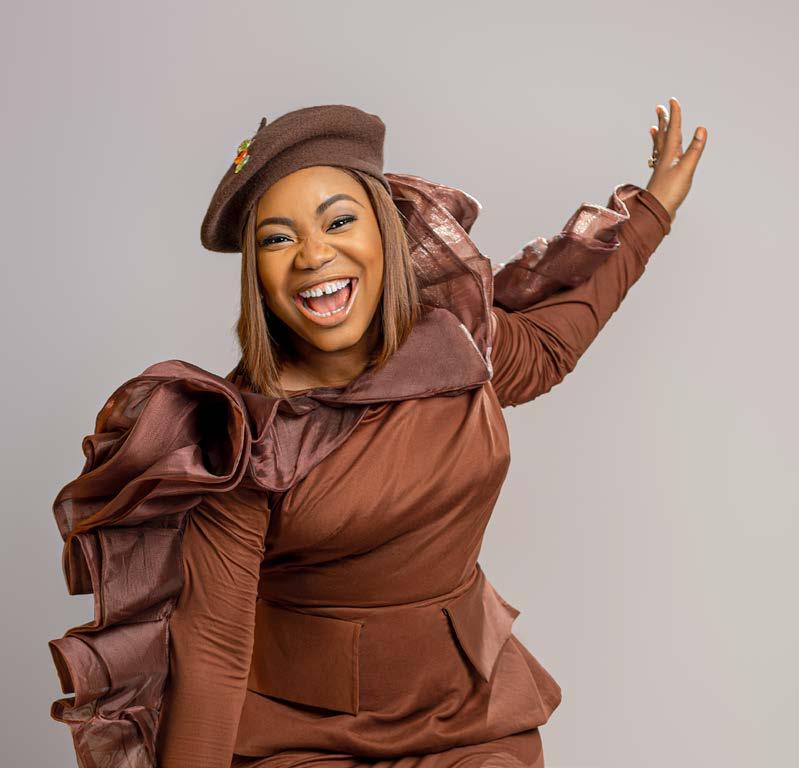
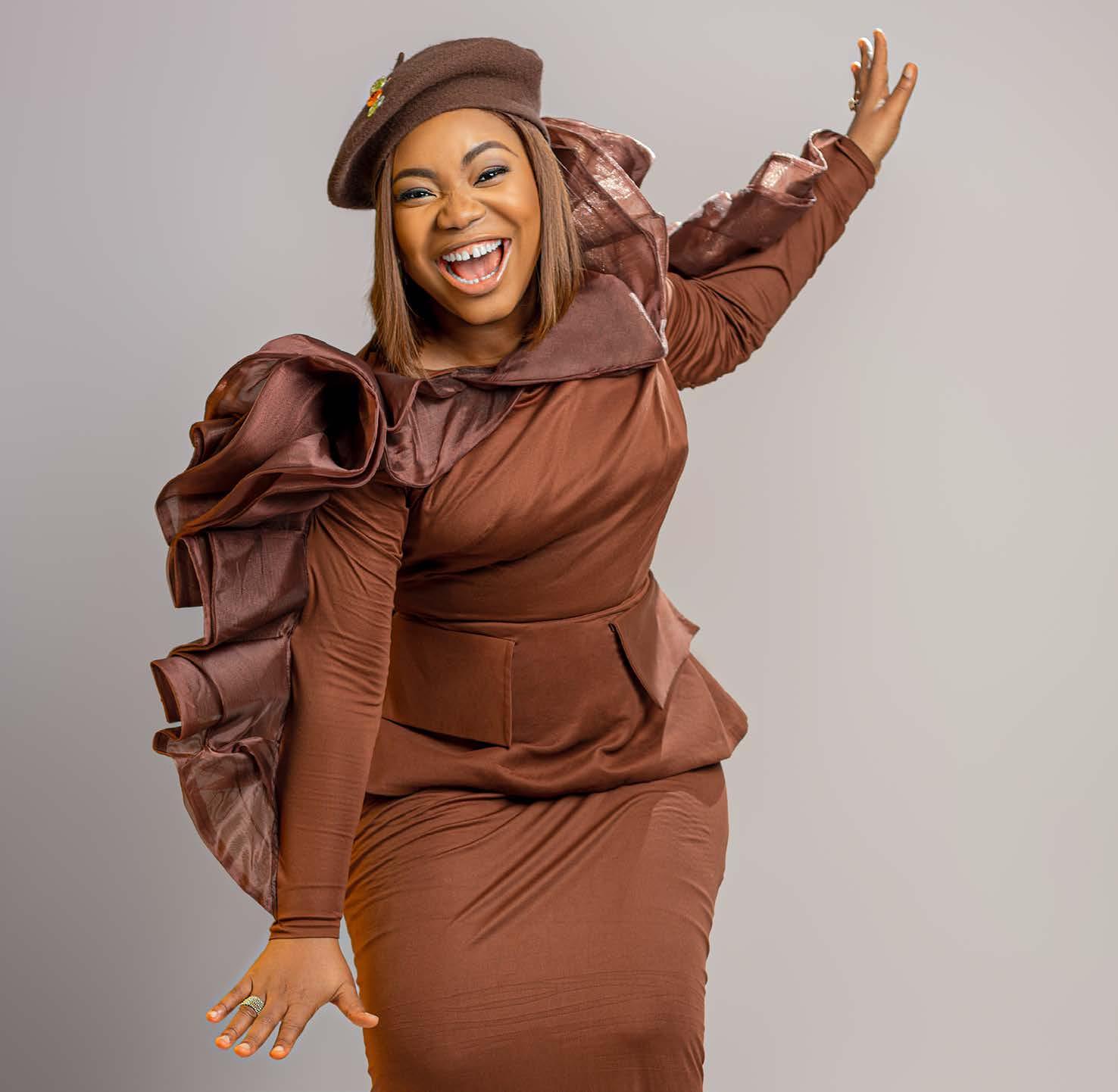
Mercy Chinwo THE SINGER
ENJOYING A SEASON OF ALIGNMENT WITH GOD
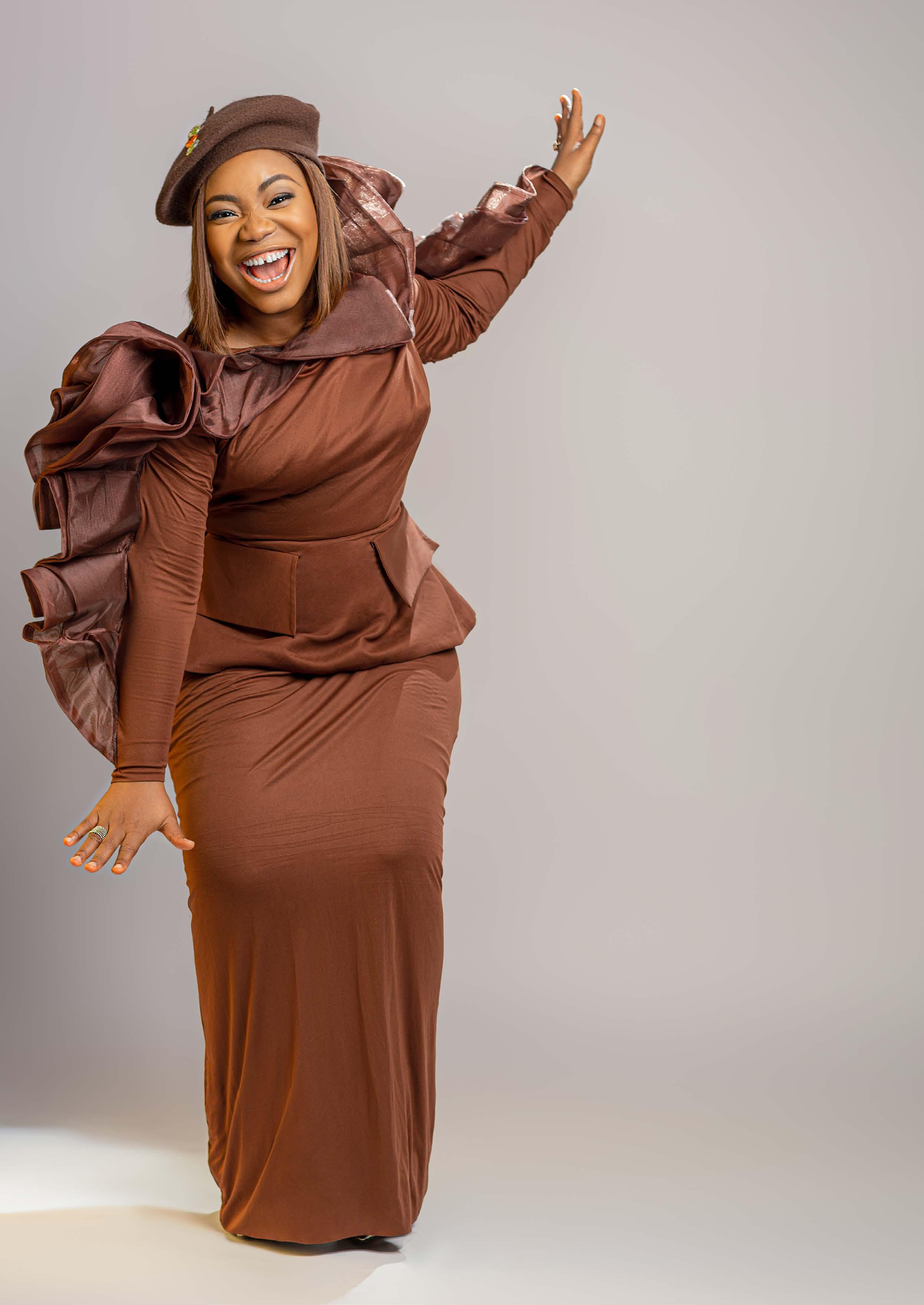
Widely recognised for her powerful, emotive vocals and signature berets, Mercy Chinwo has established herself as one of the leading female voices from the Motherland. While her career is defined by massive hits like ‘Excess Love’ and a collection of prestigious awards, she considers her family to be her most significant achievement. Akosua DF caught up with her to talk all things ministry and family.
AKOSUA DF (ADF): So, we know your music, everyone loves you, but we don’t know too much about your genesis. It would be great to know how you got into music professionally.
MERCY CHINWO (MC): Looking back, it all started with a young girl who had nothing but a genuine love for God and a voice for worship. Back then, I wasn’t thinking about a career; I was just captivated by His presence. As I grew, I stayed planted in church, serving in the choir and allowing God to refine my character through every season of waiting, learning and stretching. Everything changed in 2012 when I entered a musical competition. Winning was a great honour, but the true prize was the realisation that God was using that platform to amplify the gift He had already placed inside me. Today, my life is a testimony to His timing and my obedience. It has been an incredible journey so far, and I truly believe the best is still ahead.
ADF: You’re headlining the first-ever Gospel Garden Festival alongside legends like Kirk Franklin, Fred Hammond and Tasha Cobbs Leonard. How does it feel to carry the sound of Nigerian worship to such a massive outdoor stage in London? MC: I am deeply humbled to share the stage with icons like Kirk Franklin, Fred Hammond, and Tasha Cobbs Leonard. I truly believe God has been intentional with every step of my journey, and bringing this worship experience to a global stage in London is a profound honour. For me, this is about more than just music; I am most concerned with the lasting impact – what happens in people’s lives after the lights go down. I am praying that God does something truly incredible for everyone who attends.
ADF: What is the one message you are determined to leave with the people of London after your final note at the Crystal Palace Bowl?
MC: My heart’s cry everywhere I go is simple: people should experience Jesus and know that Jesus is real and that He’s enough. Let your relationship with Him be active, personal and real. Your life should be a living testimony of His grace and mercy, because life outside of Jesus is empty.
ADF: Let’s talk about your music. Your latest single references the word “season”. Looking at your life right now, what word best describes the current season you’re in?
MC: Alignment.
ADF: Can you expound on that a bit, please?
MC: I am constantly reminded of how intentional God is with every facet of my life – my family, my career and the ministry He has placed in my hands. In this specific season, I’ve realised that my goal isn’t just to thrive; it’s to yield. I am learning to surrender to the assignments He entrusts to me. Right now, everything feels clearer and my purpose feels more defined than ever. I’m in a season of alignment, where peace and grace are my constant companions. It’s the steady assurance that I’m walking in God’s will. My personal plans are in alignment with His overarching purpose for my life. There is so much joy in watching all the pieces come together beautifully, knowing that being in His will is more than enough.
ADF: Amen. You have several collaborations under your belt. You sang with JJ Hairston, Minister Dunsin (Oyekan) – we sing that song a lot in our churches, Pastor Nathaniel Bassey, MOG Music, Diana Hamilton, to
name a few. Are there any other artists on your bucket list?
MC: Ooh, there are a few people I’d love to collaborate with, but I think CeCe Winans is at the top of my list. I mean, that would be a dream – I love her work.
ADF: CeCe Winans seems to be the artist every African female vocalist dreams of working with. Aside from the legendary CeCe Winans, who else is on your wish list?
MC: I love Chandler Moore and Forrest Frank. I really believe that we’re in a time where God is uniting sounds across the nations. I’ve already completed a project with Naomi Raine; the track is recorded, and we’re just waiting for God’s timing to release it. Looking ahead, I’m really excited about the prospect of collaborating with artists like CeCe Winans and Forrest Frank. That would be sooo cool.
ADF: You know what? We have to make this collaboration with Forrest Frank a reality. So, at Keep The Faith, we love a good love story. You are married to Pastor Blessed and have two beautiful children together. Tell us how your love story started and when you knew he was ‘the one’.
MC: We started as friends. Our journey from friendship to marriage felt truly divinely orchestrated. From the very beginning, there was an undeniable sense of peace whenever I was with him – a conviction I couldn’t ignore. He has always been a constant source of support, even before we realised our path would lead to marriage. I am so grateful to God for the privilege of being his wife; he is a devoted man of faith and a wonderful father.
ADF: How has becoming a mother of two changed the way you understand the heart of God? Does ‘Excess Love’ mean something different to you now when you look at your children?
MC: Motherhood has been a transformative journey that has redefined my understanding of devotion. I used to sing about God’s love
from a place of revelation, but now I live it as a daily reality. Seeing the way I instinctively protect, guide and care for my children gives me a humbling glimpse into the Father’s heart. Becoming a mother has turned ‘Excess Love’ from a powerful song into a lifestyle. Watching myself meet my children’s needs and fiercely protect them has revealed God’s heart to me in the most intimate way. I’ve realised that my capacity to love them is just a small reflection of how much God loves us. I am so grateful for this season of experiencing His grace and sharing that same boundless love with my family.
ADF: You recently shared a touching tribute to ‘TTC’ (Trying to Conceive) mothers. What is the most important thing you’ve learnt about God’s timing through your own journey into motherhood?
MC: Waiting on God taught me one vital lesson: trust Him without reservation, no matter what the situation looks like. Scripture says that those who know their God shall be strong and do exploits. I’ve come to realise that a delay in God’s timing is not a denial of His goodness. Even when life doesn’t align with our plans, staying yielded to Him is key. God is faithful to His word – He does not lie and He never fails. All His promises are Yes! So, for every TTC mother, my heart is with you. I’m praying for you. God sees you; He has not forgotten you. His timing is perfect and it will definitely happen for you. I can’t wait to hear your testimonies!
ADF: Amen. So, before I let you go, I’d love to know, what is next for Mercy Chinwo?
MC: This season is incredibly intentional for me. I’m leaning into a deeper, more intimate expression of worship that I believe will resonate across nations. I am currently developing projects birthed from genuine divine encounters – songs designed to be more than just heard, but experienced. My goal remains to be a steadfast voice of hope, particularly for women and mothers, through this new sound.
ADF: Love the sound of that... but you know something? You’ve never done a UK tour. Can we expect that anytime soon? MC: Yes, that will happen very soon.
ADF: Okay, we’re gonna hold you to that! MC: [chuckles] I made a promise. We will definitely have a Mercy Chinwo concert in London.
Follow on Instagram @mercychinwo The Gospel Garden Festival takes place on August 2. Visit www.palacebowlpresents.co.uk
AKOSUA DF UK-based broadcast journalist and media personality with a love for all things gospel. Follow @akosuadf on social media
BISHOP LUSA NSENGA-NGOY: AN ADVOCATE FOR
BOLD, COURAGEOUS MINISTRY
Marcia Dixon MBE spoke with Bishop Lusa
Nsenga-Ngoy, the first Black Bishop of Willesden
The Church of England (CoE) has come a long way since the publication of its ‘Seeds of Hope’ report in 1991, which lamented the lack of Black Anglicans in leadership positions. Fast forward to 2026, and numerous Black Anglicans now occupy prominent roles. This includes the Rt Revd Lusa Nsenga-Ngoy.
In 2021, the Rt Revd Lusa, 48, made history by becoming the first Black Bishop of Willesden. Although he views his appointment as a “privilege and an honour”, he didn’t immediately think he had made history. He recalled: “I don’t think my first thought was, ‘I’m going to be the first Black Bishop of Willesden’, because the way I read my life is not primarily through the lens of Blackness.”
He continued: “I was born into a Black world, in which my identity was not defined by my ethnicity, because that was the normative experience. I ‘became Black’ when my family moved to Europe. That said, I was acutely aware of the iconic element of that appointment. There’s a huge pride in being a bishop in the church, but also a bishop of African heritage in a church with its historic colonial legacy,
and that historically has not always been forthcoming in creating spaces for Black flourishing.”
The Willesden Episcopal area has a population of 1.2 million and covers the boroughs of Brent, Hillingdon, Ealing and Harrow. Mindful of the issues impacting local communities, such as gentrification, anti-immigration sentiment and Christian nationalism, Bishop Lusa hopes to make a difference. “There’s a vocation for us to be bold and courageous in standing up in solidarity, speaking out for those who are marginalised and often victimised, and also to offer the vision of the Kingdom that is not just something we aspire to attain one day once we’re dead, but a Kingdom that can be and should be a reality here and now.”
Like many church leaders, Bishop Lusa, married with three children, has a keen interest in the younger generation. He shared: “One of the things close to my heart are children and young people and what we set out for them in creating safe spaces in which they feel that they have a say and don’t have to face a future that feels locked and unopened.”
He supports several youth organisations and is also on a mission to encourage people to relate inter-generationally. He said: “There’s a sense in which society tends to fragment itself across class, ethnicity, gender and age. Churches are one of the few places where you often have multiple generations doing life together. We want to be intentional in making
all generations and enabling young and old to be co-curators in transforming the space. We also want to think not just about what we do in church, but what does that mean for us outside of the church context.”
One way Bishop Lusa encourages different generations to work together is through volunteers and those who work with young people. “We try to impart some tools and resources that might help them to develop things. If we had more resources, we probably would have appointed someone who could lead specifically on this.”
Another area of concern for the Bishop is gender-based violence. He has done work in schools around the issue. He is also keen to see the church engage men more, especially in this age of toxic masculinity and where the ‘manosphere’ has great influence.
He has several ideas on why more men aren’t in church. “When I was a kid, I was part of churches where you had families coming to church together. And then I started noticing that dads would typically start reducing their involvement with church – sometimes to the point of stopping altogether. And sometimes
that had an impact on their kids.
“I’m not totally sure what the issues are. I wonder whether there is a crisis in leadership, in the sense where, in many of our churches, you’ve got male leaders who aren’t necessarily creating spaces that affirm other men. I think we should take responsibility for that.”
I asked him about the steps he has taken. “I wonder whether there is something about creating spaces of accountability, where we as leaders become accountable to others. Sometimes, in some of our churches, there isn’t necessarily the sense in which we hold ourselves accountable to others. I wonder whether there is an assault on the family dynamic, where family structures are becoming a bit looser, and therefore faith plays less of a part in the way in which we relate to one another. And I wonder whether the Church might help not just men, but also women, children and young people, to find ways in which faith as a family, as a household, becomes something that holds us together, and something we do not just when we show up in church, but something we live, day in and day out.”
JOURNEY TO ANGLICAN MINISTRY
Conversing with Bishop Lusa – who, I might add, speaks five languages – it is evident he never aspired to be a full-time church leader and has had an interesting journey to the bishopric. Born in the Democratic Republic of Congo (DRC), one of seven children, he was raised in a Christian home. He recalled: “Our paternal great-grandmother was the first
person to become a Christian, paradoxically out of a mission from British Pentecostals, who found their way into my part of Congo. She gave birth to three sons and two girls –all three sons ended up being ministers.”
Bishop Lusa’s father was a head teacher who accepted the call to ministry and moved several times with his family to gain ministerial training and a theological education. He moved firstly to north-east Congo, then to the Central African Republic, and then to Belgium, where he finished his PhD and settled there with his wife and children. Bishop Lusa was eight at the time. He remembered: “The plan wasn’t really to set roots in Europe, but I think the economic and political situation had shifted back home, and our parents probably decided to keep us in the West to give us opportunities, particularly in terms of education. I think it came at a high price, because it meant they had to renounce living and raising us back home.”
During his teens, Bishop Lusa became a follower of Jesus and was appointed a youth leader. Whilst serving at a summer camp, he began thinking more seriously about Christian ministry. He recalled: “I remember talking to a seven-year-old girl, whose parents were American and Finnish, serving as missionaries in Belgium. I remember quite clearly, at the end of that chat, I had a strong conviction that if I was serious about serving God, the only acceptable way for me would be to dedicate my whole life to do that.”
He initially considered serving the Lord via a profession, such as a lawyer or academic, as he didn’t want to be a “broke minister”.
However, he ended up studying theology at Faculté Universitaire de Théologie Protestante (FUTP) and teaching RE in Brussels. He then made plans to study for a PhD in the US, but his life went in a different direction.
The dean of the Faculty of Theology, where Bishop Lusa was studying, told him of an opportunity to serve a historic Protestant congregation that met at Canterbury Cathedral. It had been started by Huguenot refugees from France and Belgium, who fled persecution by the Catholics during the 1500s to live in Britain.
Bishop Lusa took the opportunity and moved to England to take up the role. He didn’t know anyone when he arrived in England – and couldn’t speak English either – but learned the language and was eventually able to speak five languages. He lived on Canterbury Cathedral grounds and worked for the cathedral and the French Church. He also found time to study for a master’s in Christian Ethics at King’s College, London.
He did such a good job of serving the church and reaching the wider community, church members encouraged him to get ordained. He travelled to Belgium to do so, and returned to Britain, intending to spend five years here and then return to Belgium or Paris. However, God had other plans. “There’s a sense in which opportunities were starting to arise for ministry within the Church of England. I remember a conversation with the dean of Canterbury Cathedral at the time, who advised me to explore this. The curious thing is that wasn’t on my horizon at all.”
Following his conversation with the dean, Bishop Lusa trained for ministry at Durham University. He was appointed a deacon in 2008 and became a priest in 2009. He served in two churches in Kent between 2008–2017, and, prior to becoming Bishop of Willesden, he was the BAME Mission and Ministry Enabler in the Diocese of Leicester.
As someone who spent his late childhood, teens and young adulthood in Belgium, Bishop Lusa has observed the differences in the UK’s and Belgium’s approaches to faith. Belgium is majority Catholic. Bishop Lusa, whose roots are in Pentecostalism, attended a protestant church and was part of a Christian minority. He said: “There was a sense in which faith in Belgium was very much a private thing. There wasn’t a sense of faith being actively present in the public sphere. And so, when I came to the UK, it was really surprising to see the Church at the heart of British society. And I was baffled to see that in the Lords, you had Church of England bishops.”
Bishop Lusa is excited about what the years ahead hold for him and for those he ministers to. “It’s a really exciting place, with a lot of rich diversity. Churches are being increasingly confident in owning their place in society and communities, and often punch way above their weight, in terms of the ways in which they are reaching out to the community, and the way in which they are offering Christ to the community. What I would love is to come alongside these church communities and just champion what we are doing together in sharing the love of God in word and in action, in presence, in solidarity.”
Nick Myers is Chief Strategy Officer at OLIVER, a global marketing business with more than 1,000 employees in the UK and partner to the world’s biggest brands. He’s also Assistant Pastor at The Well Bethel, Crystal Palace, with a wider ministry in teaching and evangelism. He spoke to Juliet Fletcher about how his faith informs his life and work as a leading marketer.
JULIET FLETCHER (JF): Nick, when people hear your job title and then hear you’re a Pentecostal minister, they assume a tension. Is there one?
NICK MYERS (NM): It seems like a paradox – the world of marketing, media communications and being a committed Christian. But consider Daniel and Joseph. I don’t experience two identities. My Christian faith is my identity. Everything else sits inside that.
JF: Take us back. Where did that identity begin?
NM: I grew up in a non-Christian home. It was my grandparents who first brought me to church, the historic Bethel Gibson Road assembly, under Bishop SA Dunn, in Handsworth. The presence of God was tangible and undeniable. I was baptised at
NICK MYERS: BUILDING BRANDS WHILST LIVING OUT
11, receiving the baptism of the Holy Spirit soon after. The Acts 2 experience became my personal experience. As time went on, I, like many others, felt the pull away from God. It wasn’t until I was about 15 that I became super-serious again about my walk with Christ. This was after a profound experience, in which the Lord said to me clearly: “You choose –either stay or go.” I chose to stay and I have never had the inclination to look back. I learned early on that faith comes at a cost. I loved athletics, trained with the Olympian Denise Lewis (now Dame) at Birchfield Harriers; I held my school record in triple jump; and had finished 4th in the country for my age. At 16, I had decisions to make about direction. I gave up athletics to focus on my relationship with God and chose marketing as my field of study.
JF: Can you explain why?
NM: My GCSE Business Studies teacher made the subject fun, and I found marketing fascinating. When I told Bishop Dunn I was off to study marketing, he said: “I thought you’d do theology.” He wasn’t entirely wrong.
JF: What about your first job with an advertising agency?
NM: God blessed me with a job seven days after graduating! It must have been God, as I’d applied after the deadline, and the only reason I was called was because someone dropped out the day before the interviews. I couldn’t even afford the train fare to London, but God. The agency was amazing, so creative, so cool. One of the first clients’ accounts they put me on was a national off-licence chain. This was a problem. I don’t drink alcohol, so how could I sell it to millions? I knocked on the MD’s door and told him I’d understand if he wanted to let me go, but I couldn’t do the job. To my surprise, he said he respected my position and added something I’ve never forgotten: “If you don’t believe in it, you won’t do a good job selling it anyway.” I’ve found that if you put Him first, He makes a way.
JF: For readers outside the industry, what kind of work fills your days?
NM: I advise brands on how to build stronger relationships with their customers, making brands more valuable to customers, and customers more valuable to brands. I work with brands people use every day and trust for some of their biggest decisions. I’ve helped launch products that have become household names. And much of my work now is on how AI is transforming marketing.
JF: How do you define faithfulness versus success? You’re at the top of a global agency, but you seem reluctant to use that as the measure.
NM: I disagree with “faithfulness versus success”. The ultimate measure of success is “Well done, thou good and faithful servant.” That is the real metric. For me, success is about something greater than work.
JF: How do you stay authentic in boardrooms where you’re often the only one who looks like you, and certainly the only one who believes what you believe?
NM: I constantly remind and encourage myself: I am in this room because I am qualified to be, not simply as the token Black man. Me plus God is a majority.
JF: So, what would you say to someone who believes they have a calling to be in your field, particularly as a Black person?
NM: I’d remind them of Solomon’s words: “A man’s gift makes room for him and brings him before great men” (Proverbs 18:16). If you’re called, He places you. I’d also say, don’t be afraid to be different. Every strong brand trades on being distinctive. People will be more likely to remember you. Also, strong brands are built on consistency, and this applies to anyone who wants to succeed in any field.
JF: What does your daily faithfulness actually look like?
NM: I draw inspiration from my wife, Debbie, and making sure that prayer forms the bedrock of my routine. I read (a lot!) and, given the hustle and non-stop nature of my work, try and find moments to get alone and just have time to stop, think and reflect. The advice of our elders is timeless – “Seven days without fasting and prayer makes one weak.”
JF: You’ve also done quiet work behind the scenes, e.g. the Pentecostal Community Bank, Premier Gospel, writing the history of Bethel...
NM: I love being able to apply what I know for the benefit of Christian organisations. Unlocking a new purpose, and a new look and feel for Premier Gospel – as ‘the voice of UK Gospel’– has helped take the genre into new places like Parliament and Apple. Working with the Pentecostal Community Bank was also deeply significant; it’s the UK’s first Black-owned bank, and the only Pentecostal bank in the UK. Somehow, God has a way of placing me on such projects. Writing the history of Bethel, Bethel Begins, was a labour of love. The Black Church has traditionally not been good at writing things down, but Bethel Begins creates something lasting for the generations to come. And it
allows particularly the story of the Apostolic church in the UK to be told from our perspective, which is a rarity.
JF: What would you say to the younger Nick – or to any young Christian trying to navigate ambition and faith?
NM: I’d tell him to not be impatient, to make sure he runs at the right things – not just the shiny things. And to remember the Jamaican proverb: “Long road draw sweat; short road draw blood.” There are no real shortcuts.
JF: And what might you say to other Christian leaders in the marketplace?
NM: Lower the ladder! Think about succession. Real leadership is about raising future leaders. I’m constantly looking for the next person, developing talent, opening doors. I create access into the industry, and I’m actively involved with several marketing charities outside my day job.
JF: Last question: What would your message be to the Church itself, not just Christians in the marketplace?
NM: Simply, that the Church should focus on being the Church Jesus called it to be. Not a business. Not a place of performance. But a place of spiritual power, that’s something only the Church can offer. Sure, we need systems and polish and professionalism, but that’s not where the power lies. Jesus has given His Church the playbook. My advice would be to apply the ancient principles in the New Testament, in a way that’s relevant to 21st century culture. Trends come and go, but Jesus Christ remains the same yesterday, today and forever.
Connect with Nick Myers on LinkedIn https://www.linkedin.com/in/nicklbmyers/
JULIET FLETCHER Creative Director of Green Tree Productions and Windrush Church and Music. She is also the founder of SongShare, www.songshare.co.uk
To do justice to this subject, I believe it is best to write from lived experience, and from my understanding of what pastoral fatherhood truly means from the leaves of God’s Word. Fatherlessness does not always begin with abandonment. Sometimes, a father is absent. Sometimes, he is physically present but emotionally distant. Sometimes, a child grows up in a house with a man in it, yet without the security, tenderness, guidance or affirmation that true fathering should provide. In those spaces, the ache can run deep and linger for years. Very often, it is within those gaps that a pastor is called to become more than a preacher; he becomes a father figure.
For me, fathering did not begin in ministry. It was already part of my life long before I entered the pastorate in 1992. As a young man, I found myself caring for my younger siblings: bathing them, changing nappies, taking them to school, picking them up, and making sure they were fed. It became second nature to me. Looking back, perhaps part of what shaped that instinct was the fact that I knew what it felt like to grow up without a present fathering figure. My own father was not there, and the breakdown of my parents’ marriage affected me deeply in my formative years.
When I came to Christ, and began to understand the heart of God more fully, that instinct matured into something more intentional and biblical. I began to see in Christ the perfect Model of true fathering. Jesus does not abandon people in their brokenness. He does not withdraw because someone has
MORE THAN A PULPIT: WHEN A PASTOR BECOMES A FATHER FIGURE
Church leader and author Pastor Timothy Femi Oladipo shares why pastors sometimes go beyond the call of duty and serve as fathers to the fatherless in their congregation
failed, wandered or become “difficult”. John 13:1 says that having loved His own, He loved them ‘to the end’. That is the kind of steadfastness fathering requires.
I also see this father-heart in the story of Hosea and Gomer. In Hosea chapters 1–3, God tells Hosea to pursue and restore his unfaithful wife again and again. It is one of the clearest pictures in Scripture of a love that does not excuse wrongdoing, yet refuses to stop seeking the one who has gone astray. In the same way, Luke 15:11–32, the story often called ‘the Prodigal Son’, reveals what I see as the heart
of a prodigal father: a father, lavish in love, rich in mercy and eager to restore. While the son was still a long way off, the father saw him, ran to him, embraced him and brought him home. That picture has profoundly shaped my understanding of fathering.
Pastoring, at its best, is not merely about sermons, services and structures. It is about standing in the gap where there is emotional absence, relational fracture and parental deficit. Over the years, I have pastored many people who were without fathers, estranged from their fathers, or wounded by fathers who were
physically present but emotionally absent. In such moments, a pastor can become far more than a Sunday voice. He can become a stabilising presence.
Job 6:14 says: ‘To him who is afflicted, kindness should be shown by his friend, even though he forsakes the fear of the Almighty.’ That verse has stayed with me over the years. People in pain do not first need condemnation. They need compassion. They need someone who can sit with them, listen to them, and help steady their lives – without compromising truth.
I have seen this repeatedly over three decades of ministry. Many parents, especially mothers, have come into church with their young children needing fatherly guidance, stability and direction. There have been children of single mothers who needed both practical support and emotional covering. There were also occasions involving two teenage pregnancies, moments when the church watched closely to see how I would respond. I chose to do what a true father does: I drew those young girls close, covered them with compassion, and supported them through their journey. There have even been pastors’ children who found it difficult to speak openly with their own fathers, yet felt safer confiding in me. I say this not with pride, but with sobriety, because it reveals how great the need truly is.
I remember one woman who joined our church not long after we started King’s Chapel in 1999. She had three boys and was repeatedly struggling to pass her ACCA exams. At some point, I told her to focus on her studies and let me help carry the burden for a while. I would sometimes take the boys to school and pick them up. I fed them, helped them with their homework, and kept them settled until their mother finished work or classes and came for them in the evening. That practical support gave her the space she needed to concentrate, and she eventually passed her exams. Later, I travelled to Nigeria to speak to her husband directly about the importance of his presence in the lives of his sons. By God’s grace, he listened, left his business, and came over to rejoin his family. That experience reminded me that fathering is not always dramatic. More often, it is practical, patient and consistent. There was also a three-month-old baby boy I had to look after, when his parents were unavailable because of immigration issues. In situations like that, the options can be painfully limited: either social services step in – or I step up. For me, the choice was clear. Over the years, I have had children stay in my home, not because it was convenient, but because fathering responds when there is a need. That need is not limited to pleasant moments. Whether it was bad behaviour at school that required my presence, a disciplinary
hearing, an inter-house sports event, or even a police matter, I have often dropped everything to be there for a child who needed a father figure. In the good, the bad and the ugly, some children do not need to be sermonised. They need someone who understands their pain, refuses to judge them hastily, will not expose their struggles to others, and yet is strong enough to correct them. Hebrews 12:6 reminds us that ‘whom the Lord loves He chastens’.
True fathering is both compassionate and corrective. Many of those children and young adults are now in their 20s and 30s, and, to this day, many still call me “Uncle”. Some have even said to me that I have been more of a father to them than their own biological father. Those words are humbling. They are not a badge of honour, but a reminder that what many people are truly longing for is not perfection, but presence.
One of the great joys of my journey is that my own children understand my heart for other people’s children. They have seen this nature in me over the years and, rather than feeling left out or jealous, they have embraced it. They know that loving others has never meant loving them less. In many ways, that reflects the heart of God, who is described in Psalm 68:5–6 as ‘a father of the fatherless’ who ‘sets the solitary in families’.
This is why I believe the Church does not simply need more leaders. It needs more fathers. Paul captured it perfectly in 1 Corinthians 4:15: ‘For though you might have ten thousand instructors in Christ, yet you do not have many fathers...’ Many can
teach. Few can truly father.
Anyone can become a dad biologically. But fathering is something deeper. It is intentional. It is sacrificial. It is Christlike. This office or ministry may not always be recognised or appreciated by its recipients, but a true father does not wait for his children to sing his praises before embracing his parental responsibilities. He remains present because that is what fathers do. And, in a generation marked by father wounds and relational distance, perhaps one of the greatest ministries a pastor can offer is not just a message from the pulpit, but the steady gift of fatherly presence.
Remain envisioned.
TIMOTHY OLADIPO Pastor, Bible teacher, convener of The Watchmen Prayer Network , founder of The Intentional Father Movement,
STEPFATHERS: THE MEN WHO RAISE AND LEAD CHILDREN WHO AREN’T THEIR OWN
Esther Kuku writes about the important role stepfathers play in family life, and why it’s time for society and the Church to give them the respect they deserve
Among the fathers we honour, there is a group of men, whose role is often overlooked, misunderstood and undervalued: stepfathers. These men step into a family story already in motion, choosing to love children who are not biologically their own. But this is not a second class role. It is redemptive, requiring courage, humility and a Christlike heart.
Love makes a father – not biology Scripture reminds us that family is not defined only by biology but by commitment, covenant and love. One of the clearest biblical pictures of this is Joseph in the New Testament. He was not Jesus’ biological father, yet God entrusted him with protection, guidance and the upbringing of His Son. Joseph’s example shows us that fatherhood is a calling not just a bloodline.
One in three families in the UK is a stepfamily, and most blended families are made up of a mother and stepfather.
This makes the role of stepfathers especially significant. Ephesians 5:23 emphasises the role of the husband as a leader and a guide. Every team needs a captain, and this principle extends to stepfathers as well. They should be recognised as full participants in family life – not merely as someone who provides financially, but also for the care and commitment they show.
However, the playbook for the stepfather does have to be different. He is not the lead parent; he doesn’t have the privilege of DNA that allows him to dive in and be the disciplinarian at any given time. But this doesn’t diminish his role.
Why are we talking about this in a Christian magazine? Because the divorce rate in the Church is not that dissimilar to national statistics. Churches need to be welcoming and understand how to support all families.
This isn’t just about divorce. Bereavement and failed relationships are also routes through which blended families are born. Second marriages are increasingly common, so we have a responsibility to make sure a person’s second marriage is their final marriage. We need to set blended families up for success.
Grace must be the starting point. Mothers can help by affirming their spouse’s role, while also discerning the appropriate pace for sharing responsibilities. Initially, it is right for the biological parent to lead on discipline while blending is taking place. There should, however, be a timeframe for this that allows for both parents to discipline jointly. This is not
about going against Scripture. It is about complementing one another so you can build stronger bonds and present a united front always. Children learn respect and unity when they see adults working together in love.
Proverbs 22:6 reminds us to ‘Train up a child in the way he should go; even when he is old he will not depart from it’ (ESV). Guiding children in blended families means showing them that leadership is shared, respectful and rooted in God’s wisdom. Over time, your children will learn to see their stepfather as a trusted authority figure and role model.
The apostle Paul writes: ‘Love is patient, love is kind... it always protects’ (1 Corinthians 13). The wise stepfather knows all about this verse of Scripture. Many enter a child’s life after pain, loss or family disruption. Their love must be patient enough to build trust slowly, kind enough to heal wounds, and strong enough to protect a child’s sense of belonging.
Stepfathers build legacy
When I became a stepmother, I always thought that becoming a stepparent when a child’s biological parent had died would be tougher than navigating a divorce. However, 14 years later, I am clear: a divorce is death, and children grieve the loss of what once was.
The loving stepfather will want to support but may meet a barrier of resistance from their stepchildren and even from their spouse. They will carry the weight of expectation and comparison. Being a father isn’t easy, being a
stepfather is even harder. Yet many continue to show up – at school events, late night worries, family decisions and everyday moments. Their faithfulness builds a legacy just as real and lasting as any biological father’s.
God values every father who stands in the gap
Psalm 68 describes God as “a Father to the fatherless”. Whenever a stepfather steps into a child’s life, he becomes a living expression of God’s heart – offering stability where there may have been uncertainty, and presence where there may have been absence.
They stand in the gap, often without applause, and give children a picture of what godly fatherhood looks like.
A call to the Church and community
If we truly believe that fatherhood is defined by love and responsibility, then we must:
• celebrate stepfathers openly, not as “substitutes” but as full fathers
• support them practically, offering encouragement, prayer and community
• affirm their authority and role, recognising that children thrive when all parental figures are honoured
ESTHER KUKU
Author of Stepping Up: A Devotional for Stepfamilies, a resource for churches and stepfamilies. Pre-order on Amazon
Faith in Fostering. Change a child’s life. Do something incredible – Foster with Islington Council.
Your faith, compassion and kindness can make a life changing difference to a local child who needs safety, stability and care. Fostering is a powerful way to live your faith in action.
Islington Council is looking for people who can open their hearts and homes to local children who need safety, stability, and care. If you can offer a nurturing home where a child can grow, develop and thrive, we would like to hear from you.
You don’t need special qualifications - just compassion, patience, and the desire to make a real difference. Your life experience could be exactly what a child needs.
All our foster carers receive generous weekly allowances from £415 to £895, 24/7 support, a dedicated social worker, and ongoing training to help you every step of the way.
You many have more to offer than you think. Talk to us today on 020 7527 7933 or email fostering@islington.gov.uk or visit www.islington.gov.uk/fostering.
RESTORING FATHERS, REBUILDING FAMILIES
Benjamin Odeku writes about his work as Founder of Kingdom Fathers, which supports fathers in prison and helps them rebuild relationships with their children
Fatherhood is one of the most powerful roles a man can carry, yet, for many, it is also one of the most challenging – especially when shaped by absence, trauma or incarceration. My work is centred on restoring that role, helping men rediscover their identity as fathers and equipping them to lead their families with purpose, love and accountability.
I am the founder of Kingdom Fathers, a community established in 2019 with a simple but urgent mission: to equip and support men on their journey of fatherhood. What began as a response to a growing need has developed into a movement that reaches men from all walks of life – fathers-to-be, separated dads, and men who grew up without positive role models. Many of the men we support are navigating complex personal histories, including broken family structures, emotional trauma and strained relationships with their own children.
The inspiration behind Kingdom Fathers is deeply rooted in what I witnessed both in society and within the prison system. Through my work as a mentor in prisons, I encountered countless men who were not inherently “bad” but were often products of cycles – cycles of father absence, neglect and unaddressed pain. Many had never experienced consistent fatherhood themselves, yet were now fathers trying to make sense of a role they had never seen modelled in a healthy way.
It became clear to me that if we are serious about addressing issues, such as crime, youth violence and family breakdown, we cannot ignore the role of fathers. Fatherhood is not just a personal responsibility; it is a societal one. When fathers are absent – whether physically or emotionally – the ripple effects are felt across generations Kingdom Fathers was built to interrupt that cycle.
Our approach is not about judgment, but about creating a safe space for men to be honest, vulnerable and accountable. Through workshops and mentoring, we address real-life topics, such as co-parenting, masculinity, emotional healing, leadership and legacy. These are not surface-level conversations – they are intentional, often challenging discussions that push men to confront their past while equipping them to build a better future.
Alongside this, my work within the prison system allows me to engage men at a critical
point in their lives. In that environment, conversations about fatherhood take on a different weight. Many of the men I work with are physically separated from their children, carrying guilt, regret and a sense of lost time. Yet, even in that space, transformation is possible.
One of the most powerful aspects of this work is seeing men begin to shift their mindset – from seeing themselves solely as offenders, to recognising their identity as fathers and leaders. I have seen men commit to rebuilding relationships with their children, writing letters consistently for the first time, taking responsibility for their actions, and making intentional plans for life after release.
There are also stories of reconciliation – fathers reconnecting with their children after years of absence, beginning to rebuild trust step by step. While not every story is perfect, the willingness to change is often the first and most significant victory.
Beyond individual stories, the wider impact of this work is seen in families. When a father begins to change, it affects how he shows up for his children, how he communicates, and how he contributes to his community. That shift has the potential to break generational patterns and create new legacies.
Over the years, we have delivered more than 50 workshops, working with men across different backgrounds, ethnicities and faiths. Partnerships with organisations, such as Essex Police’s County Lines Division and youth services, have also enabled us to reach men at various stages of their journey, from prevention through to rehabilitation.
At the heart of everything I do is a belief that fatherhood, when done with intention and integrity, has the power to transform lives.
This work has also been recognised by the National County Lines Coordination Centre, highlighting the importance of engaging fathers in both community and custodial settings.
At the heart of everything I do is a belief that fatherhood, when done with intention and integrity, has the power to transform lives. It is not about perfection, but about presence, growth and responsibility.
My upcoming book, Fortified Fathers, builds on these experiences, offering insight, guidance and practical tools for men who want to strengthen their role as fathers despite life’s challenges. It is a continuation of the message I have carried through Kingdom Fathers and my work in prisons: that it is never too late to become the father your children need.
Because, when fathers are restored, families are strengthened – and when families are strengthened, communities begin to change.
A fatherhood mentor, prison ministry leader, speaker and founder of Kingdom Fathers. Follow on Instagram @kingdom fathers
BENJAMIN ODEKU
UNVEILING THE HIDDEN WOUNDS AND TRAUMA IN MEN
Dr T Ayodele Ajayi explores how trauma affects men’s behaviour and states how church, family and therapy can set them on the path to healing
As a psychiatrist, I have witnessed countless men walk into my office wearing masks – masks of bravado, anger and indifference, concealing a silent storm within. The reality is stark: male trauma is both prevalent and invisible, often buried beneath layers of coping mechanisms and vices. In our Christian communities, these hidden wounds can be overlooked, leaving men isolated and misunderstood. Yet, beneath the surface, unresolved childhood trauma shapes the course of many lives, influencing behaviour in ways that are seldom recognised or openly discussed.
Exploring masked trauma
Scientific research reveals that men are frequently conditioned to suppress emotional pain, leading to internalised distress that manifests in destructive behaviours. Research also shows that men are less likely than women to seek help for psychological issues, and often resort to vices, such as alcohol and drug addiction, pornography, problematic anger, domestic violence, road rage, workaholism, difficulty expressing emotions, and controlling behaviour. These patterns are not mere moral failings; they are often the echoes of unresolved childhood trauma.
The Adverse Childhood Experiences (ACE) study, one of the largest investigations into childhood trauma, demonstrated a strong correlation between early abuse or neglect and later-life mental health struggles, including addiction and violent tendencies. When emotional wounds go unaddressed, men may subconsciously turn to substances or behaviours that offer temporary relief, only to deepen their sense of isolation and shame.
Scriptural perspective: Healing the brokenhearted Scripture offers profound insight into trauma and healing. The psalmist writes, ‘He heals the brokenhearted and binds up their wounds’
(Psalm 147:3). Jesus Himself was acquainted with sorrow and grief, yet He brings hope to those suffering in silence. In Ephesians 4:26–27, we are cautioned, ‘In your anger do not sin... and do not give the devil a foothold.’ This passage acknowledges anger as a natural emotion, but warns against letting it fester, leading to destructive outcomes. The Bible repeatedly urges us to bring our pain into the light, to seek restoration rather than concealment.
Connecting childhood trauma to adult behaviours
From a psychiatric standpoint, the link between childhood trauma and adult vices is undeniable. Men exposed to emotional neglect or abuse in their formative years often struggle to trust, express vulnerability, or regulate their emotions. This emotional deficit can drive compulsive behaviours – workaholism, for example, may serve as a distraction from painful memories, while controlling behaviour may be an attempt to regain a sense of safety lost in childhood.
Alcohol and drug addiction frequently mask underlying anxiety or depression rooted in early trauma. Pornography and problematic anger can become outlets for unmet emotional needs, while domestic violence and road rage reflect a pattern of displaced rage. Boys who witnessed domestic violence are up to three times as likely to become perpetrators as men.
Scientific studies, including those published in The Lancet Psychiatry, confirm that unresolved childhood trauma increases the risk of substance abuse and aggressive behaviour in adulthood. This evidence underscores the importance of addressing trauma, not simply managing symptoms.
Breaking the silence
Too often, men suffer in silence, convinced that vulnerability is weakness. This false belief is reinforced by cultural and even religious
norms that value stoicism over openness. Yet, Jesus modelled vulnerability – He wept, He expressed anguish, and He sought support in prayer. The apostle Paul reminds us, ‘Carry each other’s burdens, and in this way you will fulfil the law of Christ’ (Galatians 6:2). Healing begins with honest dialogue, both within ourselves and our communities.
Recognising trauma is the first step towards recovery. It requires courage to face our past, but it also demands compassion from those around us. Churches, families and friends must create spaces where men feel safe to share their struggles without fear of judgment. As a psychiatrist, I have seen lives transformed when men are empowered to confront their pain and seek professional support.
Call to action: Seek support, find restoration
If you recognise these masked faces of trauma in yourself or in those around you, I urge you to take the first step towards healing. Therapy is not a sign of weakness, but of wisdom and strength. Professional support can help unravel the roots of destructive behaviours, offering new pathways to restoration and peace. In God’s design, every wound can be healed, every mask removed, and every man restored to wholeness.
Let us break the silence together. Reach out – whether to a trusted friend, pastor, coach, mentor or therapist. The journey may be difficult, but you do not have to walk it alone. Remember the promise: ‘He heals the brokenhearted and binds up their wounds.’ Healing is possible, and it begins with a single courageous step.
DR T AYODELE AJAYI
Black men stand as pillars of family and community – leading, working and mentoring the next generation. Yet too many are gone too soon. Nearly 40% of male deaths are premature, and the painful truth is that our brothers, fathers and friends are dying young, from preventable conditions that often begin silently.
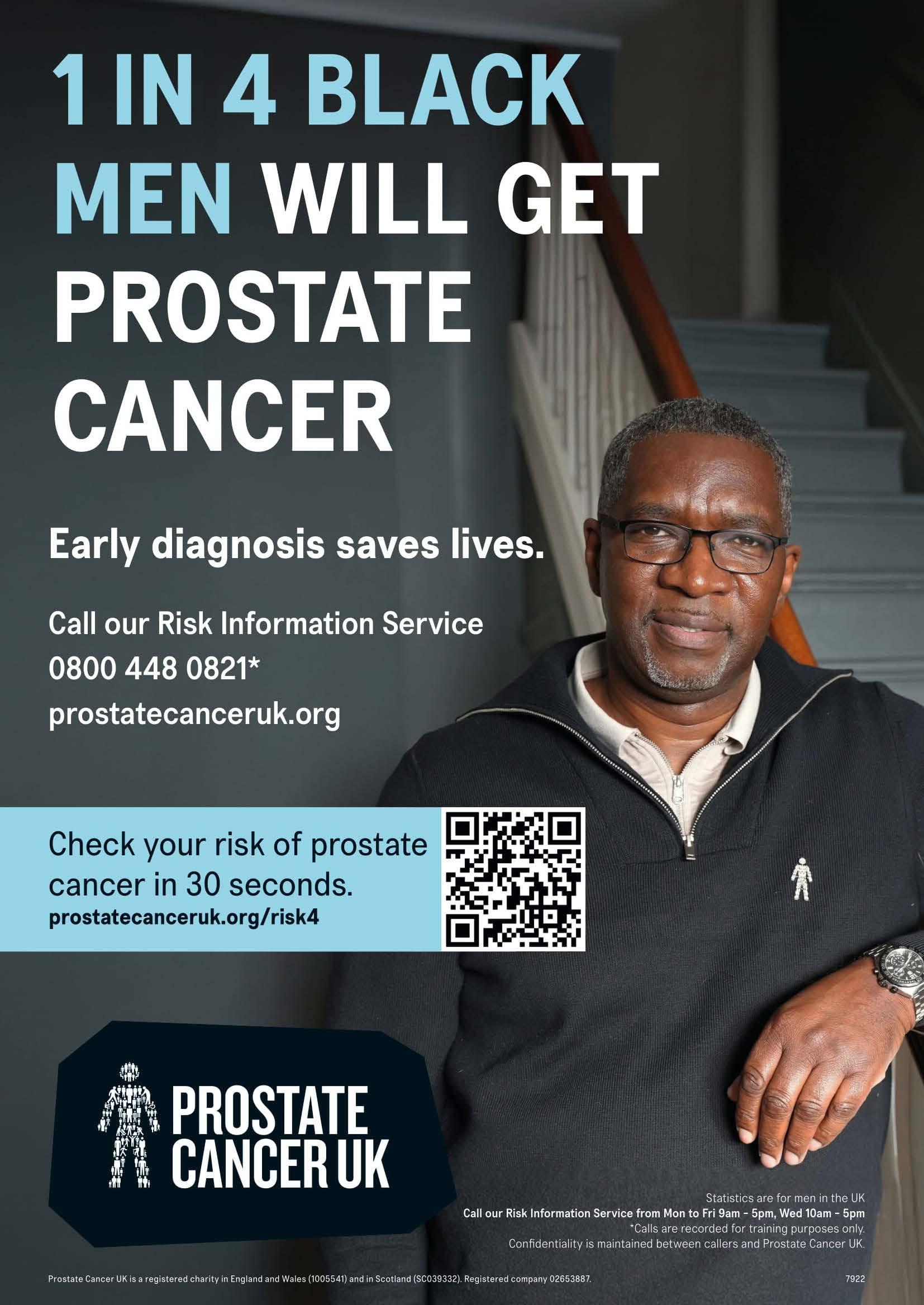
A major reason is that men often ignore their health – until something breaks. While women typically seek care early, men often choose to ‘push through’ instead. But the body isn’t designed to run without maintenance, and breaks down when neglected. Black men face higher risks of prostate cancer, high blood pressure, and heart disease – conditions that respond best when caught early.
Mental health matters just as much. The pressure to “man up” can lead to isolation and healthy coping. True strength isn’t about carrying burdens alone; reaching out is a sign of courage, so talk to a trusted friend or health professional. You matter, and your physical, emotional and spiritual well-being are worth protecting at every stage of life.
START EARLY: TEENS TO 20S
How you care for yourself early on shapes your future. Fuel your body with real food – plenty of fruit, vegetables, lean protein and water. Cut back on sugary drinks and fast food; instead, take Vitamin D3 (1,000 IU) daily to boost your energy, mood and immunity. Use protective gear at work to prevent injuries, accidents and harm from chemicals or asbestos, and avoid cigarettes and drugs – they rob you of years.
Get comfortable using the NHS app or GP practice website to easily access health advice and virtual appointments. Before you’re 25, get the free Human Papillomavirus (HPV)
BLACK MEN –LIVE WELL , LIVE HEALTHILY, LIVE LONG
Dr Jacky McLeod shares tips for every stage of life so Black men can remain healthy, keep sickness at bay, and get health conditions diagnosed before they cause long-term damage
vaccine that helps prevent cancers, and check your newborn records or request a quick blood test to know if you carry the sickle-cell gene. This is vital knowledge when planning a family. Healthy relationships require wisdom and intentionality, but if you have had a casual encounter, get checked out for peace of mind. Many infections show zero symptoms yet impact health later. Remember to check your testicles regularly – it takes less than a minute in the shower to check for lumps and could save your life.
Your mind matters, too. Swap screen time for activity – work out, play football, take up a skill or side hustle to reduce stress and boost your confidence. If you ever feel low or overwhelmed, talk to someone. Strength is in connection, not silence.
THE POWER PHASE: 25 TO 40
You might feel unstoppable, but silent damage often starts now, so take action. One in three men have high blood pressure, yet many don’t know it. A quick check at a pharmacy, GP or at home can prevent heart and kidney disease and, if a family member has diabetes, heart disease or prostate cancer, get your blood checked to assess your risk. These checks cost nothing but could add decades to your life. Drop harmful habits, like smoking and heavy drinking; they sabotage your energy, looks and longevity. Train smart and avoid shortcuts like steroids, which can lower testosterone and harm fertility. Protect your sperm health by staying cool – literally – by avoiding resting laptops on your lap and limiting time in hot tubs.
THE MAINTENANCE PHASE: 40 TO 60
Your body will need more care, not less. Take full advantage of free NHS Health Checks, which screen for diabetes, kidney issues and
heart disease. Black men have a higher risk of prostate cancer, so ask about adding a PSA test. Early detection saves lives. Drink wisely. Alcohol may seem like stress relief, but frequent or heavy use can harm your liver, dull your mind, and damage your relationships. Instead, manage stress positively. Stay active, stay connected to good friends, and reach out for help when needed. Joining a Black men’s group or referring yourself for talking therapy are strong, practical moves.
THE GOLDEN ERA: 60 AND BEYOND
This is the time to enjoy the reward of your earlier choices, so stay proactive. When your NHS bowel cancer screening kit arrives through the post, use it! It’s quick, discreet, and life-saving. Also, schedule free eye tests. Opticians don’t just check vision; they detect conditions like glaucoma that can steal your sight.
At 65, get the pneumococcal vaccine to protect against lung infection and, between 70–79, the shingles vaccine to help prevent painful complications of infection.
THE BOTTOM LINE
Living well is revolutionary. Every choice to move more, eat well, open up, or get checked is an act of love – for yourself, your family and your community. From your teens to your golden years, invest in your health, for vitality, peace and purpose. Your health is your wealth, so choose to live well, live long, and prosper!
DR JACKY McLEOD
Senior GP, educator and Chair of The Gratitude Initiative
The Christian community is full of men making a difference in the Church, business, media and the wider world. Our annual Keep The Faith lists of Christians making a difference reflects this. Have a read of the men featured in this year’s list. They highlight what’s possible and demonstrate the impact they are having in their fields of endeavour.
BERNARD P ACHAMPONG
Founder of Unedited, Chair of AudioUK
Bernard P Achampong is a man of influence in the audio creation space. He has served as a board member of Creative UK; is currently Chair of AudioUK; is a Fellow of the Radio Academy; and an eight-time Radio Academy Award winner. From 2018–2020, he was Programme Director at Premier Christian Radio. He advocates for creator ownership, intellectual property, diversity and representation in the creative industry. His production company, Unedited, produces ground-breaking programming, including Sounds of Black Britain (Spotify) and 1Xtra’s Throwback Party (BBC Sounds). Unedited has been nominated for production company of the year in 2022 and 2024 – winning silver and bronze, respectively. Bernard P Achampong, was the driving force behind the sold-out presentation of ‘7 Secrets of Immersive Storytelling’ at the London Podcast Show in 2022, and at the Birmingham Podcast Festival in 2023. Bernard’s personal career highlights include the documentary ‘HRH The Prince of Wales: Building Bridges’ and delivering Spotify’s Sound Up programme for the UK and Ireland for three years. In addition, his first children’s television programme, Skin Deep (CBBC), exploring the identity of boys between the ages of 7 and 11, is his magnum opus.
Visit www.weareunedited.com
DR JOE ALDRED
Retired Christian ecumenist author, writer, broadcaster
Over the years, Dr Joe Aldred has become a respected and valued voice in the Black Christian community and beyond. He was a former minister and bishop in the Church of God of Prophecy – a role he stepped down from earlier this year. His reasons for doing so were published in a much-read article in Keep The Faith. Organisations he has worked for include The Centre for Black and White Christian Partnership. He served as Principal Officer for Ethnic Minority Concerns at Churches Together in England (CTE) and was a presenter on BBC Radio WM. He has also served on numerous boards. He was Chairman on an NHS Primary Care Trust, and Chair of the Council of Black-Led Churches (also known as the Council of Black-Majority Churches). Dr Aldred has authored/edited several books, including Preaching With Power: Sermons by Black Preachers; Praying With Power; and Flourishing in Babylon: Black British Agency and Self-Determination. Dr Joe continues to be a respected and influential voice via his regular column at The Gleaner and his commentary on religious, social and political issues on social media. He has a PhD in Theology from Sheffield University.
Visit www.facebook.com/joe.aldred.92
BERNARD P ACHAMPONG
DR JOE ALDRED
SHANE BOWES
SHANE BOWES
CEO, Pentecostal Community Bank
Shane Bowes is CEO of Britain’s first Blackowned bank, the Pentecostal Community Bank (PCB), which is built on the foundation laid by the late Revd Carmel Jones, Founder of the Pentecostal Credit Union. The PCB has played a key role in providing finance so churches can buy their own buildings, alongside providing business and personal loans. Churches that have secured buildings with PCB’s help include Ruach City Church, and most recently Triumphant Church International. During the past two years, Shane has overseen some exciting developments. On a personal level, he has won a number of awards, including an Excellence in Business award at the Legacy Gala. PCB recently launched its first-ever podcast, Faith and Finance, presented by former BBC Arts Correspondent Brenda Emmanus OBE, and they have started work on raising awareness of their financial services in Birmingham.
Visit www.pcbank.co.uk
DEZ BROWN
CEO and Founder, Spark2Life
Dez Brown is Founder and CEO of Spark2Life, an award-winning faith-based charity. With an annual income of £1.5 million, the organisation supports medium- to high-risk young people and adults aged 10–30 across London. Having experienced the criminal justice system firsthand, Dez was imprisoned at 17 for manslaughter. This was a turning point that led him to become a Christian and he was eventually ordained as a minister. Dez is author of Convicted or Condemned? – a 2006 biography which will be re-released later this year with an additional new chapter. He is also a qualified person-centred therapist and specialist trainer, delivering traumaawareness training to professionals. Alongside his leadership work, Dez sits on several boards, tackling disproportionality in the criminal justice systems, and continues to serve in prisons through chaplaincy ministry, regularly preaching on Sundays, He previously worked as a sessional prison chaplain and is also a trustee of Prison Fellowship and speaks and preaches at conferences and churches across the UK.
Visit www.spark2life.co.uk
BISHOP DR JOSEPH A DAWES
Diocesan Bishop of the Church of our Lord Jesus Christ UK; Senior Pastor, Refuge Temple
Bishop Dr Joseph A Dawes is a respected Pentecostal church leader, who has worked in the church community for over 40 years.
He was recently appointed as denominational leader of the Church of our Lord Jesus Christ of the Apostolic Faith UK (COOLJC). He is also the COOLJC regional director of Global Missions. Bishop Dawes is currently the senior pastor of Refuge Temple, a well-known church, based in Streatham, south London. He has had an international preaching and prayer ministry for many years and has ministered in Jamaica, Trinidad, Dominican Republic, Germany and Austria, as well as throughout England and the USA. He has been a lecturer at the University of Christ, Nottingham UK and is Chairman of the Church of our Lord Jesus Christ of the Apostolic Faith, Inc for the UK. Bishop Dawes is actively involved in his local community, and initiatives he has undertaken include an annual summer school, food banks and prison ministry. He is currently involved with Christians against Poverty, the London Project, and the In Kind Direct charity.
Visit https://cooljcglobal.org/unitedkingdom-uk and www.refugetemple.life
BISHOP GEOFFREY FOLKES
Jurisdiction Bishop, Church of God in Christ UK
Bishop Geoffrey Folkes is now officially leader of Church of God in Christ UK (COGIC) – the first Black Pentecostal denomination to be founded by a member of the Windrush Generation in Britain. Bishop Folkes presides over a denomination that has 22 branches across the UK and is part of an international denomination that has 15,000 congregations worldwide. Prior to his new role, Bishop Folkes served COGIC as National Sunday School Superintendent, District Superintendent and Administrative Assistant to the Bishop. He is senior pastor of COGIC Tottenham. Outside of church, Bishop Folkes is active in the local community. He has extensive experience working with small- and medium-sized businesses. He is a board member of the Haringey Giving charity and currently serves as Vice Chair on the Board of the Pentecostal Community Bank. He is also a member of Haringey Multi Faith Forum, Churches Together Tottenham, and Pray Haringey.
Visit www.cogic.org.uk
KARL GEORGE MBE
Managing Director, The Governance Forum; Chair, Black Business Advisory Council, Lloyds Banking Group
For several decades, Karl George MBE has played a pivotal role in developing Black business in the UK and beyond. An accountant by training, he is a corporate governance specialist and Managing Director of The Governance Forum. He advises boards across
DEZ BROWN
BISHOP DR JOSEPH A DAWES
the private, public and voluntary sectors, with experience in 11 countries across the UK, Middle East, Africa and the Caribbean. Amongst his many roles, Karl is a visiting professor at Birmingham City University; the architect of the TGF Governance Code; and of the RACE Equality Code, that has been adopted by more than 60 organisations. He’s also a leading voice on AI governance. He was recently appointed Chair of the Black Business Advisory Council at Lloyds Banking Group and has sat on many boards. Karl is the founder of the first international Chapter of 100 Black Men; President of the Black Business Collective; and a former REACH Role Model. A practising Christian, Karl is an elder at New Jerusalem Community Church and has supported many churches with governance and leadership counsel. He’s the author of several books, including the bestselling The Effective Board Member, and has received many awards over the years including an MBE in 2004.
Visit www.tgf.global
BISHOP CLAION GRANDISON
Administrative Bishop, New Testament Church of God
Bishop Claion Grandison nears the end of his first term in office as Administrative Bishop of the New Testament Church of God (NTCG) – one of the UK’s leading Black Pentecostal denominations – knowing he has been re-elected to serve a second term. During his first tenure as leader, he focused on fostering strategic partnerships, developing theologically sound leaders, and enhancing community focus and church growth. The
church also underwent rebranding, which has given the organisation visibility and has resulted in increased attendance at Sunday services and national events across the board. During his second term, Bishop Grandison will focus on working with the trustees, the National Executive Committee, and the wider leadership to strengthen NTCG’s strategic direction, enhance discipleship and evangelism, and provide further training for its emerging leaders. The New Testament Church of God has 110 churches in England and Wales, with over 30,000 adherents.
Visit www.ntcg.org.uk
MAHARI HAY
Director of Innovation & Transformation Lloyds Bank, CEO/Founder CCC Awards
Mahari Hay is a distinguished finance sector leader, community advocate, and Christian, whose life and career are deeply rooted in his commitment to serving others. With nearly two decades of experience in financial services, Mahari has risen to senior leadership within Lloyds – one of the UK’s leading banking institutions – where he is recognised for his strategic impact and dedication to building inclusive, purpose-driven organisations. A proud Freeman of the City of London, Mahari’s professional journey reflects not only excellence in finance, but a calling to lead with humility, stewardship and accountability. Beyond his corporate achievements, Mahari is CEO and Founder of the Community, Corporate and Culture Awards (CCC Awards), a platform dedicated to celebrating unsung heroes and sheroes. Mahari is also committed to pouring into the next generation, encouraging them to pursue excellence while staying anchored in purpose and identity.
Visit www.maharihay.com
REVD PROFESSOR ERROL LAWSON
Church leader, author, Founder of Building The Future Awards
Revd Professor Errol Lawson is a pastor, author and entrepreneur whose work spans church leadership and the built environment sector. Revd Errol has carved out a name for himself in the wider community as Founder of the Building the Future Awards – a nationally recognised platform, celebrating excellence, diversity and emerging talent within the construction and built environment sector. The initiative has become a key voice in addressing the industry’s skills gap and championing young professionals across the UK. This year’s awards will take place on November 5. As Senior Pastor and Founder of Bridge Church Birmingham, he has spent over two decades building a vibrant church
BISHOP CLAION GRANDISON
MAHARI HAY
KARL GEORGE MBE
community. Passionate about raising leaders, Errol is committed to equipping individuals and the next generation to fulfil their Godgiven potential and to make a meaningful impact in society. He has written nine books and is a two-time Amazon bestseller. Errol holds an Honorary Professorship from University College Birmingham in recognition of his contribution to leadership, education and industry.
Visit www.errollawson.com
PASTOR STEVE K MPOFU
Founder, Rainbow Entertainment & Promotions Ltd
During the past few years, Pastor Steve K Mpofu has become one of the UK’s leading gospel promoters, as he pursues his goal to spread the gospel message through music and ministry. In 2014, he founded Rainbow Entertainment & Promotions Ltd (REP) and since then he has organised concerts and events featuring some of the world’s foremost gospel artists. Pastor CeCe Winans, Tasha Cobbs Leonard, Bishop Benjamin Dube, Dr Tumi, Joe Mettle, Fred Hammond, Apostle Solly Mahlangu, Bishop Hezekiah Walker, Dr Rebecca Malope, Pastor William McDowell, Israel Houghton, and The Clark Sisters are some of the artists who have appeared in a Rainbow Entertainment event. Aside from organising events, Rainbow Entertainment also offers consultation and support in hosting, advertising, and music promotion, and connects churches and organisations with special guests, including musicians, motivational speakers, preachers and comedians to create enriching experiences.
Visit www.rainbowentertainment.co.uk
BISHOP MARK NICHOLSON BEM
Senior Pastor, Acts Christian Church; Founder/Convenor Christian Leaders Community (CLC)
Bishop Mark Nicholson is a minister making an impact in the church and wider society. He is Senior Pastor of Acts Christian Church, Croydon, and is an in-demand preacher in the UK and abroad. He has preached in South Africa, Nigeria, Kenya, Germany, the USA, Australia, and DR Congo. Bishop Mark is founder/convenor of Christian Leaders Community (CLC), a coalition of faith leaders who work together to tackle Croydon’s most pressing social issues, like crime prevention and domestic abuse. He is also founder of MAN Ministries, which is committed to restoring ‘fallen pastors’ and providing leadership training and development. Bishop Mark is a local magistrate and mentors emerging leaders, helping them blend faith
with enterprise. He also equips them with tools to succeed both spiritually and professionally. In 2025, he was featured in HRH King Charles III’s Birthday Honours list and awarded the British Empire Medal (BEM) for outstanding service to the community in Croydon.
Visit www.theclc.live and www.man-ministries.com
REVD NICHOLAS NUNAYON
Founder and CEO, Kingsgen Foundation
This award-winning minister is renowned for his work empowering young people to achieve academic success and developing their leadership skills. Kingsgen Foundation (KF) is a charitable organisation founded on Christian values to prepare young people from disadvantaged and African Caribbean backgrounds. It has helped pupils gain admission to top schools, such as Eton College and Harrow School, and prestigious universities in the UK and USA, including Oxford, Cambridge, Harvard and Columbia. KF also runs initiatives, like the Debating and Public Speaking Academy, a Coding Academy, and a Chess Academy, that help young people develop their cognitive skills. It also organises events, annual conferences, monthly prayer events, and workshops to help parents understand the UK education system and to equip them with the necessary skills and tools to support their children. Revd Nunayon has been recognised with multiple awards since 2015 for his impactful work. These include the Civic Recognition of Outstanding Achievement by the Mayor of the London Borough of Bexley. Kingsgen’s international project includes a supplementary school in Badagry, Lagos, Nigeria.
Visit www.kingsgen.org/
REVD DR CALEB NYANNI
Principal, Waverley Abbey College
In March 2026, Revd Dr Caleb Nyanni made history when he became the first Black man to be appointed Principal of Waverley Abbey College, one of the largest providers of counselling and chaplaincy education for Christians in the UK. Their vision is to have a Waverley Abbey College trained counsellor in every UK church, and a Waverley Abbey College-trained chaplain in every secondary school. Prior to joining Waverley, Dr Caleb served as Academic Dean of Birmingham Christian College, leading programme development and increasing student enrolment by more than 125% over eight years. He has also mentored leaders across Europe, Africa and Asia. Dr Nyanni is a member of the inaugural Catholic-Pentecostal Dialogue in England and Wales, and is the first non-white
PASTOR STEVE K MPOFU
BISHOP MARK NICHOLSON BEM
REVD NICHOLAS NUNAYON
Chair of the European Pentecostal Theological Association (EPTA). An Elim-ordained pastor, he has more than two decades of experience leading local churches. His research interests include pneumatology, diaspora studies, apologetics, and generational studies.
Visit www.waverleyabbeycollege.ac.uk
JACKSON OGUNYEMI (aka ACTION JACKSON)
Director, FixUp; Pastor, Light Kent
Jackson Ogunyemi – widely known as “Action Jackson” – is a renowned motivational speaker. Via his company FixUp, Jackson works in the education sector and, along with his team of speakers, delivers powerful talks in schools across the UK, which have helped young people develop a strong sense of identity, purpose and vision. His goal is to create a world where young people “wake up happy and go to bed fulfilled”. An accomplished author, Jackson has written three books: Shut Up and Take Action: The No-Nonsense Guide to Success and Happiness; Happy School 365: A Guide to Motivating Students, and Happiness First: 14 Habits Draining Your Joy, which he is set to release later this year. Beyond the stage, Jackson is a father of two, a marathon runner, and a TED Talk speaker. He also serves as pastor of Light Kent – a satellite branch of Light Vision under Light London, based in Dartford. Alongside his wife, he has been pastoring for the past 18 months, although his pastoral influence spans over two decades due to regularly preaching in churches.
Follow him on Instagram @ActionJacksonLive
MUYIWA OLAREWAJU OBE
Station director; Presenter, Turning Point; worship leader
The impact of Muyiwa Olarewaju’s work stretches across music, radio and TV broadcasting. He has played a major role in bringing ‘African’ gospel to the fore, here in the UK, and has scored several firsts. Alongside his group Riversongz, Muyiwa was the first UK gospel artist to be featured on BET’s Celebration of Gospel; the first UK gospel act to take part in The Experience, the largest gospel music event in the world; and the first UK gospel artist to get an OBE. He is the station director of Premier Gospel, the UK’s leading gospel station and organiser of one of the UK’s premier events, recognising UK Gospel. He is also presenter of TV show Turning Point, which reaches an international audience of approximately 70 million. Muyiwa was recently the focus of a BBC Songs of Praise programme and he is currently working on a movie project with CBN. He will be releasing new music throughout the year.
Visit www.premiergospel.org.uk and www.muyiwa.co.uk
BISHOP MIKE ROYAL
General Secretary, Churches Together in England (CTE)
Bishop Mike Royal is a leading figure in the Christian community, due to his role as General Secretary of Churches Together in England – an ecumenical body that promotes Christian unity. Bishop Royal’s CTE role enables him to have a front row seat at some of the UK’s most pivotal developments. He played in a key role in the installation service of the new Archbishop of Canterbury, Dame Sarah Mullally. Prior to his appointment, Bishop Royal was Co-Chief Executive of The Cinnamon Network, a charity helping churches with community engagement and social action projects. He is also a part-time Forensic Mental Health Chaplain with Birmingham & Solihull Mental Health Foundation Trust. Mike has an academic background in urban planning and in Black theology. He has been in ordained ministry since 1993 and was consecrated a Pentecostal Bishop in 2016.
Visit www.cte.org.uk
JACKSON OGUNYEMI
MUYIWA OLAREWAJU OBE
BISHOP MIKE ROYAL
REVD DR CALEB NYANNI
Transform Lives Through Church and Youth Residentials: Igniting Faith, Building Community, Growing Disciples
Your Church Family hosted by ours!
A residential is one of the most impactful experiences a church or youth group can offer. In just a weekend, groups often experience teaching, connection, and spiritual growth that would usually take months to develop. Stepping away from everyday routines, screens, and pressures creates space for meaningful change that is rarely possible in a weekly programme.
At Rock UK, these benefits go further. Through outdoor and indoor adventure at our faith-filled centres and with our Christian team’s encouragement, we create an environment where people of all ages can thrive - physically, spiritually, and relationally.
1. Strengthening Relationships and Fellowship
Shared experiences create lasting connections. Living, eating, worshipping, and adventuring together helps relationships grow far faster than in a weekly setting. From campfires and team challenges to late-night conversations, these moments build trust, deepen friendships, and shape faith journeys at every age.
Our centres are designed to support this sense of community. Welcoming communal areas, outdoor space along with structured team activities, create opportunities for strengthening pastoral relationships and building community.
2. Space to Encounter God Residentials create moments to pause and refocus spiritually. Away from distractions, people can reflect, listen, and engage with God more deeply. Rock UK’s outdoor settings and worship spaces provide an ideal environment for prayer, contemplation, and encounter.
Groups shape their own programme, including devotionals, small groups, prayer, worship, and time in God’s creation. Leaders often see people open-up, ask deeper questions, and grow as disciples.
3. Character Formation Through Challenge
- Guided by Christian Instructors
Outdoor activities reflect spiritual truths such as trust, perseverance, courage, and stepping out in faith. Our Christian instructors help connect these experiences with discipleship, turning activities into meaningful opportunities for spiritual growth.
4. Experiencing Christian Community in Action
During their stay, groups meet staff who live out their Christian faith daily. Young people are inspired by role models whose kindness, encouragement, and integrity demonstrate what faith looks like in everyday life.
These interactions often lead to meaningful conversations about following Jesus, while our team support teaching themes and ensure everyone feels safe, valued, and encouraged.
Instructor Training Programme/Gap Year
Every year we welcome 20 Christian young people on our Instructor Training programme. Do you know any 18–24-year-olds who loves Jesus and the outdoors who are looking for a 2 year or gap year programme? To find out more visit www.rockuk.org/contact-us/ careers/become-an-instructor
5. Building Confidence Through Adventure
All activities reflect spiritual truths - trust, courage, perseverance, faith, and teamwork. At Rock UK, our Christian instructors connect these experiences with discipleship, turning outdoor adventure into spiritual growth.
For churches seeking to grow mature, faith-filled disciples, a life-shaping Rock UK residential is invaluable.
6. Making Lifelong Memories
Residentials create joyful, lasting memories - collective victories, laughter, late-night conversations, and unexpected challenges. These moments become part of a group’s shared story, strengthening connection long after the residential ends.
Many adults look back on residentials as defining faith moments when they felt close to God, deeply connected, and truly known.
Our Mission
At Rock UK, our mission is Transforming Young Lives
We believe transformation happens not only through a residential but through creating opportunities to encounter Jesus and experience His power.
Find out more, visit our website (www.rockuk.org) or contact one of our centres and quote ‘Keep the Faith’ CARROTY WOOD, KENT carroty@rockuk.org / 01732 361361
WHITHAUGH PARK, SCOTTISH BORDERS whithaugh@rockuk.org / 01387 375394
SUMMIT, SOUTH WALES summit@rockuk.org / 01443 710090
Crossing waters, shaping worship: How Black Pentecostal churches are changing
The Windrush Generation laid the foundation of Black Pentecostalism in the UK. Roy Francis examines its progress and America’s impact on this dynamic branch of Christianity
In the 1950s and 60s, Caribbeans came to Britain with a faith nurtured in the West Indies. Many were Pentecostals, followers of a religion introduced by American missionaries at the start of the 20th century. In Britain, they first practised their faith in their homes as ‘prayer meetings’, expanded into rented halls, and, eventually, into buildings they acquired as places of worship. Churches were not only sacred spaces but were a ‘social system’ of the community – the anchor and support they needed to survive.
Today, more than 70 years since Caribbeans established Black Pentecostal worship in Britain, we approach Windrush Day. This is a good time to reflect on this pillar of the Caribbean community; examine how it has grown and developed the influences that have shaped it – particularly from America; and the direction it is now taking.
The Church of God in Christ was the first Black Caribbean Pentecostal church in Britain. It was founded by ‘Mother McLachlan’, a passenger on Empire Windrush, who began the church in her home at 57 Navarino Road in Hackney, east London in the late 1940s. In 1957, she was joined by her husband, Bishop McLachlan, and together they travelled to
America, where the church they had established was officially recognised as part of the worldwide Church of God in Christ (COGIC) family. It marked the beginning of a close relationship between Caribbean churches in Britain and those in America – a relationship that historically had its origins in the Caribbean.
The churches they established reflected both the range and variety of their religious affiliations. The main ones – Church of God in Christ, Church of God of Prophecy, New Testament Church of God, and Seventh Day Adventist – were all satellites of churches in America. Alongside them grew a plethora of
independent churches.
In the 1960s, many Caribbean Christians visited America for the first time to attend their church international assemblies and conventions. What they discovered there was surprising, contradictory, uncomfortable and deeply unsettling, and, even though the explanation was shaped by America’s historical and cultural past, the effect was shattering. This experience has shaped the relationship between the Church in Britain and America, leaving a lasting psychological effect, which continues to be felt to this day.
What the Caribbean Christians discovered in some of the international meetings in the US was a clear racial divide in the ‘mother church’, with white leadership and an overwhelmingly white congregation. In Britain, the reverse was true, with Black leadership and congregation. Added to this, many of these churches were located in the American South, a region historically marked by racial segregation, but no one had told the Caribbean Christians about this and what it meant historically. It exposed deep underlying tensions, revealing significant, cultural and liturgical differences between the two, despite sharing the same denomination.
Bishop TG Francis, Elder Marsh, Elder Payne, Bishop McLachlan and Pastor Edwards
Apart from the racial difference, Caribbeans saw something else that was both surprising and contradictory. In Britain, women were prohibited from wearing jewellery or makeup – routinely denounced as unchristian and sinful – yet in America, such restrictions were either relaxed or entirely absent. The contrast was stark, the contradiction was difficult to ignore, and as a result, when they got back to Britain, many women challenged what they considered were cultural practices dressed up as immutable doctrine.
The response was significant. Some pastors, rather than admit to an obvious contradiction, pushed back, with the result that many women and men left the Church, while those who remained simply disregarded the restrictions placed on them, asserting their identity and independence as autonomous individuals who weren’t going to be defined by what they wore or by how they dressed, but who they were as Christians. The beneficiaries were the independent churches that had sprung up in London and the big cities, which acted as a magnet for disaffected church members.
Caribbean pastors were not immune to American influence either, and, on their return, many restructured their churches along American lines. Terms like ‘diocese’, ‘prelate’ and ‘First Lady’ entered Caribbean church language for the first time, and some pastors even started wearing clerical gowns and collars, something unheard of before these visits. A few even started wearing cassocks, crosses and chains – again, something that had previously been thought inconceivable in Caribbean churches.
However, perhaps the most visible American influence is gospel music – not so much its effect on the churches in Britain, which initially rejected it, but on its young people. They were the ones who loved the music, practised it, created their own British version, and with this, brought prestige and profile to their churches. Their success in the music even had wider implication, for it helped to change perception, increase visibility and challenged stereotypes.
It was both transforming and empowering. At a cultural level, American churches – and Black America generally – had a profound influence on Caribbeans. Their experience there was both exciting and transformative, for the Americans had modern churches, fantastic choirs, wonderful music, and their style of worship was excellent – much freer than in Britain.
Black American Christians didn’t seem so hung up on rules and regulations either, fostering a freer version of Christianity than the Caribbeans were used to. Nothing like this existed in Britain, and it was a real revelation, a cultural shift, which has shaped the authority, leadership and identity we see expressed in
Black Pentecostal churches in Britain today.
Yet, in spite of all these experiences, at its core and in its practices, Caribbean churches have remained largely unaltered and unchanged. This is mainly due to the strength of their culture and their religious traditions, although this is changing.
More recently, however, a new dynamic has emerged – one that complicates the narrative of direct American influence. It’s the rapid growth of African churches in Britain, many of which have been shaped by their relationship with American denominations, their megachurch model, their use of Christian television, and their admiration of these American churches.
Prominent among the early example of this in Britain was Kingsway International Christian Centre, founded by Pastor Matthew Ashimolowo, who set the pace, exemplified the new shift, and embraced the new theology accompanying these churches, alongside a business-like approach to ministry and outreach.
The backdrop to this change is demographic. Before 2021, Caribbeans made up the majority of the Black Church population in Britain. The 2021 census shows Africans now exceed Caribbeans. Their impact is evident in several areas. They stage large-scale events, such as all-night prayer meetings, attracting tens of thousands, and, while Caribbeans have long held major events, like the Church of God of Prophecy’s national convention at the Brighton Centre, Africans have now elevated this to a new level of visibility and intensity.
These new churches also seem to accept a new theology advanced by the new American churches, in which prosperity is a major part of the teaching, highlighting that material success is evidence of divine blessing. Practices, such as tithing 10% of one’s income, were once viewed with scepticism in Caribbean churches, but today it is becoming increasingly normalised. It represents a significant departure from earlier teachings that were once frowned upon and actively preached against. The scriptural justification was that ‘the Lord will supply all your needs according to His riches
in glory’ (Philippians 4:19), and therefore there was no need to tithe, as blessings are not transactional.
Music is another area where African churches, via their American counterparts, are now influencing Caribbean churches. Historically, the Caribbean churches’ introduction to gospel music came through R&B gospel, exemplified by the music of Edwin Hawkins and popularised by the all-American gospel artists who followed. The African route to Black Pentecostal music came through praise and worship – a particular genre of gospel music, characterised by extended, meditative structures which came out of America’s multiracial congregations and practised by artists, such as Don Moen, Ron Kenoly, Paul Baloche, and, in Britain, by Graham Kendrick, Matt Redman, Tim Hughes and others.
In African churches, praise and worship is now the preferred music, and because African churches are undoubtedly ’successful’, Caribbeans have bought into this success, and have largely adopted their model, music and even style of worship. The shift is subtle but telling – a reorientation of aesthetic and spiritual expression that reflects changing demographics and aspirations.
Caribbean churches in Britain now reflect a complex process of change – one that operates not simply at the doctrinal level, but also through culture, aesthetics, authority and aspiration. It’s not a simple narrative but a subtle multilayered expression of Black Pentecostalism as it continues to emerge, and Caribbean churches continue to reflect this change.
The question now is not whether these churches have changed – for undoubtedly they have – but at what cost? Change is inevitable, and Caribbean churches are no different. The challenge is what will be the commitment to preserving the cultural and spiritual heritage that gave them their original strength and distinctiveness in the first place.
ROY FRANCIS
Former BBC producer, and author of Making Gospel Music Work for You www.royfrancis.co.uk
Pastor Matthew Ashimolowo
Edwin Hawkins Singers
CELEBRATION, LEGACY AND THE ONGOING FIGHT FOR JUSTICE
Revd Clive Foster recalls the role of the Black Church in the lives of the Windrush Generation and how it continues to support and campaign for victims of the Windrush scandal
Every year, on 22 June, we mark Windrush Day, honouring the extraordinary men and women who came to help rebuild this nation, bringing with them their talents, labour, culture and faith.
It is their day – a day to stand tall and proud, remembering the courage it took to leave home, to face discrimination and hardship, and yet to remain. To build. To contribute. To enrich every corner of British life: our NHS, our transport system, our churches, our schools, our arts and our politics.
Their story spans generations and continents. From the Caribbean to the wider Commonwealth, tens of thousands answered the call over the years and decades that followed. They came in faith – faith in Britain, in each other, and in God. And nowhere was that faith more visible, or more vital, than in the Church.
When pioneers arrived in Britain, many were turned away from mainstream congregations. Faced with discrimination, they created their own spaces for worship, beginning in front rooms and growing into thriving congregations that raised funds to buy buildings, many of which remain in use today. Those churches became far more than places of worship. They were refuges, community hubs, places where people found dignity when the world outside denied it. They were spaces where Black leadership was visible, where community was built, and where the Windrush Generation could invest in one another and in the wider society around them.
The Black Church did not wait to be invited to celebrate its pioneers. Long before Windrush Day was established, those celebrations were already happening. I recall a joyful, packed ceremony at the Albert Hall in Nottingham in 2013, organised by Bishop James Stapleton OBE, with over 500 people honouring the service, sacrifice and contribution of the Windrush Generation. Among those recognised were Mrs Daisy Weaver from Antigua, celebrated for her outstanding dedication to music as an organist and choir director, and Mr William Chong, honoured for his contribution to education and community relations. That spirit of recognition was alive long before the scandal brought Windrush into the national conversation.
I remember a campaigner saying to me after the scandal: “I don’t see the Church doing anything to respond.” It challenged me. But the truth is that the Black Church is Windrush. And today, the Church is increasingly at the centre of efforts both to celebrate the pioneers and respond to the ongoing injustice.
For many still waiting for compensation and recognition, justice is not separate from celebration. It is part of it. To be seen and acknowledged after years of being wronged is itself an act of dignity. And dignity is something every member of the Windrush Generation has always deserved.
As the Independent Windrush Commissioner, it is my duty to hold the government to account without fear or favour. That independence is essential. Since taking up this appointment, I have been listening to survivors, families and community organisations
across the country, and pressing for change. Older and more vulnerable claimants are now being prioritised. Advance payments have been introduced. Pension losses are now properly recognised and compensated. And my remit has expanded to include the Windrush Status Scheme, because securing status is just as fundamental as securing compensation.
Over £122 million has now been paid out to people affected by the scandal. That represents real progress, and real lives beginning to be rebuilt. It has been driven by the determination of survivors, community organisations and advocates who refused to let this issue be forgotten.
But we cannot confuse progress with completion. My work is guided by three strategic aims:
• Justice and Healing – so people receive not only compensation but genuine acknowledgment of the wrong done to them.
• Prevention – so that lasting cultural change within the Home Office ensures these failures are never repeated.
• Legacy – so the lessons of Windrush are understood and acted upon across society, every day, not just on 22 June.
To readers of Keep The Faith, you can be part of this. If you know someone who may be eligible for compensation, encourage them to come forward. The scheme remains open, and support is available. If you’re part of a church, community group or faith network, use your platform to share information. Nobody should navigate this alone.
I am reminded of the words from a Windrush church chorus that captures the spirit of those pioneers:
‘Press along saints, press along in God’s own way.
Persecution we must bear, trials and crosses in our way.
The hotter the battle, the sweeter the victory.’
That spirit endures. It will carry us to the justice this generation deserves.
REVD CLIVE FOSTER
The UK’s first Independent Windrush Commissioner, a trusted voice for victims and their families.
FOOD THOUGHT
BY MARCIA DIXON MBE
CHRISTIAN MEN ARE SEXY!!!
Philip Anthony Mitchell, the preaching darling of Millennials and Gen Z, recently went viral – again – after he described during a sermon the qualities that make a man sexy
His description of a sexy man is nothing liked the world’s version, which usually focuses on physical appearance. Instead, Philip Anthony listed a set of biblical-inspired attributes that make a man ‘sexy’. Qualities mentioned included being responsible, loving to read, able to suffer, hating sin, desirous of holiness and purity, and willing to apologise. He forgot to add forgiving – but I’ll let him off for that, lol!
In this social media age, where terms such as ‘the manosphere’ and ‘toxic masculinity’ are now part of social discourse when talking about men, it’s refreshing that Philip Anthony has shared – in a language his audience can understand – the attributes of a sexy man, aka a godly man who has dedicated his life to following Christ.
Can you imagine what the Black community would be like if it were filled with sexy men?
Lazy, womanising men, who didn’t look after their children or refused to get married and had no sense of purpose or direction would be a thing of the past. Instead, our community would be overrun with men who would be exemplary role models for their peers and young people, great husbands to their wives, and loving fathers to their children, as well as be individuals who would make great use of their God-given talents.
It’s imperative for churches to find a way to share the Gospel in a way that appeals to the male psyche. There’s no reason why Christianity can’t be as appealing to men as it is for women. Jesus Christ, the Founder of Christianity, possesses and exemplifies all the qualities that any decent man should want to emulate.
I’m confident that if the Church focused on reaching men with the Gospel, there would be an influx of men into our congregations. I remember, whilst working at The Voice newspaper, I wrote an article about the lack of men in church, and why efforts should be made to reach them. One pastor took my words to heart and actively evangelised men, even inviting me to a Sunday church service to see the fruit of his labour. Inspired by my article, he told me went out evangelising, making sure he made a beeline for men. And, in doing so, men got saved
Let’s take on board Philip Anthony’s word and pray for our churches to be filled with sexy men, filled with the spirit of Christ, recognising it’s not an impossible task to achieve.
HOME DINNERS: THE ANTIDOTE TO LONELINESS?
It’s evident there is much loneliness in our society – this includes within our churches. It seems we’ve forgotten what makes life enjoyable – faith, purpose, serving others and meaningful relationships. A lack of these factors can leave us feeling unfulfilled and lonely. I have an antidote to loneliness: invite people round for dinner.
There’s something special about eating a meal in someone’s home. While people are eating – especially if the food is delicious! – they tend to relax, open up, share what’s on their heart, and can begin the process of building meaningful relationships. I know of instances where the simple act of inviting people round for dinner has resulted in marriages.
Let’s not forget Jesus ate with the disciples regularly, and the early Church always met together to eat.
The age-old custom of breaking bread with others can make such a difference. I encourage you to try doing so.
MAKE DOMESTIC ABUSE A THING OF THE PAST
In recent months, my Facebook feed has been filled with stories about victims of domestic abuse and domestic violence (DA&DV), and three stories stood out. One was of a female pastor, who was shot dead by her husband during an argument. Their daughter was not aware her parents had marital problems. The second was of a dentist and mother-of-two on the verge of finalising her divorce. The husband, a former high-ranking politician, shot his wife and then himself, leaving their children orphaned. The third story was of a politician who was killed by her husband.
Although all incidents took place in the US, the stories highlighted the seriousness of domestic abuse and violence. Christian couples are not immune. And it’s important to note, amidst the various marital issues pastors deal with, DA&DV is high amongst them.
Statistics indicate that 1 in 4 women and 1 in 5 men will experience DA&DV, therefore it’s important for churches to train both leaders and members to provide appropriate support for victims.
One organisation that does so is the Black Church Domestic Abuse Forum (BCDAF), which was specifically set up for the task. It also provides a free toolkit that can be downloaded from www.bcdaf.org.uk
DA&DV is a scourge in society, negatively affects relationships, and impacts future generations. We need to do all we can to rid this sickness from people’s lives and the help is available for us to do so.
DO MEN HATE WOMEN?
Leondre Douglas shares some thoughts following a recent discussion where men did a deep dive and explored their own and society’s attitude to women
On Monday 9 March, I had the privilege of joining a group of millennial and Gen Z men at 4:12 Men’s ‘Men’s Monday’ gathering Running since 2019, these gatherings offer a vital space for men to engage openly with contemporary issues through the lens of Christian faith. Led by Pastor Ayokunu Oduniyi, Men’s Monday has become a place where community, solace and genuine brotherhood take shape.
The theme that evening was deliberately provocative: Do men hate women?
For some, the answer was immediate: no Yet, as we depersonalised the question and examined it more carefully, a more unsettling possibility emerged. Perhaps men do hate women, at least in a way that often goes unnoticed or unchallenged.
Rethinking ‘hate’: A biblical lens In everyday usage, ‘hate’ is usually understood as ‘intense dislike or hostility’. By that definition, it would be difficult to argue that men universally hate women.
However, Scripture invites us to think more carefully about the term.
In the Old Testament, the Hebrew word most often translated as ‘hate’ is śānēʾ. While it can mean to detest or reject, it is frequently used to mean ‘to love less’ or ‘to set aside in preference for another’. In many biblical texts, hatred is less about emotional animosity and more about priority and covenant loyalty. A similar idea appears in the New Testament. The Greek word miseō, commonly translated as ‘hate’, can also mean to ‘renounce, choose against’, or ‘assign lesser importance to’. Jesus often used this kind of language in comparative or hyperbolic ways, common within Jewish teaching.
This is clear in Luke 14:26, where Jesus says
that anyone who does not ‘hate’ their family – and even their own life – cannot be His disciple. Read alongside His commands to love neighbours, honour parents and love enemies, it is clear that Jesus is not promoting resentment. Rather, He is calling for total allegiance, placing Him above every other loyalty.
Do men hate women?
This understanding brings us back to the original question. At the gathering, I suggested that, by this biblical definition, men do hate women
Our society has long been structured in ways that favour men. History shows that when a group benefits from established norms, there is often resistance to changing them. When men fail to question or challenge systems that favour them at women’s expense, they are effectively assigning women a lower priority
This can also be seen in cultural narratives. Take the way Henry VIII and his six wives are commonly taught in schools. Rarely are his actions framed in moral terms or described as misogynistic. Instead, the story is often presented with emotional distance, as if the women themselves matter less than the political drama surrounding him.
Many millennials can point to MTV culture as another example. Women’s bodies were routinely commodified and objectified – with minimal sustained critique. The lack of widespread advocacy suggests a troubling indifference to women’s dignity. Participation in or silence towards such cultures raises important questions about whose value is truly being prioritised.
The Church is not exempt It would be easy to limit this conversation to wider culture, but faithfulness requires us to look inward as well. While Scripture affirms distinct and purposeful roles for men and
women, these distinctions can sometimes become entangled with cultural assumptions. Leadership, authority and visibility may be subtly equated with greater spiritual worth, leaving women feeling overlooked – not because of biblical conviction, but because of inherited practices that have gone largely unexamined.
This is not an argument against complementarity, but an invitation to embody it more faithfully. If the Church is to reflect the Gospel with integrity, our shared life must display the biblical truth that men and women are equally created in God’s image, equally redeemed by Christ, and equally heirs of grace – even as we embrace distinct responsibilities within God’s good design.
Where do we go from here?
When we look to Jesus, we find a very different pattern. Throughout the Gospels, He consistently affirms women as equal bearers of the imago Dei. Whether engaging the woman at the well, defending the woman caught in adultery, or restoring dignity to the woman suffering from long-term illness, Jesus repeatedly challenged norms that diminished women.
As men – and particularly as Christian men – we are called to follow His lead.
Let us commit ourselves to doing justice, loving kindness, and walking humbly with our God (Micah 6:8). Anything less cannot rightly be called love.
LEONDRE DOUGLAS
Preacher, faith adviser & chaplaincy development officer
Faith, migration, and the unchanging mission of God
There’s no doubt that the Windrush generation has played a key part in shaping Black British Christianity. Over those post-war years, many arrived with a deep faith in Jesus, and planted churches that continue to bless our nation.
Today, the story of migration to the UK is changing. Increasing numbers of new arrivals now come from Muslim-majority backgrounds. This presents us with an extraordinary gospel opportunity.
For many Muslims settling in the UK, this may be the first time they encounter Christians who can clearly, confidently and lovingly explain what we believe. And at the heart of that conversation lies the biggest difference between ourselves and our Muslim neighbours: our understanding of who God is
For our Muslims neighbours, God is one: transcendent, majestic, all-powerful – and ultimately, unknowable. The Bible disagrees.
Throughout history, God has revealed himself to us as Father, Son and Holy Spirit. This is good news. It tells us that we can know God, befriend God, enjoy God. And it’s this good news that Scripture commands us to share with our neighbour,
with both clarity and compassion. You’ll be equipped not only to understand why Christians and Muslims fundamentally disagree about God’s nature – but how to
neighbours, colleagues – and new arrivals. Be part of shaping the next chapter. Find out more and book your place at lcm. org.uk/me-conference-2026
SATURDAY 4TH JULY 2026
YOUNG PEOPLE, COMMUNITY AND THE CRISIS OF BELONGING
Chioma Fanawopo explores the possible causes for the recent mayhem caused by teens in Clapham, and calls for adults to do more to support lost and aimless youth
The images of young people causing chaos and mayhem in Clapham, Birmingham and other cities at the beginning of the Easter holiday stopped many of us in our tracks, and the usual question: What is wrong with our young people?
But I want to ask a different question and I believe it is the more faithful one: What are our young people telling us? Behaviour is communication.
I have spent over two decades working with young people, families and communities. I began in schools, then as a youth minister, sitting with teenagers in church halls, listening to their doubts, hopes, etc. I went on to lead youth in the charitable sector, and today I continue to support families navigating some of life’s most challenging seasons. I am also a mother. My eldest son is 21. So, when I speak on this subject, I speak from both professional expertise and lived experience – and I speak with deep conviction.
Here is what I know to be true: young people are not broken. They are lost. And there is a difference.
A lost person needs direction, and our young people need the Church – along with our wider communities – to provide it. Scripture reminds us that Jesus said: “Let the children come to Me.” There was no qualification. No condition. No threshold of behaviour they had to meet first. Every young person – regardless of their postcode, their past or their problems – deserves guidance, grace and the opportunity to grow.
The village has gone quiet
We have long said that it takes a village to raise a child. But, somewhere along the way, the village fell silent. Neighbours stopped knowing
one another. Extended families became dispersed. Faith communities shrank. Youth services were cut. And into that vacuum rushed social media, county lines/grooming, and a culture that profits from keeping young people distracted, anxious and consuming.
A young lady I spoke to recently said she wanted to work on the checkout at Tesco. There is dignity in that work, absolutely, but what struck me was not her ambition; it was the ceiling of it. She could only dream as far as she had been shown. That is not a character flaw. That is a failure of access.
Young people can only aspire to what they have been exposed to. Trips, mentorship, new experiences, role models who look like them and have gone further than they imagined... these are not luxuries, they are lifelines. And the village, parents, teachers, youth workers, faith leaders, neighbours and community organisations are responsible for providing them. I watched The Forge on Netflix and the same theme of mentorship was prevalent.
The complexity we must not ignore
For many young people, the challenges run deeper still. Those growing up in the diaspora are navigating questions of identity, culture and belonging, alongside the ordinary turbulence of adolescence. Young people with neurodivergence, learning differences or mental health challenges need tailored support, not just tolerance. And many are processing, in real time, a world of injustice and inequality that they see daily on their screens, without always having the tools – or the trusted adults – to help them make sense of it.
We must also be honest about ourselves. Many of us are raising the next generation while
carrying our own unhealed wounds. Those wounds shape how we communicate, how we discipline, and how we present who we truly are. Acknowledging this is not self-condemnation. It is the first step towards change.
There are signs of hope
In the midst of it all, I want to tell you something the headlines rarely report: many young people are turning towards God. They are asking profound questions about purpose, truth and identity. Quietly and undeniably, there are signs of revival in this generation. They are not lost causes. They are seekers, and they need us to show up.
The question is not “What is wrong with young people?” The question is rather “What kind of village are we prepared to be?”
On 27 June, I will be hosting the Purposeful Parenting in the Digital Age Summit in London – a space for reflection, learning and support, particularly for families navigating the transition to secondary school. Visit https:// bit.ly/ParentingEvent27Jun to register.
I am also launching my book, Parenting as Leadership, which makes the case that raising the next generation is among the most significant leadership callings any of us will answer.
The future is not determined on the streets of Clapham. It is shaped in our homes, our schools, our churches and our communities.
The village must speak again!
CHIOMA FANAWOPO
THE EVER-DEVELOPING RELATIONSHIP BETWEEN FAITH AND SCIENCE
Revd Steve Muneza reminds us that discussions about faith and science should always be carried out within the context of people’s real-life experiences – whatever their background
Icurrently serve as Director of Contextual Learning at Cranmer Hall, St John’s College, Durham University, as well as Co-Director for Global Engagement with the ECLAS Project. Both roles are rooted in the strong conviction that context matters profoundly. How we understand the world – our attitudes, our ways of knowing, and how we relate to others – is inextricably shaped by, and in return shapes, our contexts, our starting point, where we’ve been, and where we aim or imagine to be.
This may sound obvious, but it is often overlooked in conversations about science and religion, which are frequently framed as abstract, universal debates detached from lived realities. My own story reminds me that such conversations are never context-free.
I was born and grew up in the small and beautiful country of Burundi. As a child, I heard the story of how God would spend the day visiting His world, sorting out conflicts and disasters, and, in the evening, return to Burundi for a restful night. Regrettably, Burundi and its neighbours have come to be known for all the wrong reasons – wars, tensions, exploitation and poverty. This is also a region where faith is knottily woven into the rhythms of daily existence – rituals, prayers, songs, work, community, and dependence on God are not theoretical ideas but practical features of life.
In this context, the relationship between science and religion does not present itself primarily as a conflict. Rather, it emerges as a shared exploration of meaning, survival and hope, albeit amid unending wars. Scientific knowledge – whether in agriculture, medicine or technologies (both traditional and modern) – is not perceived as a threat to faith but, as my colleagues at ECLAS often remark, as a
gift and part of the means through which God’s character is encountered in creation.
This raises an important question: how does context, and whose experience, whose voices, shape the most popular (or amplified) narratives about science and religion? Who gets to participate in telling this story?
Much of the discourse on science and religion, especially in the last century – possibly through the influence of the Enlightenment thought – has been cast as a conflict story. However, when viewed from a global, cross-contextual and multicultural perspective, a more integrated, dynamic and richer story of this relationship emerges.
The psalmist declares, ‘The heavens are telling the glory of God; and the firmament proclaims his handiwork’ (Psalm 19:1 RSV). This presents a vision of the encounter of creation as a witnessing moment, in which the observer, their community, creation and the hearers (of both the heavens’ and the psalm’s testimony) all participate in an awe-inspiring, and potentially (co)creative encounter with the Creator. Science, in this sense, becomes not a rival to faith but a mode of attentiveness and response to God’s creation.
This attentiveness is not reserved for a select few. It is a gift offered to all. Every person, in their own way, participates in this encounter, its interpretation and response – whether through caring for creation, cultivating, mending or building technologies that help do this. These activities are not merely functional; they are also deeply theological, revealing something of humanity’s vocation as co-creators and stewards.
African Desert Fathers (and Mothers), such as Anthony and Pachomius, were early
adopters of the contemplative traditions that have continued to influence Christian thought and practice, including leading figures, such as Thomas Merton and Josue Perea.
Perspectives from these traditions challenge us to move beyond a narrow understanding of knowledge as purely analytical and towards a more integral vision that includes wonder, imagination, experience and informed response. Humanity’s creative outputs in the social sciences, as well as in engineering, medicine and other technological innovations, are not purely technical achievements, but a continuation of God’s story of creation and co-creation. Yet this raises new questions – ethical, social and theological. How do these technological advances contribute to – or fail to – bear witness to the glory of God? What does it mean to be human in an increasingly digital world shaped by AI? And how do faith communities respond to these changes in ways that are both critical and hopeful?
Engaging these questions requires us to hold meaningful conversations across multiple contexts simultaneously. This requires learning new ways to listen and participate, in previously uncomfortable or unknown spaces where science and religion conversations are held. Pentecost – God’s glory proclaimed and heard in a multitude of languages – is a powerful image of what can be unlocked through such conversations.
STEVE MUNEZA Director of Contextual
Learning, Cranmer Hall, St John’s College, Durham University, and Co-Director for Global Engagement, ECLAS Project
MANAGING AND MAINTAINING A HEALTHY EGO
Shirley Anstis digs deep into the issue of ego: How to develop a healthy one, the negative impact of an unhealthy one, and how to deflate an ego that has grown too big
Having a healthy ego is demonstrated by good self-esteem and the ability to adapt to what life throws at you. Having a healthy ego helps you to be confident, humble and realistic. This helps to support relationships, decision-making and the ability to lead a healthy life.
With a healthy ego, we can regulate our emotions and find the sweet spot between following our basic instincts and our core values. It supports a healthy self-concept, where we can appreciate our personality and abilities. This will include good self-awareness and self-acceptance.
An unhealthy ego leads to a less fulfilling life. An unhealthy ego is when someone has a grandiose sense of self or, the opposite, when they have too little regard for themselves. Both are limiting and reduce the joys of living.
The grandiose or narcissistic person believes they know everything and want to bend the world to do things their way. They are difficult to work for and live with, as they want to control everything and can be very critical and domineering.
The person with the deflated ego does not believe they are worthy or capable of having any impact. They may be avoidant, anxious, withdrawn or a pleaser, so that others decide their priorities.
Having a healthy ego makes you able to manage your thoughts, behaviours and feelings. You are realistic about your strengths and weaknesses, can take feedback, and adapt when necessary. You can set boundaries and be assertive, if needed. Whether as a leader or a friend, you can have empathy for others. You can extend your comfort zone and achieve goals. You can cope with adversity.
The inflated ego
In his book Ego is the Enemy, Ryan Holiday shows how an unhealthy ego can affect one’s life. With an inflated ego, people believe they are and will always be the best. They overstate their own ability and simultaneously downplay the accomplishments of others. They see themselves as entitled to everything. They may have people around them to feed their ego by always praising them, stunting their growth. Their confidence and self-worth are tied to being seen as the best, beating the competition. Their sense of self depends on recognition from others.
He suggests that when we receive praise and feel full of pride, we should ask ourselves “What am I missing right now that a humble person might see?”
This reflection helps to keep the ego in check.
Ideas for deflating an inflated ego
• Begin by doing the work to find out who you are and what is important to you.
• Connect to your internal value system and let that guide you.
• Move your focus from performing for others to doing good work.
• Tell yourself a different story about your life.
• Connect to the greater picture of life: creation, gratitude and catching moments of awe.
• Adopt a beginner’s mindset, remain a student. In Ego is the Enemy, Ryan shares that “you cannot get better if you are convinced you are the best”.
In my coaching programme, I approach wellness and wholeness through five archetypes. Too much or too little of each is problematic. You
want just enough mother/father; lover; warrior/ warrioress; spiritual/divine and king/queen energy. My counselling approach supports the embodied soul having a human experience.
Many men find that traditional gender expectations complicate the idea of a healthy ego. The masculine script encourages toughness and independence. This view does not centre empathy and collaboration. In her work on shame, Brené Brown found that males would do almost anything to avoid feeling vulnerable. Cynicism, criticism, being cool and sometimes pride can be used as shields against vulnerability. Women often want men to be more open, but don’t always respond well when a man becomes emotional or shares his insecurities.
There are also intersectional issues. The book Therapy in Colour, edited by Dr Isha Mckenzie-Mavinga et al, shares many perspectives on the ways in which one’s sense of self is affected by being a person of colour in the UK. It takes high ego strength to remain resilient when facing racism in its many forms. I walk these paths too.
By moving towards a healthier ego, you can connect more to your true self, live more authentically, and make better connections with people. You can be seen to try and fail, adapt, grow and share. You become better at being yourself and living well with others.
If any of this has raised issues for you, then seek support from a trained professional.
Why not spend a year serving God, exploring ministry and learning about yourself?
“What attracted me to MES was the chance to grow in faith while serving in a practical and meaningful way. I wanted to deepen my relationship with God, develop confidence in ministry, and gain a clearer sense of where God may be leading me. I also looked forward to the rhythm of prayer, study, and community that will help me grow both personally and spiritually.”
“As I feel called to ministry doing an MES year seemed like a no-brainer. A logical step towards discerning whatever God is calling me to in the future.”
WHEN FAITH IS USED AND MISUSED PUBLICLY, BELIEVERS MUST ACT!!!
Political leaders and groups are using religious language to promote unchristian ideas and actions. Revd Ronald Nathan states why this is wrong, and encourages believers to speak out
The commandment against taking the Lord’s Name in vain has often been reduced to a warning about careless speech. Yet, its deeper meaning speaks to something far more serious: the misuse of God’s Name, character and authority for purposes that contradict His nature. In today’s climate, this ancient warning feels strikingly relevant. Increasingly, religious language and imagery are being drawn into political and cultural conflicts in ways that distort the heart of the Christian message. As Exodus 20:7 (ESV) reminds us, “You shall not take the name of the Lord your God in vain, for the Lord will not hold him guiltless who takes his name in vain.” This command points beyond words to the weight of representing God rightly.
One of the clearest examples is the militarisation of faith, as demonstrated by several recent incidents in the United States during President Trump’s tenure. When leaders invoke God to justify violence, war crimes or national dominance, they risk presenting divine approval for actions that stand in tension with Christ’s teachings on love, mercy and justice. Christianity becomes less a call to sacrificial living and more a tool of power. This is not merely a political issue; it is a theological one. To claim God’s endorsement for harm is to attach His Name to something unholy, effectively taking it in vain. Jesus’ own words challenge such distortions: “Blessed are the peacemakers, for they shall be called sons of
God” (Matthew 5:9). His kingdom is not advanced by force, but by truth and self-giving love.
Similarly, the use of sacred imagery in trivial or self-serving ways raises serious concerns. The recent controversy over AI-generated images portraying a political leader as a Christlike healer illustrates how easily the sacred can be co-opted. Such imagery blurs the line between reverence and propaganda, reducing the Person of Christ to a symbolic prop. For many believers, this feels like a form of blasphemy, not necessarily in intent, but in effect, because it diminishes the uniqueness and holiness of Jesus Christ. Scripture warns against reshaping God in our own image: “You shall not make for yourself a carved image... You shall not bow down to them or serve them” (Exodus 20:4–5). While modern expressions differ, the principle remains: God is not to be remade to suit human agendas.
In both cases, the issue is not simply offence, but misrepresentation. Christianity proclaims a God who is just, compassionate and self-giving. When His Name or image is used to advance agendas that contradict these qualities, the integrity of the faith is compromised. This is not the first time faith has been aligned with power, and history shows the consequences when it is. The prophets repeatedly confronted such misuse, calling people back to authentic worship: “These people... honour me with their lips, but their hearts are far from me” (Isaiah 29:13).
This same dynamic is unfolding in new forms of political rhetoric, digital imagery and cultural influence.
So, how should Christians respond? Firstly, with discernment. Not every use of religious language is faithful to Scripture, even if it sounds familiar or appealing. Believers are called to test such claims against the teachings of Scripture and the example of Christ (1 John 4:1). Secondly, with courage. Speaking out against the misuse of faith –whether in politics, media or culture – may be uncomfortable, but it is necessary to preserve the truth of the Gospel. Thirdly, with integrity in their own lives, remembering that bearing God’s Name also means reflecting Him in conduct: ‘And whatever you do, in word or deed, do everything in the name of the Lord Jesus’ (Colossians 3:17 ESV).
Finally, with humility and grace. The goal is not to condemn, but to correct and bear witness to a better way.
To honour God’s Name is to reflect His character. In a world eager to use faith as a weapon or symbol, Christians are called to ensure it remains a testimony of truth, love and redemption.
RONALD A. NATHAN
HOW LIVING, LOVING, SERVING IS INSPIRING HEARTS AND MINDS
Keep The Faith recently released its first-ever documentary. Marcia Dixon MBE charts the journey
The past few months have seen Keep The Faith achieve a God-given vision: the completion of our first-ever documentary: Living, Loving, Serving: Women Leaders in the Church (LLSWLC), which shines a spotlight on women in ministry.
I have the deepest respect for women in ministry. My first pastors, who you’ll learn about in the documentary, were women, so I have always seen women play an active role in church life – whether preaching, pastoring, singing in the choir, doing missionary work, teaching Sunday School... the list could go on. I have interviewed women in ministry, run PR campaigns for them – and even ran a women’s ministry event to help them grow spiritually; teach them about PR; and build their networks.
LLSWLC is a continuation of my work supporting women in ministry and is also Keep The Faith’s first foray into making documentaries about the Black Christian experience. My prayer is that it’s the first of many.
I created the LLSWLC concept, and Laurelle Jones brought the idea to life with her directing, and numerous donors – plus sponsors the Pentecostal Community Bank and Abigale Otchere – helped finance this project.
LLSWLC highlights the life, work and faith of five Christian women in ministry – and the impact they’re having on the wider community. They are: the Rt Revd Rosemarie Mallett, Bishop of Croydon; Tanya Hughes OBE, Trustee of Women on the Frontline and Women’s Ministry leader at ARC Dagenham; Apostle Marjorie Esomowei, Founder of Wisdom for Women International and Co-pastor of Triumphant Church International; Pastor Rhona Mpologoma Tackie; and Pastor Yvonne Brooks, Founder of Esther’s Academy. Work on LLSWLC started in 2024, was
completed in 2025, and, for the last few months, I had been contemplating how to share it with the world. I initially wanted to have an in-person launch and was waiting until I had the funds to do so. I felt inspired by God, however, to hold an online screening for female church/ministry leaders, donors and sponsors. Juliet Coley hosted the first screening on March 31, which had over 110 people in attendance. The second screening, hosted by Claudine Reid MBE in April had over 140 people present.
The response was overwhelmingly positive, with audiences welcoming the opportunity to also hear first-hand from the women featured in LLSWLC and to glean from their wisdom during the panel discussions.
The first live screening of LLSWLC was organised by ARC Dagenham and hosted by Tanya Hughes OBE. A second live screening was held at New Jerusalem Community Church in Birmingham, hosted by Pastor Yvonne Brooks. We are trusting there will be more.
I know I made the right decision when I stepped out in faith to make LLSWLC. People who have watched it have been inspired; it is also motivating them to investigate ways they can better serve the Lord. If this documentary encourages people to step out in their calling, or do more for the Lord – even if it’s just one person – the blood, sweat and tears working on LLSWLC will have been worth it!
Here’s what people are saying about LLSWLC:
“I was thoroughly blessed by the documentary. It was inspiring, hopeful and full of wisdom and advice. The women featured were amazing and I learned so much from them. I would advise anyone in ministry, in fact, anyone, to
watch this documentary and learn about the interesting lives and testimonies of these women. I have never seen a documentary like this before. We need more like this.” Sophia Jones, Director of Communications, Engagement and Fundraising, USPG, and minister-in-training
“Living, Loving, Serving is a significant and historic project. It highlights the range and breadth of ministry that women are involved in. I love that it featured women of different church affiliations, ages and forms of ministry. In years to come, when people view this documentary, they will get a picture of where ministry can take us and the significant impact we can have on those we serve and those around us. More importantly, Living, Loving, Serving shows that women are changing lives.”
Pastor Shirley Hamilton, Greater Faith Ministries, London
“It was inspiring, uplifting and so encouraging. I enjoyed how the interviewees talked about their lives and how their faith stirred them to do what they do. The takeaways for me were: to be a servant, embrace what God has given you to do, and to do it even if you’re afraid, just do it for God’s glory and for His Name’s sake. I loved all the women but especially enjoyed the effervescent Pastor Yvonne Brooks; Tanya Hughes OBE for her mission with sex workers, and Bishop Rosemarie Mallett bigging up her Caribbean roots.”
Nikki Tapper MBE, educator, radio host, speaker, podcaster
If you would like to screen this Keep The Faith documentary at your church or ministry group, email editor@keepthefaith.co.uk for details.
Rt Revd Rosemarie Mallett Tanya Hughes OBE Apostle Marjorie Esomowei Pastor Rhona Mpologoma Tackie Pastor Yvonne Brooks
INAUGURAL LIT AWARDS HONOURS CONTRIBUTION OF BLACK AUTHORS
Prestigious London venue De Vere Grand Connaught Rooms served as the glamourous backdrop to the inaugural Author Celebration Day and Recognition Awards, hosted by the Literary Inspirational Trailblazers (LIT) which celebrated storytelling, faith and community in the presence of 200 people.
Founded by Marcia M Spence and Fredi Nwaka, LIT was created to provide a platform where voices are not only heard, but honoured — particularly those often underrepresented within the literary landscape.
A total of 70 authors were honoured at the awards, including 40 Christian authors, whose work reflects faith, purpose and the transformative power of storytelling that is rooted in spiritual insight and lived experience.
Among those recognised were Pastor Dr Gilroy Brown, Bishop Dr Norman Gooden, Revd Dr Marcia Neveu and Irvine Lewis, alongside many others whose writing continues to uplift, encourage and inspire communities.
The day began with a masterclass in memoir writing, delivered by business owner
and published author Marcia M Spence, who equipped both aspiring and established writers to share their stories with authenticity and impact.
The LIT Author Recognition Awards followed, where authors were celebrated across a range of categories – including faith, spirituality and purpose – highlighting the depth and diversity of voices within the community.
The ceremony was both powerful and uplifting, blending heartfelt moments with joy, humour and reflection. The atmosphere was further enriched by spoken word and live musical performances.
Distinguished honourees included Selina Brown, founder of the Black British Book Festival; Olympian Fatima Whitbread MBE; Patrick Hutchinson; and Garfield Robinson.
Speaking after the event, Marcia M Spence said: “This was more than an event — it was a gathering of purpose. To see so many faith-led voices being honoured was incredibly powerful.”
Co-founder Fredi Nwaka added: “This is just the beginning. We are committed to growing LIT and making it even more impactful.”
“Keep The Faith was delighted to be a media sponsor of this special occasion. The event was a powerful reminder of the power of the written word, and the importance of celebrating authors who inform, inspire and empower others via their published books.”
Plans are underway for the 2027 event. Visit www.littrailblazers.co.uk
Publisher Marcia Dixon MBE stated:
Pastor Dr Gilroy Brown
Marcia M Spence and Fredi Nwaka
Fatima Whitbread MBE
Audrey Jackson
Patrick Hutchinson
Pamela Haynes
Sharon Phillips
Hear the call to
build
Multi-award winning architects
Excellence in service, delivery and design
Specialising in conference centres, community buildings and residential schemes
The earth is the Lord’s - and I’m exploring it one country at a time!
An avid traveller, Silvano Griffith-Francis has visited 82 countries. She shares her most memorable, exciting and challenging experiences encountered on her many travels
Just before my eighth birthday, I moved from Greater Manchester to Barbados, where I lived for the next eight years of my life. One of the first things that struck me was the weather. It was December, and I had just left knee-deep snow. Now, I was somewhere the sun felt hotter than the hottest summer I’d ever experienced.
The other thing that stood out was the language. They spoke English, but it sounded completely different to what I was used to. The food was different; the way people dressed was different; and even the houses and landscape were very different. It felt like I was in another world, not just another country.
Then, at the age of 11, my dad took me to New York as a reward for doing well in my exams. This was my first visit to America, and once again I was struck by the differences –language, food, culture – all distinct from both the UK and Barbados. My young mind started to wonder: Is every country in the world completely different from the next? In that moment, I made a decision: When I grow up, I’ll go to every country and find out!
At the time, I had no idea about the realities – cost, time off work or responsibilities. I just knew I wanted to explore. So, after graduating and starting my career, I began pursuing that dream.
Backpacking was never really for me. I don’t travel first class, but I do appreciate a certain level of comfort. Instead of taking a year out, I decided to travel consistently – choosing a few new countries each year and making it work around my life. While destinations like Barbados and America became regular visits due to family ties, I’ve intentionally tried to prioritise new places, both financially and with my time.
Whenever I arrive somewhere new, there are a few things I always try to do. First, I eat as much local and traditional food as possible – even foods that might seem unusual. Camel meat, kangaroo, reindeer, puffin... I’ll try almost anything at least once, although insects remain a step too far!
I also love attending church while abroad. Even in non-English-speaking countries, I will find my way to a Sunday service. There’s something incredibly powerful about worshipping God in a completely different culture and still feeling that same sense of unity.
It reminds me that faith truly transcends language and geography – Revelation 7:9 comes to mind.
Connecting with locals is also important to me, as is trying something adventurous, and I often bring home a pebble or small rock from each destination.
Travelling has opened my eyes in many ways. I used to think the UK was more advanced and knowledgeable than much of the world. That perception quickly changed! Visiting countries across Asia, such as Japan, South Korea, and China, showed me just how technologically advanced and innovative other nations are – often far beyond what I had imagined.
More than anything, travel has deepened my appreciation of God’s creation. Some of the landscapes I’ve seen have been nothing short
of breathtaking. Driving along the Great Ocean Road in Australia remains one of the most beautiful experiences I’ve ever had, and the Kravice Waterfalls in Bosnia were equally unforgettable. Then there are those unexpected, awe-inspiring moments – like being on a boat in Oman, when a dolphin and her calf swam alongside us for much of the journey, or seeing the ancient city of Petra in Jordan, lit up at night, creating a stunning atmosphere.
It’s not just the landscapes; it’s the people. The diversity in how we look, speak, eat and live is astonishing. Different cultures, traditions and ways of life continue to amaze me. And yet I’m reminded that we all come from the same Creator. Another Scripture that comes to mind is Psalm 24:1.
I’m often asked which country is my favourite, and honestly, it’s a difficult question. I love different places for different reasons, but Asia is my favourite continent. The food, the kindness and humility of the people, the landscape, the food... definitely worth a second mention!
Travel has also been incredibly educational. Before visiting Cambodia, I knew nothing about the Pol Pot regime. Standing in that country and learning its history firsthand was sobering and eye-opening. Similarly, visiting the DMZ (Demilitarised Zone) in South Korea and looking across into North Korea was a surreal experience – seeing two worlds so physically close, yet so vastly different. Visiting places where Jesus walked on a visit to Israel and Palestine brought the Bible to life in a new way – something I had only read about
became something I had now seen and experienced.
Not every experience has been easy. There have been moments of fear. As a Christian, I know I’m not meant to fear, but I’ve definitely been challenged. India was one such place. The people were warm, welcoming and kind, but my personal fear of dogs made the experience difficult, especially in a country with the highest reported number of both stray dogs and cases of rabies. Despite this, I’m so grateful I pushed through. Seeing the Taj Mahal in person and experiencing the culture and food made it all worthwhile.
Russia presented a different kind of challenge. While not everyone we encountered was unkind, there were several openly racist interactions that left me feeling uneasy and, at times, fearful. But, through it all, I thank God for His protection. While Moscow was particularly difficult, our time in St Petersburg was much more positive.
Of course, not all cultural differences are challenging – some are simply amusing. In Bulgaria, nodding your head means no, while shaking it side to side means yes. In Japan, slurping your noodles loudly is considered a compliment to the chef. And, in Iceland, there’s even an app to check whether a potential partner is a relative, because the population is so small!
Over the years, I’ve travelled with my husband, family, friends and solo. I’ve learnt how to spot a good travel deal, which often requires flexibility – sometimes booking months in advance, and other times just a few weeks before departure.
As I write, I’ve just returned from Grenada, which my travel app tells me is the 82nd country I’ve visited. I used to cheat by counting places like Trinidad and Tobago separately, and even giving myself a pin for places like Borneo and Hawaii, which I refuse to believe is part of the USA (the 50th state)! The app is keeping me honest.
God has created a vast, beautiful and mysterious world. I’d encourage anyone reading this to explore as much of it as possible. While there is comfort in returning to familiar places, there is also incredible growth in stepping outside of that comfort zone. Discovering new countries can lead to new perspectives and a new understanding of both yourself and God.
You can subscribe to my YouTube channel, Silvano-On-The-Go (@SilvanoGF) for ideas on where to go and inspiration for what to do when you arrive.
SILVANO GRIFFITH-FRANCIS
Actress, author, speaker, facilitator and writing coach Visit www.silvanogriffith.co.uk
CHRISTIAN ENTREPRENEURS: THE IMPORTANCE OF GROWING AND SCALING YOUR BUSINESSES
Elsa Caleb explains the transformation that happens when business owners focus on scaling their businesses, and how churches can support entrepreneurs when they upscale
Aquiet entrepreneurship revolution is underway in our churches. More and more Black Christians are starting businesses or enterprises. They are using their God given skills to bless others, generate income, and care for their families. We should celebrate them.
But celebrating small business isn’t enough. If we are going to see economic transformation in our communities – jobs created, families supported financially, wealth generated and generational legacy secured – we need to change the conversation around business growth.
We need to start scaling. Micro businesses tend to exist for incredible reasons: faith, necessity or calling. They can give founders independence and dignity. But they can also be lonely and draining – long hours, little margin and complete responsibility. The lifestyle rarely delivers opportunity beyond the founding household.
Instead of owning businesses simply to get by, scaling offers something better. Scaling brings stewardship. Instead of miracle opportunities to lever up in an instant, it teaches perseverance and wisdom.
When we teach entrepreneurs to grow their businesses, we help them employ others, keep more money in the community, and steward resources into their homes, multiplying far beyond their silent capacity. Biblical principle = Going from having seed to multiplying the harvest.
FOUR GROWTH MINDSET SHIFTS FOR CHRISTIAN BUSINESS OWNERS:
1. Shift your mindset from hustle to stewardship
Burnout is not biblical, but hard work is. Many business owners spend every waking hour working hard. Operating from “hustle mentality” may feel productive, but it’s actually restrictive. When you scale, you create systems. You
delegate admin. You get better at record keeping. You create repeatable processes. Founders who learn to step away from every aspect of their business make room for the miracle of growth – and they allow God to provide through systems, not stress.
2. Stop underselling yourself and your services
Nothing will limit your ability to scale your business faster than underselling yourself and your services through your pricing. Underselling is usually driven by two fears: (i) fear of prices going up, and (ii) fear of being seen as greedy or “money conscious”.
But friends, charging what you are worth is not selfish. When you price properly, you generate margin. Margin allows you to employ staff, pay yourself fairly, and operate with generosity. Pricing with wisdom is not selfishness; it is stewardship.
3. Transition into a business that allows growth
You don’t have to build businesses from the ground up. Encourage entrepreneurs to think about scalable business models, many of which may have already started informally. Help them understand how making the transition into a business with growth structures allows them to tap into contracts, partnerships and investment.
4. Move beyond self-employment
The miracle of business is not you hiring yourself. The miracle is creating jobs for others.
While every business has to start somewhere, challenging founders to think about recruitment from the start will help them implement scalable systems from day one. We worked with a local community driven business, which started with plenty of passion, purpose and faith. But the owner was surviving,
not thriving. Despite plenty of clients, she felt overwhelmed admin-wise and drained financially. We helped her introduce some simple systems, look at her pricing, and refocus the business model.
What happened? Several payments came in at the same time for the first time. Admin stress disappeared. And she now has capacity to employ more team members.
Growing your business is simply creating structures that allow you to thrive as a solo trader before hiring anyone else. Why not shift the narrative around business growth? The Church often preaches about financial stewardship, but how often do we include businesses in that conversation?
Churches can celebrate owner managers, but they should do more than that. Talk about business. Teach business growth as stewardship. Include business education in your thinking.
Churches can help incubate businesses. This does not just mean cheap desks in an unused room. Host entrepreneurial seminars and sessions. Offer access to meeting rooms. Connect founders to your personal network or to someone they trust to let them know what to do next. Share resources.
Large churches can act as anchor institutions. They can inject huge support into their local community by simply buying from businesses. When churches buy utilities, services and products from Christians within their congregation – and the local community – they help small businesses transition from side hustles to sustainable providers.
Growing your business does not have to be lonely. Our communities are rich in talent, vision and faith. What is often missing is permission – permission to grow, to scale, to build something that lasts.
Scaling is not “worldly”. It is wise stewardship of seed, seen through a Kingdom lens. When businesses grow, families thrive, young people see possibility, and churches gain stronger, more resourced congregations.
The question before us is simple: Will we allow our businesses to remain small, or will we nurture them to become a blessing to many?
ELSA CALEB
strategist
SHARING THE GOSPEL IN THE ONLINE SPACE
Kemi Bamgbose outlines the exciting ways young people are using the internet to touch the lives of their peers with the Gospel
As a comms person, there is nothing I love more than seeing the Gospel shared in innovative and creative ways online. I have always viewed the digital world as a mission field – ‘white [ripe] unto harvest’ (John 4:35) – with many people open and available to receive the Good News in a ‘language’ they understand.
Recent news of the ‘Quiet Revival’–highlighting the rising numbers of Gen Z coming to faith in the UK – demonstrated the power of online evangelism, with one mainstream media outlet placing a significant emphasis on the role of social media in contributing to Gen Z’s growing interest in church and the Bible.
From TikTok influencers sharing their experiences of going to church, to pastors sharing snippets of their sermons, and the creative ways in which churches encourage people to attend their services, there are many ways the Gospel is being presented online that is both authentic and appealing to those exploring faith.
But, beyond social media, how else are young people being reached online with the Gospel? Here are two examples of digital first ministries innovating in this space, evangelising Gen Z and Gen Alpha.
Launched eight years ago, The Way UK is one of the UK’s leading digital youth ministries. Predominantly on Instagram (451k followers) and YouTube (131K subscribers), they are a collective of young adults from diverse cultural backgrounds, who engage in faith conversations in different ways.
From online Bible study sessions, to podcast interviews with influential Christian voices (creating space for intergenerational conversations), from sharing personal testimonies and reflections, to vox pops on the streets and producing short creative films (e.g. spoken word or comedy sketches on topical issues)... they have really pioneered how to share the Gospel in a relevant and refreshing way for young adults, with wisdom, authenticity, joy and a dash of humour. Through their video content, which has been viewed millions of times, many people have come to faith in Jesus.
One of their most powerful pieces of content, in my opinion, is when they conduct vox pops on the streets, asking random
strangers questions about faith, for example: “Do you believe in God?”, “Has anyone ever prayed for you?” The responses are so varied and profound and it’s evident, in some of those instances, that individuals are being touched by God. A few of these street encounters have also led to people becoming Christians later. It’s in these instances when the Scripture 1 Corinthians 3:6–9 comes to life: the seed is planted but God, in His time, brings the increase.
Such is the fruit of their ministry, they are now exploring pathways to help young people who watch their content online to find churches which have strong young adults/youth ministries, so that they can be discipled.
Another innovative way young people are being reached with the Gospel online is through gaming, on platforms such as Roblox – the largest metaverse in the universe, incredibly popular with children and has around 85 million daily users. One of the latest virtual ‘churches’ (or ‘ministries’) to be launched in the space is Roblox Ministries 2.0, set up by BP The Official (real name Brandon Payton), a young 20-something Christian content creator. Payton had been experimenting with digital evangelism for a while, including a previous iteration of Roblox Ministries. In the first month alone, 100,000 players had joined Roblox Ministries 2.0.
Snippets of the services have gained hundreds of thousands of shares, and millions of views across social media platforms, but that isn’t what makes this important. Beyond the numbers, what is most significant is that the Word of God is being faithfully preached and taught; young people are sharing testimonies; and fervent united prayer is happening in this space.
Also, the impact of the ministry at this early stage is impressive: from the depth of engagement to the positive reception on social media; to the young lives being transformed; people coming to faith; rededicating their lives to God and being baptised; and overcoming personal struggles. Of course, it is early days, but the early signs are incredibly encouraging.
In the UK, new ministries, such as Emmaus Gaming (www.emmaus.gg), are emerging
and pioneering in this space too – with a focus on discipleship and evangelism of Gen Alpha.
Whether it is creating a content-led digital-first ministry for young people by young people, helping them to seek Jesus in the everyday, or setting up a virtual realty ‘church’/ ministry in the gaming world for young people with a similar goal, what both examples demonstrate is that creativity, courage, curiosity (experimentation), consistency, and, most of all, the Holy Spirit, can enable us to explore new ways of reaching people online with the love of God.
Why not try something new in your context?
Project lead for global ecumenical prayer movement Thy Kingdom Come, and founder of Digital Revival Conversations. Follow on Instagram @kemi bamgbose and @digitalrevival.conversations
KEMI BAMGBOSE
HOW TO OPTIMISE LINKEDIN AS A CHURCH LEADER OR
PROFESSIONAL
LinkedIn and visibility strategist
Chelena Peart shares insights on how individuals can get the most out of this social media platform
Most professionals and church leaders have a LinkedIn profile. Far fewer have a LinkedIn strategy The difference between the two is the difference between being online and actually generating results – whether that means new partnerships, speaking invitations, community engagement, or new members walking through the door.
A digital presence was never meant to be a checkbox. It is infrastructure. It is how you own your narrative, protect your credibility, and create a clear pathway from discovery to meaningful action. Yet, too many professionals – and particularly church leaders – stepping into the digital space fall into the same trap: posting consistently, watching the likes roll in, and wondering why none of it translates into real-world impact.
The problem is rarely your content. It is the absence of a system behind it.
KNOW EXACTLY WHO YOU ARE SPEAKING TO
One of the most common mistakes is trying to appeal to everyone. A LinkedIn presence aimed at every demographic ends up resonating with none. Professionals need to define their ideal audience with precision. For a church leader, that might be fellow clergy, community partners, local business owners or young professionals exploring faith and purpose. For a consultant or coach, it might be decision-makers in a specific industry or geography. Once you know who you are speaking to, everything sharpens: your language, your tone, the topics you address and the way you position yourself. Generic content creates generic results. Specificity creates connection.
TREAT YOUR PROFILE LIKE A HOMEPAGE –NOT A CV
Your LinkedIn profile is not a list of credentials. It is the front door of your professional presence and, for many people, it will be the first impression they ever have of you or your ministry. This is where my Lean LinkedIn FunnelTM framework becomes essential.
I developed this five-step system to help professionals move beyond random posting and into a structured pathway that turns visibility into real results. The funnel begins with traffic and discovery – how the right people find you through content, comments, newsletters or search results. But once they arrive at your profile, the real question is whether curiosity converts into trust.
Your headline should communicate mission, not just title. Your About section should speak directly to the transformation you provide, the problem you solve, the people you serve, and the results you create. Your Featured section should offer a clear, immediate next step. If someone lands on your profile for ten seconds, they should walk away understanding exactly what you stand for and what to do next.
FOLLOW THE 70/20/10 CONTENT RULE
Many professionals and church leaders only show up on LinkedIn when they need something: an event promotion, a fundraising appeal, a job posting. This ‘broadcast-only’ approach leads to disengagement and donor fatigue.
A more sustainable model follows the 70/20/10 rule: 70 per cent of your content should deliver value-leadership reflections, community impact stories, lessons from the field, encouragement. Twenty per cent should amplify others, sharing content from colleagues, congregation members or partner organisations. Only 10 per cent should be direct asks.
This balance builds trust over time, and ensures that when you do make a request, your audience is already invested.
CREATE A LOW-FRICTION NEXT STEP
Here is where most professionals leak leads without realising it. Someone sees your post, visits your profile, feels a spark of interest... and
finds nowhere to go. No resource. No sign-up. No pathway forward. Not everyone is ready to send a message or reach out immediately.
A devotional guide or prayer resource, a short video or a newsletter subscription gives people a way to engage further without the pressure of a conversation. This is the bridge between passive scrolling and active interest, and it is one of the most overlooked steps in building a LinkedIn presence that actually works.
SHOW UP CONSISTENTLY, NOT PERFECTLY
Consistency beats polish every time. Posting two to three times per week, in a predictable rhythm, matters more than sporadic bursts of perfectly crafted content. Tie your themes to real-life rhythms – the church calendar, industry events, seasonal milestones – and use a simple editorial calendar to stay on track. This prevents the scramble and keeps your presence feeling intentional.
CHECK THE DASHBOARD MONTHLY
Finally, treat your LinkedIn presence like any other strategic asset. Every month, review your analytics: which posts resonated, who is viewing your profile, and whether your headline and summary still reflect where you are heading. A digital presence that is never audited is a digital presence that quietly becomes irrelevant.
LinkedIn is not a marketplace for quick wins. It is a platform for building trust, visibility and influence – one intentional step at a time.
CHELENA PEART
LinkedIn and visibility strategist, and creator of the Lean LinkedIn FunnelTM
MEN NEED HAIR CARE ADVICE, TOO!!!
Celebrity hairdresser Verona White explains why men should seek solutions for hair problems early – especially when experiencing hair loss or balding
I’ve had this conversation more times than I can count with brothers, friends, clients.
A lot of men don’t deal with hair loss, they just accept it. They shave it off, keep it moving, and act like it never mattered. But I’ve seen the other side, too. Some of those same men loved their hair once upon a time. They took pride in it. They just didn’t know what to do when things started changing. That’s the part no one really talks about.
Hair care for men is often ignored until there’s a visible problem, and, by then, you’re already playing catch-up. Thinning edges, shedding, a receding hairline... these things don’t just appear overnight. They build up over time. Acting early isn’t about vanity, it’s about maintenance. The sooner you respond, the more control you have.
The mistake I see a lot of men make is thinking it’s “just genetics” and there’s nothing they can do. Yes, genetics play a role, but that’s not the full story. Lifestyle has a huge impact. Over-exercising, for example, sounds healthy, and it is – to a point – but when you’re pushing your body without proper nutrition or recovery, it creates stress internally. That stress affects your hair cycle.
Then you’ve got diet, lack of sleep, dehydration... all these things quietly affect the scalp. Hormonal health is another issue men don’t like to talk about. The prostate, for example, is linked to hormone balance, especially DHT (dihydrotestosterone), which is known to contribute to male pattern hair loss (MPHL). If something is off inside, your hair will often show it first.
Stress has a big part to play in hair loss – not just a busy day, but ongoing pressure that never really switches off. That alone can trigger shedding and weaken the follicles. It might start small – extra hair on your pillow, more in the sink – but, over time, it becomes noticeable. Now, let’s be honest. Most men will try to fix it quickly. Hair fibres, holding sprays, sharp line-ups. And when it’s done properly, it looks
good. A clean line-up can transform your whole face. Fibres can fill in gaps and give that fuller look. There’s nothing wrong with using them – they serve a purpose. But they are not solutions; they’re temporary fixes. They give you confidence in the moment, but they don’t deal with what’s actually happening underneath. And this is where understanding who to trust becomes important.
Your barber is key. A good barber will notice changes before you do, sometimes. They’ll see thinning areas, changes in texture, scalp issues. But most barbers are not trained in the science of hair loss. They can guide you; they can advise, based on experience, but they are not specialists. So, you need to know when to take it further.
If your hair is consistently shedding, getting thinner over time; if your scalp feels irritated, or you’re seeing patchy areas that aren’t improving, don’t just cover it up. That’s when you should see a trichologist. A trichologist looks at the scalp properly, understands the causes, and helps you put a plan in place. That step alone can save your hair, if you catch things early enough.
Once follicles are damaged beyond a certain point, it becomes much harder to
reverse. Everything comes back to the scalp. If your follicles are blocked with product build-up, oil, sweat and everyday dirt, your hair doesn’t have the right environment to grow. You can use all the styling products you like, but if the foundation isn’t right, it won’t last. That’s why I always say to start with your scalp. This is where Nourri Beauty’s Scalp Reset comes in (www.nourri.shop). It has been developed to properly cleanse and unclog the follicles without stripping the scalp. It works with your natural balance, not against it. Think of it as giving your scalp a fresh start. Not a quick fix, but a proper foundation for healthier hair.
Alongside that, simple habits go a long way. Regular scalp steaming to open the pores, managing stress properly, eating well, drinking water, and giving your body time to recover. It sounds basic, but most people skip the basics and then wonder why nothing is working. At the end of the day, this isn’t just about hair. It’s about how you look after yourself. Your hair is a reflection of your overall health, whether you like it or not.
So, if you notice changes, don’t ignore them. Don’t just cover them up and hope for the best. Use the quick fixes if you need to, but don’t rely on them. Trust your barber, but also know their limits. And, when it’s time, go and see someone who understands the science behind it.
Because healthy hair doesn’t start with the style – it starts beneath it.
VERONA WHITE Hair stylist, wig technician, author and educator. Follow on Instagram @afrohairgrowthchallenge
KIRLY-SUE’S KITCHEN VEGAN FOOD COLUMN
Two easy vegan breakfasts to brighten your morning
Breakfast sets the tone for the day, and it doesn’t need to be complicated to be nourishing, delicious and enjoyable. If you’re short on time but still want something that feels fresh and satisfying, these two vegan breakfast ideas are simple winners you’ll come back to again and again.
Whether you’re blending, smashing or just easing into the morning, these breakfasts prove that plant-based eating can be quick and exciting.
BANANA & BERRY SMOOTHIE: A GLASS OF MORNING SUNSHINE
There’s something instantly uplifting about a smoothie. It’s colourful, refreshing and feels like self-care in a glass. The Banana & Berry Smoothie is a classic for a reason — it’s naturally sweet, creamy and packed with goodness.
Ripe banana brings a velvety texture, frozen berries add a burst of flavour and antioxidants, and plant milk pulls it all together into a smooth, drinkable breakfast. It’s perfect for busy mornings, post-workout fuel, or when you want something light but energising.
Top tip: Use frozen fruit to keep it thick and cold without adding ice, and sip it slowly – mornings don’t need to be rushed!
SMASHED AVOCADO ON TOAST: SIMPLE, SAVOURY, SATISFYING
Sometimes, breakfast calls for something savoury – and smashed avocado on toast never disappoints. It’s hearty, comforting and endlessly customisable.
Creamy avocado – lightly mashed with a pinch of salt, a crack of black pepper, and maybe a squeeze of lemon – turns humble toast into a satisfying meal. It’s rich in healthy fats, keeps you fuller for longer, and feels both indulgent and wholesome at the same time.
Add sliced tomatoes, chilli flakes, seeds or fresh herbs to make it your own. It’s proof that simple food can still feel special.
WHY I THINK THESE BREAKFASTS WORK
Both of these breakfasts are:
• quick and fuss-free
• made with everyday ingredients
• naturally vegan and nourishing
• easy to adapt to your taste and lifestyle
More importantly, they make breakfast something to look forward to – not something to skip.
So, whether you’re blending berries or smashing avocado, start your day with food
that fuels you, lifts your mood and reminds you that plant-based eating can be joyful, colourful and delicious. Which one are you having tomorrow morning?
SMASHED AVOCADO ON WHOLEMEAL TOAST
Serves: 1
Prep Time: 5 minutes
Cook Time: 3–5 minutes
Difficulty: Easy
Ingredients
• 1 ripe avocado
• 2 slices of wholemeal bread
• Salt, to taste
• Black pepper, to taste
• Paprika, to taste
Method
• Toast the wholemeal bread until golden and crisp.
• Cut the avocado in half, remove the stone, and scoop the flesh into a bowl.
• Using a fork, mash the avocado until chunky or smooth, depending on your preference.
• Season with salt, black pepper, and a sprinkle of paprika.
• Spread the smashed avocado evenly over the warm toast.
• Finish with an extra pinch of paprika and black pepper if desired.
• Serve immediately.
Tips & Variations
• Add a squeeze of lemon or lime for freshness.
• Top with cherry tomatoes, chilli flakes, or seeds for extra flavour.
• For protein, add chickpeas or tofu scramble.
• Drizzle with olive oil for richness.
Perfect for a quick breakfast, light lunch or healthy snack.
BANANA
Serves: 1–2
& BERRY SMOOTHIE
Prep Time: 5 minutes
Diet: Vegan/Dairy-free/Gluten-free
Ingredients
• 1 ripe banana
• 1 cup frozen mixed berries (strawberries, blueberries, raspberries or blackberries)
• 1 cup plant milk (almond, oat, soy or coconut work well)
LIVING, LOVING, SERVING Women Leaders in the Church
Hear five women - Bishop Rosemarie Mallett, Pastor Yvonne Brooks, Apostle Marjorie Onengiye Esomowei, Tanya Hughes OBE and Pastor Rhona Mpologoma-Tackie talk about their work, faith and experiences in ministry.
If you would like to screen this documentary at your church, women’s meeting or online event email editor@keepthefaith.co.uk
Optional Add-Ins (for extra goodness)
• 1 tablespoon chia seeds or flaxseeds
• 1 teaspoon maple syrup or dates (if you prefer it sweeter)
• A handful of spinach (you won’t taste it!)
• Ice cubes for a thicker, colder smoothie Method
• Add the banana, frozen berries and plant milk to a blender.
• Blend on high for 30–60 seconds, until smooth and creamy.
• Taste and adjust sweetness or thickness, if needed.
• Pour into a glass and enjoy immediately.
Top Tips
• Use a frozen banana for an extra creamy texture, like ice-cream.
• Swap plant milk for coconut water for a lighter, refreshing version.
Serving Suggestion
Enjoy as a quick breakfast, post-workout drink, or healthy snack any time of day.
If you would like a free recipe booklet and meal plan, scan the QR Code or visit the link https://sandk. gumroad.com/l/wqsqf
The journey to restoration, healing and finding God’s purpose in your life
Author and ministry leader Marilyn Johnson charts the path to spiritual healing and the role of faith in God and the Church in the process
Join me, as I paint a scene of typical church life. Sarah has returned to church after years away. Around 12 years ago, she was an active member, faithful in service and connected to others. Yet, beneath the surface, something remained hidden: the absence of a relationship with her biological father, which had quietly eroded her sense of worth and identity. It had also left her vulnerable in relationships. During her early 20s, after leaving the church, she reconnected with someone from college. What began casually became long-term, especially as children came into the picture.
Over the years, Sarah would attend church occasionally – special services, family events – largely because her mother remained committed. Still, she seemed distant, never fully present. Something about this return is different, however. There is a fresh hunger within her, a deeper understanding and a renewed pursuit of God. She is welcomed with joy and compassion, and, in this space, she begins to rediscover clarity and purpose.
There are many “Sarahs” – those who haven’t completely walked away, but whose faith has remained at a distance. Often, it is in life’s pivotal moments that they return, encountering God in a way that draws them back into salvation, freedom and wholeness. When these individuals find themselves in the faith community, there will be areas of their lives that need regeneration. Their thought patterns and belief systems – picked up along the way – need God’s hand of renewal so they can think and live rightly again. Trauma from the past that remains unprocessed needs to be unpacked, so they can be healed in the way God desires.
There are many ways that God desires to
transform us, and saying yes to Christ is just the beginning of this lifelong work.
Christians are called to be disciples within a community. This is where light is brought into the areas Christ longs to heal, cleansing us from all unrighteousness (1 John 1:7–9). Christians should be regularly experiencing divine healing and restoration in the places only His power can reach. Through this ongoing work, we are transformed to truly reflect Him to others and to be faithful witnesses of His love in the world.
So, how can you experience this type of restoration and renewal continually?
1) Be open to the ways in which God desires to work in your life
God knows your next step. He knows what will draw you deeper into healing and shape you more into His likeness. He also knows what He desires to impart to you, so that you can fulfil Kingdom purposes. Yet, the posture you must take to allow this work to occur is one of openness, obedience and surrender.
2) Be a committed member of a healthy church community
We were never meant to heal and be transformed in isolation. To get the best from your church community and the individuals God has blessed you to do life with, be open to what gifts the body has to offer, and the gifts God has placed on church leaders to shepherd you.
3) Be a true disciple of Jesus
Strive to be someone who is actively growing and maturing in their faith. This includes being open to the transformation of your character; to God’s healing in areas of your life that
were once lost or broken; and allowing God to sanctify you from the effects of sin. A disciple is someone who is “active” in their walk with the Lord: committed, accountable and dedicated to the journey – even when it gets tough. The spiritual as well as eternal rewards for this faithfulness remain priceless.
4) Get the right help
When your car has broken down, it is unlikely that your faith alone would have fixed it, without you visiting a mechanic. Likewise, in our Christian walk, we should be active in seeking the right help we need. We can do this by reading relevant books, meeting with our spiritual leaders, attending training offered by ministries or other organisations, or seeing professionals such as counsellors to navigate emotional or traumatic situations. God honours this type of active faith.
5) Understand that God is gracious
Psalm 103:14 reminds us that God knows how weak we can be, so even as God is working inwardly in our lives and we are positioning ourselves within that process, we must remember that we don’t have to depend on our own strength. He is working much harder than we ever could for our benefit, so we must allow Him to take the wheel in seasons of our journey whenever He needs to. His grace covers us, and His power is perfected in our weakness (2 Corinthians 12:9).
MARILYN JOHNSON
Releasing potential: Why camps and retreats matter for this generation
Across our churches, a generation of young people and young adults is rising. They are hungry for a faith that is lived, communities that feel real, and spaces where identity and calling can be explored together. In a world full of pressure and performance, youth and young adult camps offer something sacred: time away, shared experience, and space to encounter God together.
Gathering has always been powerful and faith has been shaped in rooms where voices are lifted together, stories are shared, and lives are changed side by side.
Choosing to step away creates room to slow down and focus on what truly matters, ready to worship, ready to listen, ready to grow.
Why youth and young adult camps matter
Youth and young adult camps do something that Sunday services often cannot. Over two or three nights, relationships deepen, trust is built, and faith conversations go further. People pray together, eat together, worship together and laugh together.
These camps allow young people and young adults to see faith lived out in real time. People explore their gifting and callings and begin to imagine what it looks like to live out their faith beyond church walls.
For many, these camps become defining moments and the place where faith becomes personal, leadership starts to rise, and community becomes something real.
Venues with purpose, a mission with heart
Action Centres UK believes in safe spaces that shape experience. The centres are not just functional or visually appealing; they are intentional. Rooted in our Christian youth charity, NAYC, our mission has always been clear: to release potential in young people.
King’s Park Conference & Sports Centre, Pioneer Centre and Whitemoor Lakes have become a second home for many Christian groups. From the moment you arrive, you are welcomed into spaces created with purpose as well as designed for learning, worship and genuine connection.
Each day, prayers are spoken for every guest who walks through our doors. Every group is welcomed not as a booking, but as a valued part of the Christian community.
CEO John Whittaker rarely misses the opportunity to share the story of NAYC with groups during their stay. Whether a youth camp, young adult gathering or mission focused retreat, the heart is always the same: that each person knows they are loved by God and encouraged to discover the potential within them.
More than a camp, it is a movement Camps are not the end goal; they are just the beginning and a catalyst. They send people back to their communities with fresh faith and a deeper connection.
Through youth work across Northamptonshire and networks such as Midlands Unite, Action Centres UK and NAYC continue to serve far beyond buildings; supporting the wider Church in reaching, raising and releasing the next generation.
Because when we gather with intention, God moves and potential is released. https://www.naycacuk.co.uk/
Testimonial: Reaching Higher
Reaching Higher is a Croydon-based youth organisation with a national ambition: to equip young people with the confidence, agency and influence to shape their lives.
This approach comes to life at Limitless Youth Camp, held at Whitemoor Lakes. Running for over 15 years, Limitless welcomes around 100 young people each year from diverse backgrounds and faiths, creating a space where they can build friendships, grow in confidence and faith, and simply enjoy being young people. At Limitless, Contextual Youth Work is embedded in every aspect of the young people’s experience. We work intentionally with volunteers and churches to help shape young people’s lives. We create a culture where positive behaviours, encouragement, wellbeing and belonging are modelled, reinforced and reflected in all areas of a young person’s life. What makes Limitless unique is how it blends the activities young people love - Our workshops ‘Construction, Media, Dance, Drama, Sport and Music, link relational teaching and biblical values that connect to real life. Themes like ‘Walking by Faith’ and ‘Casting Your Anxieties, Not Carrying Them’ help young people explore identity, resilience and belief in ways that feel relevant and accessible.
92% of young people said camp overall was a fun experience (Limitless 2026). Our long-standing partnership with Whitemoor Lakes has seen both young people and leaders grow year on year. Staff there speak warmly of the energy and joy Limitless brings to the space.
Through research with the University of Greenwich, we are building an evidence base to influence practice beyond Croydon. Our Contextual Youth Work Research Report can be downloaded via our website www.reachinghigher.org.uk
Come together as one
When you take your church away, you make room for deeper fellowship and time with God. At High Leigh, The Hayes and Highgate House, you’ll find welcoming manor house venues dedicated to Christian groups, with comfortable en-suite bedrooms for everything from team retreats of 12 to conferences of up to 400.
Hearty home-cooked meals are prepared and served throughout your stay, so you can focus on people rather than planning. Each venue offers inspiring spaces that encourage worship, teaching and fellowship, with sensible prices and especially low family rates so that no one misses out on time away together.