12 minute read
KIUC ENERGY WISE PROGRAMS

9 residential programs to help you reduce energy & save
Energy conservation practices benefit all Kaua‘i Island Utility Cooperative members and our communities by reducing energy costs and protecting the environment. To help members save energy and money, KIUC offers nine programs:
Advertisement
Energy Wise Residential Programs
1. HALE Program
The Home Assessment Learning Experience (HALE) determines causes of high consumption. During the home visit, an Energy Specialist collects appliance and demographic information to establish if high consumption is justified and if not, seek out what other conditions are causing the high consumption. If needed, low cost energy saving devices such as light-emitting diode (LED) bulbs, Smart Plugs, night lights, and Smart Power Strips may be given out. SmartHub education is also offered to assist members in understanding their personal electric usage patterns and bill. 2. Lighting Program
Three LED bulbs are given to each new KIUC residential member at no cost (must be a new KIUC member opening an account at the office; takeovers/account transfers do not qualify). 3. Heat Pump Water Heater Rebate Program
Members receive a $500 rebate when replacing an existing electric water heater, a non-functioning heat pump water heater or a non-functioning solar water heater (new construction does not qualify).
4. Solar Water Heater Rebate Program
KIUC offers a $1,500 rebate for members who replace an existing electric water heater with a solar water heater, or replace an existing non-functioning solar water heater (new construction does not qualify). 5. Solar Water Heater Loan Program
In partnership with Gather Federal Credit Union, KIUC offers zero-interest loans to members who change an existing electric water heater to a solar water heating system, or replace an existing nonfunctioning solar water heater (participant repays the principal over five years and KIUC pays the interest; no down payment required). 6. Appliance Meter Tester Program
This device records the amount of electricity consumed by common electric appliances so members can target high consumption appliances for replacement and modify the use of others (available for up to seven days from Member Services in Līhu‘e).


To encourage members to replace older, less efficient refrigerators, clothes washers and freezers with new, energyefficient models, KIUC offers a $50 rebate (residential only; new construction does not qualify). Energy Star window air conditioners also qualify for a $50 rebate if they have an EER of 11.2 or higher as do Energy Star ceiling fans for a $25 rebate. Applications are available from Costco, Home Depot, at our KIUC offices, and on www.kiuc.coop. 8. Qualifying Member Appliance Replacement Program
In partnership with the County of Kaua‘i, KIUC helps qualifying low-income seniors (60+) reduce their residential electricity use by replacing older, less efficient refrigerators and defective electric water heaters with new, more efficient ones at no cost to the member (participation is limited). Participants must meet federal poverty guidelines for the program year, and own the existing electric water heater or refrigerator, which must be the primary refrigerator and be at least 10 years old. To determine eligibility, call the County of Kaua‘i Offices of Community Assistance, Agency on Elderly Affairs at 808.241.4477.
9. Energy Efficient Device Retrofit Program
Residential customers installing an energy efficient device such as a water heater timer or smart thermostat will be eligible for a $200 rebate if an application & receipt of purchase/install is submitted and approved. Commercial & Large Power customers do not qualify.

For more information about Energy Wise Programs and rebate/incentive forms, visit www.kiuc.coop or call our Energy Services Wise Guys at 808.246.4300.
Kaua‘i Island Utility Cooperative 4463 Pahe‘e Street, Suite 1 Līhu‘e, HI 96766-2000 www.kiuc.coop 808.246.4300

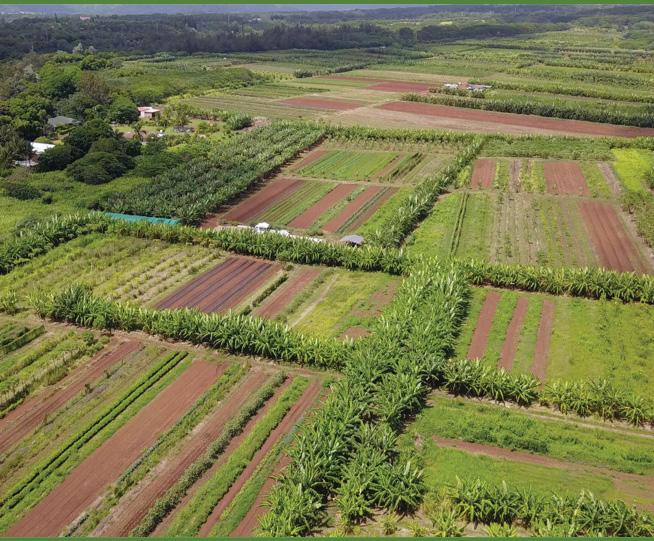
Grove Farm is committed to building a sustainable Kaua‘i and promoting island-enhancing initiatives. In order to have a sustainable island, water is an integral component. Water has literally flowed through centuries of transition -- from ancient Hawai‘i, where water provided for farming and family needs, to serving a thriving sugar industry, and to the present where there are many diverse needs. Kaua‘i transitioned from the monocrop industry starting with pineapples, followed by sugar, and to the diversified agricultural industry that is flourishing today.
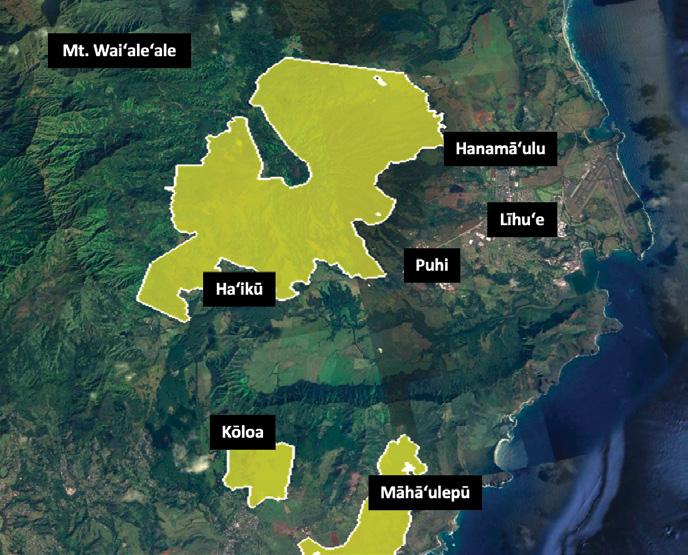
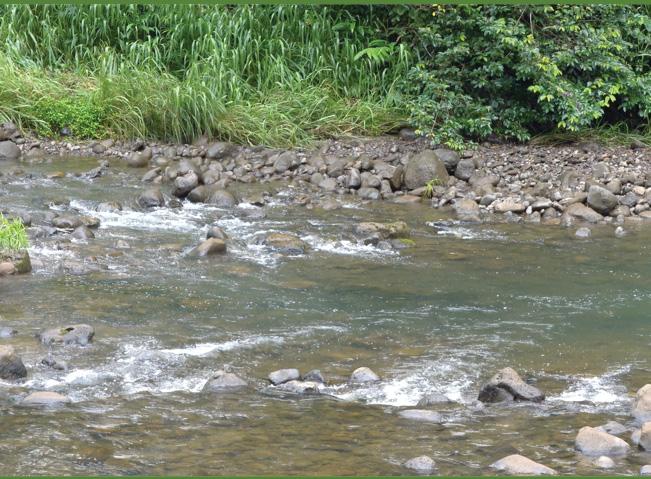
Today’s Grove Farm is a marriage of lands from three former sugar plantations – Grove Farm, Ko¯loa Sugar Plantation and Li¯hu’e Plantation Company. These lands remain in agriculture and roughly 12,500 acres were designated as Important Agricultural Lands (IAL). By law, the only use permitted for these IAL lands is for agricultural purposes only. By continuing to utilize these arable lands for agricultural purposes, it will recharge our ground water sources and help prevent unnecessary run-off. Here is a depiction of Grove Farm’s IAL designated lands Despite the end of the pineapple and sugar industries, our island continues to rely on these plantation-era water infrastructure systems to provide for the many needs of today. For that reason, Grove Farm has continued to maintain its valuable water assets, such as reservoirs, ditches, tunnels, and other water-related infrastructure.
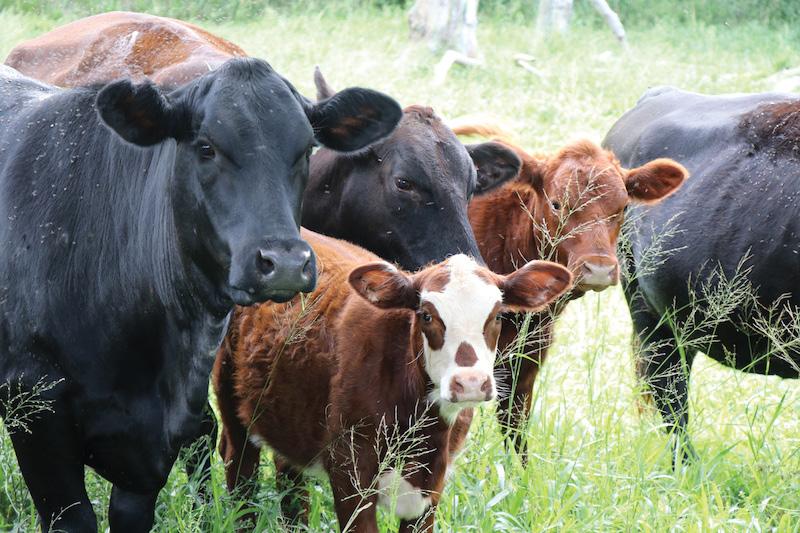
For the East Kaua‘i community – whose water comes from the Waiahi and Hanama‘ulu streams -- water is critically important to achieve our state goal of increasing local food production and growing what the island eats. In the Li¯hu’e area alone, we currently have 3,800 acres in productive agriculture uses. Water is delivered to over 50 tenants, including: • Ranchers who raise cattle and sheep • Farmers who raise fruit crops like papaya, lychee, dragon fruit, breadfruit, and mango • Farmers who produce a range of vegetables for on-island use as well as export, including ginger, taro, mixed greens
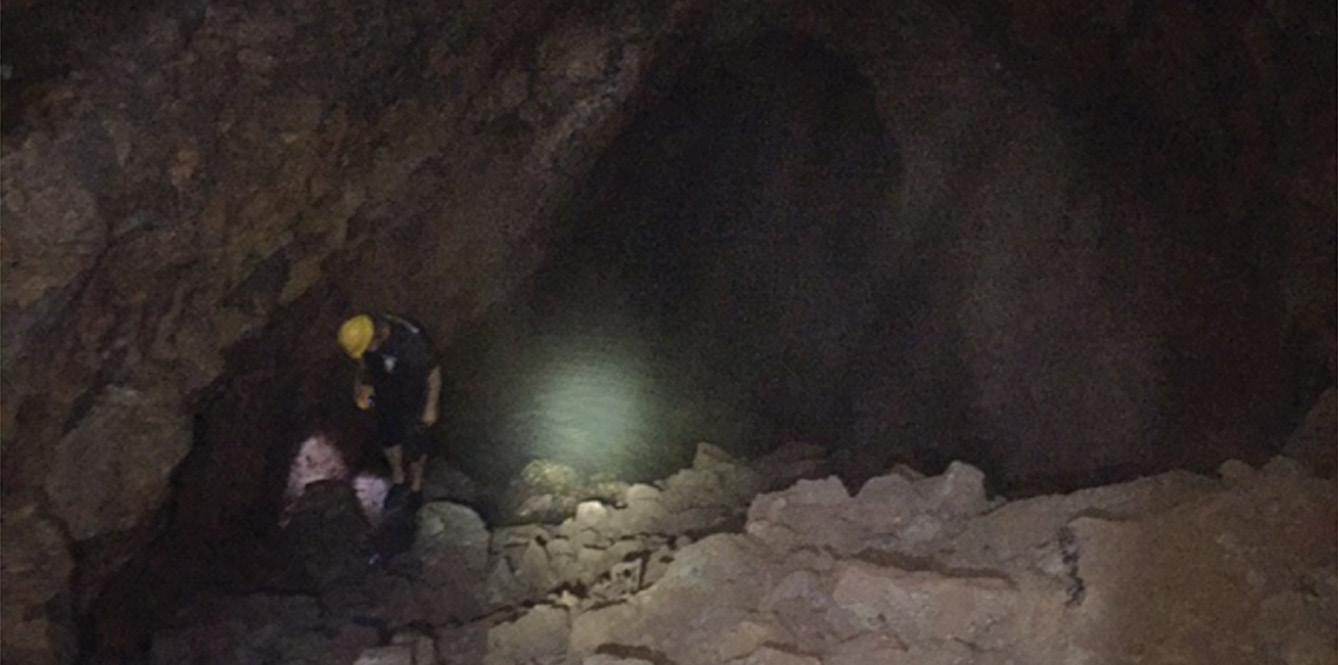
Here is a photo of the tunnel feeding the Kapaia Reservoir from Mt. Waiʻaleʻale, which was hand- dug by our ancestors well over 100 years ago. Constant collapses in recent years necessitated the $1.1 million dollar repair work in 2017. This water source is critical to agriculture, public uses, recreation and maintaining the beauty of our island.
• Firms that grow landscape plants like native species, decorative plants, cut flowers for lei and other uses, and sod for commercial and residential landscaping uses Water from Grove Farm’s Li¯hu’e Water System is also delivered to the state’s Agribusiness Development Corporation (ADC) lands in Wailua. ADC was created to facilitate and provide direction for the transition of Hawaii’s agriculture industry to diversified agriculture. Our water system plays a critical role in providing water to these agricultural lands. The Li¯hu’e Water System, maintained by Grove Farm, once provided irrigation water to sugar lands west of the Wailua River and includes the lands for Department of Hawaiian Home Lands (DHHL). When DHHL is ready to develop their lands for taro and other crops, this water system is capable of meeting their needs.
Water is sacred – it is basic to our survival. In ancient Hawai‘i, water provided for farming and family needs. Water was channeled from streams to serve arid areas to grow taro and other crops. Centuries later, the use of water has not changed. Now more than ever, with an awareness of global warming, it has become increasingly important that we grow our produce locally. This reduces transportation costs; thereby conserving energy and reducing our carbon footprint. Grove Farm stands behind our agricultural industry 100%!
Lawn & Garden
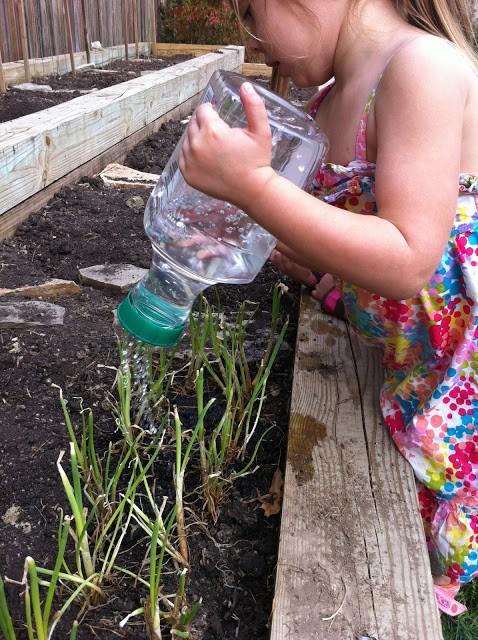
Water in the early morning or evening hours to achieve better soil saturation and minimize evaporation.
For more wise water tips: www.kauaiwater.org Follow us on FB @KauaiDOW
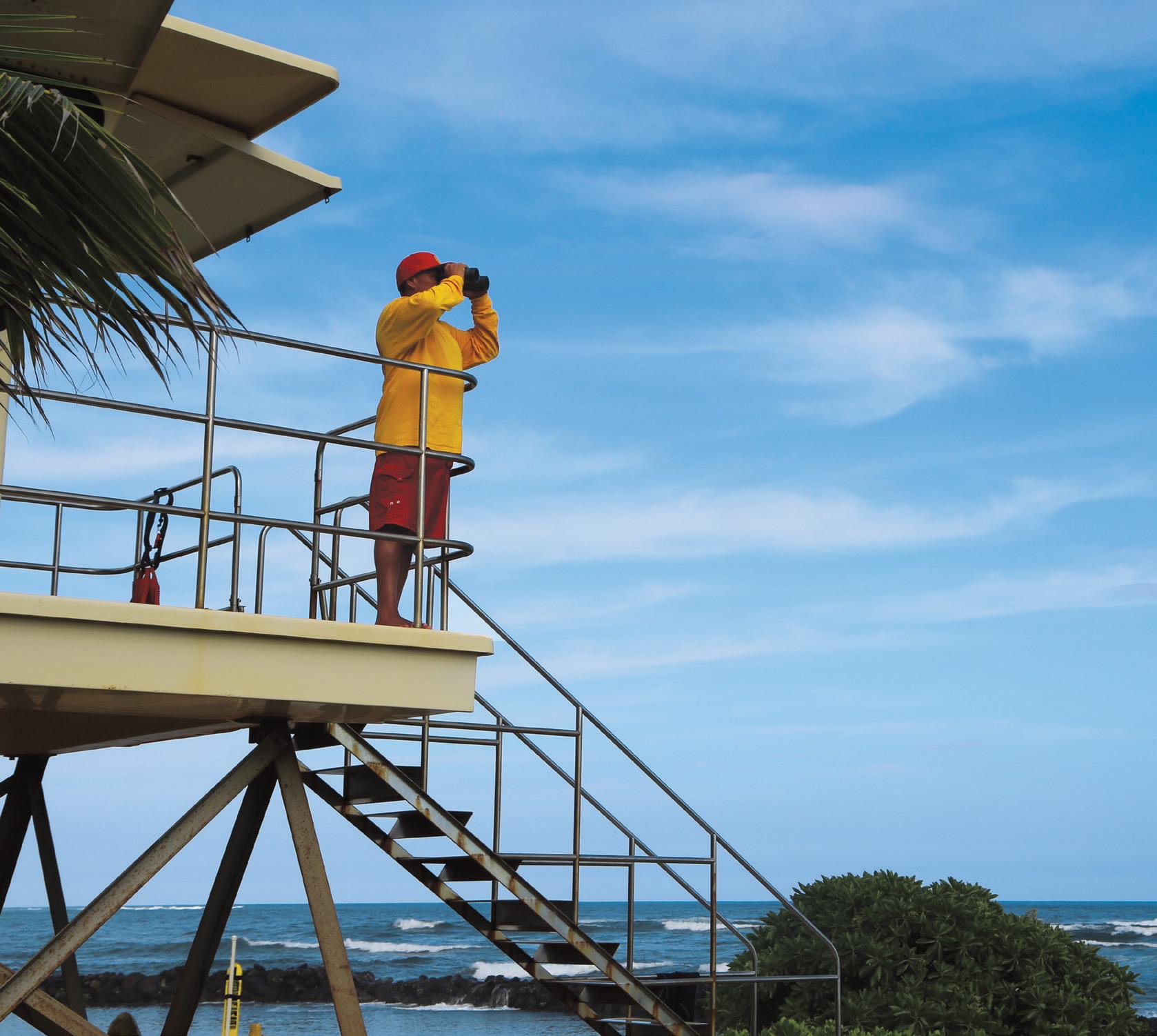
Kaua’i Ocean Hazards and Ocean Safety Strategies
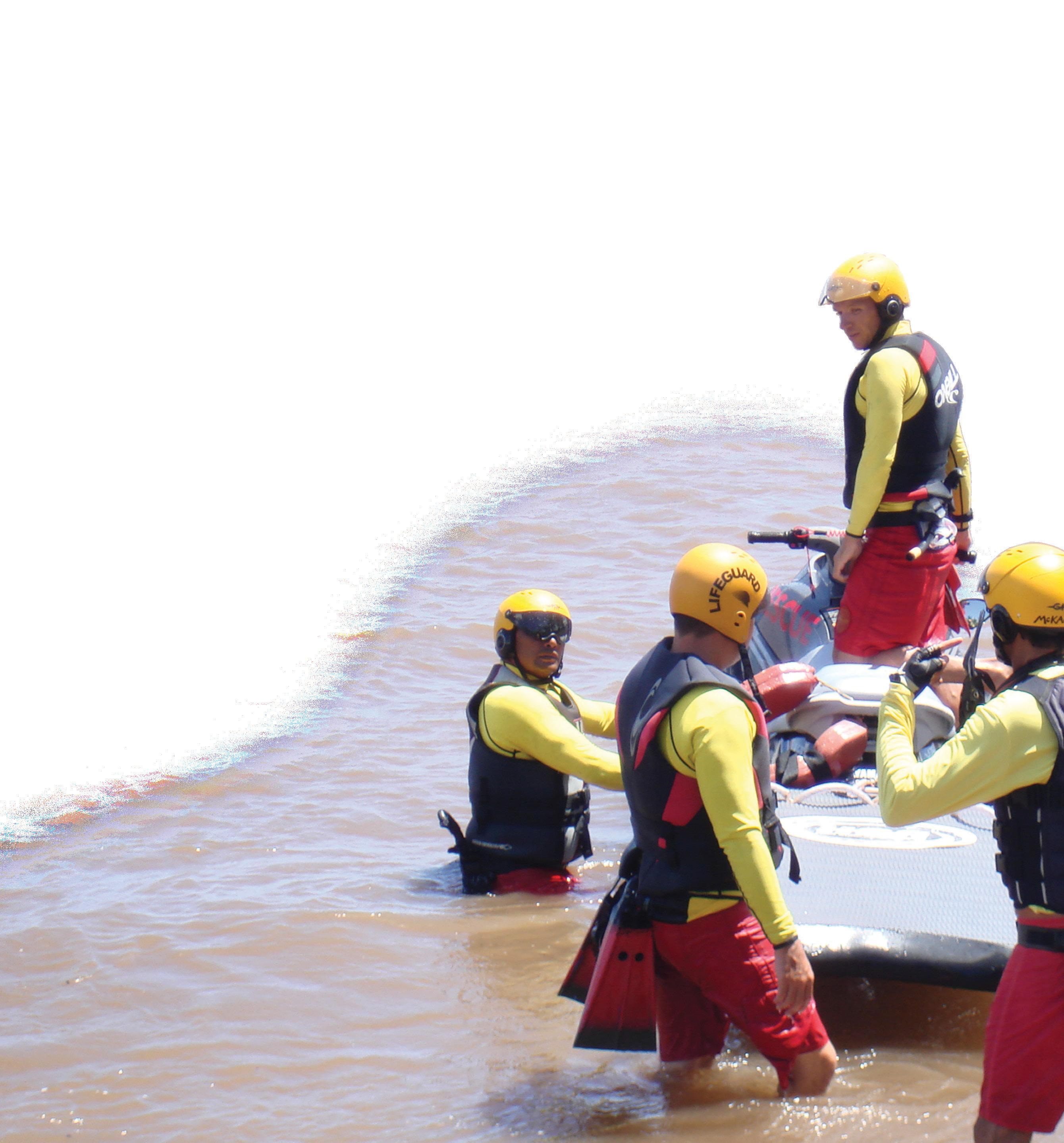
Spring means that we’re well into 2021. I’m writing this in early January and things are changing fast and I have no idea how things will look on Kauai when spring officially clocks in on March 21st. How much Covid-19 will be here? How many visitors will be here? The answer to the second question has much to do with how our businesses will be doing, and also how much trouble we’ll be having with my long time special area of interest, namely ocean hazards and ocean safety. Similarly to the year after Hurricane Iniki when there were very few visitors on Kauai, our drownings were way down in 2020. There are always slightly different versions of the statistics (e.g. does a body found washed up on a beach qualify as a drowning?), but 4 Kauai drownings in 2020 seems to be the most widely accepted number. This is indeed way down from our brutal 18 in 2019. Also way down are our Lifeguard rescues, our Lifeguard preventions, our public access rescue tube rescues — and our overall beach numbers. It’s of course ridiculous to come away with much happiness about this reduction in drowning deaths since the cause of it — namely the loss of our #1 industry — has been catastrophic for so many families who have lost their jobs and
businesses. (Not to mention the fact that 4 drownings is still 4 people, taking down with them their families and friends). Just as it’s ridiculous to take much joy from our pleasant traffic situation on our roads. We’re doing just about as well as any place in the world in terms of containing the Covid 19 pandemic, but at a severe cost. Once tourism picks up again, however, we will have to get back to basic ocean safety principles if we are to avoid tragedies. We’ve gotten to know the basic Covidsafety principles: Wear a mask, maintain social distances, wash your hands frequently when you’ve been in public places, avoid indoor social gatherings, get vaccinated when you have the opportunity. Let’s remind ourselves: What are the basic ocean safety principles? There are 2 ways to answer this, namely what are the strategies for ourselves and our own safety in the ocean, and what are the strategies to keep others safe and our overall drowning “numbers” down?
By Monty Downs, MD Wilcox Hospital ER Doctor
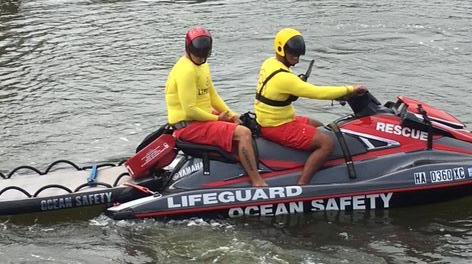
Those of us who have lived here for any length of time are hopefully quite familiar with the first part. The answer varies quite a bit according to how you plan to use your ocean time. E.g. Are you a recreational grown-up going in for a dip to cool off? Are you a parent with kids enjoying a few hours at the beach, with some swimming involved? Are you a big wave surfer? Are you someone who’s aging and enjoys surfing smaller waves? Are you a canoe or kayak paddler? Are you a recreational snorkeler? Are you someone who likes to scuba dive to put fish on the hibachi? Do you enjoy night diving? And more. To describe the answer to each of these scenarios would require a several-page pamphlet, more so than this short piece; and so I’ll simple allude to a few of the scenarios and overall recommendations. Learn to swim and have your children learn to swim. Make yourself aware of hazards. (Rip currents, hidden rocks and such). Swim at Lifeguarded beaches. Don’t swim alone if you do make the choice to swim at an unguarded beach. If you are an adult with children swimming, make sure ONE adult is designated as water watcher. (You can rotate this responsibility every half hour if you want). That means staying off your cell phone and not drinking alcohol and not chit-chatting with your friends.
LIFEGUARDED BEACHES
Haena Beach .............. Northshore, Haena Hanalei Pavillion ........... Northshore, Hanalei Hanalei Bay Pine Trees ..... Northshore, Hanalei Kee Beach ................ Northshore, Haena Anahola Beach .............. Eastside, Anahola Kealia Beach ................. Eastside, Kapa`a Lydgate Beach ................Eastside, Wailua Poipu Beach ................ Southshore, Poipu Salt Pond Beach ...........Westside, Hanapepe Kekaha Beach. . . . . . . . . . . . . . . Westside, Kekaha
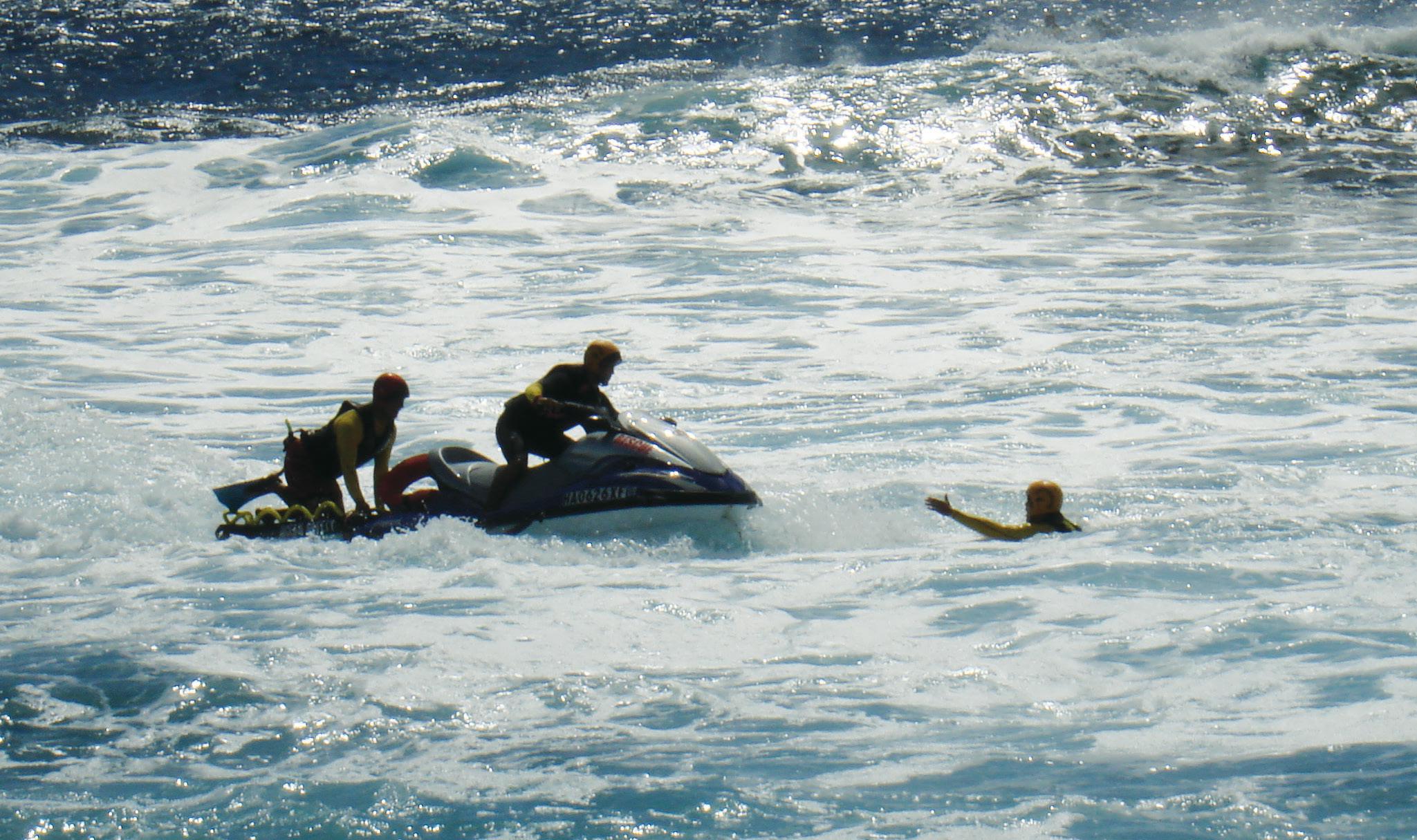
Eyes glued to the children! We have Designated Water Watcher placards on a lanyard that goes around your neck and if you want one or more, you can email me at wmdowns2000@ yahoo.com and I’ll get them to you. Surfers are very good about knowing their limitations and drownings are quite rare in this group, although injuries are quite common. Divers can run into trouble any number of ways, and make sure you’re certified before you go scuba diving. Now, regarding strategies to prevent others from drowning: This is a tough one, since most (75%) of our drowning victims are visitors, and visitors often don’t have a clue about hazards. This is where Lifeguards come in, in addition to the Kauai Lifeguard Association’s (KLA’s) attempt to get messaging out there. Lifeguards perform hundreds of thousands of preventions every year, which is why we like to message “Please Swim Near a Lifeguard.” With regards to KLA’s messaging: Our push will be to maximize our social media presence. Ideal would be someone stepping off an airplane and their phone dings and some “Be careful in our waters” message pops up, with a link to more specific safety information. We’ll see how close we can come to reaching this ideal.
What a year 2020! Covid 19 and the resultant economic misery remain huge challenges for 2021 but let us not forget about ocean related challenges. I just marked my 49th year in our Wilcox Hospital ER and have witnessed over 500 drownings, along with the devastating family impact that each one of these has. This is why I’ve tried to work on this challenge, and I ask all of us to keep working on it in whichever way we can. Respectfully, Monty Downs, M.D.