
biopak.com BioPak creates sustainable foodservice packaging made from rapidly renewable, plant-based materials. We’re a globally recognised brand committed to disrupting the current take, make, waste model and leading the way toward a truly circular economy.
ISSUE 211 MAY/JUN 2024
www.sandwichandfoodtogonews.co.uk

Take your bacon to new heights
BEECHWOOD SMOKED SWEETCURE
BEECHWOOD SMOKED SWEETCURE


DRYCURE
DRYCURE
10x10x2
10x10x2
5x5x5 lardon dark medium light
5x5x5 lardon dark medium light


NO.1 NO.1


THE SUMMIT OF MT. EVEREST
THE HILLARY STEP
THE SOUTH SUMMIT
THE BALCONY
THE SOUTH COL


Explore our bacon bits & Flakes at Tel: 01992 307 627 www.thegrumpypigs.co.uk

CONT ENTS Welcome

As the year ies by and operators begin to assess what 2024 will eventually look like, I’m continually impressed by the innovation in the foodservice industry. Every issue, I highlight new products, technology and concepts – and this bumper edition is no exception. So, whether it’s packaging trends, the emerging tastes and avours of food to go, the QR code revolution or essential hygiene guidance, there is something for everyone.
And it’s Sammies time…I hope to see some of you there – come and say hi. Cheers!
Editor Alex Bell, Tel: 01291 636349, email: alex@jandmgroup.co.uk
Advertising Paul Steer, Tel: 01291 636342, email: paul@jandmgroup.co.uk
Production Gareth Symonds, Tel: 01291 636339, email: gareth@jandmgroup.co.uk
Subscriptions and Customer Service Tel: 01291 636338, email: subscriptions@sandwichandfoodtogonews.co.uk
Editorial Address Sandwich & Food To Go News, Engine Rooms, Station Road, Chepstow NP16 5PB www.sandwichandfoodtogonews.co.uk
In association with The British Sandwich & Food To Go Association.
PHONE +44 (0) 1291 636338
FAX +44 (0) 1291 630402
WEB www.sandwich.org.uk
EMAIL info@sandwich.org.uk
Paper used in the production of this publication is sourced from sustainable managed forests.
NEWS
Pages 04-18. News round-up
PACKAGING TRENDS
Page 20-24. Foodservice Packaging Awards / Conglom
THE BRITISH SANDWICH & FOOD TO GO ASSOCIATION
Page 26-33. British Sandwich Week / The Sammies 2024
FOOD TO GO SPECIAL
Page 34-53. Crown Foods / Lamb Weston / Ferrero / Unox / BP / Colpac / Florette / KP Snacks
LABELLING
Page 54-55. GS1 UK
HYGIENE FOCUS
Pages 56-63. ALS / Monika / Sybron
REGULARS
Page 64-65. New products
Page 66-67. Classi eds
Page 68-71. BSA listing index


www.sandwich.org.uk I 3
Sandwiches, wraps, rolls and much more handcrafted fresh everyday using the finest ingredients. An extensive range for both retail and hospitality. Delivered nationwide. Call the team on 020 3058 1245 or email sales@aroundnoon.com to find out more. Handmade with pride WWW.SOHOSANDWICH.CO.UK
buyers, retailers
traders
sandwich industry. © 2024
Group Ltd
Opinions expressed in this magazine are those of the contributors and not necessarily those of J&M Group Ltd or this magazine. No responsibility is accepted for the opinions of contributors. This magazine is published by J&M Group Ltd. and supports the British Sandwich & Food to Go Association. It is circulated to managers, executives,
and
in the
J&M
________ ________ _________________________________________
NEWS
Encouraging growth numbers for hospitality, a surfeit of new and exciting products come to market, while we celebrate special nights and look ahead.
Food to Go Conference 2024reserve your place now!
The full list of speakers for the inaugural Food to Go Conference 2024 has been confirmed. Organised with the support of the British Sandwich & Food to Go Association, the event is taking place on Thursday, 27 June 2024, at London venue One Birdcage Walk. Presentations from industry heavyweights will cover crucial topics affecting the sector. These include:
The ever-changing FTG market:
● Simon Stenning, strategy advisor and futurist.
● Nicola Knight, Institute of Grocery Distribution.
● Gavin Rothwell, Food Futures Insights.
How to make delivery work for you – with industry expert, Peter Backman.
Why switching from barcodes is better for you and your customers –with GS1’s Camilla Young.
Working towards a sustainable future:
● Andy Cato/George Lamb, Wildfarmed.
● Fran Haydock, Greencore.
● Joanne Elsdon/Paul Rhodes, Greggs.
Transforming the way we work through technology:
● Warwick Wakefield, Flexeserve.
● Mostafizur Rahman, chief engineer, AI Tech, MTC.
DISCUSSION
Each themed session will conclude with a discussion forum.
SPONSORED BY
SPONSORSHIP
If you are interested in supporting the Food to Go Conference 2024 as a sponsor, get in touch with Sandra Bennett on 01291 636348 or by email to sandra@jandmgroup.co.uk.
Find out more at sandwich.org.uk.

All aboard the Jake & Nayns’ MicroStation
After a successful year of launching into Tesco, Boots and Asda, Jake & Nayns’ – the brothers behind naansters and burritos – have introduced the Heat & Eat MicroStation at Sainsbury’s, hospitals and universities. It includes Sourdough Toasties and Subs, giving access to hot food without any staff requirement in two minutes or less.
The Heat & Eat MicroStation covers all day parts, from breakfast burritos to crispy toasties, meals and everything in-between. It is branded with quirky text, with a TV on loop showing how to heat products, along with promotional clips. It all happens from two buttons, microwaveable in 90 seconds or ovenable, and hot held for up to four hours.
Options include Chicken and Bacon in Mascarpone on Toasted Sourdough Bread and a Truffle Mushroom and Emmental Toastie.
Jake & Nayns’ is looking to respond to the ever-changing FTG market, which has developed so markedly in recent years, with consumers seeking better-quality food with more interesting flavours.
Months of research and development have gone into the Heat & Eat Microstation. From recipe testing to fine-tuning packaging, the business has left no crumb unturned in its quest for perfection!
It’s being called a ‘game-changer for busy folks on the go, who don’t compromise on taste and quality’.

4 I www.sandwichandfoodtogonews.co.uk

Burnt Chef Project’s second gala hits the heights
More than 360 people from across the hospitality profession joined together to celebrate, recognise success and highlight the importance of mental health at The Burnt Chef Project’s second gala dinner, aptly titled Love Hospitality, raising thousands of pounds in the process.
The event took place in London in March, as the first night of the Hotel, Restaurant and Catering Show. In partnership with Unox and hosted by comedian Russell Kane, it served its purpose of facilitating discussion and raising awareness of the mental health crisis in the hospitality profession.
Scott Duncan, managing director of Unox UK, said: “Love Hospitality was a fitting way to celebrate some of the incredible people who work in our sector, providing a platform to discuss the need for improved mental health support and the work of The Burnt Chef Project. Unox UK was delighted to return as headline partner, announcing our epic fundraising challenge – Moving Mountains for
Mental Health – in the process.”
Acknowledging those who go above and beyond to provide mental health support, Love Hospitality also hosted the first Hospitality’s Mental Health Heroes awards, in association with Talent Hive.
With six categories, the awards were the pinnacle of the night, celebrating those who’ve championed mental health in their workplace. The winners were:
● Best Mental Health in the Workplace Strategy, sponsored by MHFA England – Marston’s PLC.
● Most Inspiring Leader, sponsored by Wafflemeister – Carly Heath, Bristol City Council.
● Most Inspiring Wellbeing Champion, sponsored by Planday –Joe Bentley, Cedar Court.
● Unsung Hero, sponsored by Eat PR & Marketing – Simon Green, The Kitchen Shrink.
● Inspirational Story, sponsored by Thomas Franks – Jose Jesus Monteiro.
● Outstanding Impact in Catering Education, sponsored by Lordwell – Simon Hart, Southampton City College.
On being headline partner for the awards, Will Gennard, managing director at Talent Hive, added: “We could not be prouder of every winner, runner-up and finalist at the inaugural Hospitality’s Mental Health Heroes awards – congratulations to everyone who received a nomination. In a profession such as hospitality, it’s vital to be able to recognise and reward those who go the extra mile, especially when championing mental health support to others within their businesses. The entire team at Talent Hive are in awe of the commitment, sacrifice and dedication of so many individuals and businesses and we are proud to be able to do our bit to support this through our partnership with The Burnt Chef Project.”
For more information on The Burnt Chef Project, visit burntchefproject.com.
Prices held on 7000 products for Brakes
Brakes, the UK’s leading foodservice wholesaler, is holding prices on more than 7000 products as part of a programme to drive value to customers, providing stability and helping them plan with certainty.
The company launched a major initiative last year, where it held prices on more than 1800 products, receiving widespread positive feedback from customers. However, Brakes has now eclipsed that number with more than 7000 prices being held between April and October 2024.
As part of the spring campaign, Brakes is also cutting the price of some of its most popular products. From baked beans to bacon, chicken to crisps and including everyday items such as eggs, there will be an average price reduction of 6%.
Paul Nieduszynski, CEO of Sysco GB, said: “From energy to staffing, there is uncertainty around the costs that the industry is facing. These price holds provide longer-term reassurance that will help our independent customers plan with a greater level of certainty.

“At the same time, we want to ensure that we offer customers the best value, so we’ve looked at the products they buy most often and reduced the prices of many of the most popular ones in the range.”
The price holds and price cuts are available to Brakes independent customers.
www.sandwich.org.uk I 5


Who are the conscious consumers?
According to the YouGov report, Conscious Consumerism - A Balancing Act, 76% of UK respondents consider themselves conscious consumers – albeit with different understandings and priorities.
Most are considering social, environmental and economic impacts when making choices about the food they eat and products they buy, despite value for money remaining a key priority.
Inspired by this, and a range of eye-catching stats in a similar vein, AAK Foodservice has prepared a new insight paper: AAK Foodservice Digest: Catering for Conscious Consumers.
It sets out to explain the opportunities and challenges presented by the rise in conscious consumerism and how to address them, as Rachel Neale, marketing director AAK Foodservice, explained: “Most would agree I think that consumers have, in the past, been more conscious of the

impact of their purchasing decisions in the supermarket, than when eating out.

“However, there’s now strong evidence to suggest from Europe and the US, as well as here in the UK, that people are prepared to pay more in venues, and on products, with strong sustainability credentials. Our new insight paper explores the issues that conscious consumers care about – from ethical sourcing to waste saving, human rights and responsible production.
“It addresses big issues – such as why palm oil can be a sustainable choice, as well as smaller ways that everyone can make a difference, from careful menu planning and ingredient selection, to cutting food and packaging waste.”
AAK Foodservice Digest: Catering for Conscious Consumers is available to download, free of charge, at aakfoodservice.com.

Global flavour to Lion’s range of cooking sauces
Lion Sauces, from AAK Foodservice, is adding to its globally inspired products with a new range of cooking sauces.
They’ve been developed to provide ready-made, high-quality and on-
trend flavours, providing ease of use and versatility – helping make the lives of chefs that little bit easier. The initial range includes two crowdpleasing favourites: Katsu Curry Cooking Sauce and Chilli Con Carne

Sauce. Both are suitable for vegans, and the Chilli Con Carne variety is also gluten free.
Sarah Lesser-Moor, brand manager at Lion, commented: “We know chefs will love the flavour, simplicity and versatility of our ready-made range of cooking sauces, and your diners will love what you make with them.
“Katsu Curry is an amazingly sweet and tangy Japanese-inspired sauce, perfect to serve with breaded chicken and rice. Chilli Con Carne is a familiar favourite – popular with people of all ages – and is really simple to make meat-free versions of.
“However you decide to serve yours, our new cooking sauces can help you deliver the perfect dish, every time.”


NEWS READY TO EAT COATED CHICKEN RANGE INTRODUCING www.hsmithplc.com For more information, call our sales office on +44 1708 87 88 88 The Delightful range has been created to simplify British foodservice for buyers, by supplying a wide range of coated chicken products for all meal occasions.
Camembert Bites a Snackable addition for Aviko
With consumers hungry for something different when eating out, Aviko has expanded its Snackables range with new premium Aviko Camembert Bites.
Ready to serve in three and half minutes and adding a layer of sophistication to sides, starters or sharing platters, Aviko’s Camembert Bites are a versatile solution for operators. Staying crisp on the outside and

smooth in the centre, this latest addition offers a quality experience, whether dining in or choosing delivery.
Mohammed Essa, commercial director UK & Ireland, said: “Following the boom of mozzarella dippers and halloumi fries, we’ve added a premium alternative to the mix with our Camembert Bites. This will help elevate sides offerings and bring something new and exciting to the table. Plus, they’d pair perfectly with a cranberry dip, so this launch is just in time for Christmas menu planning. We know that pubs are upgrading and diversifying sides [Lumina Intelligence, Dec 2023], so this fits the bill across menus.”
Suitable for all foodservice operators, they can help elevate ordinary dishes, while being versatile and suitable for vegetarian and flexitarian diners.
Essa continued: “Aviko Camembert Bites will work hard across your menus, as well as drive profits, as they can also be added to mains as a ‘little extra something’, answering consumer demand to customise dishes to their liking [Lumina]. With 73% of consumers saying they’d pay more for higher quality products, we know they’re just what you’re looking for.”
Available now, they come frozen in 1kg bags and can be prepared in a deep fryer, with no waste. Aviko has been the resolute potato partner for foodservice for over 60 years. With a range of chilled and frozen potato specialities made by chefs, for chefs, Aviko’s extensive range includes Hash Browns, SuperCrunch Fries, Mash, Snackables and more.
Burts launches limited-edition Spicy Barbecue flavour
Award-winning snack maker, Burts, is introducing a limited-edition flavour of Spicy Barbecue hand-cooked potato chips to its range for summer 2024. For a limited time only, the new flavour will be available to purchase via Amazon, as well as in independent shops, cafés, delis and pubs.
As an emerging flavour in the hand-cooked snack category, industry research indicates that Spicy Barbeque is a popular choice among consumers, highlighting the need for NPD that is packed full of taste.
The summer snack combines warm, spicy flavours with honey, reflecting Burts’ dedication to continually developing its range to meet evolving consumer snacking trends.
Claire Wade, head of Burts sales from Burts Chips, said: “The
launch of our Spicy Barbecue flavour coincides perfectly with the onset of summer, as the perfect snack to share in the sun.
“We are passionate about continuously developing our range, utilising our expertise to create a limited-edition flavour with quality ingredients. We look forward to providing snack-lovers with a bold flavour which helps them discover Burts and a taste of the South West.”
As a Devon-based business, provenance is essential to Burts, who name the individual cook and potato farmer on the back of each pack. With the snack maker committed to supporting its surrounding community, every flavour of Spicy Barbecue potato chips uses local growers, such as Colwith Farm,
Splattenridden Farm, New Rydon Farm, Hay Farm and Treleathick Farm.
Made in small batches, the artisan snack is available in 40g and 150g formats. It is HFSS compliant, gluten free, vegetarian and free from artificial flavours.


NEWS 8 I www.sandwichandfoodtogonews.co.uk




Preparing you for alfresco dining and festival living, with the best takeaway food packaging - in all materials.
H-Pack’s Hot ‘n’ Fresh line of disposables comes in a selection of materials to suit every need and purpose. From paper, wood and bagasse to foils and plastics, each line is colour-coded, reflecting the slickness of the packaging expert’s operation and allowing buyers to immediately identify products based on the materials used.
Renowned for supplying premium, quality food packaging products within a tightly competitive price structure, the Hot ‘n’ Fresh range signifies a new era for H-Pack, positioning it as a market leader in one stop shop packaging solutions - including the very best recyclable lines.


For further information on Hot ‘n’ Fresh Call: 01978 855 595 sales@h-packglobal.com www.h-packglobal.com
Get Hot ‘n’ Fresh for Spring & Summer!
Hot ’n’ Fresh trades under H-Pack
Paper & Bagasse Range Recyclable Plastic Range Aluminium Range
Colpac debuts Environmental, Social, Governance Report
Colpac has announced the release of its first Environmental, Social, Governance (ESG) Report
Key highlights include details of sustainable sourcing and environmental management, as well as Colpac’s netzero programme, with targets approved by the Science Based Targets initiative. It also features social responsibility programmes, including charitable support and health and safety management, such as its BRCSG AA+ status.
Robust governance practices are demonstrated through supplier selection and product compliance, with reference to Colpac’s list of industry associations and certifications.
Colpac works to foster openness around environmental issues and to drive positive change across the food packaging industry.
The company is punching above its weight for Small and Medium Enterprise (SME) in net-zero target setting and publishing its ESG report. The business is making a positive impact and taking steps to level the playing field and align with companies of a much larger scale.
“We are excited to share our first ESG Report which reflects our commitment to sustainable practices and support structures across all areas of our business,” said Talia Goldman, ESG manager at Colpac.
“Environmental considerations are at the core of what we do, and we remain steadfast in our dedication to making a positive impact.”
Colpac’s proactive efforts are testament to its continued drive to provide traceability and transparency through product development, while continuously improving business as a force for good.
Find the report at colpacpackaging.com/download-esg-report/.

Lockhart Catering Equipment focused on Net Zero
‘Sustainable Future Programme’ is Lockhart Catering Equipment’s commitment to embed sustainability in every aspect of its business, including SBTi approved sciencebased targets for a Net Zero 2050 plan.
As a leading UK equipment distributor, with over 400 brands and more than 32,000 products in its portfolio, Lockhart has taken responsibility to ensure both its footprint, and that of its’ suppliers, is sustainable and improving.
Simon Britten, head of marketing at Lockhart Catering Equipment, explained: “Everyone understands the importance of sustainability and it’s even more essential in a business as large as ours. We are in the fortunate position where we can influence partners and suppliers to make real, quantifiable changes that will have a domino-effect.”
Company targets include:
● 25% more carbon efficient by 2025.
● 50% more carbon efficient by 2030.
● To ensure that 79% of suppliers have their own science-based emissions targets by 2027.
As a leading distributor working with over 400 suppliers, Lockhart recognises changes are required beyond the company. Using its unique position at the centre of the supply chain, it intends to lead the transition towards a more sustainable future. Launched at its recent Supplier Conference, Lockhart’s Supplier
Sustainability Roadmap will see suppliers completing a questionnaire outlining their sustainability journey, to be reassessed and tracked biannually for progress updates. Success stories will be published in Lockhart Catering Equipment’s recently launched sustainability newsletter – Sustainable Future – which aims to inform readers of key environmental topics and contribute to the sustainability conversation gaining momentum and visibility in the foodservice industry.
Lockhart’s newly created position of sustainability lead – Phoebe Collins –will take responsibility for this project, alongside the transparent tracking and reporting of Lockhart’s progress.
Lockhart is ahead of schedule to become Net Zero and has plans to bring its 2050 target forward. This is thanks to changes such as switching to renewable energy, LED lighting and renewable fuel across distribution vehicles. It has also eliminated singleuse plastics in 50% of exclusive brands.
Check out lockhart.co.uk/sustainability.

NEWS 10 I www.sandwichandfoodtogonews.co.uk

Here’s the solution, mobile catering!

Demand for delivered food has never been greater !




Our temperature controlled food delivery vehicles are designed to display and vend your pre-made Hot and Cold food. Delivering direct creates you a captive audience, offering customers the ultimate in convenience and service. Call us today and take the first step towards increasing your sales.




With over 50 years experience in mobile retail Jiffy are the name you can trust, our success relies upon your success. Call us now to arrange a demo Tel 01274 596000 sales@jiffytrucks.co.uk

· Established 1974 www.jiffytrucks.co.uk
· Our mobile “shops” have no rent or rates to pay and operate with one staff member.
· Our trucks are chosen by all the major names in mobile catering for their build quality and reliability.
· Flexible finance packages available.
· Fully accredited by the BSA


· Whole vehicle type approved


· A very profitable addition to any food business.








www.sandwich.org.uk I 11
Now available with a finance balloon, allowing low monthly payments, with enough equity for a new van every 4 years.
Looking for new revenue streams? Supply your products with the original Jiffy truck.

Panasonic unveils Professional Kitchen brand identity
World-leading manufacturer of professional microwave ovens and rapid cook technology, Panasonic UK, has unveiled the rebranding of its professional cooking division, to Panasonic Professional Kitchen.
Inspired by Japanese culture, Panasonic Professional Kitchen features the motif ‘ ’, the Japanese kanji character meaning ‘Eat’. It brings the brand’s cultural heritage to the fore, boosting associations with quality and ingenuity. This highlights Panasonic’s cultural and professional connection to the kitchen, highlighting their commitment to quality, high performance and culinary excellence.
Alessandra de-Guia, Panasonic Brand Communications, said: “For more than half a century, Panasonic
has been a pioneer in microwave cooking. The Panasonic Professional Kitchen identity is about bringing to life the culinary values of the whole portfolio, not just our microwaves, as well as encouraging everyone across the channel to re-evaluate what they already know about Panasonic and highlighting aspects they weren’t aware of.
“As a business, Panasonic has been committed to delivering the best products that make people smile and life just a little easier. Whatever happens in the kitchen – and whatever equipment is used – its core function is to facilitate the modest act of eating, and eating well. This fundamental hospitality principle binds each element of a busy kitchen together; as such,

Panasonic Professional Kitchen binds the team in that kitchen together –whatever they do, using Panasonic will help them to simply and effectively deliver this core function.”
From fine dining to coffee shops, cafés and travel hubs, Panasonic realises the demands on all professional kitchens – and, more importantly, understands the needs of every professional in every kitchen. Panasonic Professional Kitchen brings together technology, innovation, performance and understanding to deliver an identity which credibly positions the Panasonic portfolio at the heart of an efficient kitchen space.
Email commercial.ovens@eu.panasonic. com or visit panasonic.co.uk/pro-cooking.


12 I www.sandwichandfoodtogonews.co.uk


ProAmpac’s Food To-Go Packaging is designed for sustainability and built for performance
ProAmpac provide food packaging solutions that enhances product and shelf presence while helping customers meet their sustainability goals. Our fibre-based packaging is widely recyclable in paper streams when film barrier is removed, and increases operating efficiencies for our customers.
Scan


www.sandwich.org.uk I 13 SALES freshfoodtogo@proampac.com HOTLINE +44 (0) 20 8069 0700 PROAMPAC.COM FOOD SERVICE PACKAGING
here to view our latest collection of specialist Foodservice packaging solutions.

Market-first 100% rPET tray from kp
Marking a significant food packaging industry milestone, Klöckner Pentaplast (kp) has launched the first food packaging trays comprising 100% recycled PET (rPET) deriving exclusively from trays.
Until now, food packaging trays have been manufactured using ever-increasing proportions of recovered PET material. However, the newly launched kp tray is the first to be composed entirely of recycled tray material. This is the direct result of the kp’s Tray2Tray® initiative, which aims to rewrite PET recycling rules.
“As a bold innovator, we are thrilled to introduce the first-ever 100% rPET tray to the market,” said Thomas Kure Jakobsen, president, food packaging at kp.
“This perfectly demonstrates what is possible with the right combination of expertise and technology. Most rPET in the material loop comes from plastic bottles, of which just 30% goes into food packaging trays, and most of this does not end up being recovered. As a result, countless tonnes of rPET tray material are wasted each year.
“kp Tray2Tray® challenges this by creating a robust closed loop system of PET flake from trays. We work with suppliers to create a separate supply stream of recycled PET from trays, which can be used to create more of the same, rather than being downcycled.”

The kp supply chain is RecyClass certified, ensuring the safety, quality and traceability of its PCR packaging solutions. The new 100% kp Tray2Tray® packaging is ideal for businesses looking to control costs pertaining to eco taxes and plastic tax legislation, as well as those advancing their ESG strategies.
Jakobsen added: “We’re not just looking to move the needle on plastic tray sustainability; we’re aiming to begin the next era. One of the biggest advantages of partnering with kp and using kp Tray2Tray® content is that it’s a perfect ‘drop in’ solution, so switching over is easy, and packaging performance isn’t compromised.”
The launch of a 100% rPET tray underscores the company’s ‘packaging with integrity’ ethos, without compromising quality or safety.

Cox & Co develops Flow Wrap Chocolate Paper Packaging
In a UK first, single origin chocolate brand, Cox & Co, has created paper flow-wrapped chocolate bars, allowing it to phase out all plastics and offer a curbside recyclable wrapping.
For 18 months, Cox & Co has been focused on producing a paper flow wrap to replace its compostable plastic packaging. Working closely with a paper manufacturer in Sweden to find the right type of material and reconfiguring its flow wrap machine to accept it, Cox & Co saw the first 100% paper flow-wrapped chocolate bars roll off the production line.
Offering a 12-month minimum shelf life, Cox & Co’s innovative paper flow-wrap solution is a step in the right direction to reducing the huge amount of chocolate packaging waste that currently ends up in landfill.
“Consumers are actively seeking brands that take sustainability seriously and products that are easy
to recycle,” explained Gavin Cox, founder of Cox & Co. “Chocolate is a popular household purchase and yet so little of the packaging can be easily recycled at curbside. We are set to change all that with our exciting packaging, which offers a neat and tidy result without the use of plastic.”
As a smaller brand, Cox & Co has been able to pivot its production to test out paper-based packaging solutions. “It’s taken many months of trial to get to this point, but it’s been worth the effort. Seeing that first

bar roll off the production line was incredibly satisfying,” added Cox.
At a time where the cost of cocoa has risen significantly due to poor harvests, this also allows the brand to reduce packaging costs by 35%, offsetting price rises. The brand, which is part of a larger confectionery group, aims to roll out the packaging across the board. “This will make a significant difference to our costs overall,” said Cox. “We can effectively keep prices competitive while doing our bit to reduce our environmental impact.”
Cox&Co has been focused on producing chocolate that doesn’t make people choose between being ethical or enjoying an indulgent treat, placing equal importance on both. The packaging will be used across its three flavours: Mint Crunch, Miso Caramel and Bee Pollen & Honey.
Check out coxandcocacao.com.


NEWS 14 I www.sandwichandfoodtogonews.co.uk




COOL & COLOURFUL
Herald’s eye-catching ice cream tubs are the perfect complement to everyone’s favourite treat…
Our ice cream tubs come in a great selection of vibrant colours and a variety of sizes to suit every customer need. With lids to fit, these eco-friendly, paper tubs are ideal for individual portions, providing your customers with an instant sweet treat to be enjoyed on the go.
Part of the Grab&Go collection, we’re keeping a ready supply of these popular disposables, providing our customers with instant access as the warmer months approach. Suitable for use across all outlets including leisure, retail and outdoor catering, these ice cream tubs are designed to fire demand.
See how Herald can sweeten your dessert offering…
0208 507 7900
sales@heraldplastic.com www.heraldplastic.com


Fagor Professional maximises potential with iKold generation
For more than 60 years, Fagor Professional has been manufacturing an extensive portfolio of catering equipment. Now, in a move that aligns innovation with the latest energyefficient technology, the company has unveiled the iKold generation of commercial refrigeration.
The extensive range includes upright cabinets, refrigerated and preparation counters, display cabinets and ice makers. The iKold generation units utilise natural R290 and R600a hydrocarbon refrigerant combined with CFC-free, high-density, waterbased polyurethane insulation to achieve energy savings of up to 45%. Several units have achieved a toprated Class-A certification on the industry-recognised ETL list.

The iKold Generation has been independently tested to withstand the daily rigours of the kitchen while maintaining an even temperature within the unit. In doing so, the range has been awarded a maximum climate class 5 rating in independent testing. Innovative technology – including Multiflow, an optimal air circulation system that guarantees a balanced and consistent flow of air – helps to maintain a uniform temperature and preserve food for longer.
Models have been designed to perfectly integrate with an existing Fagor Professional setup including cooking blocks, ovens, blast chillers and even warewashers. Ideal for many kitchens, the units are available in two ranges – ADVANCE and CONCEPT.
Lee Donkin, commercial director at Fagor Professional UK, said: “As a brand known for manufacturing a complete range of standout equipment, operators will be pleased to know the new iKold appliances are designed to meet the needs of today’s chef, while fitting effortlessly into an existing suite. Featuring advanced insulation, they come in an array of sizes and formats, optimising the flow and maintaining food preservation in a busy kitchen environment.”
Visit fagorprofessional.com.
Celebrations and early Easter hols boost hospitality
Britain’s top hospitality groups achieved above-inflation like-forlike sales growth of 5.2% in March 2024, the latest CGA RSM Hospitality Business Tracker reveals.
Many operators will have enjoyed the boost to trading from Mother’s Day and St Patrick’s Day, but the high growth metrics seen in the Tracker have been aided by early Easter Bank Holiday revenues falling into March 2024, while last year, Easter trading fell into April 2023.
The Tracker—produced by CGA by NIQ in partnership with RSM UK—shows celebrations delivered particularly strong growth for the managed pub sector, where like-forlike sales were up by 7.2% in March. Growth was softer for restaurants at 3.4%, and the On The Go segment has seen 5.2% decline.
While bars still recorded a decline of 0.5% in March, this is an improvement from the 13.6% and 7.4% declines in January and February respectively,
showing the impact the early Bank Holiday weekend celebrations and holidays has had this month.
For the first month since November, restaurant, pub and bar groups achieved higher growth outside London than within the capital. March sales inside the M25 were 4.0% ahead of last year, but ahead by 5.7% beyond it.
Saxon Moseley, head of leisure and hospitality at RSM UK, said: “An early Easter break and the arrival of spring weather gave rise to inflation-beating sales growth in March, with pubs the main beneficiaries. After sluggish growth to start the year, operators will hope these results represent the green shoots of consumer confidence returning to the market as inflation slows and energy prices fall.
“The sector has seen several highprofile closures in recent months, with more challenges to follow, including minimum wage and rates increases in April and changes to
tipping legislation in July. All will be hoping that this sales momentum can continue into the summer months.”
Karl Chessell, director - hospitality operators and food, EMEA at CGA by NIQ, said: “These figures are encouraging for hospitality and show that people remain eager to celebrate holidays and special occasions in restaurants, pubs and bars. While spending remains tight for many, we can be cautiously optimistic that their confidence will continue to increase in 2024 in line with an easing of inflation. Operators still face severe headwinds, and it may be some time before they generate sustained real-terms growth, but March showed the sector is moving in the right direction.”
NEWS 16 I www.sandwichandfoodtogonews.co.uk

Coveris continues European growth
Coveris has agreed to acquire HADEPOL FLEXO Sp. z o.o. (private limited company), a Poland-based manufacturer of high-quality flexible paper and films packaging.
Following Coveris’ acquisitions of sites in Hungary, Poland and Czech Republic, HADEPOL FLEXO marks the packaging leader’s fourth acquisition in CEE and the continuation of its growth story and strategy to invest in selected geographies and markets. Coveris has achieved its strategic goal to better balance the operations footprint and also become a leader in the CEE markets.
Founded in 1994, HADEPOL FLEXO operates two production facilities located in Rypin, Poland, specialising in paper and film-based packaging solutions for bakeries and


supermarkets, mainly for the domestic market.
“I am delighted that despite the turbulent times in the overall industry, we manage to continue to follow our growth strategy,” said Christian Kolarik, Coveris CEO.
“We again prove that we are capable of expanding our service and offerings and thrive, together with our customers. HADEPOL FLEXO represents a perfect fit with our existing production network that will allow us to materialise synergies and broaden our service and packaging solutions offer for European bakery and confectionery customers.”
The acquisition is subject to regulatory clearance and is expected to close towards the middle of Q2 2024.






NEWS www.sandwich.org.uk I 17 220 0 F M C G F O O D D R I N K www.BuffetPackaging.co.uk Tel: 0330 0880 712 Email:sales@buffetpackaging.co.uk More Platter Options Lower prices More Environmentally Friendly options New Website Launch www.BuffetPackaging.co.uk
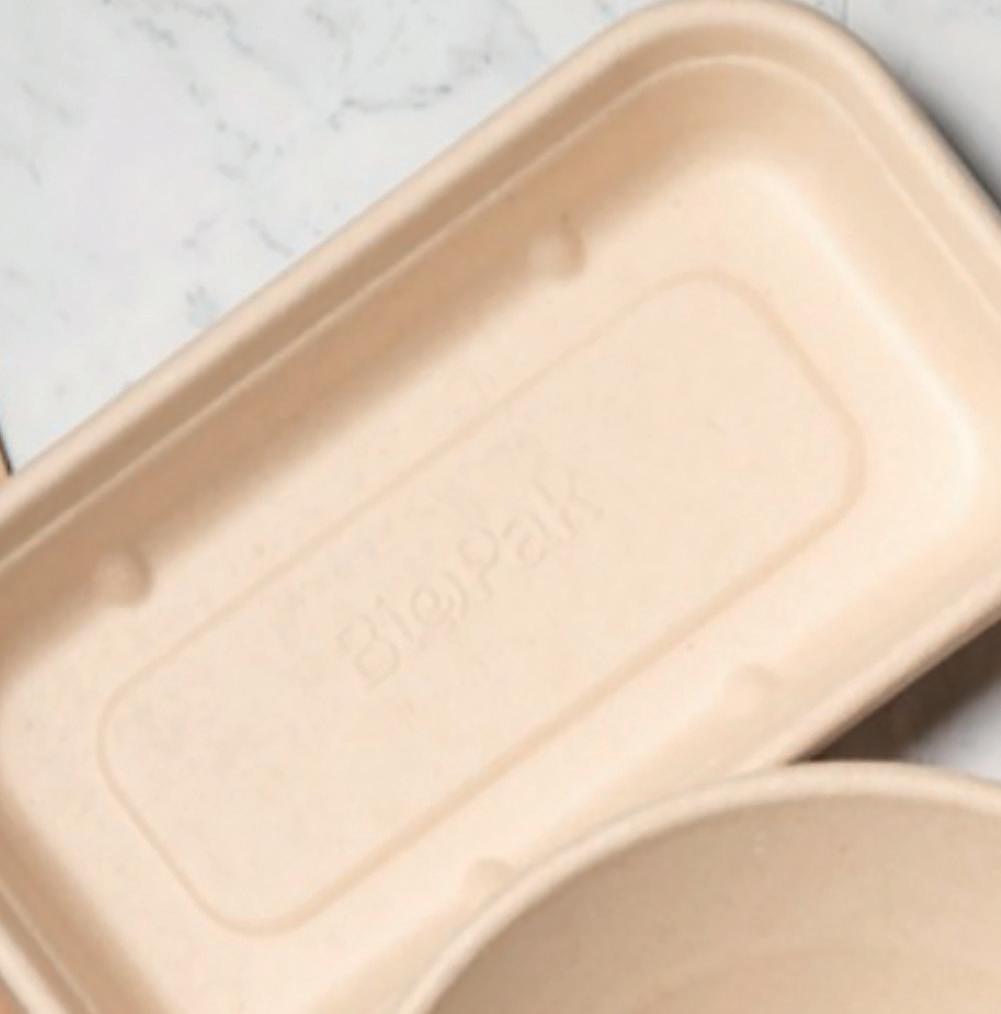
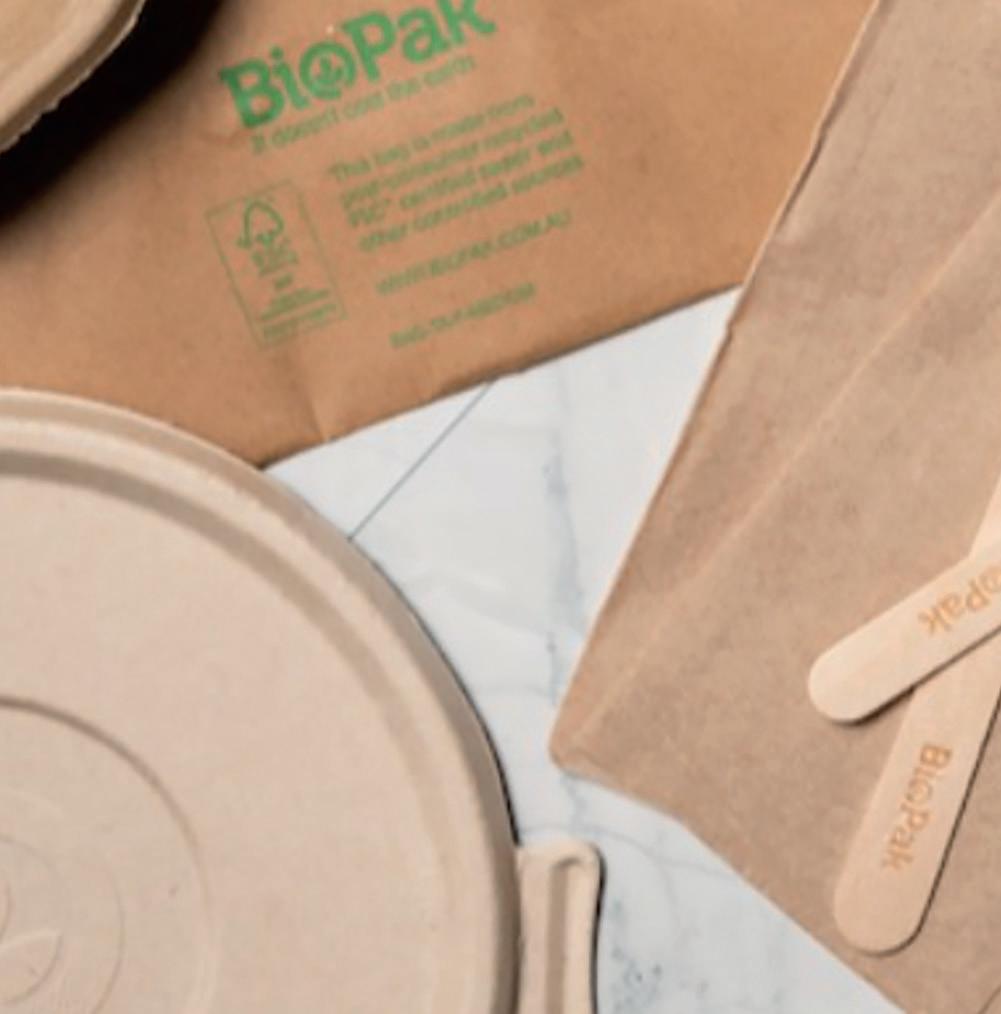
Biopak releases 2023 Sustainability Report

Australian B Corp and global compostable packaging enterprise, BioPak, has announced its Sustainability Report 2023, highlighting another unprecedented year for the company as it continues to push boundaries, disrupt new markets and work towards a world without waste.
A notable mention highlights the Emissions Reduction Plan, with the aim to launch an industry first Environmental Impact Labelling scheme to provide detailed information on BioPak’s carbon footprint and the eco cost associated for a carton of each product – giving customers a new level of transparency.
BioPak CEO, Gary Smith, said it was a step forward for the business and the planet.
“This is part of our ongoing commitment to transparency. It is another first for our industry and one that we hope can become part of any product or packaging framework. We look forward to rolling out this exciting initiative and hearing feedback from our customers and the public,” said Smith.
The report has shared an update on PFAS, including BioPak’s position as the first in Australia to start production on a complete assortment of plant-based fibre products in 2023 – with the company expected for a full transition by mid-June 2024 for the APAC region.
Smith continued to highlight the work needed from a legislative level.
“This is a significant step forward for the industry, and one that I hope can spark real action and change from the wider sector to voluntarily stop using ‘forever chemicals’. We will continue to work closely with governments and regulatory bodies to help encourage radical legislation to ban PFAS from all products, not just packaging.”
The report also championed education as a core driver for BioPak, with its not-for-profit arm, Compost Connect, receiving a major overhaul of its website and resources in 2023. This provides one of the most
comprehensive information hubs on the market, helping both businesses and consumers make informed decisions that put the planet first.
Greenwashing was also noted as an industry challenge, with Smith acknowledging the noise around misinformation and ambiguous or untrue claims.
“We have worked closely with regulators to help combat greenwashing that is rife across a range of business sectors. We have a commitment to ensuring our community is aware of misleading claims and will continue to provide education and be a beacon of information to help our community make informed choices.”
The report also gives a nod to BioPak’s R&D, with its awardwinning Aqueous cups – a waterbased dispersion coating that’s certified home compostable – recognised as an important innovation as global single-use plastic bans gain momentum. BioPak is also working on a formulation, PHA, heralded to be the next breakthrough in lining technology.
“We will continue to shake up and disrupt the compostable cup market, with further innovations brewing and set to be released in 2024,” said Smith.


NEWS 18 I www.sandwichandfoodtogonews.co.uk

A Rory success
The 2024 Foodservice Packaging Association Awards proved to be a memorable evening, with a legendary comedian at the helm.
The Grand, Brighton, was the venue for another glittering celebration for the annual Foodservice Packaging Association (FPA) Awards on 7 March.
Attended by over 450 members and guests from across the foodservice sector, one of the most famous faces in comedy, Rory Bremner, was in charge of proceedings.
“The standard of entries was exceptional this year and we were
hugely encouraged by the innovation on display,” said FPA executive chairman, Mark Byrne.
“It’s always a great night, but thanks to all our sponsors, we raised the bar even more. Rory’s hosting was an obvious high point but what pleases me most is seeing our members having a good time. There’s a lot of planning and effort involved in putting the event on but it makes it

all worthwhile when people make comments like, ’It’s the highlight of the foodservice packaging year!’”
Guests had the opportunity to review entries at the afternoon Awards Exhibition, while afternoon tea and pre-dinner cocktails proved popular.
It was an exceptionally memorable evening for the ‘Rising Star’ award winner, Bethan Williams of Vegware. She will now have the opportunity to study for a Packaging Professional Level 6 Degree Apprenticeship on a part-time basis through Sheffield Hallam University. The cost is funded through the Employer Apprenticeship Scheme, with the FPA making a financial contribution.
Other awards included ‘Manufacturer’, which went to Cofresco, with Go-Pak runners-up.
‘Retail Operator’ went to Greggs, ‘Product Innovation FOH’ to Huhtamaki and Delifrance took home ‘F&D Manufacturer’.
“Product innovation within the sector is outstanding and these awards provide us with the perfect
20 I www.sandwichandfoodtogonews.co.uk
opportunity to recognise those achievements,” continued Byrne. “Our members lead the way in what I like to call ‘responsible packaging’. By that, I mean fit for purpose in terms of fulfilling the role it is designed for. But taking into account sustainability and environmental considerations – the most successful innovations manage to strike the perfect balance.”
And the future looks bright.
“From an FPA perspective, we are strengthening our committees to better support membership. For example, we’ve noticed an increase in reported packaging environmental claims which lack evidence and substantiation, and this has led us to set up a new FPA Regulatory and Compliance Committee. Its purpose is to establish and administer an independent and confidential procedure surrounding complaints of breaches, and to hold those who flout regulations to account. Our vision is a level playing field for all,” said Byrne.


Ice
| sales@vegware.com vegware.com @vegware
www.sandwich.org.uk I 21 PACKAGING TRENDS
cream season pending…
Code Product Case qty IC-04 4oz ice cream pot 1000 IC-06 6oz ice cream pot, 90-Series 1000 +44
Ice cream has never looked so good. Our new containers available in two sizes. The perfect partner for our paper ice cream spoons.
(0) 330 223 0400
PACKAGING TRENDS


DESIGN FOR LIFE


Chris Castle, managing director at Conglom International, elaborates on product expectations, staying ahead of the innovation curve and what the future holds.



TAPPING INTO DEMAND
The food to go sector does a great job of persuading consumers to part with their cash, o ering a fantastic mix of cuisine and options for eating in, on the run or home delivery. It’s all about giving consumers choice, which is what they want and expect.
It’s a sector that deserves to be successful, and it is. But operators need to be on their game. Looking for the next big thing to di erentiate their o ering and staying ahead of the competition is vital.
Identifying trends, new avour pro les, product innovation and how these and a myriad of other variables can impact consumer demand keeps marketing and product development teams busy. It’s a competitive market


PACKAGING TRENDS

and I don’t see the pressure changing any time soon.
Another high-pro le issue is environmental concerns. Single-use plastic has certainly fallen out of favour, to be replaced by a signi cant increase in paper-based usage.
We have seen sales of our exclusive IECO range of Aqueous coated, plastic free, hot cups (one of the very few genuinely home compostable and 100% recyclable lines currently available in the UK) skyrocket, as operators tap into consumer demand for businesses that are more environmentally aware.
RELATIONSHIP BUILDING
As a packaging and disposables partner, we like to immerse ourselves in a client’s business operations. Planning for future requirements is critical to success.
By working closely with development and marketing teams to understand what’s in the pipeline in terms of food & drink lines, we determine how best to provide support. This may involve any mix of standard lines, bespoke products and innovation, such as the use of materials or a unique packaging concept.
We recently partnered with Sysco Ireland and Sysco Brakes to deliver packaging and consumables to Mary Brown’s Chicken (MB Chicken), the Canadian-owned QSR as it opened its rst UK store in Lisburn, Northern Ireland.
Our buying team, led by senior product manager Engin Cubukcu, worked closely with Mary Brown’s procurement and marketing sta to ensure brand standards were met and all packaging supplies were ready for launch day. This involved establishing the correct raw materials and corporate branding, organising multiple SKU tooling, and managing the printing of branded Café Express kraft containers in numerous formats and cups for ‘to-go’ menu items – including the signature dish, premium handbreaded chicken, hand-cut taters and coleslaw.
As a packaging specialist in the QSR and HoReCa sectors, we focused on exibility and service, organising
smaller-than-usual manufacturing runs to meet customer sales forecasts, with scope to scale up over time as more stores open.
Ideally, we work closely with development chefs and marketing teams to understand the food & drink in the pipeline. As the product progresses from concept through to launch, we provide the necessary support to ensure all packaging requirements are met to the customer’s speci cation and satisfaction.
MIX & MATCH
We deal with businesses of all sizes, from small independents to regional and national groups across all food and beverage sectors, including OOH, QSR, plus associated retail and wholesale distribution channels. We genuinely think we have something special to o er in any

Company overview
Conglom International has 25 years’ experience in the manufacture and distribution of premium consumer and industrial goods to businesses around the globe.
A key product category is food and foodservice packaging, supplying companies of all sizes – from small independents to regional and national groups, including OOH, QSR, foodservice, onboard hospitality, manufacturing, and associated retail and wholesale distribution channels.
Under its market-leading Titan and Café Express brands, it supplies packaging, disposable cups, tableware and kitchenware with numerous eco options.


Plus, consumables such as hot and cold cups; bagasse; kraft boxes and bowls; aluminium packaging; portion pots and cutlery; takeaway containers; disposable gloves, bakery lines and janitorial supplies.


www.sandwich.org.uk I 23
of these sectors. Our standard product listing covers all packaging categories, and we give customers the option to mix product on pallet deliveries, which can be priceless for many businesses.
Then there’s our bespoke service. With dedicated manufacturing capabilities in the Far East and the resources and expertise to source new materials, nishes and design formats, we add value with packaging solutions that might include non-standard dimensions, materials, weight, speci c eco credentials or a branding requirement. etc.
We are the European business unit of a major global operator (our HQ is in Canada and we also have business units in the US, Australia and Asia), and consequently can o er competitively priced, quality consumables that exceed the exacting standards of the food industry and its environmental concerns.
Engin is currently in the Far East, visiting our business partners, colleagues, customers and suppliers, in order to gather market intelligence and insight that may impact our

European operations. This is a further example of how we ensure we stay ahead in a competitive market.
LEGISLATION CONCERNS
Customers rely on us as packaging and disposables experts and trust us to be current and well informed.
Our Compliance and Quality Control team are constantly reviewing new UK and European legislation and the impact this may have on the home market. We are happy to share data with clients, as many do not have the resources to assess this type of information in-house.
What we also know is that Conglom is growing in the right direction, fast becoming a competitive supplier in this market. We have new tamper proof Kraft food boxes for launch this summer, targeting the FTG sector, especially in the ever-growing takeout and home delivery niche.
This new format o ers complete food security, providing assurance to operators and consumers that food items will arrive in the best possible condition, free from interference or damage en route. Watch this space, as they say!


"Our Compliance and Quality Control team are constantly reviewing new UK and European legislation and the impact this may have on the home market."


24 I www.sandwichandfoodtogonews.co.uk


For quality food packaging and disposables at unbeatable prices look no further than Conglom International.
With over 35 years experience, we combine the buying power and reach of a global player with the attitude of an entrepreneurial family business that puts customers first. We offer all the popular consumables, as you would expect, plus so much more including a bespoke service for non-standard lines.
Food packaging and disposables for QSR, OOH, foodservice and wholesalers – THE RIGHT CHOICE!


ORDER BY CALLING 01604 628 617 ORDER BY EMAIL sales@conglomint.com
I NTERN A TIONAL Serving up The Right Choice for Packaging and Disposables
BRITISH SANDWICH WEEK
20-26 MAY 2024
THE ULTIMATE SANDWICH CELEBRATION
The annual British Sandwich Week is taking place from 20-26 May 2024, paying tribute to the nation’s devotion to a much-loved culinary institution.
IT’S THAT TIME AGAIN
For nearly three decades, the British Sandwich & Food to Go Association has been commemorating all variations of the cherished sandwich. From clubs, subs and wraps to baguettes, bagels, toasties and paninis, these seven days offer those within the sector a chance to collaborate, celebrate successes and look to the future.
While the hospitality industry has faced welldocumented and unprecedented setbacks, the sandwich sector has continued to showcase its resilience.
And during this special week, the Association will serve up a feast of activities to reflect on the past and illustrate the brightest of futures ahead for the sandwich!
REFLECTING ON 2023
The appetite for British Sandwich Week has never been greater, making it the perfect time to get involved with the Association’s activity.
In 2023, the seven-day focus attracted widespread nationwide attention and generated 223 pieces of media
coverage. Via the press – seen in national and regional titles, online, in print, on TV and across radio stations nationwide – we were able to communicate key messages to millions. Plus, social media activity led to British Sandwich Week reaching more than 69 million people.
British Sandwich Week 2023 also saw household brands, such as Greggs, M&S and Costa Coffee, getting actively involved. This engagement showcases that sandwiches really are a British staple that continues to be loved by people and brands nationwide.
MAKING 2024 EVEN BETTER
Whether you’re an independent café, food trader, local deli or national sandwich manufacturer, there are numerous ways to take advantage of this unique campaign.
“British Sandwich Week is more than just a celebration of our culinary heritage; it’s a testament to the creativity and innovation that go into crafting the perfect sandwich. As we kick-start another year of festivities, let’s toast to the humble sandwich – a symbol of convenience, comfort and


endless flavour possibilities. I welcome you to get involved this year and indulge in the diverse and delicious world of British sandwiches,” said Jim Winship, director of the British Sandwich & Food to Go Association.
So, what can you expect to see from the team behind British Sandwich Week and how can you get involved?
● In-depth analysis of trends within the market. The Association will showcase Brits’ most-loved sandwich fillings, how these vary depending on where in the UK you live, and what has changed over recent years when it comes to butties and how Brits like to eat them. We’ll also be revealing the five most searched for sandwiches!
● Working closely with creators and retailers, we’ll spotlight the top five places to buy sandwiches in each big city and region. Plus, we’ll shine a light on the Sandwich & Food to Go Designers who made it to the final of this year’s competition.
● Offering customers a bargain butty this British Sandwich Week? The Association will be shouting about its members’ delicious deals.
● We’re going to bust all the myths around sandwiches, while helping the nation make the tastiest sandwich for their budget. Plus, have you ever wondered what really makes the perfect sandwich? From shape, fillings and bread type, what is the best way to create your buttie? Wonder no more, because we’re about to reveal all!
FOOD FOR THOUGHT
To further drive excitement around British Sandwich Week and increase awareness of your brand, there are lots of things you can do to get involved! Here are just a few ideas to consider:
● Why not expand your menu for the week and introduce a brand-new item? Highlight unique sandwich creations which use local ingredients and seasonal flavours to entice customers.
● Fancy getting more involved with your local community? Hosting special events where customers can learn from experts on how to make the best sandwich, or even a tasting event, will help attract customers and generate a buzz.
● Work with influencers to shine a light on your cracking creations throughout the week – whether you invite them to come and make your best-selling sandwich, or just provide a tasting experience, these activities are guaranteed to get people talking!
● Show support by downloading the Association’s series of promotional posters for you to display in your shops or retail spaces. These will include a competition to win an iPad, too – so let’s get showcasing these as soon as possible. Just visit our website.
● Make the most of our handy resource pack, which is new for 2024. This includes a variety of assets, including a template press release to share with local media, logos, social media assets and ideas for wider activity.
If you’re looking for more ideas, inclusion in wider activity or just want more information, get in touch with the British Sandwich & Food to Go Association today!
Website: www.britishsandwichweek.com

Instagram: @britishsandwichandfoodtogo

Twitter: @BritishSandwich

Facebook: British Sandwich & Food to Go Hashtags: #Britishsandwichweek #Britishsandwichweek #Britishsandwichweek #Britishsandwichweek2024 #BSW24
Contact the British Sandwich & Food to Go Association’s marketing team: Claire@Hoppr.co.uk / 01525 462546.
BSA www.sandwich.org.uk I 27
NEXT ISSUE COMING UP

SPECIAL
Environmental
Packaging, biodegradable products, waste
FOCUS
Sauces & condiments
Oil alternatives, NPD, healthy options, chutneys
INSIGHT
Drinks to go

Water, soft drinks, flavours, consumer trends


PLUS...
…all your usual regulars and a review of the 2024 Sammies Awards
July 2024


SANDWICH & FOOD TO GO INDUSTRY AWARDS
Gold envelopes sealed? Check!
Trophies engraved? Check!
Invitations sent? Check!


Unfeasibly large comedy presentation cheque checked? Check!
The countdown to the 30th Sandwich & Food to Go Industry Awards Dinner is well underway. With 500 guests expected for this special anniversary, it looks as though the annual Sammies celebration – like the industry it champions – is ourishing once again.
As usual, the Sammies bring together the entire sector: from mighty manufacturers to local sandwich shops; from suppliers great and small to high street retail giants. Little or large, new or well-established, the opportunity to win a Sammies Award is open to everyone.
With the judges having given careful consideration to all the entries in each award category, the shortlists re ect the outstanding ideas, innovative products and sheer hard work, of which each of the prospective winners can be justi ably proud.


Such was the high calibre of the numerous entries, the judges this year have had a particularly challenging
time, in creating the shortlists and choosing winners.
The shortlists are all available to view at www.thesammies.co.uk with the winners being announced on Thursday, 9 May 2024 during the awards dinner itself. For those unable to make it, the winners will be published on the Sammies website folowing the conclusion of the dinner.
It is always pleasing to be able to single out independent retailers and this year we have ve Gold Award Winners vying for the overall Platinum Award:
● Dene's Deli, Newcastle upon Tyne
● Sexy Buns, London
● TOAST, Sudbury
● Uptons of Bassett, Southampton
● Which Wich Superior Sandwiches, London

Good luck to all the shortlisted entries, we will have full coverage of the big night in the next issue.


www.sandwich.org.uk I 29

SPONSORED BY SANDWICH & FOOD TO GO INDUSTRY AWARDS





Full Terms & Conditions are on our website Professional quality sweet and savoury products for busy kitchens OF THE YEAR 2024 SANDWICH & FOOD TO GO PROUDLY SPONSORED BY GETTING SOCIAL AT THE SAMMIES #thesammies #thesammies2024 Facebook @BritSandwich Instagram @britsandwichandfoodtogo X/Twitter @BritSandwich LinkedIn @BritSandwich www.sandwich.org.uk I 31
Following three hotly contested regional semi-finals in early March, the successful finalists in this yearʼs competition have been revealed.
Each contestant will prepare and present their creation to the judges and an excited audience at the live finals on 9 May 2024.
THE FINALS OF THE YEAR 2024 SANDWICH & FOOD TO GO
We welcome back celebrity chef Theo Randall who joins us as the head judge. Under his watchful eye, the judging panel will consider taste, presentation, texture, commercial viability and innovative use of the sponsor products as they choose the category winners and decide who will be awarded the title of Sandwich & Food to Go Designer of the Year.
FUTURA FOODS GORGONZOLA PICCANTE CATEGORY
Kirsty Fitzpatrick, Deli Lites Honey, Iʼm Feeling Blue
Chrissie Attewell, Samworth Brothers Thereʼs Always Next Thyme
James Burgess, Fresh Cut Foods Salt Beef & Gorgonzola Waldorf
Stephen Jordan-Bird, Samworth Brothers Gorgon-rola-Zola
Kirsty Fonseca, Greencore Gorgonzola with Parma Ham
JDM FOOD GROUP FREE FROM CATEGORY
Kirsty Fitzpatrick, Deli Lites Banging Chicken
Kirsty Fonseca, Greencore
Nut Free Satay Burrito
Kat Padgett, Around Noon Beets & Greens
James Burgess, Fresh Cut Foods
Pulled Spiced Lamb Turkish Flatbread
Edvinas Smigelskis, Samworth Brothers Satay Prawn in the Sea Shell



32 I www.sandwichandfoodtogonews.co.uk
H. SMITH FOOD GROUP DELIGHTFUL
BREADED CHICKEN CATEGORY
Kirsty Beck, Deli Lites Second to Naan
Phil Thompson, Sandwich King
Tipsy Chicken Banhi Mi
Charlotte Palmer, Greencore Japanese Fried Chicken Wrap
Kirsty Fonseca, Greencore
Katsu Bao Bun
Dai Llewellyn, Co-op Crispy Bombay Sando
MONA DAIRY GOUDA CATEGORY
Kirsty Beck, Deli Lites Too Gouda to be True
Harry Dempster, Samworth Brothers The Gouda, the Bad and the Ugly
Barney Luxmoore, Jabberwocky Goudagette
Ivor Peters, Urban Rajah Mumbai Garam Toastie
Stephen Jordan-Bird, Samworth Brothers Mona Cheesa
COTTAGE DELIGHT CHUTNEY & CURD CATEGORY
Kirsty Beck, Deli Lites It Takes Two to Mango
Harry Dempster, Samworth Brothers The Italian Cobb
Lee Williamson, Gosh Foods Toasted Club with Torchon Ham
Kieran McGivern, Around Noon York Shire Ya Know Yer Self
James Burgess, Fresh Cut Foods California Prawn Roll


www.sandwich.org.uk I 33
TO GO
Elevating the experience
The Crown Foods range can deliver tasty options, whatever time of day.
ARRAY OF CHOICE
In response to the challenges posed by the pandemic, Crown Foods has adapted and evolved, placing a renewed focus on innovation, agility and consumer-centricity.
“We’ve streamlined our production processes to meet the increased demand for convenient and healthy options,” said Claire Rawlins, director, Crown Foods. “Our post-Covid approach emphasises resilience, flexibility and a deeper understanding of consumer preferences.
“Affordability and accessibility are paramount considerations in our strategy. Through sourcing, efficient production methods and economies of scale, we offer quality products at competitive price points, without compromising on taste or nutrition.”
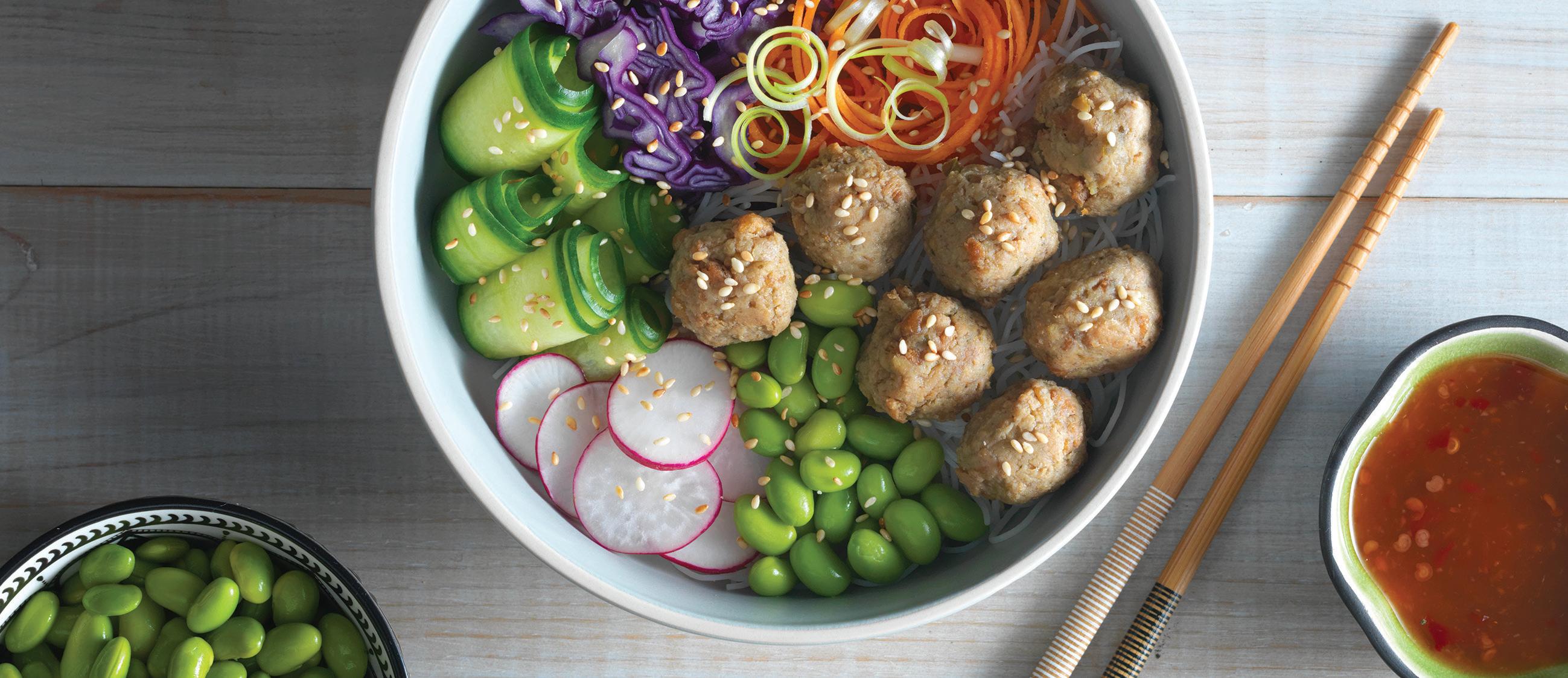
Latest innovations tailored for FTG include the WAT KITCHEN Vegetarian Noodle Range, embodying the fusion of taste and nutrition, with an array of flavours, from Yaki Udon to Kung Pao – without the need to add any water. These takeout boxes are ‘ping’d & ding’d in two minutes’.
“Additionally, our ready to eat from the pack Chicken Protein Bites – with flavours such as Korean Hot & Spicy, Thai Glazed, Thai Satay, Thai Sweet Chilli or Japanese Katsu – are all crafted from 100% chicken breast,”
continued Rawlins. “Plus, they’re free from artificial preservatives, flavourings or MSG. Our Plant-Based Protein Bites, with a flavour profile of Japanese Katsu, Thai Green Curry, Thai Sweet Chilli, Satay and Tomato & Basil, provide on-the-go consumers with a convenient and protein-packed snack. Their shelf-stable packaging also ensures convenience and longevity.
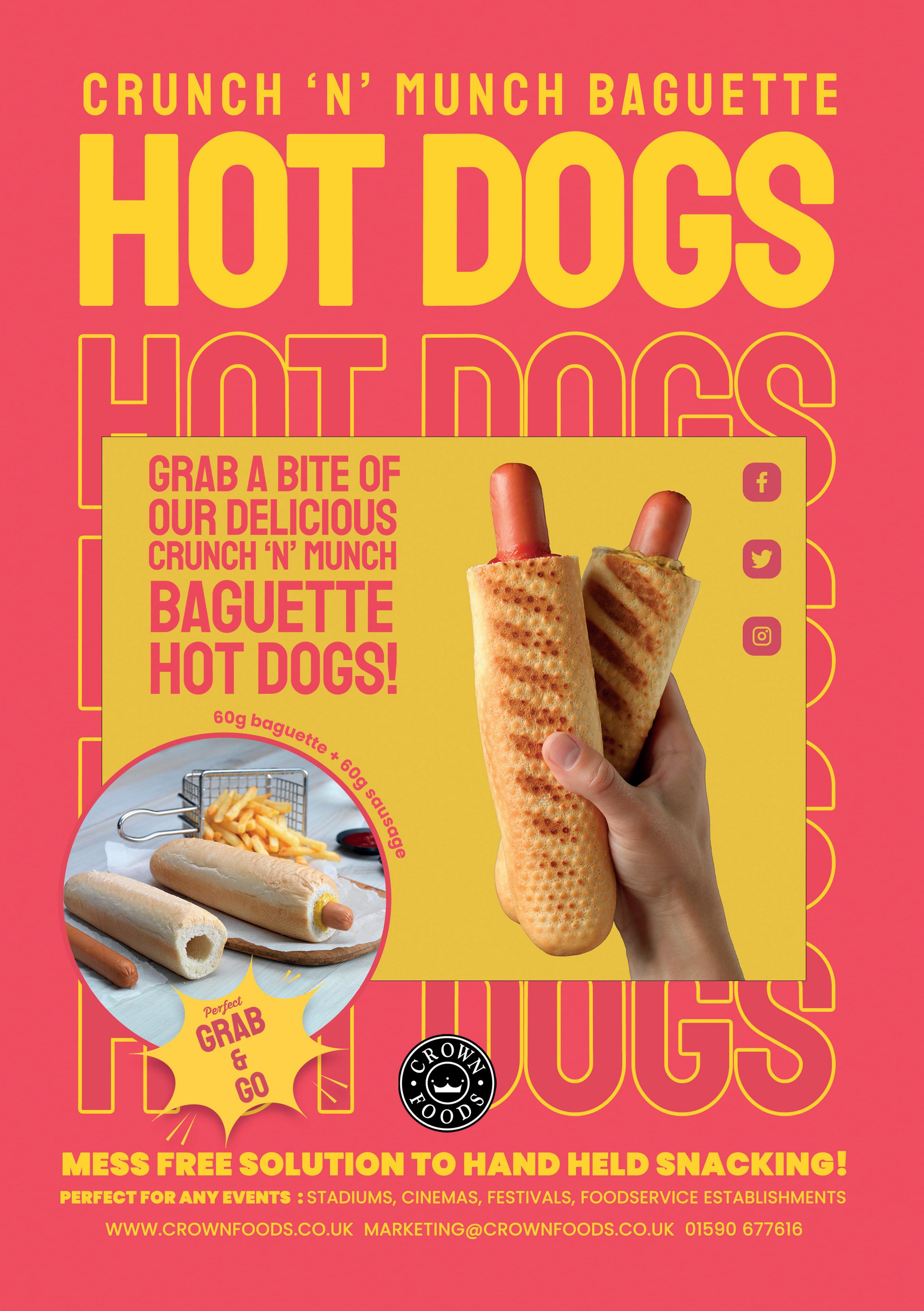
“Not to forget our revolutionary creation, the ‘Crunch ‘n’ Munch’ Baguette Hot Dogs, (60g baguette & 60g chicken sausage), a hand held snack combining the classic appeal of hot dogs with the freshness of a baguette. And no more worries about sauces slipping out or buns collapsing – our ‘Crunch ‘n’ Munch’ Baguette Hot Dogs offer a mess-free solution.
“Our cook from frozen ‘Four Cheese Baguette Pizza’ (125g) are part-baked baguette halves topped with tomato sauce, edam, Emmental, mozzarella & cheddar – in 8-10 minutes. For versatility, try our Free Range Folded Omelettes, 50g (plain or cheese). Oven cooked or steamed, these can be added to muffins for breakfast or enjoyed as a satisfying main meal.”
WAT IS HAPPENING
The rise of the vegan and vegetarian market has presented an exciting opportunity for Crown Foods, with its WAT KITCHEN Vegetarian Noodle Range and Plant-Based Protein Bites.
“Collaboration is at the heart of our success. We have forged strong partnerships with suppliers, manufacturers, retailers and foodservice providers, enabling us to maintain a seamless and efficient supply chain. From sourcing premium ingredients to distributing to a wide network of retail outlets and foodservice establishments, these strategic alliances play a crucial role in our ability to deliver customer value.
“This is in line with a commitment to stringent quality standards. We prioritise transparency and traceability throughout the supply chain, ensuring our products are free from artificial additives, preservatives and GMOs.
“We are also poised to expand our portfolio, exploring opportunities and investing in technology and infrastructure, elevating the breakfast and FTG experience.”

34 I www.sandwichandfoodtogonews.co.uk FOOD


COUNTERTOP CAPACITY SUPERSIZED


As the appetite for food-to-go continues to grow, hot-holding manufacturer, Flexeserve, is helping operators sell even more and waste even less with a brand-new innovation.
Whether you’re an independent or major brand, the new Flexeserve Zone Xtra brings countless bene ts –including 80% more merchandising space at the counter.
STACK MORE – UP TO 5X
Flexeserve’s award-winning and patented 3D convection technology has always enabled multiple stacking of food items, whilst maintaining amazing quality.
With Xtra, and its increased capacity, you can now stack up to ve times, surrounding even more food with hot air at a consistent temperature, tailored speci cally for your menu.


Supporting a wider variety of hot food-to-go, Flexeserve Zone Xtra is the perfect small format countertop heated display for any operation.
CATERING TO INDUSTRY NEEDS
Xtra expands on the success of Flexeserve’s market-leading countertop models, all within the same footprint and power supply.
It o ers the largest capacity for a countertop heated display, whilst using less energy per item. In addition to a 2 Tier range, Xtra also brings for the rst time Flexeserve’s patented hot air technology to a 1 Tier unit, making hot food accessible to even the smallest of stores.
ACCESSORISE YOUR UNIT
Xtra’s new range of premium-feel accessories takes full advantage of the entire merchandising space.
Retailers can tailor their unit to enhance food visibility, speed of service and operational e ciency.
From mezzanine shelves and
merchandising trays, to racks, angled inserts and dividers, Flexeserve’s innovative accessories are designed to be interchangeable and compatible with one another. They t seamlessly into Flexeserve Zone Xtra, so you can now “batch cook, load once and restock less”, reducing pressure on busy teams whilst maximising impact.
HOT-HOLD FOR HOURS, NOT MINUTES


Increased availability

With Xtra, Flexeserve has created the largest air curtain possible for a countertop heated display to accommodate an additional level of merchandising and tall items, such as delivery bags and meals to share. Its patented hot air technology formed the foundation for this new product, allowing you to hot-hold signi cantly more food – without requiring additional heat sources.



with two levels of merchandising per shelf ... when comparing
Each of Xtra’s independent zones is equipped with Flexeserve’s 3D convection technology, allowing a wider variety of food to be hot-held for hours, not minutes. This accurately
NEWS 4 I www.sandwichandfoodtogonews.co.uk NEWS I www.sandwichandfoodtogonews.co.uk
Flexeserve Zone Xtra
Flexeserve
Countertop 80%
to
Zone
larger capacity


Xtra comes Connect-ready,so you can control and automate your entire estate.
maintains food temperature and quality resulting in, for some customers, zero waste.
SUPPORTED AND CONNECTED
Xtra is fully supported by Flexeserve Solution, the industry’s only hotholding service, that makes Flexeserve far more than a manufacturer. Retailers can now achieve true hot-holding with ease.
Xtra also comes fully integrated with Connect – the latest element of Flexeserve Solution and the world’s rst cloud-based hotholding service.

With Connect, you can see your operation like never before, and be able to control and automate units remotely from one centralised, web-based platform.
With invaluable insights from its real-time reporting, retailers can create a tailored hot food programme and deploy it remotely and consistently across their entire estate.

Now available in 1 Tier for the first time
EFFICIENT, SUSTAINABLE AND PROFITABLE
As Flexeserve continues to advance the world of food-to-go, its new product and service o ering of Xtra and Connect o ers new ways for operators to bene t from its pioneering technology.
With Xtra, retailers can achieve total operational e ciency, and sell even more and waste even less – at every location.
Scan here to find out more about
www.sandwich.org.uk I 5 www.sandwich.org.uk I
Flexeserve Zone Xtra.


On top of the morning!

Catching the early riser has never been more important for operators… and there are numerous ways to take advantage.
GROWTH SPURT
If the latest facts and figures from Lumina’s Food to Go Market Report are anything to go by, there are many reasons to be optimistic about breakfast trends.
NPD is a key focus, as breakfast items saw the largest increase in daypart focus, up +13ppts, as operators expanded into the morning segment to boost sales. Additionally, products are being aligned with vegan or healthier eating trends, with guthealth gaining traction – exemplified by M&S’ recent collaboration with science-based nutrition experts, ZOE.
Operators are also broadening their offering across breakfast and snack day parts in 2024, with new products increasing by +13ppts and +2ppts respectively, year-on-year, driven by brands looking to tap into new consumer bases, maximise footfall and drive growth. Offering affordable snacking options helps drive incremental spend.
Unsurprisingly, sandwiches remain the most common products introduced in 2024, targeting lunch occasions for returning office workers
and tourists in the city centre. Rice bowls and sushi have seen notable growth, with operators expanding ranges to include different cuisines, tapping into global flavours.
Breakfast pots have also seen share growth of +5ppts, with operators increasingly expanding into the morning day part.
TOUCH OF NOSTALGIA
As flavours emerge, variety is very much the spice of life when it comes to breakfast. “With the right highquality ingredients, operators across all sectors can turn the simplest of meals into gold,” said Craig Wescott, trade marketeer, Lamb Weston.
“In an ever more sprawling category, the breakfast occasion can mean many things – so how can we best meet hungry diners’ ever-
increasingly seek affordable, nostalgic food experiences that soothe the soul. A new wave of comfort-centric restaurants and pop-ups is gathering momentum across the UK, as demand for creatively ‘grown-up’ spins on timeless dishes grows. Innovators are boldly elevating time-honoured dishes – from fried chicken to potato smileys – with subtle nods to generation-specific childhoods.
“Classics from our youth with ‘grown-up’ elements directly appeal to diners, with innovators taking oldschool originals far beyond in terms of overall techniques and ingredients, yet still delivering the same comforting tastes and textures.*
“And what could better fit the bill than hash browns? The one key breakfast product operators need to have as part of their takeaway

“Look to Lamb Weston for its tasty, golden quality Hash Browns. They come in a range of shapes and sizes – including Rosti Round, Potato Puffs – and three mini Hash Browns, which perfectly complement other breakfast components. Little crisp treasures of finely chopped and seasoned potato


www.sandwich.org.uk I 39 FTG
darkened edges and a subtle texture for a natural, hand-made appearance – a quick and easy way to boost takeaway menus. The entire range can be oven-cooked or fried and are made for easy portioning. They are also gluten free,” said Westcott.
PERFECT SPREAD
Those with a sweeter tooth also need to be catered for. “Quality bakery items that provide excellent value for money are essential when it comes to breakfast,” said Zareen Deboo, foodservice channel operations manager, Ferrero UK & Ireland.
“And there’s never been a better time to add value and upgrade your bakes than with the unique taste of Nutella® , with the help of Ferrero Foodservice’s vast portfolio. Where you offer best-sellers such as muffins, try swapping them from a branded variety, such as the Nutella Muffin.
“With the unique taste of the nation’s favourite spread**, Nutella, the fluffy, artisanal-style muffin is made with fine ingredients – including sourdough and yoghurt – for a soft-textured bake, which reveals a delicious hidden Nutella centre. .
“To make it even easier for caterers, Ferrero Foodservice also offers convenient Nutella 15g portion packs, and the iconic-shaped, resealable 25g mini jars,” said Deboo.
*EggSoldiers - UK Food Trends to Watch 2023/24 (linkedin.com).
** Nielsen, Total Spreads – MAT w/e 10/02/24.


Need for speed
Scott Duncan, managing director of Unox UK, on the importance of oven quality and efficiency.
Breakfast is one of the most important day-parts in the grab-and-go sector. Attracting a wide range of customers outside of the traditionally busy lunchtime trade, getting your offering right can drive sales and ultimately profits, especially those operating sites in city centres or within transport hubs such as train and bus stations.
Breakfast sales must zone in on products that can be conveniently eaten on the move. With the focus on time, operators need a solution to deliver products with speed, efficiency and consistency. Consumers don’t want to be left waiting, but you can’t compromise on quality.
The Bakerlux SPEED.Pro from Unox is the first speed baking oven, designed to save kitchen space by combining the performance of both convection and high-speed ovens.
The Bakerlux SPEED.Pro accelerates cooking times by offering triple cooking; convection, for a uniform golden brown; finish microwave, for rapid heating; and conduction, for a delicious crunchy texture.
The unit is ideal for sites where speed of service is vital but space is limited. A compact 0.4m2 unit, the SPEED.Pro offers a choice of Bake mode for baking up to 27 croissants in just 16 minutes or other delicate products, thanks to the two-speed
reversing fan. Alternatively, an operator can select Speed mode, where the oven can be used to rapidly heat and toast up to four breakfast sandwiches in just 75 seconds, all with a uniform finish, every time. A small footprint, but maximum profit.
For outlets with more capacity, there is also the option of adding the holding capabilities of the EVEREO® hot fridge from Unox, which uses patented technology to maintain safety at the temperature at which it is served and eaten, and above the danger zone for bacterial growth.
Food can be cooked and held without the traditional, energyintensive process of blast chilling, cold storage and regeneration, which not only saves energy but also removes the guesswork to help reduce food waste. Staff can serve breakfast dishes such as hot sandwiches, along with all the breakfast items with no waiting time, even with limited counter space.
The most important element for a successful and profitable breakfast is quality. Customers want delicious food, served quickly and suitable for eating on the go. Without the quality, operators will not generate the repeat business they need to get the most from their offering.
Visit unox.com/en_gb.
FTG










www.sandwich.org.uk I 41 FROM SINGLE PACK MANUAL TO HIGH SPEED LINEAR AUTOMATIC MACHINES SOKEN ENGINEERING IS PART OF THEJENTON GROUP QUALITY HEAT SEALING MACHINES FOR SANDWICH, WRAP, SALAD AND READY MEAL PACKS • Increases shelf life (for up to 3 days) • Less food waste • Greener packaging options • Food-to-Go and Convenience packs • Medical, Pharma, Parts Here at Soken Engineering we have 20 years experience, including worldwide sales. Our innovative UK built all electric machines range from low-cost entry level to high throughput production line models. SEAL PACK SELL www.sokenengineering.com +44 (0)1256 892 194 CUTTING EDGE SOLUTIONS to Meet All of Your Food Processing Needs Urschel designs and manufactures high capacity, precision food cutting machinery designed for rugged production environments. Sanitary and dependable in design. Rely on Urschel cutting solutions to effectively process all types of products. Contact Urschel to schedule a free-of-charge test cut of your application. The Global Leader in Food Cutting Technology ® ® Urschel, and The Global Leader in Food Cutting Technology are registered trademarks of Urschel Laboratories, Inc. U.S.A. # Best Selling 1 provider of industrial cutting machinery throughout the world. THE GLOBAL LEADER IN FOOD CUTTING TECHNOLOGY NORTH AMERICA | EUROPE | SOUTH AMERICA | ASIA | AUSTRALIA | AFRICA Set up a free test-cut of your product: URSCHEL INTERNATIONAL LTD. www.urschel.com The Global Leader in Food Cutting Technology 2435UKCuttingEdgeTableETRSCSPR2CSandwFdtoGoNews180x130.indd 1 4/11/24 11:52 AM

PILOT TAKE-OFF
Tell us about the Wild Bean Café food to go pilots.
Wild Bean Café, bp’s food & drink brand, has provided quality refreshments to consumers on the move for over 20 years. But as mobility is changing with the transition to electric vehicles, so is our food.
We are piloting a new and improved fresh food offer at 10 of our Wild Bean Cafés in the UK. As of 15 April 2024, six are up and running, with four more opening in the coming weeks.
This supports bp’s drive for convenience growth, with tasty, madeto-order hot food options and quality coffee, joining classic Wild Bean Café menu items like the sausage roll and cheese and bacon turnover.
The pilot is the result of in-depth research into consumer behaviour in 2021/22. It builds on the success of two proof-of-concept cafés at our Holborough and Byron stores, where the menu was trialled in 2023, seeing double digit increases in total Wild Bean Café food sales.
Jo Hayward, VP of convenience, Europe, bp, talks exclusively about the evolving relationship with Wild Bean Café.
Are you focused on key day parts?
Our new food for now proposition includes a broader range, improved breakfast offers and expanded lunch.
"The hero range consists of popular items from the proof-of-concept cafés, including the fish finger sandwich."
Although the new menu focuses on breakfast and lunch, all items are available through the day, so customers can choose our best-selling big breakfast bap or other favourites whenever convenient.
The core hero range consists of the most popular items from the proof-of-
concept cafés, including the fish finger sandwich (available on white or rye bread), the avocado, halloumi and egg bap and crispy herby chicken burger.
You won the En Route Retailer Award at our Sammies last year. How different is the FTG approach at BP Wild Bean Café from, say, high-street names like Greggs or Pret?
Winning the En Route Retailer Award for four years in a row (2020-2023) has been a great honour. Since rolling out our food for now menu pilot, we are thrilled to have been shortlisted at this year’s Sammies in the ‘New Food to Go’ category for our big breakfast bap. We were also recognised at the 2024 Menu Innovation & Development Award (MIDAS), where we won in the ‘Leisure and Travel’ category.
The main difference between our new Wild Bean Café offer and Pret and Greggs is that our menu is freshly made to a customer’s personal preference and prepared in store by our trained team members.
42 I www.sandwichandfoodtogonews.co.uk
It’s a competitive marketplace. Who devises your menu development?
Our in-house bp team developed our award-winning, food for now concept, working closely with chefs, nutritionists and suppliers to ensure we’re always delivering the best possible experience to customers.
Testing our menus to get honest feedback without brand bias is key. We tested our proposition in an unbranded food truck and café in a major shopping centre.
To support the demand this programme has seen, we’ve built

a dedicated test kitchen in our Sunbury office – enabling menu innovation, operational stress testing and customer taste panels. It’s also our centre of excellence for store training, where we’re retraining our teams to prepare and cook the fresh ingredients in store.
FTG is a huge industry. What are you seeing in terms of demand, trends and overall expectations?
Our customers have changed in recent years. They’re busier than ever, more digitally savvy and seeking healthier

options, without compromising on quality. We want to be the first choice for them – so we need to ensure we’re delivering what they want, when and where they want it.
Personalisation is key and our customers seek food & drink choices that reflect their tastes and dietary requirements. Our made-to-order menu options are customisable.
For example, allowing them to switch up mild mustard mayo for spicy gochujang ketchup, choosing rye or white bread, or requesting a runny egg yolk.


www.sandwich.org.uk I 43 FTG Perfect for cold drinks Strong and durable Recyclable Get summer ready! Our rPET cold cups, lids and tumblers feature excellent clarity and strength – the perfect way to enjoy a refreshing cold brew, iced drink, smoothie, juice, milkshake and more! Made from recycled PET Visit us online at www.go-pakgroup.com Contact our Sales Team t +44(0)1454 285400 e. sales@go-pakgroup.com
Tell us about your key industry partnerships.
We have long-standing relationships with a number of key food manufacturers, to ensure the quality of our signature menu items doesn’t change. At the same time, given the new foodservice proposition and our evolving menus, we’ll continue to seek out and work with new suppliers too, which is integral to our success.
We have been offering marketleading convenience for almost 20 years through our partnership with M&S Food, available in almost 300 bp-operated sites across the UK.
With 90% of the population within a 20-minute drive of one of our stores, we have also partnered with Deliveroo and Uber Eats, so customers can get M&S Food, a range of Wild Bean Café and other branded food and products delivered directly to their doors.
What can we look forward to from the business?
As the energy transition progresses, we know that customer habits will continue to change. This will happen at different rates around the world and we’ll keep building our retail expertise to meet the needs of customers on the move.
We’ll continue to innovate our food for now offer, listening and learning
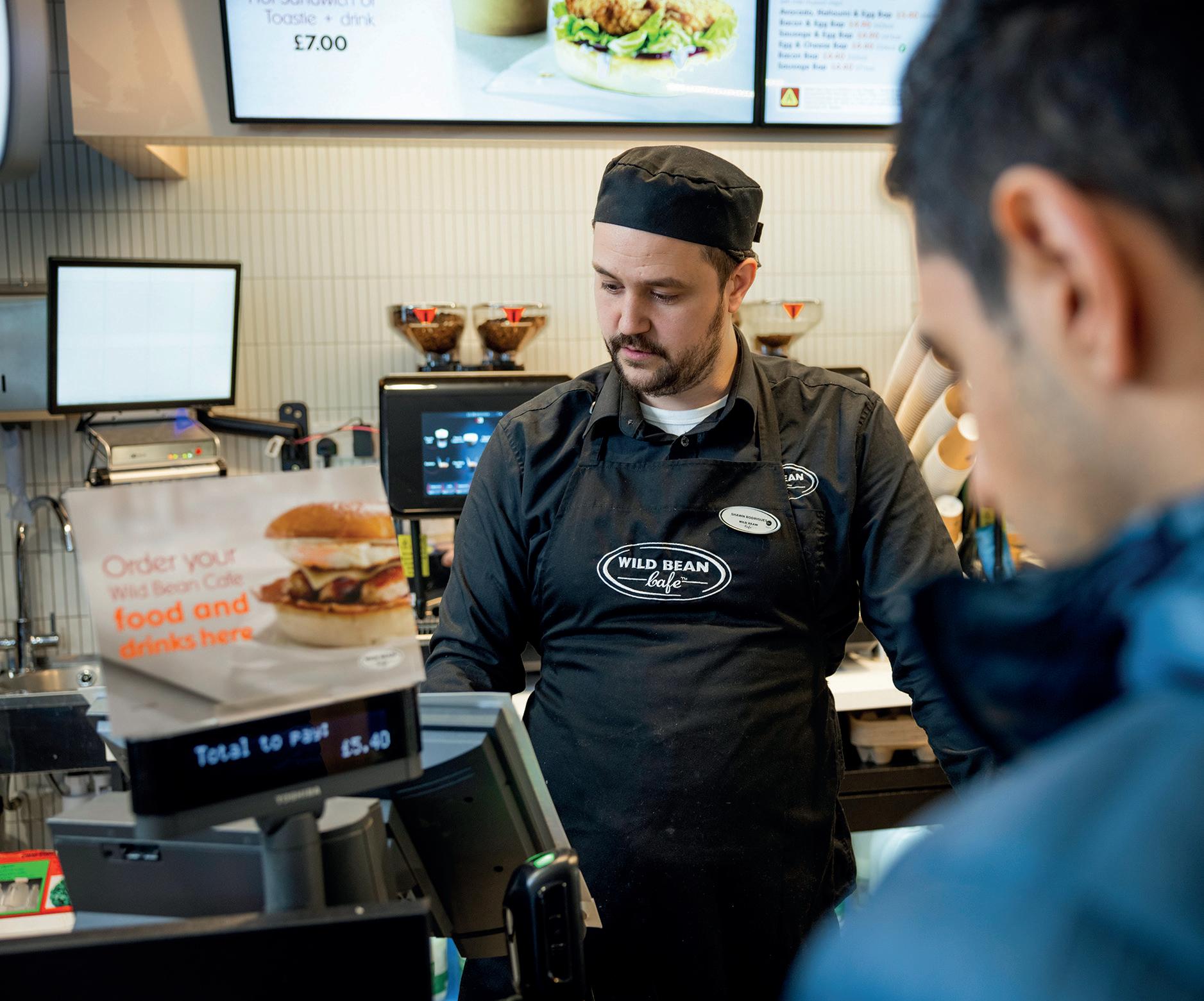
as we go. New product development is key, both in choice and range, ensuring we remain responsive to shifting demands and provide value.
It’s been a challenging time economically in the UK. How have you managed this?
We always work hard to keep our costs competitive without compromising on value. Our new food for now offer includes a variety of customer deals,


including breakfast and lunch bundle deals to save money when buying a sandwich and hot drink.
Loyalty is also key in the UK. BPme Rewards members benefit from special offers, with 5-times bonus points on the new Wild Bean Café range. They can also take advantage of our new BPme Rewards price offers, delivering instant savings on a range of products in our stores, including M&S Food and Wild Bean Café.


44 I www.sandwichandfoodtogonews.co.uk FTG LARDONS


Just like homemade…

Crispy Bacon
Ready to eat
Convenient to use
Natural beechwood smoked bacon rashers


STEAM COOKED & ROASTED CHICKEN BREAST FILLET
•Succulent and ready to eat
•No additives
•EU-27 origin
•Diced / strips / slice / whole fillet

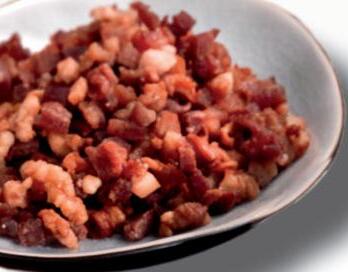


LARDONS
•Versatile
•Great tasting


•Crunchy
•The ideal ingredient

COATED CHICKEN
Coated breast fillet products
•Crunchy coatings with tender chicken
•Cookin 5 range
•Be-spoke product design service
•EU-27 origin


STREAKY BACON ON PARCHMENT
•Limited handling
•Natural beechwood smoke
•Convenient, cook it your way
•Great tasting

BACK BACON

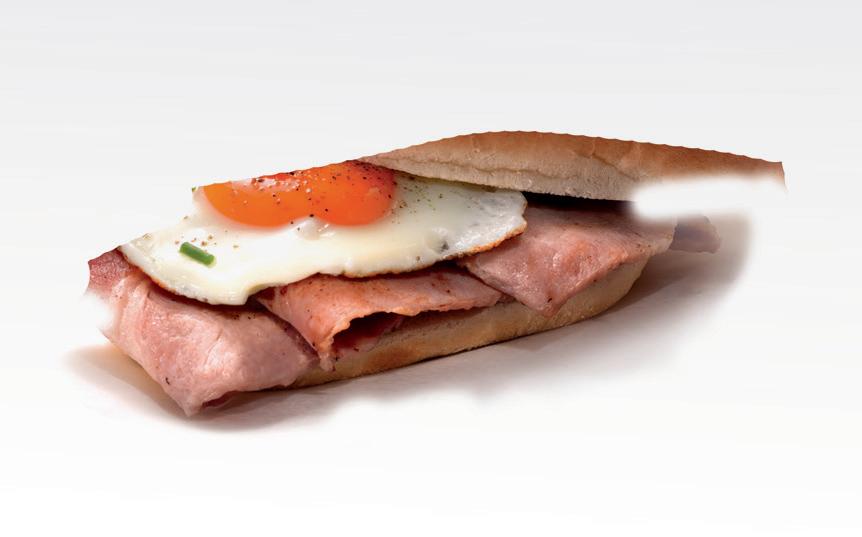

•Ready to eat
•Convenient
•Thinly sliced
•The perfect breakfast rasher
www.sandwich.org.uk I 45 LARDONSLorem ipsum lorem ipsum Contact us for more Information: Anthony Oates | +44 7711860608 anthony.oates@gierlinger-holding.com Gierlinger Holding GmbH Weingartenstrasse 14 | A-4100 Ottensheim | Austria www.gierlinger-holding.com
bake off light medium heavy heavy+


Pitch perfect presentation
Colpac’s versatile team delivers packaging solutions for contemporary pasta salads and the festival/street food sectors, all set to catch fire this summer.
VISUAL PRESENCE
As we approach the warmer months, foodservice providers and retailers are looking for packaging to suit popular chilled dishes, particularly pasta salads.
“Consumer trends require specific packaging characteristics to ensure food is effectively protected and presented,” said Colpac commercial director, Andrew Grimbaldeston. “Summertime also brings us festival season and a different set of priorities for vendors. Pasta salad dishes contain more protein1, so there is an opportunity to offer higher value dishes with greater nutritional value. With this comes the requirement for high-quality packaging which ensures contents are well protected and presented, helping brands to stand out against vast competition in the marketplace.”
Colpac’s multi-food pots are manufactured at its food safe, BRCGS AA+ factory in the UK. This means the company’s on-site production team has full control of manufacture and quality assurance. The pots are also
subjected to thorough safety testing and the team supports customers with rigorous processes and in-store trials. This has been done for pasta dishes, where the pots’ interior coating provides a grease-resistant barrier. This delivers reassurance around safety and pack performance.
“According to Mintel, general food trends are moving towards a preference for less processed and more nutrientrich foods, including increased demand for protein2 Standing out on-shelf is important in ensuring that retailers and foodservice providers effectively communicate their messaging, that their products are bought, and that they achieve a return on these higher cost ingredients,” continued Grimbaldeston.
The pots have a wide aperture for easy filling and product visibility, showcasing the quality ingredients. They can be film sealed or fitted with rPET, anti-mist lids, maintaining clarity in chilled display, so consumers can continue to see the pasta they are selecting in chillers throughout the day.
46 I www.sandwichandfoodtogonews.co.uk
SIMPLE SOLUTIONS
Vegan options of pasta dishes are also in increasing demand1. Colpac’s kraft multi food pots provide a natural backdrop for vegan foods and appeal to this often environmentally conscious market sector. The display of ingredient information is of prime importance, beyond legislative requirements for allergen information, as consumers become increasingly interested in the specific ingredients within their foods2. This makes on-pack printing capability or labelling space essential.
Colpac has worked on custom food packaging projects, including bespoke printing, at its UK factory. This provides simple and impactful options for displaying ingredient and allergen information. This option is now accessible for more UK food producers, providing the space to communicate such vital information about their pasta products.
“The desire to purchase sustainable packaging remains prevalent across the sector. Research from WRAP tells us that 88% of UK households regularly recycle3, and the reduction of plastic use is still hitting the headlines. Colpac’s multi-food pots contain less than 10% plastic, so can be recycled after use and are manufactured from FSC® certified paperboard (Colpac’s FSC® license code is CO41147), proving sustainable sourcing. The lids are also recyclable and made with a minimum of 75% recycled PET.”
Colpac’s range of multi-food pots includes 470ml, 550ml, 700ml, and 1300ml sizes. The company will soon be expanding its stock range to include a 950ml size, due to increased market demand. For details, visit colpacpackaging.com/brands/multi-food-pots/ 1 Taste Wise, 2024; 2 Mintel, Global F&D Trends 2024; 3 Wrap.org.uk, 2023.


All the fun of the festival
In preparation for festival season, Colpac’s customers are looking for straightforward and effective packaging solutions that balance convenience with functionality.
“As opposed to permanent fixtures and established retail environments, the summer season brings us foodservice set-ups that include food trucks and temporary outlets with very limited storage space,” said Grimbaldeston. “Packaging therefore needs to be efficient to store before it’s filled and presented to consumers. Easy filling in these exceptionally fast-paced service environments is key to keeping lengthy queues at bay. Both requirements mean that packaging must be as simple but effective as possible, being convenient for storage, fill, and ultimately for consumers to eat from.
“Packaging such as Colpac’s recyclable two compartment boxes are a perfect example of convenience. They can be nested in storage, in easy reach of foodservice teams, have wide aperture for quick and mess-free filling, and can quickly be closed and passed to consumers. Their grease-resistant coating and secure closures means they can safely be handed out from food trucks, without worry of spillage.
“They also have an integral divider which means that main and side dishes are easily separated, simplifying the packaging required to offer dishes such as curry and rice, pasta and salad, or nachos and dips.”
Colpac’s two compartment boxes are recyclable after use, facilities for which are becoming increasingly prevalent across events, and are certainly at the forefront of consumers’ minds3. This multi-functional solution brings together simplicity, functionality and sustainability in preparation for the festival season.
“With a wide range of versatile packaging, supported by proven sustainability credentials and internationally recognised food safety certifications, Colpac’s product portfolio demonstrates outstanding quality. Understanding of market trends and the key challenges for food vendors in the run-up to summer enables Colpac to offer functional paperboard packaging that helps customers to ultimately sell more food,” concluded Grimbaldeston.
www.sandwich.org.uk I 47 FTG

Natural selection
Catering for operators large and small, Florette’s fresh approach is delivering new products and forging exciting partnerships.
ALL YEAR ROUND
Beginning in France back in 1987, Florette launched into the UK in 1991, pioneering the fresh prepared salad market. The business comes from three farmer-owned co-operatives, merging together to form a member base of 12,000 farmers. The commitment is clear: to deliver quality and freshness in everything they grow.
“Florette’s foodservice range has been created to meet the needs of culinary teams across all channels of foodservice, said Gwyn Jones, head of commercial.
“We may be biased, but our products are the best around for freshness, vibrancy, taste and year-round availability. The new range is manufactured in a dedicated foodservice facility here within the UK, allowing us to focus on and deliver the strict technical parameters that our foodservice customers require.
“Our reputation within the retail sector helps to boost our credibility and positions us as a key brand within the category. That’s why we’ve been working successfully within the foodservice arena for many years and have an excellent track record. In recent times, we’ve been approached by more customers looking for quality products that they can rely on, to mitigate the risk of service and quality issues due to increased climate and supply chain challenges.
“The bespoke range of products is backed by the expertise, resilience and quality assurance of our parent company, Agrial Fresh Produce.”
THE EYES HAVE IT
Of course, things have changed since the late eighties, with the modern consumer demanding much more from products – and the operators themselves.
“The rise of visual social media platforms such as TikTok and Instagram has changed behaviours and piqued an interest in vibrant, flavourful and cultural foods,” continued Jones. “This is apparent both at home and eating out, so when it comes to salads, people want exciting dishes, packed full of leafy greens and fresh vegetables with a protein-packed topping.
“A topic on everyone’s lips right now is ultra-processed foods. We’re seeing an increase of diners who are more aware of what they eat, alongside the nutrients contained within the meals themselves.
“Salads are naturally good for us, as they offer a yearround source of vitamins, minerals and fibre. Chefs should ensure menus are packed full of colourful salads – including lettuce, tomatoes, cucumber and coleslaw mixes – to keep up with consumer expectations and behaviours.”
DRIVING FORCE
Florette has been supplying major UK QSR operators for many years – both directly and via other manufacturers within sandwiches and prepared meal formats. It launched a new foodservice range late last year, available via Bidfood/Oliver Kay produce.
“We have a host of strong partnerships within the
48 I www.sandwichandfoodtogonews.co.uk FTG


sector,” said Jones. “Most recently, Agrial Fresh Produce embarked on an exciting initiative with McDonald’s UK and their supply chain leader, Martin Brower UK. It secured the company’s first completely electric heavy goods vehicle (HGV), which is an important project within our wider group CSR strategy.”
This is perfectly illustrated by the fact it’s a farmer-owned business. “Agrial Group, the home of Florette Foodservice, cares for the planet as much as its salad. It has committed to cutting direct greenhouse emissions by 50% and reducing the carbon footprint by 35% by 2035.

“Agrial Fresh Produce was recently awarded a Gold EcoVadis rating, recognising an ongoing commitment to protecting the environment and promoting sustainable farming methods. EcoVadis is a globally recognised and trusted business sustainability rating, which assesses an organisation on labour and human rights standards, ethics, procurement practices and environmental impact. All assessments are externally verified by experts, and an overall score is provided to highlight the sustainability position for industry benchmarking.
“As mentioned previously, the EV truck was the first step in a plan to increase Agrial’s share of electric vehicles in the fleet and will expand as the technology allows greater range for nationwide distribution. Agrial is the first fresh produce supplier within the UK to deliver to McDonald’s with an electric HGV,” concluded Jones.
The next step on the greener haulage plan includes replacing its current fleet with energy-efficient, thirdgeneration engine vehicles, delivering a reduction in the company’s CO2 emissions by 800 tonnes by the end of 2024. For more information, email sales@florette.com.


FTG sandwich! one way THERE’S MORE THAN TO WRAP A
CAF E CONNECTIONS CAF E CONNECTIONS Avenir Black and Heavy CAF E Avenir Black and Heavy in block Avenir Black and Roman CONNECTIONS 0345 123 2994 @CafeCLtd www.cafeconnections.co.uk
Just talk to award winning food-2-go packaging distributor Café Connections and we’ll tell you how. We’re bursting with good ideas and an impressive range of environmentally friendly food packaging.
A customer focus

KP Snacks provides exclusive insight into prevalent trends and how to continually create consumer value.
SOMETHING FAMILIAR
Much like Heinz Ketchup or Kellogg’s Cornflakes, KP Snacks is one of the most famous names in food. It’s a snack brand that has been part of the British landscape for over 70 years. So, who better to talk to about the latest FTG consumer trends – and how operators can make the most of opportunities in challenging times.
“Food to go remains an important mission and scalable channel, serving a transient population and on-the-go society,” said Matt Collins, trading director, KP Snacks. “The FTG market is rebounding, with a return to pre-pandemic routines boosting footfall.
“We are confident about the future of the category, having already seen significant recovery in the sector, and our portfolio is wellplaced to capitalise on and drive singles recovery. At KP Snacks, we are continuing to excite and interrupt with flavoursome innovation, having the right brands in the right formats, meeting changing shopper missions as needs adapt, and building brand equity by doing the right thing.”
This means KP Snacks is focused on acting in a more socially responsible way in every part of the business, whether it be through packaging reductions, healthier products and promoting healthier lifestyles.
50 I www.sandwichandfoodtogonews.co.uk FTG


At Faerch we are creating circularity in food packaging

As the industry’s first integrated food tray-to-tray recycler, we are doing circular food packaging recycling on an industrial scale already today.
At our pioneer plant Cirrec we process post-consumer household PET waste from the Benelux. In the last five years we have made significant investments to upscale our first industrial PET tray recycling plant. With this flagship facility, we have recently tripled our recycling capacity to manage 60,000 tonnes of tray feedstock from post-consumer waste.
This recycling facility represents the cornerstone of Faerch’s extensive European expansion strategy focused on creating circularity in rigid food packaging by recycling packaging back into packaging of the same quality, again and again and again – diverting perfectly good materials from landfill and incineration, turning waste into resources.


FAERCH.COM/RECYCLING
TRENDS INTO TRADE
“Weekday lunchtimes are the most popular time for eating on the go, with 62% of consumers saying they enjoy picking meal deal combos [Mintel, 2019]. It’s key that retailers offer the right core range in the right formats to capitalise on mealtime occasions, boosted with the right promotions and in-store merchandising,” continued Collins.
“They should look to create value by understanding expectations, whether that is via premium or value offerings. Around 53% of shoppers look for meal deals when buying food to go [IGD, 2021] and 34% of shoppers say they would pay more than £5 for if the products were high quality [Harris Interactive, Nov 2019].
“Many workers have not gone back to the office full-time. Hybrid staff may view FTG as more of a treat if purchasing less frequently and will likely be willing to spend more, meaning there is opportunity to create premium lunch deals catered to part-time office workers.
“KP Snacks delivers the top three selling meal deal SKUs. Hula Hoops Big Hoops BBQ Beef is the top selling price marked pack (PMP) in the convenience channel, worth £12.2m, and takes the No.1 spot for best-selling Meal Deal choice [Nielsen IQ, Sep 2021]. The Hula Hoops brand is worth £191.3m
and growing at +13.8% [Nielsen IQ, Mar 2024]. McCoy’s Salt & Vinegar and Flame Grilled Steak are the No.2 and No.3 best-selling meal deal choices.
“Meanwhile, Tyrrells is a perfect premium snack – this, hand cooked English crisp brand has 91 Great Taste awards, more than any competitor on the market.”
But the key message is that, fundamentally, taste is the number one purchase driver.
WINNING FORMATS
As recessionary conditions prevail, operators need to stock trusted and familiar brands and offer the right product and price mix to deliver and demonstrate great value.

designed to drive impulse purchases [Nielsen IQ]. KP Snacks also offers a range of delicious snacks in smaller PMP formats.”
"Hybrid staff may view FTG as more of a treat if purchasing less frequently and will be willing to spend more."

“PMPs have seen significant growth, with the format expected to continue increasing in relevance and popularity. We’ve seen a spike in grab bag and large PMP sales, as people are tempted by bigger packs. Not only do PMPs offer consumers great value for money, but the clear pricing also gives assurance that they are not being overcharged. PMPs are a hugely versatile format, catering for multiple missions and occasions – whether hunger fill or sharing. Around 70% of shoppers purchase items on impulse and PMPs drive these sales through clear messaging and displays [Lumina, Jan 2022].
“Worth £122m and growing in value at +25%, the KP Snacks portfolio of large format PMPs is extensive,
‘Tide me over’ is another important on-the-go snacking opportunity. Whether it’s the school run, evening commute or lunch zoom call, 64% of consumers eat snacks to keep their energy up throughout the day, and 53% eat snacks to satisfy hunger between meals [MMR Mindset, 2018].
“While tasty snacks are a hugely important part of this mission, we’re seeing an uplift in healthy snacking, as shoppers look for a permissible energy boost throughout the day.
“Exempt from HFSS legislation, nuts – with natural and functional benefits – are seeing huge growth. Packed with protein and fibre, highlighted through labelling, KP Nuts is the number one brand, nearly five times bigger than the nearest branded competitor, worth £98.1M RSV and growing at +6.8% [Nielsen IQ, Mar 2024].
“Coming in at under 100 calories per serving, suitable for vegetarians and vegans, and with a third less fat than the market leader, popchips also provide a more permissible option. Our core range is worth £46.9m RSV and growing in value at +2.8% [Nielsen IQ, 2024]. In 2022, the entire popchips range was reformulated to be non-HFSS,” concluded Collins.
52 I www.sandwichandfoodtogonews.co.uk FTG

● Must stock ranging: Stock a strong core that covers the top selling lines which will deliver category growth – 42% of sales go through the top five brands [Nielsen IQ, Mar 2022]. Excite and engage shoppers with a sprinkling of NPD.
● Understand your shoppers’ missions and cater for them: Capitalise on the growth of PMPs and be ready to take advantage of the FTG occasion.
● Make fixtures easy to shop: Blocking similar-type products together makes it easier for shoppers to find what they need. 68% of bagged snacks shoppers buy on impulse [Lumina, May 2021].
● Drive impulses: Around 53% of impulse crisps & snacks are picked up in secondary locations [Lumina, Jan 2022]. Utilise displays and secondary sightings to drive sales and locate in complementary categories – e.g. soft drinks or sandwiches. Make use of impactful branded display and POS such as stackers and dump bins.


Making the most of merchandising www.sandwich.org.uk I 53 FTG Est’d 1938 WELCOME TO GAGGIA GAGGIA MILANO THE ART OF PERFECTION gaggiamilanoprofessional Gaggia Professional gaggiaprofessional 01902 355 000
Scan-do attitude

GS1 UK elaborates on its QR code solution, which is perfectly placed to power the next generation of on-pack labelling.
From consumers and regulators to brand owners and retailers, everyone wants to know more about products they buy, sell or consume. As space on-pack is finite, there will always be a limit to the amount of information physical labels can carry and, with 94% of consumers now owning a smartphone, there is a growing expectation around accessibility.
Today, people need better ways of accessing this detail. Combining two of the most important inventions of the 20th century, the internet and the barcode, QR codes powered by GS1 are the solution to this challenge, allowing businesses of all sizes to not only meet the data demands of today, but also those of tomorrow.
Since its first scan, the linear barcode has powered global commerce, transforming the way we work and live. GS1 barcodes are now scanned more than ten billion times a day but, while they have delivered countless benefits to consumers and businesses alike, the vital information they carry is typically accessible only to those within industry. QR codes on the other hand are typically used to connect consumers to a web page.
QR codes powered by GS1 can fulfil both these functions and more, offering infinite possibilities through one simple scan. They enable a wide range of enhanced consumer experiences and improved business operations, by carrying and enabling access to more information, while still having the ability to go ‘beep’ at the till.
The following two brands – Little Bobby Jebb and Sistr Coffee – are examples of how GS1 UK members are harnessing the power of these nextgeneration barcodes.
Little Bobby Jebb: promoting animal welfare and sustainability
The first of its kind, Little Bobby Jebb’s high-protein, low-carb Original Chicken Crackling and Crumb is made from the highest quality, UK-reared Red Tractor Chicken.
As a farmer’s son, founder Robert Jebb has always been passionate about food and where it comes from, so was keen to ensure that animal welfare and sustainability were at the heart of his brand. He also wanted customers to have full access to the product information he often sought out himself, so he approached GS1 UK.
With the only commercial scale product of its kind in the UK, perhaps the world, Robert wanted to create premium products from a single sustainable, all-British raw ingredient and promote the ‘nose-to-tail’ ethos that the world needs to embrace.
Chicken Crackling is lighter than traditional pork scratchings. It is high in protein and low in fat, contains no artificial colourings, flavourings, preservatives or MSG, and can be gluten free and halal. It is also made with 100% British ingredients, while the majority of pork scratchings come from Danish pigs.
It is also much more sustainable, turning one, single raw product that is often discarded, into several variations.
Little Bobby Jebb generates its own unique chicken oil during the cooking process, which they are now developing into a further range of retail and catering products. At the end of its life, any leftover oil is recycled into Biofuels.
With a story to tell across a range of five products, most frequently sold in 40g bags, packaging space was at a premium. To ensure consumers had
54 I www.sandwichandfoodtogonews.co.uk
the full picture, Robert positioned QR codes powered by the GS1 Digital Link standard on the reverse side of each pack, along with clear messaging to encourage scanning.
This has allowed his customers to enjoy the brand’s sustainability ethos and story, while getting right under the skin of Chicken Crackling. QR codes now give them everything they would ever need to know, all in one place.
Sistir Coffee: giving the brand the space it deserves Sistir is no ordinary coffee and tea brand. It offers gifts that can be personalised for any occasion.
The business is all about offering something unique. From bespoke label design to selecting your own blend, many of their products offer the option to add a personalised message to their beautifully designed tins.
Sistir was keen to educate consumers on the product features. However, given that the design of their
packaging was such a key element of their brand and proposition, space on-pack was at a premium.
To help them engage, while maintaining a sleek design, Sistir began working with GS1 UK.
Just like Little Bobby Jebb, Sistir positioned QR codes powered by GS1 on the reverse side of their packaging, along with clear messaging to encourage scanning.
To date, this has offered several key benefits. It has prepared Sistir for retail by creating marketing opportunities; it has given them the flexibility to run offers and promotions without having to alter the packaging design; and is supporting its sustainability focus by providing users with instant access to relevant information.
All of this is delivered via a simple smartphone scan, allowing Sistir to maintain the size of existing packaging, while having the ability to adapt messaging at a moment’s notice without disrupting the brand.
GS1 teams around the world are now supporting members and developing a framework to manage and accelerate the migration to QR codes powered by GS1.
If you are using GS1 barcodes or sell products that carry them, you’re already on your way to harnessing the benefits of QR codes powered by GS1.
To nd out more, visit gs1uk.org.




www.sandwich.org.uk I 55 LABELLING – QR CODES FAST & EASY CUSTOM BRANDED PAPER CUPS • From Just 1000 pcs • Ready for Delivery in 15 Days • Award-Winning Sustainable Options cupprint.co.uk GET QUICK QUOTE NOW
HYGIENE

The importance of contract testing labs
Sales and Marketing Director at ALS Laboratories (UK) Ltd., Nigel Richards, elaborates on data-driven insights and key scienti c considerations for the food to go sector.
CHANGING PICTURE
An interesting fact is that people who work in food testing laboratories have often never been in a food factory – and most people in food manufacturing have seldom been into a testing laboratory. This can create a lack of understanding of the issues that both sides of the industry face.
However, one thing they do have in common is the rising cost of food safety and security over the past few years. We all want safe food but that comes at a cost. The biggest recent increases in food testing labs are wages (sta ) and consumables. For operations to remain commercially sustainable, some of these costs have been passed on, just as manufacturers have done with retailers.
Cost has also been largely responsible for the trend over the past 25 years for food manufacturing sites to close their in-house laboratories.
They were an excellent training ground for the sta of the future – and important for retaining and understanding the signi cance of test results. They gave young technicians a chance to get involved in every aspect of a lab operation but, today, few have survived.
Contract laboratories are run on similar principles, but the scale is di erent. As a result, for young technicians the experience is not (and cannot be) the same because of that scale. For example, it cannot a ord to have everyone trained to do, or know, absolutely everything that is required to run a laboratory. This can lead to challenges in terms of recruitment and retention.
LOSS OF TALENT
A further complication is that the science industry in general is not well paid or perceived to be a prestigious sector of industry. Contrary to common perceptions, a food testing lab is not full of graduates or PHD-level sta . In fact, most of the positions are for non-degree-level employees, with some of the most able analysts coming from fastpaced food handling establishments.
Another consequence of food manufacturing sites closing their in-house, on-site labs is the loss of chemistry and particularly microbiology knowledge within the factory. Contract testing labs work on a bewildering range
of products and a huge number of samples daily, so will not therefore have the depth of speci c knowledge of one client’s products. Quite often, the closure of an inhouse lab is undertaken for commercial reasons under the assumption that a contract lab’s testing will be the same.
Part of that assumption is correct, in that contract testing labs will have expertise, will be accredited, use


www.sandwich.org.uk I 57 HYGIENE
manufacturing

ISO methods, handle large numbers of samples and are cheaper. However, they do not have the accumulated knowledge of an individual client’s products, factory site, raw materials or product process.
A sample arriving at a contract testing lab is one with a name, number, code, description and tests required. Those tests will be undertaken to UKAS standards, and results returned, but it is very di cult for the contract testing lab to interpret those results without the accumulated knowledge of an in-house operation.
COMPREHENSIVE SUPPORT
Some food manufacturers are well-versed in microbiology but many are not, especially smaller producers and sta new to production – so there is often a huge knowledge gap in terms of the testing required and particularly the results returned. There is no legislation stating that a food manufacturer needs to prove knowledge of what is required for chemistry, allergen or microbiology testing, or what the results mean.
In response, ALS has moved away from being purely a ‘testing’ laboratory to o ering technical and training
services, including specialist microbiology provision. This includes assistance in applying the most appropriate microbiological speci cation to a product which is coste ective, yet still meets legislative requirements and o ers adequate and appropriate assurances on quality and safety.
A team of microbiological experts deliver guidance in the interpretation of microbiological results and help in the root cause analysis when problems arise. We also have experienced sta , trained to conduct factory visits and audits to BRC requirements.
Looking speci cally at FTG, a major challenge is that products have a short shelf life, which means they may have been consumed before many of the traditional pathogen testing has been completed. In turn, this means a large number of people could potentially be a ected before the pathogen has been fully identi ed and con rmed.
To combat this, ALS has incorporated rapid pathogen methods using the latest technologies, for results that are not only rapid, accurate and reliable, but also appropriate for the product matrix under analysis.
As new technologies become available, we are constantly reviewing their e ectiveness to see if they
58 I www.sandwichandfoodtogonews.co.uk

can provide a cost-e ective and bene cial alternative to established methods.
Finally, at ALS we continue to monitor emerging safety threats, especially with viruses becoming more of an issue in products and the allergen threat an ever-present concern. For example, we believe there will shortly be new testing rules around STEC E. coli – mainly driven by retailers – but have a brand-new facility to cover these needs.
For more information, visit www.als-testing.co.uk.
BACKGROUND
ALS is one of the UK’s leading providers of comprehensive and analytical food & drink testing services – with six labs across the country. These services include microbiological, nutritional, vitamins & minerals, pesticides and contaminants, allergens and speciation. They also provide clients with a wide range of consultancy and technical support on food safety, labelling requirements, allergens management and sensory testing.

• Allergens
• Chemical and Nutritional
• Pesticides and Contaminants
• Vitamins and Additives

• Microbiological
• Technical Services
• Sensory Testing
• Cooking Validation
• Training courses
Unbeatable service
Nationwide sample collection service and 6 accredited food testing laboratories
Uncompromising quality standards
UKAS accredited to ISO 1702 & RSA approved
Helping your business every day
Industry-leading portal ‘ALSolutions’ provides quick access to your test results
Your Trusted Partner
In-house Technical Services team to help optimise your testing schedule and assist with food safety issues
Your first choice for analytical testing. Offering
of testing services
you a ‘One Stop Shop’
right solutions. right partner. e: sales.uk@alsglobal.com t: +44 (0)1354 697 028 www.als-testing.co.uk
www.sandwich.org.uk I 59 HYGIENE
Complete control

Rag Hulait, Monika UK director of sales, is uniquely placed to ensure best practice systems are always in place and that storage temperatures remain on point.
Talk to us about how your business partnerships have developed.
Founded in 1992 to help caterers adhere to the newly introduced Food Safety Act 1990, Monika are experts in bringing teams and equipment together. Progressing from our original wireless temperature monitoring technology to today’s smart cloud-connected network, Monika now o ers operators a complete hygiene, safety and compliance management system.
Over the past three decades, we’ve worked with numerous companies across food production, service and retail. Once businesses invest in technology that enhances due diligence, they’re able to see tangible bene ts which often prompts further investment. Our friendly customer service team are easily reachable to resolve queries, and our dedicated engineers install and maintain equipment to ensure it is in top condition. Monika is also able to provide training to help foodservice teams get the most out of their systems. Some customers have been with us since the very beginning.
What are key areas that operators need to think about in 2024?
With food miles, high energy levels and damaging refrigerants gaining media attention, environmental concerns are prominent. Operators looking to improve hygiene practices should consider how any long-term e ects align with sustainability goals – particularly as the UK government’s Net-Zero target inches closer.
Monika is designed with longevity in mind and can help operators reduce environmental output by minimising waste and streamlining e ciency.
The discreet in-unit sensors cleverly simulate the temperature of perishable food items, rather than simply recording the air temperature inside the appliance, for greater accuracy. This is particularly vital in a fast-paced to-go venue, where manic lunch rushes include frequent door openings or open-facing chillers. Should a unit move outside a pre-determined safe temperature range, sta can receive noti cations, enabling them to quickly relocate stock before it spoils, thus reducing waste. This can also help identify faulty equipment, helping
operators make informed choices on whether to x before it becomes an expensive repair, or when to invest in an upgrade to improve e ciency and lower energy bills.
How challenging is it to ensure solid hygiene practices are in place?
In a commercial kitchen environment, these are essential to ensuring the health and safety of both sta and customers. However, the fast-paced

60 I www.sandwichandfoodtogonews.co.uk
nature of this setting can make it di cult to keep on top of everything.
To combat this, managers should implement best practice systems, such as rst-in, rst-out (FIFO). This convenient stock rotation ensures the oldest products are used rst, reducing the risk they will be forgotten and spoil, making it easier to keep track of what stock is needed.
Storing products at the correct temperature can also signi cantly improve hygiene. If temperatures are set too high, shelf life may be reduced, while too low can a ect quality and use excessive energy. For optimal storage:
● Chilled food: +5ºC
● Dairy: +2ºC - +5ºC
● Fresh meat: -2ºC - +2ºC
● Fresh sh: -1ºC - +1ºC
● Frozen products: -18ºC or lower Monika’s discreet sensors can each be programmed for unique temperature settings to facilitate this, while being accessible to view from a conveniently centralised dashboard. When it comes to cooking and serving, our wireless handheld probes automatically transfer data to the central dashboard in fully auditable logs.
What support can you o er?
Monika’s multi-faceted approach provides solutions centred around three key functions:
1 Team management: Our smart handheld PA device o ers a convenient way to help busy teams stay on top of duties. Tasks can be programmed for sta to check o as completed. For example, a closing down sequence may include taking out the bins, mopping the oors and turning o the lights on a tick-list. Managers can view which tasks have been completed, when, and by whom, so there’s no risk of safety checks being missed or time wasted by repeating already completed tasks.
2 Equipment management: Using a combination of handheld probes, and in-unit sensors, Monika’s temperature monitoring capabilities ensure
proper temperature across storage, preparation, cooking and serving. The smart cloud-connected sensors feed this data back to a central system for fully auditable records. Operators have the ability to set a predetermined safe temperature range for refrigeration units, freezers and cold rooms. If this moves, sta can be nominated to receive an alert, meaning problems can be dealt with quickly to minimise waste and address faulty equipment.
3 Enterprise management: Managers are constantly informed of the status on all tasks, temperatures and equipment through a central dashboard. This easy-to-navigate platform is accessible via any desktop, mobile or Monika’s smart handheld PA device, even while o -site. This is an ideal solution for multi-site operations, as managers can compare performance across venues and identify areas for improvement.
FTG is a high-speed, high footfall operation in many cases. What are the challenges with that?
While most commercial kitchens tend to be fast paced, this is even more so the case in FTG. In such intense conditions, hygiene can take a back seat. Traditional paper-based records are cumbersome and timeconsuming at best, and at worst, risk noncompliance with legislation. Busy
lunch and dinner rushes can cause sta to forget to ll in these forms, leading to inaccurate recordings. With Monika, storage temperatures are logged as standard, so sta have more time to focus on customer experience and prep. This also frees up time to complete manual checks before serving. The PA device can also be programmed with intermittent reminders for regular hygiene practices, such as wiping down surfaces or hand-washing.


HYGIENE
Reliability, sustainability and e cacy

Environmentally friendly solutions are more important than ever, as are e ective working relationships, says Sybron’s sales and marketing director, George Mason.
QUESTION OF TRUST
In this fast-paced and time-sensitive environment, operators of sandwich and FTG outlets need their chosen hygiene partner to be 100% reliable.
Timing is critical, with suppliers being relied upon to deliver orders punctually and in full. They need to align with operators and work behind the scenes to ensure the correct stockholding and everything else that may be required. This trust component is vital, as not everyone delivers to the same standards.
Of course, businesses require assurances that the hygiene products themselves will perform e ectively. The correct choice of cleaning
solution will not only o er highquality results, but also minimise time loss and increase e ciency.
SUSTAINABILITY FOCUS
Operators in this market are keenly aware of the environmental impact of their business and want to be as sustainable as possible. Shoppers are also well informed and will choose to buy from outlets making the right choices. The ideal hygiene partner shares this responsibility and focuses on supporting customers on sustainability matters, helping to reduce their carbon footprint.
Sybron is a leading UK supplier of cleaning, hygiene and catering


products. In 2022, it launched SyBio – a biotechnology-based range combining probiotic, enzyme and plant-based ingredients. Sybron partnered with BioVate Hygienics, with a focus on replacing harmful, non-renewable chemicals with adaptive biotechnology that cleans, disinfects and protects.
By using the SyBio range, operators can be assured of a sustainable solution. SyBio combines probiotic, enzyme and plant-based ingredients.
PRODUCT & SUPPLY CHAINS
All SyBio products are manufactured in the UK with a focus on highly concentrated formulae. This reduces

both packaging and storage requirements on site and, based on cost-in-use gures, provides a 15-20% saving against other ranges.
Products are packaged in bottles made from 100% recycled plastic and delivered in 100% recycled and FSC® certi ed board cardboard boxes.
SyBio has 30 times more actives than any other biotechnology-based cleaning range. After use, SyBio leaves a layer of good bacteria that protects surfaces against dirt and pathogens for 30 days. With this residual clean, the more you use, the easier and safer hygiene duties become. The range reduces COSHH implications, achieved by providing non-hazardous products in ready-to-use formats.
FLUID SITUATION
Hygiene partners need to provide the systems required to cope during busy periods and increase sta e ciency, in terms of time and e ectiveness. When under high pressure, the last
thing an operator needs is to run out of cleaning uid.
This is why Sybron uses a controlled dosing system for SyBio. It ensures accuracy and consistency, giving sta the reassurance that the correct dose is being used to meet legislation and prevent food safety breaches.
To access product, users must connect the pouch to the dispenser – this also guarantees the right cost in use, which is another signi cant challenge. There is therefore no fear about compromising on cleanliness, with the added bene t that as a pre-mix, it’s easy to apply and no time is wasted making up batches at a critical moment of service.
Cost control is also a challenge, but Sybron only provides products through systems which guarantee the right cost in use.

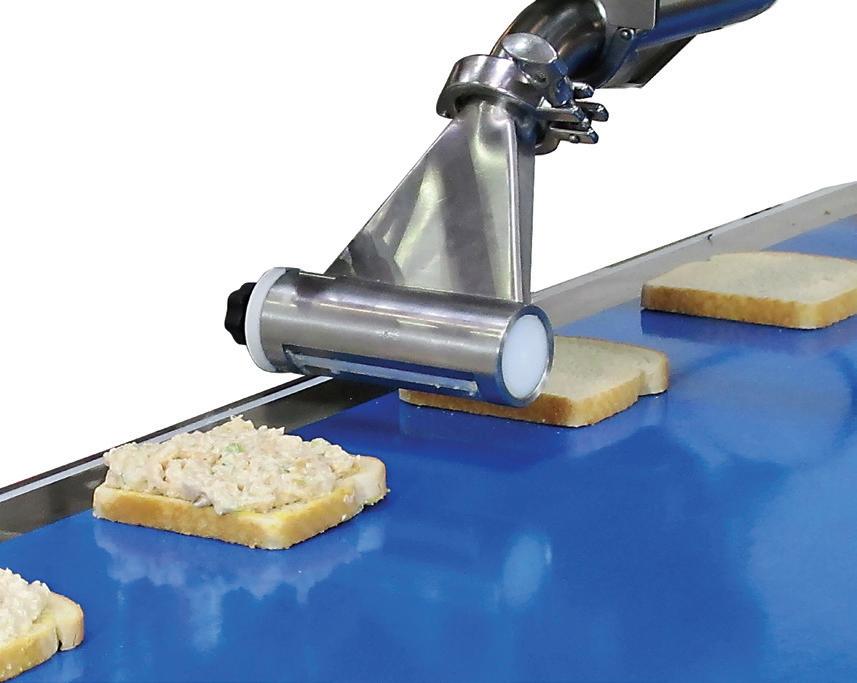
With SyBio, customers can ensure cost saving, sustainability and energysaving targets are all met. E cacy and sustainability are a central focus, for product and service. We o er systems that mean owners and operators don’t need to worry about cleanliness. For


www.sandwich.org.uk I 63 HYGIENE
more information, visit sybron.co.uk.

REAL crisps cut the mustard with Colman’s collab

Colman’s, the UK’s number one mustard brand1, has partnered with premium hand cooked crisp brand, REAL, to relaunch its Ham & Mustard Crisps with the iconic taste of Colman’s English Mustard.
with a boost of Colman’s English Mustard’s ery avour that is loved across the nation.


Available now exclusively in the foodservice channel, the REAL Ham & Colman’s Mustard Crisps pack a distinctive Colman’s avour punch and is set to be the perfect pairing to a drink, whether that be a pint, a chilled diet coke, or a delicious sandwich.
With expected sales of over 1.5m packs a year, REAL Ham & Colman’s Mustard Crisps is a huge opportunity for more people to enjoy Colman’s in a di erent way, whether they are existing fans or new to the famous condiment.
REAL has been making premium hand cooked crisps with punchy avours for the foodservice sector since 1997. With this collaboration, the brand’s fth bestseller2, Ham & English Mustard, has been given an upgrade

Jolanda Wells, licensing manager at Unilever, commented: “Not only are crisps the nation’s favourite snack, but they are also the number one item people buy alongside a drink or sandwich when eating out. To help operators tap into this opportunity, we’ve brought together two iconic British brands to give people the ultimate ham and mustard crisp combination, which we know Colman’s a cionados will love.”
Matt Smith, marketing director at REAL Crisps, added: “REAL Crisps have always stood out for their distinctive, punchy avours tailored for foodservice. Our new Ham & Colman’s Mustard takes this to a new level with a full-on avour that is the perfect partner for a drink or sandwich.”

1Kantar Topline Report 23.10.23.
2REAL Ham and English Mustard | Packs sold | 52w to 31 Dec 23 | TGL Sales.


Heralding new beginnings
Herald has relocated to a larger, more advanced facility to enable the quality disposables manufacturer and supplier to expand its product o ering and reach a wider market.
With an unblemished trading record of almost 40 years, Herald has made its most signi cant move yet, taking over premises in Corby. Streamlining operations in a bid to ensure it quali es as a market leader, the family-run company aims to provide a higher level of service and


consistent product availability to meet customer demand.
Having identi ed that customers want more choice – particularly when it comes to eco-friendly goods – Herald has been keen to secure extra space and renew its capacity for providing a complete range of products. The company still supplies all catering and janitorial disposals, along with an exhaustive supply of auxiliary products, however it has added to choices available across all ranges, including greener products.

Herald’s managing director, Yogesh Patel, said: “We want to be seen as a one-stop shop that competes on price and convenience by having the space to hold stock across all lines.”
The company currently has a popular eco range, which includes a full selection of compostable cups and bagasse items, comprising of square, round and rectangle plates, in varying sizes, along with bowls and hot boxes, chip trays, burger boxes, noodle boxes, salad bowls, soup containers and other lunch boxes. It also has a complete choice of wooden and cornstarch cutlery, meal packs, bags and ice cream tubs.
Yogesh added: “Our job as supplier is to make sure the choice is varied and a ordable and we’re committed to expanding our product o ering to ensure this is the case.”
For further information on Herald and its products, log on to heraldplastic.com or call 0208 507 7900 to order a copy of the catalogue.
The new REAL Ham & Colman’s Mustard Hand Cooked Crisps are available for purchase in the foodservice sector.
NEW PRODUCTS
Kra sou e pots give H-Pack an industry rst
Europe’s packaging one-stop shop, H-Pack Packaging, is adding to its line of white, paper sou e pots with a kraft version. With no other catering disposables supplier o ering alternative colour sou e pots, this addition places the popular packaging expert rmly ahead of the competition once again.
Both the kraft and white pots are available in a full range of sizes, from one ounce through to 5.5 ounce, in cases of 20 x 250 and 15 x 200, depending on product size.
The sou e pots are expected to appeal to those caterers and ‘to go’ outlets that already use kraft disposable food boxes and bags and want the pots to complement the rest of their packaging o ering.
Head of merchant sales for H-Pack, David Martin, commented: “We are aiming to introduce products that o er valid alternatives to our customers and their customers; challenging what is available elsewhere in the market so that H-Pack maintains its pole position as a market leader with vision.”
H-Pack is the UK arm of leading, global food packaging brand Hotpack and, as such, can o er bespoke custom products, working with pioneering new materials and state of the art machinery and technology, along with its internationally recognised, premium lines.
To order the sou e pots, email sales@h-packglobal.com.

For further information and for details on the products H-Pack manufactures and supplies, visit h-packglobal.com or call +44(0) 1978 855595.

NEW PRODUCTS www.sandwich.org.uk I 65 Read it online sandwichandfoodtogonews.co.uk

• Purpose
• BRC approved site
• Manufacturer of Std & Free Range Cooked Egg Products
• ‘Lion’ approved site



• Standing orders
• Delivery notes
• Production
• Invoicing & accounts
• Ingredients & nutrition
• Handhelds etc.


Visit rjlsoftware.co.uk or call 01962 761313 Save money and time with the RJLasap wholesale delivery solution A simple, easy to use software system. 24/7 support, free installation & training Seamless links to labelling, EDI and accounting packages. Classifieds For more details on recruitment opportunities with D R Newitt go to page 17 Manufacturer of Hard Eggs
Related Products
&
Built site with state of the art equipment for Boiling and Peeling Eggs
Contact: Pankaj Pancholi - MD Unit 7, Hilltop Road Hamilton Industrial Park GS1 SOLUTION PARTNER GS1 SOLUTION PARTNER Sandwich Labelling Systems Axicon Barcode Verifiers Print & Apply Systems Label Printers Labels & Ribbons 01642 490121 Demonstrations Smoked Turkey Rashers Call 0800 688 9085 or visit us at www.dwdisplay.co.uk some of our display stands for cafes and bakeries Grumpy Pigs the WWW.crispybacon.CO.UK Crispy bacon - grilled streaky - crispy bits Eat happy - Eat grumpy For more Info please contact 01992 307627 Sales@foodconnextions.com www.crispybacon.co.uk some of our display for cafes and 66 I www.sandwichandfoodtogonews.co.uk


Classifieds Paul Steer Tel: 01291 636342 paul@jandmgroup.co.uk HERE ADVERTISE TO CONTACT www.sandwichandfoodtogonews.co.uk
0844 847 5116
07917 531 689
gcox@zafronfoods.co.uk
zafronfoods.co.uk
t:
m:
e:
w:
BSA Suppliers Index

AGRIAL FRESH PRODUCE LTD
Unit 5 Walthew House Lane, Martland Park Industrial Estate, Wigan WN5 0LB
Contact: Sales Department
Tel: 01942 219942 hello@afproduce.co.uk www.agrialfreshproduce.co.uk
ALLSOP SOFTWARE
Scottish Provident Building, 7 Donegall Square, West Belfast BT1 6JH
Contact: Luke Johnson Tel: +44 (0) 77 7666 0727 luke.johnston@allsop.software https://allsop.software
BAWNBUA FOODS NI
67 Crowhill Road, Bleary, County Armagh BT66 7AT
Contact: Joanne Grant Tel: 028 38 344224 joanne.grant@bawnbua.com www.bawnbua.com
BIOPAK
Unit 13, Nunnery Park, Worcester WR4 0SX Tel: 01386 555777 sales@biopak.co.uk www.biopak.co.uk


CARGILL PROTEIN EUROPE
Clerkenleap Barn, Bath Road, Broomhall, Worcester WR5 3HR
Contact: Helen Walker
Tel: 0121 274 1107
Cpe_Customerservices@cargill.com www.cargill.co.uk

COLPAC LTD
Enterprise Way, Maulden Road, Flitwick, Bedfordshire MK45 5BW
Contact: Sales Department
Tel: +44 (0) 1525 712261 info@colpac.co.uk www.colpacpackaging.com
COVERIS FLEXIBLES
UK LTD
Cromwell Road, Eynesbury, St Neots, Cambridgeshire PE19 2ET
Contact: Sales Department
Tel: 01480 884300
UKfoodservice@coveris.com www.coveris.com

DARTMOUTH FOODS
1-9 Hearder Court, Beechwood Way, Langage Business Park, Plymouth PL7 5HH
Contact: Greg Choulerton Tel: 01803 833123 greg.choulerton@ dartmouthfoods.co.uk www.dartmouthfoods.co.uk
FLEXESERVE
The Alan Nuttall Partnership Ltd, Orchard House, Dodwells Road, Hinckley, Leicestershire LE10 3BZ
Contact: Warwick Wakefield Tel: 01455 638300 info@flexeserve.com www.flexeserve.com

FOOD ATTRACTION LTD.
Triam Court, 17-21 Langham Road, Leicester LE4 9WF
Contact: Jake Karia Tel: 0116 2744066 jake@foodattraction.com www.jakeandnayns.com

GIERLINGER HOLDING GMBH
Weingartenstraße 14, A-4100, Ottensheim, Austria
Contact: Mark Seibold Tel: 07747 621586 mark.seibold@gierlingerholding.com www.gierlinger-holding.com

GROTE COMPANY
Newtech Square, Zone 2
Deeside Industrial Park CH5 2NT
Contact: Paul Jones Tel: 01978 362243 sales@grotecompany.com www.grotecompany.com
GROWUP FARMS
FRESH-PAK CHILLED FOODS
1 Waterside Park, Valley Way, Wombwell, Barnsley S73 0BB
DAWN FARMS UK
Lodge Way, Lodge Farm Ind. Est, Northampton NN5 7US
Contact: Jon Watkin Tel: 01604 583421 info@dawnfarms.co.uk www.dawnfarms.ie www.dawnfarms.ie/tmi-foods
DEIGHTON
MANUFACTURING (UK)
LTD Gibson Street, Leeds Road, Bradford, West Yorkshire BD3 9TR
Contact: Andy Hamilton
Tel: 01274 668771
sales@deightonmanufacturing.co.uk
www.deightonmanufacturing.co.uk
DURUM COMPANY UK (ENDO FOODS)
10 Princes Road, Montagu Industrial Estate, Edmonton N18 3PR Tel: 020 8920 2612 Info@endosfood.com
Contact: Joe Martin Tel: 01226 344850 joe.martin@fresh-pak.co.uk www.fresh-pak.co.uk
FSC
Cheddar Business Park, Wedmore Road, Cheddar, Somerset BS27 3EB
Contact: James Simpson
Tel: 01934 745600
james@thefscgroup.com
www.thefscgroup.com

FUTURA FOODS UK LTD.
The Priory, Long Street, Dursley, Gloucestershire GL11 4HR
Contact: Rhian Kinman Tel: 01666 890500 rhian.kinman@futura-foods.com www.futura-foods.com
Pepperness, Montagu Road, Sandwich, Kent CT13 9FA info@growupfarms.co.uk www.groupupfarms.co.uk
INDUSTRIAL ROBOTIC SOLUTIONS
Unit 2, Block C, Park Office Village, Nesfield Road, Knowledge Gateway, Colchester C04 3ZL Tel: 07734 365705 enquiries@ industrialroboticsolutions.com www.industrialroboticsolutions.com

JACKSONS
40 Derringham Street, Hull HU3 1EW
Contact: Commercial Team Phone: 01482 301146 hello@jacksonsbread.co.uk www.jacksonsbread.co.uk
JIFFY TRUCKS LTD
26 Jubilee Way, Shipley, West Yorkshire BD18 1QG Tel: 01274 596000
Contact: John Briggs john@jiffytrucks.co.uk www.jiffytrucks.co.uk

H SMITH FOOD GROUP PLC
24 Easter Industrial Park, Ferry Lane South, Rainham, Essex RM13 9BP
Contact: Chris Smith Tel: 01708 878888
chris@hsmithplc.com www.hsmithplc.com
INSURANCE PROTECTOR GROUP
B1 Custom House, The Waterfront, Level Street, Brierley Hill DY5 1XH Tel: 0800 488 0013 business@ipgdirect.co.uk www.insuranceprotector.co.uk
KINGS FINE COOKED MEATS
69 Queen Street, Wigan, Greater Manchester WN3 4XH
Tel: 01942 322398
Contact: Adele Rooney adele@kingsfinecookedmeats.co.uk www.kingsfinecookedmeats.co.uk


LEATHAMS LTD
The Circle, Units 10-12
Queen Elizabeth Street, London SE1 2JE
Contact: Des Hillier
Tel: 0207 635 4000 des.hillier@leathams.co.uk www.leathams.co.uk
sandwich.org.uk/directory
68 I www.sandwichandfoodtogonews.co.uk
THE LIVEKINDLY COLLECTIVE (OOMPH)
The Old Bakery, Victoria Road, Bicester, OX26 6PB
Contact: Nick Jacobs
Phone: 07785 327146
MEZZE
12 Colston Yard, Bristol BS1 5BD
Contact: Hugo Walker
Tel: 0117 379 0309
hugo.walker@mezze.io www.mezze.io

MILLITEC FOOD SYSTEMS LTD.
20 Victoria Road, Draycott, Derbyshire DE72 3PS
Contact: Richard Ledger
Tel: 01332 320400 sales@millitec.com www.millitec.com


MISSION FOODS
EUROPE LTD.
Renown Avenue, Coventry Business Park, Coventry CV5 6UJ
Contact: James Brown Tel: 07725 496799
Jbrown@missionfoods.com www.missionfoodservice.co.uk

PASTA FOODS
Forest Way, Norwich NR5 0JH
Contact: Matthew Clark
Tel: 01493 416200 enquiries@pastafoods.com www.pastafoods.com

PLANGLOW LTD
Suite 6A1, Whitefriars, Lewins Mead, Bristol BS1 2NT
Contact: Rachael Sawtell
Tel: 0117 317 8600 Fax: 0117 317 8639 info@planglow.com www.planglow.com

PROAMPAC-RAP
Mansel Court, 2A Mansel Road, Wimbledon, London SW19 4AA
Contact: Martin Beaver Tel: 0208 069 0700 gbenlon-info-dl@proampac.com www.proampac.com
BSA Suppliers Index

REFLEX PACK PLUS
Moat Way, Barwell, Leicestershire LE9 8EY
Contact: Jamie Gordon Tel: 01455 852400 enquiries@reflexlabels.co.uk www.reflexlabels.co.uk


ROYAL GREENLAND LTD.
Gateway House, Styal Road, Wythenshawe, Manchester M22 5WY
Contact: Solenne Labarere Tel: 0161 4904246
soll@royalgreenland.com www.royalgreenland.co.uk
SABERT UK LTD.
Unit 2, Harvard Ind. Estate, Kimbolton PE28 0NJ
Contact: Clive Pickerill Tel: +441480 869077 cpickerill@sabert.com www.sabert.eu
SEARA MEATS BV
2nd Floor, Building 1, Imperial Place, Maxwell Road, Borehamwood WD6 1JN
Contact: Alexandre Mattos Tel: +44 (0) 7899 982144 alexandre.mattos@seara.com.br www.seara.com.br

SOKEN ENGINEERING
Ardglen Industrial Estate, Whitchurch, Hampshire RG28 7BB
Contact: Stephen Hawes Tel: 44 (0) 1256 892 194 shawes@jenton.co.uk www.sokenengineering.com
THE BREAD FACTORY (GAIL’S)
Unit 12 Garrick Industrial Est, Irving Way, Hendon, London NW9 6AQ
Tel: 020 8457 2080 customercare@breadltd.co.uk www.breadltd.co.uk


WADDINGTON EUROPE
Brue Avenue, Bridgwater TA6 5YE
Tel: 01278 410160
we.sales@novolex.com www.waddingtoneurope.com
WOODLY
Firdonkatu 2 T 63 00520
Helsinki
Finland
Contact: Patrik Kuitunen
Tel: +358 (0) 40 1259 101 patrik.kuitunen@woodly.com www.woodly.com
ZAFRON FOODS LTD.
Unit B-G Eagle Trading Estate, Willow Lane, Mitcham, Surrey CR4 4UY
Contact: Graham Cox Tel: 0844 847 5116 gcox@zafronfoods.co.uk www.zafronfoods.co.uk
LINKED ASSOCIATION
LOCAL AUTHORITY
CATERING ASSOCIATION
LACA Administration 11-13 The Quad, Sovereign Way, Chester CH1 4QP Tel: 0333 005 0226 admin@laca.co.uk
THE BRITISH SANDWICH AND FOOD TO GO ASSOCIATION MANAGEMENT COMMITTEE
The following are elected members of the British Sandwich and Food to Go Association Management Committee
CHAIRMAN
James Faulkner, Leathams (Supplier)
THE COMMITTEE
David Winter
Street Eats (Producer)
Arun Mayor, Greencore (Producer)
Rusty Warren, Subway (Sandwich Bar Chain)
Hannah Wilson, Greggs (Baker)
Gary McDowell, Deli-Lites (Producer)
Dan Silverston, Soho Sandwiches (Producer)
Jared Winder, WHSmith (Retailer)
Wayne Greensmith, Ginsters (Van Sales)
Jude Walker, The FSC Group (Buying Agency)
Jake Karia, Food Attractions (Producer)
Dan Barrett, The Bread Factory
SECRETARIAT
Jim Winship, Director
www.sandwich.org.uk I 69
BSA Manufacturers & Distributors

AROUND NOON LTD.
Unit 24A Rampart Road, Greenbank Industrial Estate, Newry, County Down BT34 2QU
Tel: 0283 0262333
info@aroundnoon.com
www.aroundnoon.com
BRC Rating – AA+
AROUND NOON (LONDON) LTD.
762A/763A Henley Road, Slough SL1 4JW
Tel: 01753 523 636 infoANL@aroundnoon.com www.aroundnoon.com
BRC Rating – AA
AROUND NOON (SOHO)
Unit 7 Advent Business Park, Advent Way, London N18 3AL
Contact: Daniel Silverston Tel: 0203 058 1245
dan@sohosandwich.co.uk www.sohosandwich.co.uk
BRC Rating – A
BRADGATE BAKERY
Beaumont Leys, Leicester, LE4 1WX Tel: 0116 2361100 commercialftg@ samworthbrothers.co.uk
BRC Rating – AA+
DELI-LITES IRELAND LTD.
Unit 1, Milltown Industrial Estate, Warrenpoint, County Down BT34 3FN
Contact: Barbara Hawkins Tel: 07786 435198
barbara.hawkins@delilites.com www.delilites.com
BRC Rating – AA+
BCorp certified
GREENCORE FOOD TO GO LTD - PARK ROYAL
Willen Field Rd, Park Royal, London NW10 7AQ
Tel: 0208 956 6000 www.greencore.com
BRC Rating – AA+
BRC Plant Based
GREENCORE FOOD TO GO LTD – MANTON WOOD
Manton Wood Enterprise Zone, Retford Road, Manton, Worksop, Notts S80 2RS
Tel: 01909 512600
www.greencore.com
BRC Rating – AA+
BRC Plant Based
GREENCORE FOOD TO GO LTD – BROMLEY BY BOW
Prologis Park, Twelvetrees Crescent, London E3 3JG
Tel: 0207 536 8000
www.greencore.com
BRC Rating – A+
GREENCORE FOOD TO GO LTD. – ATHERSTONE
Unit 7,
Carlyon Road
Industrial Estate, Atherstone, Warwickshire
CV9 1LQ
Tel: 01827 719 100 www.greencore.com
BRC Rating – AA+
GREENCORE FOOD TO GO LTD. – HEATHROW
Unit 366 Stockley Close, West Drayton, London UB7 9BL
Tel: 0208 629 8600
www.greencore.com
BRC Rating – A+
MELTON FOODS
3 Samworth Way, Leicester Road, Melton Mowbray, Leicestershire LE13 1GA
Tel: 01664 484400 commercialftg@ samworthbrothers.co.uk
BRC Rating – AA+
BRC Plant Based and Gluten Free standards
ON A ROLL SANDWICH COMPANY
The Pantry, Barton Road, Middlesbrough TS2 1RY
Contact: James Stoddart Tel: 01642 707090 jstoddart@onarollsandwich.co.uk www.onarollsandwich.co.uk
BRC Rating – AA

RAYNOR FOODS LTD.
Farrow Road, Widford Industrial Estate, Chelmsford, Essex CM1 3TH
Contact: Sales Tel: 01245 353249 sales@sandwiches.uk.net www.sandwiches.uk.net
BRCGS Rating AA
REAL WRAP COMPANY LTD.
Unit 2 Haslemere Industrial Estate, Avonmouth, Bristol BS11 9TP Contact: Jason Howell Tel: 0117 3295020 jason@realwrap.co.uk www.realwrap.co.uk
BRC Rating – AA
SAMWORTH BROTHERS MANTON WOOD
Manton Wood, Enterprise Park, Worksop, Nottinghamshire S80 2RS
Tel: 01909 511800
commercialftg@ samworthbrothers.co.uk www.samworthbrothers.co.uk
BRC Rating – AA+
SANDWICH KING
Enfield Street, Leeds LS7 1RF
Contact: Julie Crimlisk Tel: 0113 2426031 enquiries@sandwichkinguk.com www.sandwichkinguk.com

SIMPLY LUNCH LTD.
Unit 2, ZK Park, 23 Commerce Way, Croydon CR0 4ZS
Contact Sales Tel: 0345 2007631
sales@simplylunch.co.uk www.simplylunch.co.uk
BRC Rating – AA+
STREET EATS FOOD LTD.
Prince William Avenue, Sandycroft, Deeside, CH5 2QZ Tel: 01244 533888
Option 1 orders@streeteatsfood.co.uk enquiries@streeteatsfood.co.uk www.streeteatsfood.co.uk
BRC Rating – AA+
TIFFIN SANDWICHES Tiffin House, 20 Commondale Way, Euroway Trading Estate, Bradford, Yorkshire BD4 6SF
Contact: Sales Tel: 01274 494939 sales@tiffinsandwiches.co.uk www.tiffinsandwiches.co.uk
BRC Rating – AA
70 I www.sandwichandfoodtogonews.co.uk
BAKERY PRODUCTS
Durum Company UK
Food Attraction Ltd.
Jacksons Bakery
Mission Foods
The Bread Factory (GAIL’s)
BESPOKE SOFTWARE/IT
Allsop Software
Mezze
Planglow Ltd.
CHEESE & DAIRY PRODUCTS
Futura Foods UK Ltd.
Leathams
CHUTNEYS & RELISHES
Leathams
Zafron Foods Ltd.
DRESSINGS, SAUCES AND MAYONNAISE
Fresh-Pak Chilled Foods
Futura Foods UK Ltd.
Leathams
Zafron Foods Ltd.
EGGS & EGG PRODUCTS
Fresh-Pak Chilled Foods
Futura Foods UK Ltd.
Leathams
Zafron Foods Ltd.

SIGMA BAKERIES
PO Box 56567
3308 Limassol, Cyprus
Contact: Georgios Georgiou
Tel: +357 25 878678
Fax: +357 25 346131
info@sigmabakeries.com
www.sigmabakeries.com
EQUIPMENT & VEHICLES
Deighton Manufacturing
Flexeserve
Grote Company
Jiffy Trucks Ltd.
Industrial Robotic Solutions
Millitec Food Systems Ltd.
Planglow Ltd.
Reflex Lables
Soken Engineering
FACTORY MACHINERY
Deighton Manufacturing FSC
Grote Company
Industrial Robotic Solutions
Millitec Food Systems Ltd.
Soken Engineering
FISH PRODUCTS
H Smith Food Group plc
Leathams
Royal Greenland Ltd.
Zafron Foods Ltd.
FOOD TO GO
Food Attraction
Pasta Foods
FRUIT
Leathams
SUBWAY
Chaston House, Mill Court, Hinton Way, Great Shelford, Cambridgeshire CB22 5LD
Contact: Frederick De Luca
Tel: 01223 550820 www.subway.co.uk
INSURANCE
Insurance Protector Group
LABELS & LABELLING
Colpac
Planglow Ltd.
Reflex Pack Plus
MEAT PRODUCTS
RED MEAT
Bawnbua Foods NI
Dartmouth Foods
Dawn Farms UK
Gierlinger Holding GmbH
H Smith Food Group plc
Kings Fine Cooked Meats
Leathams
Seara Meats BV
POULTRY
Cargill Protein Europe
Dartmouth Foods
Dawn Farms UK
H Smith Food Group plc
Kings Fine Cooked Meats
Leathams
Seara Meats BV
ORGANIC PRODUCTS
Leathams
PACKAGING
Biopak
Colpac Ltd.
Coveris Flexibles
Planglow Ltd.
Pro-Ampac RAP
Reflex Pack Plus
Sabert
Soken Engineering
Waddington Europe
Woodly
PASTA
Leathams
Pasta Foods
PLANT BASED
Food Attraction
GrowUp Farms
Leathams
The Live Kindly Collective
Melton Foods
TMI Foods

TAMARIND FOODS SPRL
Brixtonlaan 2c, 1930 Zaventem, Brussels, Belgium
Tel: +32 2 731 69 77
Fax: +32 2 731 69 78
Contact: Frederic Teichmann fteichmann@tamarindfoods.be www.tamarindfoods.be
SANDWICH FILLINGS (READY PREPARED)
Fresh-Pak Chilled Foods
Zafron Foods Ltd.
SANDWICHES
See BSA Sandwich Manufacturers
SALADS, FRUIT & VEGETABLES
Agrial Fresh Produce Ltd.
GrowUp Farms
Leathams
Pasta Foods
SOUPS
Leathams
Pasta Foods
BAKERY INSERTS
Sigma Bakeries Ltd
BREAD
Sigma Bakeries Ltd
FRANCHISING
Subway
ORGANIC PRODUCTS
Sigma Bakeries Ltd
SANDWICHES
Tamarind Foods
SANDWICH FILLINGS (prepared)
Sigma Bakeries Ltd
SPECIALITY BREADS
Sigma Bakeries Ltd
For specific information visit sandwich.org.uk/directory
BSA Product Index
Product Listing Sandwich Manufacturers International Suppliers Index www.sandwich.org.uk I 71





P E R F E C T S A N D W I C H E S B E G I N P E R F E C T S A N D W II C H E E S S B E G II N N W I T H T H E P E R F E C T W II T H T H E P E R F E C C T T F O U N D A T I O N . F O U N N D A T II O N ..
