


This is always a special issue, as two major events loom into view: our very own PAPA Industry Awards (Nov 7) and The European Pizza Show (26-27 Nov). Tuck in to our exclusive preview coverage.

Key players in the olive oil sector talk about the bene ts of extra virgin, consumer trends looking ahead to 2025 and new products. While our pasta/sauces section addresses the latest EU border legislation, goes behind the scenes with a fresh face making waves and enjoys an outstanding Italian/South American eatery in Newbury.
Finally, I had the pleasure of attending the Pordenone Art&Food Festival in the Friuli Venezia Giulia region. It’s a stunning area of Italy, blessed with a unique topography that lends itself to a vast array of herbs, spices and ingredients –one to watch. Enjoy!
ALEX BELL - EDITOR alex@jandmgroup.co.uk
Editor Alex Bell telephone 01291 636349 e-mail alex@jandmgroup.co.uk
Advertising Andrew Emery telephone 01291 636334 e-mail andrew@jandmgroup.co.uk
Production Gareth Symonds telephone 01291 636339 e-mail gareth@jandmgroup.co.uk
Subscriptions telephone 01291 636338 e-mail subscriptions@papa.org.uk
J & M Group
Engine Rooms, Station Road, Chepstow NP16 5PB
Opinions expressed in Pizza, Pasta & Italian Food Magazine are those of the contributors and not necessarily those of J&M Group, Pizza, Pasta & Italian Food Magazine or The Pizza & Pasta Association. No responsibility is accepted for the opinions of contributors. Pizza, Pasta & Italian Food Magazine is published by J&M Group Ltd. and supports The Pizza, Pasta & Italian Food Association. It is circulated to managers, executives, buyers, retailers and traders in the pizza and pasta business. © J&M Group Ltd. 2024
NEWS 4-12
REVIEW
14-15 Miller time – S.Pellegrino Young Chef Academy 2024 competition
50-53 Jewel in the crown – Pordenone Art&Food Festival
FLOUR FOCUS
16-17 High spirits – Mulino Caputo
OLIVE OIL
18-19 Down to a vine art – Agrichef Maurizio Bocchi
20-21 Liquid of the Gods – Filippo Berio
PROFILE
22 Tasty innovation – Eatlean Ingredients
PAPA ASSOCIATION
24-33 PAPA Awards 2024
PREVIEW
34-42 The European Pizza Show – Carnevale / Wright’s Flour / Solania - San Marzano Tomatoes
PASTA/SAUCES
44-49 Unsworth / Saucerer / Gourmet Pasta Co
EQUIPMENT
54-62 Papa Johns / Orchard Ovens / Fortress Technology / British Frozen Food Federation
REGULARS
63 New members
64-66 Index of suppliers & Classi eds


A
wide selection of new products hit the market, there’s a welcome recycling collaboration and a restaurant brand continues to grow.
Britain’s restaurant groups nished a strong summer of deliveries with like-for-like (LFL) sales growth of 7.3% in August, CGA by NIQ’s Hospitality at Home Tracker reveals.
Year-on-year (YoY) increases in deliveries have been comfortably above the rate of in ation throughout 2024, falling below 7% only once since the start of the year. August completes a buoyant summer for restaurants’ at-home orders, following the Tracker’s gures of 17.1% and 9.4% in June and July respectively.
CGA’s exclusive monitor of sales also reveals a 0.1% rise in takeaway and click-and-collect (CAC) sales in August. This is the rst YoY growth for 12 months, following consumers’ steady movement away from pick-up orders to deliveries. However, the positive performance was driven by increased prices, as the volume of takeaway orders continued a downward trajectory.
Combined deliveries, takeaways and CAC sales in August were 4.6% ahead of the same month in 2023 – 15 consecutive months of LFL growth. They attracted just over 14p in every pound spent with restaurants, against 86p for eat-in visits.
Karl Chessell, CGA by NIQ’s director – hospitality operators and food, EMEA said: “A generally cool and wet summer has been disappointing but with many people staying inside, it’s worked to the advantage of restaurant deliveries. A buoyant
August shows the ongoing appeal of ordering platforms, and it’s encouraging to see some stability in takeaways after a longterm slowdown. Less positively, it may also indicate that some consumers are opting to save money by eating restaurant food at home rather than going out.”
The CGA by NIQ Hospitality at Home Tracker is the leading source of data and insight for the delivery and takeaway market. Partners include: Azzurri Group, Five Guys, Nando’s and Pizza Express.

Sysco GB, Britain’s leading foodservice supplier, continues its ambition to transform the rooftops of its depots into renewable power stations, more than doubling capacity with three new solar arrays at its British depots.
Rooftops at its Newhouse (North Lanarkshire), Reading and Warrington depot will now generate almost 3 million kWh


per year combined, building on installations at Aylesford and Harlow and bringing the combined power generation to 5 million kWh.
The new installations will jointly save around 600 tonnes of carbon per year. And Sysco aims to continue to invest in renewables, with the ambition to only use renewable electricity globally by 2030.
Paul Nieduszynski, CEO at Sysco GB, said: “As our business grows, we aim to shrink our carbon impact. That’s responsible growth. These investments are the latest step in helping us to achieve our ambition.
“We’ve invested more than £3m in solar energy this year as the next step in our ambition to transform our rooftops into renewable power stations, and we’ll continue to roll this out wherever possible.”
The project supports the goal to reduce emissions across global operations and the entire value chain. It will see the company reduce its Scope 1 and 2 emissions by 27.5% by 2030 and ensure that suppliers covering 67% of Sysco’s Scope 3 emissions establish science-based targets by 2026.









Keenan Recycling, the UK’s largest provider of sustainable food waste management solutions, has secured its largest-ever direct national food waste contract with Heart with Smart Group, who are the sole franchisee operator of Pizza Hut Restaurants in the UK. This partnership marks a major step forward in the company’s growth and expansion, as well as its commitment to environmental sustainability.
From the Scottish Highlands to the English coast, Keenan Recycling is now responsible for collecting food waste from all Heart with Smart Group’s Pizza Hut Restaurants across the UK. Their operation has been diligently collecting food waste from their restaurants, diverting it from landfill. This demonstrates a commitment to sustainability and the ability to deliver exceptional service on a national scale.
Since July 2024, Keenan Recycling has successfully collected 189 tonnes of food waste from all Heart with Smart UK Pizza Huts. To minimise environmental footprint, it employs a combination of diesel and HVO trucks for collections. This approach has resulted in a reduction of six tonnes of CO2 emissions in just two months, solely from transportation. By diverting 123 tonnes of food waste from landfill, they have prevented the
release of an equivalent amount of CO2 into the atmosphere. This has been harnessed to produce renewable energy through anaerobic digestion (AD) –enough clean energy to power 15 British households for an entire year.
This success is a testament to the dedication of Keenan’s team, as well as support from Heart with Smart Group.
Grant Keenan, MD of Keenan Recycling, commented: “This is a truly exciting moment for Keenan Recycling. Securing this national contract with Heart with Smart Group’s Pizza Hut Restaurants is a validation of our capabilities and a testament to the hard work of our team. We are proud to be partnering with such a well-known and respected brand to make a positive impact on the environment.”
Steve Packer, chief financial officer of Heart with Smart Group, said: “The Heart with Smart group are delighted to agree a direct national contract for all of our Pizza Hut Restaurants across the UK. As well as providing excellent service, the principles that Keenan display regarding the environmental impact of food waste are closely aligned with our own.”
Aaron Oreschnick, restaurant general manager of Heart with Smart Group’s Pizza Hut in Manchester, expressed his
satisfaction with Keenan Recycling’s operation: “The food waste collection service has been top-notch. They are always on time, efficient, and professional. We’ve had no issues at all and are very happy with their work.”
Heart with Smart Group has been a pioneer in sustainable practices, with a goal of reaching net zero GHG emissions across its value chain by 2040. The company has already made significant strides in reducing its carbon footprint, including reducing operational food waste by 80%.
Key areas include:
● Food waste reduction: They have reduced operational food waste by 80% since joining the WRAP’s Courtauld 2025 agreement.
● Recycling and waste management: Implementation of effective operational methods for segregating recyclable materials and minimising waste.
● Sustainable packaging: Replacing glass bottles with plastic bottles made from 100% recycled plastic.
● Industry leadership: Heart with Smart Group is a founding member of the Zero Carbon Forum, working collaboratively with other industry leaders to reduce carbon emissions.


Elevate your pizza game with The choice of discerning pizzaiolos everywhere.


Pizza Dough Co is the ultimate premium doughball brand, expertly crafted using world-renowned CAPUTO our.



Experience authentic Italian pizza with the unmistakable taste and texture of Pizza Dough Co’s frozen doughballs, available in original and sourdough. Discover the secret of pizza making at its nest
For more information contact us on: sales@pizza-dough.co

The recently released Top of Mind Report 2024 from Lumina Intelligence reveals that current trading conditions are among the most challenging they have been in the past 15 years for grocery retail and eating out businesses.
But despite this, industry professionals are cautiously optimistic about future growth, thanks to easing cost of living pressures, falling commodity prices and a gradually recovering economy.
The report highlights three key trends shaping the landscape in 2024: ongoing labour cost challenges, an emphasis on operational efficiency and a renewed focus on conscious consumerism.
Over 80% of business professionals in grocery and hospitality report that current trading conditions are highly challenging. Labour costs remain a significant burden, with 57% of eating out and 47% of grocery professionals citing it as a top concern.

In response, over half of the surveyed businesses have implemented efficiency measures to cope with rising costs. As the UK government continues to prioritise policies aimed at making work pay, businesses
Integrating the expertise of Italcanditi and CSM Ingredients, Vitalfood is a new pan-European player, specialising in the supply of fruit-based preparations, hydrated creams and candied fruit. Expertise, customer service and over 70 years of experience in the industrial and artisanal sectors are the distinctive features forming the bond between Italcanditi – a leader in the production of fruit-based solutions and creams, preparations for yogurt and ice cream, candied fruit, semi-candied fruit and marron glacé – and CSM Ingredients, a global player in the research, innovation and production of ingredients.

This has led the two companies to further enhance their expertise by creating Vitalfood, a new entity set to become a reliable partner for bakery and fine pastry, dairy and non-dairy, gelato and ice cream companies, by providing fruit-based preparations, hydrated creams and candied fruit.
The business will stand out for the breadth of solutions offered and geographic reach provided by the strategic location of the two plants, in Pedrengo (Italy) and Goes (Netherlands). With approximately 100 employees and an area of 21,000 sq m, the production site in Goes dates back to the 1950s.
The Pedrengo plant was established in 1960 and has about 400 employees and over 80,000 sq m of production space, with recognised leadership in fruit-based preparations, hydrated creams and candied and semi-candied fruit. Thanks to the integration of these two production sites, Vitalfood will have
are increasingly focused on boosting productivity and finding cost-effective solutions to remain competitive.
After a dip in investment during the height of the cost of living crisis, there is a refocus on sustainability and healthier eating trends in 2024. Conscious consumerism is regaining momentum, a shift to local and regenerative farming practices and reducing food waste.
“Our reports shows a sector that remains resilient in the face of significant challenges,” said Katie Gallagher, insight lead at Lumina Intelligence.
“Businesses are adapting to labour cost pressures by enhancing efficiency, and the renewed focus on sustainability reflects a long-term commitment to aligning with consumer values.”
The Lumina Intelligence Top of Mind Report 2024 provides valuable insight into key market developments and the most critical business challenges and issues currently facing the UK eating out and grocery retail markets.

a total production capacity of 150kT/ year, 500 employees, 101,000 sq m of production area and a portfolio of over 3000 recipes.
Vitalfood also brings benefits for clients and partners. Industries and artisans will benefit from a more international presence, a broader supply capacity, the agility of the structure and productive synergies, not to mention the wide range of solutions offered.
The Vitalfood range includes fruitbased preparations, candied and semicandied fruit, marron glacé, hydrated creams, glazes and savoury sauces, in addition to customised solutions based on specific client requests.


Pizza Pilgrims is bringing a slice of coastal Italy to the heart of Chelsea with its newest location on King’s Road. Opening on 18th November, this 2200 sq ft pizzeria transports guests to 1950s Capri, where La Dolce Vita reigns supreme.
Pizza Pilgrims Chelsea is designed to feel like a beach bar straight out of the sun-drenched island of Capri. The ground floor, with space for 40 guests, features ornate tiles and striped parasols, with a focal point in the playful ‘Chelsea Flour Show’ arch made entirely of flour bags. The pizzeria’s ceiling is an ode to Michelangelo’s Sistine Chapel Creation of Adam with the playful addition of a pizza shared between God and Adam.
Wander into the basement dining room, which seats 32, to find an Amalfi lemon grove under a pergola. And just when you think you’ve had your fill of the Mediterranean dream, the lemon grove transforms into Cinema Paradiso.
You can even settle in for a movie! The private cinema room adds an extra level of intimacy, making it ideal for private dining and special events. A calendar of ticketed screenings will be shown regularly, details will be announced first to subscribers of the Pizza Pilgrims Chelsea newsletter..
Founders Thom and James Elliot said:

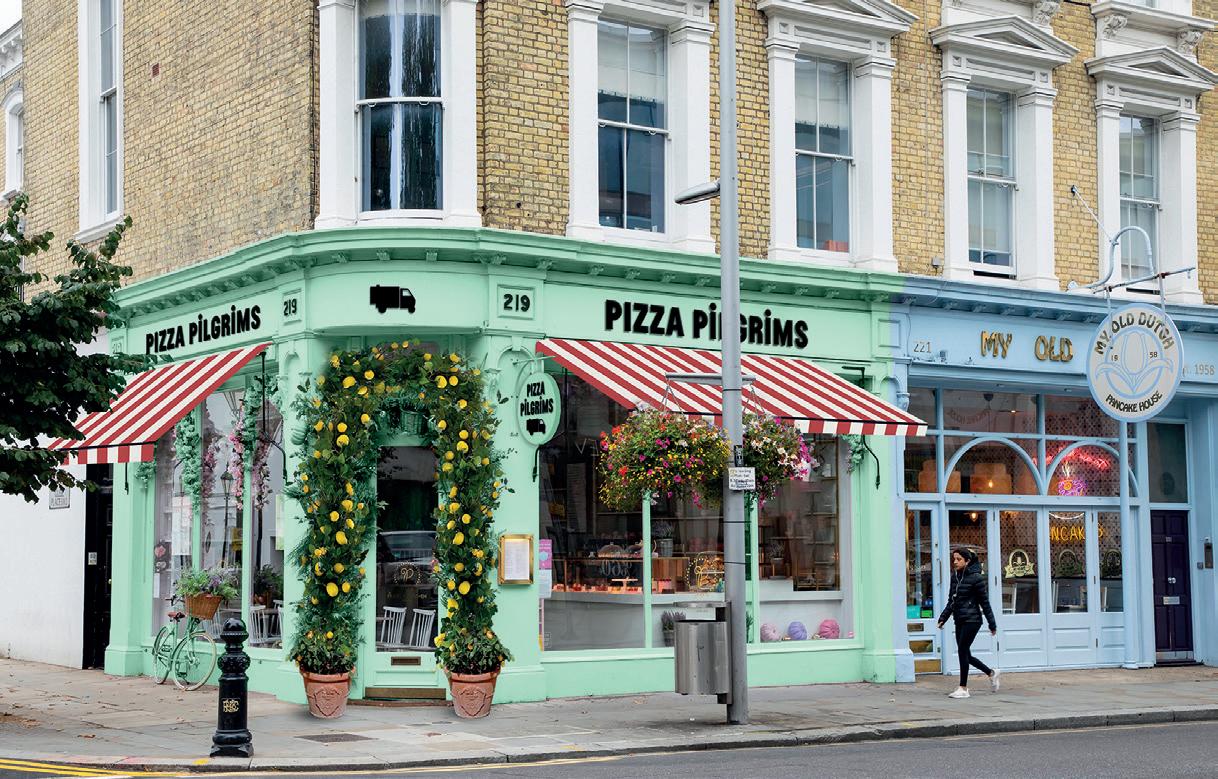
“Bringing Pizza Pilgrims to Chelsea feels like a real milestone for us. Our dad ran a pub on King’s Road back in the day and the area has always pulled us in. We have now secured the perfect corner site to house our Capri-style pizzeria and bring the joy of Pizza Pilgrims to one of London’s most iconic roads. It’s a community we can’t wait to be part of.”
The Chelsea menu will echo their other pizzerias, with the signature Neapolitan-style pizza, crafted from a 72-hour double-fermented dough taking centre stage. Expect classic favourites such as the Margherita, Fiorentina, and the Double Pepperoni & Spicy Honey, alongside the more esoteric specialties: the 8-cheese pizza and the Carbonara with crunchy strands of al dente spaghetti. These dishes are paired perfectly with a curated selection of spritzes.
Pizza Pilgrims Chelsea opens its doors on 18 November.
There are over 2000 B Corp businesses in the UK, and Saclà has now joined this vibrant community of businesses.
“Becoming a certified B Corp for Saclà is a natural evolution,” said Chiara Ercole, Saclà CEO. “As an historic company rooted in its territory, we feel a deep responsibility towards the communities where we operate and the environment that surrounds us. Food companies today must play an increasingly active role in helping solve the environmental and social challenges the world faces. B Corp certification recognises our commitment to conducting business more sustainably, but more importantly, it confirms our intention to adopt a corporate culture that places ethics and sustainability at its core. It’s not an end point, but rather a new incentive to continue improving and generating value, according to principles of responsibility and transparency.”
For Saclà, from a people perspective, respect is the most precious value. Employees are given flexibility to
manage working hours to ensure it accommodates all life circumstances. For this, and the personal development programme, Saclà UK was voted as one of the Sunday Times’ best places to work. Responsibility translates in the support to the Natasha Allergy Research Foundation’s mission to eradicate food allergies, with donations reaching the total sum of £150,000 since January 2023. It also means Saclà promotes the Mediterranean diet and its health benefits, sharing simple recipes on the company’s website.
Further responsibility comes in the way Saclà UK interacts with its community. The business has been involved with

supporting students from under-served backgrounds in their studies. Saclà has funded six scholarships over three years, with a financial scholarship worth £5K for each year of their university course, and has offered some graduates a job at the end of their studies.
The group also prides itself on adherence to environmental protocols, including EMAS and ISO14001 certifications, for continuous improvement through regulations and periodic evaluations to reduce energy consumption, which has already decreased by more than 20%.

Watch out for the B Corp logo appearing on products by the end of this year.


A new Masterbrand campaign is at the heart of Chicago Town’s latest announcement, challenging perceptions that frozen pizza is for back-up and emergencies.
Pizza lovers are encouraged to ‘Feed Your Urge; Go to Town’, based on the insight that a can’t-get-it-out-of-your-head craving for a truly satisfying pizza is impossible to ignore – and how only Chicago Town can feed that urge, because they truly ‘Go to Town’ on their pizzas.
The ‘Freezer’ showcases that oven-bubbling deliciousness can now emerge from this appliance, demonstrating that consumers don’t need to fork out for takeout.
There will be major investment across TV, cinema, VOD, YouTube and social media, alongside a national outdoor campaign covering large format, rail and bus placements. It is expected to reach over 90% of pizza lovers across the UK.
There are four new products, including Tear ‘n’ Share doughballs, Ultimate BBQ Stuffed Crust with Pulled Pork, Bacon Ham & Pineapple for the Tiger Crust range and a change to their Magnificent Meat Feast with a BBQ stuffed crust.
The line-up benefits from a bold packaging refresh which differentiates its premium, ‘Ultimate’ tier from its core range –making it easier for pizza lovers to find solutions for different occasions. Packaging will also feature NaviLens, a unique code that aids those with visual impairments.
Paula Wyatt, head of marketing – pizza at Dr. Oetker UK, said: “Over the past few years, we’ve successfully unified
the brand under our real of taste of Chicago positioning, developing the range and campaign platform to showcase our Chicago-inspired, indulgent pizzas. We are excited to take this to the next level, demonstrating to all pizza lovers that satisfying that all-out craving for delicious indulgent pizza comes from having it always to hand in the freezer.
“We’ve gone to town on our range, ensuring we meet the needs of all pizza lovers. It’s no secret that frozen offers great value but what is surprising is the standout quality that competes with the high-street takeout brands. Our campaign aims to be loud and proud that our home is in the freezer and that’s where you can go to town on delicious, satisfying pizza.”
Tear ‘n’ Share launched in September, with the full range becoming available in the coming months.

A new large sharing format pizza from Dr. Oetker Ristorante is designed to appeal to consumers seeking a pizza option that suits a variety of family occasions.
Ristorante Grande caters for families wanting a quick-toprepare meal. With its oven-friendly shape, Ristorante Grande addresses the inconvenience of needing to cook multiple pizzas to feed the family, fitting on a standard oven rack.

The range seeks to drive category growth, while a slightly higher price point for the larger format encourages increased spend from shoppers while still offering value for money.
It’s available in two flavours: Margherita Formaggi topped with a blend of mozzarella, edam, emmental and pecorino cheeses; and the Pepperoni, featuring creamy mozzarella and pepperoni. The Ristorante Grande range has a unique packaging design which allows for portrait or landscape merchandising, maximising its visibility and appeal.
Laura Robinson, senior brand manager, said: “Catering for a large group with limited oven space can be challenging, with consumers resorting to overlapping pizzas in the oven or cooking in batches to make everything fit. Consumers face this struggle when preparing multiple pizzas for family meals, so we wanted a product that would make mealtimes easier.
“The Grande Margherita Formaggi and Pepperoni pizzas are set to become staples in midweek meal planning, providing a convenient, quick to prepare and delicious option for busy households,” concluded Robinson.
Available to purchase in supermarkets from October 2024 for an MRRP of £4.50.
Leading independent high-end retailer, Booths, is offering customers the chance to try the latest innovation in awardwinning cheese experiences.
Ilchester, the home of cheese curators and master blenders, launched Dirty Toppers earlier this year, which brings a popular eating-out trend straight
from the restaurant into the home. And Booths are now stocking this new cheese in stores across northern England.
Dirty Toppers are chunky cheddar cheese melts available in two tasty flavours that pair nicely melted on top of fries, nachos, pasta, jacket potatoes, burgers, garlic bread and more.

Fiery Sriracha and Sweet Honey and Fragrant and Mild Katsu Curry launched in Farmfoods and SPAR stores across the southwest of England and Scotland in 160g packs earlier this year.
Karen Bagwell, brand manager for Ilchester, said: “We are over the moon that Booths will be selling our innovative and award-winning Dirty Toppers. Ilchester prides itself on curating cheeses that are inspired by changing food trends and consumer demand.
“Ilchester Dirty Toppers have made it easy for people to adapt popular diningout experiences such as loaded fries and nachos and serve these tasty dishes with our Dirty Toppers melted on top.
“And the icing on the cake is that the Dirty Toppers Fragrant and Mild Katsu Curry flavour won a Gold Award in the Best New Dairy Product category at the International Cheese Awards 2024.”
Dirty Toppers are available to buy in Booths stores in northern England and in Farmfoods and in SPAR stores across the southwest of England and Scotland. Both avours are available in 160g packs.
This Christmas, Bauli is looking to bring a tough of magic to the festivities, now available at ASDA and Ocado.
Bauli cakes and biscuits have been part of Italian celebrations since 1922. Authentically made with the finest ingredients – including an exceptional, aged Mother Yeast – its delicious flavours and iconic lilac packaging have been at the heart of a century of holiday traditions.
The Panettone is a sweet, dome-shaped, buttery Italian fruitcake, studded with candied citron and raisins. The long fermentation process creates a flavour that is rich yet delicate.
Bauli Pandoro is a star-shaped cake from Verona with a soft texture and subtle sweetness. Light and fluffy like brioche, Pandoro contains no fruit and is traditionally dusted with icing sugar for an elegant finish.
From its humble beginnings in Verona to its modern production facilities today, the Bauli family’s passion for baking has never wavered. It’s no surprise that Bauli is Italy’s market leader for both Pandoro and Panettone*.
The secret is its naturally fermented sourdough starter, or ‘Mother Yeast’ –the special ingredient that has made Bauli’s products unique. Cared for meticulously every day, it delivers a unique lightness, thanks to a 40-hour double natural rising process. This results in an incredibly soft and palatable texture,
without the use of chemical additives or preservatives.
Bauli Panettone is available in familiar 500g boxes as well as mini 90g packs, ideal for hanging on the tree. You can also enjoy Bauli Panettone with Pistachio cream or Baileys cream, both available in 500g packs. Bauli Pandoro is available in 500g and mini 100g packs.
At ASDA, Bauli’s 500g Panettone is priced at £7, with the 90g mini packs at £2.50. Bauli’s 500g Pandoro is available for £10 at Ocado, and the 100g mini packs are £3.45.
*Italian Market Share Data Christmas 2023.





THE SAFE CHOICE FOR AN AUTHENTIC FLAVOR!
The “Napoletane” flours are designed for those who love the taste of tradition. Developed in collaboration with the Masters of Neapolitan Pizza, they are available in two versions: the Green, ideal for simple and direct doughs, and the Red, for a more structured and resilient dough.
le5stagioni.it/en


Some of the most gifted emerging UK chefs were celebrated at the S.Pellegrino Young Chef Academy Regional Competition, with an Asian-inspired creation proving victorious.

The S.Pellegrino Young Chef Academy Competition is a global initiative to discover and mentor the best talent aged 18-30 – and the UK regional final for 2024 has crowned its winner.
Ben Miller took home the prize, following an outstanding competition with nine finalists at Le Cordon Bleu Cookery School in London on 25 September. The 29-year-old from Canada has been working in kitchens since he was 15, starting at a family run catering company in Calgary, Alberta.
Miller’s love of food and creative expression has always been at the heart of his culinary journey, driving him to explore techniques and flavours. He credits his passion for combining artistic expression with culinary innovation in helping fuel his ambition, as he seeks out challenges to refine his skills and push the boundaries of his craft.
He also received further recognition with the Acqua Panna Connection in Gastronomy Award, which celebrates the dish that best represents the culinary heritage of its native region and was voted for by the nine participating mentors. A gala ceremony at the NoMad Hotel in London celebrated the event.
Miller is a sous chef at Alex Dilling at Hotel Café Royal – and will now represent the UK at the global Grand Finale, taking place in Milan next year, where 15 finalists will compete in front of seven internationally renowned chefs.
Miller won over the renowned jury – consisting of Santiago Lastra, Nokx Majozi, Lorna McNee and Adam Smith – with his ‘Ode to Sam Yee’, a signature dish he has been perfecting for years.
The recipe featured ‘Crowned Roasted Duck Breast with Szechuan Jus and
Garlic Choi Sum, Confit Leg Rice under Brown Butter Sabayon with a Foie Gras Siu Mai in an Alsace Bacon Consommé, with MingCha Jasmine Blossom Tea’.
Miller, whose partner is from Hong Kong, said: “I have entered 13 competitions like this during my career and this is the very first I have won. It’s always a huge challenge to take part in these tests and coming away with a loss can be disheartening but it also makes us young chefs hungrier to succeed.
“This has been a fantastic process and it’s amazing to see so much talent across all of our signature dishes. I look forward

to representing the UK next year.”
Two other chefs were awarded at the Regional Final event, winning the collateral awards, and will have the chance to win global titles, announced at the Grand Finale next year:
● S.Pellegrino Social Responsibility Award: Sude Hancher, for her ‘Cauliflower & Halibut’ dish
● Fine Dining Lovers Food for Thought Award: Kurtus Auty for his ‘Courgette Dive’.
Additionally, a discussion attended by the Michelin-star judging panel of Smith,

McNee, Majozi and Lastra – alongside emcee, food writer and author, Sabrina Ghayour-Lynn – provoked a lively Q&A for all in attendance.
The S.Pellegrino Young Chef Academy Awards are held every two years to champion and celebrate talent throughout the world, encouraging them to bring their best to the table.
To stay updated with announcements and news about this initiative that aims to discover and nurture brilliant gastronomic talent, visit sanpellegrinoyoungchefacademy.com.


Come and say hello to Mulino Caputo at EPS, following a special year to remember.

It’s an extra special European Pizza Show (see full preview on pg 34) for Mulino Caputo, with 2024 being its centenary year. Fresh pasta is the essence of craftmanship, born in homes
with simple ingredients (water and flour), alongside increasing attention to the quality of raw materials. And Caputo is acutely aware of the essential need for calibrated and silky flours, ideal for creating shiny and perfect dough.
For three generations, the Caputo family has lived and breathed the art of grinding – a passion that runs through the veins. A love for the flour inherited by grandparents that is still transmitted into products today. Every grain is ground slowly and carefully selected. A legacy to a belief in the product, to the tune of around 1000 tonnes of wheat in 24 hours.
The approach has been rewarded by the markets, being present in around 80 countries – including Australia, NZ, North and South America, South Africa, the Middle East and Europe. This global influence could be seen in the XXI edition of the Caputo Trophy Pizza Chef World Championship.
In the Neapolitan Pizza Stg, 35-year-old Chliean chef Daniela Zuniga topped the podium. A record number of foreign delegations were welcomed, with 600 competitors from five continents, from the young to the very experienced. “This year was a truly special championship and there couldn’t have been a better opportunity to share our satisfaction and joy with friends, collaborators and pizza chefs from all over the world,” said managing director, Antimo Caputo.

“Our UK business has grown a lot because we create synergy and cooperation with our partner, Casa Julia – always remaining close to the needs of clients and chefs.”

“We welcomed a record number of foreign delegations: 35 with 600 competitors from five continents, all converging on Naples, which confirms itself as the capital of pizza. We are pleased with the youth participation and variety of categories: from American to contemporary, gluten-free to fried pizza.”
The Caputo Cup stopped in some of the 80 countries where its flour is exported, including Japan, Korea, Brazil and Germany. It’s a travelling competition that offered further creative inspiration to celebrate a century of activity – local champions competed in the World Cup staged in Naples in June.
The future is looking particularly bright, with the arrival of a new factory in Ripalimosani in the province of Campobasso around September 2025. An estimated 16,000 sq m will be available for flour packaging, powered by renewable energy thanks to the installation of solar panels over the entire area. The orientation of the structure is designed to guarantee maximum energy efficiency, equal to 2.5 gigawatts. “It will allow the reduction of space for handling goods, resulting in a reduction in consumption of up to 15%. Certainly a point of reference for the local economy and a virtuous example of sustainable development,” continued Antimo.

The final centenary event took place on 19 October in Campobasso, the flagship, with Il Futuro che Cresce, putting the last stone in place for the new building.
And in terms of EPS, it’s a very important show. “We meet a lot of people to help promote and grow our brand. We have attended for several years and consider it a strong event across the market and our clients. Our UK business has grown a lot because we create synergy and cooperation with our partner, Casa Julia – always supporting us and remaining close to the needs of the clients and the pizza chef,” concluded Antimo.








Agrichef Maurizio Bocchi is on a unique quest to both educate and engage.
Blessed with a unique appreciation of agriculture, there is no one better placed to espouse the many benefits and versatility of extra virgin olive oil (EVOO) than Taste Lancashire Ambassador and proprietor of La Locanda restaurant in Gisburn, Agrichef Maurizio Bocchi.
Born on the banks of Lake Maggiore in northern Italy, Bocchi has been developing an affinity with ingredients and produce his entire life. La Locanda has been established for over 20 years –and last year received a PAPA Award for ‘Best Independent Italian Restaurant’.
But the development of EVOO, and a broader understanding of its numerous benefits, is a particular passion.
“Sharing my knowledge is a lifelong dream,” said Bocchi. Striving to achieve this goal, he launched a campaign, encouraging people to embrace a balanced and nutritious diet.
“In September 2023, I hosted my second EVOO symposium alongside several experts, from producers to scientists and journalists. With foodservice suppliers, local media and council leaders in attendance, we collectively shared expertise.”
Unsurprisingly, the La Locanda kitchen is stocked with the best EVOO from small, certified producers across Italy. Using sustainable techniques, respect for the land’s heritage and ancient olive trees is paramount.
Bocchi’s partnership with Gabrielloni Olio - Recanati, in the Marche region of Italy is seemingly unbreakable.

“The key to excellence is a scrupulous oversight of the entire production process, from grove to bottle. Since 1955, they have created the highest quality EVOO by traditionally handpicking and pressing the olive fruit. It’s not just business but a lifelong friendship.
“Olives are harvested early on, just as they begin to take on their final colour. This ensures the oil is full of aromas hinting at fresh fruit and greenery, with heightened levels of polyphenols, low acidity and exceptional taste and scent.
“Selected one by one, with only the fresh and healthy reaching the mill, they are processed after two hours from the harvest. And the mill is one of the few remaining to use the age-old method of pressing olives with friscoli – circular fibre disks piled up on top of each other.” The final result is characterised by a vibrant green colour and uniquely complex flavour profile.
So, what are the key EVOO benefits?
“It is at the heart of the Mediterranean diet and a staple for some of the world’s healthiest populations – and an integral ingredient to all of my dishes.
“But many are unaware of its many uses beyond culinary delights. Delve deeper to uncover endless possibilities for enhancing beauty, wellness and sustainability in everyday life.
“Being rich in antioxidants, vitamins and fatty acids makes EVOO perfect for


any skincare routine. It can be used in soaps, as a gentle makeup remover or for deep hydration. As well as a natural emollient that helps condition hair and a carrier for essential oils in aromatherapy.
“EVOO’s natural cleaning properties also make it an eco-friendly alternative to conventional household cleaners. It can be used to polish and condition wooden furniture or leather goods, restoring shine and suppleness.
“And you can drink a spoonful (the recommended dose is 40g per day) when you wake up or before breakfast. It just goes to prove you don’t have to be a chef to appreciate EVOO!”
Consumers are much more aware of the importance of understanding where food has come from – which gives EVOO a distinct advantage.
“This superfood ingredient has been on supermarket shelves and in kitchen cupboards for many years. Nutritionist attitudes have changed as to the importance of EVOO, historically not


recommending the oil due to its high calorie content. However, with research showing evidence of anti-inflammatory properties, a daily dose is recommended.
“Olive oil tourism, also known as ‘oleotourism’, is also a growing trend around production. Visitors can take guided tours of groves and farms to learn about cultivation and harvesting. These often include a visit to mills, with regions hosting events and festivals.
“And closer to home, tastings (which we host at La Locanda) allow enthusiasts to sample various types and learn how to recognise high-quality oil.”
However, there’s no escaping the soaring retail costs, with consumers being forced to opt for cheaper options.
“Quality EVOO does come at a higher price but there are important factors to consider: adverse weather conditions can result in a poor harvest (as has happened for the last two seasons). Also, the ratio is 9/10% of olives harvested.
“Despite the nutritional importance of EVOO, many less well-off groups (particularly the elderly) choose

alternative, cheaper oils, which in turn can compromise their health. Confusion has also been created on supermarket shelves with the offer of cheaper oils that combine residual percentages of olive oil mixed with seeds or other vegetable oils.
“The rock-bottom prices attract consumers but these products do not always have the same regulation or controls as provided for quality EVOO, so always pay close attention to the label.”
Sage advice from a man who has spent his life exploring and learning about food – and we are blessed to have him on our shores.
Discover more about quality EVOO at agrichef.co.uk/extra-virgin-olive-oil.


A staple ingredient synonymous with Italian food is olive oil, with its use dating back to the ancient Greeks. Thanks to various health benefits, versatility and stunning flavour, there’s no questioning its importance – and Filippo Berio has been a major player for decades.

“Without doubt, our biggest success factor is our market presence,” said Lisa Mullins, marketing manager, Fillipo Berio UK. “As the number one olive oil in the UK for over 40 years, we are widely available in all the traditional grocery retailers, online, symbol group retailers and independents – as well as wholesalers such as Costco.

The story of Filippo Berio began in 1867… and there are many more chapters still to be written.
Before being bottled, every delivery that arrives at our facility in Italy is chemically and organoleptically analysed in our own laboratory to ensure authenticity. Filippo Berio only supplies product that complies with all legislative requirements and meets the declaration on label.
“This meticulous attention to detail and passion for excellence is what makes our olive oil truly special – both retail and foodservice customers know that when you buy Filippo Berio, you get quality.”
“But of equal significance is consistently investing in building brand equity. As a result, time and time again research confirms that our credentials of quality, authenticity and heritage are well understood and valued by customers.
“What sets us apart is our unwavering commitment to quality at every stage of production. Each batch of our olive oil undergoes rigorous testing to meet our high standards.


However, there is no escaping the reality that olive oil has been one of the most high-profile products to have spiked in price. Olive supply has been dropping, with high temperatures and drought a major factor. While lower production in Greece, Morocco and Turkey is set to impact the market substantially.

“There is also chronic inflation, which has been driven by record-breaking increases in the cost of raw materials due to poor harvests in the Mediterranean region,” continued Mullins.


“Inevitably, this has pegged back demand to a certain extent and Nielsen measures the market at -5.9% vs last year.
“The fluctuating cost is indeed a challenge. We have open and transparent conversations with retailers and try to approach it in as collaborative a manner as is possible.
“We have looked at price points across the main retail formats and worked with retailers to ensure they are carrying the optimum range that cater to different budgets, without compromising on quality.”
At least recent reports claim that the forecasts for the 2024/25 olive harvest are much improved, especially in Spain (the world’s number one producer), with spring rains offering benefits to the groves and production costs likely to settle down – but don’t expect significant price falls in the short term.
While economic pressures inevitably impact foodservice, the appetite for quality products that offer value in terms of flavour and health benefits is still strong.
“There is an increasing awareness of what olive oil offers, with its rich content of monounsaturated fats and antioxidants,” said Mullins. “Also, a lasting positive legacy from lockdown was UK consumers rediscovering a love of cooking and becoming adventurous in their culinary pursuits. Olive oil being such a kitchen staple has benefitted from this trend.

“Our sister brand, Sagra, is bringing to market an extra virgin olive oil blended with sunflower oil, combining the superior health benefits, flavour and nutritional profile of extra virgin with the mildness and cooking versatility of sunflower oil –available in 5L PET bottles.”
Of course, the Italians have a different perception regarding olive oil, in comparison to the UK. So, what should we be learning from them?
“They view it as not just a cooking ingredient but a cultural staple, integral to their culinary identity and daily life. From Italy, we can learn the importance of seasonality and regionality – ‘eat the season, eat the region’. Italian food is all about simple dishes made with good ingredients.”
And while Fillipo Berio is a familiar retail item on supermarket shelves, foodservice relationships are integral to the business. “These allow us to reach a broader audience through restaurants, catering services and other food establishments. We offer a wide range of kitchen-friendly pack formats in both PET and our iconic tins,” concluded Mullins.

“Without doubt, our biggest success is our market presence.”

As a family-owned, longstanding leader in the cheese industry, Joseph Heler continues to make waves with its new ventures: Tex Mex Cheese Co. and Eatlean Ingredients. Though recent entrants to the foodservice sector, these brands are rapidly gaining traction as go-to suppliers for operators looking for innovation and versatility in cheese o erings. Their secret? A seamless blend of tradition, expertise and future-forward thinking, backed by consumer insight.
Tex Mex Cheese Co. and Eatlean Ingredients bring a unique combination of products that o er superior taste, performance and health bene ts. Tex Mex Cheese Co. provides the robust, bold avours that have become increasingly popular, particularly in American and Mexican-inspired meals and fusion dishes. Meanwhile, Eatlean Ingredients focuses on healthconscious options, providing high-protein, reduced-fat cheeses for pizza alternatives, without compromising on taste or texture.
Products not only elevate the taste pro les of pizzas, pasta, ready meals and sandwiches but also o er performance advantages such as better meltability, stretch and lower fat content. This ensures suppliers can deliver a premium, healthier product that aligns with modern dietary trends.
Within the Heler group, there is also the ability to call on an extensive library of 250 avours, while the exibility of the manufacturing sites enables customers to develop products that deliver on functionality from a manufacturing perspective.


Joseph Heler’s Tex Mex Cheese Co. and Eatlean Ingredients are looking to revolutionise the sector, says Eatlean head of product development, Richard Thorpe.
Joseph Heler’s heritage, built over decades of cheese-making excellence, laid the foundation for Tex Mex Cheese Co. and Eatlean Ingredients. What inspired these ventures? A clear demand for innovation, catering to both avour-packed indulgence and health-conscious consumers. Eatlean Ingredients, in particular, was born from a desire to combine the best of both worlds – creating a cheese option that delivers all the taste with fewer calories, lower fat and higher protein.
Building strong relationships in the ingredients sector has been critical to success. Joseph Heler partners with some of the most prominent names in the sector, from large pizza and sandwich manufacturers to ready meals. These partnerships go beyond simple supply agreements; they are collaborative e orts to innovate and re ne the o ering. The feedback loop allows us to continually enhance functionality and taste.
To continue growth, Joseph Heler has invested in its people, with Sara Greenhalgh joining as director or ingredients. Greenhalgh has over 30 years of experience across retail, foodservice, ingredients and QSR. Richard Thorpe, with more than three decades of experience in the dairy industry, joined the Joseph Heler business earlier this year, having worked with some of the nation’s top cheese brands. As head of product development, his focus will be on leading innovation and introduction of Eatlean ingredients – a new division on serving the foodservice sector – as well as the Tex Mex Cheese Co brand, to help the company’s expansion into the B2B cheese market.
And 2025 is set to be an exciting year. We are expanding product lines to include even more health-conscious options, while investing in sustainable production practices, ensuring that we meet not only the demands of the present but also our responsibility to future generations.
With Tex Mex Cheese Co. and Eatlean Ingredients, Joseph Heler is not just supplying cheese; we are rede ning what operators can expect from their supplier. By focusing on innovation, customisation, and health trends, we are helping pizza, ready meal, QSR and foodservice operators o er products that cater to modern consumer demands while standing out in a crowded market.


At Joseph Heler Ingredients, we don’t just supply cheese we provide solutions. With over 250 varieties, flavours and formats to choose from, including grated, sliced, deli-block, pizza ropes, high-protein/low-fat, and specially formulated options, we have the cheese to meet any requirement. From food service to large-scale food manufacturing, we are the partner you can rely on for quality, consistency, and innovation.
Need something unique? The answer’s yes. At Joseph Heler, we pride ourselves on working hand-in-hand with our clients to create bespoke cheese ingredients tailored to your exact specifications. Whether it’s a custom blend, seasonal flavour profile or a unique formulation, our team is here to deliver exactly what you need.
Our brands reflect our commitment to quality, versatility, and market-leading innovation. With Joseph Heler, you get more than just a supplier; you get a partner dedicated to helping your business thrive.
For any cheese ingredient challenge, Joseph Heler is the answer. Contact us now to discover how we can elevate your products to the next level.
Following on from our feature in the last issue, we caught up with the judges gathered at the sessions for the Manufactured Pizza Award. 2024 pizza, pasta & italianfood
In early September, the PAPA Awards team undertook their annual pilgrimage to nd the nest fayre in the three award categories which recognise excellence in the manufactured sector of the industry.
First up, they headed to Paddock Wood, where Jestic have hosted the manufactured pizza judging day for over a decade.
The development kitchen has just had a complete renovation. It showcases Jestic’s comprehensive portfolio of catering equipment and was the perfect venue for the judges to choose the winners.
Over 40 pizzas were judged, representing entries from all the major UK retailers and brands. Bringing their appetites and expertise to the deliberations were three professionals with a wealth of experience that made them eminently quali ed.
A long-time supporter of the awards, Michael Eyre is product director at Jestic and a regular judge, while also contributing to the Pizza Chef of the Year competition nals. As an expert adviser to many leading household names, Michael has helped them develop their restaurant concepts into successful restaurant chains, as well as working with global brands and Michelin-starred chefs in developing pro table concepts and menus.
Michael was joined by Katy Habibian, the owner and franchisor of Village Pizza. She joined the world of pizza 32 years ago, with the goal of providing restaurant-quality food to the homes of her customers and changing the face of the industry, training top team members, using the highest quality ingredients and being involved with the community. She has been passionate about pizza and the sector ever since.
Chris Dickinson, business development director at Pan’Artisan, completed the judging panel. Chris has worked in the baking industry for 44 years, which includes 22 years in the pizza industry. He has worked developing bespoke pizza dough recipes for Pan’Artisan, collaborating with Asda, Costco, Gordon Ramsay, Paul Ainsworth, Bella Italia, Strada, Center Parcs and many others.
The panel were judging the entries on appearance, base quality, taste, texture and value for money. They were treated to a kaleidoscope of avours including gastro charcuterie and chutney, carbonara bianca, lamb with feta and red onion, chicken arrabiata and cheeseburger, to name just a few. Pizza-style sharing atbreads were prominent this year, with a number of entries following this trend.
At the end of a long day of tasting, the judges were able to produce a shortlist of eight worthy contenders.
The winners of the premium and value categories will be revealed at the PAPA Industry Awards Dinner.
• Aldi - Specially Selected Chicken Florentine
• Asda - Spicy Pepperoni Sharing Flatbread
• Co-op - Irresistible Salami Cabrese
• M&S Collection - Chicken Tikka Masala
• M&S Collection - Quattro Formaggi
• Morrisons - The Best Garlic Mushroom, Tru e & Mascarpone
• Morrisons - Takeaway Classic Crust Loaded Meat Feast
• Tesco Finest - La Pepato Porchetta, Pecorino and Pepper


are in for


Our convenient pasta sauces are quickly becoming a customer favourite! Packed with delicious, healthy tomatoes, each sauce provides 1 of your 5-a-day, and has been hailed as the “tastiest on the market” and “incredible value for money.” Our customers love the sauces’ “high quality” and “versatility,” raving that they practically “sell themselves” with their “rich, flavourful taste.”




Want to try them for yourself? Order a free tasting box today by emailing: sales@silbury.co.uk





Another day of judging great food, this time in the Italian Style Food and Italian Style Ready-Made Main Meal Awards.
Leathams played host for the judging sessions to determine the winners in the two ‘Italian style’ award categories, as they have done since these categories were introduced in 2022.
Their kitchen was the perfect place to ensure all products were prepared as they would be by the consumer, ensuring the judges enjoyed a ‘real-world’ tasting experience.
Speaking of experience, there was no shortage on the judging panel, with three experts from the industry on-hand to conduct the deliberations.
Ex-restaurateur Nick Gross is founder and principal partner of LanburyHundred; a specialist hospitality consultancy. Nick and his colleagues work nationally and globally across a very broad range of cuisines for startups, existing businesses, individual restaurants, private individuals, corporate entities and hotel chains. As well as F&B concept creation, feasibility studies, operational reviews, business plans and project management, Nick is pleased to have been a judge for the PAPA Awards since 2021.
Joining Nick was Sam Brotchie, founder of Sexy Buns. Sam’s career in food began with a transformative turn when he spent a year farming in Australia, developing a deep appreciation for fresh, high-quality ingredients. This was followed by a position at Le Suisse in St-Jean-de-Luz, a restaurant owned by the esteemed chefs Yves Camdeborde and Ramuntxo Courdé, before joining the Michelin-starred Céleste at The Lanesborough under Eric Fréchon where he honed his skills in ne dining.
Completing the judging trio was Olly Henshall, a senior consultant at Food Innovation Solutions. Having built up experience as a development chef in both retail and manufacturing, he has worked on multi-channel accounts
across product ranges such as food-to-go, ready meals and baked goods. Based in central London, Olly can often be found in the queue for the latest ‘foodie’ opening, hosting industry food safaris or behind the stove at Mission Kitchen.
The day covered an array of ready-made meals and ingredients, including a diverse selection featuring pasta sauces, rollitos, arancini, Italian breads and more.
The judges considered both retail and foodservice products and the judging criteria included appearance, aroma, taste, texture and quality, as well as value for money.
The winners in each category will be revealed at the PAPA Industry Awards Dinner.
Italian Style Ready-Made Main Meal Finalists
• Aldi - Specially Selected Chicken and Nduja Pasta Bake
• Aldi - Specially Selected Tuscan Style Sausage Pasta Bake
• Dell’Ugo - San Marzano Tomato and Burrata Ravioli
• La Tua Pasta - Slow Cooked Beef & Red Wine Tortelloni
• PizzaExpress - Bolognese Lasagna
• Sainsbury’s - Taste The Di erence Tru e Mac & Cheese
Italian Style Food Award Finalists
• Aldi - Specially Selected Mascarpone and Nduja Pasta Sauce
• Asda - Cheesy Garlic Sharing Flatbread
• C. Carnevale Ltd. - Salsicciamo Sweet Italian Sausage
• Dell’Ugo - Pinsa Bread
• Fratelli Beretta - Gianciale Sticks
• Fratelli Beretta - Salame al Tartufo con Parmigiano Reggiano
• Fratelli Beretta - Porchetta
• La Tua Pasta - Speculoos Bomboloni









Pizza paddles at the ready, the nal of Pizza Chef of the Year is almost upon us and the nalists vying for the title and the cash prize have been revealed.

Not everyone has what it takes to take on the challenge of this toughest of pizza competitions. You see, while there will always be a special place in our hearts for the traditional pizzas and the chefs who make them, we also love to be teased and tempted by the lure of something a little on the wild side.
As you’ll see from the next few pages, this year’s nalists haven’t disappointed, using all of their skills to marry the sponsor ingredients to other complementary avours.
We are so excited to try them at the nal on 7 November 2024 – and to nd out who has won later on that evening at the PAPA Awards Dinner.
















enquiries@whitworthbros.ltd.uk


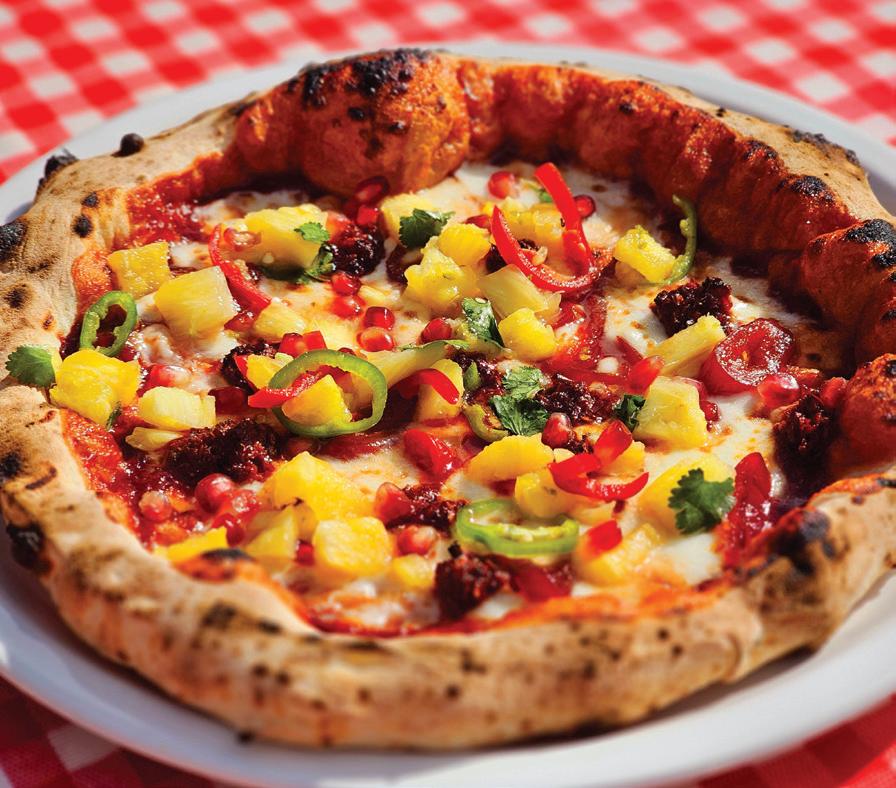


Scott
Scott’s


Funki’n Pepp
Brigi Stamber
PizzaFace

Mount Etna
Stefano Bovo
Maurizio Dining Co

Really Hotdog
Matt Ryles Semonlinas


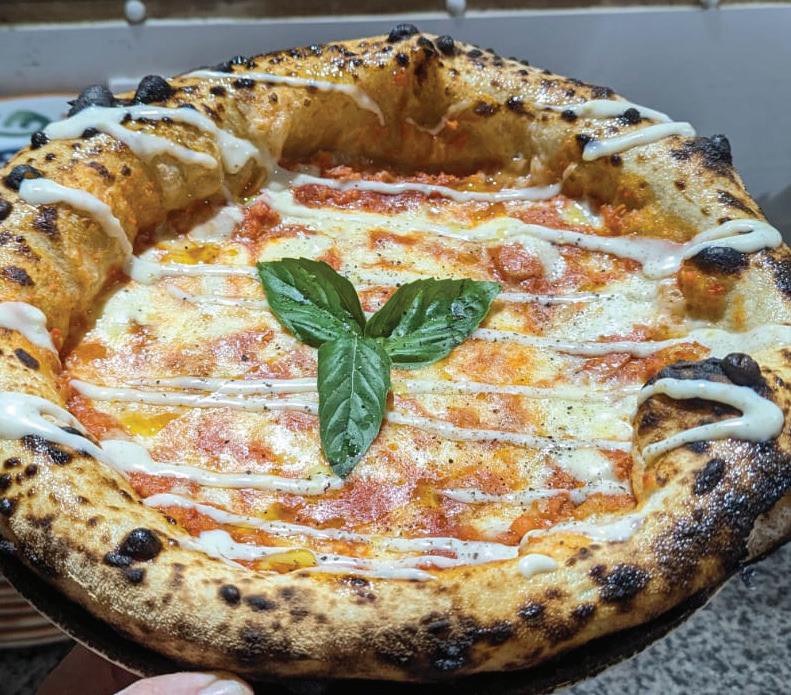
Ragu’ Pazzo
Michele Rutigliano Due Forni

Trombettiere Di Cittiglio
Simon Towers
Il Pirata Pizzata
Welcome to the biggest European Pizza Show ever, as thousands of industry professionals come together.


Bellavita Expo is celebrating its 10th anniversary of international trade shows and, in collaboration with Cibus Parma and TuttoFood Milano, is bringing you Europe’s largest event dedicated to the pizza sector: the European Pizza Show (EPS).
This follows the merger with the historic European Pizza & Pasta Show, making it the ultimate gathering for professionals in the F&B industry, with 10,000 visitors expected.
Taking place at Olympia London on 26-27 November 2024, EPS will host over 300 exhibitors showcasing a diverse range of offerings. Attendees can explore companies specialising in pizza ingredients and toppings, innovative food products, professional equipment, beverages for restaurants and pizzerias and cutting-edge technology solutions. These brands will present the latest products and innovations, offering a comprehensive look at evolving industry trends.
“The show has grown significantly over the years,” said Bellavita Expo marketing manager, Enrico Longobucco. “Initially, Bellavita Expo was very much focused on Italy, as we started as the Italian Food & Beverage Show. However, as the years progressed, we expanded our scope, first covering the broader


Mediterranean region and eventually, through our merger with the European Pizza & Pasta Show, extending to all of Europe.
“With targeted yet powerful marketing campaigns, we’ve positioned the event as a leading platform for showcasing not just pizza but the entire spectrum of F&B products across Europe. This evolution has made EPS a must-attend event.”
Key highlights include the prestigious Bellavita Awards, recognising the best in European F&B. Leading market players will serve as VIP judges, providing expert and diverse evaluations. Also in the schedule is the 50 Top World Artisan Pizza Chains awards ceremony, along with the two-day World Pizza Summit, organised in collaboration with 50 Top Pizza. It


will examine the importance of artisanship, identity, cultural and financial sustainability and the new trend of pizza in the context of luxury. And for the first time, a main focus will be the key role of women in the development of the sector.
Finally, the European Pizza Chef Competition highlights emerging chefs competing under the watchful eyes of pizza experts, while the Bellavita Pizza Academy offers an in-depth look at authentic Neapolitan pizza.
“Italian cuisine, especially pizza, continues to dominate the UK market,” Longobucco continued. “We’ve seen this reflected in the enthusiasm for the EPS, where Italian food products and culinary innovations take centre stage.”
Visit europeanpizzashow.com to secure your free trade pass.
N’ artigiana a high-quality brewed beer from Napoli, using only the finest ingredients sourced locally, an Italian beer giving each batch a truly authentic taste of Naples.
N’ artigiana beer, now exclusively available in the UK from Casa Julia Limited, Italian foodservice supplier since 1975.

Casa Julia Limited 11 Springwood Drive, Braintree, Essex CM7 2YN t: 01376 320269 f: 01376 349436 e: info@casajulia.co.uk


Variety is the spice of Carnevale’s offering – and there’s plenty on show at EPS.
Anyone visiting the Carnevale stand (J30) at EPS will enjoy a diverse experience, where attendees can learn more about the company, while trying fresh pasta, pizza and other key ingredients.
An Italian, family run supplier since 1966, Carnevale distributes a complete range of brands – from cheeses to pasta and meat products, across chilled, frozen, ambient foods and beverages.
“Come and meet with our fantastic sales team at EPS, as well as the Italian producers, and learn more about our wide range of products, including our latest additions and personalised services,” said Carnevale marketing manager, Giuseppe Ganguzza.

“We will be joined by leading Italian food brands like Latteria Soresina Grana Padano, Di Marco Pinsa, Strianese ‘Gold Tin’ tomatoes, Pivetti flour, and Dega tinned vegetables. Birra Moretti will also be showcasing their new and everpopular Sale di Mare beer.”
Carnevale works hard every day to improve its quality and range, carefully selecting suppliers from Italy and the UK. It has recently expanded the portfolio to include new items in all categories.
“We have also made a significant investment into manufacturing lines (in the UK) and are finalising the launch of new ranges of fresh pasta, cheese and meats. As such, we look forward to introducing these products to the market in the coming months as they will pleasantly surprise our customers and hopefully make a big impact.
“There has been a growing UK demand for products showcasing the best of Italian cuisine, with representation from its diverse culinary regions.
“We are committed to staying ahead of trends, especially in pizza toppings –
whether it’s vegetarian, vegan, dairy-free and gluten-free. We are proud to offer our customers such a wide selection of options from our portfolio of 3000+ products to meet their needs.”

CELEBRATION TIME
Carnevale try to offer something for everyone, from more accessible options to high-end delicacies. “We are proud to have been serving our customers for nearly 60 years,” continued Ganguzza.
“In 2026, we will celebrate our 60th anniversary and continue to strive for greater efficiency, sustainability and customer service.
“We offer nationwide free delivery with no minimum order. For customers within the M25, we provide next-day delivery, six days a week. Our six national depots, dedicated customer service team and experienced representatives play a crucial role in building strong relationships with our partners.
“In addition, our London and Bedford production facilities produce fresh pasta, cheese and meats daily using British milk and pork. We believe that our customers deserve only the best,” said Ganguzza.


Crafted, Imported & Delivered with Passion


3000+ PRODUCTS 3000+ PRODUCTS


FREE DELIVERY FREE DELIVERY -- NO MINIMUM ORDER NO MINIMUM ORDER
NEXT DAY DELIVERY IN LONDON
NEXT DAY DELIVERY IN LONDON
THREE UK MANUFACTURING SITES
THREE UK MANUFACTURING SITES

C. Carnevale Ltd C.Carnevale Ltd
CARNEVALE HOUSE, 107 BLUNDELL STREET, LONDON, N7 9BN
CARNEVALE HOUSE, 107 BLUNDELL STREET, LONDON, N7 9BN
Phone: 020 7607 8777 Phone: 020 7607 8777 info@carnevale.co.uk info@carnevale.co.uk

www.carnevale.co.uk www.carnevale.co.uk


Wright’s Flour Mill opened the Sonata Pizza School in February 2024 – and the business is relishing EPS. Event manager, Helen Diaz, tells us why.
What can we look forward to from Wright’s Flour at EPS?
At our stand (J48), attendees will have the exciting opportunity to meet our expert technical instructors who are eager to share their knowledge and answer questions. You can also grab a sample bag to try for yourself. There is also the chance to meet our friendly management team and discuss how our pizza school can support your business through tailored workshops, comprehensive training sessions and private hire options – elevating pizzamaking skills to ensure business success.
What’s your specialist o ering?
It’s unique, starting with our high-quality artisan pizza flour that masterfully combines Italian flair with British craftsmanship, significantly reducing air

miles and promoting sustainability.
Next, our Pizza Chef Network Group is a vibrant and informative community of pizzeria owners, pop-up businesses and pizzaiolos who meet regularly at our Pizza School in Harlow. These gatherings are designed to share skills, knowledge and inspiration among members.
At our last meeting, chefs explored New York-style pizza, each bringing their own signature toppings for a cookoff and tasting session. The agenda and hosts are collaboratively decided within the group, ensuring that every event is relevant. Feedback has been outstanding, with chefs feeling inspired.
Additionally, our state-of-the-art Pizza School offers a range of workshops to support the industry, including a fantastic opportunity to learn more about Sonata Flour through our free two-hour workshop. You can witness first-hand how brilliantly our flour performs.
For those looking to start their own business, how can you help?
We are dedicated to supporting newcomers every step of the way. Our workshops are designed to help operators hone their dough-making skills, while providing essential know-how for getting started and growing your venture. We also provide access to a superb network community of pizzaiolos who meet regularly to share support and advice. This collaborative

environment is perfect for gaining insights and building connections. To join the #Teamsonataflour network group and become part of this thriving community, simply get in touch. We’re here to help you succeed!
Chef training is integral. How is your involvement developing?
We are committed to training pizzaiolos through tailored workshops and courses. Our offerings include the ‘Learn to Run a Pop-up Pizza Business’ and ‘Become a Pizza Chef’, designed to equip you with all the required skills.

Basically, Sonata Pizza Flour is the perfect choice for anyone seeking a high-quality product that masterfully combines Italian flair with British craftsmanship. Not only does it offer exceptional value for money, but is supported by the renowned Sonata Pizza School and our vibrant Pizza Chef Network community.
For more info, visit sonataflour.co.uk or email helend@wrightsflour.co.uk.


P I Z Z A F L O U R
i t a l i a n r o o t s . b r i t i s h m a d e


M e e t u s a t t h e E u r o p e a n P i z z a S h o w !

2 6 t h - 2 7 t h N o v e m b e r
O l y m p i a N a t i o n a l H a l l , L o n d o n
e u r o p e a n p i z z a s h o w . c o m
s o n a t a p i z z a f l o u r . c o . u k


The San Marzano tomato of Solania continues to y the ag for exceptional Italian ingredients – and there’s plenty more to come in 2025.
VOLCANIC INFLUENCE
In the shadow of Mount Vesuvius in Naples, the soil for Solania - San Marzano tomatoes is blessed with unique nutrients that help develop its timeless taste. And fortunately for 2024, the harvest in the Campania region has delivered again.
The heart and soul of the operation is Solania owner, Giuseppe Napoletano. “I am one of the few entrepreneurs who has both the land and the processing company. For me, San Marzano is life, thanks to the history of my family – that began with my grandfather and later my father, and the farmers who grew


tomatoes here in San Valentino Torio. And at the time, there was nothing else!” Produce is dependent on a variety of di erent factors. And while the quality has been at its best for the past 15 years with very high temperatures at the end of July and all of August, the crop has been challenging. With an expectation

“Normally, tomatoes are cultivated on the soil but our method delivers the most beautifully coloured and flavourful produce. It’s an exquisite taste that you cannot find anywhere else in the world.”
of rain to get the second crop going, San Marzano plant canning had to be stopped following a shortfall of 20% because of no precipitation.
Solania owns the elds where San Marzano tomatoes are grown, so from the seed to the hand-picking process every aspect is monitored – and there are many facets to a successful crop.
“The rst is the trend of the season,” continued Napoletano. “When it rains too much or is too cool, the product has a lower quality, a bit like what happens with grapes. The second is the farmer’s ability to work with the product.
“The third is technological investment, as with oil and wine. In recent years, we have guaranteed the cleanliness and safety of the product, returning clean water to the river after processing.”
ABOVE GROUND
Blending the sweet and sour, San Marzano tomatoes are the perfect accompaniment for mozzarella especially. And how does the magic happen? A single chestnut stick is staked a half-metre into the soil which

keeps the plants upright, improving air circulation, reducing the risk of disease and facilitating harvesting.
“They are growing o the ground. Normally, tomatoes are cultivated on the soil but our method delivers the most beautifully coloured and avourful produce. Just the smell is unbelievably fresh, crisp and delicate. It’s an exquisite taste that you cannot nd anywhere else in the world.”

And with the reputation of San Marzano continuing to grow in the UK, the business is consolidating the
presence of its brands in 2025, mainly in London, Manchester and Glasgow –alongside importer and partner, Casa Julia. Orders in the UK for 2025/26 have exceeded expectations.
“Next year, we aim to consolidate our presence in foreign markets where there is a growing demand for quality Italian products. We want to grow in the retail sector to meet the needs of a high-end consumer who is increasingly attentive to quality.
“Starting next year, in a newly acquired plant, we will also produce


ready-made, tomato-based sauces to meet the needs of families with less time to cook. Another development will be the production of many products in oil (friarielli, artichokes, aubergines, peppers and pickles).”
Additionally, as from 2024, Pizza Pilgrims has started to use San Marzano. “We are increasing the quality of our pizza with the best ingredients,” said co-founder, James Elliot.
Of course, Italian food and drink has a reputation for being some of the best in the world – and San Marzano is proud to uphold this tradition.
“There is a great opportunity for us,” continued Napoletano. “Consumers recognise the value of authenticity. This encourages us to maintain high production standards and tell our story, leveraging our cultural heritage. I see
a bright future for products like our tomato, that have a direct connection to

the territory and its rich history.
“Consumers should choose our San Marzano range because we o er an experience. Our tomatoes are grown in rich and bene cial volcanic soils, following traditional production methods alongside technological processing that guarantees incomparable avour and freshness.
“We are also committed to sustainability and respect for local communities. Choosing our tomatoes means supporting ethical and responsible agricultural practices. In addition, San Marzano tomatoes are ideal for creating pizzas. A sweet and sour combination that blends perfectly with ordilatte and our,” said Napoletano.
For UK distribution, visit casajulia.co.uk.


Ian Ainslie, international trade specialist at Unsworth, warns of the impact of the Border Target Operating Model on EU shippers and Italian food imports.
The UK’s departure from the European Union brought sweeping changes to the regulatory landscape governing the import and export of goods.
Among these changes, the Border Target Operating Model (BTOM) has been a pivotal policy shift that significantly impacts EU shippers, including those in Italy, known for its exports of high-quality pizza, pasta and other Italian delicacies.
While previously, many EU goods enjoyed frictionless entry into the UK, post-Brexit regulations demand stricter oversight. EU shippers must now ensure that they comply with new border
checks, procedures and safety and security requirements
A defining feature of the BTOM is its risk-based approach to food imports, dividing products into low, medium and high-risk categories. This is designed to protect consumers while minimising unnecessary checks for low-risk goods.
Low-risk products, such as many types of pasta and preserved foodstuffs, face minimal checks. While documentation is still required, these products are generally cleared quickly at the border.
Medium-risk goods, such as processed foods with animal content, may be subject to spot checks and additional documentary scrutiny.

High-risk imports, such as raw meat, seafood and dairy, face stringent checks. These goods must often be accompanied by Export Health Certificates (EHC) and may require physical inspections at the Border Crossing Point.
A requirement for
shippers, particularly those handling products of animal origin (POAO) or food requiring high standards of hygiene, is the use of the UK’s Import of Products, Animals, Food, and Feed System (IPAFFS).
This notification system is used to pre-declare consignments to the UK authorities before they reach the border. Shippers must submit detailed information about inbound shipments in advance of arrival, including the nature of the product, its origin and health certificates if necessary.
For high-risk goods such as meat and dairy, IPAFFS notifications must be completed well in advance of shipment to ensure no disruptions occur.
Recognising the scale of the changes and their potential impact on trade, the UK government opted for a phased approach to implement the BTOM. This allowed businesses, both within the UK and the EU, time to adjust to the new requirements gradually. The phased introduction of the legislation gave Italian food exporters the opportunity to become familiar with regulations over

time, instead of being subject to abrupt, comprehensive checks from day one.
This deliberate pacing allowed EU shippers and UK importers to adapt logistics operations, gaining clarity on the requirements. It also helped minimise disruption to the supply of key food items, including many Italian staples which are highly popular in the UK.
At first, some businesses were negatively affected by the legislation, mainly due to a lack of understanding of the steps that needed to be taken to smoothly export POAO to the UK. Unfortunately, this led to additional costs, delayed deliveries and rejection of goods at the UK border. Thankfully, in a reflection of what happened at the start of Brexit in 2020, conditions have significantly improved since inception, with most Italian exporters having learned how to comply with product categorisation, IPAFFS notifications and provision of accurate EHCs.
Looking ahead, we expect businesses to assess process improvement, as they realise that solutions put in place in the aftermath of Brexit may not offer the best means of trading with EU partners. We’ve seen a gradual move from UK sellers expecting their EU buyers to manage the clearance and transportation, to a more customer-centric philosophy of removing the burden for clients.
Under the new government, there are expectations that it will take steps to streamline the challenges created by post-Brexit regulations. Independent importers and small businesses are hopeful for simplified border processes that reduce the financial and logistical burdens caused by the BTOM.
There is growing pressure for Labour to negotiate more favourable trade

terms with the EU, potentially easing the strict customs and sanitary checks that currently slow down imports of food products. Importers are also advocating for improved digital infrastructure to simplify compliance with systems like IPAFFS and reduce paperwork.
Additionally, there are expectations that the government might introduce financial support or grants to help smaller businesses cover the costs associated with these new regulations. Given Labour’s promises to boost UK trade and protect consumers from rising food prices, businesses hope the government will strike a balance between ensuring safety standards and keeping imports affordable, preventing further food inflation while maintaining access to quality EU goods like Italian delicacies.
When customs legislation like the BTOM is introduced, it is essential that shippers work with a partner that has a profound understanding of new requirements, best practice form implementation and consequences for failure to ensure full compliance. In the run-up to both Brexit and the BTOM, Unsworth helped businesses of all sizes successfully navigate turbulent times and adapt to significant change with minimal disruption.
Having been in business for over 50 years, we offer clients best-in-class service, a depth of knowledge and experience, plus a well-oiled machine that keeps goods flowing when
things are going right. Perhaps most importantly, we know how to react when challenges arise, so delays and costs are minimised. Unsworth offers specific solutions for EU and UK clients that remove trade barriers and allow partners to do business with as little friction as possible – as it was before Brexit. On a wider scale, we handle import and export sea freight for clients from a range of industry sectors and provide solutions to meet sustainability targets and reduce supply chain management spend.

Ian Ainslie has worked in freight forwarding for 25+ years, from dry bulk in Dover to billion-dollar oil & gas projects in the Steppes of Central Asia. Brexit was a unique challenge that he enjoyed meeting head-on and he now helps companies streamline trade between UK and the EU.


Launching a new pasta sauce is exciting – tell us about your first six months. It has been a whirlwind since Saucerer hit the market. We wanted to create something that could bring the joy of an authentic, gourmet pasta meal to everyone – without the time or hassle that’s often involved. We want to excite those uninspired by weeknight cooking. We found jarred supermarket pasta sauces were filled with a lot of artificial bits and bobs that seemed to be bland. How many tomato and basil sauces do you need on the same shelf? The first few months were about experimenting, refining and, most importantly, listening to customers. We adopted a small batch philosophy, getting feedback from early adopters and ensuring that each jar
Saucerer gourmet stir-in sauces focus on quality and delivering a twist on traditional recipes. Founder and driving force, Tim Hillgarth, tells us how.
met our standards for taste, texture and simplicity. We learned a lot!
Starting with a red and a green one, the latter was made from padron peppers; sadly padron goes well with meat but not so much pasta! So, we dropped it and added two other sauces that are smashing it! As well as a collaboration sauce with hot honey.
Market response has been great, especially from taste-making platforms like DELLI market, as well as leading farm shops, delis and luxury stores like Fortnum & Mason. We’ve seen our stir-in sauces gain traction not just with home cooks but with foodservice partners, bakeries and gourmet grocers who appreciate the quality. It’s been a learning experience, too – juggling product demand, scaling production and the complexity of distribution. But seeing people genuinely excited about Saucerer has made it worthwhile.
How big is the Italian influence?
We like talking to Italians because they can be so critical. Some think it’s sacrilegious at first. Then they try it and love it, appreciating our audacity to muck around with recipes their nonna’s
created when they were growing up. Italian cuisine is obviously at the heart of what we do but with Saucerer we’ve taken those beloved traditional elements and modernised them. We don’t want to just replicate what’s already out there. Italy’s influence is in our respect for carefully selected ingredients and the connection between sauce and pasta without using emulsifiers and thickeners – these are non-negotiables. But we are also pushing boundaries with new twists like harissa, marjoram, parsley instead of basil, and hot honey. You name it, we want to see how far we can go!
The magic happens in a small but passionate kitchen where every batch is handmade. We’ve kept the process artisanal because that’s where we believe real flavour lives. The texture of our mushroom one, for example, is second to none. You can feel the individual bits of the five mushrooms we use and it’s slightly different in every batch. We source from trusted suppliers, local and international, working with people who share our obsession with quality. It’s about balancing authenticity with innovation, while making sure every jar delivers a restaurant-quality experience.

How are you looking to build foodservice relationships?
Foodservice will become more of a focus. We’ll approach this channel with a 2.5L container and Tom’s Pasta will be the first foodservice venue serving up our sauce. This month, we’re supplying all 43 of Simmons Bakeries and we’re talking to a very well-regarded premium pub chain which should go live soon. There are very good operators that want to elevate their pasta offerings without having to create sauces from scratch. Saucerer gives them the ability to offer a gourmet experience with minimal effort. In terms of retail, we’re laser-focused on premium grocers, farm shops, luxury and food halls for now.
How can the sauce sector improve?
There seems to be an over-reliance on preservatives, refined sugar, emulsifiers, thickeners and gums, which can dilute freshness and authenticity. Saucerer’s strength is that we’ve stuck to what we’re passionate about – delivering

bold, authentic flavours using the best ingredients without shortcuts.
Another area where we think others stumble is the messaging. So many sauces are loaded with jargon and we’re all about simplicity. People just want a sauce that tastes amazing, feels homemade and can be ready in minutes. We keep it to no nasties, which is why I believe we’re resonating with people tired of over-processed options.
Italian cuisine is on an upward curve in the UK. Are you seeing this? Absolutely. There are some amazing pasta restaurants, like Tom’s Pasta that we collaborated with, as well as Padella and Gloria Trattoria among others – it’s exciting! We’re seeing a renaissance of sorts in the appreciation for Italian cuisine, and I think part of it comes down to pasta bringing pure joy for either lunch or dinner across any season.
People are embracing regional Italian specialties more than ever, experimenting with different pasta
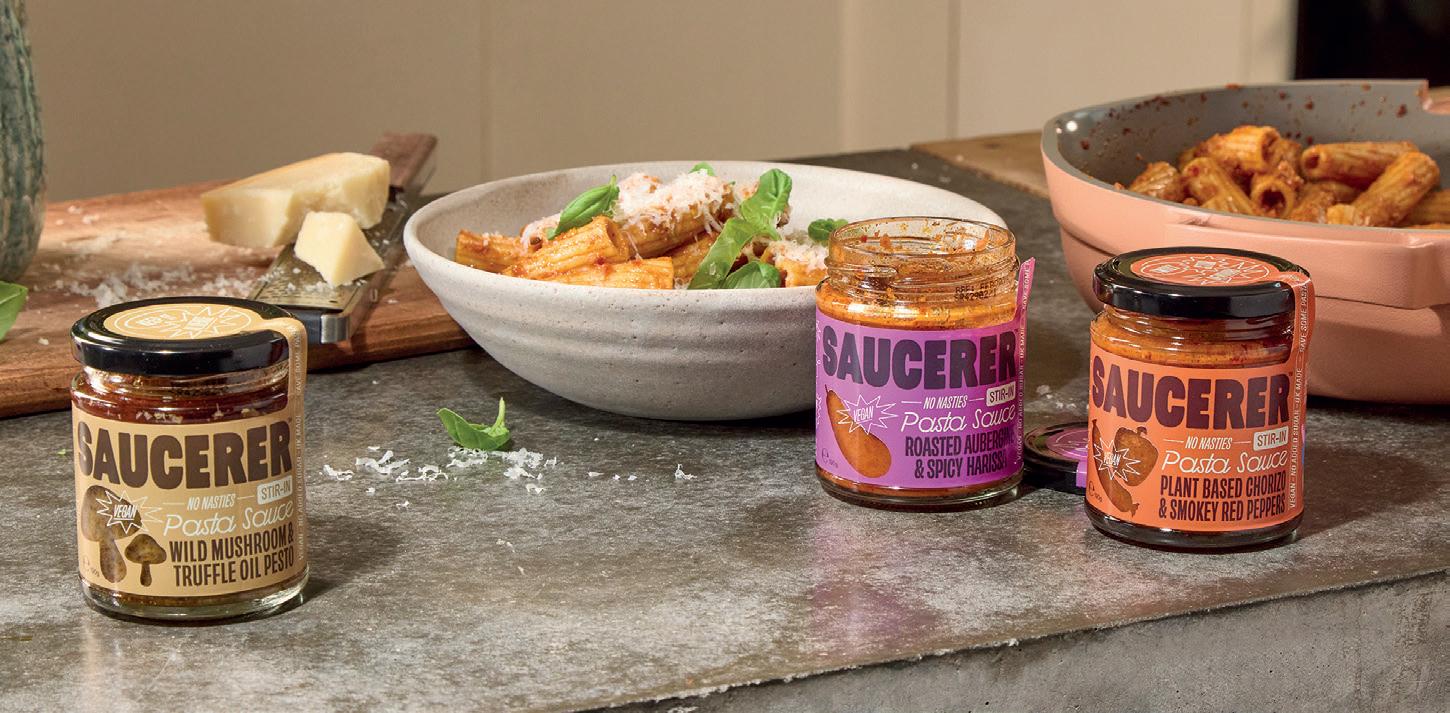
shapes, sauces and techniques. You see it in the rise of Italian delis, pasta-making classes and even restaurants where chefs are putting their own twist on traditional dishes. We’ve definitely seen this play into the uptake in interest for Saucerer.
What are you hoping for in 2025? We’re aiming to be on as many street corners as possible, mainly in independent delis and farm shops –while pursuing export and foodservice. We’ve started exporting to Dubai and have hit the shelves of Spinneys which is exciting, with our eyes on Saudi Arabia as well as the Nordics next.
We’re aiming to expand our range, introducing flavours inspired by regions beyond Italy. We’re also hoping to be a staple in more professional kitchens – imagine going to your favourite neighbourhood Italian and knowing they’re using Saucerer as the base for signature dishes.
Development of sustainable practices is also key. At the moment, our batches are made using 100% renewable energy and we’d like to work on other areas to increase transparency and sustainability.
Ultimately, Saucerer is more than just a pasta sauce – it’s an injection of fun. Whether it’s the ease of stirring into freshly cooked pasta or experimenting with non-pasta dishes, we want people to feel empowered to create something delicious at home. We are challenging the idea that gourmet meals need to be complicated or time-consuming.
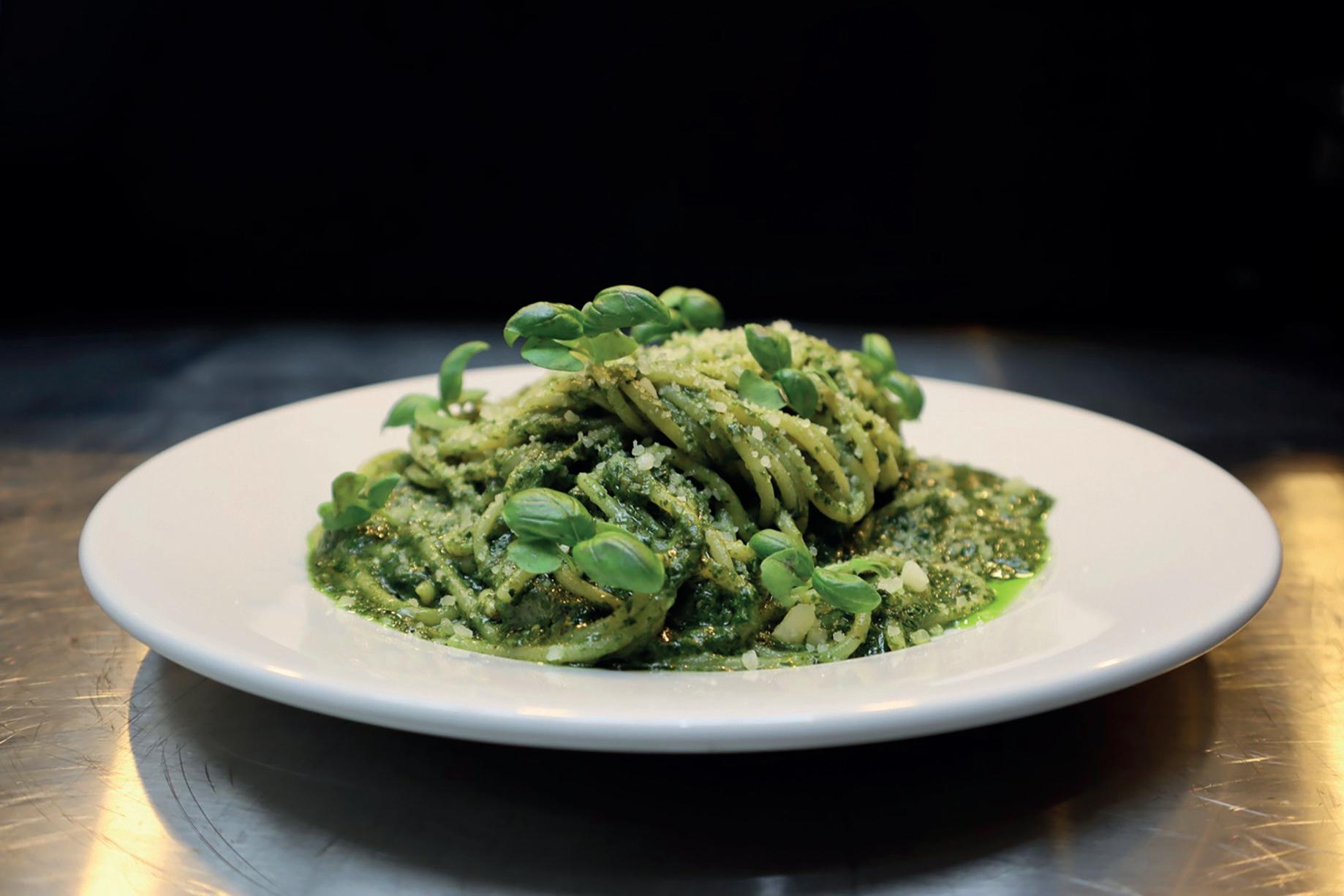
Blessed with a unique menu and a contemporary take on classic Italian dishes thanks to a dash of South American inspiration, welcome to Berkshire’s Gourmet Pasta Co.
When you walk into the Gourmet Pasta Co in Newbury, you’re immediately struck by the warmth of the interior and customer service. A newly opened, independent restaurant specialising in

fresh pasta in the commuter belt market town, it’s setting a new standard for Italian cuisine, with a welcome South American influence thrown in.
The menu features classic starters such as mozzarella arancini with fresh pesto; a cured meat platter; and burrata with sun-dried tomatoes, smashed black olives and basil. I can testify that the visual impact is as impressive as the taste. In particular, the pink sorrentinos (coloured with beetroot) filled with roasted butternut squash and almonds with an orange butter sauce is a triumph.
Other options include the black sorrentinos (coloured with squid ink) filled with salmon and prawn with a tomato, cream and vodka sauce. They’re like large, filled ravioli but round, with more filling-to-pasta ratio.
Some recipes are inspired by the waves of Italians who emigrated to South America in the late-19th and early 20th centuries. “I used to live in Argentina, where there is an incredible pasta tradition, different to classic pasta,” said owner, Hugo Lesser. “I thought it
“Our head chef, Tibi, has been cooking for 20 years, including 10 in Italy, where he learnt how to make amazing pasta. The South American aspect is new but he’s embraced it.”
could lead to a great restaurant back in England and, several years later, spoke to friends who worked in hospitality about the idea and it slowly came to life. In the future, we’d like to sell our gourmet pasta in farm shops and delis too.
“Our head chef, Tibi, has been cooking for 20 years, including 10 in Italy, where he learnt how to make amazing pasta. The South American aspect is new but he’s embraced it and looking to create more Italian/South American hybrid dishes – such as the white sorrentinos filled with slow braised Scotch beef with a sage butter and smoked pancetta sauce being introduced this autumn.”

Pasta dishes include rigatoni, spaghetti and gnocchetti, with a choice of sauces such as spicy tomato, truffle cream and slow cooked beef ragu for diners to mix and match – and Martimucci flour from Carnevale the ingredient heartbeat.
For those wanting an alternative, there’s pan fried chicken breast with cream and mushroom sauce and cod loin with lemon butter sauce. For dessert, why not try the forest berries and cream tart, artisanal ice creams, ladyfinger tiramisu or sumptuous salted caramel cheesecake? Gluten-free options are available throughout.
Handily located in the heart of Newbury, the River Kennet is a soothing backdrop, with the doors opening up in the summer months for that alfresco

experience. And the interiors offer a contemporary feel, with flashes of blue and stripped wood alongside large skylights that flood the space.
A three-course set menu is available Monday-Thursday before 6.30pm priced at £16.50. Families can benefit from the children’s menu priced at £10 for three courses. Gourmet Pasta Co. also offers

pasta and sauces to take away, either cooked or frozen.
Guests can enjoy a selection of white, red, rose and sparkling wines, including English specialities from local vineyards such as All Angels and Stanlake Park.
I was fortunate enough to witness a pasta class first-hand, priced £49 for adults and £39 for under 18s, followed by a three-course dinner and welcome glass of prosecco. It can be booked for individuals, as well as groups. There are also jazz and date nights on the menu.
In a hugely competitive sector, Gourmet Pasta Co prides itself on doing food and drink exceptionally well, at great prices, with consummate service.
Check out gourmetpasta.co.uk


The fifth Pordenone ArtandFood festival was a celebration of a special geographical region of Italy, with a smorgasbord of exceptional produce and dishes on show.
Quintessentially Italian and celebrating a region uniquely blessed with a surfeit of ingredients and highly respected culinary heritage, I had the pleasure of attending the Pordenone ArtandFood 2024 festival (Oct 6-8).
Nestled between the Livenza and Tagliamento Rivers, overlooking the peaks of the UNESCO World Heritage Friulian Dolomites and Adriatic Sea, Pordenone offers a selection of vineyards and villages where artisanal food & drink is par for the course – a hidden gem of

the Western Friuli, with traditions and tastes passed down for generations.
And the fifth iteration of the weekend extravaganza was bigger than ever.
“In this edition, we organised 29 events involving over 40 companies, 16 chefs and seven pastry chefs,” said Gabriele Giuga, festival curator.
“Surprisingly, several were already sold out on the first day of the announcement – and we registered a growing public approval that filled all scheduled events.
“But most significant, apart from the number of spectators, was the perceived

enthusiasm, from both protagonists and the public. The most frequent comment was that it felt like one big family, which is a really good feeling.”
Kicking off with a glamorous opening ceremony with TV presenter Maria Teresa Ruta to the vast array of masterclasses, talks and showcases on offer, it was a feast for the senses.
GLOBAL FUSION
My first destination was Klefish Palace for ‘Chef from Pordenone in the World: When Tradition Crosses Borders’.

Dubai-based Nicholas Tomei (originally from Pordenone) prepared a dish with Middle-Eastern influences, weaving in recipes of Friulian tradition.
Delicately prepared meatballs were infused with cumin, while the traditional filled pasta dish known as Cjarsons were stuffed with wild spinach. Strudel with apples, walnuts and oriental species rounded things off. Now managing three restaurants, Tomei regaled us with tales of his upbringing and training in the local region and how he is transferring that passion and influence around the globe.
Next up was a special treat for me at the superb Prosciutteria F.lli Martin restaurant. A selection of 36-month Patadok ham from Spain and 24-month Nebrodok from Monti Nebrodi set the highest of standards. Spaghetti Felicetti con Peperone Affumicato al Peperone Affumicato was a visual delight, enhanced by Saurnschotte – a fresh cheese flavoured with pershtrom, a variety of tarragon. While Cjarsons di Sappada saw our old friend paired with Ricotta Affumicata di Malga.
Simple yet delicate, my palate was set up for the ‘Sweet Masterclass: Aromatic Herbs and Spices’, at Palazzo M. Mantica. Giuliano Baldessari, Massimo Carnio and Lionello Zanco served up different balances between spices and aromatic herbs in combination with chocolate –100% natural ingredients, of course.
Perhaps the true variety of local produce was captured by the ‘Neither

Meat Nor Fish: The Vegetable Seduction’ workshop. Vegetable ingredients were the theme, as Robert Tonial and Filippo Galafassi examined the ‘multiverse of fennel’, from waffles to sugar juice and leaves – on a ricotta of roasted almonds. Just another exhibition of innovation and inspirational thought processes around the local ingredients.
As expected, cheese was a hugely popular conversation starter, illustrated by ‘Fildilat – What we Were: Dairy Rumours and Tastes’. The Social Cooperative Dairies of Marsure and Palse, both founded a century ago, opened their archives to discuss rural developments.

Cheeses such as La Latteria, soft versions with herbs, and a delectable cow’s milk and buffalo milk combo titillated the taste buds and promised an incredibly bright future for the sector.
“The main objective of the festival is to make known the excellence of the Western Friuli region and to connect people – those who consume with those who produce,” continued Giuga. “It is strongly territorial, linked to an area that extends from the right bank of the


Tagliamento River to the borders with the Veneto region. It is a very dynamic area from the point of view of food, but because of the digital age, we know everything about someone who lives and works thousands of kilometres away but little or nothing about what happens around us.
“Italy in the field of food has many exceptional producing regions, and so one cannot make a classification of the best area or produce. In Friuli Venezia Giulia, however, there is a young and fascinating generation of producers in cuisine and agriculture. We have world champions here in confectionery, ice cream and chocolate making who derive from a long tradition of excellence, mainly linked to the proximity of Venice, which required top-class personnel for its hotels and restaurants.
“The wine sector is relatively young, at least as far as the bottled market is concerned, and this means producers with a mentality looking to the


international market and further success.
“Over the past three years, we have given the festival a more defined identity, consolidating the format of the meetings and expanding to include the neighbouring countries of Austria, Slovenia and Croatia. In 2025, we will continue with similar initiatives outside the city of Pordenone, with the character of the festival – i.e. meetings in noble palaces, with elegance and high professionalism for a public that is not very large but curious about the territory.
“We know that for a traveller from afar, Western Friuli is not the first destination of choice. But I would like to suggest to those planning a trip to Venice or the northern Adriatic coast to reserve a day for us, where they will find delicious surprises,” concluded Giuga.
It was on the final day that I witnessed ‘Chocolatiers of the Future’. Wide-eyed youngsters got to create their own personalised sweet treats thanks to Giuseppe Faggiotto, owner of the world-renowned pastry shop, Peratoner. A fairy-tale event that reiterated the generational importance and passion entrenched in the Italian obsession with the best possible food and drink.
As I looked up at the snow-capped mountains in the distance, I appreciated that not only is the medieval city of Pordenone of great architectural stature but a jewel in the Italian culinary crown, destined to make an indelible and continued imprint on the global market.
Visit pordenonewithlove.it or the Facebook page, Pordenone ArtandFood.

Welcome to the Pitars wine experience, where only the best ingredients will do.
The first traces of the Pitars wine institution in the lands of the Grave del Friuli and Pittaro family date back to 1644. It was in the early 20th century that Romano Pittaro, an expert winemaker, planted Merlot – a vine imported into Friuli from France in 1880. But it was his son, Angelo, who built a modern winery (the Cantina San Martino) in 1968, where he also made white wines.
Today, the rural family tradition and craft of making good wine with pride and dedication is kept alive by Loris, Bruno, Mauro, Paolo and the fourth generation of Pitars: Stefano, Alessandro and Nicola.
“Vine growing and winemaking are in our DNA: it’s an authentic tradition for our territory and our family, part of the way of living associated to in-house/ family/winemaking before it became a supply for commercialisation, so our approach is definitely unique,” said Nicola. “We craft the wines that we like to sip, getting the best from what the vintage is offering from our terroir.
“My uncle was the very first to make Champenois in Friuli 50 years ago but in the last (four) generations the taste changed, so it altered the way we kept our wines pleasant – to us and our customers.”
So, how does the Pordenone region lend itself to such proficient wine production?
“Climate, soil and unique biodiversity. All these factors deliver uniqueness and unrepeatable winemaking results. Our experience in maximising the grape quality gives us the ideal raw materials, from parcels we have known well for decades.
“The peculiarity of the Tagliamento area and its biodiversity, plus our internal winemaking protocols, allowed us to select indigenous yeasts which are as unique as the fermentation results.”

And the ArtandFood Festival was a wonderful opportunity to spread the Pitars message.

“It was a great occasion to meet the best professionals of the local restaurant business and deepen the discussion about the pairings. This edition in particular allowed us to discuss the usage of raw materials such as aromatic herbs and spices and their influence on the wine pairings.
“Also, it was great to educate wine lovers on our history and background. The chefs are truly our ‘evangelists’ all over the world and our first ambassadors of ‘Made in Italy’ and Italian varieties. That’s why the relationship with extremely skilled and talented operators is very valuable to us.
“In 2025, we will see the output of what was a really promising vintage from the 2024 harvest.
Not particularly productive but superb in terms of quality. We are also releasing a reserve of our indigenous Refosco dal Peduncolo Rosso: a local red wine aged in oak barrels. This 2018 vintage is a one-of-a-kind production limited to 6000 bottles. It marks our 50th vintage of Refosco since the building of the first foundation in 1968.
“Ribolla Gialla represents the most suited local variety for sparkling fermentation – not just for Friuli, but for the whole trans-national Adriatic region. Compared to other places, we have a strong local identity, but we cannot stop finding new ways to talk to customers, especially the new generations.
“Ultimately, I think we will have a great opportunity to give value to our indigenous grapes in the future if we can protect the market from speculation and unfair competition, defending the quality standards and making them stricter, assuring the correct remuneration for our farmers,” concluded Nicola.


Co-headquartered in the US, across Atlanta, Georgia and Louisville, Papa Johns has grown to nearly 6000 restaurants in 50 countries and territories. The world’s third-largest delivery company is four decades old and has been operating here for 25 years, so its choice of equipment and relationship building is crucial to success.
“Papa Johns likes to work as partners with all suppliers,” said international R&D director, Adam Willock. “Not only maintaining professional courtesy but to ensure an atmosphere that creates trust. To achieve optimum results in the industry and be first to market with innovation, the approach is always to be open to a conversation – we need each other to maximise opportunities.”
In such a cut-throat industry, there are certain key priorities when trying to stay ahead of the curve.
“We focus on the best product possible and reproducibility in the most efficient time. Customers always return for a great experience, so this needs to be the primary goal.”
The test kitchen is where the magic happens – and it’s no different at Papa Johns. “We have a UK Innovation Hub in the Milton Keynes restaurant support centre, a dedicated building where the
R&D team works with operations on new and improved products and processes.”
An environment was created that would cater to specific requirements, encompassing presentation and discussion areas, tasting and entertainment spaces, as well as a kitchen dedicated flavour development.
And there is more innovation to come. “Operation efficiencies, alongside speed and quality of production, are key. Also, continual market leading and award-winning limited time pizzas. We aim to reach more customers and offer convenience wherever possible.”
Not resting on their laurels, Papa Johns keep abreast of competitors and how the
delivery/takeaway model is changing.
“Our teams trial competitors and other establishments as consumers to experience what we can improve on and where we need to maintain. We take regular food safaris to seek the latest ingredients and taste combinations, leading to journeys all over the world.”
So, how has the business model changed post-Covid?
“Consumers want higher quality. They have experienced life when certain aspects like food are taken away and choices became limited. The younger generations are not compromising on experience – the mandate of You Only Live Once (YOLO),” concluded Willock.


Conveyor Pizza Oven Touch Control
● 45cm direction control belt.
● 50 x 35cm Pizza/hr, fully adjustable speed, and temperature to 400 Degrees Centigrade.
● Forced air circulation for fast even baking!
● Lateral inspection door and window.

FX201M & FX202M Spiral Mixers
● 30litre (20KG) Spiral dough mixers.
● Fixed Head, 1 0r 2 speed options, supplied with casters.
● Powerful chain driven mixers with the versatility of 13amp single phase power.

830 EM and 430 EM – Twin Deck and Single Deck pizza ovens
● Twin Deck and Single Deck pizza ovens.
● 63 Cm x 63 Cm internal stone deck size.
● 32 x 30Cm Pizza/hr per deck.
● Thermostatic control up to 400 degrees centigrade.


Wood-fired pizza oven specialist, Orchard Ovens, is launching a first in the UK market, with a new 10-year service proposition for its wood-fired ovens.
The company has been a major supplier for 20 years and has devised a service proposition called ‘Revisione’, from which thousands of its Valoriani woodfired oven customers could benefit.
It is particularly targeted at ovens that are 10 years old or more, with the company being aware of hundreds that are approaching their 20th birthday.
All of these ovens can benefit from the Revisione service, which gives them a thorough health check and examines various areas that could be tweaked, to deliver optimal performance for many years into the future.
The Revisione service covers an in-person visit by a member of the Orchard Ovens team and will include a review of the floor, the dome, the flue and the way in which the oven is used. The latter can cover aspects such as where the fire is lit, how much wood is consumed and what factors might negatively impact operation.
Revisione is available to both commercial and domestic Valoriani wood-fired oven owners and could result in cost savings, in terms of wood consumption or other operational aspects, following a visit. Orchard Ovens’


troubleshooting with a number of restaurants, takeaways and other eateries has already helped save venues considerable sums, through on-point consultancy advice.
The fact that Orchard Ovens can launch a 10-year service for its woodfired ovens is remarkable in itself, in a market where the majority of wood-burning ovens have deteriorated after just a few years or even sooner. It speaks volumes on the longevity of Valoriani, with a clear, ‘you get what you pay for’ message.
This longevity is due to Valoriani’s use of the finest refractory materials, its dedication to building ovens with an artisan approach, and the utilisation of only those elements or components fit for a wood-fired oven environment. It is the only manufacturer that makes its own floors in-house, then assembles ovens with refractory clay parts wholly made
in its factory in Reggello, Tuscany.
All of this combines with a design that creates the perfect wood-fired oven, in terms of cooking performance and heat retention but also product lifetime.
Managing director, Andrew Manciocchi, said: “The team is excited


to launch Revisione and see customers we would have built a relationship with between 10 and 20 years ago. We look forward to hearing how much joy – or business – their oven has brought them and giving things a good check and examination, so they can continue their cookery journey for years to come.”
If you are a Valoriani oven owner, book a Revisione service by calling 07743 847647. The 10-year service is priced from £250 plus VAT, dependent on location.

Orchard Ovens is also looking to expand its dealer network. With additions to the core range of Valoriani wood-fired commercial ovens in recent years, the business has more to offer to a dealer than ever, all backed with the reputation of the Valoriani brand.
From the Fornino range, which has become a mobile caterer’s oven of choice, to the Igloo range of commercial ovens, dealers can be assured that any wood-fired oven they supply to a customer will be of a quality that will not quickly cause them an issue, as its specifier.

Dealers wanting to supply a gas-fired oven to their customers can also offer the Verace, the first one ever verified for its ability to cook real Neapolitan pizza, following taste tests by the Associazione Vera Pizza Napoletana, in Naples.
A gas-fired Fornino is also available for mobile caterers preferring to cook pizza in a gas-fuelled oven. Furthermore, since Orchard Ovens last dealt heavily with the dealer market, a gas-fired rotating woodfired oven – the Rotativo – has also joined the range with a rotating floor, that takes away the need for manual pizza turning, and a 10-burner Spitfire gas device. With exceptional insulation, caterers are generating 30% reductions in energy with this oven.
For economy, some customers might prefer to utilise ‘cleaner’ electricity and that is now possible through the Valoriani commercial electric oven, the Maximo. Baking ability is on a par with that of any wood-fired oven and it comes with a signature Valoriani ‘cotto clay’ floor. Opalescent quartz heating
elements replicate the wood effect, while the patented recycled heat system, the RHS Evolution, optimises energy usage and creates air flows that maintain the proper level of humidity. This ensures pizzas retain flavour and are not dried.
Orchard Ovens has continually worked with dealers over the past 20 years but does not participate in online quotes platforms, preferring a simpler relationship direct with the dealer, to ensure the customer has the right oven specification. This is seen as an important part of the company’s customer service and quality control.
MD, Andrew Manciocchi, said: “We are inviting dealers to learn more about our ovens and work with us, to supply customers with the finest, artisan-built ovens. Valoriani enjoys an enviable worldwide reputation, built over several generations and for very good reason. They should be the number one choice for any serious caterer.
“When we review the commercial operations that have chosen Valoriani ovens, we know that their oven has been an integral part of their success and reputation, with several having had to abandon an original choice and move to Valoriani – they have not looked back since. This is not just our opinion. We also know that the names behind those top restaurant, mobile catering and pub brands agree.
“So, we would urge dealers to make an enquiry and get their name on a list for a potential open day in the fairly near future, at which we can showcase all of the options available to them and their catering clientele.”

Phil Brown, sales
director
at Fortress Technology Europe, on the importance of checkweighing, contaminant detection and inspection equipment.


In terms of the pasta sector, how can your machinery help?
All food processors supplying retail, wholesale and foodservice can benefit from installing quality contaminant detection and inspection equipment. There are certain safety legal standards that must be met in terms of hygiene and pest control, but it is the retailer or hospitality venue that is legally responsible for making sure what they sell is safe for consumers to eat. That’s why they set stringent codes of practice for suppliers to adhere to, including inspection standards.
An inspection system can be integrated almost anywhere along a pasta processing line. In most instances, Fortress would recommend an inline or end of line metal detector, as there are often high levels of automation. For example, sieving and mixing raw ingredients, rolling, cutting, scoring, baking, weighing, etc. If processing equipment is not properly maintained, it augments the risk of metal parts or flakes breaking off and causing a contaminant.
With dry ingredients like uncooked pasta, processors typically install a large, gravity-style inspection configuration at an upstream critical control point.


Custom manufactured to accommodate different factory layouts – including mezzanine floors, ceiling mounts and between product chutes and hoppers – the Fortress Stealth Gravity metal detector is packed full of useful labour, workforce safety and time-saving features. Plus, our Automate UK 2024 award-winning Halo Automatic Testing technology to eliminate downtime.
However, if the meals are prepared ready for foodservice companies to heat through, X-ray equipment may be utilised to detect non-metallic contaminants, e.g. bones. This is more common for premium meals or prepared foods targeted at young children or the elderly.
Processed liquids, pastes and soft meats used in pasta sauces can be passed through a pipeline metal detector prior to mixing with other ingredients.
Additionally, prepared meals featuring specific portions of individual ingredients may benefit from an in-line checkweighing system. Used for product applications like pasta and pizza dough or ready-made meatballs, these machines help to ensure portions are the correct amount, weight and size.
Fortress also has a fully integrated, retail-spec conveyor metal detector

“Automatic
testing can save wholesale and foodservice processors time and money almost instantly.”

and checkweigher combination system in our portfolio. For pasta processors that supply foodservice and retailers, the Raptor Combi is delivered with every UK supermarket code of practice specification pre-programmed into the machine. Clear graphical instructions provide visual prompts and alert operatives if COP tests are overdue.
What is di erent about this technology compared to your competitors?
One of the critical differences between our gravity systems and others is our roll-out, easy clean diverter valve reject system, which removes metal contaminants from good product flow. Much faster to sanitise, this design overcomes a longstanding challenge with gravity systems – gaining access to the enclosed, flap-style reject mechanism and removing from service for deep cleans and maintenance. Because Fortress places ours on a carriage, processing operatives can quickly disconnect, slide out, gain access to working parts, clean and slot back into place, with minimal disruption.
Fortress Halo Automatic Testing is also significantly more advanced than other solutions on the market; it was originally

designed for our gravity metal detectors. To comply with application-specific production standards, food plants also need an appropriate and effective testing system. The regularity of tests will be defined by your audit process and customers, for example foodservice venues. Typically, they are scheduled throughout the day at hourly intervals to confirm the gravity inspection system is repeatedly identifying all potential metal contaminants.
Manually performing these regular tests on gravity metal detectors can be especially timeconsuming – mainly due to challenges of accessing machinery positioned at height. It is virtually impossible to repeatedly replicate a metal contaminant passing through the exact centre of the product flow within a gravity aperture in free-flowing pasta applications. With many gravity metal detectors located
near product silos above production lines, climbing up to perform this manually is usually a two-person task and brings with it significant safety risks.
Hospitality and foodservice are under huge cost pressures. Zone in on how this tech is a nancial bene t. Automatic testing can save wholesale and foodservice processors a huge amount of time and money almost instantly, as well as protecting processors from costly product recalls and damaging brand reputations.

Rather than scheduling two people every day to perform these machine verification tests, Halo mimics the signal disturbance under real production conditions in the centre of the aperture, without having to physically pass a metal contaminant through the Fortress metal detector or flush out a sample. In addition to cutting operational costs, it is proven to reduce waste and product rework and strengthen food safety.
The average ROI for a Fortress metal detector equipped with Halo Automatic Testing is around six months, sometimes even faster. And a well-maintained one will reliably operate for over 20 years. By minimising downtime, this reliable and repeatable inspection performance makes it much easier for businesses to justify the investment.
Can you expand on key partnerships?
We have always strategically been a long-term business that considers sustainability and how we can pre-empt pain points and catch compliance issues before they spiral. We have seen through our customers how this in turn can reduce food waste, increase efficiency and improve customer satisfaction.

Most of the foodservice companies we work with have been Fortress customers since our inception over 25 years ago. The company has also partnered on a number of global food safety projects regarding what should be included in Codes of Practice documentation, audit templates and continuous improvement programmes. For us, advancing food safety across all supply chains and with industry peers while addressing the emerging issues requires this type of open, joined-up and collaborative mindset.
Fortress Technology’s Never Obsolete pledge is probably the boldest

promise offered by the inspection detection industry. It is essentially summarised as always looking after customers, continually pushing the innovation envelope in performance and guaranteeing full compliance with HACCP requirements as they evolve. One of the latest examples is Halo Ready. It means that processors no longer need to pre-empt and specify this Automatic Testing feature as it is inbuilt into our machine electronics.
What are your ambitions?
At the start of 2024, Fortress was humbled to announce its latest acquisition in New Zealand, which gives the company its fourth global manufacturing site and strengthens our food safety reach across Oceania and APAC. For multinational sites supplying global foodservice operations – e.g. airlines, food chains and hotel and resort venues – this provides the assurance of consistently high control standards.
We also expanded our EMEA operations in 2022 as part of the company’s growth strategy. This now makes Fortress unique in that we offer X-ray, metal detection and checkweighing in every possible upstream and downstream inspection configuration, including conveyor, pipeline, gravity, multi-lane and combination machines. The innovation possibilities are limitless.
Having all this engineering acumen and market insight, combined with global support, paves the way for even greater machinery integrations at the best price-to-performance ratio on production and packaging lines, wherever food processors are located.


In many restaurants, the wood-fired catering equipment is situated near a high-capacity extraction canopy for the stoves. This can interfere with the natural draught in the chimney of the wood-fired oven or open barbecue fire and cause smoke to be drawn out into the kitchen. The result? A kitchen full of smoke and unsanitary particles.


The Exodraft chimney fan ensures an optimal draught in the chimney, resulting in a kitchen and restaurant without smoke and bad odours.


At the same time, the fan ensures that you always have a consistent draught which helps create consistent cooking results.


Often due to the positioning of the pizza oven, long horizontal complicated flue runs will be required to take away the smoke. The Exodraft chimney fan will allow complete flexibility in the positioning of the oven.


The British Frozen Food Federation comments on alarming food waste levels and its latest campaign.
According to the latest figures on food waste, UK households are binning, on average, the equivalent of 8 meals a week (i).
With eight million individuals experiencing food poverty in the UK (ii), the average household wasting 14kg of edible food per month (iii) indicates that there is significant improvement needed by all of us in the way we manage food in our homes.
In response, the BFFF has launched its latest Frozen Food Revolution campaign, now in its second year. It aims highlight ways in which buying frozen food can help to reduce wastage.
The initiative emphasises that frozen food can improve household food management, making meal planning easier, more cost-effective and sustainable.
But according to product intelligence platform Vypr, over 85% of consumers hold back from frozen food because of a lack of freezer space. In fact, 60 per cent of consumers would buy more frozen meats and fish, and 53 per cent frozen vegetables and fruit, if they had more room. The BFFF’s campaign aims to spread the word about the benefits of frozen.


visit the frozen food section first, with the majority starting their shopping in the chilled section, a behaviour the BFFF is hoping to challenge with the campaign.
Rupert Ashby, chief executive officer of the BFFF, said: “With the Frozen Food Revolution 2024, we want to highlight the ways in which frozen food can improve household food management, making meal planning easier, more costeffective and sustainable.
“The variety of foods available frozen has also increased hugely in recent years, so we’re encouraging any shoppers who might not normally make a trip to the frozen aisle of the supermarket to check it out and try something new.
“Frozen food is generally cheaper than fresh equivalents, but what many people don’t realise is that the key reason is that there is so much less waste in the supply chain, so it’s a win-win. Chilled products such as soft fruits get squashed, vegetables bruise and transportation delays impact shelf life, reflected in increased cost to the buyer in the chilled aisle.
With frozen food, households can also manage portions more easily and only use what they need. Pre-prepared frozen products can also help to cut down on food like potato peel ending up in the bin.
However, Vypr data shows that only 7% of British consumers

“The Vypr data shows that 62% of consumers think frozen food is high quality, but a third find the variety available too limited, so retailers have an opportunity to attract more customers by expanding frozen ranges.”
i UK Food Waste & Food Surplus - Key Facts, WRAP (updated Nov 23). ii The Food Foundation, 2024 iii UK Food Waste & Food Surplus - Key Facts, WRAP (updated Nov 23).


As the leading dough specialist, we are committed to consistently delivering high quality and innovative products to help your business grow.
Established in 1993 – your partner in premium quality frozen fresh pizza dough – we all know that the perfect pizza starts with the right base.
With 30 years of experience in the production of fresh frozen pizza dough, we have been facilitating our customers’ growth in various segments: pizza chains, restaurants, wholesalers, caterers, high traffic locations and hotels & leisure in more than 24 countries around the globe.
As experts in fresh frozen dough, we develop specific dough recipes on request with our private label solution. As the leading dough specialist, we are committed to consistently delivering high-quality and innovative products to help your business grow.
Our expertise, passion and craftsmanship are at the heart of everything we do. We know dough!
Sales contact: Stuart Stender, Head of Sales & Marketing Phone: +31628676500 www.europizzaproducts.com

Since 1968, SALVO1968 has been at the forefront of the UK hospitality scene, delivering authentic Italian products with a special focus on premium pizza ingredients. Through our newly enhanced platform, which includes a userfriendly ordering app and simple online registration, chefs and restaurateurs can now enjoy 24/7 access to our diverse product range. This seamless experience allows for immediate account creation, ensuring you can order your essentials whenever inspiration strikes.
Our dedicated WhatsApp chat service connects you with friendly support from brand ambassadors and expert Master Pizzaiolo. With instant stock updates and real-time delivery ETAs delivered directly to your inbox, alongside digital proof of delivery options, managing orders has never been easier.
Our online catalogue simplifies shopping by industry, with categories like ‘Pizza Essentials’ and ‘Made in the UK’.
For those looking to develop their offerings, our one-of-a-kind ‘Pizza School on Wheels’ programme brings our in-house Master Pizzaiolo to your kitchen, offering personalised expertise, in collaboration with our trusted Italian and UK brands.
Our new 500-pallet frozen facility in Hertfordshire now include a selection of Frozen Bakery items, Doughballs, Vegetables


and Desserts. Quality products that also reduce waste, with ready-to-go menu solutions.
For the entire nation, our services extend through our own depots and dedicated fleet located in London, Brighton, Manchester and Bristol, with brand ambassadors in each region. Join our WhatsApp marketing community for exclusive offers, connecting to our ambassadors, and stay tuned for more updates to help your business thrive.
Customer services: 0808 122 1968; ciao@salvo1968.co.uk; www.salvo1968.co.uk; Coupon PAPA10 for 10% o your rst order.





999 PIZZA TOPPINGS (UK) LTD.
Unit 6, Teakcroft, Fairview Industrial Park, Marsh Way, Rainham, Essex RM13 8UH
Contact: Homayoun Aminnia Tel: 01708 558885 sales@999pizzatoppings.com
ALLIED MILLS LTD.
Sunblest Flour Mill, Port of Tilbury, Tilbury, Essex RM18 7JR
Contact: Chris Brown Tel: 01375 363100
chris.brown@allied-mills.co.uk www.allied-mills-semolina.co.uk

ALPHIN PANS
Oakdale Mill, Delph New Road, Delph, Nr Oldham OL3 5BY
Contact: Liz Crossland Tel: 01457 872486 sales@alphin.co.uk www.alphin.co.uk
BELLAVITA EXPO LTD
Unit 204, Brickfields, 37 Cremer Street, London E2 8HD Tel: 020 80376723 www.pizzapastashow.com

C.CARNEVALE LTD
Carnevale House, Blundell St, London N7 9BN
Contact: Luigi Carnevale Tel: 0207 607 8777 info@carnevale.co.uk
Depots: Bedford, Huddersfield, Gateshead, Bristol, Glasgow www.carnevale.co.uk
The following businesses are members of The Pizza Pasta & Italian Food Association (PAPA) and subject to its rules and guidelines. While the Association cannot guarantee the products and services supplied by those listed, it does believe that those listed are reputable and is confident in recommending them.
CONVENI FOOD LIMITED
Seafield Lane, Beoley Redditch B98 9BD
Contact: Noel Reidy Tel: 07903 526 457 www.convenifood.com


COOKTEK C/O MCS
TECHNICAL PRODUCTS LTD
MCS Technical Products, Building 2, Westmead Industrial Estate, Westmead Drive, Swindon, Wiltshire SN5 7YT
Contact: Steve Snow Tel: 01793 538308 sales@mcstechproducts.co.uk
DAIRY PARTNERS LTD
Oldends Lane, Stonehouse GL10 3RL
Contact: Will Bennett Tel: 01453 828890
Will.Bennett@dairypartners.co.uk www.dairypartners.co.uk
EURO CATERING
EQUIPMENT LTD.
Unit 4 Egerton Close, Daventry, Northamptonshire NN11 8PE
Contact: Steve Lane Tel: 01455 559969 sales@euro-catering.co.uk www.euro-catering.co.uk

EURO PIZZA PRODUCTS BV
Smederij 13, Amstelveen 1185 ZR, The Netherlands
Contact: Stuart Stender Tel: 0031 347 38 88 stuart.stender@ europizzaproducts.nl www.europizzaproducts.com
FREIBERGER UK LTD
Broadgate House, Westlode Street, Spalding, Lincolnshire PE11 2AF
Contact: Andrew Thorne Tel: 01775 767655 / 01775 767656 andrew.thorne@freibergerukltd.co.uk

LAKESIDE FOOD GROUP LTD
The Courtyard, Ketteringham Hall, Ketteringham, Wymondham, Norfolk NR18 9RS
Contact: Gary Irvine Tel: 01603 813888 girvine@lakesidefoods.co.uk www.lakesidefoods.co.uk


LEATHAMS PLC

Units 10-12, The Circle, Queen Elizabeth Street, London SE1 2JE
Contact: Mr James Faulkner Tel: 07803937324 james.faulkner@leathams.co.uk www.leathams.co.uk
LEPRINO FOODS LTD
4 Royal Mews, Gadbrook Park, Rudheath, Northwich, Cheshire CW9 7UD
Contact: Lynne Utting Tel: 01606 810900 lutting@leprino.co.uk
PAN’ARTISAN
QUALITOPS (UK) LTD
Simon Scotland Road, Hardwick Industrial Estate, Kings Lynn, Norfolk PE30 4JF
Contact: Lea Hall
Tel: 01553 772 522 admin@qualitops.co.uk www.qualitops.co.uk

SALVO 1968 LTD.
Unit 22 Bessemer Park, 250 Milkwood Road, Herne Hill, London SE24 0HG
Contact Name: Rosa Gibson Tel: 0800 122 1968 r.gibson@salvo1968.co.uk

SILBURY MARKETING LTD
Beaumont Road, Banbury, Oxfordshire OX16 1RH
CONTINENTAL QUATTRO STAGIONI
Trafalgar Mills, Leeds Road, Huddersfield, West Yorkshire HD2 1YY
Contact: Mr Roberto Giacobbi
Tel: 01484 538333 r.giacobbi@continental-wine.co.uk www.continental-food.co.uk
DANISH CROWN – TOPPING
Bommen 9, Thorning DK-8620 Kjellerup, Denmark
Contact: Kevin Peacock Tel: 07790 988121 KPEAC@danishcrown.com www.danishcrown-toppings.com

DAWN FARM FOODS
Lodge Way, Lodge Farm Industrial Estate, Northampton NN5 7US
Contact: Jon Watkin Tel: 01604 583421 info@dawnfarmfoods.co.uk www.dawnfarms.ie www.dawnfarms.ie/tmi-foods
DELIVERECT 35-41 Folgate Street, E1 6BX London
Great Britain
Sales contact: Ashleigh Jansen Ashleigh.jansen@deliverect.com www.deliverect.com

EURILAIT LTD
Leighton Lane Industrial Estate, Leighton Lane, Evercreech BA4 6LQ
Contact: Andrew Ford
Tel: 01749 838108 andrewford@eurilait.co.uk www.eurilait.co.uk

FUTURA FOODS UK LTD
The Priory, Long Street, Dursley, Gloucestershire GL11 4HR Contact: Rhian Kinman Tel: 01666 890500 rhian.kinman@futura-foods.com www.futura-foods.com
HUNGRY STARS
156a Burnt Oak Broadway, Edgware, Middlesex HA8 0AX

Contact: Alex Serdaris Tel: 07944 891 914 info@hungrystars.com
INSURANCE PROTECTOR GROUP
B1 Custom House, The Waterfront, Level Street, Brierley Hill DY5 1XH Tel: 0800 488 0013 business@ipgdirect.co.uk www.insuranceprotector.co.uk
Unit 25-26 Holmbush Industrial Estate, Holmbush Way, Midhurst, West Sussex GU29 9HX
Contact: Charlotte Kilduff Tel: 01730 811490 Charlotte.kilduff@panartisan.com www.panartisan.com

PEPPACO LIMITED
Wesley House, Bull Hill, Leatherhead KT22 7AH
Contact: Simon Harris Tel: +44 1372 502143 simon.harris@peppadew.com www.peppadew.com

PERCO (NORTH EAST) LTD
Perco House, Norton, Stockton on Tees TS20 1DN
Contact: Leah Homer Tel: 01642 361515 leah@percofoods.com www.percofoods.com
JESTIC
Units 3+4, Dana Industrial Estate, Transfesa Road, Paddock Wood, Kent TN12 6UU Tel: 01892 831 960 info@jestic.co.uk www.jestic.co.uk
PIZZA PLUS FOODSERVICE
Light Industrial Estate, Liverpool Road, Walmer Bridge, Preston PR4 5HY Tel: 01772 610415
Contact: Chris Smith chris@pizzaplusfs.co.uk
Contact: Louise De Leon Tel: 01926 410022 sales@silbury.co.uk www.silbury.co.uk
STURDY FOODS
Unit 15 Keld Close, Barker Business Park, Ripon, Yorkshire HG4 5NB
Contact: James Sturdy info@sturdyfoods.co.uk Tel: 01765 641200 www.sturdyfoods.co.uk
STATESIDE FOODS LTD
31-34 Great Bank Road, Wingate Industrial Park, Westhoughton, Bolton BL5 3XU Contact: Phil Goodall Tel: 01942 841200 Mobile: +44 7714999206 sales@stateside-foods.co.uk www.stateside-foods.co.uk
WHITWORTH BROS LTD
Victoria Mills, Wellingborough, Northants NN8 2DT
Contact: Gary Somers Tel: 01933 441000 enquiries@whitworthbros.ltd.uk
YORK HOUSE FOODS
Shannon Place, Potton, Bedfordshire SG19 2YH Tel: 01767 260114
sales@yorkhousefoods.com www.yorkhousefoods.com
Beer
Carnevale Ltd.
Coffee Carnevale Ltd.
Mineral Water
Carnevale Ltd.
Soft Drinks
Carnevale Ltd.
Wine, Spirits & Liqueurs
Continental Quattro
Stagioni Ltd.
Carnevale Ltd.
CHEESE, DAIRY & EGGS
Cheese
999 Pizza Toppings (UK) Ltd.
Carnevale Ltd.
Dairy Partners Ltd.
Eurilait Ltd.
Futura Foods UK Ltd.
Leprino Foods Ltd.
Leathams PLC
Perco (North East) Ltd.
Stateside Foods Ltd.
Eggs
Futura Foods UK Ltd.
Leathams PLC
Mozzarella
Carnevale Ltd.
Dairy Partners Ltd.
Eurilait Ltd.
Futura Foods UK Ltd.
Leprino Foods Ltd.
Parmesan
Eurilait Ltd.
Futura Foods UK Ltd.
DELIVERY & PACKAGING
Heated Pizza Delivery
Bag Systems
Alphin Pans
Cooktek (MCS Technical Products)
Pizza Lid Supports
Alphin Pans
DOUGH & PIZZA EQUIPMENT
Dough Trays
Alphin Pans
Pizza Accessories
Alphin Pans
Pizza Plus Foodservice
Pizza Boxes
Perco (North East) Ltd.
Pizza Making Systems & Equipment
Alphin Pans
Cooktek (MCS Technical Products)
Euro-Catering Equipment
Pizza Ovens
Euro-Catering Equipment
Jestic
Pizza Plus Foodservice
Pizza Pans
Alphin Pans
FISH & SEAFOOD
Other Fish & Seafood
Continental Quattro
Stagioni Ltd.
Leathams PLC
FLOUR & BAKERY
Concentrates
Allied Mills
Durum Semolina
Allied Mills
Carnevale Ltd.
Flour
Allied Mills
Carnevale Ltd.
Whitworth Bros. Limited
Icings
Allied Mills
Improvers
Allied Mills
Premixes (Bread & Cakes)
Allied Mills
FOOD WHOLESALERS
Continental Quattro
Stagioni Ltd.
Leathams PLC
Salvo 1968 Ltd.
Stateside Foods Ltd.
FRUIT & VEGETABLES
Chargrilled Vegetables
Carnevale Ltd.
Olives
Leathams PLC
INSURANCE
Insurance Protector Group
KITCHEN & SERVING
EQUIPMENT
Bakery Ovens
Euro-Catering Equipment
Baking Pans
Alphin Pans
Chargrills
Euro-Catering Equipment
Displays
Euro-Catering Equipment
Drinks Systems
Carnevale Ltd.
Fryers
Euro-Catering Equipment
Jestic
Griddles
Cooktek (MCS Technical Products)
Euro-Catering Equipment
Induction Cooking & Holding
Cooktek (MCS Technical Products)
Preparation Counters
Euro-Catering Equipment
Refrigeration
Euro-Catering Equipment
MEAT
Bacon
Dawn Farm Foods Ltd.
Leathams PLC
York House Foods
Beef
Leathams PLC
Chicken & Other Poultry
Leathams PLC
York House Foods
Ham
Carnevale Ltd.
Dawn Farm Foods Ltd.
Leathams PLC
Stateside Foods Ltd.
York House Foods
Italian Meat & Sausages
Dawn Farm Foods Ltd.
Pancetta
Carnevale Ltd.
Danish Crown
Qualitops (UK) Ltd
Pepperoni
Carnevale Ltd.
Danish Crown
Dawn Farm Foods Ltd.
Qualitops (UK) Ltd
Salami
Carnevale Ltd.
Danish Crown
Dawn Farm Foods Ltd.
Qualitops (UK) Ltd
OILS & VINEGARS
Olive Oil
Leathams PLC
Silbury Marketing Ltd.
PASTA, POLENTA, GNOCCHI & RICE
Pasta (Dry)
Carnevale Ltd.
Continental Quattro
Stagioni Ltd.
Leathams PLC
PIZZA DOUGH, BASES & CRUSTS
Dough Balls
Euro Pizza Products BV
Pan’ Artisan
Pizza Plus Foodservice
Pizza Bases & Crusts
Pan’ Artisan
Pizza Plus Foodservice
Stateside Foods Ltd.
Sturdy Foods
PIZZA TOPPINGS
Euro Pizza Products BV
Salvo 1968 Ltd.
Fish
Carnevale Ltd.
Fruit & Vegetables
Carnevale Ltd.
Peppaco Ltd.
Meat
999 Pizza Toppings (UK) Ltd.
Carnevale Ltd.
Danish Crown
Dawn Farm Foods
Perco (North East) Ltd.
Pizza Plus Foodservice
Qualitops
Silbury Marketing Ltd.
Stateside Foods Ltd.
READY MEALS
Italian Conveni
READY PREPARED
Prepared Pasta Meals
Freiberger UK Ltd.
Prepared Pizza (Chilled) Conveni
Stateside Foods Ltd.
Prepared Pizza (Frozen)
Freiberger UK Ltd.
Pizza Plus Foodservice
Stateside Foods Ltd.
RECRUITMENT/ CONSULTING/ PROPERTY
Hungry Stars
SOUPS, SAUCES, STOCKS & DRESSINGS
Garlic Spreads & Mixes
Stateside Foods Ltd.
Pasta Sauces
Continental Quattro
Stagioni Ltd.
Leathams PLC
Peppaco Ltd.
Pizza Sauces Conveni
Leathams PLC
Peppaco Ltd.
Perco (North East) Ltd.
Pizza Plus Foodservice
Silbury Marketing Ltd.
Stateside Foods Ltd.
Sturdy Foods
Soups Conveni
TOMATOES
Canned Tomatoes
Silbury Marketing Ltd.
SunBlush© Tomatoes
Leathams PLC
Sun-Dried Tomatoes
Carnevale Ltd.
Continental Quattro
Stagioni Ltd.
Leathams PLC
The Pizza Pasta & Italian Food Association is the trade body representing the UK Pizza, Pasta and Italian Food Association. The Association is given direction by a Management Committee comprising:
CHAIRMAN
Richard Harrow (Consultant)
VICE CHAIRMAN
Sunny Chhina (The Fat Pizza)
FROZEN PIZZA
MANUFACTURER
David Jones (Pan Artisan)
CHILLED PIZZA
MANUFACTURER
Phil Goodall (Stateside)
PIZZA RESTAURANTS
Chain - Alessandro de Mauri (Pizza Express)
PIZZA DELIVERY OPERATORS
Chain - Julian Durrant (Papa Johns)
Small Chain - Khalil Rehman (Caprino’s Pizza)
Independent
Geoff Parsons (Basilico)
Katy Habibian (Village Pizza)
SUPPLIERS
Cheese
Nick Waring (Eurilait)
Mozzarella
Sarah Probert-Hill (Leprino Foods)
Meat
Bryan Murphy (Dawn Farm Foods)
Flour
Gary Somers (Whitworths)
Equipment
Richard Norman (Jestic)
Tomatoes
James Faulkner (Leathams)





